
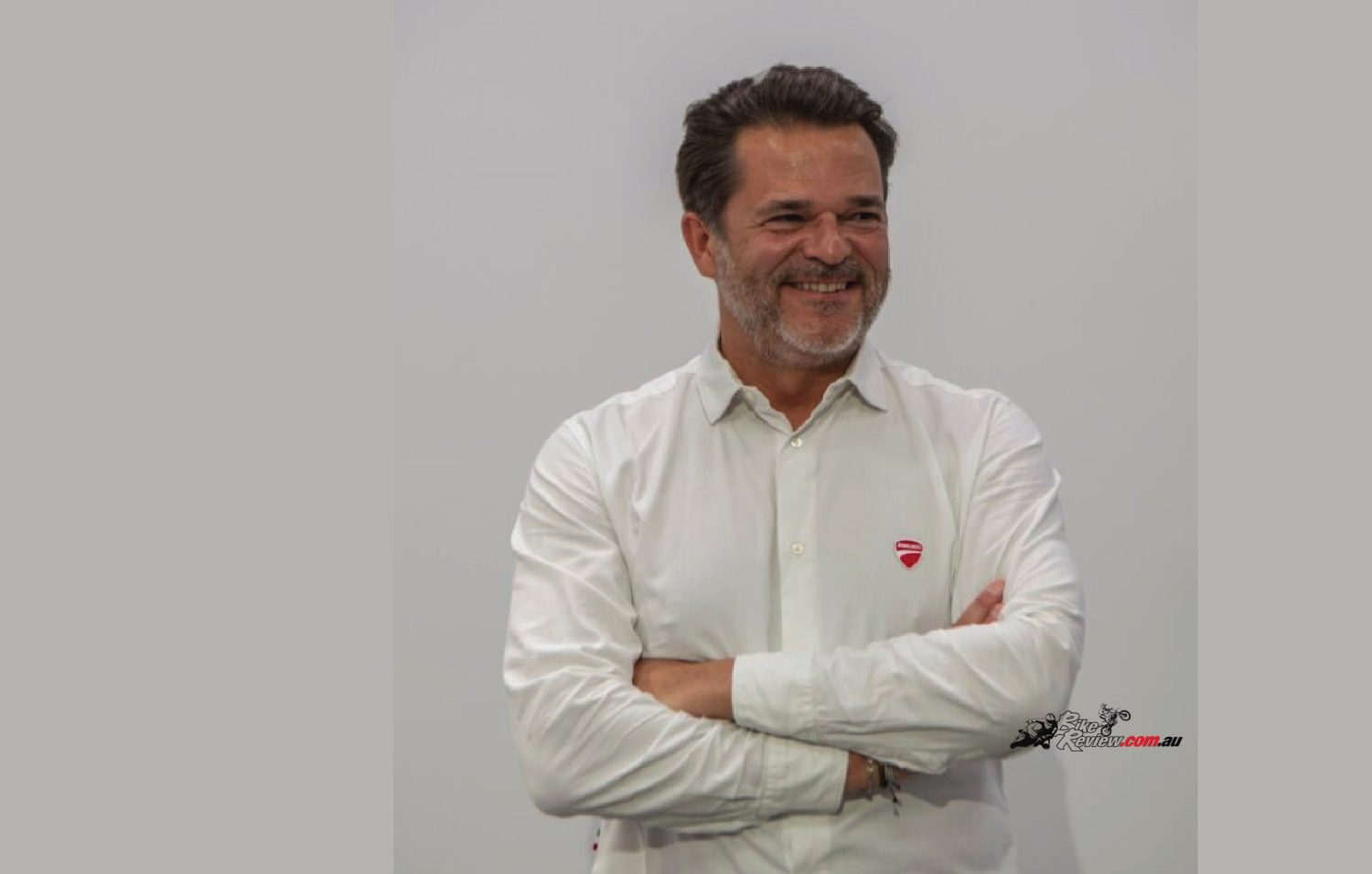

Five years after Ducati took control of its Aussie operation, Sergio Canovas Garriga reflects on the challenges, the wins and what comes next for the Italian brand. We sat down and had a chat with the 500cc GP era fan who had a Monster for his first full sized two wheeler…
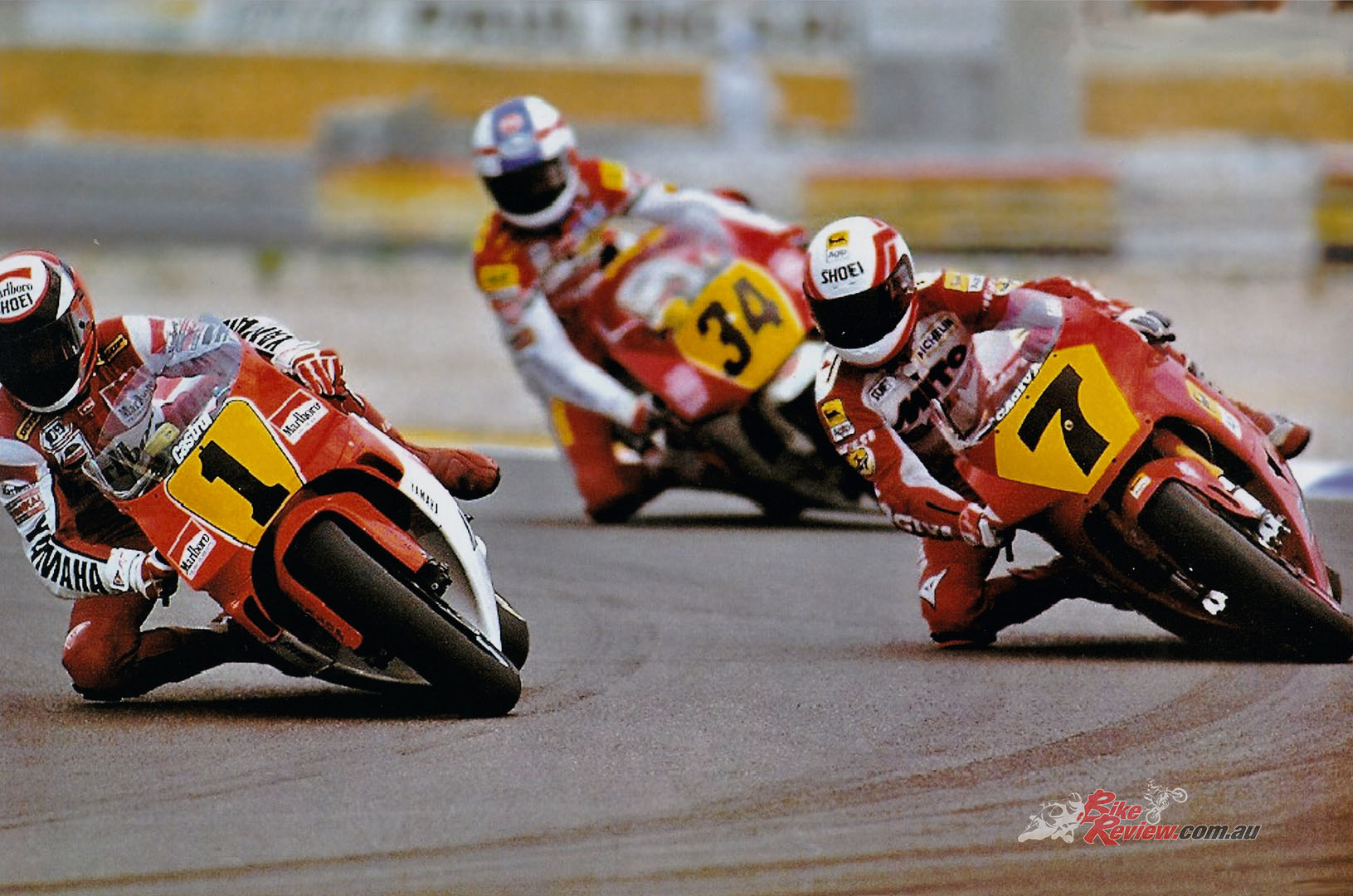
‘Sergi’ Canovas Garriga grew up in Spain with motorcycling in his blood. “I was very, very young when I got into bikes, because I’m Spanish, so I was following at the time 500GPs,” he recalled. “And I remember at that time my idol was Kevin Schwantz with the Pepsi Suzuki. So I was following MotoGP all the time.”
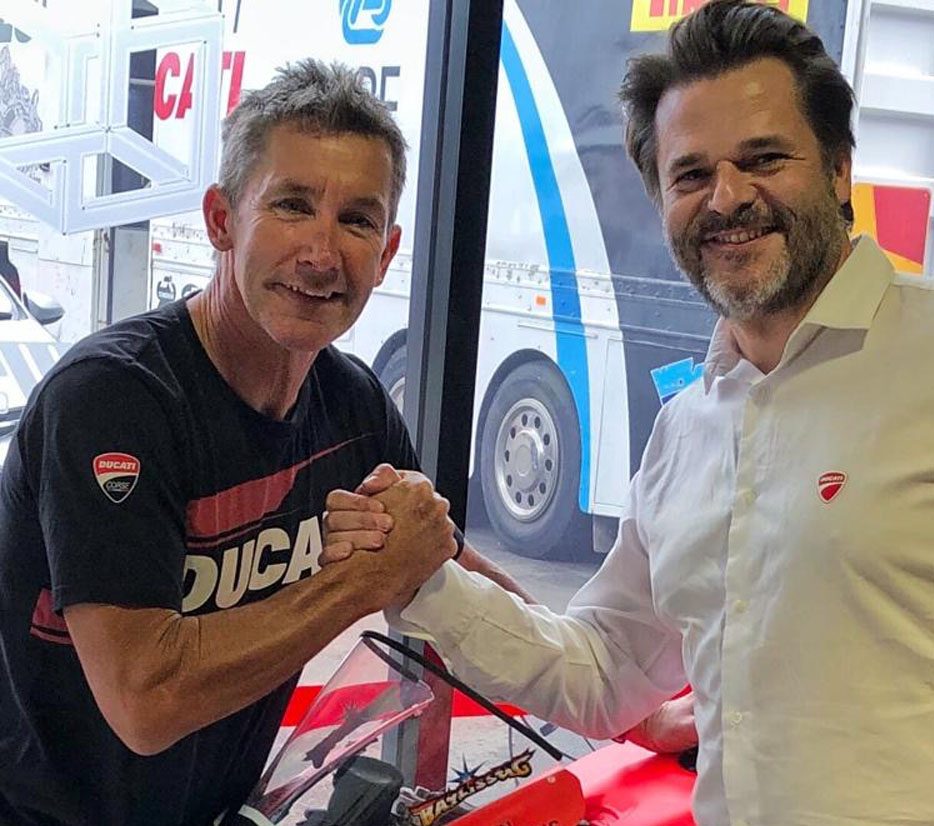
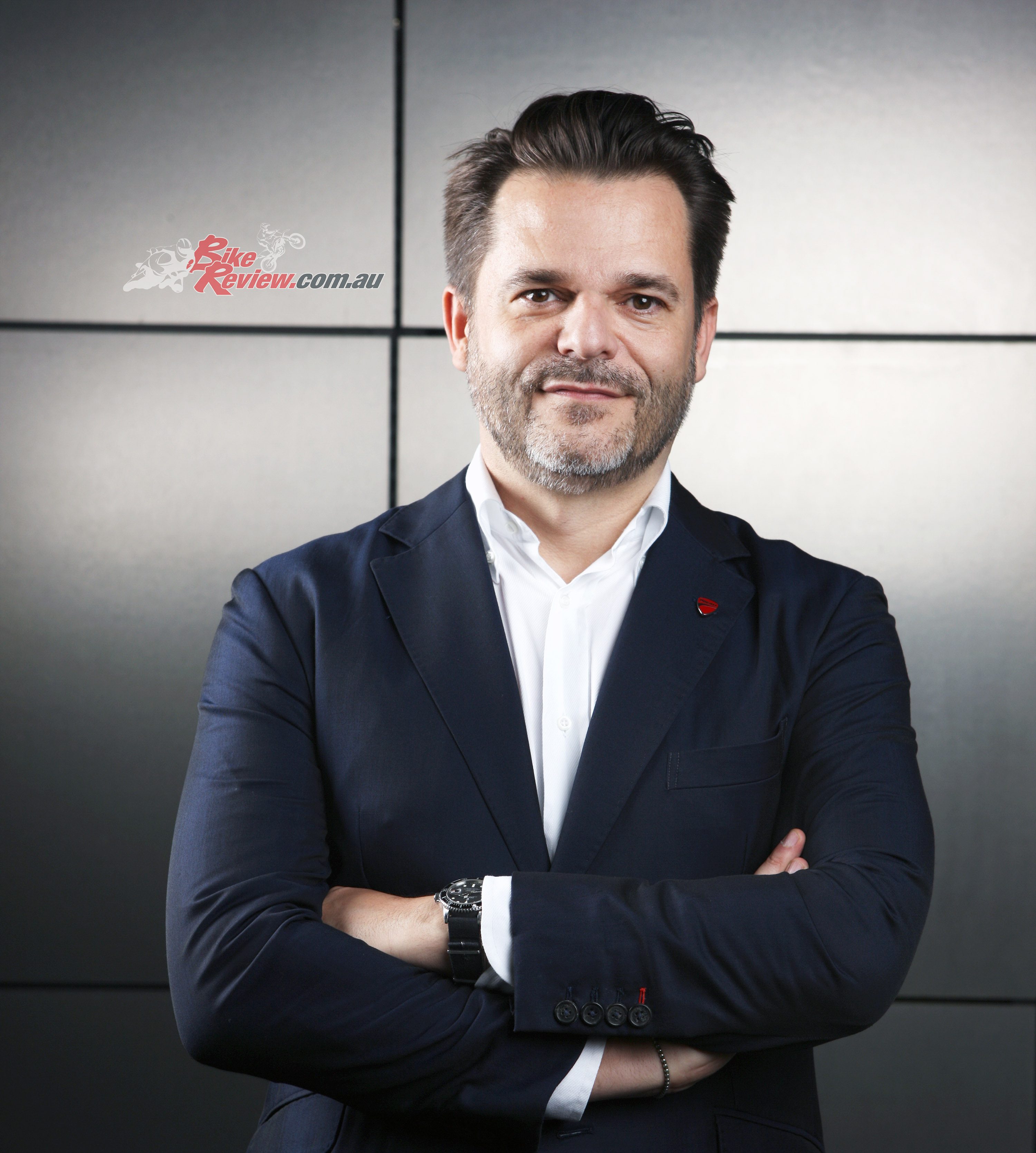
Despite the passion, he didn’t begin his career in the bike industry immediately. A friend from university working at Piaggio called him with an opportunity and it set him on a new path. “One day he called me and said ‘they’re looking for people, why don’t you try?’” Canovas said. “I started in Spain. Then Piaggio decided to open a business unit in Asia-Pacific in Vietnam. And I was very eager to discover the world. So it was a perfect combination.”
Read our other Interviews here… and Ducati reviews here…
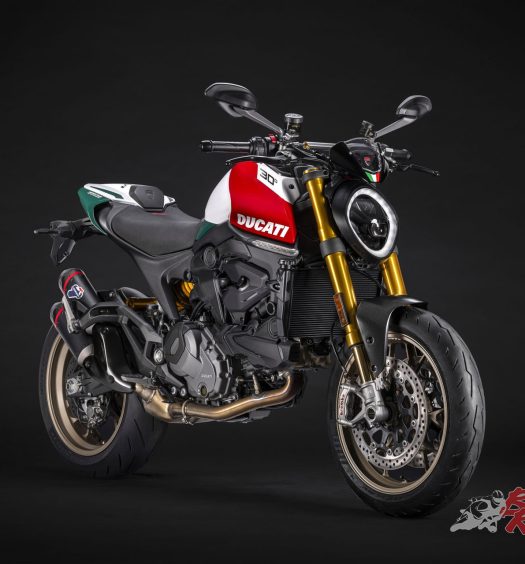
His career took him through Asia with Piaggio before he made the move to Ducati, a brand he already knew well. “I’ve been always a Ducati lover. My first big bike was a Monster. And when I got the chance to work for Ducati, it was a perfect opportunity for me.” That step carried him through senior roles in Asia, first in India and later in Australia. The contrast between those two postings was stark. “Before I was in India, which the market at that time was very small, so it was a work of developing the brand and making sure to put the brand in the right positioning,” he said. “Australia, I came here to a market which was very much developed in which we have been here for a long time. And it’s been very nice to see how much the brand is loved.”
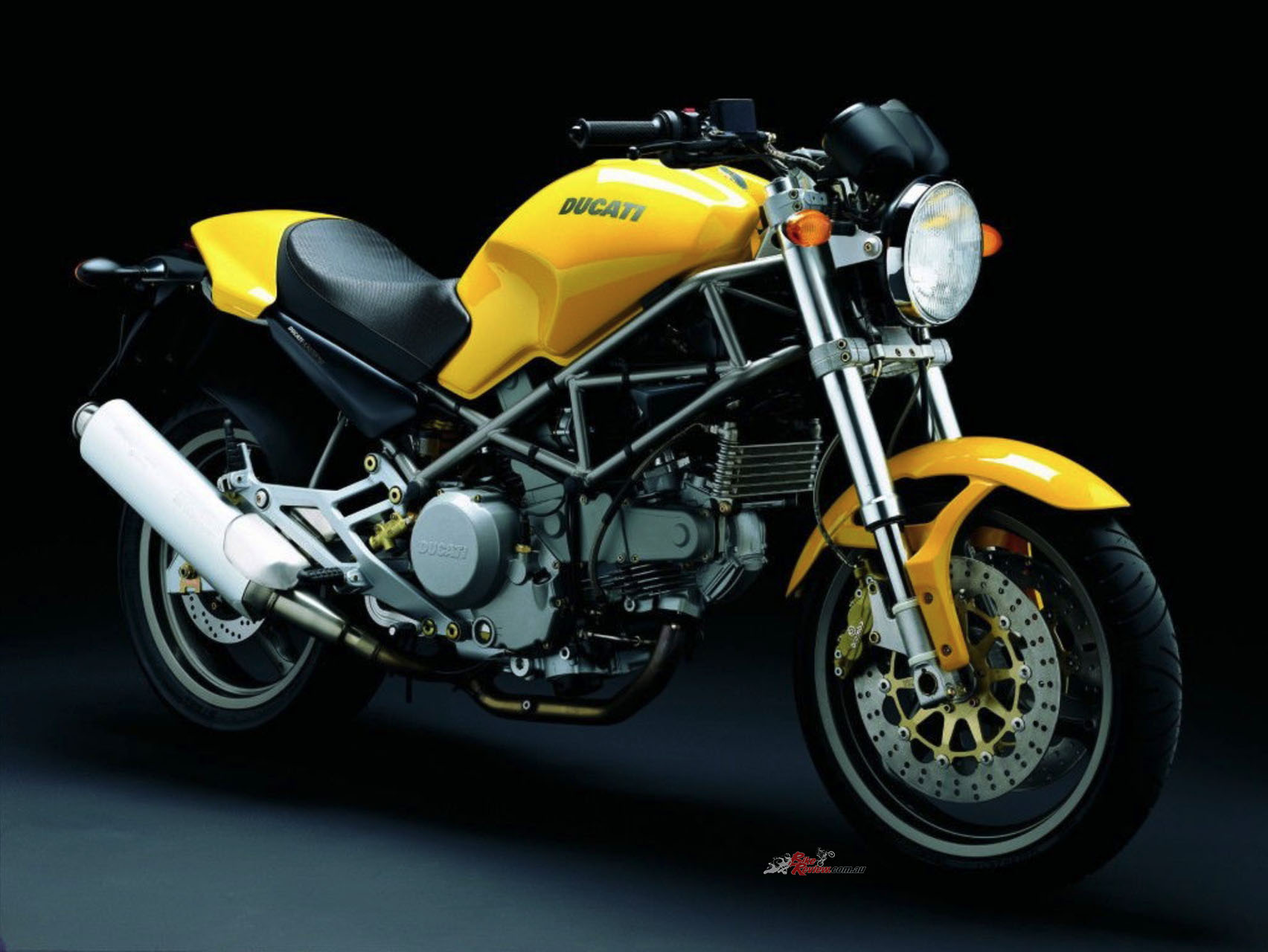
Sergi’s first big bike was a Monster 620 which he could ride on Europe’s A2 licence.
It’s a love he noticed immediately on arrival. “I remember when I came here, I was looking for apartments and I was visiting with the agent. He asked me, ‘what are you doing for a living?’ I said, I work for a motorcycle company… he said ‘Ducati?’ So that was surprising to me.”
“Ducati has been here [in Australia] for a long time. And it’s been very nice to see how much the brand is loved”…
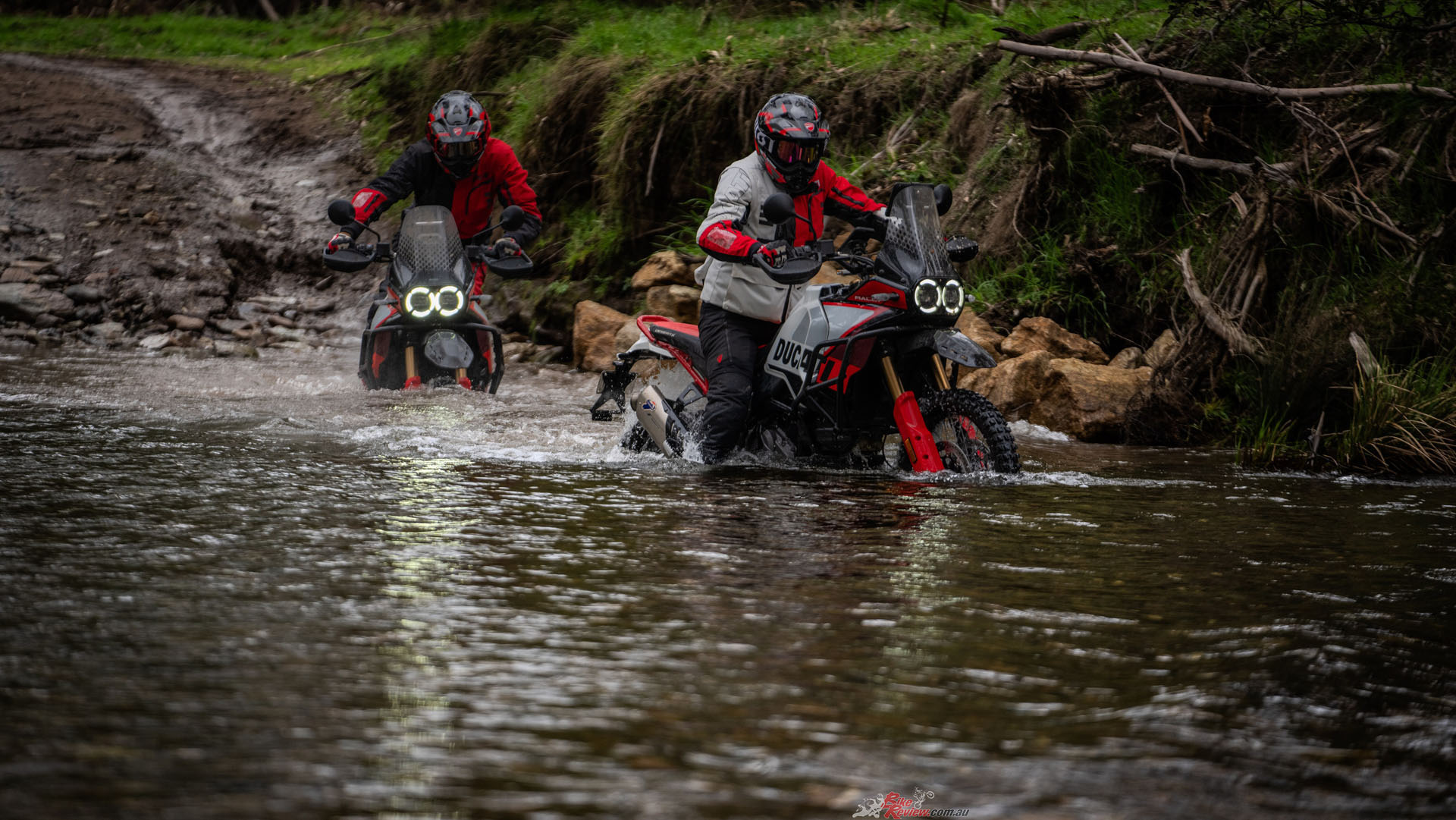
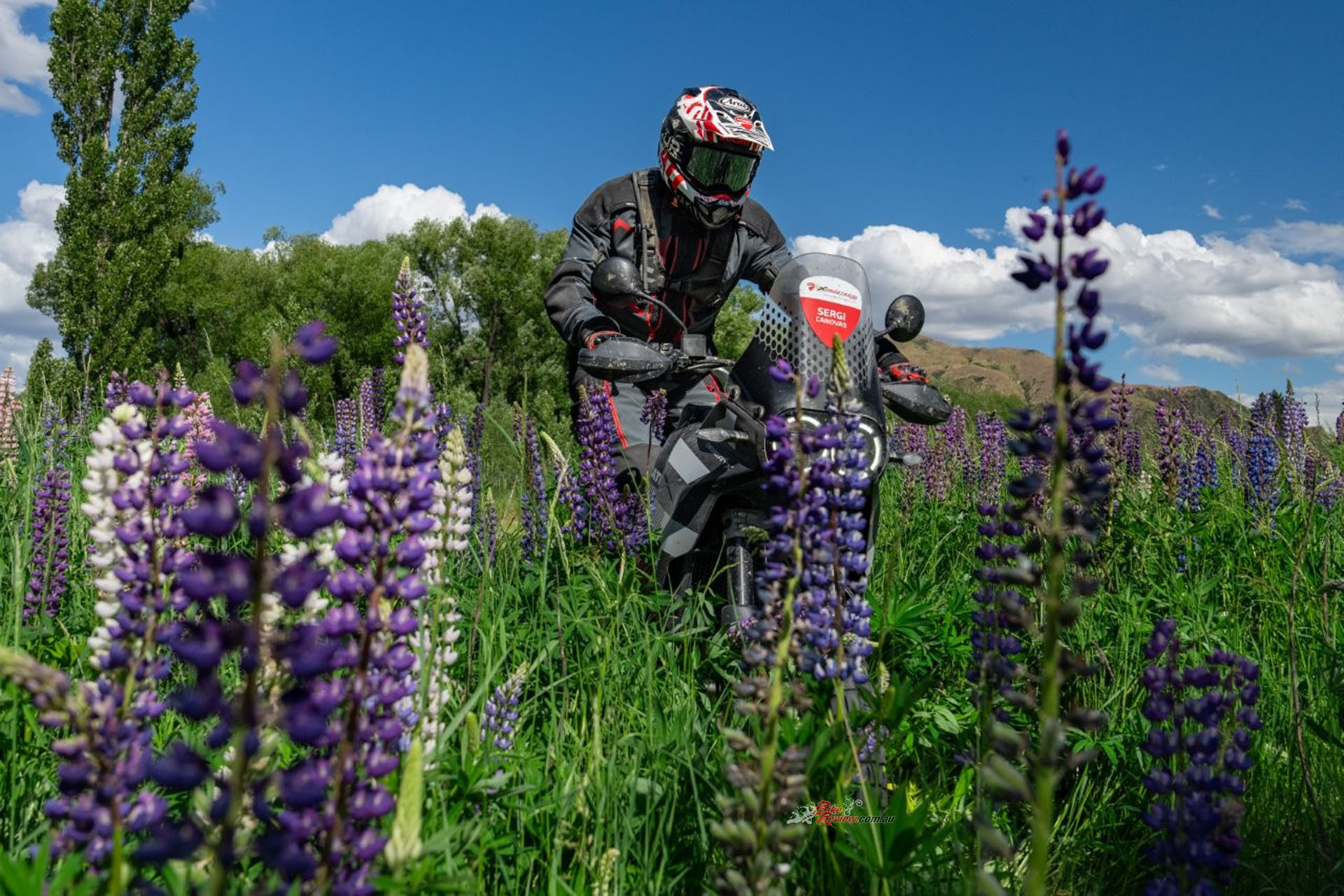
Now, five years into his Australian posting, he still balances the corporate role with the simple joy of riding. Back home in Spain, he keeps a Monster 620, the first machine he bought after gaining his licence. In Australia, he’s more often found on a DesertX, either leading Ducati Ride Experience events or stealing a few laps at Phillip Island. “As soon as there’s an opportunity to jump into any experience that we have with clients, I go with the DesertX and if I’m at Phillip Island, then the Panigale.”
When Ducati took over from NF Imports (formerly Norm Fraser Imports) in 2020, it was part of a global push to directly manage mature and strategically important markets. “Mainly because we had a very long relationship with NFI… more than 50 years,” Canovas said. “But based on the strategy of the company, especially the strength of the brand, it was necessary to be closer to our clients… and naturally the importer doesn’t have the capacity to do that.”
“We sincerely thank Fraser Motorcycles for their longstanding partnership and contribution to the success of Ducati in Australia”…
The change has now come full circle. In late September, Fraser Motorcycles announced it would formally conclude its 60-year relationship with Ducati, drawing a line under one of the longest-running distributor partnerships in the Australian motorcycle industry. “We sincerely thank Fraser Motorcycles for their longstanding partnership and contribution to the success of Ducati in Australia,” Canovas said. “Their commitment over the years played a role in shaping the community we have today. Like all great brands, evolution is part of our journey and as we look to the future, we are excited to continue to build our legacy by enhancing the Ducati experience for our clients in the New South Wales market.”
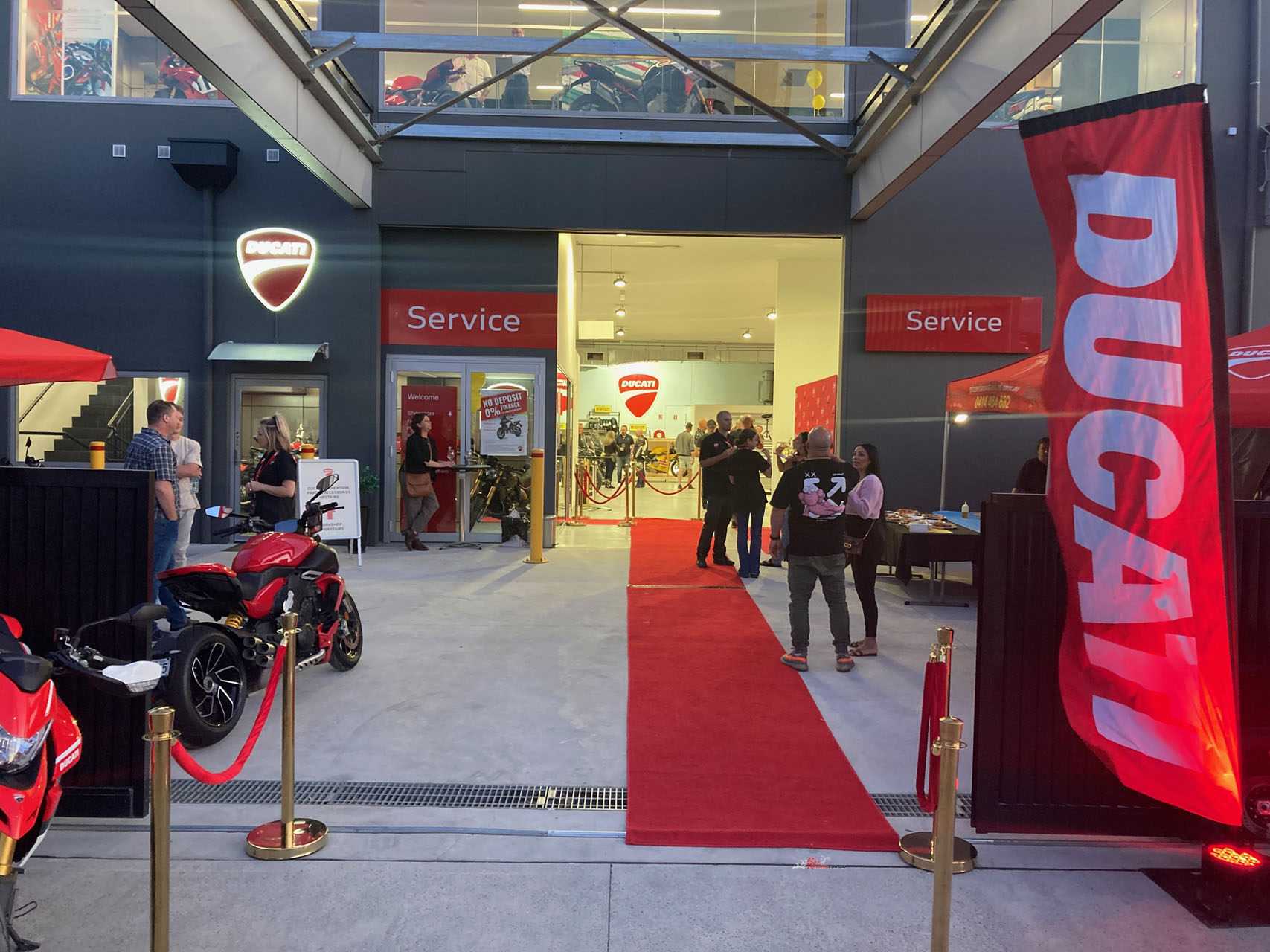
Fraser’s new Ducati dealership celebrated its grand opening in Parramatta just last year.
Five years after taking over, he believes the move has paid off despite a significant softening of sales figures in recent years. “If you remove the two years of Covid, which everything was crazy in terms of market sales, we have seen an increase of market share compared to the previous state in which we had an importer,” he said.
“If you remove the two years of Covid … we have seen an increase of market share compared to the previous state in which we had an importer”
As well as the numbers, Ducati Australia has worked to reshape its network, focusing on what Canovas calls the “hardware” and the “skills”. That has meant upgraded showrooms with consistent corporate identity, as well as dealership staff trained in the finer points of the brand. “Other examples from the current dealers that we have, that they upgraded and they follow us in our strategies. For example, Ducati Perth, which is one of our best dealers,” he said.
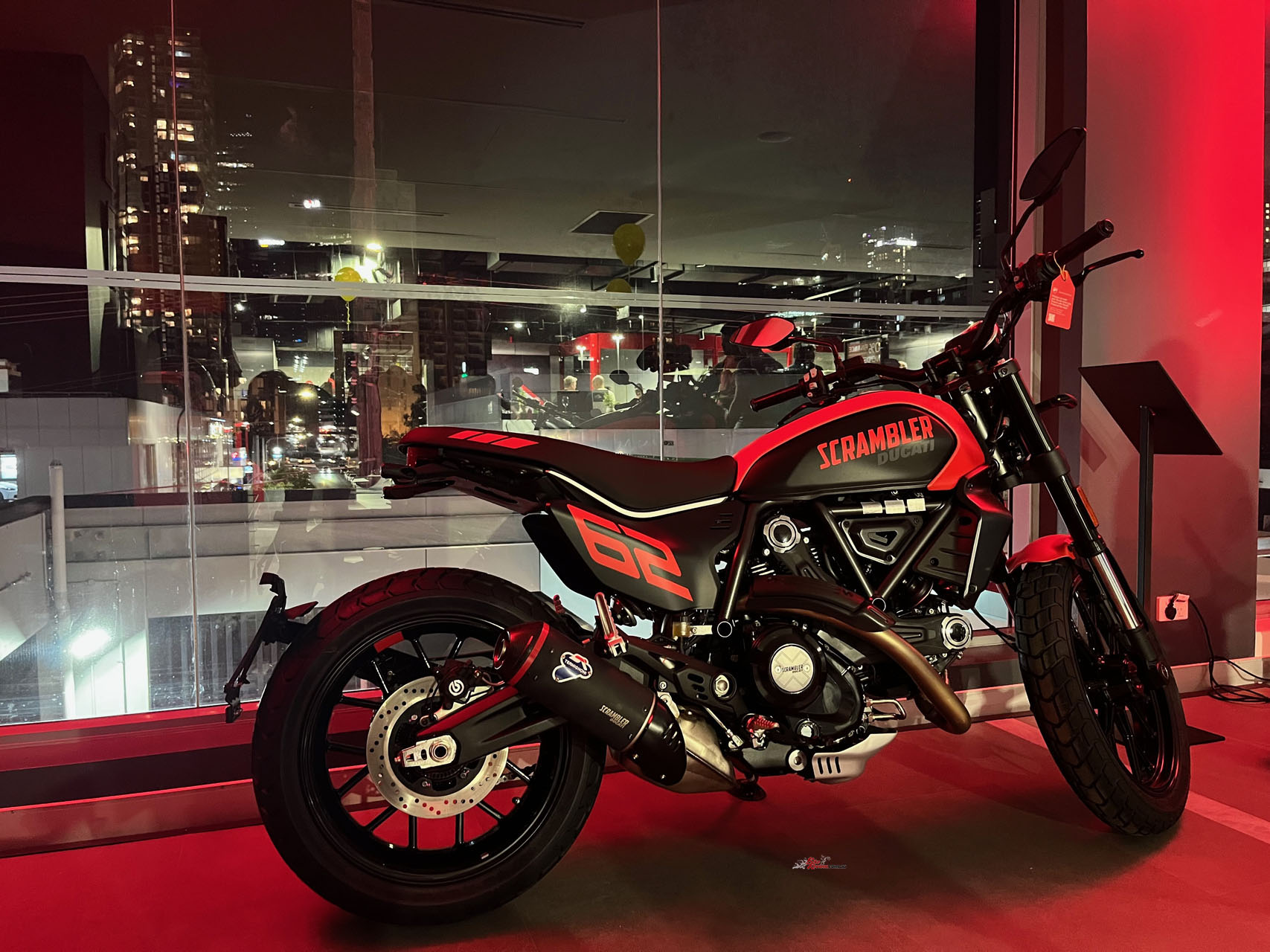
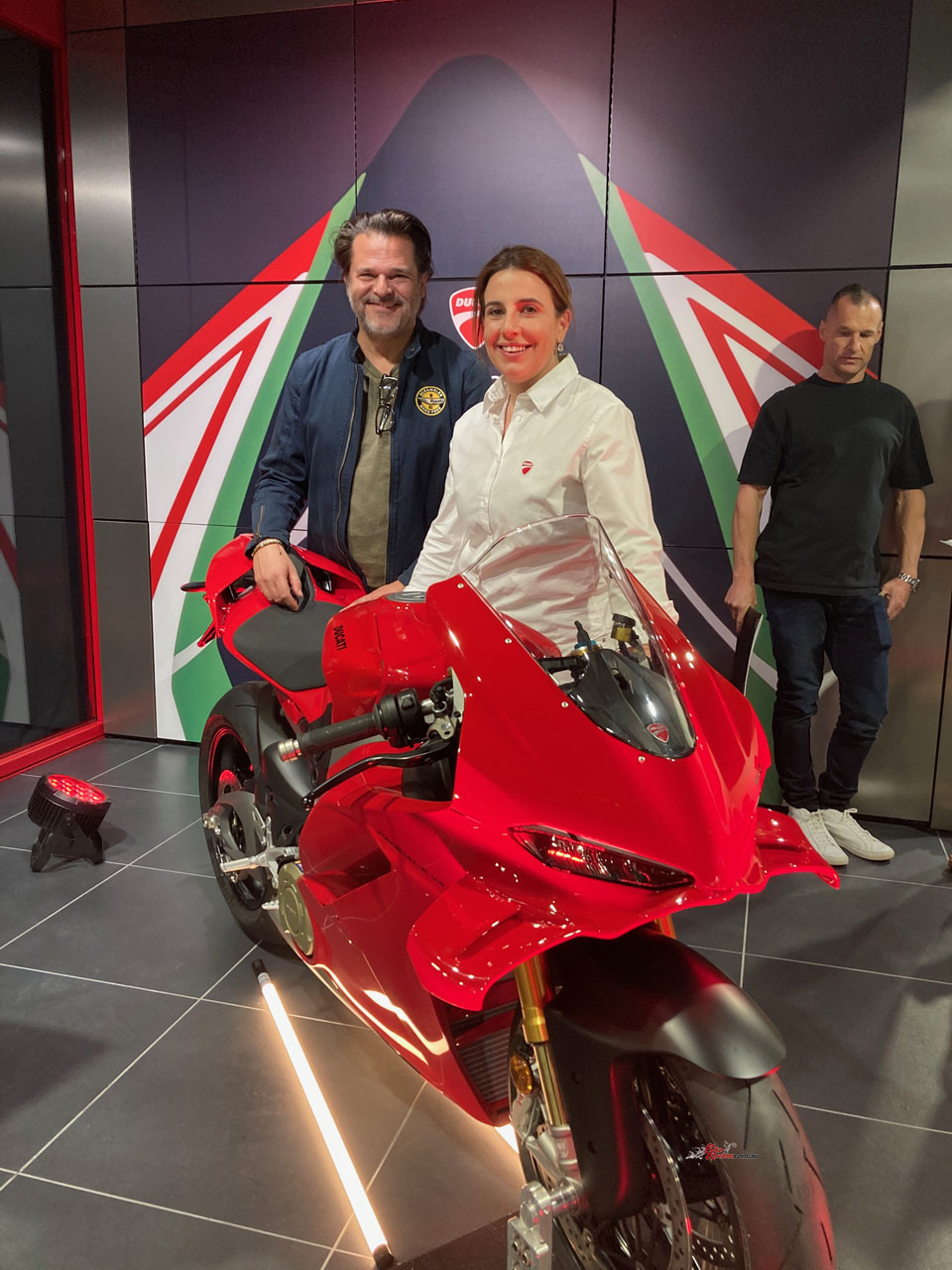
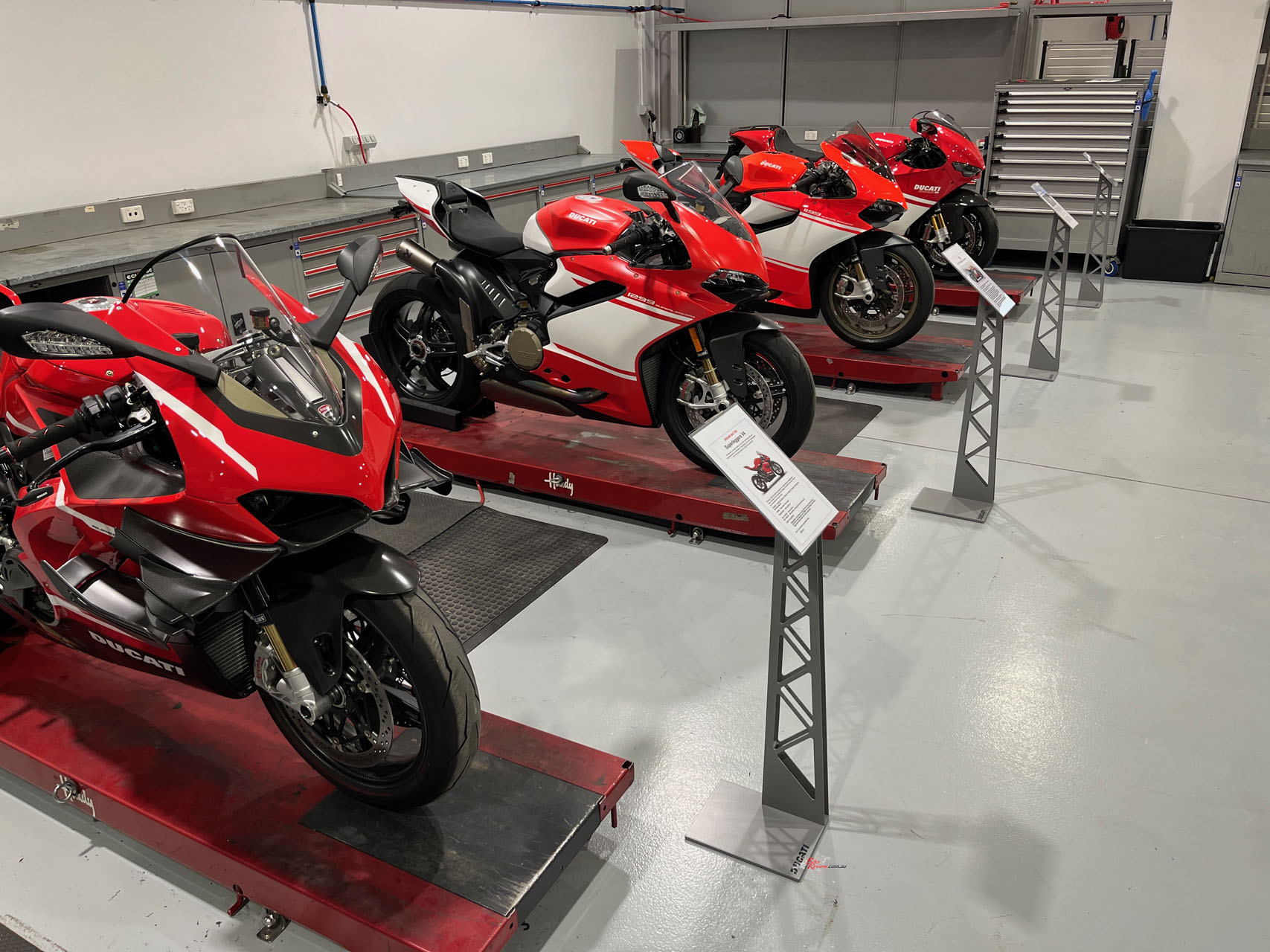
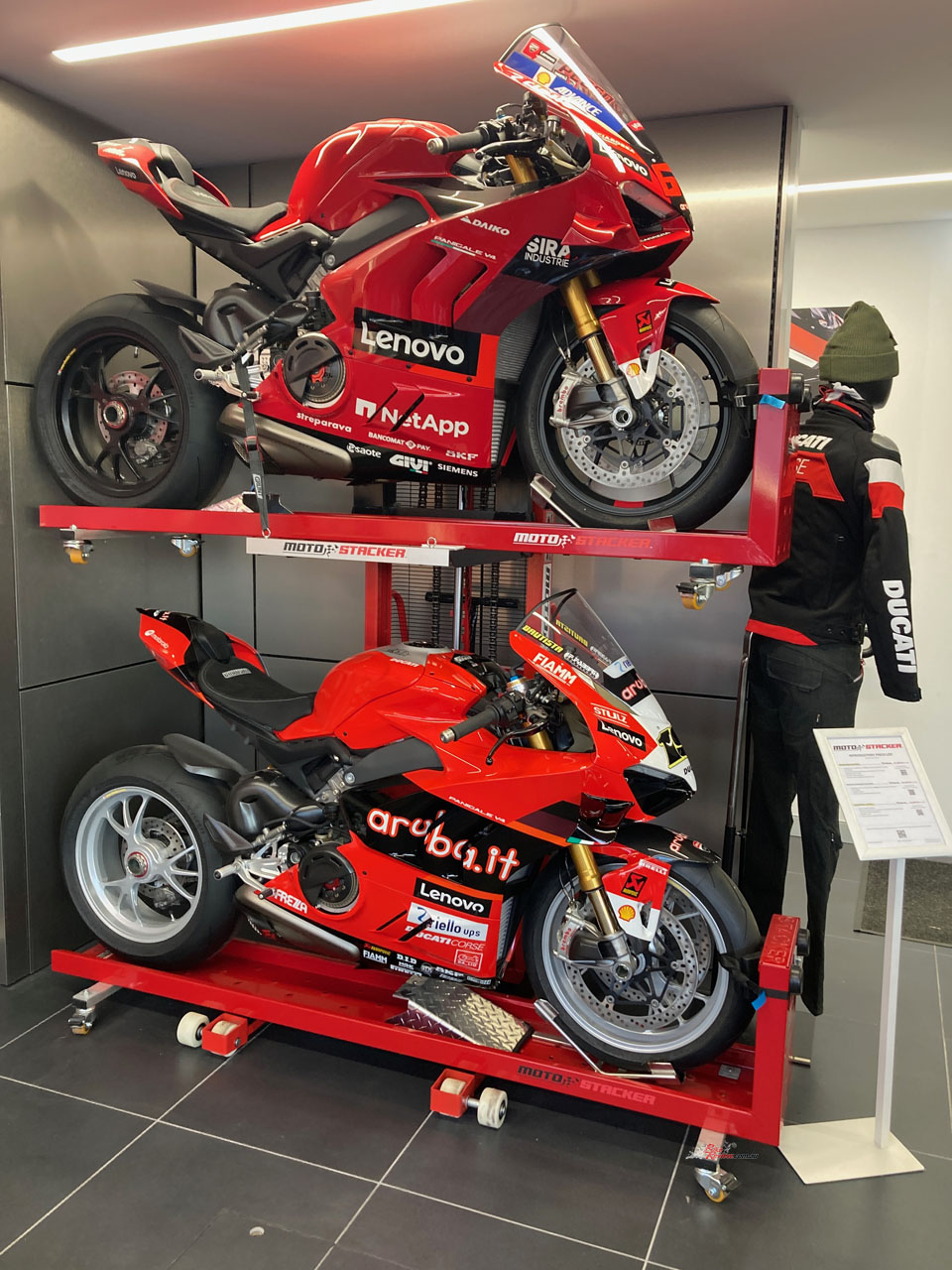
Partnerships with prestige car brands have also been part of the strategy. “We have done with Autosports in Sydney and in Adelaide with Solitaire, which is Audi. And it’s the first integration that we have, both Ducati and Audi in the same dealership.” For Canovas, the aim was always to ensure Ducati ownership in Australia felt consistent with the brand’s global values, whether that began with the sales floor or the service bay.
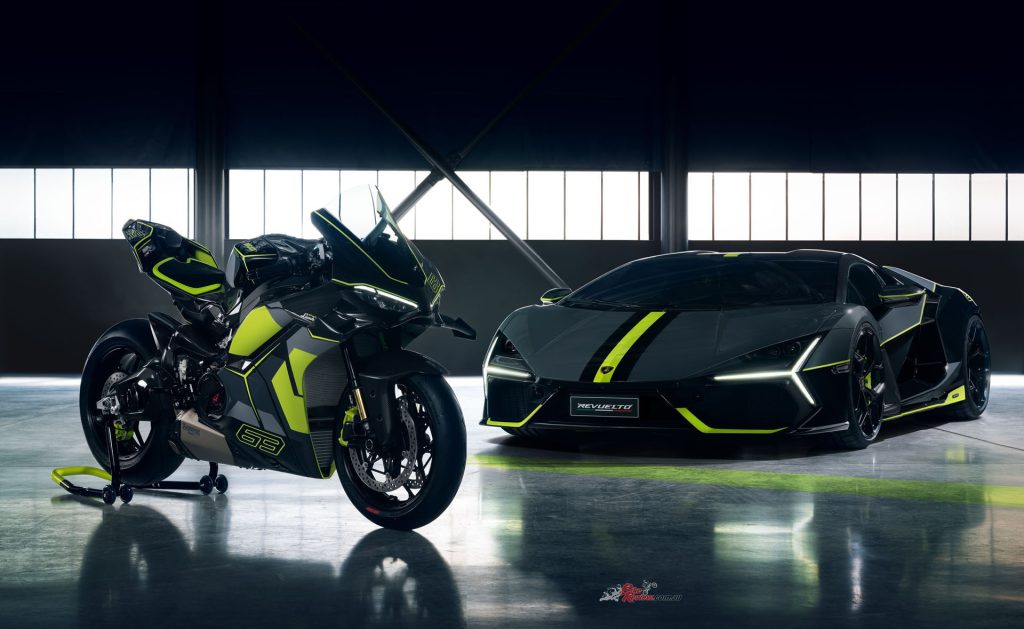
Collaborations with luxury brands is a way Ducati can retain profits amid falling sales.
The strategy has shifted toward what he calls “upper premium,” with fewer bikes sold but at higher value. “Our aim is to design and produce bikes that deliver real value and emotion. Focusing on unique content and top quality ensures that, even if the market softens, our riders benefit more and the company stays healthy thanks to this direction” he explained. Collaborations with Lamborghini and Bentley have reinforced that approach. “Our limited editions have always been very strong, especially in Australia. More importantly, they’ve allowed us to nurture a community of loyal and passionate clients who connect with the brand on a deeper level and truly value the exclusivity and personalisation of each bike.”
“[Producing bikes with more] value has helped us to maybe reduce a bit the volume, but not be impacted in terms of profit”…
That loyalty, however, isn’t being built from from a young customer base. Unlike its European rivals, Ducati doesn’t currently offer any LAMS-approved motorcycles in its line-up. “[Having a LAMS offering] would help us to increase the sales, obviously. But I don’t know if it would help to create or to maintain this kind of aspirational aspect that we have right now,” he said. “From one side, in the short term it would help us to sell more bikes. But in the long term, I don’t think that it would help on the position of the brand, to be honest with you.”
Meanwhile, the competitive landscape has shifted. Chinese manufacturers are no longer dismissed as poorly-built knock-offs, their products are getting sharper, offering more value and becoming harder to ignore. “No doubt about that,” Canovas said. “But how I see it is that this is an opportunity for us in the mid or long term.” He argued that these inexpensive, well-made motorcycles will expand the rider pool and that Ducati can then capture those customers as they climb the ladder. “Because the motorcycle is something that you don’t need, it’s something that you want. And you start with something, and then you want something better, and then you want something better, and this is where we are.”
Two recent announcements show the breadth of Ducati’s ambitions. At one end is the Desmo 450MX, the brand’s first competition off-road bike. At the other is the newly released Panigale V4 R, a 218-horsepower superbike designed, one can assume, with an eye on regaining the WorldSBK title in 2026.
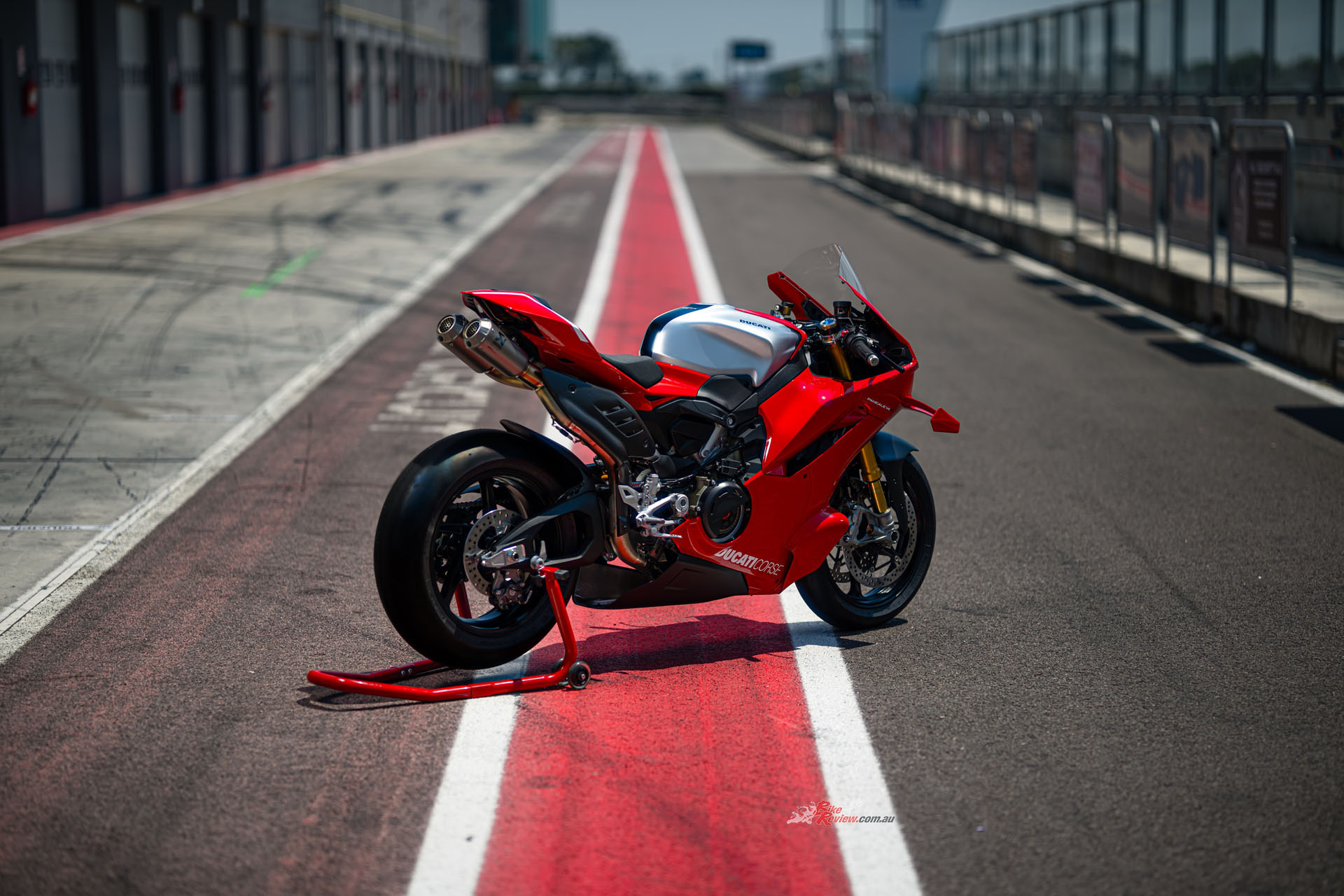
The recently announced Panigale V4 R
For Canovas, the Desmo 450MX is less of a departure than some might think. “If you talk about motocross, it’s a racing bike. And racing is our DNA,” he said. “Maybe we’ll be a bit more dirty. But it’s racing, you know. I think that there wouldn’t be more natural bike for us than motocross, because it’s just racing.” Reaction in Australia has been stronger than expected. “There was a lot of excitement,” he said. “That most probably was my surprise, everybody having this knowledge and understanding that Ducati is a racing brand.”
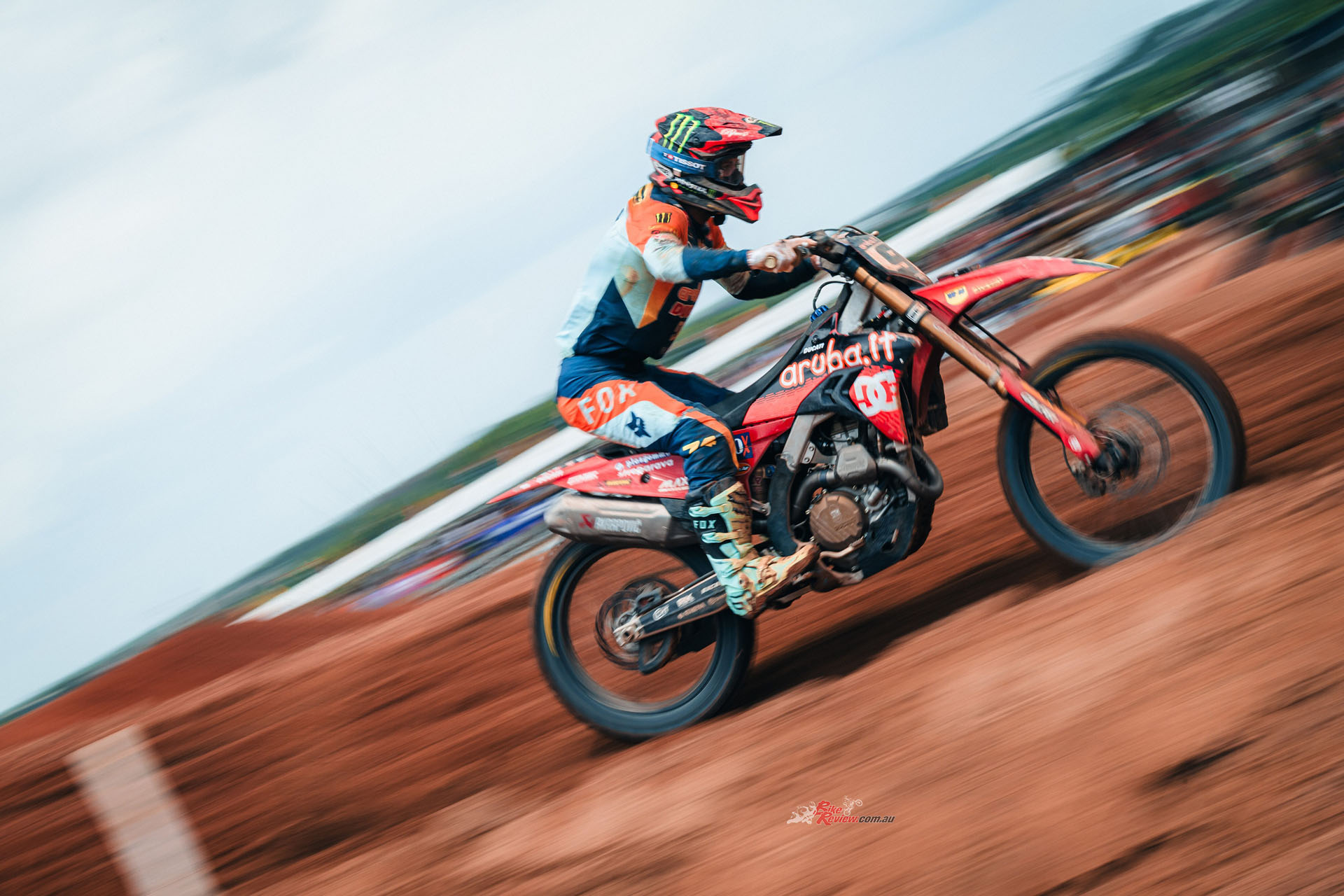
Ducati’s first 450cc motocrosser has been collecting accolades in MXGP.
Preorders are open, and despite the difficulty of selling a 450 to amateurs, Ducati expects the response to be immense. “Even though we started with a 450, which is probably the most difficult bike to sell, let’s say, as a hobby bike, we expect that the production run of this year will be all sold out.”
“Even though we started with a 450, which is probably the most difficult bike to sell … we expect that the production run of this year will be all sold out”…
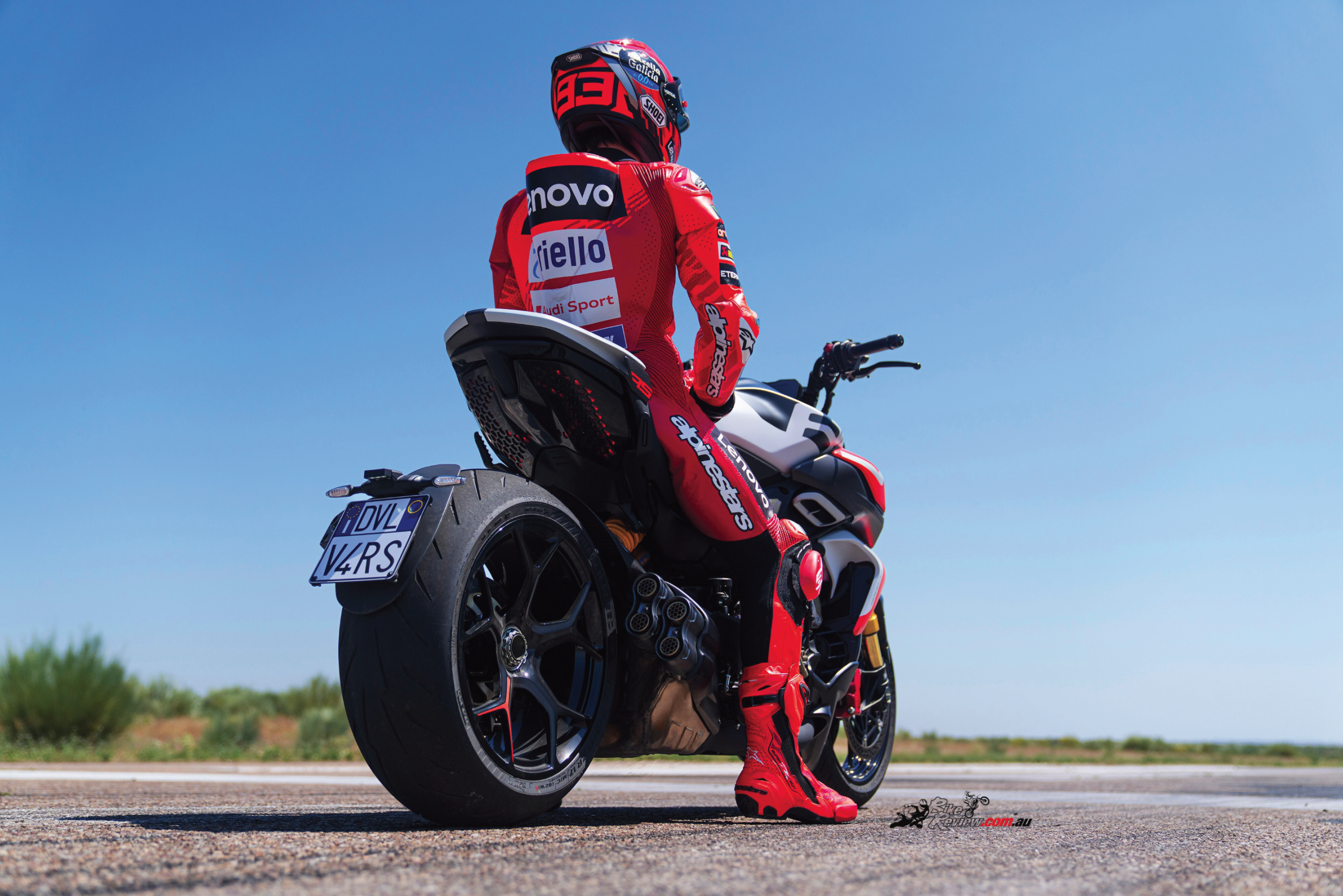
At the same time, Ducati’s racing pedigree has rarely looked stronger. The Panigale V4 R is a statement of intent in World Superbikes, while in MotoGP Marc Márquez has just delivered Ducati’s fifth premier-class rider’s crown. His Motegi podium secured a ninth world championship – his seventh in the top class – making him just the fourth rider to win the title on a Ducati.
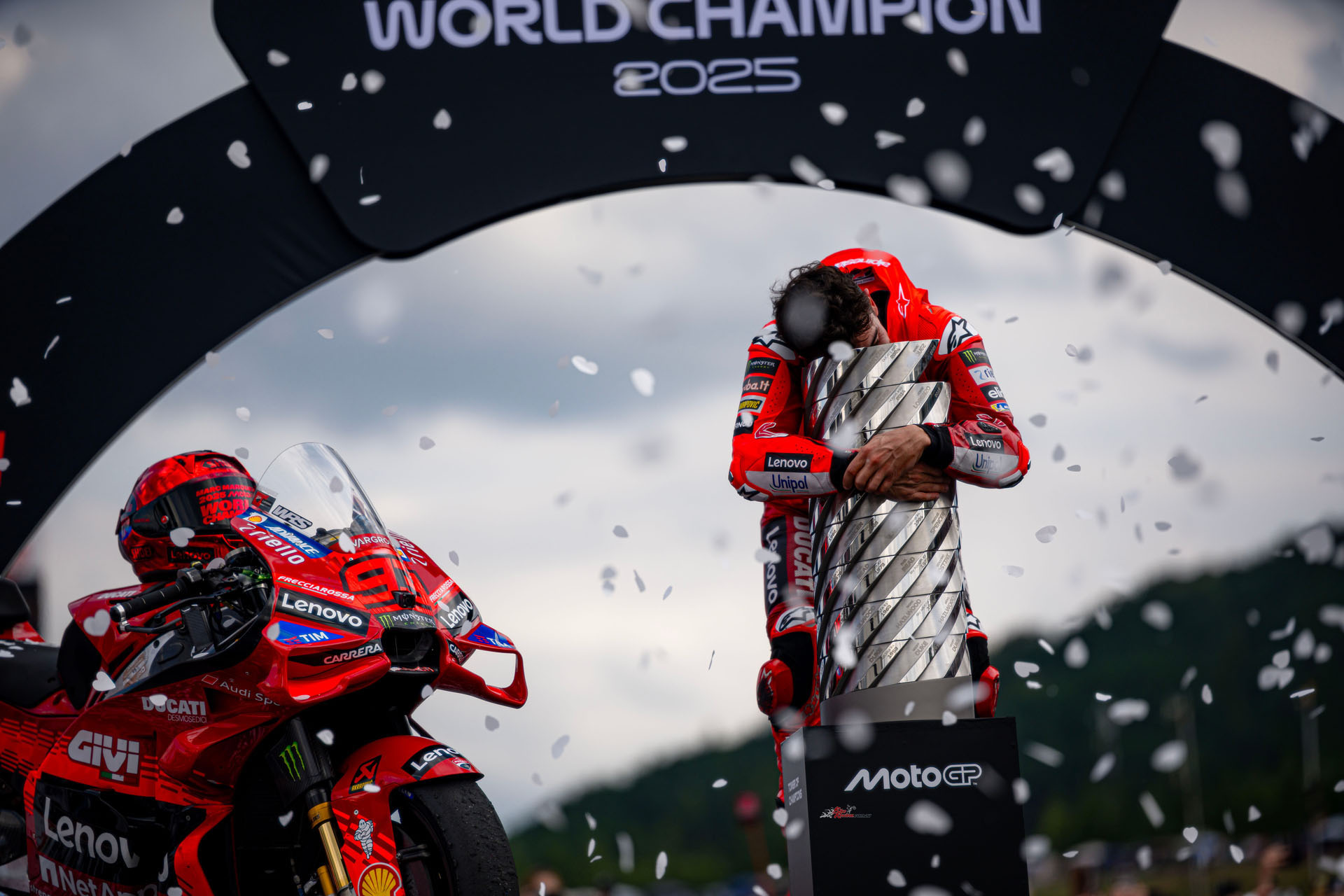
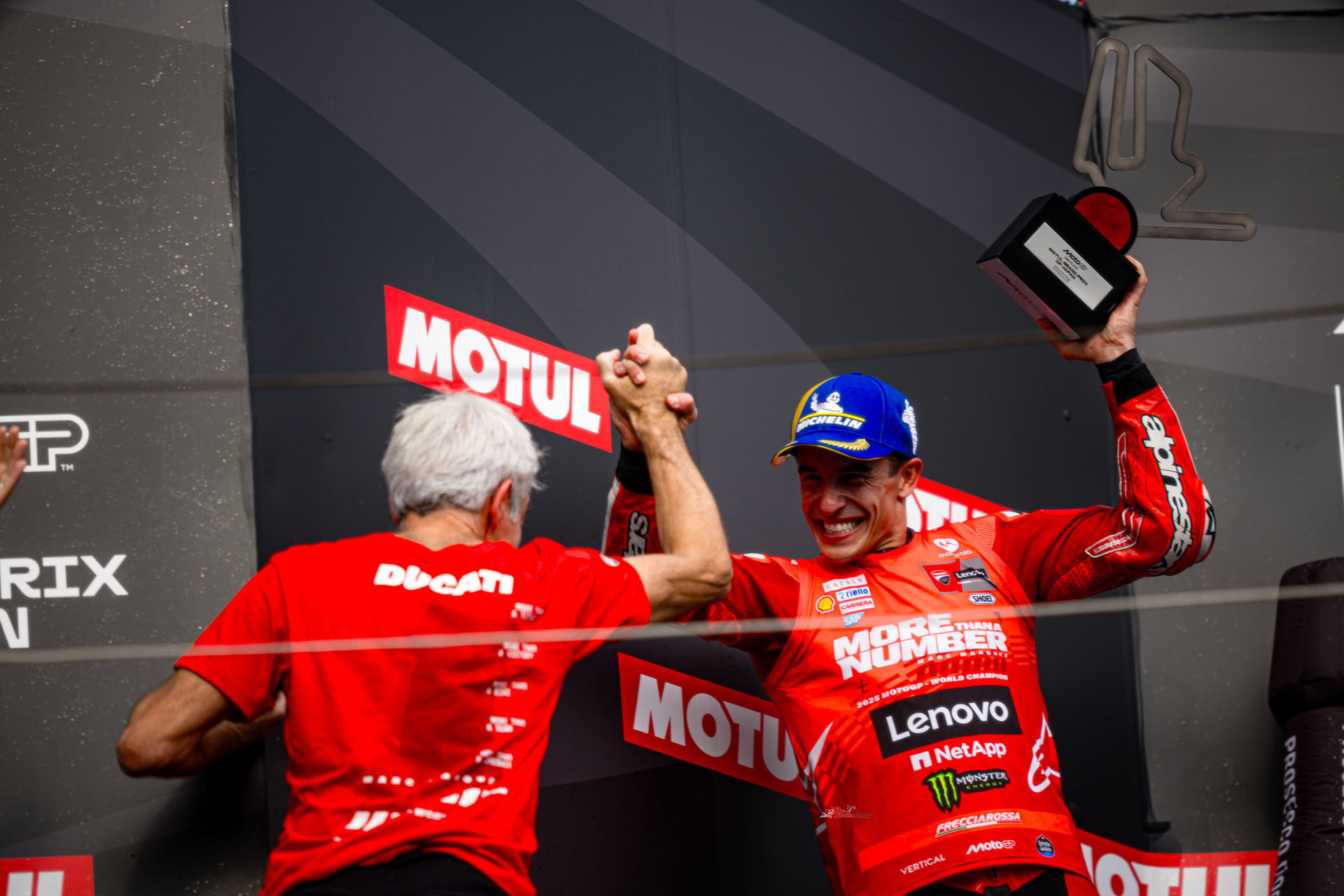
Canovas sees this dominance as brand fuel. “I don’t think that winning on Sunday will impact on the next Monday,” he said. “But what will impact long term is to be successful over a long time. Winning Sunday after Sunday helps to create this brand strength that we have right now, which is one of the best moments we’ve had so far.”
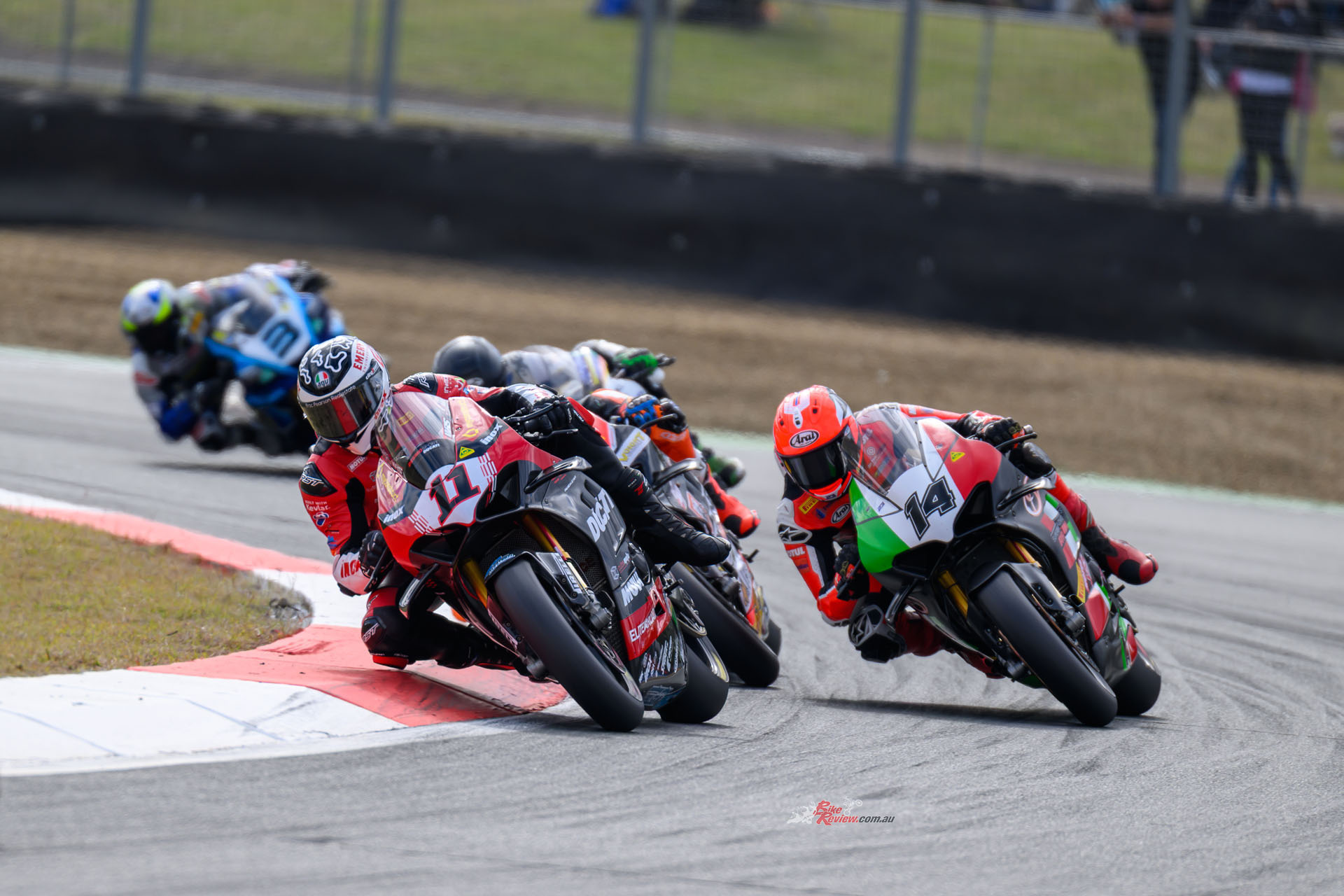
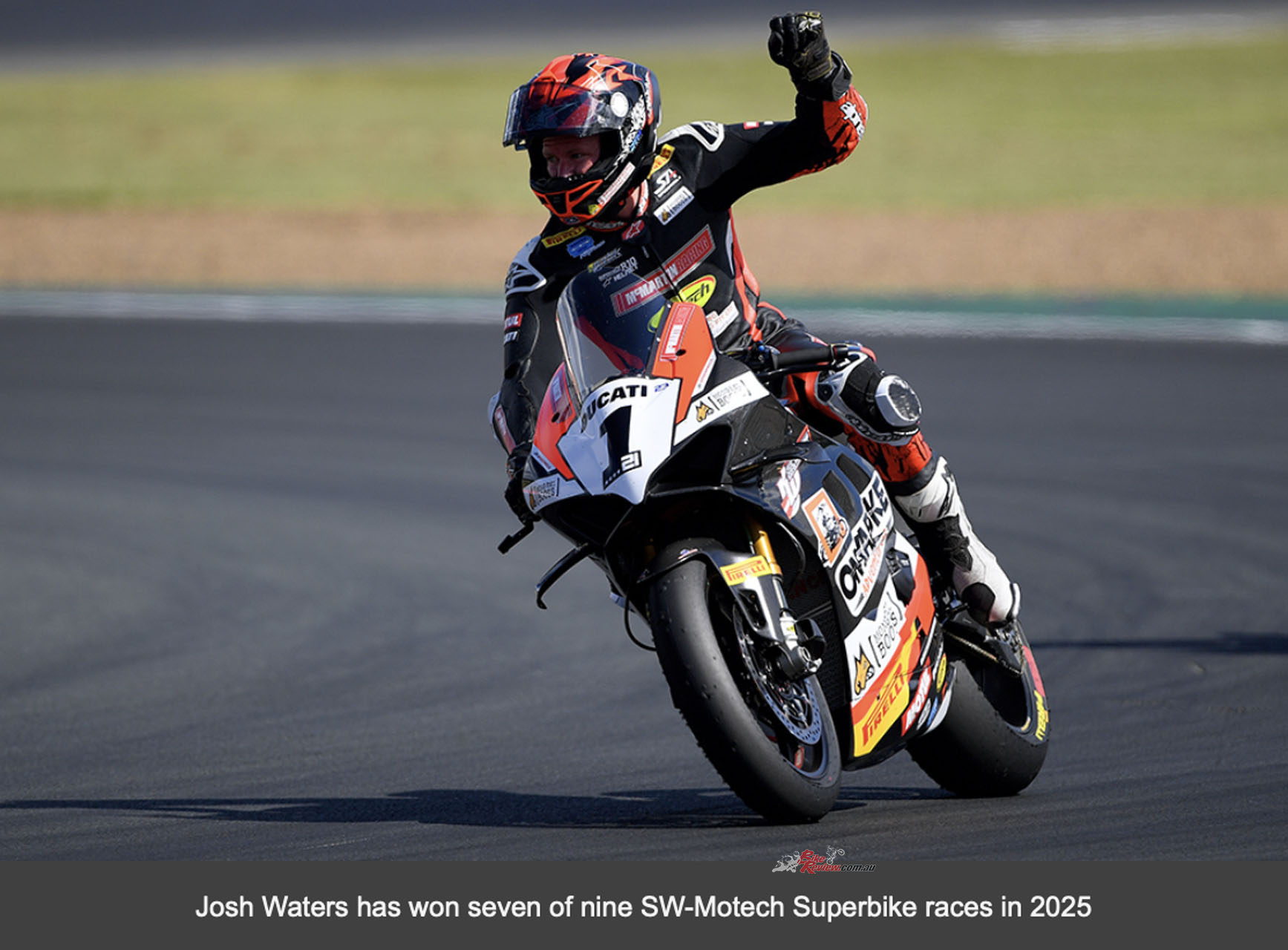
While there’s no official factory backing in ASBK, Ducati Australia says it’ll “support” anyone racing a Panigale.
That strength filters down to the domestic scene. Ducati doesn’t run a factory team in Australia, but local outfits continue to fly the flag. “We don’t have normally what we call factory teams at national level,” Canovas said. “But we obviously support anybody who wants to ride with Ducati because they think that they can win… with either support on technical support… or even financial support.” Ducati also lends marketing and promotional weight, ensuring its ASBK presence stays visible. “Currently we have three teams in ASBK,” he added. “So it means that they are seeing the bike as the perfect tool to win the championship.” Right now, the series has essentially become a battle between Ducati and Yamaha, the only two manufacturers still represented on the ASBK grid.
Ducati’s involvement in MotoE has already given it a front-row seat in the race to electrify motorcycling, but with the series pausing at the end of this season the future is less certain. Canovas sees the program as a vital learning platform rather than an end in itself. “The fact of going into MotoE for us made a lot of sense because we normally develop anything that we do on the racetrack, and then we’re bringing it on the road. So the best way for us to test was to be in MotoE,” he said.
“The fact of going into MotoE for us made a lot of sense because we normally develop anything that we do on the racetrack, and then we’re bringing it on the road”…
The prototype V21L unveiled with QuantumScape solid-state batteries is one sign that Ducati is pushing ahead, but Canovas is pragmatic about what comes next. “There have been a lot of discussions around the world that internal combustion engines will finish, but it’s not clear what’s going to be the replacement. So this poses a challenge to any company on what path you choose to go for the next future in terms of development,” he said. “We will continue to invest on investigating this channel or this path, but it’s not the only one that we are.”
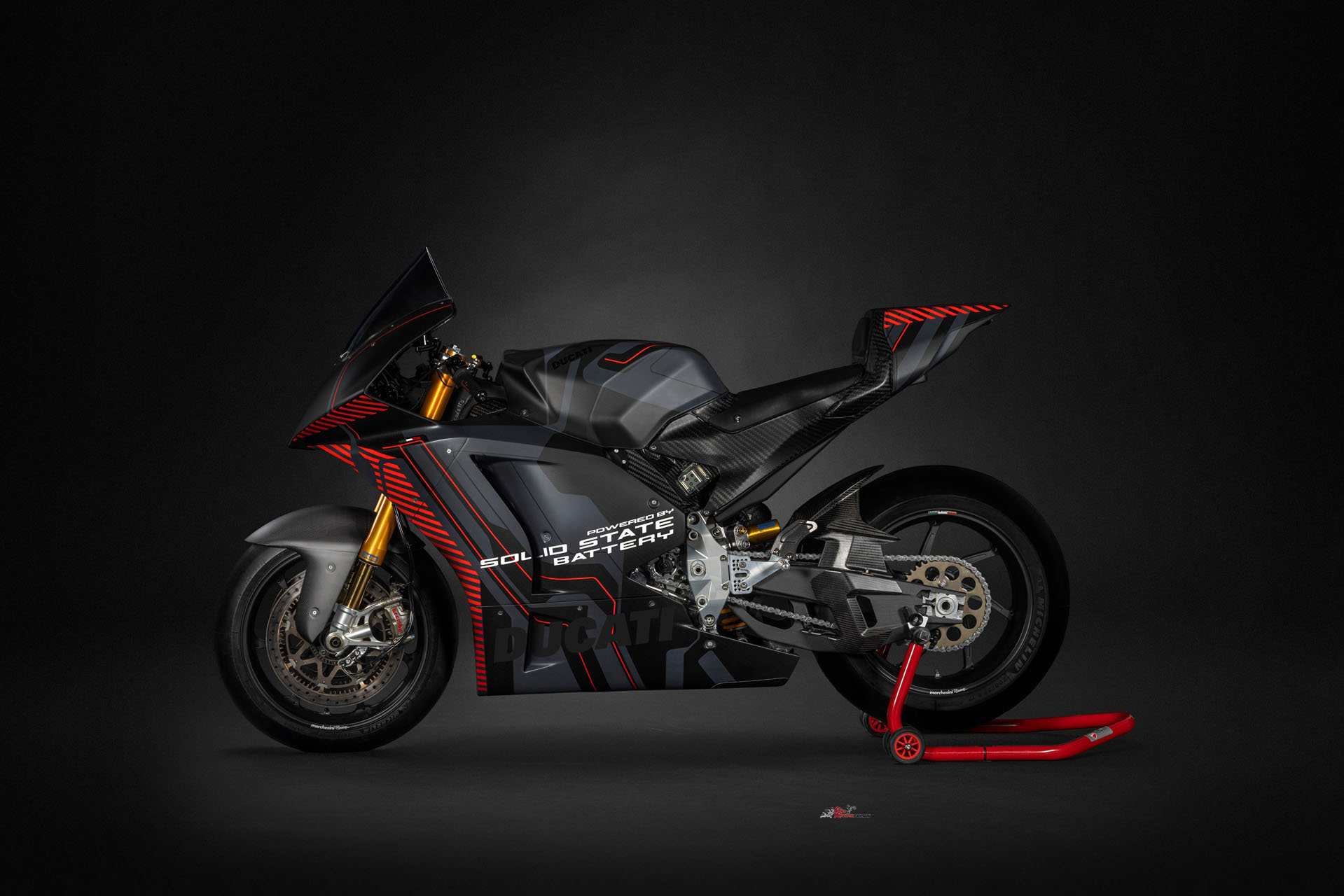
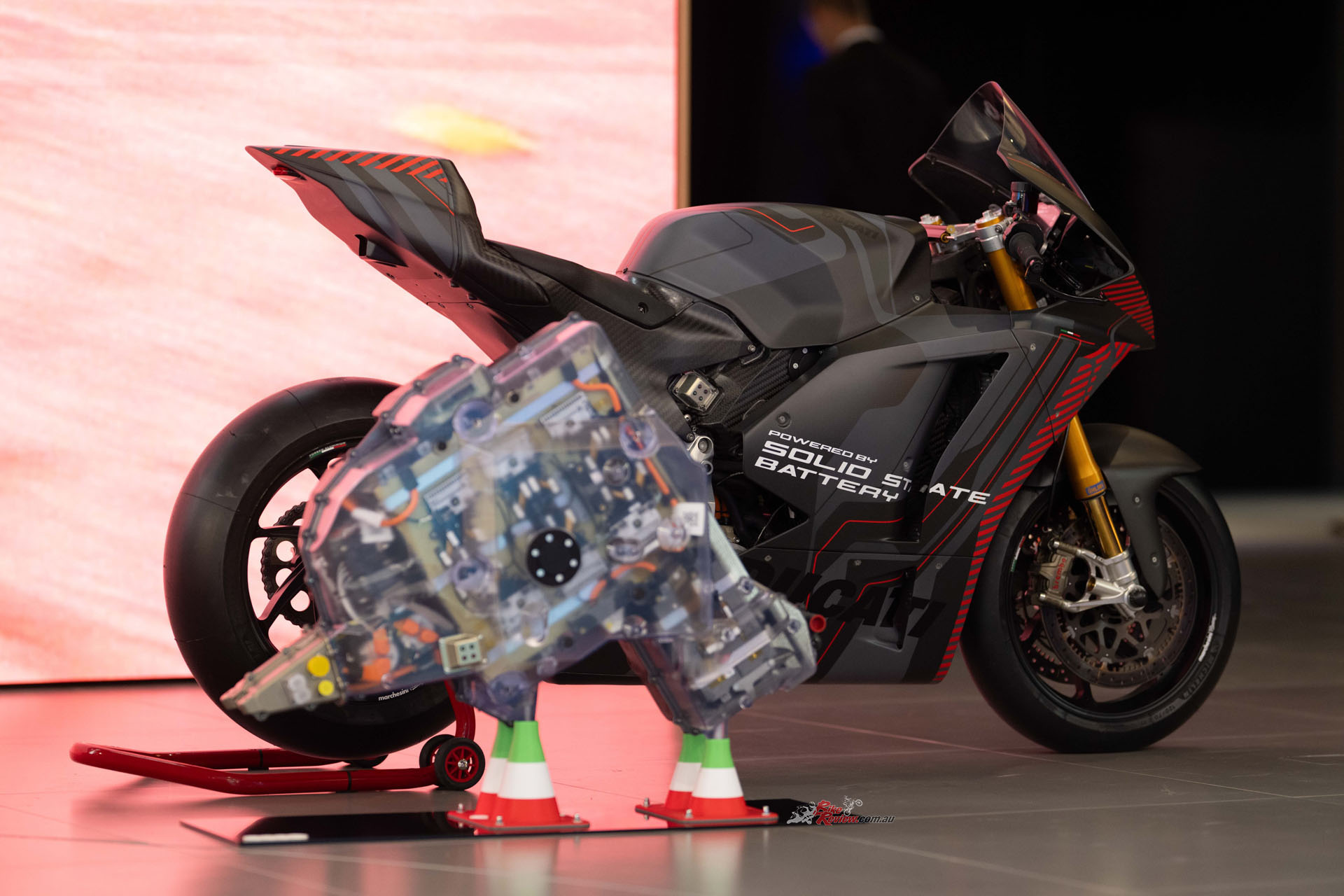
As part of the Volkswagen Group, Ducati has the advantage of shared research, though Canovas wouldn’t be drawn on what other technologies might be in play. “Obviously being part of Volkswagen Group, we are having synergies on any kind of development that they are testing,” he said, adding no manufacturer can afford to rule anything out. “It wouldn’t be wise to discard electric because you don’t know what’s going to happen in the future,” he said. “It doesn’t depend much on the brands or the producers, but what’s going to be the legislation and what are going to be the policies. So you need to try. You need to keep on investigating every single alternative way of having a bike, and electric is one of them.”
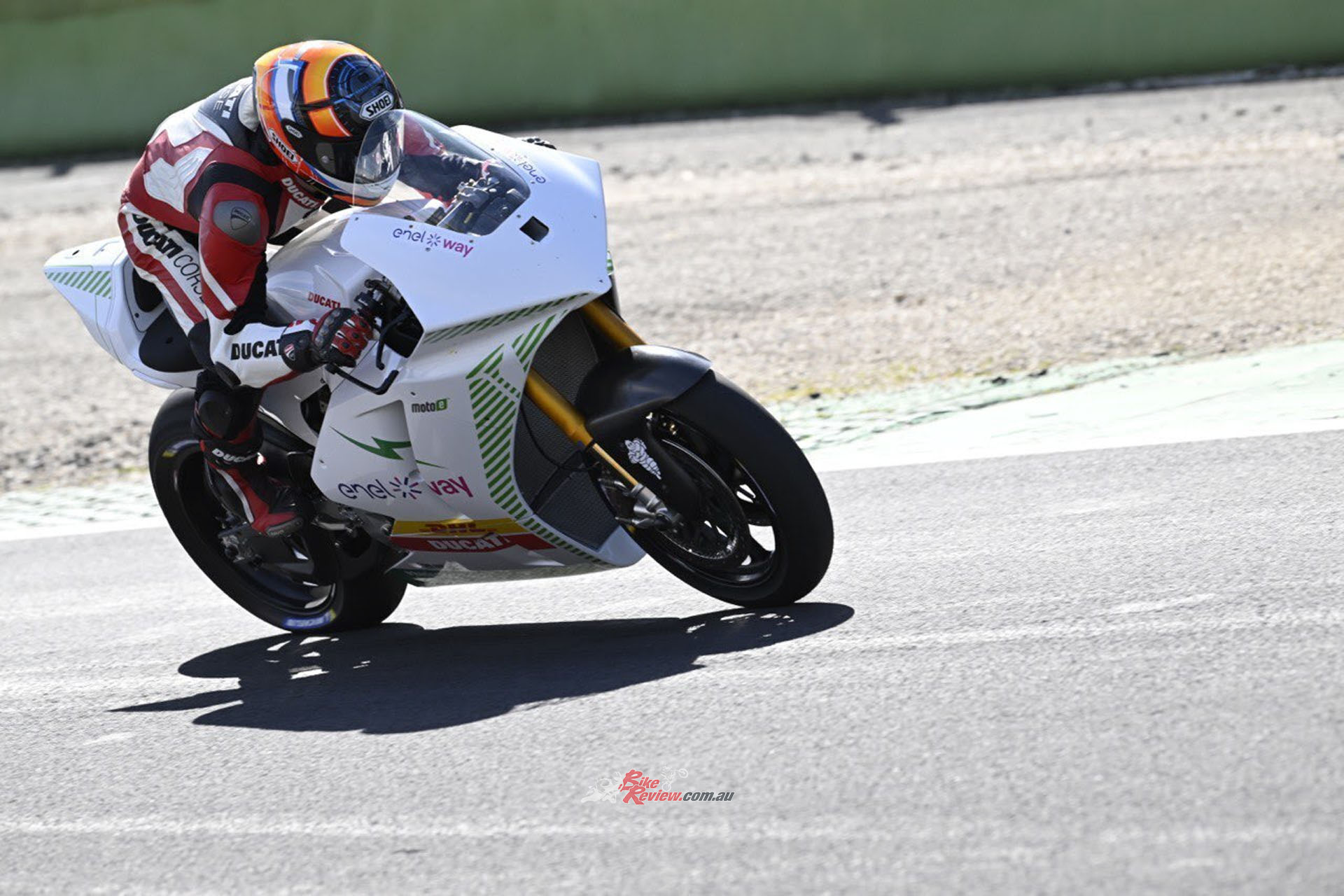
Ducati’s all-electric V21L racebike has come a long way since its 2023 launch, ridden here by Alex De Angelis.
The challenge in Australia is that electric motorcycles remain a difficult sell. Commuter bikes make the strongest case for EV power, but Ducati doesn’t play in that segment. Any move into electrification here would need to preserve the brand’s premium identity, not compromise it.
“We will continue to invest on investigating this [electric] path, but it’s not the only one that we are”…
Canovas arrived in Sydney after three years leading Ducati in India, where the market was small and still developing. Australia was the opposite: a mature, established scene with decades of Ducati history behind it. That contrast has shaped his experience ever since. The pride comes not only from steering Ducati through its first five years as a subsidiary, but from seeing how deeply the brand is valued here. “I had the chance to ride several times at Phillip Island,” he said. “So it’s a kind of pride for me to be here, being the first one to set up the subsidiary and seeing that it works well.”
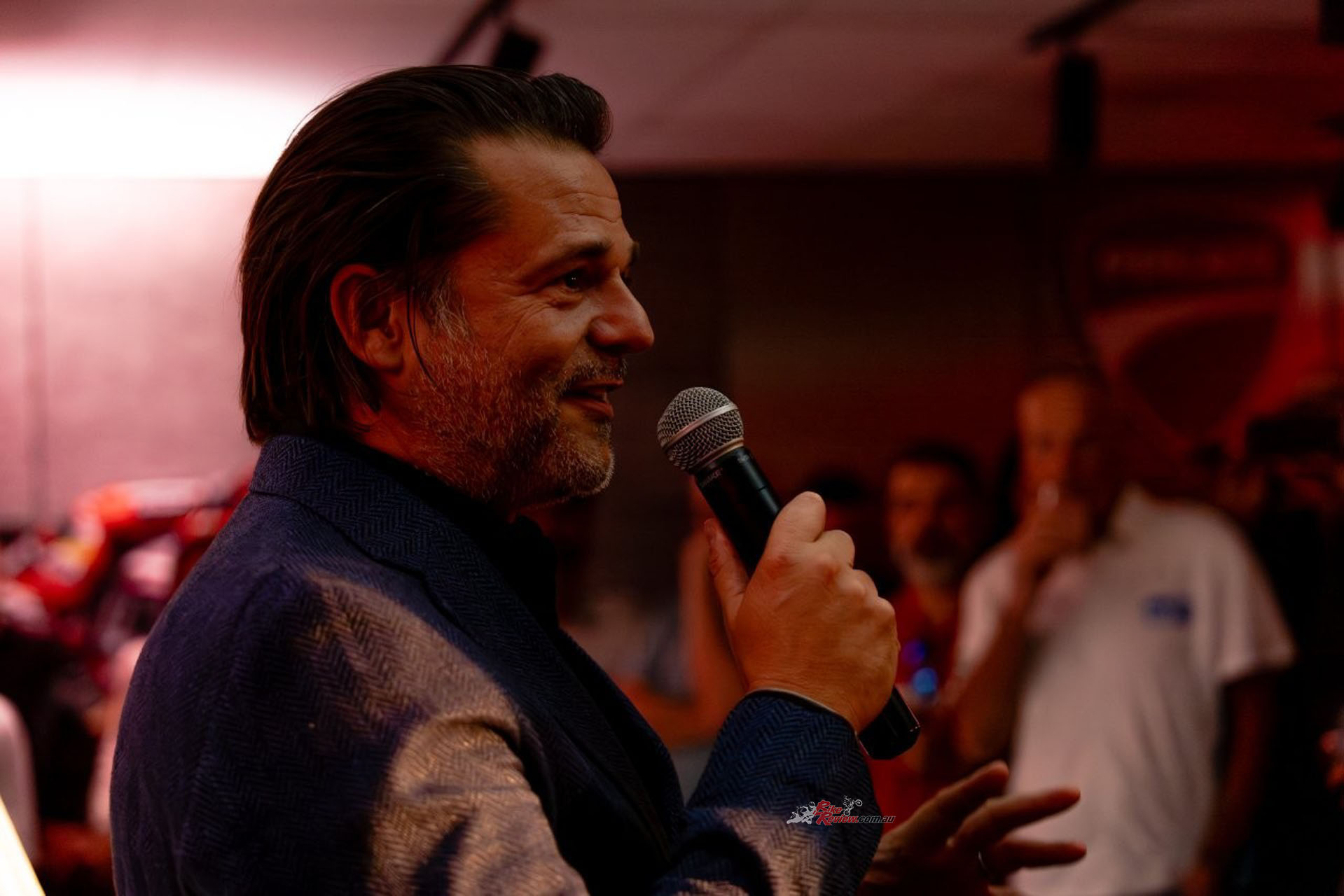
It’s a reminder that behind the managing director’s title is a lifelong motorcyclist, still driven by the same spark that first came from watching Kevin Schwantz winning races and dreaming of one day being involved with bikes…