

If we had to choose two liquids for survival, surely we would choose fuel and beer, in that order. Sadly, or perhaps luckily, both go off quickly and must be used as soon as possible...
An assurance that you will get from every zythophile is that the best beer is the beer you drink at the brewery. As soon as it is decanted from the bright beer tank, the amber fluid begins to age; and with almost all beers, this means that it begins to deteriorate…

A Zythophile in action, filling up with fresh fuel, mind you, en route to the bottle shop for some cool amber ale…
The same is true of petrol, or as our trans-pacific friends say, gasoline. Curiously, both of these names come from the UK: “gasoline” from the name of the British publisher John Cassell who sold the product as “Cazeline” and “petrol” at least partly from its marketing under that name (originally as a solvent) by wholesalers Carless (stet), Capel & Leonard in London. The term “guzzeline” is restricted to the Mad Max movie franchise.
Read previous Bear Tracks articles here…
As with beer, despite a limited shelf-life petrol does last for some considerable time before losing its usefulness. Its longevity likewise depends on the circumstances under which it is stored. I had a GB400 Honda for a while which I had fitted with a Dominator 650cc engine, and it would refuse to start after as little as two weeks in the garage.
I do not know why, although I assume that it had something to do with the carburettor bowl. Perhaps too much air got at the fuel in that. Nulon’s “Start ya Bastard” got the bike going every time, and once it was hot (or perhaps once the fuel in the carburettor bowl had been used up?) it ran fine. Come to think of it, I’m sorry I sold it… dammit, it was a nice little bike.
 “Start ya Bastard” contains 24% ether plus “other petroleum anti-knock additives” and uses carbon dioxide as propellant. All of that doesn’t really make it particularly ecologically sound (as if the name wasn’t enough of a clue) but it works.
As with beer, despite a limited shelf-life petrol does last for some considerable time before losing its usefulness…
There are other products in other markets which, I imagine, will work just as well. What you do is spray some of this stuff into the air intake – airfilter, bell mouth, whatever – and crank the engine at the same time. Once the bike has started it will usually continue to run.
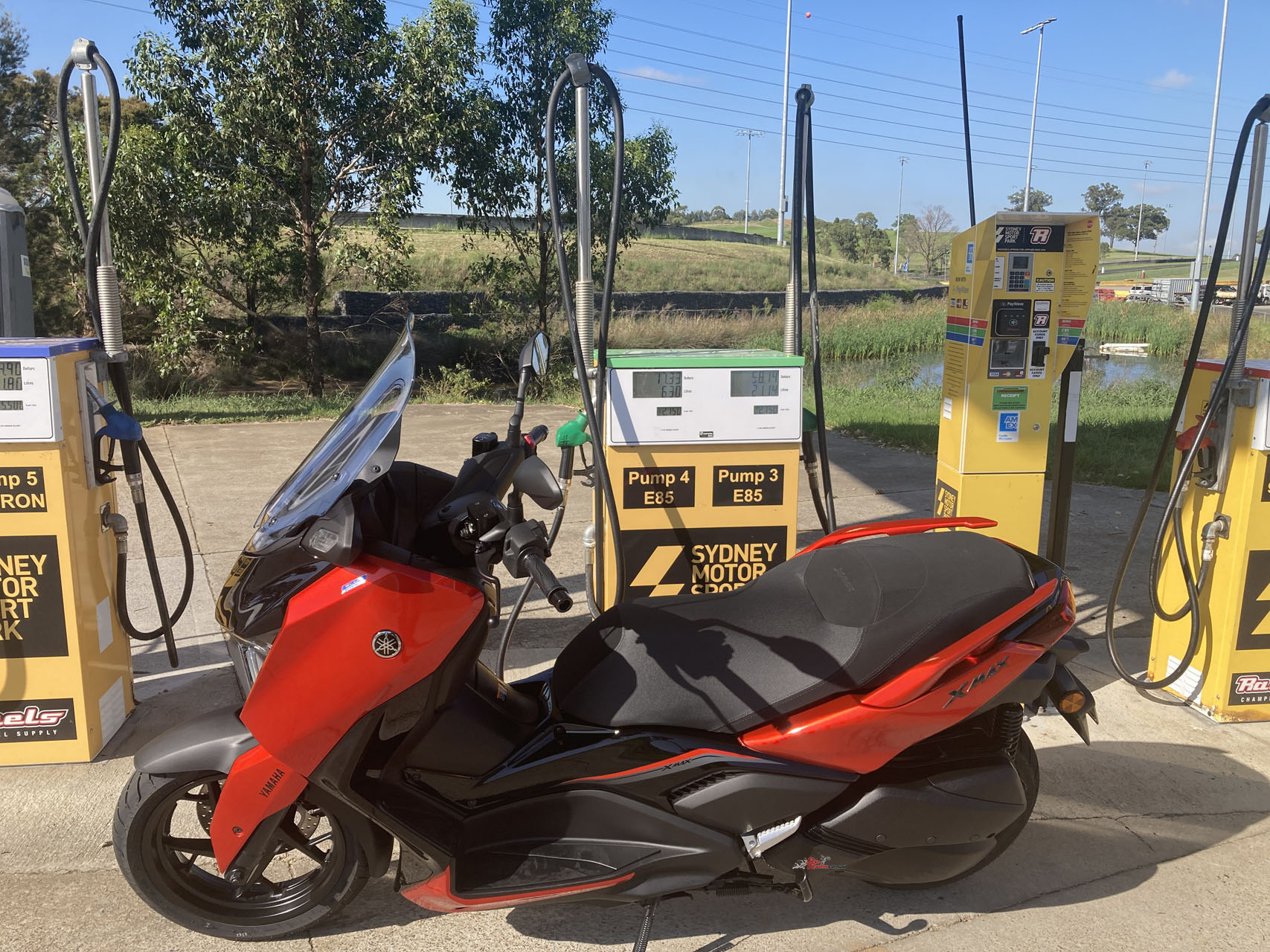
At the other extreme I have had bikes sitting for up to a year which would start without any extra encouragement. I have tried to work out if factors like compression ratio make a difference, but no luck. All I do know is that fuel injected engines are more likely to start even after a long break than carburetted ones. I suspect fuel goes off more easily in a carburettor bowl than in a fuel tank.
What does it mean to say that petrol goes “off”?
We don’t really ask much of the fuel in our motorcycle engines. As long as it ignites at the right time, we’re happy. The time part of that is taken care of by using the correct octane rating: too low and the engine will tend to ping because it ignites too early, too high and the engine may ignite it too late, causing power loss. There are high octane fuels – and in Australia I am looking at Shell V-Power – which cause problems in carburetted bikes. Shell suggests changes to the carburettor and potentially different spark plugs before using it. It’s easier just to forget about V-Power.
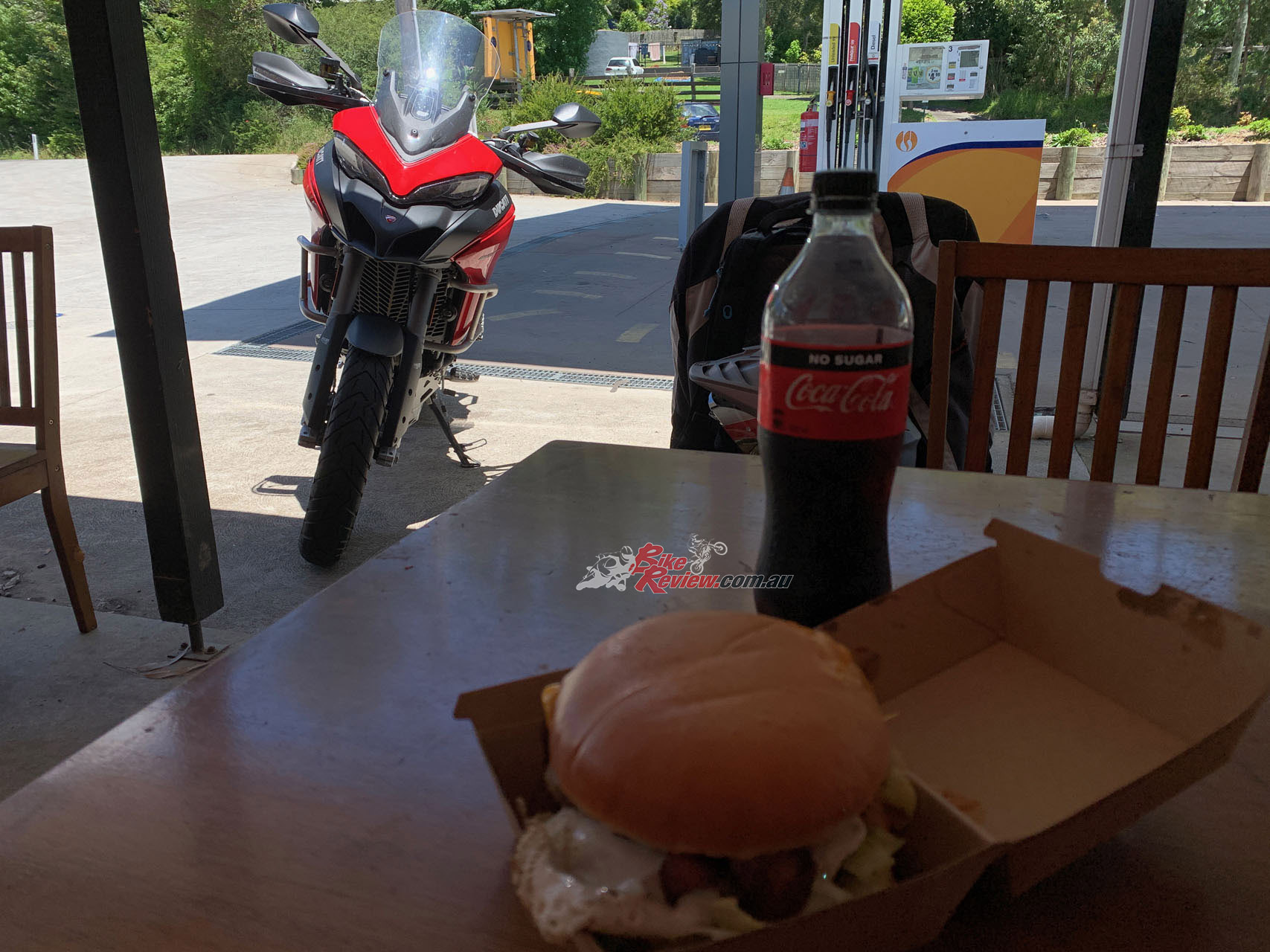
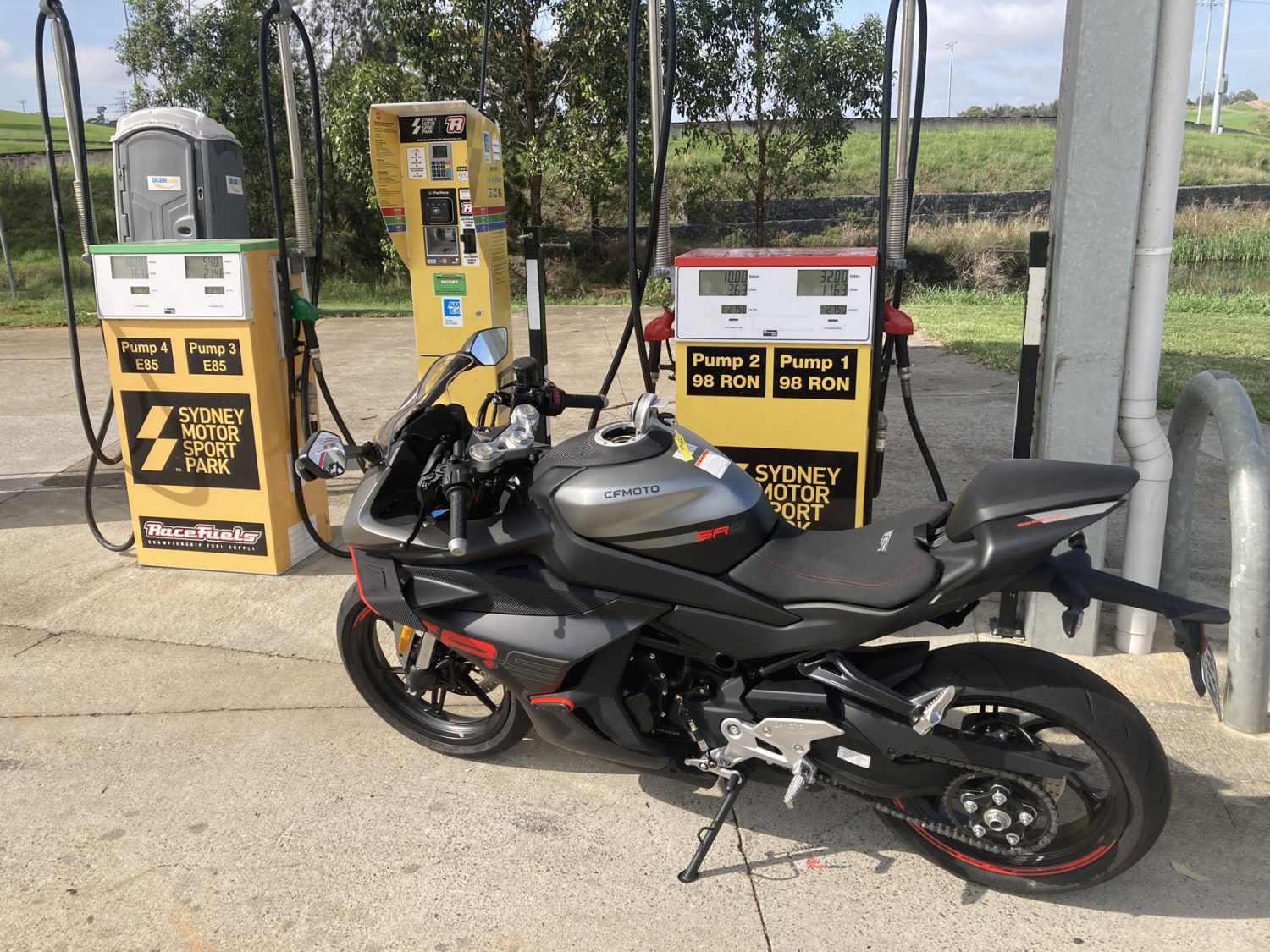
Fuel your bike up and get yourself a servo meal, the great Aussie motorcycle lunch stop!
But that has limited impact on starting. The problem is aging, which begins as soon as the fuel leaves the refinery. The main factors in aging are how much light and air get to it and whether the fuel is exposed to high temperature fluctuations. In an open container, it will age faster than in a closed, and especially a completely filled one. With a bike’s fuel tank the important thing is how much fuel, and therefore how little air, is in the tank.
The main factors in aging are how much light and air get to it and whether the fuel is exposed to high temperature fluctuations…
It is usually thought that fuel will remain stable for a period from two or three months to a year, without measurable loss of quality. That is in holding tanks or in petrol (gas) station storage. Shell says that “If a bike has been left in warm conditions for several weeks, this may cause the petrol to lose some volatile components which can mean the engine suffers from poor fuel mixture distribution.” These volatile components, as the name suggests, help starting.
“Keep the tank full and park your bike in a cool place to reduce that as much as possible. But no matter how cool and protected the fuel is, it still won’t last forever.”
So there’s the first major reason for fuel deterioration: loss of volatile hydrocarbons due to evaporation. Keep the tank full and park your bike in a cool place to reduce that as much as possible. But no matter how cool and protected the fuel is, it still won’t last forever. Here is where we get to the magic of organic chemistry as opposed to simple physics.
The second major reason is the long-term process of oxidation. Olefins, unsaturated compounds in the fuel, can react with atmospheric oxygen. Small amounts of corrosive acetic acid are produced in this process, while more importantly polymers – long-chain compounds – are formed that are no longer soluble in the fuel. The resulting resinous gunge can clog pumps, pipes or injection nozzles. Worse yet, carburettors can gum up completely. Ask me how I know that. I had one of the last Triumphs before the update to fuel injection.
While there are actually a very few beers which get better with age, all petrol ages poorly. Keep that in mind, and either fill your ‘resting’ bike’s tank to the brim or take it out for the occasional run. Have a beer when you get home. A fresh one.
The Author