

With long travel suspension, a 400km fuel range, broad torque curve, a competition level chassis and a full electronics suite, the Ducati DesertX Rally is like a big enduro bike...
The 2025 DesertX Rally is a mean machine, with just about all of the bells and whistles you need, making for a seriously capable dirt bike that is also a blast on the tarmac. I’m not often one to side with a big price tag but this might be the rare case it could be worth the cash…
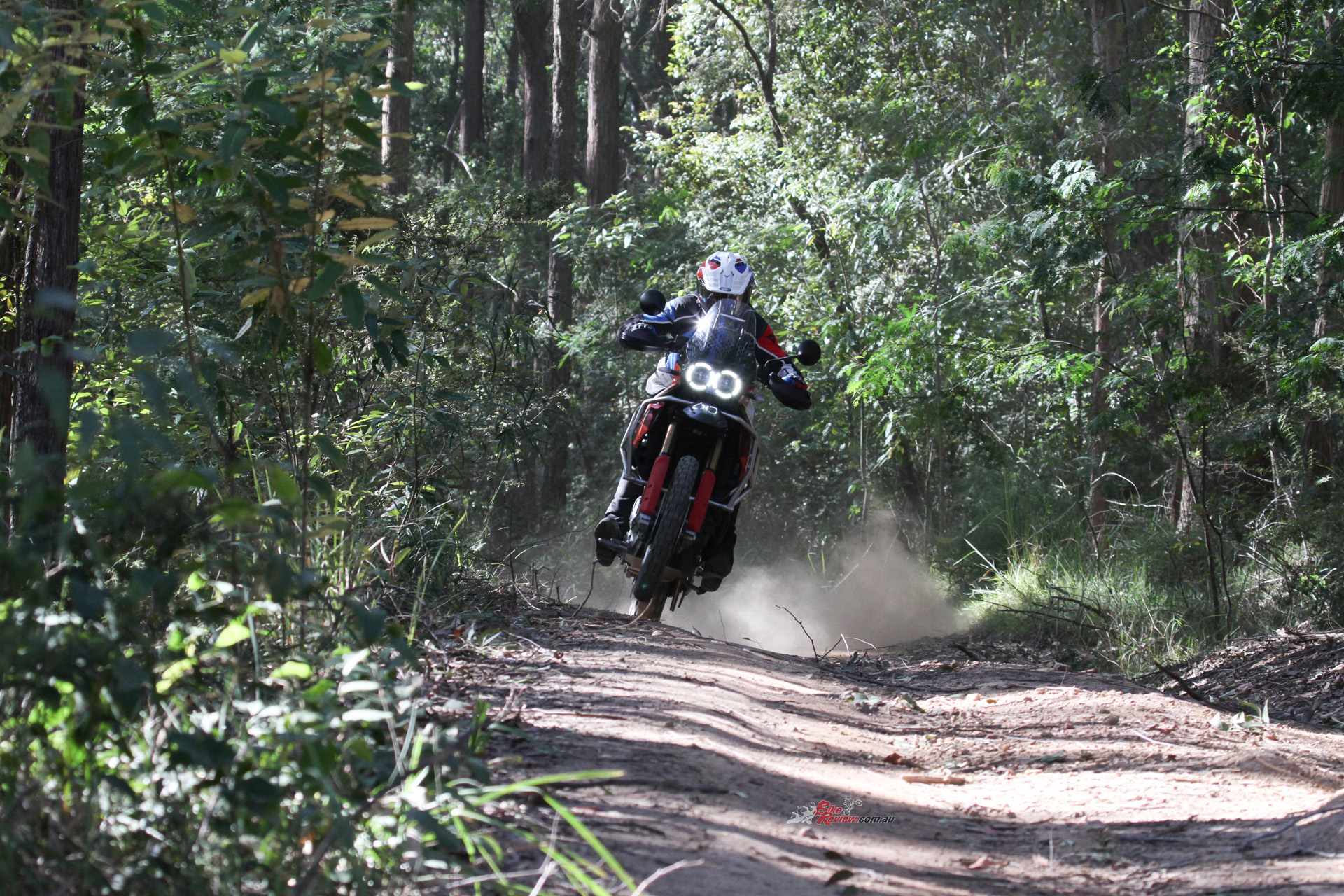
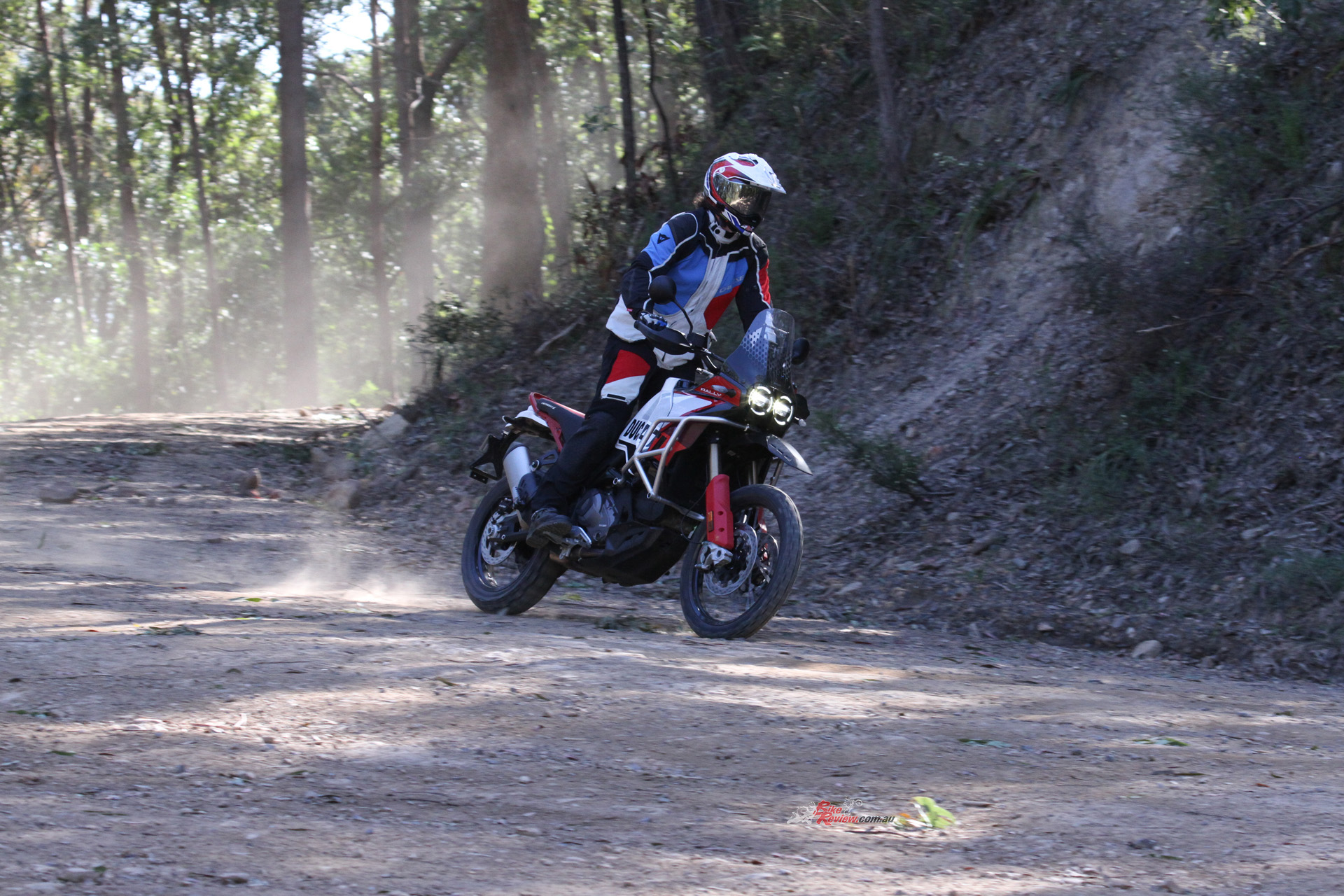
Nick blasting through the trails. With 110hp on tap and long travel suspension, the Rally is an absolute weapon!
If we start with the 937cc desmodromic Testastretta powerplant many of us here at BikeReview have grown to love, the L-twin puts out 82kW at 9,250rpm and 92Nm at 6,500rpm, albeit in an entirely different shell. Now, these numbers aren’t shocking on paper, but remember what you’re riding. This is essentially a 100-horsepower dirt bike. Think about that for a moment!
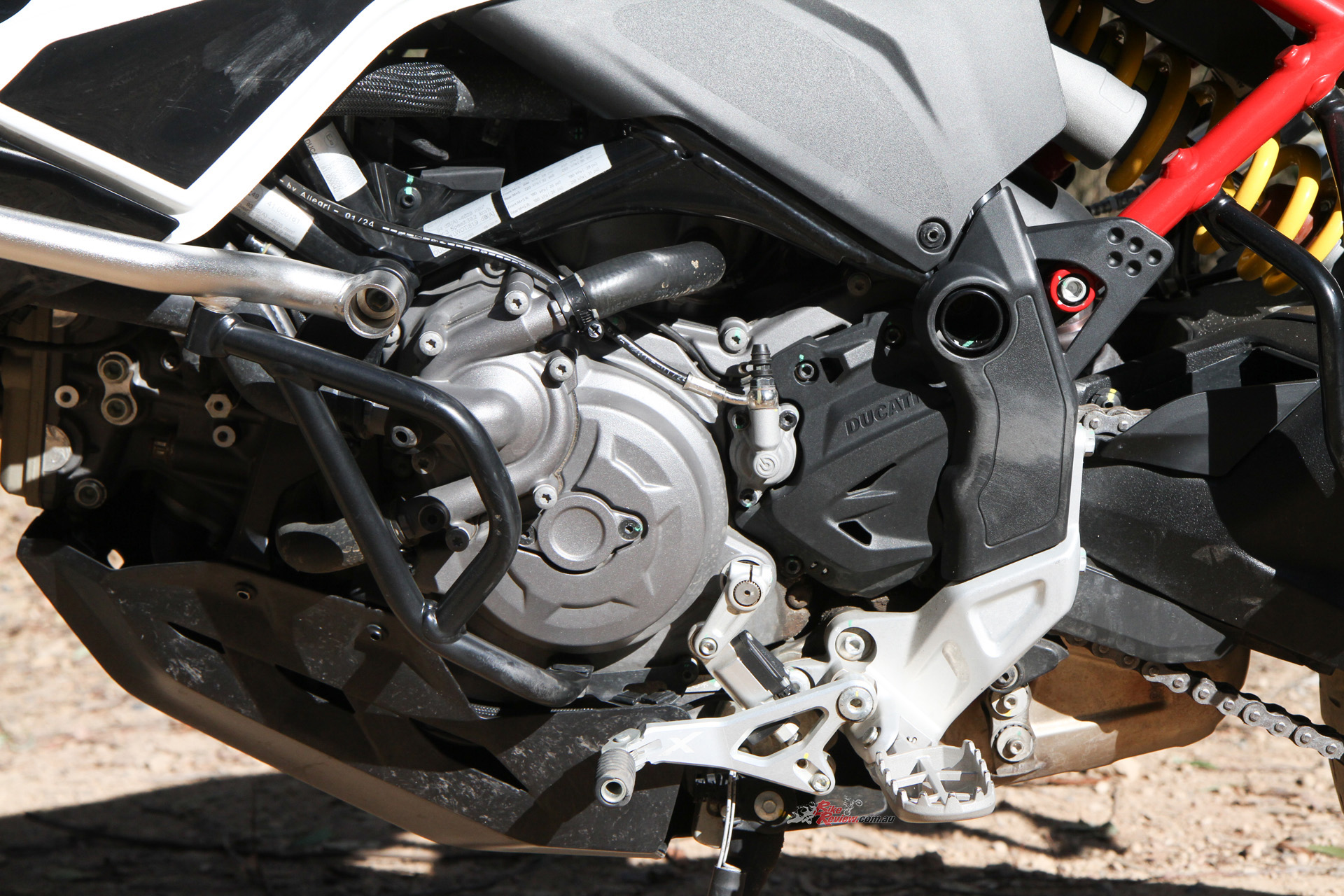
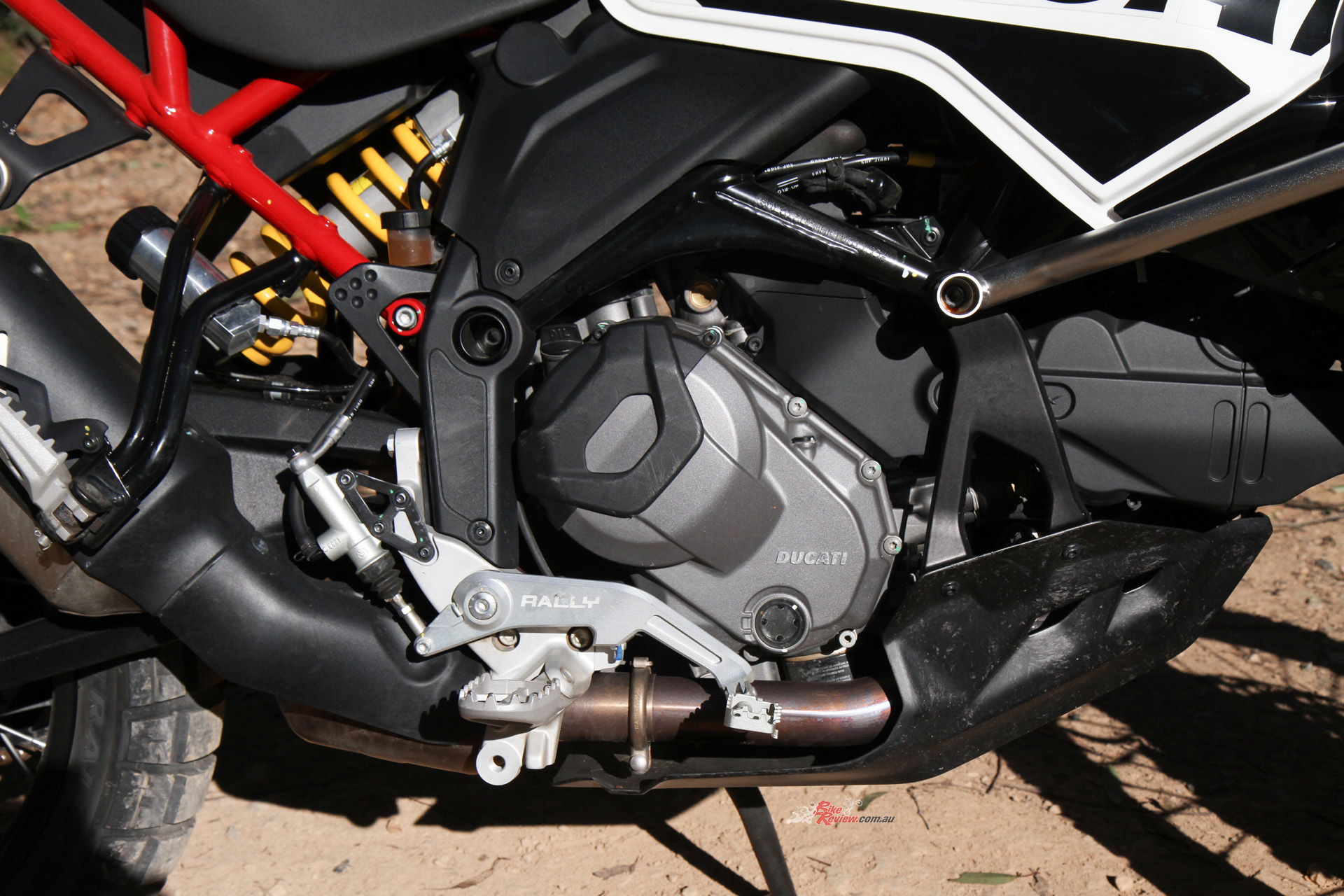
Even on the tarmac, it’s punchy enough and torquey enough to have a blast and get the front wheel up with ease in second gear. On the dirt, I’d argue this was more than enough, although we all always want more eventually. In the right mode, sliding the rear in the gravel is effortless and controlled. Most importantly for me, it’s a useable amount of power, particularly on the dirt.
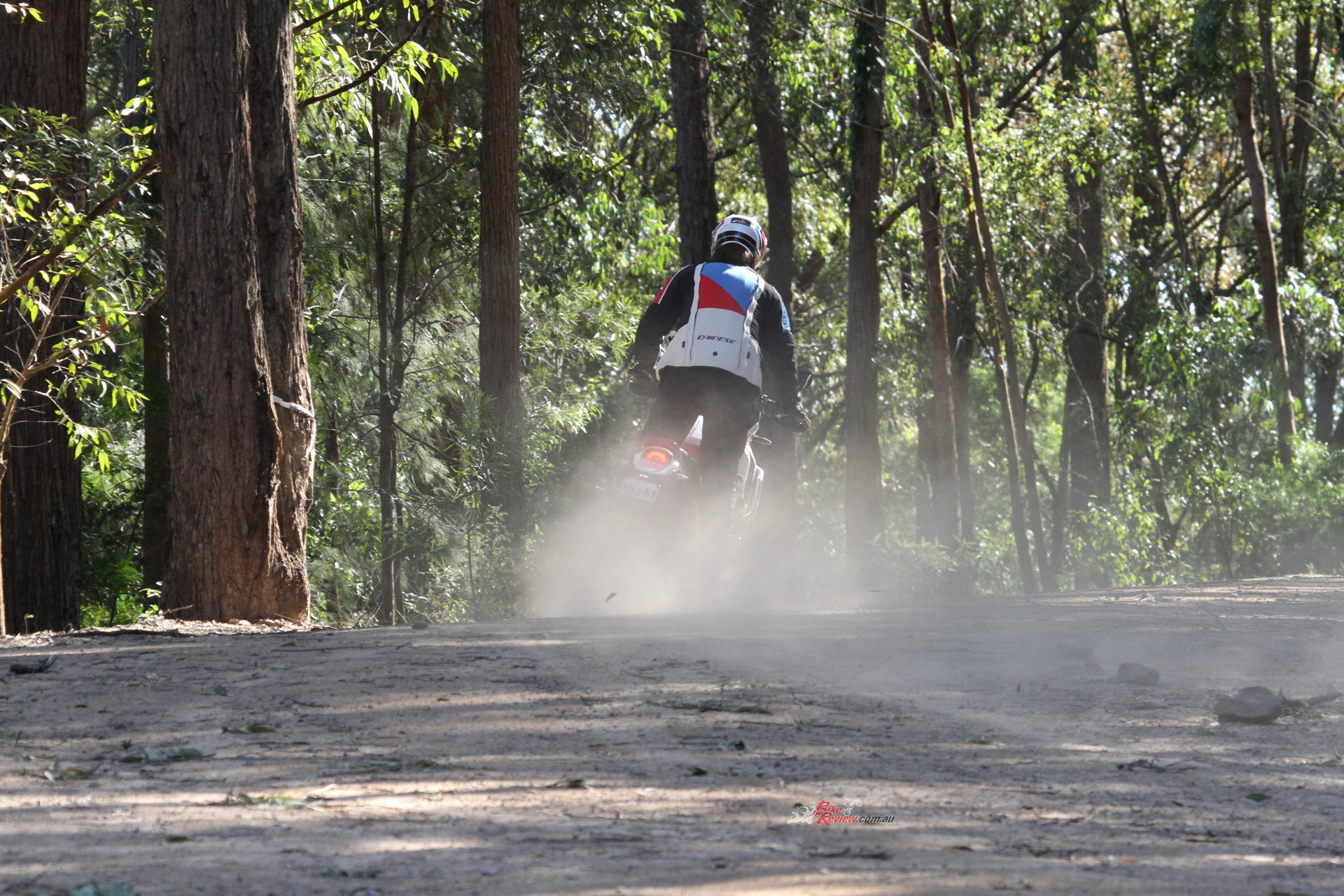
“Most importantly for me, it’s a useable amount of power, particularly on the dirt.” Rally mode is the full monty one…
Power gets to the back wheel via an effortlessly light hydraulically actuated clutch. Arguably one of my most positively rated aspects of this bike, single-finger operation is a big deal for me, especially out on the single tracks. The six-speed box is also shifted with Ducati’s quick-shifter setup, which is a nice addition and bi-directional. It makes a big difference to the ease of ride, both on and off-road.
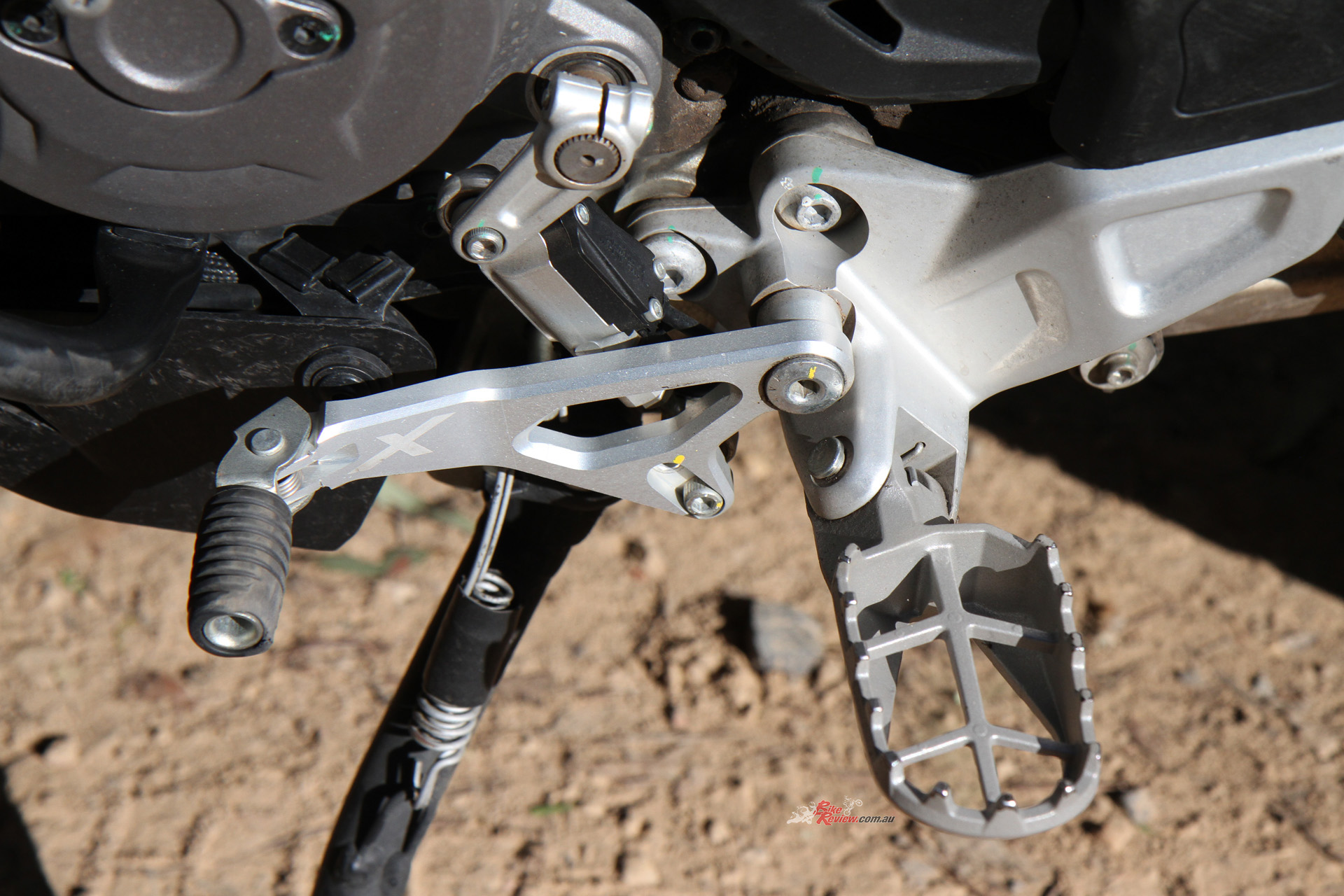
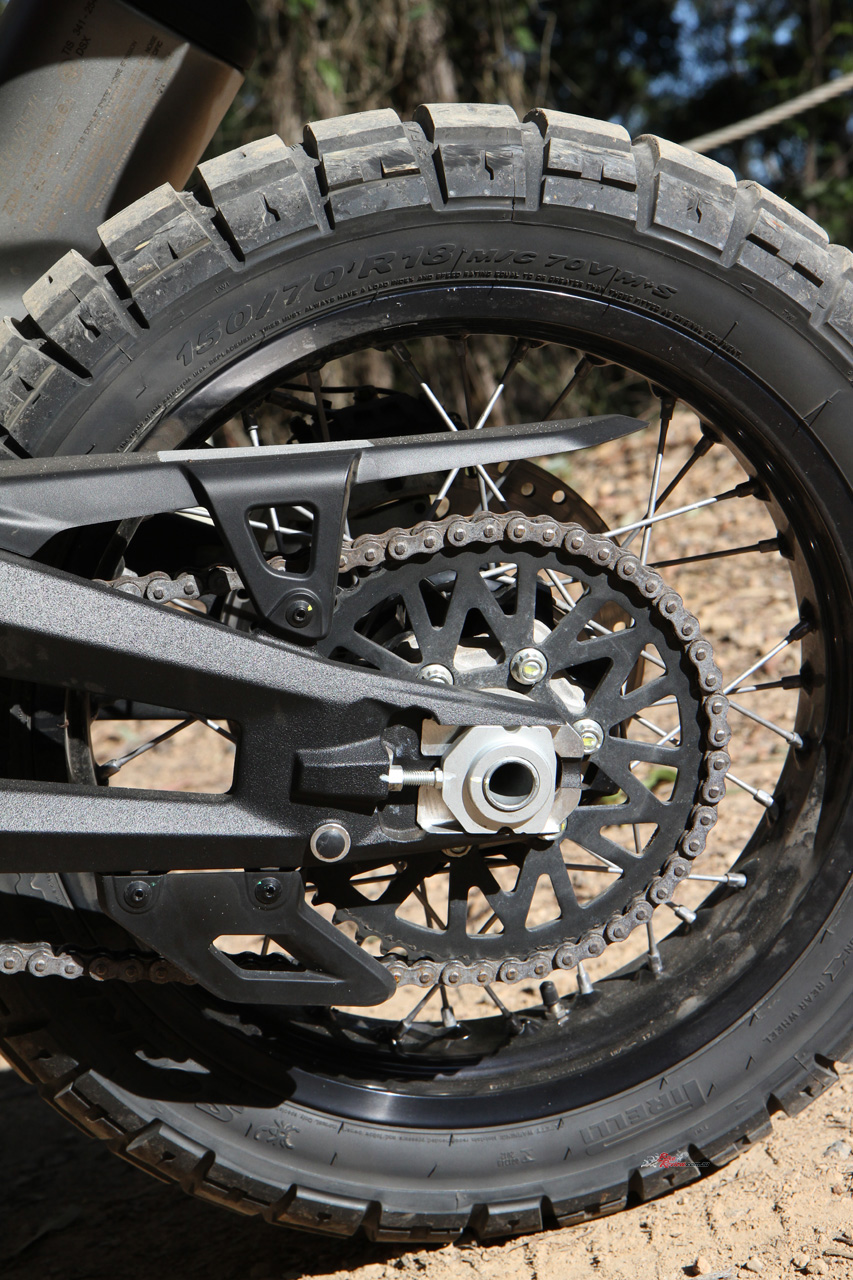
At lower rpm and especially in the cooler weather, I found it slightly clunkier than I’d have liked, but after some reading it appears things start to loosen and bed in after a few thousand kays. I’ve read some mixed reviews regarding the gearing – personally I’d say it was slightly too tall for my liking, and losing a tooth on the front sprocket or going up two or thee at the back would help liven response up. Standard final gearing is 15/49.
“losing a tooth on the front sprocket or going up two or thee at the back would help liven response up”…
For me, the most impressive component of this 2025 set-up is the KYB long-travel suspension. Personally, I’d rate this as a flawless set-up, with the right amount of tweaking available too. It’s obviously a passive set-up, and not the active variants we see on a few of the other Ducati models. But the 48mm KYB inverted front forks boast an insane 280mm of travel that soaked up the worst Ourimbah State Forest had to offer.
“For me, the most impressive component of this 2025 set-up is the KYB long-travel suspension… Ducati have knocked it out of the park with this suspension set-up.”
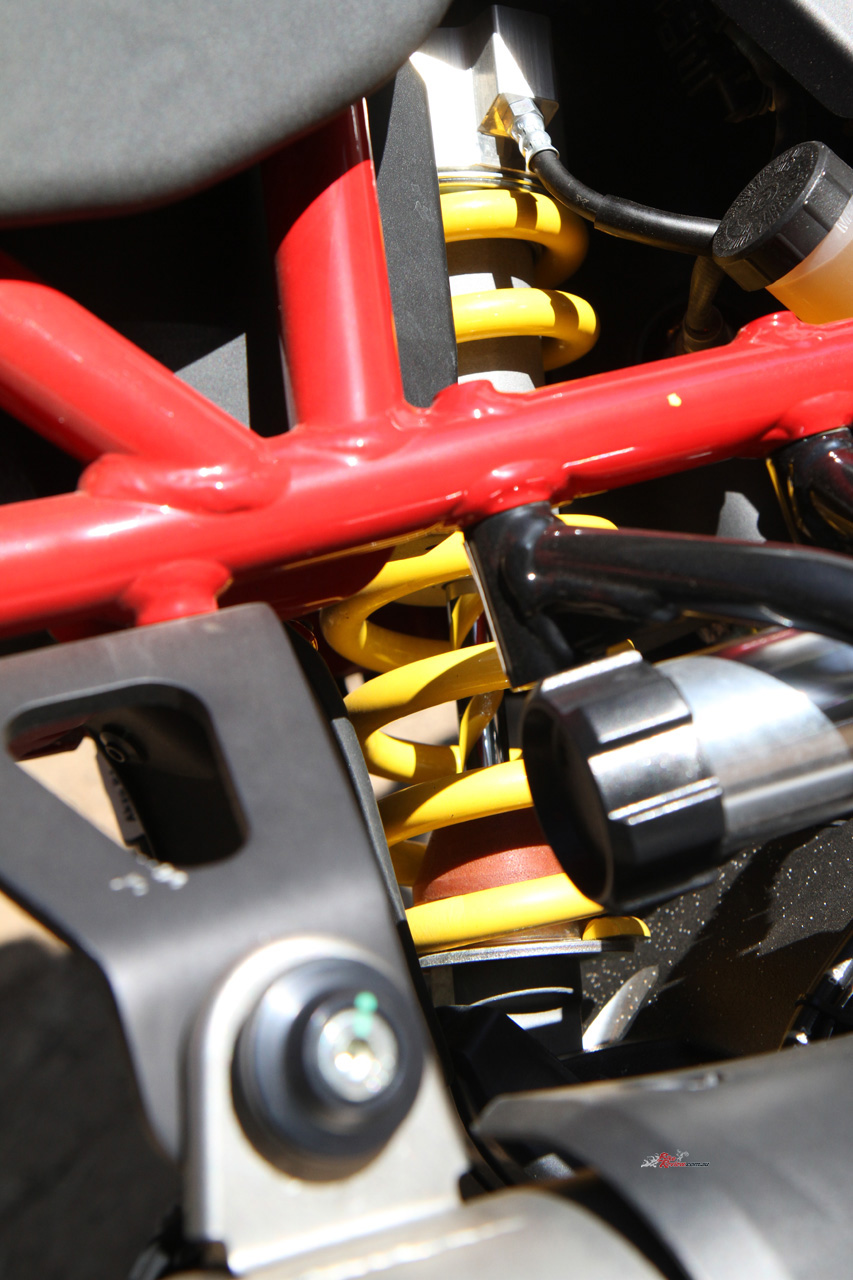
The big factory-mounted bashplate is a nice addition and adds to the peace of mind out in the bush. To be honest, I was impressed with how it handled some of the bigger jumps and drops, and I reckon it had so much more to give than I was able to ask of it. At the rear, a similar professional KYB monoshock boasts an impressive 250mm of travel with remote preload adjustment. Honestly, in my opinion, Ducati have knocked it out of the park with this suspension set-up.
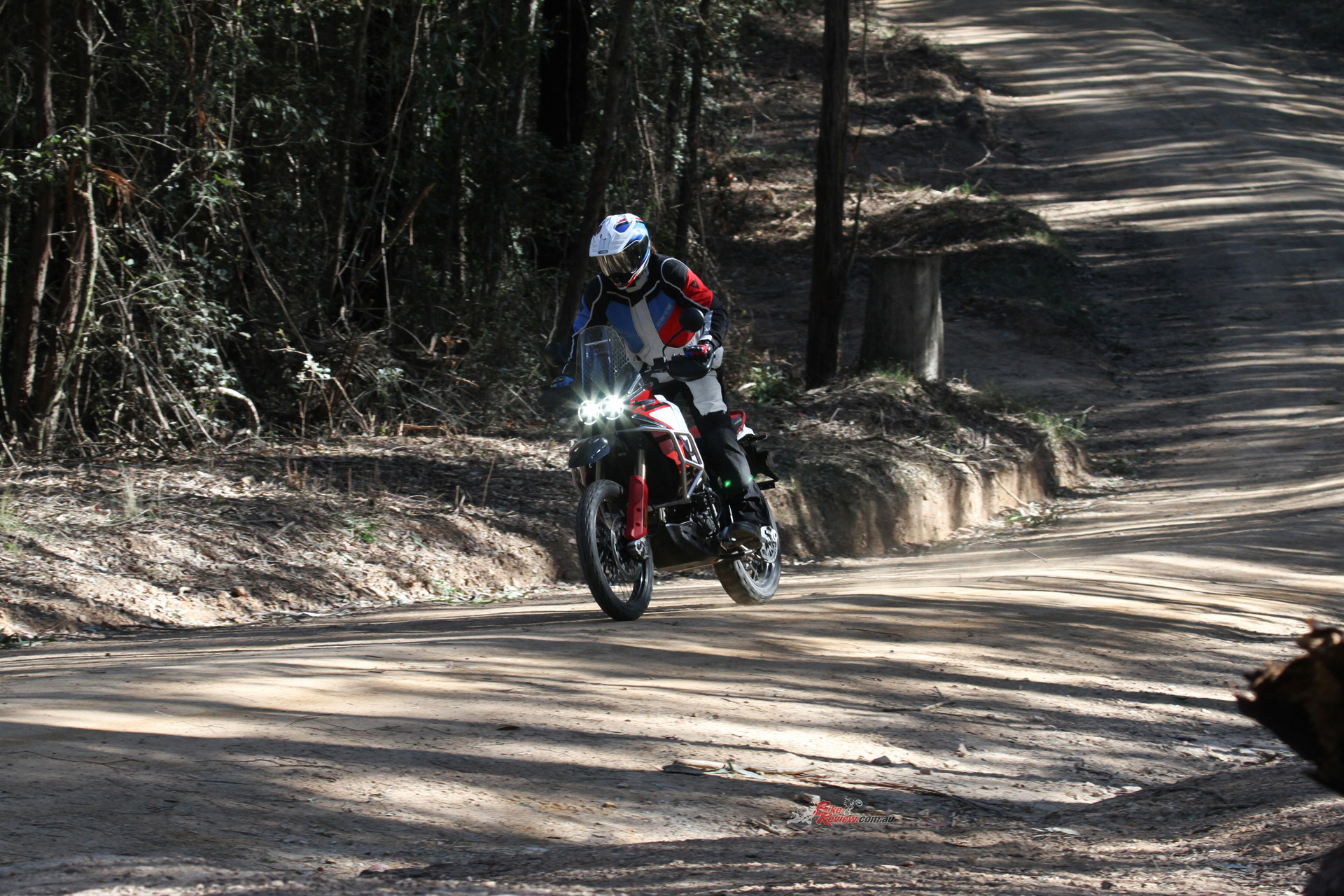
“The big factory-mounted bashplate is a nice addition and adds to the peace of mind out in the bush”…
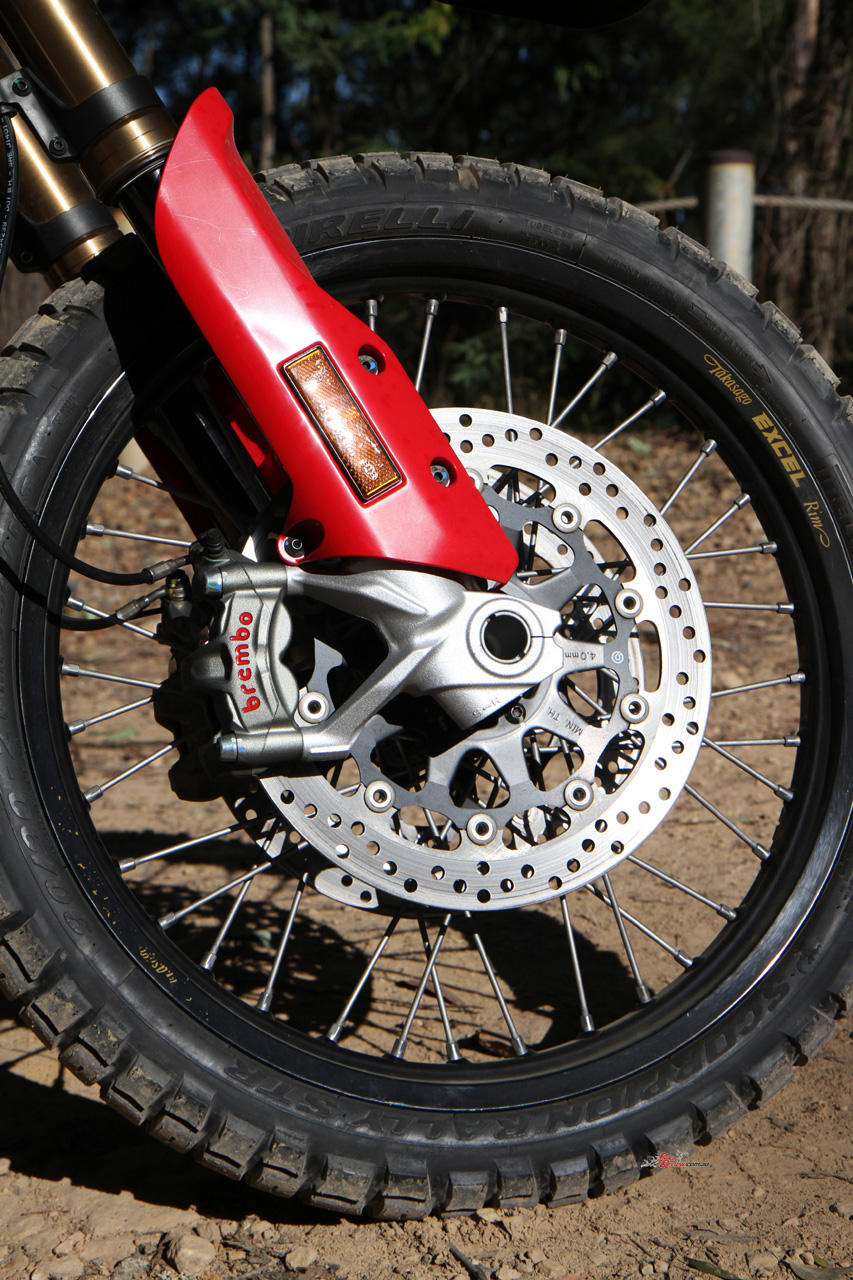
Braking performance comes thanks to some of the better tech available, in classic Ducati fashion. Up the front are a pair of 320mm rotors and a monoblock four-piston radial-mount Brembo set-up. At the rear, it’s also a twin-piston Brembo on a 265mm disc. At both ends is the Bosch cornering ABS, which is a nice addition, while master-cylinders, levers and reservoirs are also by Brembo. Overall, more than enough for the weight and size of the bike, even with another 105kg atop. Feel is top notch, initial bite great and modulation intimate and that goes for both ends, too.
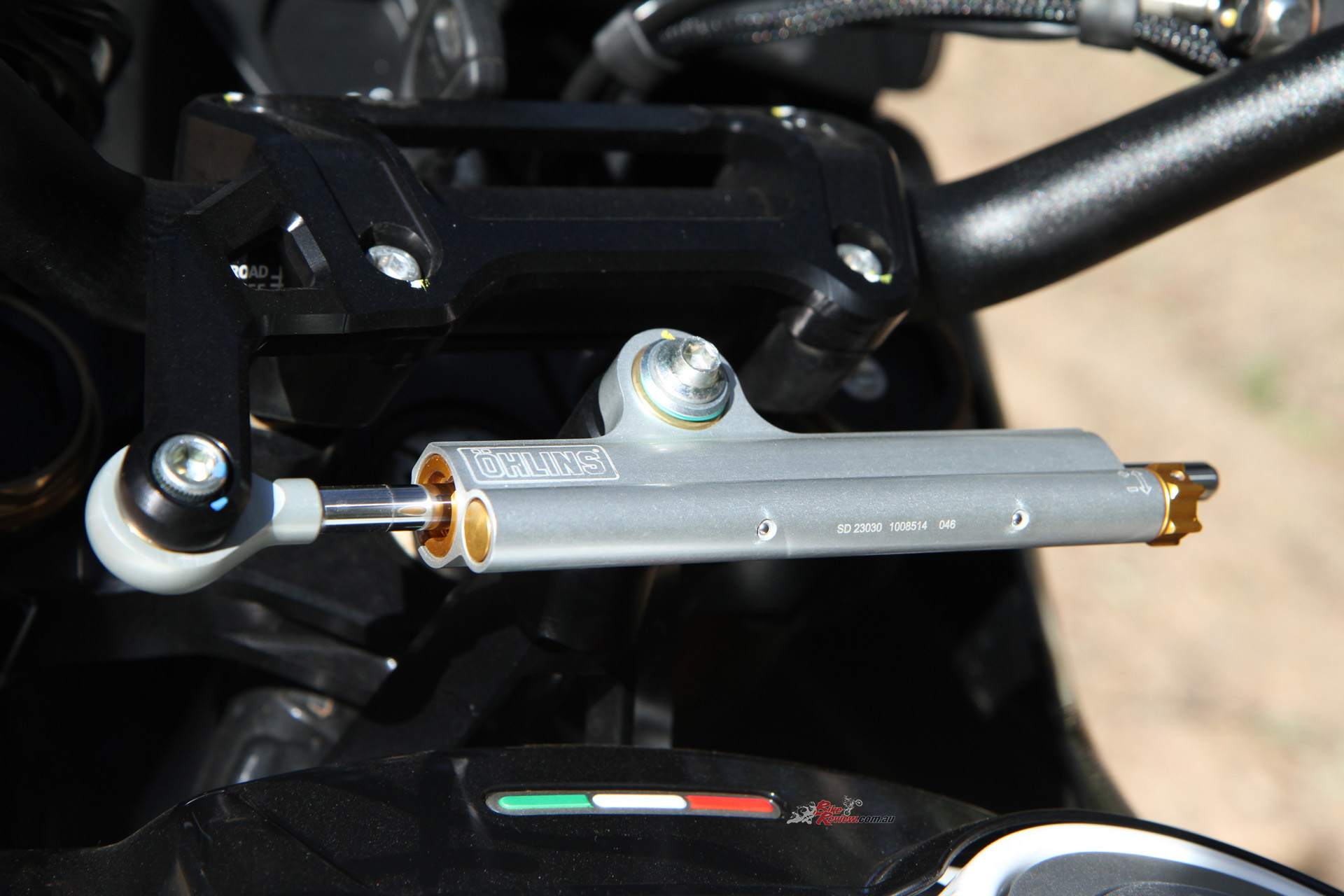
There’s also none of that wallowing under heavy braking I’ve noticed with some of the big, big adventure bikes I’ve been on recently. The adjustable Öhlins damper definitely helps with this, as well as high-speed stability. That being said, it is a massive machine. While it looks quite slim in the images, it’s a bit of an intimidating bike when you’re seeing it for the first time in person.
“It has a great riding position for me at 196cm, both standing and seated, with the 910mm big rally bench-style seat.”
It has a great riding position for me at 196cm, both standing and seated, with the 910mm big rally bench-style seat. There is the option to drop this by 30mm with the low seat accessory if you’re struggling to get your feet planted. Of course, this is less of an issue while moving, but during heavy traffic or slow single trails it might be something you want to consider. On some of the longer rides I had it on, primarily freeway, the seat is not super comfortable, reminding me much more of a motocross seat, suggesting you might want to look at some upgrades if you’re considering this for a tourer.
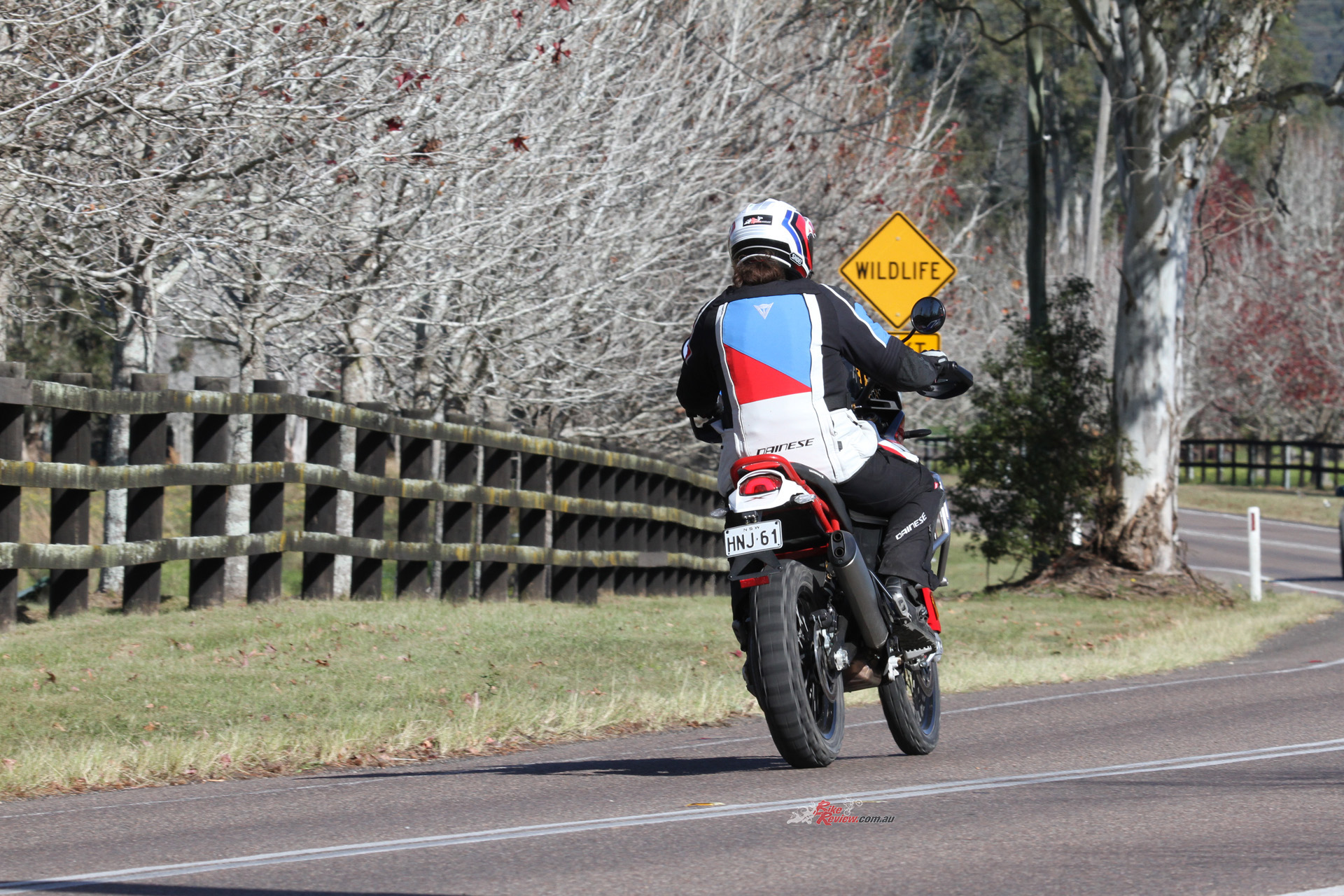
Road performance is great, but the seat gets uncomfortable after a few hours touring.
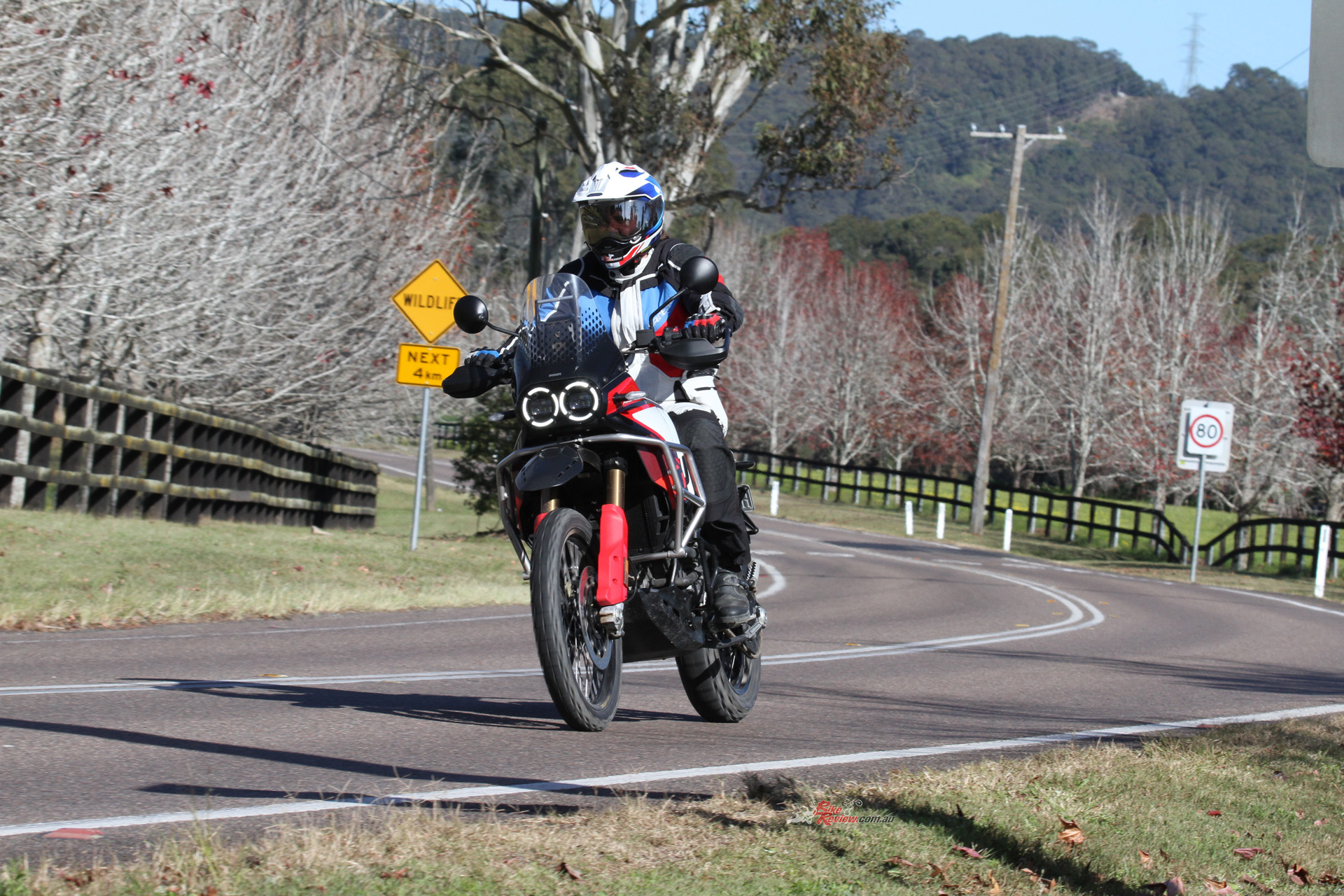
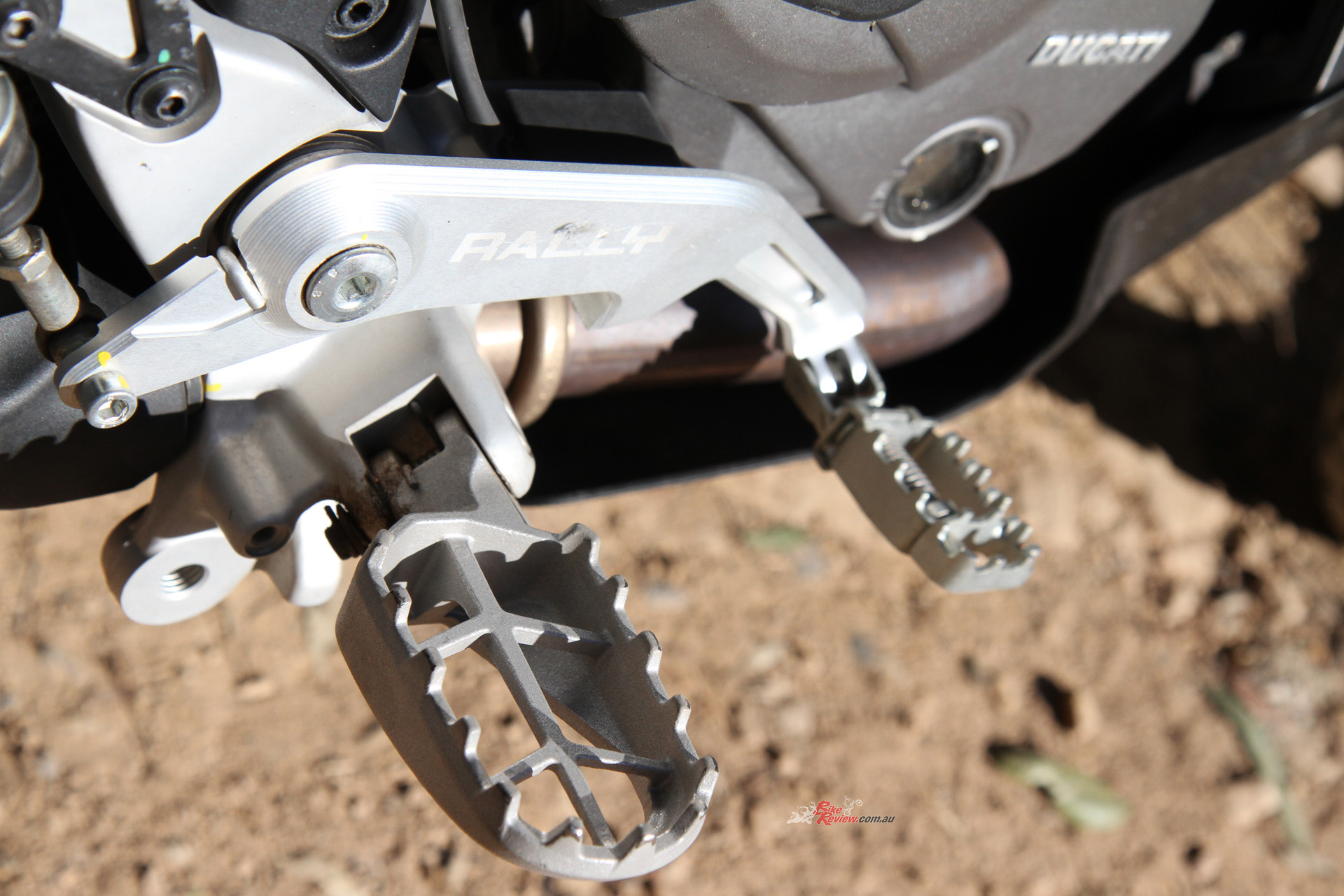
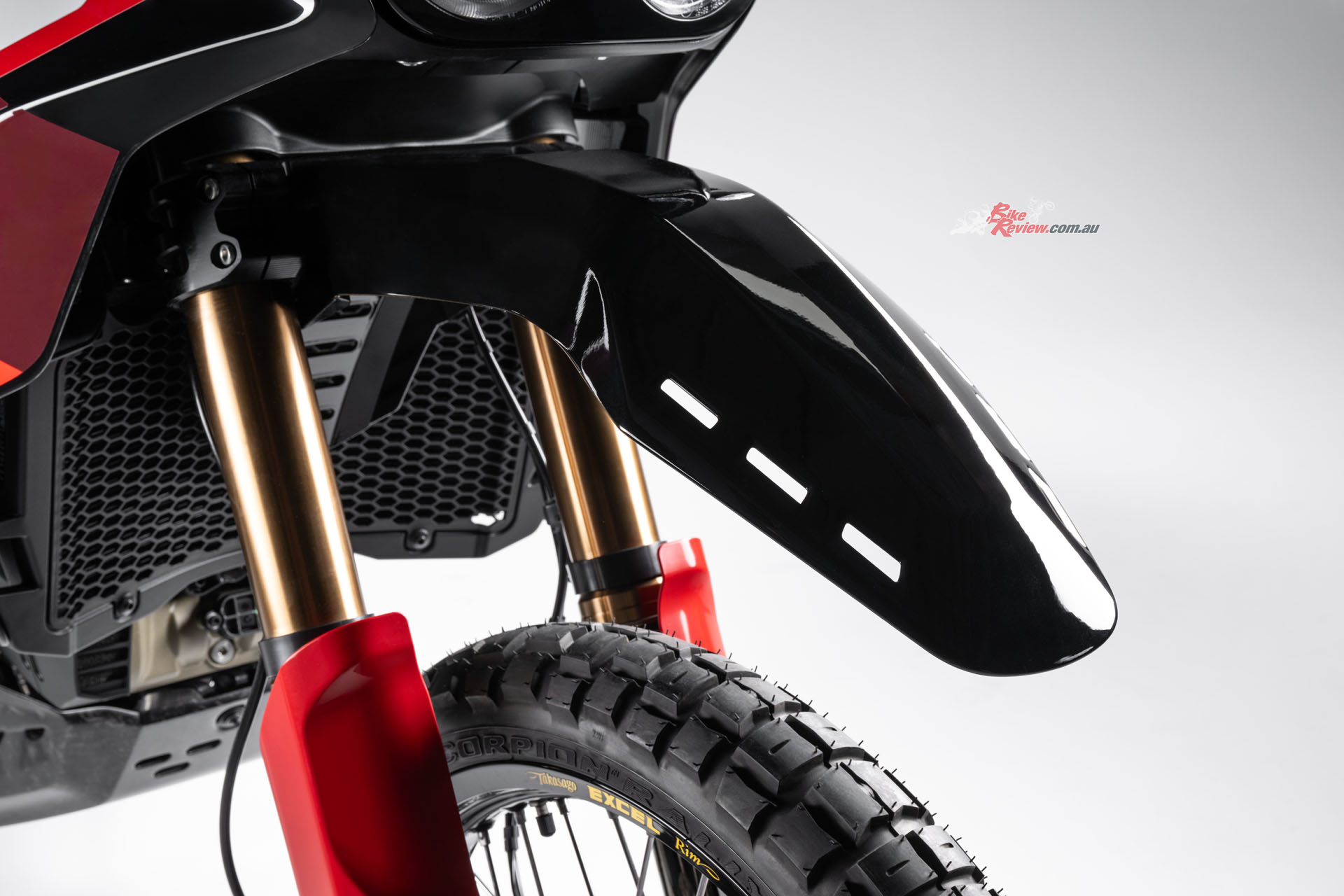
The big front 21in off-road wheelset boasting the Takasago Excel rims and billet aluminium hubs lifts it up and there is plenty of clearance. The Rally can feel slightly lumbering, especially on some of the tighter corners on the tarmac. Given the high centre of gravity, there is just a big lean requirement. For me this wasn’t a deal breaker, and it handles good even in the twisty tarmac, very dirt bike-esque.
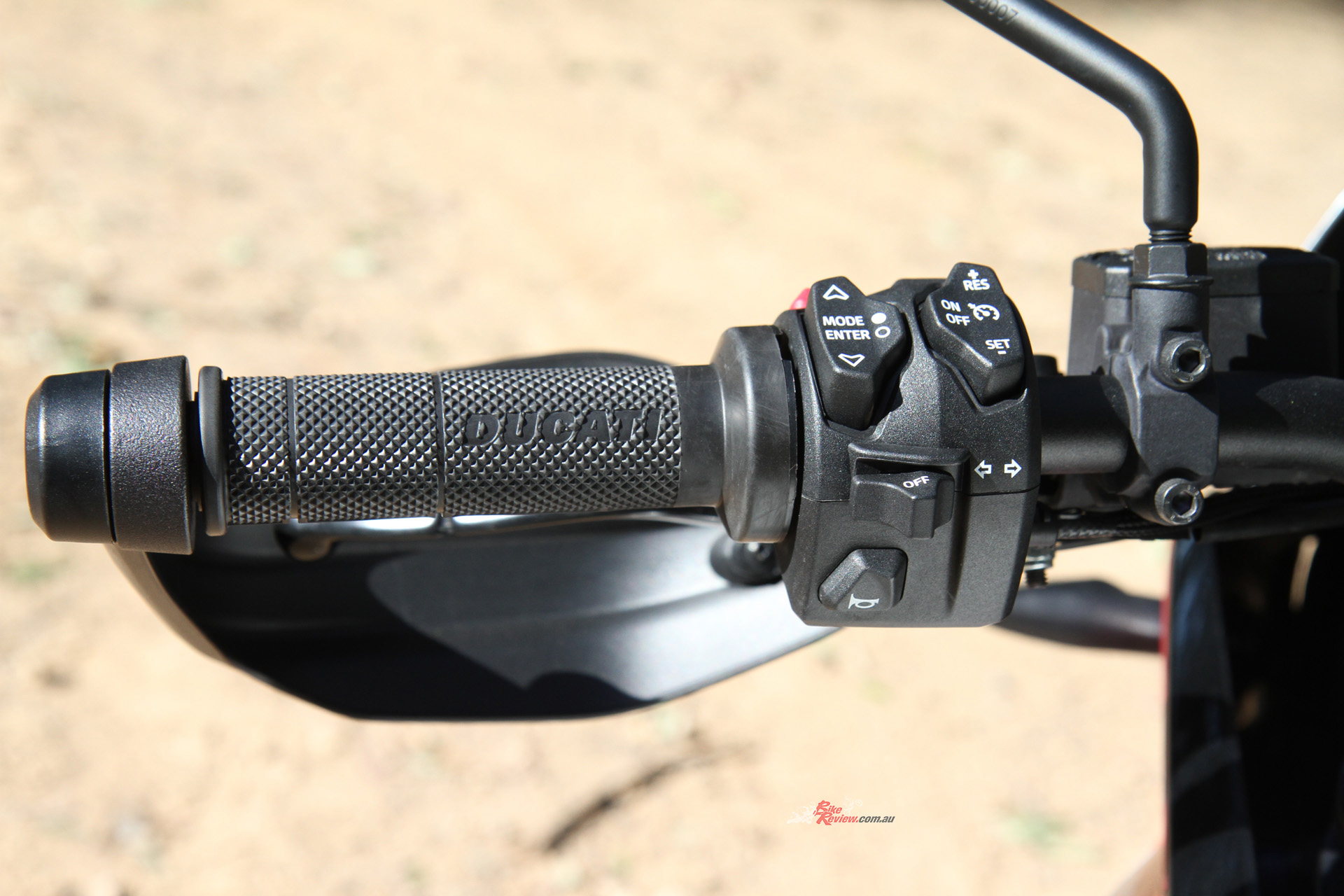
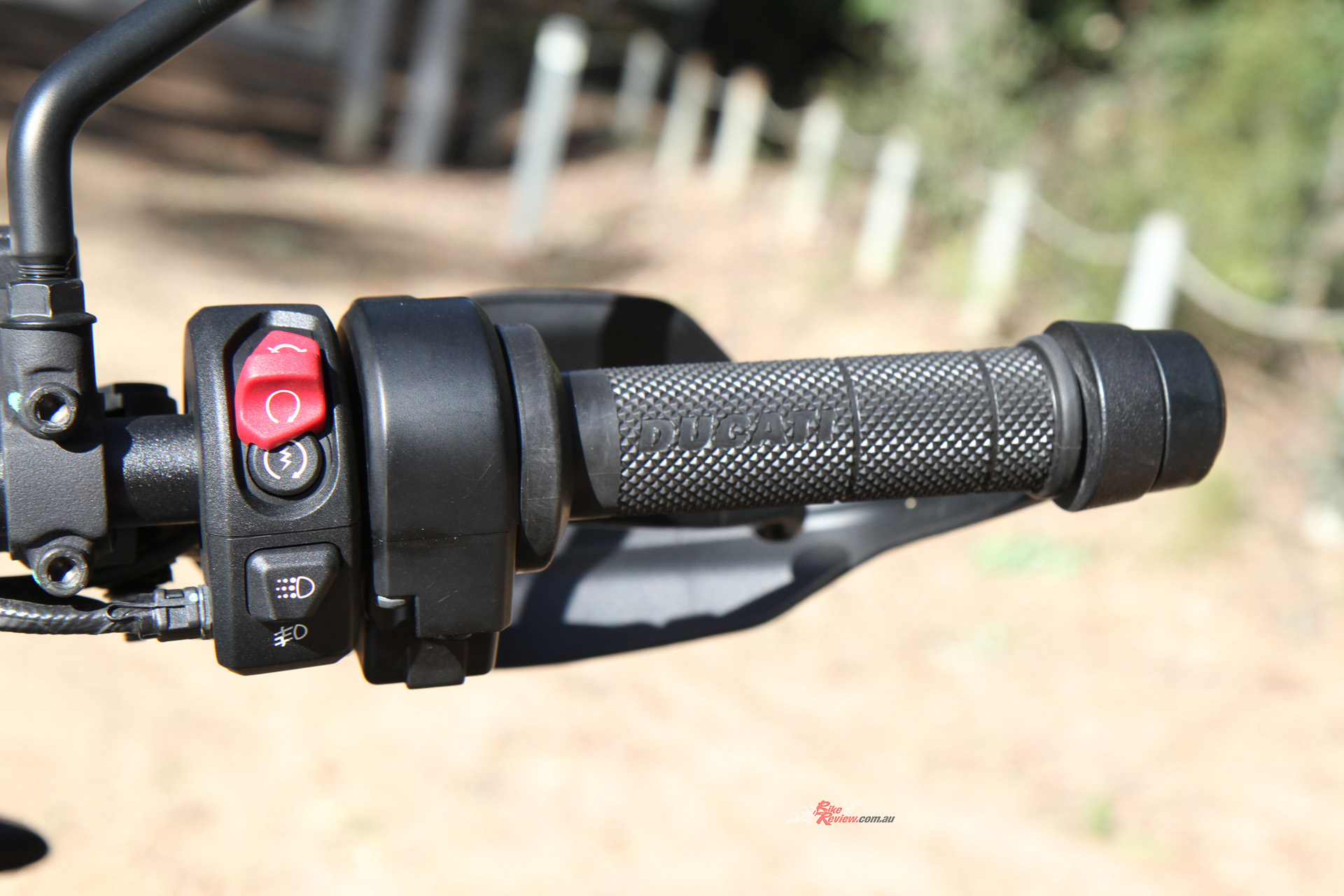
When it comes to tech, aren’t leaving us wanting more. You can easily set the riding modes on the fly, choosing between Sport, Touring, Urban, Wet, Enduro and Rally, offering several levels of engine power and rider aid to suit your style or current environment. For example, dropping the rear traction control in Rally mode is pretty easy once you have got the hang of the UI. The vertically oriented TFT display isn’t anything super special, but it is also just as much as you need. The bar-mounted switch gear is also easy enough to operate even in gloves.
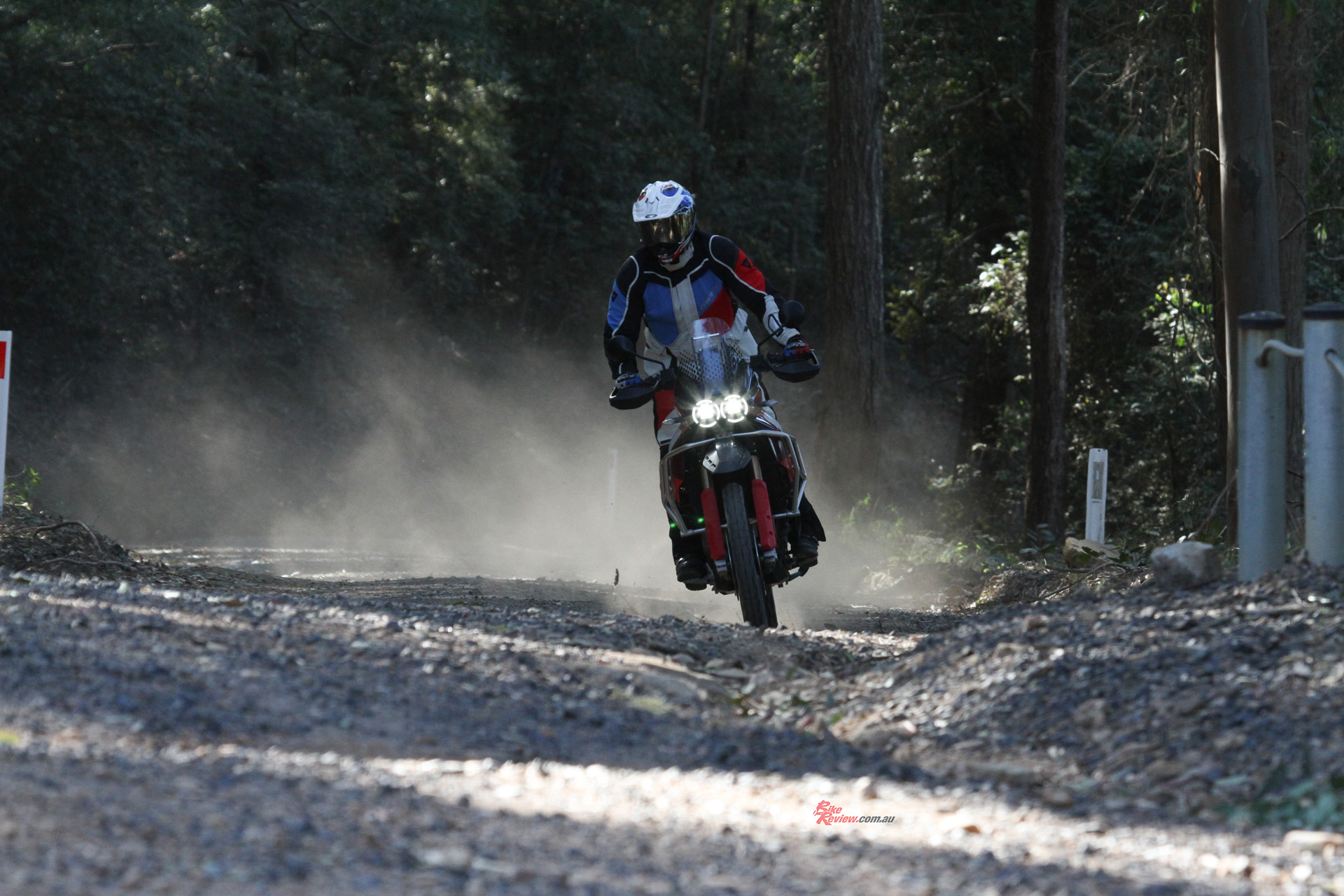
“Dropping the rear traction control in Rally mode is pretty easy once you have got the hang of the UI”…
As standard, there is also an insane list of potential upgrades just within Ducati. One jump on the accessory webpage boasts 57 DesertX Rally upgrades you can pick and choose from, ranging from racing exhaust systems to full billet kit-outs across the bike. One thing’s for sure though – they ain’t cheap, and I’m not sure how much you’d have to spare after dropping a minimum $38,000.
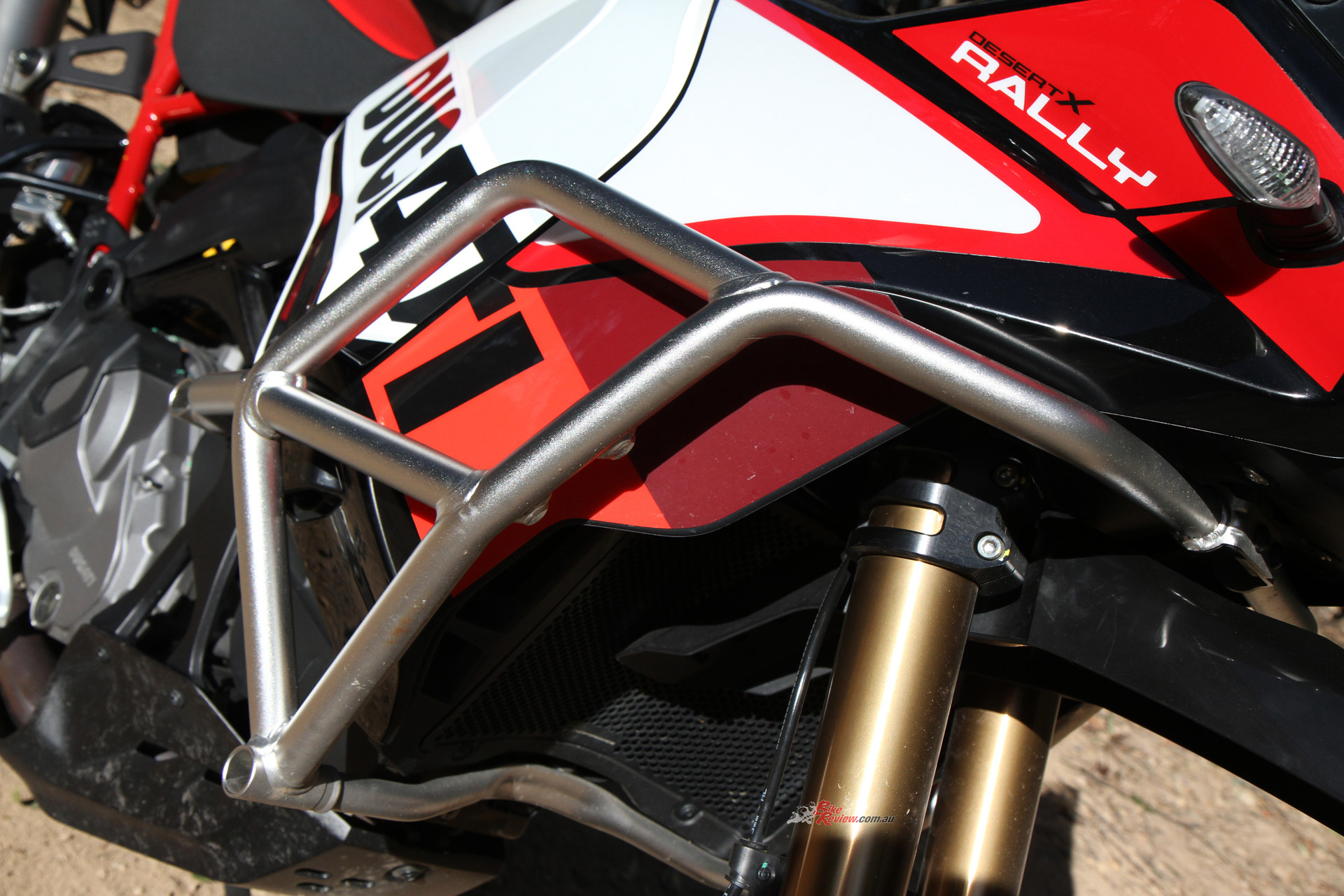
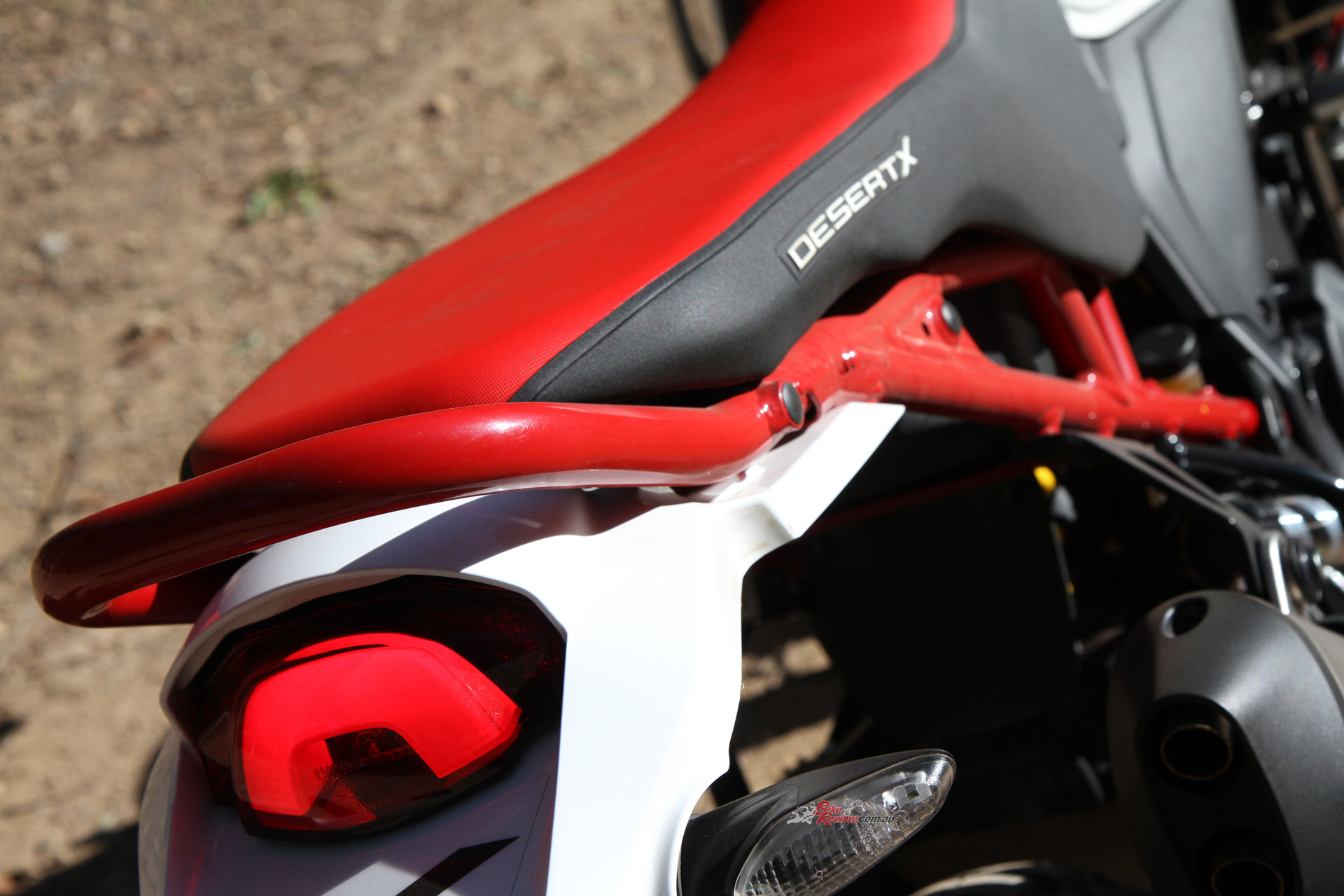
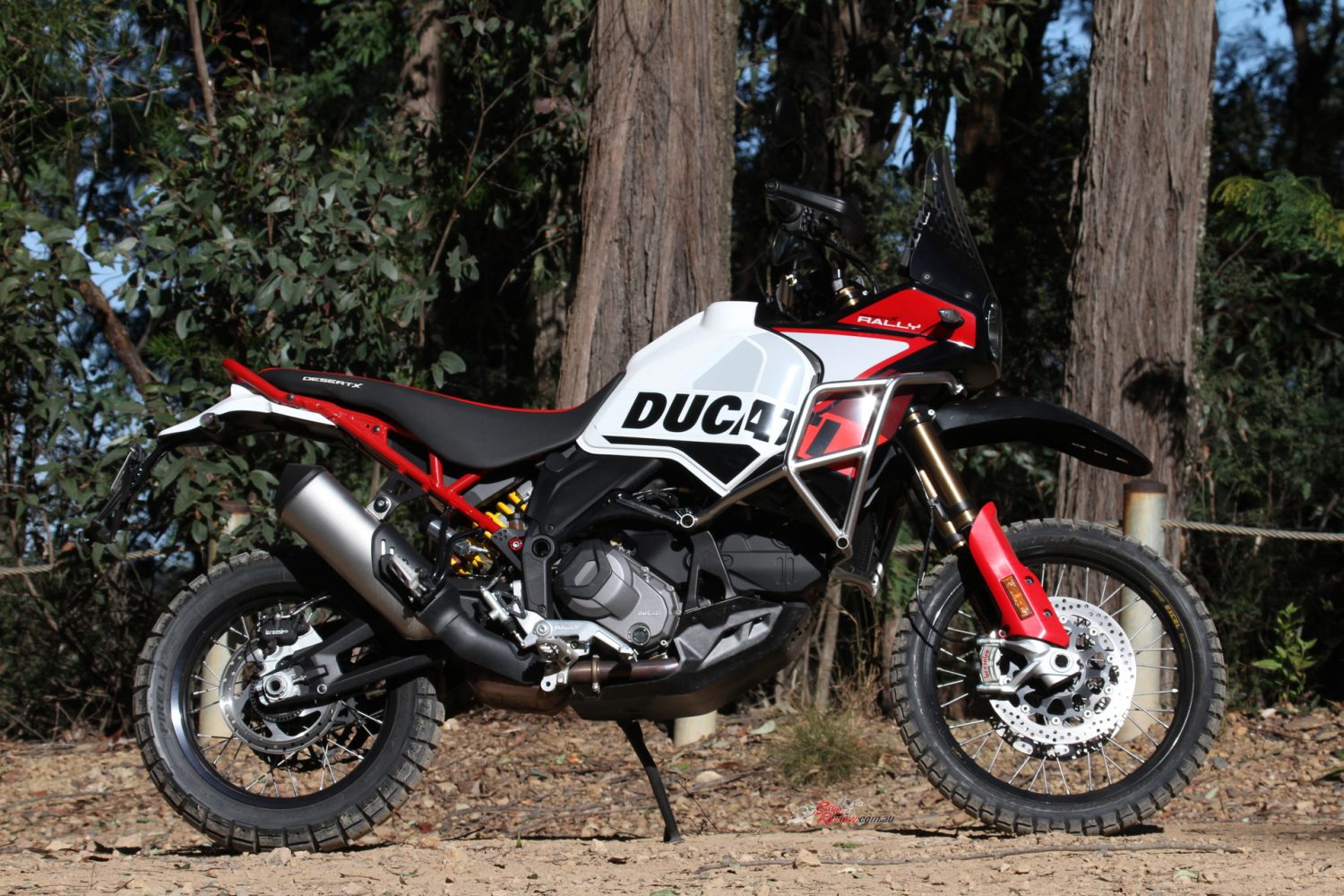
Finally, coming to the finish and styling, it’s a massive win in my books. It’s a super ’80s Dakar retro look paired with nicely finished billet gear throughout. I’ve come across some mixed reviews in the forums I’ve been trawling, and in the end I guess it comes down to personal preference. First looks at this thing in the Ducati showroom and I was loving it. It’s got a big presence, this bike – it looks angry.
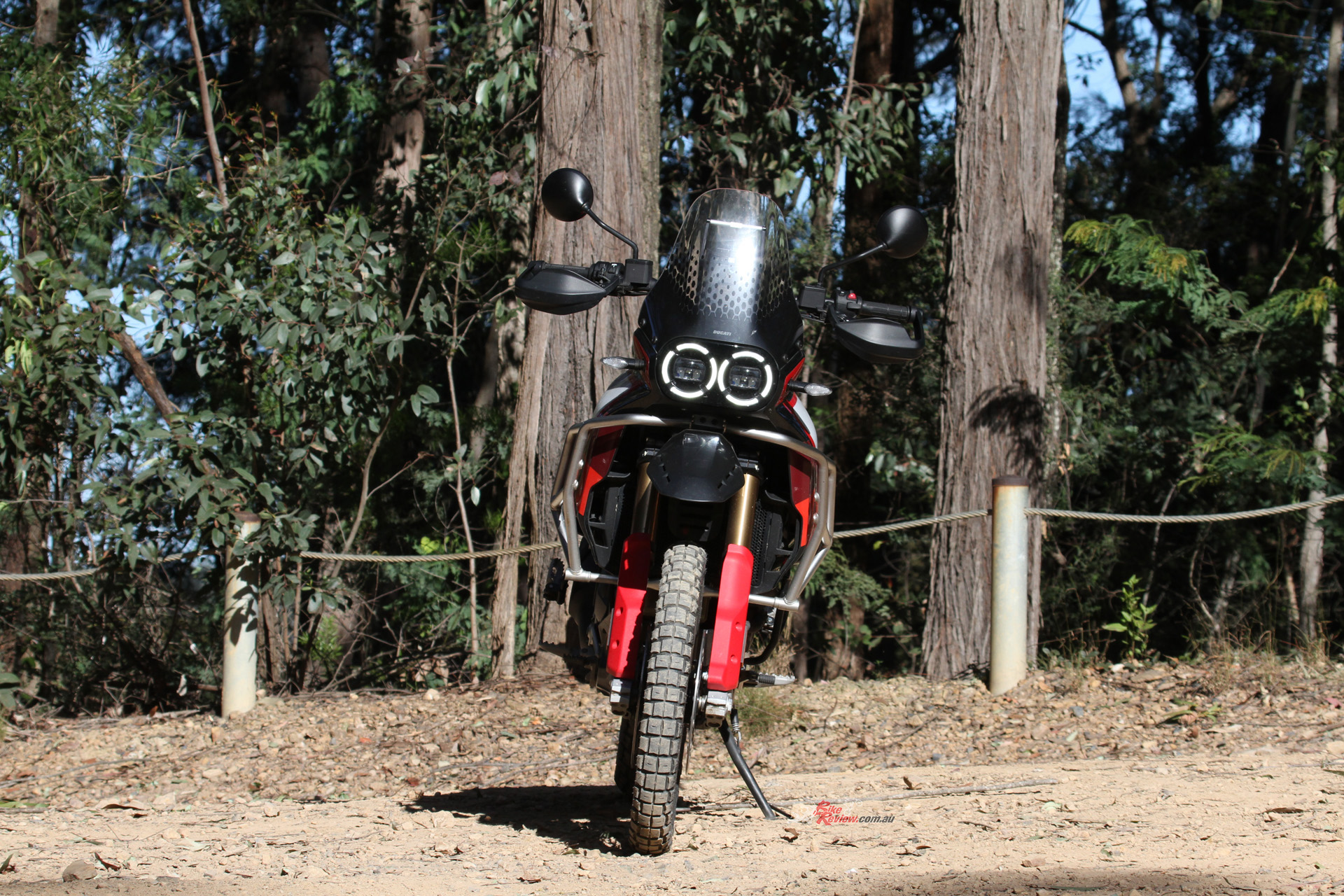
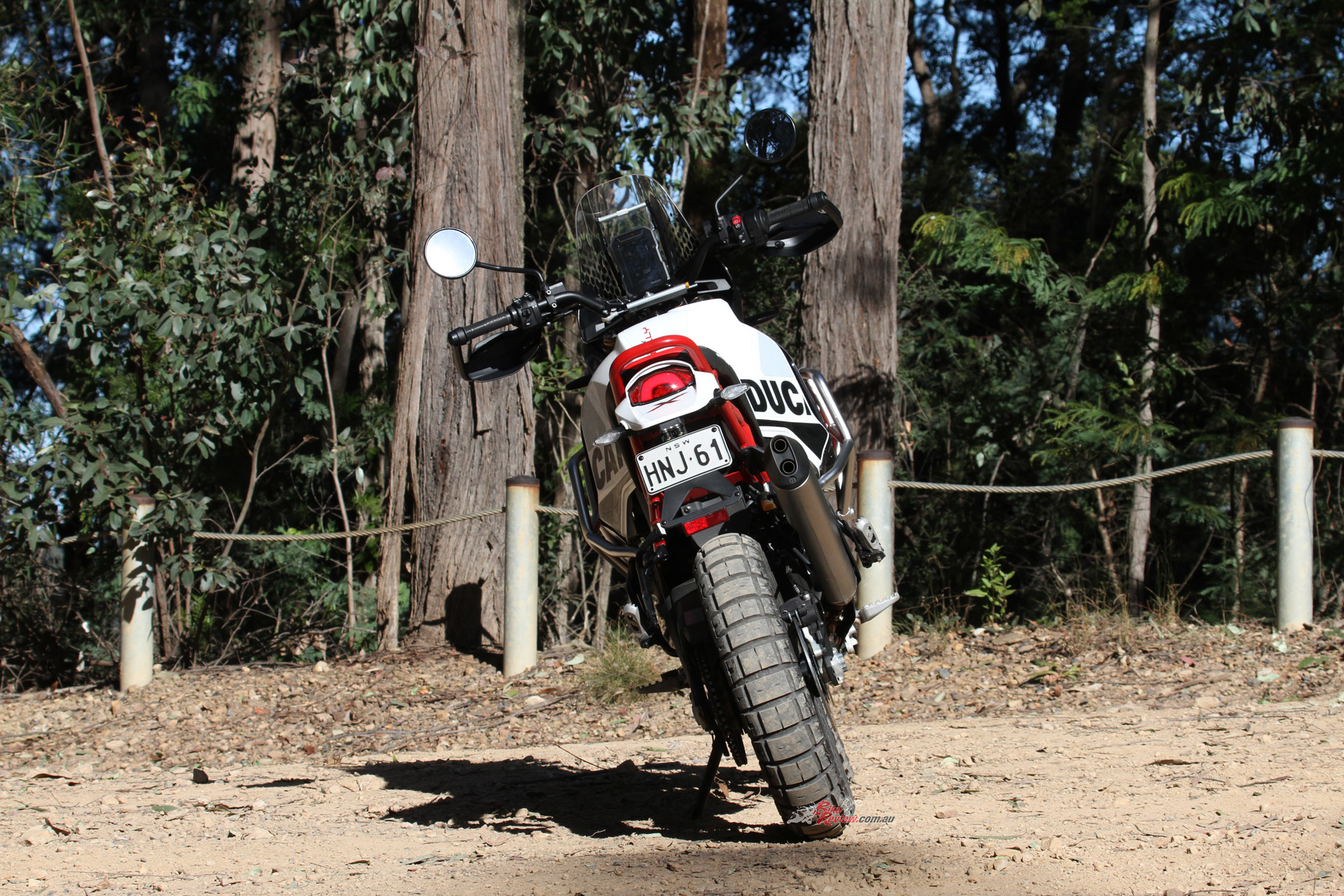
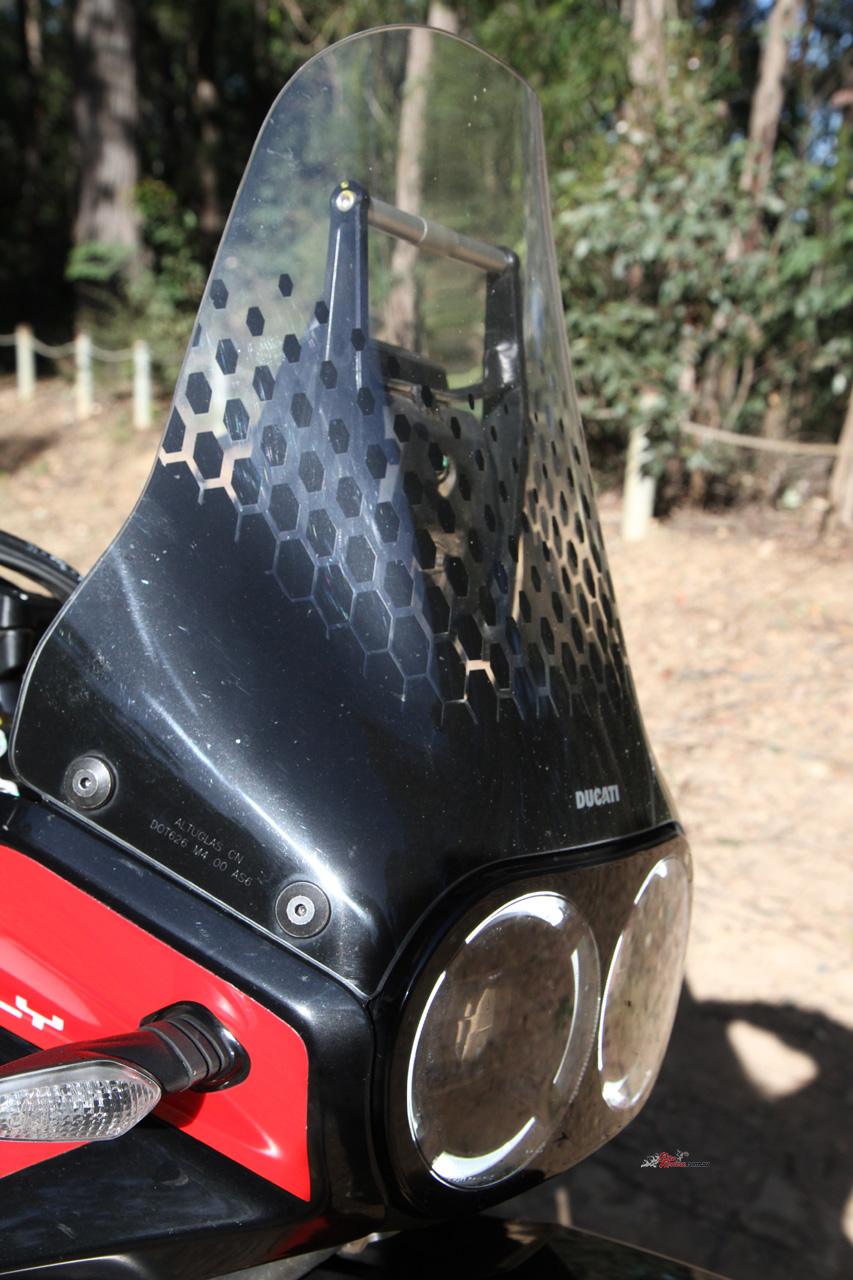
Moreover, the colours are moulded into the actual plastic, so you’ll be less stressed when you drop the thing out on the trails. The headlights up front again have that super retro look and are wickedly bright, to the extent the nice lady at the local servo asked me to shut them off earlier next time.
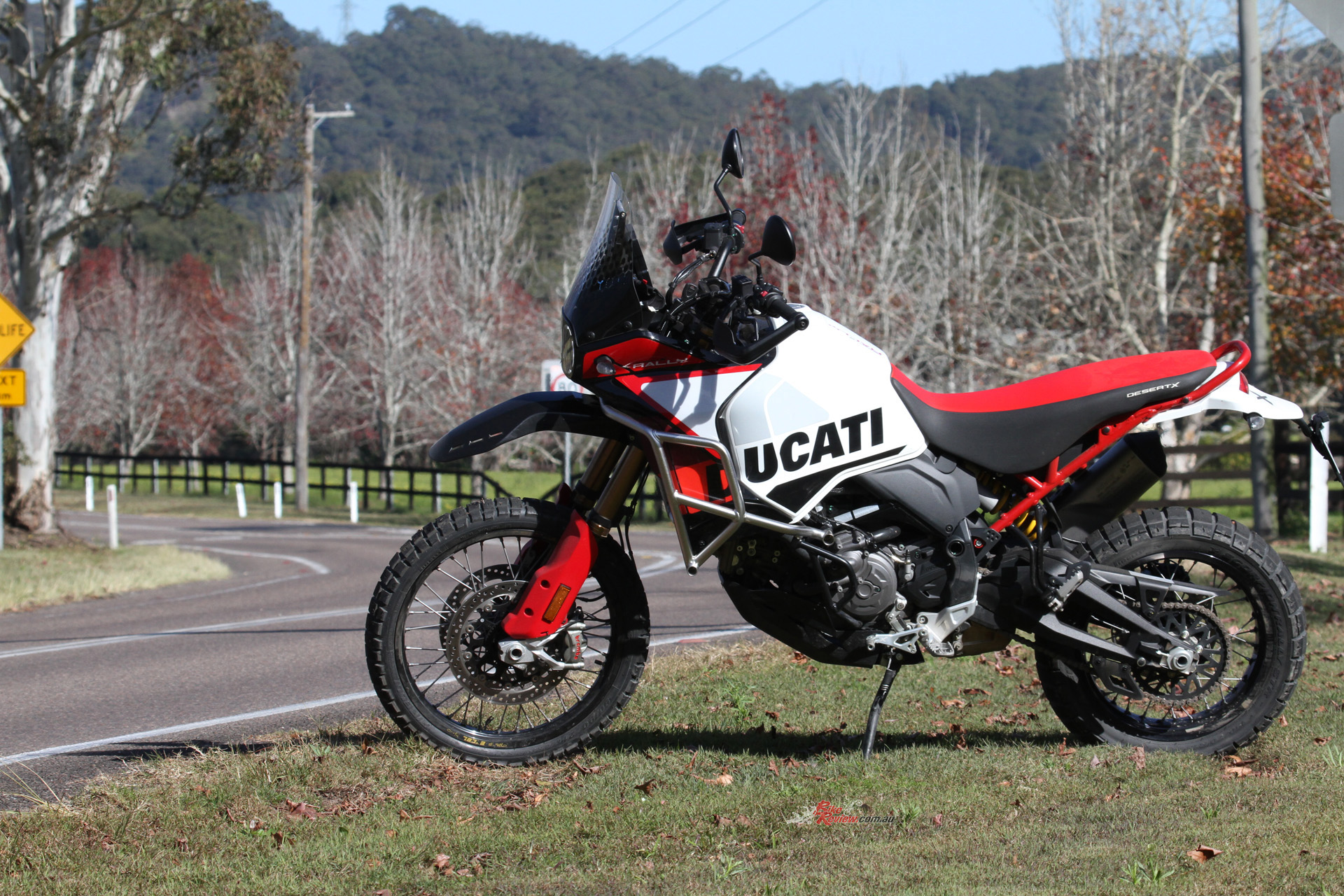
All in all the 2025 DesertX Rally is definitely one of the most capable and accessible adventure bikes I’ve ridden in recent times. It’s definitely no long haul touring bike like the V4, and it sits much further into the aggressive off-road market while still being beautifully capable on the tarmac.
Would I want something like this to tour the country? Probably not, but for some pure shorter dirt trips it would be beautiful. Unfortunately, due to the price tag, many of us will never be able to experience the joy of owning one of these things. It’s got some premium gear, but comes in at a very premium price. I get that about Ducati, but at the same time I wish they were more accessible for younger riders like me, I mainly meet riders over the age of 40 to 50 or even 60 on them, and rarely see anyone under 30.
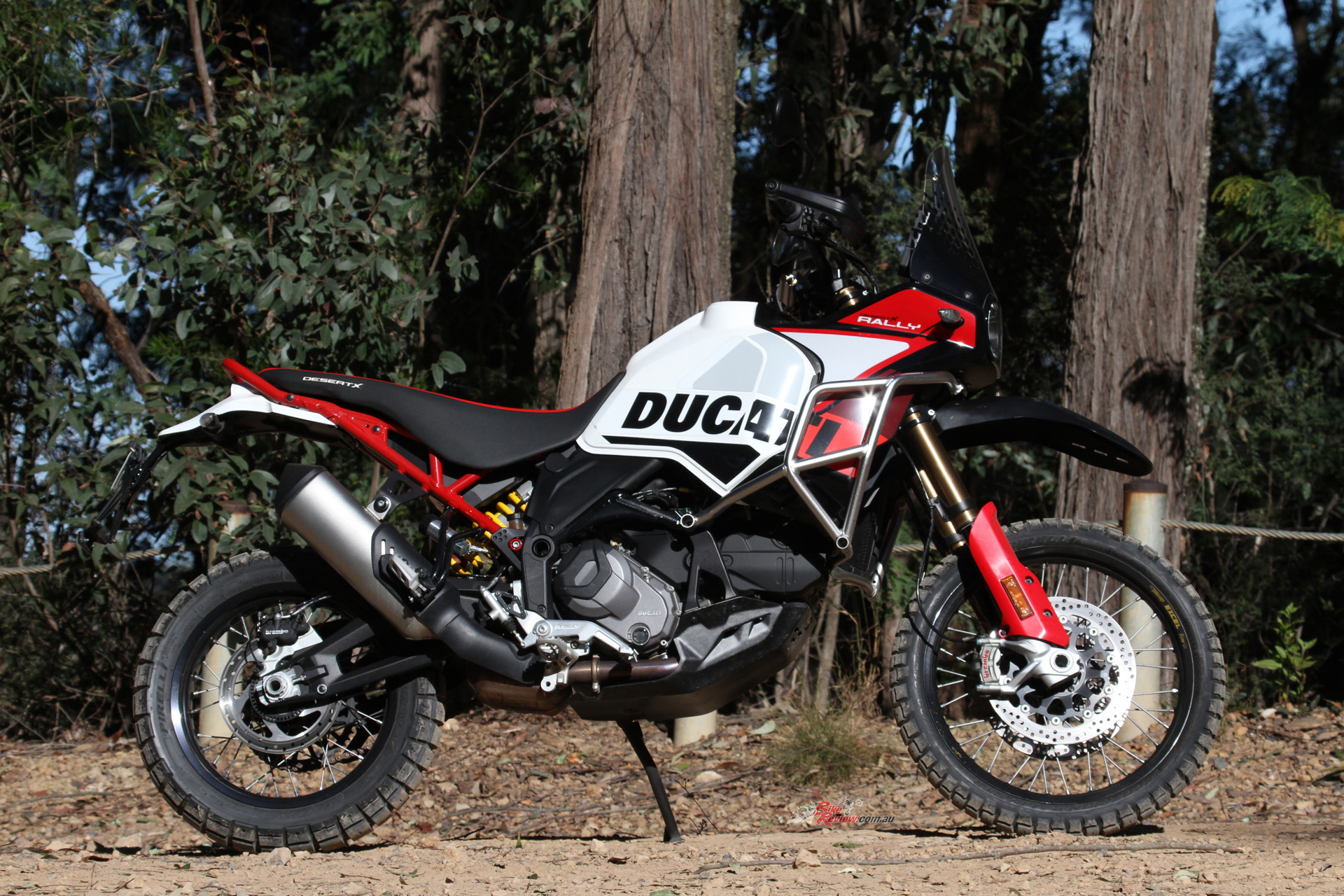
Ducati DesertX Rally Tech Talk
The chassis layout of the Ducati DesertX includes a steel trellis frame, which works with long travel suspension and dedicated KYB suspension settings. The optimisation of all components led to an efficient bike, all packed in at 211kg (wet weight).

The DesertX Rally comes with a 48mm upside-down KYB fork with 250mm of travel and a KYB monoshock at the rear. Both front and rear are adjustable in compression, rebound and preload. The KYB monoshock is married to the aluminium swingarm and allows a rear wheel travel of 240mm.
In addition, the DesertX Rally has a generous 280mm ground clearance. Ducati have also fitted it with a 21in Excel wheel at the front and Excel 18in at the rear, wrapped in Pirelli Scorpion Rally STR, 90/90 – 21 and 150/70 – 18 tyres…
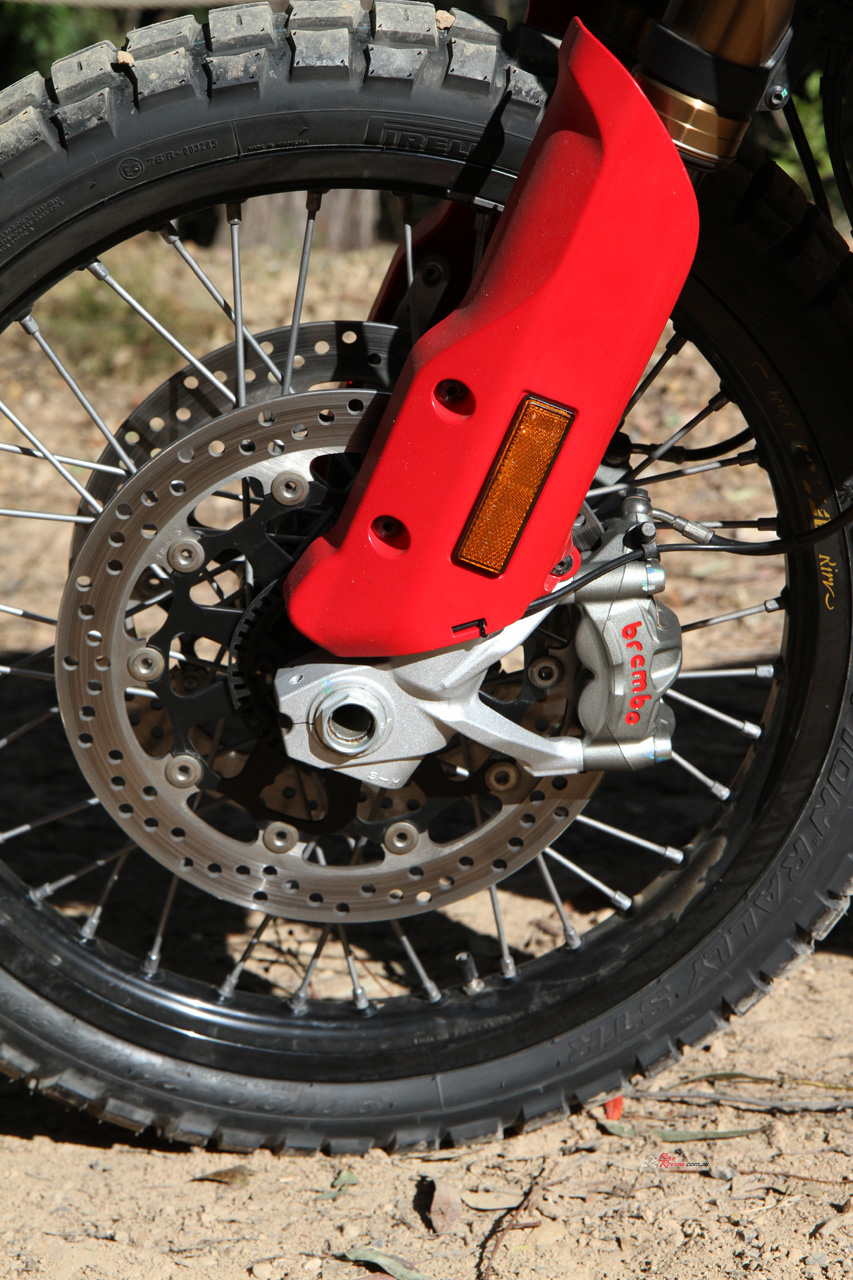
The braking system of the Rally benefits from switchable ABS Cornering function. The front features Brembo M50 monobloc radial calipers with four 30mm diameter pistons, axial pump with adjustable levers and double 320mm discs with aluminium flanges. At the rear there is a single 265mm diameter disc on which works a twin-piston floating Brembo caliper.

The 937cc liquid-cooled Testastretta 11° Desmodromic engine is the heart of the DesertX Rally. Delivering 110hp@9,250rpm and 92Nm@6,500rpm in Euro5 configuration. The engine can count on all the improvements already seen on the Monster and Multistrada V2, including the extremely light and compact 8-disc clutch. To offer the best performance in off-road riding and in various uses, the Testastretta 11° has been specifically optimised.
Proper 400km range to face longer journeys is claimed, the fuel tank has a 21L of capacity and offering the opportunity of mounting a second tank (available as accessory) in the rear area, adding further 8L of fuel. Fuel transfer from the rear to the front tank is enabled when the fuel level in the main tank falls below a certain level and can be activated from the dashboard.

The DesertX Rally comes with six Riding Modes working in combination with four Power Modes – Full, High, Medium, Low. The main new features are specific settings for the Enduro Riding Mode and the introduction of the new Rally Riding Mode, in addition to Sport, Touring, Urban and Wet.
The Enduro Riding Mode allows the rider to tackle the most demanding dirt roads with greater safety and makes it easier for less experienced users to ride off-road. The Rally Riding Mode, on the other hand, with full engine power and reduced electronic controls, is designed for more experienced riders who want to make the most of DesertX’s off-road performance.
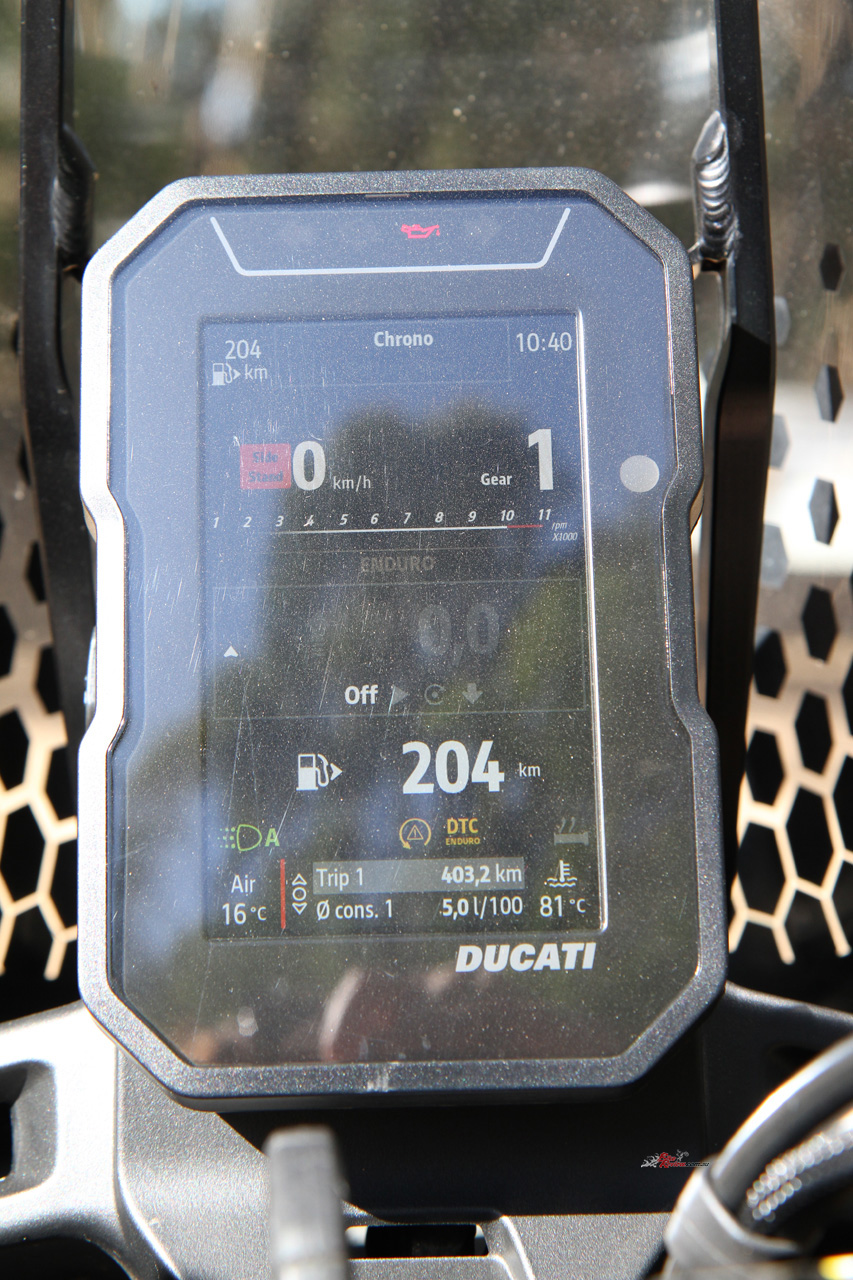
Each Riding Mode, also thanks to the presence of the Bosch IMU, can change the character of the bike according to the rider’s input, by acting on the intervention levels of the various electronic controls: Engine Brake Control (EBC), Ducati Traction Control (DTC), Ducati Wheelie Control (DWC), Ducati Quick Shift (DQS) Up & Down and ABS Cornering.
ABS Cornering can be set on 3 levels to be able to adapt to whatever situation and rider skill. In the Riding Modes dedicated to off-road (Enduro and Rally), ABS Cornering can also be completely deactivated via the switch cube with a specific button.
The dashboard of the DesertX Rally, vertically oriented and positioned to offer clear information also in stand-up riding, features a high resolution 5” full-TFT colour display. The instrumentation integrates the Ducati Multimedia System which allows the rider to connect the phone, thus activating new functions such as music and incoming/outgoing calls or Turn-by-Turn navigation (optional), which displays directions directly on the dashboard.
2025 Ducati DesertX Rally Specifications
Price: $38,100 rideaway
Warranty: Two years/unlimited kilometre
Colours: DesertX White
Claimed power: 81kW@9250rpm
Claimed torque: 92Nm@6500rpm
Wet weight: 211kg
Fuel capacity: 21L
Fuel Consumption Claimed: 5.0L/100km
Fuel Range Estimated: +400km
Fuel Consumption (measured): 5.0L/100km
Engine: Ducati Testastretta 11°, L-Twin cylinder, Desmodromic valvetrain, 4 valves per cylinder, liquid cooled, 94 x 67.5mm bore x stroke, 13.3:1 compression, Bosch electronic fuel injection system, 53mm throttle bodies with ride-by-wire system, Stainless steel single mufler, catalytic converter. Gearbox: Six speed, DQS EVO2 quickshifter Straight cut gears; 1=38/14, 2=31/17, 28=28/20, 4=26/22, 5=24/23, 6=23/25 Clutch: Slipper and self-servo wet multiplate clutch with hydraulic control Final drive: Chain
Chassis: Tubular steel trellis frame, alloy swingarm, Ohlins steering damper.
Rake: 27.6 degrees Trail: 122mm
Suspension: KYB 48mm upside-down fork, fully adjustable (f) 250mm travel, KYB monoshock, fully adjustable 240mm travel, remote preload adjustment, aluminium double-sided swingarm (r)
Brakes: 320mm Brembo rotors, Brembo four-piston monobloc calipers, ABS, 265mm rear rotor, twin-piston caliper. Bosch cornering ABS
Wheels & Tyres: Pirelli Scorpion Rally, 90/90 – 21in (f), 150/70 – 18in (r),
Dimensions:
Wheelbase: 1625mm
Seat Height: 910mm (880mm Low Seat Accessory)
Ground Clearance: 280mm
Overall Length: N/A
Overall Width: N/A
Overall Height: N/A
Instruments & Electronics: 5in TFT colour display , Riding Modes, Power Modes, Ducati Wheelie Control (DWC), Engine Brake Control (EBC), Ducati Quick Shift up/down (DQS), Cruise control, full LED lighting system, DRL, Ducati brake light (DBL), USB power socket, 12V socket, self canceling turn indicators, Steering damper.
Ratings | Bike Review | 2025 Ducati DesertX Rally
Awesome!
With long travel suspension, a broad torque curve, a competition level chassis and a full electronics suite, the Ducati DesertX Rally is like a big enduro bike… Here is our review.
The Author

You Might Also Like