
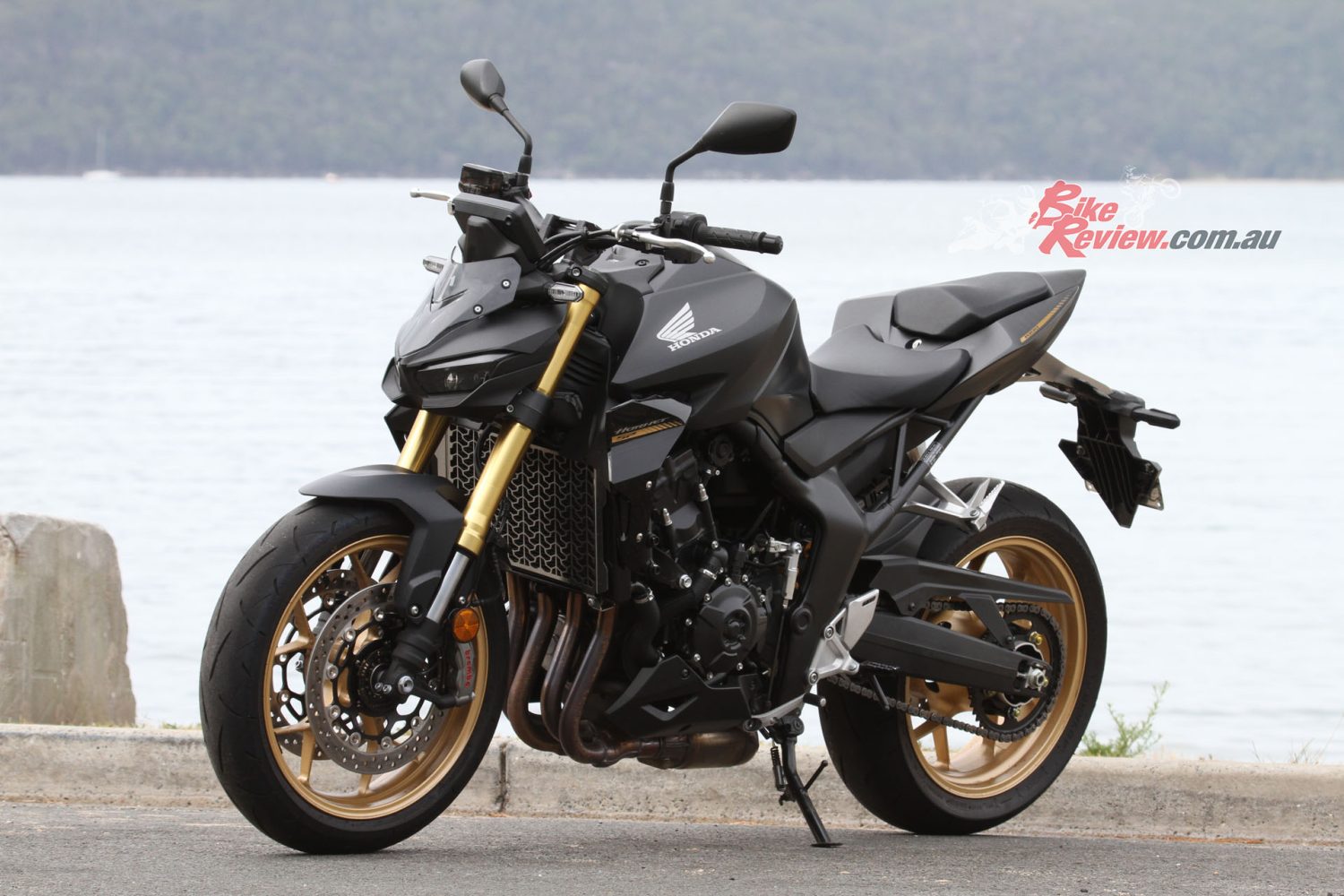

Honda has sharpened the pencil and shifted focus towards value. The result is one of the most compelling big-capacity nakedbikes we’ve ridden… Photos: Heather Ware HMC
The Honda CB1000 Hornet SP brings sportsbike performance into the nakedbike category without the sense of compromise that often comes with aggressive pricing. Australian buyers get one version of the CB1000 Hornet and as we discover, it’s the one you’d want.
![The Hornet produces a claimed 115.5kW [154.8hp] at 11,000rpm and 106Nm [78ft-lb] at 9000rpm.](https://bikereview.com.au/wp-content/uploads/2025/11/BikeReview-Beeline-Review-2025-17.jpg)
The Hornet produces a claimed 115.5kW [154.8hp] at 11,000rpm and 106Nm [78ft-lb] at 9000rpm.
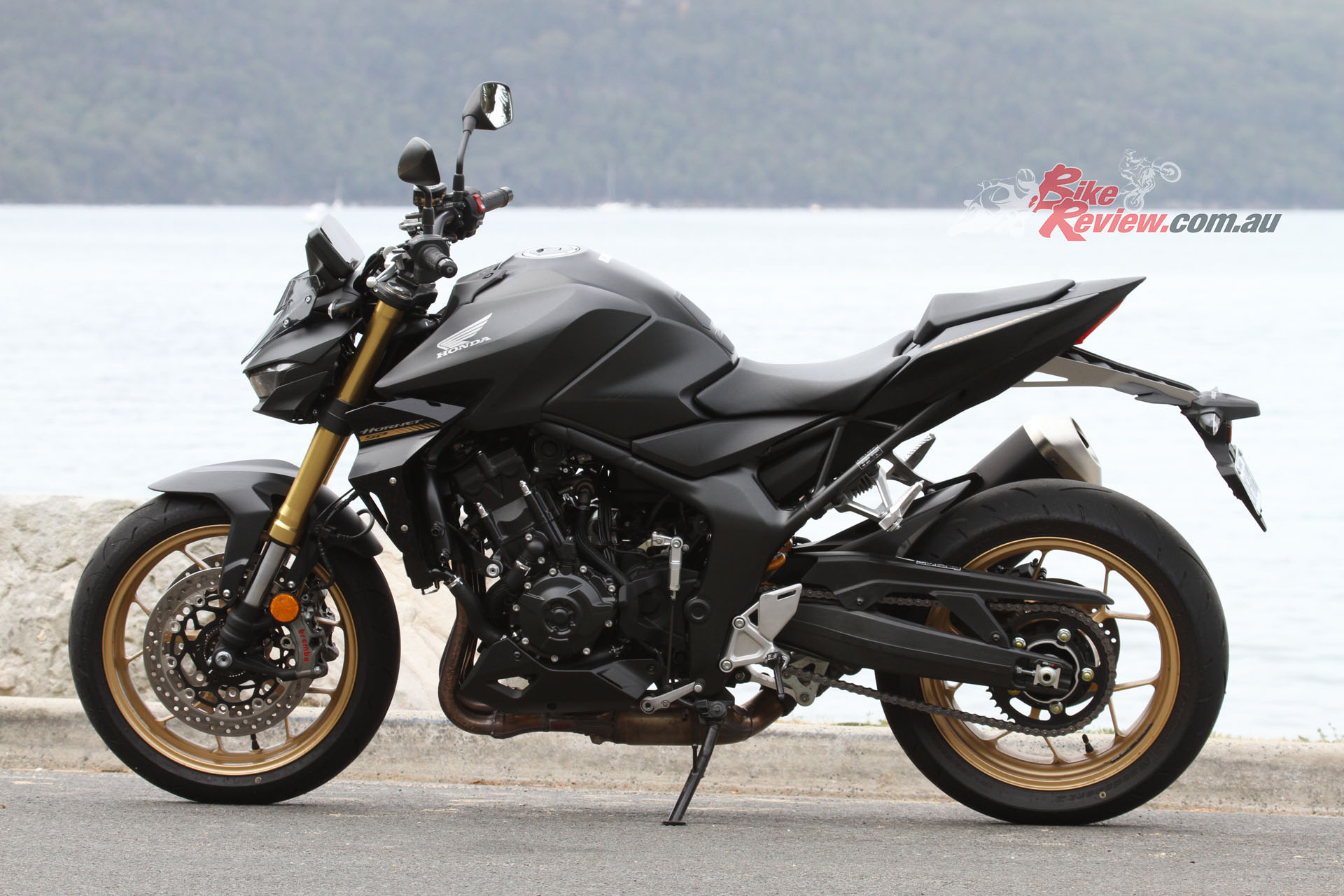
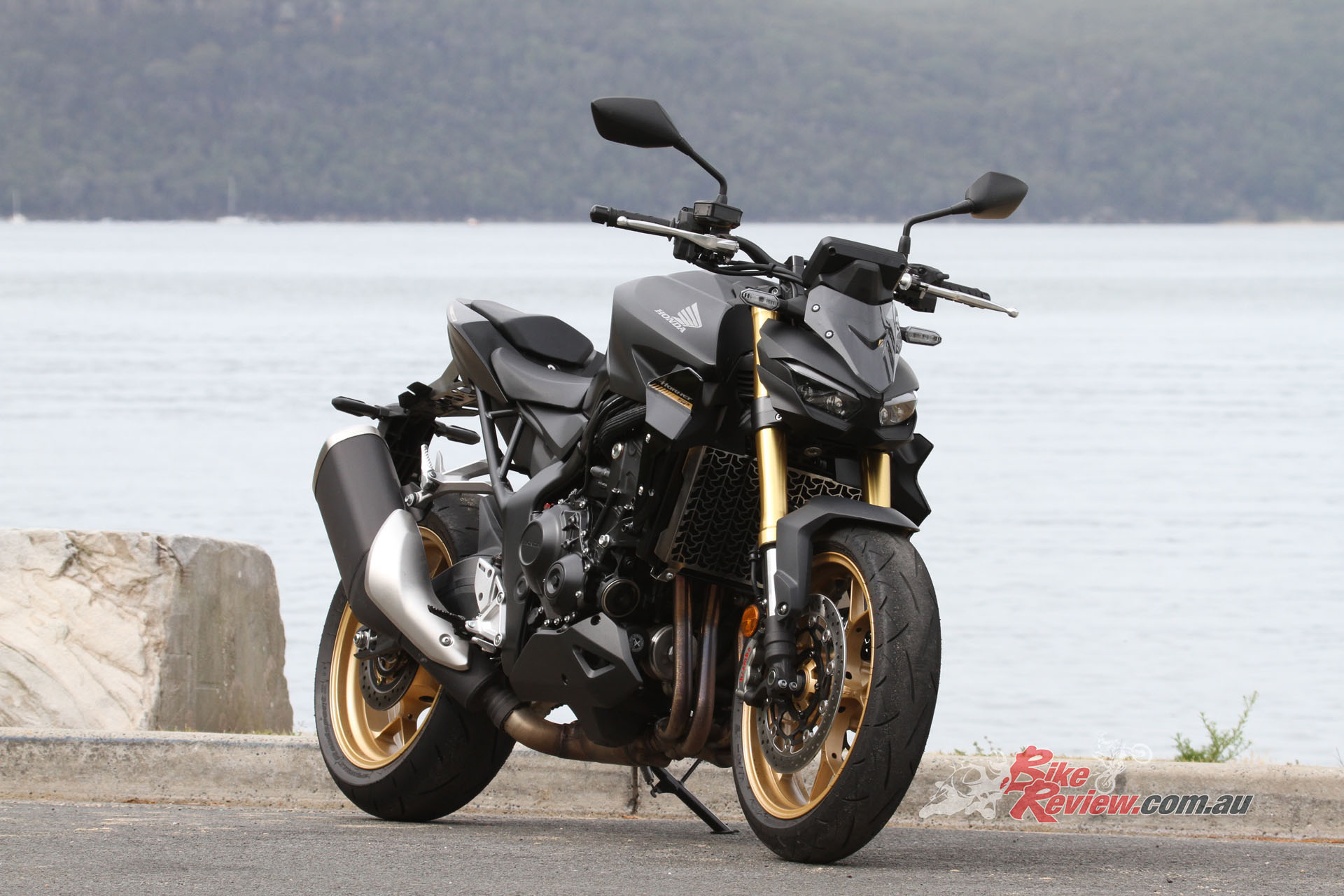
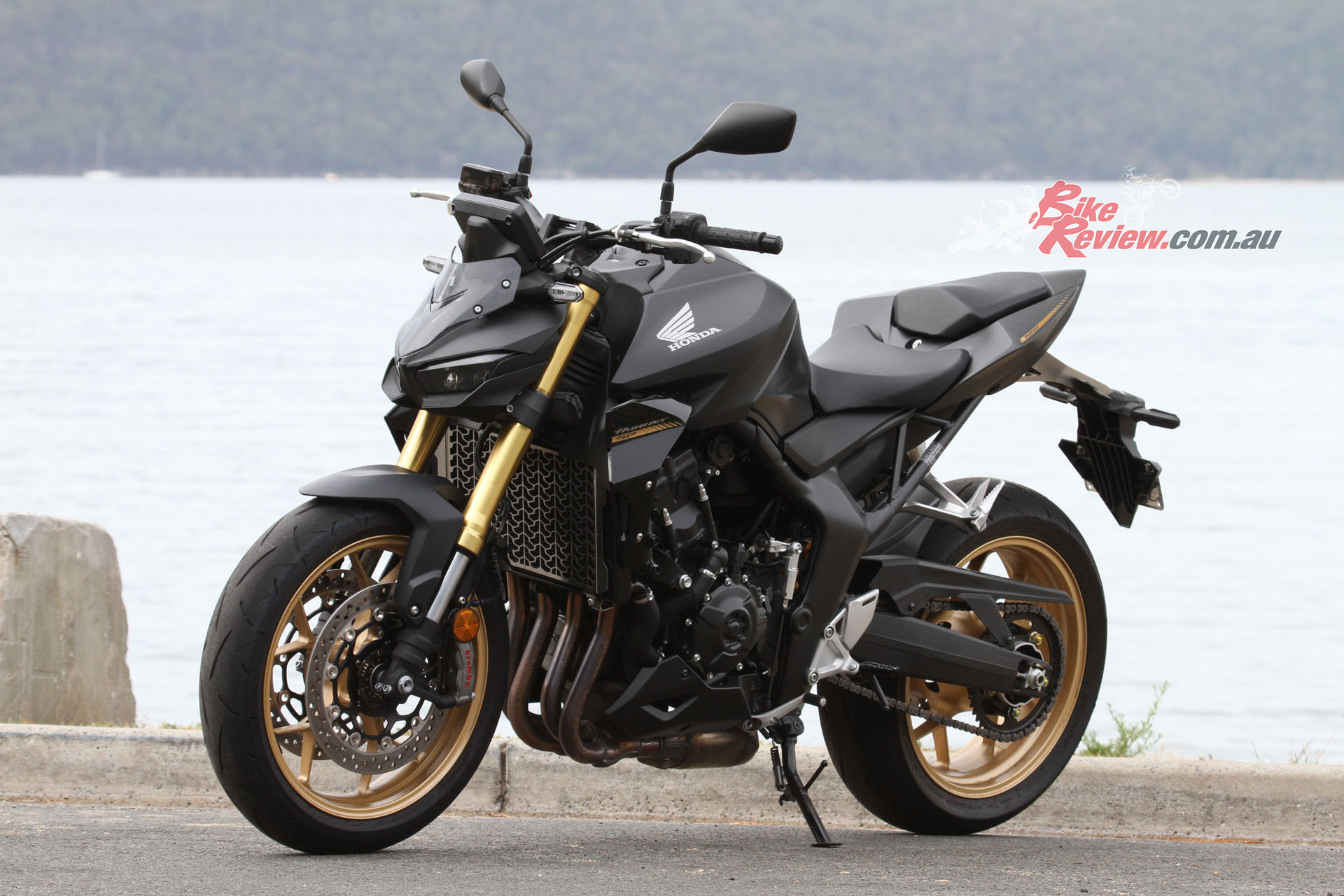
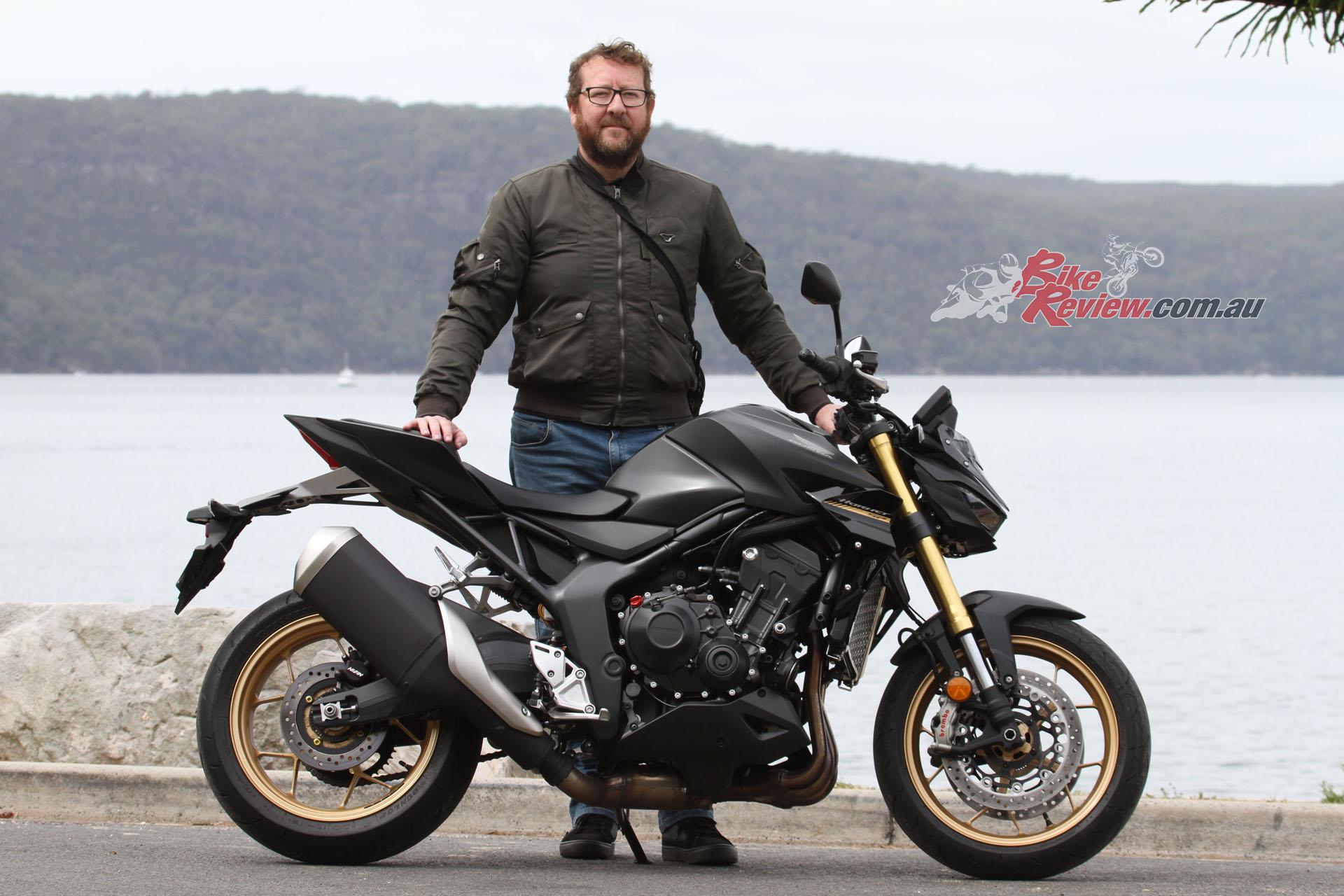
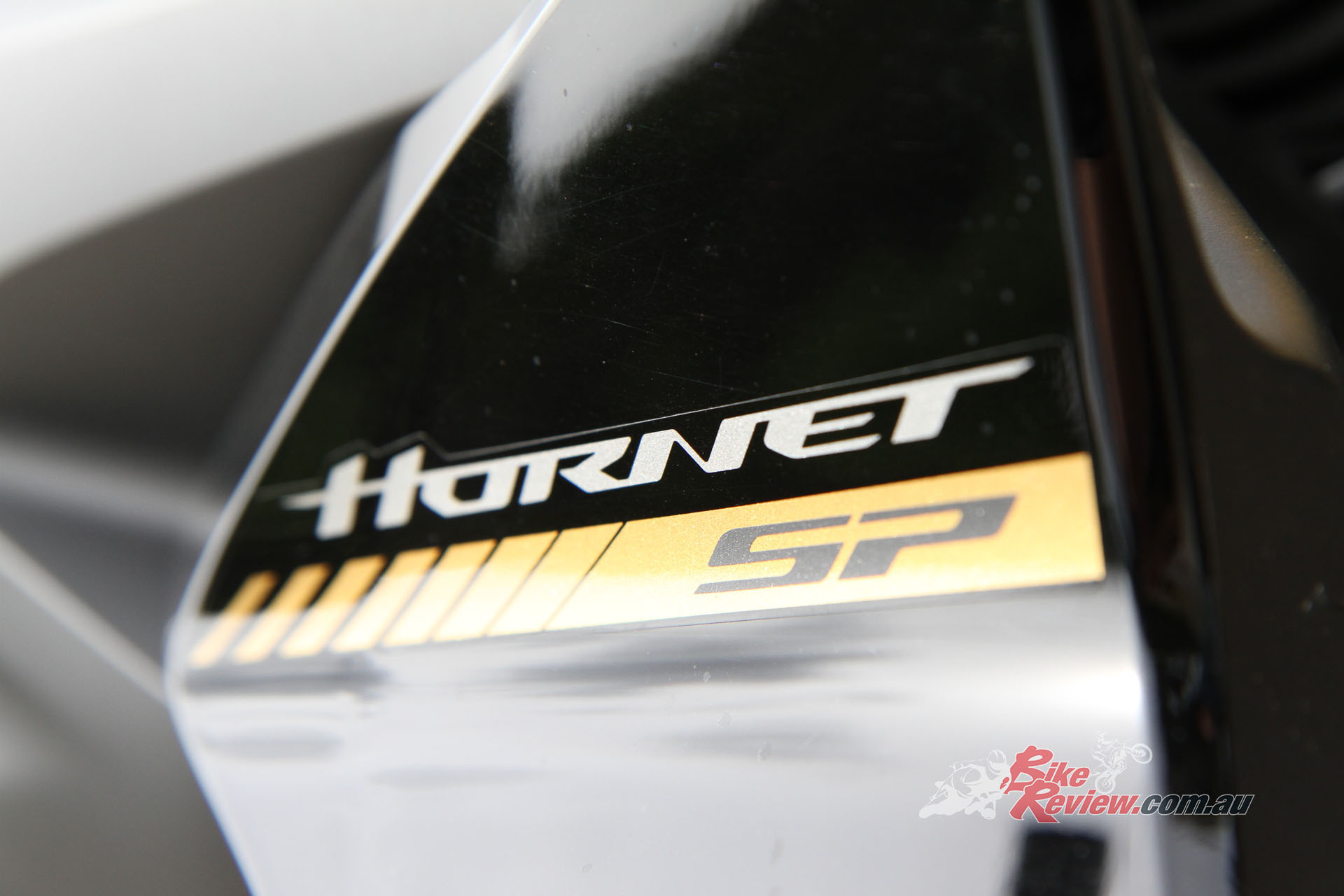
The SP specification bundles the higher-end suspension, brakes and quick-shifter as standard, removing the need to trawl through options lists or justify spending extra after the fact. Finished exclusively in Matte Ballistic Black Metallic, it has a purposeful, no-nonsense look that suits its brief.
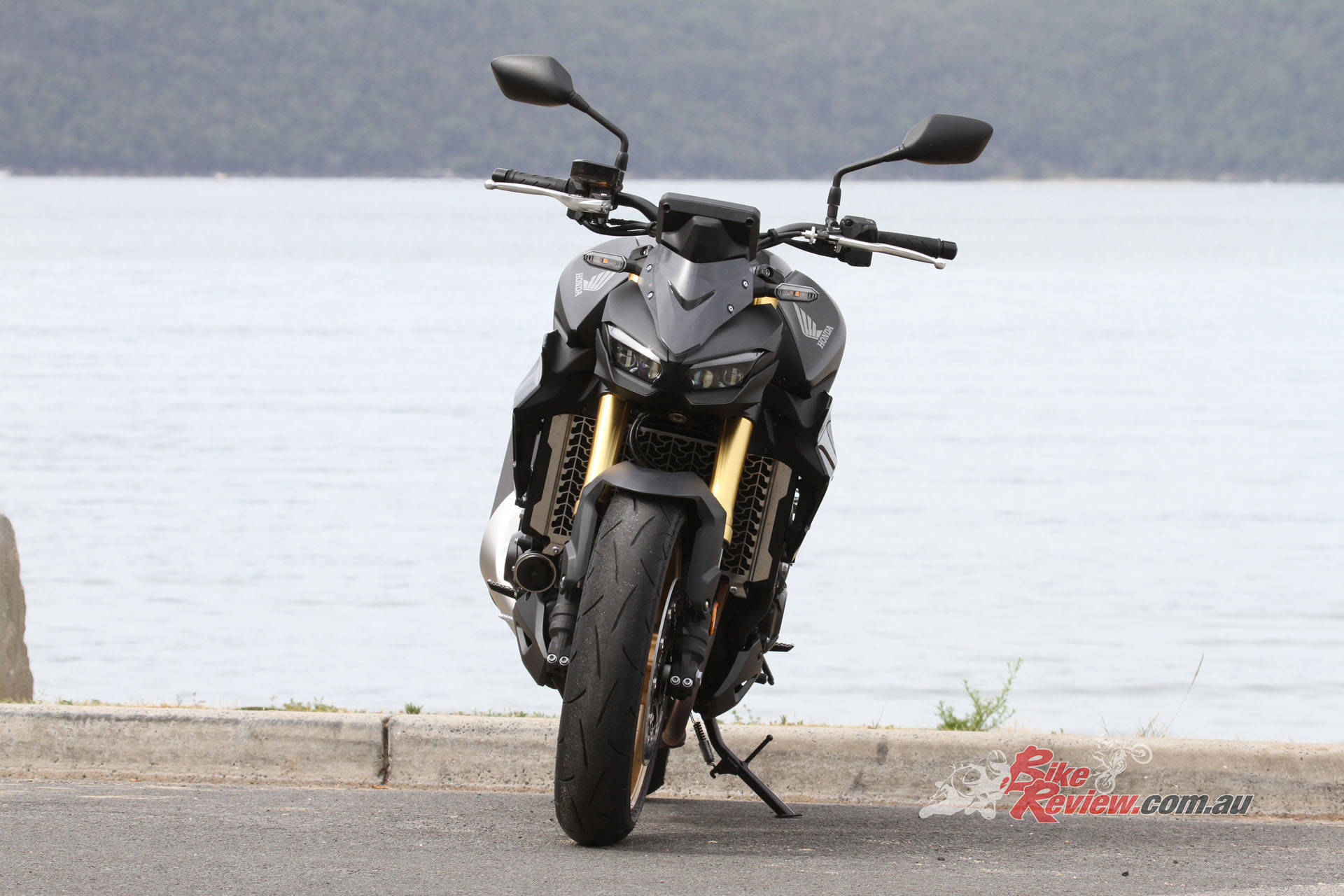
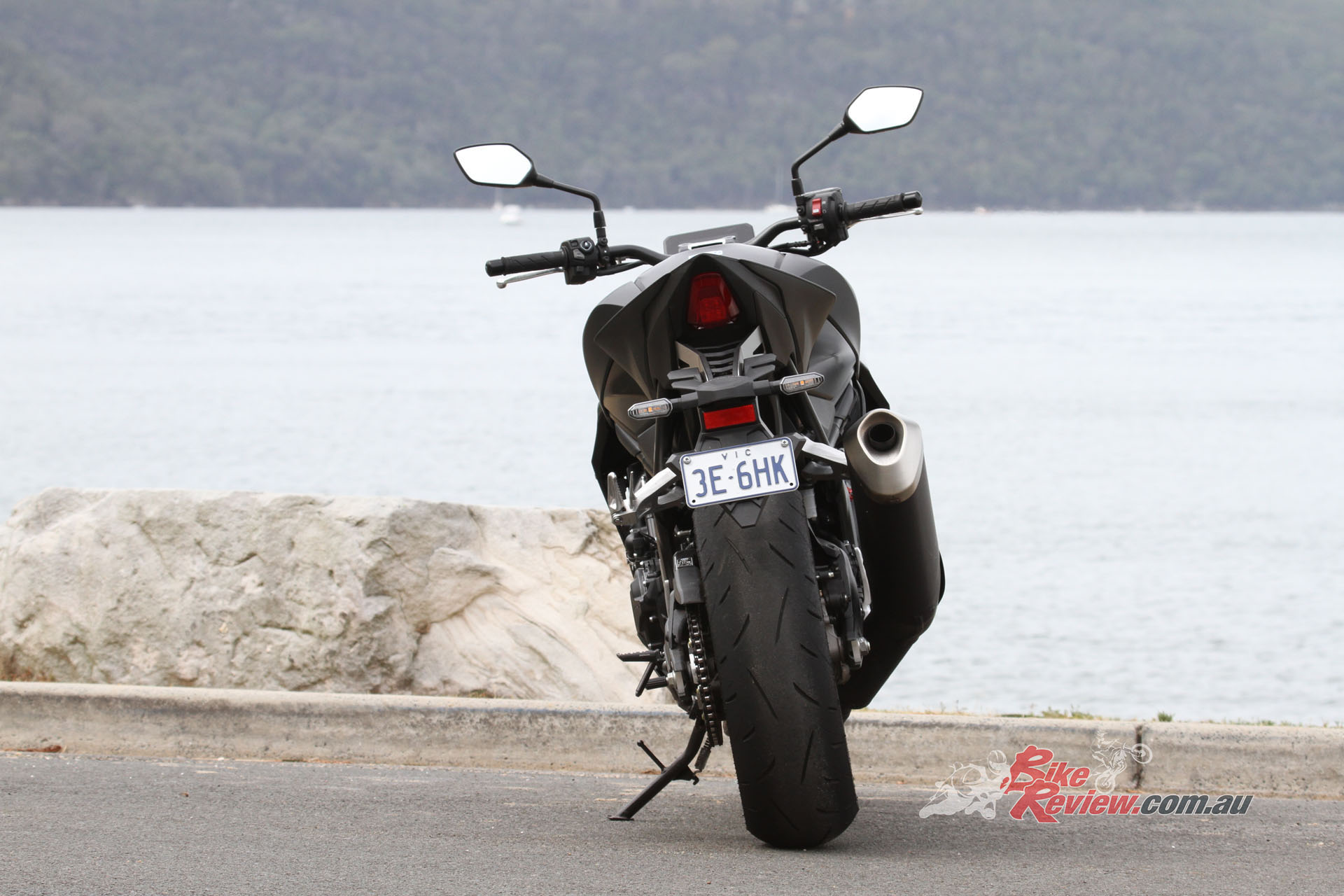
Power comes from the Fireblade’s 999cc inline four and has been reworked specifically for nakedbike duties, prioritising drive and flexibility over headline numbers. The Hornet produces a claimed 115.5kW [154.8hp] at 11,000rpm and 106Nm [78ft-lb] at 9000rpm, figures that tell only part of the story. What matters more on the road is how accessible that performance is, with strong drive available well before you’re up high into the rev range.
5in Full-colour TFT dash,Honda Smartphone Voice Control System (HVCS), Riding modes, TCS, ABS.
There’s also a neat trick exclusive to the SP: an exhaust valve system that helps bump power from the standard bike’s 150hp to the full 155hp. Add to that a curb weight of 212kg and, on paper, it’s already looking like a serious nakedbike weapon.
“It looks and feels more expensive than the price tag suggests”…
What surprised me most over the course of the test was how little the Hornet SP feels like a cost-conscious motorcycle. From the typically top Honda finish quality to the overall presentation, there’s a level of visual and tactile polish here that you don’t normally associate with bikes aiming for outright value. It looks and feels more expensive than the price tag suggests.
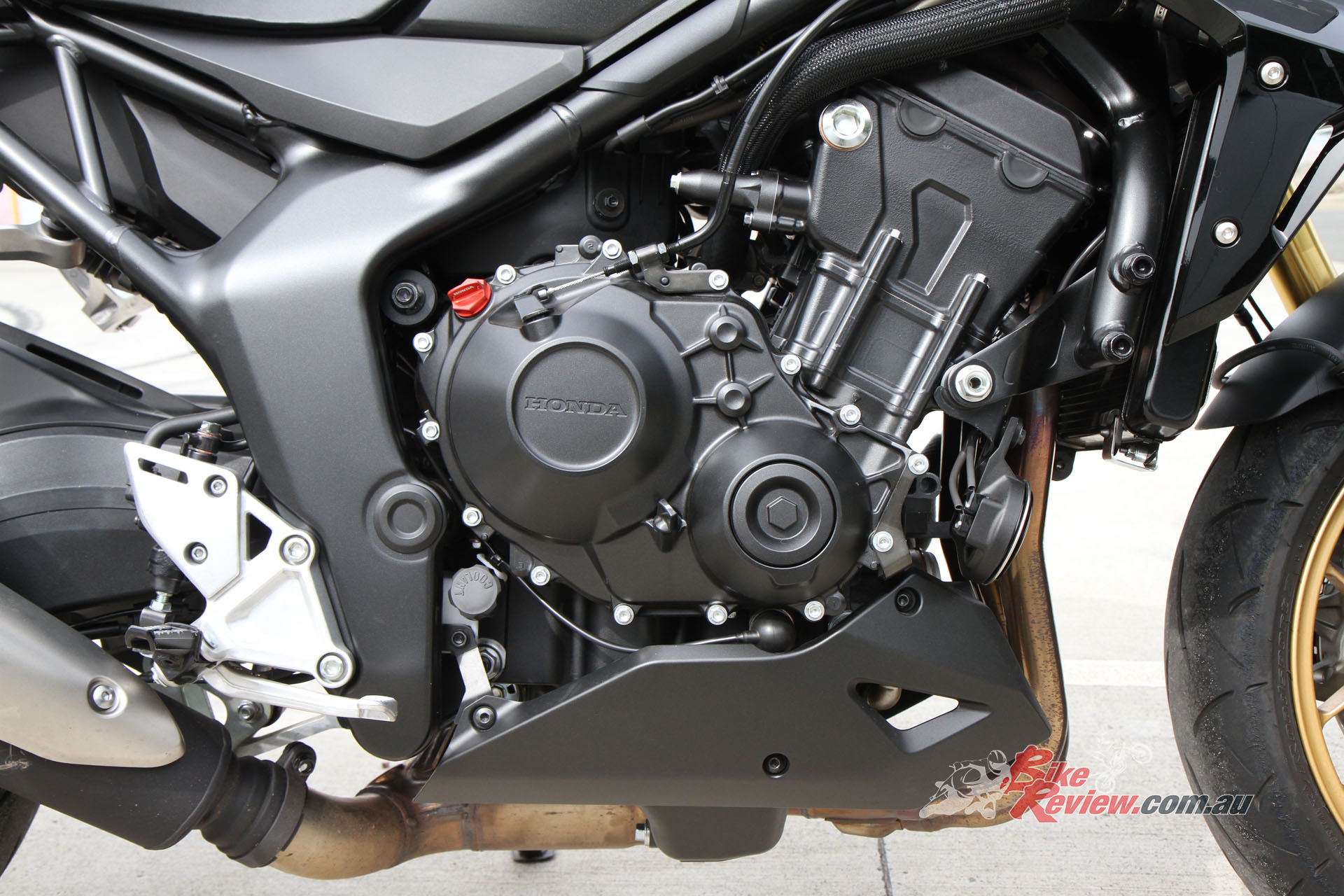
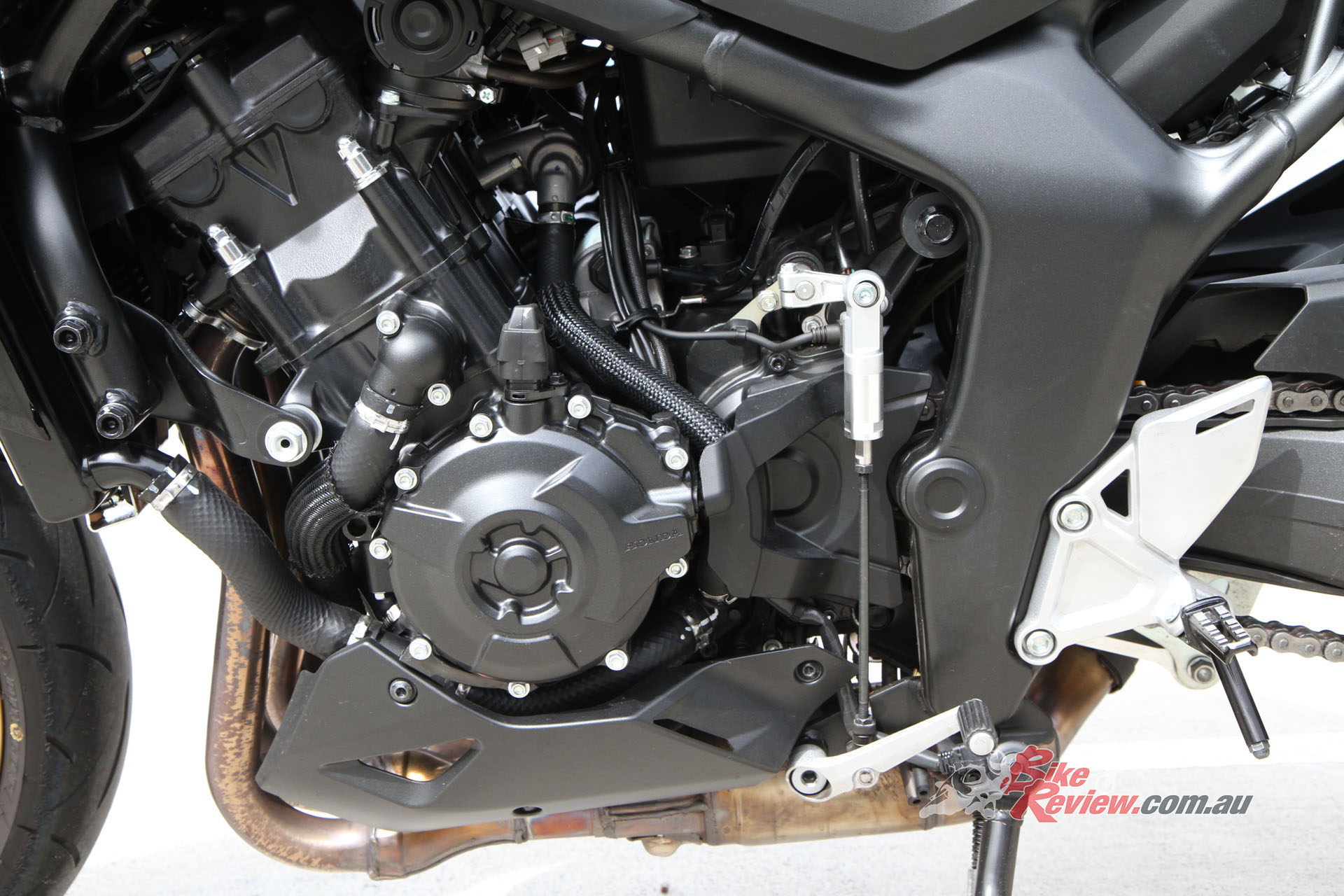
That ’Blade motor looks sensational sitting proudly in the frame, and our test bike was dressed up nicely with an anodised red oil filler cap.
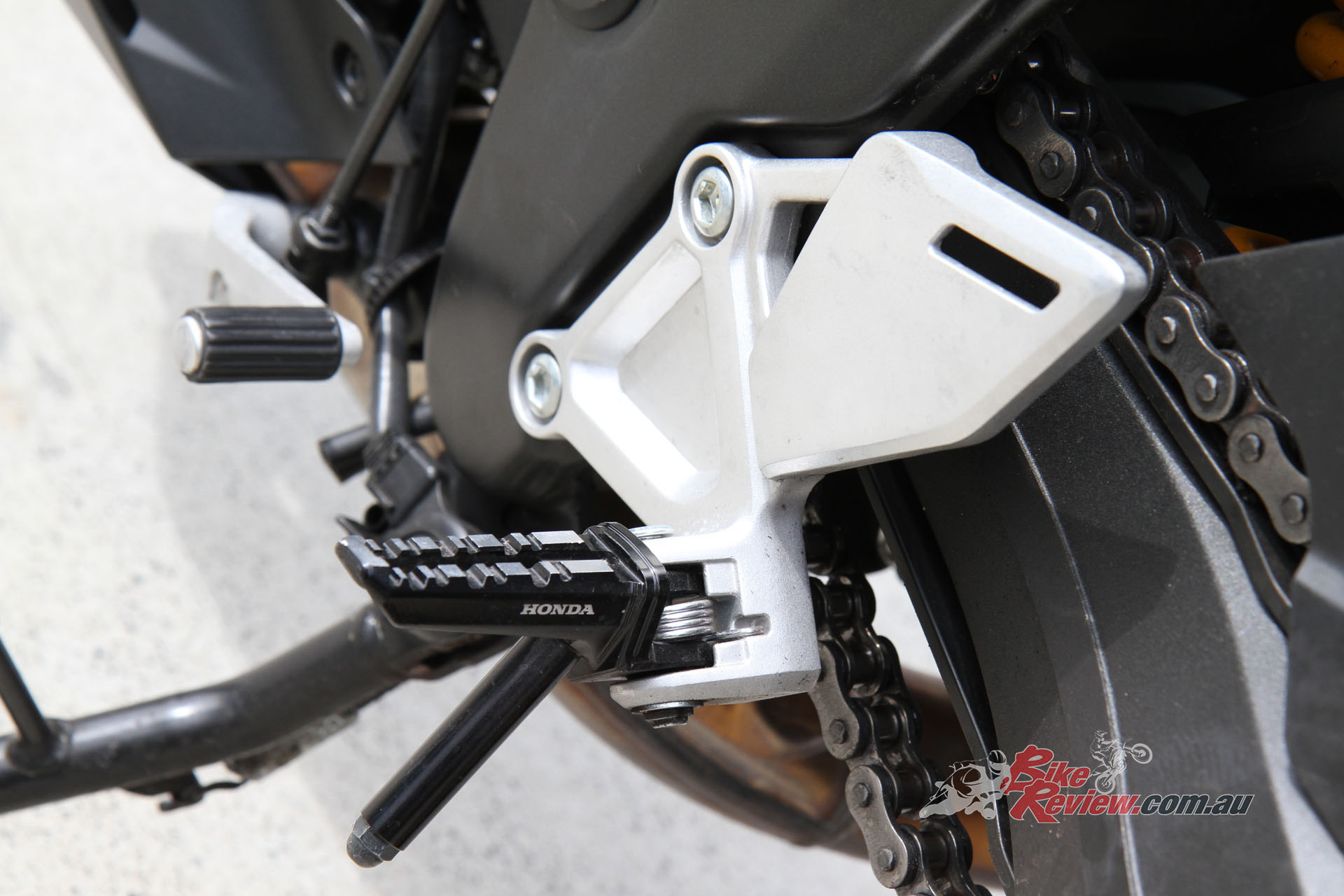
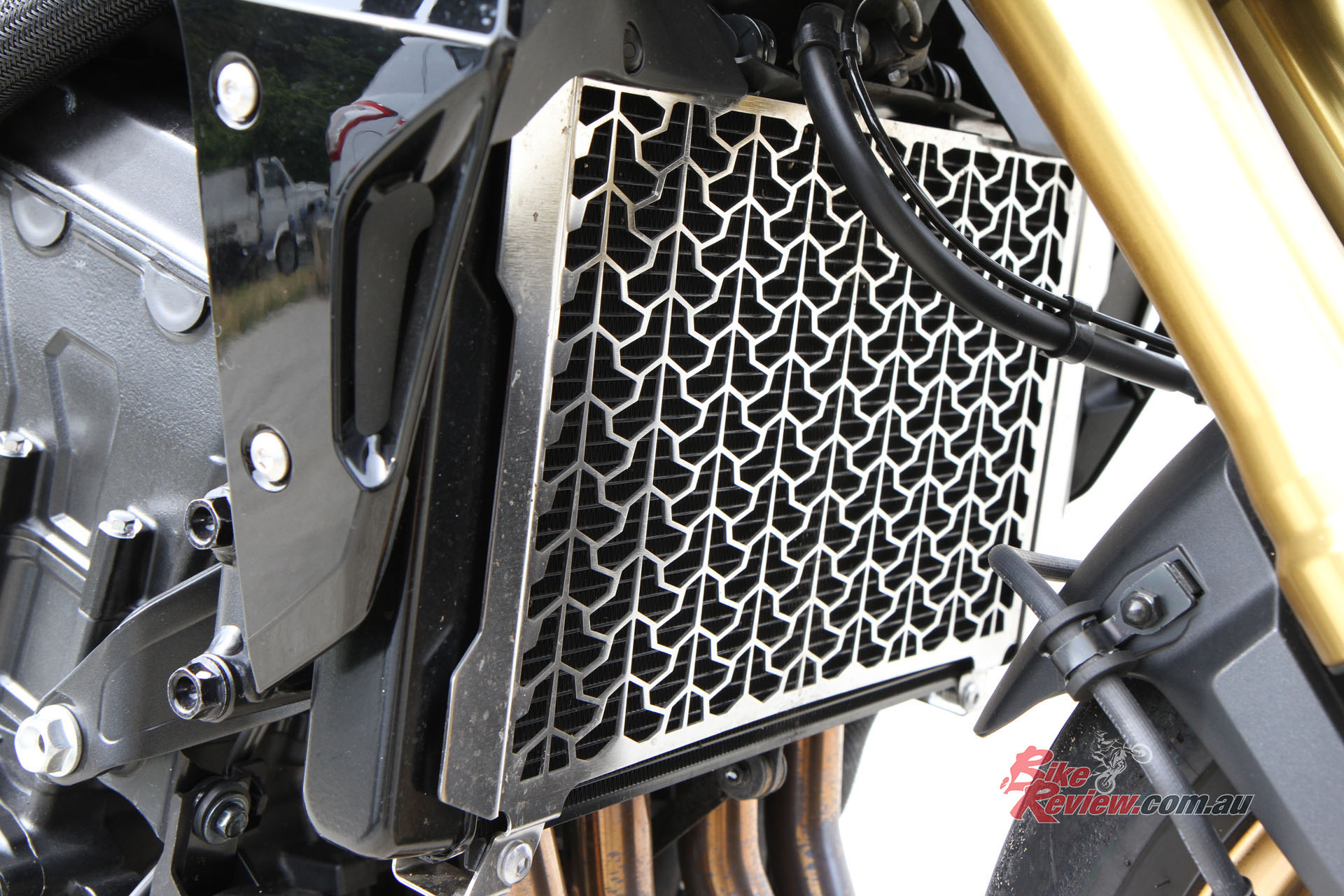
And speaking of that engine, I love seeing so much of it on display. That ’Blade motor looks sensational sitting proudly in the frame, and our test bike was dressed up nicely with an anodised red oil filler cap, stainless steel radiator grille, billet alloy race-style footpegs and a tank pad. It’s a tough-looking unit with real presence. I’d add either red or gold anodised clutch cover bolts to finish mine off, I reckon.
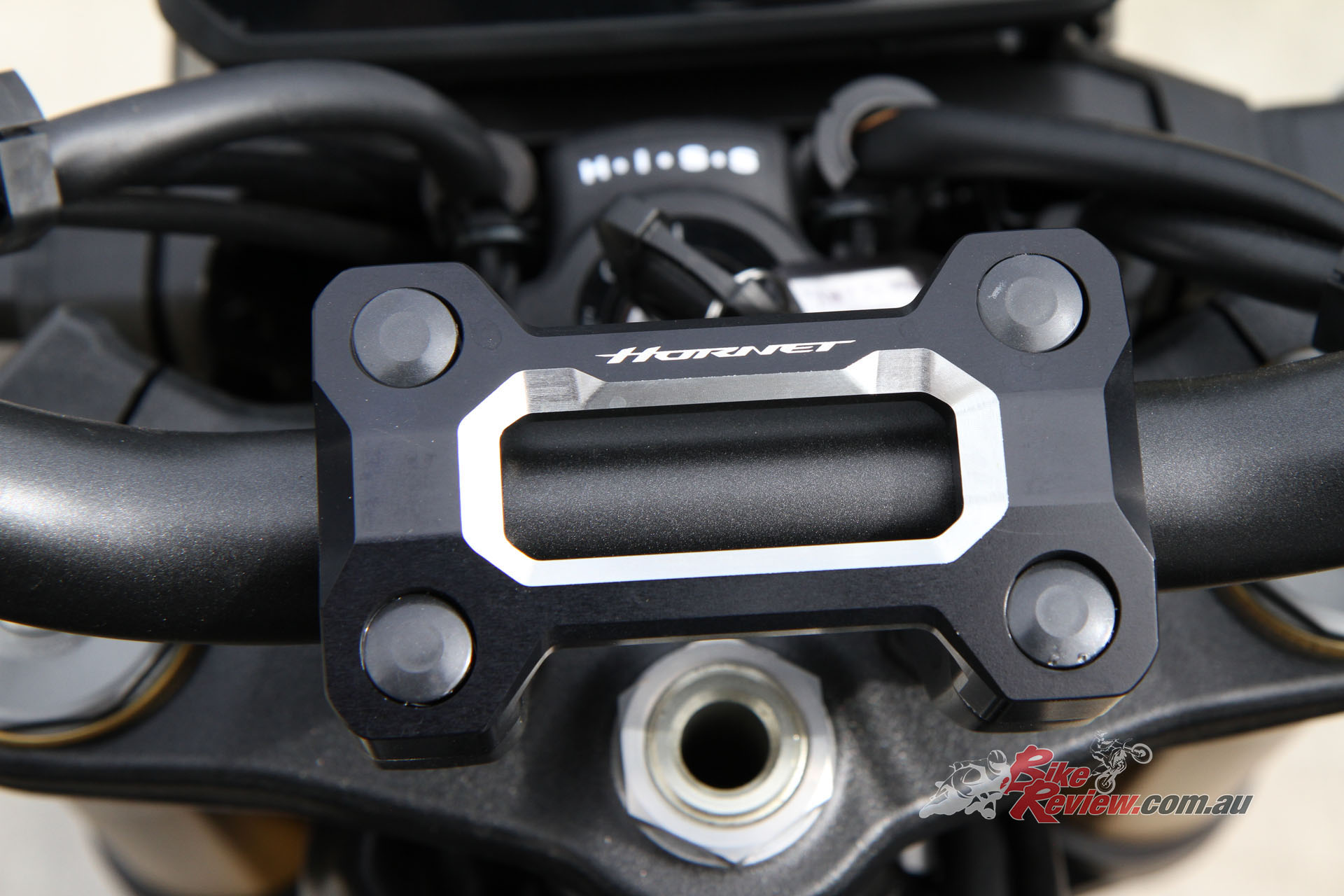
Hopping on the Hornet SP reveals a well-judged riding position that should work across a wide range of body sizes. The 809mm seat height keeps things approachable, while the tank shape and ’bar placement strike a good balance between comfort and control. At 187cm tall, I felt at home on the bike straight away, though I would personally add a touch more handlebar rise to further reduce weight on the wrists during longer stints.
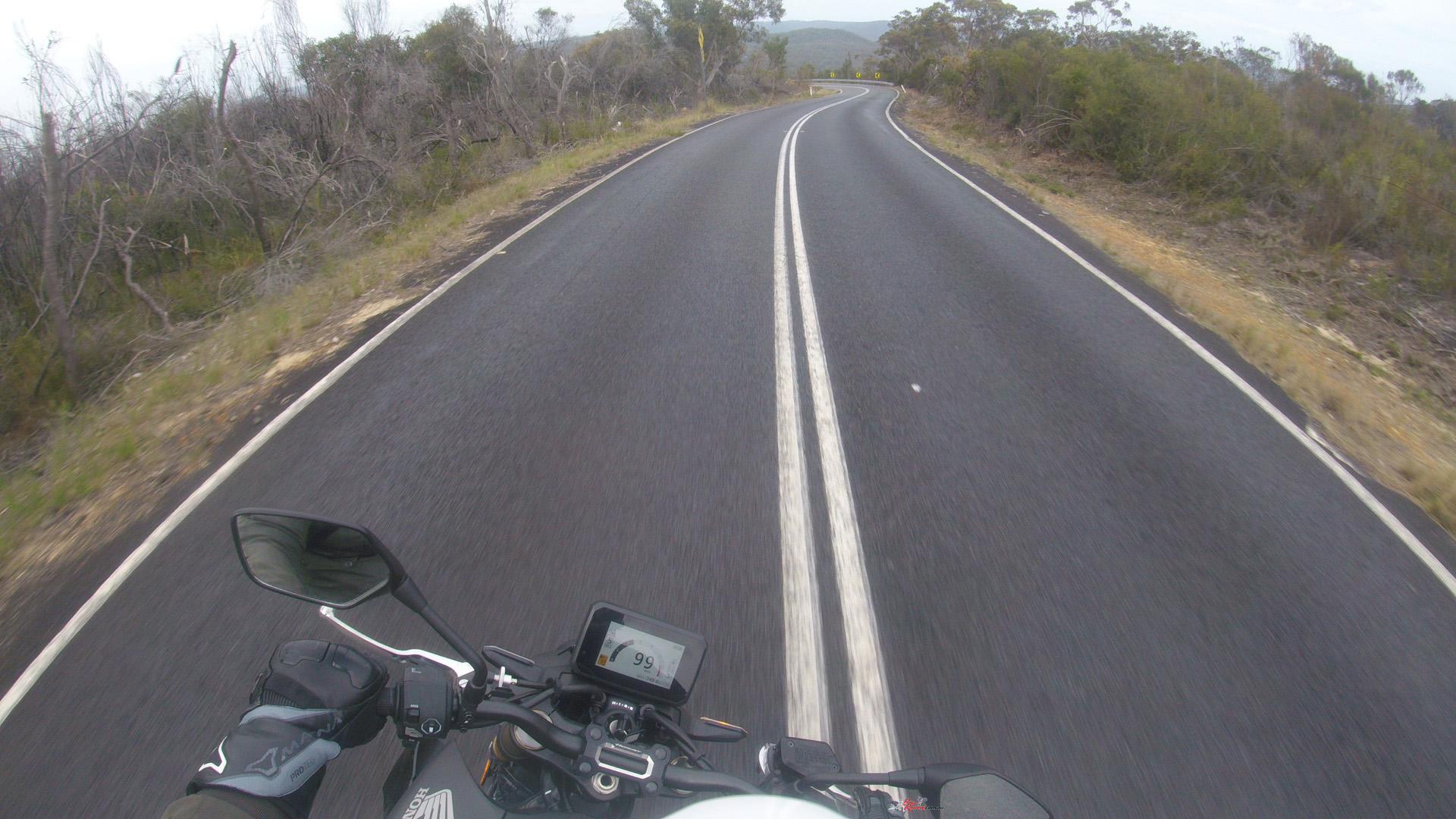
The ‘bars are quite narrow, which means the CB needs muscling around switchbacks but it also helps in lane splitting.
The cockpit is clean and modern, centred around a 5in full-colour TFT dash. It’s easy to read in most conditions with clear layouts and logical menus, but for taller riders there is one frustration: in certain glare conditions I found myself having to stoop slightly to read it properly. Angle adjustability would be a welcome improvement here.
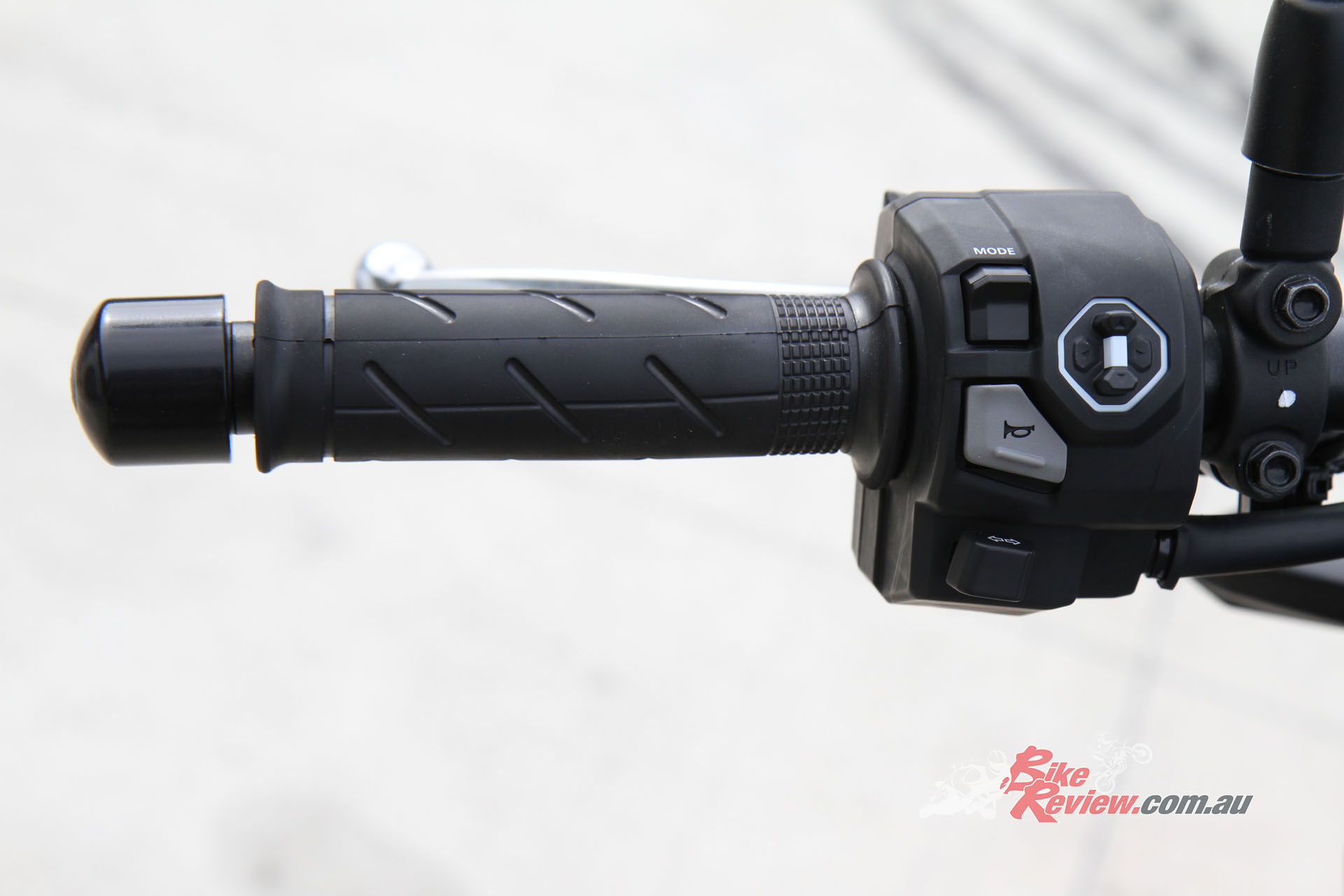
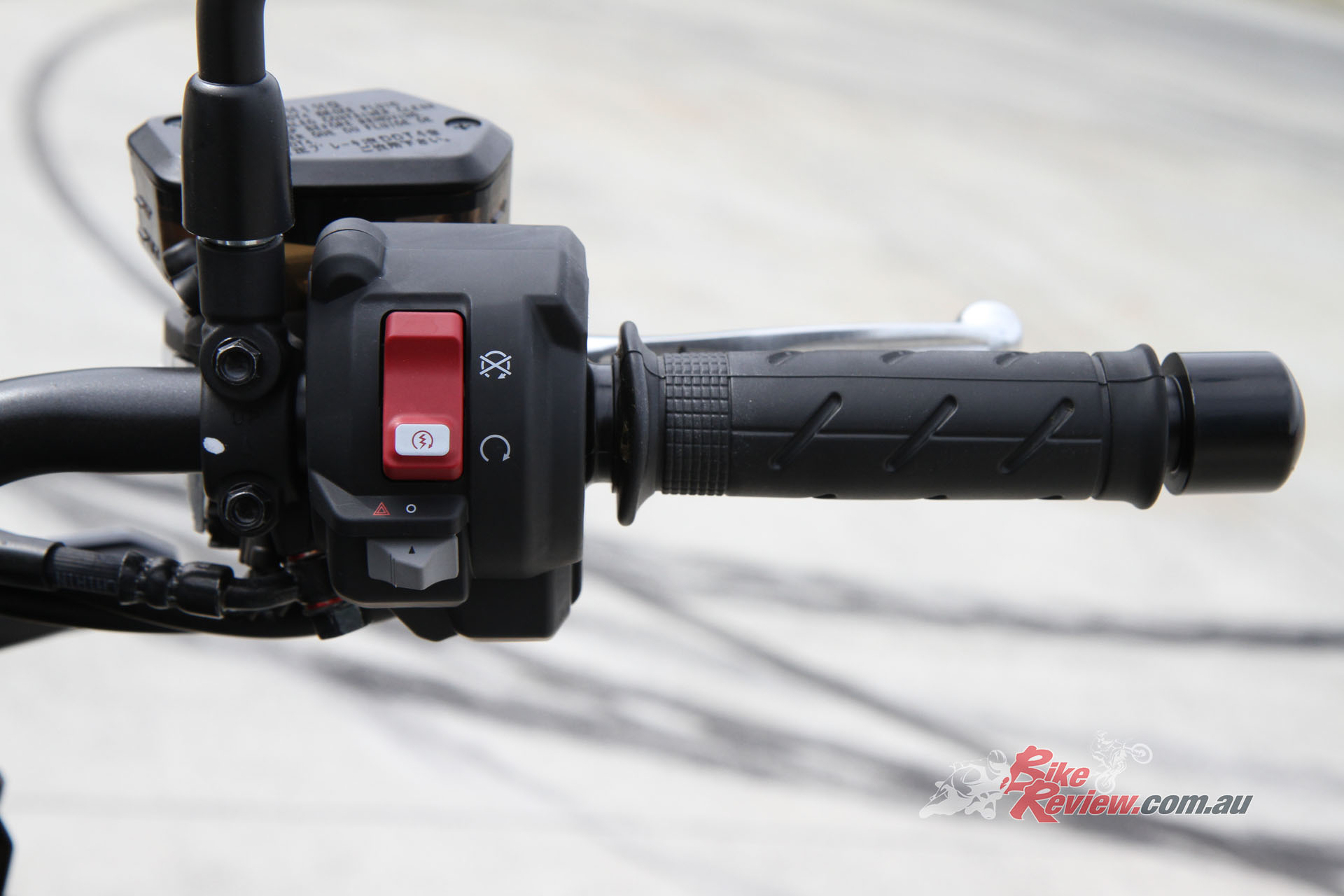
The switchgear, while well finished, is another area where Honda hasn’t quite nailed it. The toggle bar and menu selector on the left ’bar are fiddly and take too much concentration to use on the move, and the indicator and horn buttons really should swap positions – muscle memory says so – and I hit the horn more than once when I didn’t mean to, a common Honda thing these days.
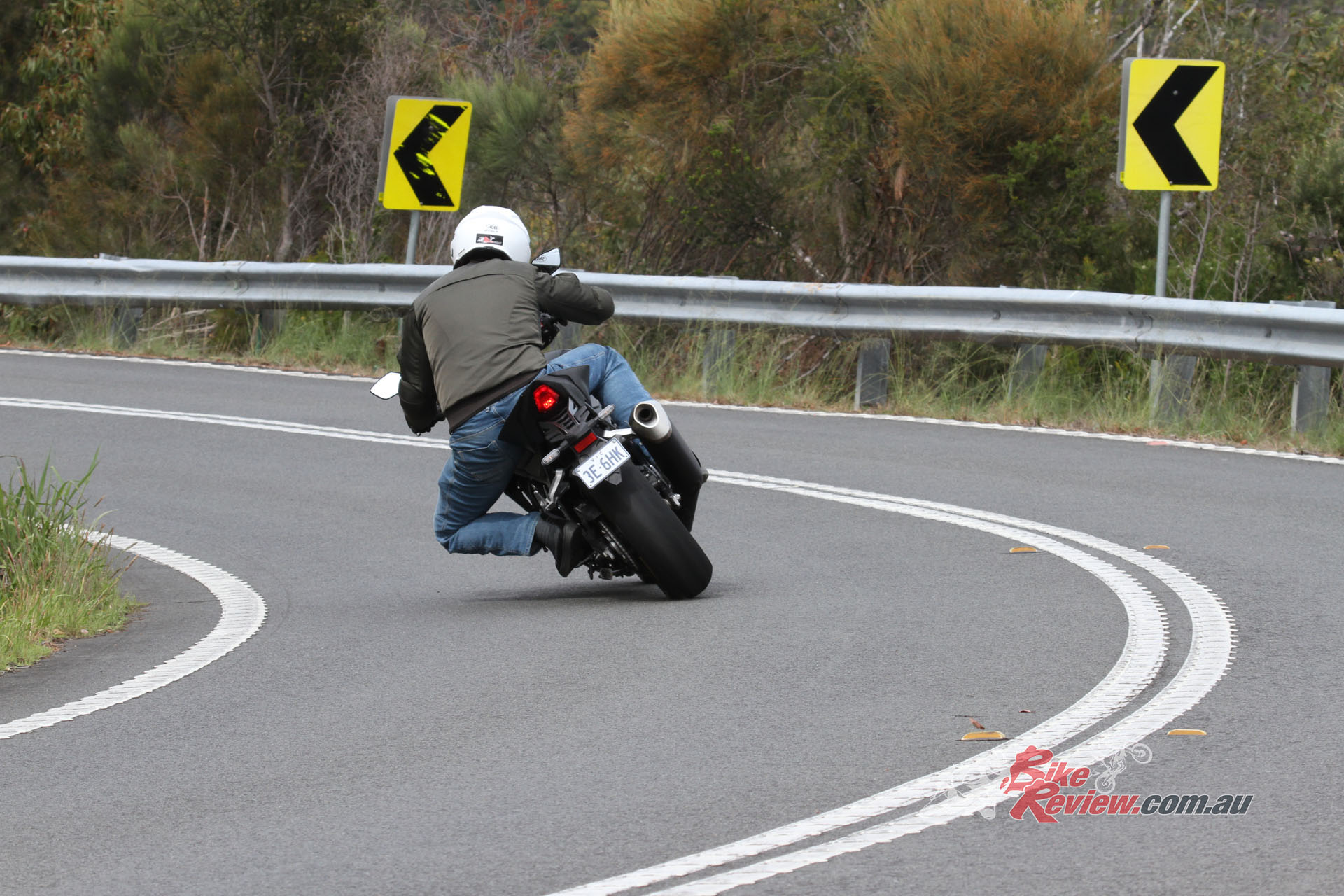
“Where the CB1000 Hornet SP really shines is when you start pushing on. Quite simply, it’s one of the best-handling sports nakedbikes I’ve ridden in a long time”…
Out on the road, though, the Hornet SP quickly reminded me why Honda builds its reputation on engines. The throttle response around town is a little snatchy, especially at low speeds, and I often found myself covering the rear brake to smooth things out in traffic and around roundabouts and so forth. Once rolling, however, the engine is awesome.
In everyday riding, the Hornet’s character is defined by how willingly it accelerates without needing to be pushed. Whether pulling away from intersections or rolling on for overtakes, there’s always usable thrust on tap, which makes the bike easy to live with in traffic and genuinely entertaining once the road opens up. The rev limiter arrives smoothly at 11,500rpm, and the engine pulls hard right up to that point with a strong top-end rush that reminds you of its superbike roots.
Rider modes include Standard, Sport and Rain, along with two customisable User modes.
The six-speed gearbox is paired with an up-and-down quick-shifter that’s… fine. It works well at higher speeds and higher rpm, where shifts are accurate, fast and smooth, but around town and at low revs it can feel a bit clunky compared to some of the better systems on the market. It’s not a deal-breaker, just not class-leading.
“I experimented with User 1 and User 2, setting up a wet map and a fast map, but in the end the factory presets were the best-balanced options”…
Rider modes include Standard, Sport and Rain, along with two customisable User modes. I spent most of my time in Standard for commuting and highway work, often with cruise control engaged, and saved Sport for the hills where the throttle response is noticeably livelier. I did ride the Hornet in the rain and tried Rain mode, but found it overly restrictive and intrusive, so I quickly went back to Standard. I experimented with User 1 and User 2, setting up a wet map and a fast map, but in the end the factory presets were the best-balanced options.
“The bike delivers fast, accurate steering with incredible front-end feel, excellent bump compliance and beautifully balanced chassis behaviour”…
The traction-control system offers a useful safety net, but when riding aggressively it can step in sooner than ideal. While it’s reassuring in poor conditions, enthusiastic riders will likely prefer to dial it back or switch it off entirely to allow the chassis and engine to do their thing. It does reset each time the ignition is cycled, which is worth keeping in mind.
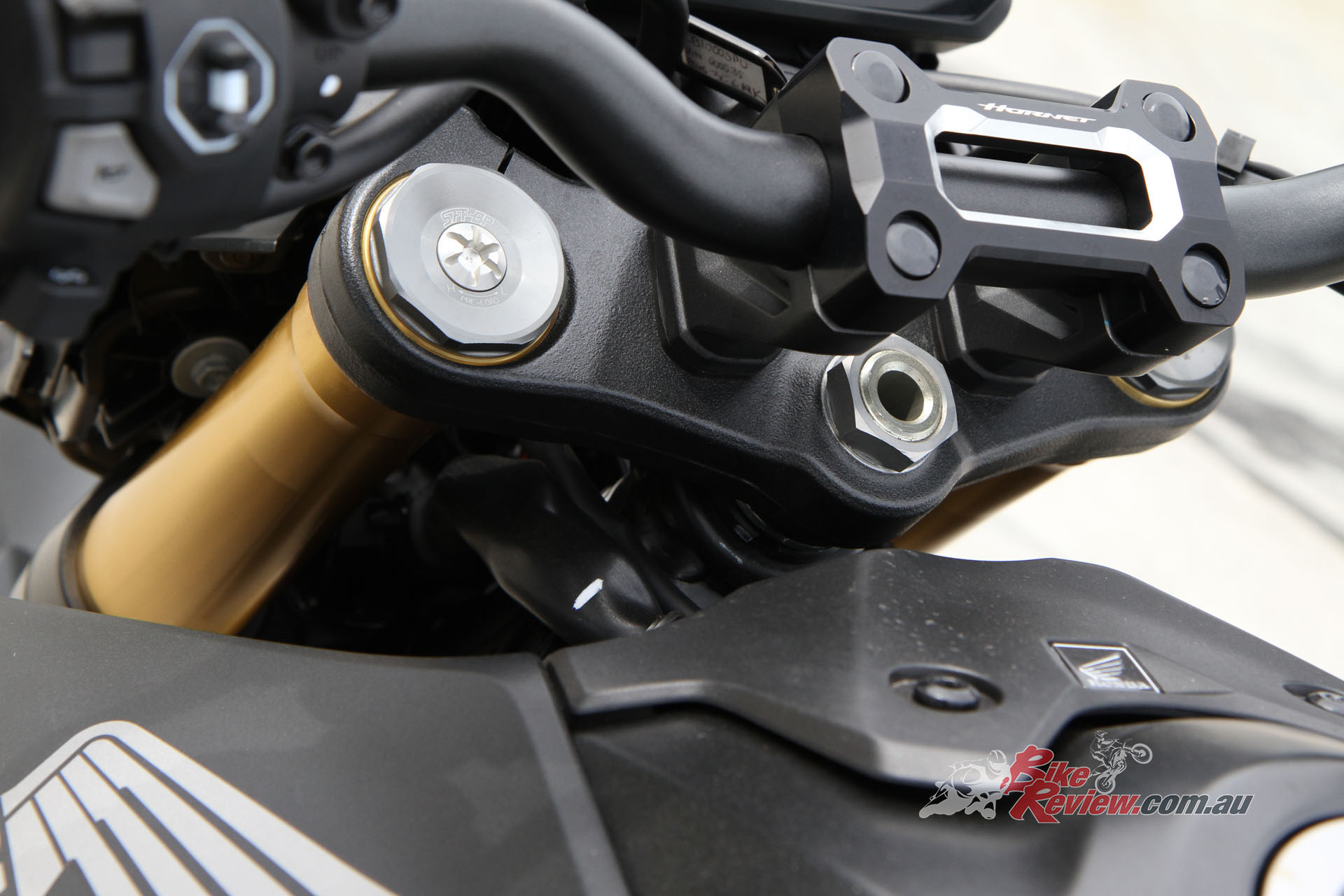
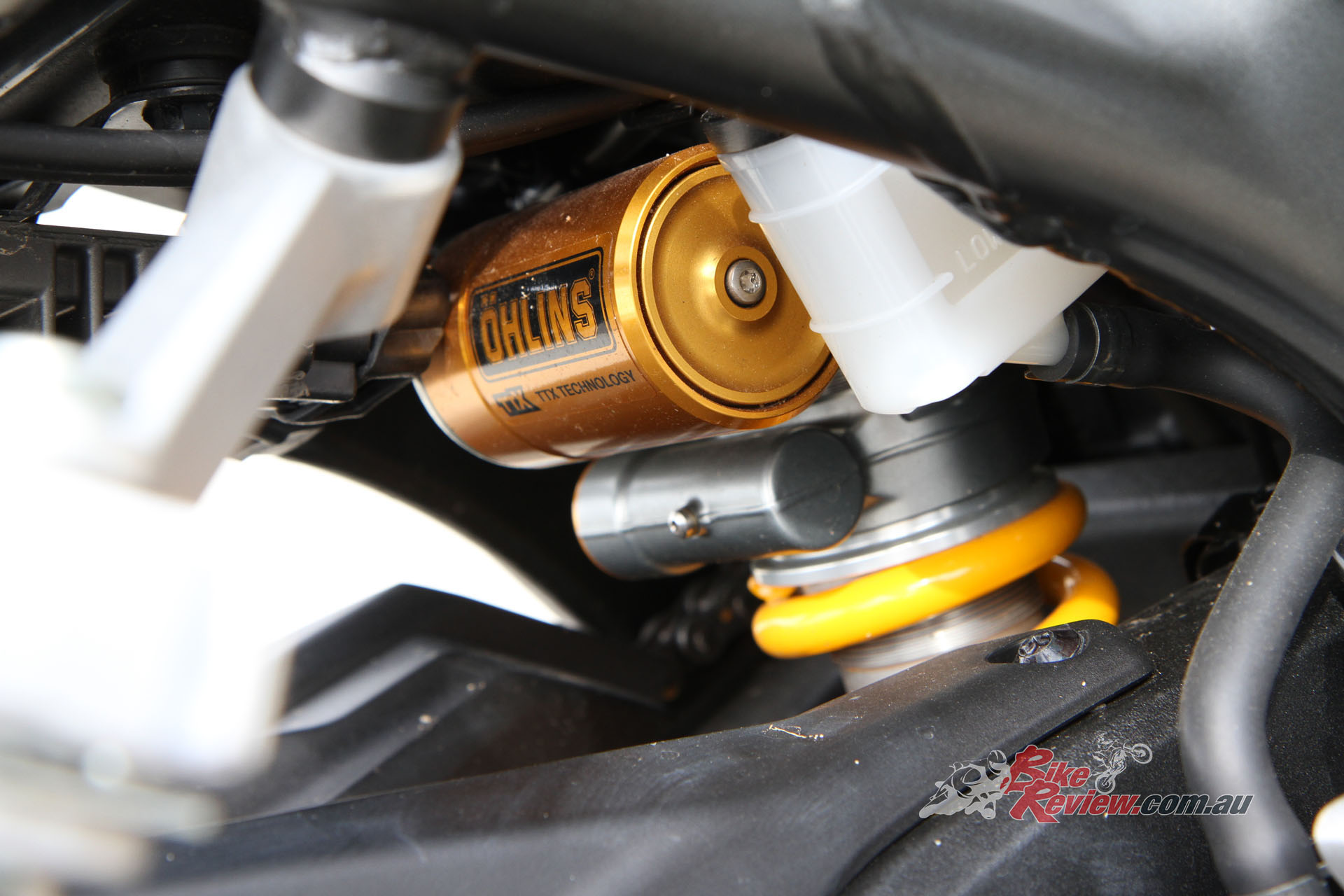
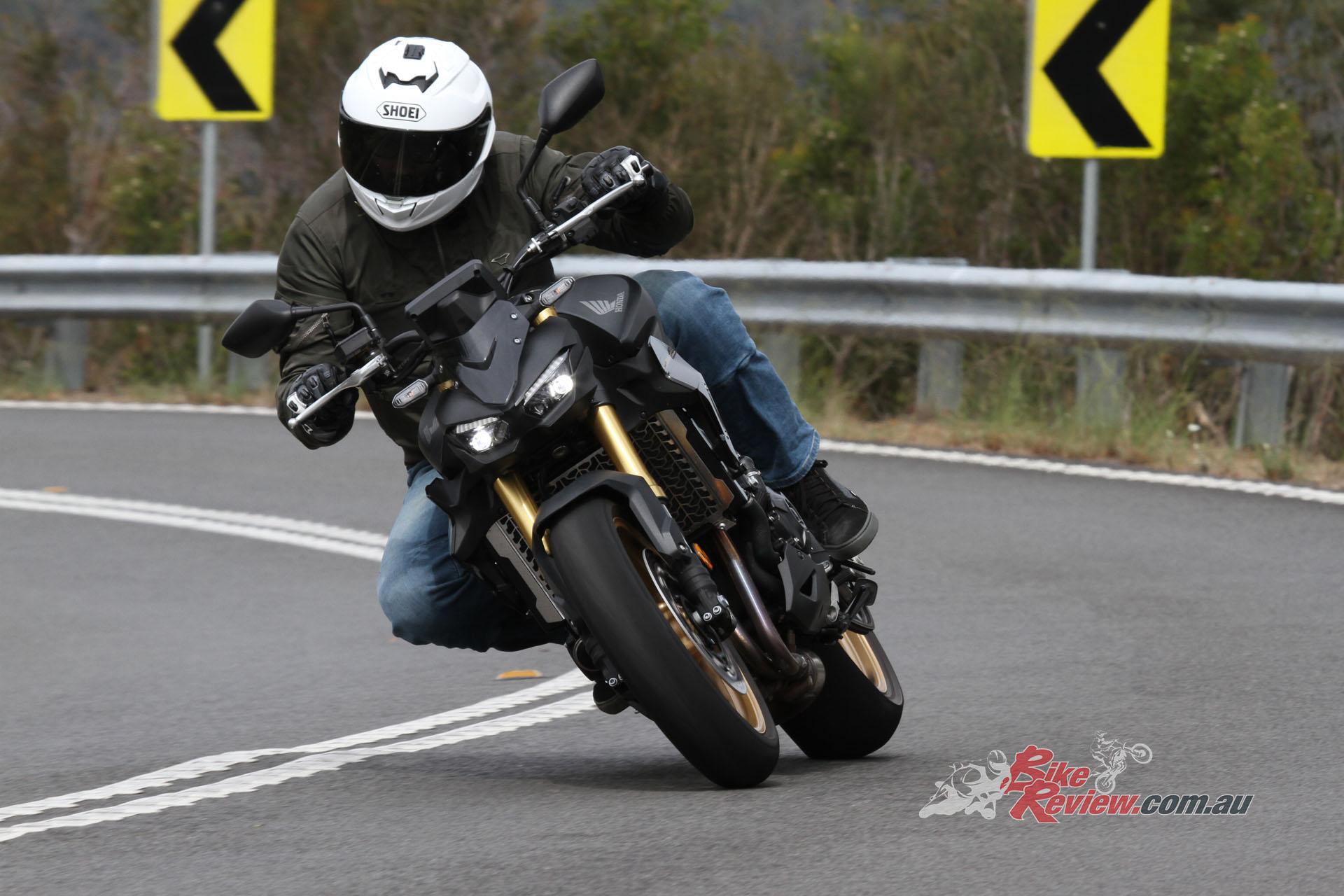
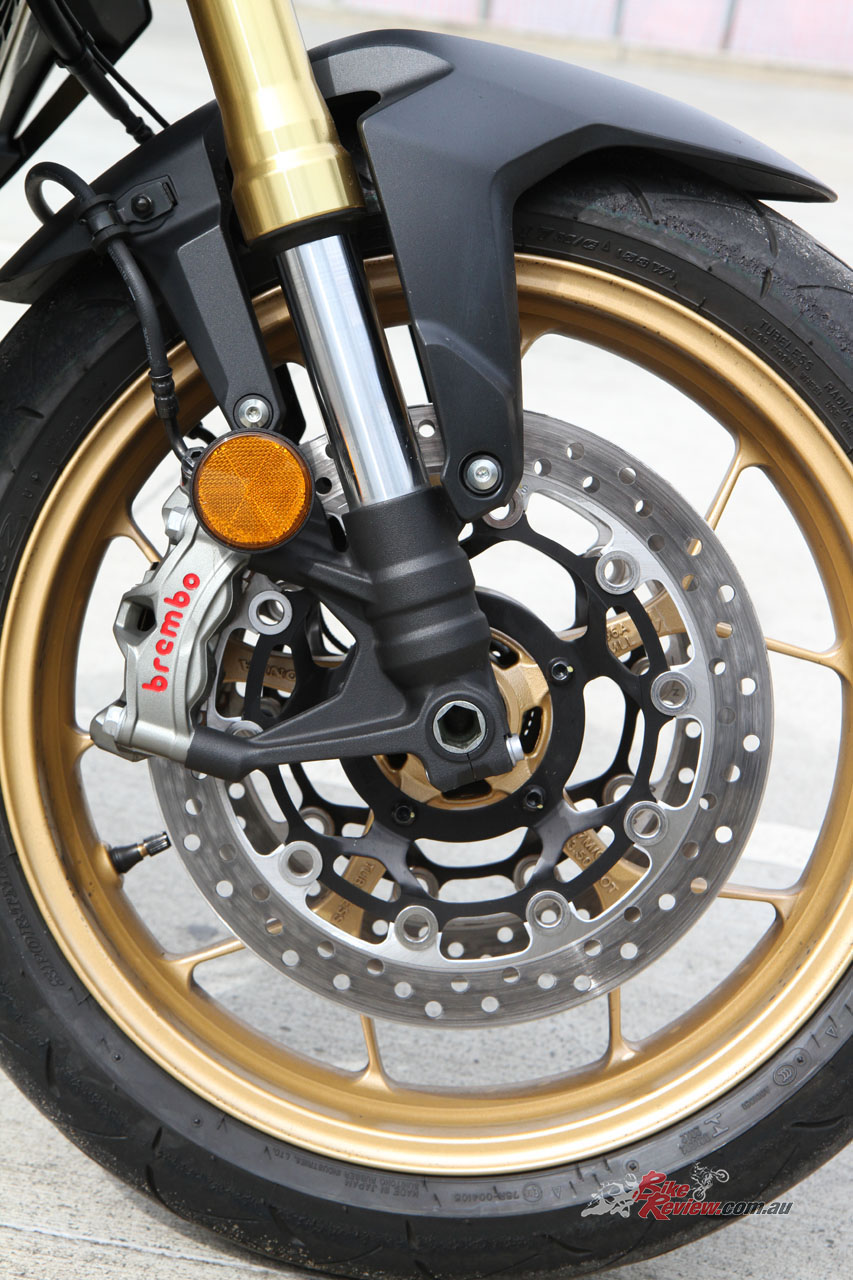
Where the CB1000 Hornet SP really shines is when you start pushing on. Quite simply, it’s one of the best-handling sports nakedbikes I’ve ridden in a long time. The fully adjustable Öhlins TTX36 rear shock is spot on straight out of the box for my 100kg, and once I added a little extra support to the Showa 41mm SFF-BP forks, the front-end became sublime.
“Our test bike ran Dunlop Roadsport 2 tyres, which offered good grip and feel, but wore quickly.”
The bike delivers fast, accurate steering with incredible front-end feel, excellent bump compliance and beautifully balanced chassis behaviour. It’s a very refined motorcycle at speed. That said, the steering does feel a touch heavy, enough that I initially thought the front tyre was under-inflated. If I owned one, I’d seriously consider fitting 20mm wider handlebars to gain a bit more leverage.
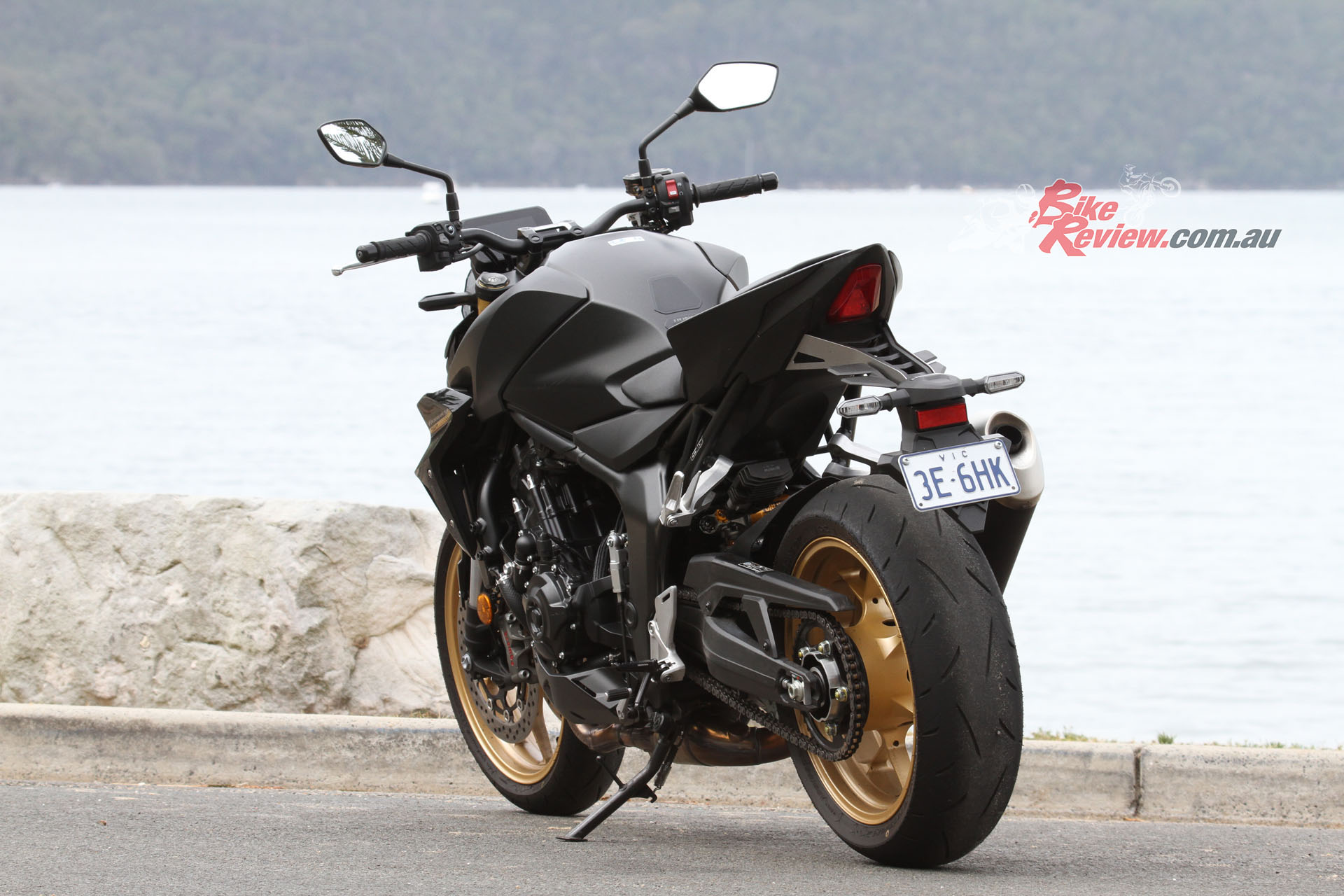
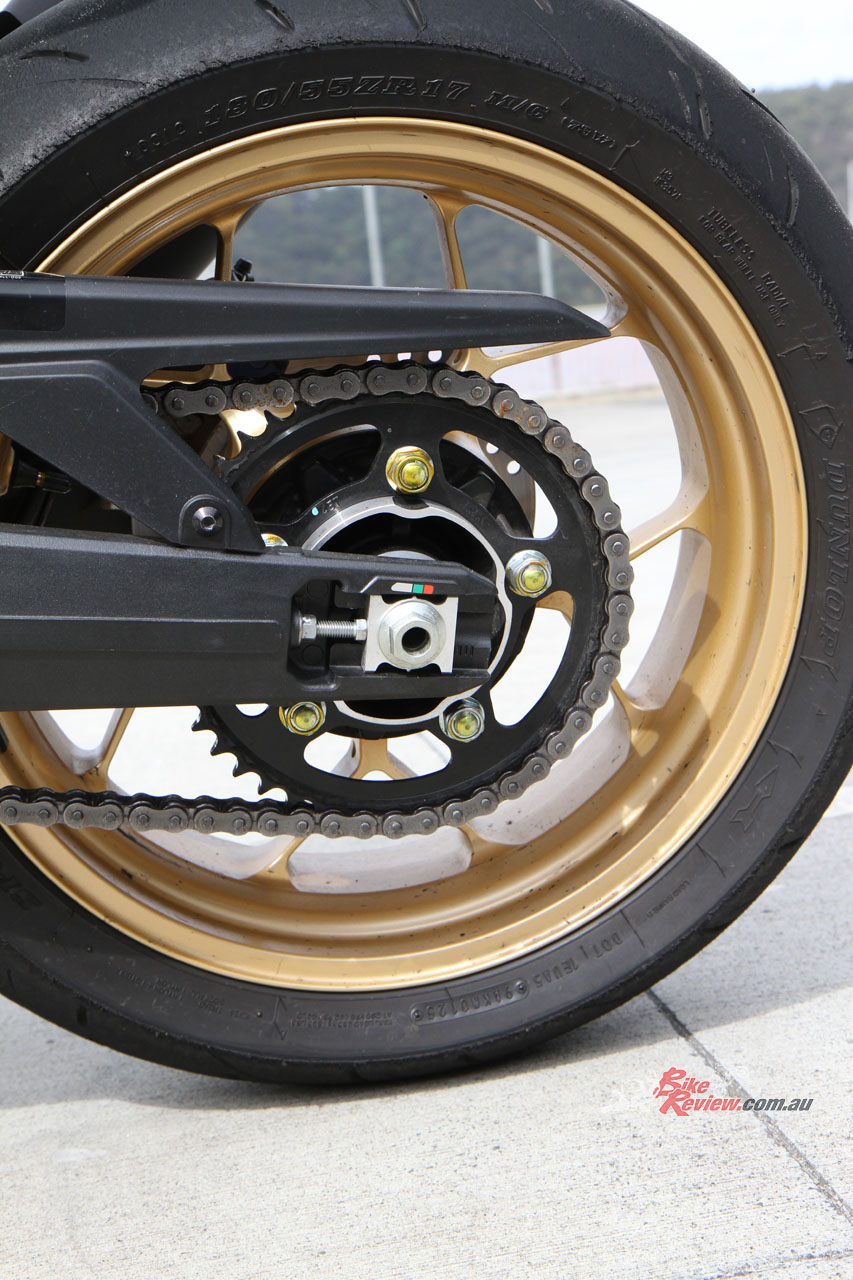
Our test bike ran Dunlop Roadsport 2 tyres, which offered good grip and feel, but wore quickly. The rear was effectively finished by 2000km, which is something owners should be aware of if they enjoy hard charging or track days.
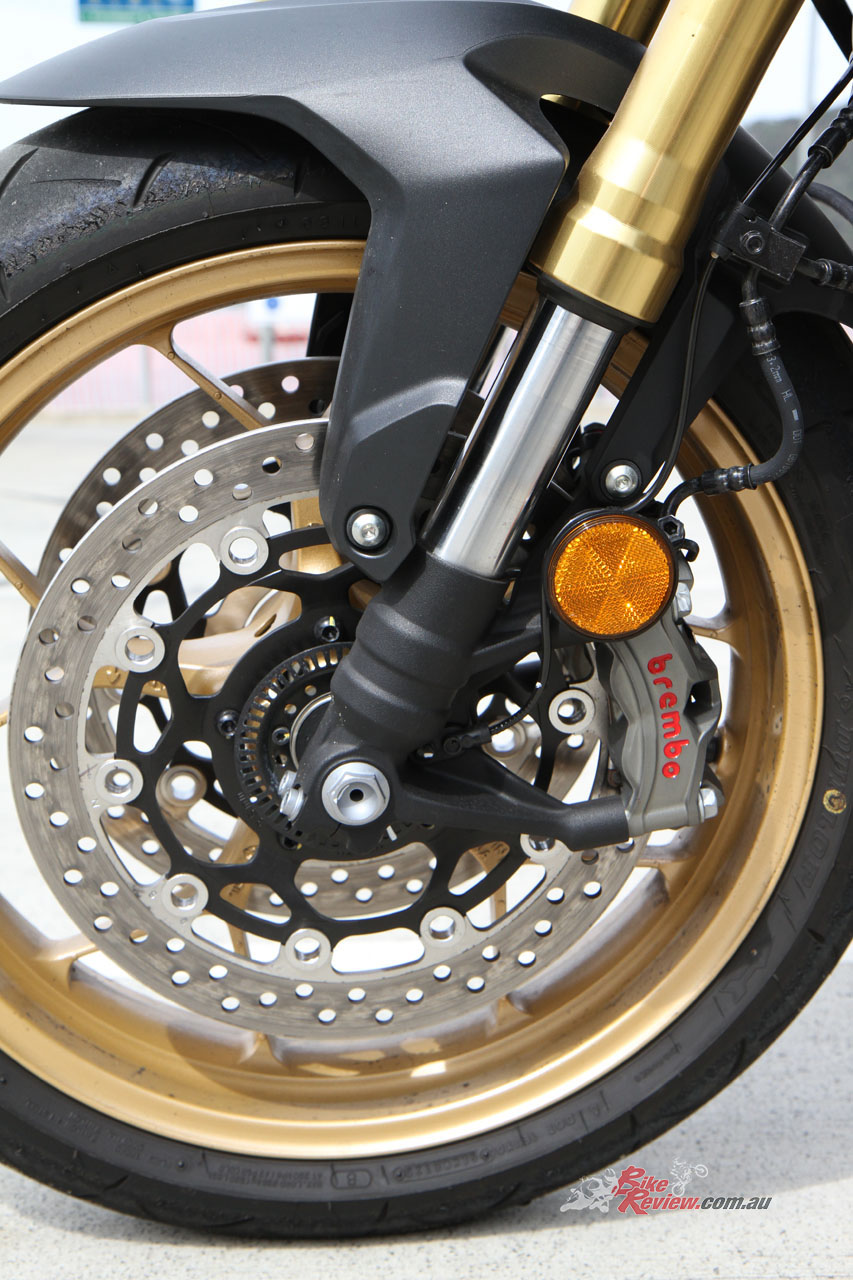
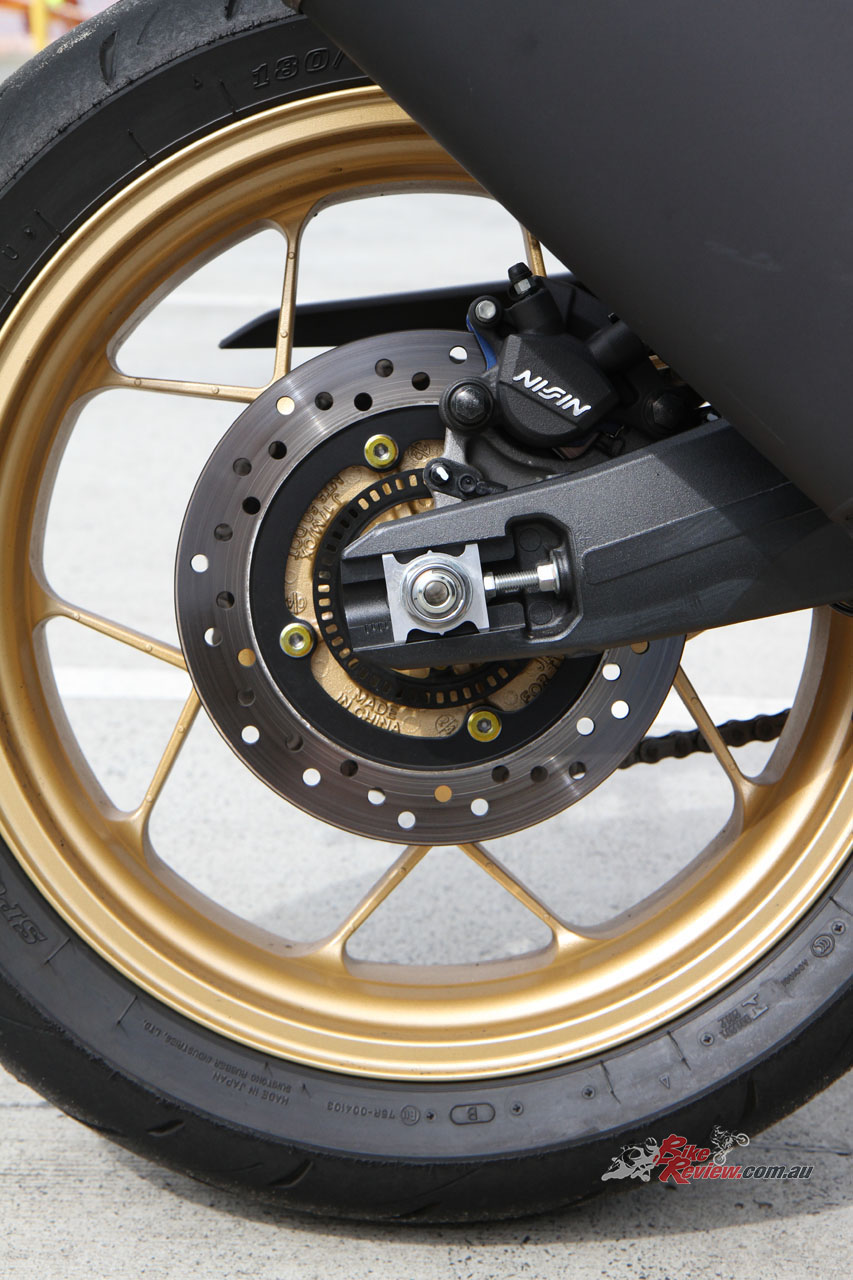
Braking is handled by Brembo Stylema R calipers biting on twin 310mm front rotors, with a single 240mm rear and Nissin caliper. Power and feel are strong and progressive, though personally I’d prefer 320mm front rotors for a bit more outright stopping authority and initial bite.
Fuel consumption is one area where expectations should be realistic and a 155hp naked is going to be thirsty, as most of them are. Honda claims 5.9L/100km, which is on the heavy side, and a range of 287km from the 17-litre tank. Over our 500km test, which included highway cruising, urban riding and fast backroad work, we returned 6.2L/100km.
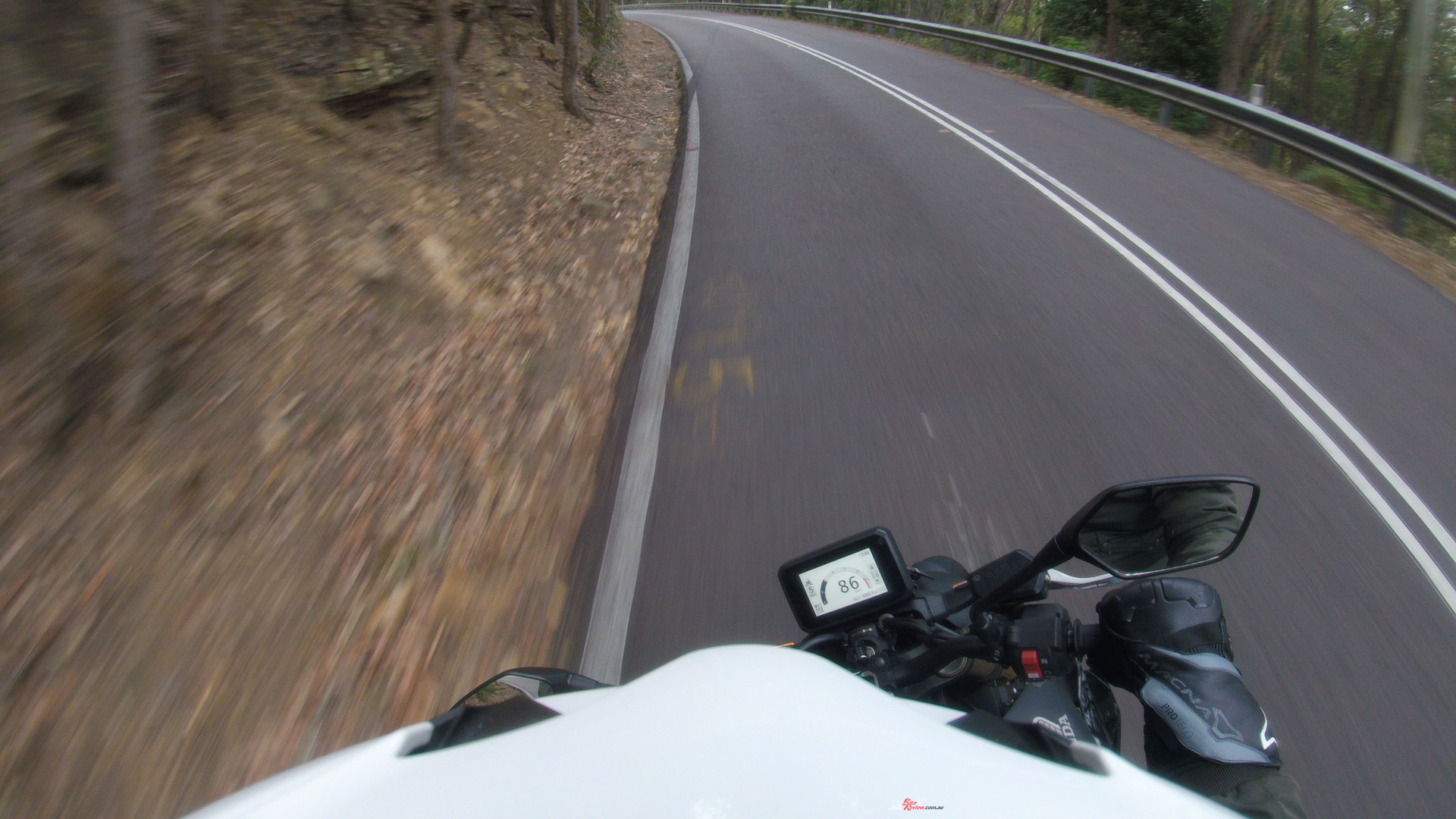
Finish and build quality are classic Honda, excellent right down to the fasteners. The headlights look great and are adequate at night without being exceptional, and overall, the bike feels solid, well-engineered and thoughtfully assembled.
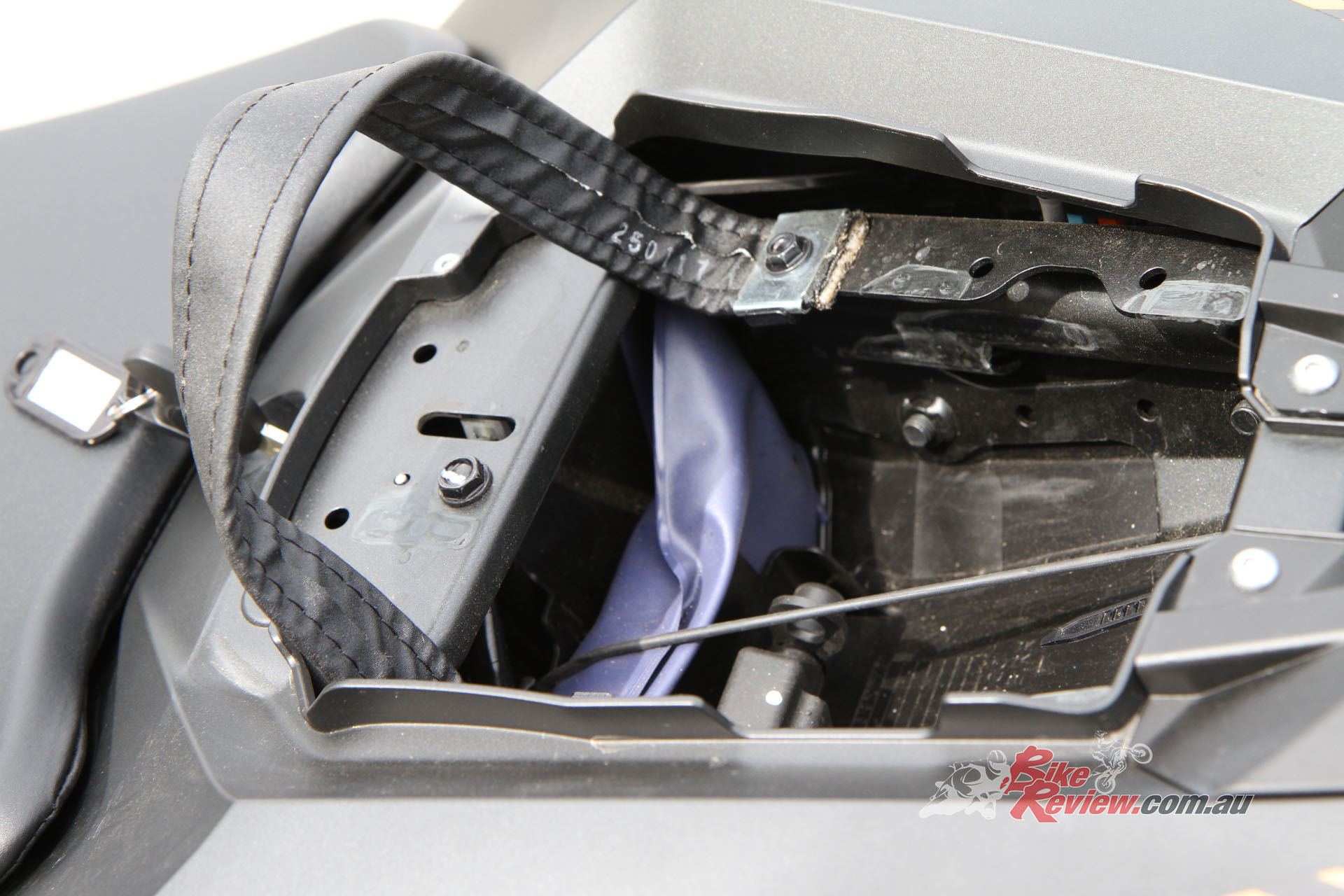
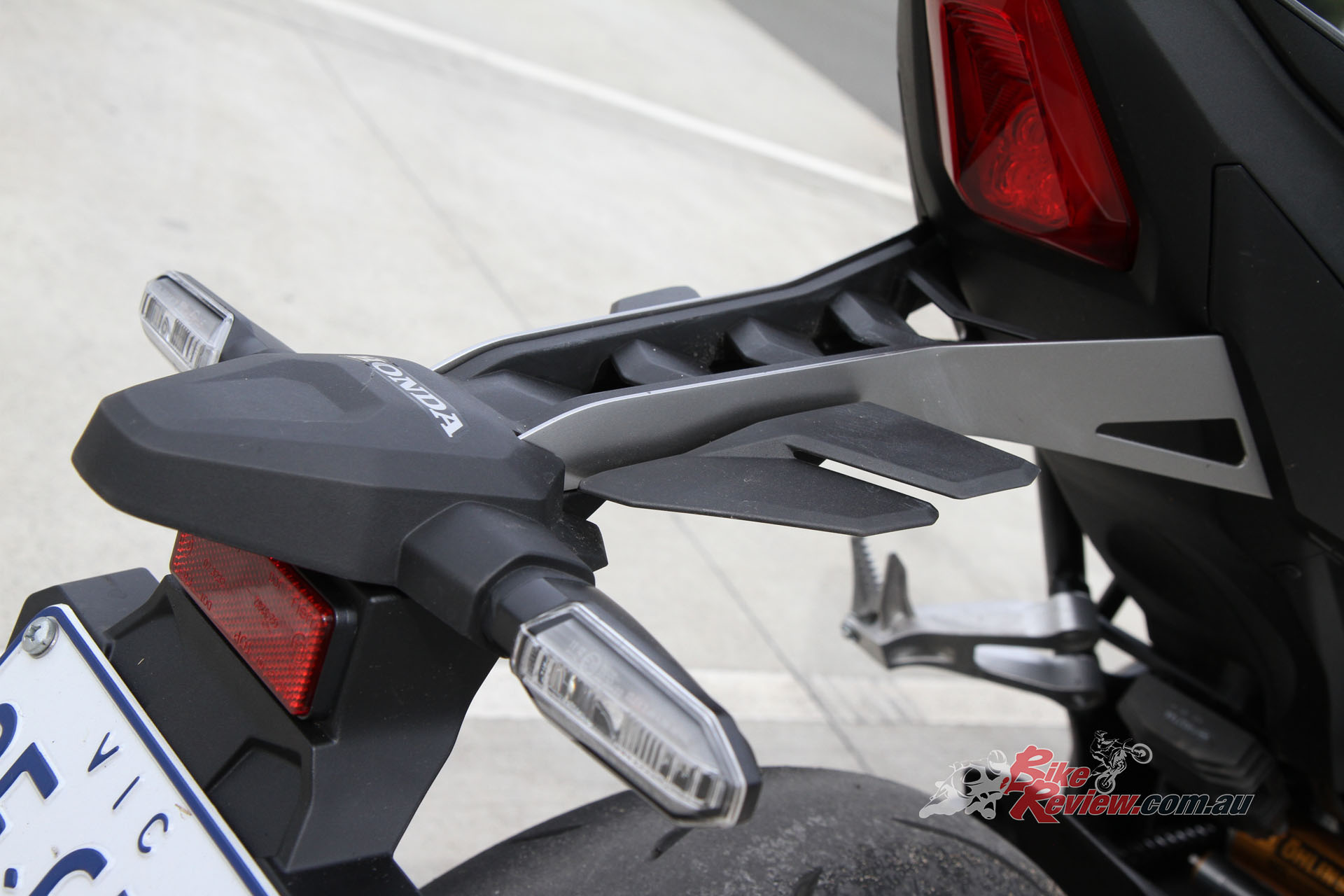
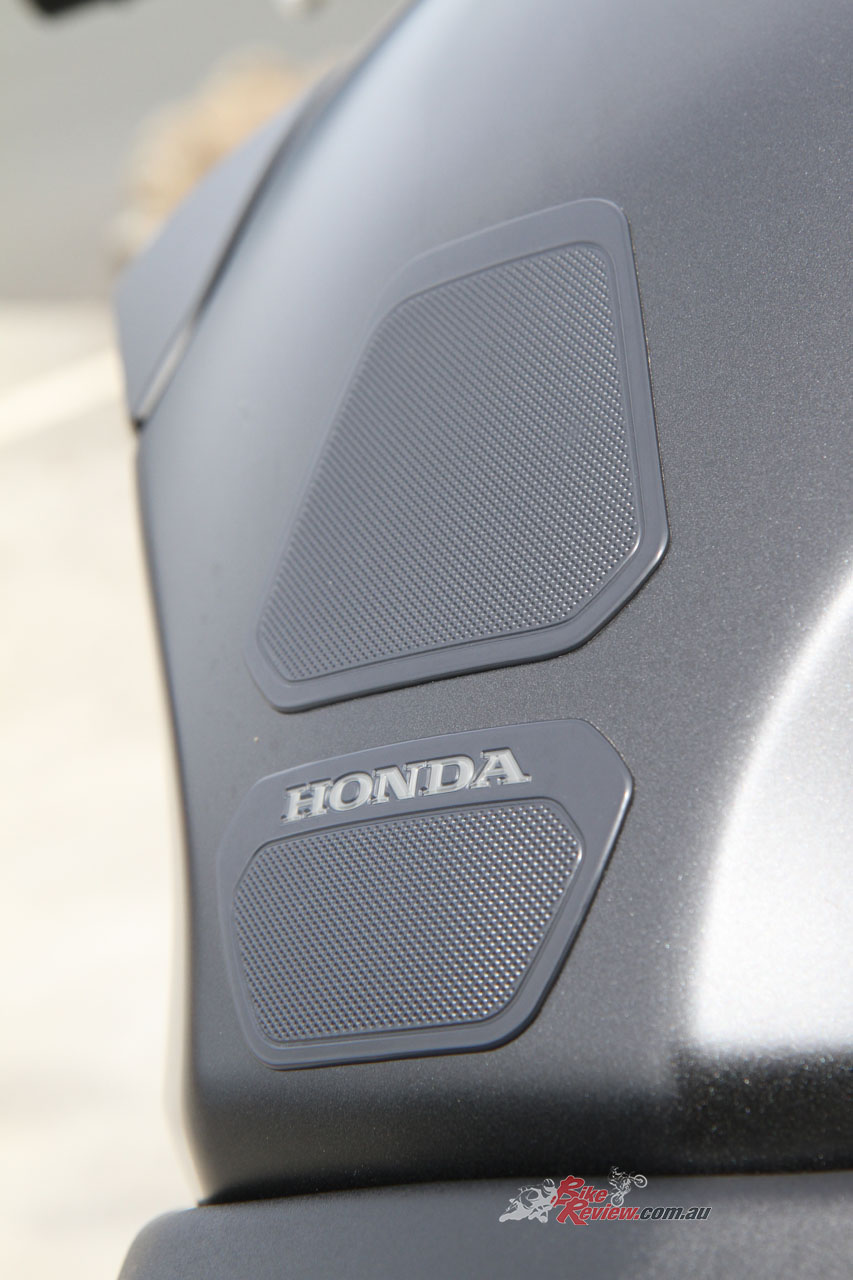
For under $20k ride away, it’s one of the best-value big-bore nakedbikes on the Australian market and proof that Honda still knows how to sting hard when it wants to.
2026 Honda CB1000 Hornet SP Specifications
Price: $19,645 Ride Away ex 2000 (enter postcode here)
Warranty: Two-years unlimited km
Colours: Matte Ballistic Black Metallic
Claimed Power: 115.5kW@11,000rpm
Claimed Torque: 106Nm@9000rpm
Wet Weight: 212kg
Fuel capacity: 17L
Fuel Consumption Claimed: 5.9L/100km
Fuel Consumption (measured): 6.2L/100km
Engine: Four-stroke, inline four-cylinder, liquid-cooled, 16-valve, DOHC, 76.0mm x 55.1mm bore x stroke, 999.8cc, 11.7:1 compression, four-into-one exhaust Gearbox: Six speed Clutch: Wet, multiple disc slipper, quick-shifter, PGM-FI fuel inject, RbW throttle.
Chassis: Frame: Twin spar alloy, alloy Pro Link swingarm.
Rake: N/A degrees Trail: N/A
Suspension: SHOWA 41mm SFF USD big piston forks, 116mm travel (f), Ohlins TTX 36 shock, fully adjustable, 137mm travel.
Brakes: Twin 310mm discs, four-piston Brembo Stylema R four-calipers (f), Single 240mm disc, single-piston Nissin ABS caliper (r)
Wheels & Tyres: Cast alloy 120/70 – 17 (f) 180/55 – 17 (r)
Dimensions:
Seat height: 809mm
Wheelbase: 1455mm
Ground Clearance: 135mm
Overall Length: 2140mm
Overall Width: 790mm
Overall Height: 1085mm
Equipment & Instruments: 5in Full-colour TFT dash,Honda Smartphone Voice Control System (HVCS), Riding modes, TCS, ABS
Editor’s Note: If you are reading this article on any website other than BikeReview.com.au, please report it to BikeReview via our contact page, as it has been stolen or re-published without authority.
Ratings | Bike Review | 2026 Honda CB1000 Hornet SP Nakedbike
Thrilling!
Honda has sharpened the pencil and shifted focus towards value. The result is one of the most compelling big-capacity nakedbikes we’ve ridden… Photos: Heather Ware HMC
The Author

You Might Also Like