
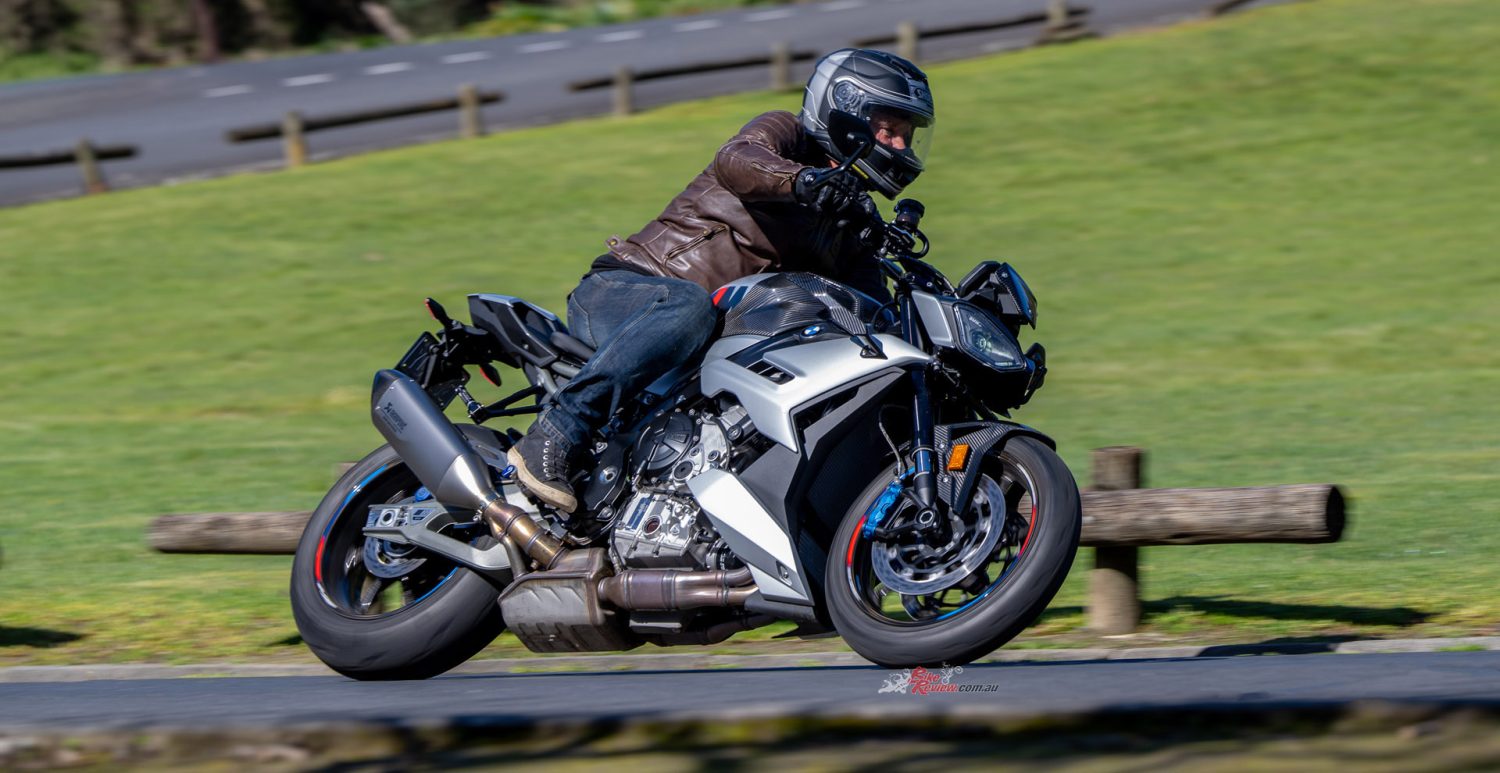

BMW’s M 1000 R Competition promises superbike performance and everyday practicality. Steve Martin tests the flagship nakedbike on road and track... Photos: RbMotoLens, SDPics
BMW’s S 1000 R is no slouch, but the 2026 M 1000 R pushes the nakedbike formula further. We test the range-topping Competition on Australian roads and at Phillip Island to see how its formidable 154kW engine, lightweight carbon wheels and electronic rider aids perform.
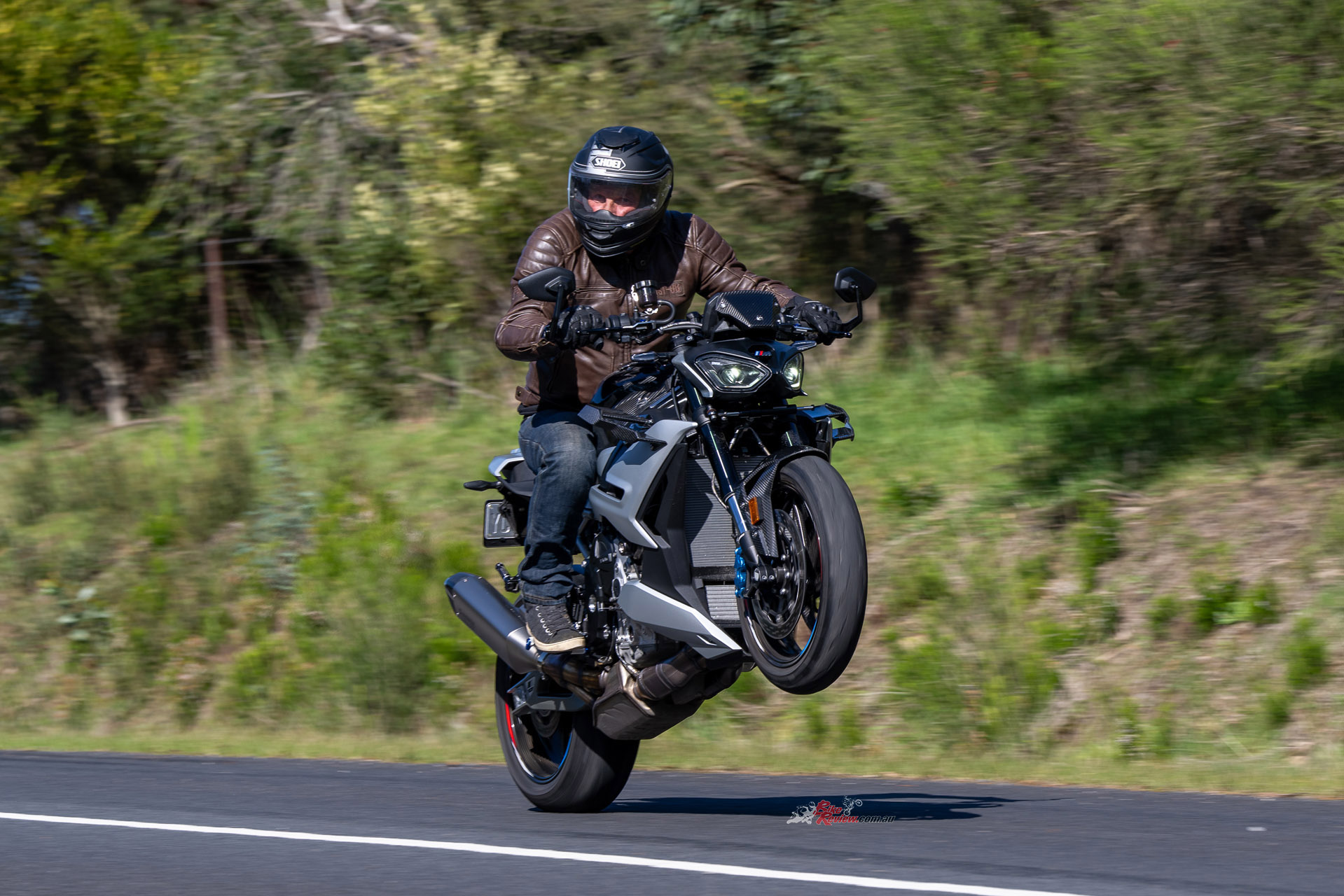
Steve gives the bike one final Wheelie Control test for the RbMotoLens camera!
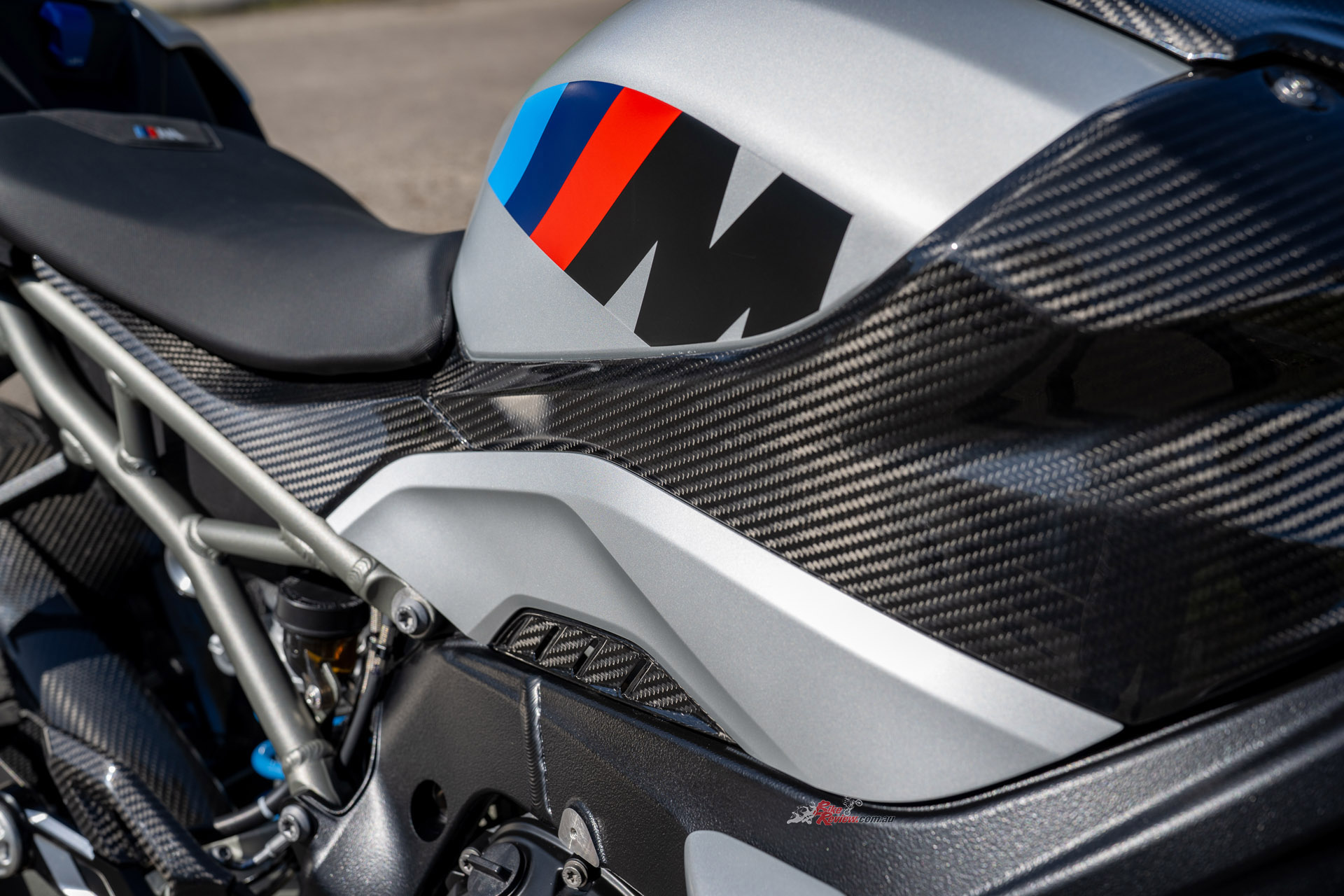
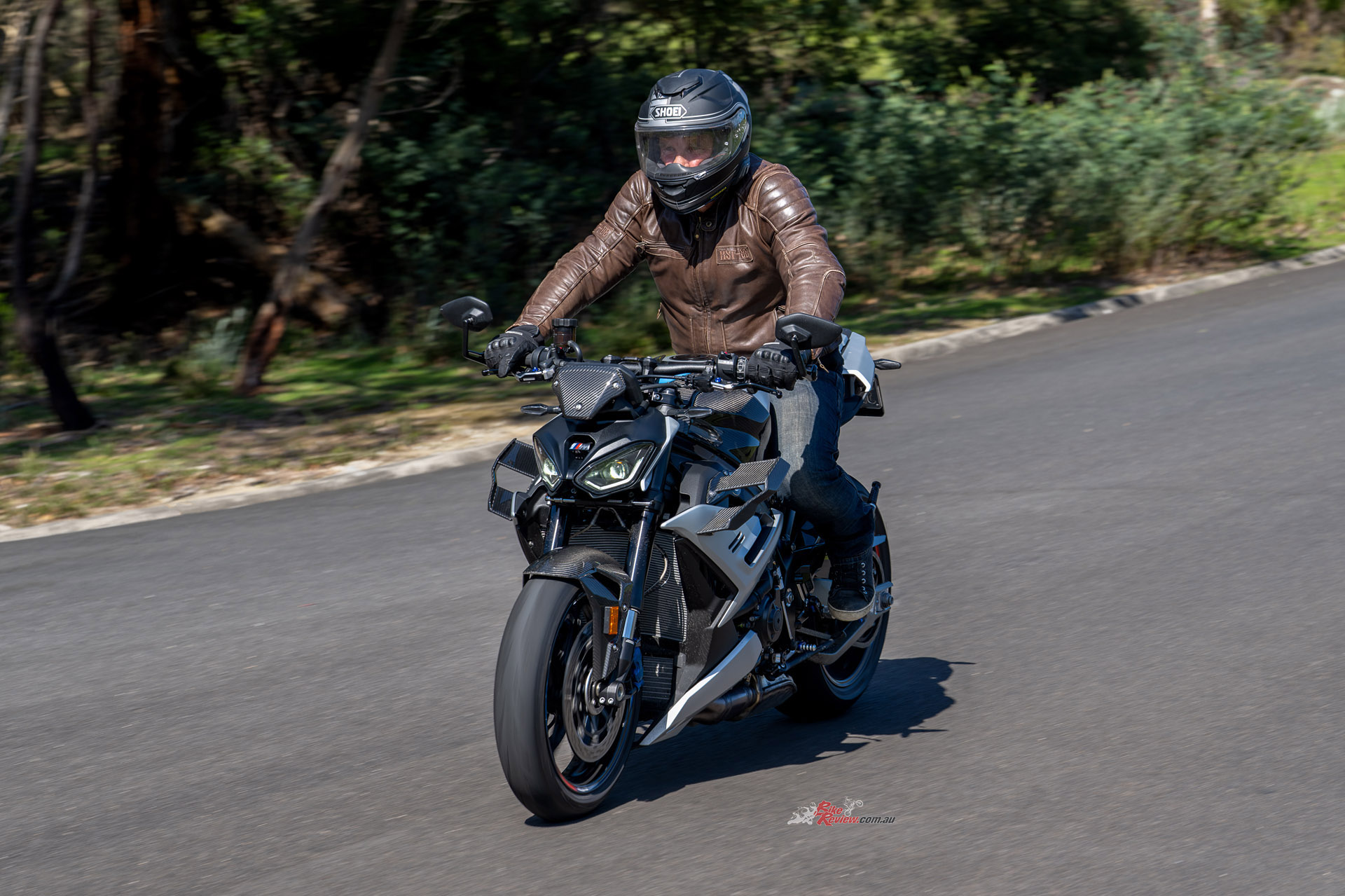
BMW’s S 1000 R is already a seriously quick nakedbike, but the M 1000 R takes things further with a 154kW (210hp) superbike-derived engine, aerodynamic winglets and more track-focused hardware. The Competition sits at the top of the 2026 M 1000 R range, adding carbon wheels, extensive carbon-fibre bodywork and billet components. It’s a bit like the superyacht of the nakedbike world. Expensive, beautifully equipped and capable of going considerably faster than most of us have any business travelling on a public road.
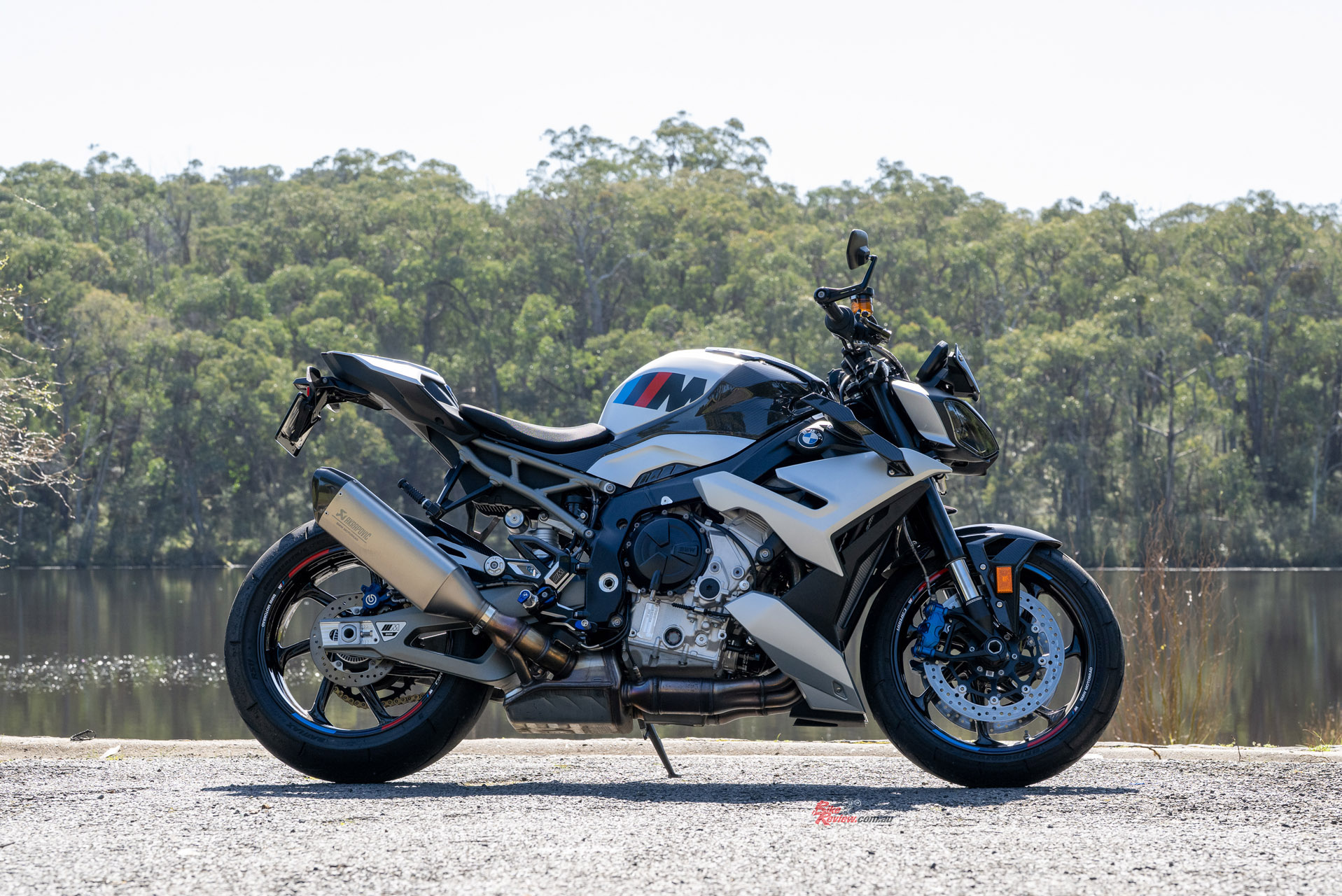
$42,990 plus on road costs will get you one of the most prestigious, high tech, powerful bikes that money can buy.
Road Test
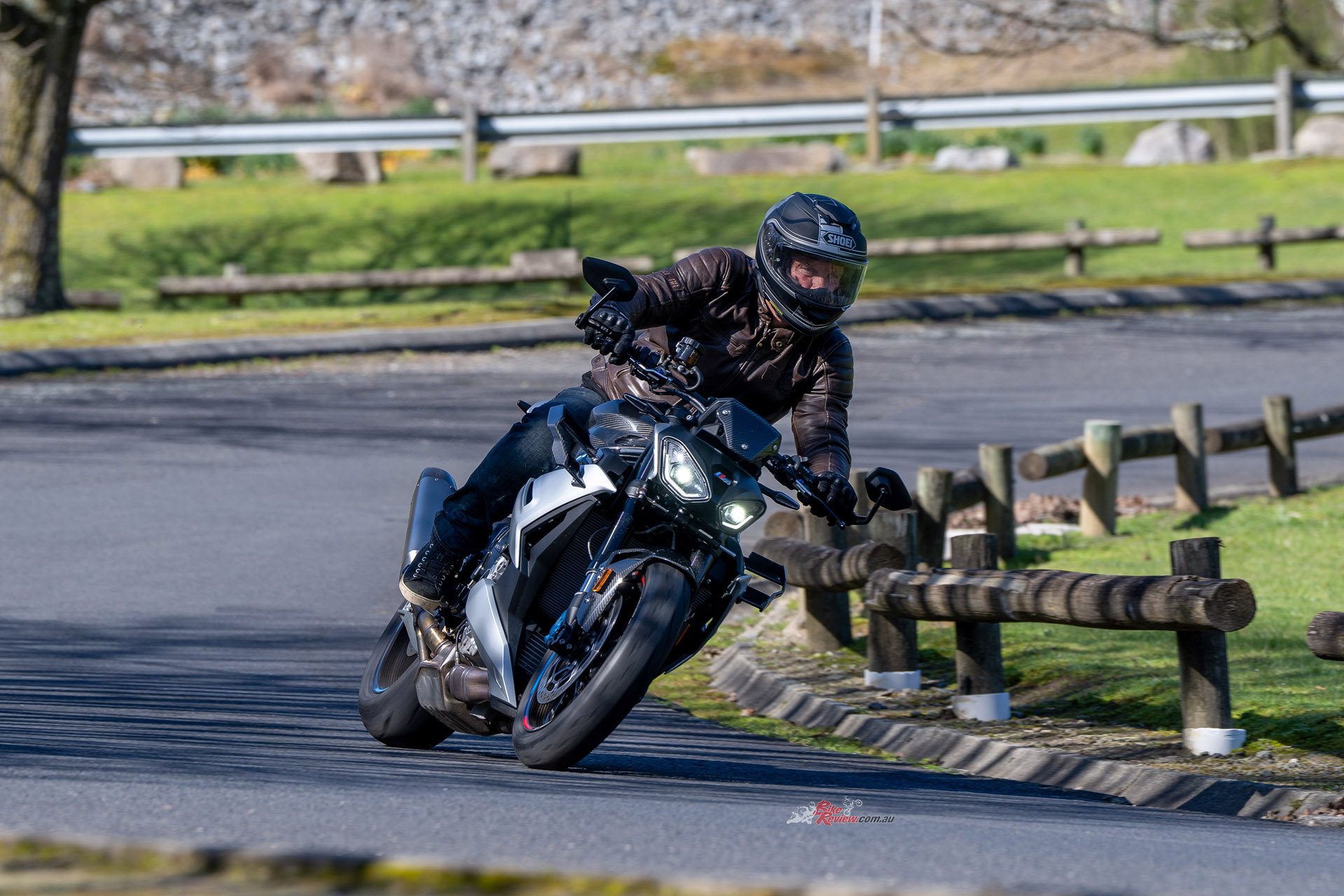
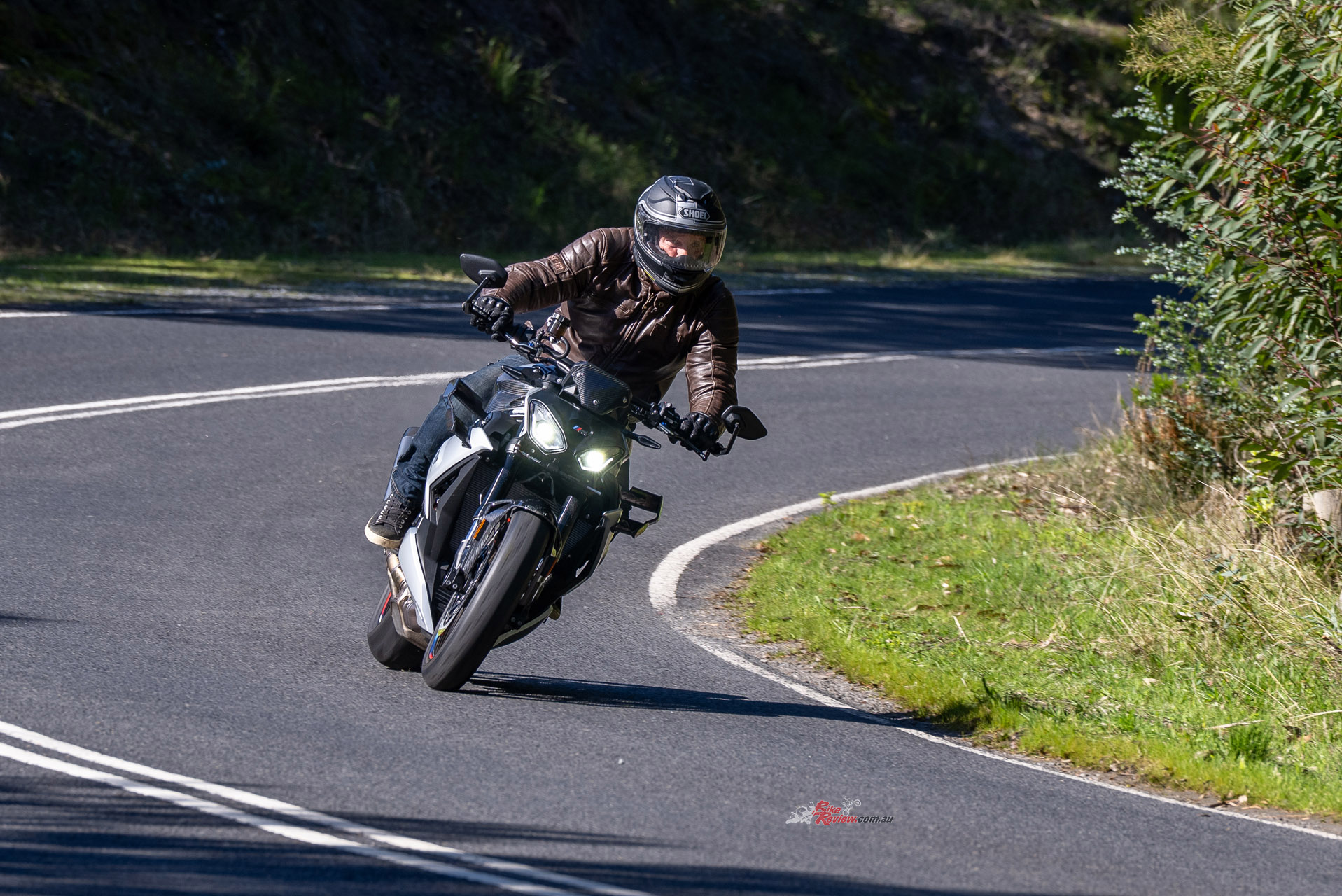
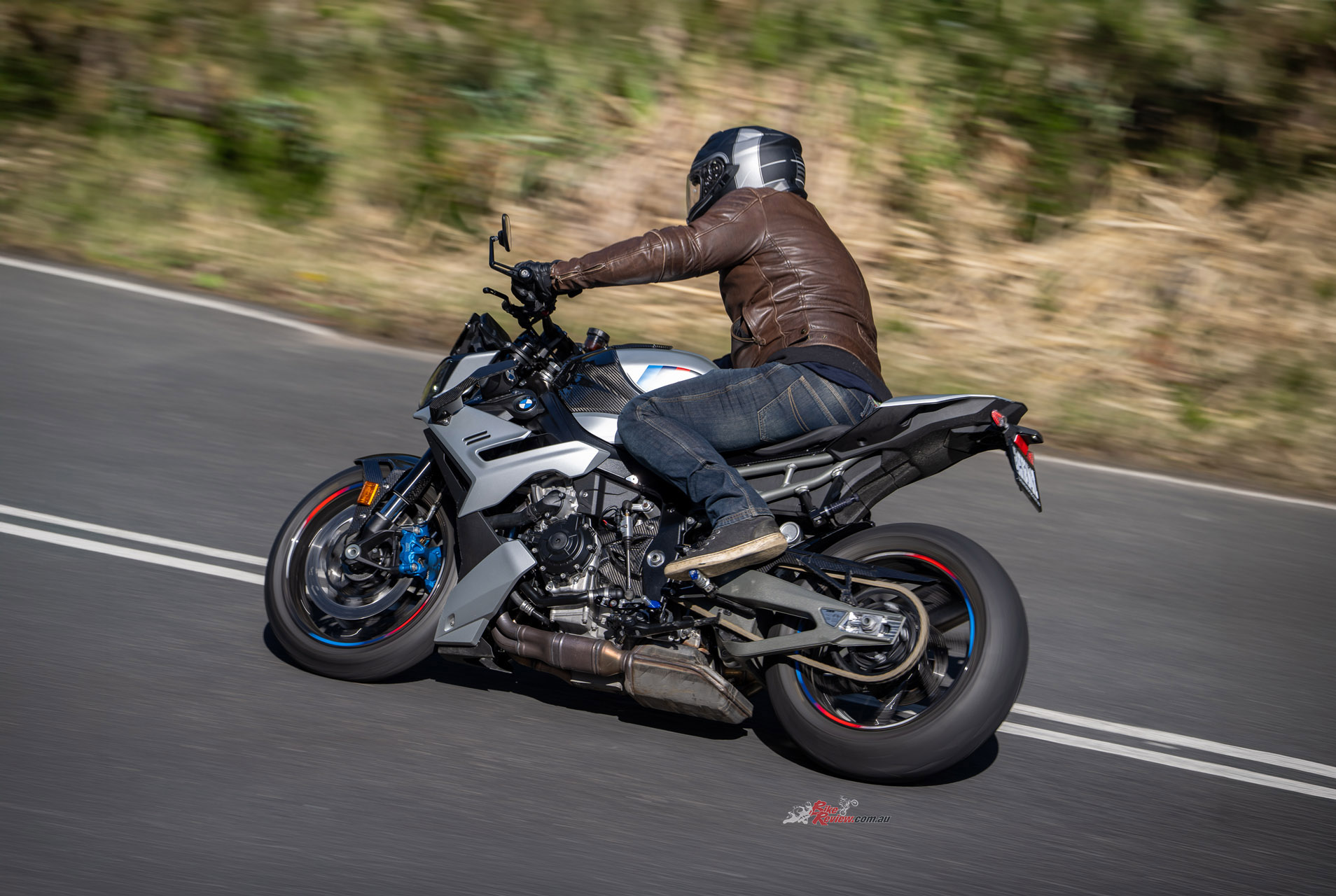
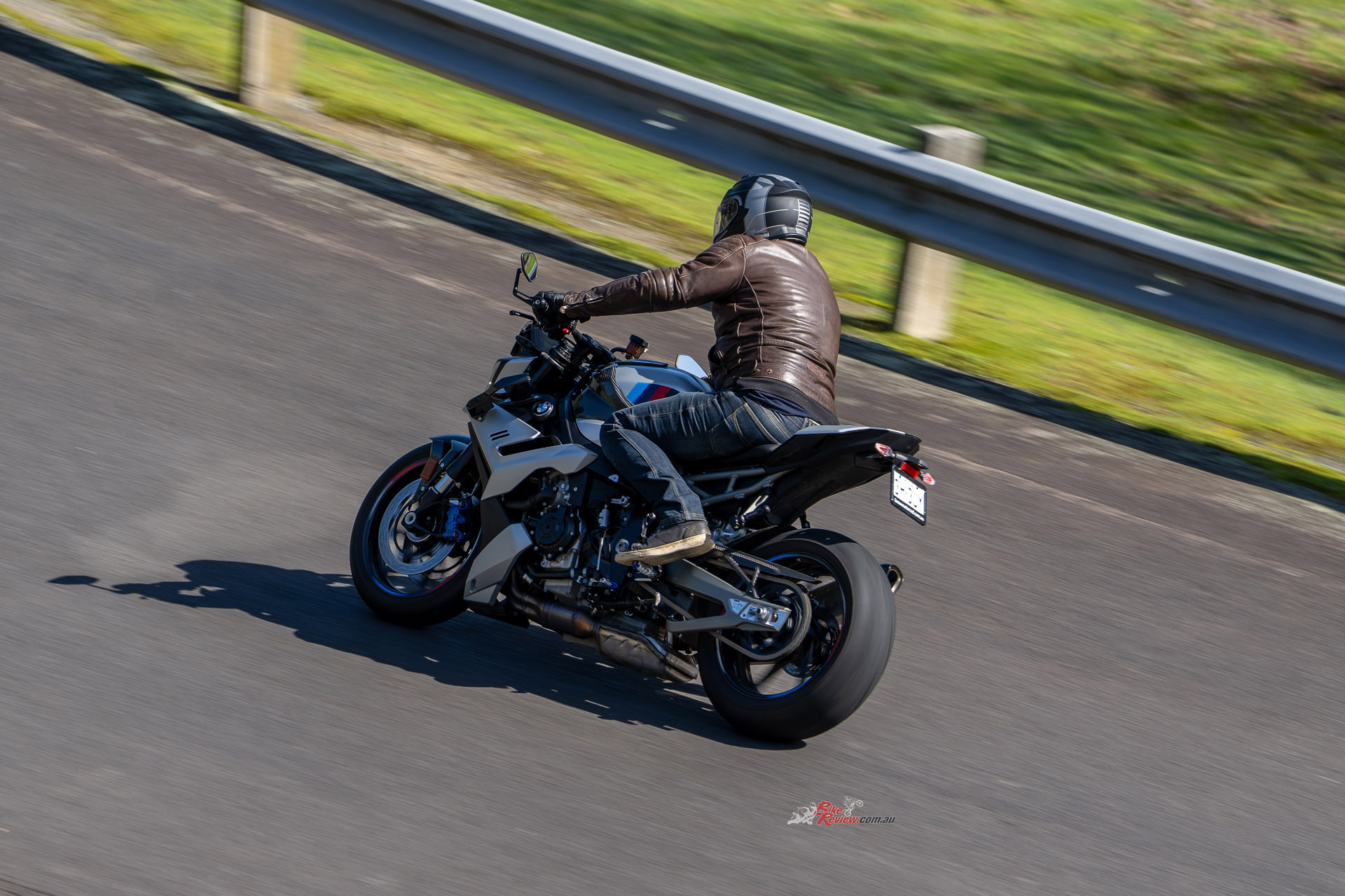
I live right at the start of some decent twisties, which is rather handy when you’ve got a 210-horsepower nakedbike sitting in the driveway. There’s no need to spend half the morning getting to the good roads. The M 1000 R feels surprisingly nimble through the hills. You’re always aware there’s an enormous amount of power waiting under your right wrist, but the bike doesn’t feel like it’s trying to bite you every time you open the throttle. Of course, like most modern motorcycles, it comes with enough electronic adjustment to keep you occupied for the rest of your natural life. Knowing the power available, and looking at the slightly ordinary conditions, I decided to exercise a little common sense and select Rain and Road modes.
“It’s a bit like the superyacht of the nakedbike world”…
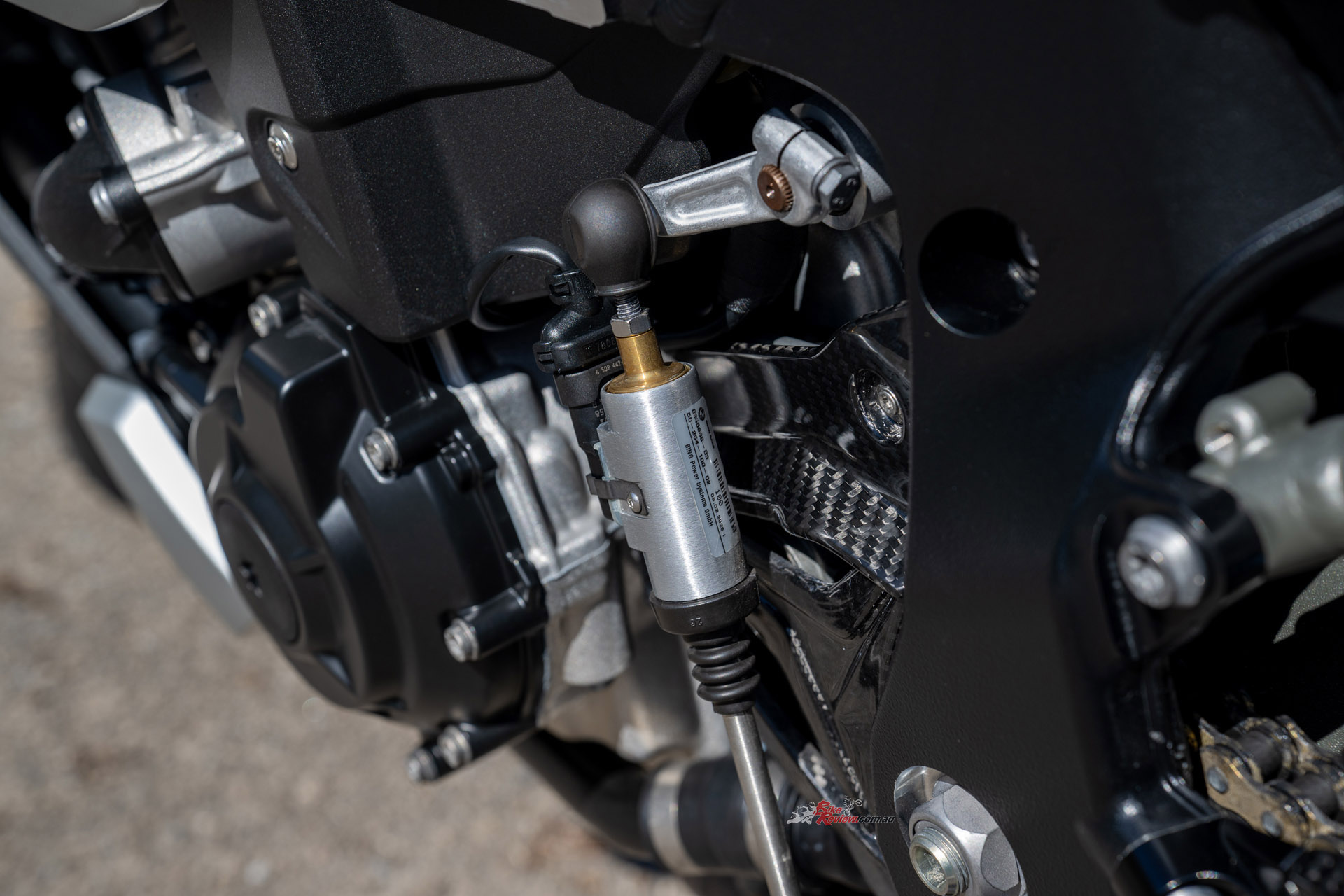
In Rain mode, the power delivery is softened considerably, making the bike much easier to manage. Road mode is a good step up when conditions improve, and both allow you to enjoy the performance without constantly fighting the urge to point the front wheel skywards. The clutch is progressive, and the gearbox is excellent. The Shift Assistant Pro is particularly good, delivering slick changes without making a fuss about it. The riding position is reasonably upright compared with a full-fairing superbike, although you’re not sitting bolt upright like you would on a touring bike.
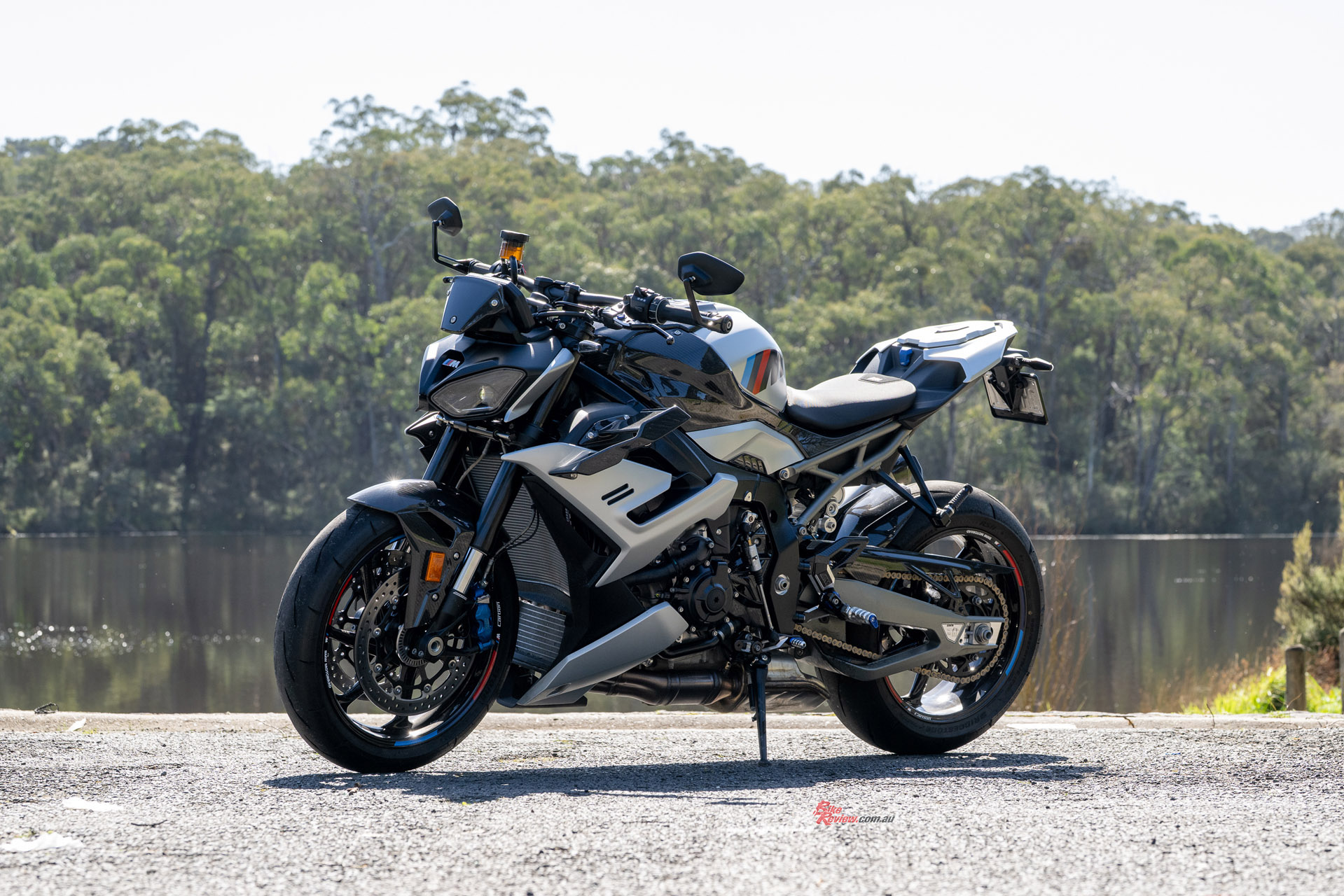
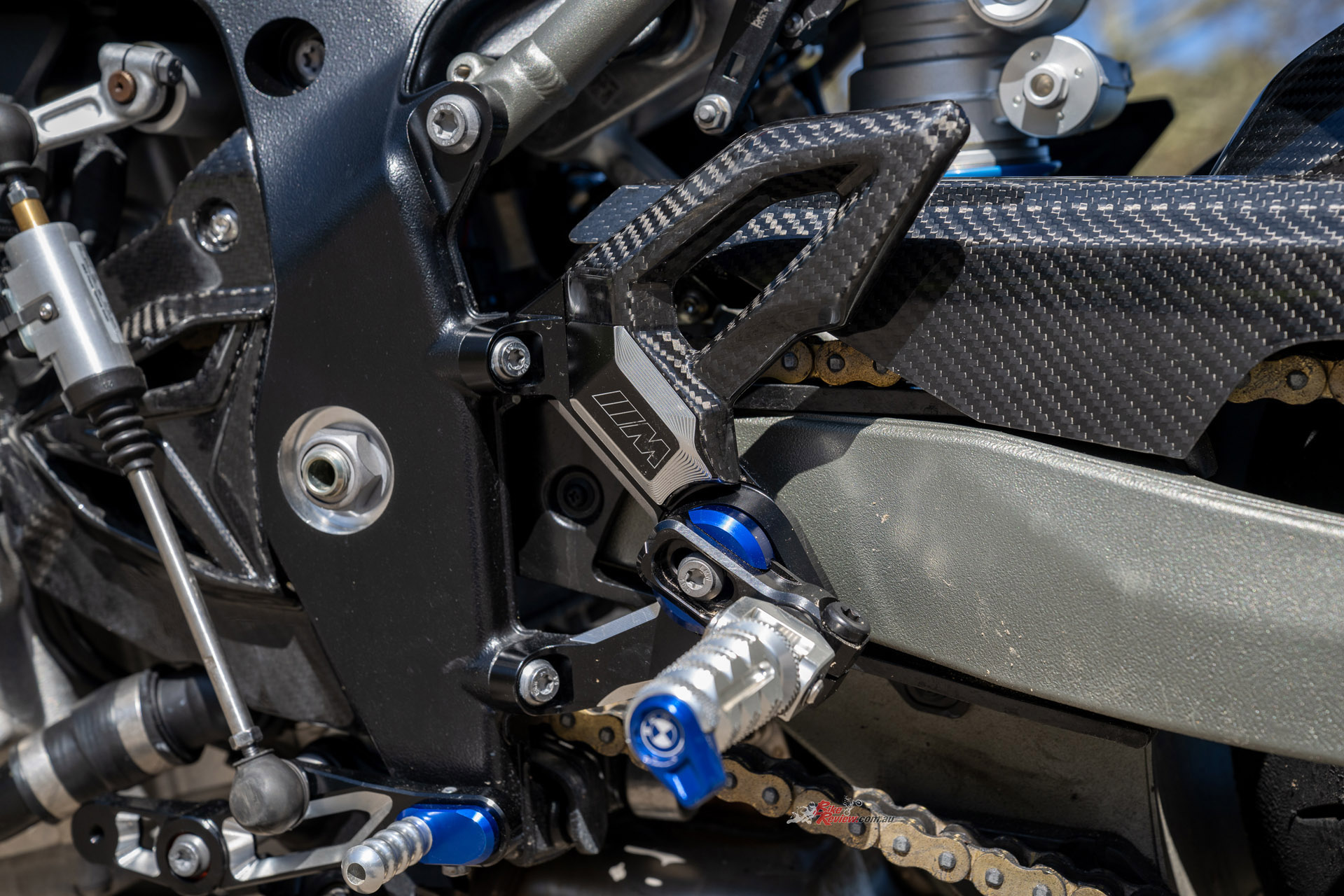
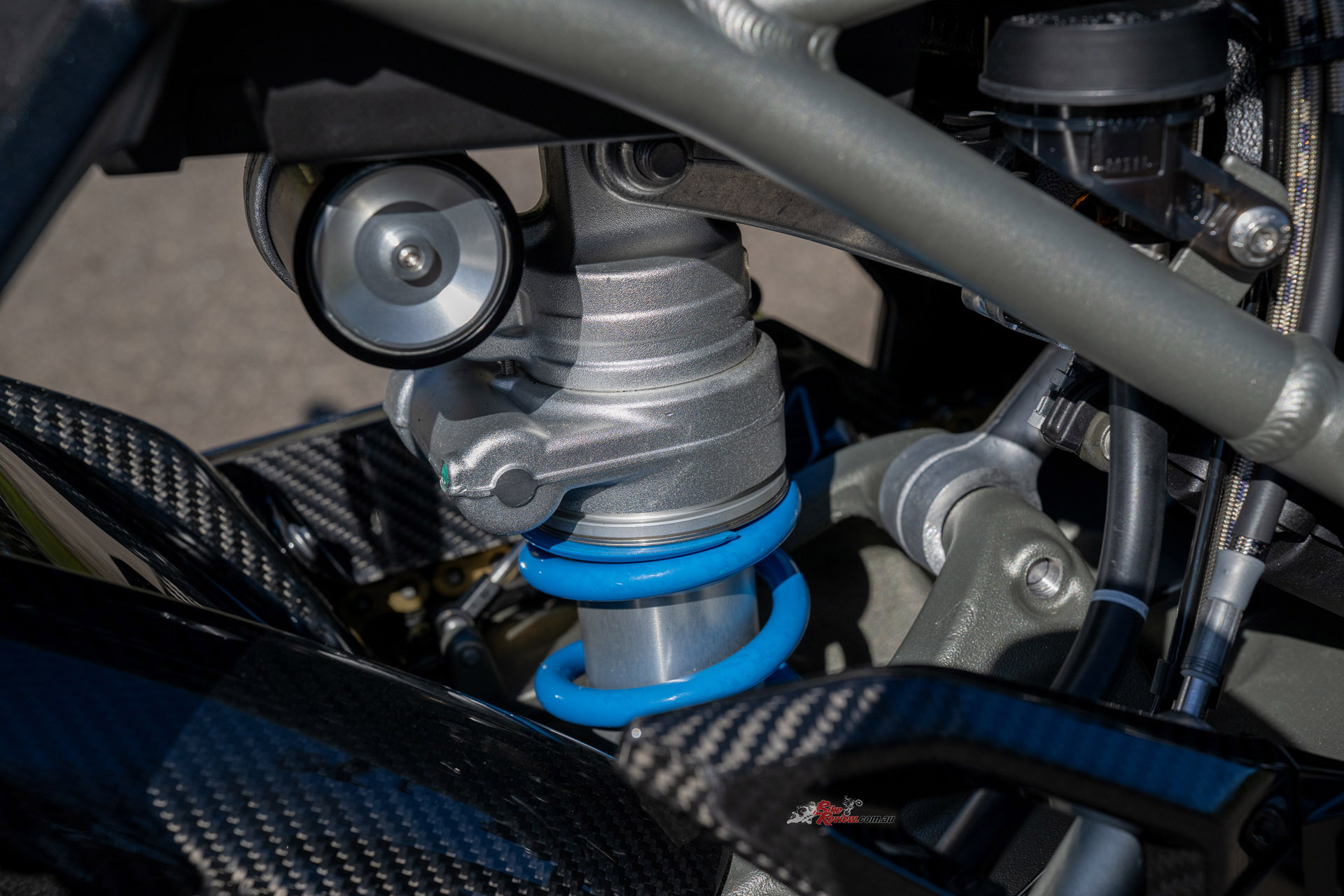
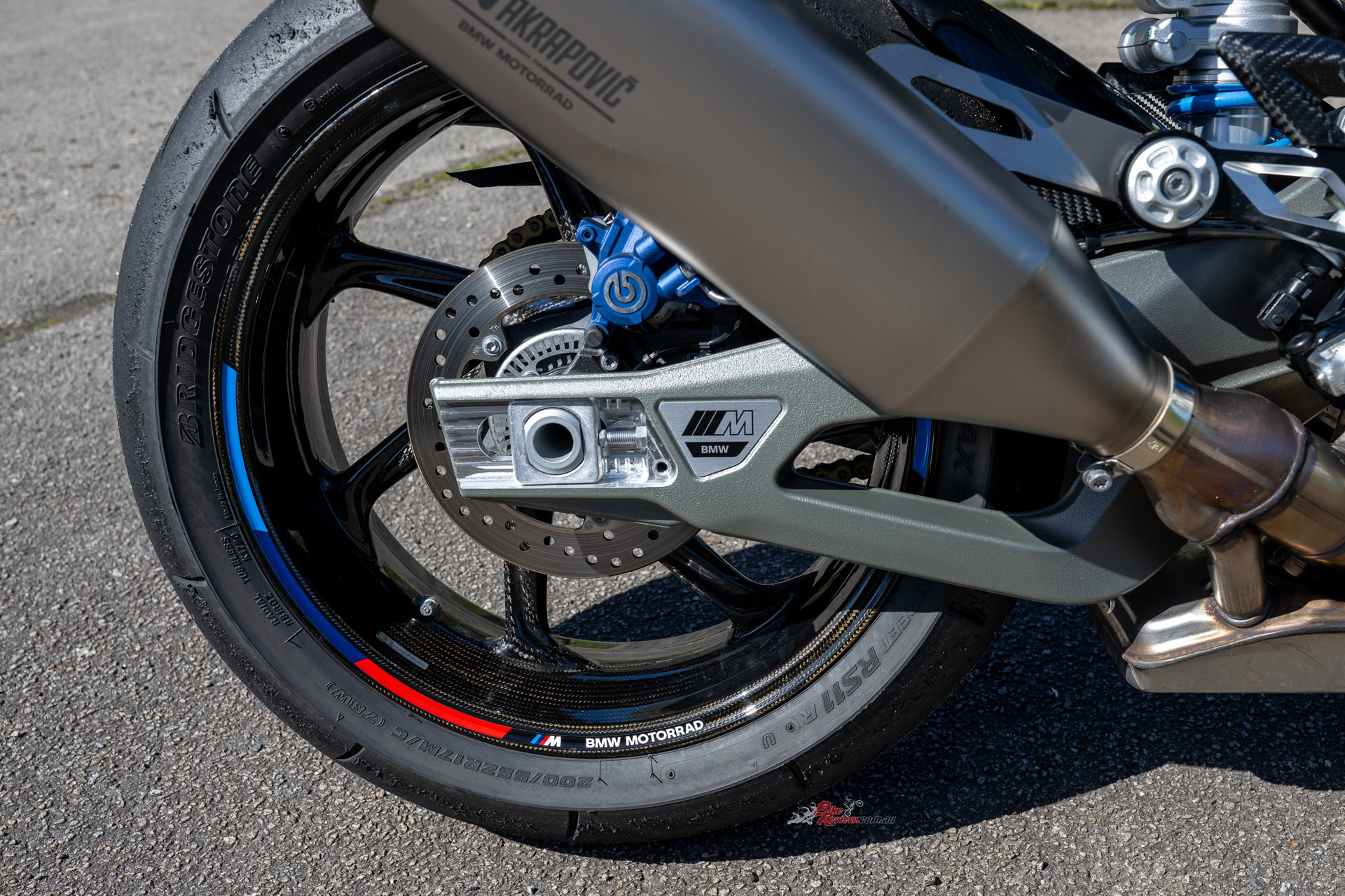
Aluminium alloy twin-sided swingarm with central shock, DDC and spring preload.
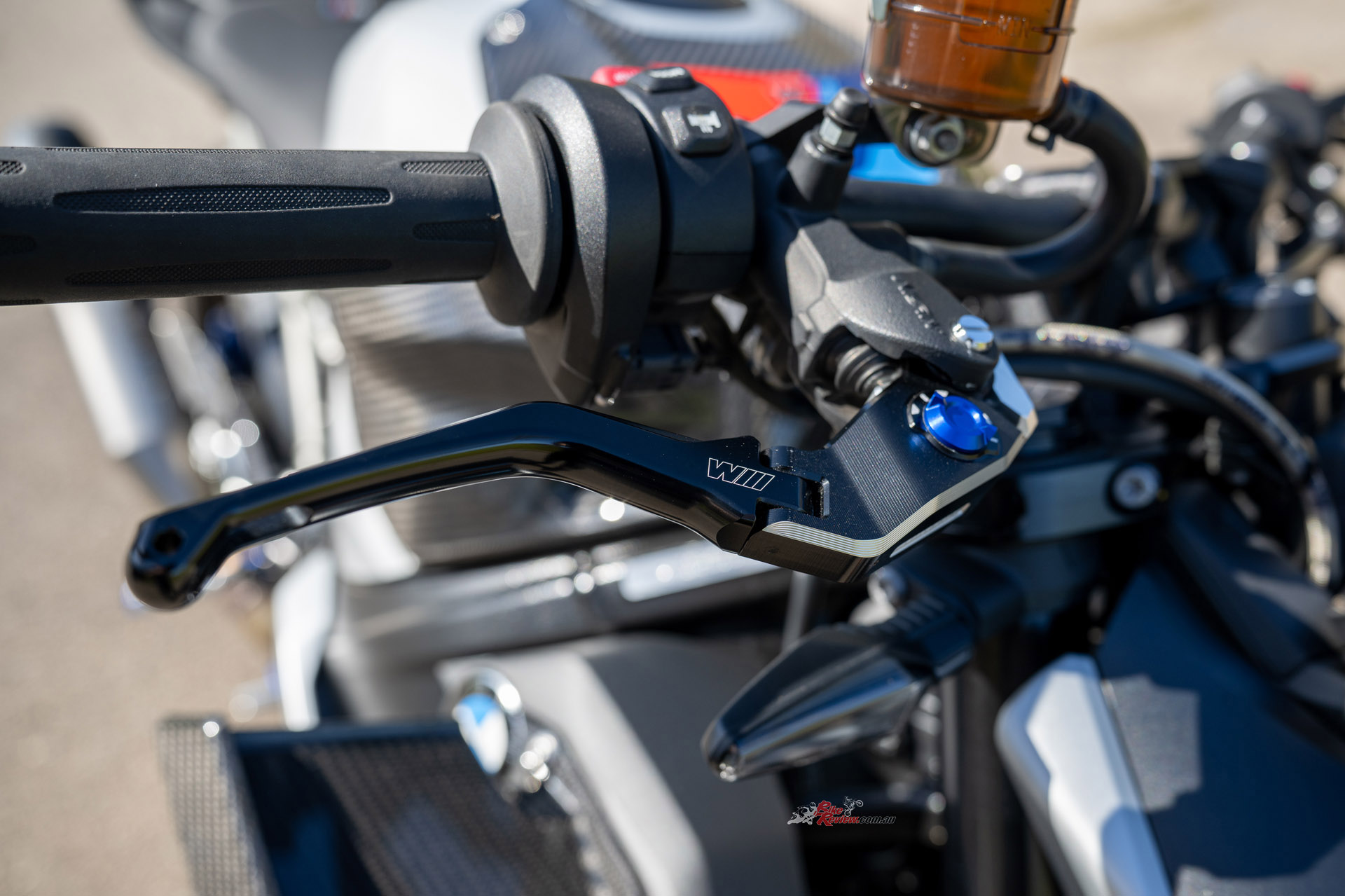
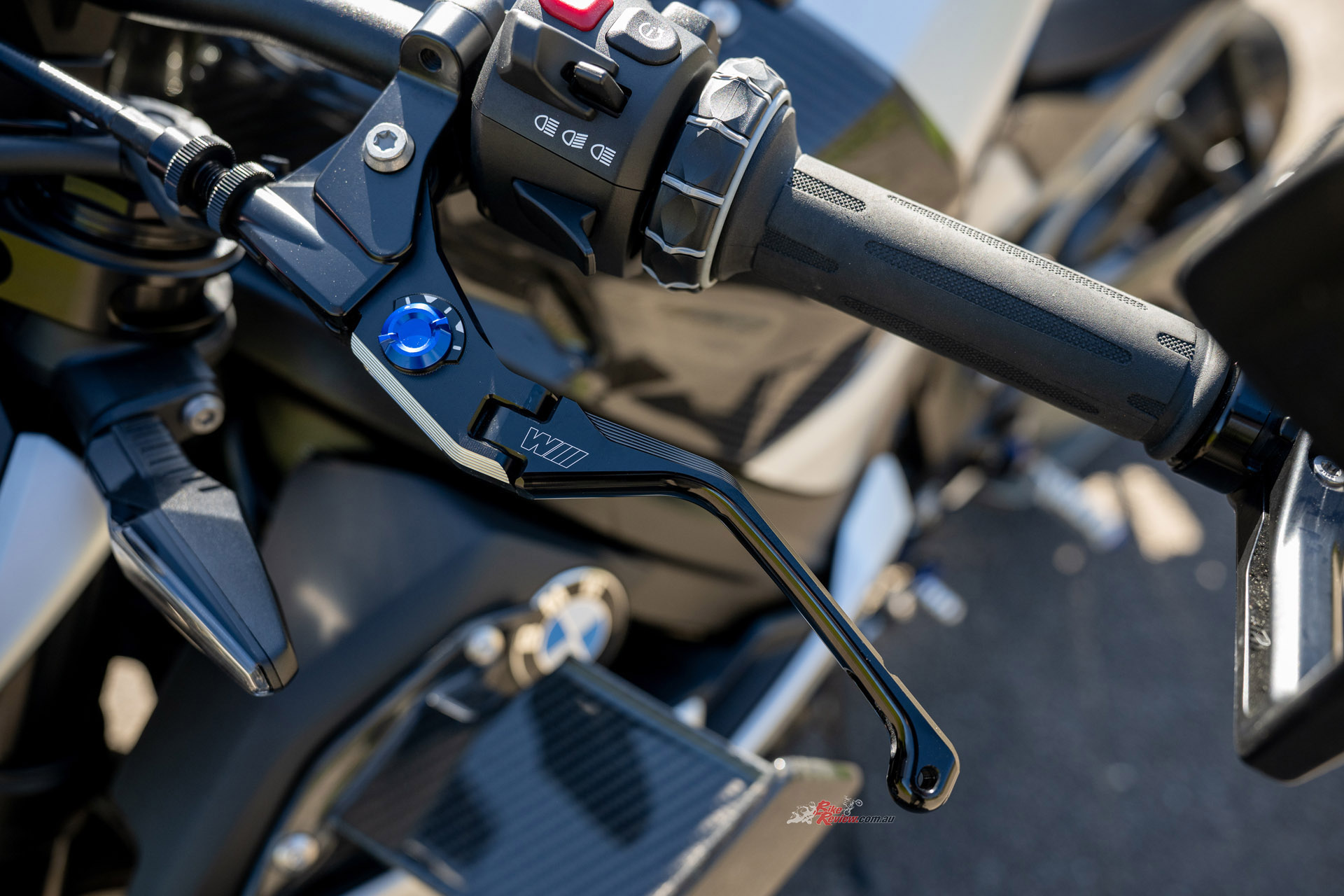
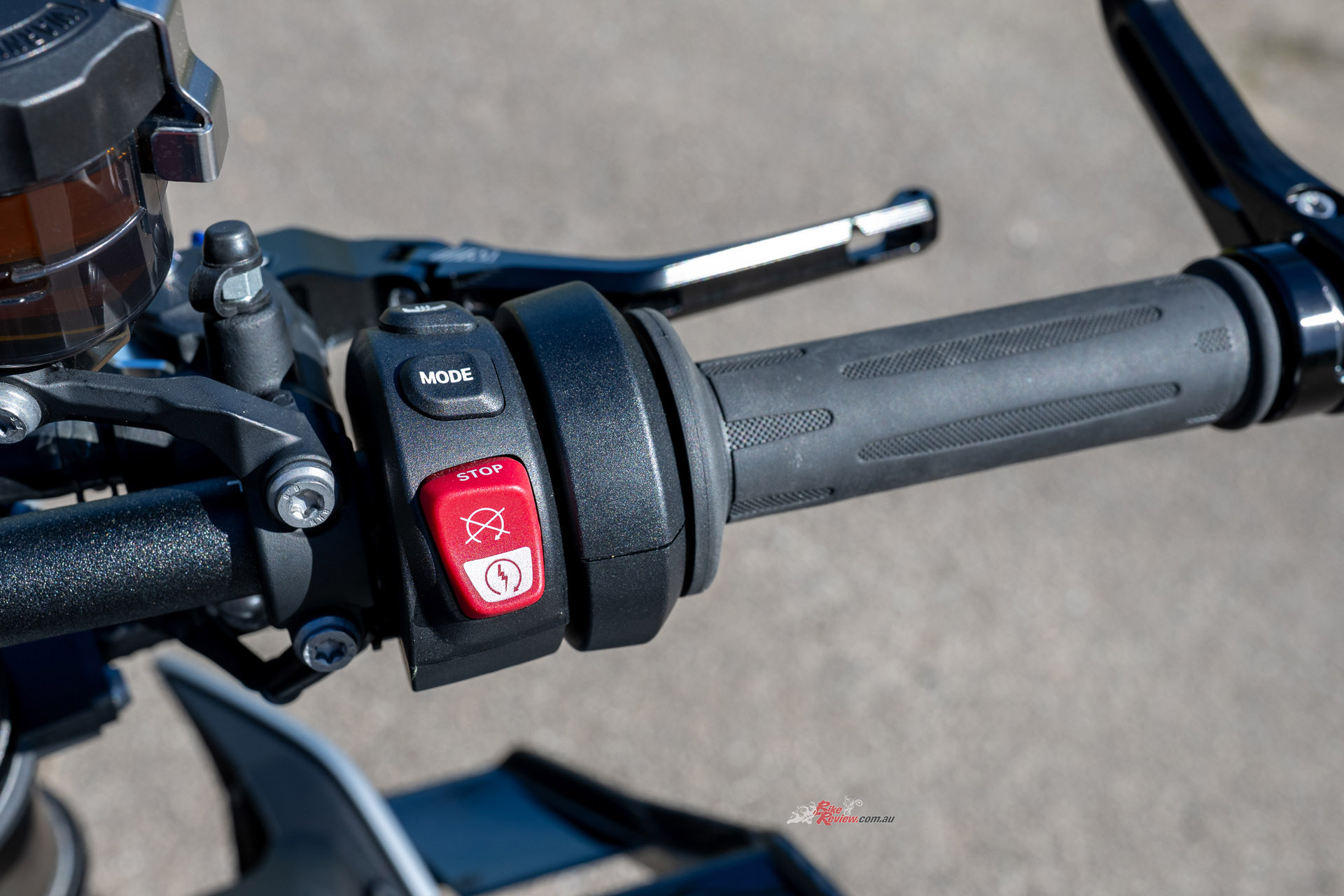
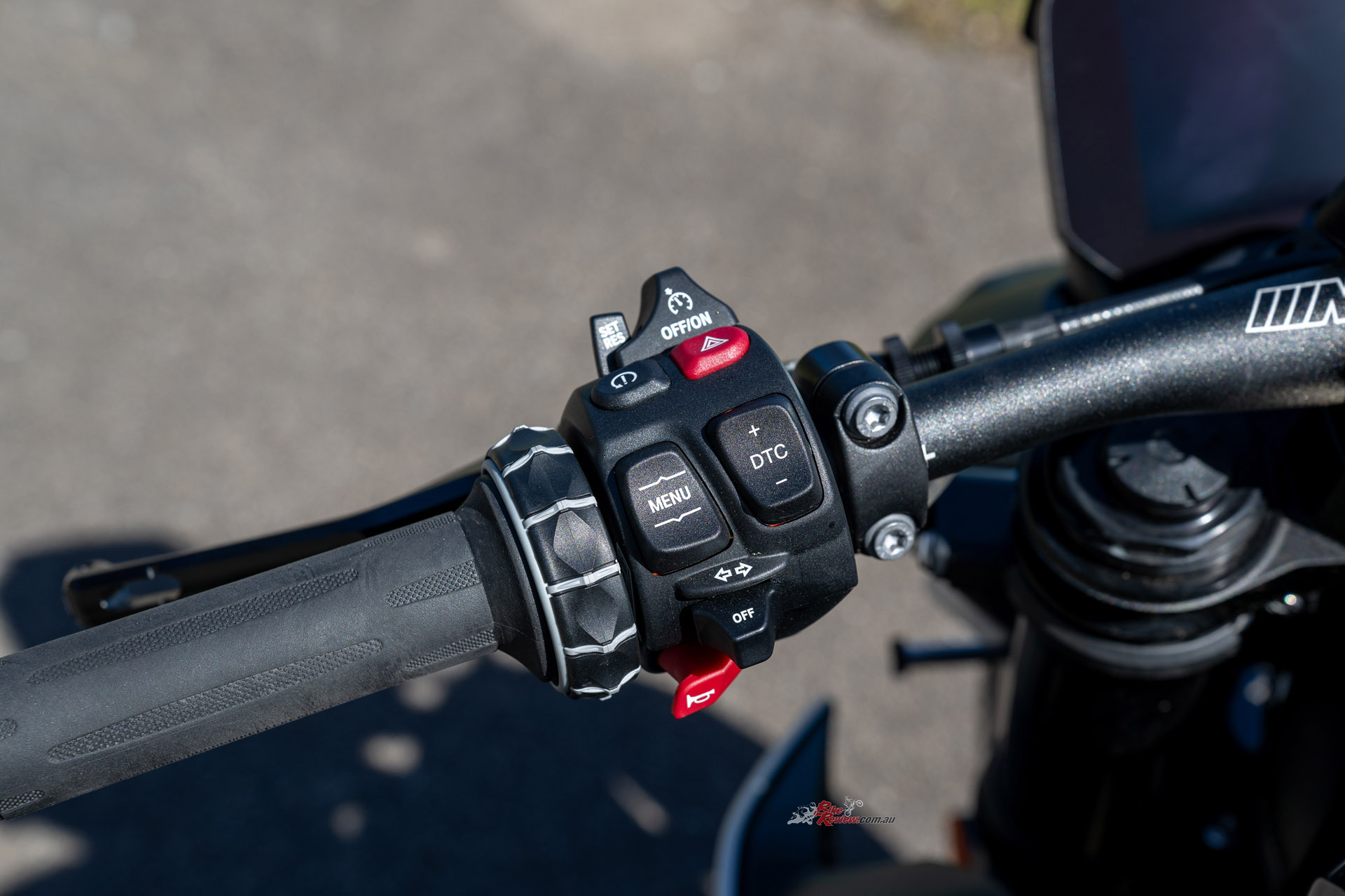
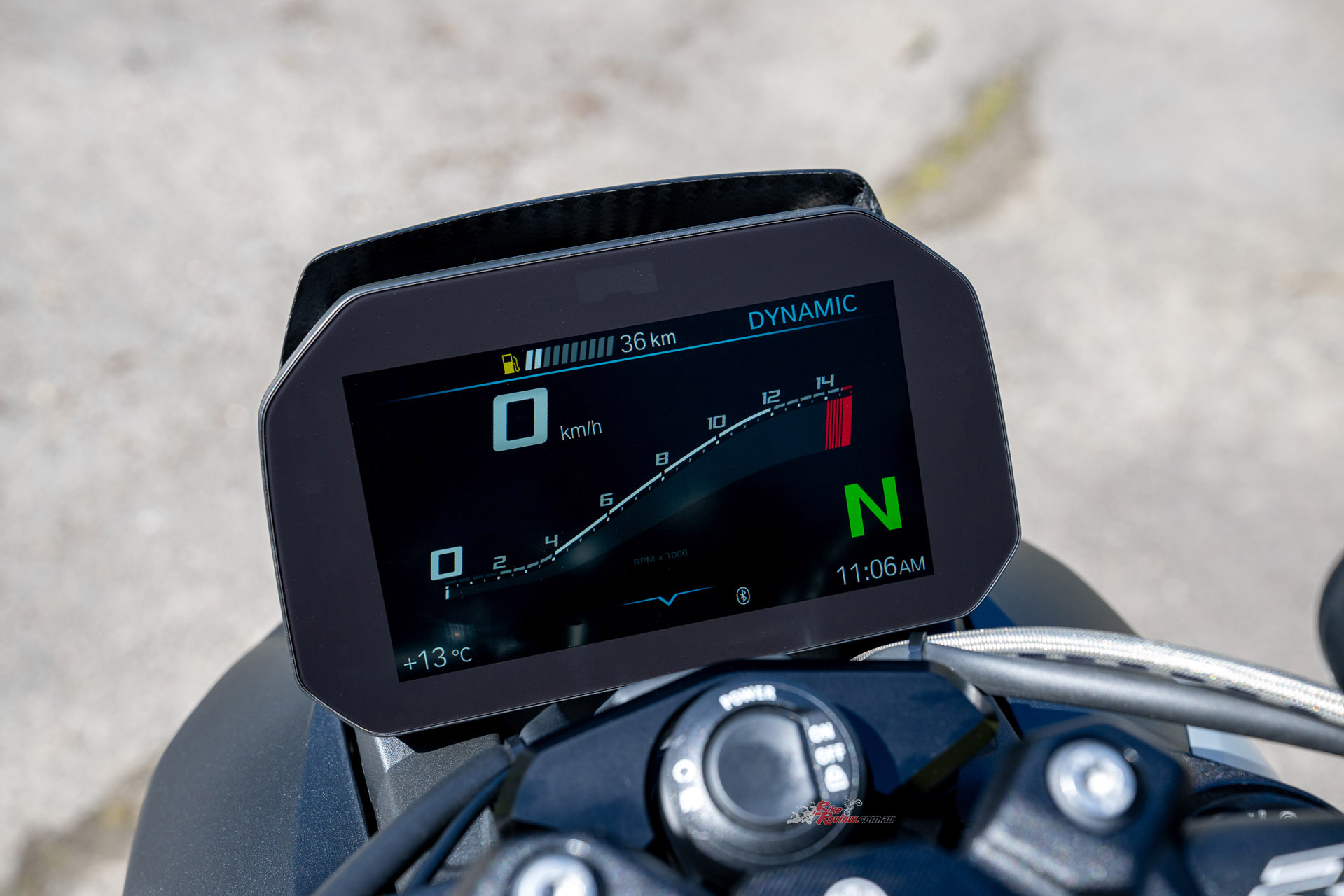
You sit a little higher than on some naked machines, which is handy in traffic, and the mirrors are actually useful. Amazing what a difference that makes. Heated grips and cruise control are welcome additions on cooler mornings, and the 6.5-inch TFT display provides just about everything you could want. Finding it all, however, is another matter. There are so many settings and adjustments that you could probably spend an entire weekend sitting in the garage playing with the menus.
It’s not the most intuitive system I’ve come across, and I suspect learning how to personalise everything is something that comes with ownership. City riding is where the M shows its more civilised side. At sensible speeds, it’s surprisingly manageable, and the electronic suspension does a decent job of adapting to what you’re asking of it. The engine is obviously overkill for commuting, but it doesn’t make the bike unpleasant to ride. You can potter around without feeling as though you’re riding a racebike that’s escaped from the circuit.
For those wintry days, you also get heated grips. Not to mention cruise control.
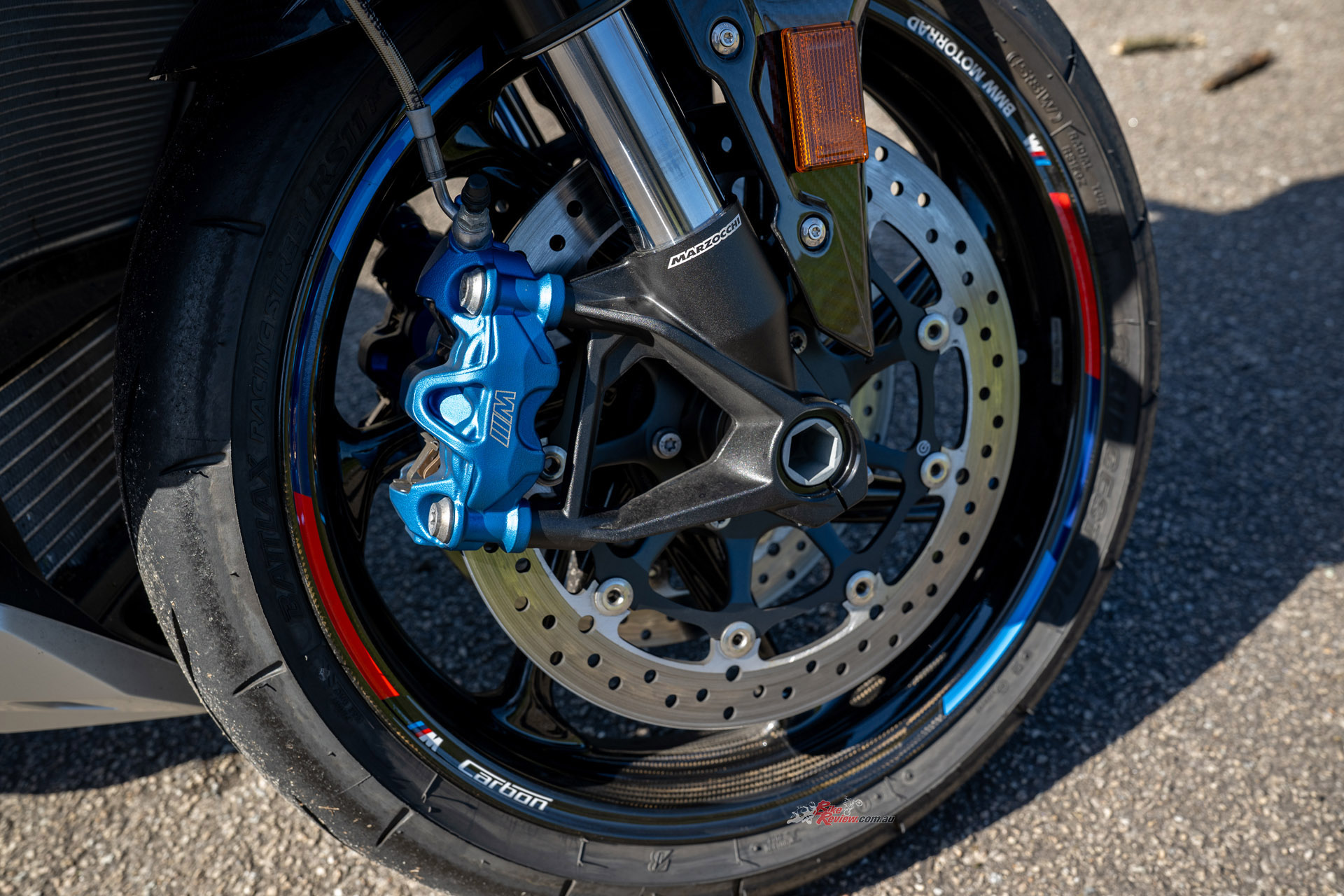
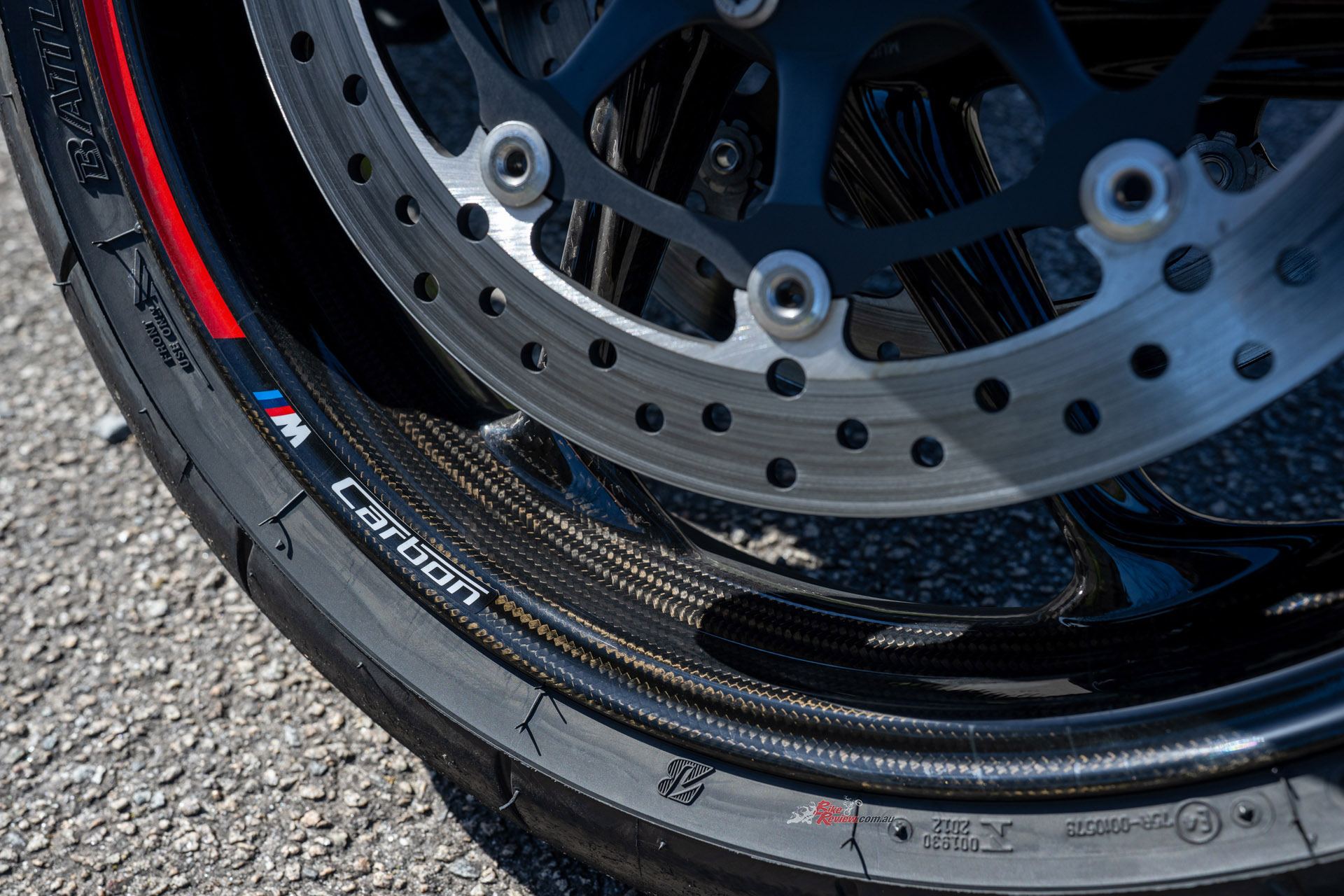
Fuel consumption is respectable enough if you keep the revs under control, although let’s be honest, nobody buys one of these because they’re worried about saving a few dollars at the bowser. The carbon wheels are a talking point, too. Do they make a noticeable difference to the ride? I’m not entirely convinced I could tell you with any certainty on the road. What I can tell you is that, when I parked the bike at the café, I made sure the sun was shining on them.
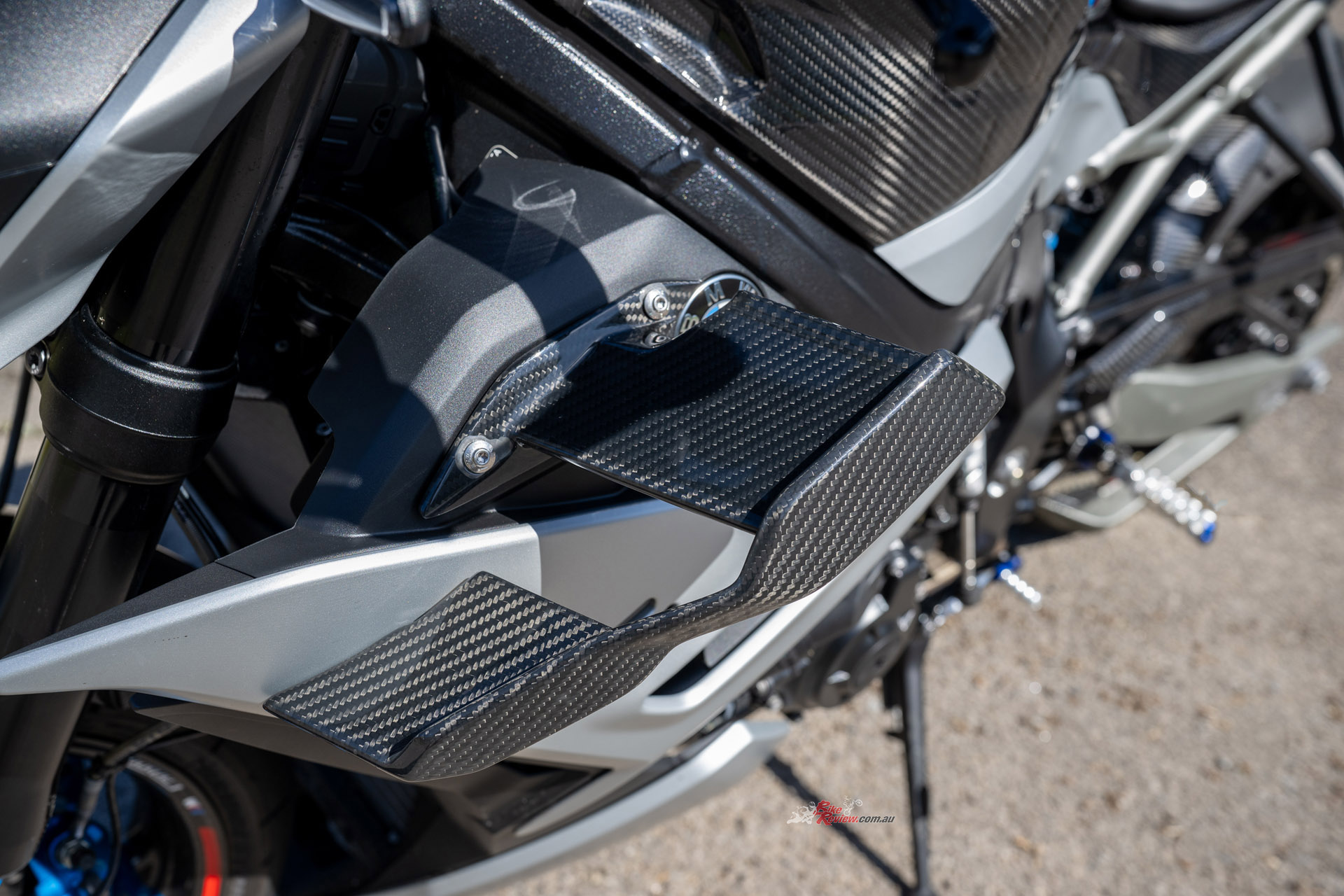
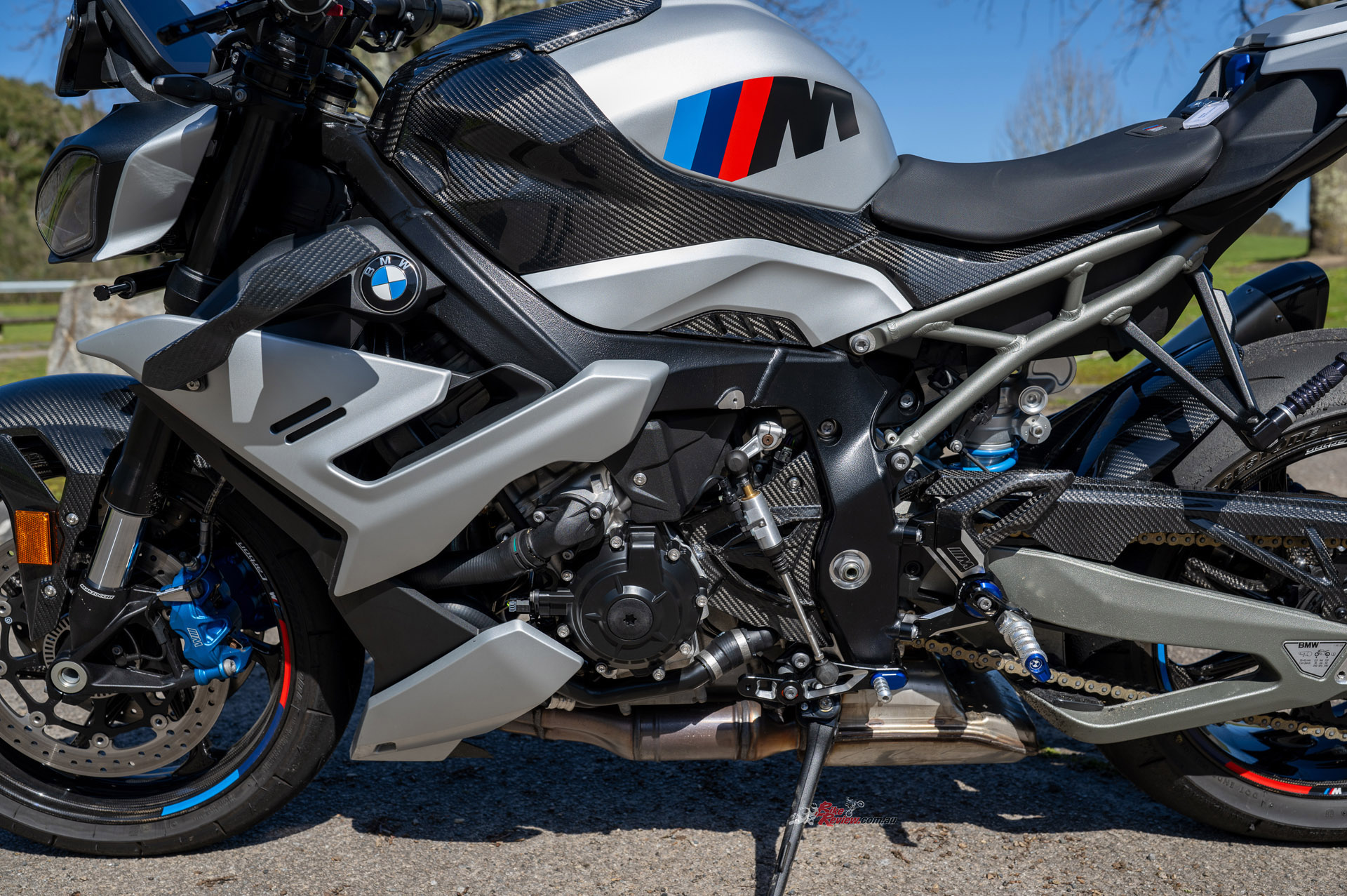
They look fantastic, and sometimes that’s reason enough to appreciate a bit of carbon-fibre. The Bridgestone RS11 tyres were another talking point for me. They offer plenty of grip on the road, but I found they transmitted quite a bit of surface information through the ‘bars. On rougher urban roads, I would have liked a little more compliance and a touch more feel. Head out onto the outer-urban freeways and dual carriageways, and the M settles into a comfortable rhythm.
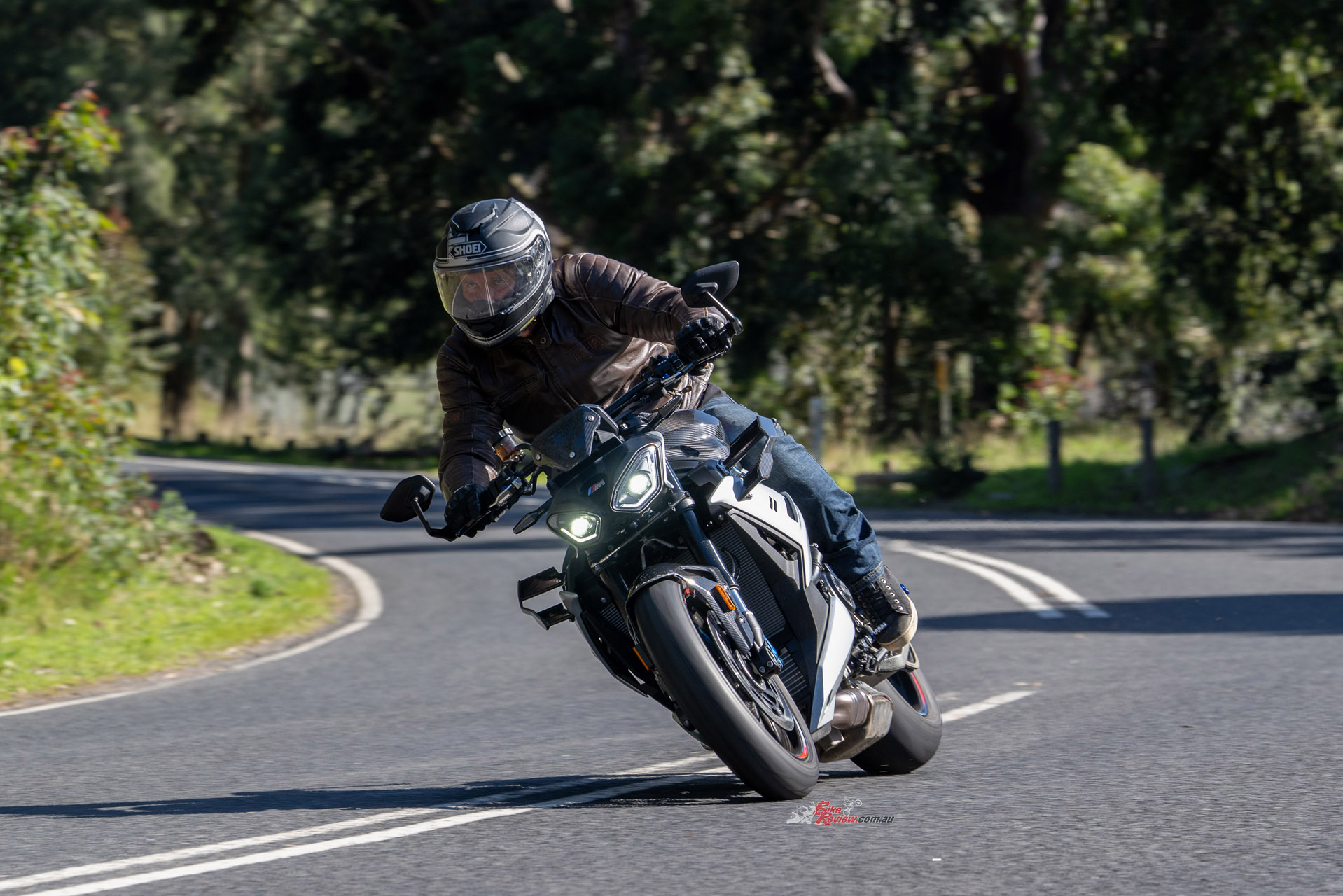
The Ride Modes are Rain, Road, Dynamic, Race + Race Pro 1/2/3. There are also selectable throttle responses!
Dynamic mode was my preference here, with the suspension coping well with typical Australian road imperfections. Cruise control works nicely, and the engine will sit at highway speeds without appearing remotely stressed. There’s a lovely smoothness to the way it delivers its power, almost like a sewing machine that’s been given a rather unhealthy dose of steroids. A small twist of the throttle and the bike surges forward. Overtaking takes very little planning, although a little restraint is probably a good idea unless you want to spend the afternoon explaining yourself to someone in uniform.
“You can potter around without feeling as though you’re riding a race bike that’s escaped from the circuit”…
The short wheelbase keeps the steering light, making lane changes easy, while the titanium exhaust gives you enough of a soundtrack without becoming antisocial at a steady cruise. Switch to Dynamic or Race, depending on the conditions, and the M 1000 R really comes alive. The suspension firms up, the throttle response sharpens and the electronics give you a little more freedom to explore what the chassis and engine can do. For something packing around 210hp and 199kg, the bike changes direction remarkably quickly.
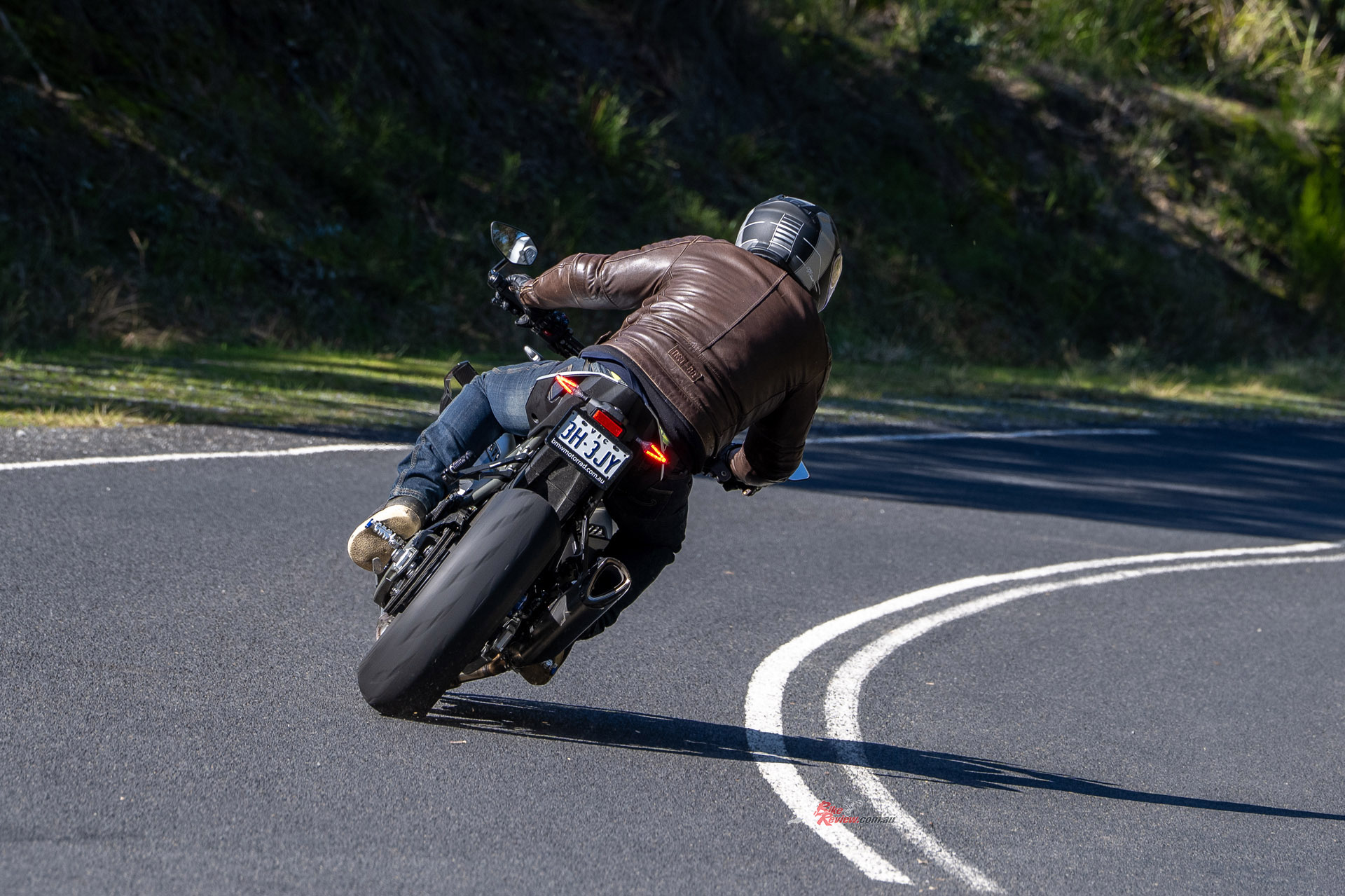
Dynamic Traction Control (DTC) ensures that 200 section RS11 is firmly planted on the ground.
It feels lighter and more agile than you might expect, flicking from one corner to the next without requiring you to wrestle it into submission. The brakes are excellent. They’re strong, progressive and offer plenty of feel, allowing you to carry braking into corners with confidence. The riding position also gives you enough room to move around, while the footpegs provide plenty of clearance when the road gets interesting. The whole package feels incredibly capable, and the electronics do a good job of keeping that enormous engine in check without completely taking the fun out of riding.
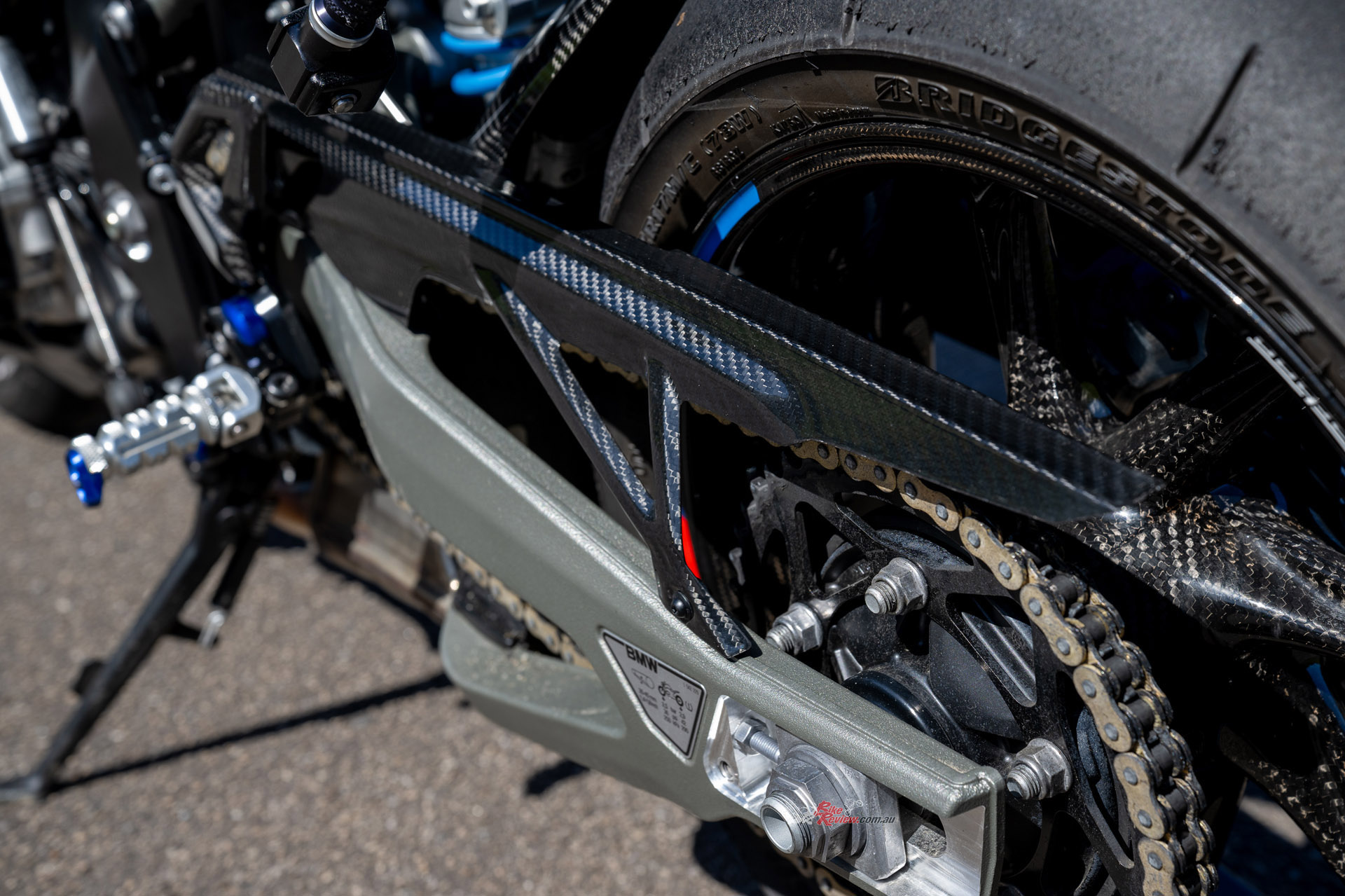
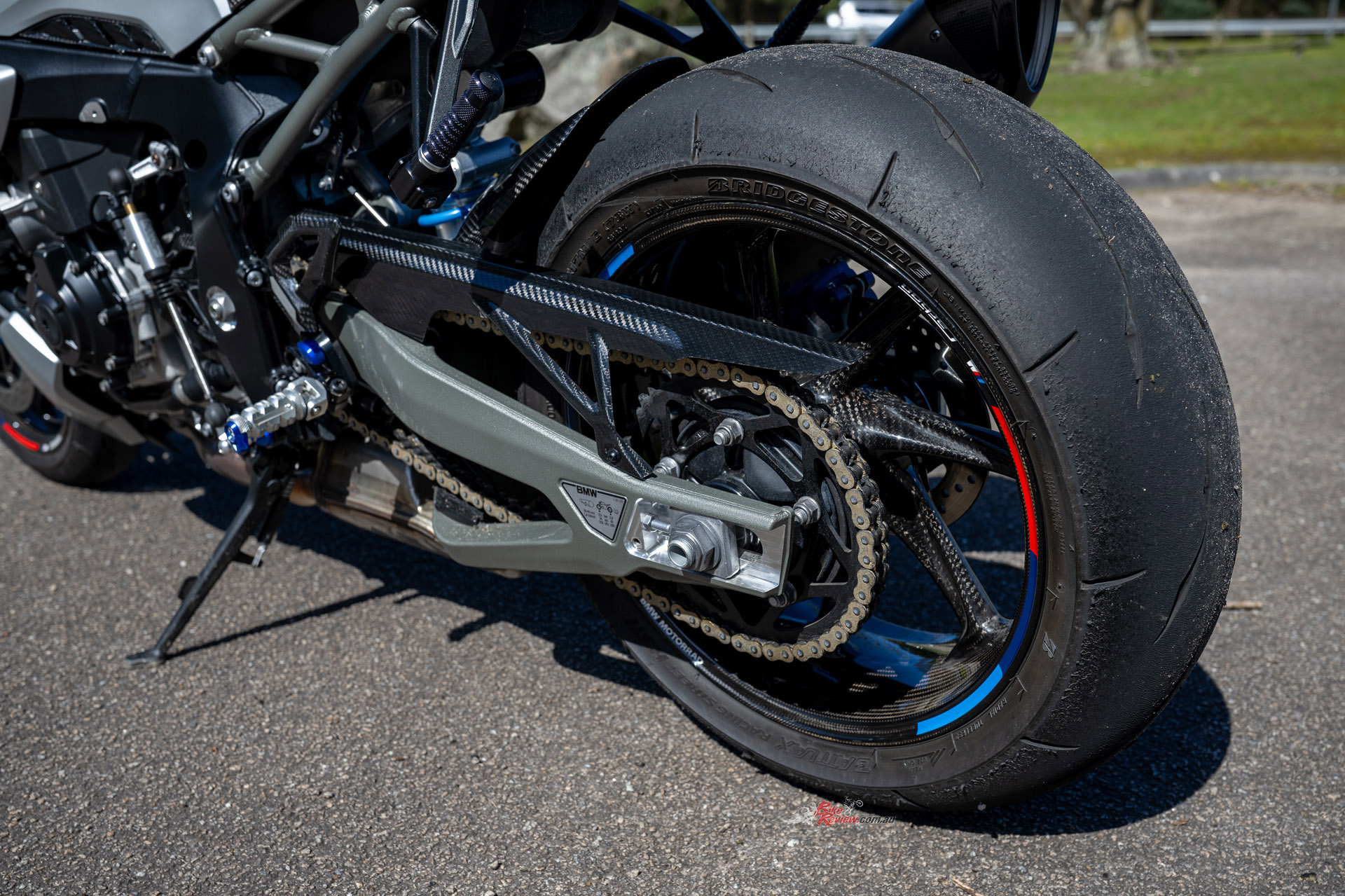
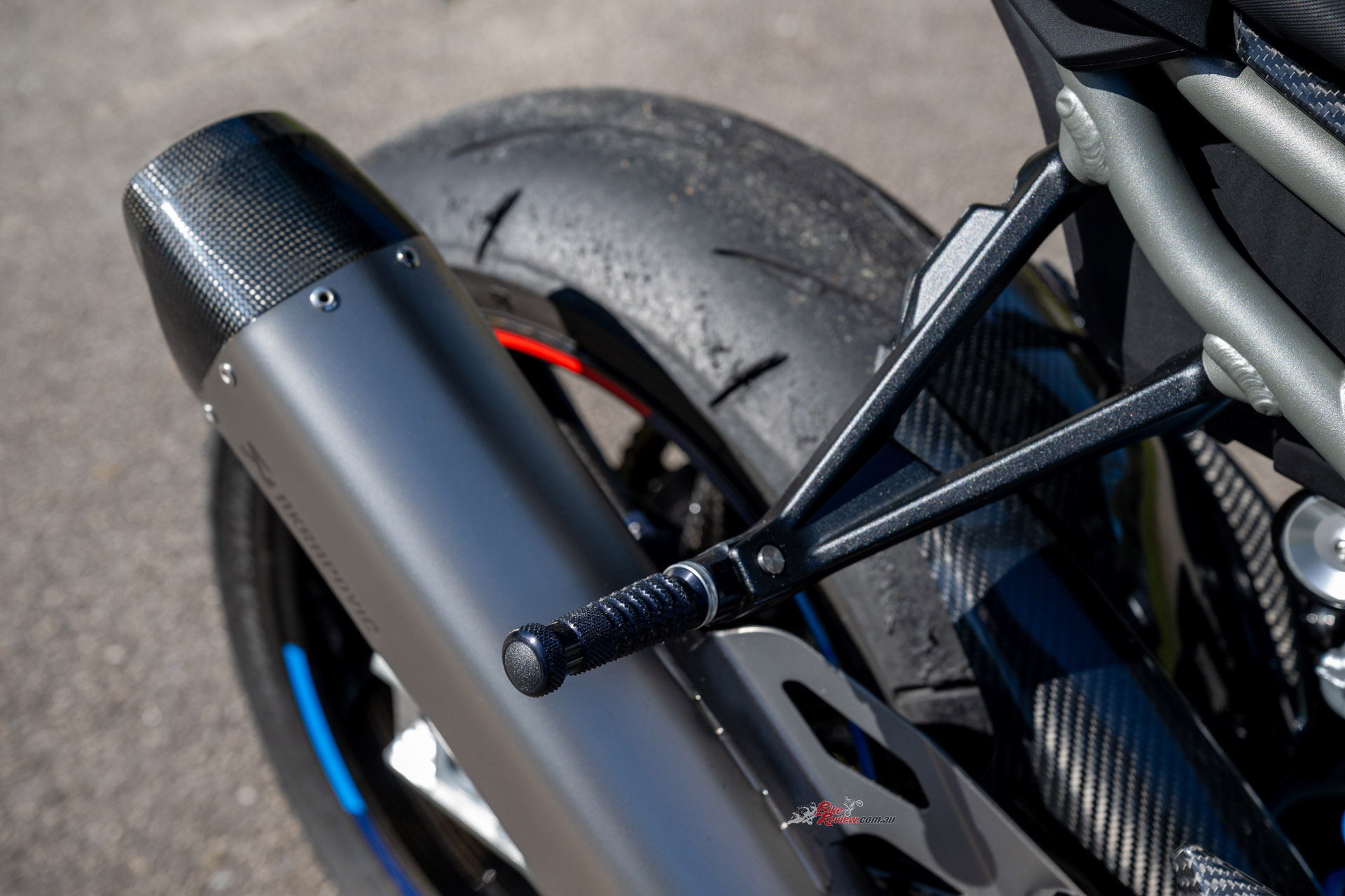
That said, this is still a very expensive and very powerful nakedbike. It isn’t a long-distance tourer, nor is it the sort of machine that will forgive every mistake you make. Get greedy with the throttle in the wrong gear, and the rear tyre can quickly find itself with more work than it would ideally like. The electronics are there for a reason, and it pays to remember that. What impressed me most was the BMW M 1000 R Competition’s ability to behave itself when you wanted it to, then turn into an absolute hooligan when the road opened up.
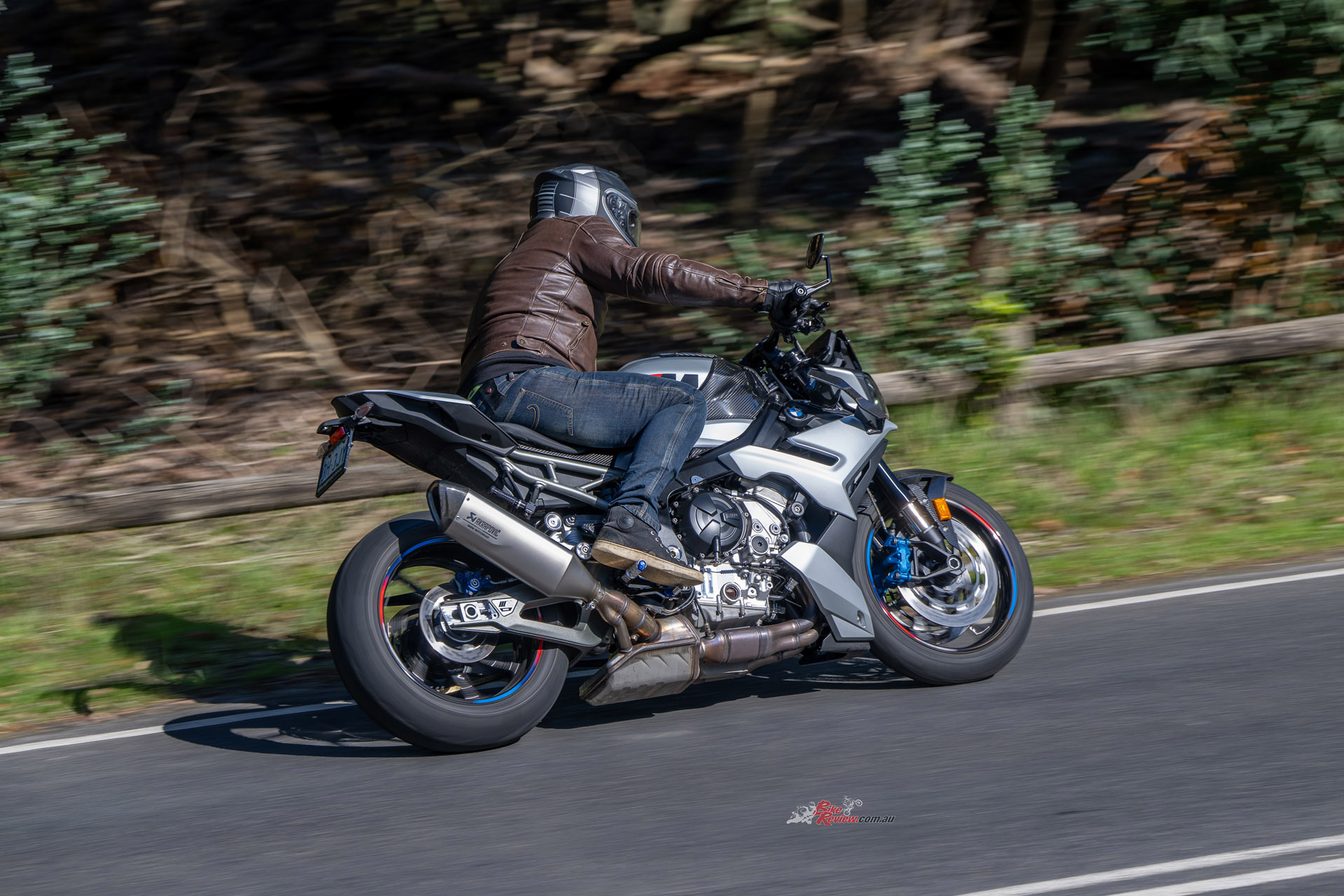
Engine Brake Control ensures smooth corner entry, handy in variable road conditions as well as on track.
There’s a lot to like about that dual personality. The downside is the sheer number of electronic settings, which can make the first few weeks of ownership feel like an IT course with a motorcycle attached. Once you get everything sorted, though, the M 1000 R is a remarkably versatile machine. Civilised enough when required, but always reminding you that there’s something rather wild lurking underneath.
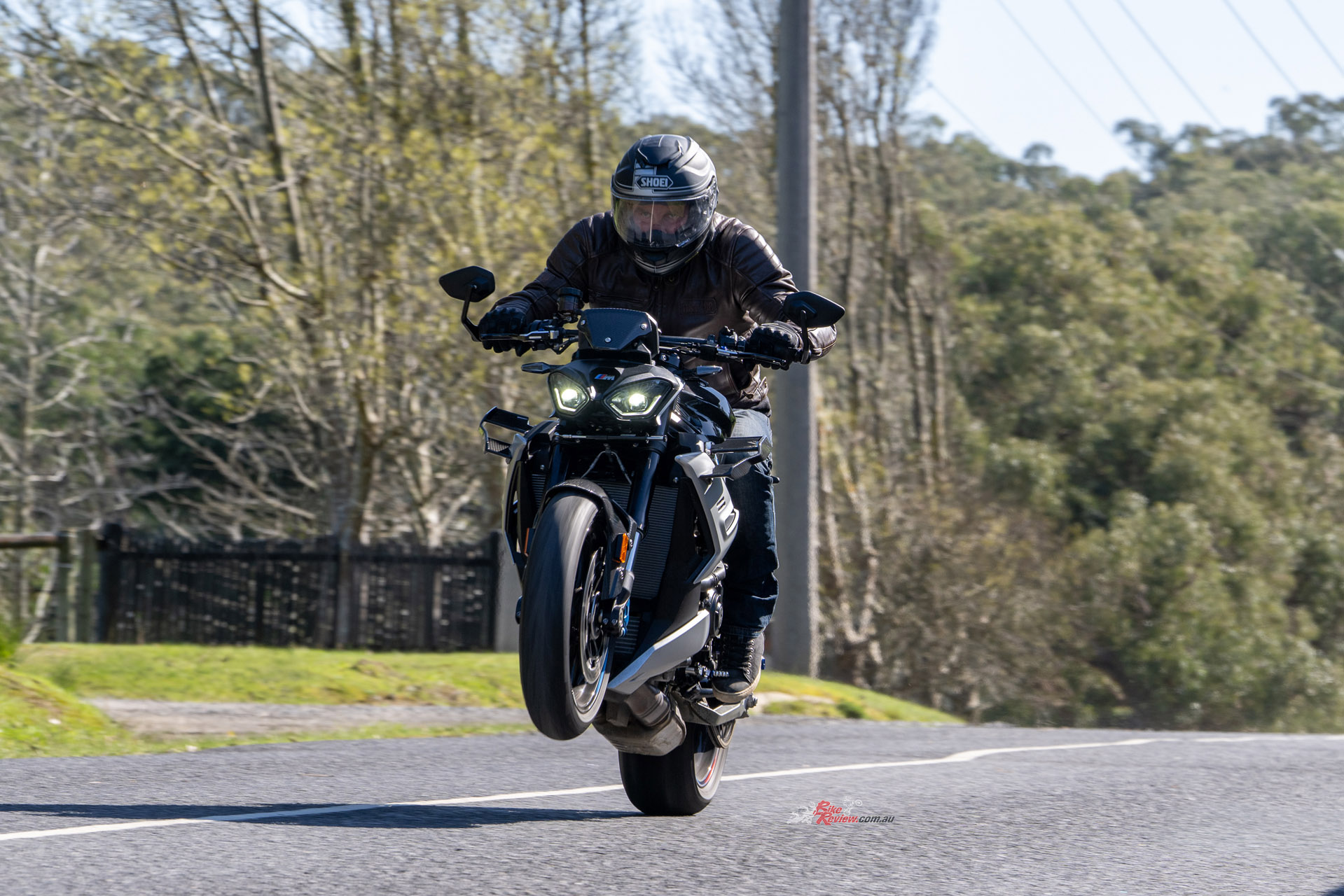
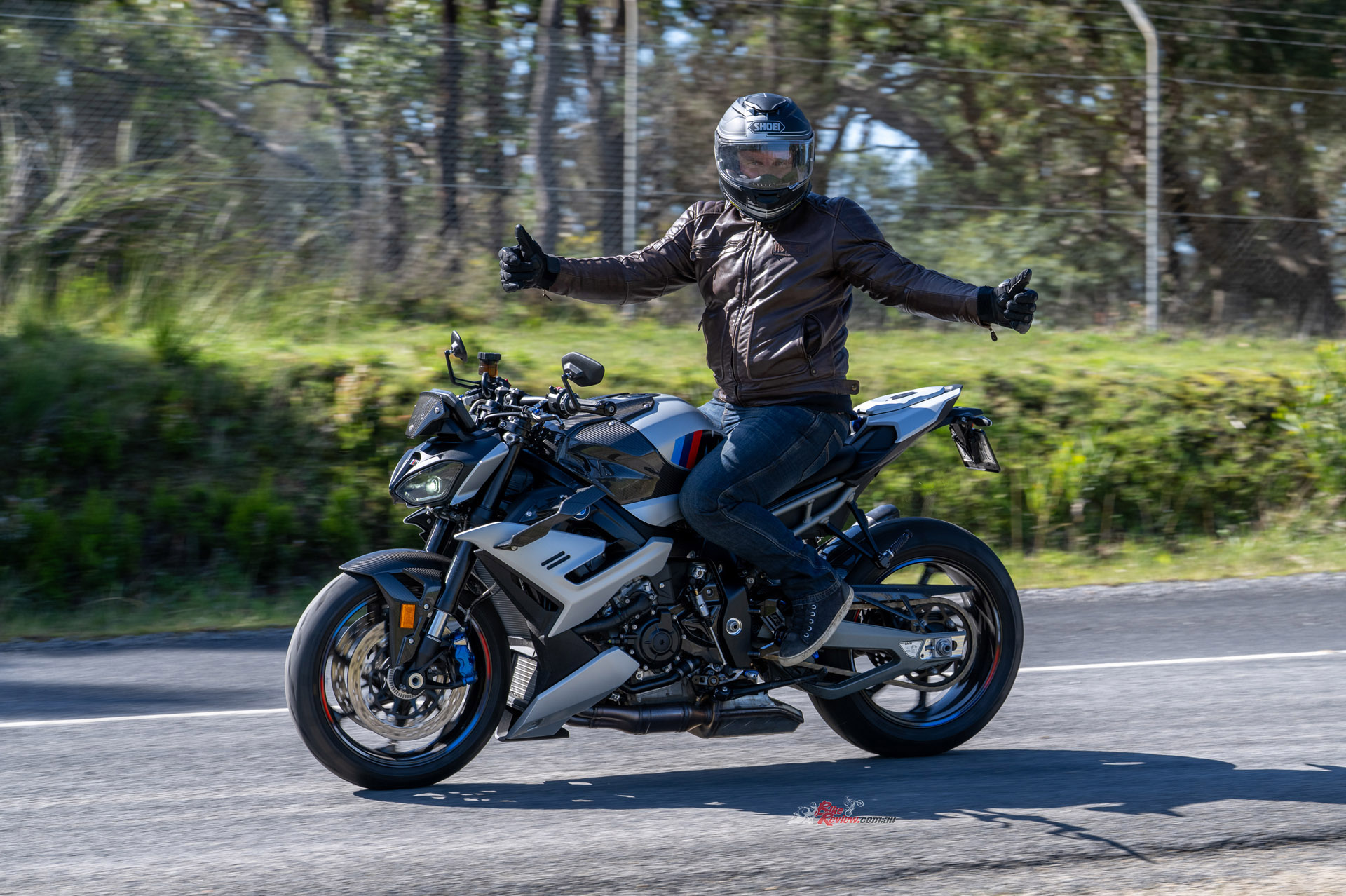
Wheelie control just had to be tested by the World Champ!
Track Test: Phillip Island, thanks to Phillip Island Ride Days
Phillip Island is one of my favourite circuits, and it’s the perfect place to find out whether a bike like the M 1000 R is the real deal or simply an expensive exercise in badge engineering. There’s very little between this naked BMW and a full superbike when the revs start climbing. The ShiftCam engine pulls hard through the mid-range and then keeps going, right up to its lofty redline. It’s not just the amount of power that impresses, either.
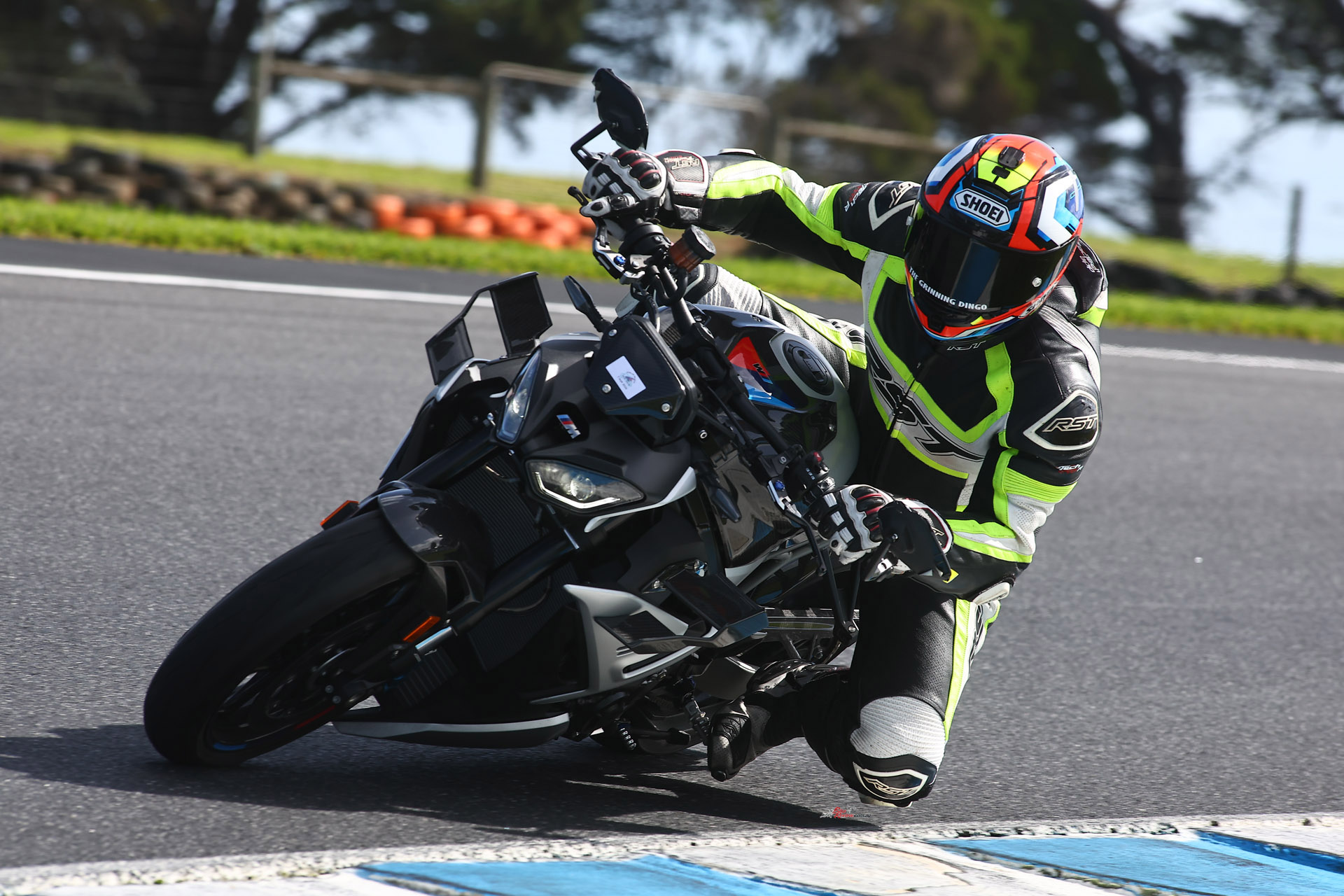
An absolute beast on the racetrack, the M 1000 R has a strong engine but no fairing gets tough!
It’s the way the engine delivers it. The acceleration is strong, immediate and beautifully smooth, and the Competition gearbox makes quick changes without any drama. The brakes deserve another mention because they’re seriously good. There’s plenty of power, plenty of feel and a reassuring amount of control when you’re arriving at a corner at speeds that would make your licence examiner nervous. One-finger braking is easy, and I never felt as though I was running out of braking performance, even with the ABS switched on.

“There’s very little between this naked BMW and a full superbike when the revs start climbing”…
The morning session was damp, which gave me a good opportunity to appreciate Rain mode. It kept things controlled and predictable, although I did find myself wondering just how much performance I was leaving on the table. As the circuit dried, I moved into Race mode, and the difference was obvious. The throttle response sharpened, the electronic safety nets allowed more freedom, and the whole bike felt more eager to get on with the job. There are also three Race Pro modes, allowing you to fine-tune throttle response, traction control, wheelie control and engine braking to suit your preferences.
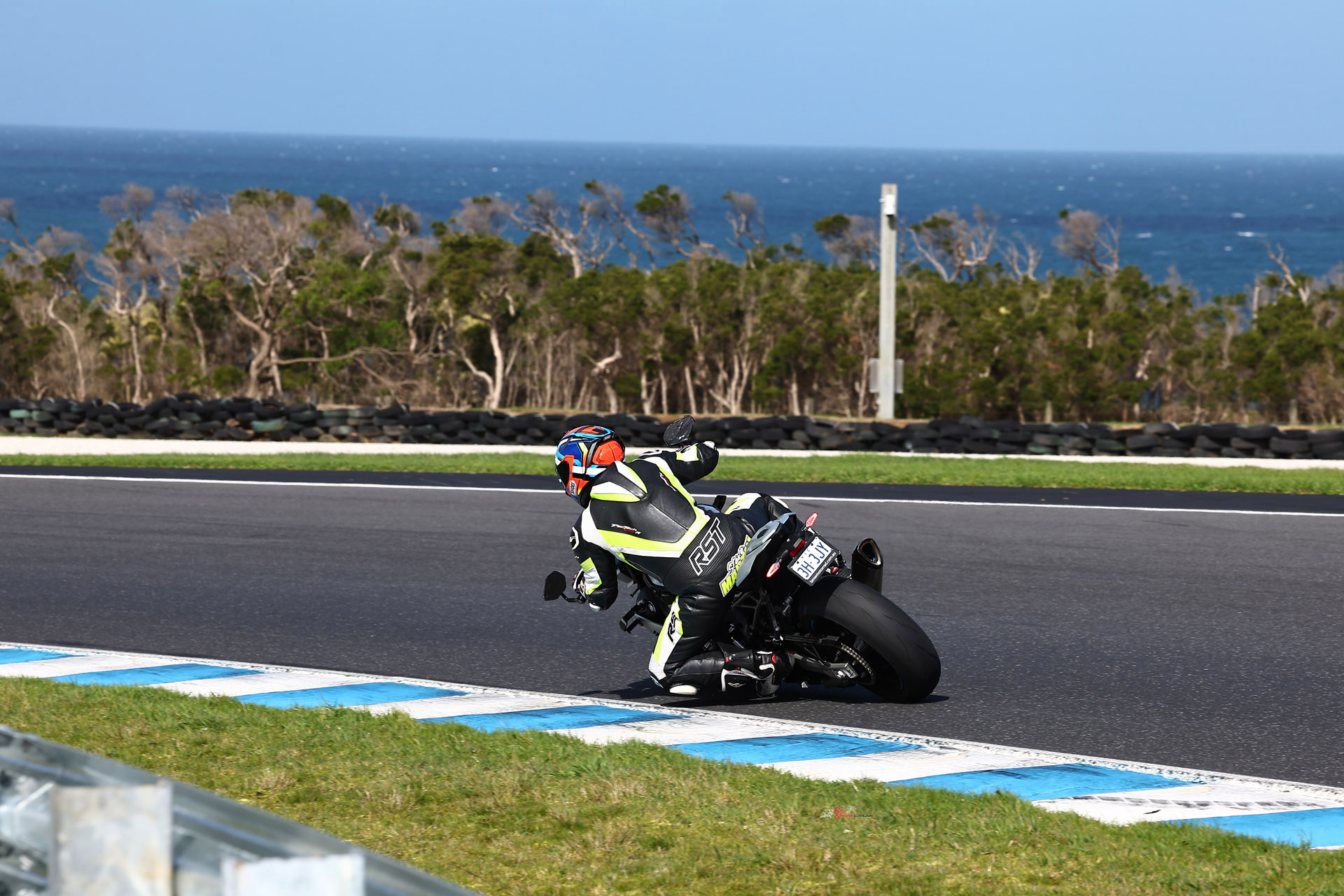
Apexing Siberia on the M 1000 R Competition, Steve is about to pull the pin up through the Hayshed.
Personally, I spent a fair bit of the day in Dynamic mode. It gave me the balance of response, control and confidence that suited my riding style. Race mode was the natural next step when I wanted to push harder. I was seeing around 250 km/h down the straight, lap after lap. At those speeds, you become very aware that you’re sitting on a nakedbike with very little between you and the wind. A slightly larger screen would have been welcome.
Hanging on at that speed takes some effort, and I suspect my neck muscles had a more productive workout than they’d experienced in quite some time. Overall, the chassis worked extremely well. The bike changed direction quickly, remained stable through most corners and gave me plenty of confidence when pushing on. One thing that made a noticeable difference was dropping the rear tyre pressure closer to the recommended track setting. The rear Bridgestone seemed to come alive, offering improved confidence and feel.
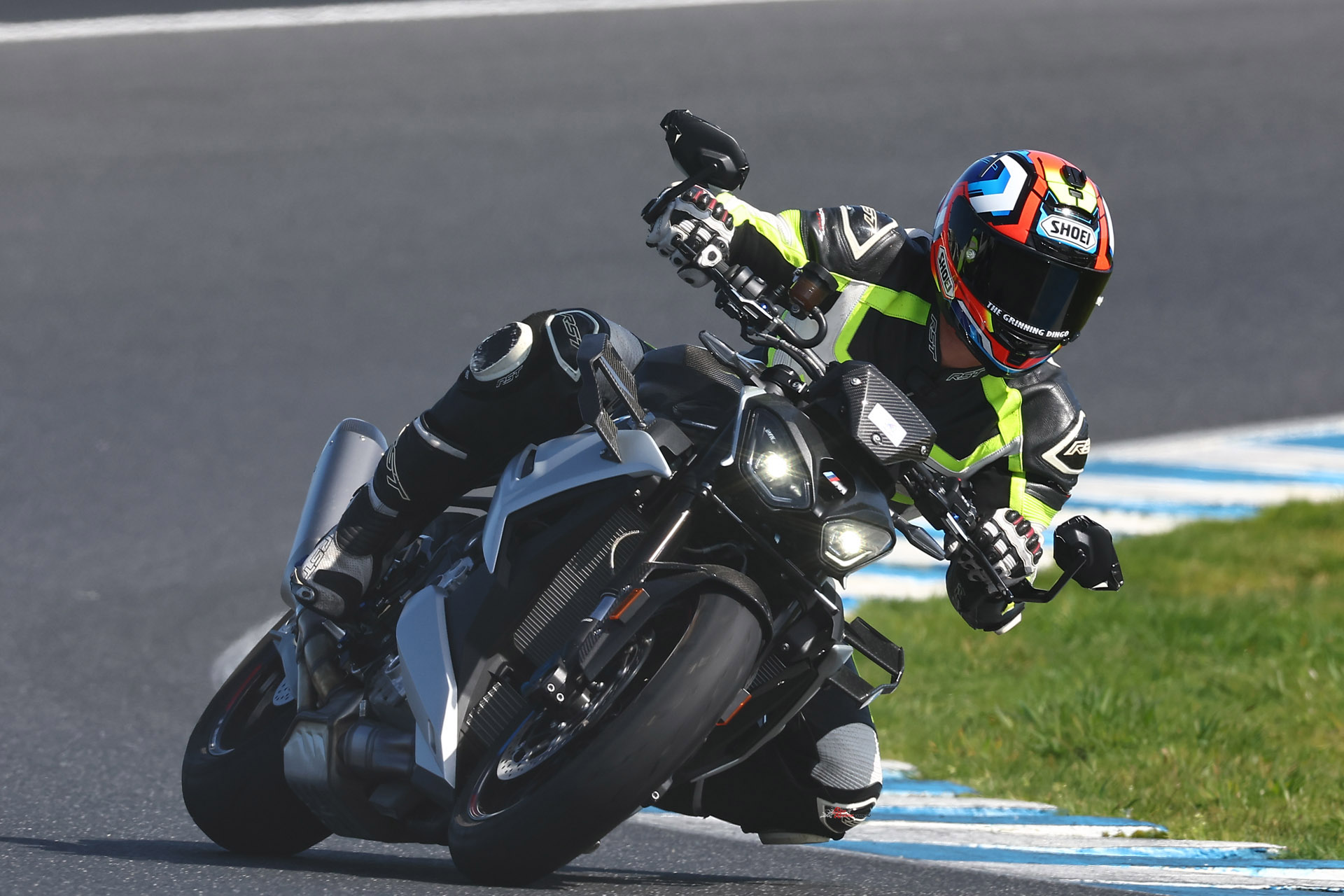
Steve rounding Siberia at Phillip Island on the M 1000 R. If anyone is qualified to test here, it’s the WorldSBK legend himself…
The front-end, however, was the one area where I wanted a little more reassurance. At very high speeds, particularly when entering the faster corners, I found it slightly nervous. Nothing alarming, and certainly nothing that ruined the experience, but it didn’t give me the rock-solid confidence I normally look for when the speed starts getting serious. It’s difficult to point the finger at one particular thing after limited track time. It could be the tyre characteristics, the suspension settings, or a combination of both.

“The engine is brutally strong, the brakes are excellent, the gearbox is superb and the electronics give you an enormous amount of control”…
I’d like to spend more time experimenting with the setup before drawing any firm conclusions. My first move would probably be to try a set of Pirellis, simply because I’m more familiar with how they feel. The riding position was otherwise well suited to track work, with the footpegs in a sensible position and enough room to move around the bike without feeling cramped. Taken as a whole, the track experience confirmed just how much performance BMW has managed to squeeze into this package.
Aluminium alloy twin-sided swingarm with central shock, DDC and spring preload.
The engine is brutally strong, the brakes are excellent, the gearbox is superb and the electronics give you an enormous amount of control over how the bike behaves. My only real question mark was that front-end feel at the highest speeds. Everything else left a very strong impression. This is a nakedbike that can genuinely run with superbikes when asked. Just remember that it still requires the rider to keep their wits about them.
Engine and Technology
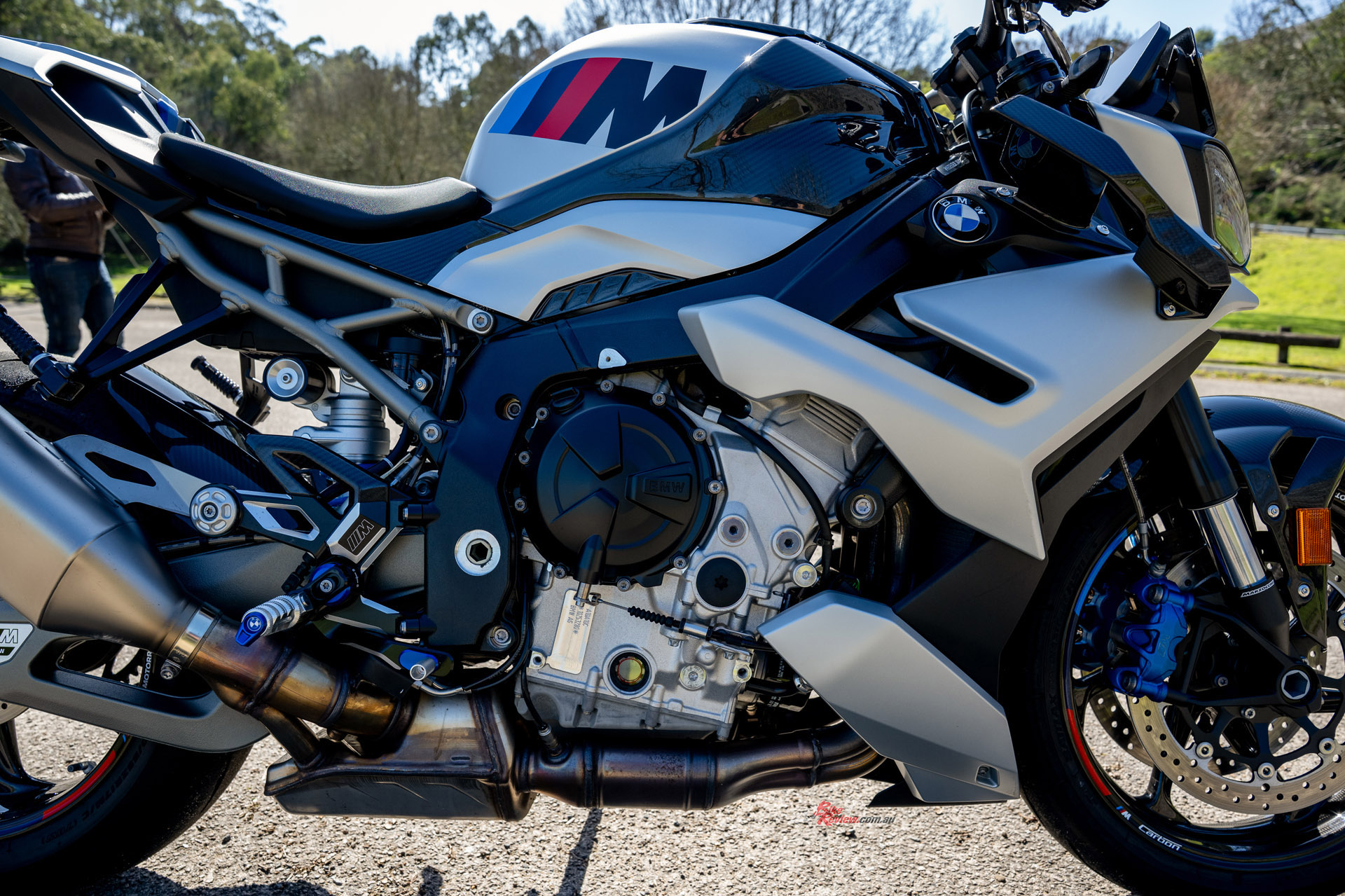
At the heart of the M 1000 R is a 999cc ShiftCam inline-four derived from the M 1000 RR. BMW claims 154 kW, or around 210hp, at 13,750 rpm, with 113 Nm of torque. Wet weight is around 199 kg, depending on specification. The Competition package adds carbon wheels, carbon bodywork and a collection of M-specific components that help reduce weight and give the bike its distinctive appearance. In Australia, you’re looking at more than $42,000 ride-away, depending on the model year, dealer charges and fitted equipment.
You’re buying an exceptionally powerful, technologically sophisticated motorcycle that can commute during the week, entertain you on a Sunday morning and turn up at Phillip Island ready to embarrass a few fully faired machines. The electronics package is extensive, with Rain, Road, Dynamic and Race modes, three Race Pro configurations, adjustable Dynamic Damping Control, traction and wheelie control, slide control, cornering ABS, launch control, cruise control, heated grips and a 6.5-inch TFT display. It’s one of the most adjustable nakedbikes around, and one of the most expensive. But once you experience what it can do, it’s easier to understand where the money has gone.
Verdict
The 2026 BMW M 1000 R Competition is a seriously impressive motorcycle, but it’s not for everyone. It’s expensive, extraordinarily powerful and packed with enough electronics to keep a small IT department occupied. It isn’t particularly interested in being a relaxed touring bike, either. But get it onto a decent stretch of twisty road and the whole thing starts to make sense. The engine is magnificent, the gearbox is excellent, the brakes are superb and the chassis is agile enough to make the bike feel smaller than it really is.
Read our other BMW reviews here...
Take it to Phillip Island, and you’ll discover that the naked-bike format doesn’t necessarily mean you’re giving away much performance compared with a superbike. It’s a road bike with superbike performance, a track-day weapon with number plates, and a motorcycle that manages to be civilised right up until you remind it what the M badge stands for. It’s also completely, gloriously and rather unnecessarily off its chops.
2026 BMW M 1000 R Competition Specifications
Price: $42,990 + ORC (Competition variant; Standard M 1000 R from $36,870 Ride-Away)
Warranty: Five years, unlimited km
Colours: Black Storm Metallic/M Motorsport, White Aluminium Metallic Matt
Claimed Power: 154kW@13,750rpm
Claimed Torque: 113Nm@11,100rpm
Kerb Weight: 199kg (claimed)
Fuel Capacity: 16.5L
Fuel Consumption Claimed: 6.4L/100km
Fuel Consumption (Measured): N/A
Top Speed: 280km/h
0–100km/h: 3.2s
Engine: Water-/oil-cooled in-line four-cylinder, four-stroke, DOHC, four titanium valves per cylinder, BMW ShiftCam variable intake camshaft control. Bore x Stroke: 80mm x 49.7mm Displacement: 999cc Compression Ratio: 13.1:1 Fuel System: Electronic fuel injection, BMS-O engine management with throttle-by-wire Exhaust: Closed-loop three-way catalytic converter, Euro 5+ Exhaust System: Sports exhaust with titanium rear silencer Gearbox: Six-speed constant mesh with Shift Assistant Pro Clutch: Self-reinforcing anti-hopping multi-plate oil-bath clutch Final Drive: 525 chain, 17/47 gearing
Chassis: Frame: Aluminium bridge-type, engine as a stressed member
Rake: 24.2° Trail: 97.6mm
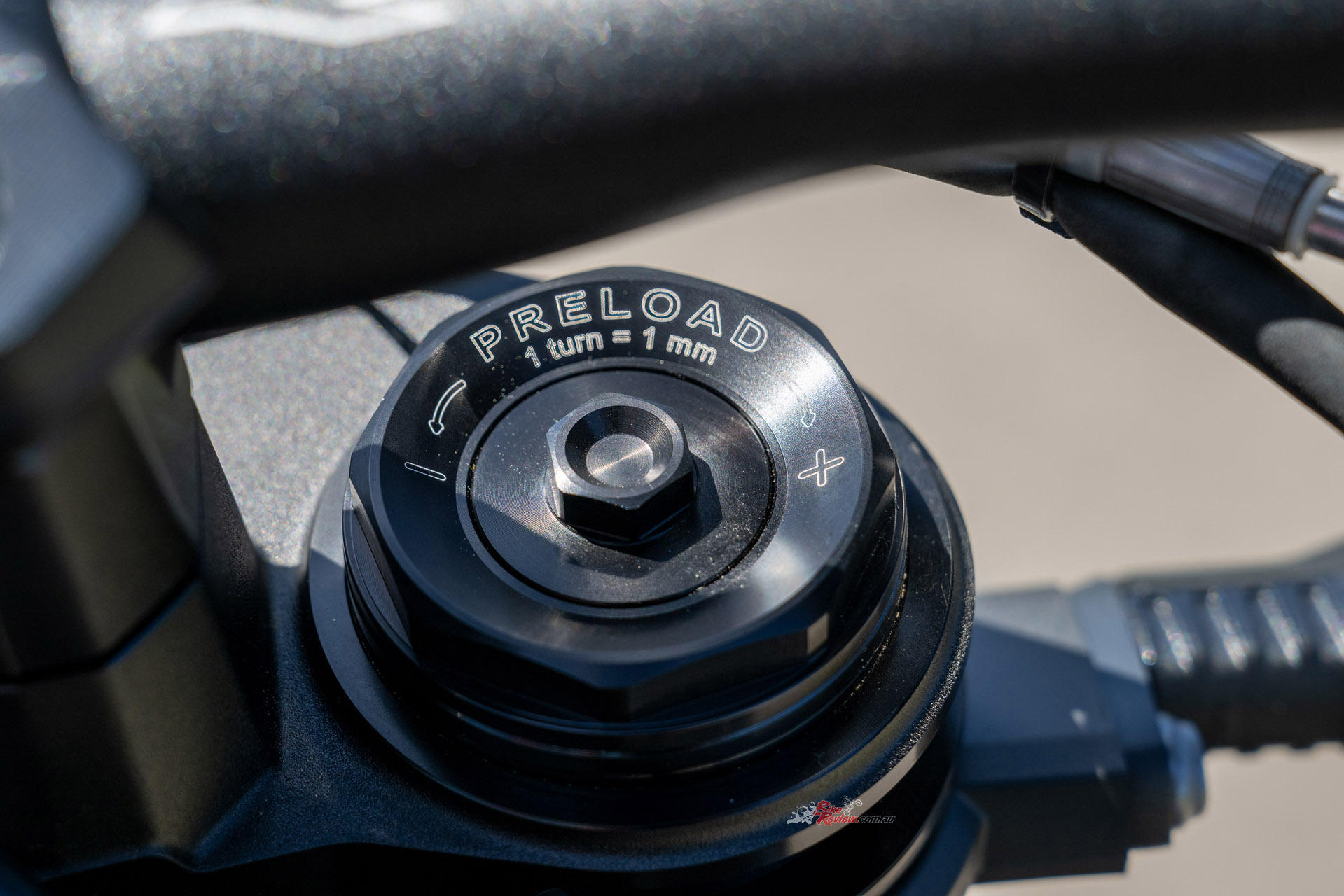
Front Suspension: 45mm USD forks with Dynamic Damping Control (DDC), adjustable spring preload, rebound and compression damping
Rear Suspension: Aluminium twin-sided swingarm with central shock absorber, DDC electronic damping, adjustable spring preload, rebound and compression damping
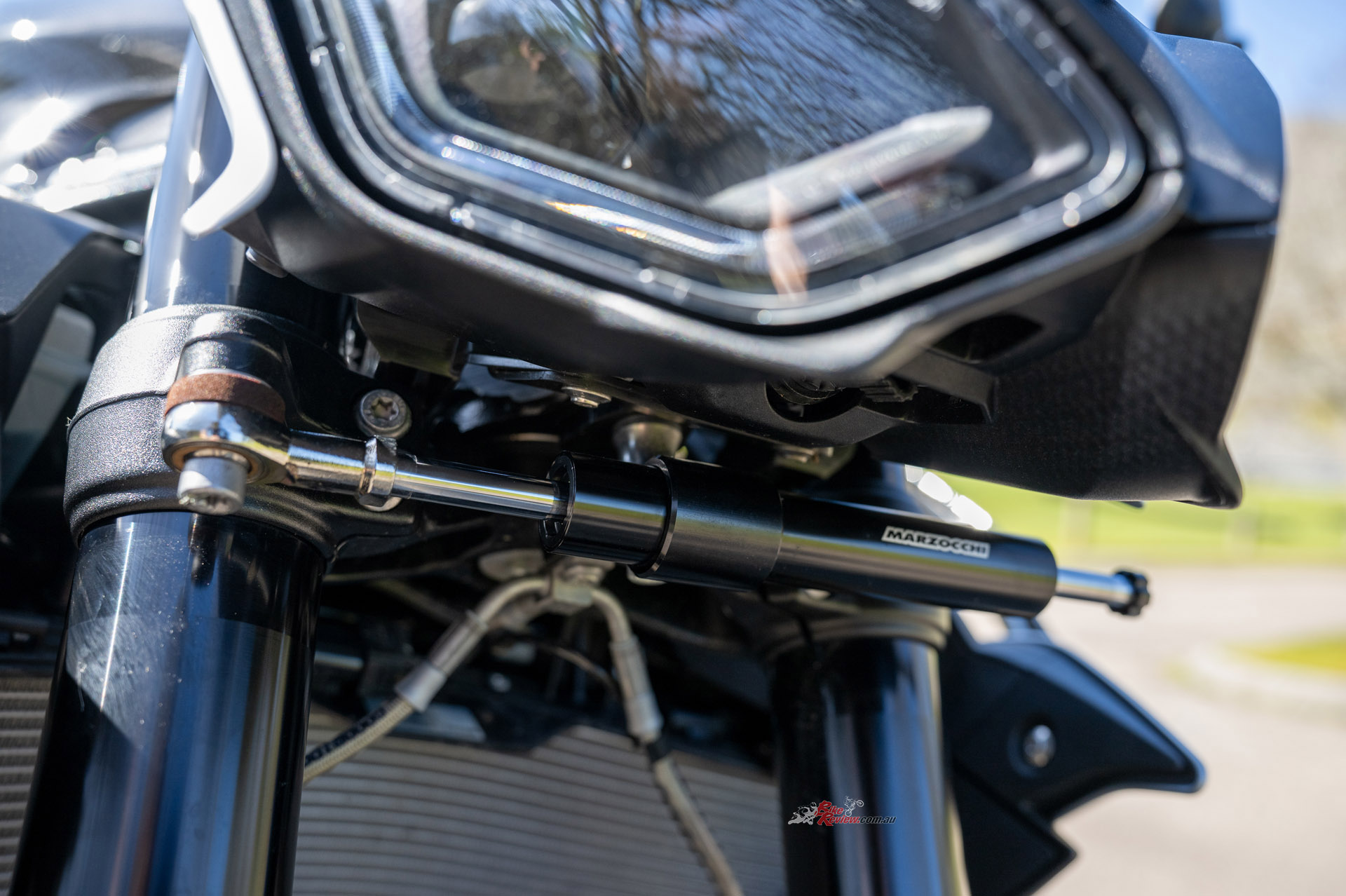
Travel: 120mm (f) / 117mm (r) Suspension Features: Dynamic Damping Control (DDC) electronic damping, adjustable steering damper
Brakes Front: Dual 320mm floating discs, four-piston radial M brake calipers Rear: 220mm disc, single-piston floating caliper ABS: BMW ABS Pro with Race ABS and Brake Slide Assist
Wheels & Tyres: Bridgestone BATTLAX RS11, M Carbon wheels Front Tyre: 120/70 ZR17 Rear Tyre: 200/55 ZR17
Dimensions:
Seat Height: 830mm
Overall Length: 2085mm
Overall Width (inc. mirrors): 996mm
Ground Clearance: N/A
Overall Height: 1176mm
Wheelbase: 1455mm
Instruments & Electronics: 6.5in full-colour TFT dash with Connectivity and Multi-Controller, Riding Modes: Rain, Road, Dynamic, Race + Race Pro 1/2/3, selectable throttle response, Dynamic Traction Control (DTC) with adjustable intervention, Wheelie Control, Slide Control, Brake Slide Assist, Hill Start Control Pro, Engine Brake Control (MSR), Dynamic Brake Control (DBC), BMW ABS Pro and Race ABS, Launch Control, Pit Lane Limiter, Shift Assistant Pro, tyre pressure monitoring, cruise control, heated grips and keyless ride.
2026 BMW M 1000 R Gallery
Ratings | Bike Review | 2026 BMW M 1000 R Competition
Weapon!
BMW’s M 1000 R Competition promises superbike performance and everyday practicality. We test the flagship nakedbike on road and track to see whether it delivers.
The Author

You Might Also Like