


Yamaha continue to bolster sportsbike category, and we love them for it! For 2026, they have really come up with the good. From a new YZF-R7, to the amazing 70th Anniversary range...
Yamaha’s 2026 R-Family arrives with the spotlight firmly on the YZF-R7, which gains major chassis, electronic and ergonomic updates alongside fresh R-Series styling and new connectivity features. Here is the rundown from EICMA, along with a gallery…
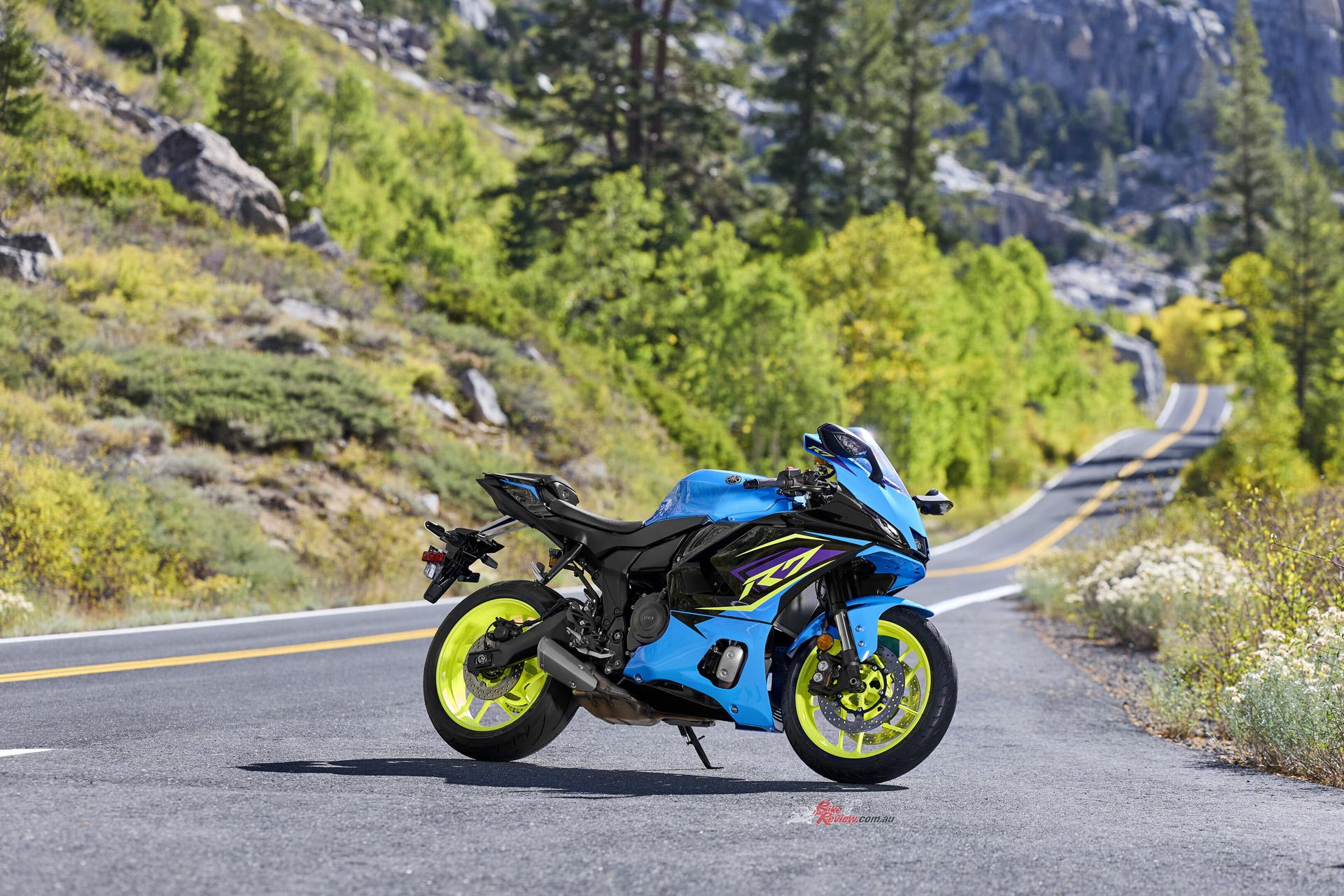
The Yamaha YZF-R7 has been heavily updated for 2026. We can’t wait to ride it.
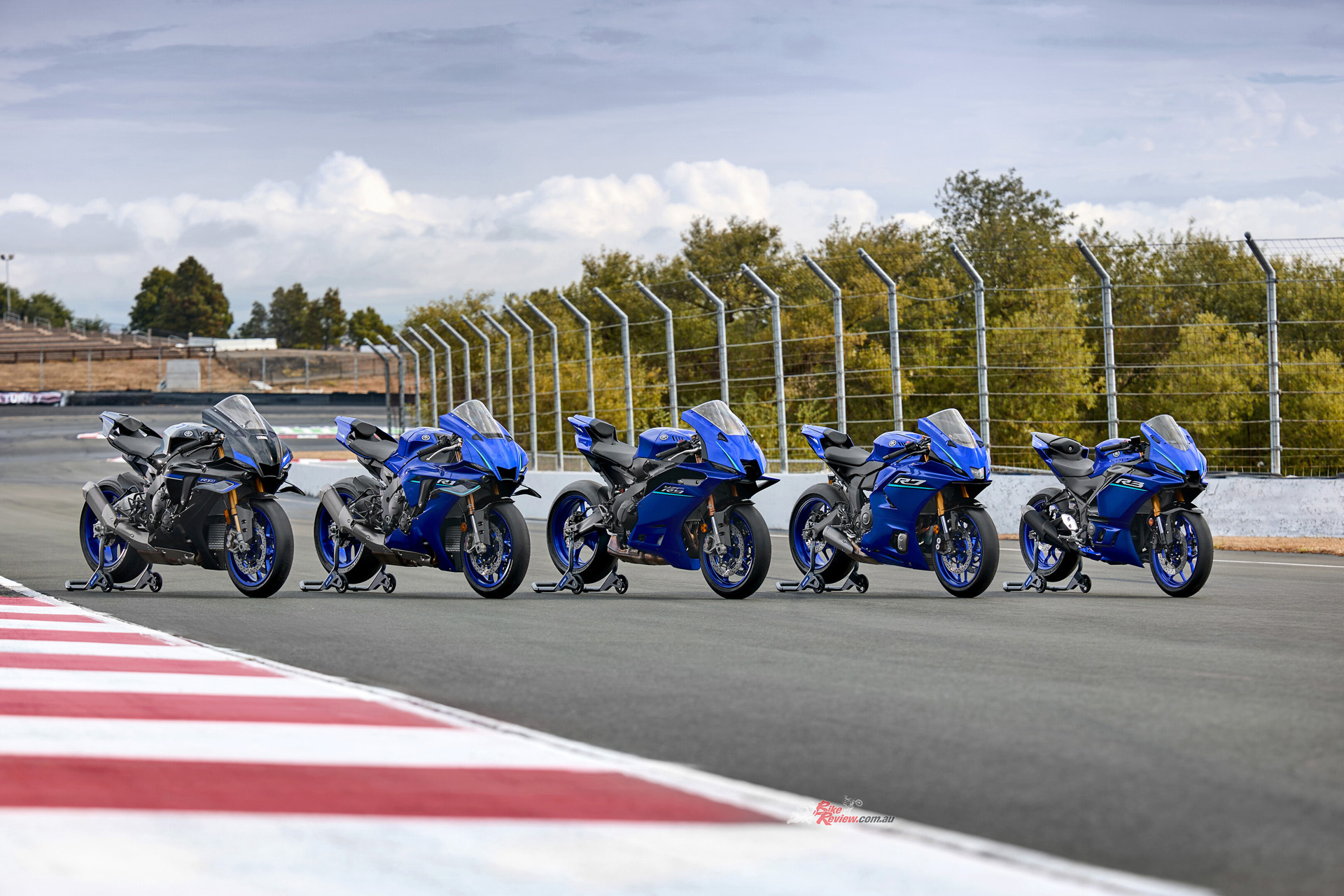
The middleweight twin headlines a range that also includes the YZF-R1, YZF-R9, YZF-R3, YZF-R6 Race and learner-friendly YZF-R15M, all wearing new colours and, for four key models, special 70th Anniversary livery honouring Yamaha‘s founding in 1955.
All-new YZF-R7
The 2026 YZF-R7 receives a substantial upgrade aimed at improving both its road manners and track-day potential. Available in 689cc High Output and 655cc LAMS-approved versions, the twin-cylinder model now features a new generation of aerodynamic bodywork with slimmer fairings, integrated LED indicators and a revised front profile incorporating winglets, a minimalist LED headlight and Yamaha’s signature M-shaped air duct.
Power still comes from Yamaha’s 270-degree parallel-twin CP2 engine, now paired with tuned induction using the same asymmetrical funnel design found on the MT-07. The engine’s strong midrange character is supported by a new Yamaha Chip Controlled Throttle (YCC-T) system and a third-generation quickshifter enabling clutchless up- and downshifts above 16km/h.
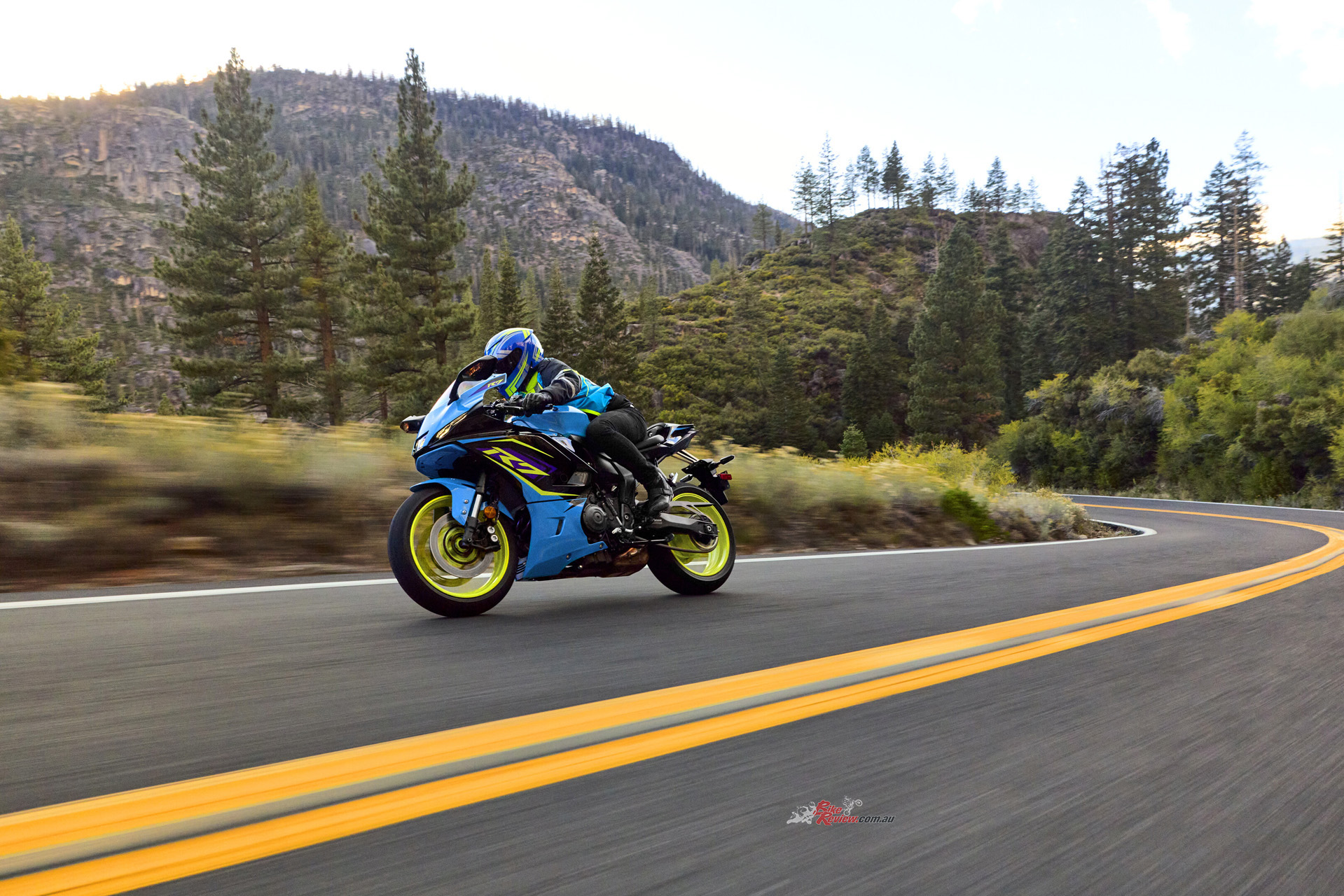
The 2026 YZF-R7 receives a substantial upgrade aimed at improving both its road manners and track-day potential.
A six-axis Inertial Measurement Unit developed from the YZF-R1 superbike marks one of the most significant upgrades to the R7 for 2026. Working in conjunction with wheel-speed sensors, the IMU constantly measures pitch, roll and yaw to deliver precise, real-time data to the bike’s new electronic control systems.


That information feeds a comprehensive suite of rider aids – traction, slide, lift and brake control, along with launch and engine-brake management – each with adjustable intervention levels to suit rider preference. It’s the first time the middleweight twin has featured such a sophisticated package.
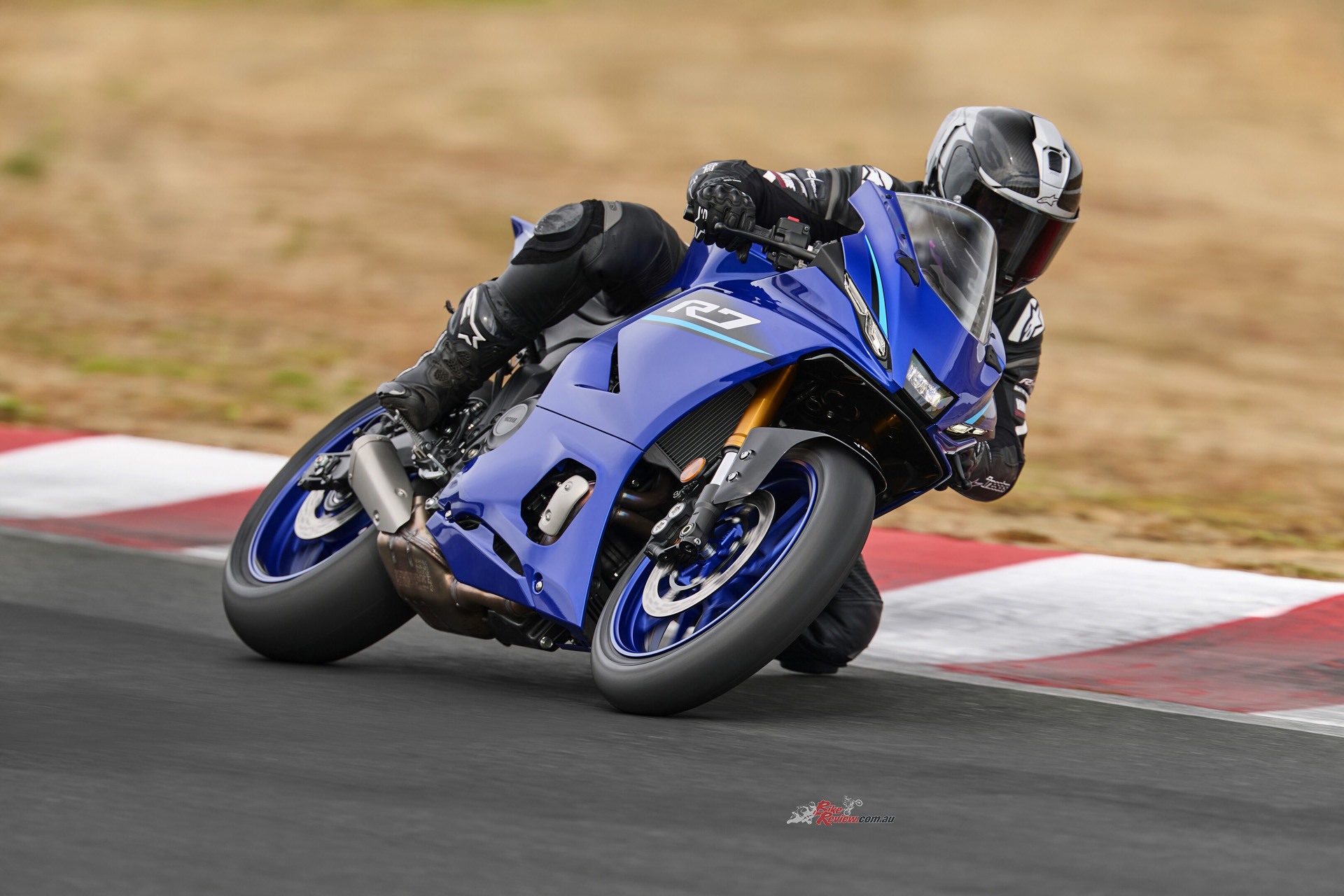
Settings are accessed through an updated five-inch full-colour TFT dash, which also brings smartphone connectivity via Yamaha’s Y-Connect app for calls, messages and music, plus full turn-by-turn navigation through Garmin’s free StreetCross app.


The revised tubular-steel frame and asymmetrical swingarm maintain the same weight as before but now offer improved rigidity, complemented by lighter fully adjustable KYB forks and a retuned Monocross rear shock linkage. Ten-spoke SpinForged aluminium wheels and Bridgestone Battlax Hypersport S23 tyres are said to further sharpen handling response.

Ergonomics have been refined with slightly higher handlebars that are now mounted closer to the rider.
Ergonomics have been refined with slightly higher handlebars that are now mounted closer to the rider and a reshaped seat for easier ground reach, while the tank has been redesigned in a bid to improve grip and rider movement. For track riders, the 2026 YZF-R7 now supports Yamaha’s Y-TRAC Rev app, providing lap timing, a virtual pitboard and post-session ride data analysis.
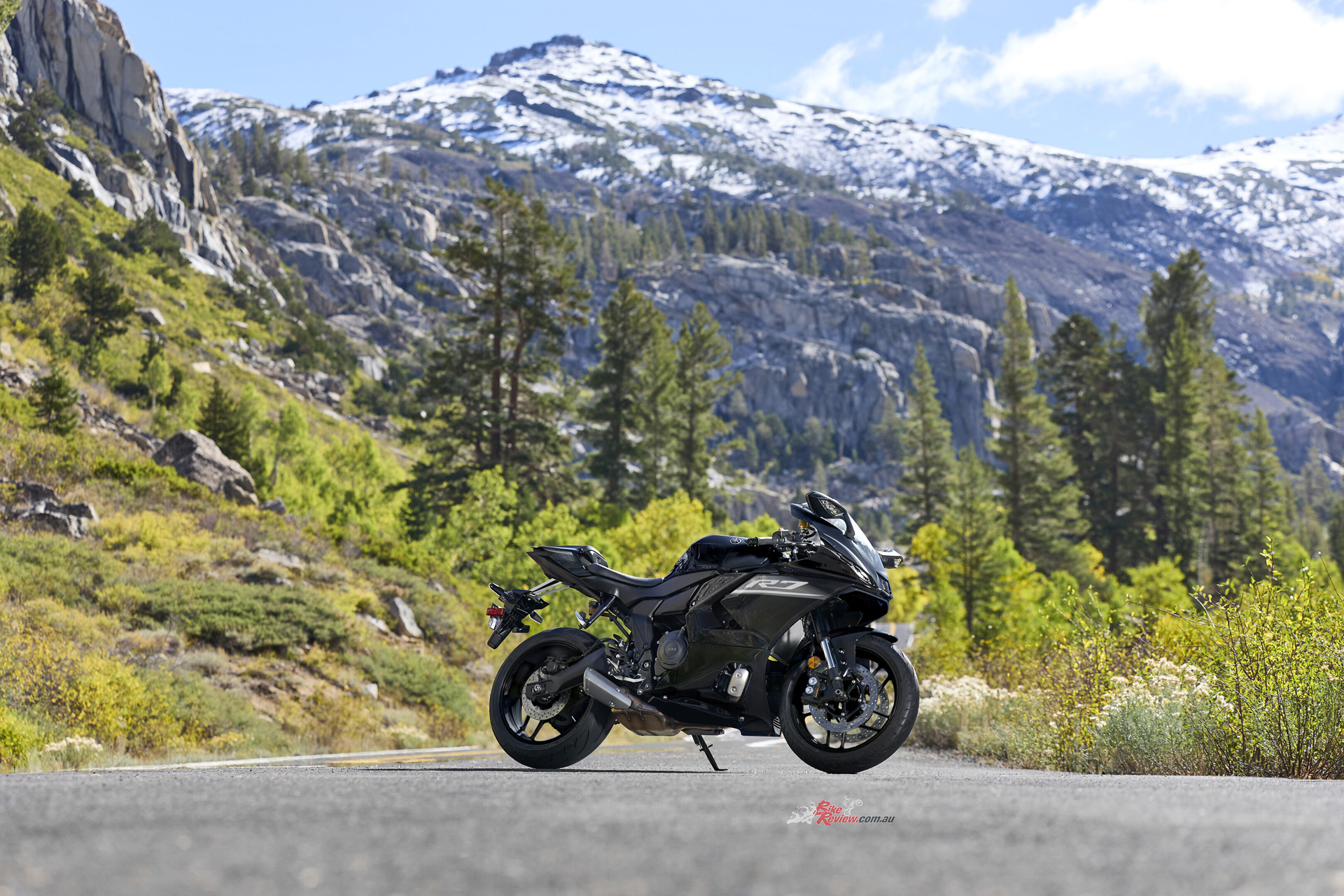
Ride-away pricing starts at $16,549 for both the LAMs and High Output models, rising to $17,049 for the 70th Anniversary versions.
Four colours will be offered when the bike becomes available in Australian dealerships from June 2026; Team Yamaha Blue, Raven, Breaker Cyan/Raven and the commemorative 70th Anniversary Edition. Ride-away pricing starts at $16,549 for both the LAMs and High Output models, rising to $17,049 for the 70th Anniversary versions.
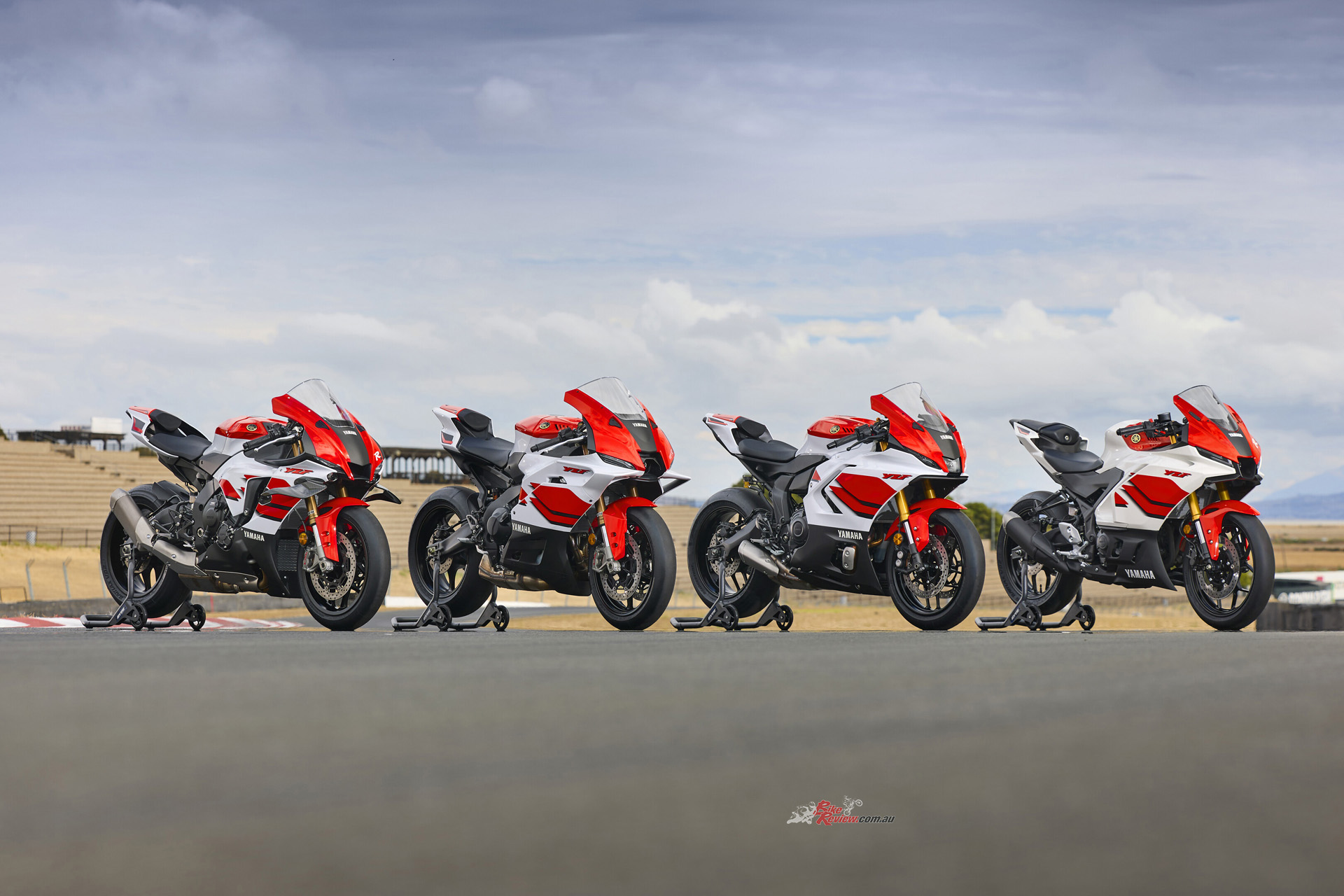
70th Anniversary editions
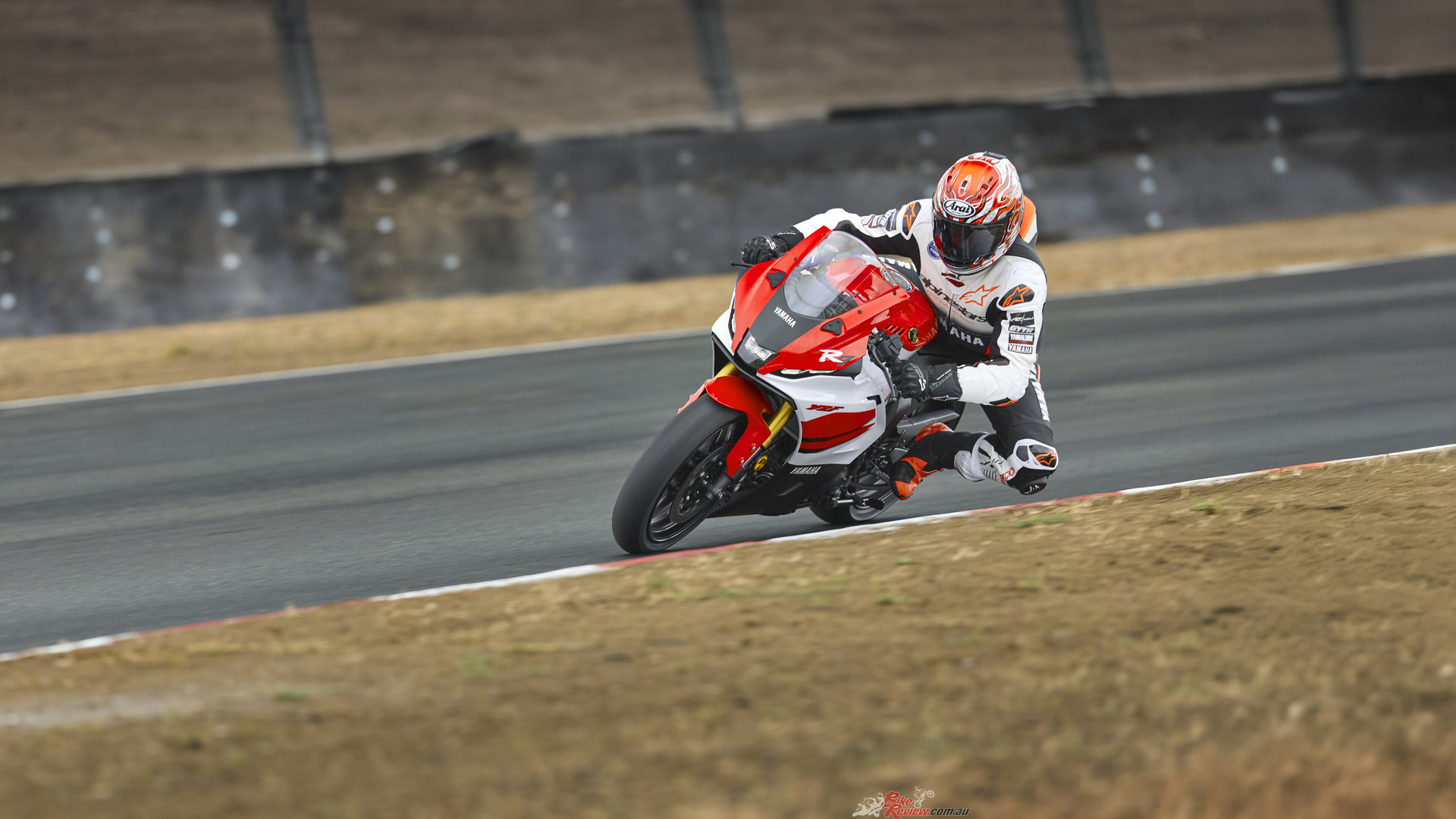
Marking 70 years since the founding of Yamaha Motor Company, four special edition R-Series models adopt a classic white-and-red speed-block design inspired by the 1999 YZF-R7 Superbike. Each carries gold Yamaha tuning-fork emblems and an Anniversary badge. The commemorative treatment will feature on the YZF-R1, YZF-R9, YZF-R7 and YZF-R3.
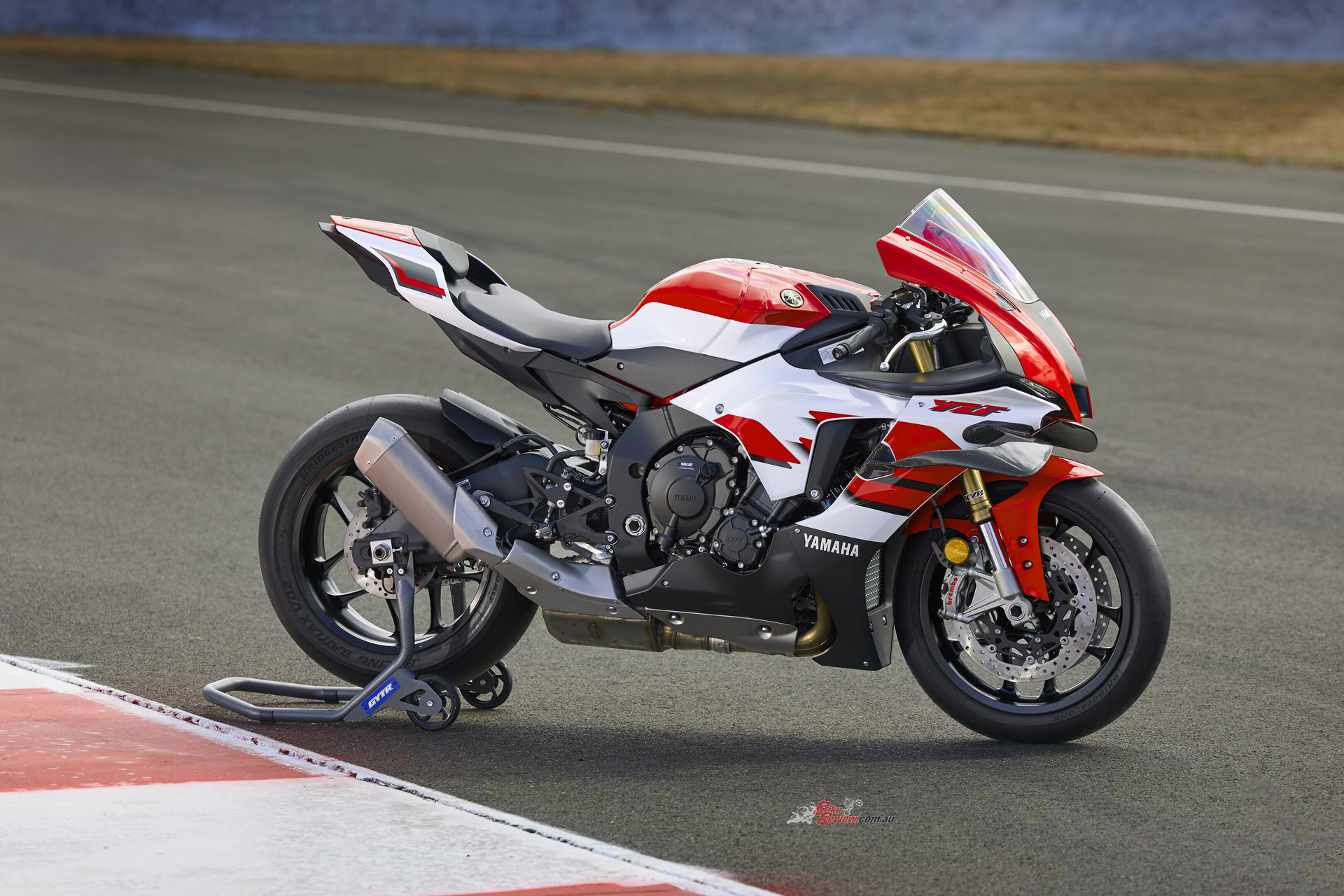
70th Anniversary Edition YZF-R1.
Yamaha’s flagship YZF-R1 and R1M return for 2026 technically unchanged from the previous year, aside from updated graphics and the addition of the R1 70th Anniversary Edition. The 998cc supersport continues to feature Brembo braking, high-spec KYB forks and carbon-fibre winglets.


The R1 is priced at $33,749 ride-away, the R1 70th Anniversary Edition at $34,799 and the R1M at $42,549, all due to arrive in Oz from February 2026. The model’s continued presence in Australia follows Yamaha’s decision in 2024 not to homologate the R1 for Euro5+ standards in Europe, where it now sells only as a track-use machine.


R9, R3 and R6 Race
After its 2025 debut and successful Supersport racing campaign, the YZF-R9 returns for 2026 unchanged except for new colours, including the 70th Anniversary scheme. The triple-cylinder model is priced at $23,699, or $24,499 for the anniversary edition, with both available from February 2026.


Yamaha’s lightweight YZF-R3 continues into 2026 with the same 321cc parallel twin and a refreshed palette of Midnight Black, Team Yamaha Blue, Mint Green/Matt Black and the 70th Anniversary livery. Prices are set at $9499 and $9799 respectively, with availability from December this year.


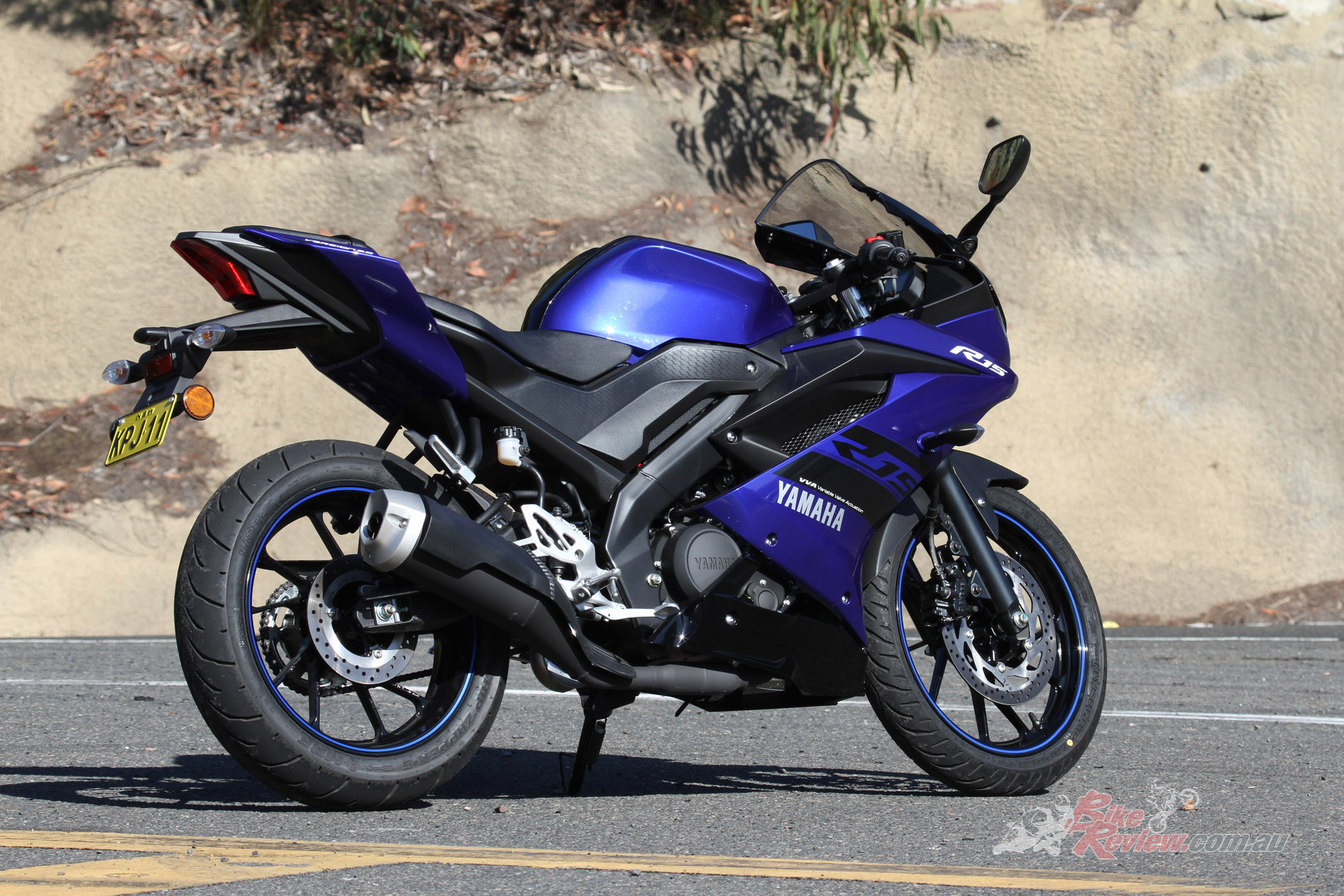
The YZF-R6 Race remains a dedicated track machine and has been repriced to $16,649 ready-to-ride and features the same 599cc inline-four, Deltabox chassis and M1-inspired bodywork. The entry-level YZF-R15M also remains available at $6,499 ride-away.

A range of Genuine Yamaha accessories will accompany the 2026 models, including a limited-edition 70th Anniversary seat cowl and a mirror-cover set for track use. Accessories purchased and fitted at the time of sale carry the same warranty as the motorcycle.

Read our Yamaha R-Family reviews here…
2026 Yamaha R-Family Supersport Range Gallery


The Author

You Might Also Like