
Honda Accelerates Toward 2050 Net-Zero with Breakthrough Bio-Based Materials
Honda is ramping up its sustainability drive with a multi-pronged approach that places alternative materials, clean energy, and circular manufacturing. Under the banner of Triple Action to Zero, the brand aims to achieve net-zero across all corporate activities by 2050. Press: Honda UK.
While electric motorcycles, cleaner production hubs, and improved logistics make up major components of this plan, Honda is increasingly turning its attention to something far more everyday: the materials that make up its motorcycles.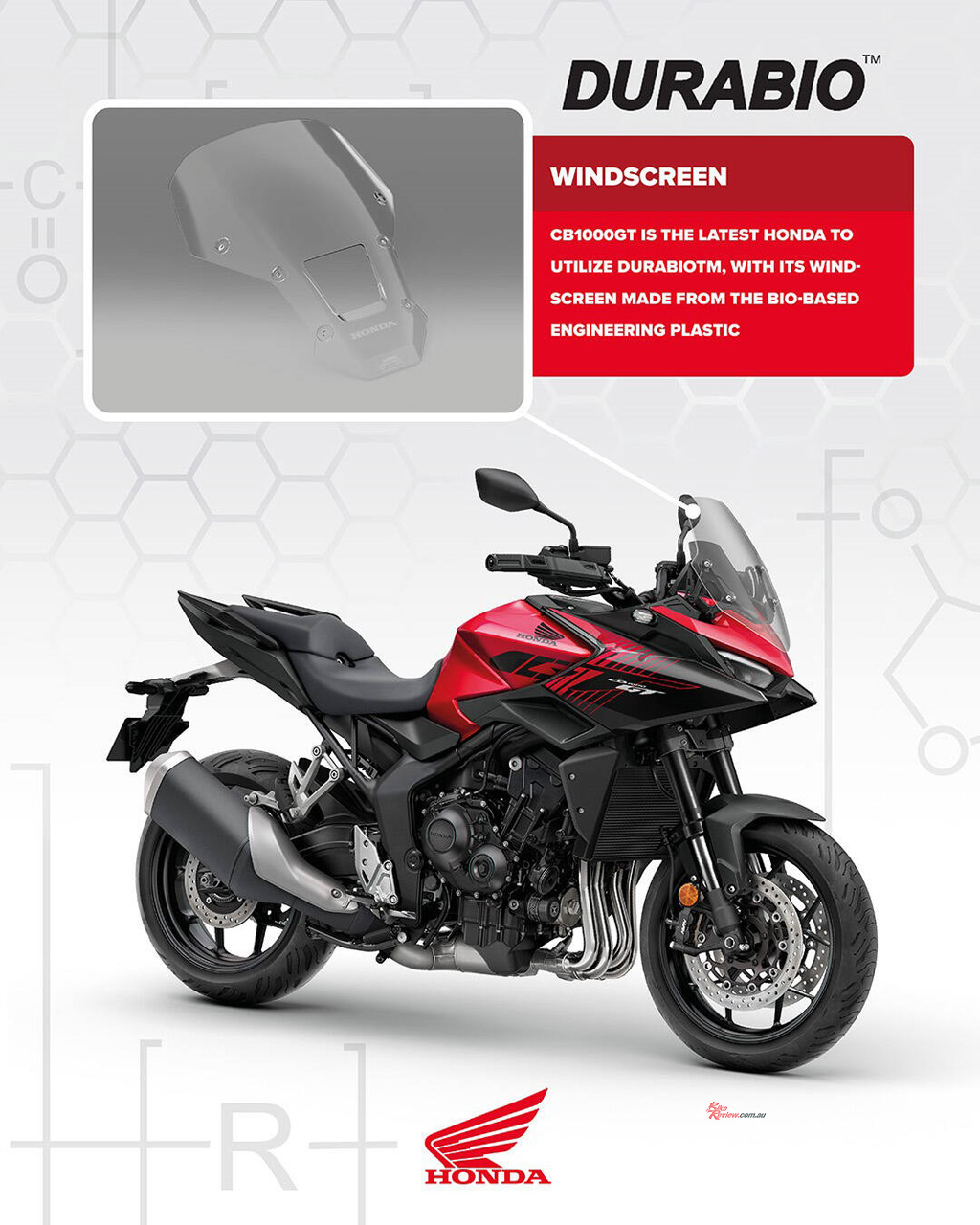
Bio-Based Plastics Take Centre Stage:
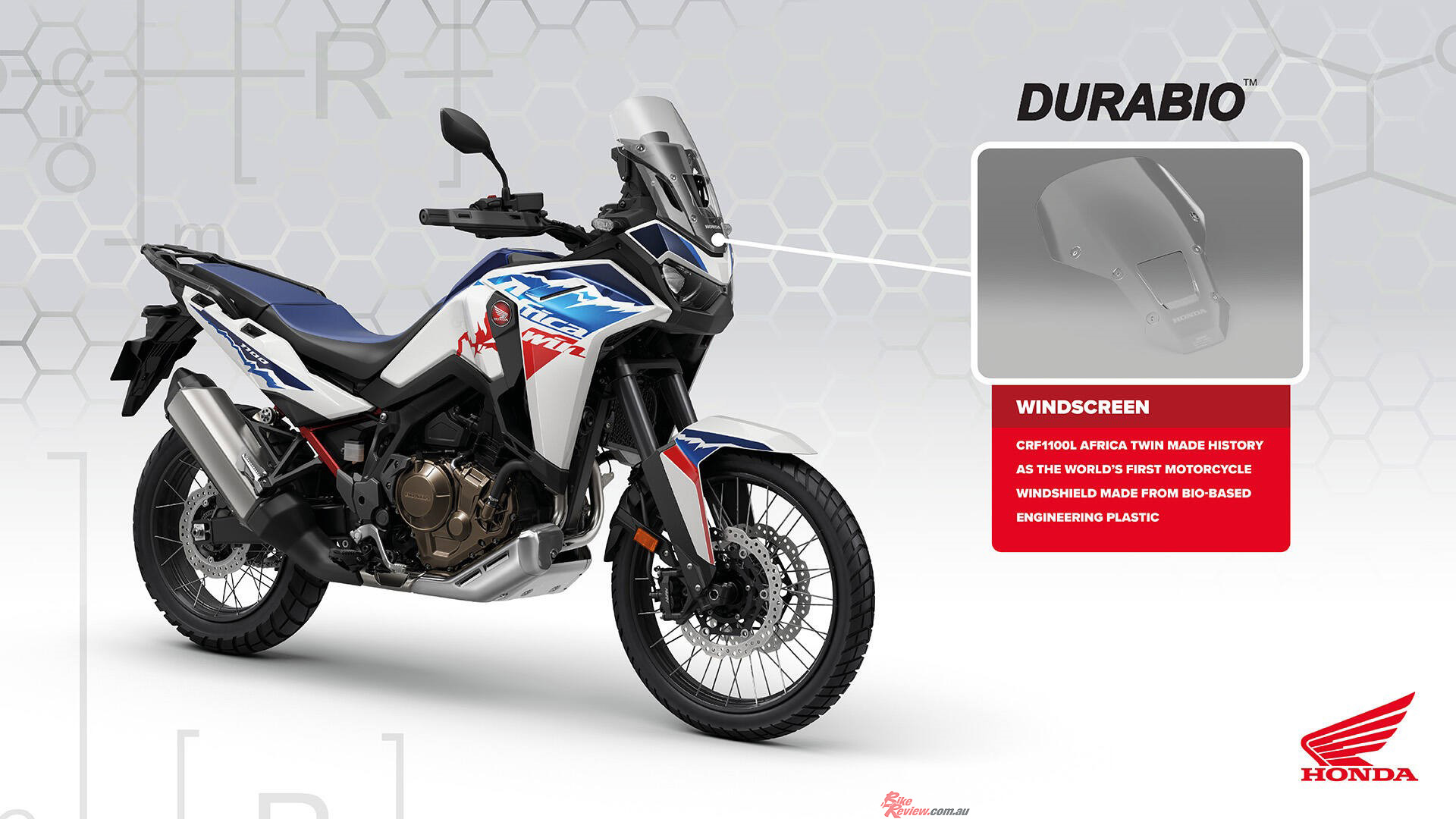
One of Honda’s most notable advancements is the adoption of DURABIO™, a next-generation, plant-derived engineering plastic developed by Mitsubishi Chemical Group. Produced from Isosorbide, which originates from renewable, non-edible crops such as corn and wheat, the material represents a sustainable alternative to petroleum-based plastics.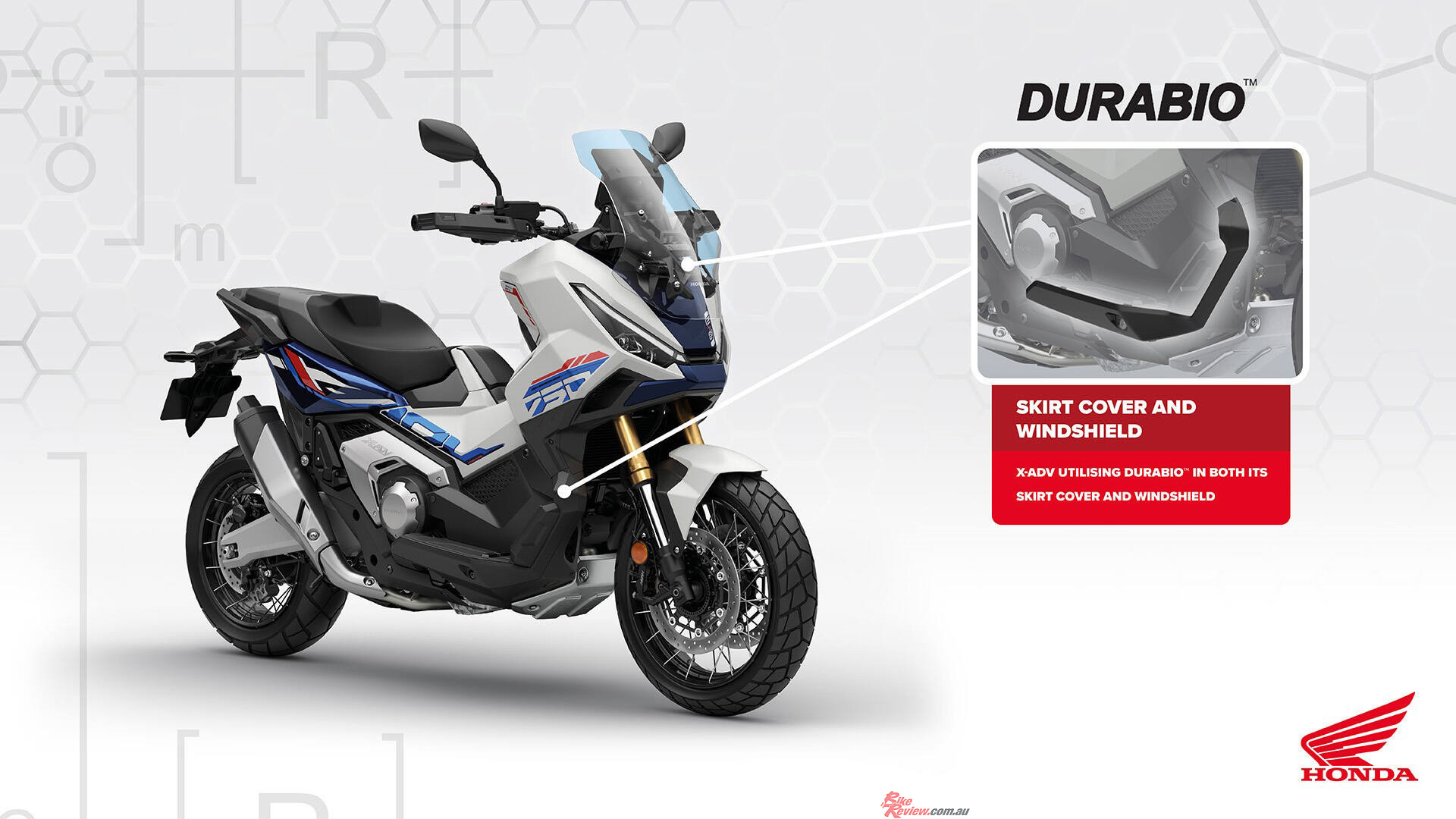
DURABIO™ stands out for its combination of high optical clarity, strong impact resistance, scratch resilience, and long-term UV stability. Its natural transparency and ability to hold vivid colours mean Honda can eliminate traditional painting processes, cutting emissions and improving surface durability at the same time.
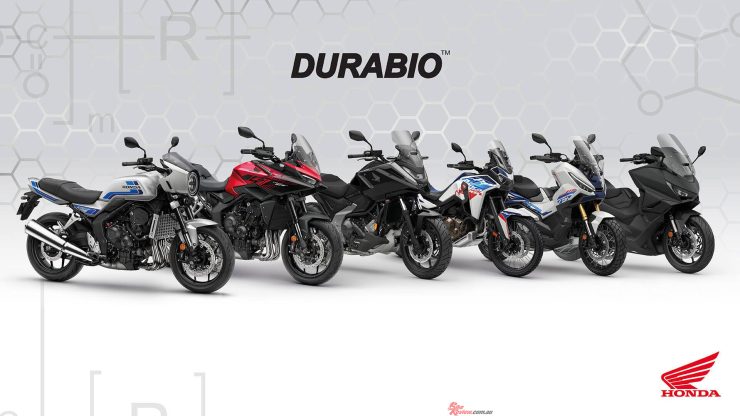
Early applications have already impressed the European motorcycle press. Honda now integrates DURABIO™ into the bodywork and windscreens of several key models, including the CRF1100L Africa Twin, NT1100, NC750X, CB1000GT, and its premium scooters, the X-ADV and Forza 750.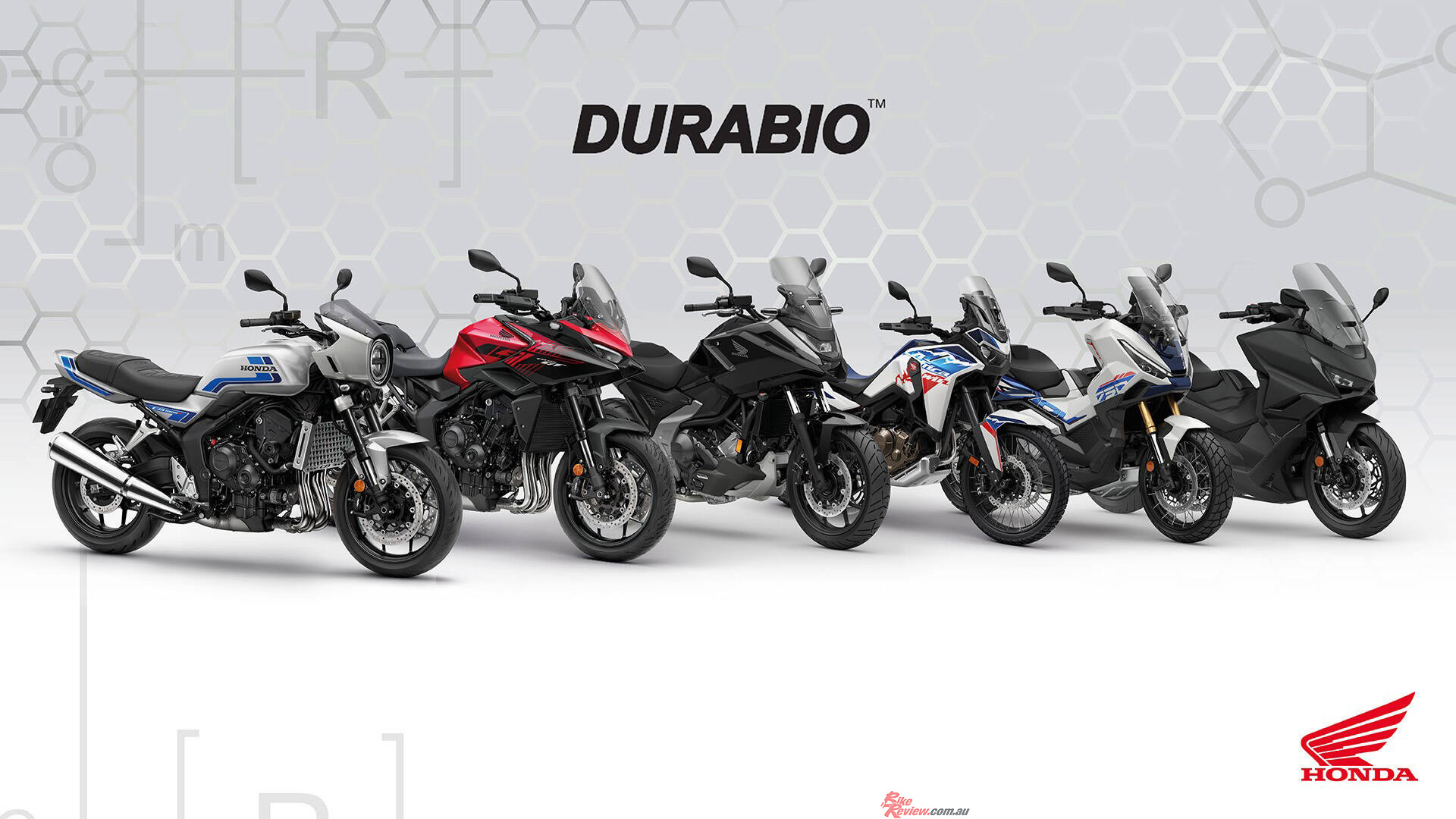
A Growing Footprint Across the Lineup:
Honda made history in March 2024 by launching the world’s first motorcycle windscreen made entirely from bio-based engineering plastic on the CRF1100L Africa Twin. The rollout continued rapidly:
X-ADV: Skirt cover and windscreen
Forza 750: Handlebar central cover and front side cowl
NT1100 (25YM): Redesigned fairing partially made from DURABIO™
NC750X (25YM): Multiple exterior panels plus windscreen. This was also the first Honda model to feature coloured DURABIO™ bodywork
CB1000GT (26YM): Unveiled at EICMA 2025 featuring a DURABIO™ windscreen
As Honda introduces DURABIO™ across more models, the material is becoming a cornerstone of the brand’s sustainable design vision.
Recycled Plastics Strengthen the Circular Approach
DURABIO™ is one part of Honda’s wider campaign to shift away from virgin materials. The company is also increasing the use of recycled plastics already proven in its automotive division.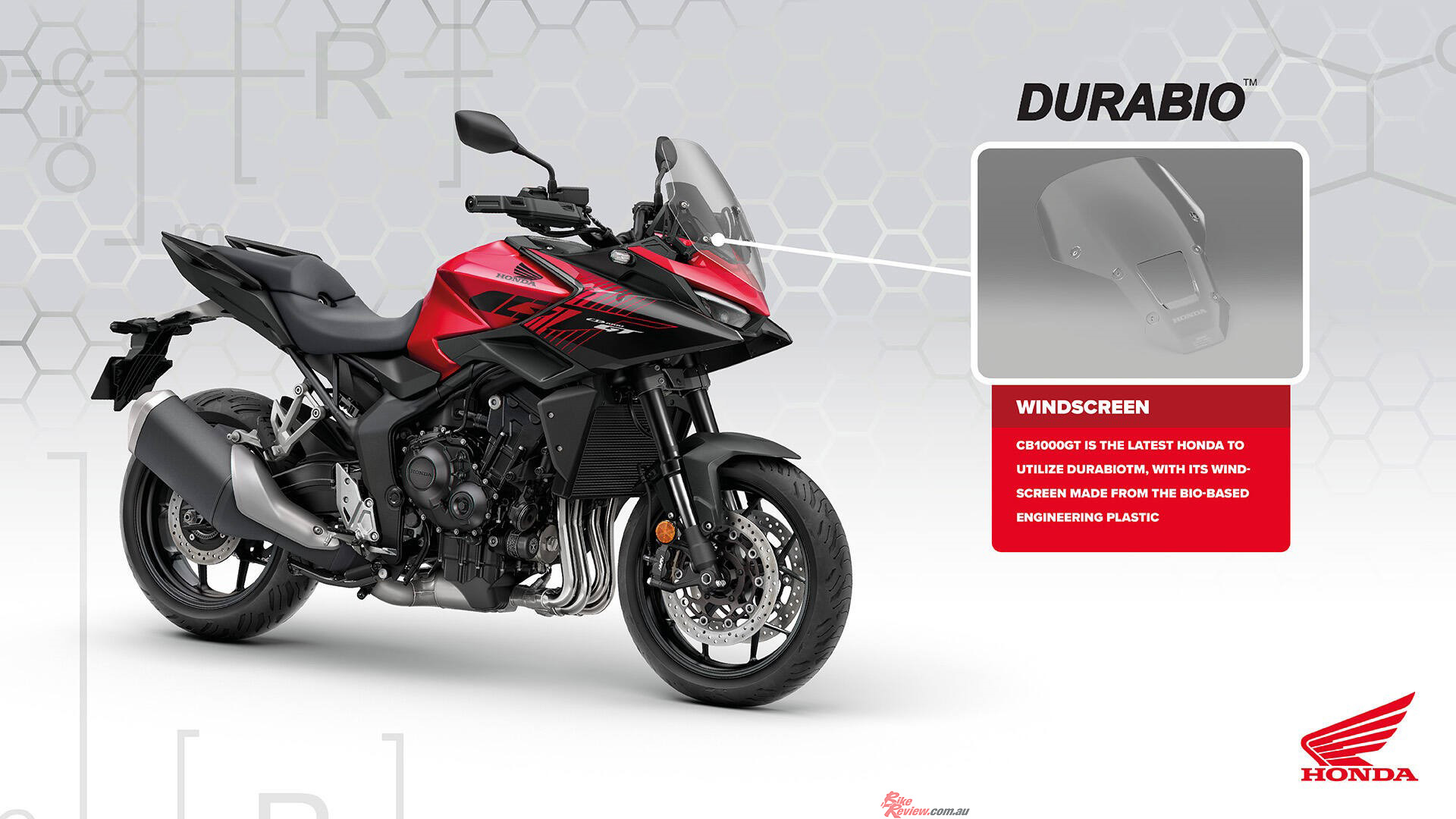
Recycled automobile bumpers, once hard to adapt for motorcycles due to their structure and thickness, now used in:
The luggage box of the 25YM NC750X and X-ADV
The seat base of the 25YM Forza 750
Honda is also expanding its use of pre-consumer recycled polypropylene (PP), sourced from scrap generated during manufacturing of automotive and household components. This material can be refined to match the characteristics of virgin resin while avoiding contamination from regulated chemicals.
Models leading the adoption include:
X-ADV and Forza 750: Each features more than 15 parts made from recycled PP
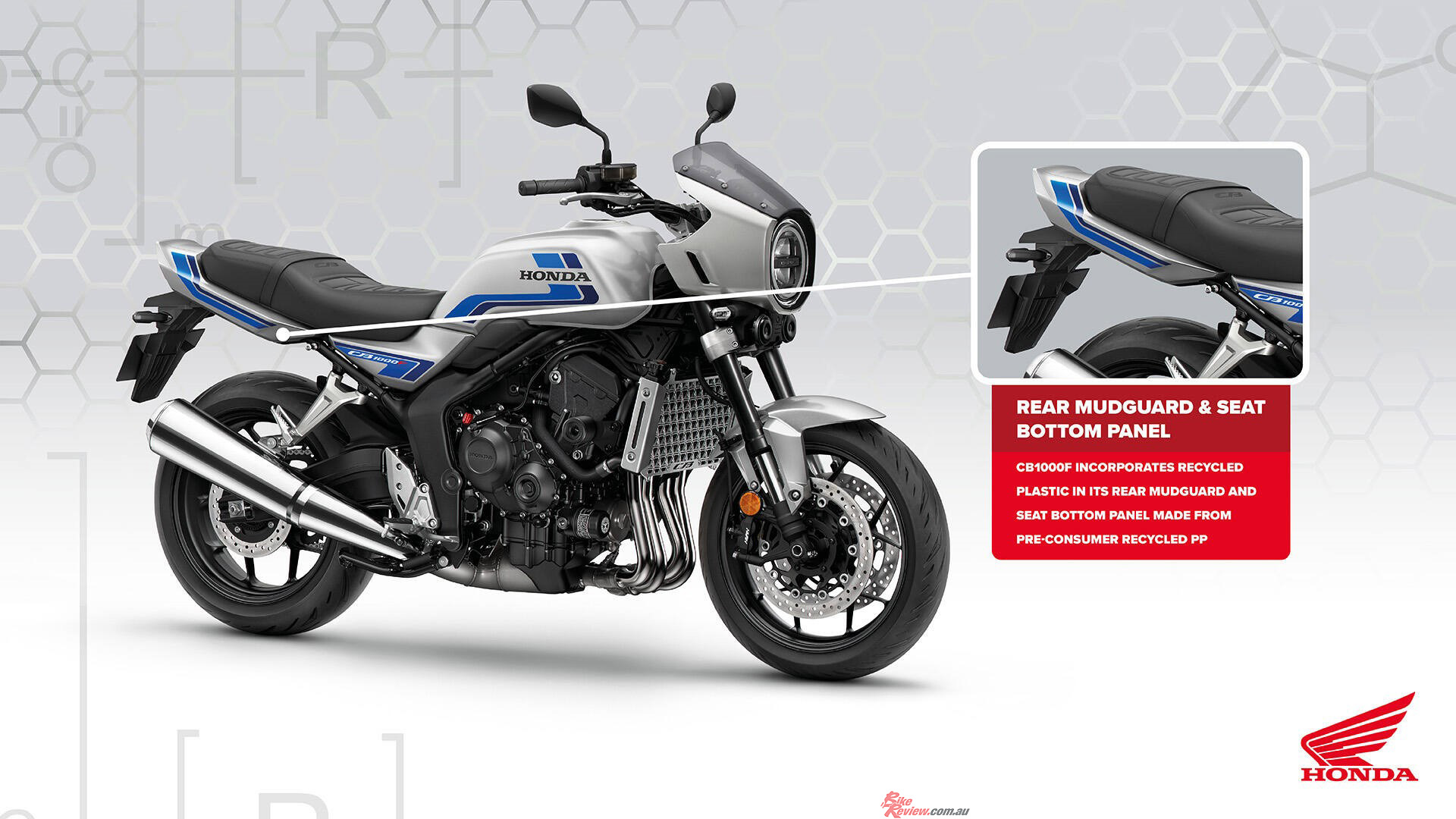
CB1000F (26YM): Rear mudguard and seat bottom panel
Five Principles for a Circular Value Chain
Honda’s materials strategy aligns with its five core principles of resource circulation. Each one is designed to push the company away from the traditional “take, make, dispose” manufacturing model:
Business Innovation: Building systems that maximise reusability throughout a product’s life.
Advanced Recycling: Investing in new technologies that enhance economic and environmental performance.
Data Traceability: Tracking lifecycle CO2 emissions for more efficient material recovery.
Circular Design: Engineering products for simple disassembly and high recyclability.
Circular Value Chain: Partnering across the supply chain to ensure consistent sourcing and reuse of recycled resources.
With approximately 90 percent of raw materials in new vehicles still sourced from newly mined resources, Honda acknowledges the urgency in reducing dependence on finite materials. By embracing renewable, recycled, and bio-based plastics, the brand aims to cut emissions, conserve resources, and prepare for future supply constraints.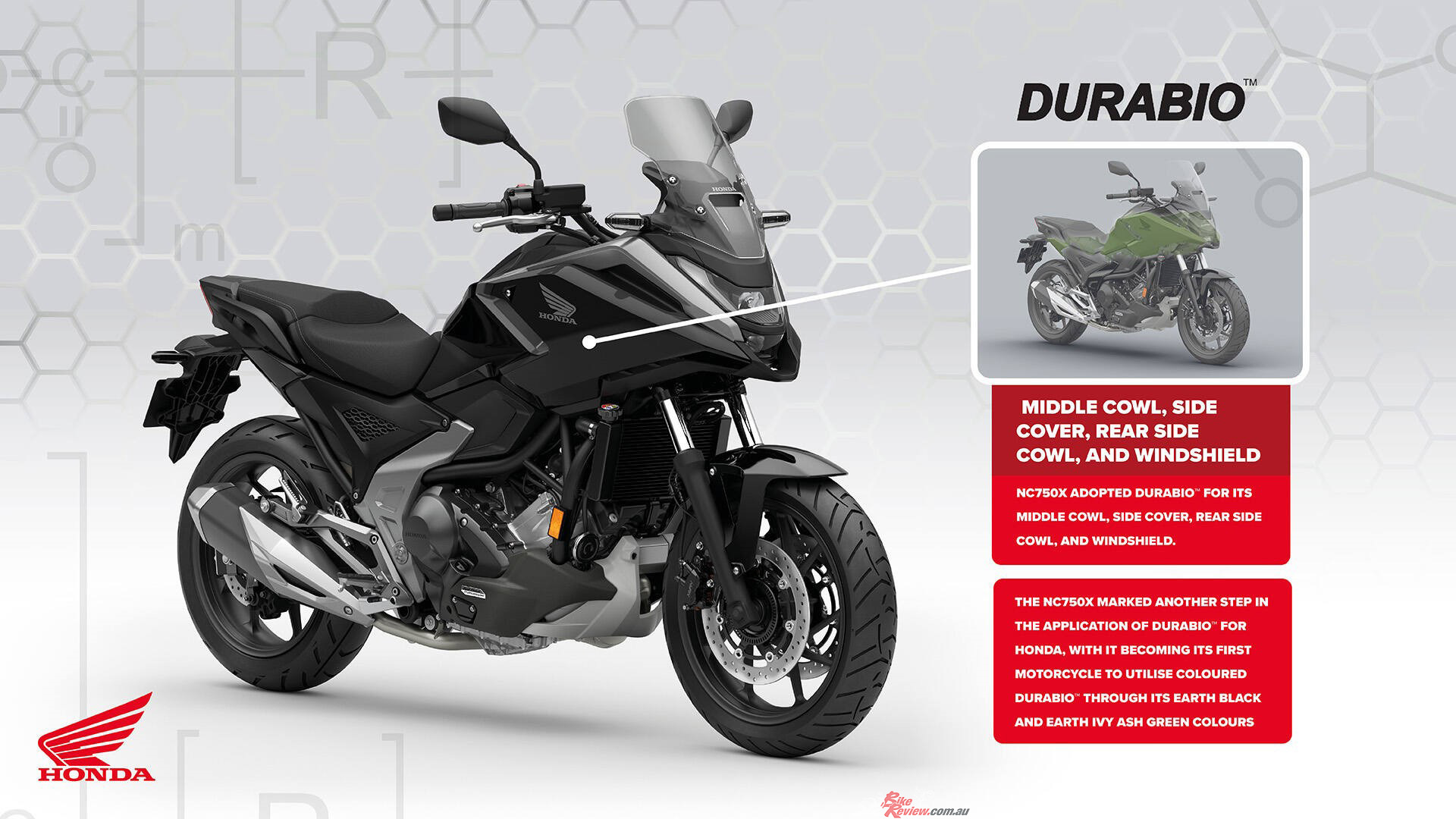
Sustainable Mobility Without Compromise:
Honda’s integration of DURABIO™ and recycled materials marks a significant step toward an environmentally responsible future, one that does not ask riders to sacrifice quality, durability, or style. From transparent, scratch resistant windscreens to colour rich bodywork that requires no paint, these innovations underline Honda’s mission to deliver the joy and freedom of mobility while actively reducing its environmental impact.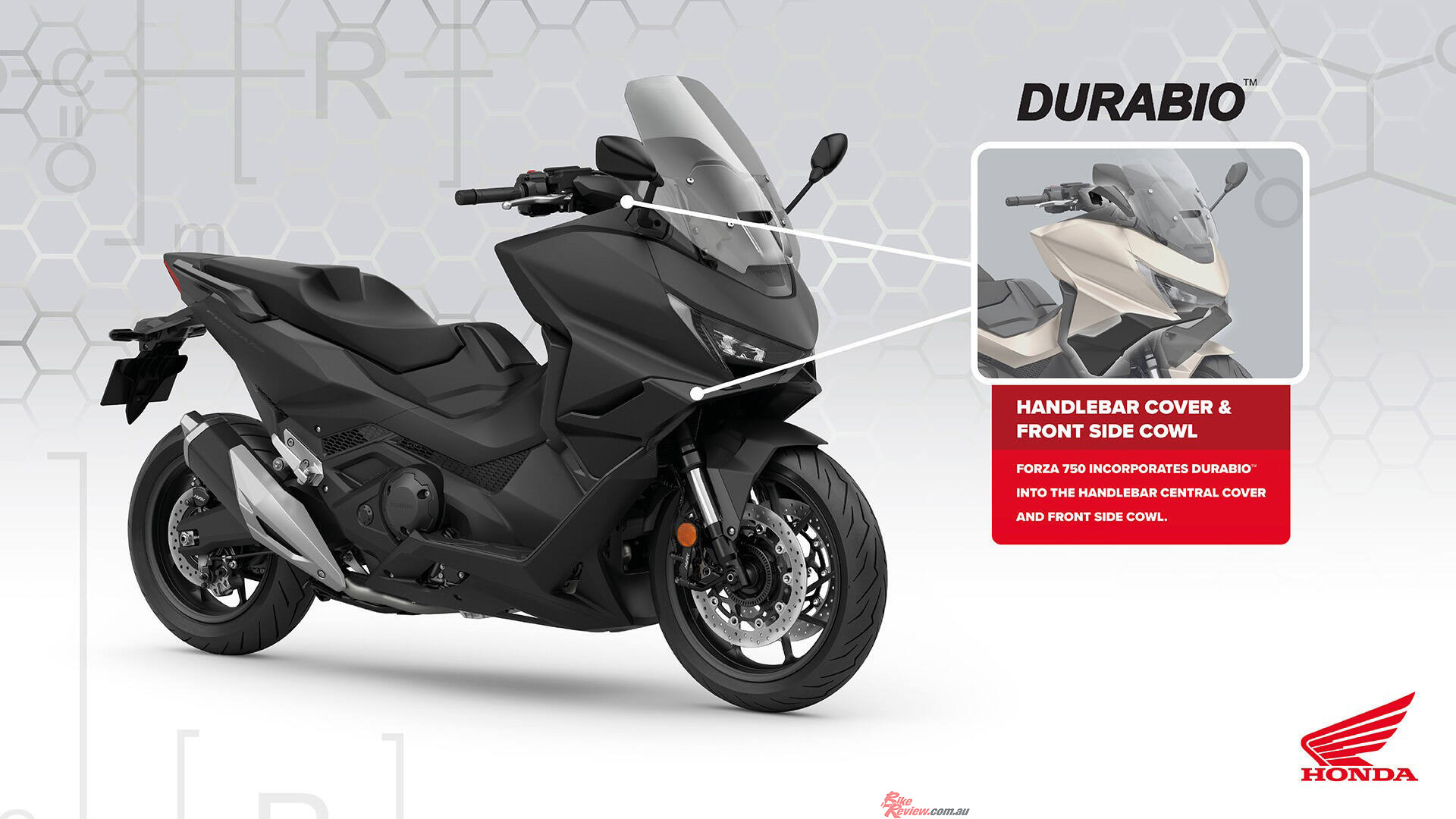
As the company advances its Triple Action to Zero initiative, the road to 2050 is taking on a cleaner and more sustainable form, one motorcycle at a time.