
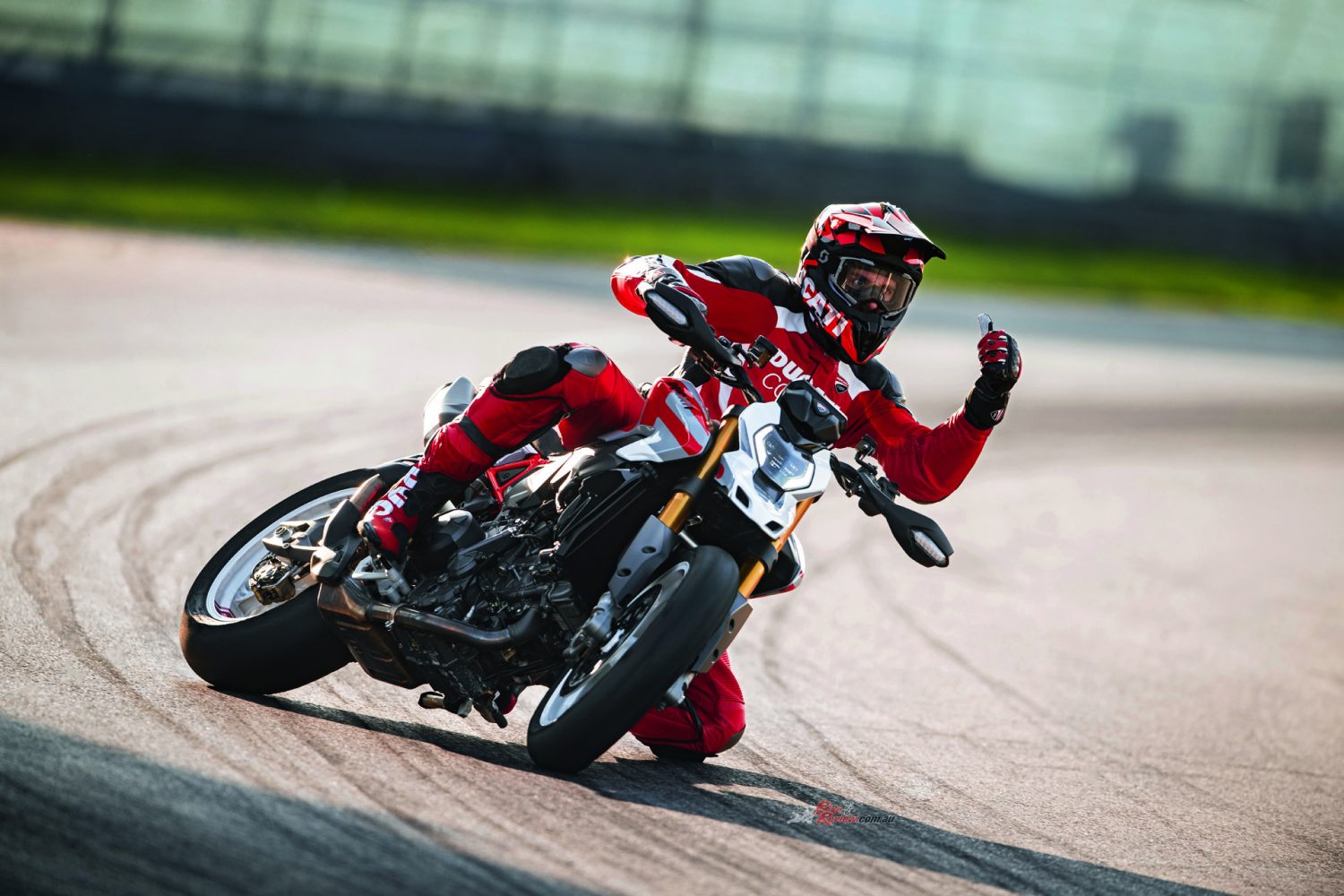

Ducati used the Milan show to unveil a trio of 2026 models, each expanding on the brand’s twin-cylinder line-up and showcasing its latest developments...
Headlining the Ducati stand at Milan’s EICMA show were two new Hypermotard V2 variants, the most powerful yet, a re-engineered Monster and Monster+ and special-edition Panigale V2s celebrating MotoGP riders Marc Marquez and Francesco Bagnaia.
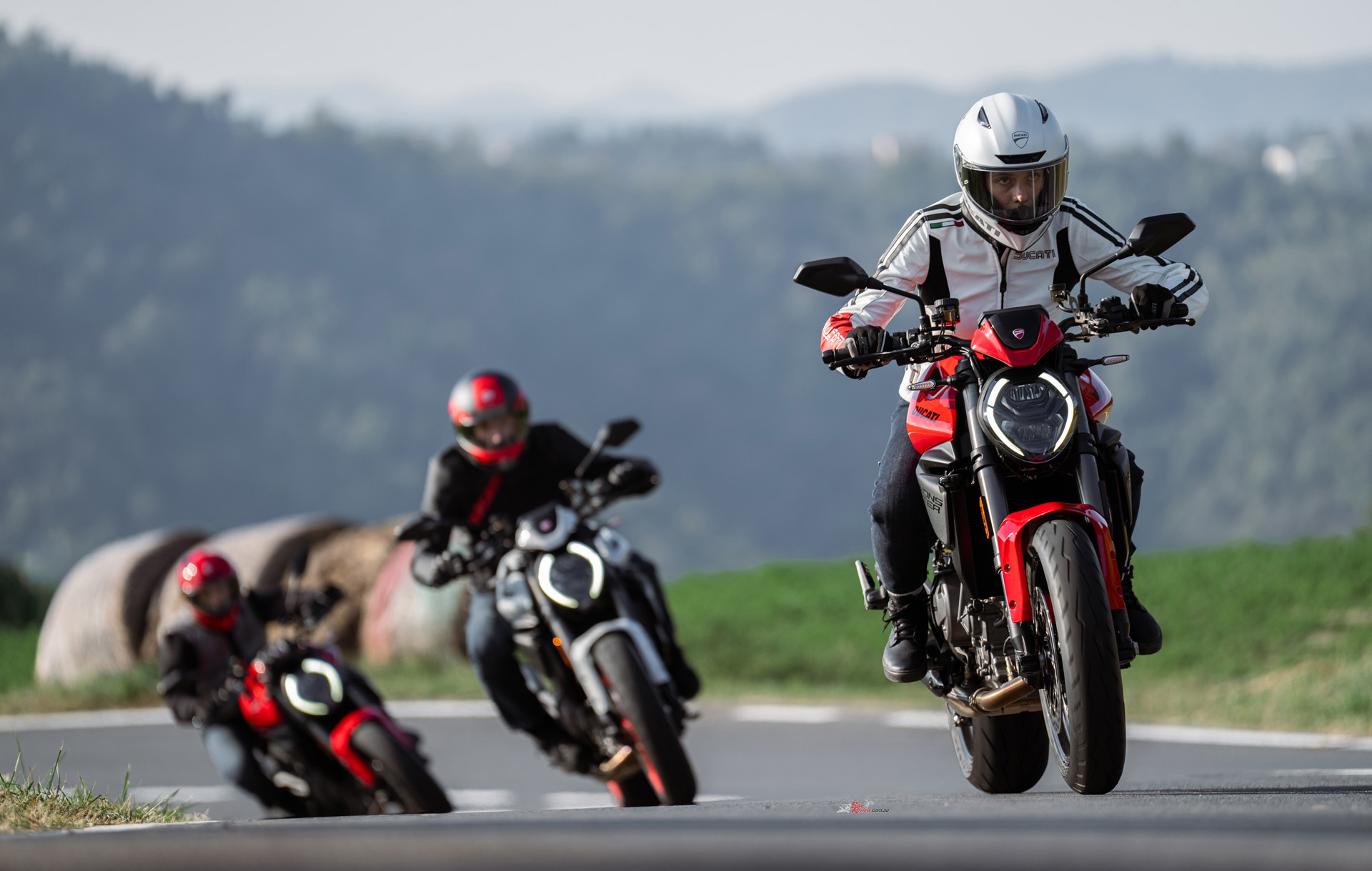
Australian releases will roll out progressively from April 2026 through to October 2026.
The updates mark Ducati’s continued move toward lighter construction, simplified servicing requirements and refined rider-assist technology. Australian releases will roll out progressively from April 2026 through to October 2026.
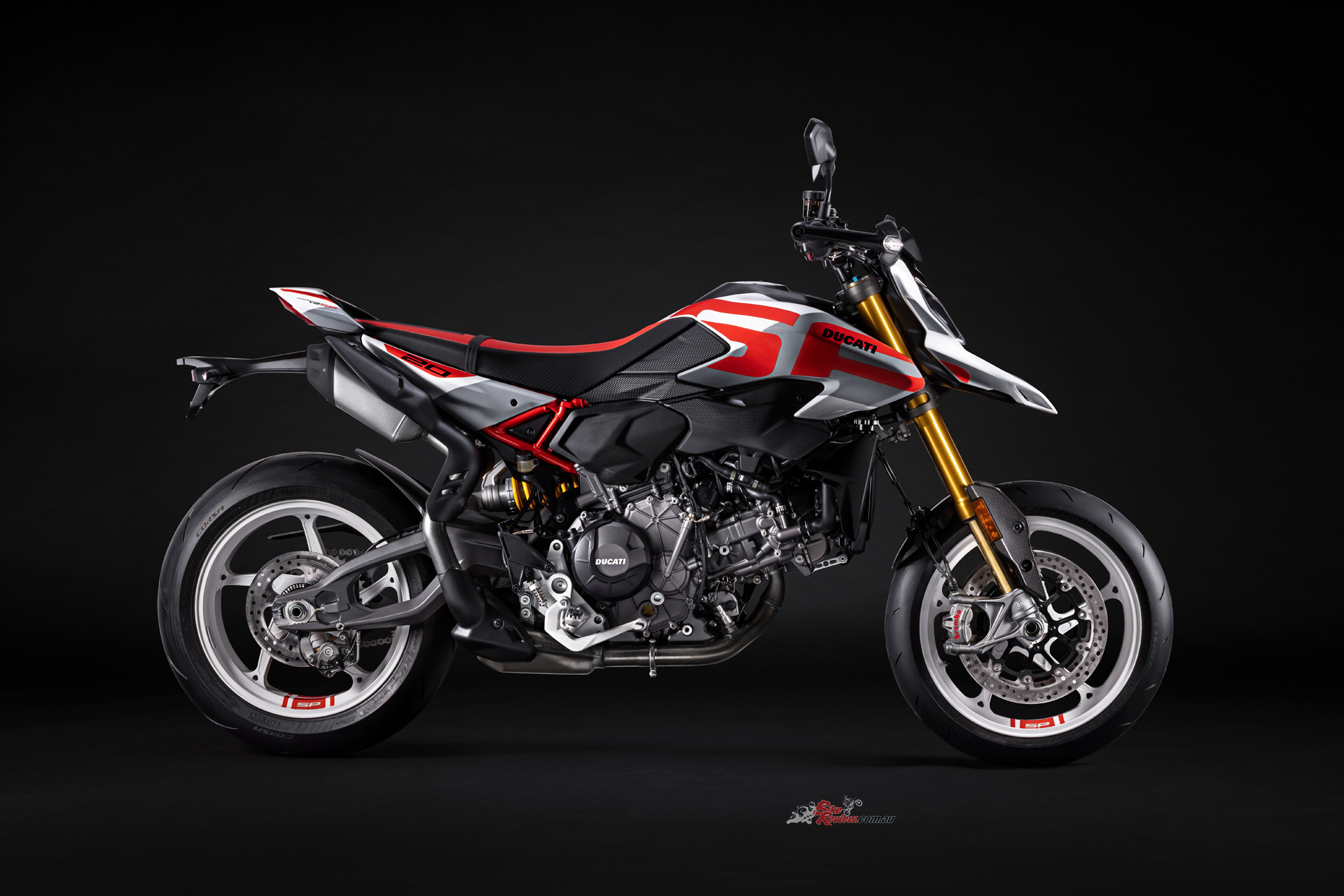
Powered by a new 890cc V2 twin-cylinder engine, both models deliver 120hp at 10,750rpm and 94Nm at 8250rpm, making the V2 the most powerful Hypermotard yet.
MY26 Hypermotard V2 & V2 SP
The new Hypermotard V2 range represents a complete redesign for Ducati’s street-legal supermoto line. Powered by a new 890cc V2 twin-cylinder engine, both models deliver 120hp at 10,750rpm and 94Nm at 8250rpm, making the V2 the most powerful Hypermotard yet. The engine is the lightest twin Ducati has built, weighing 54.4kg and featuring variable valve timing on the intake cam.
The engine is the lightest twin Ducati has built, weighing 54.4kg and featuring variable valve timing on the intake cam…
Overall weight has been reduced significantly, with the standard V2 shedding 13kg compared with its predecessor and the SP version 14kg lighter. The weight savings come from the new cast aluminium monocoque frame, lighter wheels and revised components throughout.
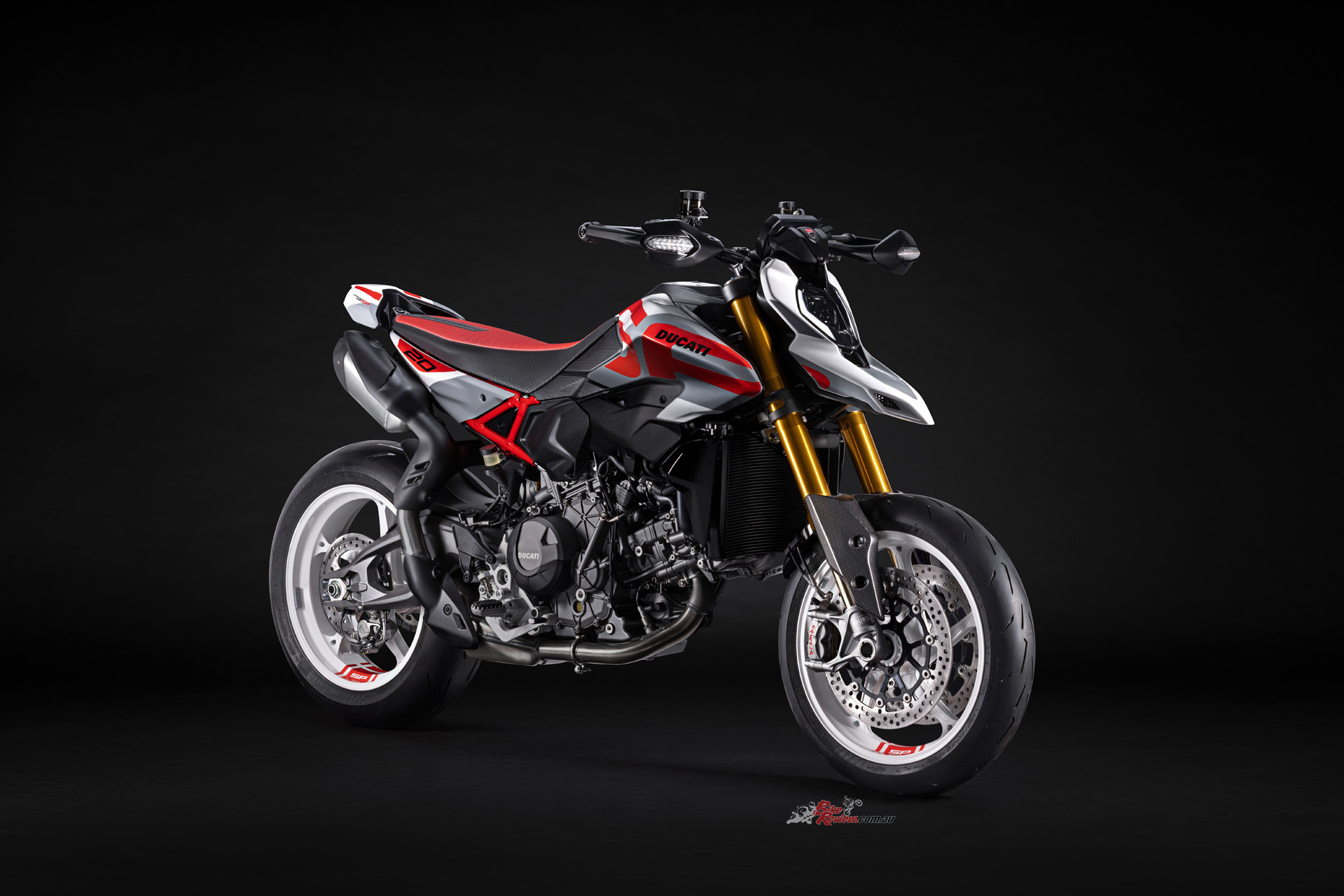
Overall weight has been reduced significantly, with the standard V2 shedding 13kg compared with its predecessor.
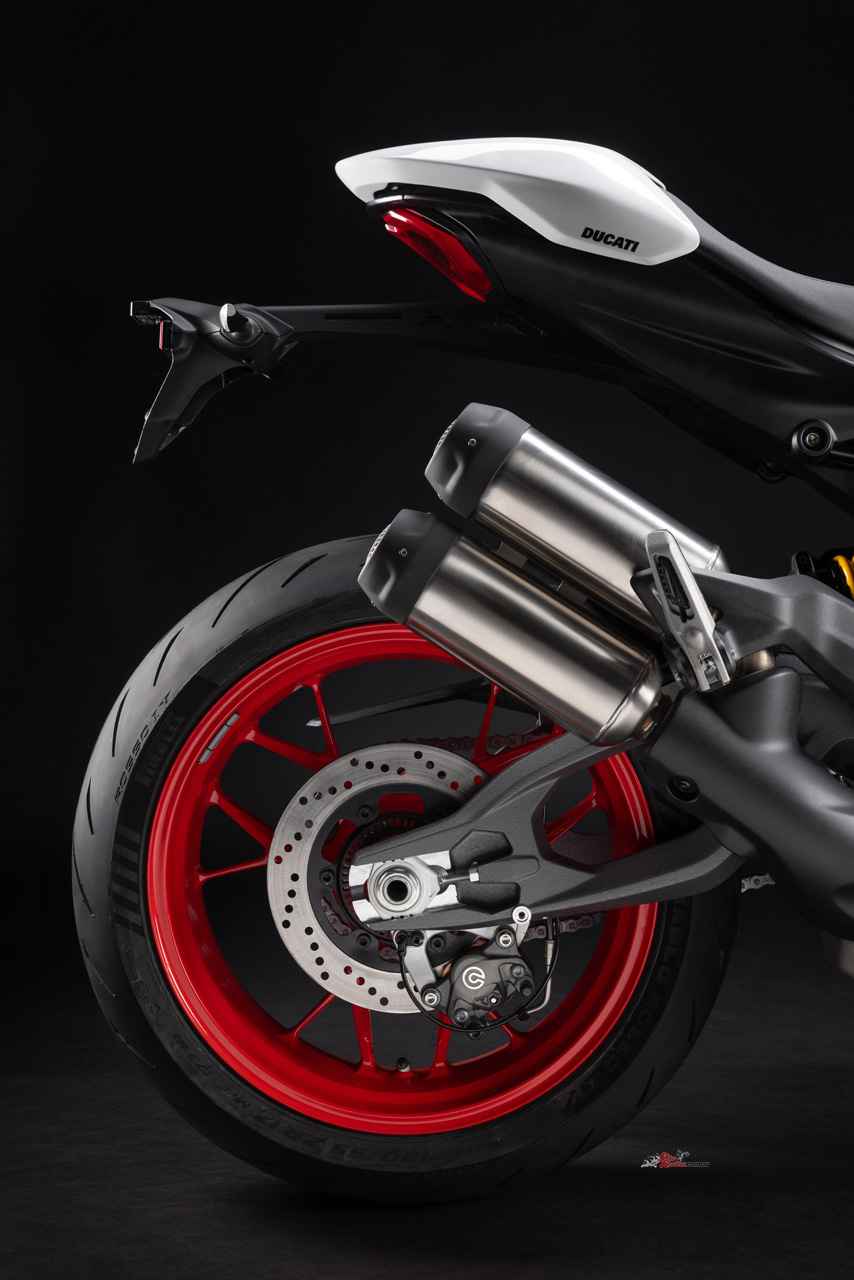
Styling returns to the minimalist aggression of the original Hypermotard 1100, highlighted by the exposed trellis rear sub-frame, twin under-seat exhausts and slimline tank shrouds. Both models feature a floating tail, forward-set footpegs and a new variable-section aluminium handlebar that increases leverage and control. Seat height is now 880mm, 10mm lower than the previous SP, while a narrower seat profile makes it easier to reach the ground. The wheelbase measures 1517mm, while curb weight is a claimed 180kg for the base model and 177kg for the V2 SP.
The V2 features Brembo M4.32 front calipers paired with 320mm discs, while the V2 SP runs lighter M50 calipers and steel-braided lines…
Suspension separates the two. The Hypermotard V2 uses a fully adjustable 46mm KYB upside-down fork and a KYB rear shock with preload and rebound adjustment. The SP upgrades to Öhlins units – 48mm NIX30 forks and STX46 monoshock – both fully adjustable, while both versions employ a Sachs steering damper.
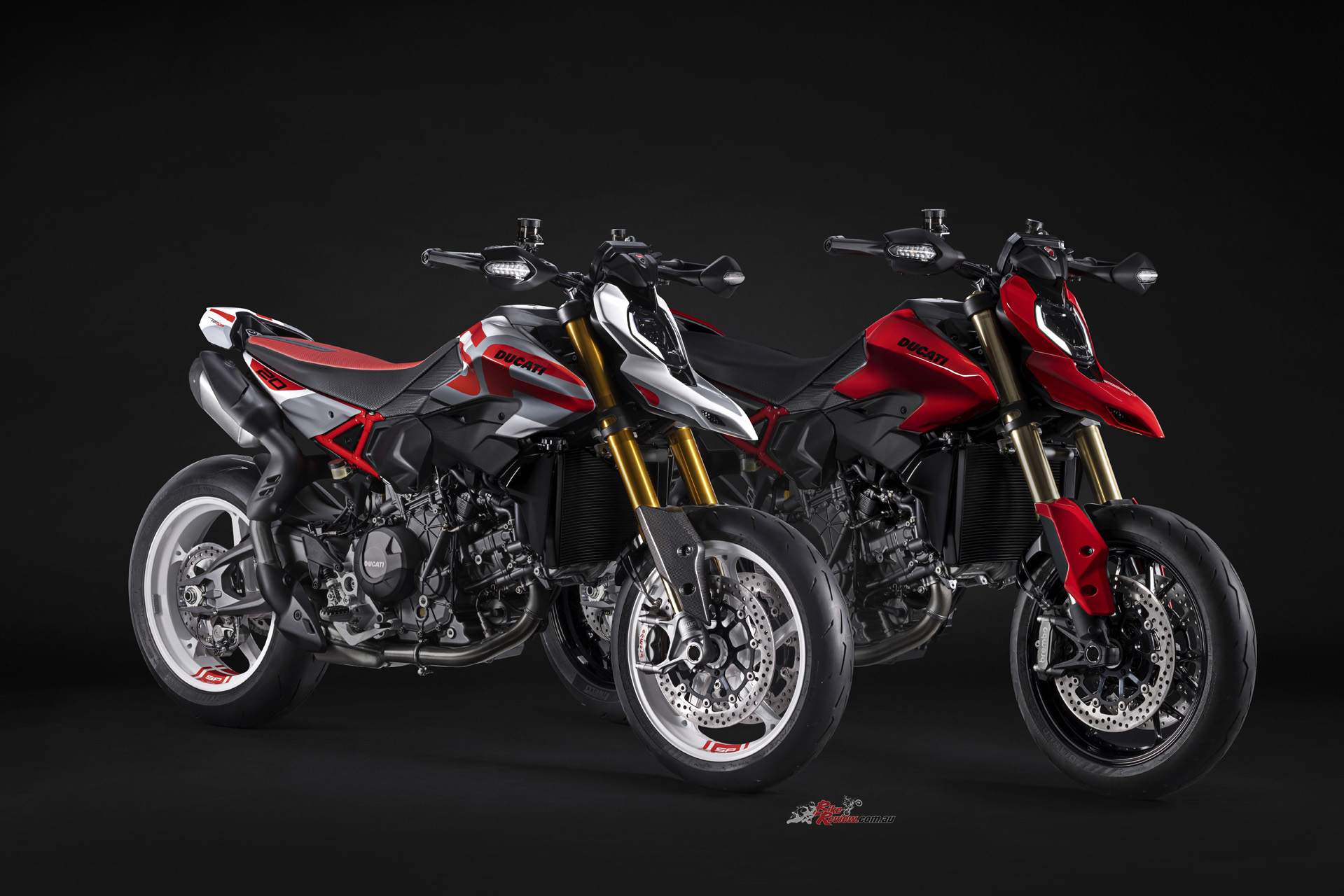
The wheelbase measures 1517mm, while curb weight is a claimed 180kg for the base model and 177kg for the V2 SP.
Braking performance also separates the models. The V2 features Brembo M4.32 front calipers paired with 320mm discs, while the V2 SP runs lighter M50 calipers and steel-braided lines. Both use a single 245mm rear disc and dual-channel ABS governed by Ducati’s latest electronics package.
Read our previous Ducati Hypermotard review here...
A six-axis inertial measurement unit forms the heart of the Hypermotard’s electronics, enabling cornering ABS, traction and wheelie control, engine brake management and a two-way quick-shifter. Both bikes include four ride modes (Race, Sport, Road and Wet), each customisable through the new 5in full-colour TFT display. The interface allows three display layouts (Road, Road Pro and Track) and is navigated using a handlebar joystick. Bluetooth connectivity supports turn-by-turn navigation.
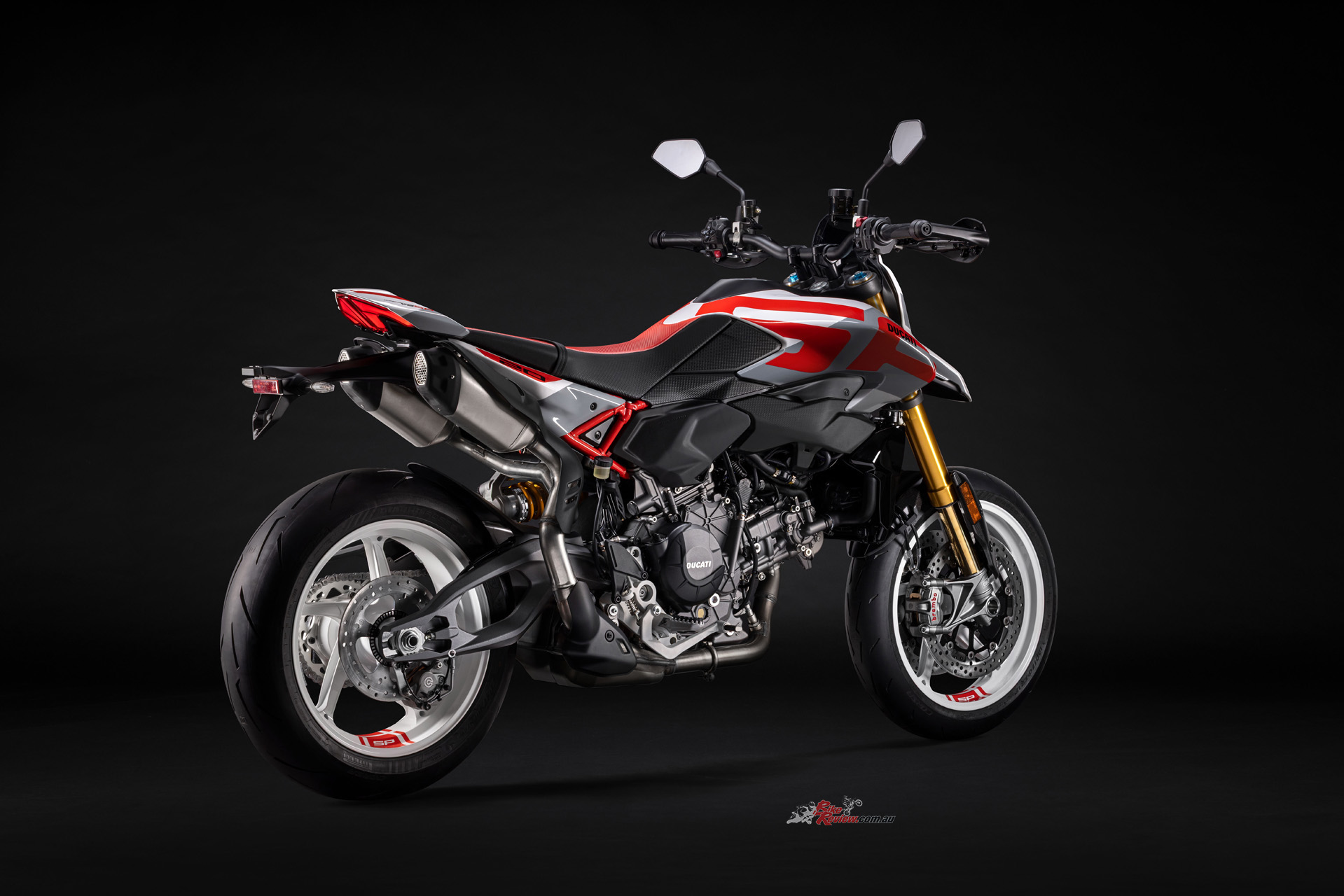
Both bikes include four ride modes (Race, Sport, Road and Wet), customisable through the 5in full-colour TFT display.
The SP adds Ducati Power Launch and a pit-lane speed limiter as standard, both optional on the base model. Engine modes are selectable and fully adjustable, while Cornering ABS Level 2 introduces Ducati’s Slide by Brake feature.
Both bikes roll on 17in wheels though their construction differs. The V2’s light-alloy cast rims are matched with Pirelli Diablo Rosso IV tyres (120/70 front and 190/55 rear), while the SP rides on forged aluminium wheels that save 1.56kg in total and reduce inertia, and they’re wrapped in Pirelli Diablo Rosso IV Corsa rubber.
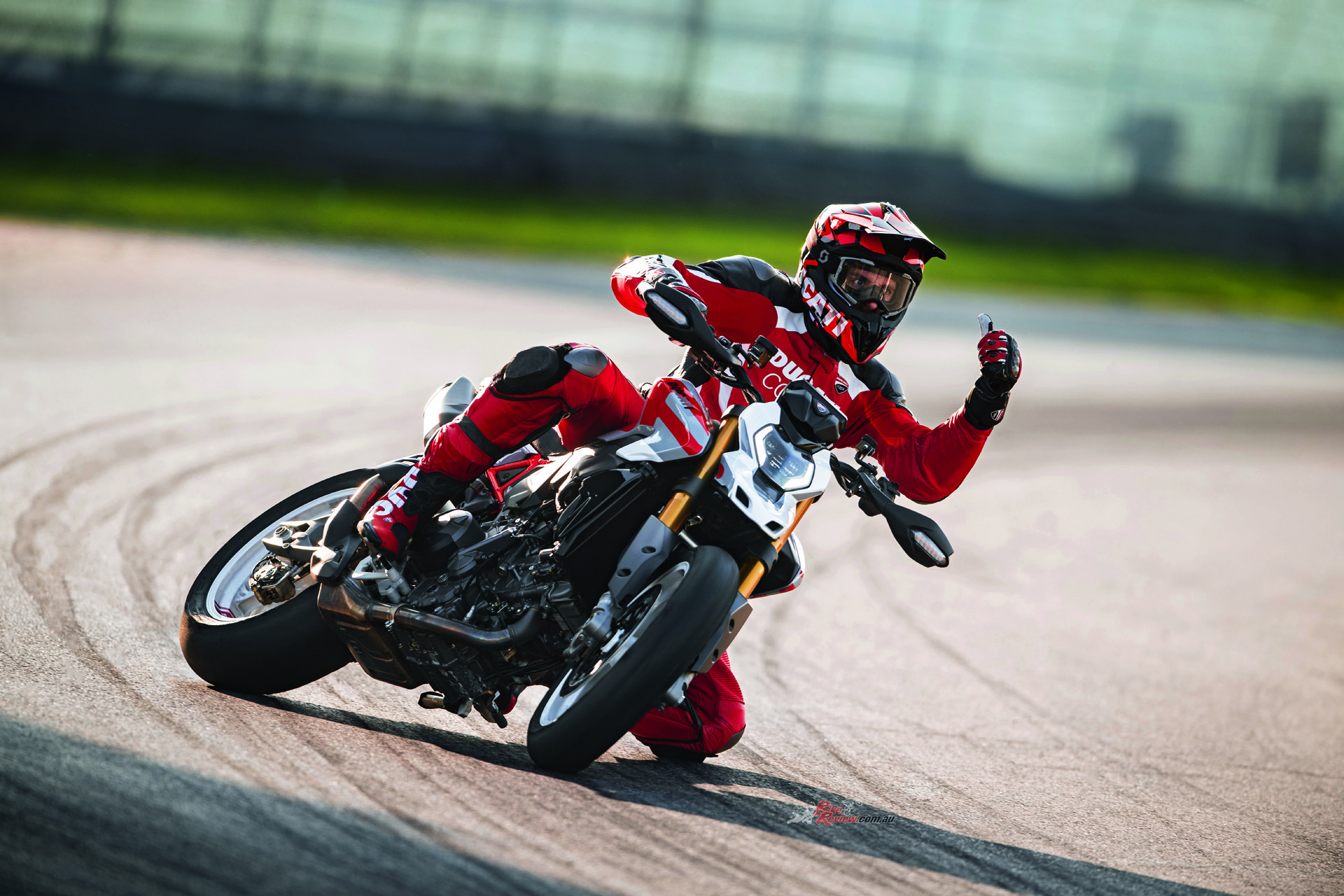
In the cockpit, the new screen is slimmer and the switchgear redesigned for cleaner operation. The bike’s minimal bodywork keeps the mechanical elements in view and the signature twin underseat exhaust remains.
The Hypermotard V2 will be offered in Ducati Red, while the V2 SP features an SP-specific livery with white forged wheels and anniversary graphics marking 20 years since the first Hypermotard’s debut. Both models are due to reach Australian dealerships in October 2026.
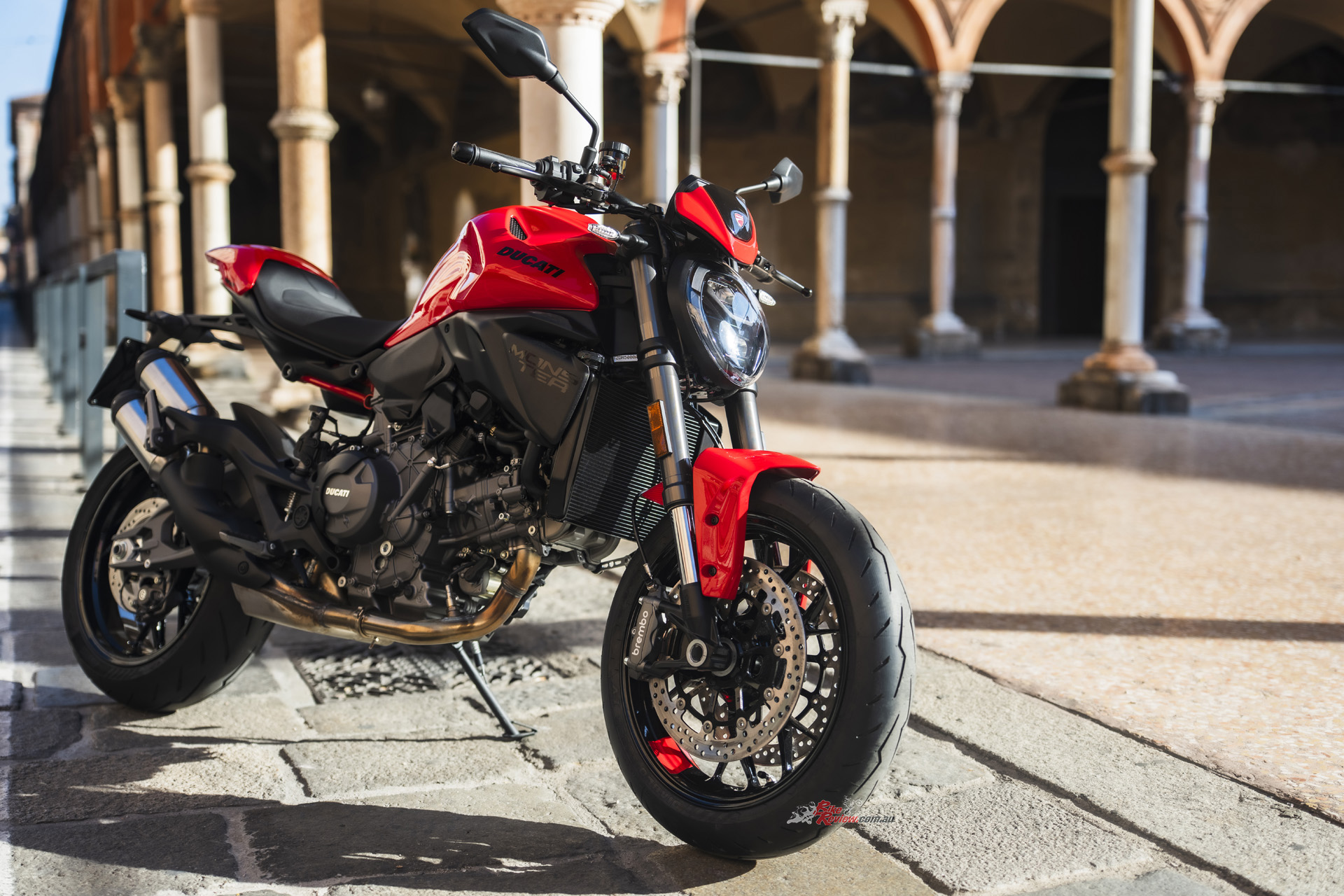
MY26 Monster & Monster+
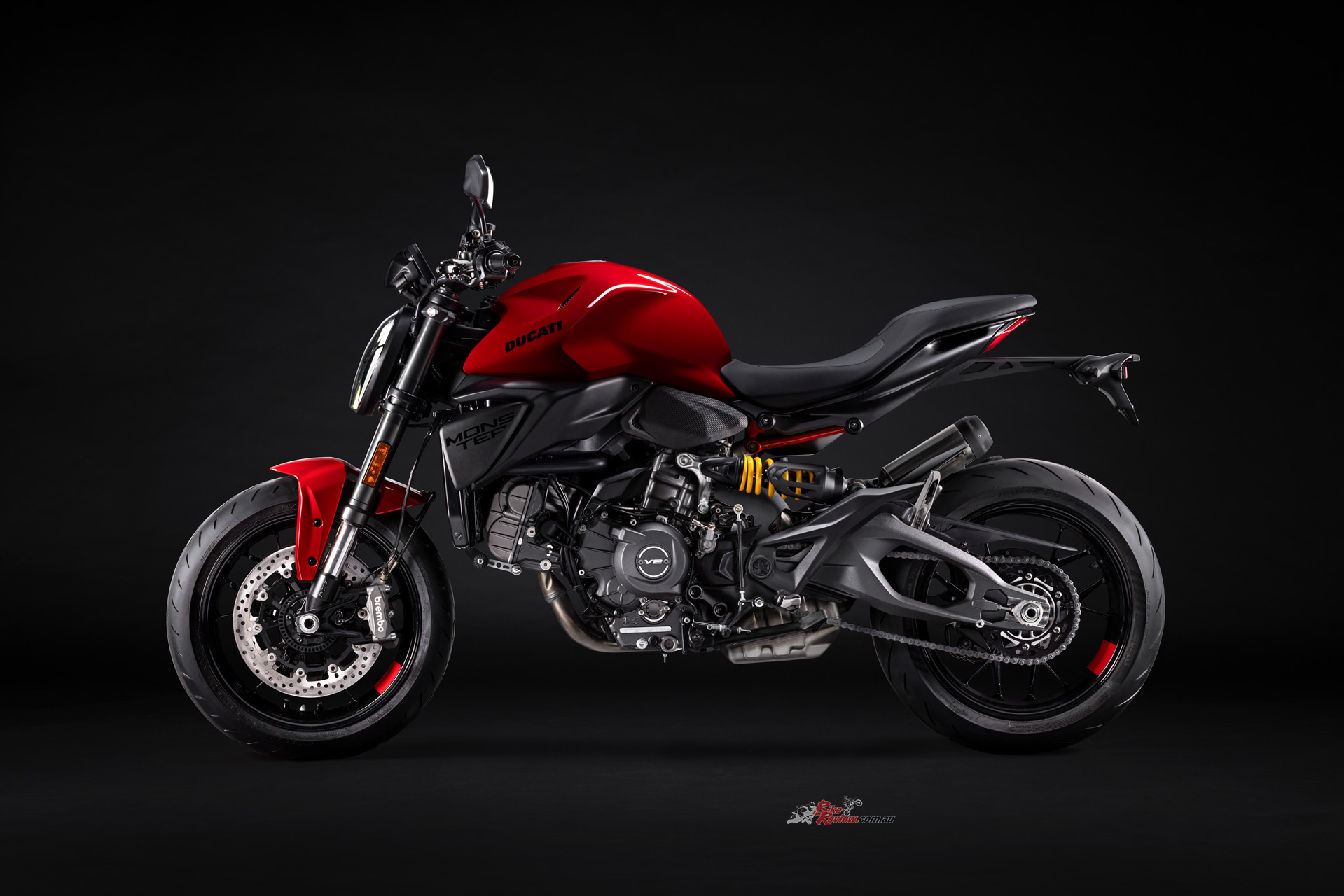
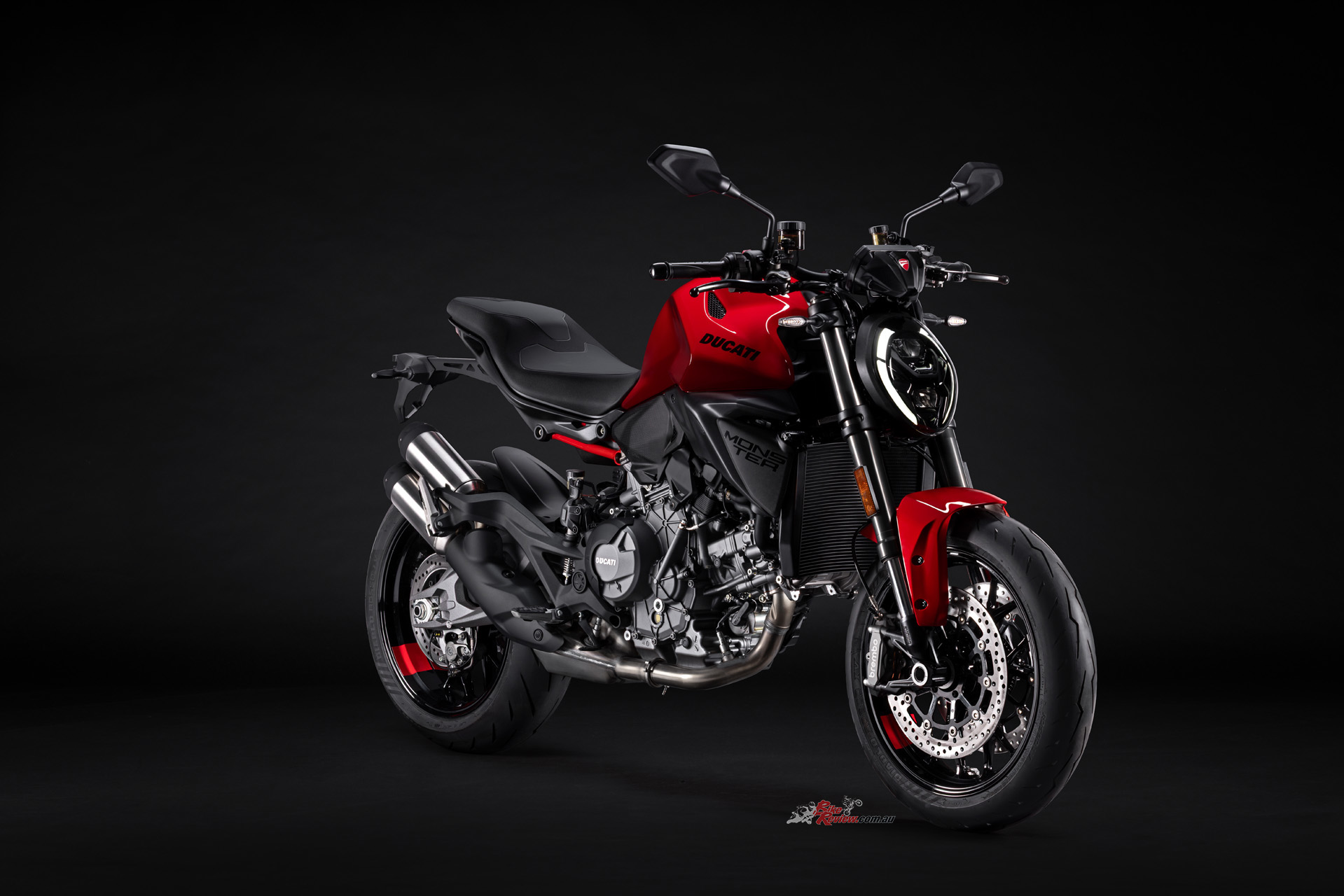
The 2026 model year also marks a significant technical update for Ducati’s long-running Monster. Both the Monster and Monster+ use the same 890cc V2 as the Hypermotards but in a different tune, producing 111hp at 9000rpm and 91.1Nm at 7250rpm. The engine is almost 6kg lighter than the previous Testastretta unit, contributing to a total weight saving of 4kg compared with the outgoing model. Ducati lists valve-clearance checks at 45,000km, the longest interval yet for a Monster, which in itself is significant as it replaces the Desmodromic valve system used by Ducati for the last 50 years.
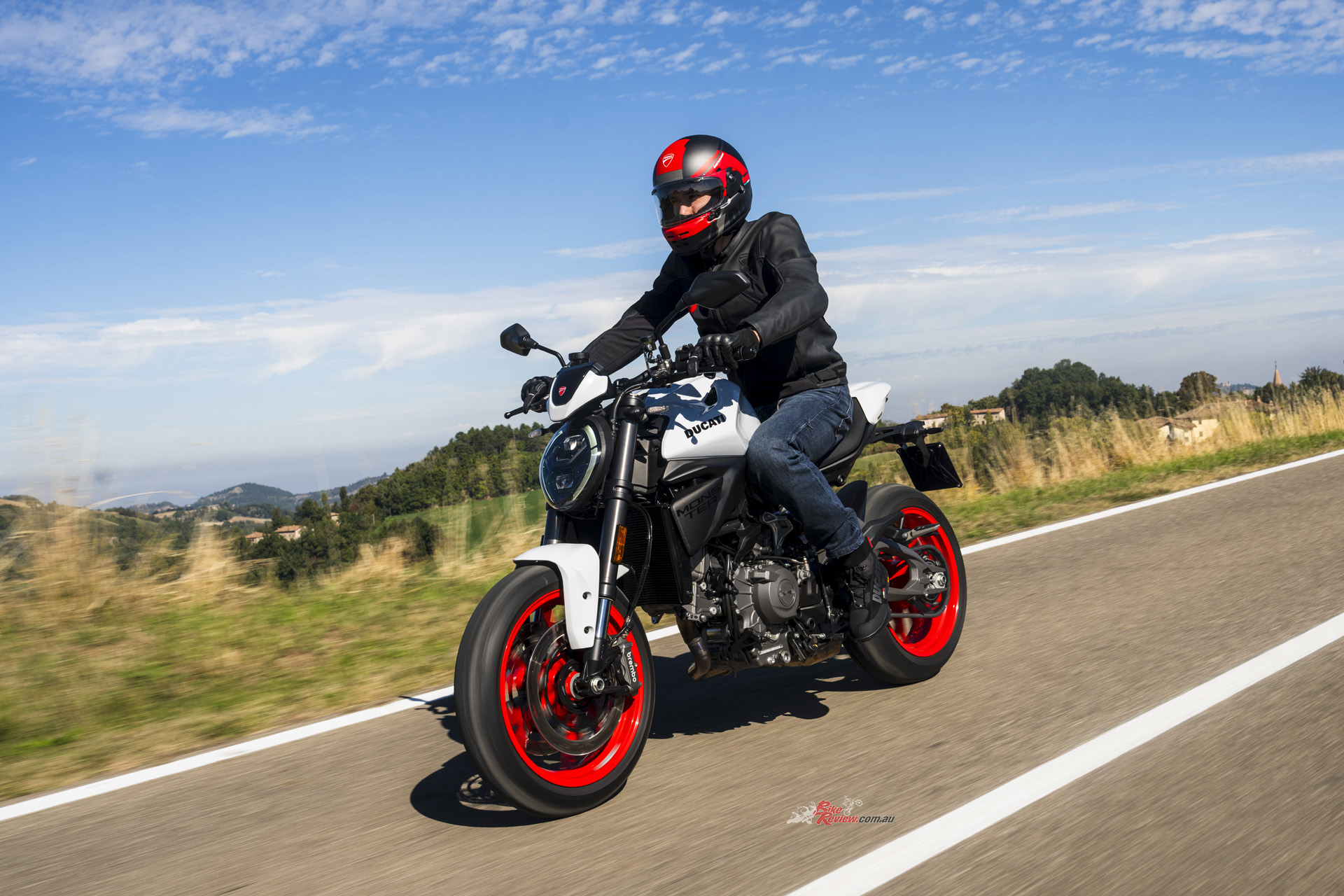
The Monster+ variant mirrors the base model mechanically but adds a colour-matched passenger-seat cover and flyscreen as standard equipment.
Built around a cast-aluminium monocoque frame that uses the engine as a stressed member, the bike combines compact dimensions with improved rigidity. The rear sub-frame mixes technopolymer and steel trellis elements, while a double-sided aluminium swingarm takes cues from the Panigale V4’s design. Suspension is handled by 43mm Showa forks and a preload-adjustable Showa rear shock.
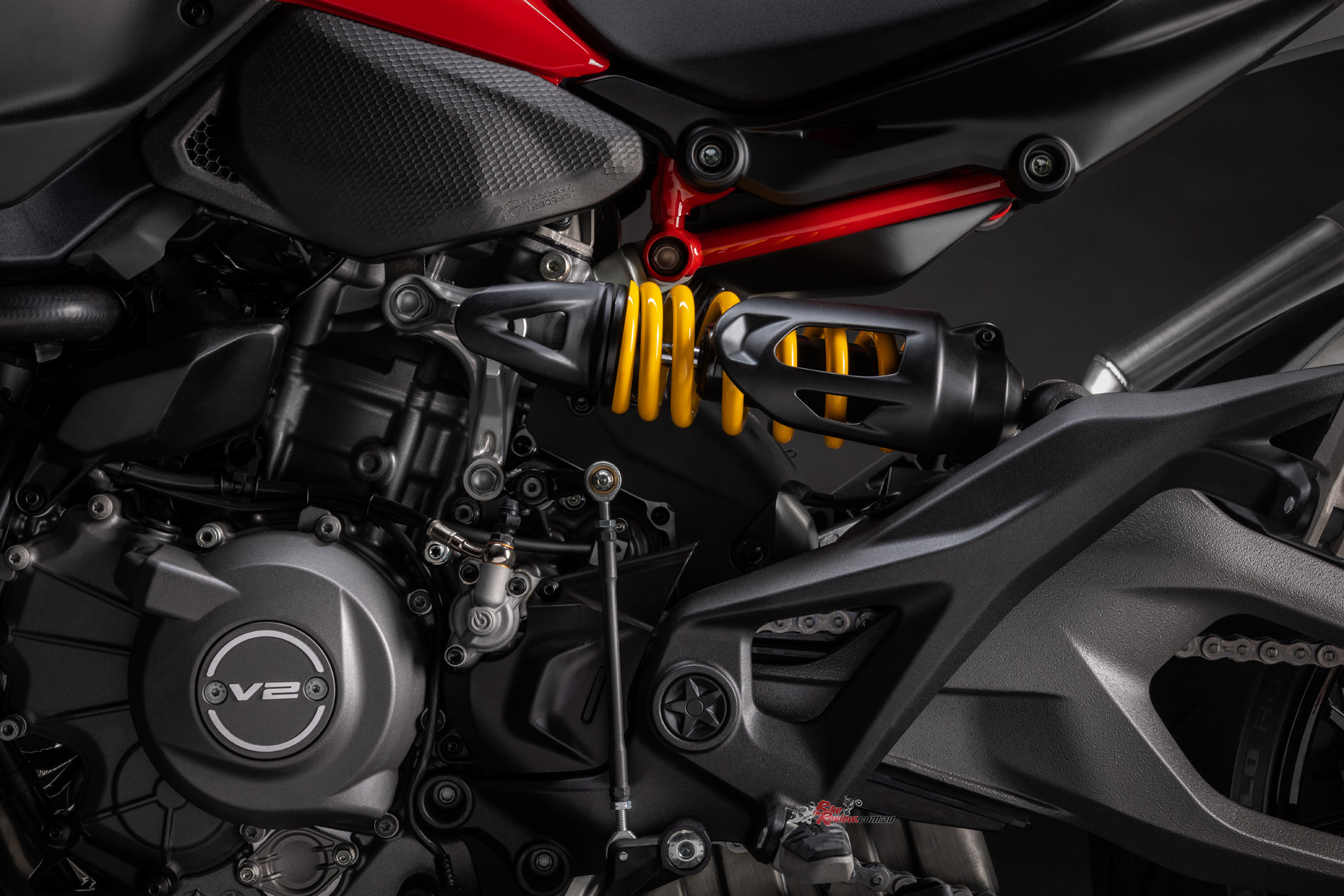
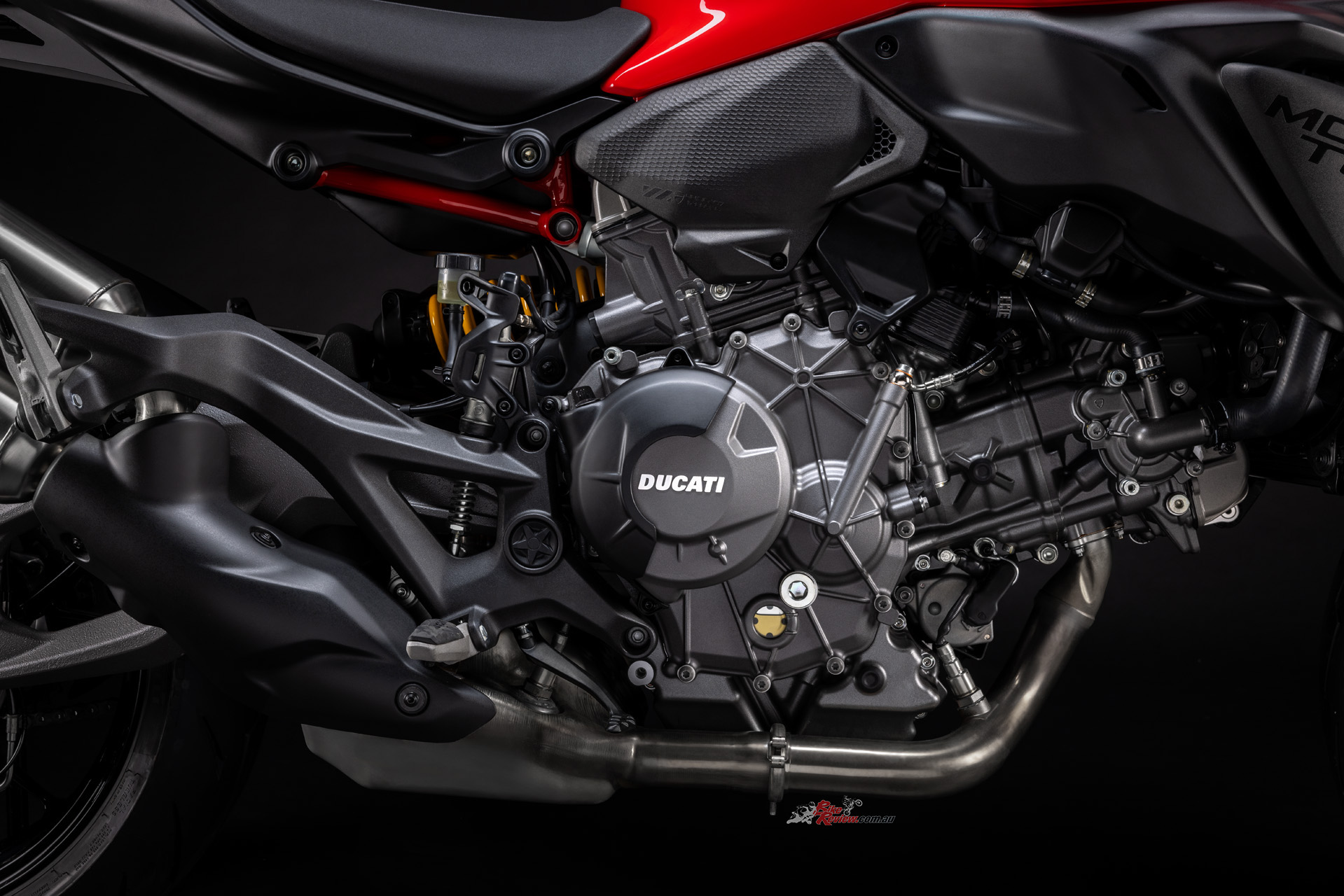
Electronics are governed by a six-axis IMU derived from Ducati’s superbikes, providing cornering ABS and traction control, wheelie control, quick-shifter and engine brake control. Riders can select from four modes – Sport, Road, Urban and Wet – each adjustable through a new petal-shaped joystick and 5in full-colour TFT display. The screen offers Road and Road Pro layouts, Bluetooth pairing, turn-by-turn navigation and compatibility with the Ducati multimedia system.
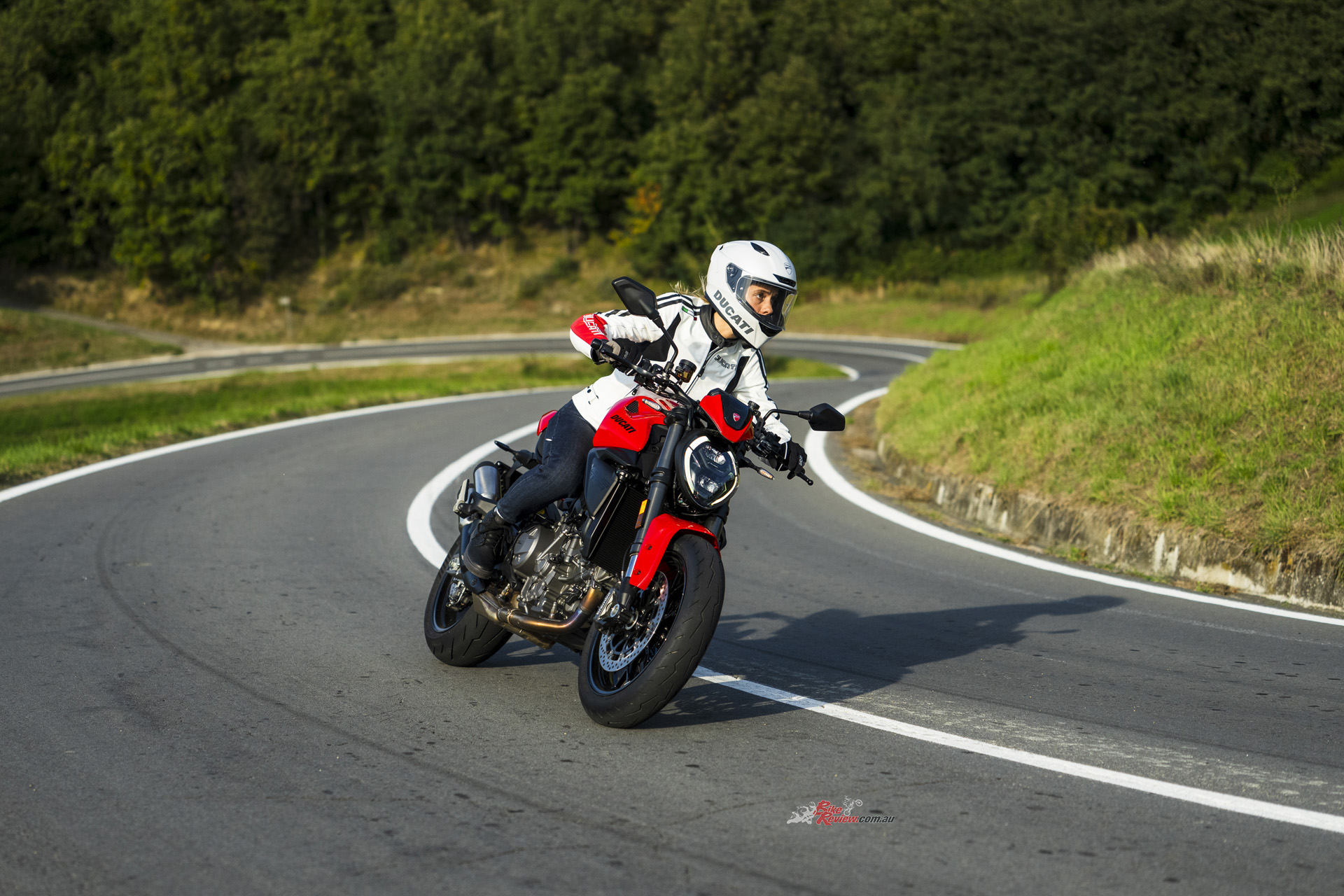
Electronics are governed by a six-axis IMU derived from Ducati’s superbikes, providing cornering ABS and traction control, wheelie control, quick-shifter and engine brake control.
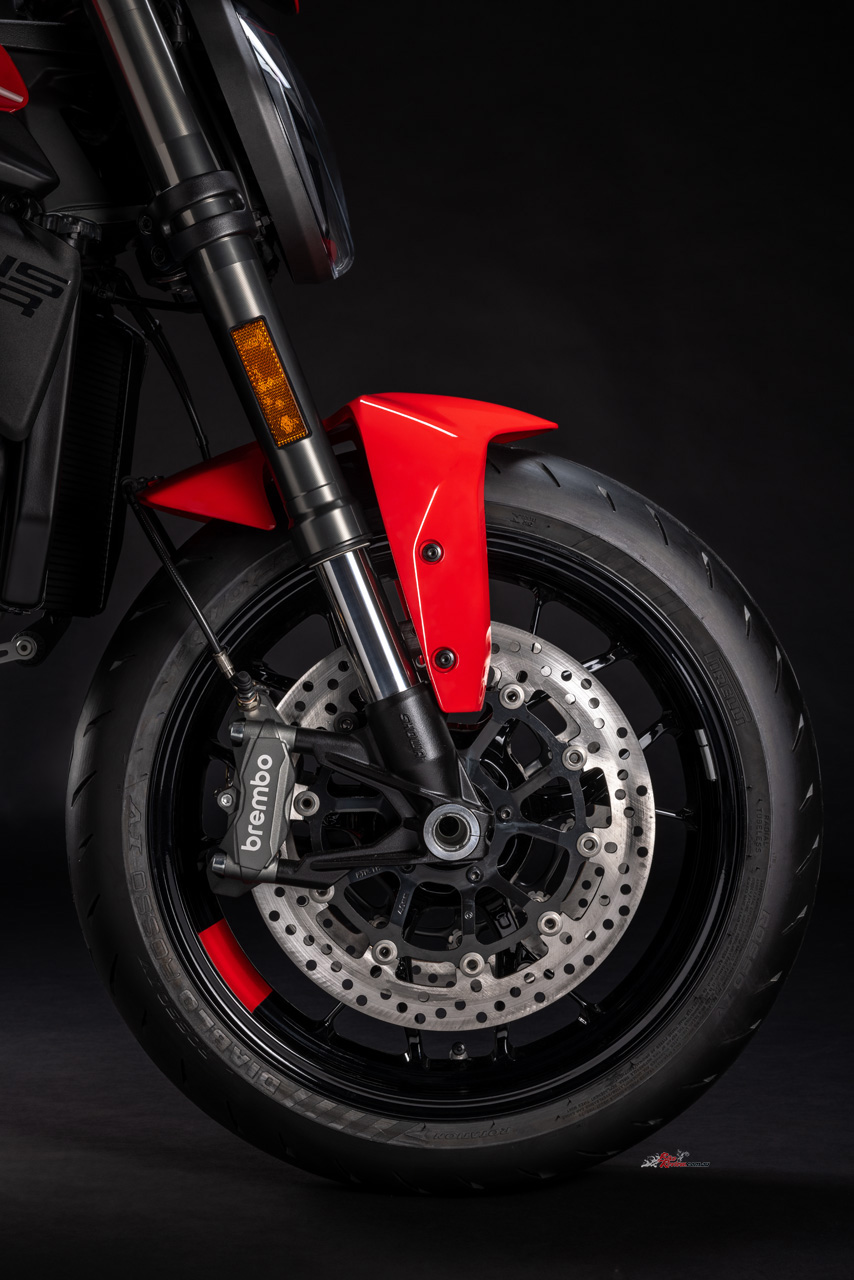
Braking is by Brembo, with M4.32 calipers acting on 320mm twin discs at the front and a single rear disc. The system is paired with a radial-pump master-cylinder for improved lever feel. Tyres are Pirelli Diablo Rosso IV, sized 120/70 front and 180/55 rear, mounted to lightweight 17in wheels.
Seat height is 815mm, 5mm lower than before, and can be reduced to 775mm with Ducati’s optional low-seat and suspension kit…
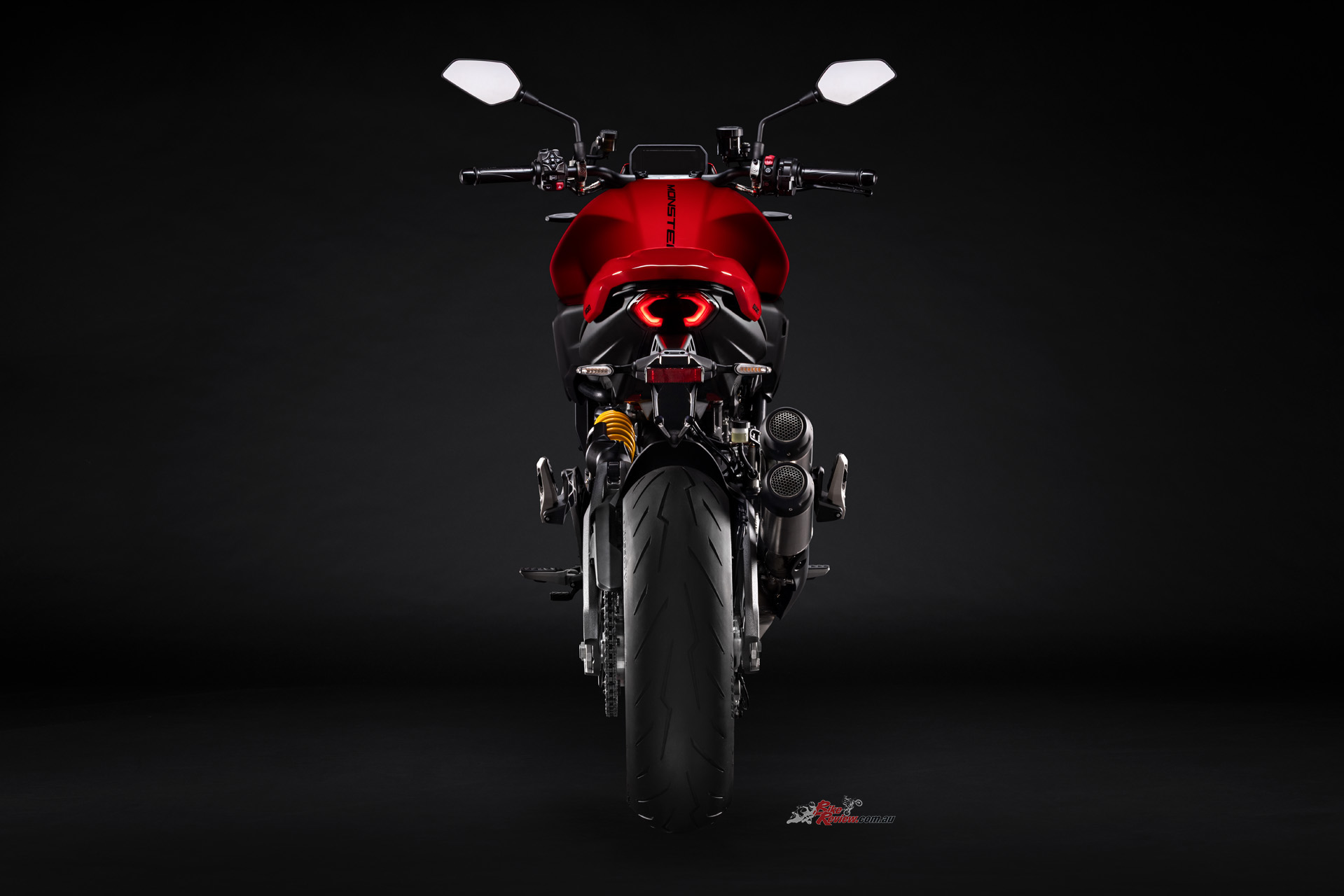
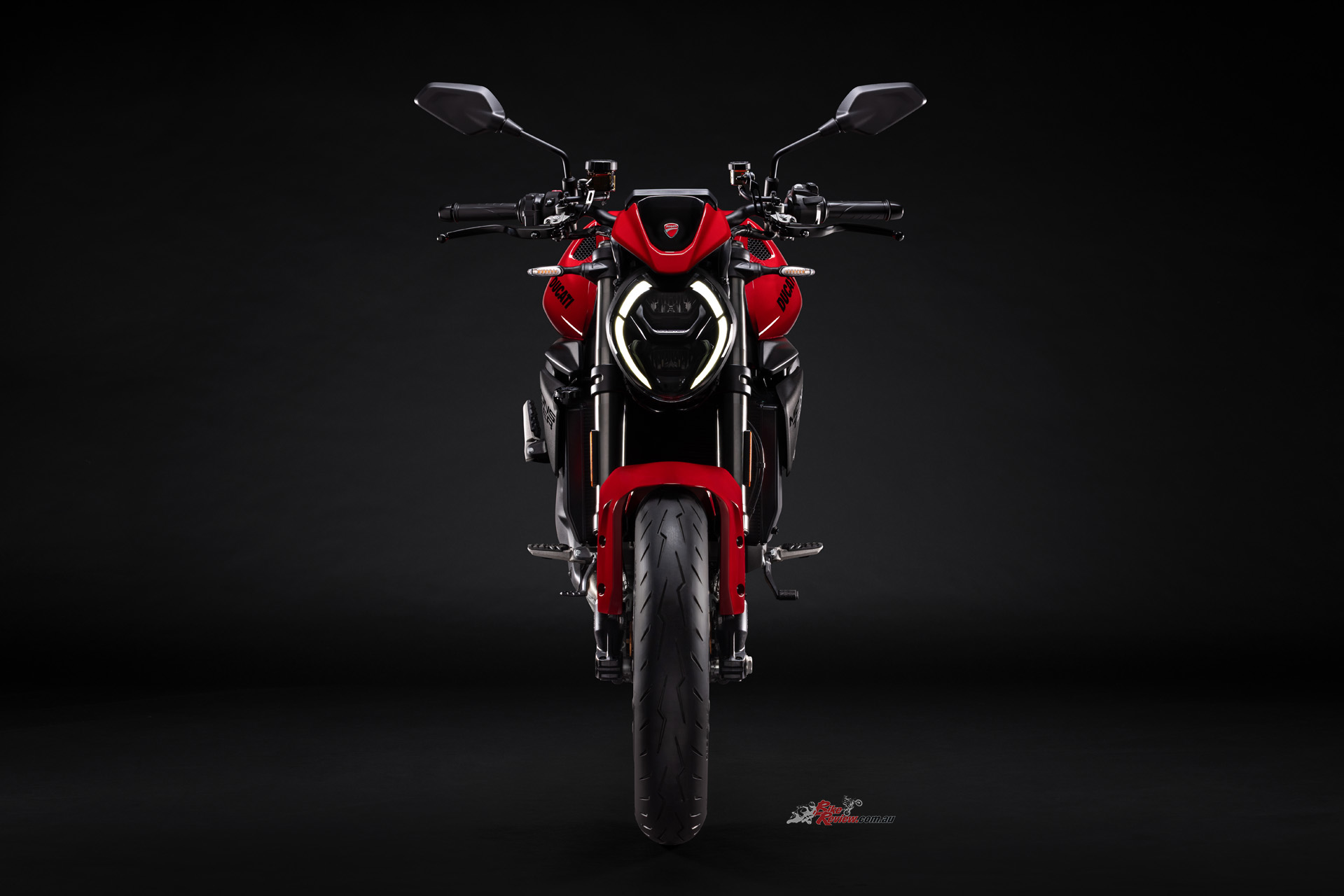
Ergonomics have been refined, with the handlebars now higher and further forward for better control, while side panels add knee grip under braking. Seat height is 815mm, 5mm lower than before, and can be reduced to 775mm with Ducati’s optional low-seat and suspension kit. Styling remains true to the Monster’s origin. The signature bison-back tank now integrates air intakes and carries the Ducati crest along with the GPS coordinates of the Borgo Panigale factory.
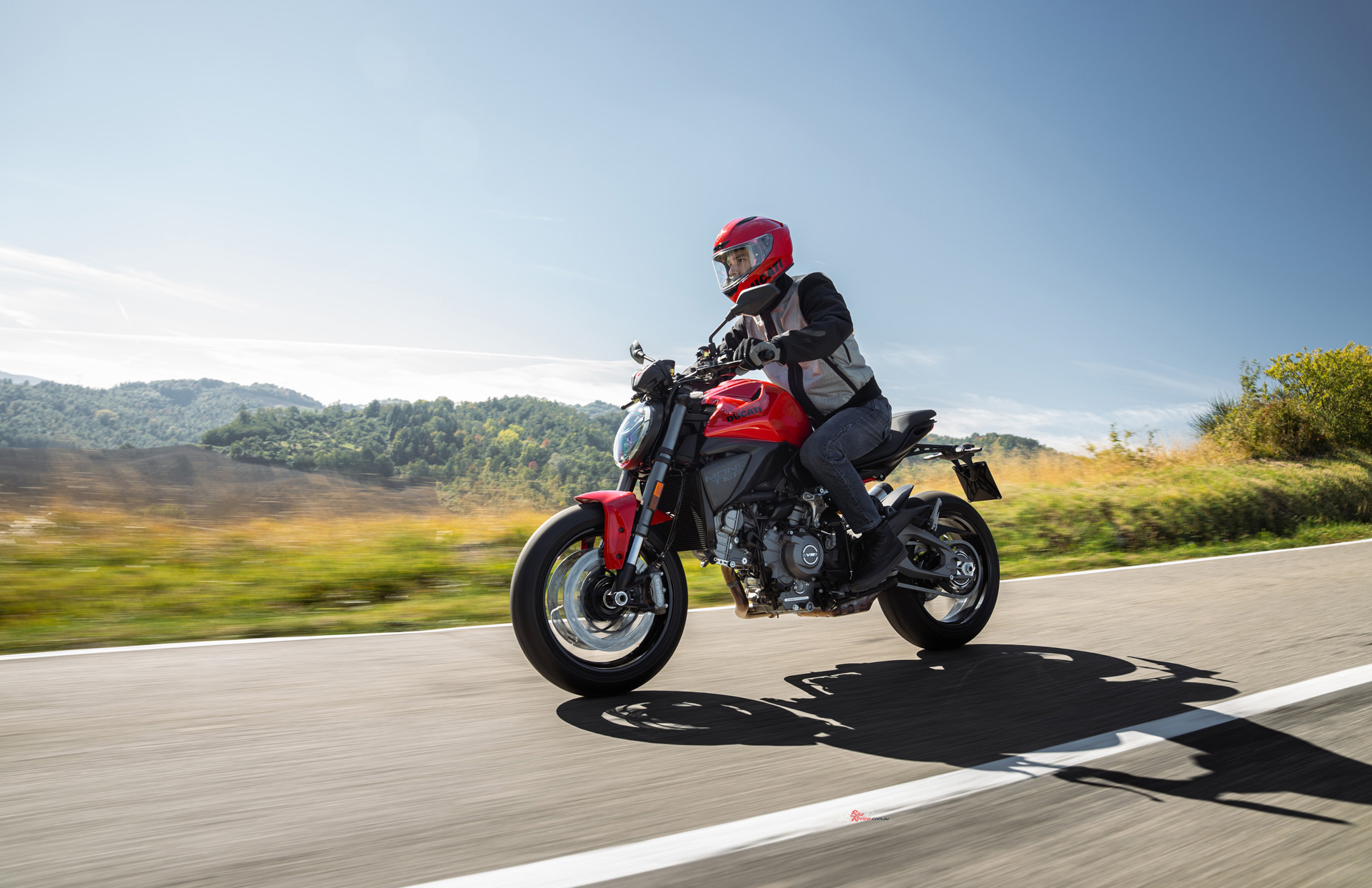
The Monster+ variant mirrors the base model mechanically but adds a colour-matched passenger-seat cover and flyscreen as standard equipment. Both versions will be offered in Ducati Red or Iceberg White, with Australian availability confirmed for April 2026.
MY26 Panigale V2 MM93 and FB63
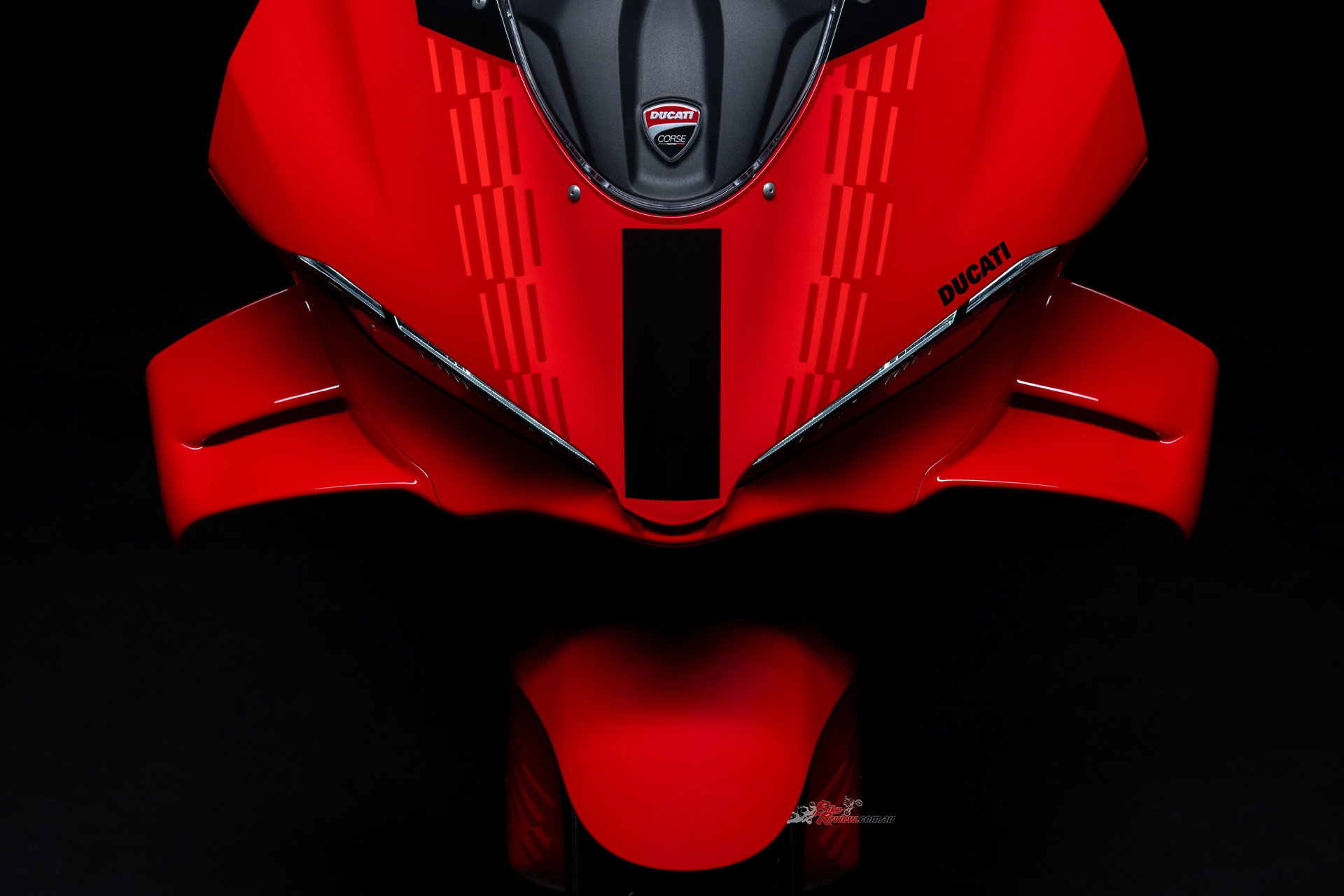
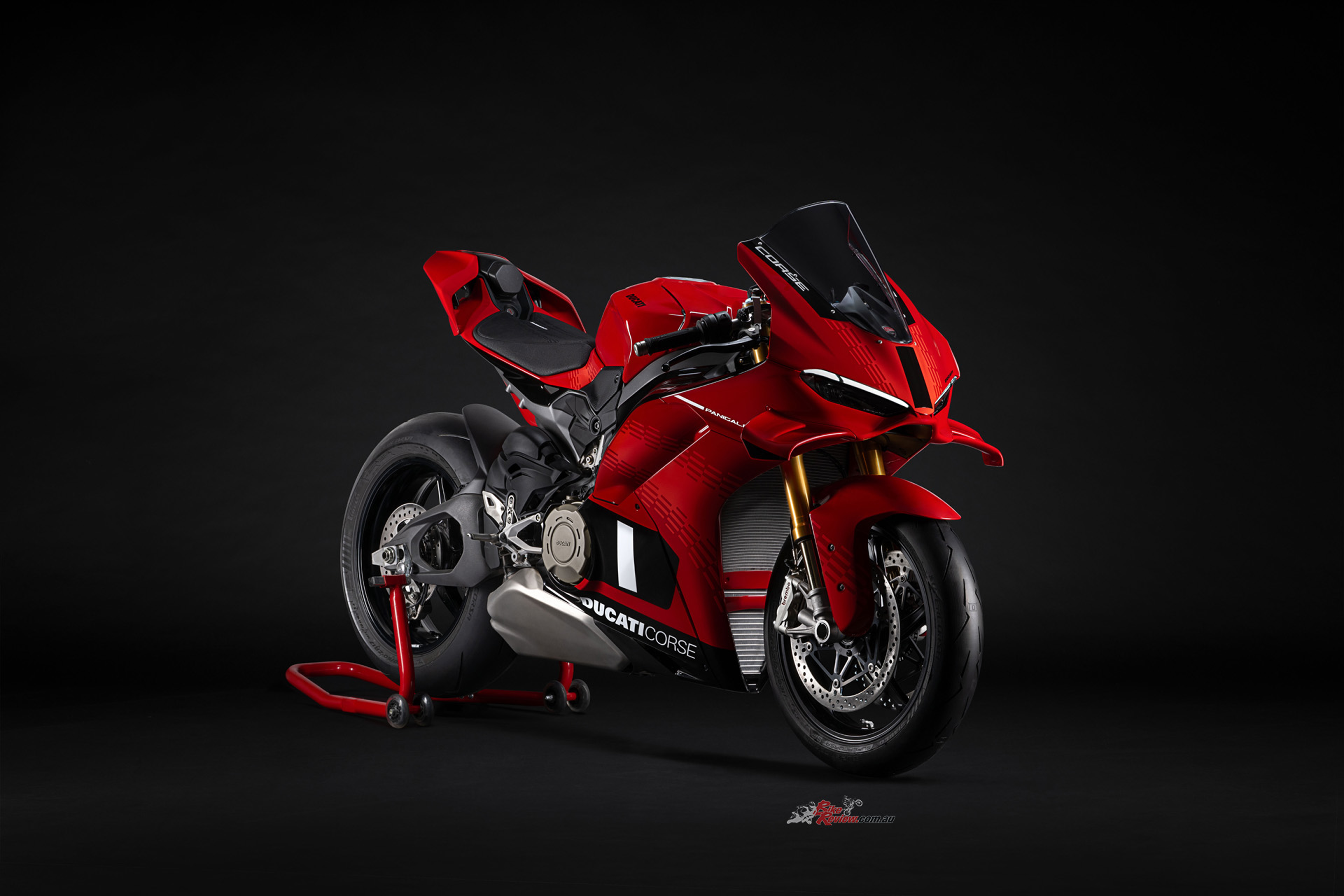
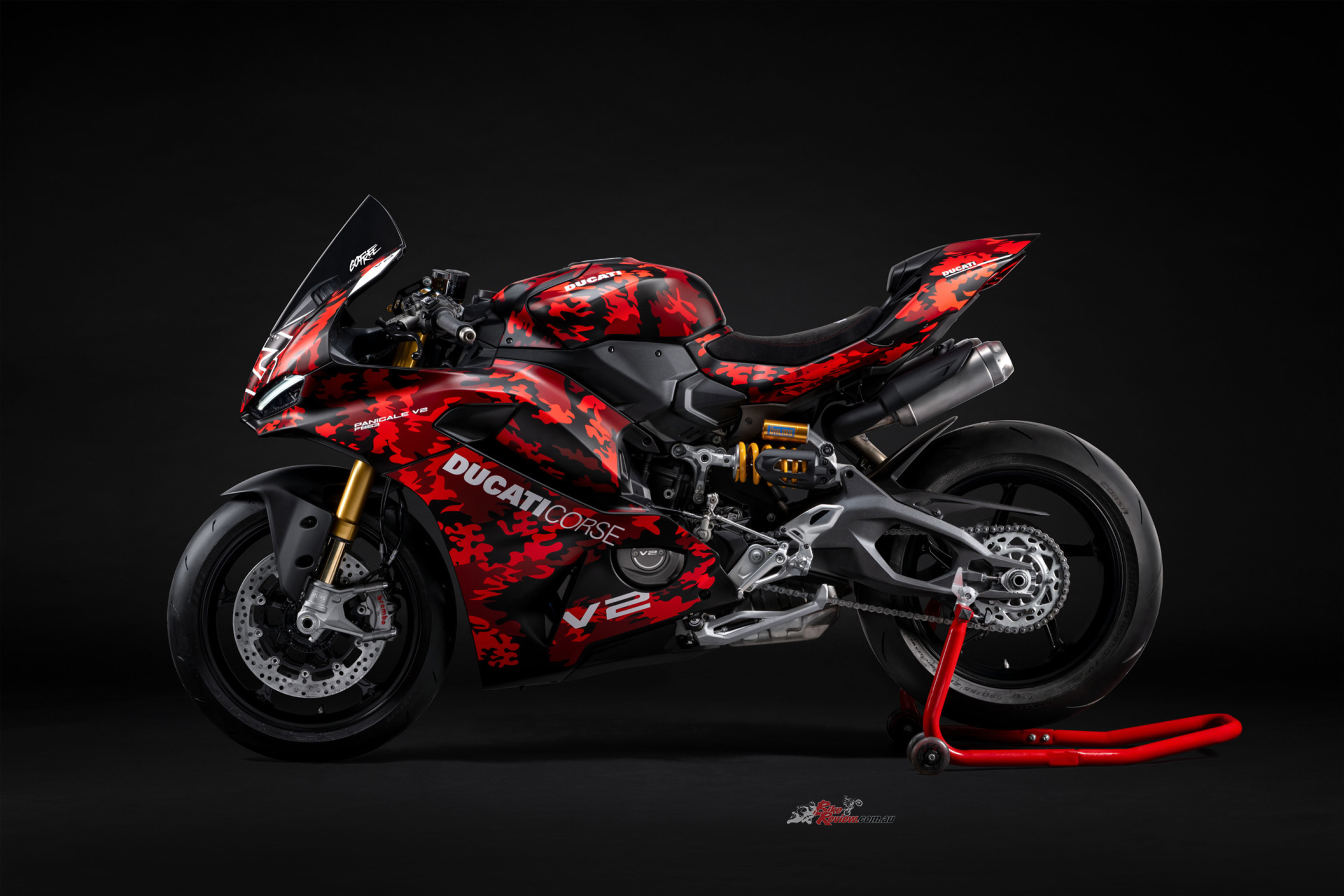
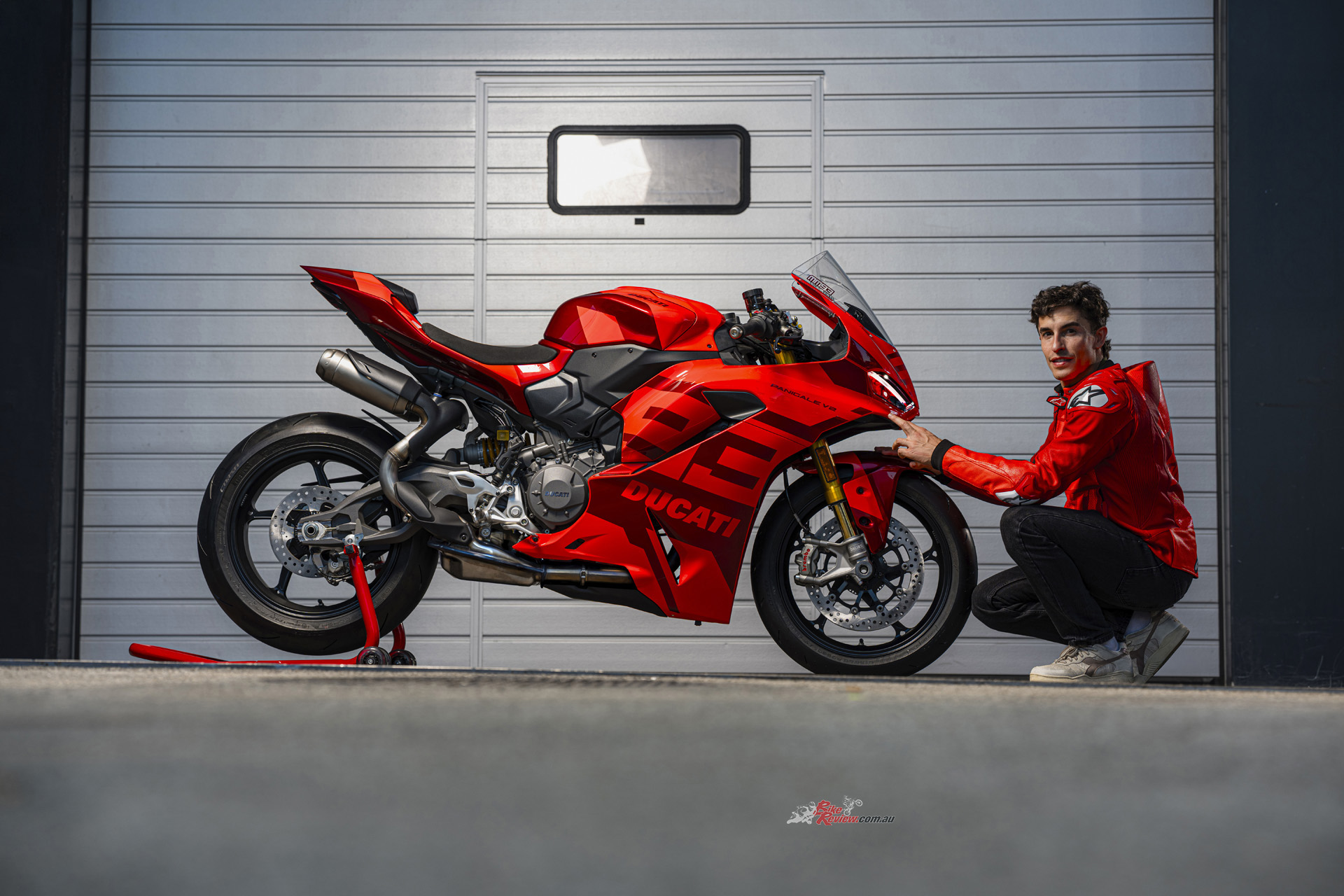
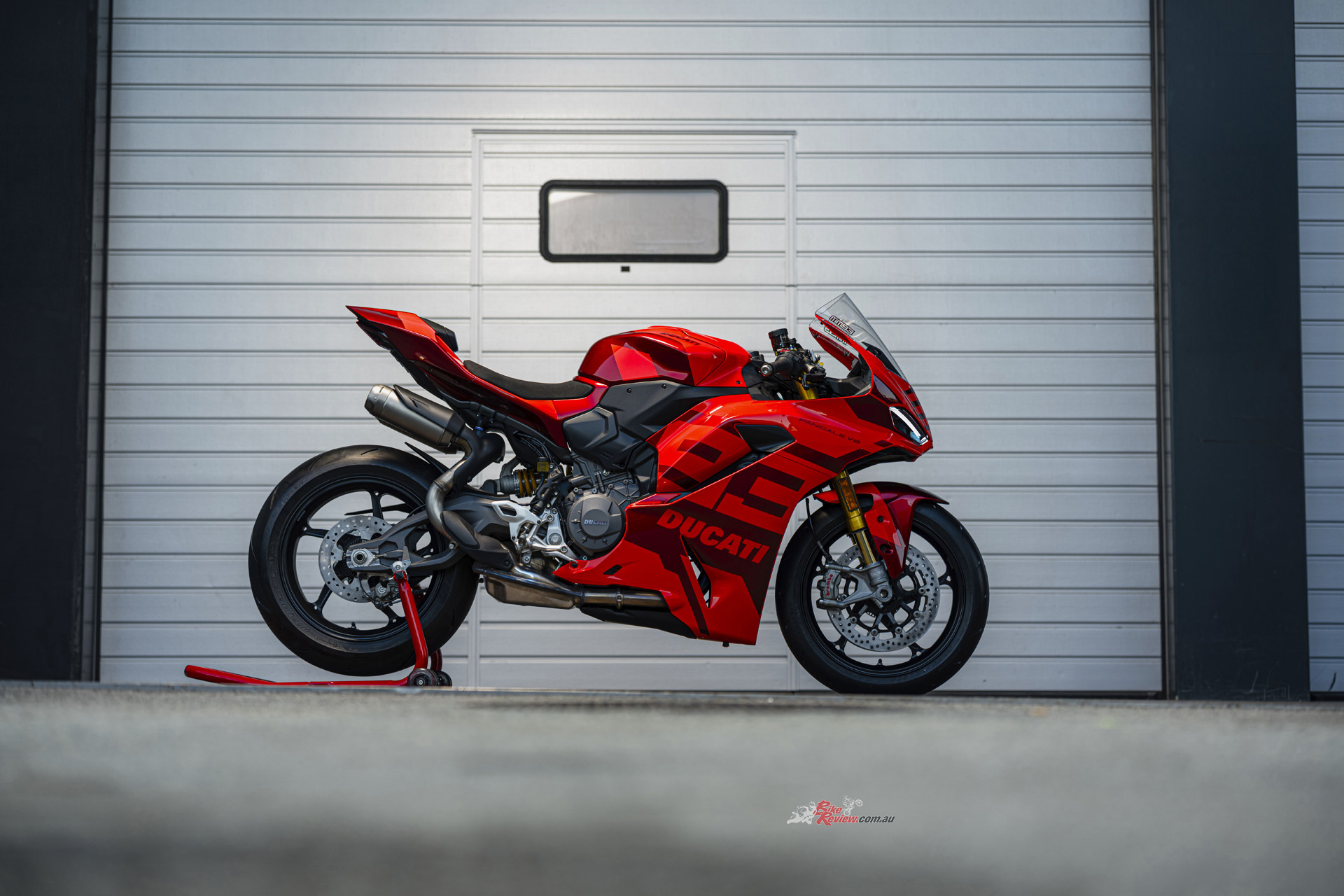
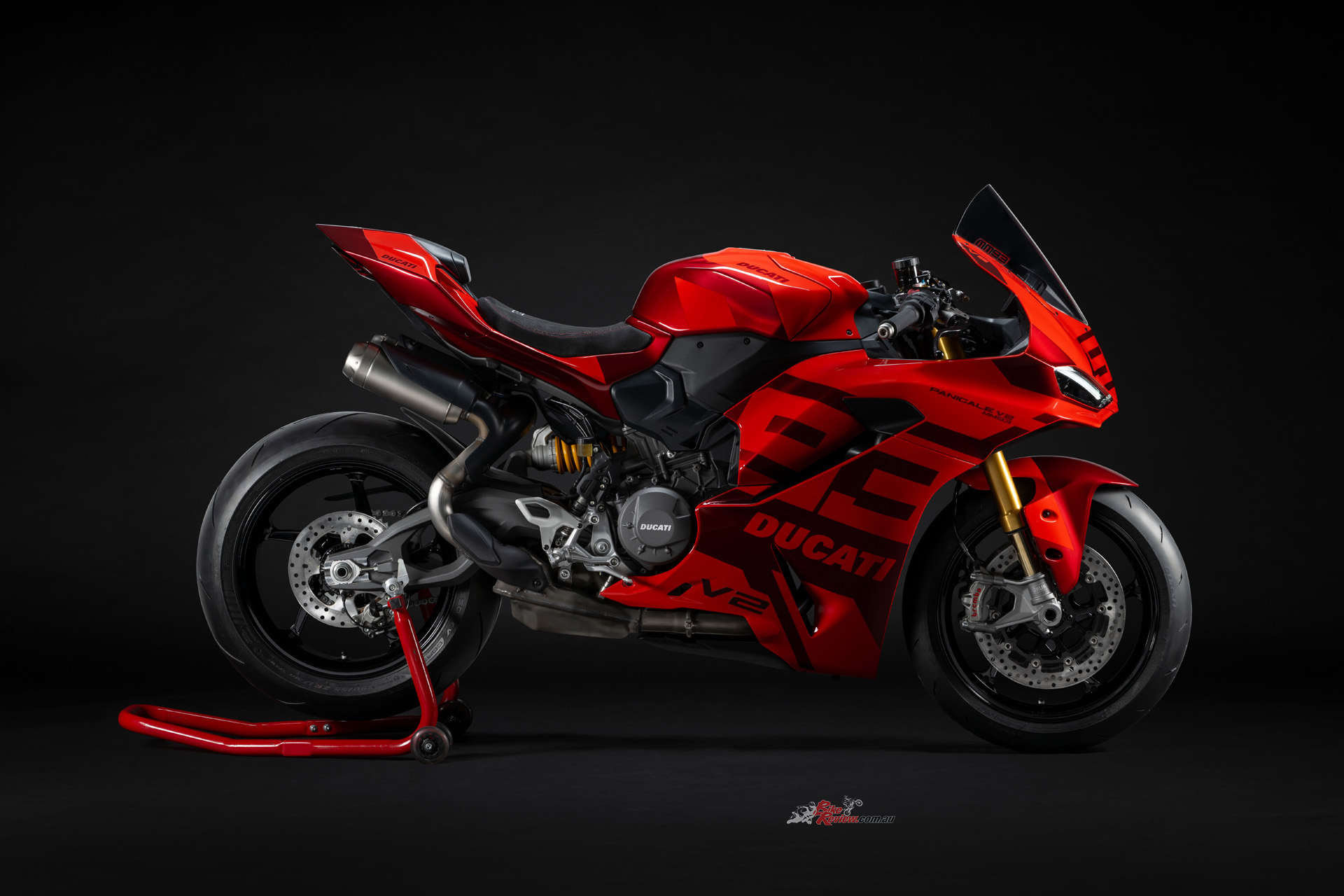
Ducati also unveiled two special numbered-series versions of the Panigale V2 S at EICMA, each dedicated to its MotoGP factory riders Marc Marquez and Francesco Bagnaia.
Both the Panigale V2 MM93 and FB63 share the same 955cc twin-cylinder base as the Panigale V2 S, but feature lighter components, upgraded chassis parts and unique liveries designed in collaboration with Marquez and Bagnaia.
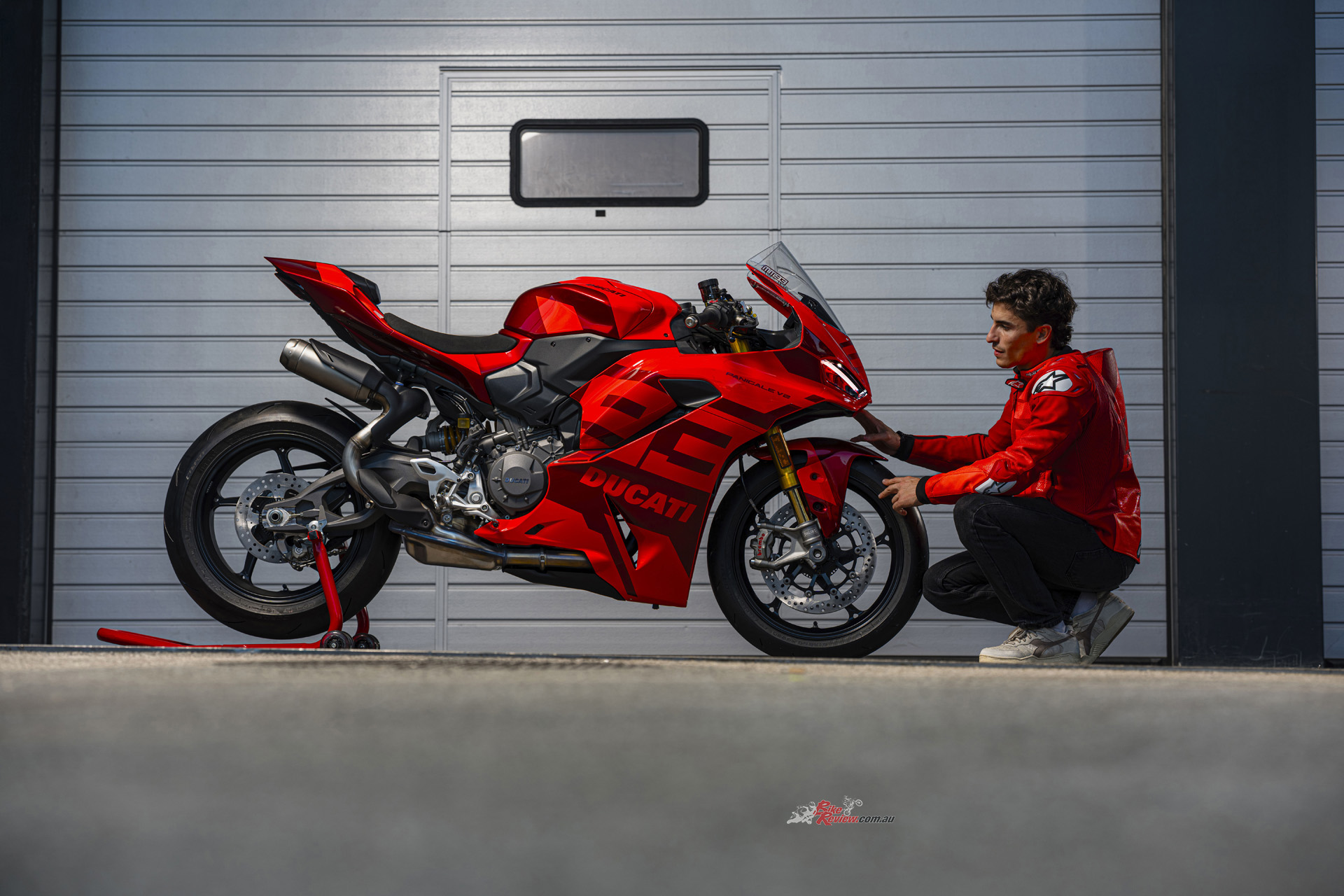
The Panigale V2 MM93 celebrates the Spaniard’s arrival as a Ducati Lenovo Team rider. Its ‘todo rojo’ red paintwork replicates the livery from his first test as an official Ducati racer and carries the number 93 alongside MM93 logos on the fairing and model nameplate.
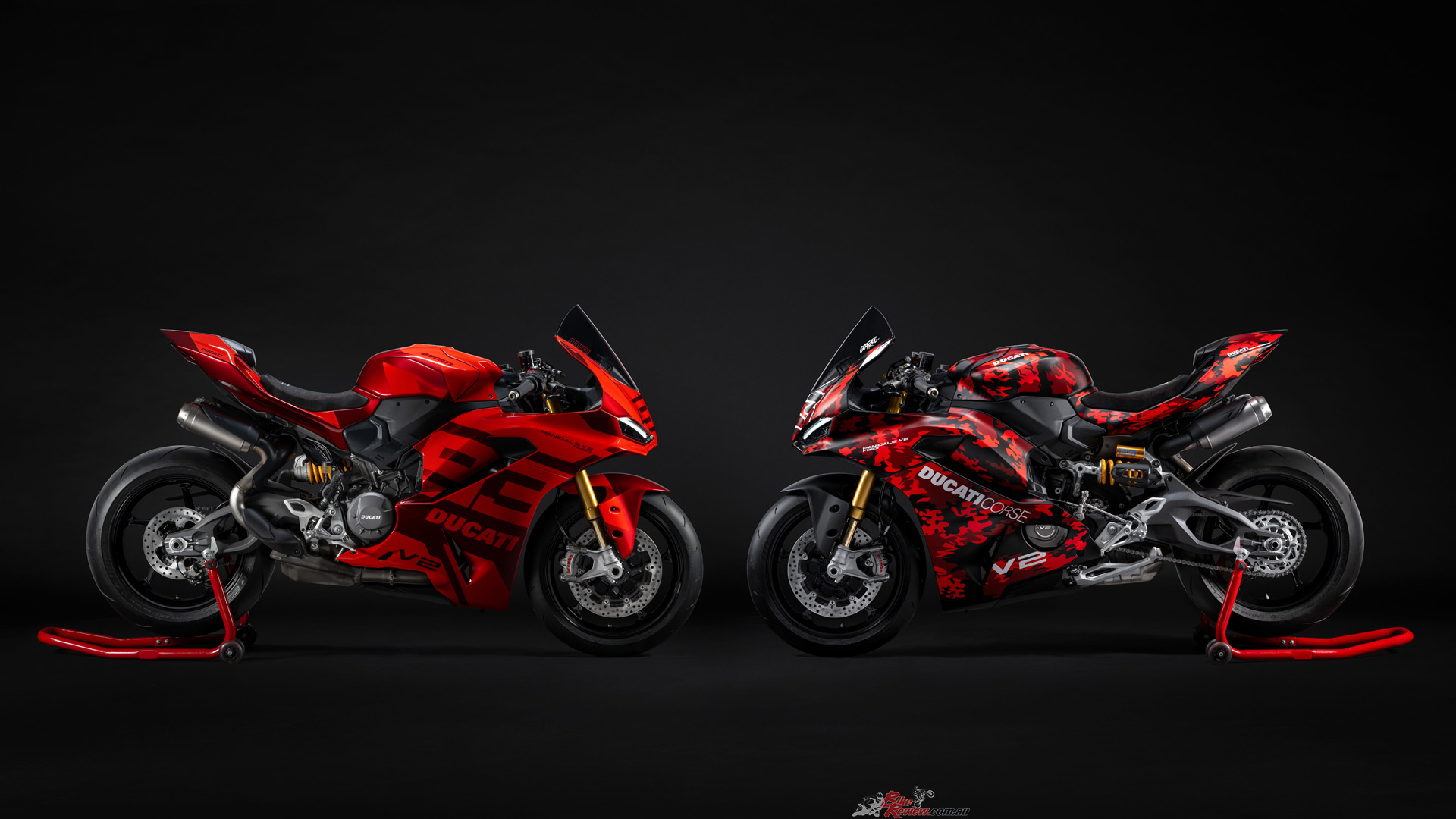
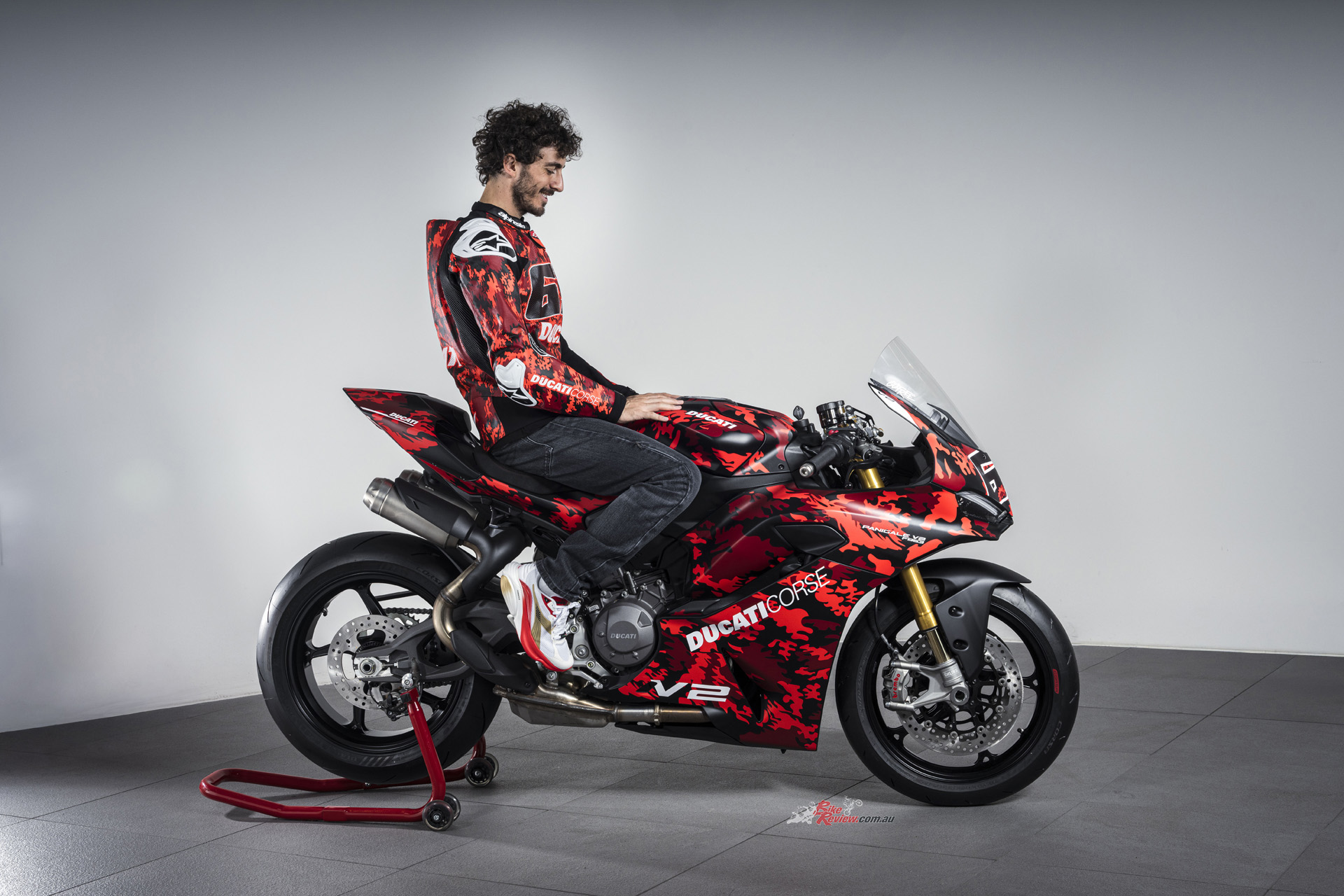
The FB63 edition pays tribute to former champ Bagnaia, wearing a black-and-red camouflage scheme inspired by his helmet, gloves and boots. It features FB63 markings beside the model name and Pecco’s ‘Go Free’ motto along the sides of the fairings.
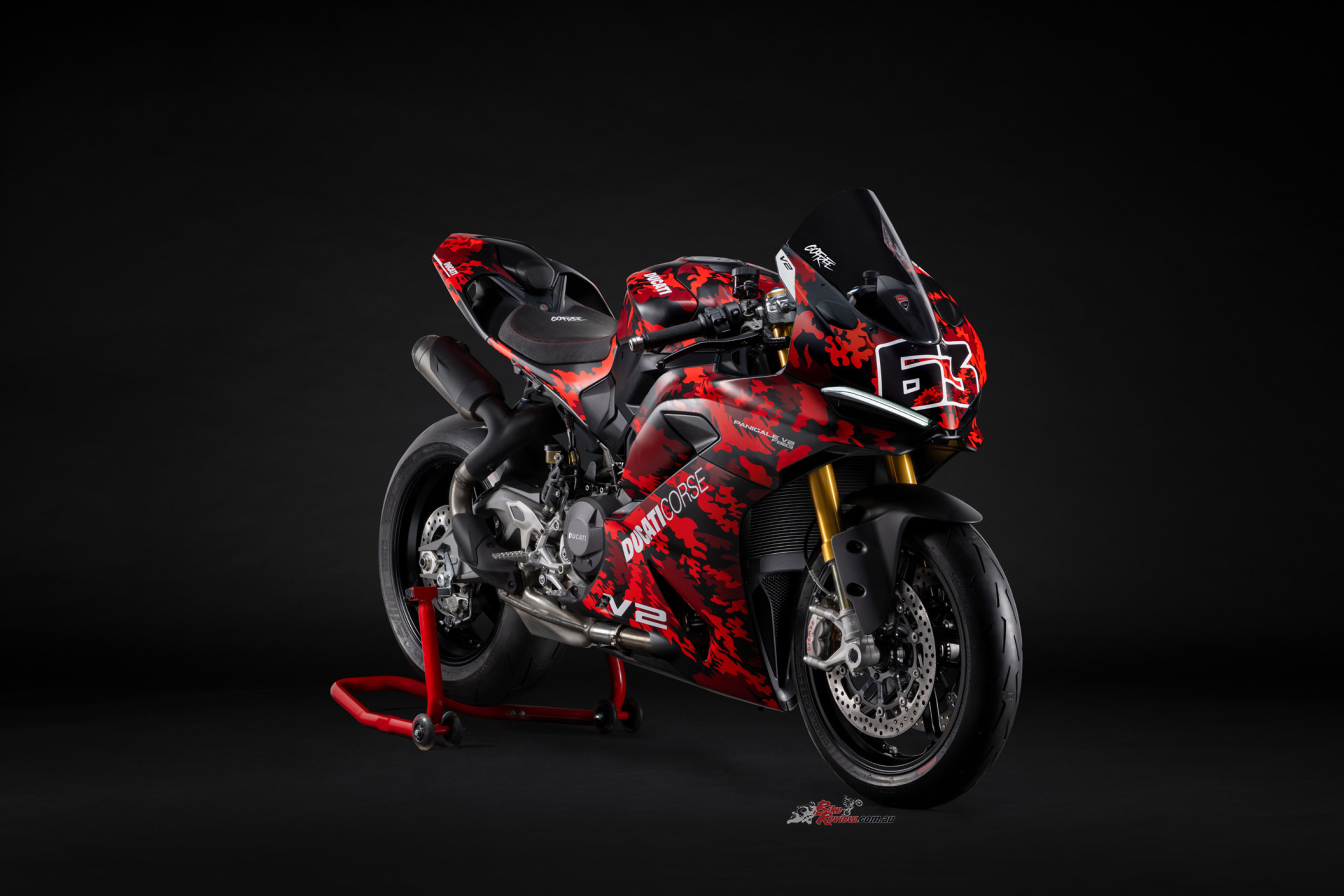
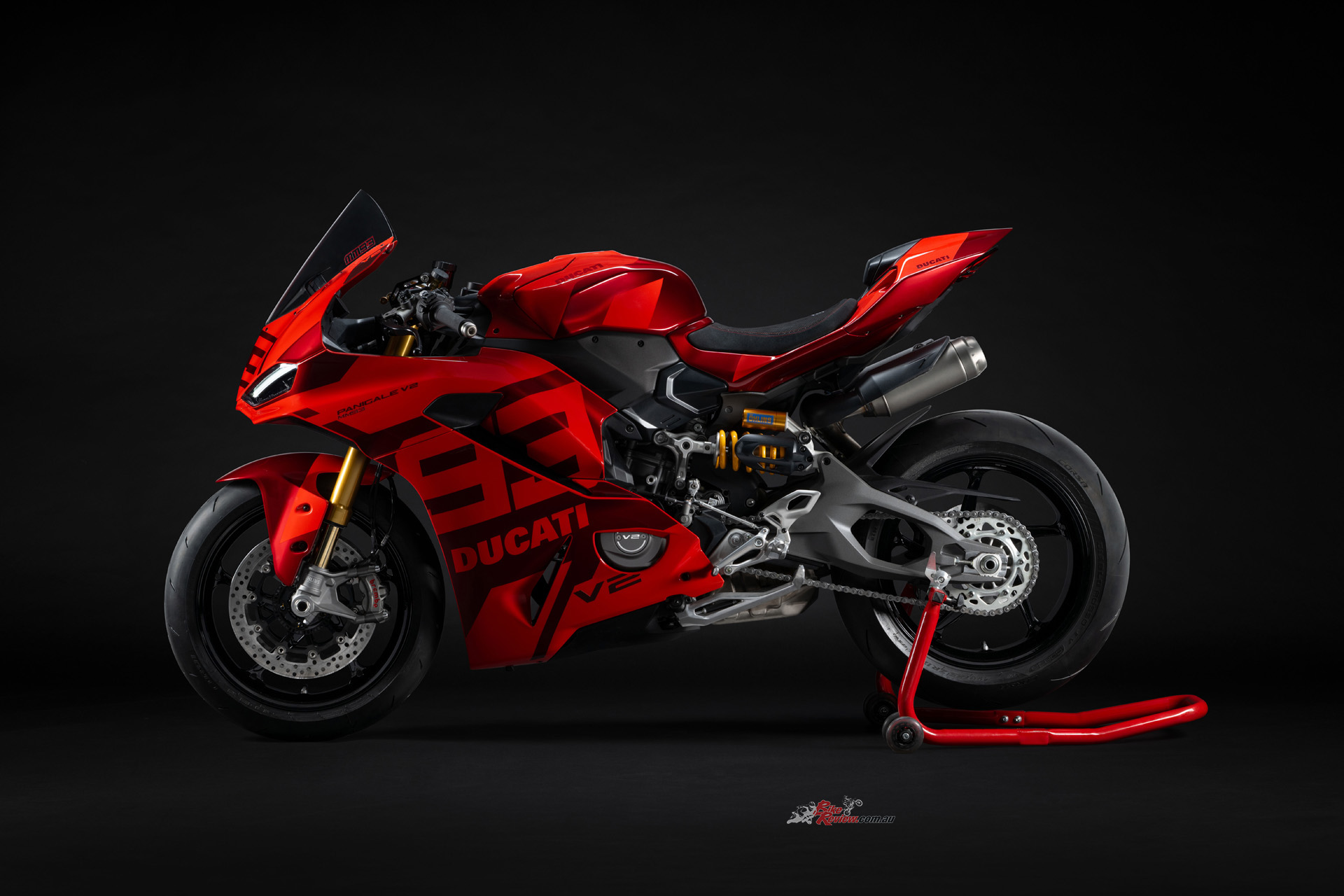
Both models get upgraded five-spoke forged aluminium wheels, which cut 1.5kg compared with the cast set. A billet-machined top triple clamp carries each bike’s individual series number, paired with lower clip-on handlebars, there’s a taller race-style screen and GP-inspired grips. Mechanically, both models remain unchanged from the Panigale V2 S.
2026 Models Previewed at EICMA
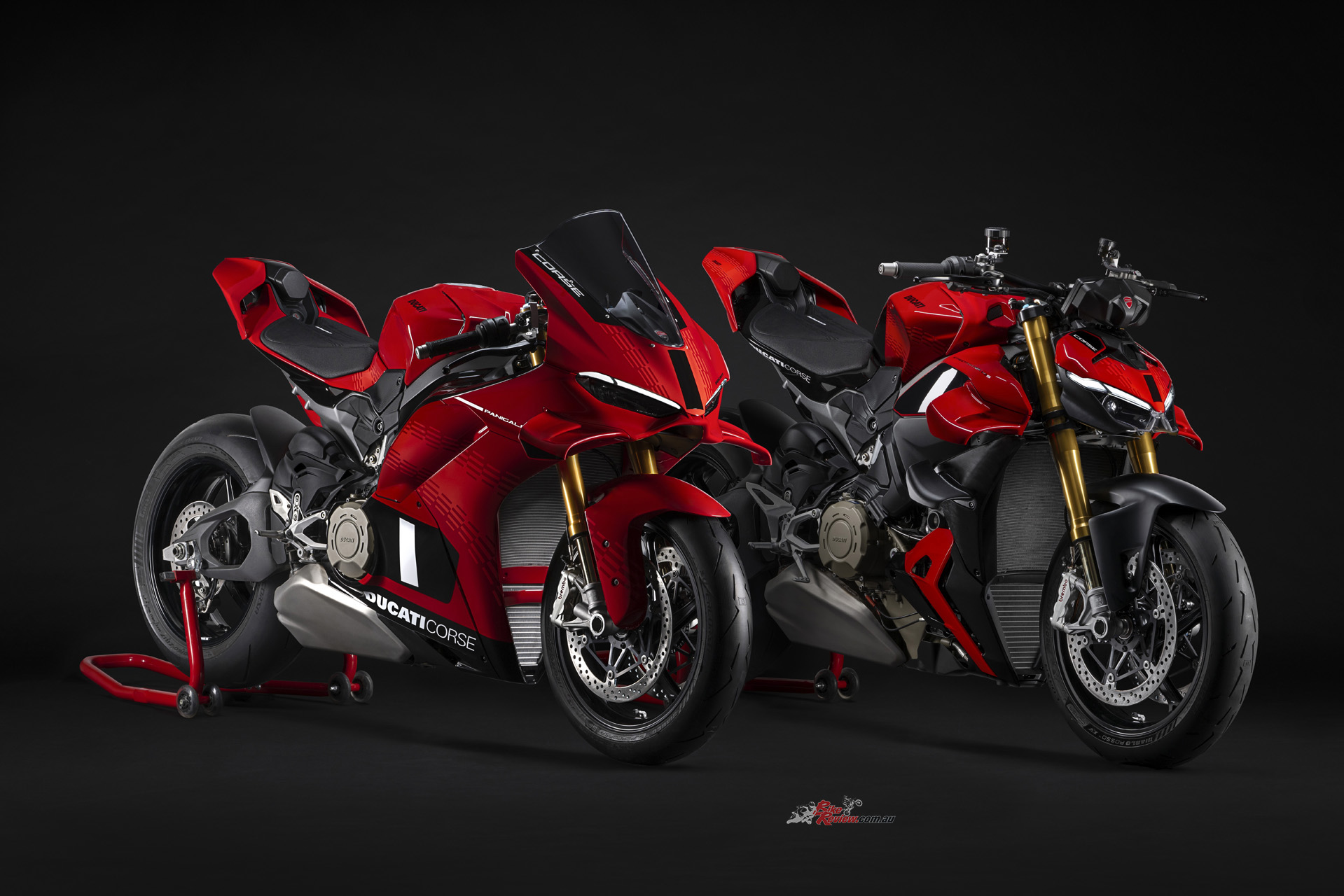
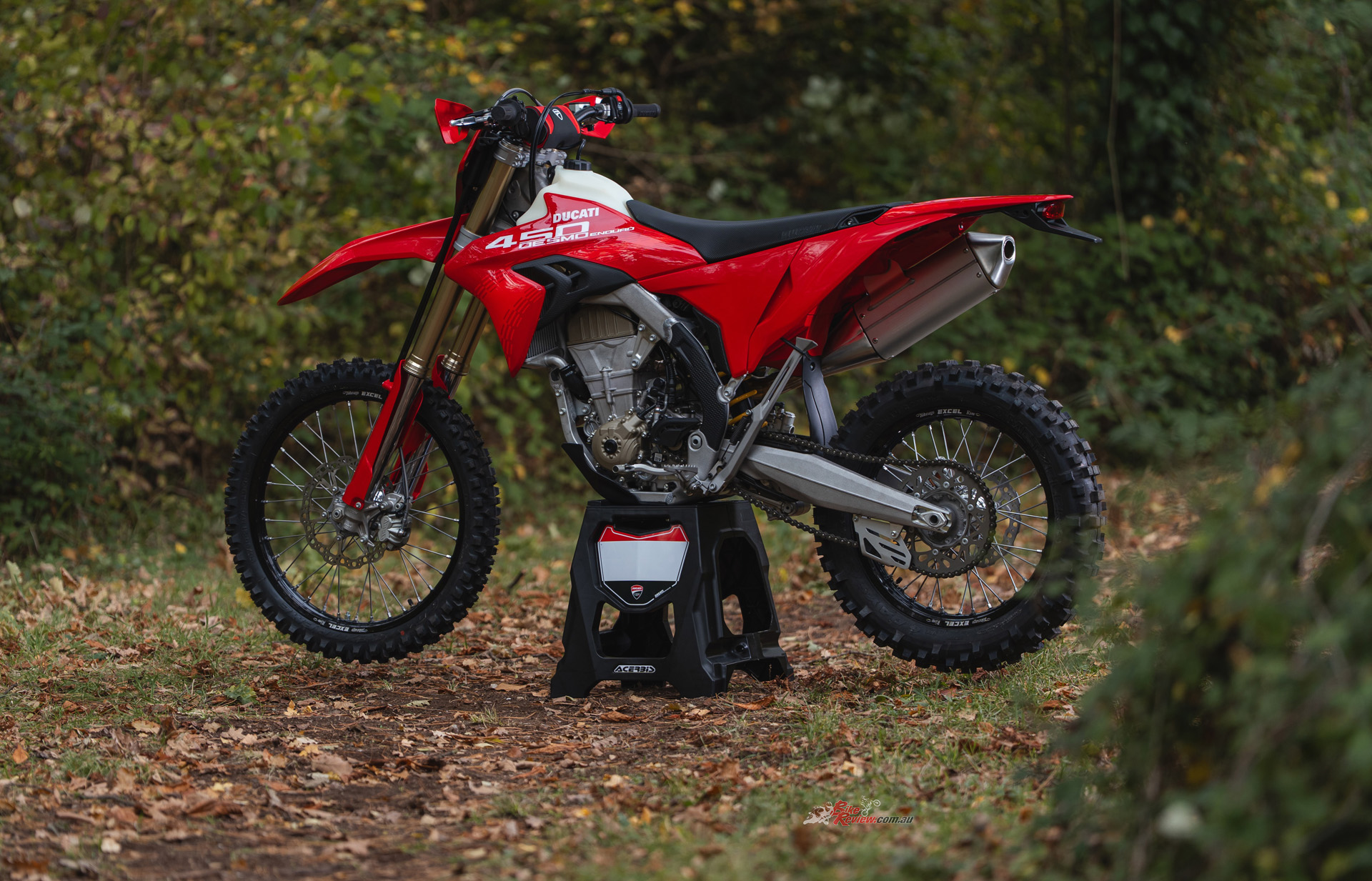
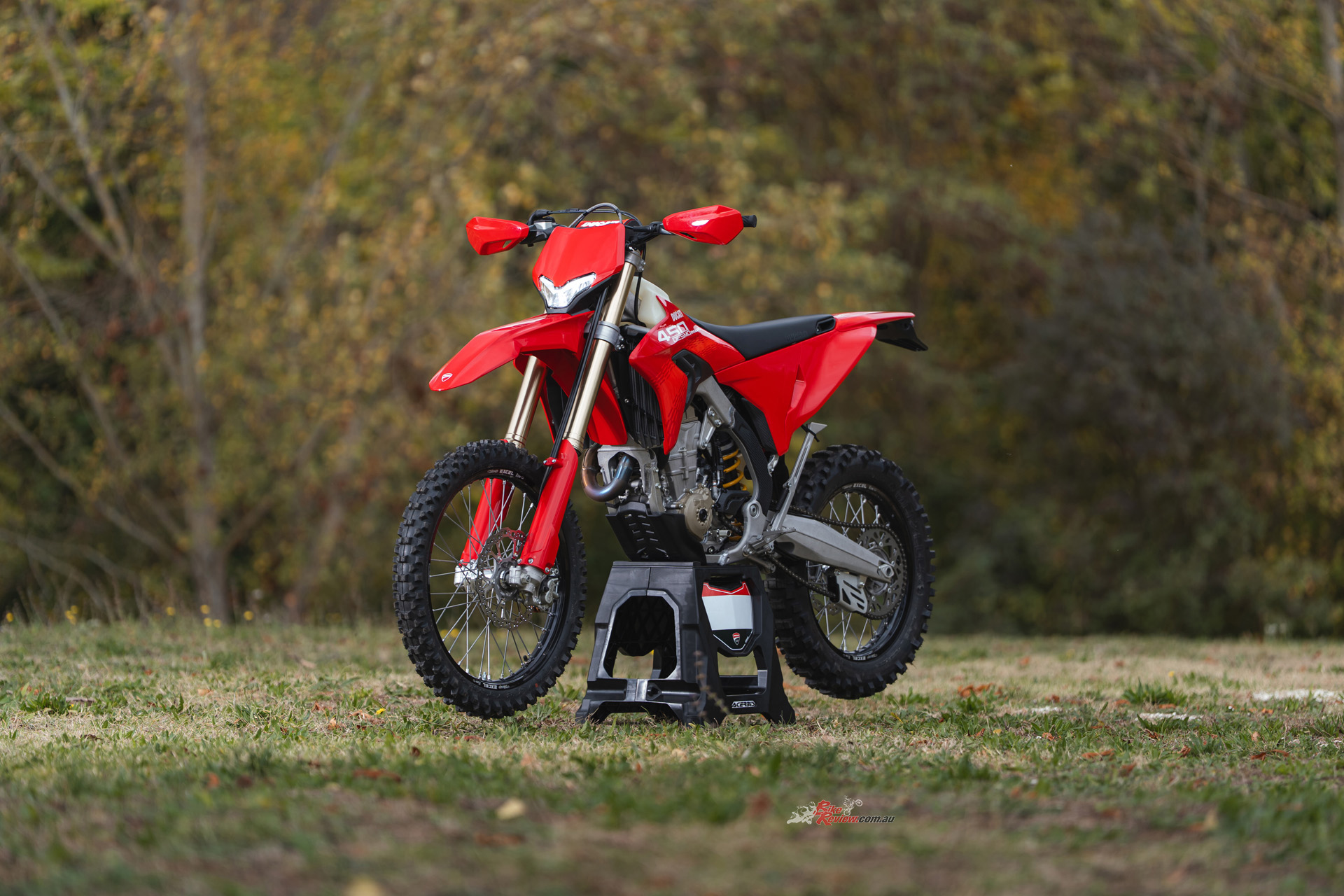
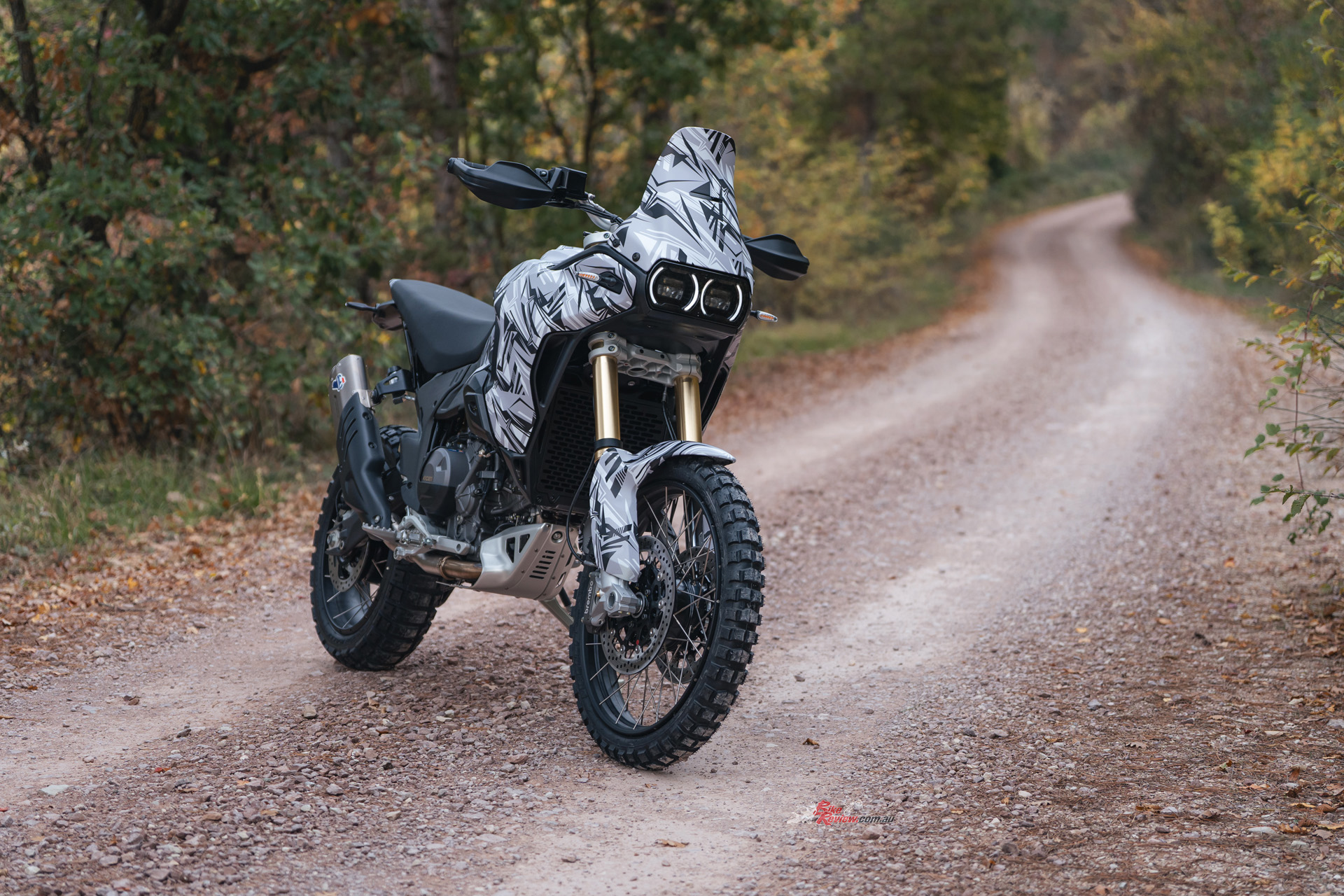
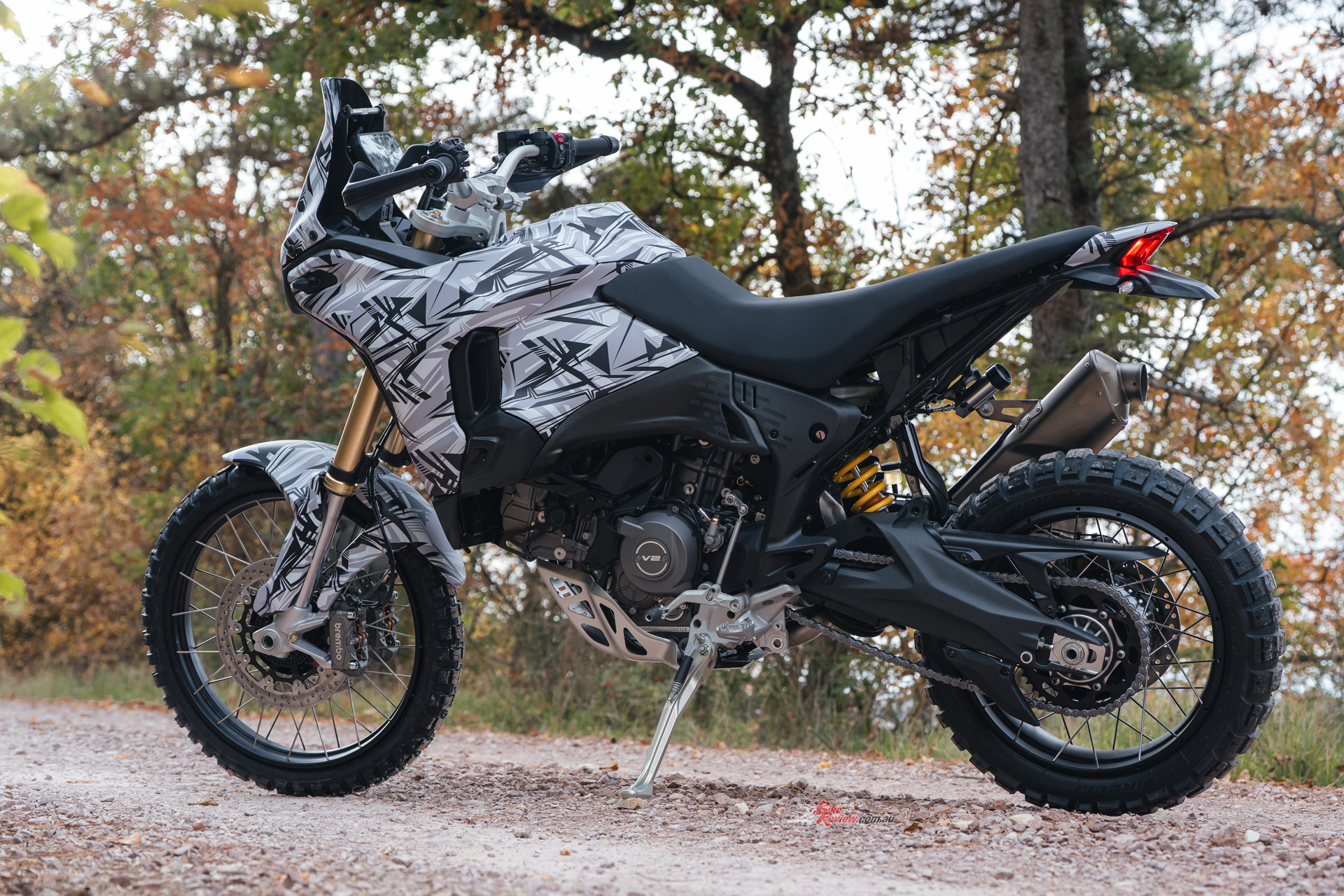
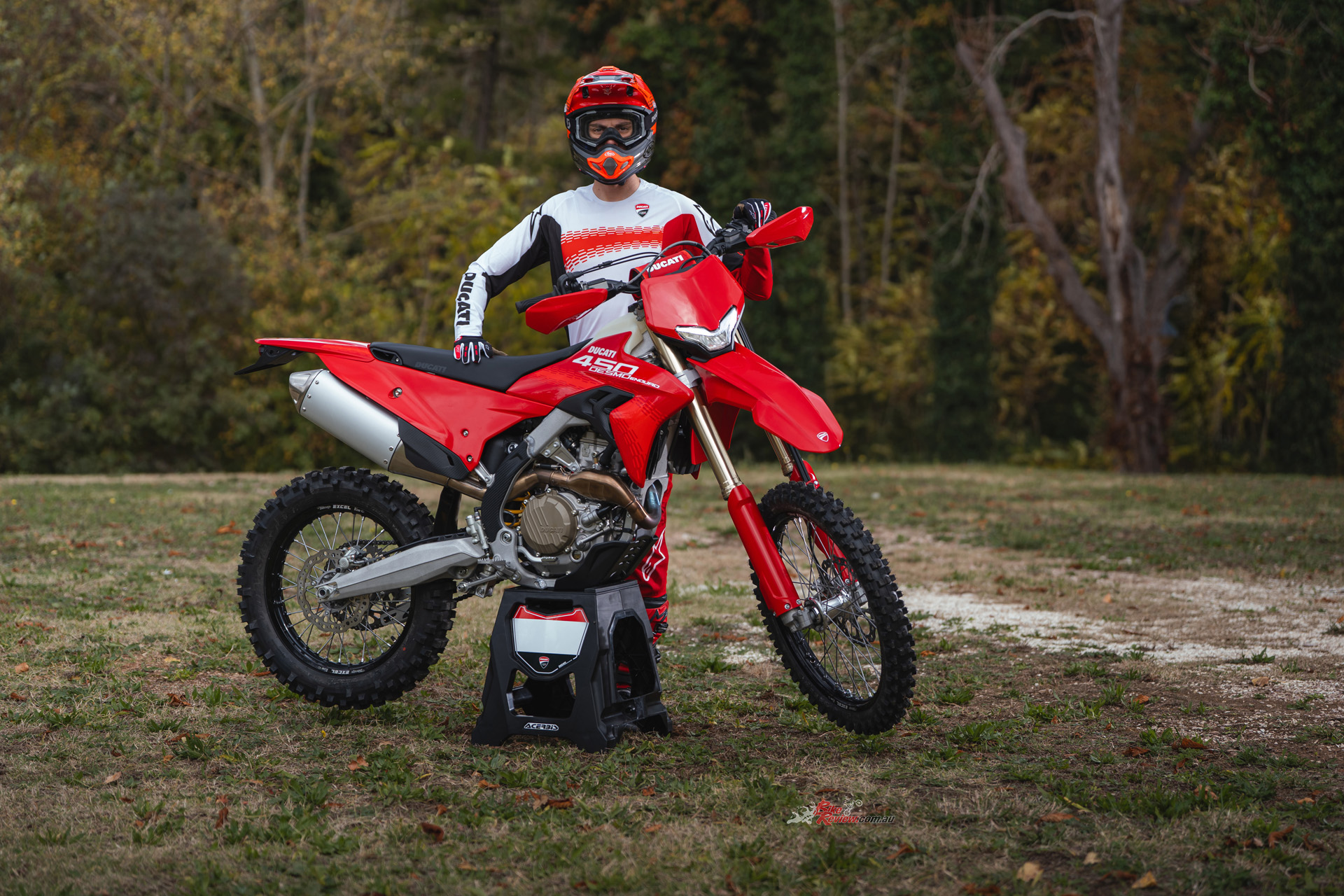
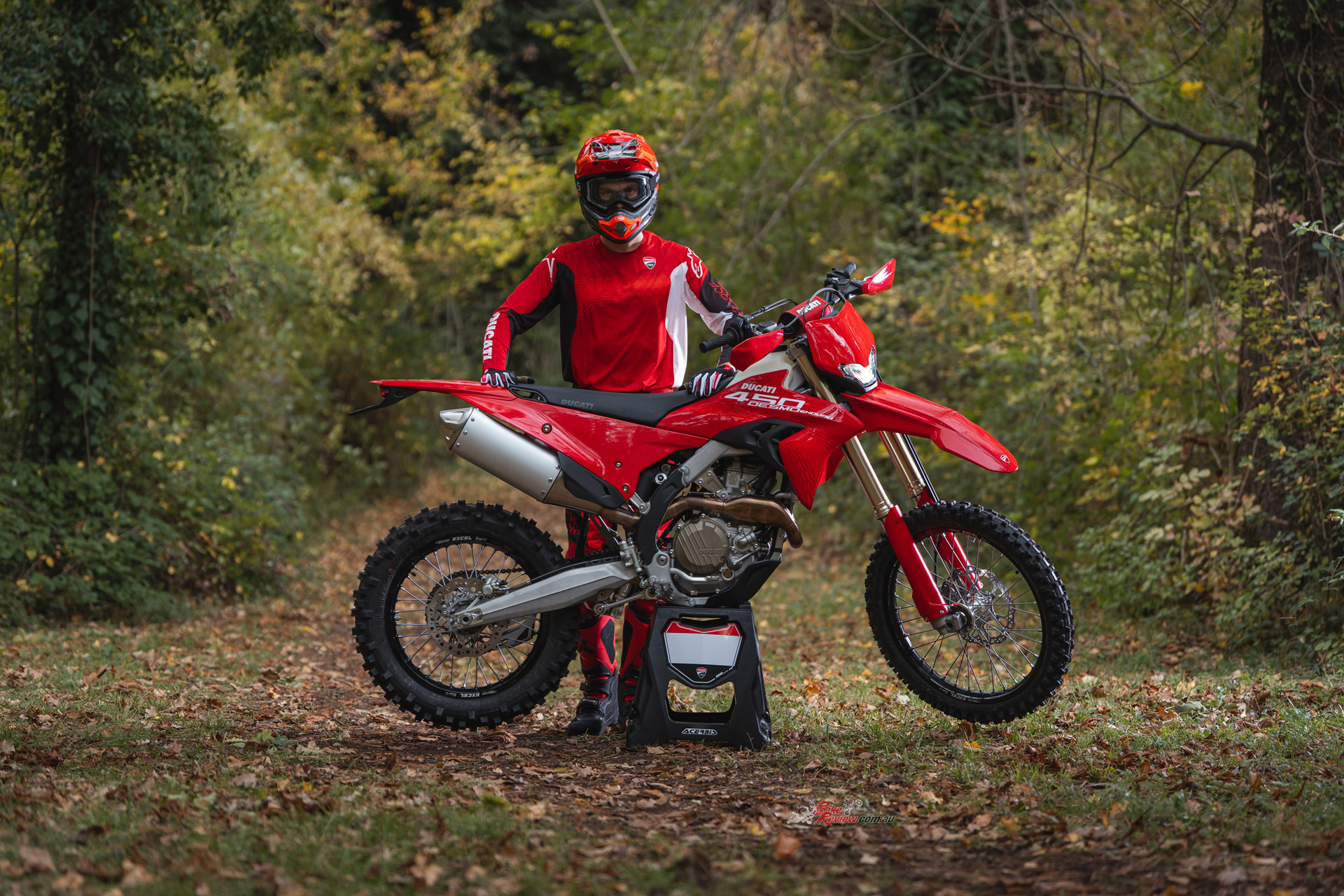
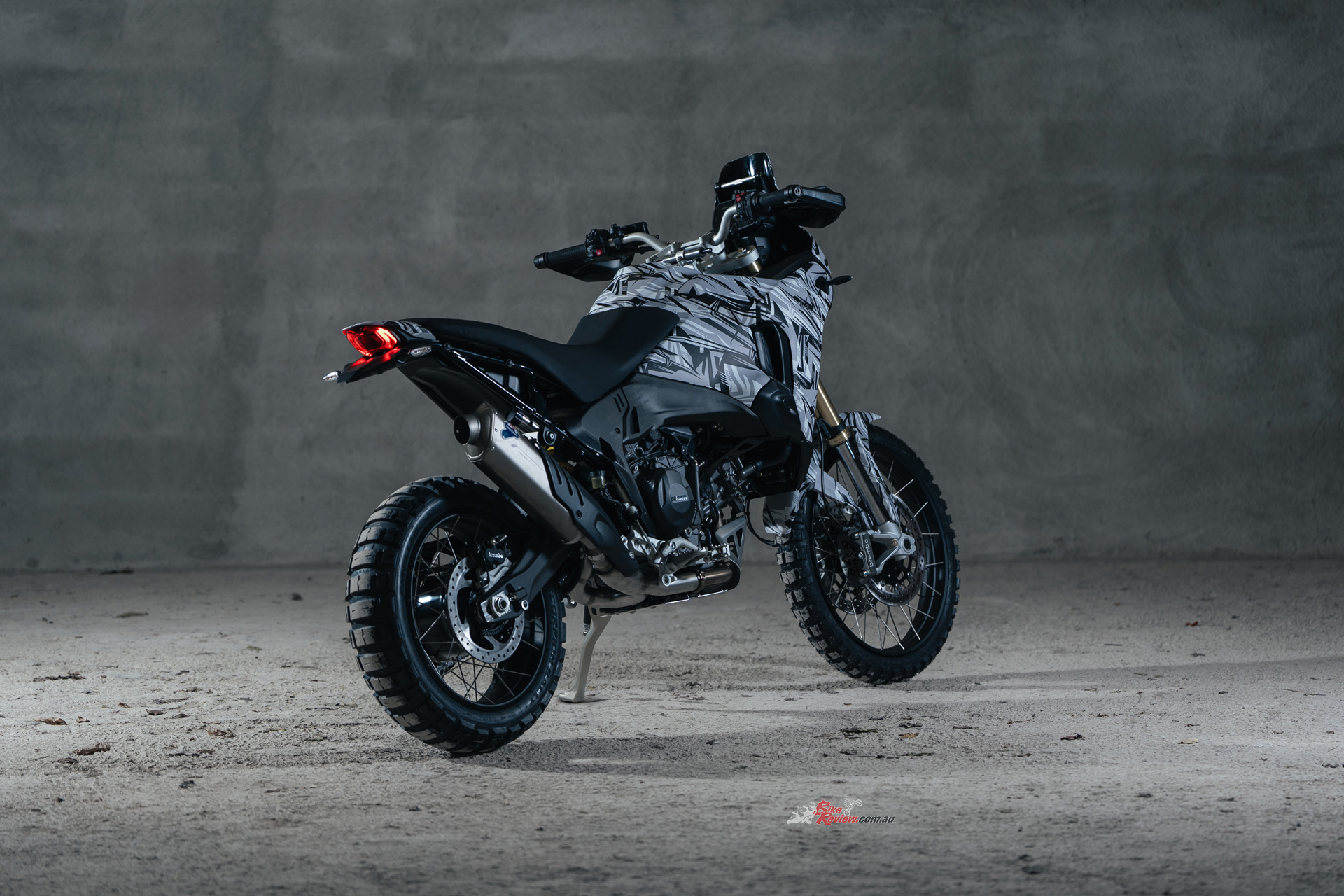
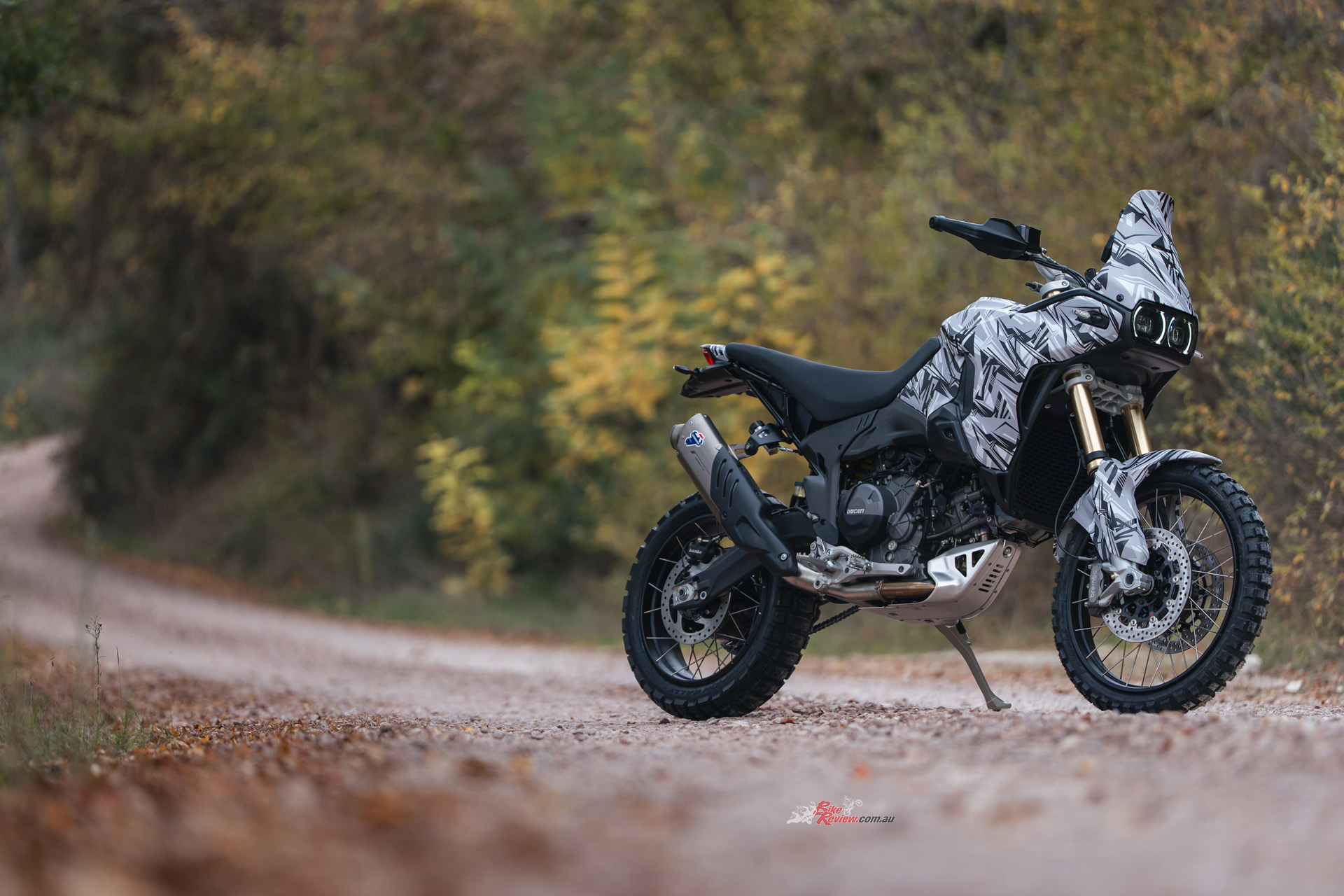
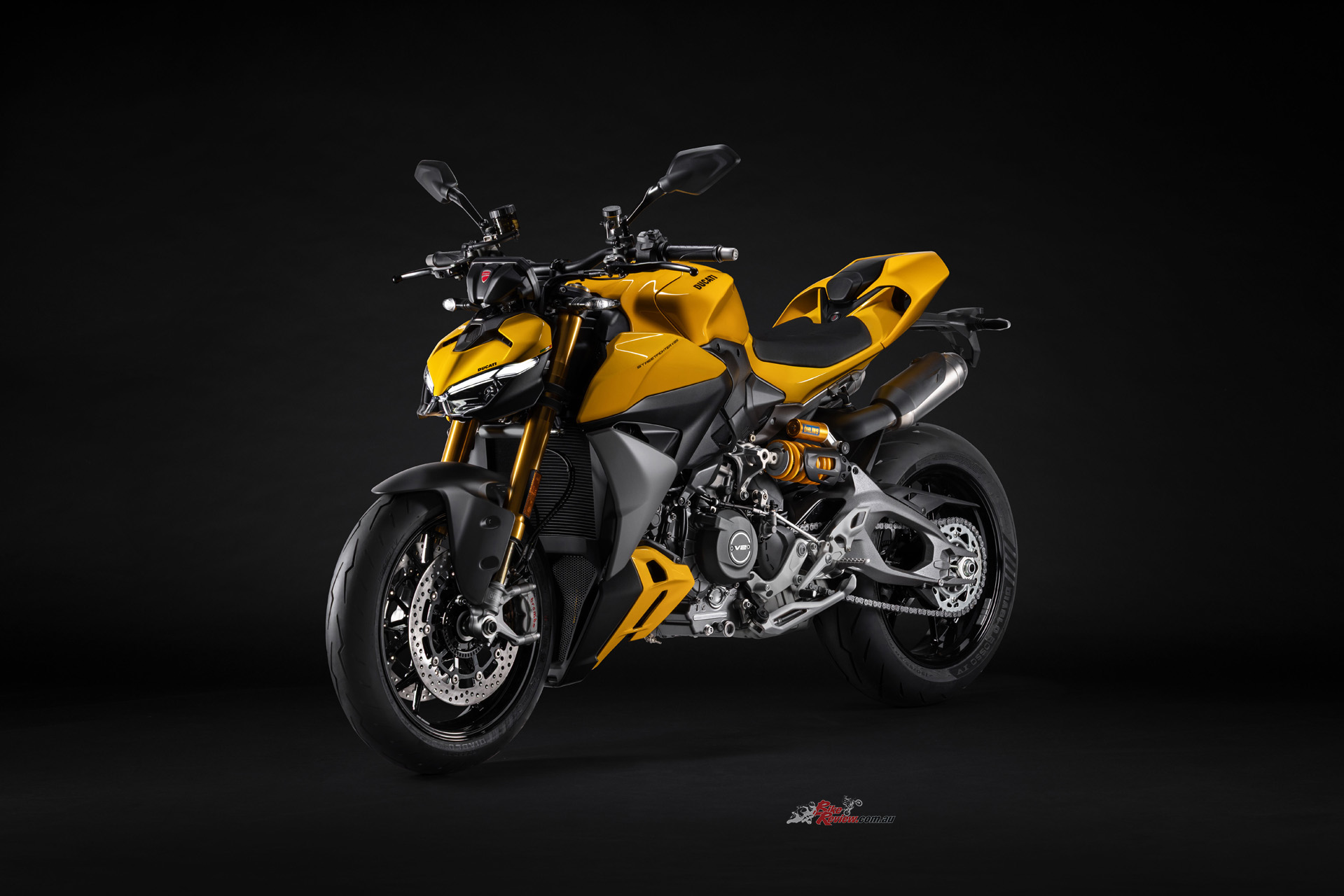
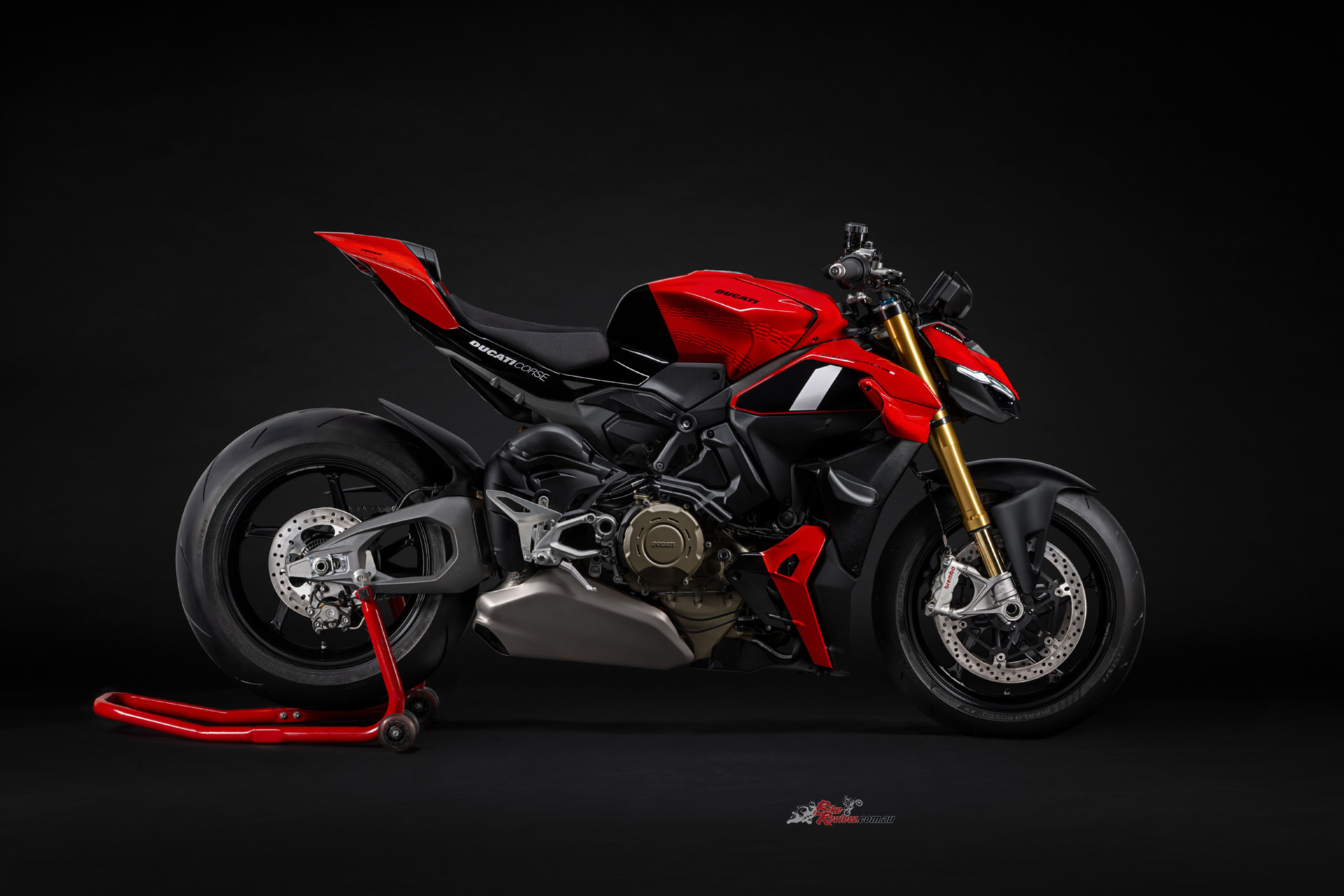
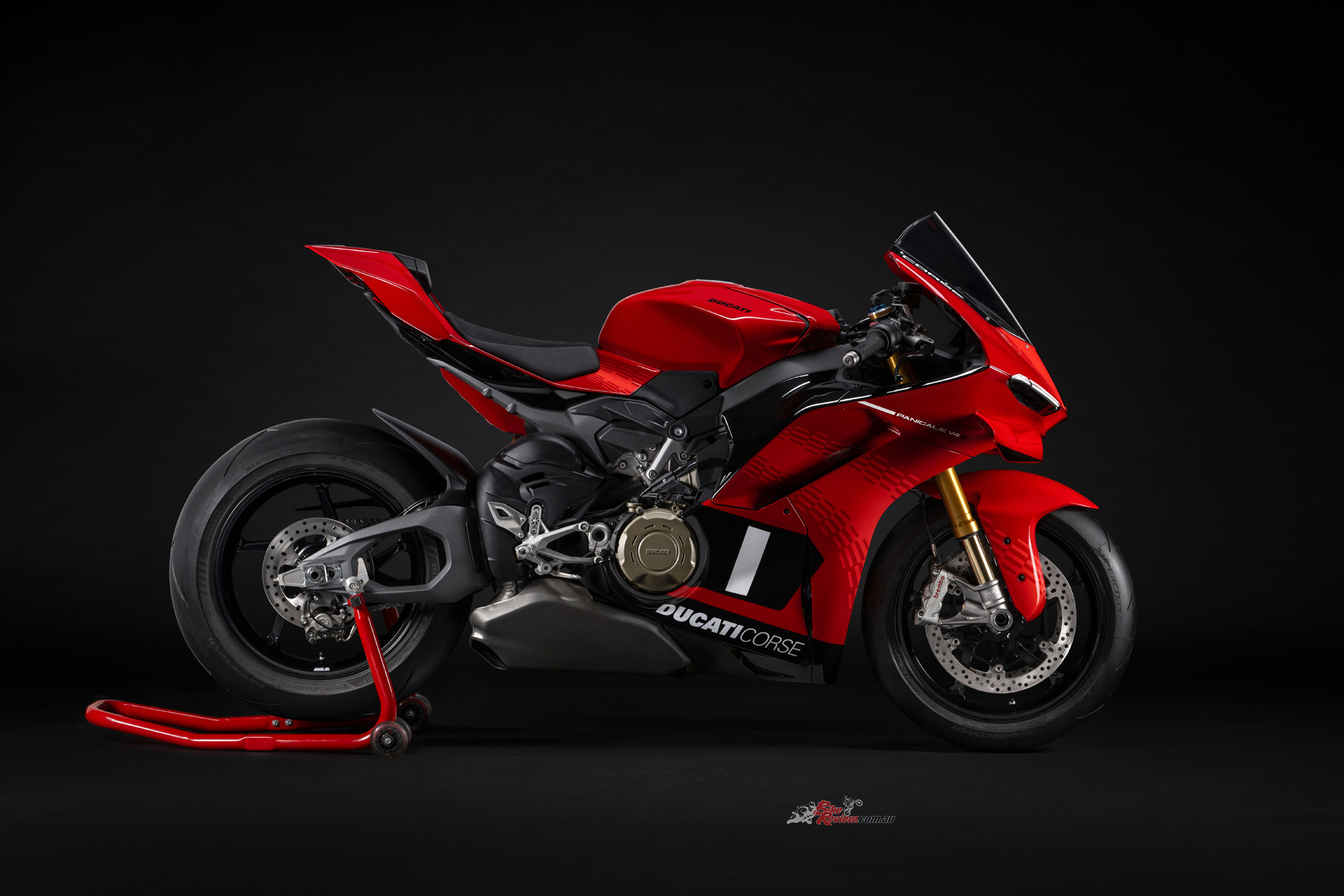
Ducati also displayed the 2026 Ducati DesertX, which is heavily revised and will be released early next year. They also displayed the Desmo450 Enduro and a Desmo250MX, plus some new colours and graphics for the Panigale and Streefighter range, including Yellow. Stay tuned for more in Q1 2026.
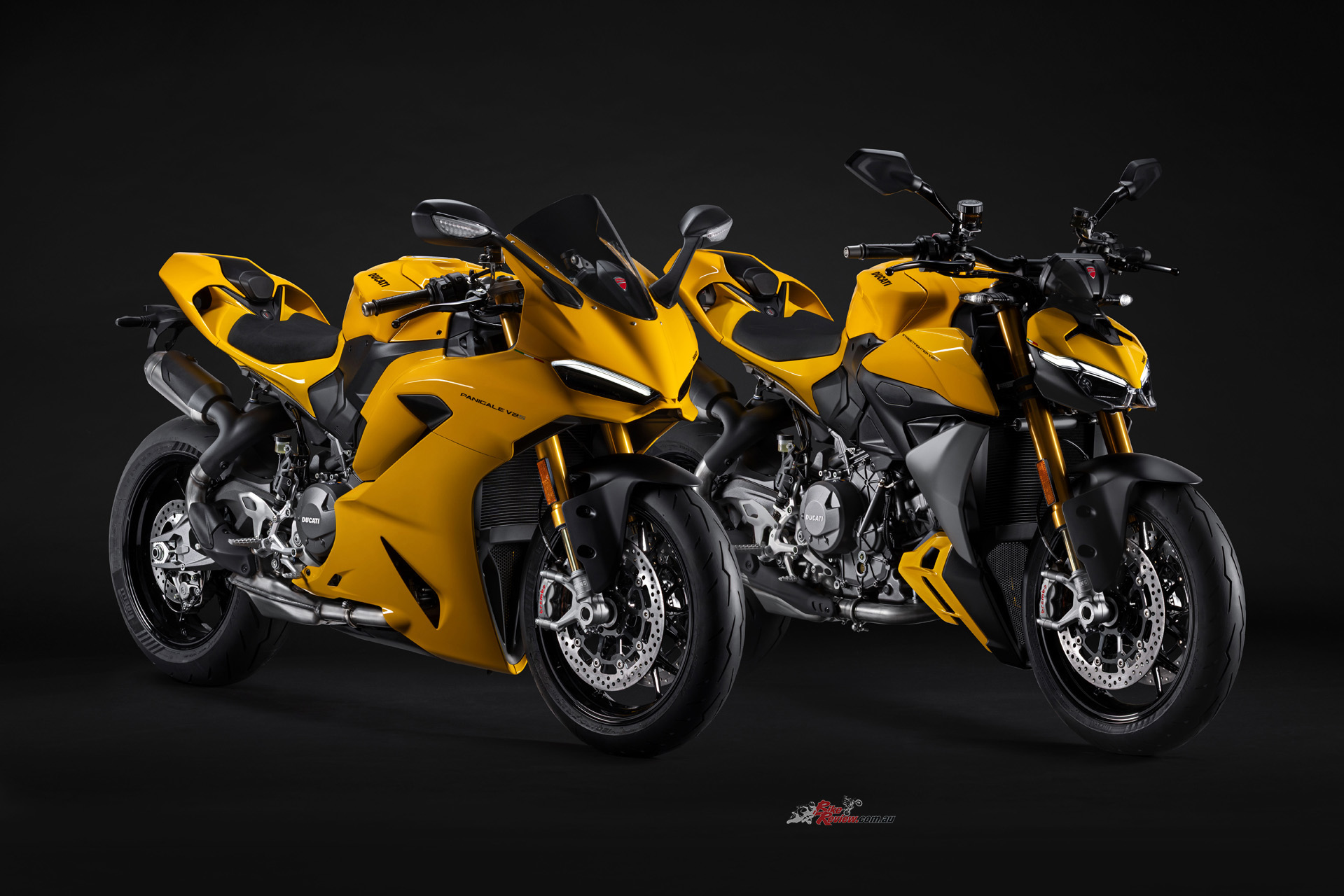
Australian deliveries are scheduled to begin in July 2026.
EICMA 2025 Ducati Gallery
The Author