




BMW’s 210-horsepower M 1000 R Competition blends superbike performance with nakedbike road manners and race-spec componentry. Check out our test... Photos by Graham Bain
The BMW M 1000 R Competition takes the naked superbike idea to its logical extreme, pairing full-fat superbike power with carbon-heavy aggression and tech that borders on absurd for the road. Last week we ran Pom’s S 1000 R test, now here’s his M 1000 R review.
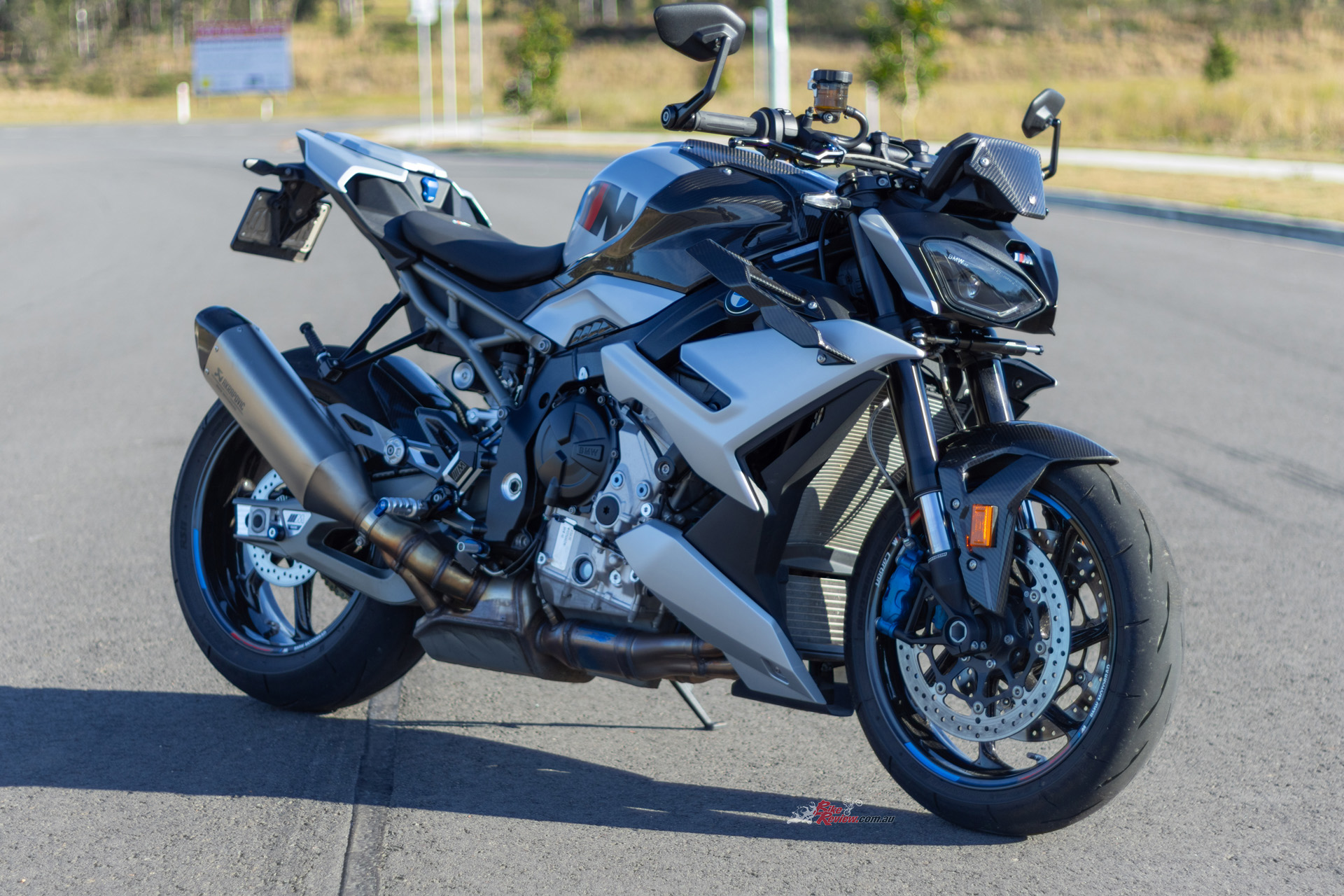
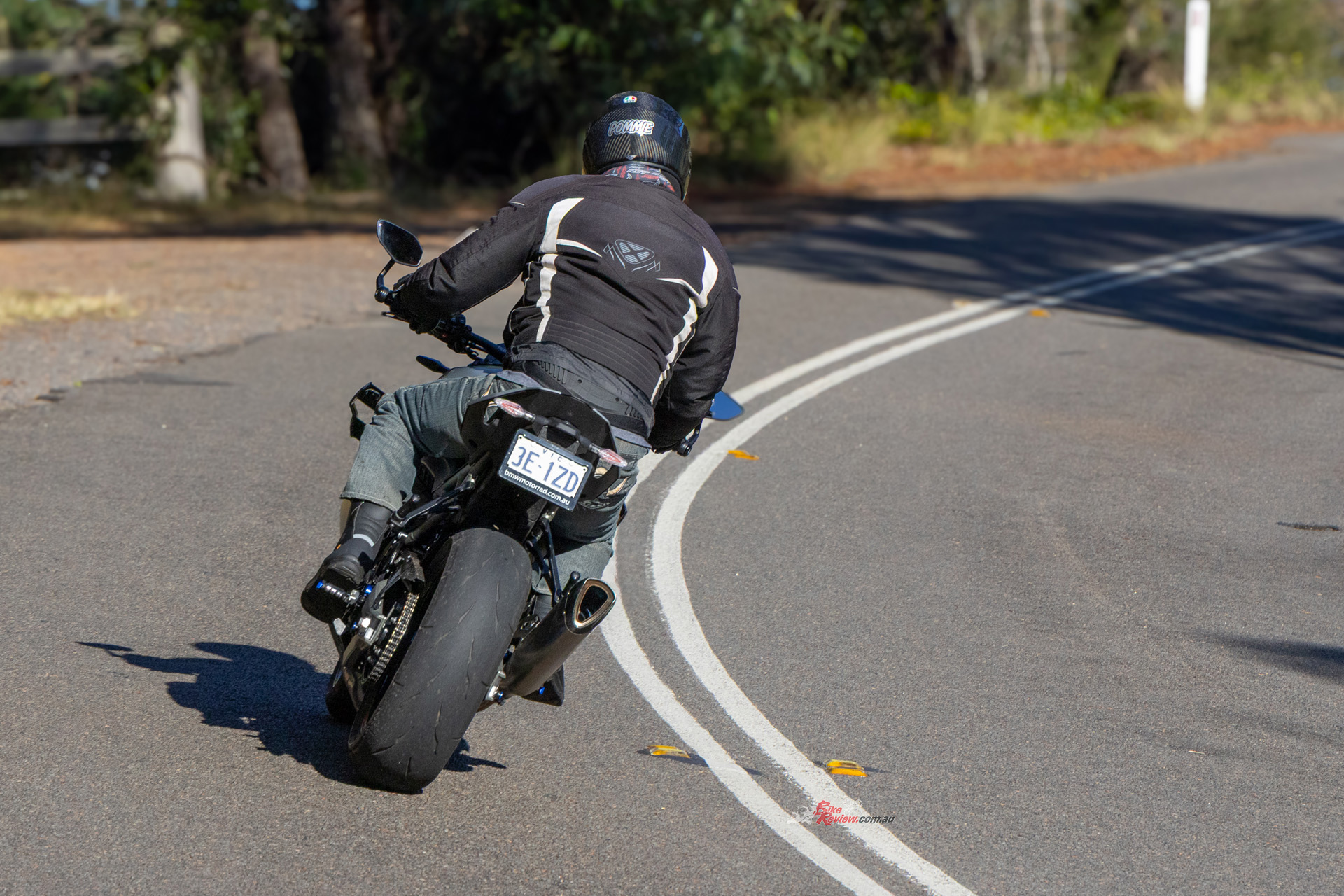
The 210hp M 1000 R in Competition spec is pure muscle.
If ‘wow factor’ is all you need then the BMW M 1000 R Competition has it in spades. Drooling in carbon-fibre and CNC-machined billet parts, the M is certainly a talking point, but it’s so much more than just a stylish exotic bike, as I find out. Gone are the days when we see a detuned version of a superbike engine used in the naked version… no, in the M-series nakedbike, BMW has given us the full 210hp engine that screams all the way to a lofty 14,600rpm redline – and it’s nuts!
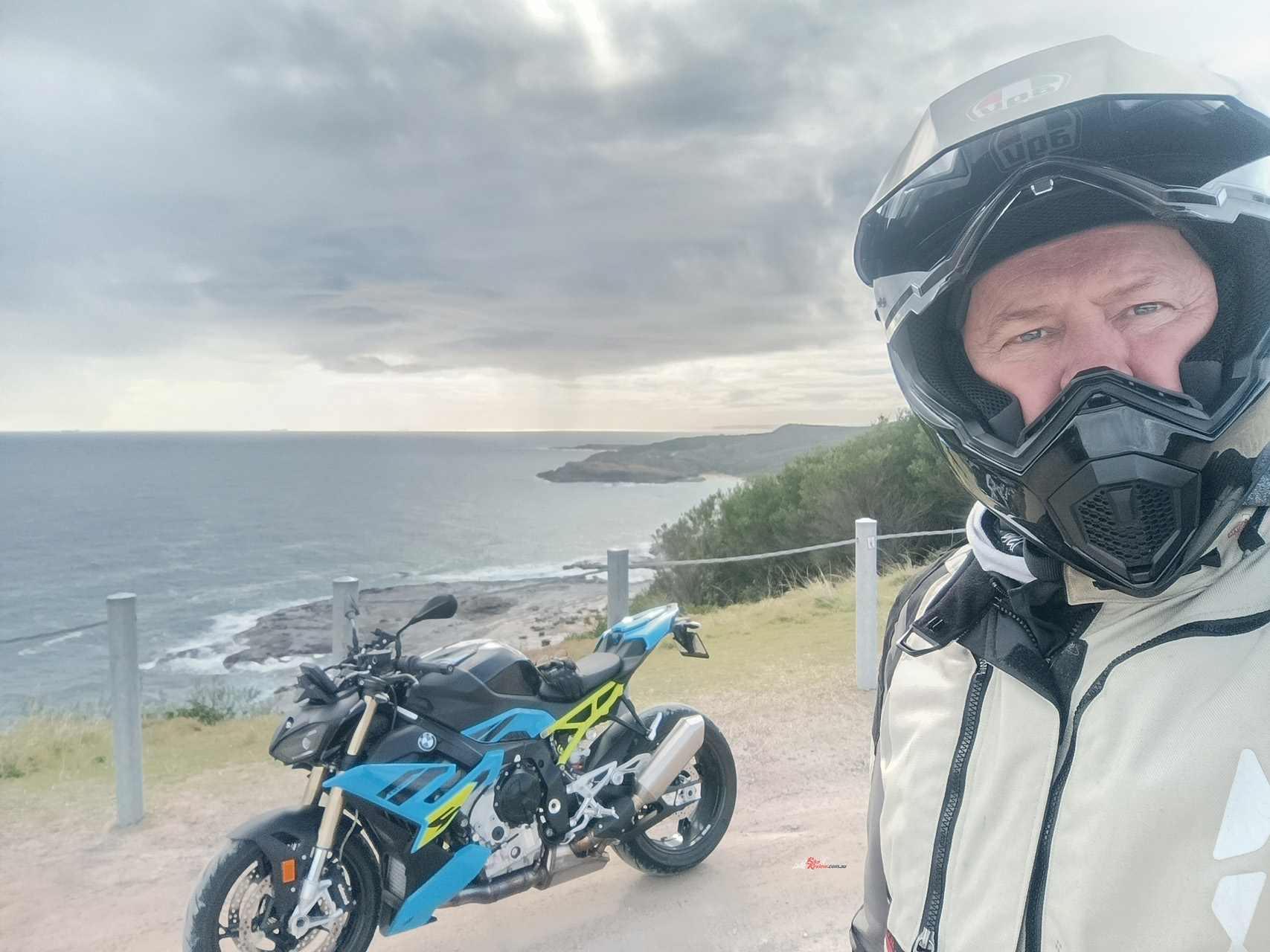
To be fair, I knew the M 1000 R would be amazing, because I’d just swapped it for the tamer S 1000 R and that bike blew my socks off. It was so much fun to ride, so add another 40hp into a lighter and more agile bike, then it really has the recipe to be truly great.
“In the M-series naked bike, BMW has given us the full 210hp engine that screams all the way to a lofty 14,600rpm redline”…
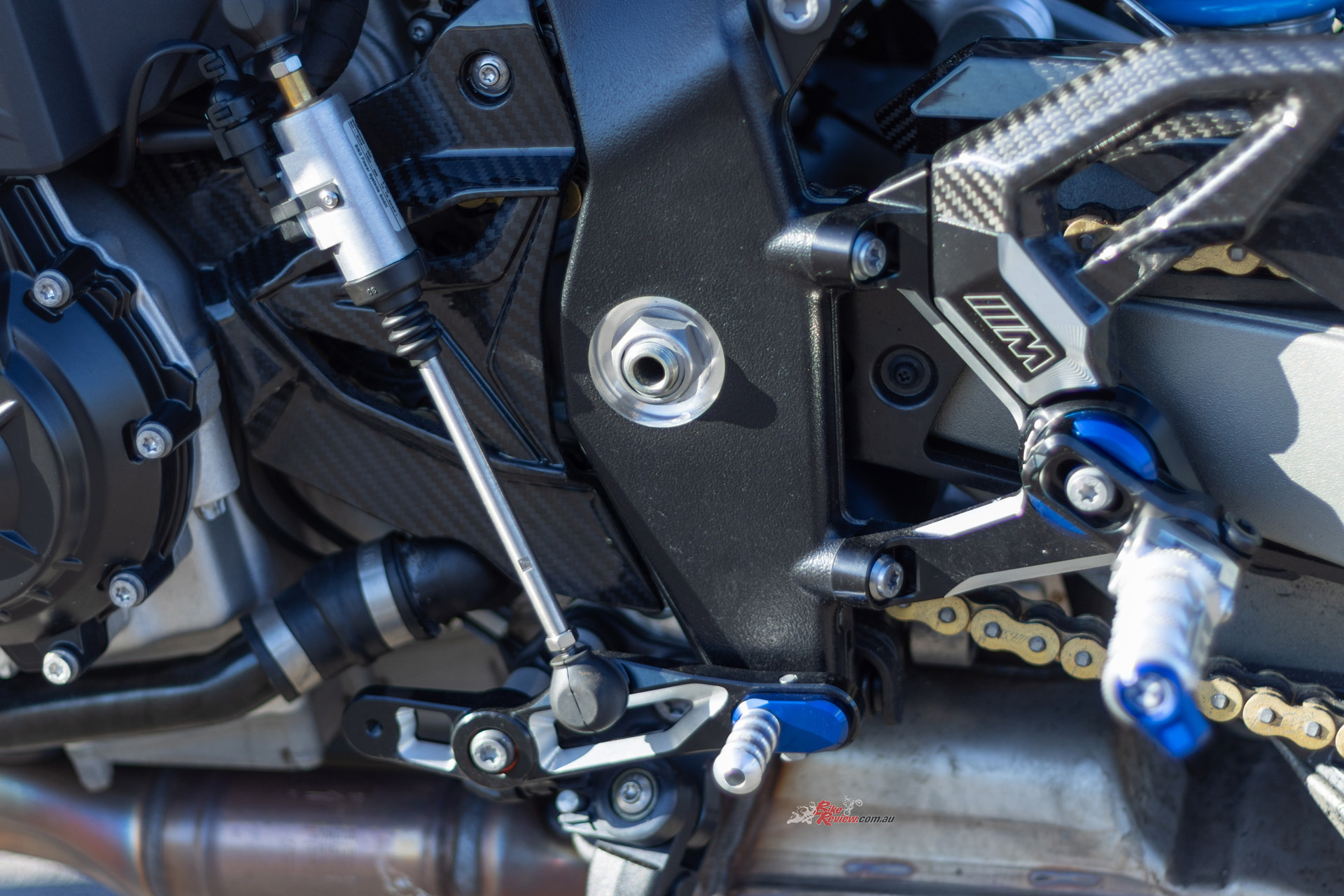
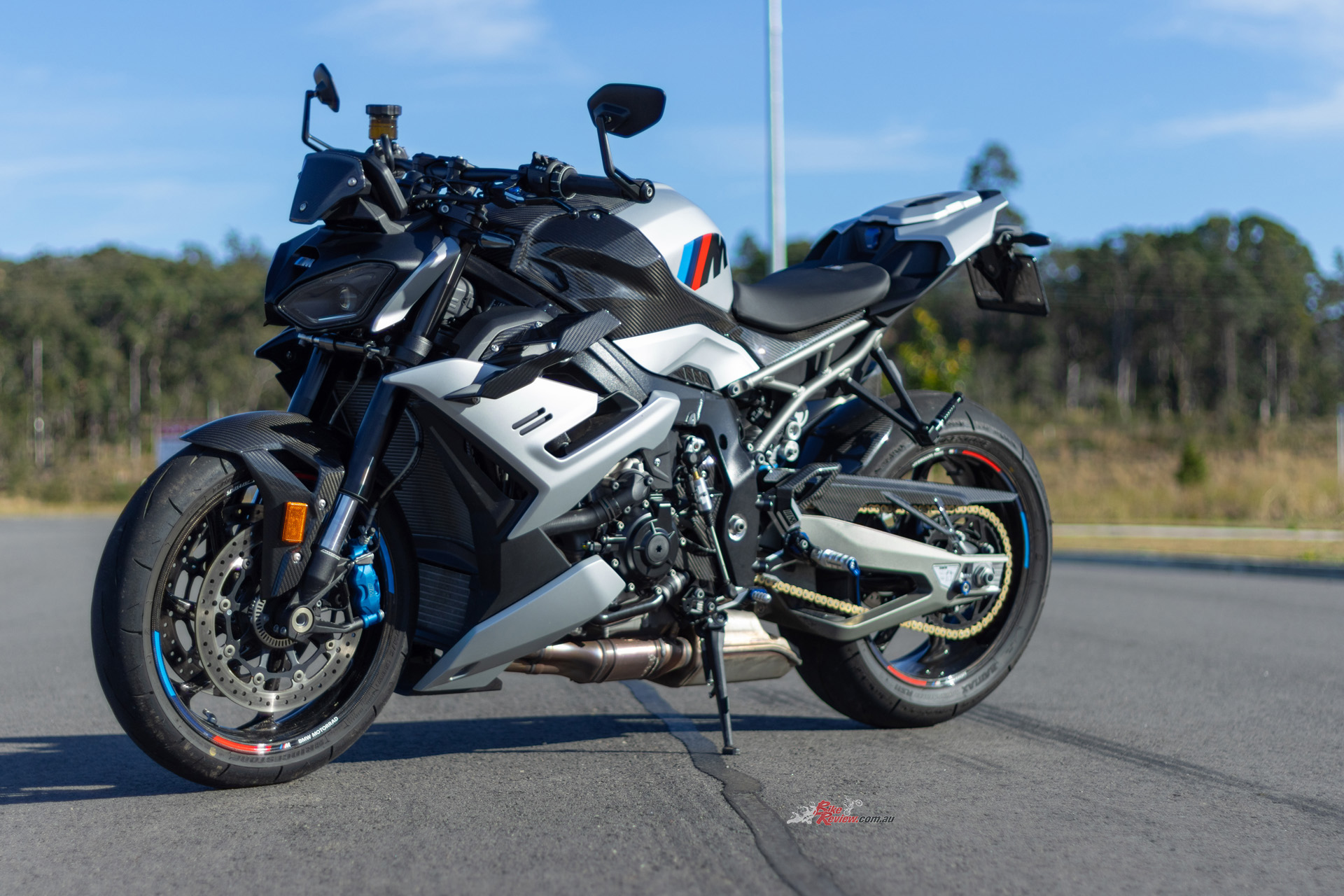
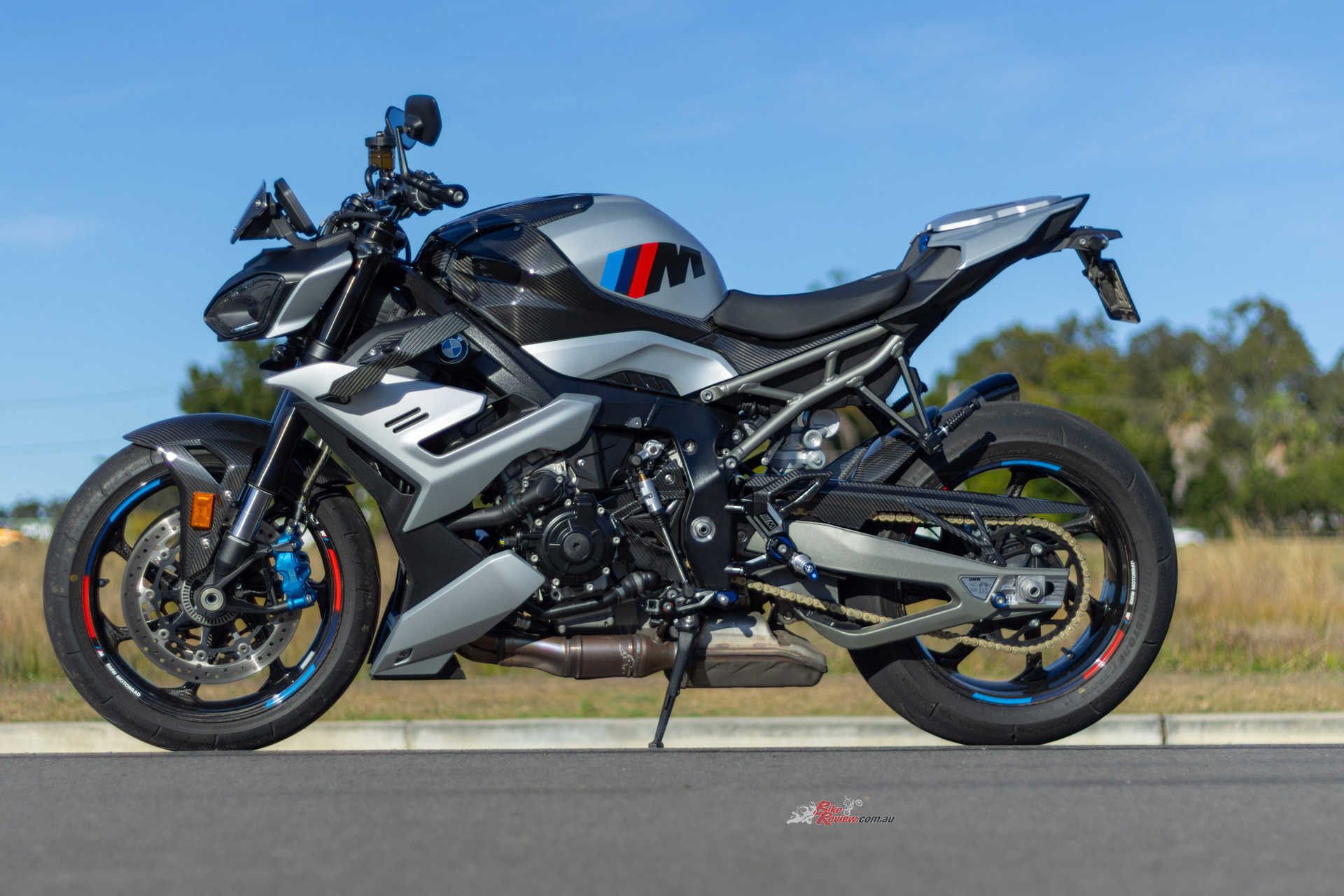
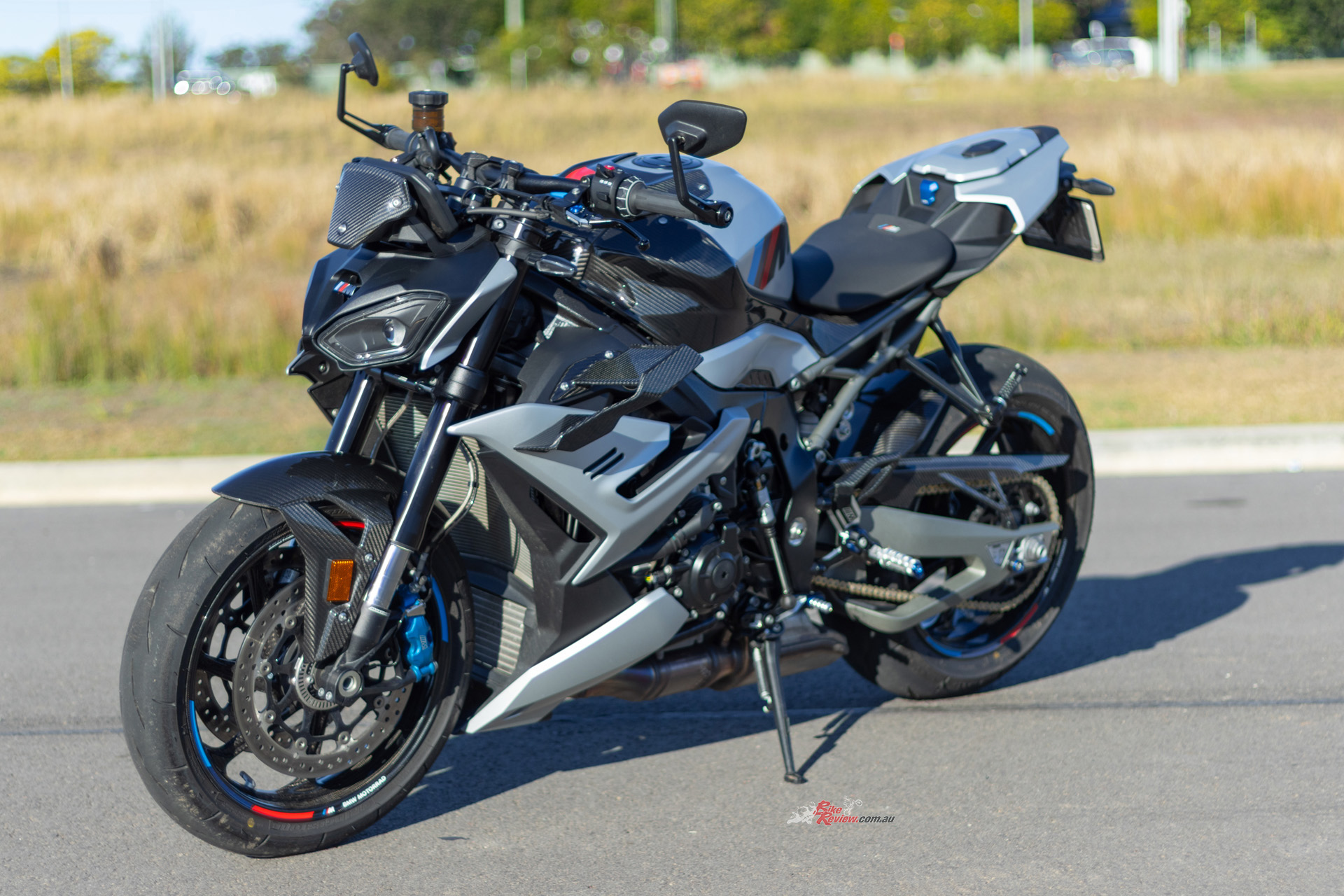
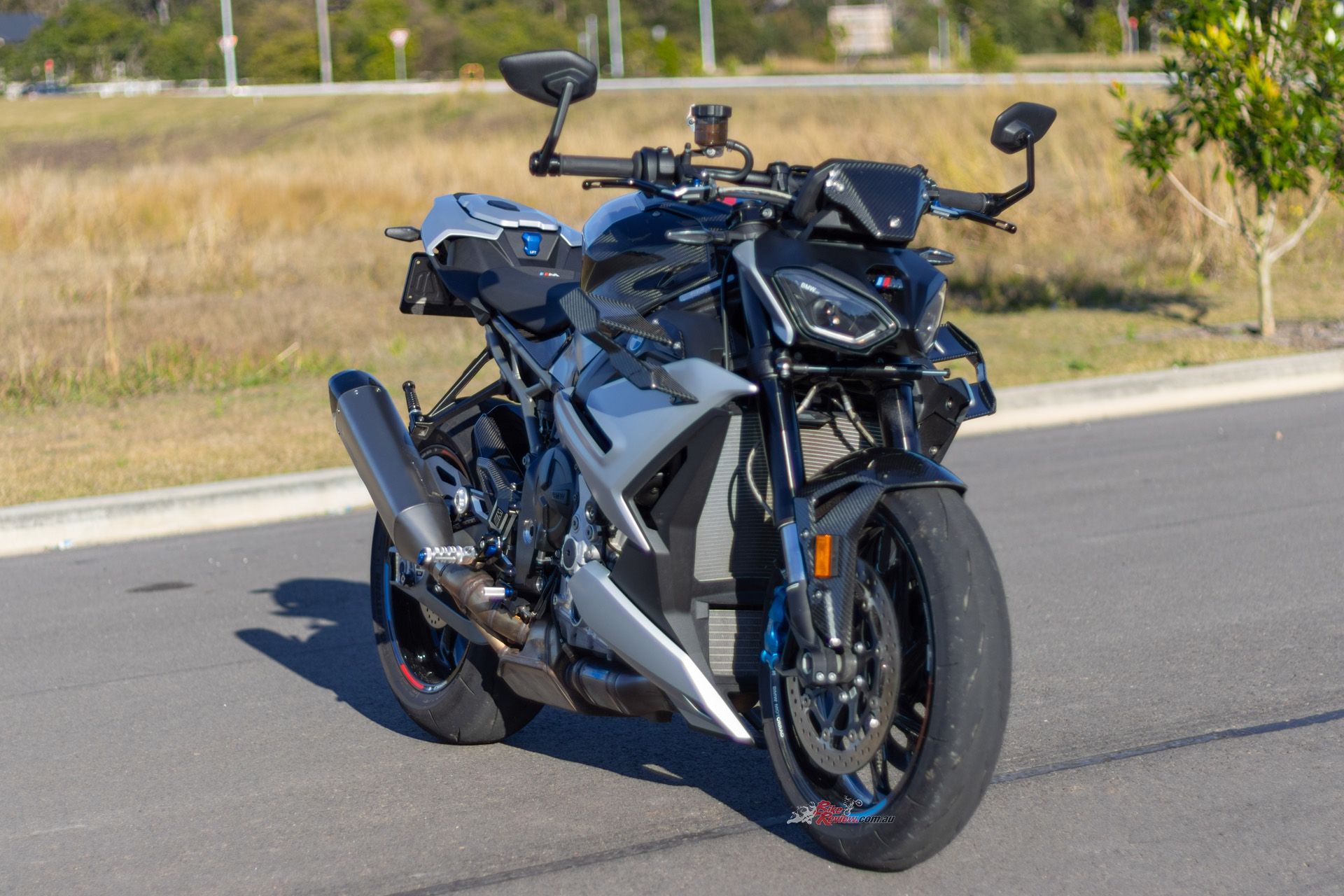
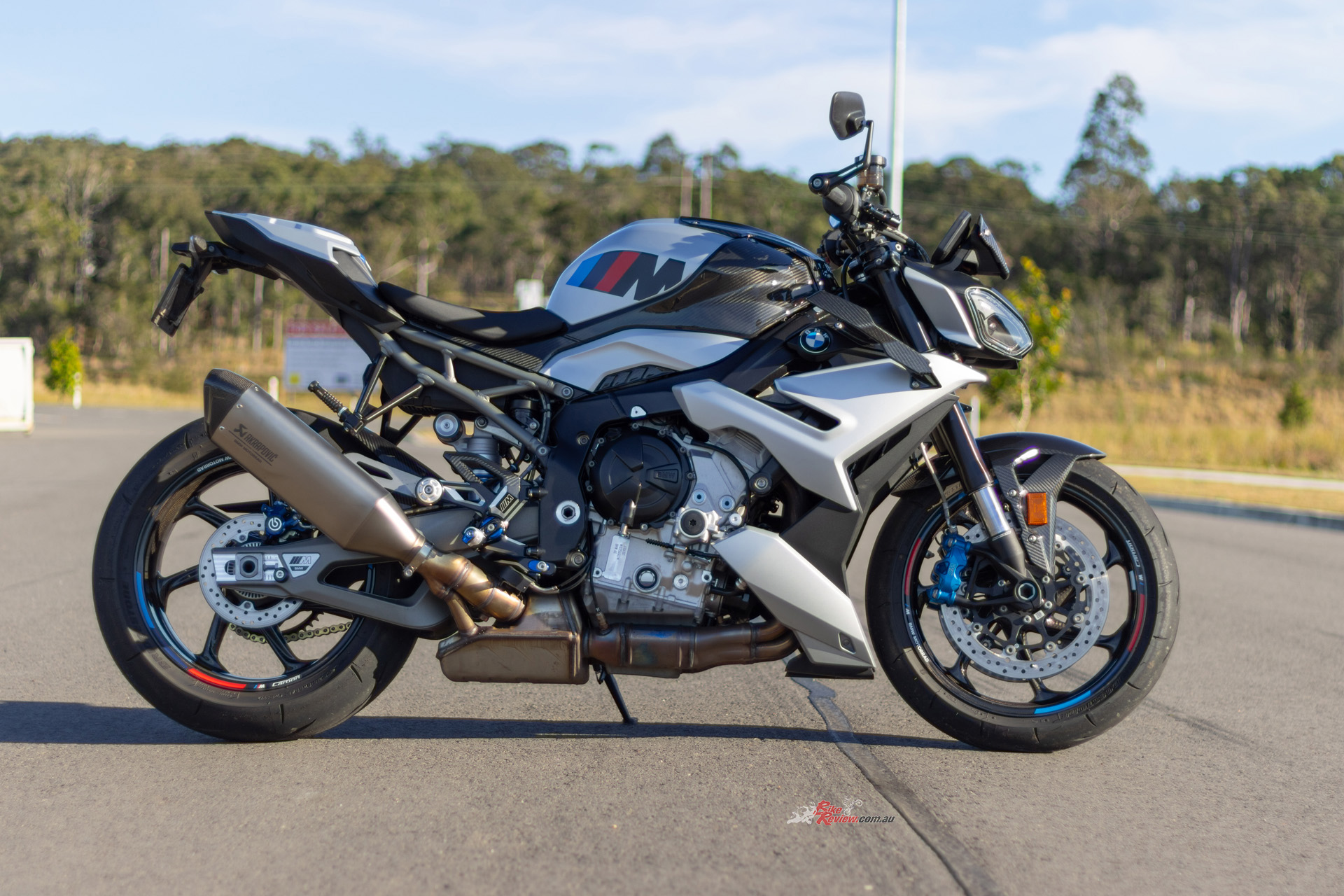
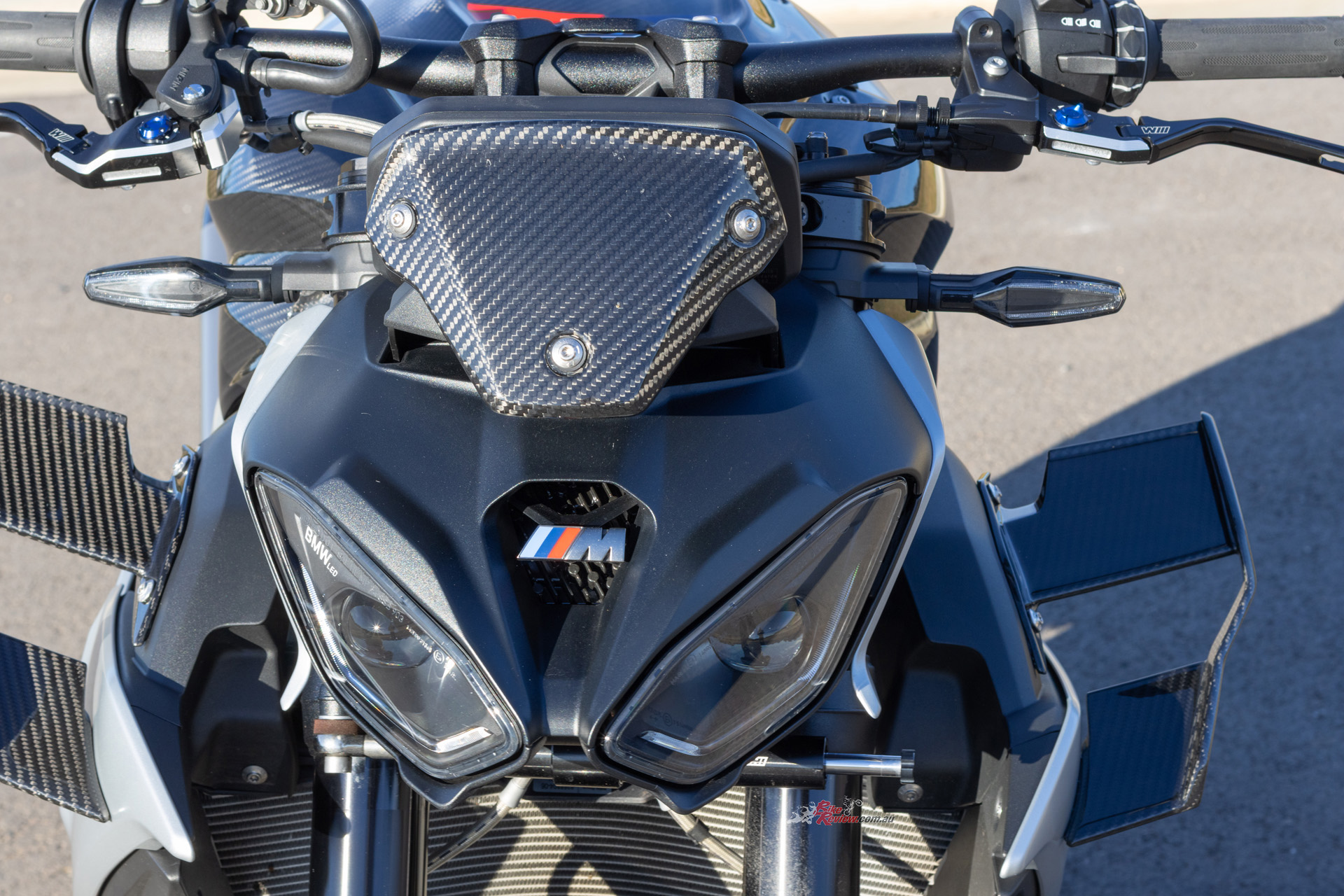
The M 1000 R Competition is a thing of beauty. There is nothing on this bike that I don’t like and with the updated headlights it even looks better than last year’s model, which is high praise indeed. Throwing a leg over the M, everything is just that little bit more special, from the nice billet adjustable levers and footpegs, through to the matte-black M handlebars and triple-clamps.
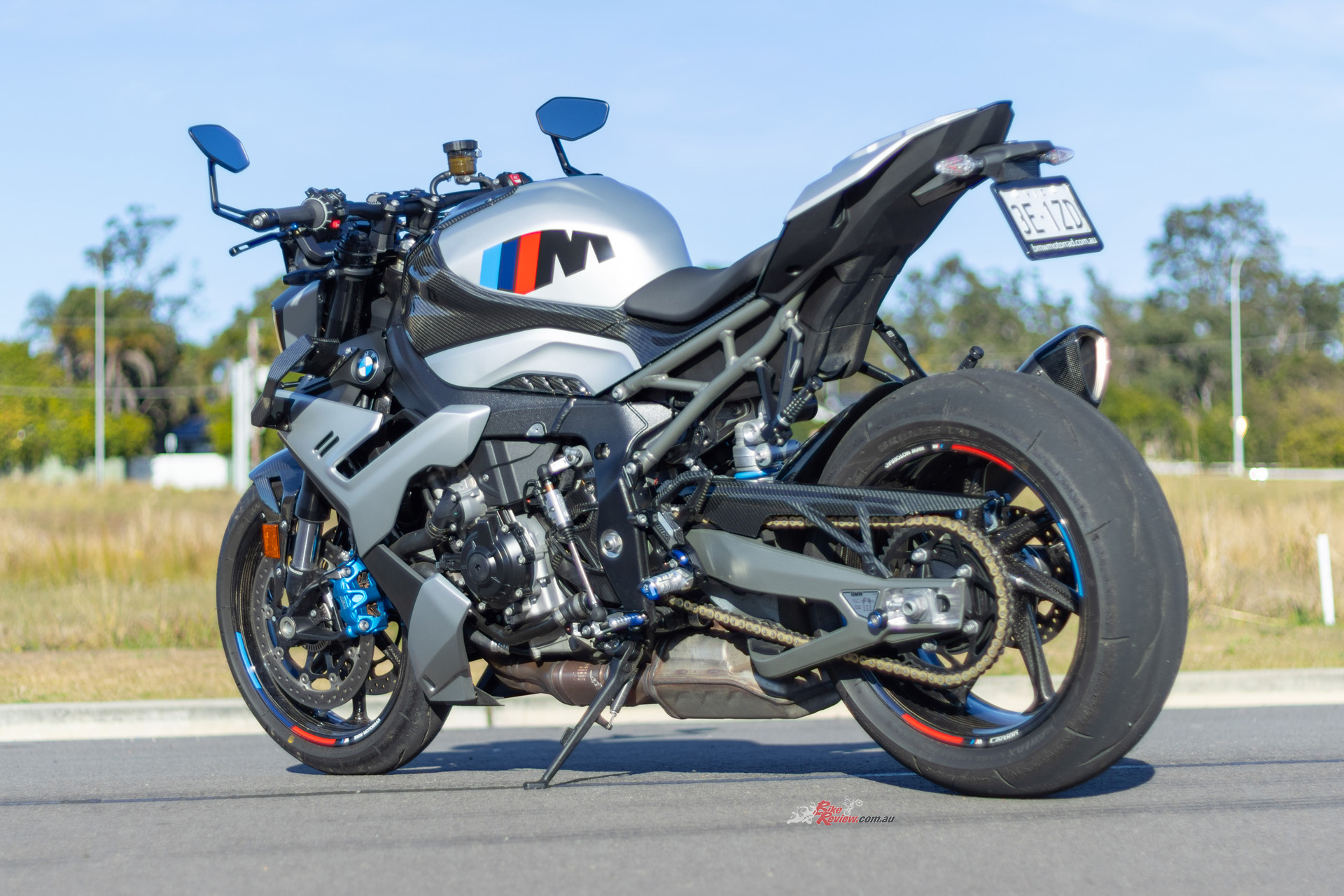
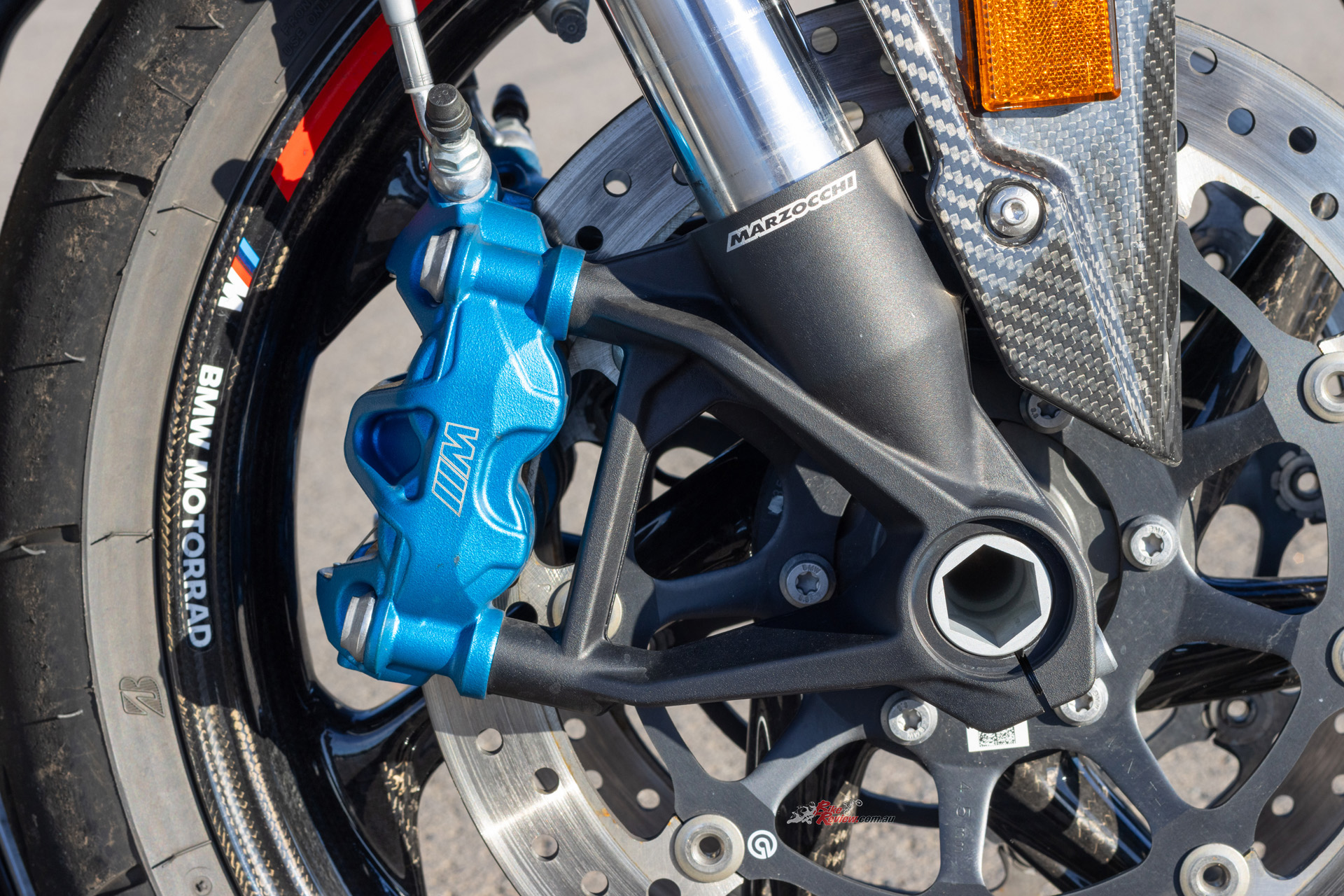
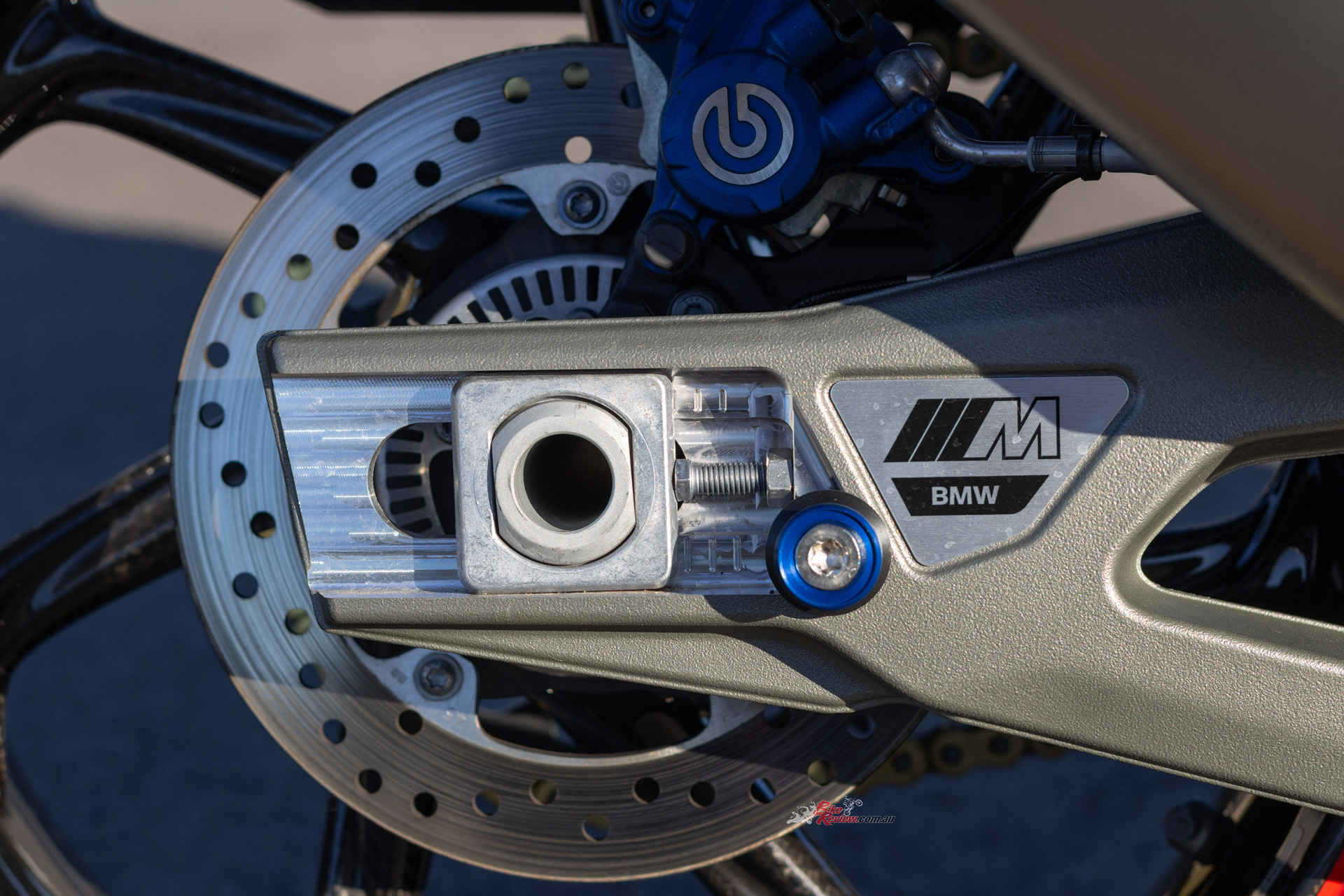
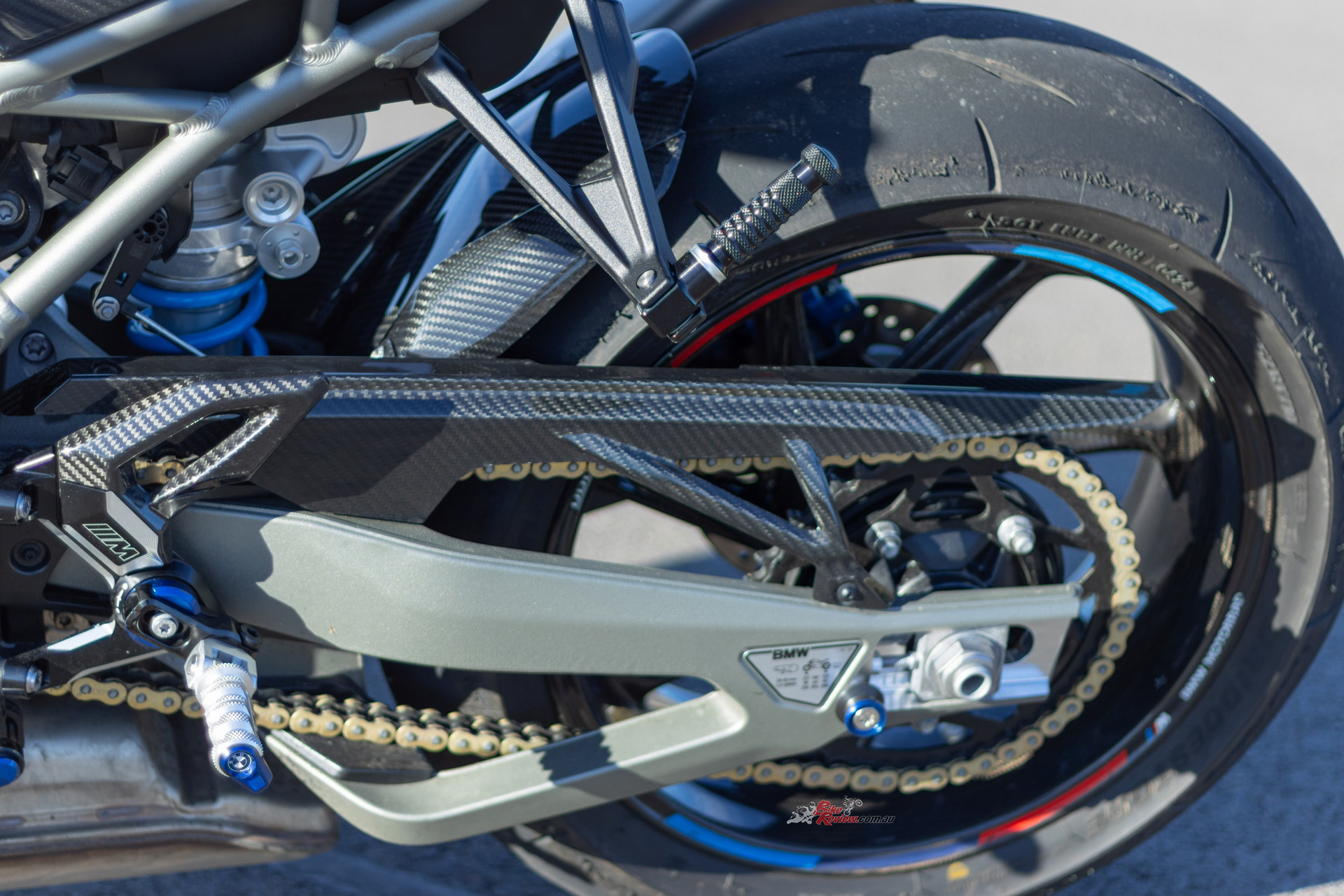
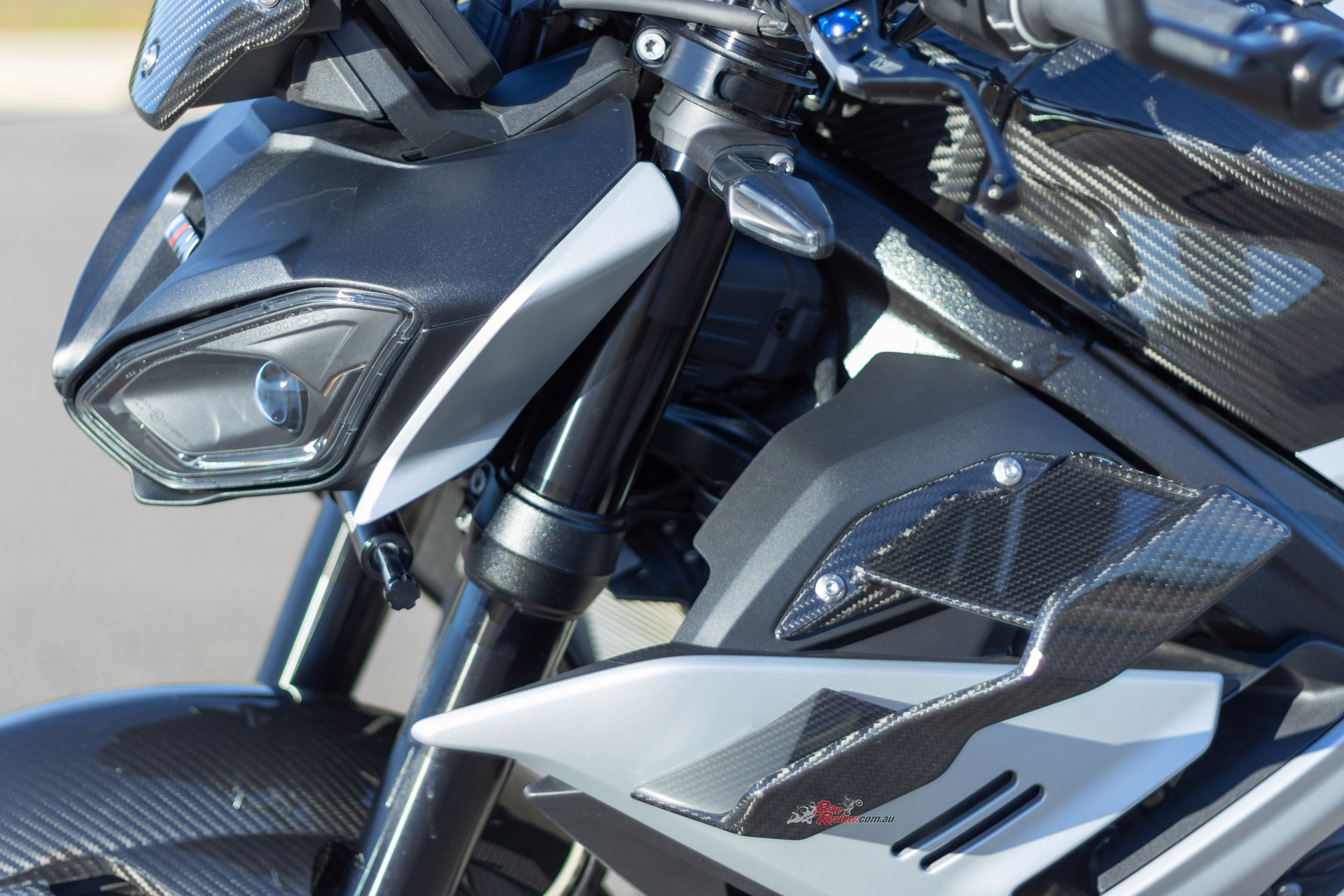
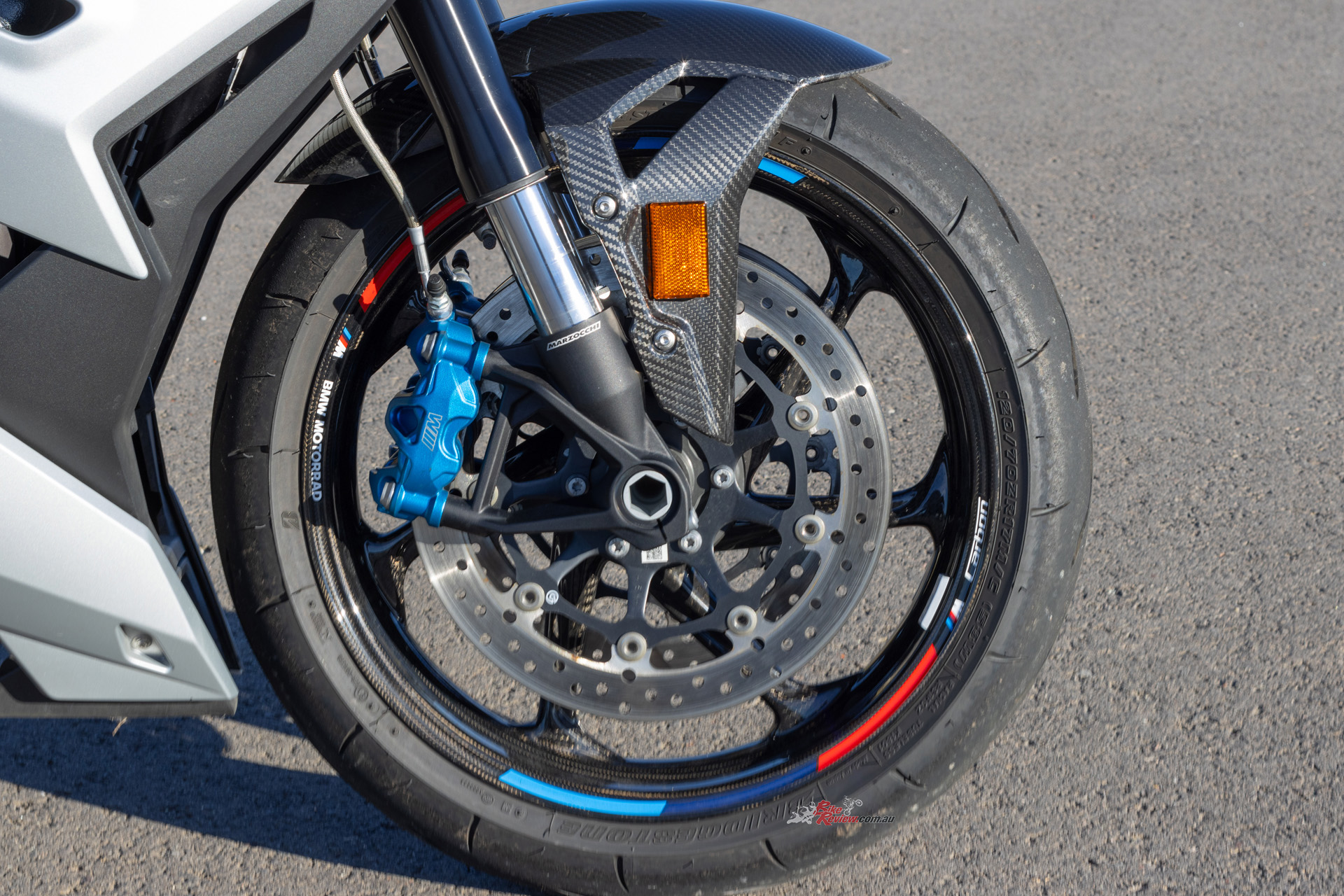
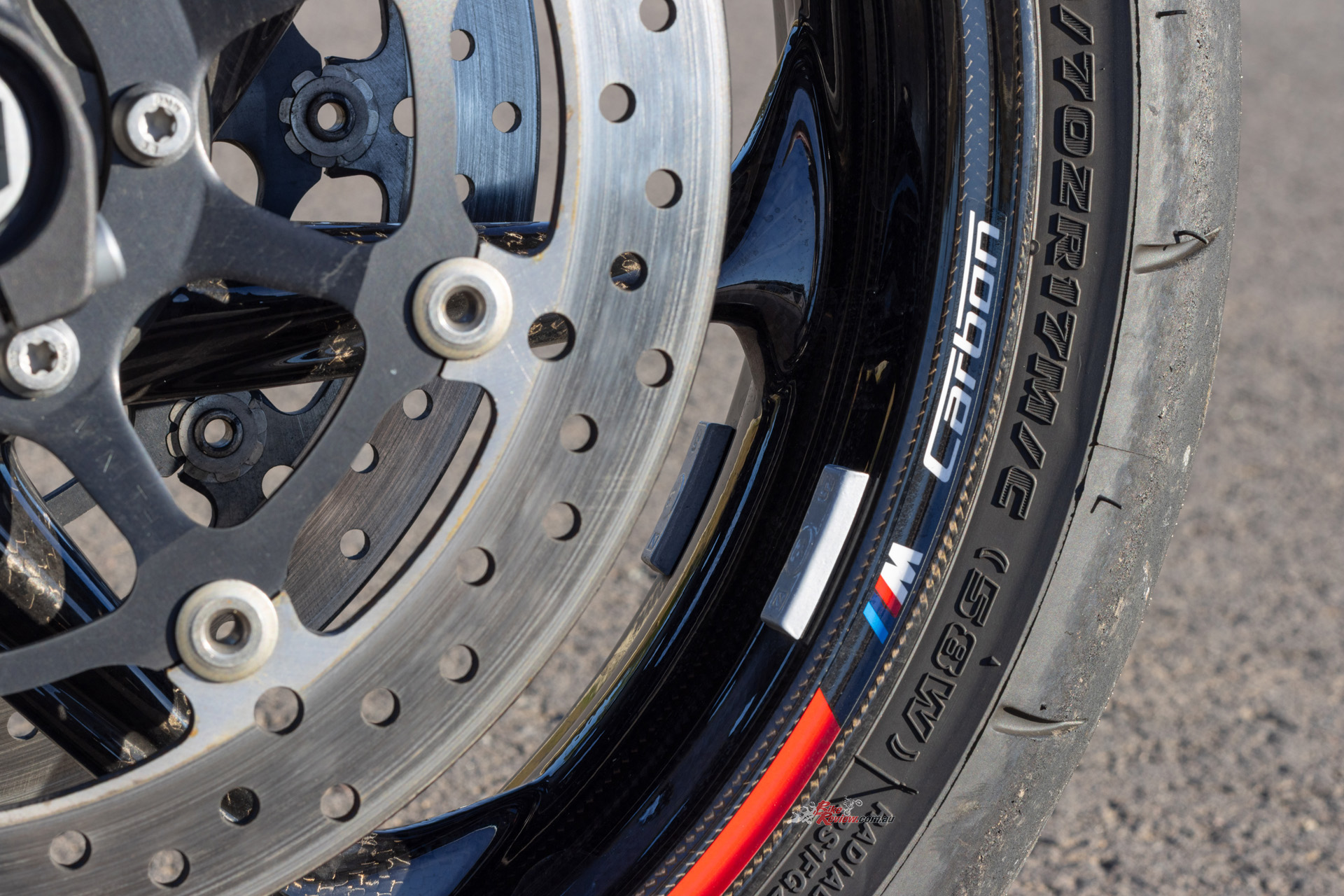
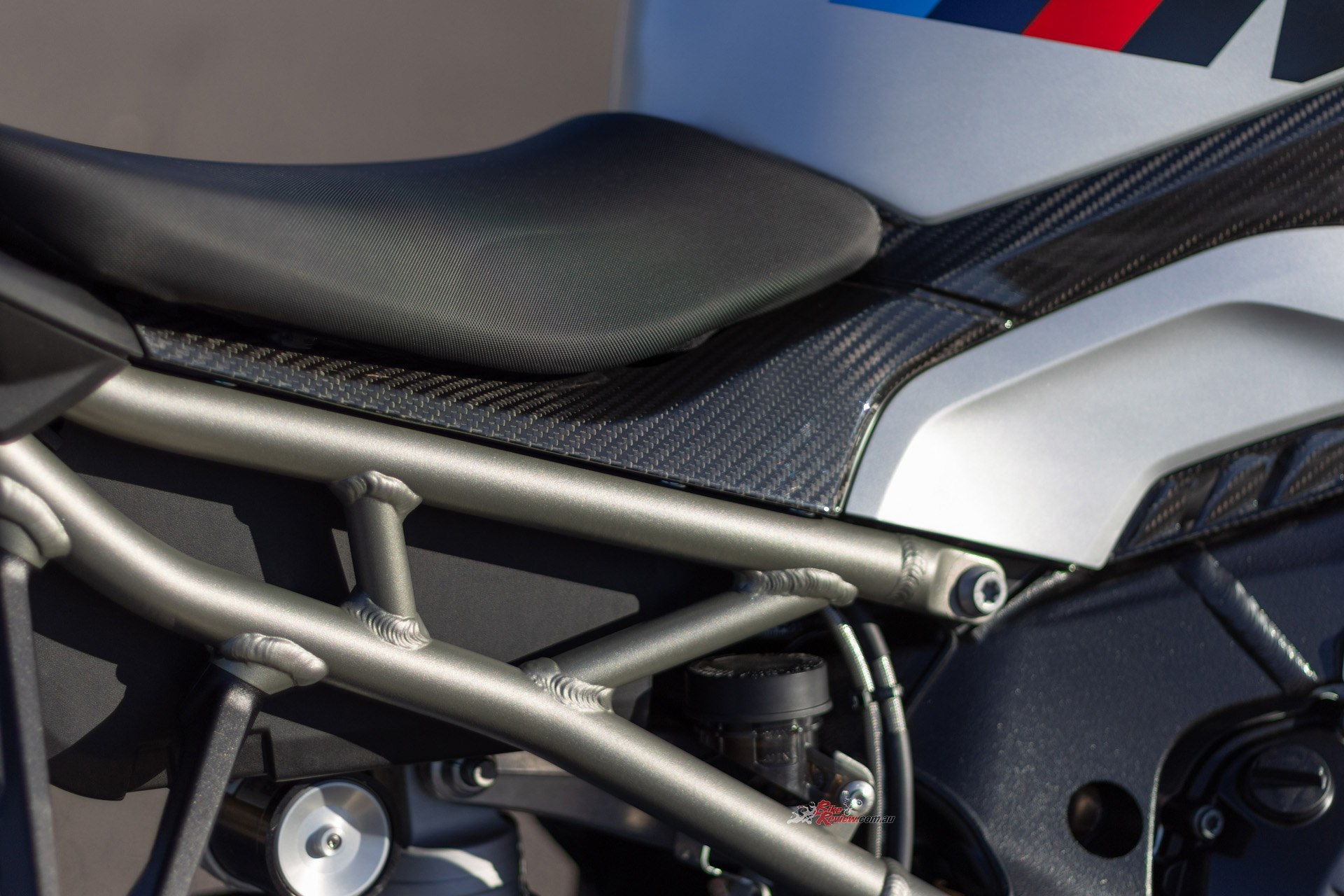
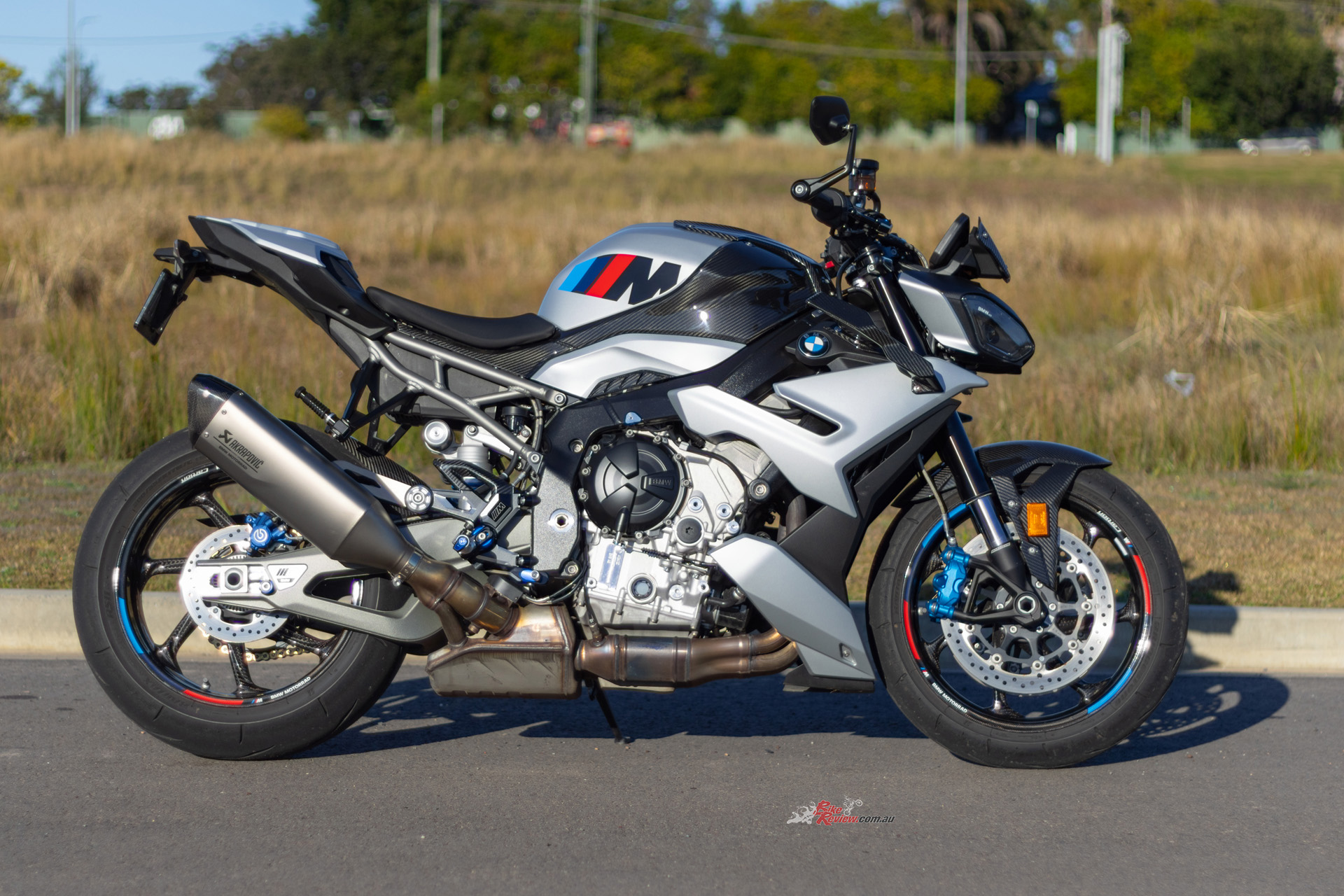
the Competition version adds M Carbon wheels, a swag of billet aluminium parts and various M Carbon components.
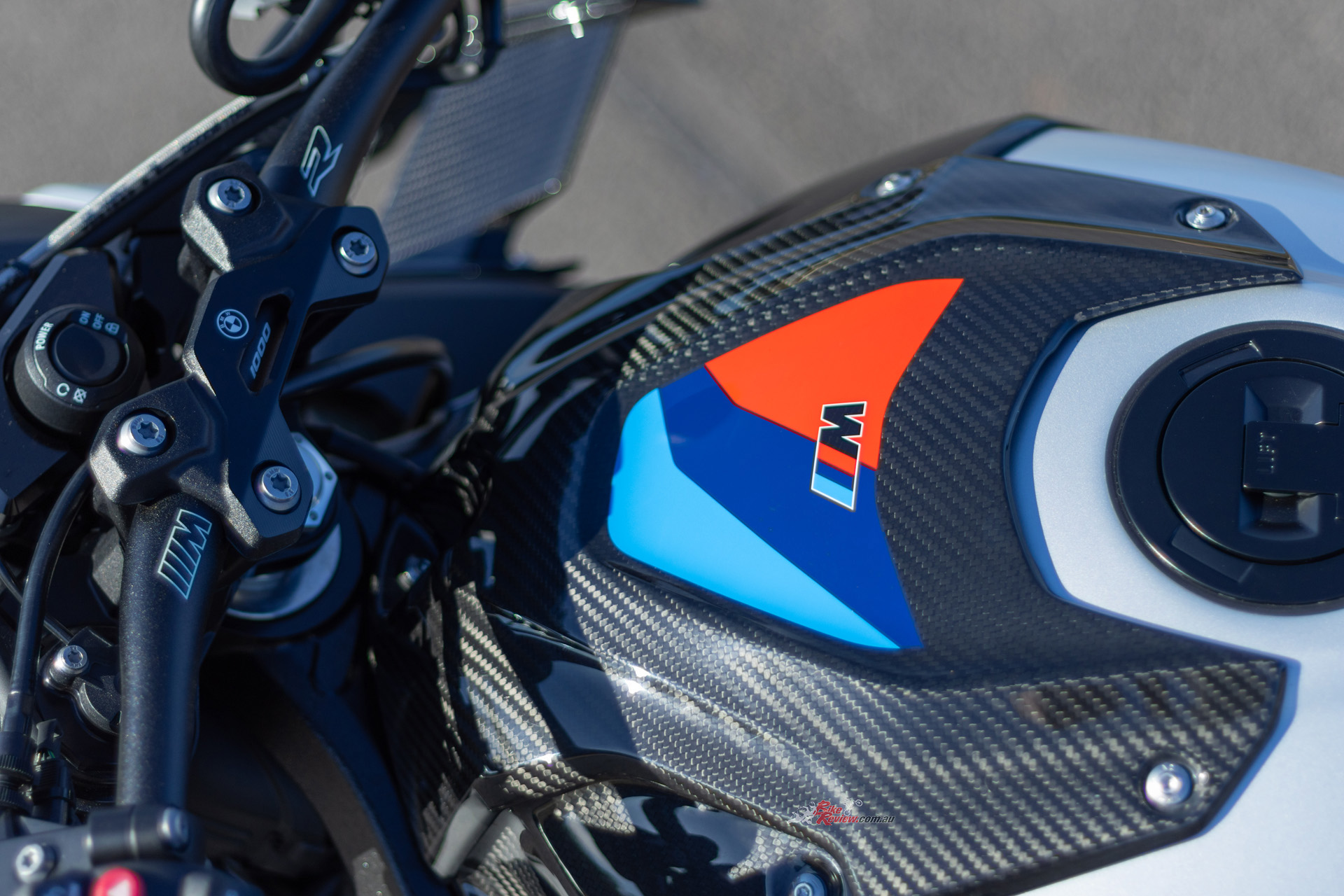
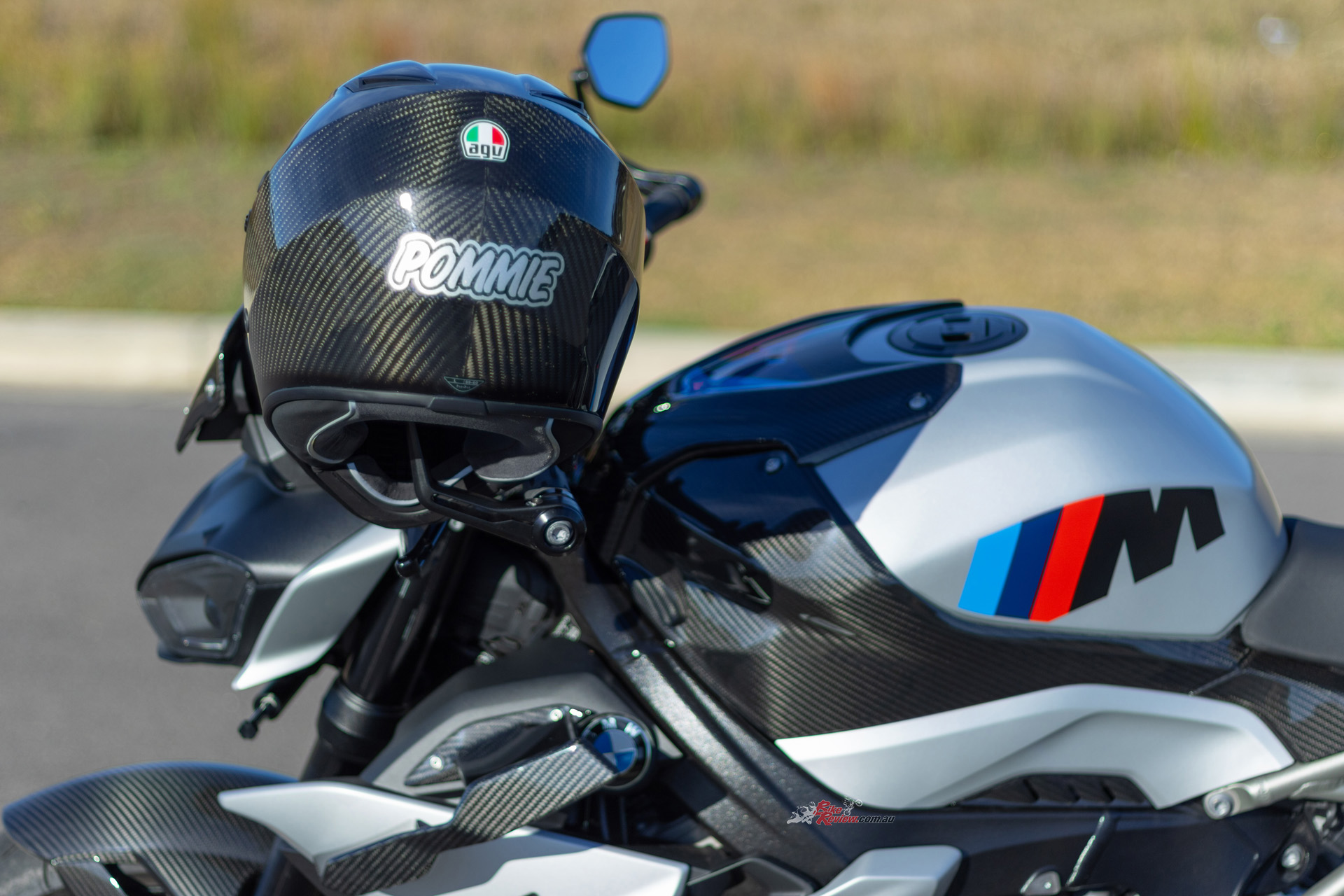
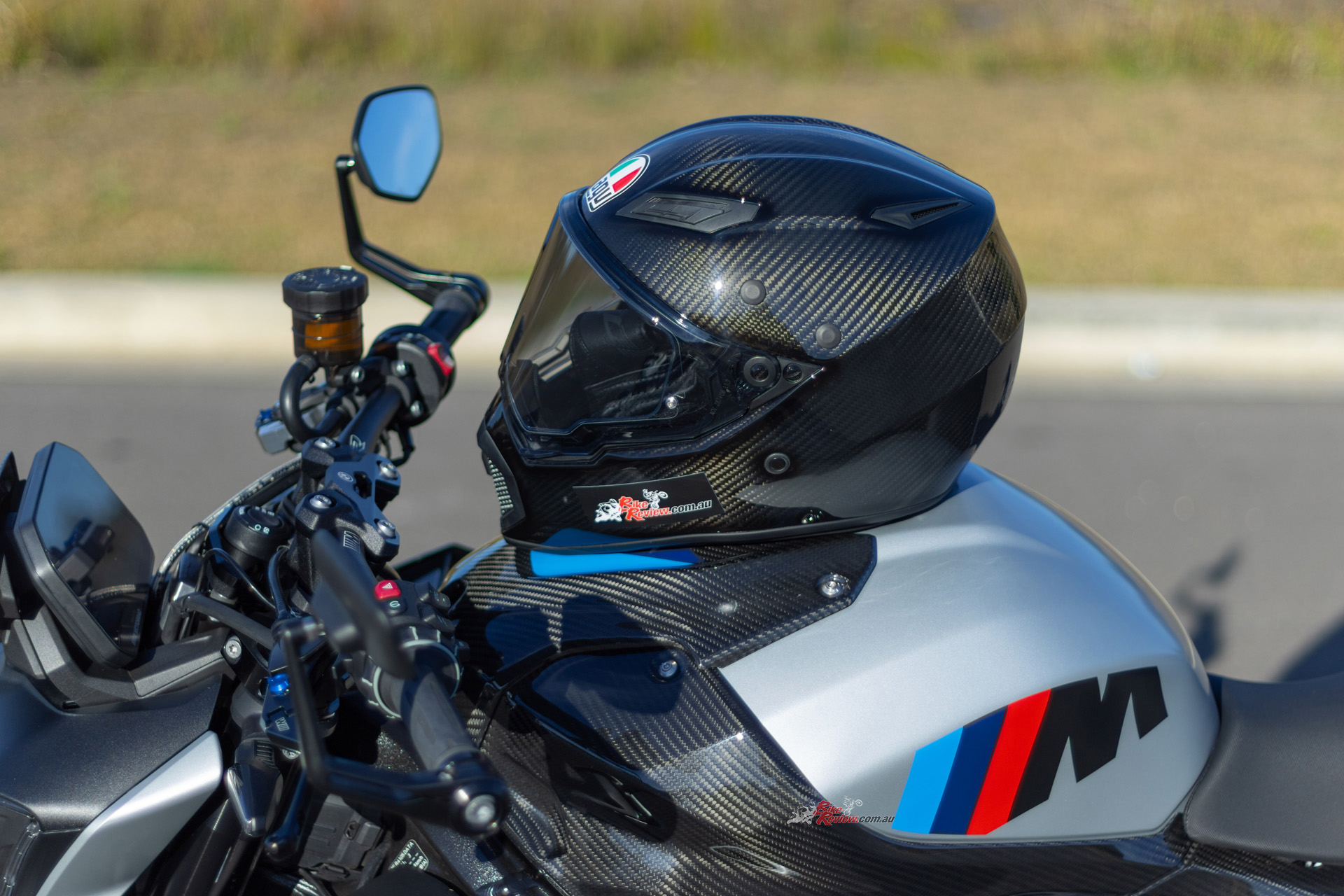
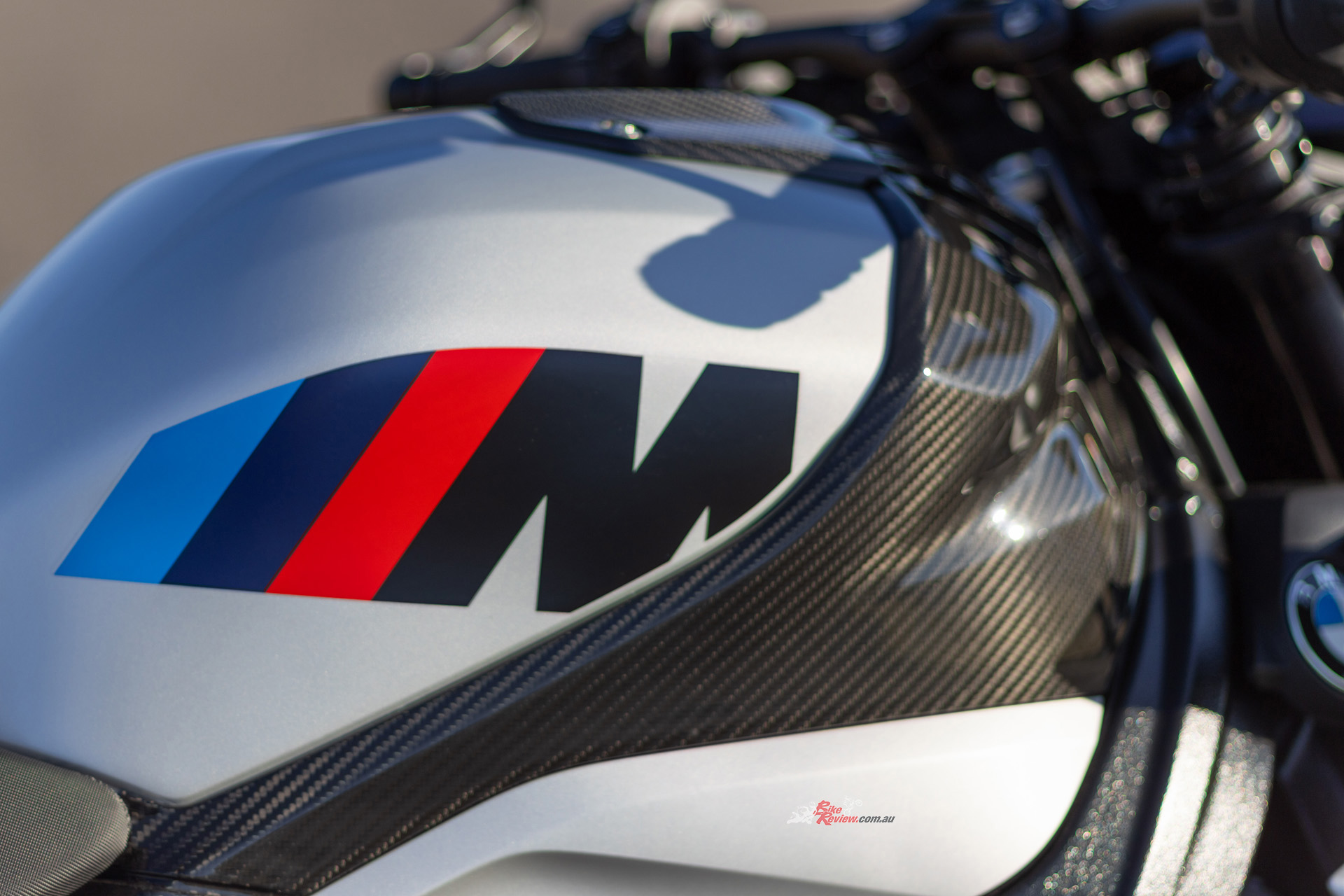
As I sit on the M 1000 R my eyes can’t help but wander down to the beautiful carbon tank surround that adorns the M logo, it really is a special place to sit. On the M model, the switch controls are a bit different, you lose the adjustable suspension button, but get an adjustable traction control switch instead, due to the more race-oriented heritage of the M brand.
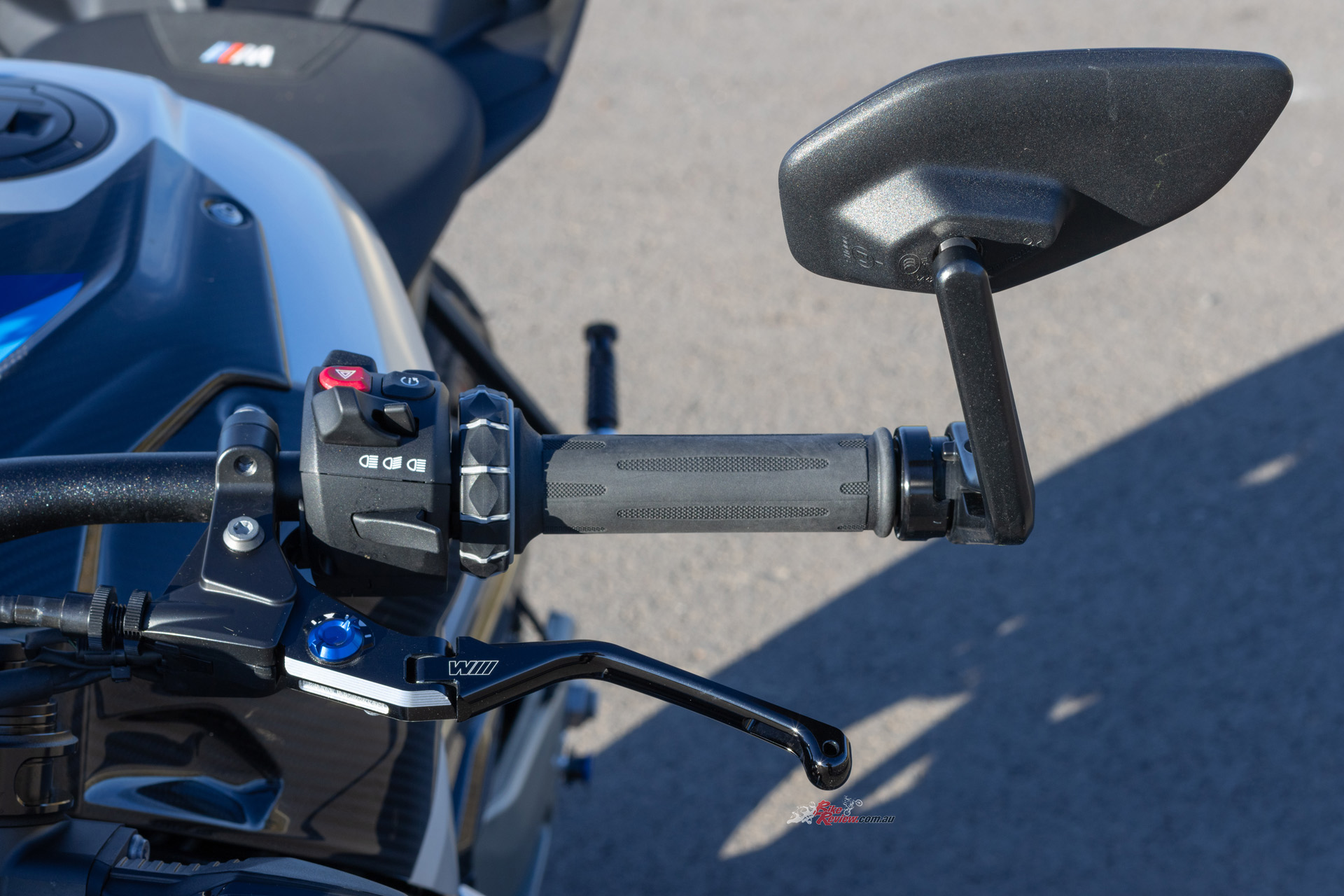
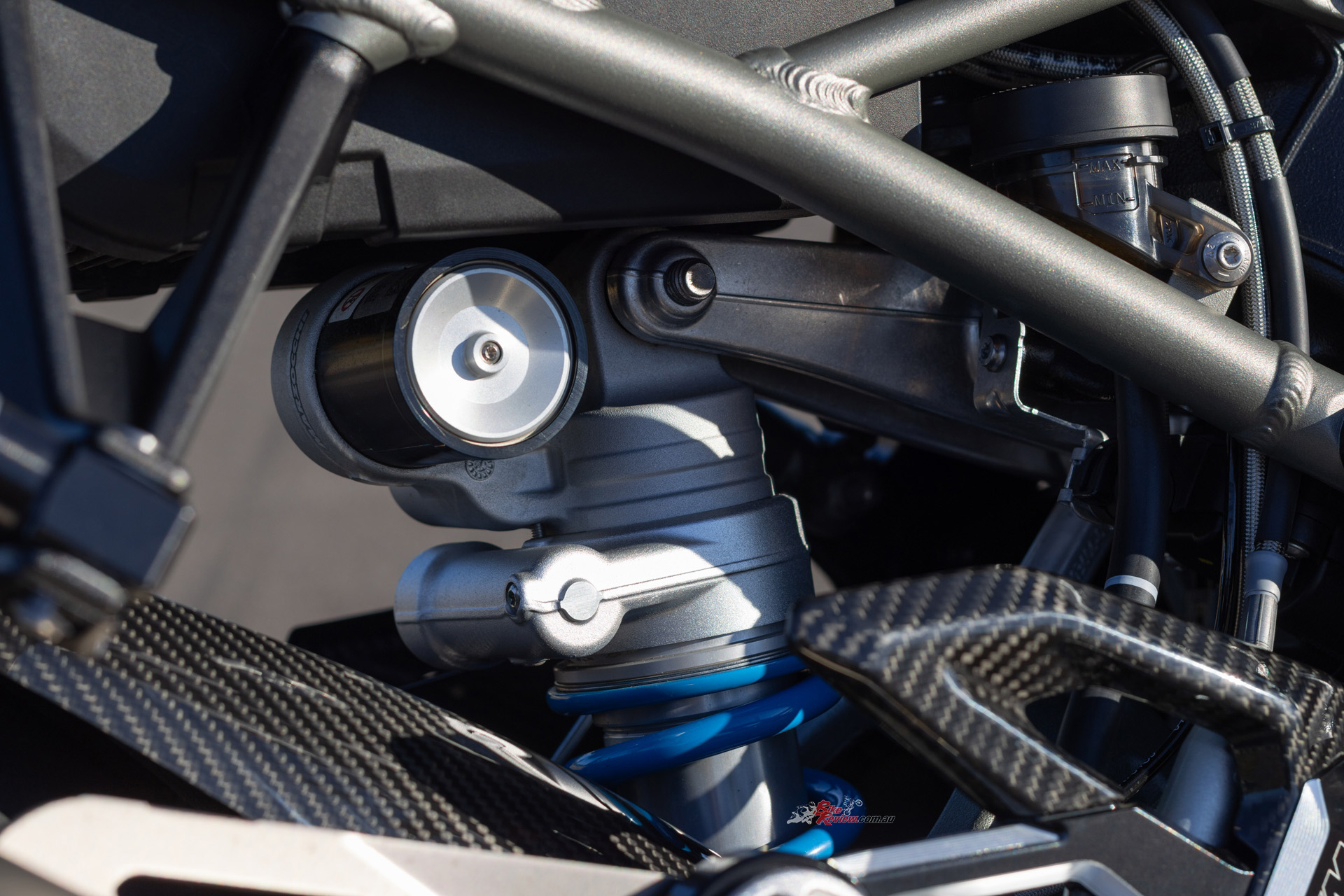
The semi-active suspension – or Dynamic Damping Control (DDC) as BMW calls it – is still adjustable, but now you need to go through the menu on the 6.5in TFT dash and into the modes to do so. As well as the standard Rain, Road and Dynamic modes, the M bike also has Race plus three Race Pro modes to play with. These modes have endless adjustability should you feel like backing the bike into a corner through the Brake Slide Assist function, or do a bit of drifting while exiting the bend with the adjustable traction control.

You can also sharpen up throttle response, adjust the wheelie control, engine braking and suspension setting for each of the Race Pro modes, all at the press of a button. You also get launch control and pit-lane speed limiter, the list just goes on and on.
“These modes have endless adjustability should you feel like backing the bike into a corner through the Brake Slide Assist function”…
Unfortunately for my first ride on the M Competition, the heavens had opened and I had no choice but to ride the 50k freeway commute home in some of the worst conditions I’ve ever ridden in. Thankfully the M bike has Rain mode, which I took full advantage of to keep me as safe as possible, reducing power, smoothing out the throttle response, increasing traction control levels and ABS function was making me thankful for BMW’s modern technology.
The top-shelf brakes are powerful and complemented by ABS Pro.
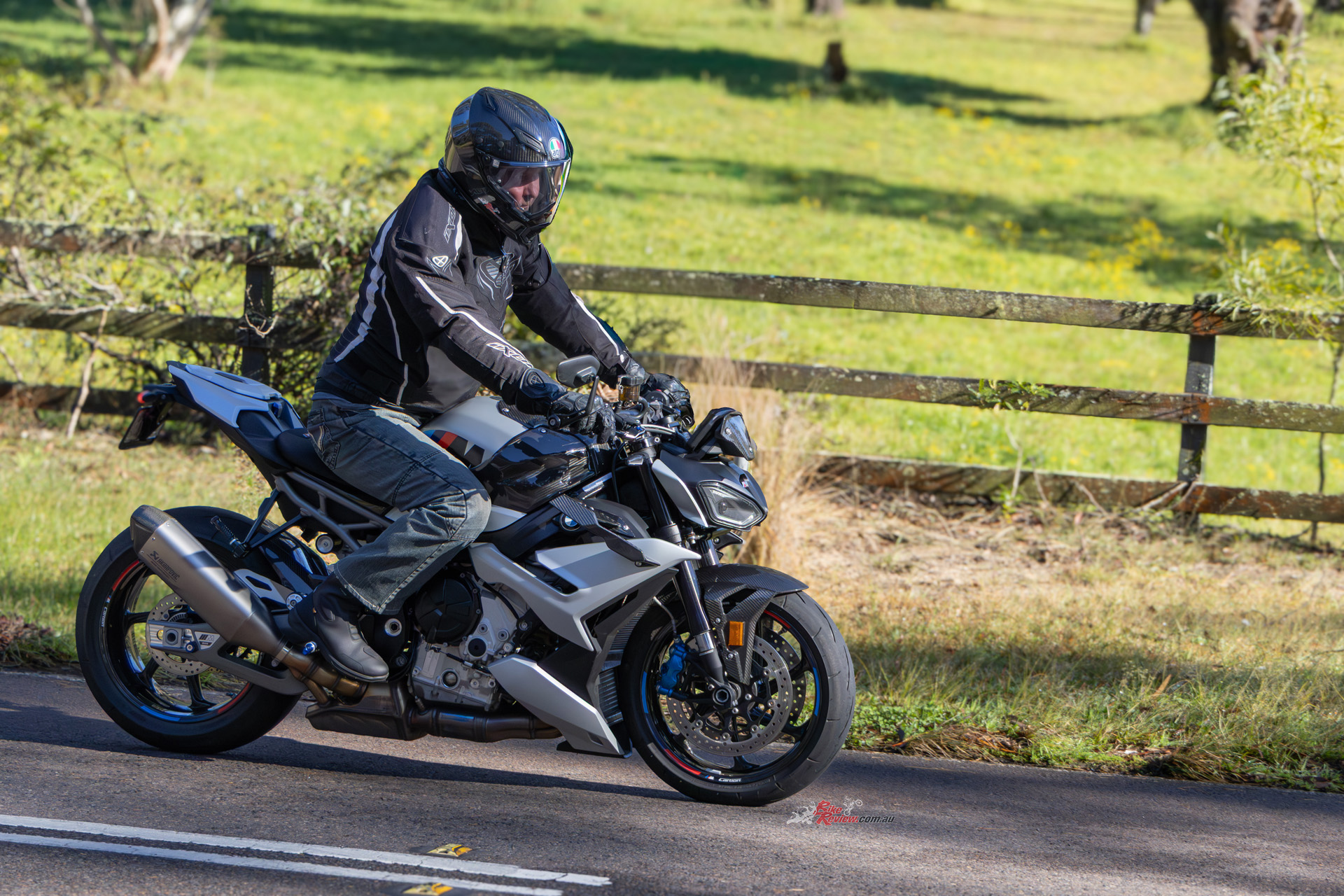
Because the Ed only gave me the bike for a week and the weather Gods didn’t shine on me, I didn’t get to ride the M anywhere near as much as I would have liked. I never truly got to ride the bike on a fully dry road, which was a real shame for such a powerful bike. When the sun did finally come out I was determined to make the most of it and even though the roads were patchy, the M’s performance needed testing.
I had an idea of what it would be like, because I was at the launch of the M 1000 RR Competition, but that was at the track and flying though hedgerows always feel faster and more exciting, at least for me anyway. The S Model has 126.7kW [170hp], which I thought felt incredibly fast, this M bike has 154kW [210hp] due to having the full Shift-Cam performance engine and it’s really hard to describe what that sort of power feels like.
“It’s just mental, really. You twist the throttle and the thing accelerates so fast you just think, ‘wow’”…
It’s just mental, really. You twist the throttle and the thing accelerates so fast you just think, ‘wow’. Then you realise that the shift cams are only just starting to do their thing and there’s a whole other level of performance to come. I’ve said it before, you don’t need this much power for the road and I still believe that, it’s purely a bragging rights thing, because you can’t use it – not legally anyway…
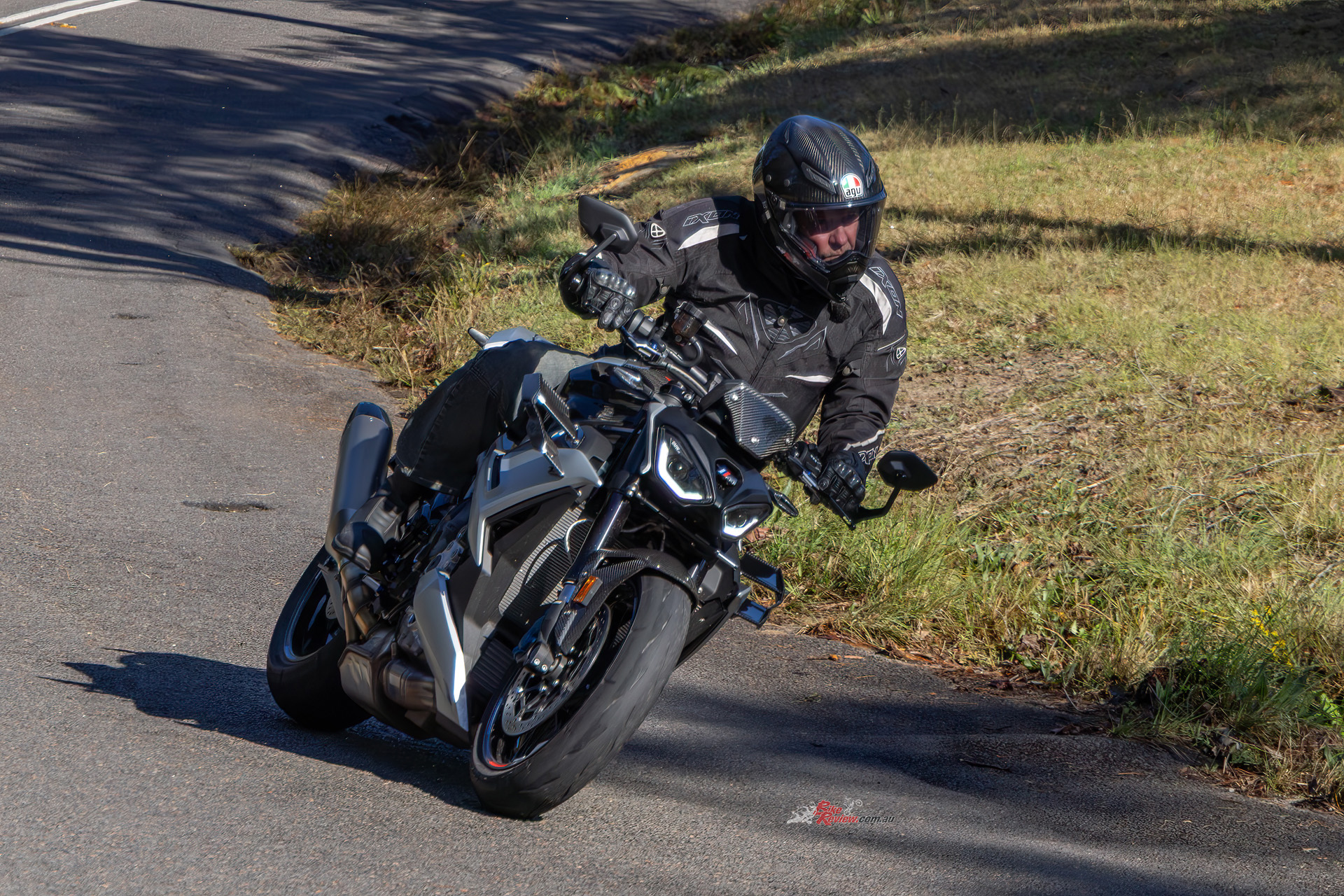
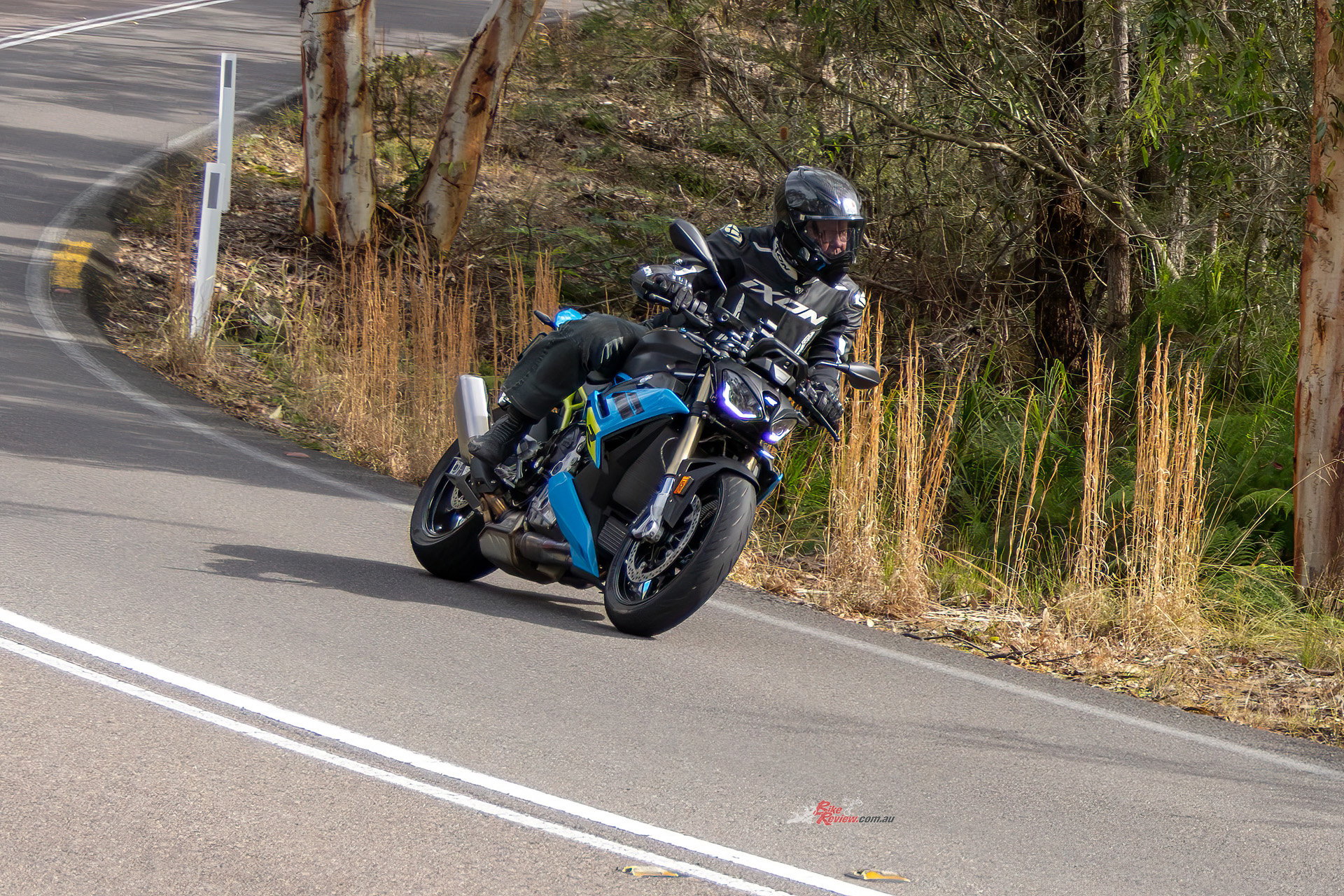
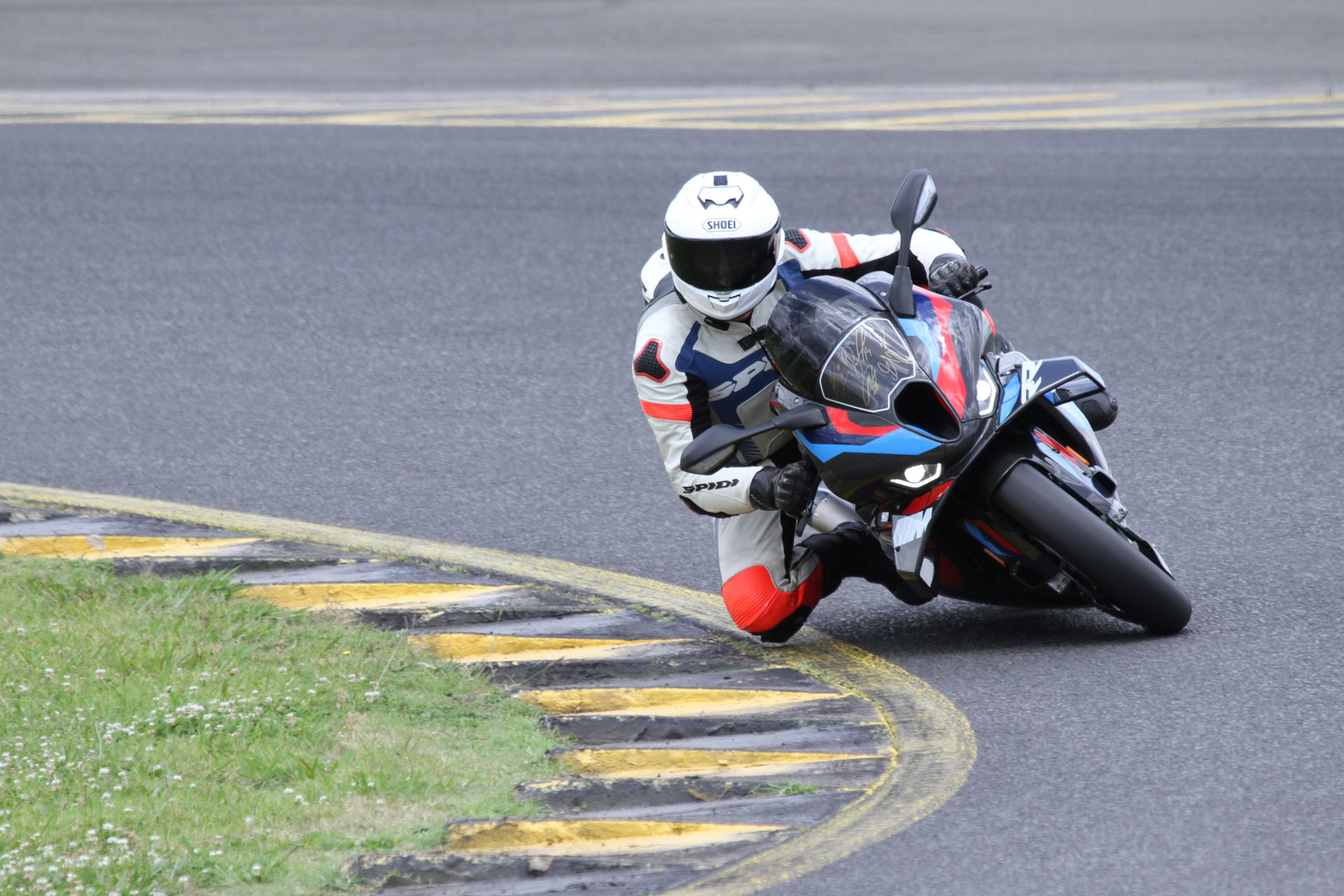
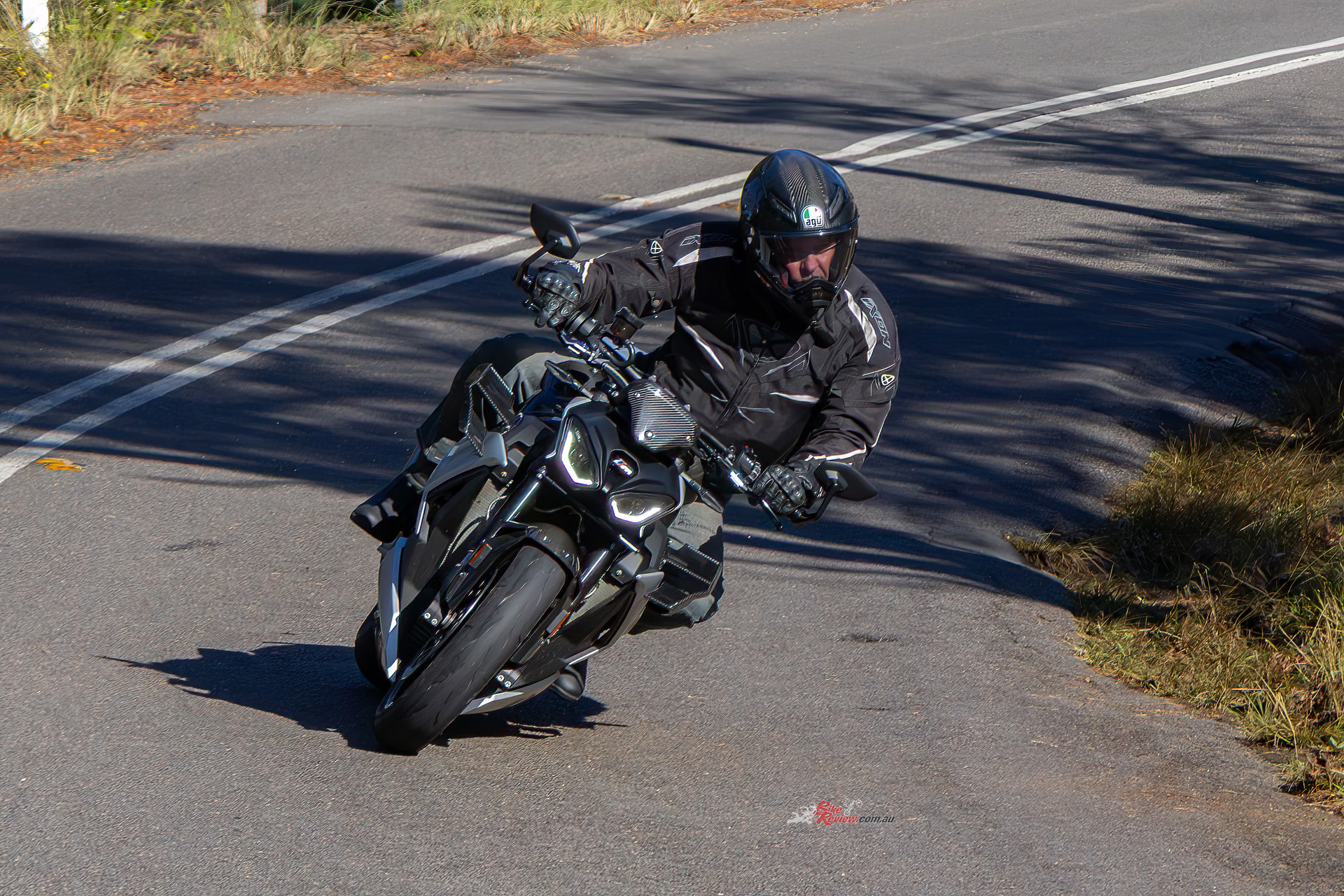
The carbon wheels make flicking the Competition-spec M 1000 R from apex to apex a dream.
That being said, when I flick the bike into Race Pro mode and the valves open up on the Akrapovic exhaust and I start popping gears up and down via that beautiful quick-shifter, all my senses become heightened and the sound the M 1000 R Competition makes as the exhaust bangs and reverberates off the side of the mountain wall is truly a thing of acoustic beauty.
I had taken the S model up the same road only a few days prior and I thought that I couldn’t find a better-handling bike. I was wrong; the lighter carbon wheels – that are part of the Competition package – are 1.6kg less than the S and standard M model’s cast units, and they really do make a difference. The bike just steers quicker, dropping from one corner to the next, changing direction super-quick.
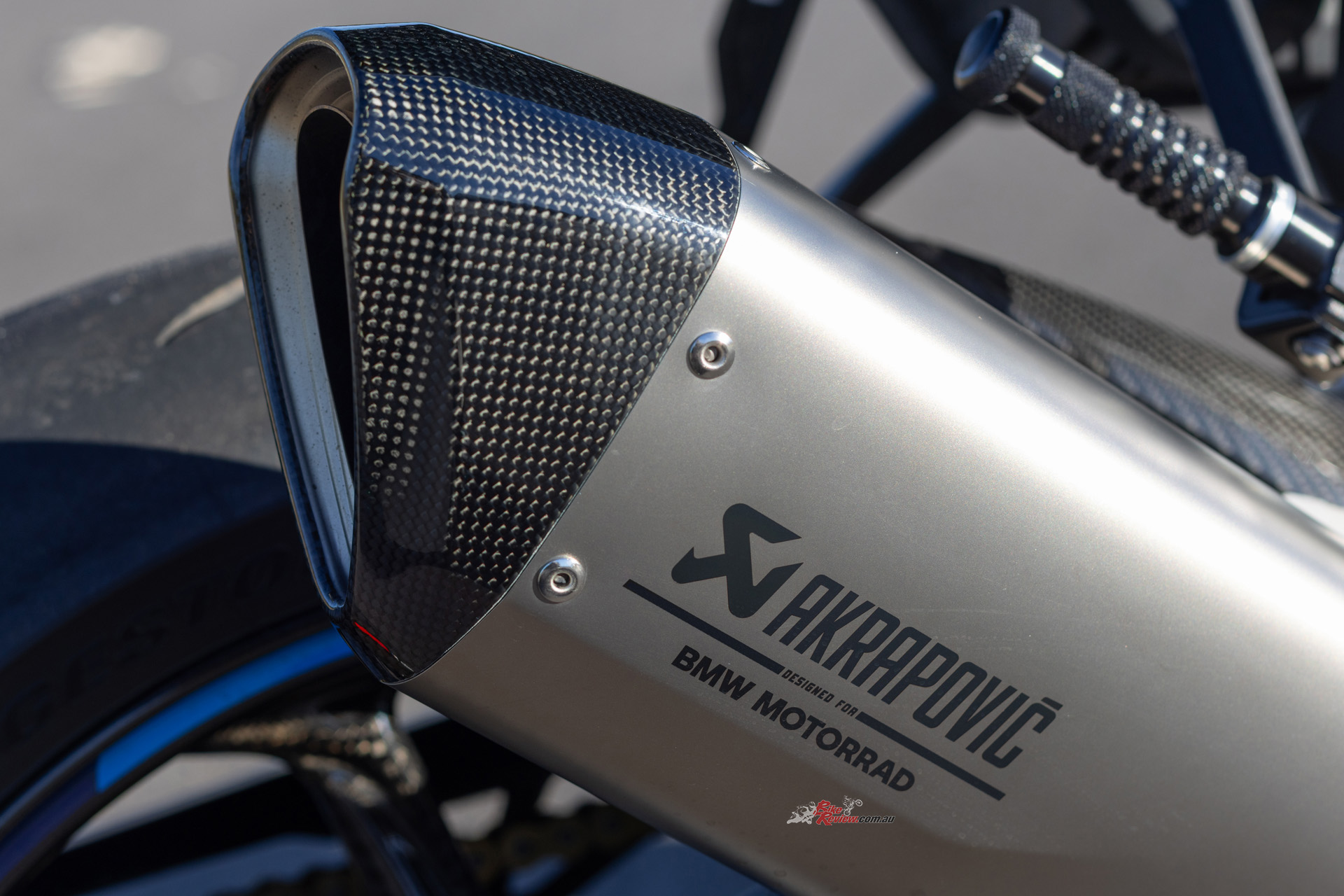
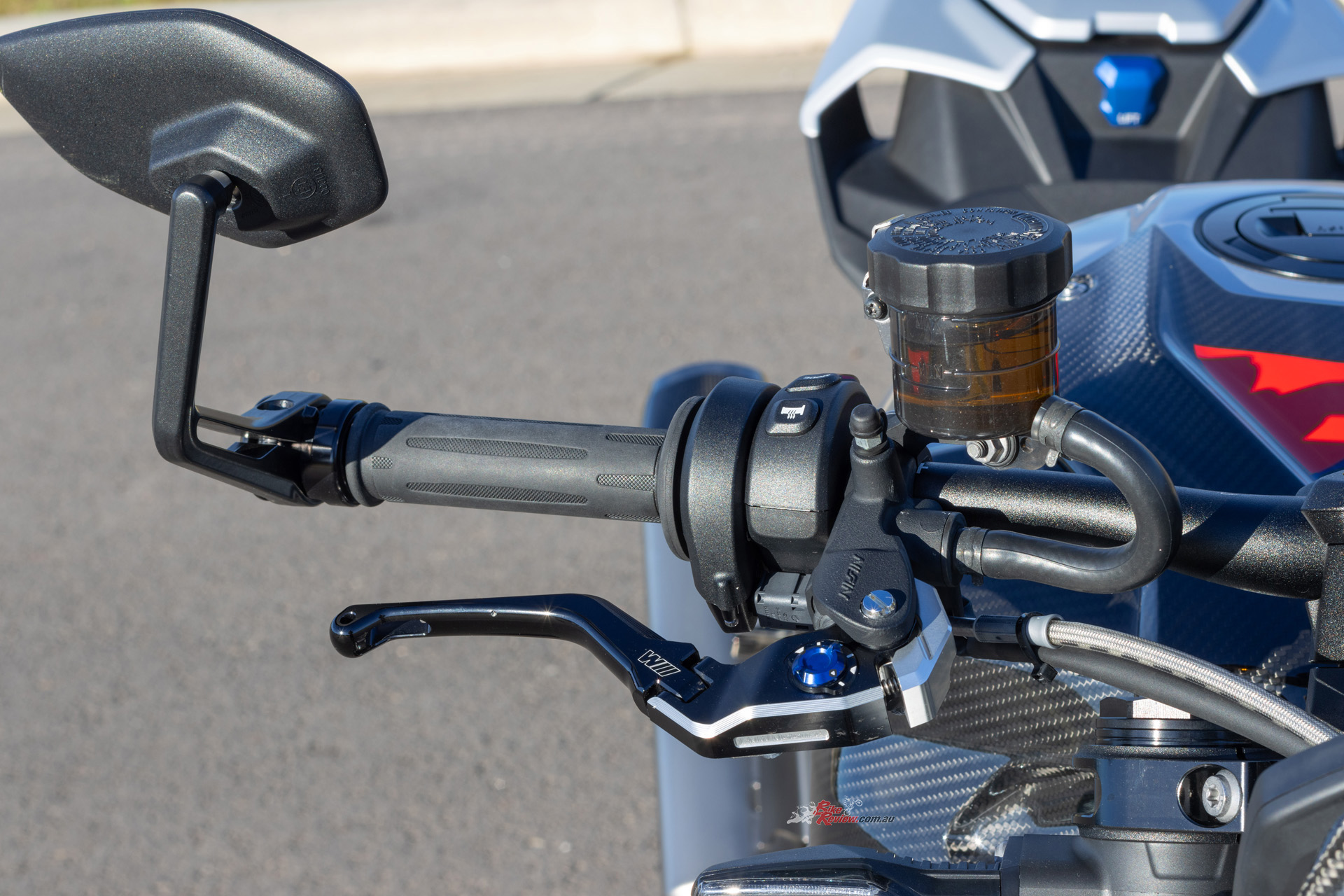
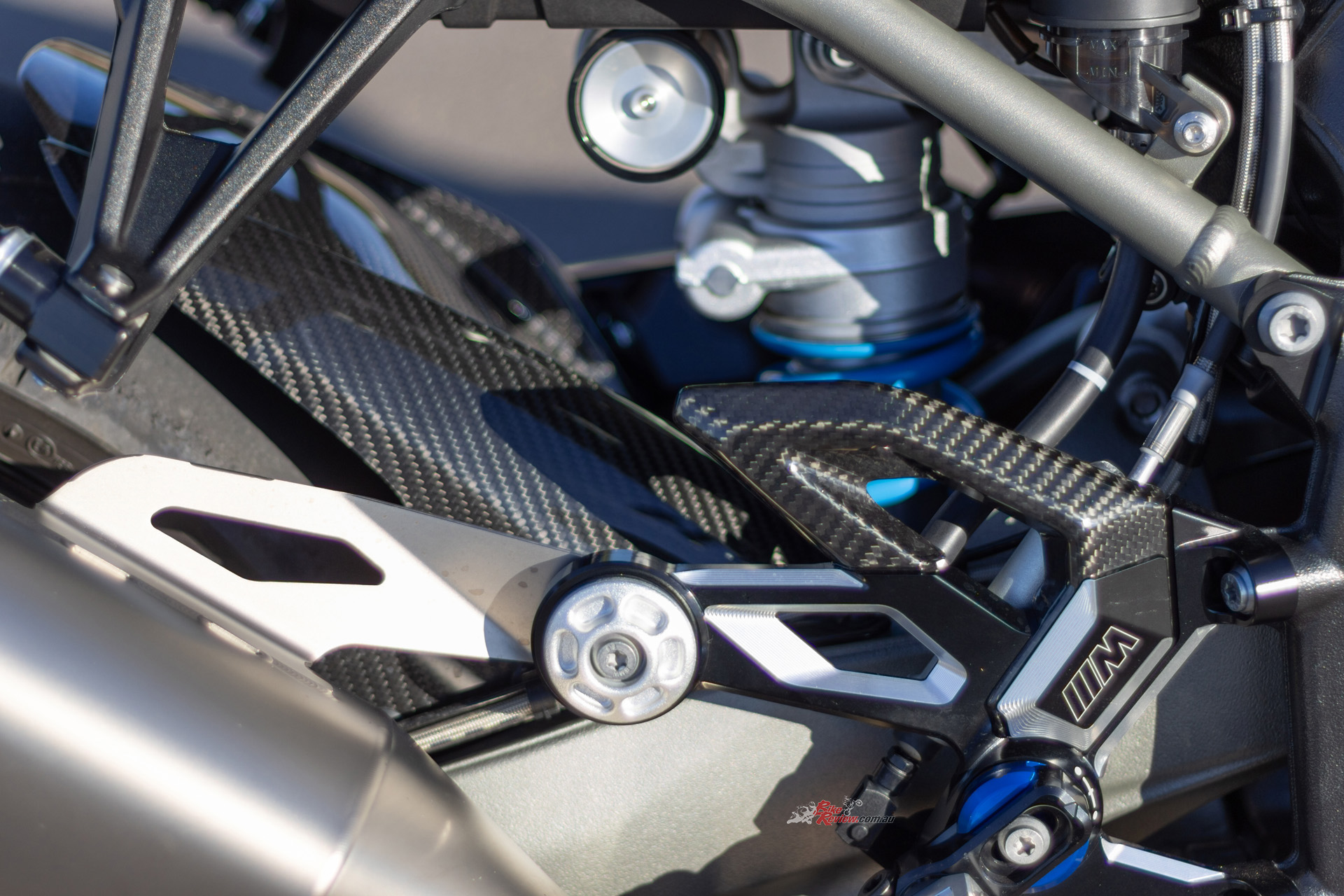
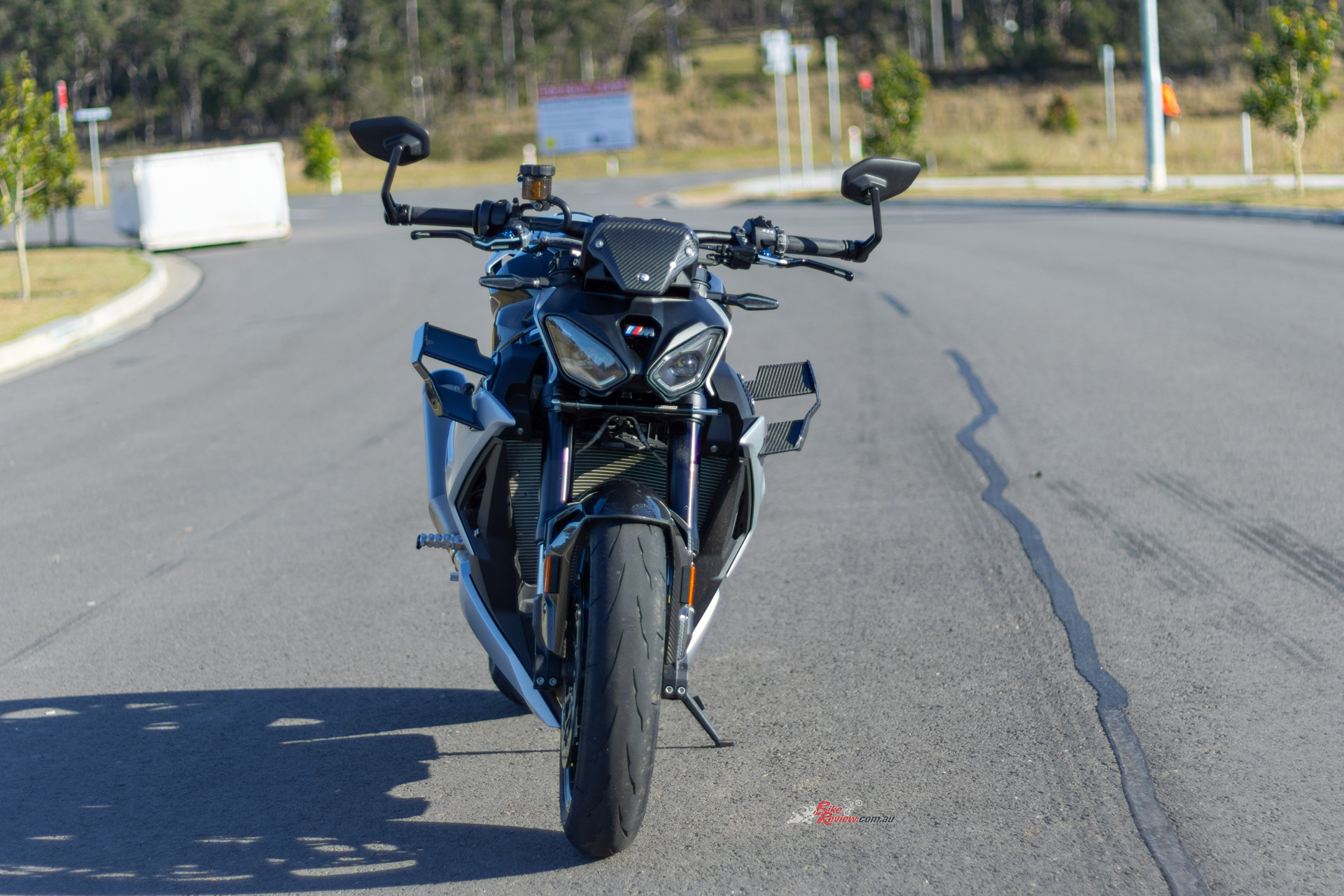
And even though the bike steers quicker there is still a great sense of grip and feel through the front-end. Given the speeds I was doing on the damp roads, I’m not sure that those beautiful carbon winglets were putting much downforce on the front-end, but the feel and confidence was definitely there. Like I said in my S 1000 R test, the suspension on our crap NSW roads is a tad on the firm side for me, so I found myself dialling it down into the more softer option of Road mode.
“There is a great sense of grip and feel through the front end”…
Braking is also next level with the M-branded calipers Nissin. Feel and power is always there and knowing that the BMW has my back with the sophisticated cornering-ABS tech means that I can confidently squeeze on the lever more than I might normally on a damp cold day.
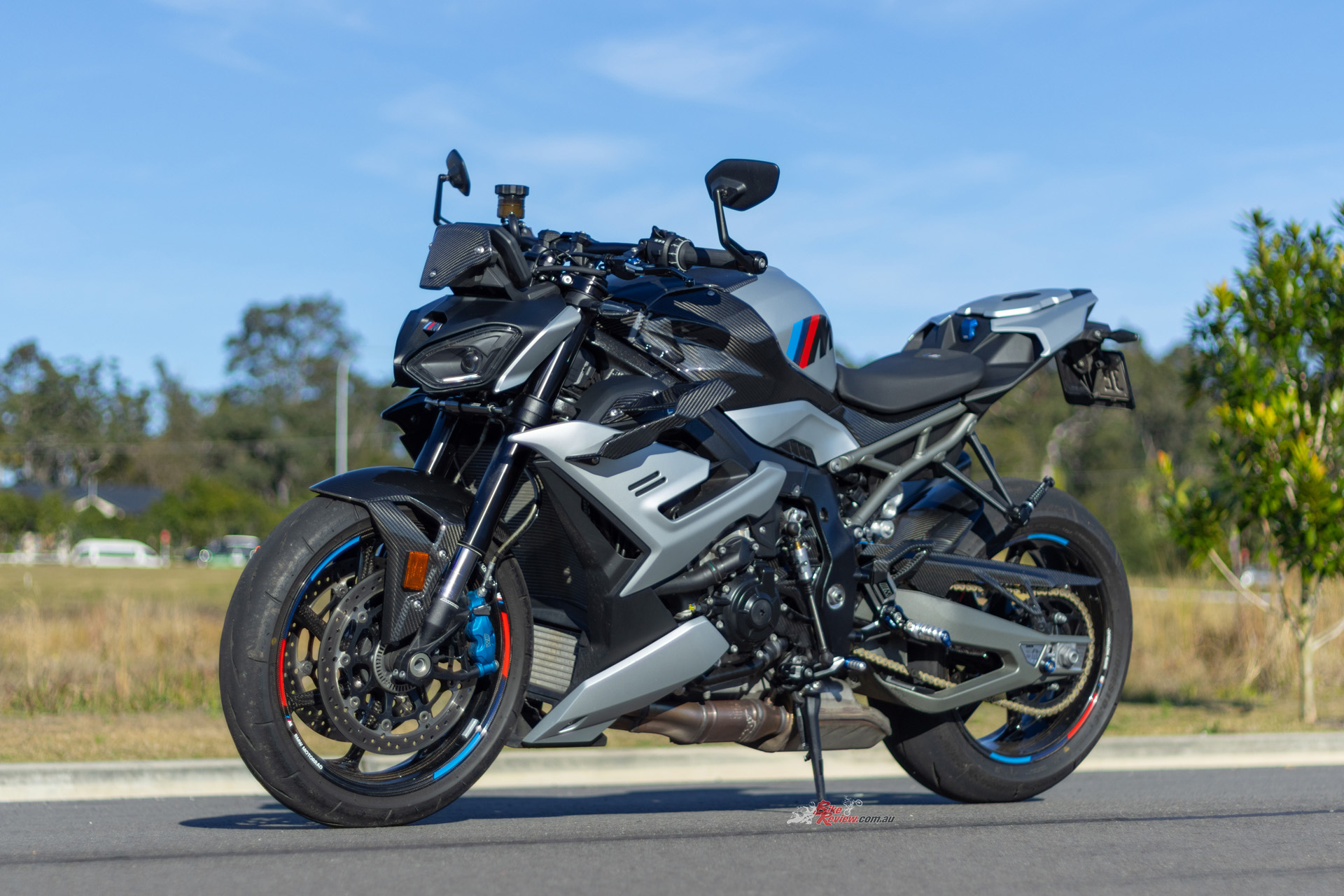
Think Superbike engine, road-going chassis, race-like componentry.
Like the S model, the M gets the new quick-action throttle, and while you’d think it would be intimidating fitted to a 210hp bike, that couldn’t be further from the truth. BMW has done an amazing job on the fuelling on this bike and power is fed in progressively and smoothly, only sharpening up when you get into the more sporty modes, meaning it’s not intimidating at all.
Read Pommie’s review on the S 1000 R here M 1000 XR here… and M 1000 RR test here…
Other inclusions that set the Competition variant apart from the Standard M model are a carbon front guard, a GPS lap trigger and M Endurance Chain. The question I was asking myself after testing the M 1000 R Competition was would it be worth spending the extra money over the S model? Well, if I were just to ride on the road and couldn’t use all the 210hp then the S model would be more bike than most people would ever need, myself included. However, if I had the cash, I would 100 per cent go for the M – if only for the looks alone. It is just a stunning bike dripping in carbon and who doesn’t love that?
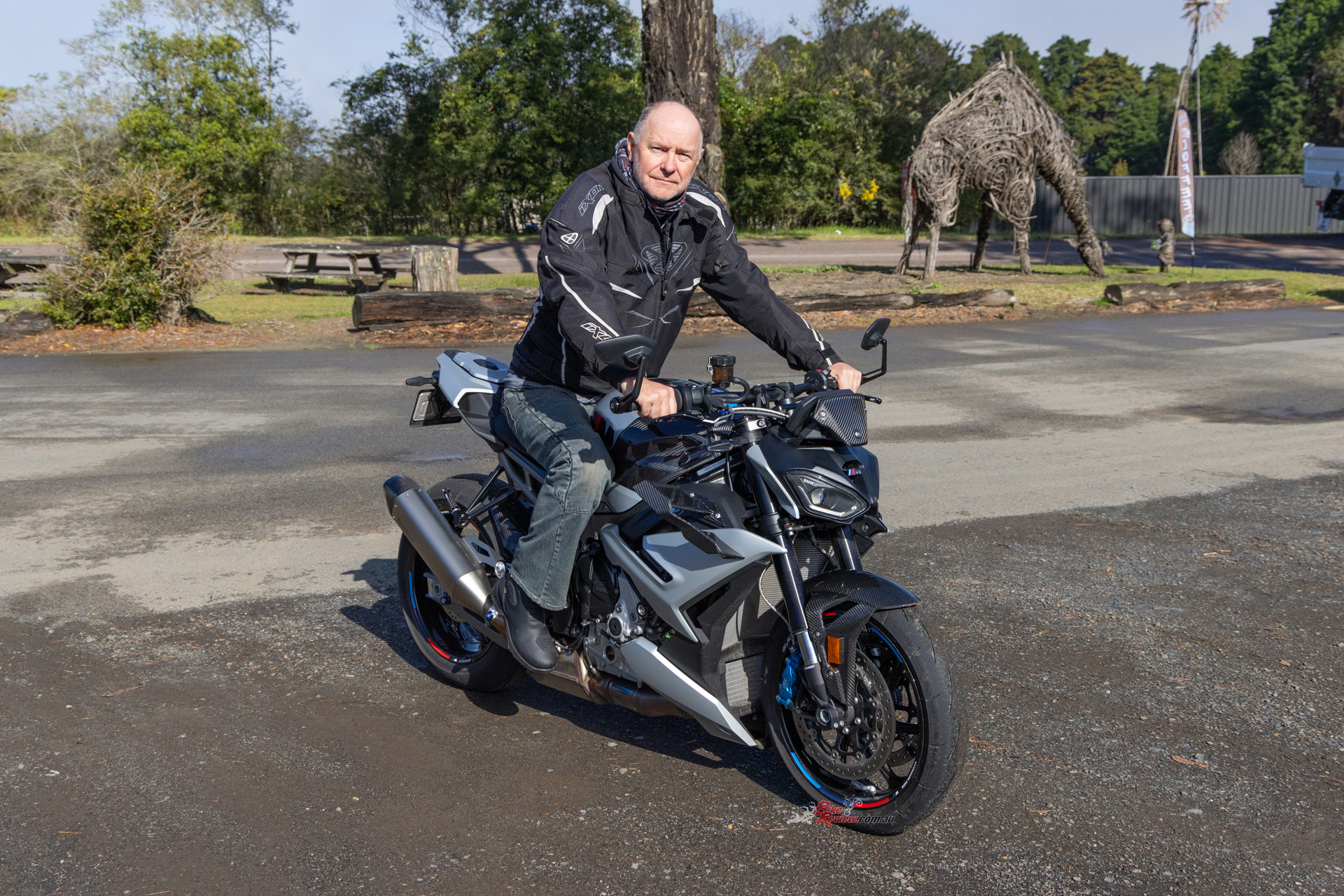
Pommie briefly considers which of his two-strokes he’d need to sell in order to afford the M 1000 R Competition.
2025 BMW M 1000 R Competition Specifications
Price: $42,590 (as tested) Ride Away
Colour options: Light White/M Motorsport, White Aluminium Metallic Matt, Black Storm Metallic/M Motorsport
Claimed Power: 154kW[210hp]@13,750rpm
Claimed Torque: 1113Nm @ 11,100rpm
Wet Weight: 199kg
Fuel capacity: 16.5L
Fuel Consumption: 6.4L/100km (claimed)
Engine: Liquid-cooled in-line four-cylinder engine, 999cc, DOHC, 80 x 49.7mm bore x stroke, 13.1:1 compression ratio, variable intake camshaft control system BMW ShiftCam, Gearbox: Constant mesh six-speed with quickshifter Clutch: Multi-plate anti-hopping wet clutch.
Chassis: Bridge-type, cast-aluminium frame, load bearing engine, aluminium twin-sided swingarm. Rake: 65.8º Trail: 97.6mm
Suspension: USD 45mm telescopic fork, spring preload, compression and rebound stage adjustable with DDC (f), Monoshock, adjustable spring preload, rebound and compression stages electronically adjustable (r).
Brakes: BMW Motorrad ABS Pro, twin 300mm rotors, radial four-piston Nissin calipers (f), single 220mm rotor, single-piston floating caliper (r).
Wheels & Tyres: Carbon-fibre wheels, 3.50 x 17in (f), 6.00 x 17in (r), Pirelli Diablo Rosso Corsa II 120/70ZR17, 190/55 ZR17.
Dimensions
Wheelbase: 1455mm
Seat height: 830mm
Overall width: 996mm
Overall length: 2085mm
Overall height: 1176mm
Instruments & Electronics: 6.5-inch TFT display, Dynamic Traction Control (DTC), ABS Pro, Brake Slide Assist, multiple riding modes (Rain, Road, Dynamic, Race, Race Pro 1–3), launch control, pit-lane limiter, cruise control, tyre pressure monitor, keyless ride.
2025 BMW M 1000 R Competition Gallery




Ratings | Bike Review | 2025 BMW M 1000 R Competition
Wild!
The BMW M 1000 R Competition takes the naked superbike idea to its logical extreme, pairing full-fat superbike power with carbon-heavy aggression and technology that borders on absurd for the road.
The Author
You Might Also Like








January 6, 2026
Quick question: why did you give the bike only an 8 for Ergonomics? Every other score was a 10 except for one 9. Just wondering since no mention of any ergonomic issue or complaint was stated in your review.
January 8, 2026
Hi, it’s Pommie, just answering your question about the ergonomics score on the M 1000 R. This must have been accidentally added after I sent the story in, please see the screenshot. The ergonomics are actually good, I’m 6ft and I had plenty of room and the ride position was great with a slight lean forward to take the pressure off my back. It’s a great bike, way too much bike for the road if I’m being honest, but if you want the ultimate naked BMW then this is the bike.
Hope this helps, cheers Pommie