
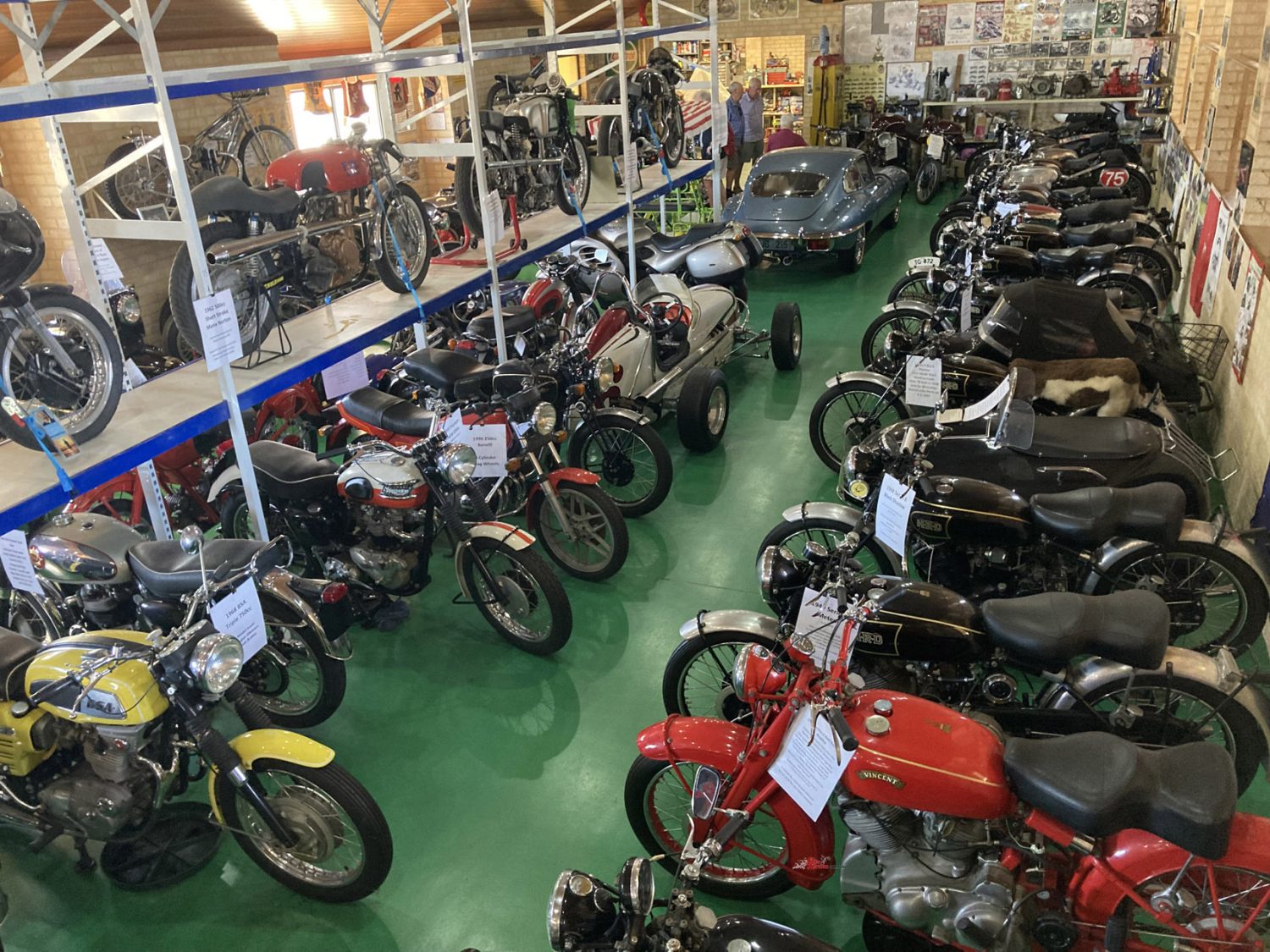

Come for a meander inside Western Australian Ian Boyd’s Vincent collection, where the marque’s history spans from pre-war origins to some of the rarest post-war machines ever built.
As far as tributes to the HRD-Vincent marque go, the hoard of Stevenage-made machines amassed by Western Australian fanatic Ian Boyd must be one of the best. It’s so good in fact that Phil Vincent himself would be immensely proud.
Imagine what his insurance premium is sitting at.
Jurien Bay is a small community on the coast of Western Australia, about two hours’ drive north of Perth. Remote it might be, but for fans of Vincents it’s a must-see, as it is home to one of the world’s biggest collections of the V-twins and singles produced in Stevenage in England, as well as a number of other remarkable machines.
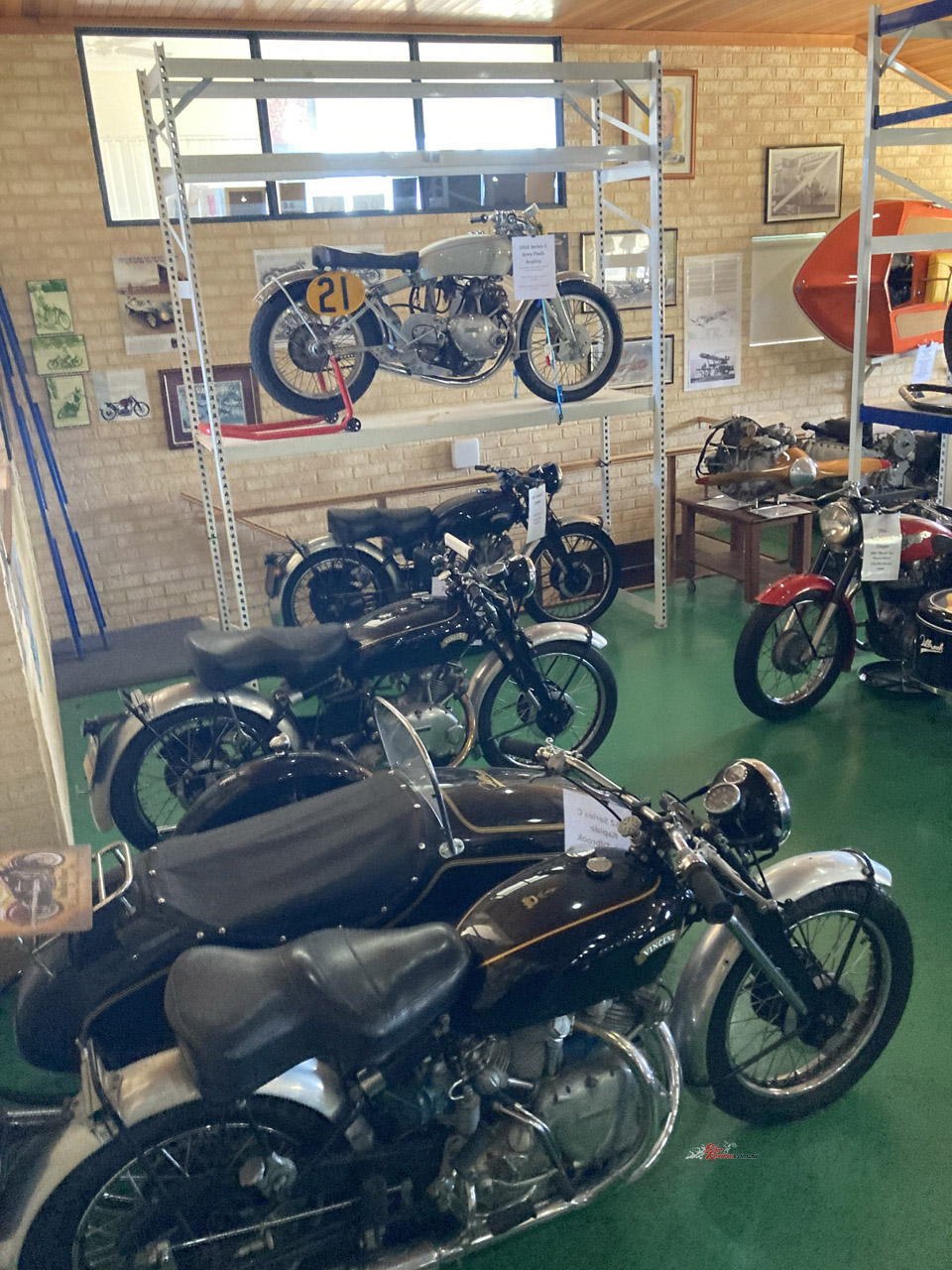
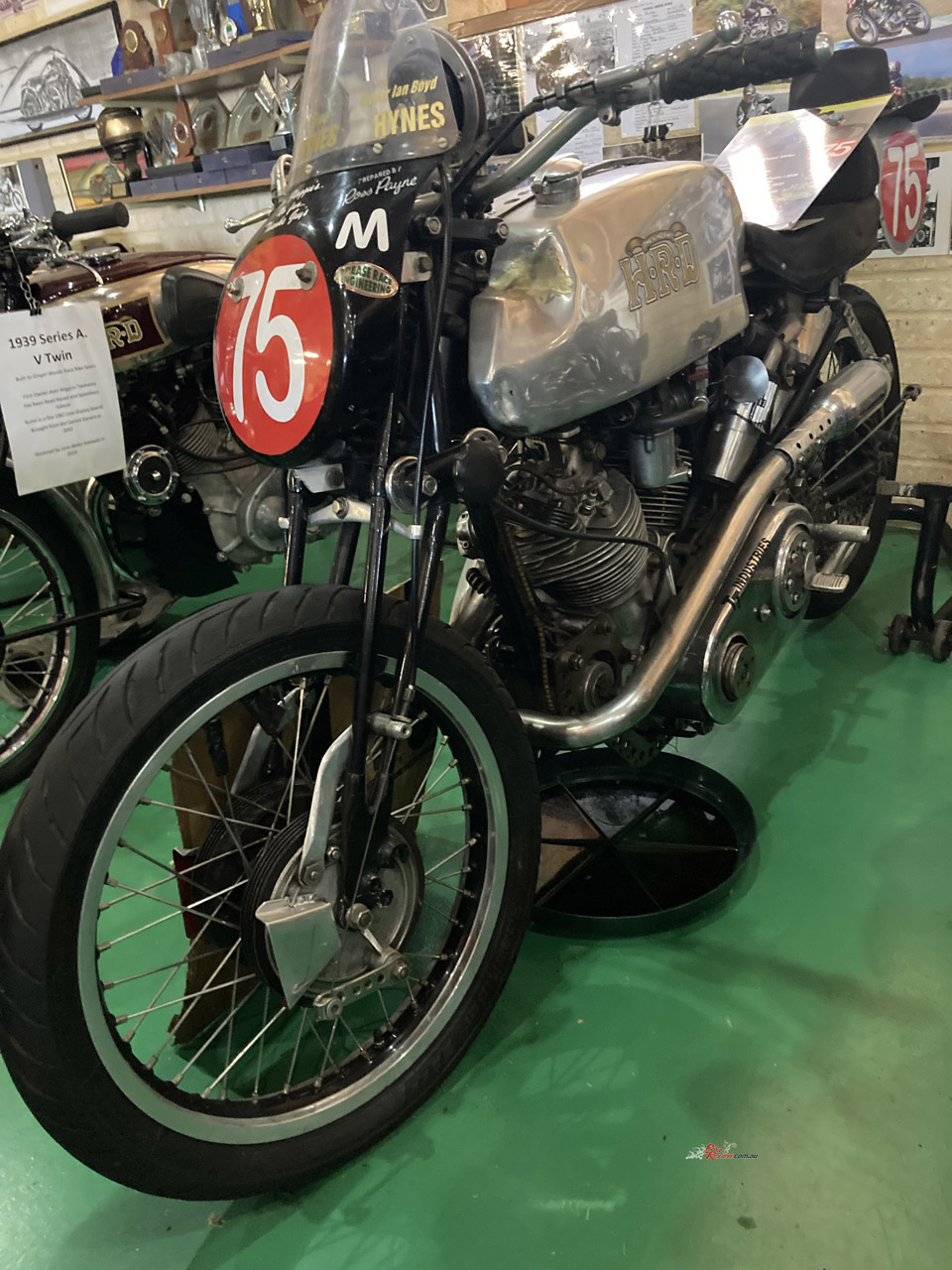
I’d read about the place, but it was hard to believe that there actually these bikes worth squillions of dollars packed into what’s essentially an extended house. And I missed the chance of a visit in 2020 when I was visiting friends in Perth, just before Covid hit, and I’ve been ruing it ever since. But in December 2023, a visit to Ian Boyd’s WA-based collection came together with the help of long-time contact Dave Waldram.
“It was hard to believe that there actually these bikes worth squillions of dollars packed into what’s essentially an extended house”
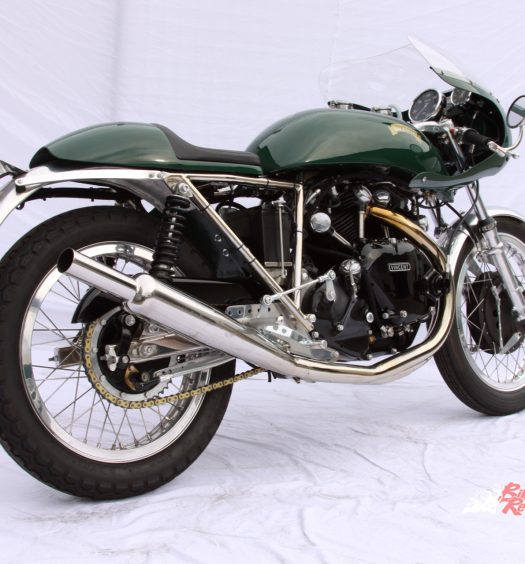
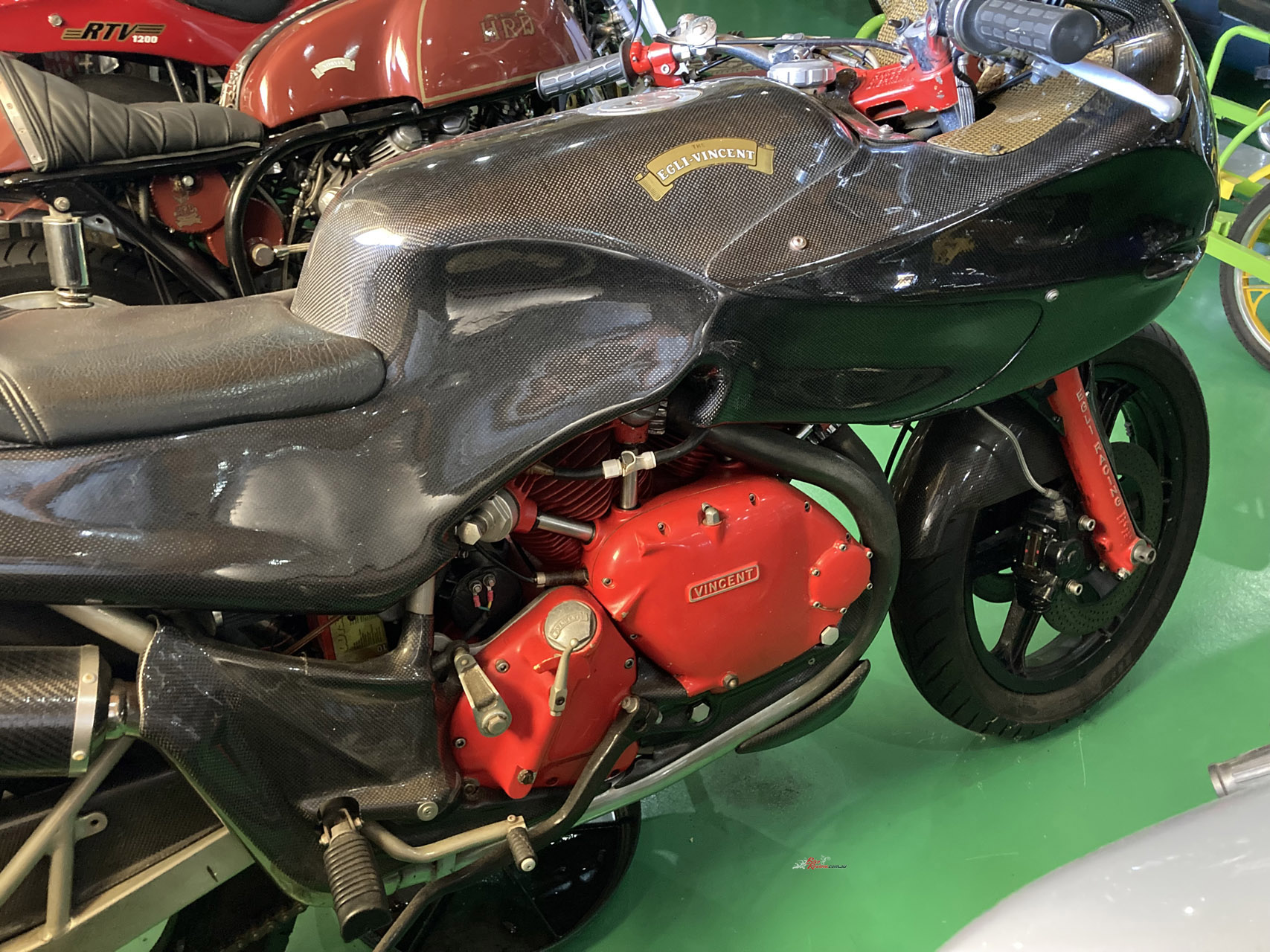
For once reality exceeded expectation. As the garage door rolled up and revealed the contents, we were treated to the sight of an exotic Egli chassis in which a hybrid V-twin was being fettled. And so the stories started; Ian explained that the bike was a 1200cc Terry Prince machine first assembled in 1991. The engine was a Series A HRD-Vincent from 1939 with post-war heads and barrels grafted on, driving through a four-speed Burman gearbox. What had caught my eye even before the covers were pulled off was the lovely Ceriani four-leading-shoe front drum brake.
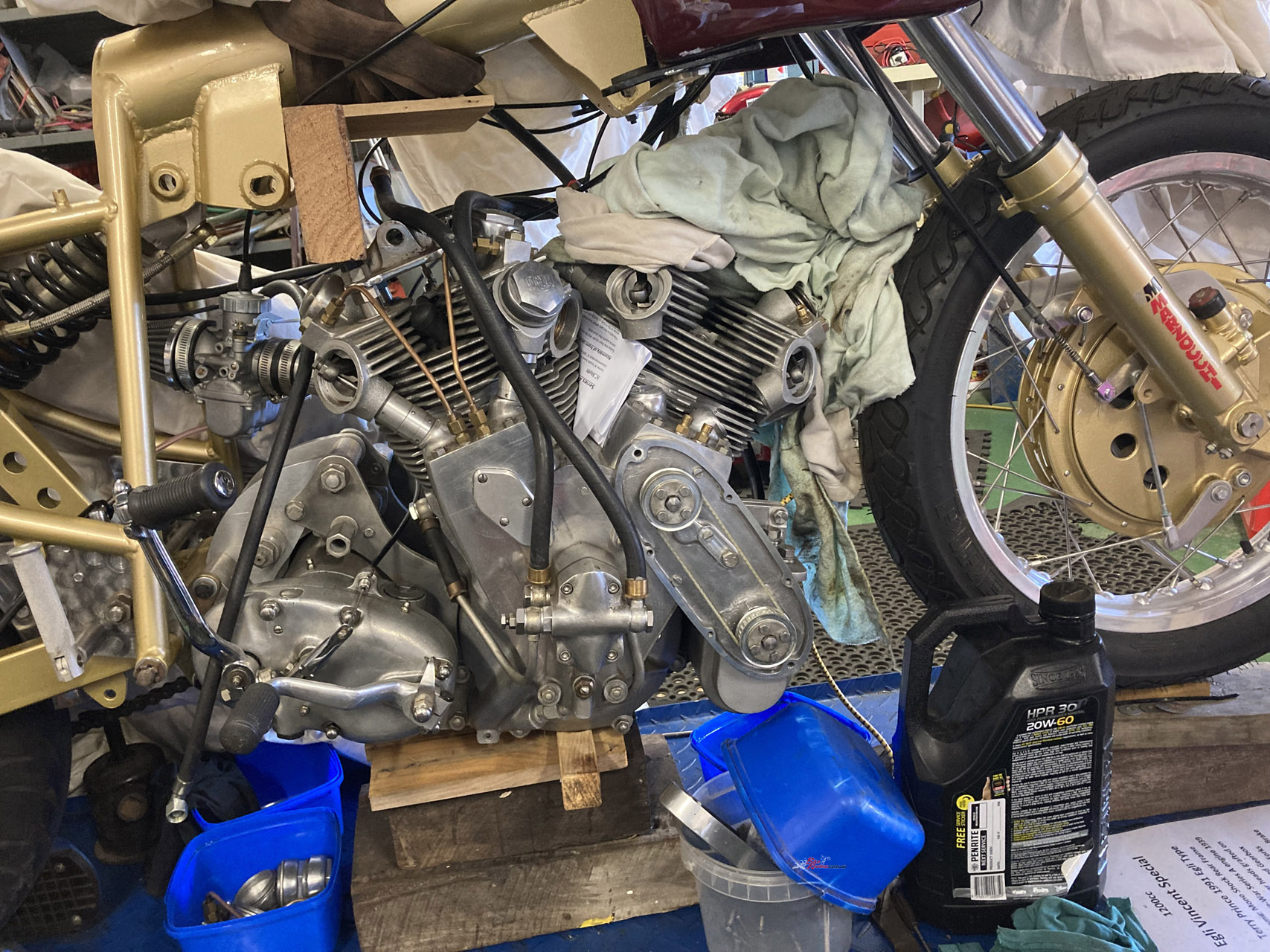
The hybrid Egli Vincent with Series A cases and Series C heads and barrels.
But this was just the beginning. I looked to my left left to be confronted by a long hall with rows and rows of mouth-watering motorcycles, a couple of cars and mountains of memorabilia. After I recovered from the shock, I asked Ian how it had come about. It turns out Ian was a leading cray fisherman on WA’s west coast, exporting large volumes to China. But when big business began to dominate in the 1980s Ian decided to sell his fishing licences and plan his future. Which is when he was offered a speedway bike powered by a 500cc Vincent engine. And one thing, as every motorcyclist knows, leads to another. And another…
The collection spans the marque’s origins in 1928, when Philip Vincent – whose family wealth came from Argentina – acquired the HRD business established by Howard R. Davies, through to the factory’s closure in 1955. Much of the restoration work has been handled by David Bowen, who was an apprentice at the Vincent factory in the 1950s before moving to South Australia.
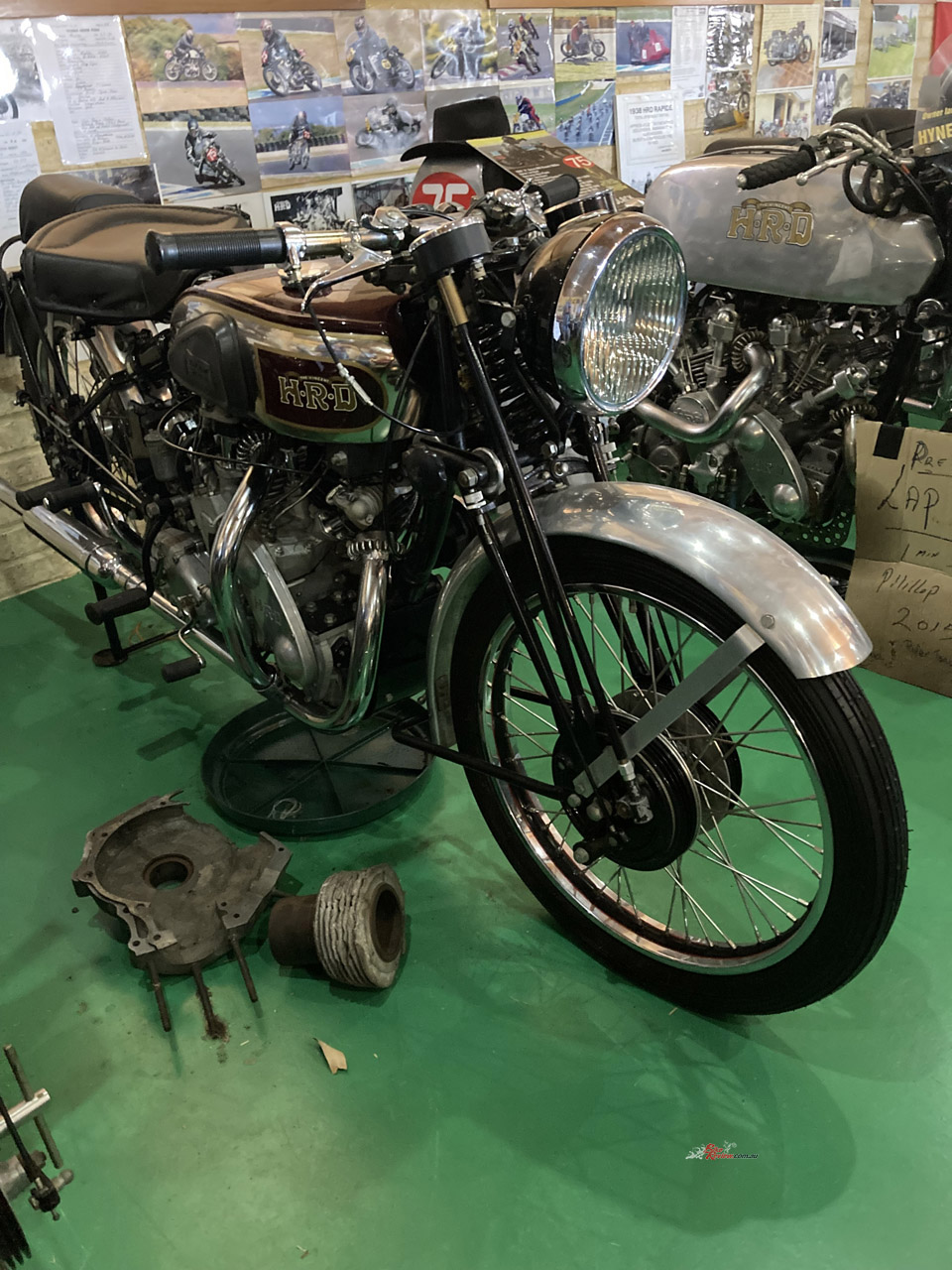
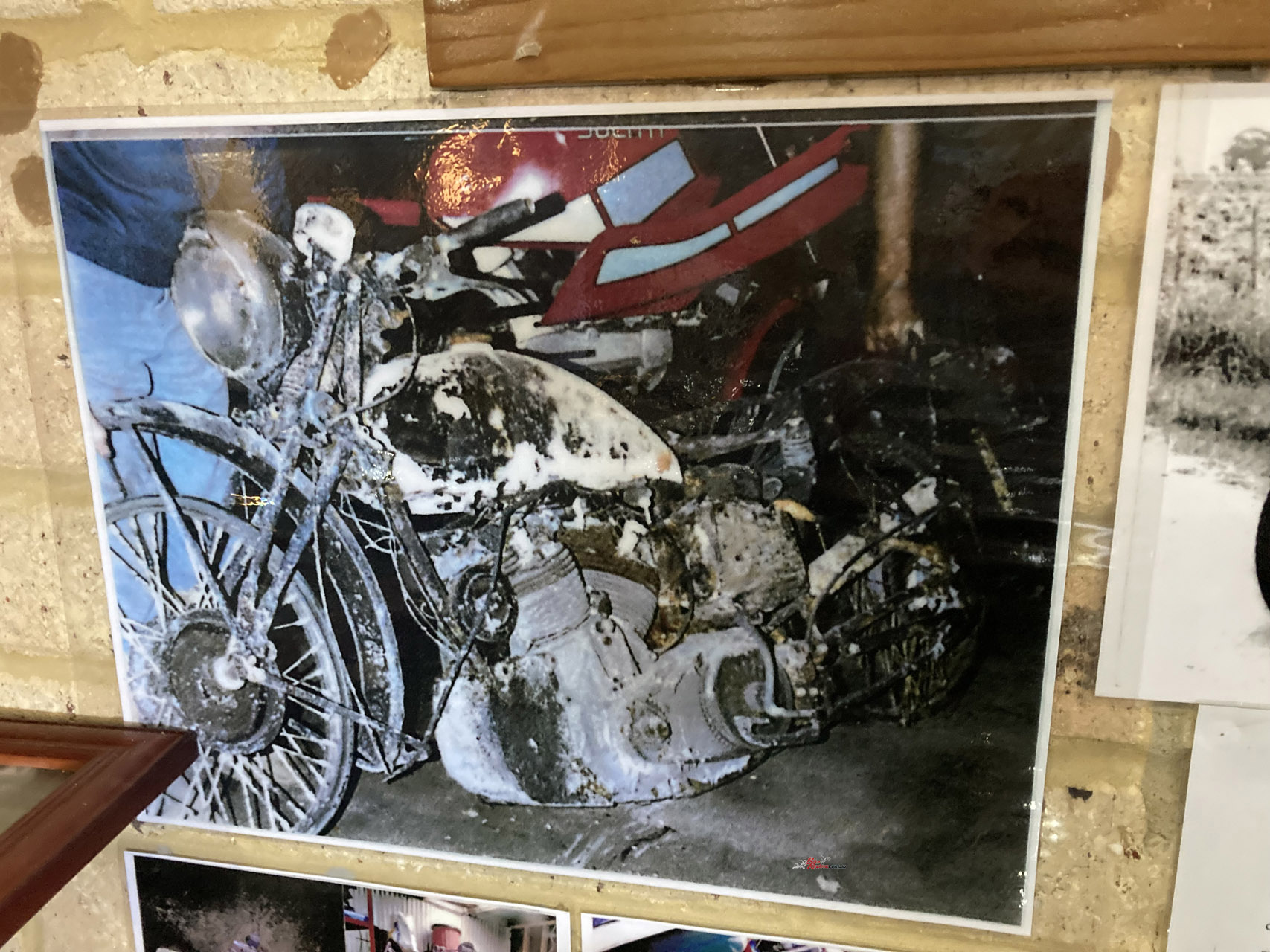
One of the most challenging projects was a Series A HRD V-twin that had been ravaged by fire, with photos showing the extent of the damage, yet here it stood fully restored. Alongside it was another Series A from 1939, a purposeful-looking racer built by Darwin’s Kal Carrick and acquired by Boyd in 2006. Ridden by WA’s Tony Eatonn, it holds the Period 2 pre-war unlimited class lap record at every track in Australia, including a 1min 58.5sec lap at Phillip Island.
“It holds the Period 2 pre-war unlimited class lap record at every track in Australia, including a 1min 58.5sec lap at Phillip Island”
As the bikes rolled in, Ian found space for them around the house. Eventually his son and daughter, both petrol heads (cars mostly) in their own right, suggested that enough might be enough. No problem: Ian had the house reconstructed to include the hall which now has plenty of room for about 80 bikes (I didn’t count them and neither has Ian). Let’s just say there’s enough quantity and quality to keep any enthusiast in seventh heaven.
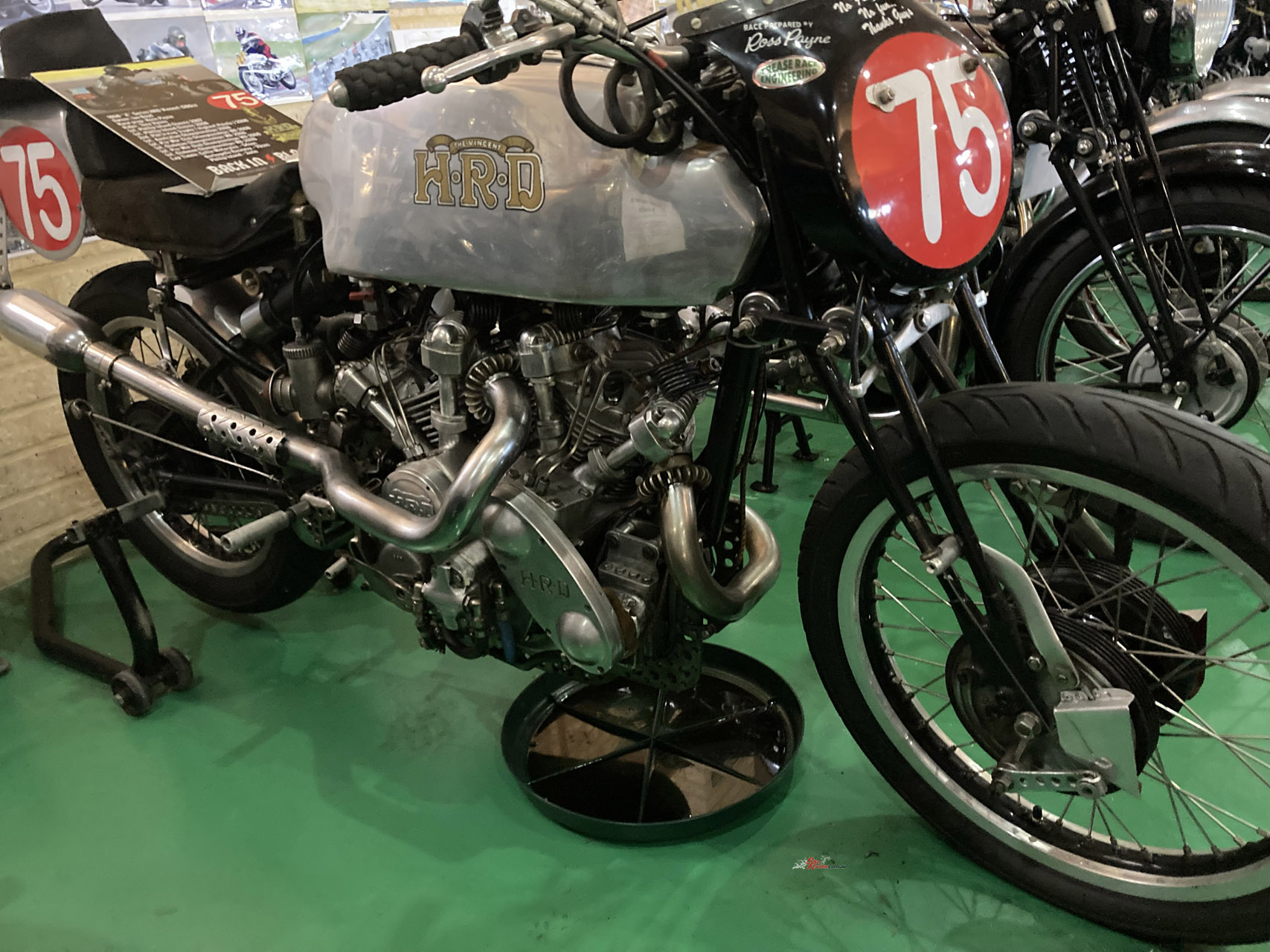
The record-holding 1939 Series A racer.
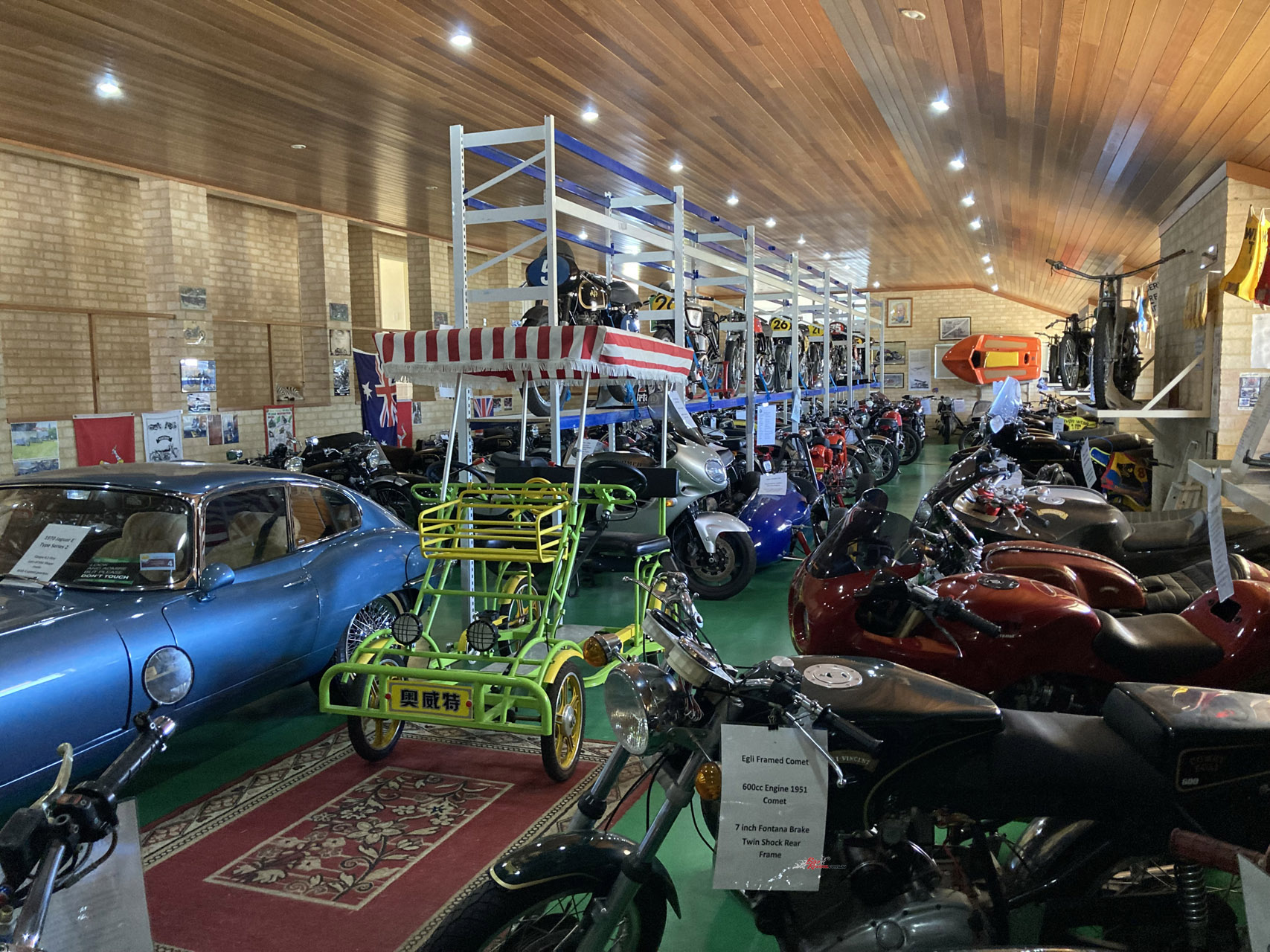
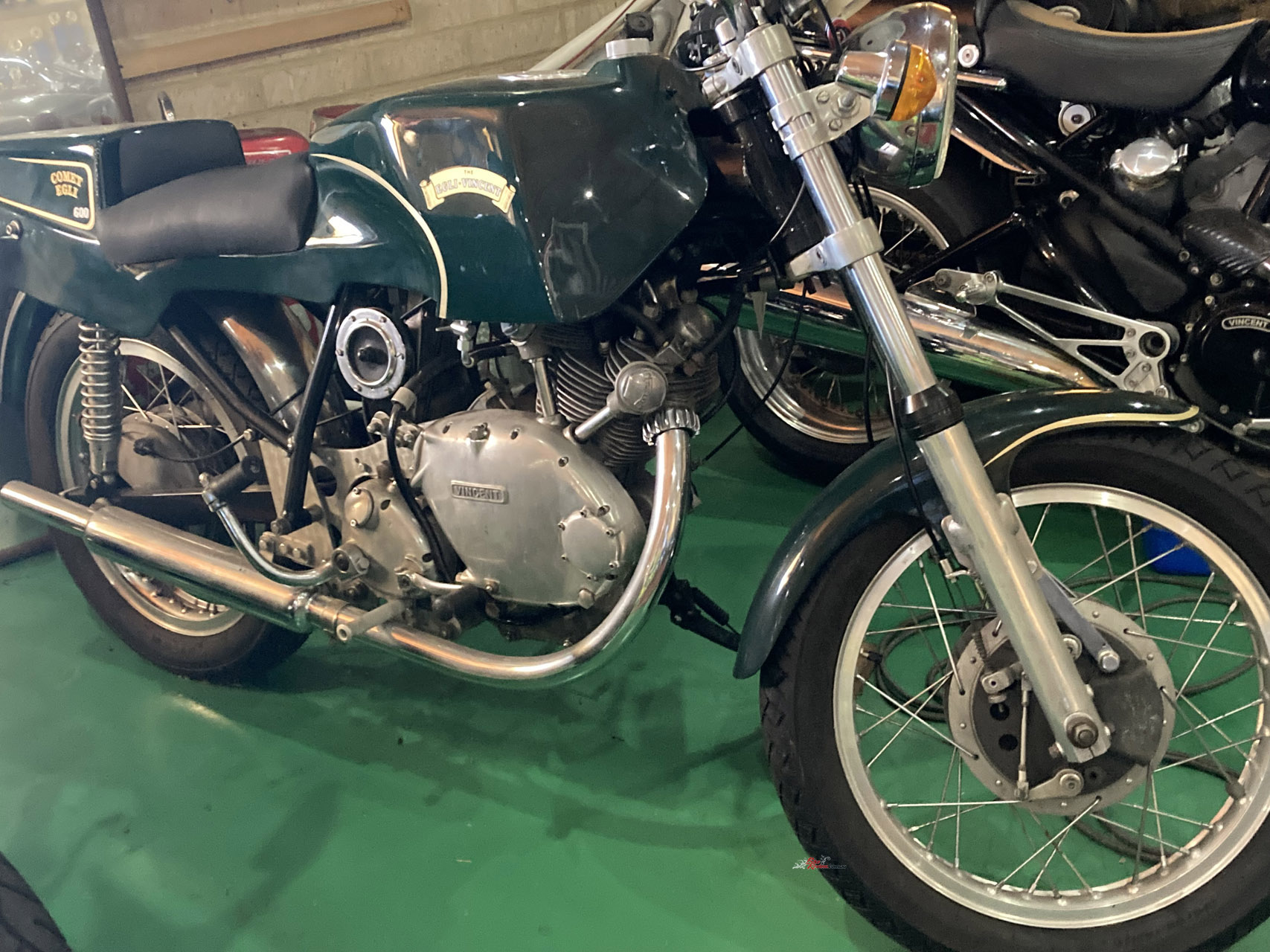
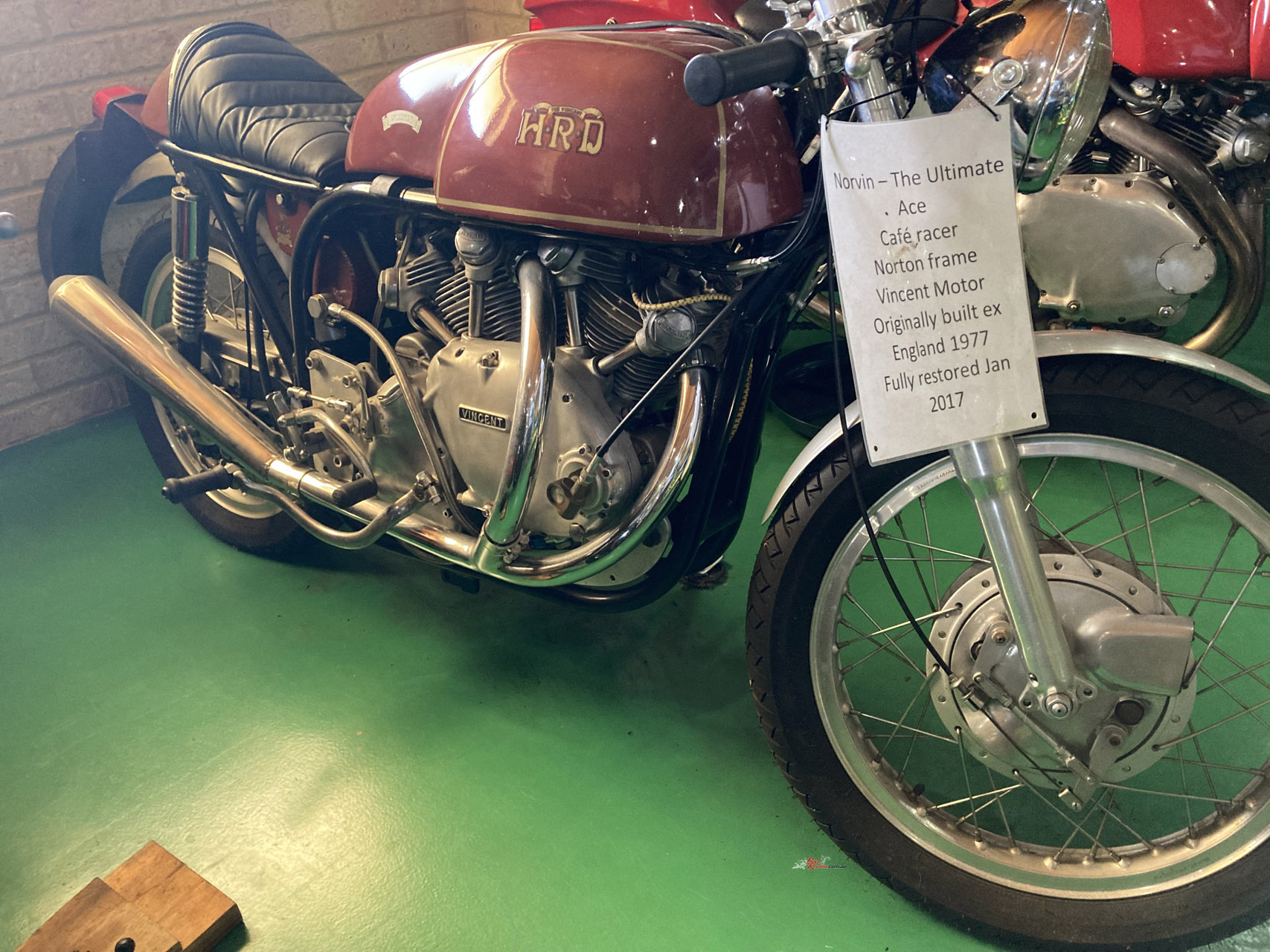
I lean back to take a picture and find myself teetering over the gleaming bonnet of a 1970 E-type Jaguar parked next to a dainty-looking US Offenhauser speedway car. I’m immediately drawn to the other side of the hall by another Egli special, this time powered by a 600cc Comet and boasting a big Fontana four-leading shoe drum brake. Next to it is a lovely 1000cc Norvin rebuilt by Ian after originally being assembled in the UK in 1977. It’s really quite hard to take it all in.
By now I’m almost getting blasé, for next in line are a pair of Series D Black Princes, resplendent in their streamlined bodywork, one hitched to a sidecar. Just 134 of these pinnacles of post-war design were built up to when the Vincent factory went into final administration just before Christmas in 1955.
“Just 134 were built up to when the Vincent factory went into final administration just before Christmas in 1955”
Even more desirable in Vincent circles is the next bike in the line, a post-war Black Lightning – the tuned and lightened version of the Black Shadow produced to special order after the fabled 150mph (241km/h) record-breaking run at Bonneville Salt Flats in Utah by Rollie Free in September 1948.
It’s said that only 31 of the 70bhp Series C Black Lightnings were made up to 1952. So Ian’s example, which is one of his personal favourites, must have been one of the last of the breed. It was delivered to Prince Bira of Siam in 1952, but Ian says there’s no record of the prince ever riding the bike. The following year it was bought by Gordon Benny of Eastern Autos in Singapore, who fitted a sidecar and raced it at Phillip Island, with Dean Hogarth in the chair, reportedly breaking the lap record first time out. It was later acquired by Tom McQuade, who offered it to Ian it in 1989 just as he was starting to build his truly impressive collection. Bowen restored the bike to its original spec with the engine prepared by Leon Baker in Adelaide, SA.
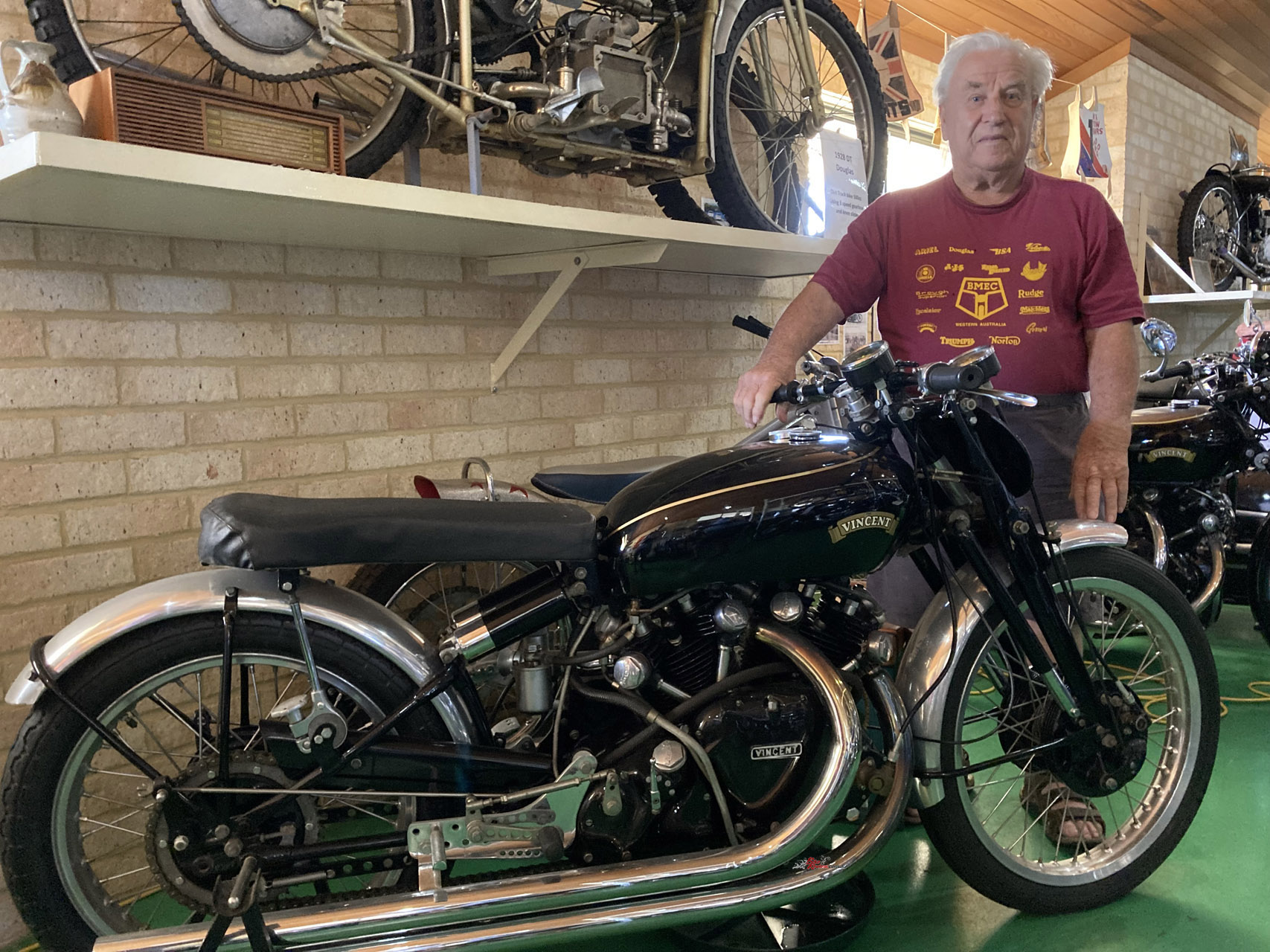
Ian Boyd with his 1952 Vincent Black Lightning, one of his first aquisitions in 1989.
Boyd reckons that there are barely 19 Black Lightnings in existence, but he owns another that originated as a power unit for a batch of Cooper racing cars. The engine was rebuilt in a genuine chassis after the factory closed and now resides in a lightweight supercharged drag racer in Boyd’s collection and features on his business cards.
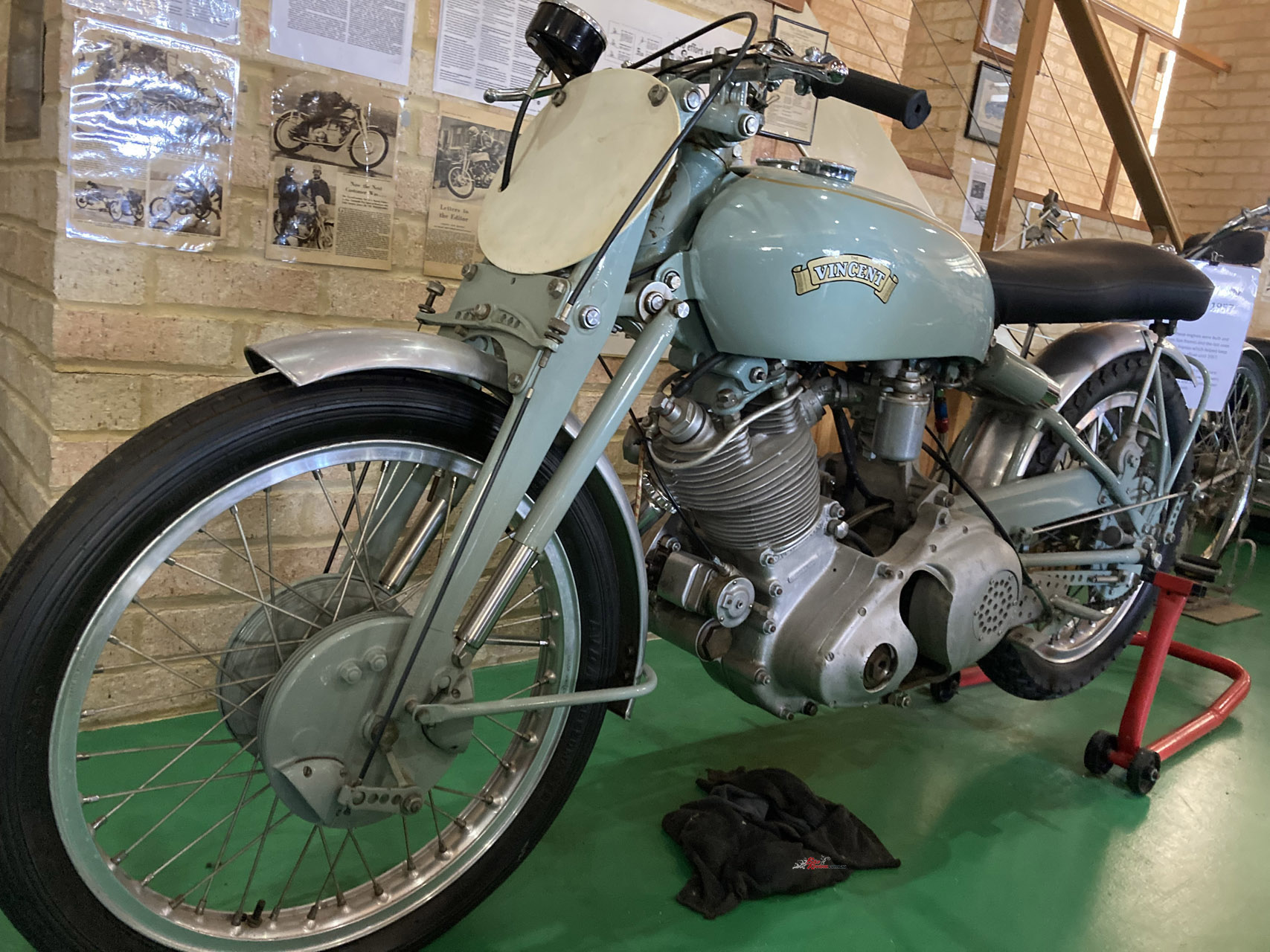
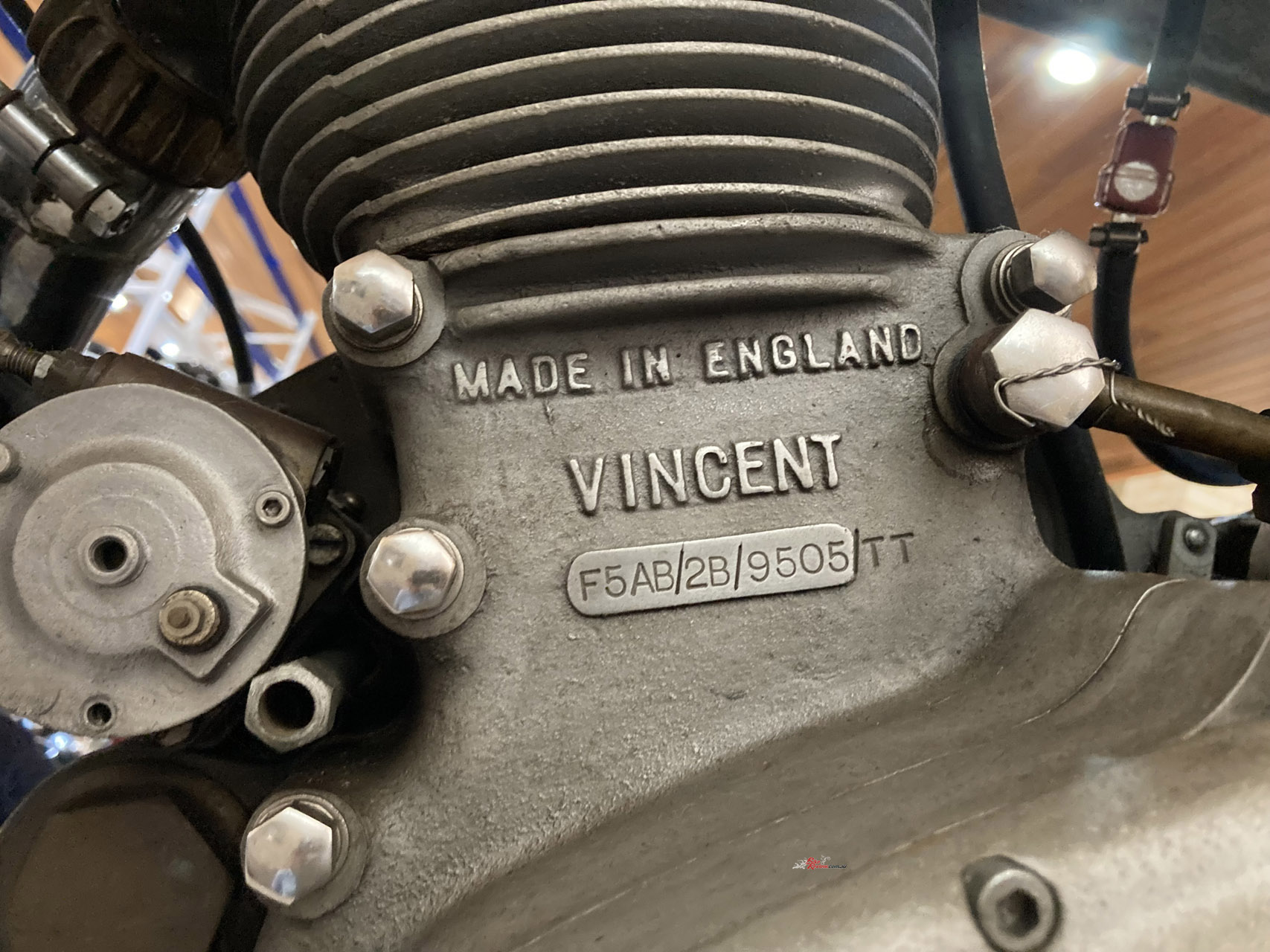
Just as rare are the 500cc Grey Flash racers, based on the Series C Comet. Only 32 were made from 1950 and Ian owns two, one of which reached Australia via Argentina. The other is an enigma: it’s a replica that Boyd says was bought by John Surtees – who famously raced a Grey Flash before joining Norton in the 1950s and continued to parade it into his retirement – from Atlantic Motorcycles in Germany, and sold on to David Bowen, which is how it ended up in the collection. The high 9505 engine number is the clue to its origins as a Comet when built.
“It’s a replica that Boyd says was bought by John Surtees – who famously raced a Grey Flash before joining Norton in the 1950s”
By now this Vincent mother-lode has become overwhelming as we saunter along a line of post-war Meteor and Comet singles, as well as a number of Black Shadows. Standing out from the signature black and gold liveries, is a red liveried Rapide replica. It’s just another V-twin though.
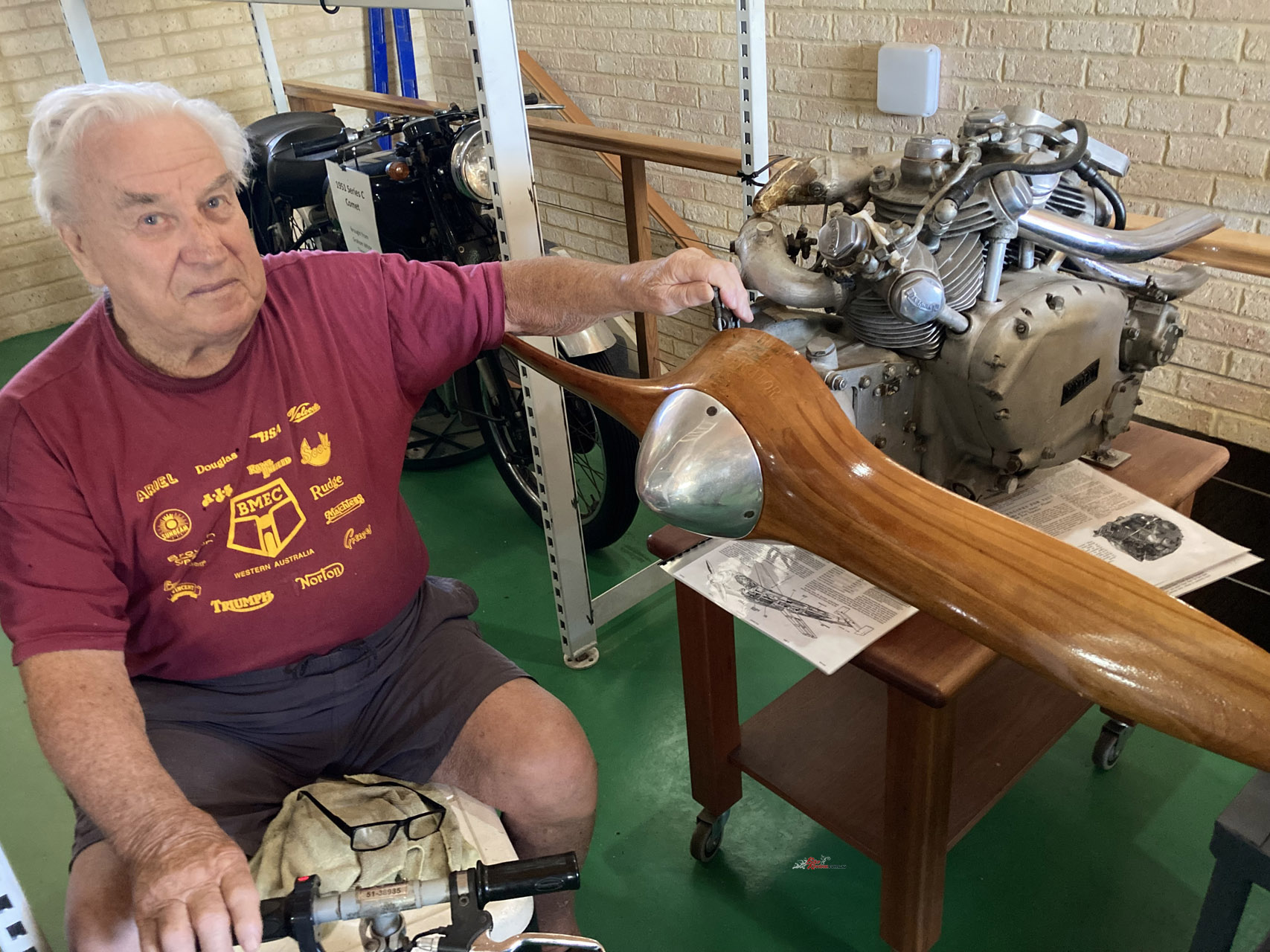
Boyd with the Picador 1000cc V-Twin that powered a target aircraft.
Ian Boyd’s interest in Vincent products isn’t confined to motorcycles. The factory diversified in a wide range of projects, including power units used in radio-controlled aircraft for target practice, converting a V-twin based on the Black Lightning and called the Picador. From 1951 the factory made 42 of these engines but the order was cancelled by the Air Ministry after the electronics failed to work. Boyd has number 41, one of three survivors bought from Vaughn Green in America. It has never been started. Alongside is a novel opposed-piston two-stroke engine designed by Vincent’s fabled Aussie engineer Phil Irving to power a wartime air-dropped lifeboat.
Even the non-Vincent exhibits would be stars of any collection. Opposite the phalanx of Shadows and Rapides is a row of British bikes that includes one of the first BSA 750cc triples to come off the production line in 1968, next to a BSA 650cc A10 twin and a Triumph 650 Tiger twin, with a little four-cylinder 250cc Benelli nestling alongside. There’s one of the last Royal Enfield 750cc Interceptors, produced in 1971 for the Australian market with a sparkly finished glass-fibre fuel tank. I’m drawn to a 250cc Royal Enfield single, an off-road model based on the Continental GT and produced in small numbers for Australia, called the Barracuda.
“You can’t have too much of a good thing and even as we take our leave we notice above us a gorgeous 500cc Manx Norton”
You can’t have too much of a good thing and even as we take our leave we notice above us a gorgeous 500cc Manx Norton, a 350cc AJS 7R, a Gilera Saturno 500cc single and yet another exotic Vincent V-twin racer sporting a dry clutch and massive downdraft Amal carbs.
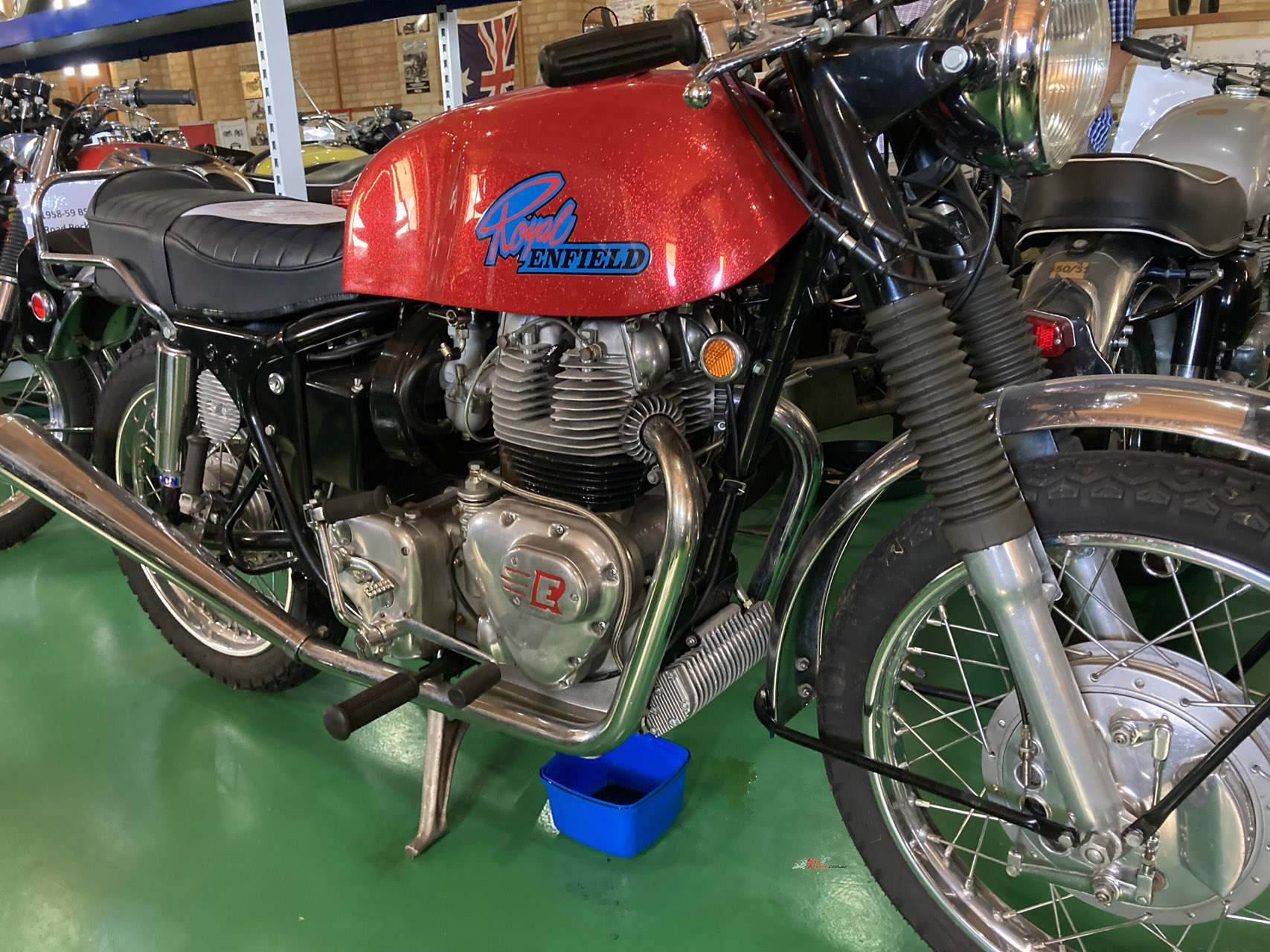
The 1971 Royal Enfield 750cc Interceptor.
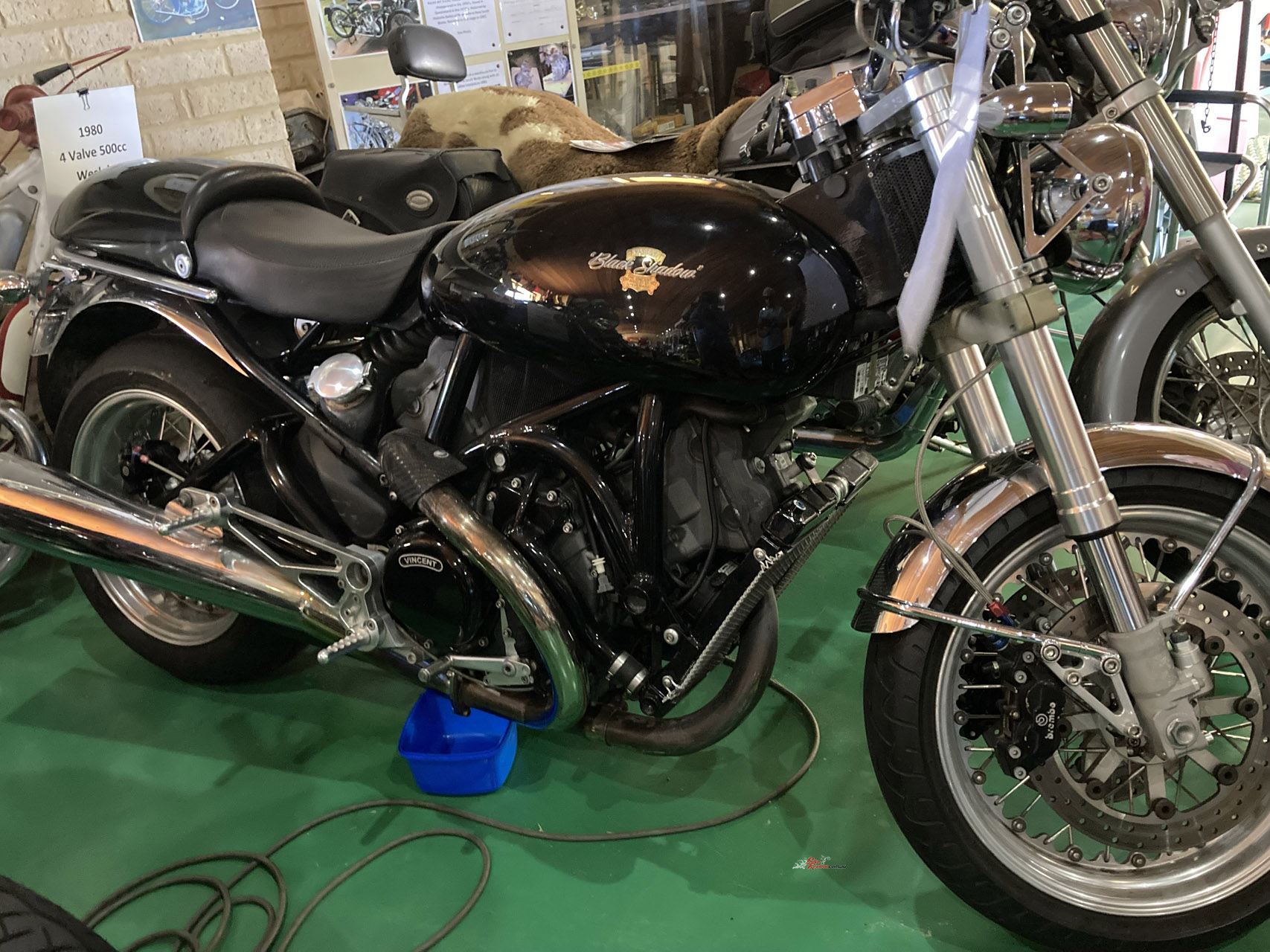
There’s even one of the ‘modern’ Black Lightnings produced in 2002 by US millionaire Barney Li who dreamed of reviving the Vincent name. After acquiring the rights, Li designed a bike based on the original engine but wasn’t happy with it. He turned to Honda and acquired a handful of the RC51 racing V-twins that had powered the works superbike racers. He fitted them into a contemporary chassis and five of the re-imagined Black Lightnings were built but investors were uncomfortable with the Japanese connection. The dream ended with Li’s death in a road accident in 2008.
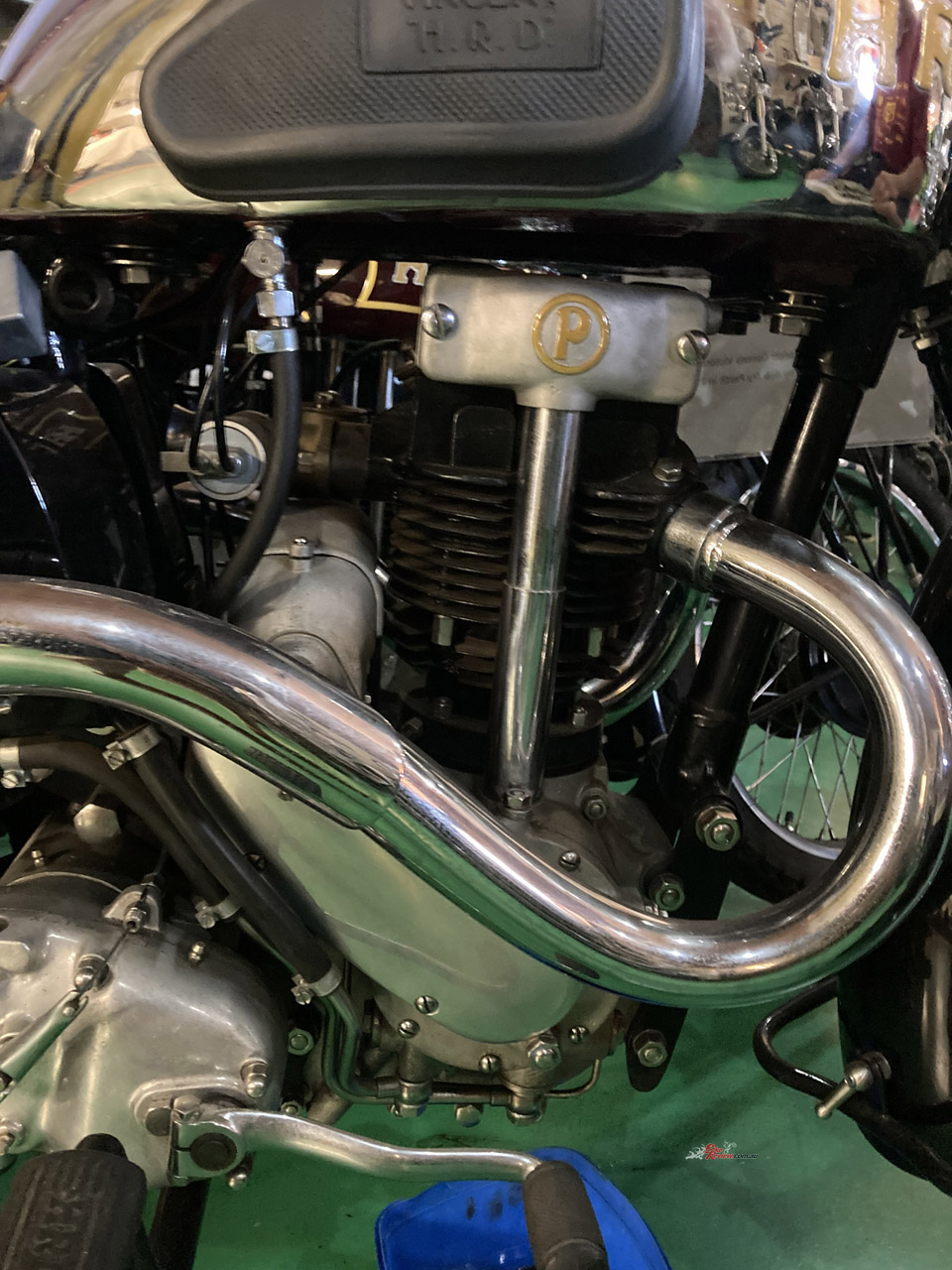
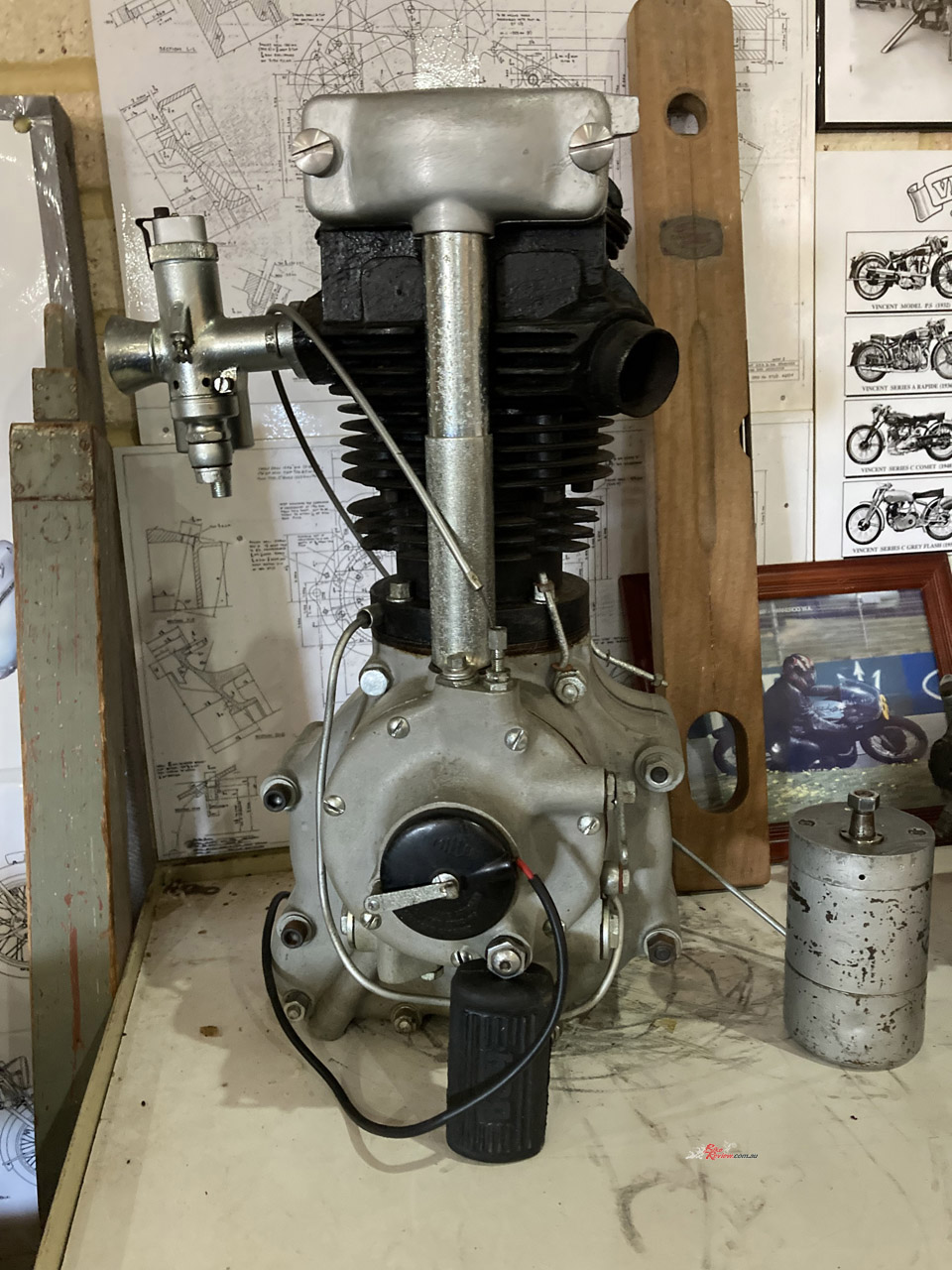
Finally, among a number of pre-war Rudge ohv singles that were hiding out of view as we came in, Boyd points to a 350cc Rudge engine that he’s puzzled by. Obviously well-prepared at some stage in its life, the timing cover features a contact-breaker cover. Hang on, we say, surely battery ignition came in during the 1950s? Can anyone out there solve the mystery?
“Boyd receives about 800 visitors a year. If you are keen to join them, call him”
As we leave, I sign the visitors’ book, and pop some money in Boyd’s charity box, our heads still spinning with the amazing sights we have seen. Boyd receives about 800 visitors a year. If you are keen to join them, call him on +61 (8) 9652 1044 or 61 (4) 0407 993 347 for an appointment.
The Author
You Might Also Like