
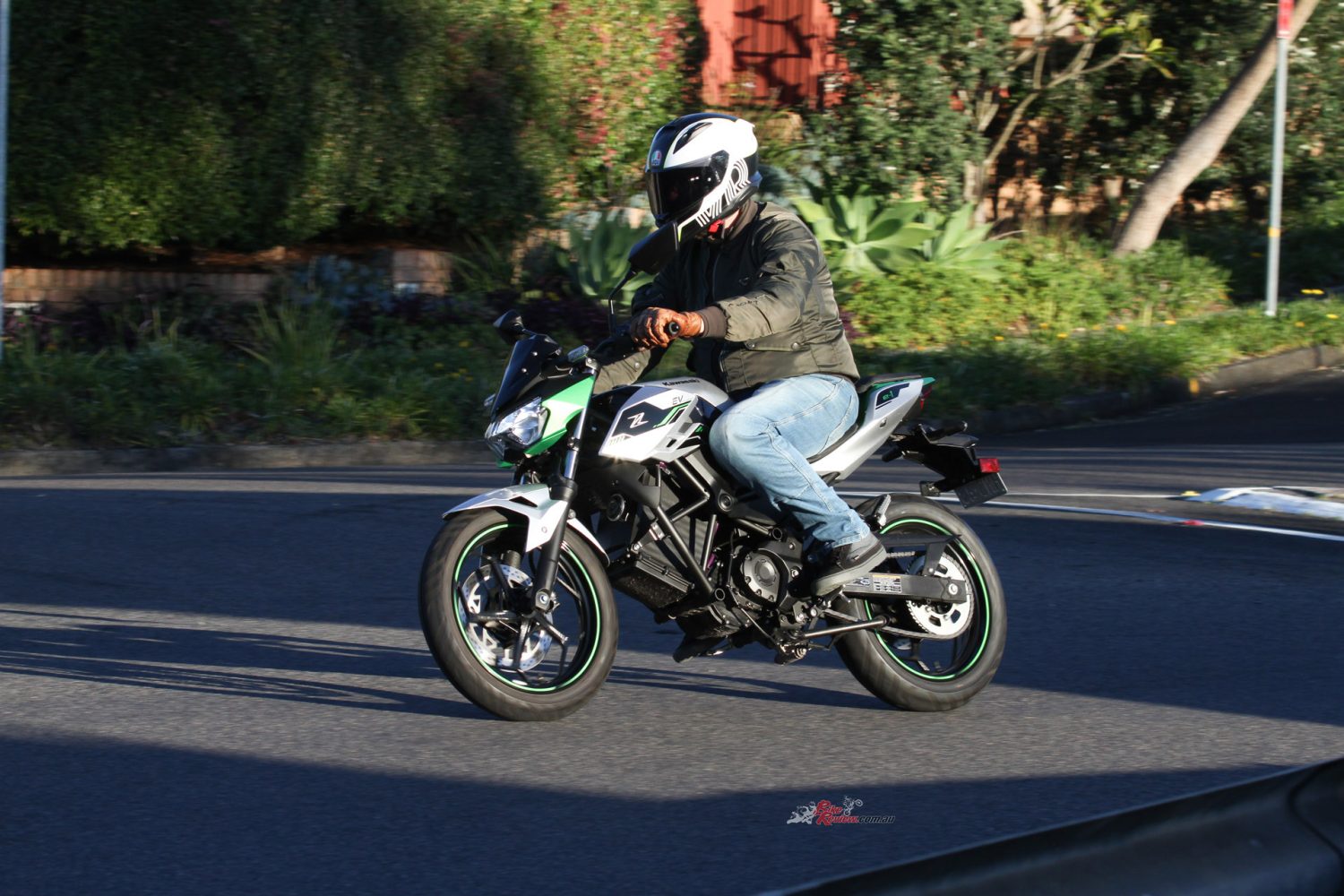

Kawasaki’s Z e-1 is light and quick off the line but its range raises questions about practicality. The Bear discovers there’s more to the electric commuter than its specs suggest.
More than 130 years after Bertha Benz’s first journey in a petrol-powered vehicle, electric bikes are facing familiar challenges. The Bear takes Kawasaki’s Z e-1 for a spin to see whether its modest range and performance are enough for everyday commuting.
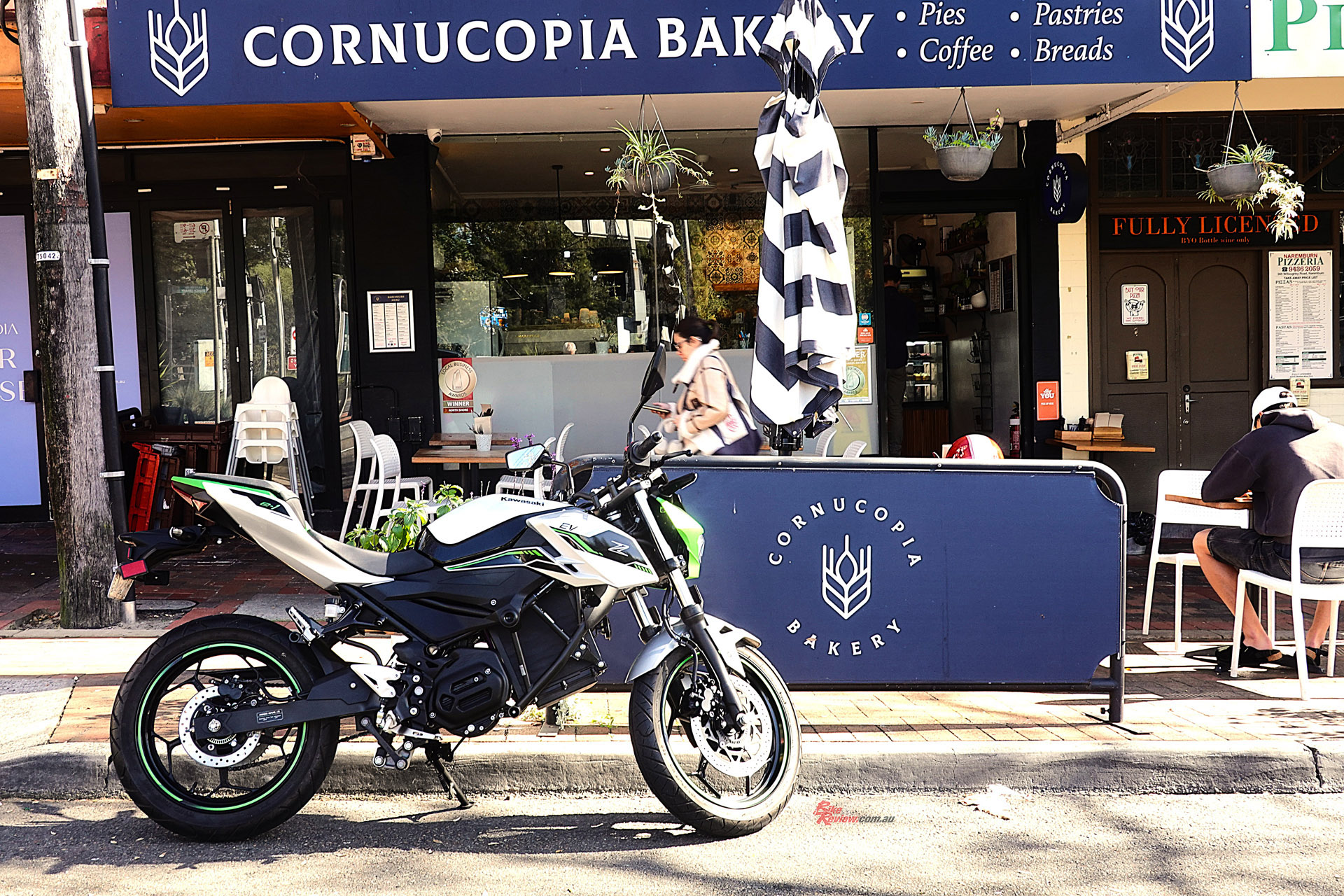
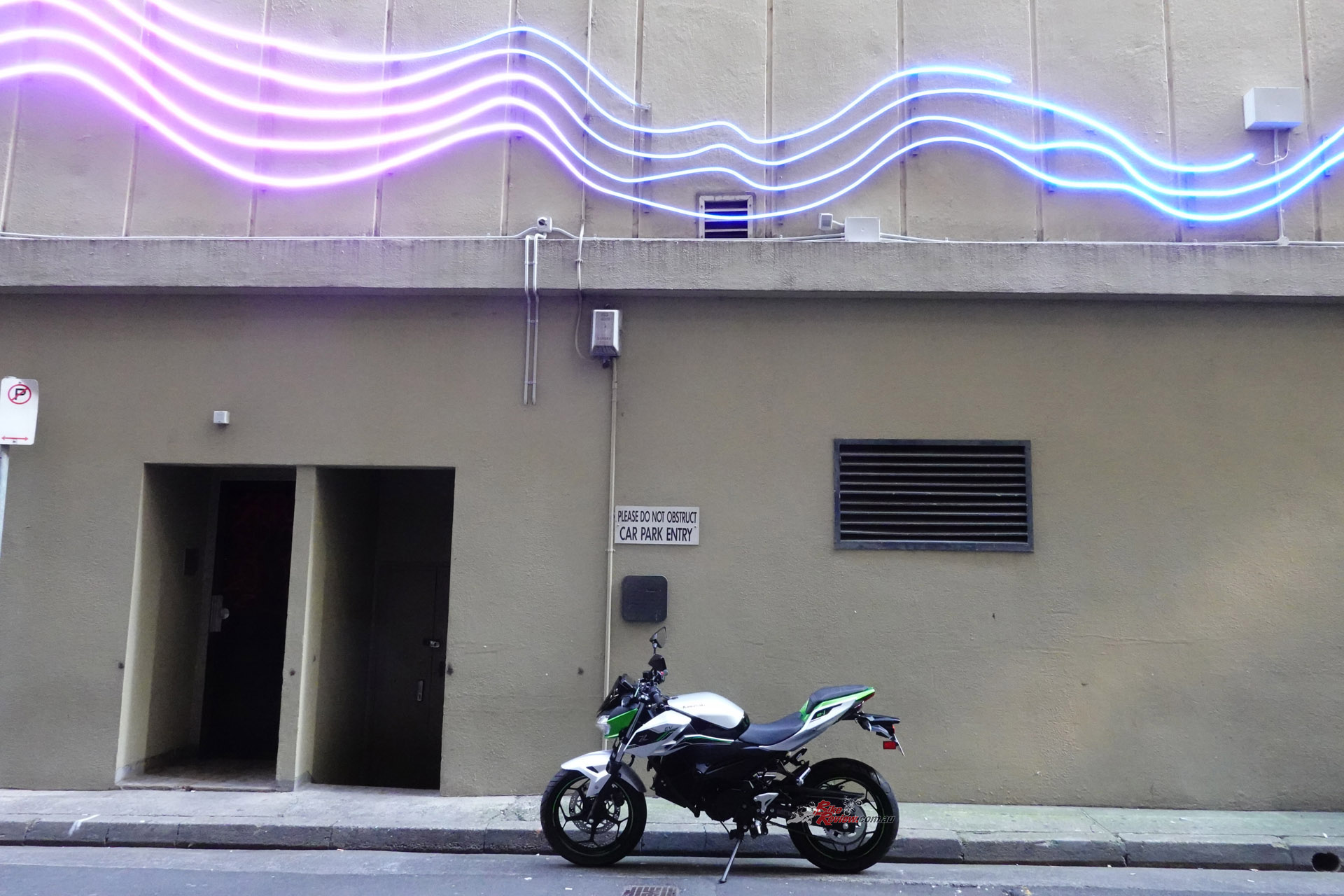
The Z e-1 looks right at home on a city street, where its compact dimensions and easy handling come into their own.
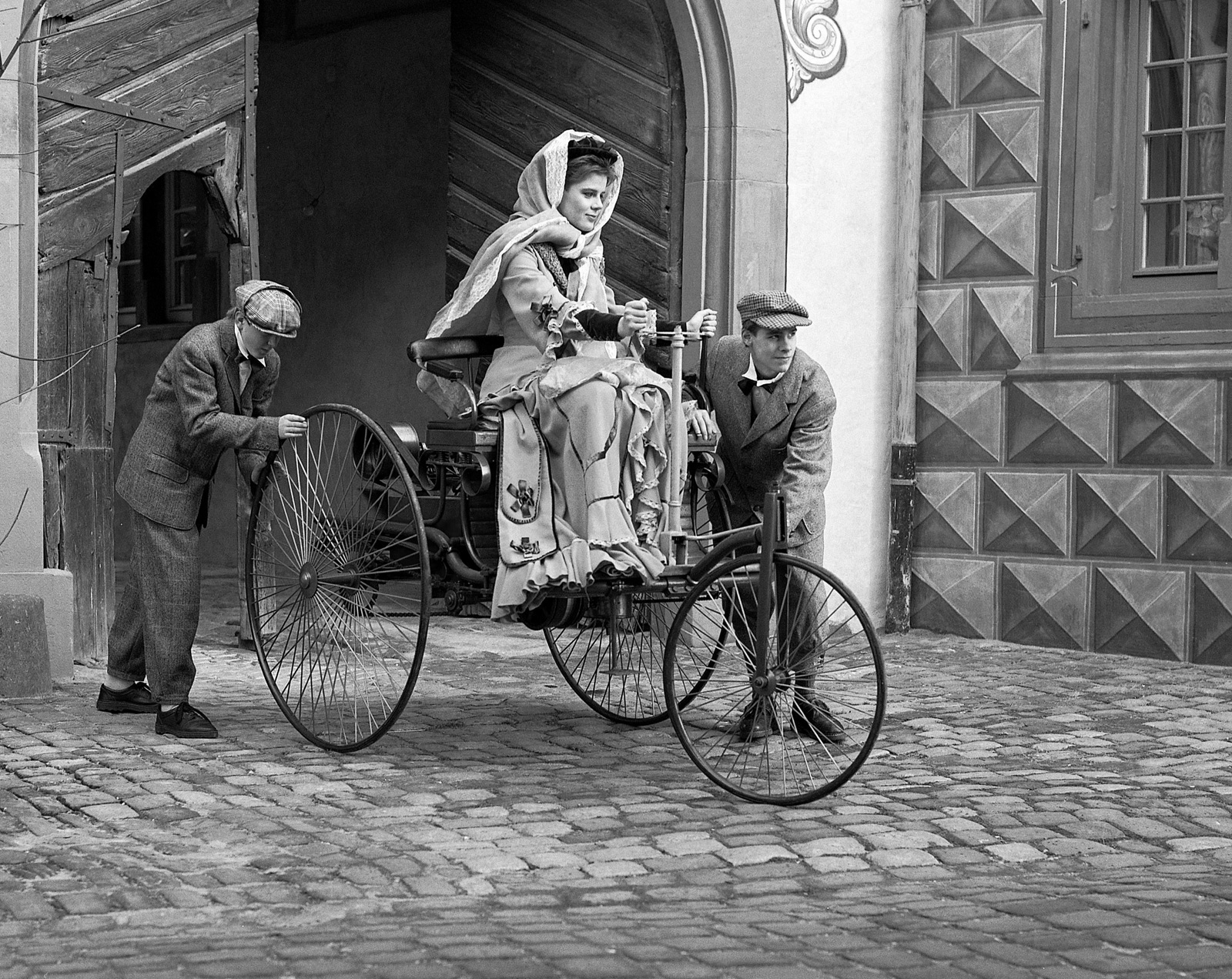
Have you seen the terrific little film Bertha Benz: The Journey That Changed Everything? It was produced for Mercedes-Benz and tells the story of Bertha Benz’s – in fact, anybody’s – historic first long-distance drive in, or on, a vehicle powered by an internal combustion engine. One of the scenes shows the trouble she has refuelling her Motorwagen. She finally manages to buy some ligroin, a light petroleum solvent that was sold as a cleaning fluid in the 19th century, from a pharmacy.

Okay. Now look out the window. If you’re looking at a street or a car park, you will see a whole bunch of motor vehicles with essentially the same internal combustion engine as the Benz Motorwagen. Amazing, right? Who would have thought, when it was so much trouble to refuel an early-model car, that the idea would catch on so marvellously? And yes, I’m comparing the limited availability of fuel for internal combustion engines with the alleged problems of charging electric vehicles.
“Who would have thought, when it was so much trouble to refuel an early-model car, that the idea would catch on so marvellously?”
It’s a damn sight easier to charge a bike’s battery today than it was for Mrs Benz to fill her Wagen’s tank. And it will only get easier, just as range will increase with improvements in battery technology. Toyota recently announced that new solid-state battery technology will give its vehicles a 1200km range on a single charge, which will take about 10 minutes. Electricity’s future as a ‘fuel’ for motor vehicles is bright.
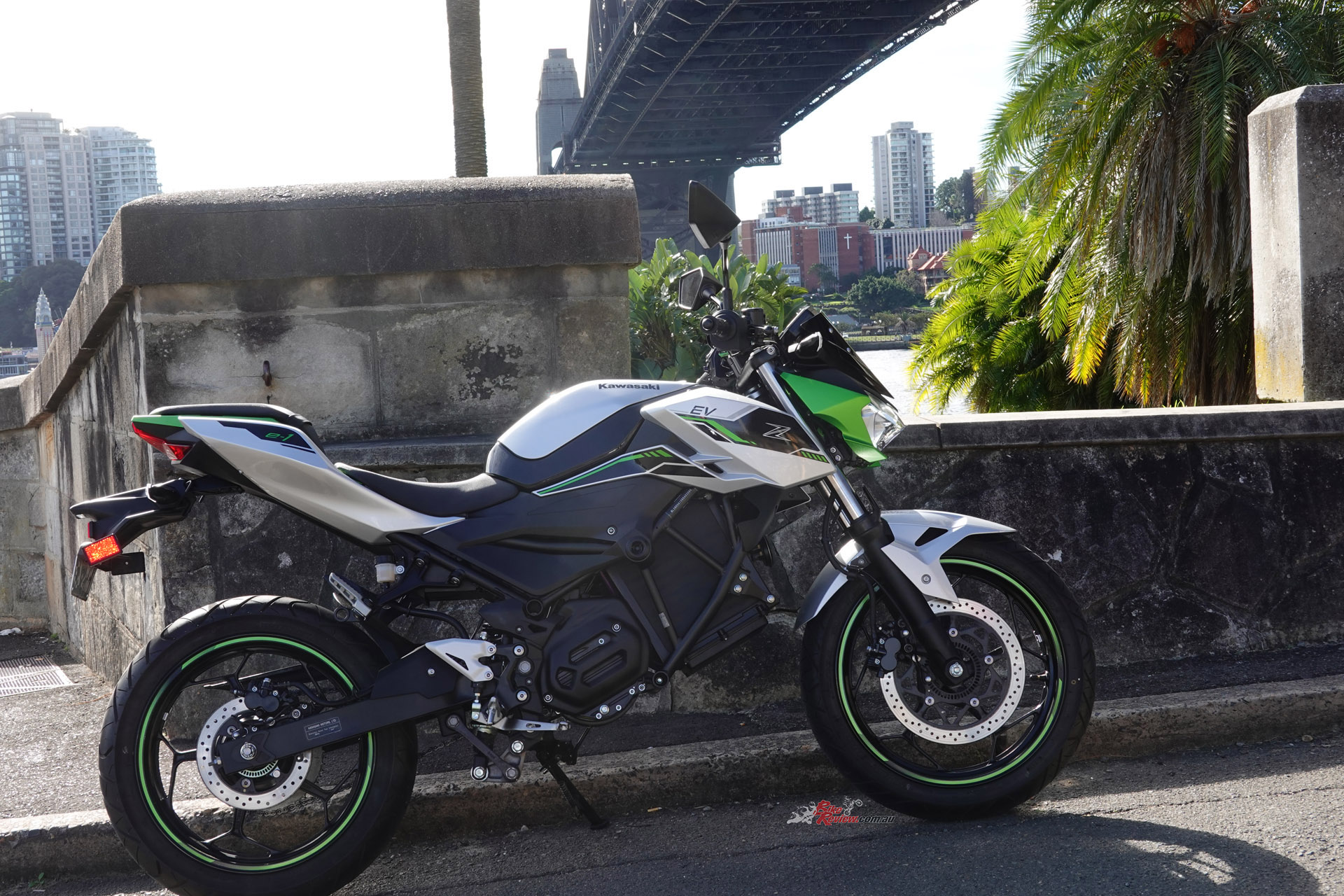
For the time being, we are a lot more restricted, admittedly. Take the bike I’ve just given back to Kawasaki Motor, the Z e-1. It’s based closely on the internal combustion-powered Z125, to the point where anyone who is not a rider could be in danger of confusing them.
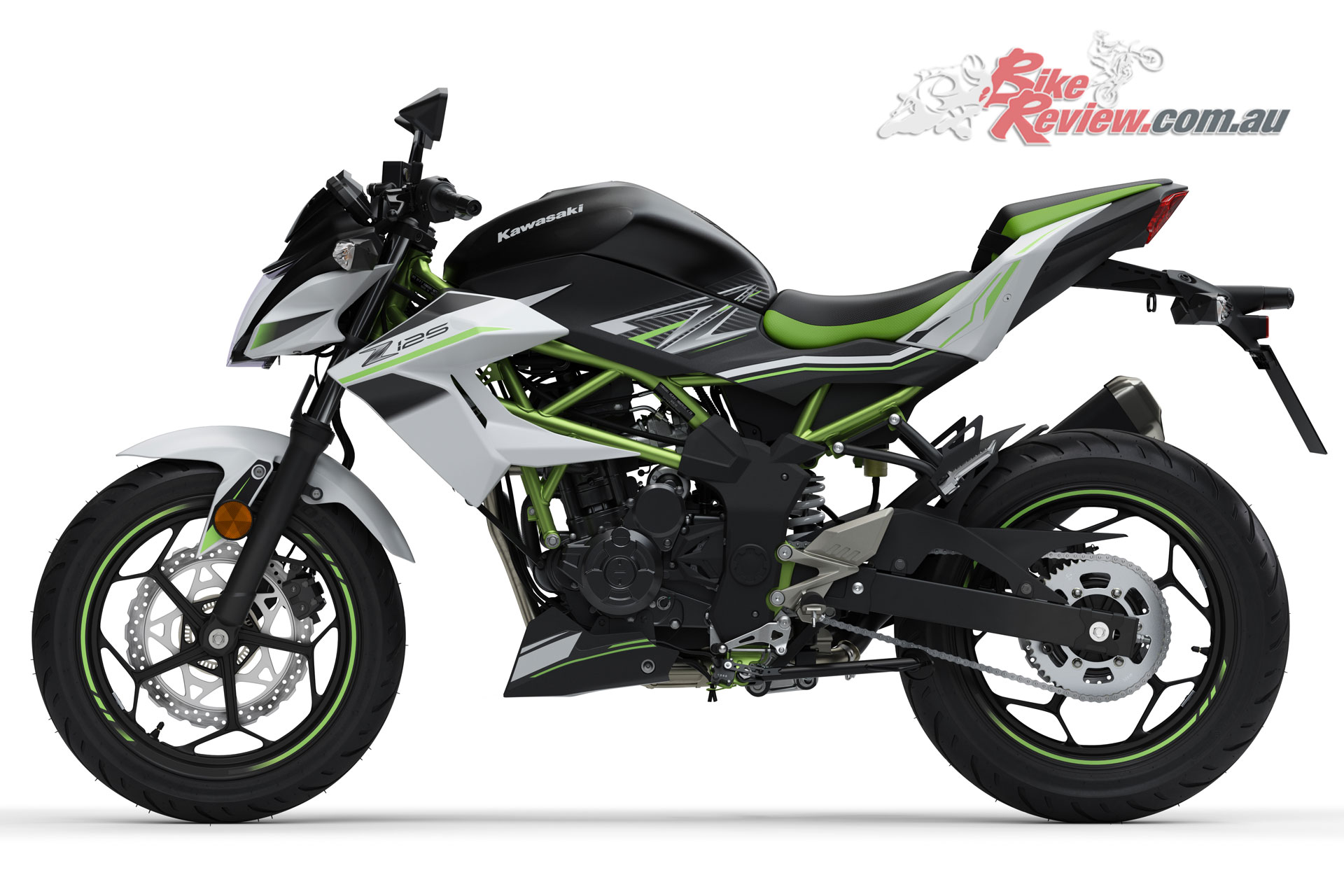
Kawasaki designed the electric version around the petrol-powered Z125.
There is one major difference between the two, and that is the weight. The IC-engined Z125 weighs in at 146kg, while the Z e-1 comes in at 135kg. That makes the electric bike 11kg lighter than its petrol-powered counterpart, and it certainly felt light to me. Admittedly, I didn’t have the bikes side by side to compare them.
What does the Z e-1 feel like to ride, then? Starting it is simplicity itself. Turn on the ignition key, press the kill switch for a few seconds and the basic, very much typically Kawasaki instrument display tells you the bike is ready. Careful now; a turn of the throttle will launch the bike quite enthusiastically. This is fun and useful, because it gets you away from the lights before the cars can get ahead of you.
“Careful now; a turn of the throttle will launch the bike quite enthusiastically.”
After that, acceleration settles down to a somewhat phlegmatic pace, but the bike has a trick up its figurative sleeve: a booster, activated by a switch on the right handlebar, which gives the e-1 a reassuring, err, boost. That should see you pass or get out of the way of other traffic. It becomes unavailable when the range drops below an indicated 12km or so.
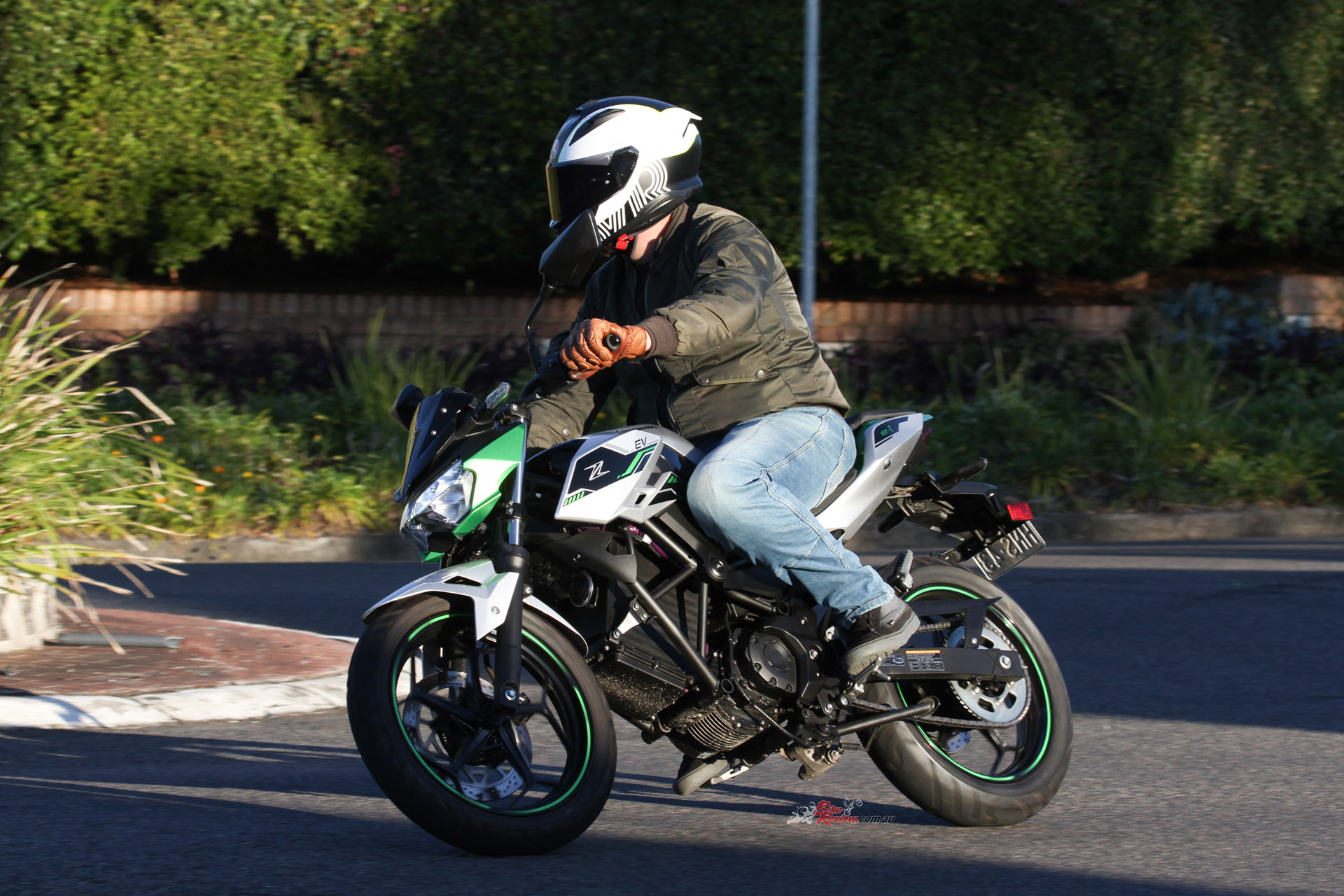
The light handling and responsive low-speed acceleration make it well suited to urban riding.
Rated power output is 5.0kW at 2800rpm, with maximum output of 9.0kW at 2600–4000rpm. Maximum torque is at the bottom end of the rev curve, with a substantial 40.5Nm at 0–1600rpm. Maximum speed in ROAD mode with the booster is a claimed 100km/h. Fine for commuting. The other mode, ECONOMY, makes the bike so phlegmatic that it’s impractical for normal use. It does double the range, though.
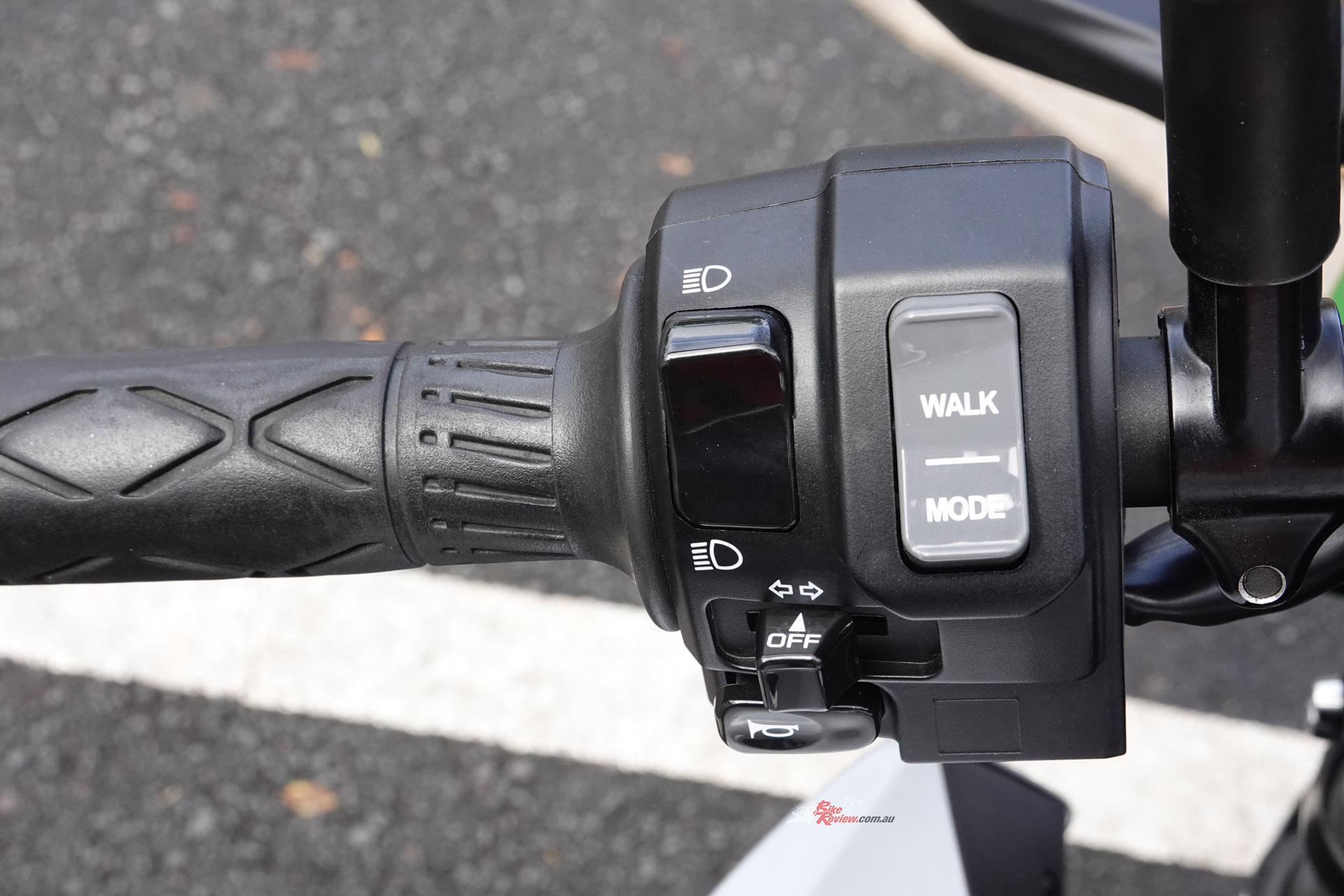
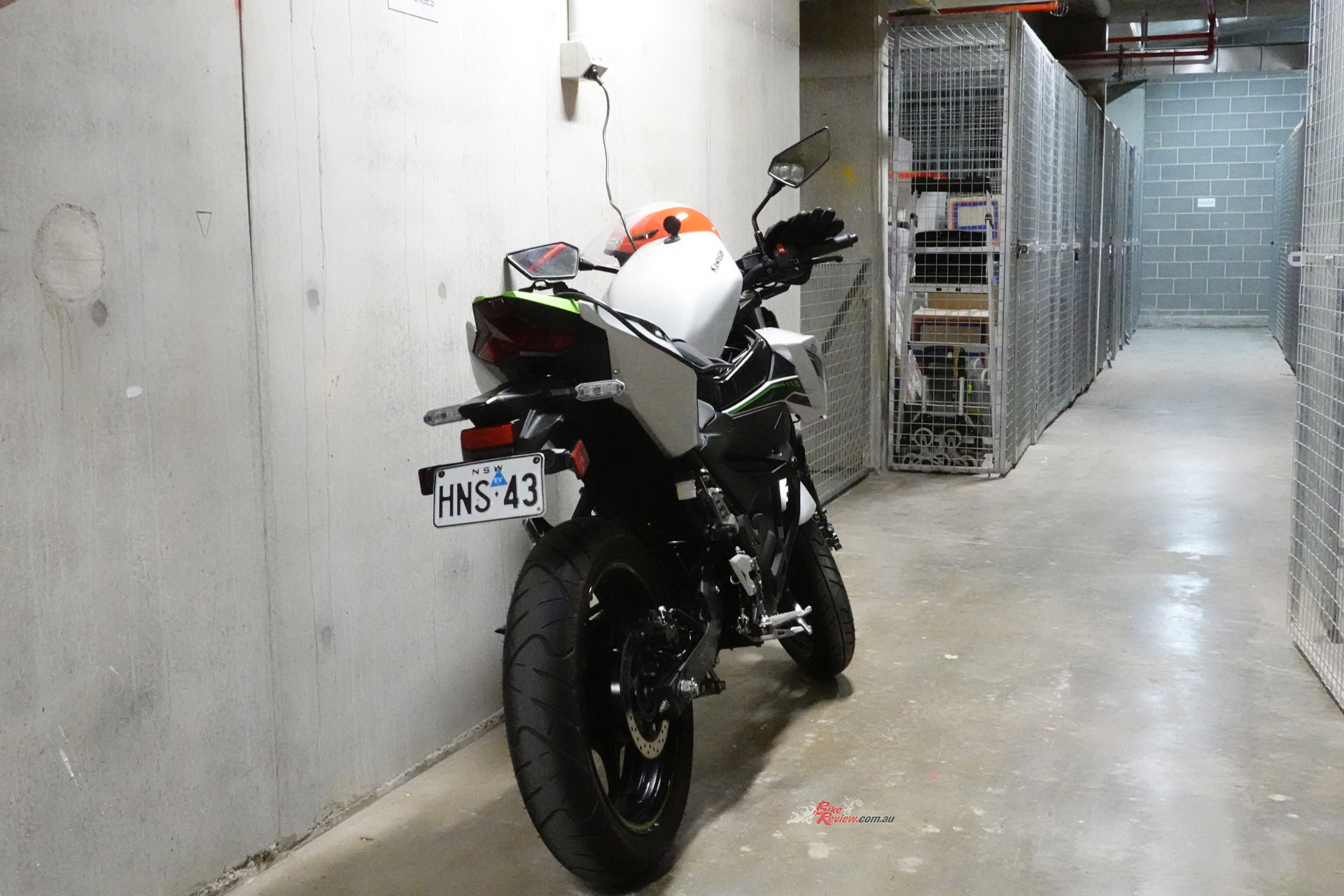
Naturally, the booster also drains the battery faster than regular riding. And here is where we come to the shortcoming of the Z e-1: its range. It has two batteries, which is useful when you want to charge them and take them out of their sleeves; they’re not heavy, weighing less than 12kg each. But even with two batteries, the bike will only take you some 55km. I was surprised by that. Present-day battery technology is better than that. But then I realised that this bike has not been revised since it was a 2024 model. Charging seems reasonable – I got the full sign after three hours from near empty.
“Charging seems reasonable – I got the full sign after three hours from near empty.”
It would seem that you’d be facing distance anxiety with the Z e-1. But I did some digging, and it turns out that the median commuting distance in Australia’s big cities is about 20km. You’d be able to get to work and home without any trouble. The US Census Bureau’s American Community Survey distances are similar, at 11–16km in short-commute cities and 19–24km in long-commute ones. No problem in either of these countries if you are going to use the Z e-1 purely as a commuter. That’s what I would recommend it for, especially if you have something like an R 1300 GS in the garage and don’t want to risk it in the city.
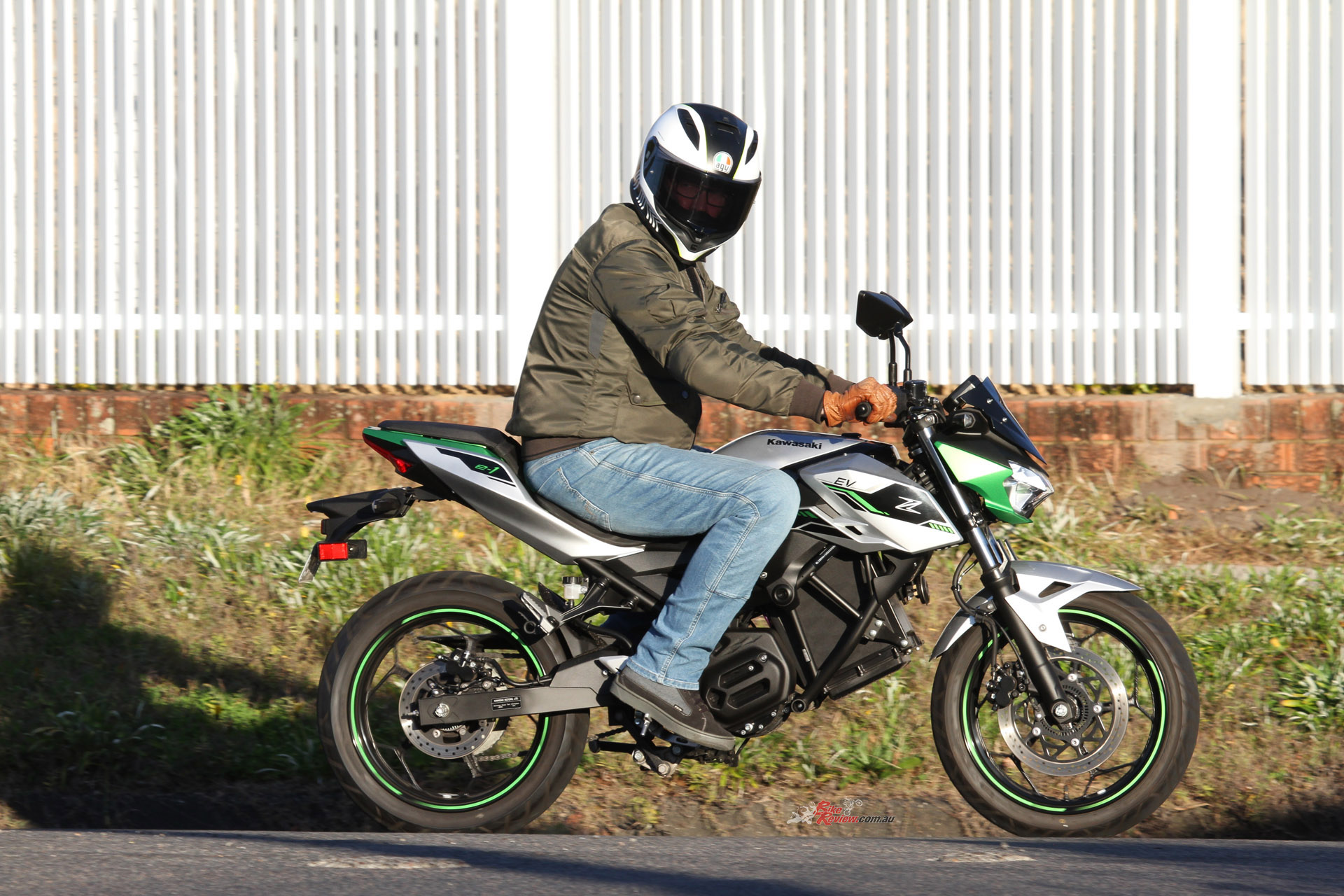
Kawasaki’s Ergo-Fit system offers adjustable components to tailor the riding position.
There’s no cargo space or rack to carry your gear, with the exception of some hooks at the back under the seat. You can strap a bag to the pillion seat or carry a bag over your shoulder. The charger, which you will want to keep with you, takes up the limited space in the dummy fuel tank.
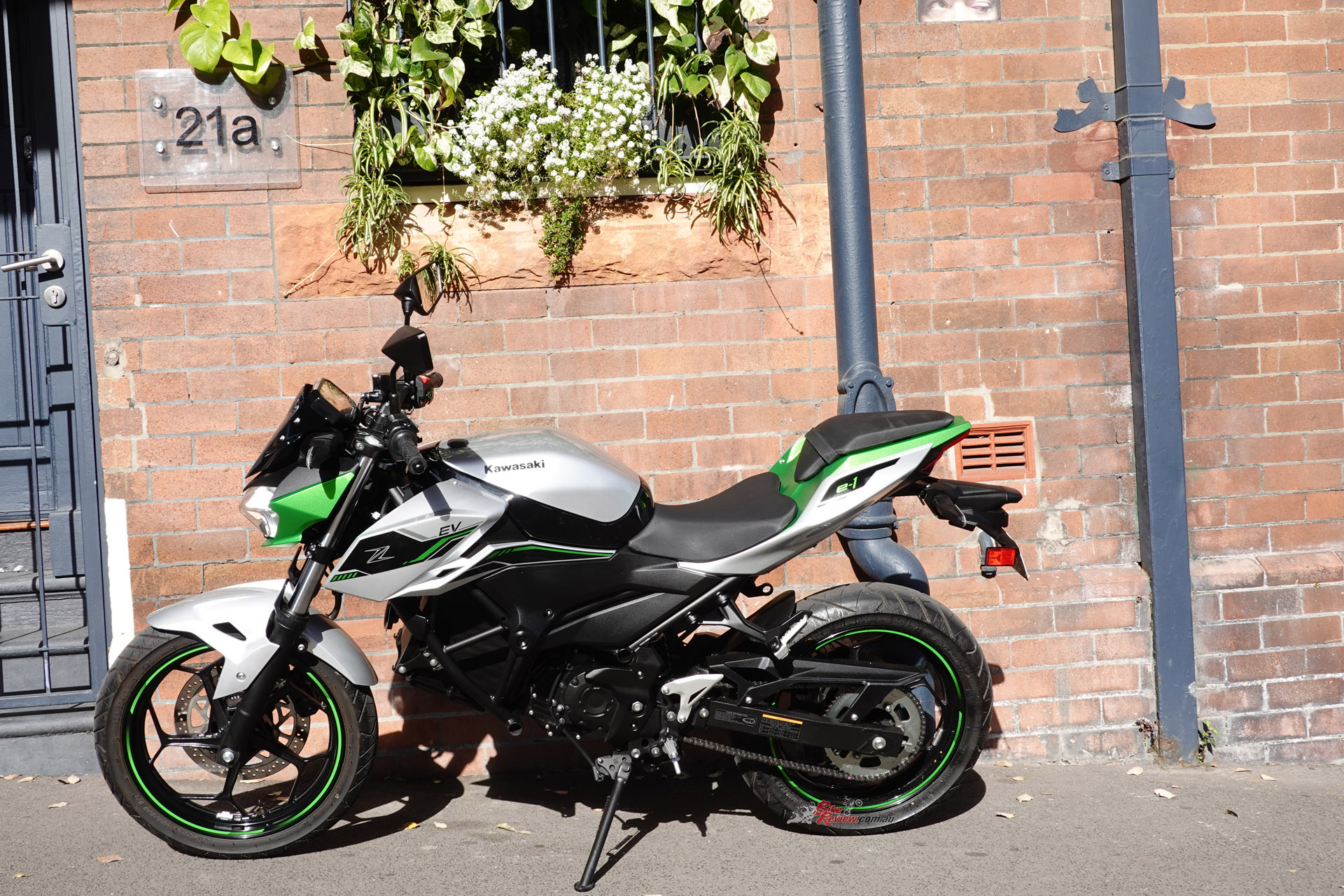
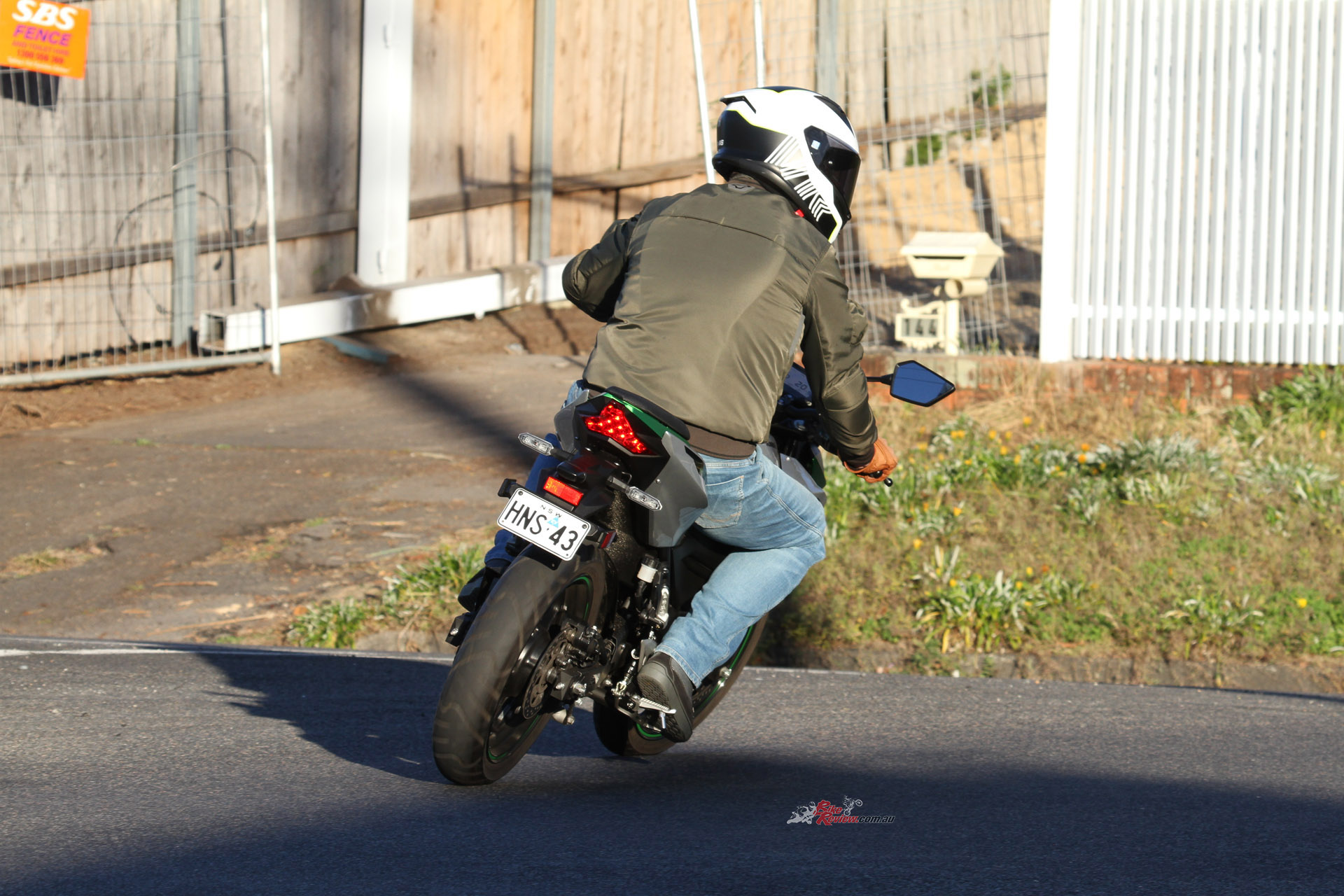
The bike’s handling is light, with the 1370mm wheelbase making it a snack to throw around on the road. Suspension is fine. The bike has ABS. An interesting and welcome feature is what Kawasaki calls Ergo-Fit, which allows the handlebars, footpegs, seat and so on to be set specifically for a rider, using interchangeable and adjustable parts. You can connect your phone to the bike for various activities as well.
“The handlebars, footpegs, seat and so on can be set specifically for a rider, using interchangeable and adjustable parts.”
Kawasaki’s Z e-1 is not perfect, but it is a step towards an inevitable future. Meanwhile, if you find yourself agonising about range, spare a thought for Mrs Benz.
The Author

You Might Also Like