
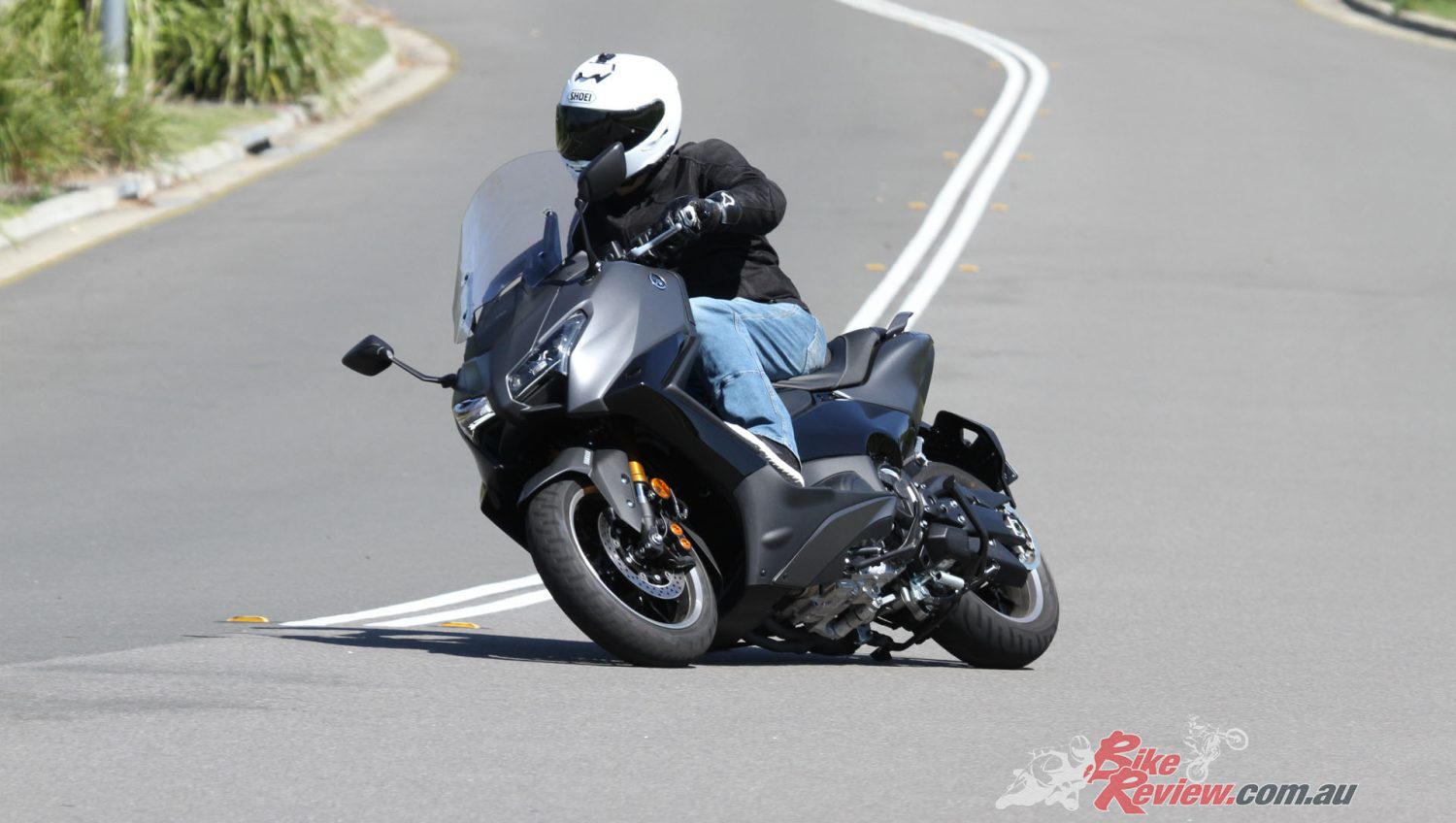

The TMAX Tech MAX combines big-bore twin-cylinder performance, sports-inspired handling and touring comfort. We test Yamaha's flagship scooter... Photos: HMC Photography
The Yamaha TMAX has always occupied an interesting place in the motorcycle world, sitting somewhere between a scooter and a sports-touring motorcycle. Having tested the earlier TMAX 530, including the Iron MAX, I was keen to see how the latest TMAX had evolved…
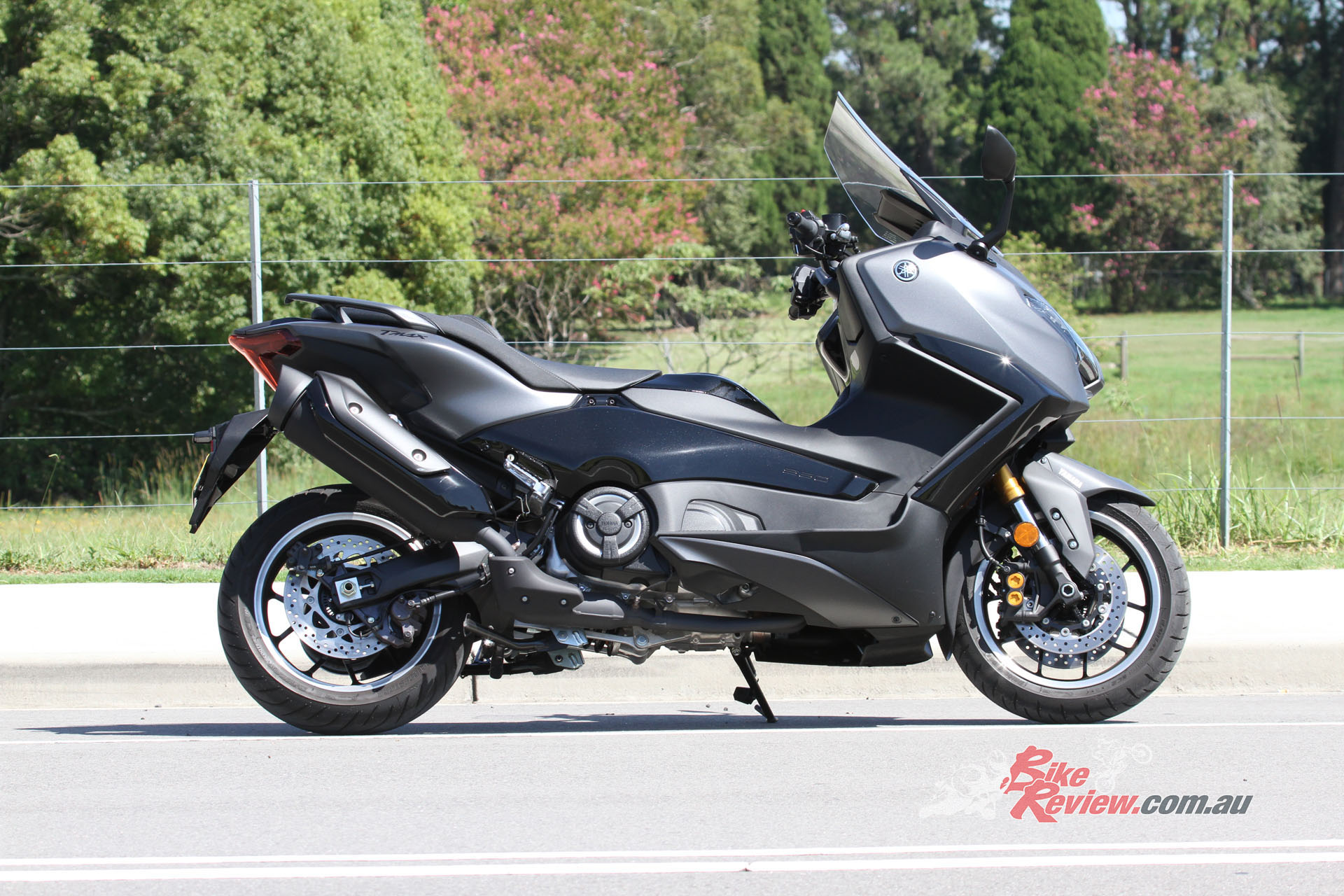
The 2026 Yamaha TMAX Tech MAX is powered by a 562cc, liquid-cooled, DOHC, parallel-twin.
After spending several weeks riding it through some fantastic February weather, I can confirm Yamaha has addressed several of the things I wanted from the previous model. The result is a seriously capable machine, although one that comes with a premium price tag.
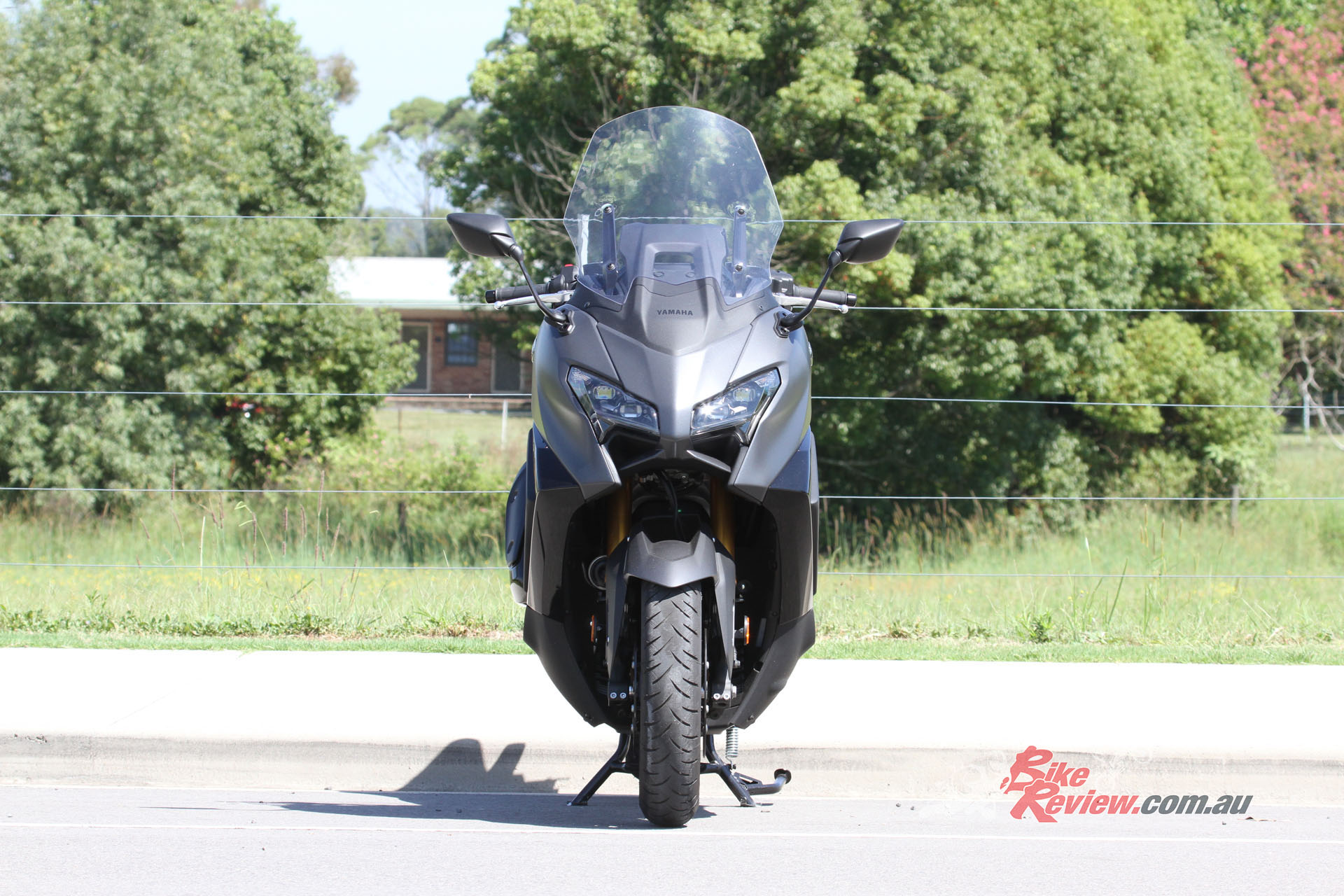
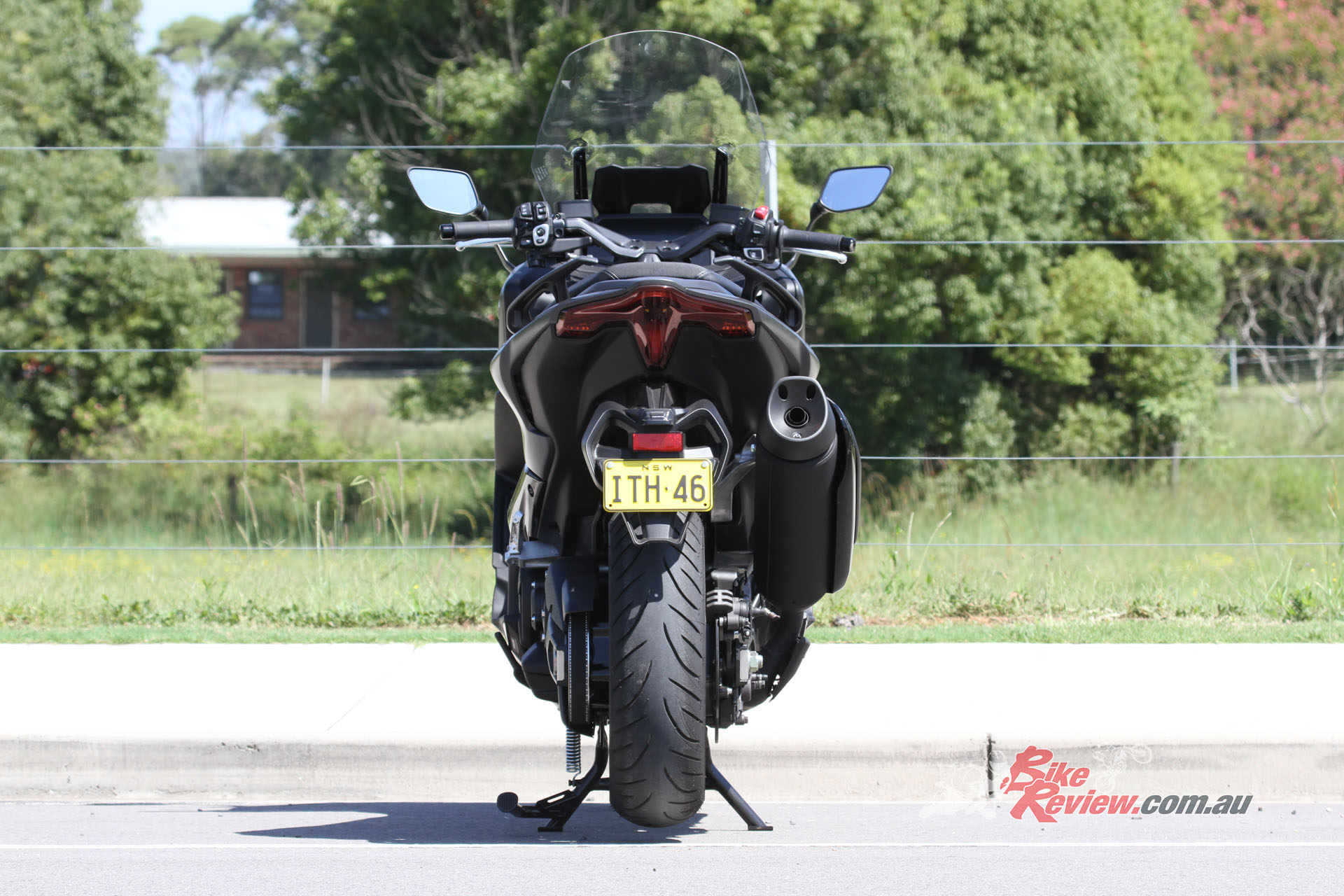
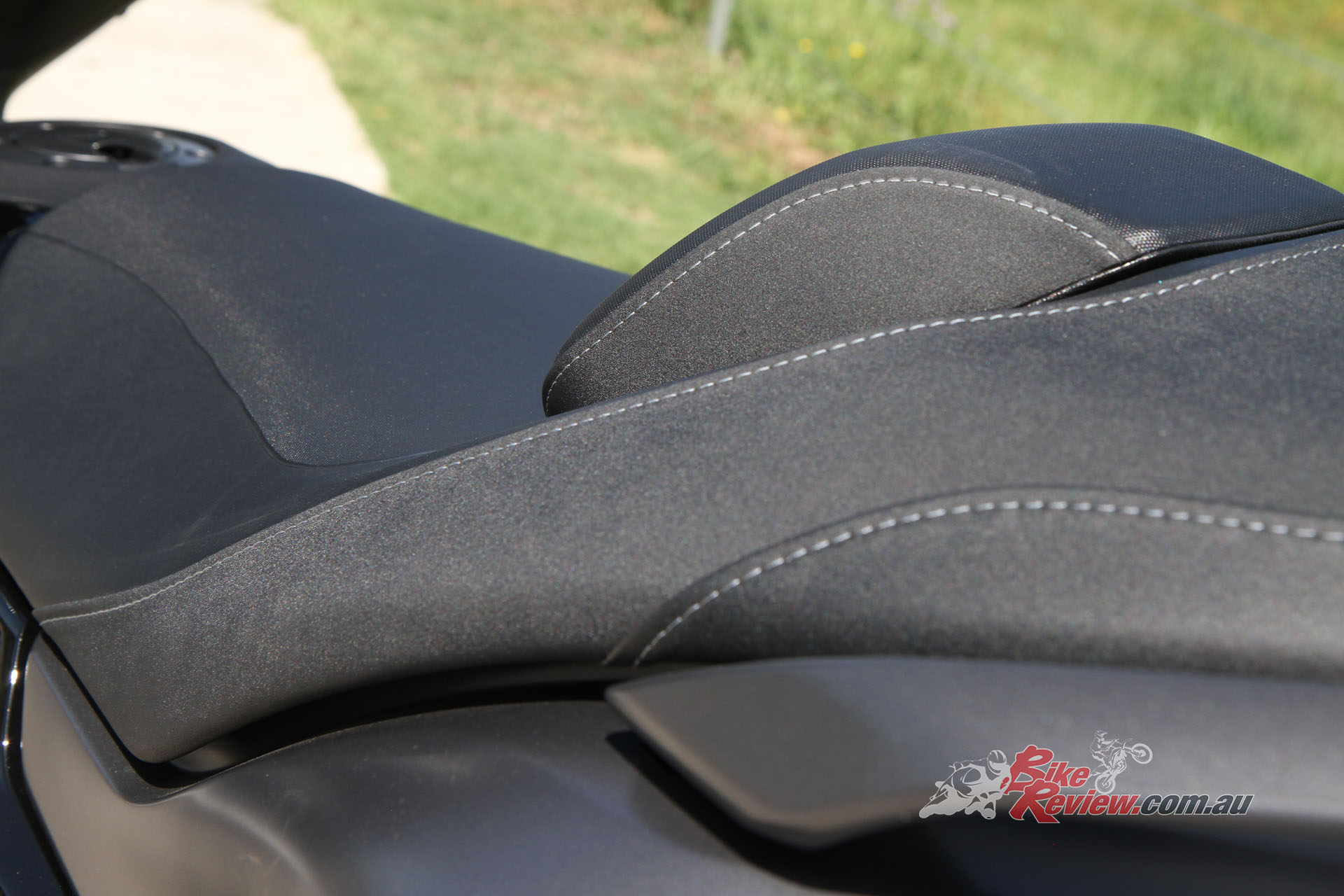
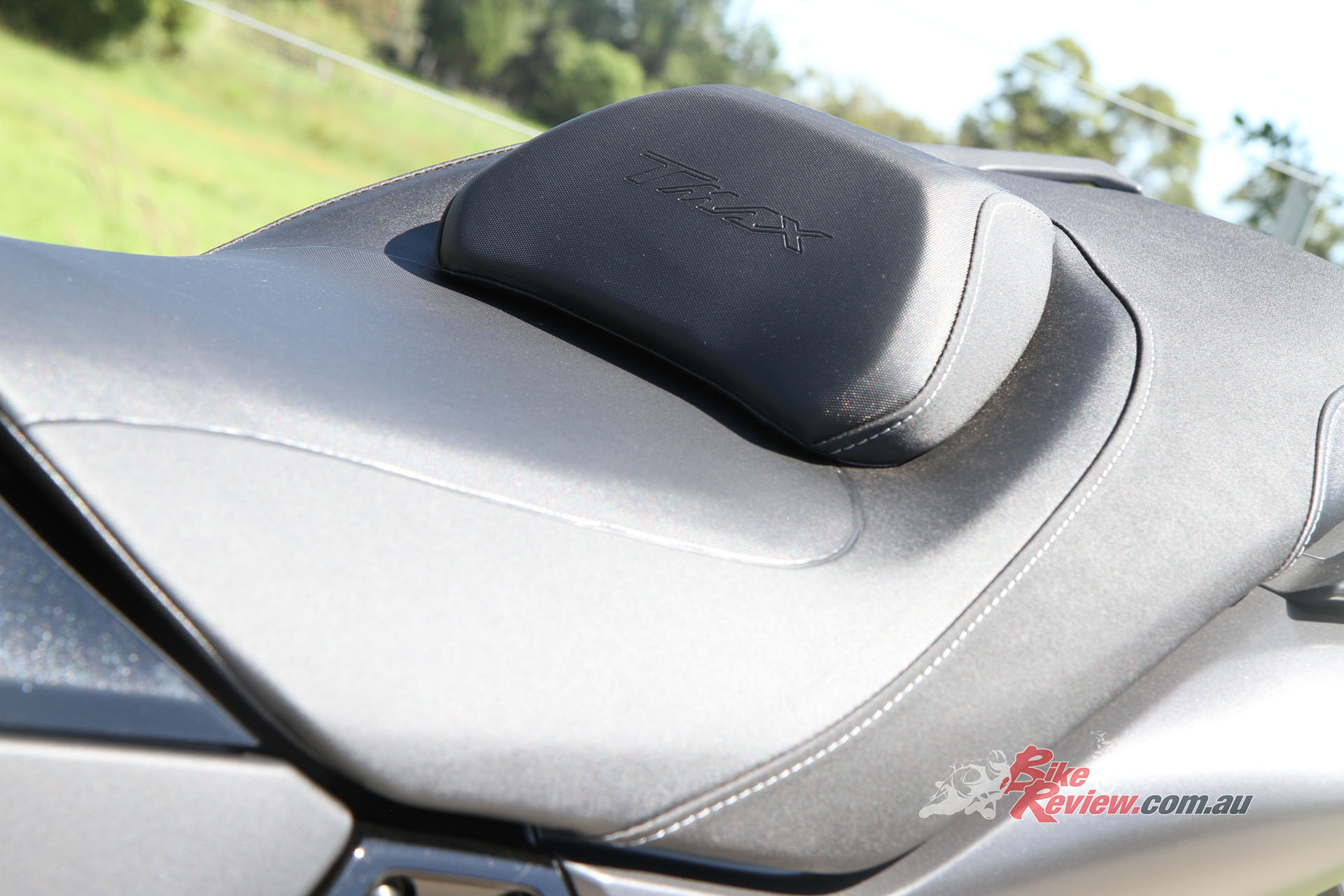
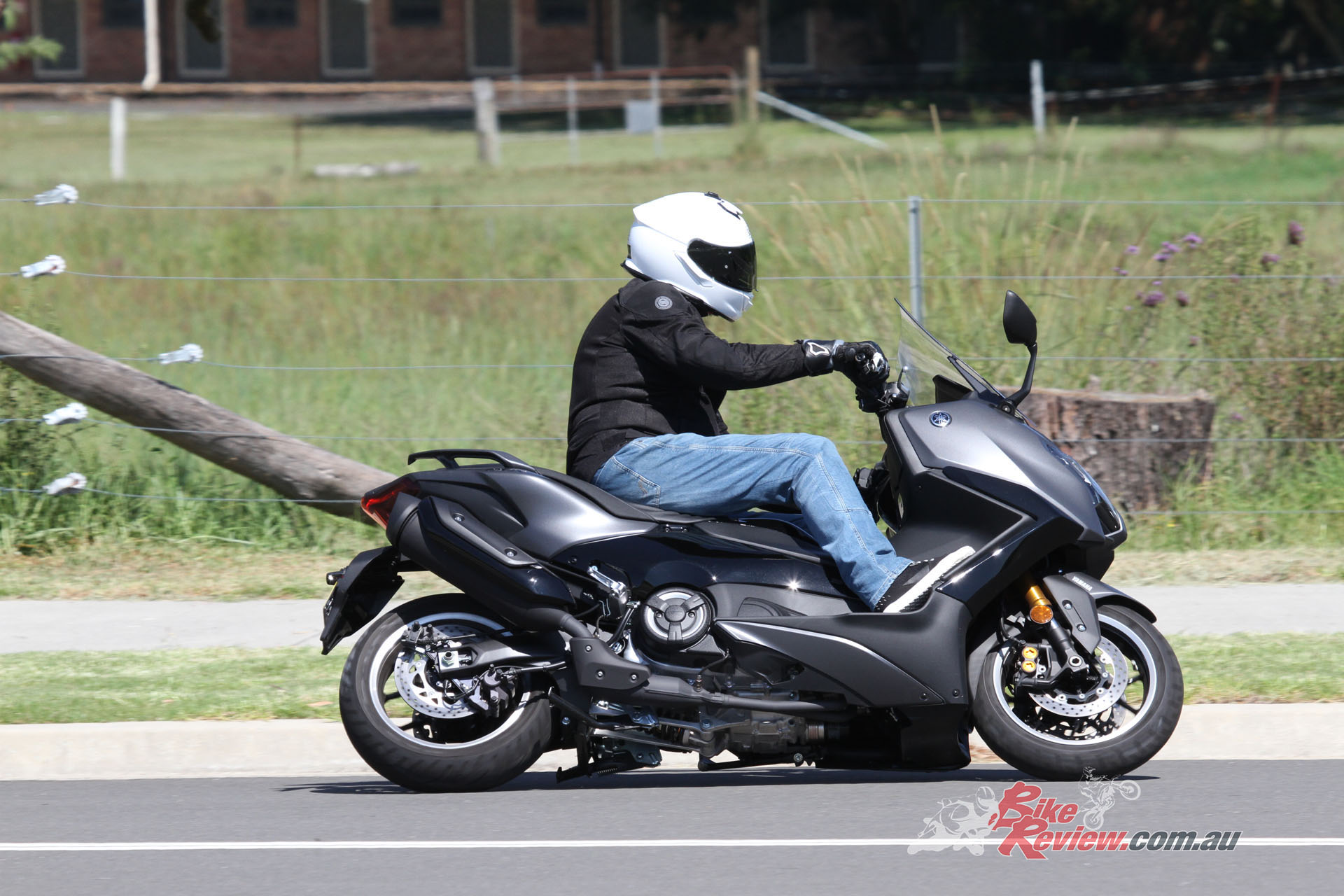
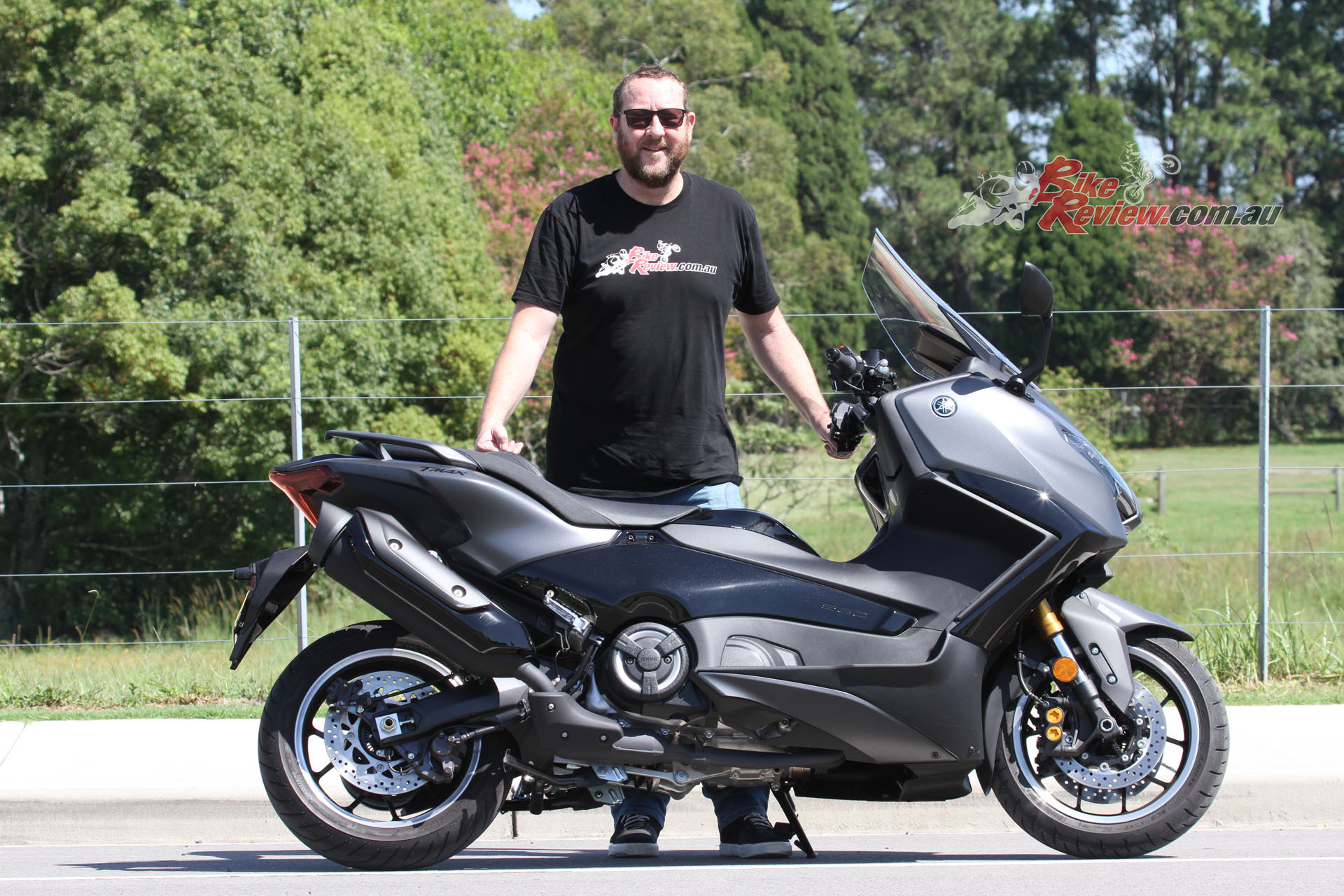
My first ride of the year was bringing the BikeReview Yamaha YZF-R9 long-termer back for the last time, then heading home on the TMAX. What a cruisy ride! After spending time on a sportsbike, the upright riding position, weather protection and automatic transmission were a welcome change. At 187cm tall, I appreciate the room available on the TMAX, although the seat shape does push me further forward than I’d like. A custom seat with the rear support extended backwards would be on my wish list, but otherwise the ergonomics work well.
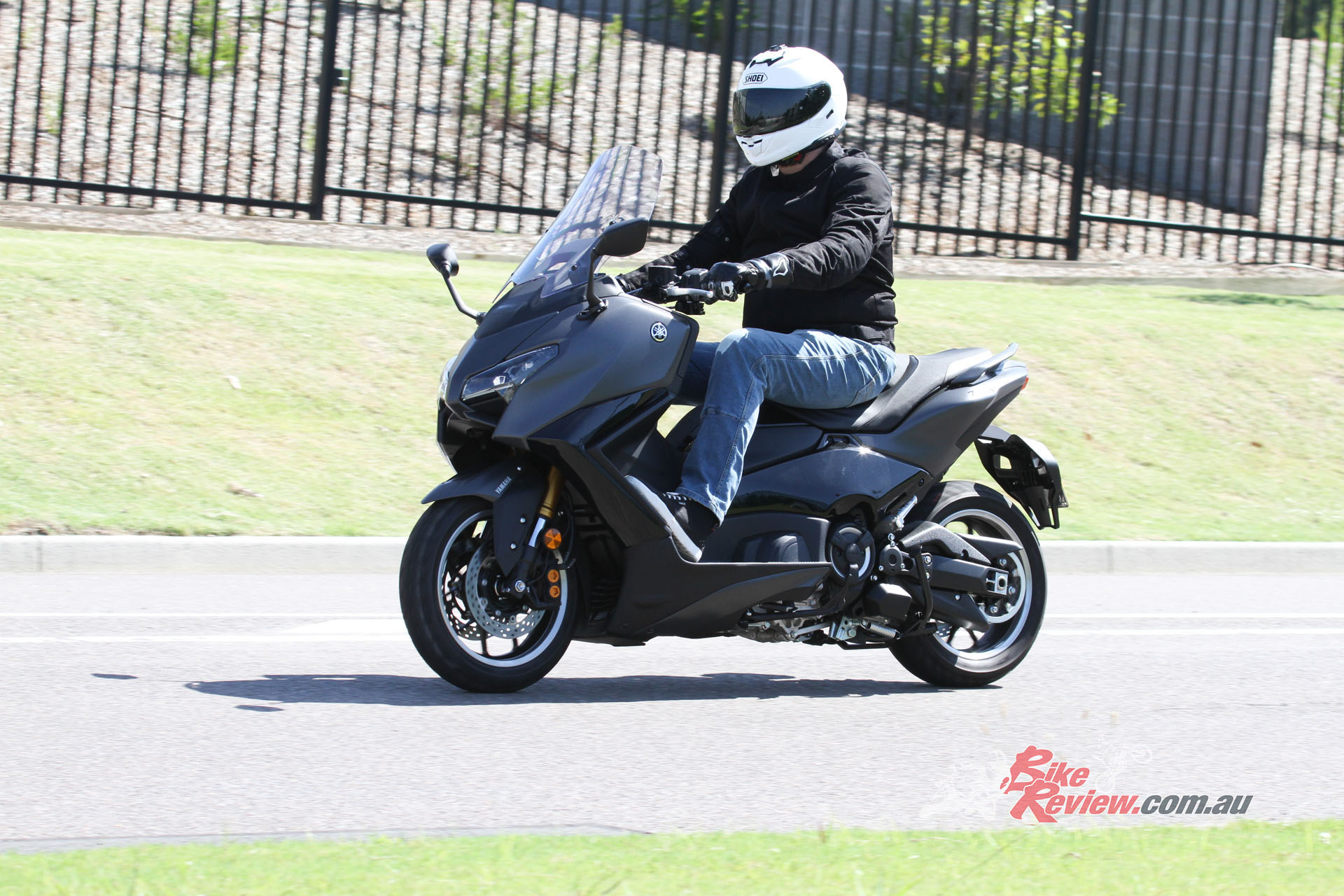
A custom seat with the rear support extended backwards would be on my wish list, but otherwise the ergonomics work well.
The biggest change from the earlier TMAX was the increase in engine capacity to 562cc in 2020, with the liquid-cooled, DOHC parallel twin delivering strong performance through Yamaha’s automatic CVT transmission. The extra capacity made an already quick scooter even more responsive, with masses of grunt straight off the lights.
You can make rapid progress without needing to think about gear changes, and the TMAX will comfortably reach 170km/h. It is a reminder that these maxi-scooters are a long way removed from the small-capacity commuter scooters many riders picture when they hear the word scooter. This latest evolution of that motor feels even more refined than the 2020 model…
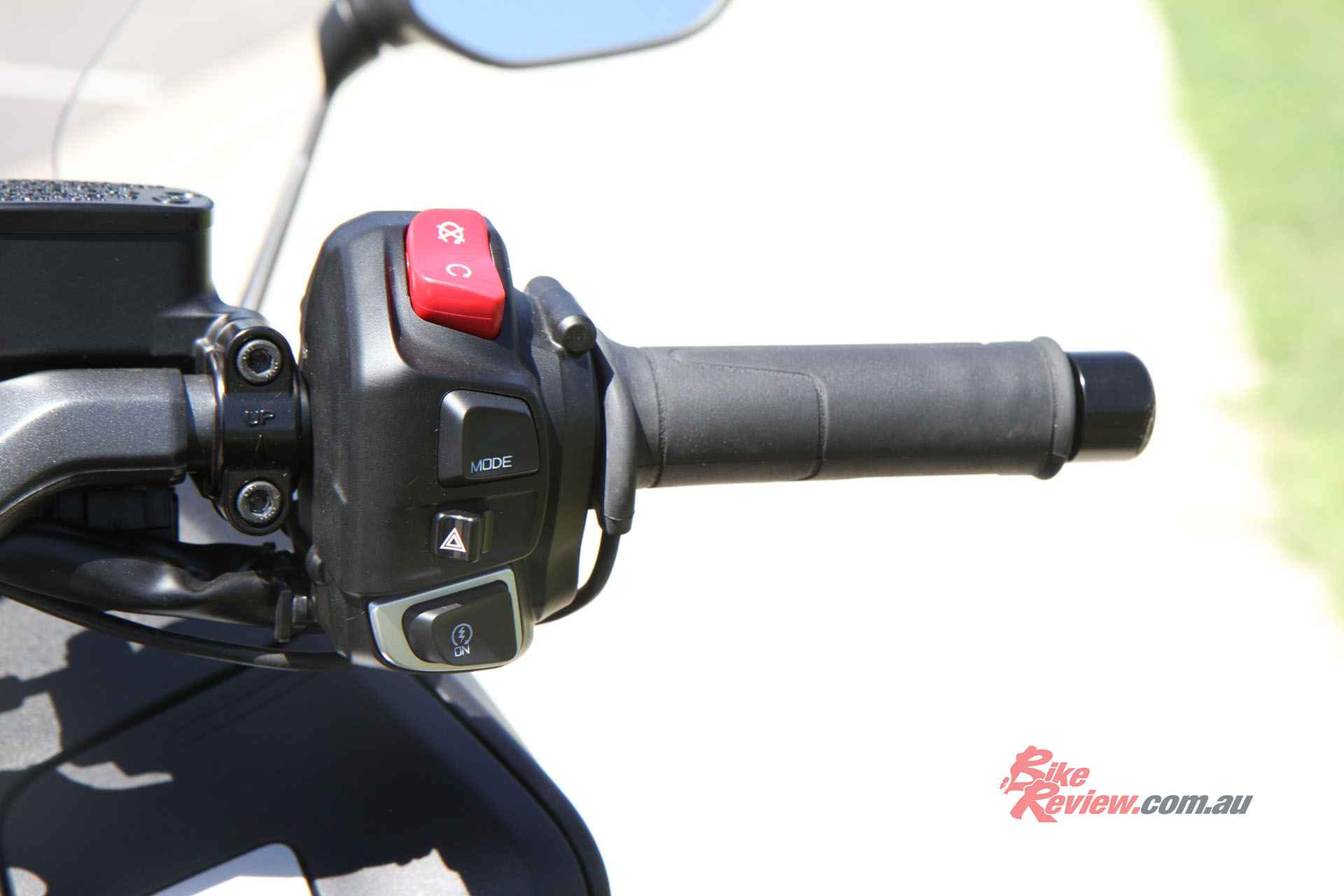
The two D-MODE settings, Sport and Touring, allow the engine response to be tailored to the conditions. I spent time in Touring mode, which suited everyday riding and wet-weather conditions. Traction control is another useful inclusion, and I could feel it intervening on several occasions when riding through heavy rain on slick roads. With standing water and some aquaplaning, the system was working in the background to manage available grip. The experience gave me confidence in the electronics, particularly when conditions deteriorated.
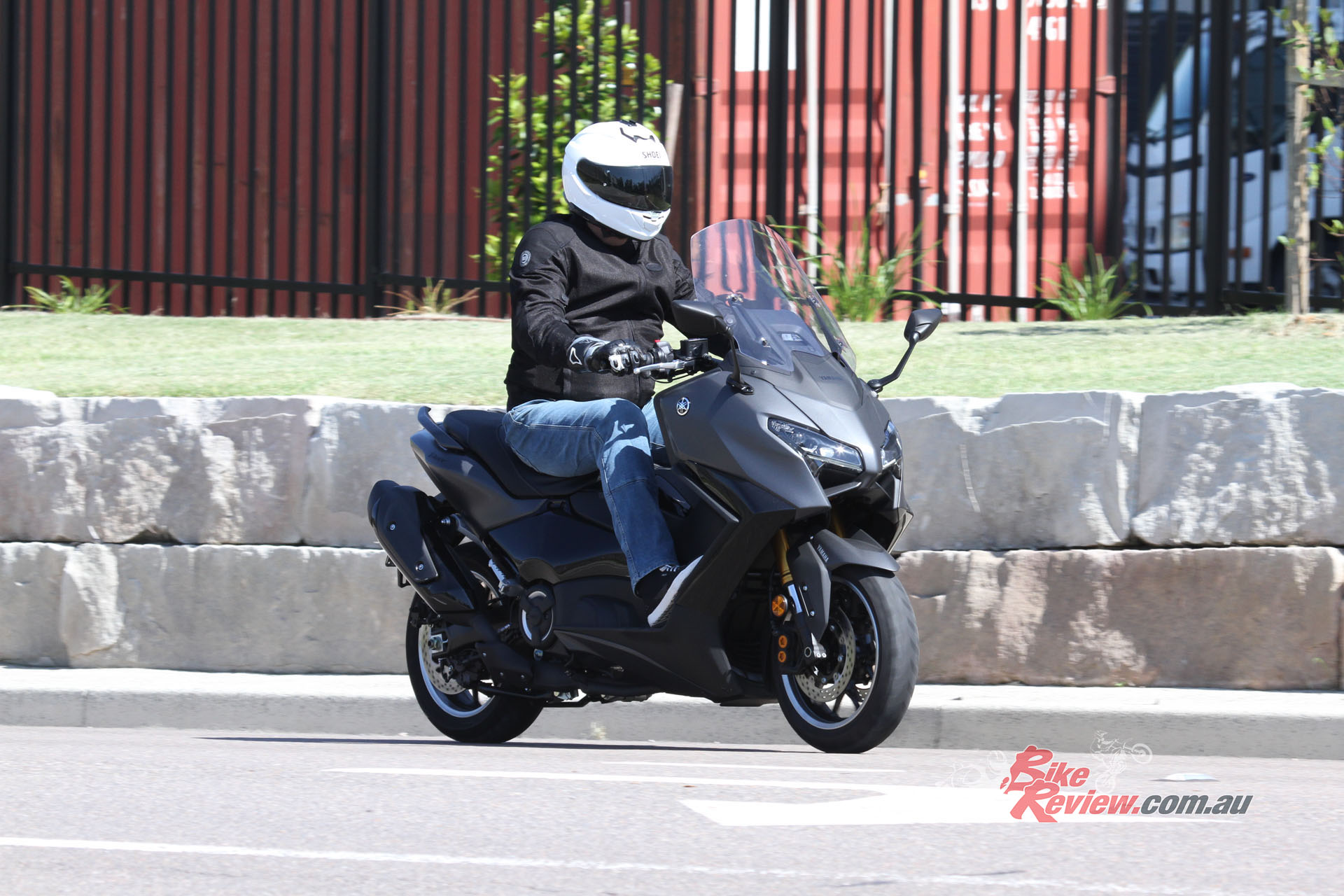
Traction control is another useful inclusion, and I could feel it intervening on several occasions when riding through heavy rain on slick roads.
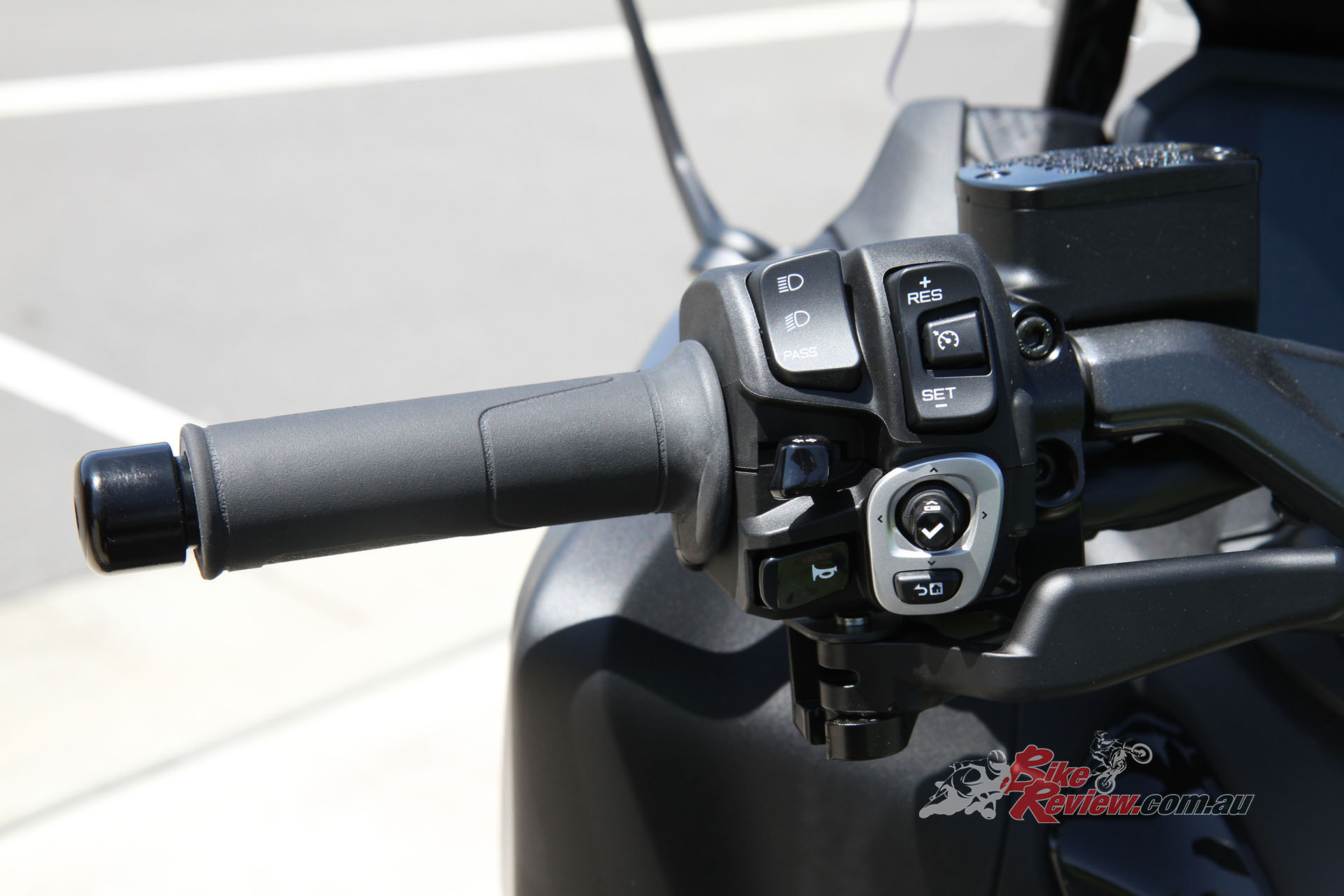
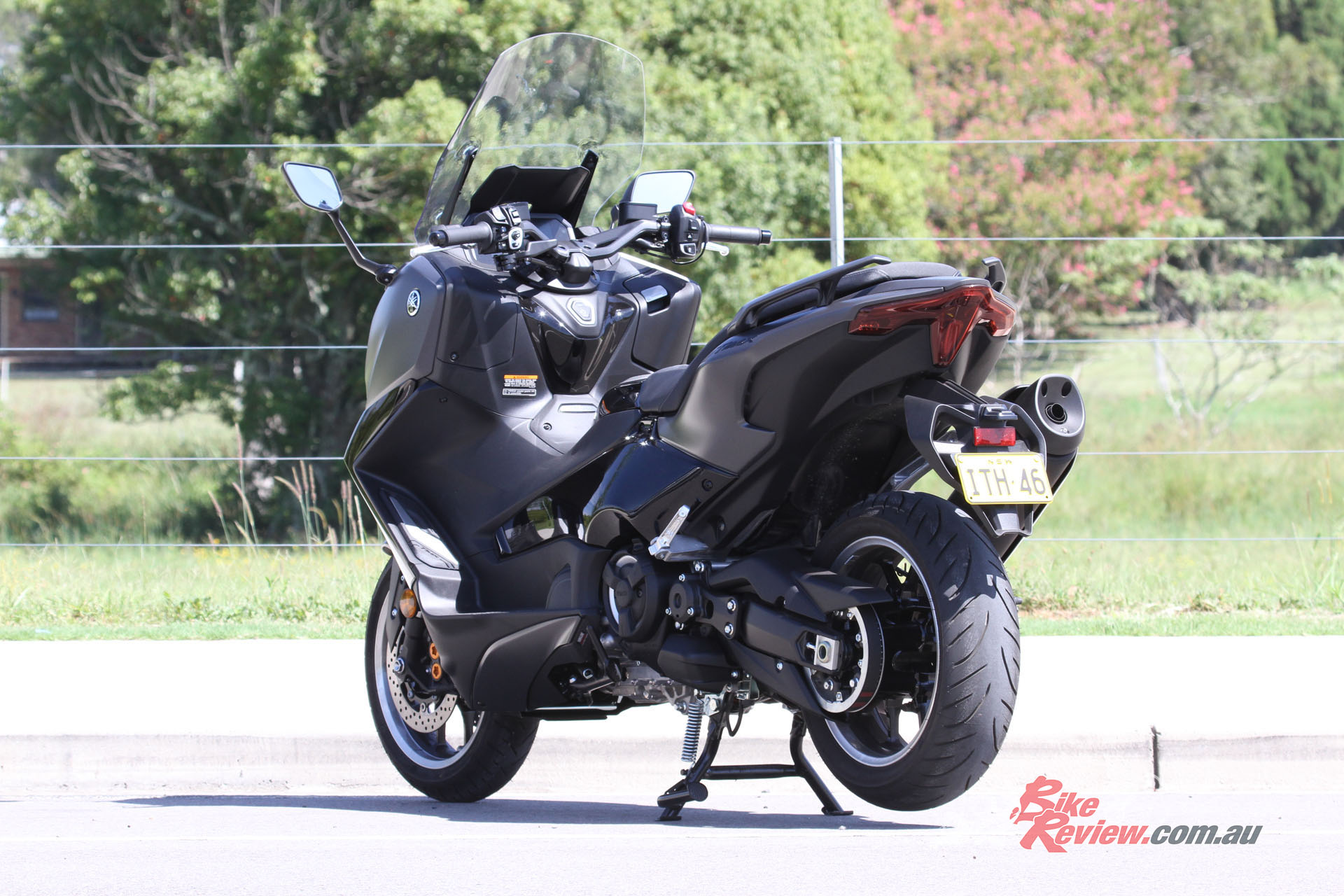
Cruise control is one of the additions I particularly appreciate compared with the previous TMAX I tested. It is easy to operate and makes longer highway runs more relaxed. The electronically adjustable windscreen is another excellent feature, allowing the airflow to be changed at the press of a button. At my height, I can sit upright with the airflow passing over my head, or lower myself slightly behind the screen. The heated grips and seat are also welcome additions, although they were not needed during the warm February weather. They should prove much more useful when we get this same bike back as a long-termer in winter.
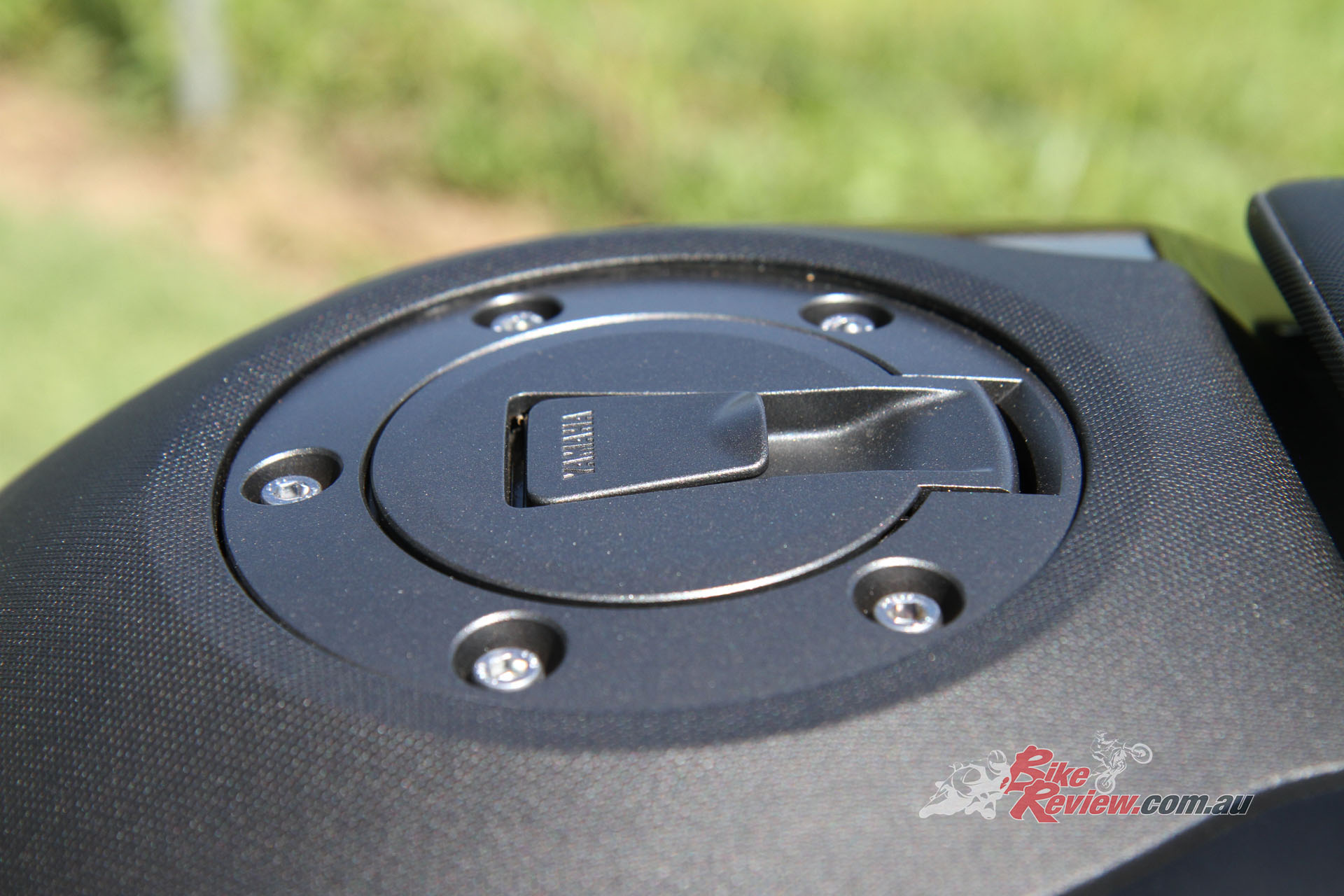
The Tech MAX also brings premium equipment including a seven-inch colour TFT display, smartphone connectivity, Garmin navigation compatibility, and Smart Key operation. The display provides access to the bike’s information and settings, although I’d like to spend more time exploring its functions and controls. The keyless system requires carrying the fob, something I am never particularly enthusiastic about, even if Yamaha’s arrangement is relatively straightforward. Finish and fit are excellent, the mirrors remain clear without noticeable vibration, and the LED lighting gives the TMAX a neat look.
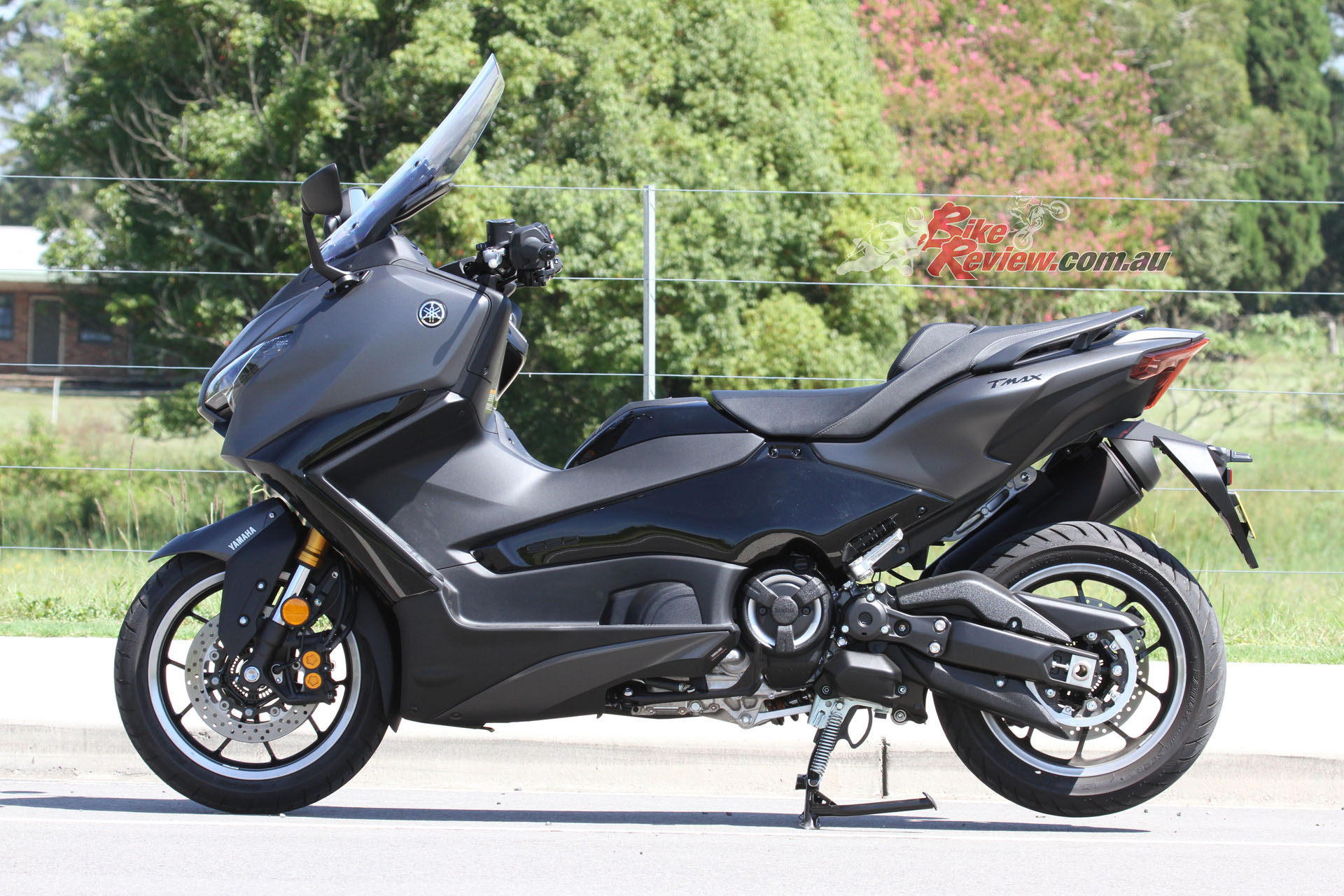
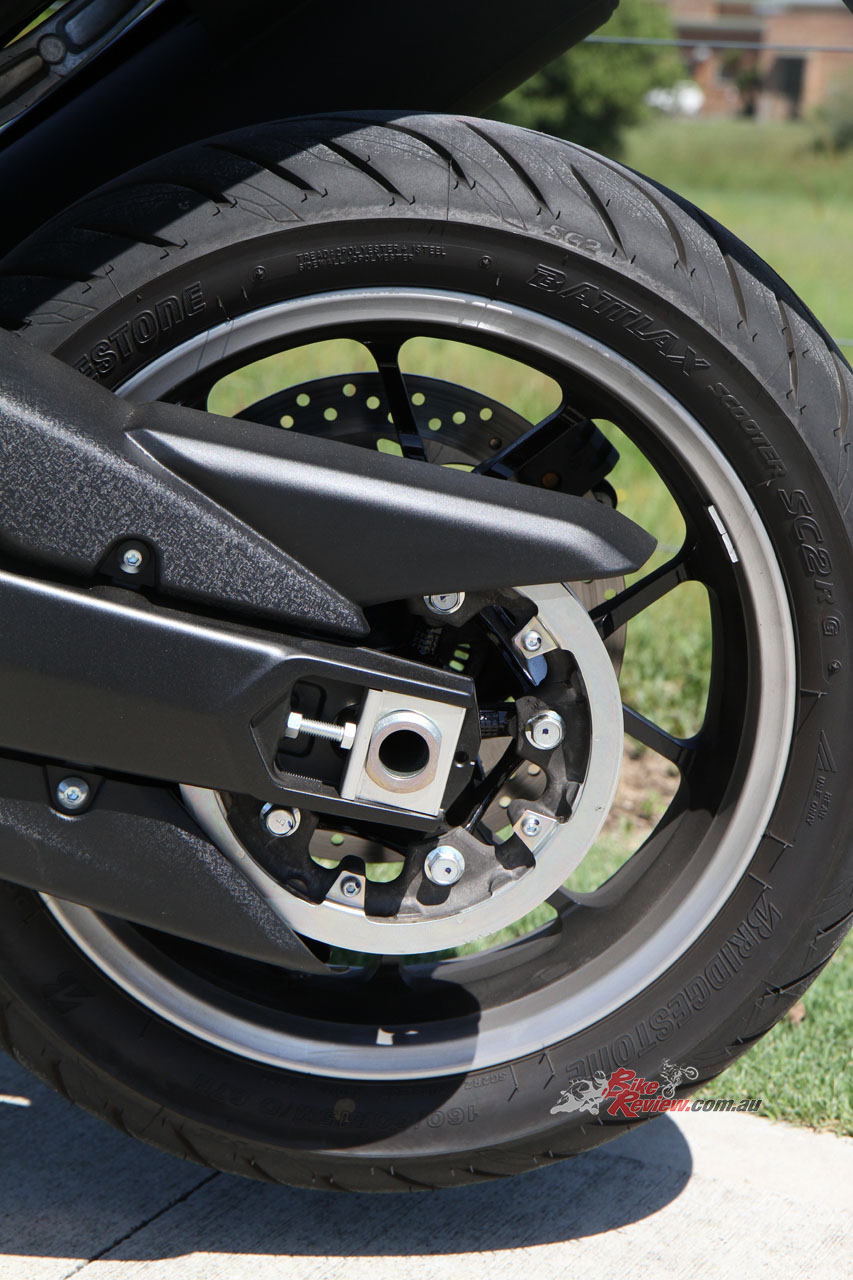
Underneath the bodywork, the TMAX has considerably more in common with a motorcycle than a conventional scooter. It uses a CF die-cast aluminium frame, an aluminium swingarm, upside-down front forks and 15-inch wheels wearing wide tyres. The 562cc engine drives through a CVT, while the separate final-drive arrangement means the rear suspension is not carrying the engine’s weight as part of the swingarm assembly. Combined with the chassis layout, this contributes to the TMAX’s motorcycle-like handling characteristics.
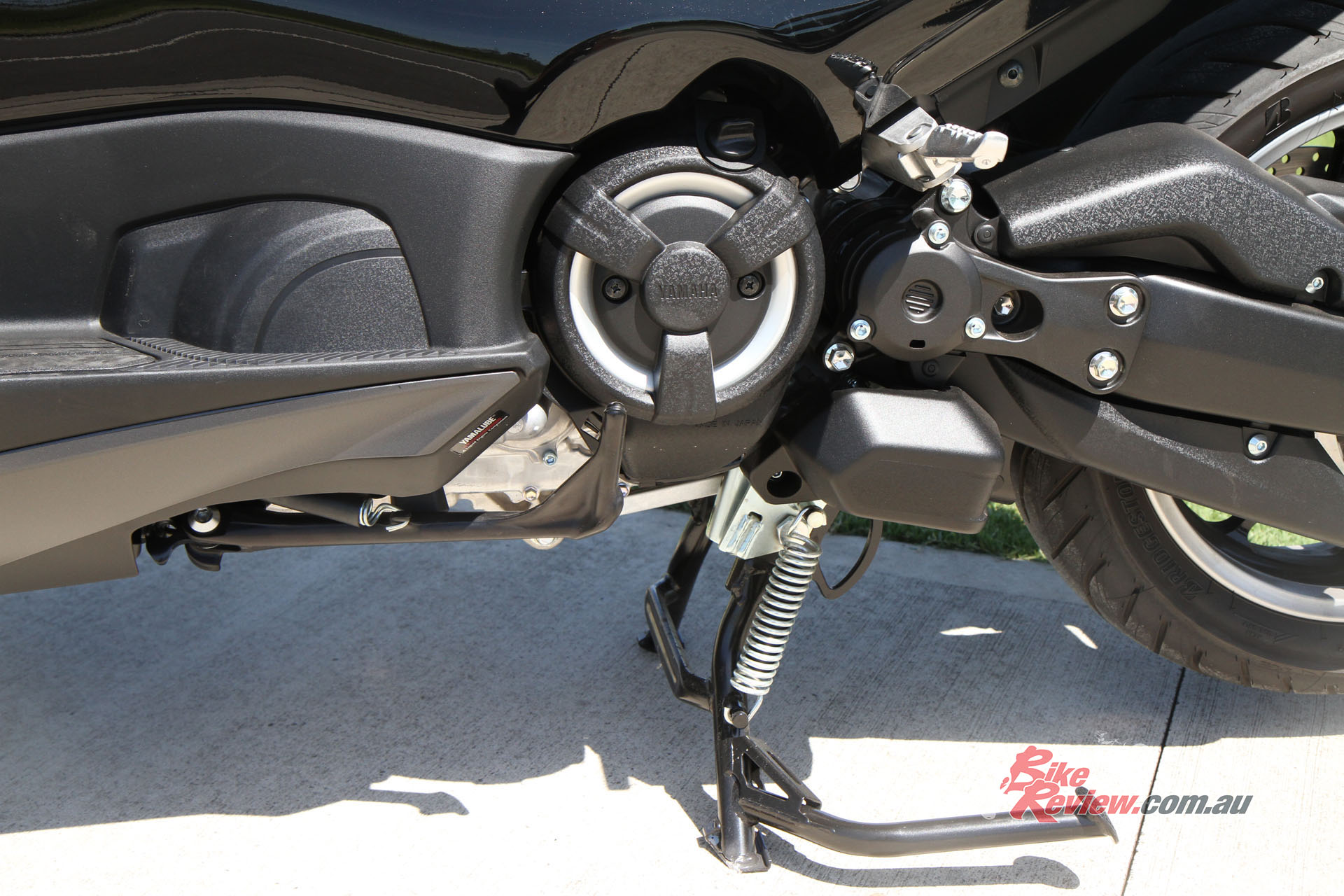
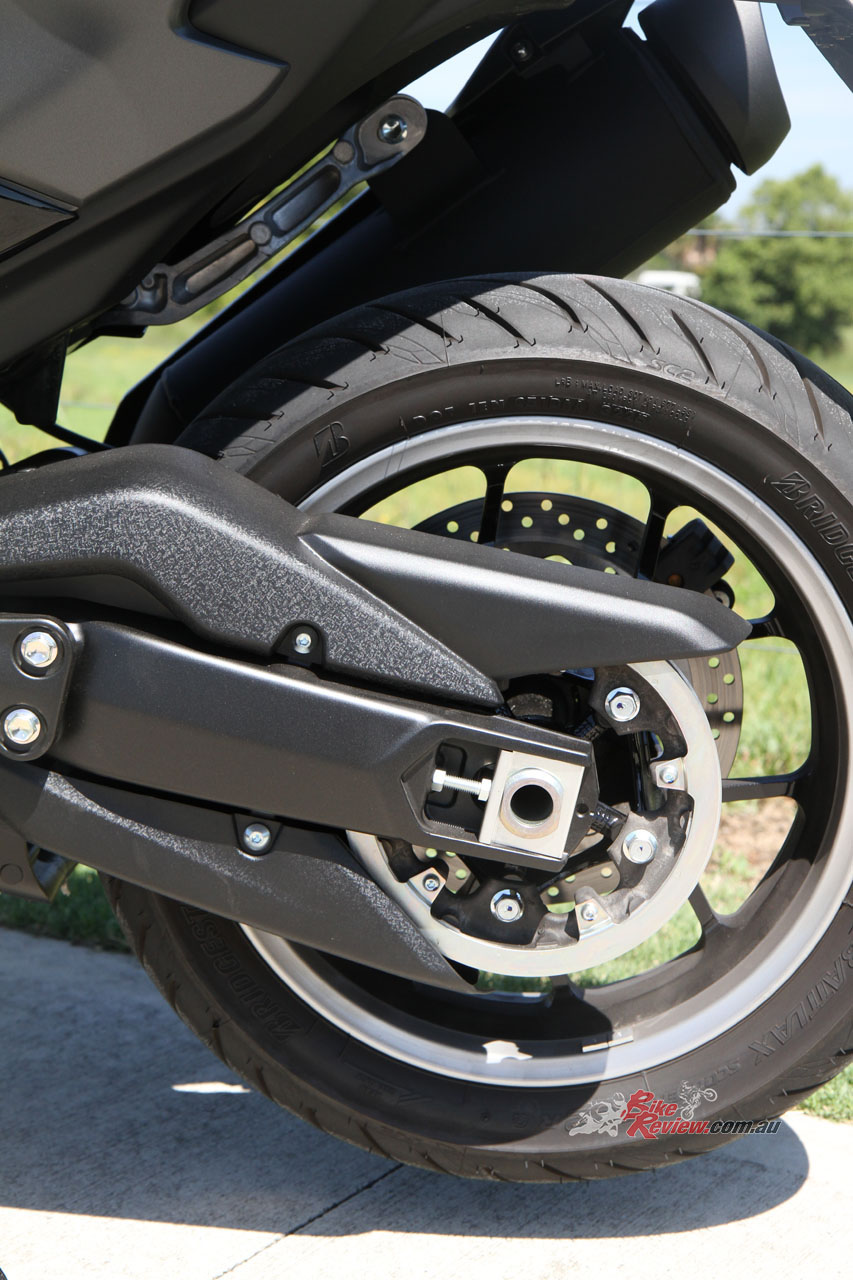
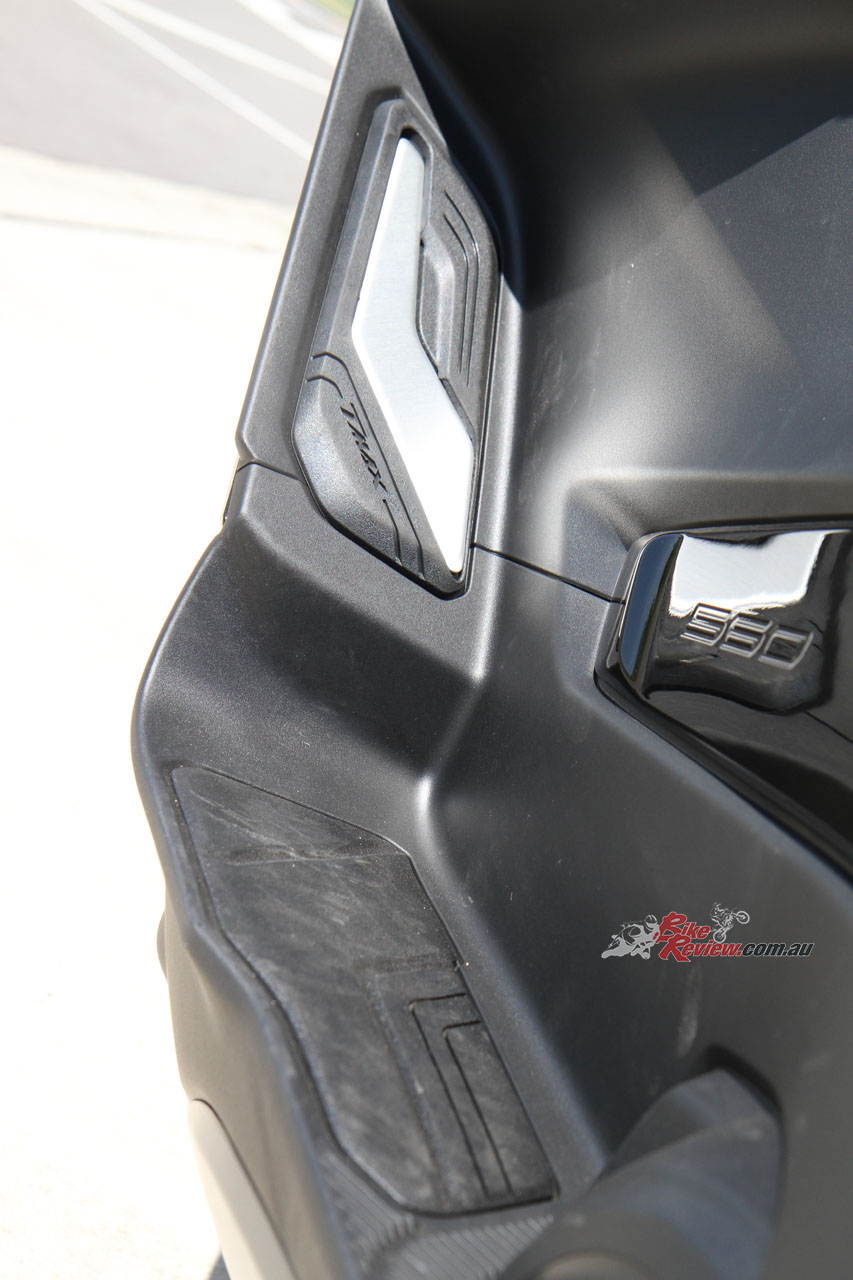
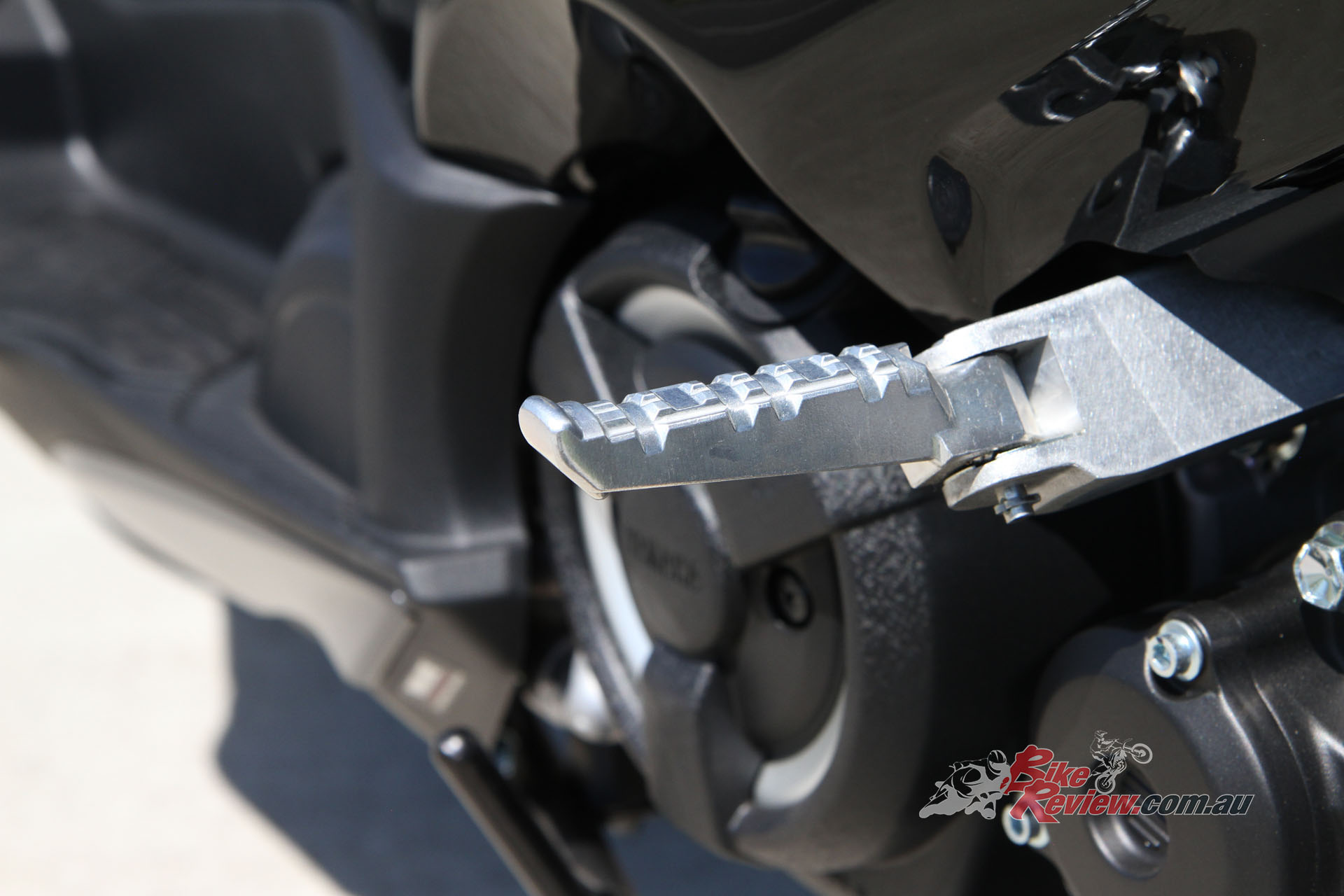
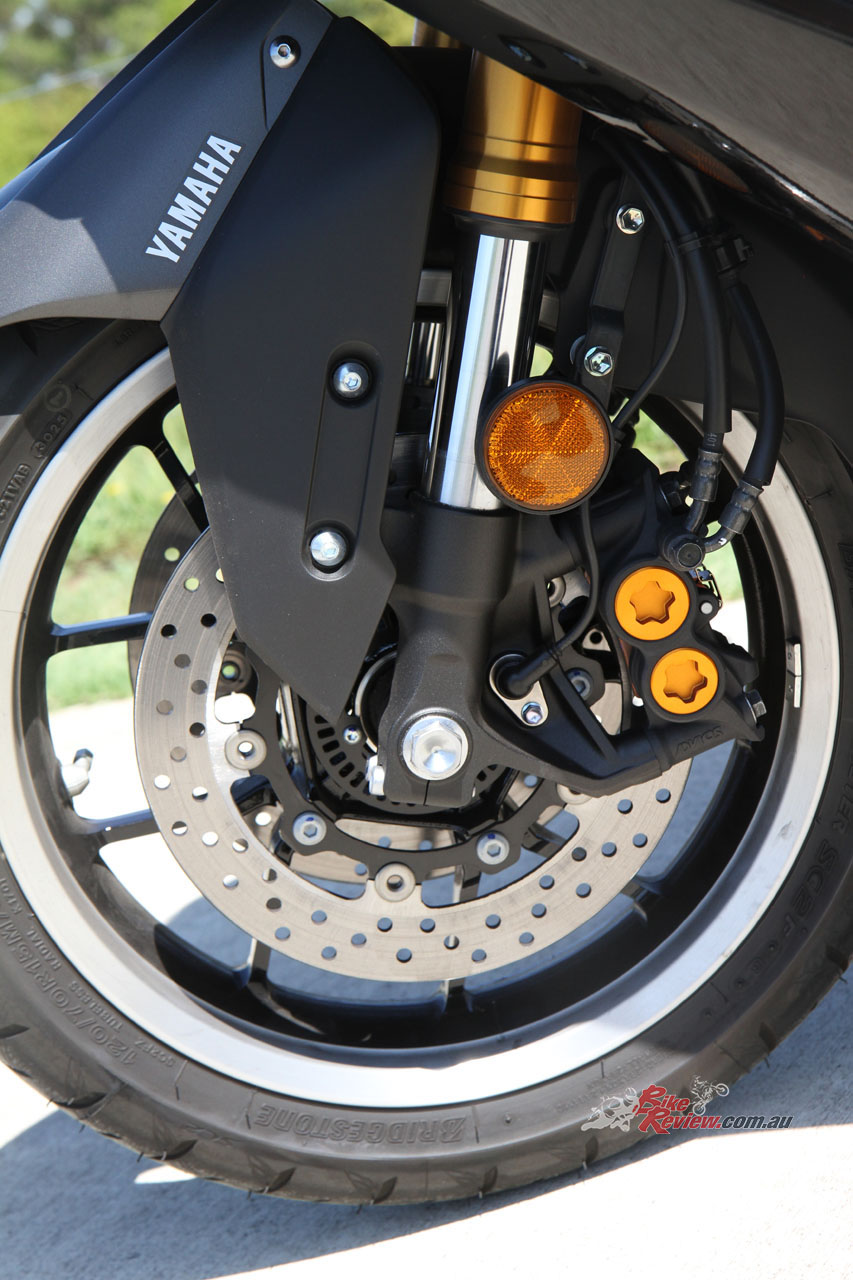
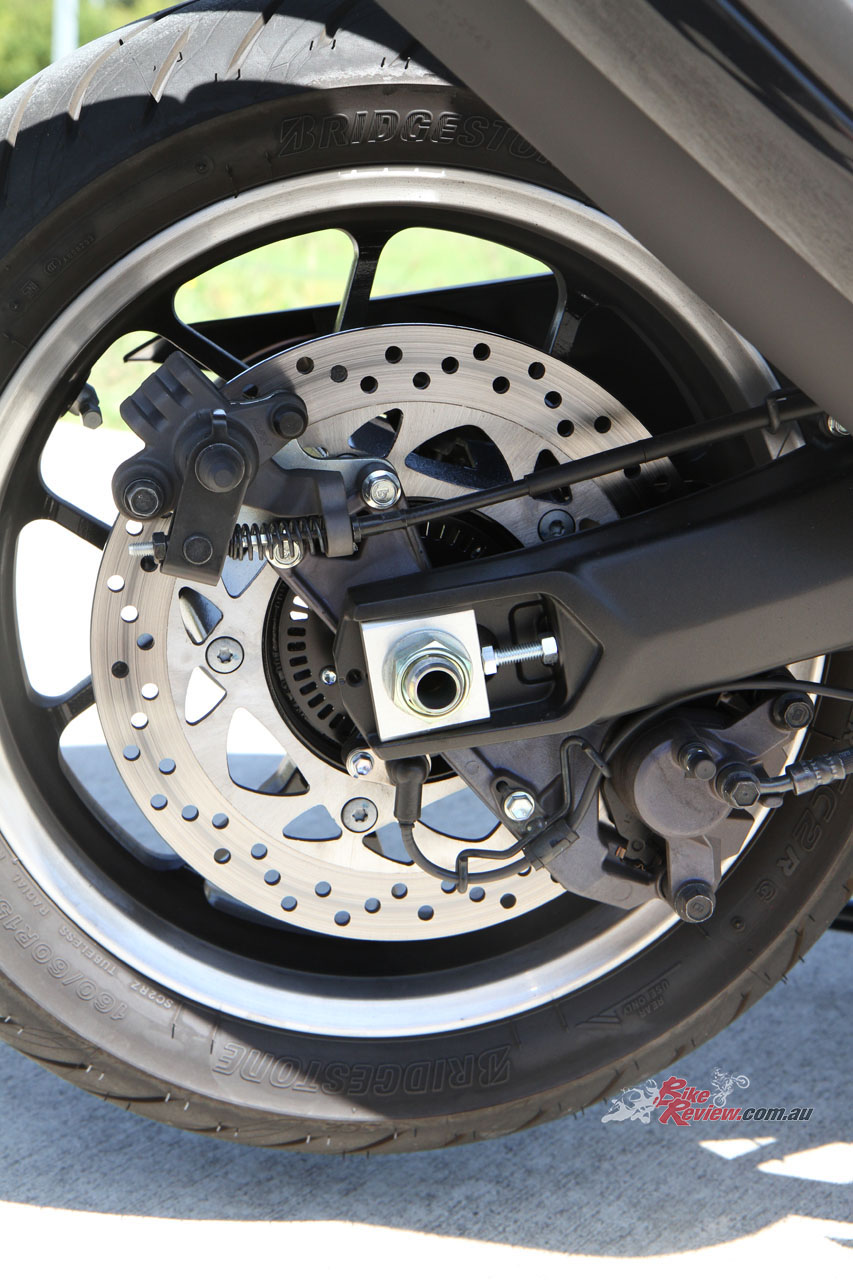
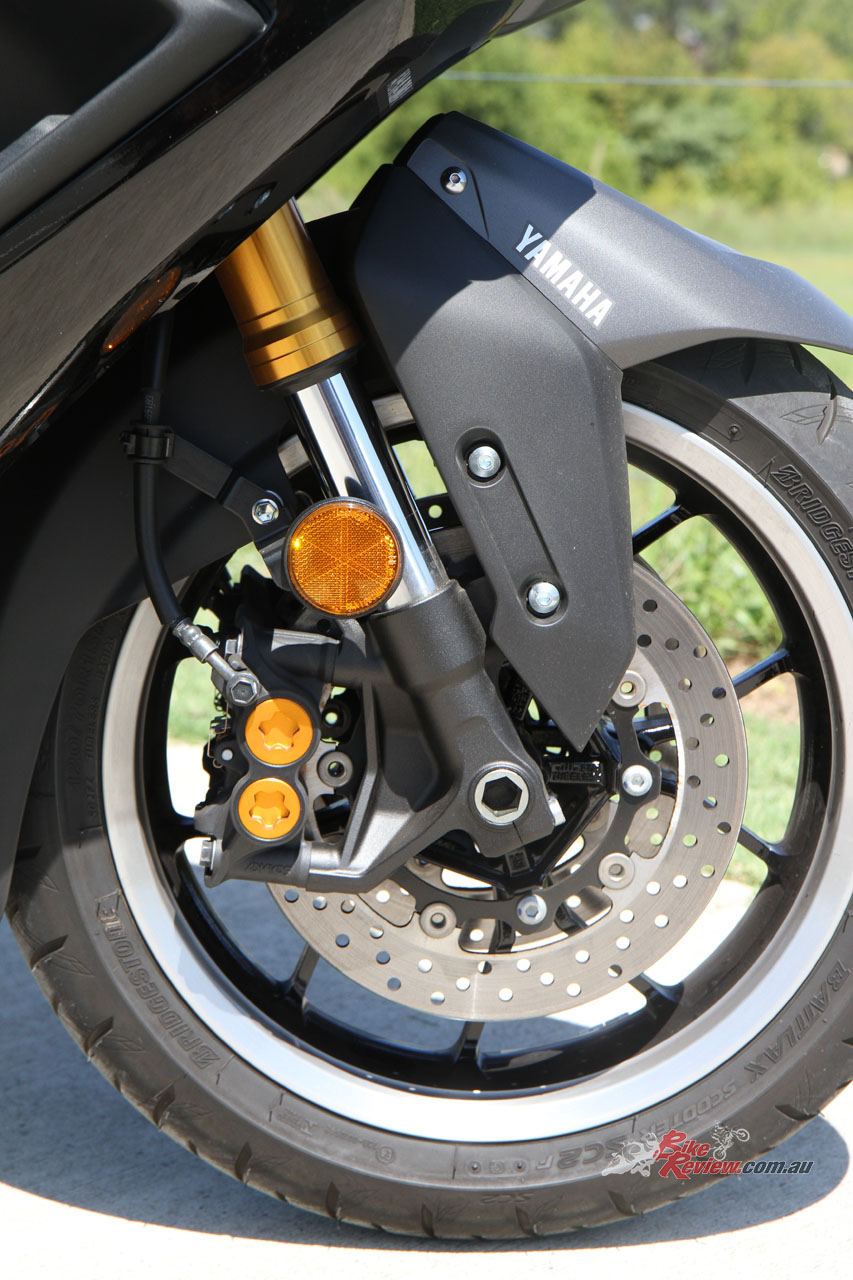
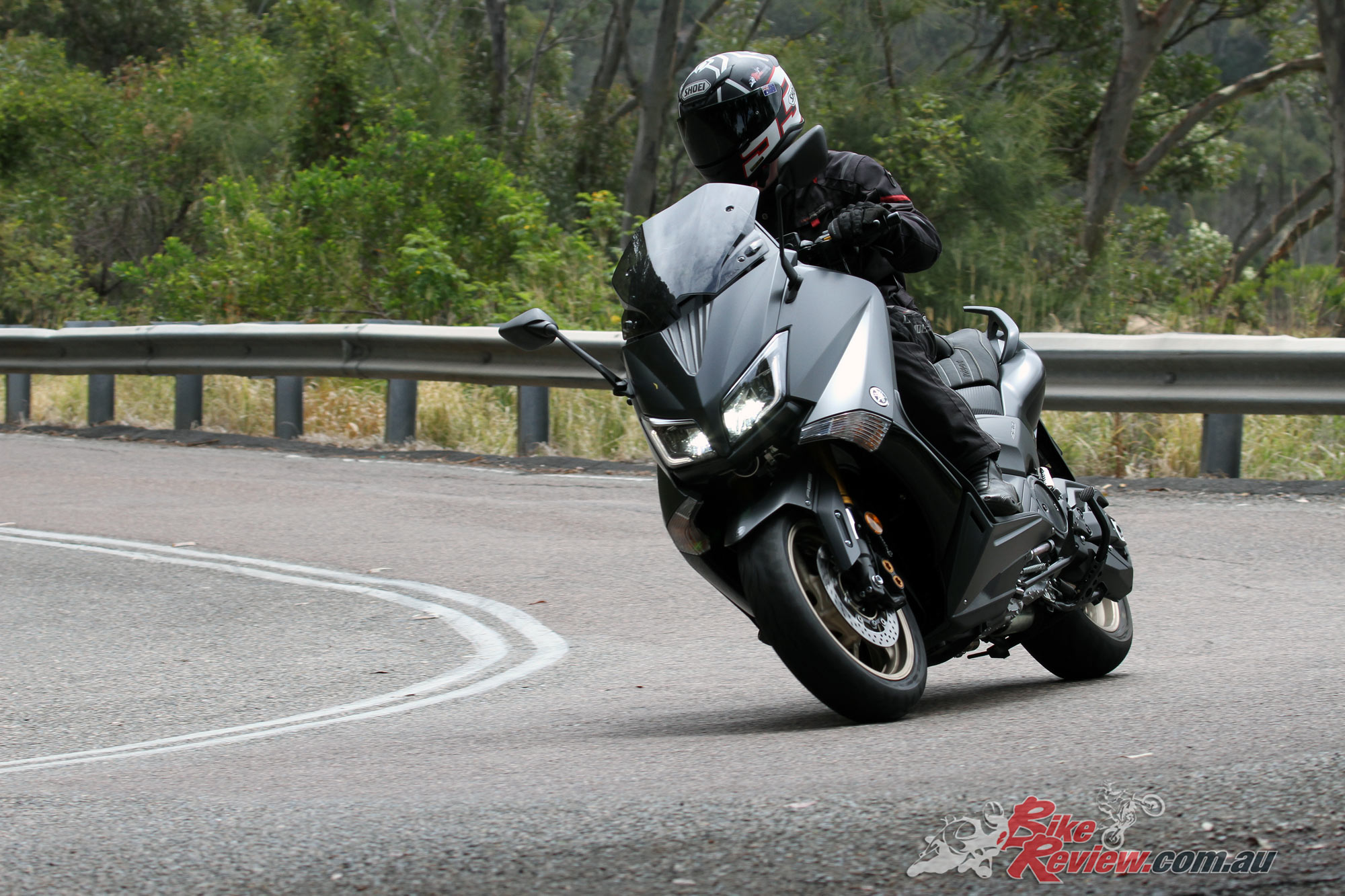
Braking is excellent, with twin front discs and a single rear disc supported by ABS. The front brakes provide strong initial bite, plenty of power and a firm lever feel, while the rear brake is also impressively powerful. Around town, I often find myself relying on the rear brake, but both ends work well independently. Apply both firmly and the TMAX sheds speed with considerable authority. The wide tyres provide plenty of grip, and the front end tracks confidently through corners, with the forks offering good support under braking while remaining compliant over ordinary road surfaces.
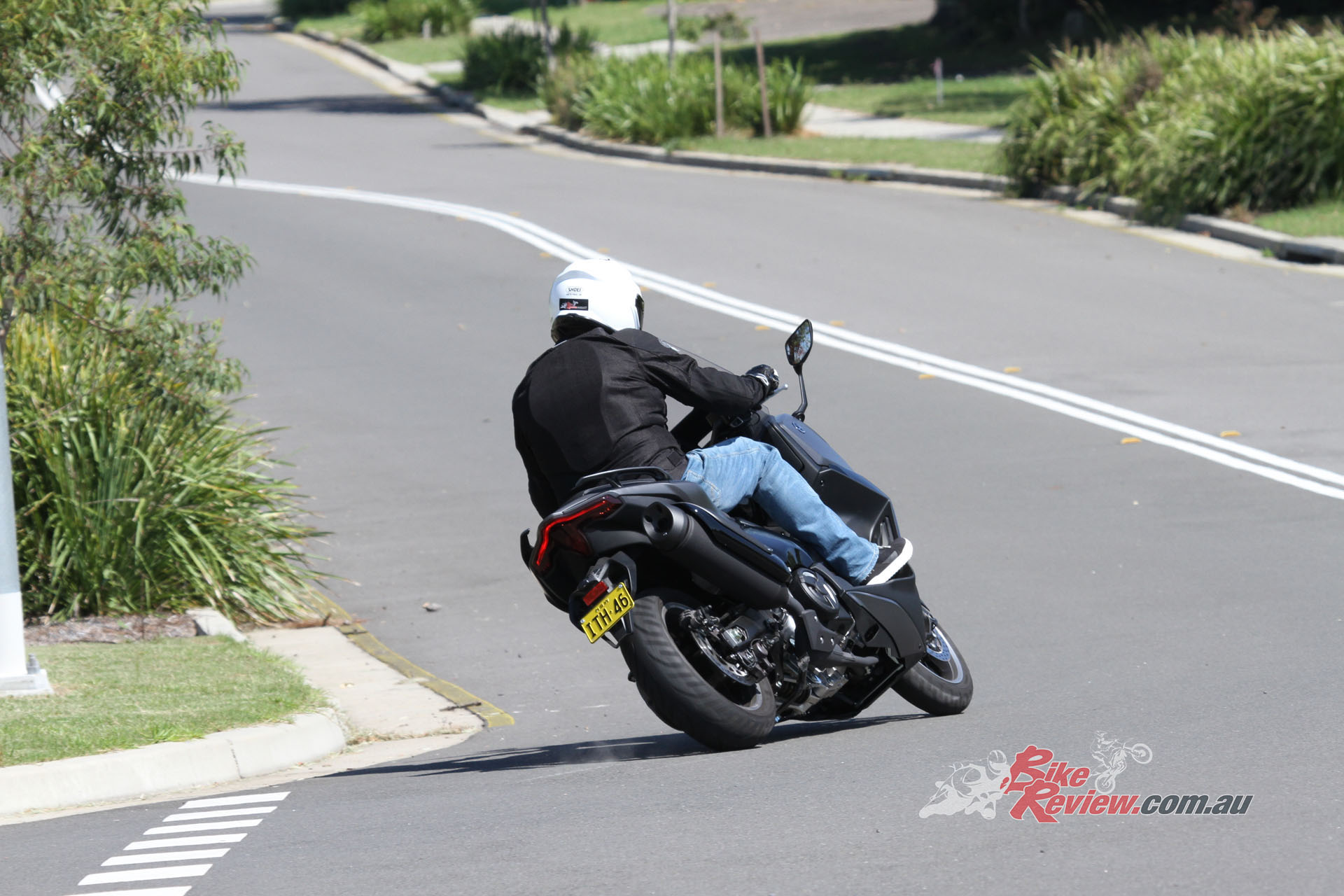
The wide tyres provide plenty of grip, and the front end tracks confidently through corners
The rear suspension is the area where I would like a little more refinement. On sharper bumps, particularly when pressing along twisty roads, the rear can feel jittery and occasionally skate across the surface. More controlled damping could help it deal with high-speed compression events, although I would want to test different settings before suggesting a definitive solution. The front suspension is good, and ground clearance is generous for this type of two wheeler. I managed to touch the edges of my shoes down a couple of times, but the TMAX is capable of being ridden at a decent pace without immediately running out of cornering clearance.
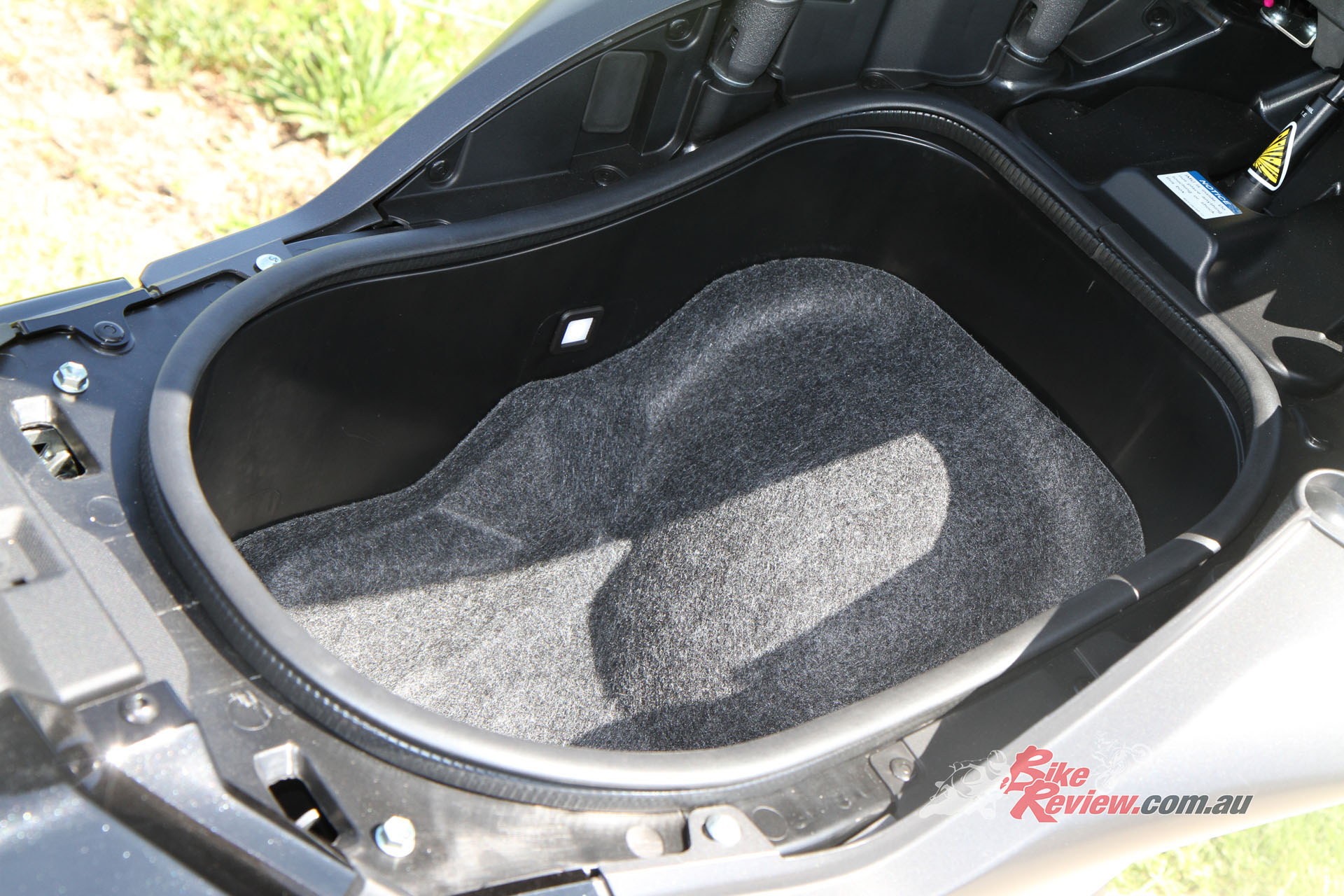
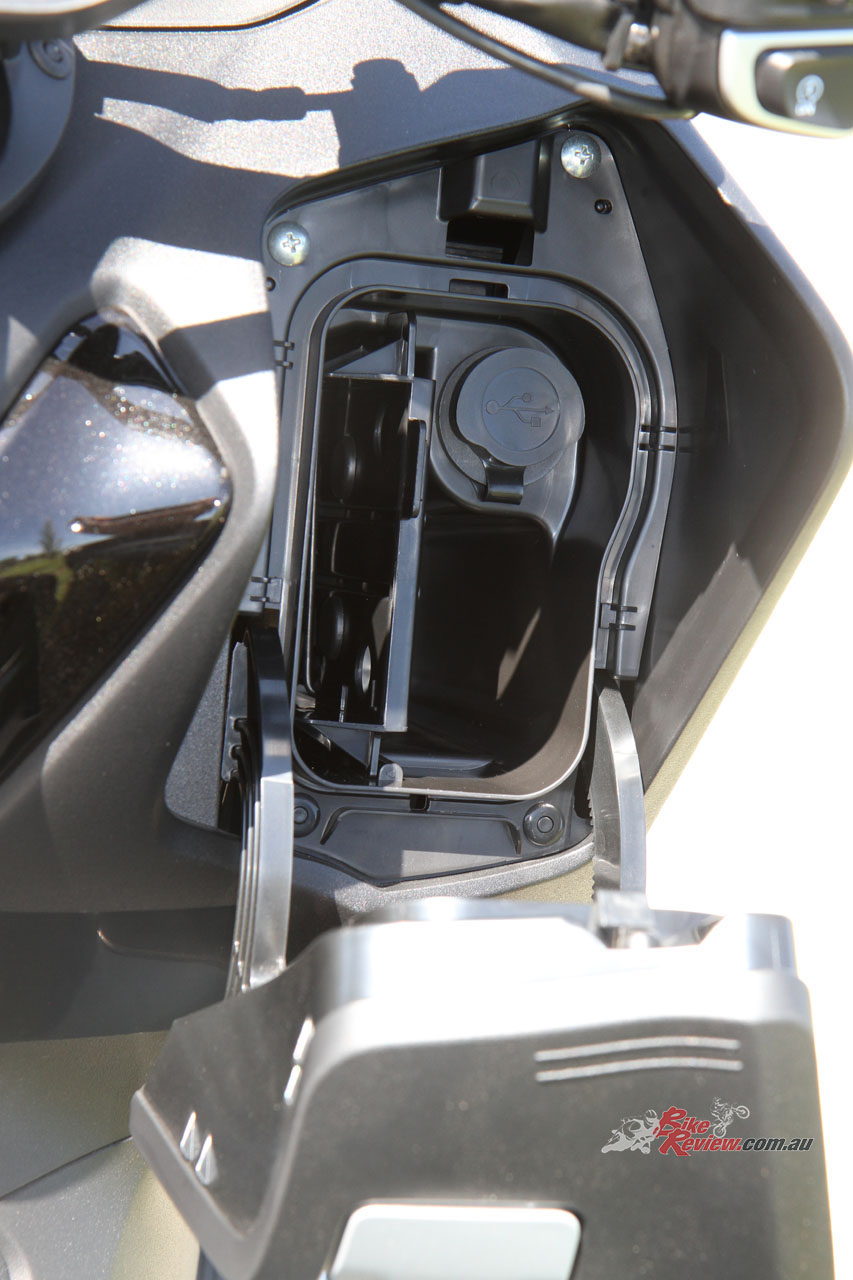
The underseat compartment is useful, but it is not particularly generous by the standards of the category…
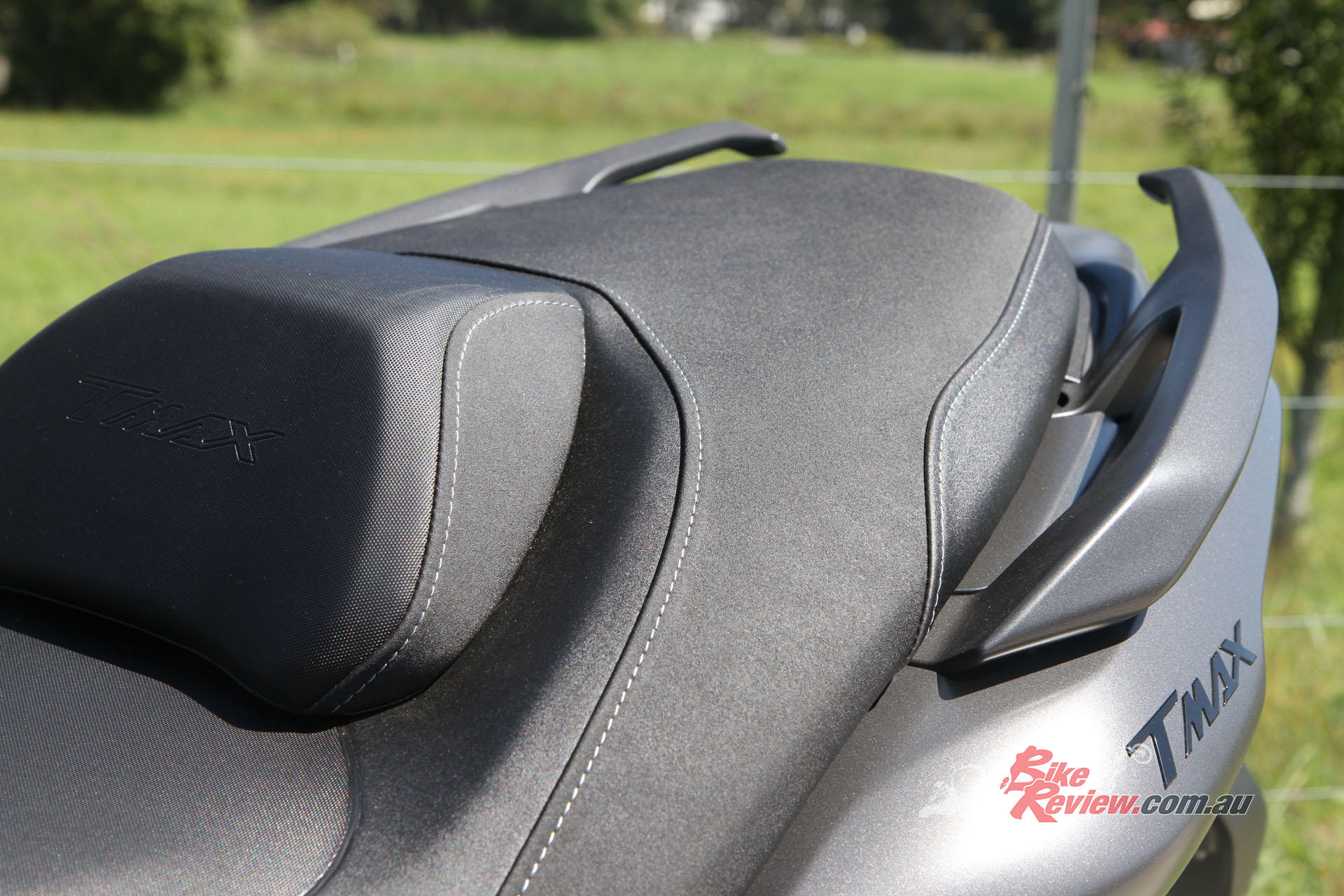
The broad bodywork and substantial fairing provide excellent weather protection. During one ride in pouring rain, I appreciated how much of the weather the screen and front bodywork kept away from me. The TMAX is a big machine, however, weighing 221kg wet and measuring 780mm across. Its wide seat can make getting on and off awkward, and although I can get both feet down, riders shorter than me may find it challenging. Once aboard, the footboards offer two comfortable positions, with my longer legs preferring the feet-forward arrangement. The large pillion seat and substantial grab rails also provide plenty of room for a passenger.
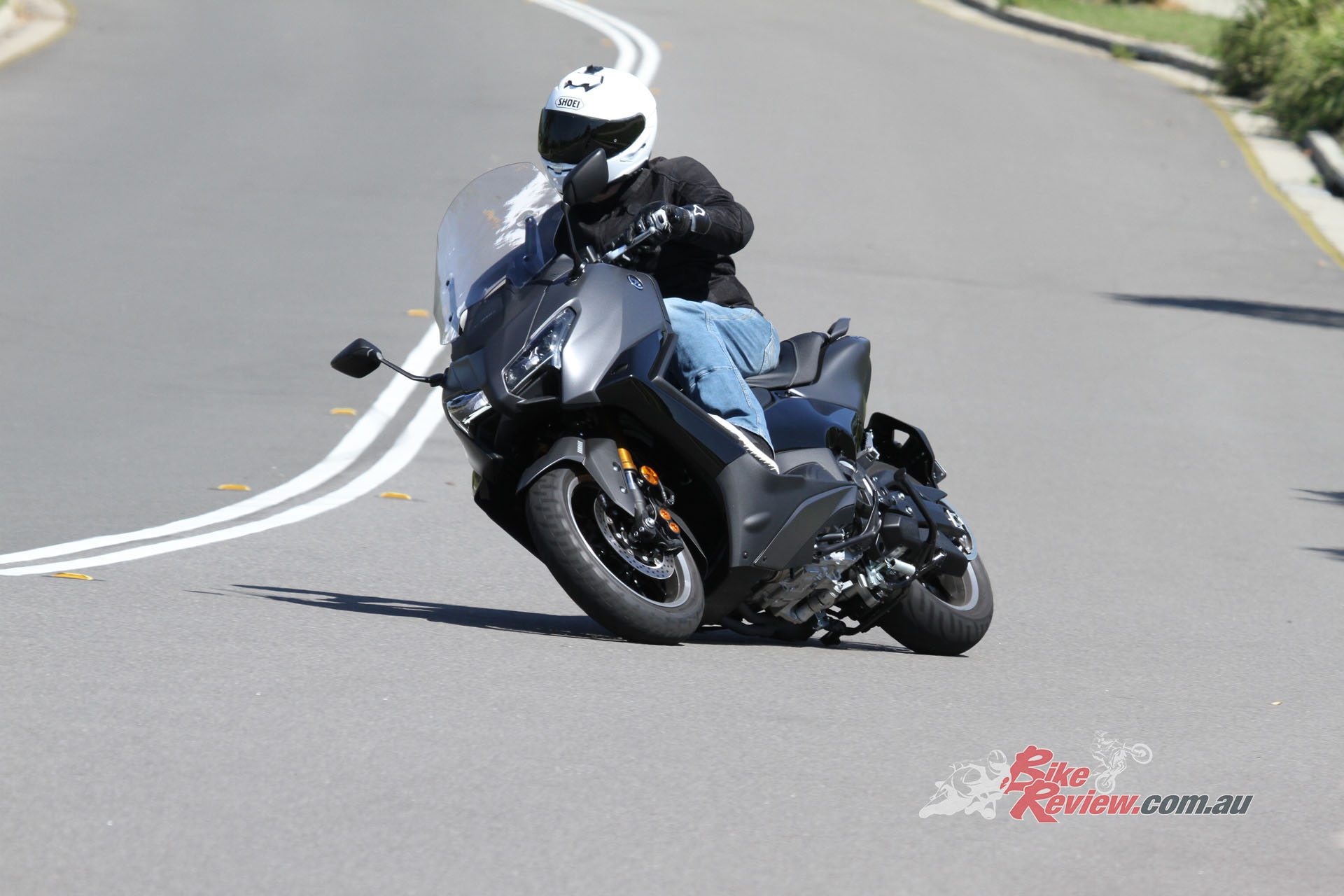
he TMAX is capable of being ridden at a decent pace without immediately running out of cornering clearance.
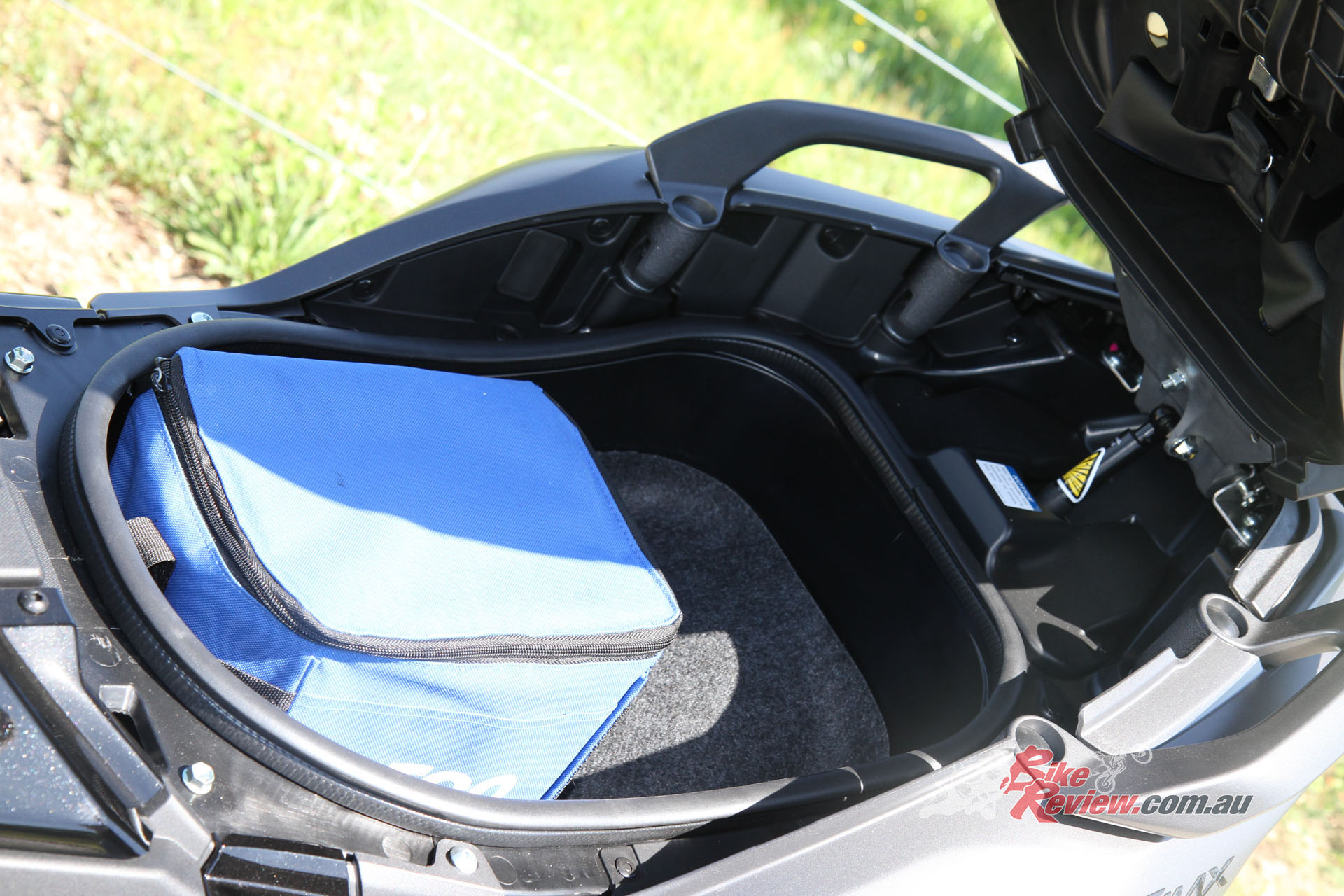
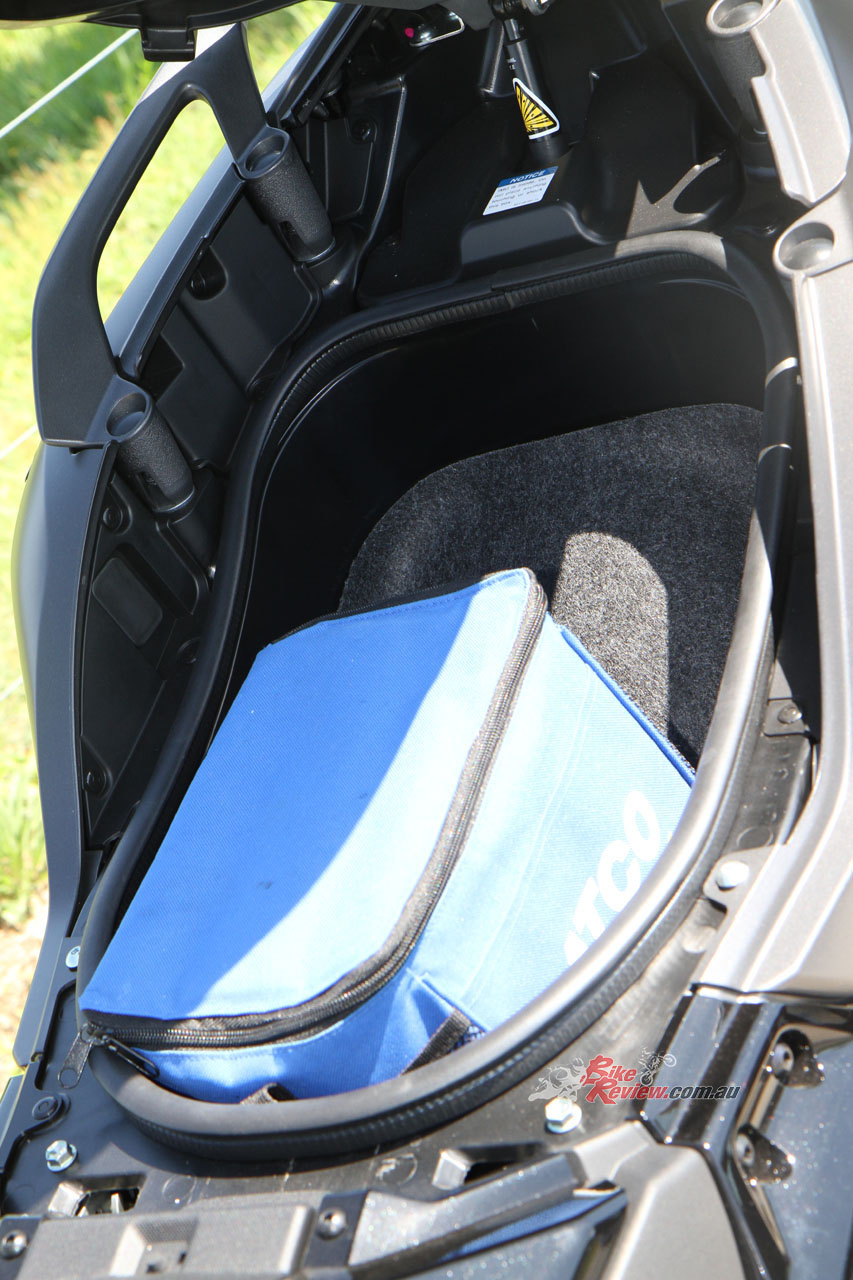
Storage is less impressive than I would expect from a maxi-scooter. The underseat compartment is useful, but it is not particularly generous by the standards of the category, and helmet fit will depend on the helmet’s shape and size. For commuting and everyday errands, the convenience of automatic transmission and the ability to carry some gear remain worthwhile advantages. The seat is comfortable initially, although I find it becomes firmer after around an hour to an hour and a half. I could happily use the TMAX for longer touring days, with a few stops to stretch along the way.
Fuel consumption is the biggest practical drawback I noticed during my time with the TMAX. Yamaha claims 4.9L/100km, which is achievable as an average with a gentle throttle and a mixture of urban and slower riding. At a sustained 110km/h on the highway, however, I recorded consumption rising to around 5.6L/100km. Slowing to 90km/h makes a noticeable difference, and with current fuel prices, that extra consumption is worth considering. With a 15-litre tank, a range approaching 300km is possible under favourable conditions, but I was refuelling at around 250km to maintain a sensible reserve.
The TMAX Tech MAX is not cheap transport, nor is it intended to be. It is a premium, well-equipped two-wheeler with performance, weather protection and touring ability that make it much more than a basic commuter scooter. Servicing costs are also worth considering, as removing and refitting extensive bodywork can add labour compared with a more exposed motorcycle. On the other hand, riders who use a scooter for everyday transport may cover fewer kilometres than high-mileage touring riders, so the service schedule and actual usage will influence the overall cost of ownership.
Overall, I rate the TMAX Tech MAX. It has the extra performance, cruise control, adjustable screen and heated equipment I wanted to see after testing the earlier model. The finish is excellent, the engine is strong, the brakes are superb and the chassis makes it genuinely enjoyable on a winding road. It is heavy and wide, fuel consumption can be high at highway speeds, and the seat shape does not quite suit my height, but none of those points changes the character of the machine.
At this stage of my riding life, I can see the appeal of a comfortable, fast and capable touring scooter. Just make sure your budget accounts for the purchase price, fuel and servicing, because the TMAX Tech MAX is a luxury choice rather than an economical way to get from A to B.
MODEL HISTORY
Introduced in 2001, the original Yamaha TMAX established the sports scooter concept, combining a 499cc parallel-twin engine and automatic CVT transmission with a motorcycle-style chassis, swingarm and 14-inch wheels. Its design combined scooter convenience with motorcycle-inspired chassis engineering. The TMAX evolved through several generations.

2016 Yamaha TMax 530, Iron Max
The 2004 update introduced larger front fork tubes, a 15-inch rear wheel, radial tyres, twin front brake discs and fuel injection. In 2008, Yamaha adopted a CF die-cast aluminium frame, reducing weight while retaining chassis rigidity. Engine capacity subsequently increased to 530cc for the 2012 model generation, before reaching 562cc for the 2020 model.
2016 Yamaha TMAX 530 – Iron Max
The Iron MAX special edition arrived in Australia for 2015, based on the 530cc TMAX. It featured gold-finished upside-down forks and brake calipers, a special seat, matt-black wheels with grey pinstripes, aluminium footplates and distinctive bodywork. The standard model also received upside-down forks, radial-mount brakes, LED headlights and Smart Key operation.
 The 2026 TMAX Tech MAX retains the 562cc parallel-twin engine and automatic transmission, adding a seven-inch colour TFT display with smartphone connectivity and Garmin navigation compatibility. Tech MAX equipment includes an electrically adjustable windscreen, heated grips and seat, cruise control and an adjustable rider backrest. The aluminium frame, upside-down front forks, 15-inch wheels and twin front disc brakes continue the model’s motorcycle-inspired chassis concept.
TECH TALK
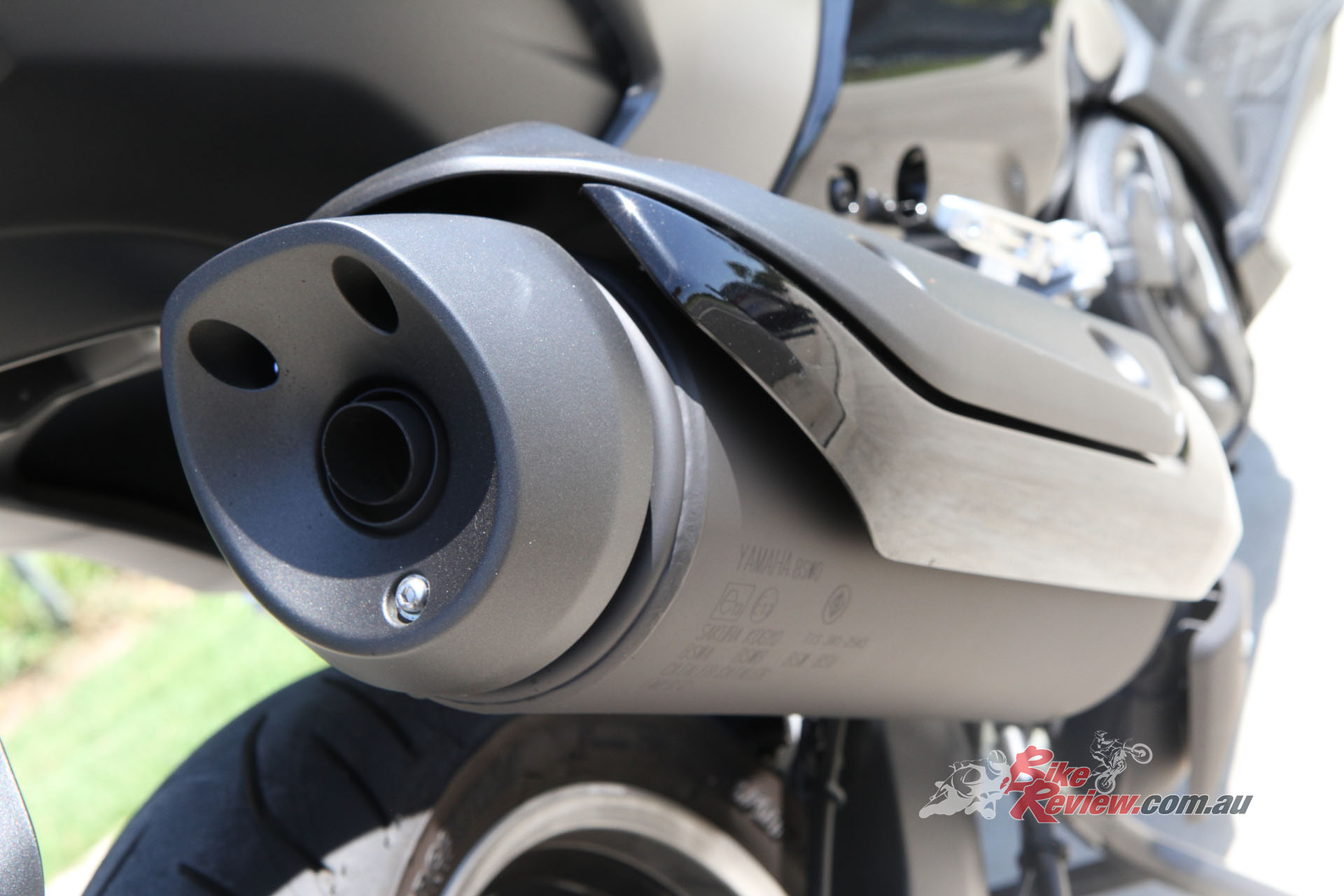
The 2026 Yamaha TMAX Tech MAX is powered by a 562cc, liquid-cooled, DOHC, parallel-twin, four-stroke engine with four valves per cylinder, a 70 x 73mm bore and stroke, and a 10.9:1 compression ratio. Fuel injection and Yamaha Chip Controlled Throttle (YCC-T) manage engine operation. Power is delivered through an automatic CVT transmission and belt final drive. D-MODE provides selectable engine settings, while traction control and Brake Control are included.
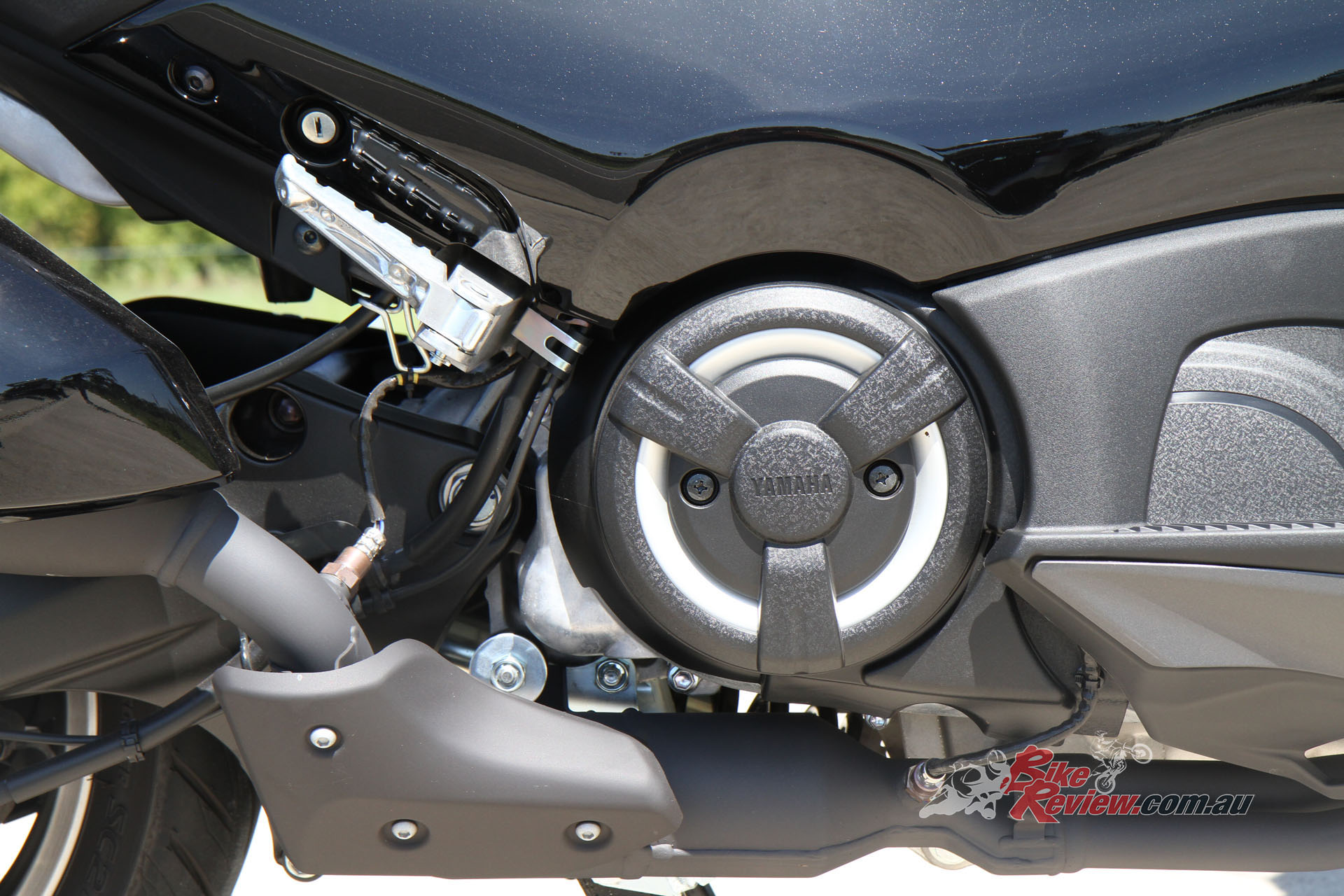
The chassis uses a CF die-cast aluminium frame and aluminium swingarm. Front suspension consists of 41mm upside-down forks with 120mm of travel, while the rear uses a single shock absorber with 117mm of travel. Braking comprises twin 267mm front discs and a 282mm rear disc, with ABS. The scooter runs 15-inch alloy wheels with a 120/70 front tyre and a 160/60 rear tyre.
Check out our previous model TMAX reviews and videos here…
The TMAX Tech MAX has an 800mm seat height, 1575mm wheelbase, 15-litre fuel capacity and 221kg wet weight. Equipment includes a seven-inch colour TFT display, smartphone connectivity, Garmin navigation compatibility, cruise control, Smart Key keyless operation, an electronically adjustable windscreen, heated grips and a heated seat. A tyre pressure monitoring system and adjustable rider backrest are also fitted.
Underseat storage includes illumination and is designed to accommodate a full-face helmet. The TMAX Tech MAX has a 2195mm overall length, 780mm overall width and 1415mm overall height, increasing to 1525mm with the windscreen in its raised position.
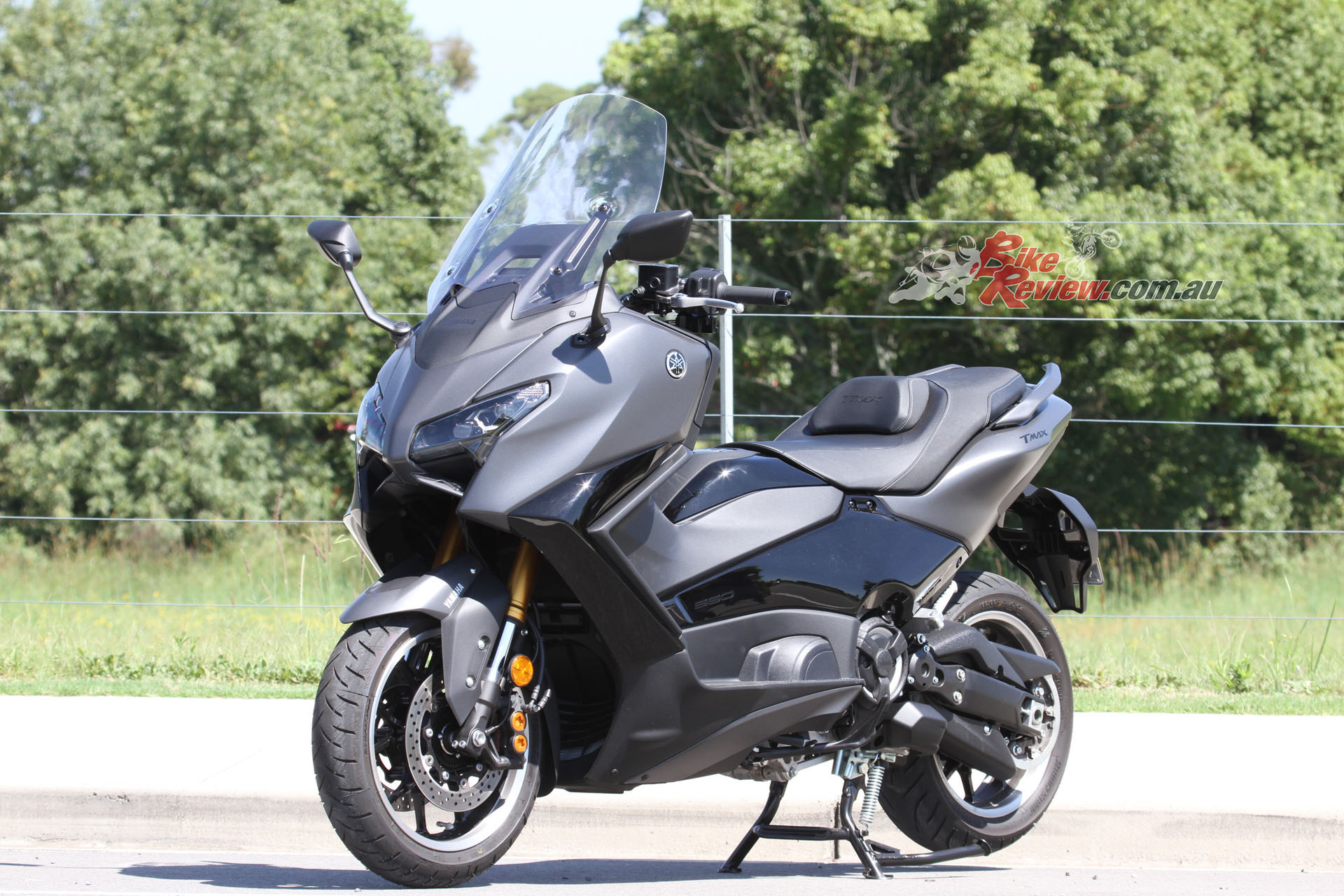
2026 Yamaha TMAX Tech MAX Specifications
Price: $22,199 Ride Away
Warranty: Two year, unlimited kilometre
Colour: Crystal Graphite
Claimed power: 34.9kW[46.9hp]@7600rpm
Claimed torque: 55.7Nm[41.1ft-lbs]@5250rpm
Wet weight: 221kg
Fuel capacity: 15L
Engine: Euro-5+ Liquid-cooled, parallel twin-cylinder, four-stroke, four-valve, 70 x 73mm bore x stroke, 562cc, 10.9:1 compression, EFI, TCI, Traction Control, D-Modes, Yamaha Chip Controlled Throttle (YCC-T), Brake Control Transmission: V-Belt, Automatic, CVT
Chassis: CF die-cast aluminium frame, aluminium swingarm
Seat height: 800mm, Wheelbase: 1575mm
Suspension: 41mm USD forks, 120mm travel, single shock absorber, 117mm travel
Brakes: ABS, Dual radial four-piston calipers, 267mm rotors, single rear caliper, 282mm rotor
Wheels & Tyres: Machined SpinForged alloy, 15 inch wheels, 120/70R15M/C 56H, 160/60R15M/C 67H tubeless
Dimensions:
Wheelbase: 1575mm
Seat height: 800mm
Ground clearance: 135mm
Overall width: 780mm
Overall Length: 2195mm
Overall height: 1415/1525mm
Instruments: 7-inch colour TFT display, smartphone connectivity, Garmin navigation, MyRide app connectivity, Smart Key keyless operation, electronically adjustable windscreen, heated seat and grips, cruise control, tyre pressure monitoring system (TPMS).
Ratings | Bike Review | 2026 Yamaha TMAX Tech MAX
Luxury!
The TMAX Tech MAX combines big-bore twin-cylinder performance, sports-inspired handling and touring comfort. We test Yamaha’s flagship scooter… Photos: HMC Photography
The Author

You Might Also Like