
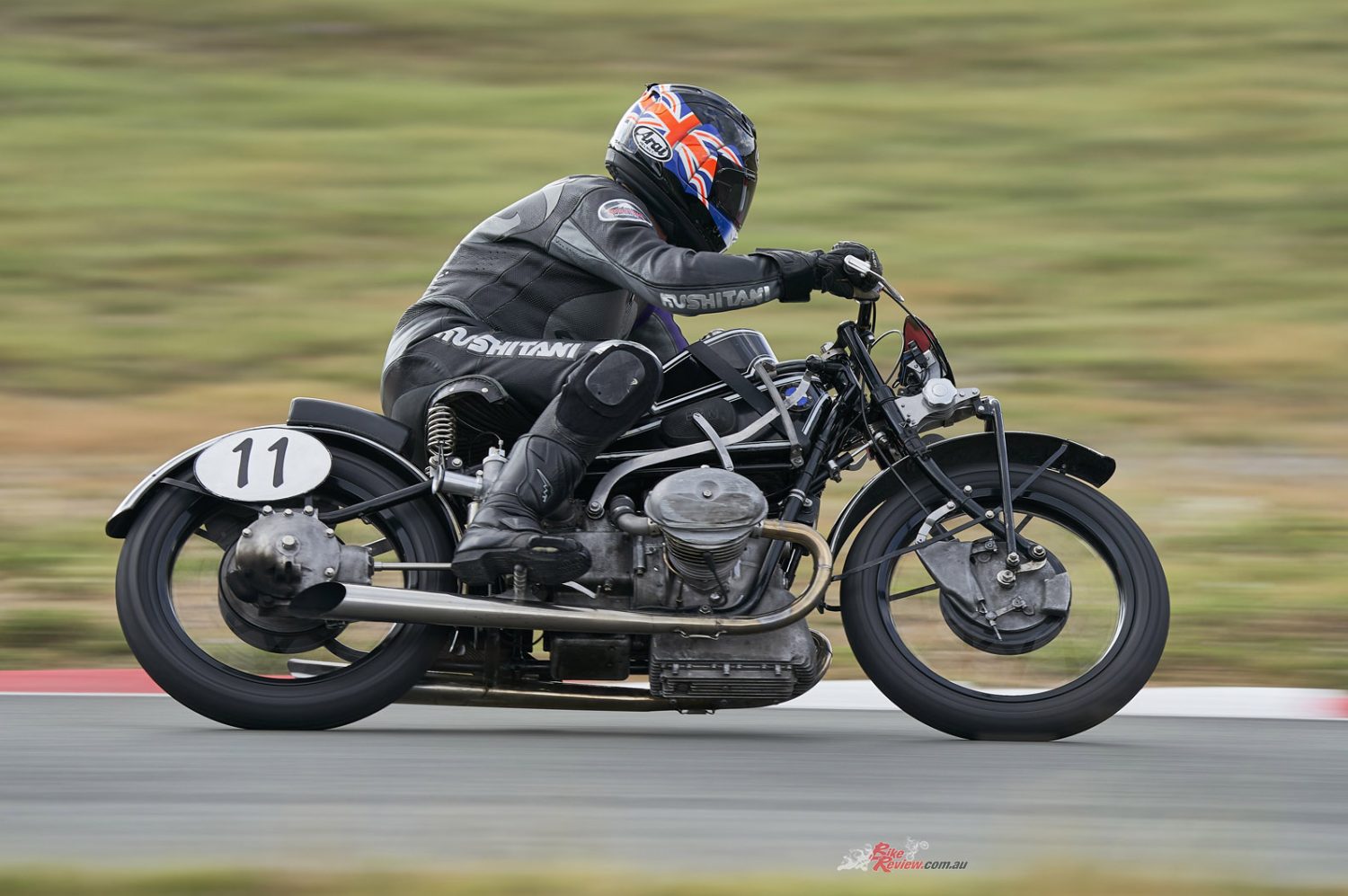

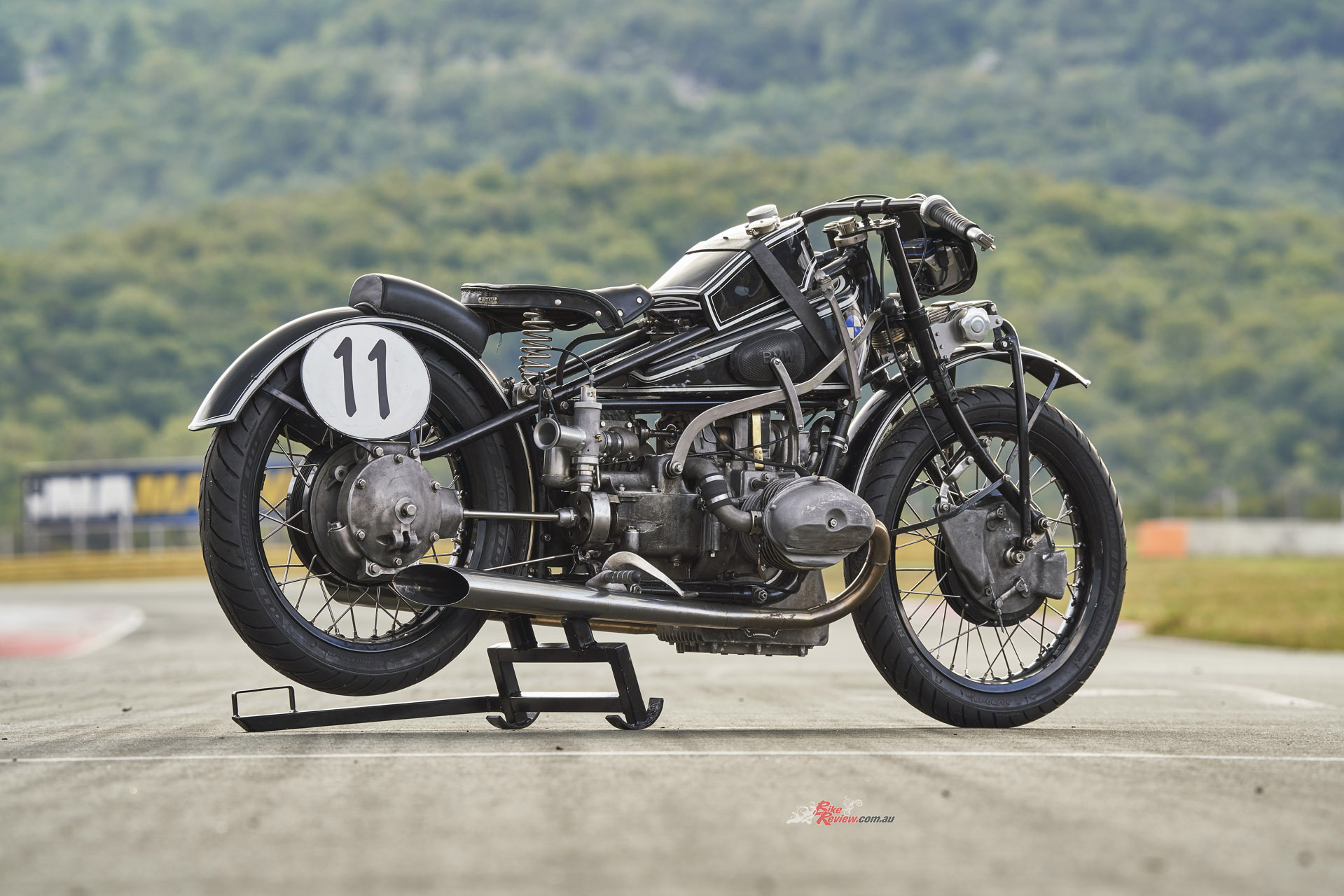
A deep dive into this supercharged BMW R57 Kompressor, the Goodwood Revival-winning machine that stunned the field with Troy Corser aboard in 2018. Photos: Oli Tennent
Troy Corser marked the 20th Goodwood Revival in 2018 by thundering to his debut victory on this R57 in the Barry Sheene Memorial Trophy, the world’s most prestigious Historic road race, which each even-numbered year caters for pre-1954 bikes up to 1,000cc.
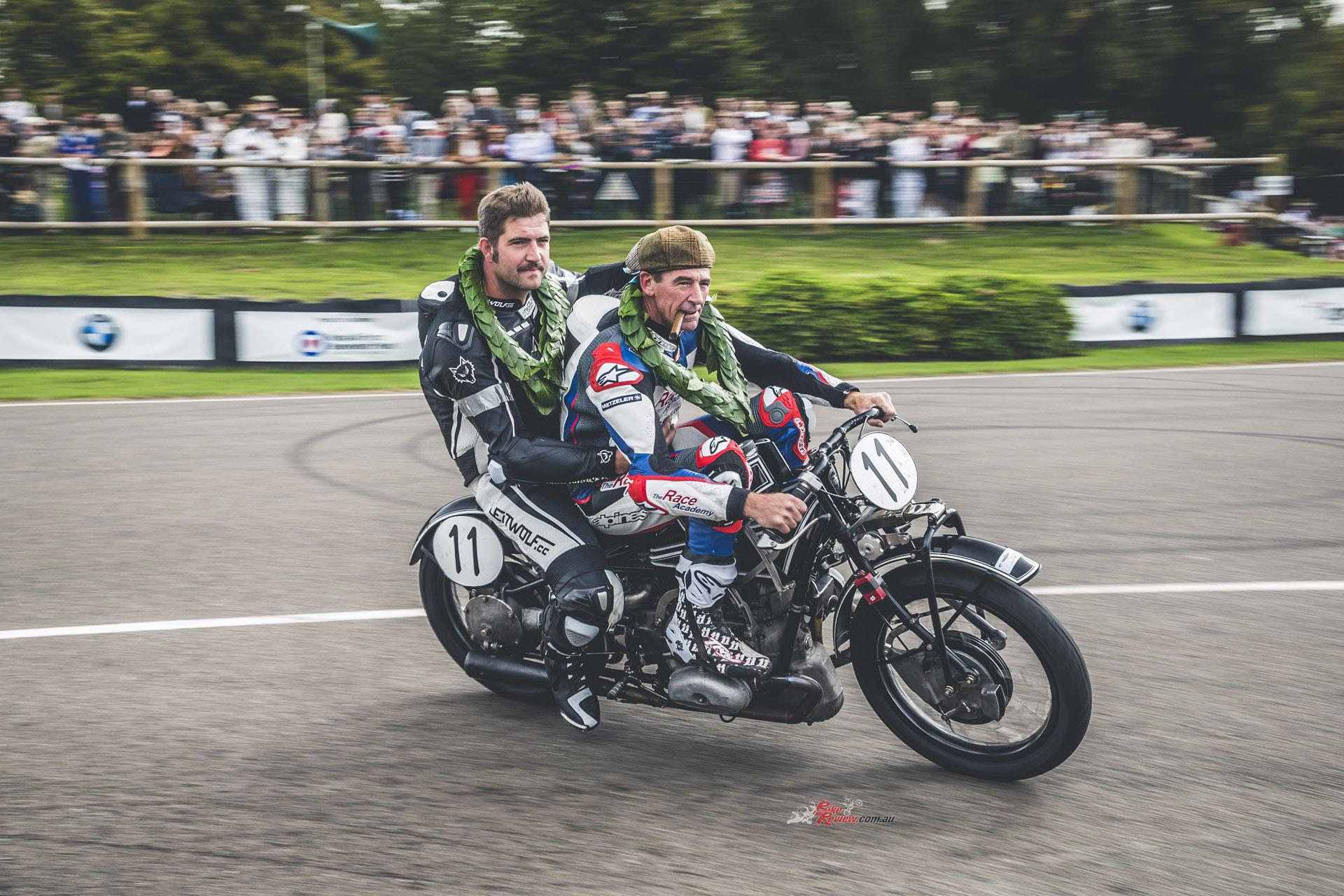
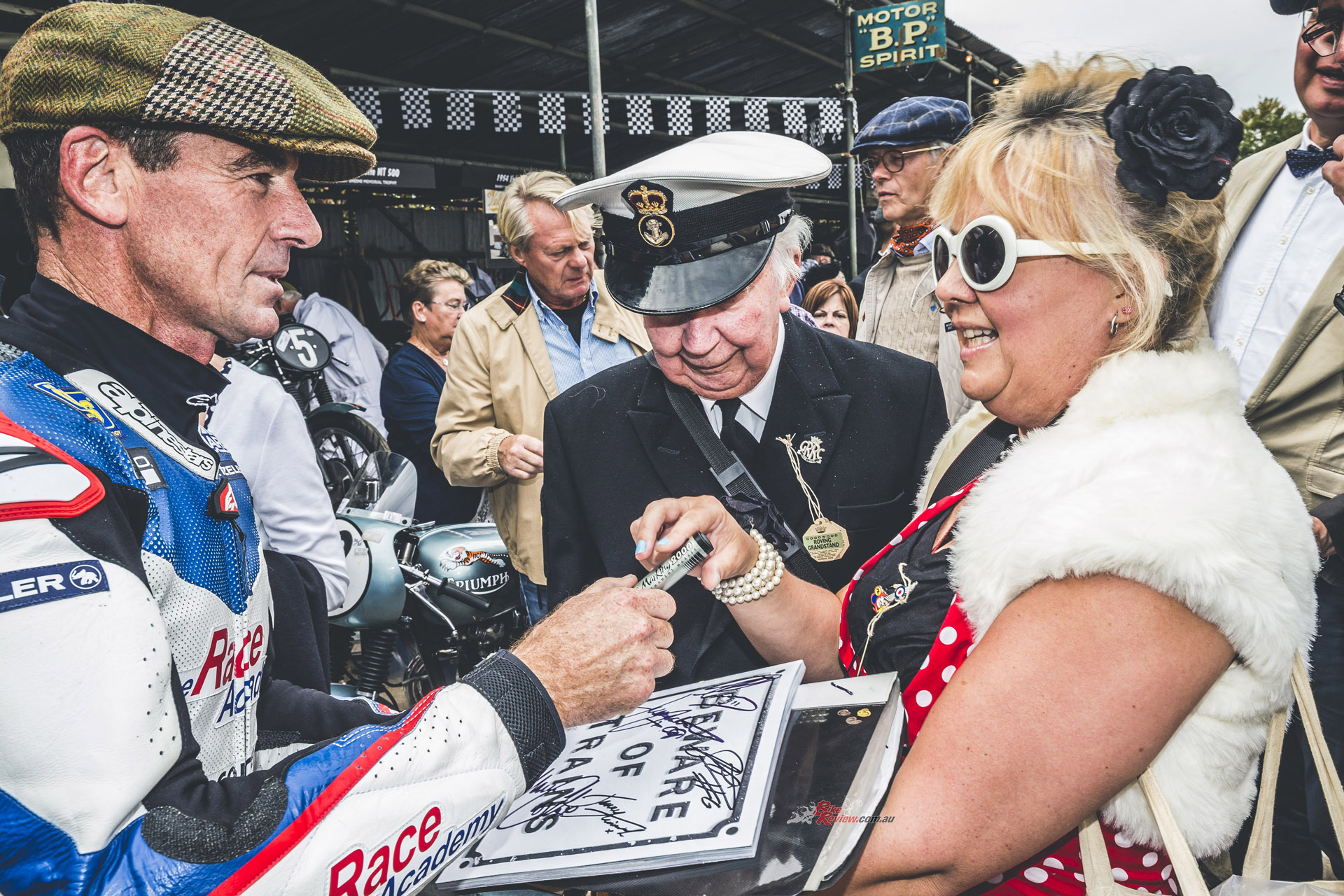
Herbert Schwab celebrates on the back with Troy Corser riding the R57 after the famous victory in 2018.
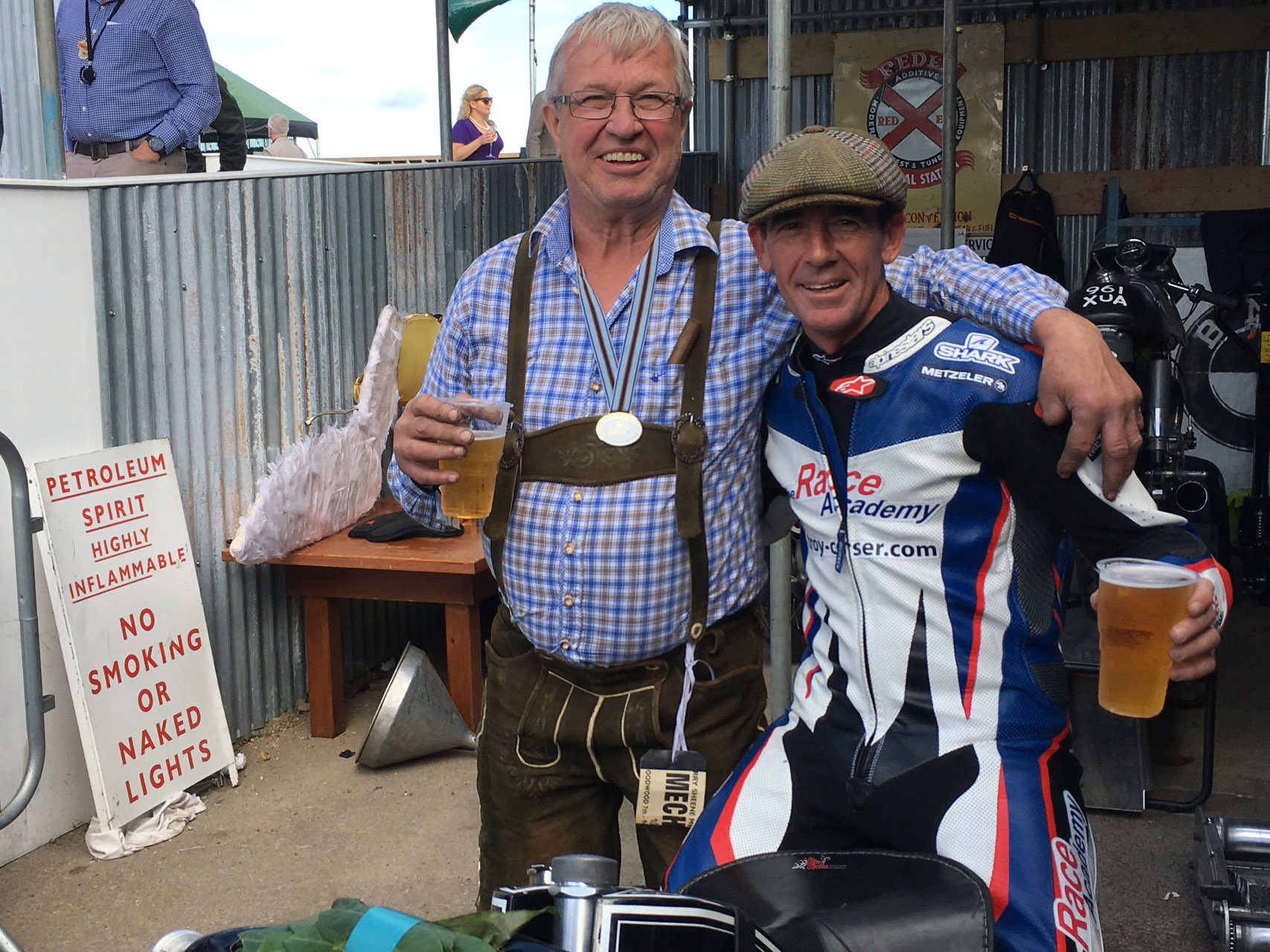
He did so together with Austrian teammate Herbert Schwab aboard the oldest bike in the race, a supercharged 1929 500cc BMW R57 Kompressor Boxer twin owned and prepared by Herbert’s father Paul Schwab, now 79, a retired Nissan dealer from near Salzburg, whose hobby for the past 50 years been restoring, tuning and racing vintage BMWs.
Read Alan’s interview with Troy Corser, talking about the bike and win, here...
Double World Superbike champion Corser came from behind in the second of the two 25-minute races held on the Duke of Richmond’s historic 3.81km/2.40-mile Goodwood circuit, to catch and pass the previous winners of this event, 23-time Isle of Man TT winner John McGuinness and teammate Glen English on a 1953 500cc Manx Norton. In scoring victory in Race 2 by 14.47sec aboard the venerable BMW, Corser and Schwab overcame the 8.40sec time deficit the BMW-mounted duo had incurred in Race 1 held the previous day, when Troy stalled the bike at the Le Mans start, and was only 15th out of the 30 starters at the end of the first of the 16 laps.
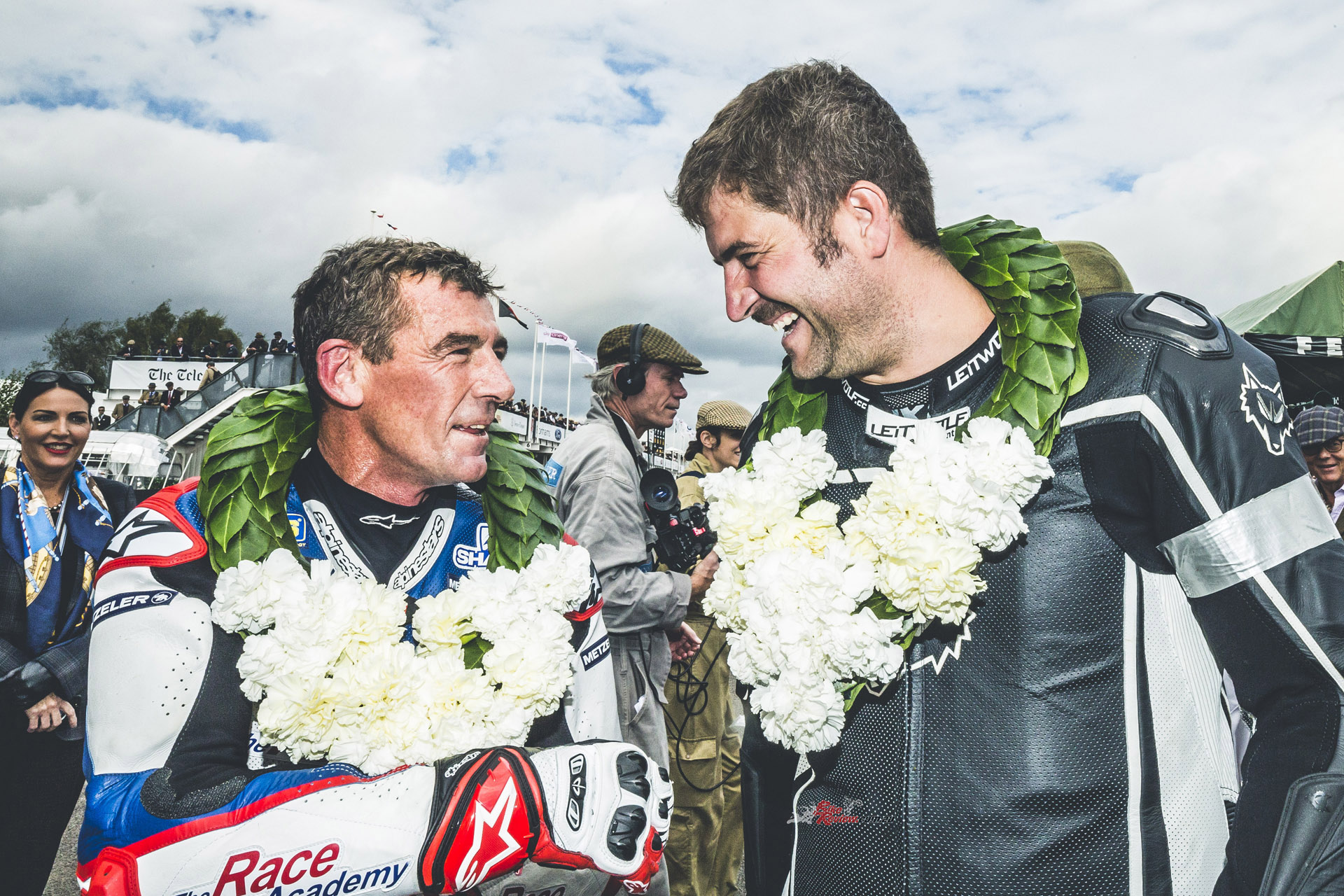
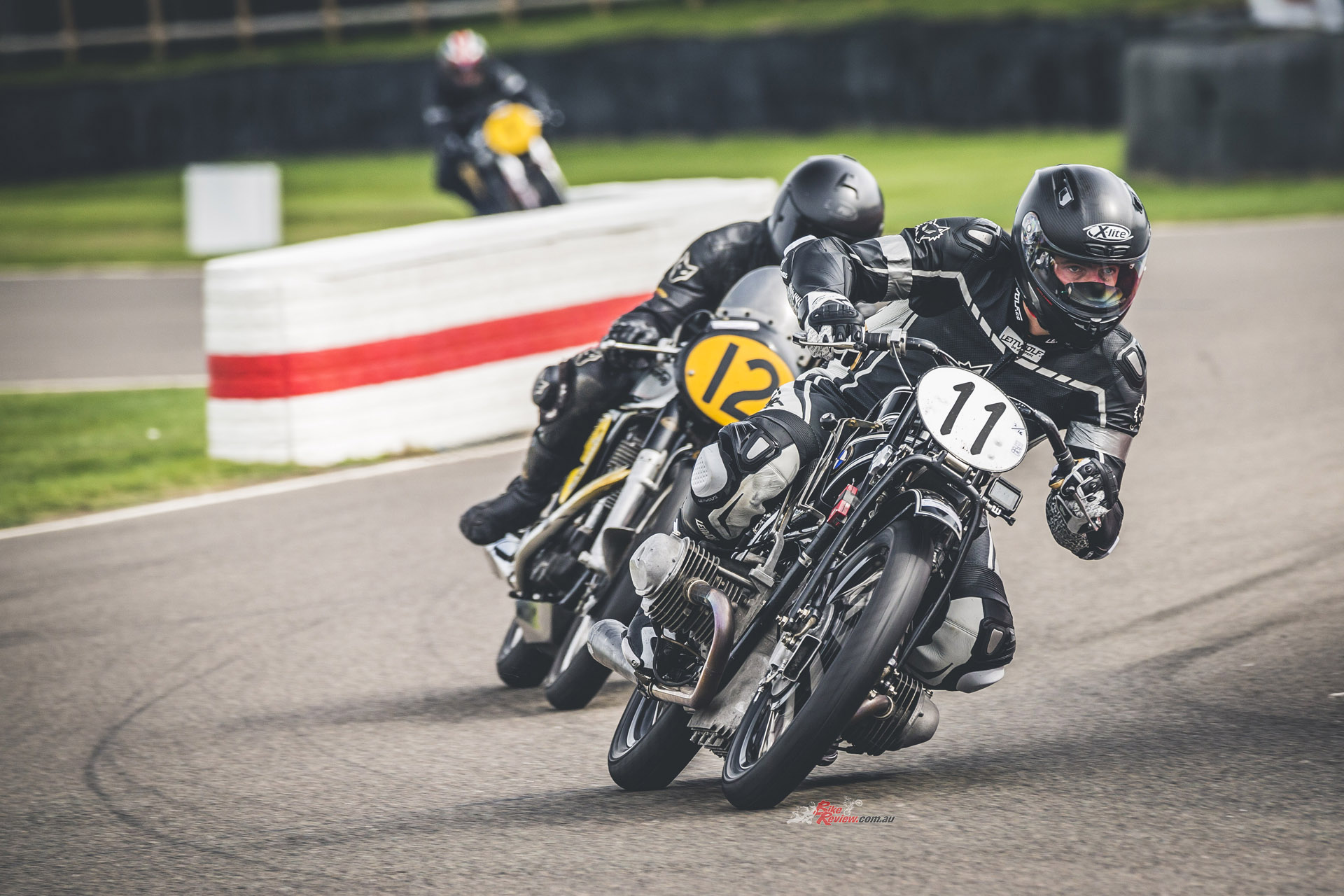
But by circulating four seconds faster than McGuinness to set successive lap records, and thanks to a 10mph top speed advantage over the TT ace’s Norton (126 mph vs. 116 mph), he pulled the BMW up to third before handing over to Schwab. The Austrian rider, a KTM development technician in his day job, bravely held that place to the finish, to reach the podium on his first visit to the fast British track.
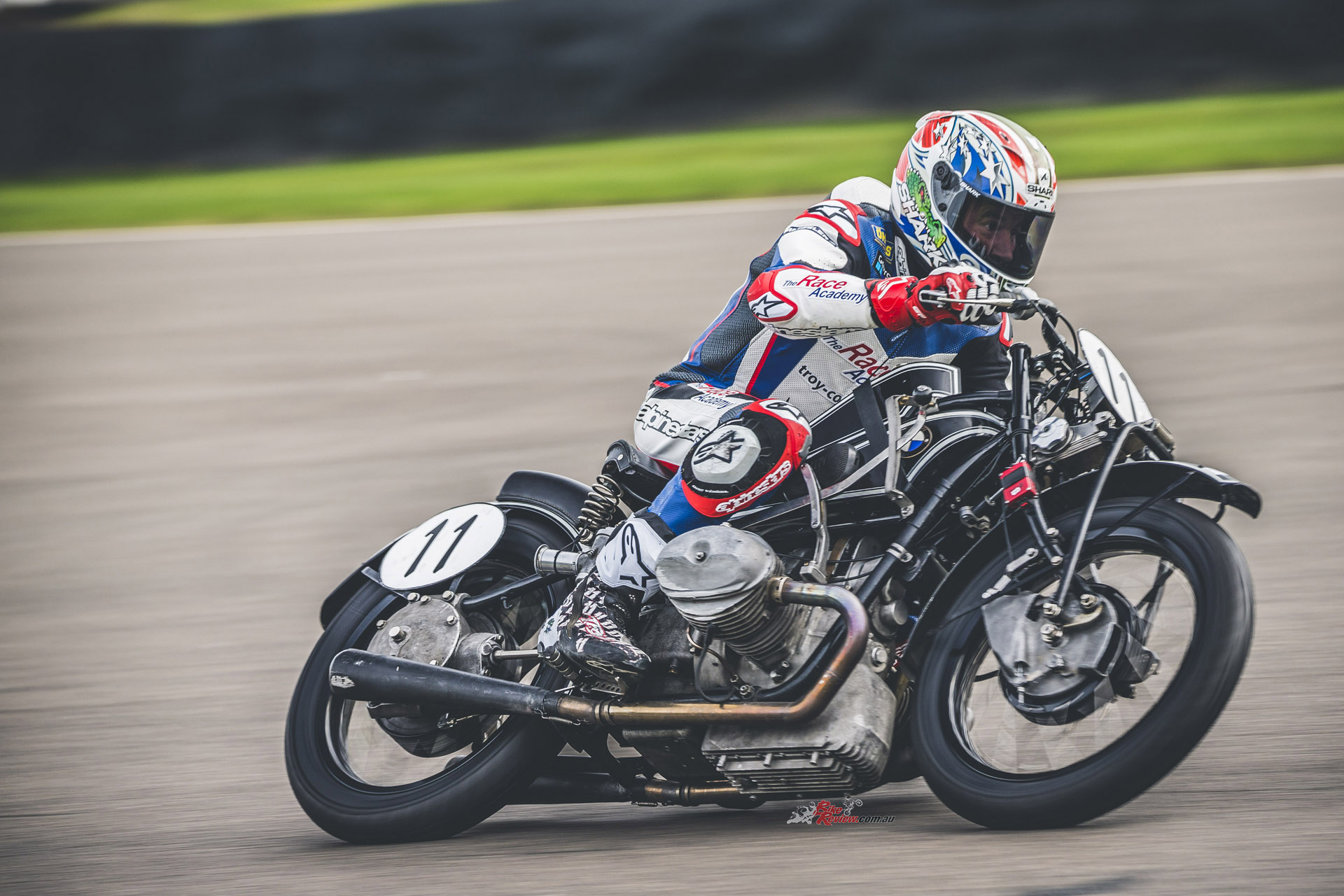
Troy on the BMW R57, lapping at record pace in 2018 at Goodwood. Legendary stuff.
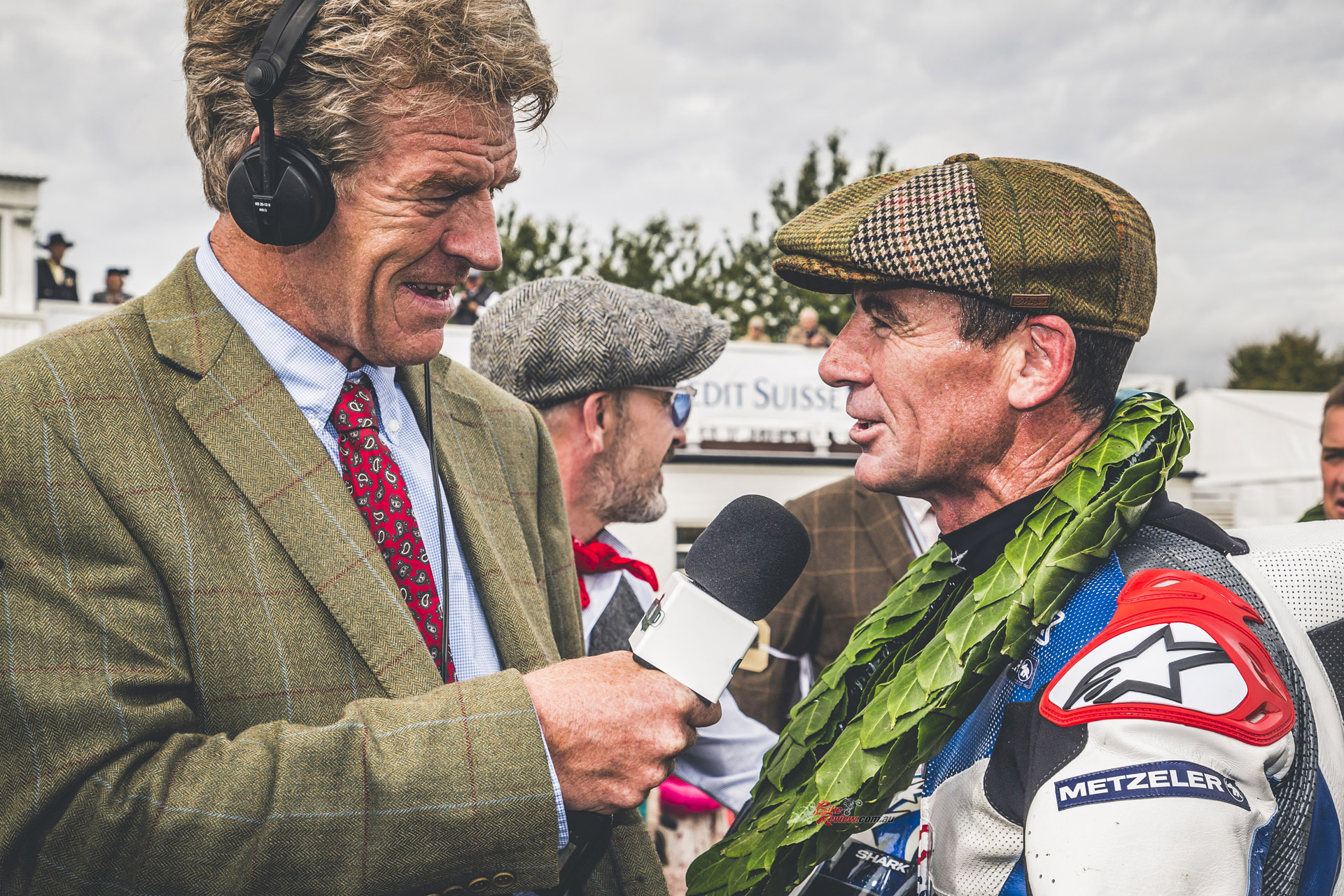
“I had to get permission from my boss at KTM to come here and race a BMW, even one my father built!” said a jubilant Herbert. “But he knew all about the race, and said there was no problem, so here I am on the podium. I think Papa did a good job!” Even better was to come in Race 2, where Schwab held second place from the start behind McGuinness’s teammate Glen English, before handing over to Corser at half-distance in the 16-lap race. The Aussie star broke his own new lap record set the day before to catch McGuinness, giving him a playful pat on the bottom as he swept past him down the Pit Straight, in full view of the 100,000-strong crowd of spectators.
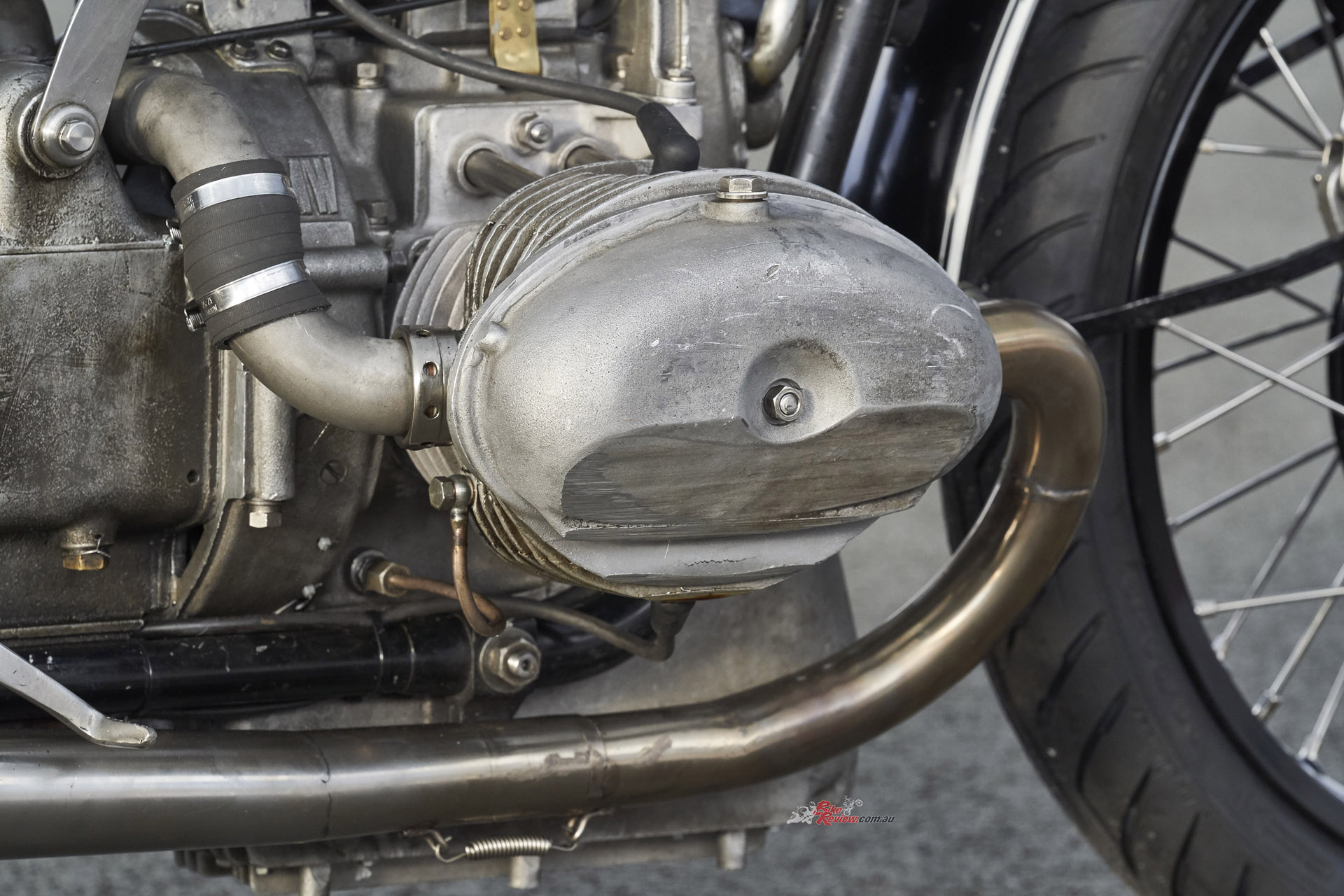
“I was going to pinch his bum, but I couldn’t get too close to him because of the BMW’s cylinder sticking out the side,” said Troy afterwards. “So he just got slapped instead!” Corser went on to take the chequered flag first, with the duo’s 14.47sec margin of victory enabling them to come out on top in the overall standings on combined race times.
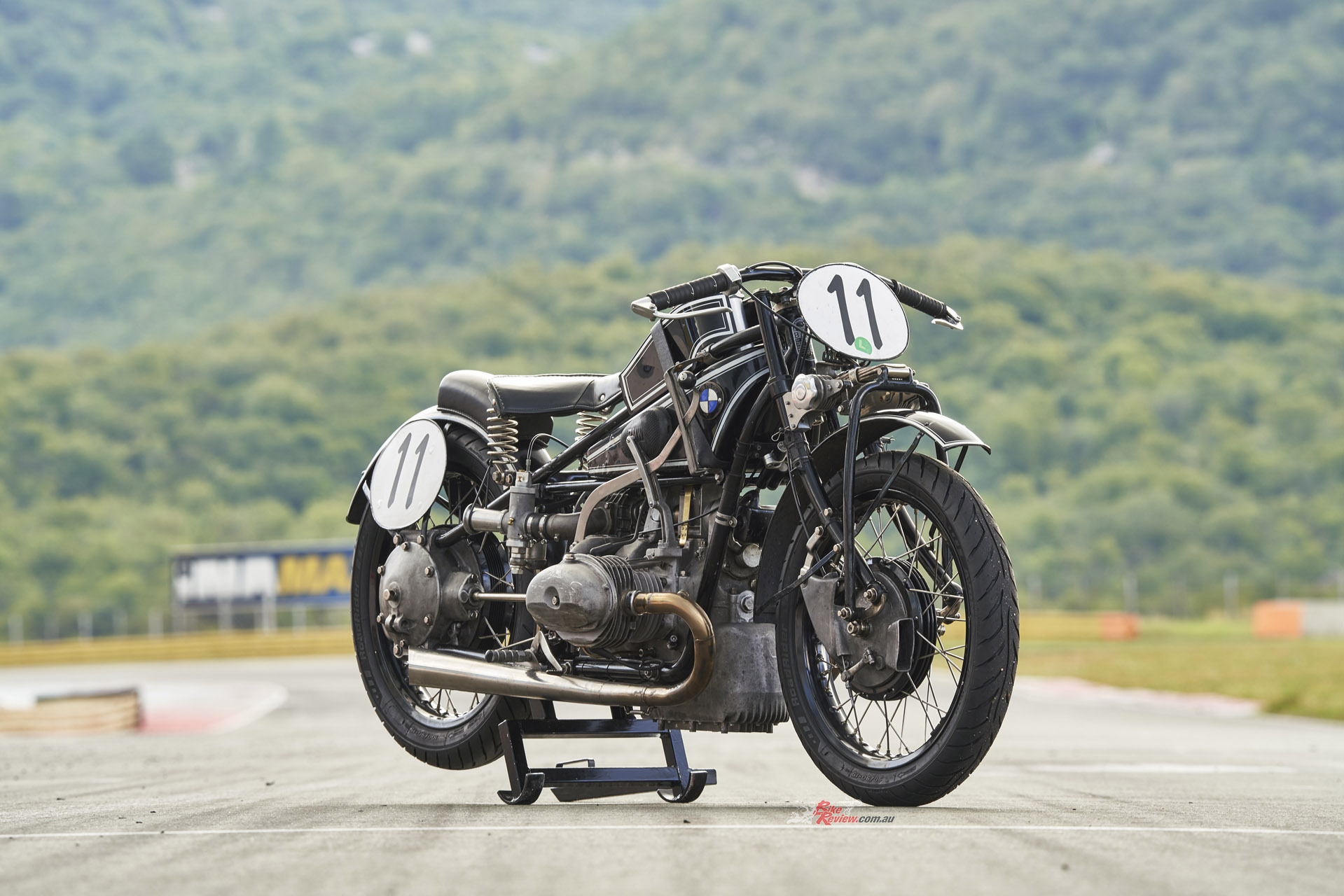
The bike started as an unsupercharged 1929 BMW R57 which Paul Schwab had been preparing to race in Oldtimer events in Austria.
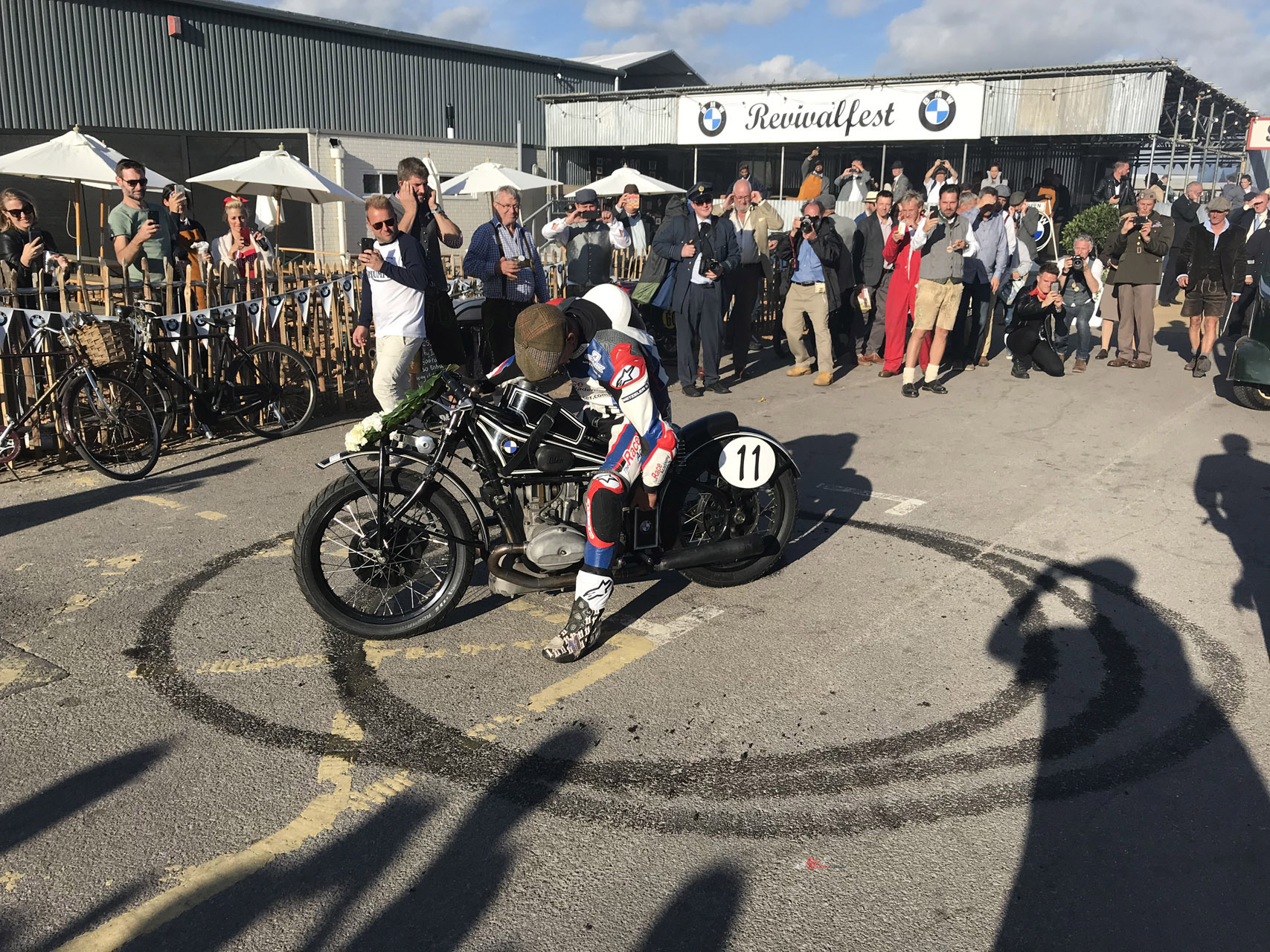
This was the first race win for a BMW at the Goodwood Revival in its two decades of running, and came after a breathtaking display of skill and bravery from both riders on the Vintage-era Boxer twin, whose OHV pushrod engine fitted with a Roots supercharger has been painstakingly developed by Paul Schwab to produce 76bhp at the rear wheel at 8,700 rpm (vs. two-thirds of that for a good longstroke Manx Norton) with peak torque of 65 Nm / 47.94 ft-lb at 8,700 rpm.
Yet the rigid-framed BMW is steered via a flimsy-looking leaf-spring trailing-link fork, instead of its slower but sweeter-handling Manx Norton rivals’ teles. Moreover, it had a right-side hand-shift four-speed gearbox which the Aussie operated by poking his left hand across the fuel tank to shift gear without the clutch, to save backing off the throttle for more than an instant!
With Troy Corser remaining back home Down Under on his 350-acre farm in New South Wales, it’s been down to triple Isle of Man TT winner Davey Todd to replace him in the Revival aboard the supercharged BMW, partnered as ever by Herbert Schwab. At the first time of asking in a torrential downpour Davey put the venerable BMW on pole position for the 2024 race (the first the Austrians could attend, due to Covid) by a massive 1.5 seconds over all the later bikes, in a brilliant display of skill on his debut aboard the hand-shift device.
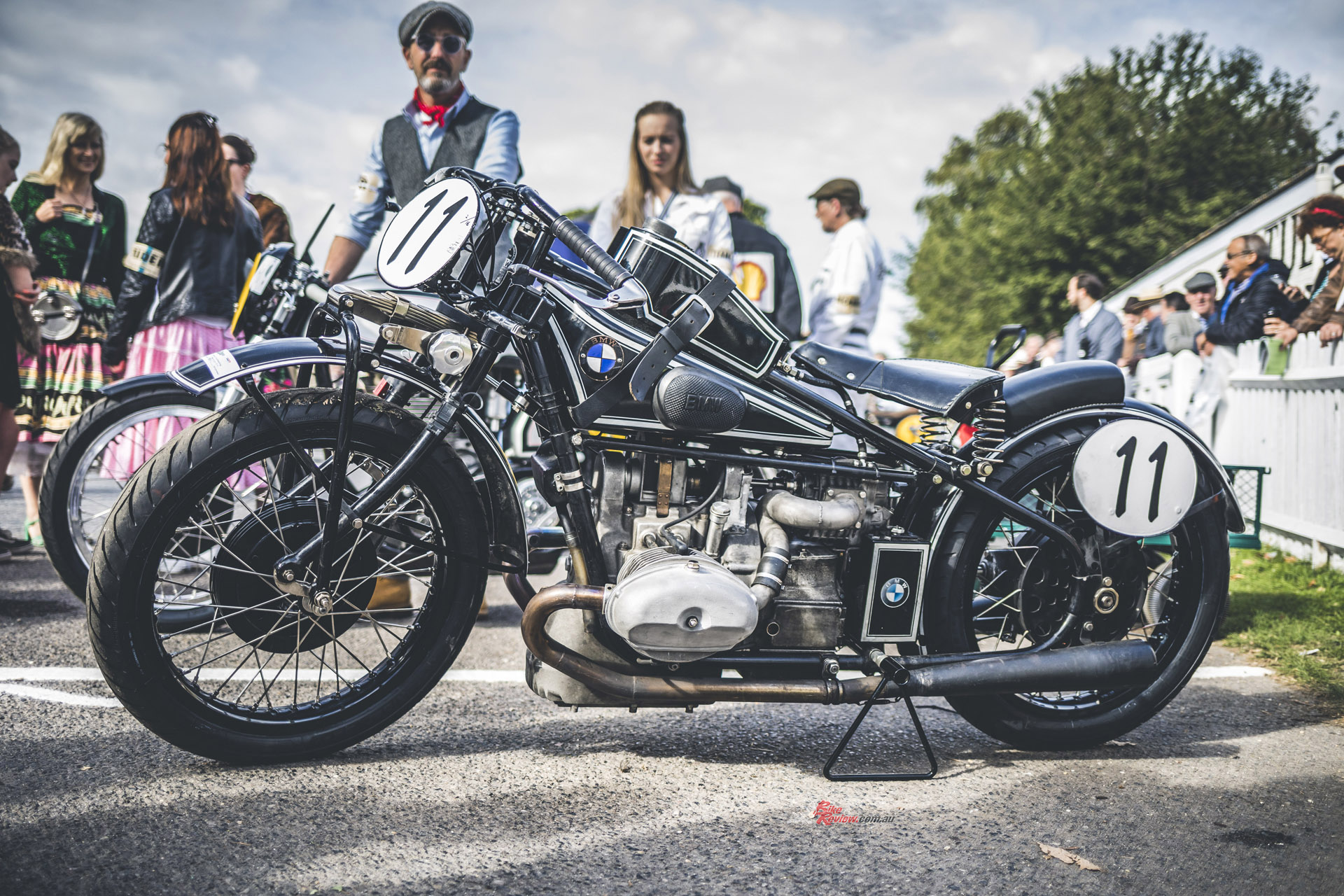
Second in Race 2 after a DNF in Race 1 showed what might have been, while in this year’s race the duo again finished second in Race 1 behind World Supersport star Tom Booth-Amos on a fleet Vincent V-twin, only to be plagued by a misfire in Race 2 which dropped them to sixth place at the end. But the ultra-improbable performance of the unlikely-looking prewar device has made it a huge fan favourite on its annual appearance in the UK.
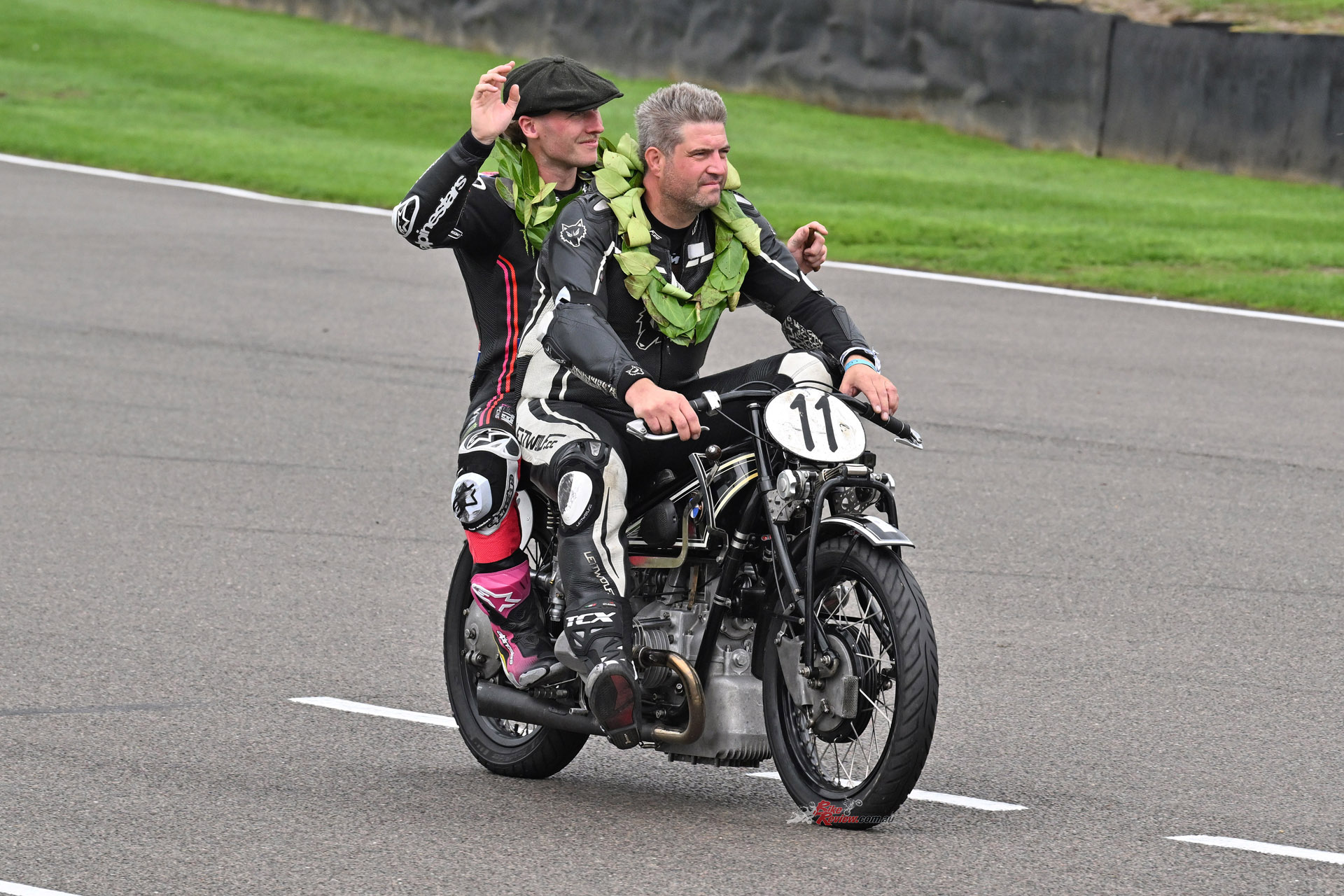
Davey Todd, Herbert Schwab, BMW R57 Kompressor, Barry Sheene Memorial Trophy. Credit; Chris McEvoy/Alamy.
This began life as an unsupercharged 1929 BMW R57 which Paul Schwab had been preparing in his workshop near Salzburg for some decades to race in so-called Oldtimer events in Austria, Italy and Germany, latterly with son Herbert at the controls. But to fulfil his ambition to compete in the Goodwood Revival Paul realised he’d need more power to compensate for the poor handling of the rigid-framed bike with leaf-spring front suspension against the better-handling, more modern postwar Gen1 longstroke Manx Nortons with tele forks and twin Girling rear shocks.
““Whatever you do, only shift gear when you’re upright – and watch out for left-handers. It doesn’t like them!”…
So the Schwabs had the idea of recreating the WR500, the supercharged BMW factory racer built from 1929 on, which was used to set World Land Speed Records in 750cc form. “Goodwood said, yes, you can do it on a prewar bike if there was such a beast in the past, and if the capacity of supercharger and engine displacement together are not more than 1,000cc,” says Herbert Schwab. ”So a 750cc R63 with a 500cc supercharger was ruled out. So instead we used the 500cc R57 and a smaller supercharger of 300cc capacity. But to start with nothing really came out right, and it took Papa three years of work at his shop in Austria and hundreds of dyno runs to cure the defects, before it could run like it does now. But he made it in the end!”
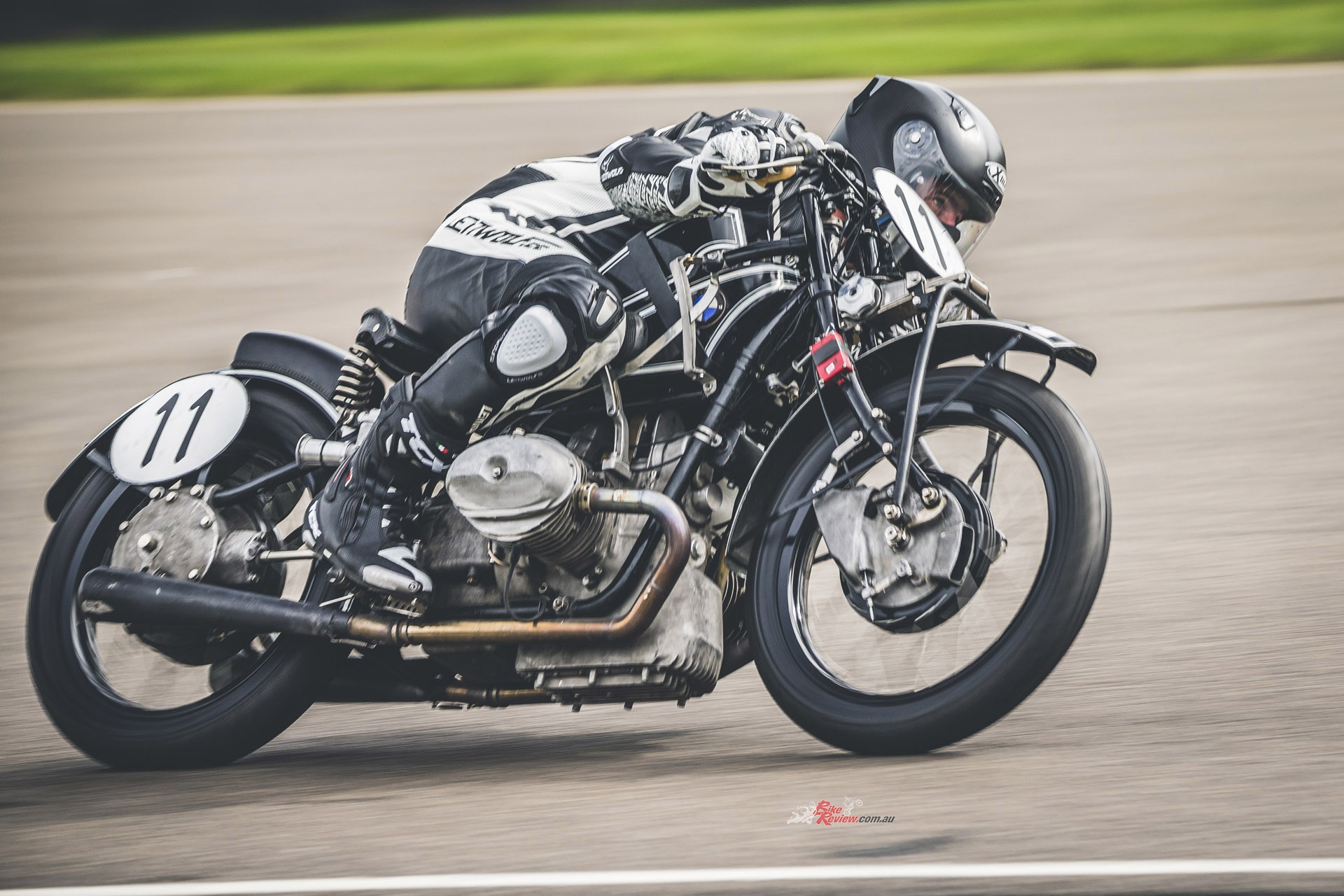
“I had to get permission from my boss at KTM to come here and race a BMW, even one my father built!”
As someone privileged to have observed the BMW’s front wheel making only intermittent contact with the tarmac as Troy Corser motored past my 1952 Manx Norton on my way to a tenth-place finish at Goodwood, I can only say – amen to that! So the chance to ride the Goodwood-winning bike filled me with a mixture of curiosity and trepidation – especially after a pep talk on the phone from Mr.Corser the week before my ride, when he told me “Whatever you do, only shift gear when you’re upright – and watch out for left-handers. It doesn’t like them!” Oh, great – for I’d been invited to join the Schwab father and son at their test session at the 4.17km / 2.59mi Grobnik circuit in Croatia, near Rijeka, former home of the Yugoslav GP, and unlike the clockwise Goodwood circuit, a counter-clockwise track with heaps of left-handers. Hmmm…
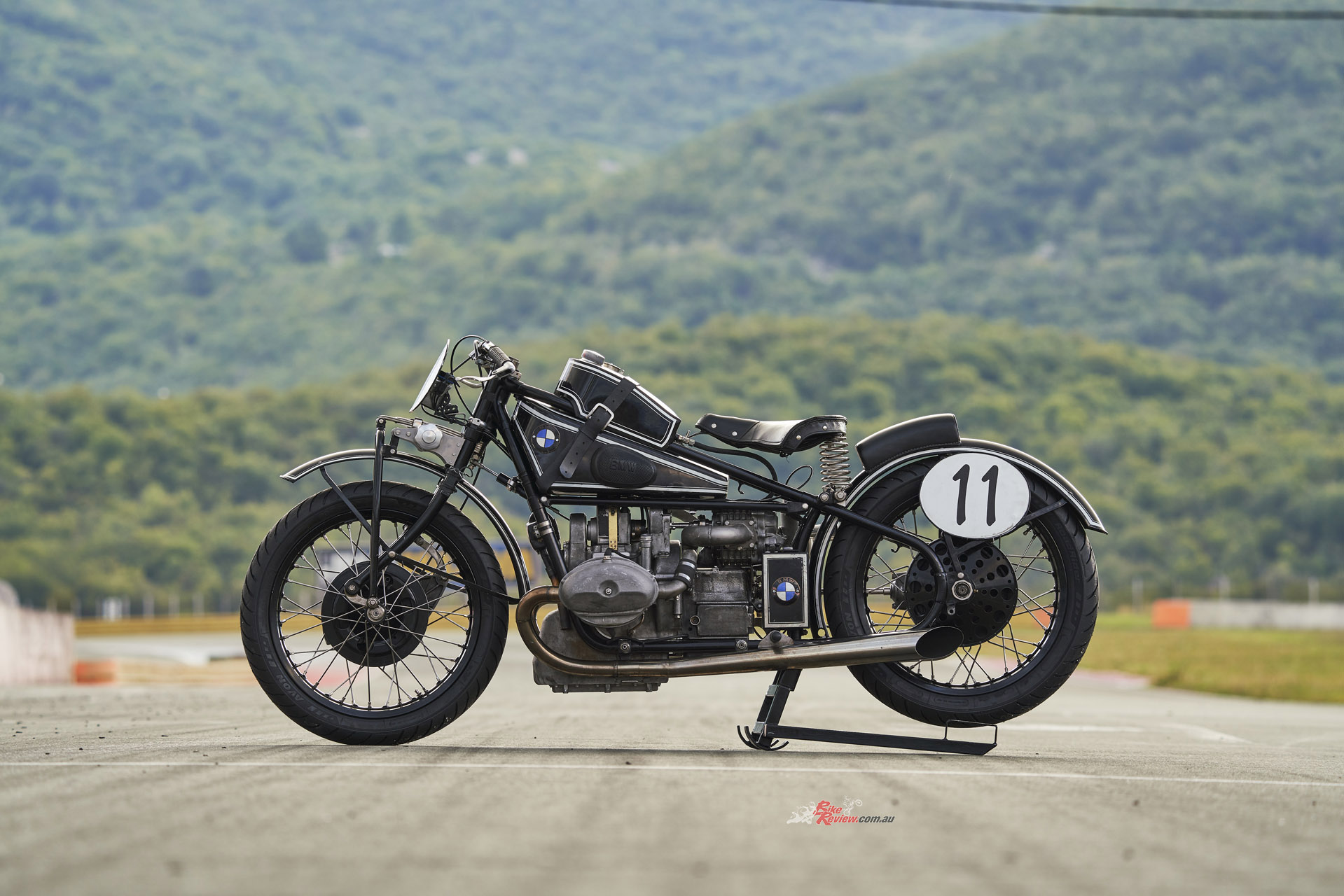
Schwab installed a twin-lobe Roots positive displacement aka volumetric supercharger running at 0.8 bar.
Hanging around for two of the three test days while it sheeted down with rain gave me lots of time to reflect on Troy’s advice – as well as to quiz Claus and Herbert Schwab on how they jointly concocted such a fearsomely effective, and improbably successful, device. “We started out five years before bringing it to Goodwood,” said Herbert, “but it took many, many dyno runs – we have one beside our home workshop – before we could get it to run properly. We had to balance the cam timing with the boost and the ignition timing, and it took us a long time to find the correct relative settings. But finally, we did – and after a 2017 test session at the Pannonia Ring in Hungary, where I hardly did a complete lap for constantly stopping to make adjustments, we finally got it running properly, and four months before Goodwood we took it to Hungary again, this time to race – and won!”
The blower is belt-driven at engine speed via a pulley splined off the crankshaft, rather than the chain drive employed by the German factory in 1929 on the WR.
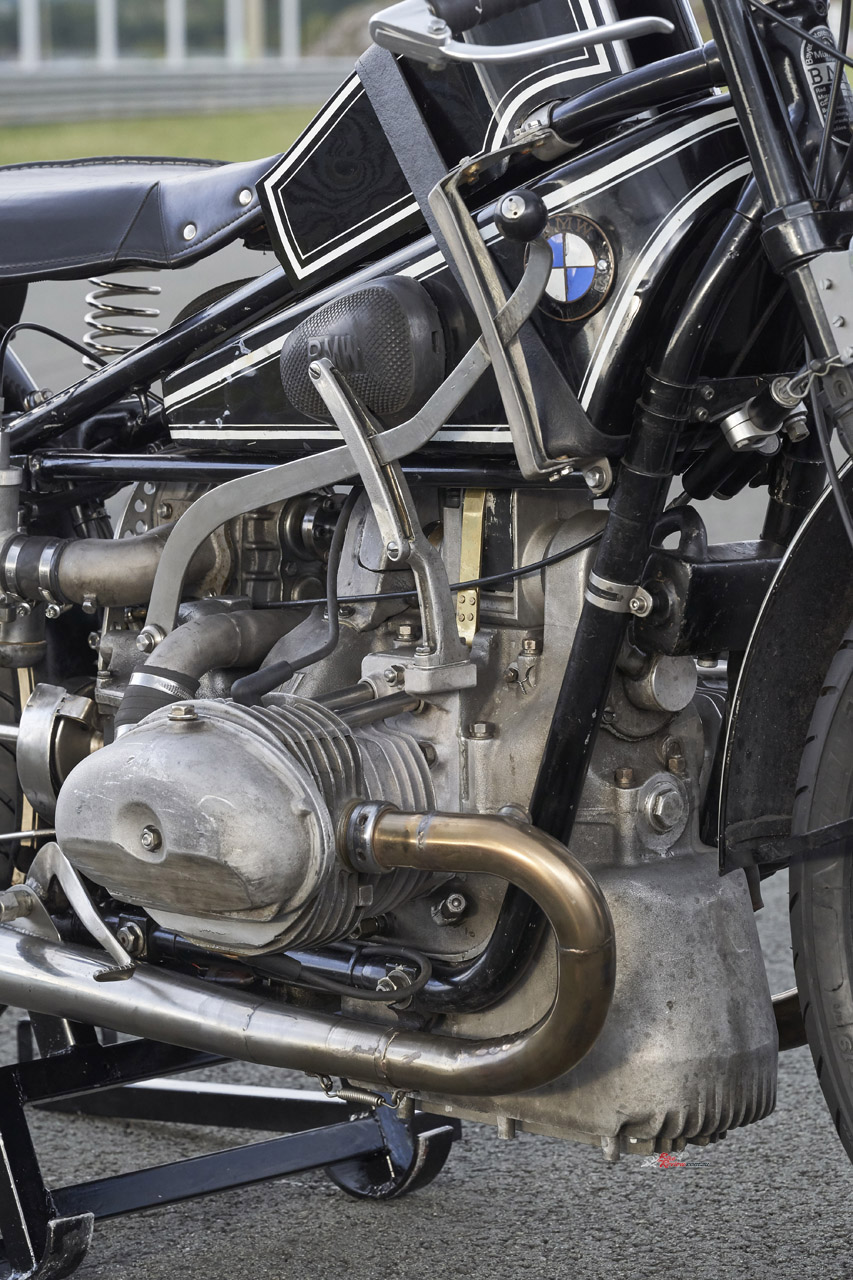
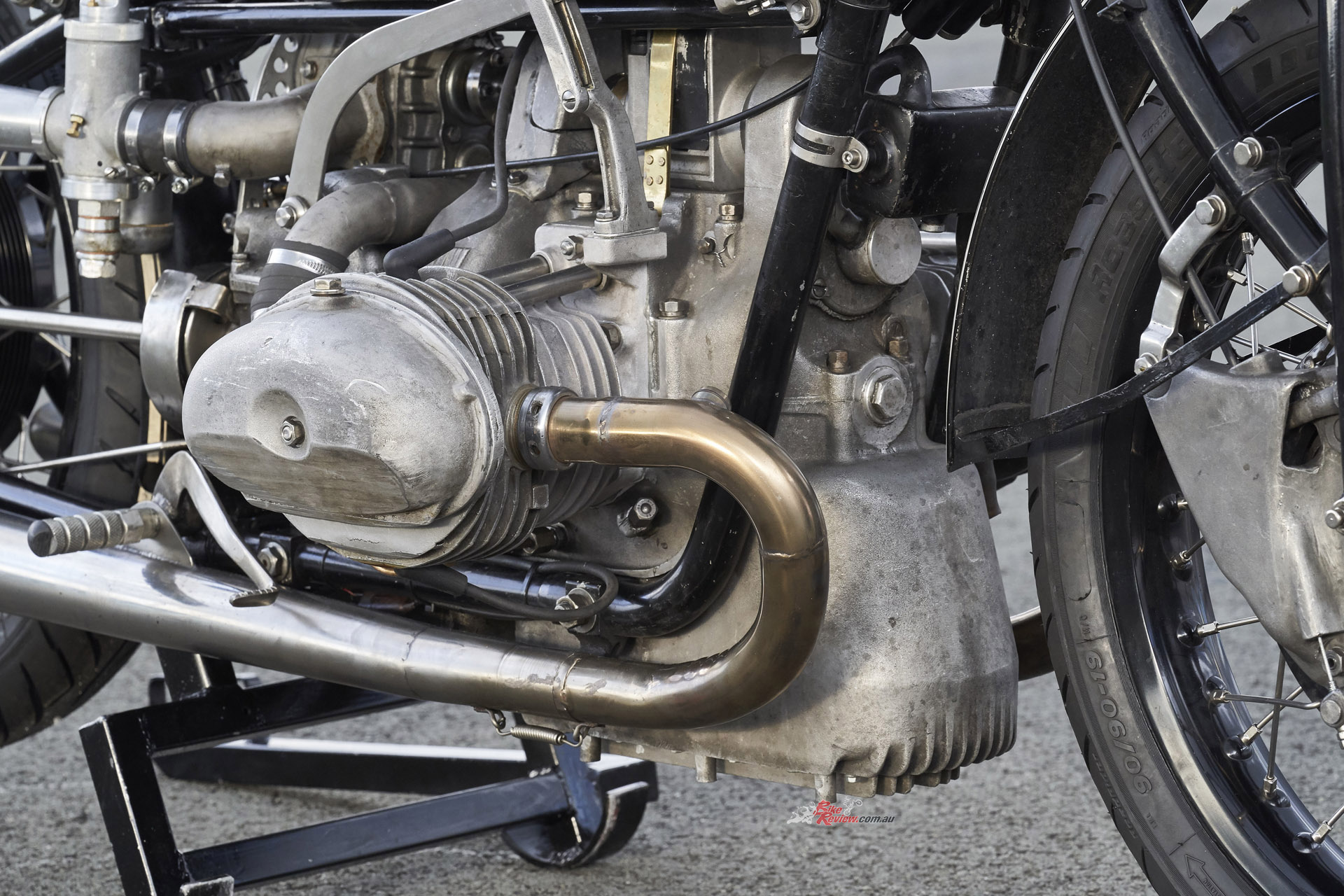
To uprate the R57’s originally unsupercharged Boxer motor (code-numbered M59a by BMW), Paul Schwab installed a twin-lobe Roots positive displacement aka volumetric supercharger running at 0.8 bar, mounted horizontally above the gearbox, and belt-driven at engine speed via a pulley splined off the crankshaft, rather than the chain drive employed by the German factory in 1929 on the WR. This provides a constant 0.8bar/12psi boost thanks to the long, fat induction tube keeping the incoming charge cool.
Top speed measured at Rijeka on Goodwood gearing was 208 km/h / 129 mph…
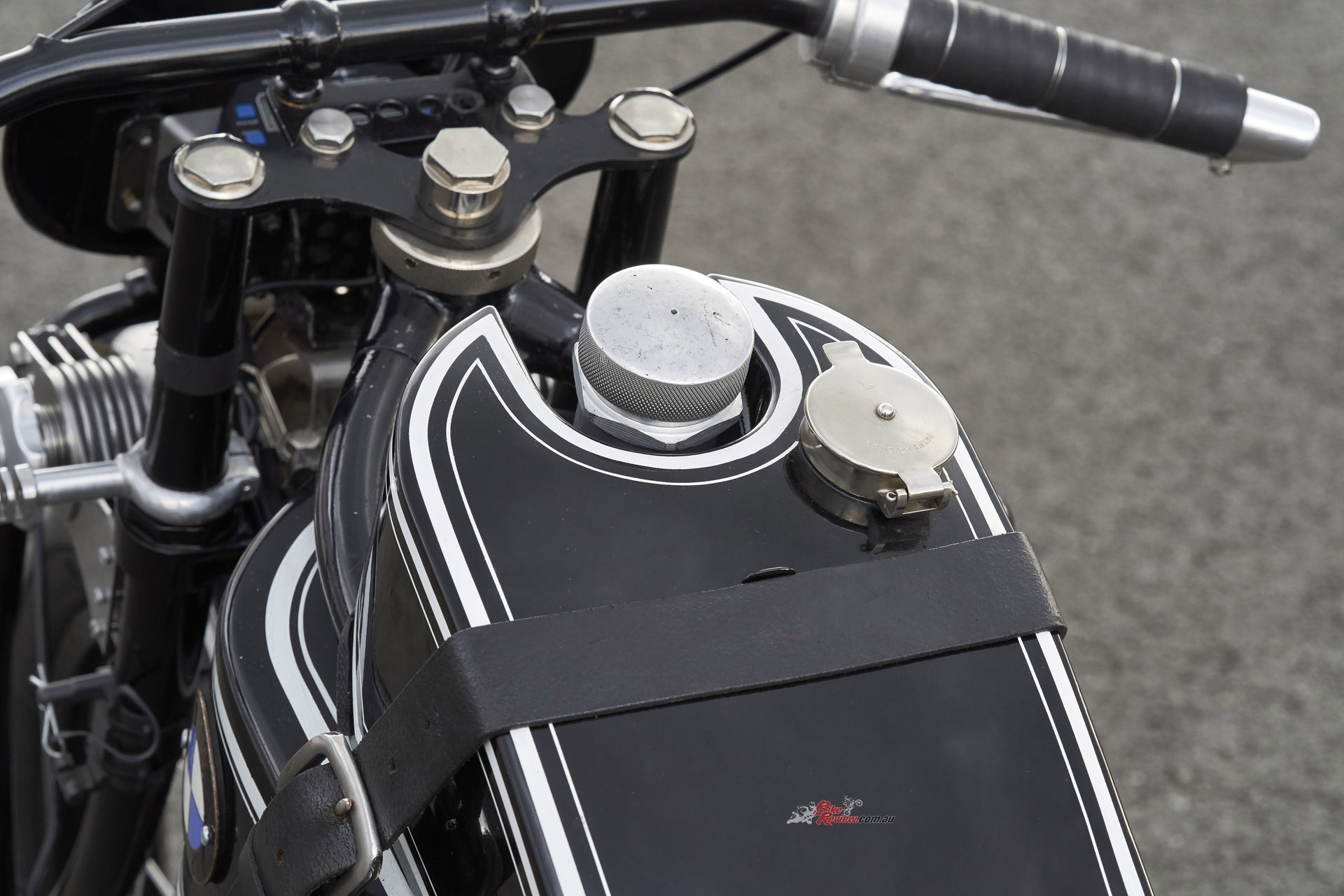
Paul chose the Roots blower over the Zoller vane-type compressor traditionally used on BMWs because he says it’s potentially less troublesome, and easier to vary the boost on. He uses a single 33mm Fischer-Amal carburetor to feed it via a large-diameter specially-made induction tube, and has added a secondary 5.5-litre fuel tank strapped to the upper frame rails above the original 14-litre one, to satisfy the beast’s frantic thirst – each leg of the Goodwood Revival can entail covering as many as 18 laps (including the warm-up lap) or 75km/almost 50mi.
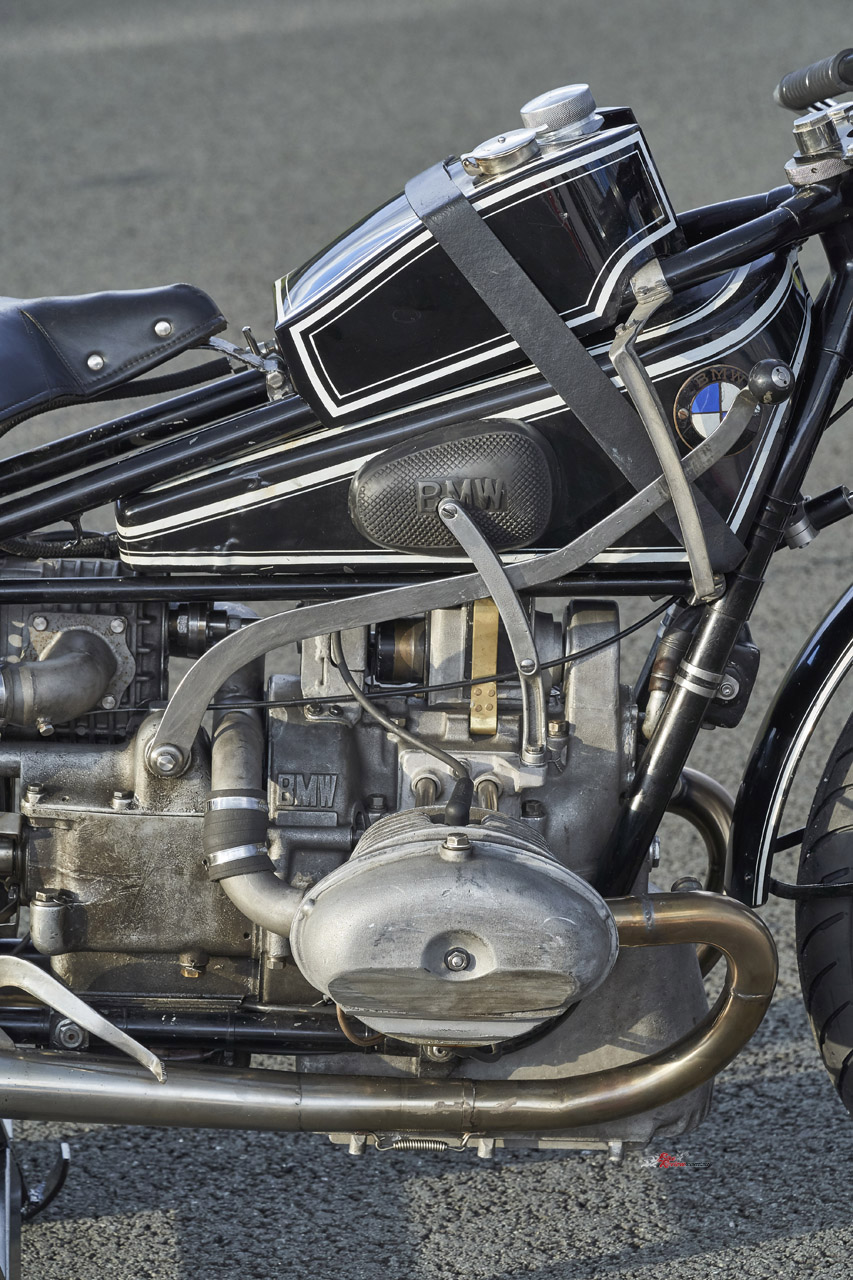
The 5.5-litre fuel tank strapped to the upper frame rails above the original 14-litre one, totalling 19.5L
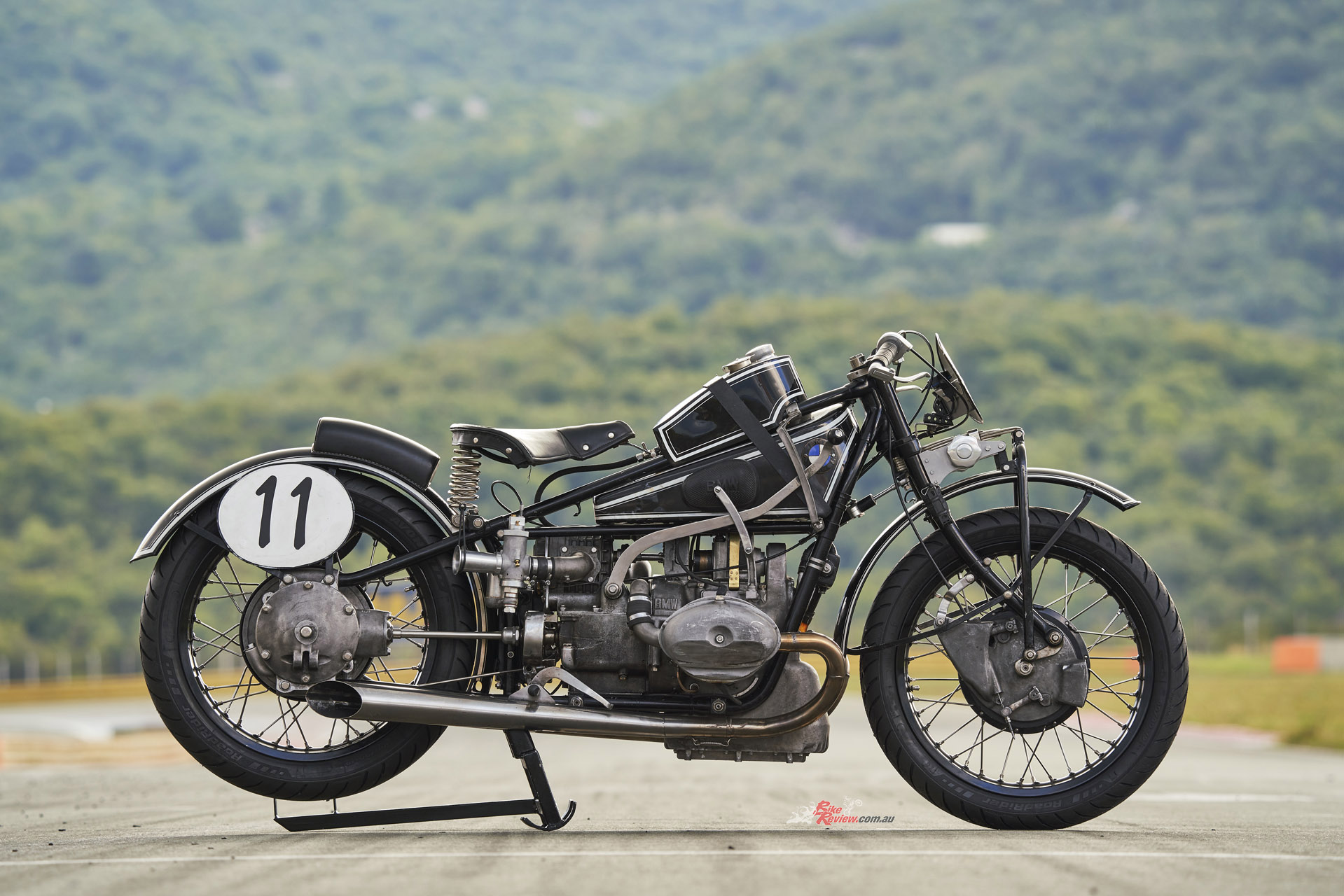
The 68 x 68 mm ‘square’ dimensions of the 494cc OHV motor running a low 8:1 compression ratio sees forged pistons running in cast iron liners with 1mm oversize 40mm inlet and stock 33mm exhaust valves – one each per cylinder, of course. Steel pushrods operate the valve rockers, via a modern Munich-made Schleicher camshaft, while ignition is via a Belgian HPI/Horse Power Ignition CDI running just 33° advance replacing the original Bosch magneto, with 12v battery/coils. There’s a four-speed gearbox and single-plate diaphragm clutch, with hand-shifter on the right of the bike, and shaft final drive via an exposed cardan.
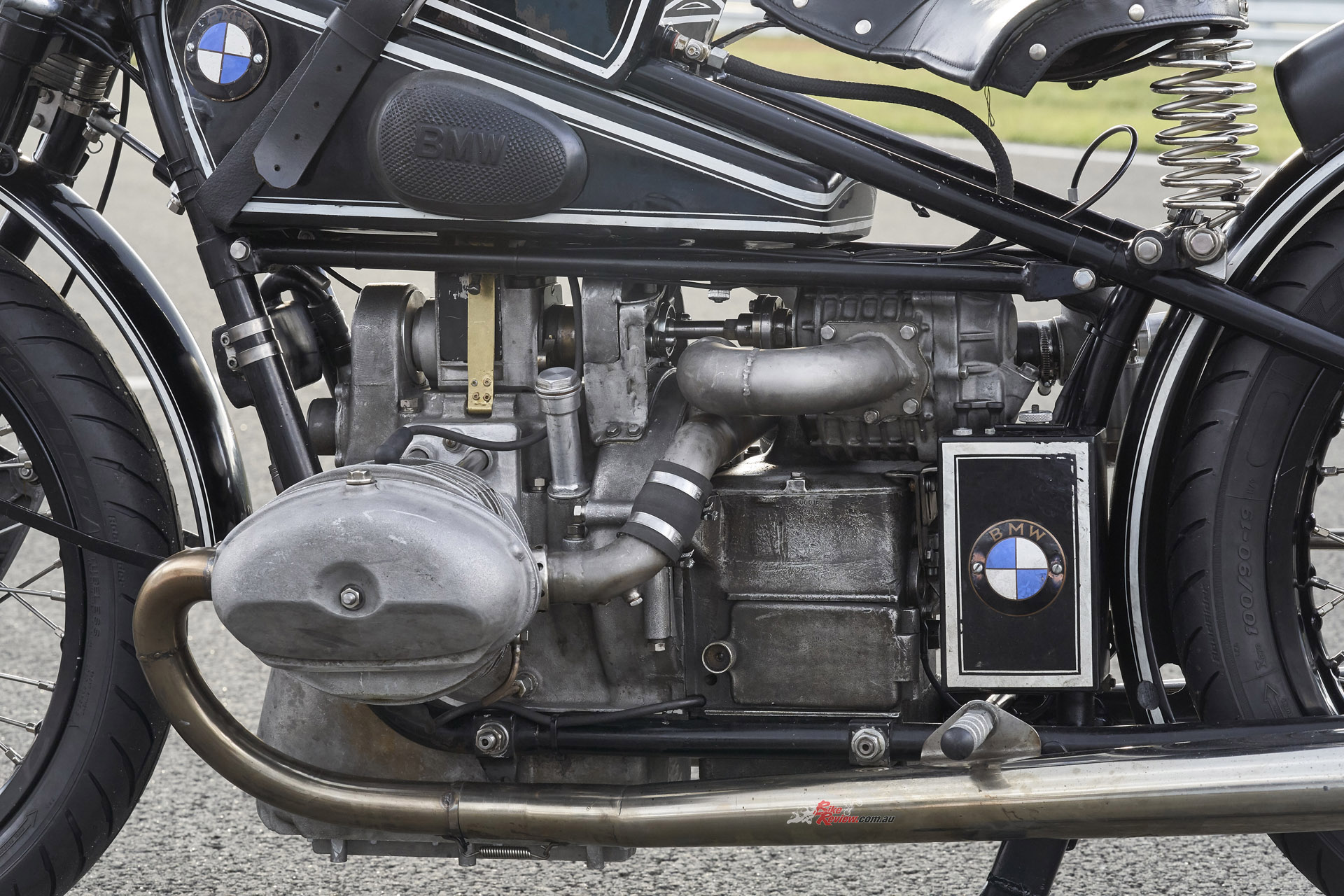
The 68 x 68 mm ‘square’ dimensions of the 494cc OHV motor running a low 8:1 compression ratio sees forged pistons running in cast iron liners.
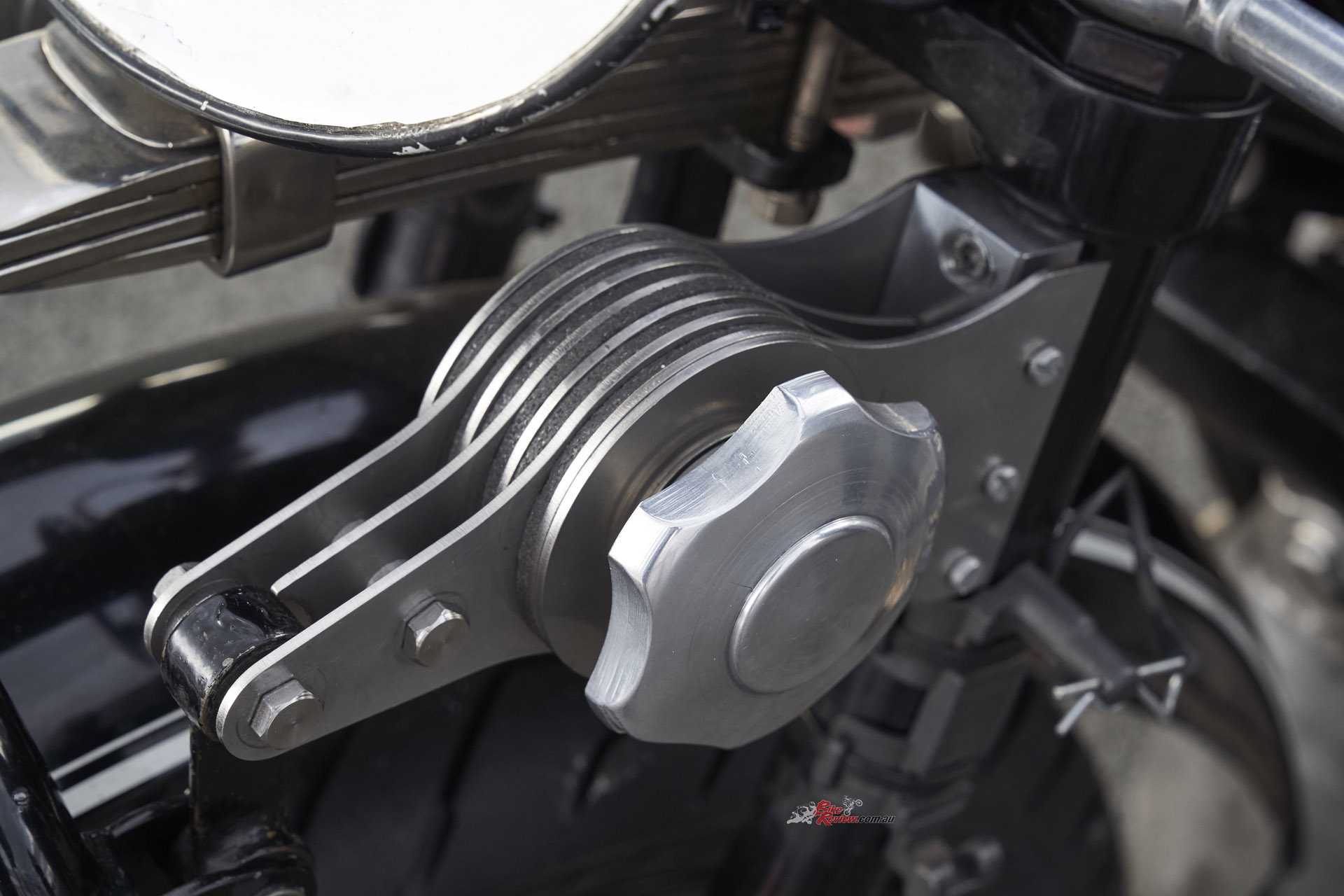
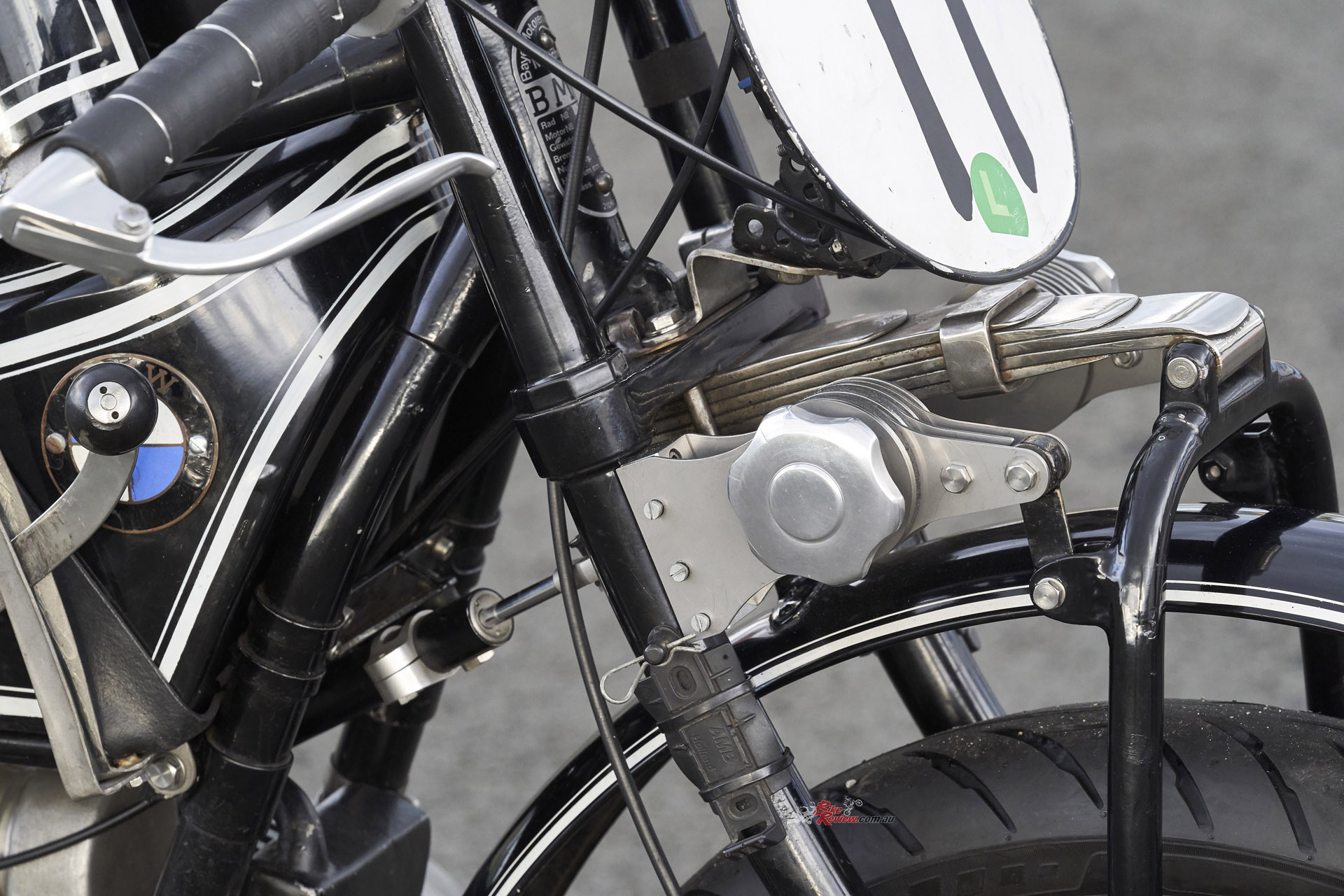
This potent powerplant is installed in an R63 tubular steel twin-loop cradle frame identical to the R57 chassis, but which formerly housed a 750cc version of the OHV Boxer motor. This has no rear suspension, but up front there’s a decidedly quaint-looking pressed-steel trailing-link girder fork with quarter-elliptic six-leaf suspension set at a 27° rake, with twin friction dampers either side of the leaves and a modern WP steering damper bolted to the chassis.
“It doesn’t like part-throttle much, so it’s all or nothing!”
Wheelbase is quite rangy at 1433mm, but the low-slung motor’s transverse cylinders have their rocker covers well chamfered for extra ground clearance on modern tyres – despite which there are extra scrapes from where Herbert Schwab and his co-riders have maxed out the turn speed at Goodwood! There are quite serious-looking brakes for a late-‘20s bike, with a 200mm single leading-shoe/SLS front drum and a 250mm SLS rear to stop a bike weighing 162kg with oil, but no fuel. 19-inch wheels are fitted front and rear, shod with Avon RoadRiders, Top speed measured at Rijeka on Goodwood gearing was 208 km/h / 129 mph.
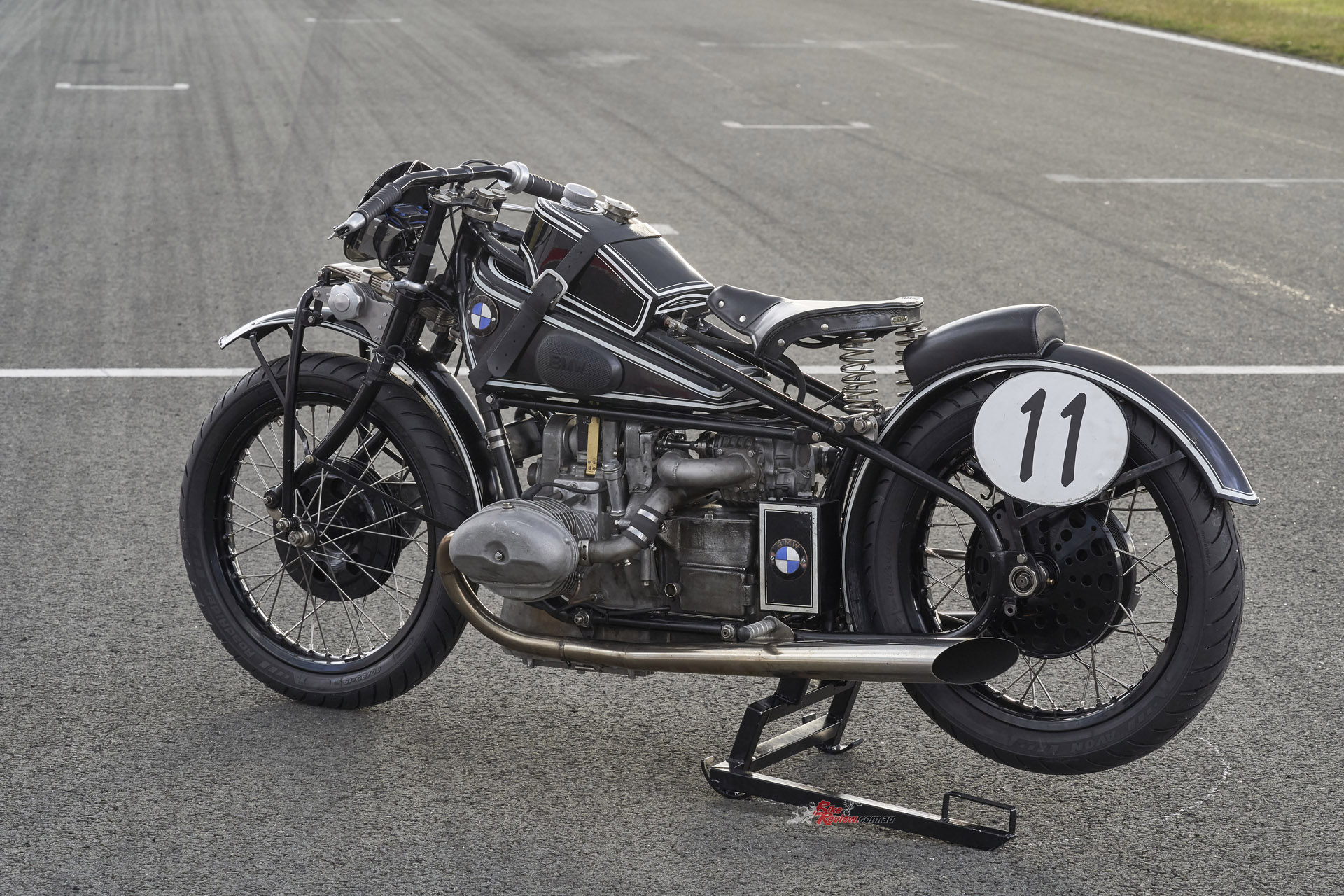
This potent powerplant is installed in an R63 tubular steel twin-loop cradle frame identical to the R57 chassis.
After the two-day downpour a dry, bright morning gave me the chance to finally sample the Blown Boxer, which rather to my surprise after being coaxed into life on rollers to the accompaniment of an angry wall of sound from the twin exhausts when it fired up, actually idled at rest while waiting to go out onto the track. However, once under way you must overcome the suction effect of the blower by working the single carburettor slide quite aggressively – it doesn’t like part-throttle much, so it’s all or nothing!
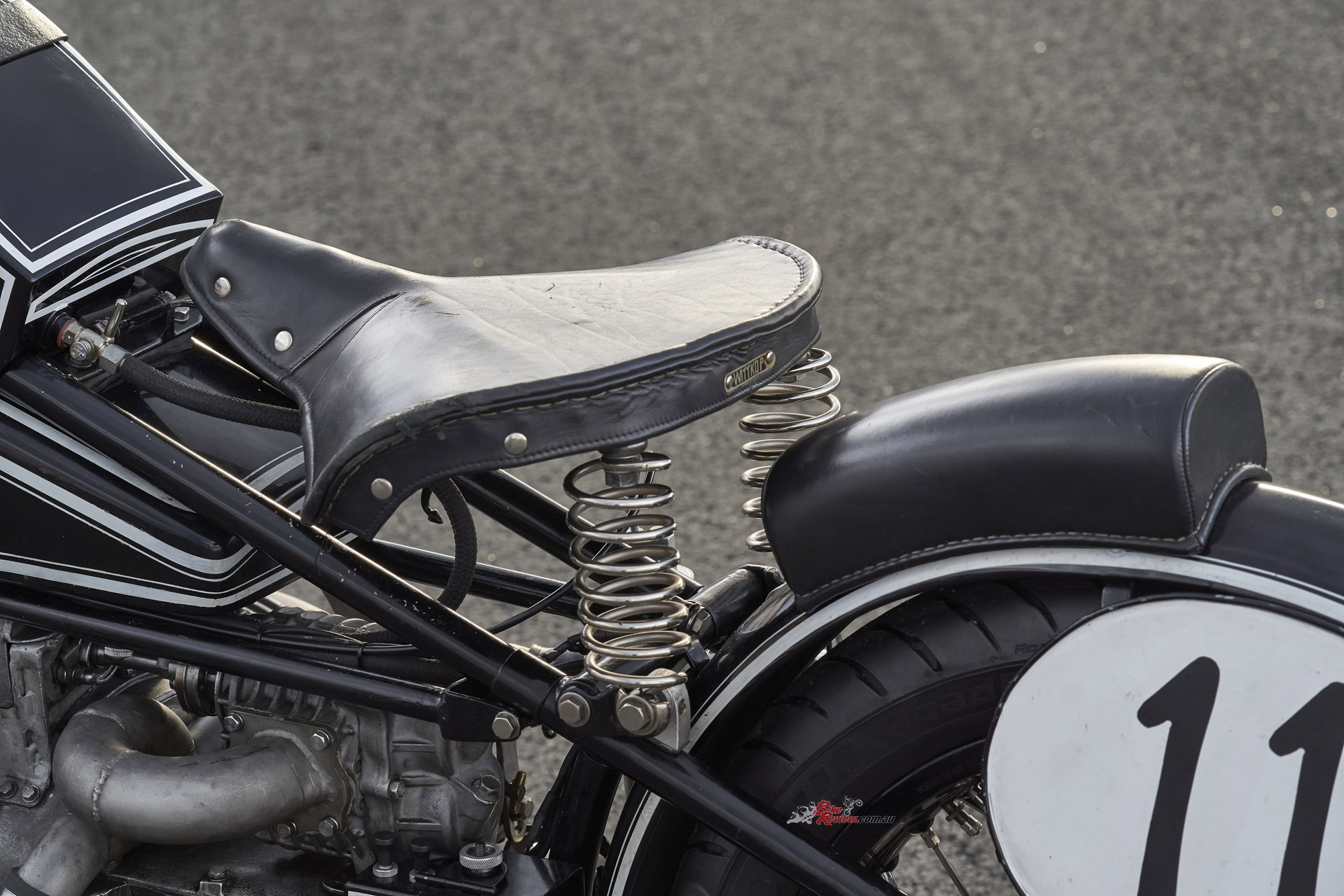
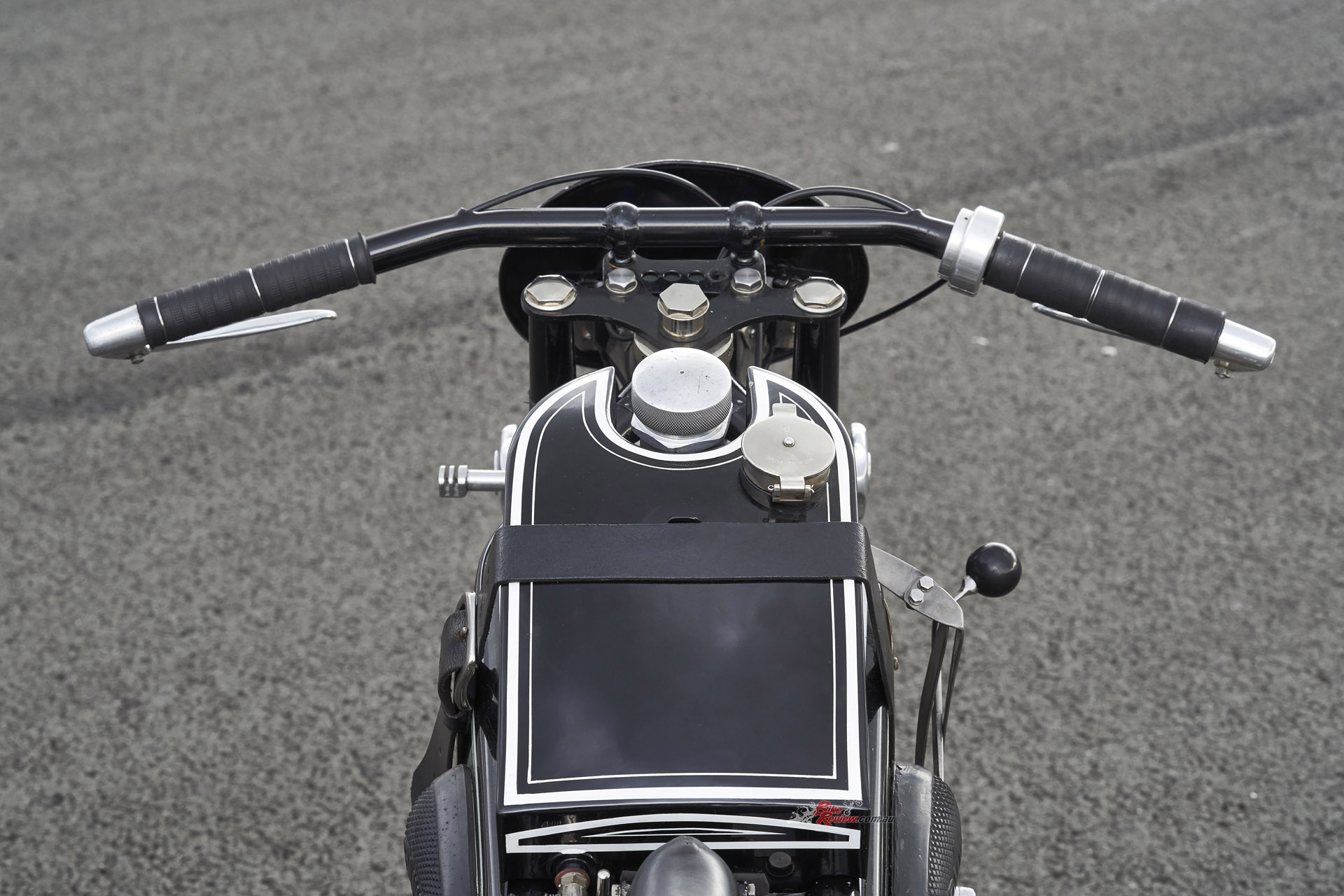
You sit pretty low down on the broad Wittkop seat, with low-slung footrests which surprisingly didn’t touch down, even after I started going faster. In fact, the riding stance is quite close-coupled, with the relatively flat, straight handlebar’s grips pulled back towards you – there’s a very direct feel to the steering, which I’d later find to be very beneficial. And for faster stretches you push yourself back onto the vestigial bum pad atop the rear mudguard, at which point you then start to notice the bumps in the Croatian track surface that you weren’t – ouch! – aware of before, thanks to the well-sprung seat.
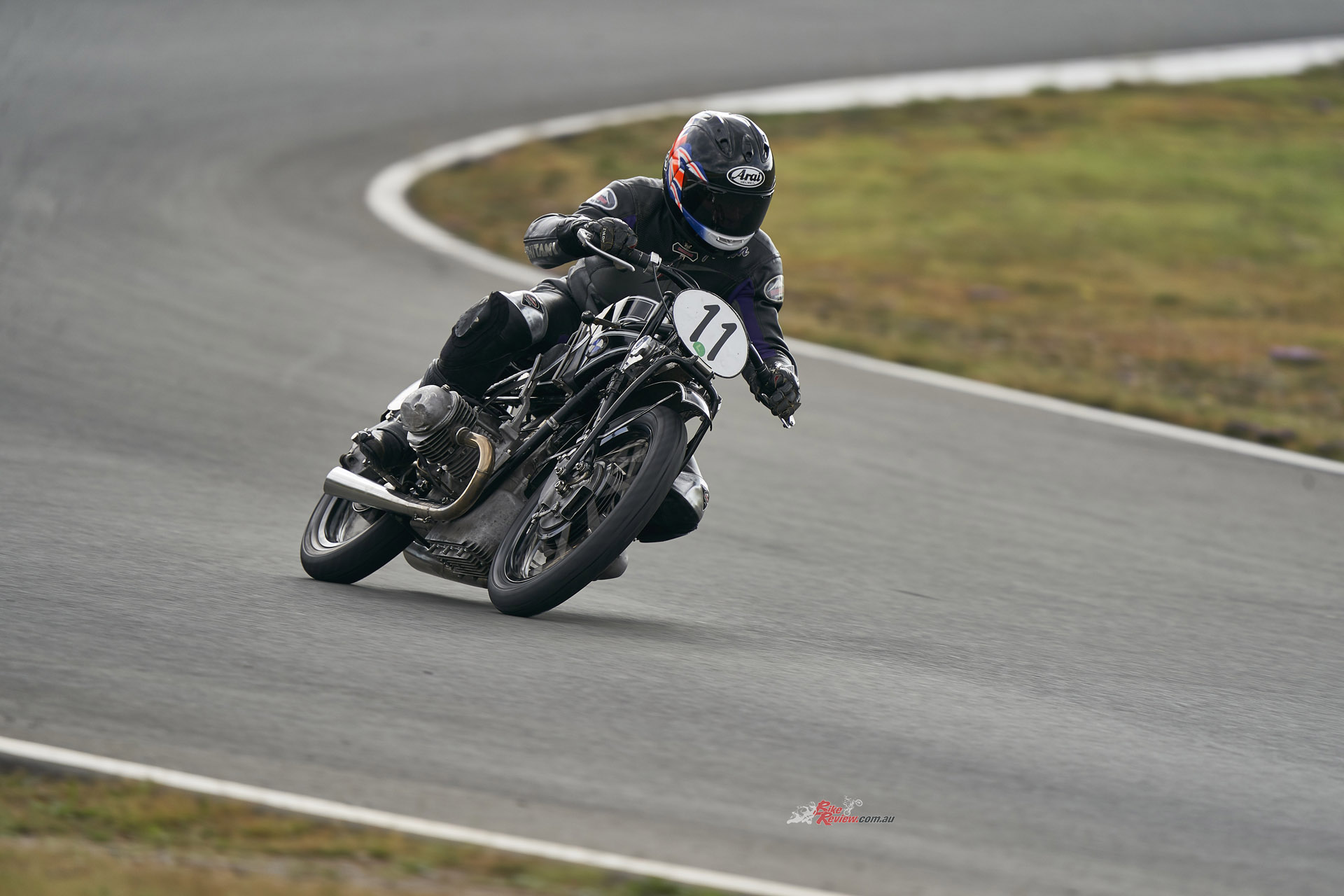
“There’s a very direct feel to the steering, which I’d later find to be very beneficial”.
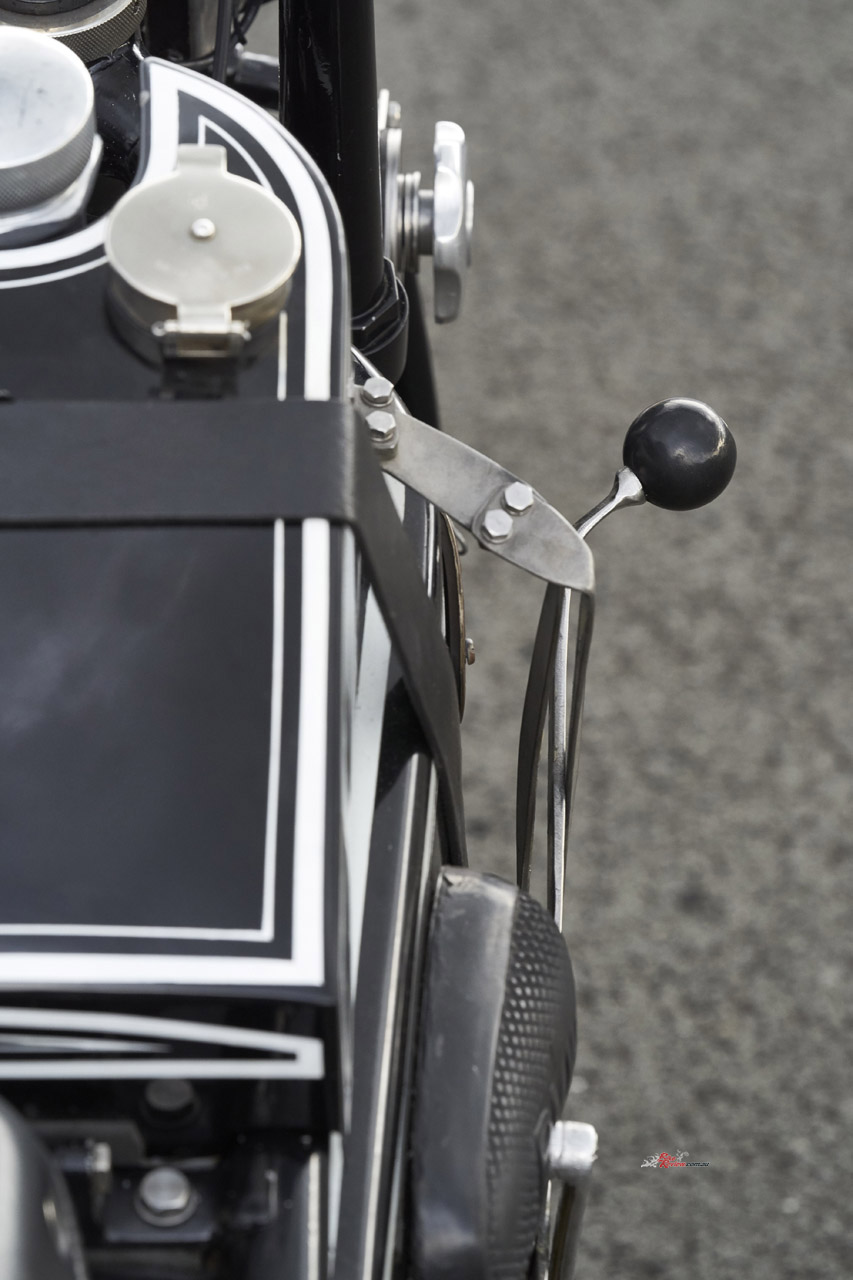
Pull in the clutch lever and then push down on the gear lever with your right hand for bottom gear, and quickly twist the throttle a good way towards wide open as you let out the light-action clutch lever. The Schwabs add oil to the fuel to lubricate the throttle slide, in pursuit of some degree of flexibility, but it indeed really is an all-or-nothing device. After a short burst of acceleration to get you out onto the track, it’s time to change into second gear by pulling in the clutch lever while removing your right hand from the twistgrip to yank the gearlever upwards, then returning it to the twistgrip to deliver another wide-open burst of acceleration as you pay in the clutch. Now I understood why the engine was set to idle – with no tacho, I can only guess at around 1,200 rpm – because when you miss a gear (and you will!), you don’t want the engine dying on you as you fiddle around with the lever to make a second attempt with your hand off the throttle!
“It’s time to change into second gear by pulling in the clutch lever while removing your right hand from the twistgrip to yank the gearlever upwards”…
Repeating the same procedure will get you to third, then fourth gear – and now it’s time to give the blown Beemer the berries. Accelerating wide open in top gear results in your being catapulted forward inexorably in a vintage version of the intoxicating punch my supercharged Vee Two Ducati 999 Super Squalo has been furnishing me with for the past 20 years. Yes, I must own up to being a devotee of forced induction, and I’m really surprised that BMW has let Kawasaki steal its crown as the sovereign of supercharging, when it’s had this technology so closely aligned with it as a brand for the past 98 years. Conceived by BMW race engineer Rudolf Schleicher, Boxer test engines were first fitted with a mechanical compressor in 1928, as part of an ultimately successful strategy aimed at obtaining the World Land Speed record, which then spilled over into road racing – and even offroad, with a supercharged BMW winning a Gold medal in the 1936 ISDT!
Conceived by BMW race engineer Rudolf Schleicher, Boxer test engines were first fitted with a mechanical compressor almost a century ago, in 1928.
Because there’s not much else with two wheels and an engine which gives you as great a thrill as winding the gas wide open on a blown bike, and relishing the waves of torque and top end power than the supercharger delivers by fast-forwarding you towards the horizon – or in the case of the R57 Kompressor, the next turn. And that’s especially so on the Schwab BMW, because of the angry bellow the flat-twin motor delivers through those twin unsilenced exhausts, as you launch yourself down the Grobnik straights.
With 76 bhp on tap in a bike weighing 172kg with 14-litres of fuel, performance is hugely impressive by the standards of 96 years ago, and my compliments go to Paul Schwab for extracting so much grunt from the R57 motor. The fact that the power delivery feels strong all the way through the rev range, with good acceleration off the corners, makes it accessible, too – but because of the on/off throttle characteristics, it pays to give it a burst of throttle just as you’re nearing the entry of a turn, then coast round the apex off the power, before winding it wide open again as soon as possible to access that vivid punch once more for the exit.
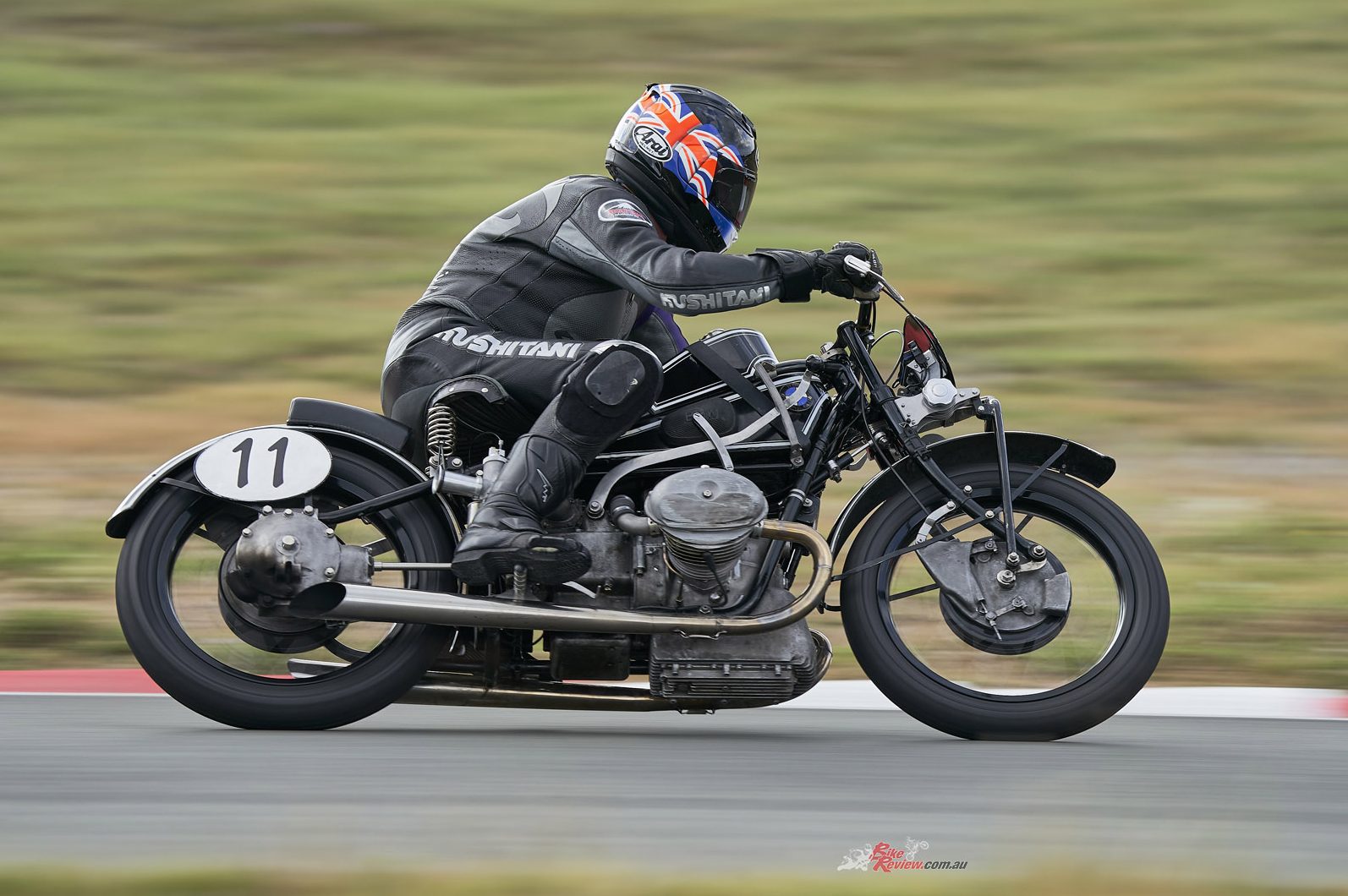
“With 76 bhp on tap in a bike weighing 172kg with 14-litres of fuel, performance is hugely impressive by the standards of 96 years ago.”
To start with I’ll admit to being pretty cautious in exploiting the BMW’s thrilling performance out of turns, after my first-hand view up close and personal of how demanding its handling was at Goodwood, with the leaf-spring front suspension and rigid rear end. But little by little I began backing off the throttle later and later after that final burst of acceleration into a turn, so now I was carrying more turn speed, especially as the SLS drum brakes got to be pretty useless once they’d got hot – a problem Herbert Schwab told me they’d experienced at Goodwood, even with just one really hard stop per lap at the Chicane.
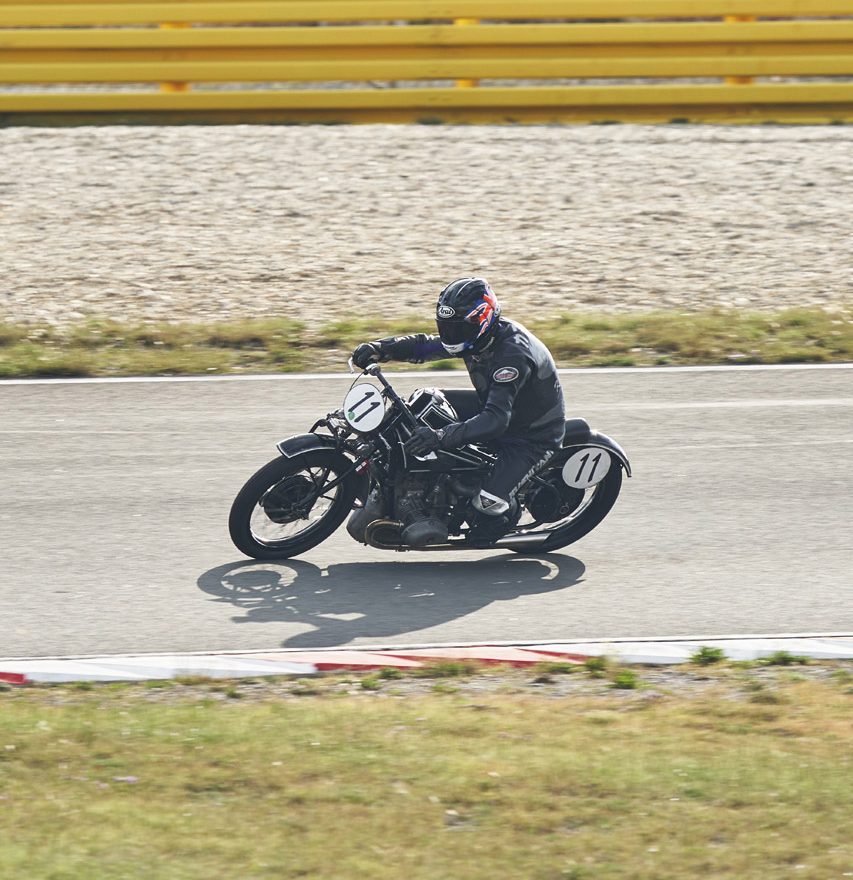
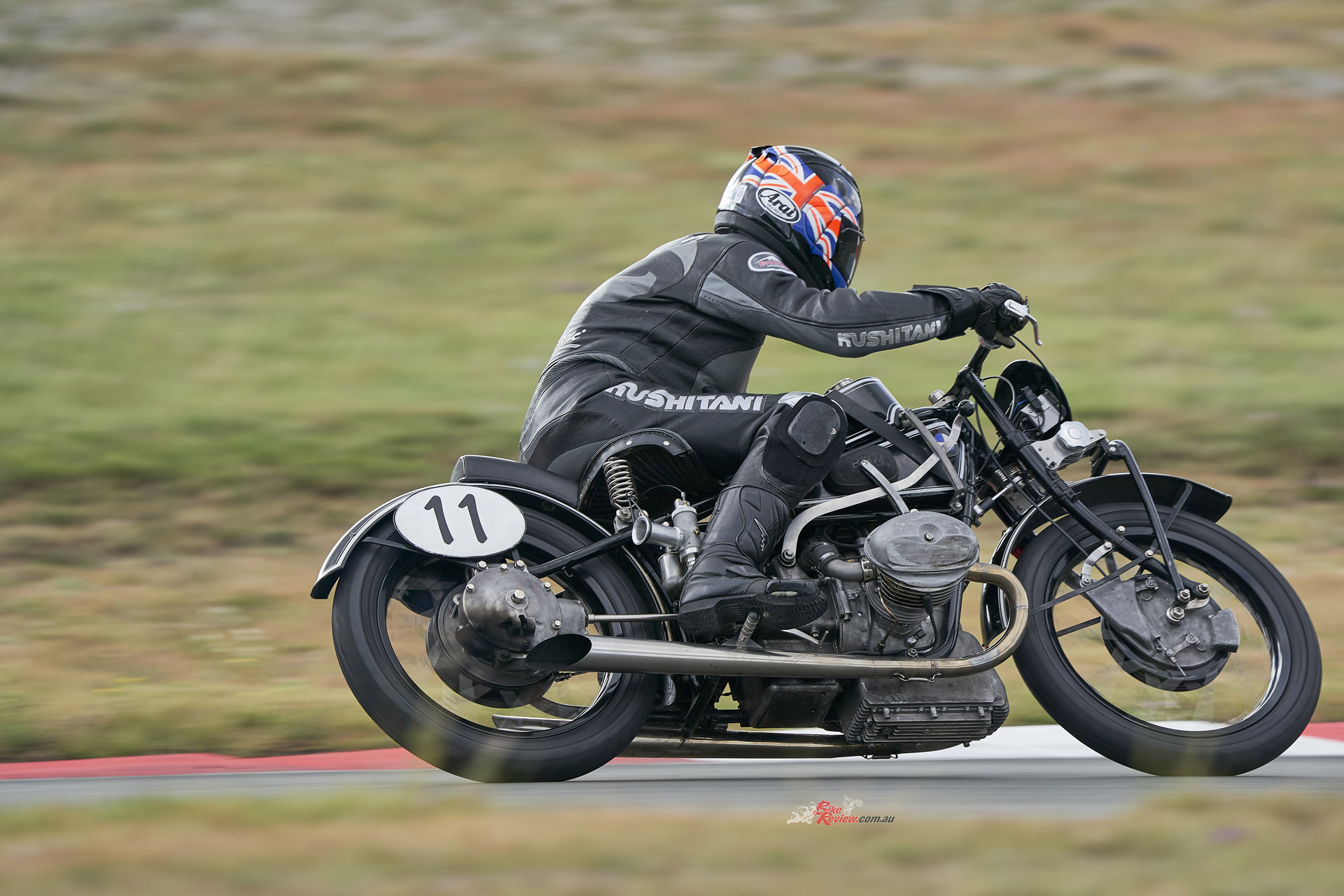
 Now, thanks to the excellent grip of the Avon tyres, I was asking questions of that rather primitive front suspension – but I wasn’t getting the answers I wanted! If I tried too hard to carry any reasonable turn speed, the bike started shaking as the handlebar twisted in my hands in what despite the WP steering damper was the makings of an old-fashioned tank-slapper – making me glad of the wide, flat handlebar and direct steering to prevent it getting out of hand. And yes, for some reason the Schwabs still can’t explain, it was indeed more violent in left-handers than rights! Maybe the anti-clockwise crankshaft rotation, or the shaft final drive being on the right? Answers on a postcard, please – and remember to use an airmail stamp for Austria…!
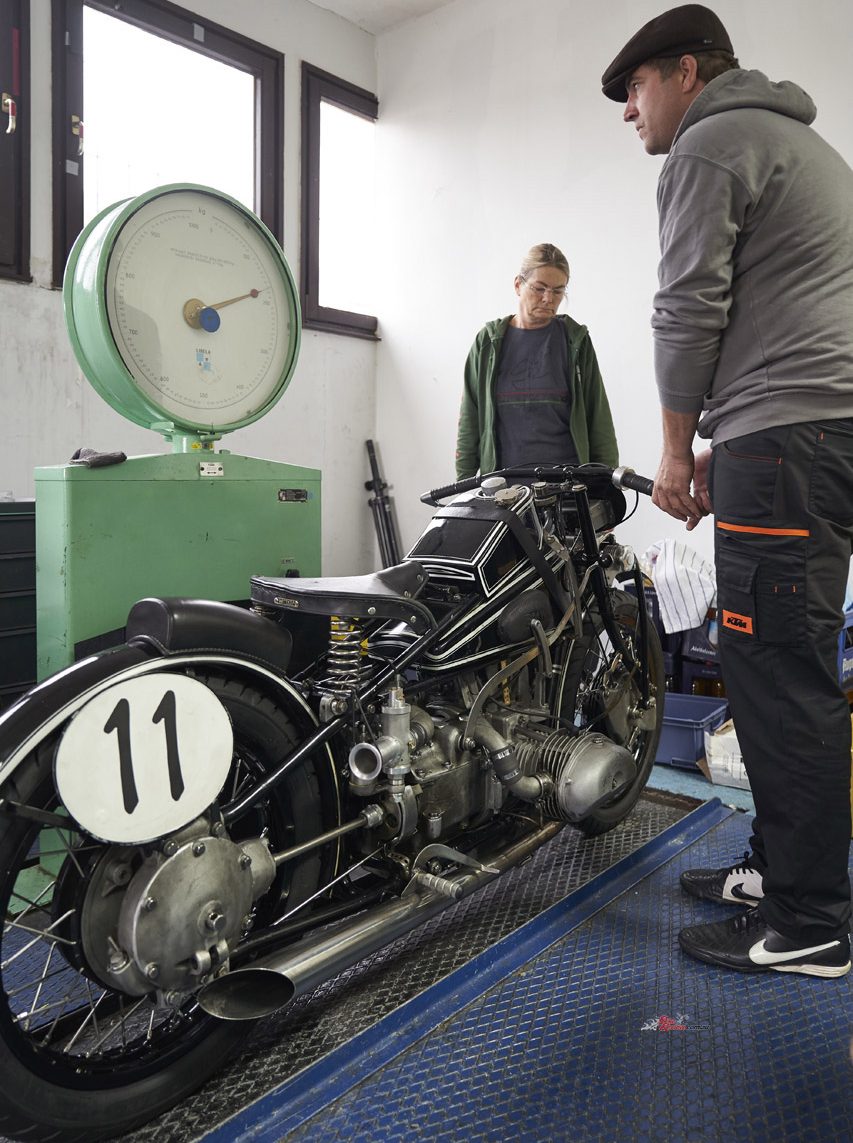
The 929 BMW R57 Kompressor racer tips the scales at 172kg with 14-litres.
However, it’s worth recalling that 96 years ago supercharged bikes were mainly used for straight-line record-breaking, and one reason BMW’s WR500 couldn’t break the dominance of the British singles in late-‘20s GP racing was its on/off throttle behaviour. BMW’s first official Land Speed Record was set by Ernst Henne on a blown WR750 in September 1929 at 216.75 km/h/134.68 mph over the flying mile. It wasn’t till the arrival of the Typ 255 Kompressor which made its competition debut in May 1935, en route to winning the 1939 Isle of Man Senior TT, that BMW had a supercharged road racer that could out-handle the slower British singles.
I’d started out riding the fast, sweeping Croatian circuit in top gear as I re-learnt it, then began using third for several of the slower turns, after I’d soon discovered second gear was too low to use anywhere. I quickly discovered how valid Troy’s advice had been to only change gear in a straight line – fortunately not the hard way, though! But it did entail frightening myself once in shifting from top to third for a turn while already leaned over, and missing the change – oops! Fortunately the great grip from the Avons saved me as I groped for a gear – and that was using the clutch, too. I’d tried shifting both ways without using it, and changing up was fine as you’d expect, but down definitely dictated working the clutch. Just because I had to at least give it a go, I tried shifting up across the tank with my left hand, which obviously meant I could stay on the gas later and accelerate earlier, since I didn’t need to take my right hand off the twistgrip. But while it went in OK the few times I tried it, it felt pretty awkward – so I reverted to the conventional method that Herbert also uses. More practice needed!
Sadly, just as I was thinking of trying again with the Corser Method, the BMW’s engine went on to one cylinder. But then while touring slowly back to the pits it cut in on both cylinders again, to run strong and hard – but only for a couple of laps. Back at base, Paul Schwab quickly diagnosed a bent valve, making me concerned that I might have over-revved it inadvertently. After installing a new one – everything is so accessible on a Boxer twin, especially an OHV one! – he sent Herbert out to make sure it was running OK, but sure enough after a couple of laps, he pulled back in with the same cylinder out. A bent or sticking valve guide was the diagnosis – I’m glad that didn’t happen at Goodwood 2018!
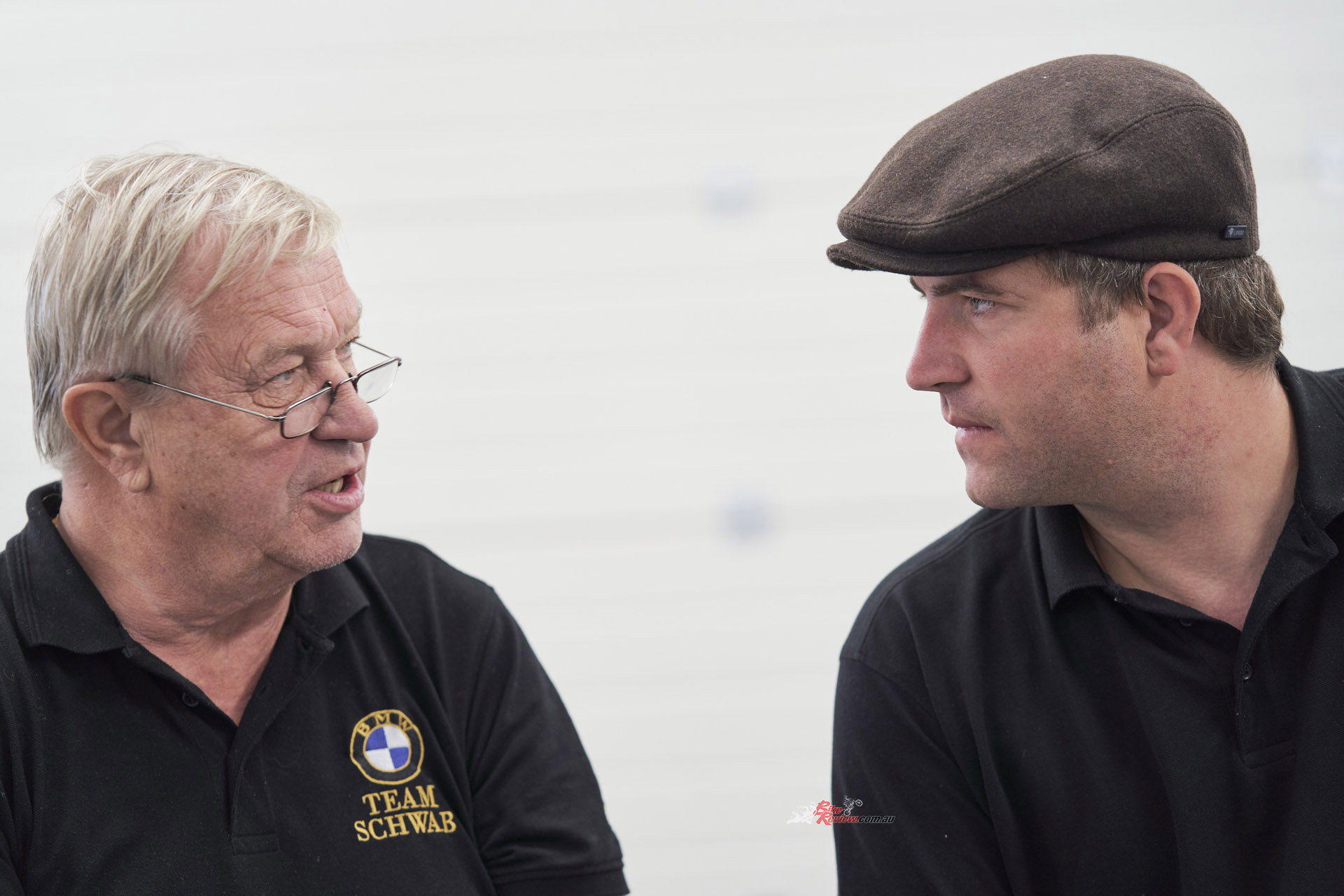
Schwab father and son deserve huge credit for their painstaking development of such an unlikely but truly awe-inspiring device.
Schwab father and son deserve huge credit for their painstaking development of such an unlikely but truly awe-inspiring device – as well as the thanks of the millions around the world who watch the annual Goodwood Revival races on livestream TV. Too bad the combination of an equally potent Vincent V-twin motor with a much more modern chassis and especially suspension got the better of Herbert and Davey Todd this year – but they’re already working to trying to turn the tables on them in 2028. Maybe by adding another steering damper…?!
Read our previous Throwback Thursday features here…
BMW R57 KOMPRESSOR Specifications
Engine: Air-cooled horizontally-opposed twin-cylinder OHV four-stroke, wet-sump lubrication, 68 x 68mm bore x stroke, 494cc, 8:1 compression ratio, 1 x 33mm Fischer-Amal carburettor feeding twin-lobe Roots positive-displacement supercharger running at 0.8 bar and belt-driven off the crankshaft, Horse Power Ignition CDI with 12V battery/coils, four-speed gearbox with hand-shift and shaft final drive, single-plate dry clutch.
Chassis: Tubular steel twin-loop cradle frame, tubular steel trailing-link front fork with quarter-elliptic six-leaf spring, no rear suspension, 27° head angle, 1434mm wheelbase, 162kg weight with oil/no fuel, 200mm single leading-shoe front drum brake, 250mm single leading-shoe rear drum brake, wire-laced aluminium rims (WM1/1.60in front and WM2/1.85in rear), Avon RoadRider 90/90-19 front and 100/90-19 rear tyres.
Performance: 76bhp at 8700rpm measured at the rear wheel, maximum torque 65Nm (47.94ft-lb / 6.63kgm) at 4500rpm, top speed 208km/h (129mph) at Rijeka in 2019, year of manufacture 1929 with period supercharger added in 2018, owners Paul & Herbert Schwab, Salzburg, Austria.
You Might Also Like