

Exactly 40 years ago, over banana daiquiris in Guangzhou, The Bear discovered Chinese motorcycling meant borrowed Suzukis, fuel trucks, cultural misfires and rain, always rain...
It was 40 years ago today… more or less, as I sat having introductory drinks with a dozen or so German riders in the lobby bar of the White Swan, Guangzhou’s only five-star hotel. We were about to set out on the Guangzhou Sports Club’s first motorcycle tour for foreigners…
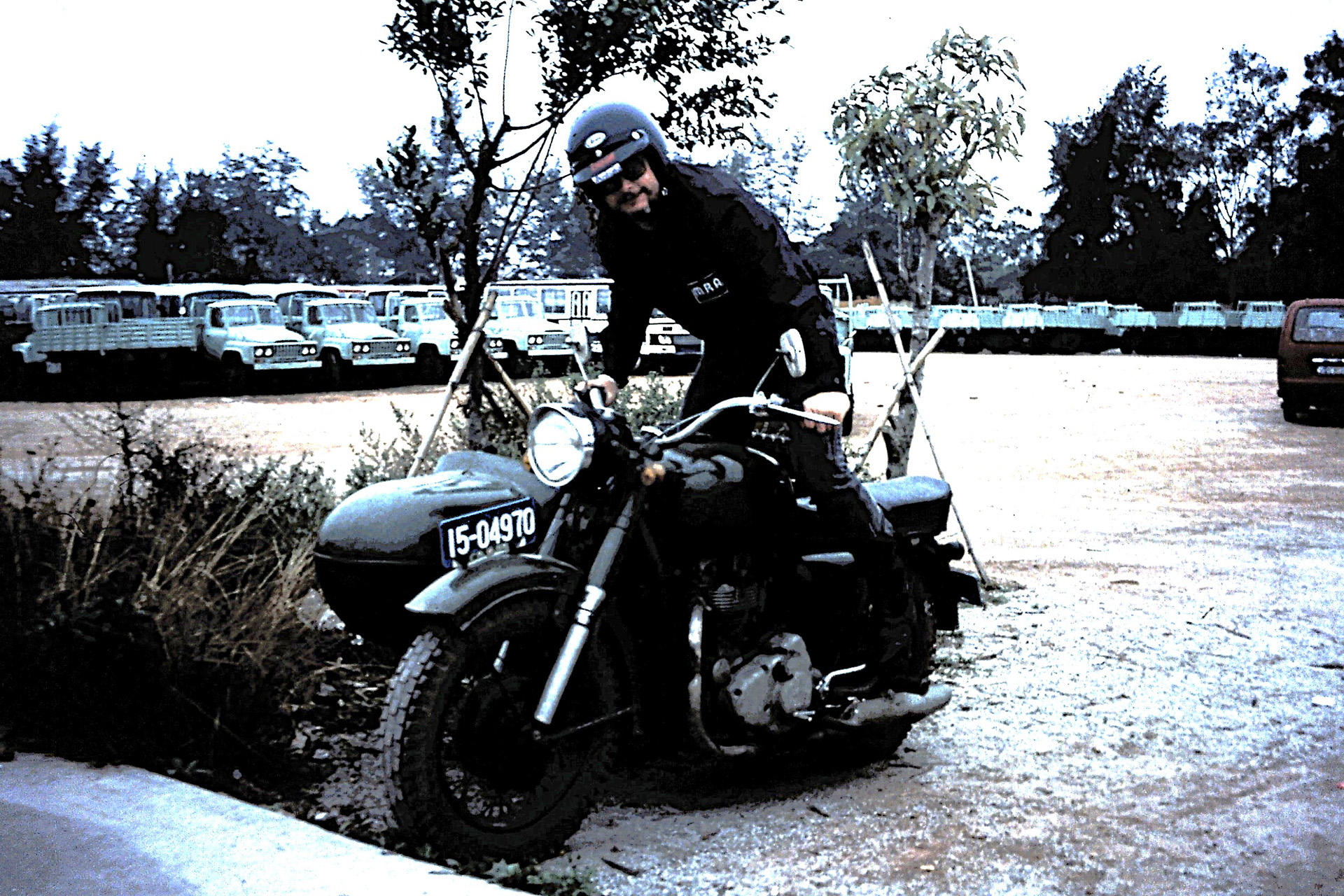
The Bear kicks over a Chang Jiang in order to perform wheel-up stunts at the licence testing centre. The trucks in the background are ready for delivery, except they have no gearboxes.
The tour was promoted by a Berlin travel agent. Our local guide was entertaining us with information about the city. “Do you know that there are only two privately-owned cars in Guangzhou?” This was a city of 2.36 million people then. “They are both white Rolls-Royces and they are owned by this hotel. They are used for weddings.” One of the Germans had been enjoying a banana daiquiri and waved the barman over to order another. This was not possible. “I have used the banana,” said the barman.
Did you know that the most important safety equipment on a motorcycle is… the horn?
We were due to collect our bikes the next morning, but there was a formality. We had to pass the Chinese motorcycle license test. It was the real thing, too, with quite difficult riding tasks, which one rider failed – and a written test. It had been translated into English, which didn’t help some of the Germans but whenever anyone hesitated over a question, a helpful finger would appear over their shoulder and point to the correct answer. Did you know that the most important safety equipment on a motorcycle is… the horn?
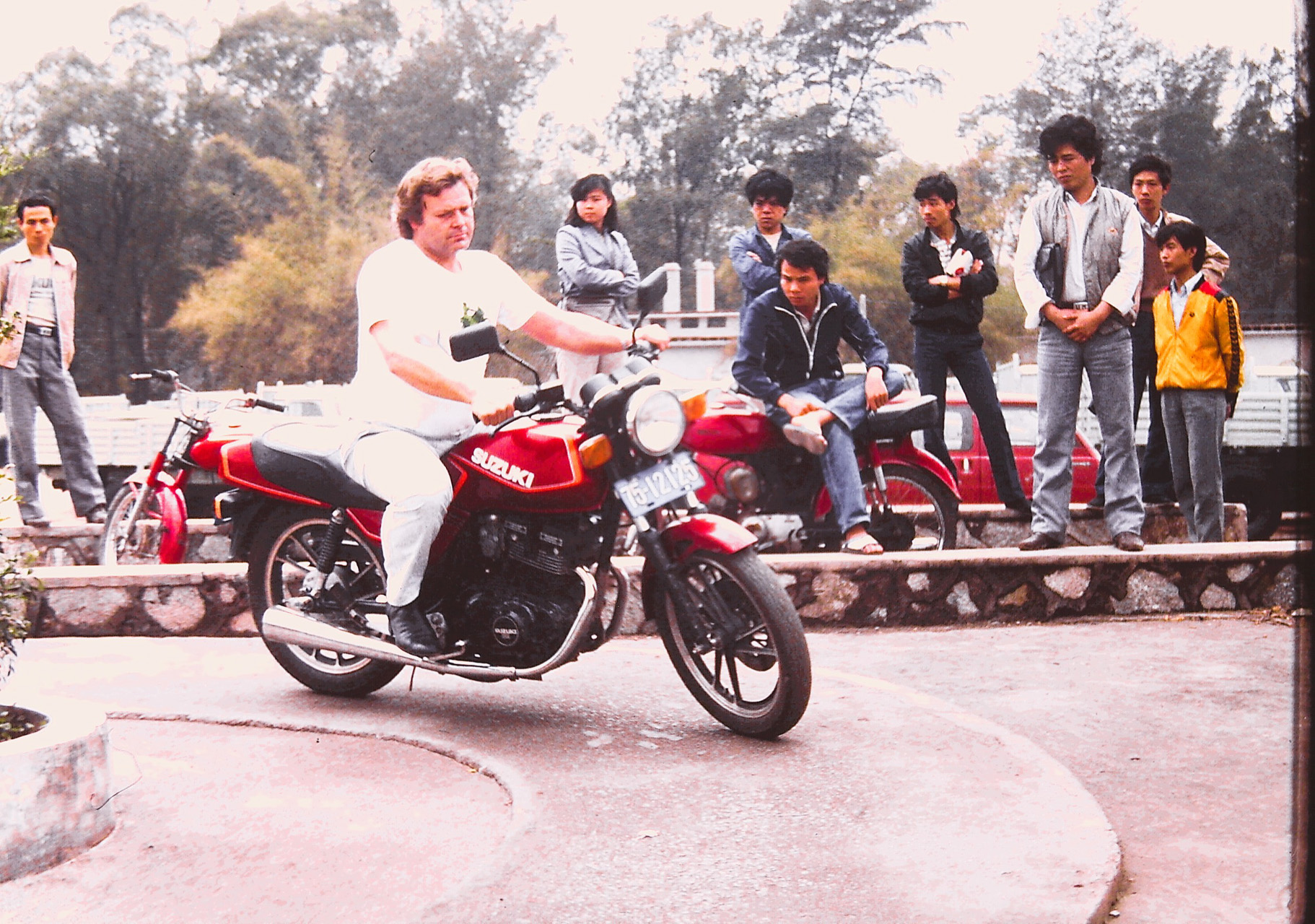
Hermann the German braving the carousel ride during the license test. He passed.
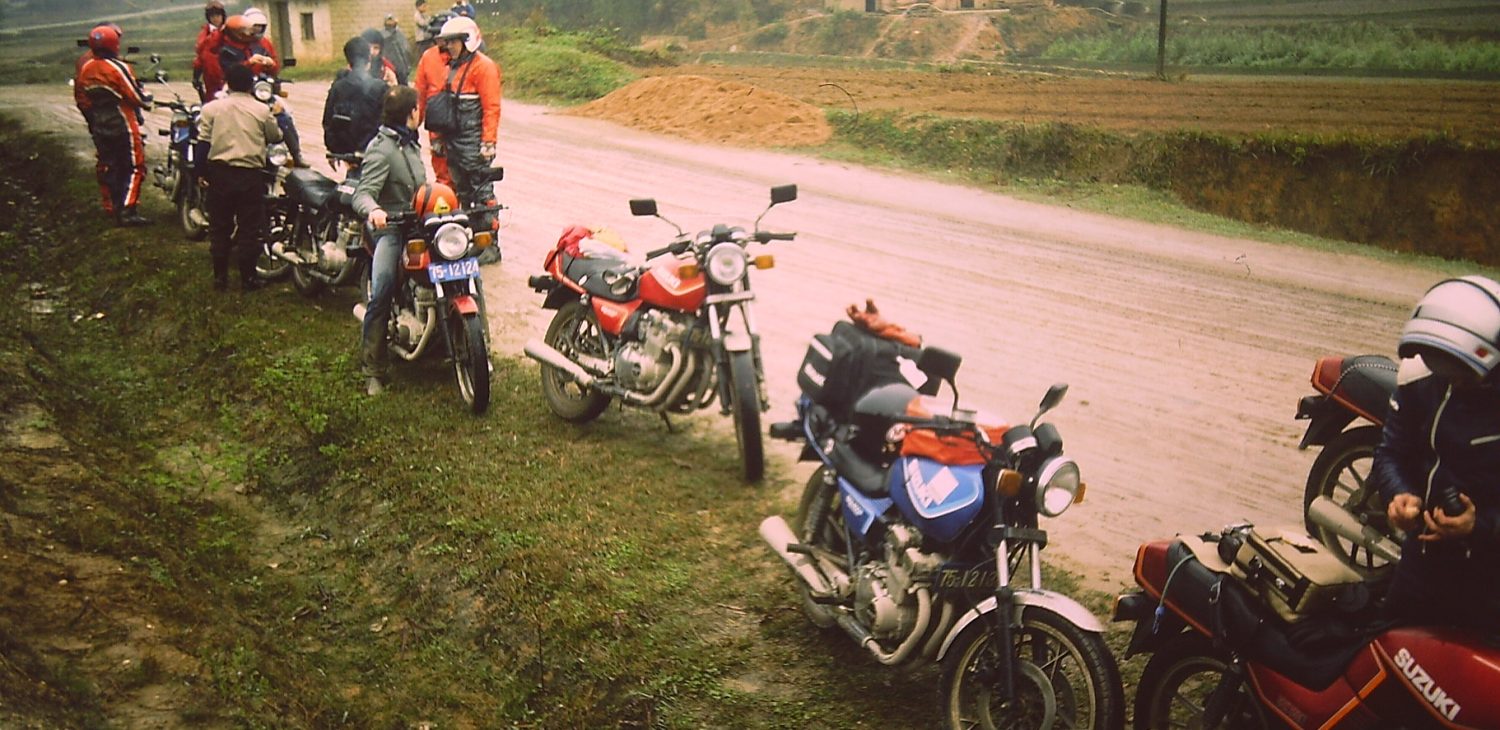
The bikes were… a surprise. They were a mixture of 400/4s and 250 Suzuki twins, not exactly what I would have chosen for travel on gravel and concrete/tar roads in poor condition. I scored one of the four-cylinder bikes and rarely got out of second gear. One of the other riders, Hermann the German who was checking out the territory for a tour by his own company and who became a friend, discovered that the bikes were a leftover batch that a clever but unprincipled Suzuki salesman had unloaded on the sports club with the assurance that they were perfect for touring.
Read previous Bear Tracks columns here…
We quickly found that there were no petrol stations in the area around Guangzhou that we covered on the tour. The only one we did see was in the process of being built on the motorway – also in the process of being built – out to Macao. The bikes were fuelled by trucks that came out nearly every morning from the nearest People’s Liberation Army base with 44 gallon tanks of petrol on the back. Once the tanks were full, our guide would start the bikes, rev them to the limit a few times and then turn them off. That was to “warm them up”.
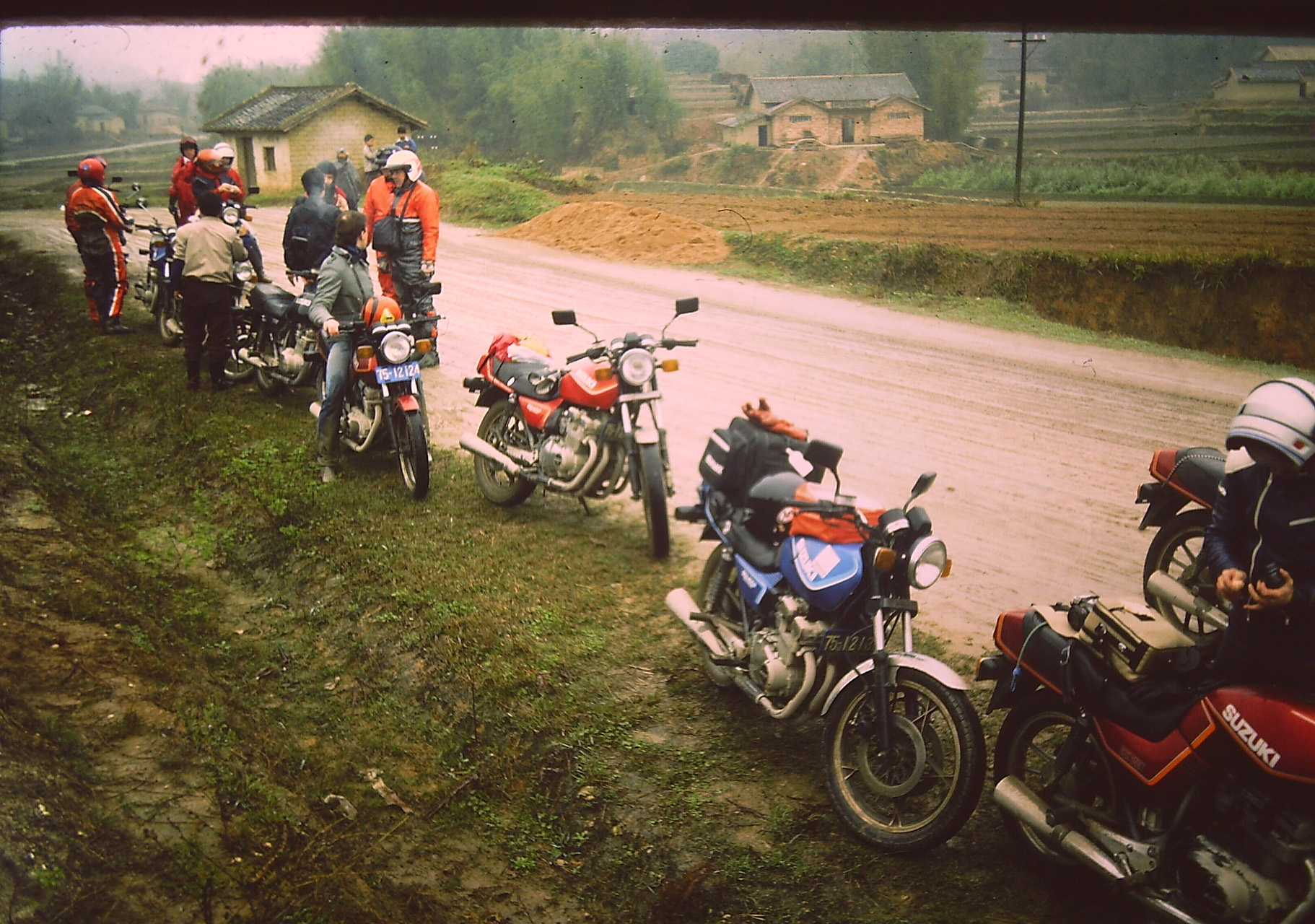
A stop by the side of a typical gravel road in the country… and in the rain.
I should explain that we had several guides. Apart from a couple of mechanics and general dogsbodies, there was a local bloke who did all the actual guiding work and a supercilious party representative from Beijing. This latter functionary was not a local, and therefore did not speak Cantonese. When he was trying to communicate with locals he would say something in Mandarin (which they didn’t understand) while sketching the written characters with the fingers of one hand on the palm of the other. It was complicated and didn’t help his rather poor temper. Neither did what he considered to be impertinence by the roundeyes.
The Chinese government had a huge afforestation program. Many trees – almost all eucalypts – were being planted in great green belts. We stopped in the shade of one of these belts one day and I casually said to my mate from Beijing that these were gum trees, from Australia. He pulled himself up to his full height and replied: “No. First China, then Australia!”
That evening we were sitting on the veranda overlooking a lake which was surrounded by low trees. Old Mate had obviously been stewing about the trees. He came to our table and said, “I suppose these trees Australian too!” I looked over at them; they were obviously Casuarinaceae, or she-oaks – which are indigenous to Australia. I told him this and he did not speak to me for the rest of the trip.
“Invited to a game of pool I found myself facing a table covered in Masonite. No felt, nor any sign that there had ever been any”…
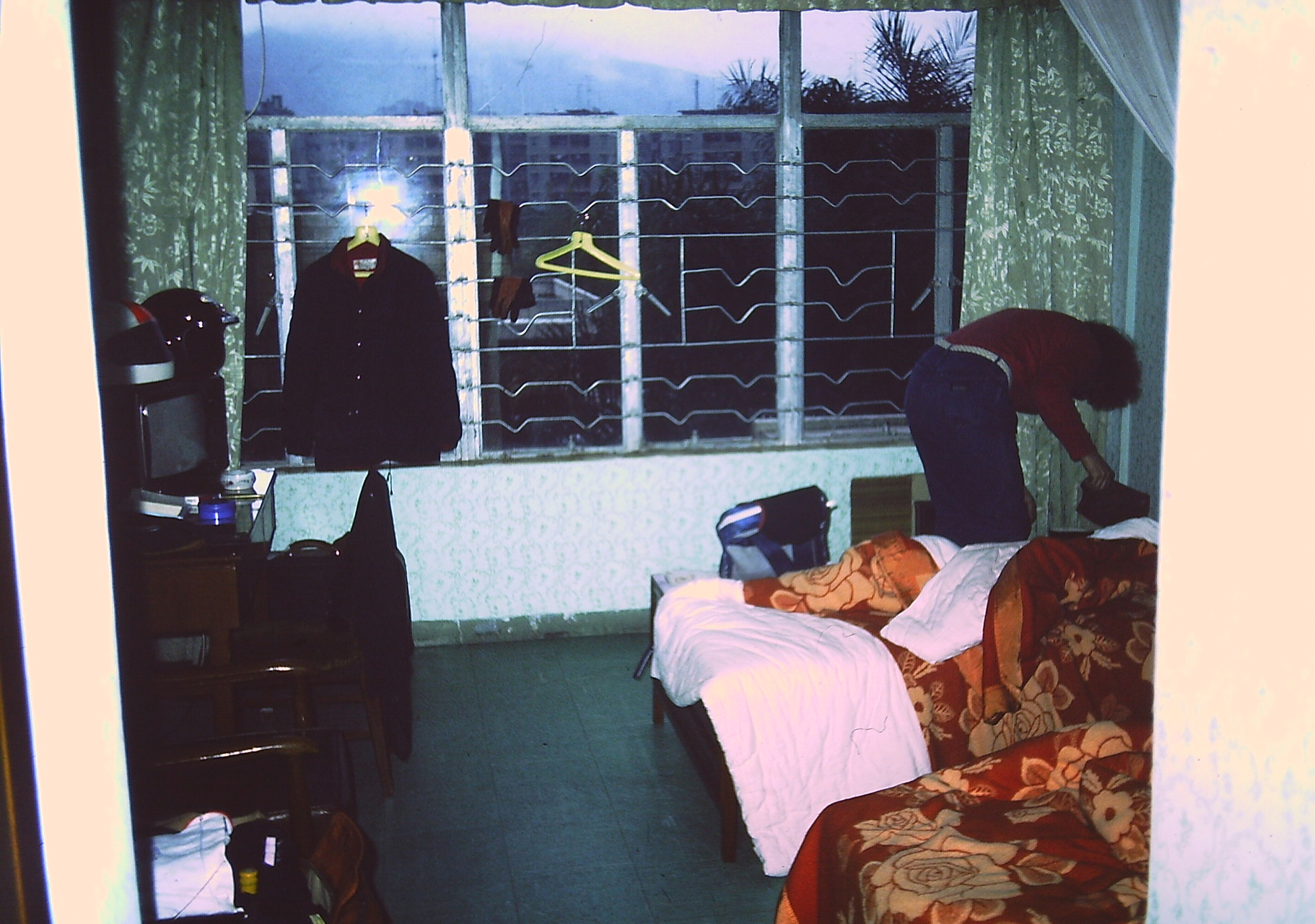
One of the trip’s planners had had a stroke of genius when selecting the accommodation for us. There was a time when China was full of Soviet advisers of varying kinds, mainly helping to establish modern industries (today they’re probably getting ammunition made in some of the factories they helped build). The advisers had gone home by 1985, and the motel-like accommodation that had been built for them was mostly empty. It wasn’t too bad, with modern bathrooms and toilets and glass in the windows. The one thing that was consistently disturbing was the colour scheme of the bright tiles which covered nearly all the walls: a kind of Nile green and sugary insipid pink. Initially I had trouble sleeping…

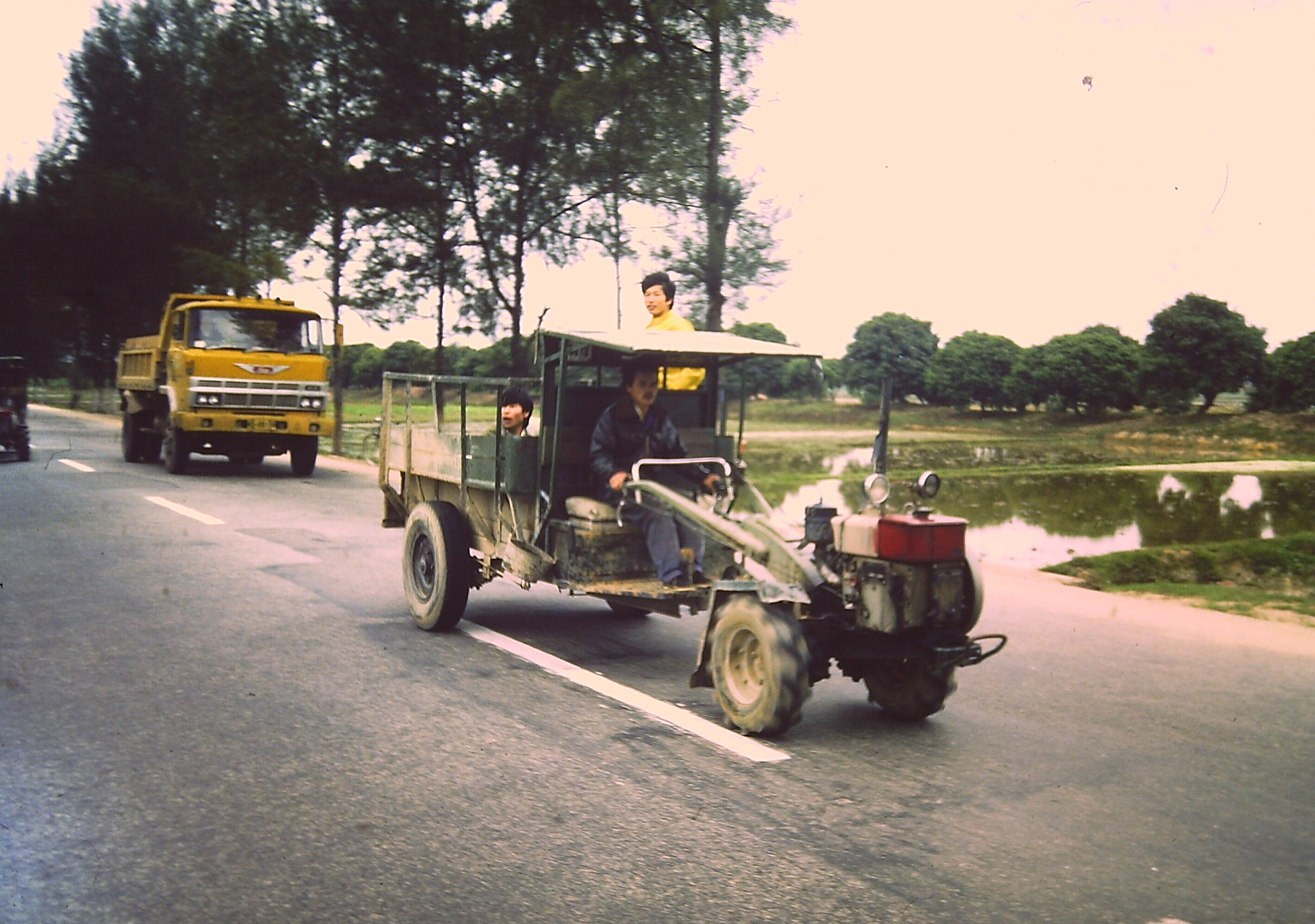
This was more like the standard form of transport in 1985. If everyone is slow, no-one is slow.
Hermann the German and I went out for a walk one night after dinner in one of the coalmining towns we visited – the Guangzhou Sports Club wasn’t entirely up on the kinds of places that motorcycle travellers liked. We found a bar on a back street – one of my few talents is finding bars anywhere I go – and went in for a beer. Invited to a game of pool I found myself facing a table covered in Masonite. No felt, nor any sign that there had ever been any. If you ever find yourself in a similar position, remember that balls roll differently on Masonite. We still had a great night; there’s nothing like losing to the locals to make friends with them.

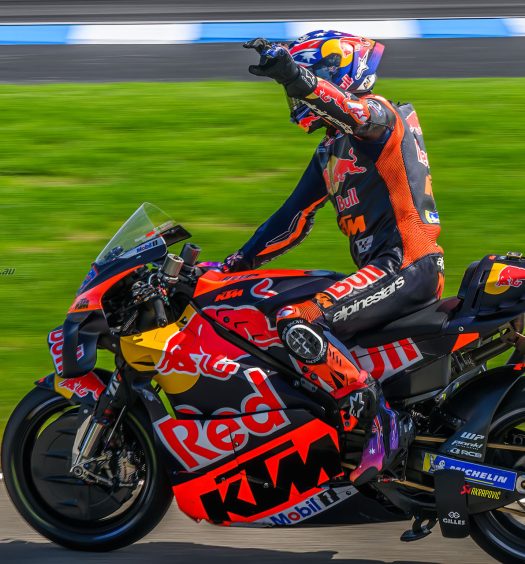
Chinese bikes have come a long way in 40 years. Here’s Jeff on the new 675SR-R at Portimao earlier in the year.
Generally speaking the food was good; Chinese people hold eating in high regard. It was, however a little mysterious sometimes; after one meal our guide came over to us, pointed to one of the platters on the table and insisted: “It is not dog!” Nobody had made woof-woof sounds or anything; we had presumed that it was suckling pig, but that insistence made us wonder.
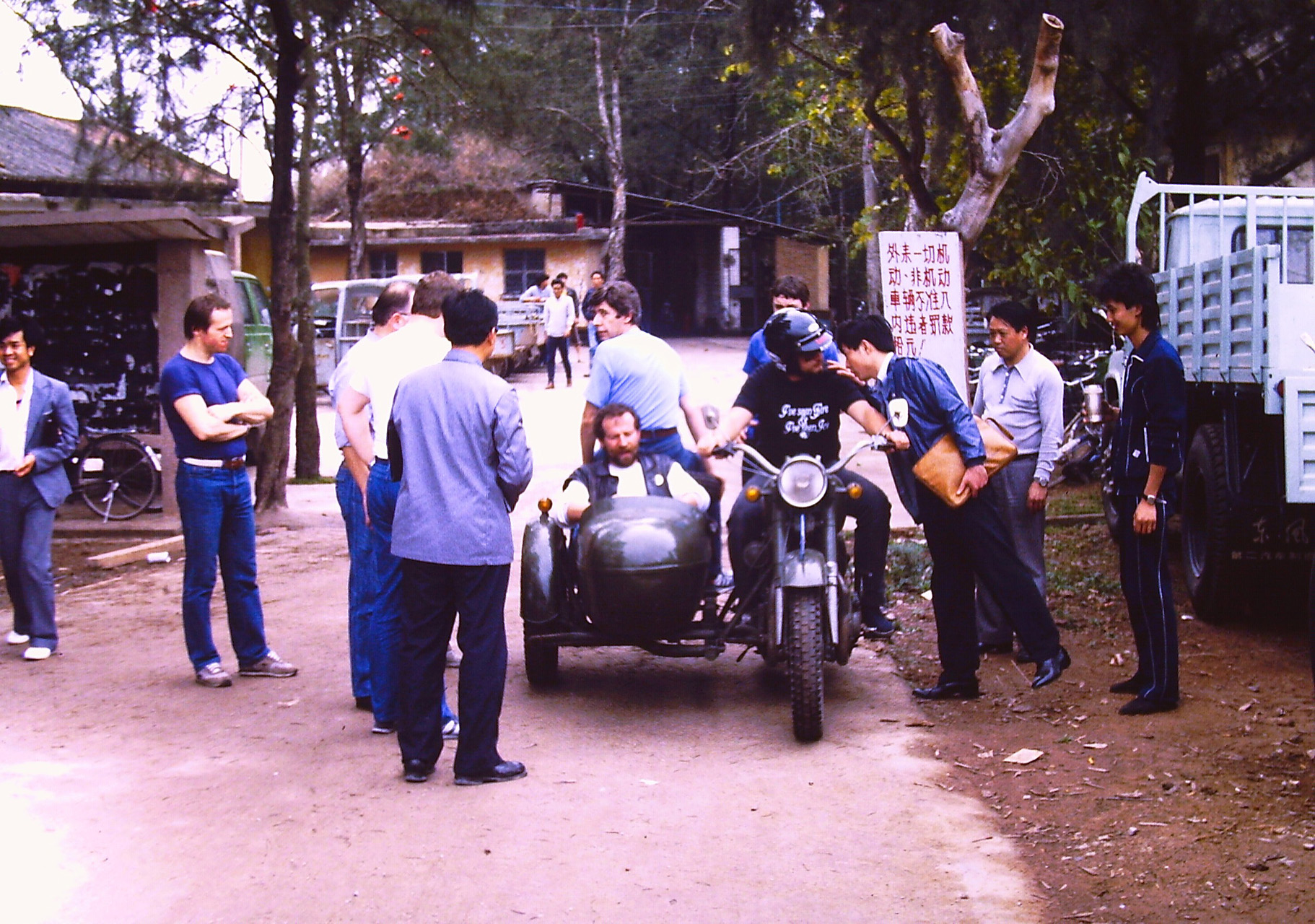
Another shot of me and the Chang Jiang. My exploits attracted much interest.
Breakfast was universally local: a bowl of steamed rice and a raw egg to mix into it. One rider was a little sick of this after week or so and asked if we couldn’t have a European breakfast, just once. The next morning we got… birthday cakes, in all the fluorescent glow that food colouring was capable of. Our hosts did try hard.
They also cultivated the dry sense of humour that people in totalitarian states can’t help but develop. One night high in the mountains in a resort built in the vain hope of attracting wealthy customers from Hong Kong, the main local guide gave us a bit of a talk on the subject of omens, and how Chinese people believe that the actions of animals could give pointers to the future.
I ran into him later in the drizzling rain on my way back to my room. I pointed to a floating dead rat in one of the concrete pools half-filled with greenish water. “What does this omen mean?” I asked. He looked at the rat and turned a gloomy face to mine. “It is going” he said morosely, “to rain. More.”
And guess what? The rat was right.
The Author

You Might Also Like