
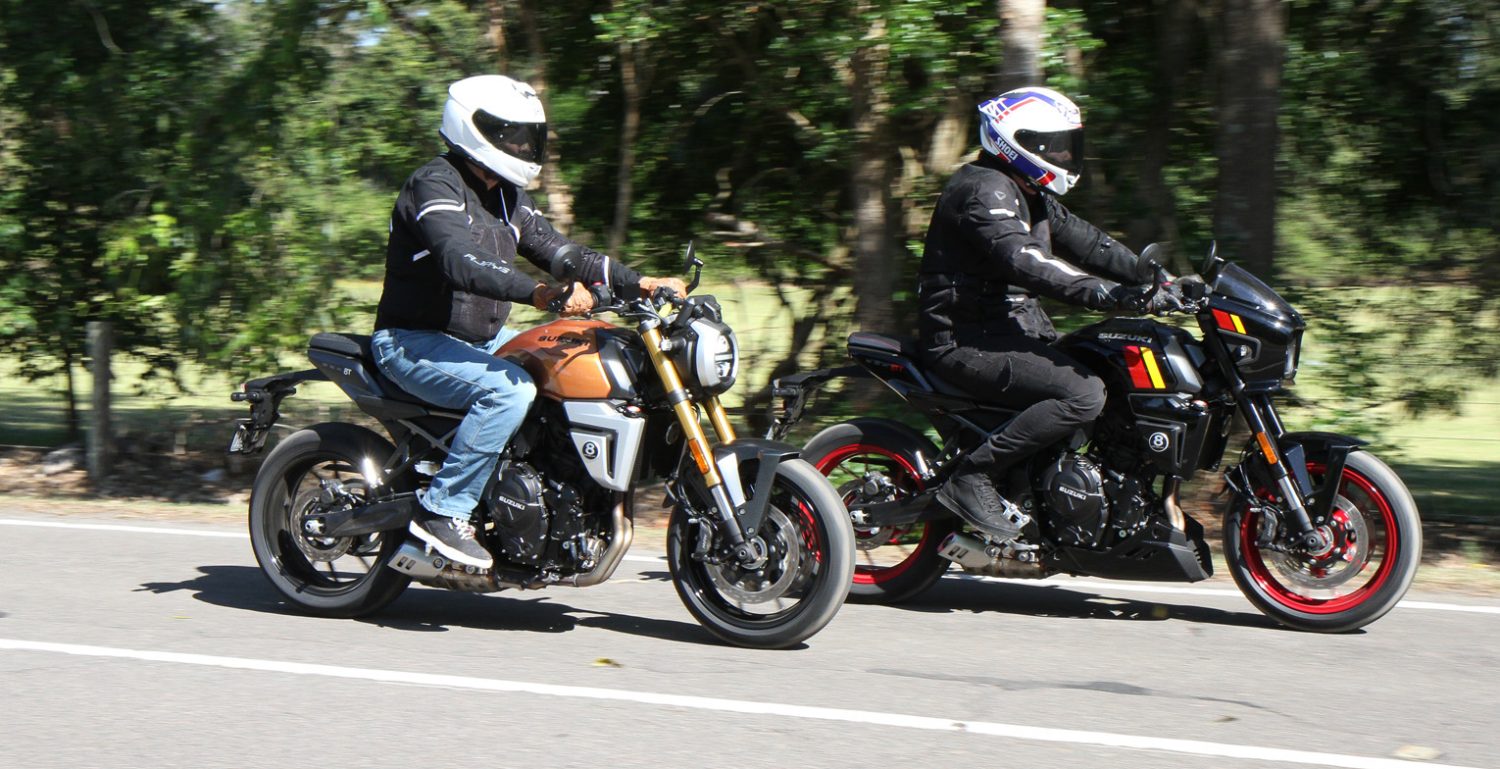

First Aussie Ride | The GSX-8T and GSX-8TT are retro styled nakeds joining the GSX-8S, GSX-8R and V-STROM 800 in Suzuki's parallel-twin 800cc lineup. We test them side by side... Pics: HMC
Suzuki’s GSX-8 platform has quietly become one of the most versatile and convincing middleweight foundations on the market and with the arrival of the new GSX-8T and GSX-8TT, the Hamamatsu brand has given that platform its most characterful expression yet…
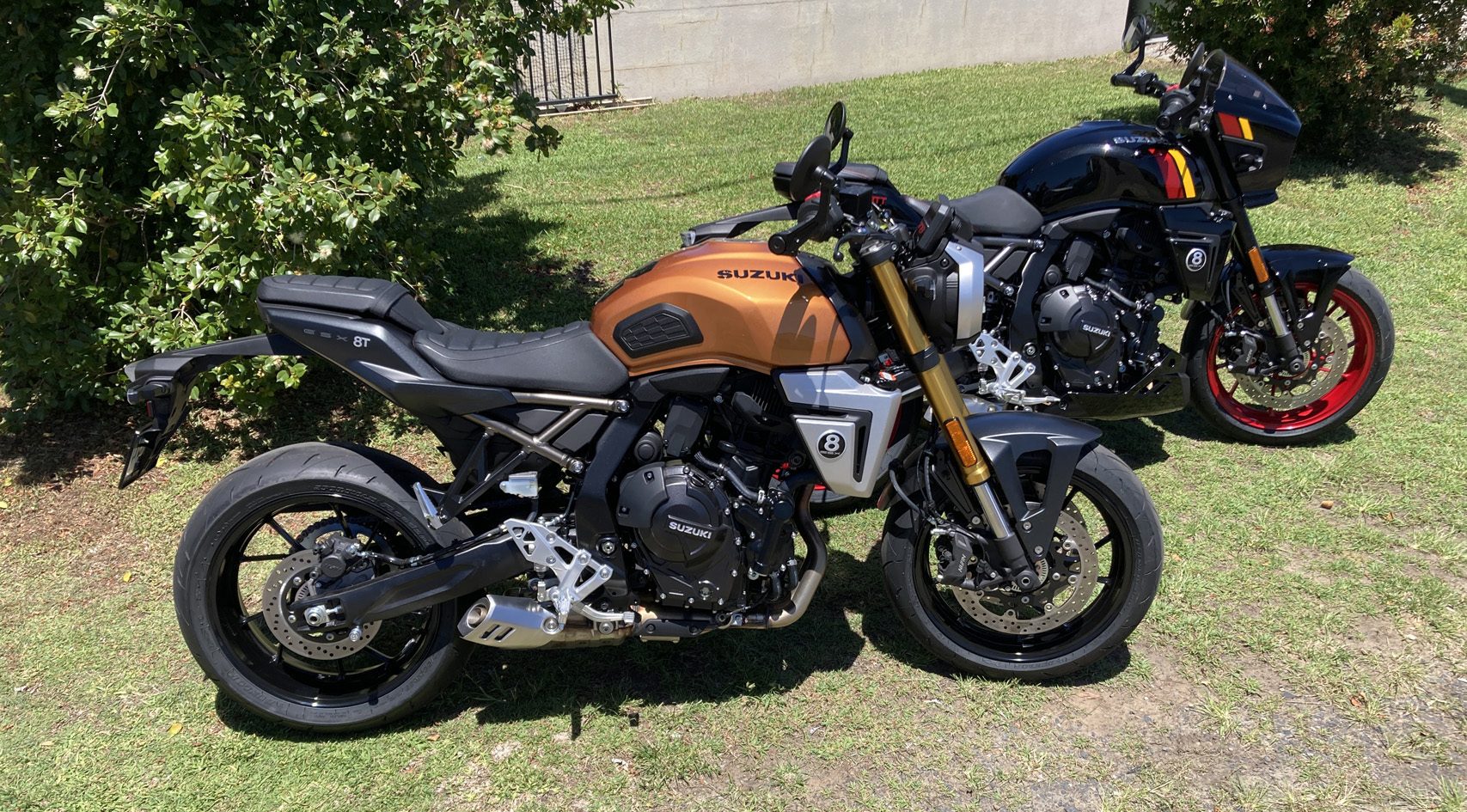
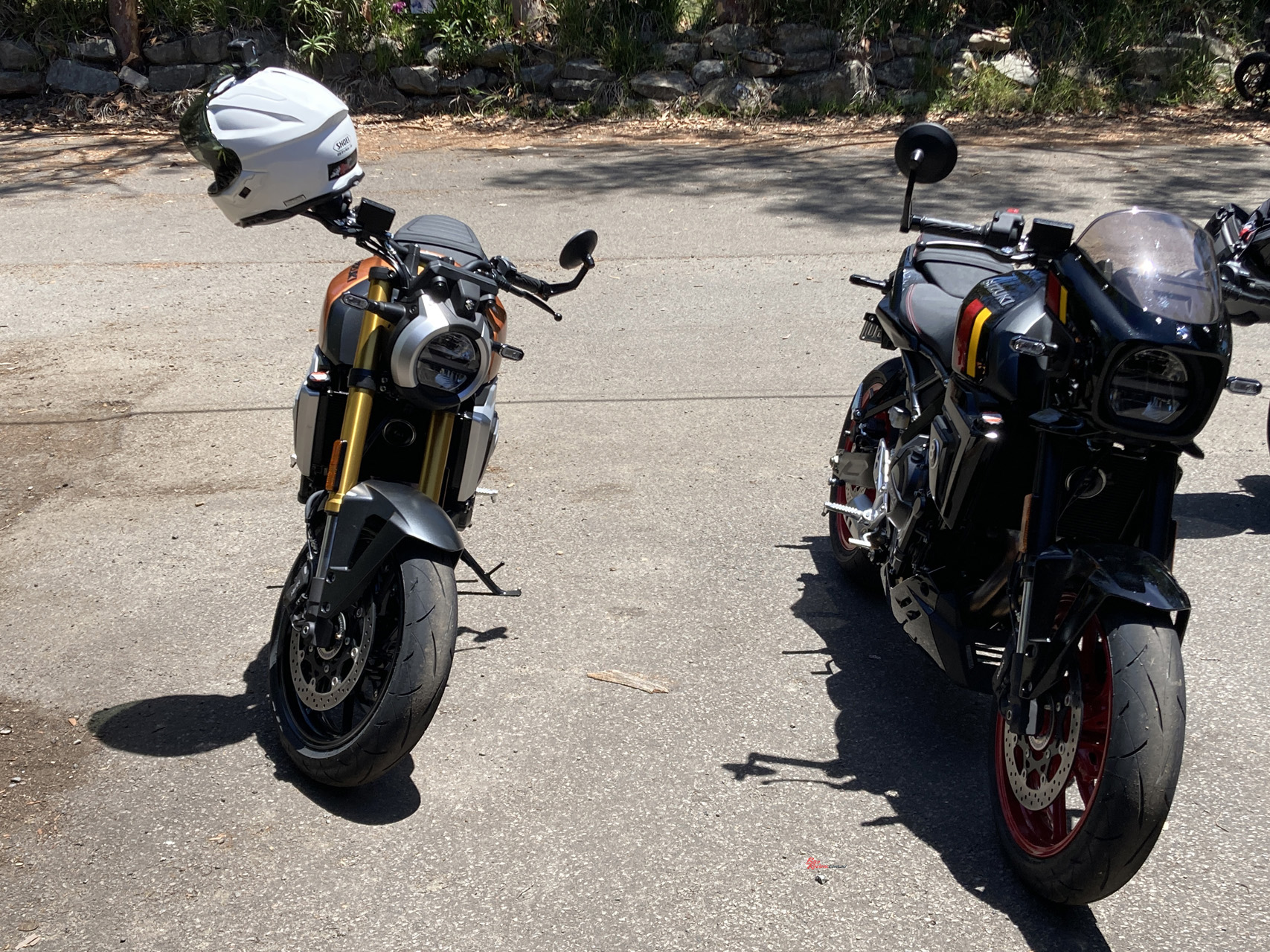
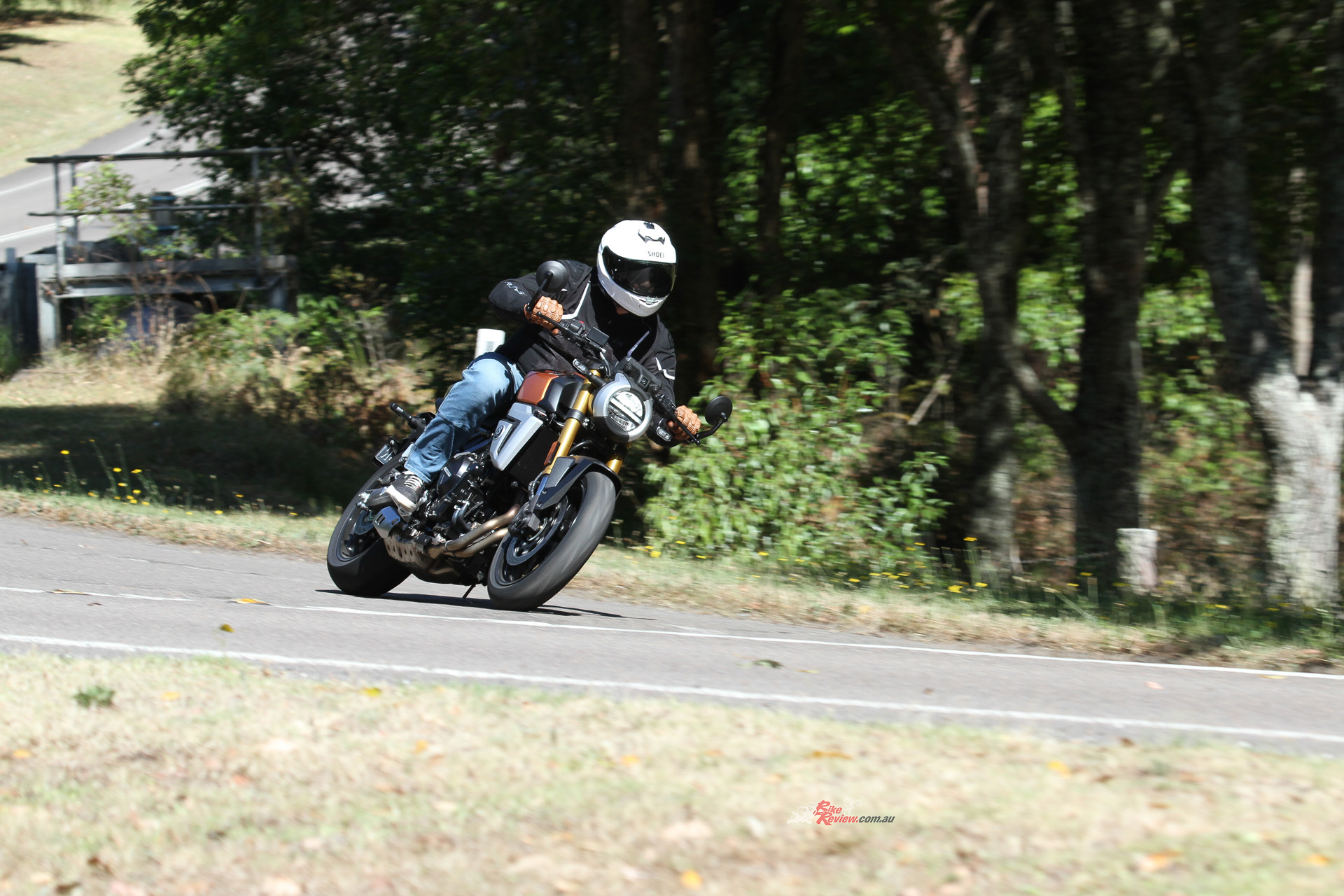
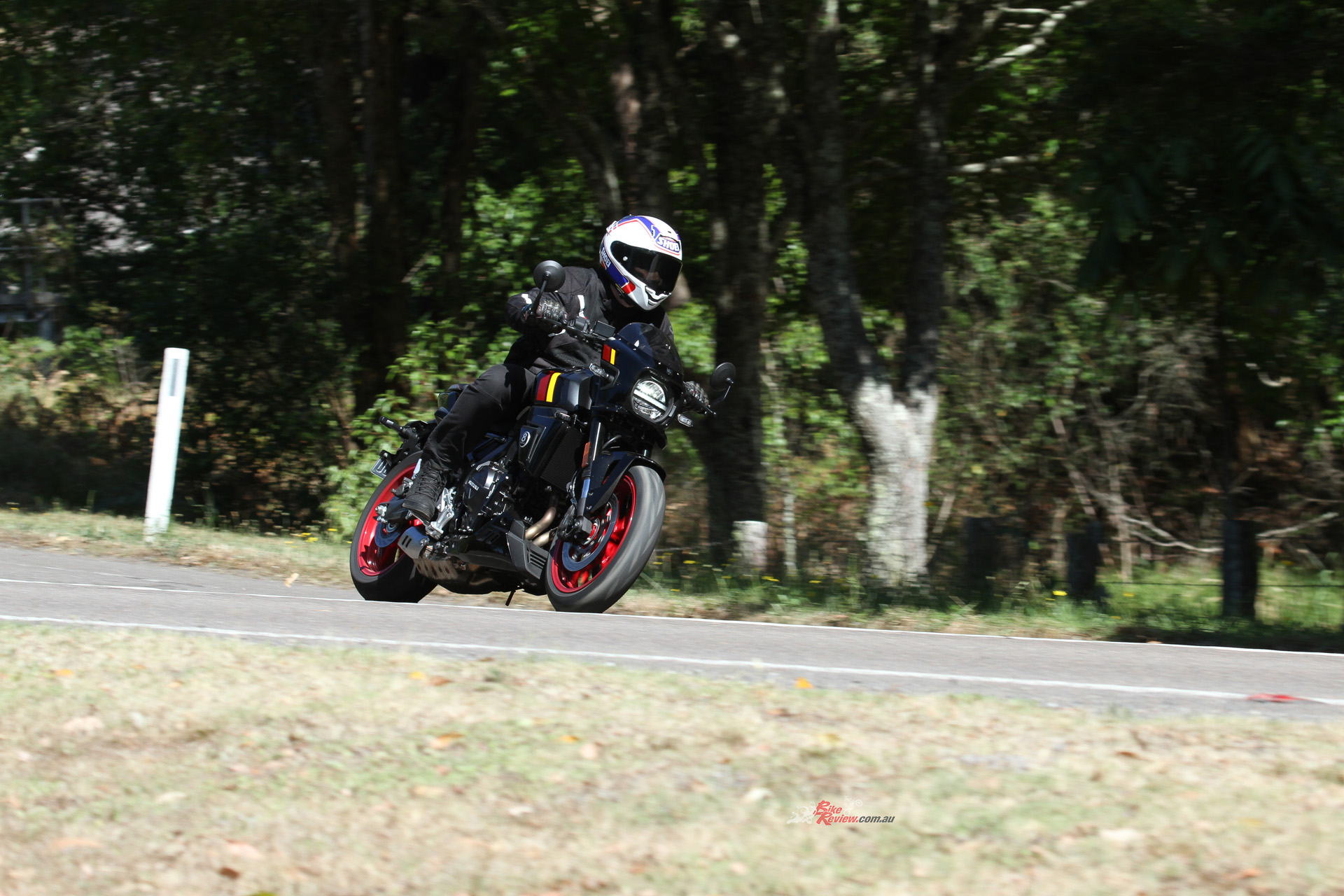
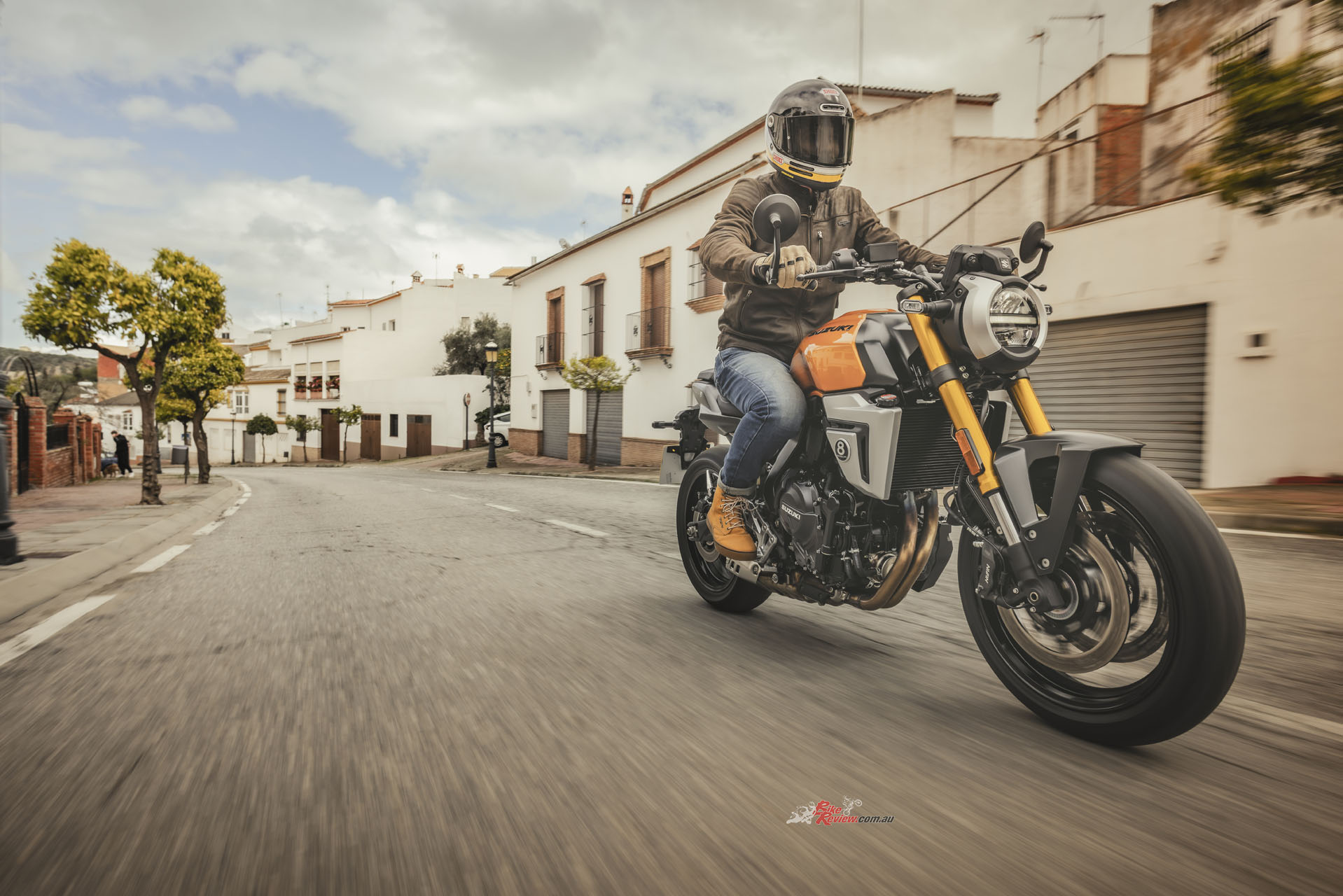
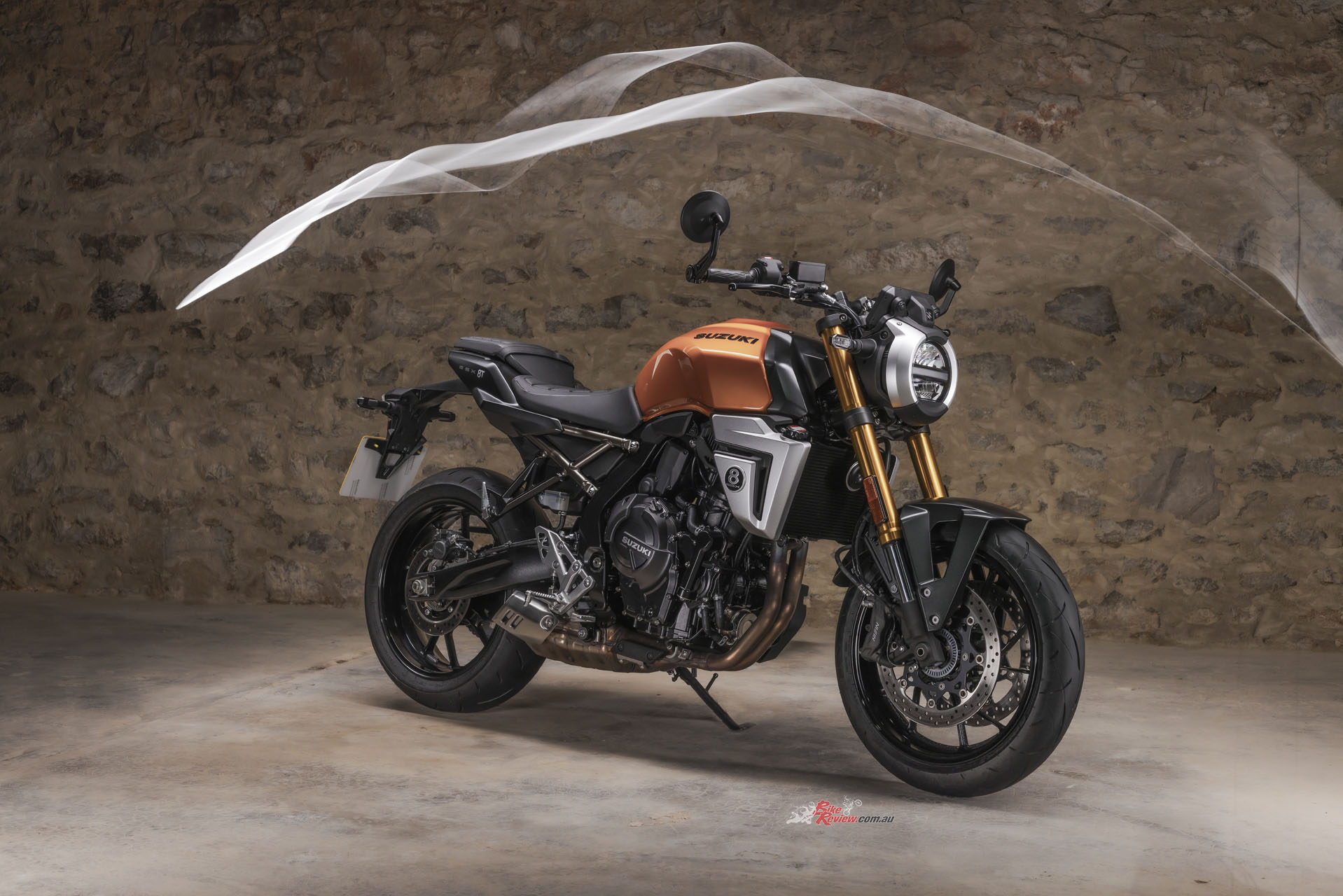
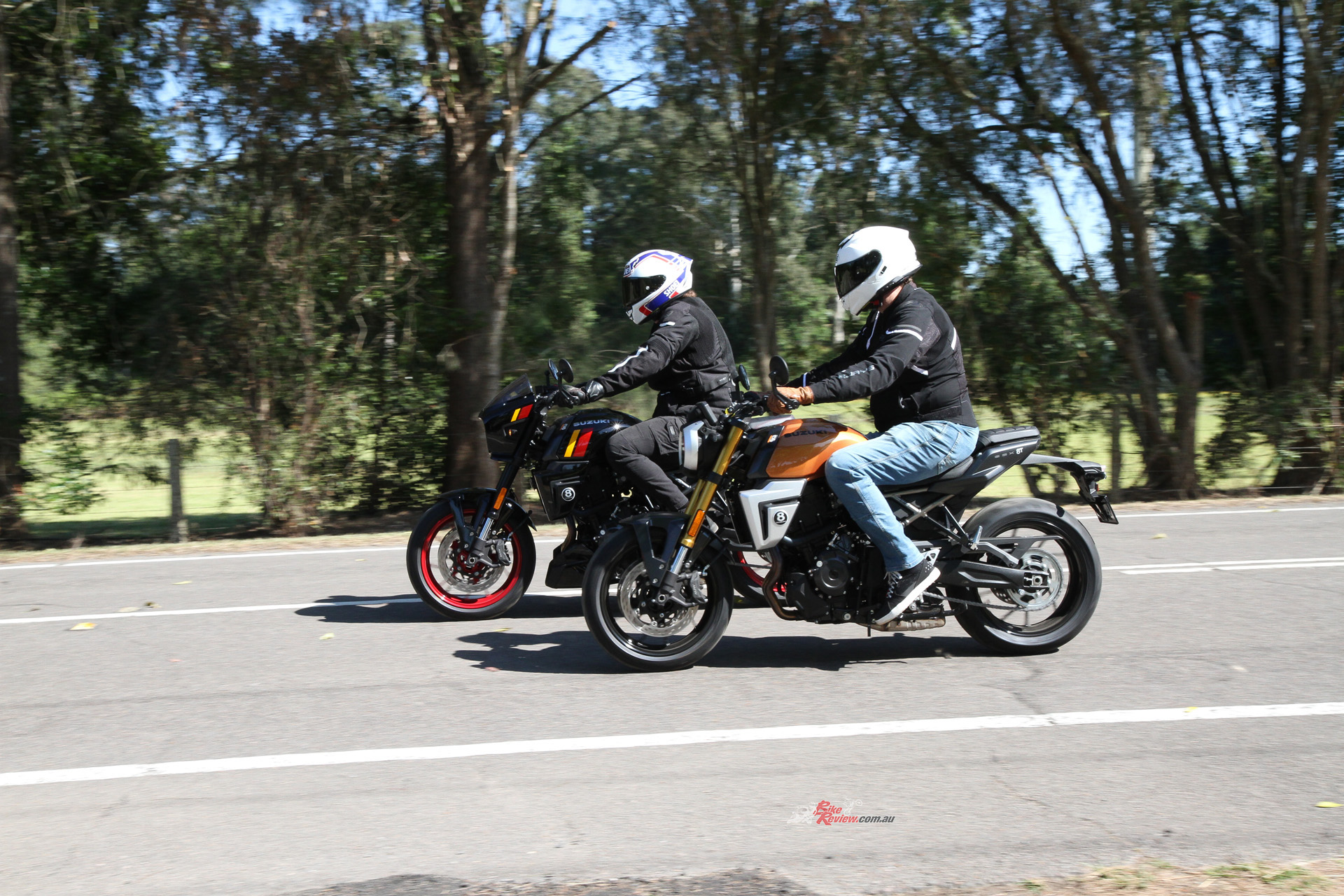
The GSX-8T (L) styled on the T500 two-stroke and the GSX-8TT (R) styled on the GS1000 come in at $17,990 and $18,990 ride away respectively.
After spending a full week riding both models side-by-side, it’s clear these are not just simple styling exercises built around a familiar engine and chassis, but carefully considered motorcycles that aim to broaden the GSX-8 family and give a retro experience beyond the naked GSX-8S and faired GSX-8R. Don’t get me wrong, they are both almost identical to the S, but they do offer very different experiences.
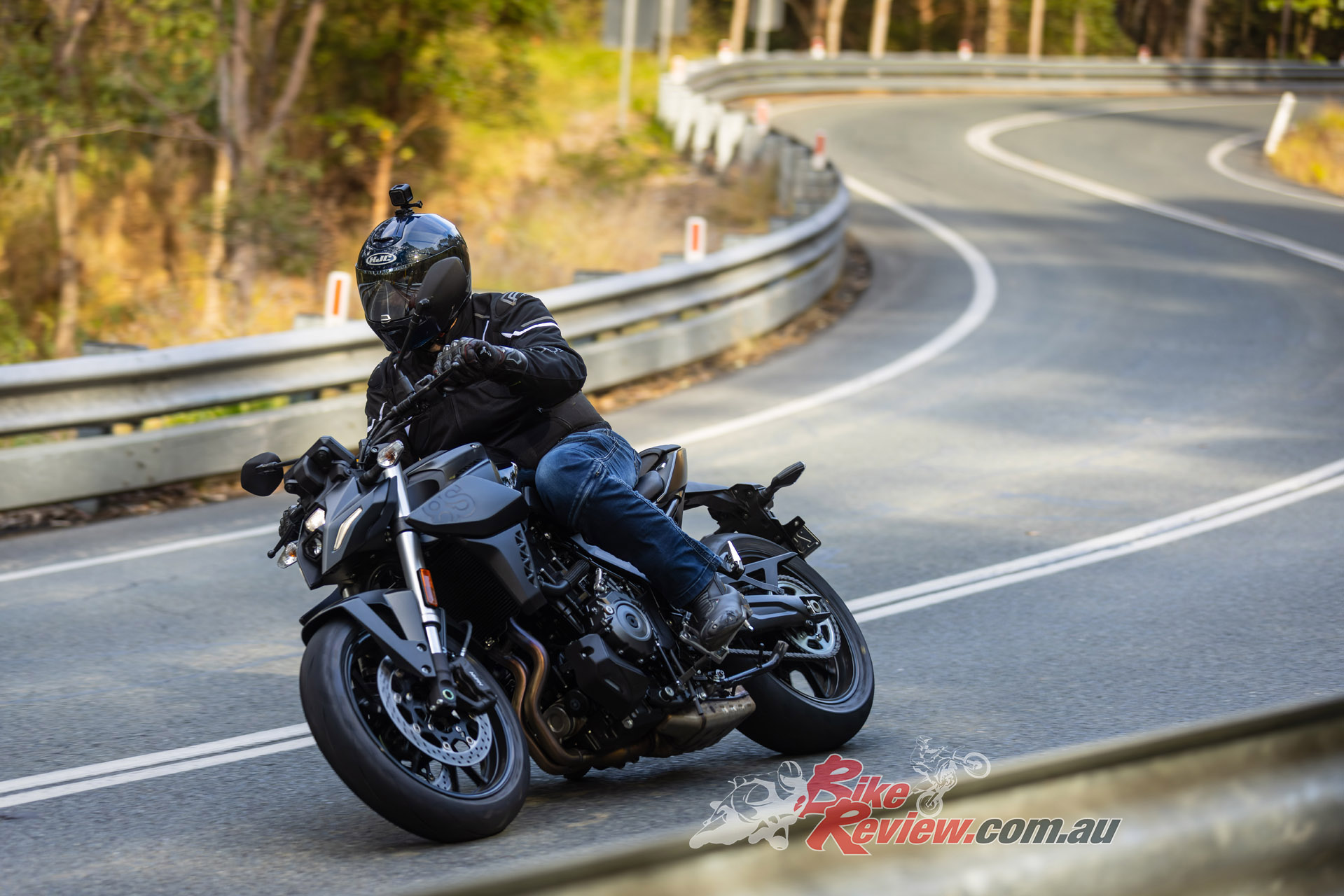
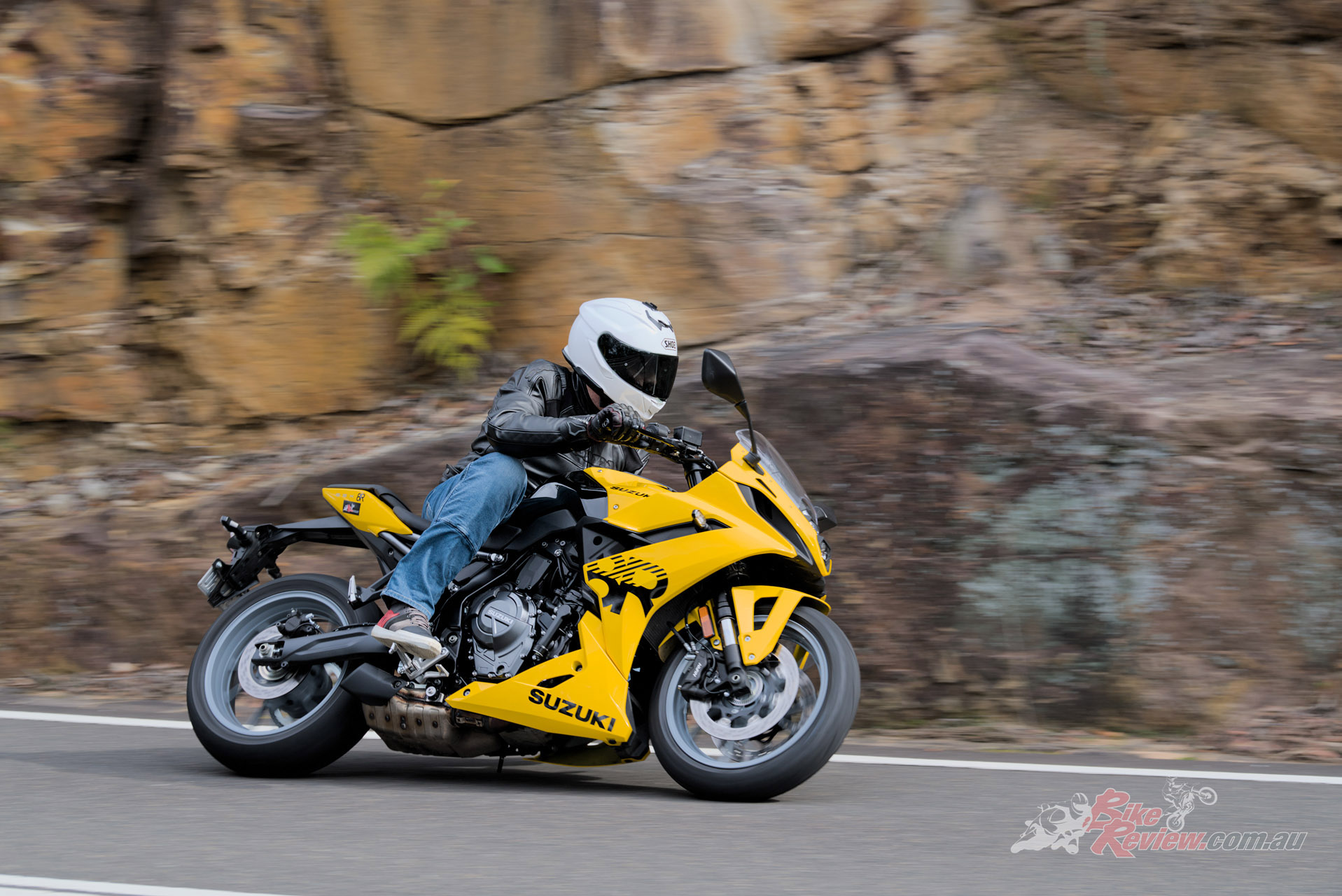
Read our GSX-8S reviews here… our GSX-R tests here and V-STROM 800DE test here…
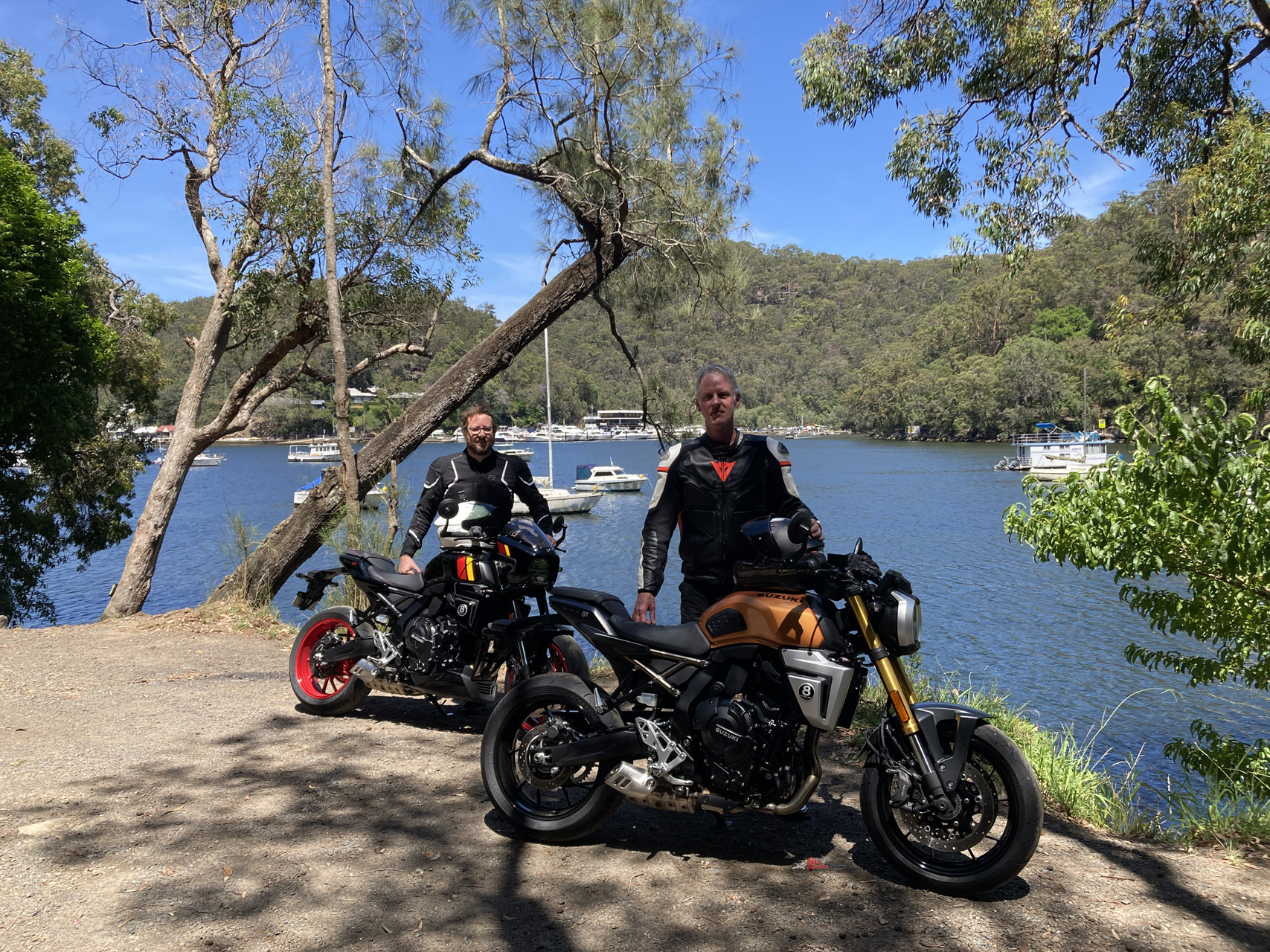
The world launch for the GSX-8T and GSX-8TT was held in Slovenia back in August, but frustratingly no Australian media were invited. That meant a further four-month wait before we could finally ride them locally. The upside is that this test marks the first Australian media ride of both models. We rode the bikes from mid November to mid December, across motorway, CBD traffic, outer-urban commuting, country roads and tight, twisty mountain sections. Test ride partners Tim Holland and Nick Ware joined me across sections of the ride, giving us three experienced perspectives on both bikes.
Test ride partners Tim Holland and Nick Ware joined Jeff across sections of the ride, giving us three experienced perspectives on both bikes.
At their core, the GSX-8T and GSX-8TT are unmistakably part of the same family. The now well-established 776cc parallel-twin with its 270-degree crankshaft remains the centrepiece, delivering the same blend of torque-rich midrange, smooth response and approachable performance that has already defined the GSX-8 range. Claimed outputs of 61kW at 8500rpm and 78Nm at 6800rpm remain unchanged, and once again Suzuki has proven that real-world performance matters far more than chasing headline figures. It’s plenty on tap, and they wheelstand under power easily enough.
Having previously spent two weeks testing the GSX-8R, which earned a 9.3/10 BikeReview.com.au rating, and earlier riding the GSX-8S at Lakeside Raceway and through the Sunshine Coast hinterland, where it scored 9.2/10, the engine in both the T and TT feels immediately familiar. It’s one of the strongest middleweight engines on the market right now, delivering effortless drive from as low as 3000rpm and pulling hard enough that you can be genuinely lazy with gearchanges.

The fuelling is excellent. Ride Mode A is sharp and a little snappy on initial throttle opening, but once you’re past that the response is great for fast charging. Mode B smooths things out on opening, while still delivering strong performance and Mode C is well suited to wet or slippery conditions. Most of my general riding was done in Mode B with TC set to level 2, but whenever the road opened up and the mood struck, switching to Mode A with traction control turned off really brought the bikes to life. These engines have what can only be described as V8-like grunt for a small-capacity parallel twin.
With traction control disabled and Mode A selected, both bikes will happily wheelstand under power in first gear, or with a little clutch in second…
With traction control disabled and Mode A selected, both bikes will happily wheelstand under power in first gear, or with a little clutch in second. They’re fantastic wheelie bikes, which says a lot about how strong and immediate the torque delivery is. Despite being worked hard at times, neither bike ever showed signs of running hot, even on a 37-degree day, with operating temperatures typically sitting between 90 and 97 degrees. And heat around the legs is not an issue at all.
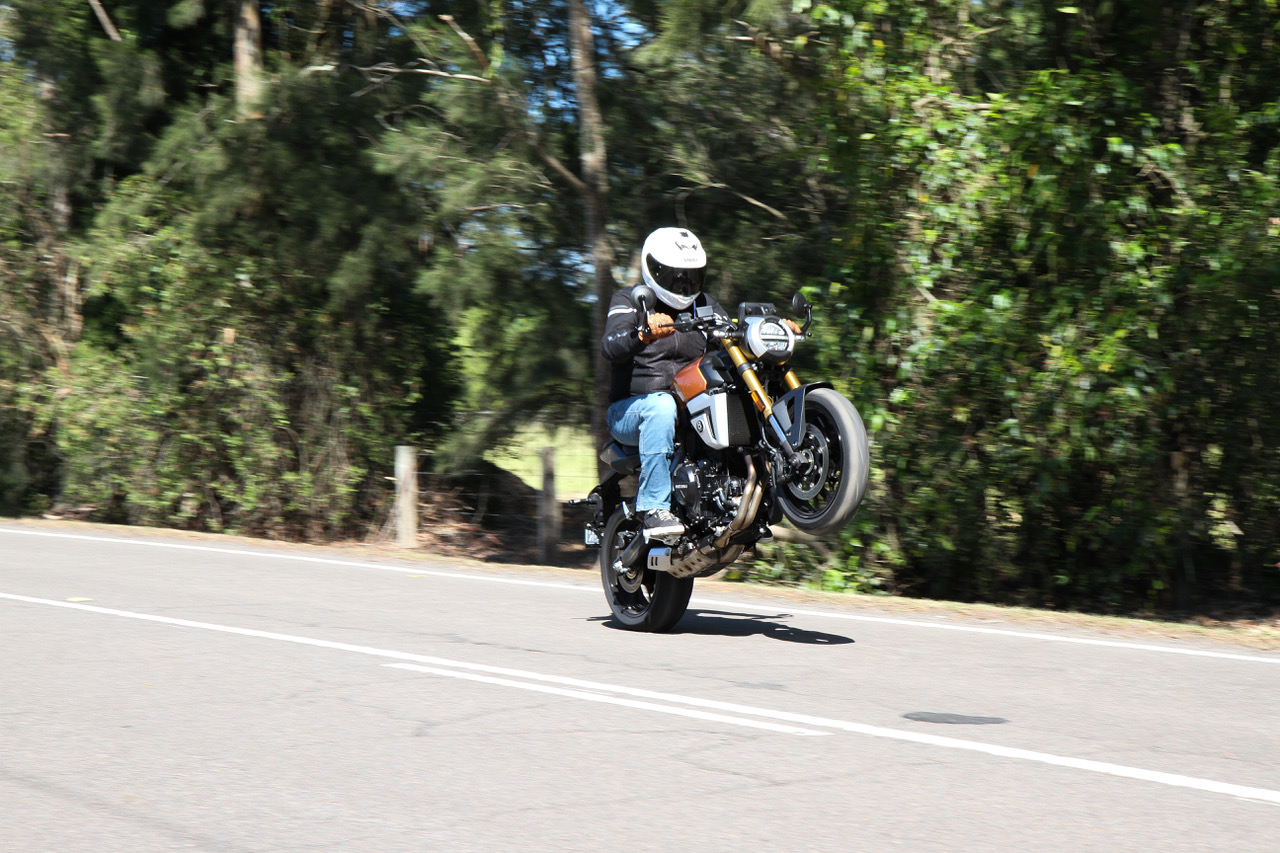
They’re fantastic wheelie bikes, which says a lot about how strong and immediate the torque delivery is.
The six-speed gearbox is paired with a bi-directional quick-shifter. Upshifts are clean and reliable, but downshifts can feel a little clunky and lazy at times, especially when riding aggressively. The clutch, however, is excellent: light at the lever, with great feel, and the slipper function works well when diving into turns at higher revs, keeping the chassis balanced and the back tyre in contact with the road.
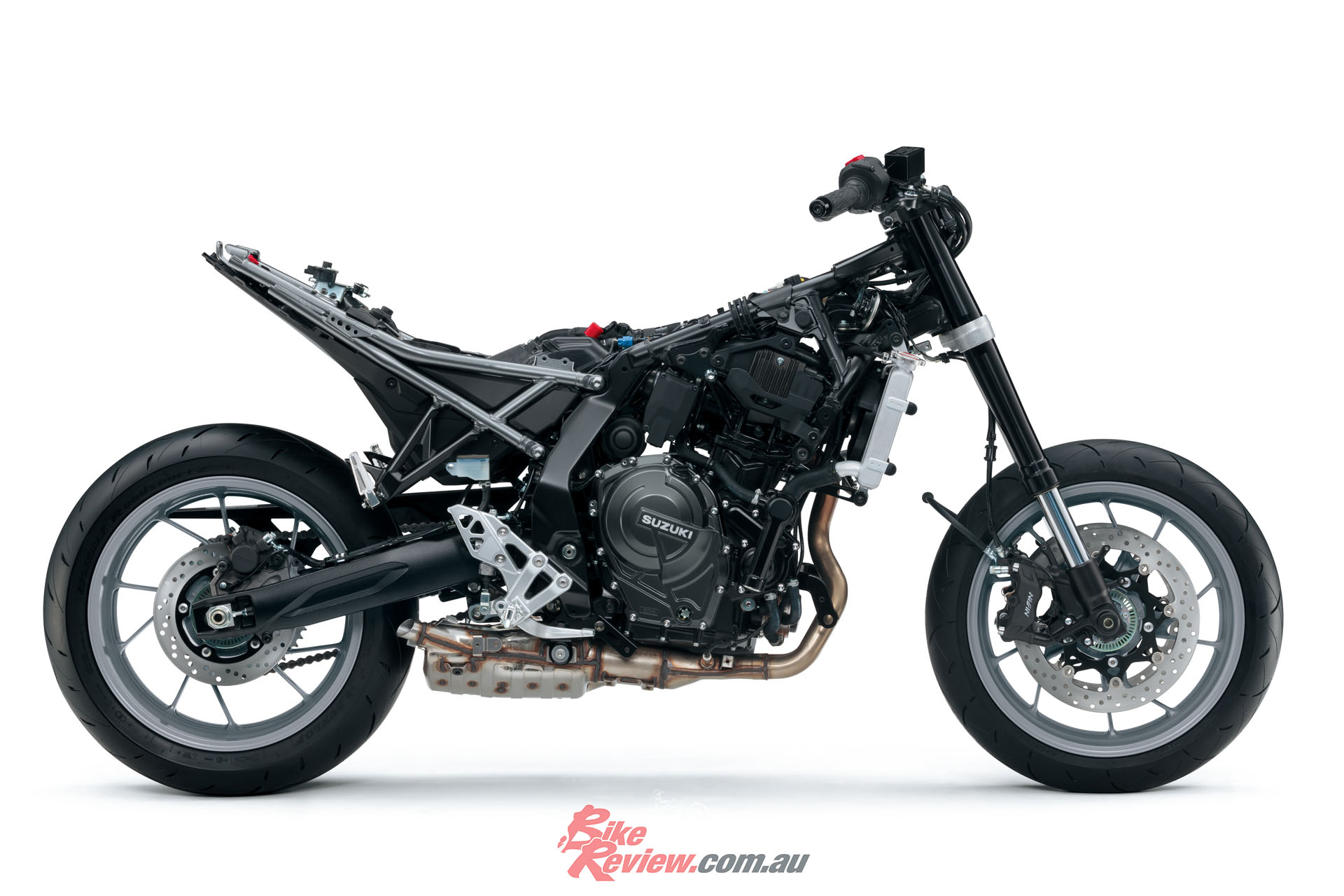
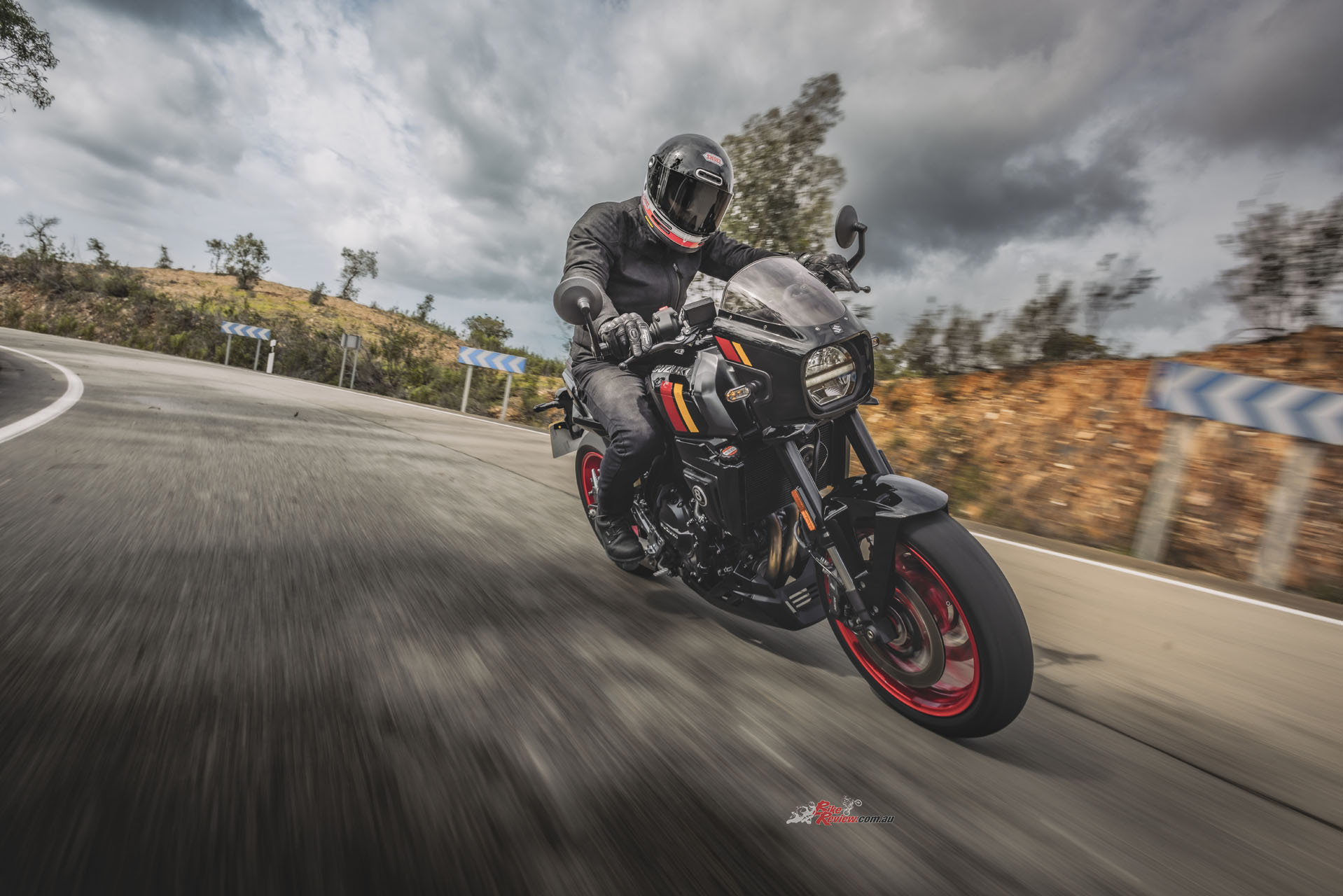
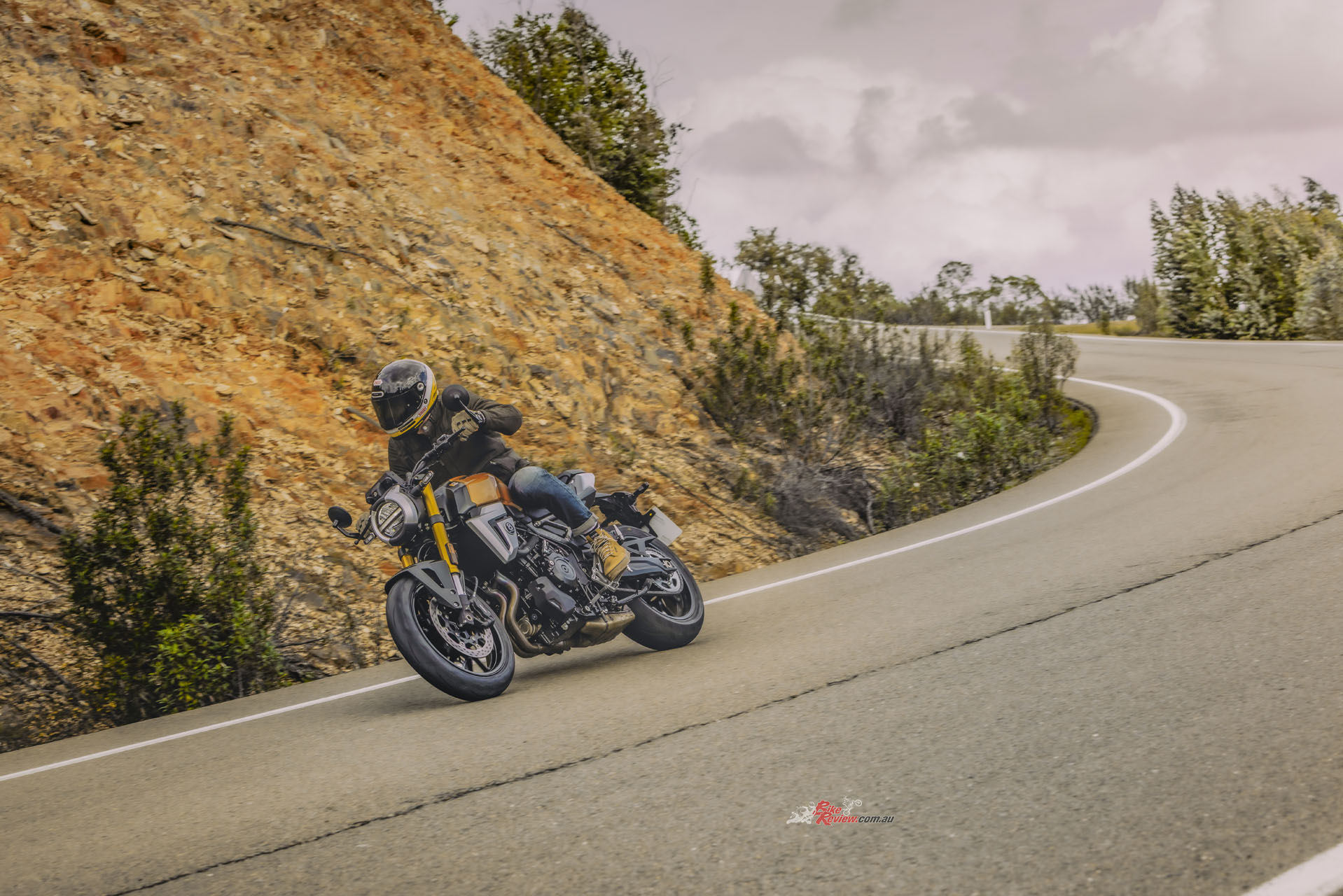
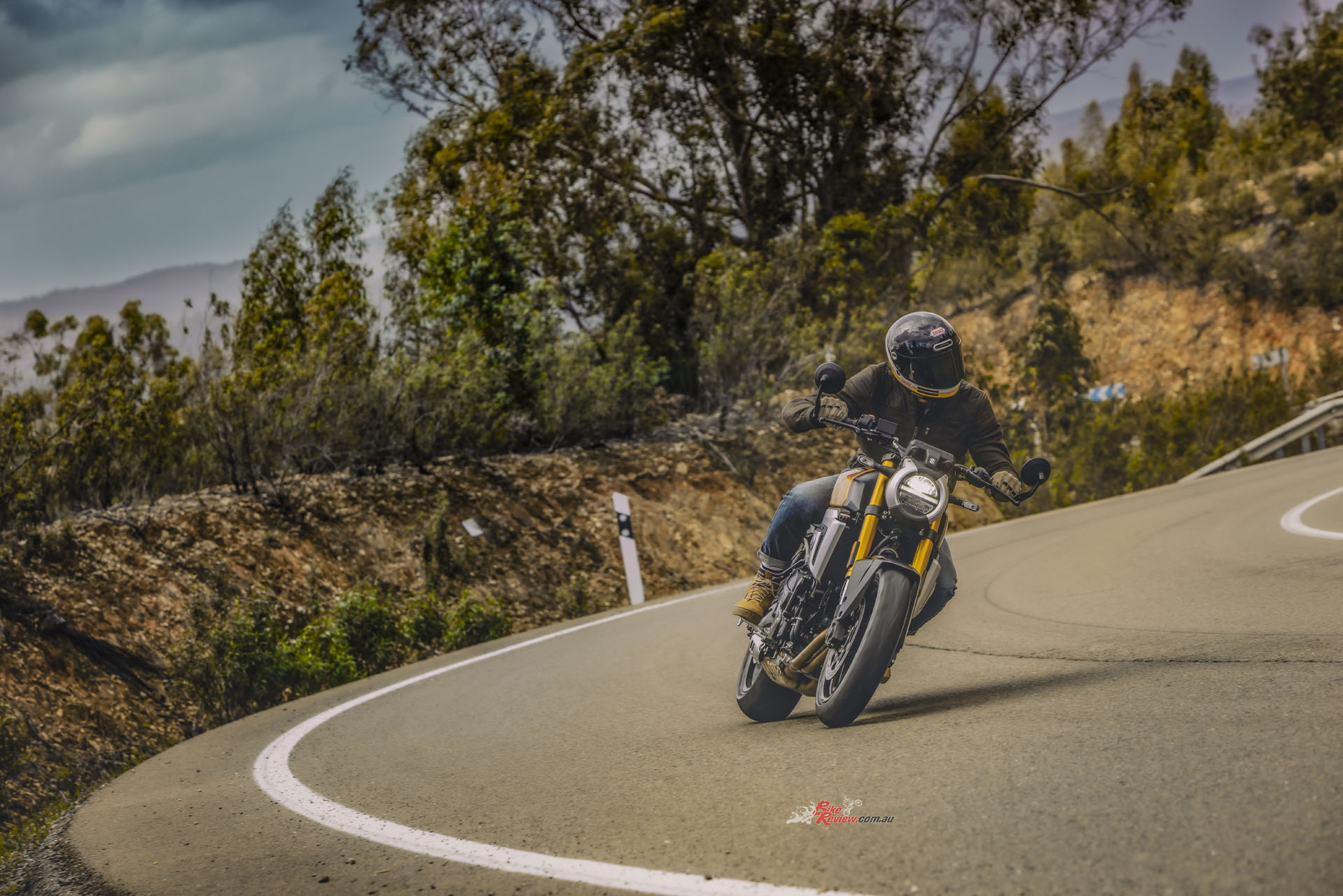
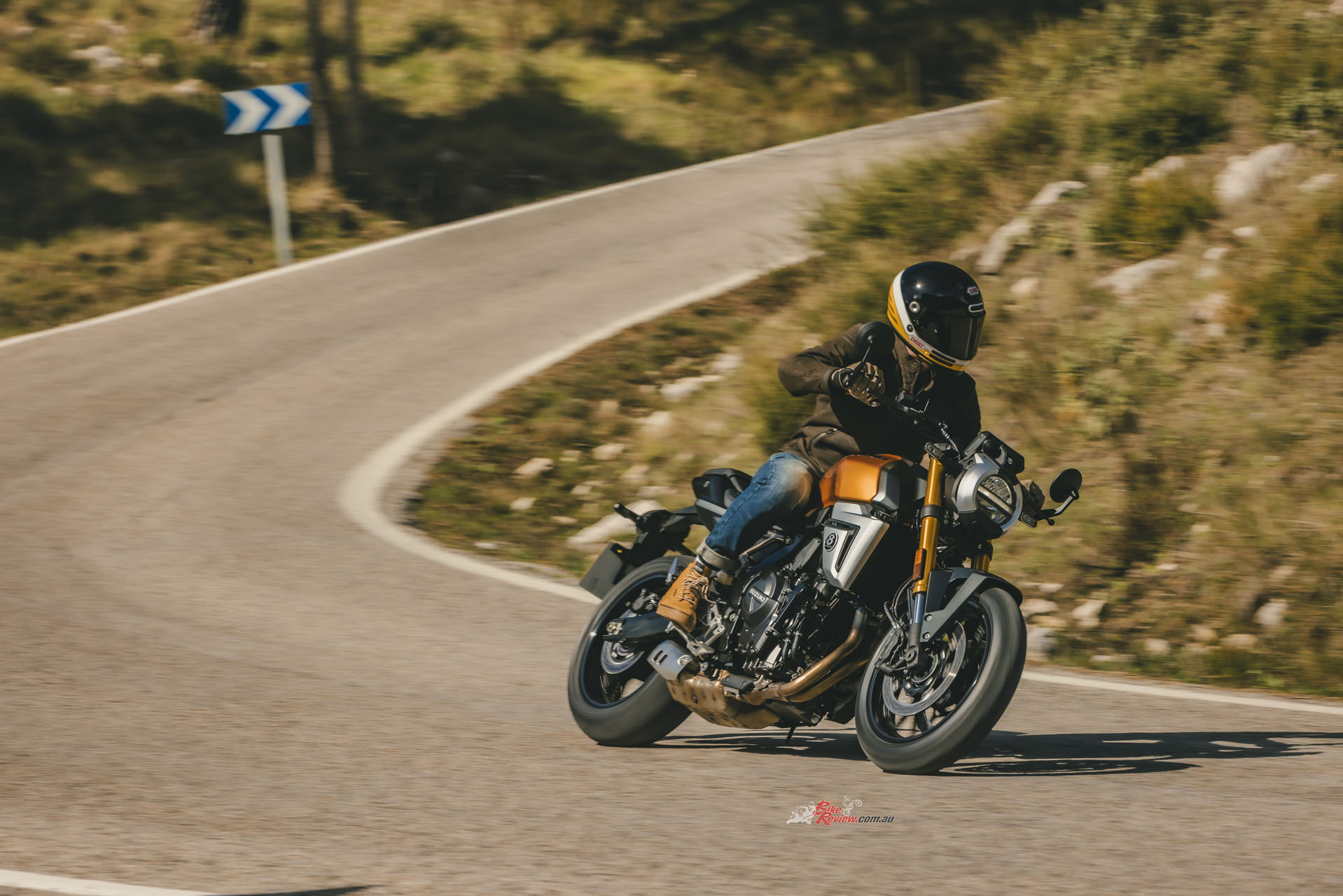
Chassis architecture carries over from the rest of the GSX-8 lineup, with the steel twin-spar frame and aluminium swingarm providing a stable, predictable foundation. KYB suspension is fitted front and rear, and in general use it’s well tuned. The forks in particular are excellent, offering good support and feel, while the brakes are strong, progressive and confidence inspiring. Geometry is spot-on, making both bikes extremely easy to ride and surprisingly quick through corners.
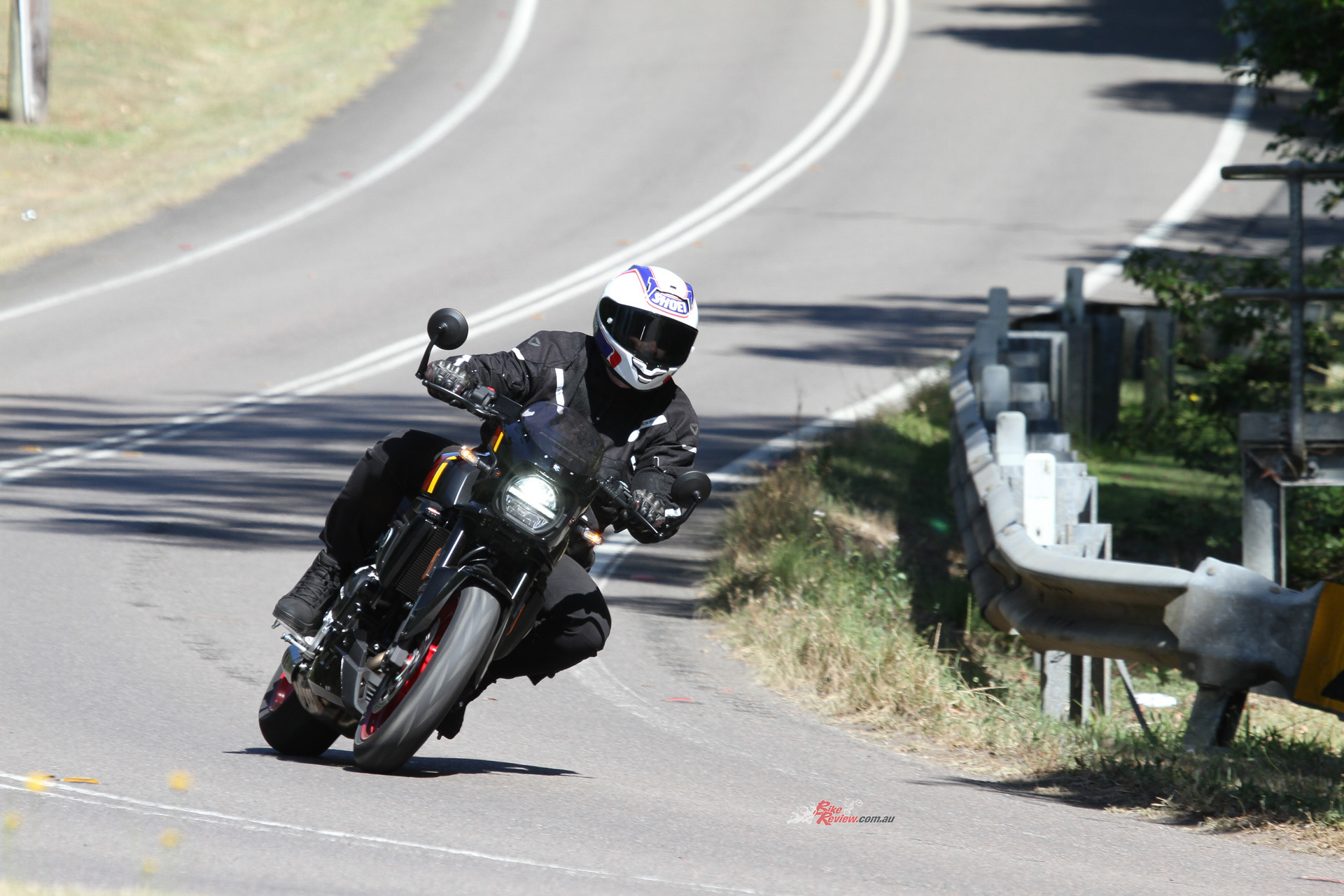
“Geometry is spot-on, making both bikes extremely easy to ride and surprisingly quick through corners.”
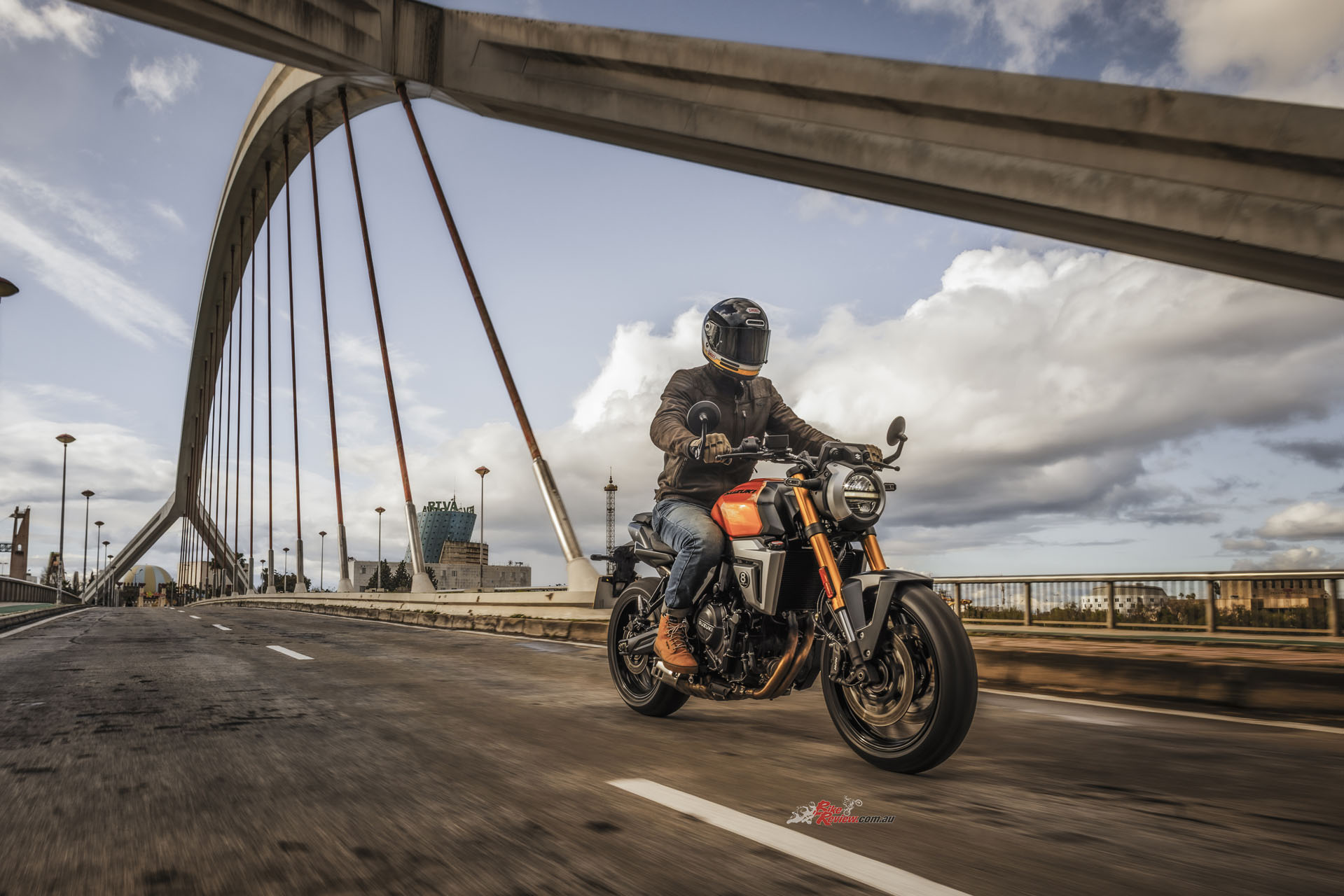
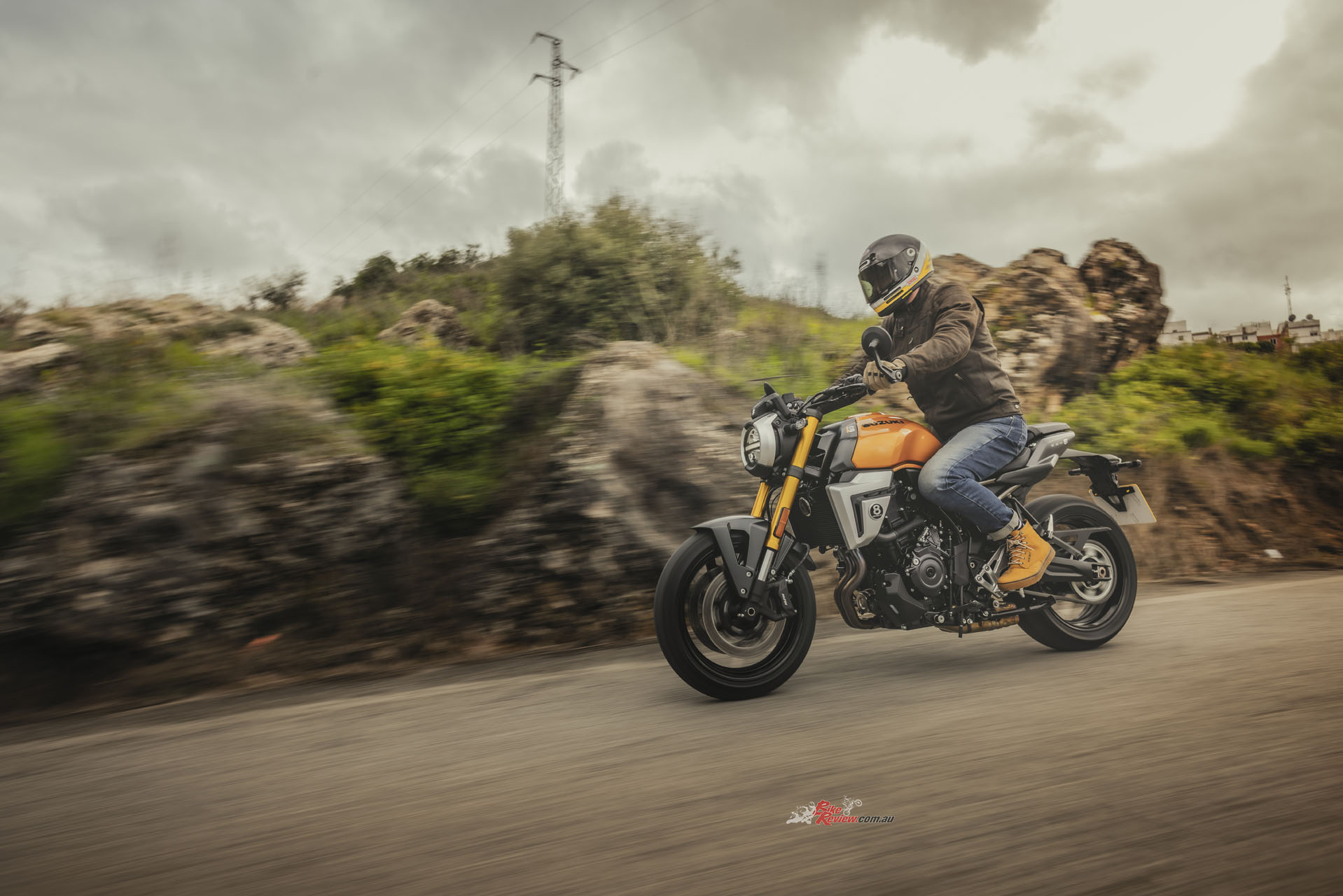
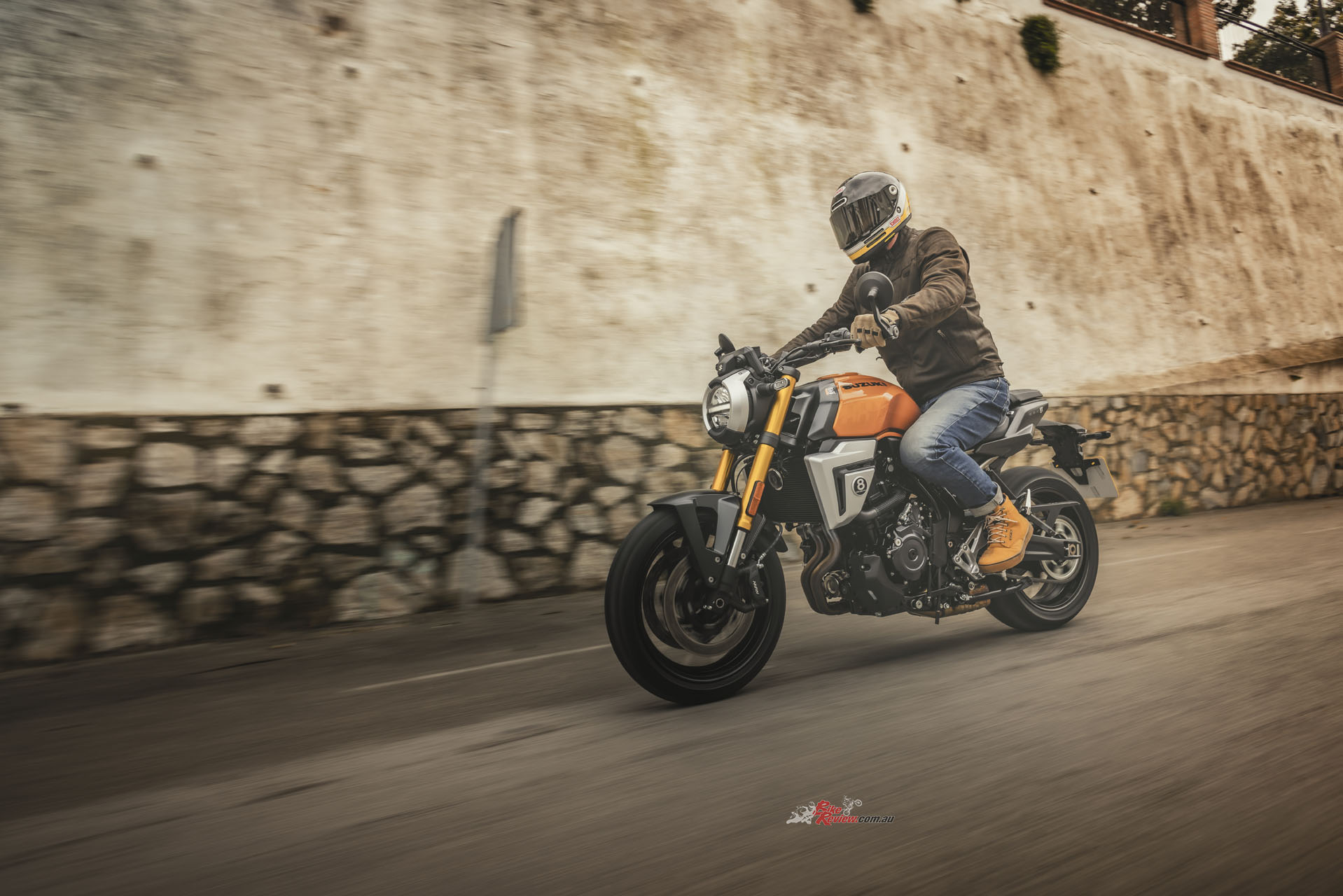
Living with the GSX-8T and GSX-8TT over a full week highlighted just how well Suzuki has balanced performance with genuine day-to-day usability. Both bikes were ridden through CBD traffic, suburban commuting and longer motorway stints, and in those environments they proved easy to live with.
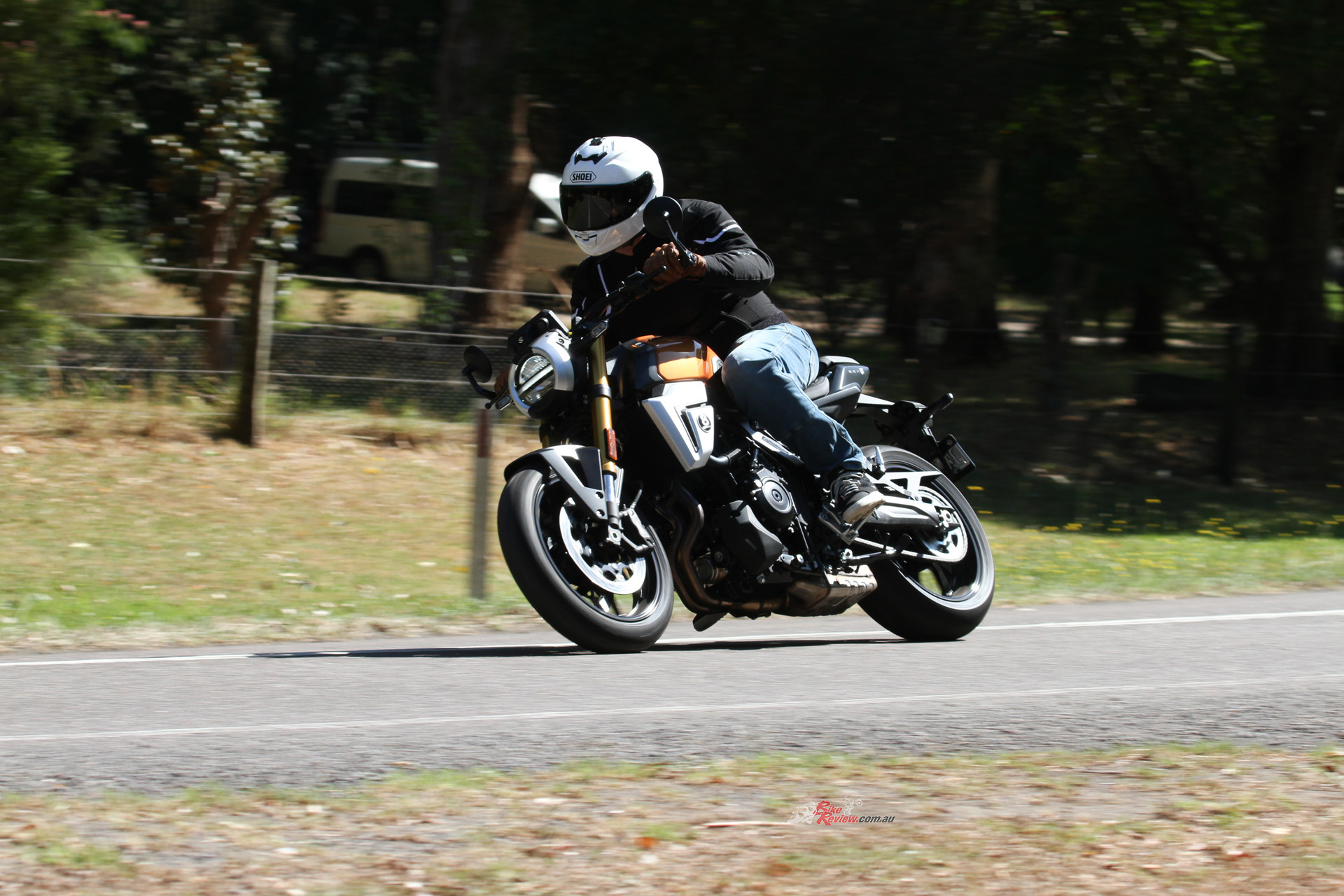
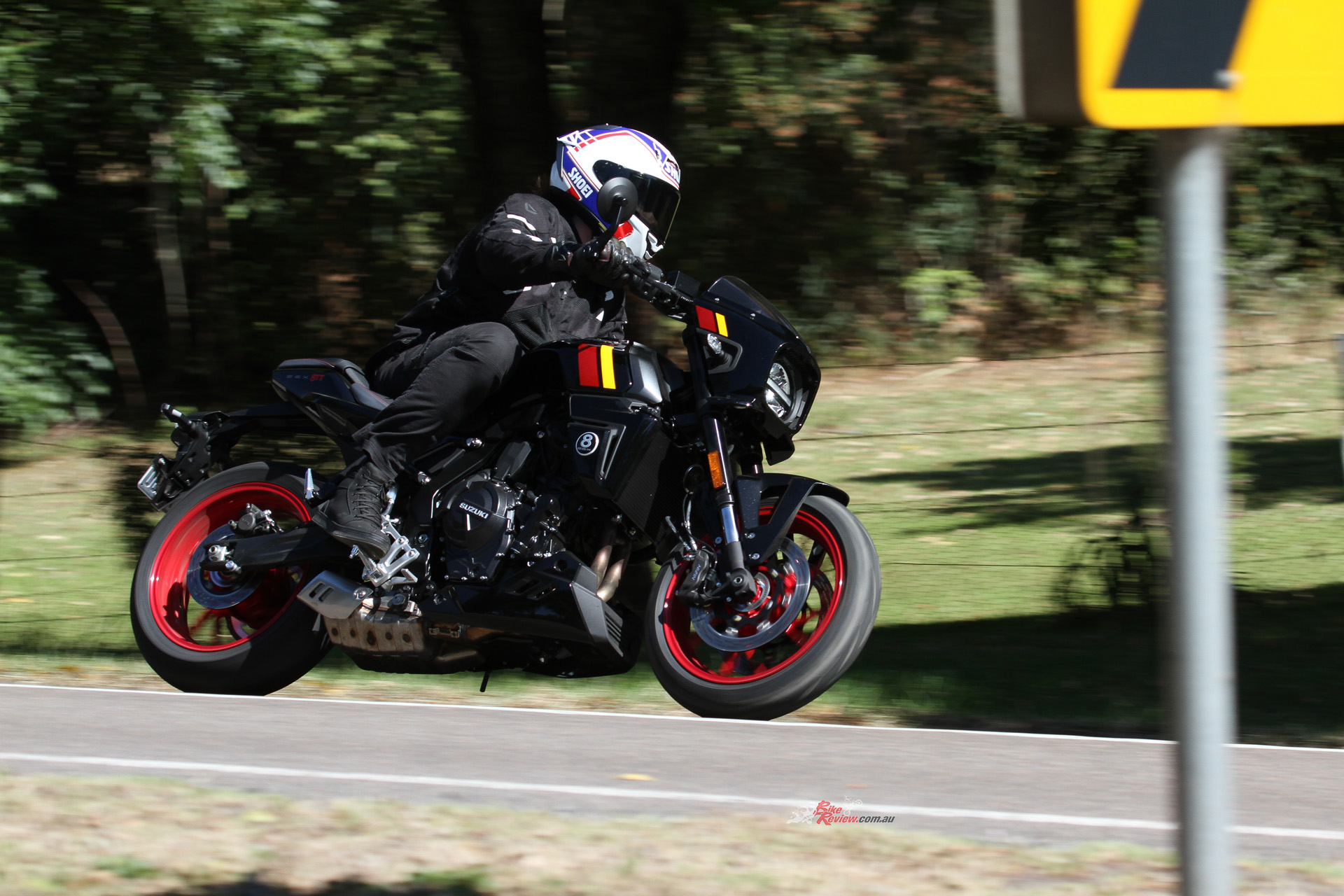
Throttle response at low speeds is predictable, clutch action is light enough to avoid fatigue in traffic, and the engine’s willingness to pull cleanly from low revs means constant gear changes simply aren’t required. In stop-start urban riding, the bikes feel narrower than they look, bar-end mirrors aside, and balance at walking pace is excellent. The mirrors do limit lane splitting though, but work very well.
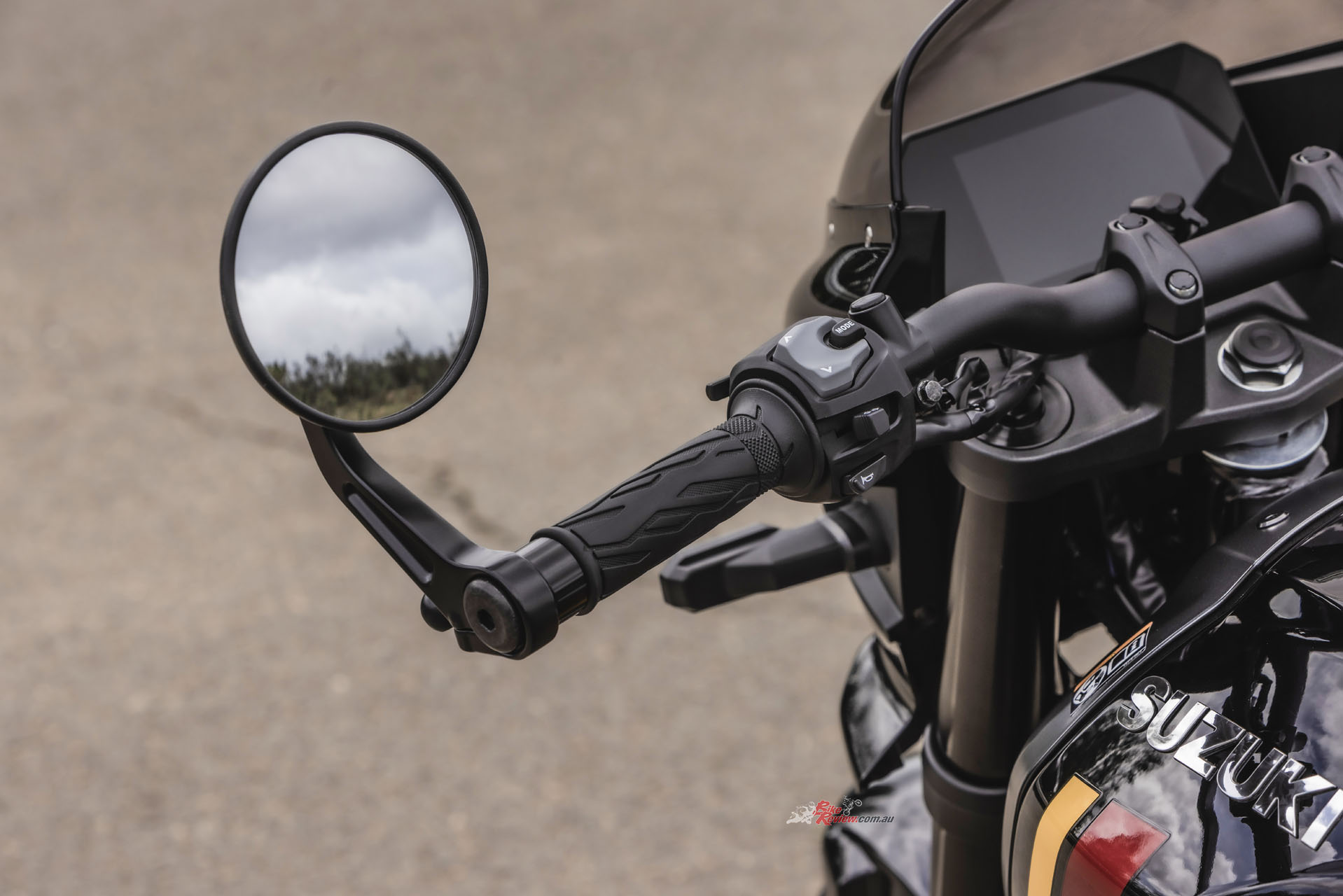
The bar end mirrors, which are hand finished and very solid, offer a great view, are vibe free and look great. They just limit lane splitting a little.
Heat management is also worth noting. Even in heavy traffic and high ambient temperatures, neither bike exhibited excessive heat soak or rider discomfort, something that can’t be said for every middleweight in this segment. Fan cycling was consistent and unobtrusive, and engine temperatures remained well controlled throughout the test.
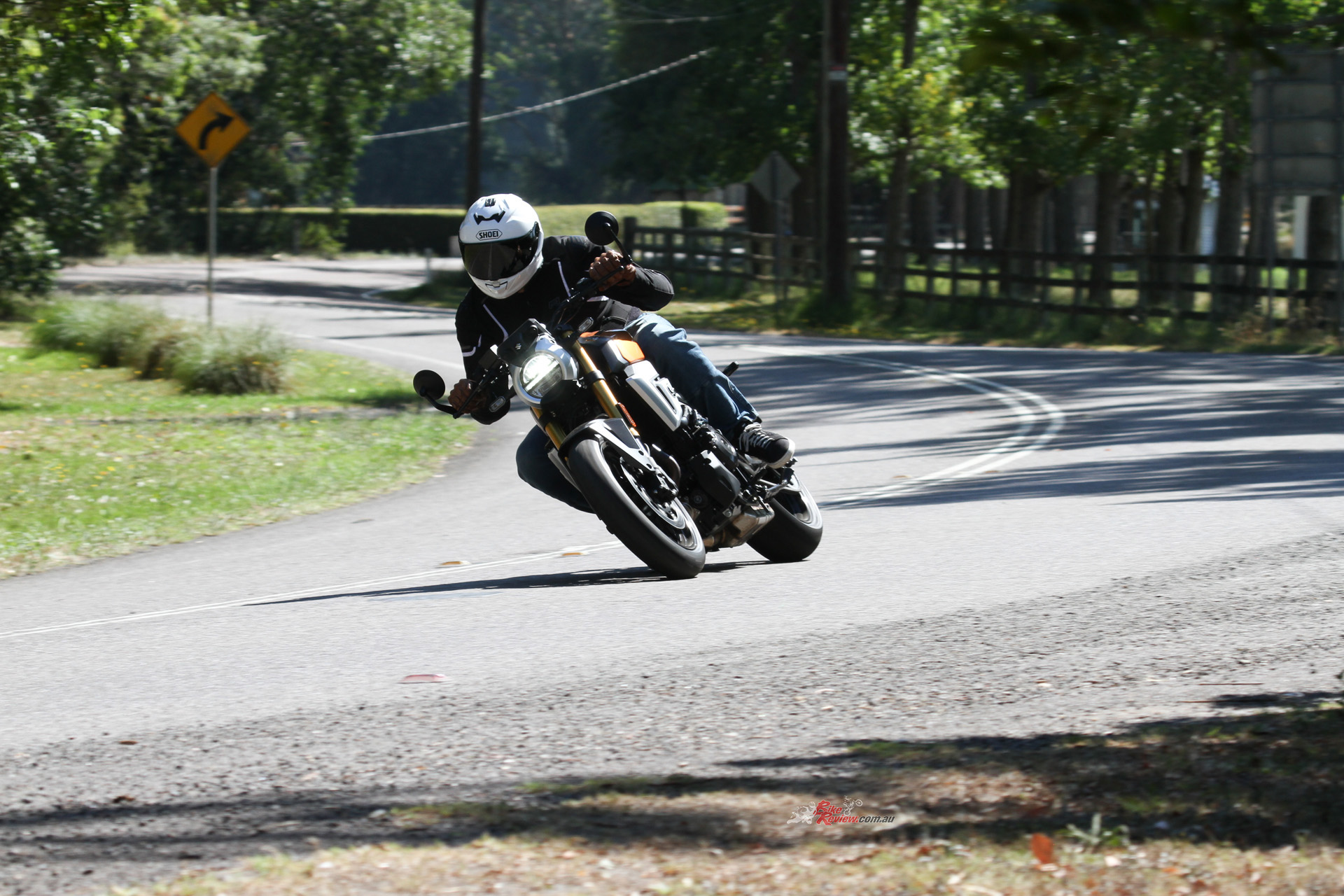
“All three of us agreed that the GSX-8T felt livelier and sportier than the GSX-8TT, despite identical suspension settings.”
On longer motorway runs, the GSX-8TT’s small fairing and screen do make a tangible difference. While it’s not transformative, it takes enough pressure off the chest to reduce fatigue and makes sustained cruising more comfortable than on the naked T. That said, both bikes would benefit from cruise control, particularly given how capable and relaxed they feel at highway speeds. It feels like an omission rather than an oversight, especially at this price point, a substantial increase over the 8S and 8R models.
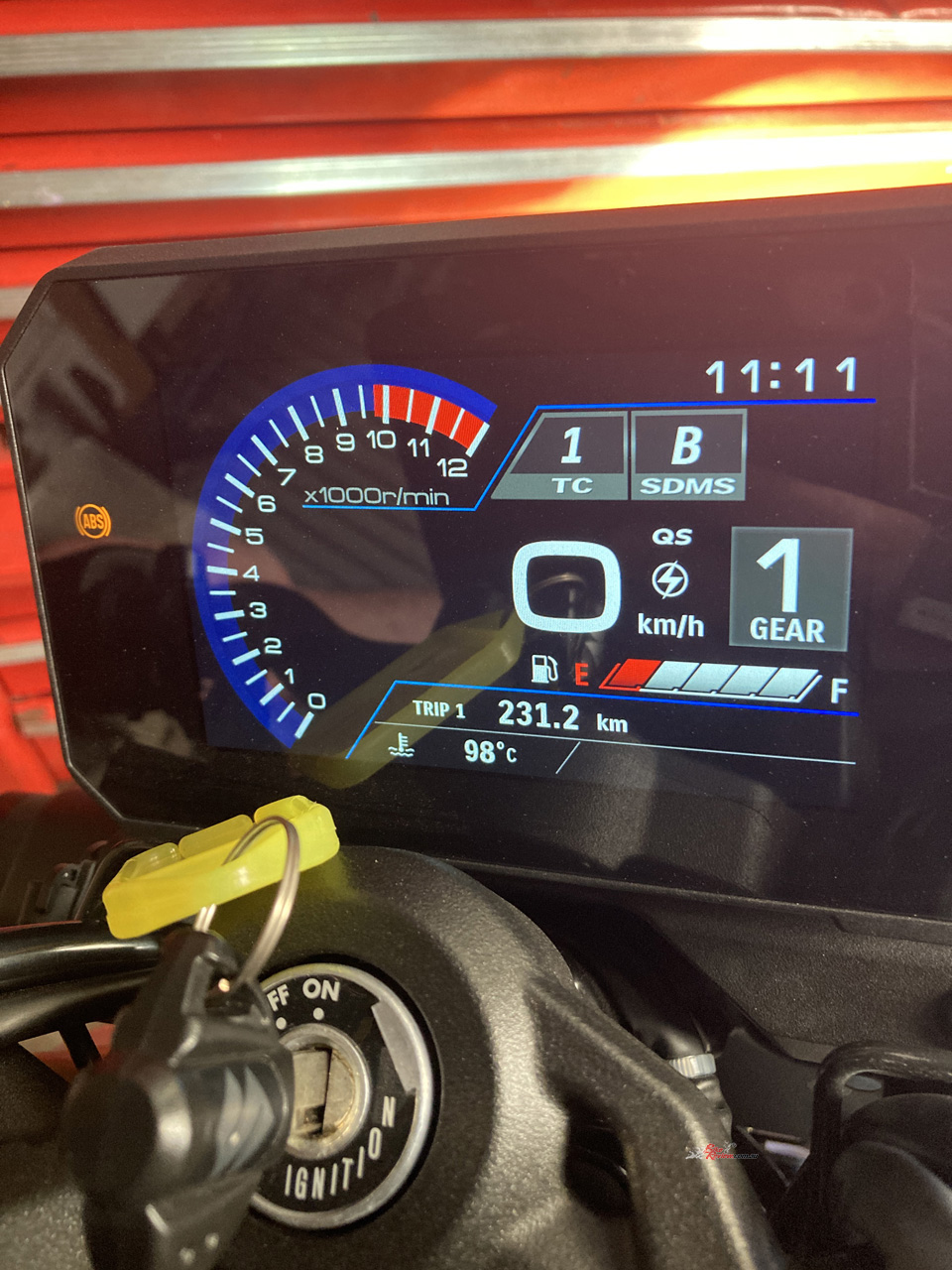
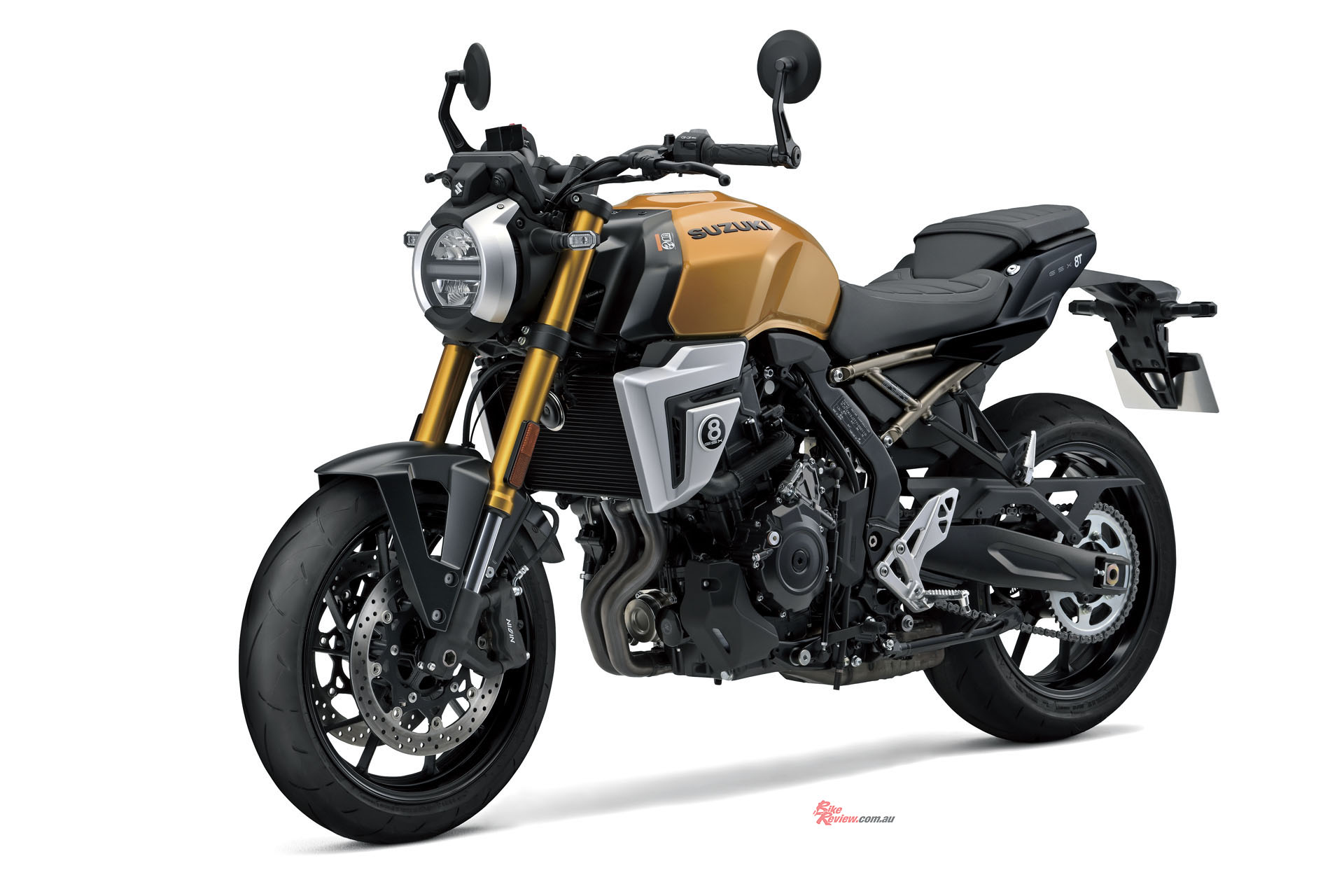
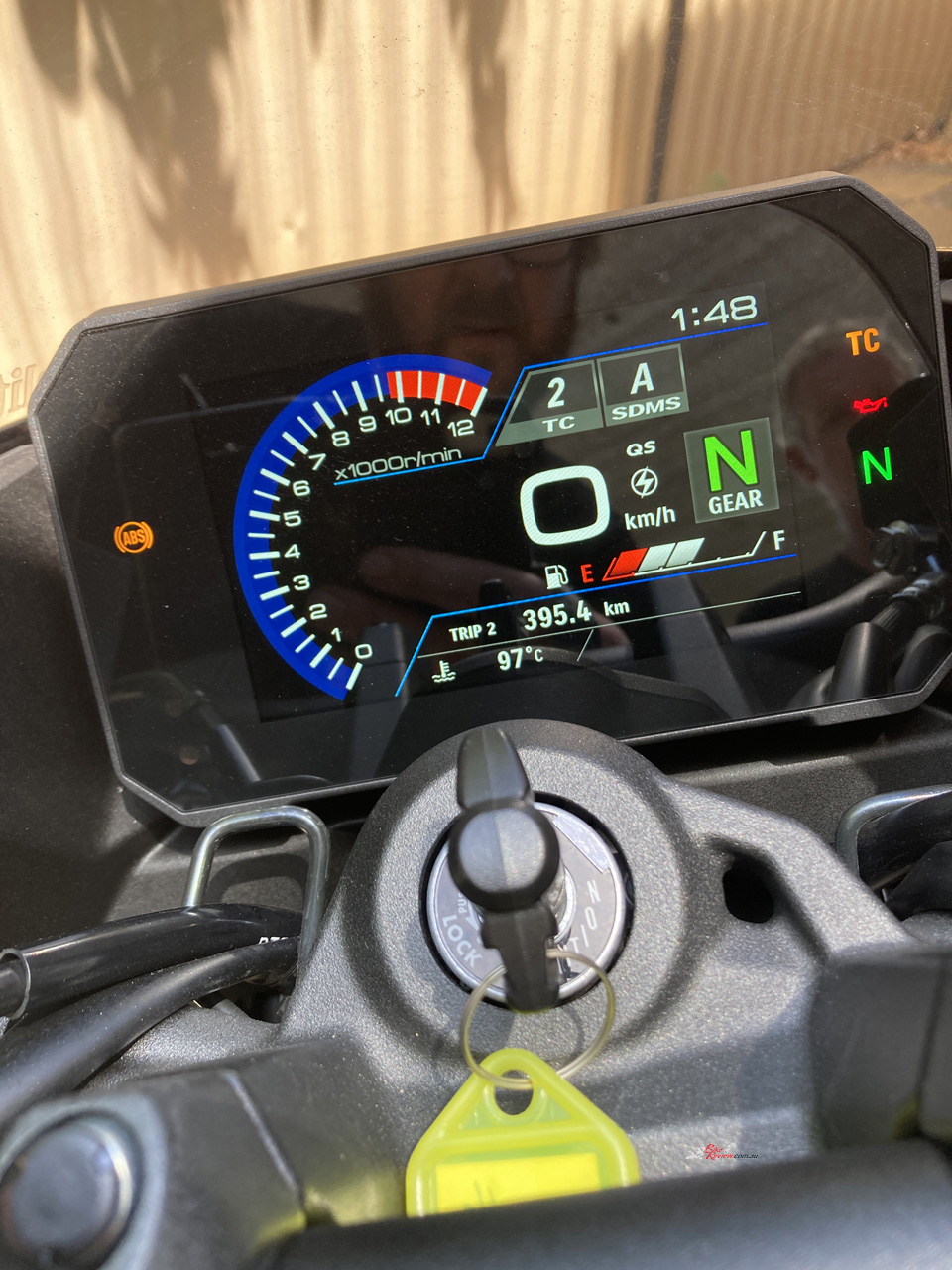
Range and fuel economy both came back impressive in the testing. With average consumption hovering in the low-to-mid 20km/L range during our testing (23.2km/L or 4.3L/100km for the TT and 24km/L or 4.17L/100km for the T), both bikes offer respectable real-world range of +320km from their 16.5L tanks, making them well suited to weekend rides and longer day trips without constant fuel stops.
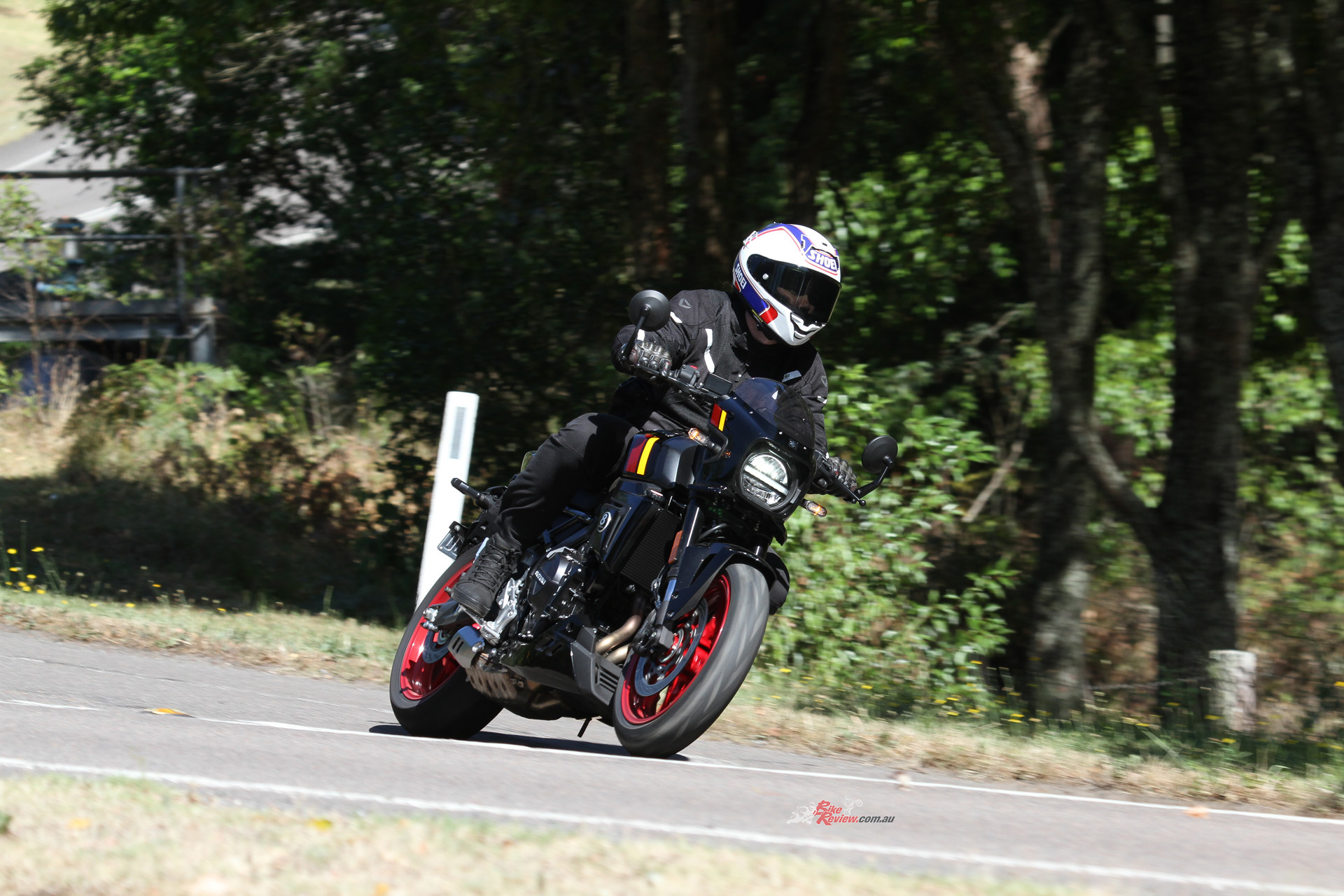
Nick loved the riding position of the GSX-8TT. At 197cm tall he still found he could fit on the bike comfortably.
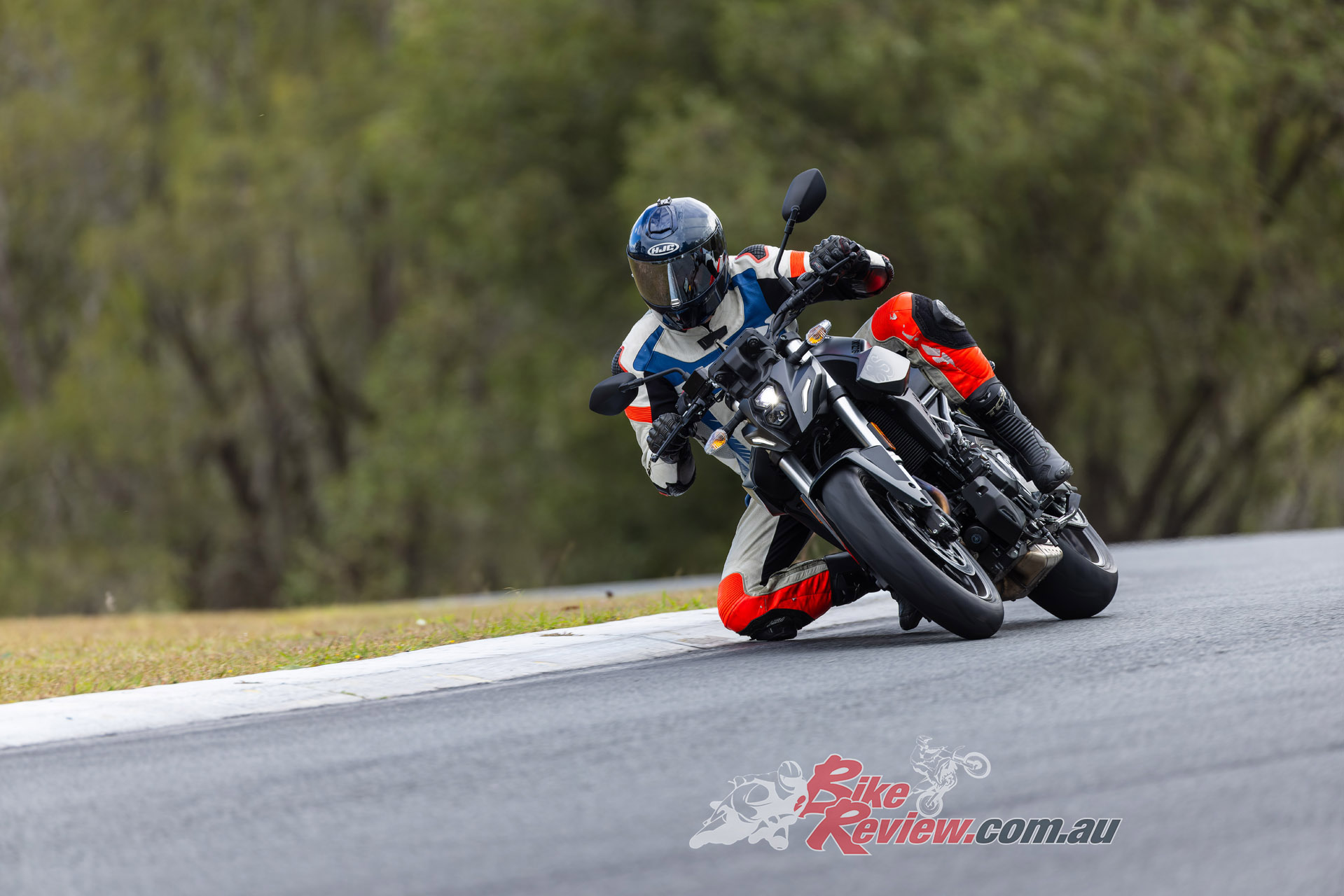
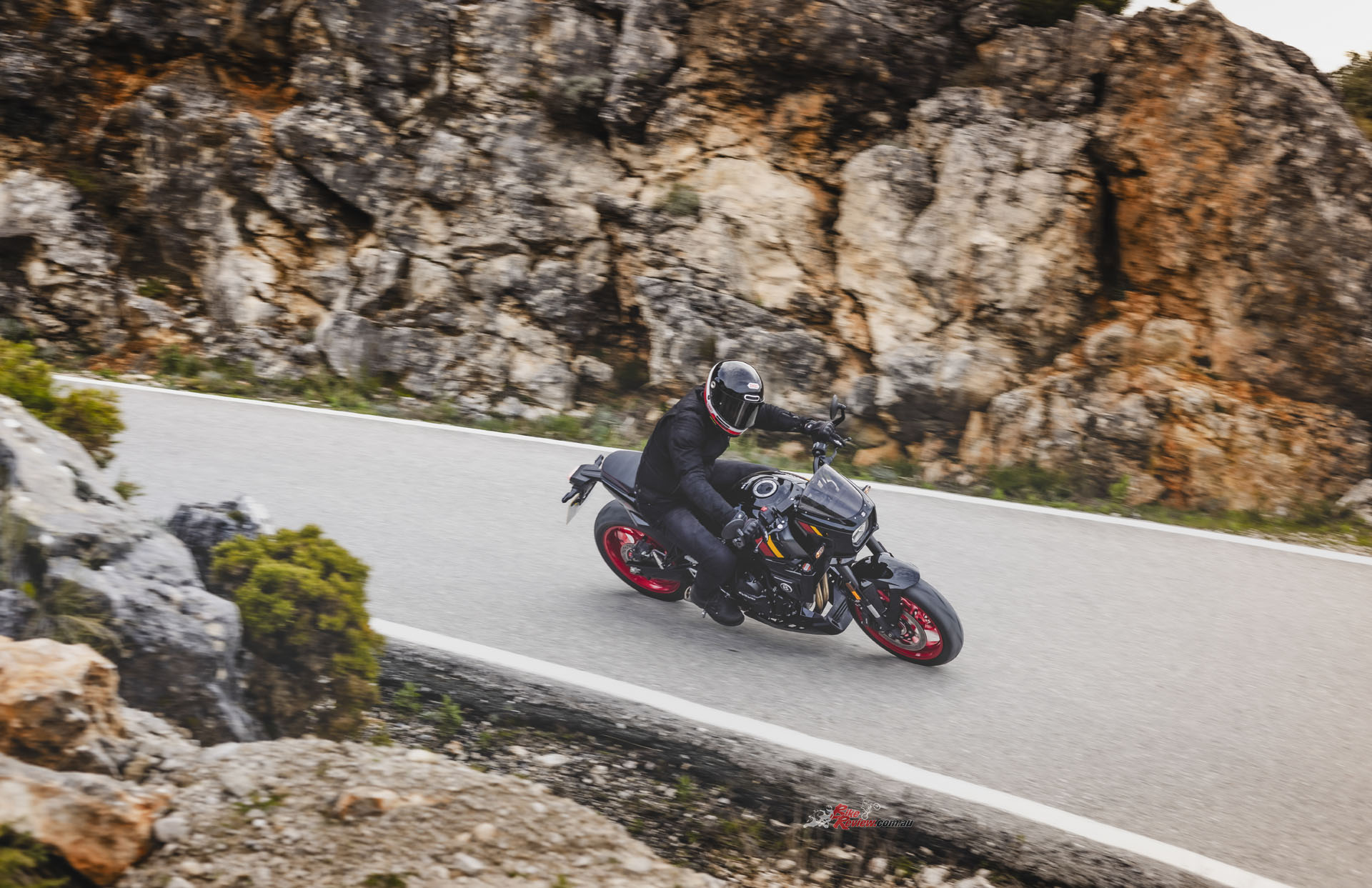
When pushed hard, however, the familiar GSX-8 weakness reappears. Just like with the GSX-8S and GSX-8R, the shock becomes the limiting factor once you start riding at around eight-tenths and beyond. Rear chattering under load can slow corner exits and blunt outright pace. A higher-quality rear shock, some suspension set-up time, braided brake lines, race pads and sportier tyres would transform these bikes into absolute weapons on tight mountain roads.
As they stand, though, they remain outstanding real-world all-rounders that will still surprise experienced sports riders and ex-racers alike. Tim Holland, whose daily ride is a GSX-R1000, could hardly believe how capable and enjoyable they were on the twisty roads and also just around town and on the highway. Overall, too, the Dunlop RoadSport 2 are a fantastic broad use tyre that suit the bikes.
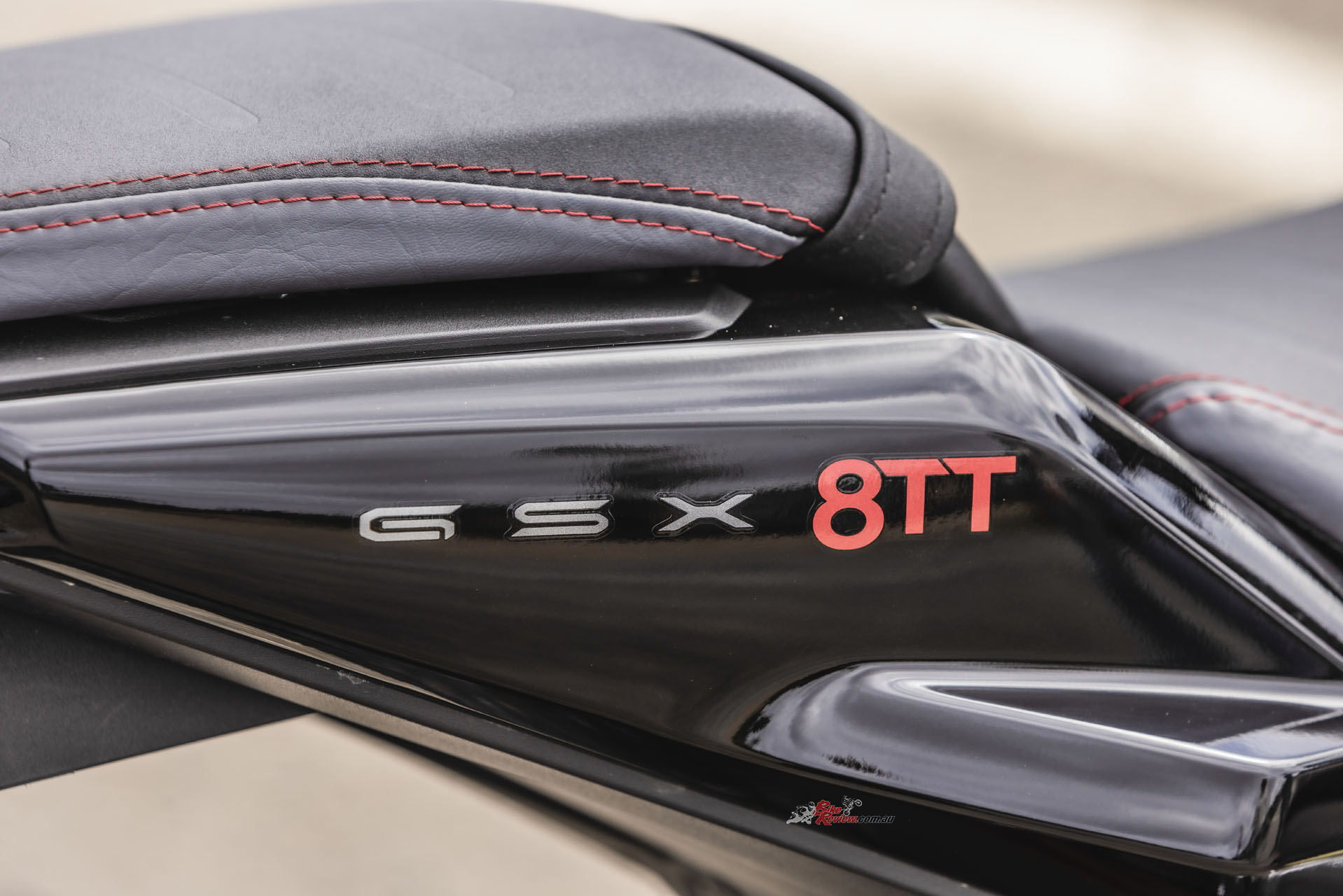
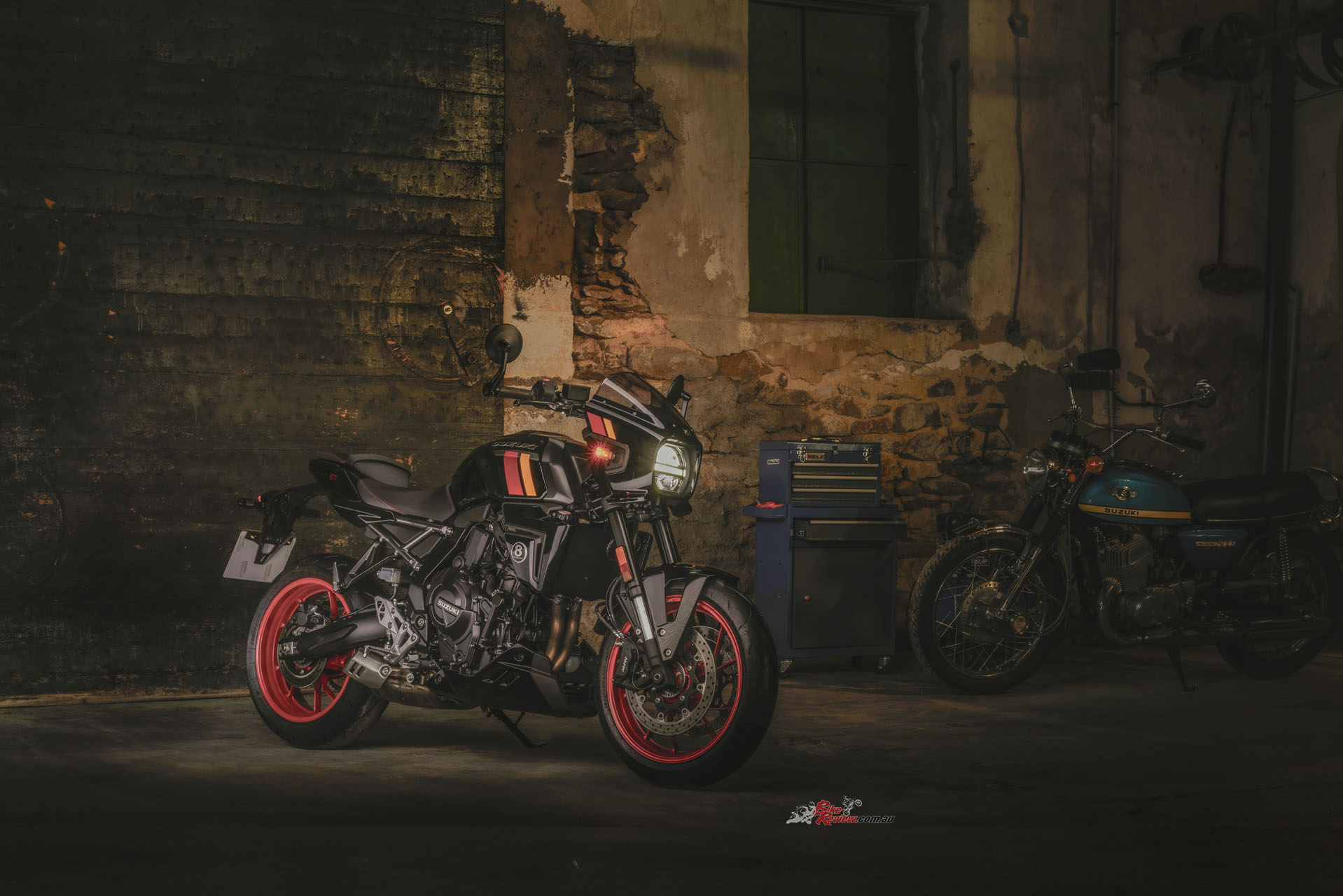
Where the GSX-8T and GSX-8TT truly diverge is in styling, ergonomics and overall feel. Suzuki has been open about the inspiration behind both models. The GSX-8TT is a tribute to the iconic GS1000 four-stroke, while the GSX-8T draws inspiration from the classic two-stroke Suzuki T500. Design cues from both machines have been woven into the modern GSX-8 platform, but the results are very different to each other.
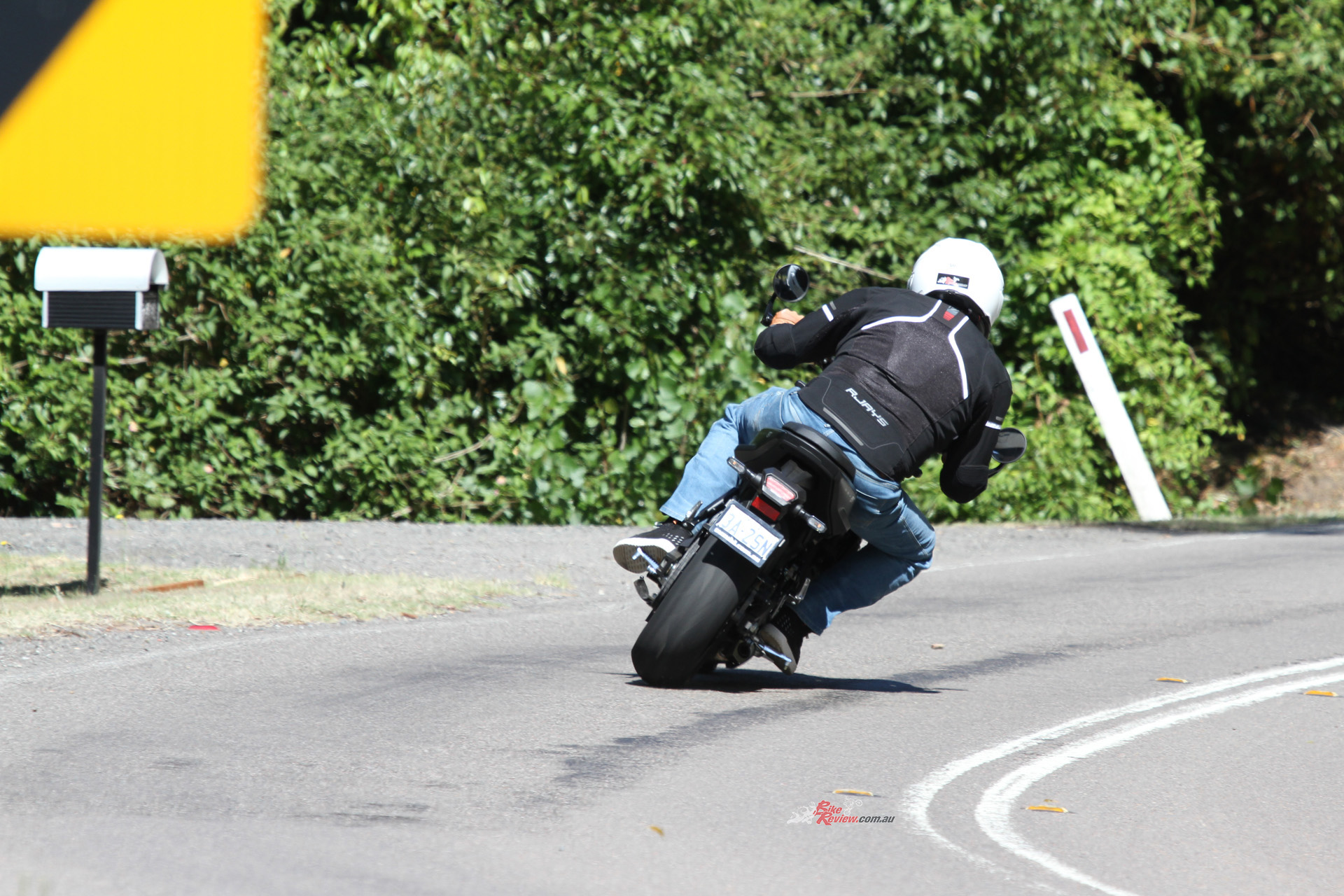
“The shock becomes the limiting factor once you start riding at around eight-tenths and beyond.”
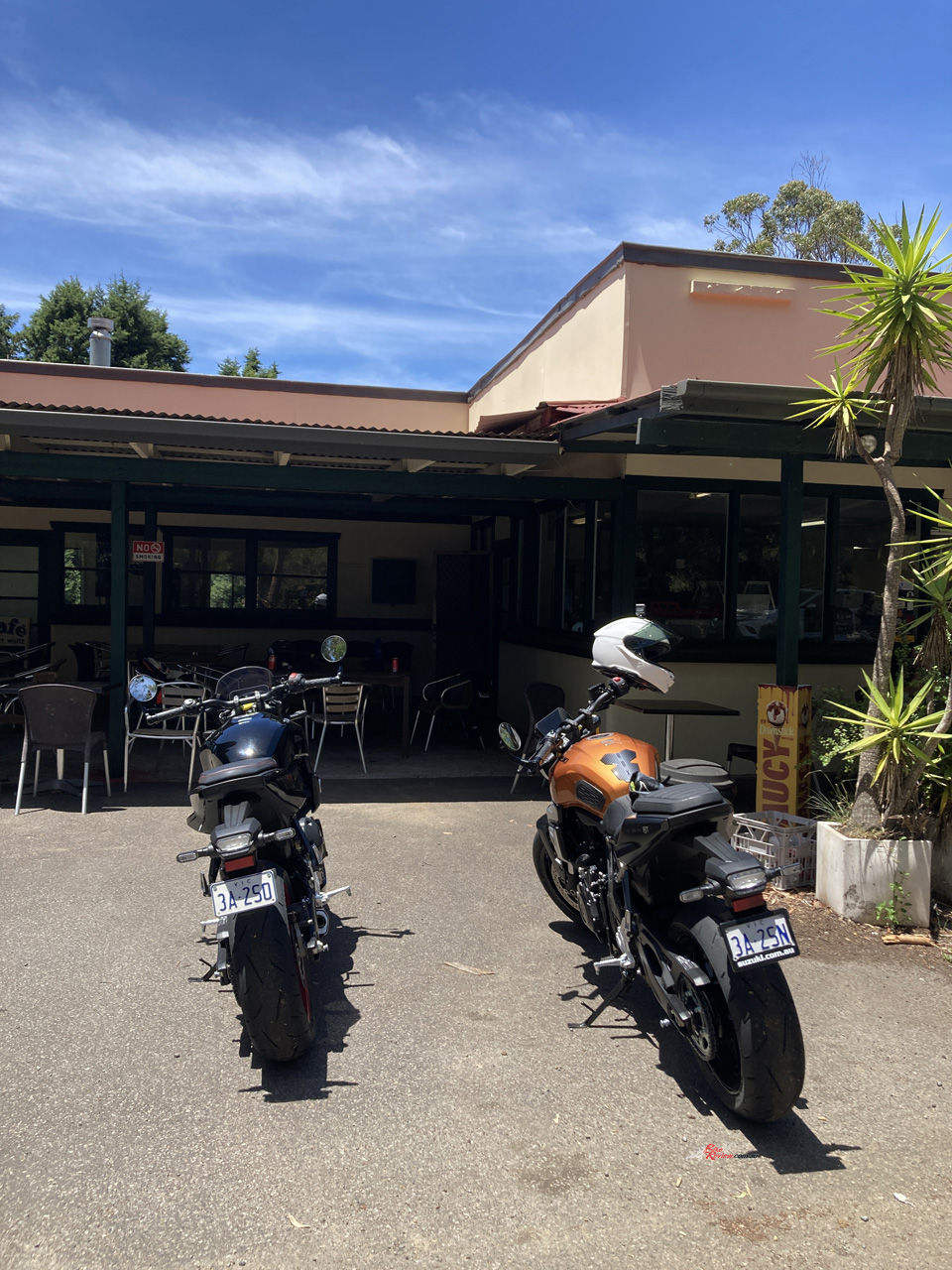
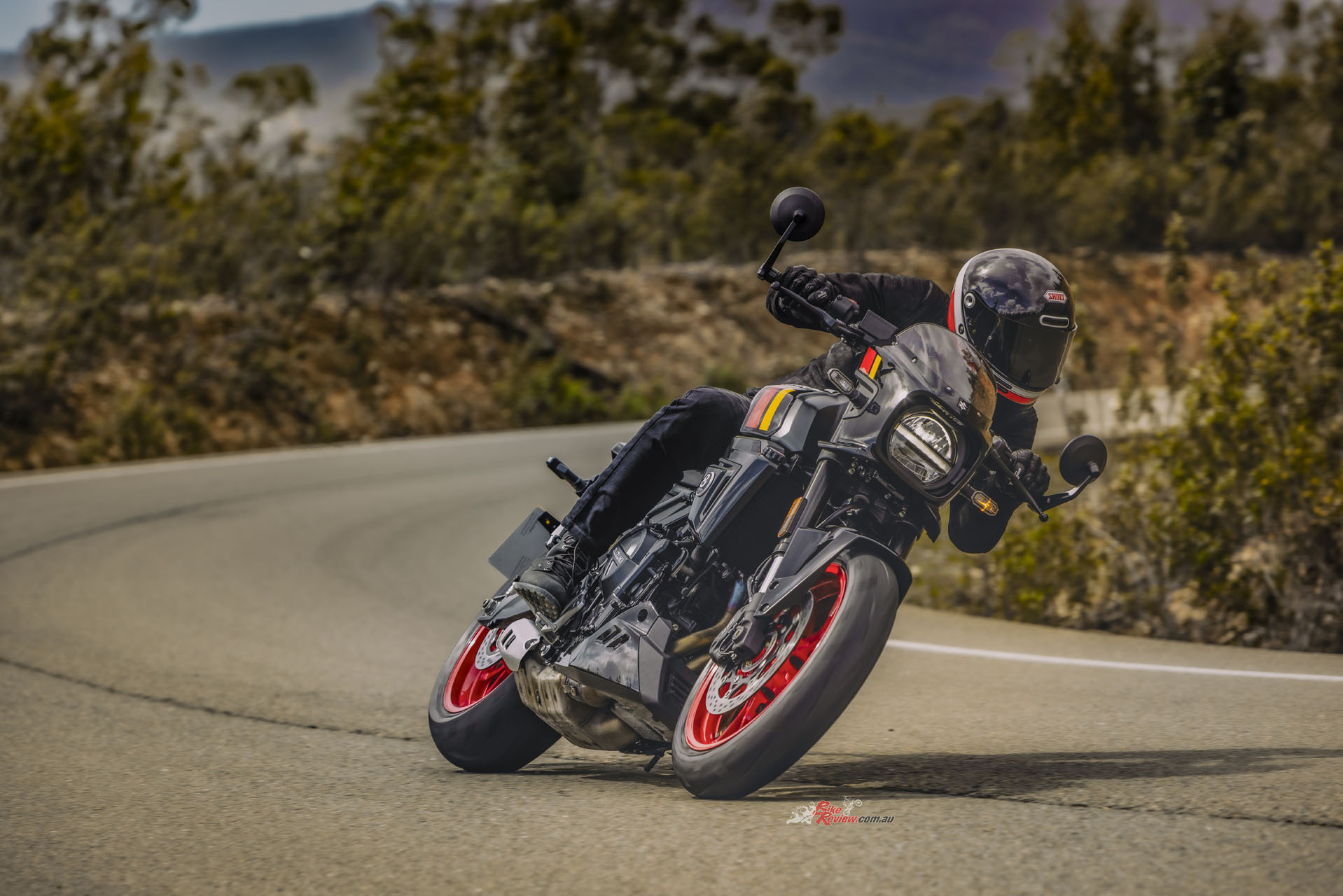
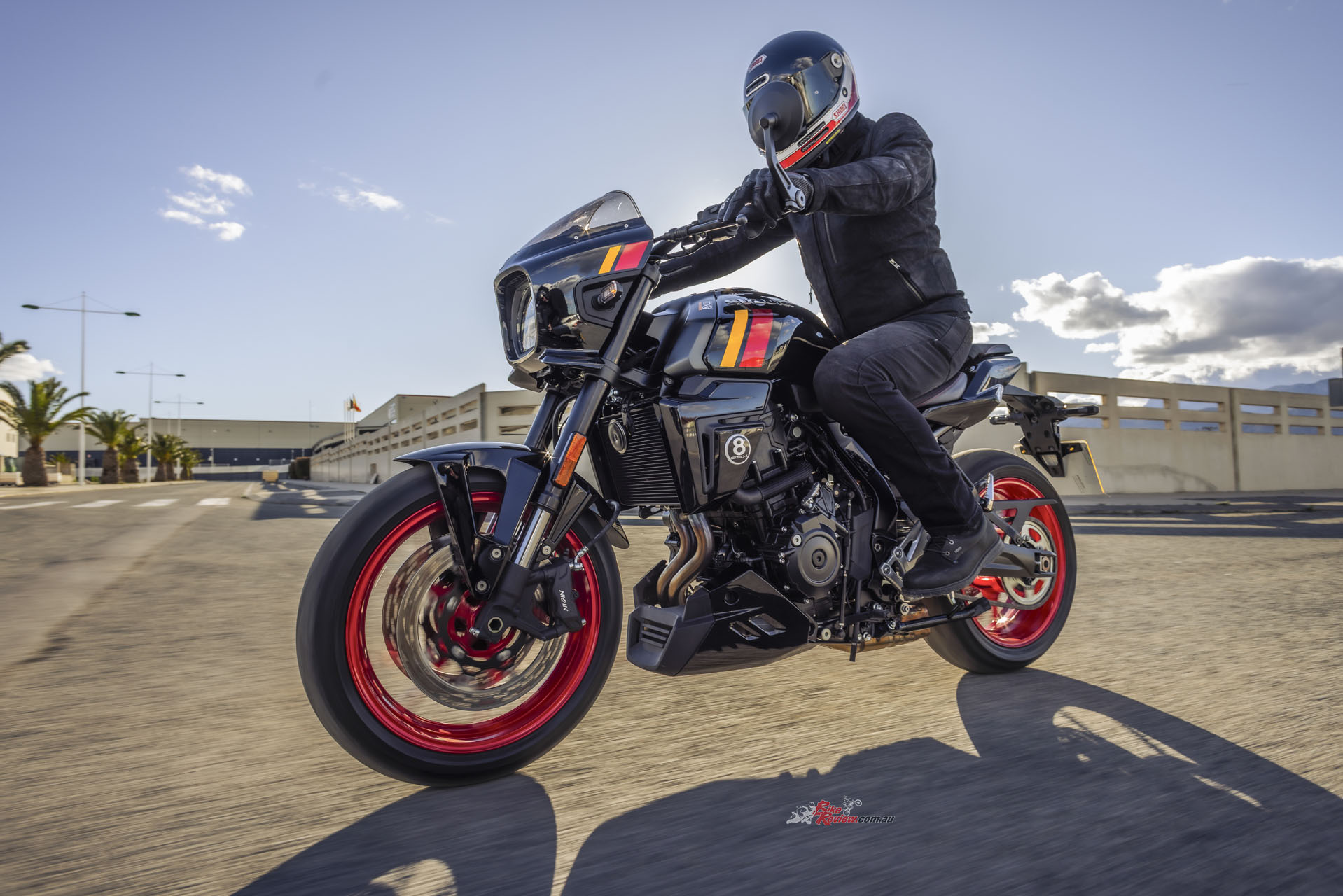
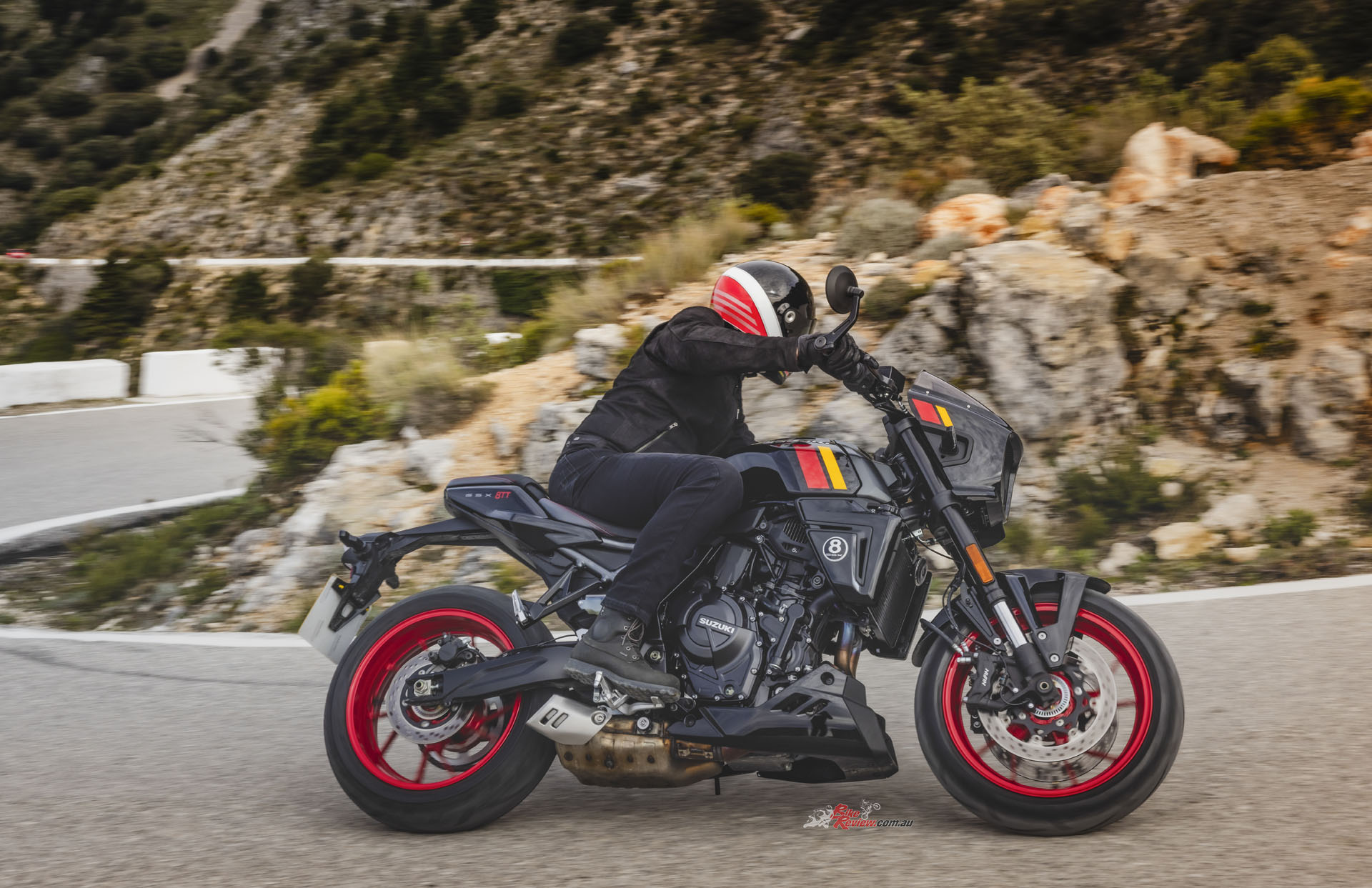
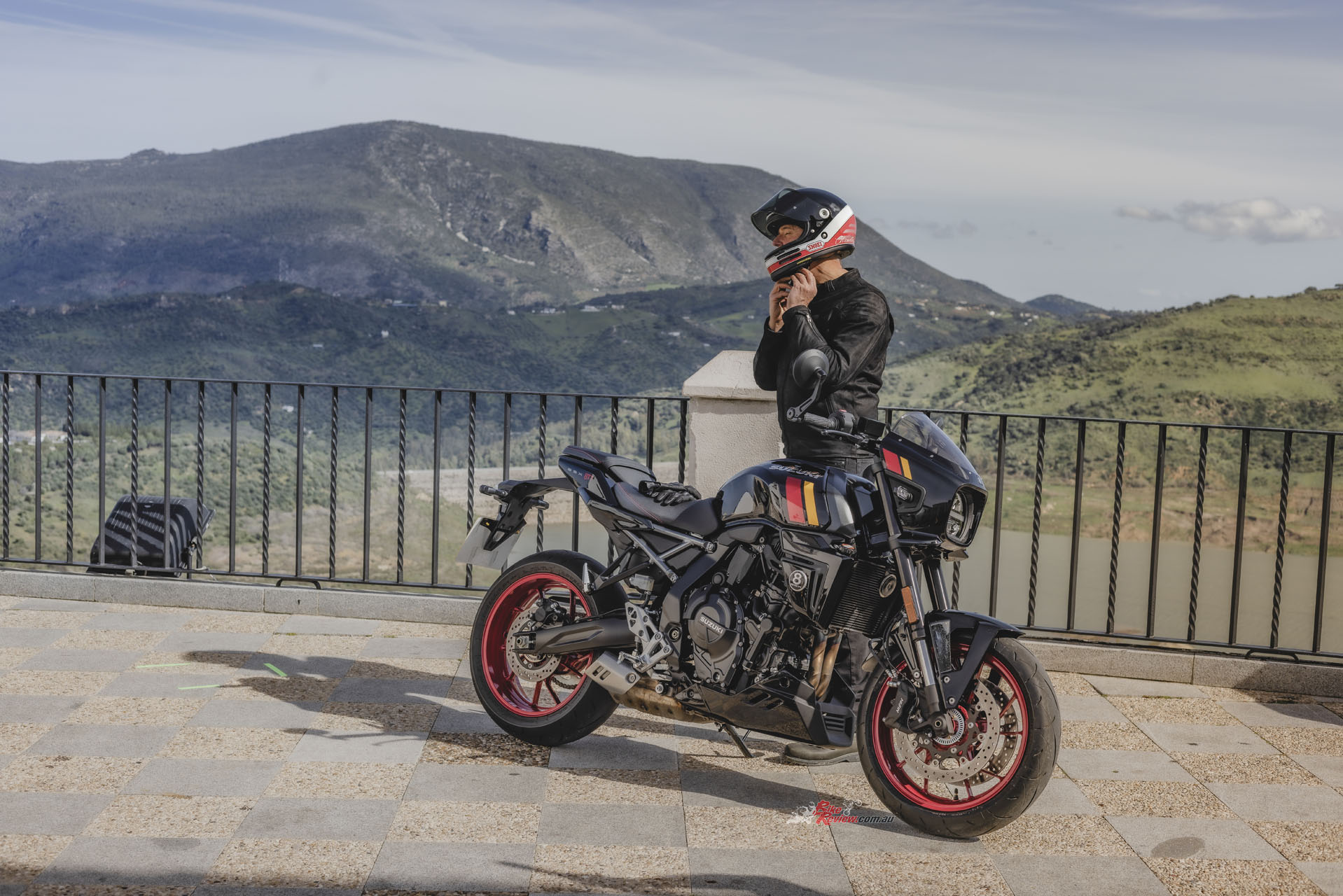
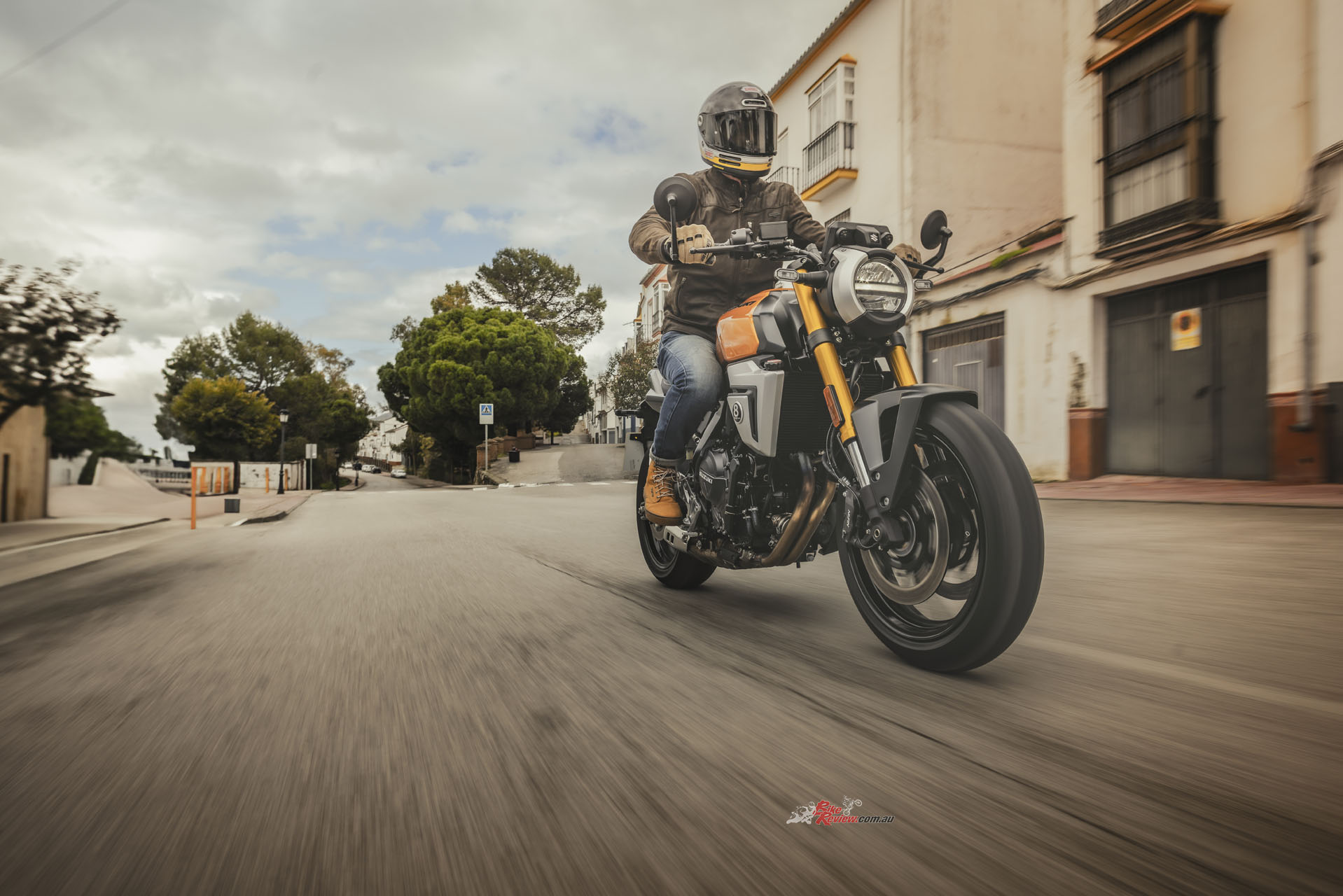
In my view, the GSX-8TT really nails the retro look. It looks fantastic. The retro vibe is strong without feeling forced, the colour schemes work beautifully and the bike has real presence. Wherever we parked, the TT attracted attention. I lost count of the number of people who asked about the TT over the week. By contrast, the GSX-8T attracted fewer fans. The TT was the clear styling winner.
“I lost count of the number of people who asked about the TT over the week”…
Personally, I struggle to see as much retro character in the GSX-8T as I do in the TT. To my eye, it looks like any number of modern nakedbikes, despite the design references Suzuki has spoken about with the T500, I can not see that like I can the GS1000 in the TT looks. The GSX-8TT, on the other hand, clearly communicates its intent and heritage and it does so convincingly.
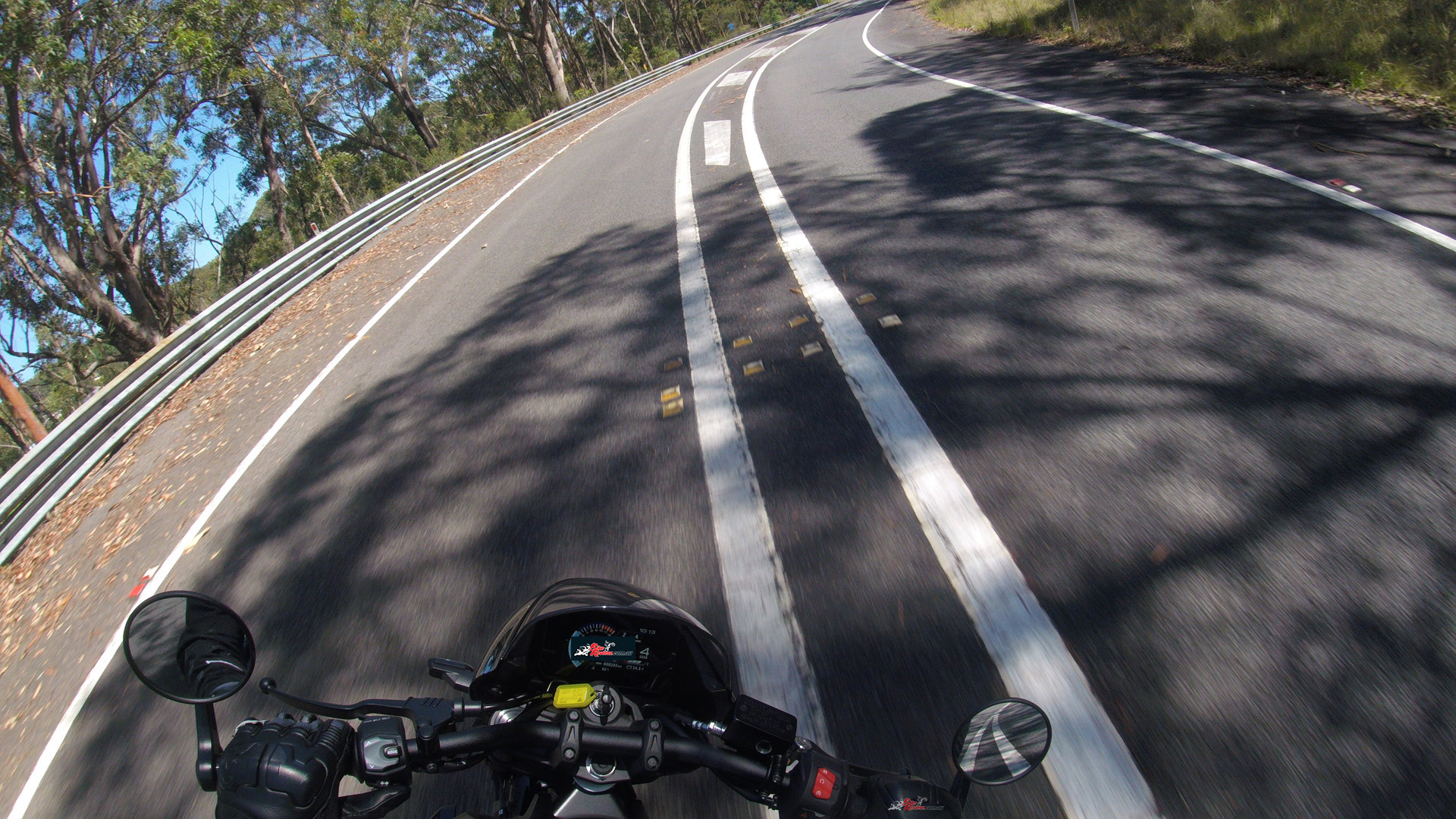
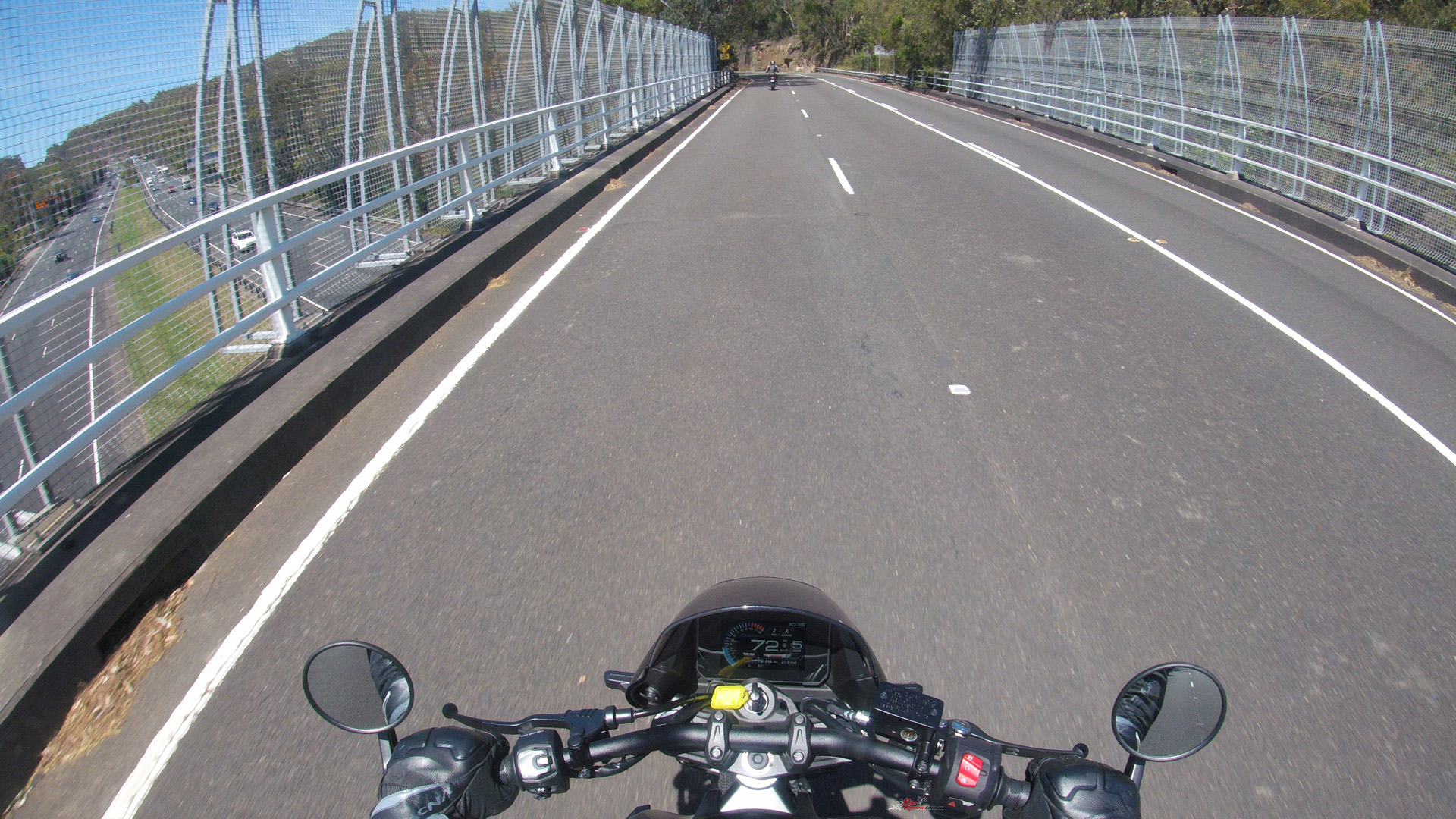
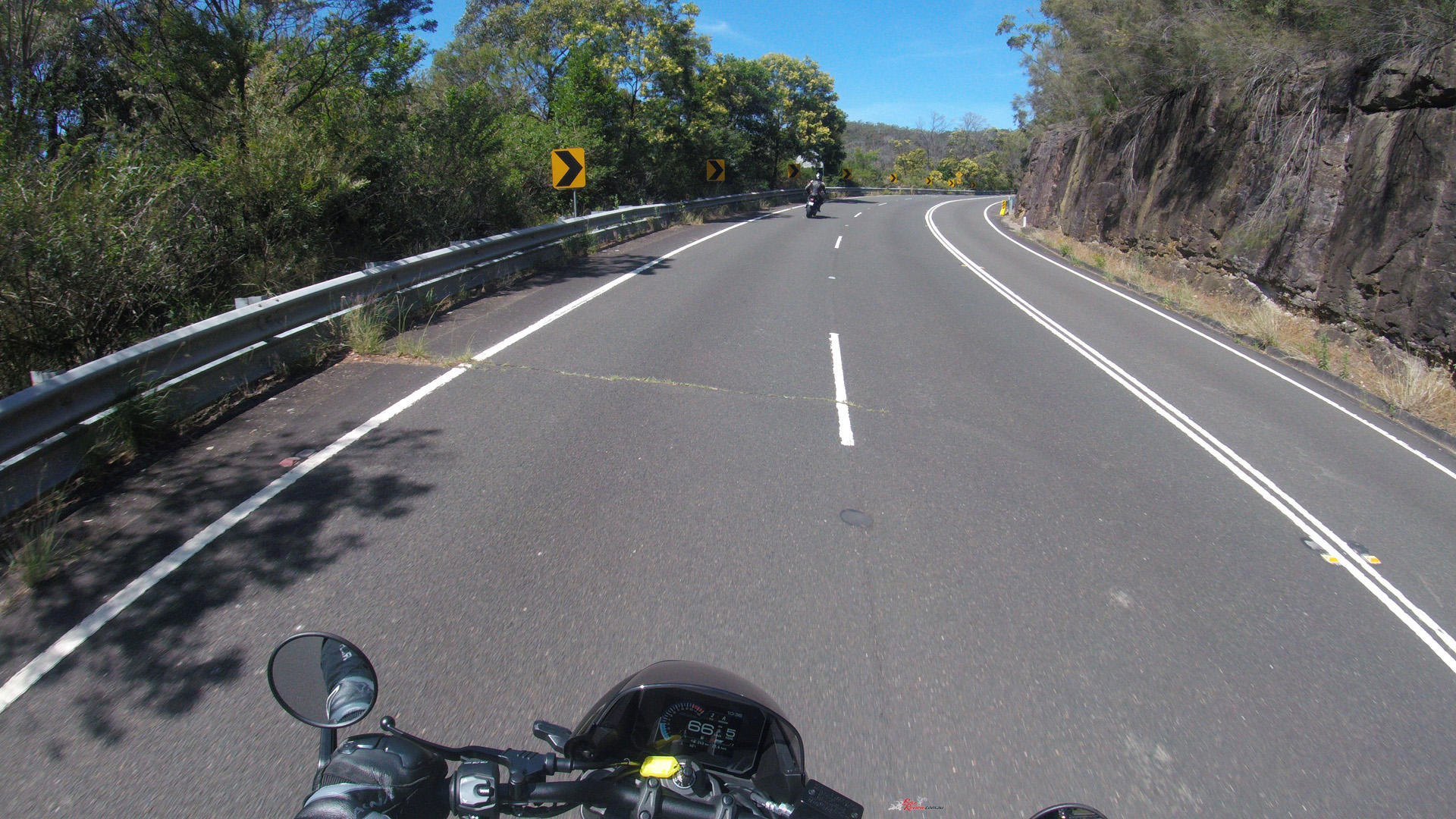
Rider’s view from behind the ‘bars of the Suzuki GSX-8TT.
That difference carries through to the riding experience. Sitting on the bikes, the GSX-8TT feels noticeably different to the GSX-8S and GSX-8T. It feels slightly taller and roomier, with a more comfortable, plush seat. The small fairing also adds an extra edge in terms of comfort and perceived refinement and retro feel. Despite only being around 5mm taller in seat height than the GSX-8T, the difference on the road is significant.
The GSX-8T feels much closer to the GSX-8S. The larger fuel tank adds a touch of visual bulk, and while the seat is broader and supportive, it is also very firm and short. There’s a noticeable bump at the rear of the seat that pushes into your tailbone and cramps you forward. Over longer rides, I found this less comfortable than the TT. Tim, interestingly, preferred the comfort of the GSX-8T to the TT, highlighting just how subjective ergonomics can be. Both bikes felt more comfortable to me overall than the GSX-8S, but of the two, the TT was my clear preference in terms of overall comfort.
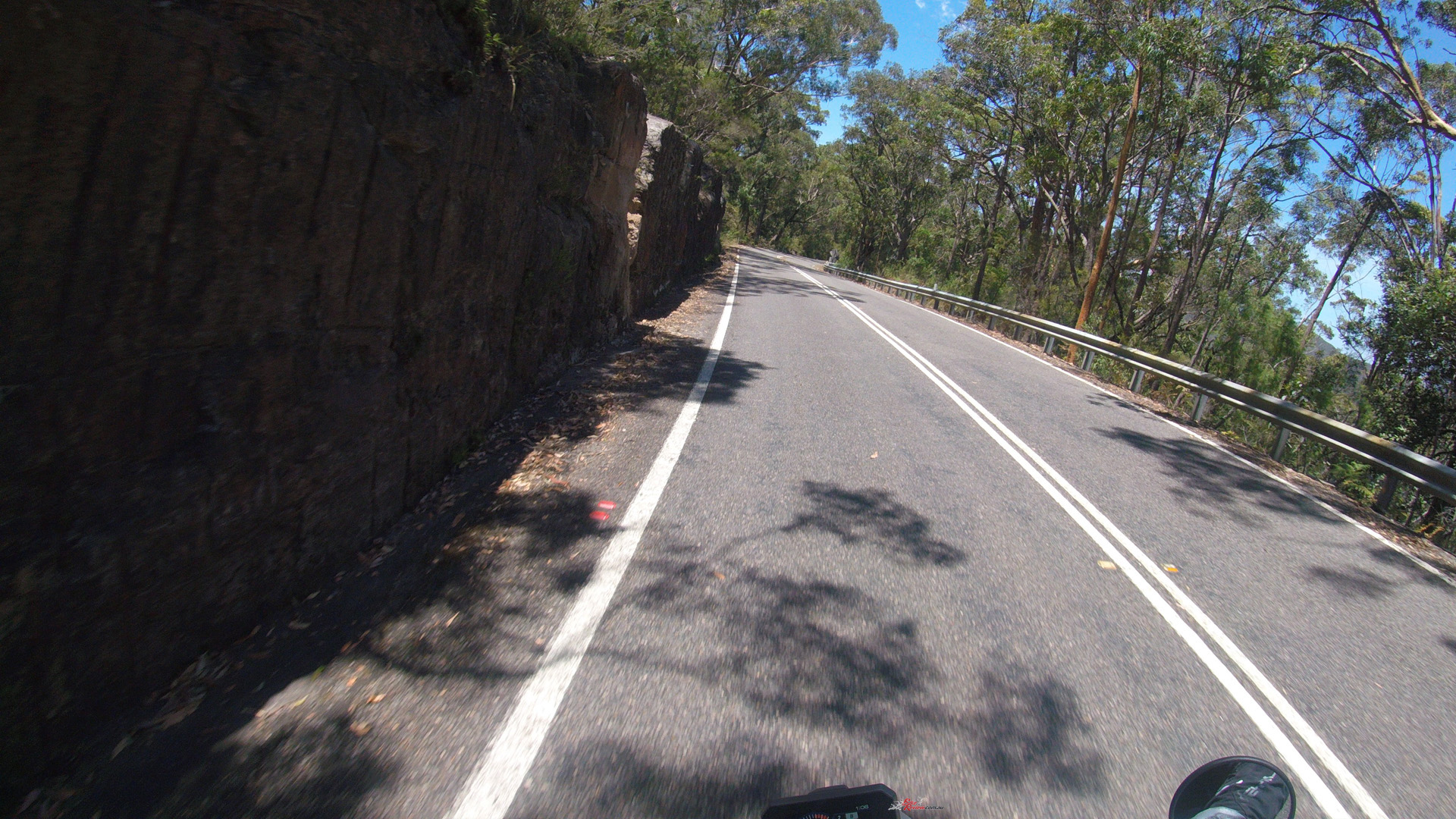
Rider’s view from behind the ‘bars of the Suzuki GSX-8T.
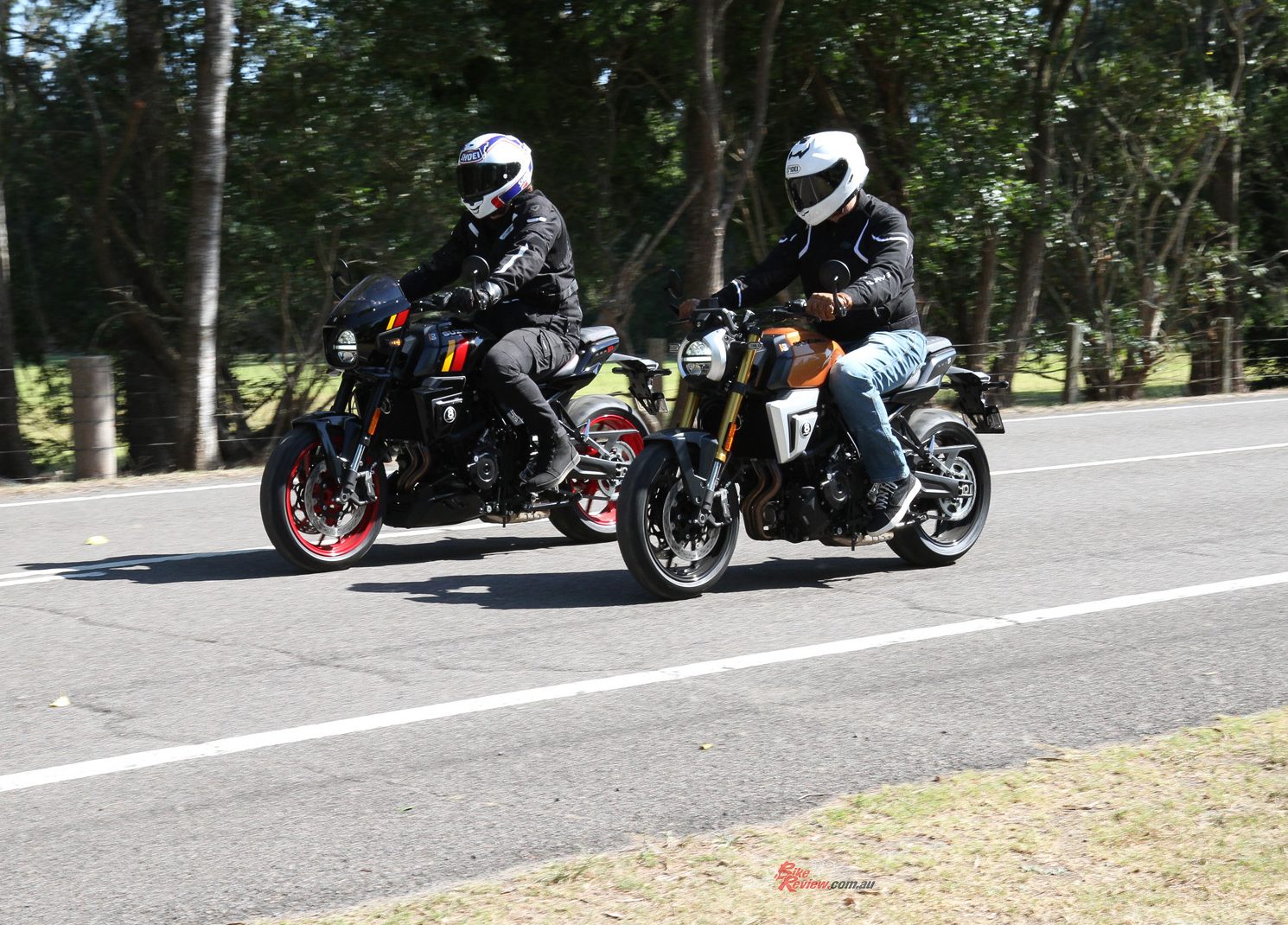
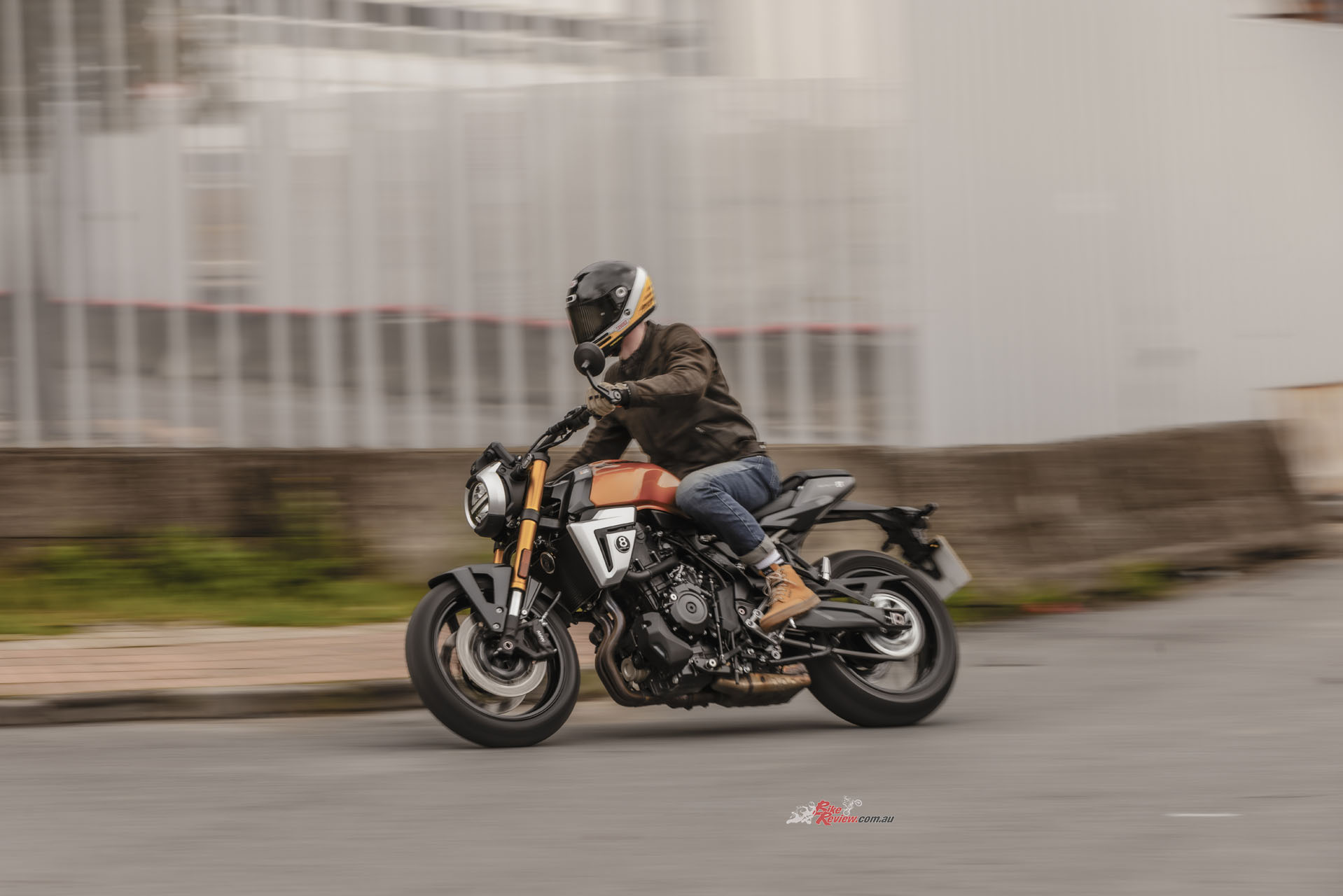
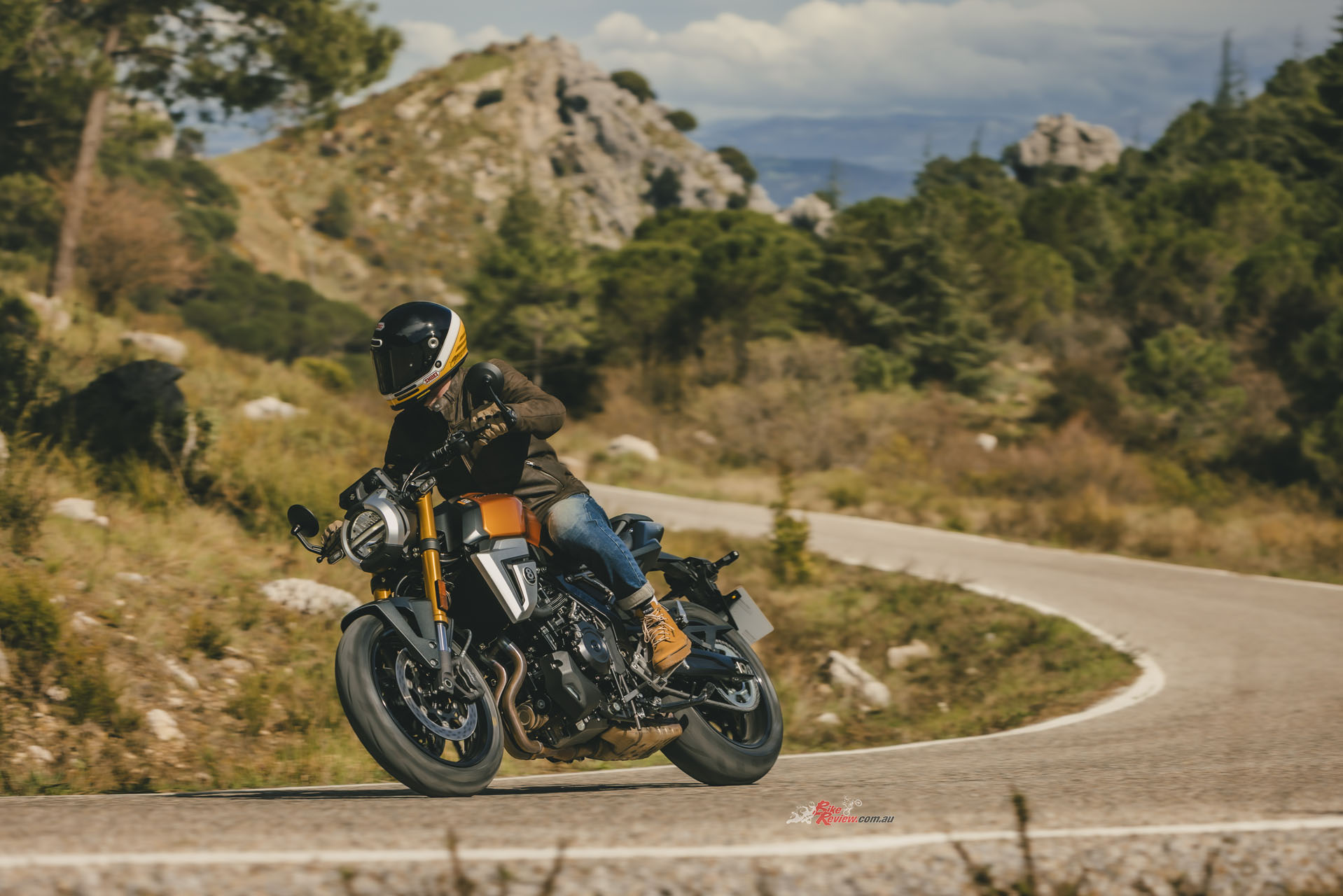
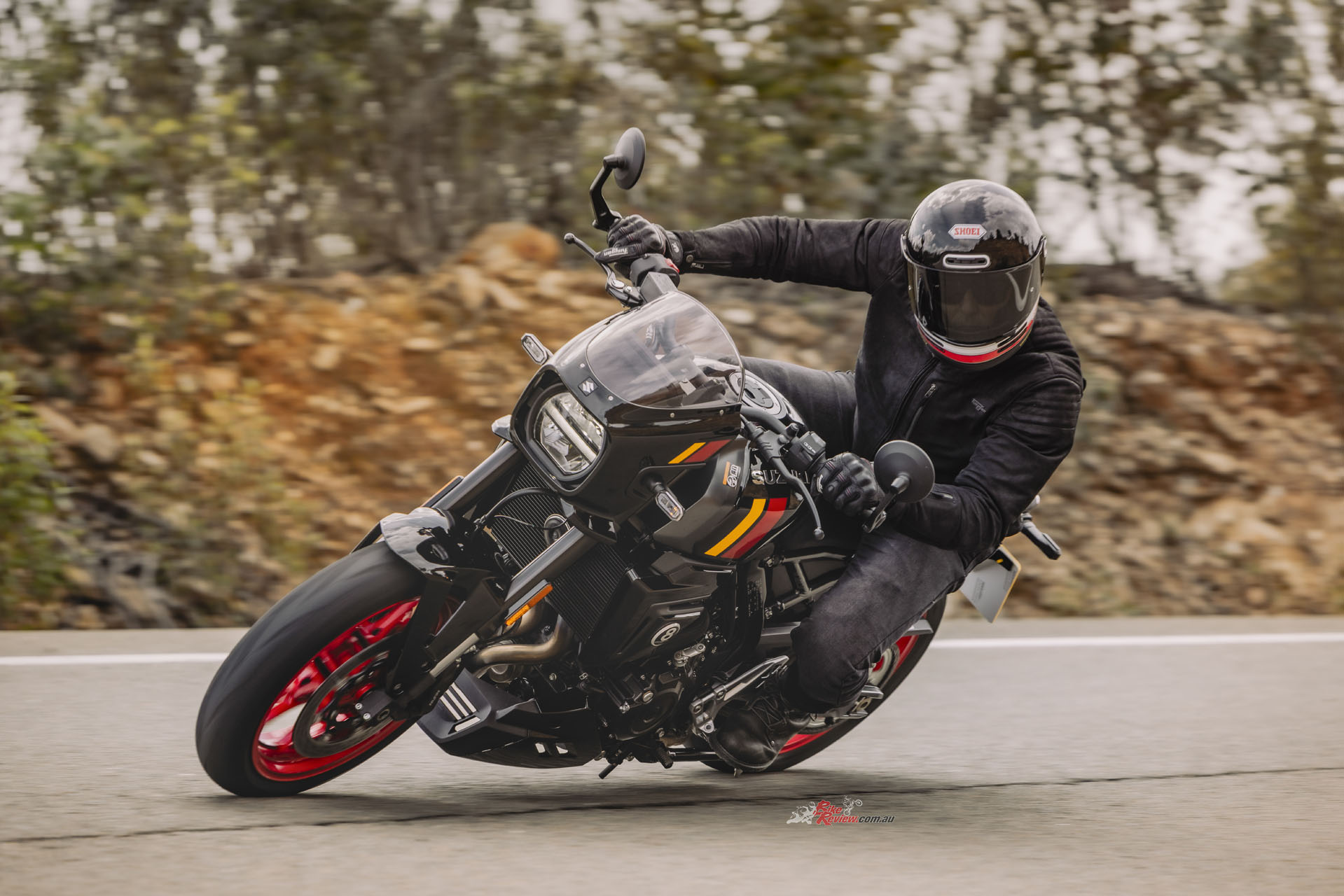
In terms of handling, both bikes are excellent. They steer easily, feel balanced and inspire confidence quickly. On our test roads, however, all three of us agreed that the GSX-8T felt slightly livelier and sportier than the GSX-8TT, despite identical suspension settings. The difference is subtle, but noticeable, and likely comes down to a combination of seat height, weight and riding position.
The TT was universally agreed to be the nicer, more comfortable ride, but the 8T edged it when the pace increased to more than a cruise. Electronics and instrumentation are identical across the GSX-8 range. The TFT dash and switchgear are unchanged, intuitive and easy to use. Traction control intervention is smooth, ride modes are well mapped and the ABS does its job.
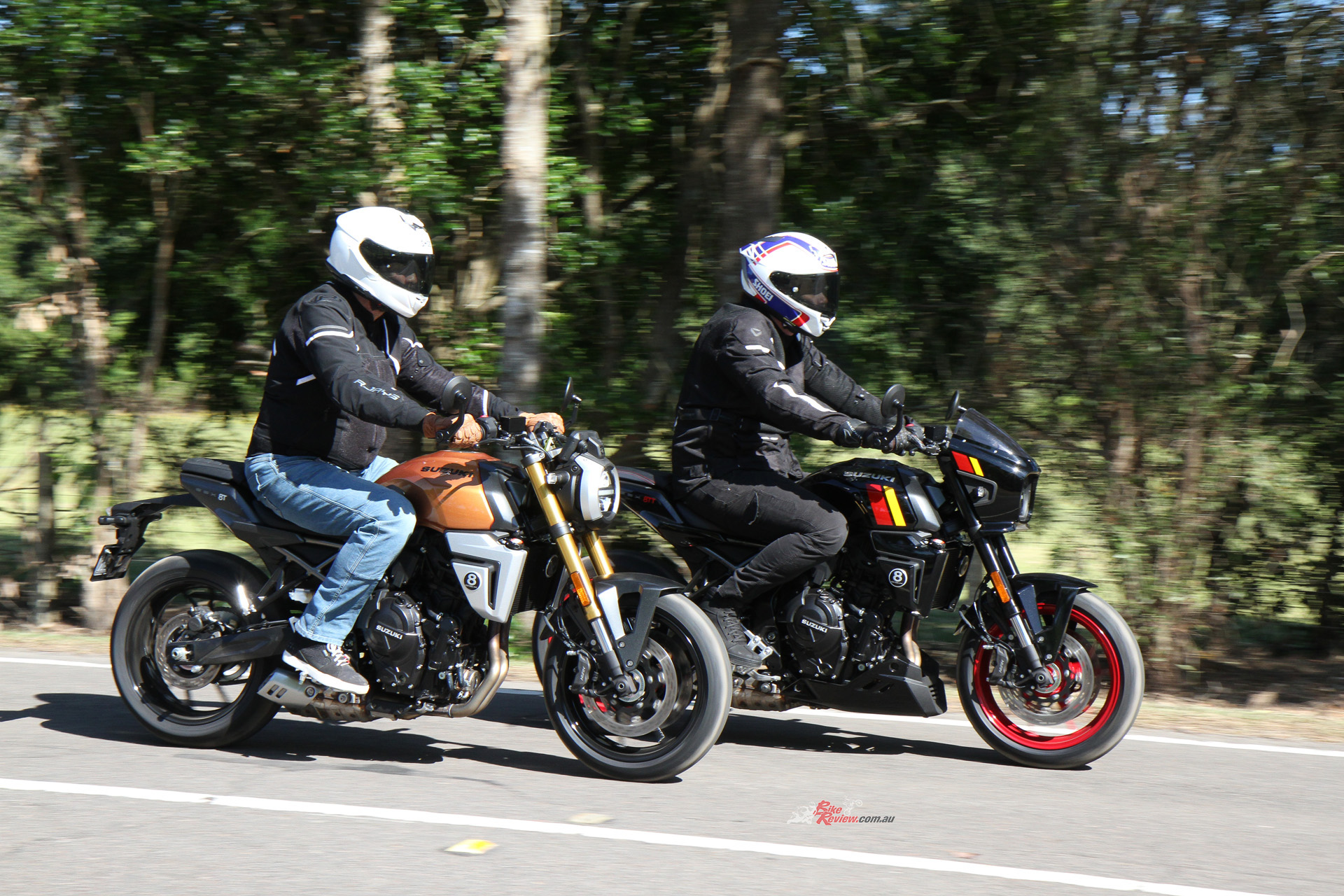
The TT was universally agreed to be the nicer, more comfortable ride, but the 8T edged it when the pace increased to more than a cruise.
There are, however, some omissions that are hard to ignore at this price point. Cruise control would make a big difference on longer highway runs. Dash connectivity is increasingly expected, and more suspension adjustment would help riders fine-tune the bikes to their weight and riding style. The bar-end mirrors look great and are well positioned, but they do make the bike noticeably wider when lane splitting in traffic.
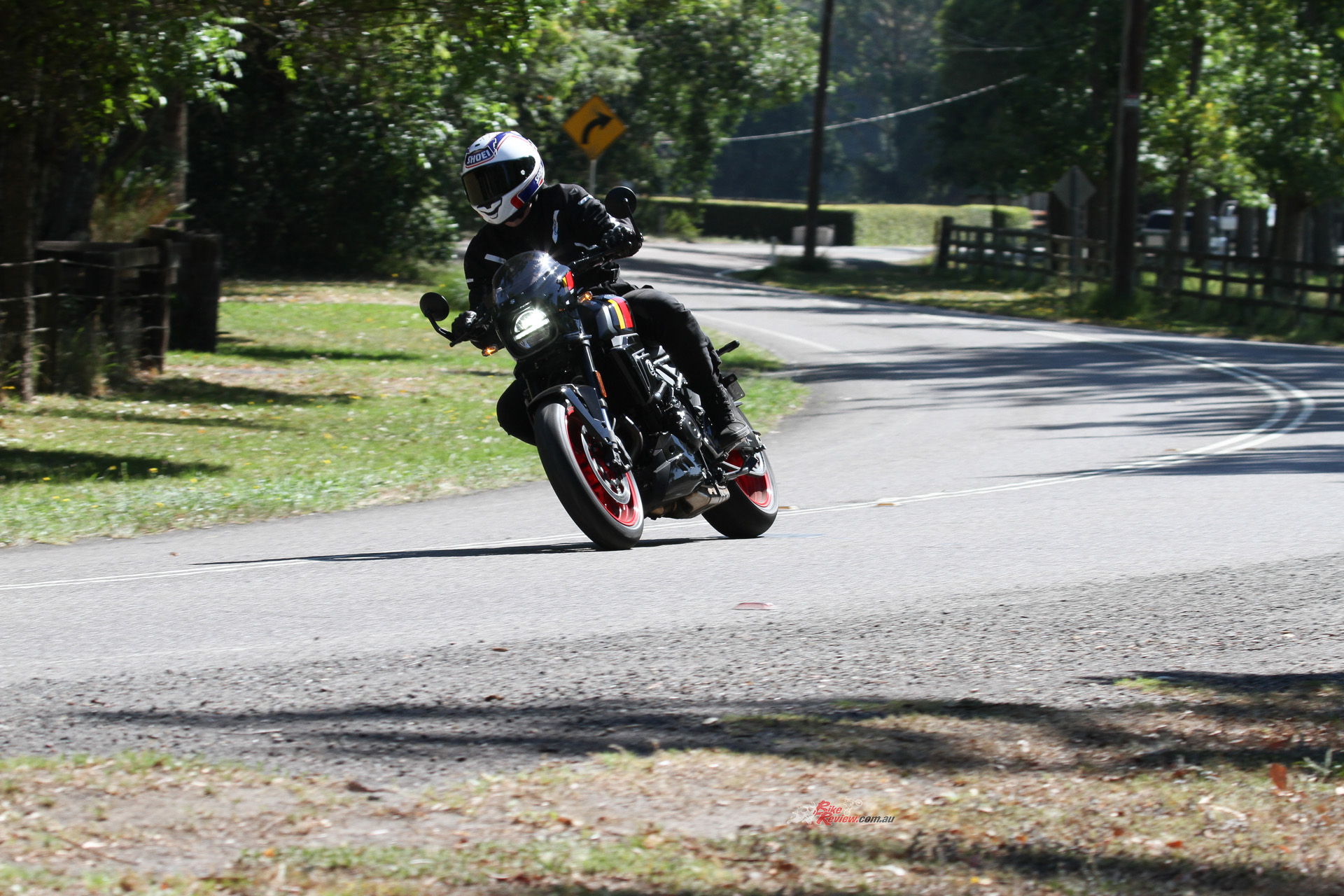
Of the two, the GSX-8TT stands out as the more cohesive and emotionally engaging package.
Pricing is something prospective buyers will need to weigh carefully. The GSX-8S is significantly cheaper and, once you’re riding, fundamentally delivers the same mechanical experience. You can’t see your bike while you’re riding it, after all. That said, if styling matters — and for many riders it absolutely does — the GSX-8T and especially the GSX-8TT offer compelling alternatives. Personally, I’d choose the TT and happily stretch the budget to do so, though I do spend a fair bit of time in the shed drinking beer and looking at my bikes!
Suzuki hasn’t reinvented the GSX-8 formula here, and it didn’t need to. Instead, it has refined and reinterpreted it through two very different design lenses. The GSX-8T and GSX-8TT add genuine depth and choice to the GSX-8 lineup, appealing to riders who want the proven performance of Suzuki’s excellent middleweight platform without the sharp, manga-style aggression of the GSX-8S or the sport-focused stance of the GSX-8R. Of the two, the GSX-8TT stands out as the more cohesive and emotionally engaging package, but both are outstanding all-rounders that reinforce just how good Suzuki’s GSX-8 platform really is…

Heritage Breakout: Suzuki T500
The original Suzuki T500, launched in the late 1960s, was one of the most important large-capacity two-strokes of its era and played a key role in establishing Suzuki’s reputation for building fast, robust road bikes. Known variously as the T500, Cobra, Titan and Five, the air-cooled 492cc parallel twin delivered strong, reliable performance at a time when many large two-strokes were fragile or temperamental.
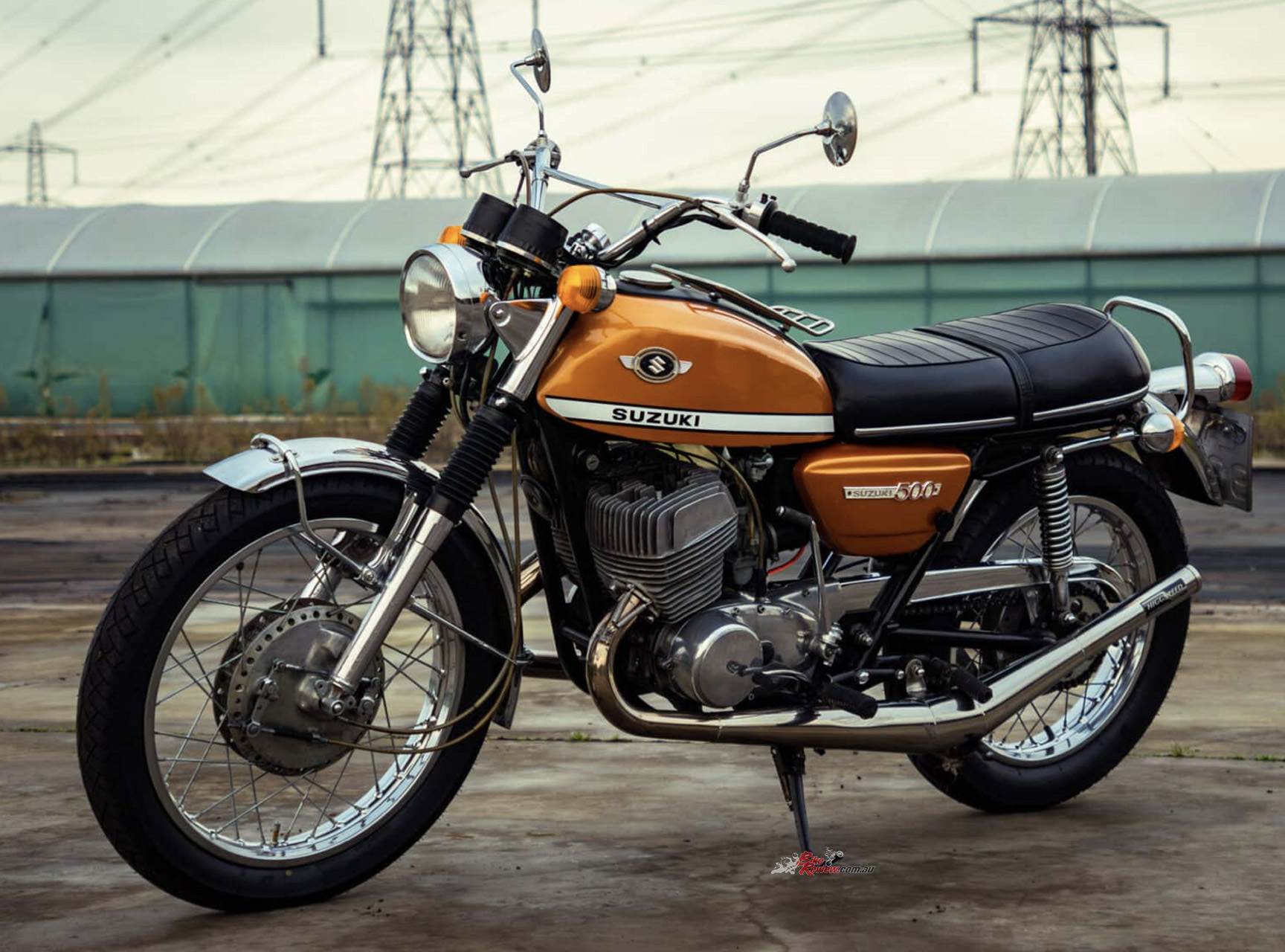
What set the T500 apart was its torque and durability. It wasn’t a highly strung racer replica but a muscular, real-world road bike capable of long-distance touring and everyday use. Its simple, purposeful styling and broad-shouldered stance gave it a presence that appealed to riders who wanted substance over flash.
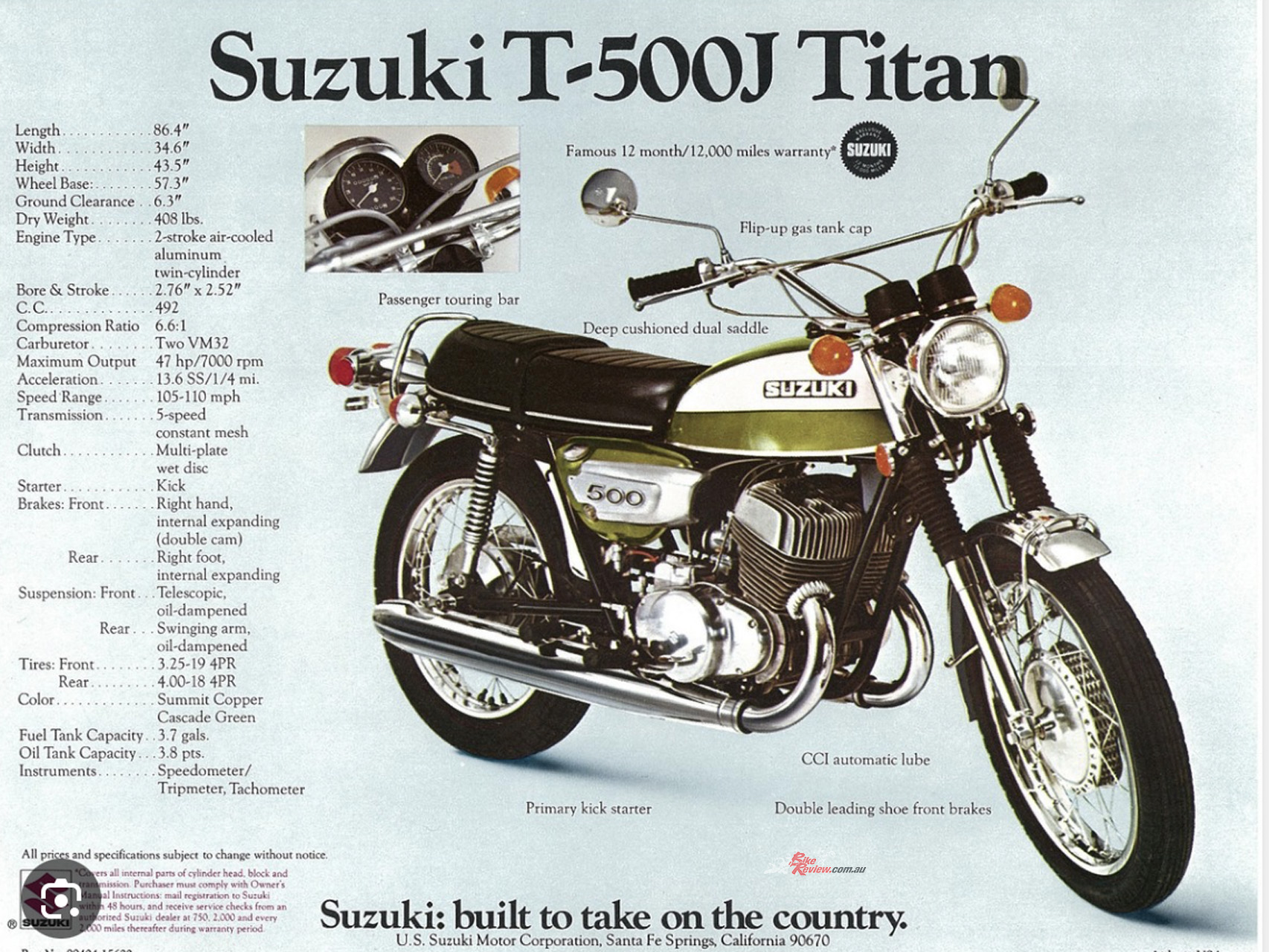
That philosophy is what Suzuki references with the GSX-8T. While the modern bike shares no mechanical DNA with the original T500, the intent is similar: strong, accessible performance, honest road manners and a design that prioritises usability over outright aggression.
Heritage Breakout: Suzuki GS1000
The Suzuki GS1000 is one of the most influential motorcycles in the brand’s history and a machine that helped define the superbike era. Introduced in 1978, the GS1000 was a large-capacity, air-cooled four-stroke that combined strong performance with stability and reliability, quickly earning respect on both the road and the racetrack.
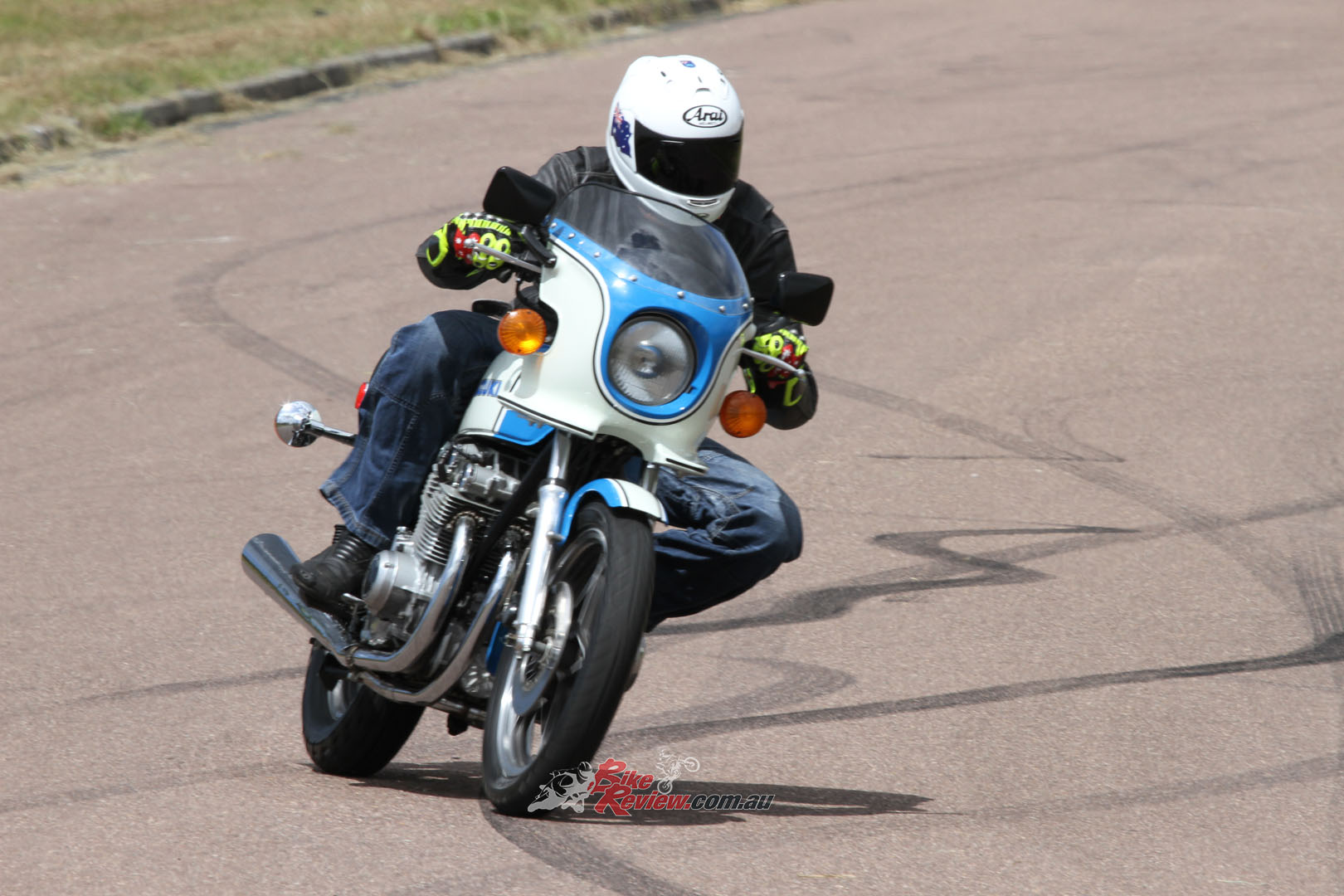
Jeff testing the GS1000.
Its legacy was cemented through racing success, most notably in AMA Superbike competition, where the GS1000-based machines helped propel Suzuki to international prominence. The bike’s muscular proportions, upright stance and purposeful fairings became visual hallmarks of late-1970s and early-1980s performance motorcycles.
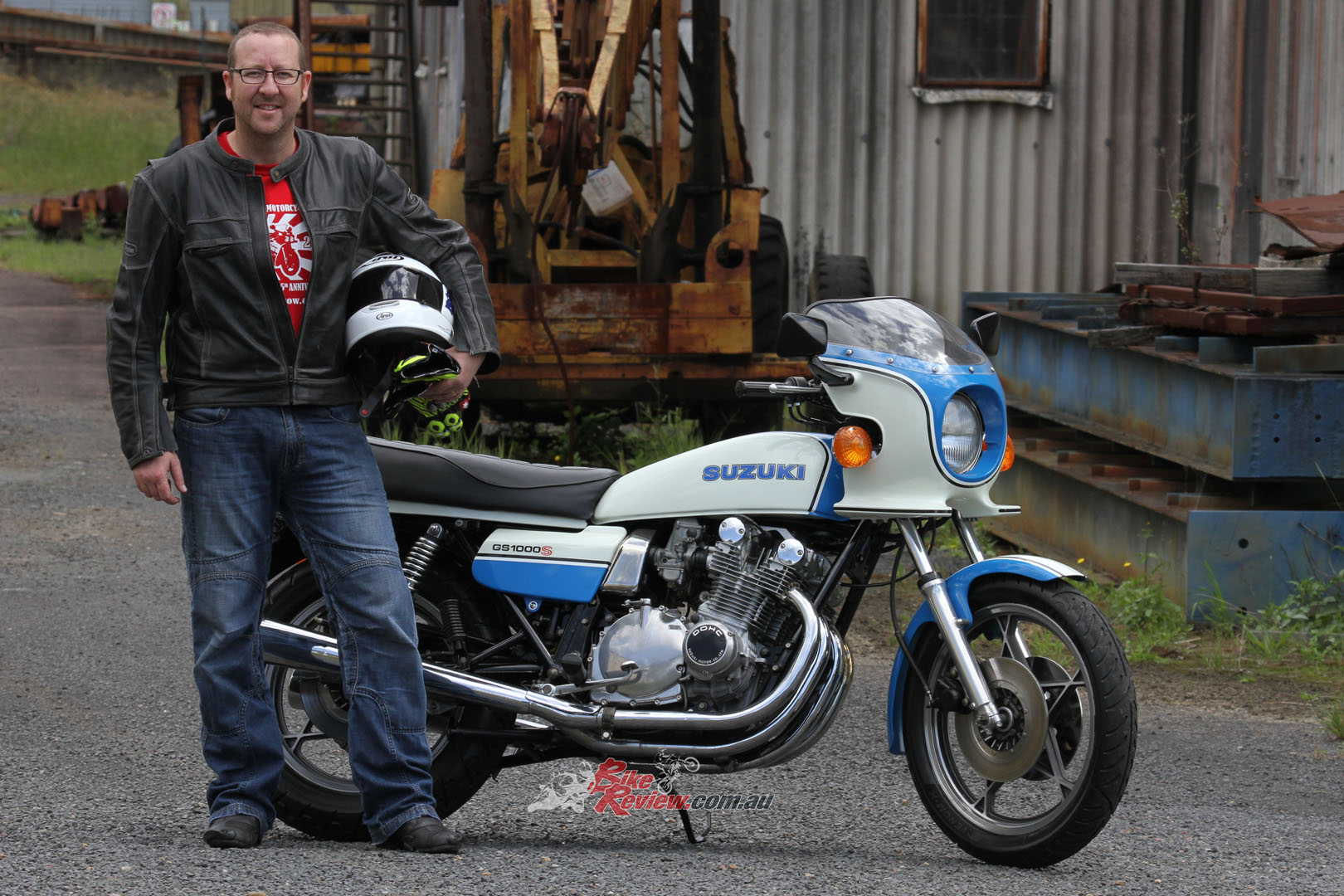
The GSX-8TT draws directly from this lineage, particularly in its front cowl and overall stance. While thoroughly modern underneath, the TT channels the GS1000’s blend of presence, performance and everyday rideability, capturing the spirit of a machine that proved big, fast bikes could also be practical and durable. Read our test on the original Wes Cooley replica GS1000 here…
Tech Talk Suzuki GSX-8T and GSX-8TT
The GSX-8T and GSX-8TT represent a nostalgic nod to Suzuki’s golden era of the 1960s through 1980s, while bringing thoroughly modern rideability and technology to the table. For those familiar with Suzuki’s recent middleweight range, it’s clear the brand is working hard to diversify the versatile 776cc platform to suit every rider preference.
Retro Inspired With Modern Twist
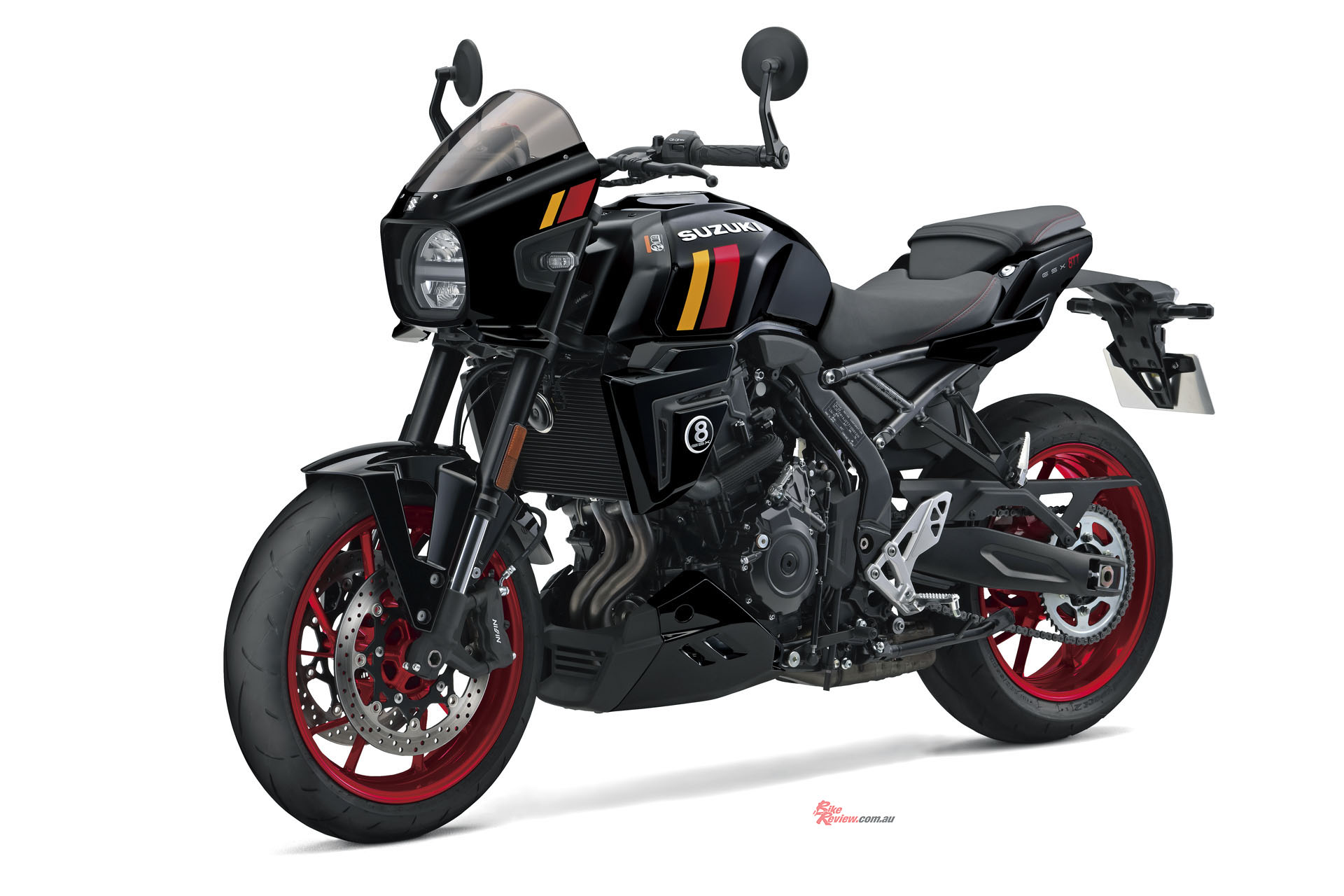
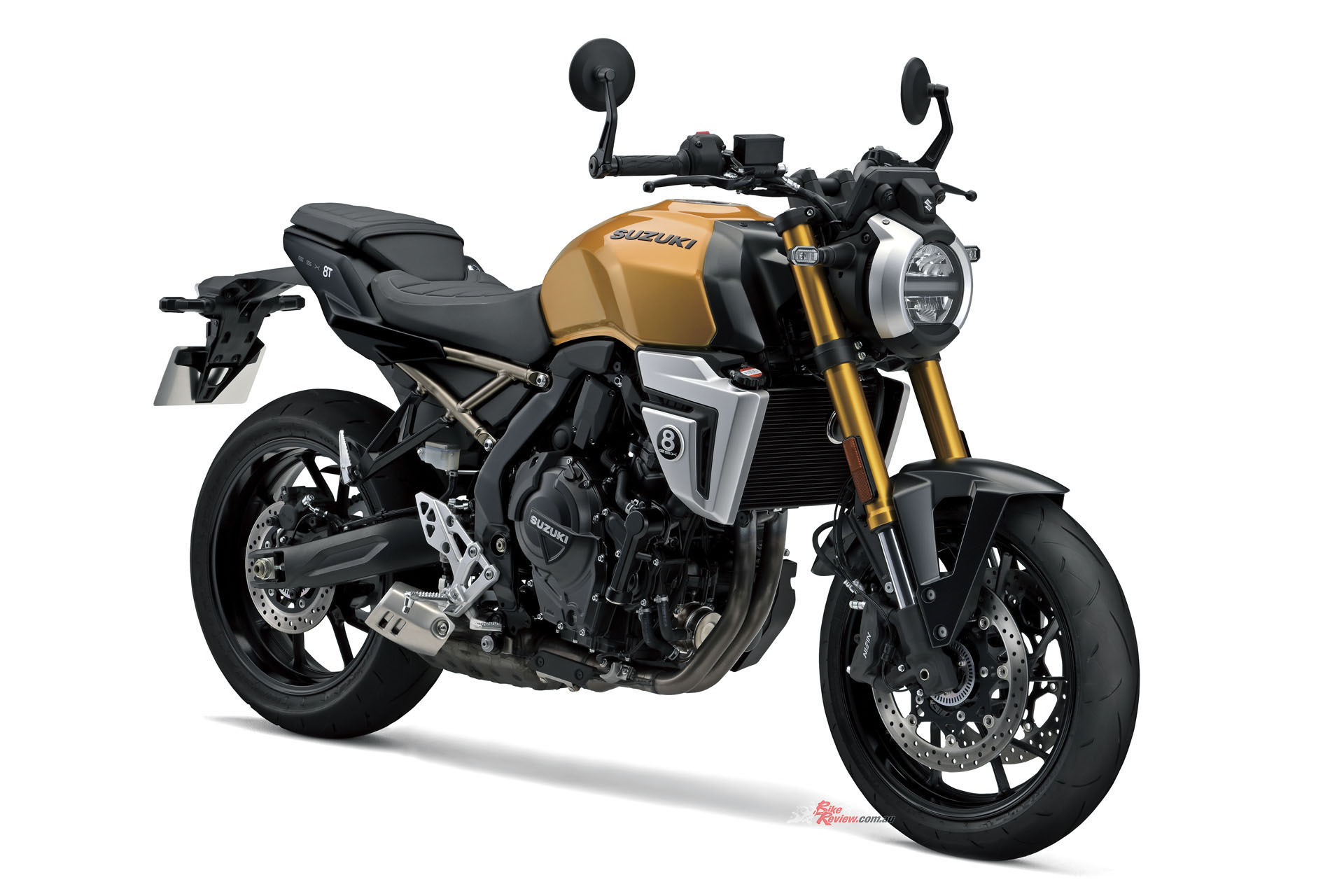
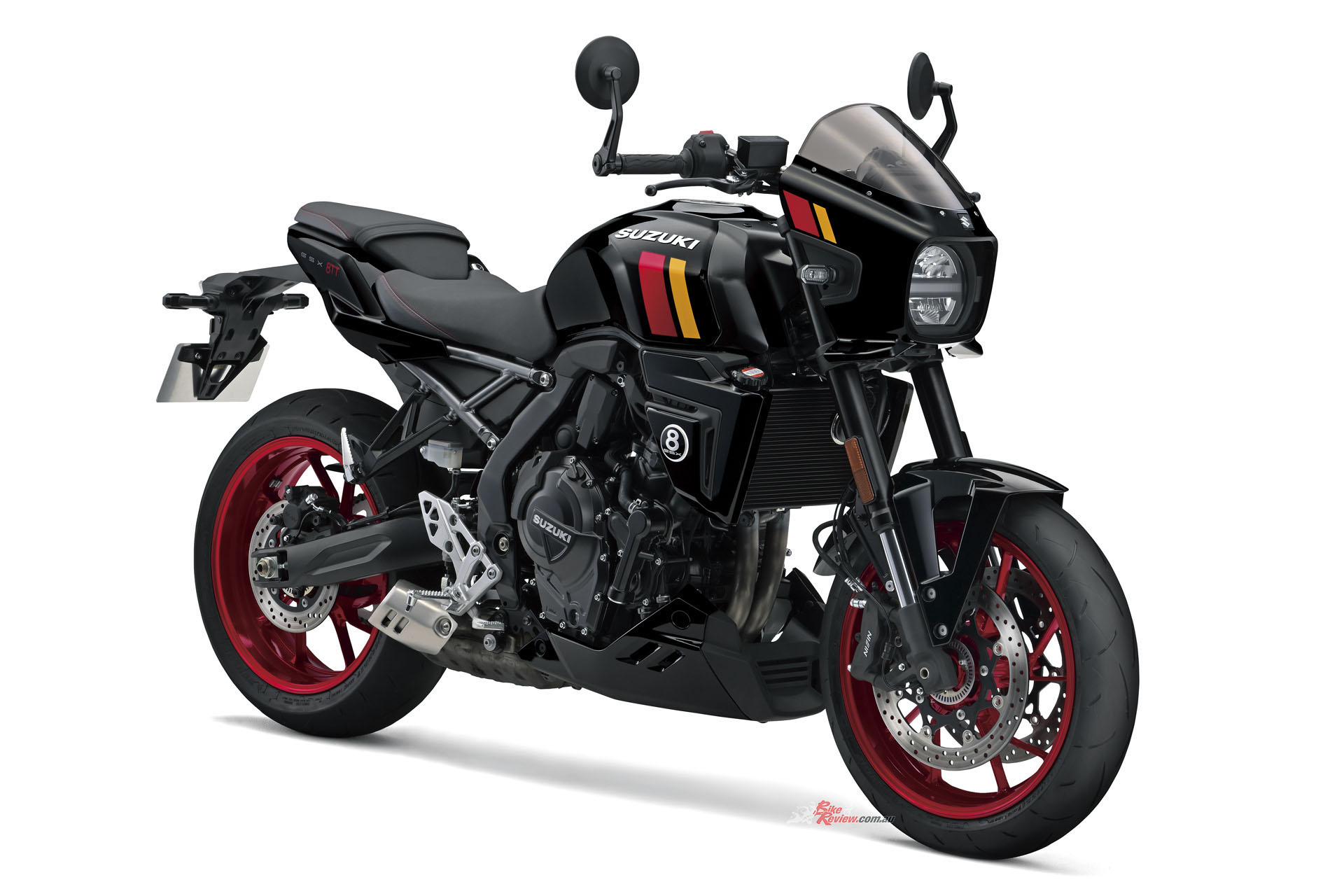
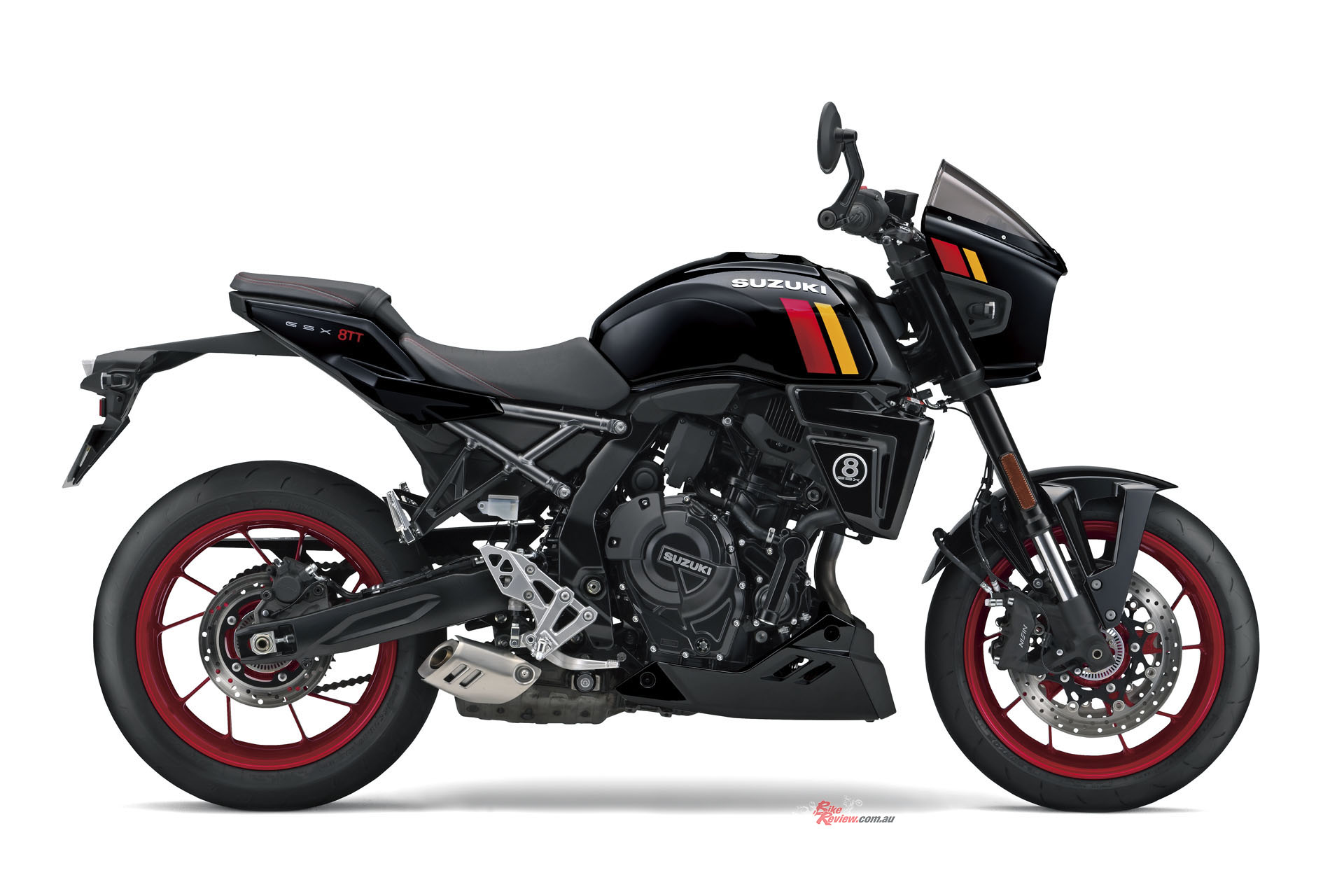
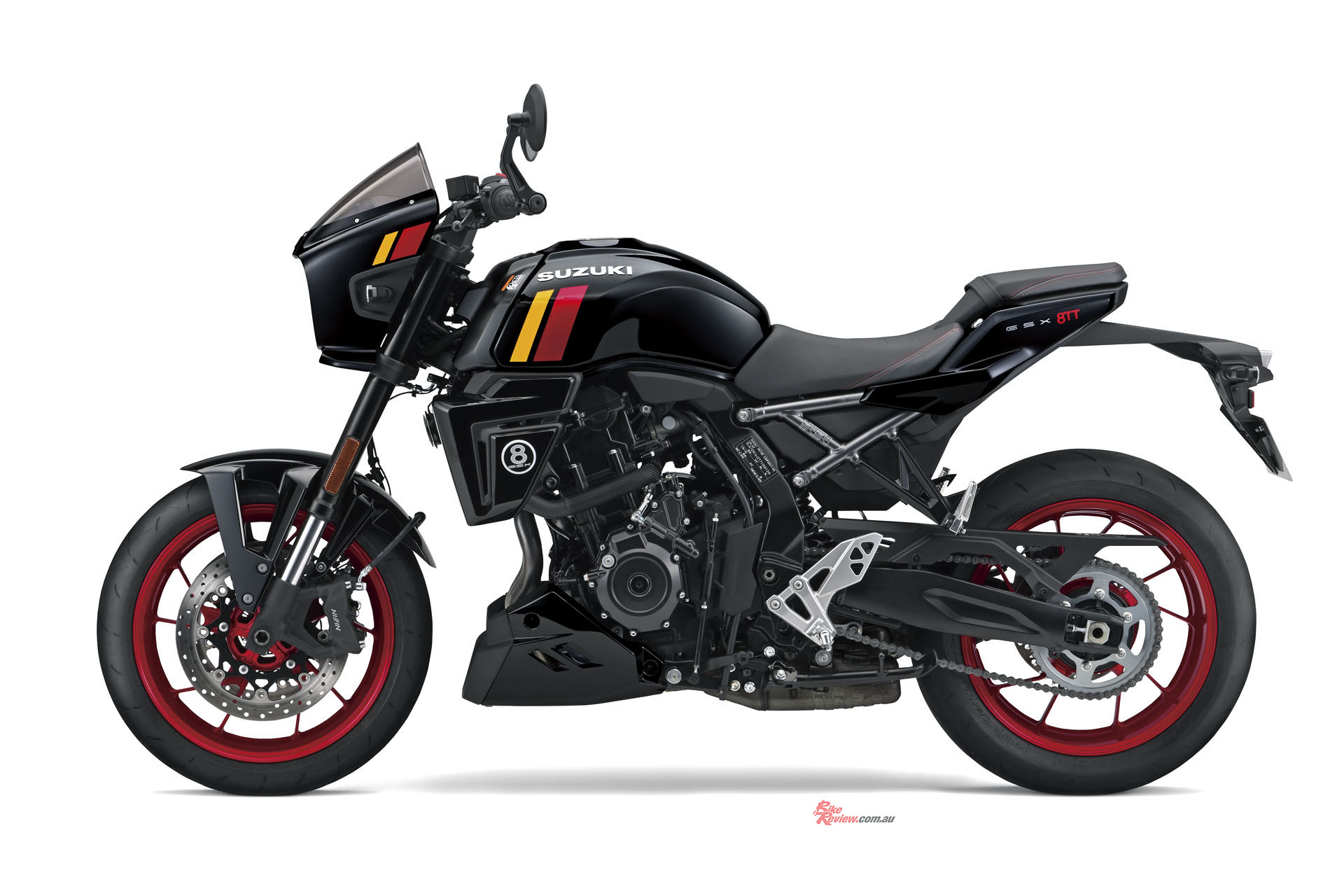
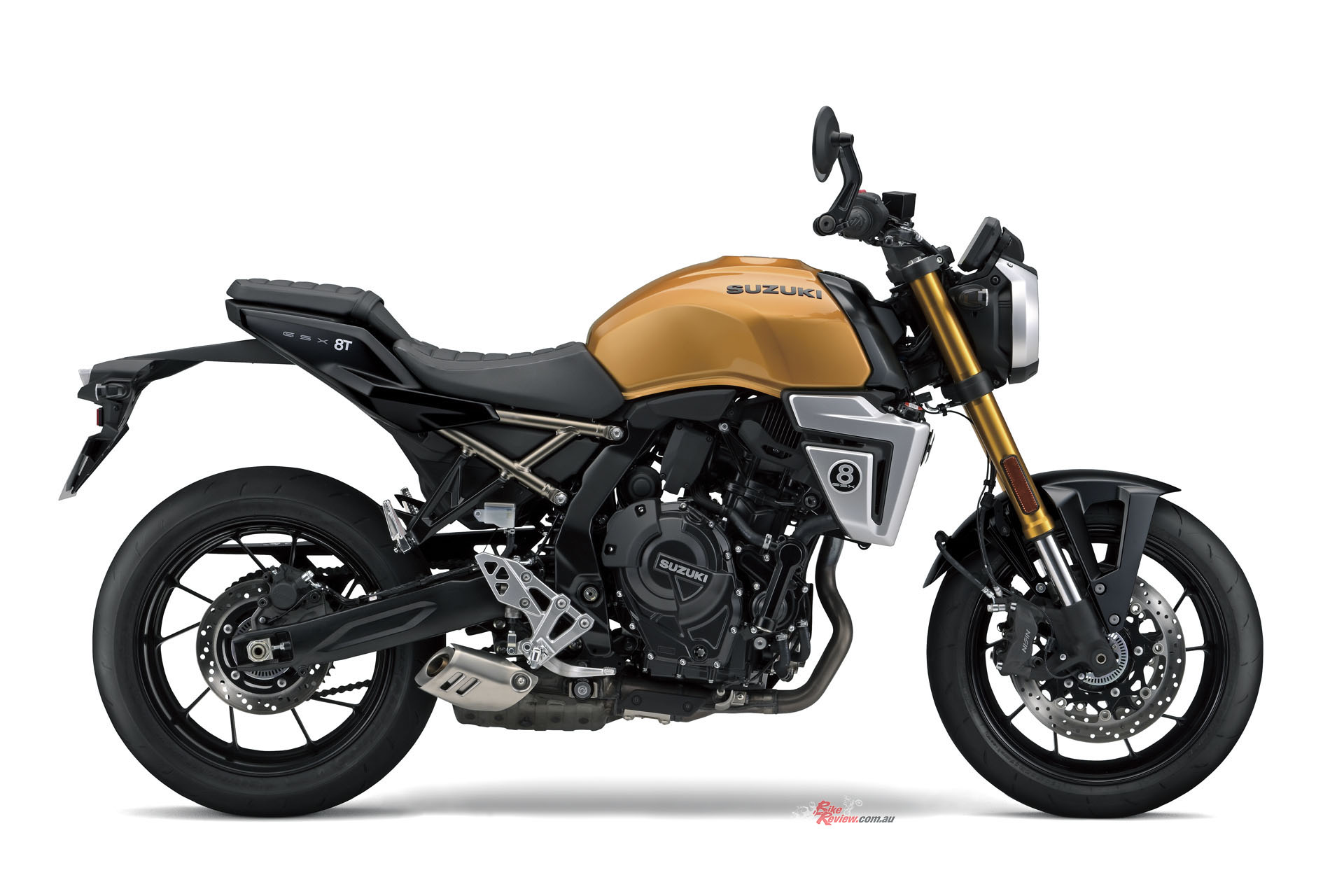
The GSX-8T draws styling cues from icons like the Suzuki T500, boasting minimalist lines, a sculpted 16.5-litre fuel tank, and wide tapered handlebars complemented by Suzuki’s first bar-end mirrors. The GSX-8TT takes that design a step further, with a vintage-inspired front cowl reminiscent of the Yoshimura GS1000 racers of the late 1970s and early 1980s (read our Wes Cooley GS1000 review here), adding aerodynamic performance and unmistakable attitude.
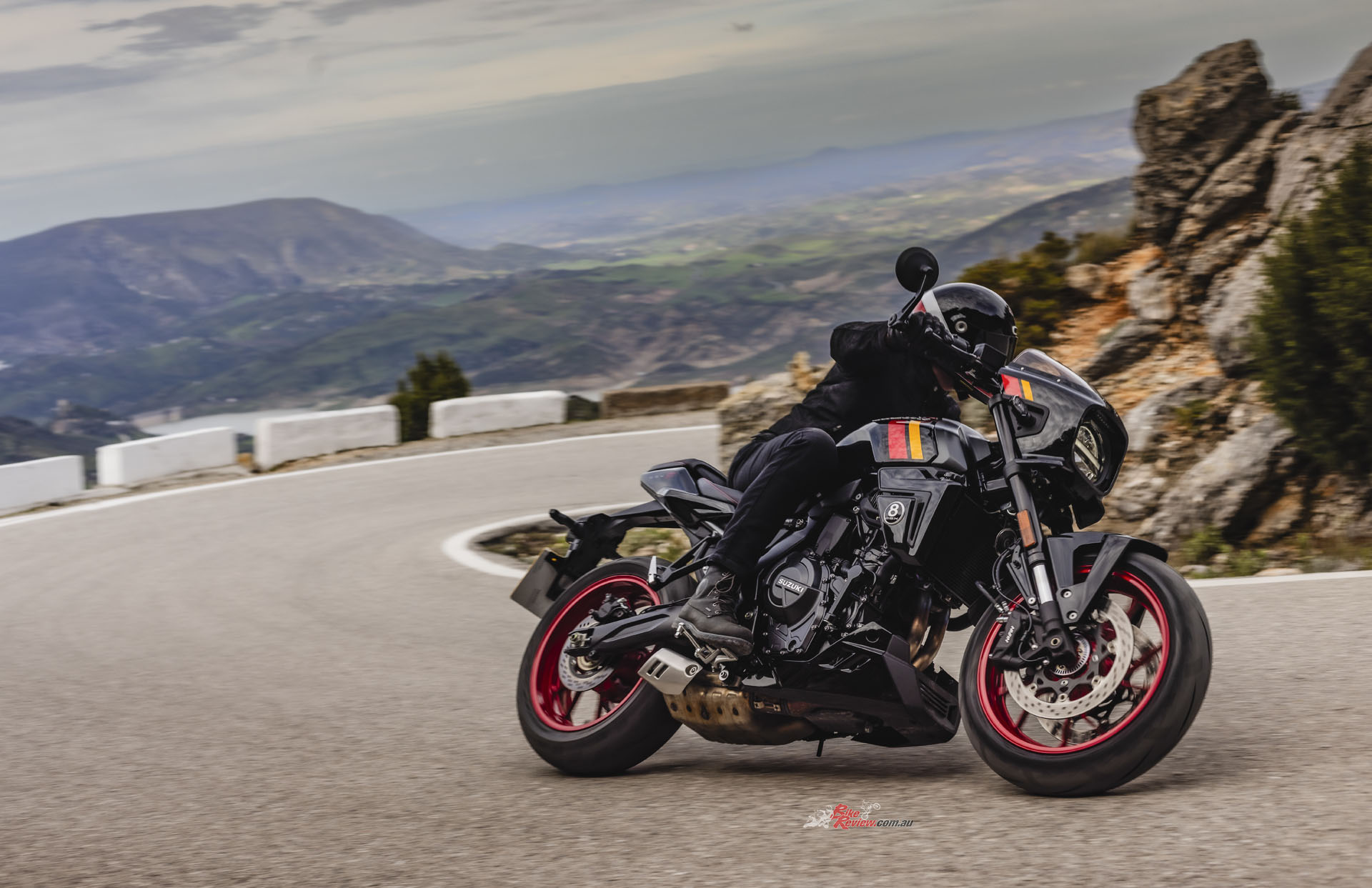
Both models feature Suzuki’s acclaimed 776cc DOHC parallel twin engine, producing a claimed 61kW at 8500rpm and 78Nm at 6800rpm.
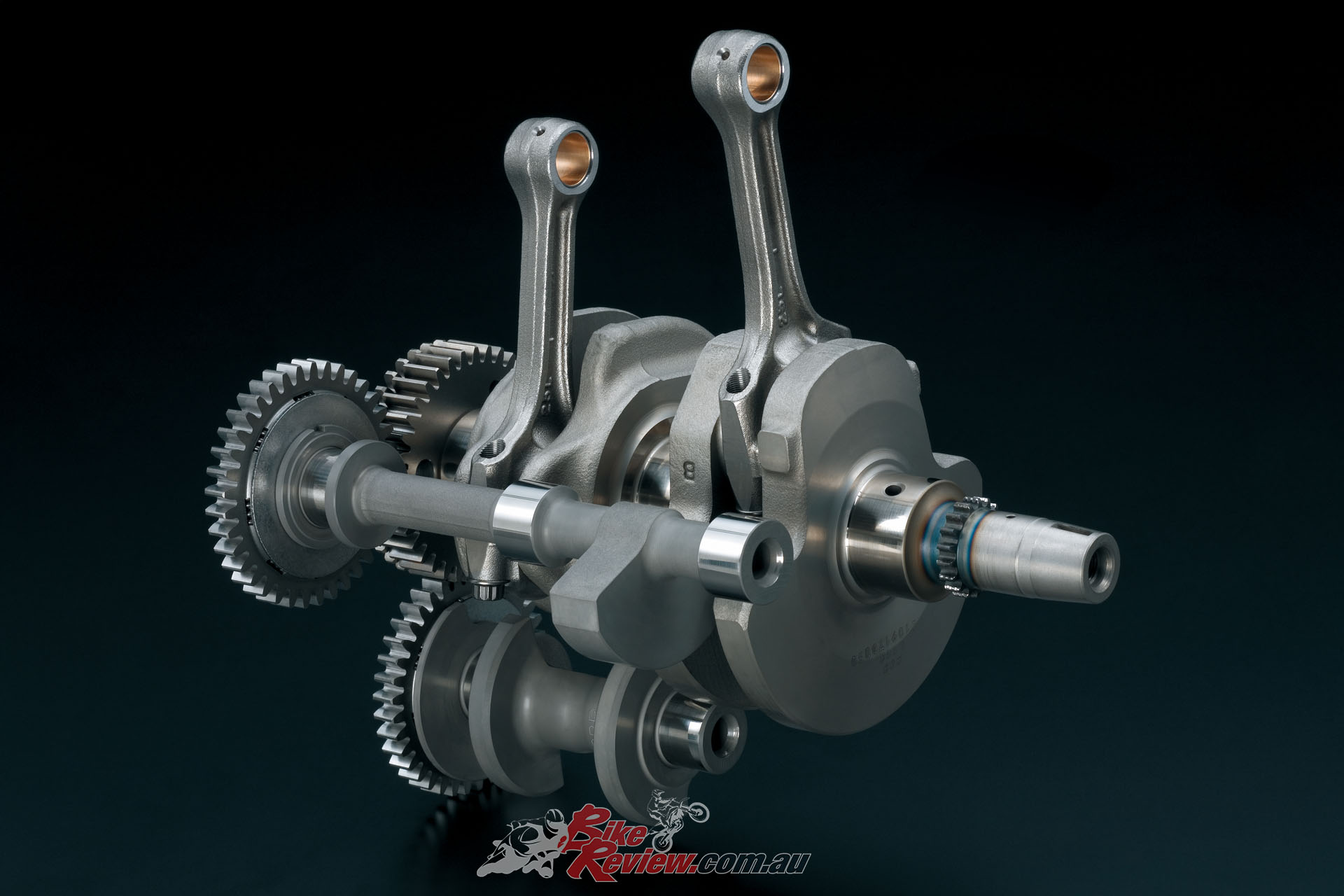
Both models feature Suzuki’s acclaimed 776cc DOHC parallel twin engine, producing a claimed 61kW at 8500rpm and 78Nm at 6800rpm. Its 270° crankshaft delivers the character and pulsing feel of a V-twin, an approach Suzuki also uses in the V-STROM 800 and V-STROM 800DE models, while retaining the compact dimensions and smoothness of a parallel twin.
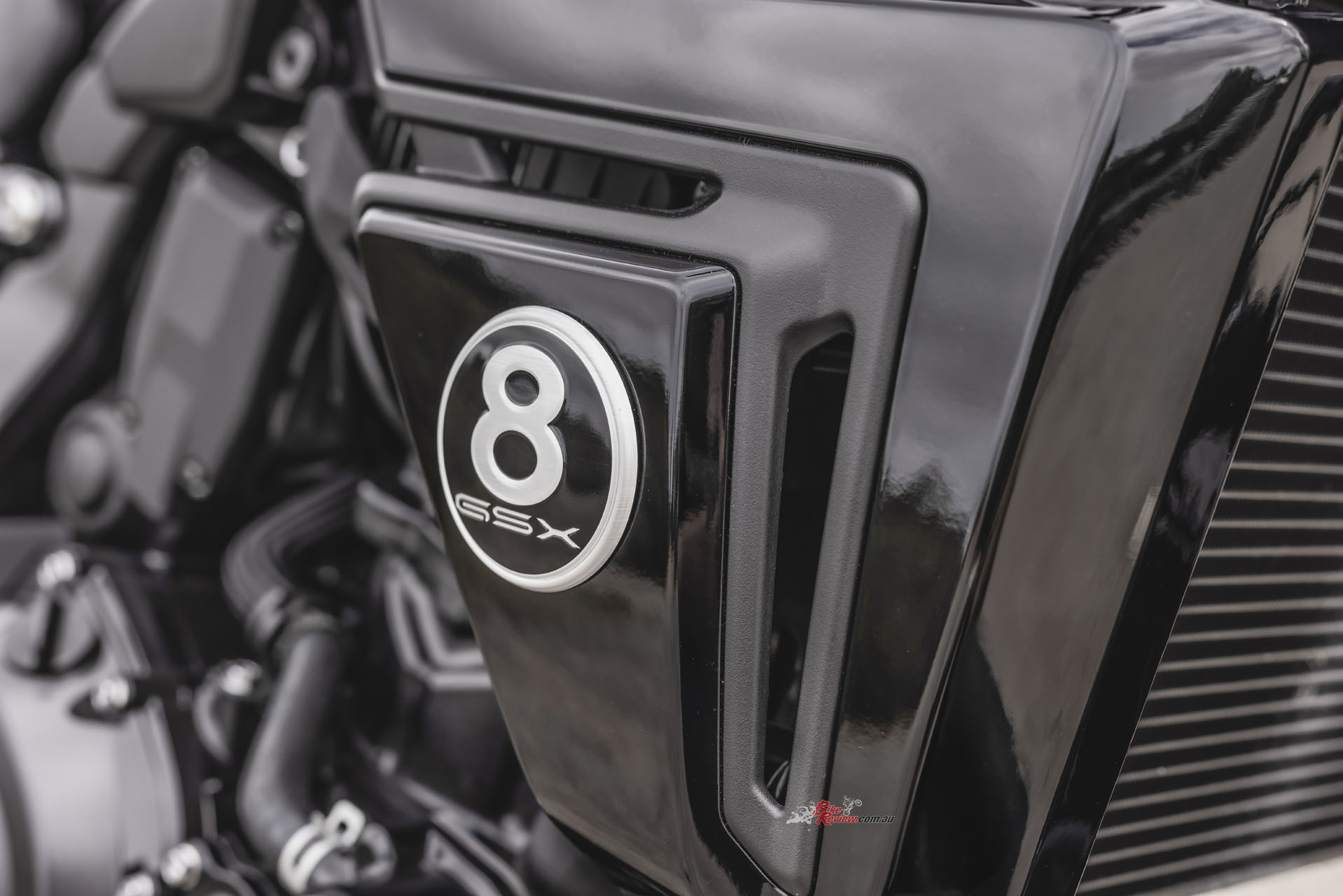
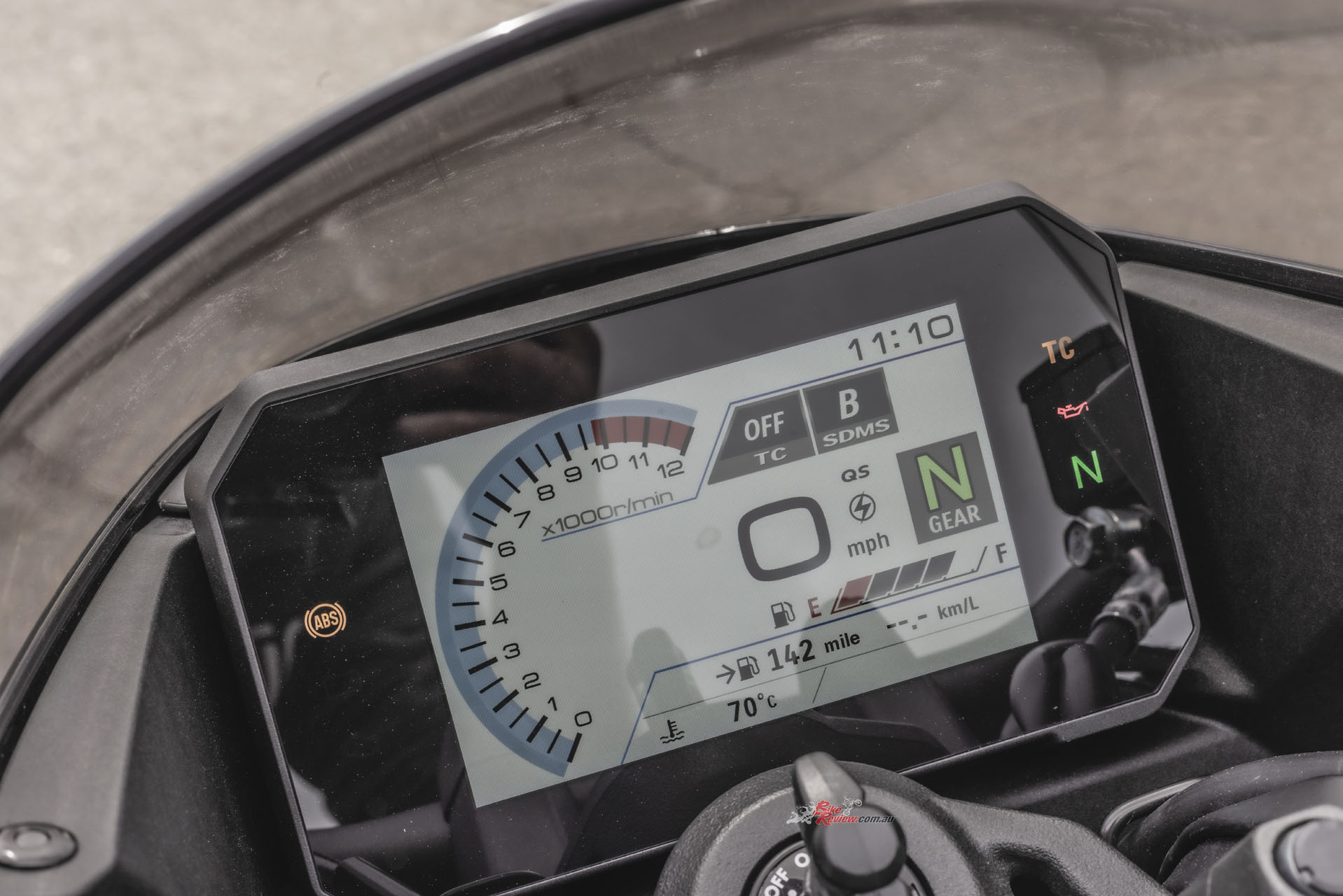


Paired with a slick six-speed gearbox, bi-directional quickshifter, and slipper clutch, the powertrain offers broad, usable torque for urban cruising and spirited weekend rides alike.
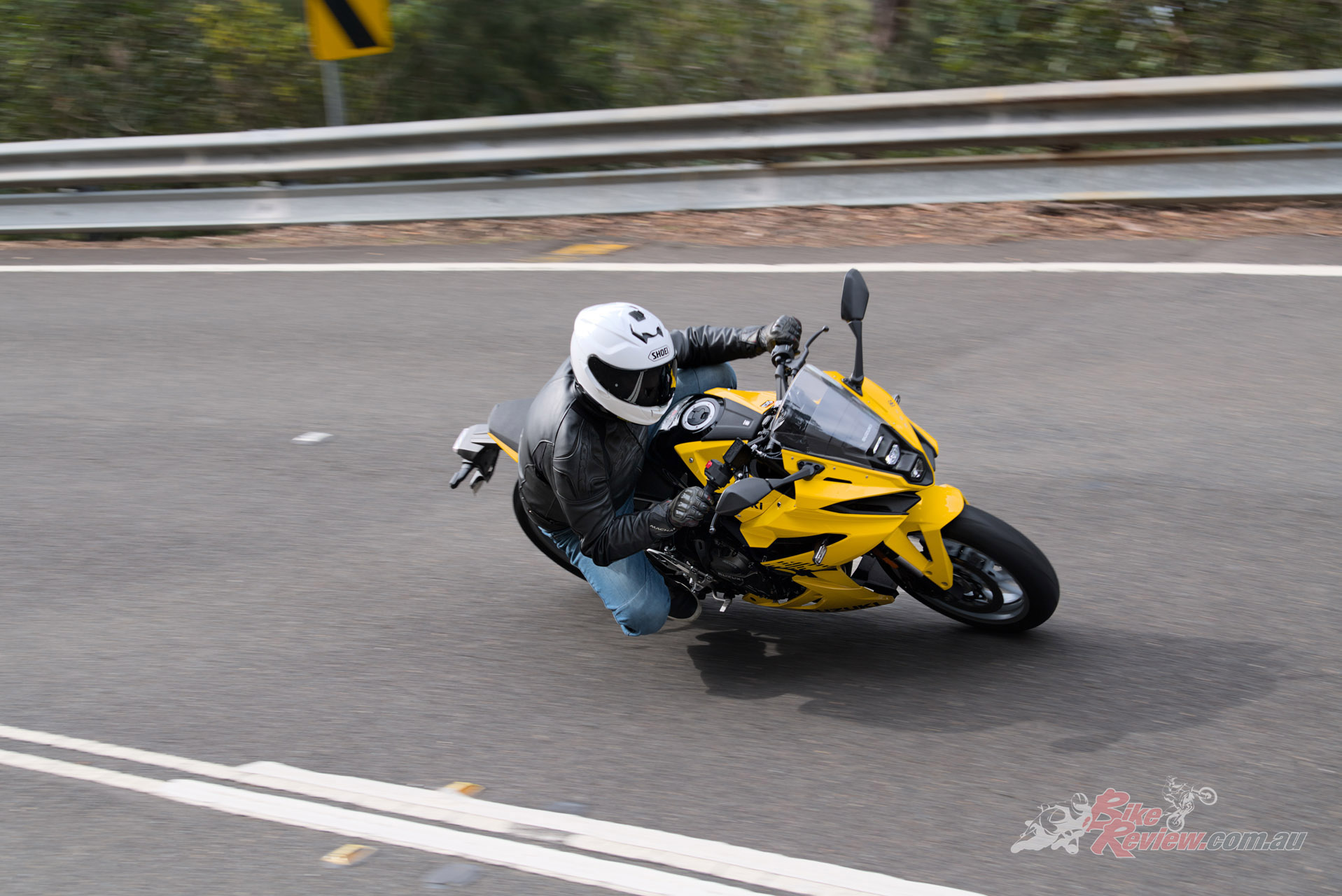
Read our GSX-8R Review here… and watch our GSX-8S road and track test video here…
Expanded GSX-8 Family
Both bikes join the GSX-8S and GSX-8R in Suzuki’s 800 platform lineup. The GSX-8S set the benchmark as a lively nakedbike, praised for its light handling, fun engine, and upright ergonomics, while the GSX-8R adds a sporty fairing, racier ergonomics, and track-day versatility. The new GSX-8T and GSX-8TT bring a retro-classic and neo-racer aesthetic to the same platform, giving riders more choice than ever.
Suzuki’s approach mirrors its V-STROM 800 range, where both standard and DE variants share the same powertrain and chassis with subtle tuning and ergonomic differences to target different adventure riders. With the GSX-8T and TT, Suzuki has applied this platform-sharing strategy to the retro roadster segment, for street riding fun.
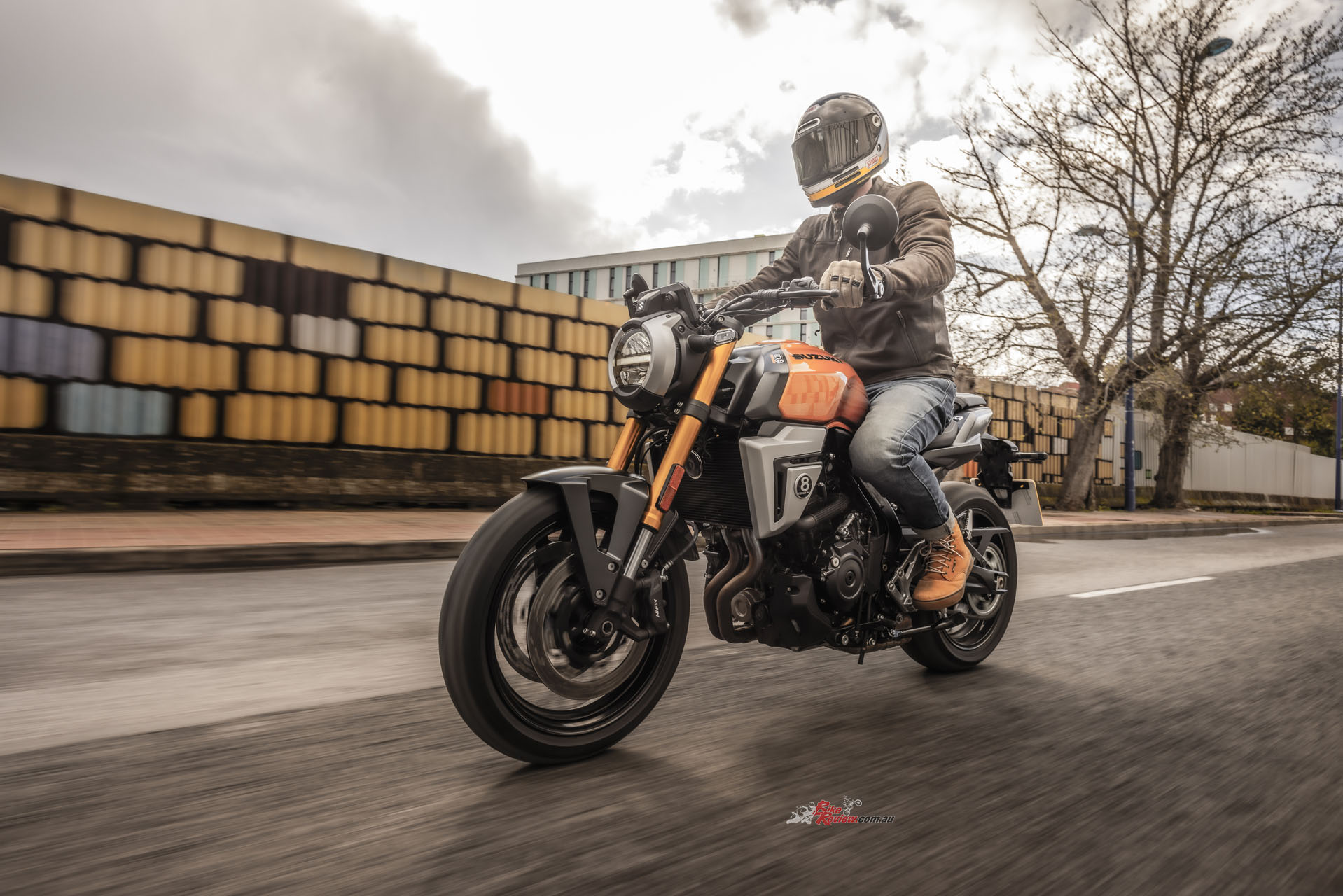
16.5L fuel tank should give a range of around 320-340km. Not bad… Seat height is 815m.
Distinct Styling
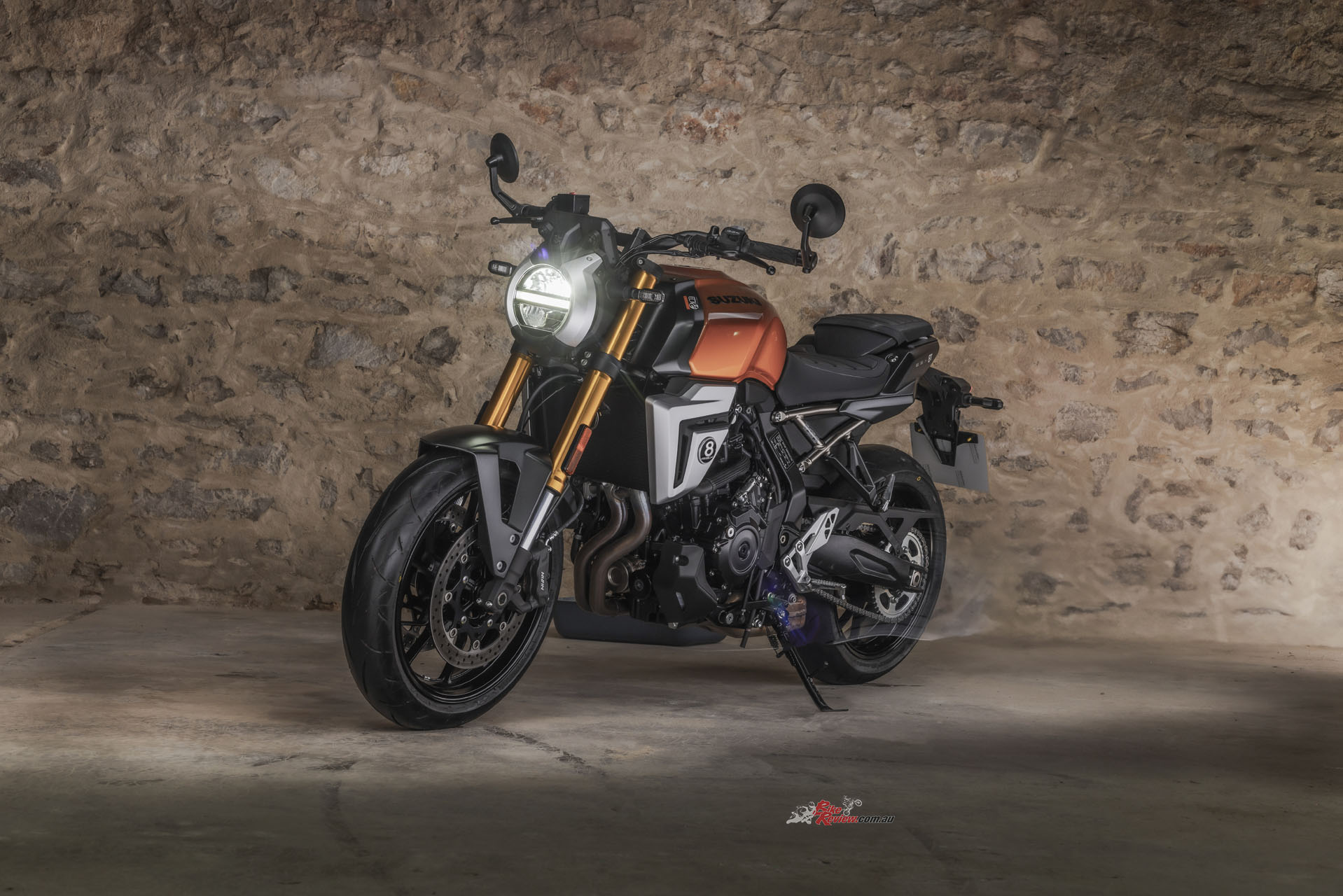
Both models feature a mono-round LED headlight with a flat-bottom design inspired by classic Suzuki twins of the ‘60s and ‘70s. On the GSX-8T, it’s mounted clean and exposed, while the TT integrates it into a streamlined front cowl for that iconic café racer vibe. Tuck-and-roll seats on the T and sportier flat seats on the TT continue the theme.
Chassis and Ergonomics
Underpinning both bikes is the same steel twin-spar frame and aluminium swingarm used across the GSX-8 platform, with revised ergonomics for their respective styles. Suspension is handled by KYB upside-down forks – gold anodised on the GSX-8T and black on the GSX-8TT – paired with a preload-adjustable KYB rear shock. The wide tapered handlebars provide excellent leverage, while new bar-end mirrors add visual width and a premium touch.
Both bikes are expected to arrive in Australian dealerships in Q4 2025. We will bring you a test as soon as we can.
Brakes and Electronics
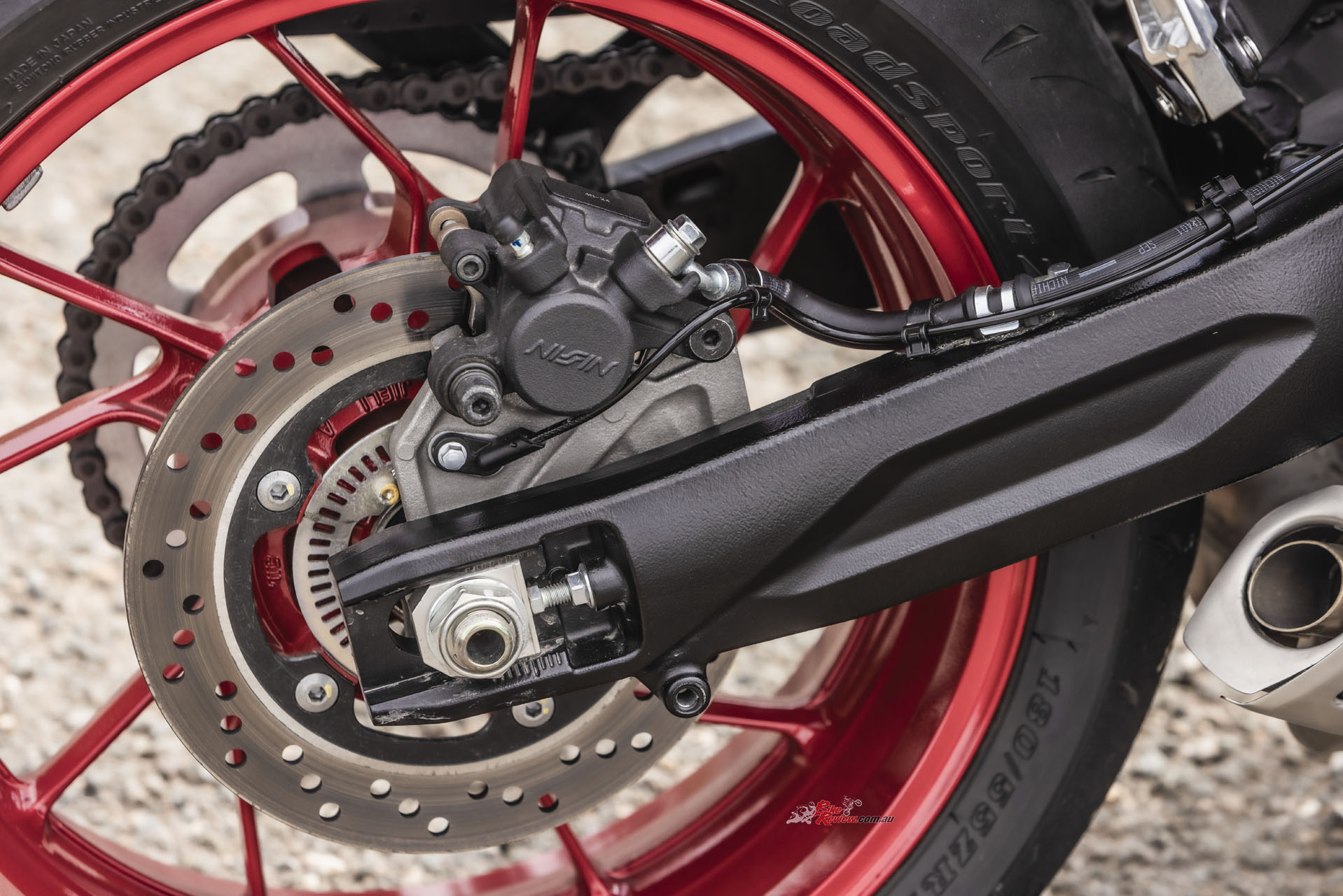
Radially mounted Nissin calipers bite on dual 310mm front discs, with a 240mm rear disc out back, delivering confident stopping power. Electronics are shared with the GSX-8S and GSX-8R, featuring:


Three traction control modes plus “Off”
Three selectable power modes (A, B, C)
Bi-directional quickshifter
Suzuki Easy Start System
Low RPM Assist
5-inch full-colour TFT display with USB Type-C charging
Engine Technology
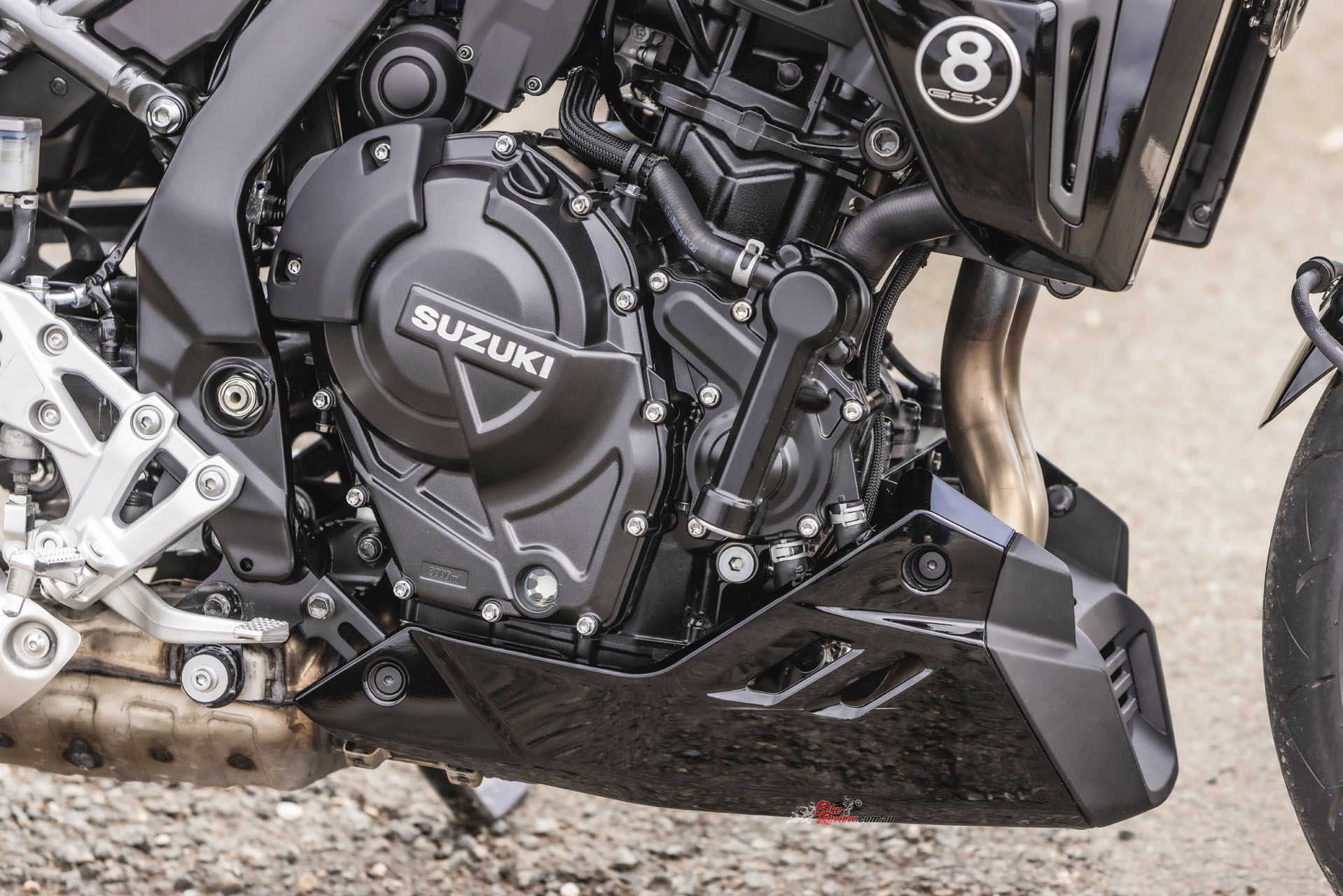
Like their GSX-8 siblings and V-STROM cousins, the GSX-8T and TT run Suzuki’s latest 776cc parallel twin with a 270° crank. This design produces a throaty exhaust note and a torquey, flexible power delivery. A cross balancer system minimises vibration for smooth running, while the compact under-slung exhaust system keeps weight low and styling clean.
GSX-8T & GSX-8TT Differences
The GSX-8T is available in Candy Burnt Gold with brushed silver radiator shrouds and gold fork tubes, giving it a warm, classic roadster vibe. The tuck-and-roll seat with high-density foam enhances comfort for everyday riding and touring.
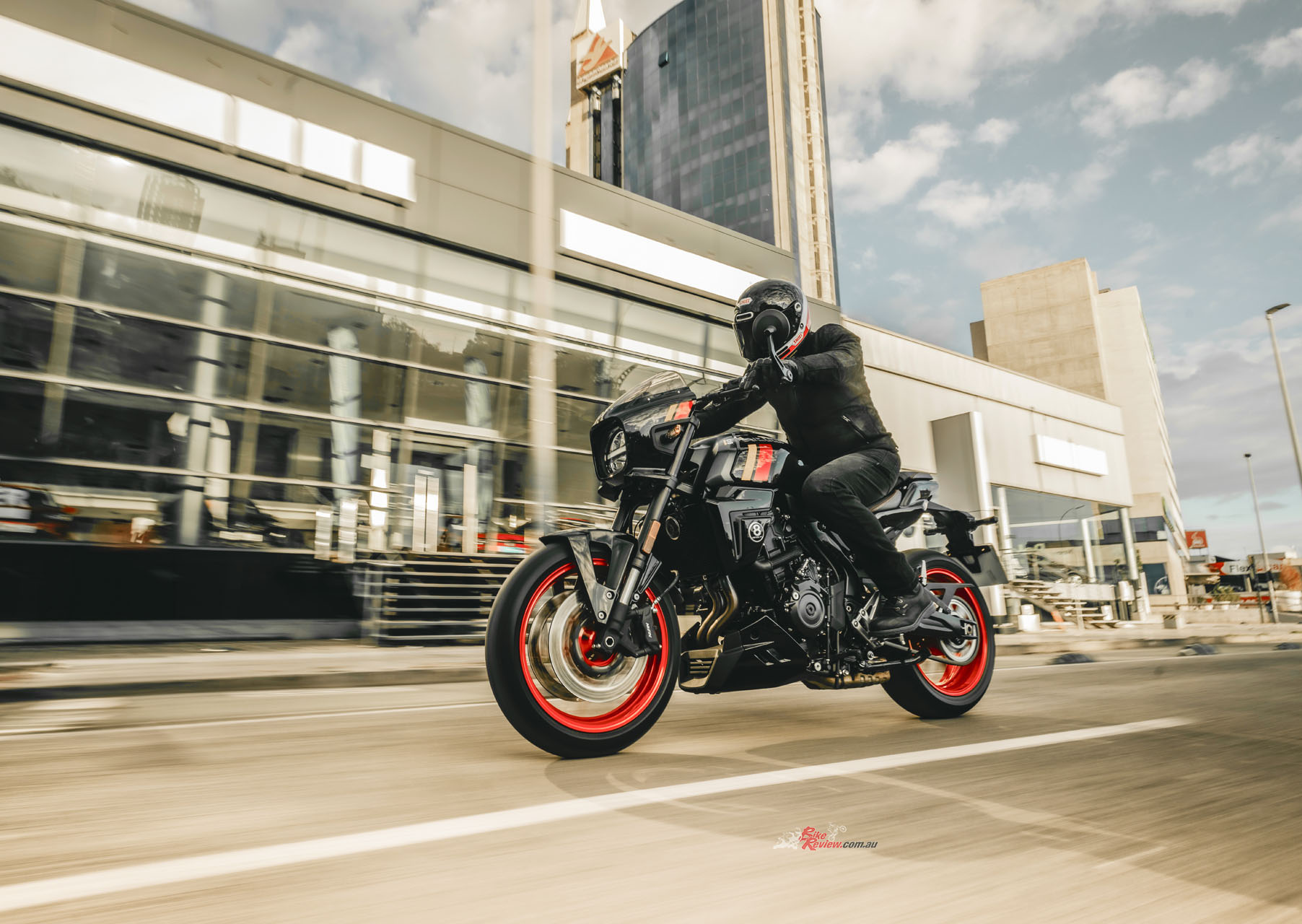
The GSX-8TT is the racier of the pair, featuring:
Front headlight cowl with a short windscreen
Under cowl for aggressive styling and improved airflow
Matte black radiator shrouds
Sportier, flatter seat with premium stitching
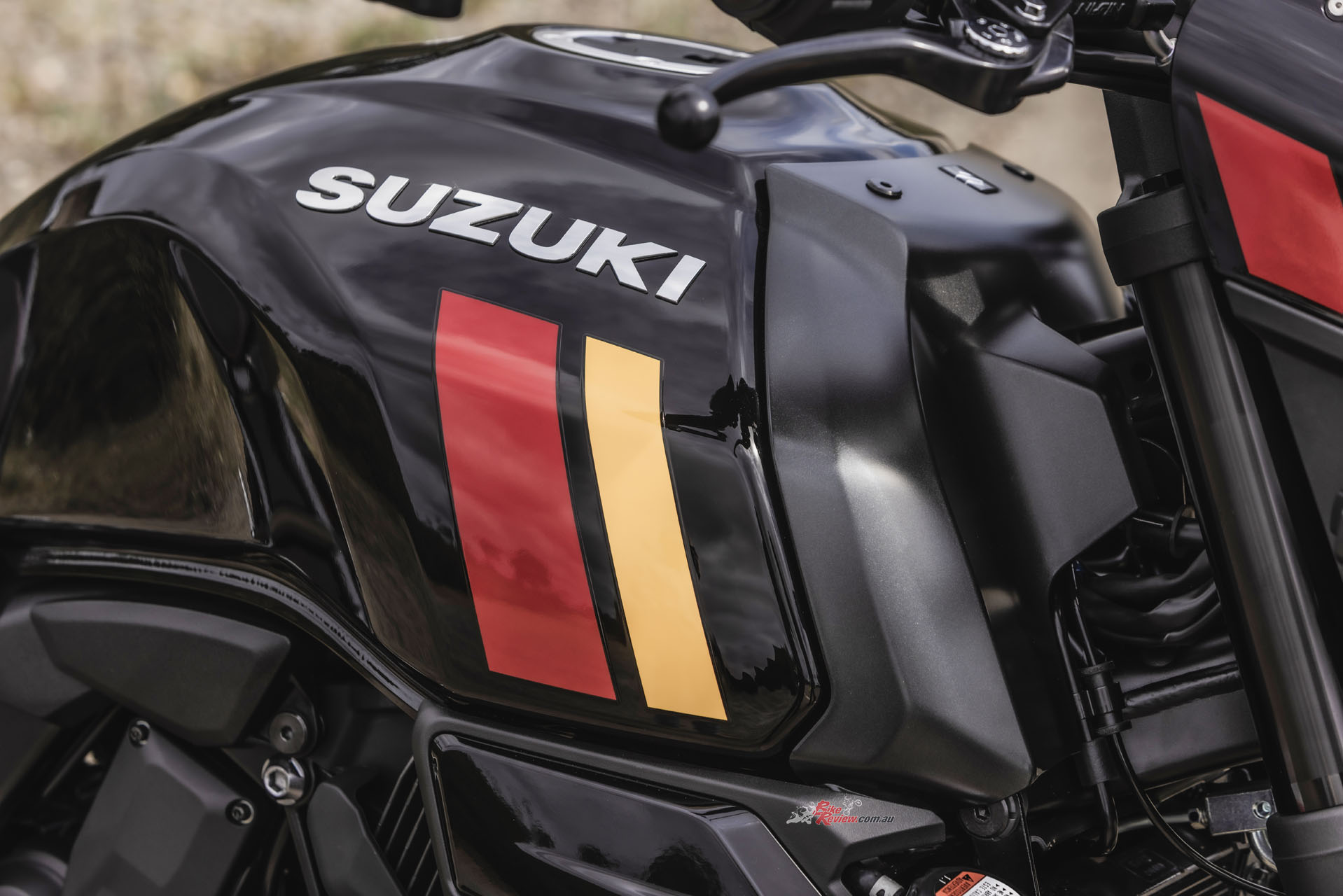
Bold Glass Sparkle Black with red wheels and red/gold decals, evoking classic race bikes
Both models feature matt black engine covers, stainless steel muffler covers, and brushed aluminium side panels, adding subtle premium touches.
The GSX-8 Platform Advantage
Since the release of the GSX-8S nakedbike, Suzuki’s new 800 platform has been praised for its balance of agility and stability, making it suitable for a broad range of riders from commuters to canyon carvers. The GSX-8R further developed this with sporty fairings, clip-on bars, and revised geometry for track-day enthusiasts.
The arrival of the GSX-8T and GSX-8TT brings an entirely new dimension, adding style-focused retro models to the family, all while retaining the proven mechanical package. Riders now have the choice of naked, supersport, roadster retro, and café racer-inspired variants, in addition to the V-STROM 800 and DE adventure models that share the same powertrain for off-road touring capability.
Pricing and Availability
The GSX-8T is priced at $17,990 ride away, while the GSX-8TT comes in at $18,990 ride away. Both include Suzuki’s standard two-year warranty, with an additional year provided if servicing is maintained through authorised Suzuki dealers. Customers order now via their local Suzuki dealer or through the links below.
GSX-8T: Suzuki GSX-8T Australia
GSX-8TT: Suzuki GSX-8TT Australia
The arrival of these two retro-inspired machines reinforces Suzuki’s commitment to platform development and versatility. With the GSX-8S and GSX-8R catering to modern naked and supersport riders, the GSX-8T and GSX-8TT target those seeking nostalgic styling without compromising on performance, electronics, or real-world rideability.


Combine that with the V-STROM 800 and DE adventure options, and Suzuki now offers one of the broadest, most versatile mid-capacity ranges on the market.
2025 Suzuki GSX-8T (GSX-8TT) [GSX-8S] {GSX-8R} Specifications
Price: From $17,990 Ride Away (GSX-8TT $18,990 Ride Away) [GSX-8S is $12,990 Ride Away] {GSX-8R $14,990 Ride Away}
Warranty: Two-years unlimited km (+1 year with authorised servicing)
Colours: Candy Burnt Gold (Bold Glass Sparkle Black) [Pearl Cosmic Blue, Metallic Matt Black No.2, Glass Matt Mechanical Grey]{Metallic Triton Blue, Pearl Ignite Yellow and Metallic Matt Sword Silver}.
Claimed Power: 62kW@8500rpm
Claimed Torque: 78Nm@6800rpm
Wet Weight: 201kg (TT 203kg) [202kg] {205kg}
Fuel capacity: 16.5L [14L]
Fuel Consumption (Claimed): 4.2L/100km
Fuel Consumption (measured): 4.17L/100km (4.3L/100km) [5.1L/100km]
Fuel Range: +320km
Engine: Four-stroke, two-cylinder, liquid-cooled, DOHC, 84.0mm x 70.0mm bore x stroke, 776cc, 270° crankshaft, two-into-one underslung exhaust Gearbox: Six speed Clutch: Wet, multiple disc with slipper function.
Chassis: Frame: Steel twin-spar frame with aluminium swingarm
Rake: 25º Trail: 104mm
Suspension: KYB inverted telescopic, coil spring, oil damped, gold anodised (f) (black anodised for GSX-8TT), KYB rear monoshock, adjustable preload (r) Brakes: Twin 310mm discs with radially mounted Nissin calipers (f), Single 240mm disc (r) Wheels & Tyres: Cast aluminium wheels, 120/70 – 17 (f), 180/55 – 17 (r) Dunlop Roadsport.
Dimensions:
Seat height: 815mm (810mm) [810mm]
Ground clearance: 145mm
Overall width: 775mm {770mm}
Overall Length: 2115mm {2155mm}
Overall height: 1105mm {1135}
Wheelbase: 1465mm
Instruments & Electronics: 5in full-colour TFT dash, Suzuki Intelligent Ride System (S.I.R.S.), three riding modes, three traction control modes, bi-directional quickshifter, Easy Start, Low RPM Assist, USB Type-C socket, LED lighting all round.
2025 Suzuki GSX-8T and GSX-8TT Gallery



Ratings | Bike Review | 2026 Suzuki GSX-8T and GSX-8TT Compared
Retro Cool!
Suzuki recently unveiled the GSX-8T and GSX-8TT, retro styled nakeds joining the GSX-8S, V-STROM 800 and GSX-8R in their parallel-twin 800cc lineup. We ride them back-to-back for a week. Check out our test… Pics: Heather Ware HMC
The Author

You Might Also Like