
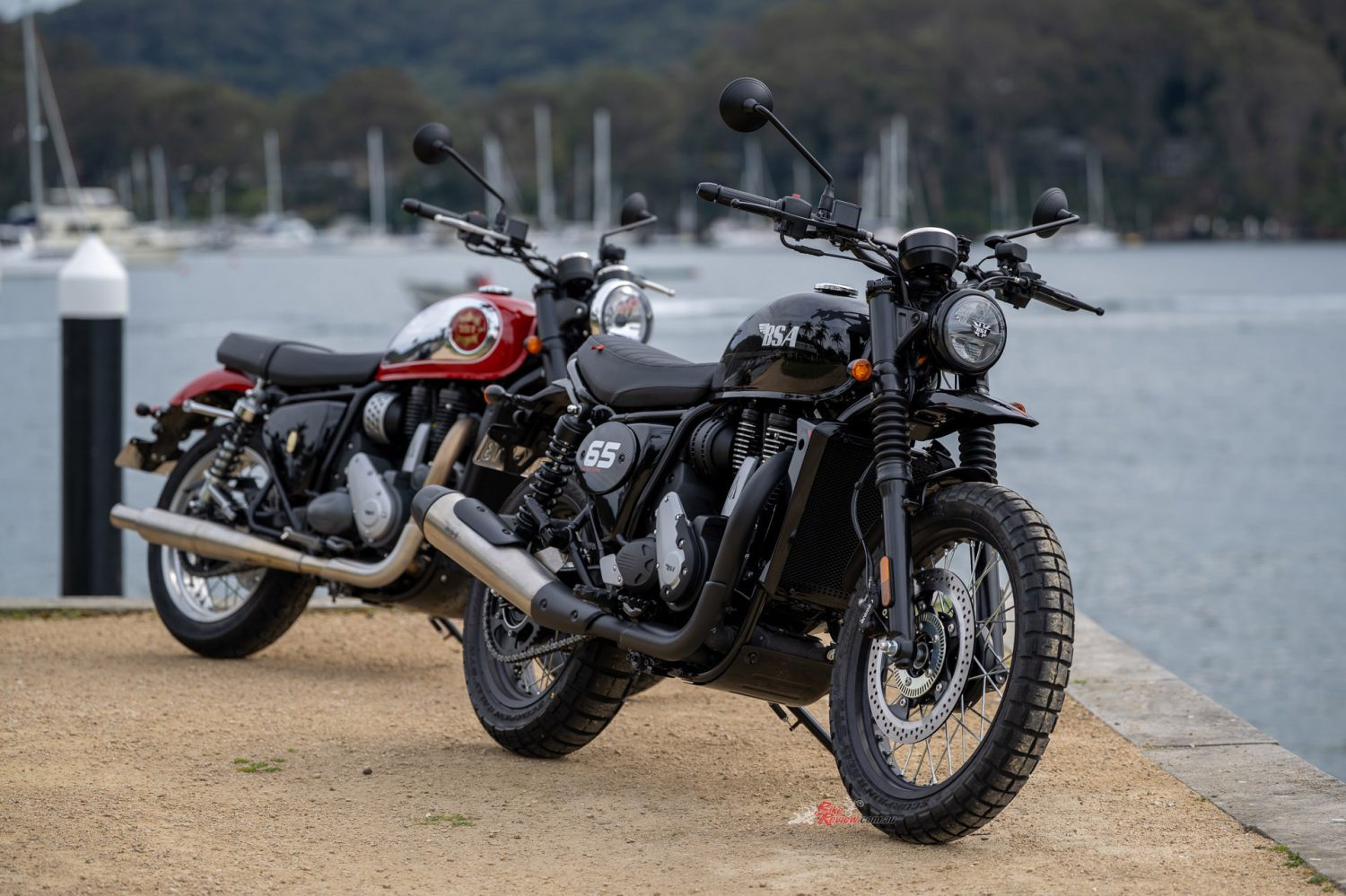

More than 50 years after leaving Australia, BSA returns with two big 650 singles blending old-school character with modern road manners. Photos: RbMotoLens/Mark Peterson
BSA is back in Australia, and its new Gold Star 650 and Scrambler 650 are tasked with balancing more than a century of history against the expectations of modern riders. We ride both to find out whether the famous badge still has something to offer modern riders.
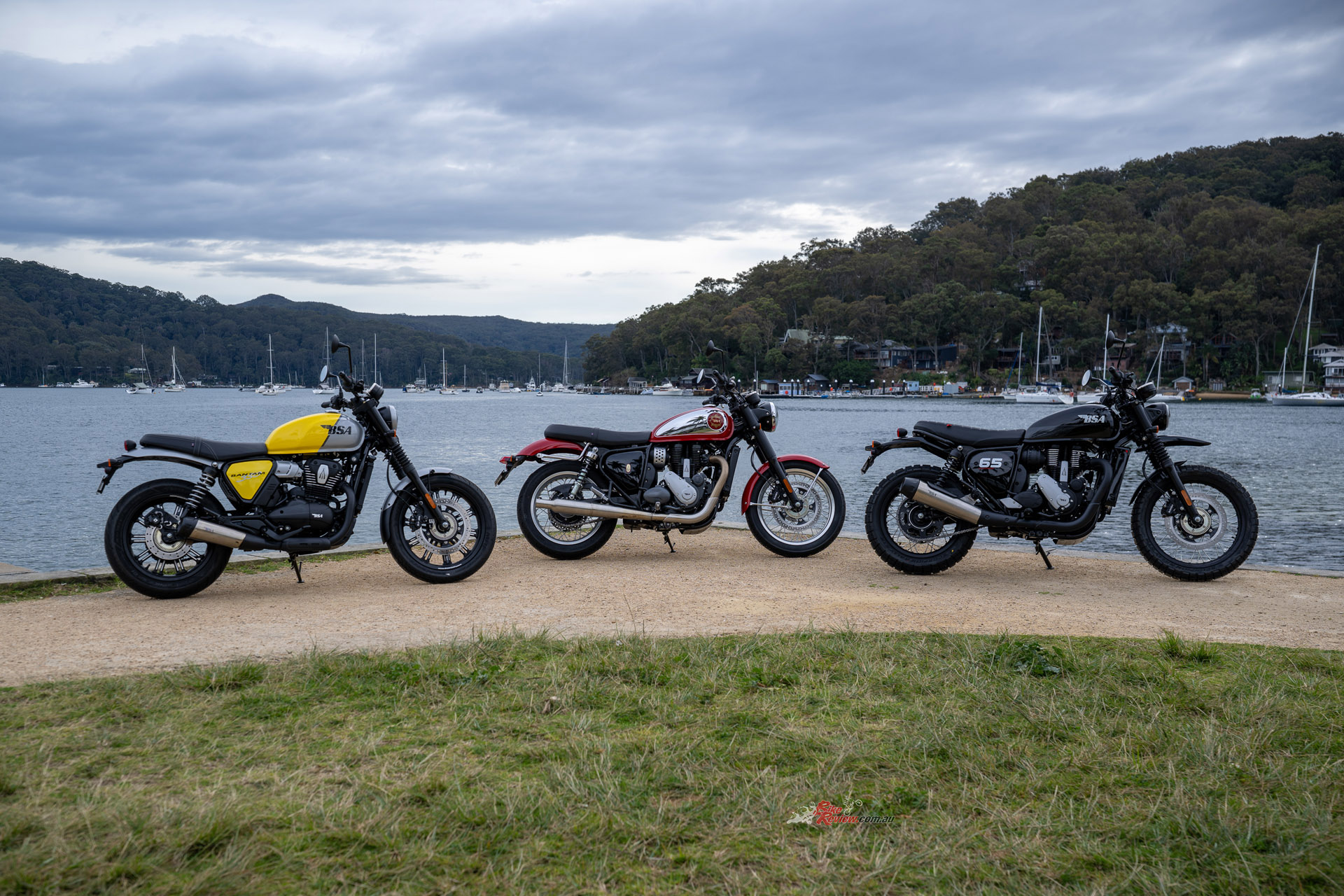
BSA’s Australian comeback covers three distinct takes on the retro formula, from roadster to scrambler to commuter.
Bridging the gap between nostalgia and modern motorcycling is a difficult task. Done well, and it seems effortless. But get it wrong and not only do you risk tarnishing the rich legacy of a once revered brand, but you risk producing a motorcycle that satisfies neither the riders who remember the name nor those discovering it for the first time.
Because walking into the Australian media launch of a motorcycle brand as revered and iconic as BSA demands a certain respect for the past. Never mind that BSA now conducts its business from the UK and builds its motorcycles in India, or that, for the moment, the range consists of just three models.
“Walking into the Australian media launch of a motorcycle brand as revered and iconic as BSA demands a certain respect for the past”…
This is a name with more than a century of motorcycling history behind it, but now it must start again in Australia after re-establishing itself overseas. And it needs to appeal not only to someone like me, a 71-year-old who remembers the old bikes, but also to someone like my 19-year-old son, who can appreciate a LAMS-approved motorcycle.
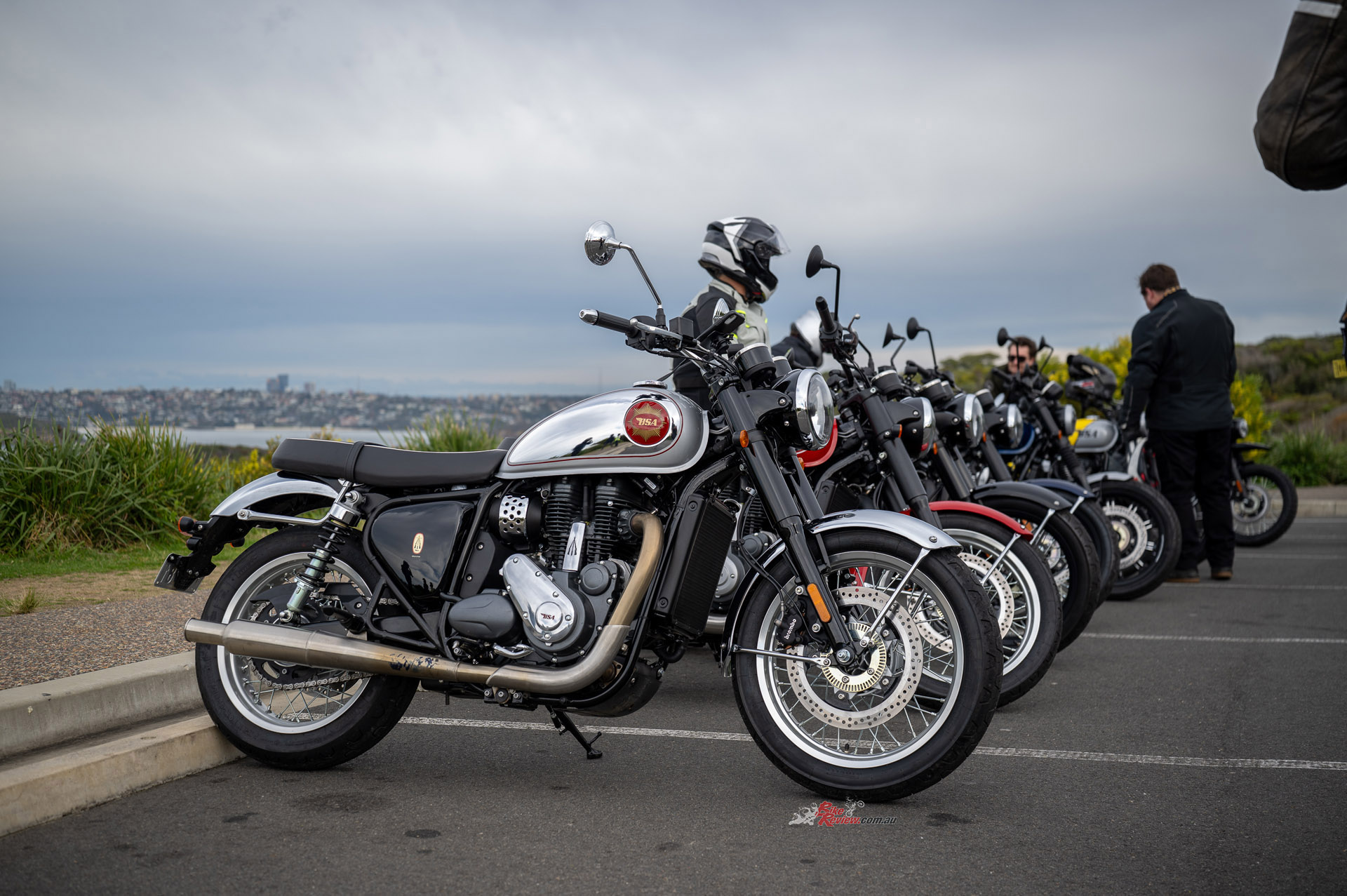
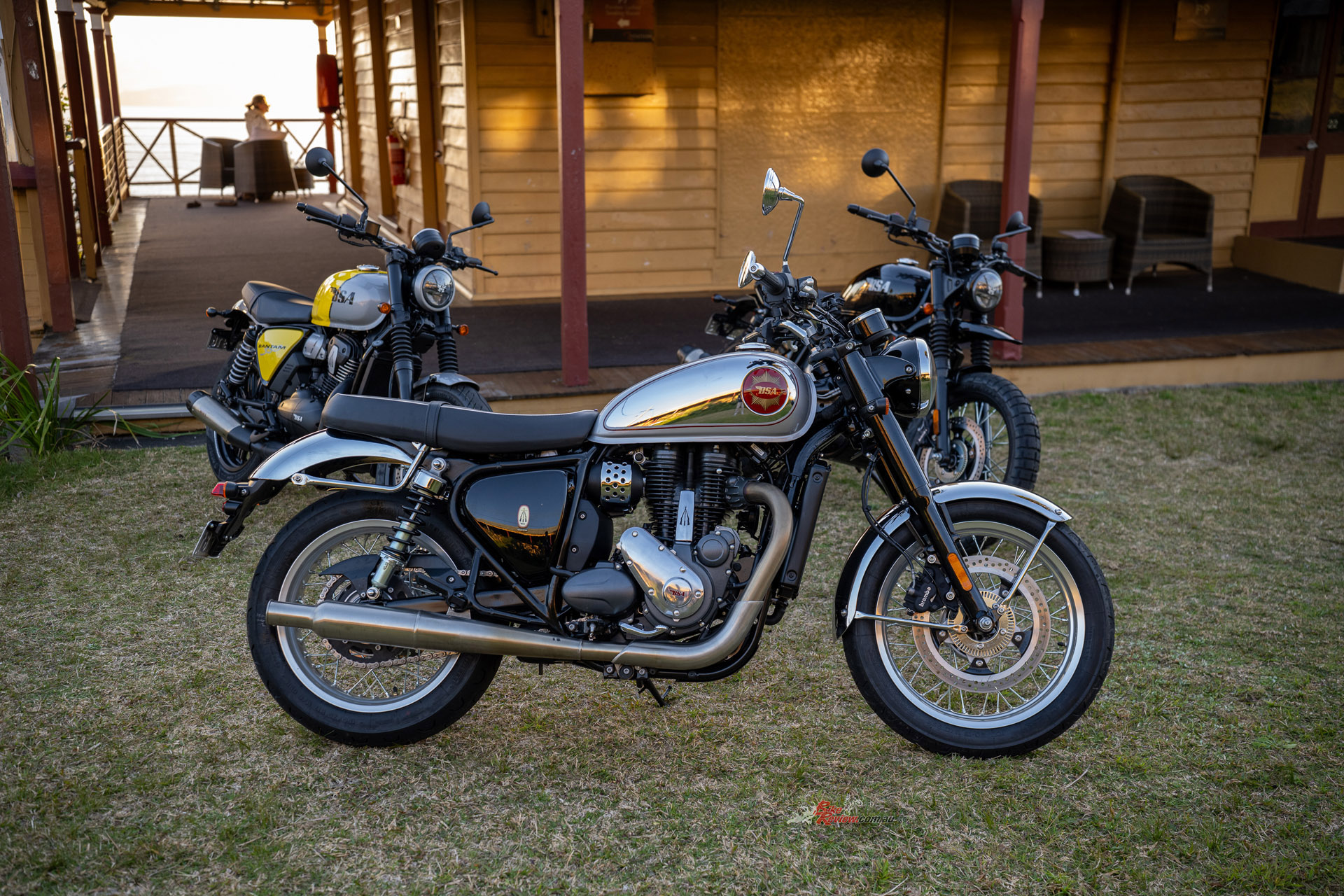
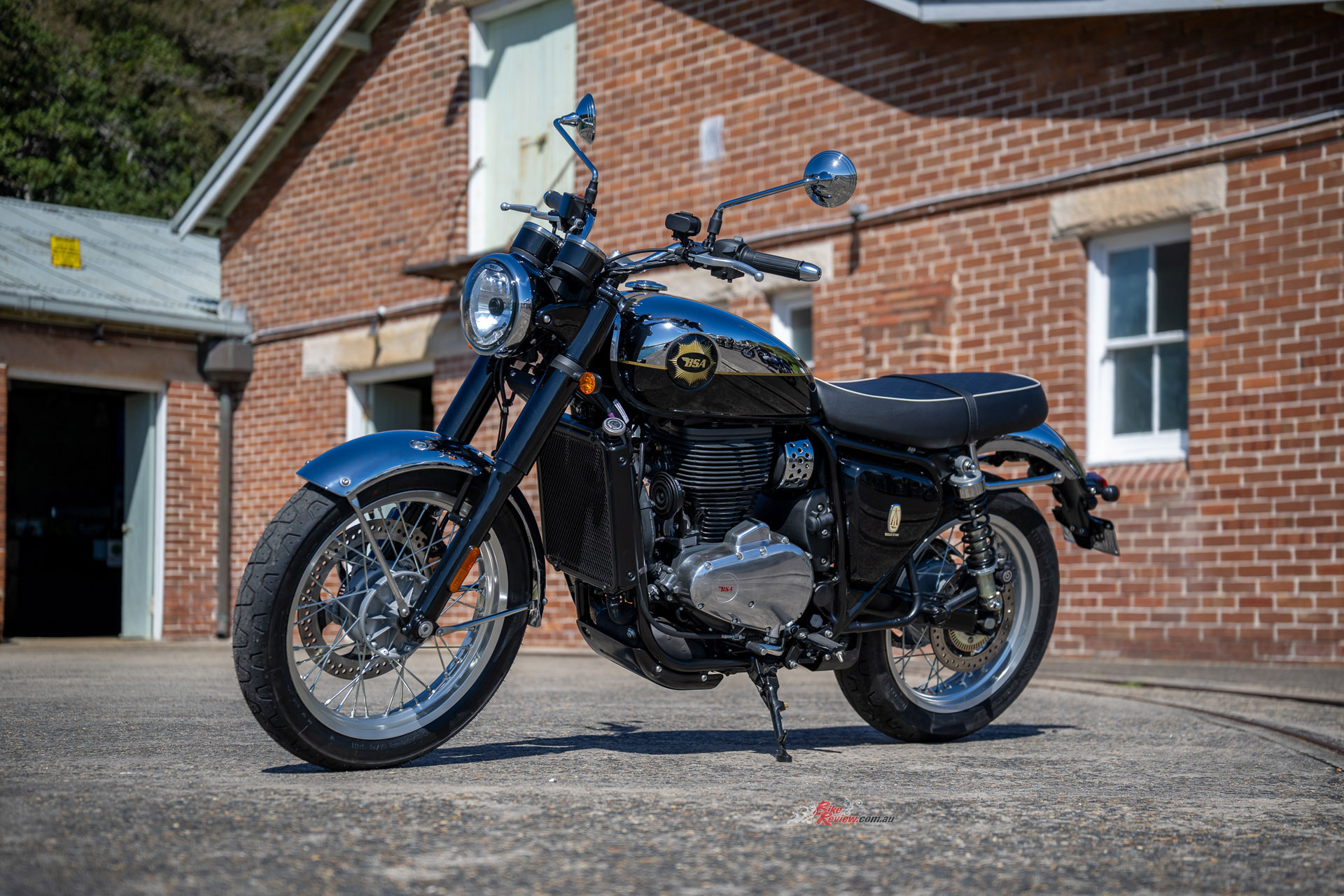
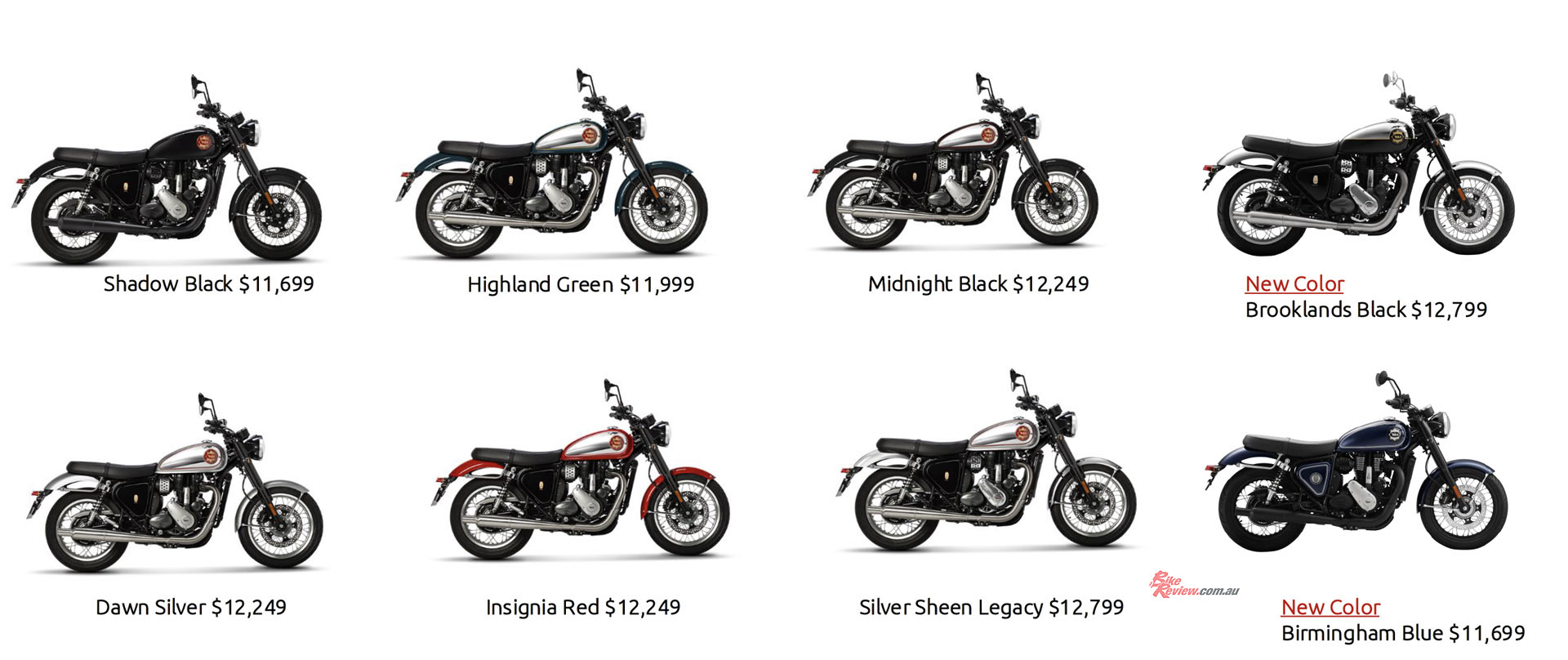
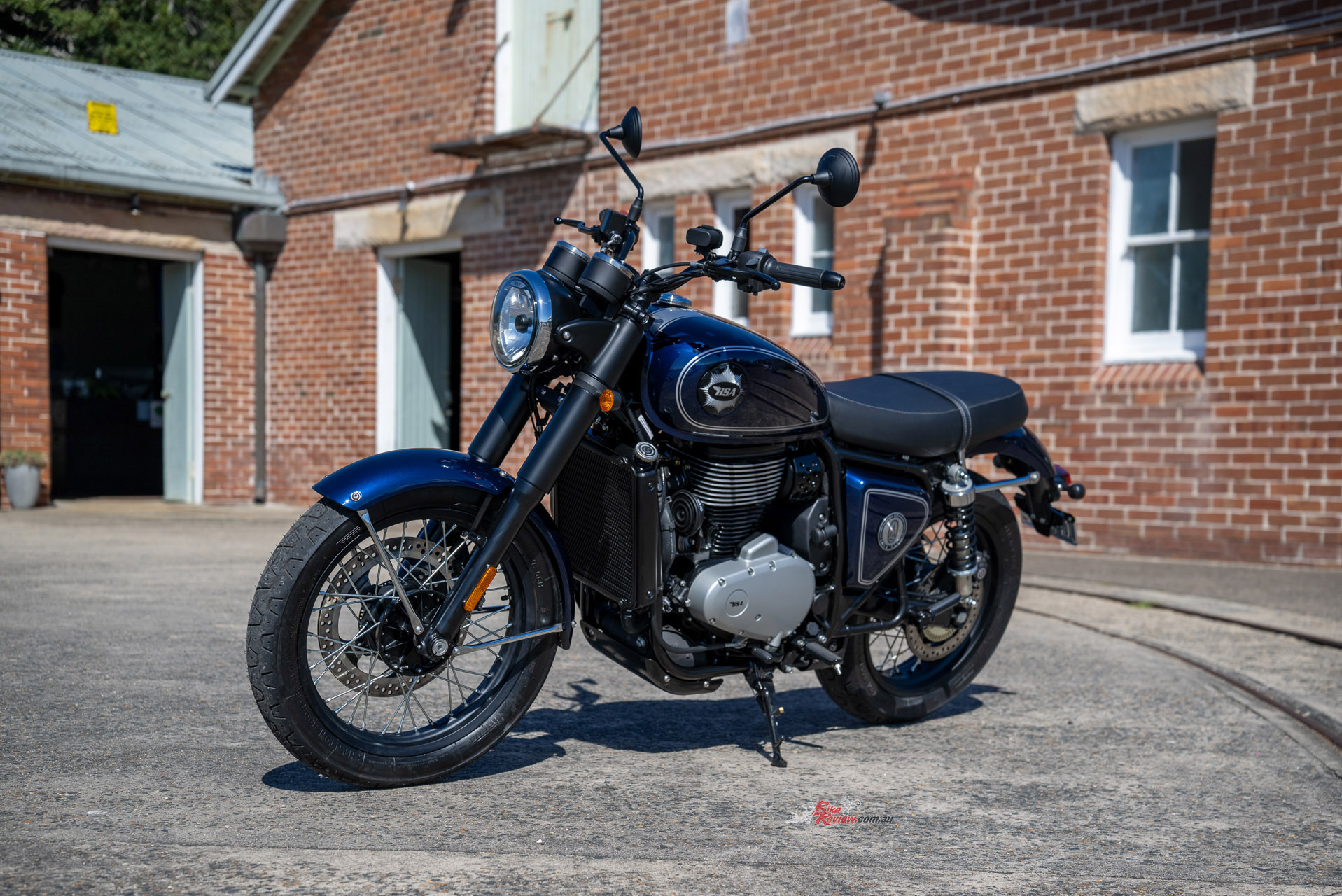
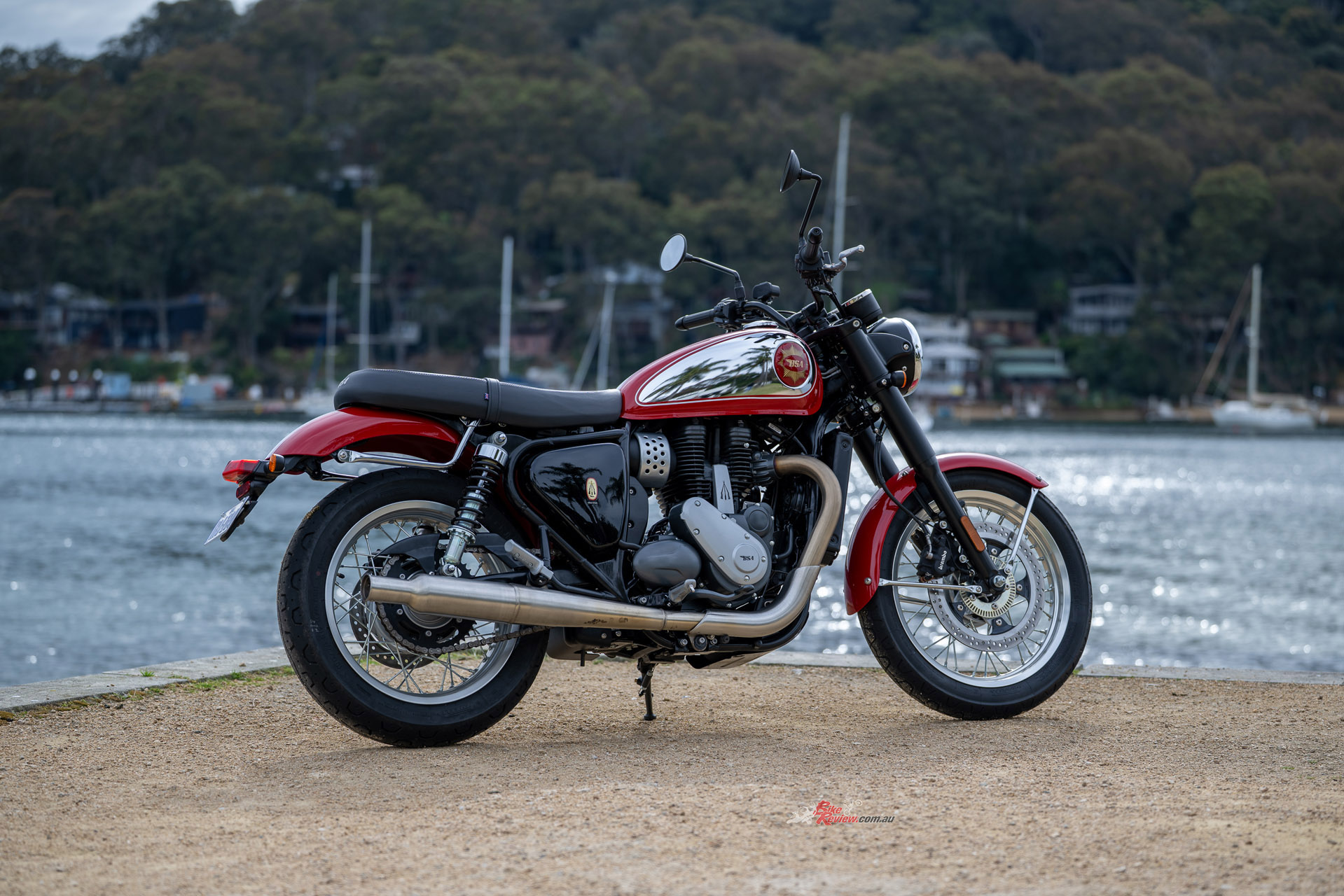
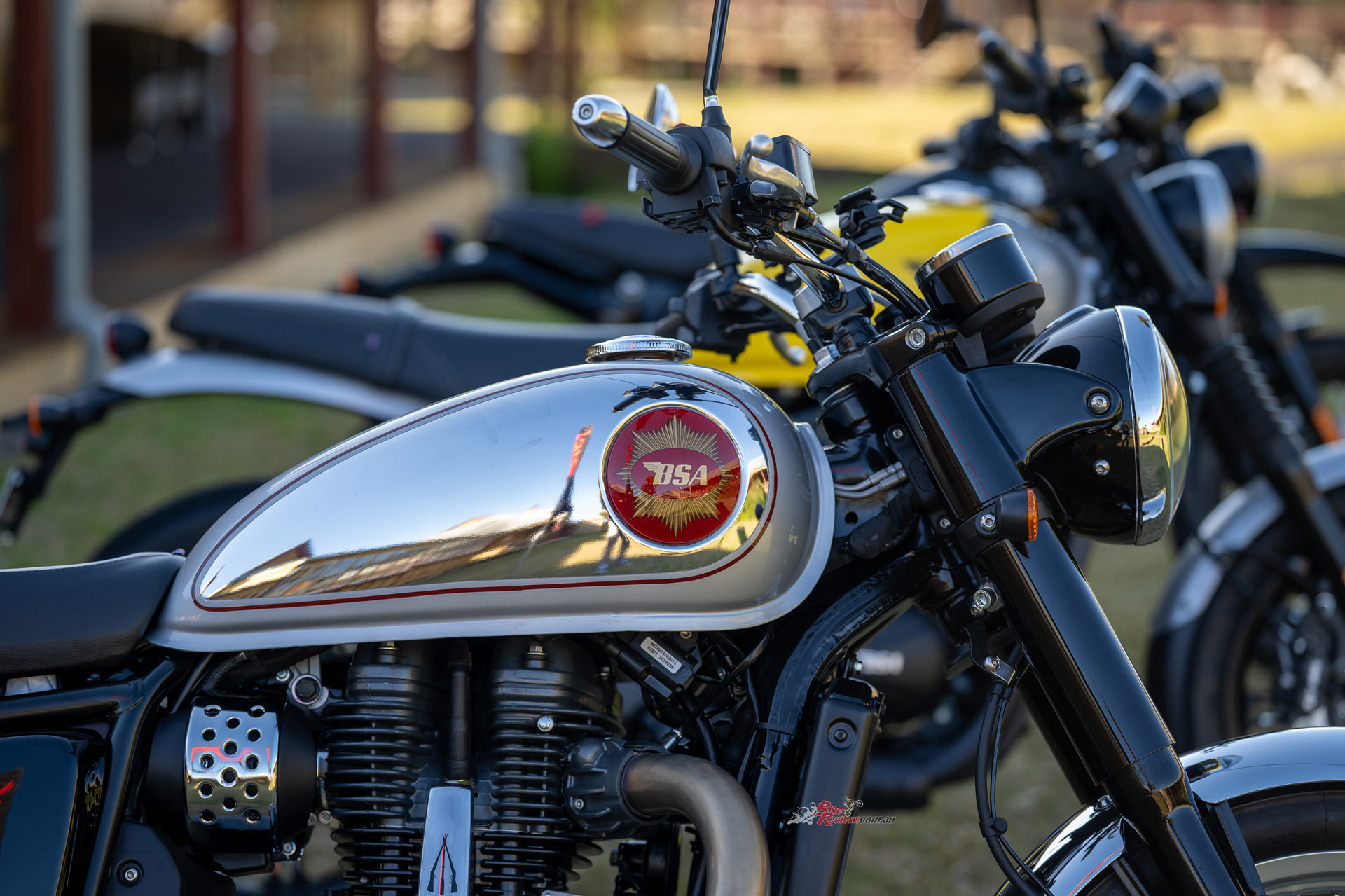
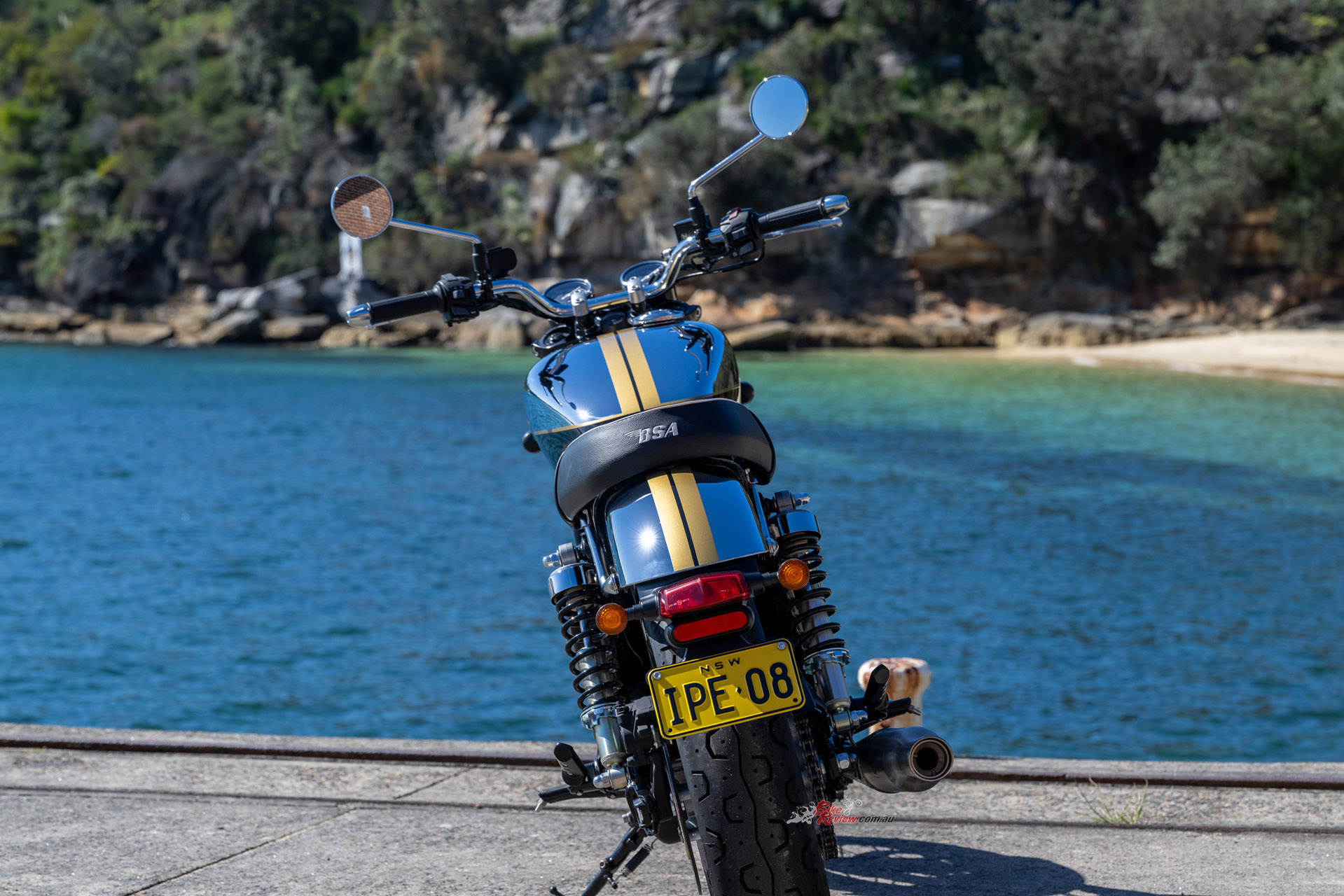
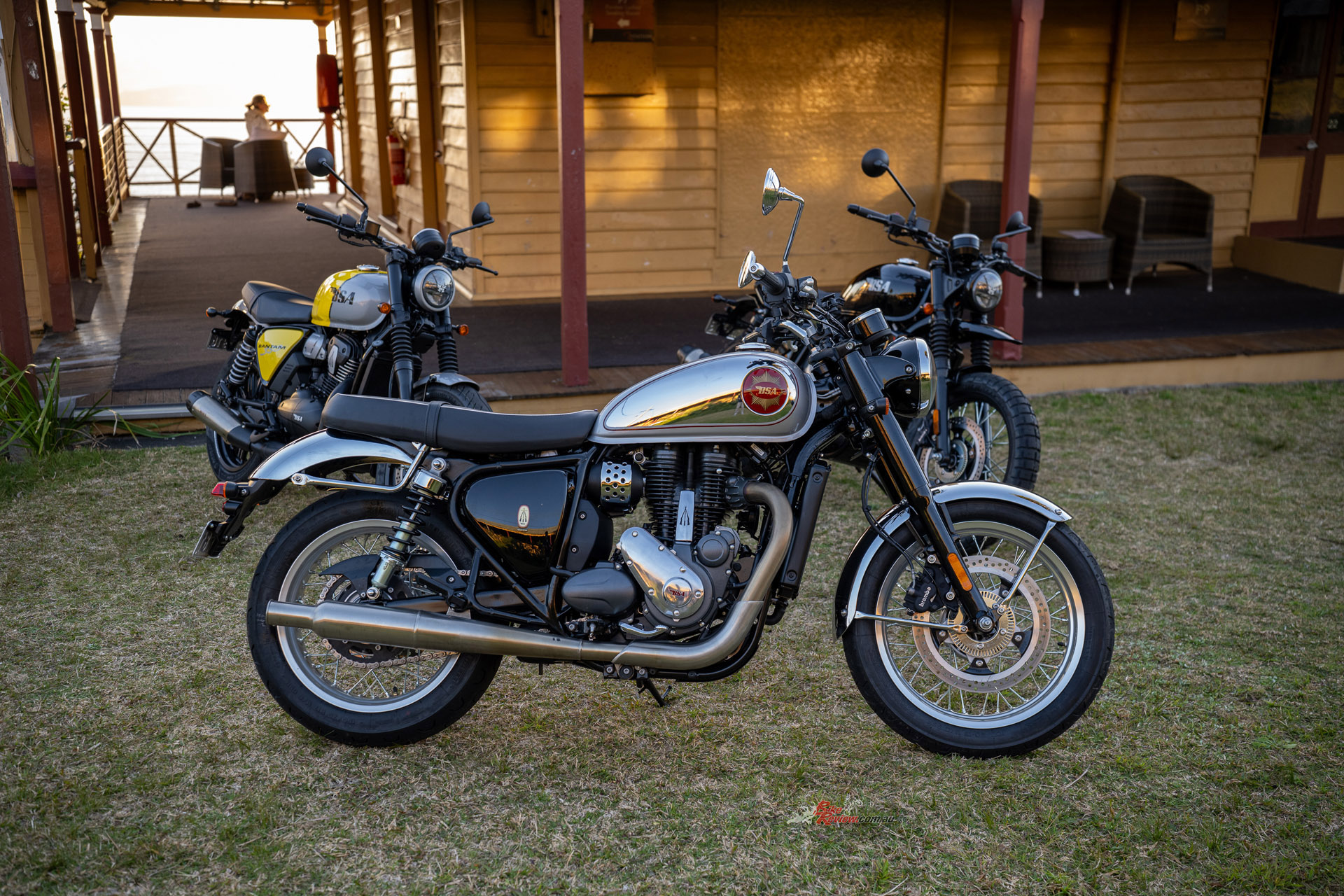
The chromed Silver Sheen Legacy tops the Gold Star range at $12,799 ride away.
The challenge for the reborn BSA is to deliver the technology, convenience and reliability expected of a modern motorcycle while people my age are still cursing the wretched kick-starters fitted to the ones we borrowed from our mates in the late 1970s.
This isn’t the place for a long trawl through BSA’s glorious history, but that history can’t be ignored. BSA was once the world’s largest motorcycle manufacturer, with an extraordinary collection of famous road and racing models. Think Gold Star, Lightning and Thunderbolt, to name only a few. Back in the day, being seen on a ‘Beeza’ was a thing.
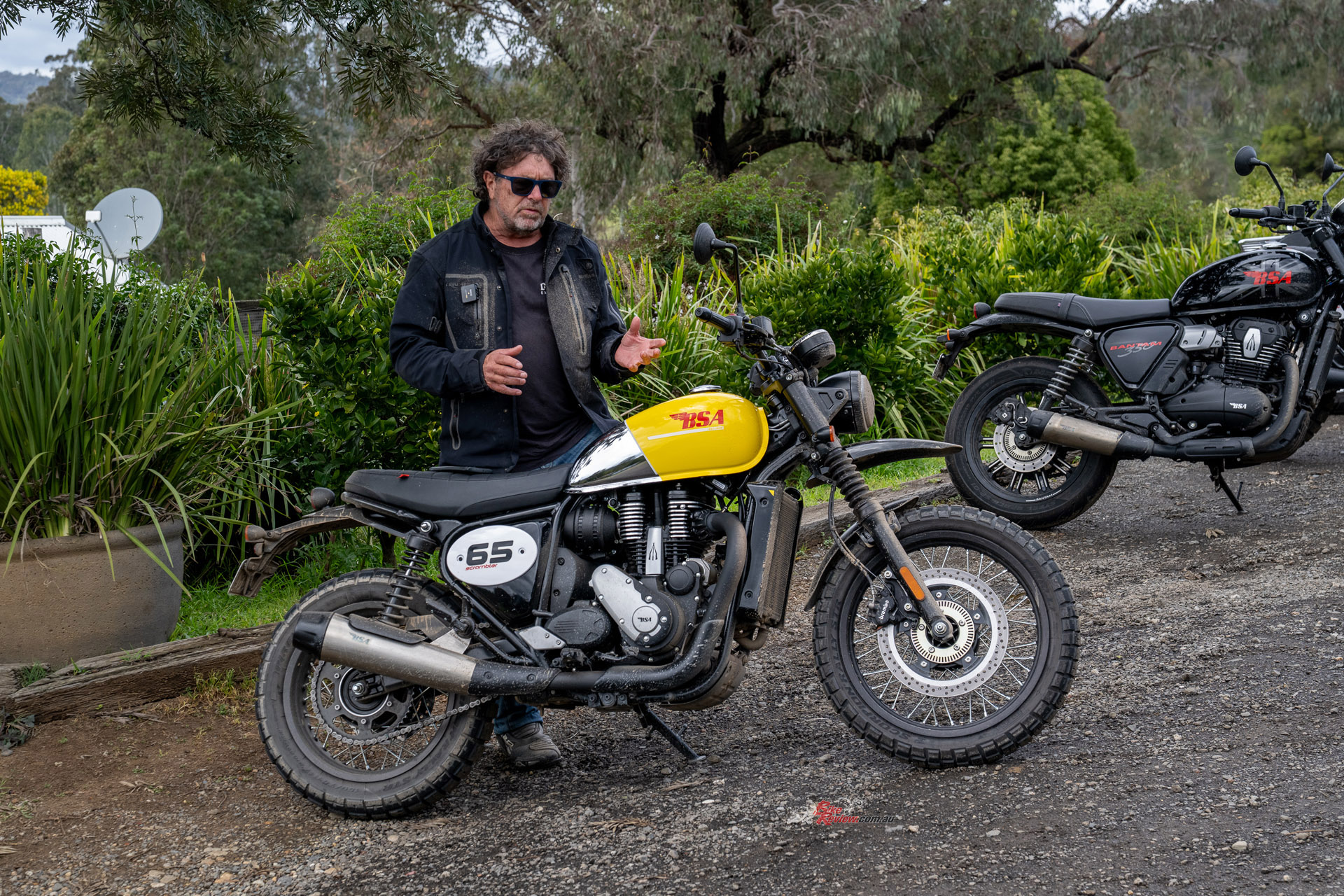
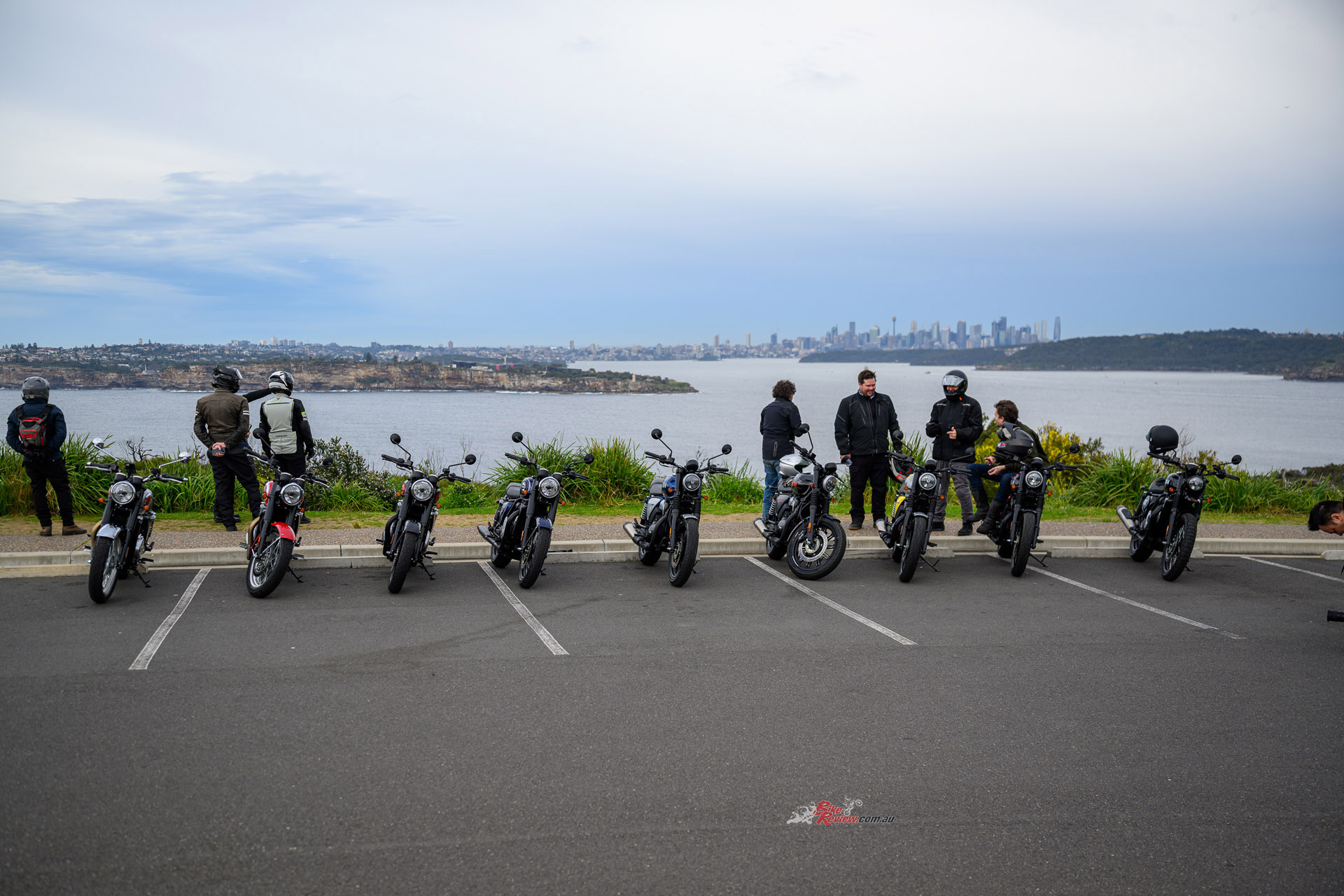
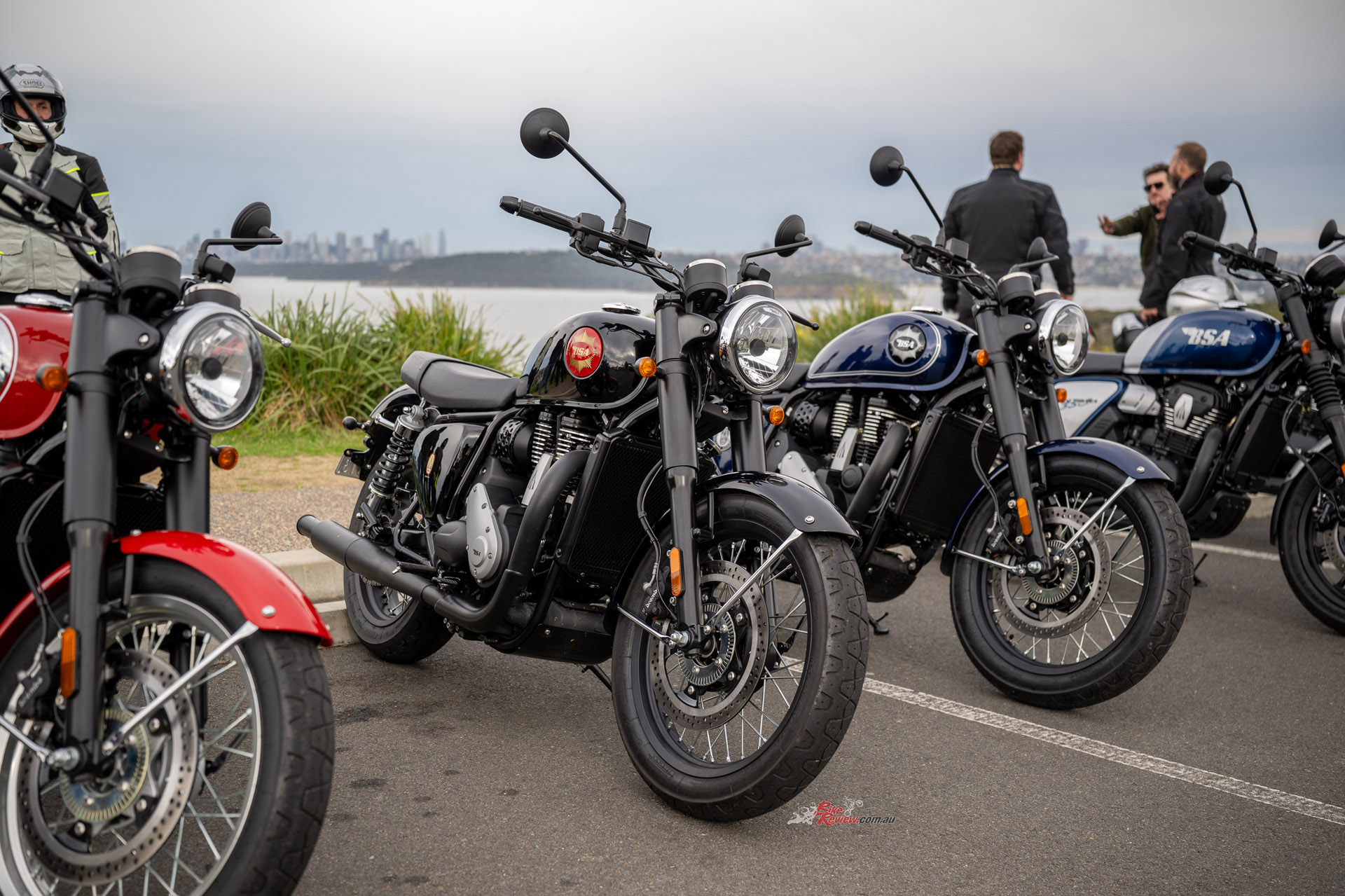
I rode a few but never actually owned one. My less spectacular BSA experiences involved the humble Bantam 125, but the badge still meant something. If you’re going to revive a motorcycle brand for today’s market, there are few names more evocative – or more memorable – than BSA. Outside in the morning sun at North Head, Sydney, there is still plenty of nostalgia in the lines, colours and badges of the Gold Star 650 and Scrambler 650 waiting to carry us through Sydney traffic. The Bantam 350 is also sitting there, but that one deserves a separate review.
“The modern thinking continues with a four-valve head, dry-sump lubrication, vibration-quelling balance shaft and slipper clutch.”
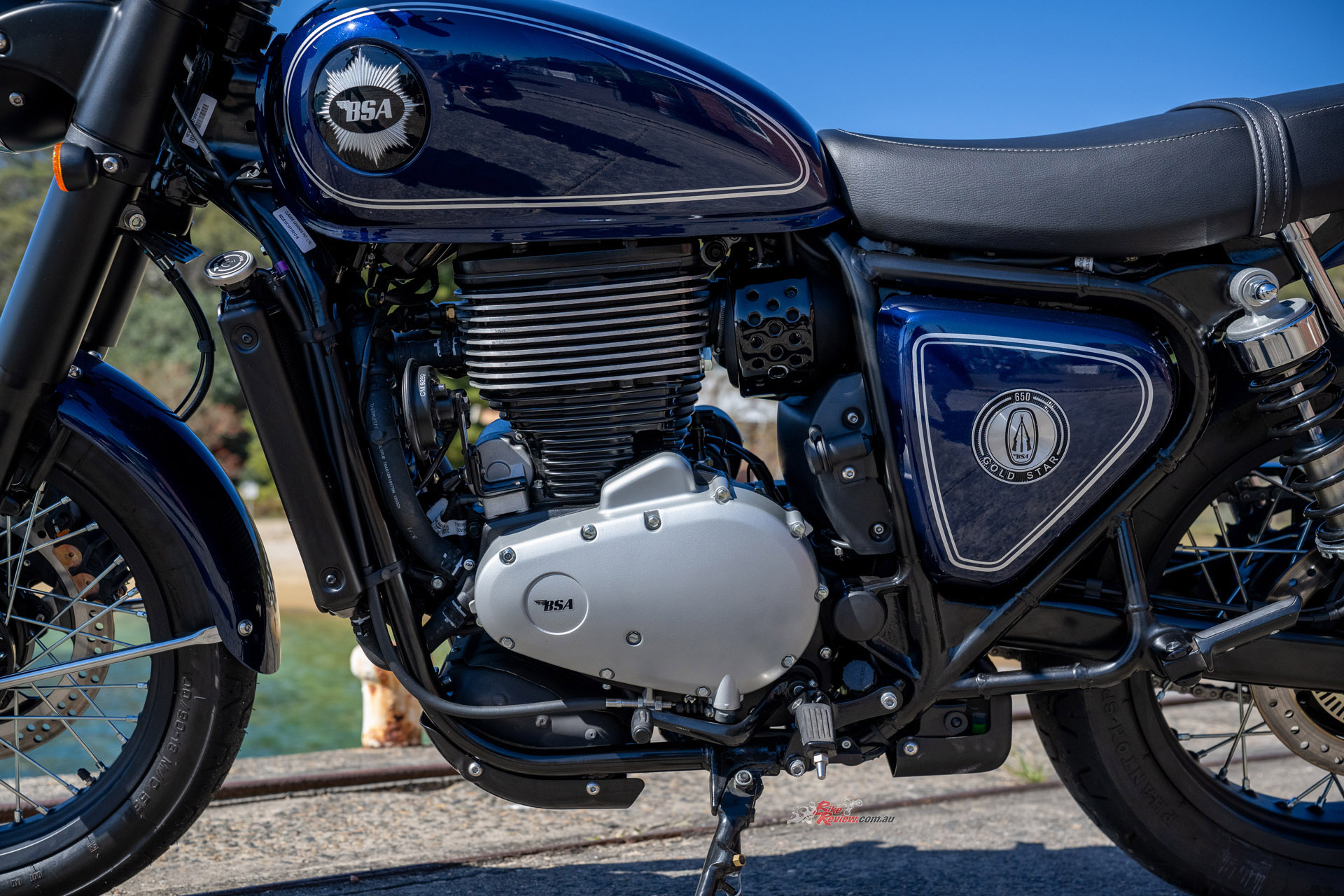
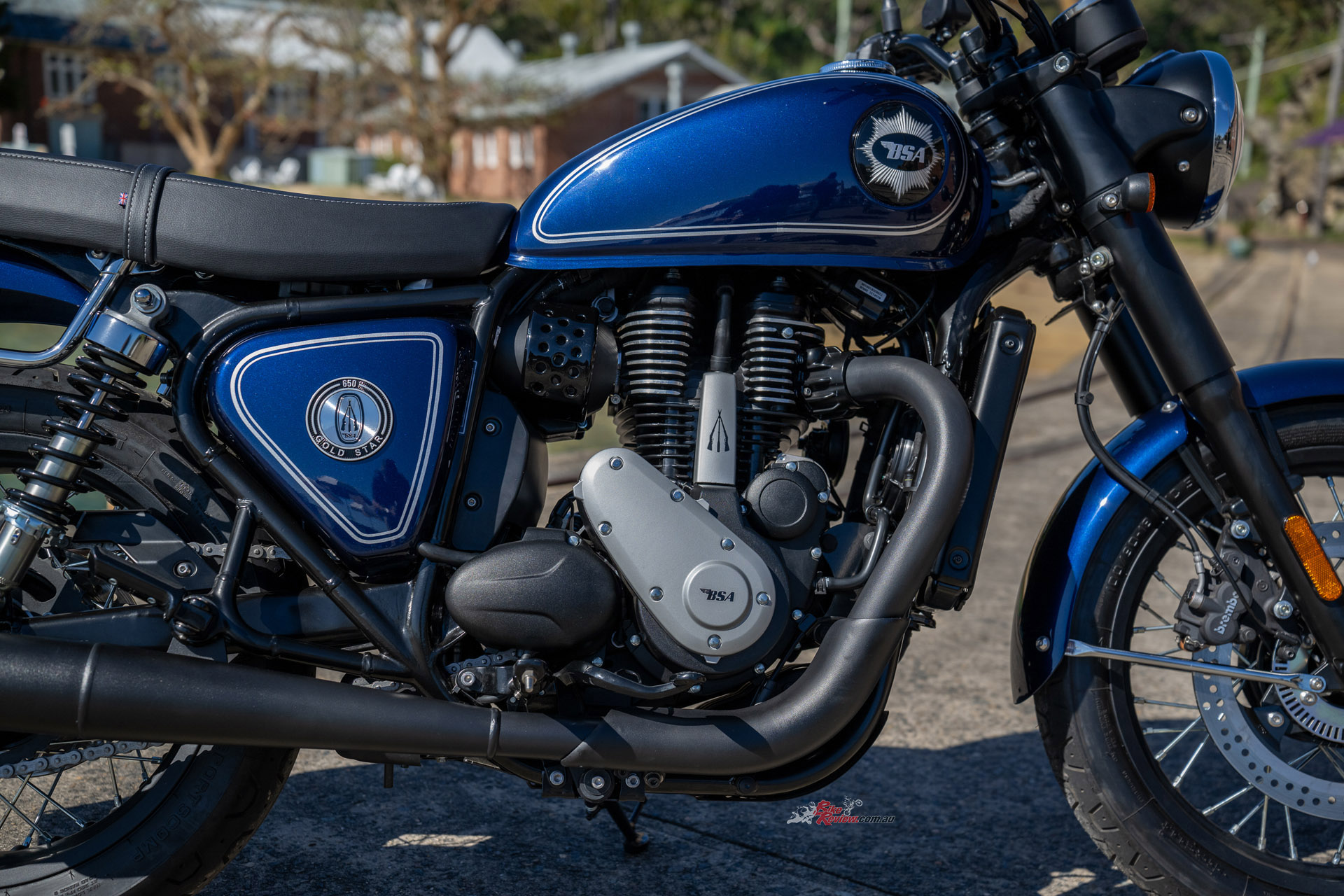
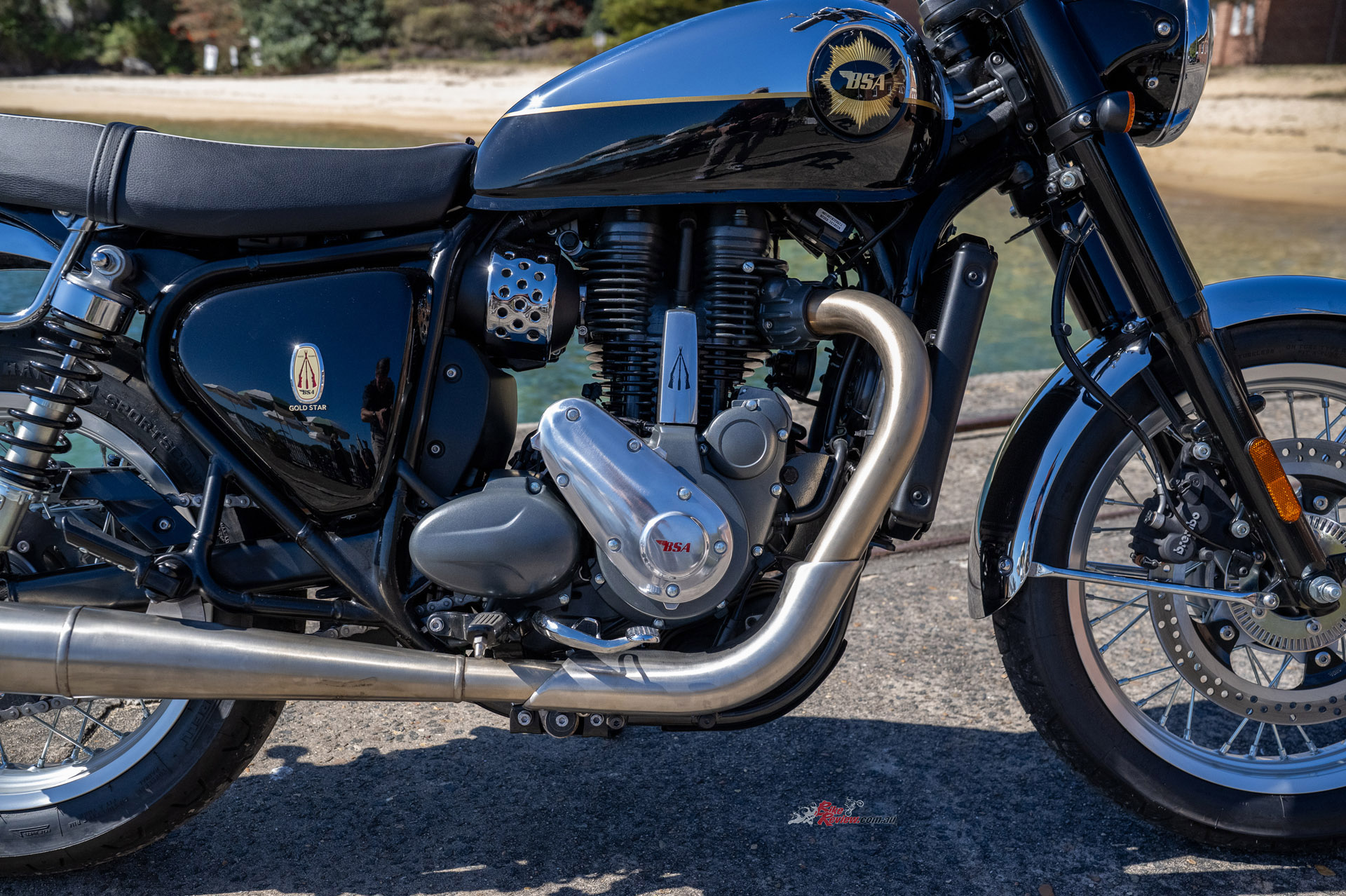
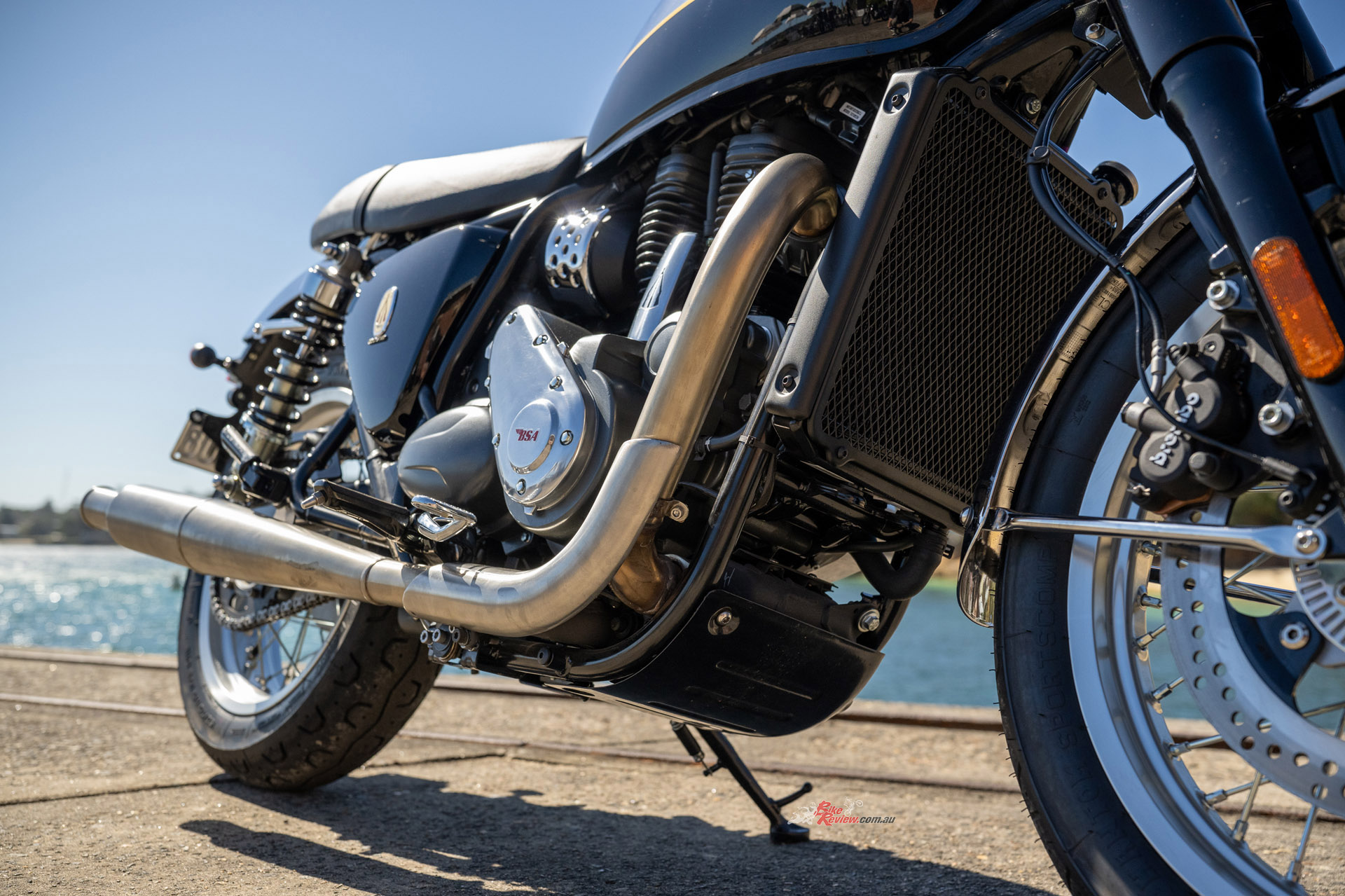
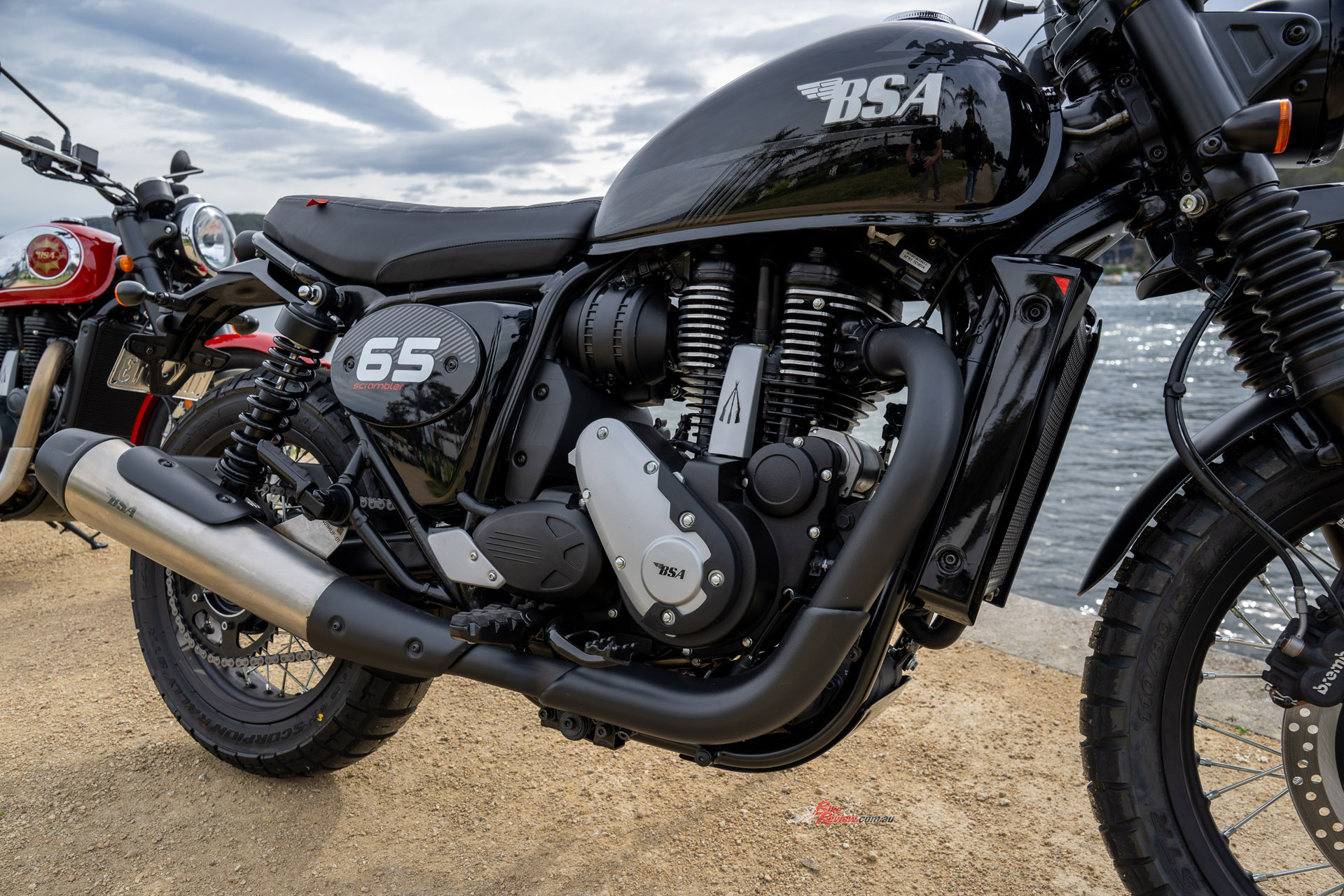
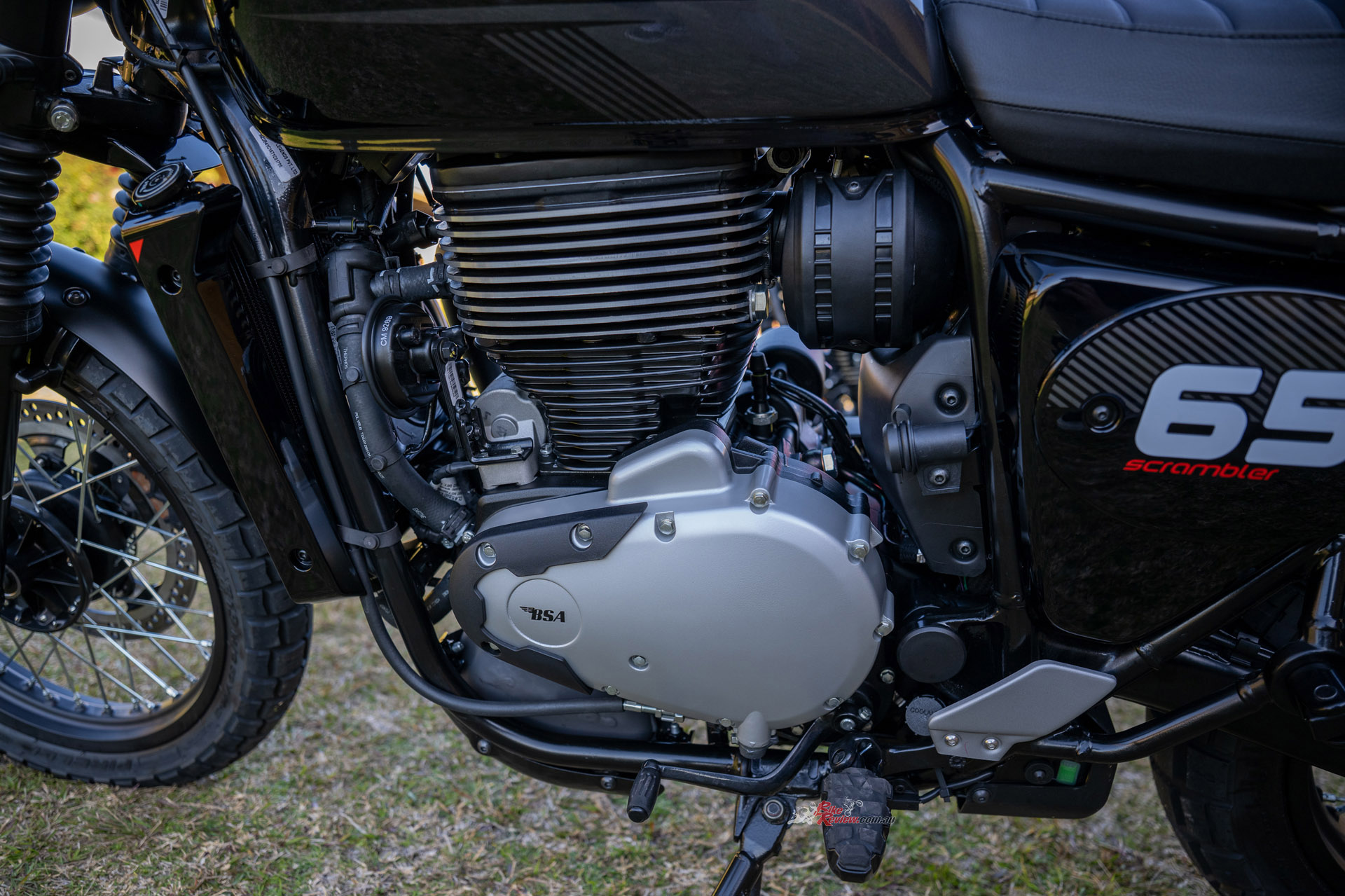
We have two full days and roads beyond the city limits to get to know the new 650s. Both are based around the same 652cc liquid-cooled, fuel-injected single-cylinder engine and these days, thankfully, come with electric start only. The modern thinking continues with a four-valve head, dry-sump lubrication, vibration-quelling balance shaft and slipper clutch.
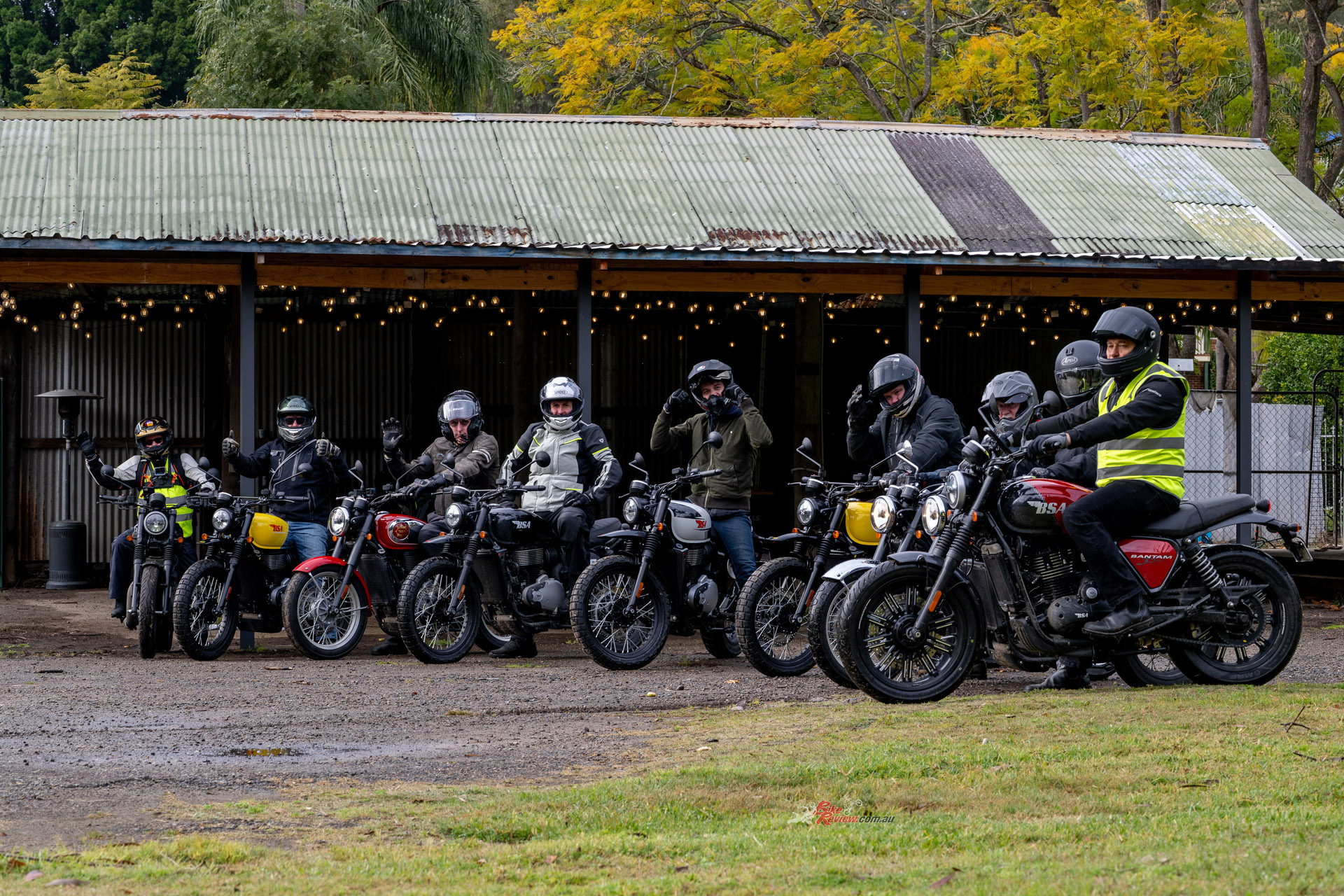
The Sydney launch gave media two full days to sample BSA’s new Australian range in mixed conditions.
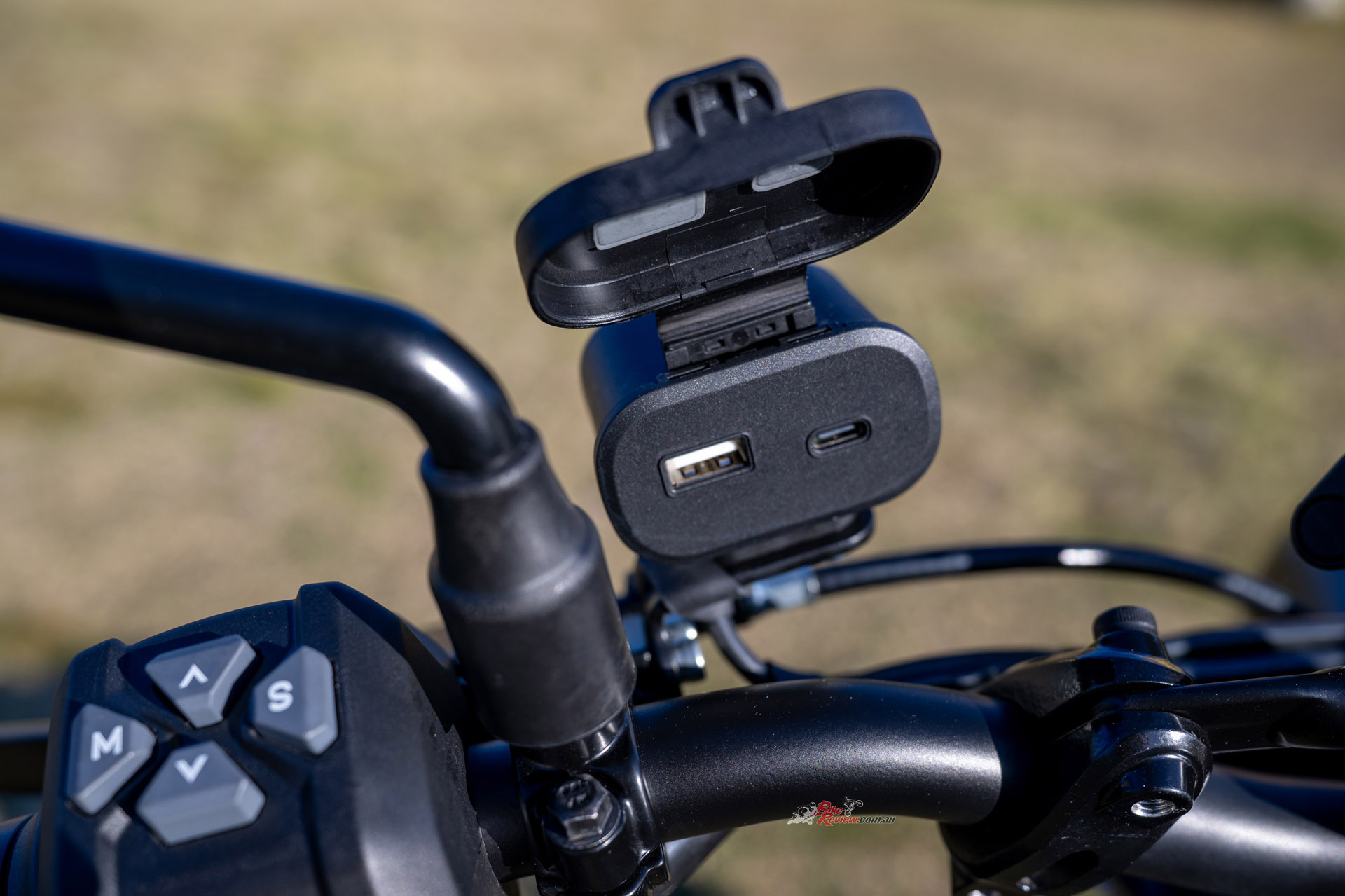
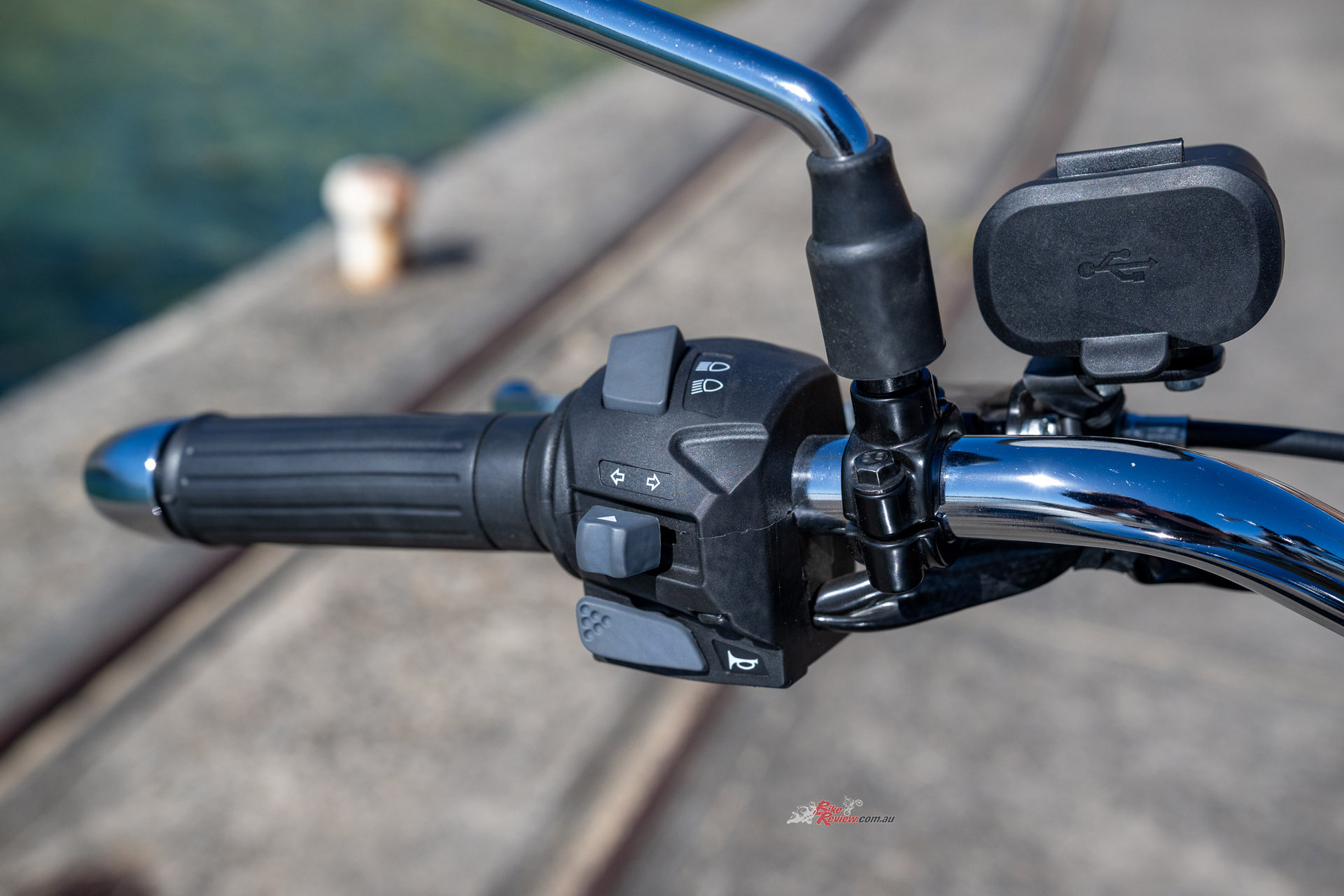
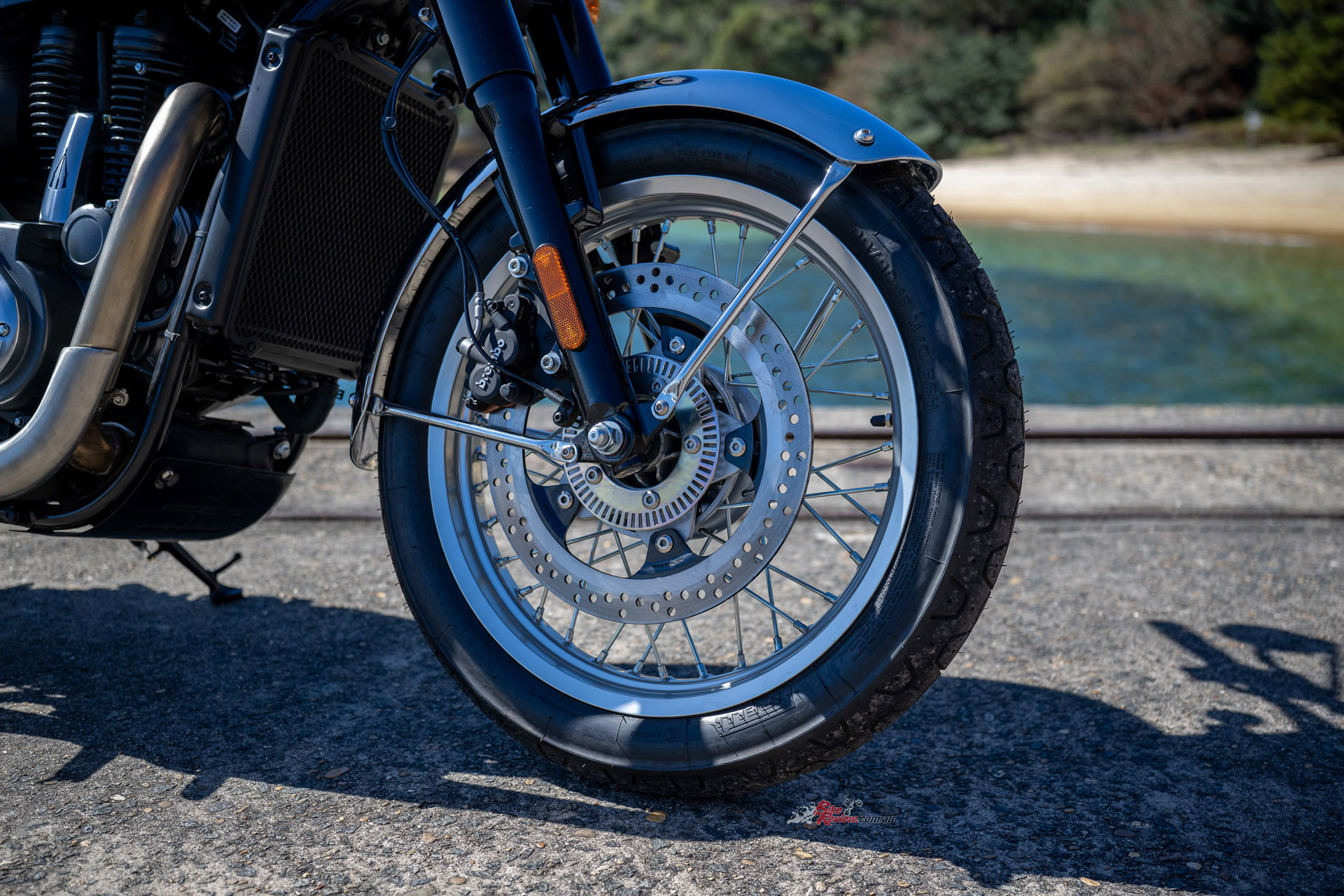
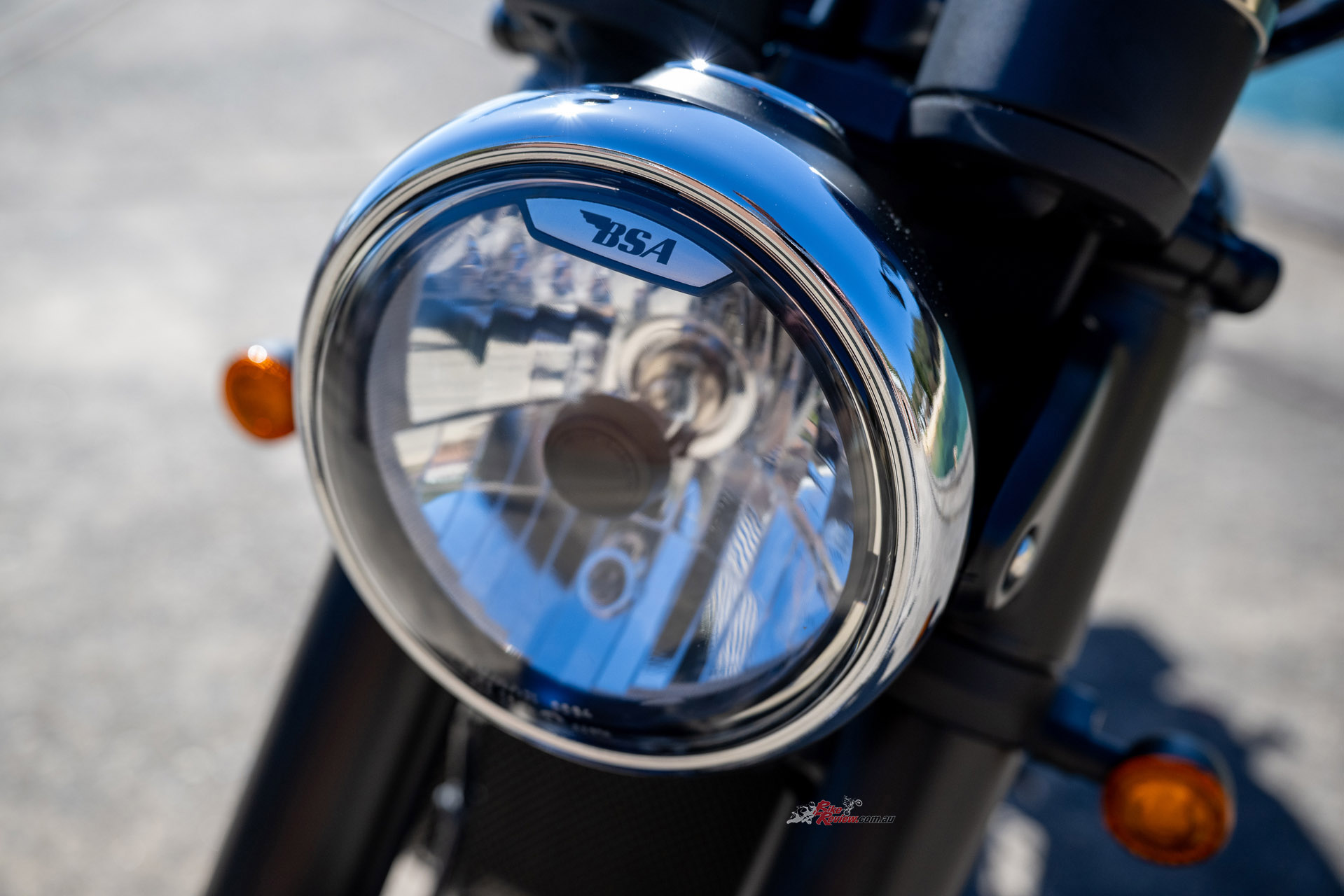
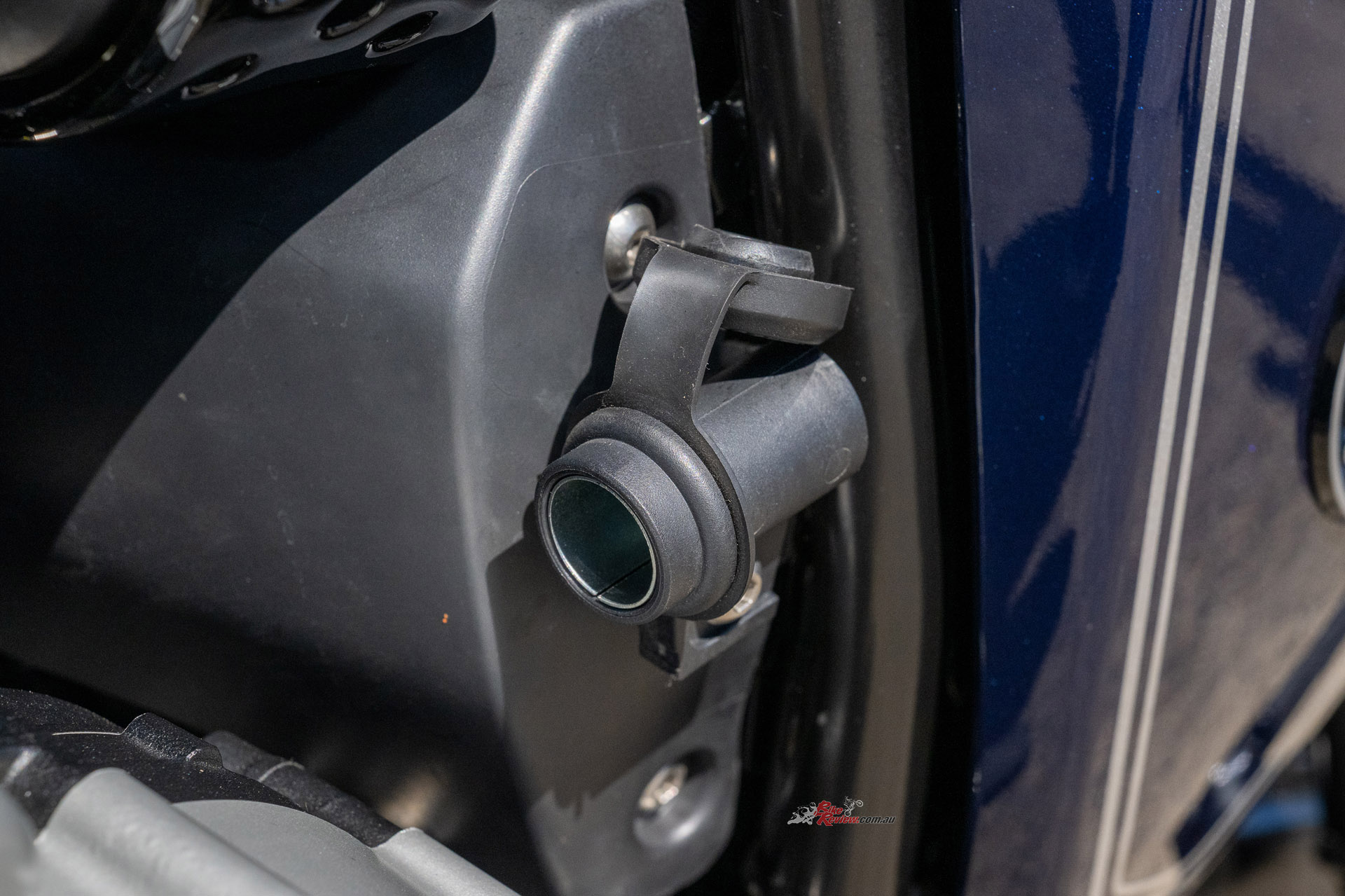
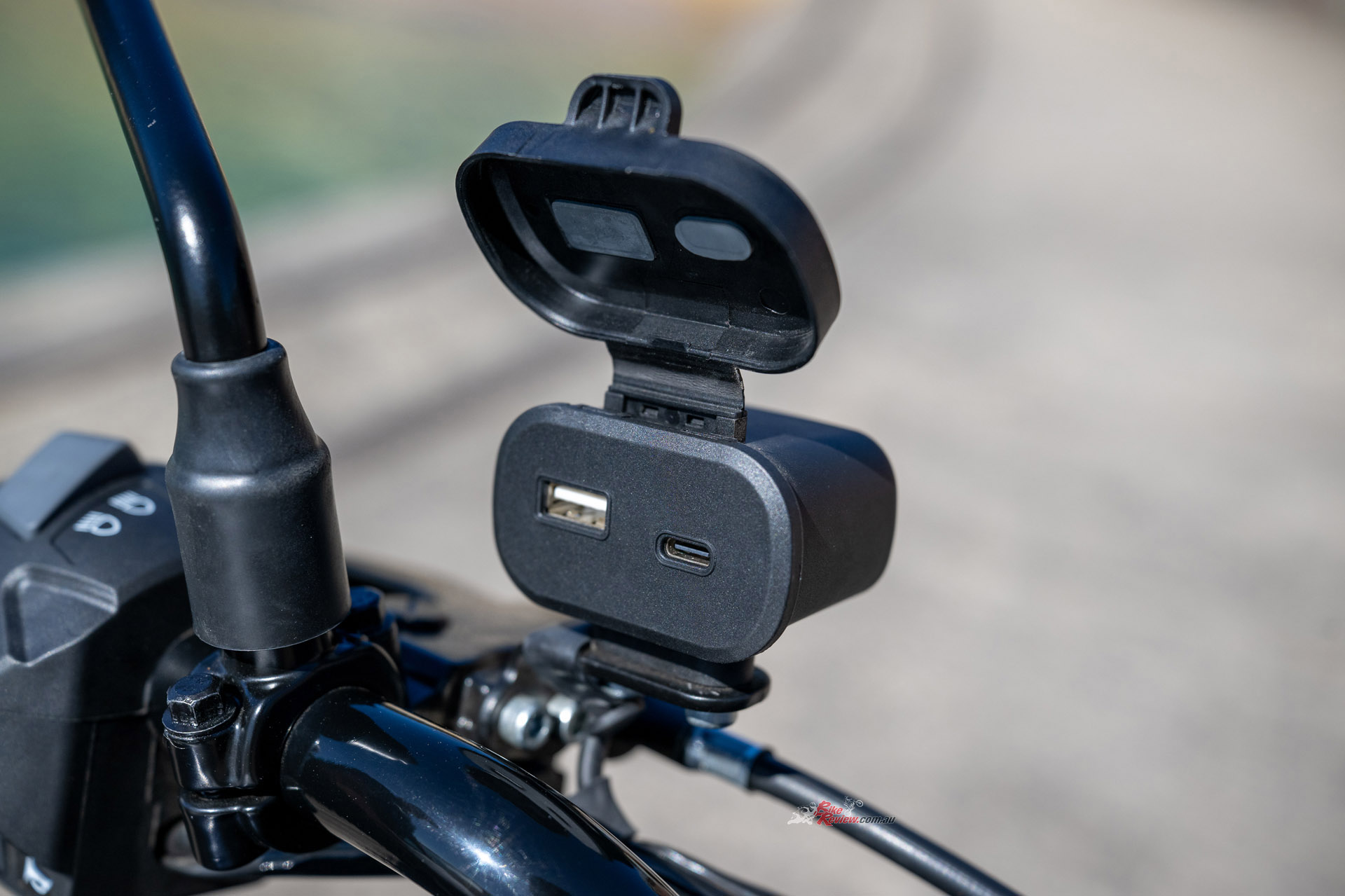
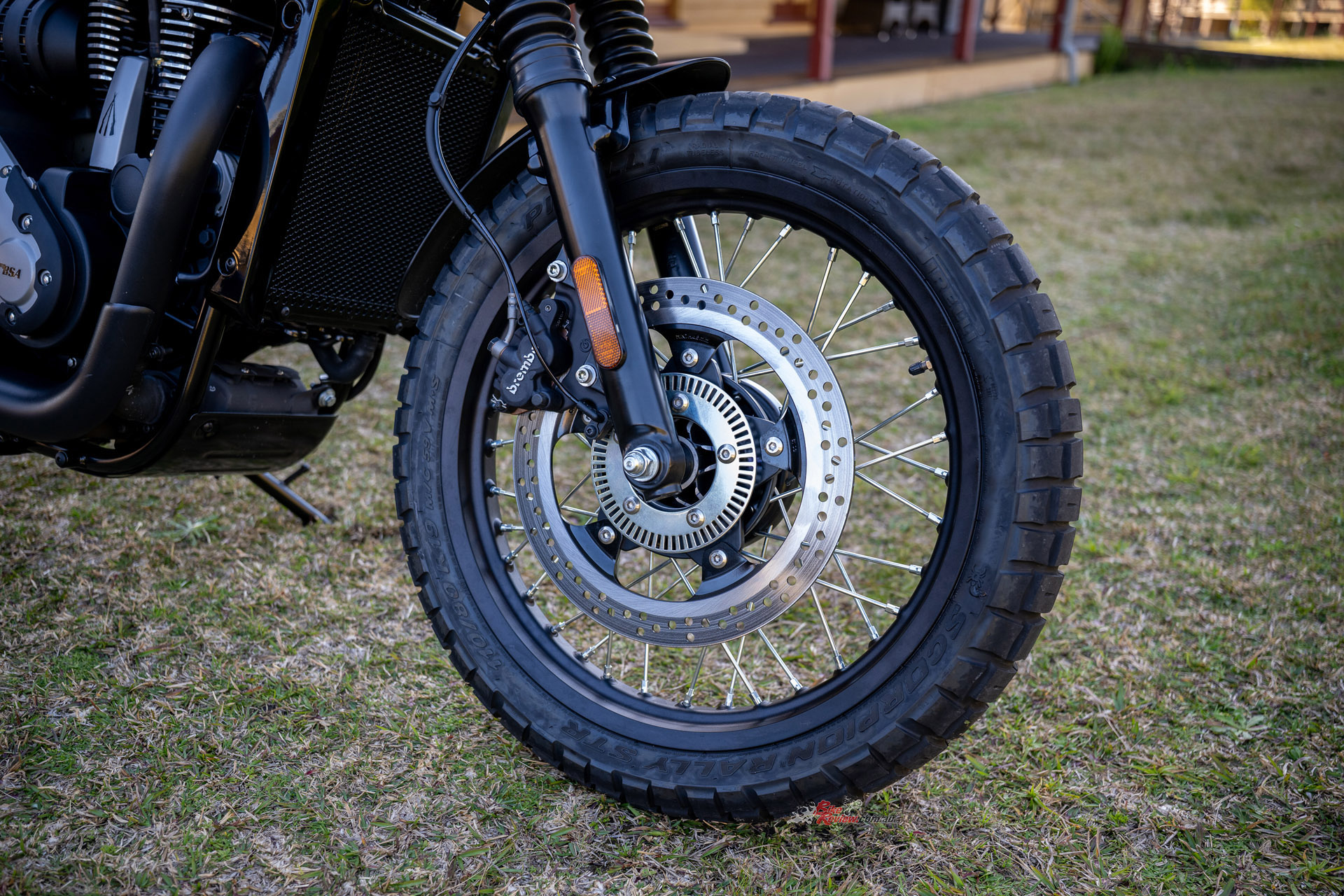
Brembo brakes front and rear, Pirelli tyres, ABS and LED lighting do their part to keep everything safe and civilised. Useful touches include a USB charging port on the handlebar and an auxiliary 12-volt outlet beside your left thigh. There could be plenty more detail to cover, but for now grab your pipe and slippers and let’s gently roll down memory lane on the road-based Gold Star.
Read our GLobal Launch report on the Gold Star here for all of the tech details and more…
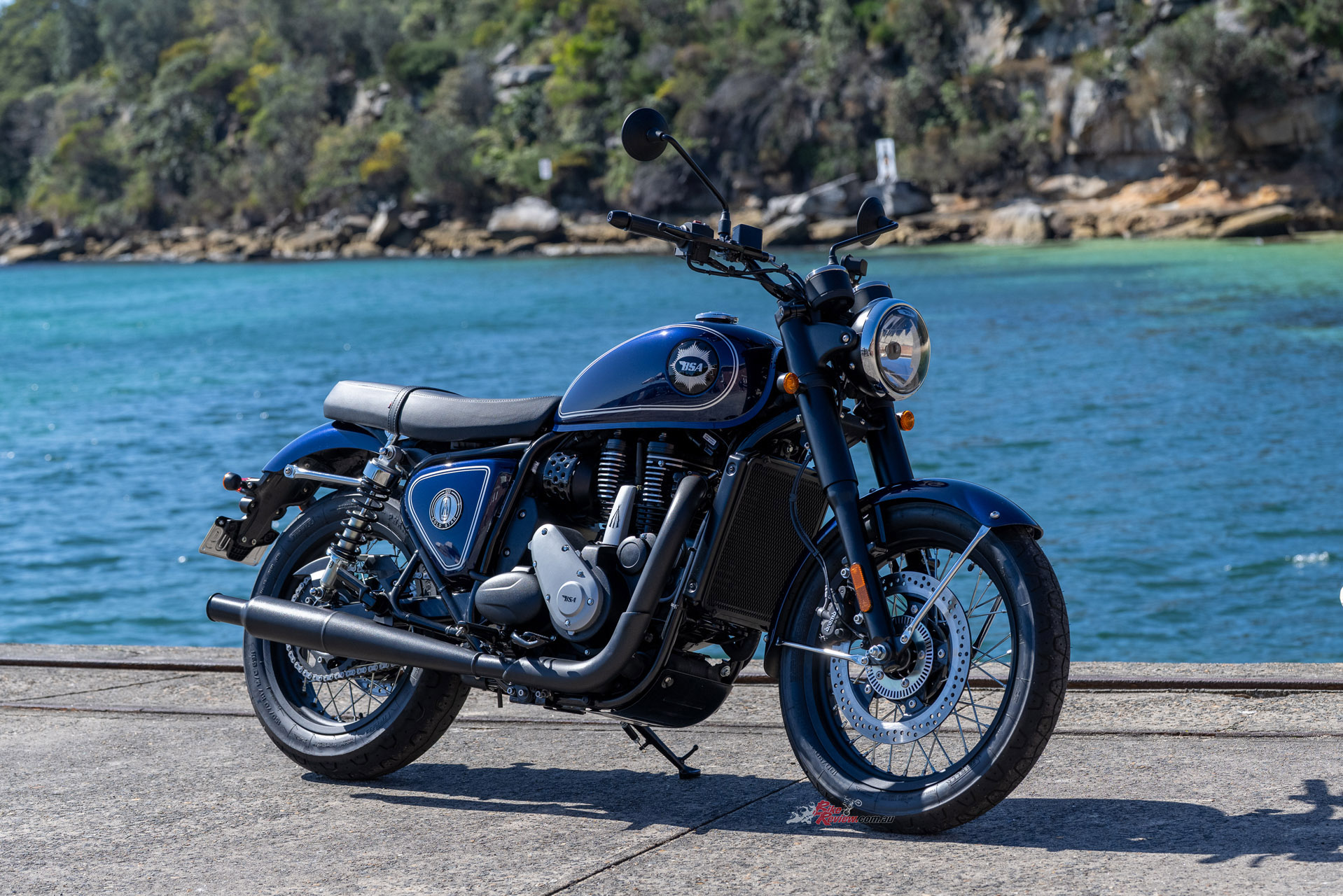
Gold Star 650
Even on a chilly morning it starts quickly, quietly and without fuss. I let it idle and warm through while waiting for the flag to drop. The group heads off in single file and almost immediately I know this is a very refined – if not overly sophisticated – big single.
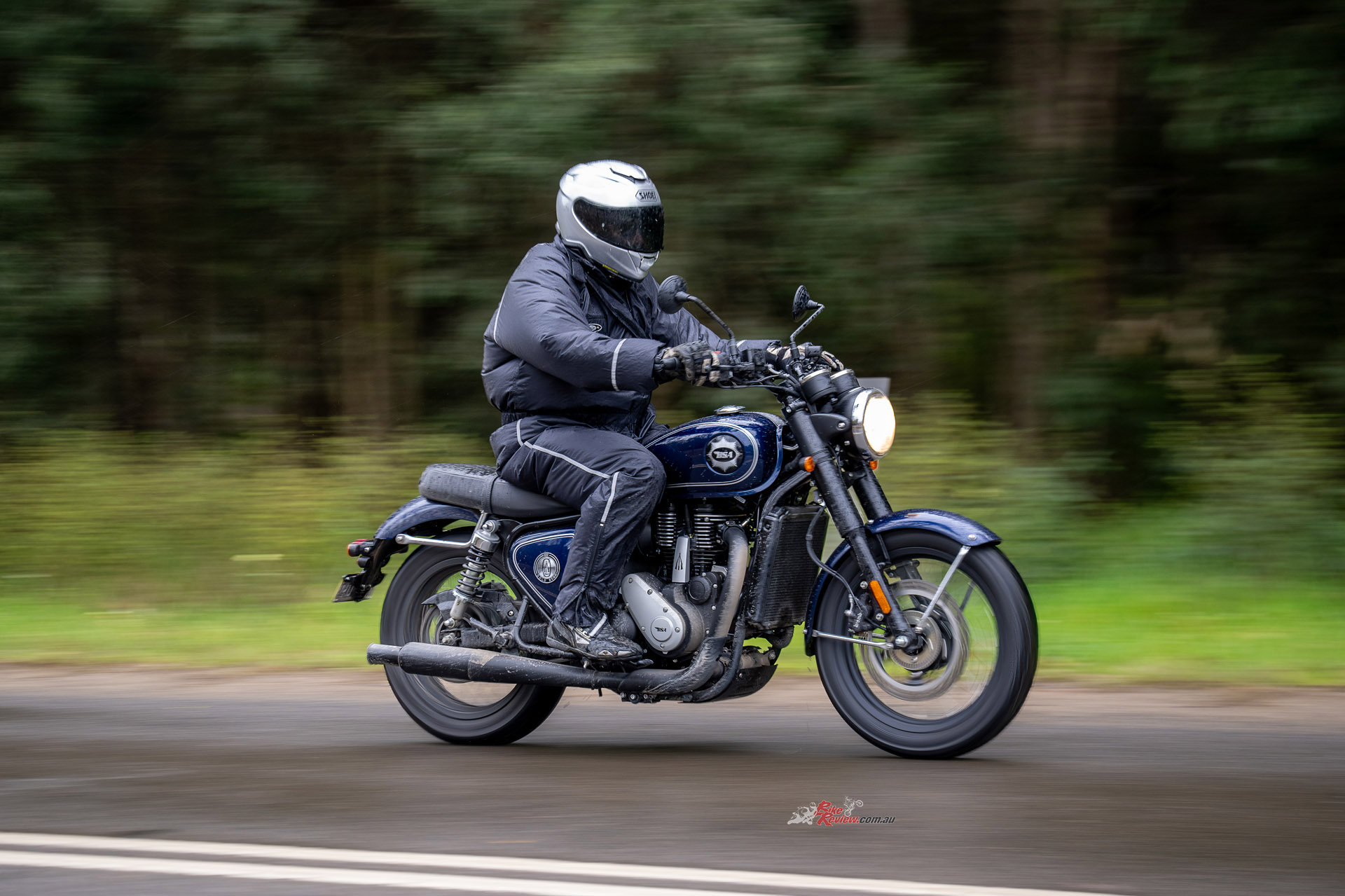
The Gold Star’s balance shaft keeps big-single vibration remarkably well controlled below 4000rpm.
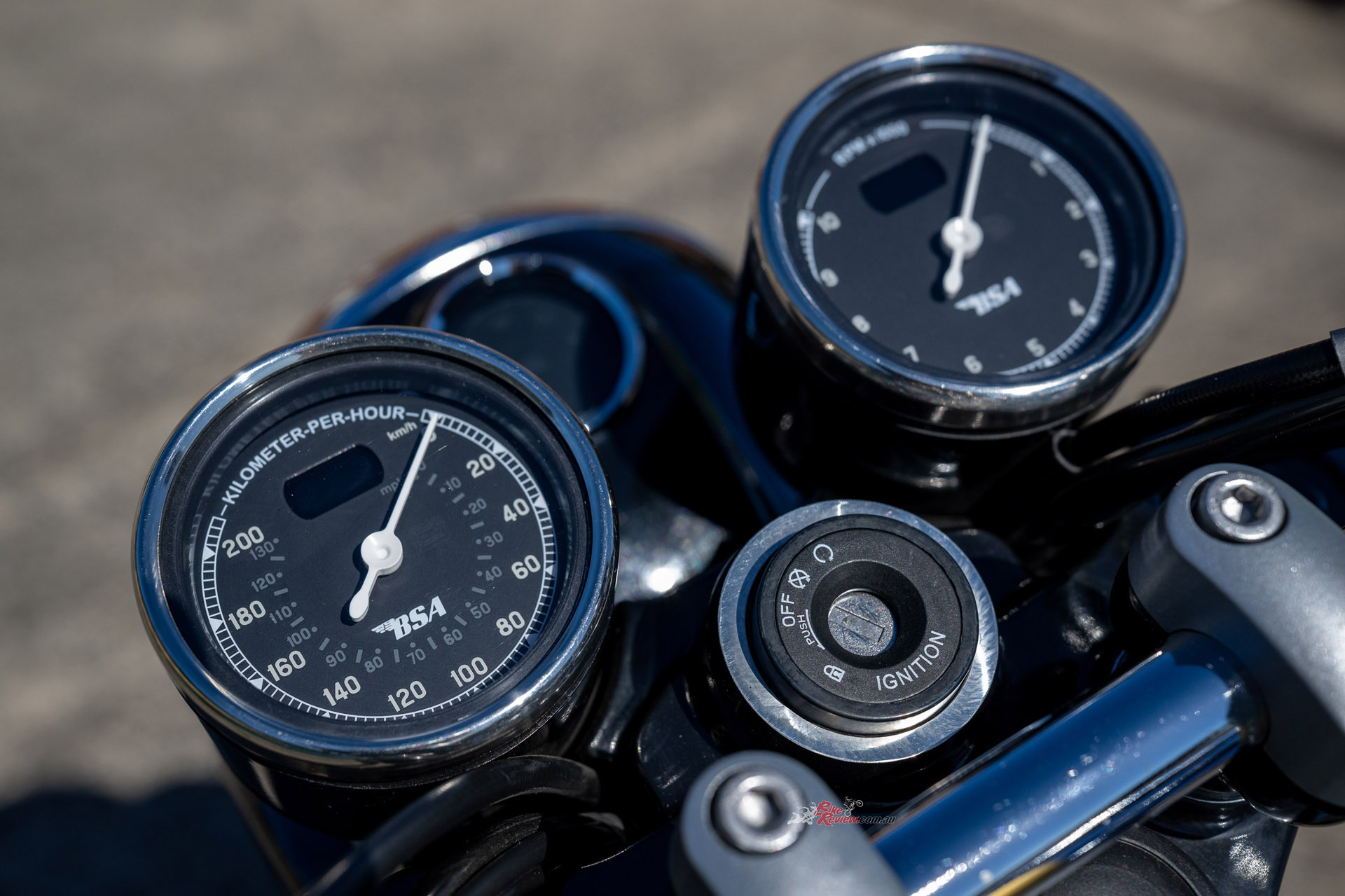
The clutch is light, the five-speed gearbox changes effortlessly and the bottom-end pull feels every bit as healthy as the claimed 55Nm. A glance at the beautiful twin instruments makes me smile as their needles sweep around in a fashion you don’t see every day, backwards. So analogue – just the way I like my watches…
If you’re in no particular hurry and simply want to enjoy all that torque, you will probably never need to venture beyond 4000rpm. What really caught me out was the smoothness. Any of those vibrations associated with big singles? Next to none. Believe me, I have experienced almost every European, British and Japanese single made since 1975 and very few have been as smooth or as easy to ride as the Gold Star. Wind the tacho needle clockwise to release the claimed 45hp at 6500rpm and a few minor vibes begin to creep through, but I’ve ridden twins that were considerably worse.
I have experienced almost every European, British and Japanese single made since 1975…
The fuelling earns a gold star from me. It would shame more than a few supposedly pedigree motorcycles and adds enormously to the enjoyment this BSA offers. And I need to emphasise one word: fun. The Gold Star is engaging even at boring, legal speeds. Another surprise was the almost complete absence of driveline lash, which adds to the feeling of smooth, effortless progress. There’s been some serious work put into this engine to make it feel so civilised.
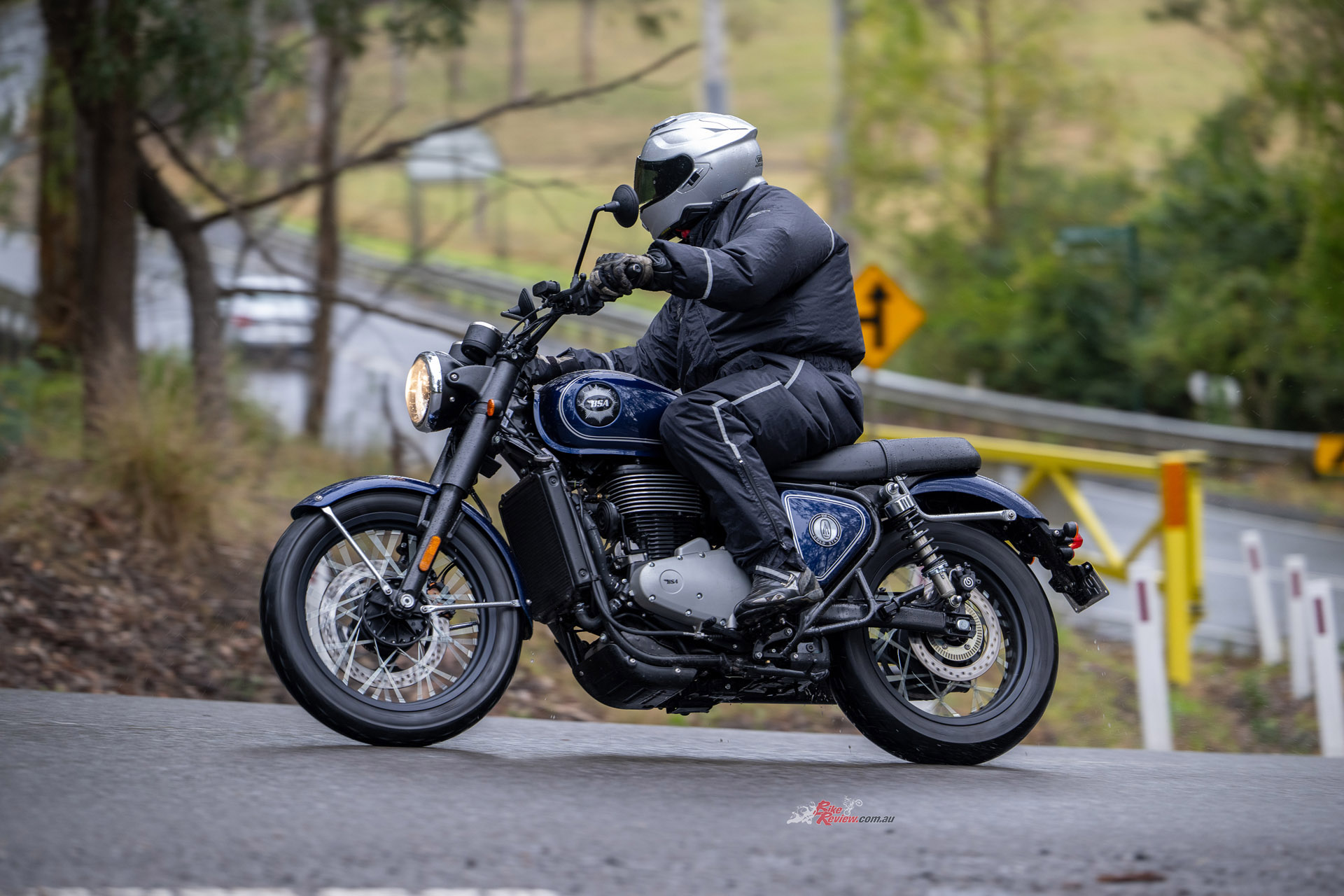
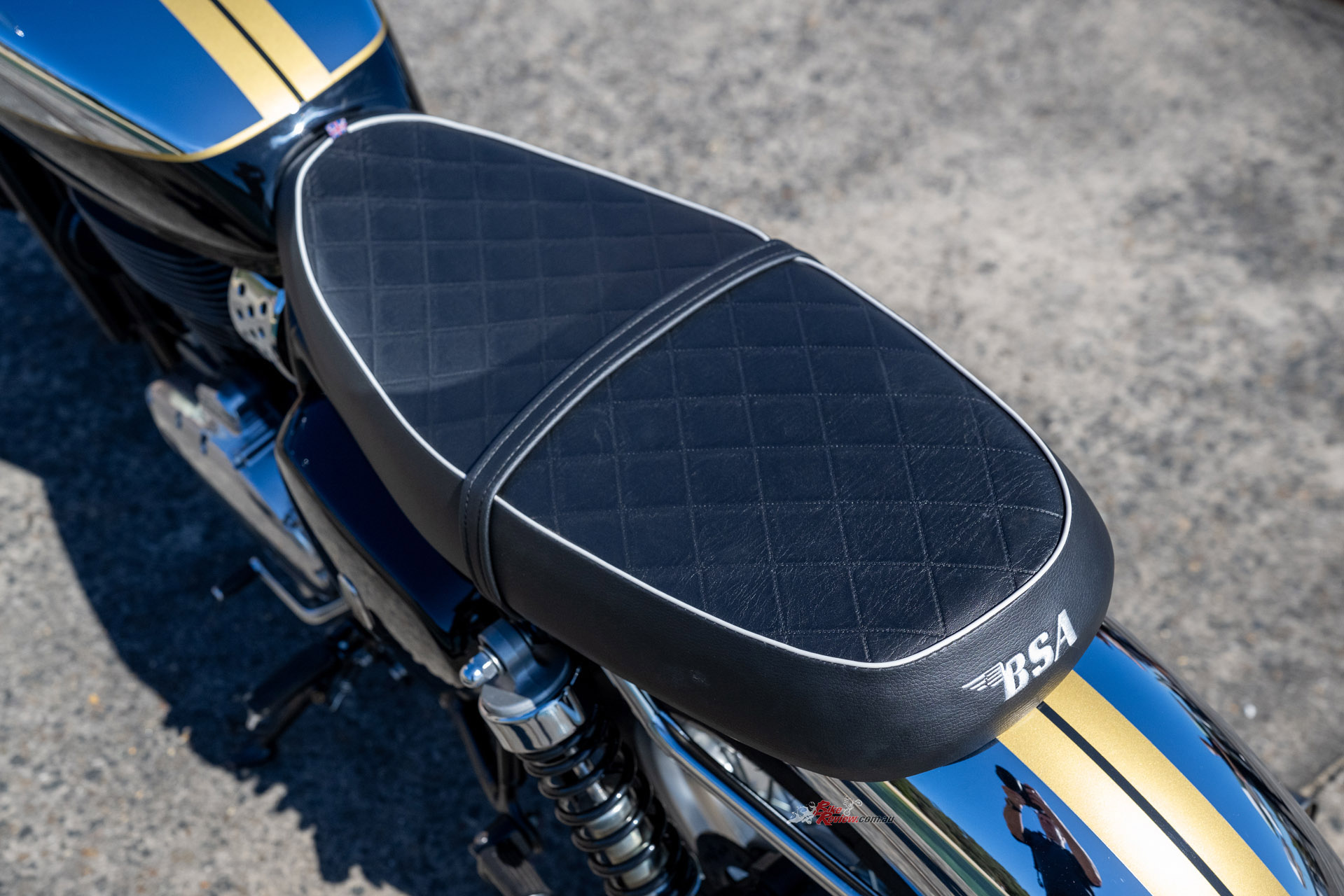
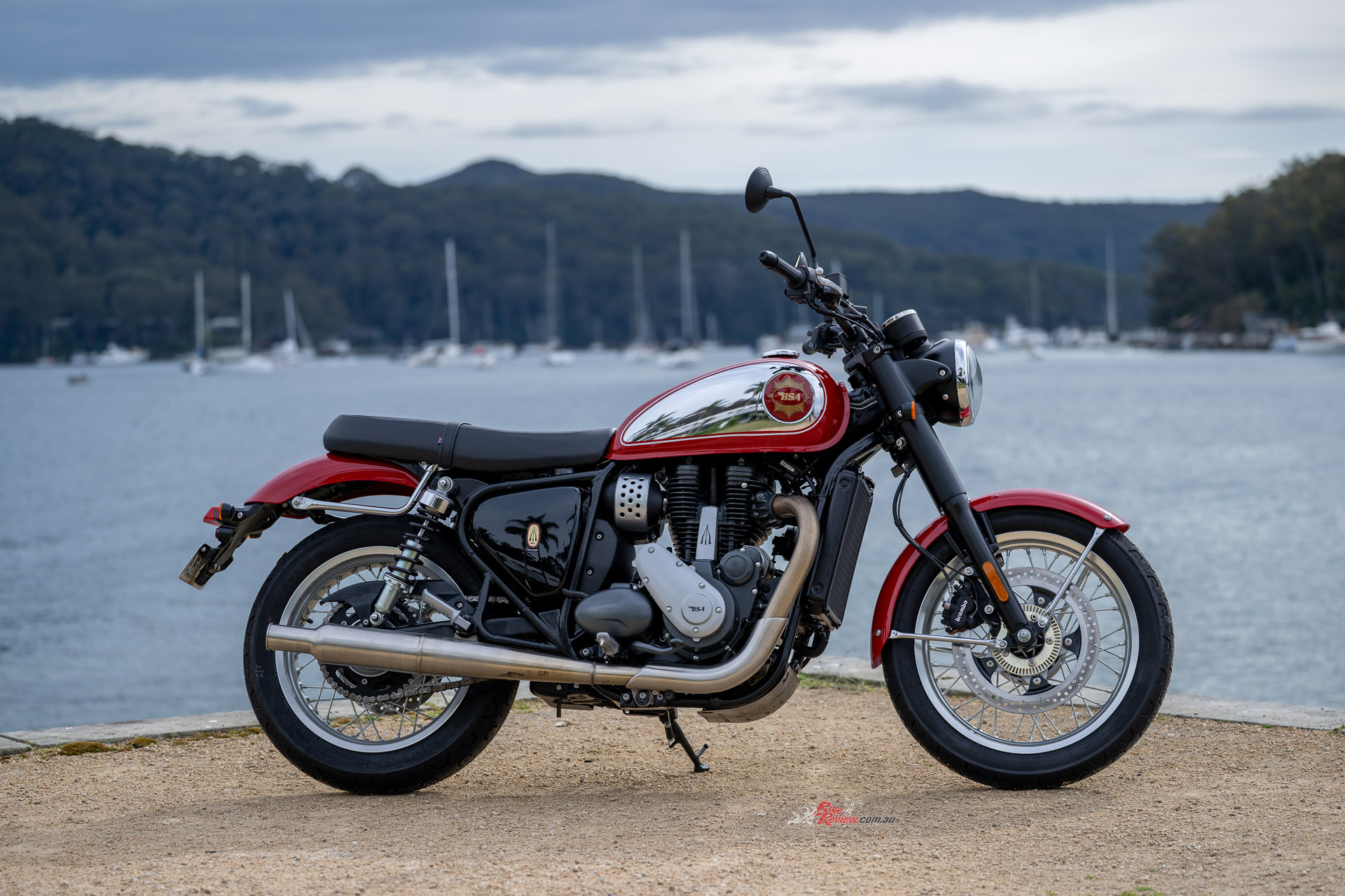
The Gold Star’s low seat and neutral riding position make it an easy fit for everyday road riding.
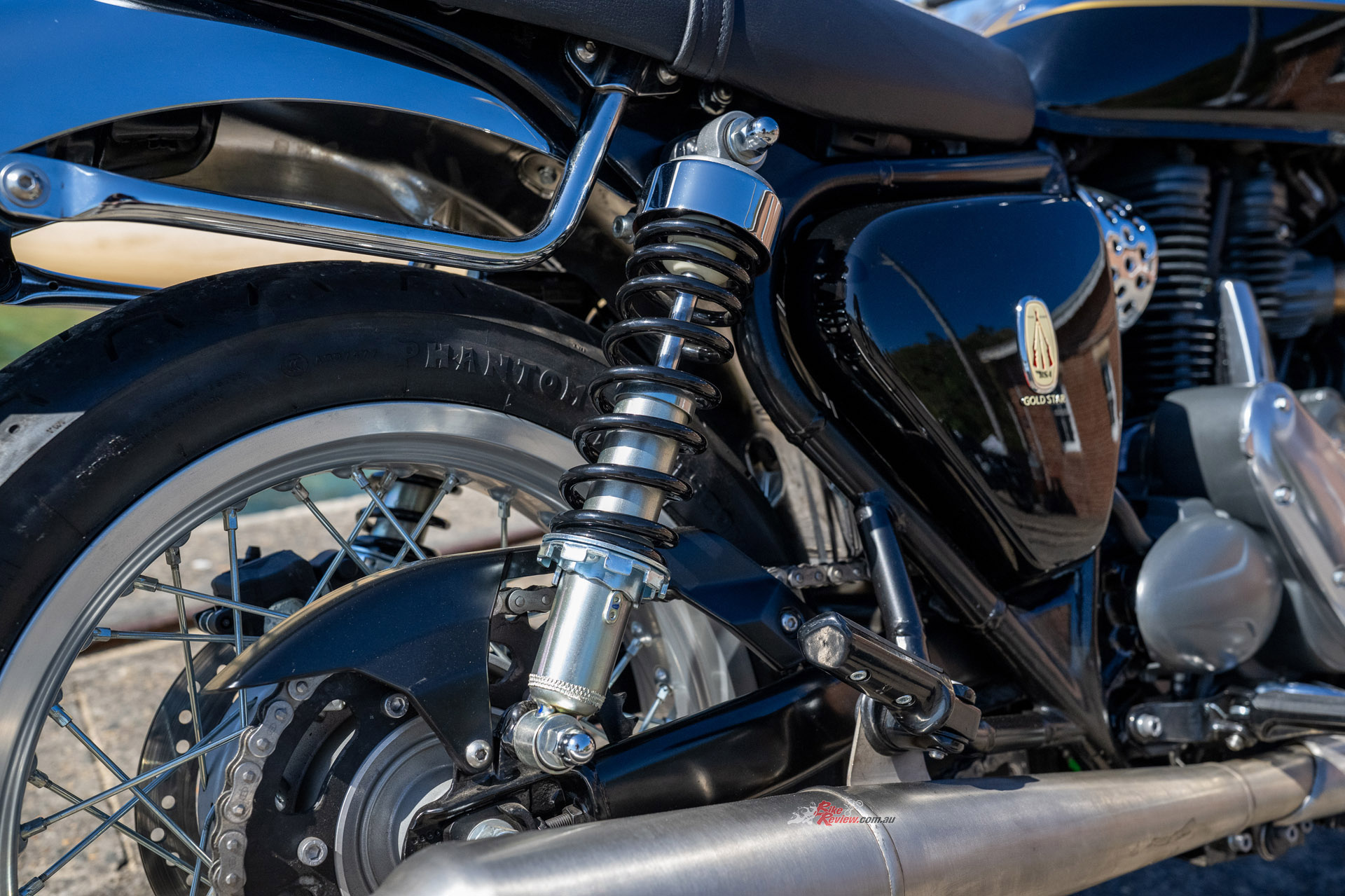
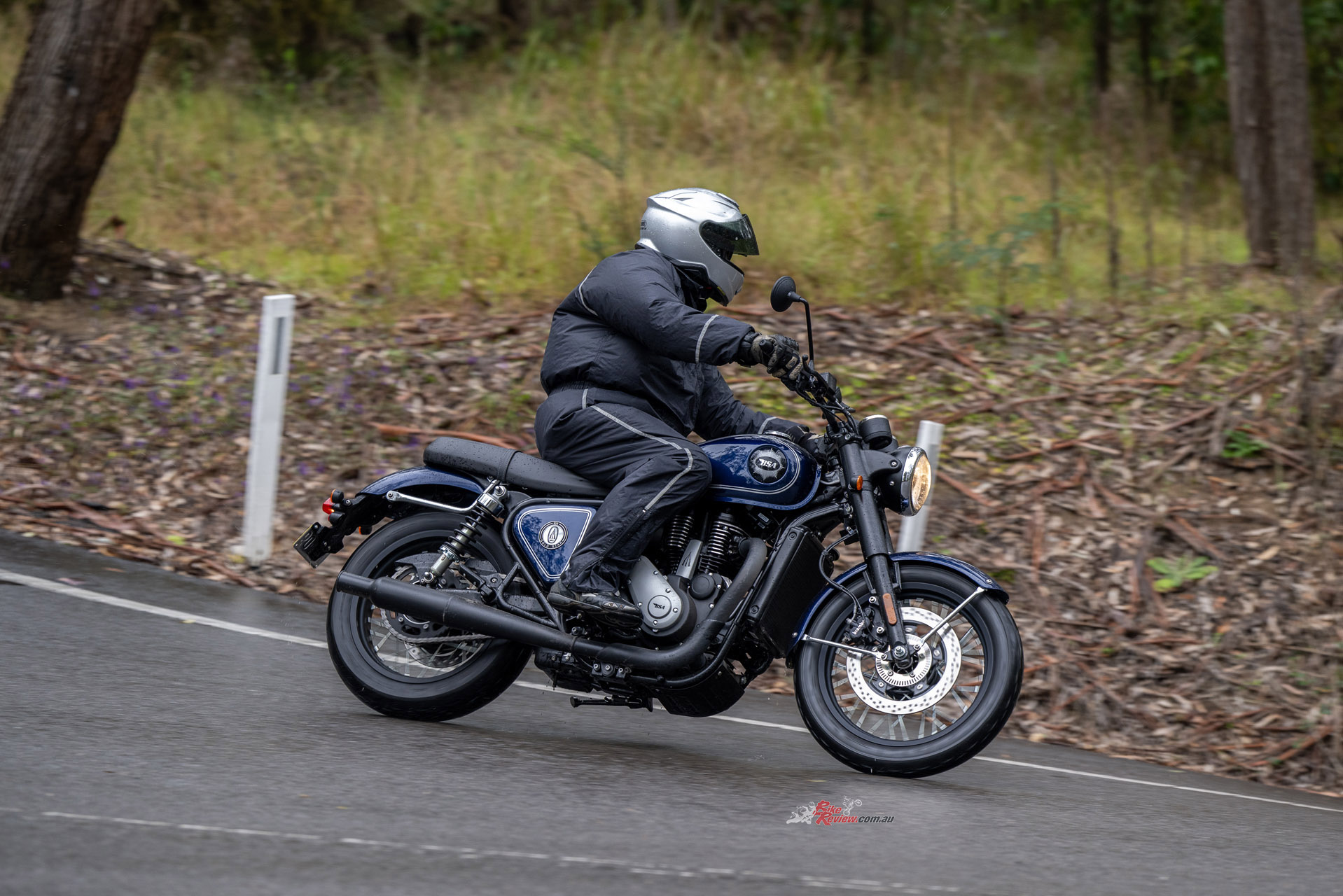
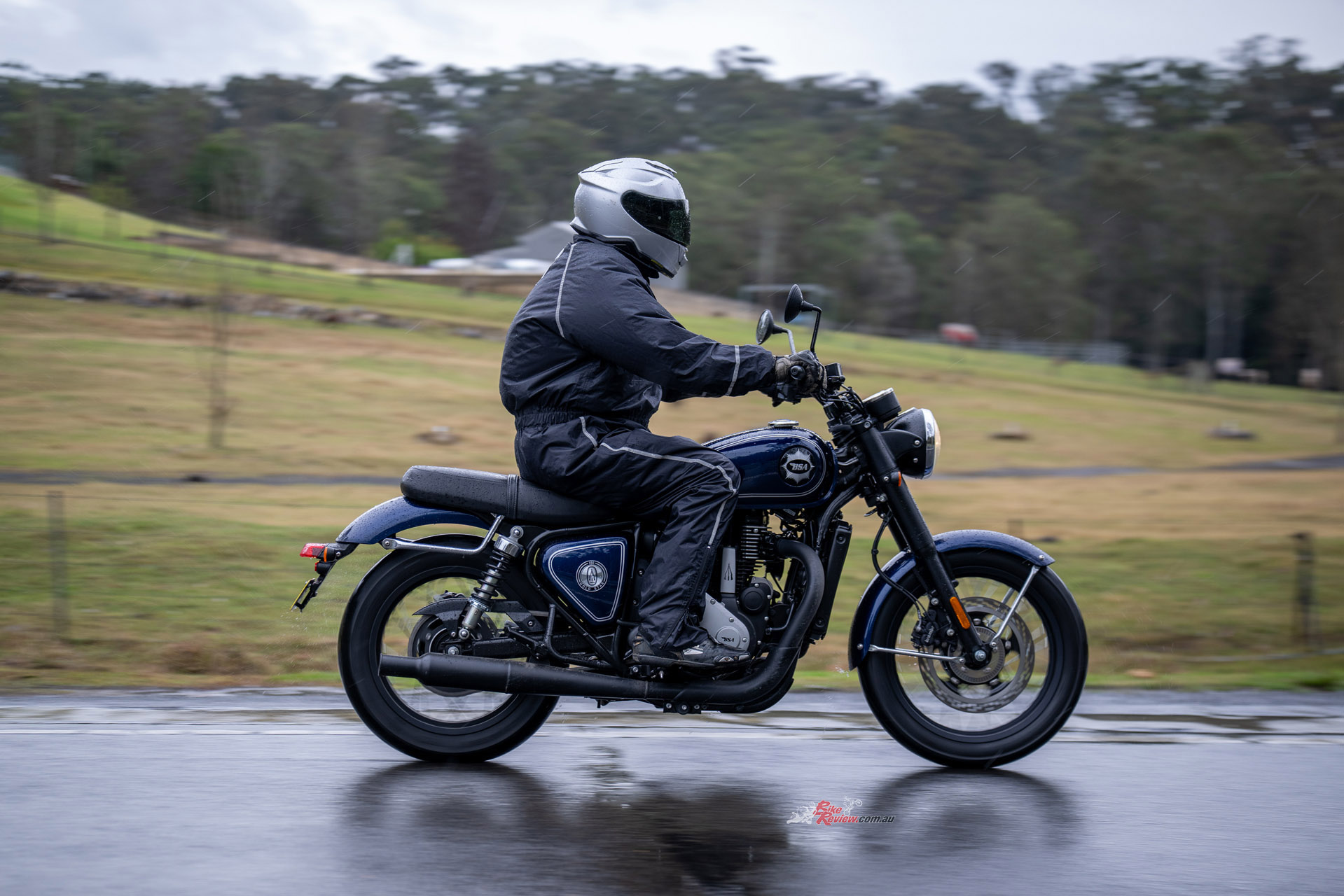
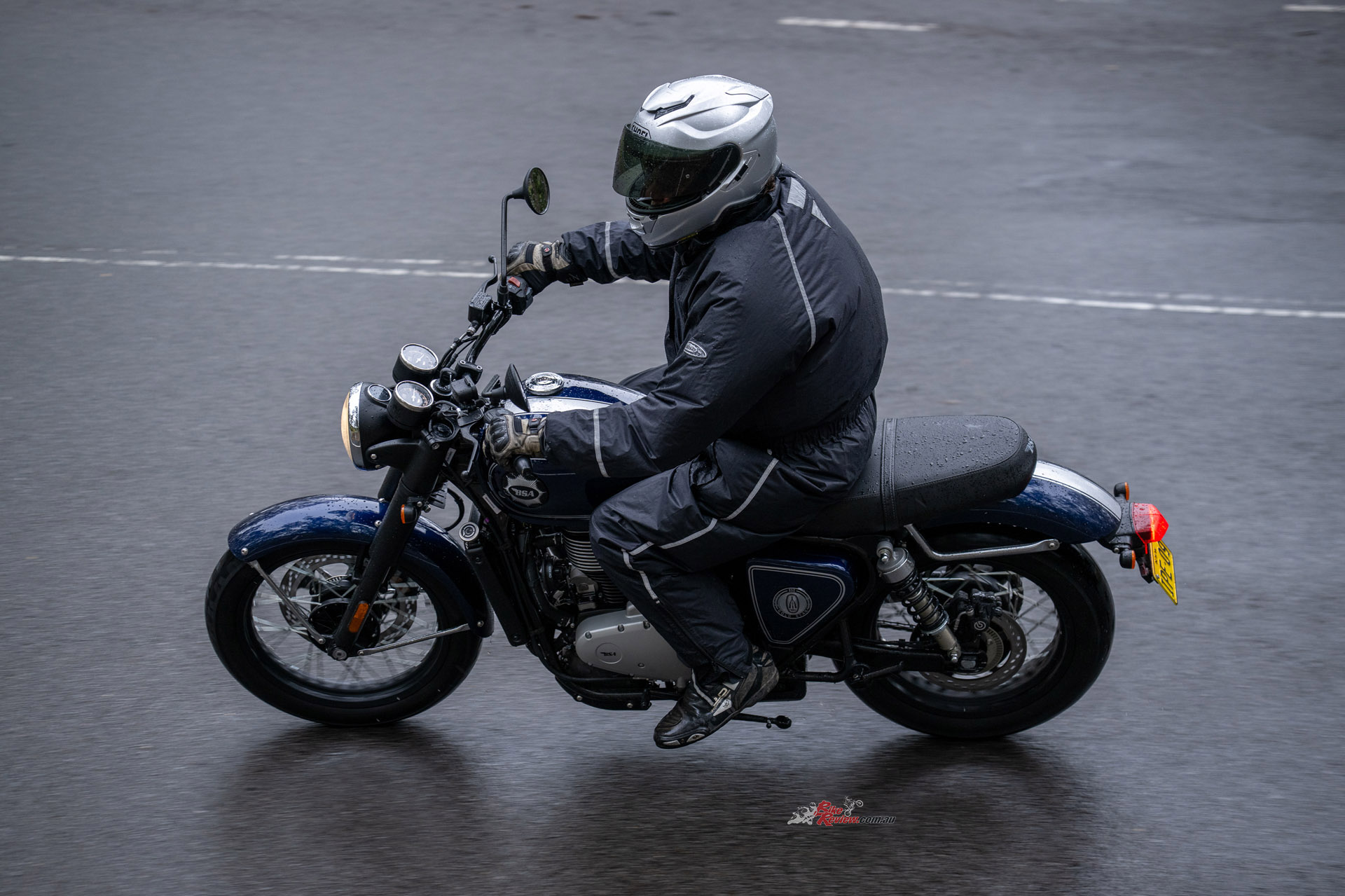
Once we began pushing the 650 a little harder through the tighter turns – before the rain arrived – and along the gentler sweepers, the handling proved predictable and reassuring. The suspension is on the firm side at both ends, although by the end of the second day I could feel it beginning to loosen up.
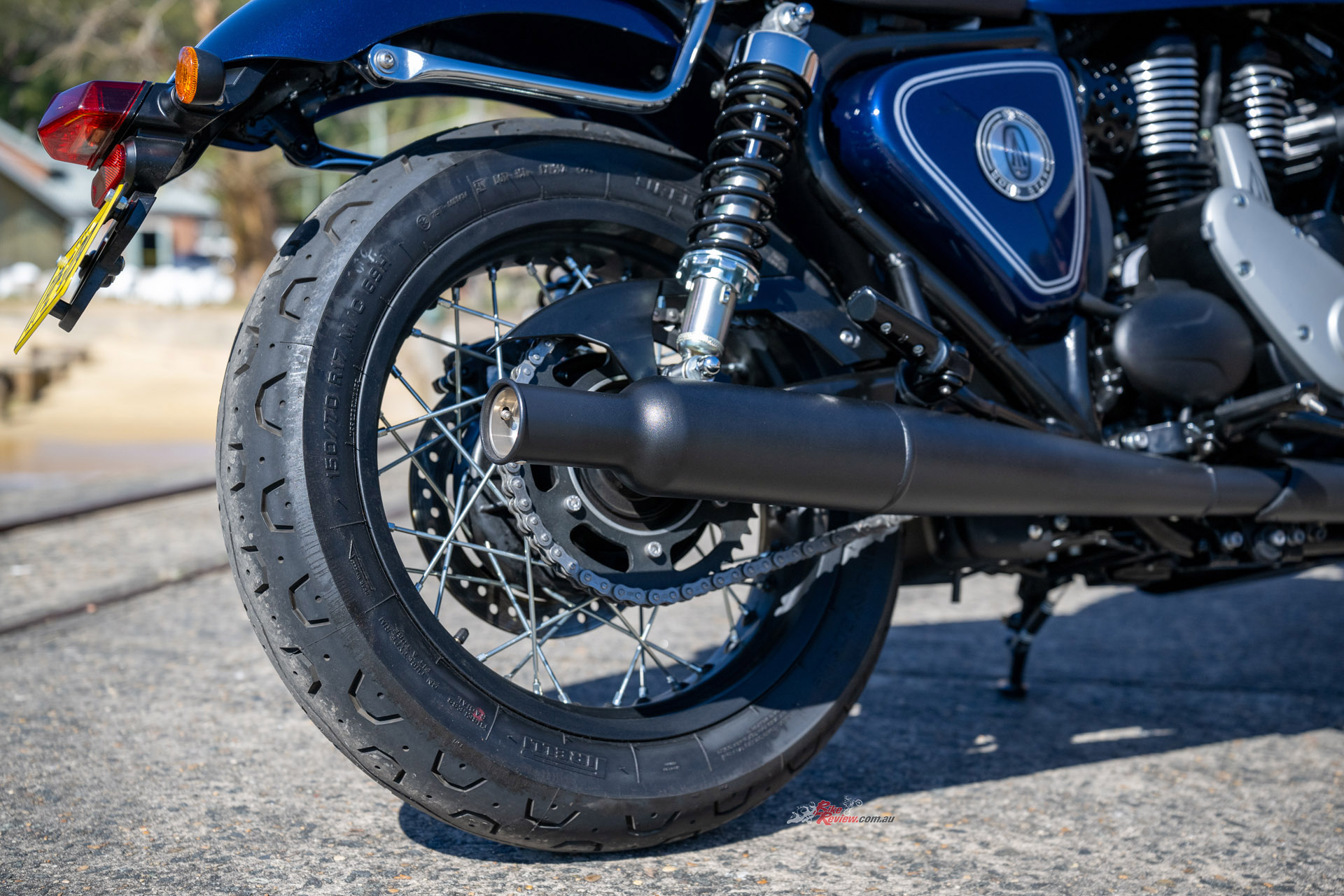
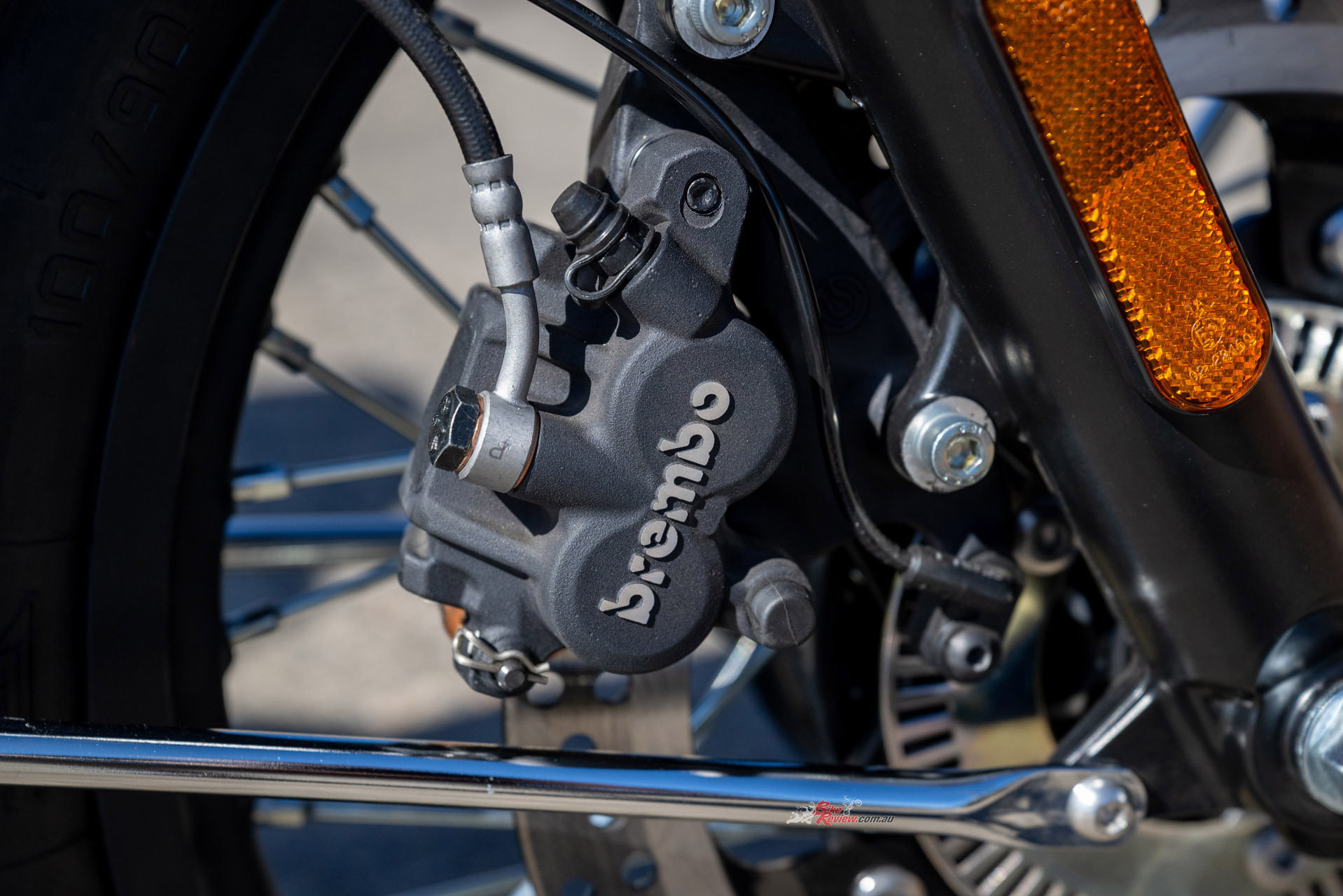
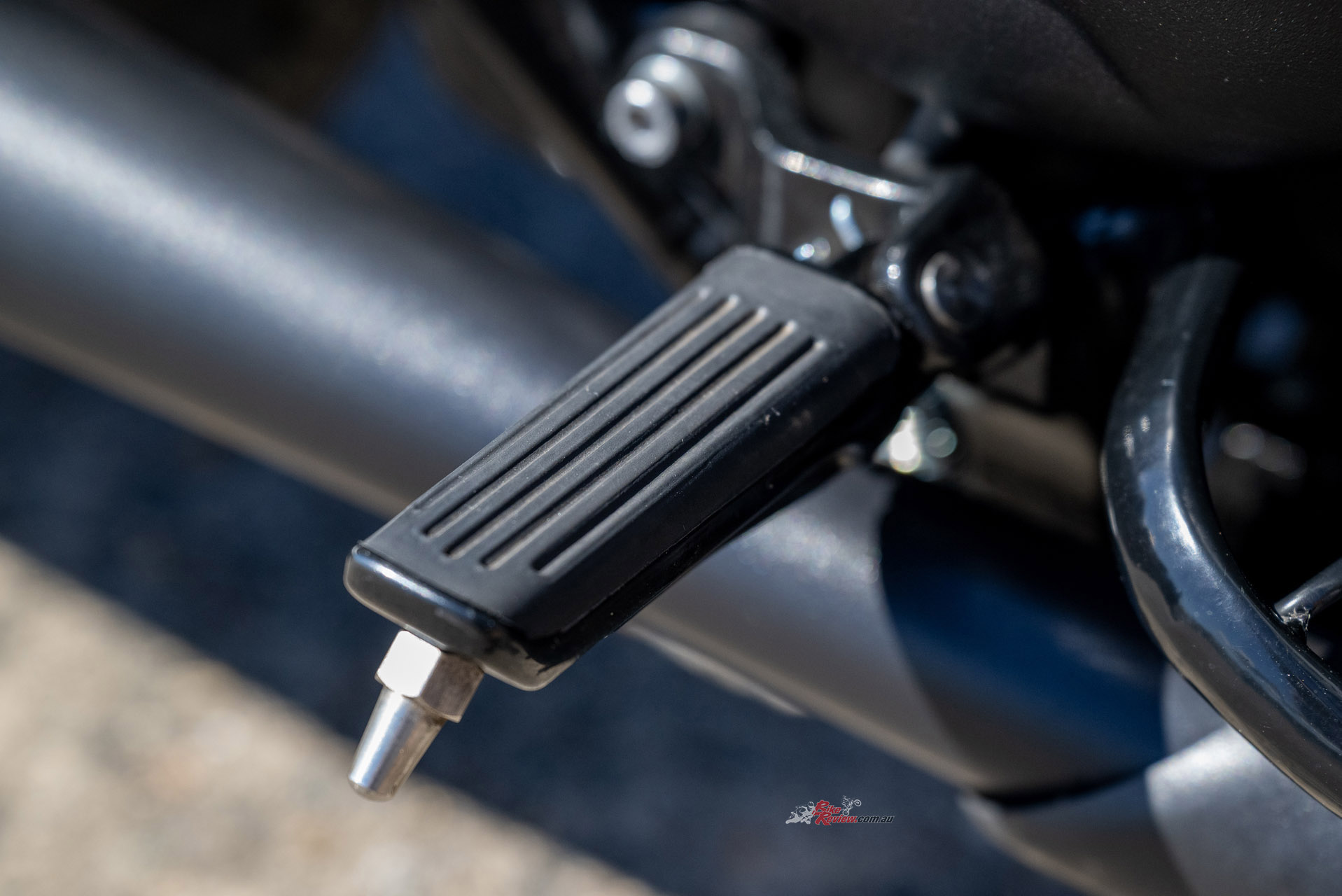
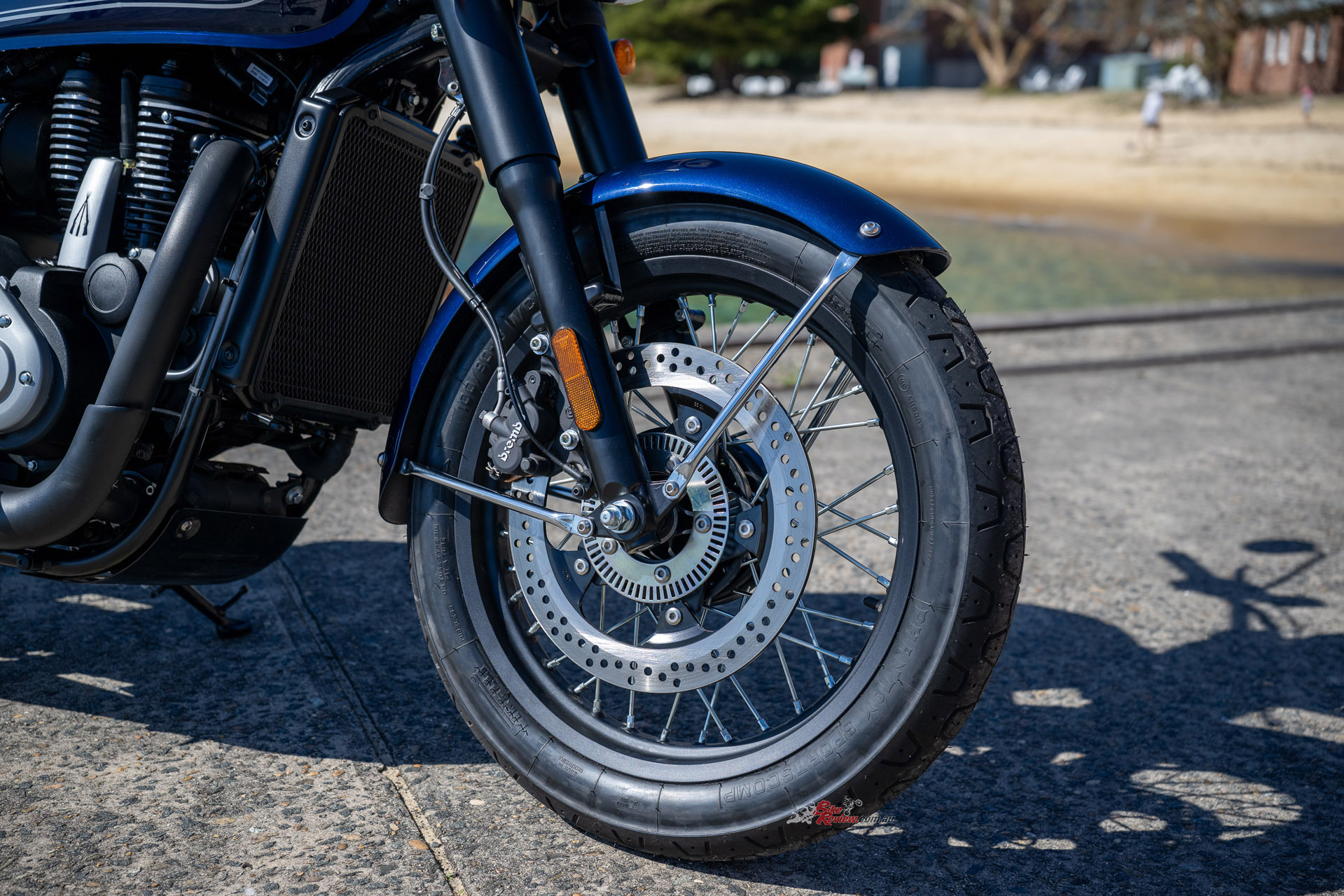
The Brembo badge on the calipers more or less guarantees strong braking and that is exactly what you get. The ABS is very well calibrated on the Gold Star – less so on loose dirt aboard the Scrambler, but we will get to that – and the rear brake may be the best part of the whole system. Given that many Gold Stars will spend their lives in an urban environment, its balance of feel and power is just about perfect.
Given that many Gold Stars will spend their lives in an urban environment, its balance of feel and power is just about perfect…
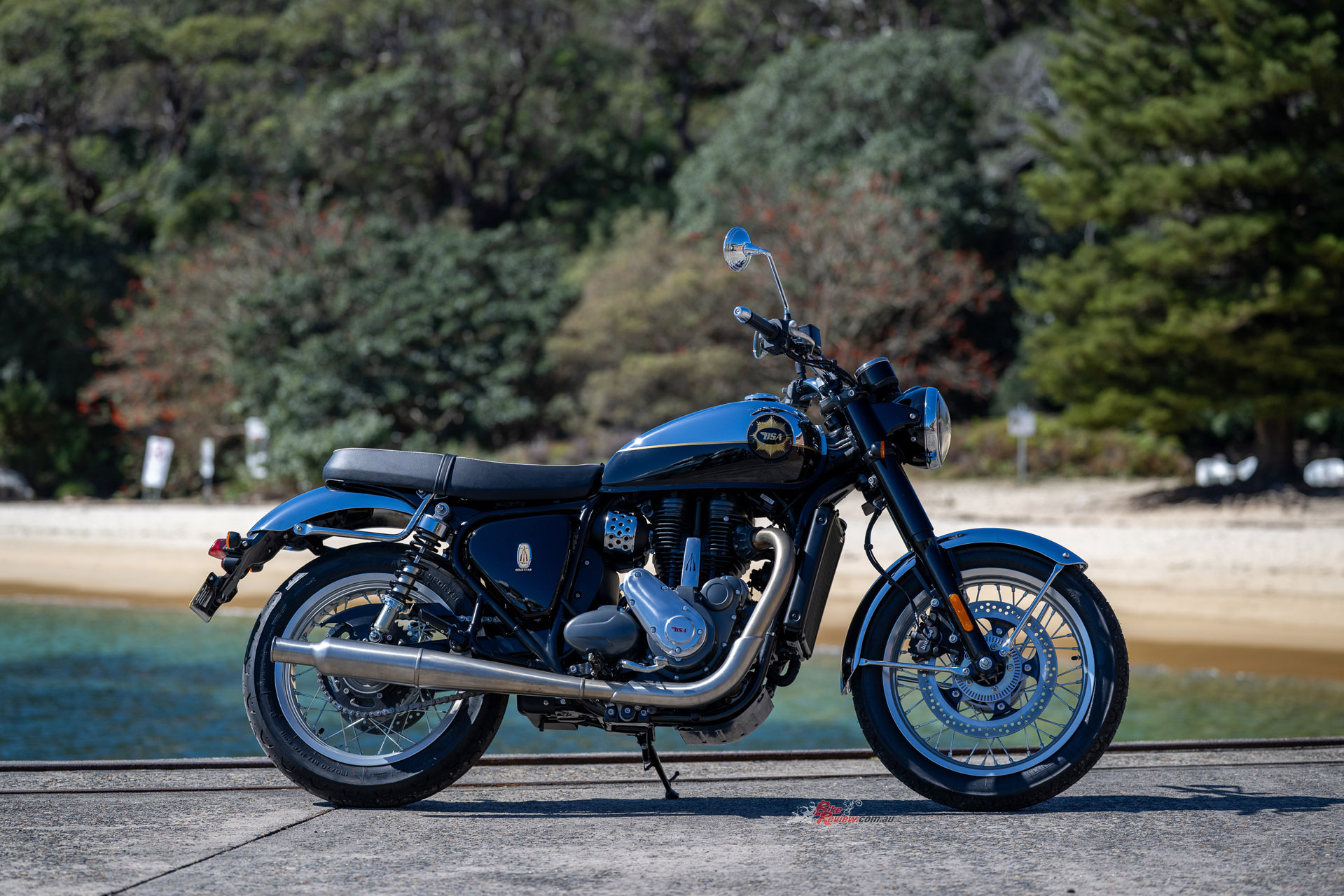
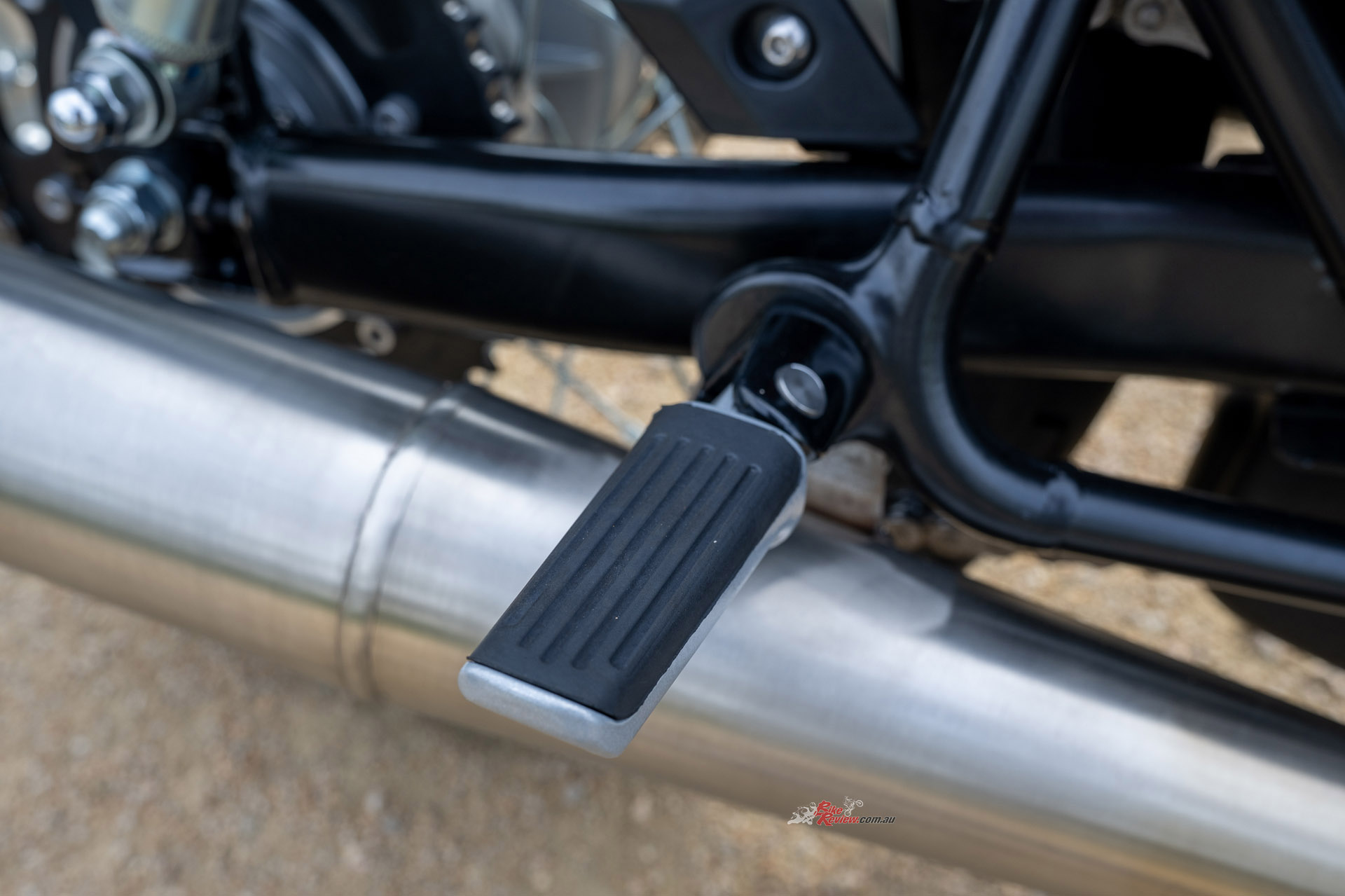
The exhaust is fairly muted, as you would expect these days, although there is a constant, melodious warble from the airbox. The ergonomics, seat and general riding position deliver ease and reasonable comfort, but all of that almost pales into insignificance when you climb off the Gold Star, turn around and stare at the thing.
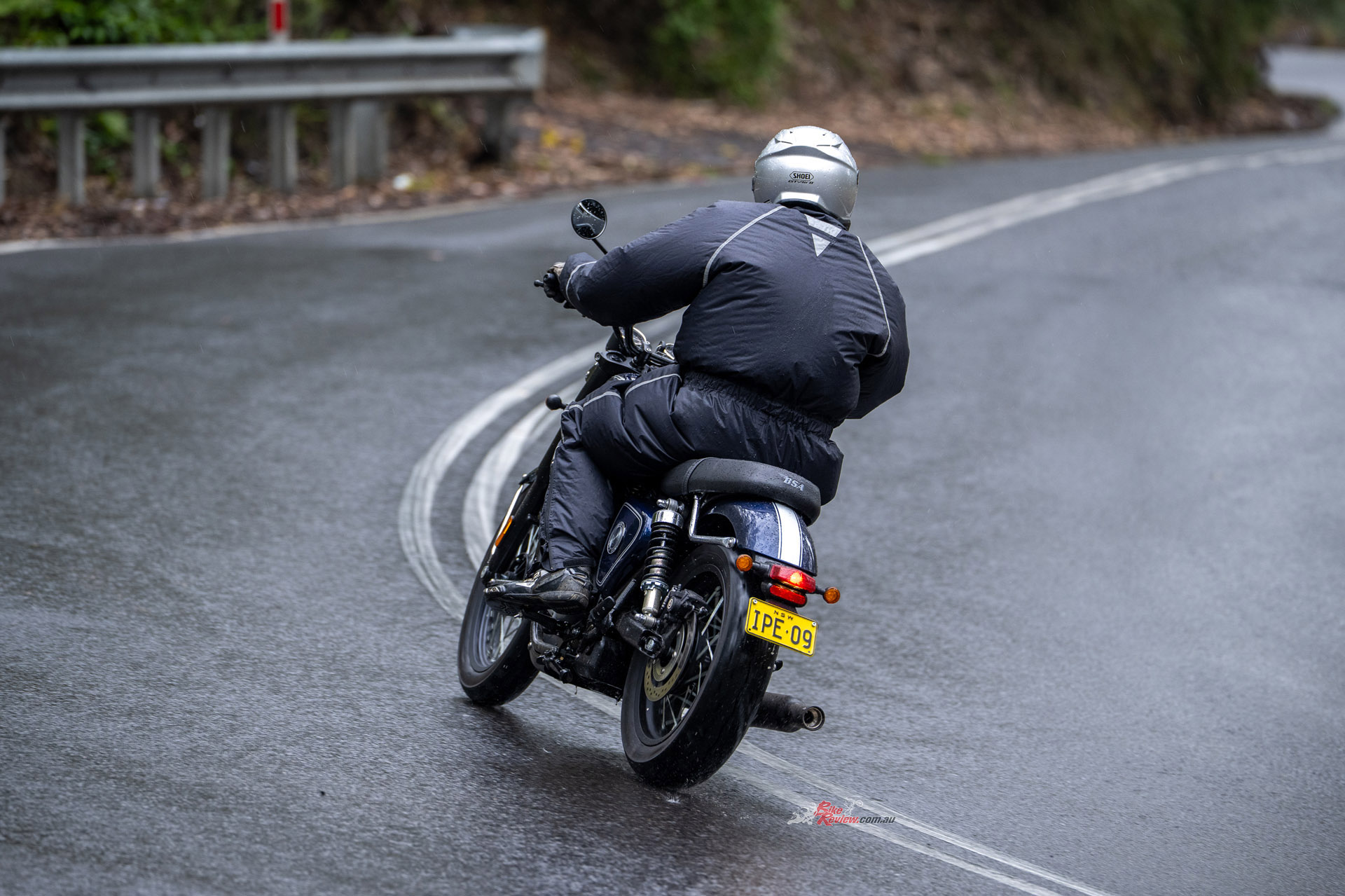
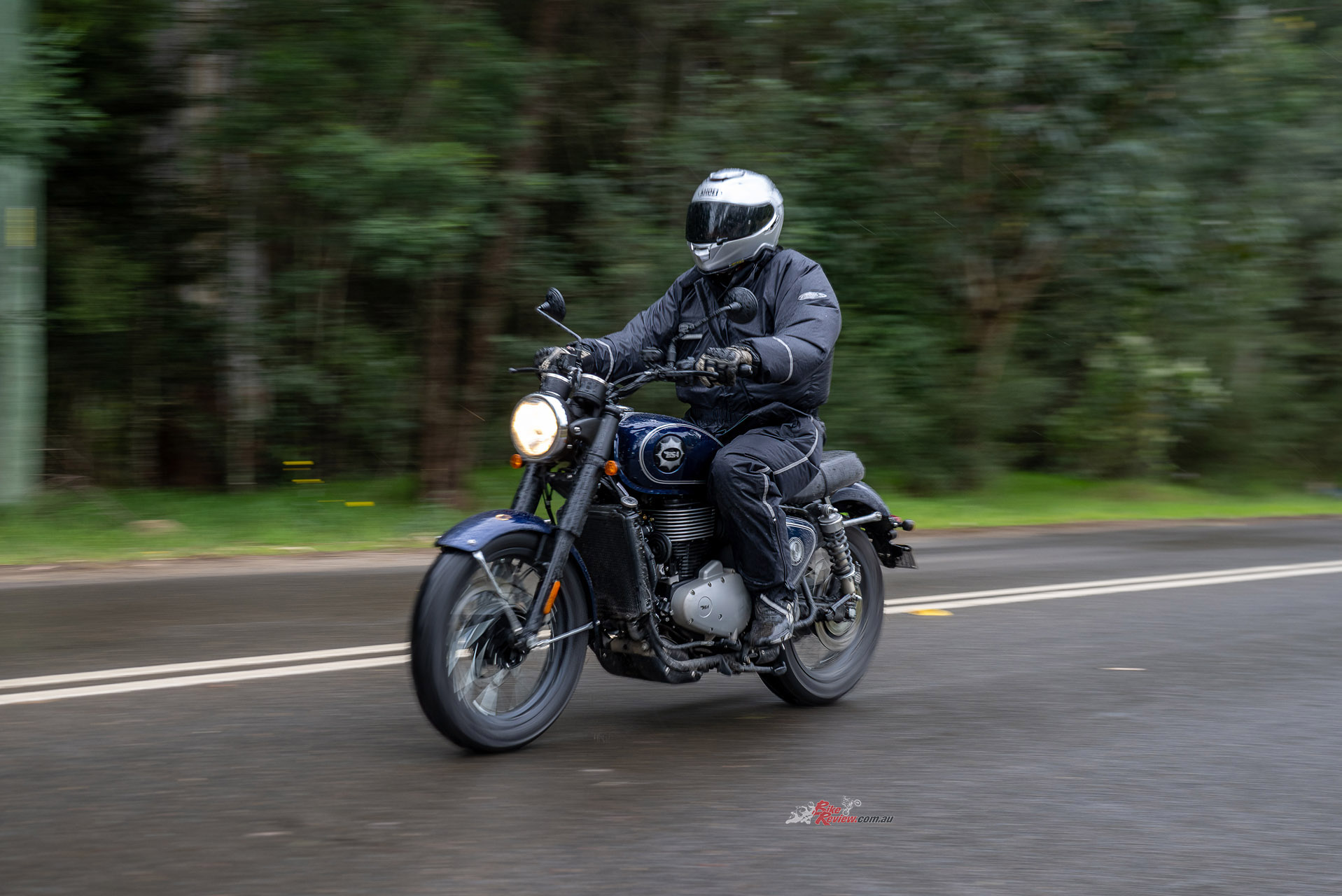
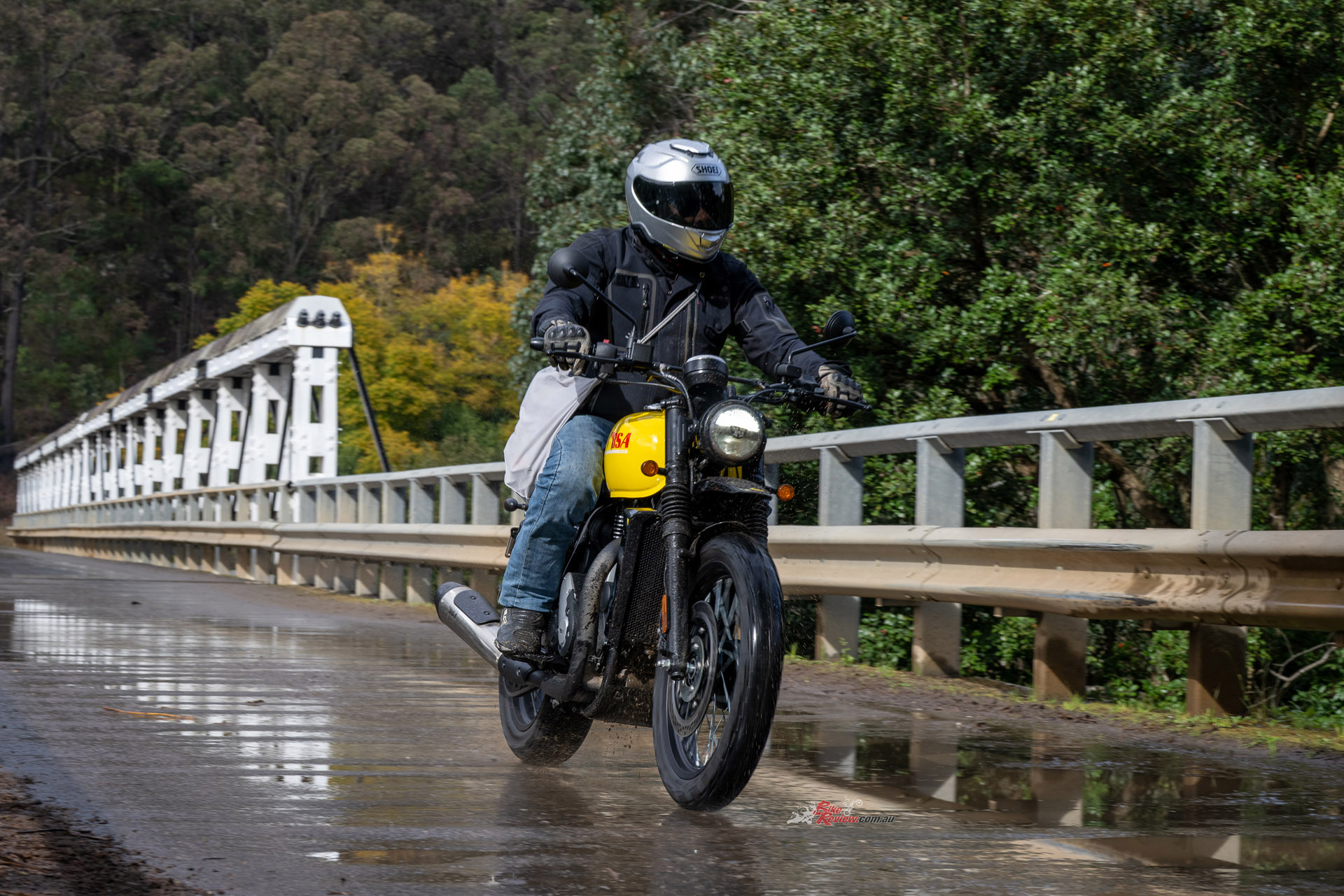
Wet roads highlighted the Gold Star’s predictable handling and well-calibrated ABS.
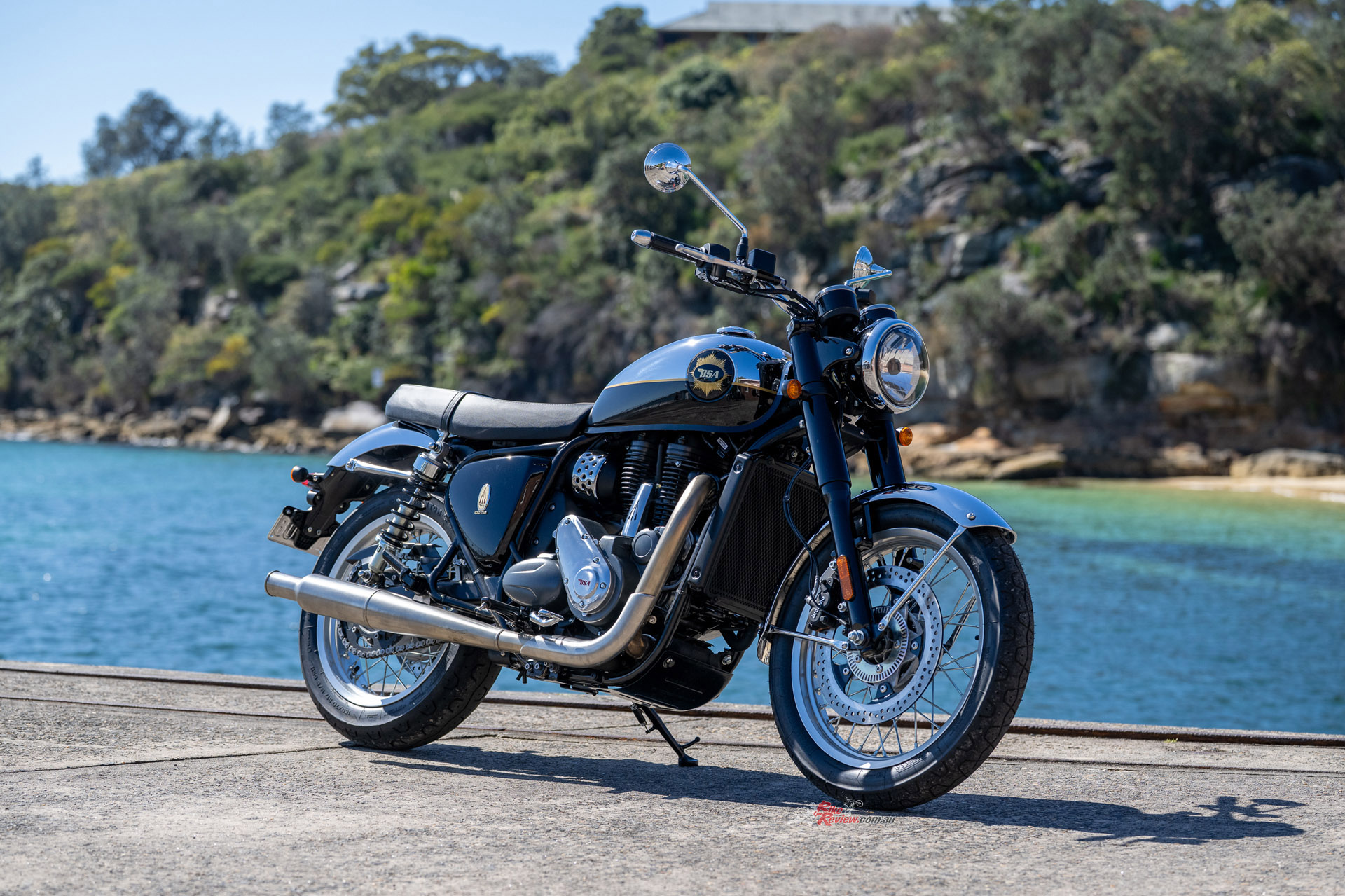
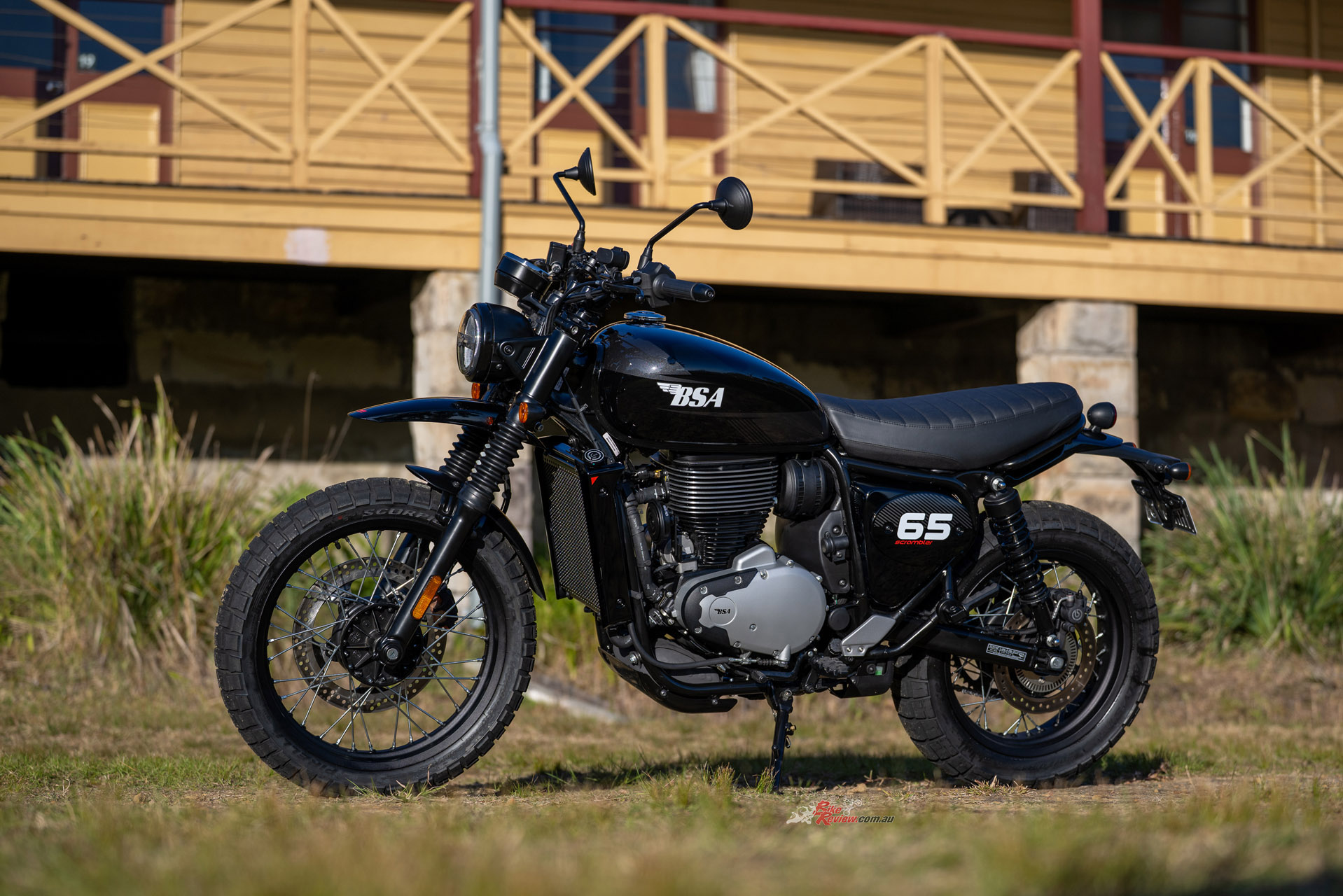
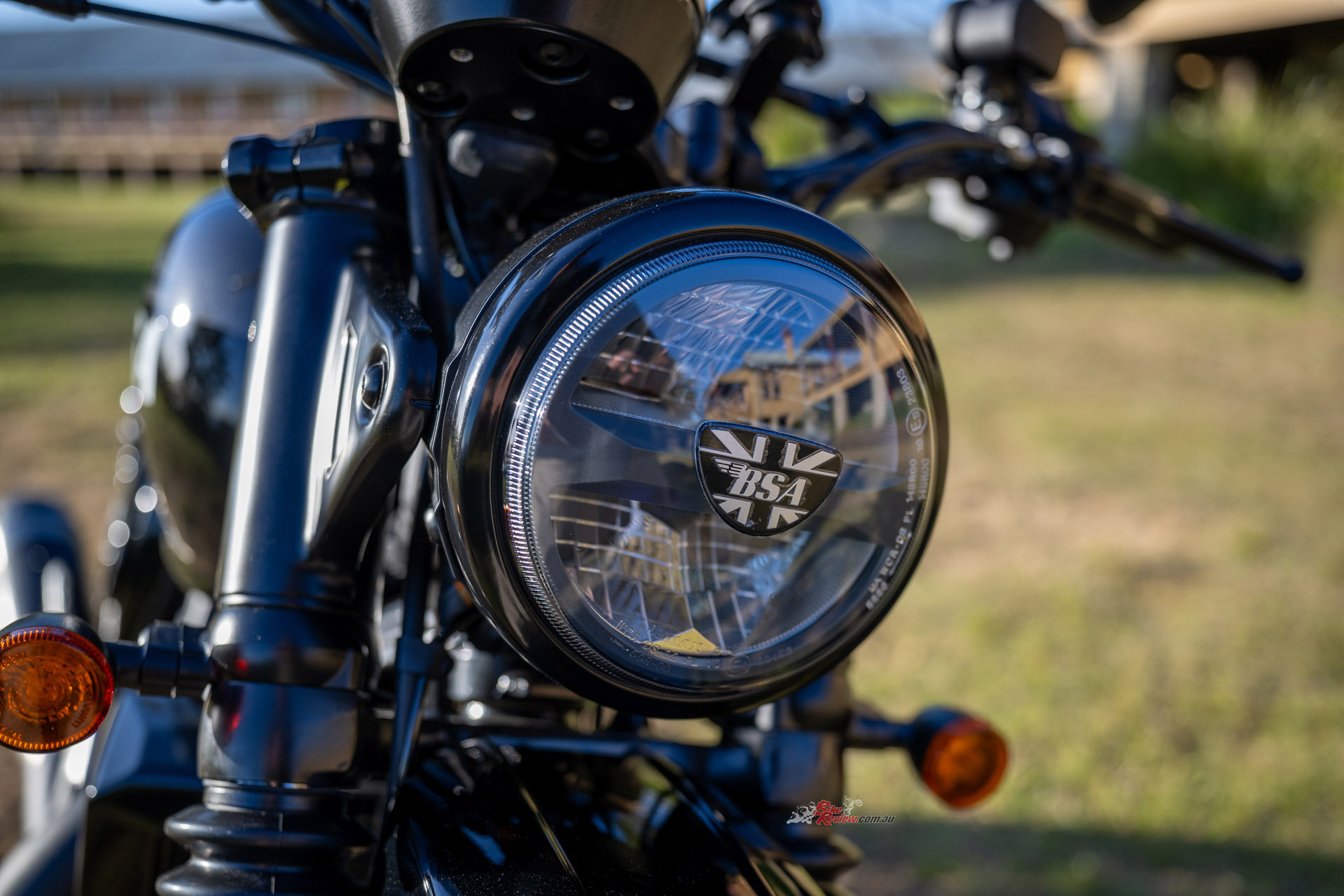
That huge, massively finned single-cylinder lump supplies much of the visual theatre. Add the period lines, paint and badging and the Gold Star looks every inch the motorcycle its name demands. I am impressed with the build quality and it feels as though this BSA could still be on the road decades from now – just like the last Gold Stars.
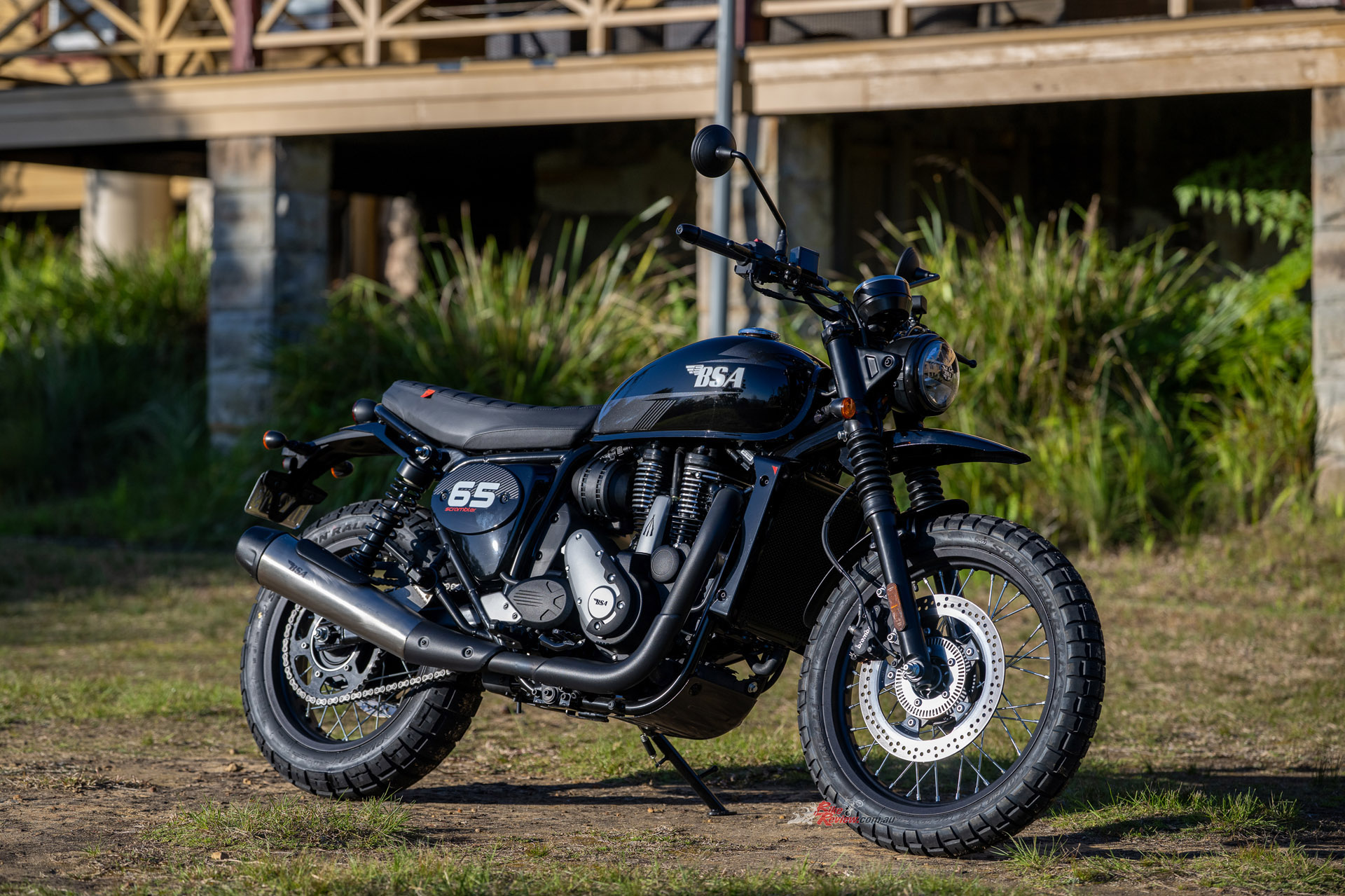
Scrambler 650
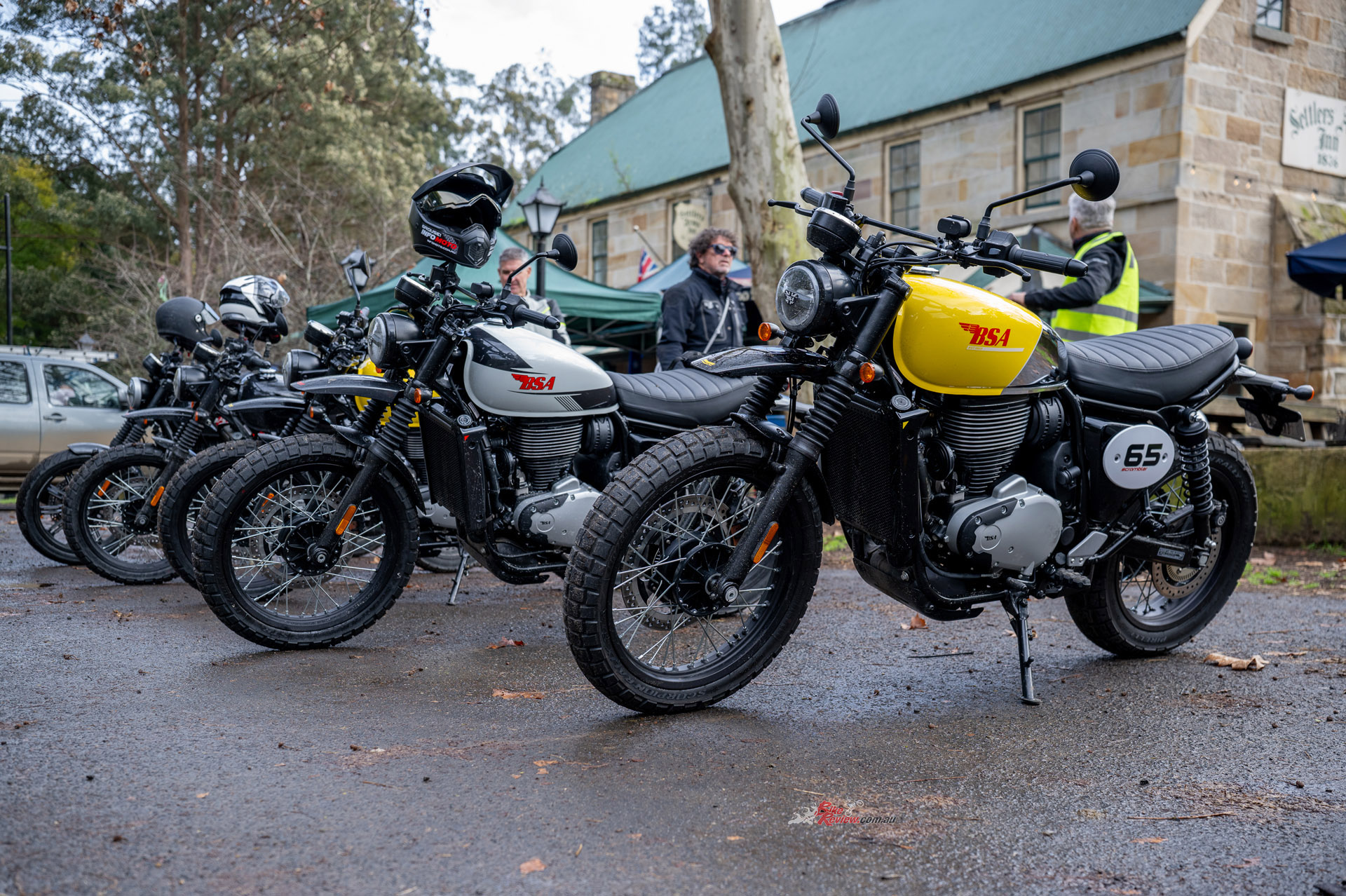
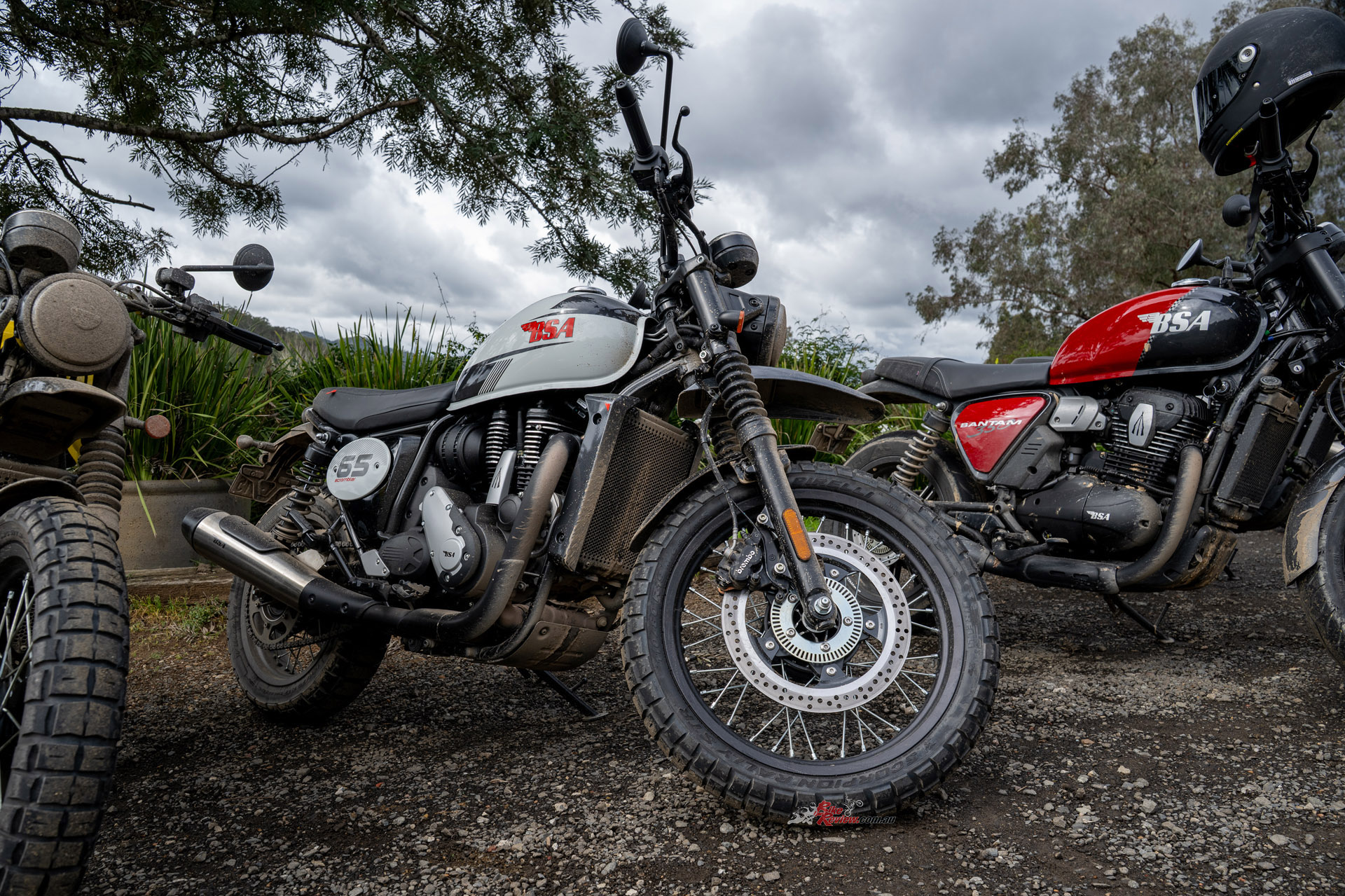
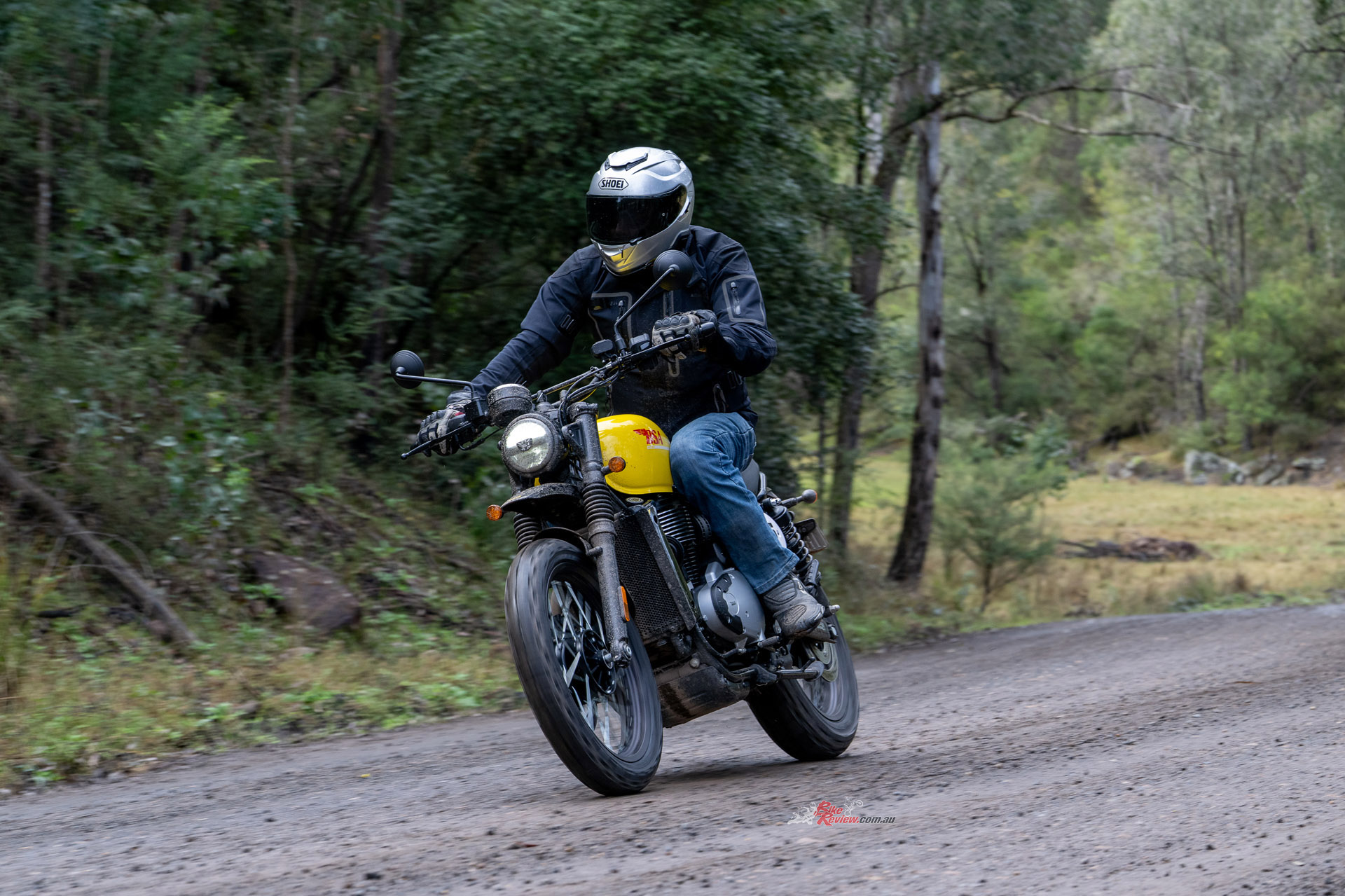
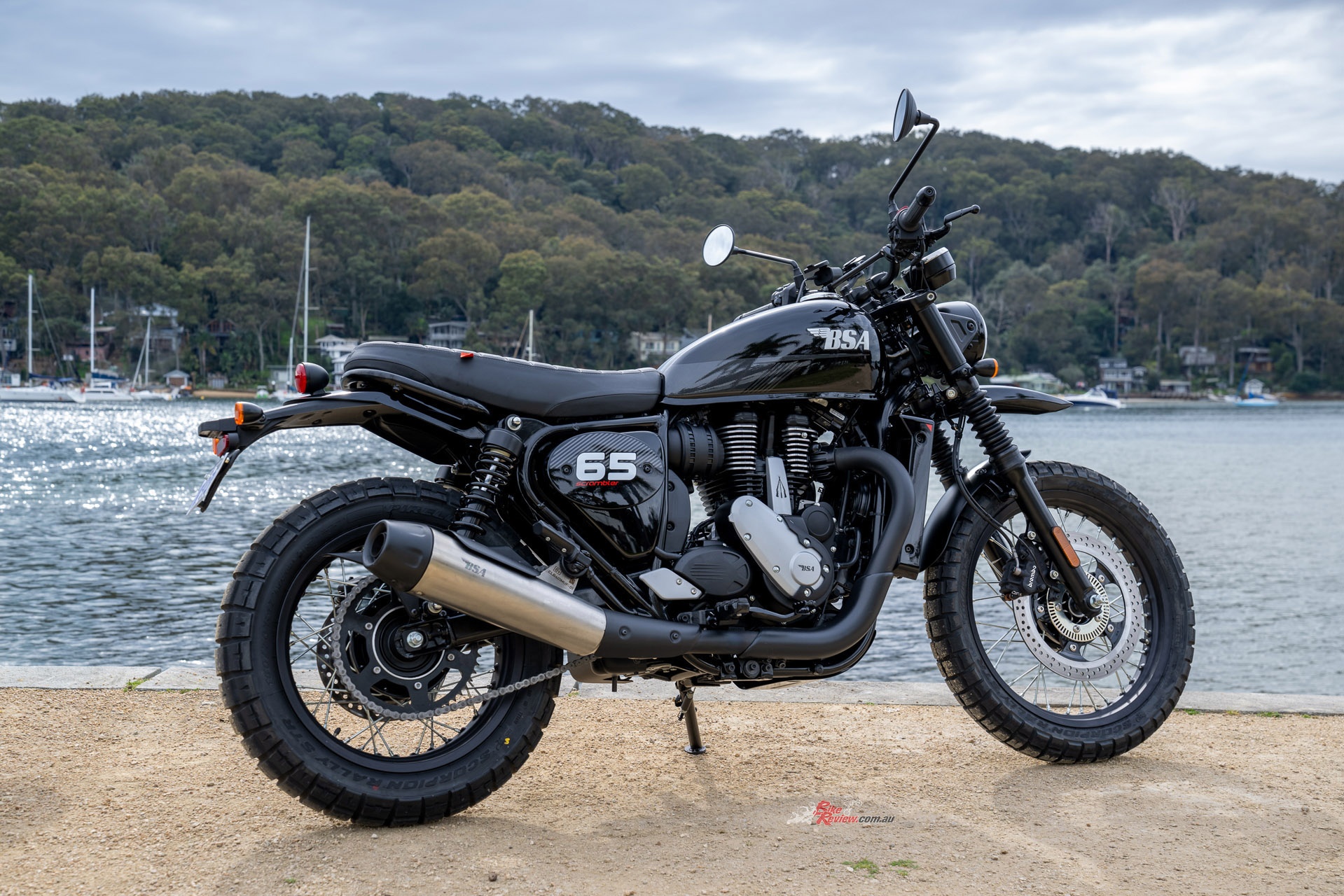
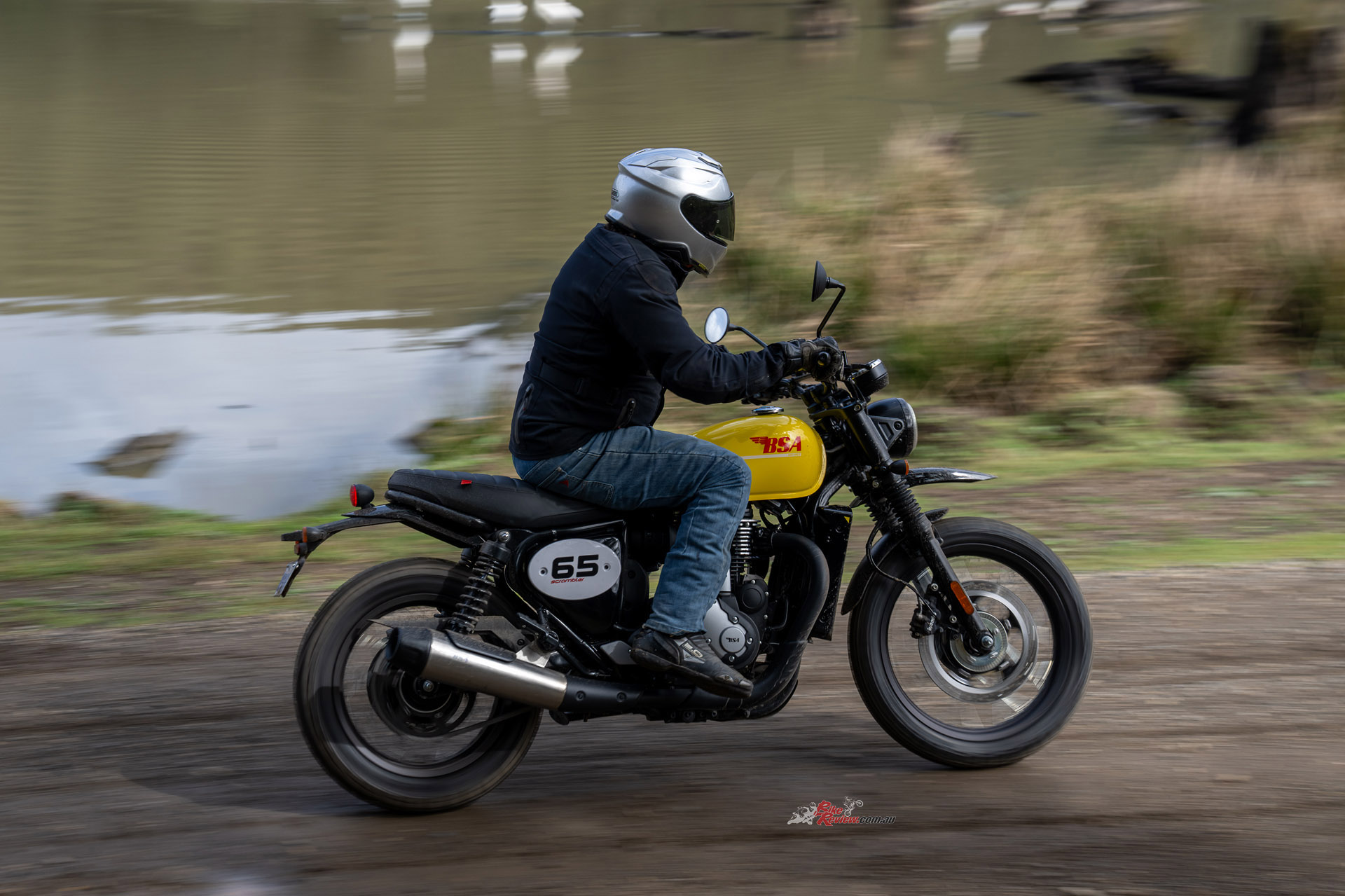
I rearrange my cold, wet jeans and settle onto the Scrambler’s taller 820mm seat. Its raised stance comes from the 19-inch front wheel, extra suspension travel and excellent, chunky Pirelli Scorpion Rally STR tyres. The handlebar is higher and wider, while the claimed seat height is an inch taller than the Gold Star’s 780mm – and it feels every bit of it. I can say an inch, of course, because it’s a Beeza and I was born in the 1950s.
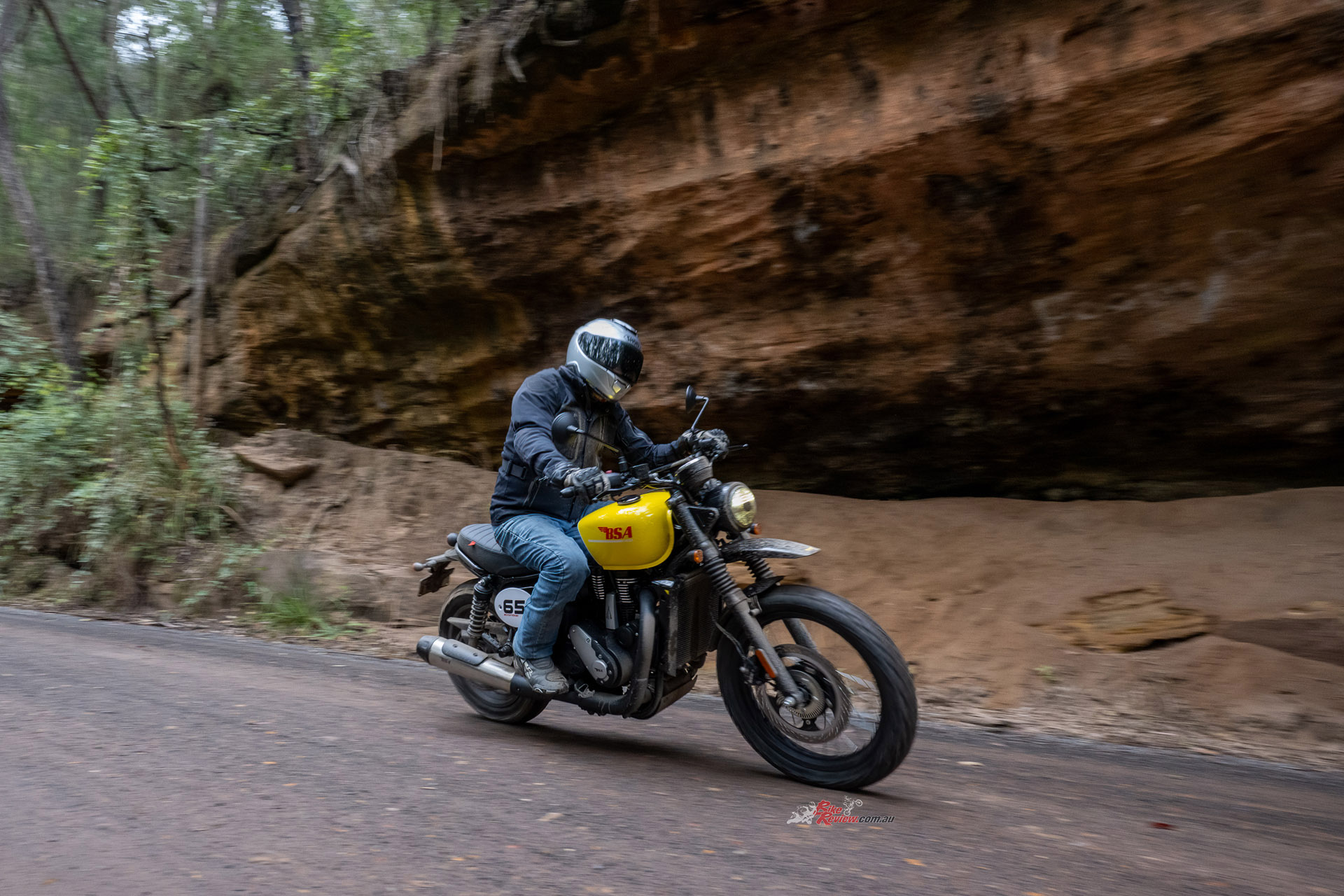
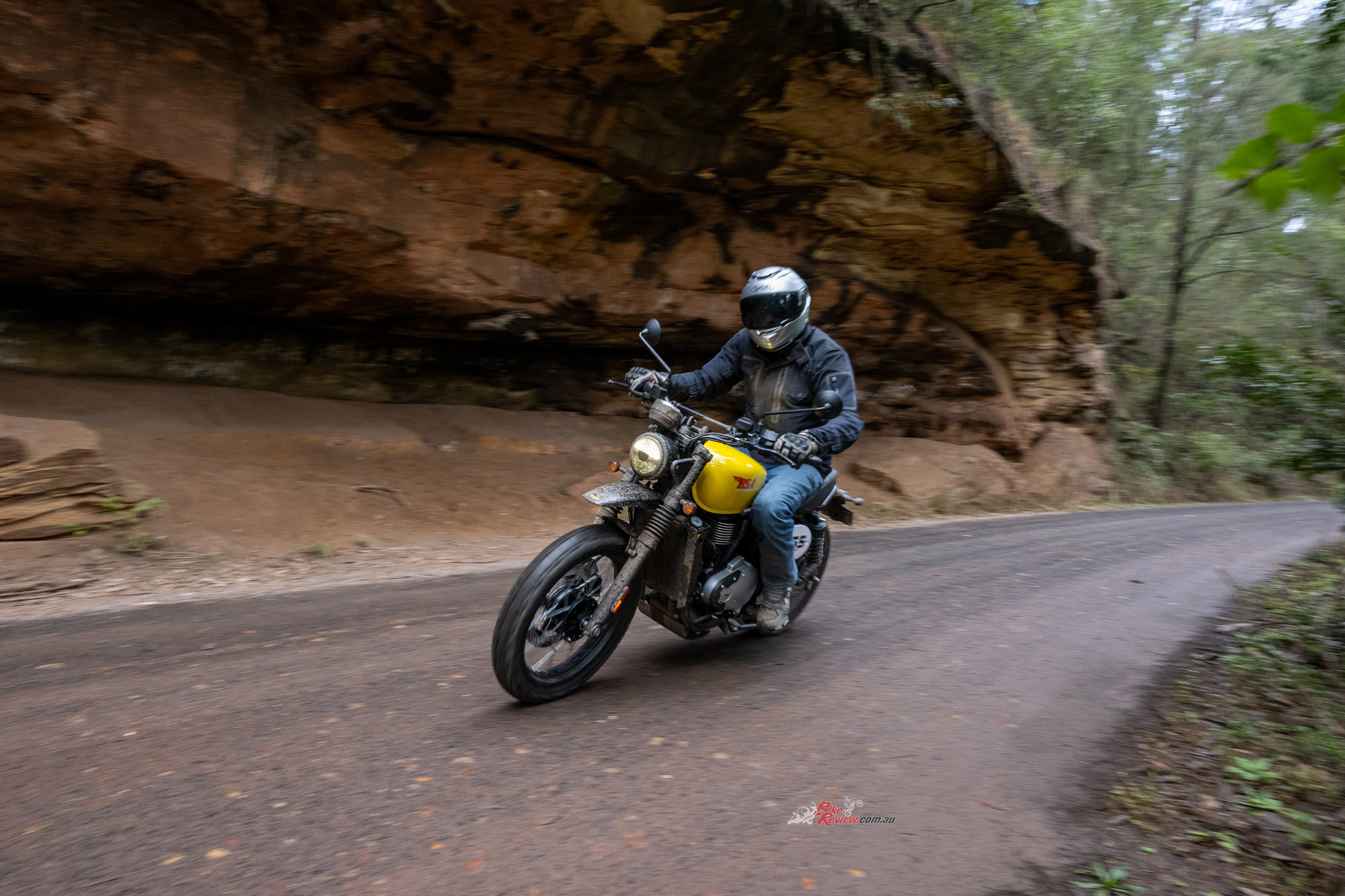
The Scrambler’s shorter gearing gives it a punchier feel on tight back roads.
The front suspension gains 10mm of travel over the Gold Star, increasing from 120mm to 130mm, while rear travel rises by 19mm, from 108mm to 127mm. So, is this funky-looking, slightly raised 650 with its different exhaust a genuine scrambler, or merely a styling exercise? We needed to get wet and dirty to find out.
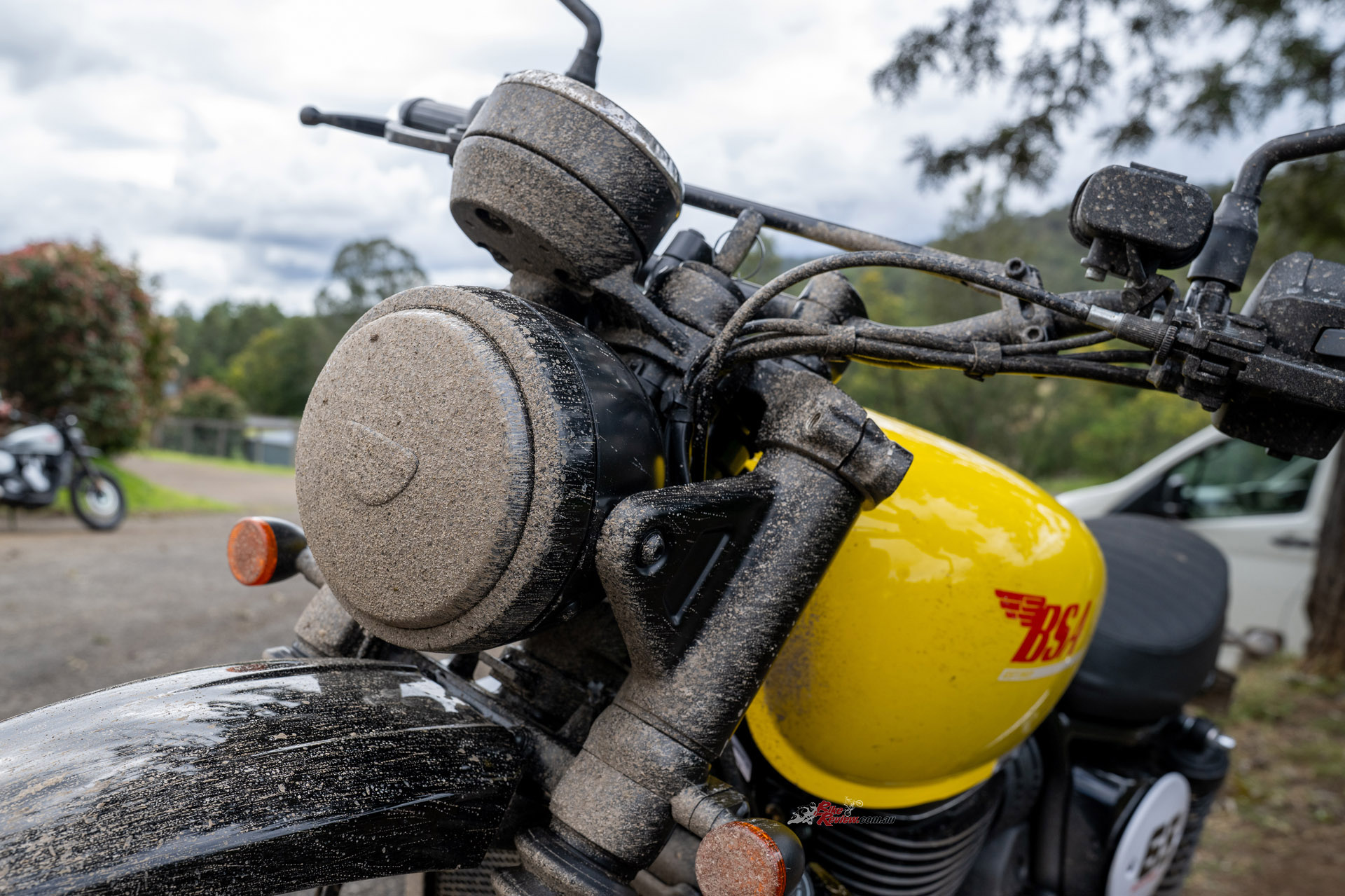
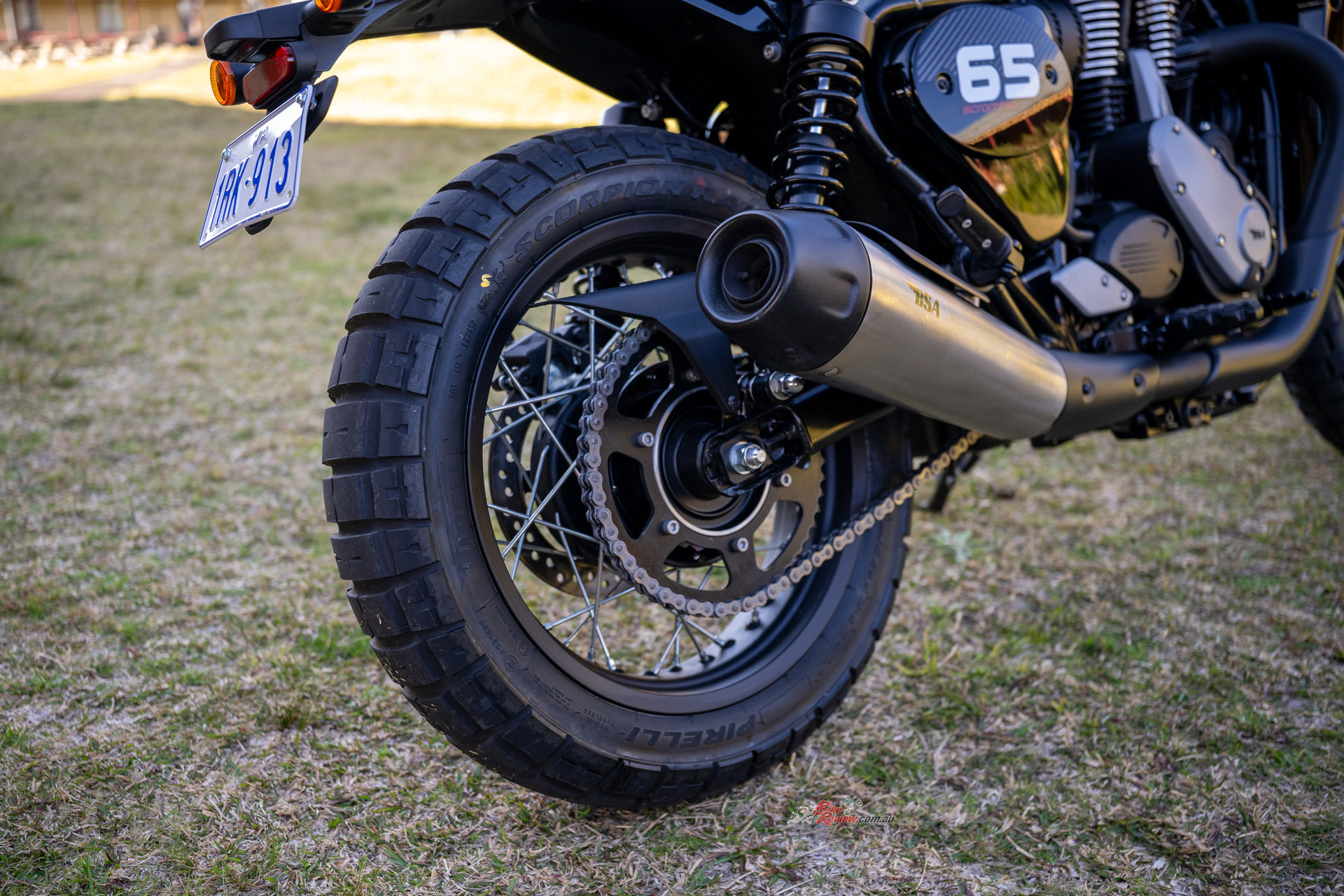
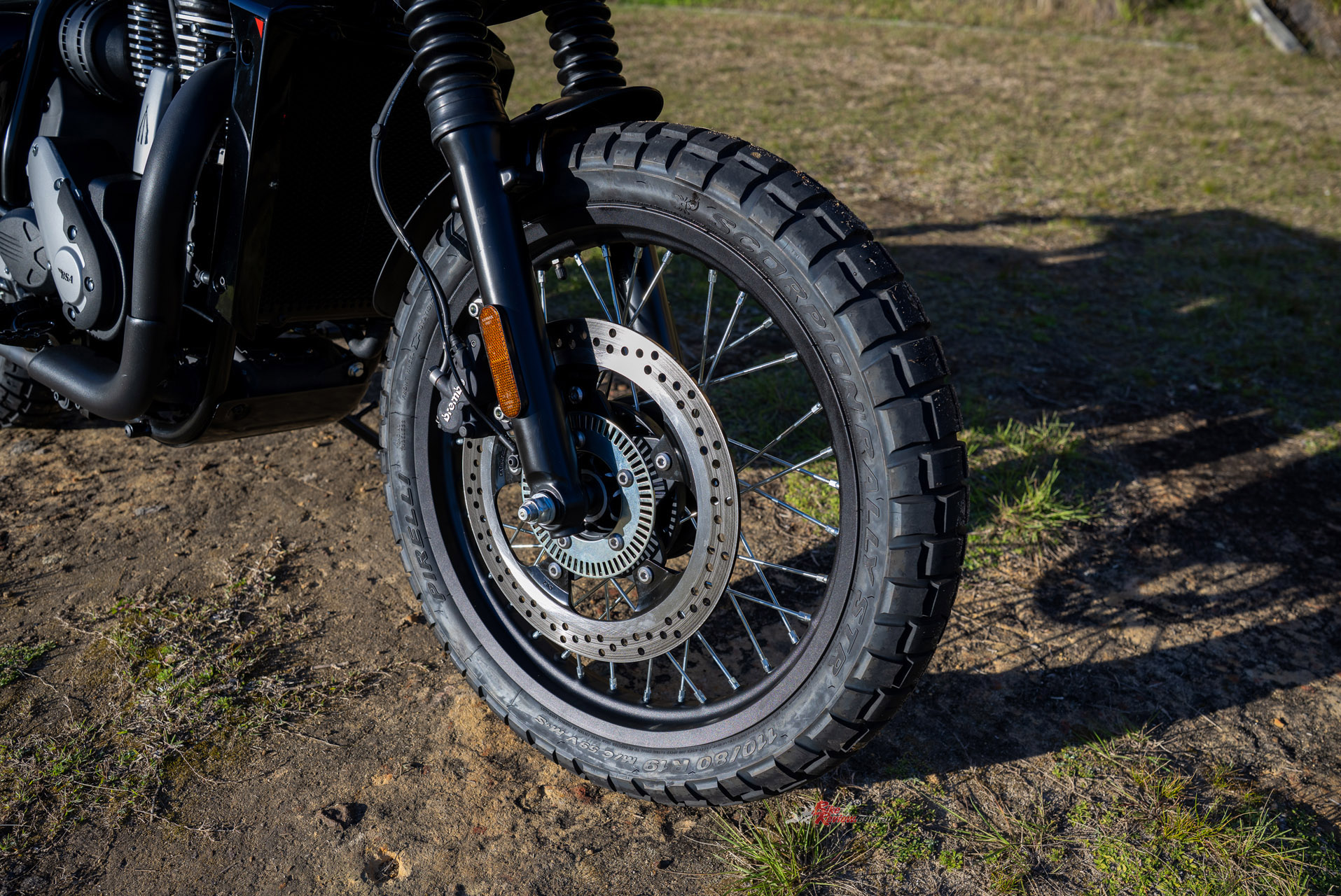
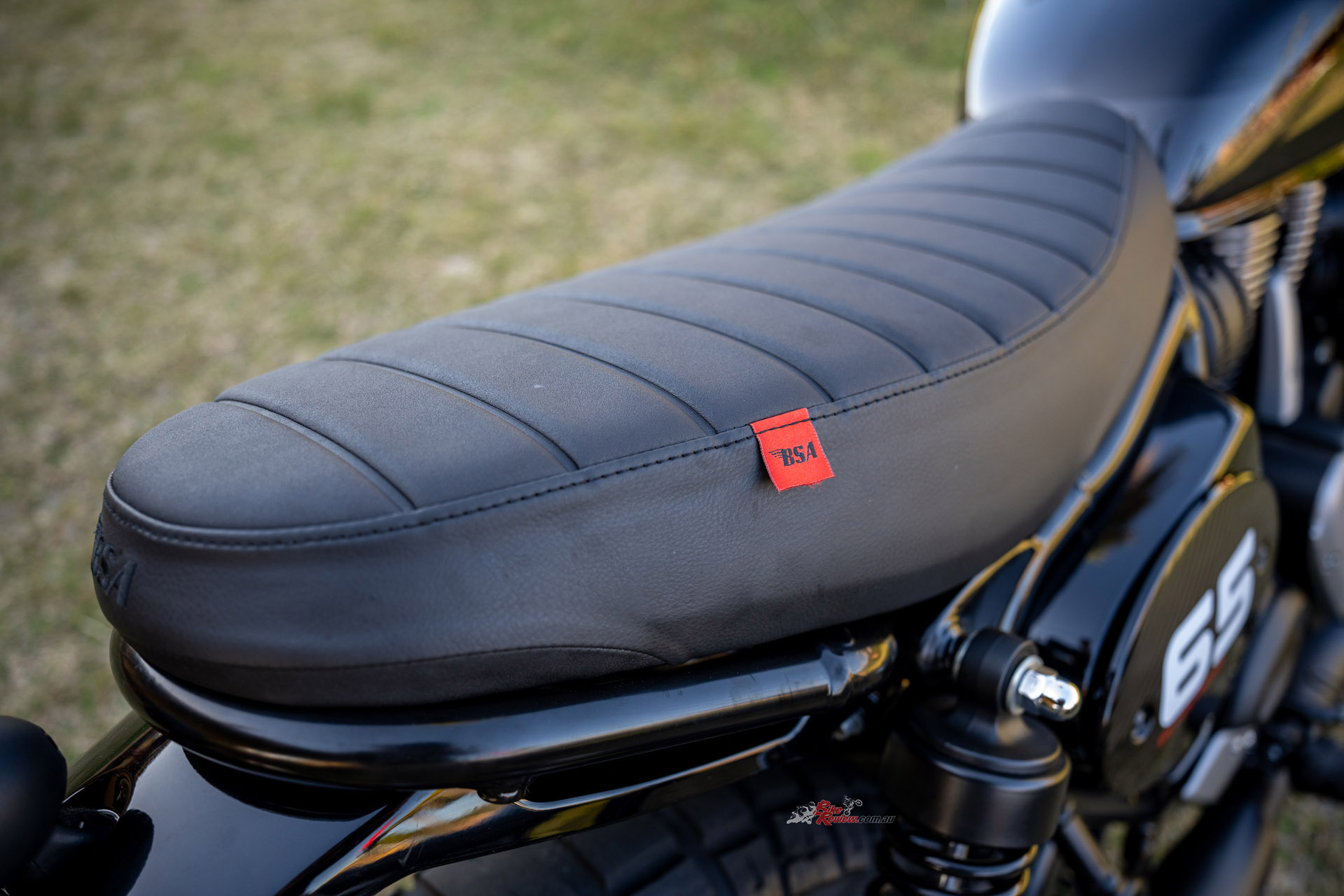
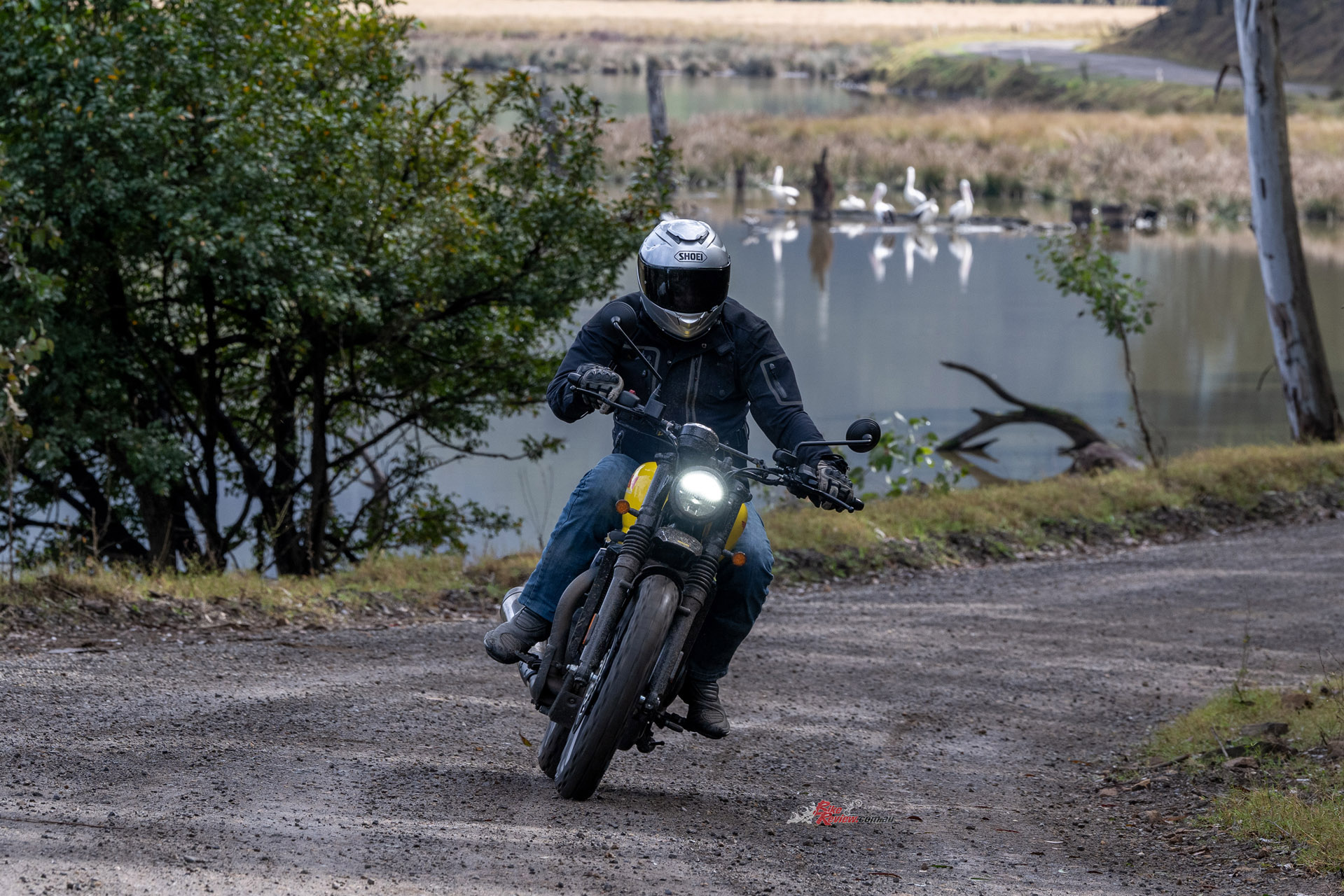
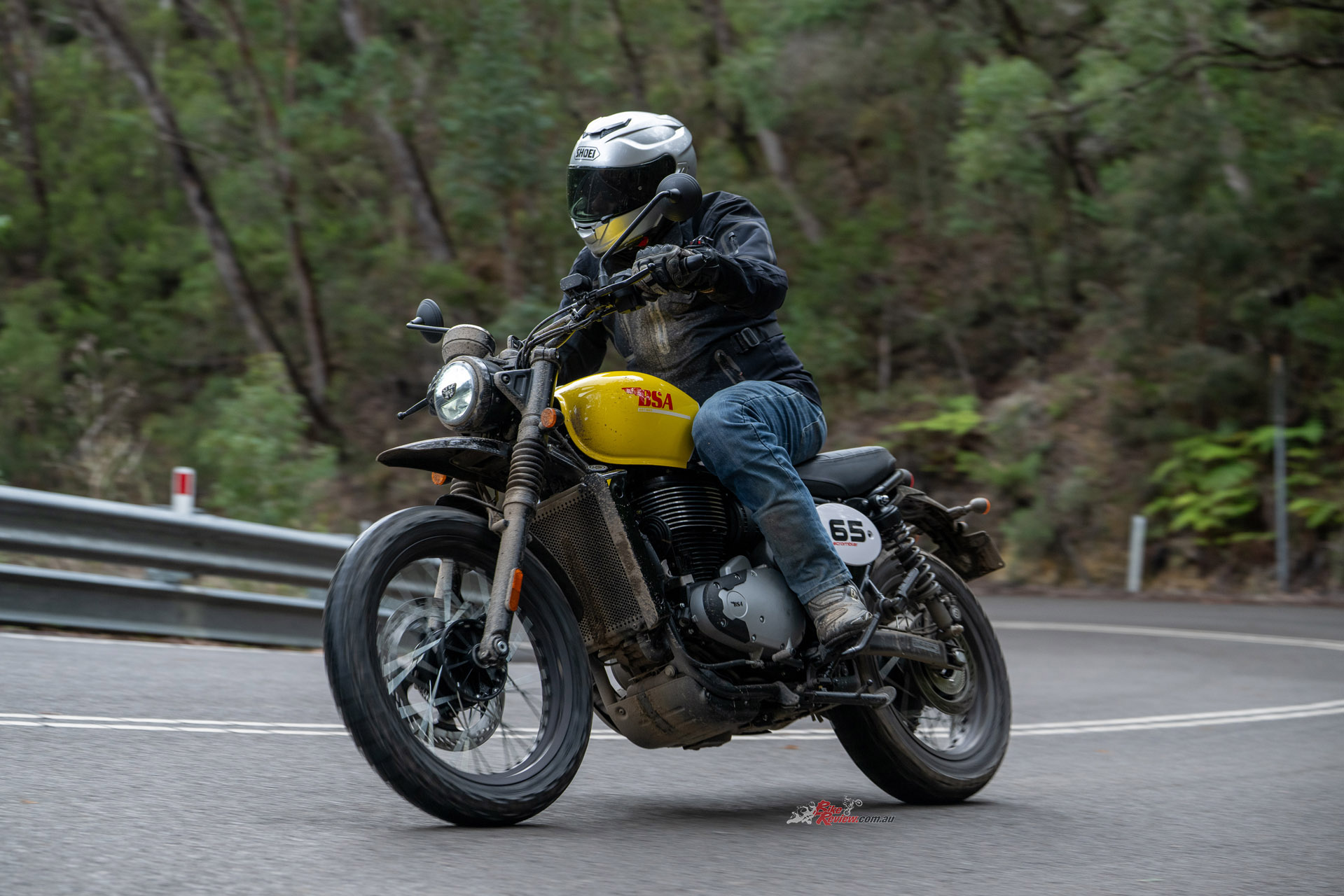
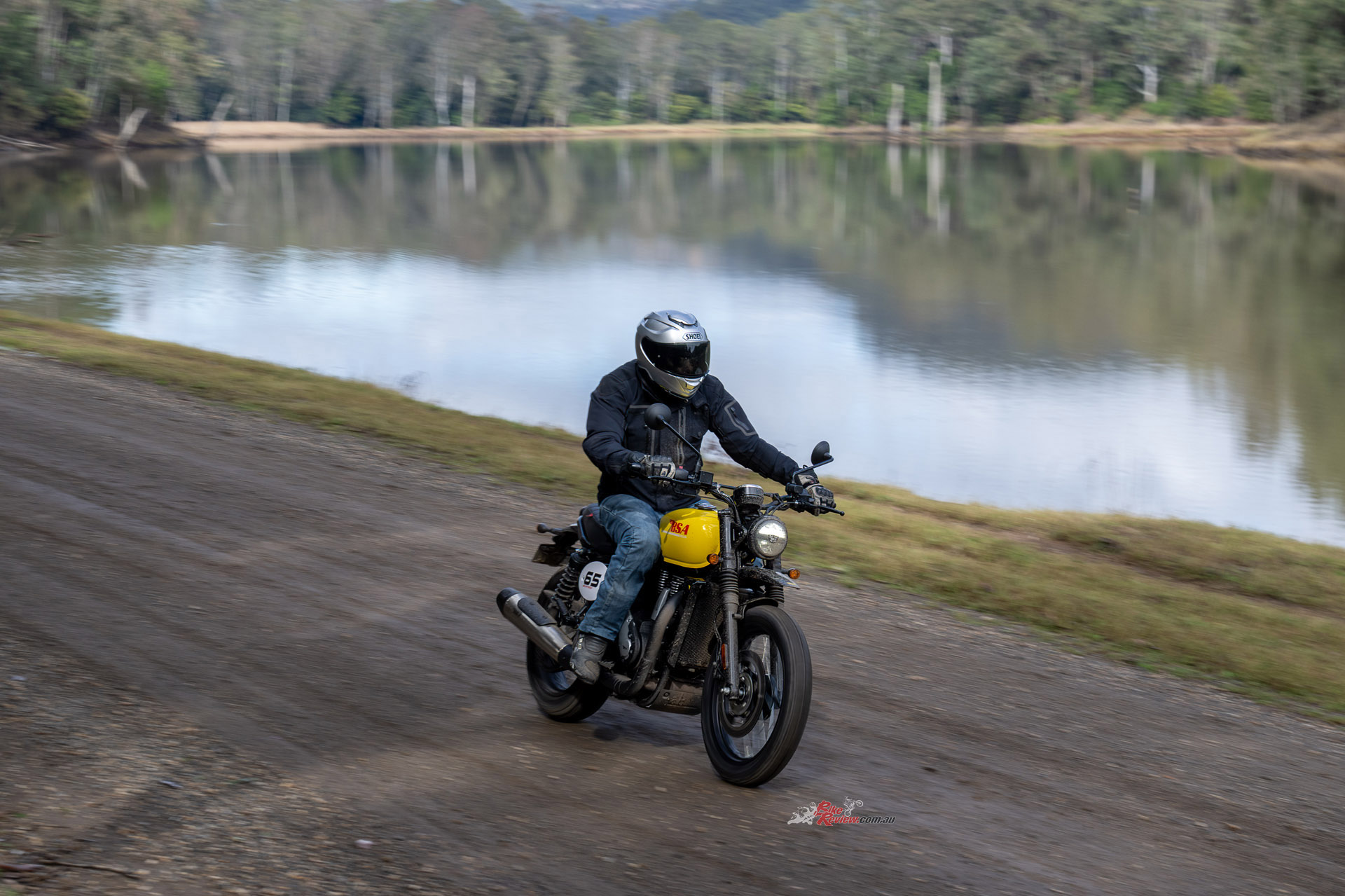
The roads beyond Wisemans Ferry on the New South Wales Central Coast, heading towards St Albans and further afield, proved that the Scrambler 650 is indeed an all-roads motorcycle – and a very good one at that. The suspension remains firm, but it deals confidently with ruts and bumps.
While the two bikes share the same engine and five-speed transmission, they employ different secondary gearing…
The styling screams 1960s and ’70s, Steve McQueen and On Any Sunday, but this bike is about more than a costume assembled for the publicity photographs. And it feels entirely different from the Gold Star. Emails backwards and forwards with the factory confirmed that while the two bikes share the same engine and five-speed transmission, they employ different secondary gearing. At around 100km/h, the shorter Scrambler gearing lifts engine speed by almost 500rpm.
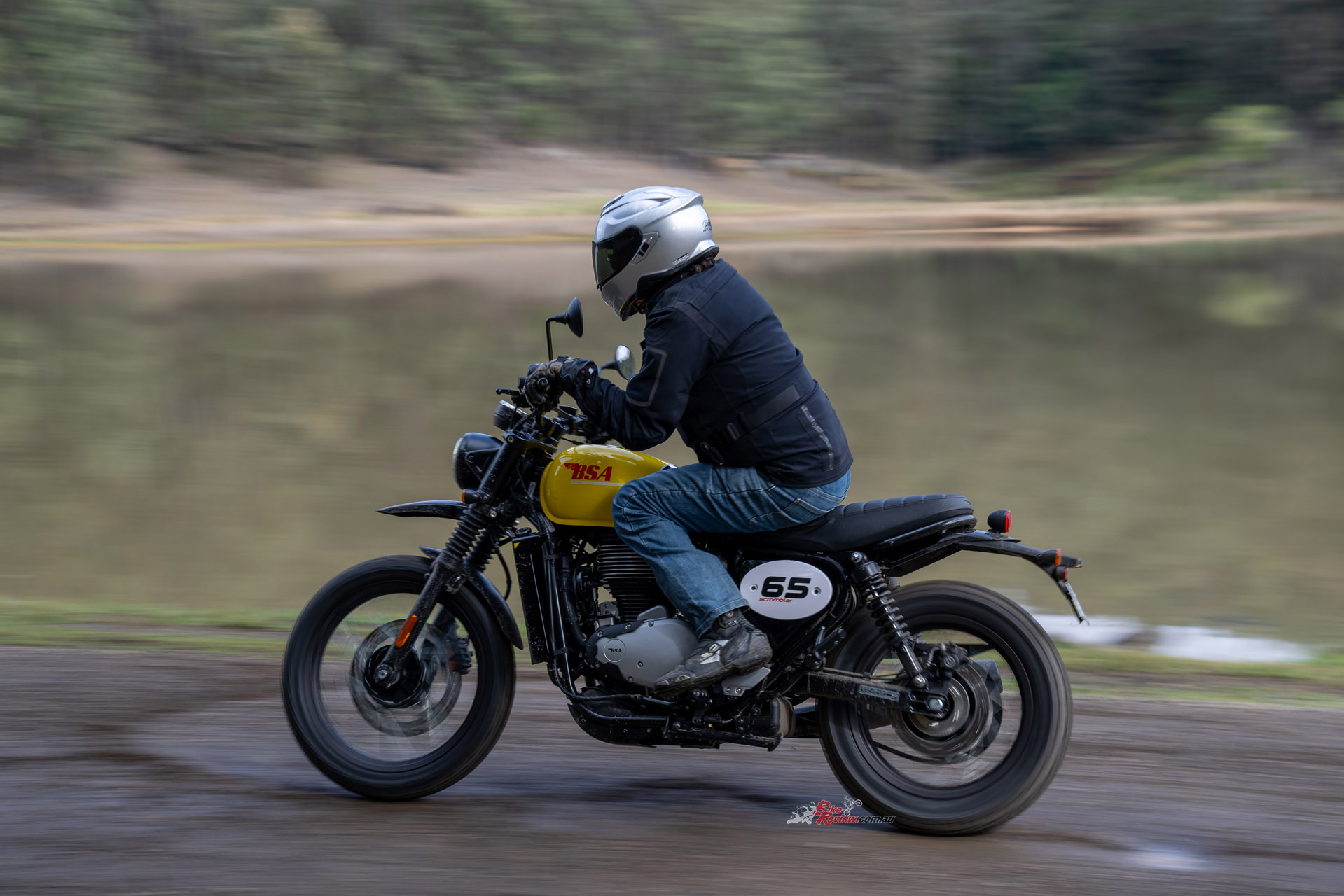
The Scrambler’s extra suspension travel and 19-inch front wheel give it genuine ability beyond the bitumen.
The relaxed and lazy 4000rpm of the Gold Star becomes a busier ride, and I frequently found myself searching for a sixth gear that isn’t there. With so much torque available, I’m not convinced the Scrambler needs that bigger rear sprocket. Yet despite sharing the same engine tune – at least officially – most of us swore its response felt a little sharper. Something in the ECU? The slightly shorter muffler? Imagination? Whatever the reason, the Scrambler is an absolute hoot.
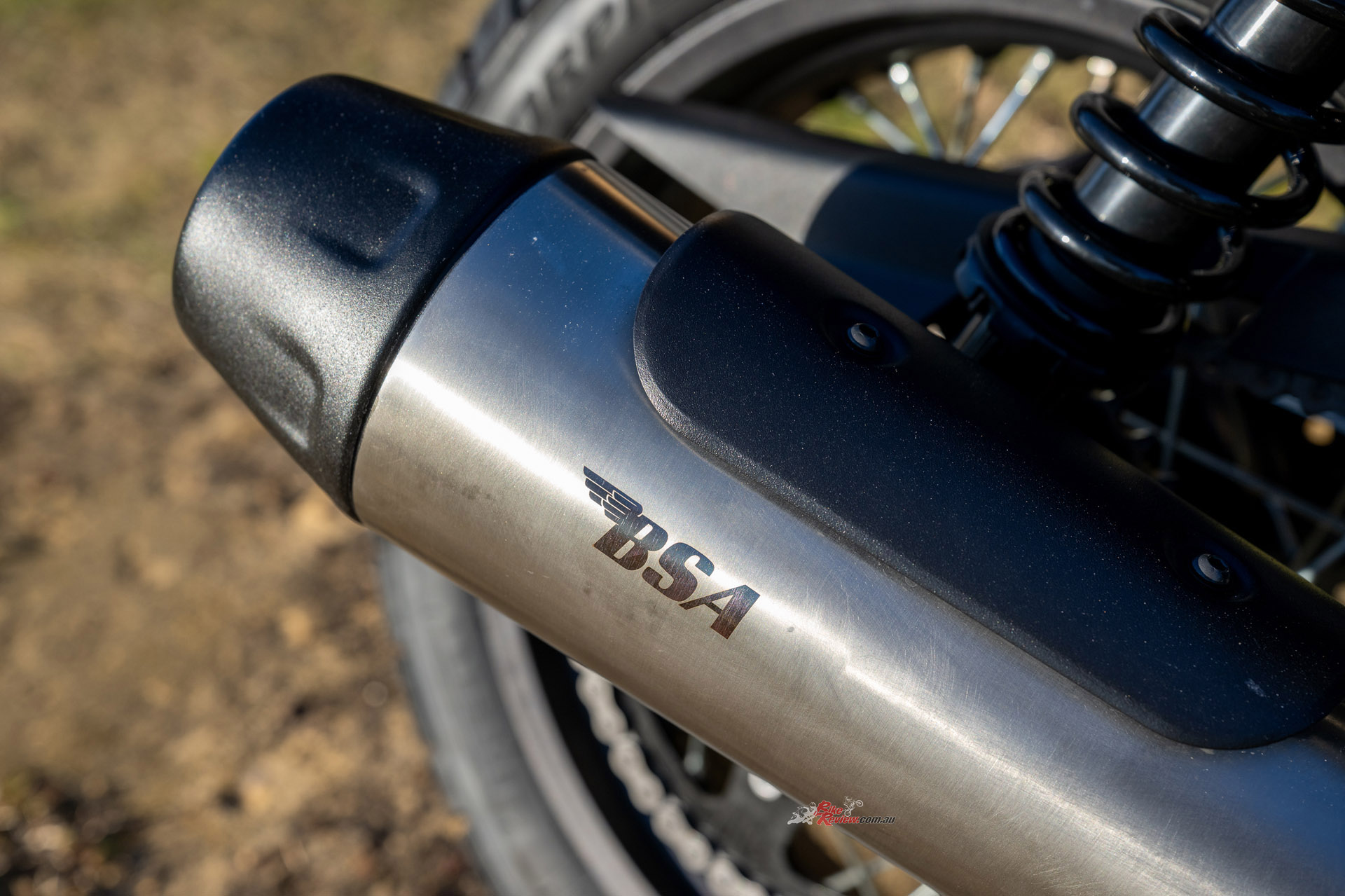
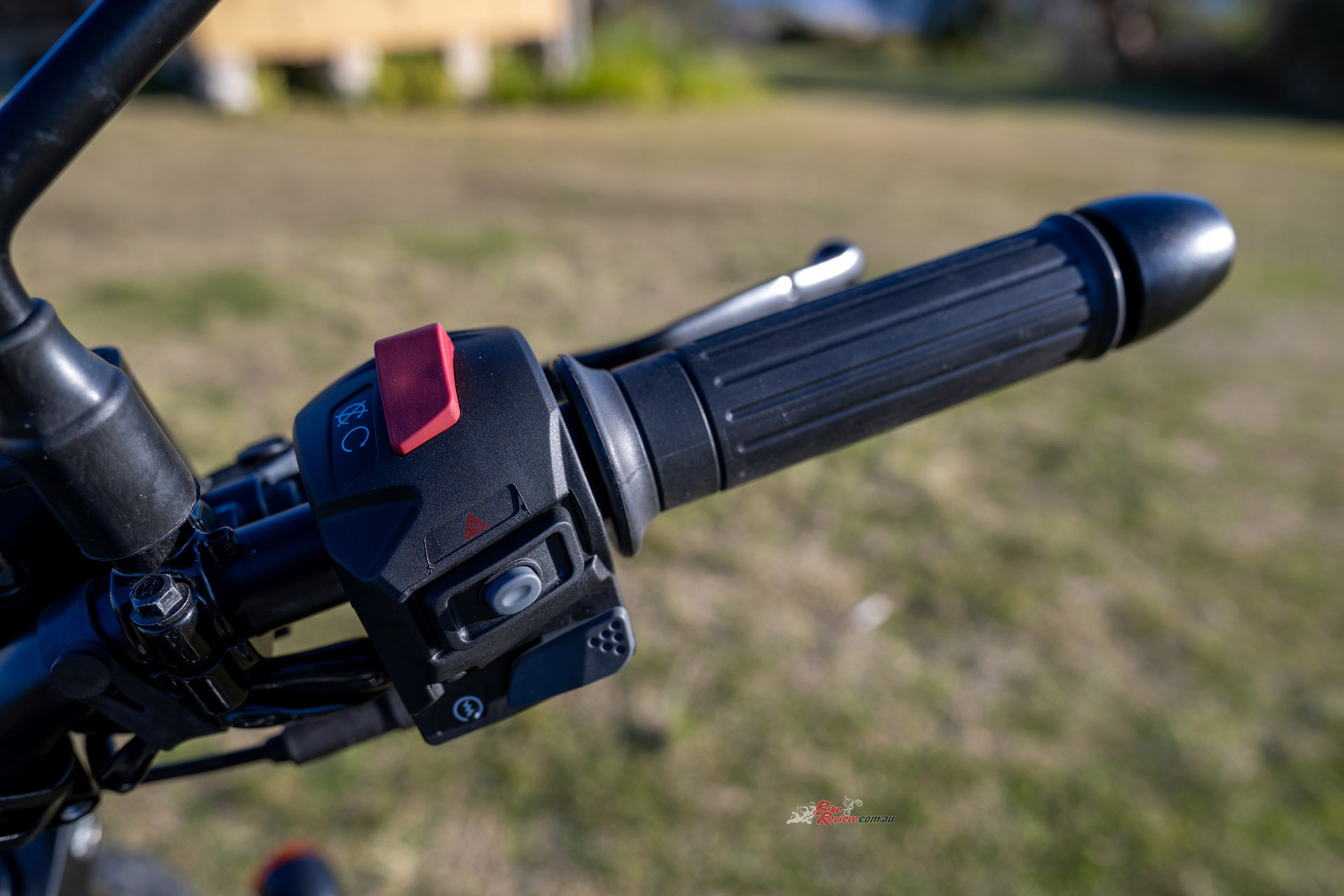
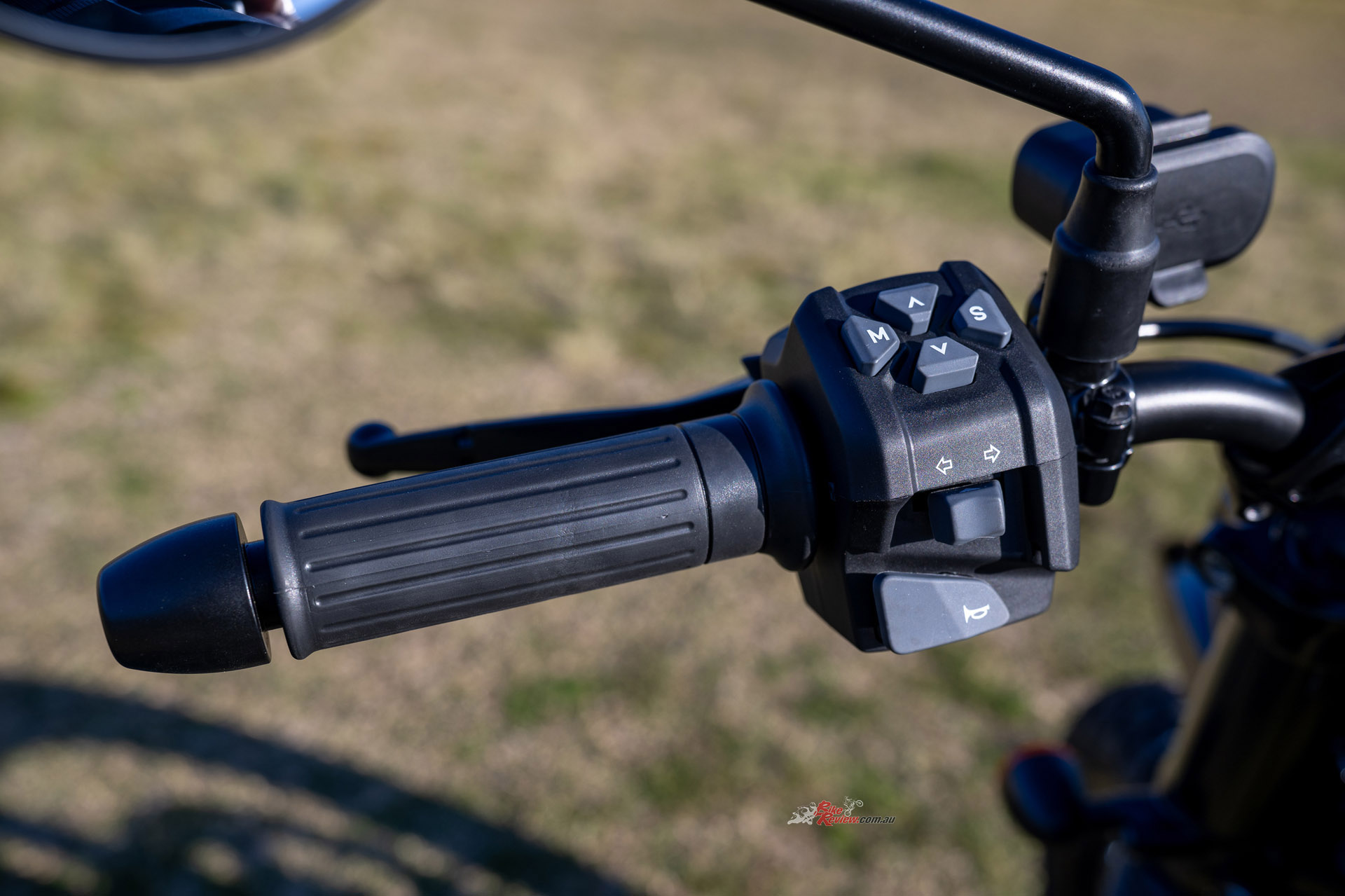
First gear is now super-low, but on back-country roads and through the gravel section the Scrambler put me into a Zen-like state of happiness. At least until I needed the brakes with a little more urgency than my usual sightseeing pace.The ABS cannot be switched off. The system that felt close to perfect on the road became too intrusive on gravel, forcing me to concentrate harder and trim a few per cent from my pace. A scrambler-style machine really should allow the rider more control over the rear brake when the bitumen runs out.
Read our interview with the official Australian importer Jeff Leisk here.
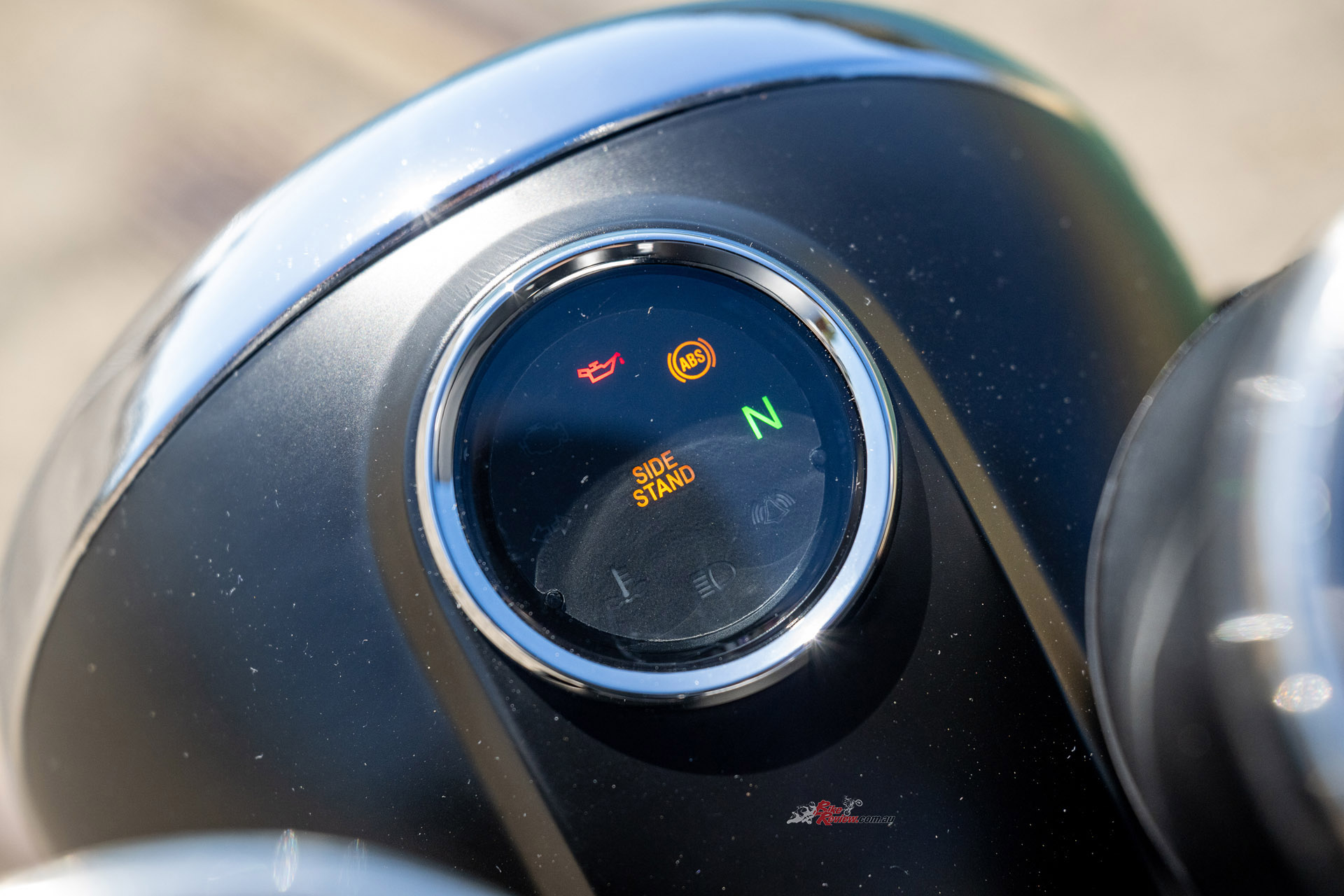
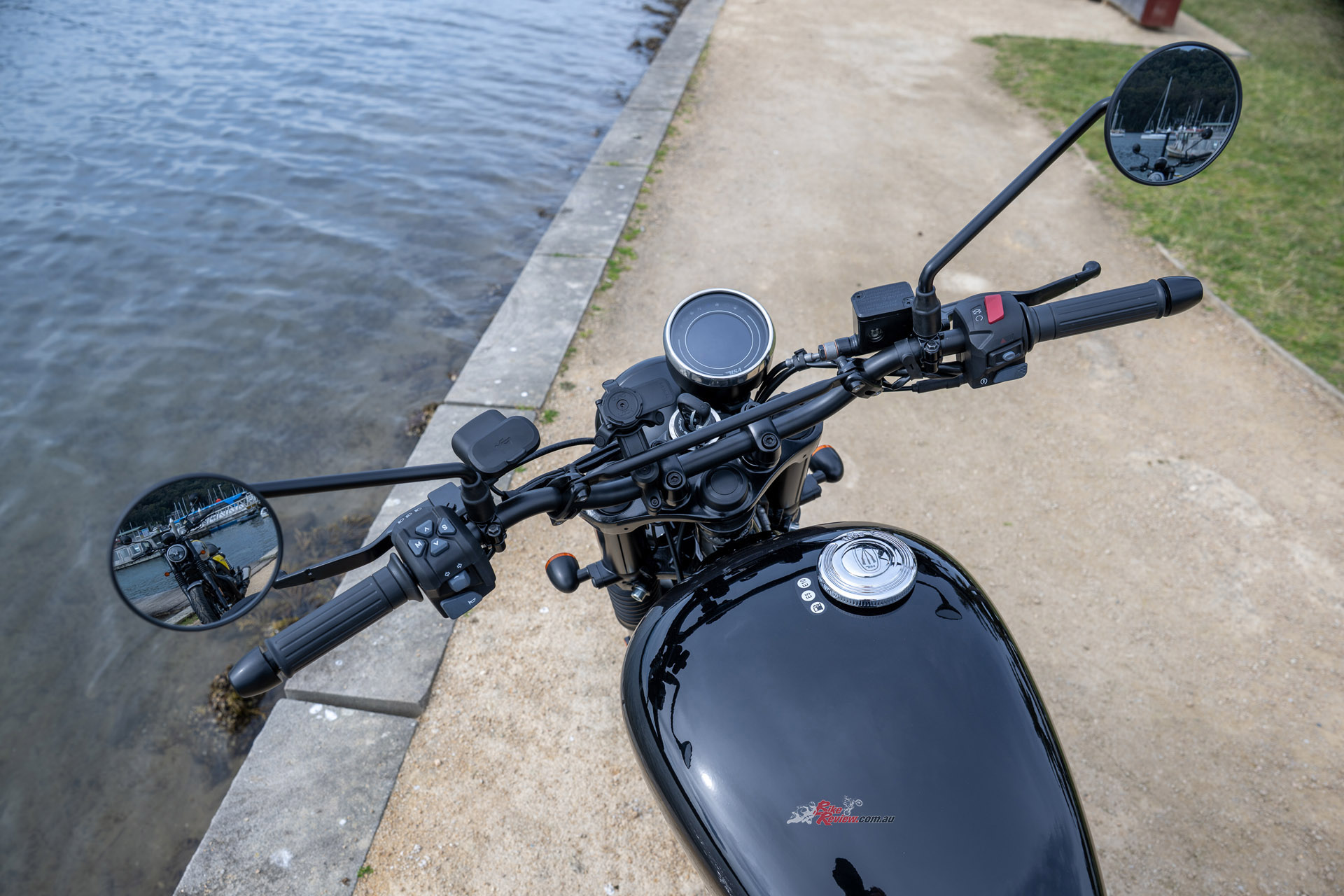
The only other interruption to my two-wheeled nirvana was the dash. The Scrambler shares it with the Bantam 350 – not its Gold Star sibling – and it is a right pain. Time beat me and I never got a concrete explanation of the display settings, but for the life of me I could barely make out the dark circular readouts. Road speed was legible enough; almost everything else drove me mad.
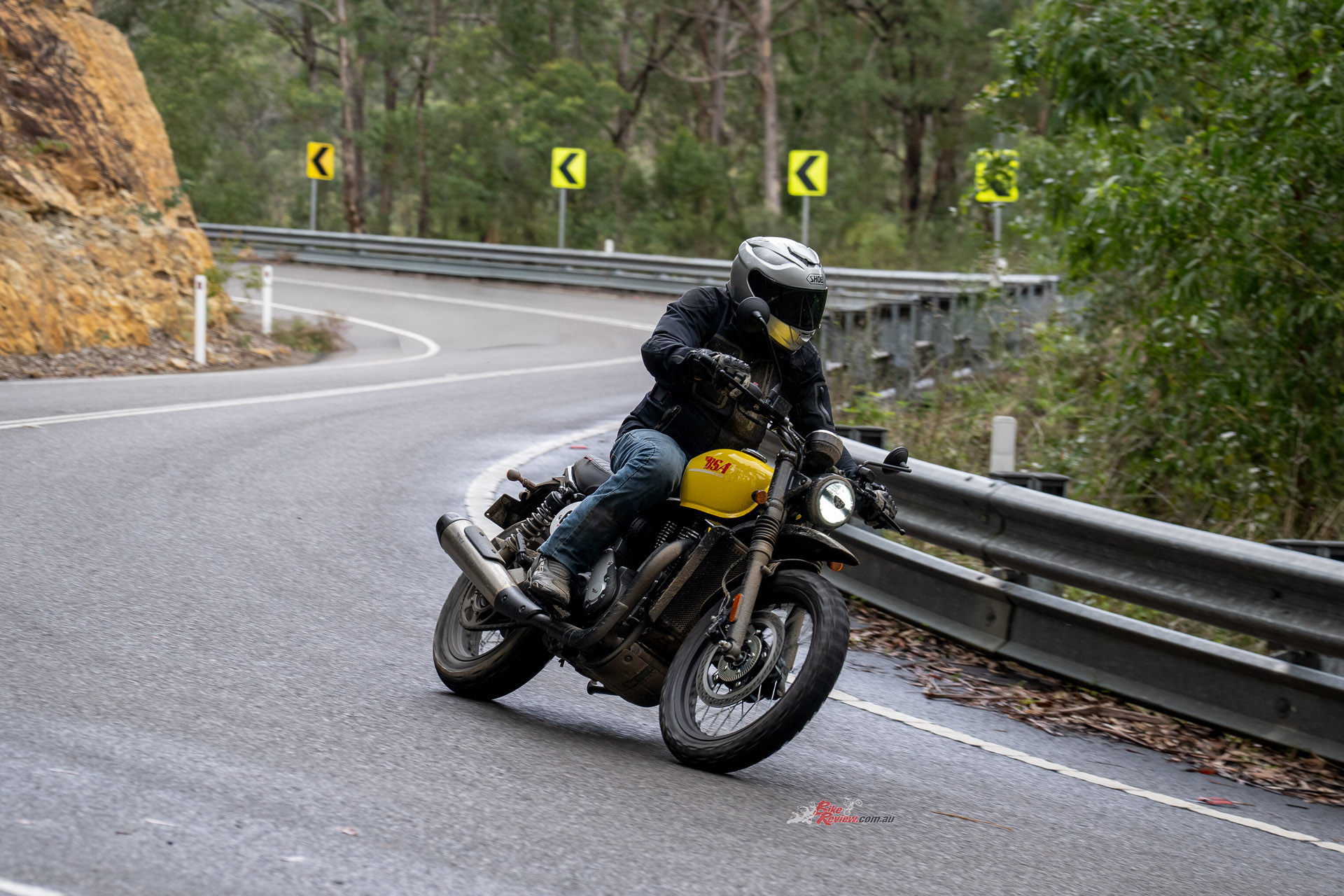
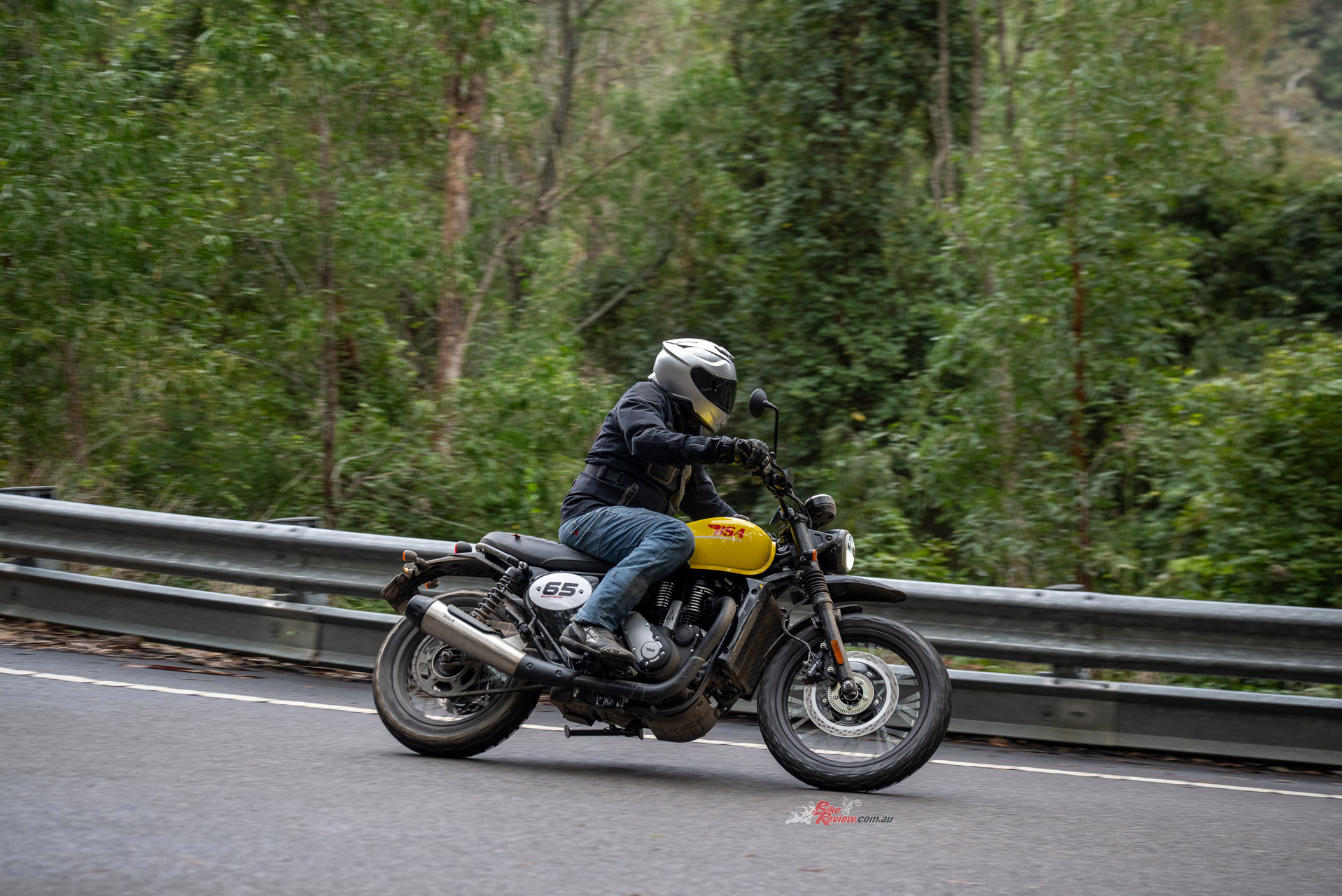
The Scrambler proved composed and entertaining on wet, winding back roads.
In saying that, there’s every chance my 19-year-old son will take one glance at it and say the old fella is talking crap. Perhaps that is precisely the test the reborn BSA now has to pass. Nostalgia versus technology. Looks versus substance. With sharp pricing, a decent warranty and a growing dealer network, I reckon these new Beezas will give the retro market a shake. A gentle, balance-shaft-assisted shake at that.
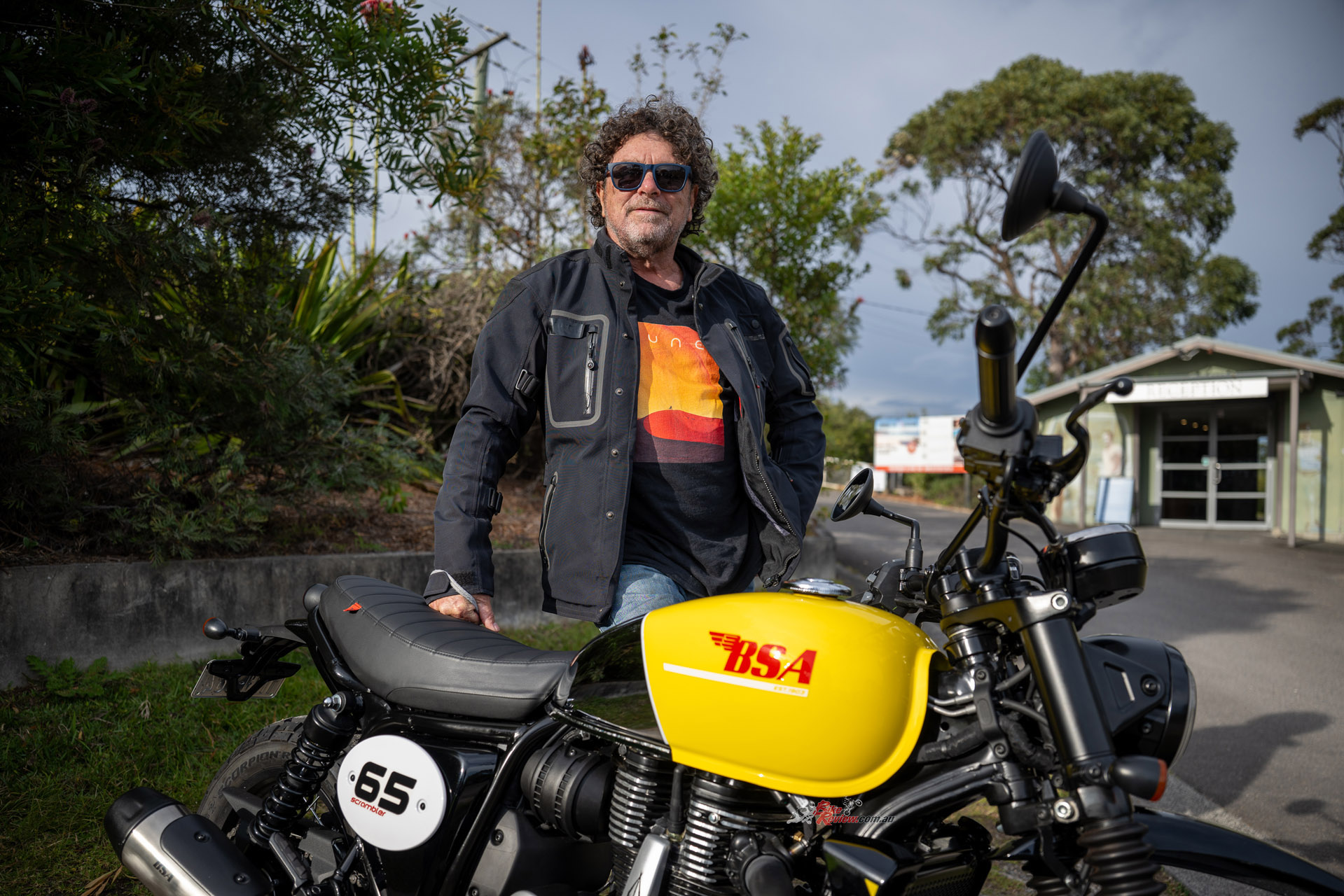
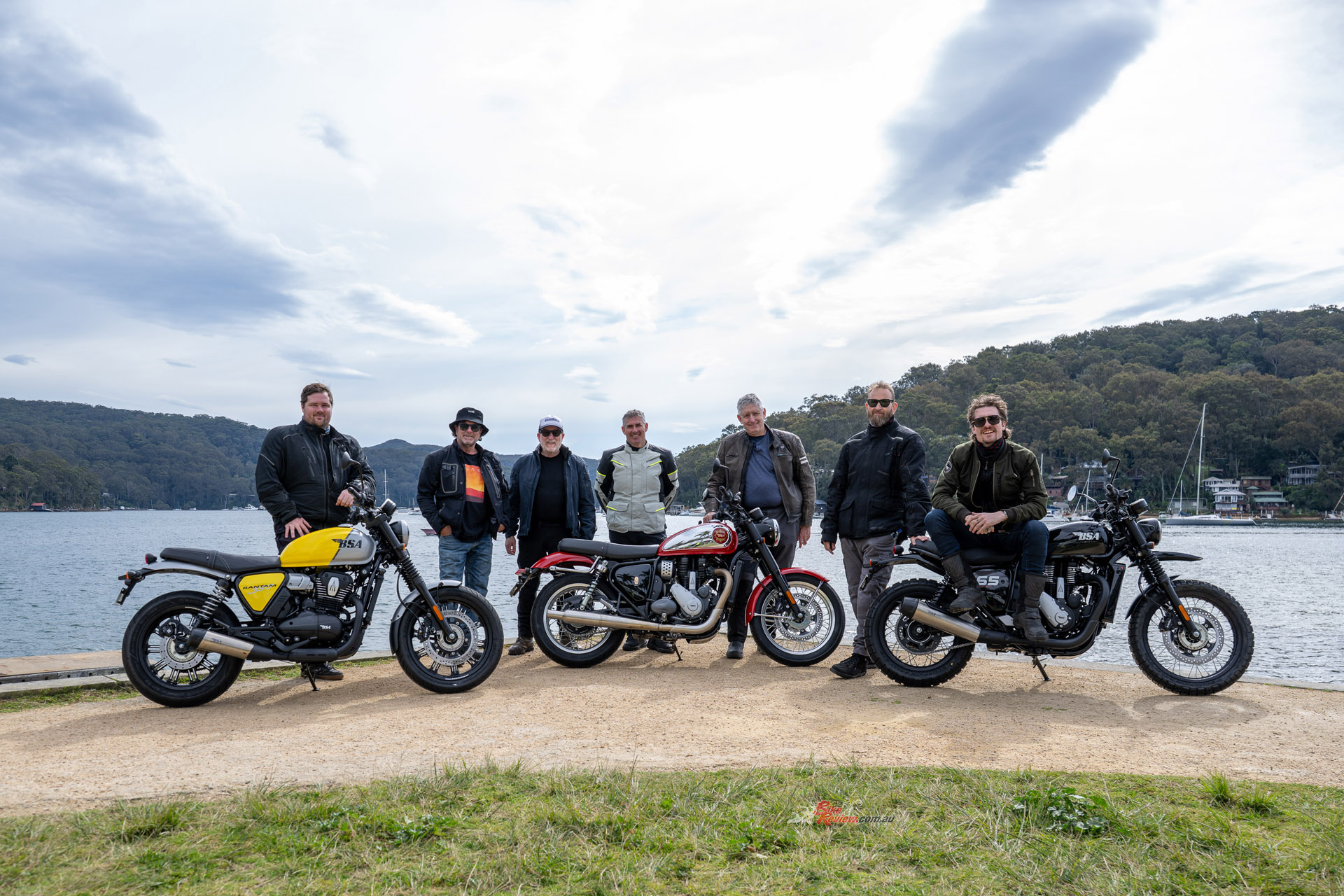
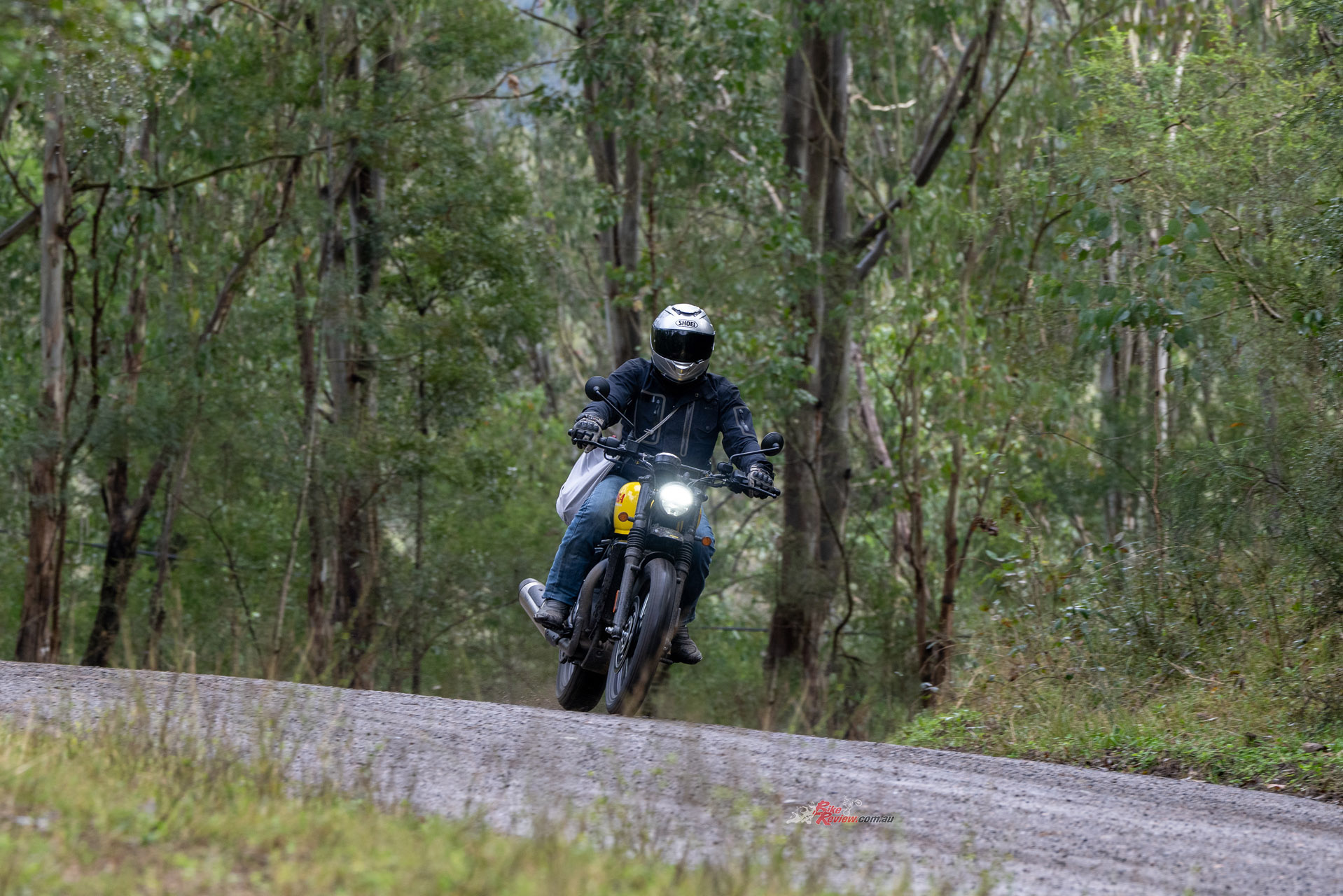
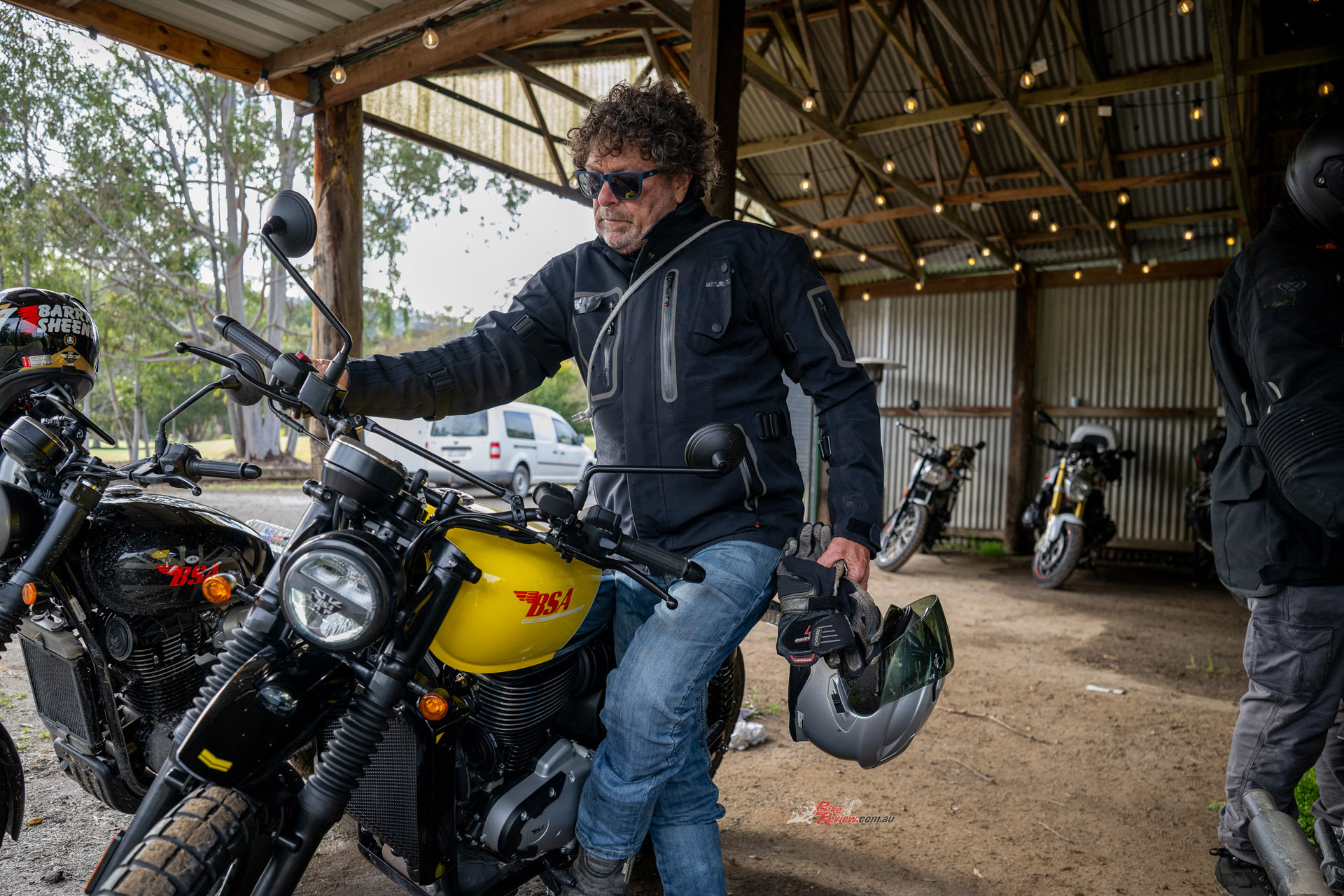
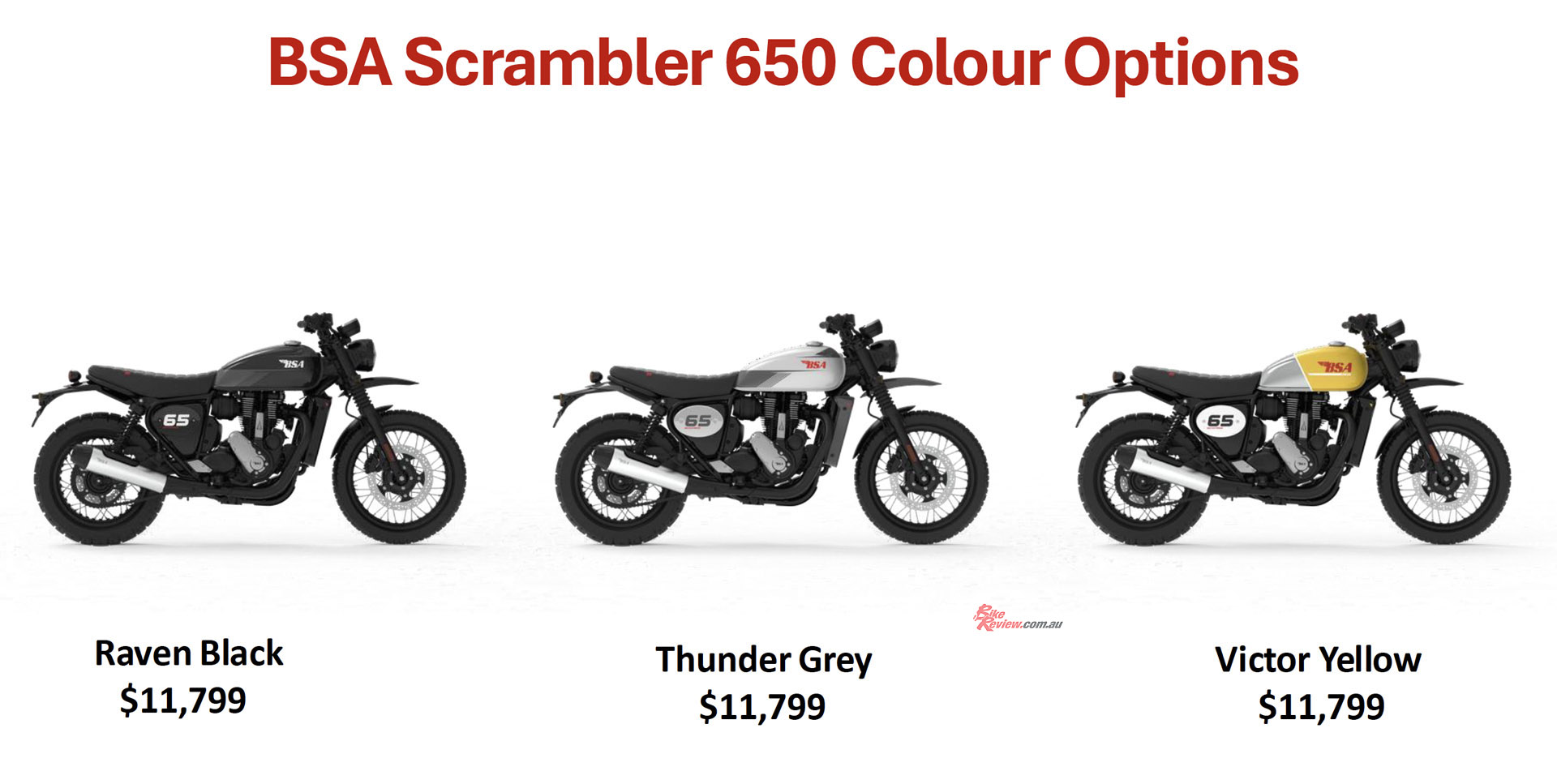
Gold Star prices start at $11,999 ride away, while all three Scrambler colours come in at $11,799. Every one of them presents a convincing value argument, although the consensus at the launch was that the chromed-up Silver Sheen Legacy at $12,799 will be the biggest seller. Me? I’d take the Scrambler – if only BSA would swap the yellow for orange.
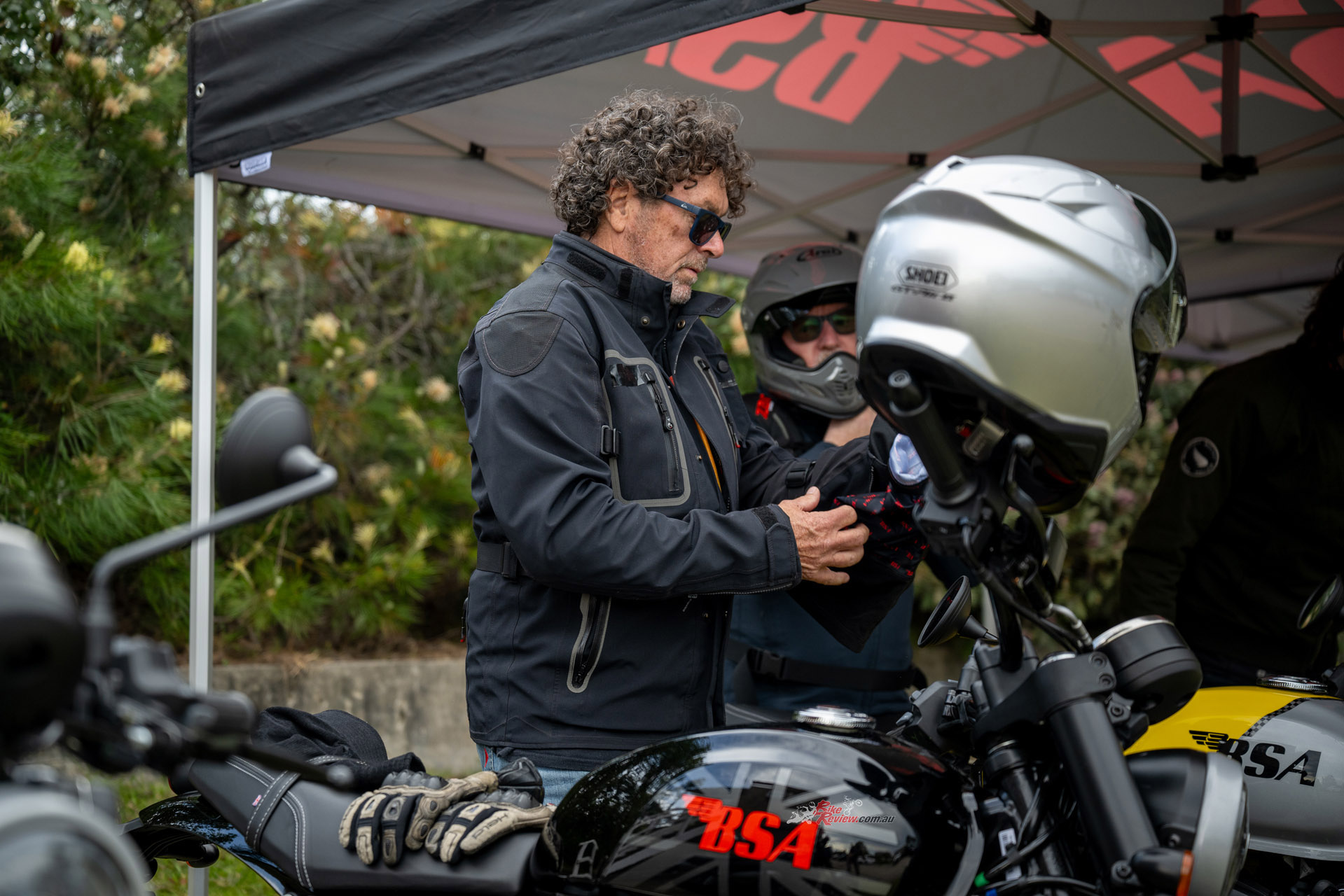
2026 BSA Gold Star 650 Specifications (Scrambler)
Price: From $11,999 ride away (Gold Star) / From $11,799 ride away (Scrambler)
Colours: Shadow Black, Birmingham Blue, Highland Green, Insignia Red, Silver Sheen (Legacy Edition), Brooklands Black (Gold Star). Scrambler: Raven Black, Thunder Grey, Victor Yellow.
Warranty: 3 years, unlimited kilometres
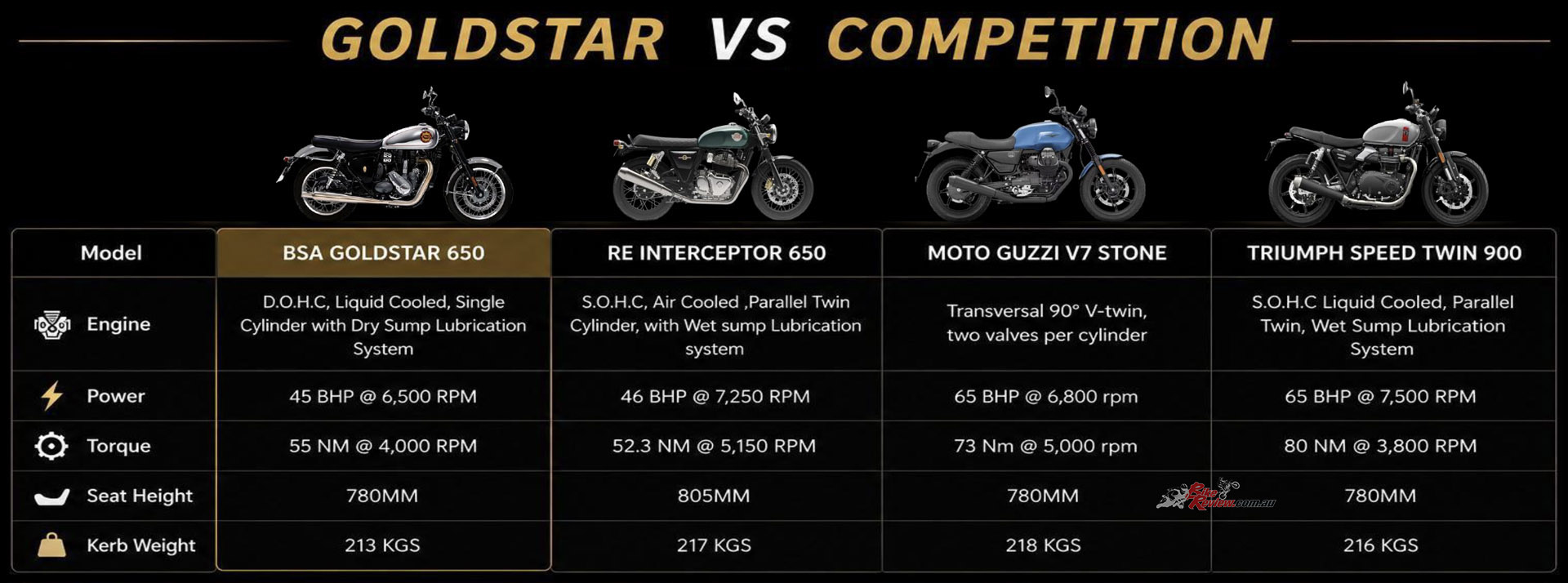
Claimed Power: 45hp (33.6kW) @ 6,500rpm
Claimed Torque: 55Nm @ 4,000rpm
Weight: 213kg (Gold Star) / 218kg (Scrambler)
Fuel Capacity: 12L
Fuel Consumption (Claimed): 4L/100km
Fuel Range (Claimed): 300km
Engine: Liquid-cooled, four-stroke, single-cylinder, four-valve, DOHC, 652cc, 11.5:1 compression, twin spark plugs, electronic fuel injection, five-speed gearbox, wet multiplate clutch.
Chassis: Tubular steel dual-cradle frame.
Rake: 26.5º (Scrambler 26º) Trail: N/A
Suspension: 41mm telescopic forks (f); twin shock absorbers with five-step adjustable preload (r)
Brakes: Single 320mm floating disc, Brembo twin-piston floating caliper, ABS (f); 255mm disc, Brembo single-piston floating caliper, ABS (r).
Wheels: 36-spoke wire wheels, 18 x 2.50 (f), 17 x 4.25 (r). (Scrambler: 36-spoke alloy rims, 19 x 2.50 (f), 17 x 4.25 (r).
Tyres: Pirelli Phantom Sportscomp, 100/90-18 (f), 150/70-R17 (r). (Scrambler: Pirelli Scorpion Rally STR, 110/80-19 (f), 150/70-R17 (r).
Dimensions:
Seat height: 780mm (820mm)
Wheelbase: 1425mm (1463mm)
Overall Length: N/A
Overall Width: N/A
Overall Height: N/A
Instruments & Electronics: Twin-pod analogue speedometer and tachometer with LCD multifunction display, ABS, LED lighting. (Analogue/LCD instrument display, dual-channel ABS and LED lighting.)
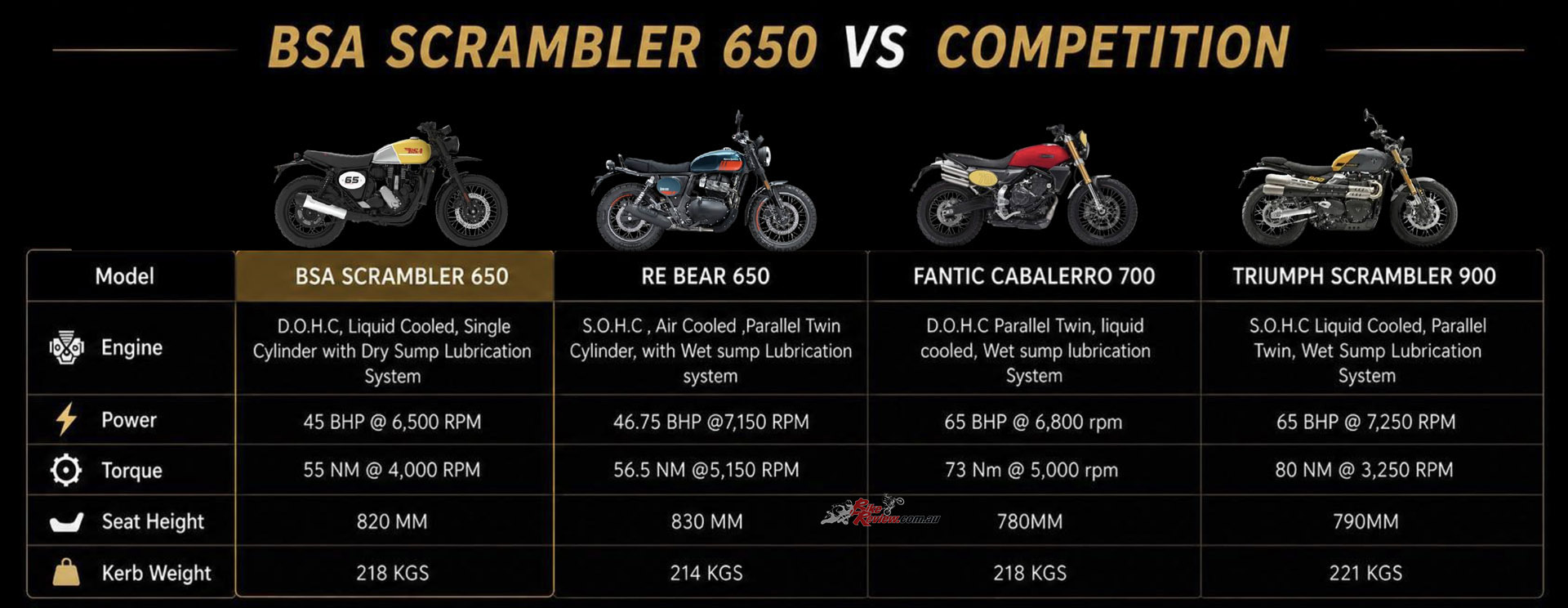
2026 BSA Gold Star and Scrambler 650 Gallery



Expert Ratings | Bike Review | BSA Gold Star 650 & Scrambler 650 Tested
Evocative
BSA is back in Australia, and its new Gold Star 650 and Scrambler 650 are tasked with balancing more than a century of history against the expectations of modern riders. We ride both to find out whether the famous badge still has something to offer modern riders.
The Author

You Might Also Like