

The Ducati Panigale V2 Bayliss blends performance and race heritage, honouring Troy Bayliss’s first WSBK title. With Ohlins suspension, light weight, and iconic livery, it’s a collectible that’s thrilling to ride... Pics: ShotbyRoth
Back when Ducati introduced the Panigale V2, the aim was clear — give riders a supersport that’s just as happy tearing up a mountain pass as it is doing laps at a track day. Something that rewards a rider who enjoys extracting every bit of performance from a bike…
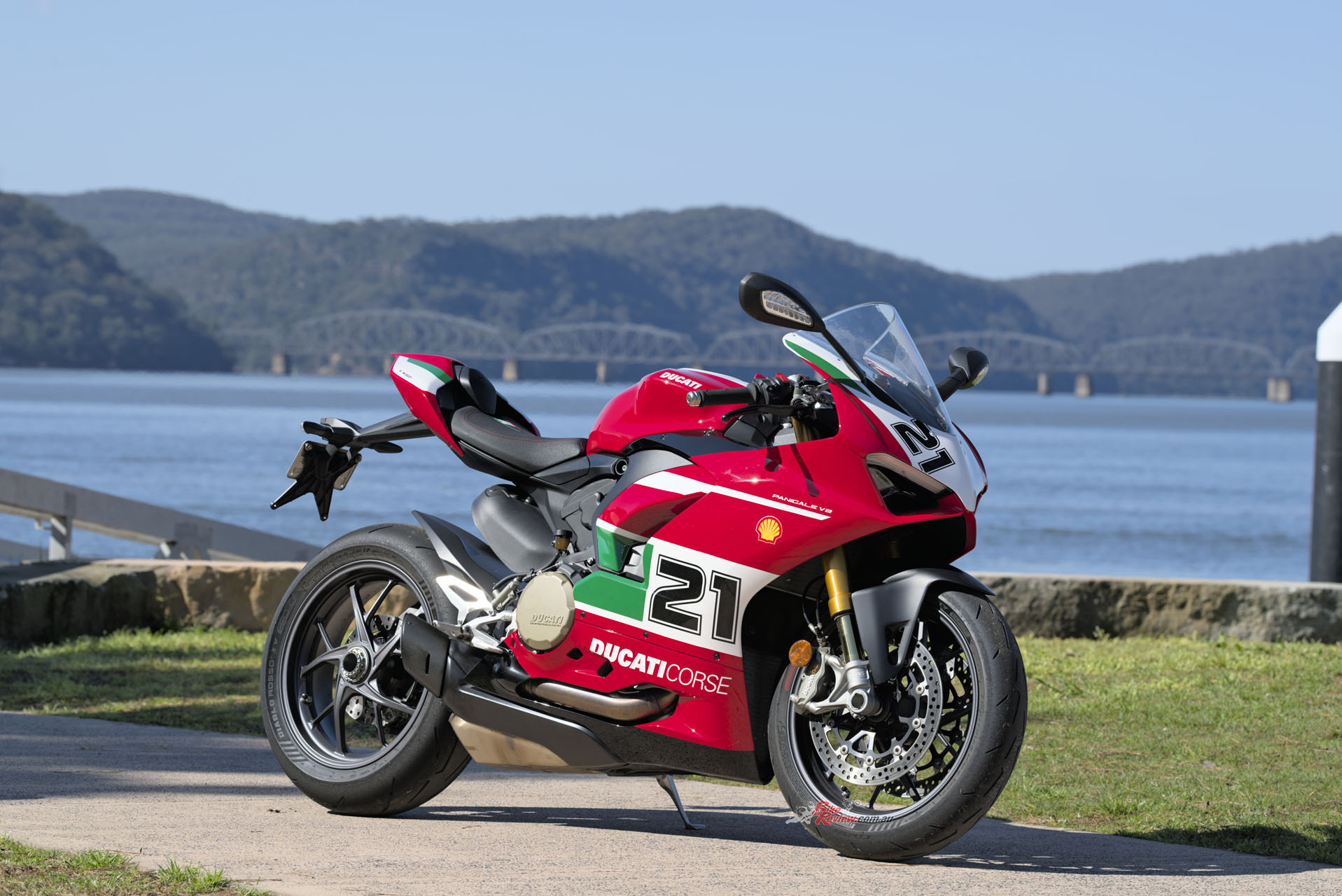
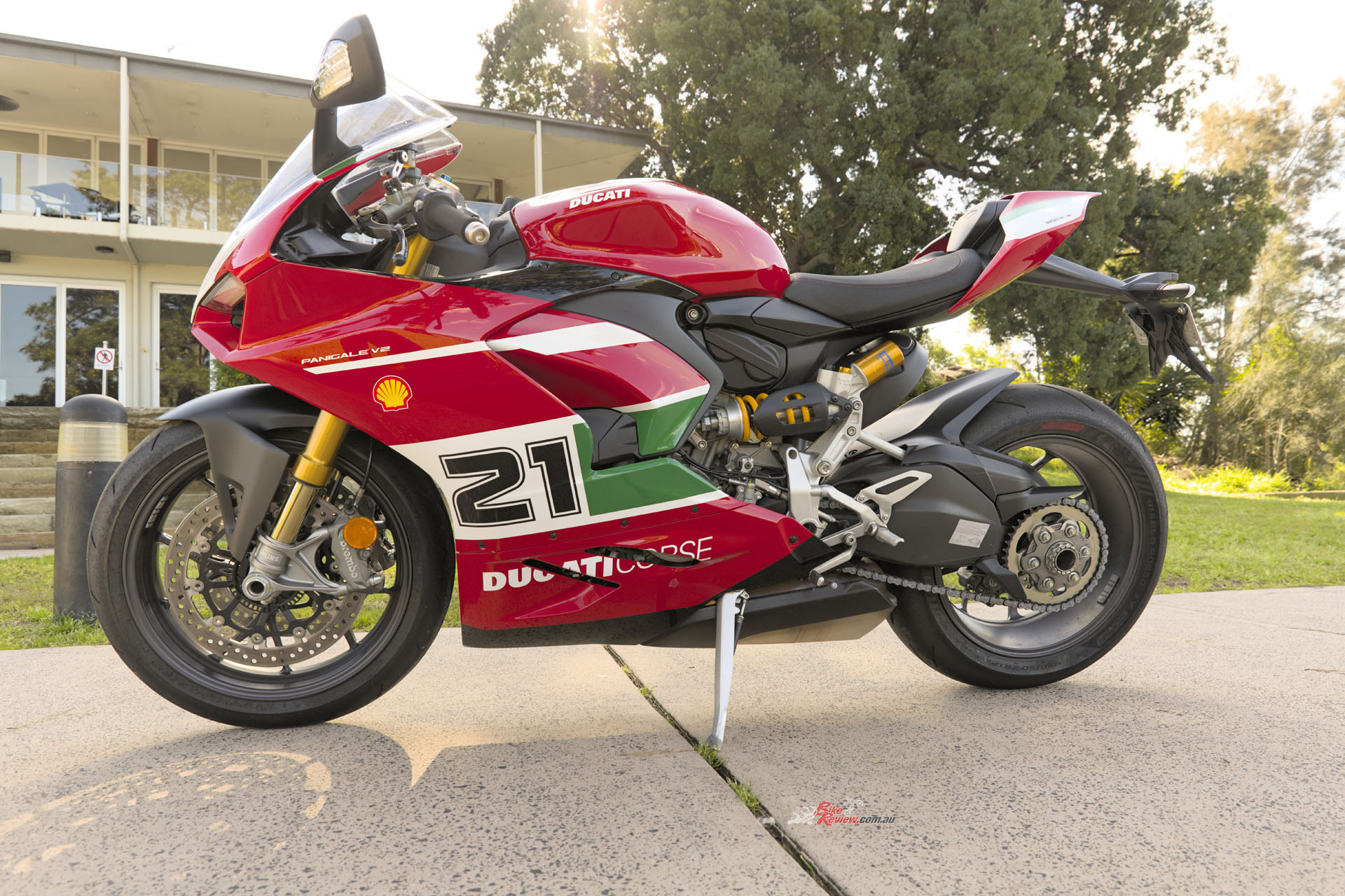
The Ducati Panigale V2 Bayliss was released to celebrate the 20th Anniversary of Troy’s 2001 World Title, his first. It was originally released in 2002, but is still available brand new for $30,400 R/A.
The Panigale V2 nailed that brief. It offered a manageable package with the kind of usable power that lets you ride at nine-tenths all day, more grunt than the earlier 899, all while still feeling like you’re on something special. Now Ducati has taken that formula, given it a premium suspension upgrade, trimmed some weight, and wrapped it in one of the most iconic race liveries in their history.
The result is the Panigale V2 Bayliss 1st Championship 20th Anniversary Edition — a bike that’s as much about heart as it is about horsepower, especially to us Aussie motorcycle racing fans, we’ve all got a soft spot for TB21… Years of exciting racing, he’s become an absolute legend of Ducati.
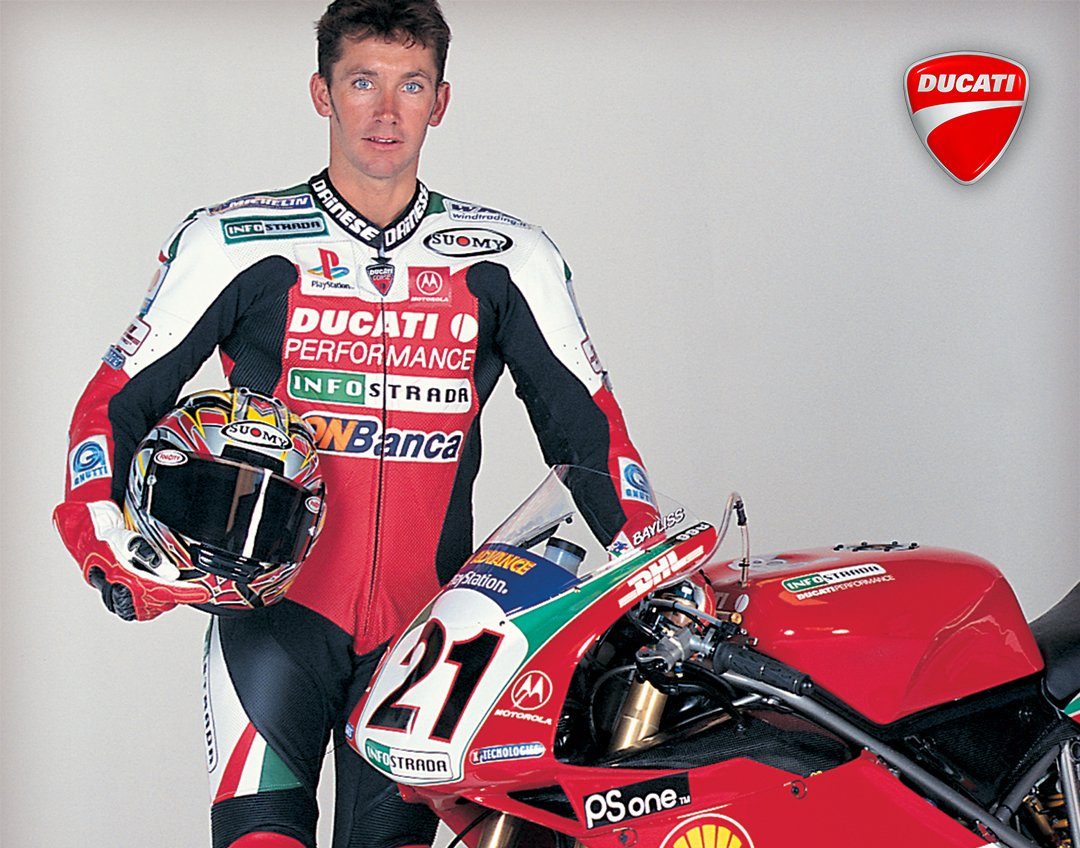
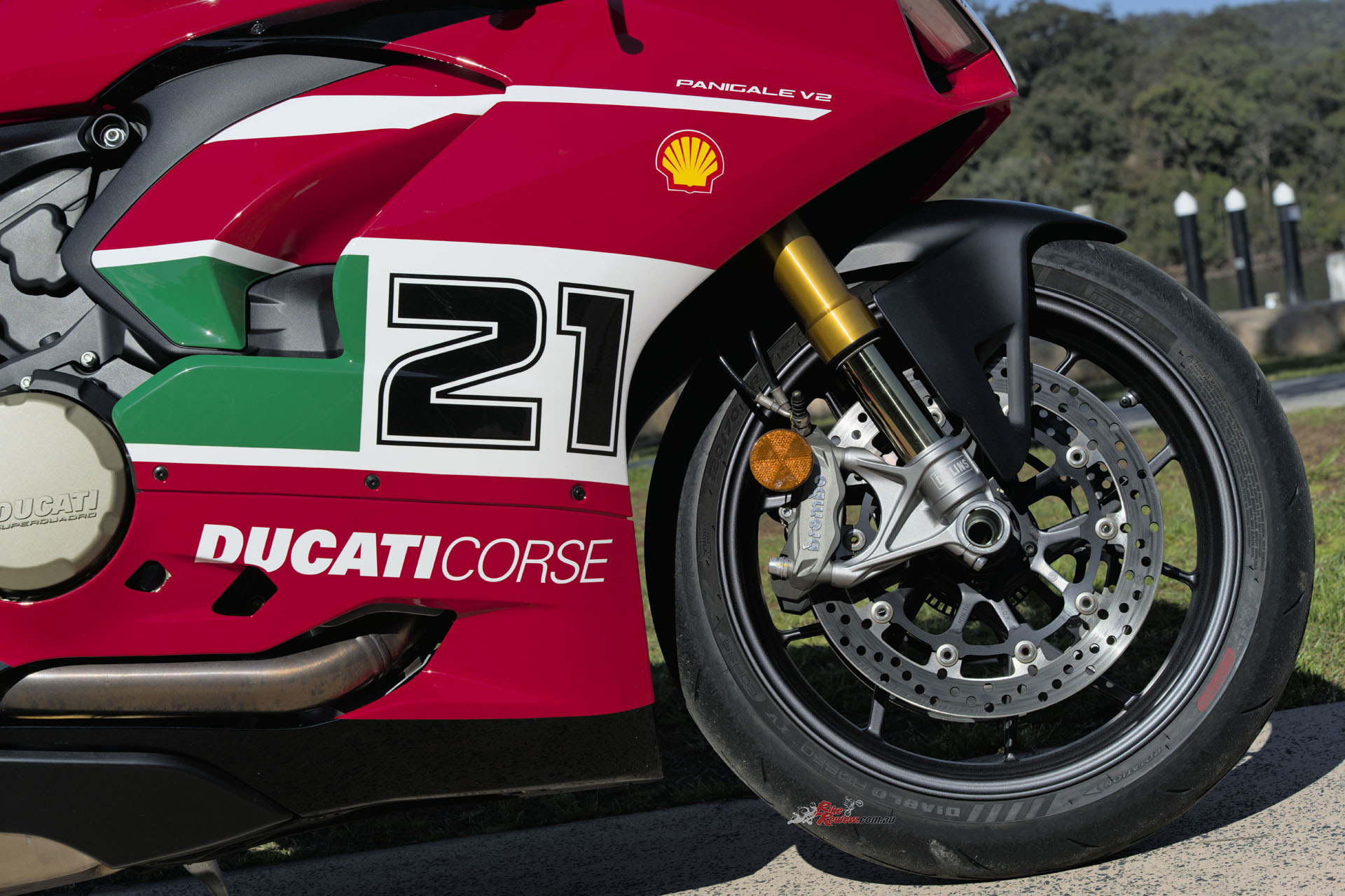
It comes with a bunch of goodies and, although not a limited edition, should end up on of the more collectable Ducati models in a few decades, for sure… Personally, I love the look of it, as it reminds me of my first year as a full time journo, 2001, and the Infostrada Ducati… all those exciting races to report on when I was at Two Wheels and Streetbike magazines, as a young Staff Journo. Great times.
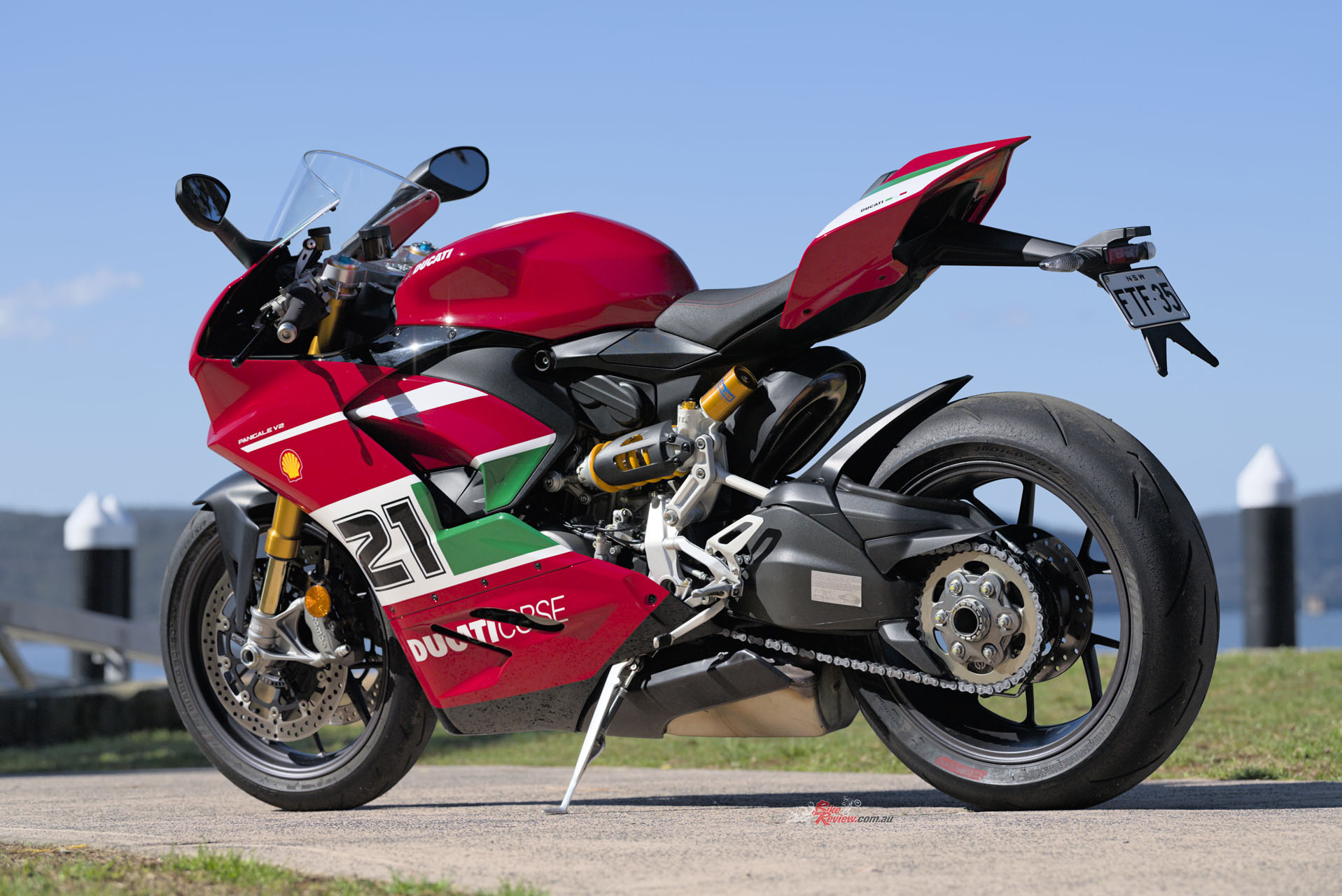
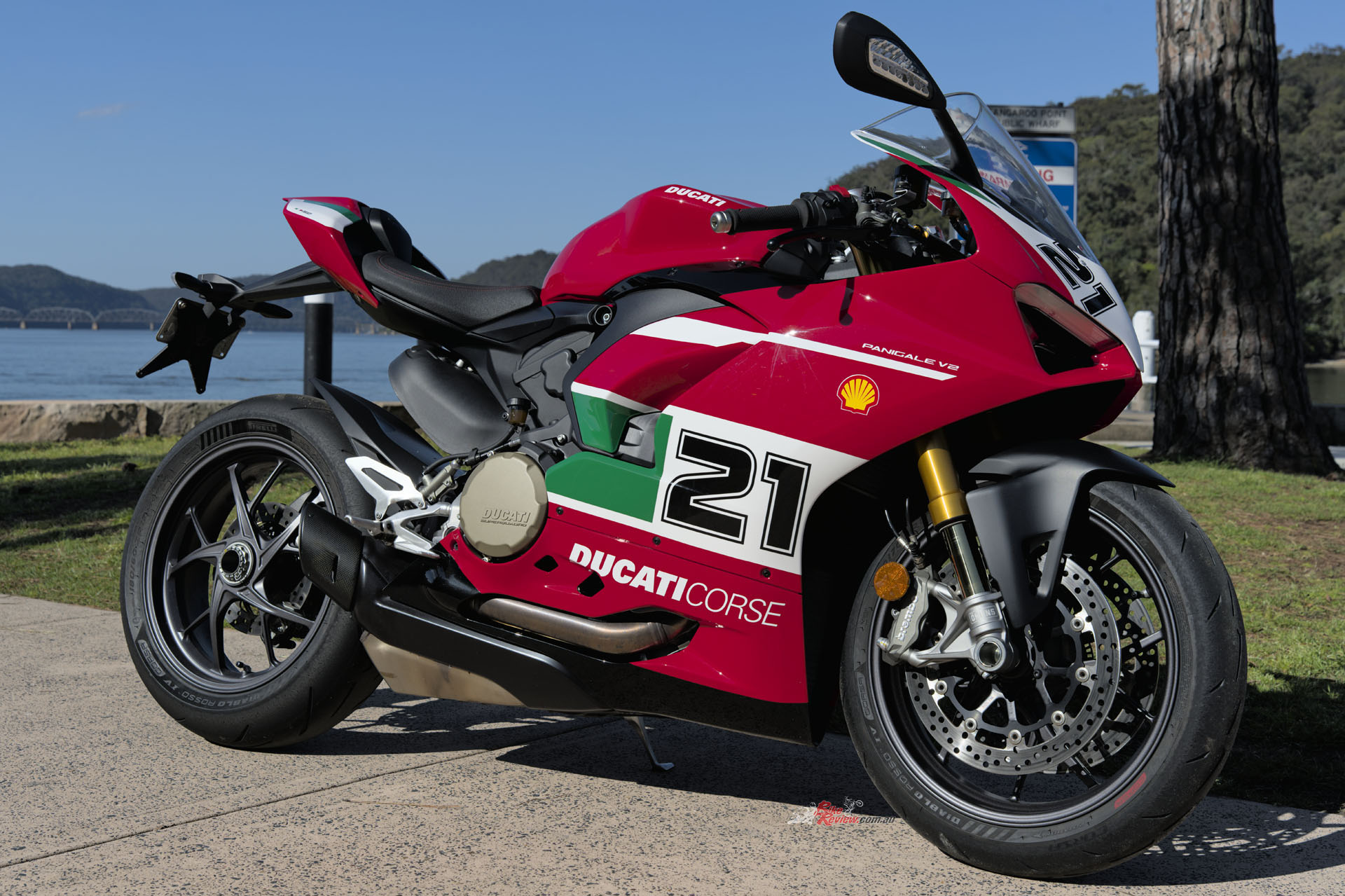
Who wouldn’t want a TB21 V2 in the garage, or lounge room? This is one good looking colour scheme…
Climbing onto the Bayliss edition is like greeting an old friend, but one who’s just spent the off-season training with world-class coaches. The ergonomics are unchanged from the stock V2, that’s a good thing, with a riding position that’s aggressive enough for the track but humane on the road, at least that is how I find it, just right for me and the rider triangle is a good fit. Aside from feeling every bit as racy as it is, the bike has that air of superior quality about it that Ducati do so well…
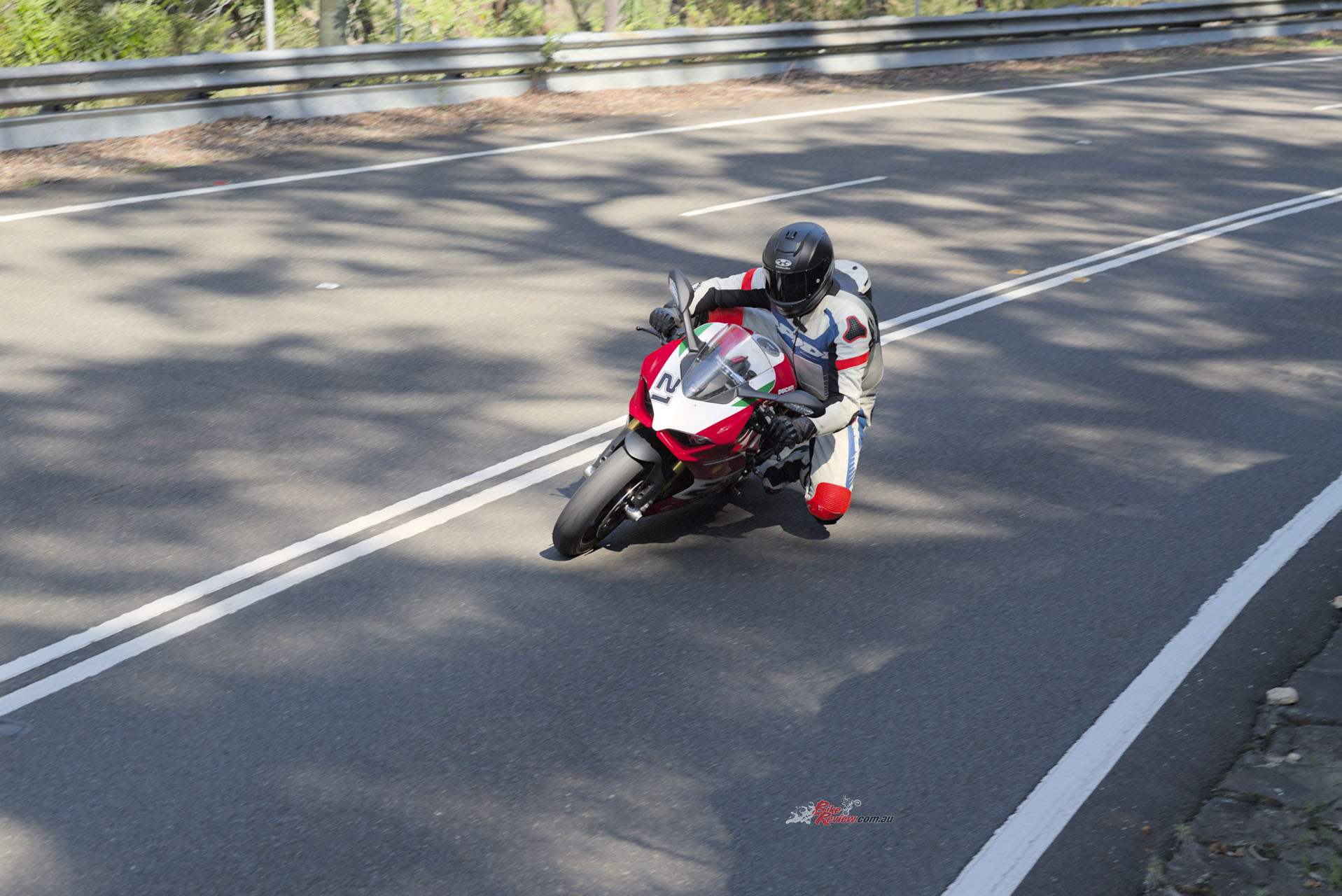
“The ergonomics are unchanged from the stock V2, that’s a good thing, with a riding position that’s aggressive enough for the track but humane on the road”…
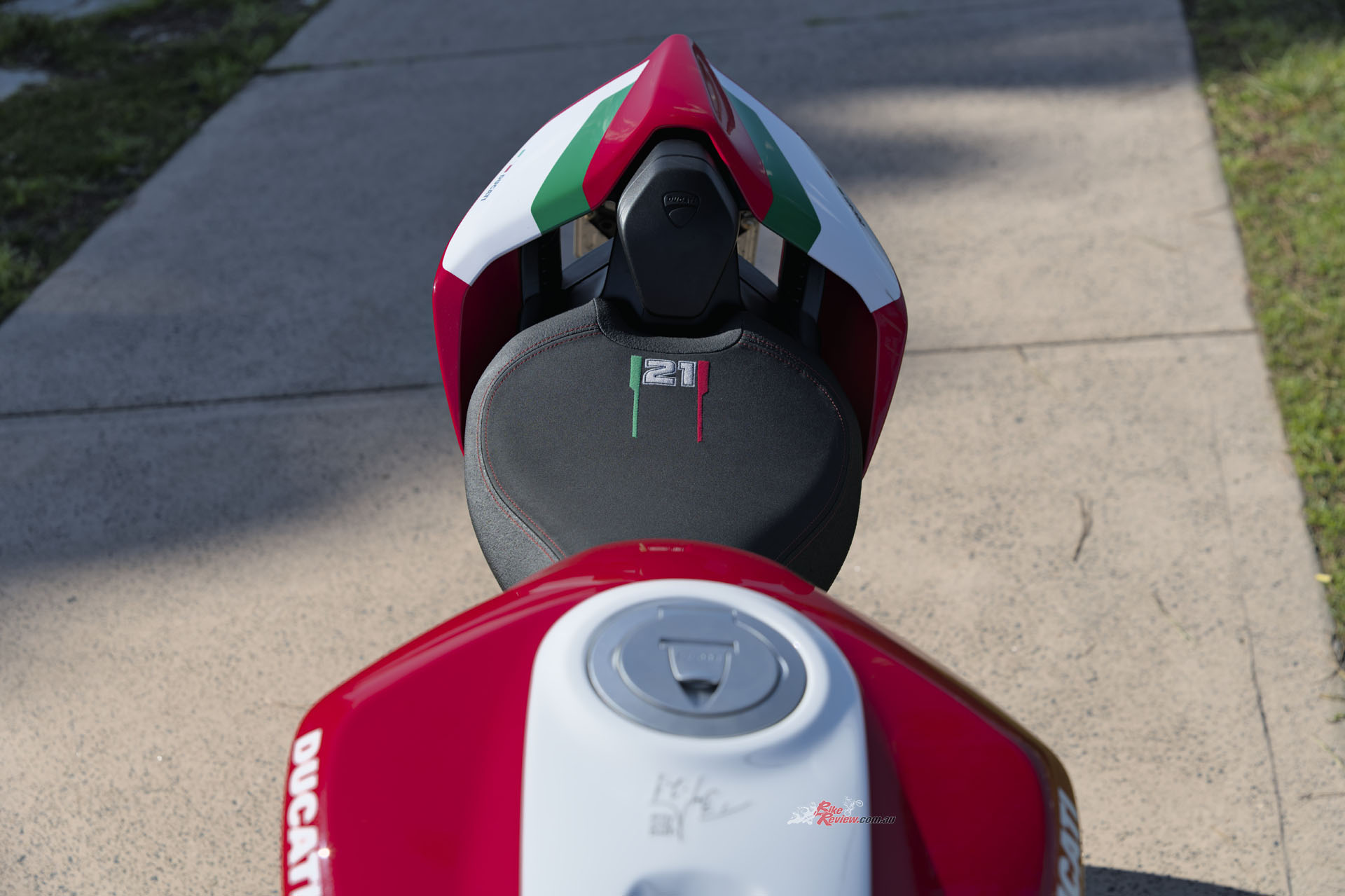
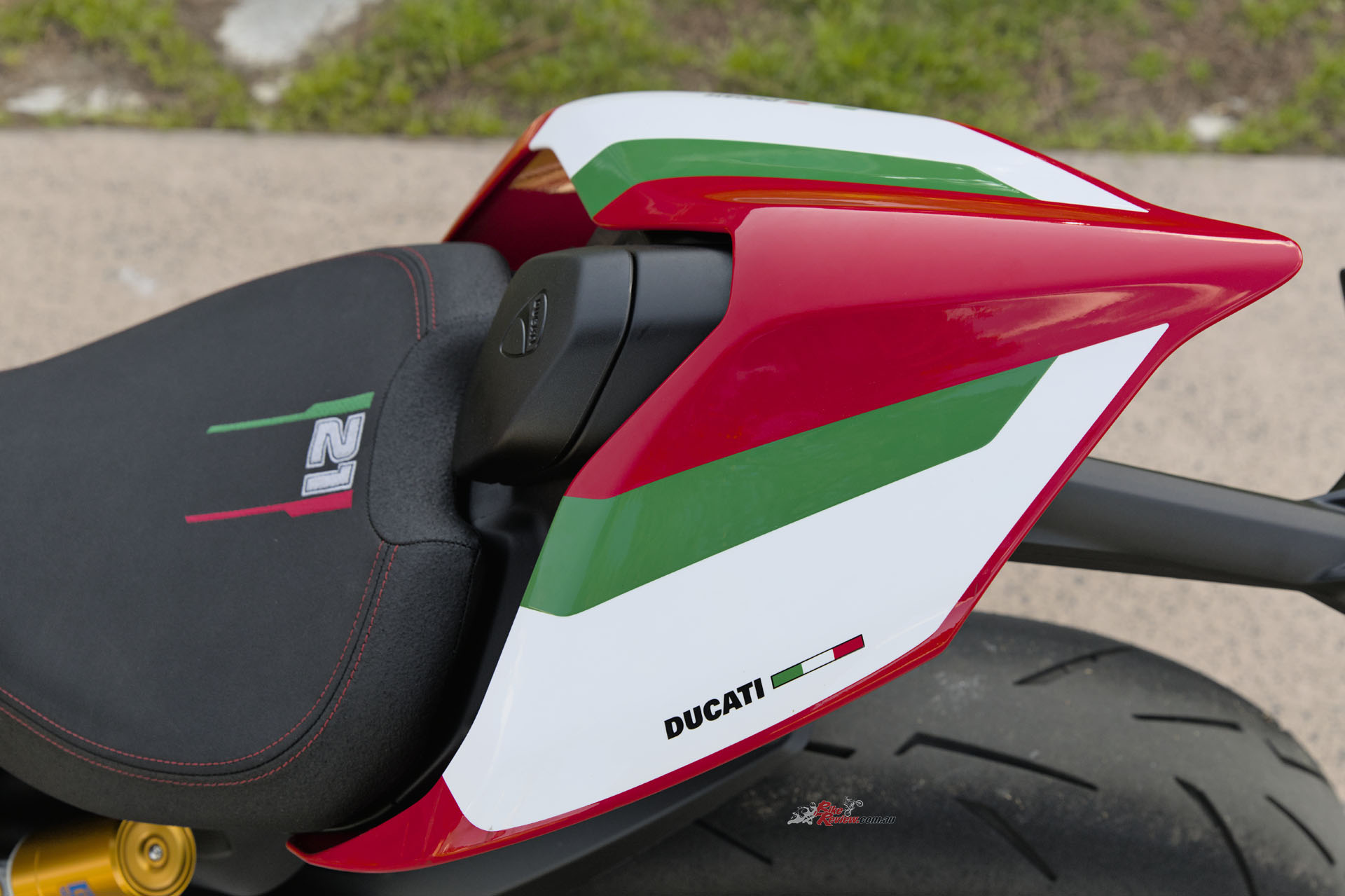
The special edition with #21 stitched in seat is comfortable enough for a few hours, the ‘bar position gives you control without folding you in half, and the narrow tank makes it easy to move around during cornering. At 187cm, I felt right at home. And the heat is not as bad as the V4, you will be glad to hear, but it still gets warm of course, but it’s not built for touring!
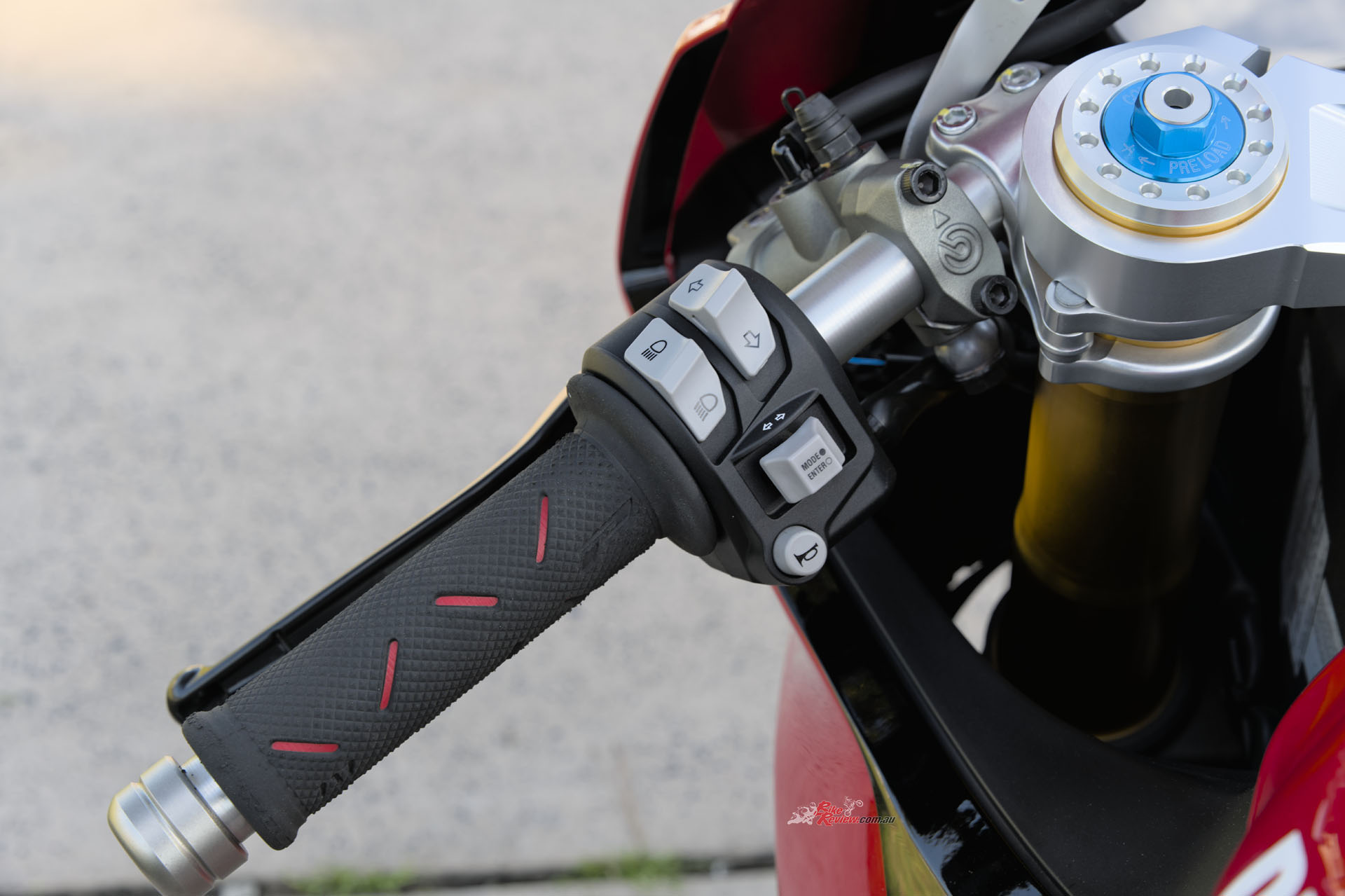
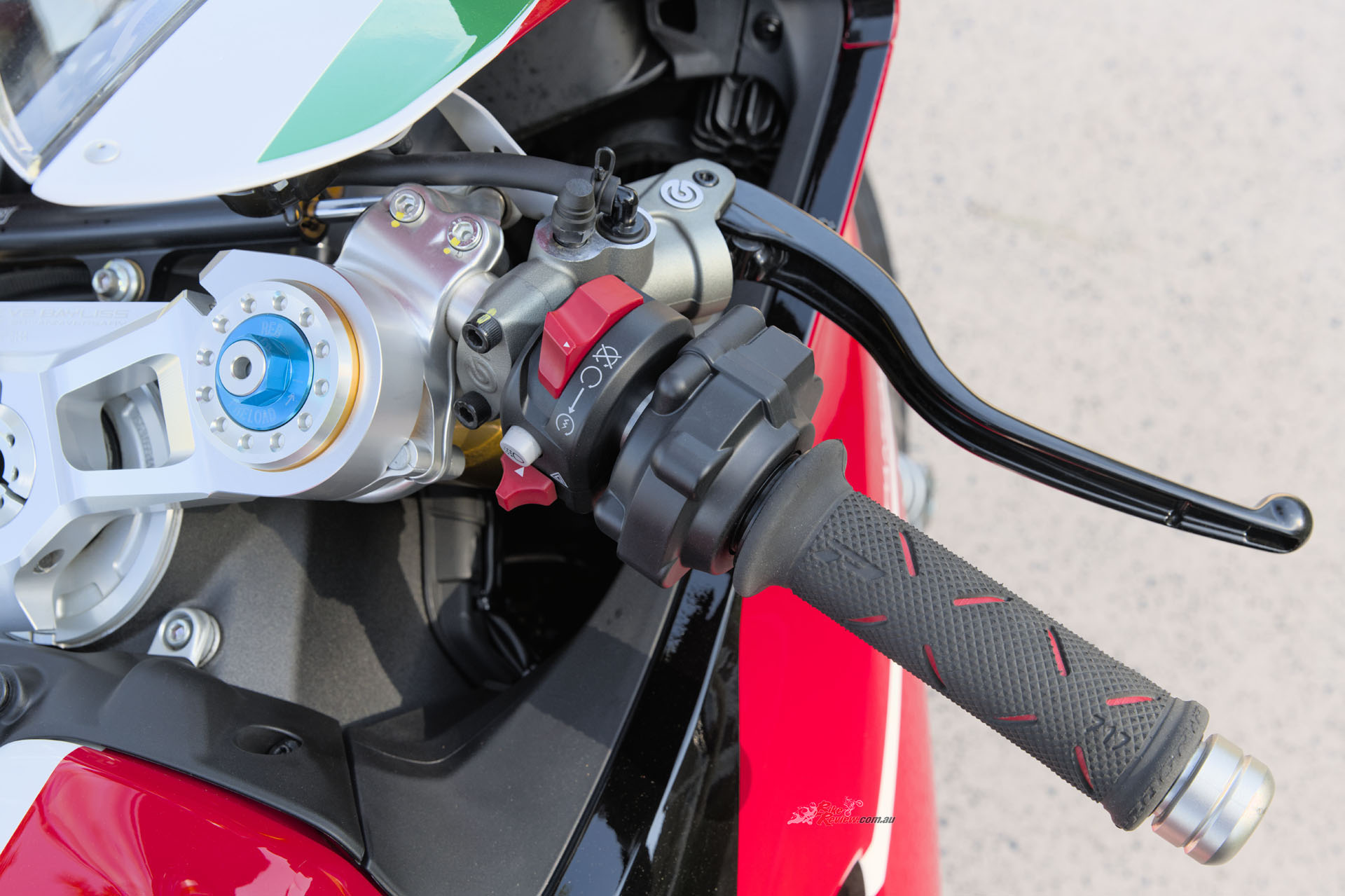
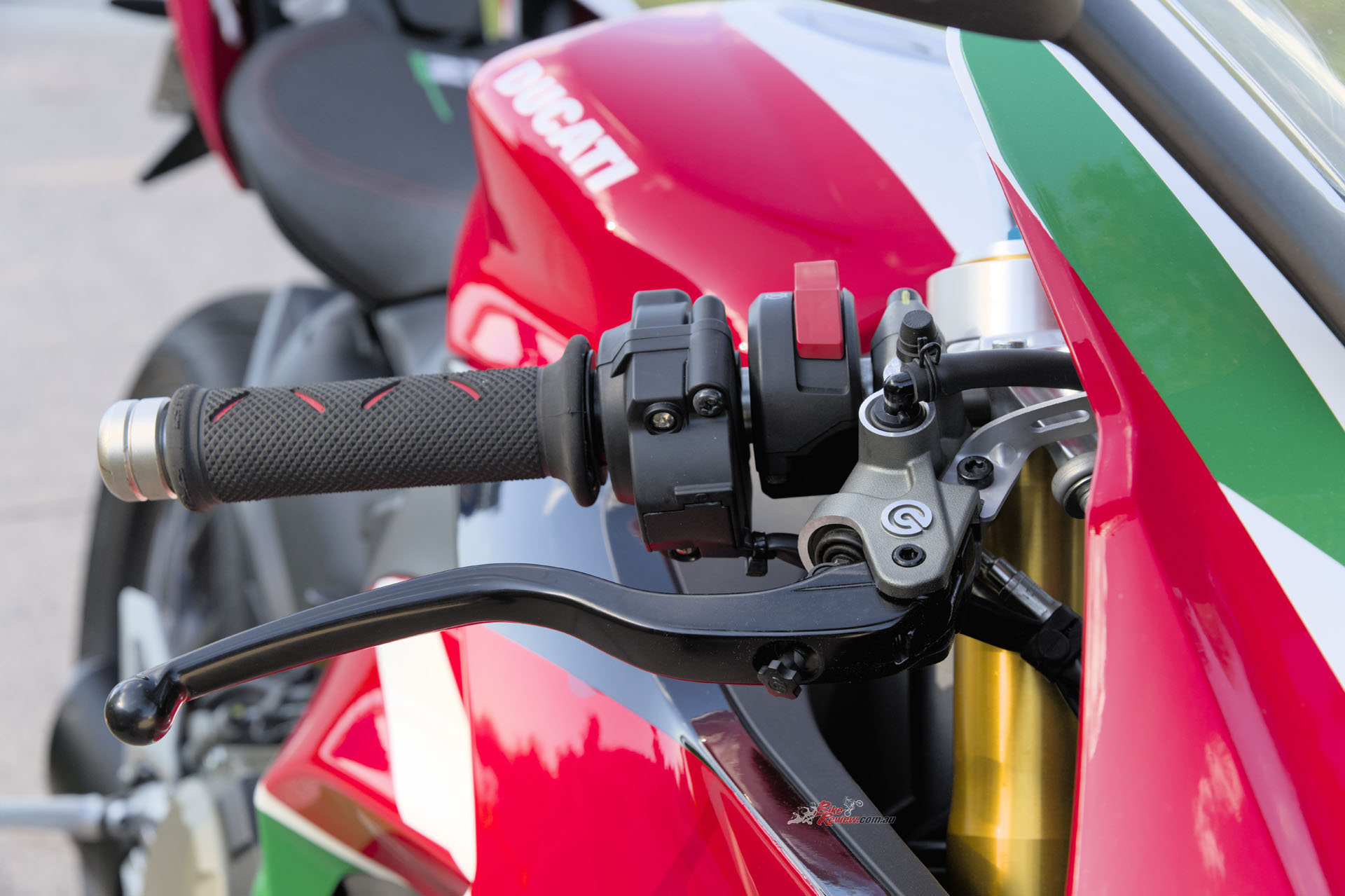
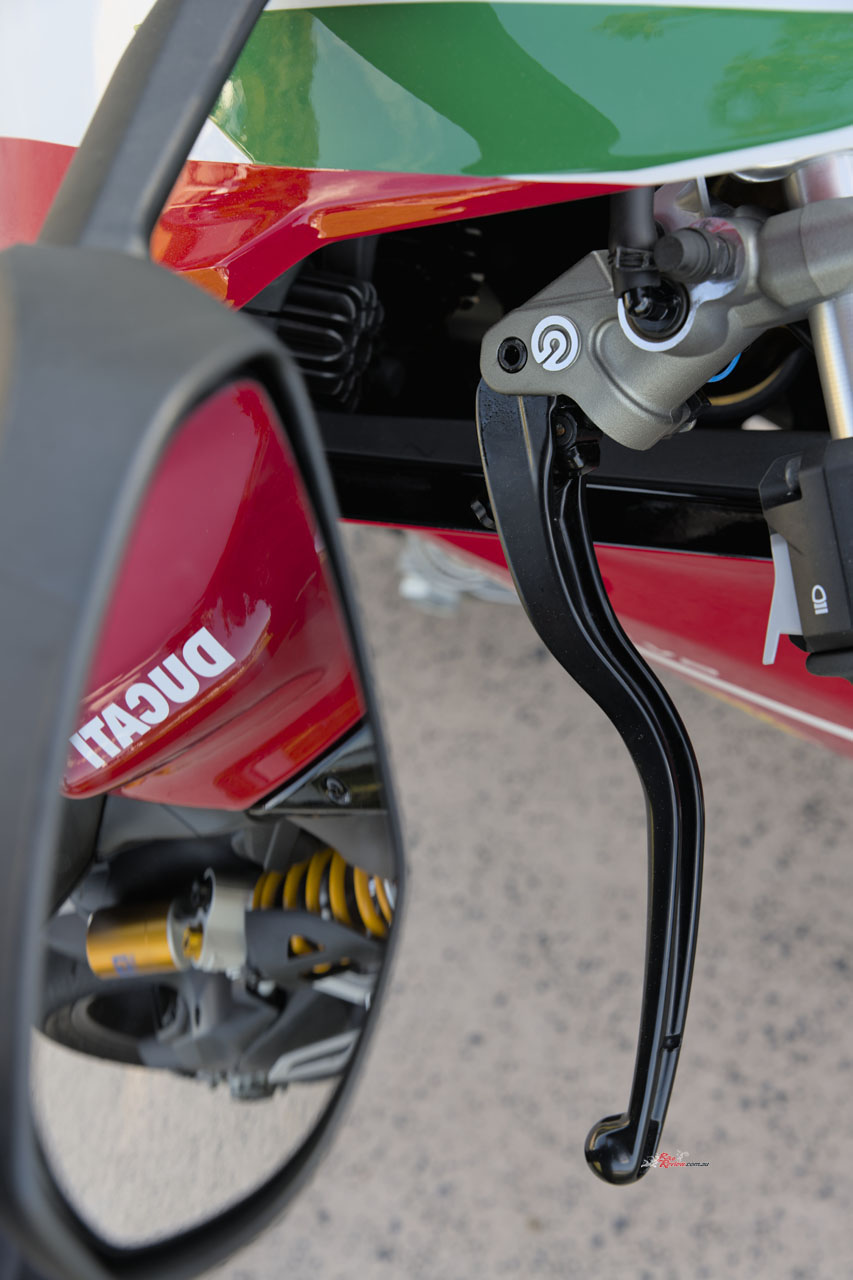
The switches are all standard easy to navigate, quality Ducati kit, the levers are adjustable and well placed, the dash is easy to see and read, and although they look nice, the mirrors are hard to see out of and vibrate a fair bit… The wide ‘bars and narrow tanks give the bike a racy feel, and the low screen adds to that. Overall, from a racer’s point of view, I love the riding position. From a street rider’s point of view, all I would do is fit a taller, tinted screen. I could live with the blurry mirrors…
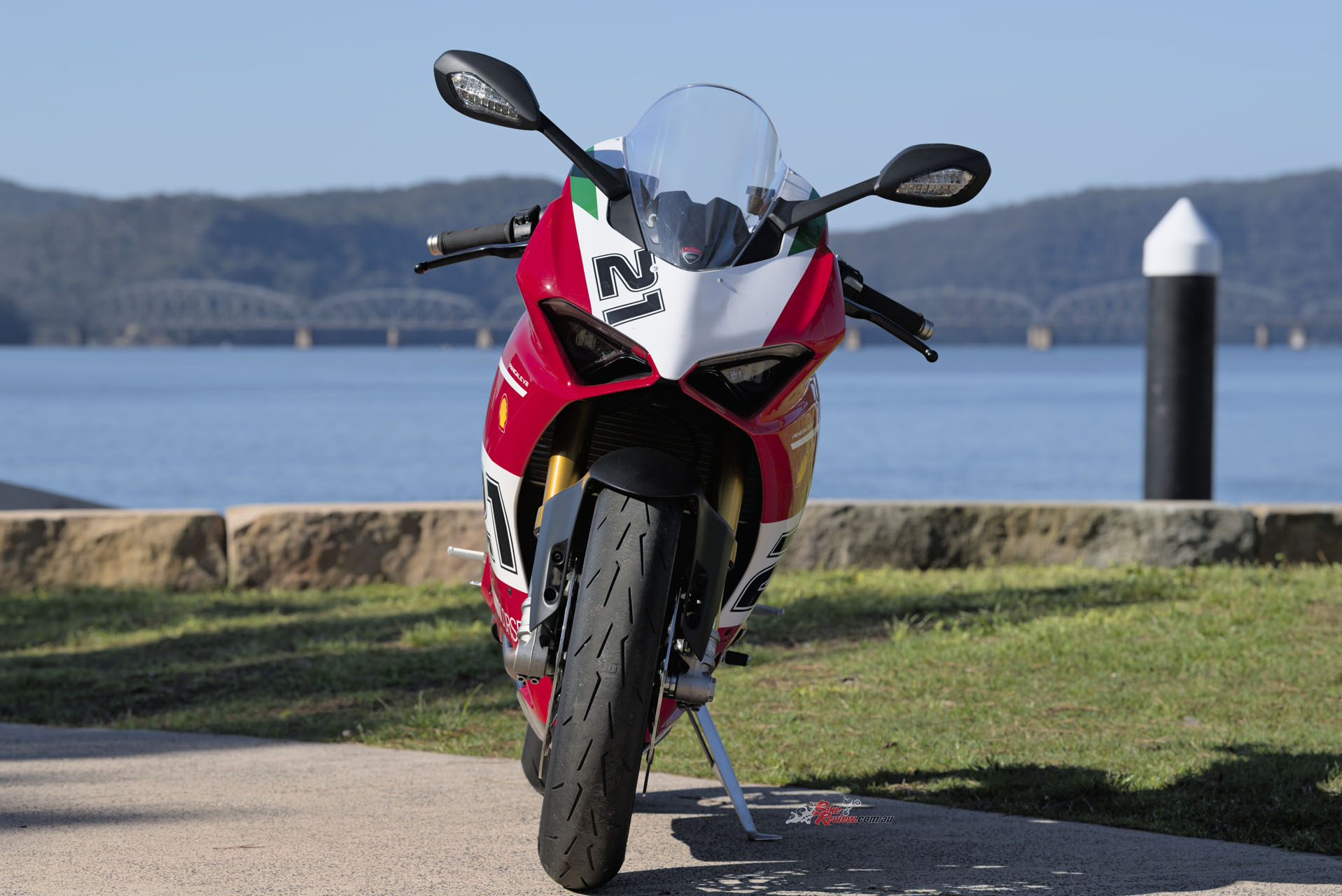
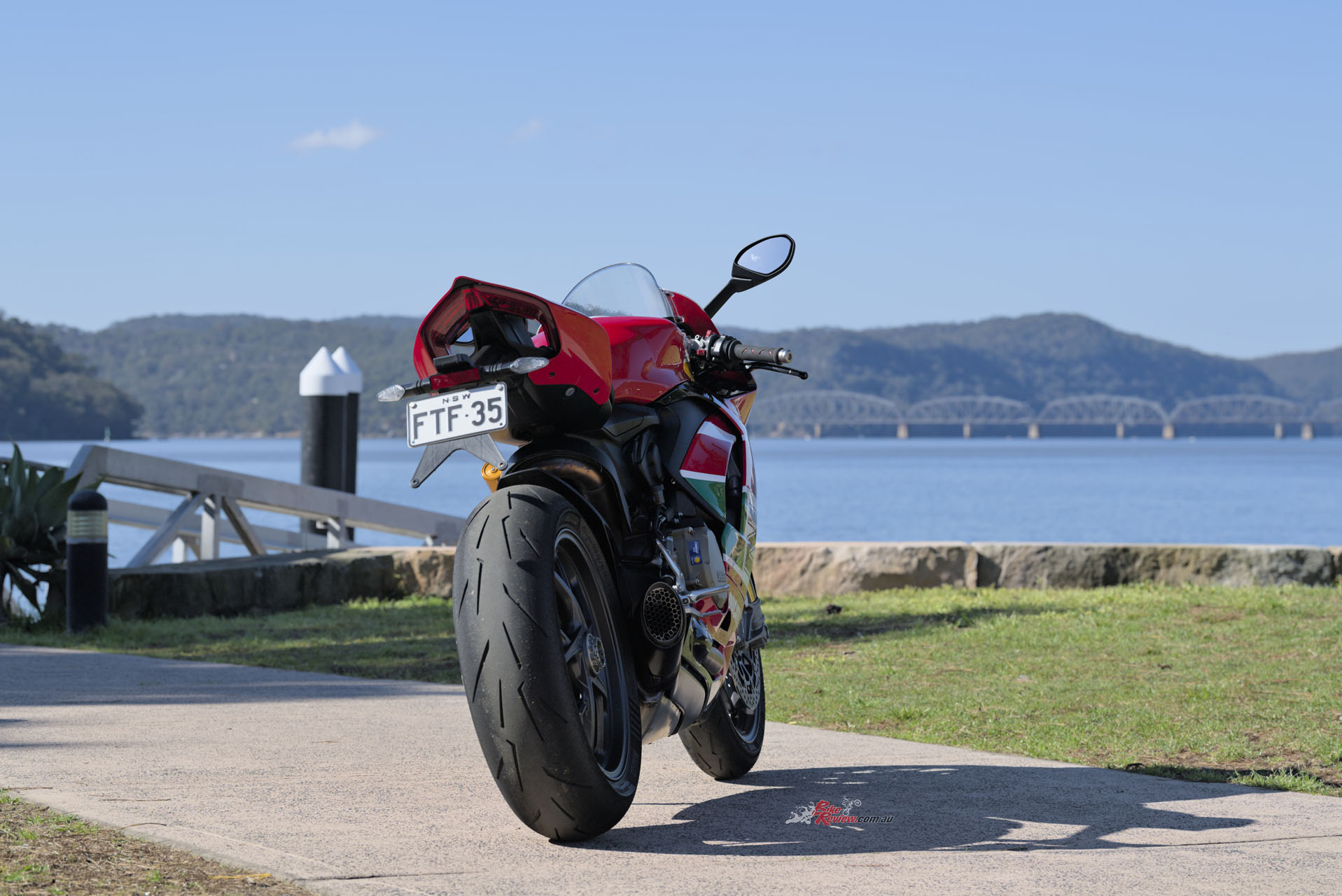
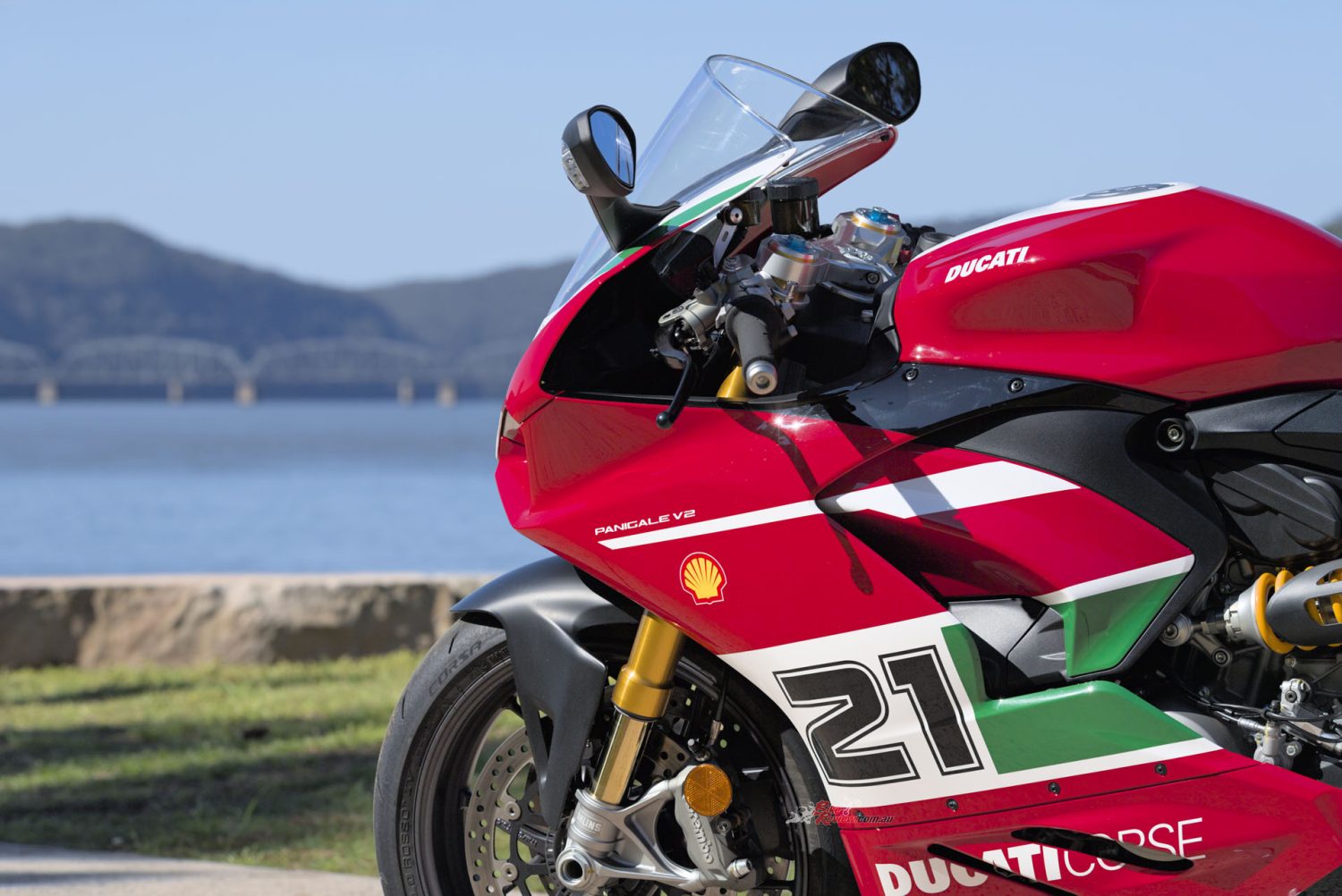
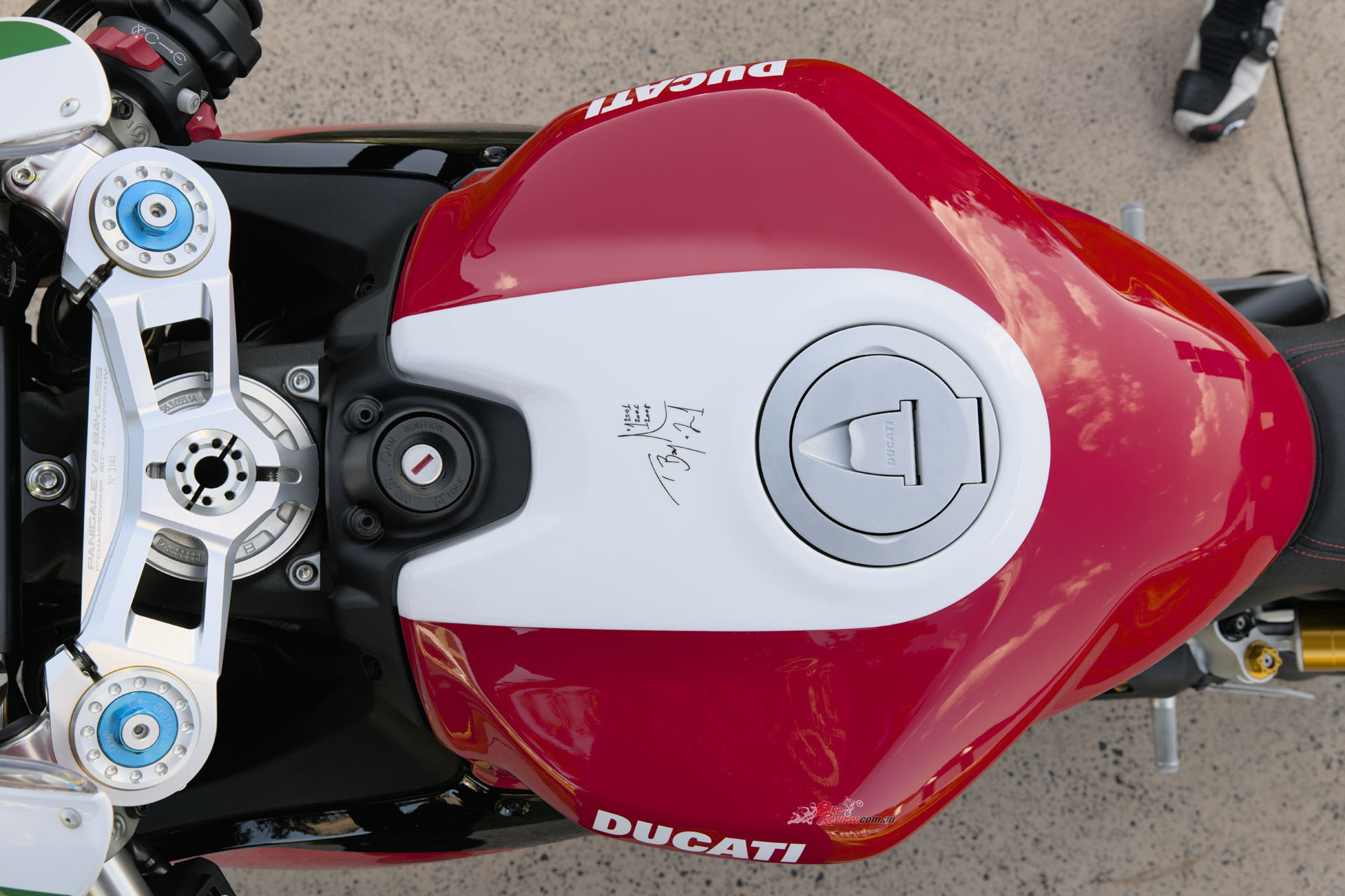
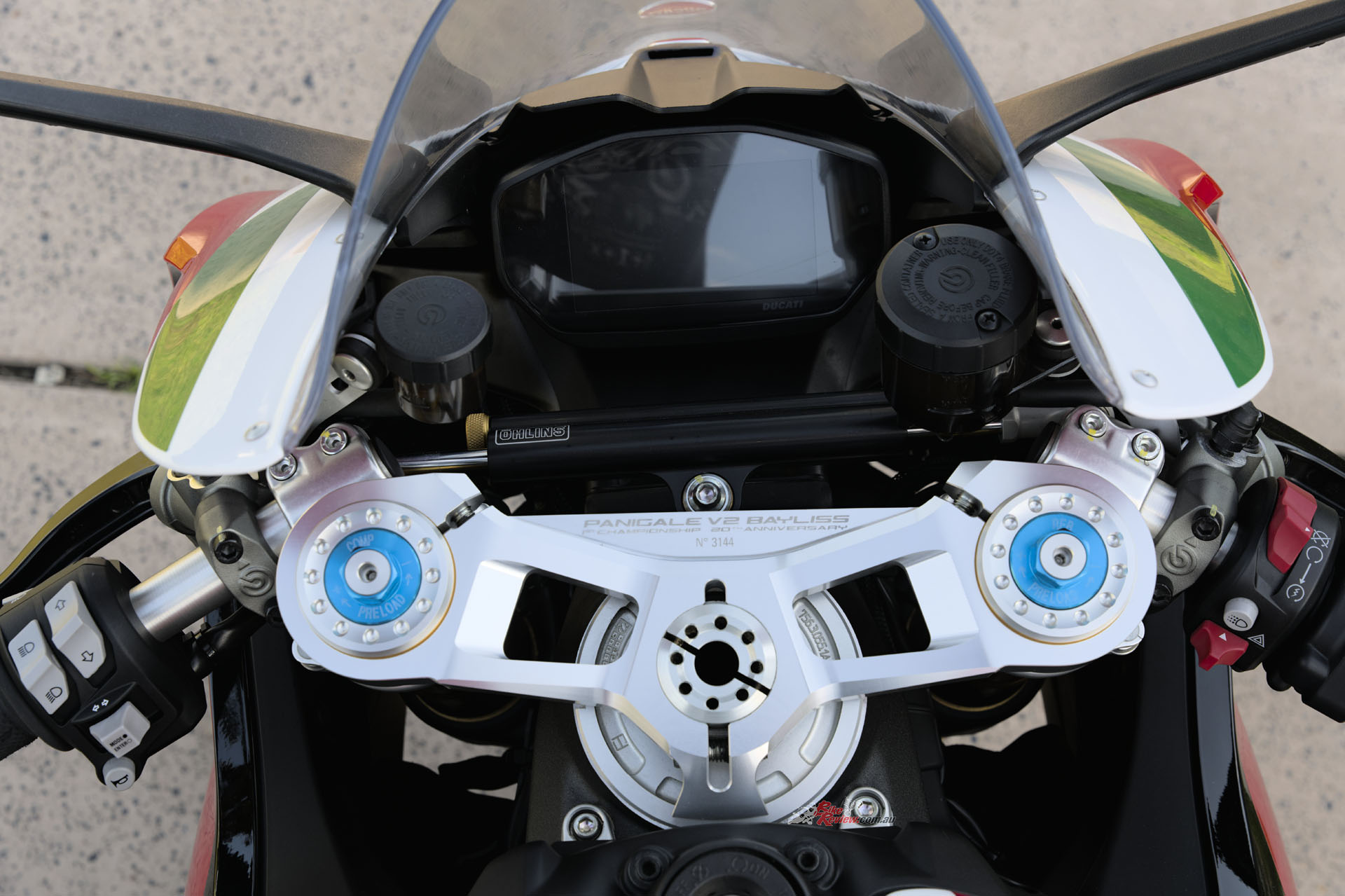
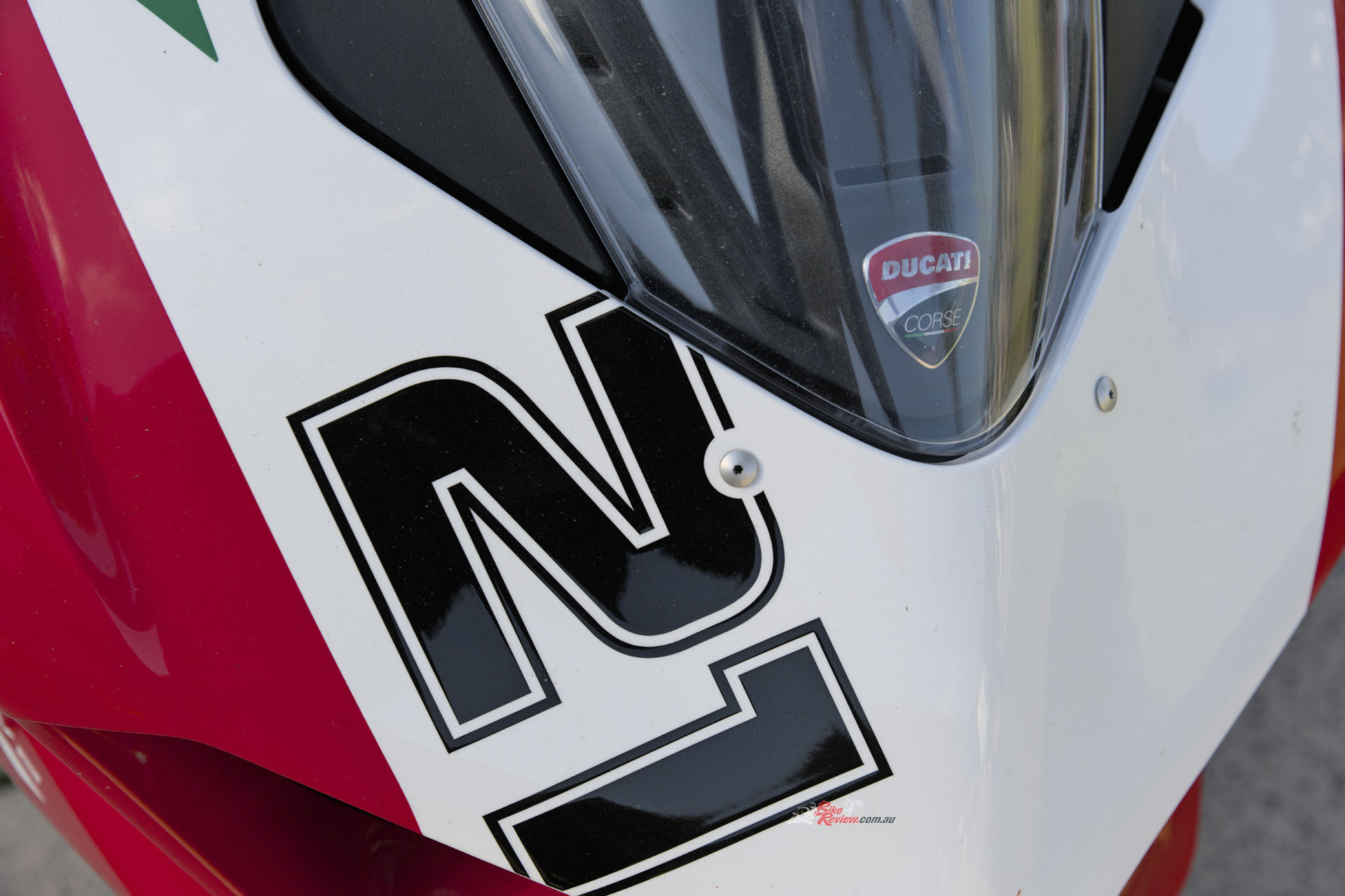
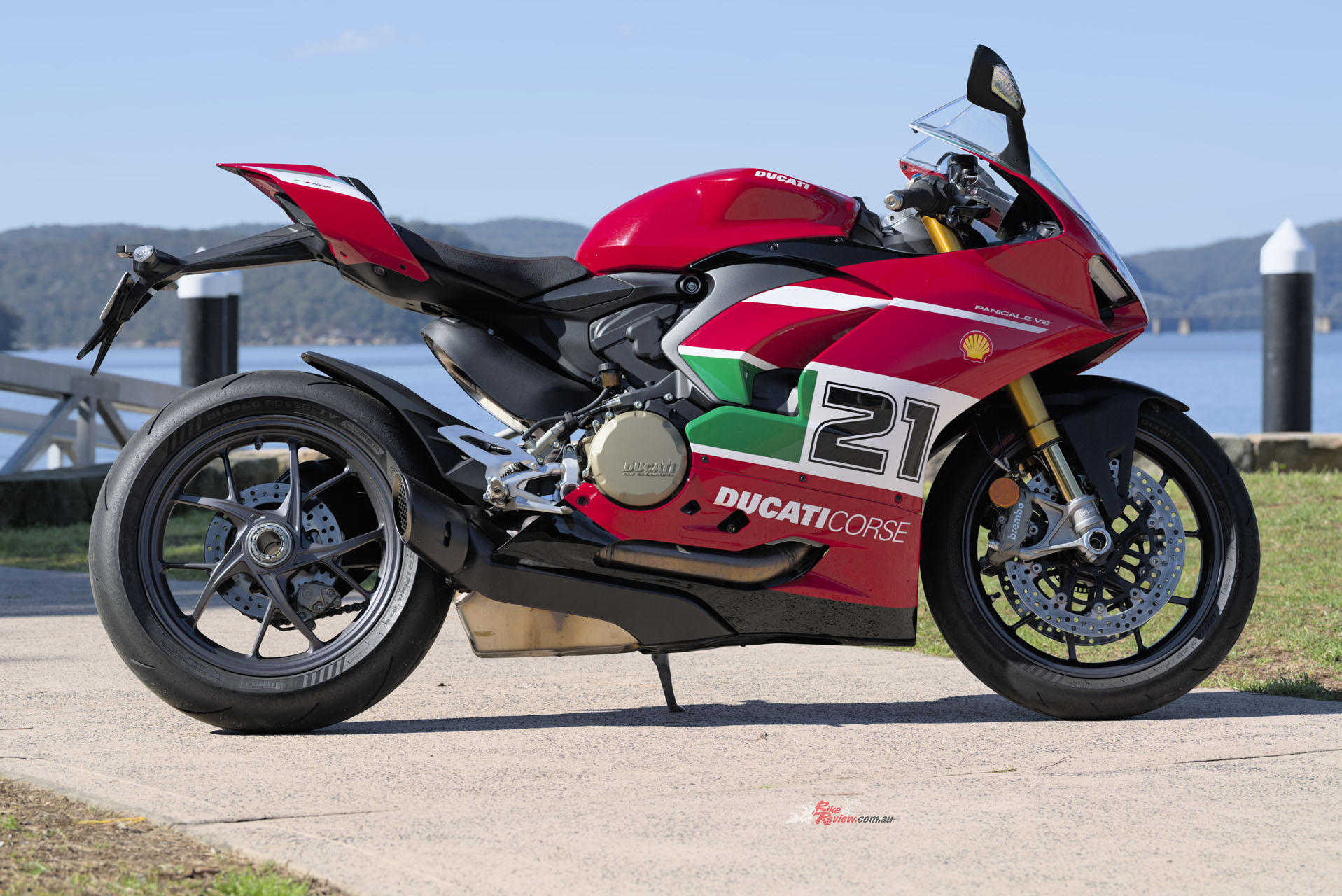
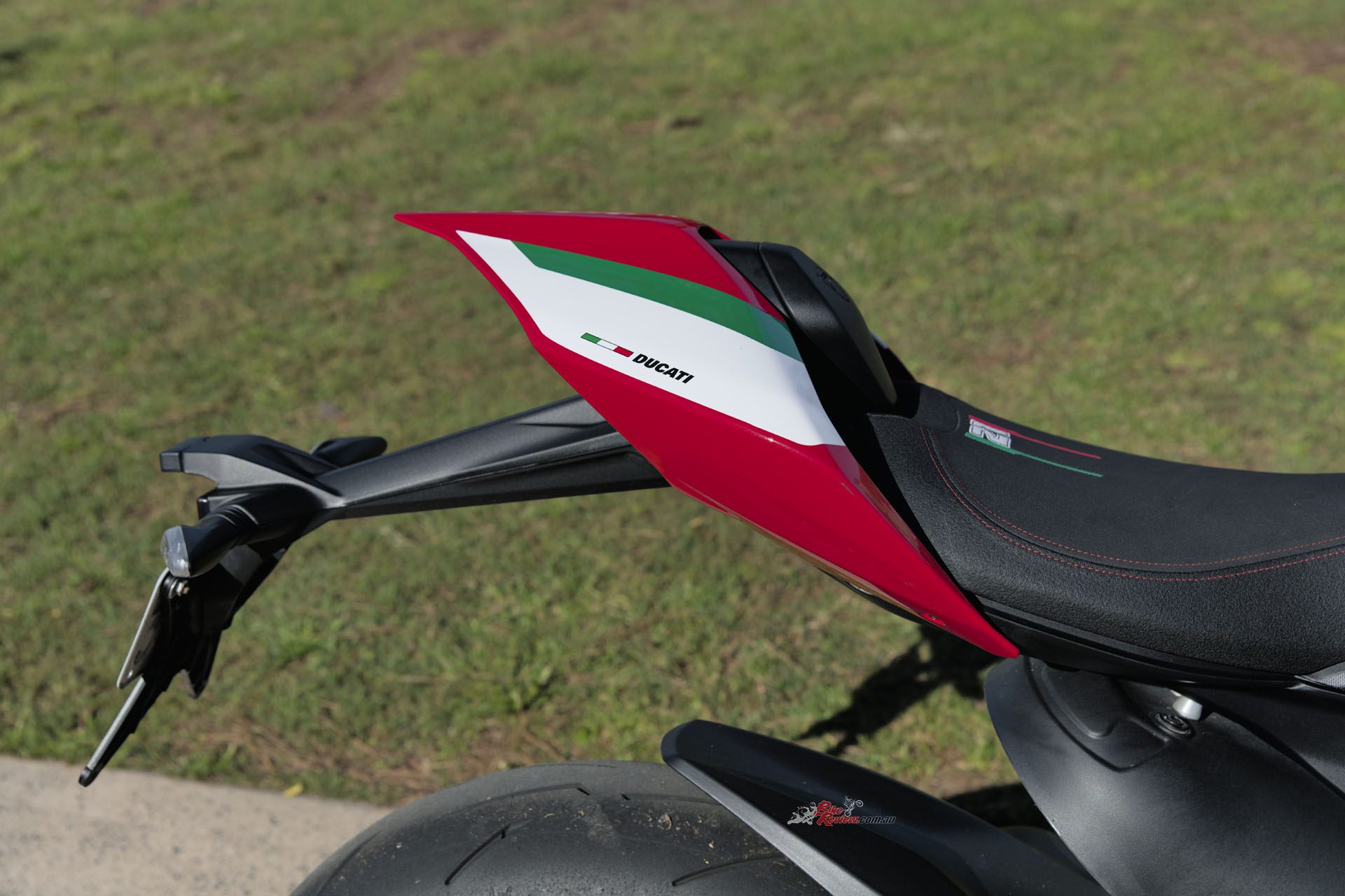
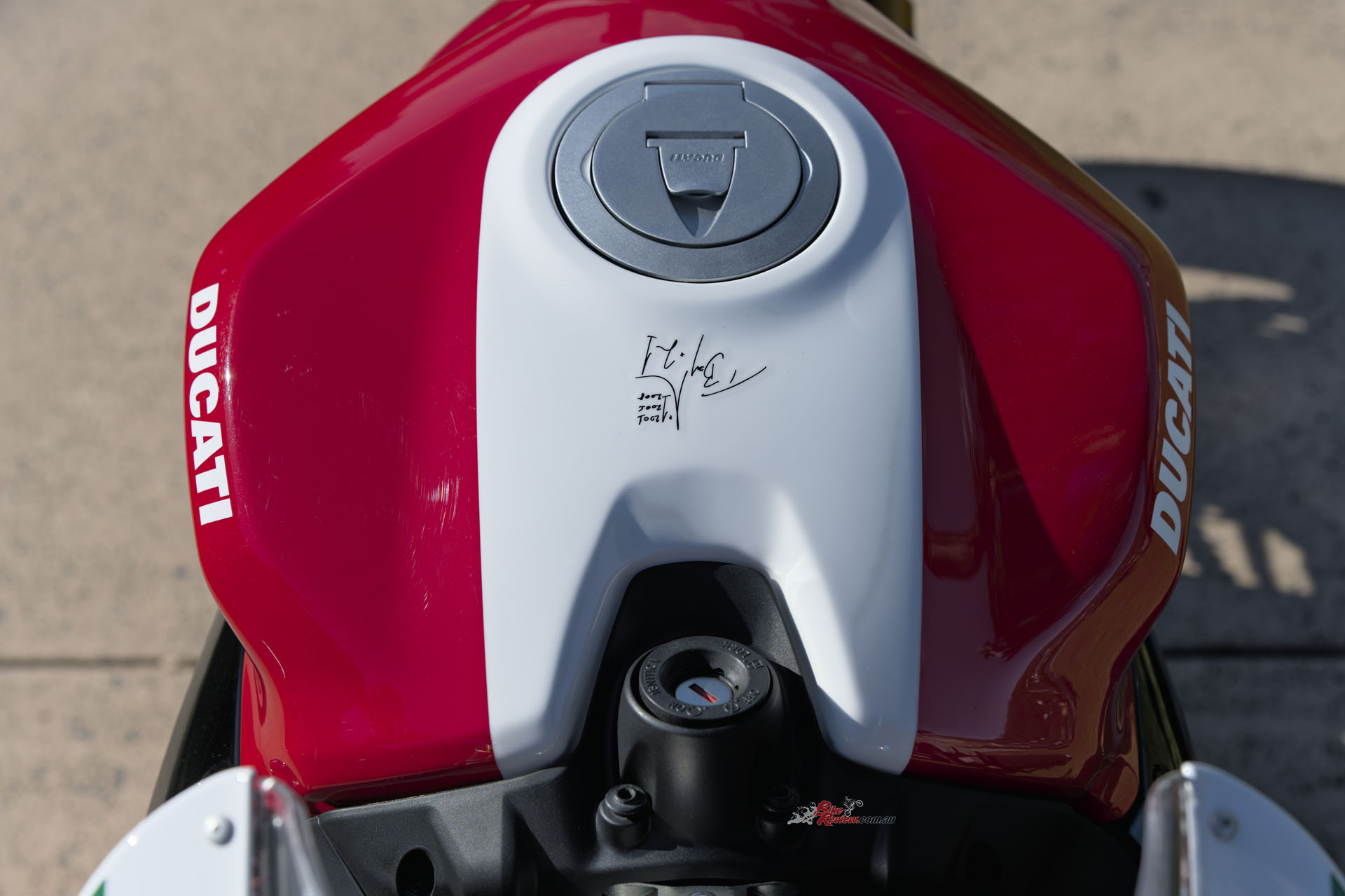
It’s the details that set the Bayliss edition apart: the billet alloy triple-clamp engraved with an edition number (our test bike was #3144), Troy’s signature on the tank, the famous number #21 on the fairing, and a livery that faithfully mirrors the 996 R he rode to his first World Superbike crown in 2001. The finish is flawless, with rich red, clean white, and subtle green accents that pop in the sunlight.
The dash and controls will be instantly recognisable to anyone who’s ridden a recent Ducati sportsbike. The crisp TFT display is easy to read at speed, and navigating the menus is straightforward once you’ve spent a minute with it. You get three preset riding modes — Race, Sport, and Road — each customisable for Ducati Traction Control EVO 2, Ducati Wheelie Control EVO, Engine Brake Control EVO, ABS levels, and the DQS EVO 2 quick-shifter. Ducati’s base settings are so well dialled that most riders won’t feel the need to tinker. I left them as they were, but I did not track test the bike, and if I did I may have changed some settings but it is unlikely. These days, the manufacturers get it pretty right.
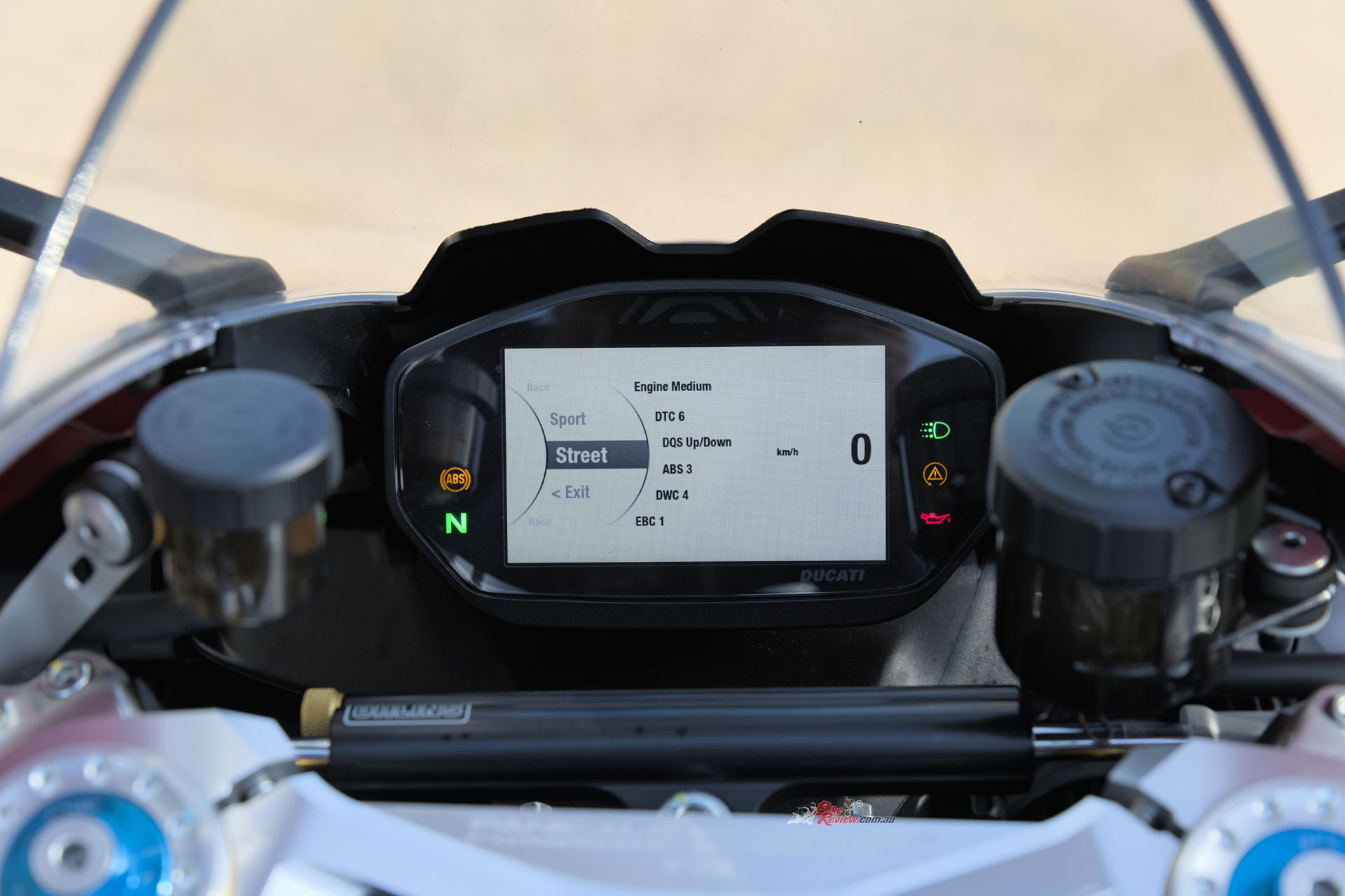
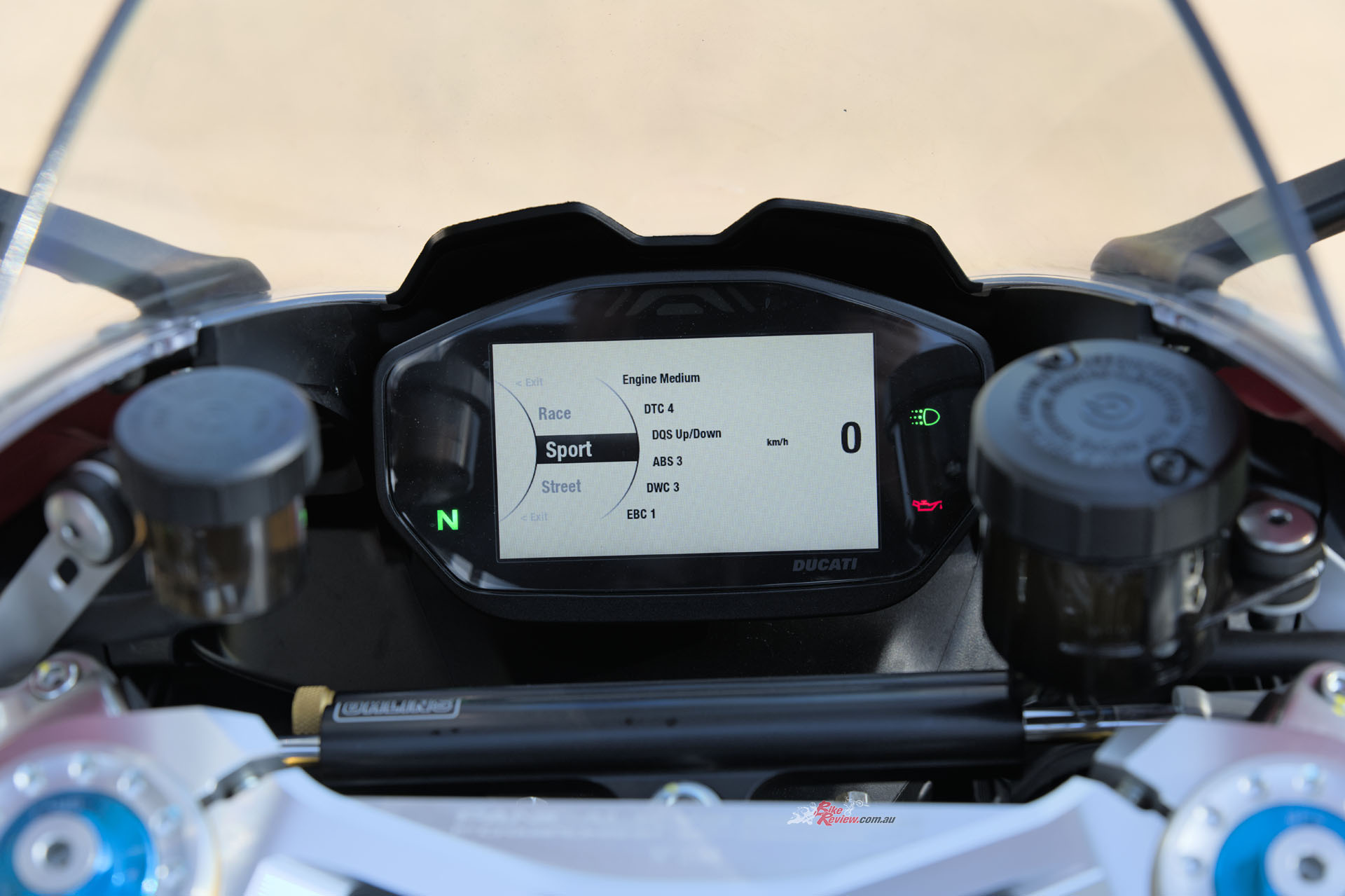
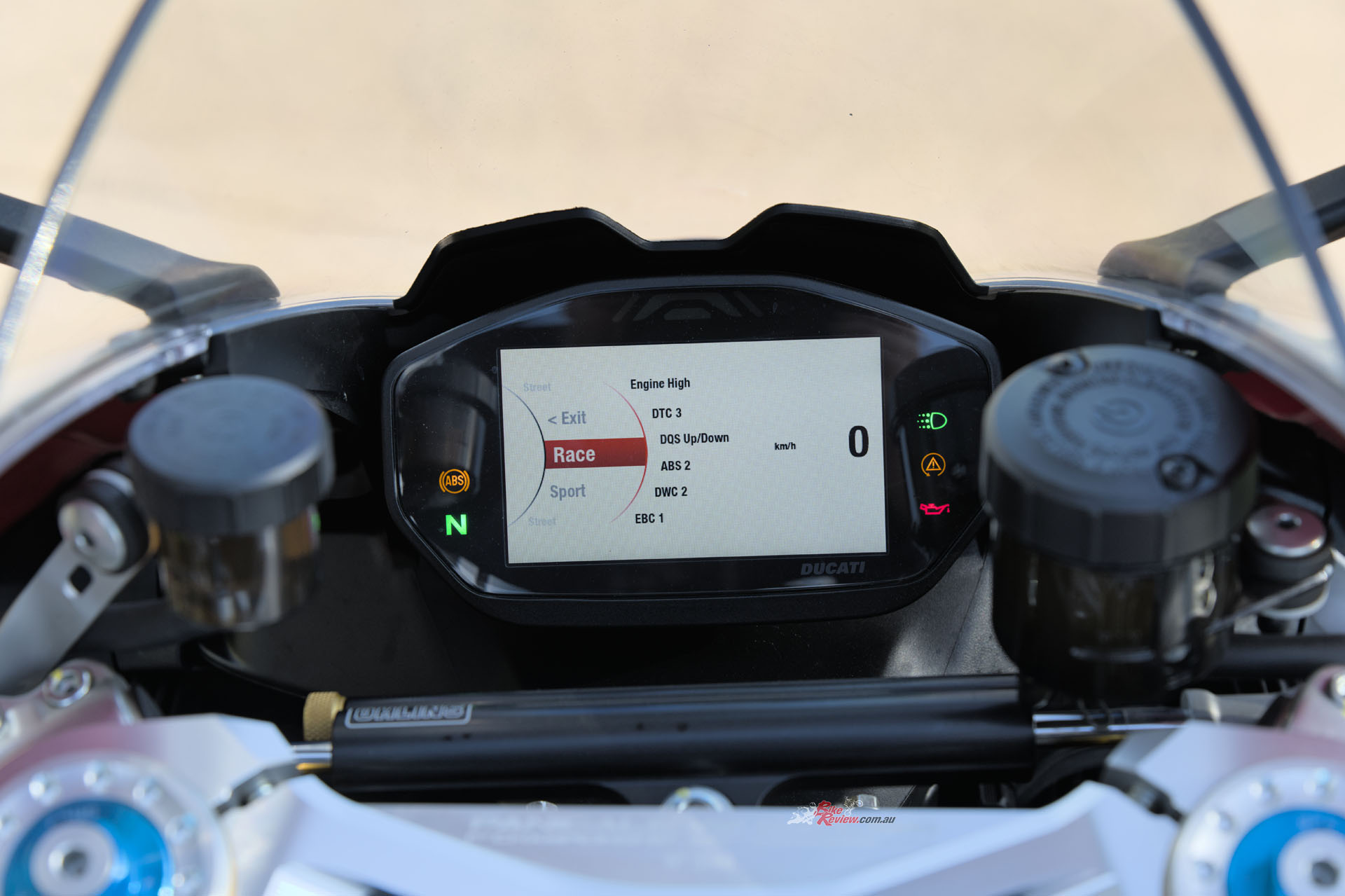
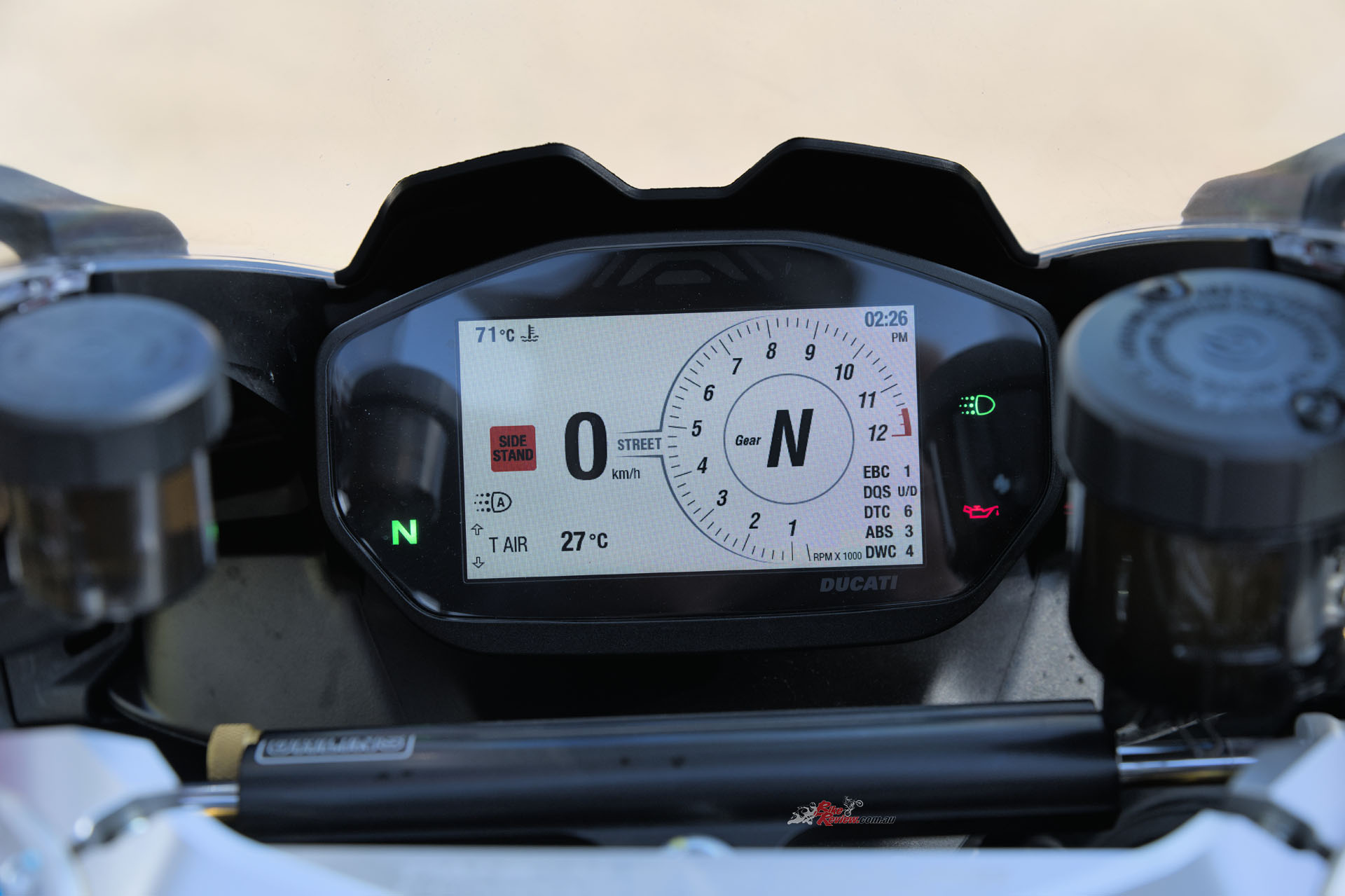
Fire up the 955cc Superquadro L-twin and it settles into a steady, purposeful idle with a crisp bark from the two-into-one with the carbon-wrapped outlet pipe. It sounds great for a legal exhaust. Rolling out in wet conditions first (seems to be my luck with sportsbikes), Street mode’s delivery keeps things drama-free and feels smooth, tractable and natural. Full power, smooth connection, and a forgiving safety net make it the sweet spot for spirited road riding in sketchy conditions. And with the softish suspension, feel is great in the wet, too…
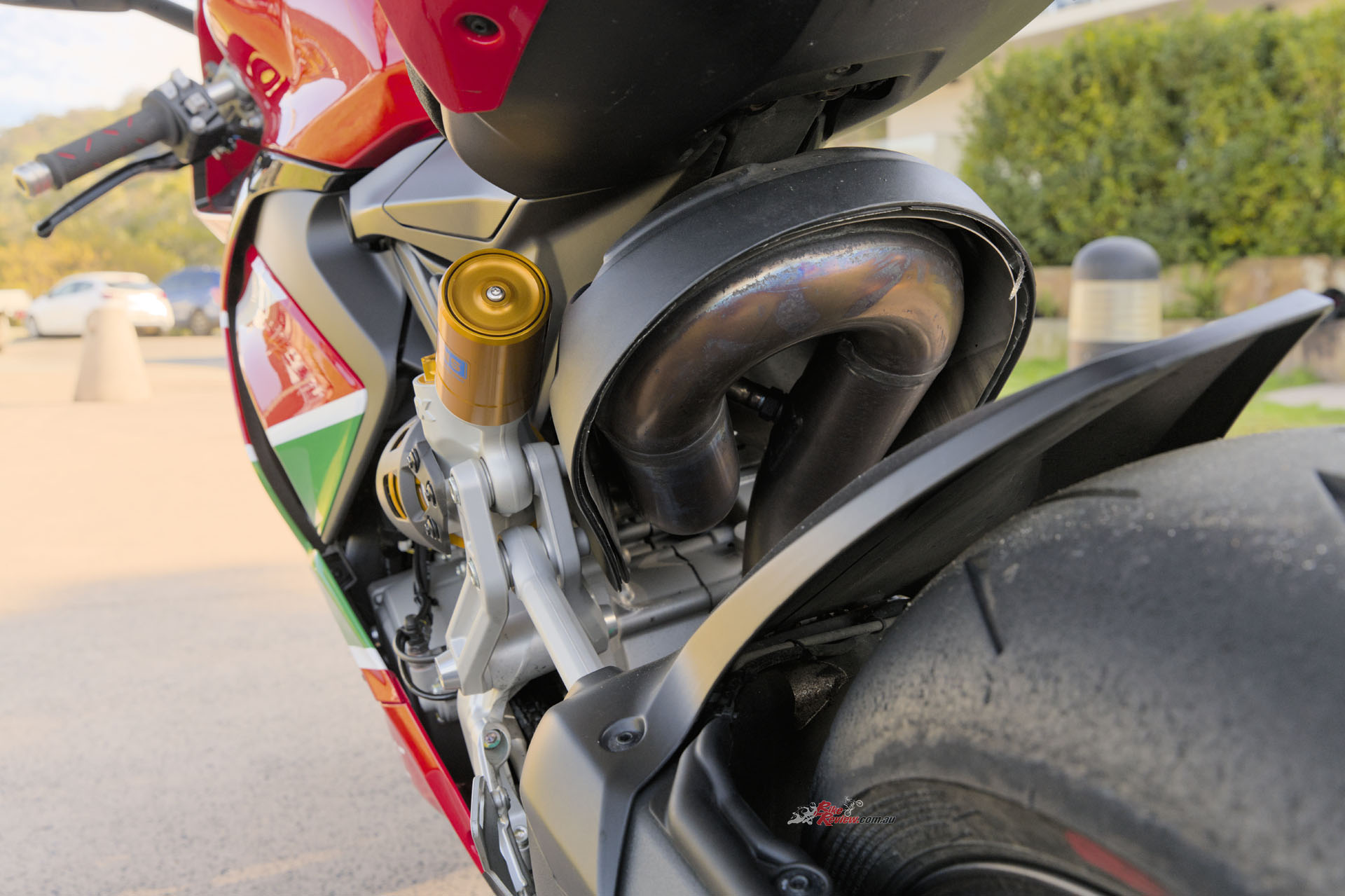
“Peak numbers are 155hp at 10,750rpm and 104Nm at 9,000rpm, but the real story is the delivery.”
As the roads open up and the revs rise, the Bayliss V2 Panigale comes alive. Peak numbers are 155hp at 10,750rpm and 104Nm at 9,000rpm, but the real story is the delivery. There’s a thick, meaty torque curve from midrange that surges harder as you climb towards the redline. It’s a fairly peaky motor, and that is one thing I love about it, so rev happy, but it actually still has enough grunt low down to get lazy with the quick-shifter if you feel like just rolling from turn to turn or tooling around town as well…
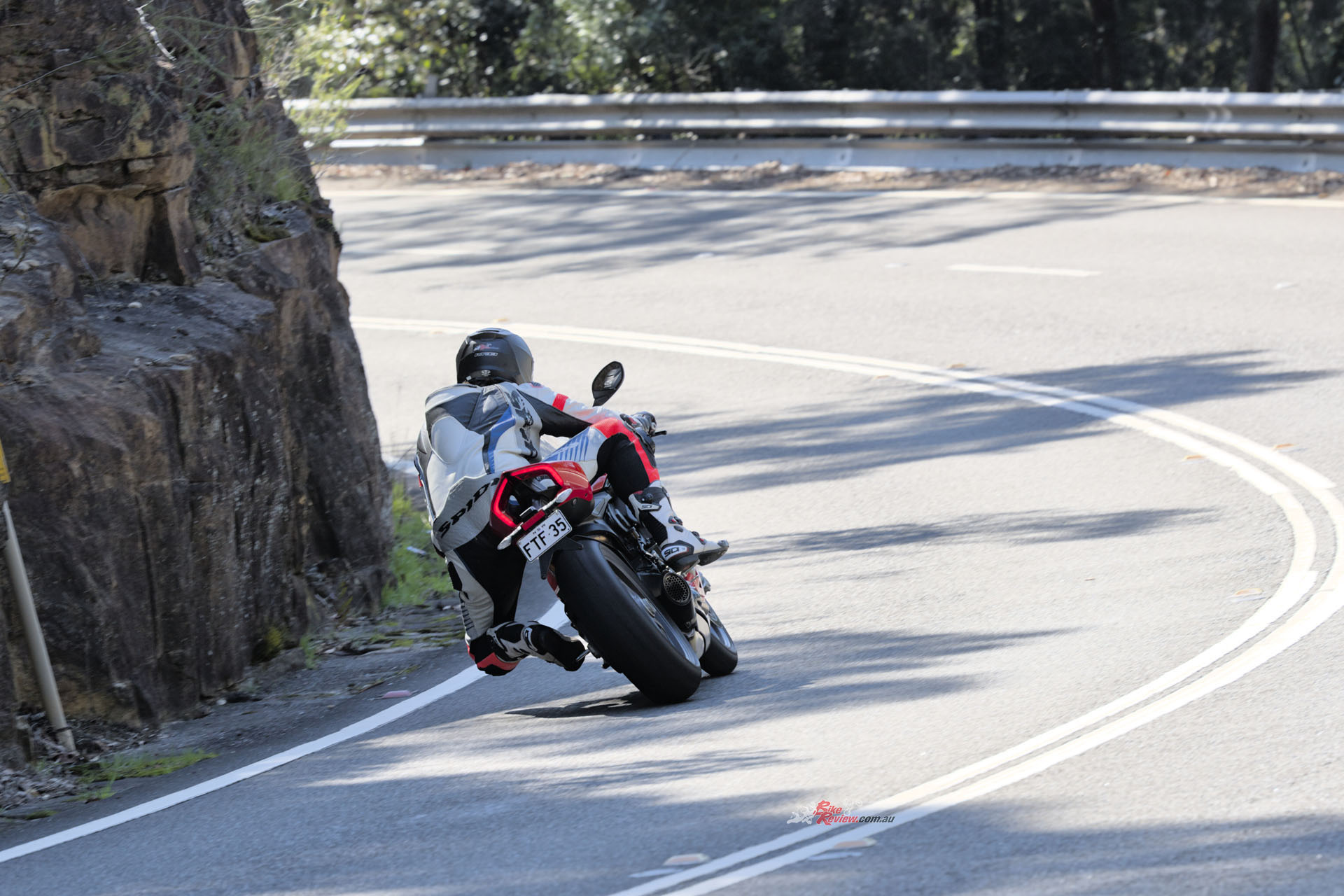 Drive off a corner is urgent without being brutal, and the quick-shifter makes slicing through gears seamless both up and down. It’s the kind of motor that encourages you to push a little harder each run. It really gets going up top, but does flatten a little. For a near on 1000cc engine, it won’t pull your arms from the sockets like an inline four 1000cc sportsbike, but it is fast enough, fun, controllable and not taxing to ride up in the rev range.
Having 150-plus horsepower is pretty spot on for road sports riding in my opinion. You can still have a quick ride, enjoy the thrill of acceleration and speed, get through your local twisties with pace but you can do it nearer to a limit you can enjoy, rather than trying to fight a 200-plus horsepower weapon. If, like me, you enjoy using corner speed and smooth riding, you will appreciate what I am saying about the 955cc motor. Throw in the up-graded suspension and road friendly settings and you have it made.
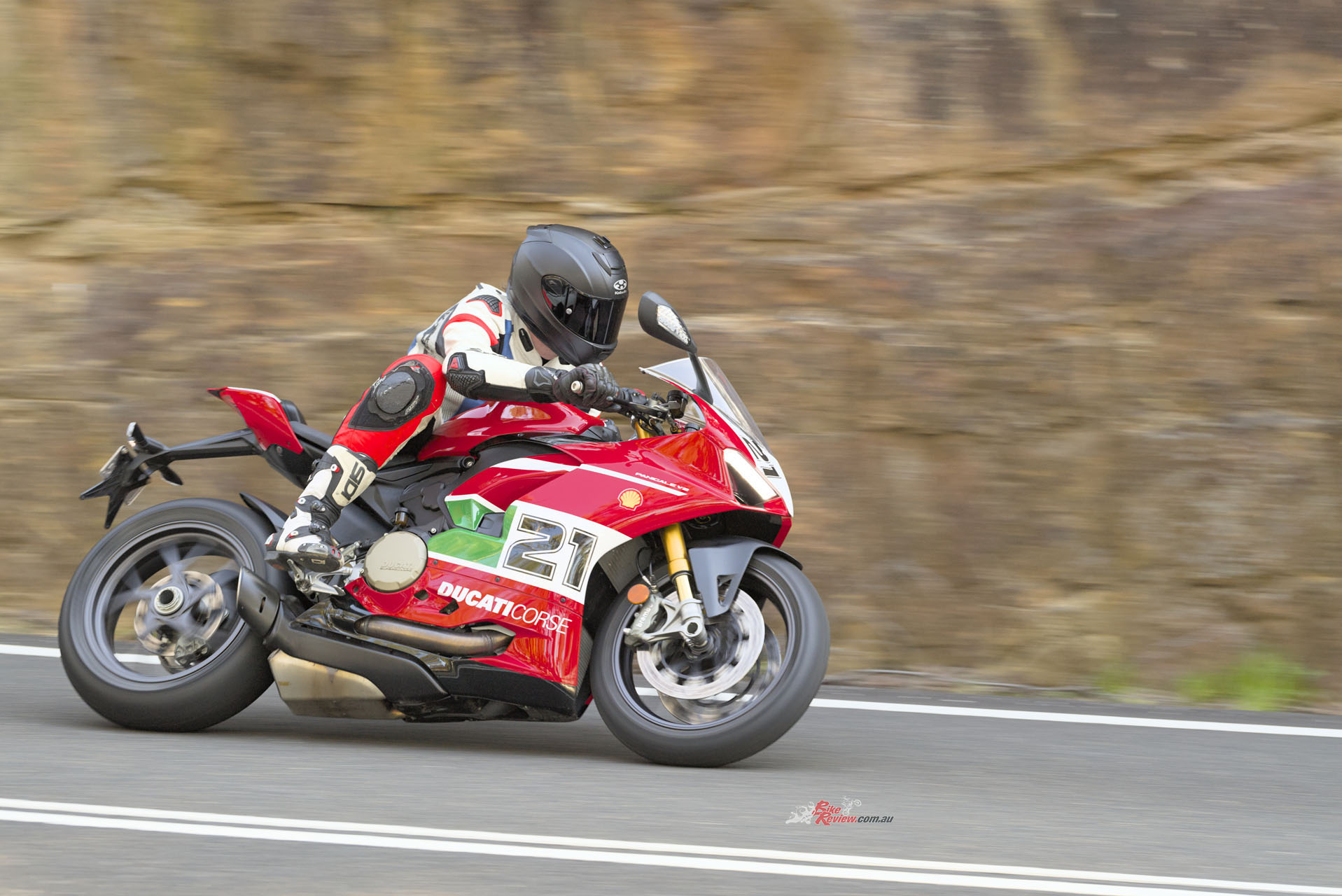
“It’s the kind of motor that encourages you to push a little harder each run.”
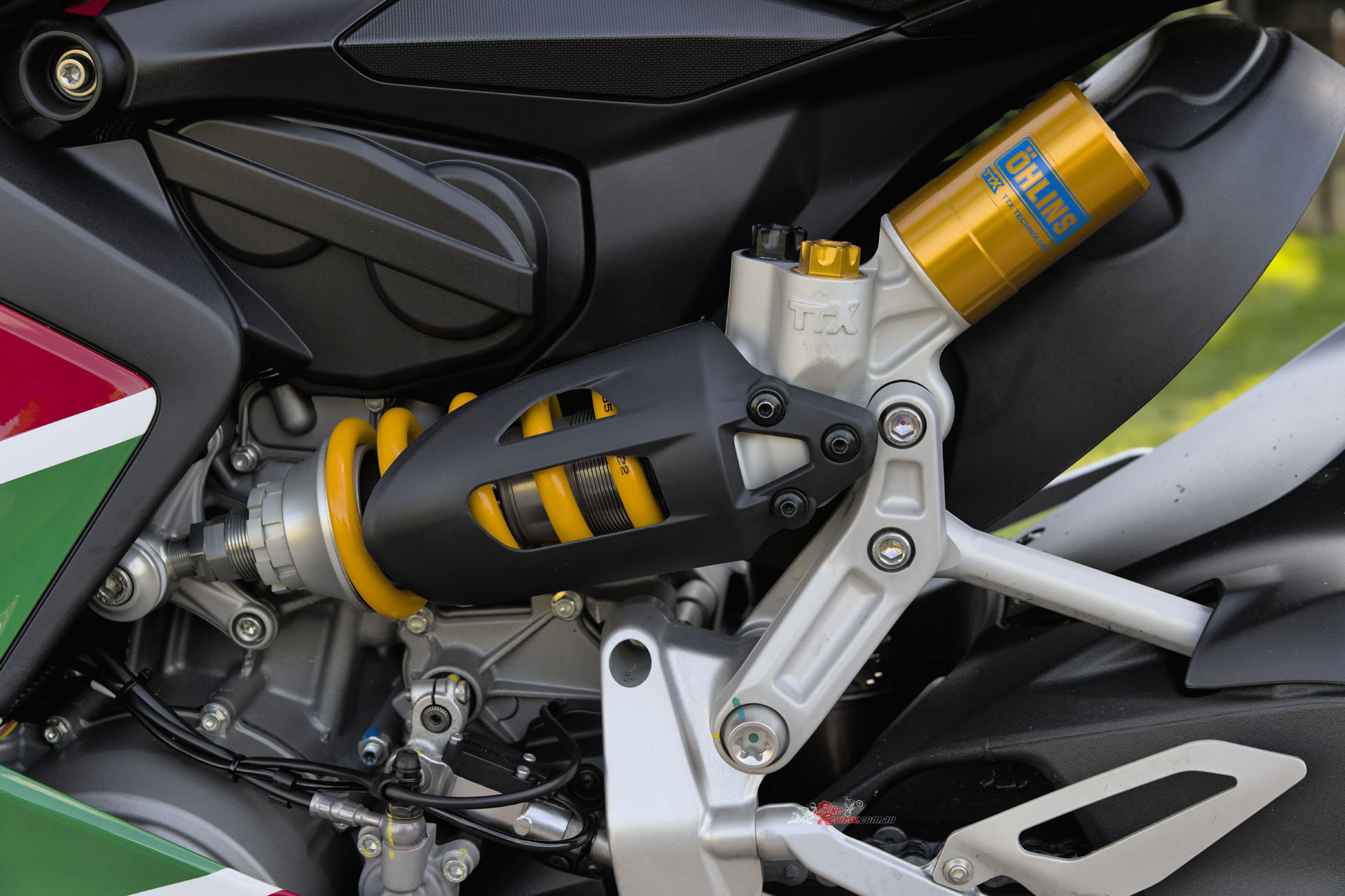
Yes, where the Bayliss earns its extra price tag is in the suspension department. Ducati has swapped the standard SHOWA/Sachs combo for a fully adjustable Öhlins NIX30 fork and Öhlins TTX36 shock, matched to an adjustable steering damper. It’s such a great set-up and worth the added price alone, you would be pushed to do the upgrade to a standard V2 for that price. It isn’t kit that just looks good, but oh yeah it does look good, but it makes the ride that much better…
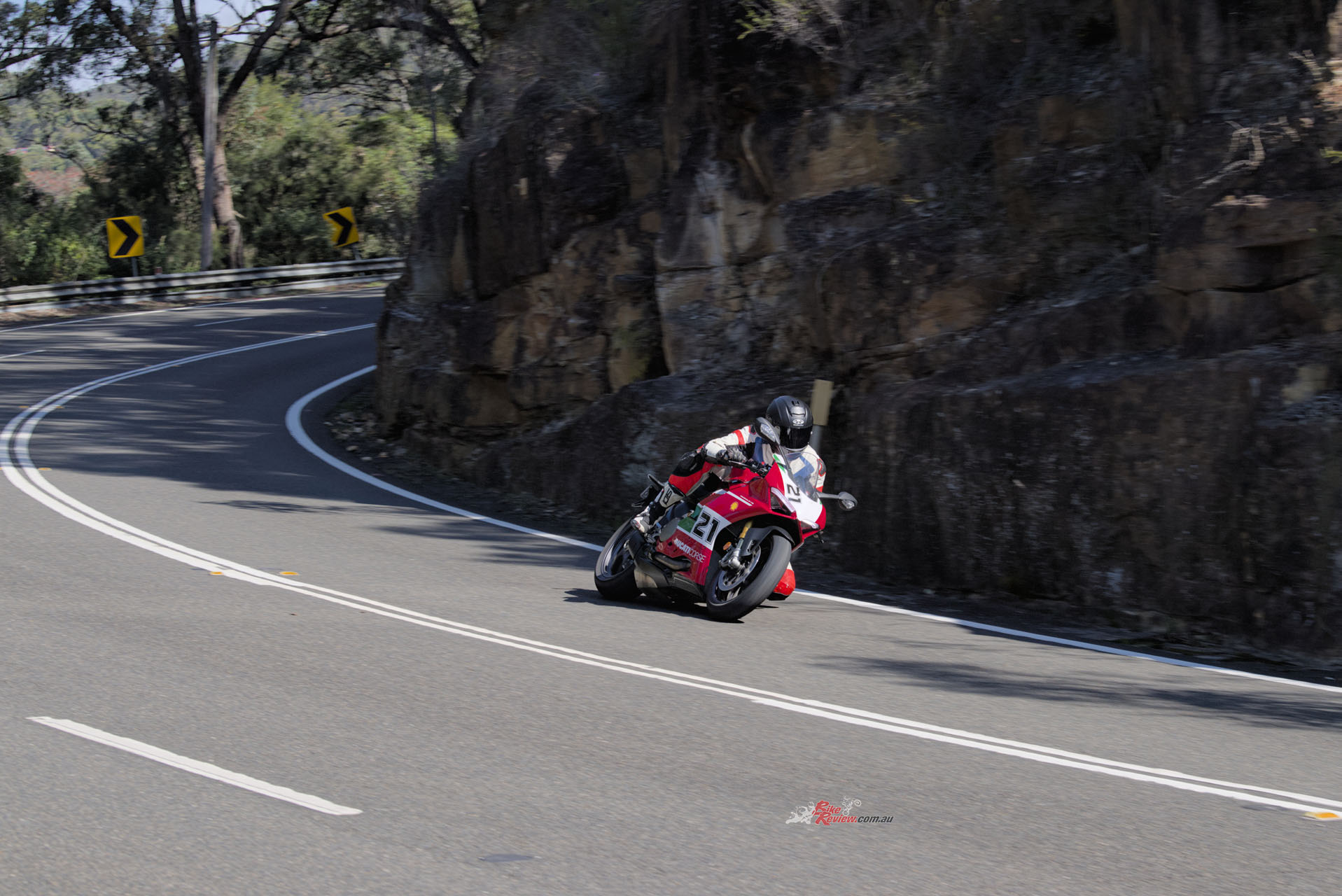
I left the suspension standard, despite it being on the softer side. I reckon it still handles very well, and I was not wanting to trade bump absorption for a firmer set-up, the V2 Bayliss was far to comfy over the bumps to lose that luxury…
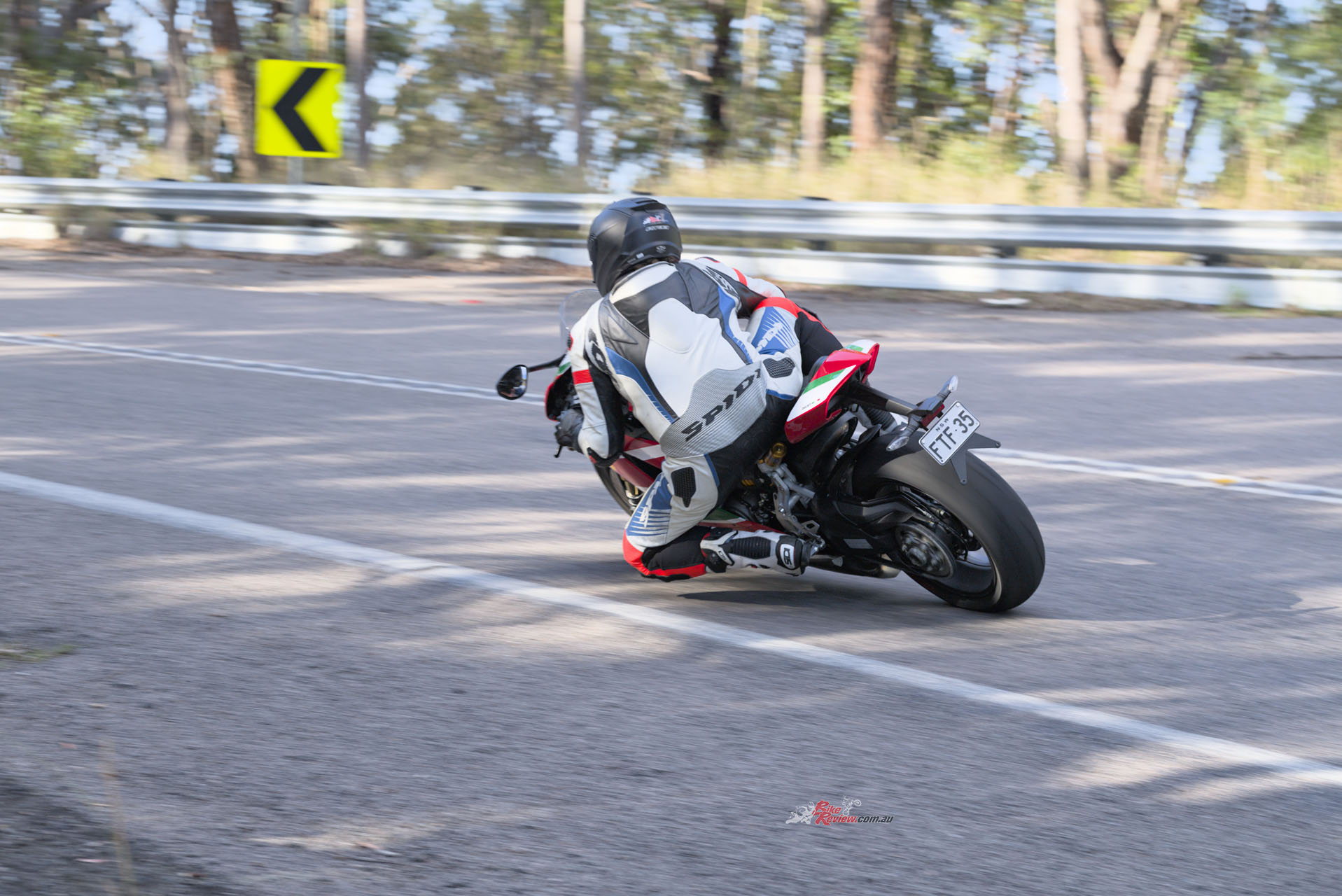
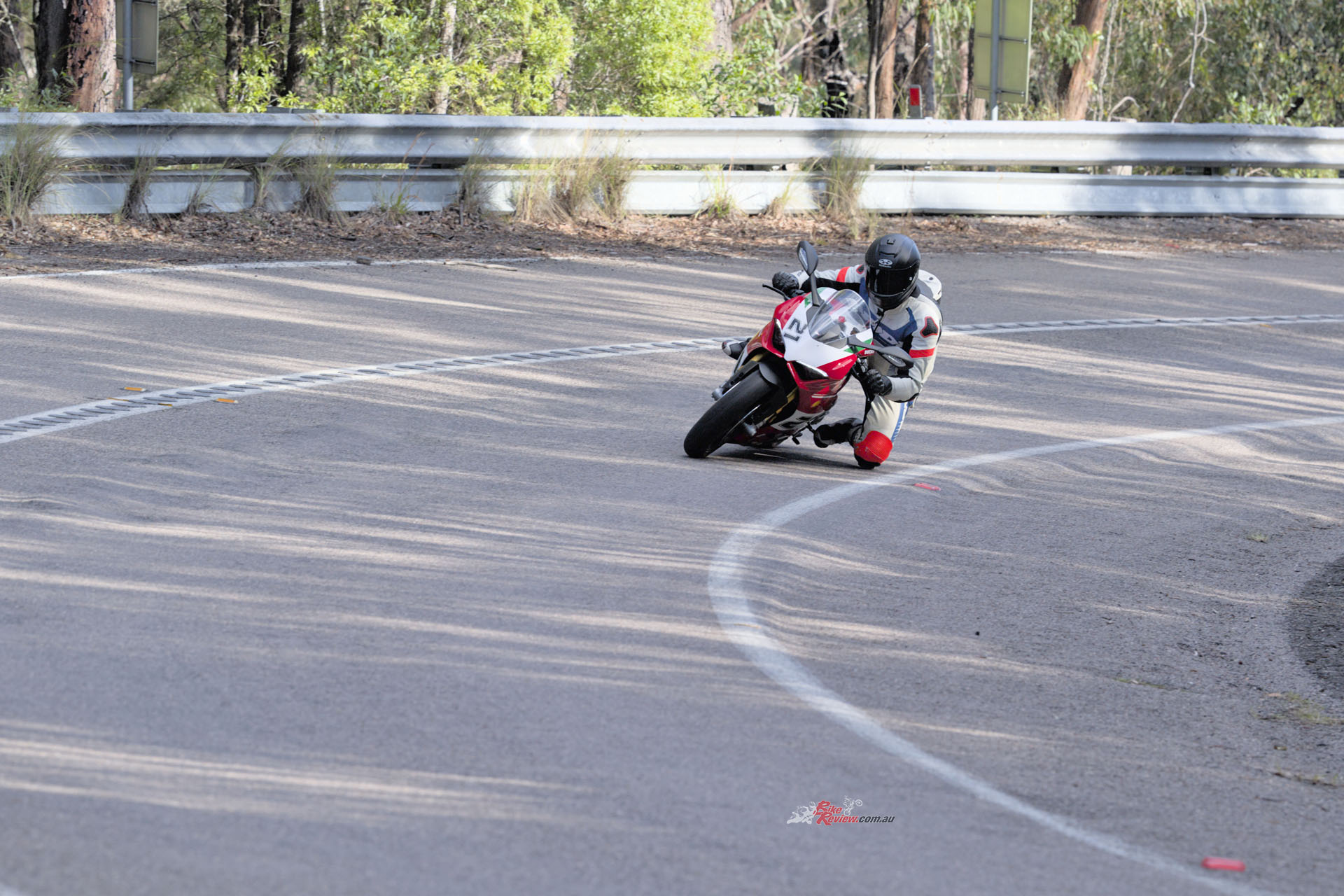
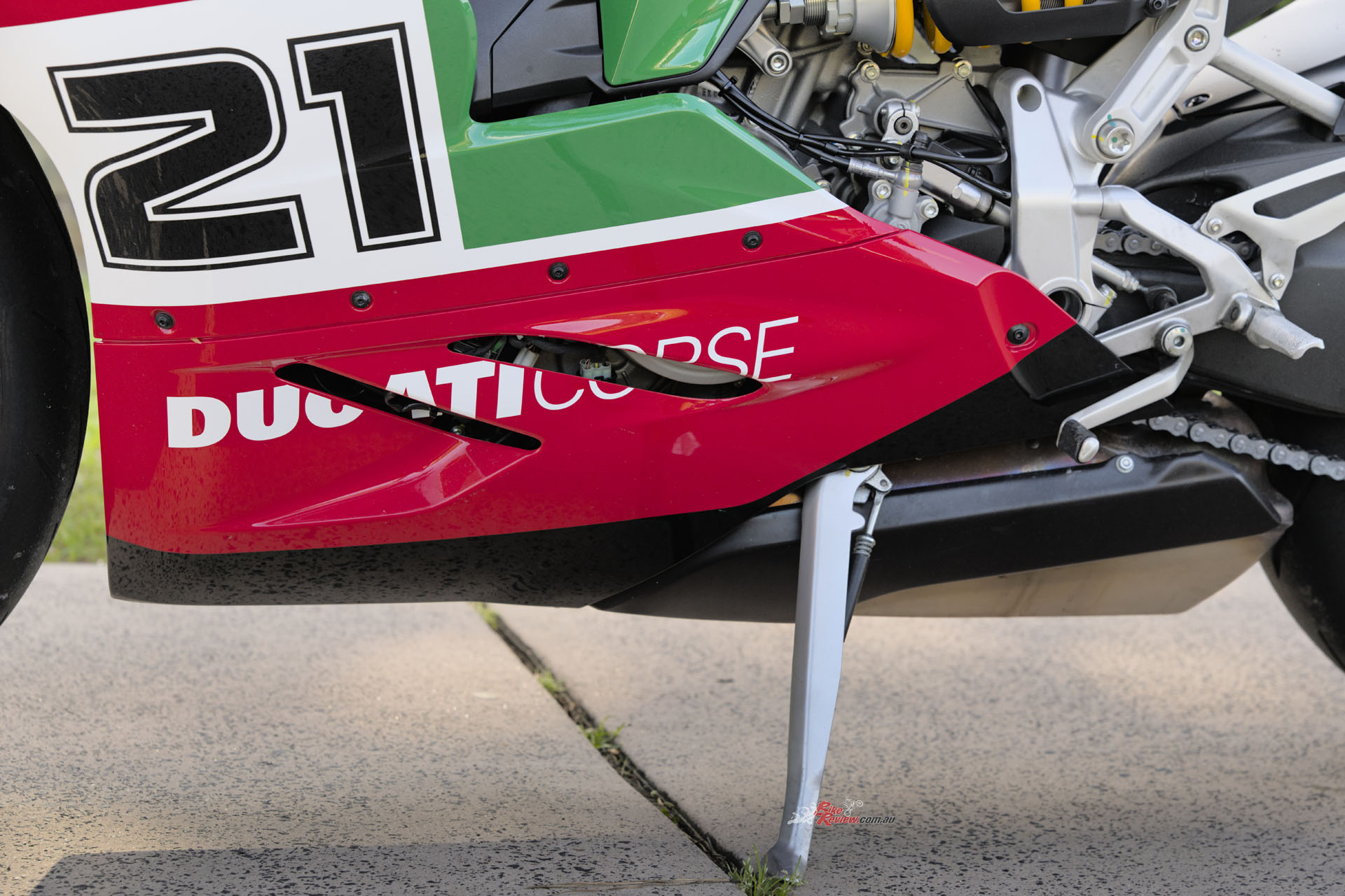
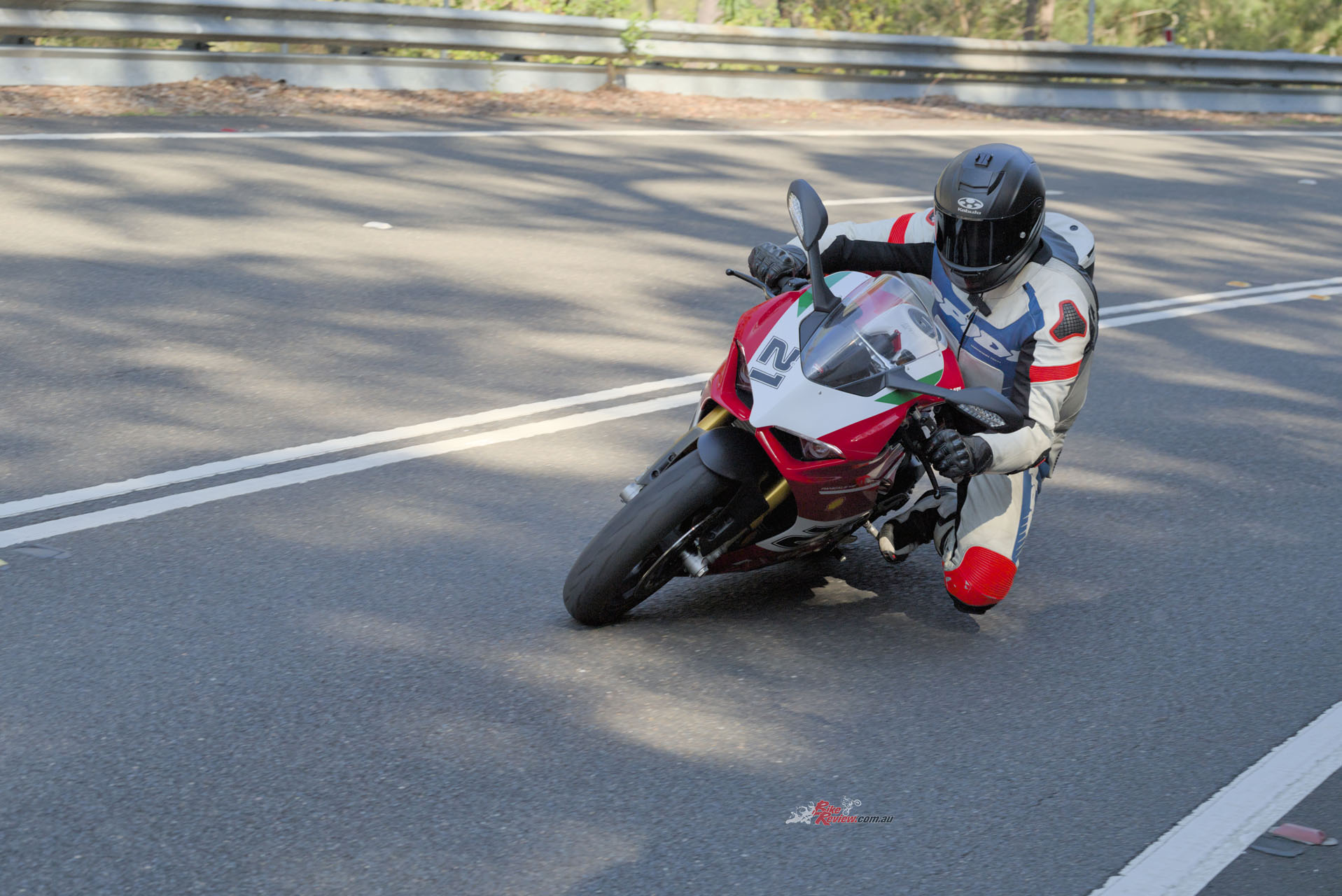
Straight out of the crate, the settings are well-judged for road use — plush enough to iron out mid-corner ripples, yet taut enough to keep the bike rock-solid at high speed. I could have gone harder on the settings, as you can see in a few shots, the rear is bottomed out in one dip in the road, and the front off the ground at the same time.
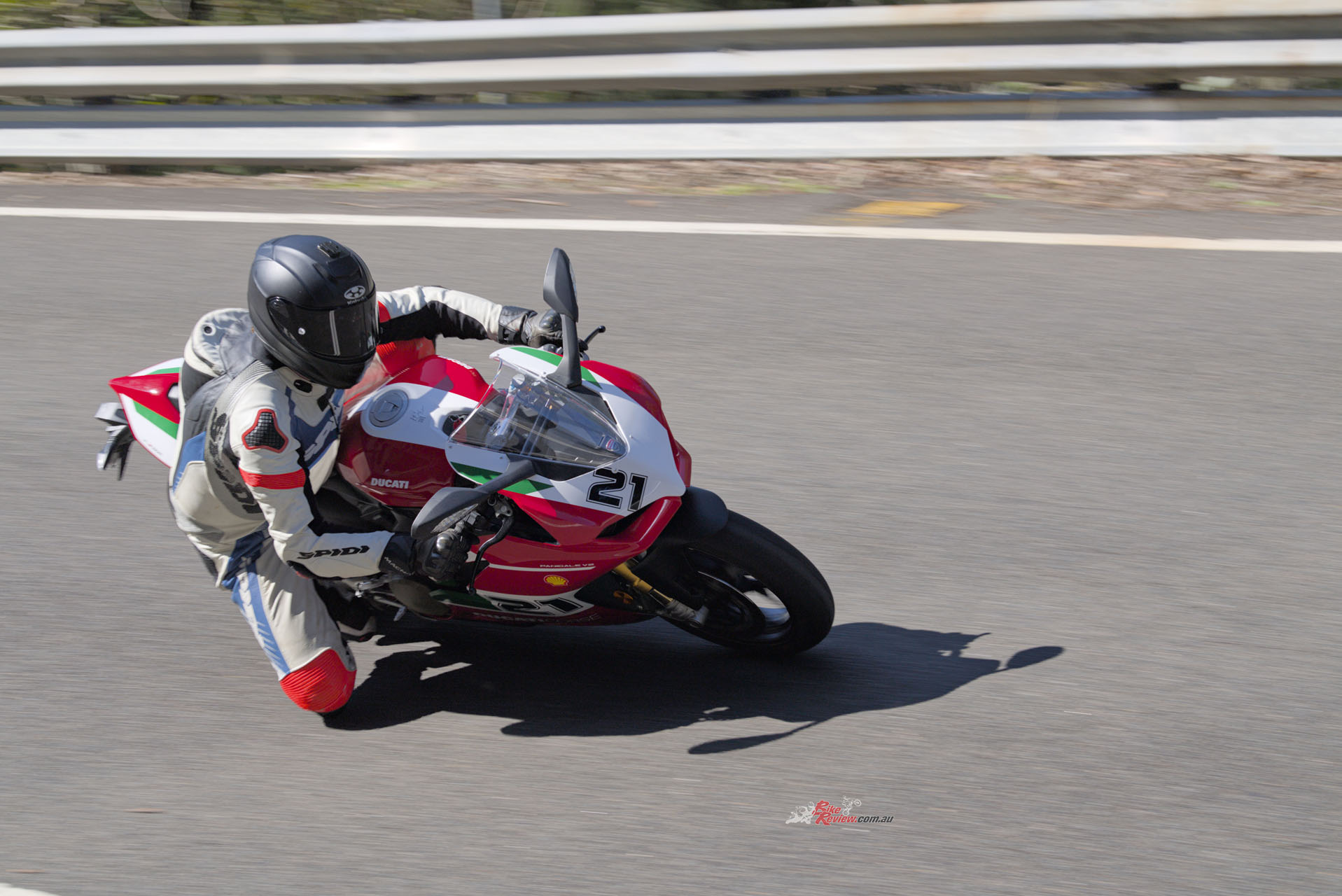
but that was me hitting a very hard dip, on the brakes, while changing direction. Sure, some softness and spaghetti behaviour when really pushing hard, particularly with those grippy Pirelli tyres warm, but with the amount of bumps around, I was happy to compromise.
The weight bias and refined swingarm geometry give the Bayliss confident turn-in and excellent drive on corner exit. The 180-section rear tyre keeps agility high, and the chassis (well, monocoque), communicates every change in surface without crossing into harshness. It’s a really nice sportsbike chassis on the road, it turns-in quickly and accurately, holds a line easily, there is no stand-up on the bumps or brakes, and it generally inspires confidence while riding.
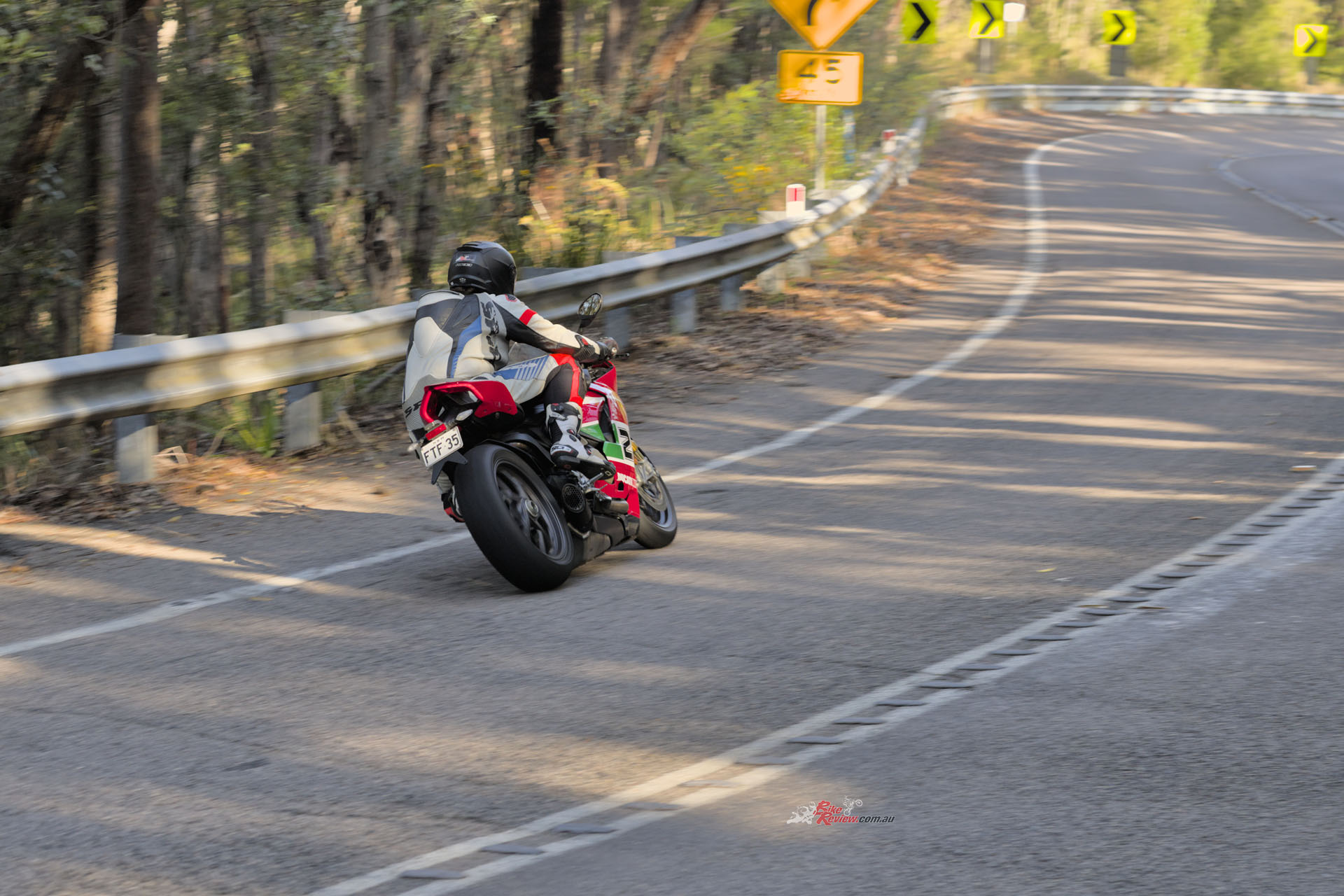
Shock bottomed out through a dip in the road, but I am 100kg in gear!
This is a bike that loves to be cranked over, rewarding smooth, committed cornering with a sense of connection that makes you want to keep riding. I did loads of passes on my local road, and felt comfortable and well within the limits of the bike and myself, despite carrying some pace, I just felt that with the electronics, the compliant chassis, the tractable motor and the great riding position that I could ride up and down all day problem free. It’s a real rider’s bike, one that people will put lots of KM on.
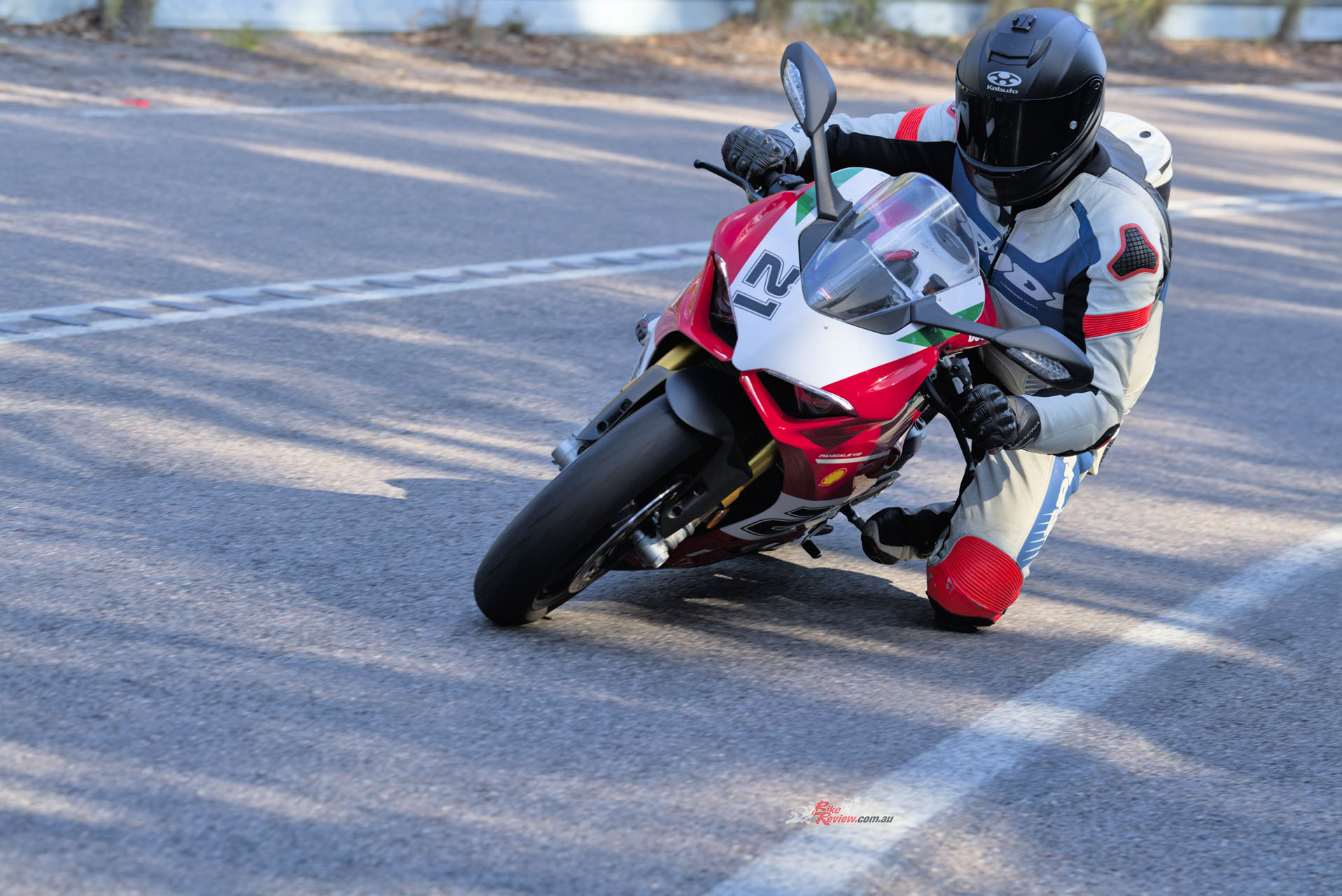
“This is a bike that loves to be leaned over, rewarding smooth, committed cornering”…
Up front, the Brembo M4.32 monoblocs clamping 320mm discs deliver the kind of power and feel Ducati superbike riders have come to expect. There’s strong initial bite, followed by progressive, predictable stopping power that lets you trail brake deep without unsettling the chassis.
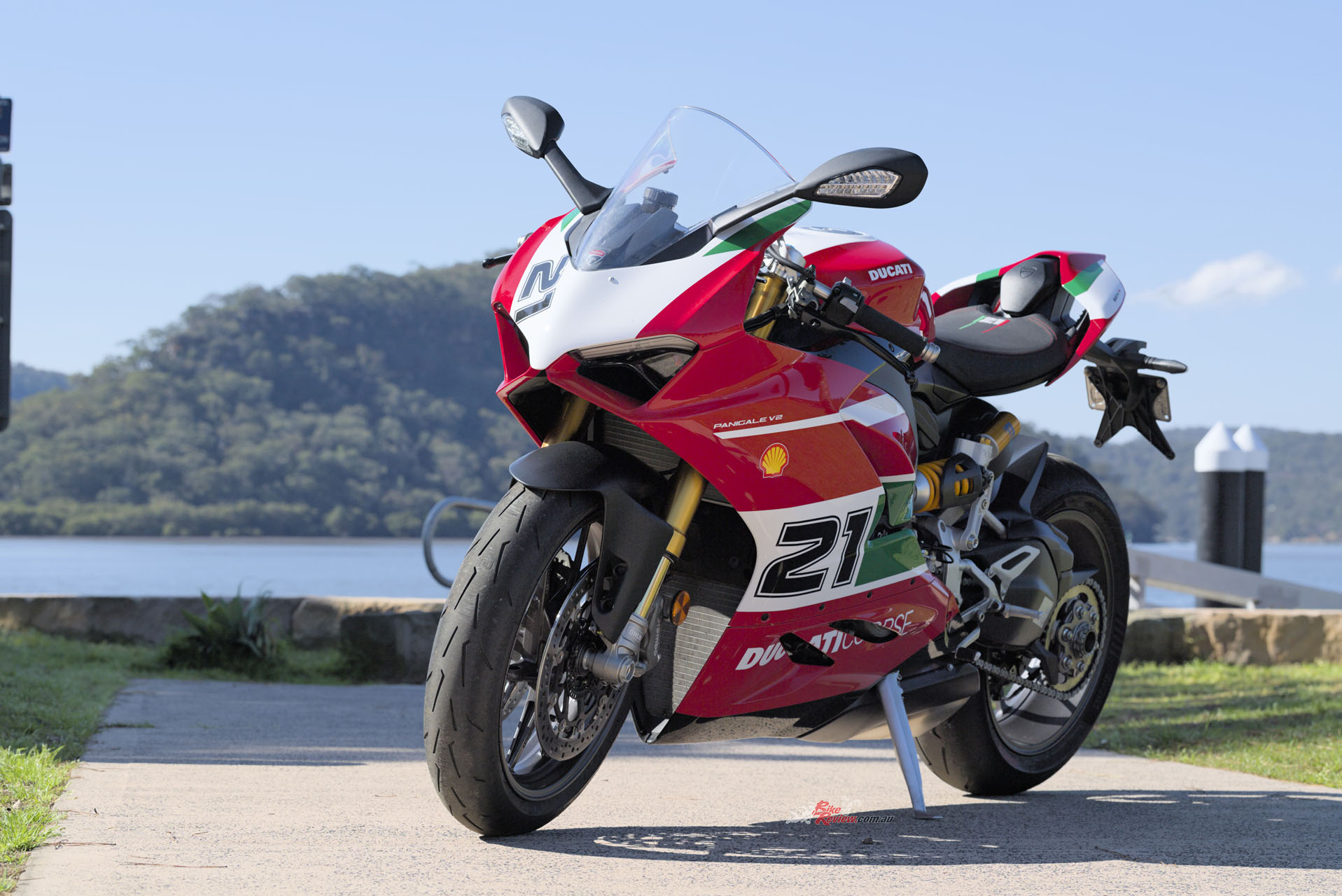
The Bayliss edition’s magic lies in its emotional connection…
The Bosch cornering ABS is a lot smarter than me, and I have to say I did not notice it doing its thing while I was pushing the braking performance, which tells me it is a good system. There are options to adjust it or switch it off for track use, but really, why would you unless you were racing?
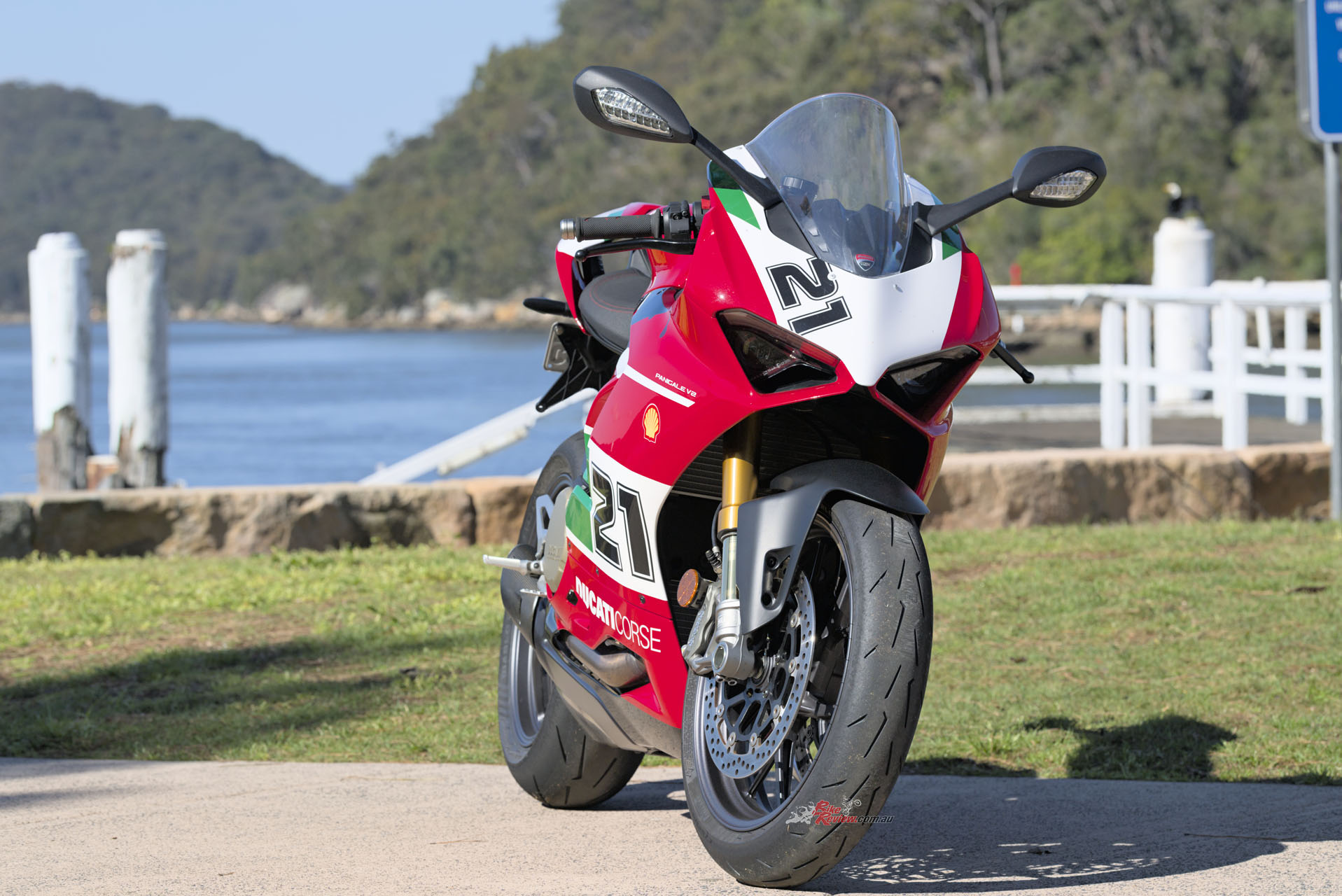
In Race mode, ABS intervention is limited to the front wheel only, giving experienced riders more freedom on corner entry. In short, the brakes are sensational, serious power but intimate feel and modulation. They are great on the road, in wet and dry, and by experience, they will be good on track.
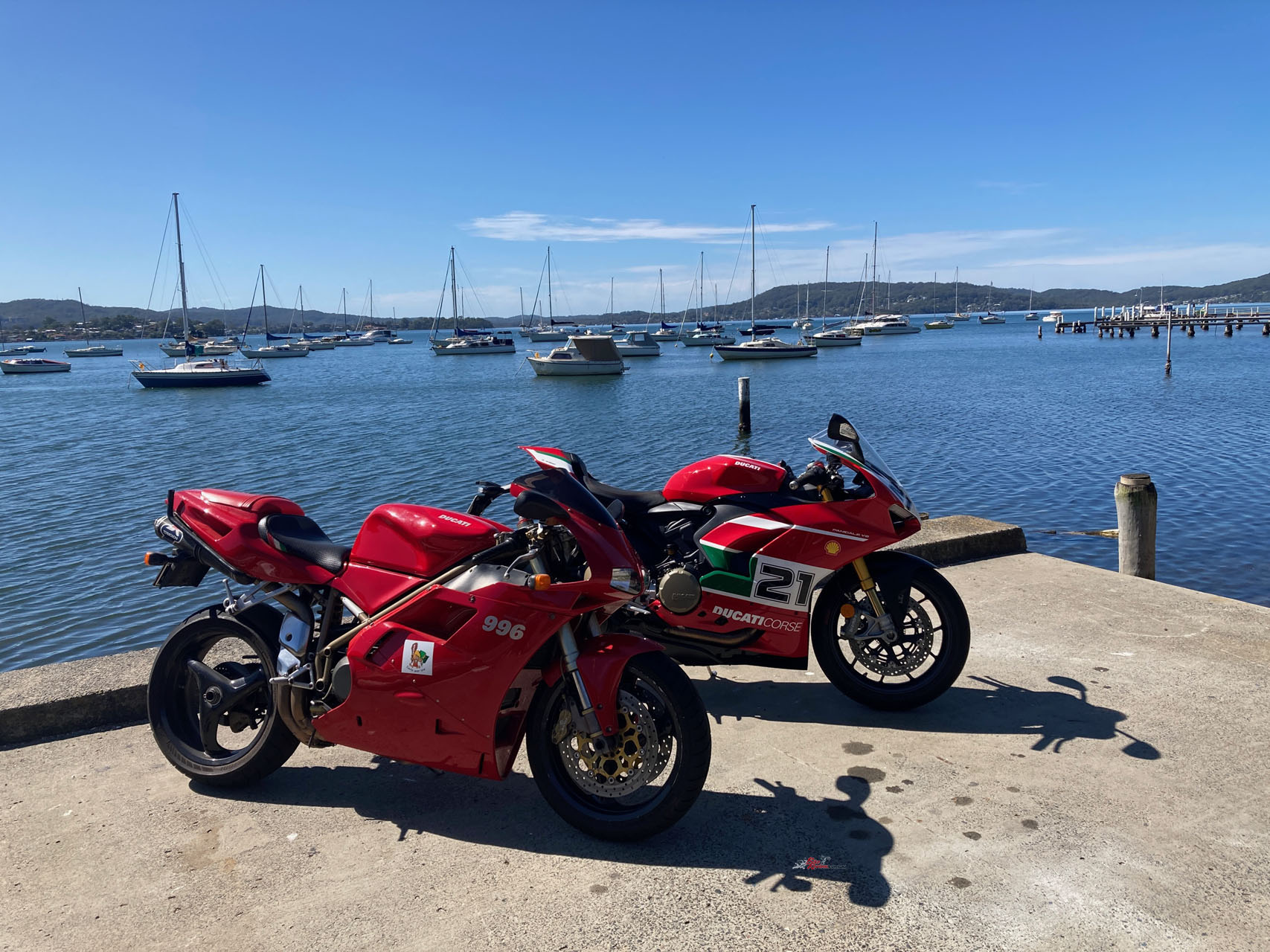
We spent a day riding the V2 Bayliss and a 996 together for a 20-Years Apart feature, check that out too!
Make no mistake — this is still a Panigale V2 under the skin. The weight savings from the lithium-ion battery and single-seat tail are nice, and the suspension upgrade is a tangible benefit. But the Bayliss edition’s magic lies in its emotional connection. You’re not just riding a Ducati; you’re riding a piece of racing history, a celebration of an Australian legend who earned his place in the sport’s pantheon…
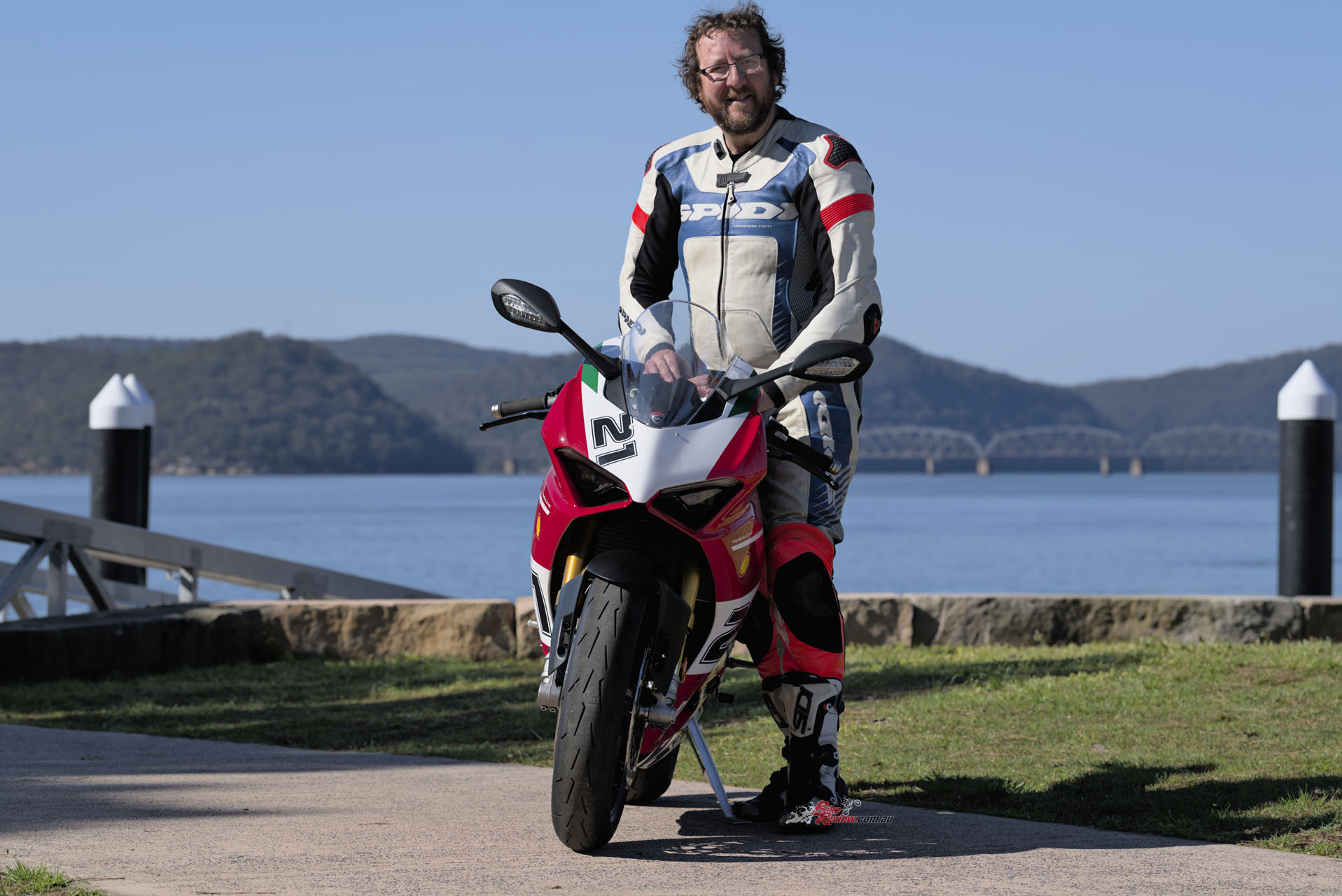
Troy Bayliss: Ducati’s People’s Champion
Troy Bayliss isn’t just a name on a fairing — he’s a legend who made Ducati fans believe in hard work, grit, and heart. Born in Taree, NSW, Bayliss took the long way to the top, mixing dirt track, motocross, and even working as a spray painter before breaking into road racing. He has bike number #21 off the production line in his collection, and has a load of extra goodies thrown on such as a World Supersport Termignoni full system and fork kit, brake rotors, CNC billet bits and OZ Forged wheels, plus more.
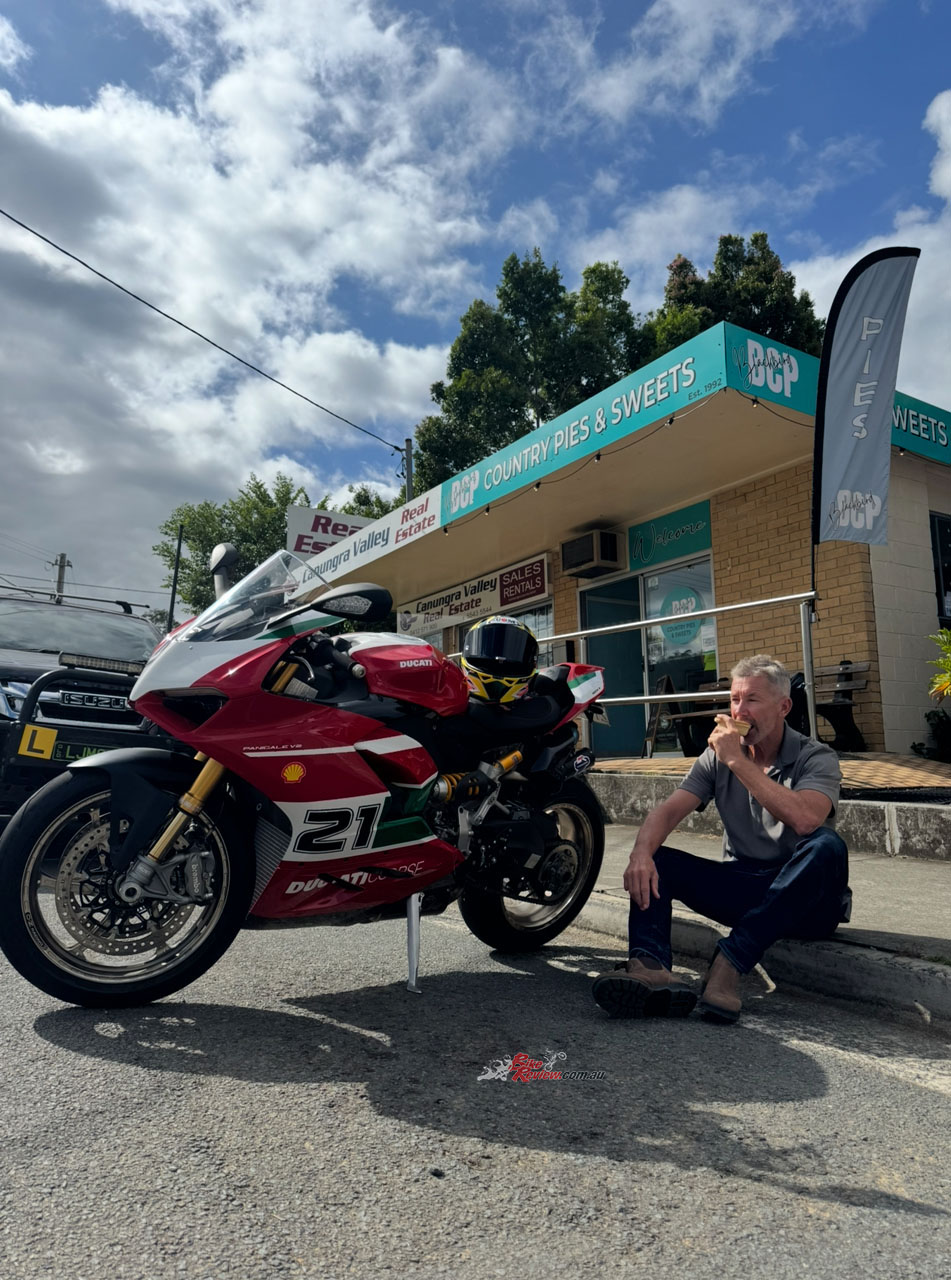
Troy Bayliss has a bunch of extras fitted to his own one, which is number #21 of course. Here he is enjoying an Aussie meat pie out on a ride on his bike… Pic: Bayliss archives.
His big break came in the late ’90s when Ducati called him up as a replacement rider in the World Superbike Championship (but before that, who could forget the appearance on Numata’s RGV250 at Phillip Island in 1997). By 2001, he’d claimed his first WorldSBK title on the Ducati 996 R, beating Colin Edwards in a season-long battle.

Troy Bayliss – Image by Graeme Brown
He’d go on to win two more championships (2006, 2008), amassing 52 wins and becoming a fan favourite for his aggressive, elbows-out style and humility off the bike. Bayliss retired at the top in 2008, immediately after winning his third championship — something almost unheard of in professional sport. Today, he’s not just an icon for Ducati fans, but a role model for Australian riders everywhere.
Tech Talk
At the heart of the Panigale V2 Bayliss is the Euro 5-compliant 955cc Superquadro L-twin, producing 155hp@10,750rpm and 104Nm@9,000rpm. The engine runs a 100mm bore and 60.8mm stroke with a 12.5:1 compression ratio, desmodromic valve actuation, and 24,000km valve clearance intervals.
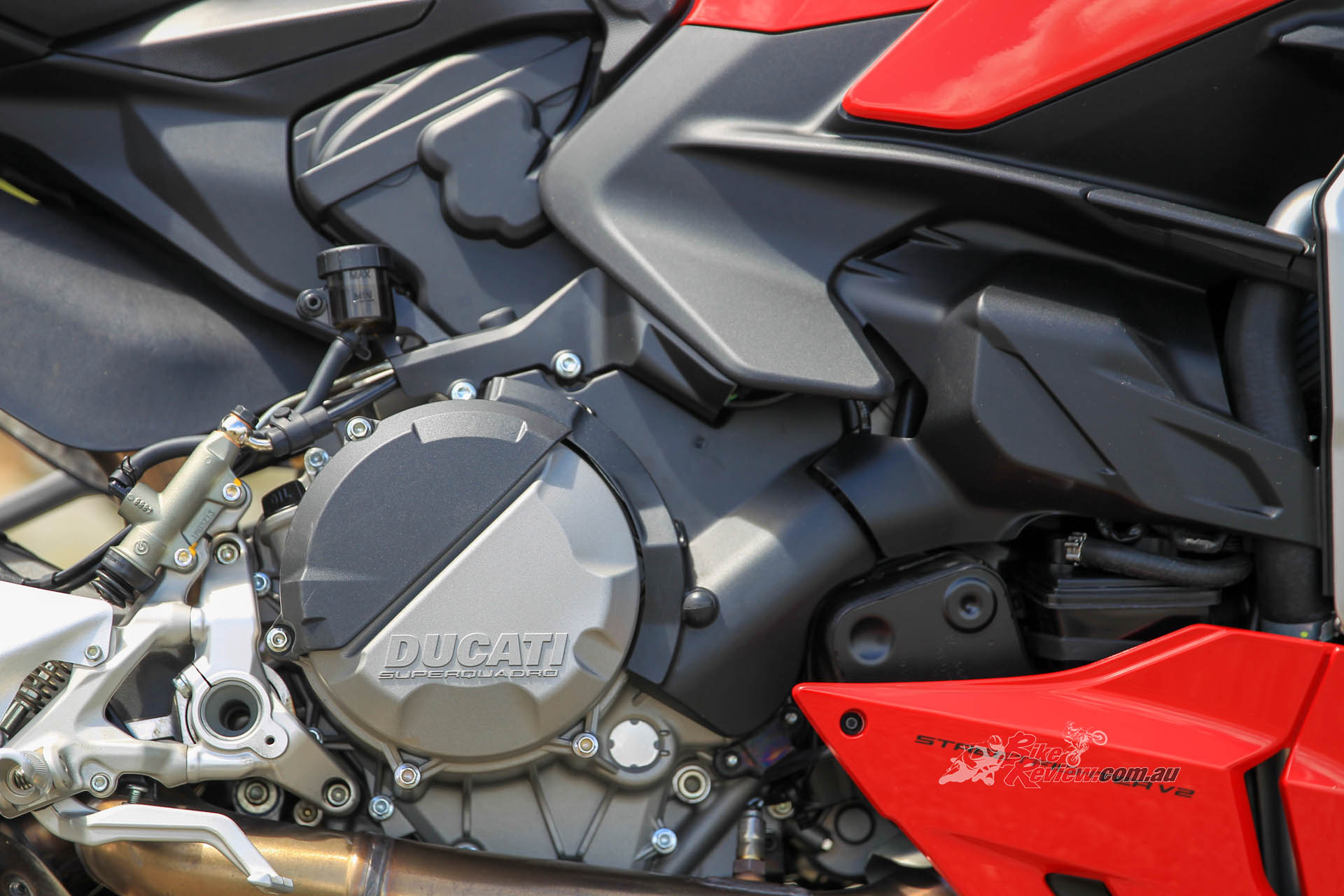
955cc Superquadro engine.
Fueling is handled by twin 62mm oval throttle-bodies with a single injector per cylinder, managed by Bosch electronics. Ride-by-wire throttle control integrates with the Ducati Safety Pack: cornering ABS EVO, Ducati Traction Control EVO 2, Ducati Wheelie Control EVO, Engine Brake Control EVO, and the DQS EVO 2 up/down quickshifter.
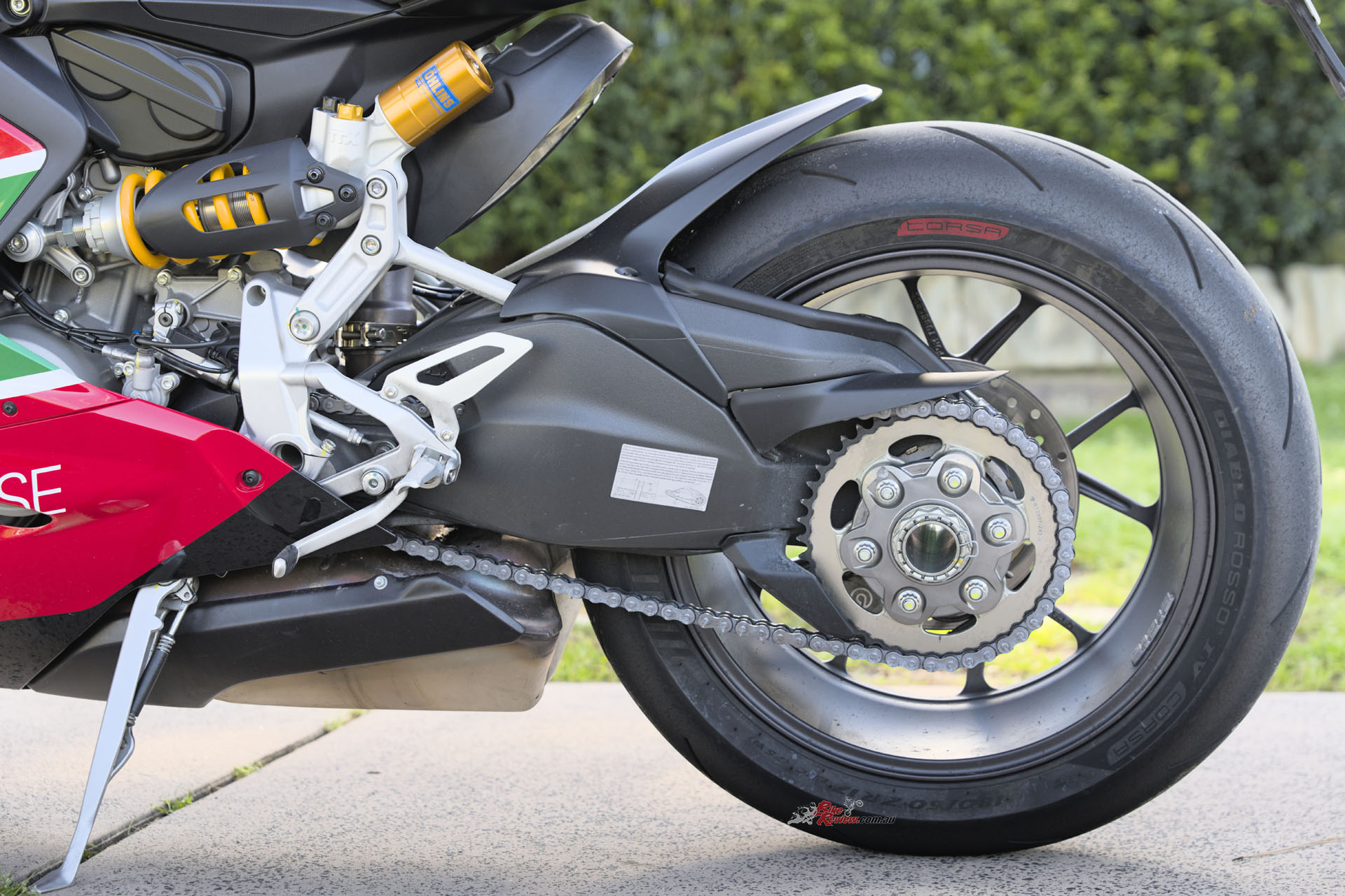
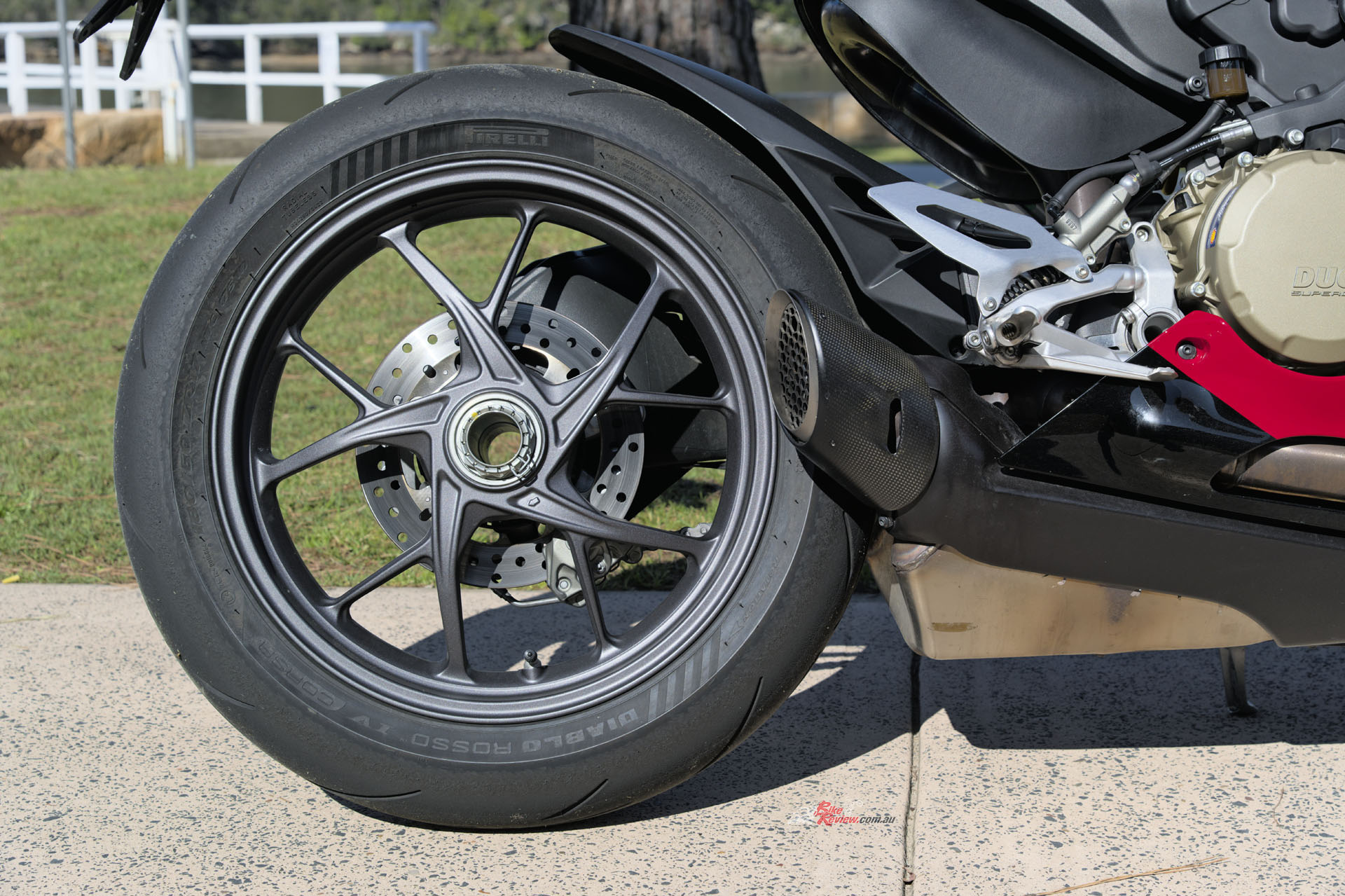
The aluminium monocoque chassis uses the engine as a stressed member. The Bayliss edition swaps the standard suspension for fully adjustable Öhlins NIX30 forks and a TTX36 rear shock, plus an adjustable steering damper. The lithium-ion battery, single-seat tail, and absence of passenger ‘pegs contribute to a 3kg weight saving over the standard V2.
Braking is handled by Brembo with twin 320mm semi-floating discs and M4.32 monobloc calipers up front, a 245mm rear disc with twin-piston caliper, and Bosch cornering ABS. Wheels are cast aluminium 17-inch units shod with Pirelli Diablo Rosso Corsa II tyres (120/70 front, 180/60 rear).
2024 Ducati Panigale V2 Bayliss Specifications
Price: From $27,690 R/A (approx)
Claimed Power: 114kW [155hp] @ 10,750rpm
Claimed Torque: 104Nm [76.7lb-ft] @ 9,000rpm
Wet Weight: 197kg
Fuel capacity: 17L
Fuel Consumption (Claimed): 5.8L/100km
Fuel Consumption (Tested): N/A
Fuel Range (Claimed): 293km
Engine: Liquid-cooled Superquadro L-twin, four-stroke, desmodromic four-valve, EFI, 62mm oval throttle-bodies, twin underbelly exhaust, 955cc, 100 x 60.8mm bore x stroke, 12.5:1 compression, Euro 5 compliant. Gearbox: Six-speed, cassette type. Clutch: Wet multi-plate slipper, hydraulic actuation.
Chassis: Aluminium monocoque frame with engine as stressed member, aluminium single-sided swingarm.
Rake: 24° Trail: 94mm
Suspension: Öhlins NIX30 43mm USD fork, fully adjustable, 120mm travel. Öhlins TTX36 rear monoshock, fully adjustable, 130mm travel, progressive linkage. Brakes: 320mm semi-floating twin discs (f), dual Brembo M4.32 monobloc four-piston radial calipers, radial master-cylinder, cornering ABS EVO. 245mm disc (r), twin-piston caliper, cornering ABS EVO. Wheels & Tyres: Cast aluminium, 3.50 x 17in (f), 5.50 x 17in (r), Pirelli Diablo Rosso Corsa II, 120/70 – 17 (f), 180/60 – 17 (r).
Dimensions
Wheelbase: 1436mm
Seat height: 835mm
Overall width: 810mm (approx)
Overall length: 2070mm (approx)
Overall height: 1120mm (approx)
Instruments & Electronics: Full-colour TFT display, LED headlamp, LED indicators, LED tail and brake lights, three riding modes (Race, Sport, Wet), Ducati Traction Control EVO 2, Ducati Wheelie Control EVO, Engine Brake Control EVO, Cornering ABS EVO, Ducati Quick Shift up/down EVO 2, ride-by-wire throttle, lap timer.
2024 Ducati Panigale V2 Bayliss Gallery
Ratings | Bike Review | Special, Ducati Panigale V2 Bayliss Edition
Baylisstic!
The Ducati Panigale V2 Bayliss blends superbike performance with exclusive heritage, honouring Troy Bayliss’s 2001 WSBK title. With Ohlins suspension, lighter weight, and iconic livery, it’s a collectible that’s just as thrilling to ride… Pics: ShotbyRoth
The Author

You Might Also Like