
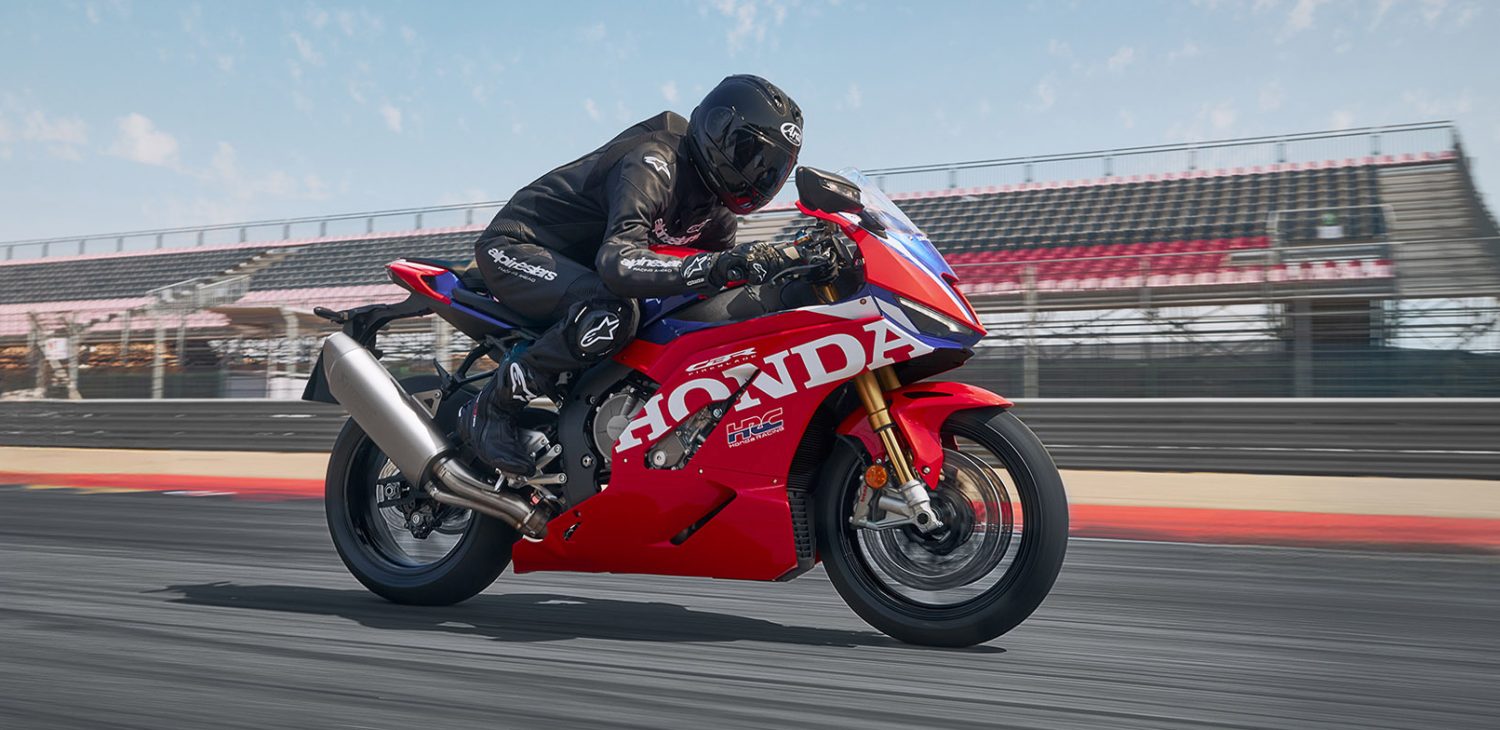

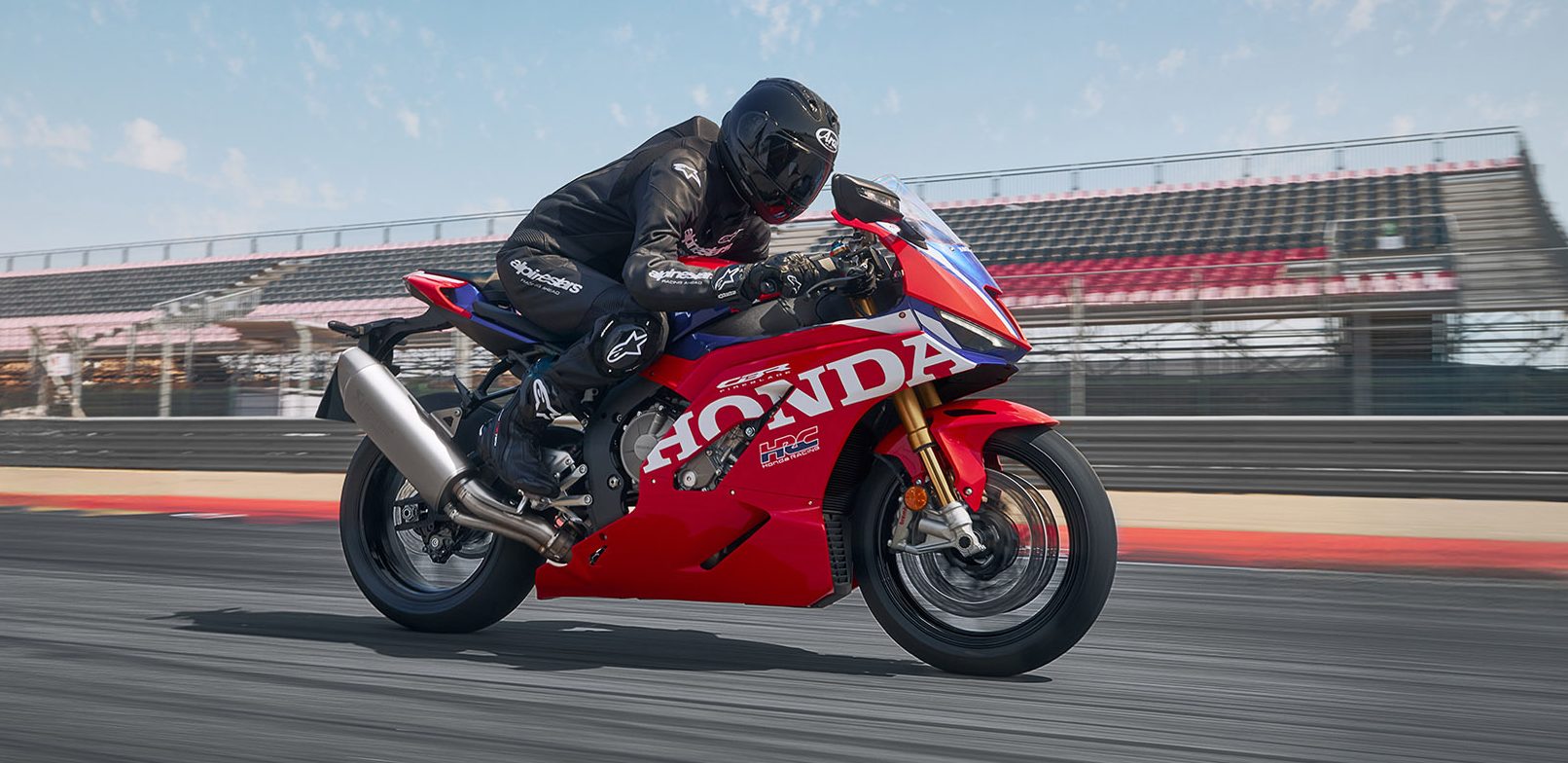
Expected in Australia in late 2027, the new SP has been developed in collaboration with Honda Racing Corporation (HRC), with approximately 75 per cent of the motorcycle’s components newly designed. Check it out...
Honda has confirmed the arrival of the redesigned 2027 CBR1000RR-R SP Fireblade, with the latest generation bringing new chassis, engine and aerodynamic development, plus next-generation Öhlins electronic suspension and Brembo Hypure brakes.
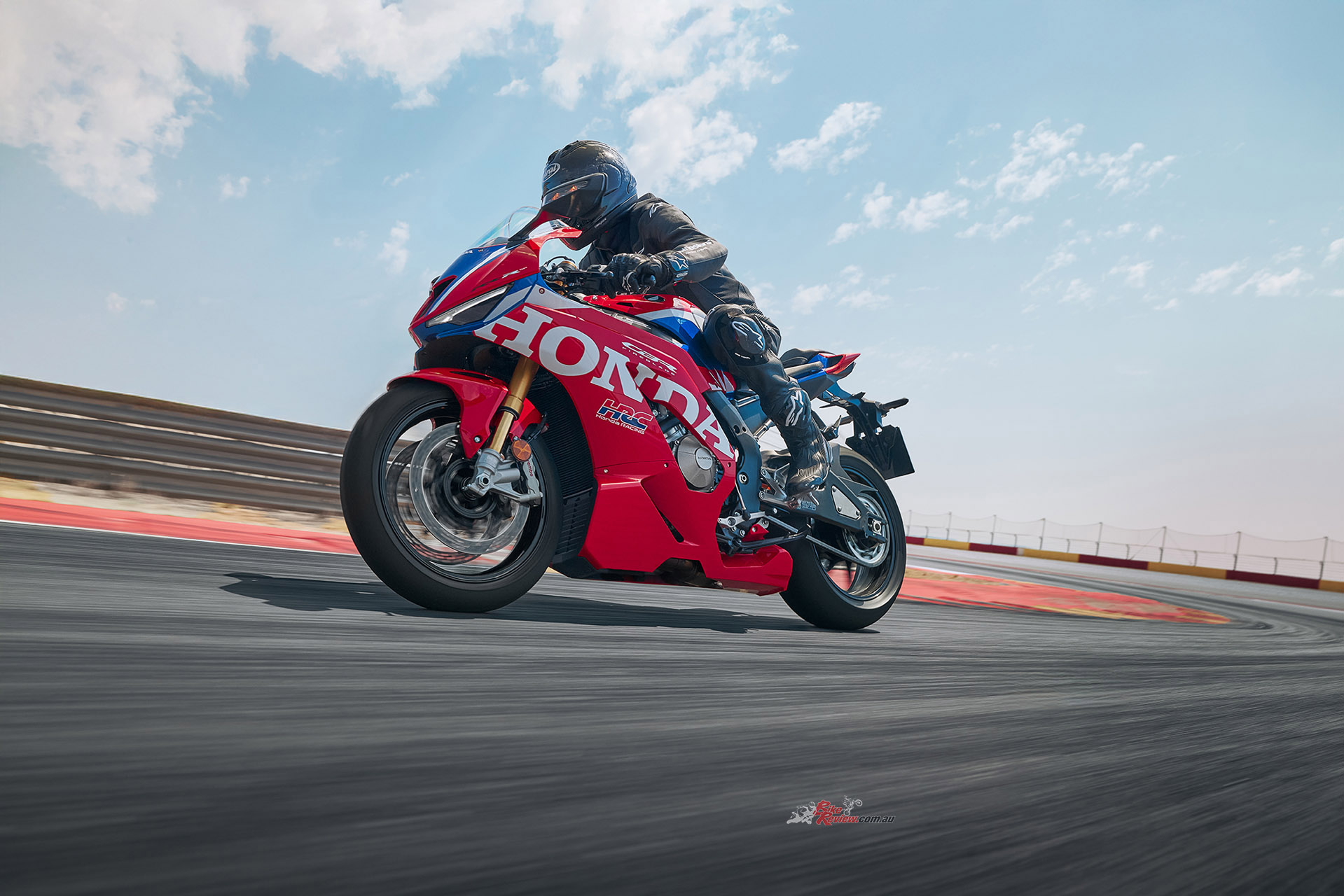
“The 2027 CBR1000RR-R SP Fireblade takes an already iconic sports bike to the next level, with enhancements that deliver greater precision, confidence and performance on both road and track”…
The latest Fireblade represents a significant evolution of Honda’s litre-class supersport platform, with development centred on its stated philosophy of “Total Control for the Track”. Honda has focused on improving cornering performance, chassis stability under acceleration and braking, engine response and the rider’s ability to exploit the motorcycle on both the racetrack and public roads.
Read our previous Honda CBR1000RR-R SP test here…
Developed in collaboration with Honda Racing Corporation, the new generation sees approximately 75 per cent of the Blade’s components redesigned. The changes extend well beyond styling, with a new frame and swingarm, revised engine intake technology, updated electronics and a titanium fuel tank all contributing to the package.
Developed in collaboration with Honda Racing Corporation, the new generation sees approximately 75 per cent of the Blade’s components redesigned…
Honda Australia General Manager – Powersports and Products, Chris Schultz, said the new model takes the Fireblade to another level. “The 2027 CBR1000RR-R SP Fireblade takes an already iconic sports bike to the next level, with enhancements that deliver greater precision, confidence and performance on both road and track. Developed alongside HRC, it represents the most advanced Fireblade ever offered to Australian riders.”
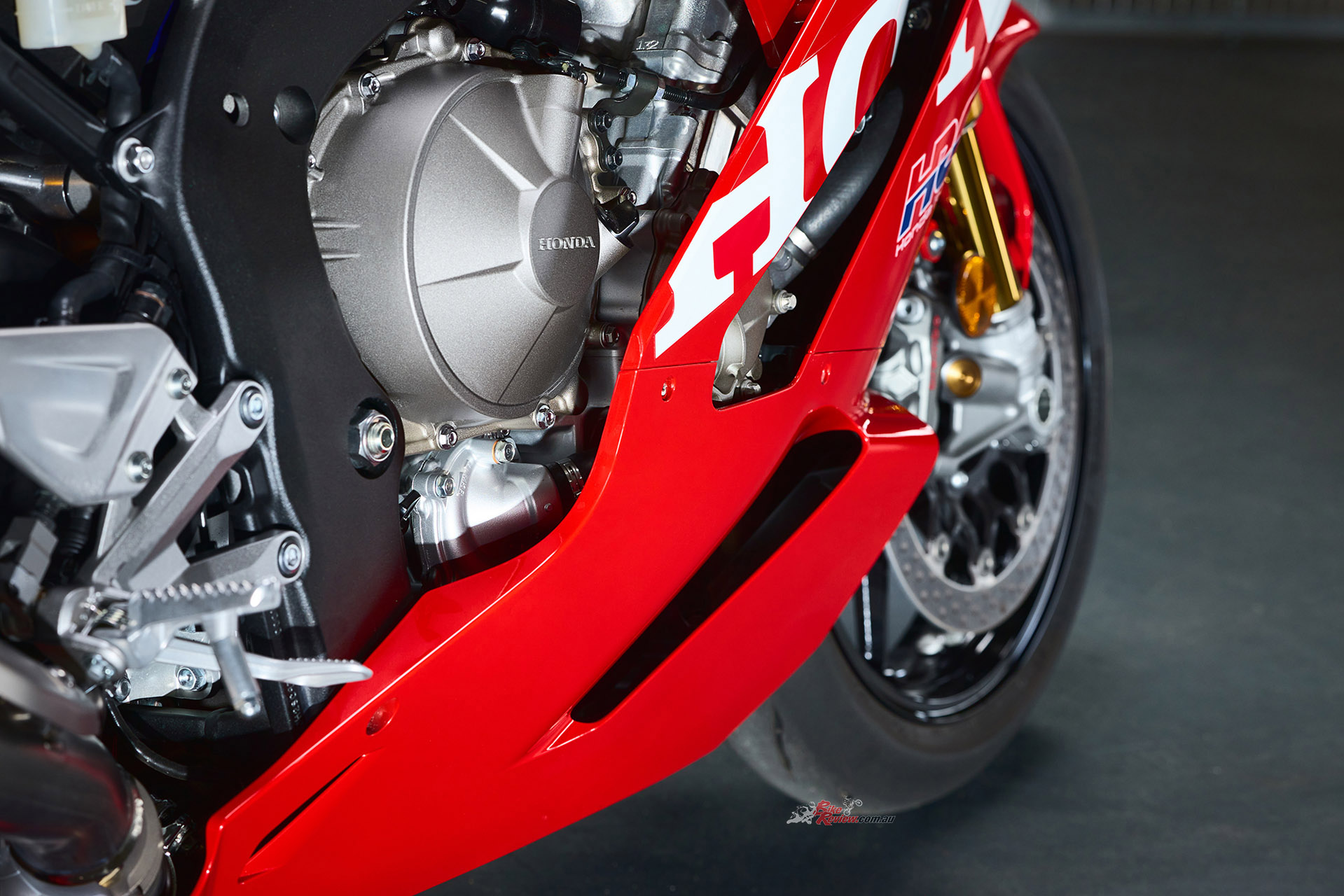
The changes extend well beyond styling, with a new frame and swingarm, plus revised engine intake technology.
Revised chassis and swingarm
A major part of the 2027 development is the redesigned aluminium twin-tube frame, which Honda says has been engineered to deliver a more sophisticated balance between rigidity, stability and feedback. Rather than simply increasing chassis stiffness, Honda has concentrated on tuning rigidity characteristics to improve the way the motorcycle responds through corners and communicates.
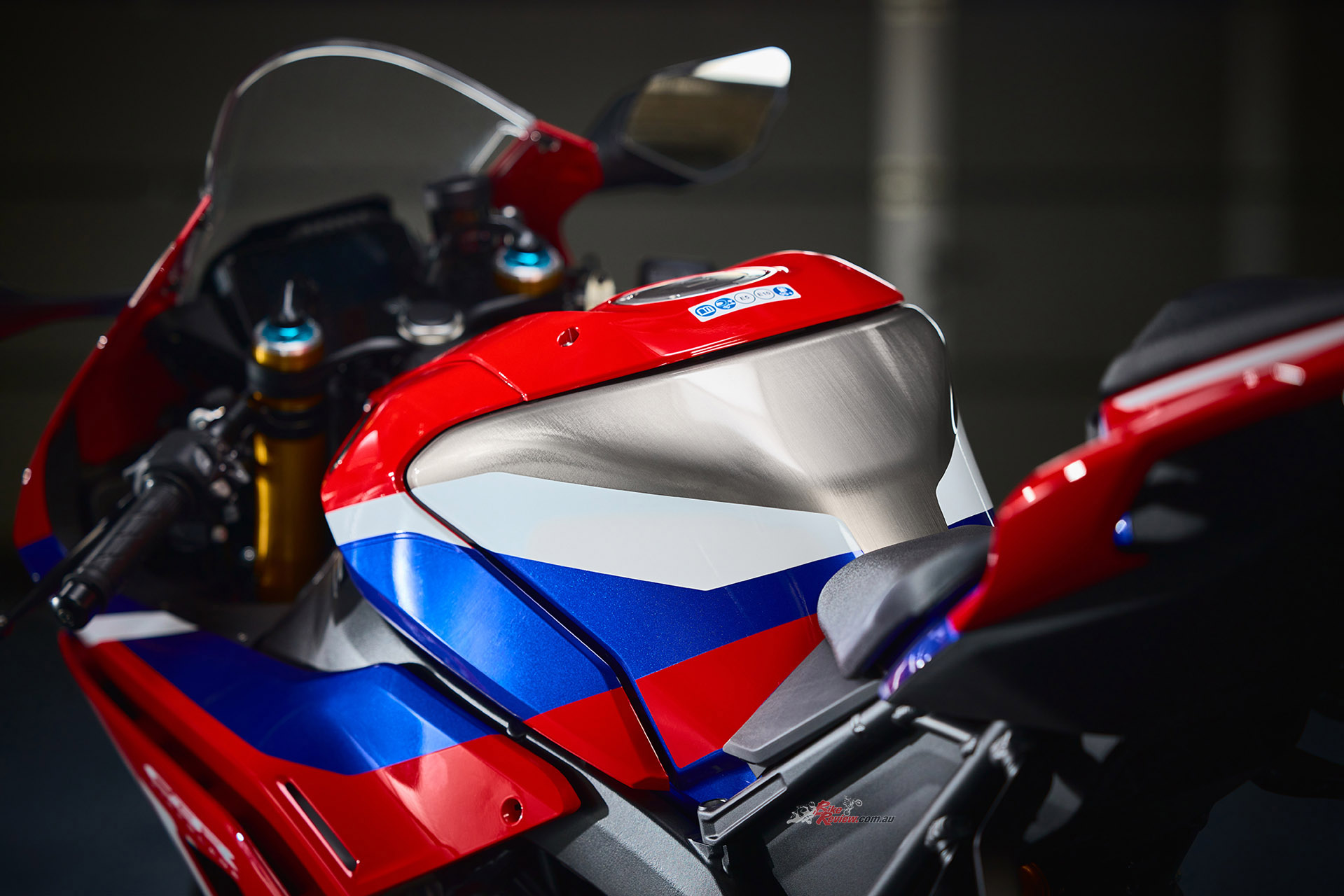
The new Fireblade SP also adopts a titanium fuel tank, contributing to the motorcycle’s weight reduction.
The frame uses a revised headstock area, with an enlarged opening that channels fresh air towards the air cleaner. Honda has also changed the engine cylinder hangers, moving away from the previous one-piece cast structure with integrated stiffeners to a bolt-on arrangement using separate brackets. The revised construction allows greater flexibility in frame design and reduces lateral rigidity by 20 per cent compared with the previous model, while maintaining torsional rigidity.
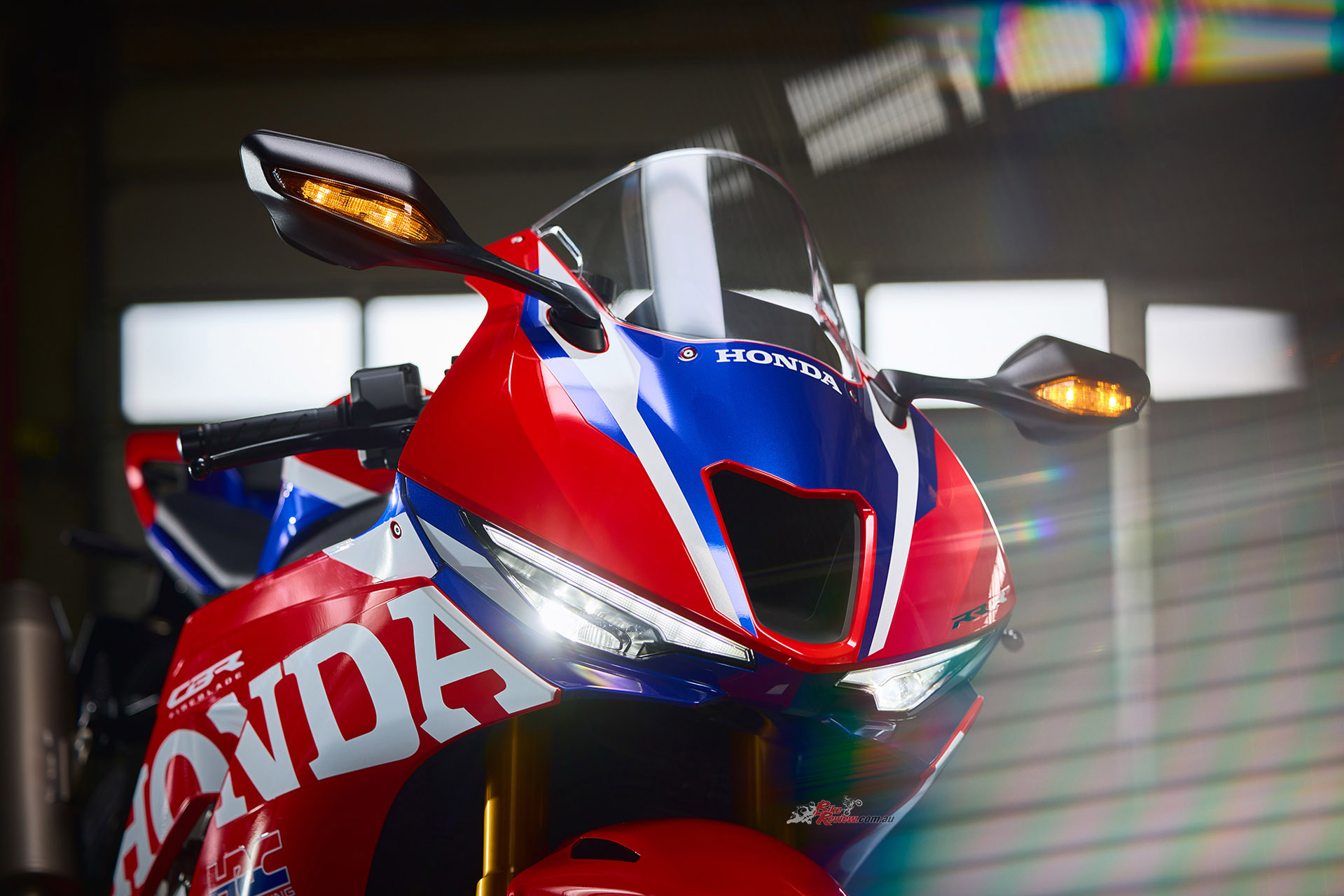
One of the most notable developments is a new two-stage variable-length intake air funnel system, a first for a mass-produced Honda motorcycle.
Honda says this balance improves cornering performance, tyre contact feel and stability under acceleration, while also contributing to more predictable handling on public roads. The frame is manufactured using a thin-wall gravity die-casting process, allowing Honda to precisely tune rigidity through variations in wall thickness. The minimum wall thickness is just 2mm, and the redesigned frame is 440g lighter than its predecessor.
At the front is Öhlins NIX30 Smart-EC3.0 suspension, with a TTX36 Smart-EC3.0 unit at the rear
The aluminium pressed-construction swingarm has also been redesigned. The pivot shaft diameter has been reduced from 20mm to 17mm, with revised wall thickness and pivot width used to achieve the desired rigidity characteristics. Honda has reduced lateral rigidity by 12 per cent while maintaining torsional rigidity, with the objective of improving rear tyre contact feel during cornering.
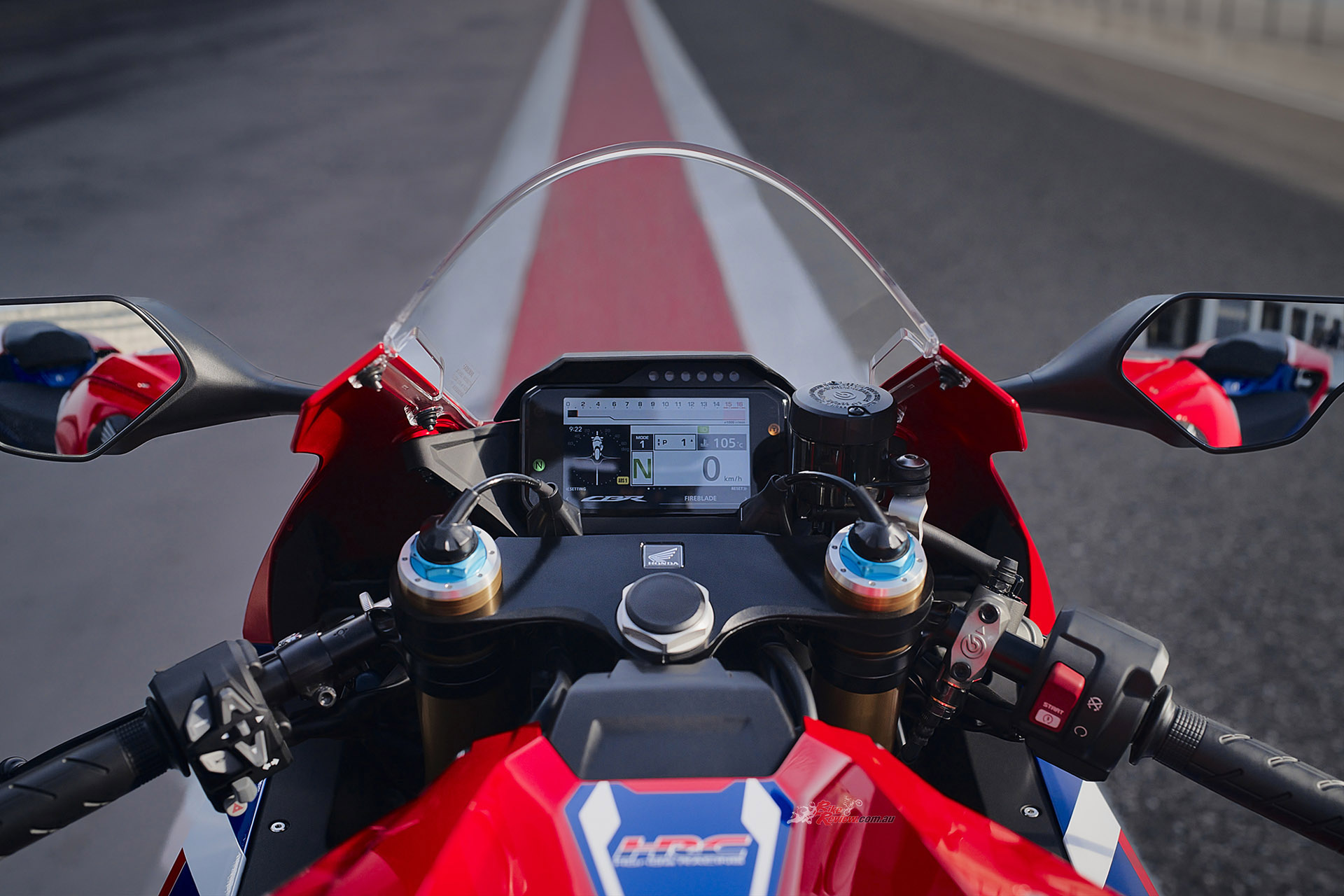
The CBR1000RR-R SP retains its premium electronically controlled Öhlins suspension package, but benefits from the latest generation of the system.
Together, the revised frame and swingarm are intended to give riders greater confidence when pushing hard, particularly during corner entry, direction changes and acceleration out of turns.
Öhlins Smart Electronic Control suspension
The CBR1000RR-R SP retains its premium electronically controlled Öhlins suspension package, but benefits from the latest generation of the system. At the front is Öhlins NIX30 Smart-EC3.0 suspension, with a TTX36 Smart-EC3.0 unit at the rear. The system is designed to provide more sophisticated electronic suspension control, with damping settings optimised to suit the revised chassis and improve performance across different riding conditions.
A new two-stage variable-length intake air funnel system, a first for a mass-produced Honda motorcycle…
Honda says suspension damping has been revised across the 2027 Fireblade family, with the aim of combining racetrack performance with improved ability to follow road surface irregularities during everyday riding. The SP’s electronic Öhlins package remains a major point of difference from the standard Fireblade, which continues with SHOWA Big Piston Forks at the front and SHOWA BFRC-Lite suspension at the rear.
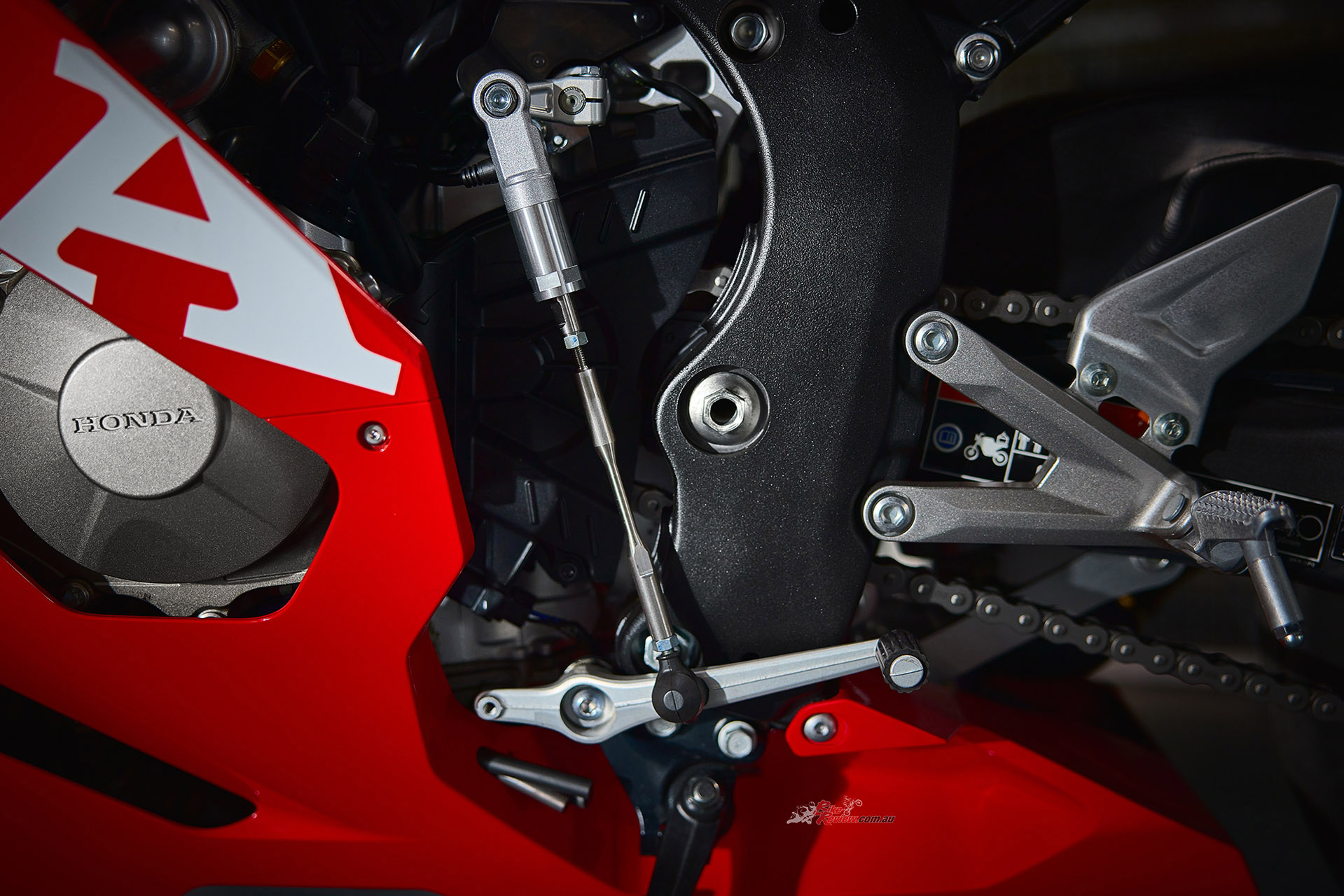
Honda has not yet released Australian-market peak power and torque figures for the 2027 model, so those details remain to be confirmed.
Braking is upgraded with Brembo Hypure brakes, providing the premium stopping package specified for the Australian-market SP. The combination of revised chassis geometry and rigidity characteristics, electronic suspension and high-performance braking is intended to deliver greater precision and confidence under hard braking and corner entry.
Revised 999cc inline-four engine
The 2027 CBR1000RR-R SP continues to use Honda’s 999cc liquid-cooled, four-stroke, DOHC, four-valve inline-four engine, but with significant changes to improve performance and rideability. One of the most notable developments is a new two-stage variable-length intake air funnel system, a first for a mass-produced Honda motorcycle.
The system uses a two-piece intake funnel arrangement that separates vertically, changing the effective length and diameter of the intake passage according to engine speed. At 11,750rpm and above, the upper funnel slides upwards and separates from the lower section. This changes the intake characteristics to help improve power delivery in the low-to-mid rpm range while retaining high-rpm performance. The objective is to broaden the engine’s usable performance, rather than concentrating solely on peak output. Honda says the system contributes to improved performance across the rev range, making the engine easier to use while retaining its high-speed capabilities.
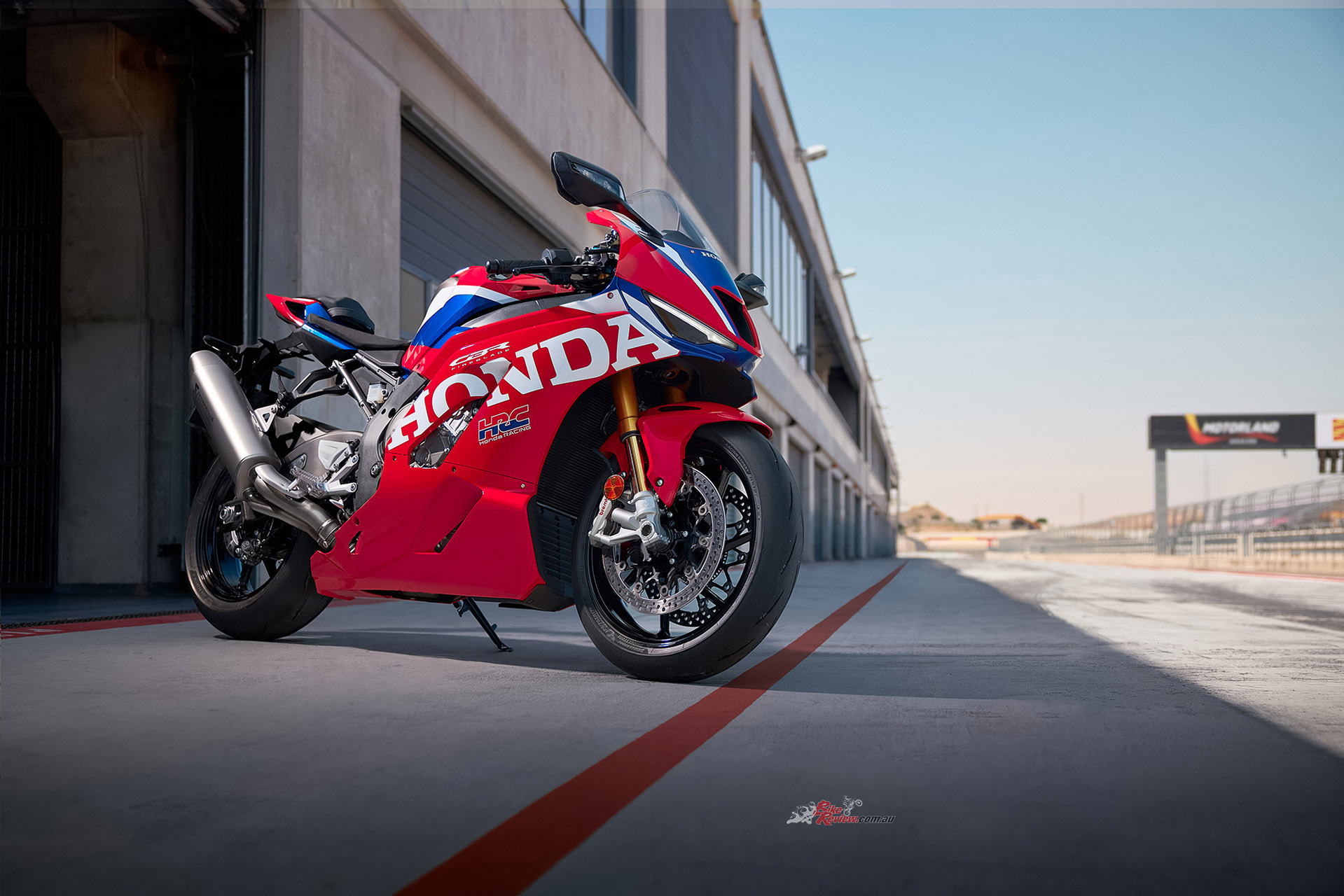
The SP tank receives a hand-finished hairline treatment that leaves sections of the titanium surface exposed.
The existing two-motor throttle-by-wire system has also been refined. More precise electronic control allows finer adjustment of throttle-valve openings, improving throttle response during acceleration and engine braking during deceleration. Honda says the changes also produce smoother transitions from deceleration back to acceleration, enhancing drivability and overall control.
Weight reduction has been another focus of the engine development. Components including the cylinder-head cover have changed from aluminium to magnesium, contributing to a reduction of more than 200g on the Fireblade SP. Honda has not yet released Australian-market peak power and torque figures for the 2027 model, so those details remain to be confirmed.
Titanium fuel tank and revised detailing
The new Fireblade SP also adopts a titanium fuel tank, contributing to the motorcycle’s weight reduction. Honda previously used titanium tanks on the 2017 CBR1000RR SP and SP2, although those earlier designs required an outer plastic cover. Advances in titanium pressing and painting technology have allowed the new tank to be finished without that additional cover.
The new Fireblade SP also adopts a titanium fuel tank…
Exclusive to the SP, the tank receives a hand-finished hairline treatment that leaves sections of the titanium surface exposed. The finish highlights the material while giving the SP a distinctive appearance. A new Honda Flagship WING emblem, finished in monotone silver and black, is positioned on both sides of the tank.
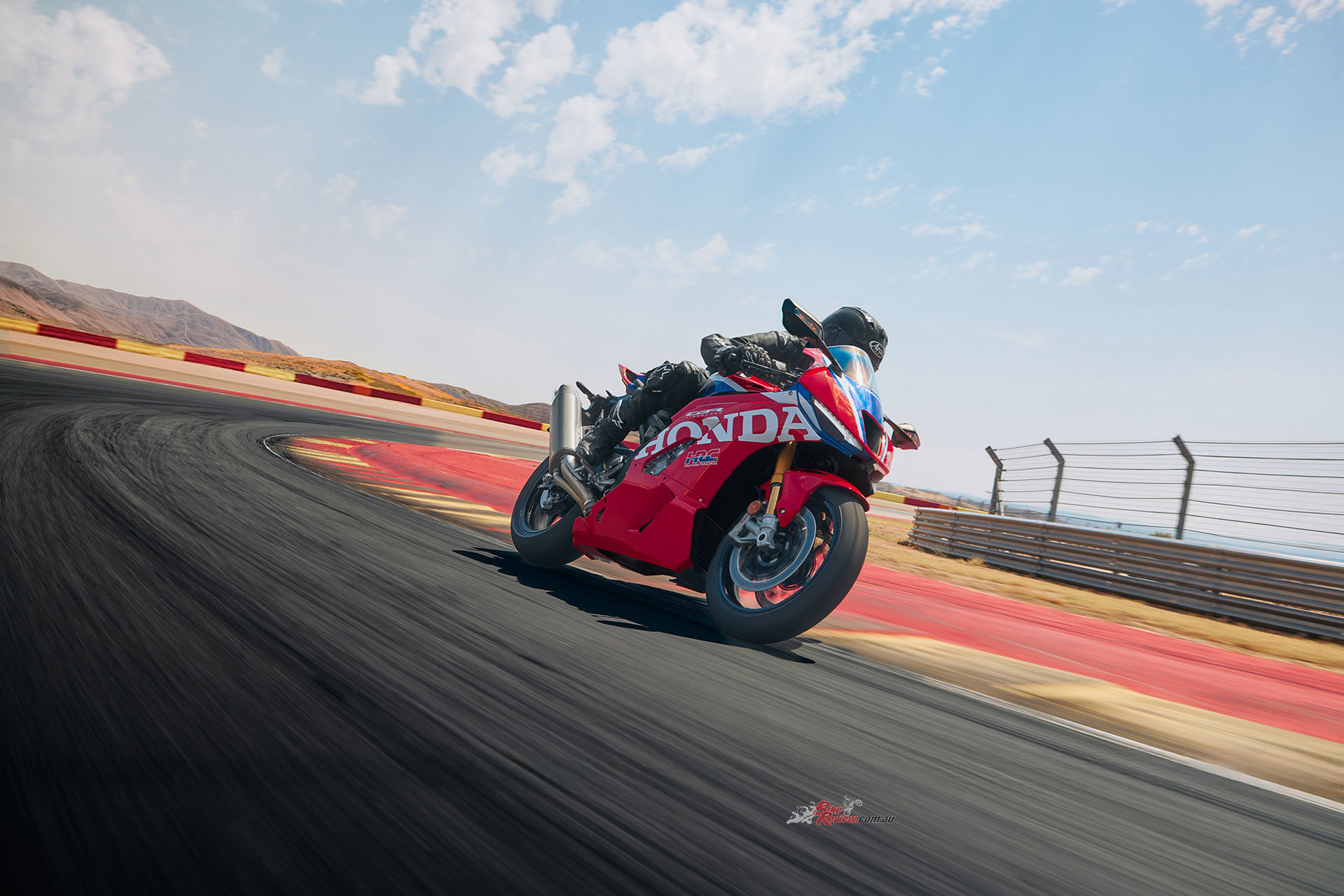
Honda has also incorporated a range of sustainable materials into the 2027 Fireblade.
The revised bodywork and aerodynamic development form part of the wider redesign, with Honda focusing on the balance between performance, weight and rider control. The more specialised aerodynamic package with dedicated carbon-fibre winglets belongs to the separate HRC Works Edition unveiled globally at EICMA; Honda Australia has not confirmed that variant for local release.
More sustainable materials
Honda has also incorporated a range of sustainable materials into the 2027 Fireblade series as part of its broader objective to achieve a 100 per cent sustainable material usage rate by 2050. The windscreen is manufactured from DURABIO, a plant-derived engineering plastic designed to provide weather and scratch resistance while reducing environmental impact.
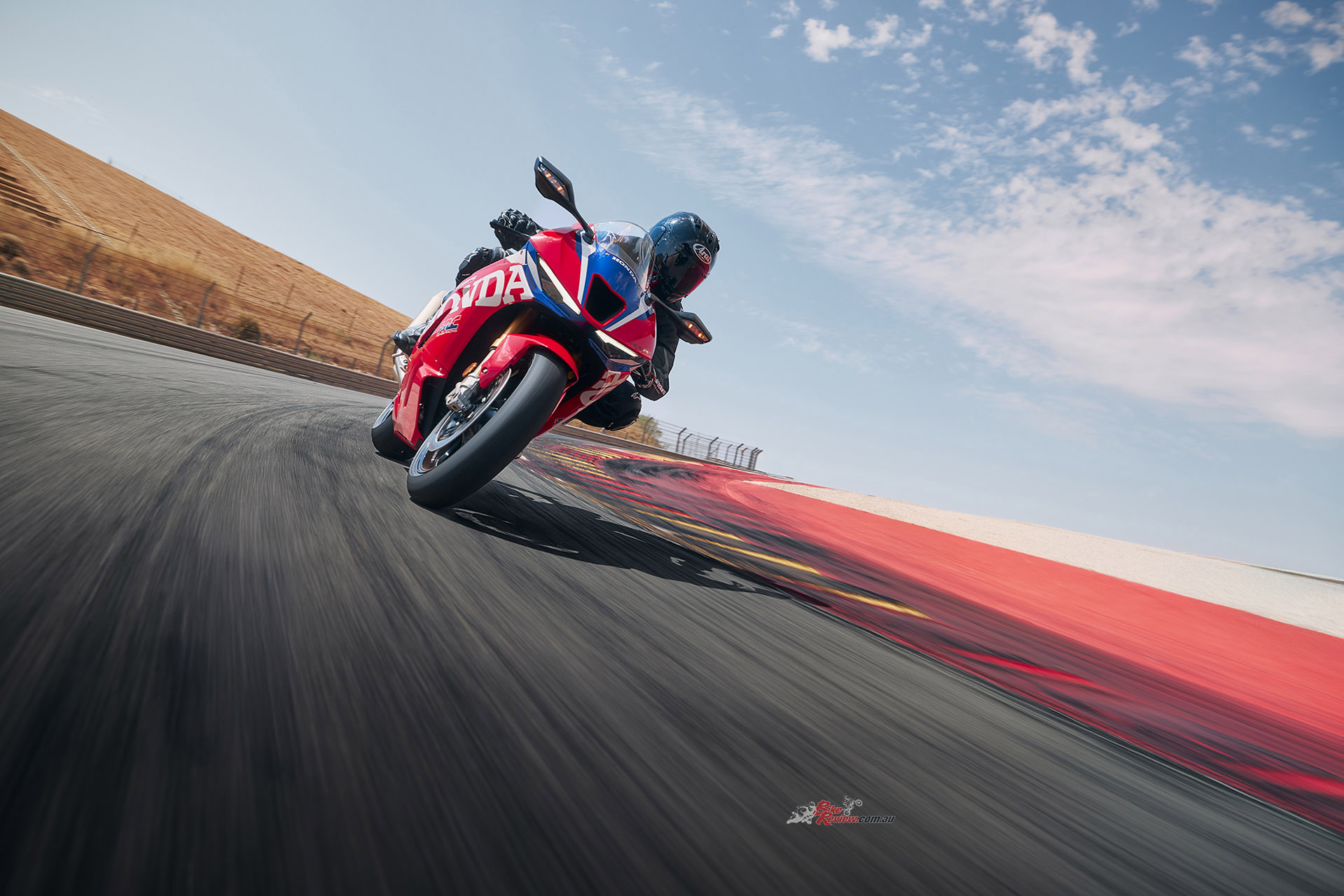
The front and rear seat bases use pre-consumer recycled materials sourced from manufacturing and moulding offcuts, while the air cleaner case, side covers and other components incorporate post-consumer recycled plastics. The new Honda Flagship WING emblem also uses chemically recycled acrylic resin, produced by breaking down previously used acrylic materials for reuse. These materials are incorporated across the 2027 CBR1000RR-R range without compromising the functionality.
Honda Australia has confirmed the 2027 CBR1000RR-R SP for local release, with expected arrival in late 2027. Pricing, final Australian specifications and further equipment details are yet to be announced.
You Might Also Like