
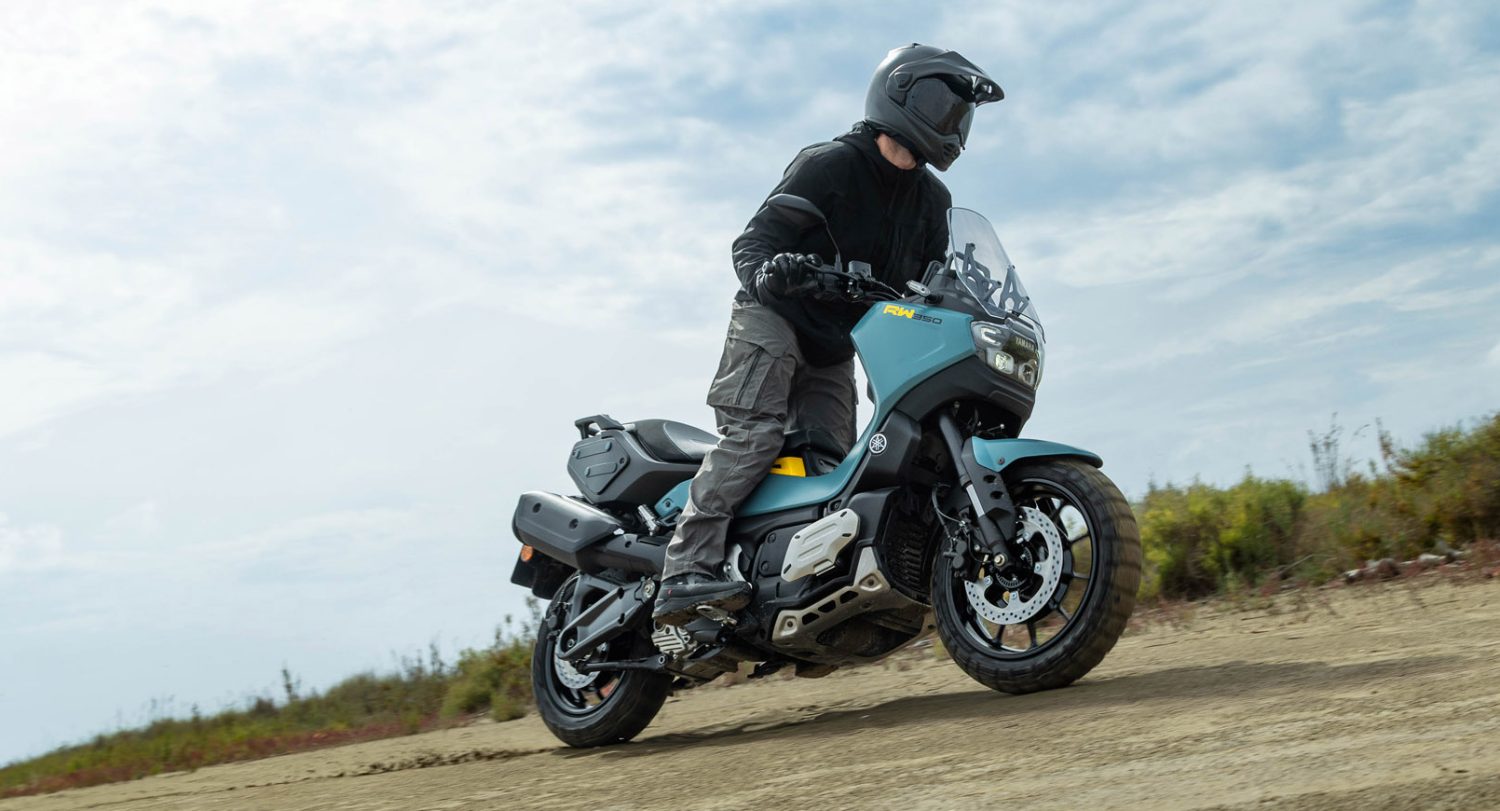

Yamaha has unveiled two wild adventure scooters, with the CP2 powered RW700 Explore and single-cylinder RW350 confirmed for the Australian market. They look like fun...
Yamaha is taking its scooter range off-road with the RW Series, comprising the twin-cylinder RW700 Explore and single-cylinder RW350. Both models are designed to bridge the gap between everyday scooter usability and adventure motorcycle capability…
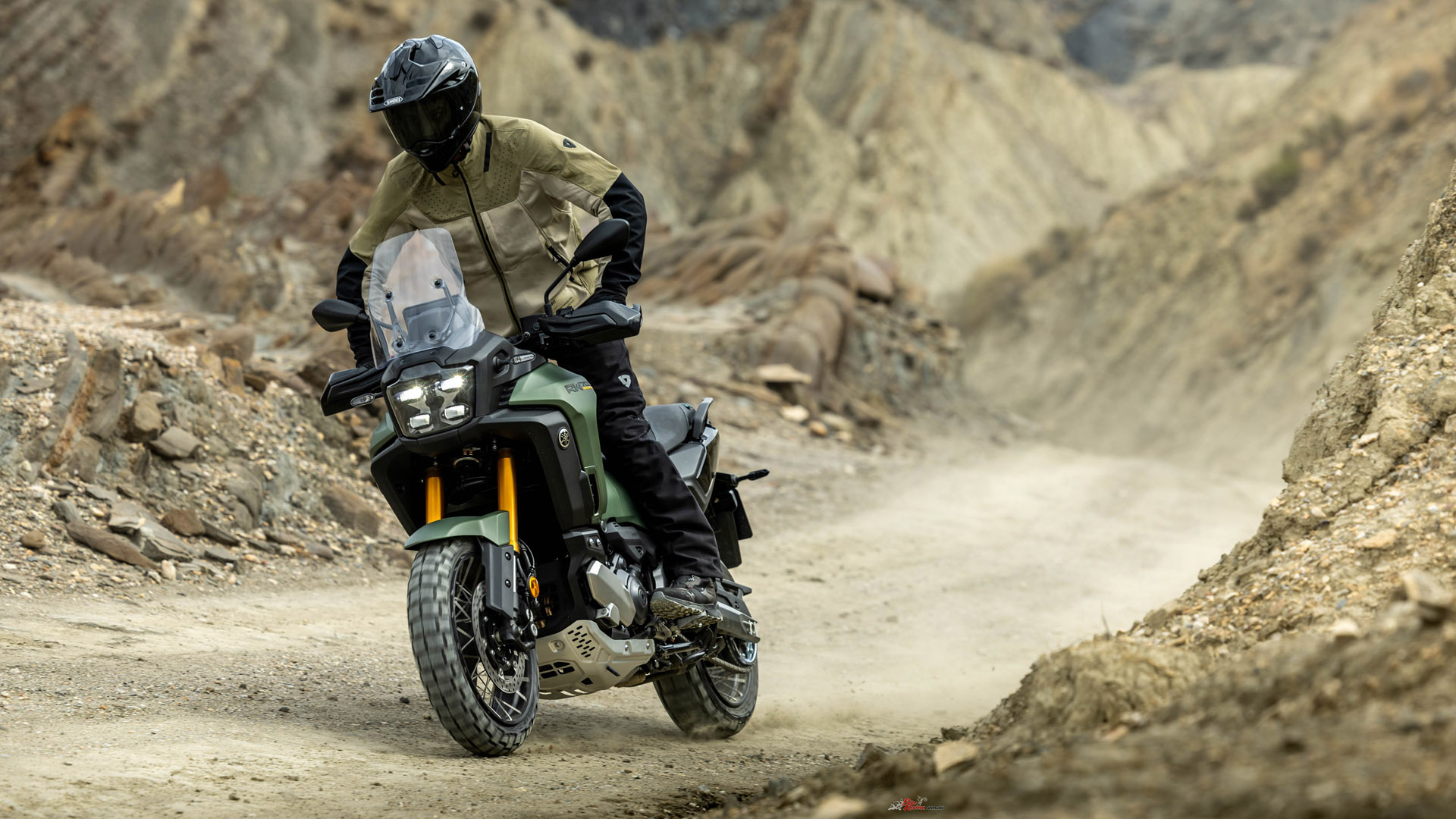
The concept is based around providing the convenience and accessibility of a scooter without restricting riders to sealed roads. Yamaha has drawn on its experience developing both its urban MAX scooter range and adventure motorcycles such as the Ténéré 700, combining elements of each in a package designed to be equally at home commuting through traffic or exploring beyond the bitumen.
Read our TMAX content here and XMAX content here…
The RW Series has been developed around the idea of giving riders greater freedom of movement. Rather than a conventional scooter riding position with feet placed on a floorboard, both models feature footpegs that allow riders to stand when required, along with additional forward-mounted footrests for a more relaxed position during everyday riding and longer journeys.
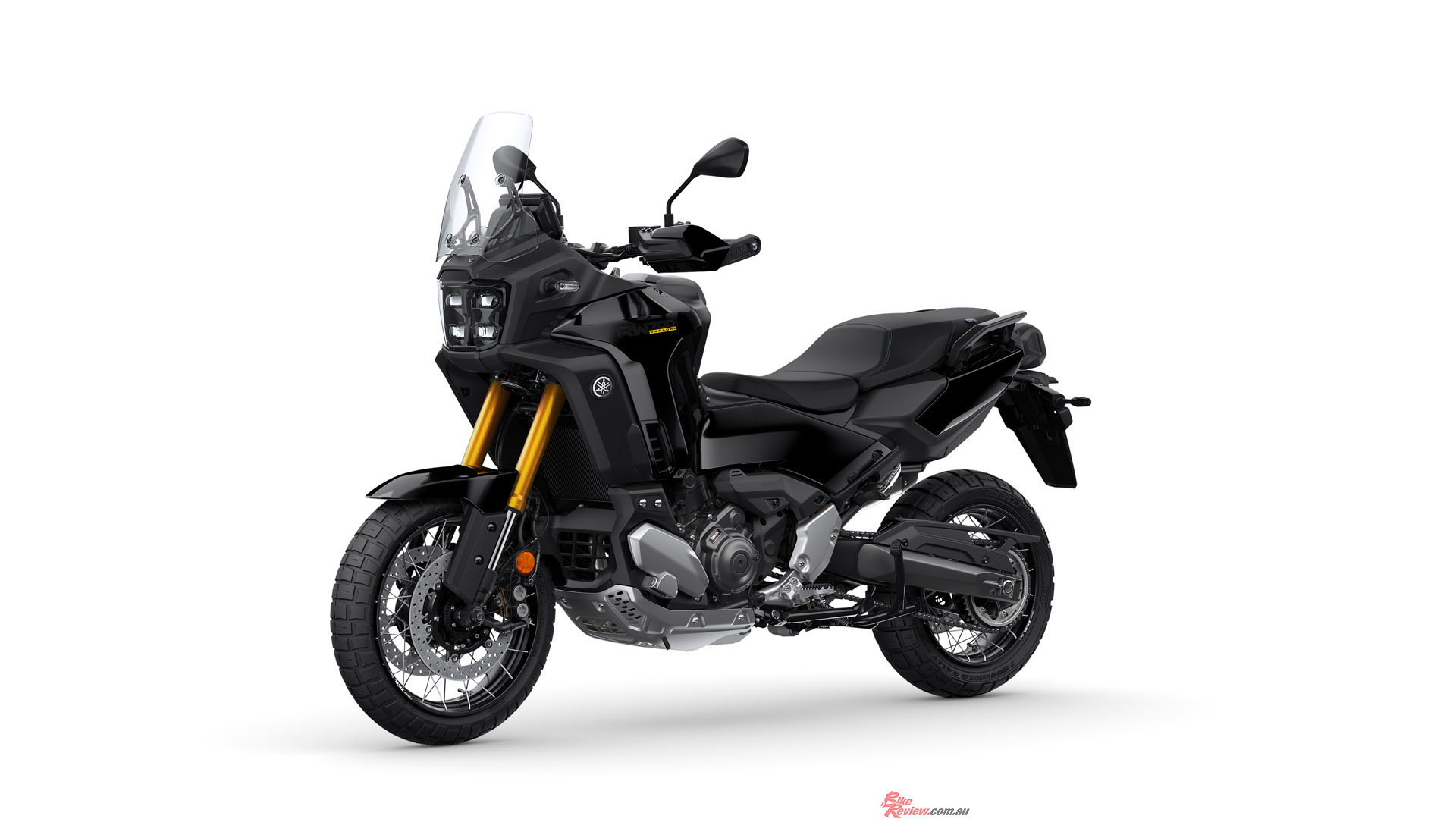
Powered by the Yamaha CP2 engine but with YCC-T transmission, the RW should be a weapon!
The seats have also been designed to allow movement forwards, backwards and from side to side, rather than locking the rider into one position. Yamaha says the combination of these features gives the RW Series a wider range of riding possibilities, particularly when moving between smooth roads and uneven surfaces. Two models will initially make up the range, with the RW700 Explore positioned as the premium offering and the RW350 providing a smaller-capacity alternative with a completely different engine and transmission arrangement.
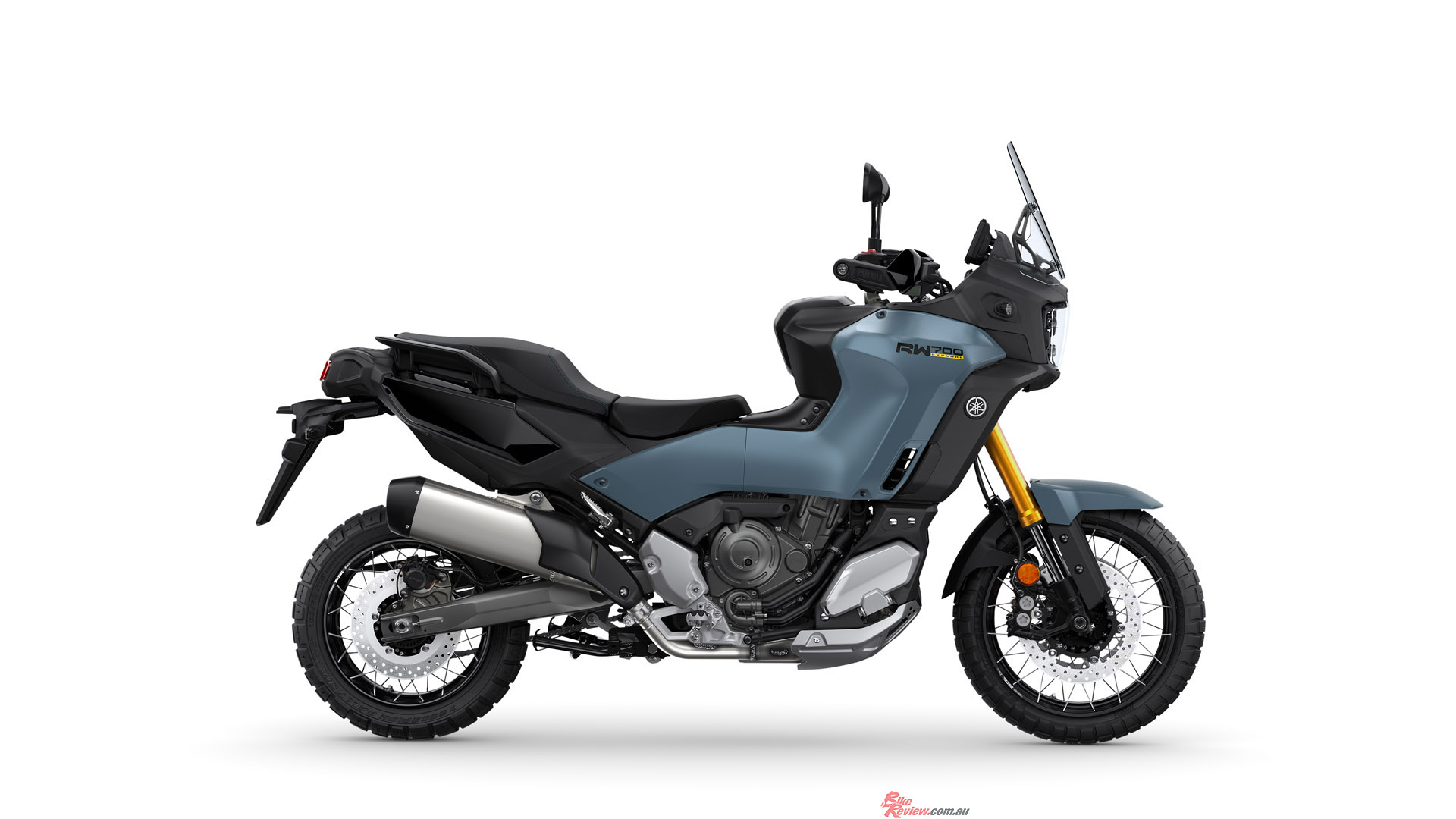
RW700 Explore – CP2 power meets Y-AMT
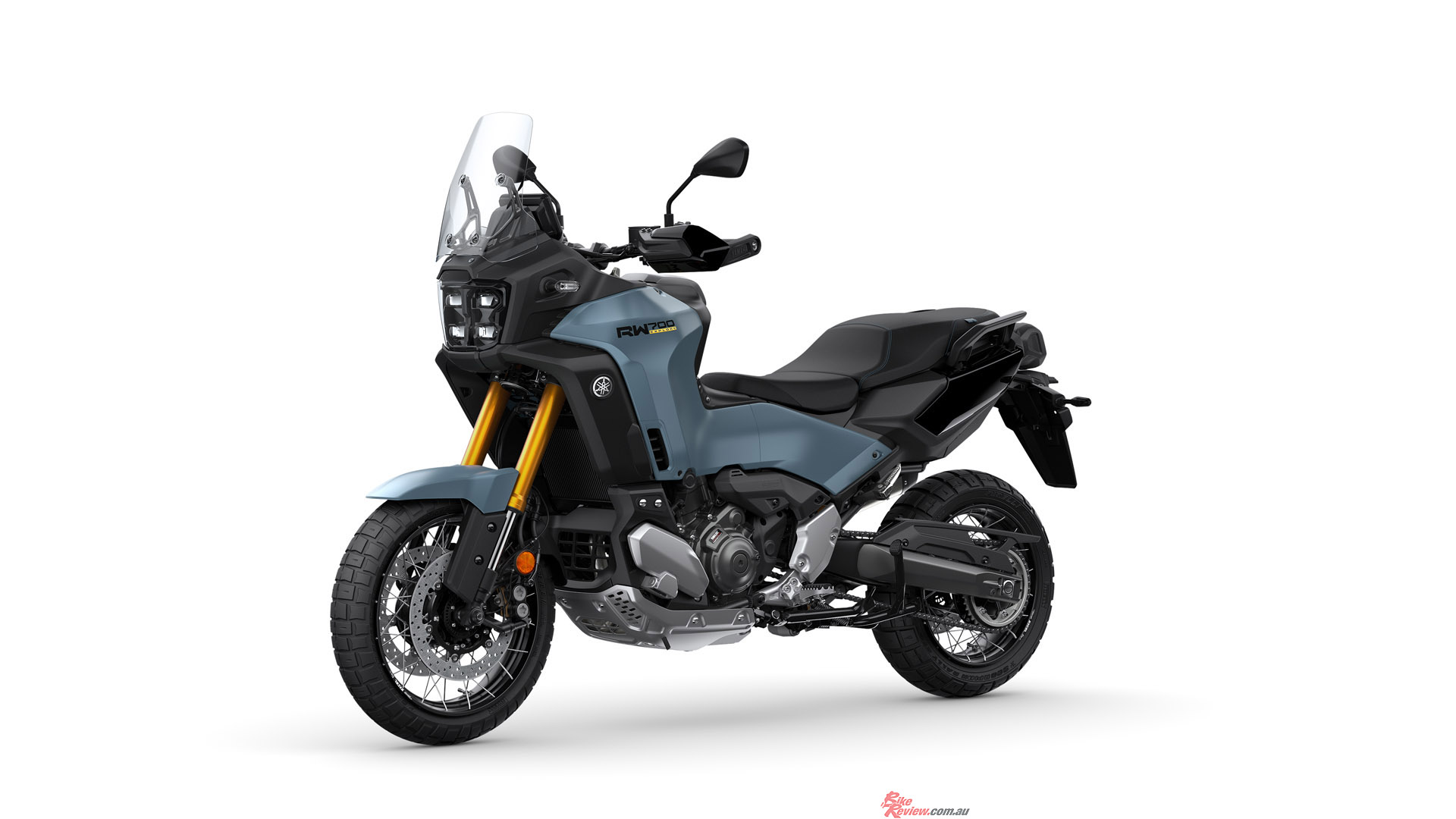
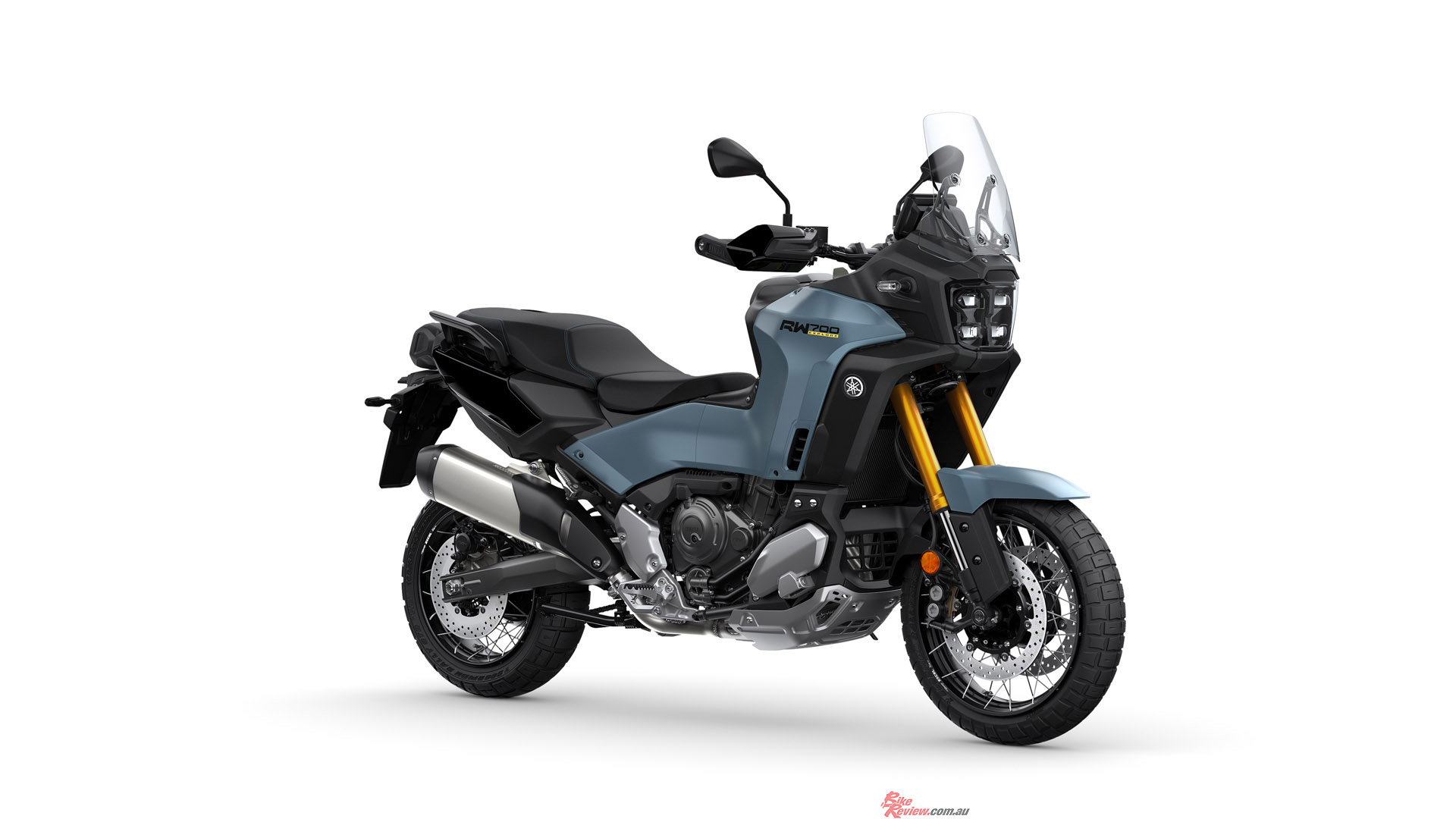
At the top of the range is the RW700 Explore, powered by Yamaha’s familiar 689cc CP2 parallel-twin engine. The liquid-cooled, DOHC, eight-valve engine is already used across several Yamaha models and brings a well-established powerplant into the adventure scooter category.
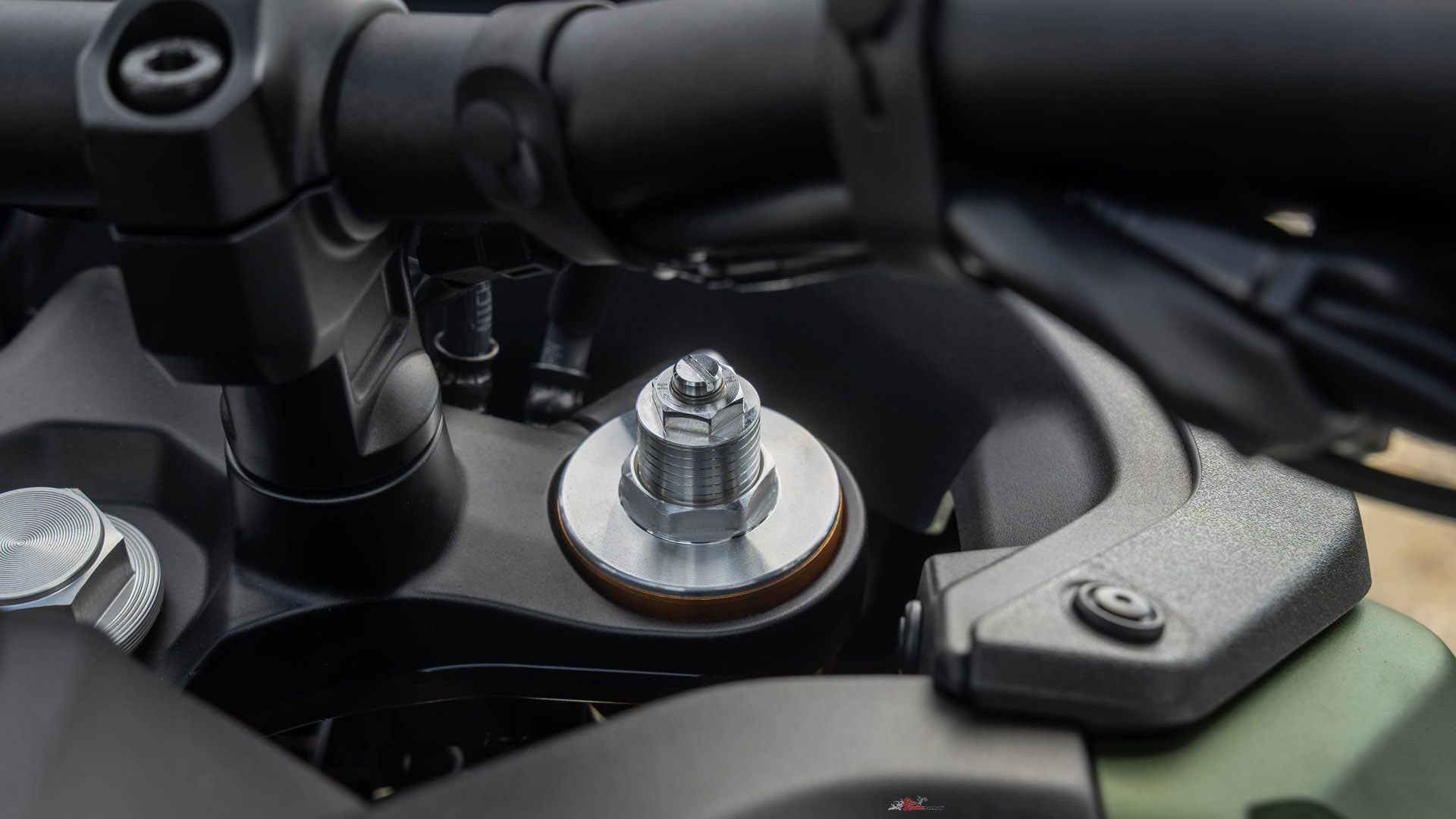
The engine features Yamaha Chip Controlled Throttle (YCC-T), which electronically manages throttle-valve opening in response to rider input. Yamaha says the system is tuned to deliver smooth torque characteristics throughout the rev range, with particular attention to throttle response at smaller openings. This is intended to provide a predictable response in busy urban conditions while retaining the performance required for open-road riding and exploring country roads.
At the top of the range is the RW700 Explore, powered by Yamaha’s familiar 689cc CP2 parallel-twin engine with Y-AMT transmission…
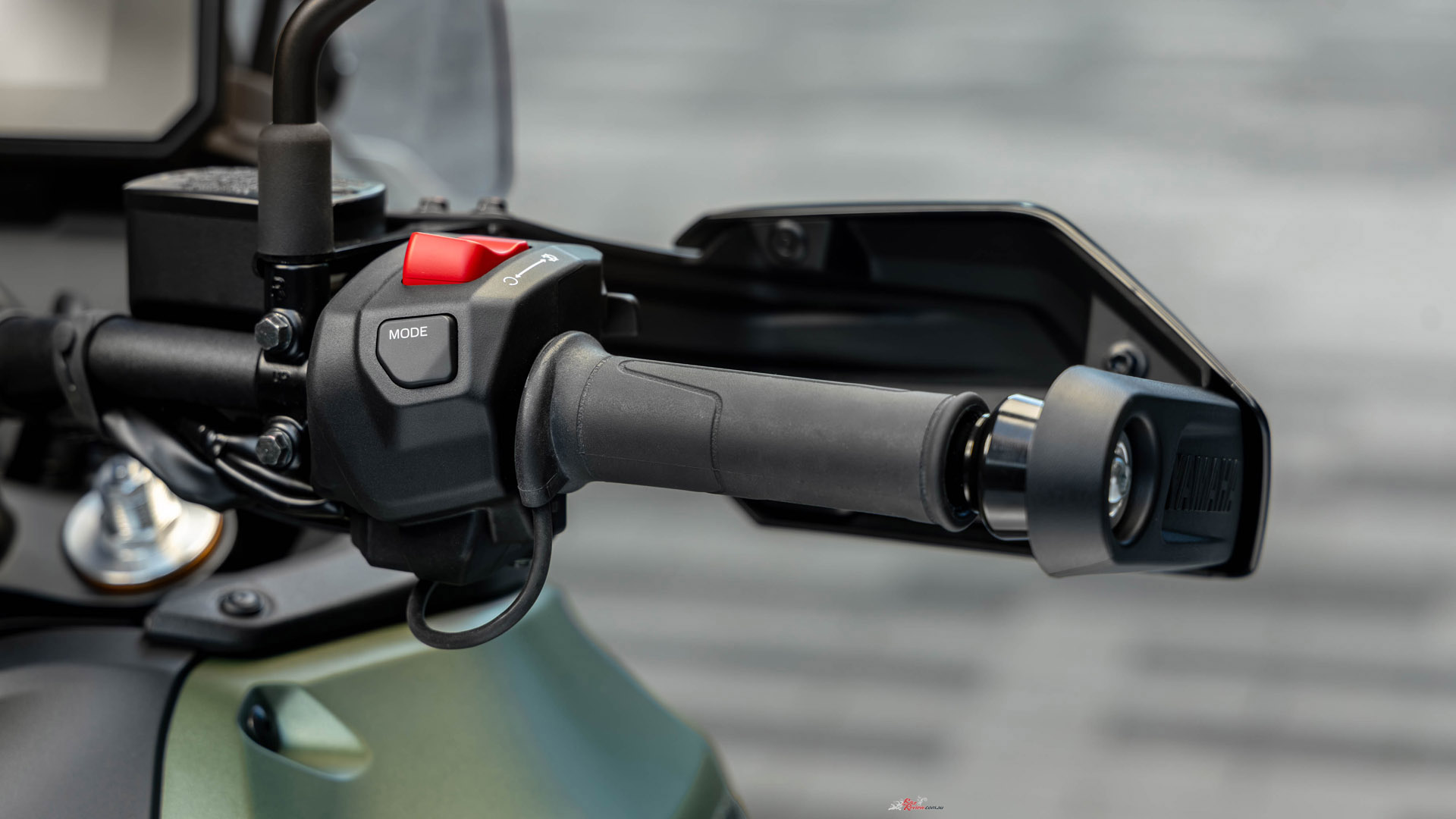
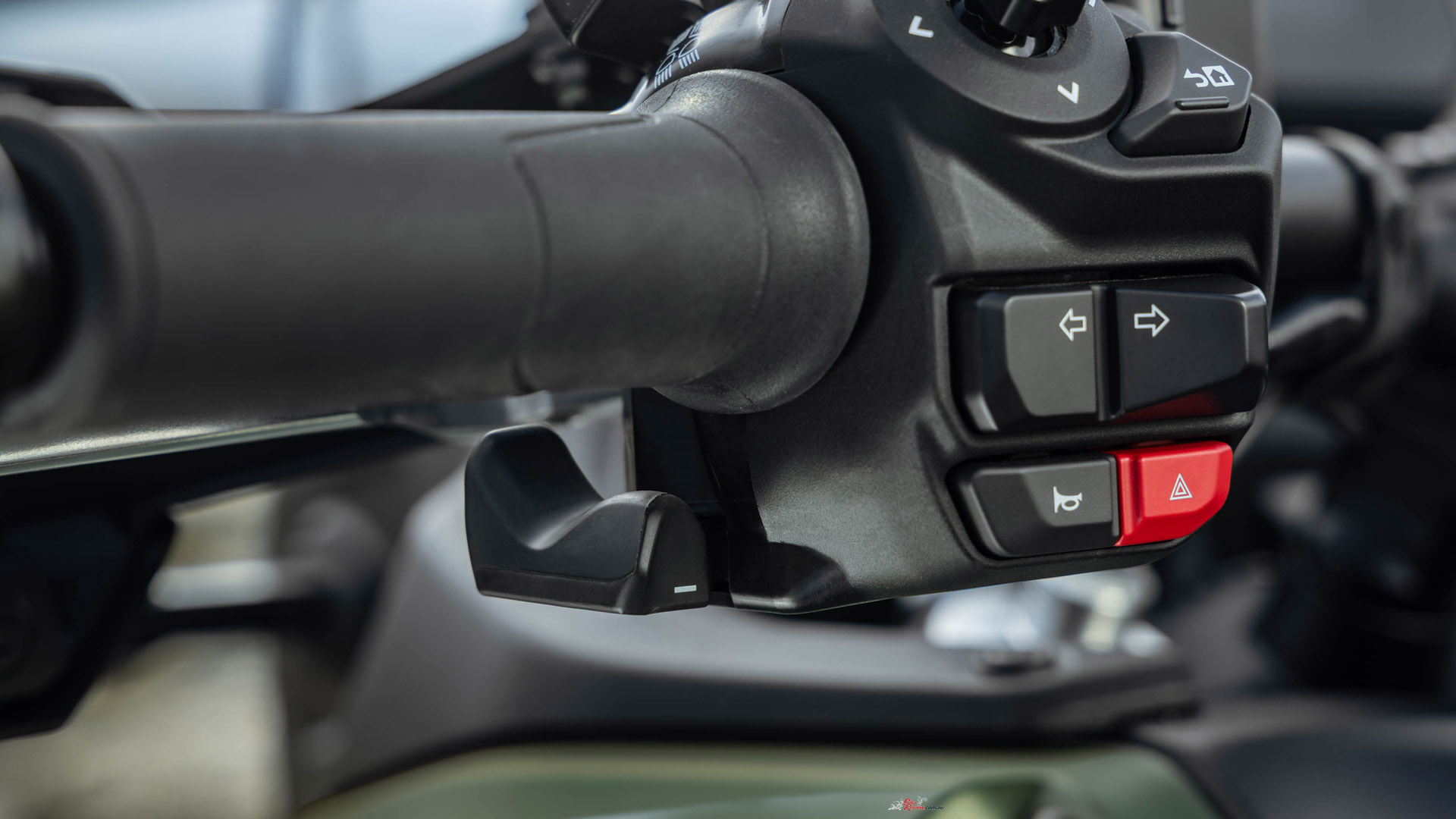
However, the most significant feature of the RW700 is its transmission. Rather than a conventional scooter CVT arrangement, Yamaha has equipped the RW700 Explore with its six-speed Yamaha Automated Manual Transmission (Y-AMT), making it the first Yamaha scooter to feature gear-changing capability. Y-AMT allows riders to choose between manual gear selection and fully automatic operation. In manual mode, changes are made using a see-saw switch integrated into the left handlebar controls, eliminating the need for a conventional clutch lever or foot-operated gearshift. In automatic mode, the system selects gears according to riding conditions.
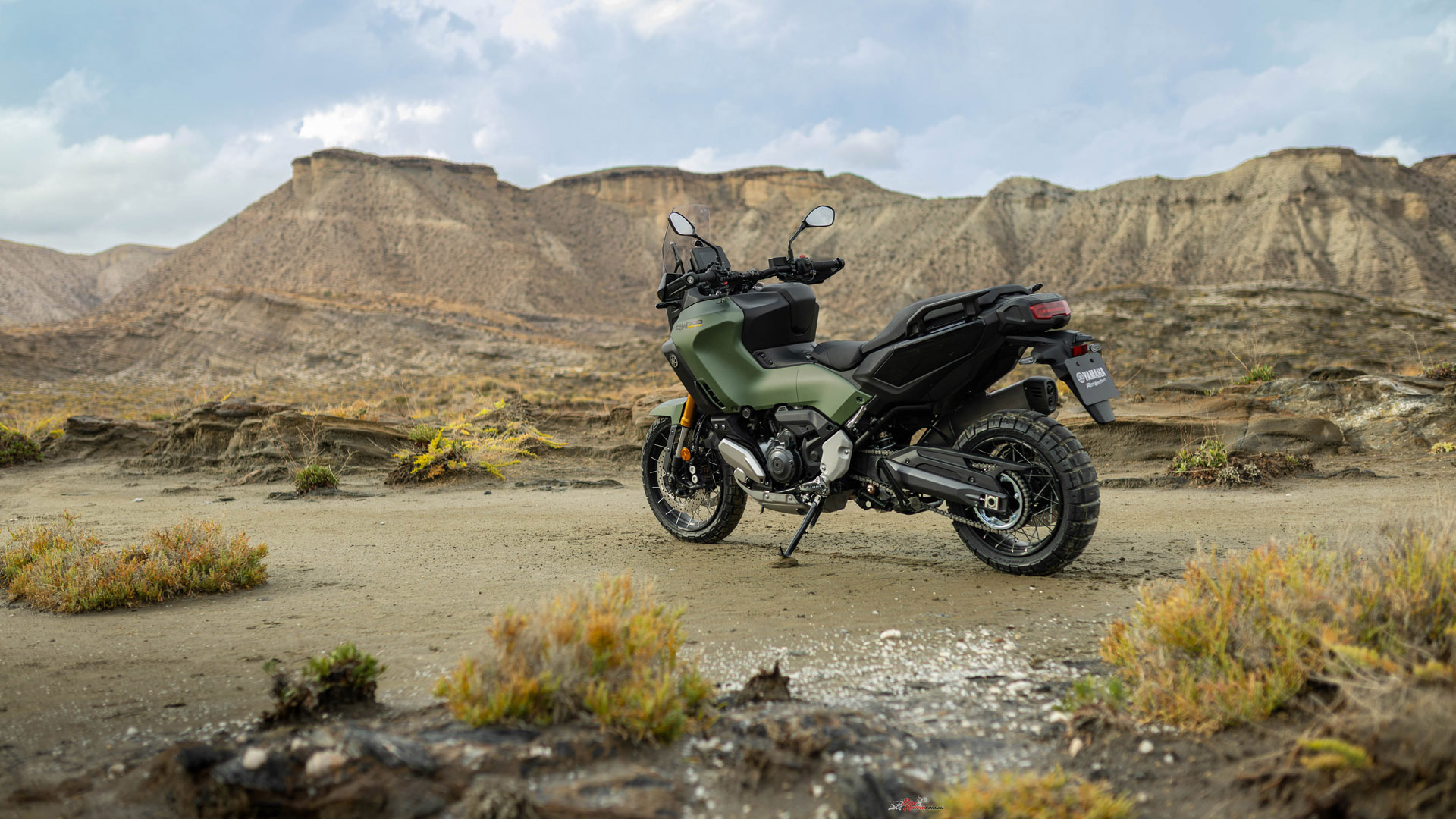
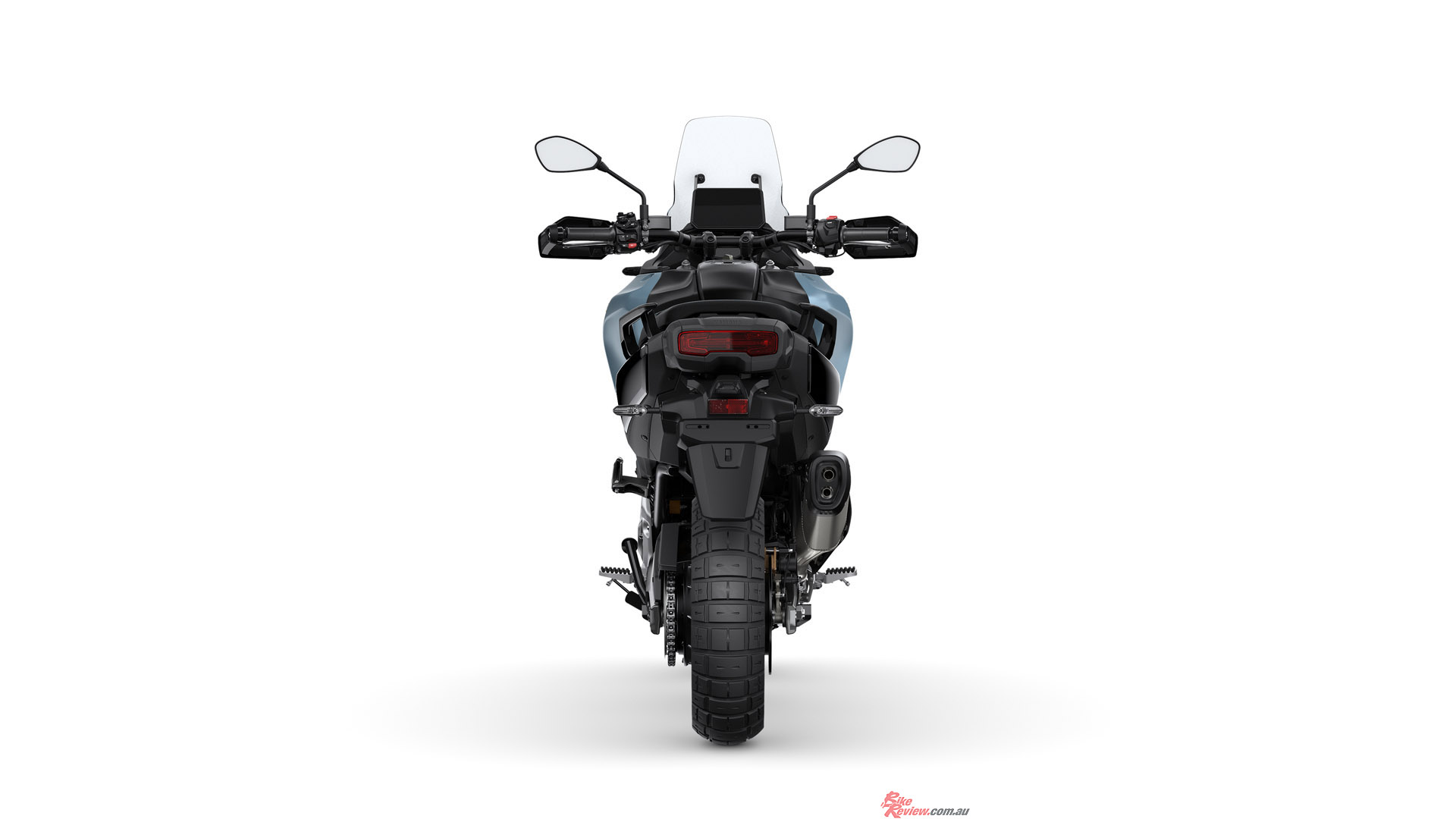
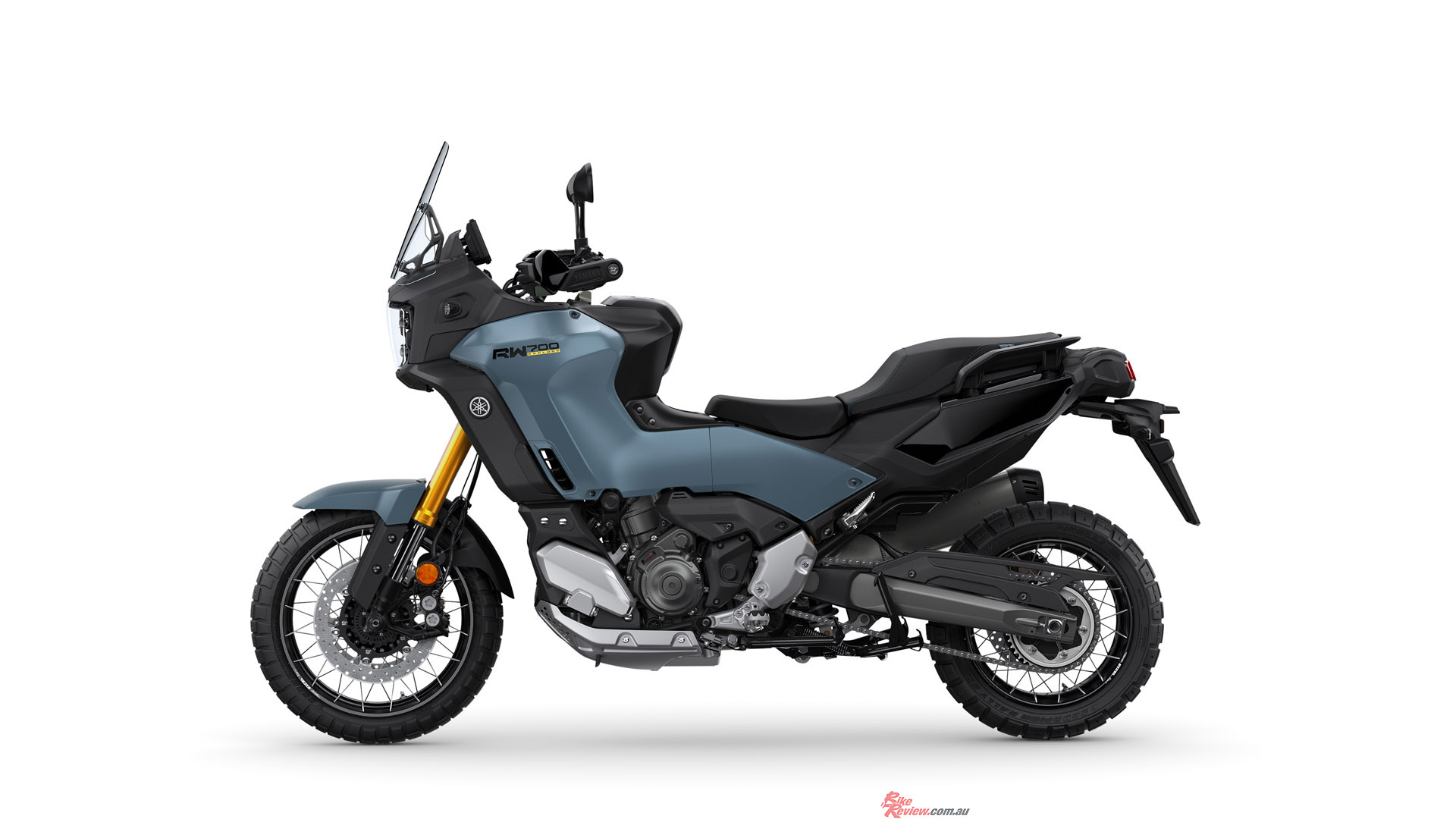
Pirelli Scorpion Rally STR tyres and tubeless spoked 15in and 17in wheels, chain drive.
For the RW700, Yamaha has specifically revised the system to suit both road and off-road riding. Changes include a rubberised clutch damper and revised spring-load settings for the shift rod, designed to provide smoother operation. The shape and positioning of the handlebar-mounted see-saw switch have also been adjusted to suit the RW700’s controls, with Yamaha targeting more intuitive shifting and improved brake control.
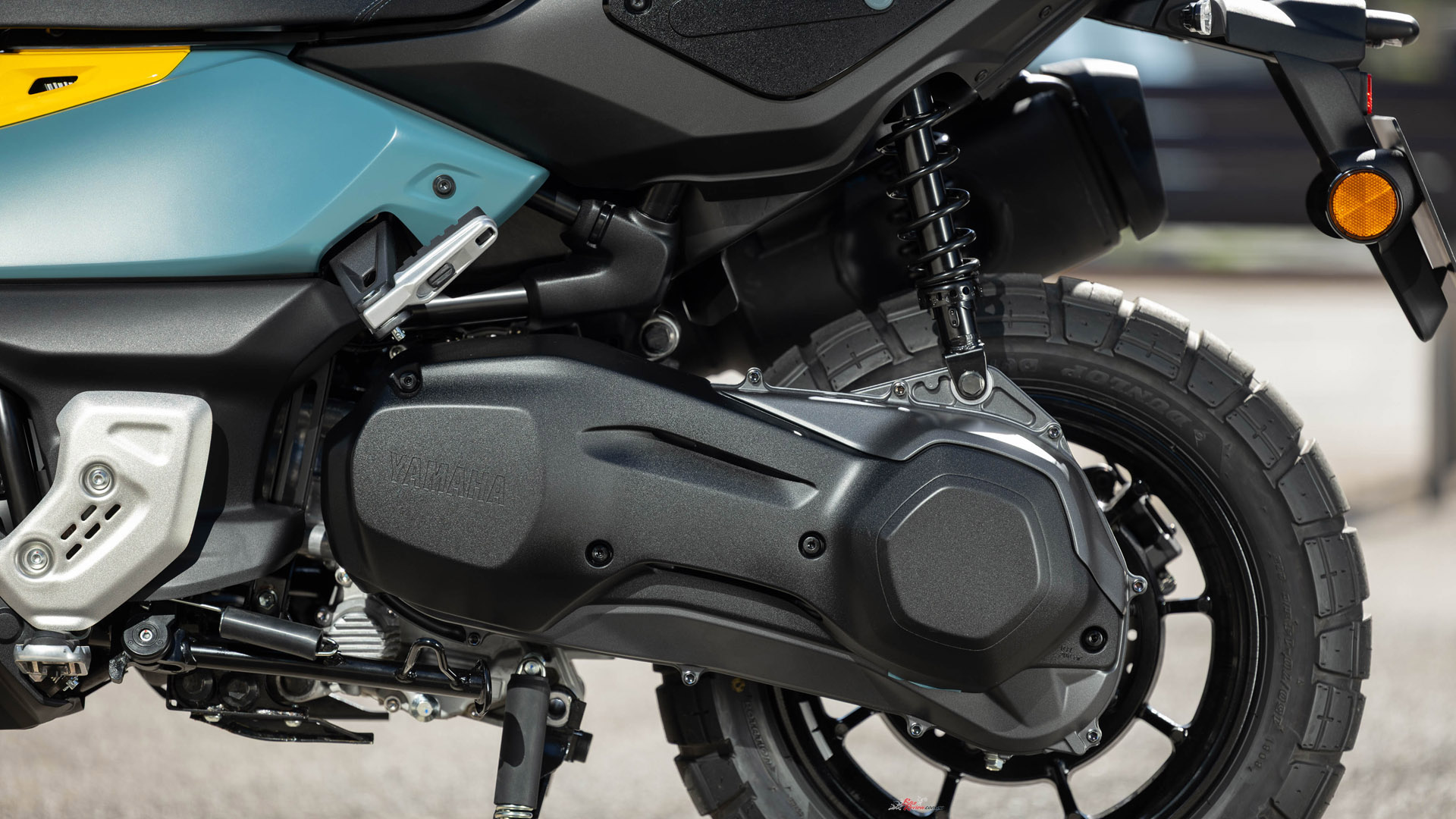
The automatic transmission also receives dedicated road and gravel shift strategies. In Gravel mode, the system suppresses upshifts following throttle application and while the rear wheel is sliding. This allows the rider to maintain engine speed and throttle control while generating a degree of rear-wheel slip on loose surfaces.
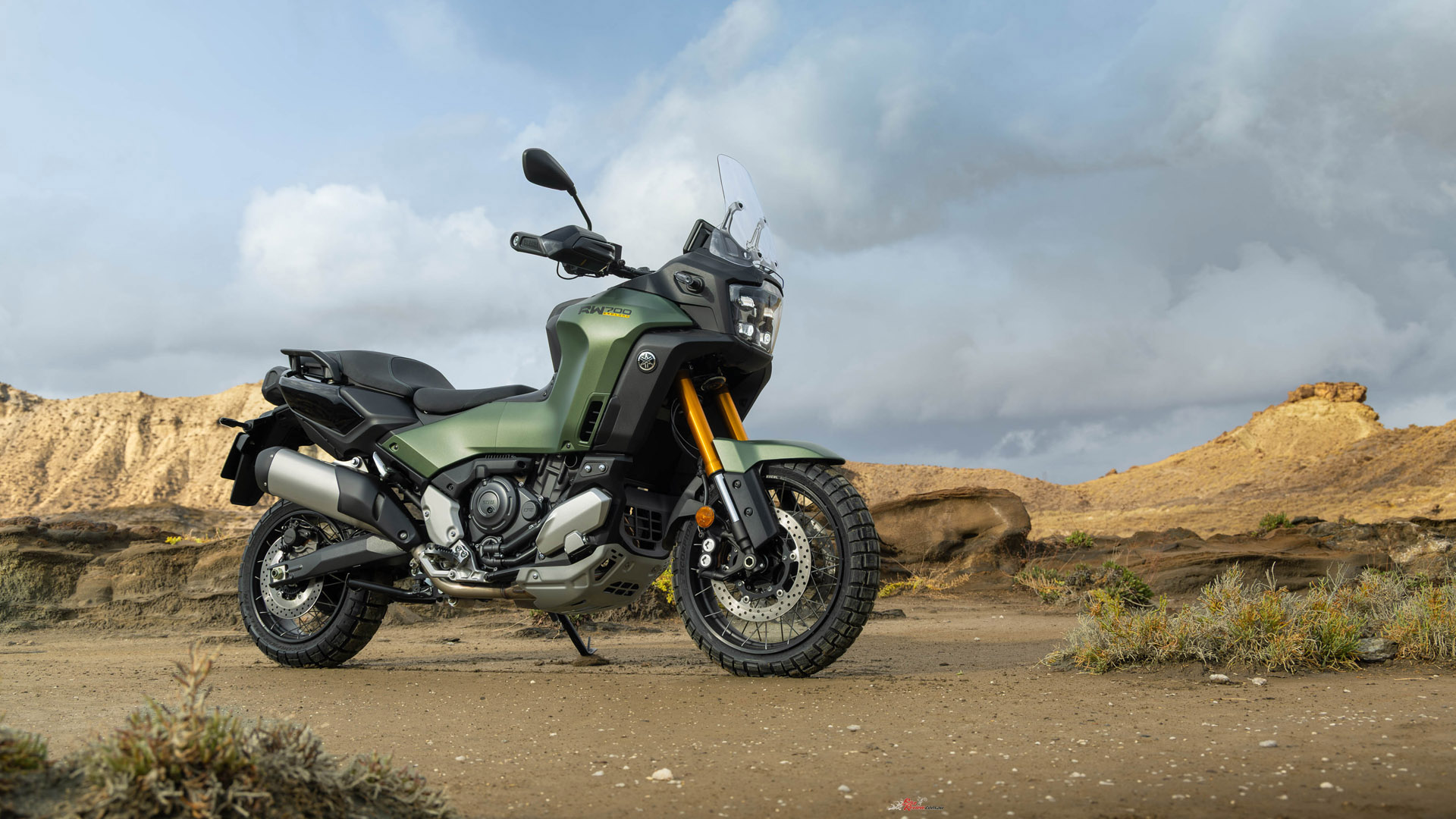
Twin 298mm rotors at the front and a big 267mm rotor out the back.
Yamaha has also introduced a control strategy intended to reduce the possibility of the engine stalling during difficult off-road situations. When rear-wheel lock-up or hard braking is detected, clutch capacity is reduced to help keep the engine running. This is intended to provide more predictable behaviour when encountering obstacles or situations where the rear wheel loses traction.
Electronics developed for adventure riding
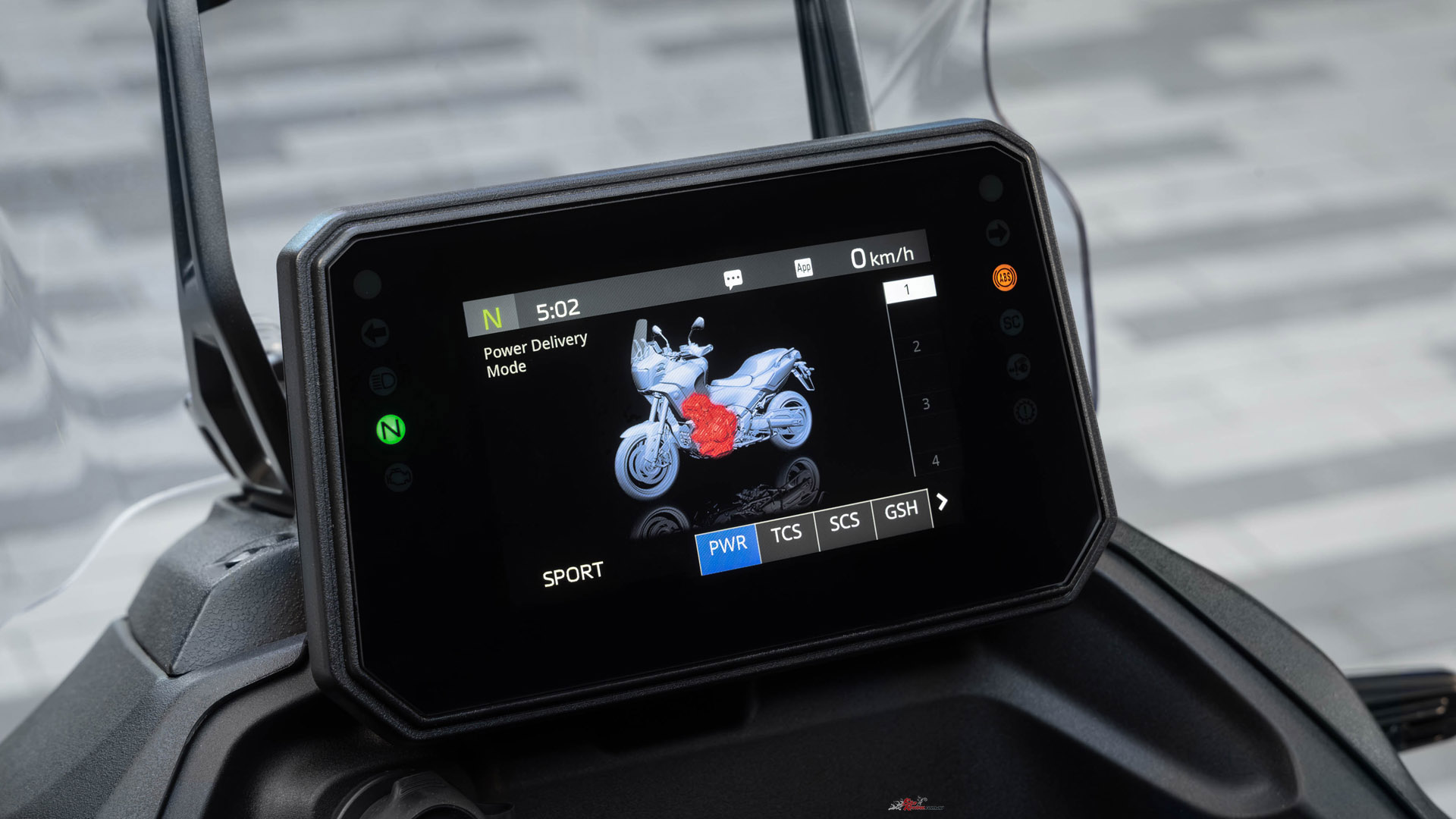
The RW700 Explore receives a six-axis IMU, which supplies real-time information to the ECU and supports a comprehensive electronic rider-aid package. Yamaha Ride Control (YRC) allows riders to select engine characteristics and electronic intervention levels to suit conditions and personal preference. The system is divided into ROAD and GRAVEL modes, with three road settings and two gravel settings.
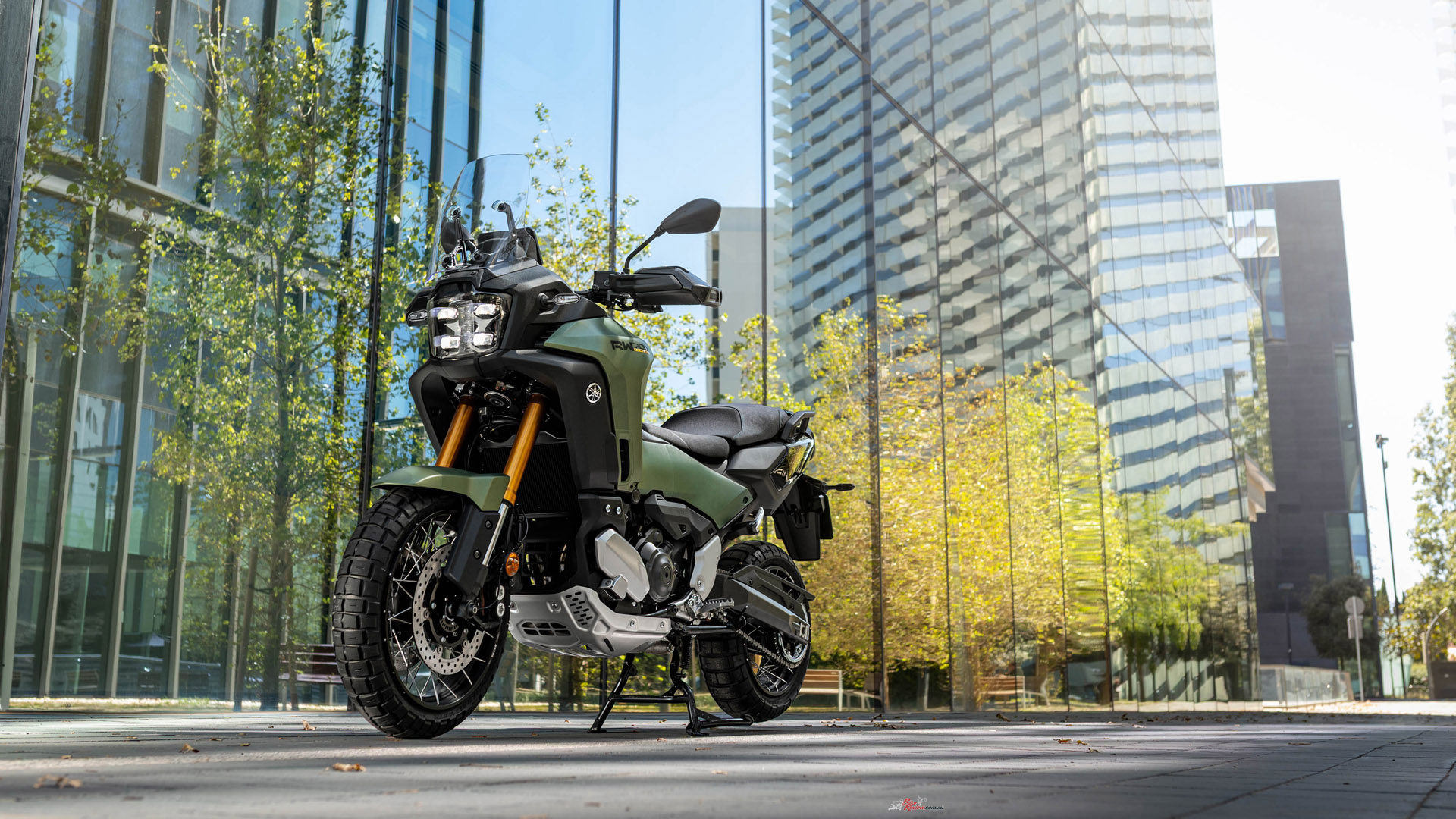
The scooter version of a Hummer in the city streets!
ROAD mode offers Sport, Street and Eco selections. Sport provides a sharper engine response for twisty roads, Street is designed for a broader range of surfaces and everyday riding, while Eco reduces power response to prioritise fuel efficiency and ease of use. For off-road riding, Explore adjusts shifting and vehicle behaviour to suit loose surfaces, while Explore+ provides a stronger engine response and can be customised to suit individual preferences.
The electronic package includes Power Delivery Mode, Traction Control System (TCS), Slide Control System (SCS), Brake Control System (BCS) and Back-slip Regulator (BSR)…
The electronic package includes Power Delivery Mode, Traction Control System (TCS), Slide Control System (SCS), Brake Control System (BCS) and Back-slip Regulator (BSR). Power Delivery Mode adjusts throttle response, while traction control manages the drive force delivered to the rear tyre. Slide Control detects rear-wheel movement and adjusts engine output, and Brake Control manages brake pressure when the system detects a slide while the machine is leaned over.
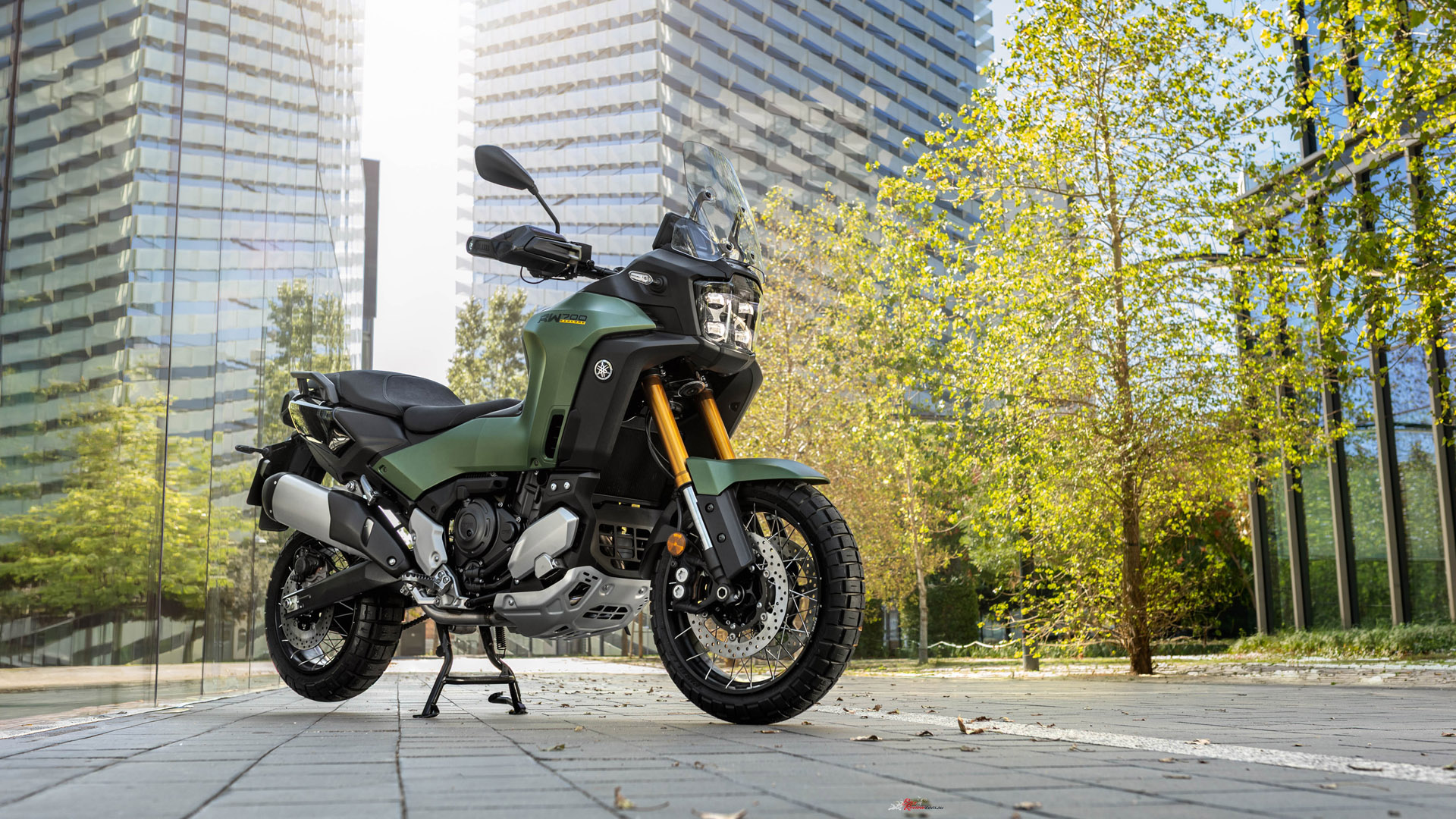
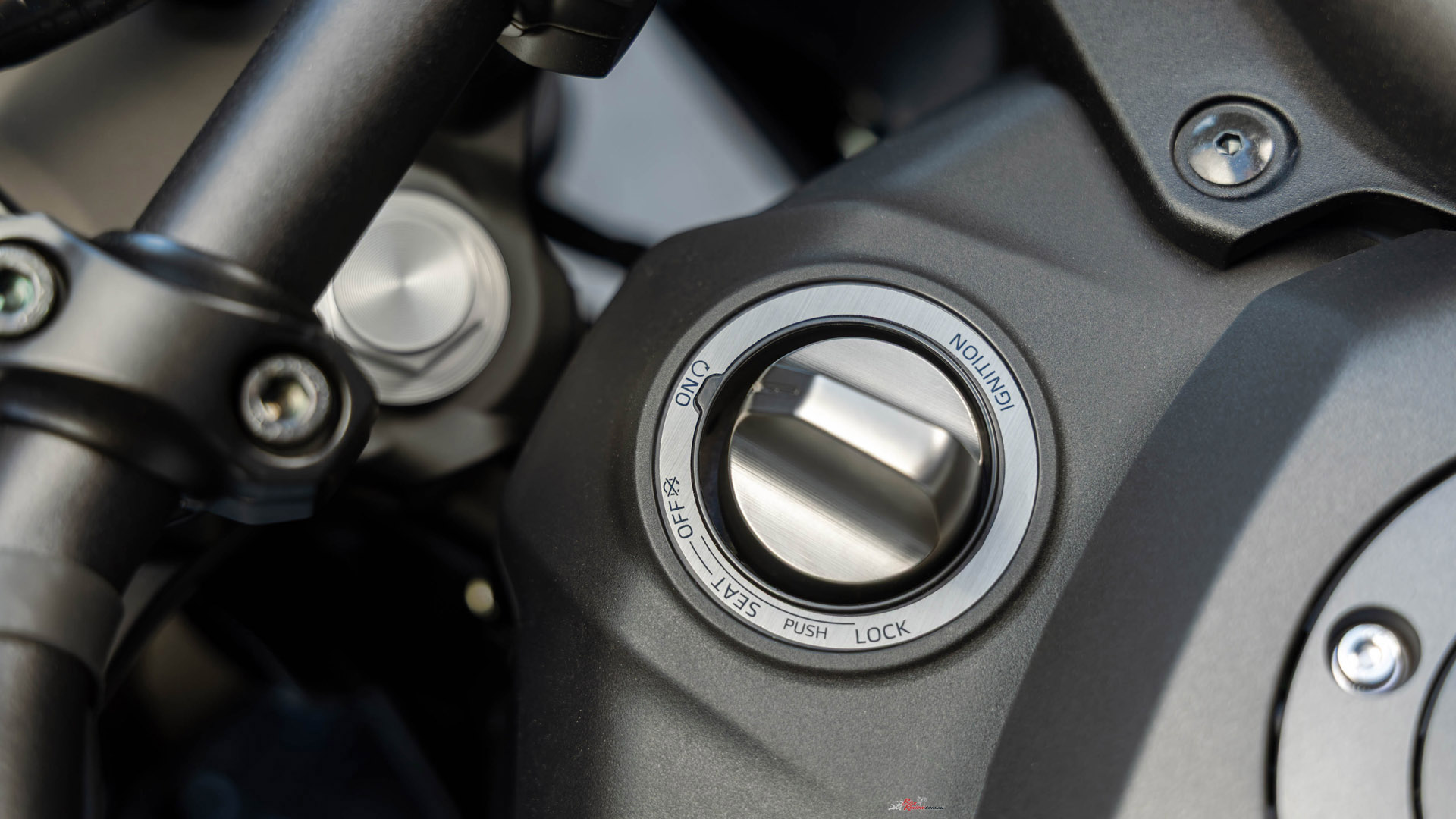
Centre-stand for convenience, smart key for security.
Back-slip Regulation manages engine torque when rear-wheel lock-up is detected. Both BCS and BSR can be switched on or off in the available modes, while rear ABS can be disabled when riding in GRAVEL mode for additional control.
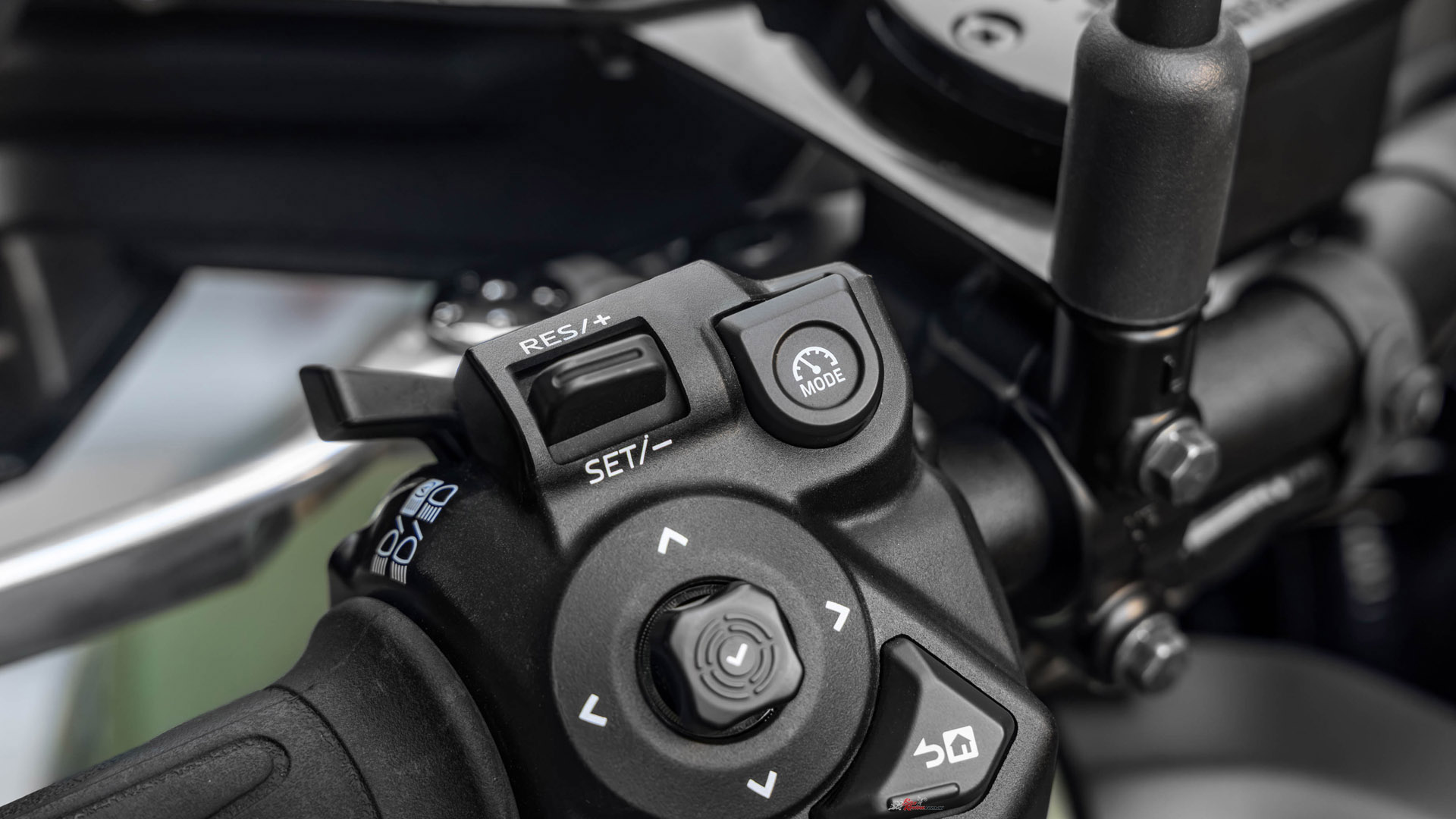
Cruise control is standard, working alongside Yamaha’s Variable Speed Limiter (YVSL). The combination is intended to make longer-distance riding more comfortable, while the automatic transmission allows riders to concentrate on the road or trail ahead.
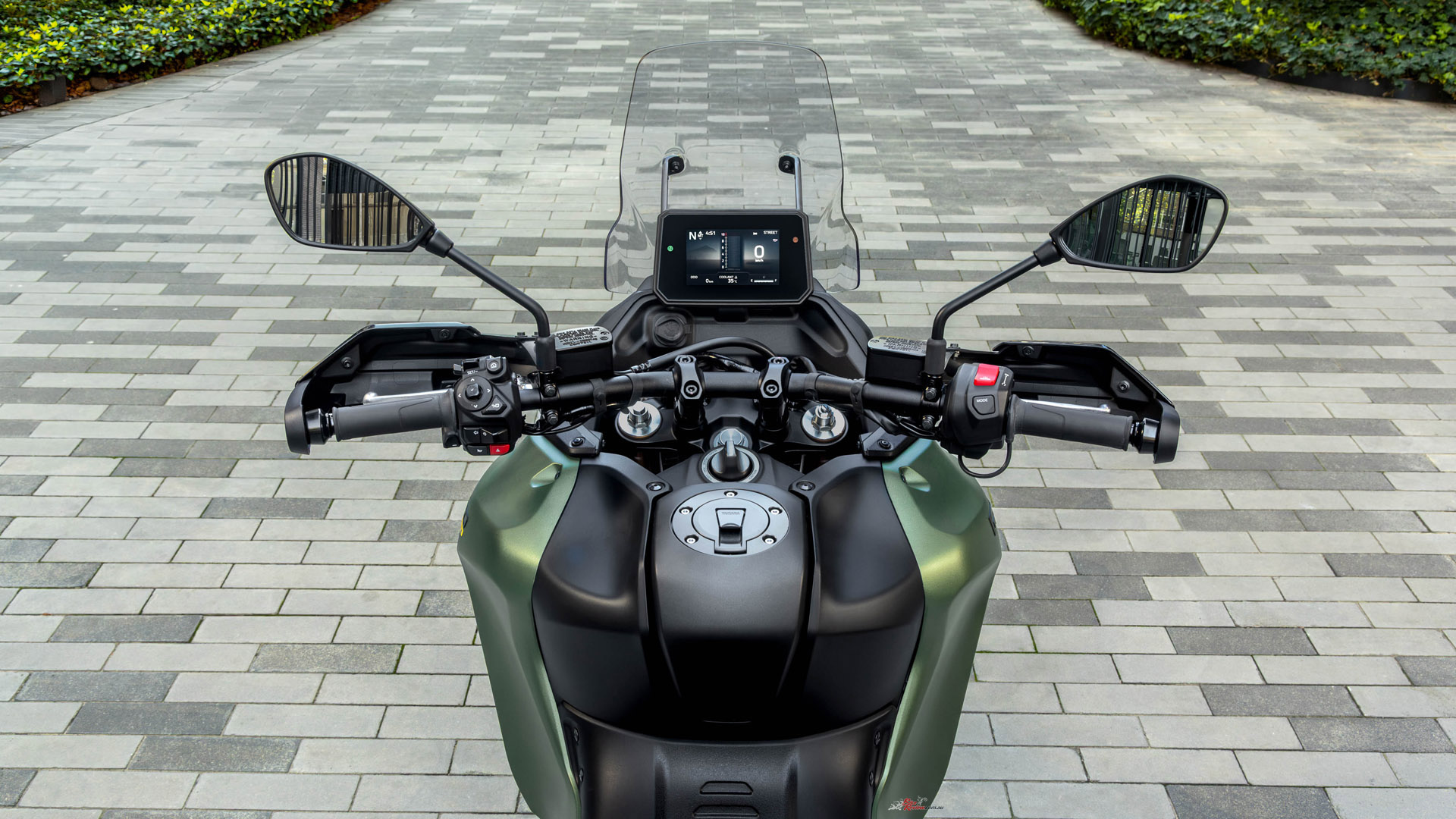
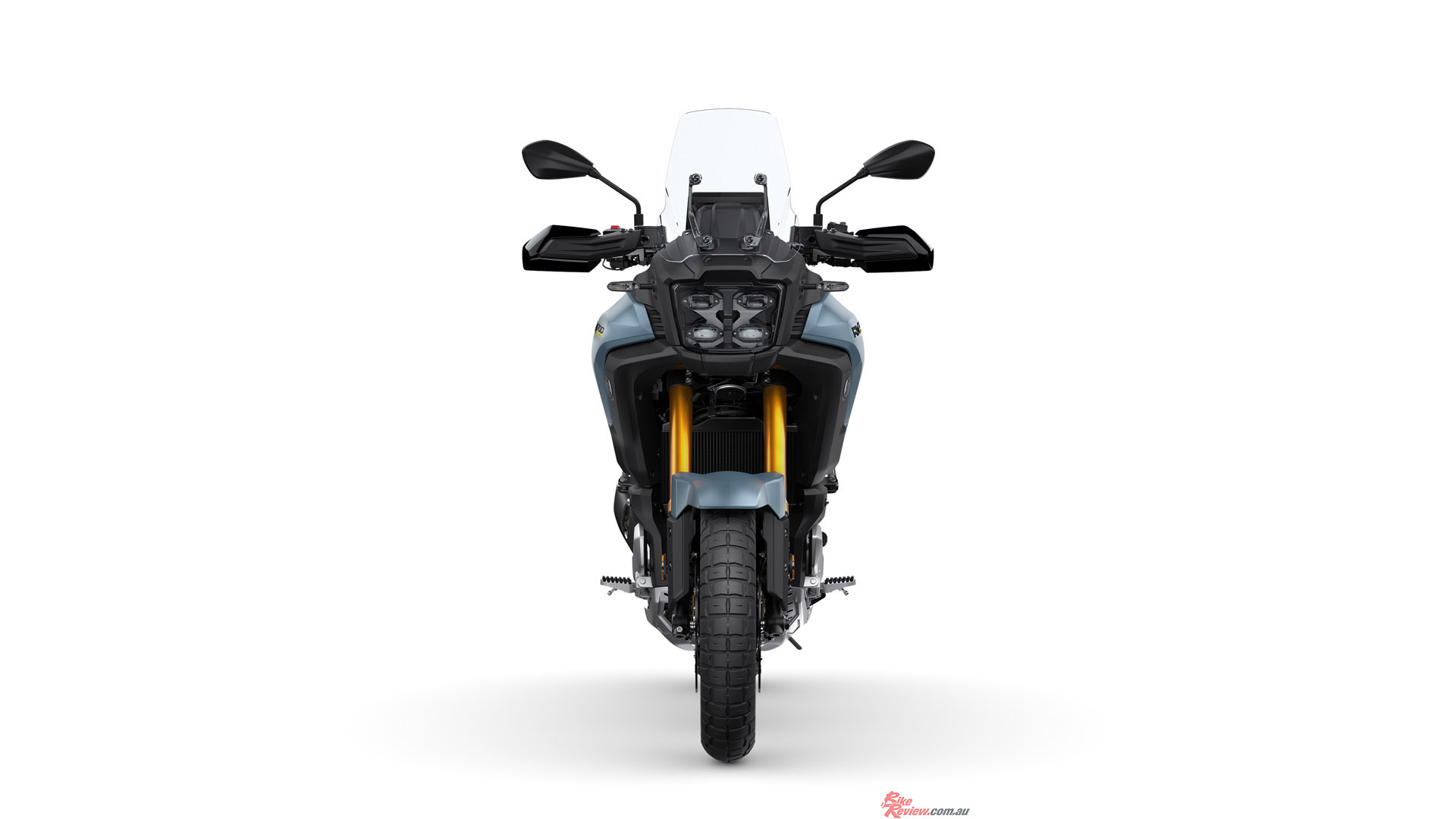
What a cockpit! Motorcycle meets scooter.
Adventure chassis and premium equipment
The RW700 Explore uses a backbone-type high-tensile steel tube frame designed to provide stability over uneven surfaces. Yamaha has also used a hybrid body construction, combining steel and boxed plastic resin to provide room for the rider to move around and grip the machine when standing.
The footpegs are adjustable through four positions, allowing riders to move them forwards, backwards, higher or lower…
Suspension travel is a key part of the RW700’s adventure credentials. A 41mm inverted front fork provides 160mm of travel, while the rear uses a bottom-link-type monoshock with 155mm of travel. The Explore specification adds 15mm of front preload adjustment and 11 rebound damping settings, with the rear shock also offering preload and rebound adjustment. Ground clearance is 170mm, with an 810mm seat height. Yamaha has tapered the front of the seat to make it easier to reach the ground, while still providing enough room to move around when riding off-road.
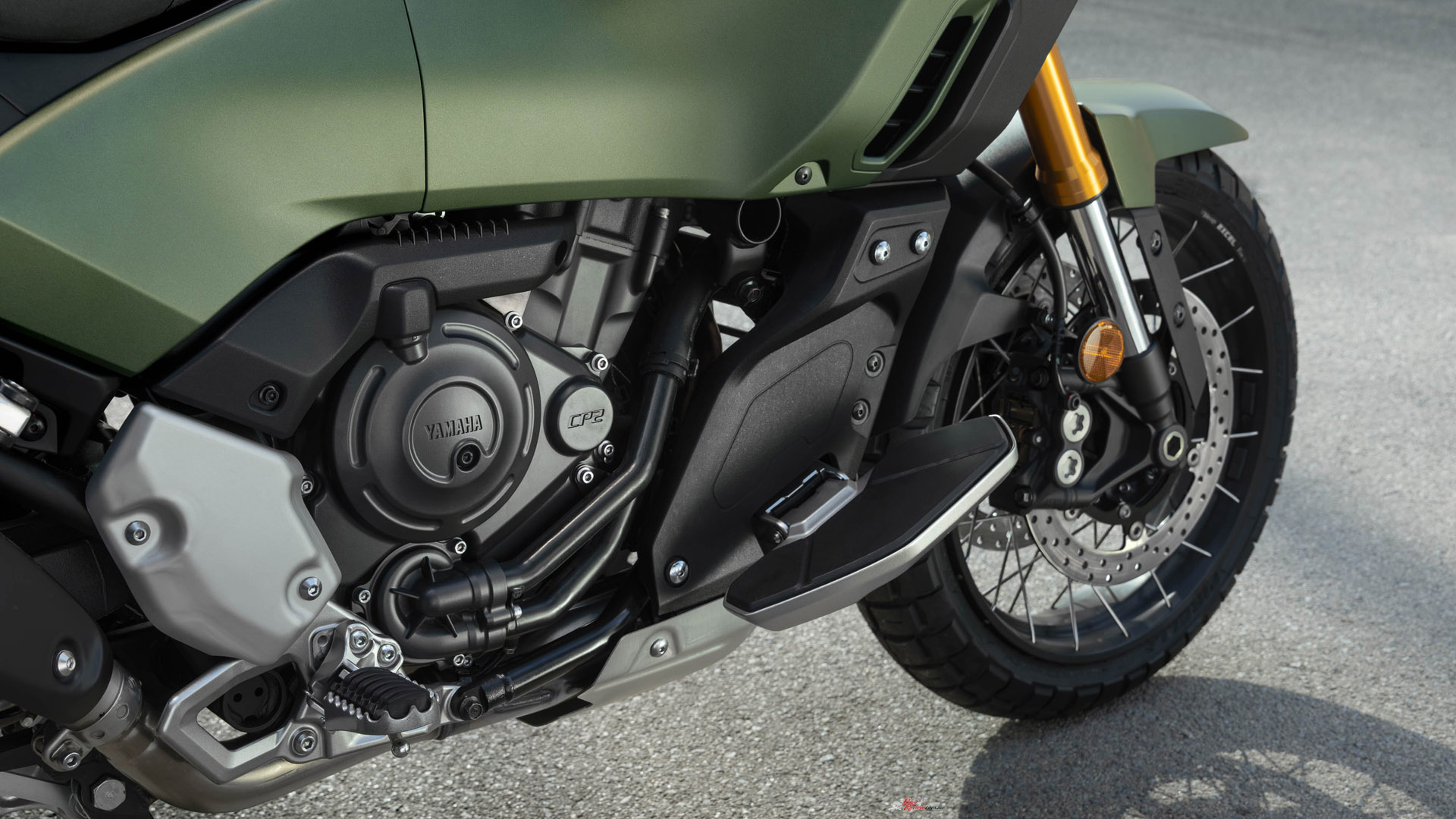
A CP2 in a scooter, who would have imagined!
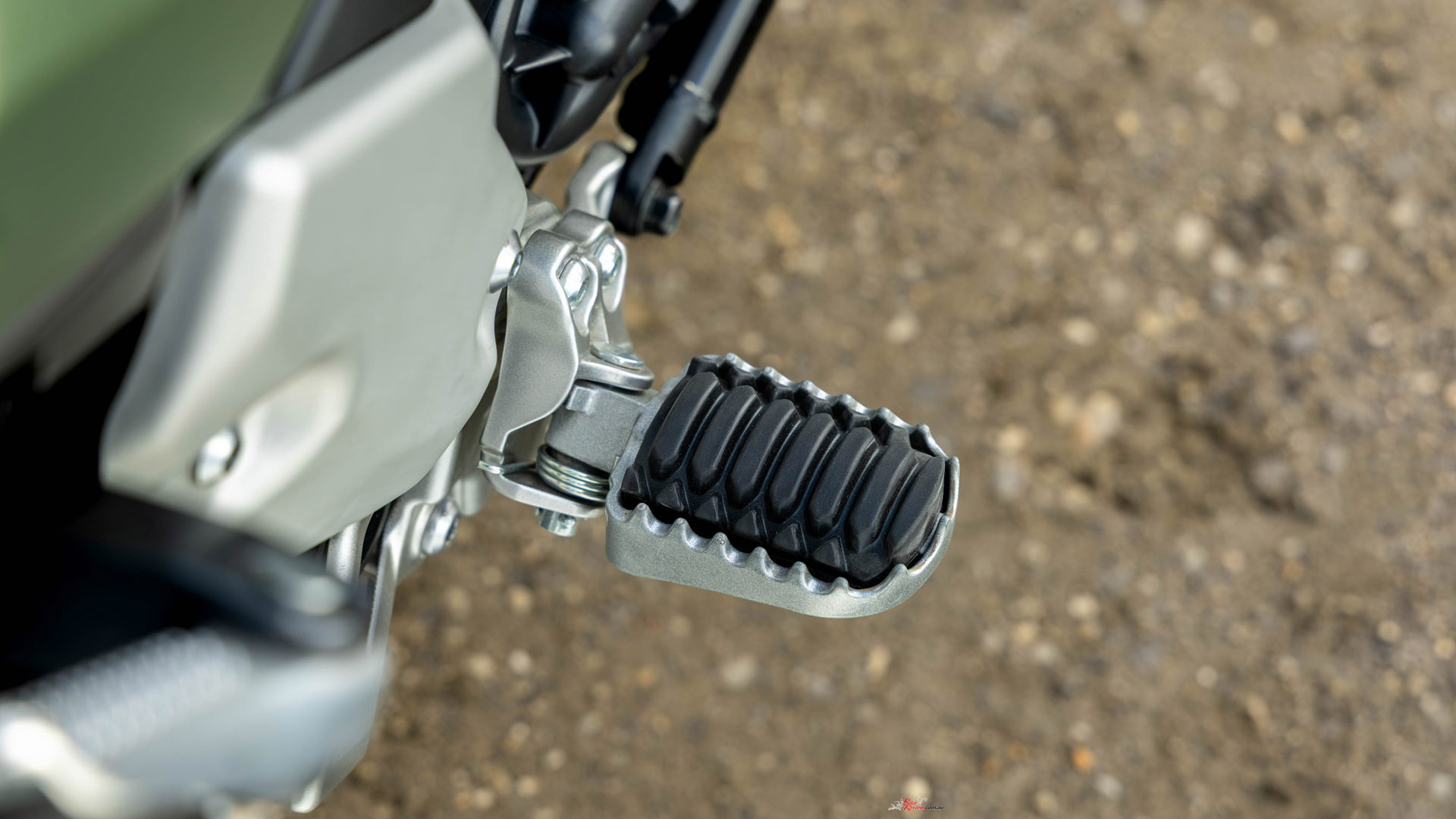
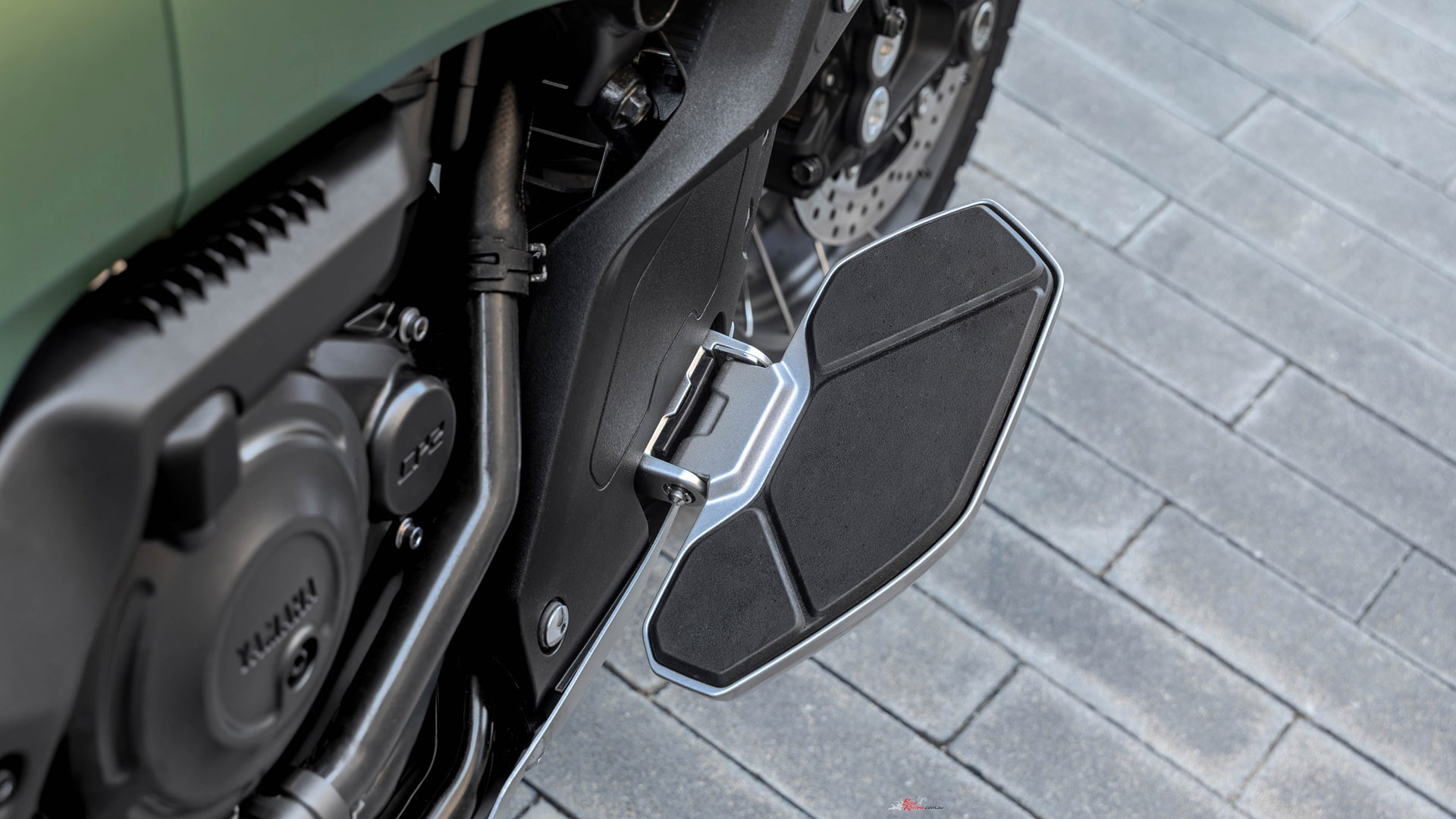
The footpegs are adjustable through four positions, allowing riders to move them forwards, backwards, higher or lower to suit their preferred riding position. Rubber inserts reduce vibration during normal road use and can be removed when greater grip is required off-road. Folding footrests are positioned further forward, providing a feet-forward option for relaxed cruising and comfort on longer journeys.
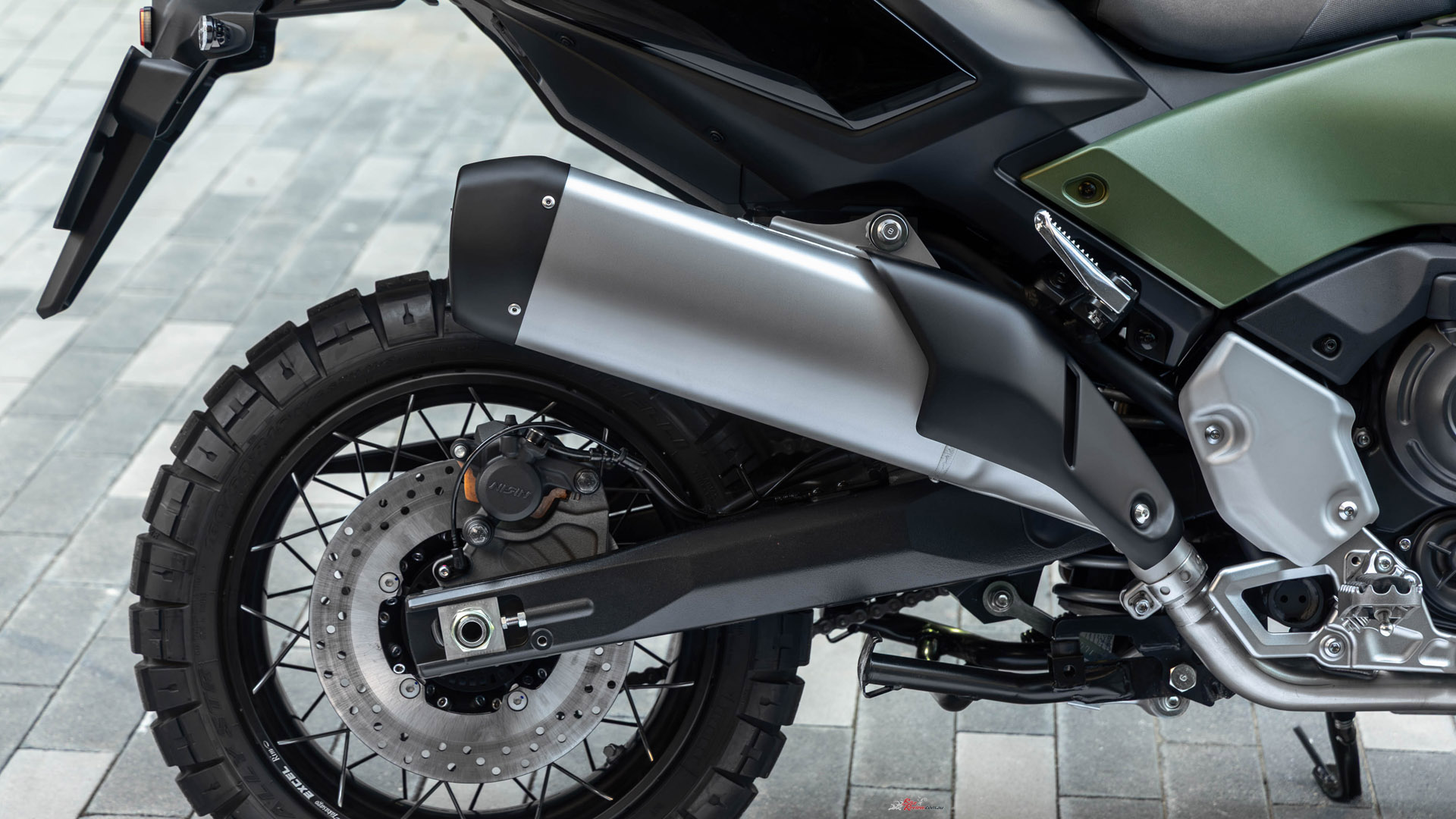
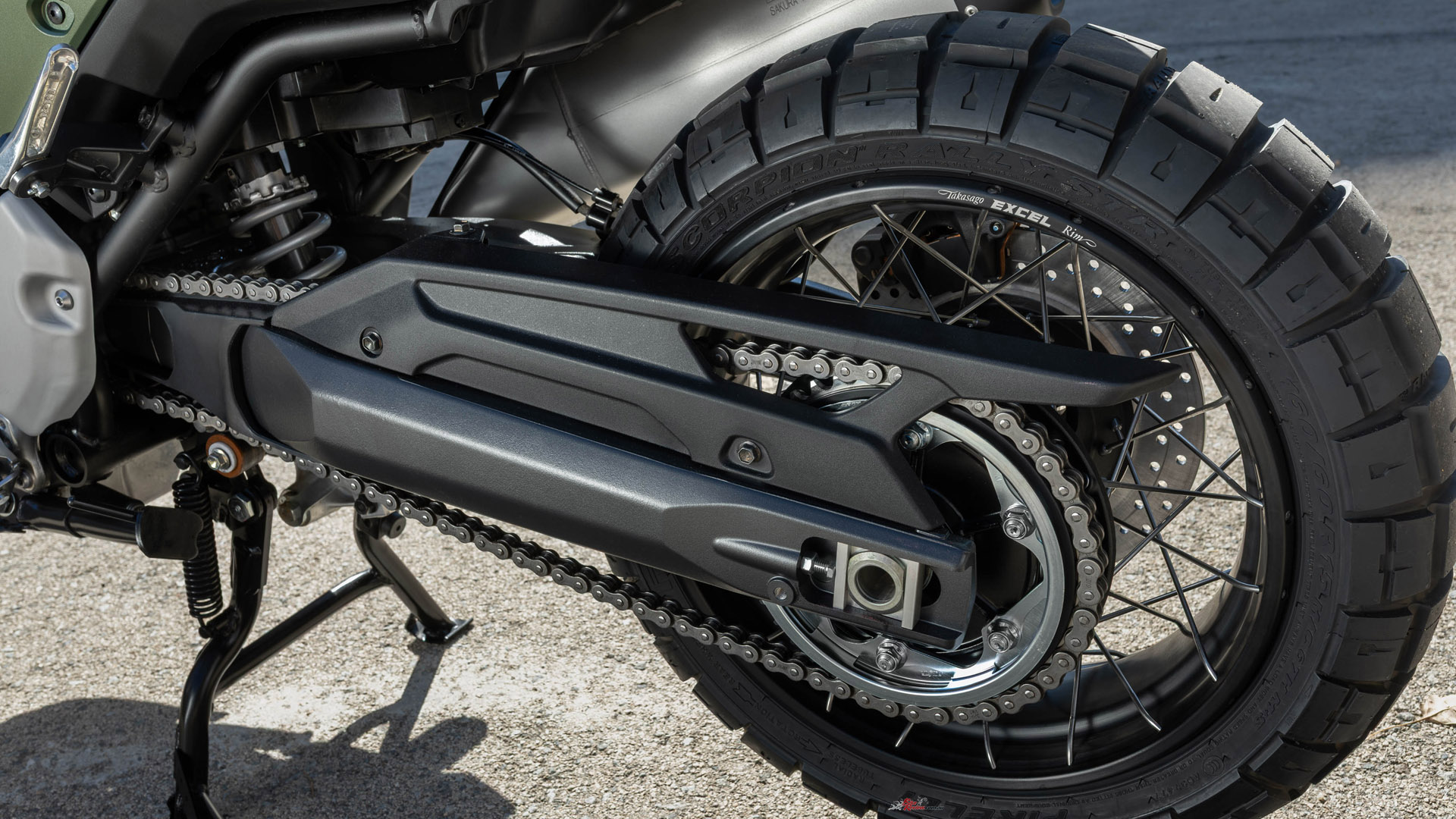
The RW700 runs a 17-inch front and 15-inch rear spoked wheel combination, using lightweight aluminium rims and stainless-steel cross spokes. Pirelli Scorpion Rally STR tubeless tyres are fitted, in 120/70R17 front and 160/60R15 rear sizes. Braking is handled by twin 298mm front discs with four-piston radial-mount calipers and a single 267mm rear disc with a single-piston caliper. ABS is standard at both ends, with the rear system able to be disabled in Gravel mode.
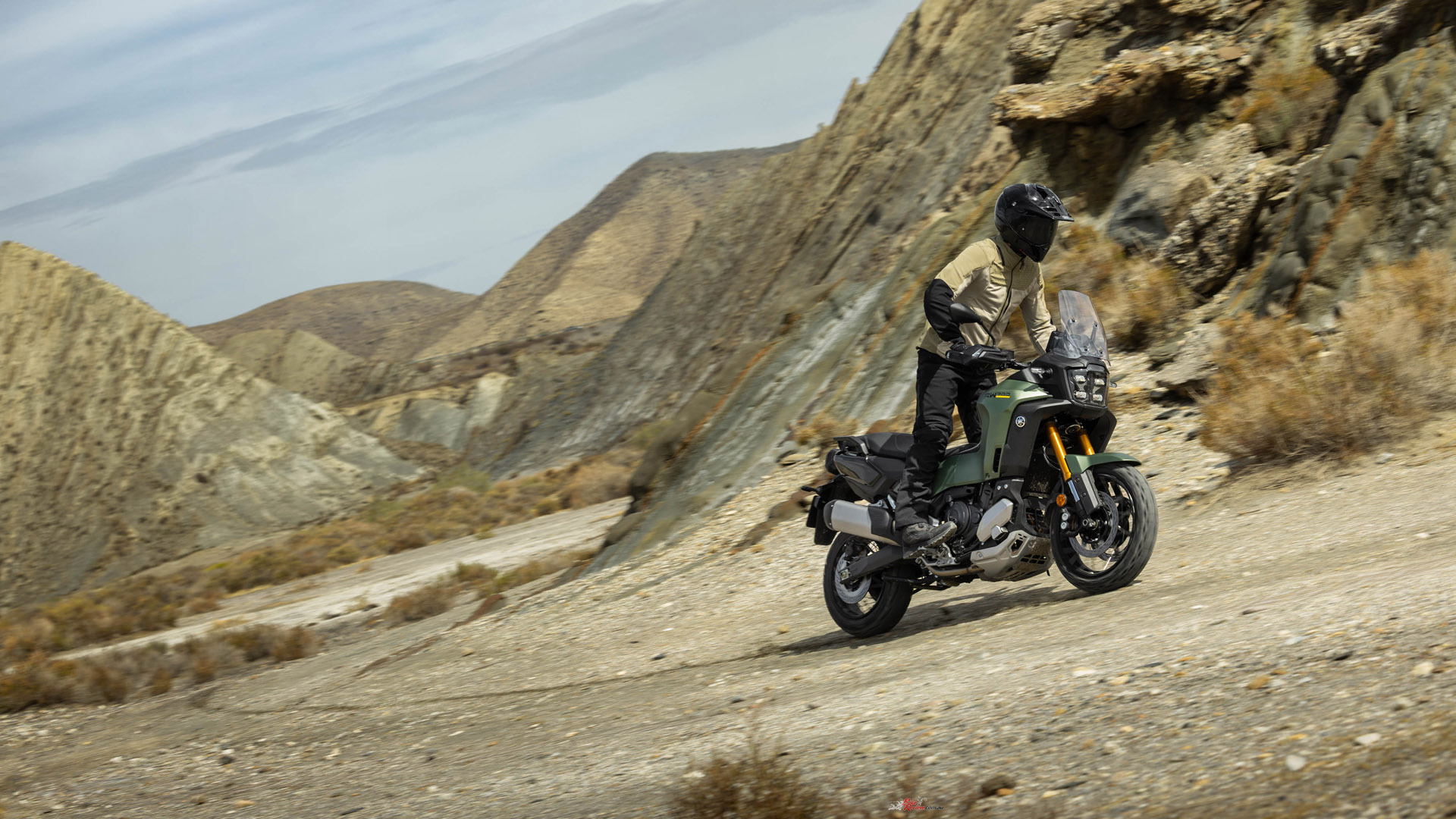
Gravel mode allows rear ABS to be switched off.
The Explore is the only RW700 variant specified for Australia and comes with a substantial equipment package. Heated grips and a heated rider’s seat both offer ten levels of adjustment, while a centre-stand, backlit switchgear and knuckle visors add to its touring and adventure credentials.
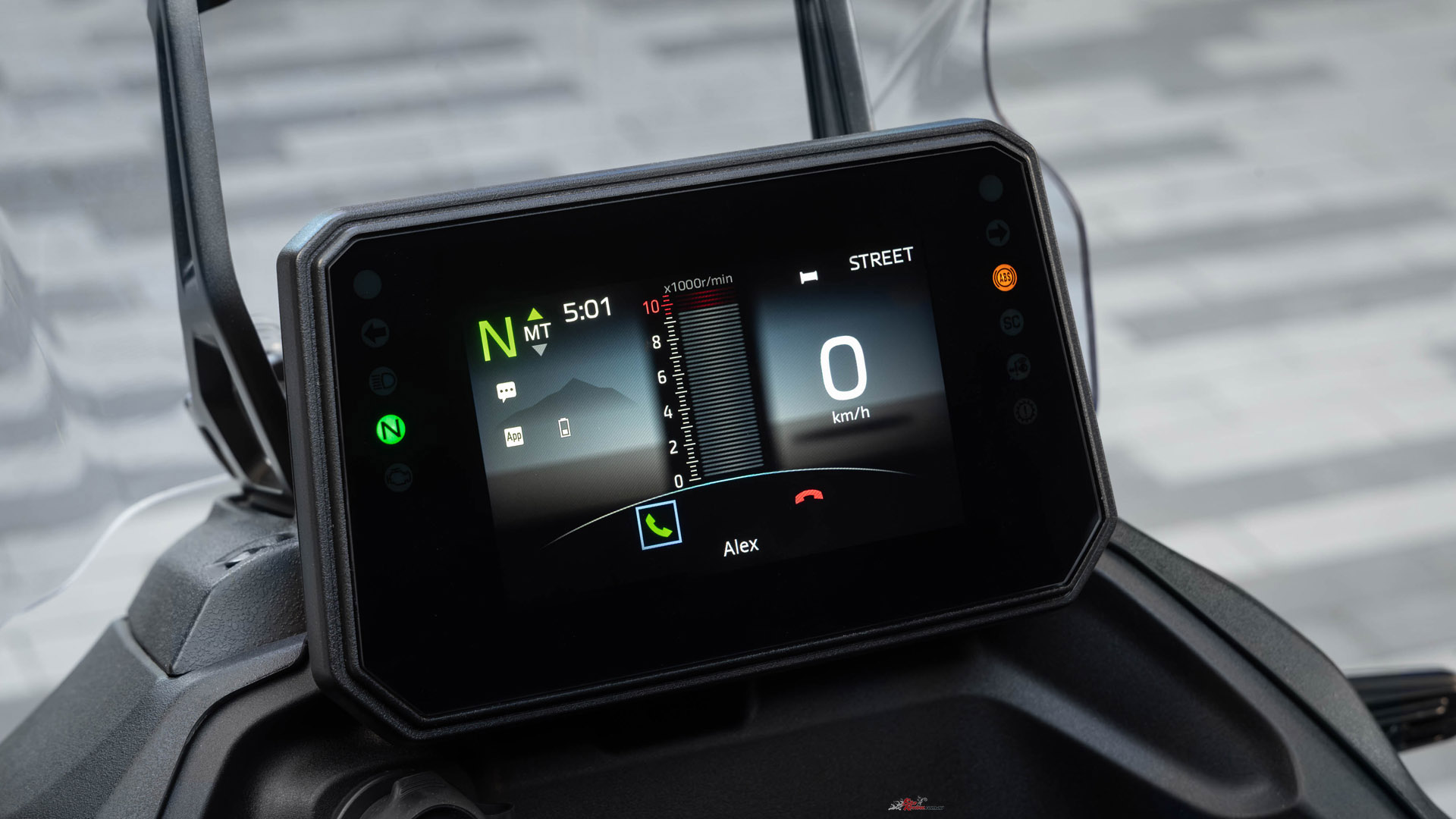
The five-inch full-colour TFT display offers three screen themes and smartphone connectivity through Yamaha’s free MyRide app. Garmin StreetCross navigation is also available, providing full-map or turn-by-turn navigation with real-time traffic information. A USB-C socket is fitted to keep devices charged. Smart key technology allows the rider to operate the ignition, steering lock, seat lock and fuel-cap release while carrying the key fob. A one-push starter system activates the engine once the brake lever is applied, with the starter motor automatically disengaging.
Back-slip regulator, Slide control.
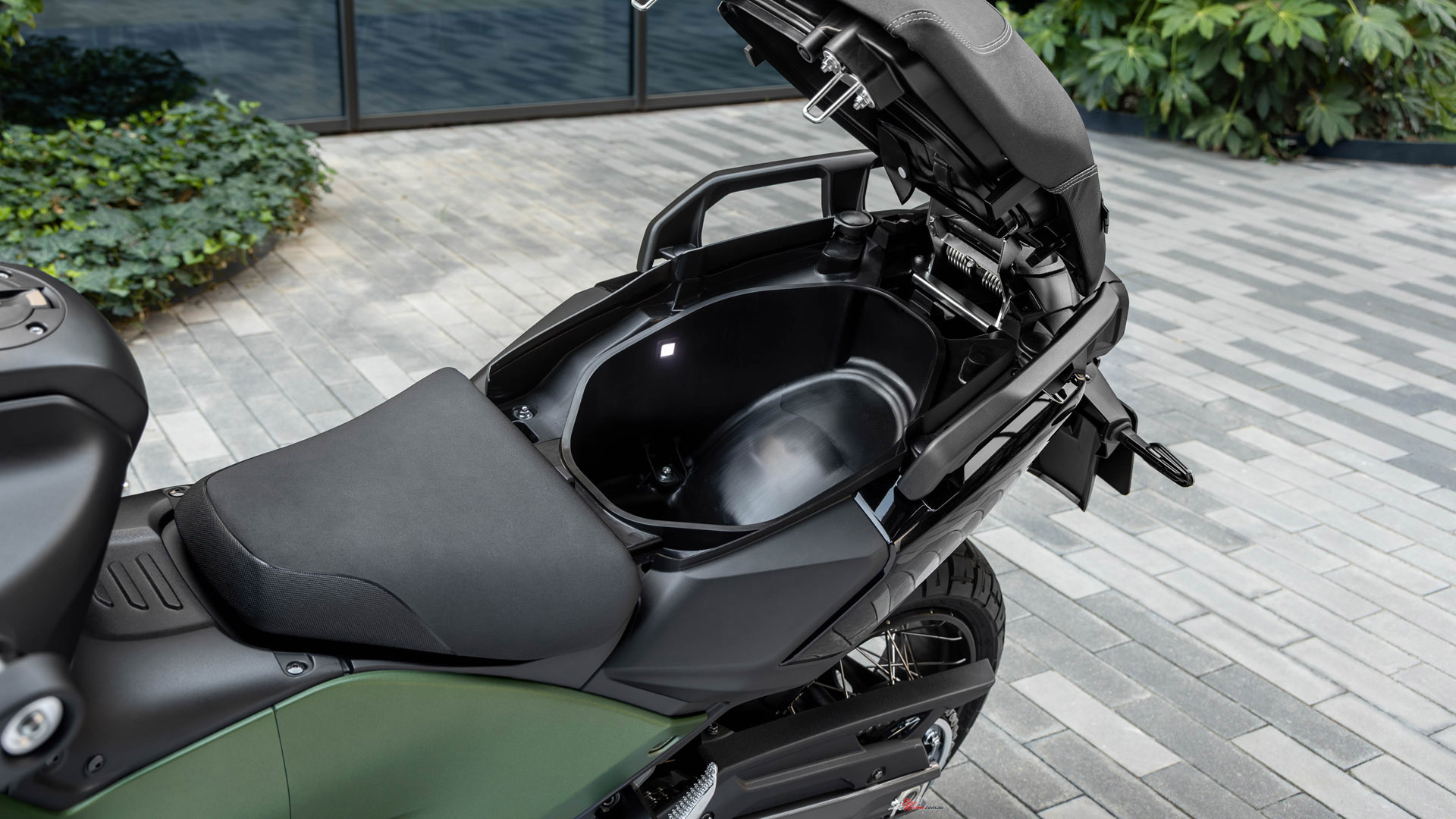
The RW700 also features self-cancelling LED indicators, hazard lights and Emergency Stop Signalling. A light press of the indicator switch provides a three-flash lane-change signal, while sudden braking activates both indicators to warn following traffic. Underseat storage is designed to accommodate a full-face helmet, depending on its size and brand, while the passenger seat has a wide seating surface and an illuminated storage compartment beneath it.
RW350 – a new engine and Yamaha Dynamic Ride
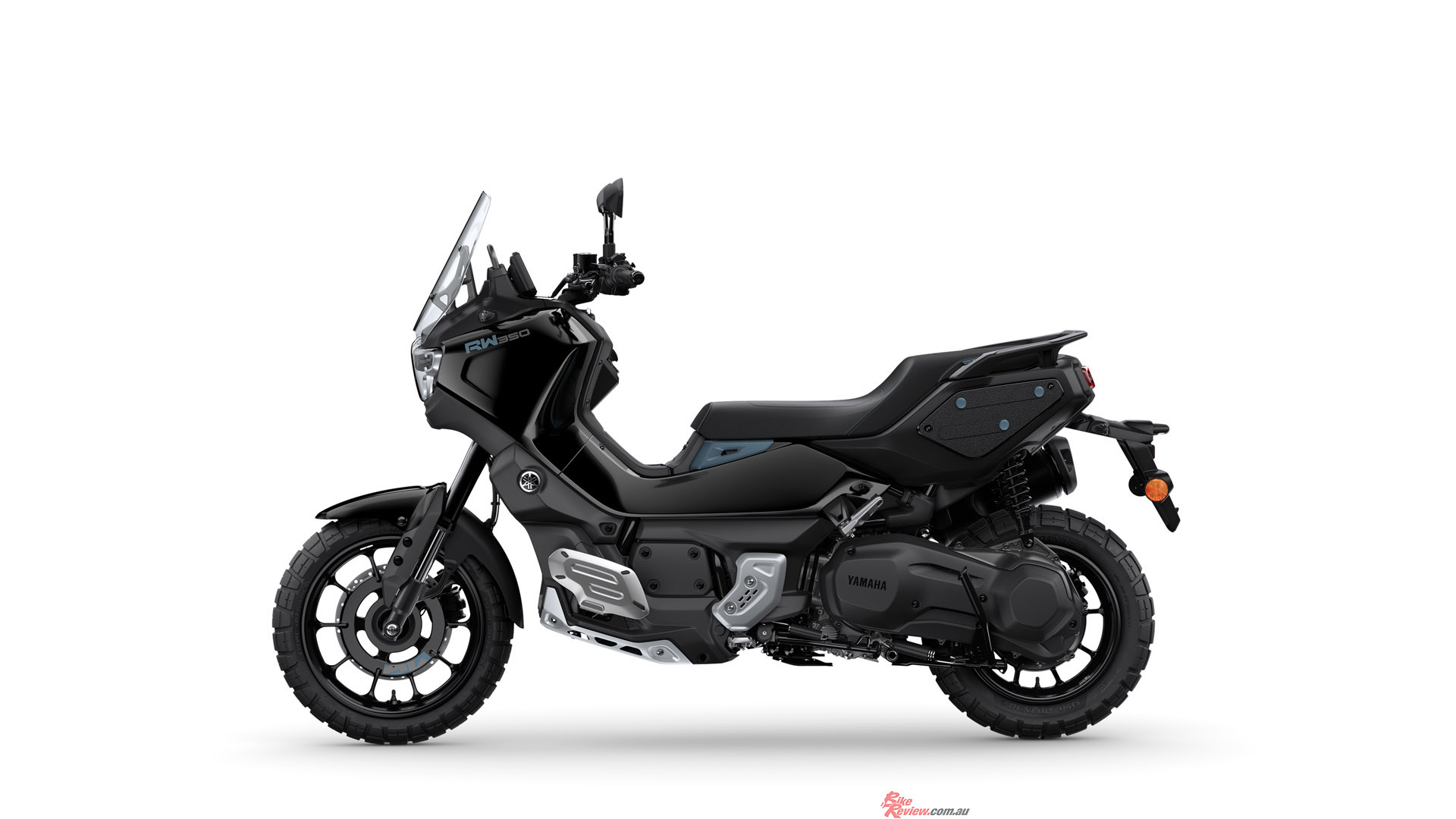
Joining the RW700 is the RW350, which takes a different approach to the adventure scooter concept. Rather than using an existing engine and transmission package, Yamaha has developed an all-new 327cc liquid-cooled, four-stroke single-cylinder engine with SOHC, four-valve cylinder-head architecture and fuel injection.
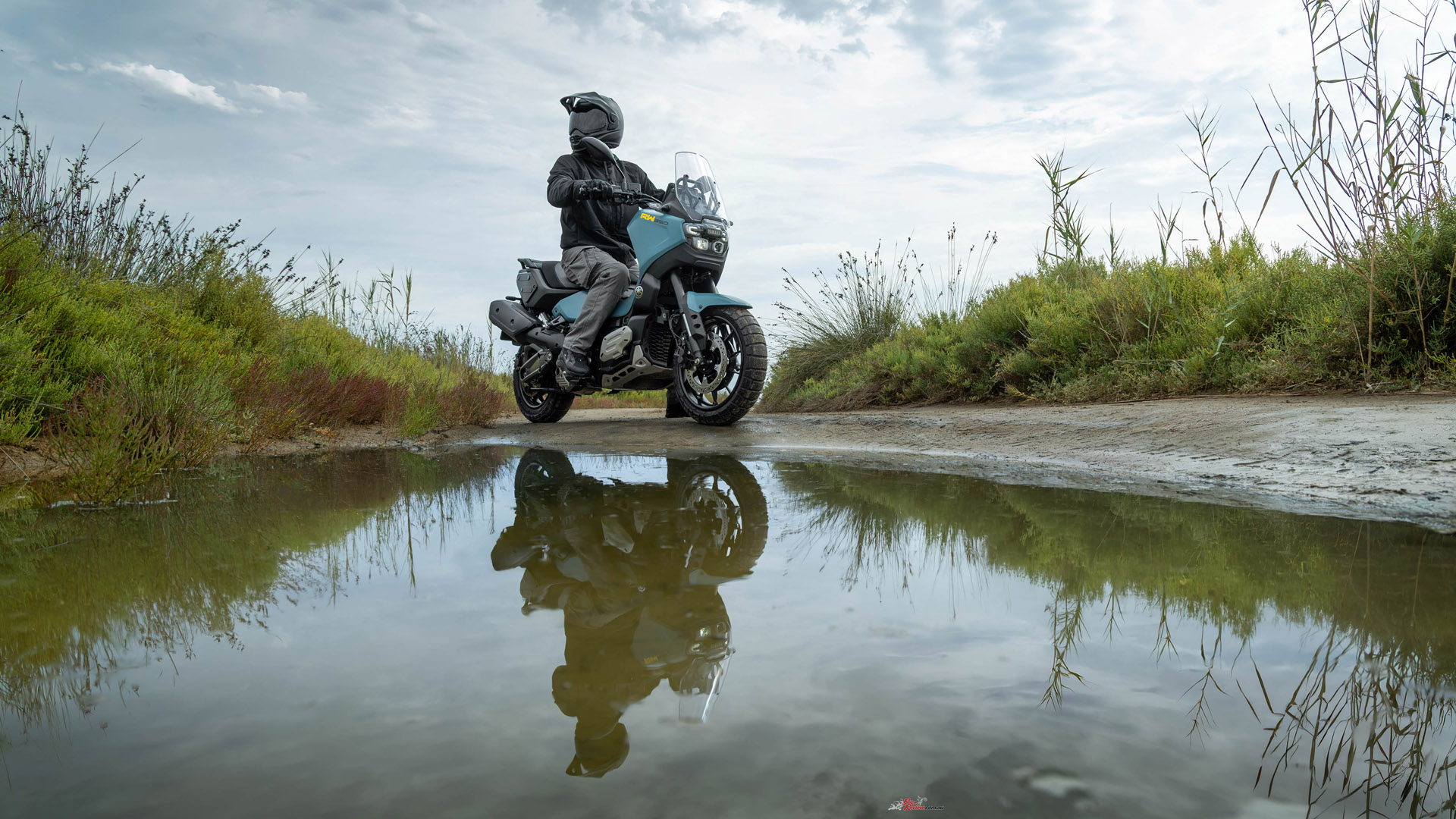
Go anywhere on the 350.
The engine is part of a new layout Yamaha calls Dynamic Ride, which changes the way the engine and CVT are mounted in the chassis. In a conventional scooter arrangement, the engine and CVT housing are commonly integrated and move vertically as a single unit. Yamaha’s new system instead rigidly mounts the engine to the frame, with only the CVT assembly moving around the crankshaft pivot.
Yamaha has developed an all-new 327cc liquid-cooled, four-stroke single-cylinder engine with SOHC… The engine is part of a new layout Yamaha calls Dynamic Ride…
According to Yamaha, this arrangement substantially reduces unsprung weight, improves rigidity and provides greater freedom in the design of the rear suspension. A four-axis balancer works in conjunction with the engine and CVT to reduce vibration and deliver a smoother riding experience. The new engine also uses Yamaha Chip Controlled Throttle, a first for the brand in this scooter class.
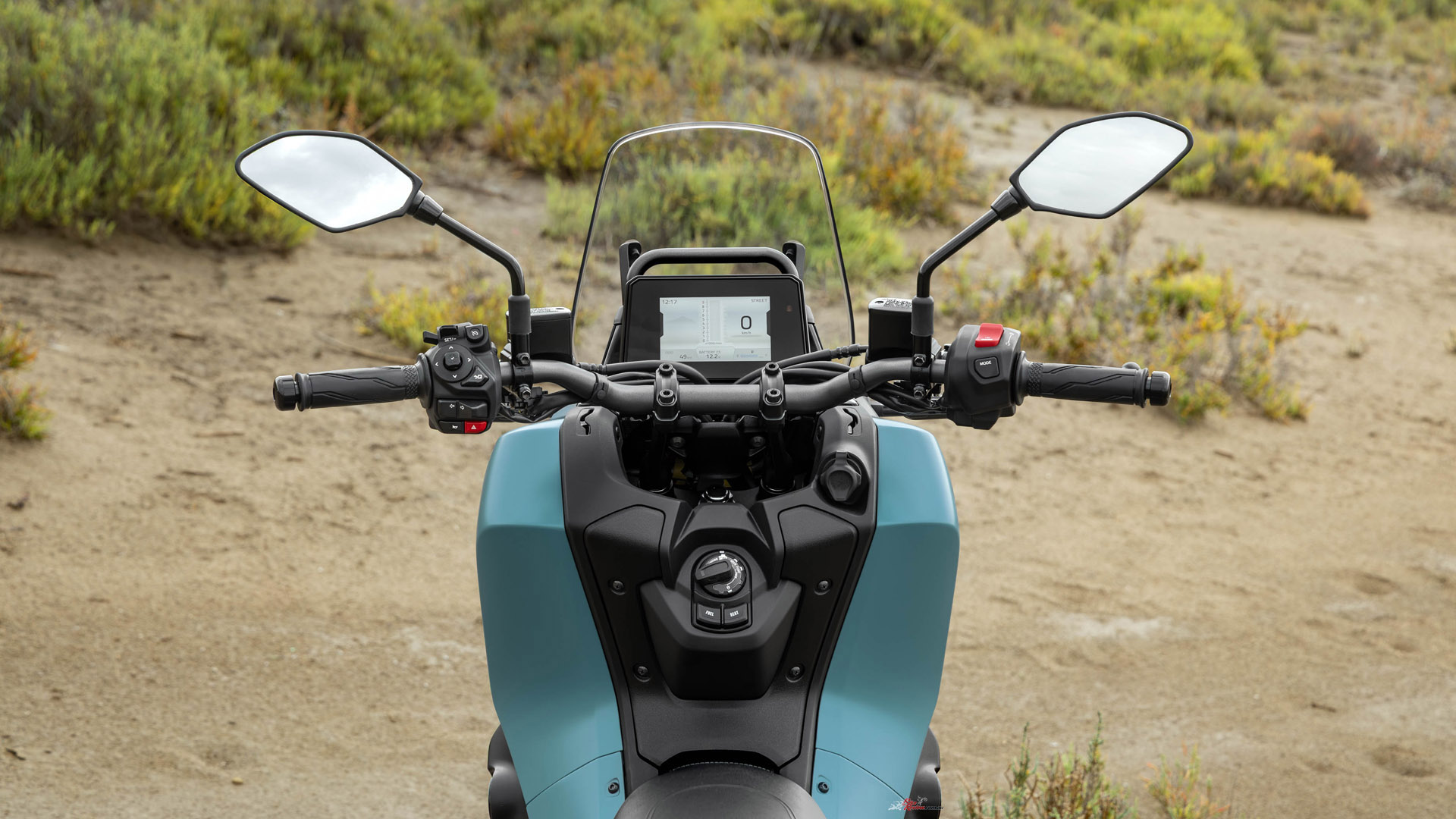
Alloy handlebars, 5in TFT dash.
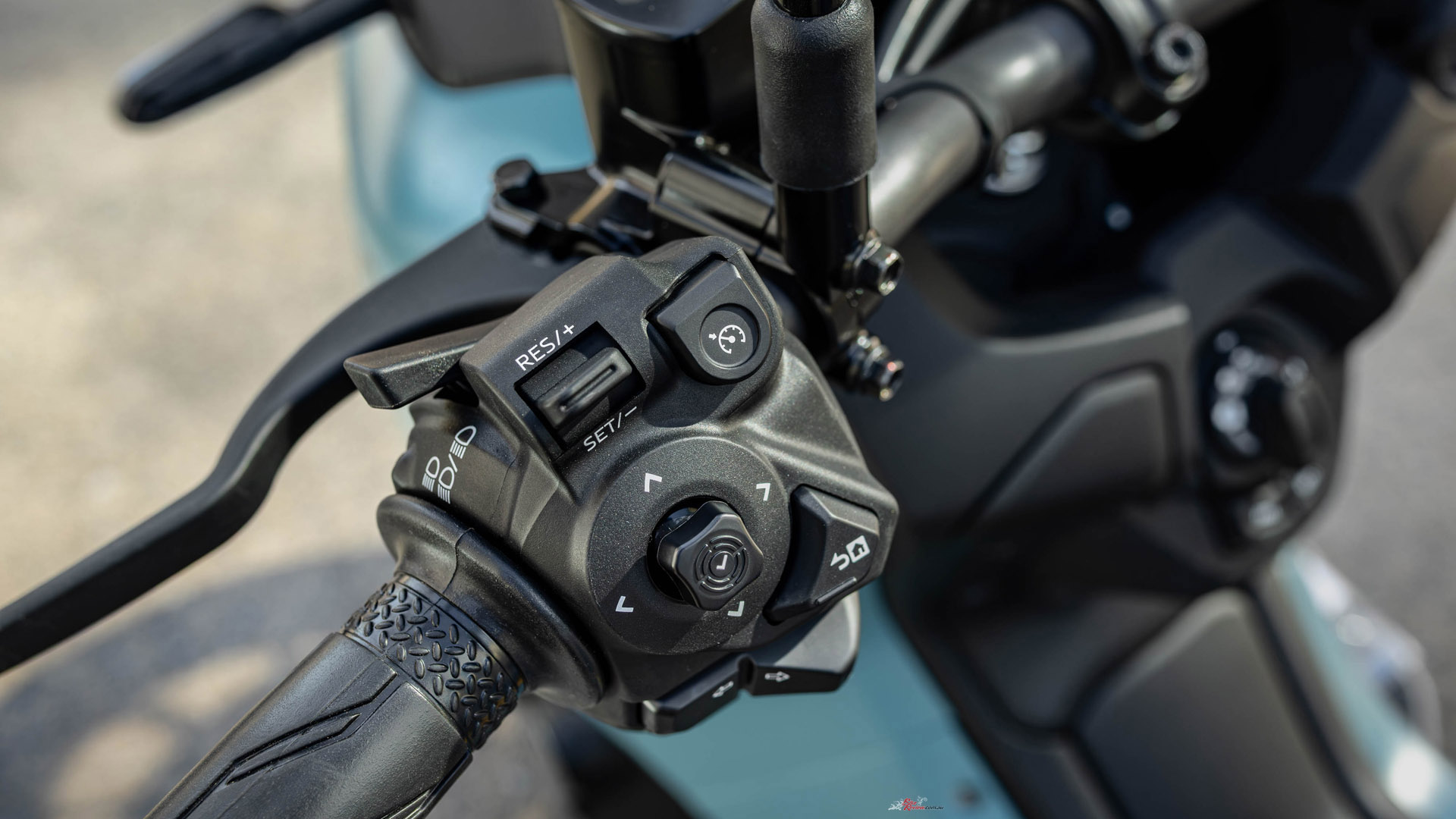
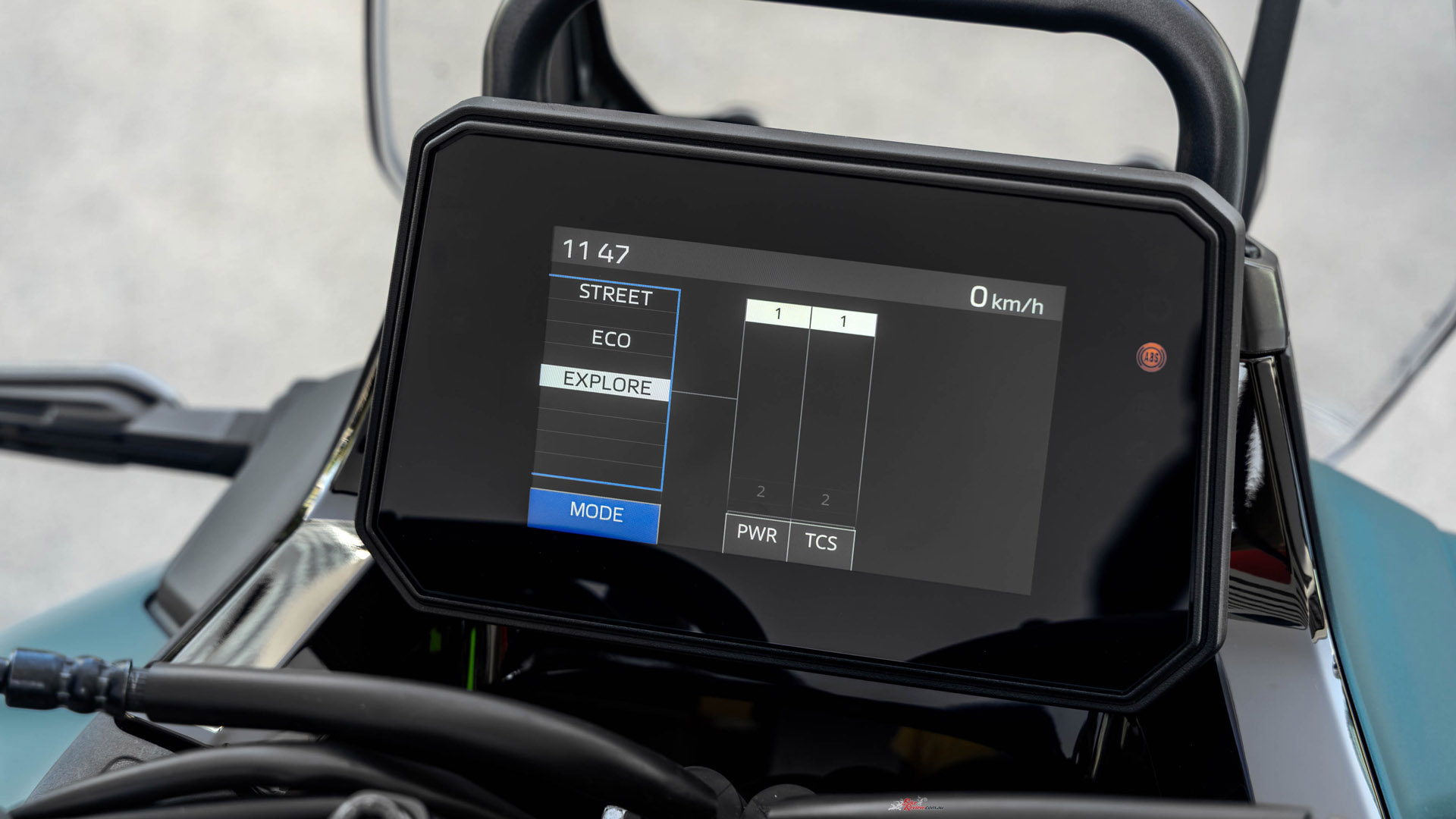
The RW350 uses a conventional automatic CVT transmission, with a centrifugal clutch and V-belt drive. Its three Yamaha Ride Control modes are Street, Explore and Eco. Street is designed for everyday riding across a variety of surfaces, Explore allows a degree of rear-wheel slide for off-road use, while Eco reduces power response to improve controllability in rain or on less favourable road surfaces.
Each mode has its own Power and Traction Control settings, giving riders the ability to adjust the scooter’s response to suit changing conditions. Cruise control is also standard, adding comfort for longer trips and motorway riding.
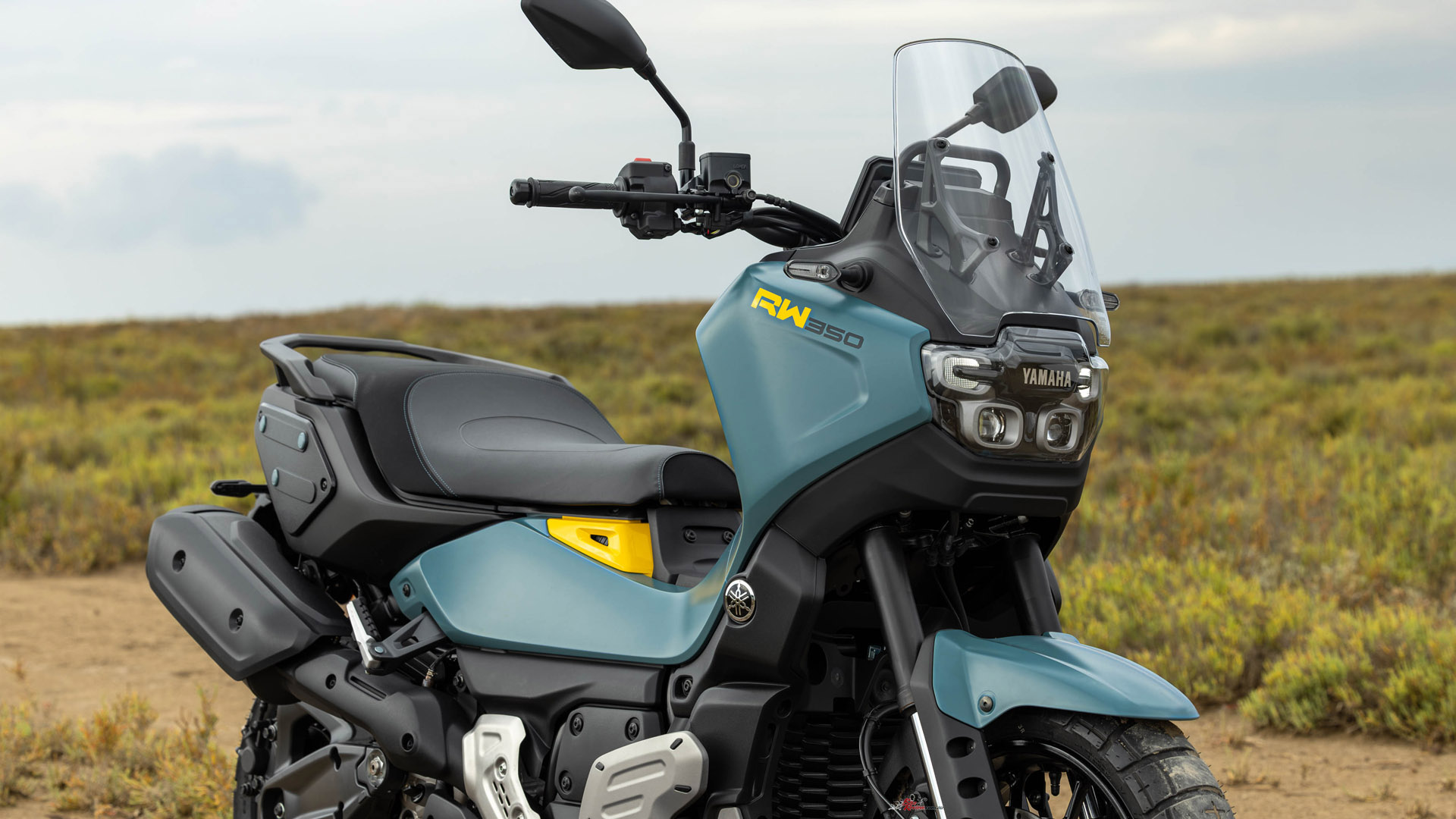
Large screen, LED headlights.
RW350 chassis and suspension
The RW350 uses a diamond-shaped, backbone-type high-tensile steel tube frame, with the engine rigidly mounted as part of the Dynamic Ride layout. Yamaha says the narrow body and balanced chassis are intended to provide agile handling, while retaining stability over rougher surfaces.
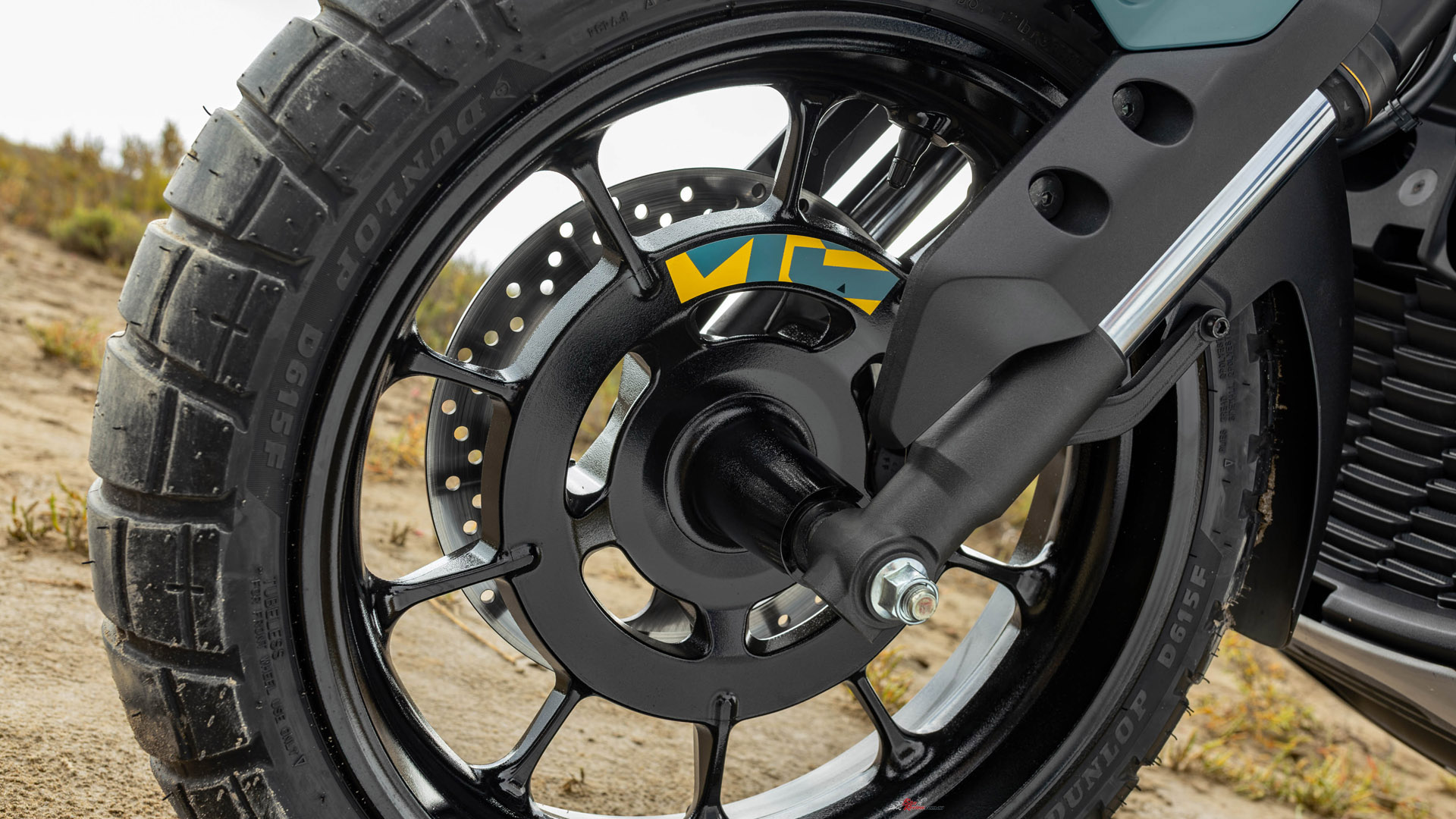
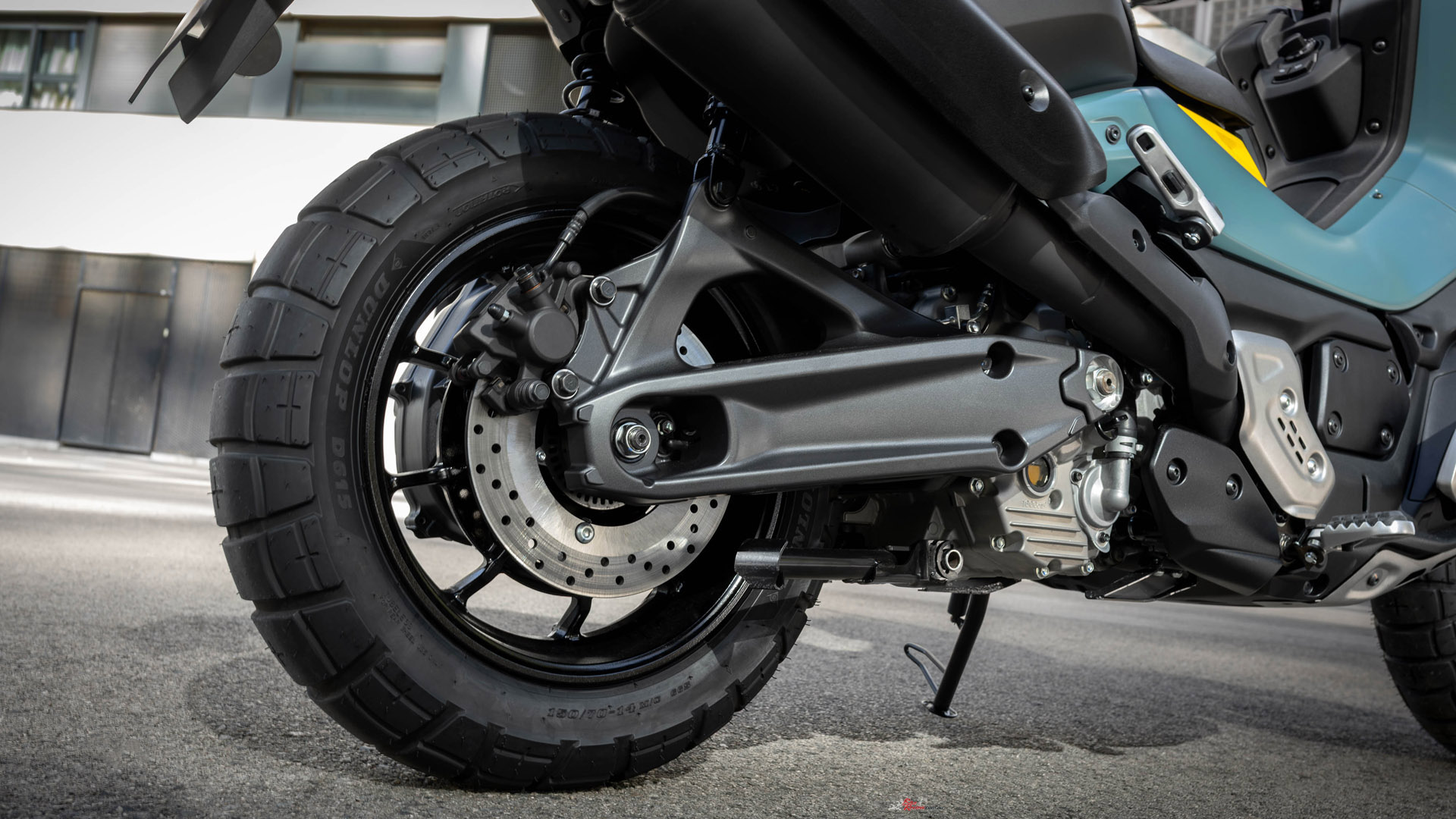
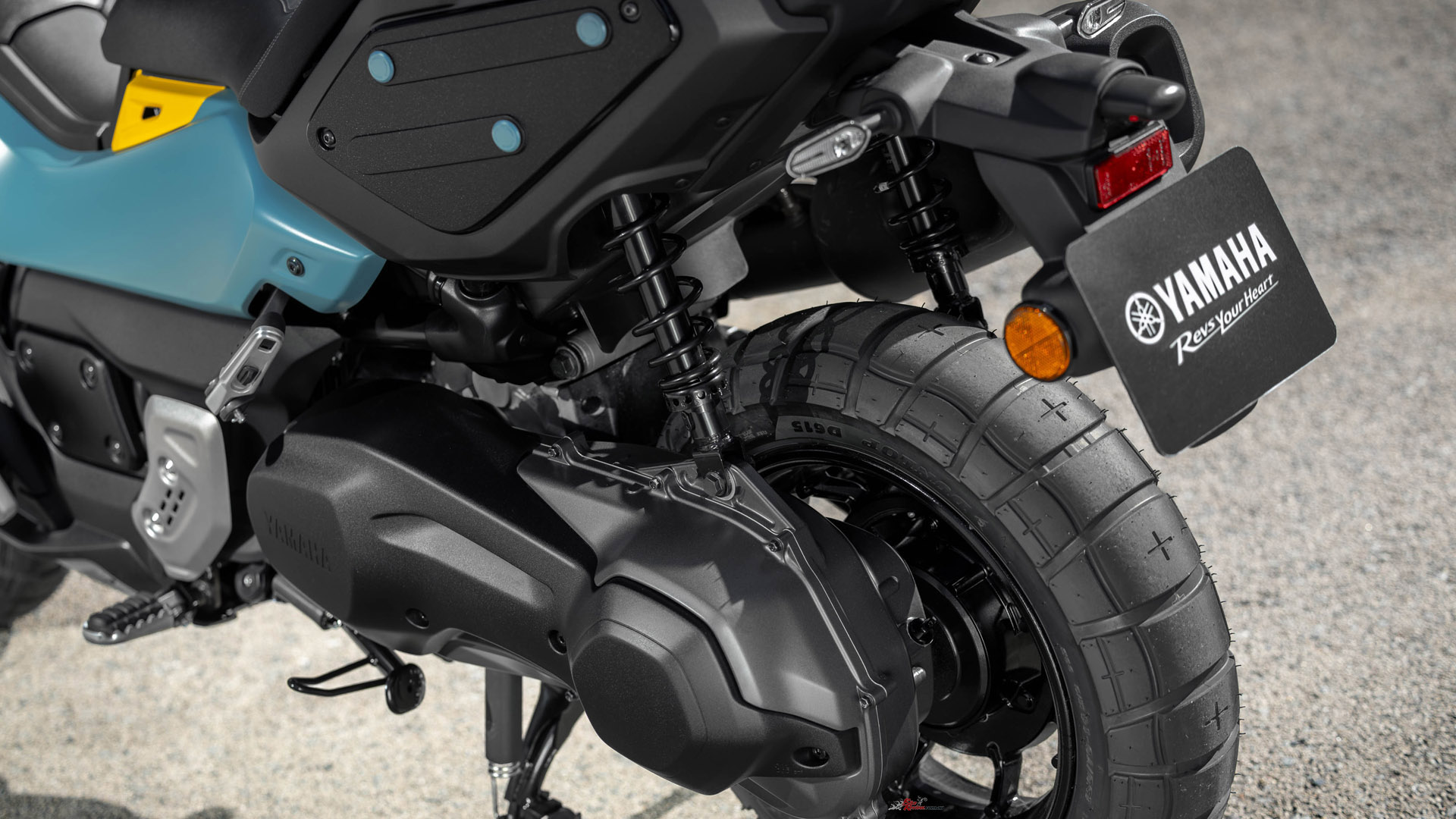
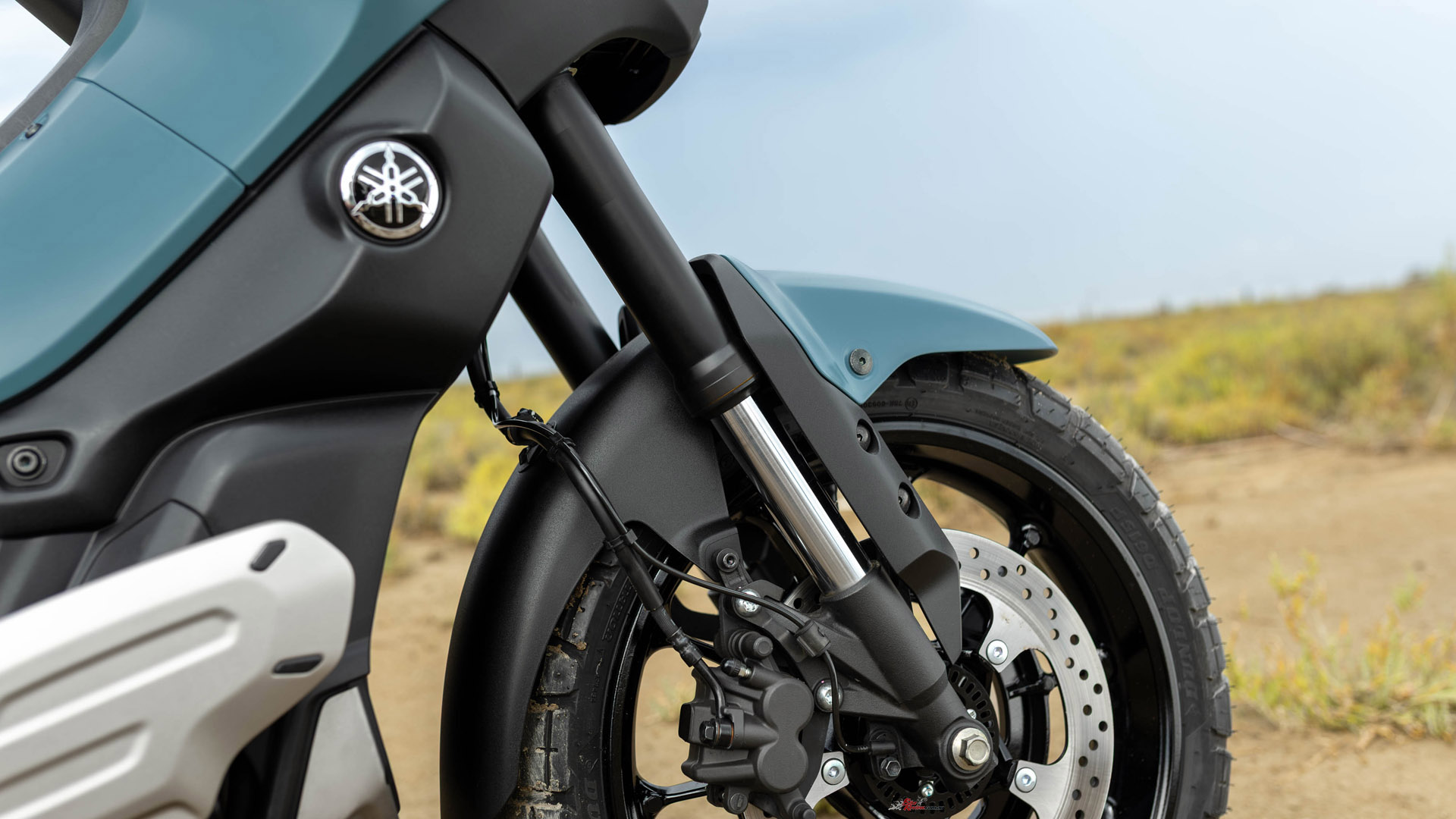
The front suspension uses a 37mm fork with 140mm of travel, paired with twin rear shocks offering 105mm of travel and seven adjustment settings. The rear suspension can be adjusted to suit different road conditions, passenger loads or luggage. Wheel sizes are 16 inches at the front and 14 inches at the rear. Yamaha has developed the Dunlop D615 tubeless block-pattern tyres specifically for the RW350, with sizes of 120/70-16 front and 150/70-14 rear.
Explore mode.
The rear cast aluminium wheel incorporates a hub-mounted damper designed to reduce vibration during acceleration and deceleration. Yamaha says this contributes to a smoother ride, while the long-travel suspension and 185mm ground clearance provide additional versatility when the road surface deteriorates. Braking is handled by a 282mm front disc and 245mm rear disc. The RW350 receives a skid plate beneath the chassis to protect important components when riding over rougher terrain.
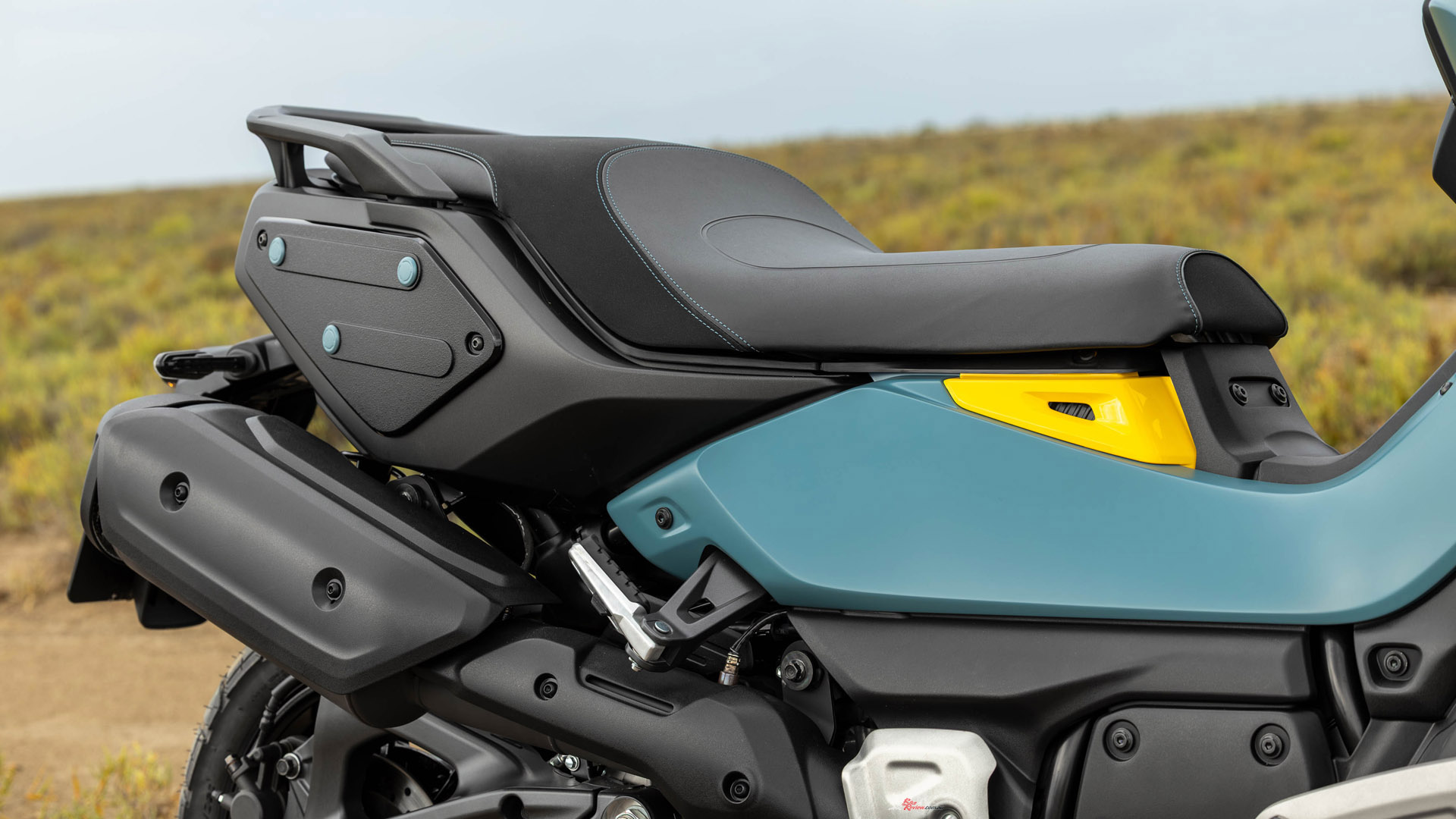
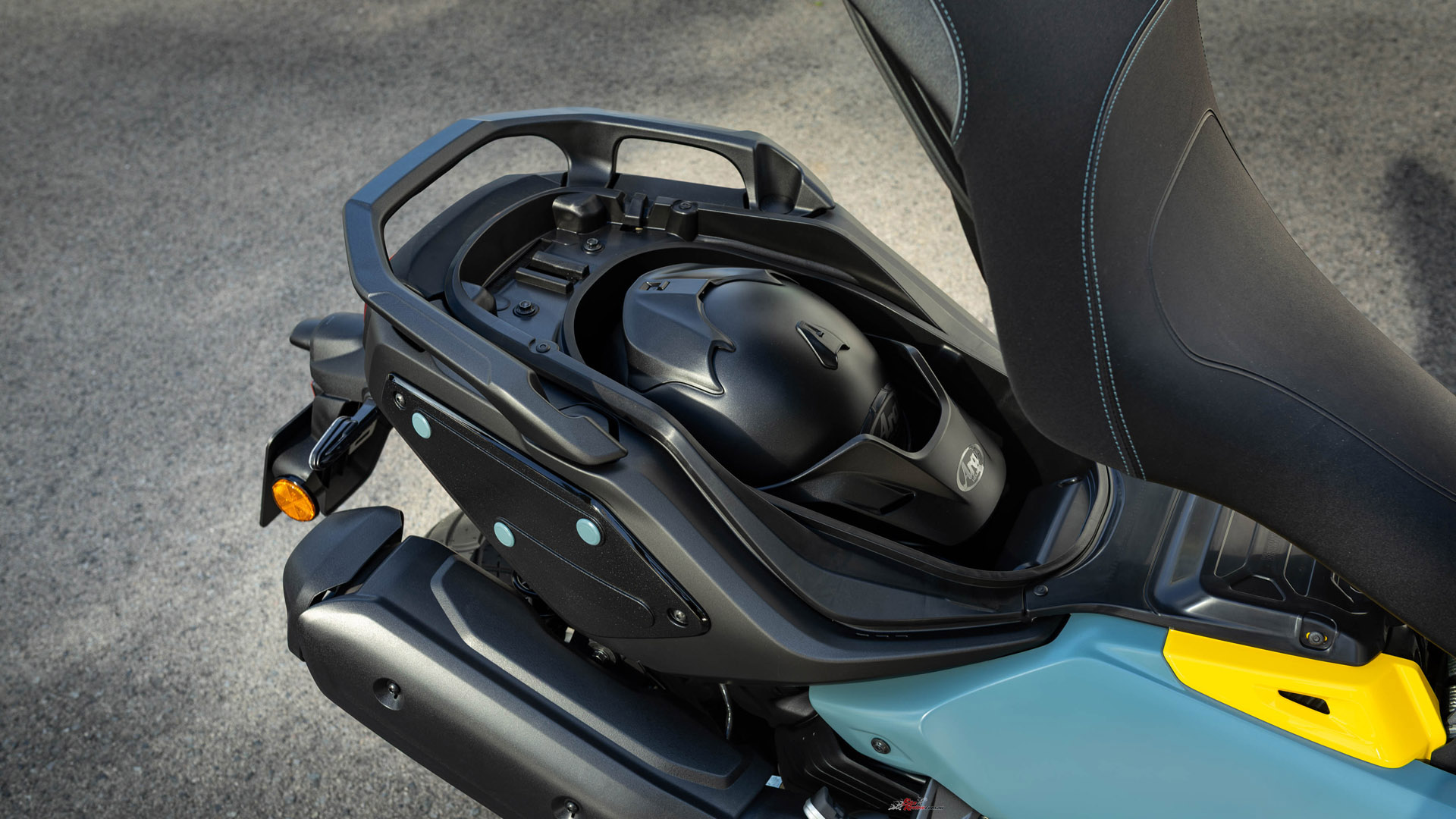
The seat is tapered at the front to make mounting and dismounting easier and to help riders reach the ground. Underseat storage is designed to accommodate a full-face helmet, depending on size and brand, along with everyday luggage.
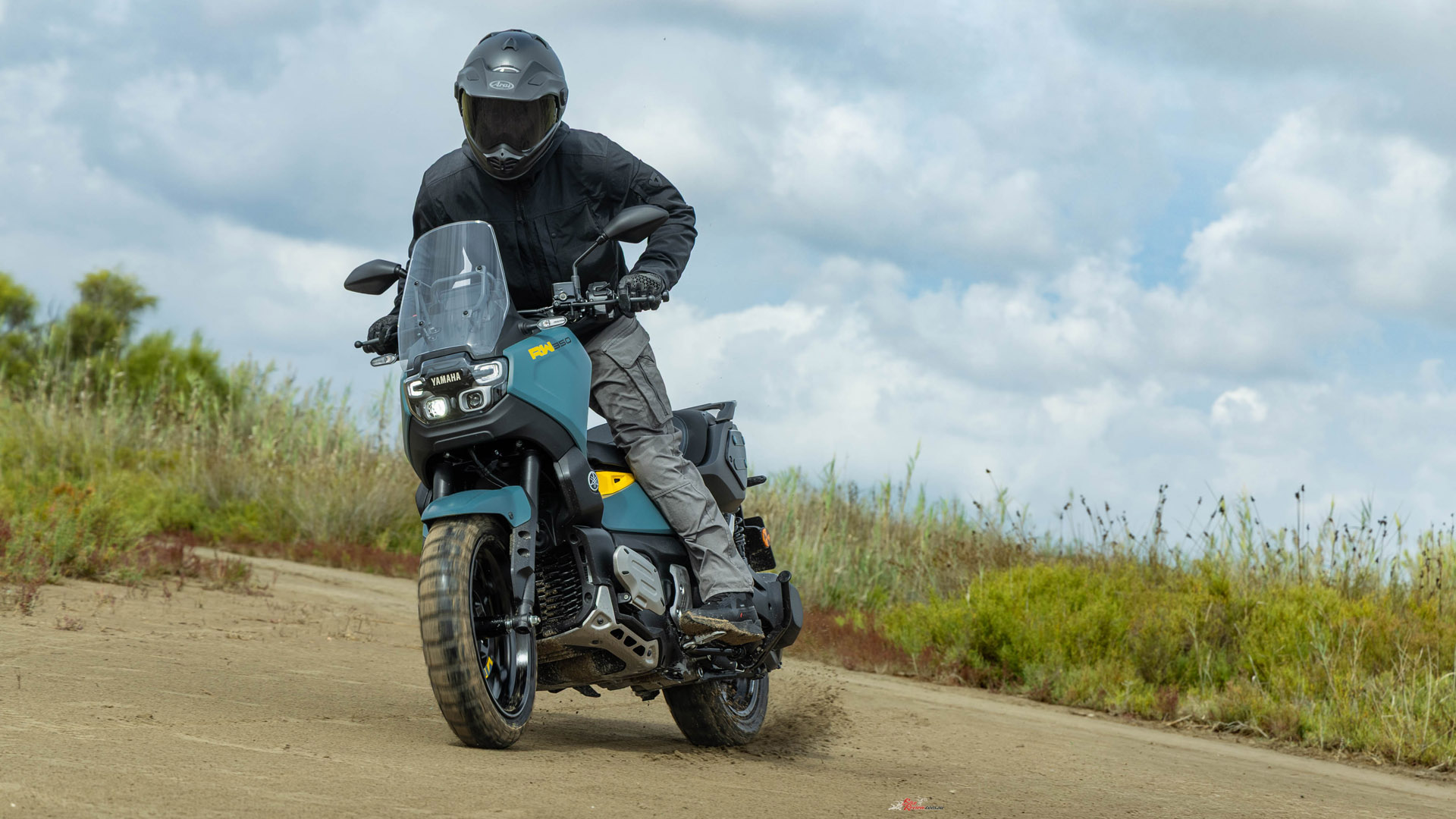
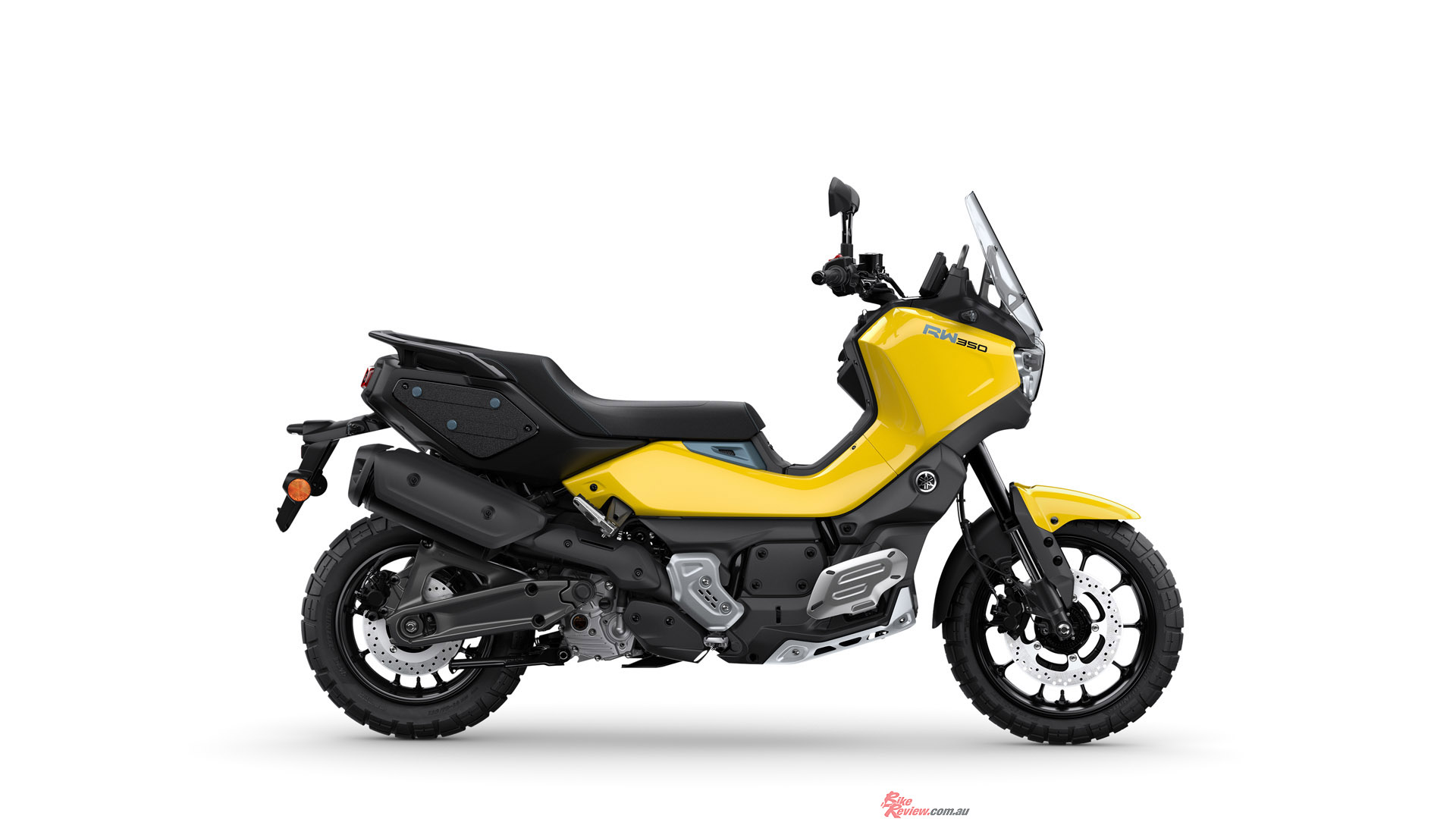
192kg wet weight.
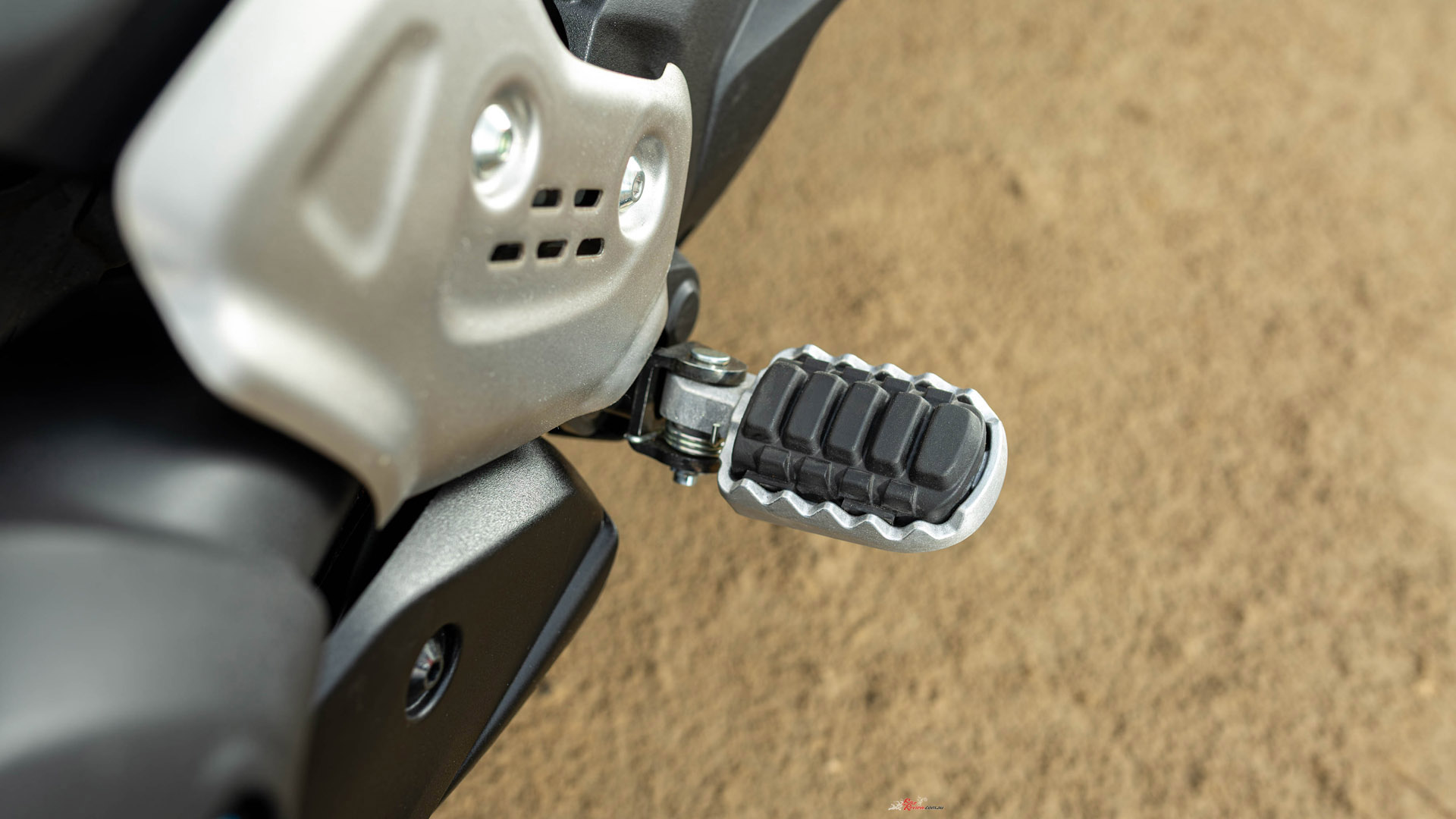
Like the RW700, the RW350 features footpegs with removable rubber inserts, allowing riders to gain additional grip when standing. Folding forward footrests provide a more relaxed position for everyday commuting and longer-distance riding, while the tapered steel handlebars are designed to provide rigidity and vibration damping.
Technology and colour options
The RW350 receives a five-inch full-colour TFT instrument panel with smartphone connectivity through Yamaha’s MyRide app. Garmin StreetCross navigation is also supported, with full-map or turn-by-turn directions and real-time traffic information.
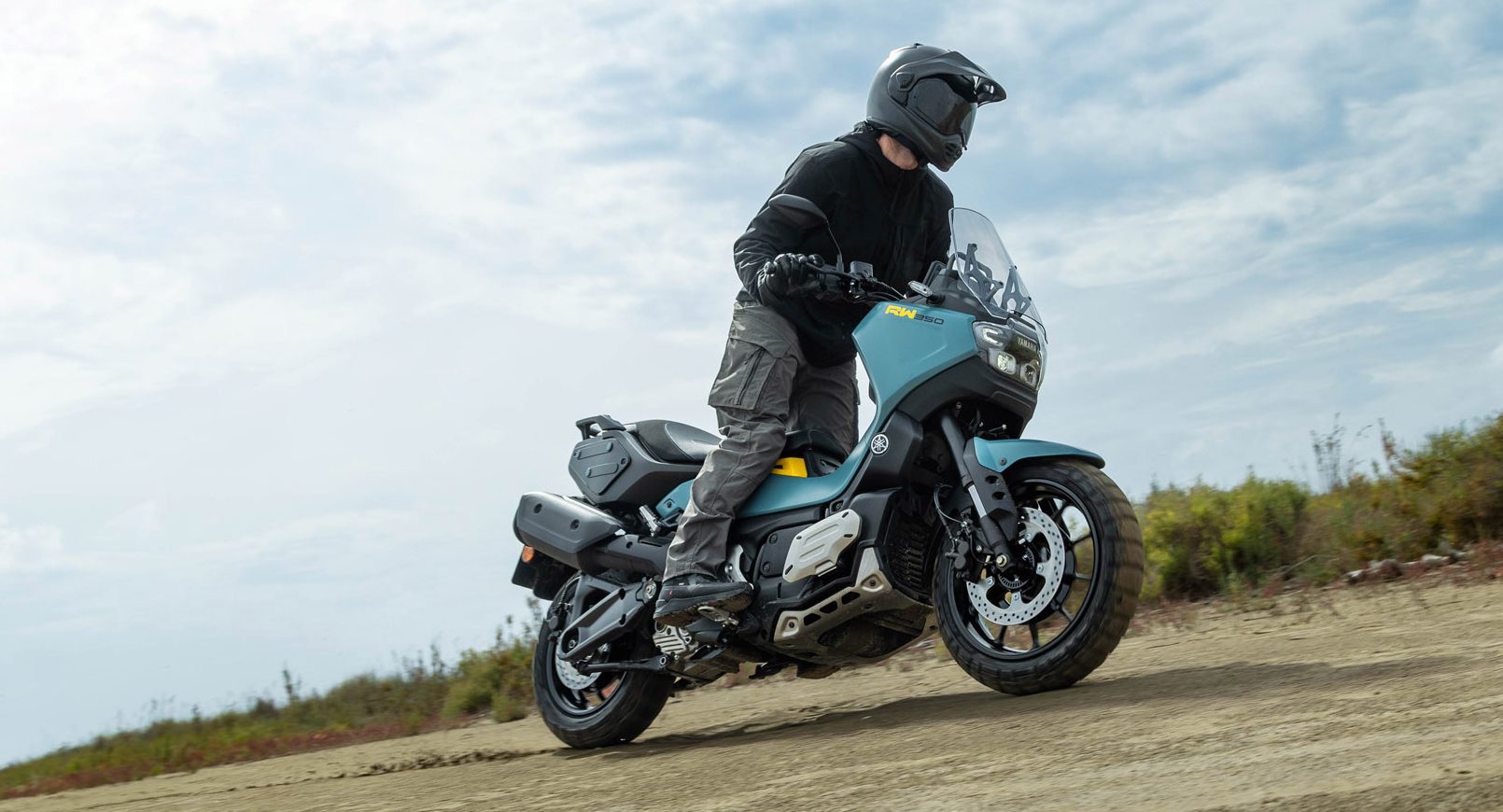
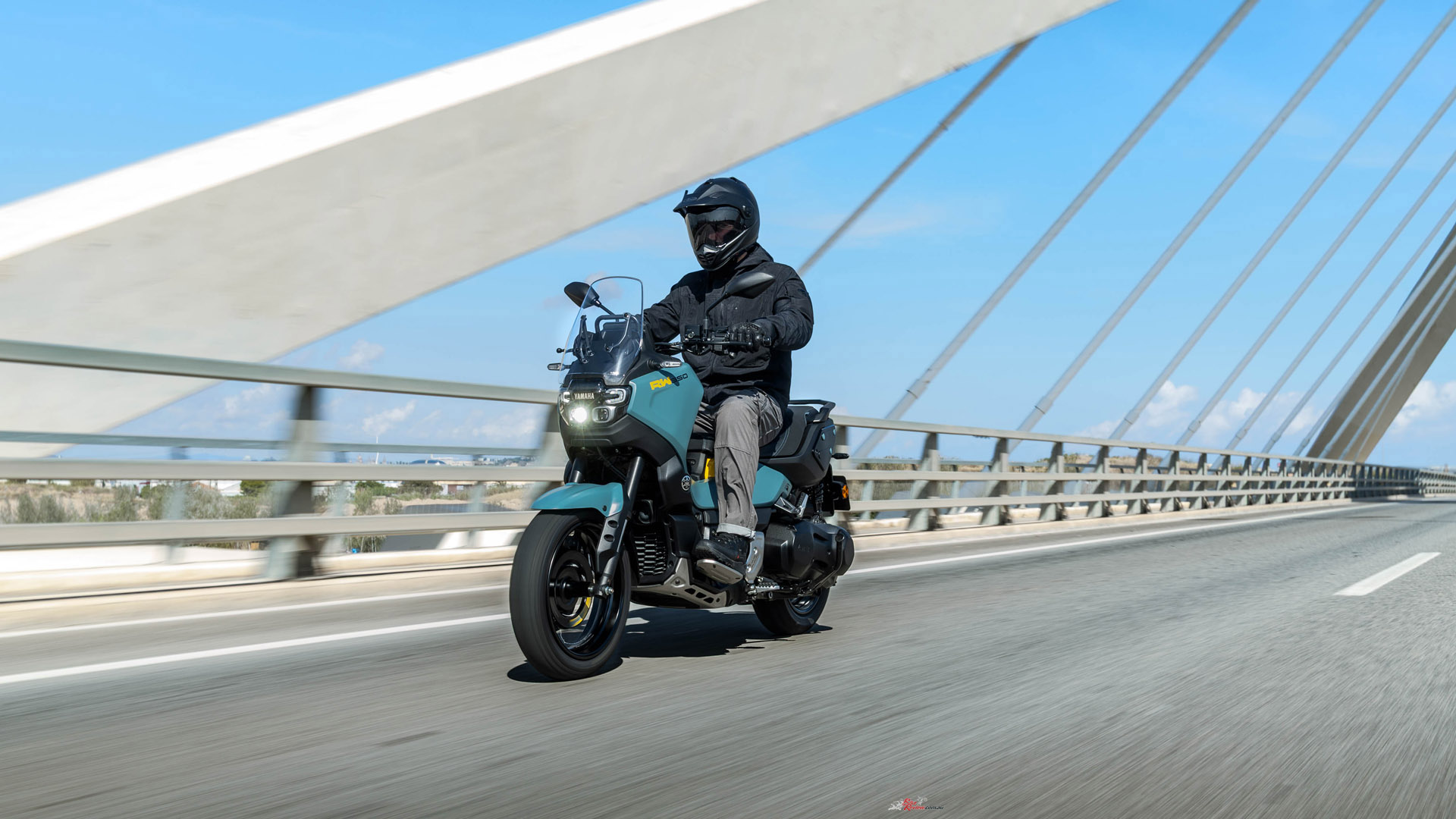
1540mm wheelbase.
The display can show speed, engine speed through a digital bar-type tachometer, remaining fuel, average fuel consumption, engine temperature and ambient temperature. Riders can choose between three display themes, including the RW design with a mountain background, a layout showing throttle activity and a simplified display.
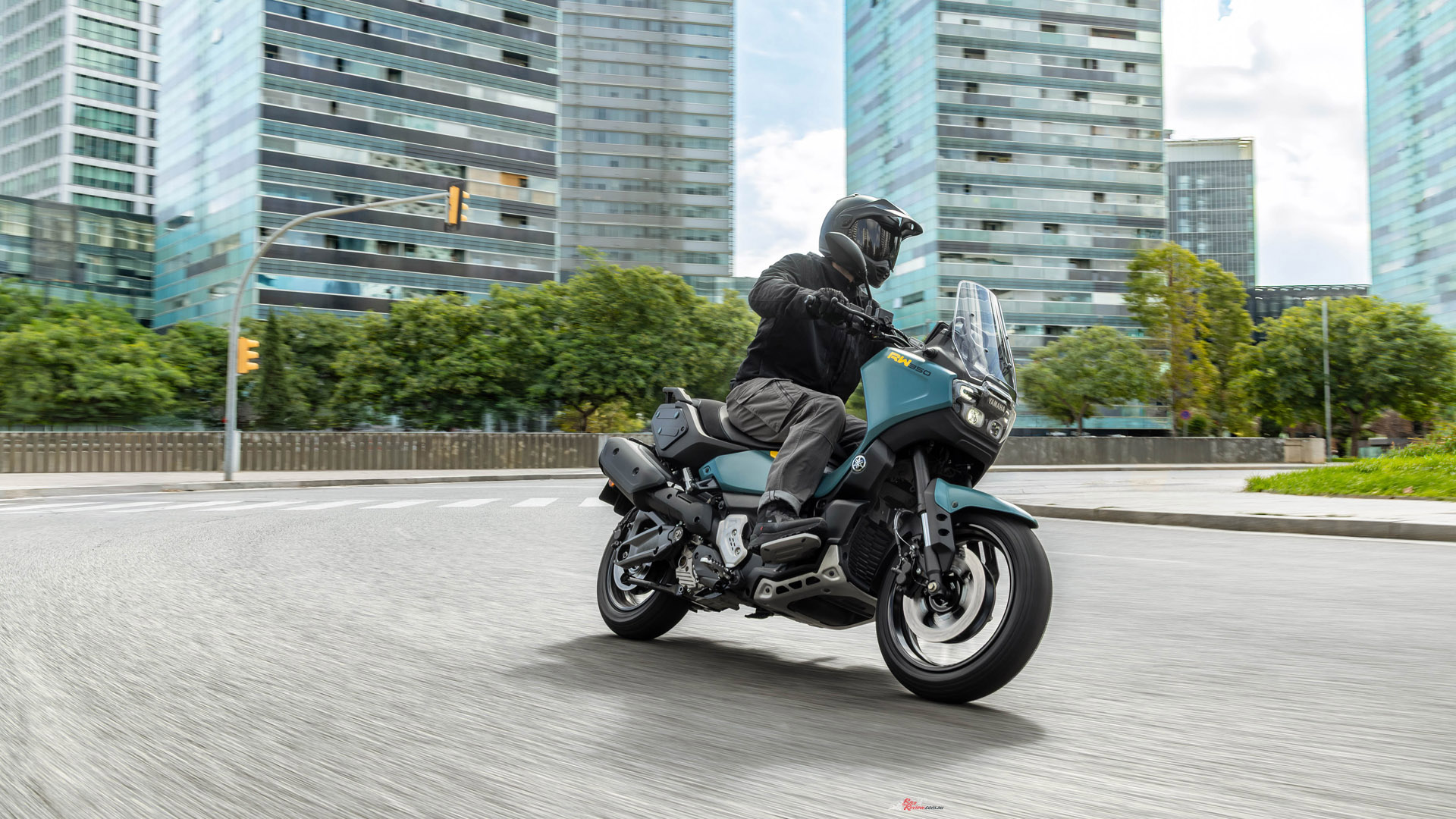
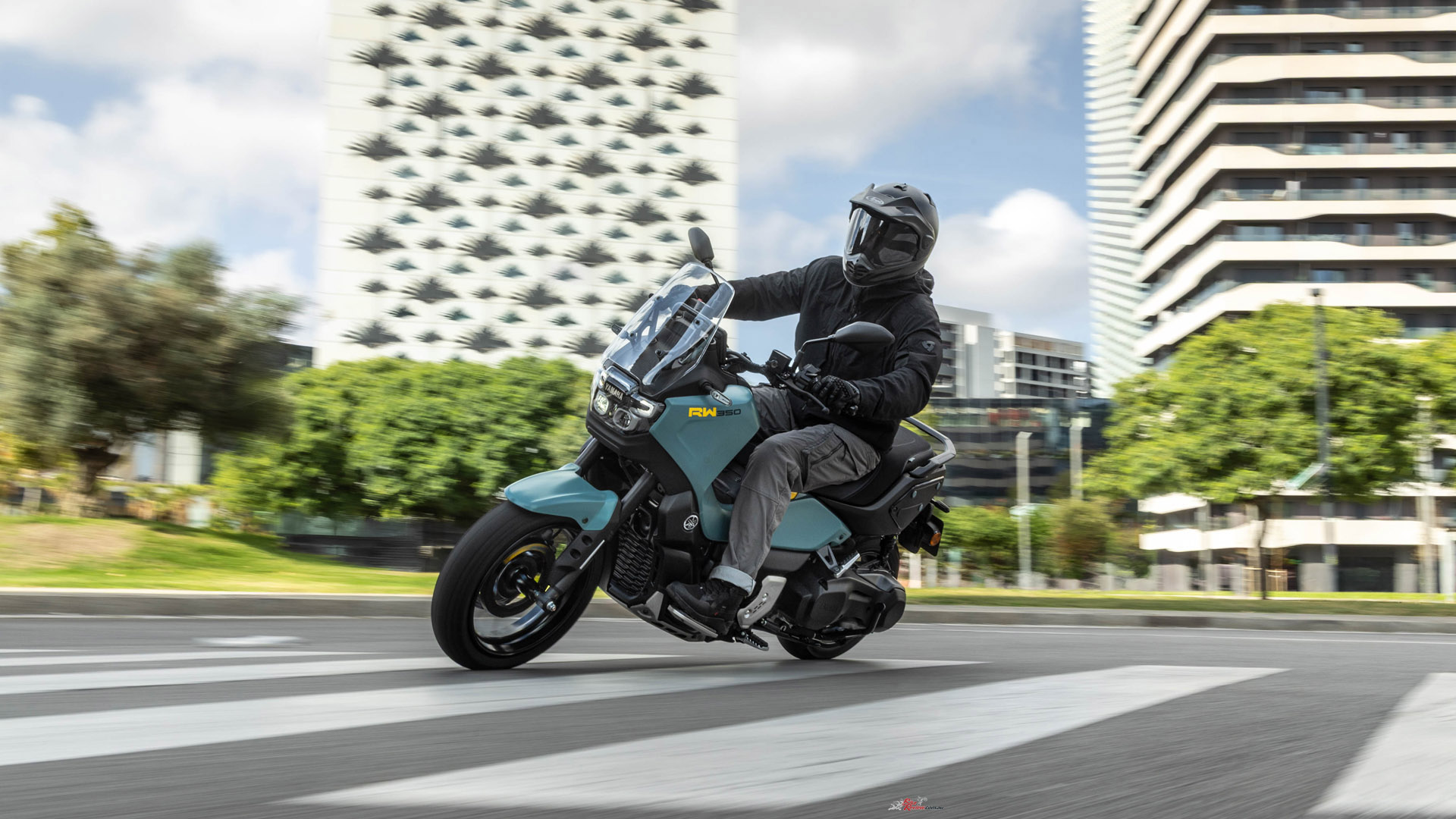
A USB-C charging port is fitted in the cockpit, while smart key technology and one-push starting are also standard. The LED lighting package includes four LED headlight units, LED indicators and an LED taillight. The indicators provide a three-flash lane-change function, hazard operation and Emergency Stop Signalling under heavy braking.
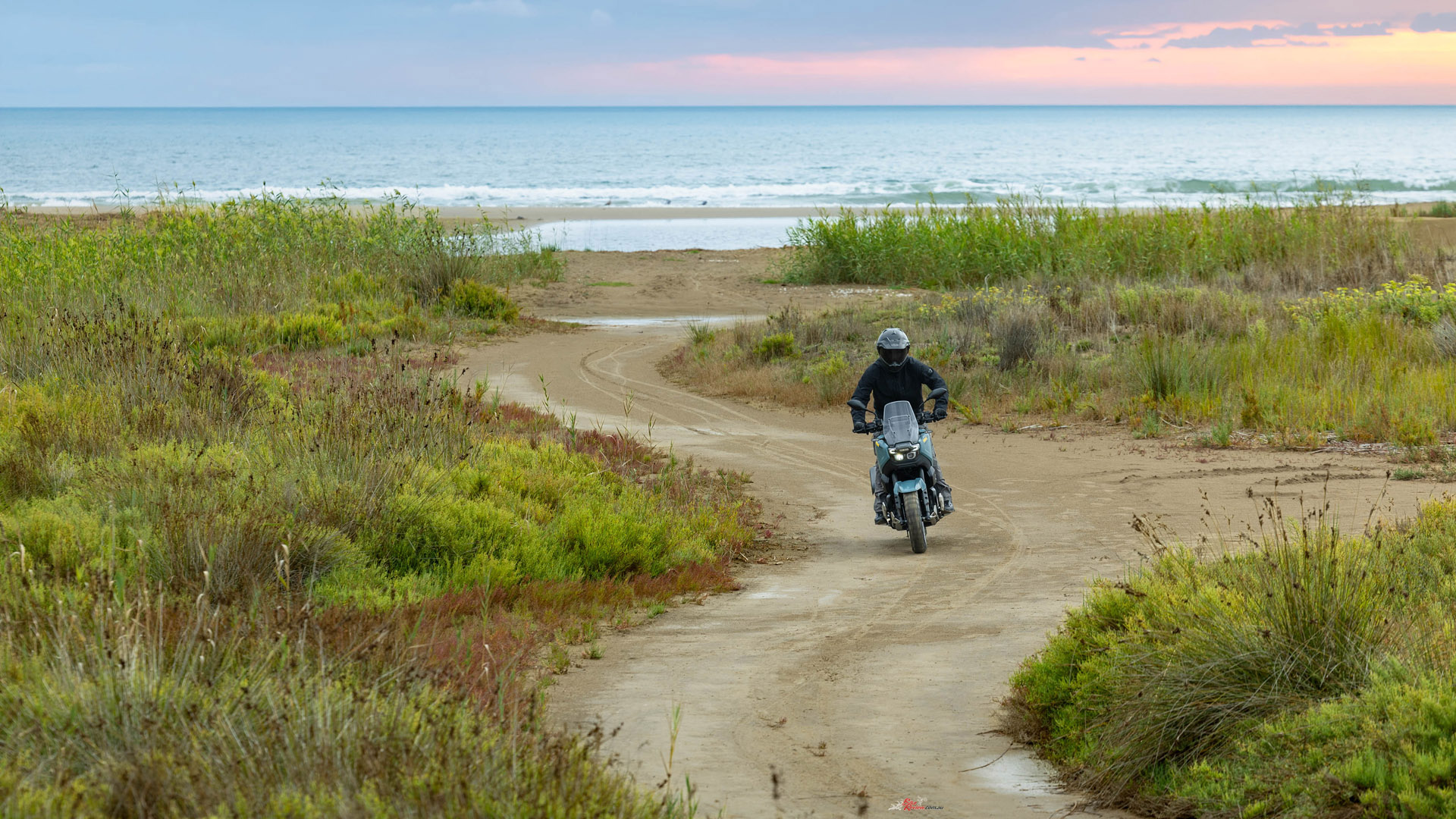
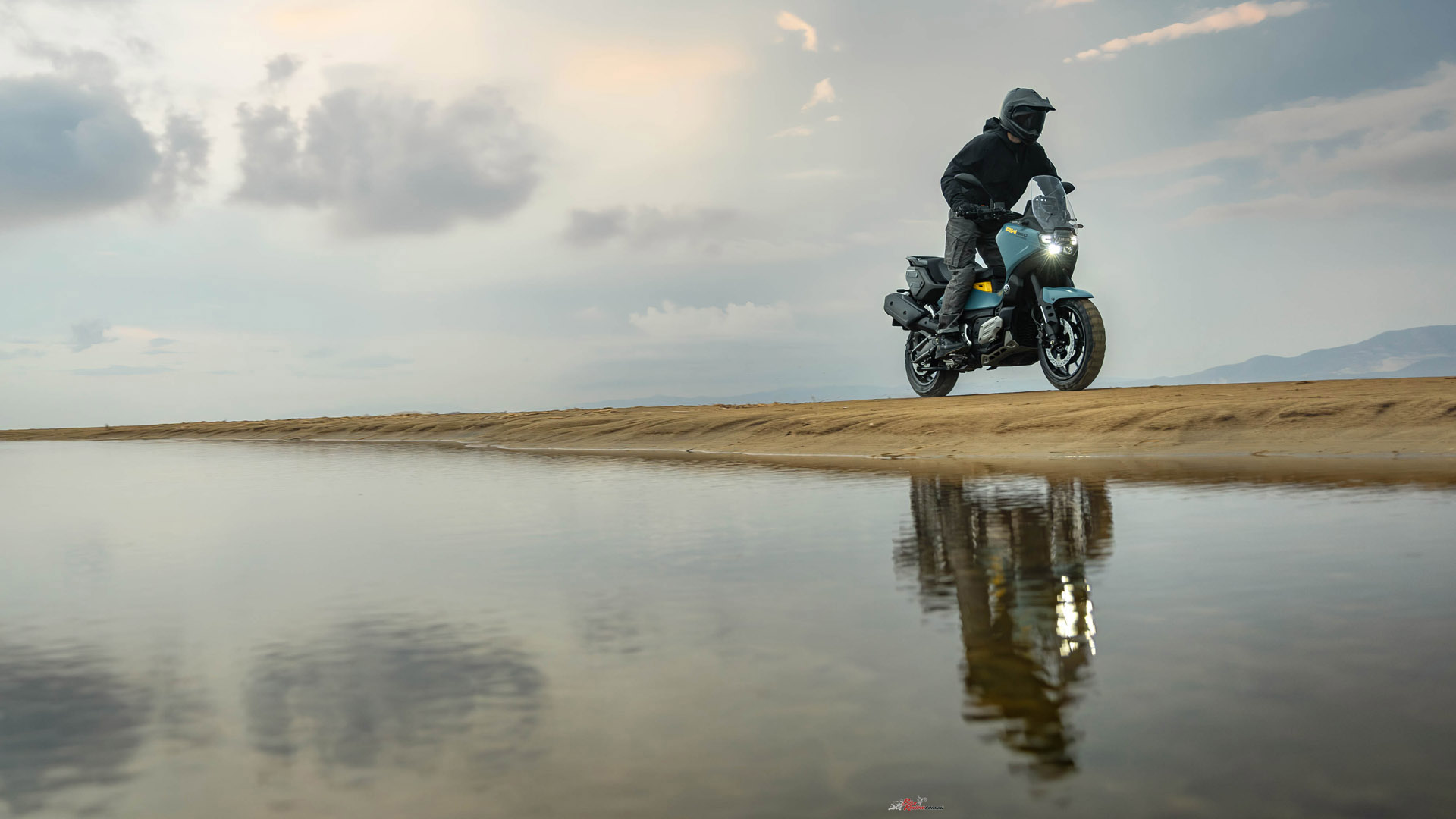
Explore the bush, beaches, and ride to work in the city.
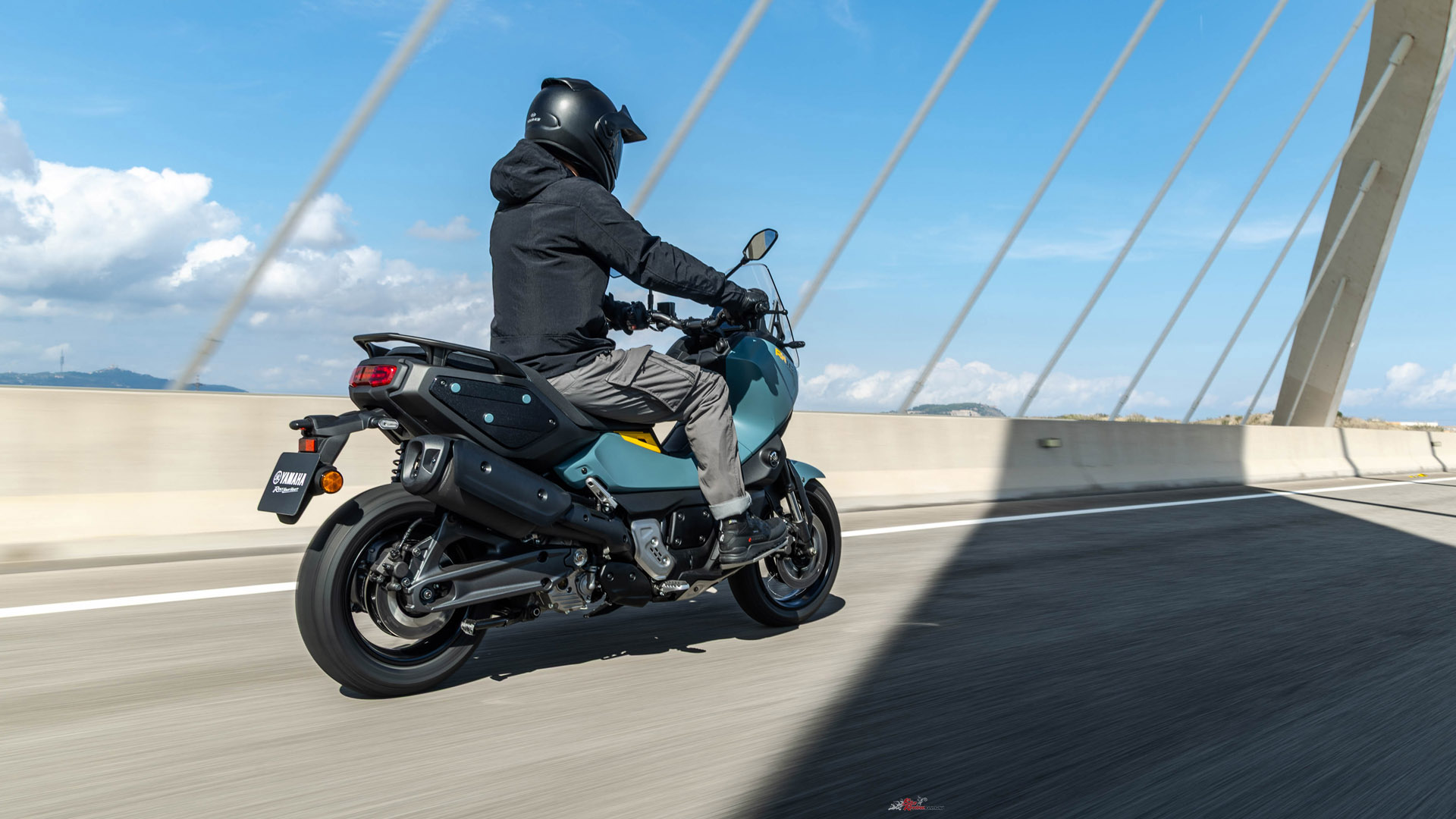
The RW700 Explore will be available in Midnight Black, Sage Blue and Forest Green, while the RW350 will be offered in Sage Blue, Arashi Sand, Extreme Yellow and Midnight Black.
Yamaha Australia has confirmed both models for the local market, although Australian pricing and arrival timing remain unavailable at the time of announcement.

2027 Yamaha RW700 Explore Specifications
Price: TBA
Warranty: Two years, unlimited kilometres
Colours: Midnight Black, Sage Blue, Forest Green
Power: TBA
Torque: TBA
Wet weight: 224kg
Fuel capacity: 14L
Fuel consumption (Claimed):
Fuel range (Claimed):
Engine: Liquid-cooled, four-stroke, parallel twin, DOHC, eight-valve, 80.0 x 68.6mm bore x stroke, 689cc, 11.5:1 compression ratio, fuel injection, YCC-T electronic throttle. Transmission: Six-speed constant mesh, Yamaha Automated Manual Transmission (Y-AMT), manual and automatic modes Final drive: Chain
Chassis: Backbone-type high-tensile steel tube frame
Rake: 25° Trail: 102mm
Suspension: 41mm inverted fork, preload and rebound adjustable, 160mm travel; link-type monoshock, preload and rebound adjustable, 155mm travel
Brakes: Twin 298mm front discs, four-piston radial-mount calipers; 267mm rear disc, single-piston caliper, ABS
Wheels & tyres: 17-inch front, 15-inch rear spoked; 120/70R17M/C (58H) front, 160/60R15M/C (67H) rear, tubeless
Dimensions:
Overall length: 2225mm
Overall width: 940mm
Overall height: 1415mm
Wheelbase: 1585mm
Seat height: 810mm
Ground clearance: 170mm
Instruments & Electronics: Six-axis IMU, Yamaha Ride Control, Sport/Street/Eco and Explore/Explore+ modes, traction control, slide control, brake control, back-slip regulator, cruise control, variable speed limiter – Equipment: Garmin StreetCross navigation, smartphone connectivity, five-inch colour TFT display with three themes, USB-C, smart key, one-push start, heated grips, heated rider’s seat, centrestand, adjustable footpegs, folding forward footrests, skid plate, knuckle visors, LED lighting, underseat storage. Rear ABS can be disabled in Gravel mode.
2027 Yamaha RW350 Specifications
Price: TBA
Warranty: Two years, unlimited kilometres, parts and labour
Colours: Sage Blue, Arashi Sand, Extreme Yellow, Midnight Black
Power: TBA
Torque: TBA
Wet weight: 192kg
Fuel capacity: 13L
Fuel consumption (Claimed):
Fuel range (Claimed):
Engine: Liquid-cooled, four-stroke, single-cylinder, SOHC, four-valve, 74.0 x 75.9mm bore x stroke, 327cc, 10.9:1 compression ratio, fuel injection, YCC-T electronic throttle Transmission: Dry centrifugal clutch, V-belt automatic CVT Final drive: Gear
Chassis: Diamond-shaped backbone-type high-tensile steel tube frame
Rake: 26°30′ Trail: 96mm
Suspension: 37mm front fork, 140mm travel; twin rear shock absorbers, seven-position adjustment, 105mm travel
Brakes: 282mm front single disc; 245mm rear single disc
Wheels & tyres: 16-inch front, 14-inch rear; 120/70-16M/C (57P) front, 150/70-14M/C (66S) rear, tubeless
Dimensions:
Overall length: 2170mm
Overall width: 815mm
Overall height: 1310mm
Wheelbase: 1540mm
Seat height: 810mm
Ground clearance: 185mm
Instruments & Electronics: Yamaha Ride Control, Street/Explore/Eco modes, traction control, power modes, cruise control, smart key, one-push start – Equipment: Yamaha Dynamic Ride layout, four-axis balancer, five-inch colour TFT display, smartphone connectivity, Garmin StreetCross navigation, three display themes, USB-C, skid plate, removable footpeg rubber inserts, folding forward footrests, underseat storage, LED lighting, self-cancelling indicators.