


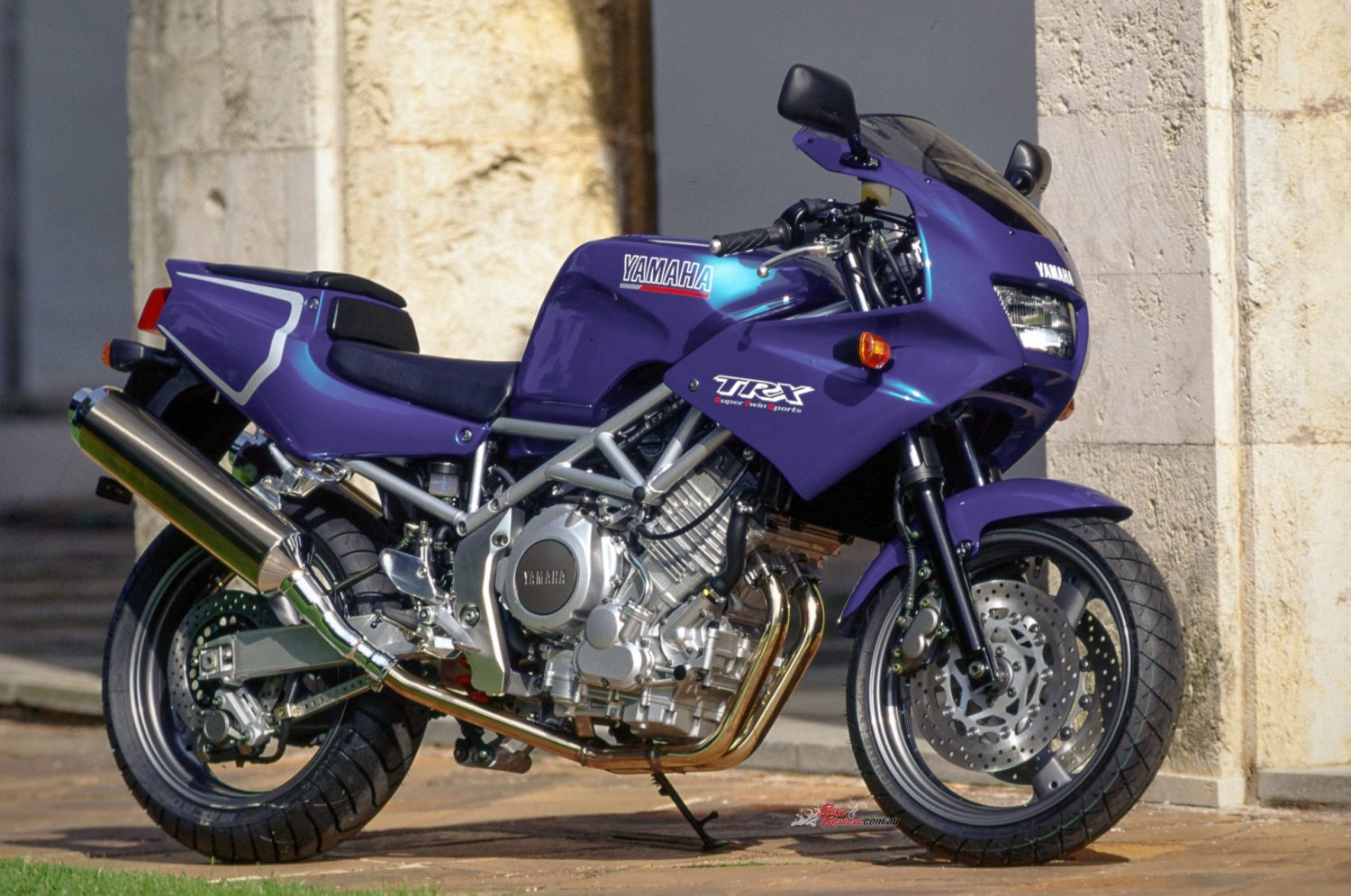

Thirty years after Yamaha released the TRX850, its design origins, racing success and unmistakable personality cement its reputation as a true modern classic. Photos: Patrick Gosling
Launched in 1995, the TRX850 fused a 270° parallel twin with European-inspired chassis thinking to create an affordable sportsbike. Three decades on, its engineering story, racing pedigree and distinctive feel have made it one of Yamaha’s most enduring cult machines.
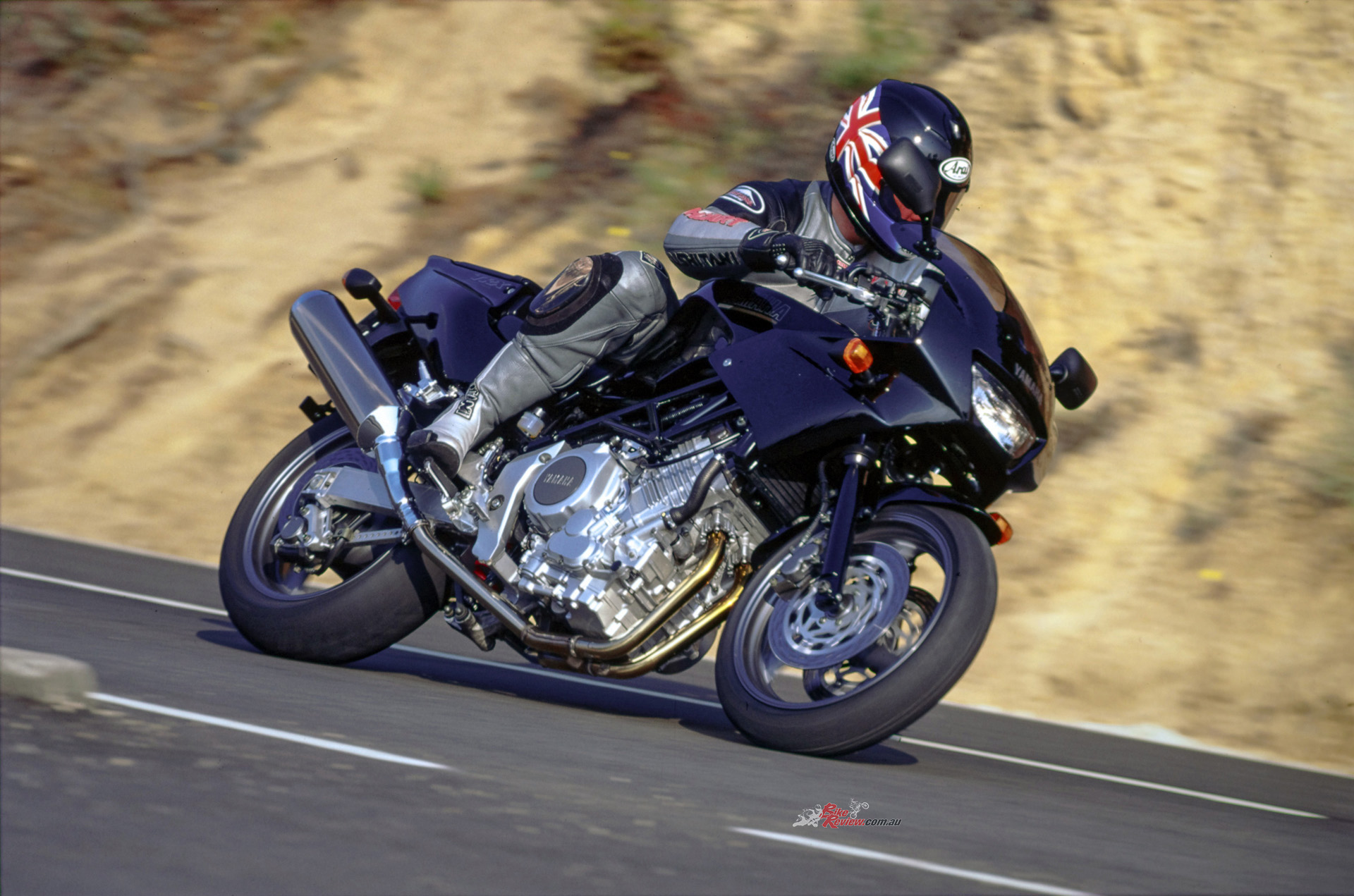
On the production TRX850, Yamaha’s blend of accessible performance and everyday usability was clear.
Long before it conceived today’s best-selling MT-07 lineup, Yamaha has regaled customers for the past half-century with an array of twin-cylinder road bikes with global appeal. Models like the landmark XS650 which was essentially what a 60s British twin should have become but never did, the XS500 which was the first eight-valve Japanese twin and the spectacular failure that was the TX750 despite being the first bike ever to have twin counterbalancers.
Read our other Throwback Thursday articles here…
There was the XV920/TR-1 range of un-Italian V-motors and the strong-selling Super Ténéré and TDM850 dirt-derived road models all made Yamaha the world’s leading provider of motorcycles with a distinctive personality, and no more and no less than two cylinders. But best of all for its many diehard followers today, was the TRX850, of which it’s believed that no more than 18,000 examples were built between 1995 and 1999.
“It’s believed that no more than 18,000 examples were built between 1995 and 1999”
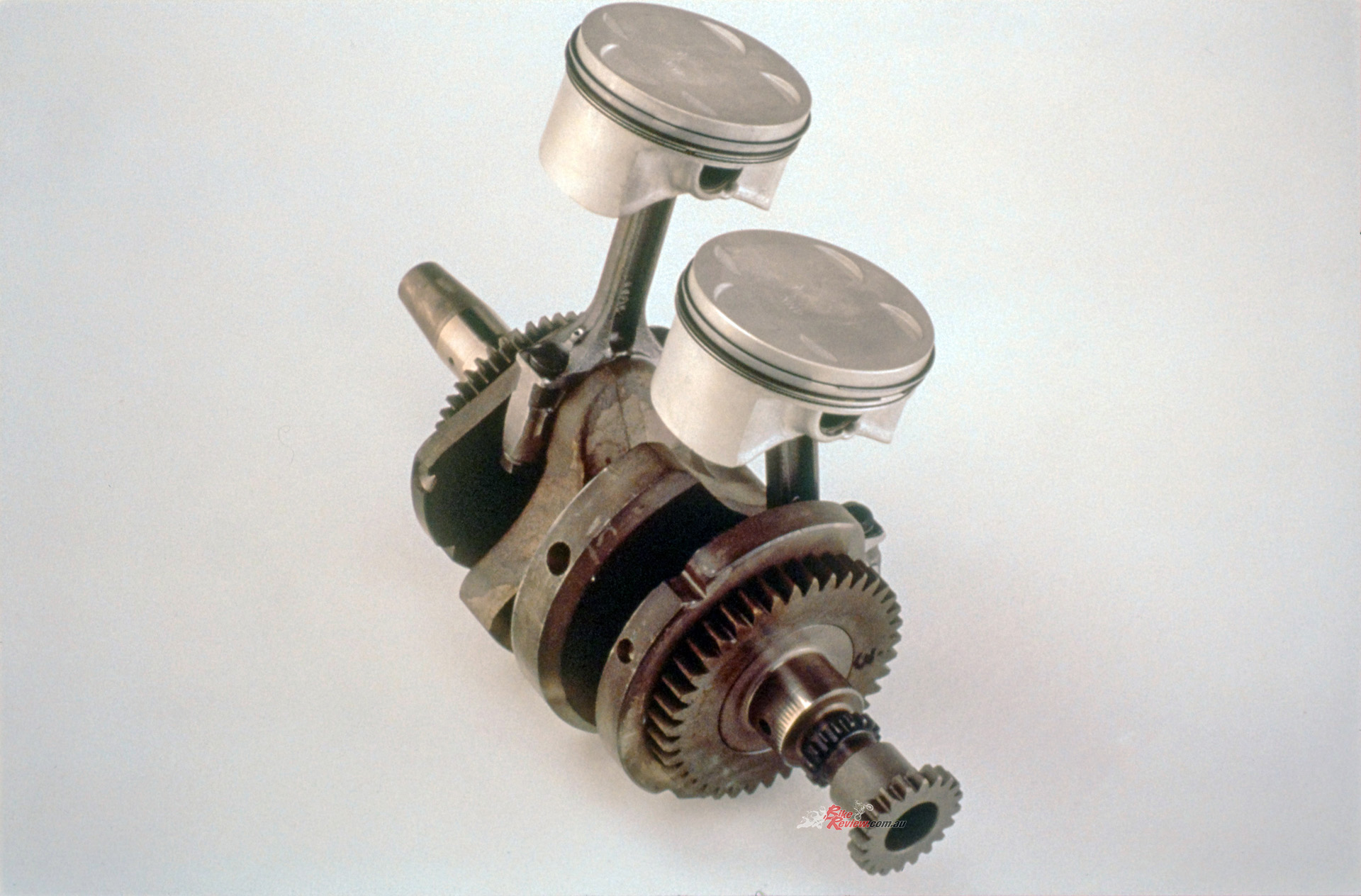
During 1994 word got out that Yamaha was developing a twin-cylinder sportbike based on its TDM850 Adventure Sports street trailie, to create a less costly but distinctive competitor to the Ducati 900SS then selling especially strongly in Japan. It did so by re-engineering the TDM’s DOHC slant-block 10-valve parallel-twin motor internally, to mimic a Ducati’s tractable temperament by rephasing the crank throw from the TDM’s two-up 360° Britbike format to a then-unique 270° guise, delivering in effect the same character as a 90° V-twin.
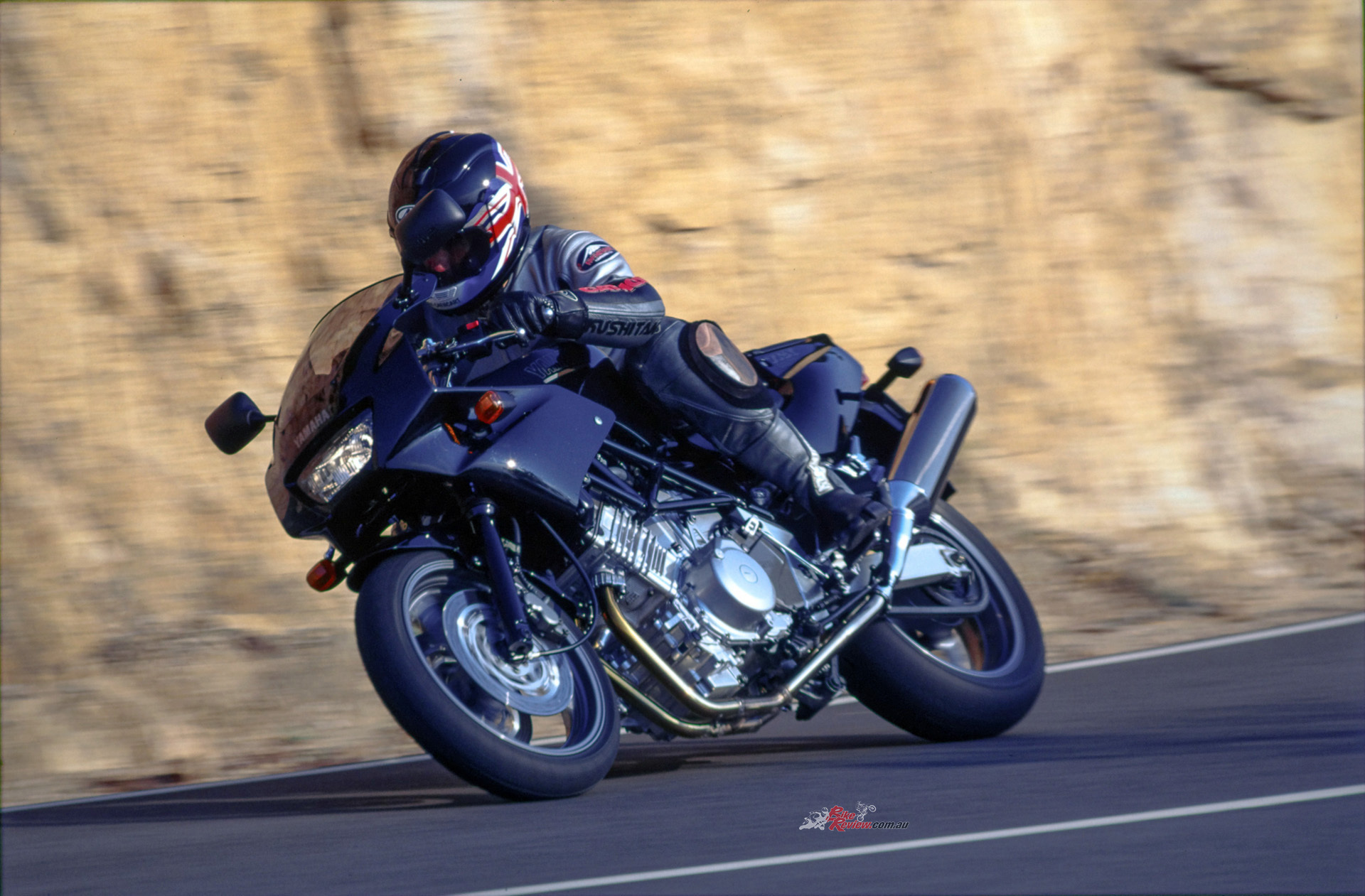
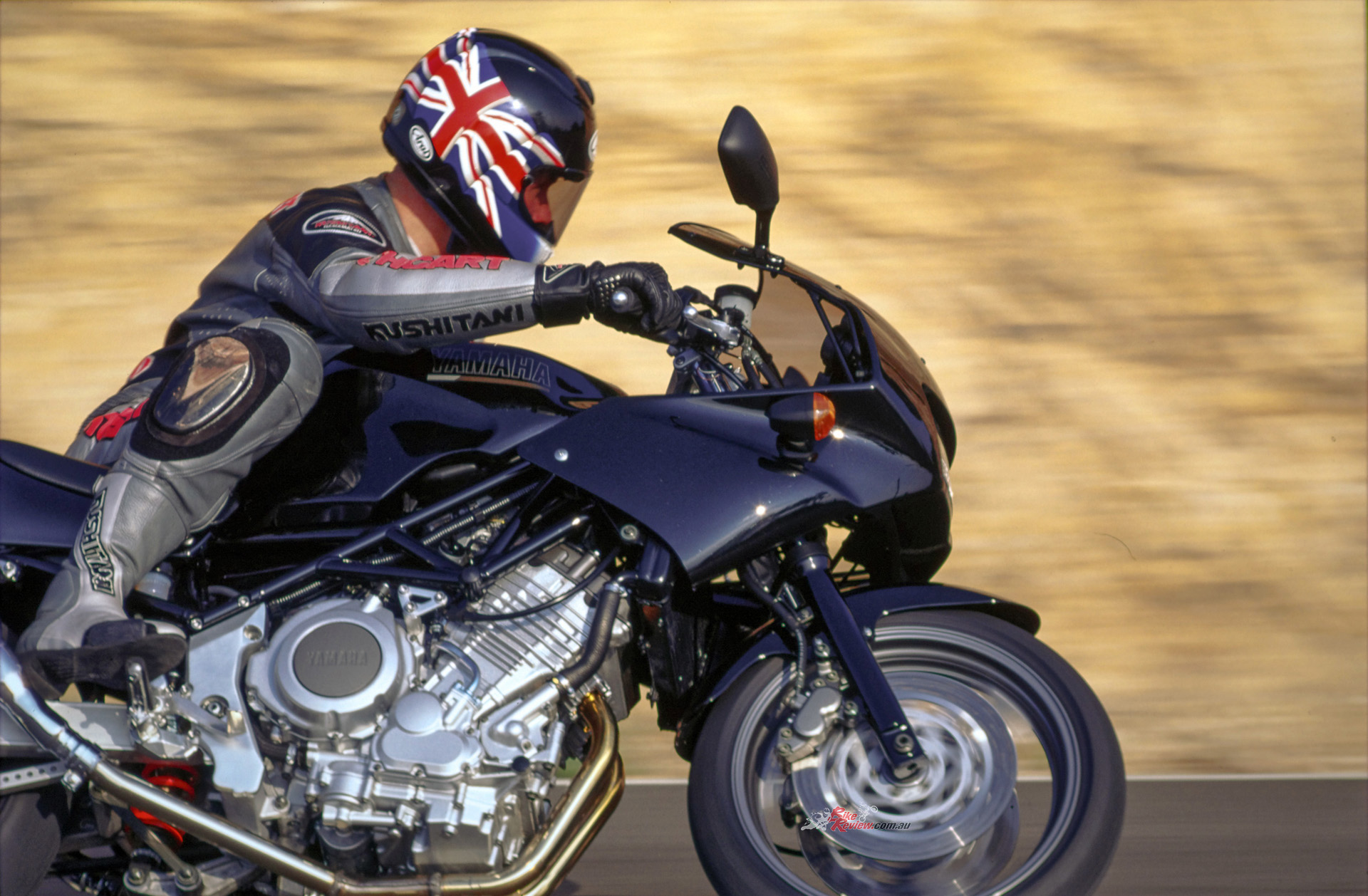
Cathcart exploring the TRX850’s planted feel, with the suspension and tyre combination giving steady, confidence-boosting feedback.
In this it copied Stéphane Peterhansel’s YZE850 desert racer which in 1991-93 he’d taken to a hat-trick of Paris-Dakar victories – an engine format whose 270° crank gave him the same off-road traction on loose surfaces as offered by the 90° V-twin Ducati motor in the Cagiva Elefant that his rival Edi Orioli had won the Dakar on in 1990. The YZE850’s rally-winning rideability was now translated to the street.
Launched as a Japan-market only model in March 1995 – followed two years later by the Honda VTR1000 Firestorm and Suzuki TL1000S – the TRX850 was that long-awaited product from Japan Inc., an accessible twin-cylinder sportsbike with heaps of personality, which was practical enough for everyday use, but also sufficiently exciting on road or track.
“The TRX850 was a baseline sports model, delivering performance and handling for the common man at an affordable price”
Known internally by its Project 005 tag, the TRX850 created by the Yamaha R&D team headed by Hirosuke Negishi was a baseline sports model, delivering performance and handling for the common man at an affordable price, which you could appreciate without feeling intimidated or overawed by the bike’s hyper-potential. It was a bike to enjoy rather than to master, with the option to enhance its spec via the aftermarket, as money and inclination allowed.
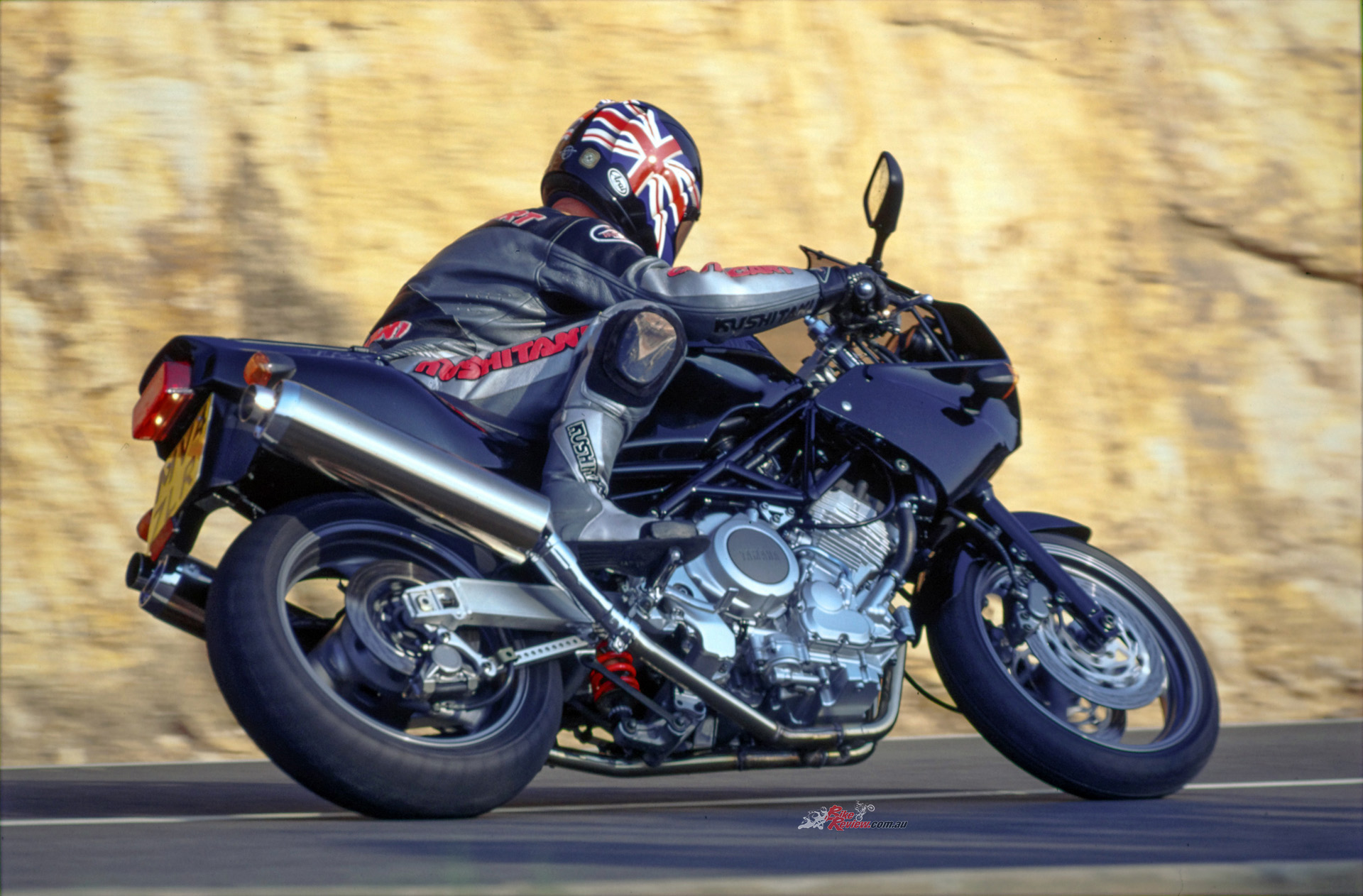
The production TRX850’s 270-degree twin pulling cleanly through corners, its distinctive midrange drive shining through in real-world riding.
Powered by its British-style parallel-twin motor rather than the 90° V-twin Latin layout its Honda and Suzuki counterparts later copied, the TRX was Yamaha’s counter-attack to the increasing popularity of European sports twins in Japan – but with the 90° crank in a parallel-twin format it offered the best of both worlds.
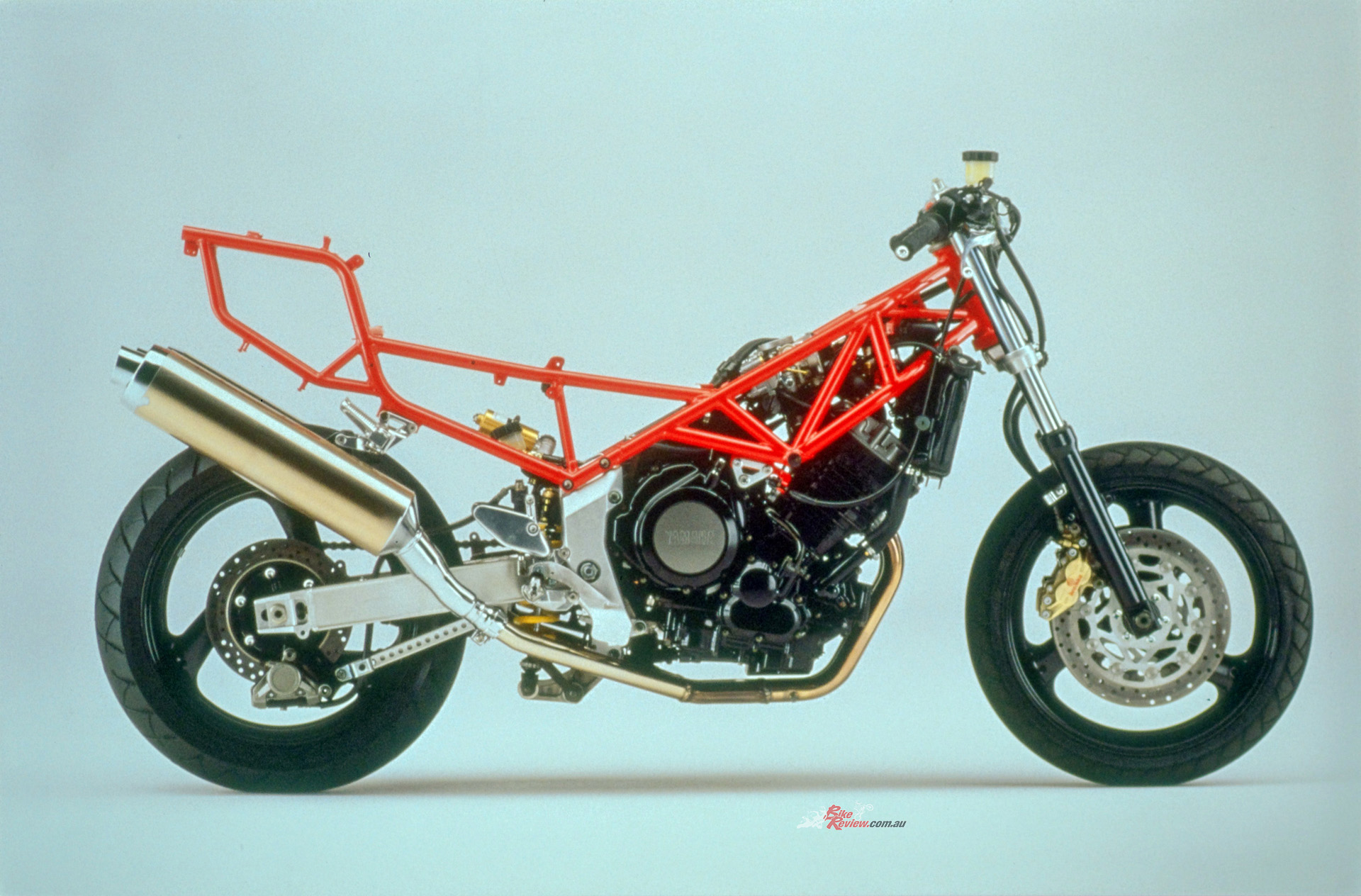
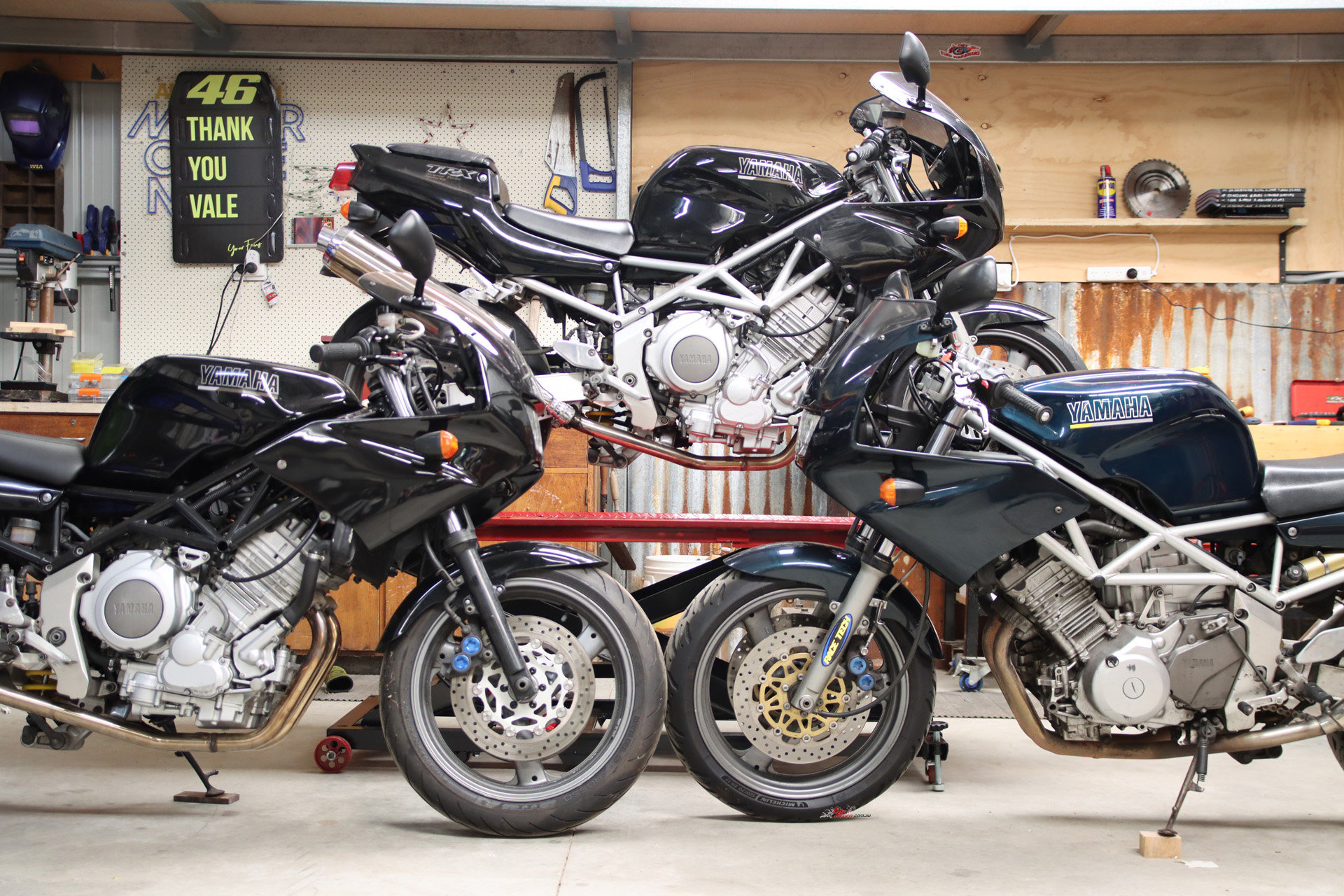
Thus it featured the grunt and rideability of a V-twin in the more compact, contained architecture of a parallel-twin, which as well as providing superior handling thanks to the longer swingarm, optimum weight distribution and shorter wheelbase permitted by the more compact motor, was also less costly to manufacture, thus helping Yamaha hold the sticker price right down. The same considerations account for the slew of so-called ‘inline twins’ today, almost all with 270° cranks just like Trixie.
Check out Part 1 of Kellie’s TRX restoration project (pictured) here…
 The TRX850 was inspired by the ingenious, good-looking limited-edition café racer created earlier by Kensei Sato, whose Over Racing shop at Suzuka was umbilically linked to the back door of Yamaha’s factory Racing Division for more than 20 years.
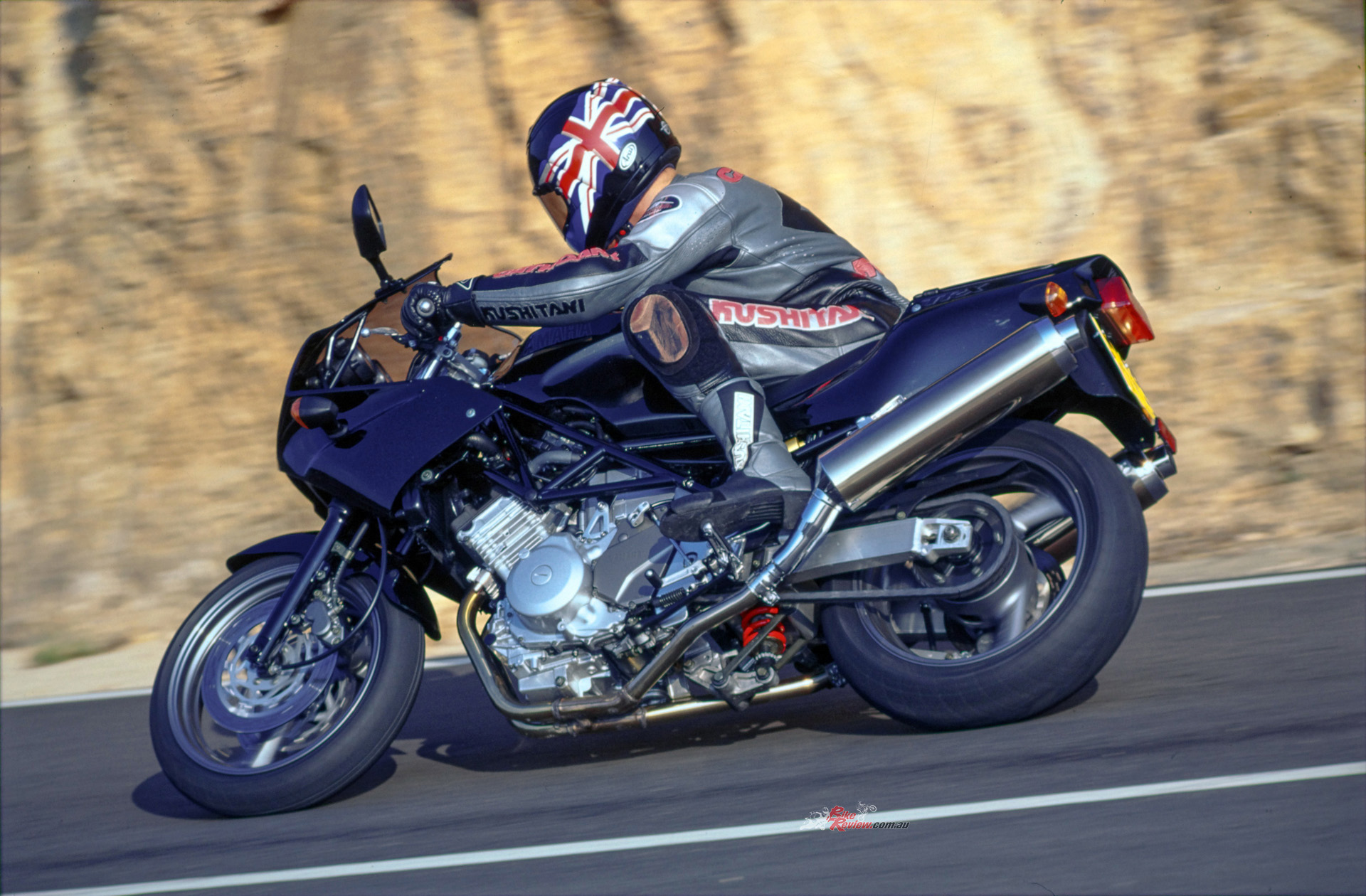
Needed a little effort to turn, but the TRX850 always stayed fun and forgiving through corners.
Among the succession of factory-backed Yamaha specials emanating from his workshop over that period was the TDM850-engined OV-15 on which Over’s ace rider Shin Ohura failed by half a wheel (officially, 0.02 sec.) to wrest victory from Andrew Stroud on the V-twin Britten in the uber-prestigious Assen ProTwins race in 1992, when after a race-long duel Ohura led out of the final chicane, only for the more powerful Britten to out-accelerate him to the line, with the bevy of customer Ducati 888 Superbikes nowhere.
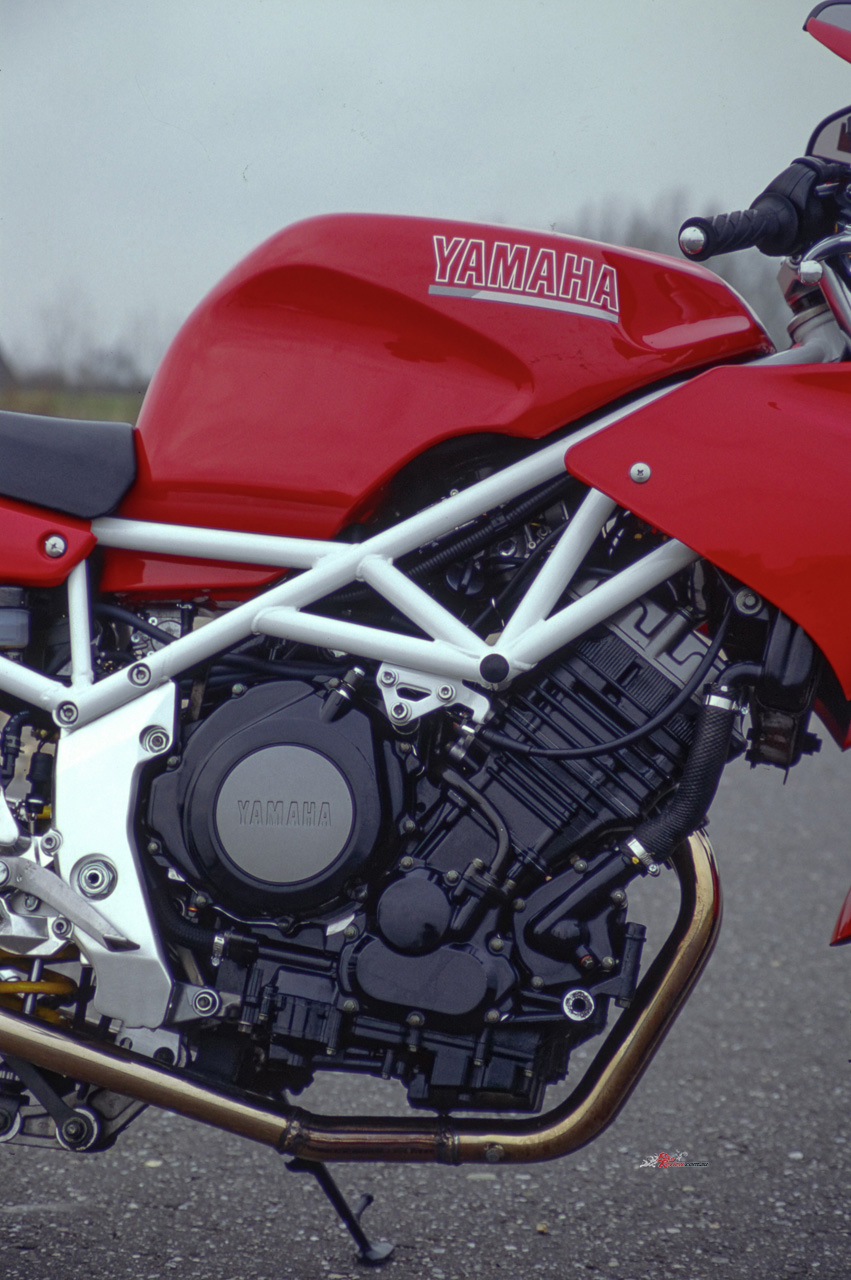
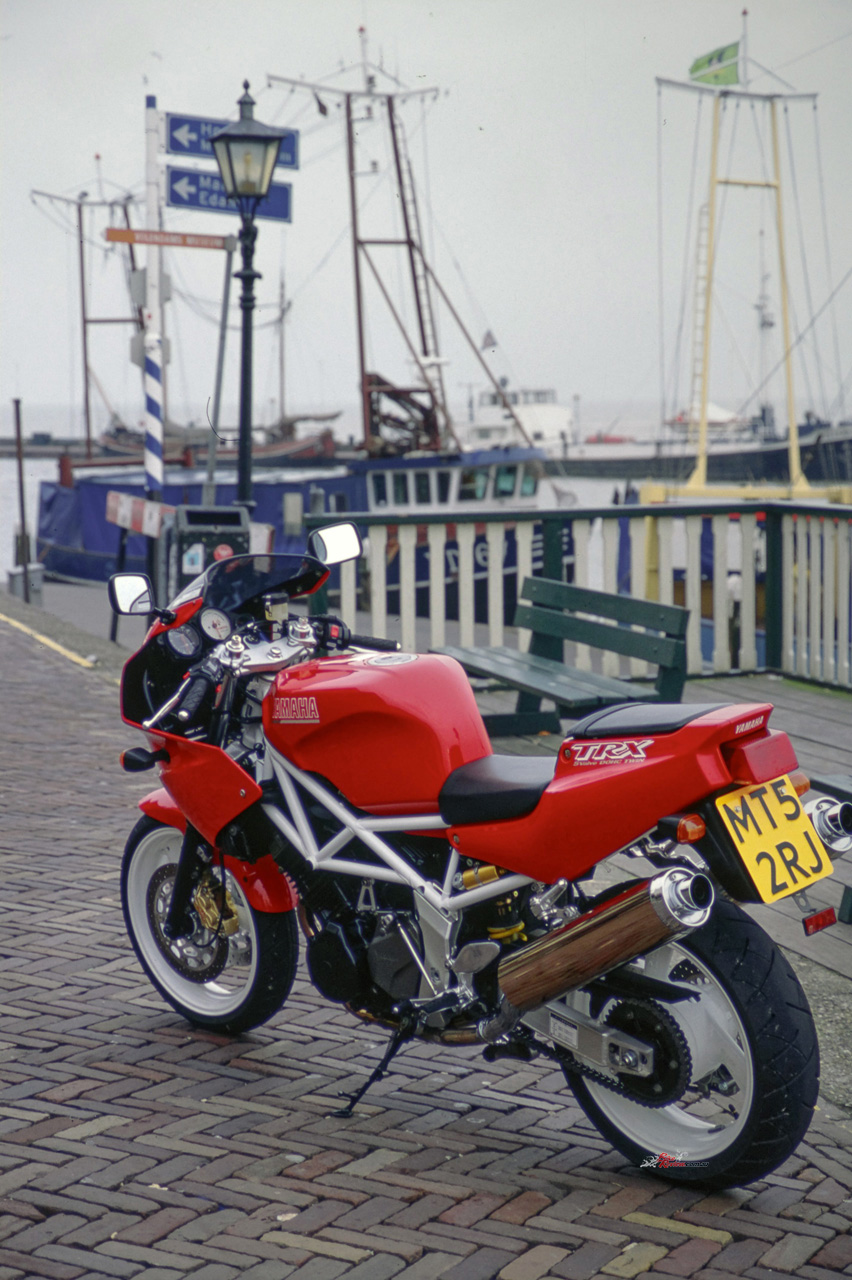
This led Sato to create the dramatically-styled TDM850-powered OV-15A Euro Twin road bike producing 102bhp at 9,000 rpm from its 868cc motor with 1mm-over pistons, fitted in a trademark Over oval-tube aluminium spaceframe with single-sided swingarm. An undisputed star on debut at the 1993 Paris and Birmingham Shows, Sato planned to put the bike into production at Over Racing’s British base near Stratford-on-Avon, but after six bikes were delivered to customers in 1994 the project ended owing to cost overruns and logistical issues. It was pretty nice to ride, though…
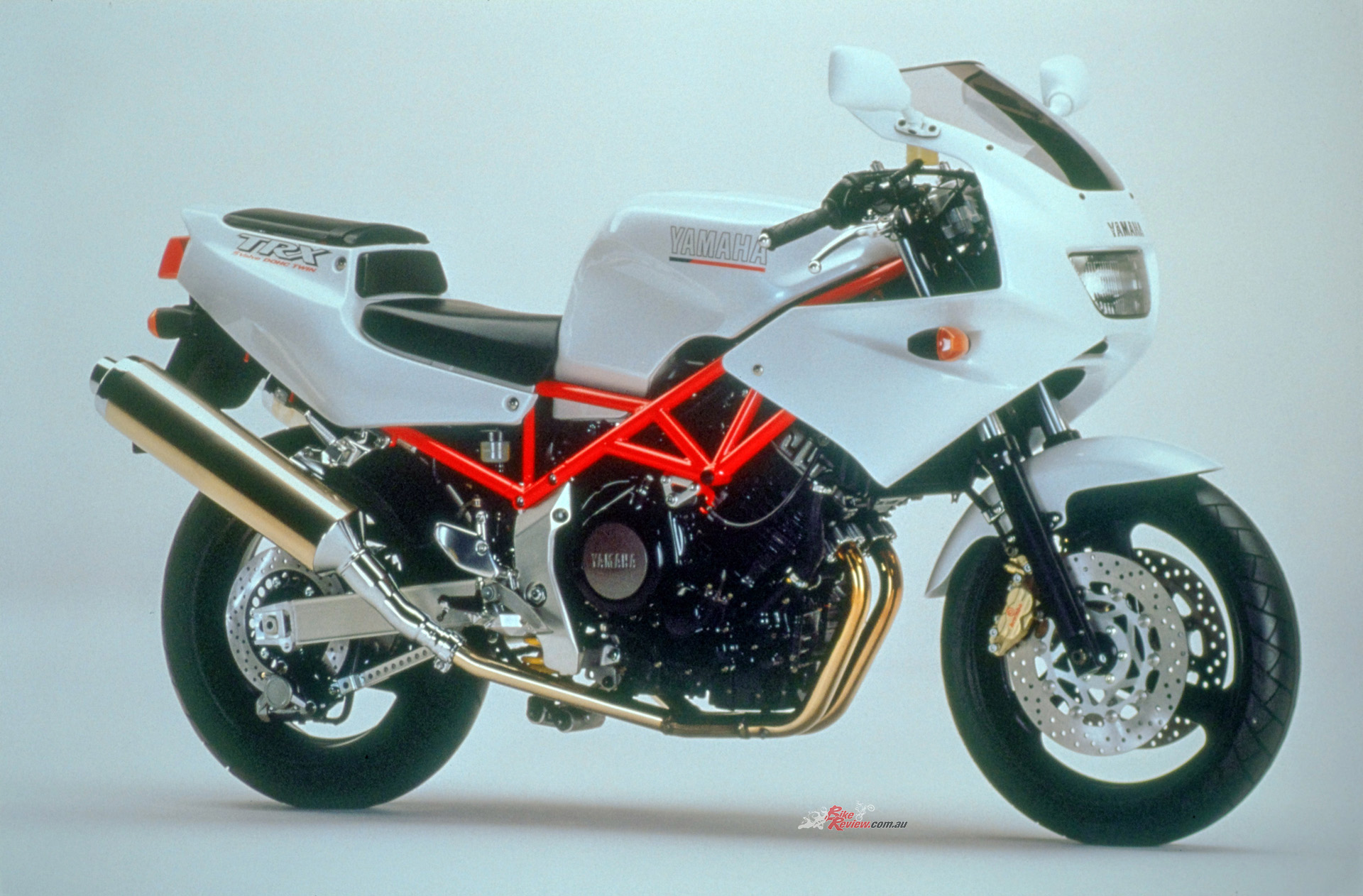
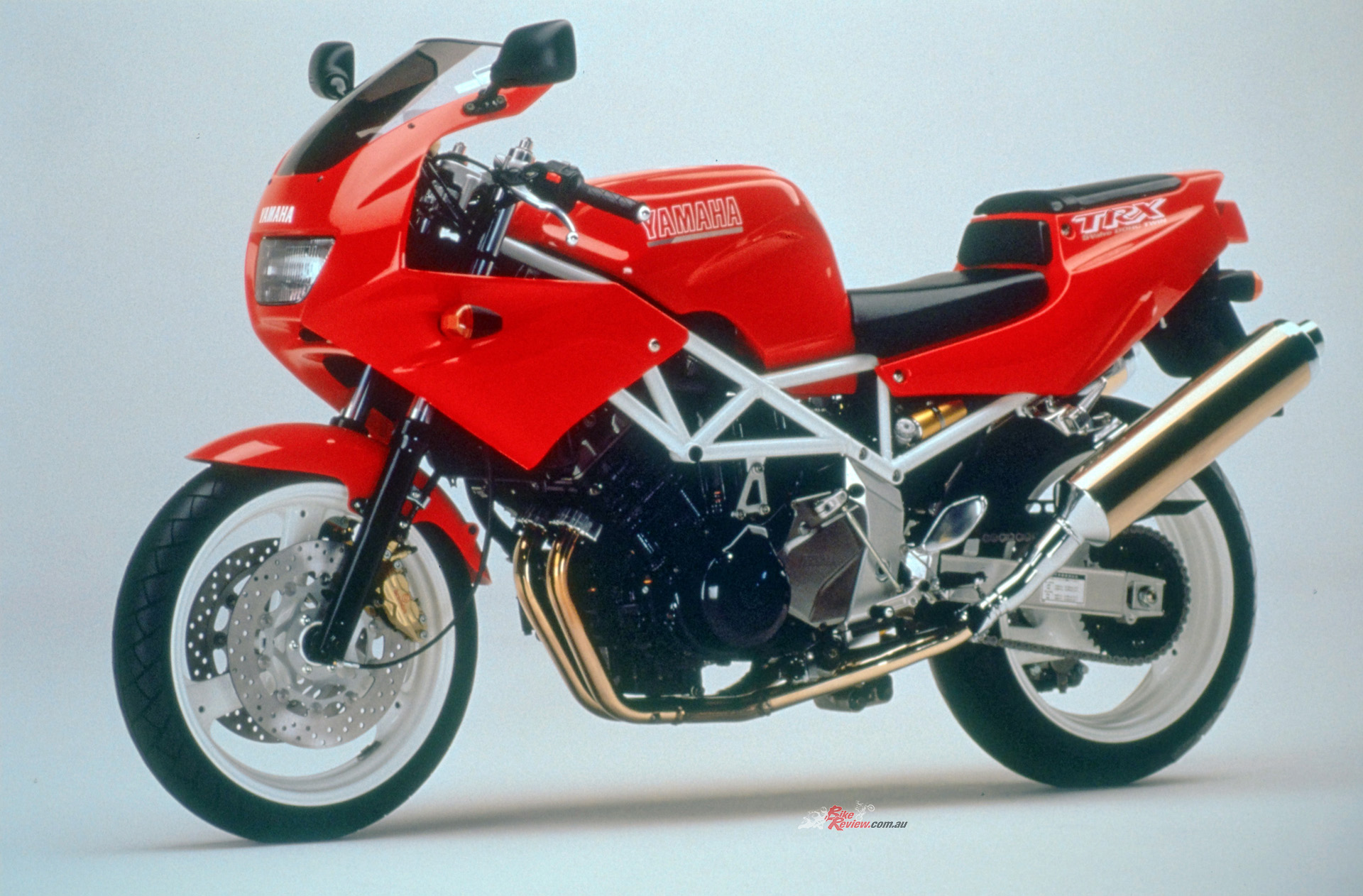
“The TRX850 debuted at the 1994 Tokyo Show, painted red with a white tubular steel spaceframe chassis, which immediately led to accusations of a Yamacati”
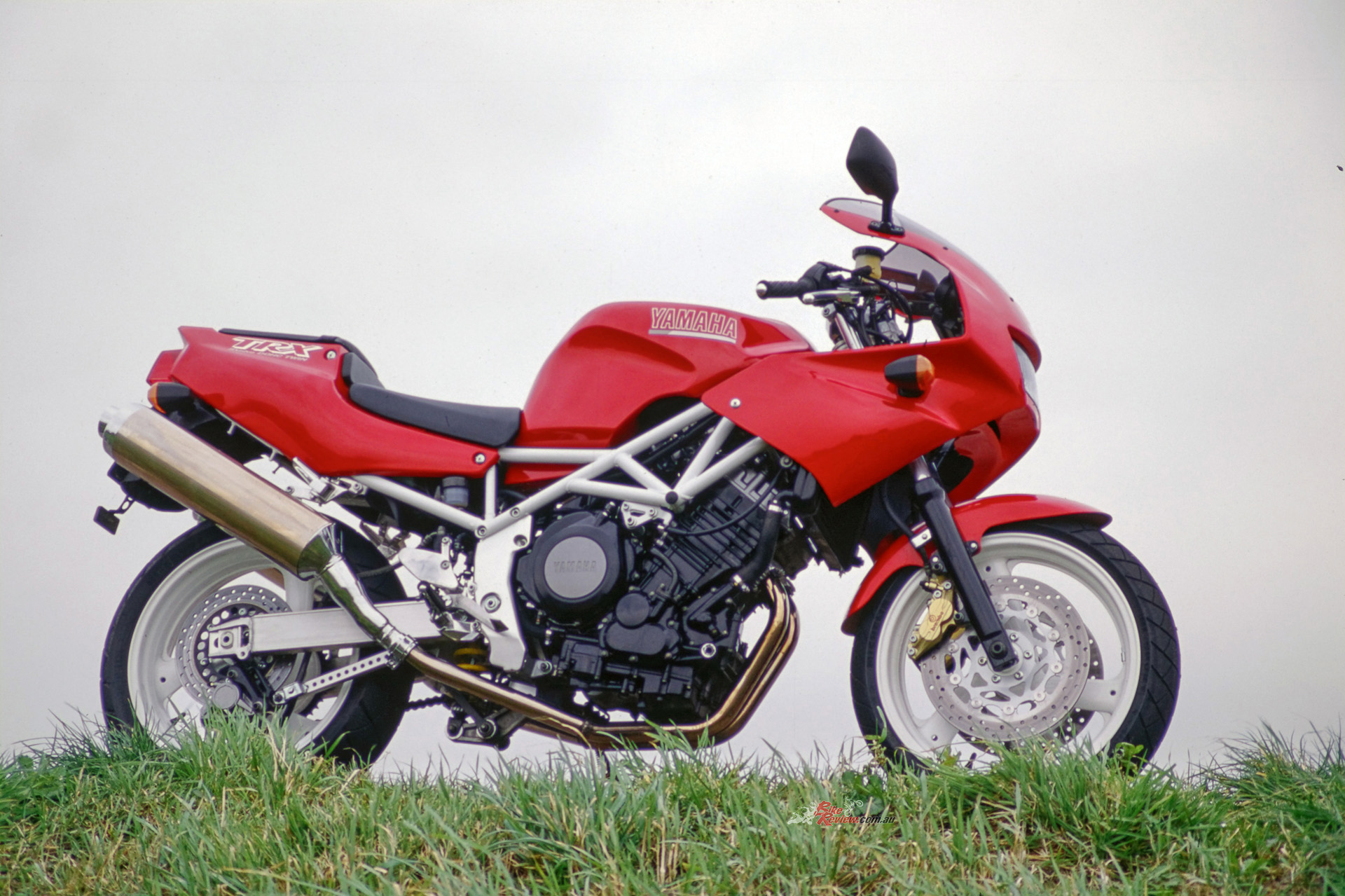
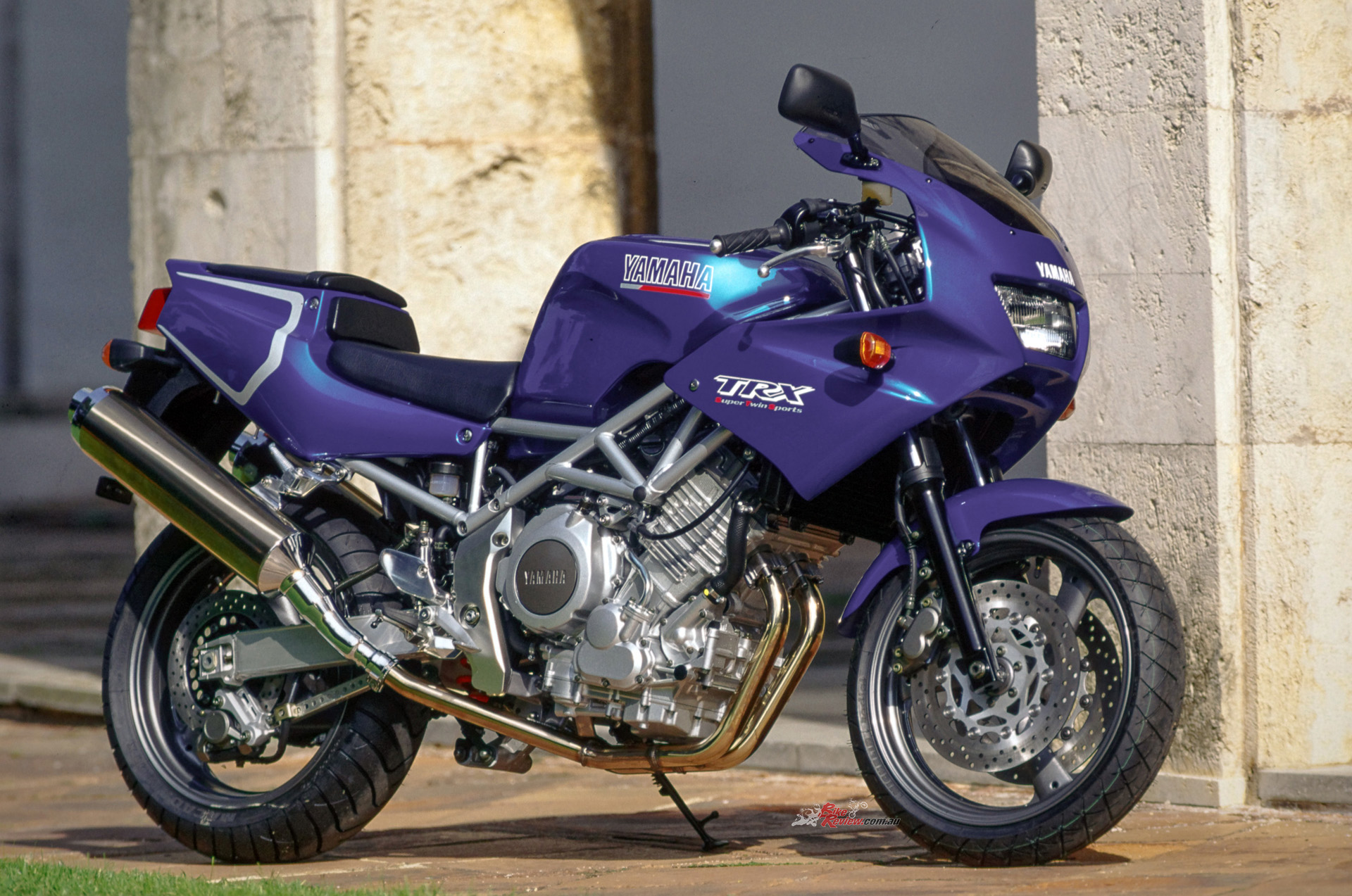
However, Yamaha bosses had been paying close attention to the positive global reception to the Over TDM, so forged ahead with their plans to produce a less costly but still sporty new parallel-twin model. So the TRX850 duly debuted at the 1994 Tokyo Show, perhaps unfortunately painted red with a white tubular steel spaceframe chassis, which immediately led to accusations that Yamaha had simply cloned their Italian rival’s trademark frame format to create a Yamacati.
Unfair? Churlish? Well, how about listening to Massimo Tamburini, then chief design guru of the Cagiva Group and the man responsible for the 900SS Ducati that had allegedly been so plagiarised by the Yamaha TXR850?
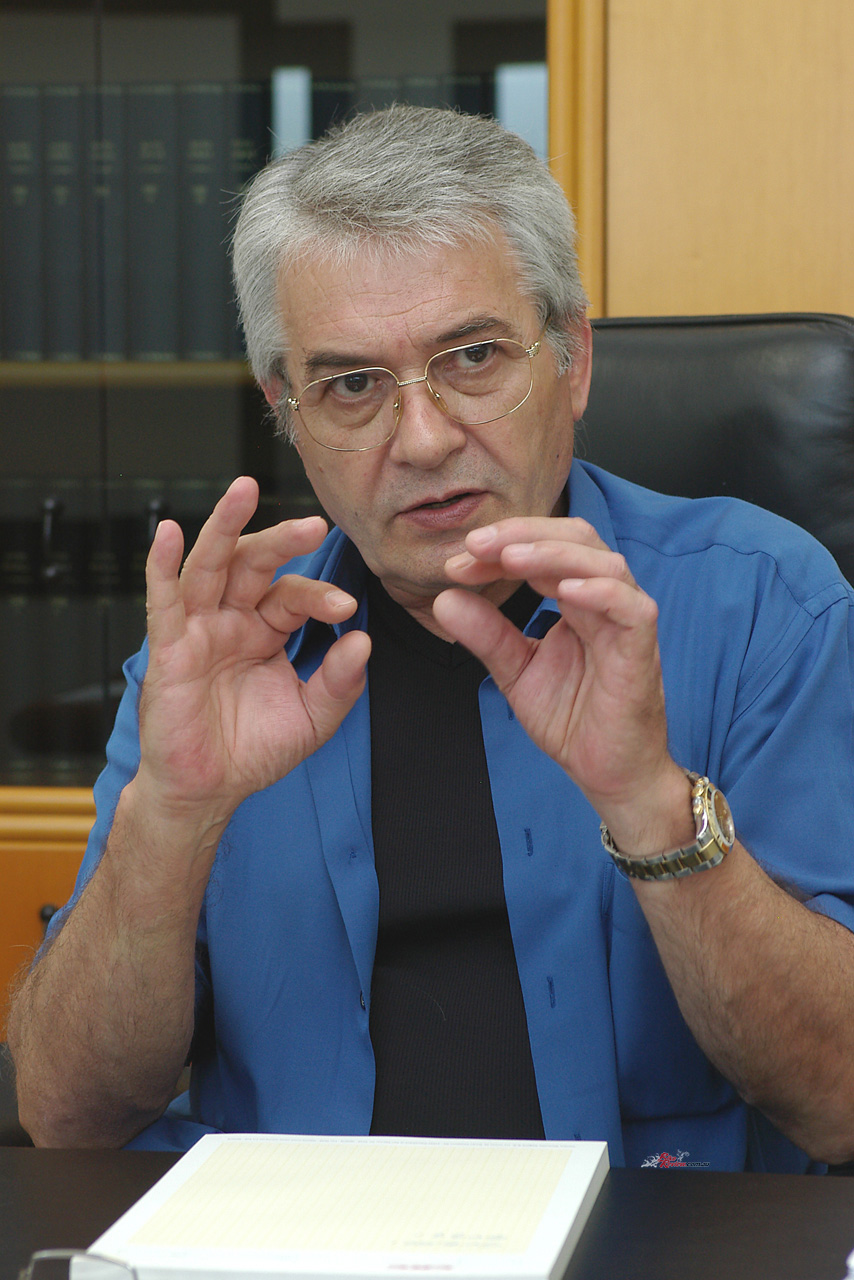
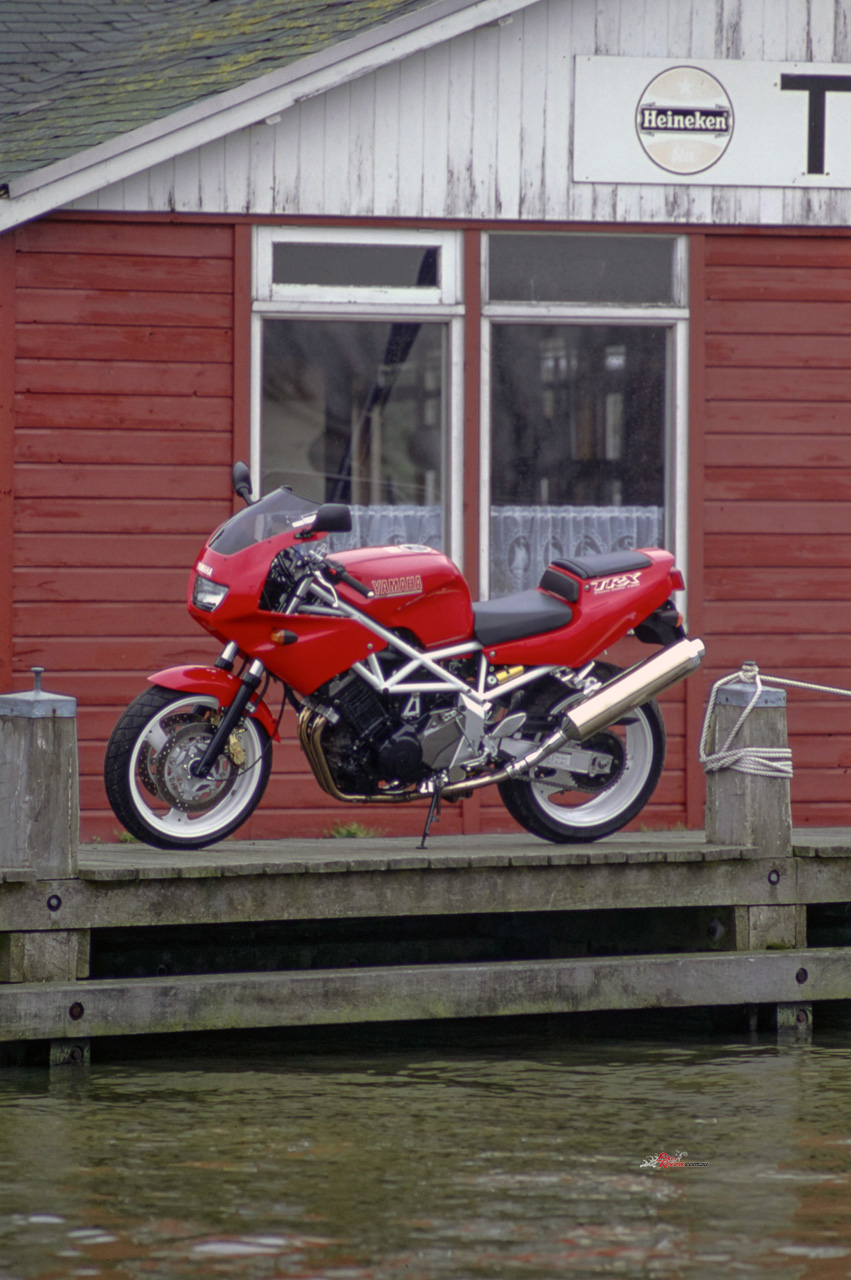
“People seem to think that the tubular spaceframe is a Ducati trademark,” he told me in 1995, “whereas in fact it was invented by the British on the John Player Norton, and there have been many specialist chassis constructors since then who have used it on every kind of bike – not least Bimota. I do agree it’s a European design concept – but you can’t accuse Yamaha of being any more derivative for using it on the TRX than we were in employing a Deltabox chassis on the Cagiva 500GP bike!
“You can’t accuse Yamaha of being any more derivative for using it on the TRX than we were in employing a Deltabox chassis on the Cagiva 500GP bike!” – Tamburini
“Anyway, the TRX frame doesn’t even resemble the Ducati 900SS, so much as one of Gigi Segale’s designs. In fact, I have followed the same composite path with the Cagiva F4 Superbike chassis I just completed [later to reach production as the MV Agusta F4 – AC], which like the Yamaha TRX and several Segale models uses an upper spaceframe combined with a lower aluminium engine mount and swingarm pivot!” So there – maybe it’s just too bad Yamaha replicated the Ducati’s red-and-white colour scheme on the J-market TRX850.
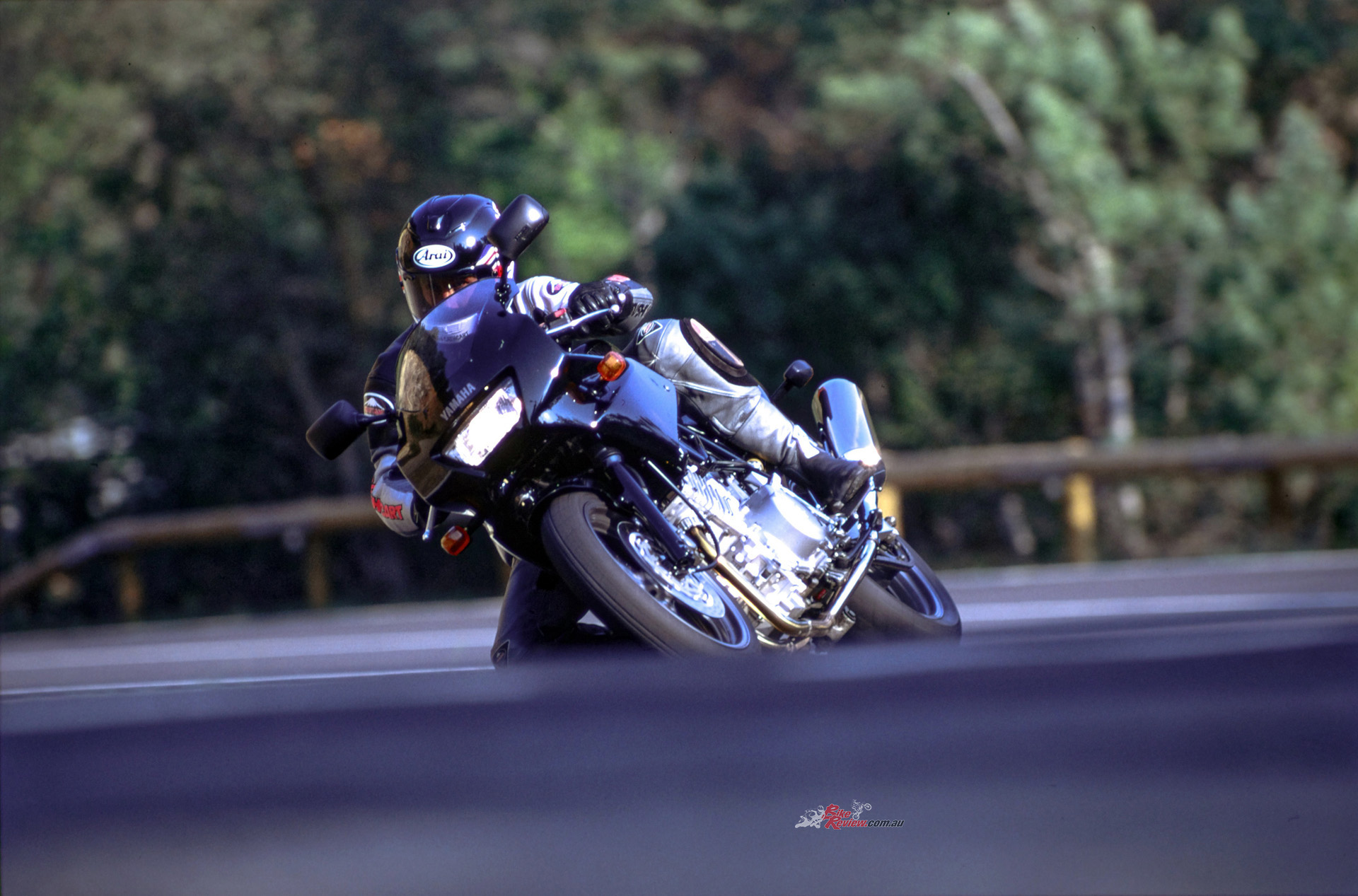
The TRX850 asked for rider input in direction changes, without ever feeling heavy or limiting the fun.
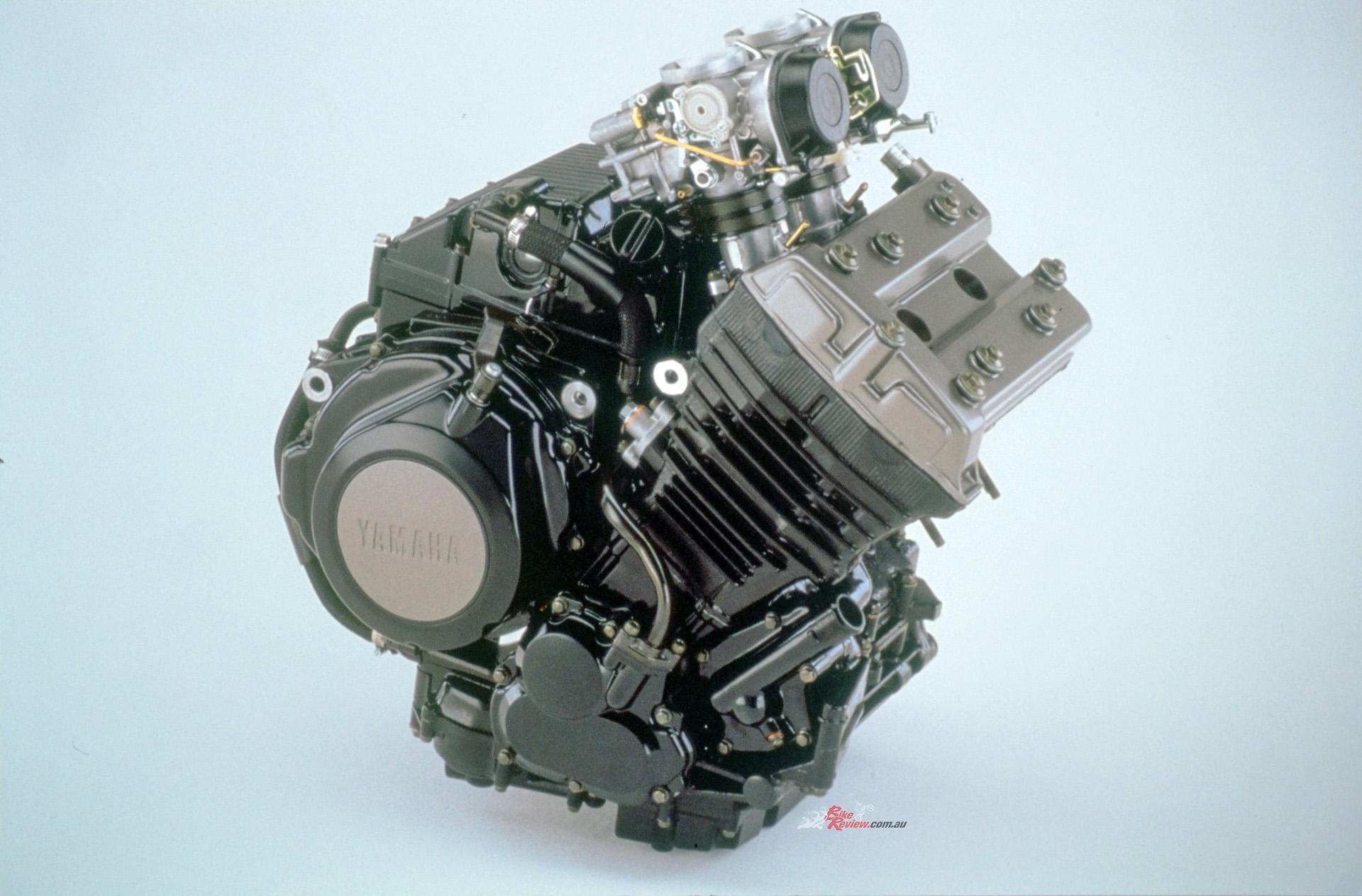
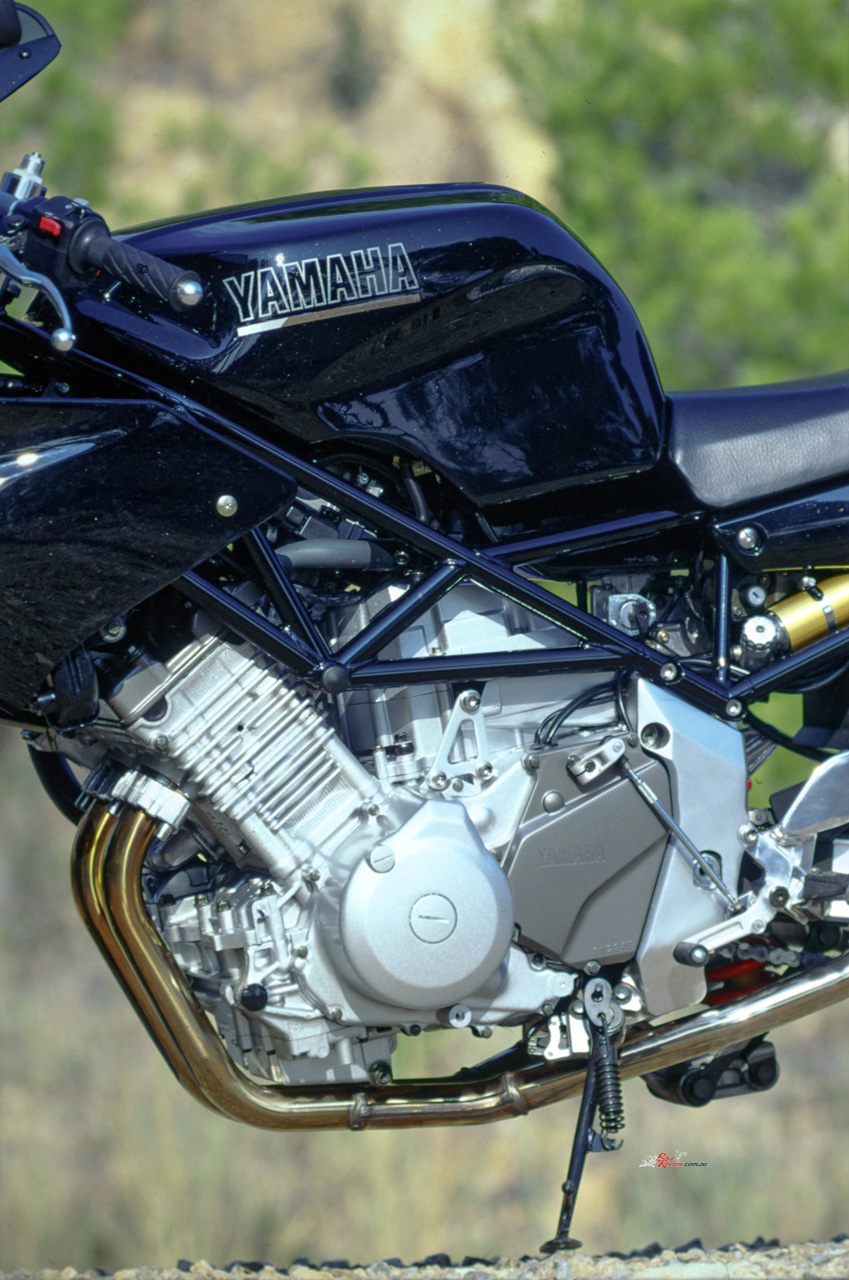
To create the Trixie engine, Yamaha’s Project 005 R&D team took the DOHC 360° parallel-twin engine from the TDM850 and adapted it for more sporting use. While retaining the slant-block format, with the cylinders inclined forward at 45° to deliver a healthy degree of downdraught for performance engine tuning, as well as permitting the 849cc motor to be used as a fully stressed chassis member and optimising the 52/48% weight distribution, they revamped the 89.5 x 67.5mm layout internally, to deliver the world’s first production parallel-twin with a 270° crank throw.
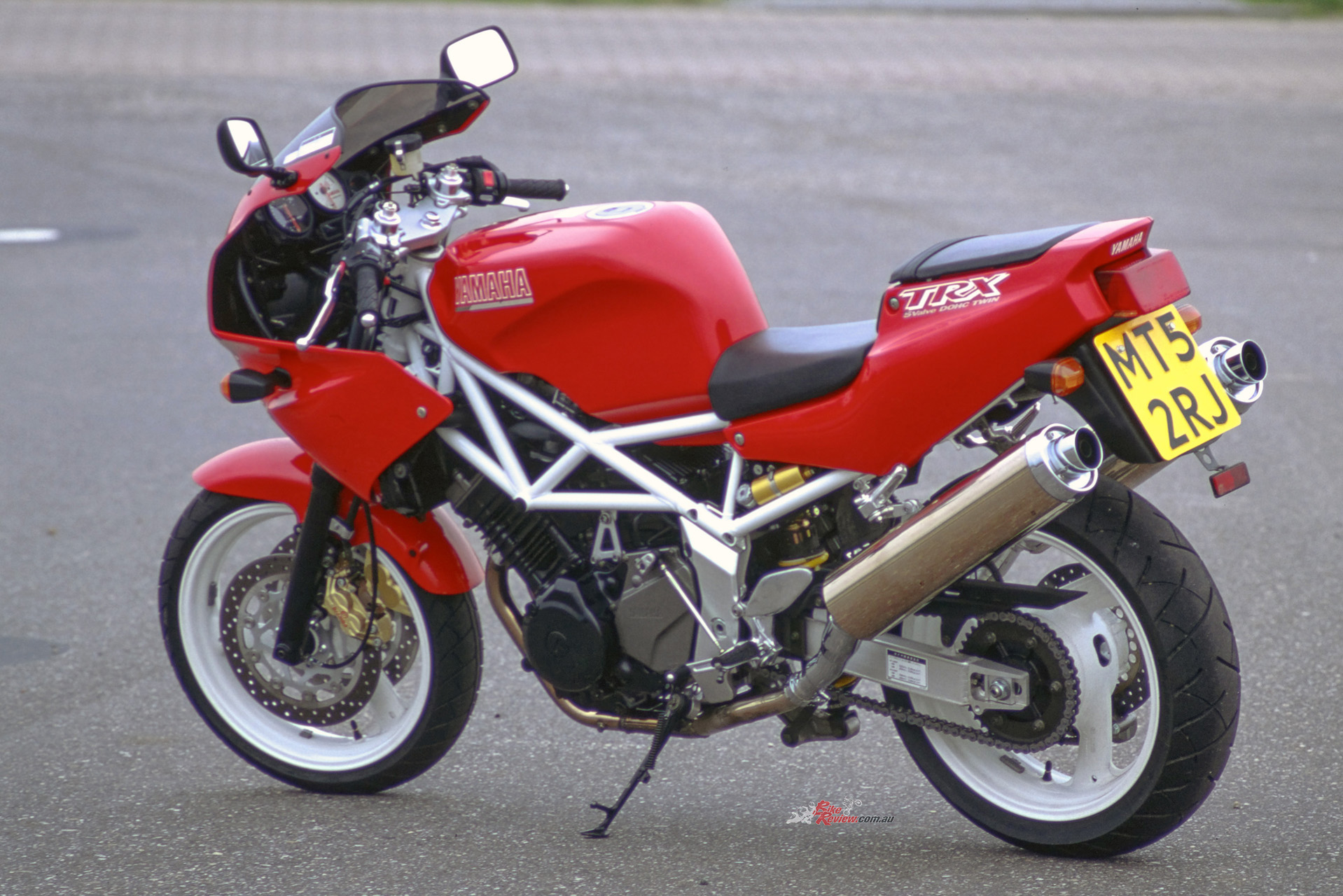
Since 360 minus 270 equals 90, the effect was predictably to deliver the same offbeat lilt to the engine, the same pulsing throb to the power delivery and the same dose of grunty torque to the back wheel, as you get from a 90° V-twin – but without the architectural compromises that a wide-angle V2 engine delivers in terms of chassis design, seat height and weight distribution.
“The effect was the same pulsing throb to the power delivery and the same dose of grunty torque to the back wheel”
Compared to the TDM’s softer tune motor, the Big Bang TRX had increased 10.5:1 compression and a bigger airbox, as well as a peakier inlet camshaft (exhaust was the same) and 14% reduced flywheel mass for quicker pickup throughout the rev range. The 10-valve cylinder head had the same valve sizes as the TDM – three 26mm inlets and two 28mm exhausts – and the twin gear-driven balance shafts either side of the crank were retained on the 270° engine to smooth out vibration, without sacrificing character.
The five-speed gearbox had a close-ratio gear cluster, while the dry sump engine had an integral cast alloy oil tank centrally located above the gearbox, to compact overall mass and aid handling via the longer swingarm the much shorter engine permitted. After first experimenting with flatslides for crisper throttle response, Yamaha settled on a more user-friendly carburettor package, with twin 38mm BDST Mikunis fitted with a TPS throttle position sensor, as well as accelerator pumps.
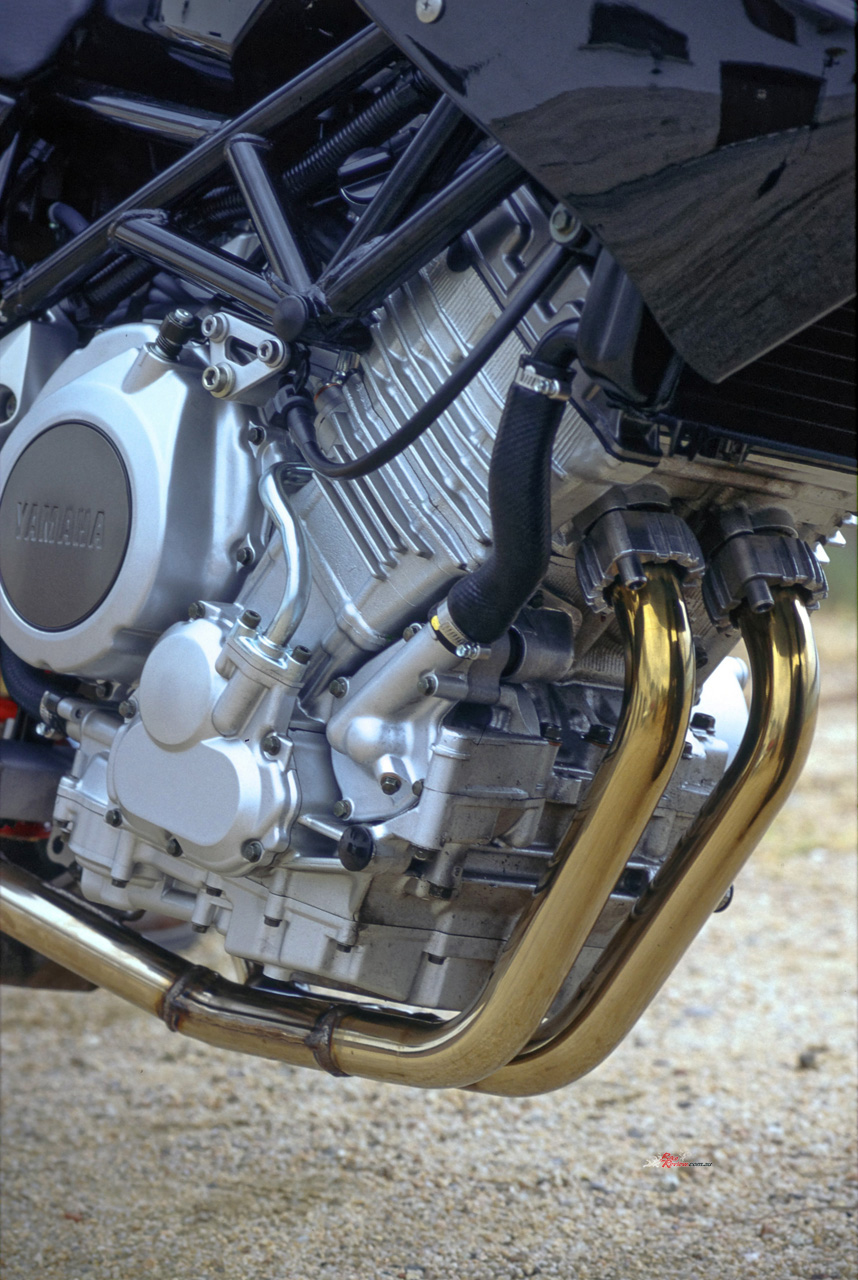
The TPS was part of a three-dimensional mapped electronic CDI, with a trio of sensors varying the ignition timing according to engine revs, carb slide position and throttle operation. Delivering a claimed 83bhp at 7,500rpm, the TRX850 was 2bhp more powerful than the TDM and offered more torque at 83.8Nm [61.81ft-lb] at 6,000rpm versus the TDM’s 80.4Nm [59.20 ft-lb].
Having had the pleasure of giving garage space to the Over TDM for a month or so when it visited Europe for the 1993 show season, in return for a bushel-load of miles aboard it, I had a pretty good idea of what Yamaha needed to do to make the TDM engine into a more sporting powerplant – and they’d done it. The TRX850 had a distinctive personality, which came alive as soon as you thumbed the starter motor.
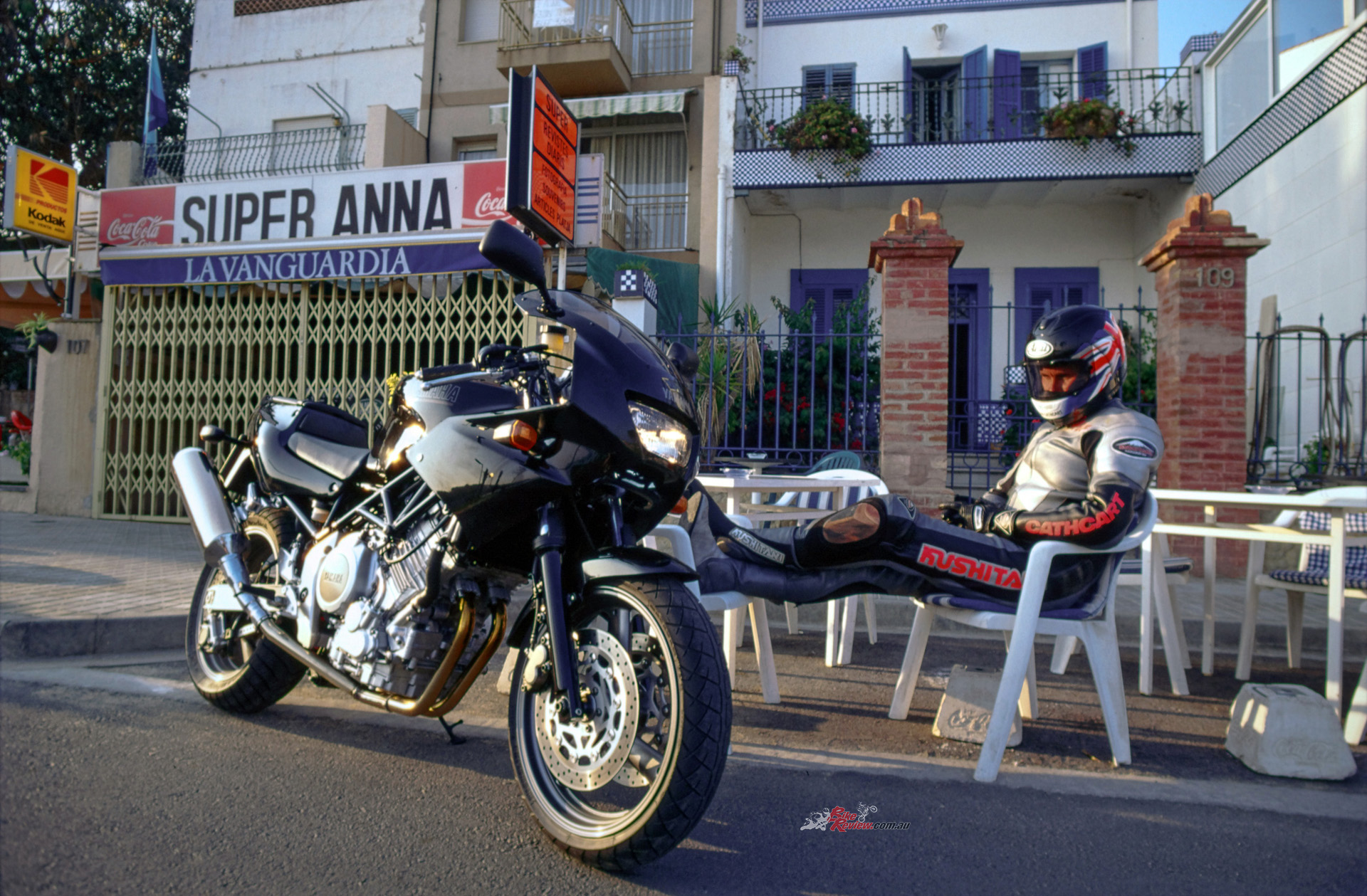
A roadside pause showing off the TRX’s slim, purposeful styling.
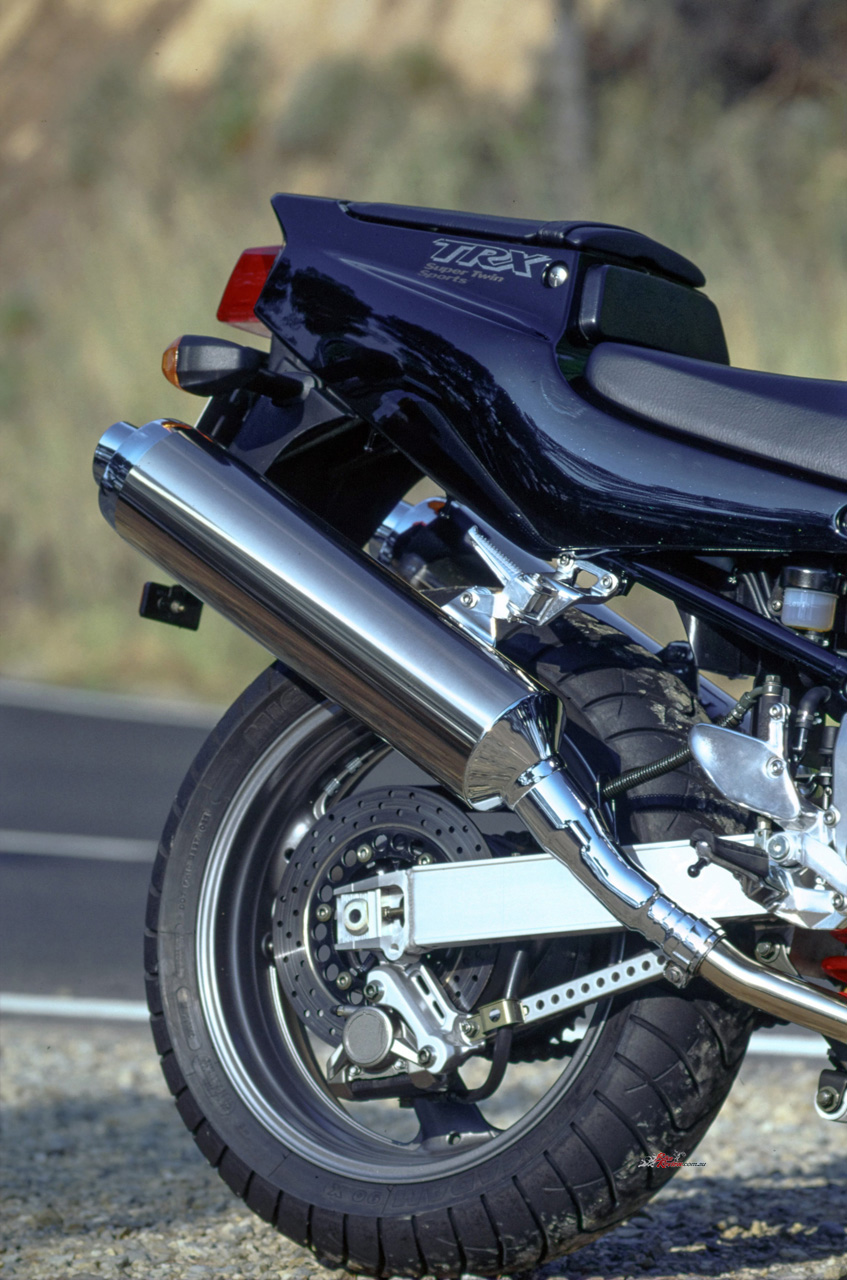
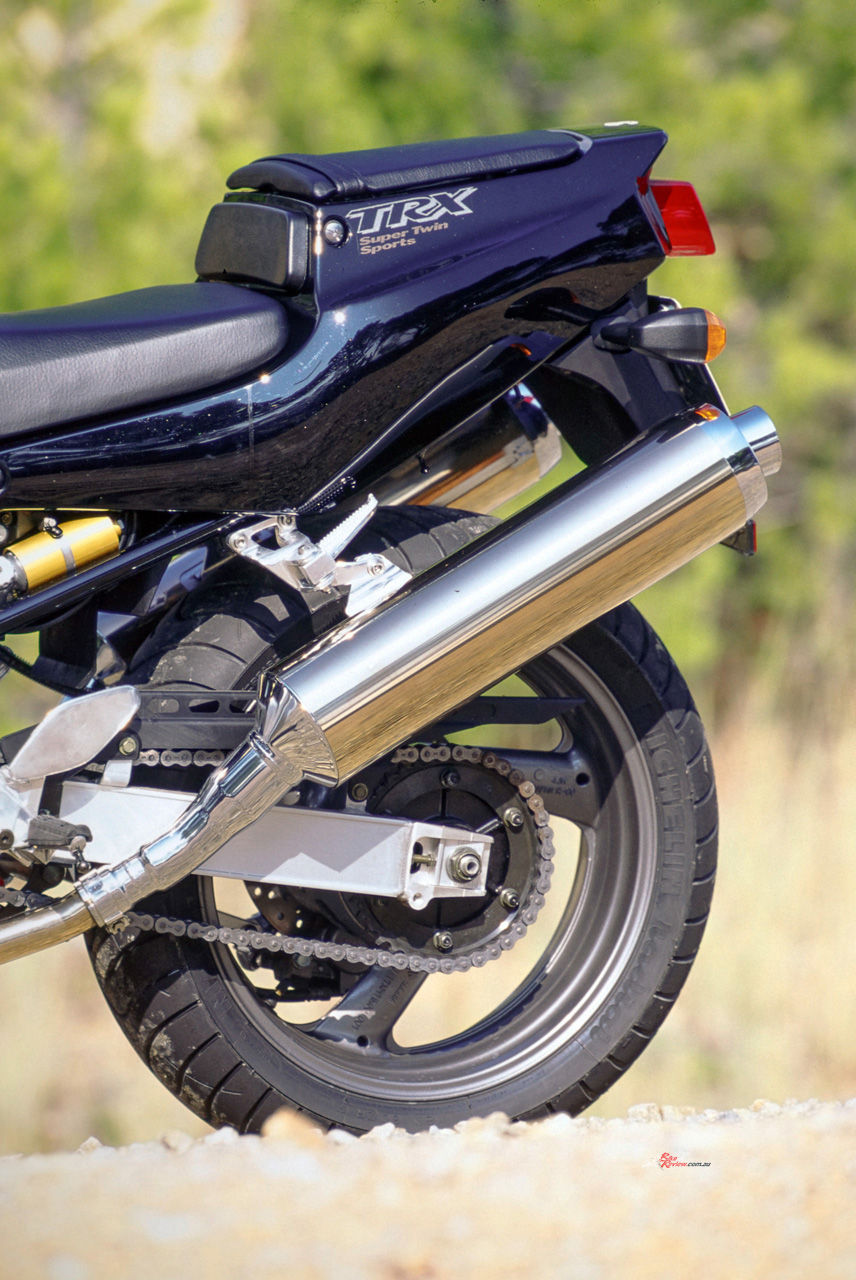
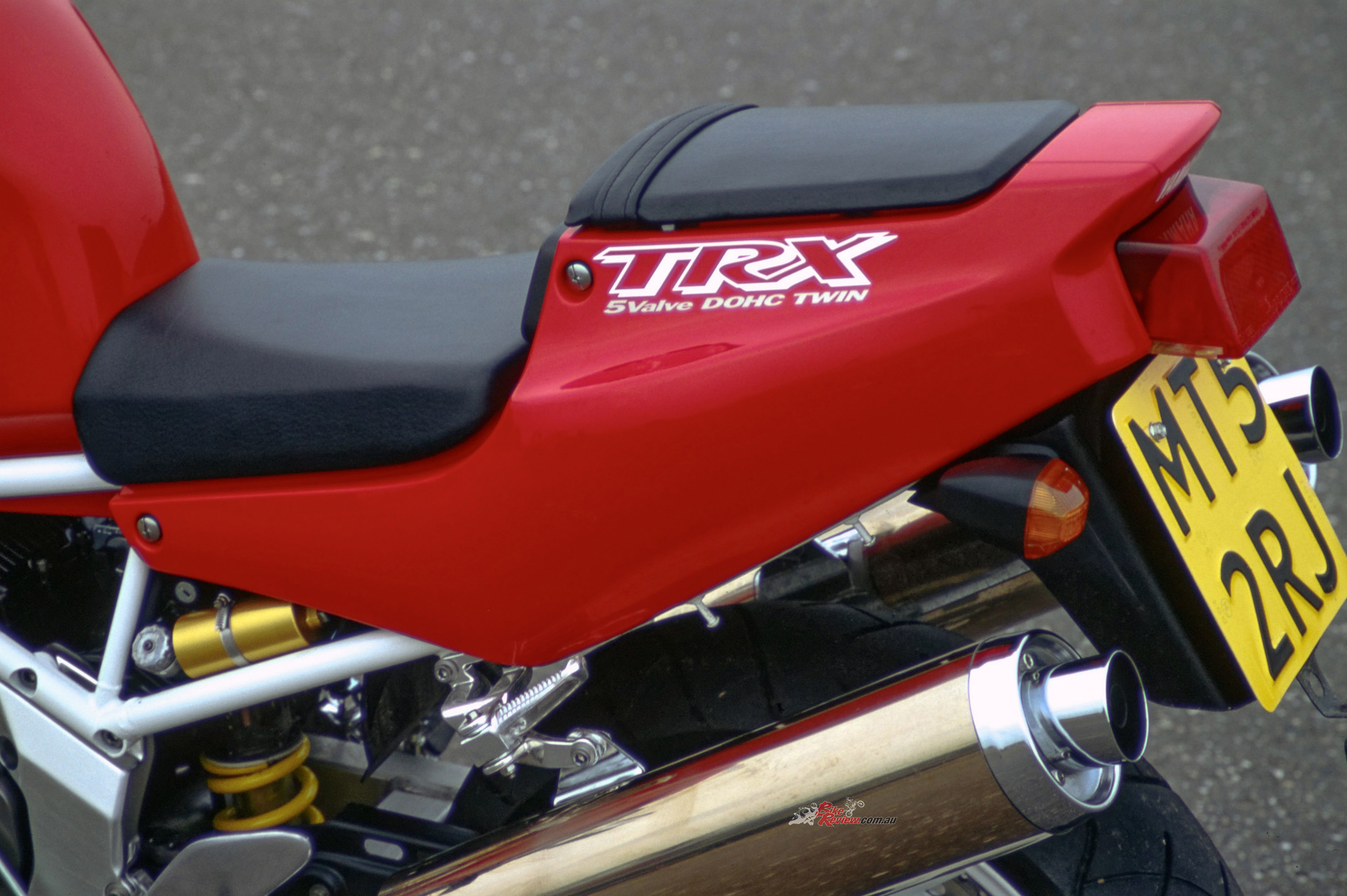
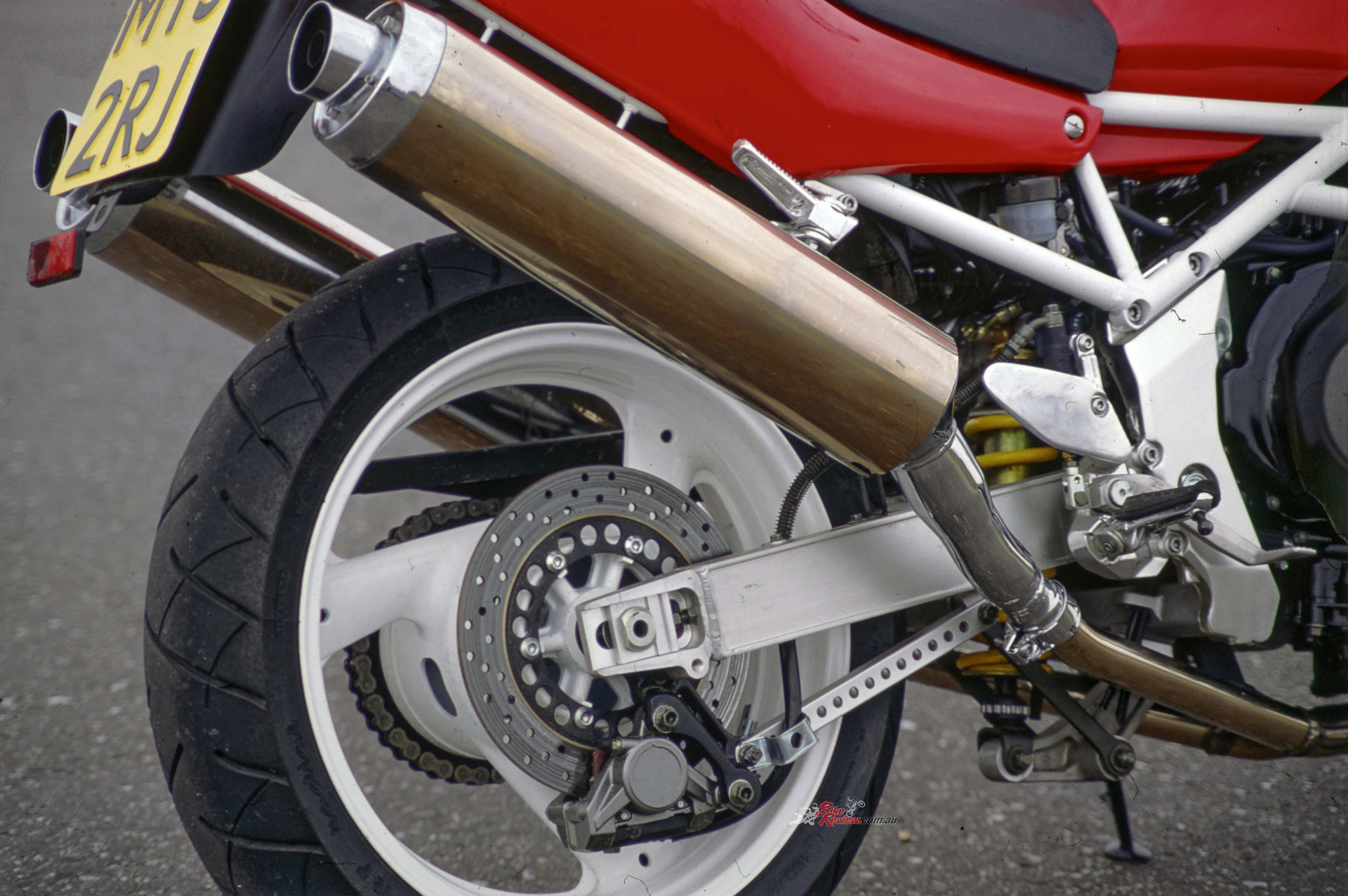
Instead of the TDM’s flat rasp which said Triumph Bonneville rather than Ducati 900SS, Trixie had a trademark lilt to her engine note, but still sounded a little smoother and less lumpy than a desmo V-twin – more close-coupled. The lack of a full fairing sent quite a lot of mechanical noise from the top half of the engine upwards to your ears, despite the water-cooling – sometimes it sounded almost as tappety as a pushrod Moto Guzzi! But this all added to the character, underlined by the crisp, offbeat exhaust note from the twin silencers of the rather heavy 2-1-2 system, despite which dry weight was just 188kg (with a claimed 202kg kerb weight).
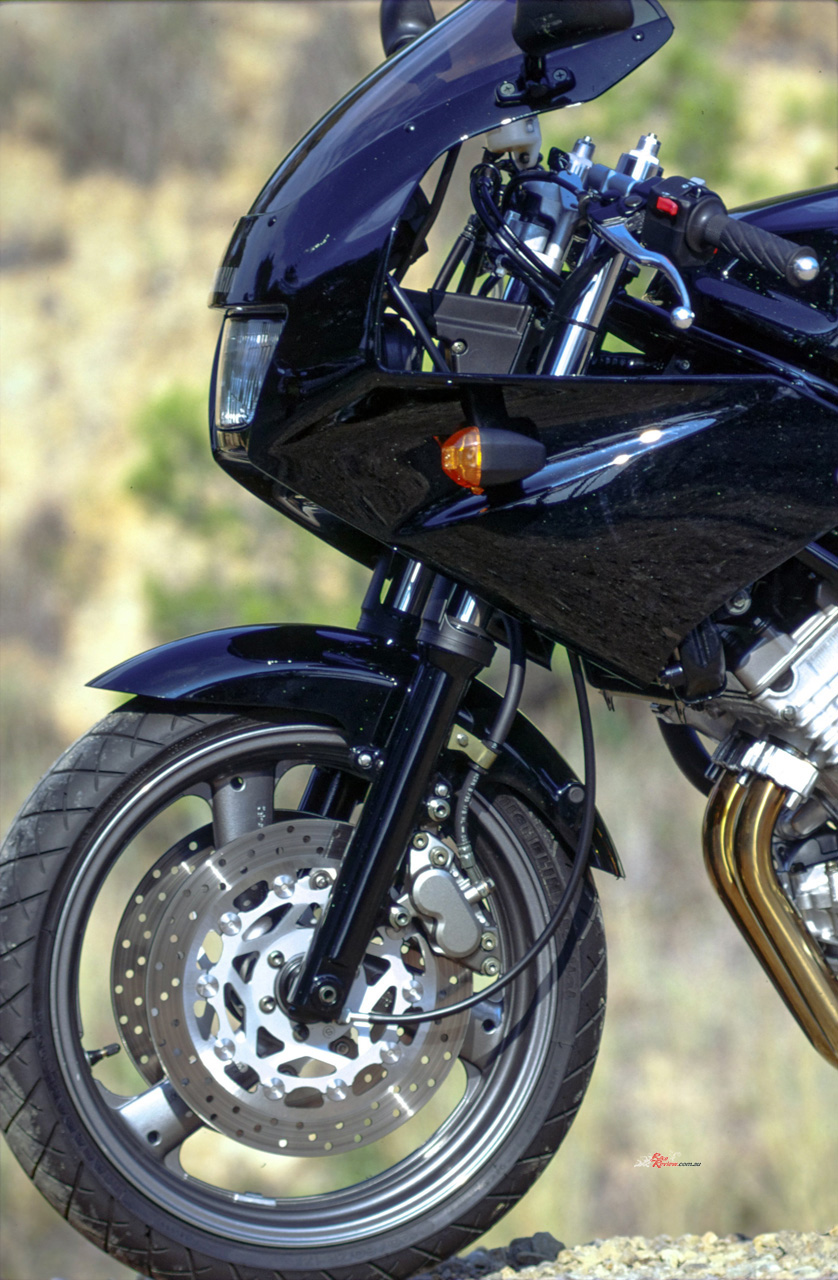
There was never really much doubt it would happen, and after a debut year in 1995 when it was sold exclusively in the Japanese home market for which the model was originally conceived, Yamaha Europe took the decision to import the TRX850 sports twin. In making its debut at the 1995 Paris Show in revamped guise for the European market, Trixie Yamaha had also gone native, with an uplift to the original J-market specification wrought by Negishi-san and his team, in the interests of adapting the bike to European conditions – as well as a new suit of clothes.
“After a debut year in 1995 when it was sold exclusively in the Japanese home market for which the model was originally conceived, Yamaha Europe took the decision to import the TRX850”
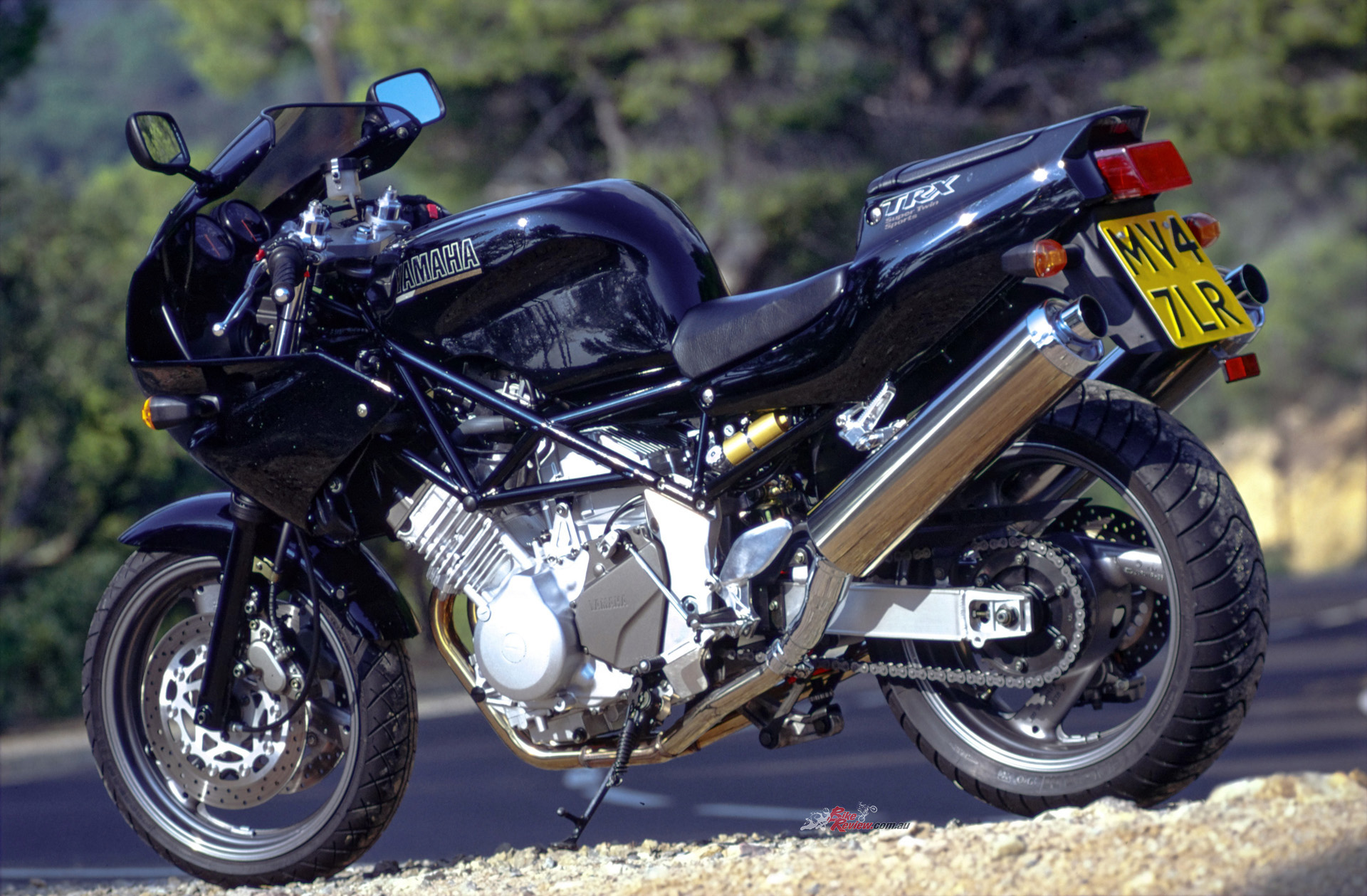
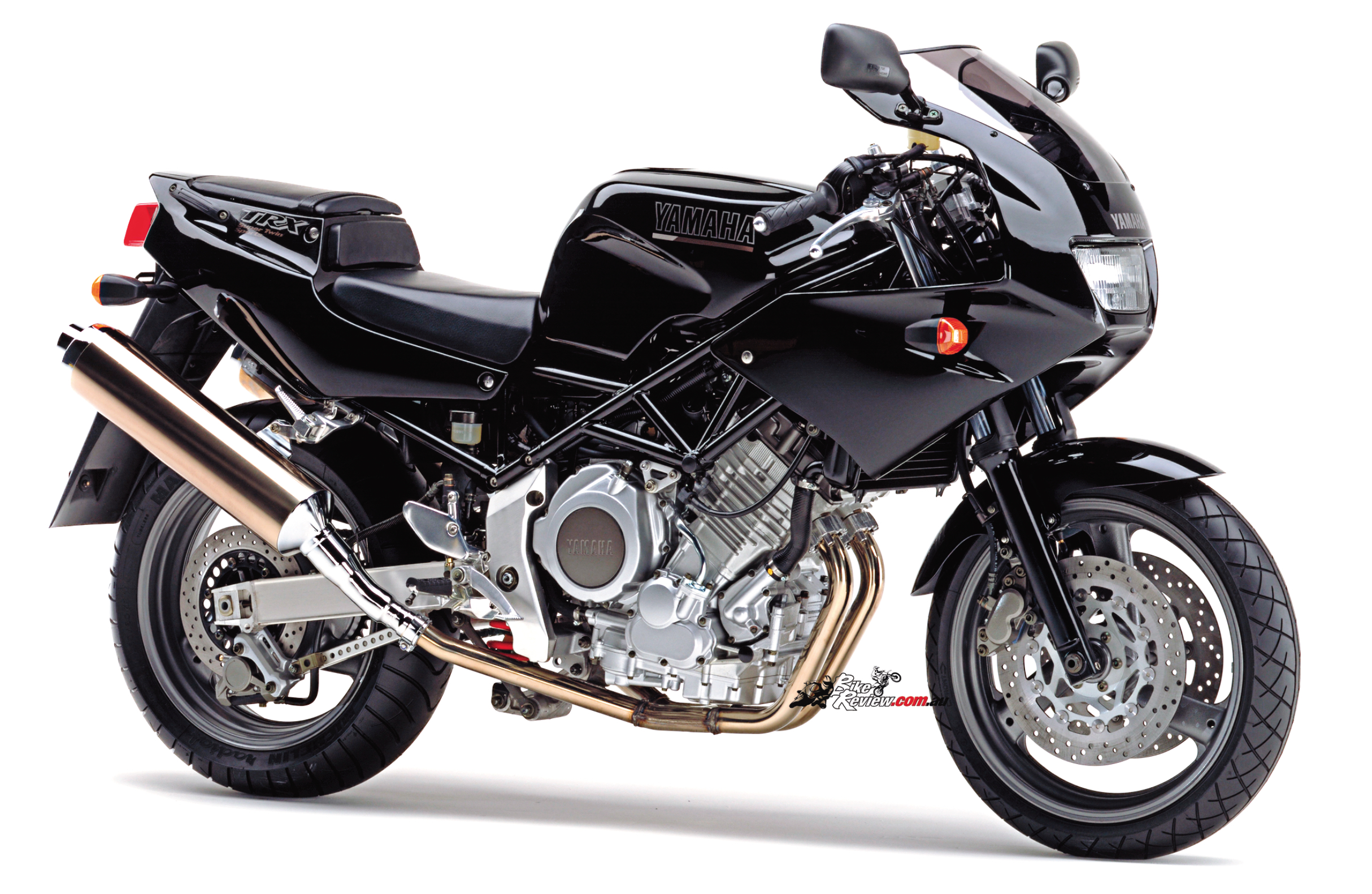
Instead of the red-and-white livery of the J-market model, the TRX850 sold abroad at contained cost – £6,800 in Britain, for example, against £7,895 for a Ducati 900SS – came either in all black, or red with a black frame or metallic blue with a silver frame, each with the engine painted silver rather than a sombre black, and the three-spoke cast wheels a tasteful grey.
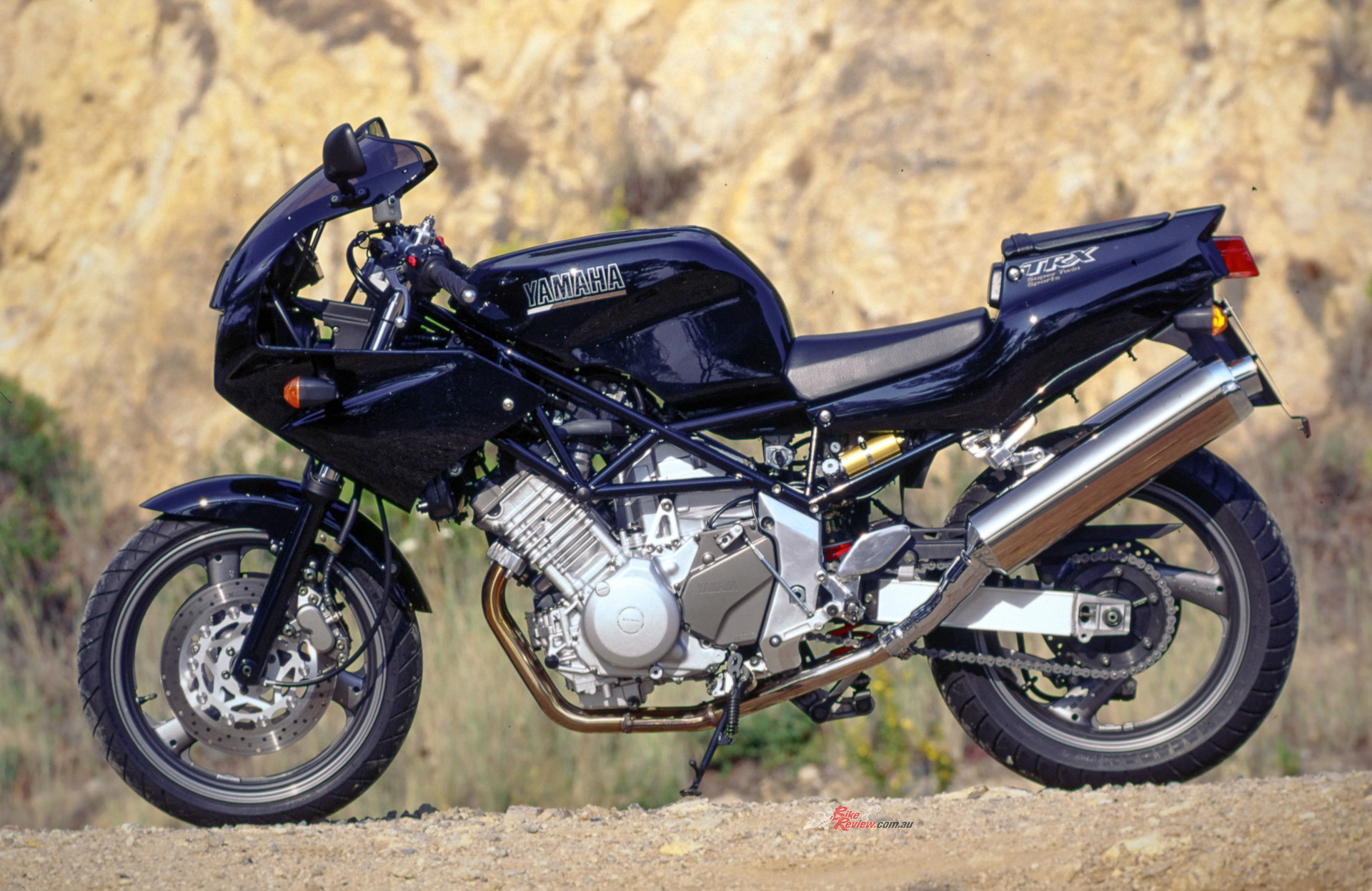
The trellis frame, tall tank and twin underseat pipes give Yamaha’s parallel-twin an unmistakably sporty silhouette.
As one of the handful of European journalists asked to ride a J-model TRX850 around the windmills of Holland back in freezing February – it was in response to our suggestions that Negishi-san and his crew made the changes they did for Trixie’s European launch – the chance to compare and contrast the latest Euro-version of Yamaha’s 270° Big Twin on a 300km ride from Spain’s craggy Costa Brava up into the foothills of the Pyrenees was especially rewarding.
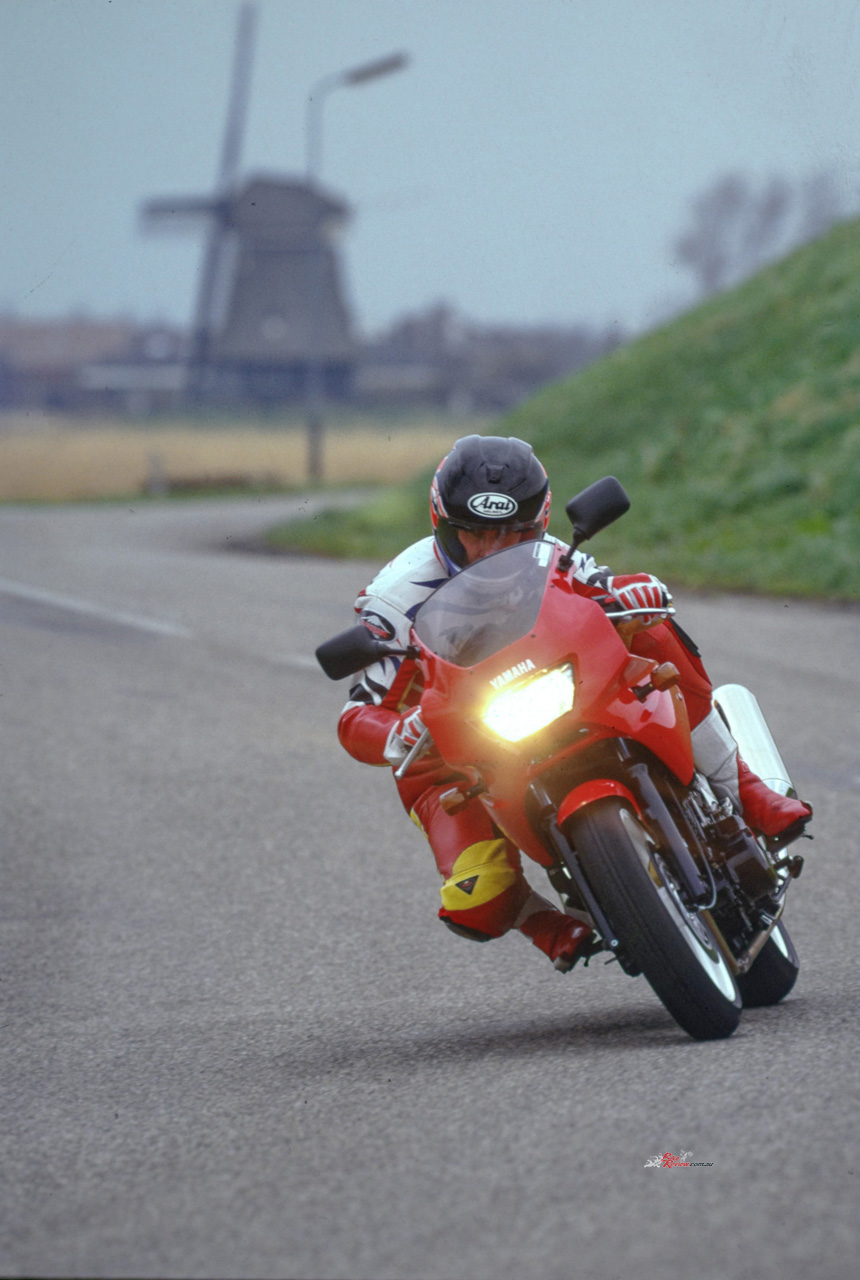
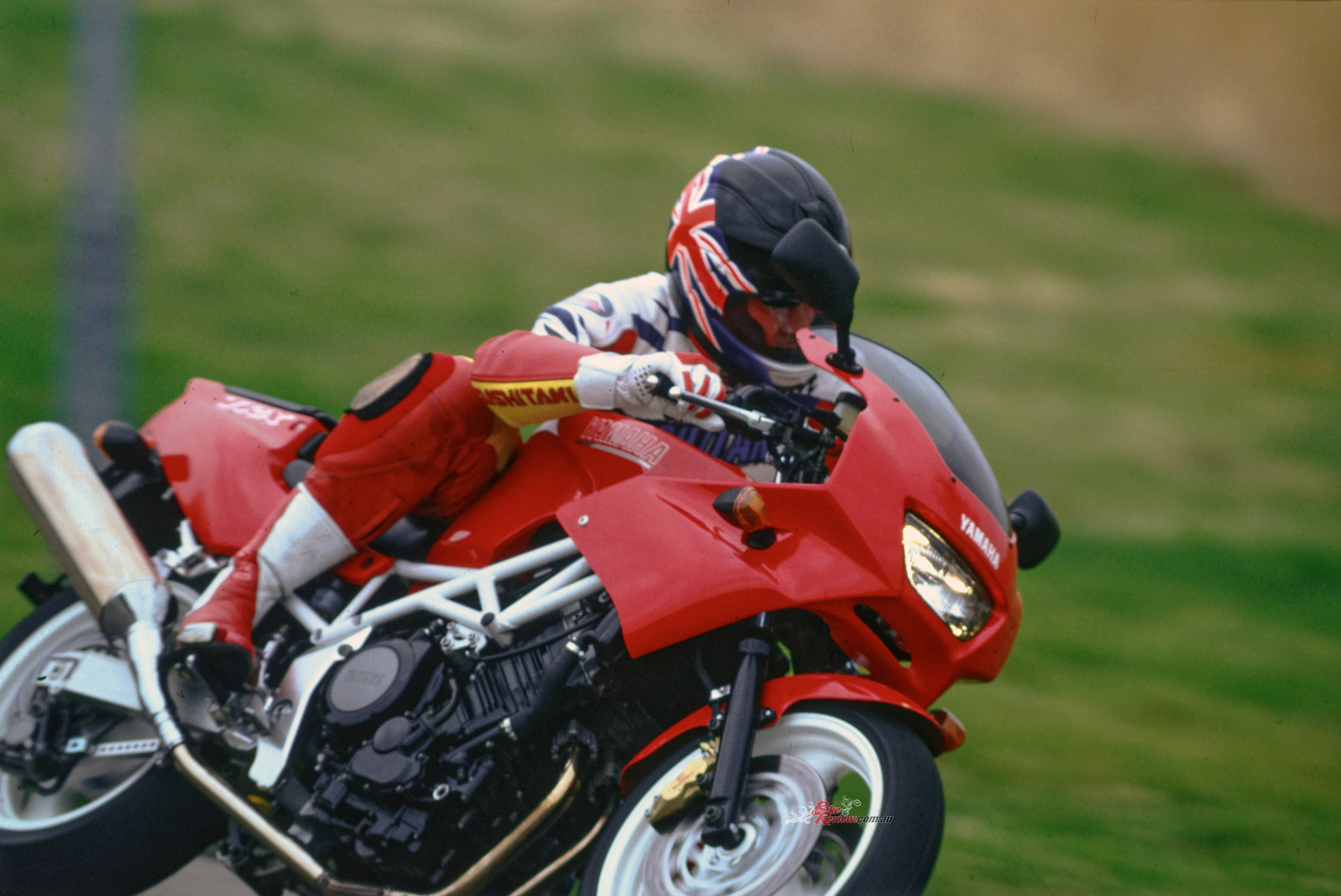
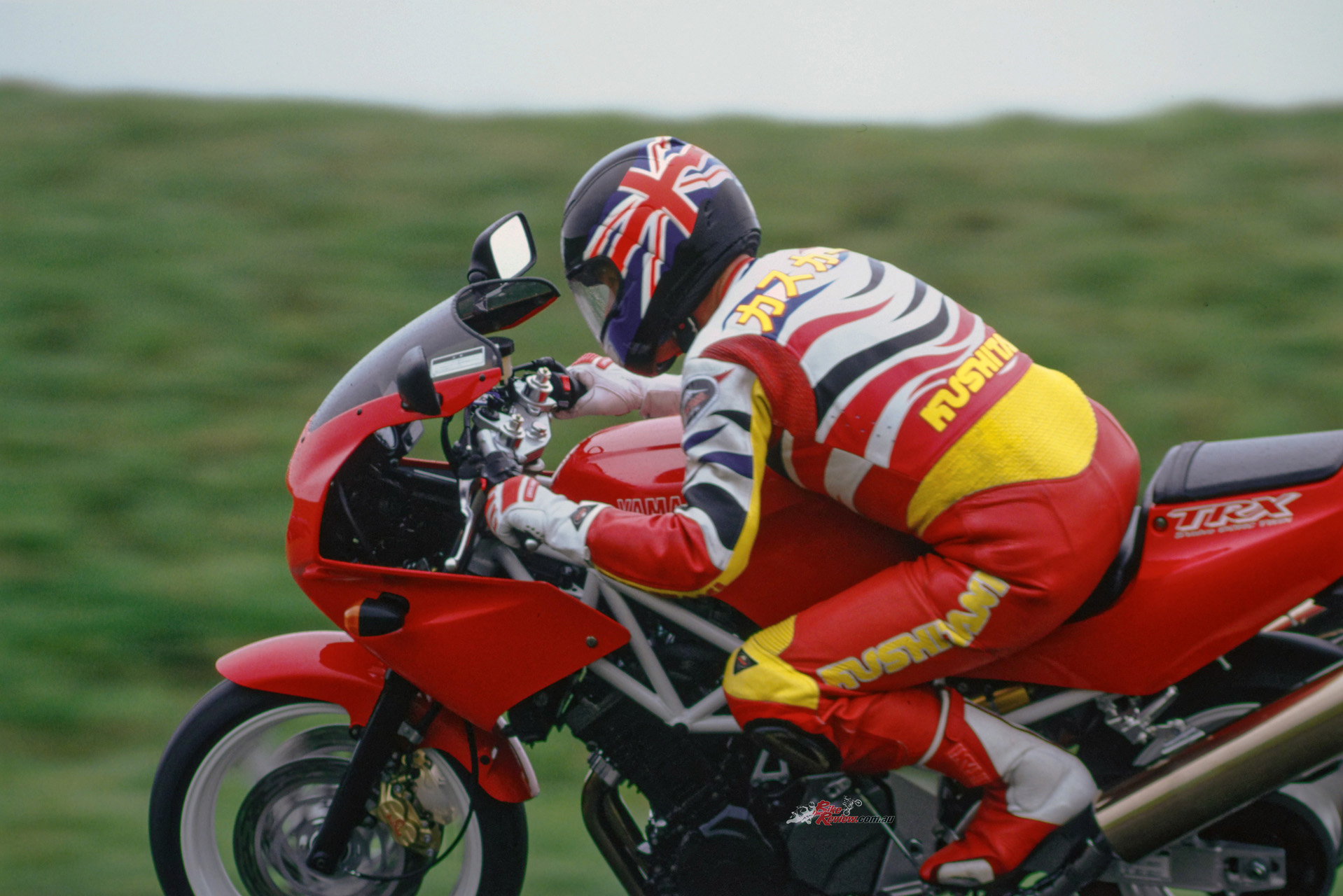
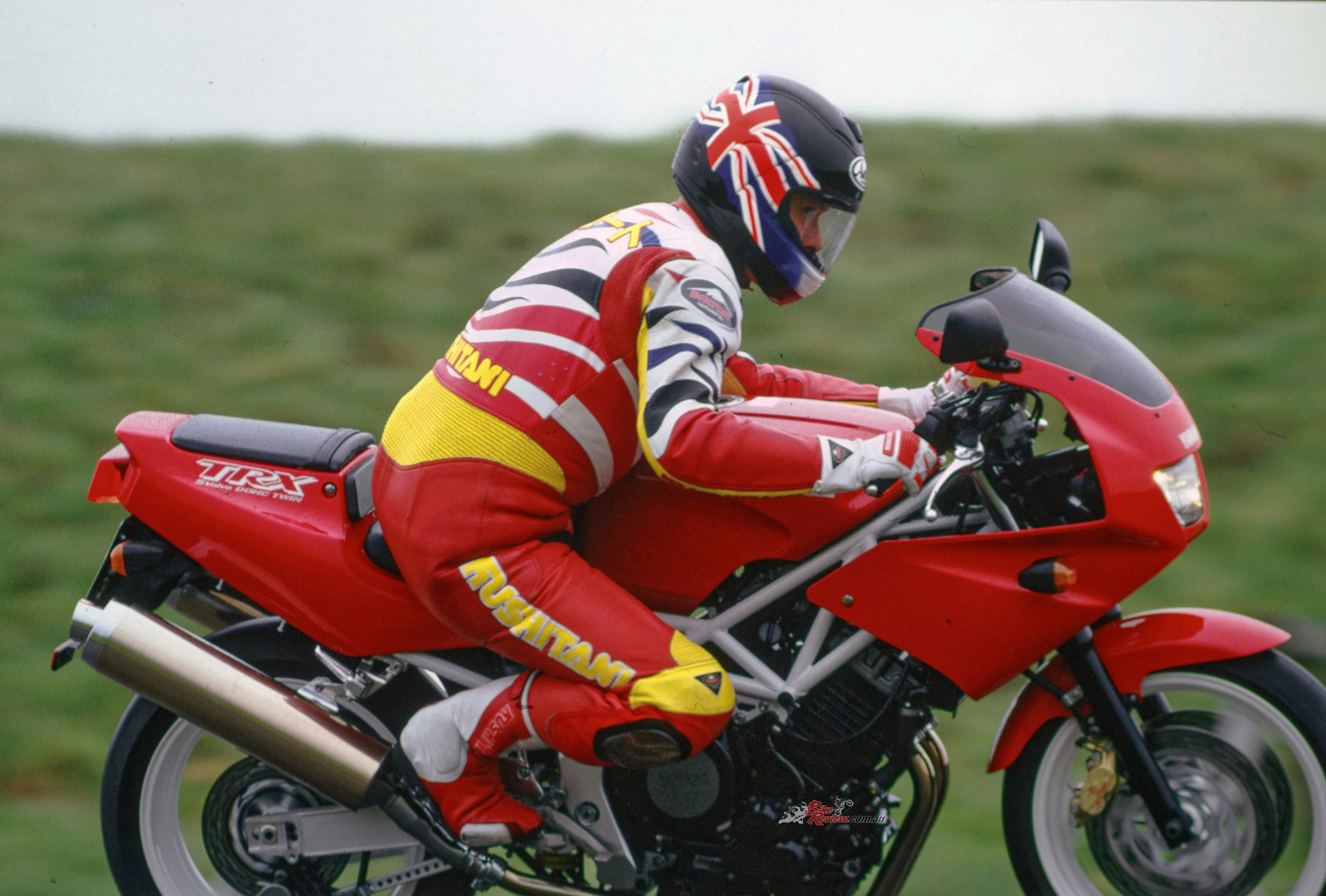
I should also declare a further personal interest: Yamaha Europe had asked me to race the only TRX850 to be seen outside Japan in 1995 for them, naturally prepared in Japan by Over Racing. Out of a total of eight International ProTwins races in Europe that season, we won five of them, finished second and third once each, and DNF’d just a solitary time with, of all things, a broken bolt in the gear linkage after qualifying on pole for the seventh time out of eight in all.
Winning major Battle of the Twins races ahead of 60-bike fields on GP circuits like Spa-Francorchamps and Assen was a real buzz, as well as proving the significant potential of the TRX for performance tuning, for road or track. And following that up with victory in the Formula 1 ProTwins race on the Daytona bankings in Cycle Week 1996 was the icing on the cake, defeating a total of 14 Ducati 916 customer Superbikes to do so, after being speed trapped at 169mph [272km/h]. Not bad for a bike with just a half-fairing!
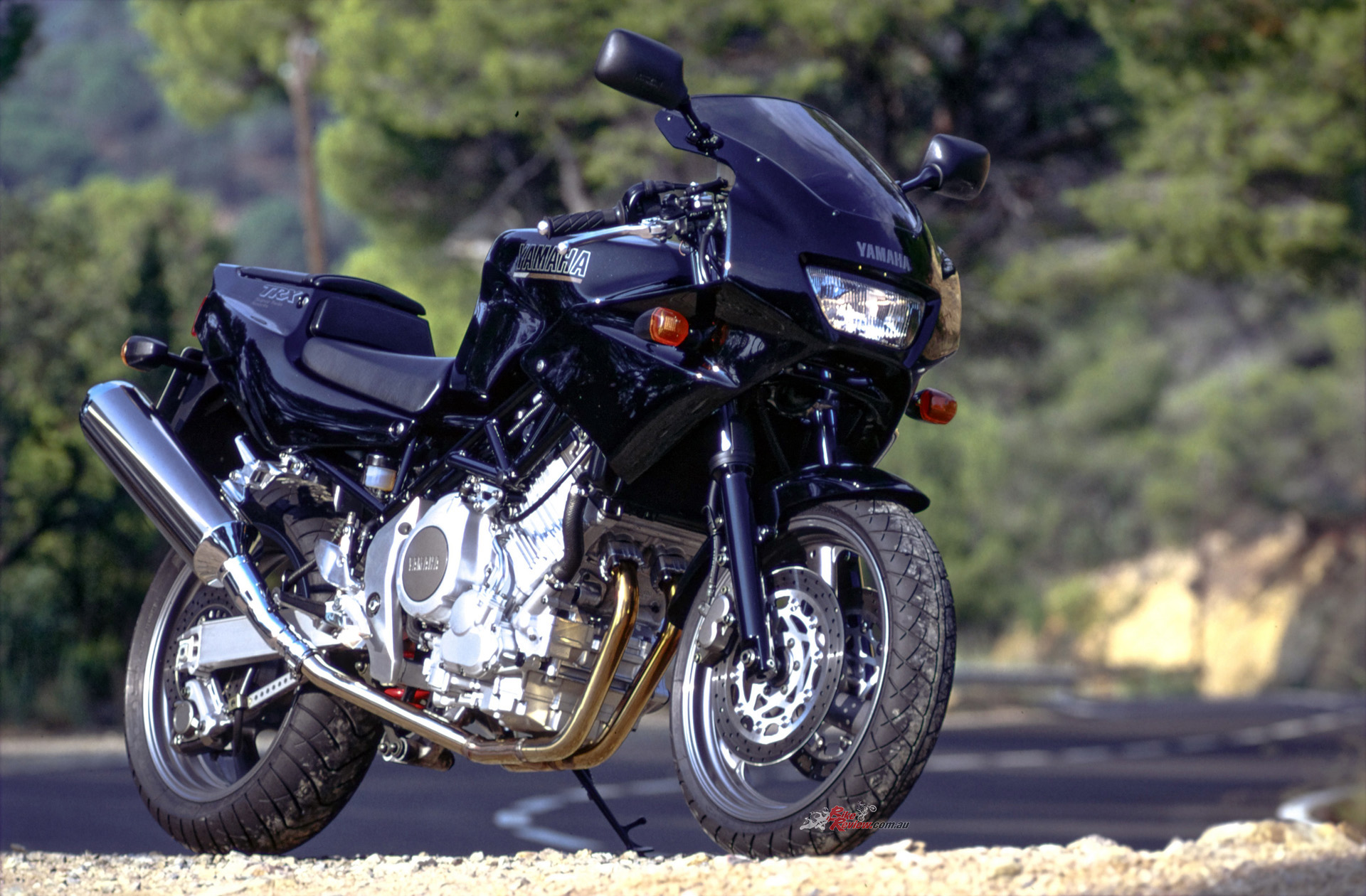
In adapting the stock TRX850 for more forceful, higher speed European riding conditions, Negishi and his team also sharpened Trixie’s appeal, starting with the throatier exhaust note from revised silencers, removing the accelerator pumps from the 38mm semi-downdraught Mikuni carbs and gearing the bike up quite substantially by two teeth, with a 39T rear wheel sprocket instead of the J-model’s 41T.
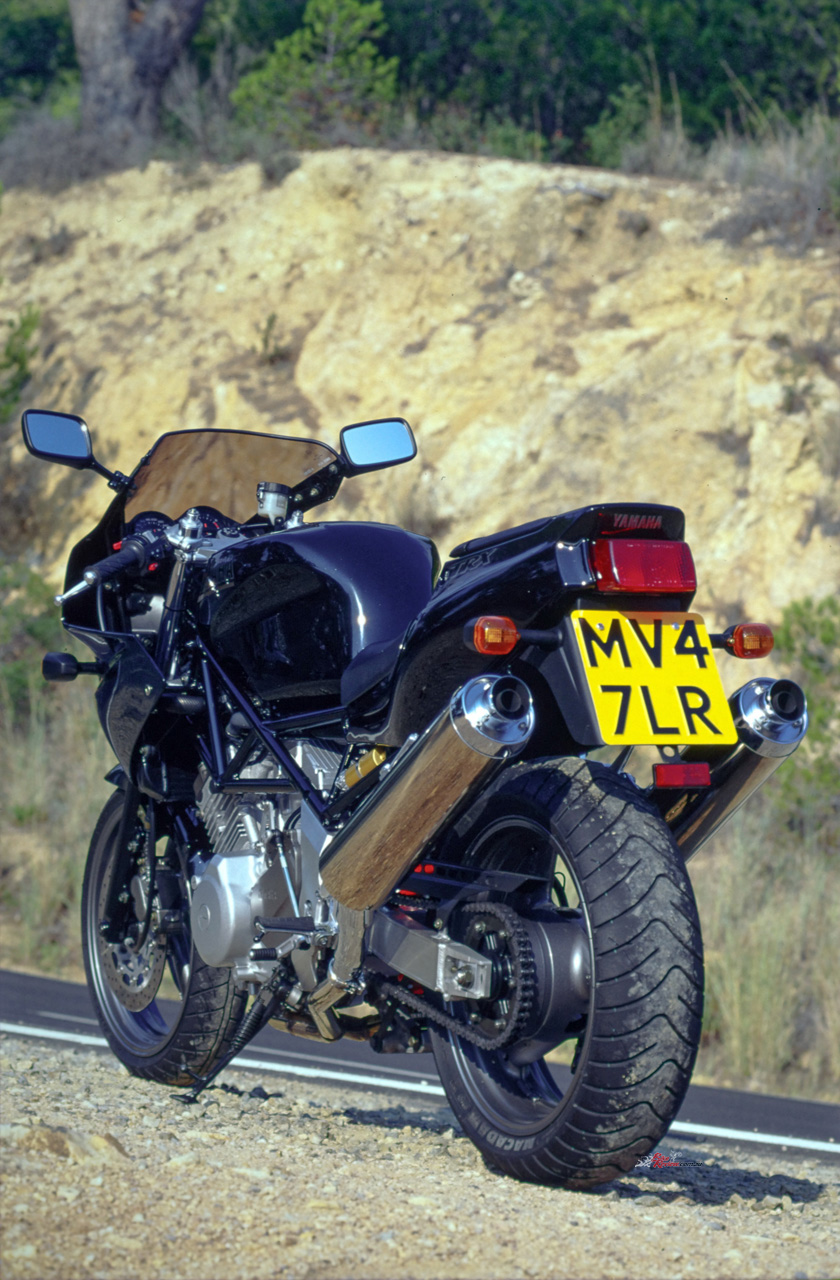
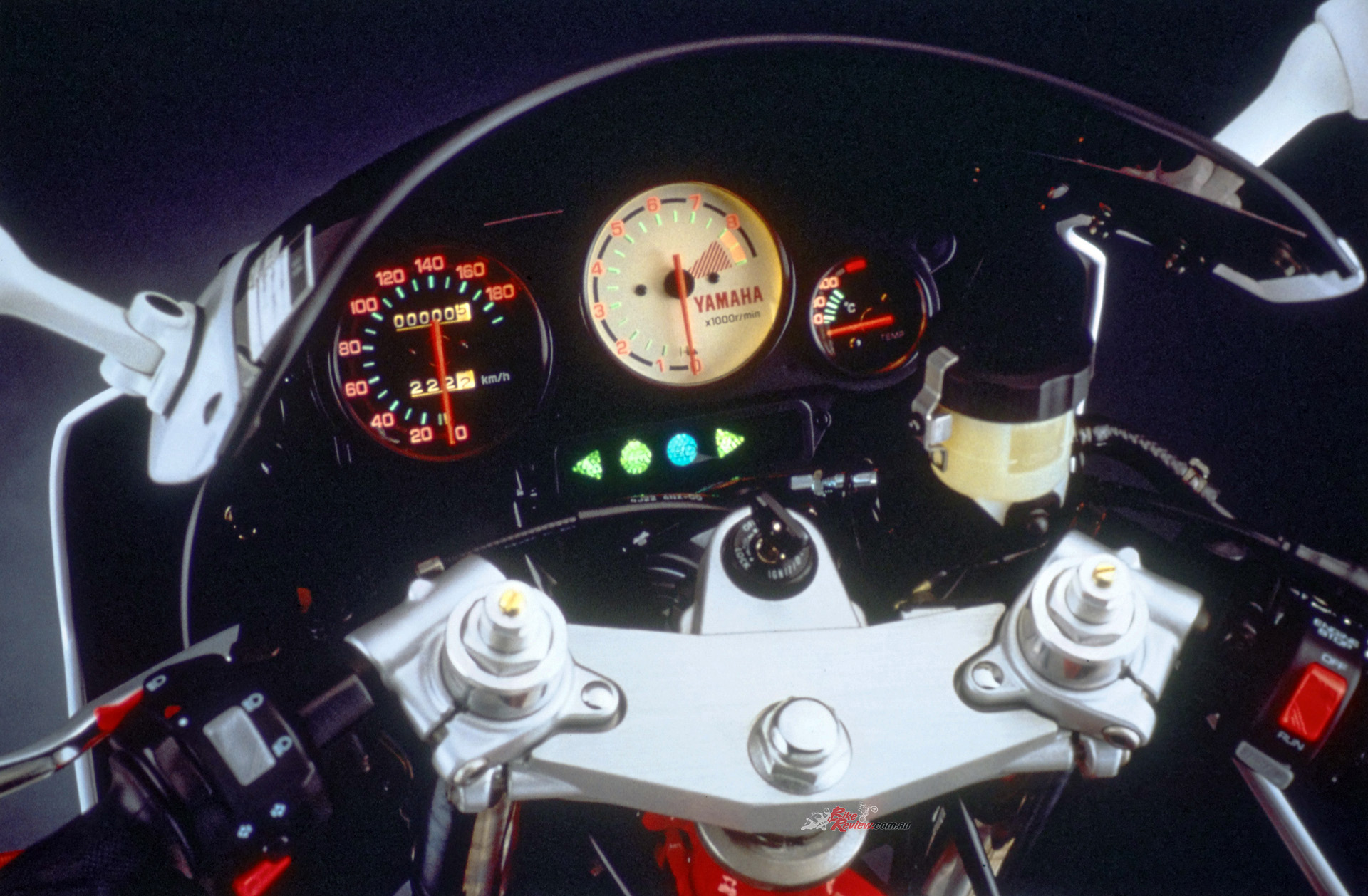
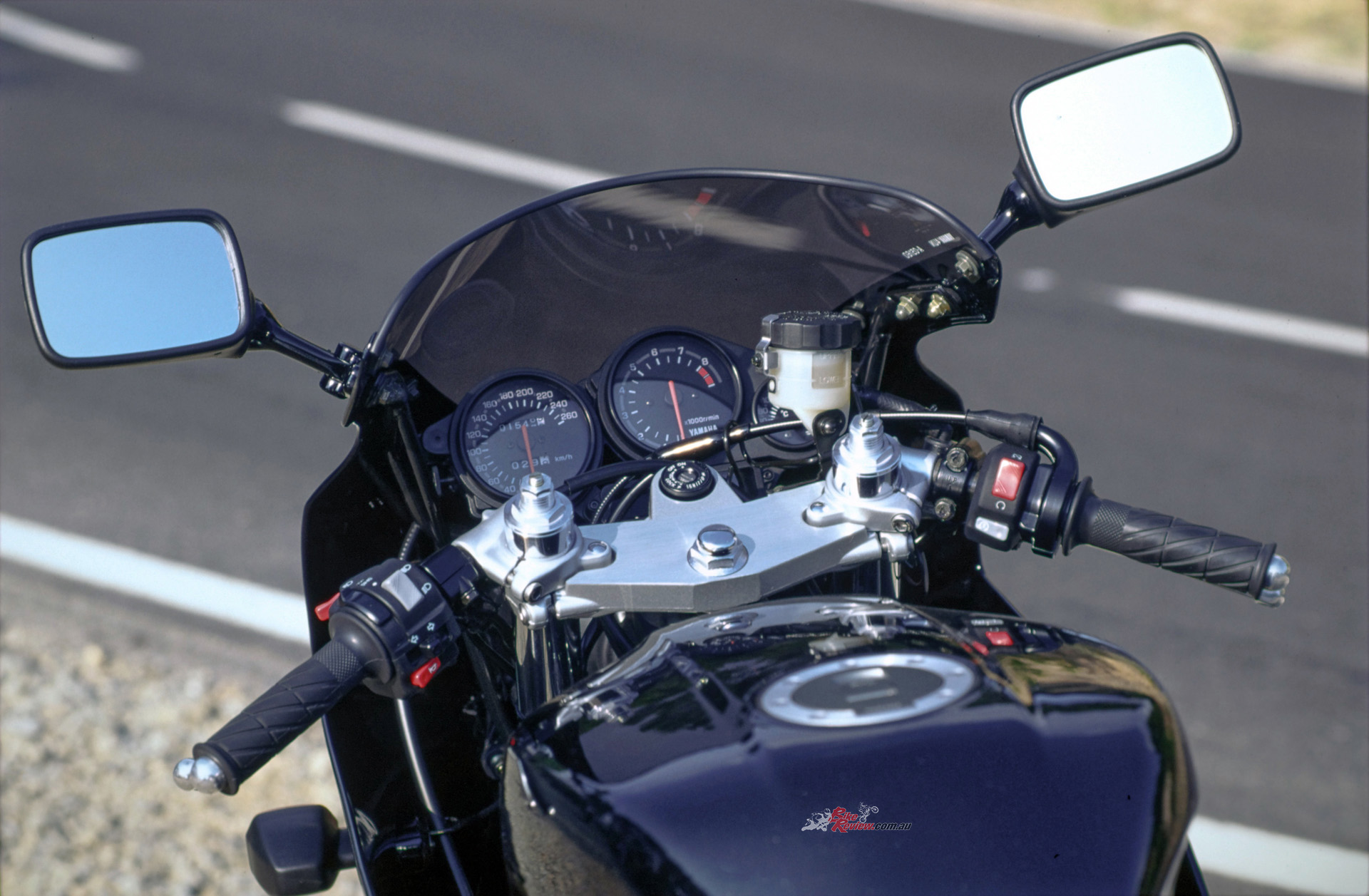
It’d still pull that tall gearing, though, as a fast run on a deserted freeway confirmed, squatting down under the screen. With toes on footrests and chest resting on the hump of the 18-litre fuel tank in a way that was really comfortable once I’d tweaked the very solid-mounted mirrors down so I could change lanes safely without sitting up, the TRX ran for mile after mile at exactly its 8,000rpm redline, equating to 232km/h [144mph] on the speedo.
“The TRX ran for mile after mile at exactly its 8,000rpm redline, equating to 232km/h [144mph] on the speedo”
The screen was quite low, so leaning flat on the tank was the best way to avoid windblast at anything over 120km/h [75mph]. That made this a twin that wouldn’t get left behind on German autobahns, and it was also comfortable for a long ride, too, thanks to the extra seat padding adopted for the European version. The riding position was still the same as the J-bike, though – the reduced 795mm seat height meant it appealed to riders of a wide variety of different heights.
The seat/’bars/footrests triangle delivered a rational, spacious, real-world stance that had you sitting in the bike rather than on top of it, and it didn’t have the flawed footrest position of the Ducati 900SS, which were too far forward and so pushed your knees up too high. The Yamaha felt quite compact and light to steer without being twitchy, aided by the narrow 160/60-17 rear tyre and despite being an inevitably bulkier parallel-twin design compared to a V-twin.
But the Yamaha’s motor had its own distinct personality, with a smooth, linear power delivery, pulling from as low as 2,000rpm on part-throttle without any snatch, or 3,000rpm wide open hard on the gas. From about 4,500 rpm it really got going, with the 89.5 x 67.5mm engine raising revs quickly but controllably to deliver peak power of 83bhp at 7,500 rpm – but that’s not to say it was all midrange like a 900SS.
“The Yamaha’s motor had its own distinct personality, with a smooth, linear power delivery”
Instead, the Yamaha built power progressively all the way through the rev range – and even beyond: it had an appetite for revs that would send the tacho needle off the clock at 9,000rpm in the gears without the power falling off too steeply before finding the soft revlimiter soon after there. Using the sweet-shifting five-speed gearbox with its wide-ish spaced ratios (1,000 revs between third and fourth, 1200rpm from fourth to top) to keep the revs high up was a real pleasure – but don’t imagine the TRX to be peaky and inflexible.
I found I could hold the bike in third gear for miles on end through countless turns along a twisty coast road, some little more than walking pace, interspersed with short straights. It was a bike which allowed you to ride it as your mood dictated. The gear-change was very crisp, too, despite the long link to the selector mounted high up, presumably in the interests of rotating the gearshafts in order to further compact the mass.
Though there were a few vibes at high revs through the footrests, the twin counterbalancers did their job well enough to leave only the tingles that delight, and add character to the bike together with the unique offbeat lilt to the more rorty exhausts from the 270° motor. I’ve been told that my race bike sounded completely different from the flock of 90° V-twins it usually shared the track with – and it certainly felt different to ride, too.
Only the pickup from low revs was a bit disappointing on the street TRX: I was sure Yamaha had fitted a different ignition curve from the J-model, but Negishi-san said not. However, the initial pickup from a closed throttle exiting a turn at 2,000-3,000rpm was rather jerky, as if the lack of accelerator pumps hadn’t been compensated for correctly. Not enough to spoil enjoyment, though – and as a short rain shower duly confirmed, this was one of the world’s great wet-weather motorcycles, thanks to its torquey, tractable nature.
Yamaha made more changes to the chassis for Europe than they did to the mechanical package, stiffening both the 41mm conventional fork that was adjustable for preload and rebound damping in delivering 120mm of wheel travel and the fully-adjustable rear shock with 130mm of travel, while retaining the same link on the progressive rate rear suspension, and employing Michelin Macadam tyres rather than the TX Hi-Sports fitted for Japan.
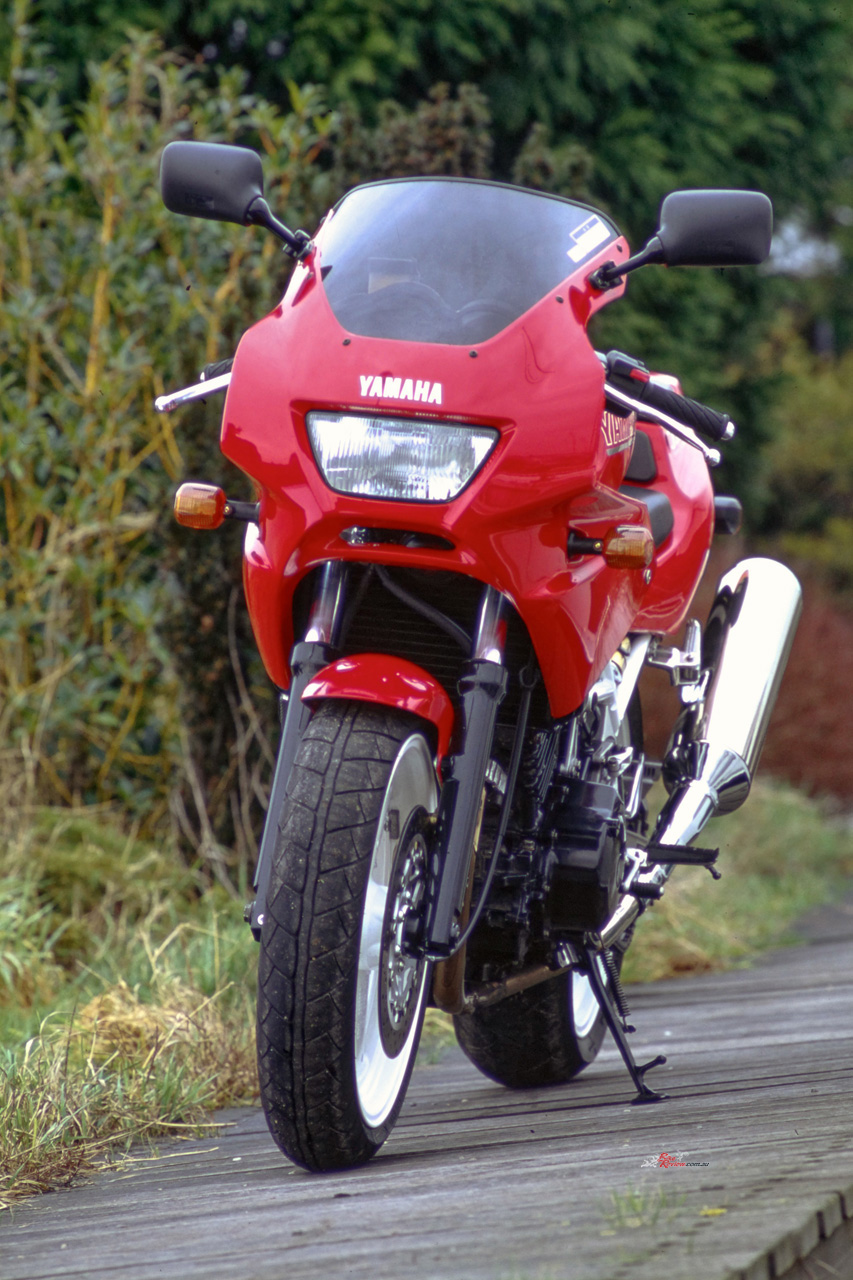
That was supposedly to improve stability, but I suspect it was really that their tread pattern and construction were more suitable for everyday use in all kinds of weather. The composite spaceframe chassis delivered stable, forgiving handling that required a little bit of effort to make the bike change direction even with the shortish 1435mm wheelbase – but not so much it ever stopped being fun to ride. You had to work just hard enough to make riding the TRX satisfying – but it was also practical, too, with a 64°steering lock and fairly light clutch action making it ideal for town work.
“The composite spaceframe chassis delivered stable, forgiving handling that required a little bit of effort to make the bike change direction”
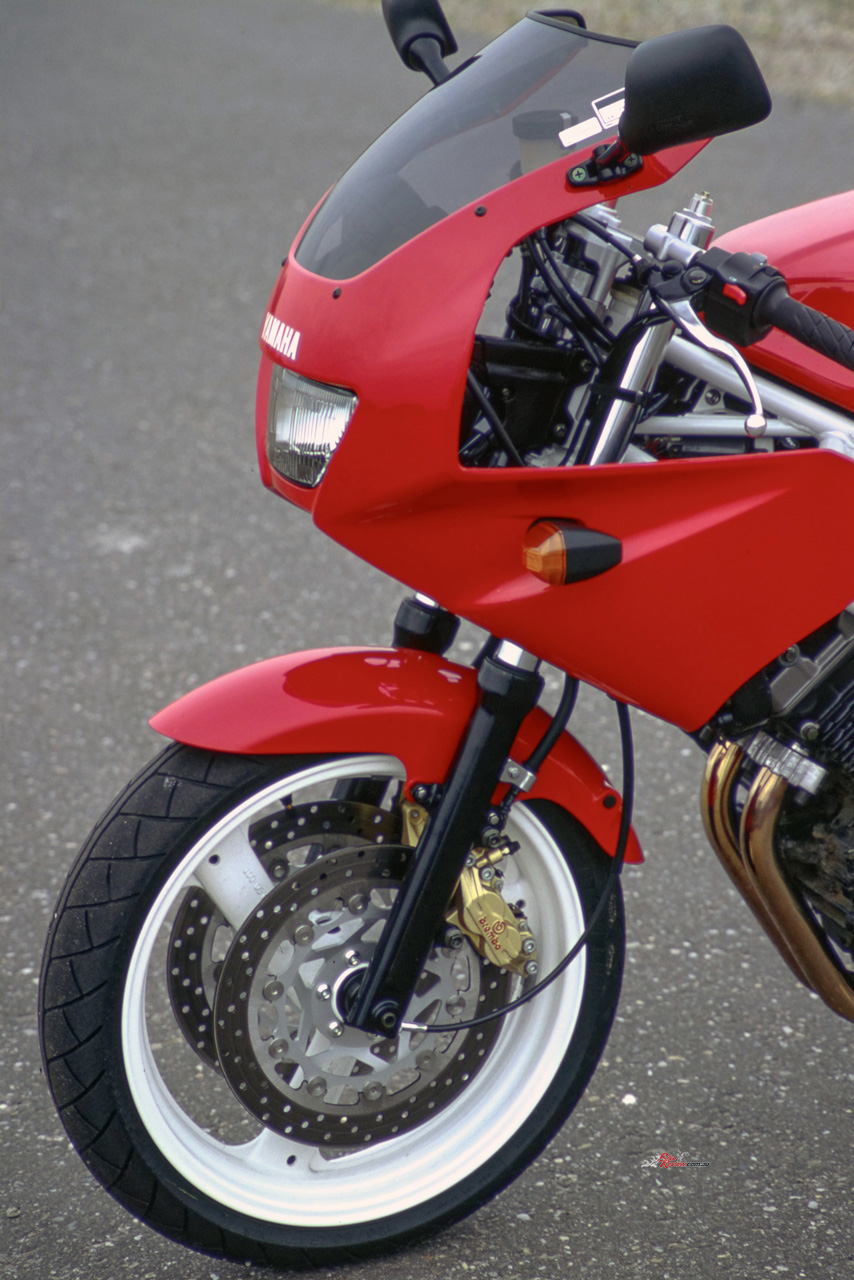
Despite having stiffer damping than the J-model, the conventional fork set at a 25° rake with 99mm of trail gave good ride quality, with no patter or chatter at quite respectable corner speeds over different surfaces, and not too much dive under the excellent braking offered by the four-pot Sumitomo calipers gripping the upsized 298mm front discs – the J-bike had had only 266mm front brake, and a tiny 214mm rear.
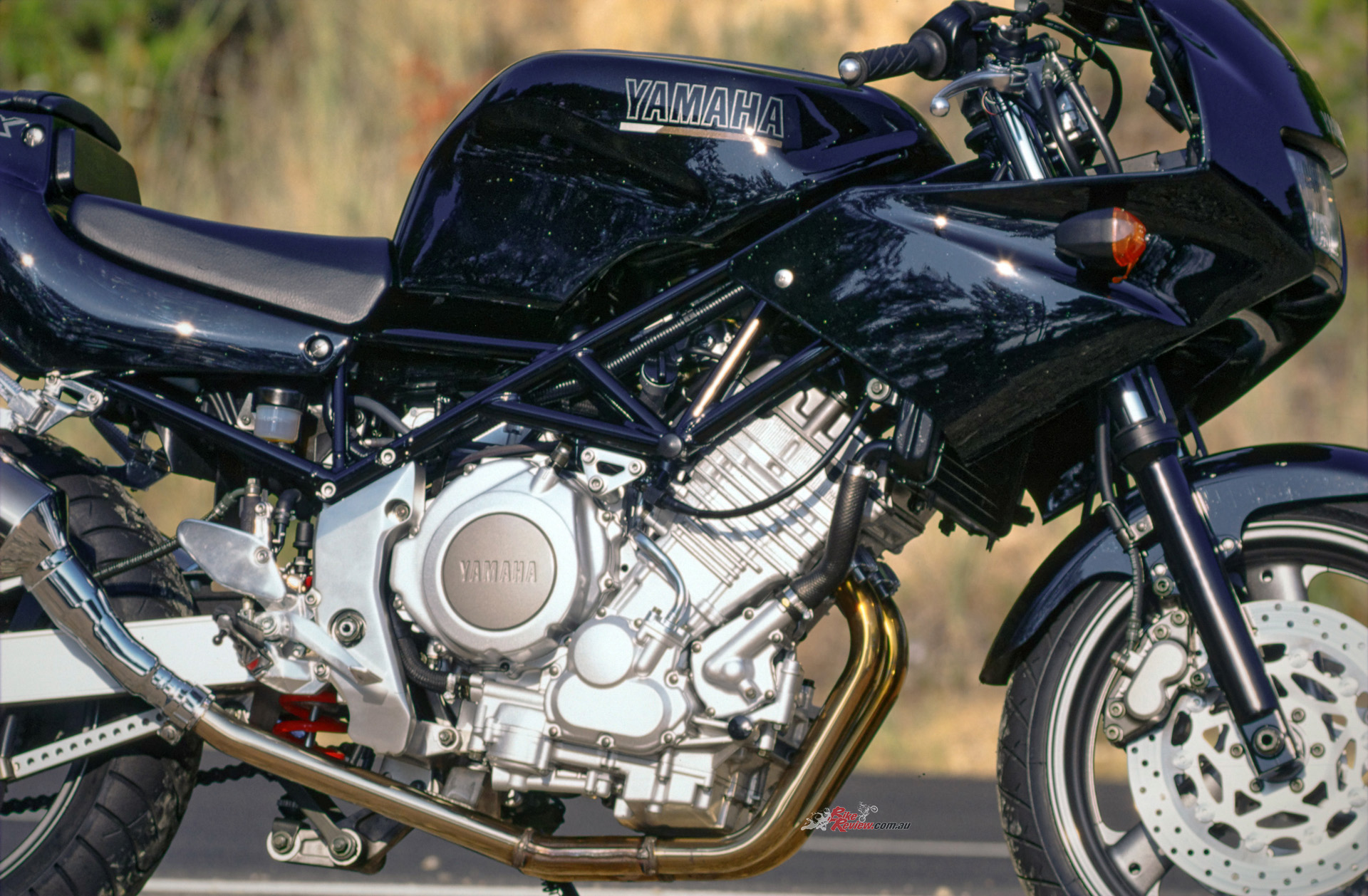
Fitting Japanese brakes to the Euro-bike instead of the Brembos on the J-version was quite a switch, apparently made to improve feel, according to Negishi! In terms of power I felt Trixie braked pretty much the same with the Sumitomos as she’d done before in Holland with the spaghetti stoppers. These worked okay without offering as much bite as I preferred, which was however present with the Sumitomos, so Negishi-san was right.
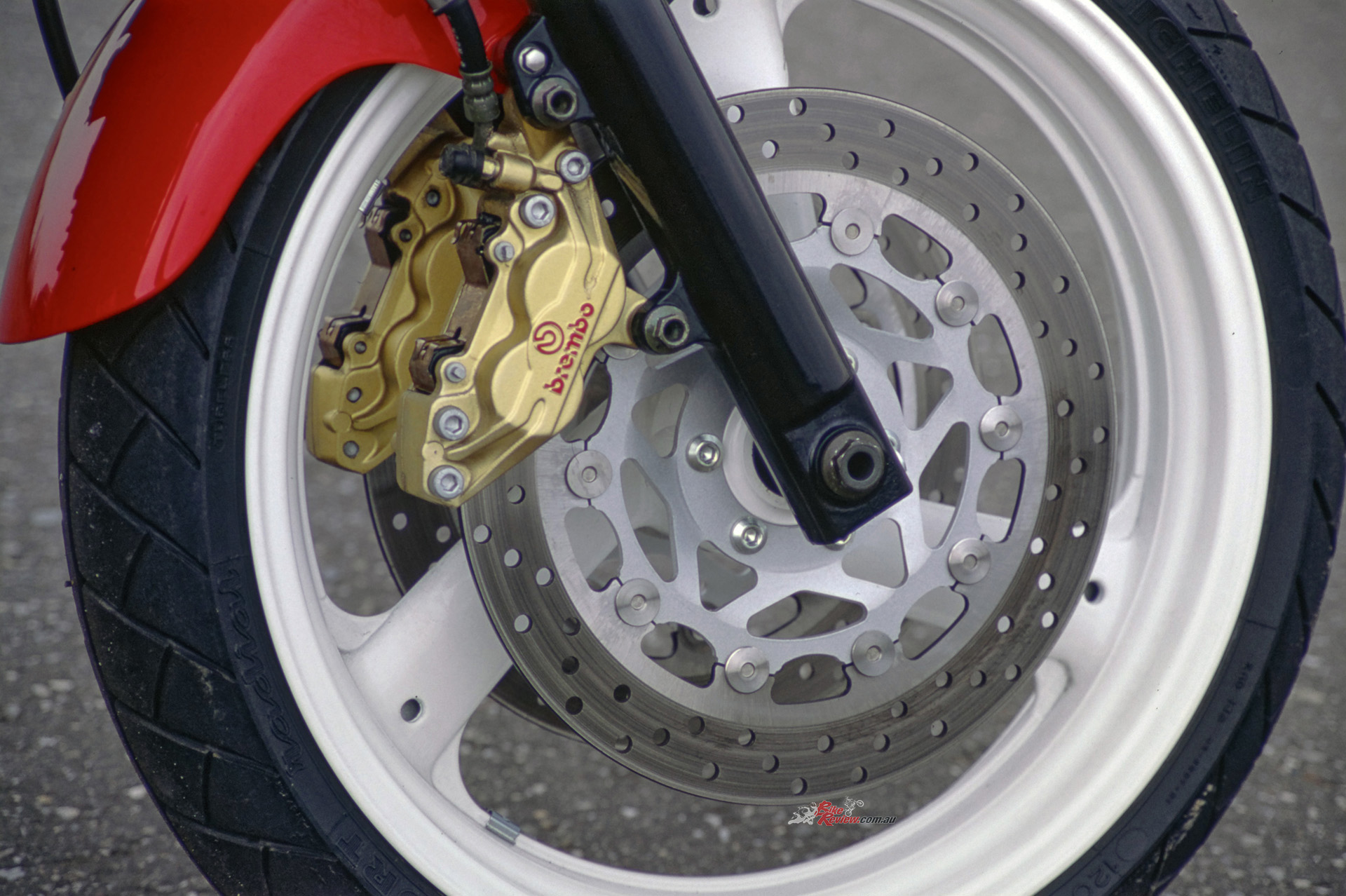
The brake lever was adjustable for reach, but you needed quite a strong squeeze to dial in heavy braking, like when José in his old SEAT pickup amber-gambled on me, and a panic stop was called for while cruising gently over a light that had just turned green! The upsized 245mm rear brake was quite strong, though apart from said panic stop I only used it cranked over in the middle of a turn to pull the bike upright for a straighter, harder drive out, when it was a little difficult to get the right degree of sensitivity. Still, Jay Springsteen would have been proud of my rear wheel drifts – or maybe not…
“The brake lever was adjustable for reach, but you needed quite a strong squeeze to dial in heavy braking”
Ducati did Yamaha a big favour by delaying the debut of its heavily revamped Pierre Terblanche-styled 900SS until the 1998 model year it finally appeared in. This gave Yamaha a vital chink in the Twinsports market that the TRX850 was able to take full advantage of – especially at such a favourable price. Because despite having been originally engineered for the different requirements of the Japanese market, the TRX850 was that then-rare thing: a Japanese bike with soul, that was also truly one of a kind – as well as way ahead of its time.
Not surprisingly, it’s increasingly acquiring a cult following today as an easy-to-ride sportbike with few vices, that’s both rewarding and accessible to ride, and which responds well to tuning. Like the showbiz mantra goes – it’s taken Trixie 30 years to become an overnight success!
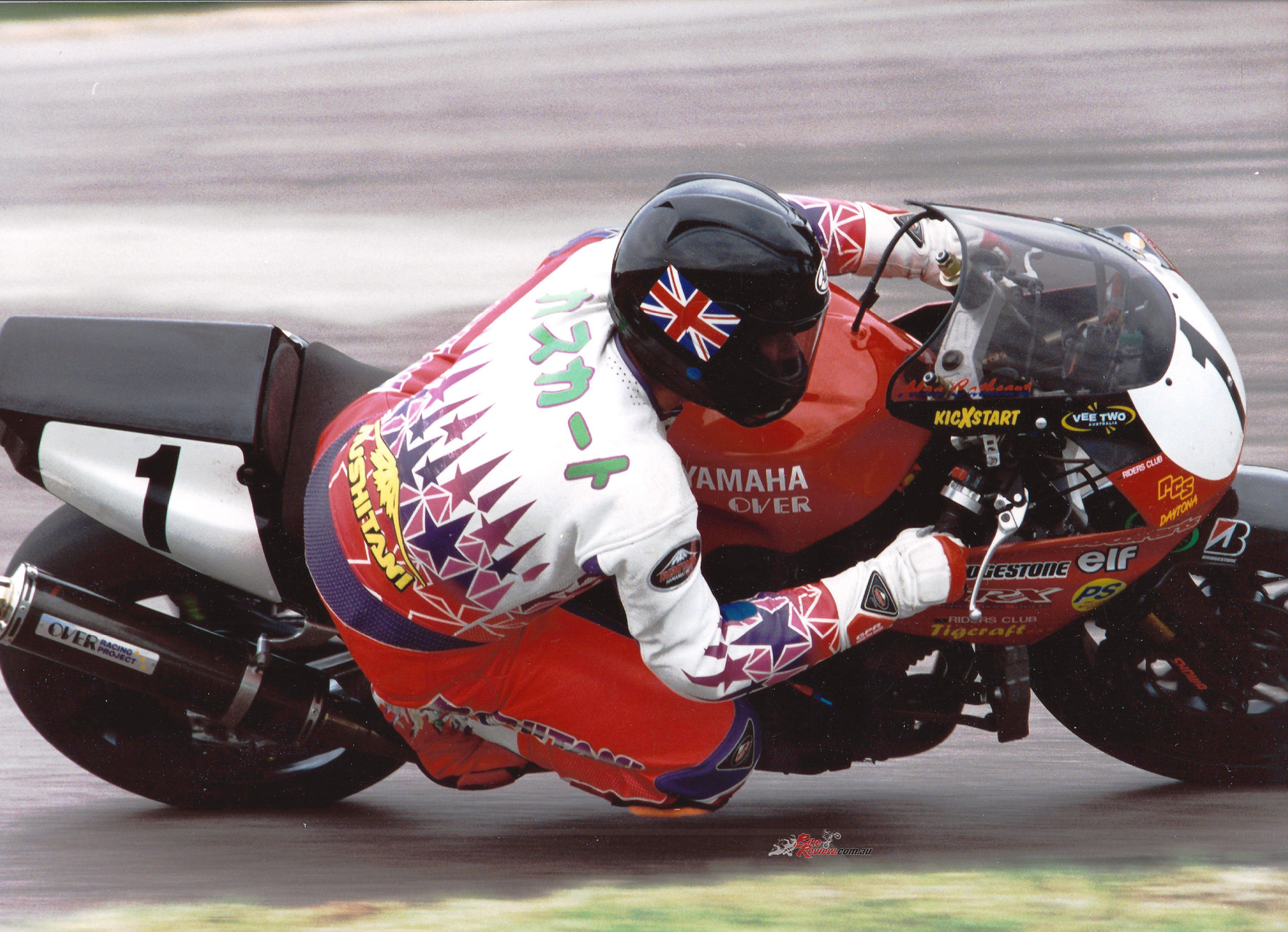
Next TBT we read Alan’s test on his winning TRX Battle of the Twins racer…
1995-1999 Yamaha TRX850 Specifications
Engine: Water-cooled DOHC 10-valve parallel-twin four-stroke with chain camshaft drive, 270° crankshaft throw, 89.5 x 67.5mm bore x stroke, 10.5:1 compression, 849cc, 2 x 38mm Mikuni BDST carburettors, Yamaha CDI with 12v battery, five-speed close-ratio gearbox, multiplate oil-bath clutch.
Chassis: Tubular steel spaceframe with cast-aluminium swingarm pivot plates, engine used as fully stressed member, 41mm telescopic fork adjustable for preload and rebound damping, extruded aluminium swingarm with fully adjustable monoshock and progressive-rate link, 25º rake, 100mm trail, 1435mm wheelbase, 190kg dry weight, 52/48% static weight distribution, 298mm Yamaha floating discs with four-piston Sumitomo calipers, 245mm Yamaha fixed steel rear disc with two-piston Sumitomo caliper, cast aluminium wheels (3.75in and 5.50in), Michelin Macadam 120/60-17 and 160/60-17 tyres.
Performance: 83bhp (61kW) at 7500rpm, 83.8Nm (61.81ft-lb) at 6000rpm, top speed 225km/h (140mph), 795mm seat height, years of manufacture 1995–99, manufacturer Yamaha Motor Company, Iwata, Japan.
You Might Also Like











November 27, 2025
I cannot remember how many motorcycles. I have own over the last forty years. I honestly say the TRX is one of the those motorcycles that either gets under your skin or completely dislike. There is no middle ground. The perfect motorcycle for Tassie roads.
I can honestly say, my first model J spec TRX 850 in my garage is one of the most interesting, intriguing motorcycles I have owned. The engine design is truly unique. You need a degree to just check the engine oil correctly. 🙂
November 28, 2025
I wrote my (bought new May 2000) 1999 Aussie spec’ off in 2013 (after fitting blue spot R1 callipers, to my detriment).
I’ve since had a VTR1000 & for the last 9 years, 2009 Hayabusa (bought mainly for 2 up comfort) but i still wish I had my Trixxie.
I want another.
November 29, 2025
Damn that is a shame. I’m working on taking one of Kel’s three off her hands after the resto is done! Jeff.
November 29, 2025
I’m sure Kel would agree, and I think I have been bitten by the TRX bug now as I want one! I’ve never ridden one and really want to – Jeff.
December 3, 2025
I’ve owned 4 of these over the years and still have one.
They are a great bike as they are or to modify.
And so many colour combinations of frame and fairing just seem to work,
Only wish they had a 6 speed to start with. That change from 1st to 2nd feels a bit far after riding 6 speeds.
December 17, 2025
Another exceptional article from my favorite motorcycle website. I don’t think there are many other readers here in the US, but I am so grateful I found this site. I want one of these but they were never sold here. Maybe I’ll find one gray market someday. Thanks again!