
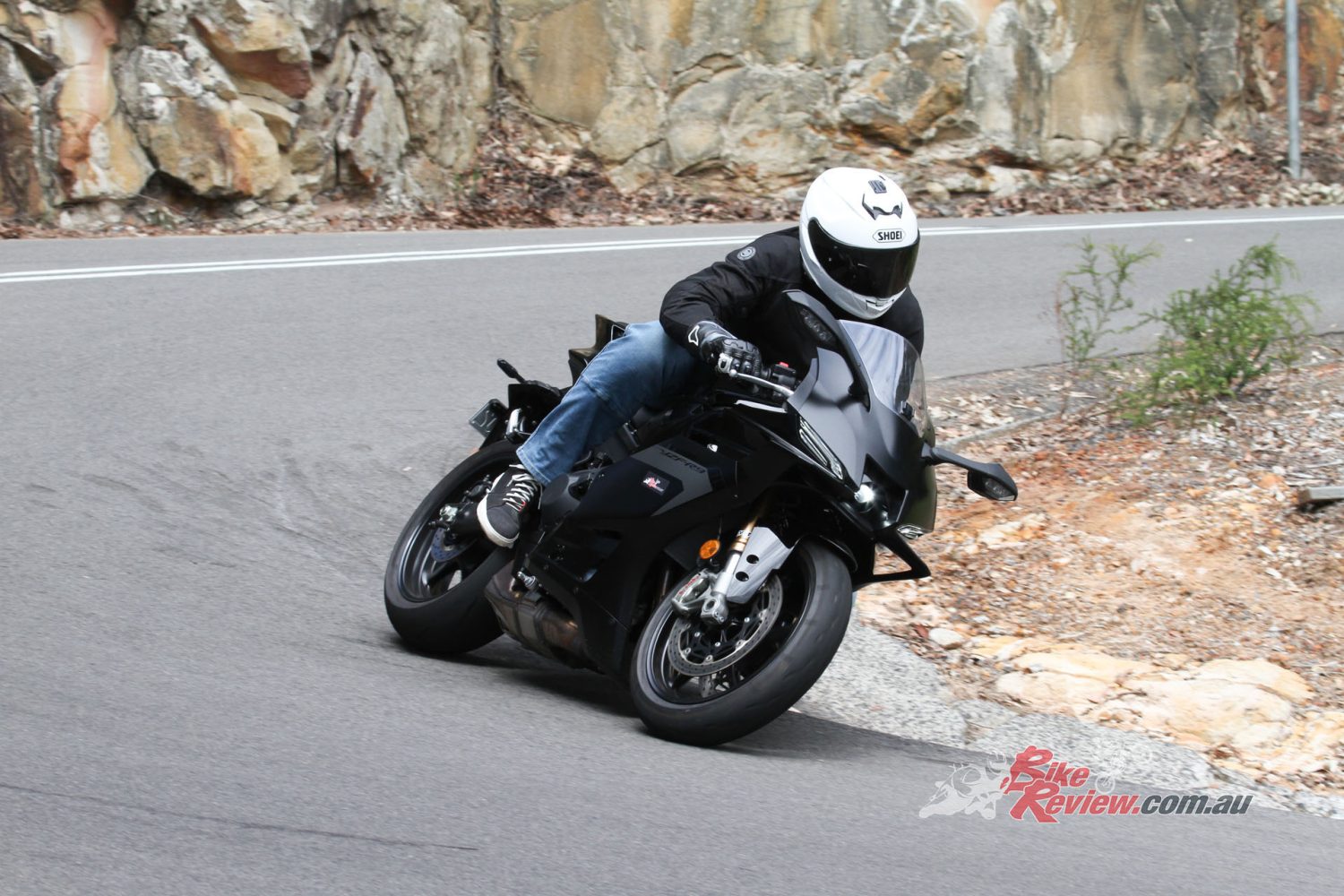

Nick and Jeff have been sharing the BikeReview Yamaha YZF-R9 long termer and recently got together on a weekend and did the first service, plus gave the bike its first detail...
Our BikeReview Yamaha YZF-R9 has been living up to expectations so far. Nick has been riding it to work one day per week, plus heading up the Old Road on Sunday mornings. We’re about to do a track day, so we decided it was time to do the 1000km first service.
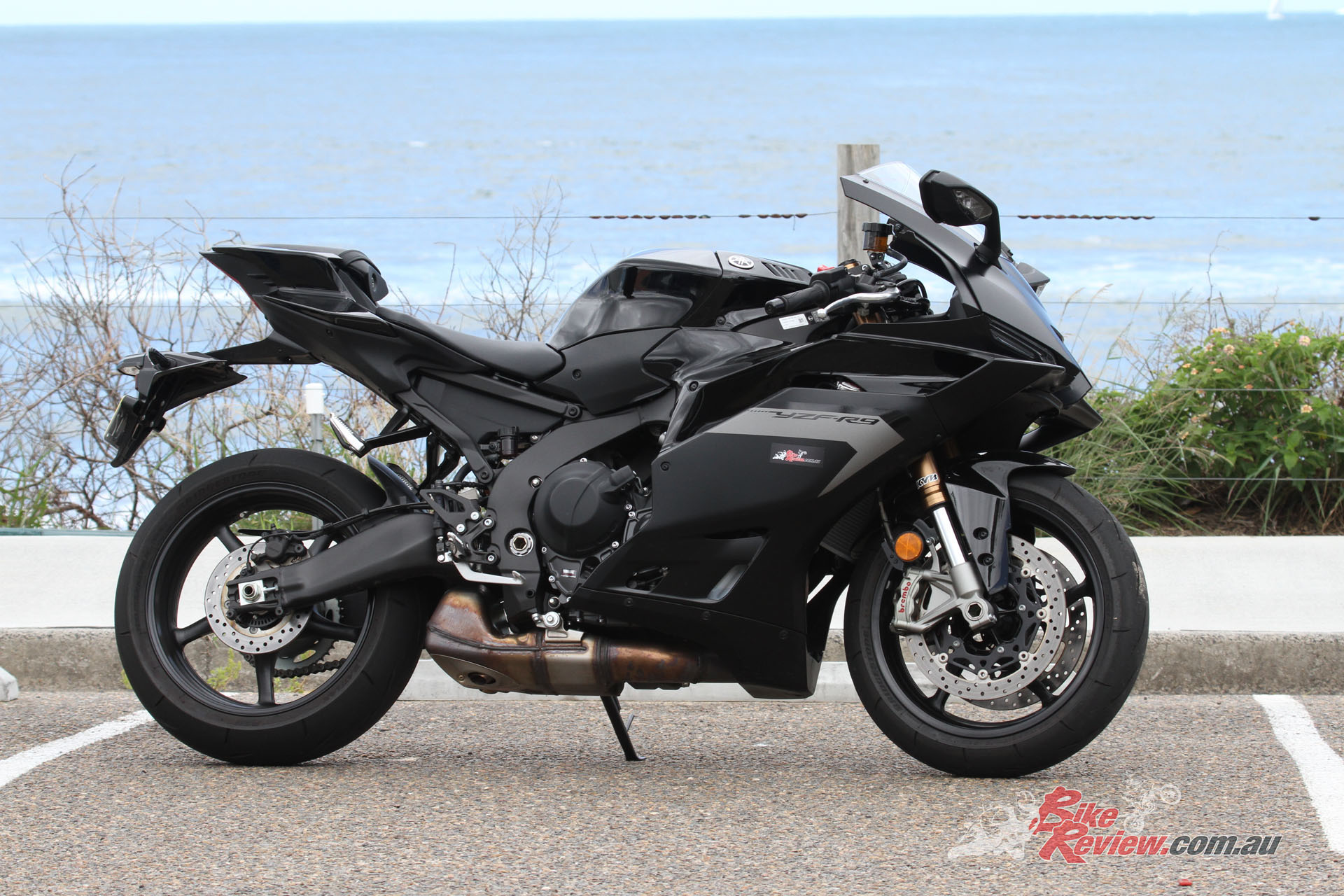
We are super impressed with our YZF-R9 long termer, it’s a great street bike and a track day weapon…
I’ve been riding the BikeReview Yamaha YZF-R9 for about 6 weeks now and we have bonded. We’ve been through all of the scenarios it takes to build a strong bike and rider relationship – early morning commutes, long lunchtime rides through the hills, frantic airport dashes on the motorway, late night summer cruising and of course getting caught in intense rain, the heaviest in a decade or something like that, just my luck on a new bike!
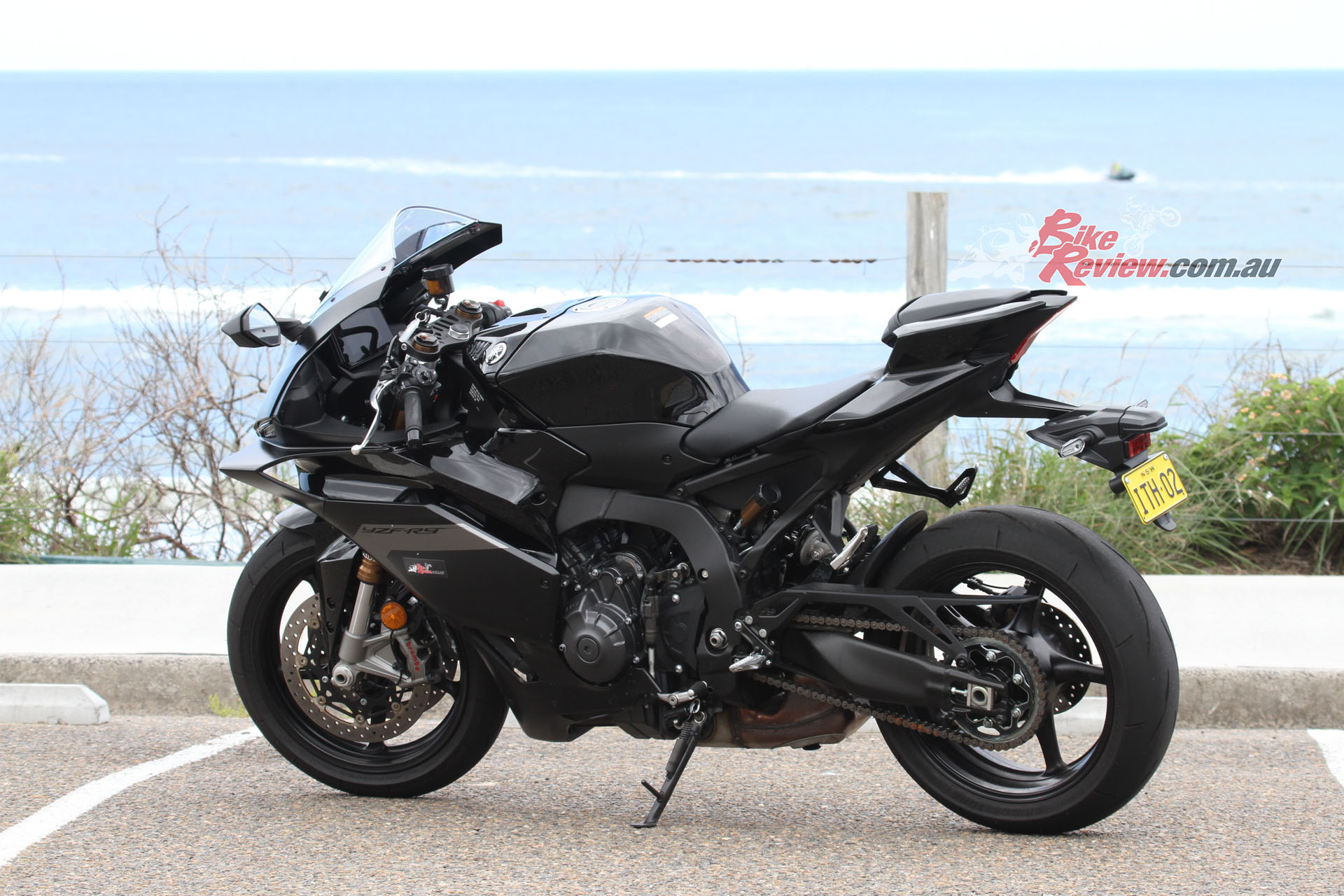
During that time I have really become a big fan of the YZF-R9. I think it is just the type of sportsbike I need at this point in my life as a 50 year old ex racer/lifetime sportsbike ride, as I do admit I find the 1000s and superbikes a bit hard work these days, just as I find supersport 600s hard also. This thing is just right – in between, and would suit all sorts of sportsbike riders and track day punters.
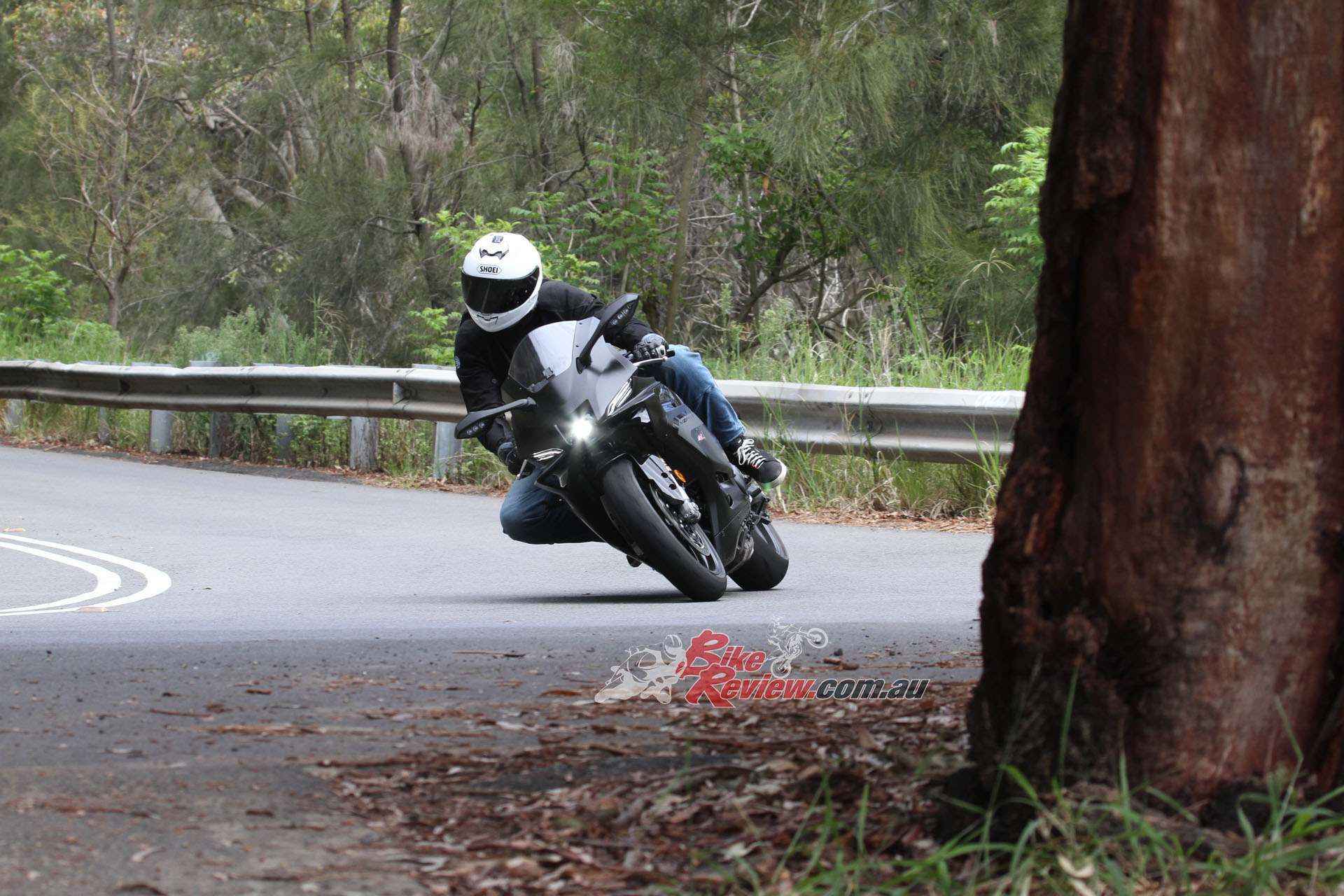
I’ve made some small changes to make the YZF-R9 my own but nothing huge, I like it the way it is…
I ran the BikeReview Yamaha YZF-R9 in the way I always run bikes in, I completely backed off the suspension at both ends so that both ended freely and easily used the full 120mm/117mm of travel available for the first 500km. This really makes sure that the suspension seals and bushes are nicely bed in and as free moving as possible. I also try not to labour the engine too much and try to keep it free spinning throughout the rev range for the first 500km, then I ride it at full tilt from that point.
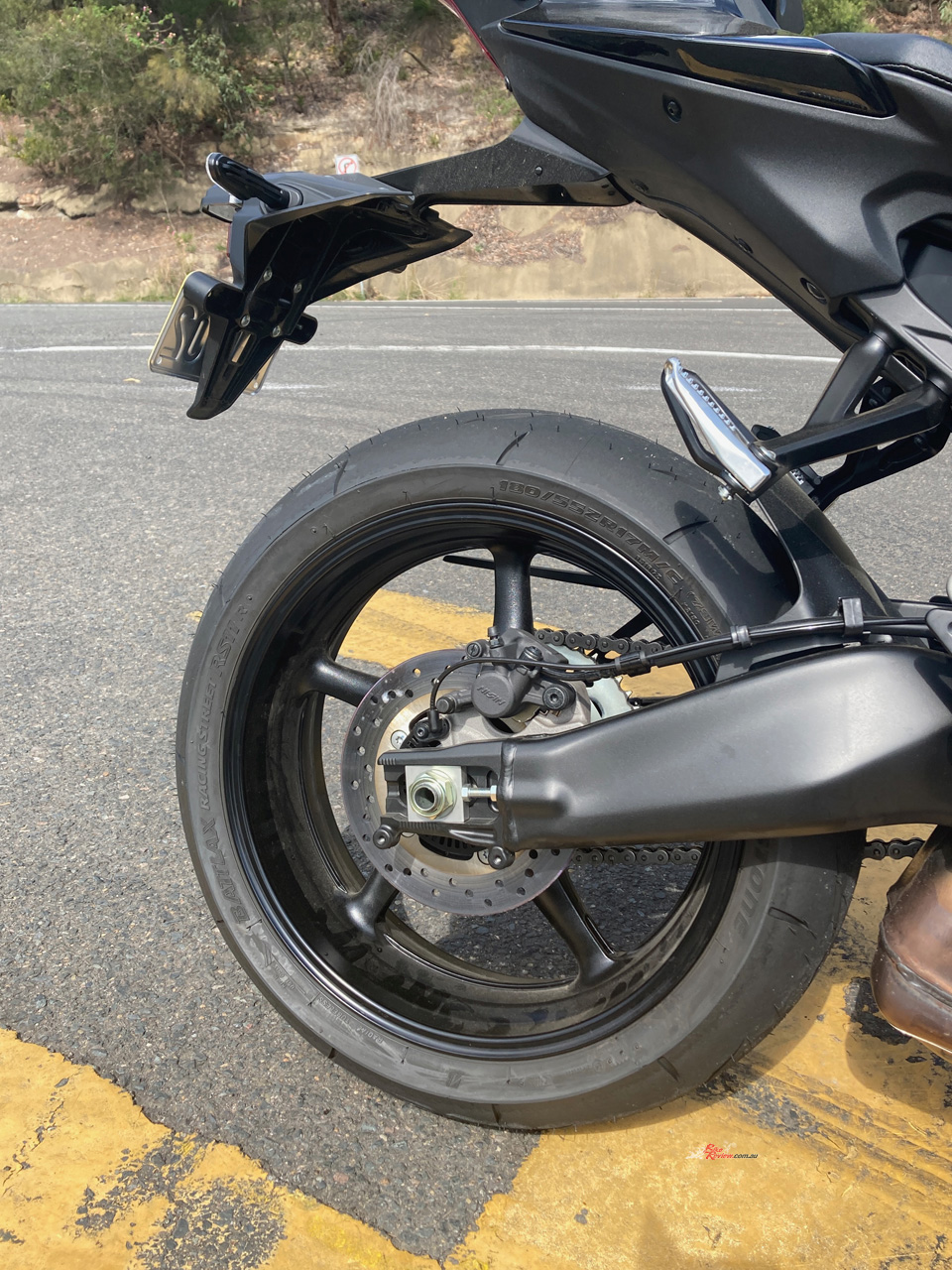
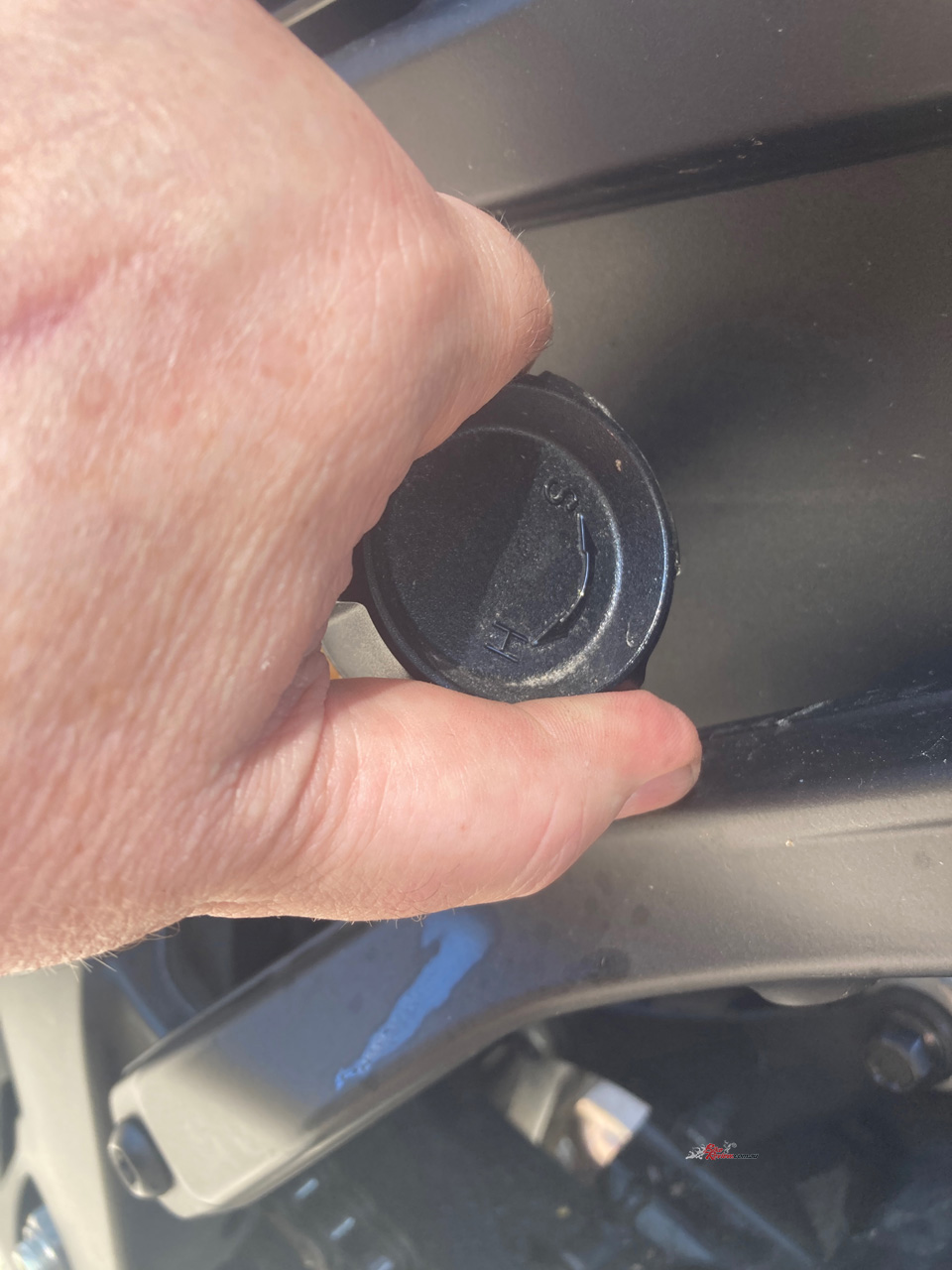
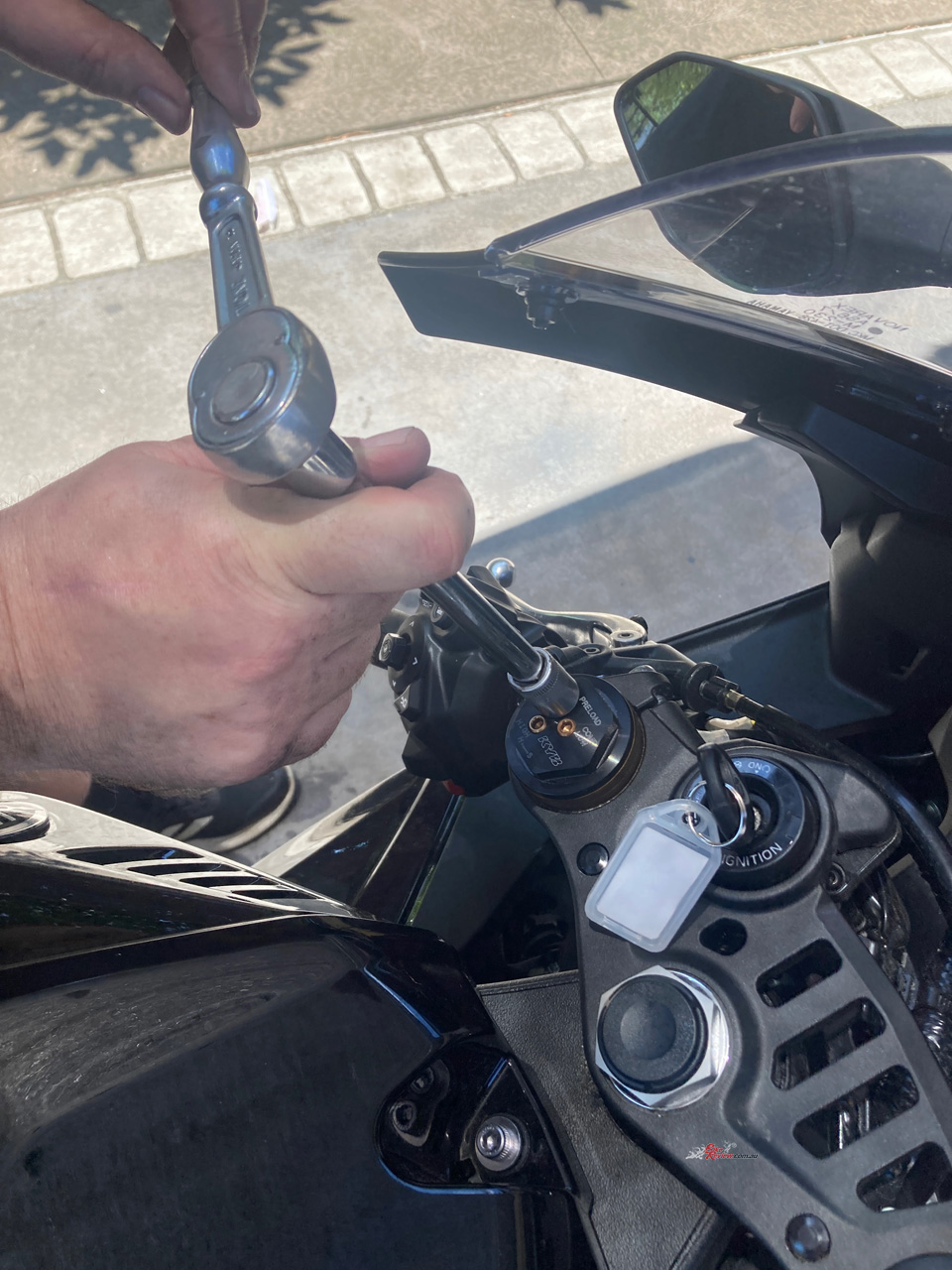
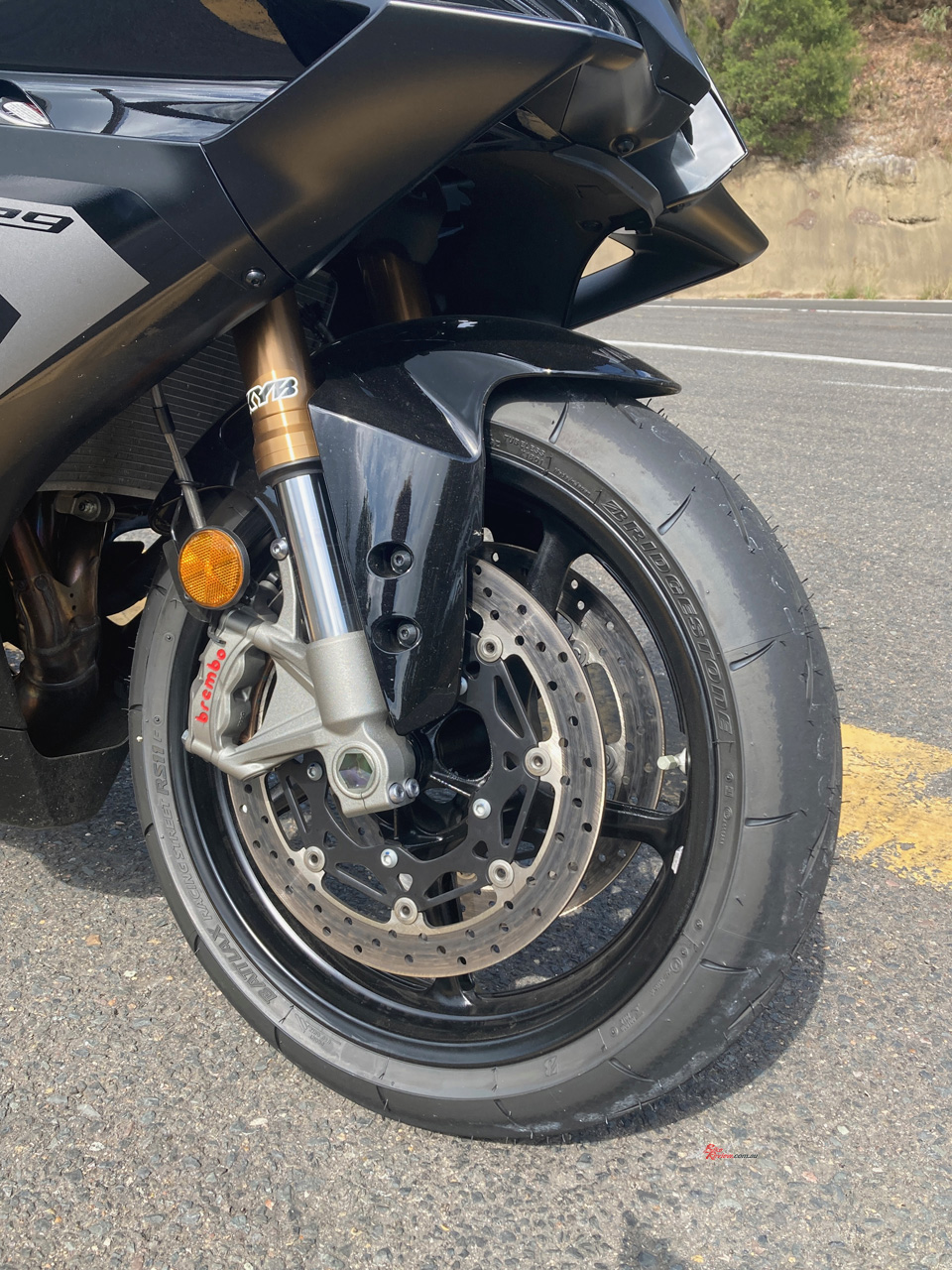
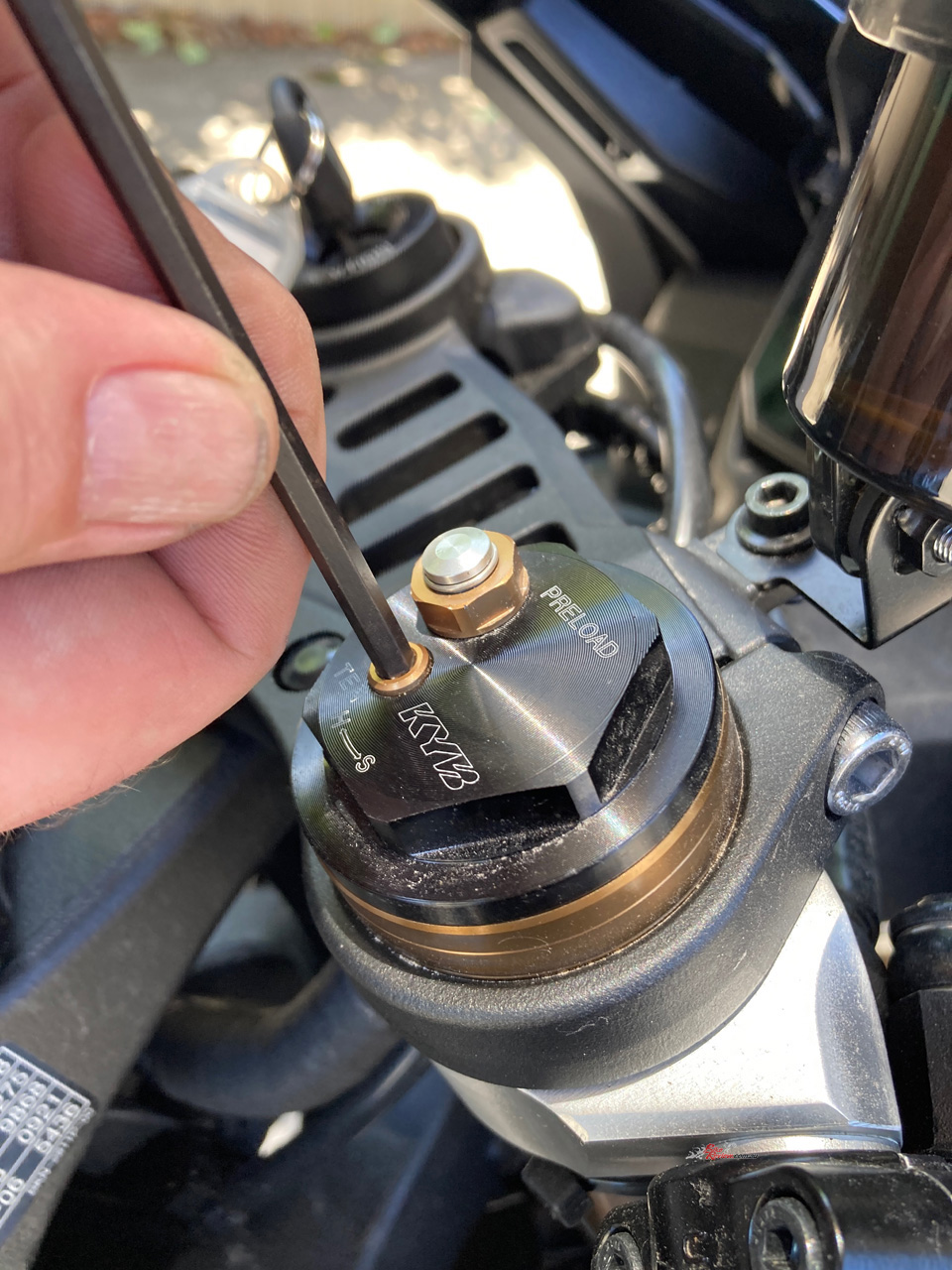
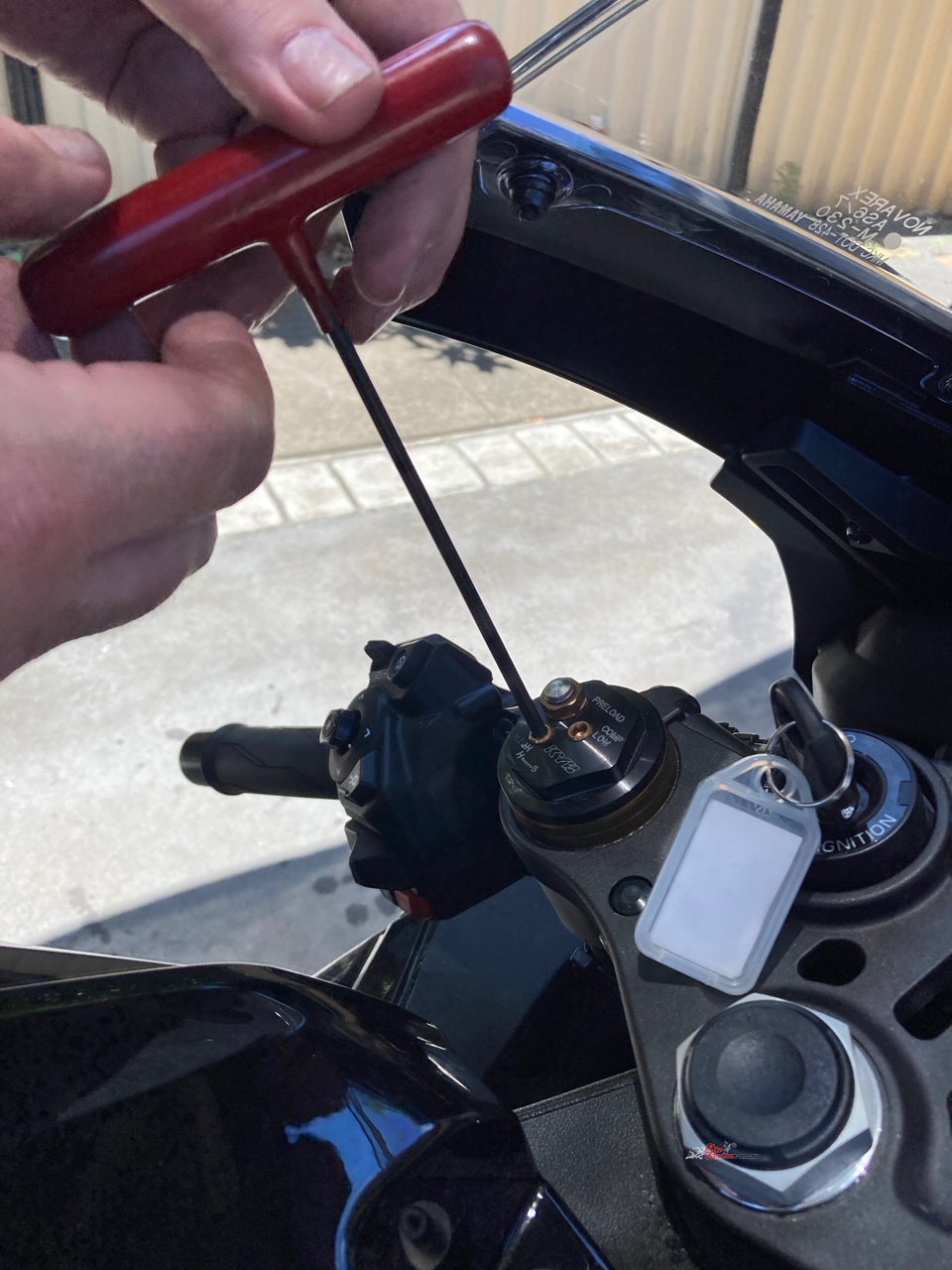
With that first 1000km done, I then adjust the suspension back to standard settings and I carry the required tools to adjust on the road until I get it just how I like it. In this case, I went back 2mm of rear preload and 20 per cent less rebound and compression, while at the front I removed three turns of preload and 30 per cent less rebound and compression. It’s soft, but really nice and controlled in the middle of the stroke at both ends, where a lot of time is spent on the road. The front is especially compliant over just about any bumps. It’s a nice ride and just a few turns and clicks for sportier riding.
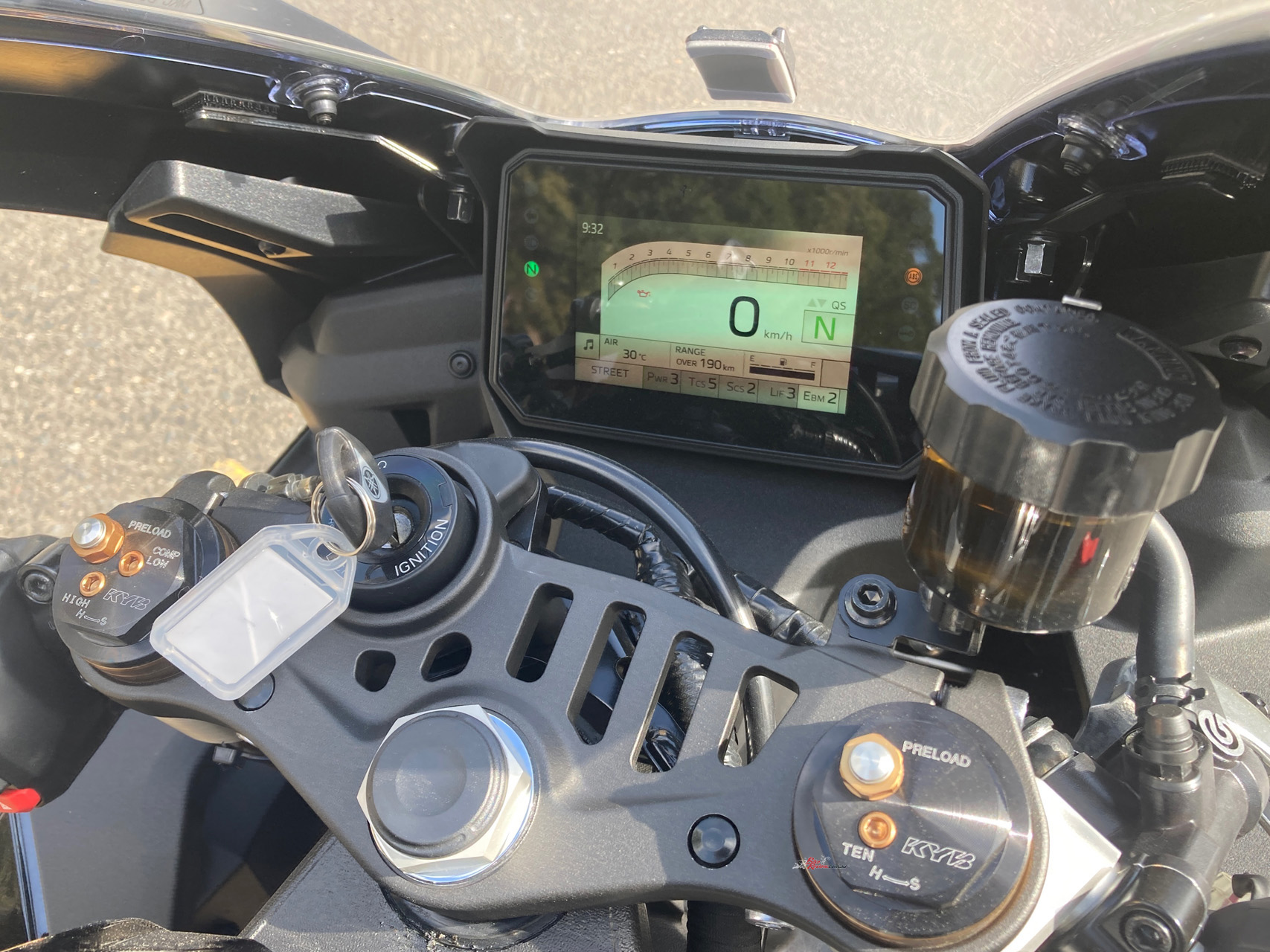
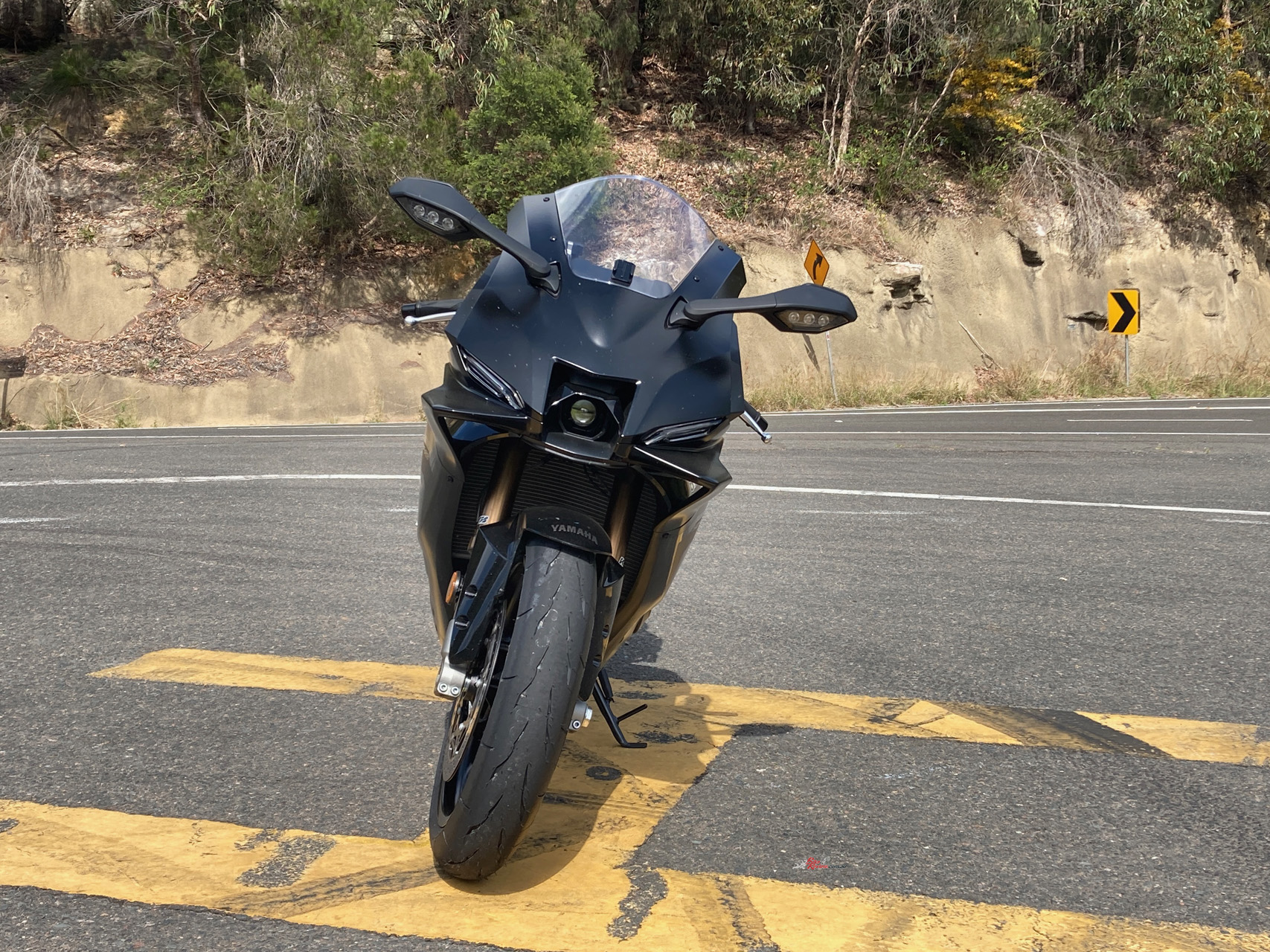
I’ve been running the tyre pressures standard at 36psi and 42psi with the softer suspension settings and the ride is still nice and smooth. I’m pretty impressed with the Bridgestone BATTLAX Street RS11 tyres, I’ll have a seperate review up on those – fantastic feel and good in the rain, too. I tested them on the track also at the launch and they were great. We will let you know how wear goes on the road.
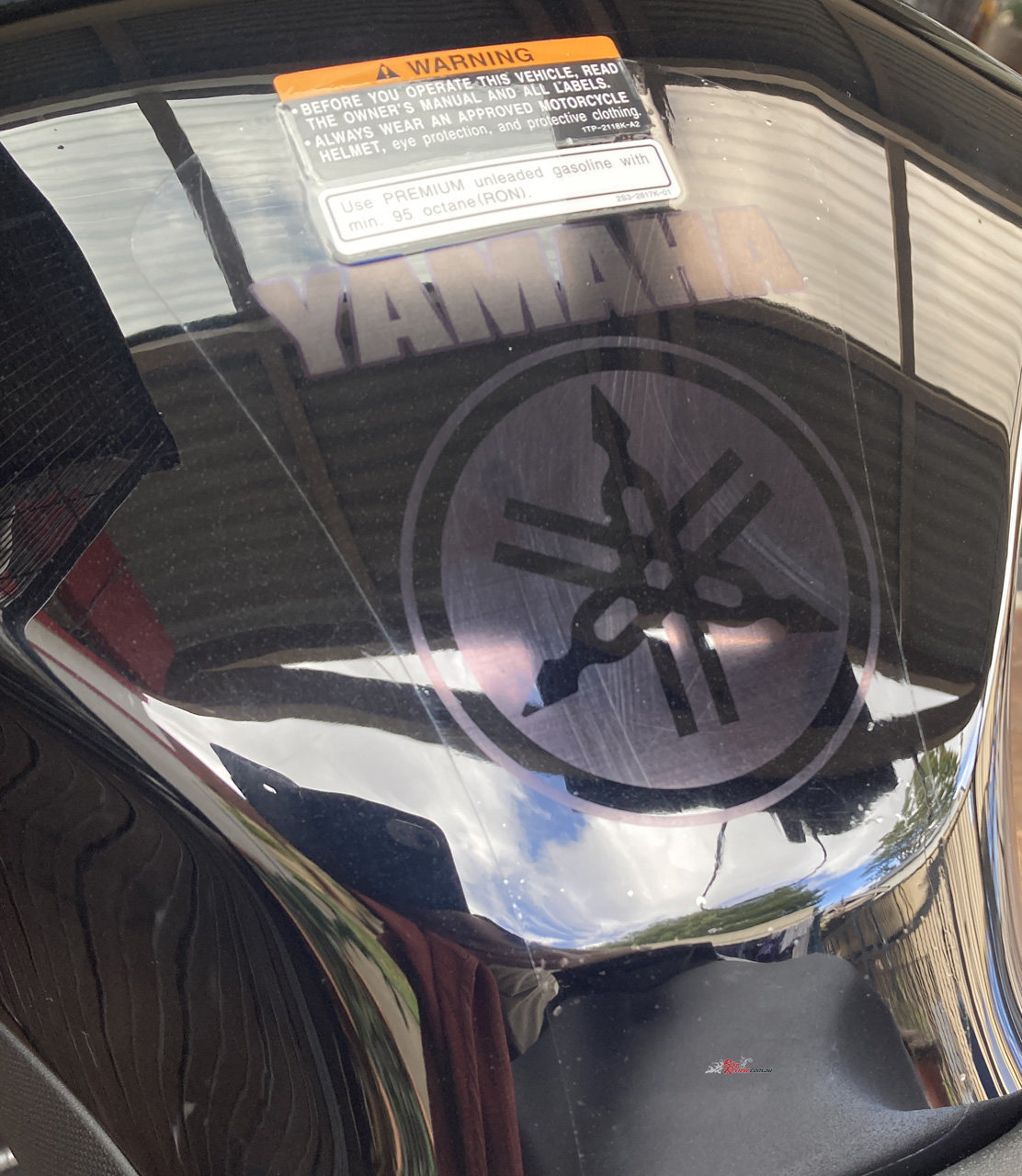
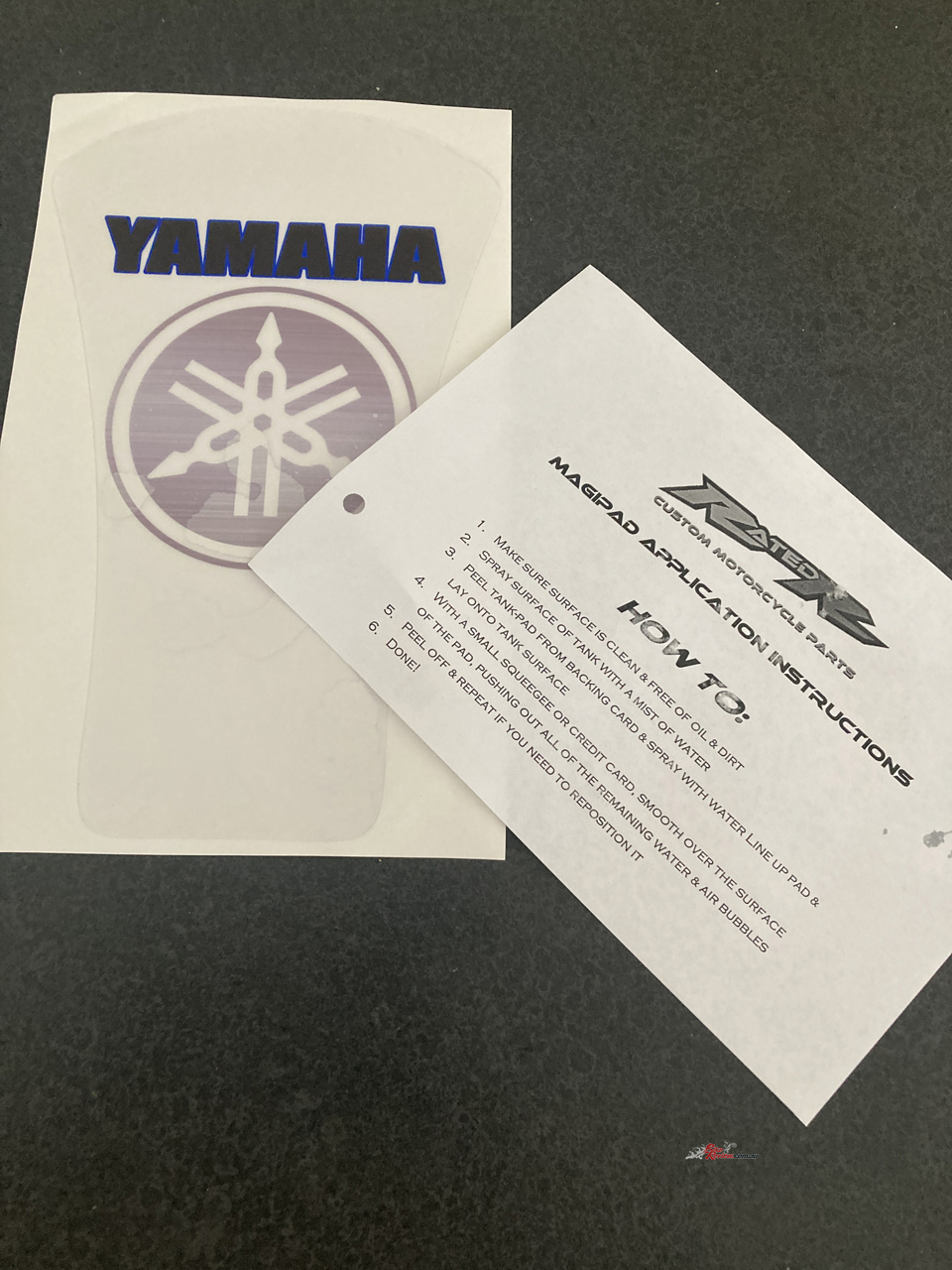
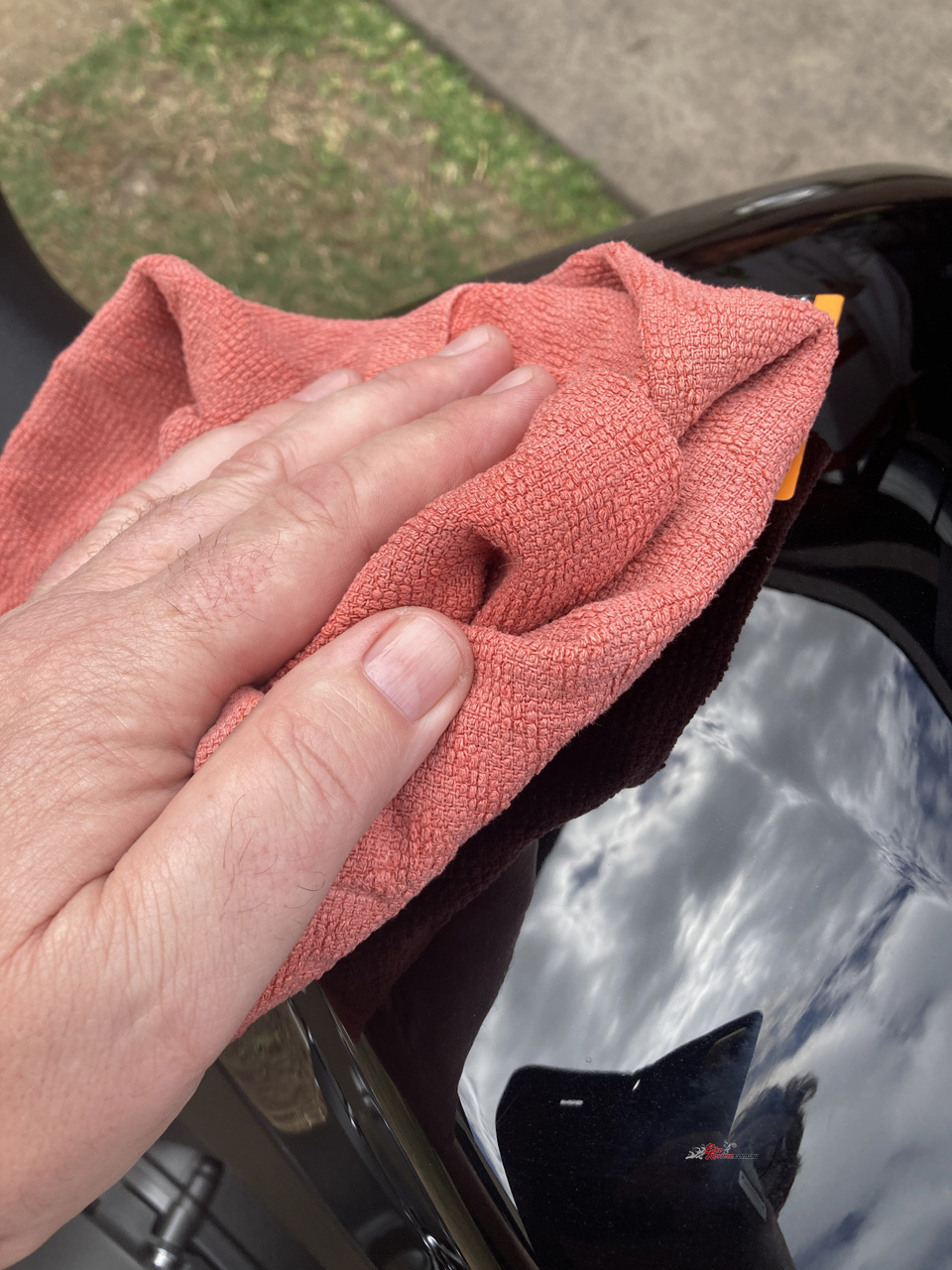
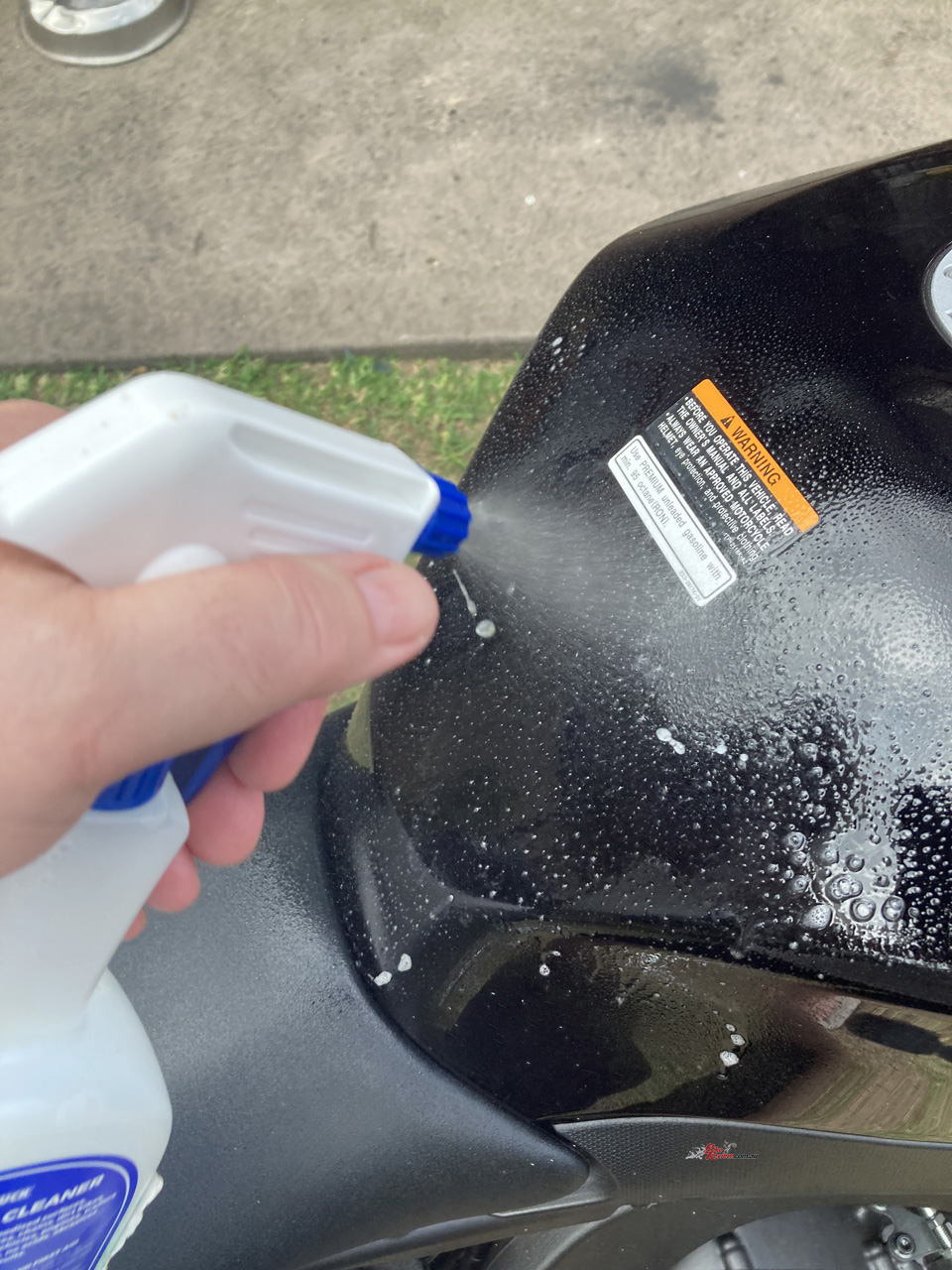
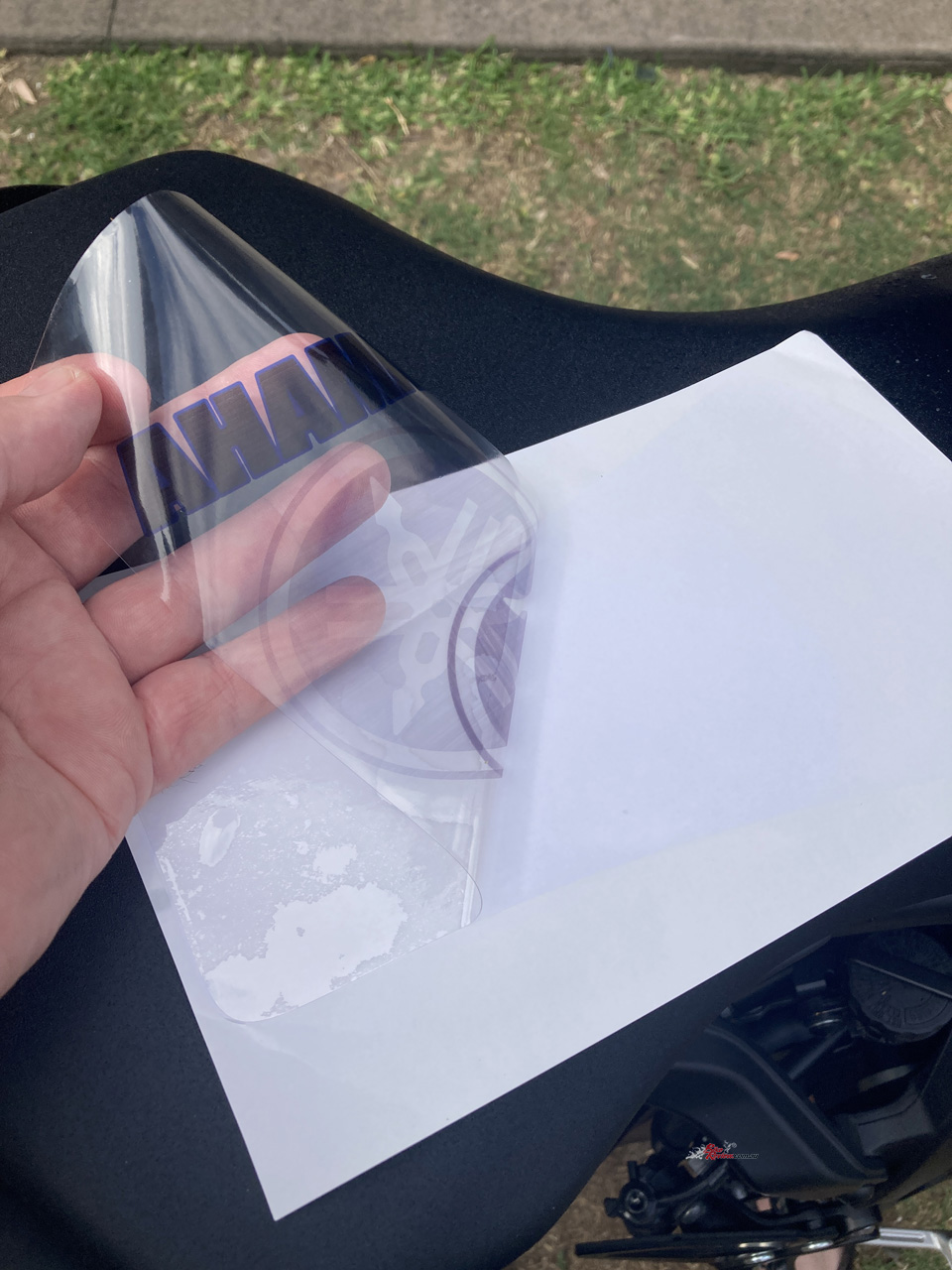
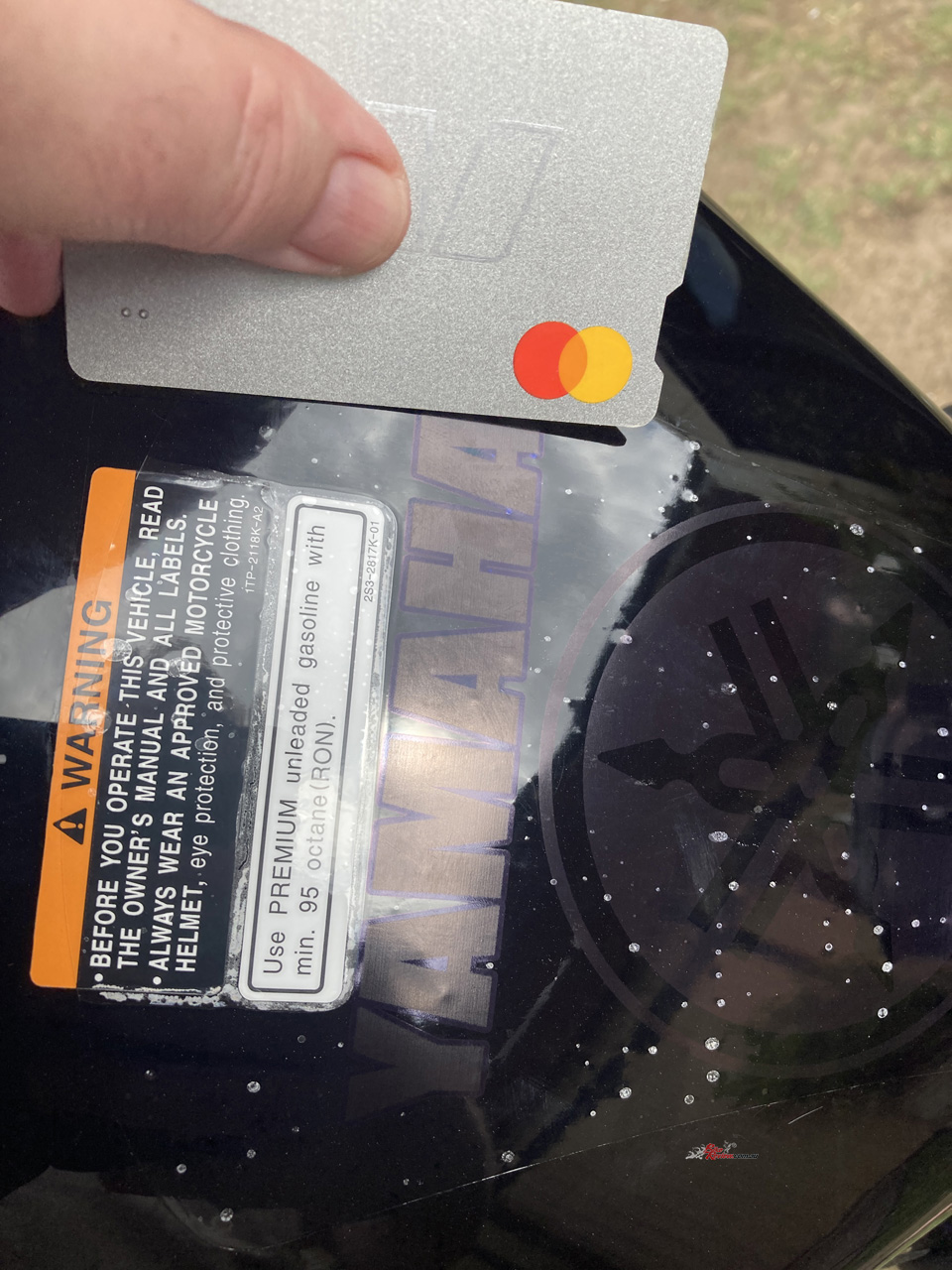
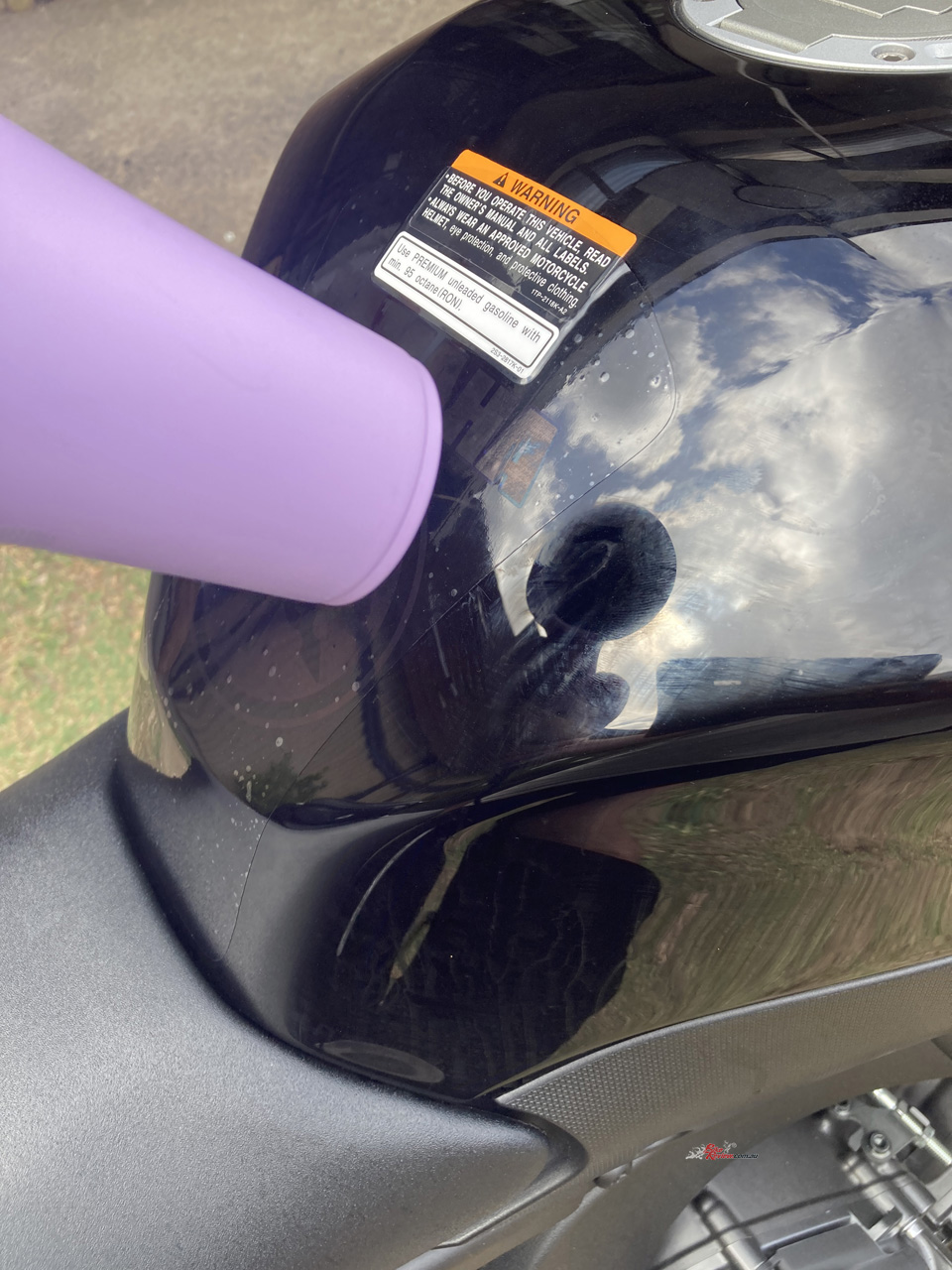
I fitted a RatedR clear thin tank protector with Yamaha logo. It was only $18.99 and looks neater than the chunky ones…
RatedR Yamaha Clear Tank Pad
The RatedR (check out their website here) tank pad was a bargain and exactly what I was looking for. I needed to protect the paint but not with a thick ugly tank pad. These are just right, around .5mm thick and a soft flexible clear rubber with the logo (there are models for many brands on the RatedR site). At $18.99 plus $5 express post from WA to Sydney, it was a bargain and fitted up in no time…

1000km First Service
Before I continue, I should mention that I am still a licensed motorcycle mechanic and hold a valid repair license, which I have since the early 1990s, so I can legally do the service work. If you are not qualified, you need to take your bike to your Yamaha dealership. This article is just to give you an insight into the work done in a first service.
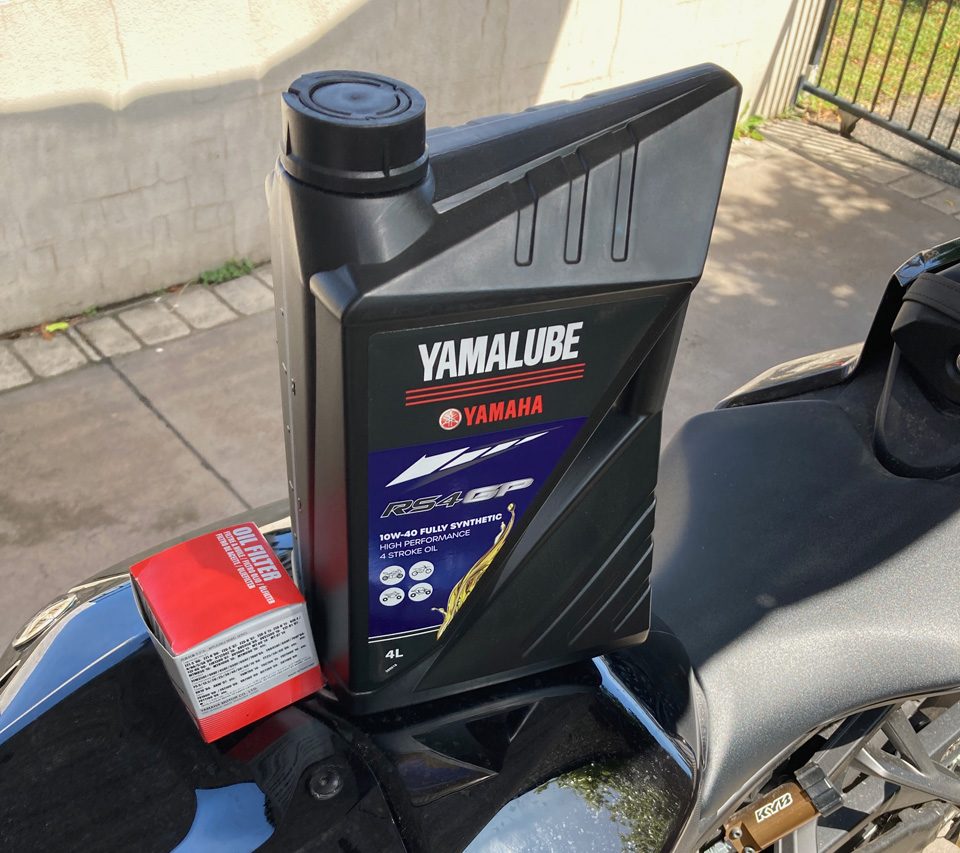
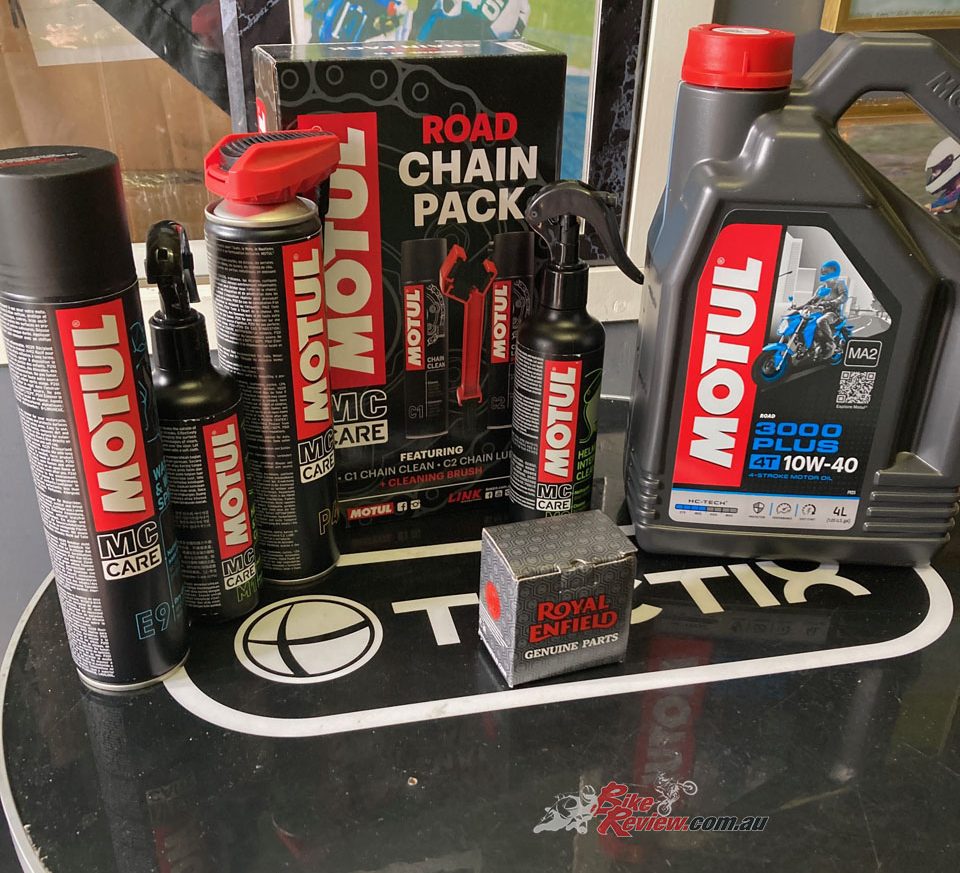
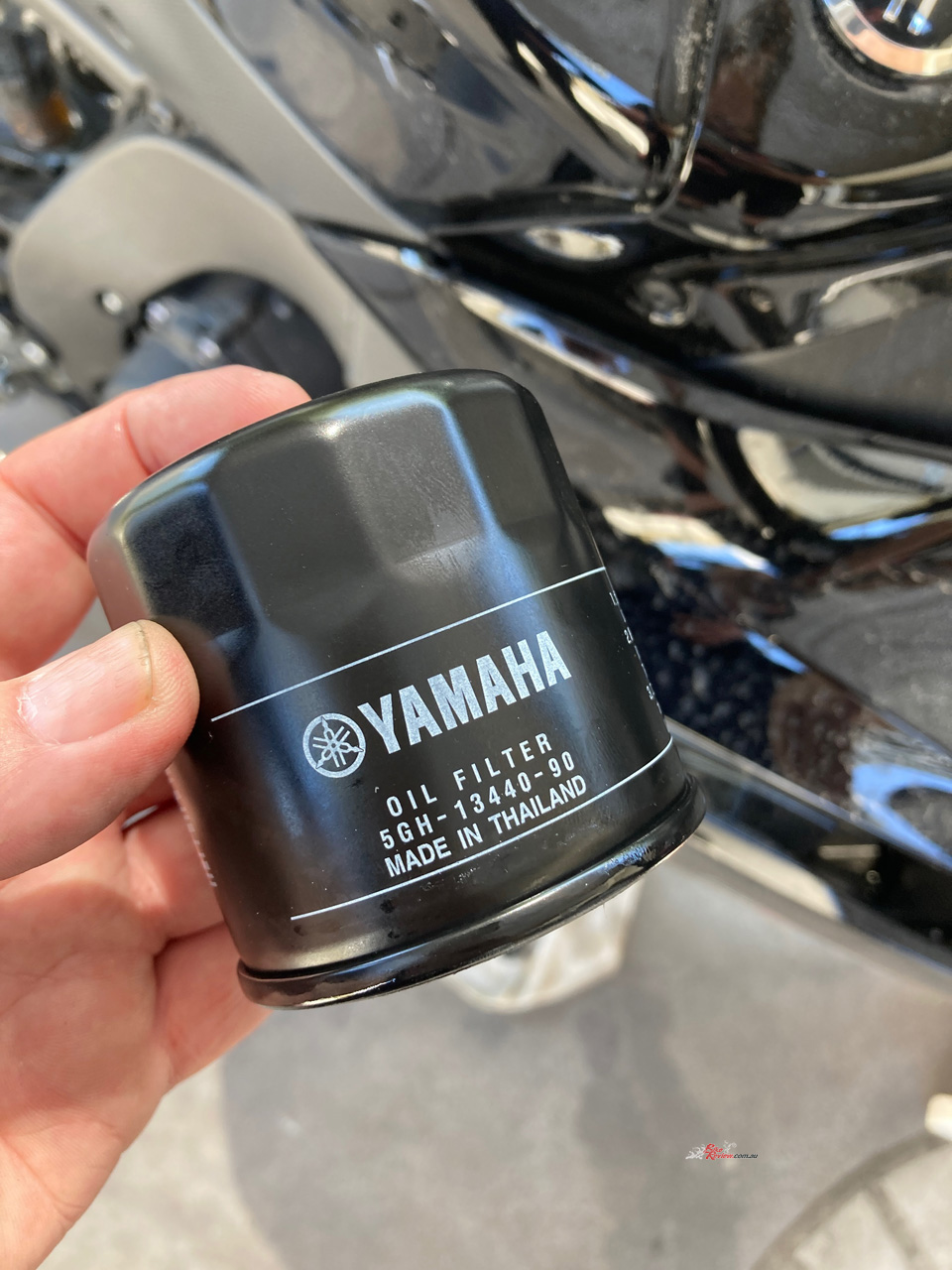
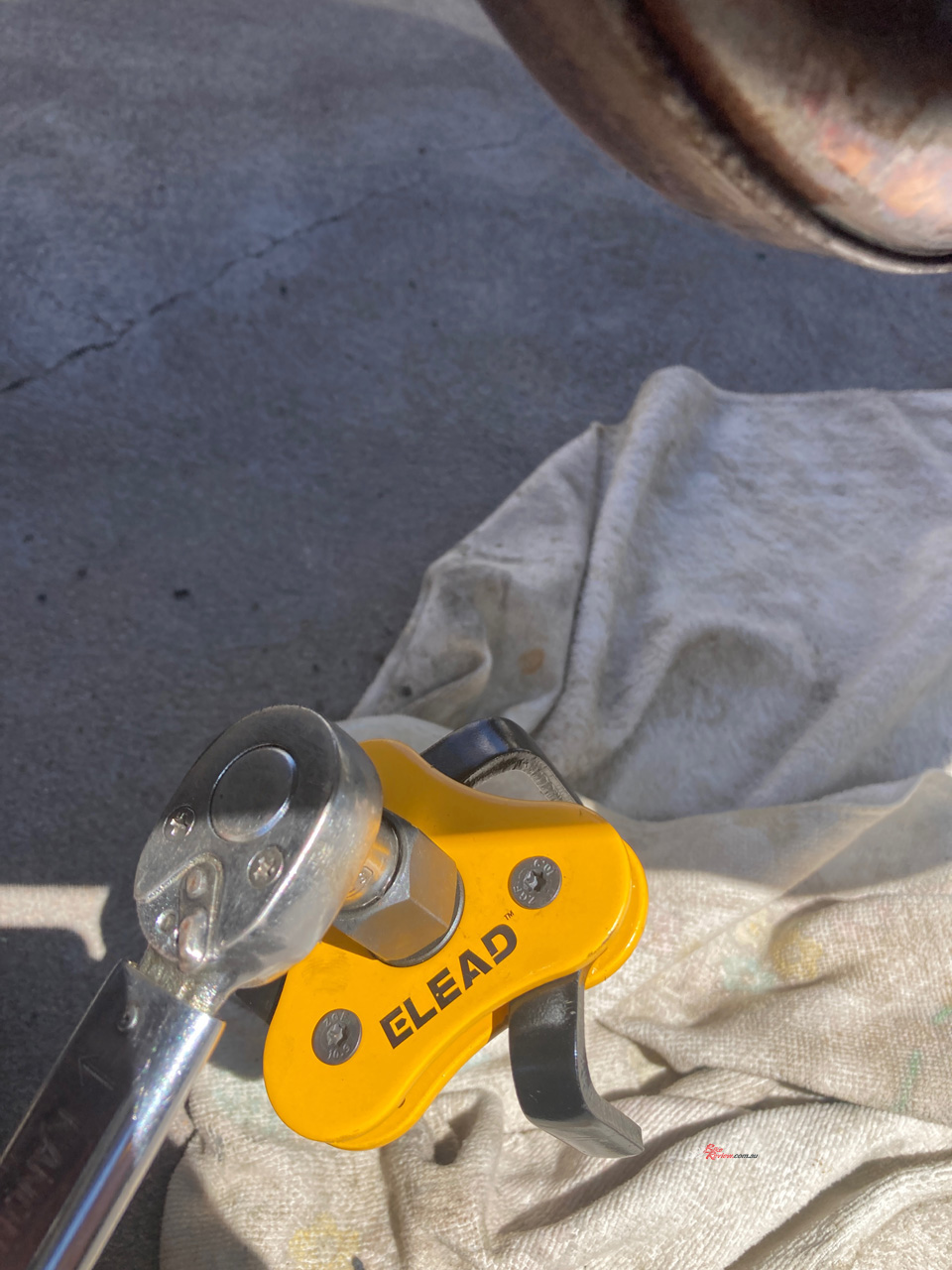
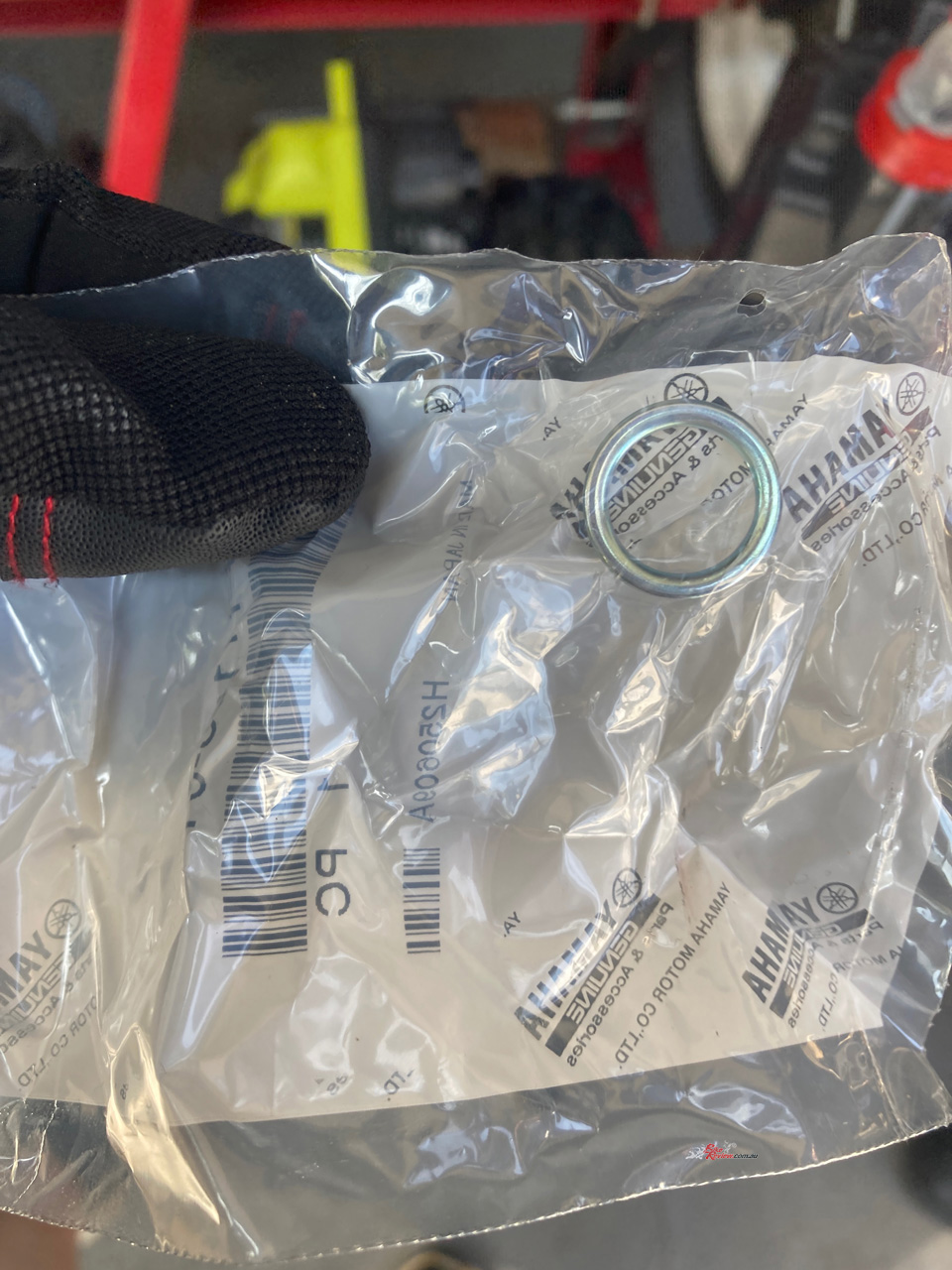
Nick and I chose to use a Genuine Yamaha Oil Change Kit available at ShopYamaha, comprising of Yamalube RS4GP 4L bottle (YMD-65051-04-02 $157.95 RRP), a genuine oil filter (5GH-13440-90 $21.84 RRP) and an oil drain plug replacement washer ($2.72 RRP). We also used our Motul bike care kit which comprises of Motul E10 Shine & Go silicone cleaner, E.Z Lube Multi Protect general purpose lubricant, E9 Wash & Wax, Microfibres cleaning cloth and we used the M1 Helmet & Visor Clean on the YZF-R9 windscreen and dash.
The 1000km service is the most important one in some ways. It’s the initial bedding-in inspection, designed to ensure everything has settled correctly after the engine and chassis components have worn in. According to the Yamaha Periodic Maintenance Chart, the first service includes a comprehensive inspection rather than major parts replacement, but there are several key tasks that must be carried out.
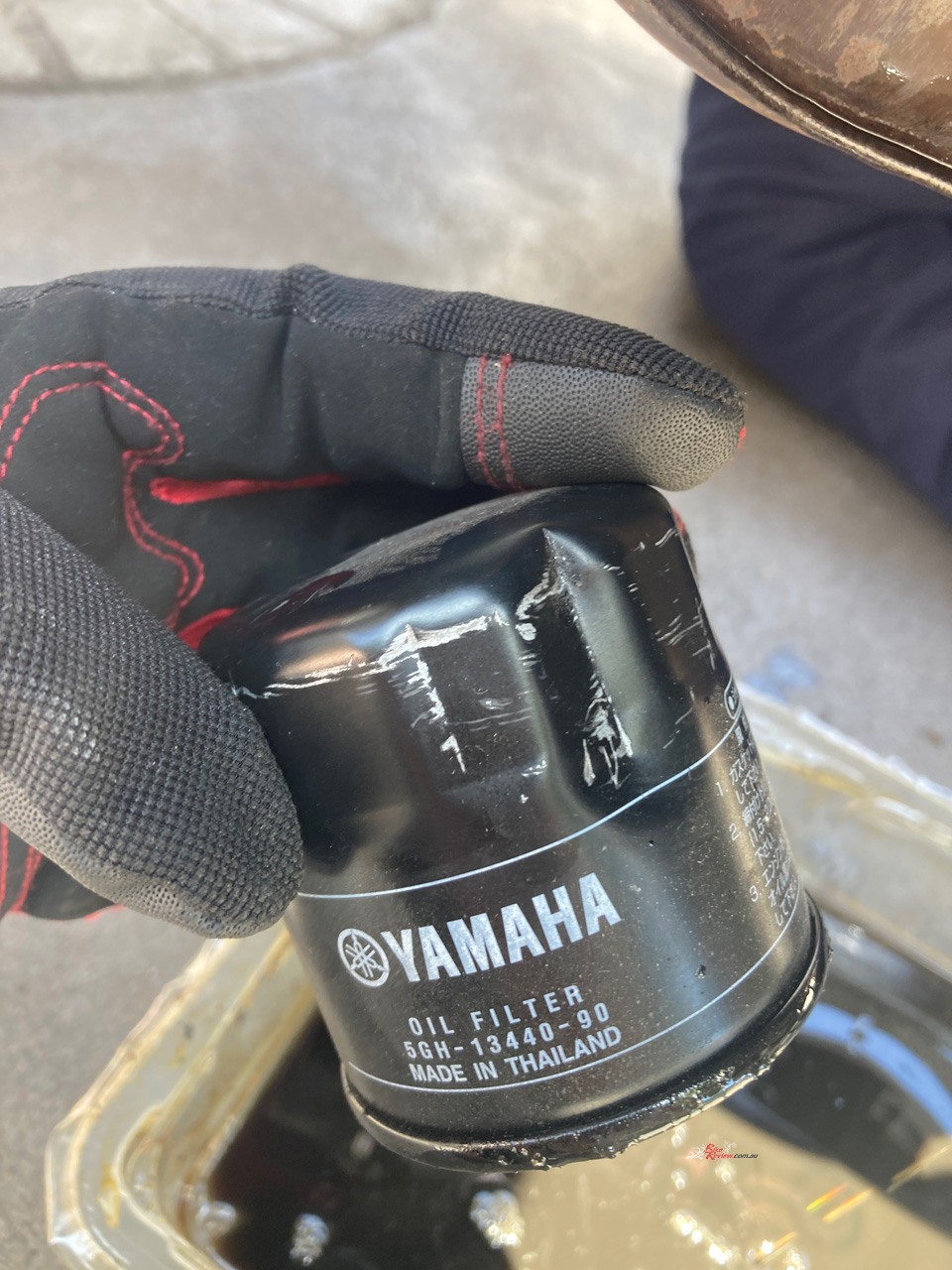
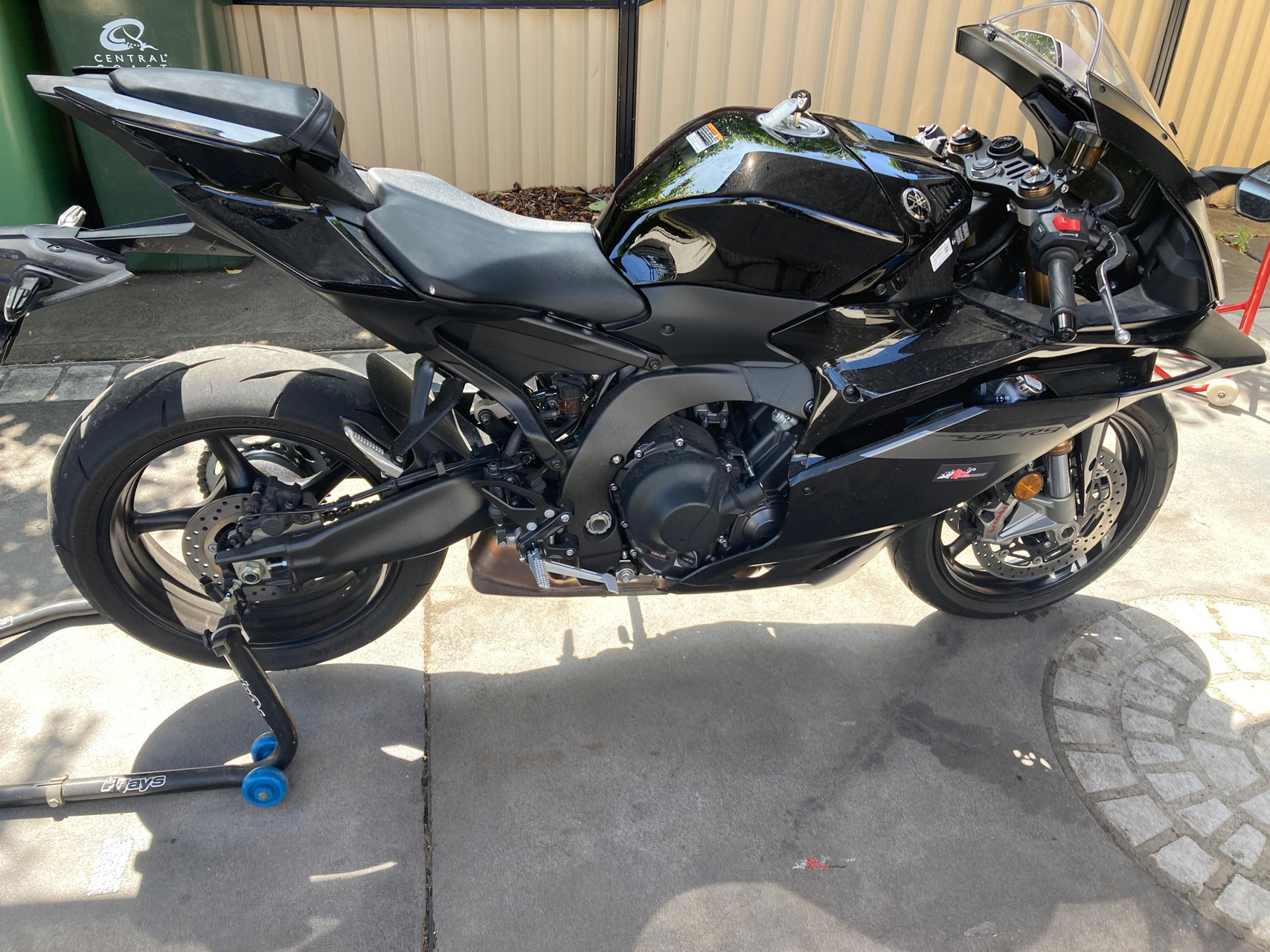
The most critical job is replacing the engine oil and oil filter. The factory-fill oil carries initial wear particles from the break-in period, so draining it completely and fitting a new genuine filter is mandatory. After refilling with the specified grade and quantity of oil, oil level is rechecked once the engine has been run and settled.
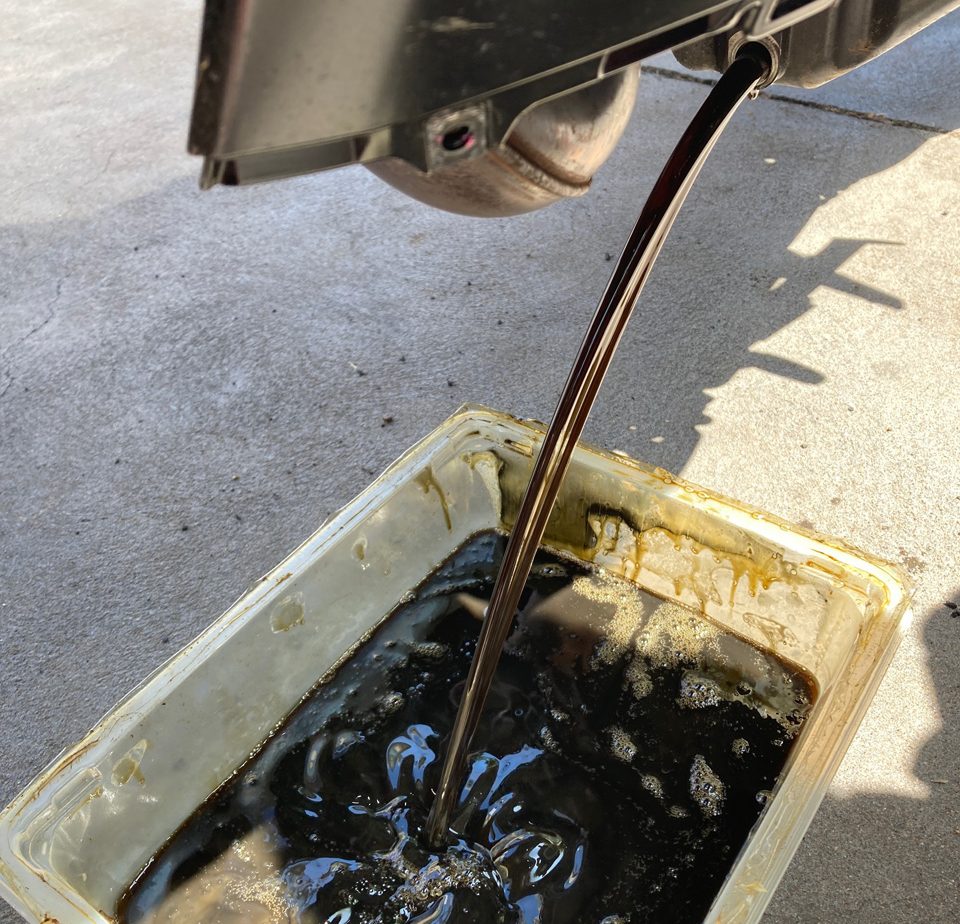
Draining the oil for the first service will reveal really dirty oil as many internal parts are wearing in during the first 1000km.
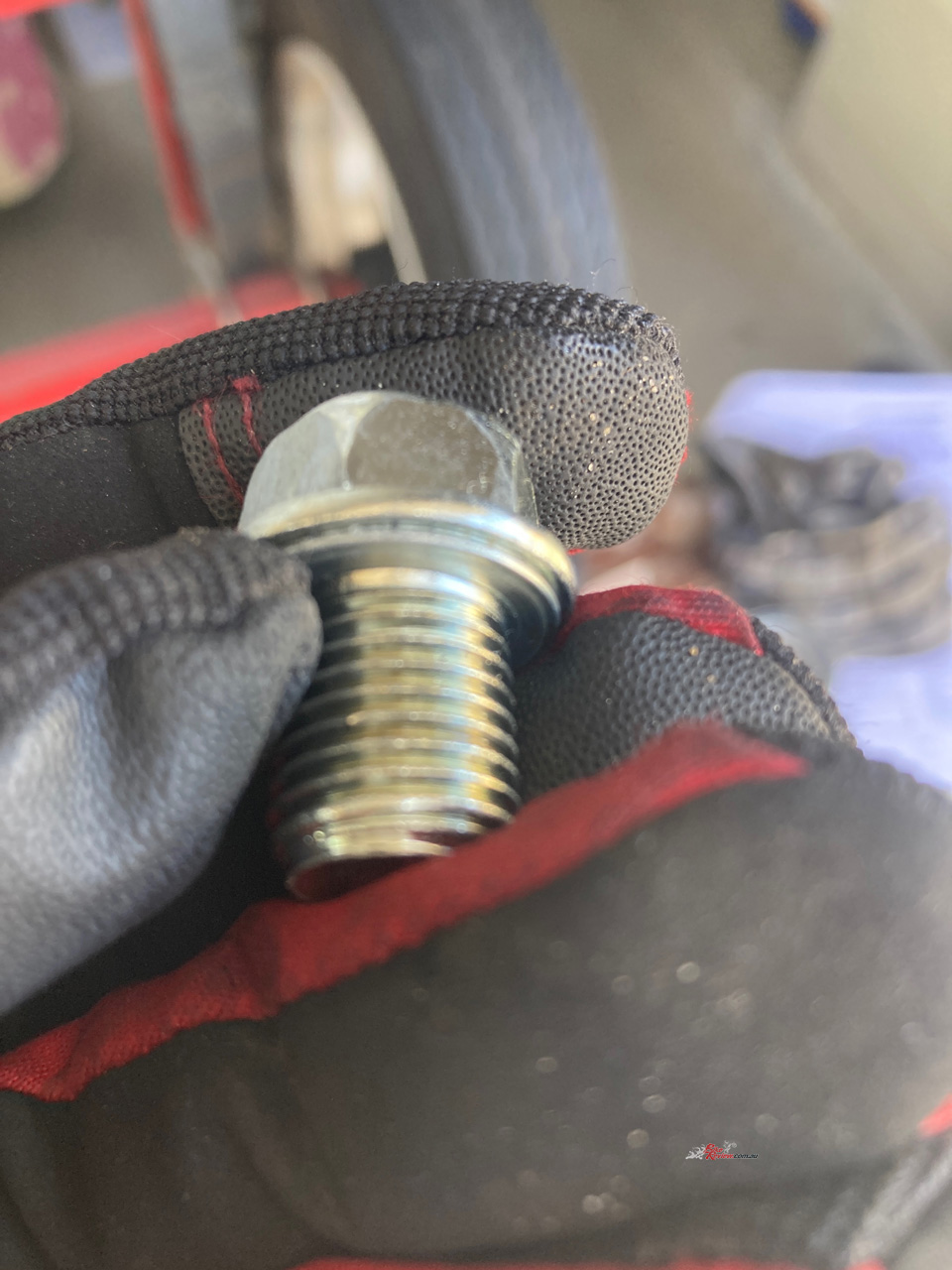
Use good quality fully synthetic oil and a genuine or top quality oil filter and always use a new drain bolt washer. As mentioned we used Yamalube RS4GP, Yamaha’s race-inspired, full-synthetic 10W-40 motorcycle engine oil. It’s developed using MotoGP-level tech for maximum performance, protection, smooth shifting and power delivery in both road and track use.
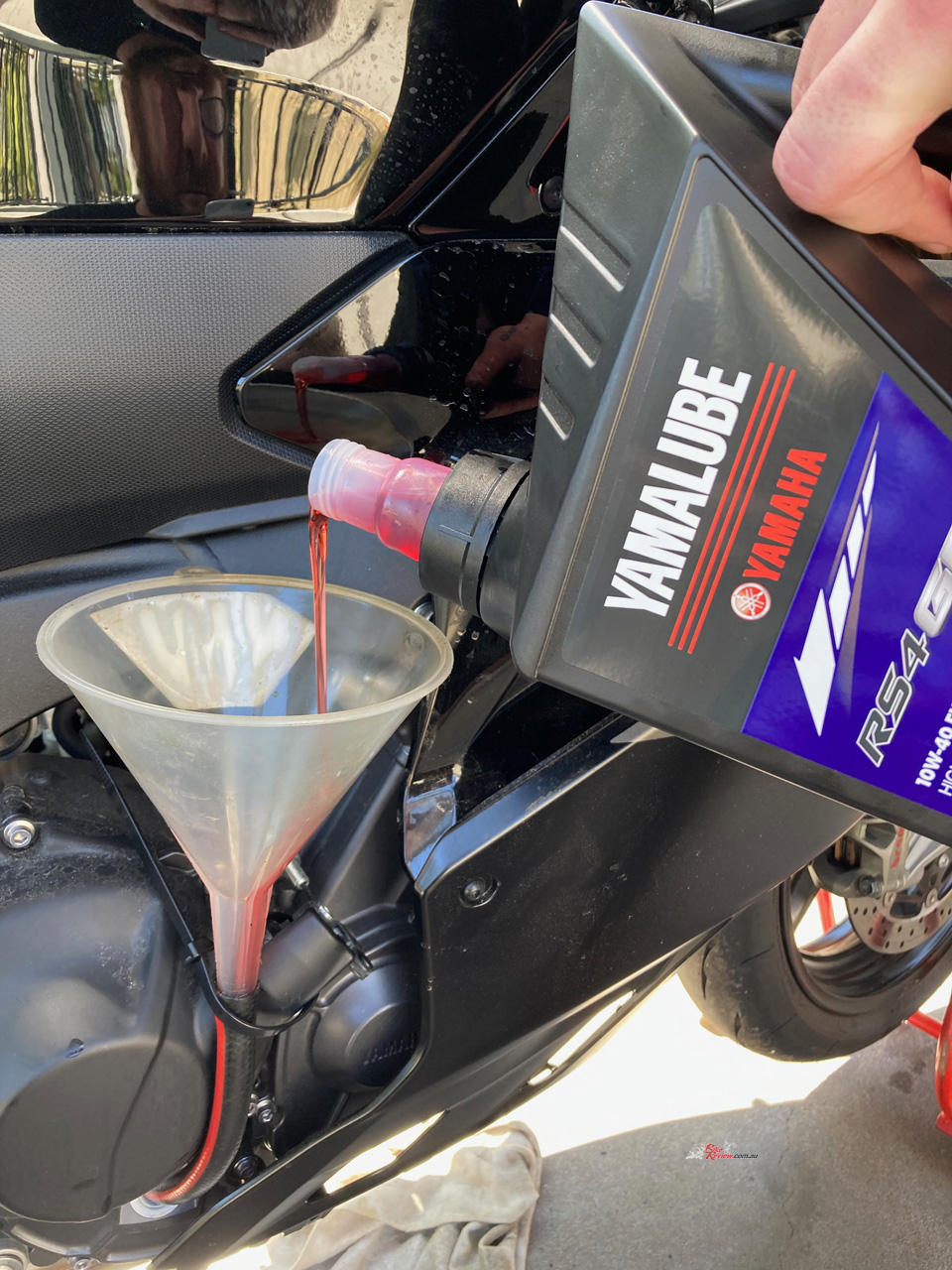
We had to rig up a hose on the funnel to fill up the CP3 engine with 3.2L of lovely red Yamalube RSGP oil, good for the next 9000km now!
From there, the service becomes a thorough nut-and-bolt inspection of the bike. Idle speed is checked and adjusted if necessary. Drive chain slack and alignment are inspected and corrected, followed by lubrication. Clutch free play and throttle free play are checked and adjusted to specification to ensure smooth operation and the throttle tube lubed along with clutch pivot point.
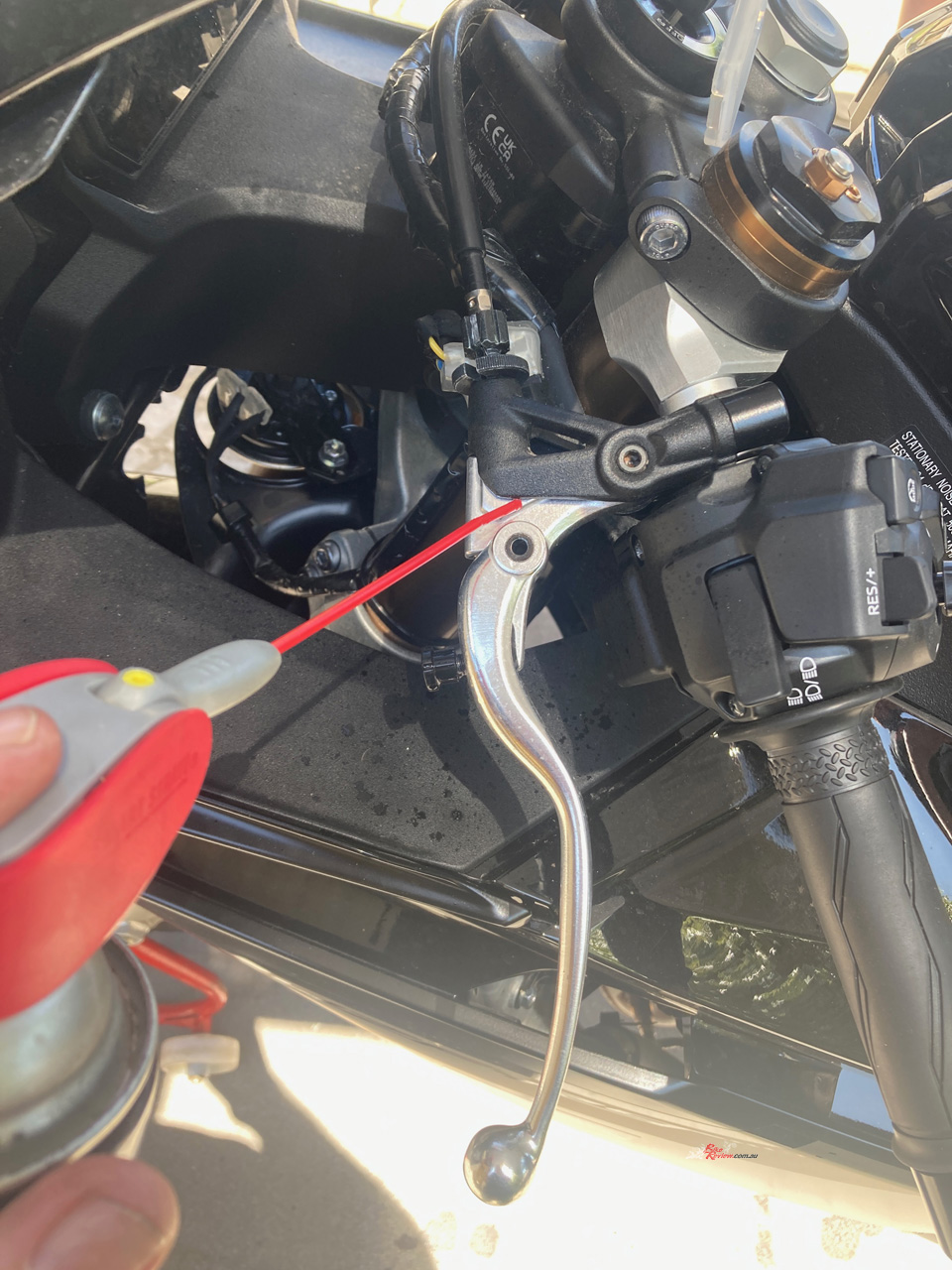
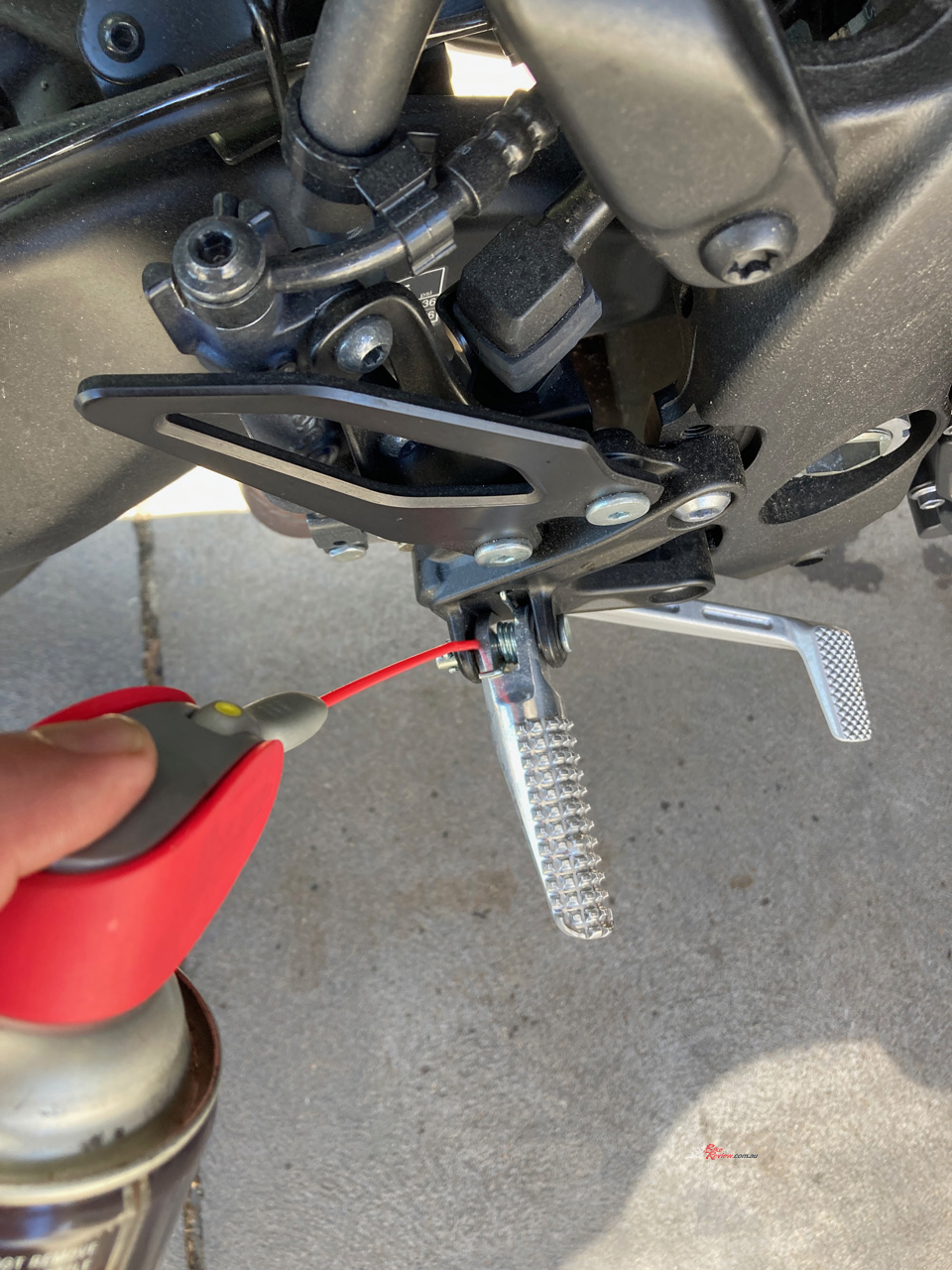
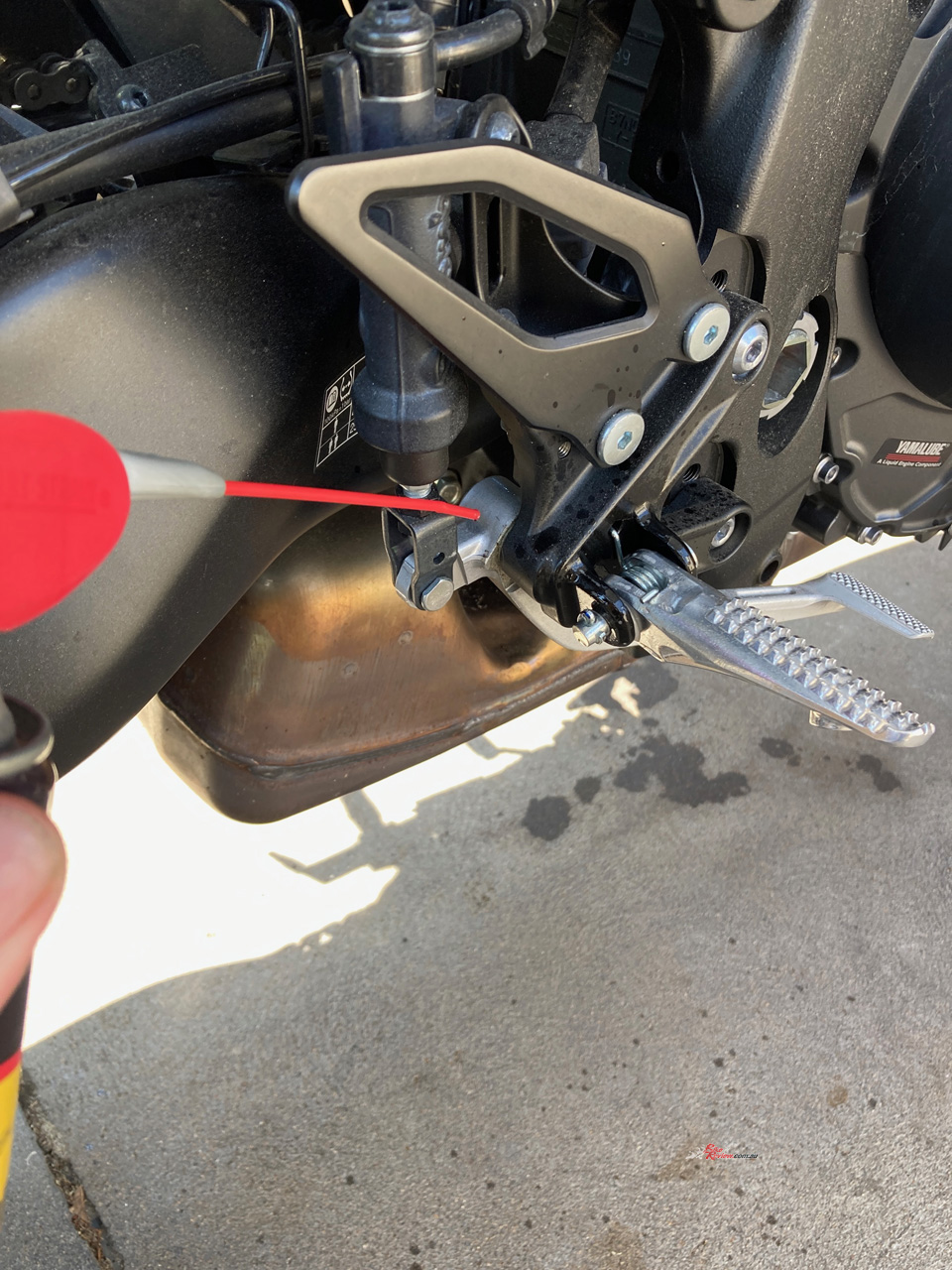
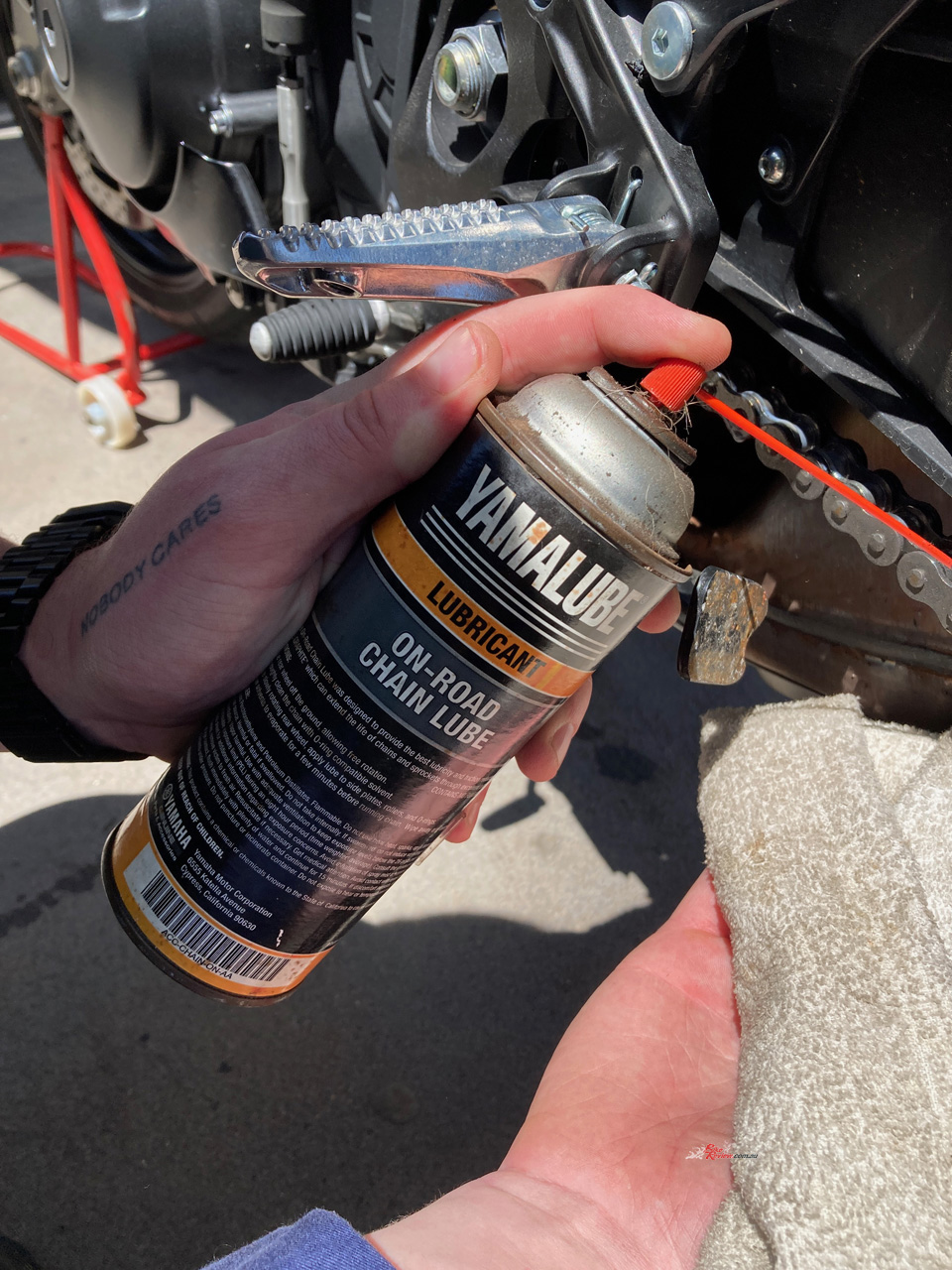
The braking system receives a full inspection: pad thickness front and rear, disc condition, brake hose routing, and fluid levels. Yamaha specifies checking brake fluid levels and ensuring there are no leaks or sponginess. The ABS system is visually inspected for correct sensor clearance and wiring integrity.
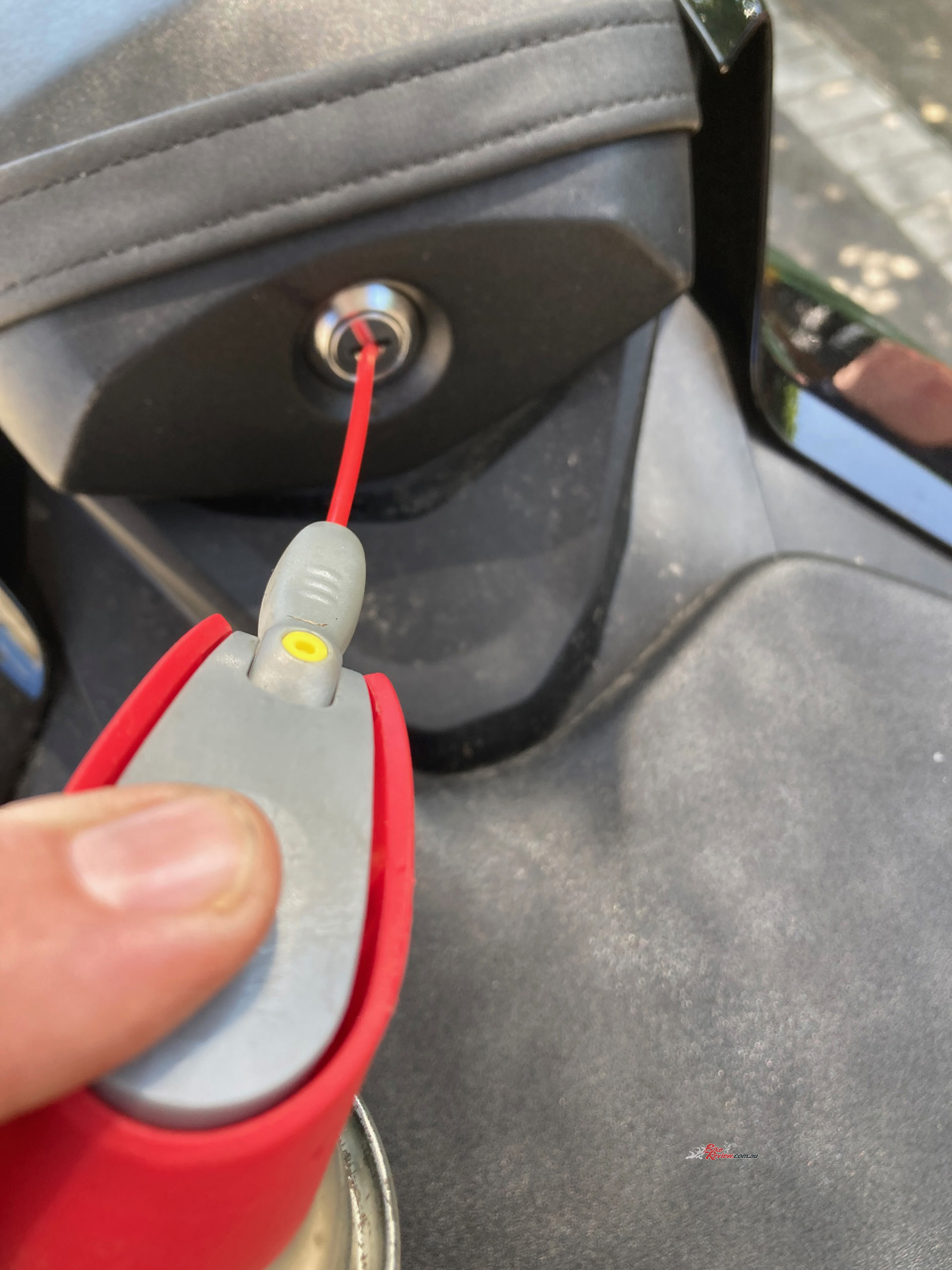
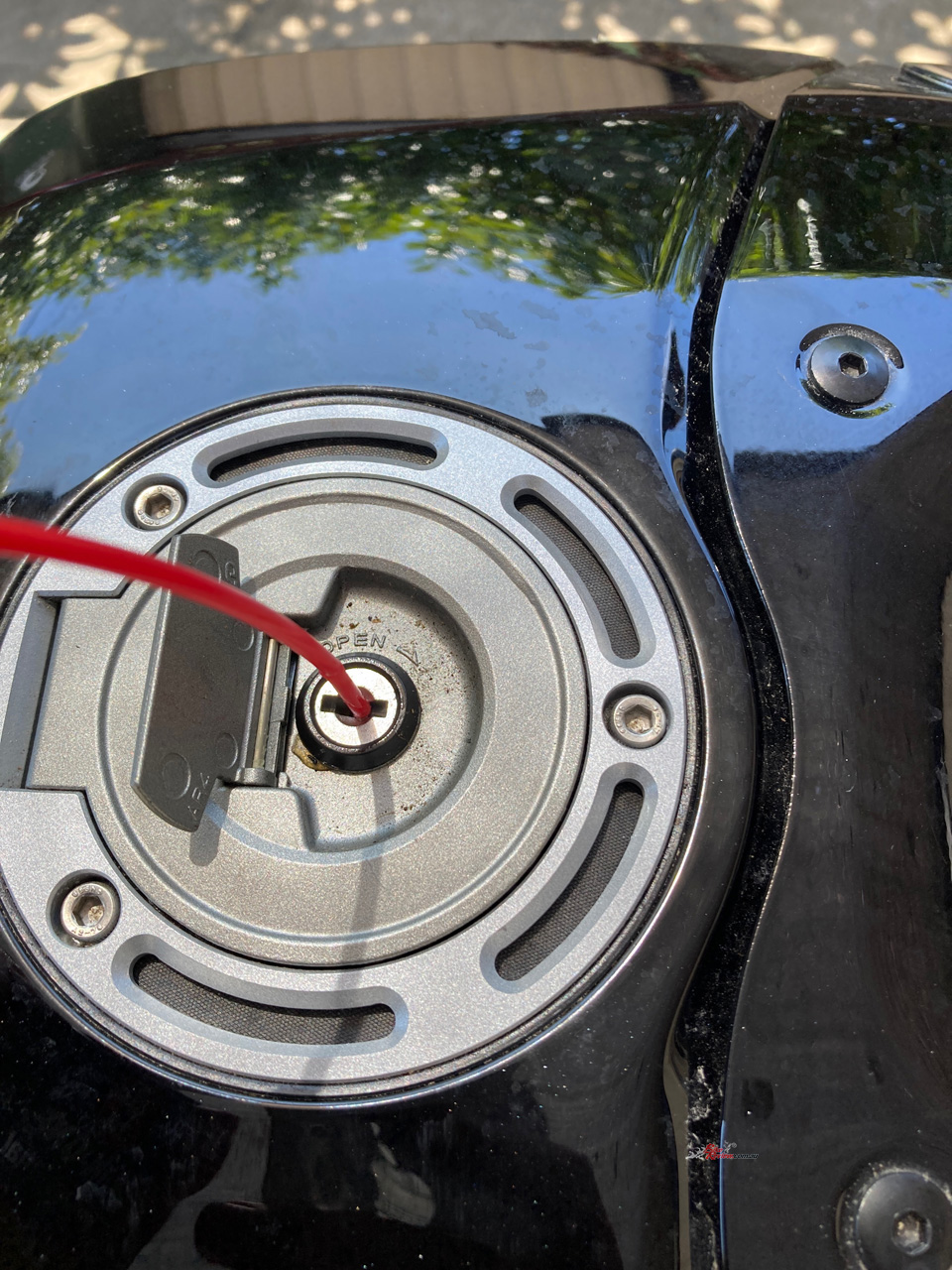
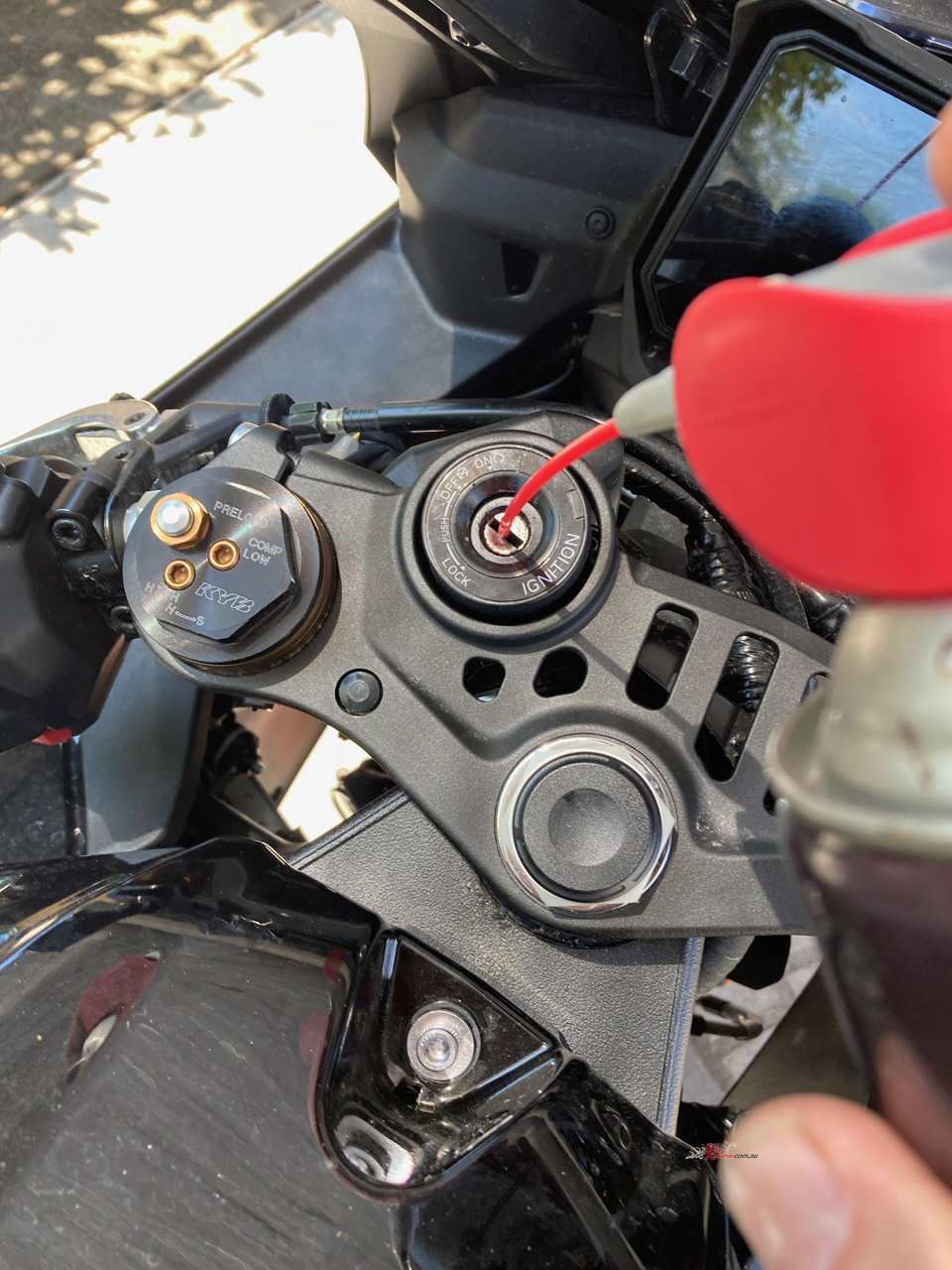
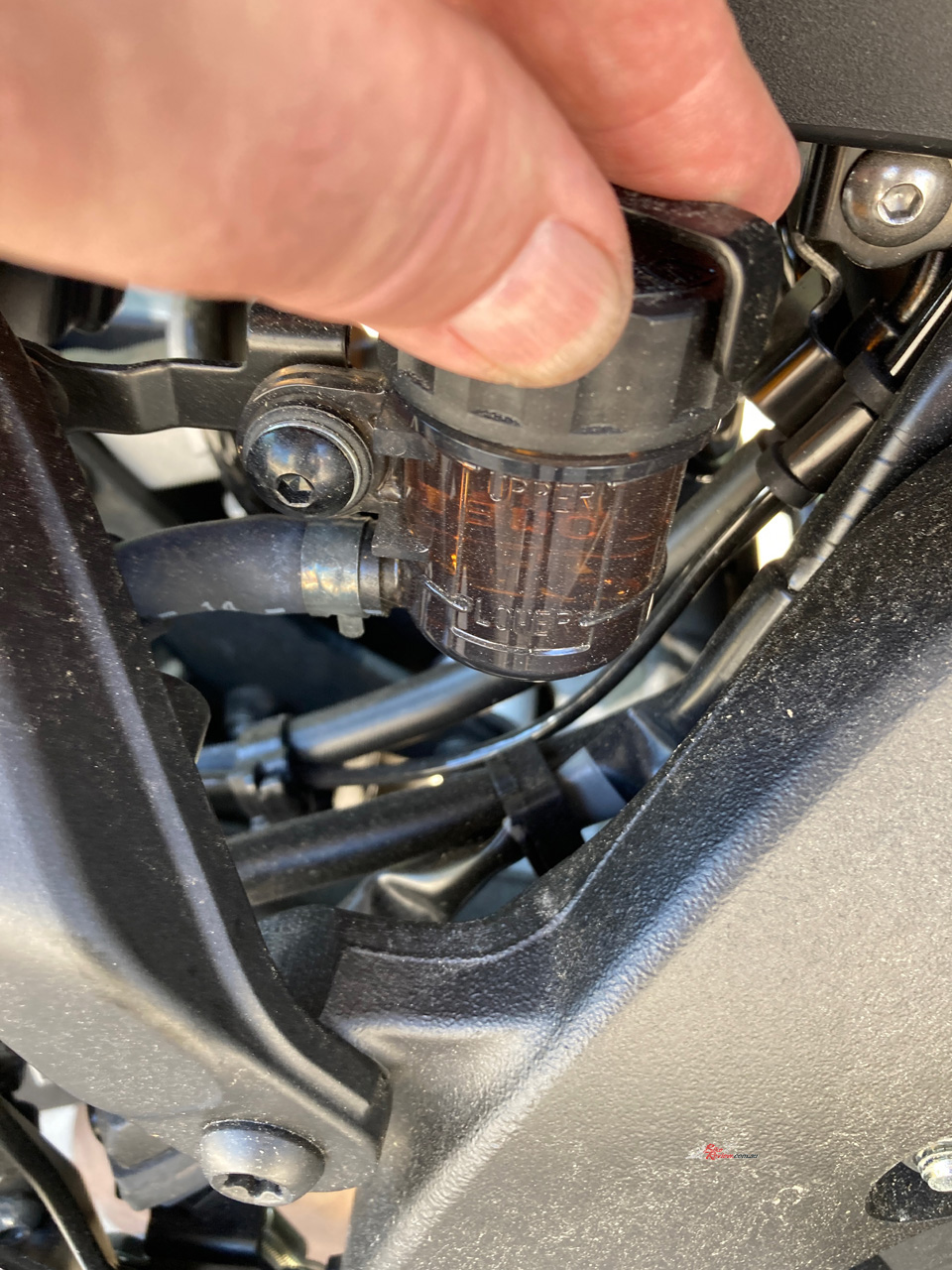
Cooling system hoses and coolant level are inspected, along with fuel lines and connections. The air filter element is checked for proper seating. All fasteners across the chassis — engine mounts, axle nuts, pinch bolts, brake calipers, rear suspension linkage — are checked for correct torque.
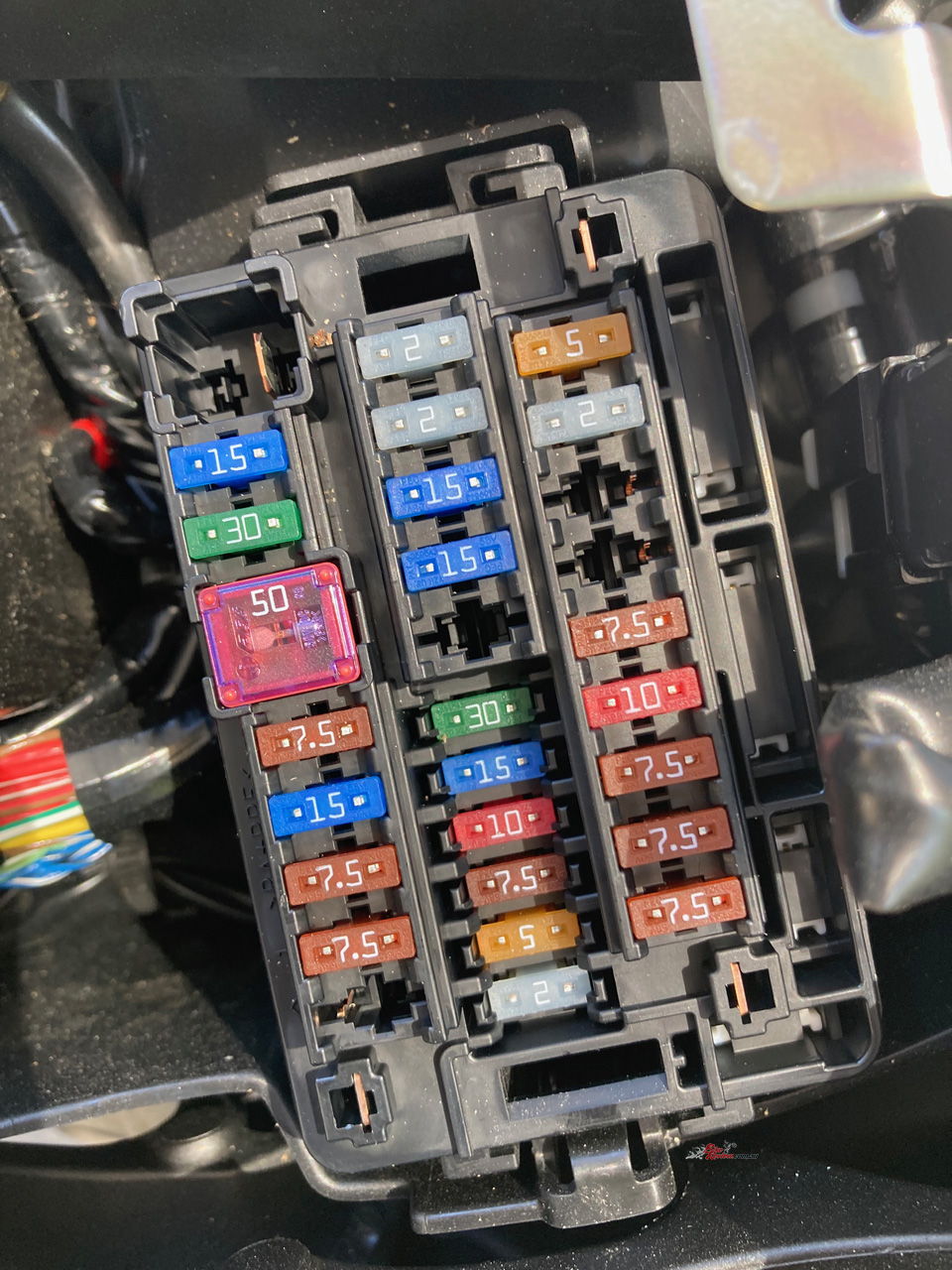
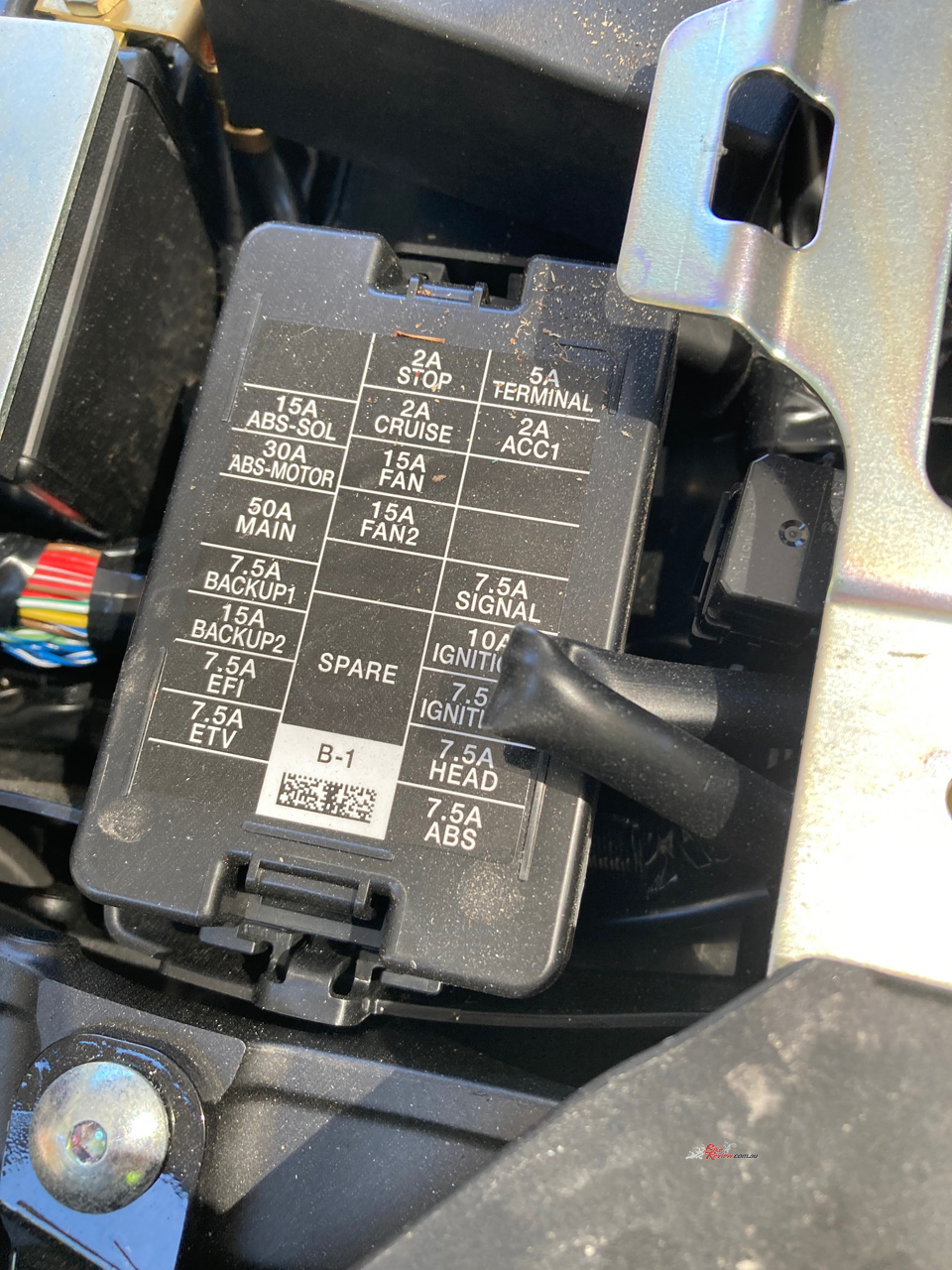
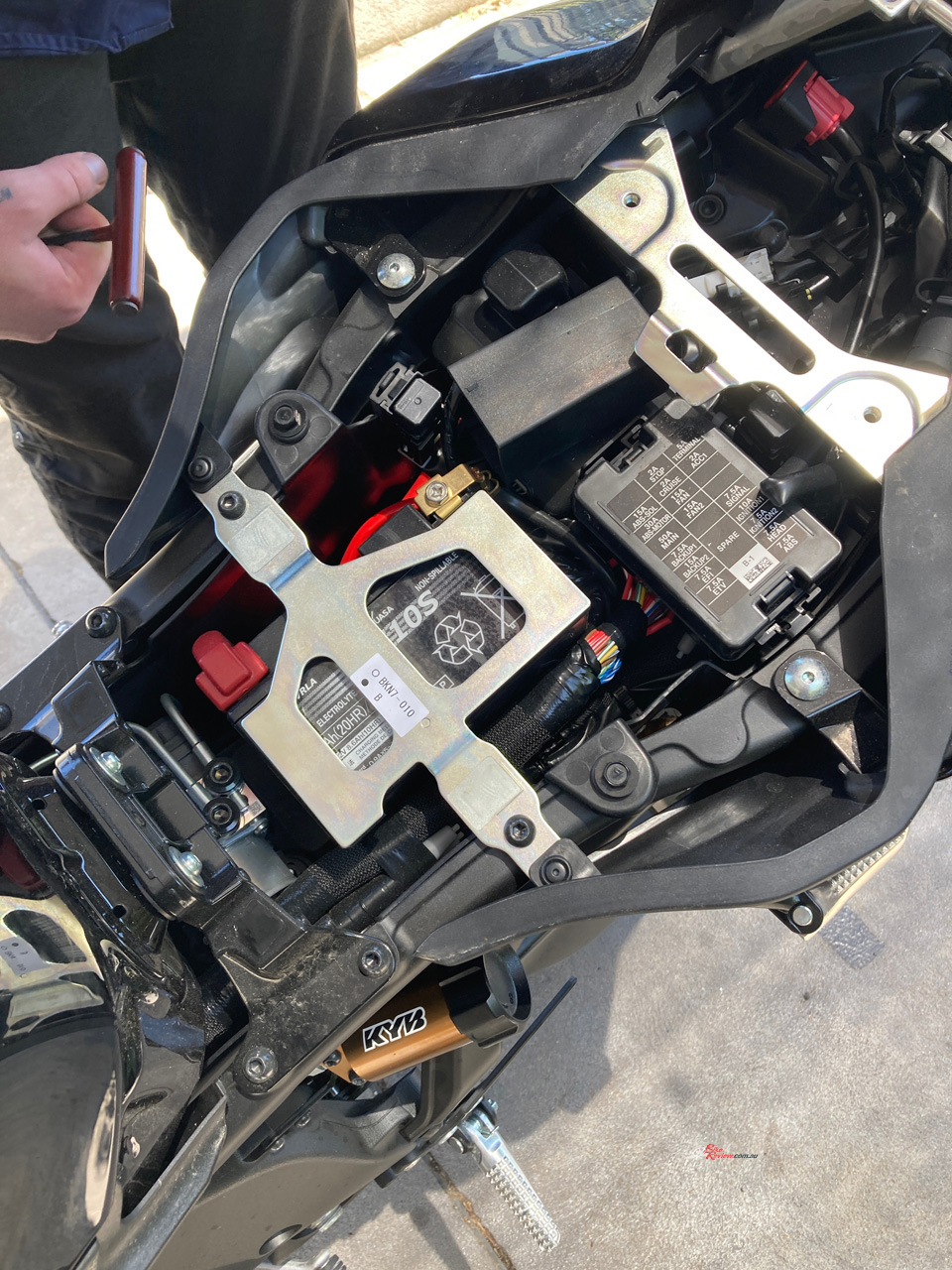
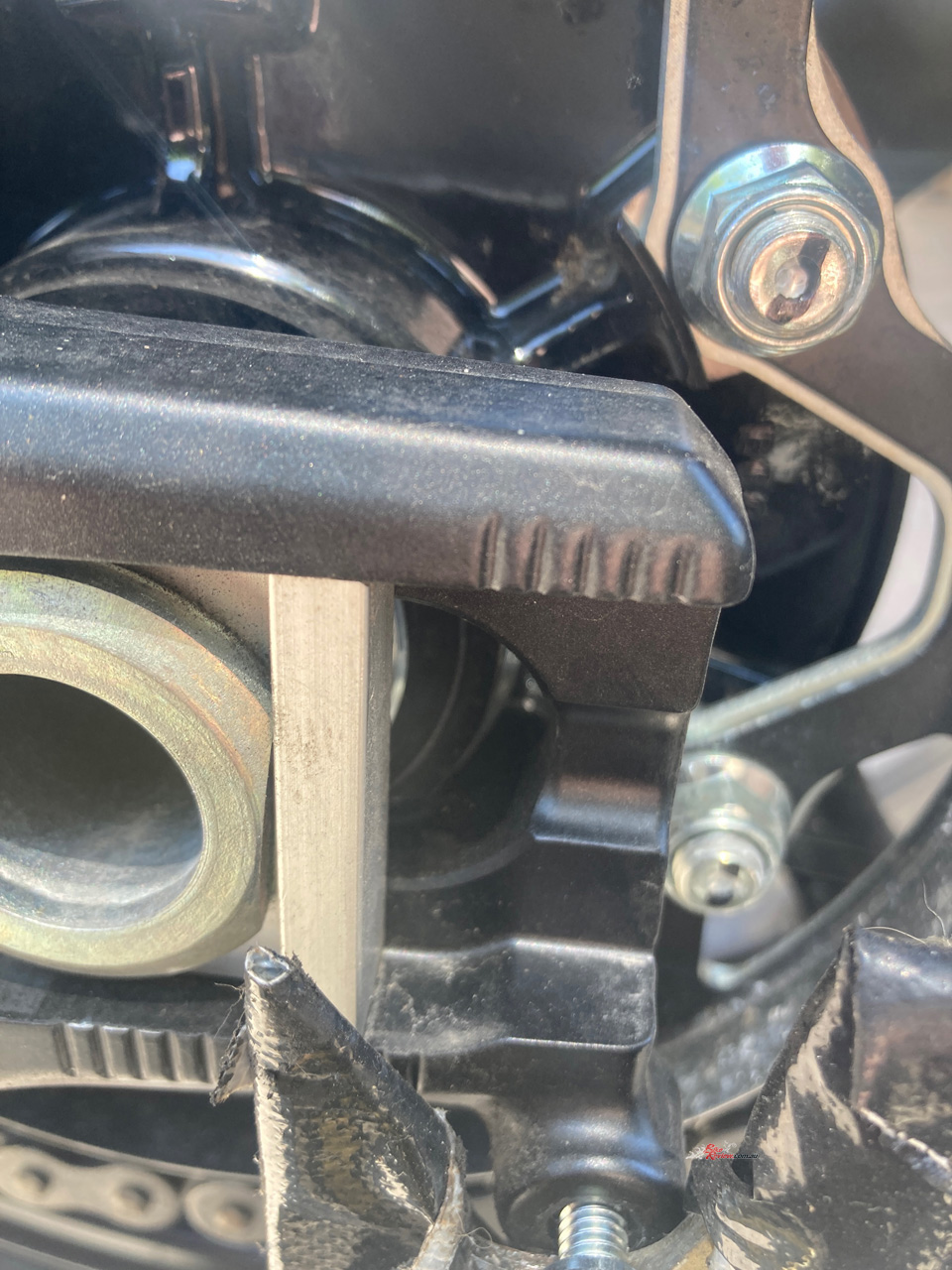
Steering head bearings are inspected for smooth operation and free play. Suspension action front and rear is checked for smooth travel and leaks. Tyres are inspected for wear, damage, and correct pressures as well.
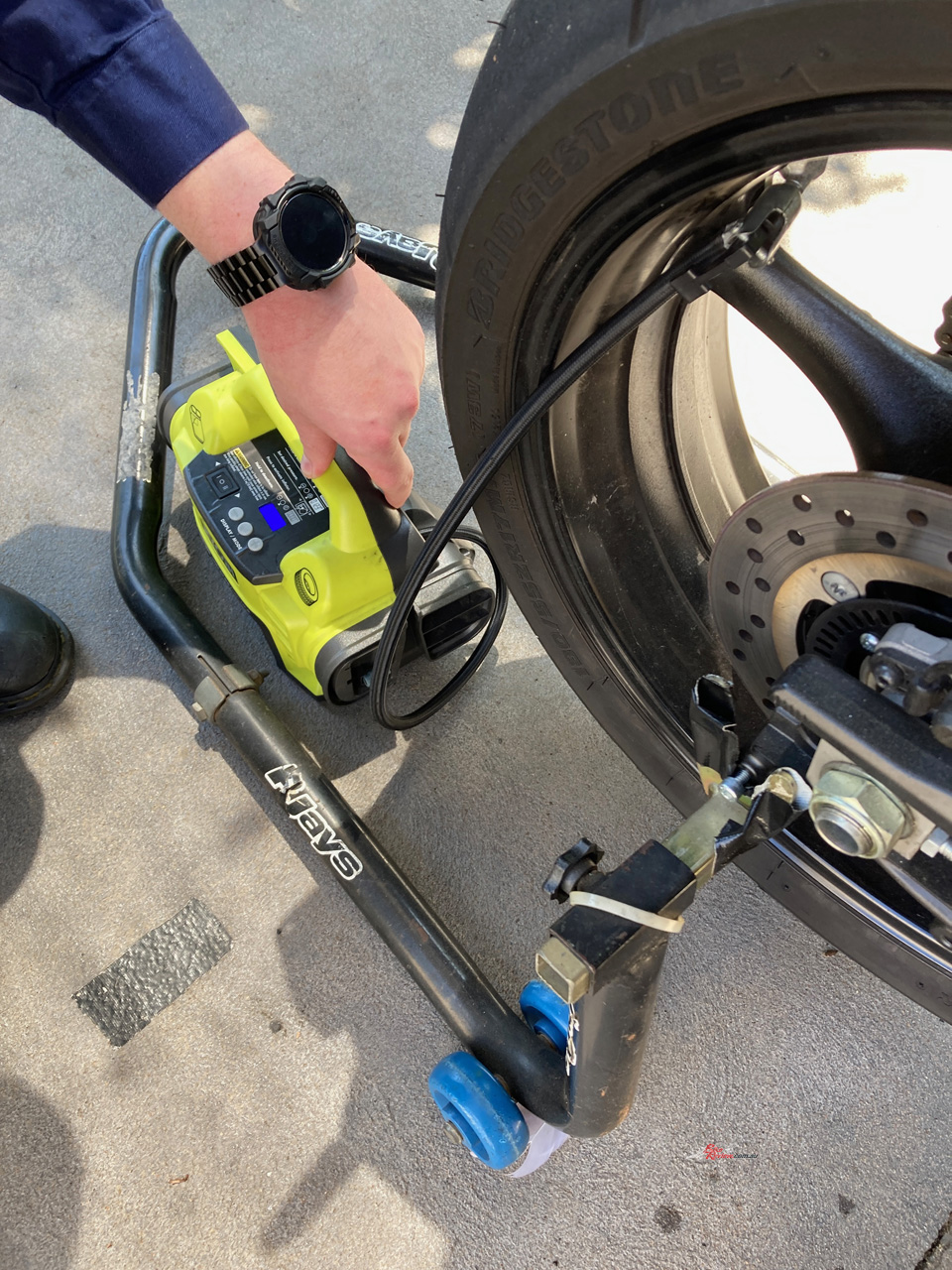
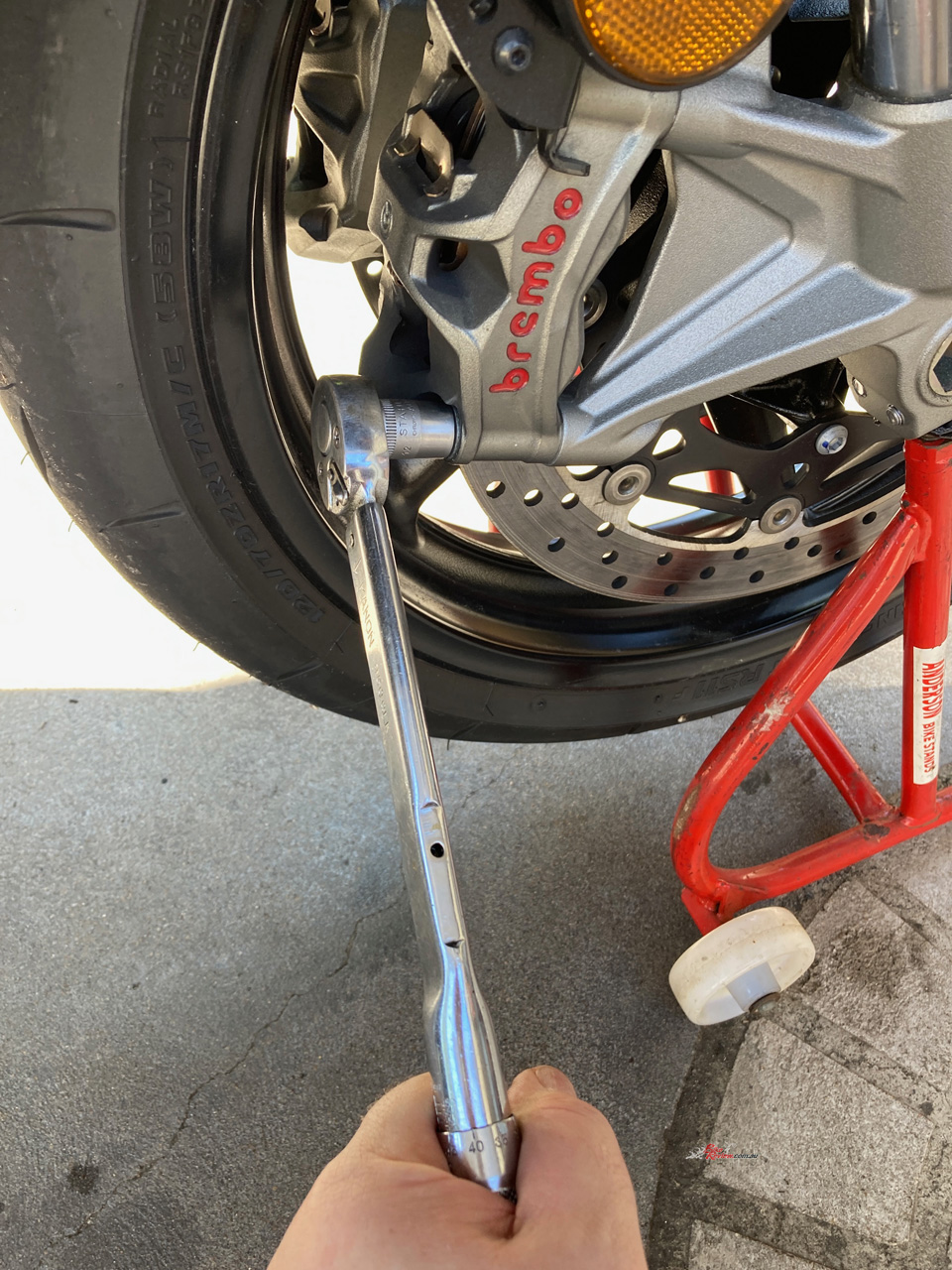
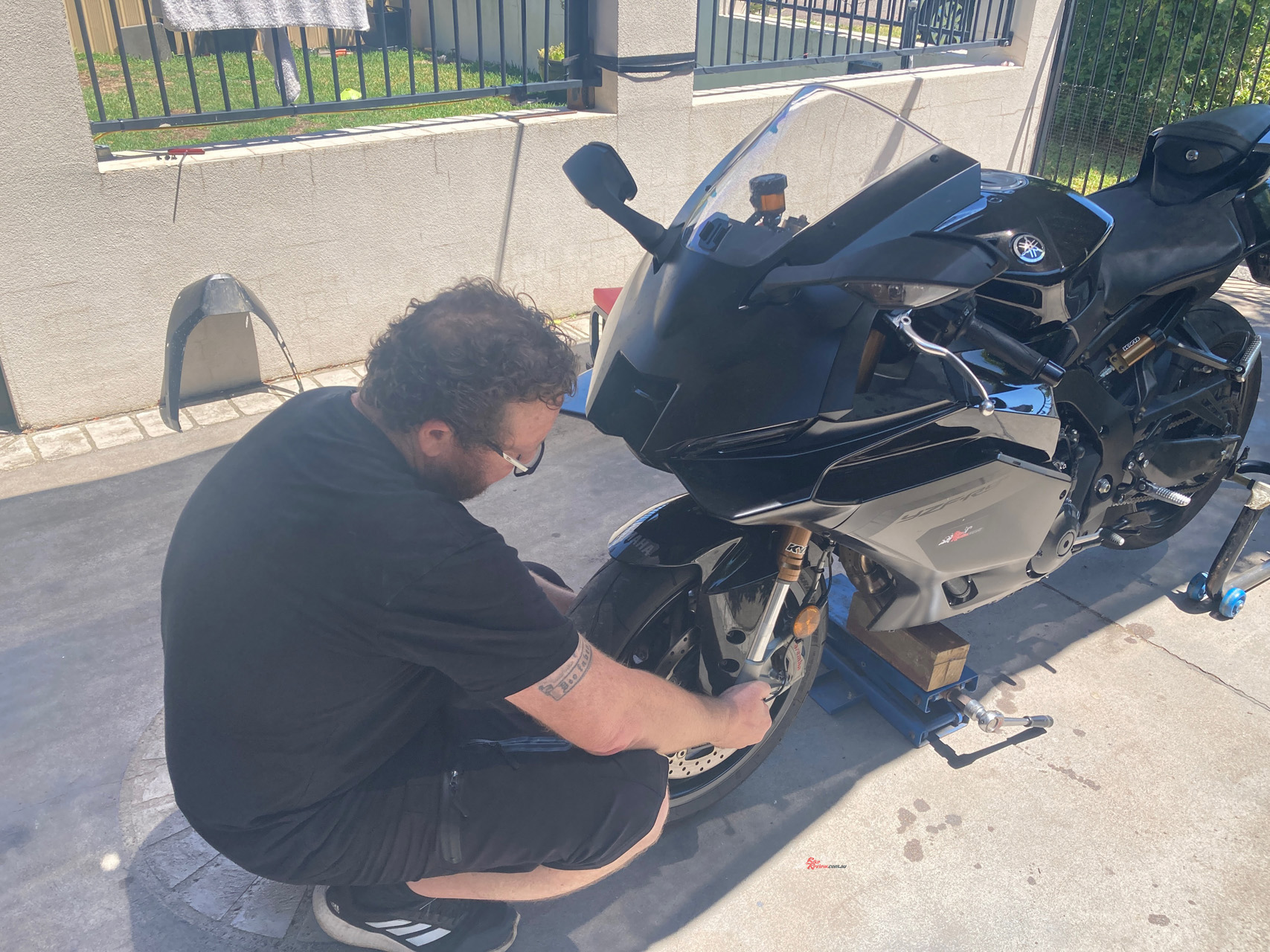
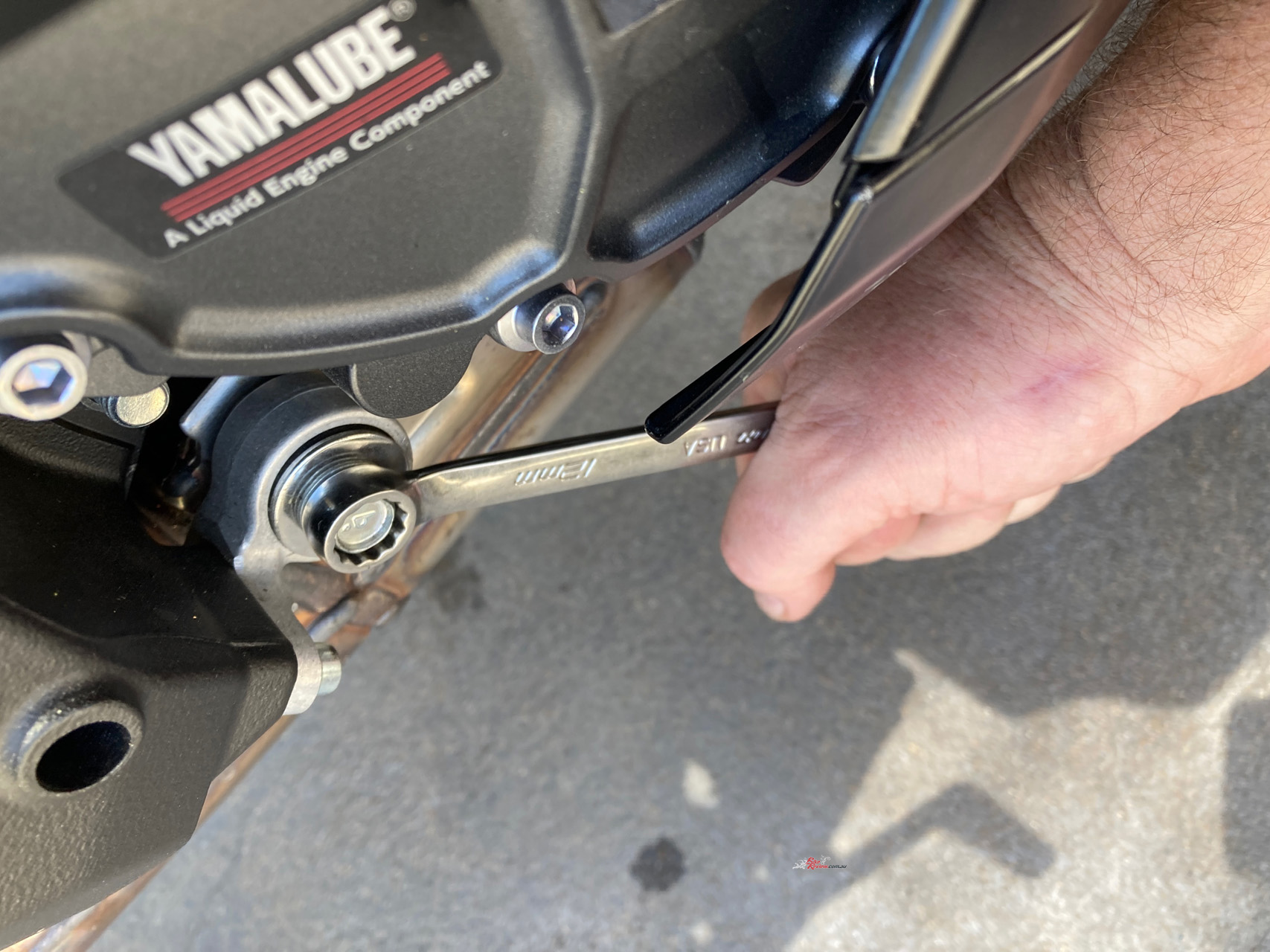
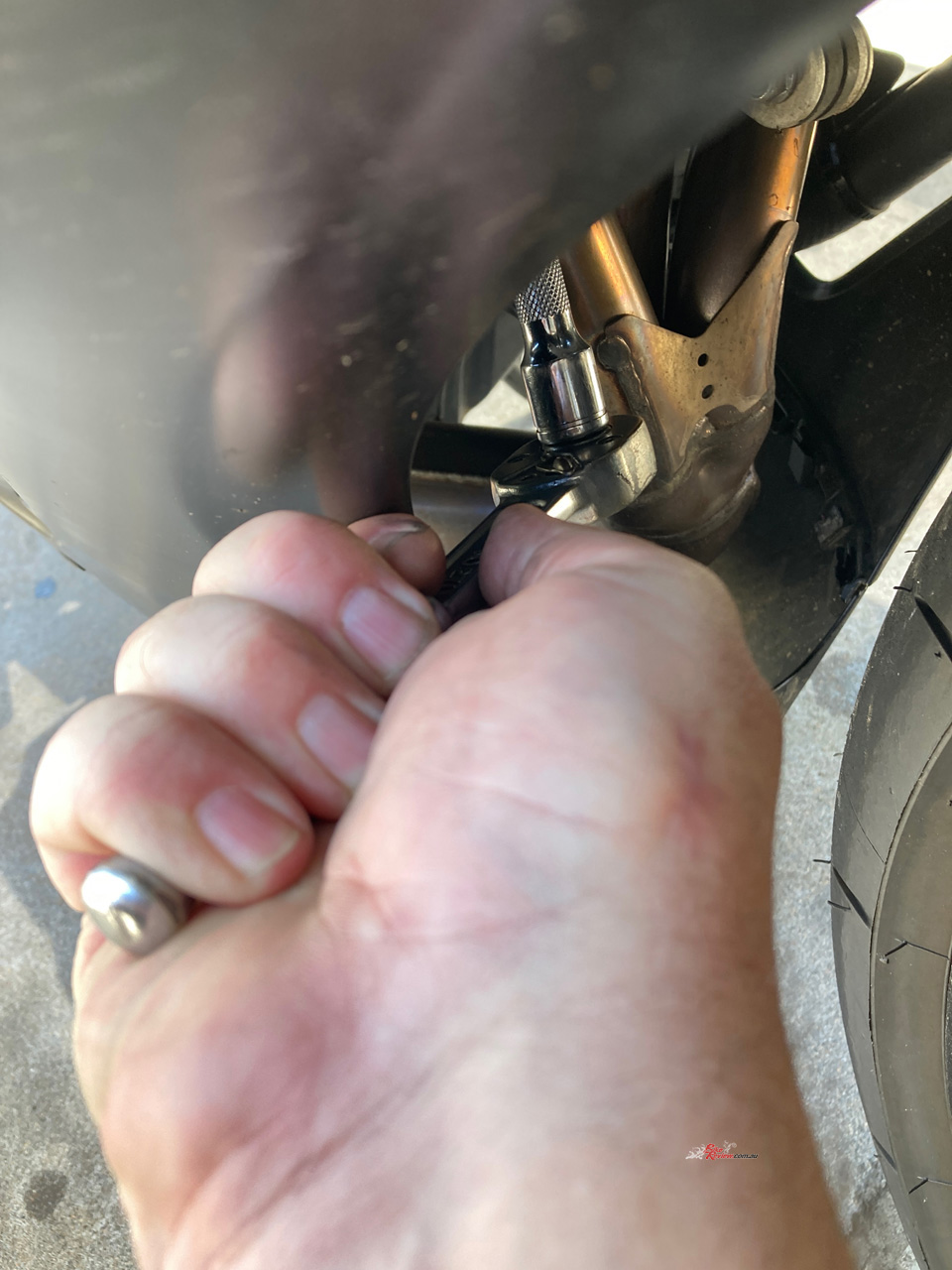
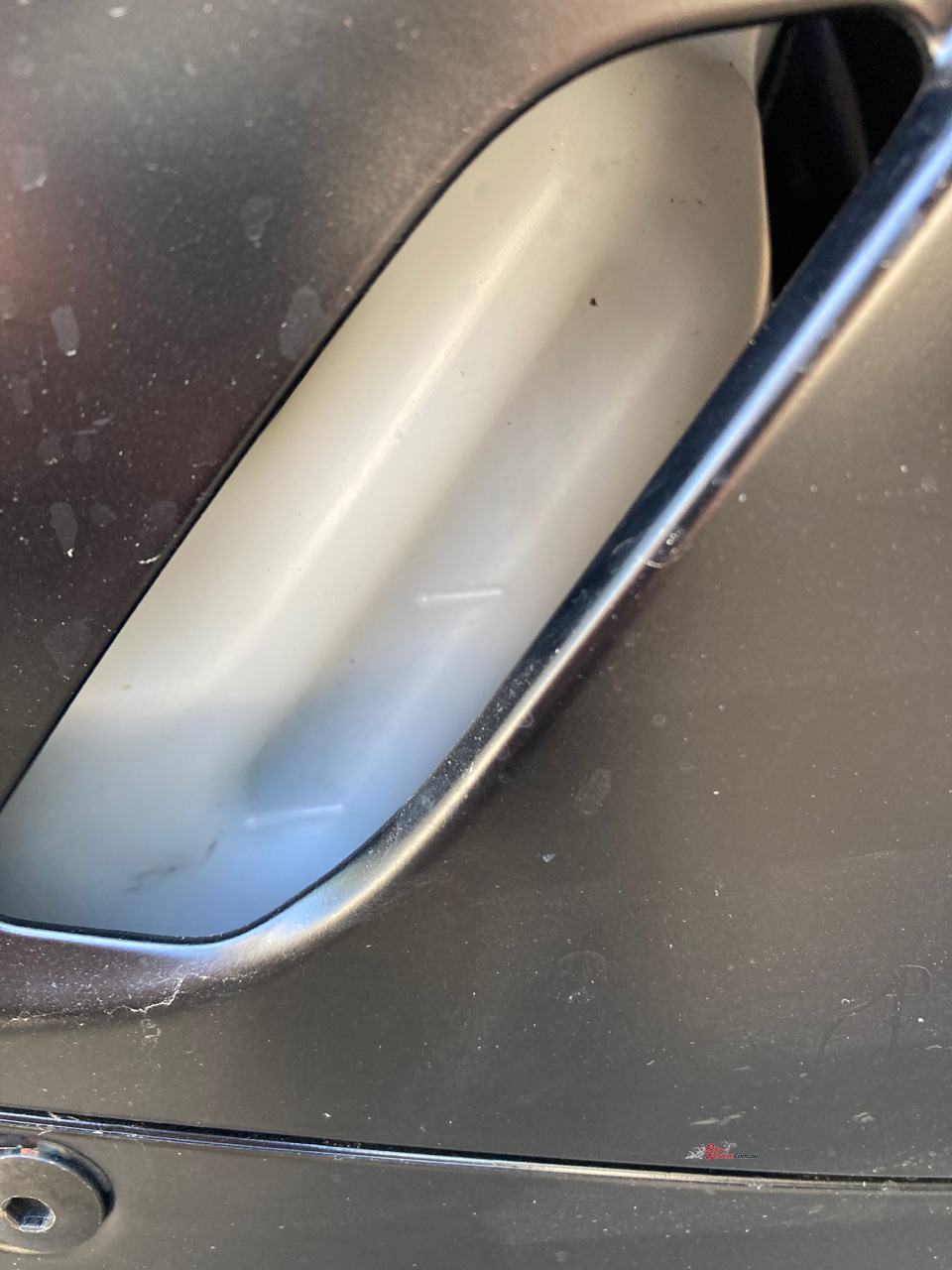
Battery terminals are checked for tightness, and all lights, switches, and electronic systems are tested. The YRC rider-aid systems and TFT display functions are verified for normal operation.
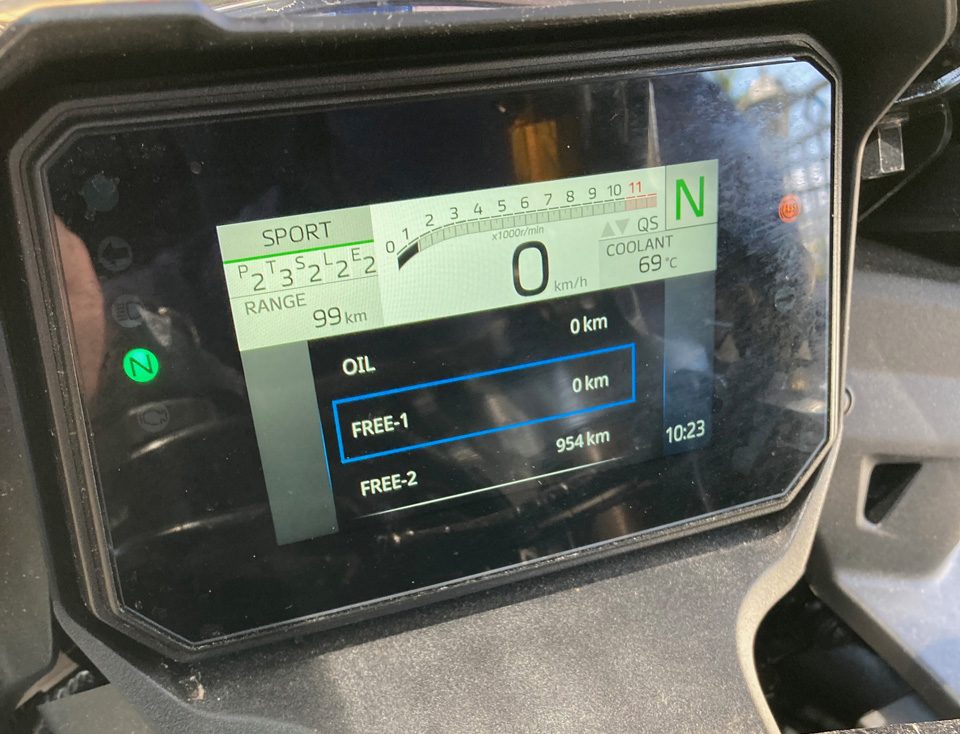
Step-by-Step YZF-R9 First Service
Warmed the engine thoroughly.
Drained engine oil and removed the oil filter.
Installed new oil filter and refitted drain bolt with new washer.
Refilled with specified oil and checked level.
Adjusted and lubricated drive chain.
Checked clutch and throttle free play.
Inspected brake pads, discs and fluid levels.
Checked coolant level and hose routing.
Inspected fasteners and critical torque points.
Checked steering-head movement and suspension operation.
Verified tyre pressures and condition.
Ran full systems check including TFT, ABS and rider aids.
Reset service reminder.
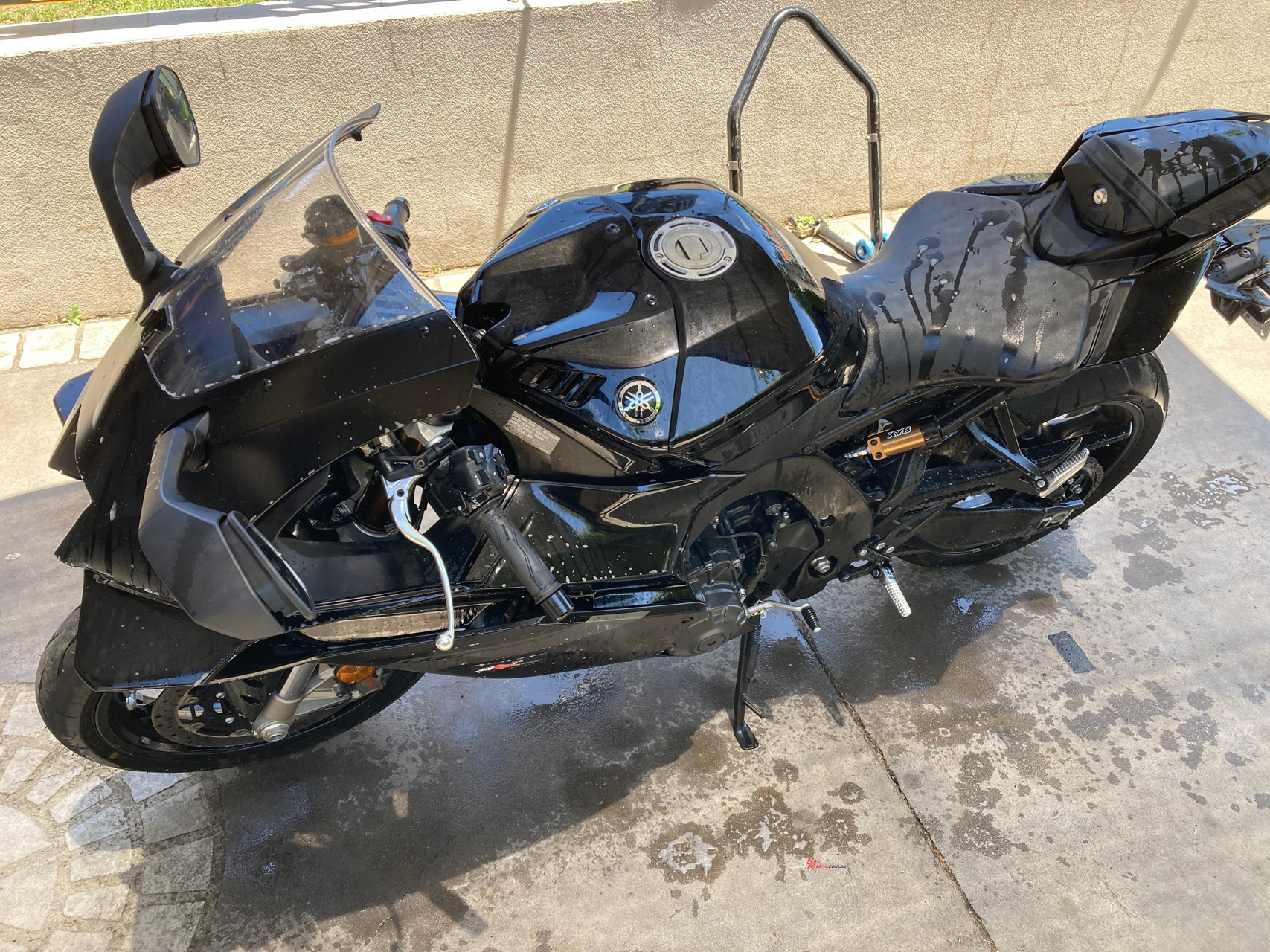
The 1000km service is less about replacing parts and more about confirming the R9 is settling correctly — and setting it up perfectly for the kilometres ahead. Nick and I then gave the bike a good wash and it is ready for the next 9000km of happy riding…

TECH TALK
CP3 Engine
Based on Yamaha’s renowned CP3 powerplant, the new 2025 YZF-R9 boasts a dedicated supersport chassis and comprehensive electronics suite, wrapped in striking next-generation R-series styling. The new 2025 YZF-R9 was conceived to redefine the supersport class by combining track-capable performance with street bike accessibility through a broad, smooth power delivery, light handling, street-friendly ergonomics and a complete package of advanced rider aids. A machine as at home on a race circuit in the hands of a seasoned track rider as it is exploring twisty roads or urban streets in the hands of a dedicated road rider.
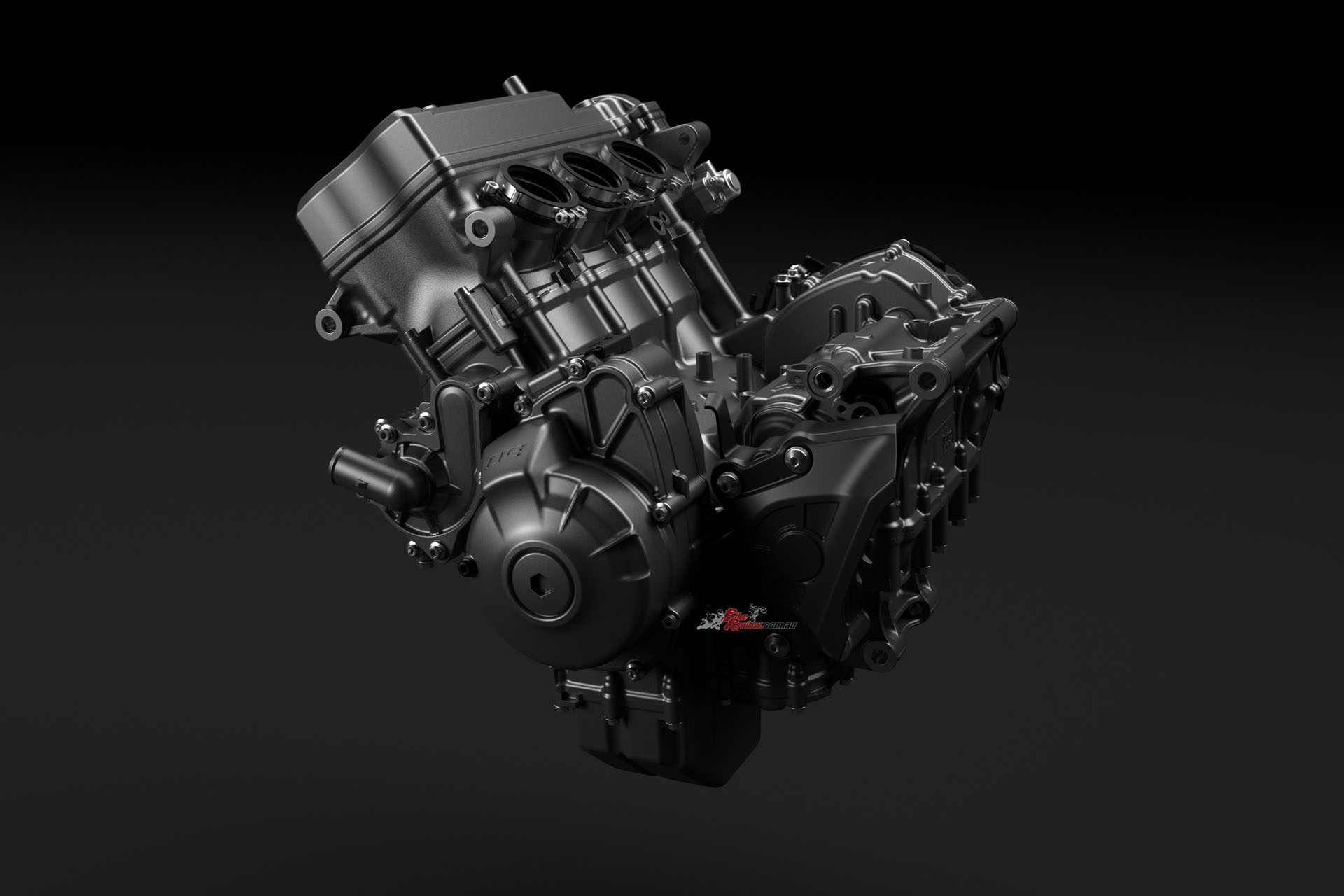
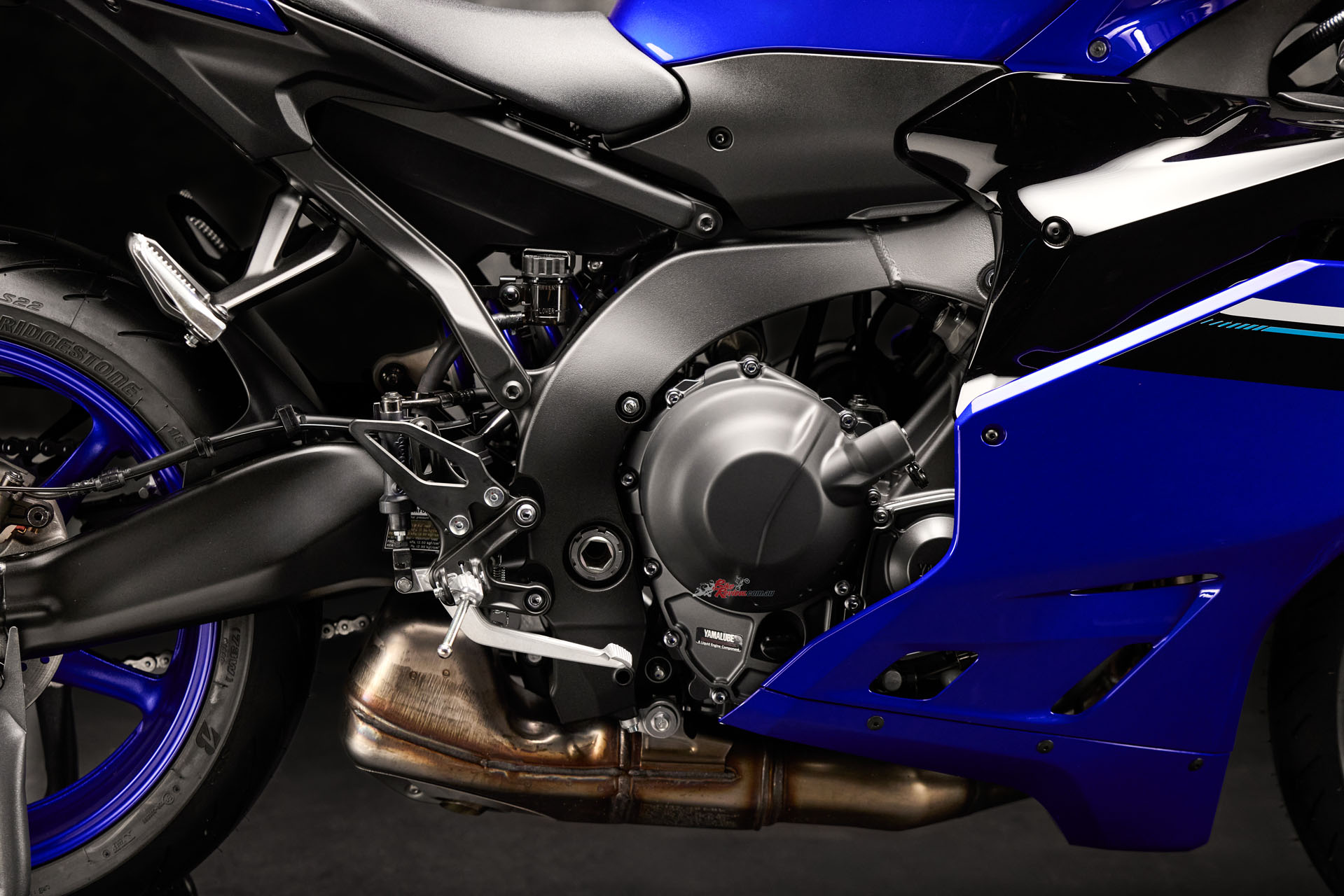
The heart and soul of the new YZF-R9 is its characterful 890cc liquid-cooled three-cylinder powerplant, which receives a unique ECU tune and optimised gear ratio to provide thrilling supersport power with a broader, torquey street-friendly engine character. A carefully tuned airbox amplifies induction sound which combines with the CP3’s distinctive crossplane triple exhaust note to provide an aural resonance which further heightens the thrill of acceleration.
The versatile triple cylinder bike is not designed to take over from the more track-focused YZF-R1 but complement the four-cylinder machine…
Deltabox Frame
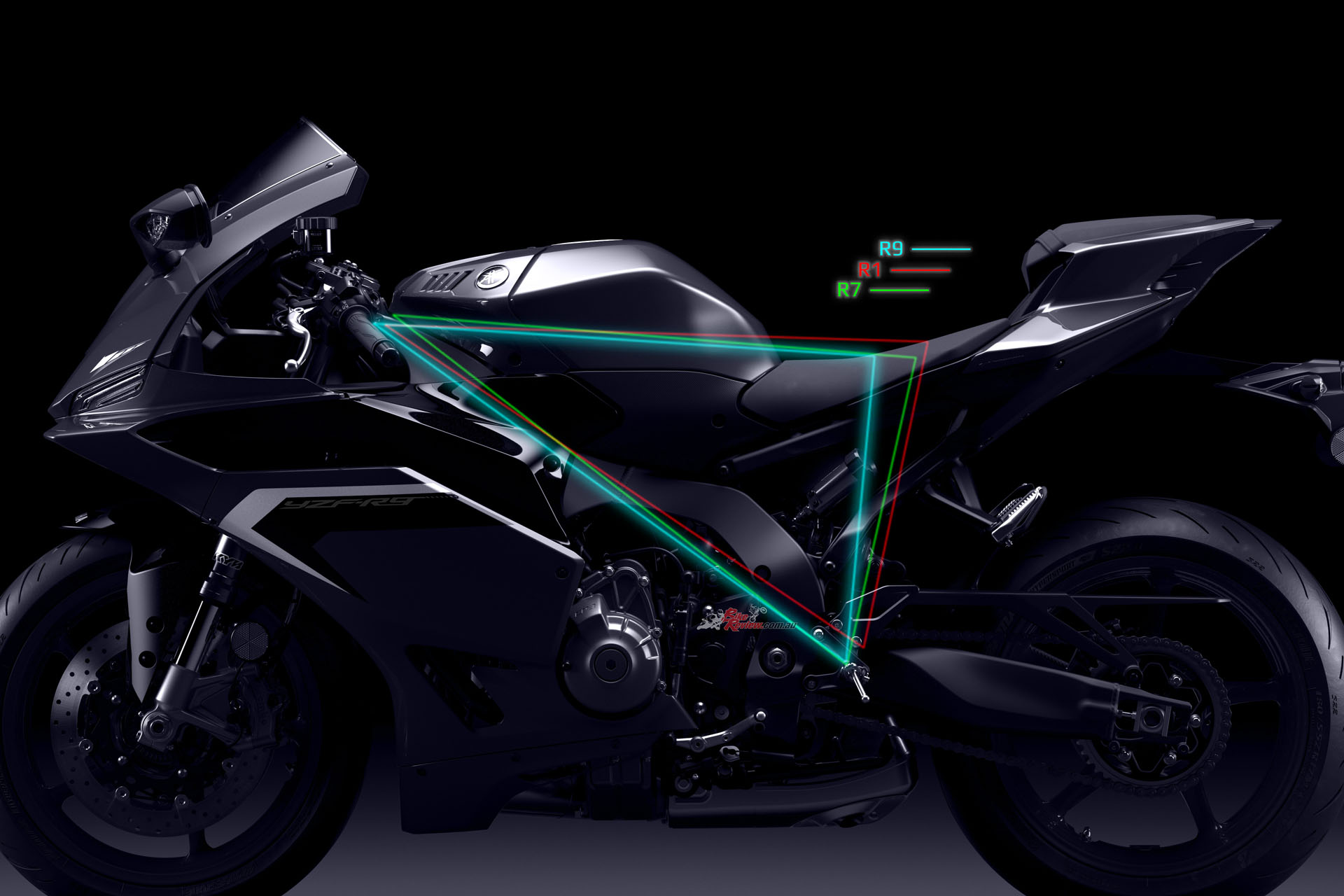
The advanced gravity-cast Deltabox frame is the lightest aluminium frame ever offered on a Yamaha supersport model. The frame is extensively tuned to deliver a supple, predictable feel at lower speeds and supersport rigidity for razor-sharp handling at track speeds. Along with new high-spec fully adjustable KYB suspension and nearly perfect 50/50 weight distribution, the YZF-R9 delivers light, agile handling that inspires confidence for a wide range of riders and experience levels.
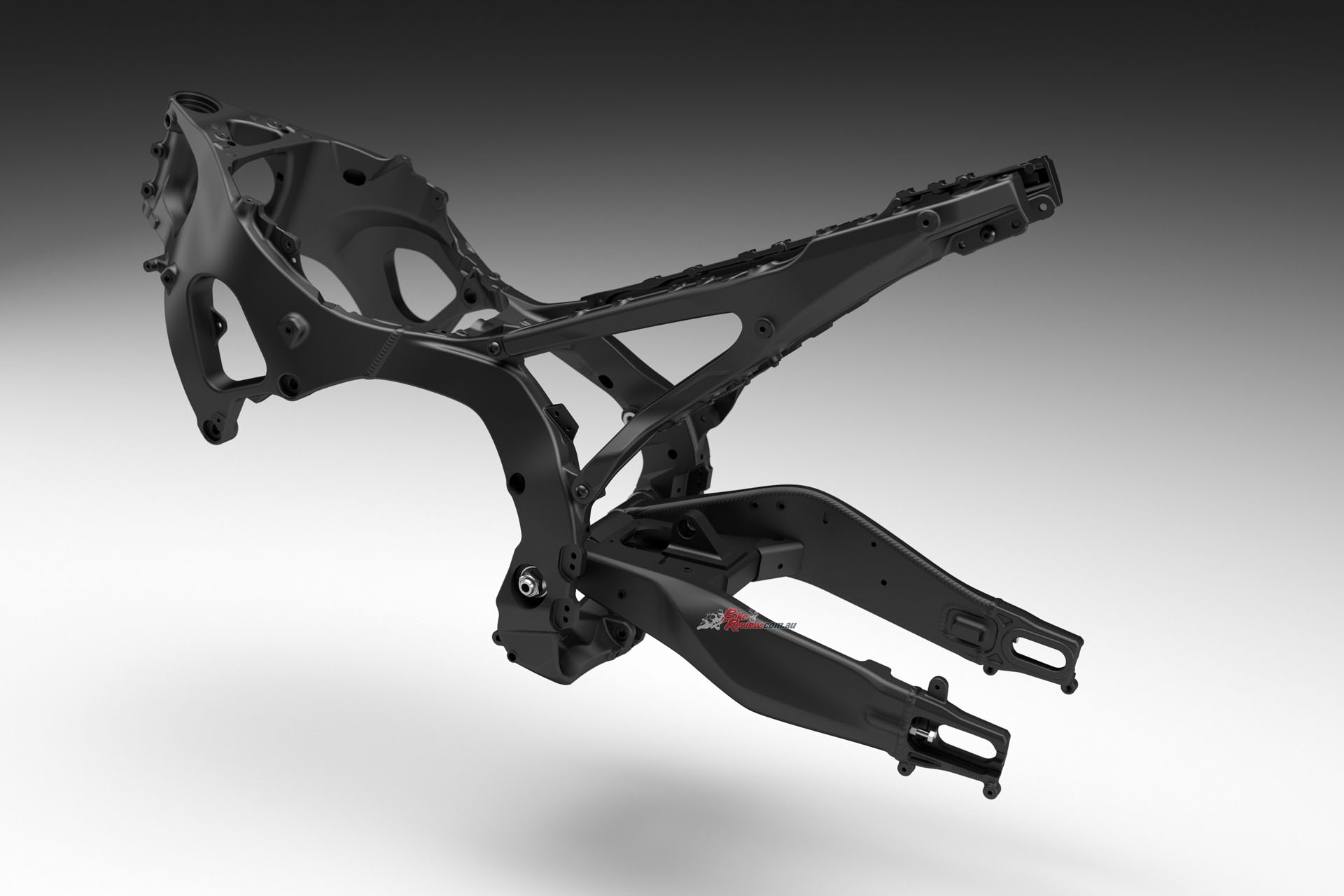
Yamaha’s lightest ever Deltabox frame.
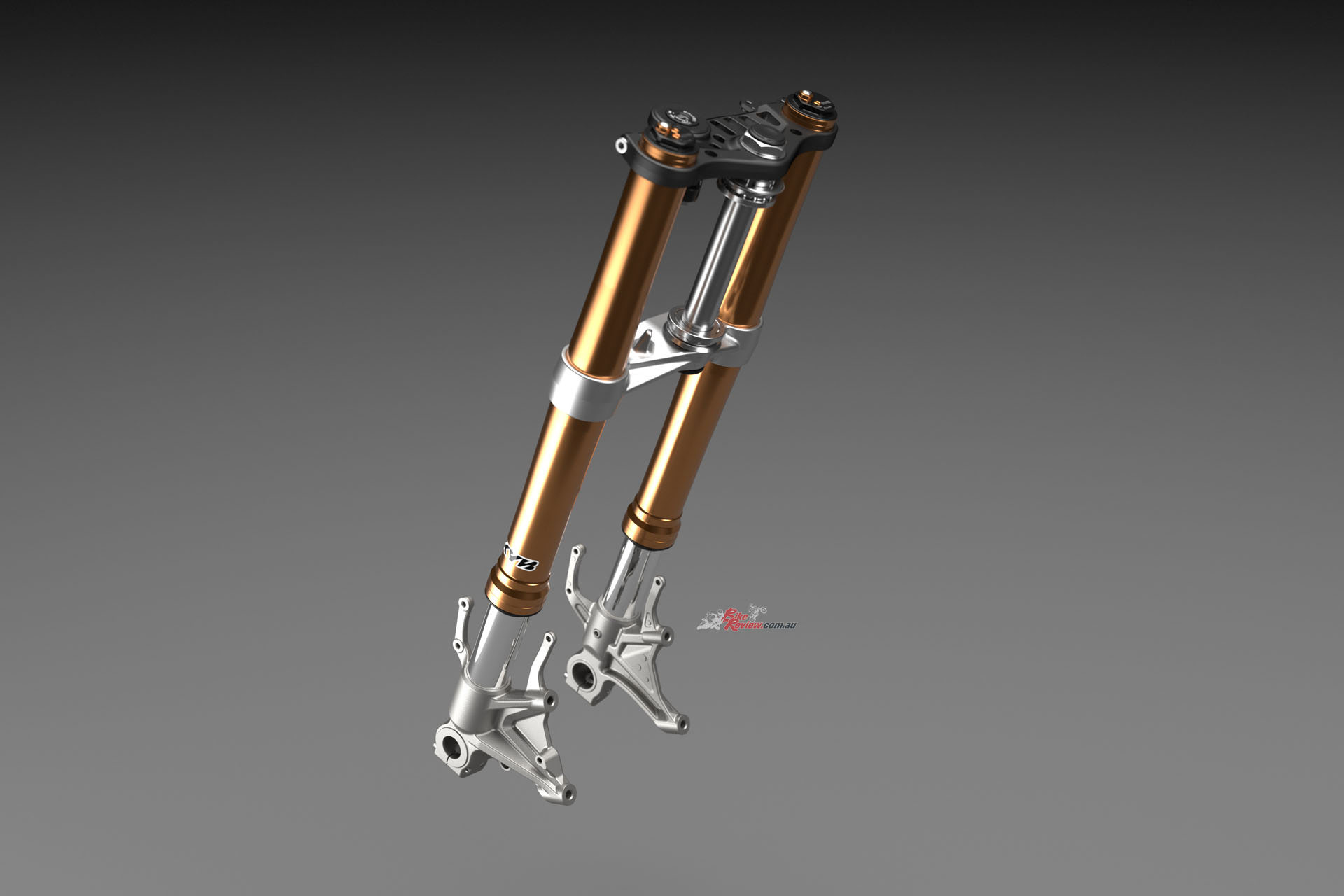
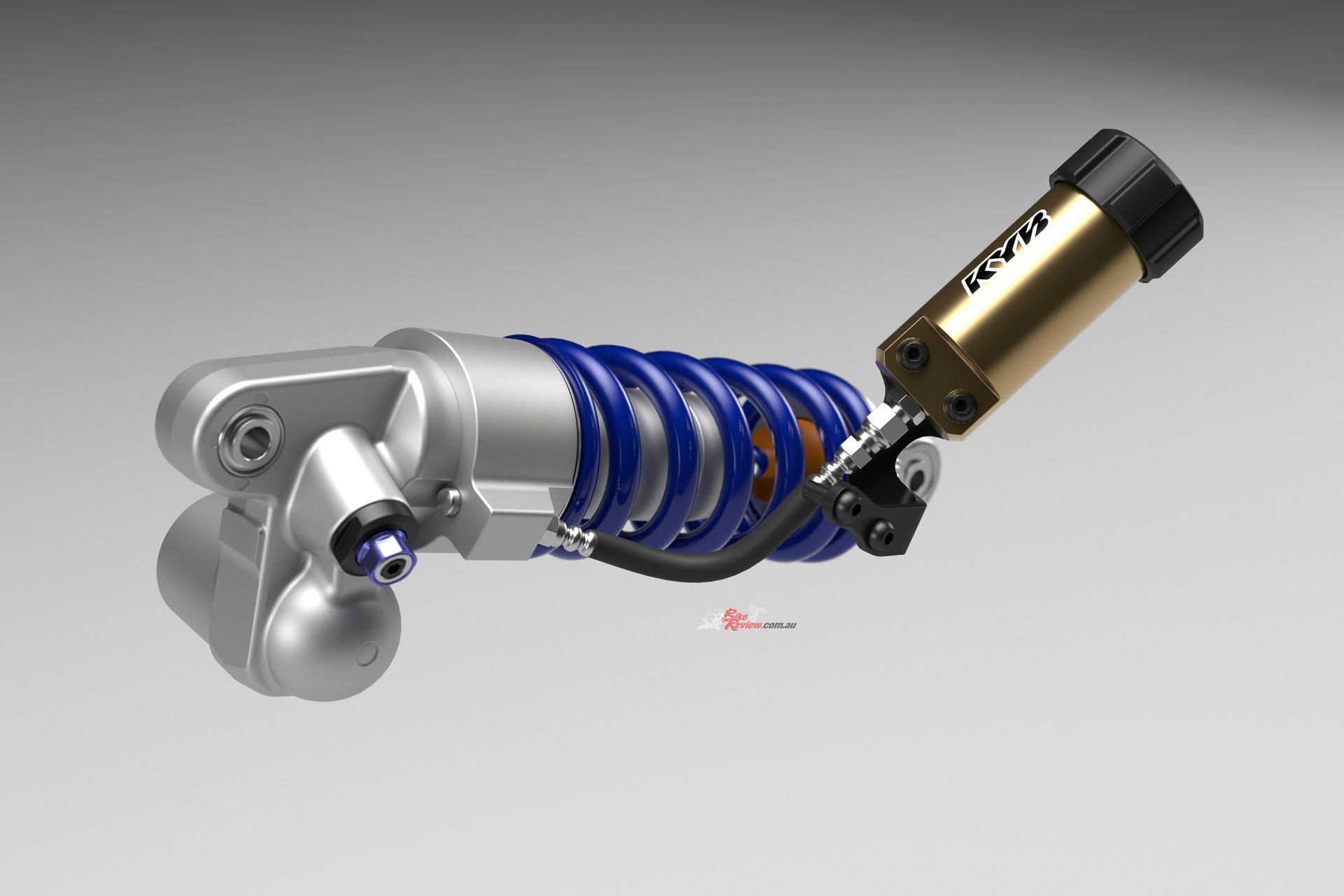
Model specific adjustable KYB suspension
New KYB suspension units are specified – including a 43mm USD front fork with base valve and a rear shock with a new low-speed valve – the first for a motorcycle. The new shock generates linear damping for precise road holding and chassis stability.
Big Brakes
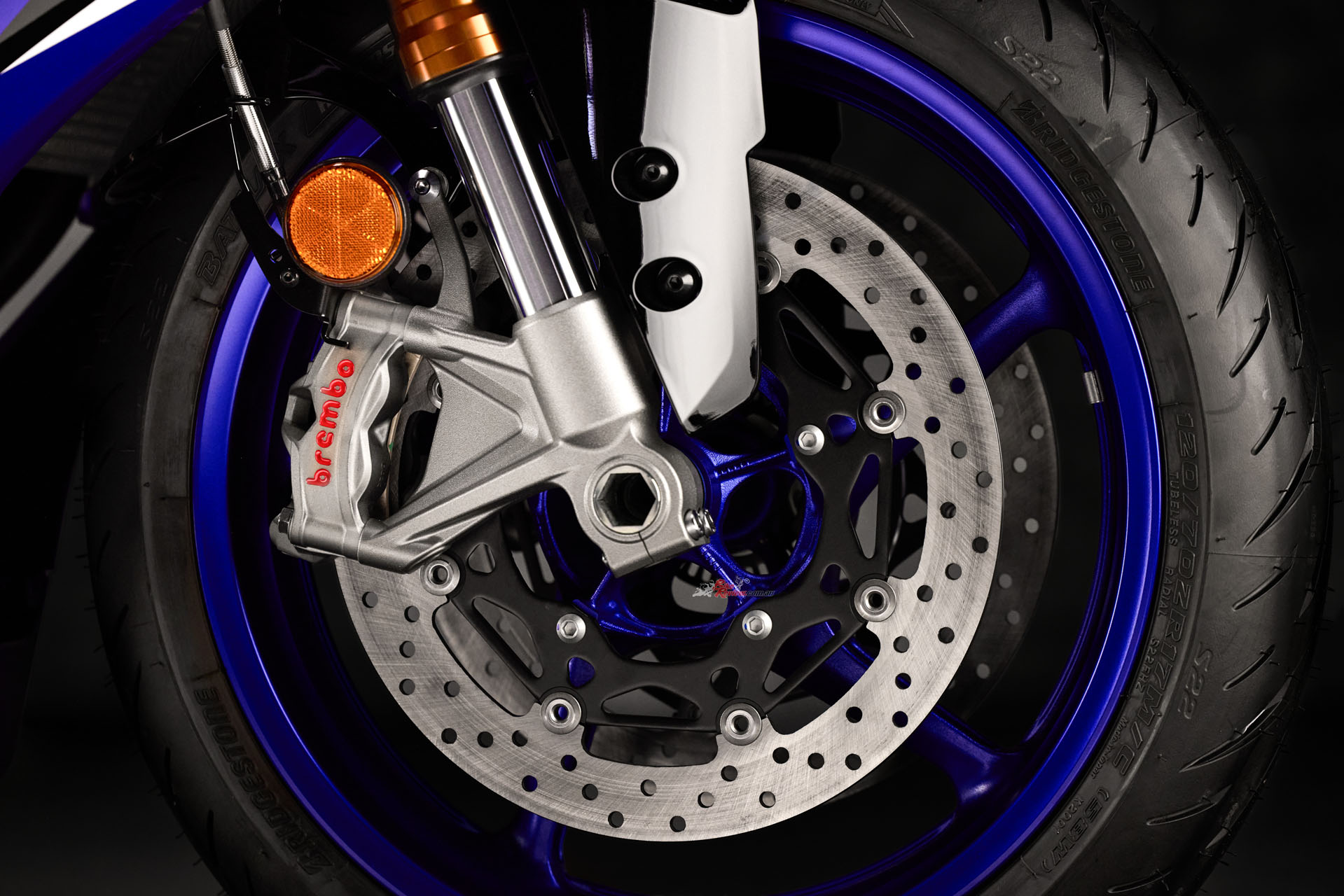
Premium Brembo Stylema monoblock front calipers combine with a Brembo radial master cylinder, large 320mm dual front discs, stainless steel brake lines and aggressive pad compounds to offer supersport-level braking with exceptional power and feel. YZF-R9 also offers the option to turn rear ABS off for track riding.
Advanced aerodynamics
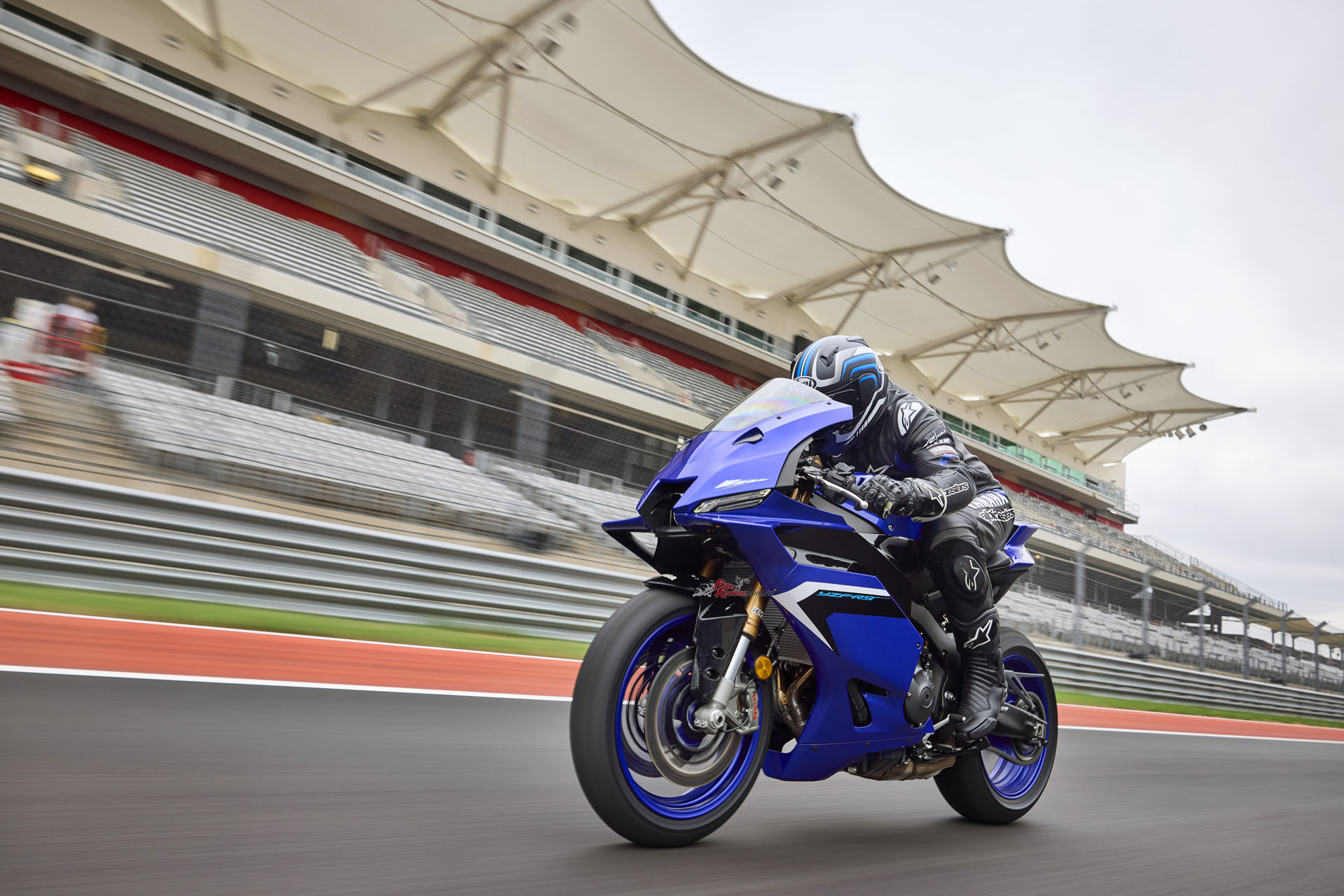
The new YZF-R9 includes MotoGP-inspired functional winglets which add downforce for a stable, planted front-end feel while keeping drag to a bare minimum. The new bodywork is the most aerodynamic Yamaha model ever offered. A dedicated supersport riding position is optimised to achieve excellent handling and a strong sense of unity with the machine while still offering a short reach to the clip-ons, ample leg room and low seat height for more comfort in a variety of riding scenarios.
New generation TFT display
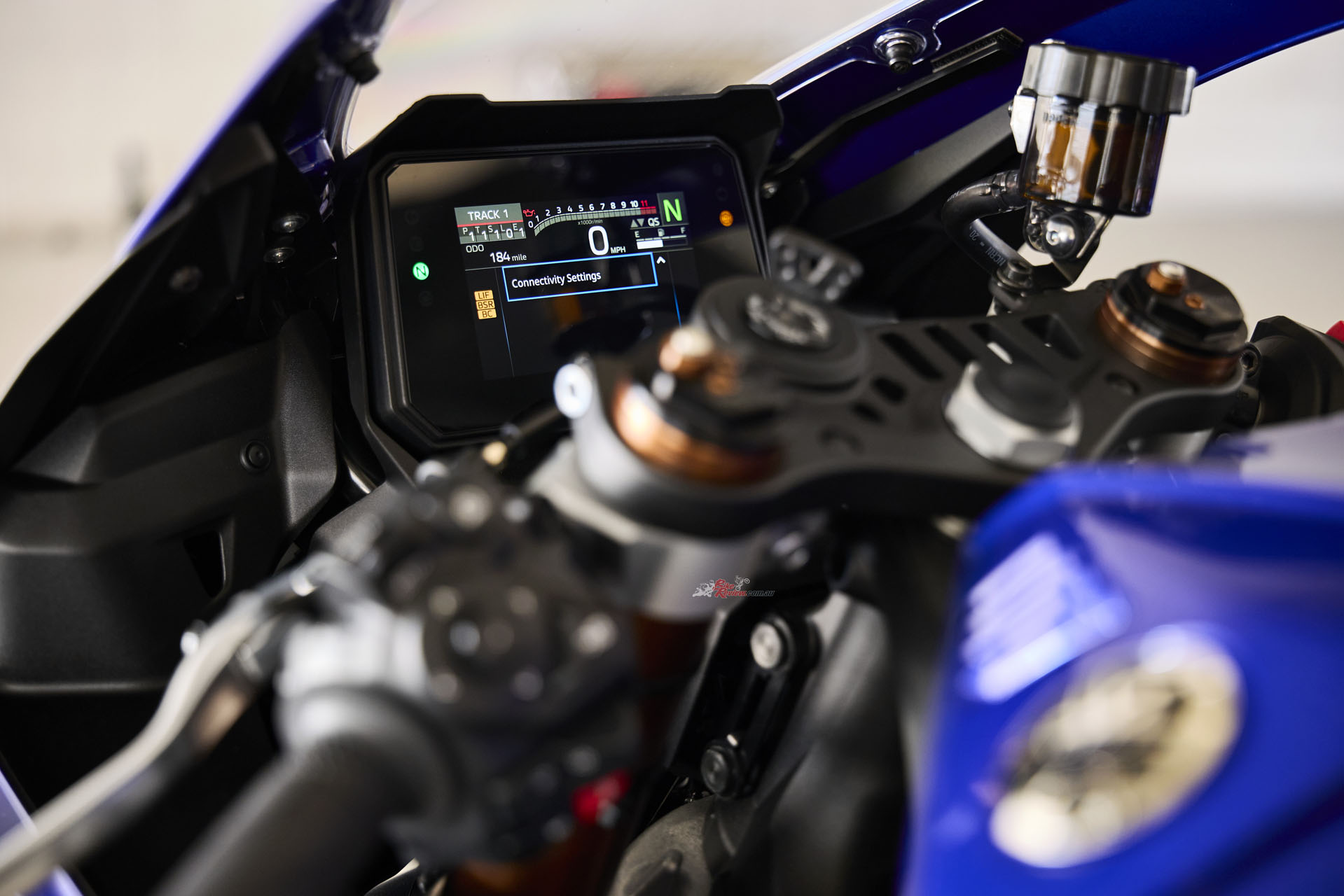
The latest generation full-colour 5in TFT display provides a wide range of vehicle data. Select between four separate street themes or a dedicated track theme. Display themes, vehicle data, connectivity functions and the YZF-R9’s electronic suite are navigated through Yamaha’s latest integrated handlebar switches. Button shape and feel have been extensively refined to provide intuitive operation.
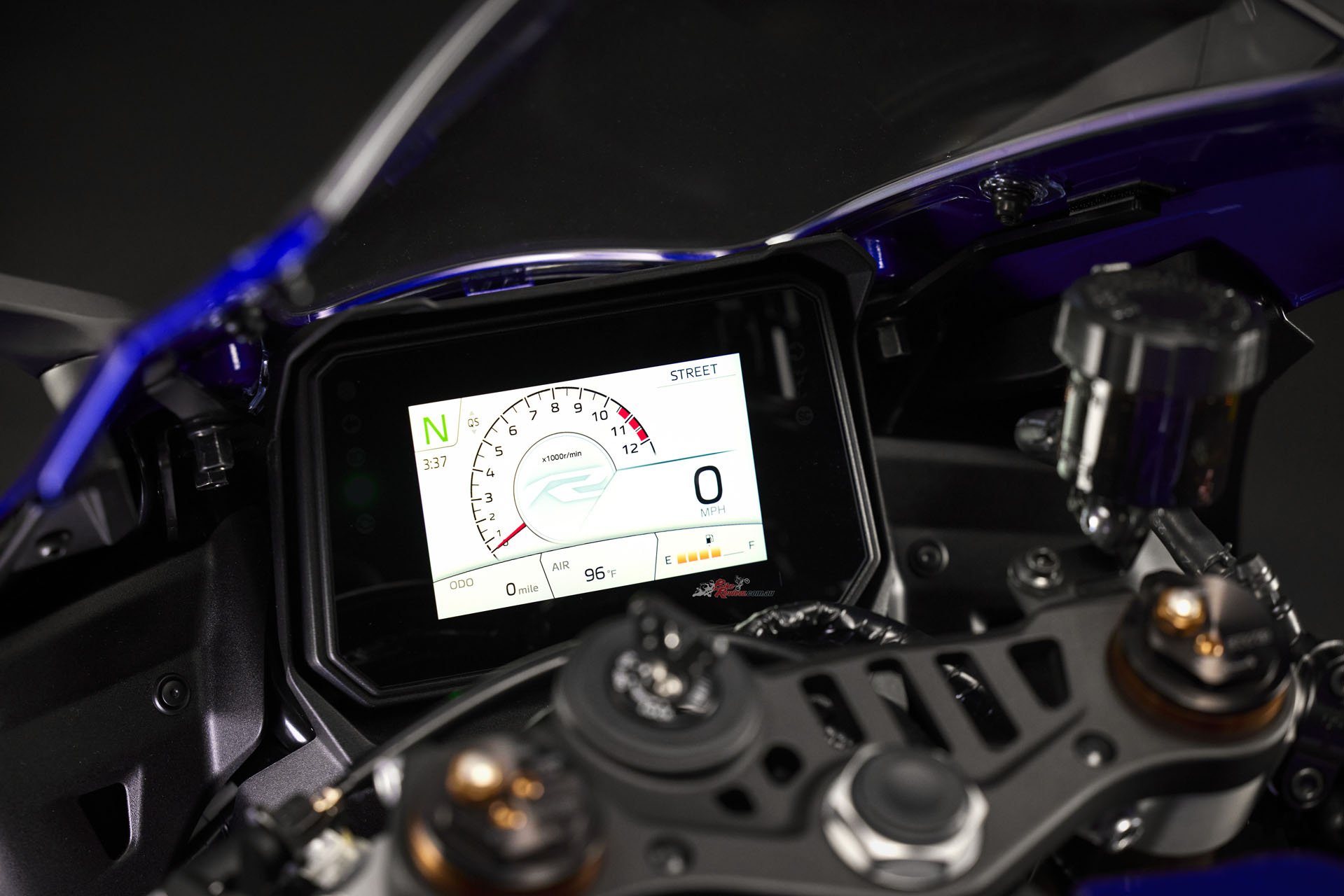
New generation TFT dash. Select between four separate street themes or a dedicated track theme.
Smartphone connectivity
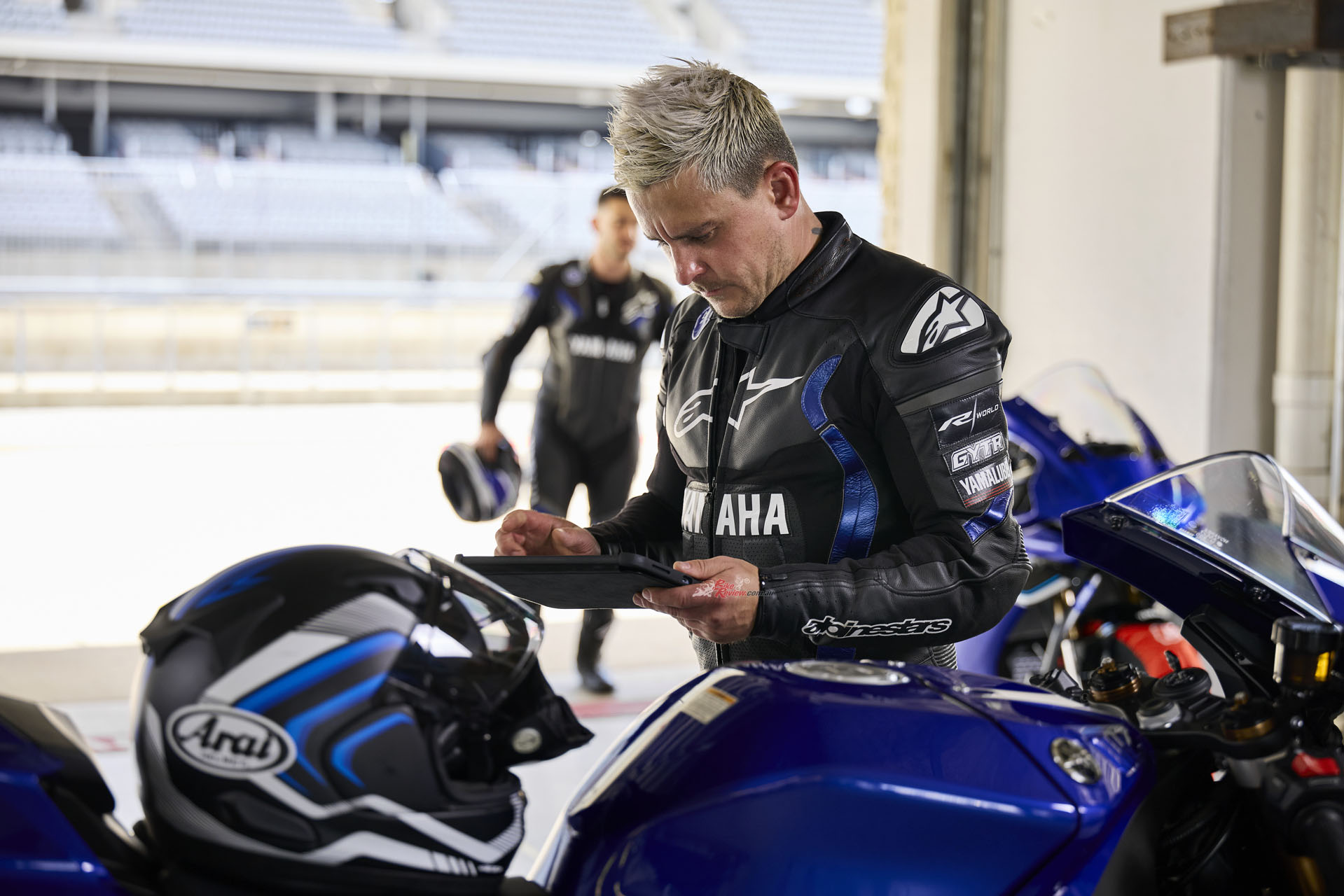
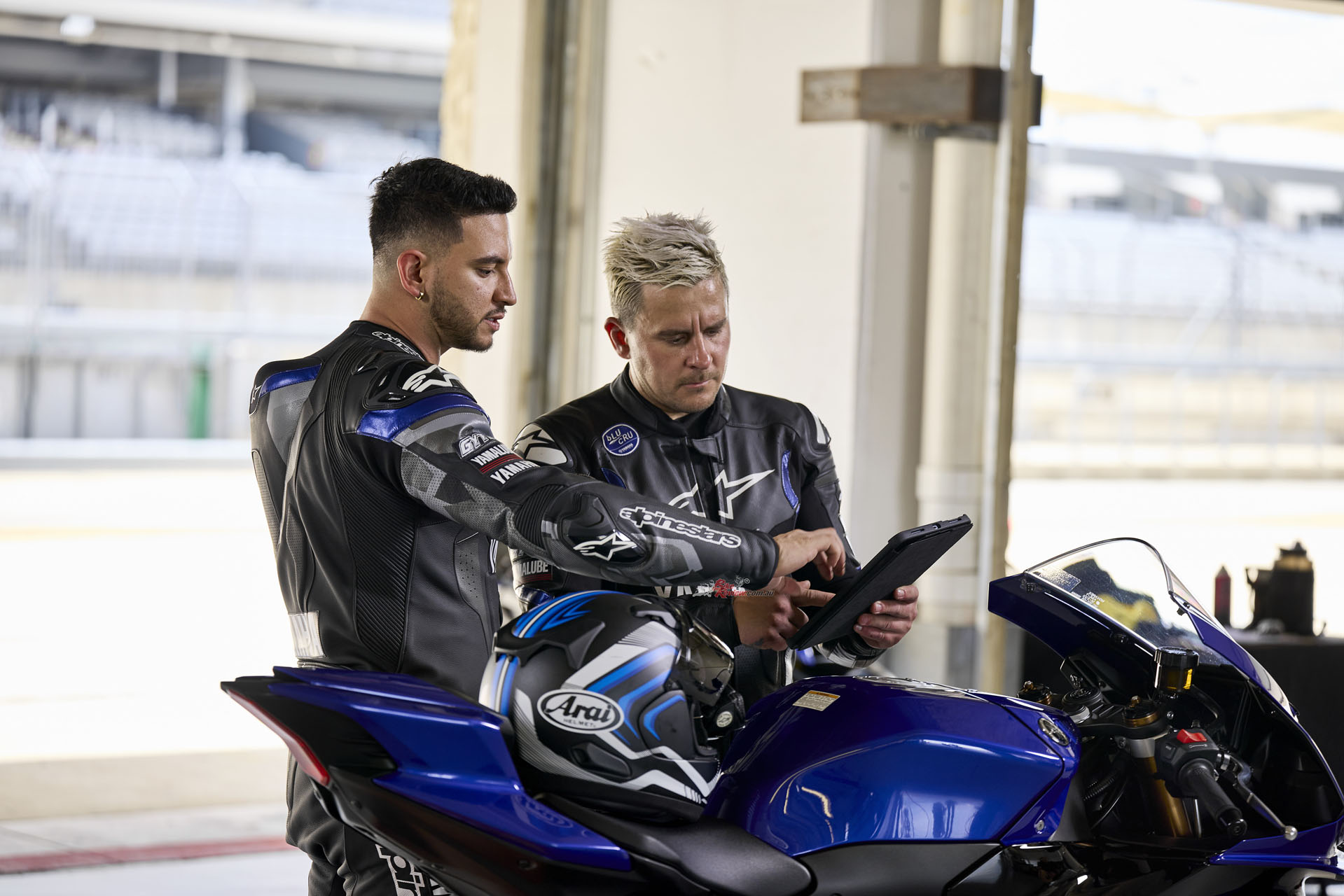
Riders can link their smartphone to the new TFT display via Yamaha’s free Y-Connect app to receive message notifications, calls and listen to music (through use of an aftermarket Bluetooth® headset, not provided). Full turn-by-turn navigation is available through the Garmin® StreetCross app to make each journey easier.
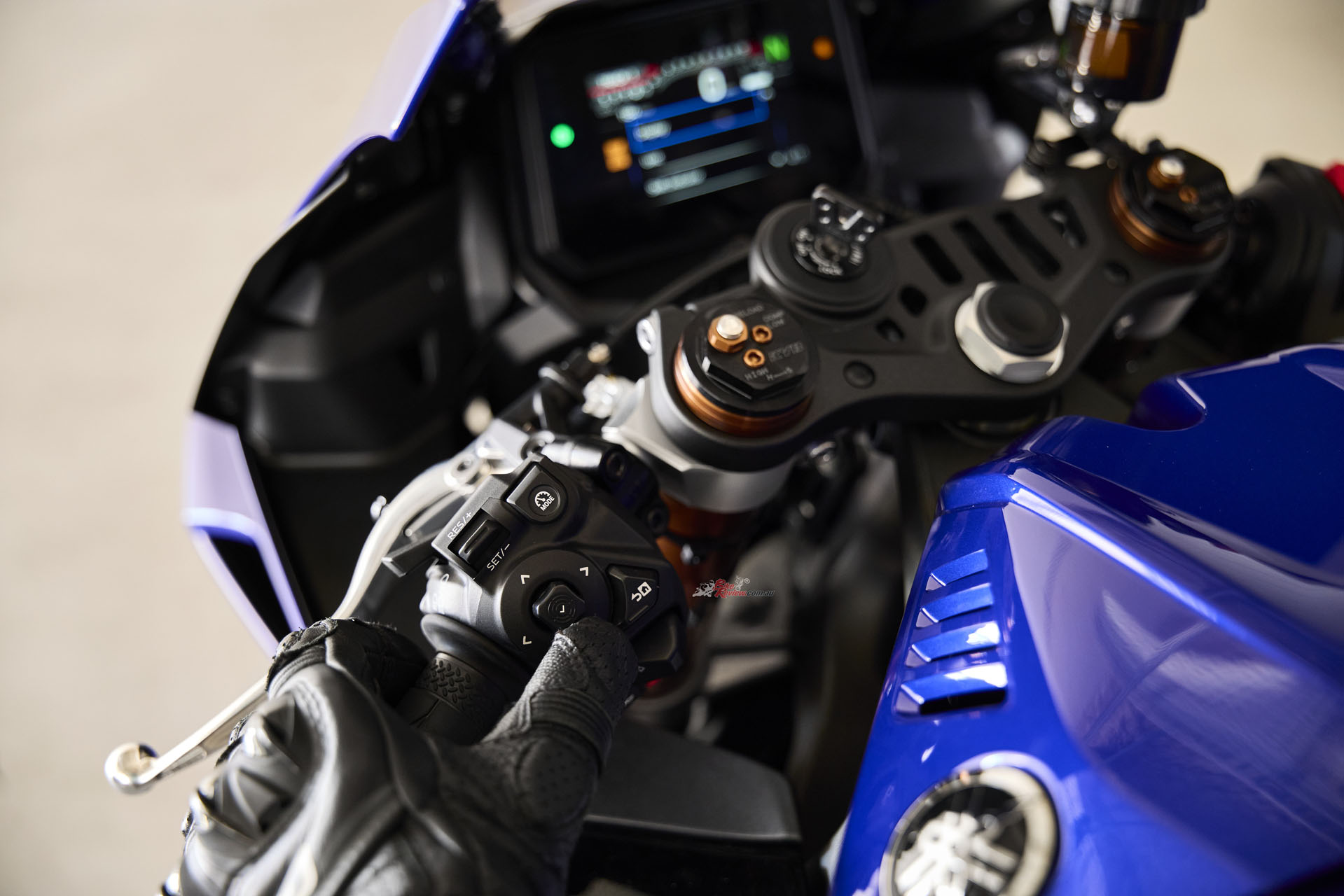
Advanced electronic suite
An advanced six-axis Inertial Measurement Unit (IMU) is based on the proven performance of the flagship YZF-R1 superbike. Data collected from the IMU and wheel speed sensors enable a high-tech suite of rider aids including a nine-mode Traction Control System (TCS), three-mode Slide Control System (SCS), three-mode Lift Control System (LIF) and a Brake Control System (BC). Levels of intervention can be adjusted and each of these systems can also be turned off providing the ultimate versatility and control in a variety weather and surface conditions. Road riders will appreciate convenient features such as cruise control and Yamaha’s Variable Speed Limiter functions while track day enthusiasts will enjoy the Y-TRAC race settings complemented by a virtual pitboard feature that displays instructions and information from pit crew to rider in real time.
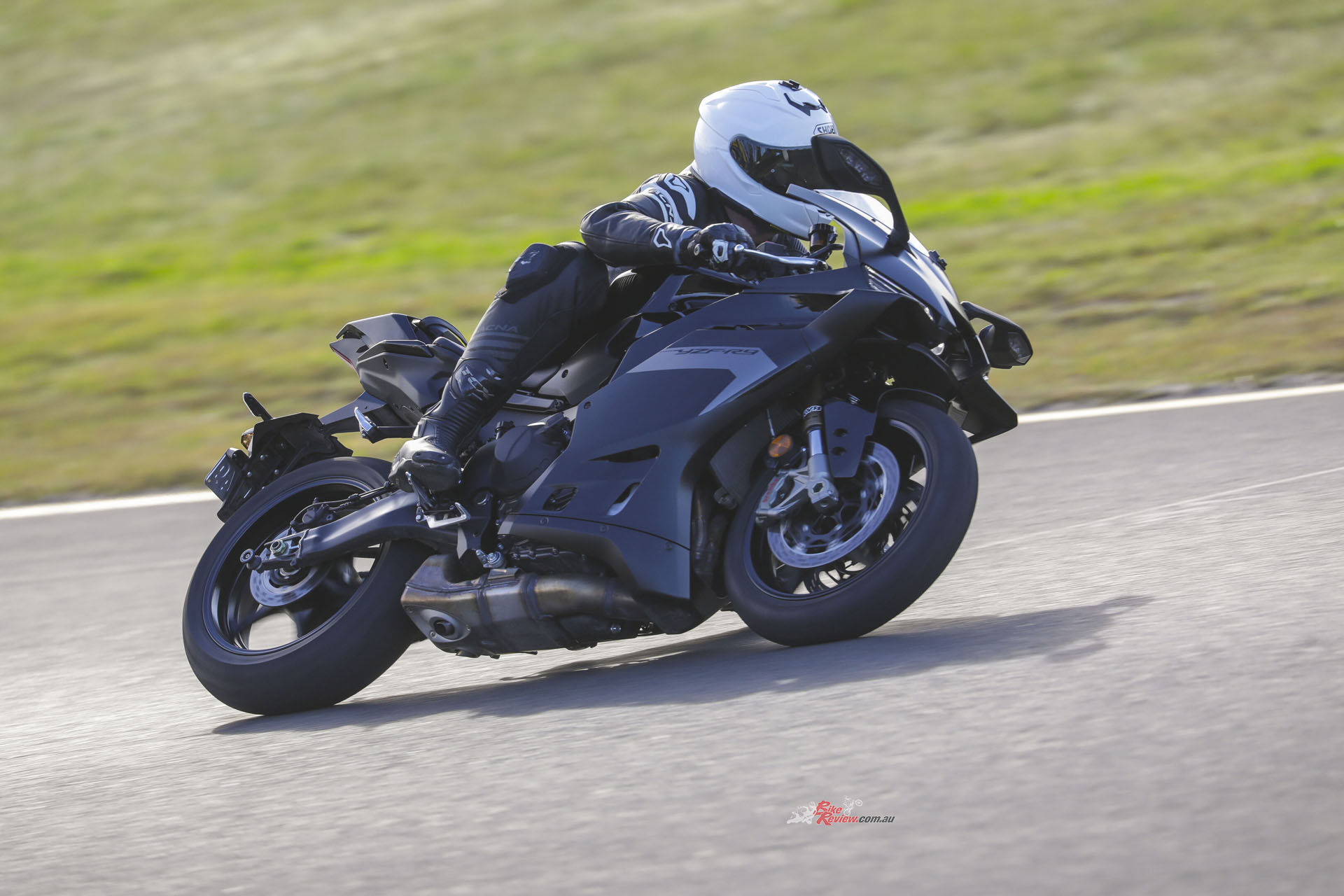
An advanced six-axis Inertial Measurement Unit (IMU) is based on the proven performance of the flagship YZF-R1.
Yamaha R-Series style
With sharp, distinctive R-series styling including its signature M-shaped front duct and tail wing, combining with new generation design cues like angled LED position lighting and advanced aerodynamics including functional front winglets, the revolutionary new YZF-R9 is instantly recognisable as the next evolution of Yamaha’s iconic R-series.
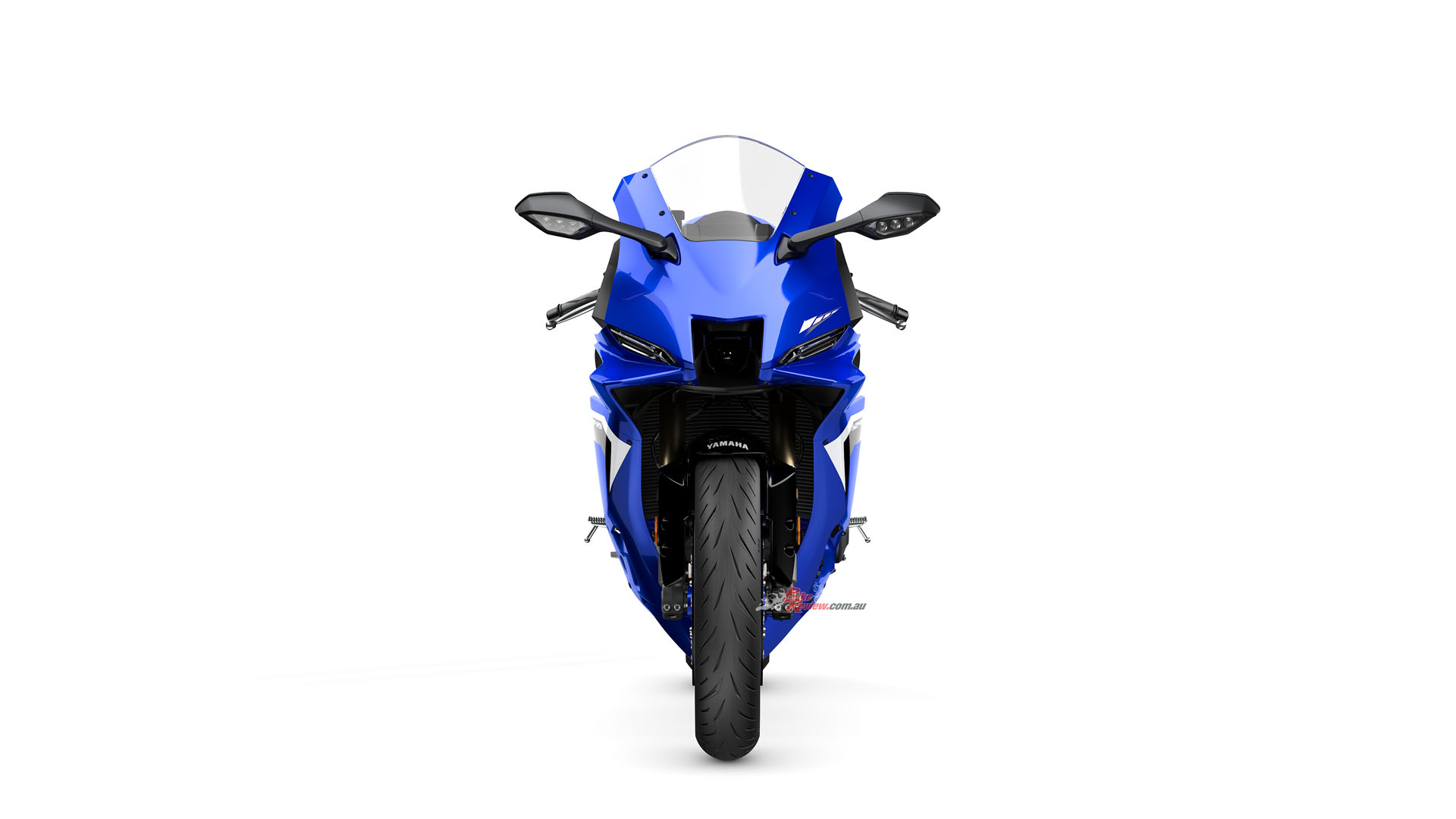
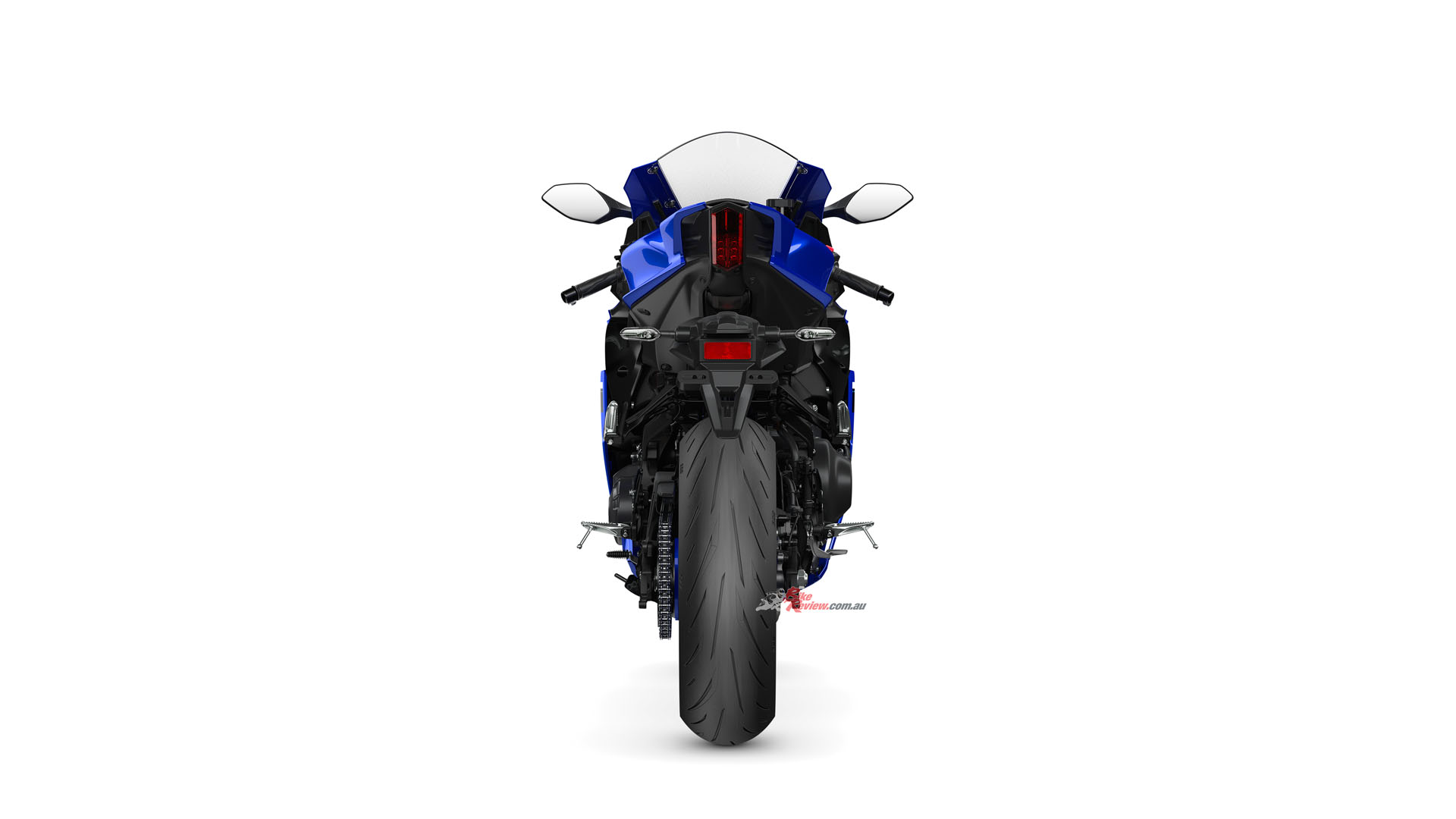
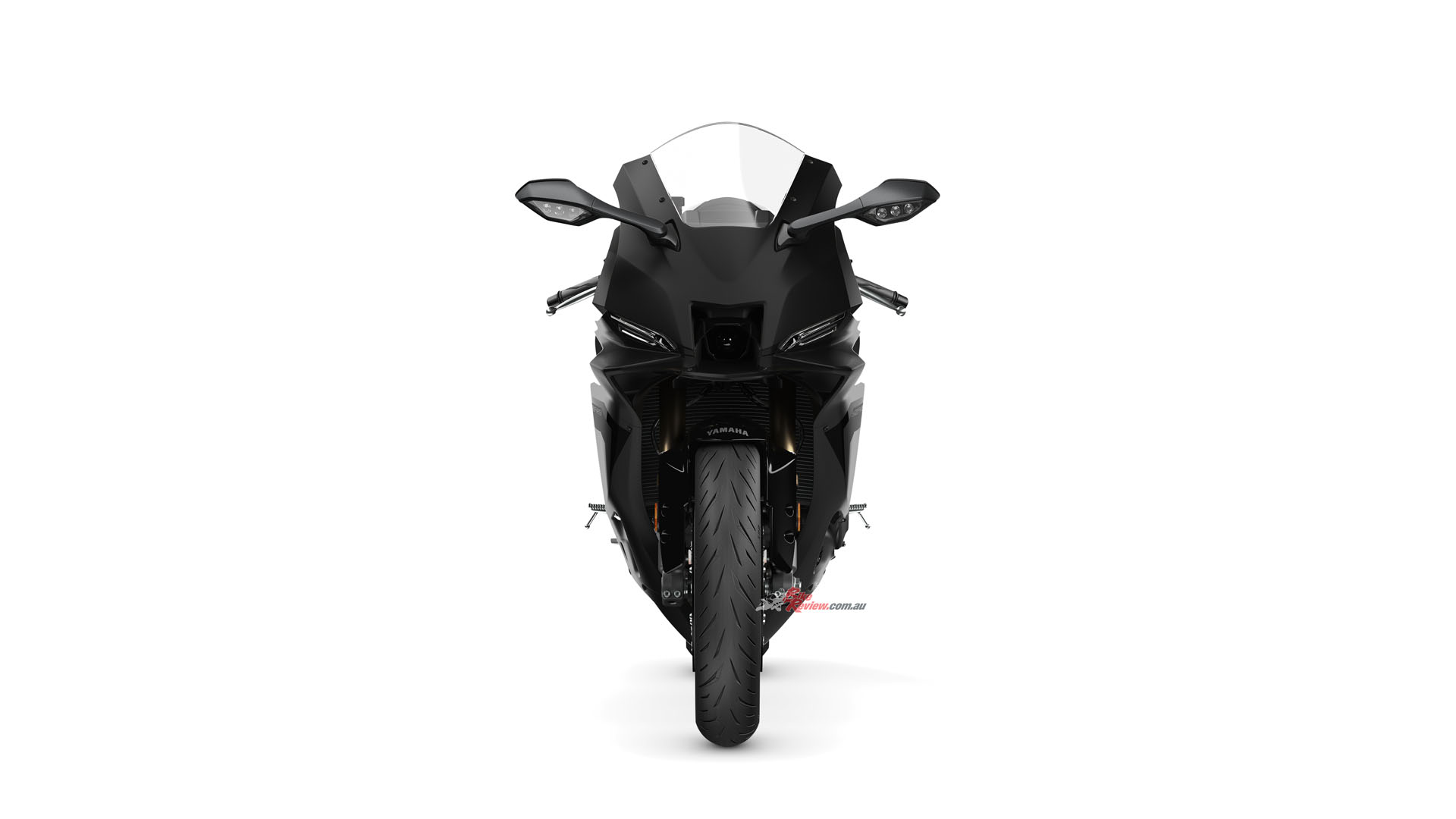
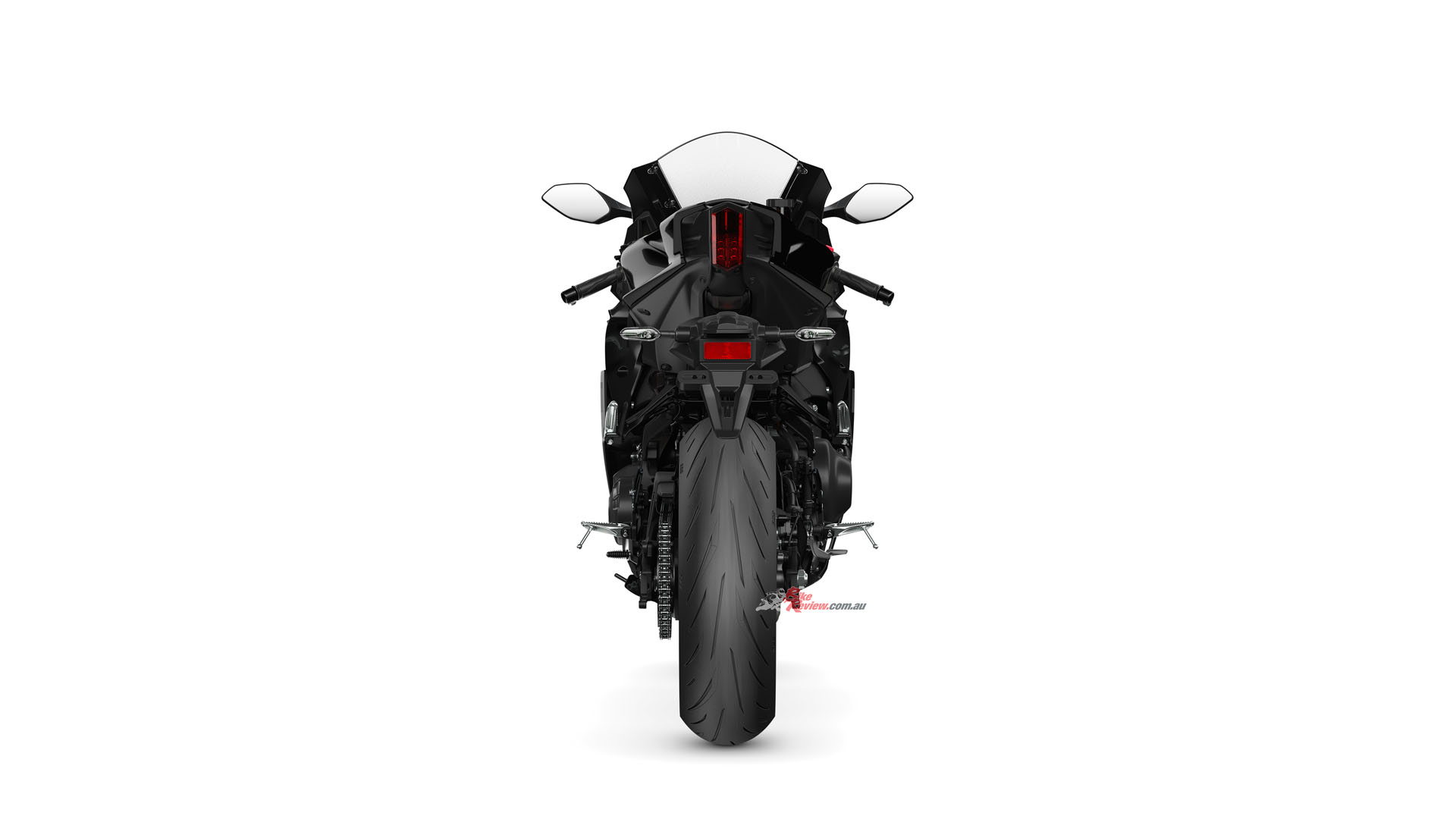
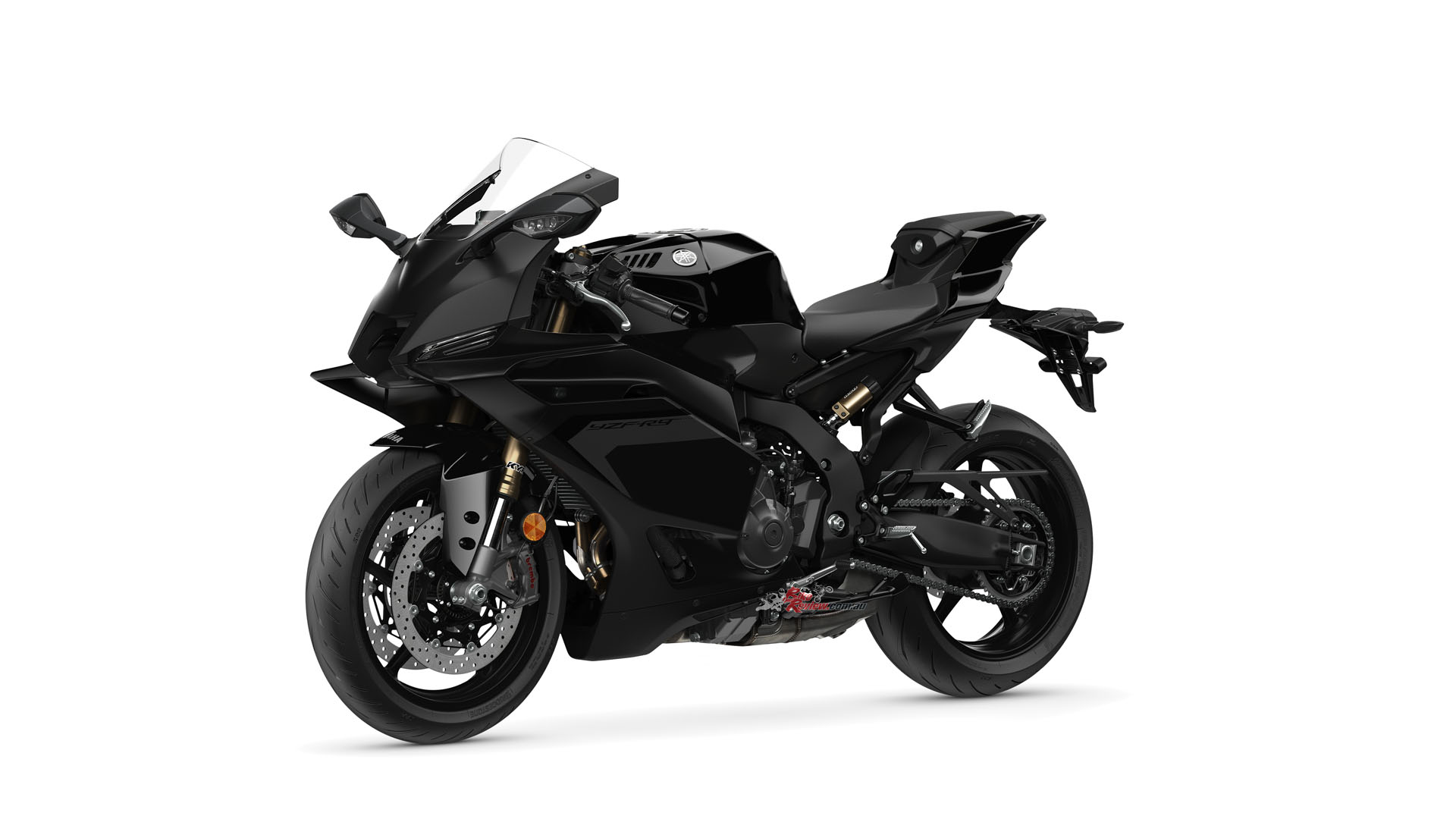
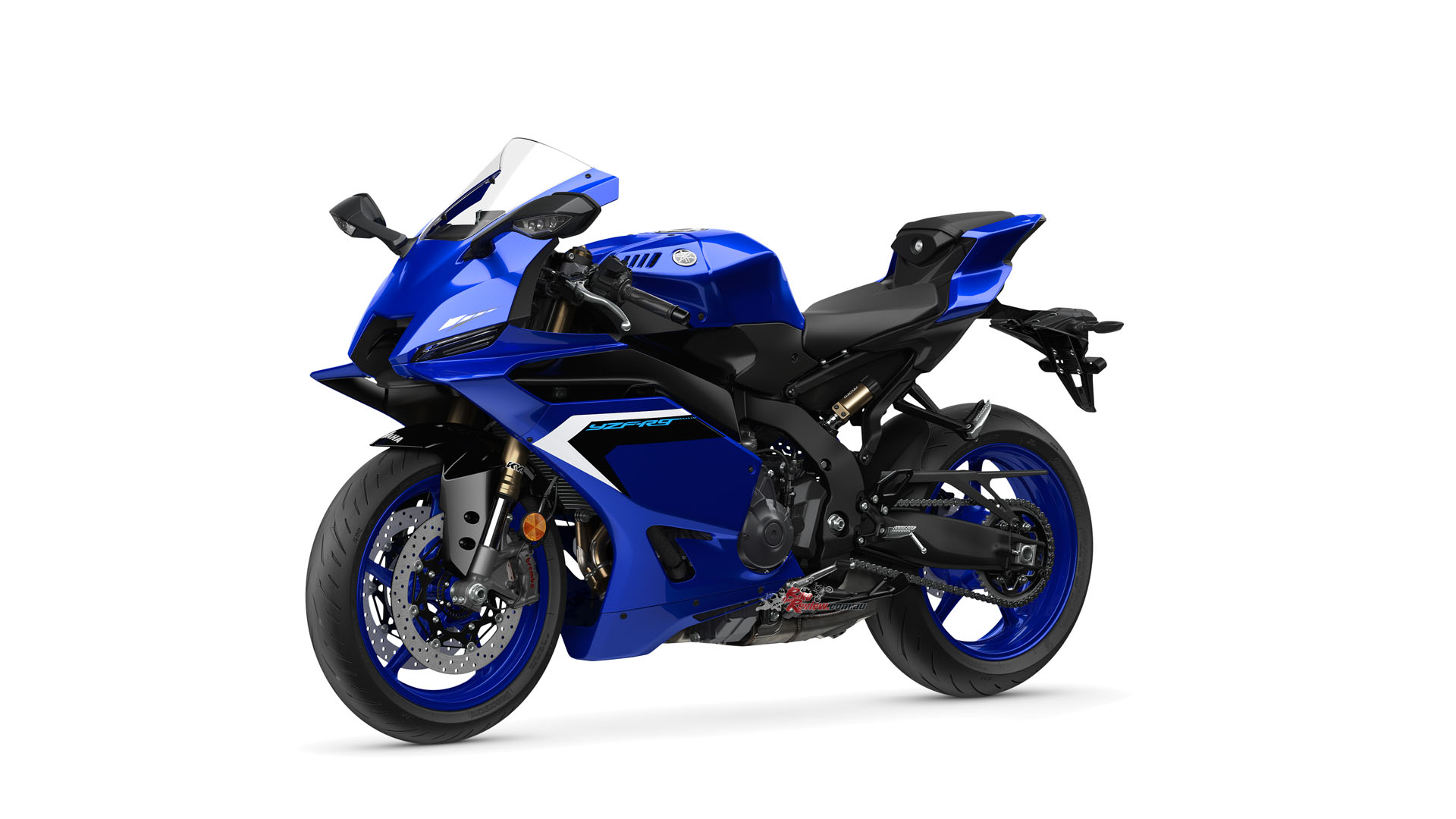
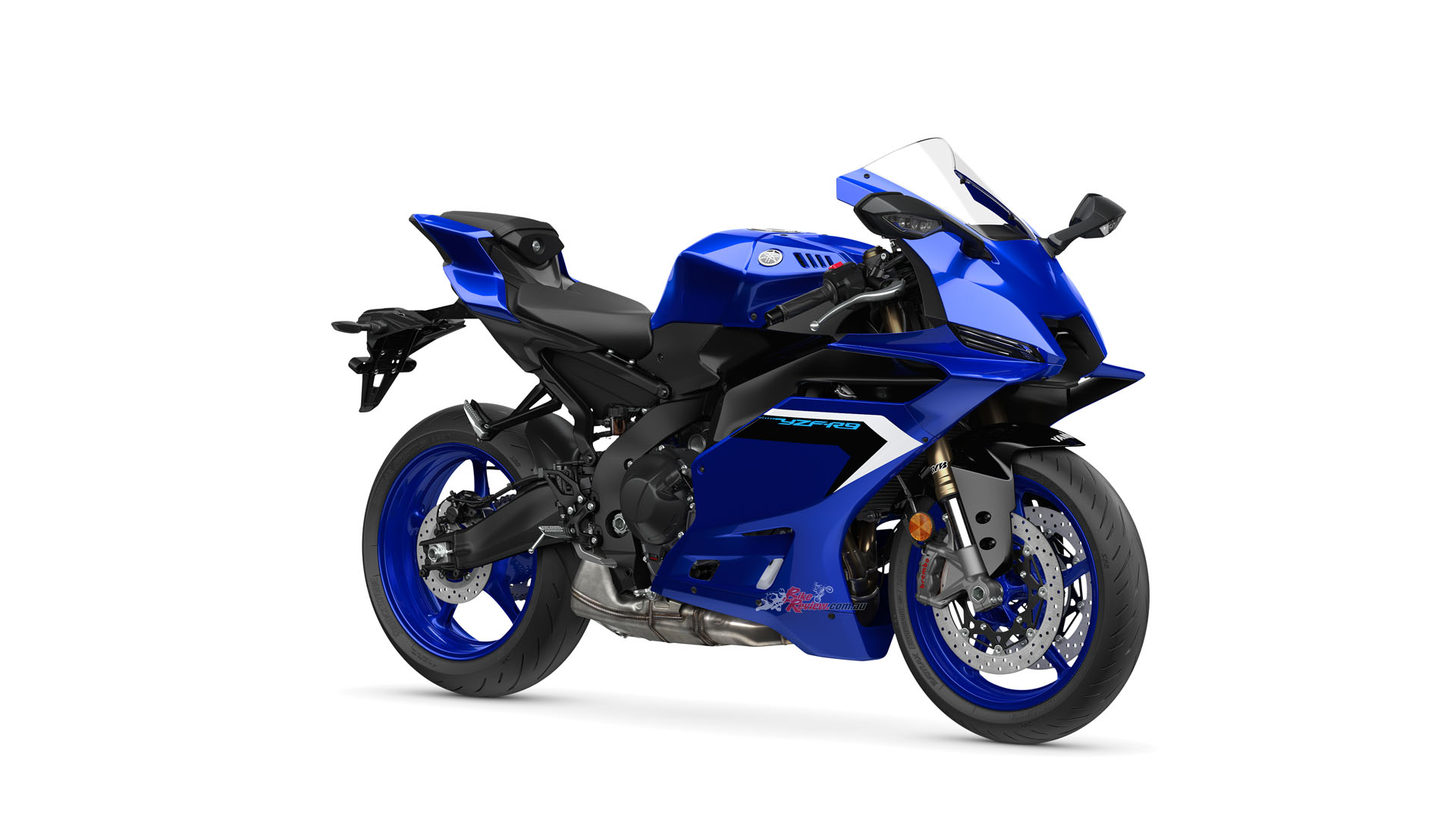
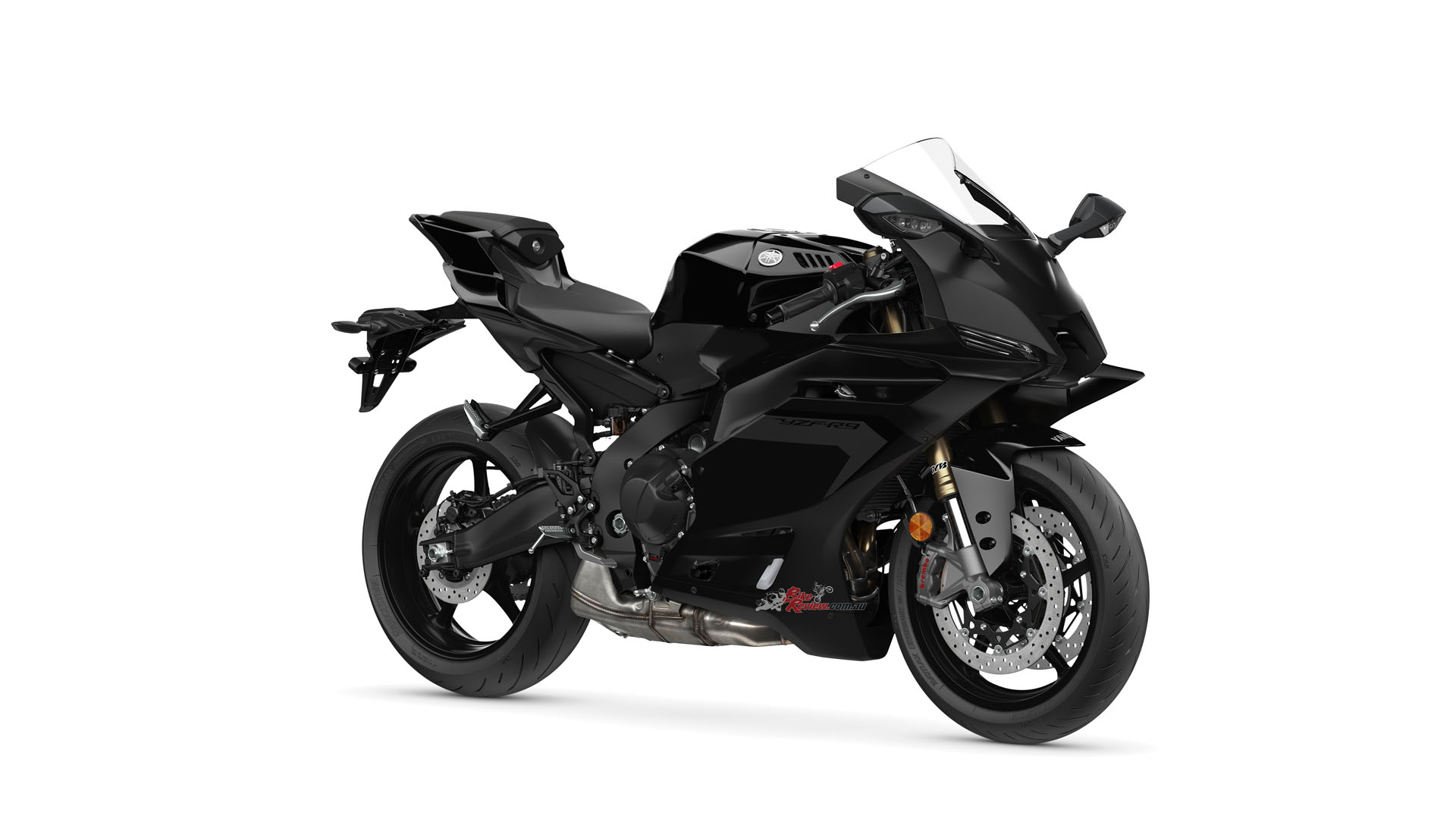

2025 Yamaha YZF-R9 Specifications
Price: $23,199 R/A
Warranty: Three-years unlimited km
Colours: Team Yamaha Blue, Matt Black, Intensity White/Redline
Claimed Power: 87.5kW@10,000rpm
Claimed Torque: 93Nm@7000rpm
Wet Weight: 195kg
Fuel capacity: 14L
Fuel Consumption (Claimed): N/A
Fuel Consumption (Tested): N/A
Range (Claimed): N/A
Engine: Liquid-cooled, four-stroke, DOHC, Crossplane triple, 78.0mm x 62.1mm bore x stroke, 890cc, 11.5:1 compression, three-into-one exhaust Gearbox: Six speed Clutch: Assist & Slipper Clutch with Quick Shift System (up & down), EFI, three-into-one exhaust.
Chassis: Aluminium Deltabox frame
Rake: 24.7° Trail: 109.2mm
Front Suspension: USD 43mm KYB forks, fully adjustable, 120mm travel, KYB monoshock, fully adjustable with low-speed valve, 117mm travel.
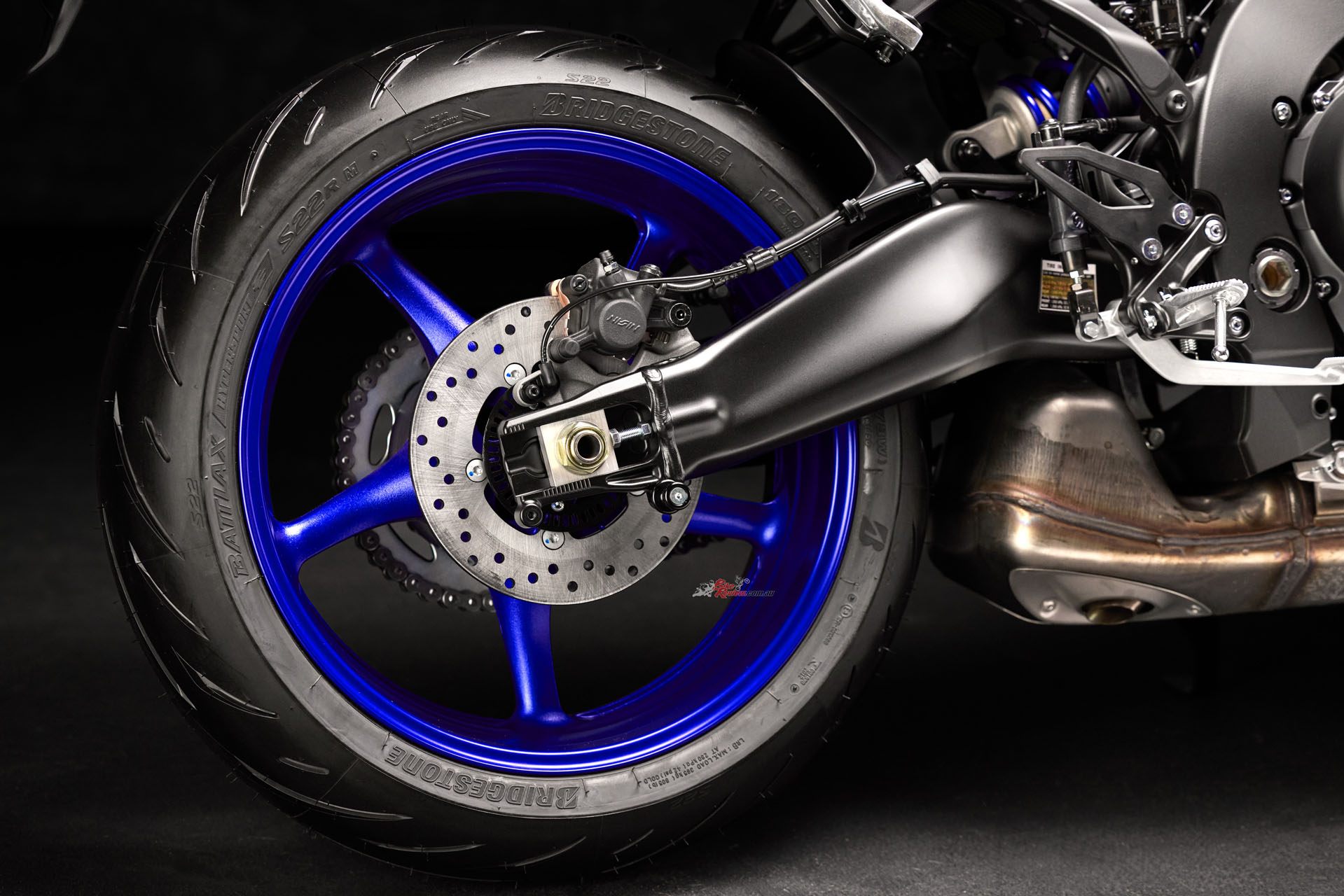
Brakes: Twin 320mm discs with Brembo Stylema four-piston radial calipers, Brembo radial master-cylinder, stainless braided lines, cornering ABS (f), Single 220mm disc with single-piston caliper, ABS (r), rear ABS disconnect for track
Wheels & Tyres: 10-spoke cast alloy wheels, Bridgestone RS11 120/70 – 17 (f), 180/55 – 17 (r) tyres
Dimensions:
Wheelbase: 1420mm
Seat height: 831mm
Ground clearance: 140mm
Overall width: 706mm
Overall length: 2070mm
Overall height: 1181mm
Instruments & Electronics: 5in full-colour TFT dash with four street and one track theme, Y-Connect app compatibility, Garmin StreetCross Nav support, 6-Axis IMU, Traction Control (TCS), Slide Control (SCS), Lift Control (LIF), Brake Control (BCS), Engine Brake Management (EBM), Back Slip Regulator (BSR), Launch Control, Cruise Control, Quick Shifter, Ride Modes (Sport, Street, Rain, Custom x 2), Virtual Pitboard, Variable Speed Limiter, Immobiliser, LED lighting.
The Author

You Might Also Like