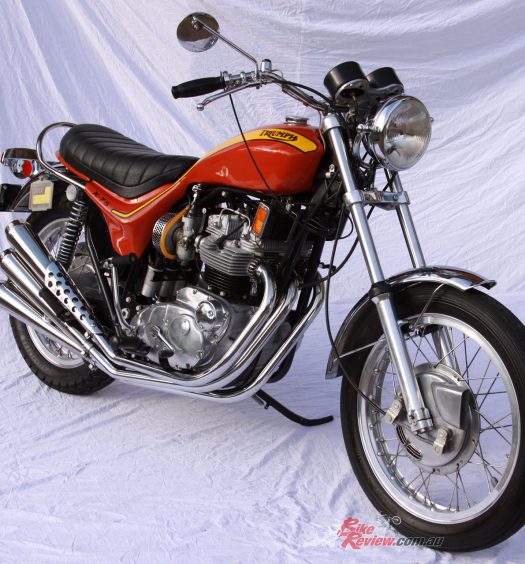

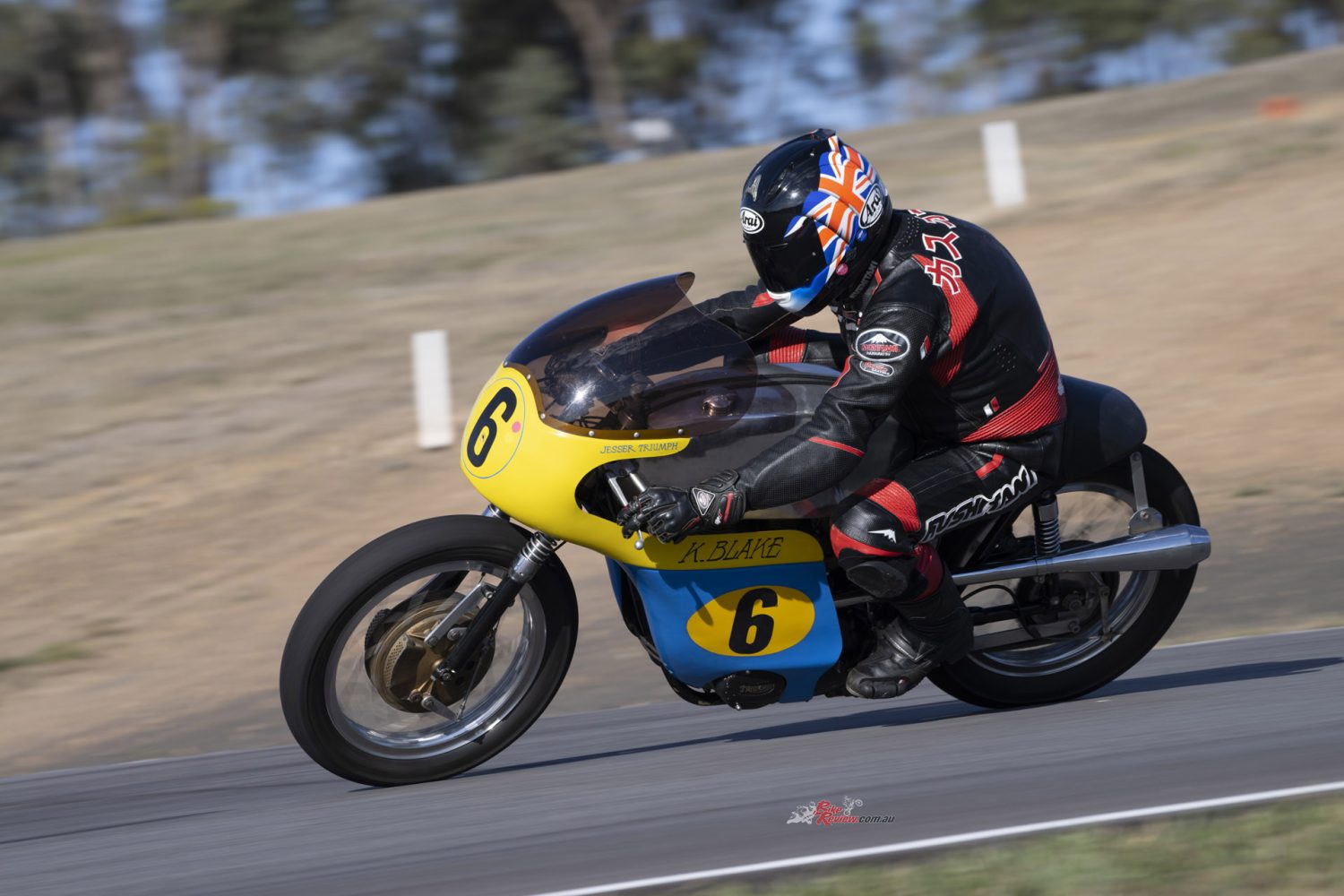

Sir Al tests the legendary Jesser Triumph Bonneville T120R, the former road bike Ken Blake raced to Australian TT glory before riding home again... Photos: Russ Murray
Many of us have dreamt of riding our very own road bike to fame and glory by taking it to victory in a gruelling TT race. But one Aussie Motorsport Hall Of Fame dreamer actually did precisely that – and not just once, but twice! Only, not in the Isle of Man.
If the mythical Australian rider factory’s exact location is ever detected, chances are that this crucible of talent that’s been responsible for producing a disproportionate number of GP racers and World champions given the country’s relatively small population, will be discovered somewhere in the hills above Adelaide, where so many of the country’s greatest, most talented riders have emanated. That includes the man who many Aussie fans insist was the best rider ever to roll off that production line, but who never achieved the rewards that his talents deserved. Pint-sized South Australian Ken Blake.
Kenny Blake Inducted into Australian Motorsport Hall of Fame – read here…
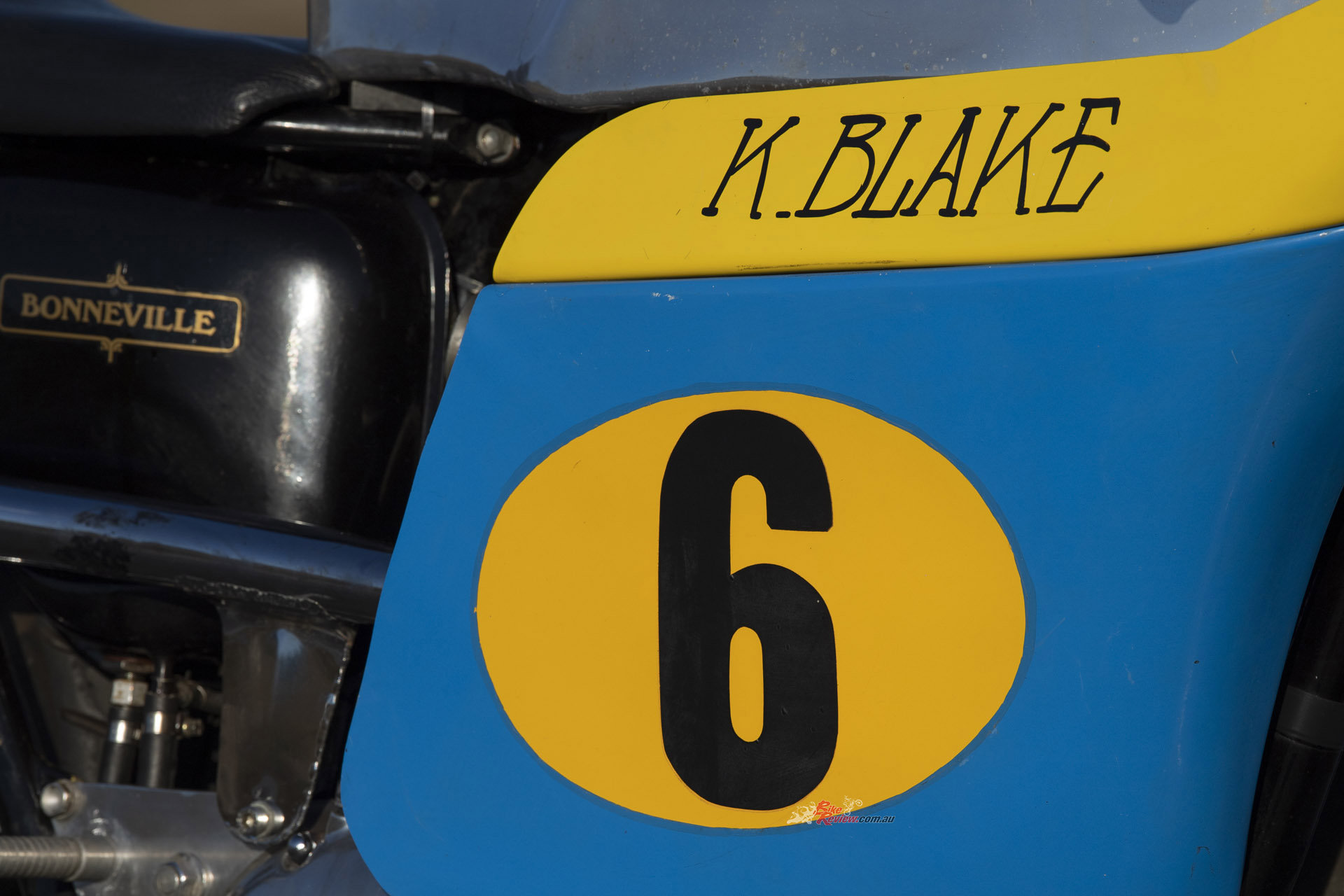
Born in 1945 in Strathalbyn in the hills east of Adelaide, Blake was an impecunious panel beater who rode to work on a series of Triumph Bonnevilles, on which at weekends he’d vie to be the leader of the pack of hard core street racers tearing up the tarmac in the strictly unofficial road racing ructions he and his mates spent all their spare time indulging in, as he recounted in a 1970s interview with Revs Motorcycle News.
“I put clip-ons and rearsets on my Bonneville and away I went”…
“As soon as I turned 16, I got a licence and bought a 125 Honda Benly,” Ken said. “I spent most of my spare time going on runs with my mates. It was just one mad dice from start to finish. In time I bought a Honda Dream, but that was the greatest mistake I ever made. I got rid of it and bought a succession of Triumph Bonnevilles instead. They were the only big bike around at the time, and I had four of them all told. I didn’t actually start proper racing until I was 20, but I did a lot of touring and unofficial racing on the road in those four years – I virtually lived on my bike. This led to my going road racing in 1966 – I put clip-ons and rearsets on my Bonneville, and away I went.”
Ken’s first race meeting at Mallala, 40km north of Adelaide, was pretty eventful to say the least. He’d entered two races, but fell off on lap 2 of the first one, turning his beautiful 1964 T120R road bike into what he described as “a bent and twisted mess”. But his mates straightened the Triumph out well enough to make it raceworthy for his second ride, which was the South Australian Unlimited TT – the main event of the State calendar, with all its top riders vying for victory.
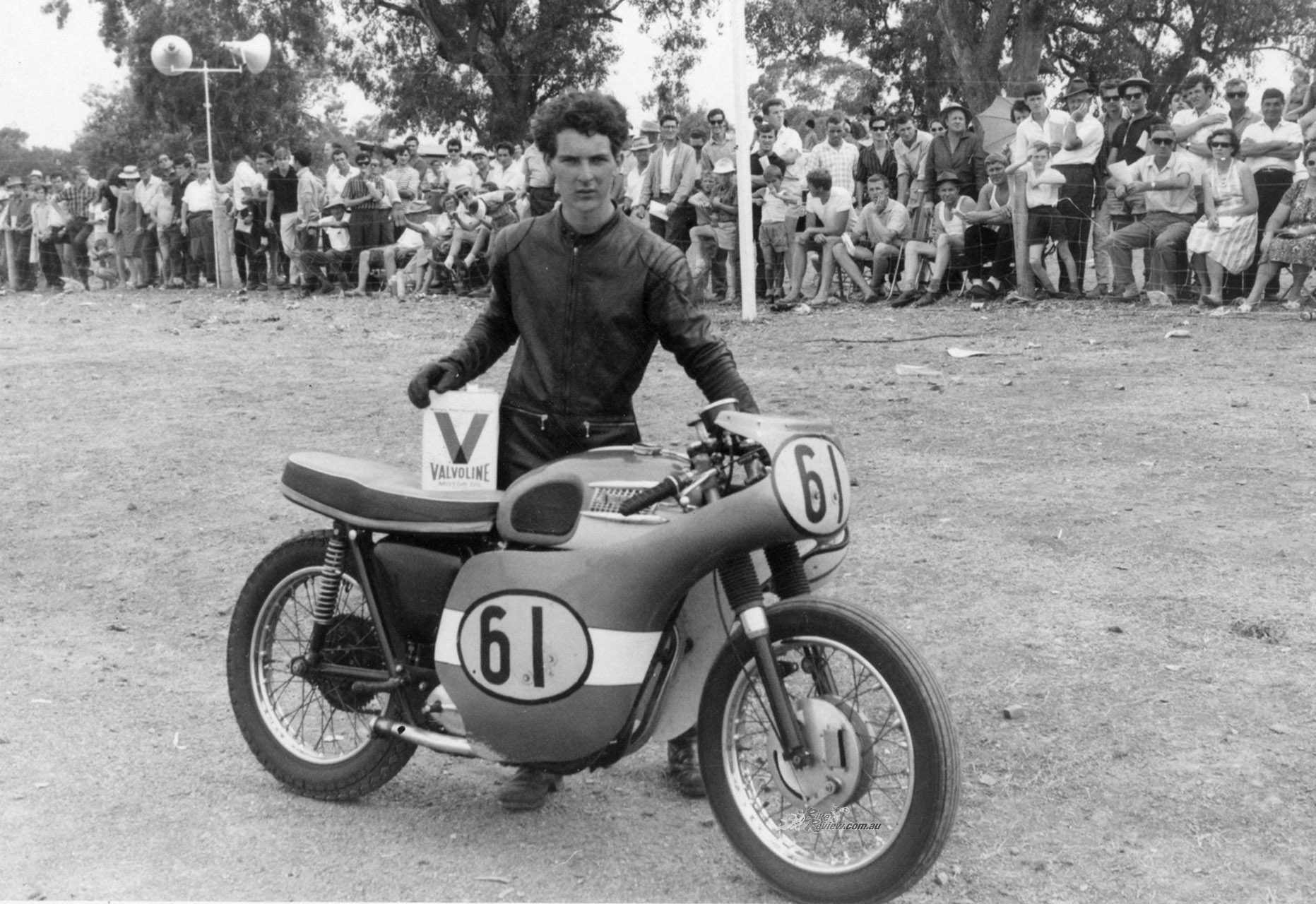
A young Ken Blake after a race win in 1968 at Mount Gambier.
Ken Blake finished third, and needless to say, was elated, so he started racing as often as he could afford to, albeit with the Triumph still in standard trim. He competed in seven meetings in all that debut year – four at Mallala, and three at McNamara Park on the Victorian border, with results good enough to turn him into an A-grader – and it all took off from there.
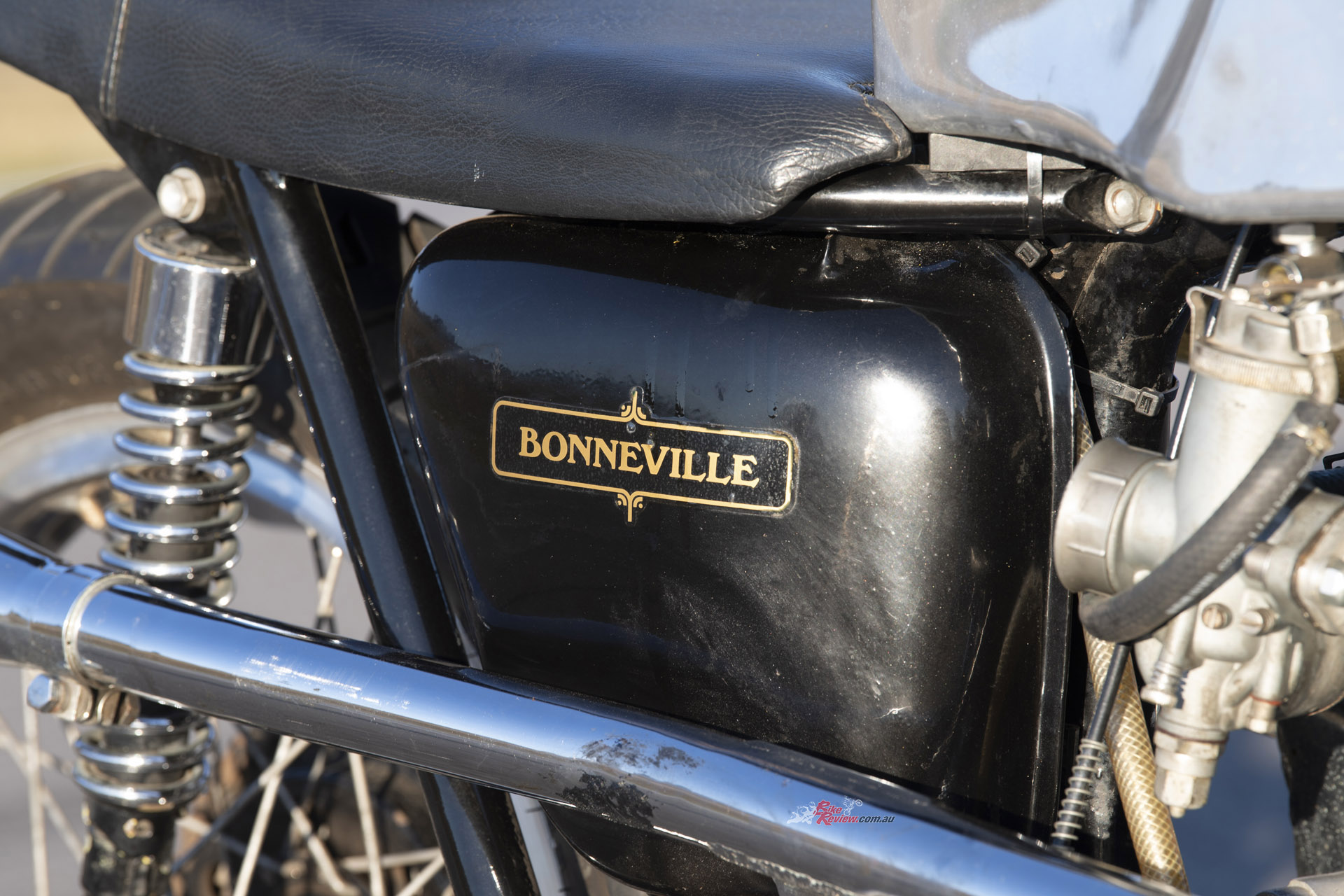
However, Ken had few mechanical skills, so for 1967 he teamed up with Les and Dean Jesser, two brothers who’d opened an Adelaide tuning shop specialising in making BSAs and Triumphs go faster. Their work on prepping his ’64 Bonnie produced several ever more promising results throughout 1967, and Ken and the Jesser Triumph, as the bike was now known even though he was still riding to work on it, were ready for bigger things in 1968.
“Ken had few mechanical skills, so he teamed up with Les and Dean Jesser, two brothers who’d opened tuning shop specialising in making BSAs and Triumphs go faster”…
He firstly won the SA Unlimited TT after three years of trying, and followed this up with victory in the prestigious Tom Phillis Memorial at Winton, on one of his first trips to Victoria. Venturing further East he picked up a win at Sydney’s Oran Park before heading to Bathurst for the first time, only for the Bonnie’s primary chain to break in practice, causing sufficient damage to make him a non-starter. Then later that year while testing at Mallala a conrod broke at high speed, flinging Ken down the road. The engine was wrecked, and he was lucky to escape in one piece.
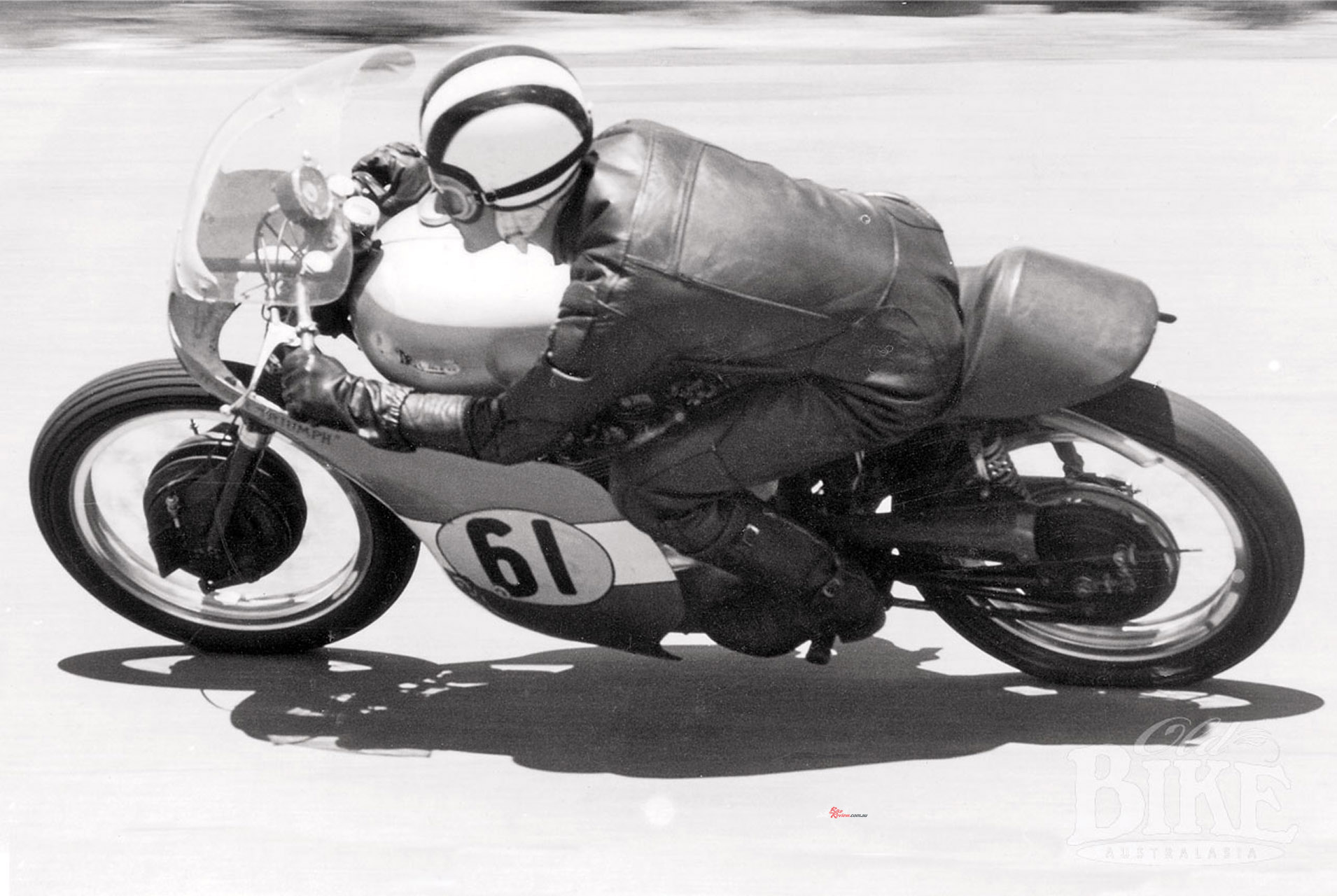
Ken Blake negotiating The Dipper during the 1968 Australian TT at Bathurst.
Thanks to the extent of the damage, and Ken’s lack of funds, it took a while before the Jesser Triumph could be raced again, and soon after that he crashed it at Mac Park, sustaining a broken wrist. This injury sidelined him for the early races in 1969, including Bathurst once again, and no sooner was he back on track than the Triumph disgorged a big end bolt out through the crankcase at Mallala.
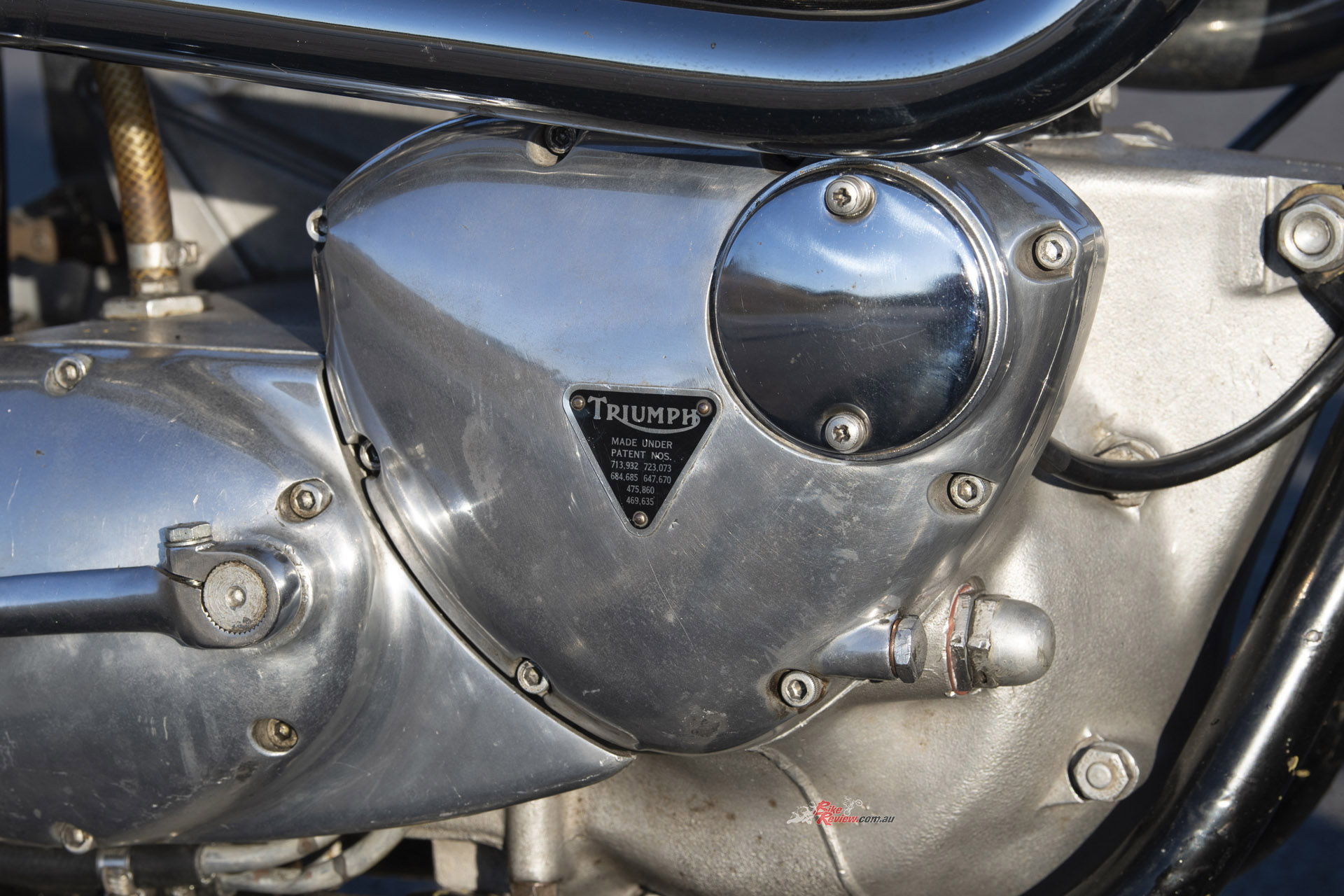
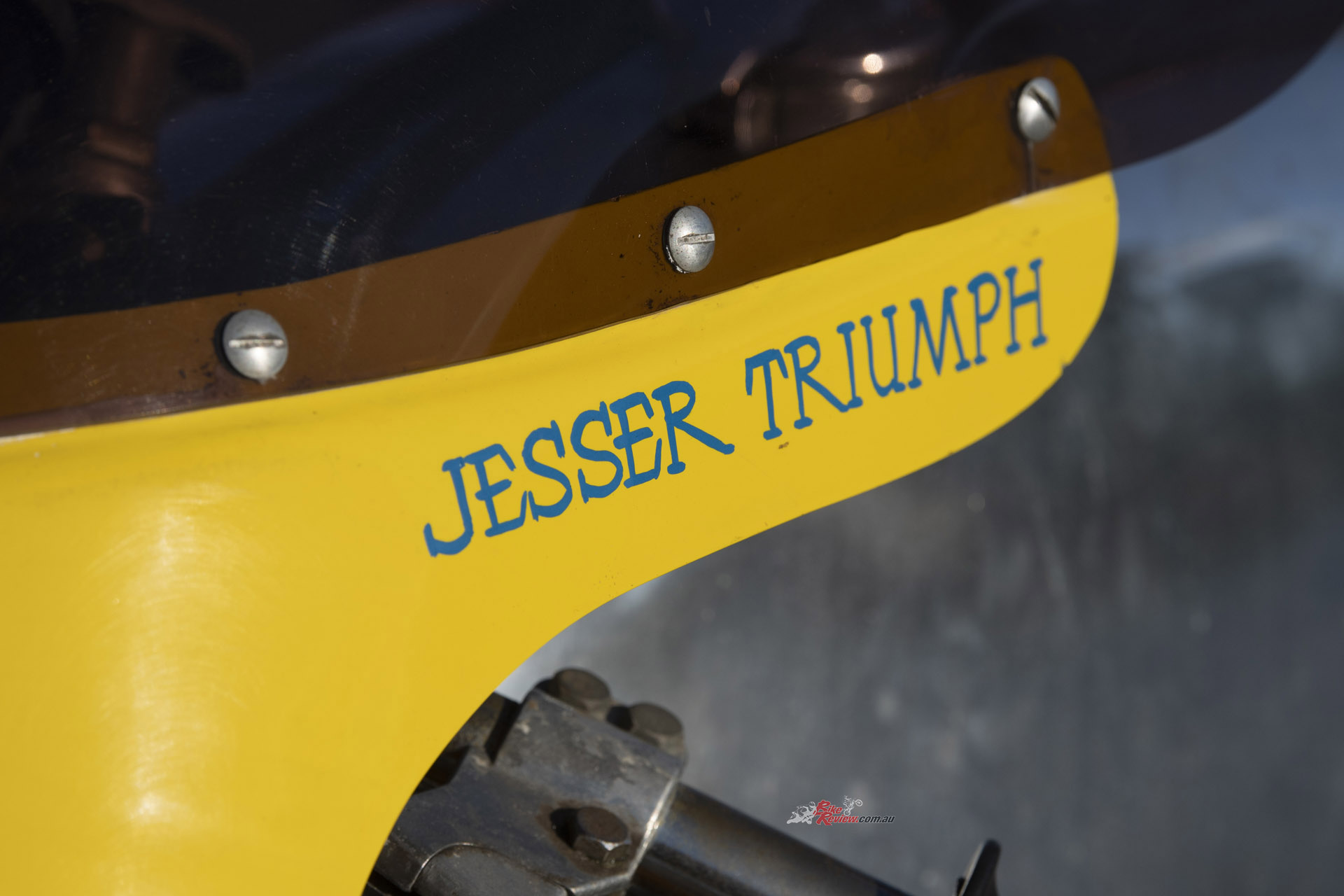
By now Ken Blake had bought another Bonneville to ride on the road, leaving his original Triumph purely for racing. With it rebuilt, he won the SA Unlimited TT on it again, followed by victory in the Harvey Wiltshire Memorial meeting at Calder, north of Melbourne.
“With it rebuilt, he won the SA Unlimited TT on it again, followed by victory in the Harvey Wiltshire Memorial meeting at Calder”
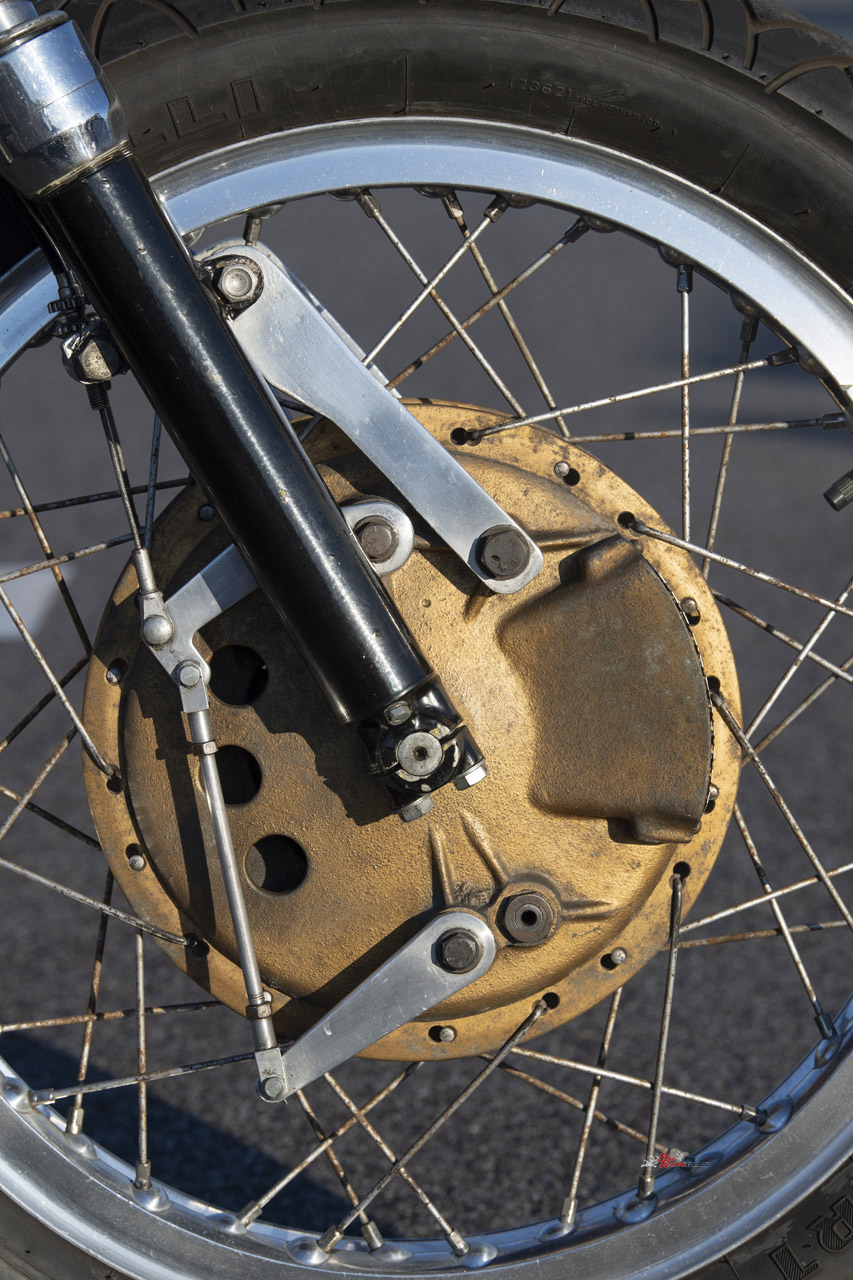
Blake had complained about the stock 178mm Triumph twin leading-shoe front brake’s effectiveness, which he resolved by fitting a large 230mm 4LS magnesium Fontana, which combined with his light weight then meant he could out-brake anyone. But now he wanted more power, so Les Jesser had a camshaft made locally using the same profile as BSA 350 Gold Star cams, while teammate Ivan ‘Snowy’ Ardill on another Jesser Triumph had reverse cone megaphones made up for both bikes, again using 350 Gold Star dimensions.
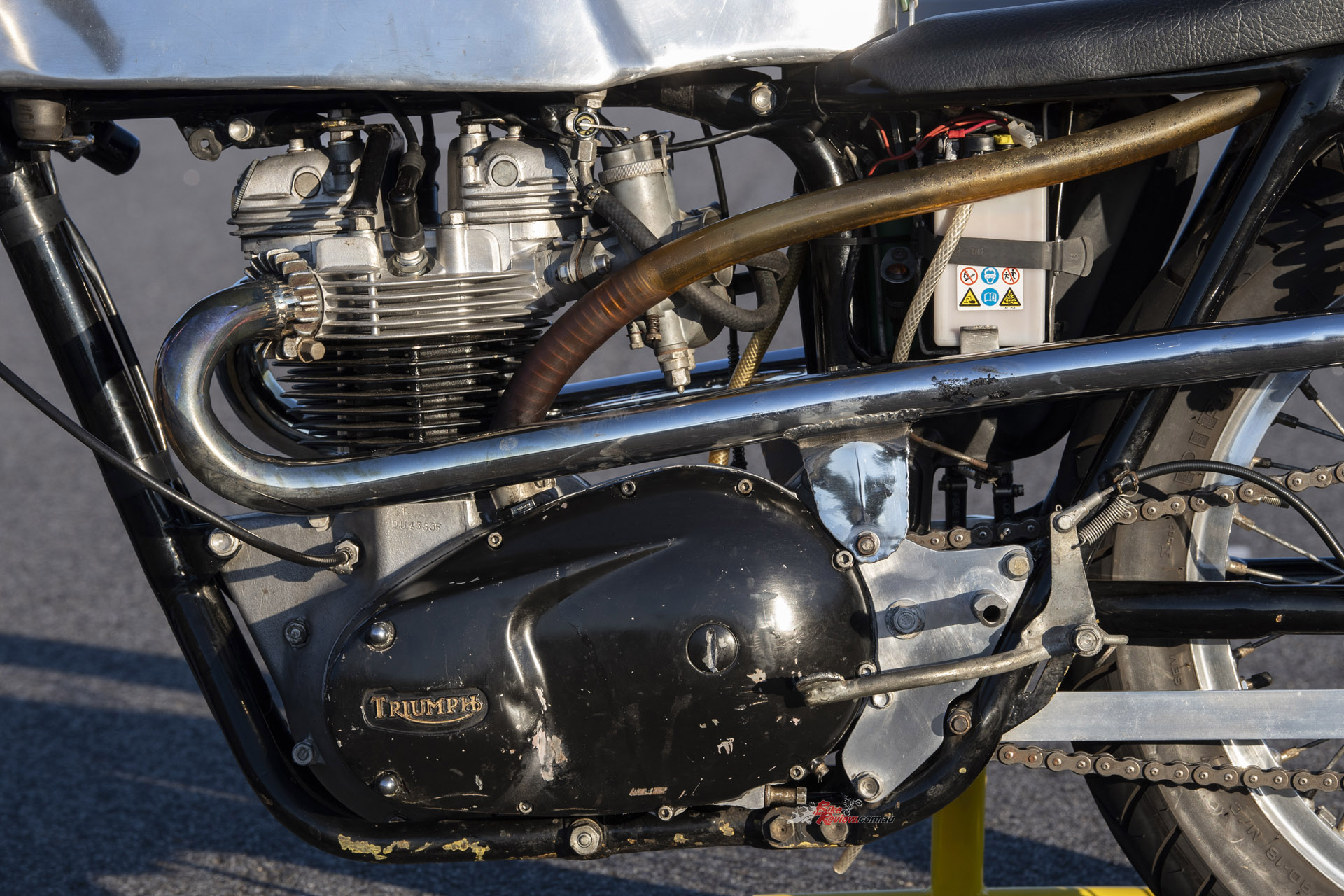
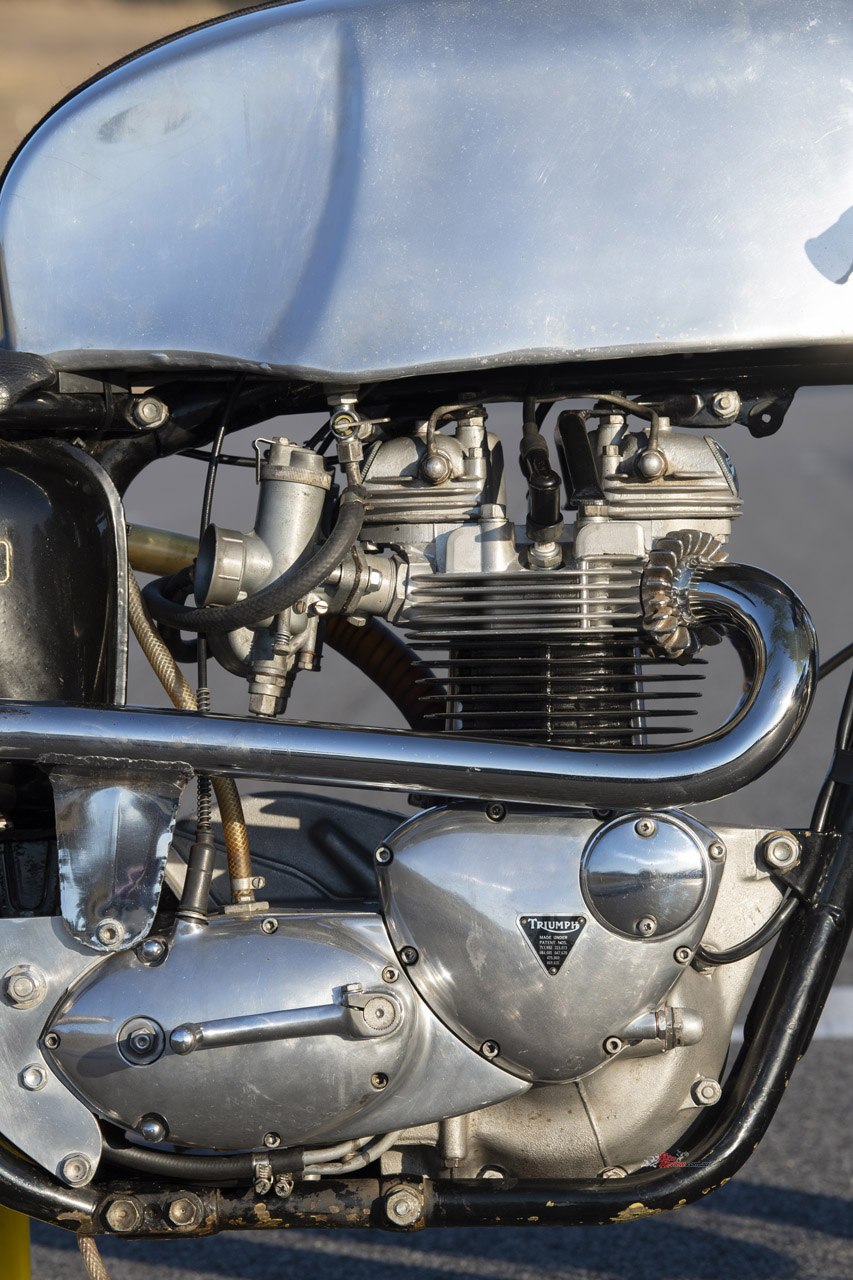
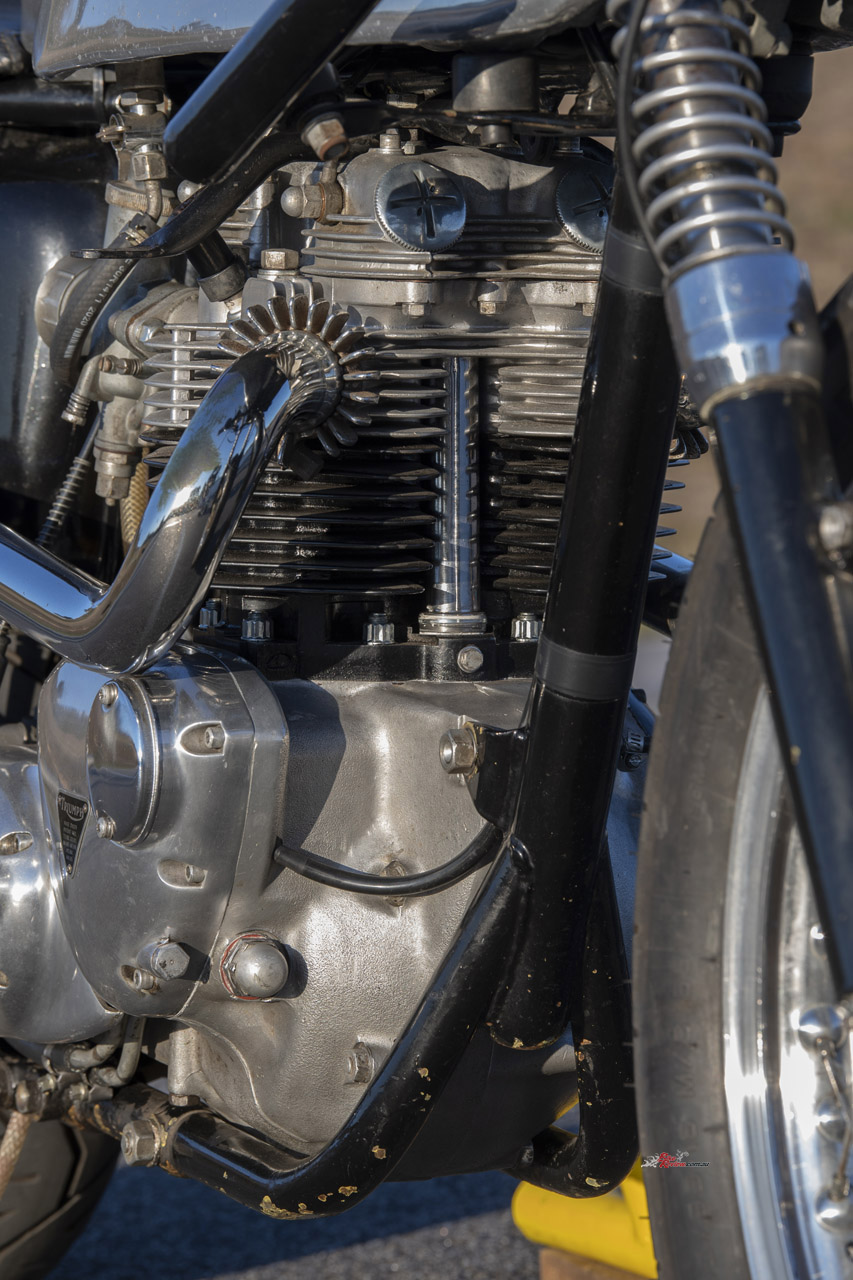
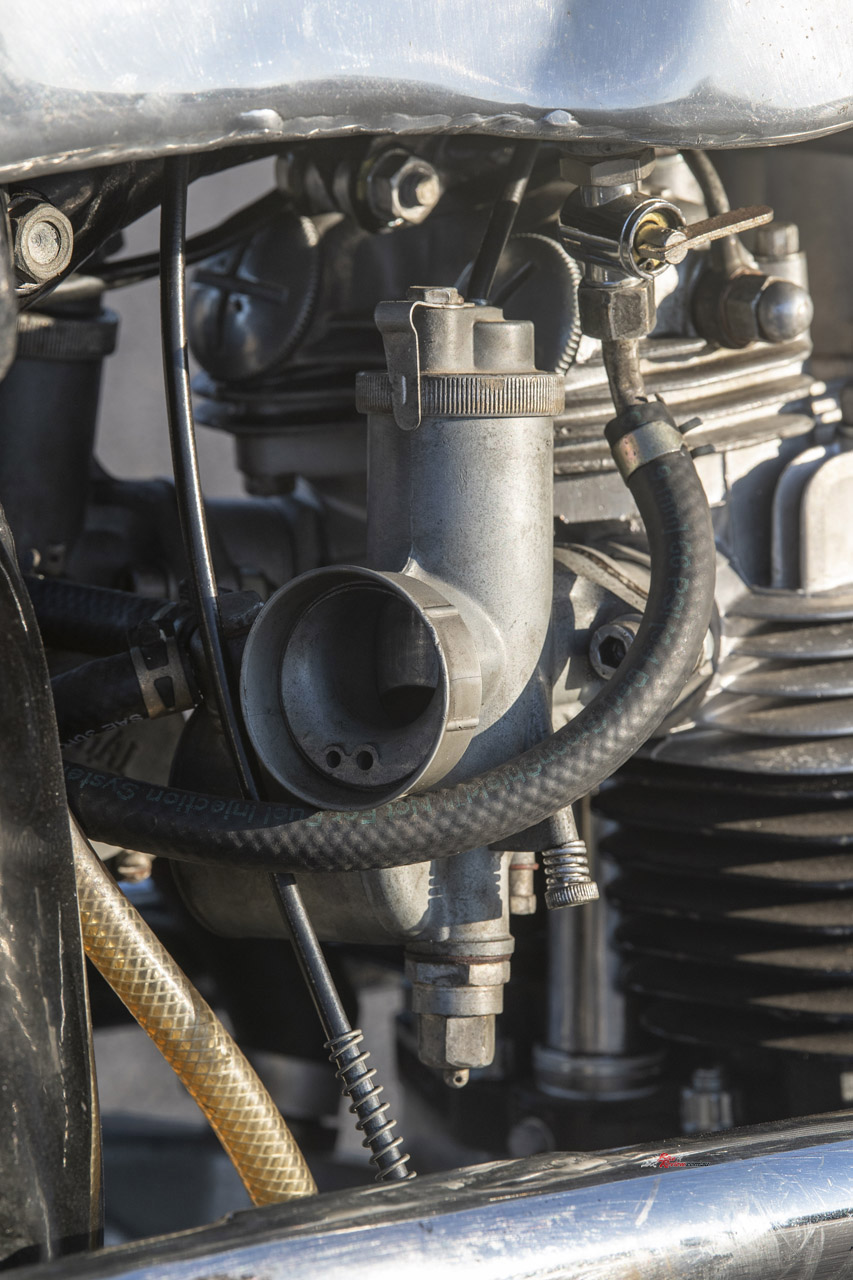
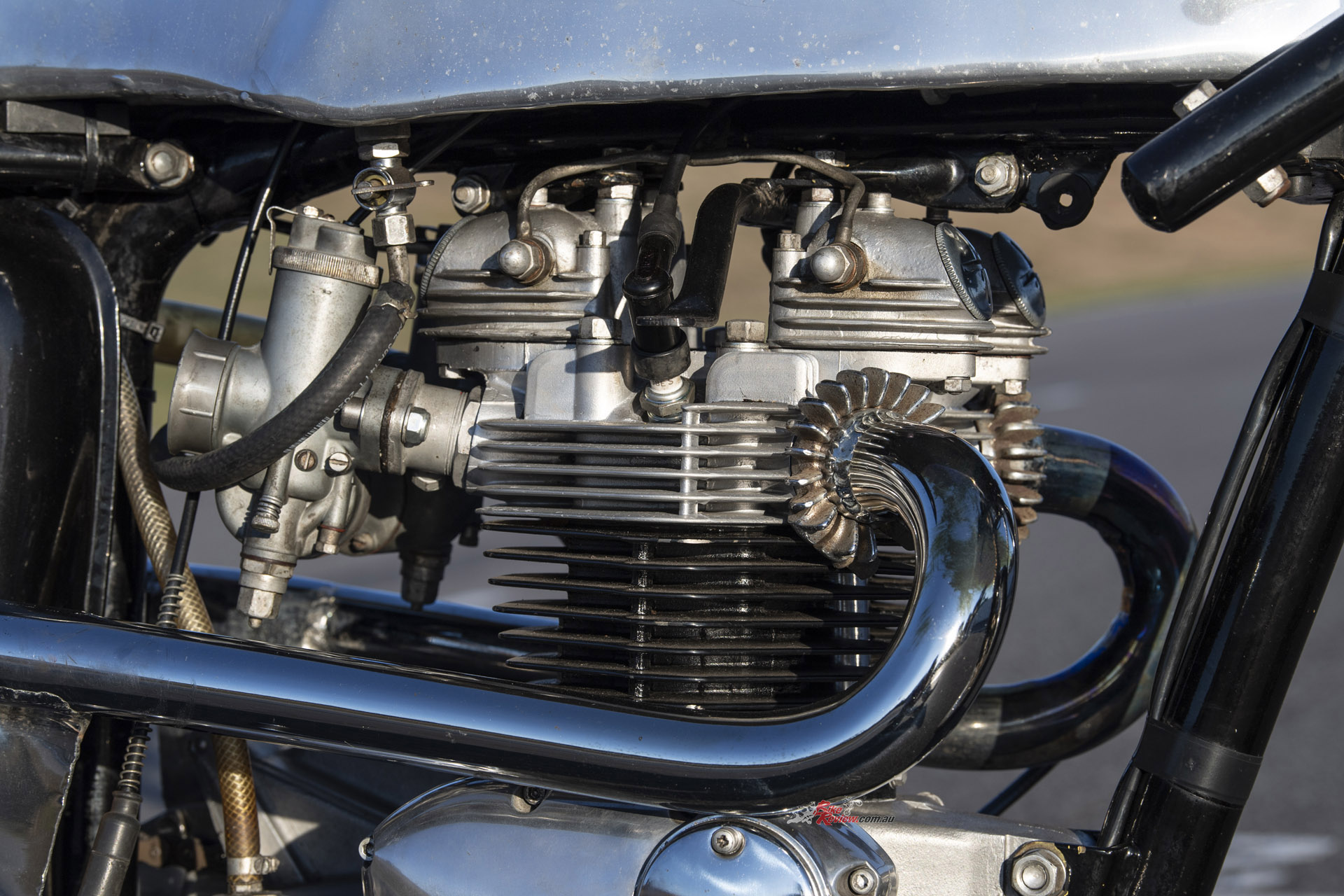
This gave a nice lift in performance, but now Kenny was at the sharp end of the field in National races, and the quest for more speed led to the construction of a special big-bore 725cc engine. Les Jesser built it up using Triumph crankcases and a stock bottom end fitted with 600cc Matchless conrods that were 10mm shorter than the Triumph ones. He machined a fin off the top of the barrels, shortened and re-chromed the pushrod tunnels, installed 75mm BSA A65 pistons and trick valve springs but kept the standard Amal Monobloc carbs.
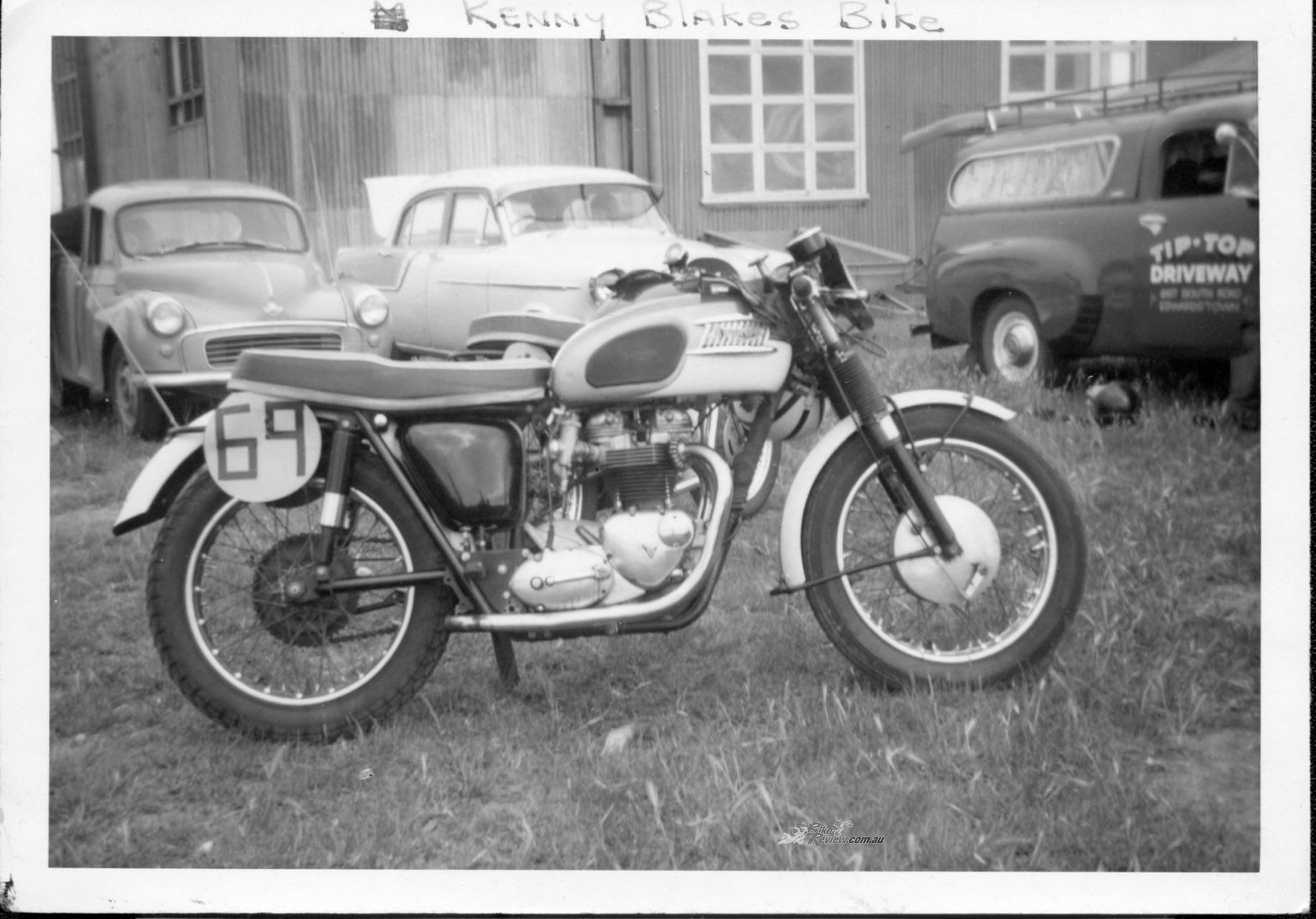
Ken Blake’s first race with his T120 road bike at Mallala in 1966.
For more important races the Jessers would concoct a 30 per cent pure chemical nitro and 30 per cent toluene brew, with 40 per cent methanol, making this the most powerful engine in the Unlimited class in that pre-Honda CB750 era – albeit at the cost of having to rebuild the engine after every race meeting. This also led to breathing problems that would pressurise the crankcases, and blow oil out through the main bearings, through the clutch and on to the back wheel – eventually resolved by doing away with the timed breather.
Exactly three years after he first began racing the bike, in May 1969 it was time to for Ken Blake and the Jesser Triumph to step up to the big time by competing for the first time in the Australian TT, the one-race Australian Championship decider which back then was staged at a different track and in a different state each year, before eventually later settling in Bathurst. That year it was held at the new Surfers Paradise circuit in Queensland, a marathon 4,000km roundtrip journey from Adelaide for Ken, mechanic Glen Rose and a small bunch of supporters, but it was well worth the journey.
“Three years after he first began racing the bike, it was time to for Ken Blake and the Jesser Triumph to step up to the big time by competing for the first time in the Australian TT”…
Local star John Warrian with his Triumph-engined Transac special was hot favourite to win, but there too were Ron Toombs on the legendary tricked-out Henderson Matchless G50, and 1964 500GP World Championship runner-up Jack Ahearn, on the quick Coomber Triumph. In the Unlimited TT, both Toombs and Ahearn made a hash of the push start, leaving Warrian and Blake to dispute the lead alone. After a titanic battle, at the chequered flag victory and the first of eight Australian titles was Ken Blake’s by a wheel – on his former Bonneville street bike…
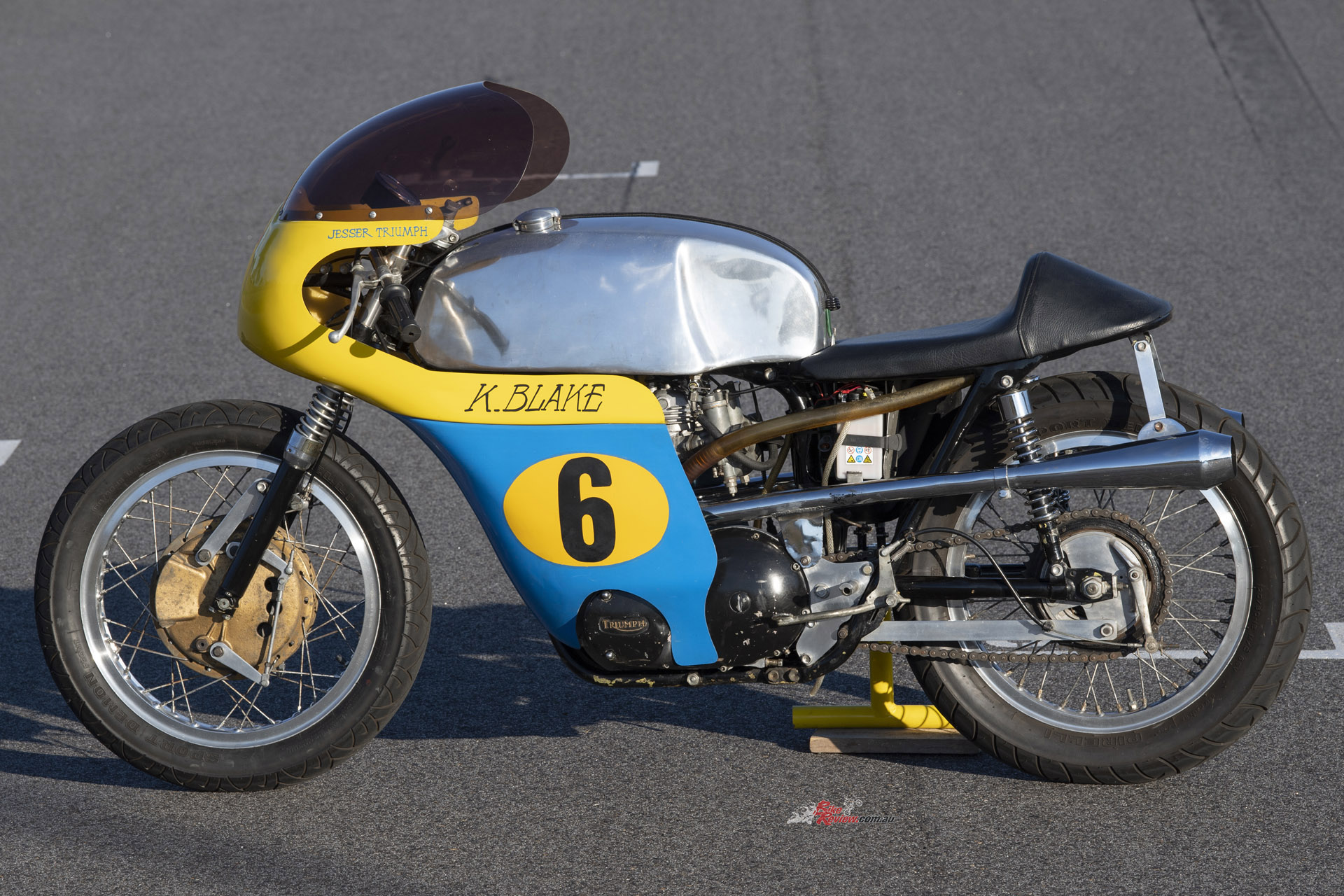
Indeed, Ken’s one-time ride-to-work motorcycle had lifted the biggest title Australian road racing had to offer, but in this state of tune the Jesser Triumph walked the razor edge of survival. Full rebuilds to fit new rings, valves and valve springs were needed after every meeting, with major parts like pistons and cranks lasting little longer, as Ken continued to dominate Aussie racing on the bike that season.
But just seven months after Ken’s Surfers win, it was Phillip Island’s turn to host the Australian TT during its annual New Year race meeting on January 4, 1970. However, not long before this, the Jesser Triumph had expired in practice at the Harvey Wiltshire Memorial at Calder, and Kawasaki importer Ron Angel, whose Malvern workshop the Jesser team based themselves in when racing in Victoria, had offered to loan Ken an A1R 250 Kawasaki.
“Ken’s one-time ride-to-work motorcycle had lifted the biggest title Australian road racing had to offer”…
Blake repaid the favour by winning the Unlimited main event against bikes of three times the capacity – it was the start of an enduring partnership that would net many more victories. With the Jessers’ agreement a deal was struck for Ken to ride a trio of Kawasakis for Angel in 1970 – the A1R, a 350cc A7R twin, and a brand-new just-released Kawasaki H1R 500 – a serious step up career-wise, which would however only kick off after the 1970 Australian TT in January.
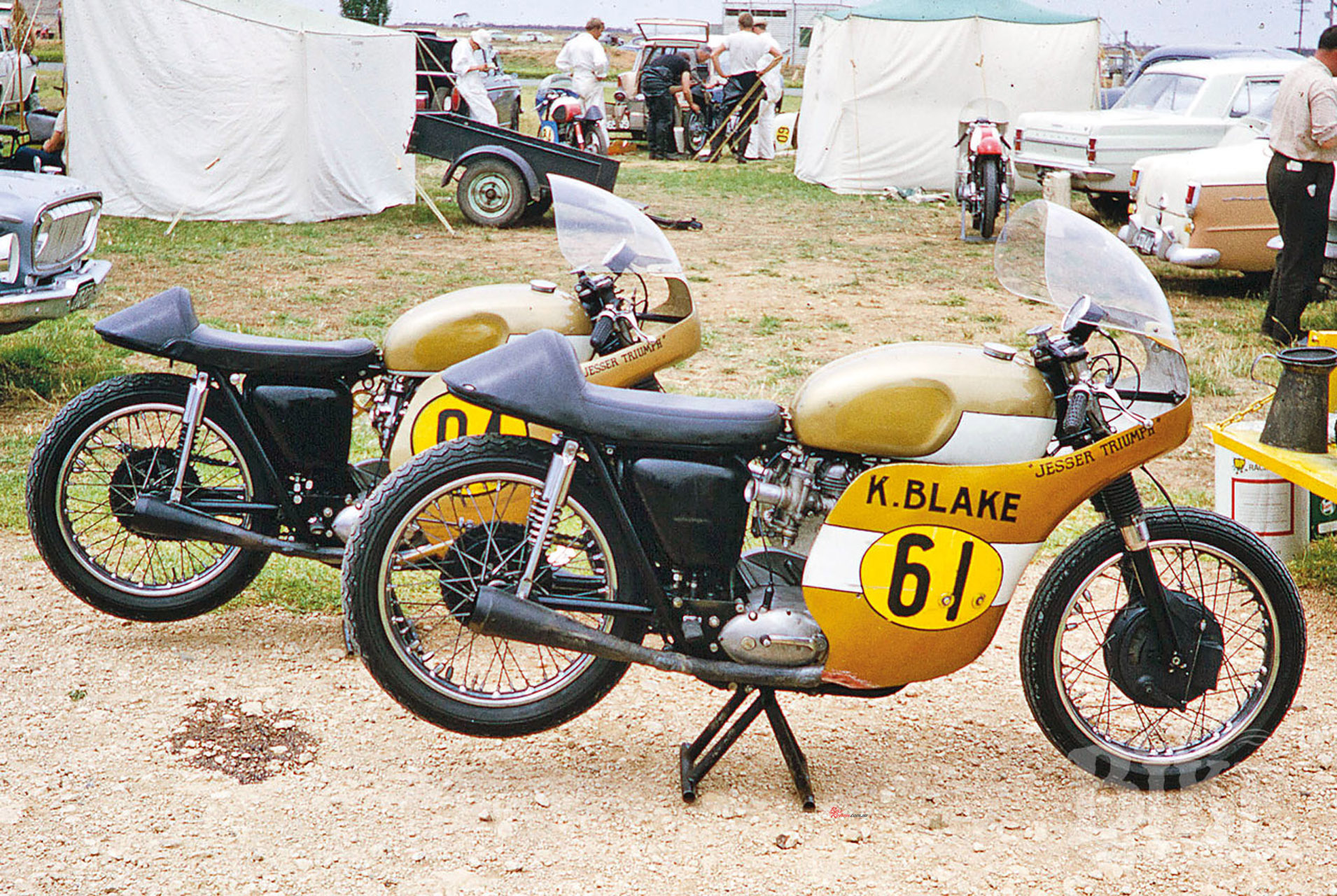
The two Jesser Triumphs at Calder in 1968.
So at Phillip Island Ken Blake rode his last race ever on the Triumph, and this time there was no close battle for victory, as Ken simply disappeared, distancing Ron Toombs and Bryan Hindle on their latest-spec TR3 Yamaha 350cc two-strokes in the Triumph’s wake.
After its Phillip Island victory, the Triumph was parked in the Jessers’ workshop and stayed there while Ken took up his position with Ron Angel’s Kawasaki team. This duly led to a fairy-tale Unlimited GP victory and a new lap record on the H1R in his first-ever race at Bathurst, but soon after the Kawasaki seized at Hume Weir and the resultant crash left Kenny with two crushed vertebrae and head injuries that kept him out of action for many months.
“After its Phillip Island victory, the Triumph was parked in the Jessers’ workshop and stayed there while Ken took up his position with Ron Angel’s Kawasaki team”…
Short of cash and unable to work because of these injuries, as well as blurred vision, he decided to sell the Triumph, whose engine the Jessers had rebuilt post-Phillip Island to a milder and hopefully more durable 650cc state of tune. His mechanic mate Glen Rose decided to buy the bike “as Ken needed the money, and I wanted to keep it in Adelaide.” Glen rode it in several SA meetings over the next couple of years, before selling it via a local motorcycle shop to a buyer in Melbourne, who campaigned it without notable success.
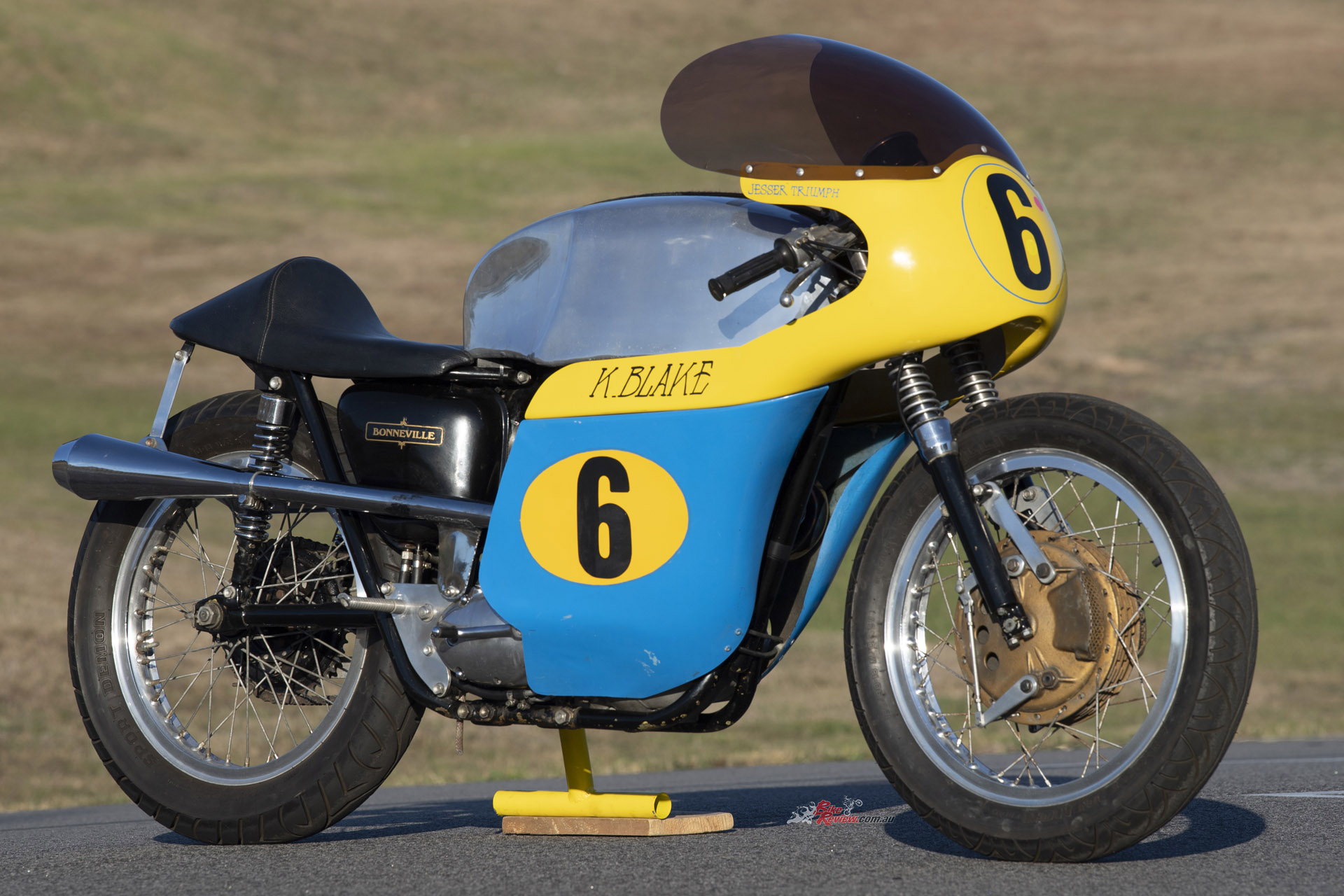
But Dean Jesser had never got over the loss of the motorcycle that carried so much of his own and brother Les’s input, and resolved to get it back, which he did in 1982, the year after Ken Blake was so sadly killed in the Isle of Man Senior TT. He then restored it to the condition it was in when Kenny last raced it, but still with the milder 650cc engine tune, and Ivan Ardill did some demo runs on it at Mallala in honour of his late team-mate.
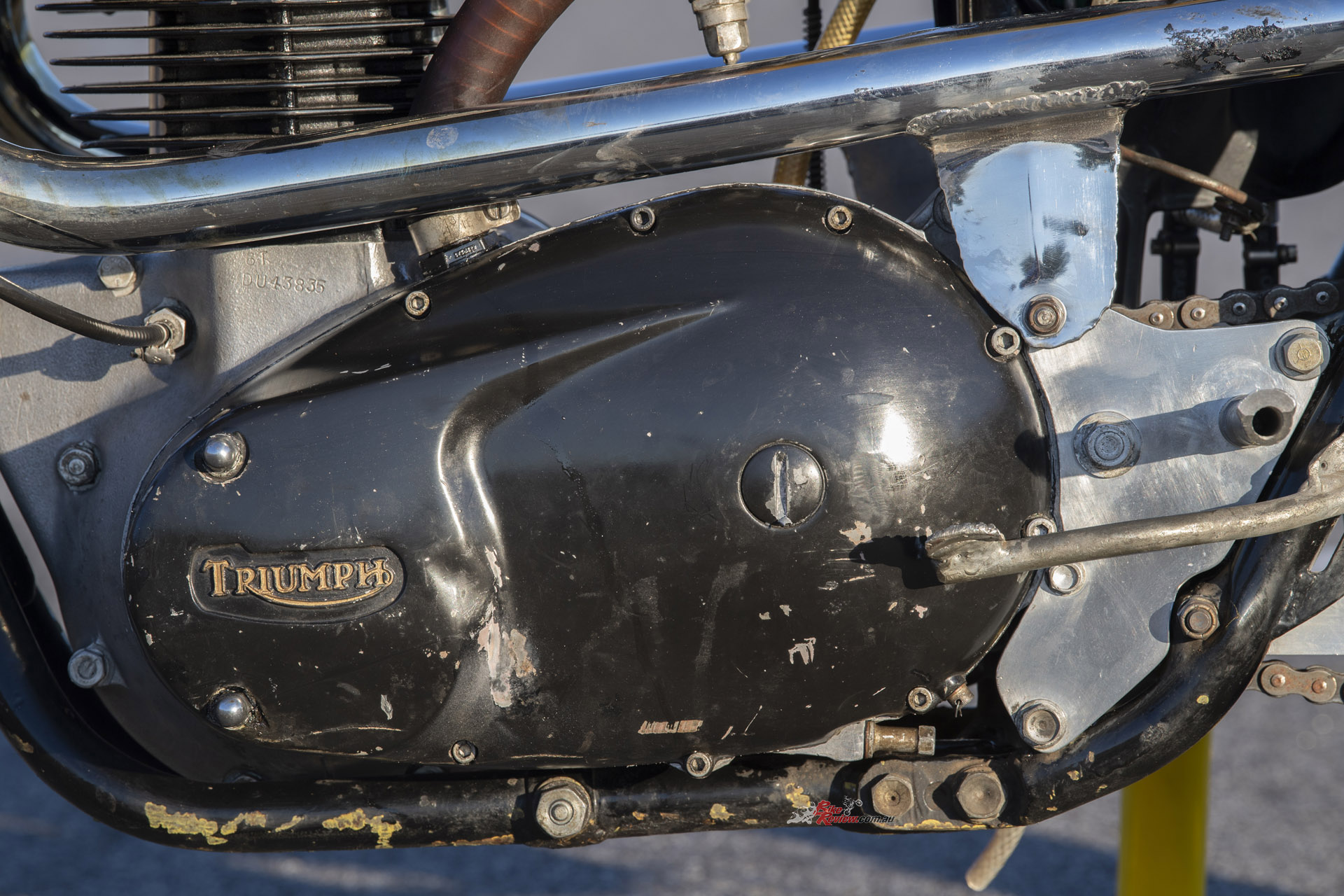
Les Jesser passed away in 1985, and Dean followed too in 1993 – but prior to his death, he’d arranged for the Jesser Triumph to be displayed at the National Motor Museum in Birdwood, an hour outside Adelaide. It sat there unheralded for many years, with little information on display to let visitors know any of this remarkable bike’s achievements. But in 2011, the Jesser family accepted an offer from Motorcycling Australia’s Museum & Heritage Committee to purchase the Jesser Triumph for the Aussie bike federation’s own collection of significant motorcycles that have left their mark on Australian two-wheeled history, both on and off-road.
“Dean Jesser never got over the loss of the motorcycle that carried so much of his own and brother Les’s input, and resolved to get it back”…
These have so far included such landmark bikes as the Moreparts Ducati 750SS that Mike Hailwood teamed up with Jim Scaysbrook on to make his International two-wheeled road racing comeback at Amaroo Park in 1977, the Avon Yamaha XS1100 which won the 1978 Castrol Six-Hour race after making the first planned tyre change in the history of the event, and several examples of home-spun Aussie ingenuity like the ex-Les Diener DOHC Eldee Velocette.
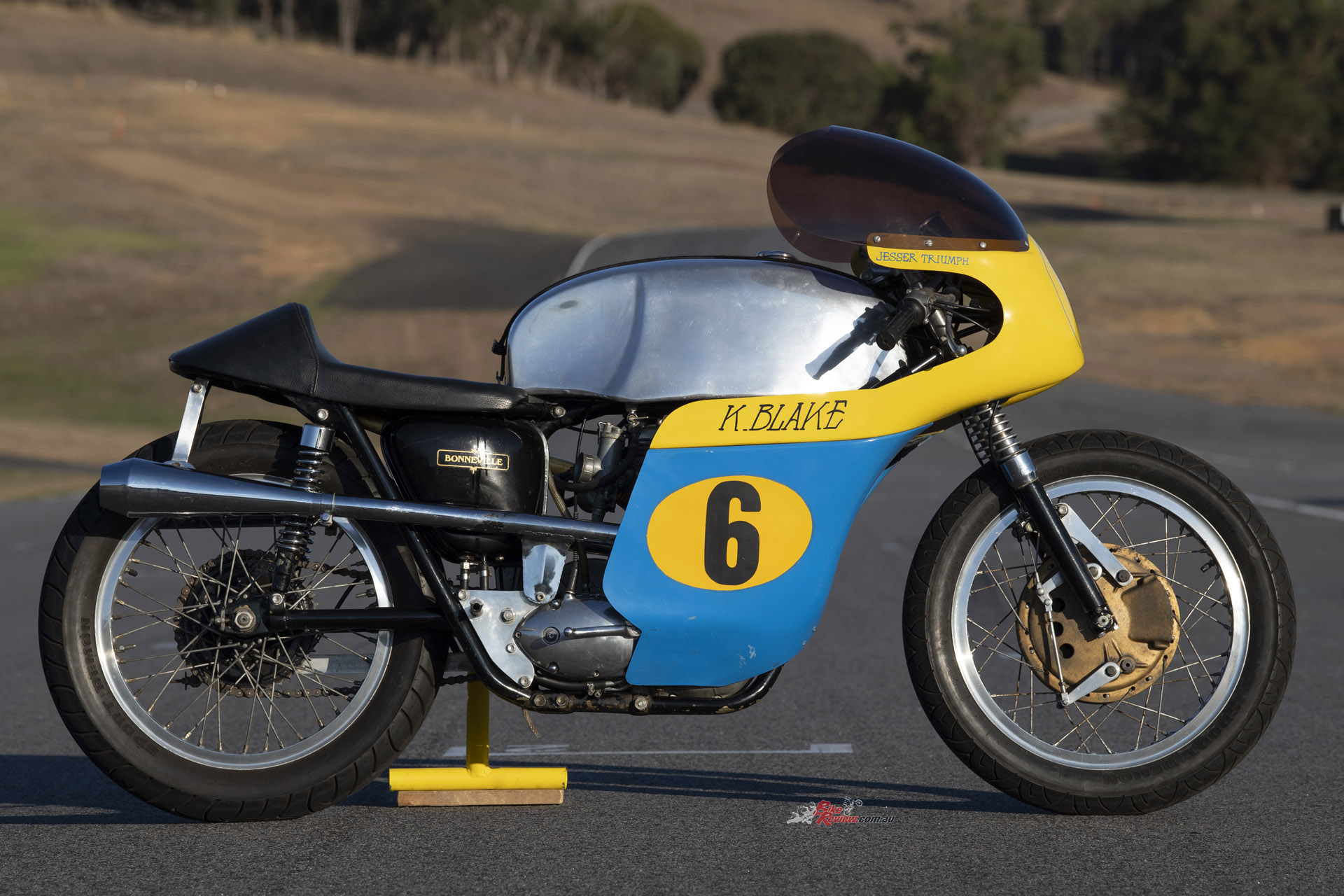
There are off-roaders too, like the ex-Geoff Taylor Triumph Métisse, Harry Payne’s factory Velocette Scrambler and dirt trackers of every configuration and description. These have all been acquired and then restored to trackworthy condition for demo purposes, thanks to funds raised by the Classic Bike Broadford (formerly Broadford Bike Bonanza) held each year over the Easter weekend.
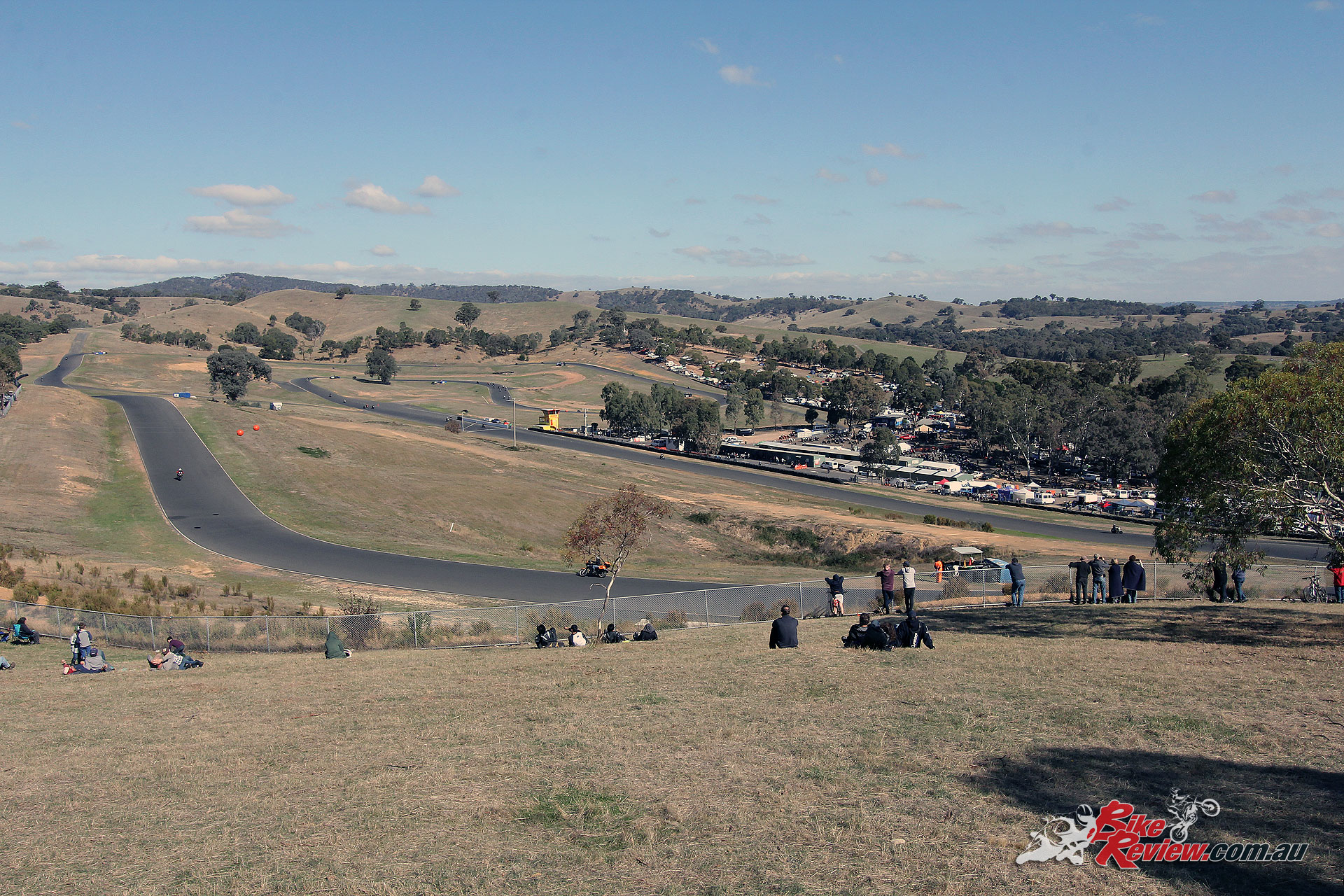
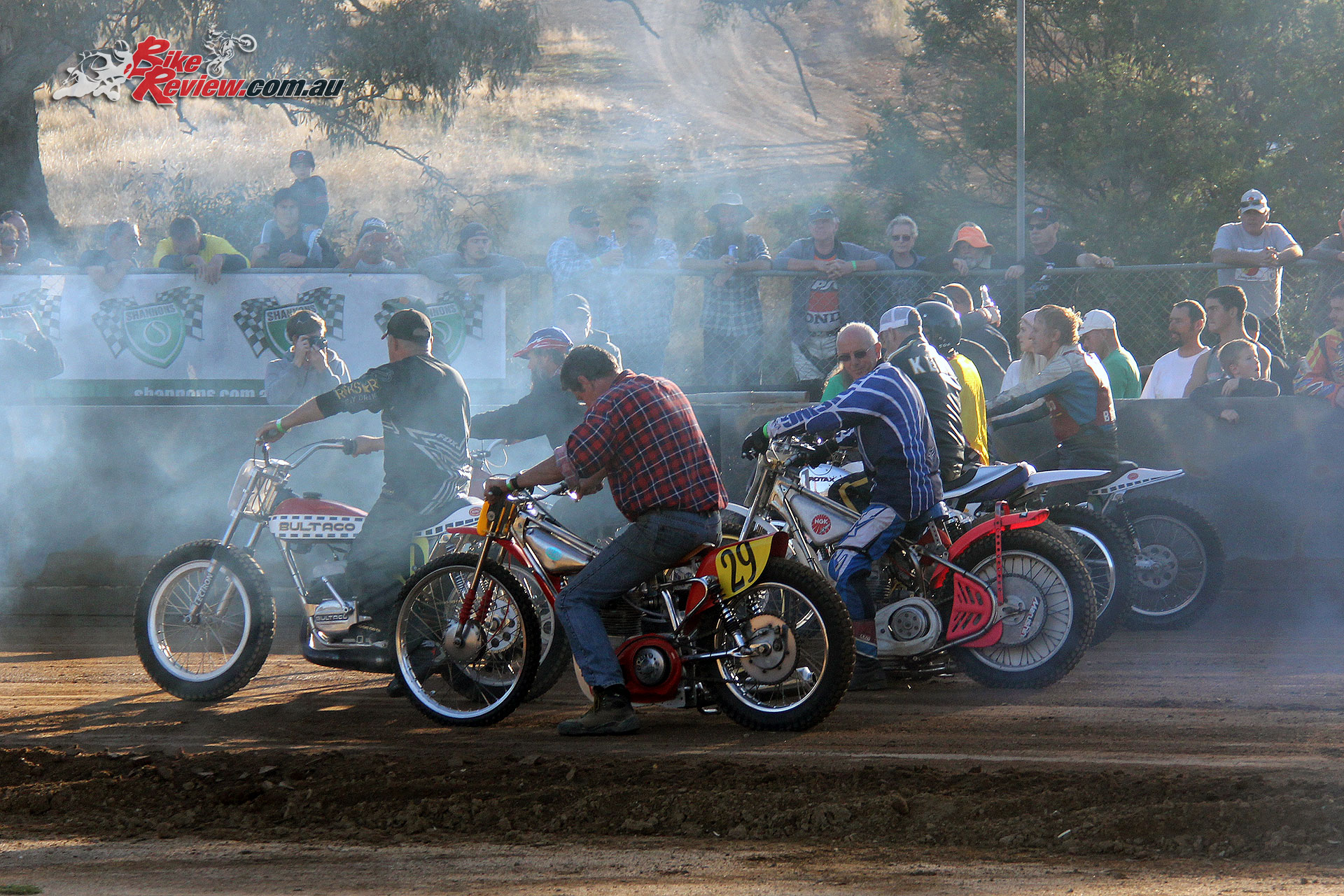
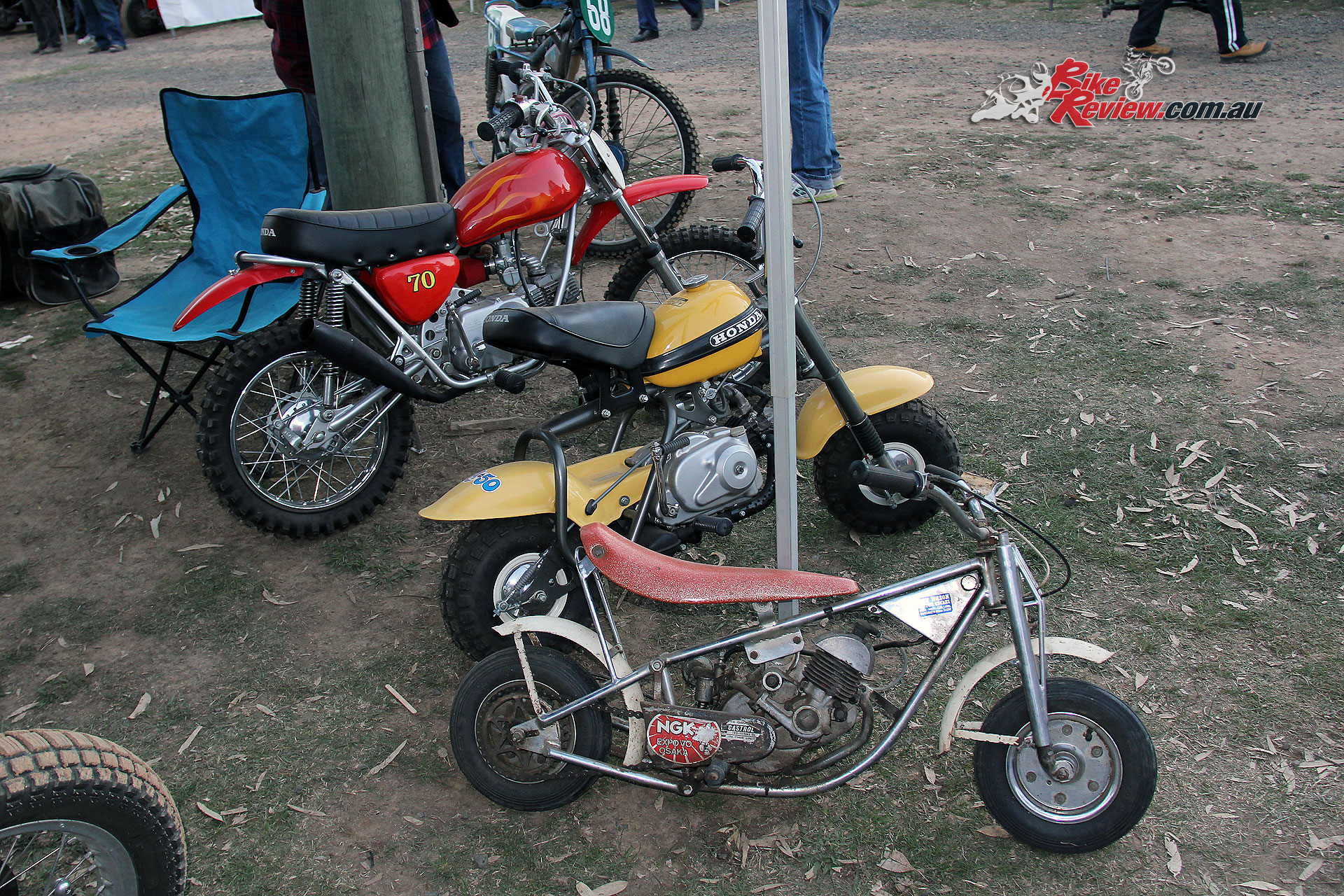
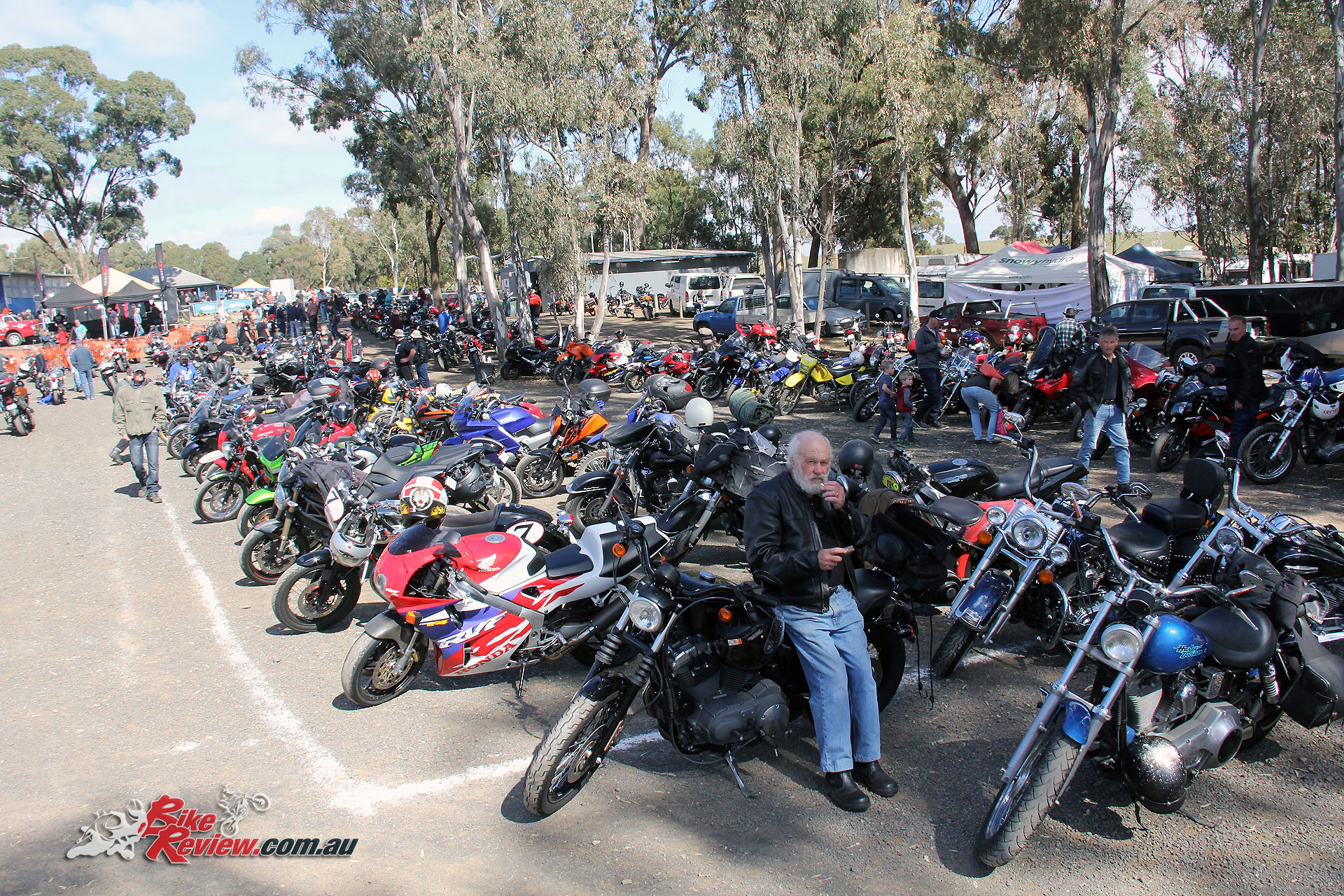
As part of MA’s remit that the contents of its Collection should be seen and heard running again, the Jesser Triumph duly returned to the track for the first time in three decades at the 2013 Broadford Bonanza, with former Classic racing ace Jim Scaysbrook in the saddle. It ran well, but persisted in jumping out of gear, so early in 2014, with the gearbox sporting some new internals, Scaysbrook tested it again at Broadford, only for history to repeat itself. Mirroring the 1969 incident at Mallala, an errant big end bolt sadly punched a hole in the crankcase after less than two full laps.
“The Jesser Triumph fired up again just a week before the 2022 Bonanza, at which I was invited to share shakedown duties”
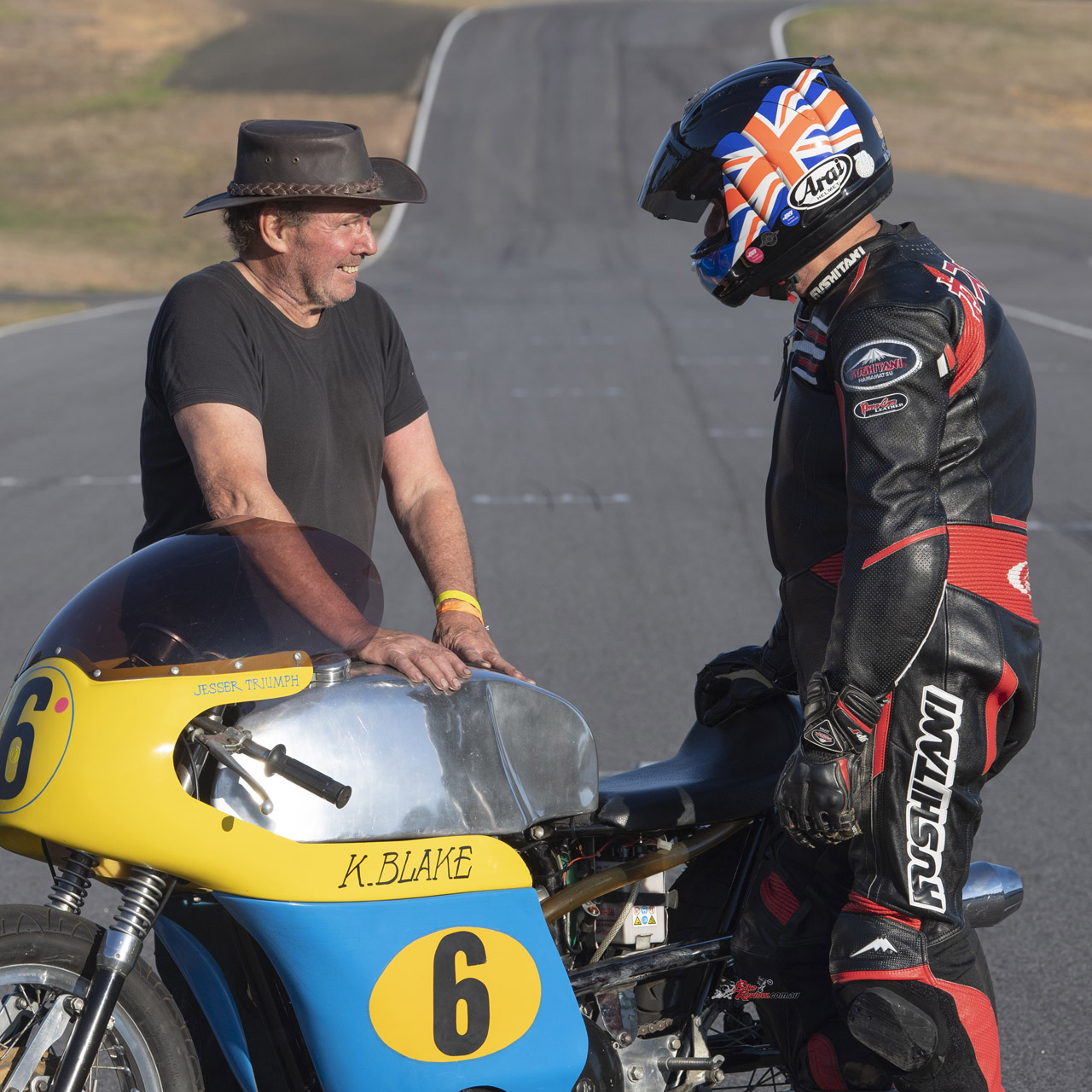
This dictated a complete engine rebuild which was eventually consigned to local restorer Peter White, whose Kilmore workshop is just 15 minutes from Broadford. Thanks to his efforts, the Jesser Triumph fired up again just a week before the running of the 2022 Bonanza, at which I was kindly invited by MA to share shakedown duties with Peter.
“The big end cap went right through the cases,” said Peter, “but these had lots of welding on them, because it was blown up quite a few times while Kenny Blake was riding it! But I’m afraid this latest time they were a total goner, so while we’ve kept the original broken cases set aside, I’ve sourced a correct replacement set for the year – ’64 was the first year for unit construction Bonnevilles.
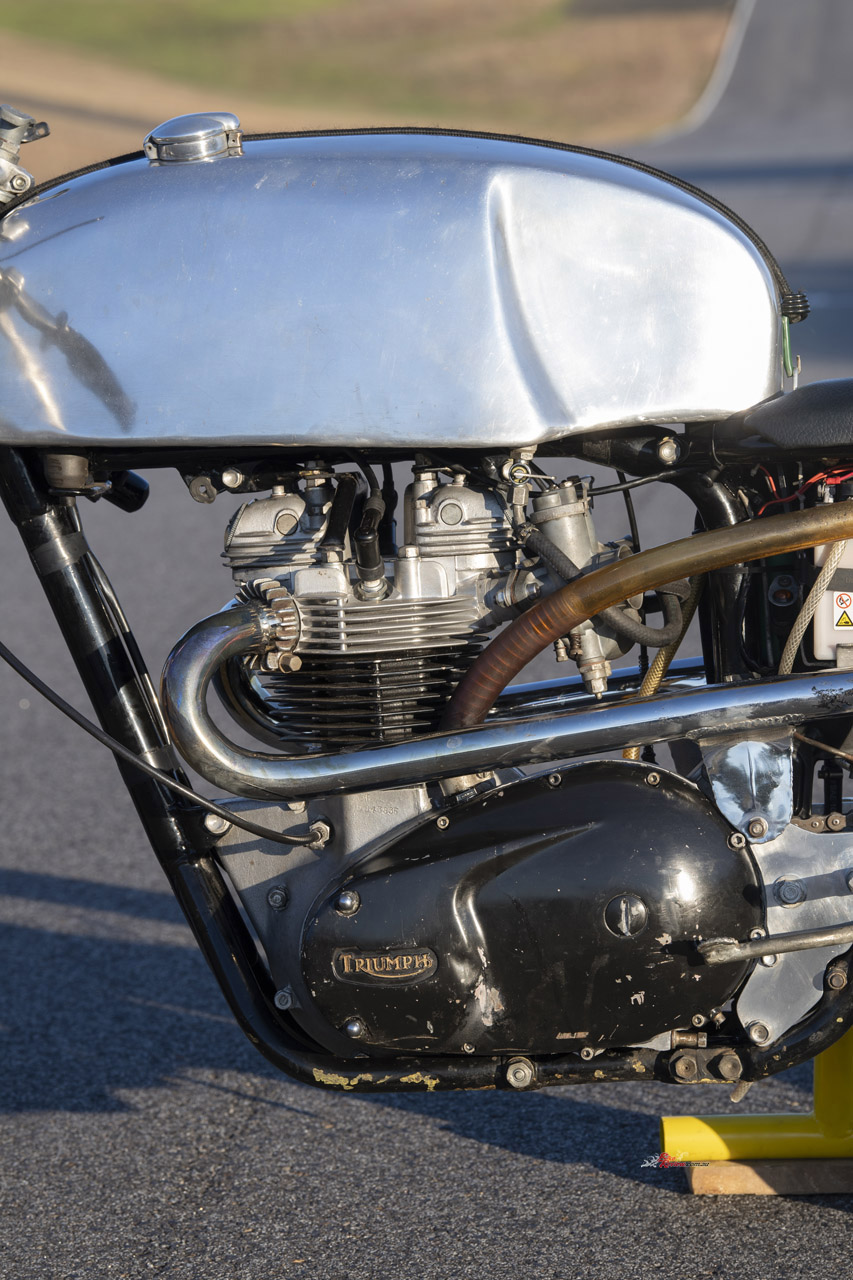
“We’ve obtained a Morgo big-bore conversion kit and a 750 crank with Carrillo rods, so the engine is now back out to 725cc just as when Kenny last raced it, but with much less aggressive compression, and running just 100% methanol, with none of the goofy juice they added in! The 750 Bonnie crank has been balanced to take the Carrillo rods and the Morgo pistons, and machined down on the timing side to take an Imperial bearing, because in that era they had a metric bearing on that side. It’s got the very lumpy cams that came in it with 235 degrees of duration, but standard valves.
“We’ve kept the standard Amal Monobloc carbs it came with, duly set up for methanol, but I’ve fitted a Boyer CDI ignition. It had points, which I quite like, but with a bike like this it’s just a bit easier for running at events like this with the Boyer, because it gives a fatter spark and if you adjust it, you adjust both cylinders at the same time, In fact, we could possibly advance it up a little more after this outing, but we’ll see….”
“The Jesser Triumph’s standard Bonneville single-loop tubular steel frame has had extensive bracing added to the swingarm and around the swingarm pivot”…
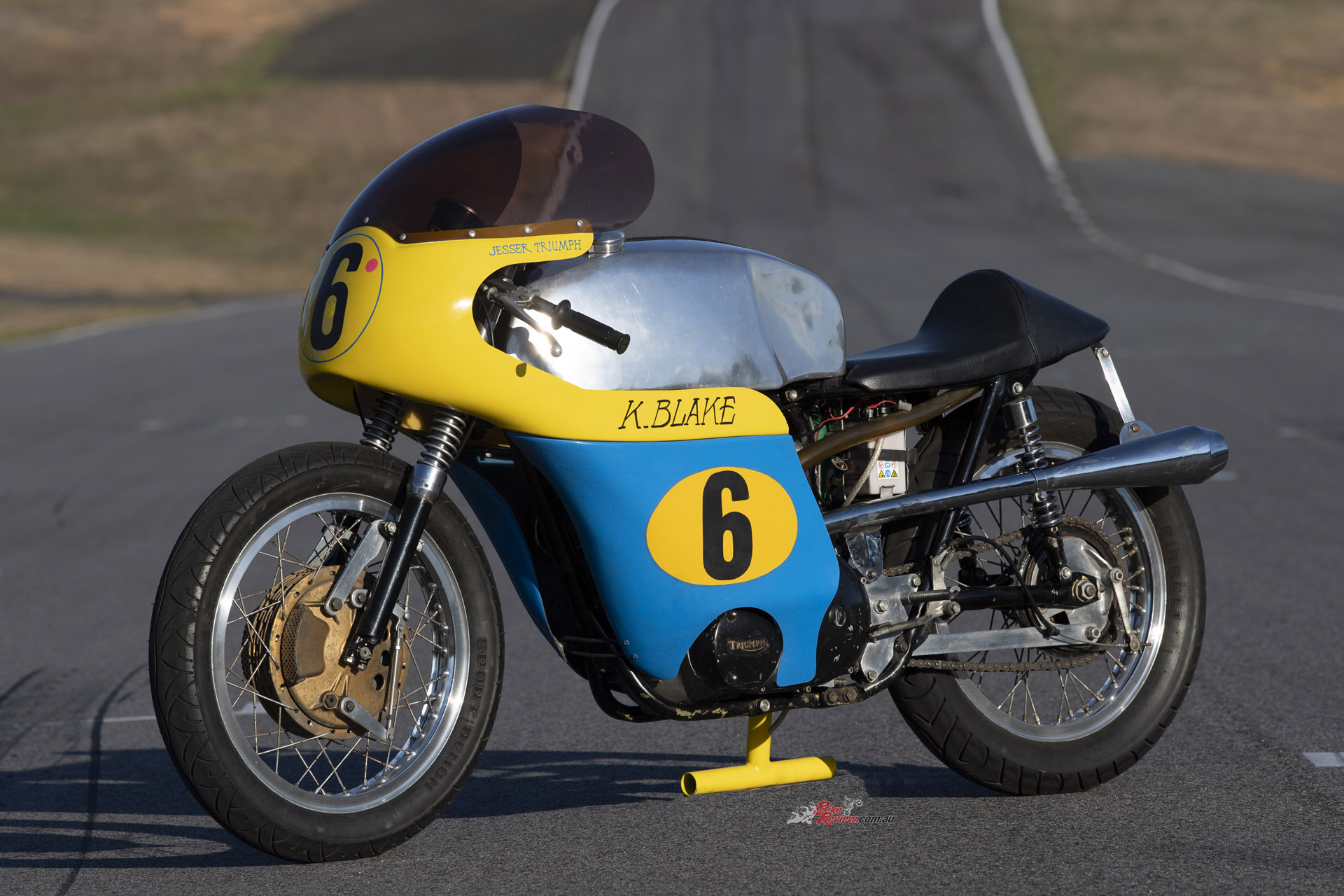
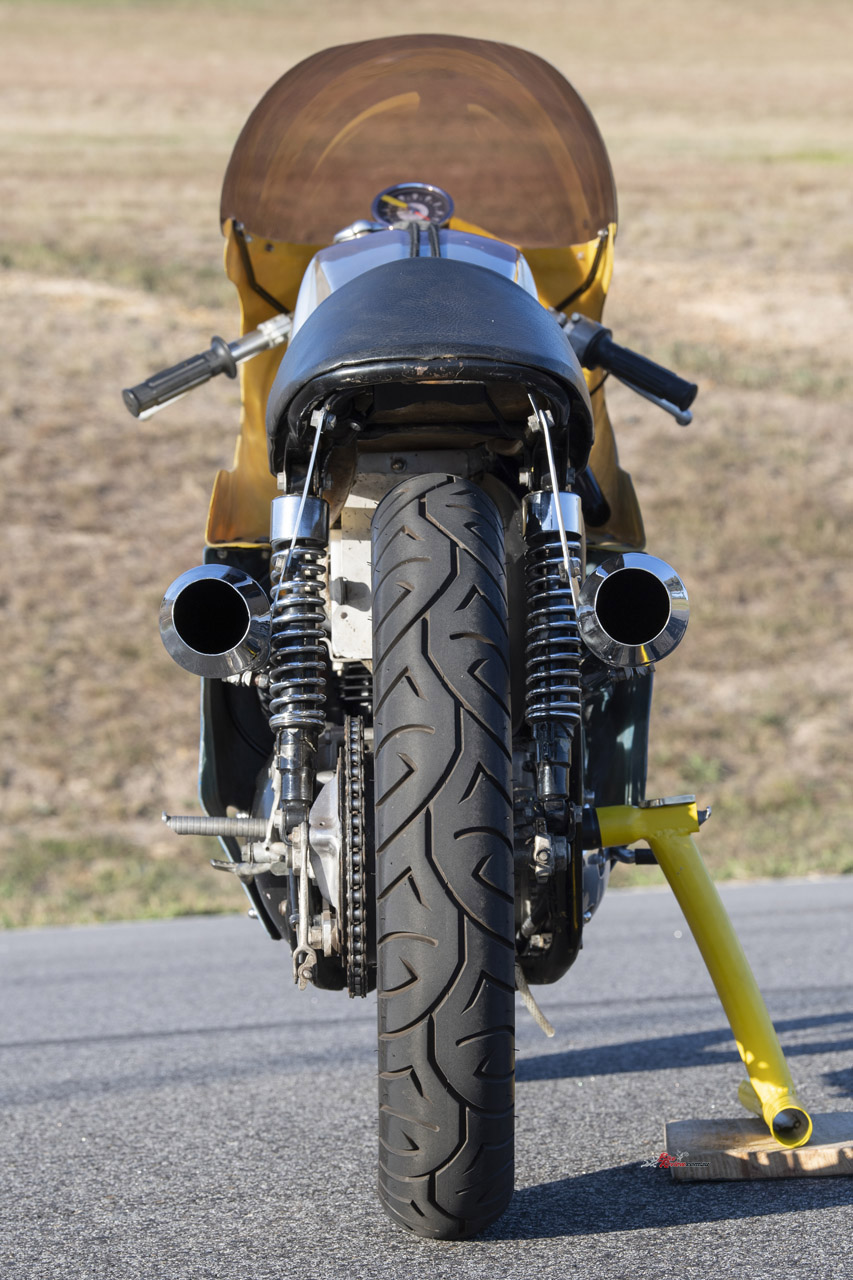
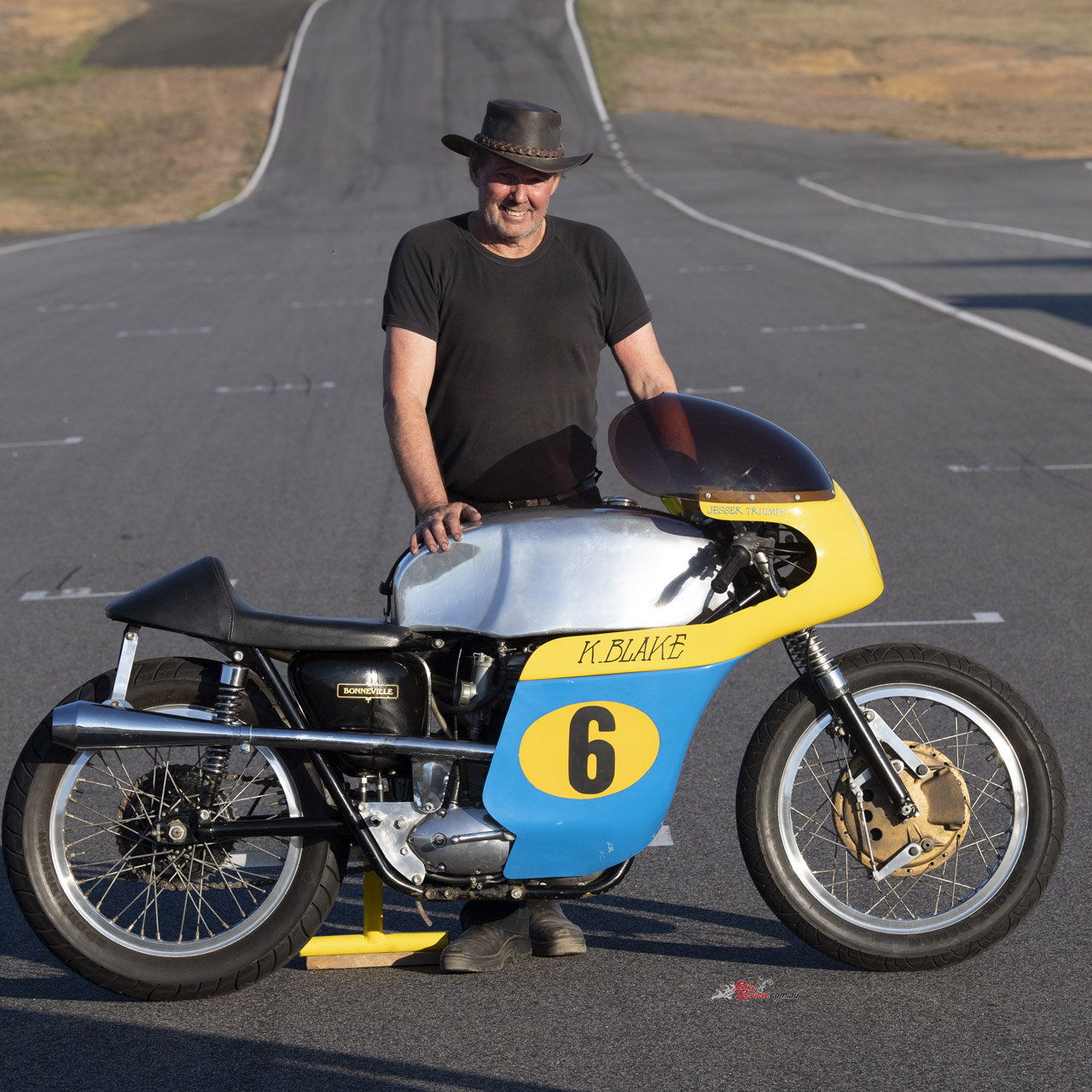
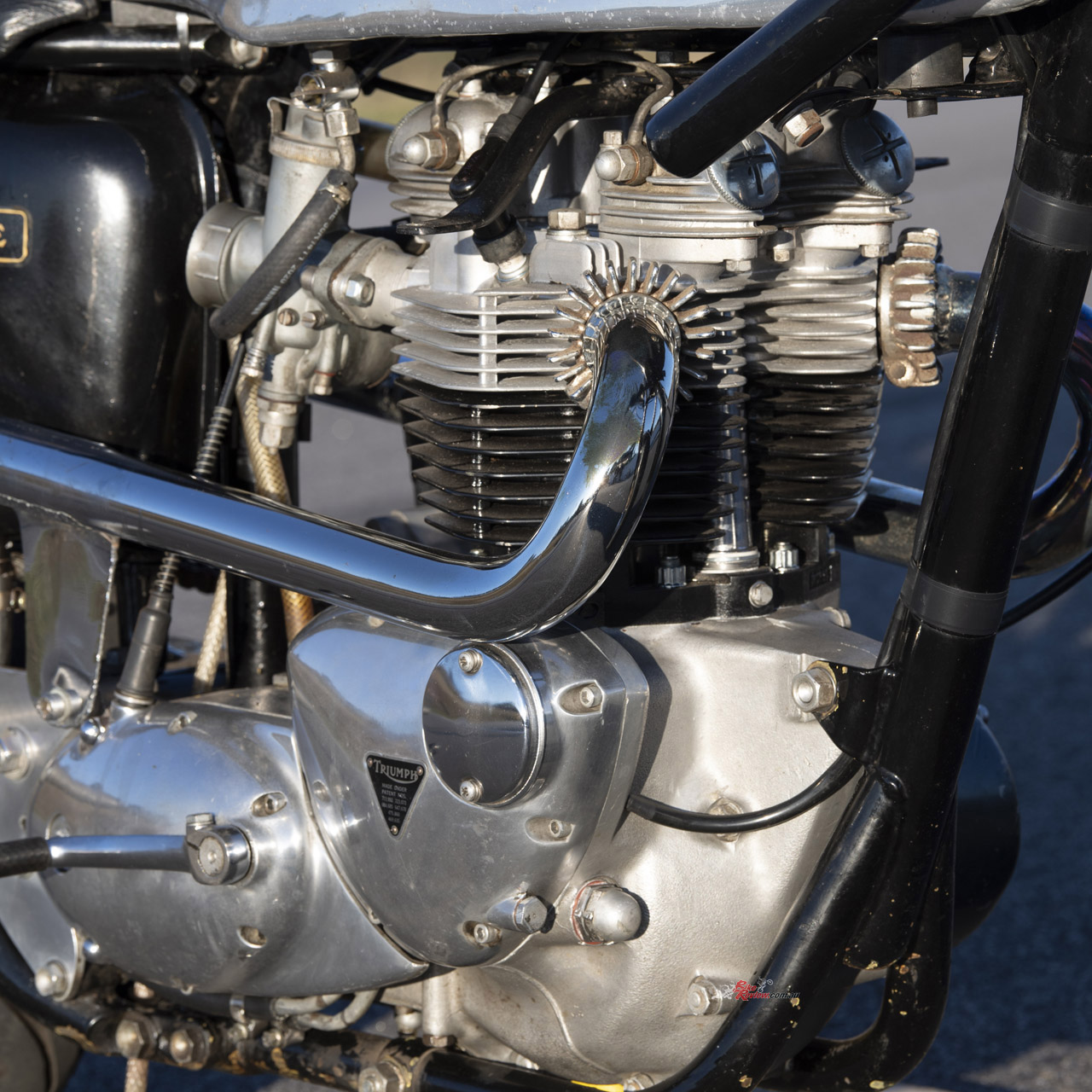
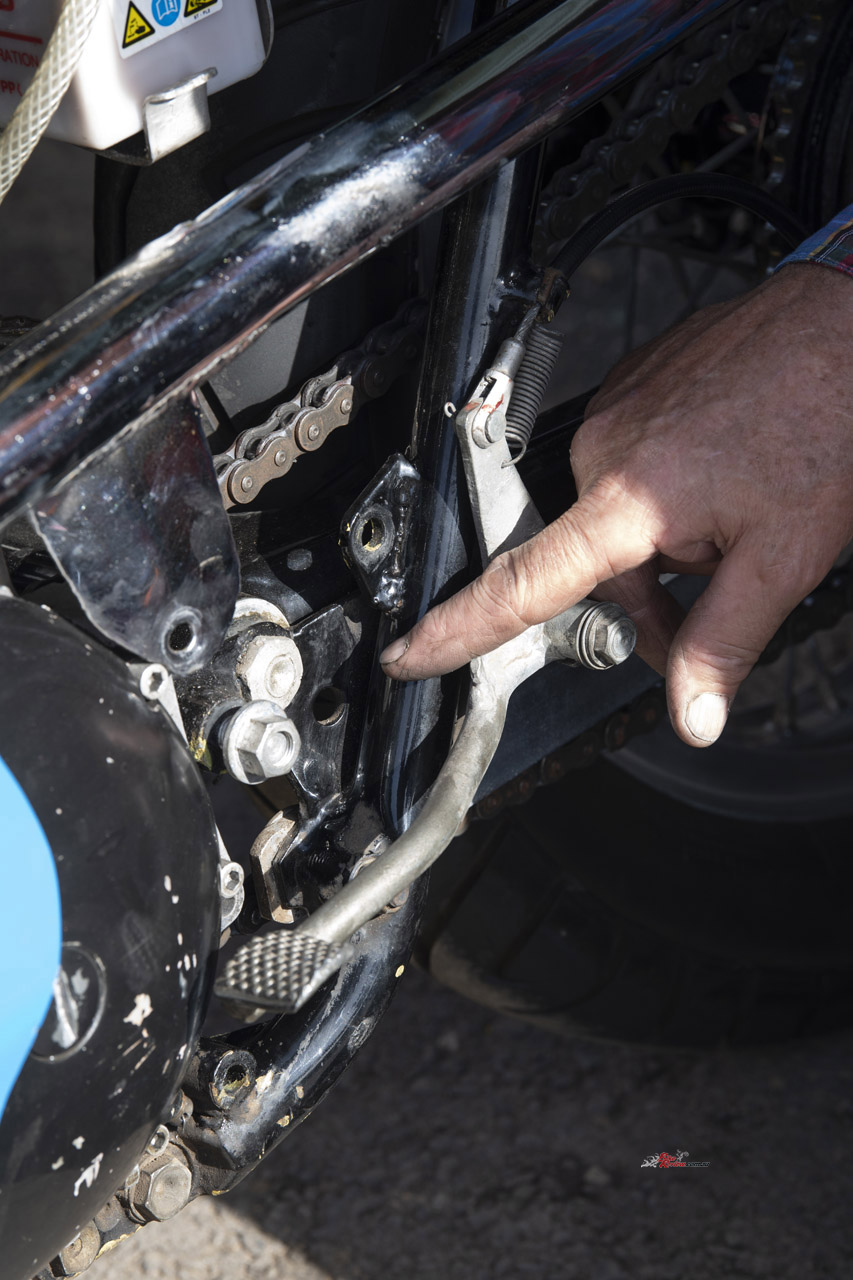
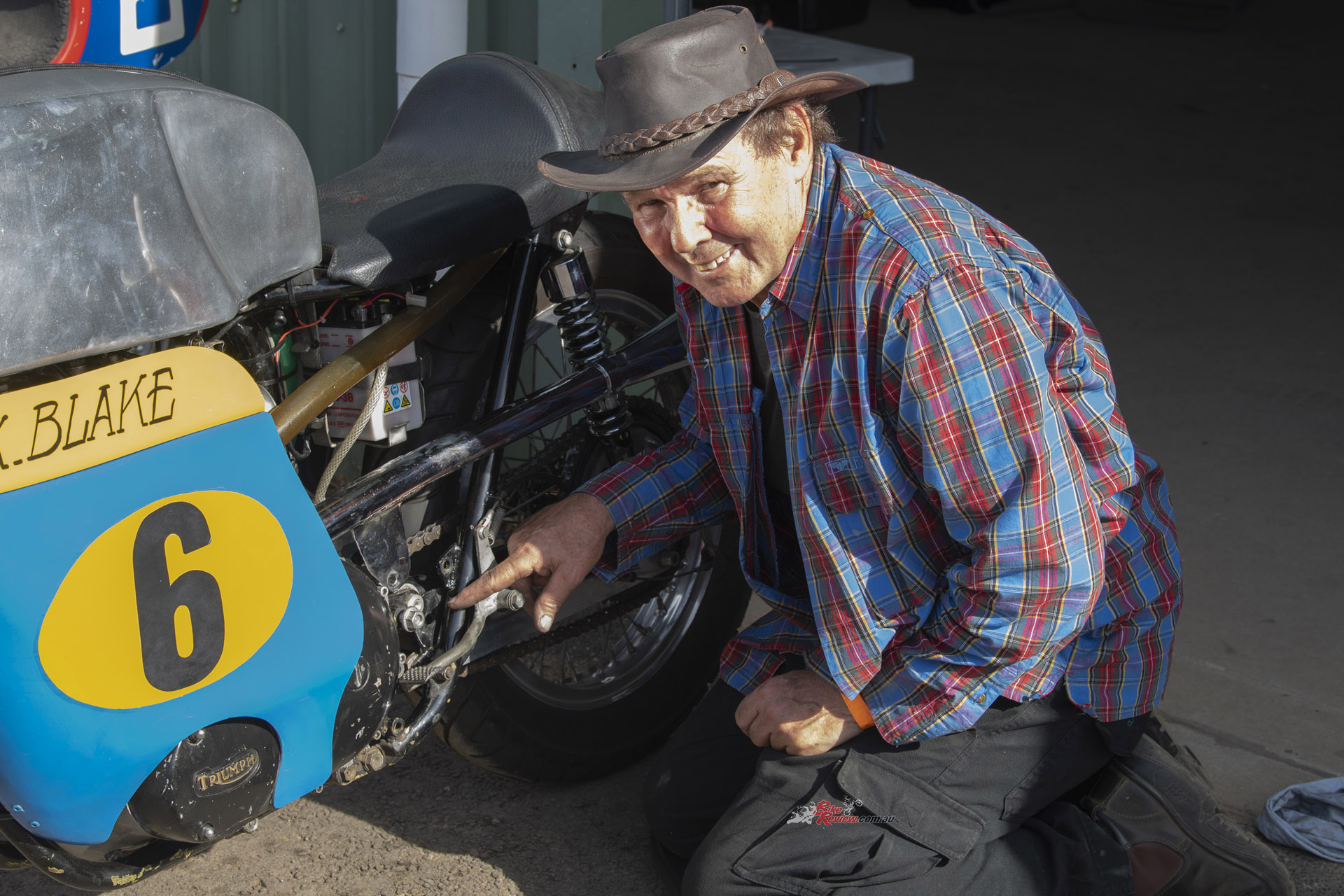
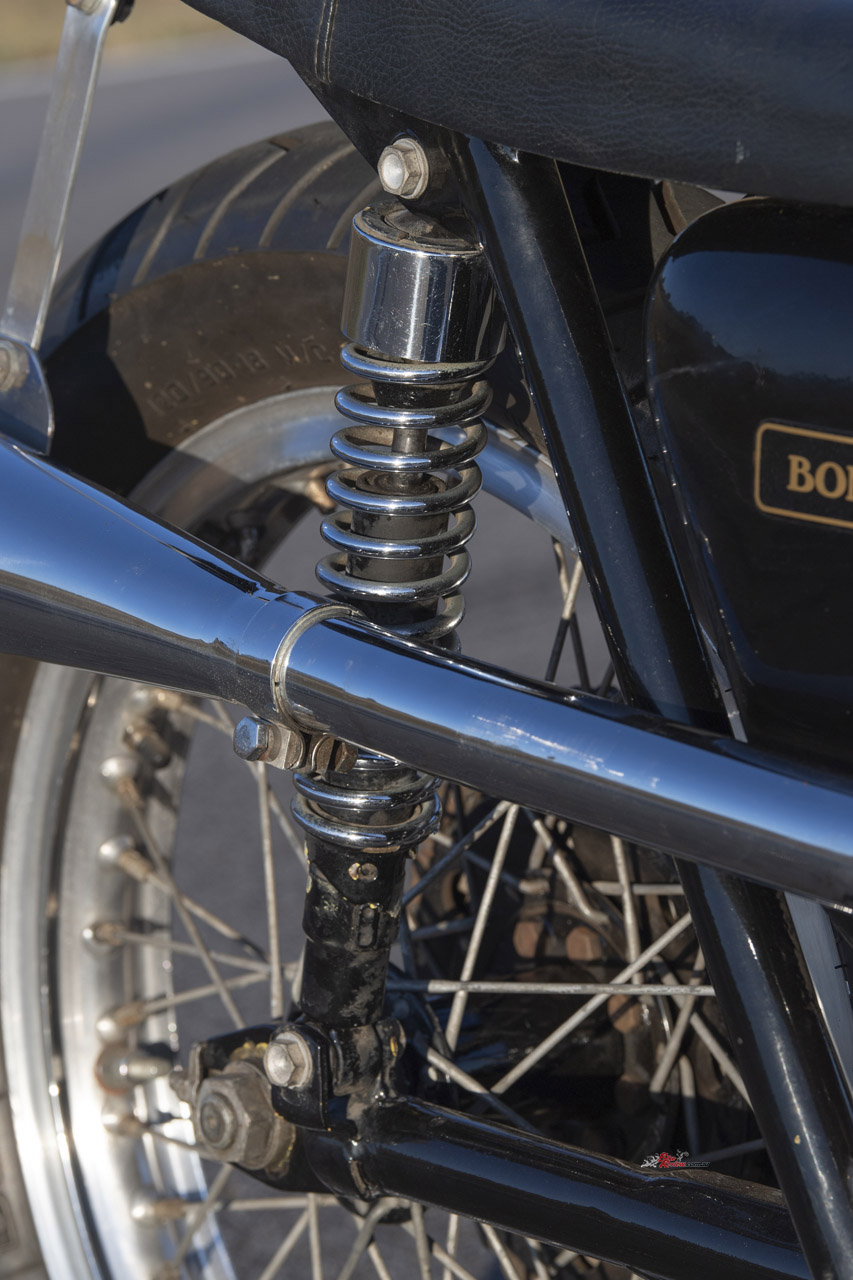
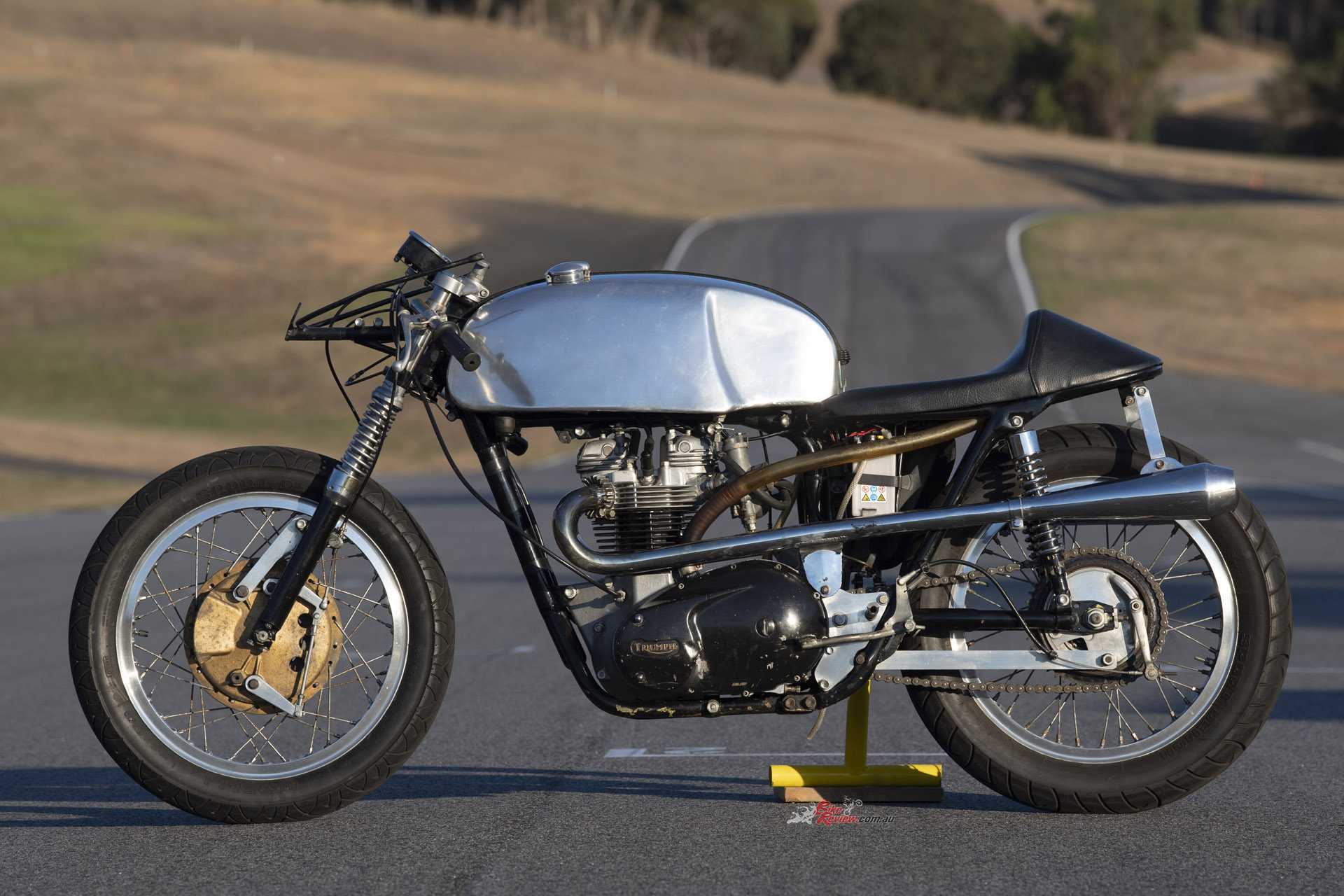
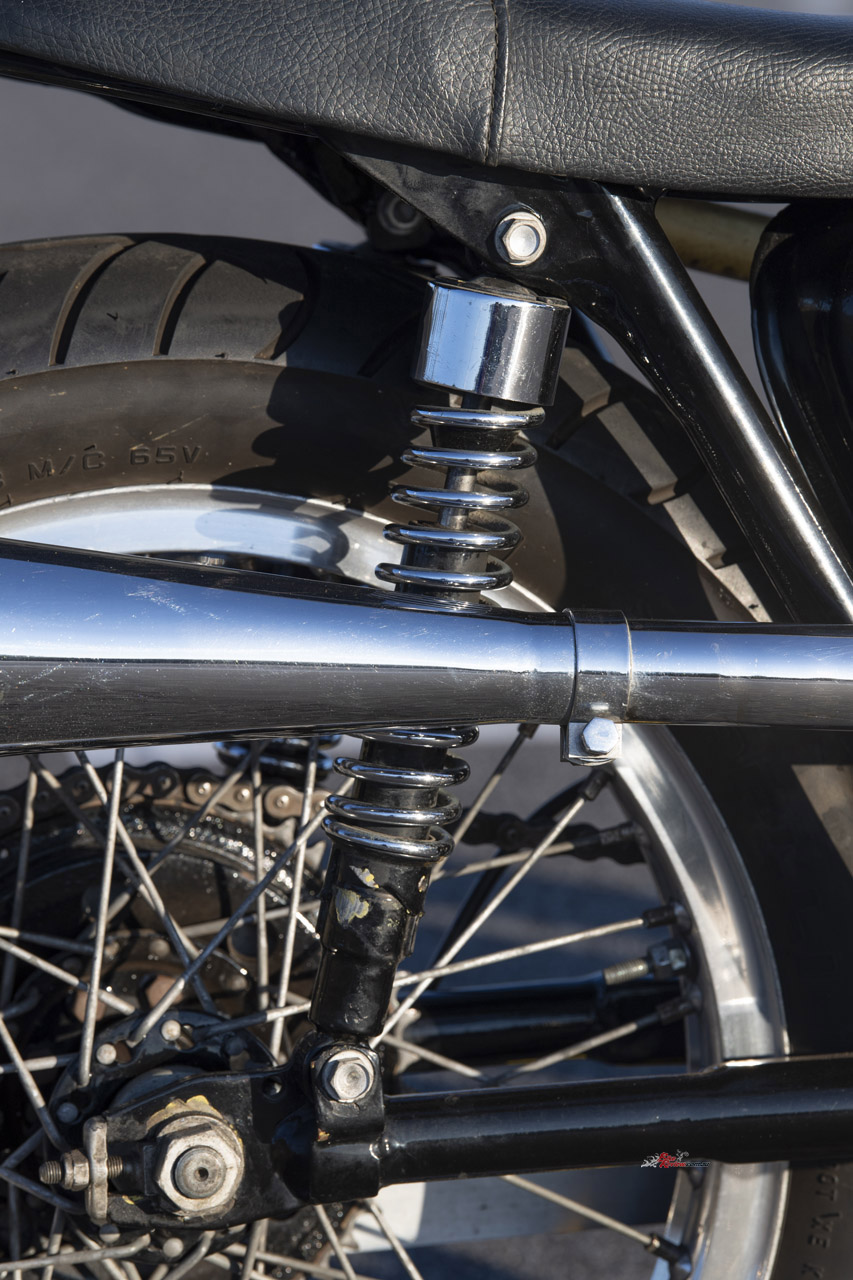
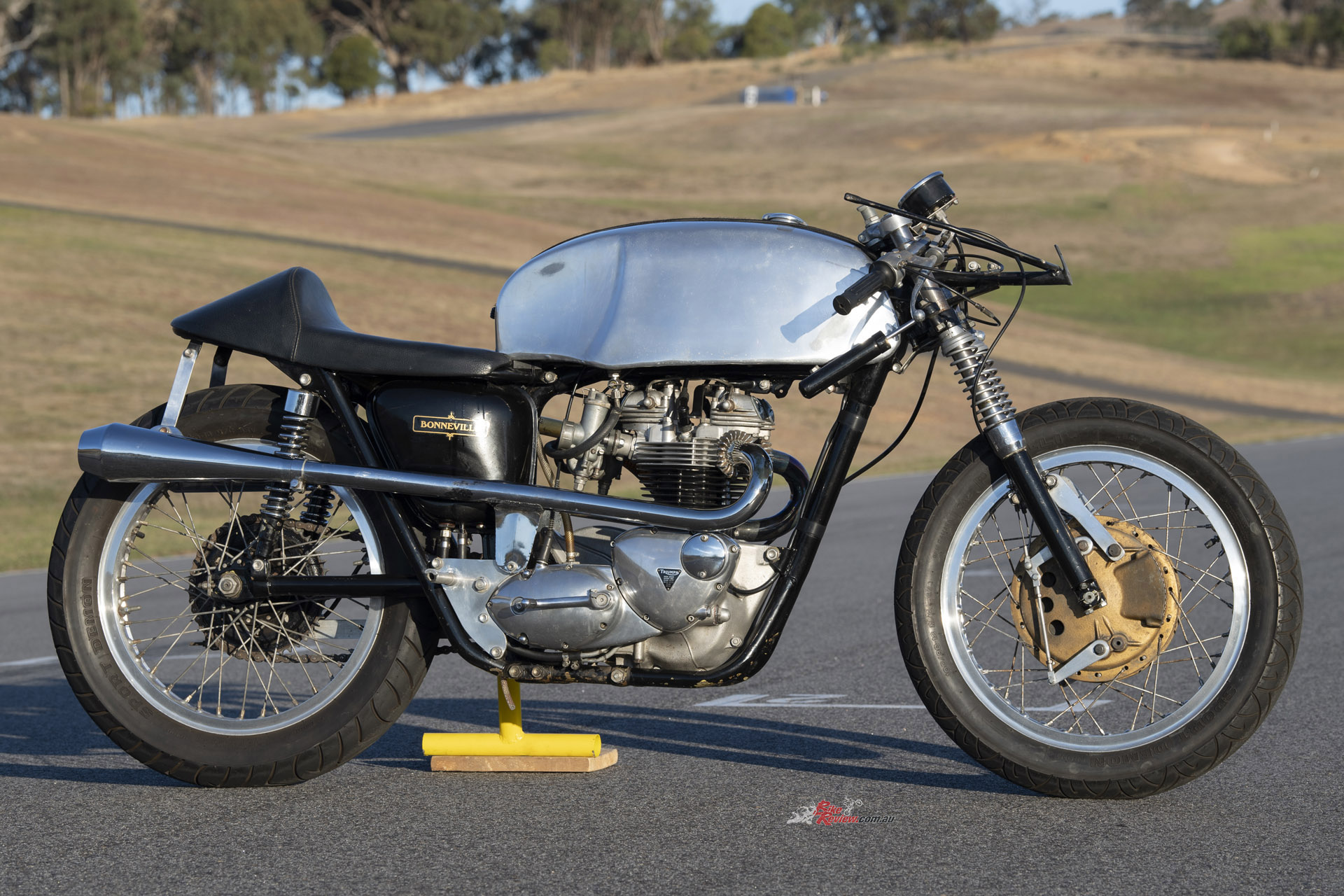
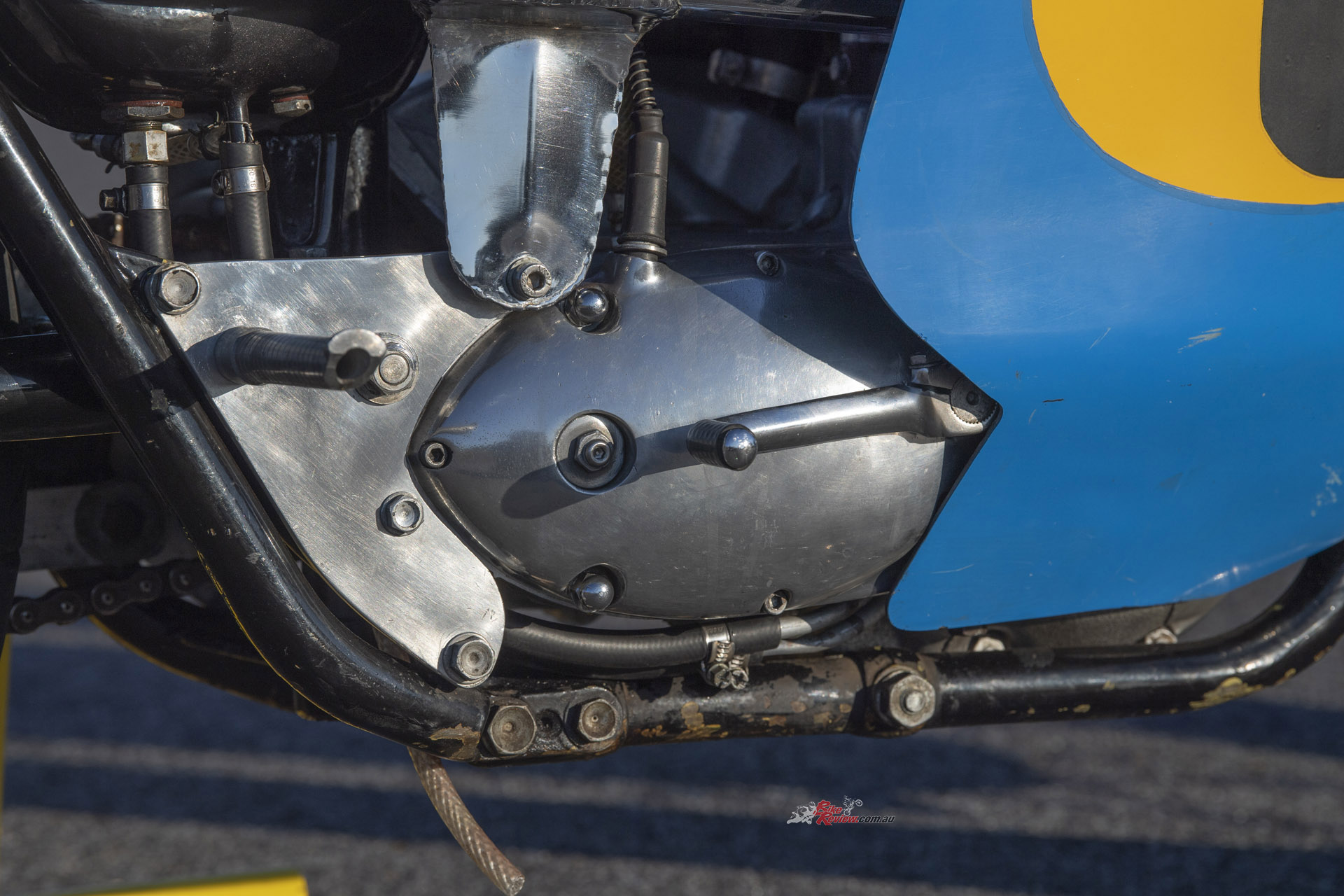
The Jesser Triumph’s standard Bonneville single-loop tubular steel frame has had extensive bracing added to the swingarm and around the swingarm pivot, which was already fairly sturdy anyway, plus the subframe has now been welded on. The frame has also been gusseted around the shock mounts, and the rear brake plate changed to full-floater mounting. Evidence of the quest for lightness is everywhere – numerous bolts on the bike have even been reduced in size from 5/16” to 1/4”, and from 3/8” to 5/16”.
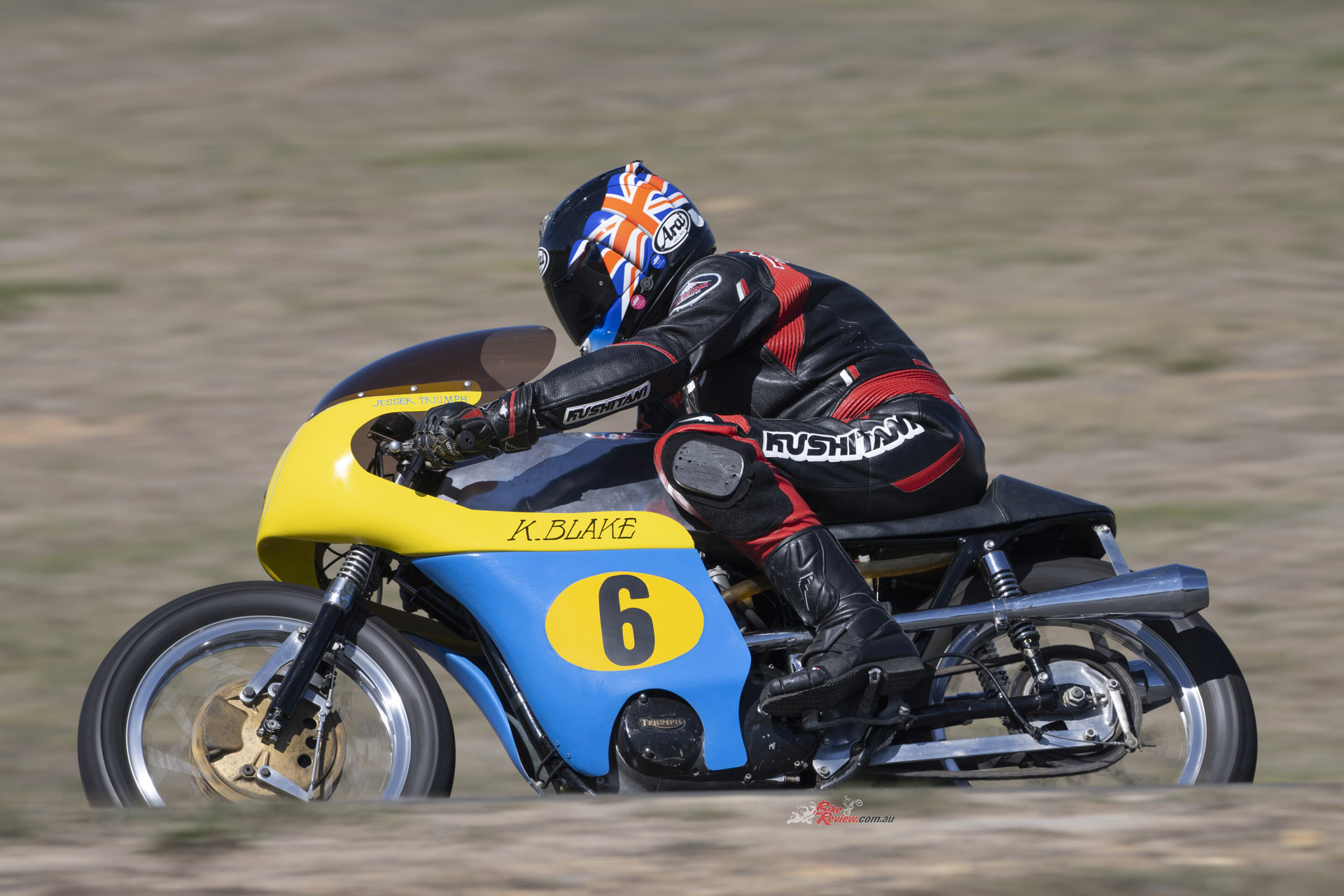
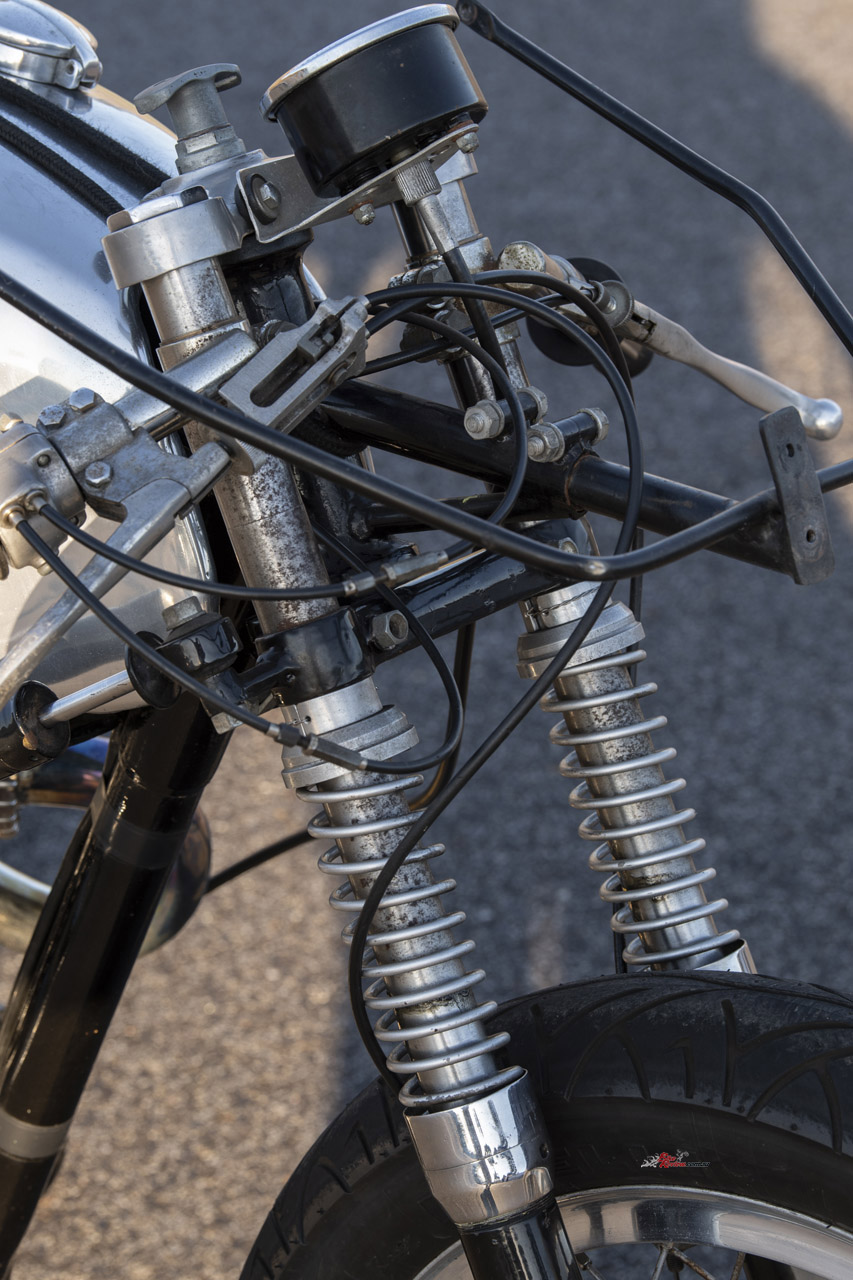
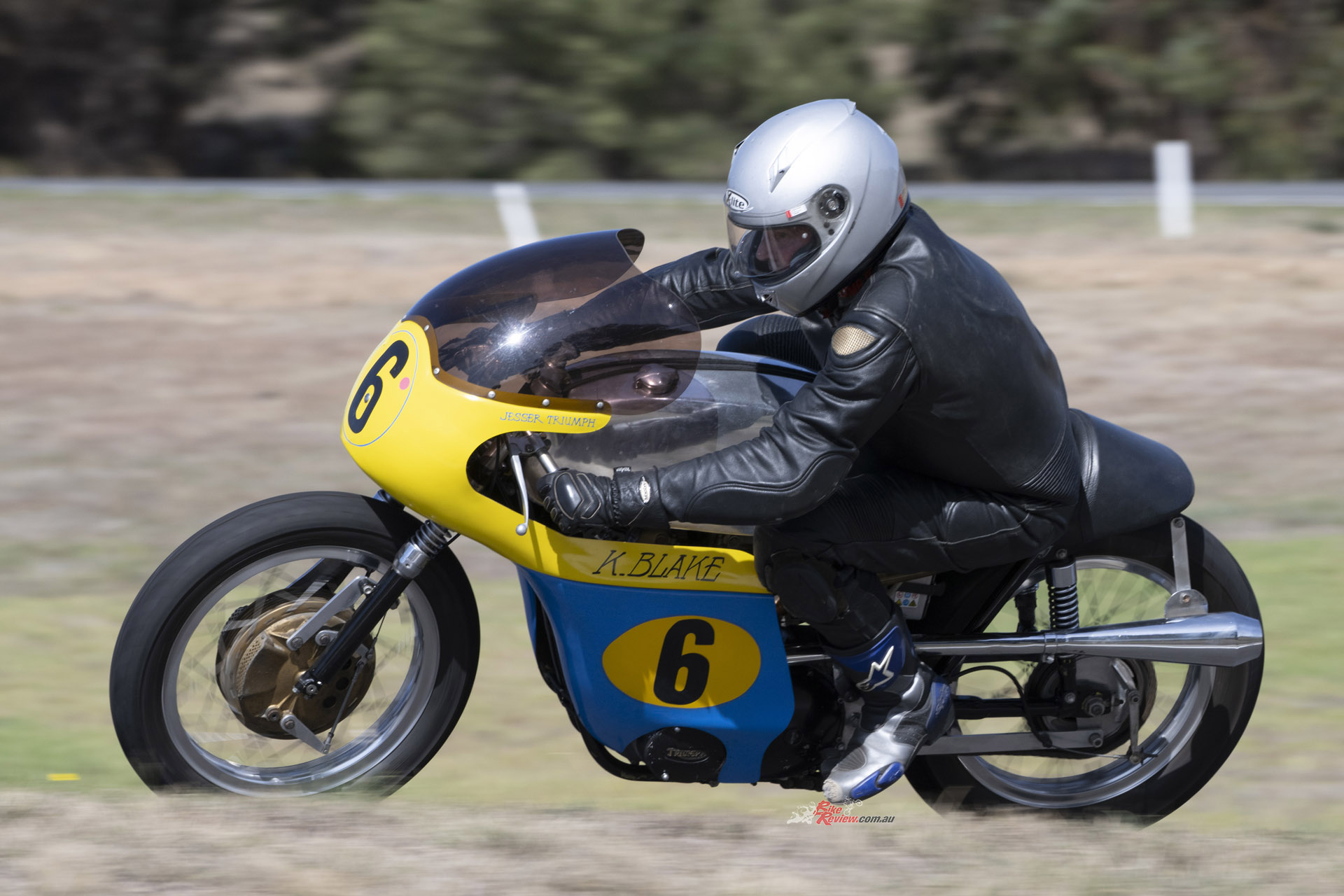
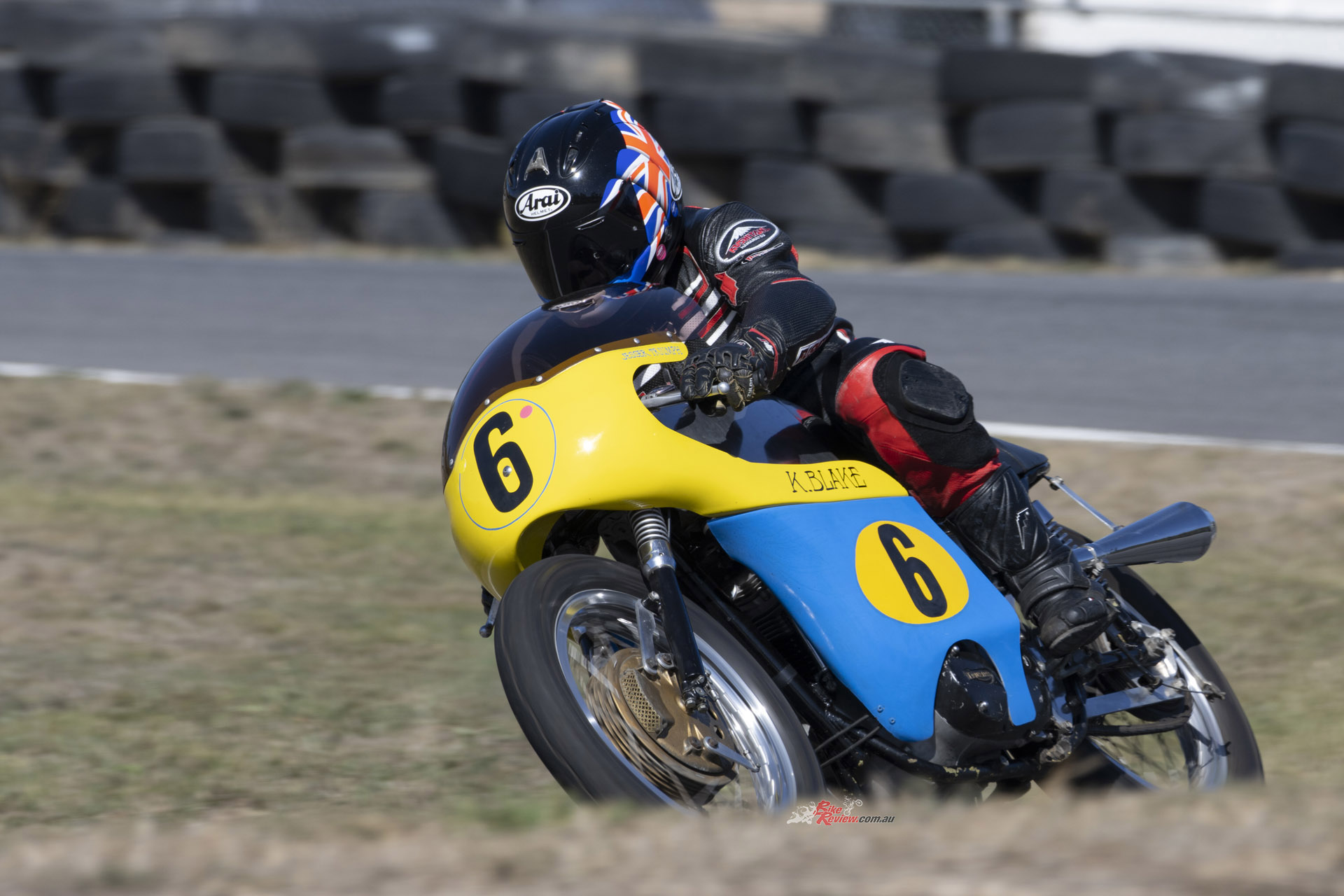
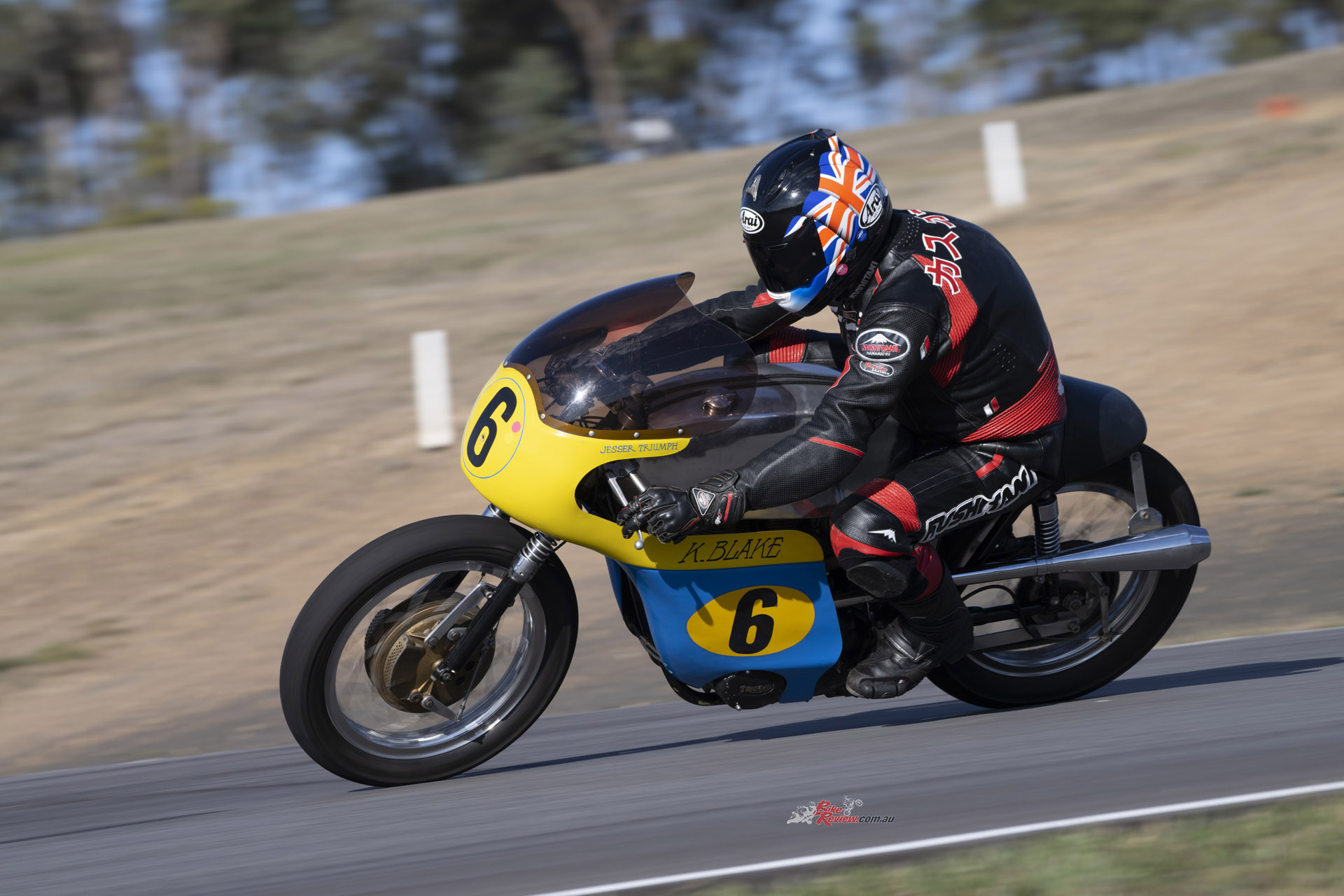
The high-set footrests, coupled with the low Manx Norton seat, made it pretty cramped climbing aboard for my 5’10”/180cm stature – I suspect that the couple of owners the bike’s had since Ken Blake didn’t change anything, because it’s definitely set up for someone of his diminutive size. With a short 1397mm wheelbase, and the standard Triumph fork which came fitted with cartridge internals as stock pulled back 2° to a 27° rake, the Aussie Bonnie felt compact and steered quite quickly, despite the fact that I was wedged in place on the bike and couldn’t move around it much because of the cramped riding stance.
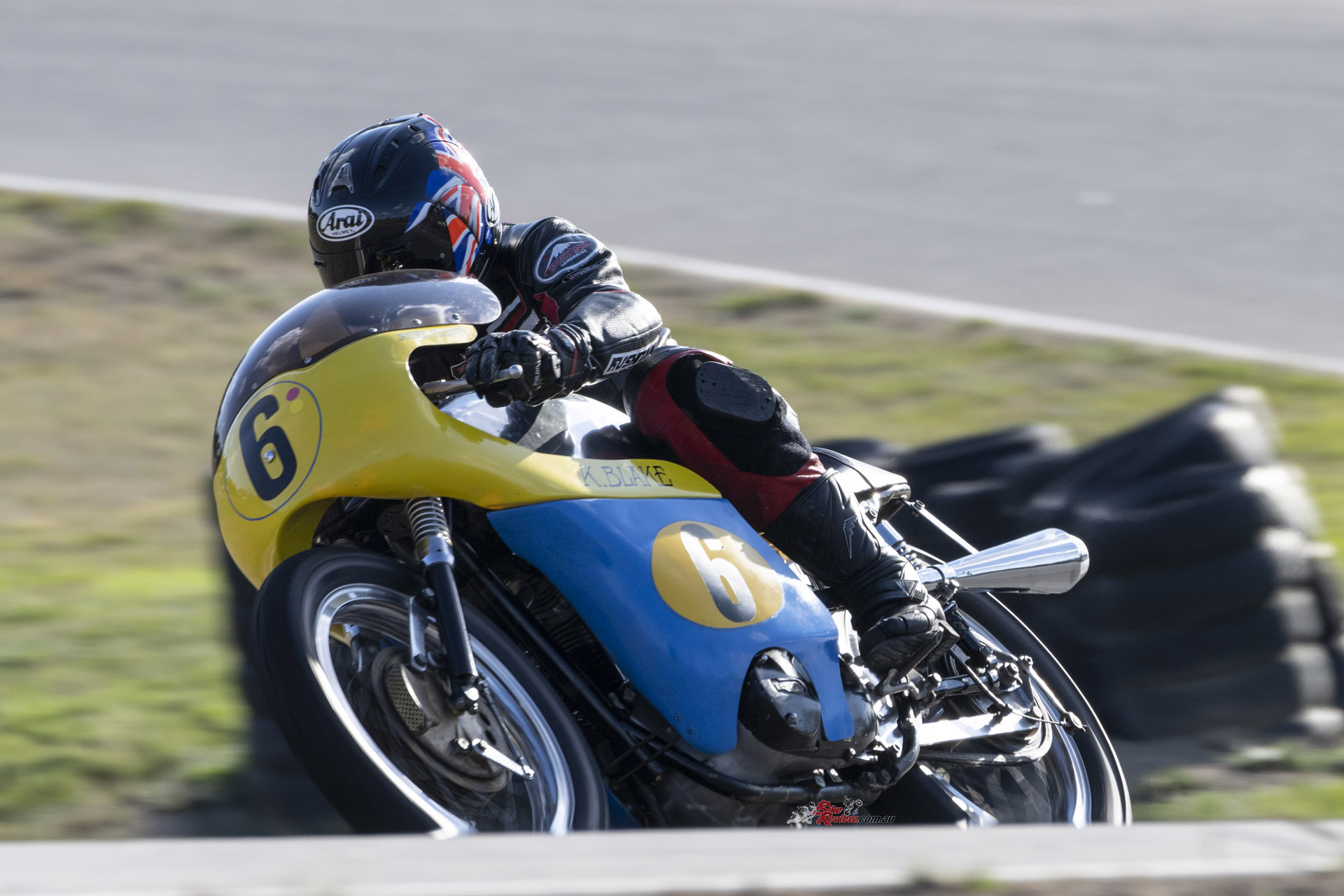
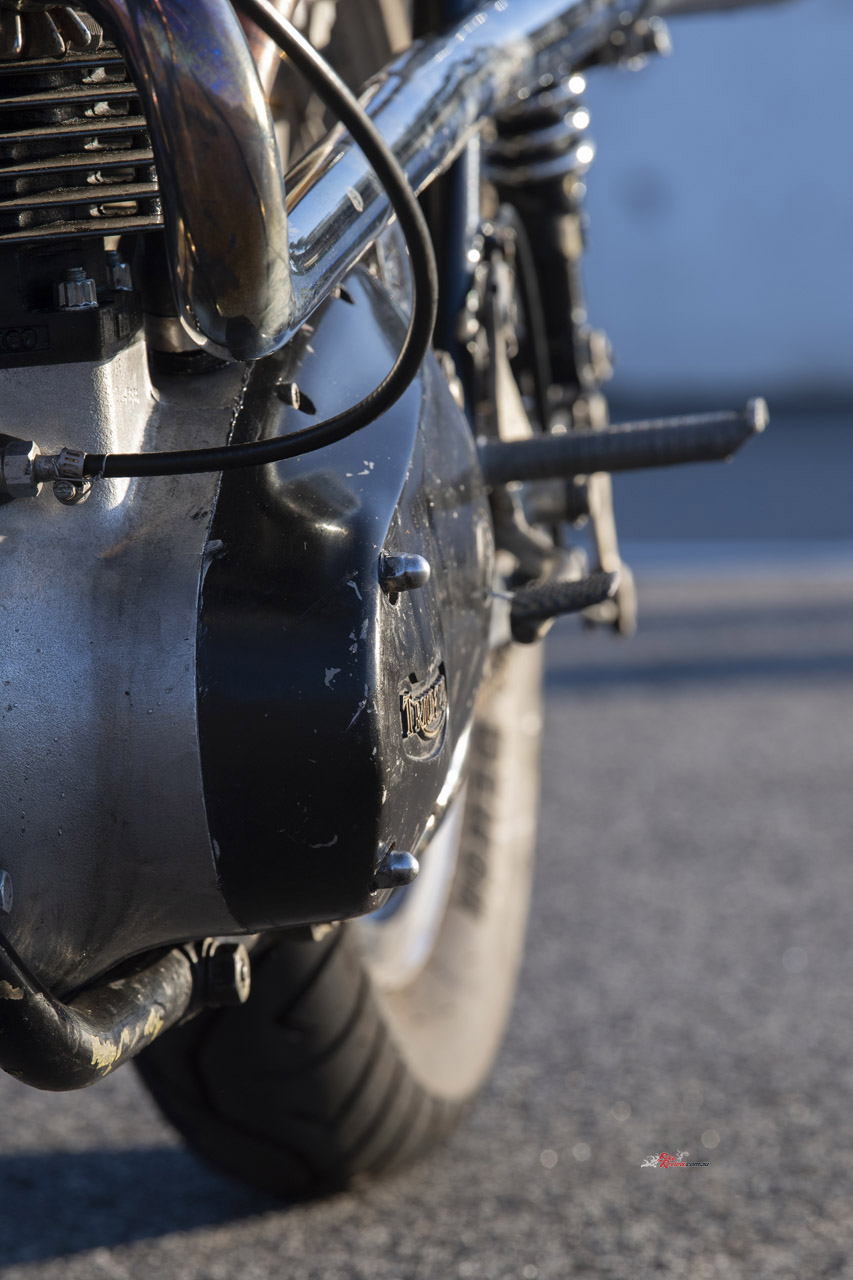
It changed direction really well in Broadford’s tight infield section’s turns, though, and I was pleasantly surprised how much turn speed I could carry through the off-camber left-hander leading onto the straight. I’ve always looked askance at Pirelli Demon tyres compared to the equivalent Avon AM22/23 rubber which predominate in classic racing – but the duo fitted to the Jesser Triumph gripped well both there and at the other end of the straight in uphill Turn One, where I found that taking the high, wide and handsome route a gear higher than I’d expected to do, gave me a great launch onto the top straight, complete with its staircase format.
“The couple of owners the bike’s had since Ken Blake didn’t change anything, because it’s definitely set up for someone of his diminutive size”…
Though the top three gear ratios on the right-foot race-pattern (1-up) close-ratio factory four-speed gearbox are quite close together, bottom gear is very low, presumably to help with bump-starting it in the dead-engine race starts back then, even for the Unlimited class – the high compression ratios needed for the ubiquitous methanol or something even fruitier bikes ran on back then must have made solo push-starts very much an acquired skill, especially on the bigger twins like Vincents and such.
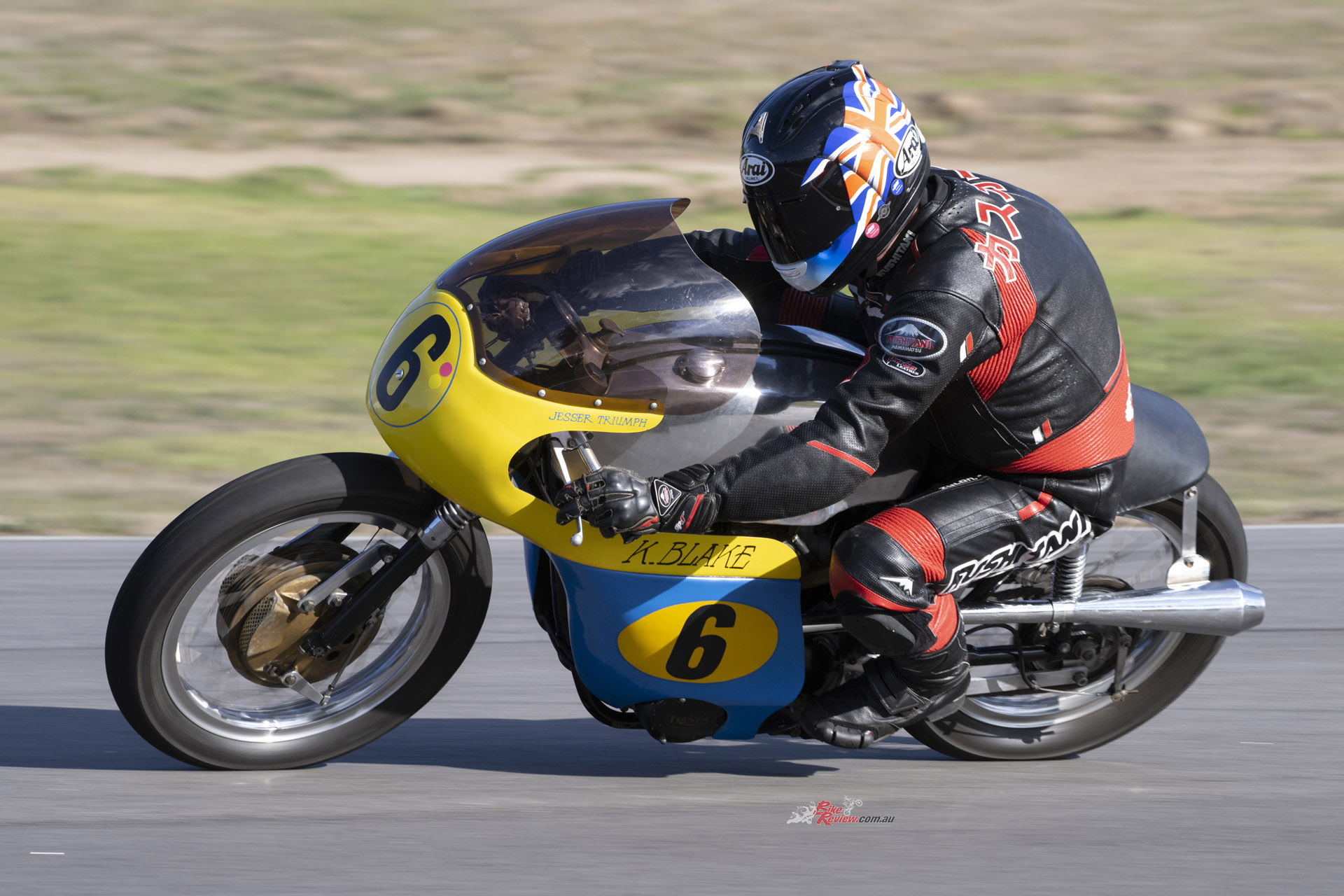
“This ’64 Bonnie that once carried Ken Blake through the Adelaide hills at such high speed, and on to a pair of Australian championships, is a great piece of Down Under racing history”…
Here, the lower but still reasonably high 11.8:1 compression which the Jesser Triumph now sports wasn’t such an issue, but I did get some help from engine braking slowing for turns, without ever chattering the rear wheel. Mind you, that fabulous magnesium Fontana 230mm 4LS front drum doesn’t exactly need much help in braking the Jesser Triumph – I can well imagine how someone as light and determined as Ken Blake would have been well-nigh impossible to outbrake on a bike weighing just 132kg dry, with the advantage of this very well set up Italian stopper, which never felt remotely likely to grab and lock up however hard I used it.
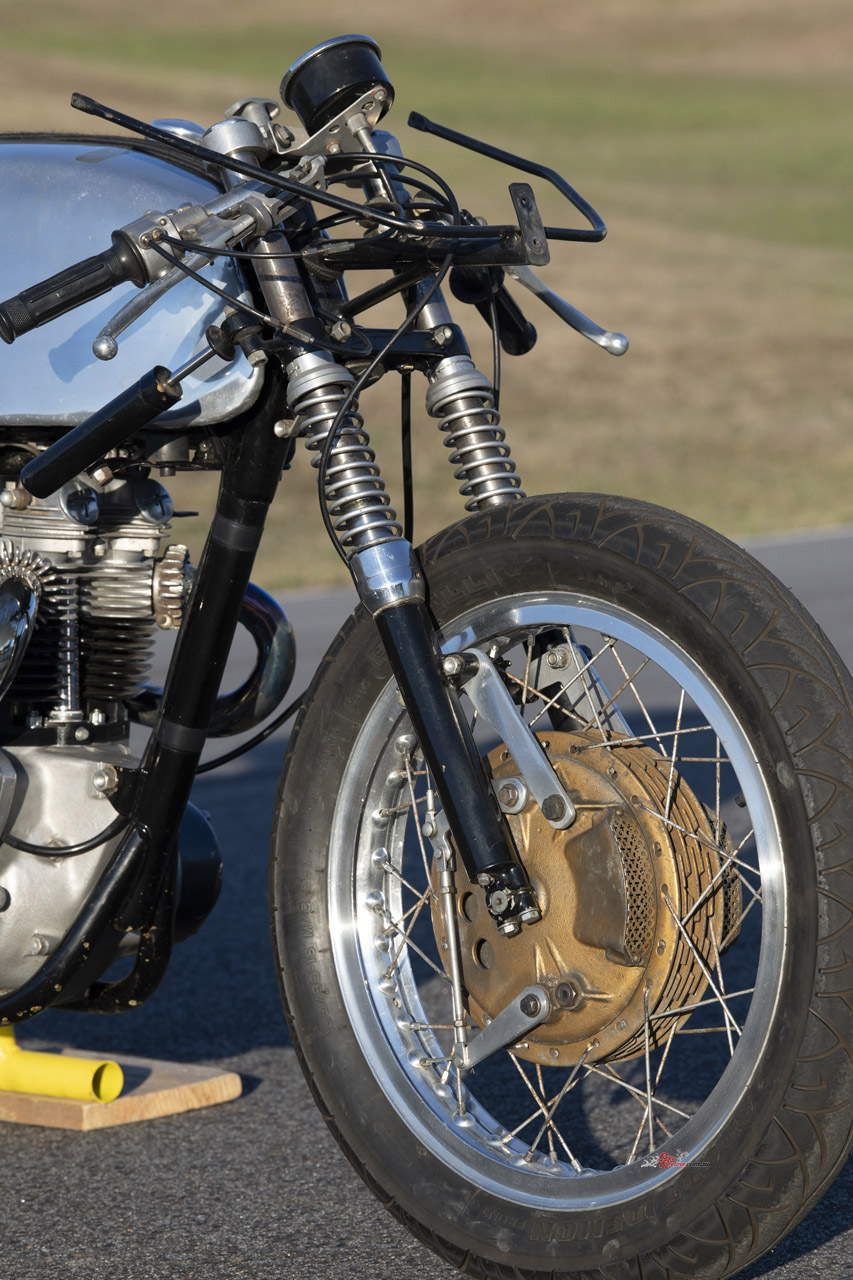
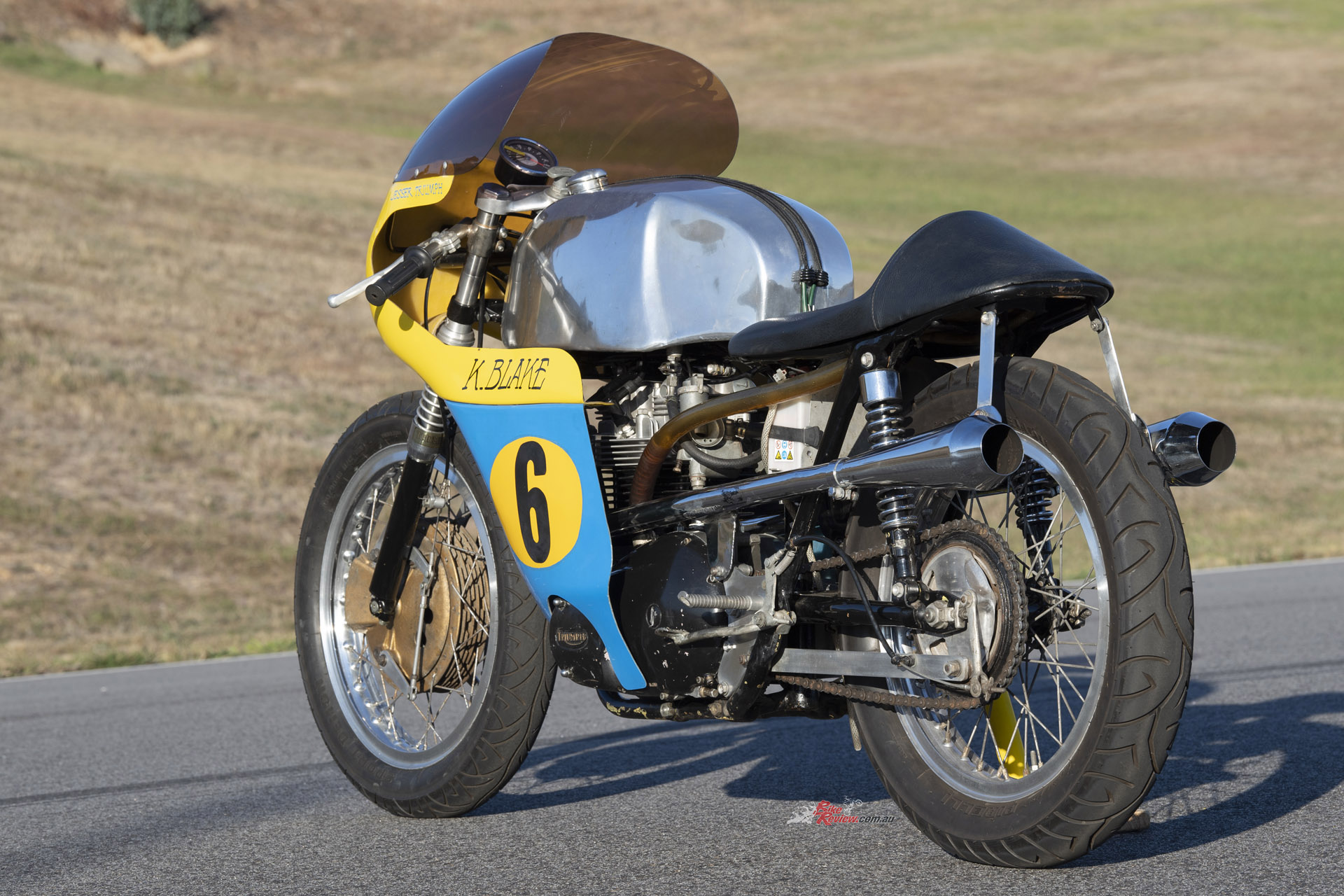
The Morgo-kitted Triumph motor felt quite punchy out of the Broadford infield turns, and accelerated well onto both straights – cliché it may be, but it’s still true that there ain’t no substitute for cubes. It pulls well from low down, but there’s a slight flutter of megaphonitis from the long, slender, twin high-rise exhausts around 3,000rpm which is gone almost before you notice it, leaving a clean, strong drive up to the 7,000rpm mark, where I changed up in deference to the newly rebuilt motor.
“Cliché it may be, but it’s still true that there ain’t no substitute for cubes”…
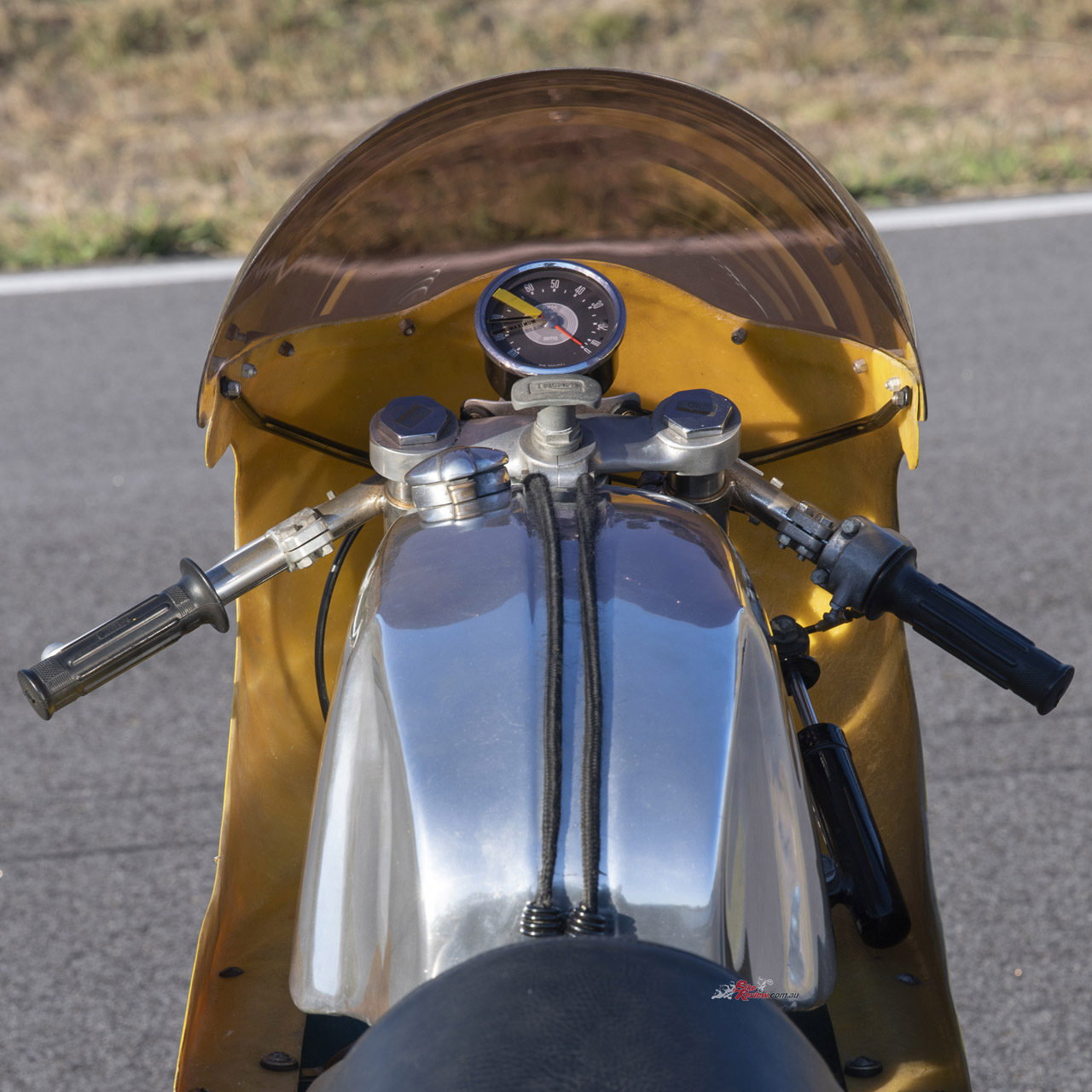
The original rev-counter on the bike has a shifter stripe at 8,400 rpm, with a ‘Maximum’ mark at 9,000 revs – presumably for a last lap dash. The only problem I encountered was that it kept jumping out of gear when changing between third and fourth – it’d go in, then repeatedly pop out. At first I thought it was my fault, so I took great care over that shift, but the problem persisted. Jim Scaysbrook complained about that, too, on both his rides, so evidently it’s a problem with the engaging dogs on one or both of the relevant gear pinions, which either need to be undercut, or the pinions replaced.
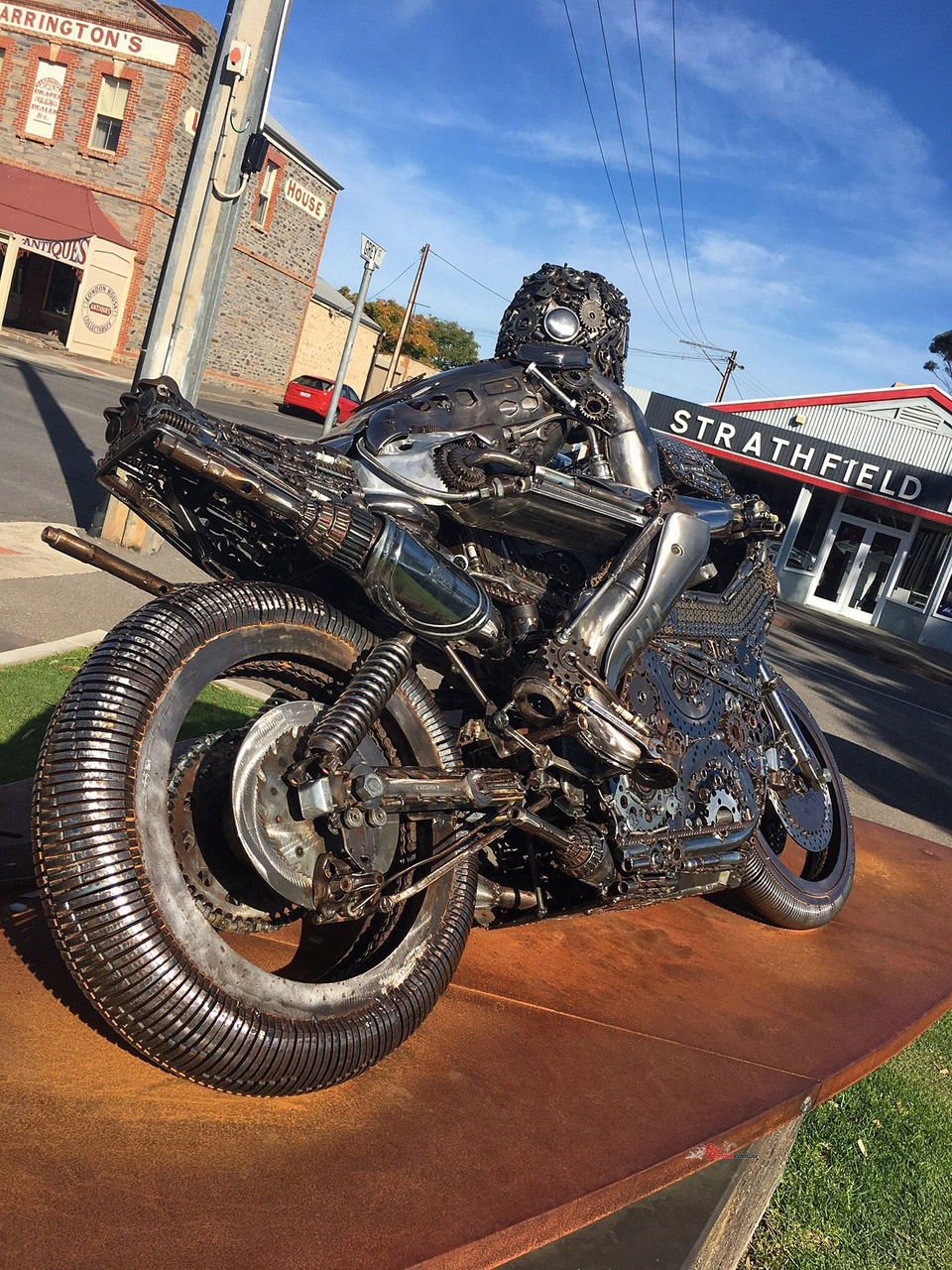
This ’64 Bonnie that once carried Ken Blake through the Adelaide hills at such high speed, and on to a pair of Australian championships, is a great piece of Down Under racing history, so it’s a pity that the magnificent and ingenious sculpture commemorating him in his home town of Strathalbyn doesn’t depict this bike, but instead one of the many two-strokes he later raced on. So kudos to MA for acquiring the bike and making it a runner, to remind all those who see it in action on the track today of the little guy with a great big heart who rode it to such improbable success on the race track more than 50 years ago – then used it to ride to work on the very next day!
Special thanks to Old Bike Australasia Founder Jim Scaysbrook for the historical detail in this article, and for supplying the period photos.
Ken Blake’s Career
Kenny Blake’s career really took off after he swapped the Jesser Triumph he’d made his name on for the purpose-built Kawasaki and Yamaha racers supplied by Ron Angel, on which he won so many races Down Under. But ultimately his career on the World stage was a tale of promise unfulfilled.
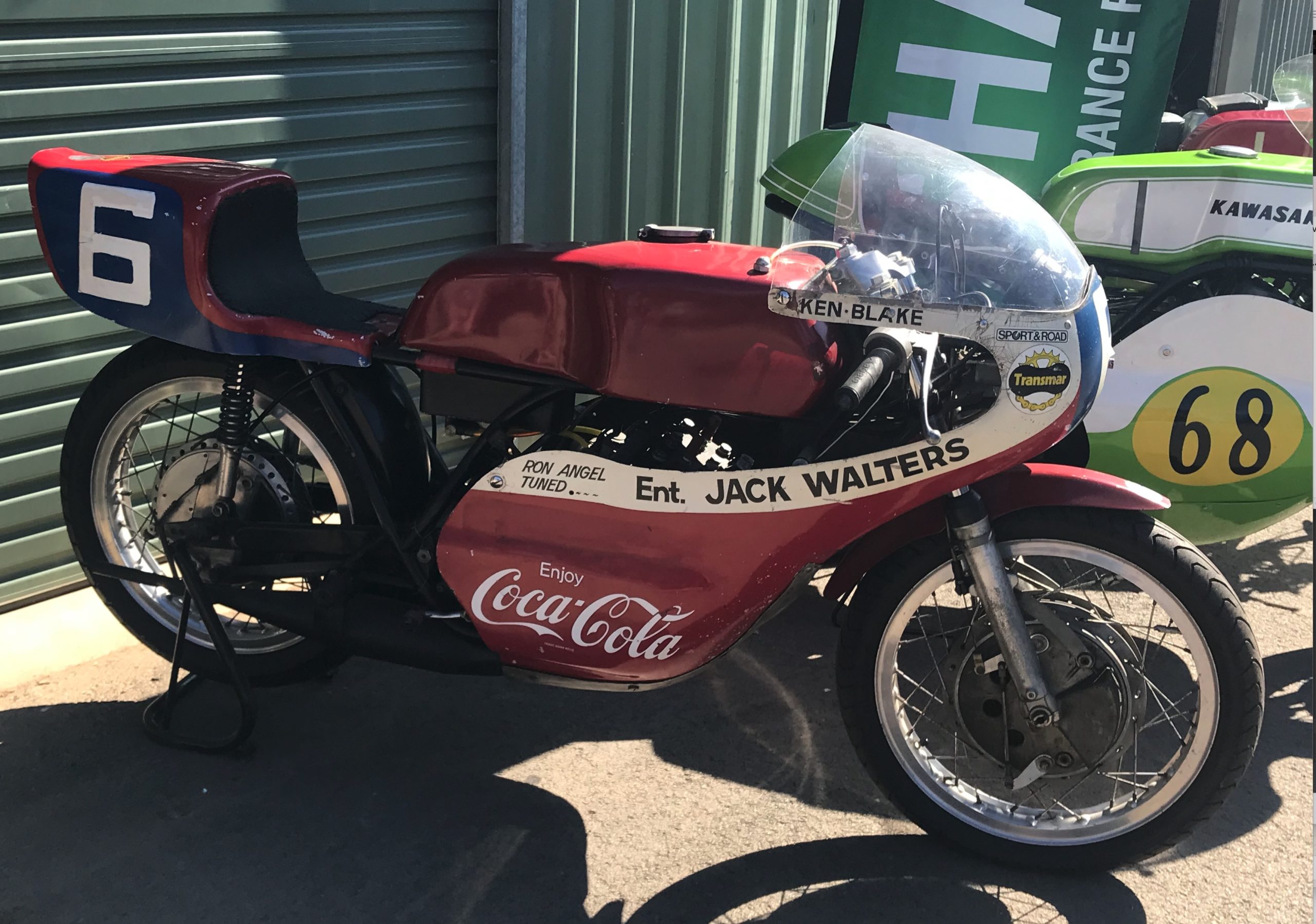
After his first two National successes winning the Australian Unlimited TT in 1969/70 at Surfers Paradise and Phillip Island, both on the Jesser Triumph, in March 1970 Blake won the Bathurst Unlimited GP on a 500cc Kawasaki H1R, taking five seconds off the lap record in the process, in his first race on the daunting Mount Panorama circuit. In 1971 he won the Australian 500cc TT on this same Kawasaki at Symmons Plains, Tasmania, and he also campaigned the ex-works Ducati 750 on which Bruno Spaggiari had finished second to teammate Paul Smart in the 1972 Imola 200. On Yamahas tuned by Ron Angel and sponsored by Jack Walters, in 1973 Ken won the 125/250 races at Bathurst, and the Australian 250 TT championship.
“In the 1973 Castrol 6-Hour at Amaroo Park, Ken Blake rode the whole six hours solo on a Kawasaki Z1 to win the race”…
In the 1973 Castrol 6-Hour Production race at Amaroo Park, Ken Blake rode the whole six hours solo on a Kawasaki Z1 to win the race. In 1974, besides winning both the Australian 350cc and 500cc championships, Blake was second to Gregg Hansford in the Unlimited Production race at Bathurst. In 1974 he paired with Len Atlee to repeat his victory in the Castrol 6-Hours Race on the Kawasaki Z1. He then raced a Ducati 900SS to win the Unlimited Production class at Bathurst in 1975, as well as finishing second in the Castrol 6-Hour in both 1975 and 1976.
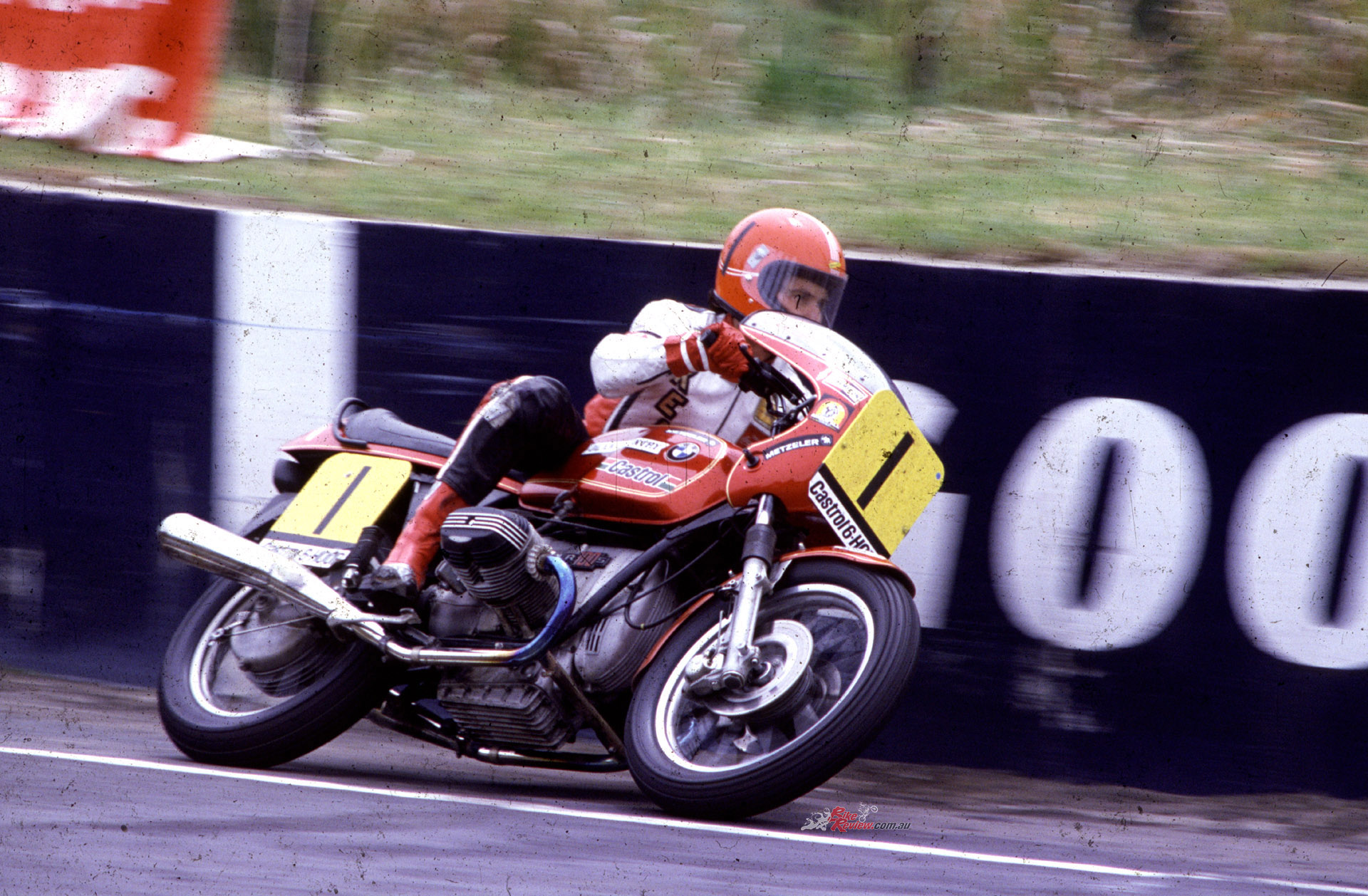
In February 1976 at Laverton Airbase in Melbourne, he gave the new production Suzuki RG500 a victorious debut in its first race anywhere in the world by beating multiple World champion Giacomo Agostini’s works MV Agusta to win the Australian 500cc TT again. He then completed a hat-trick of Castrol 6-Hour victories in the 1977 event, winning on a BMW R100S, riding with Joe Eastmure.
“Ken had a single TZ350 Yamaha, on which he would swap the cylinder assemblies and exhaust pipes to make it eligible for either the 250, 350 or 500cc classes”…
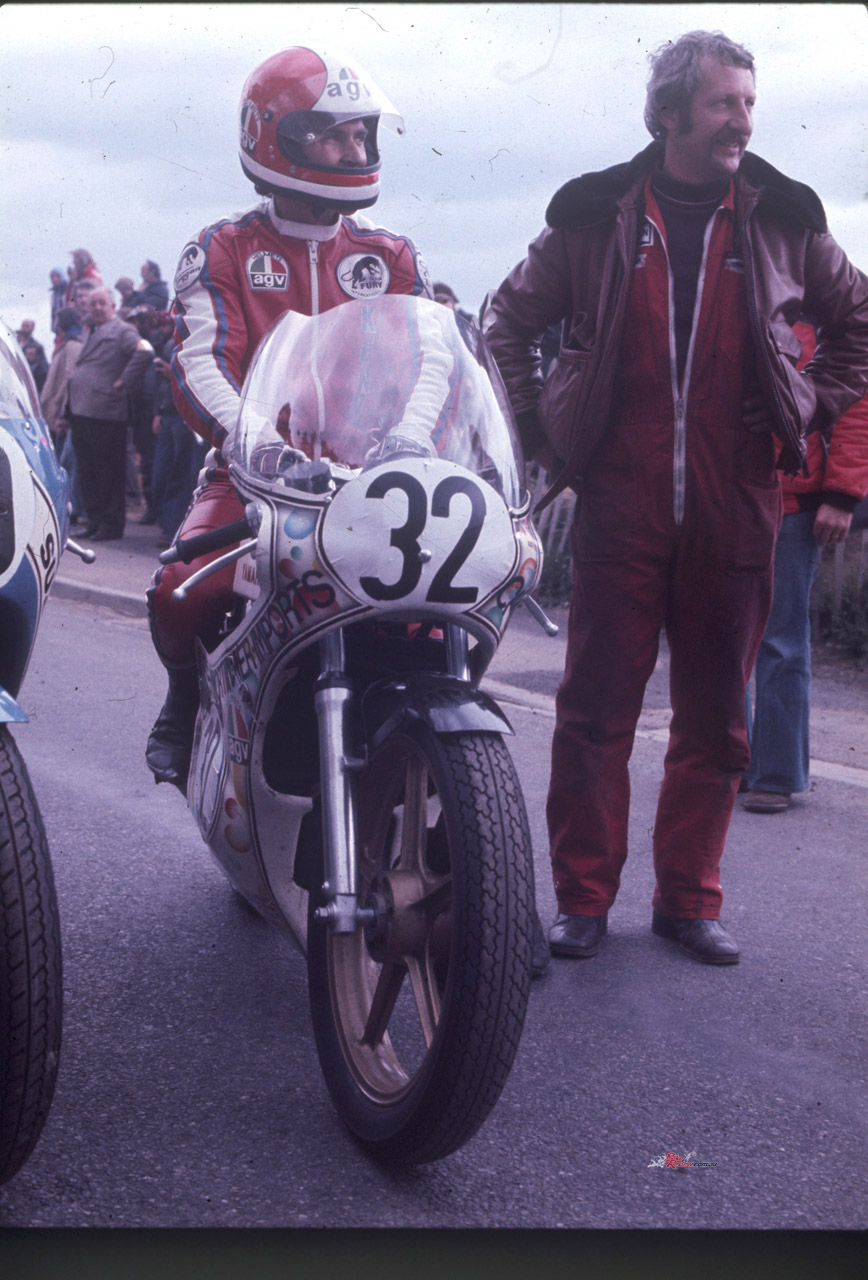
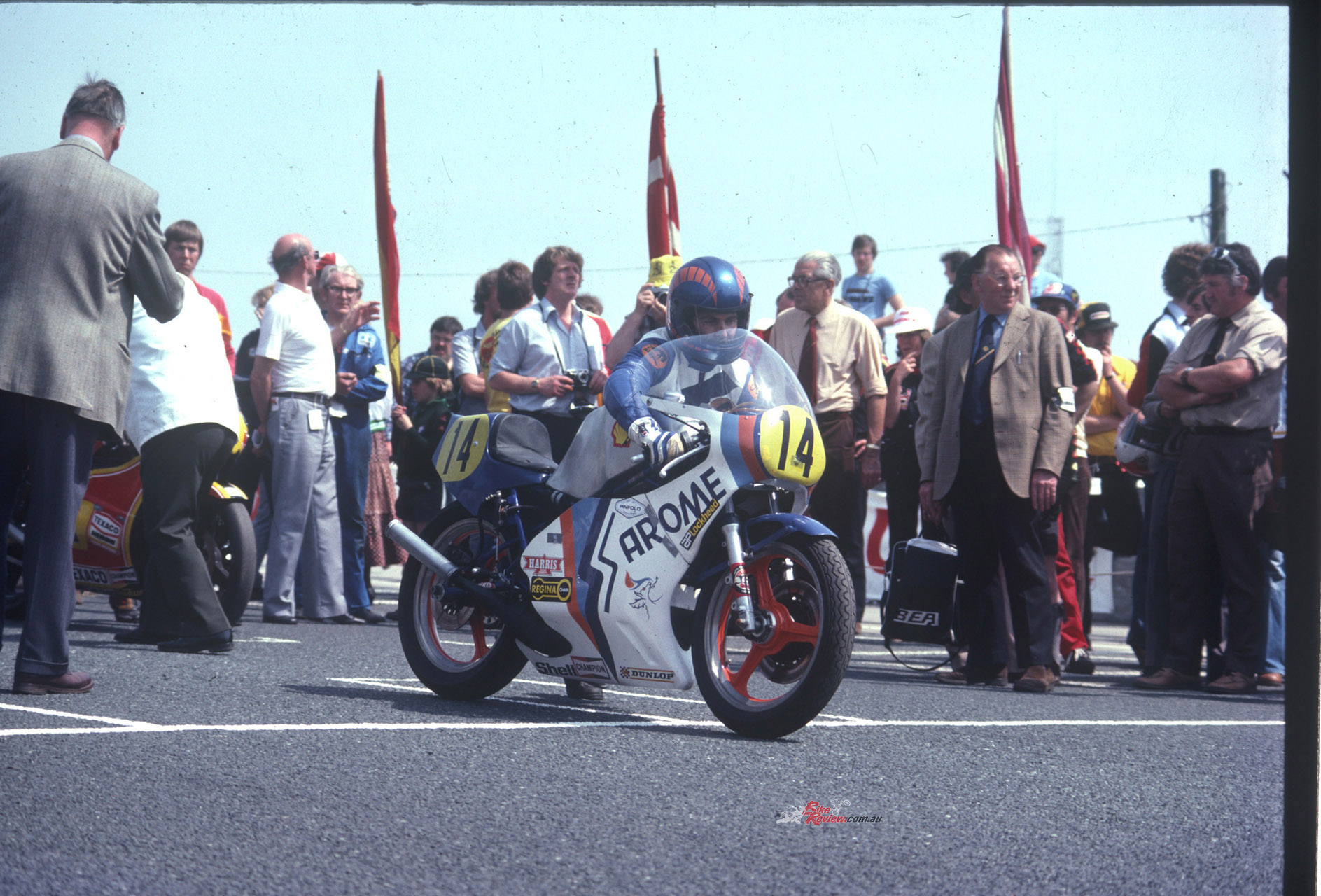
Ken Blake left Australia to race in Europe in 1978, teaming up with his well-organised mate Chas Mortimer to start 32 races in their first season. Ken had a single TZ350 Yamaha, on which he would swap the cylinder assemblies and exhaust pipes to make it eligible for either the 250, 350 or 500cc classes. Just a month into the season Ken won the International 350 race at the Tulln-Langenlebarn airfield circuit in Austria, ahead of Tom Herron and Reinhold Roth, which duly qualified him for an entry in the 1978 French 500cc GP, in which he finished 10th riding the Yamaha TZ350. That same year he made his Isle of Man TT debut, finishing 13th in the Junior TT, with DNFs in two more races.
Ken Blake’s stand-out GP ride was when he finished second in the 1979 Belgian 500cc GP on his Yamaha TZ350 behind Kiwi Dennis Ireland’s RG500 Suzuki, setting the fastest lap. Track surface conditions were so slippery on tarmac laced with diesel oil that Blake raced with a wet tread-pattern front tyre and the softest Dunlop rear slick available. He returned to the Isle of Man to finish eighth in both the 500cc and Classic TT’s on his TZ350, and 12th in the 250cc TT. Ken’s best finish in the Isle of Man was 4th in the 1980 Junior TT, as ever on his TZ350.
“Ken Blake’s stand-out GP ride was when he finished second in the 1979 Belgian 500cc GP on his Yamaha TZ350 behind Kiwi Dennis Ireland’s RG500 Suzuki, setting the fastest lap”…
In September 1979, Ken Blake teamed with Tony Hatton to share a Honda RSC1000 prototype in the Bol d’Or 24-Hour at Paul Ricard, in which they duelled with Honda’s legendary Endurance champions Jean-Claude Chemarin/Christian Leon for the win until their bike lost third gear, eventually finishing eighth. Two months later they teamed up again to finish third in the New Zealand Six-Hour Production race on a Honda CB1100R.
The Honda factory hired Ken Blake for a pair of World Endurance Championship rides in 1980, pairing him with Jean-Claude Chemarin. They finished fourth in the Spa 24-Hours, before Chemarin crashed out of the race lead late in the Misano 1000km. These rides led to Blake’s first factory contract, to join Honda’s World Endurance squad in 1981.
“By half-distance, Ken Blake was running eighth on the road, having passed 103 riders!”
But first he was committed to racing in the Isle of Man TT in June. In the six-lap Senior TT Ken had been delayed on the start line with a fuel leak on his old faithful 1977 Yamaha TZ350, and was forced to start in last place. However, by the time of his pit stop at half-distance, Ken Blake was running eighth on the road, having passed 103 riders! But early on the fifth of six laps he lost traction on a wet patch of road at Ballagarey and struck a concrete post, to be killed instantly. He was 32 years of age.
Jesser Triumph Bonneville T120R Specifications
Engine: Air-cooled pushrod OHV dry-sump parallel-twin four-stroke with 360° crankshaft, 74 x 82mm bore x stroke, 11.8:1 compression, 724.53cc, 2 x 30mm Amal Monobloc carburettors, Boyer Bransden CDI ignition, four-speed close-ratio gearbox with chain primary drive, multiplate oil-bath clutch, estimated 62bhp at 8200rpm (as raced).
Chassis: Strengthened Triumph single-loop tubular steel frame, 33.3mm Triumph telescopic fork, tubular-steel swingarm with 2 x S&W shock absorbers, 27° head angle, 1397mm wheelbase, 132kg dry weight, 48/52% static weight distribution, 230mm Fontana four leading-shoe front drum brake, 178mm Triumph single leading-shoe rear drum brake, Borrani wire-laced aluminium rims – WM2 (2.15in) front and WM3 (2.50in) rear – with Pirelli Sport Demon tyres, 100/90-18 front and 120/90-18 rear.
Performance: Estimated top speed 225km/h as raced, year of manufacture 1964. Owner: Motorcycling Australia, Westmeadows, Victoria, Australia.
Jesser Triumph Bonneville T120R Gallery
Tags
Isle of Man Ken Blake Jesser Triumph Triumph Australian TT Mallala Bonneville Mac Park IoM TT Calder TTYou Might Also Like