

Tall, light and deliberately uncomplicated, Kawasaki’s new KLX300 provides a friendly way into the bush without sacrificing weekday usefulness. Photos: Heather Ware HMC
Kawasaki’s 2026 KLX300 is now fully road-registerable in Australia, giving riders a simple, affordable dual-sport option for commuting and casual dirt riding. Nick spent two weeks testing it on the road and in the dirt to see where this taller trailie works best.
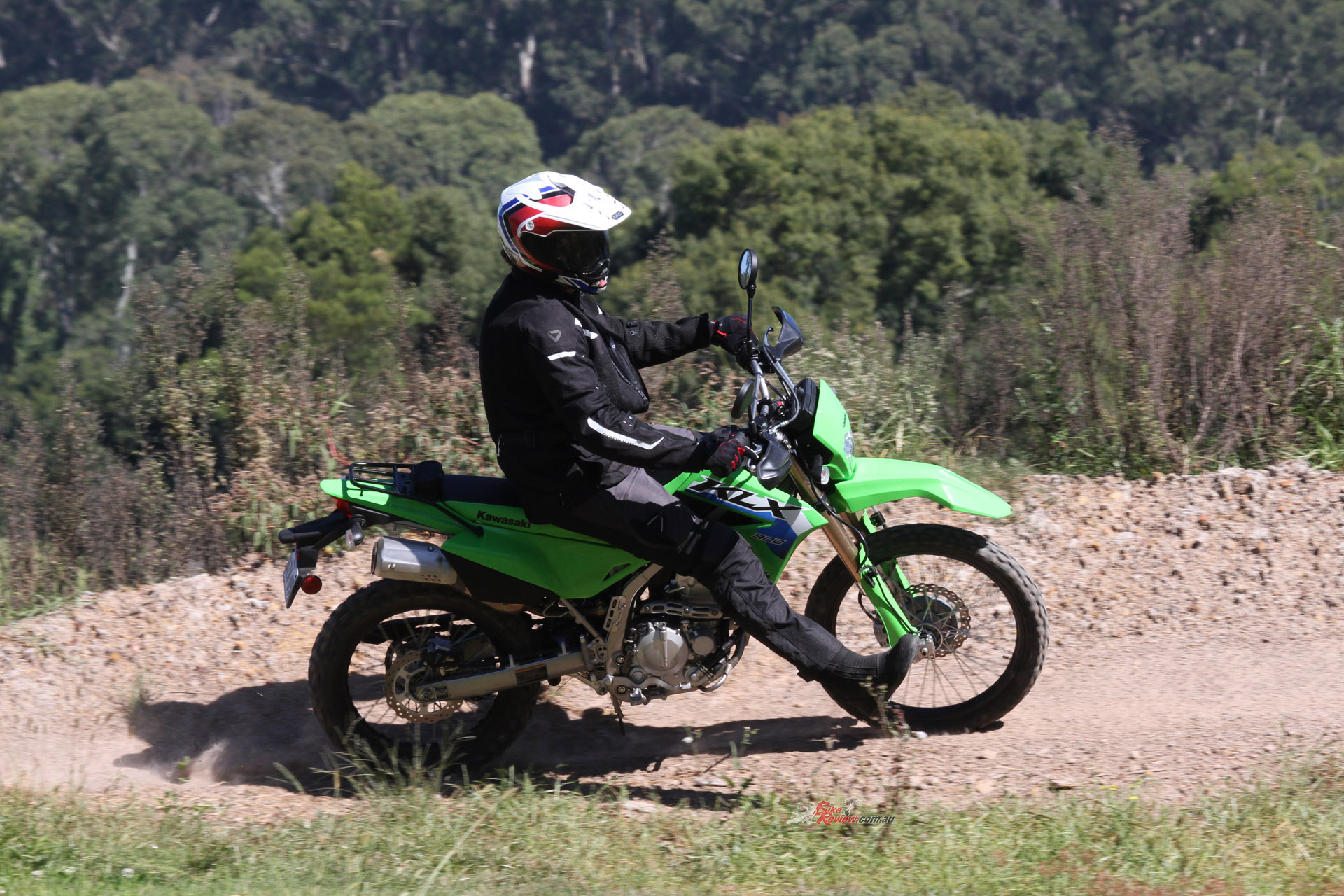
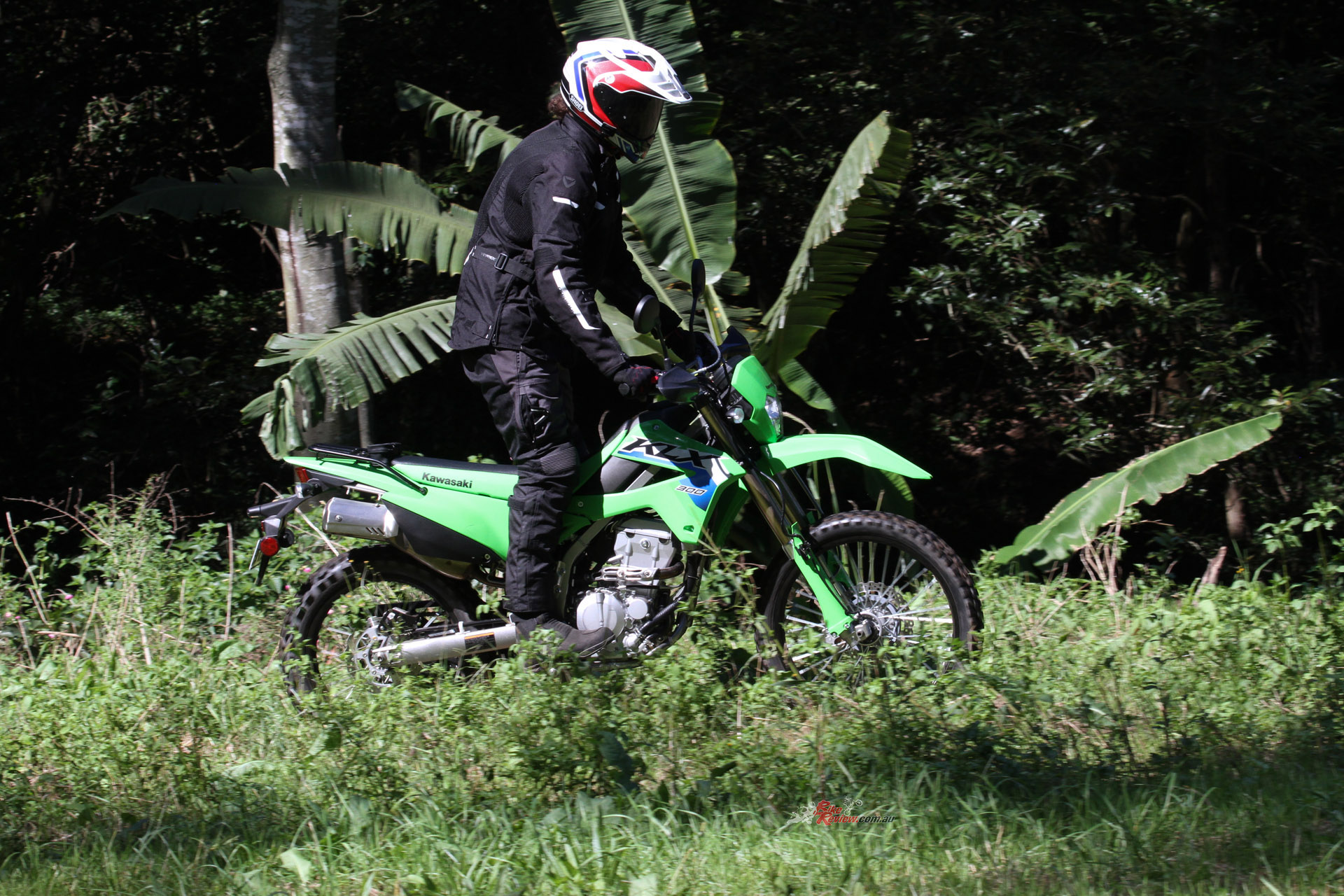
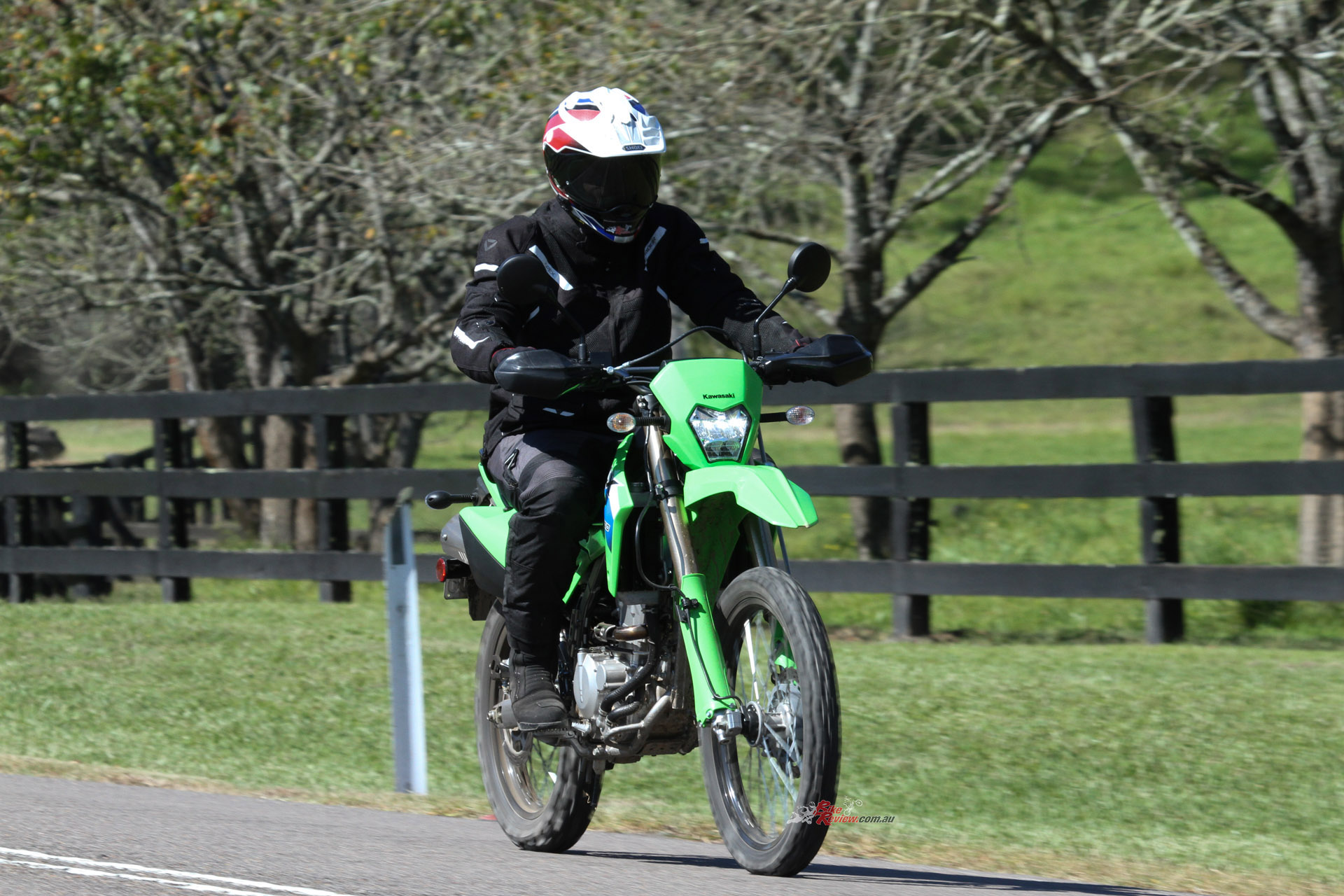
The KLX300’s light 137kg wet weight and predictable 292cc single make it easy to manage on loose fire roads.
We spent two weeks testing Kawasaki’s road trailie – the 2026 KLX300. Given that it is now completely road-registerable, we got to put it through its paces in the dirt and on the streets. It’s a simple machine with plenty to offer and plenty of room for upgrades, and a strong contender for anyone wanting to experience the dirt while still putting around town and getting to work. Exiting the M1 motorway and heading home via dirt roads was a highlight for me on a couple of afternoons. There’s something awesome about taking the unpaved roads on the way home from work – and at $7,849 + ORC there isn’t much to complain about. Here’s what we reckon.
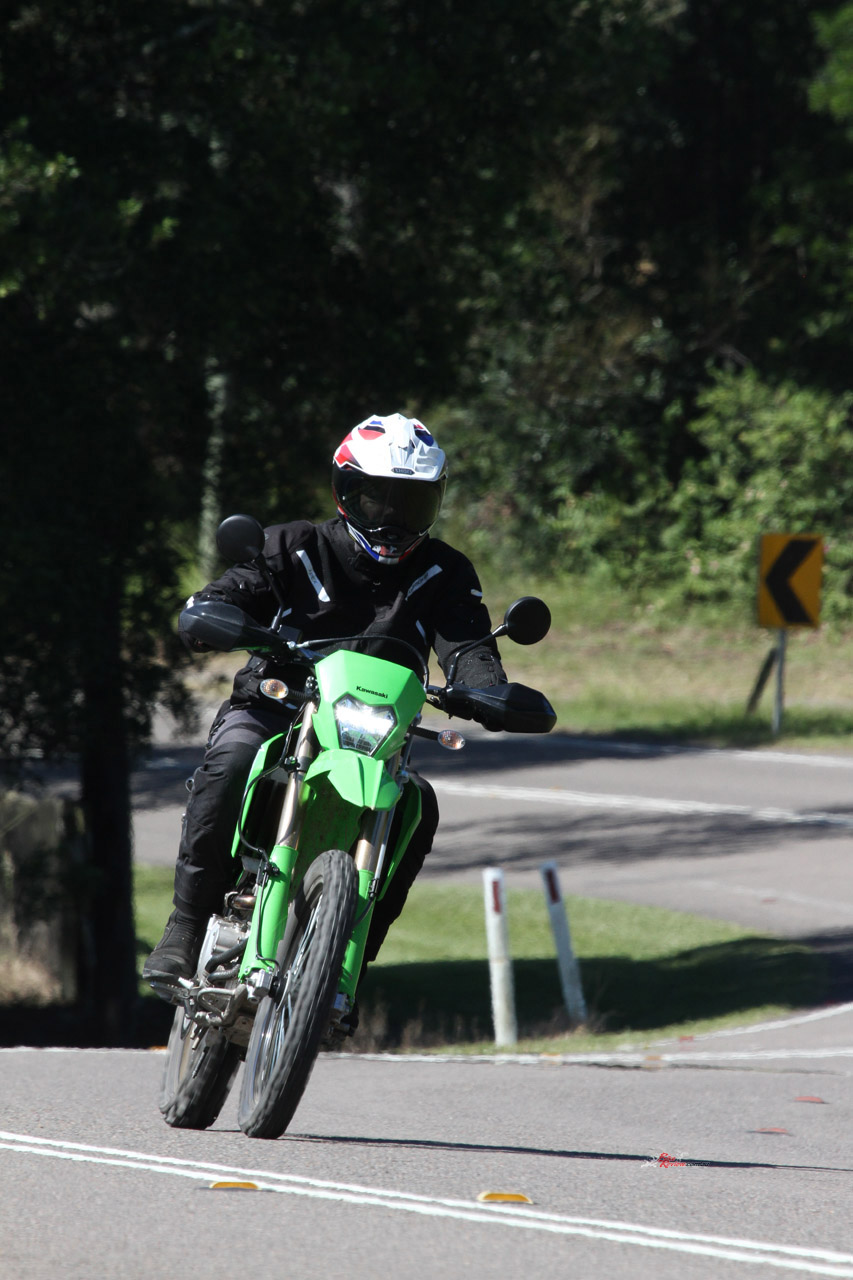
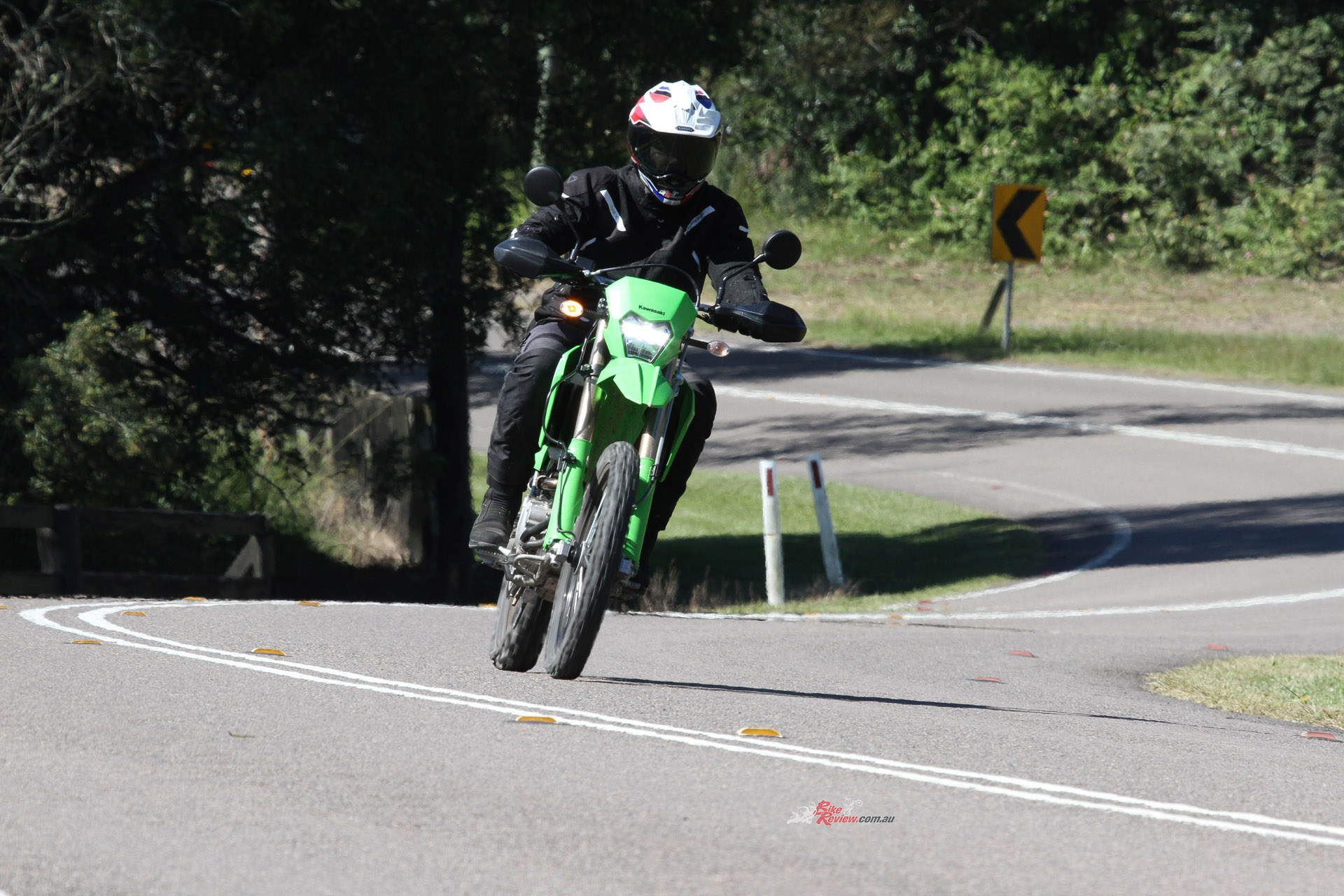
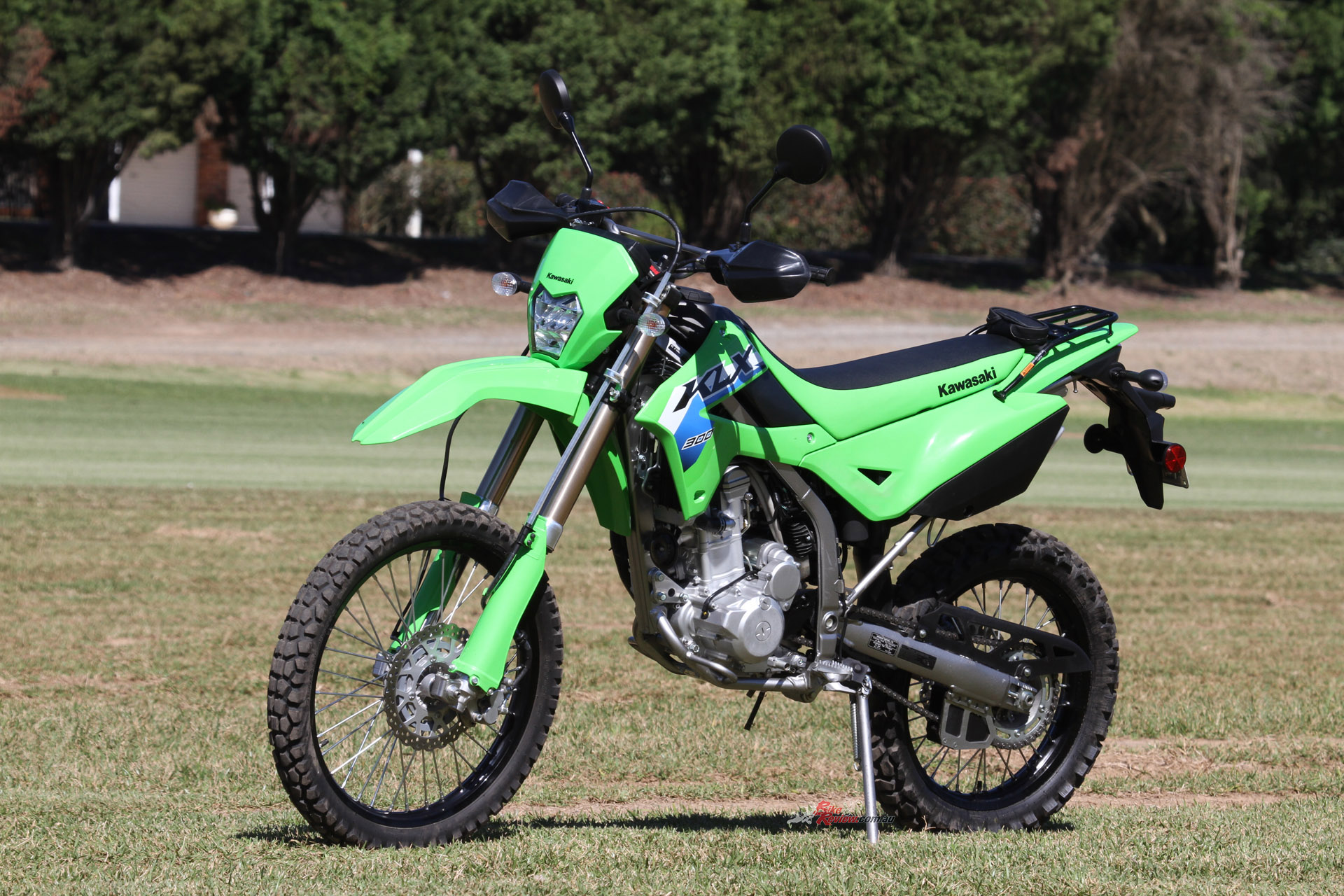
One of the biggest changes for 2026 is that this bike can now be legally road-registered across Australia. A decent, fun, easy-to-ride machine is what a lot of us are after, and the KLX300 doesn’t have many bikes to contend with. To get it up to scratch for our roads, Kawasaki had to either include ABS and switchable rear ABS, adding cost and tech, or simply lift the ground clearance to get the bike into the enduro class for compliance. As you can see, it sits extremely tall – and has a lofty 935mm seat height. I am 193cm tall and could just touch the ground flat footed, however I’m not as nimble as I used to be and struggled to get on and off. But more on its height later…
Kawasaki had to either include ABS and switchable rear ABS, adding cost and tech, or simply lift the ground clearance to get the bike into the enduro class.
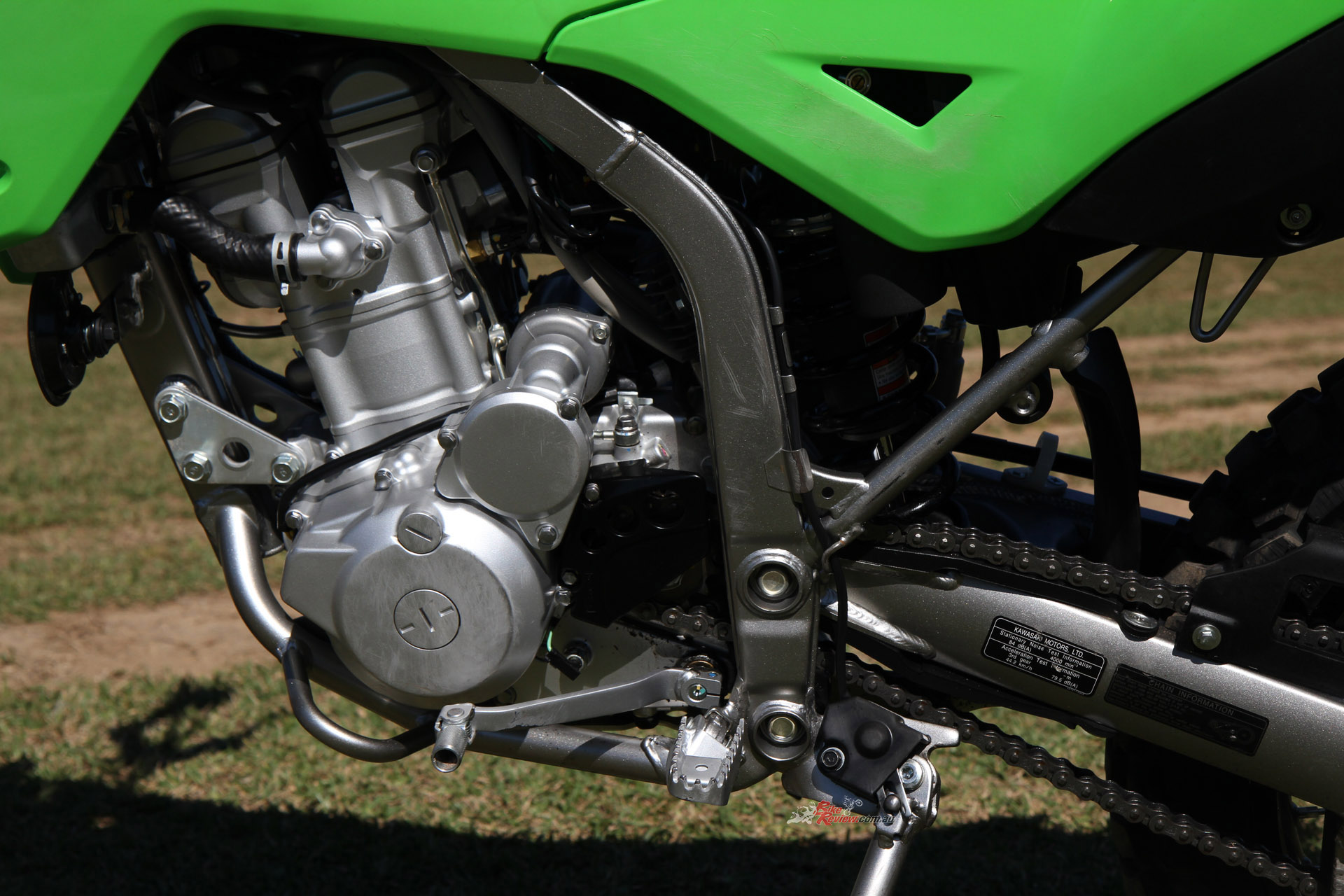
The 292cc single is no powerhouse. With a max 19kW [26hp] at 8,000rpm and 24Nm of torque, it leaves a bit to be desired, especially on the faster stretches of road. I haven’t ridden the previous non-ADR models, but a few of you online reckon the 2026 model doesn’t have the same punch as the earlier ones. There’s plenty of chatter about freeing them up, too, pulling the secondary throttle plate and blocking off the PAIR (secondary air) valve. I’ve watched a few clips of these running that setup with a performance exhaust and they really seem to liven up, so it looks like a worthwhile early mod.
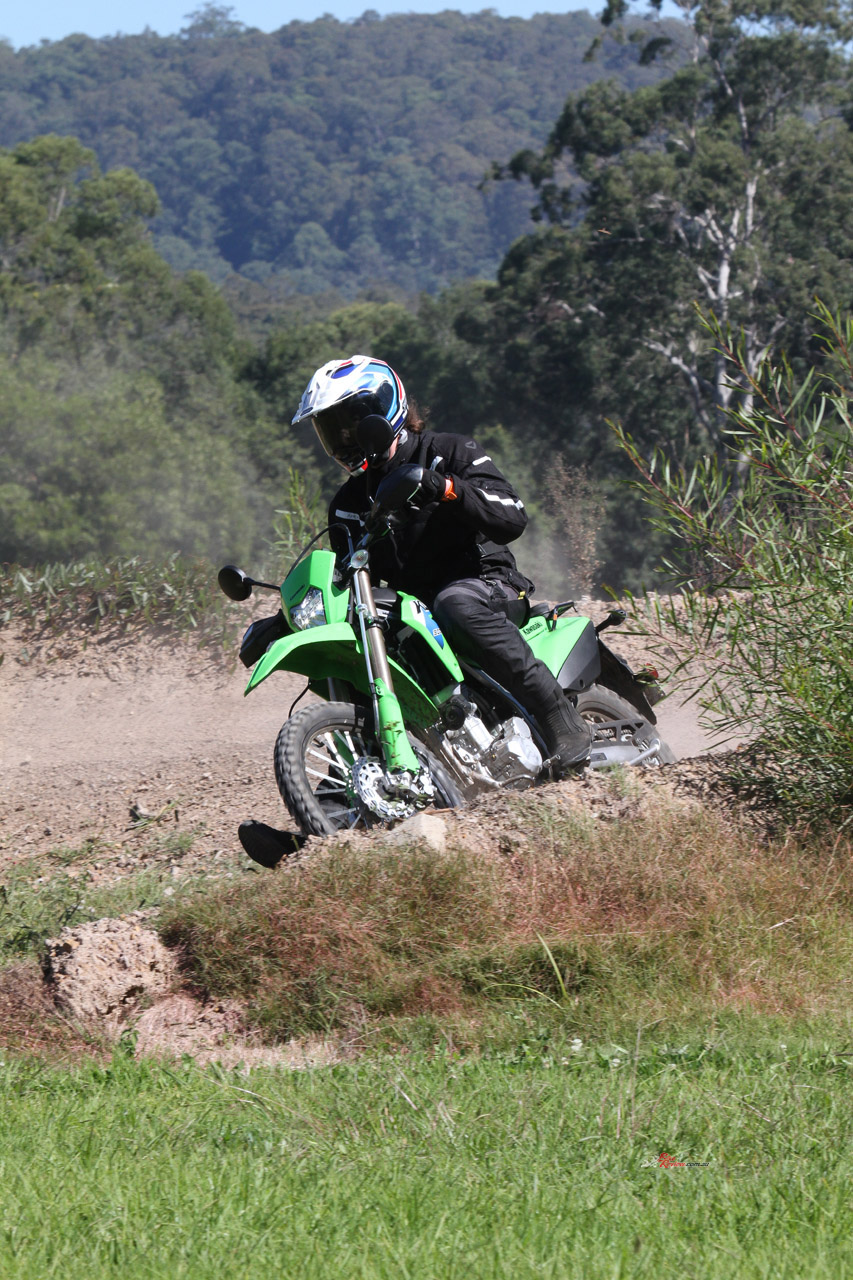
On the trails, though, it’s incredibly easy to ride and the 292cc single tractors along. Power delivery is as predictable as it comes, with none of those ‘oh-sh*t moments’ in the dirt where you’re death gripping the ‘bars. It makes it a perfect little powerplant for a newer rider, or anyone after something they won’t be afraid to open up. It still holds its own with enough grunt for a spirited run through the fire trails.
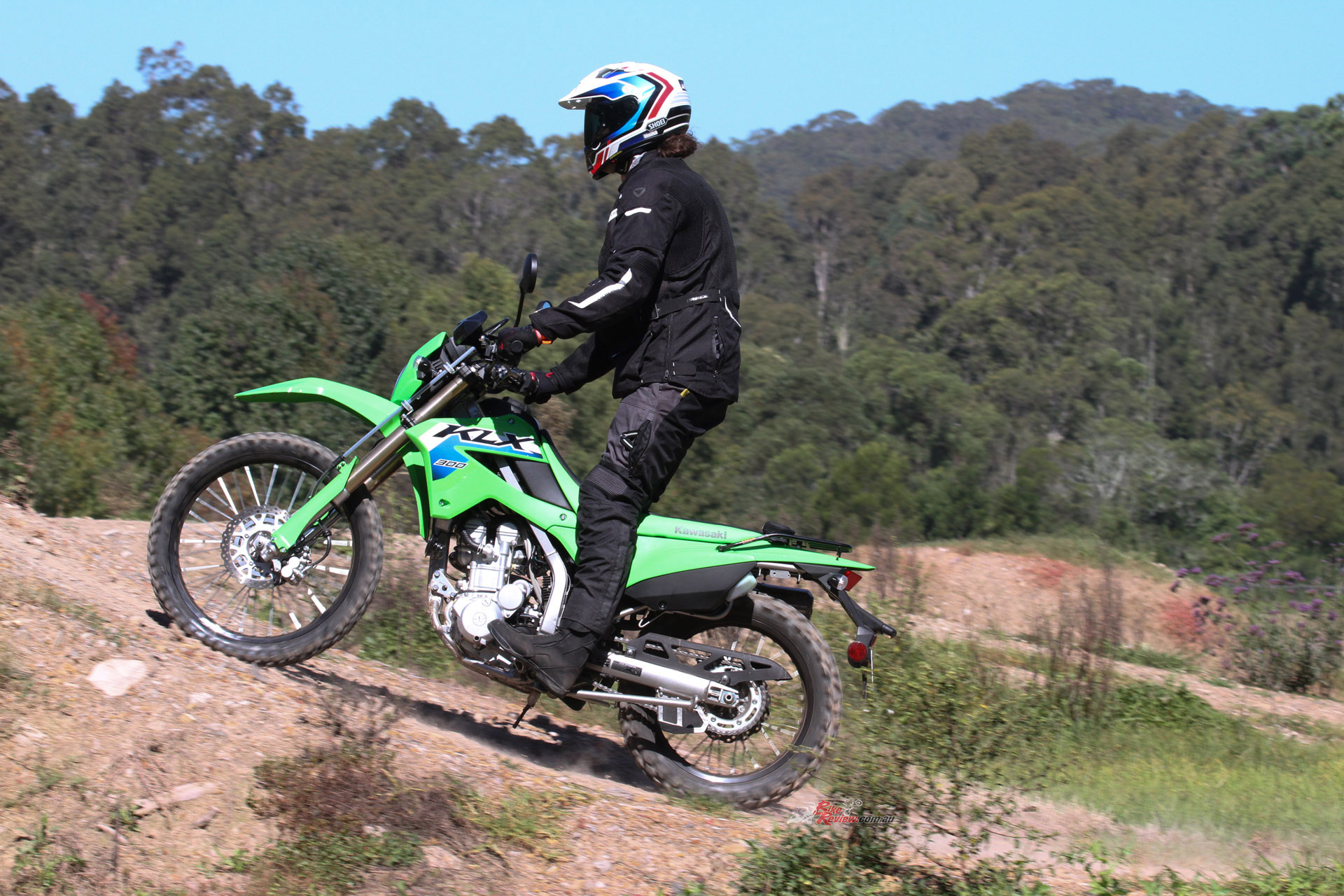
The modest single’s predictable delivery helps it tractor up loose climbs without intimidating newer riders.
The clutch is light, smooth in actuation and the six-speed box is a pleasure to use, though first and second are still a little tall for aggressive dirt or enduro riding. As a beginner setup though, it’s perfect. Upping the rear sprocket might get it feeling more like a proper dirtbike, as it’s pretty clearly geared towards the tarmac side of ‘dual-sport’. I topped it out at 117km/h on the freeway in sixth gear, but around 100-110km/h is about as fast as I’d want to sit for any length of time. The 7.5L tank is on the small side, so you won’t be racking up huge range between fills, but for a loop of trails and the commute it does the job. I recorded an incredible 3L/100km average, and got 250km from the tank.
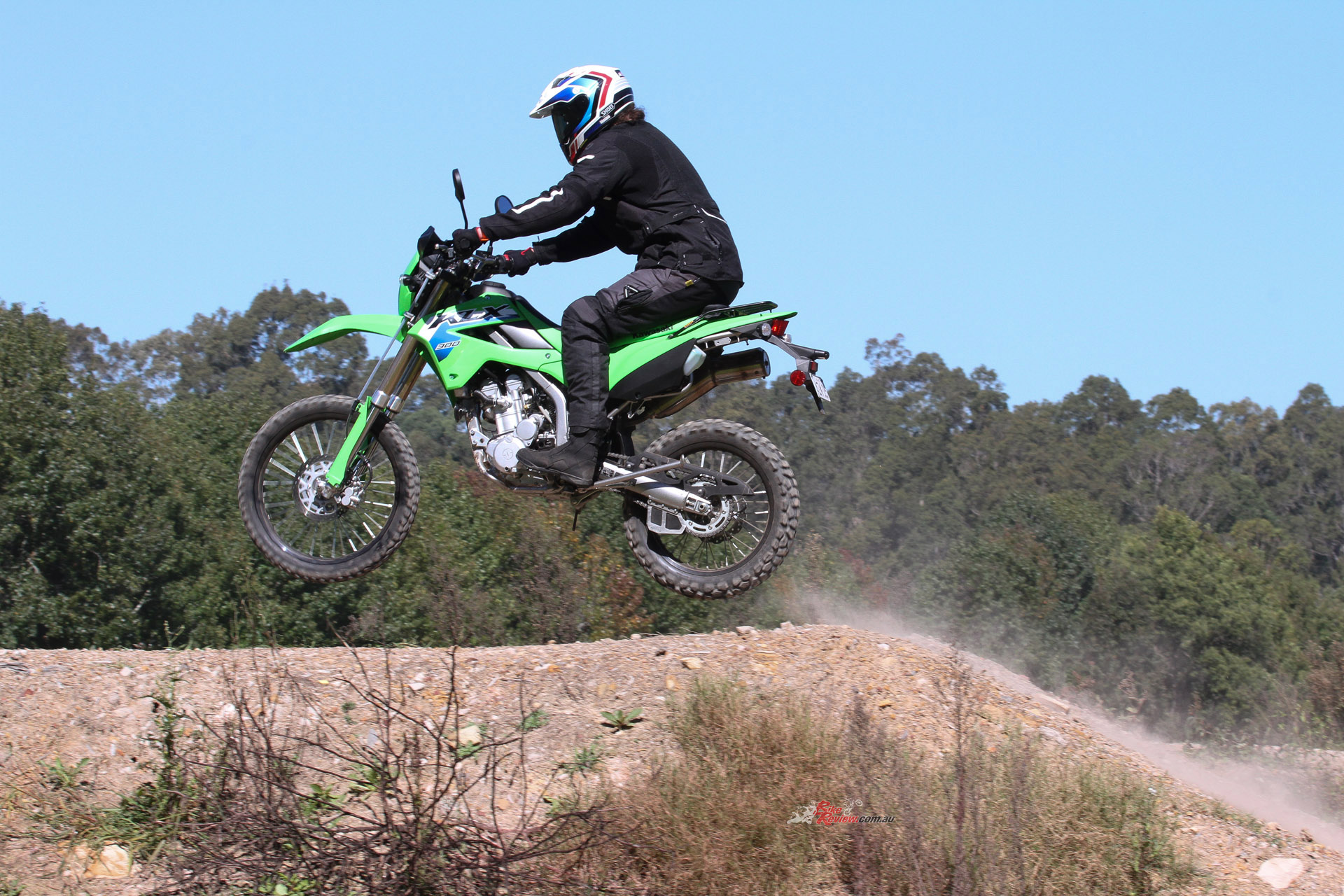
The bulk of my time was spent riding through Ourimbah State Forest, plus a quick session on a local motocross track. It’s pretty rutted up out there at the moment, and my 110kg frame gave the suspension a chance to show what it has. Up front are 43mm inverted forks with adjustable compression, linked to a Uni-Trak gas-charged shock with a piggyback reservoir, adjustable for compression, rebound and preload. It’s no decked-out super-enduro, but we aren’t paying for that and we don’t expect that.
It’s best suited to a less-spirited trail ride, and if you’re planning to push it quickly through the bush, an upgraded setup is on the cards.
Out of the box I couldn’t really complain. I bottomed it out once and also some grit caused a fork seal leak, which Jeff and I fixed with the old feeler gauge trick, but otherwise, even over the heavier ruts and a couple of jumps, it held up well. It’s best suited to a less-spirited trail ride, and if you’re planning to push it quickly through the bush, an upgraded setup is on the cards.
The tall 935mm seat height suits taller riders, but it’s worth checking before buying if you’re shorter or new to dirt.
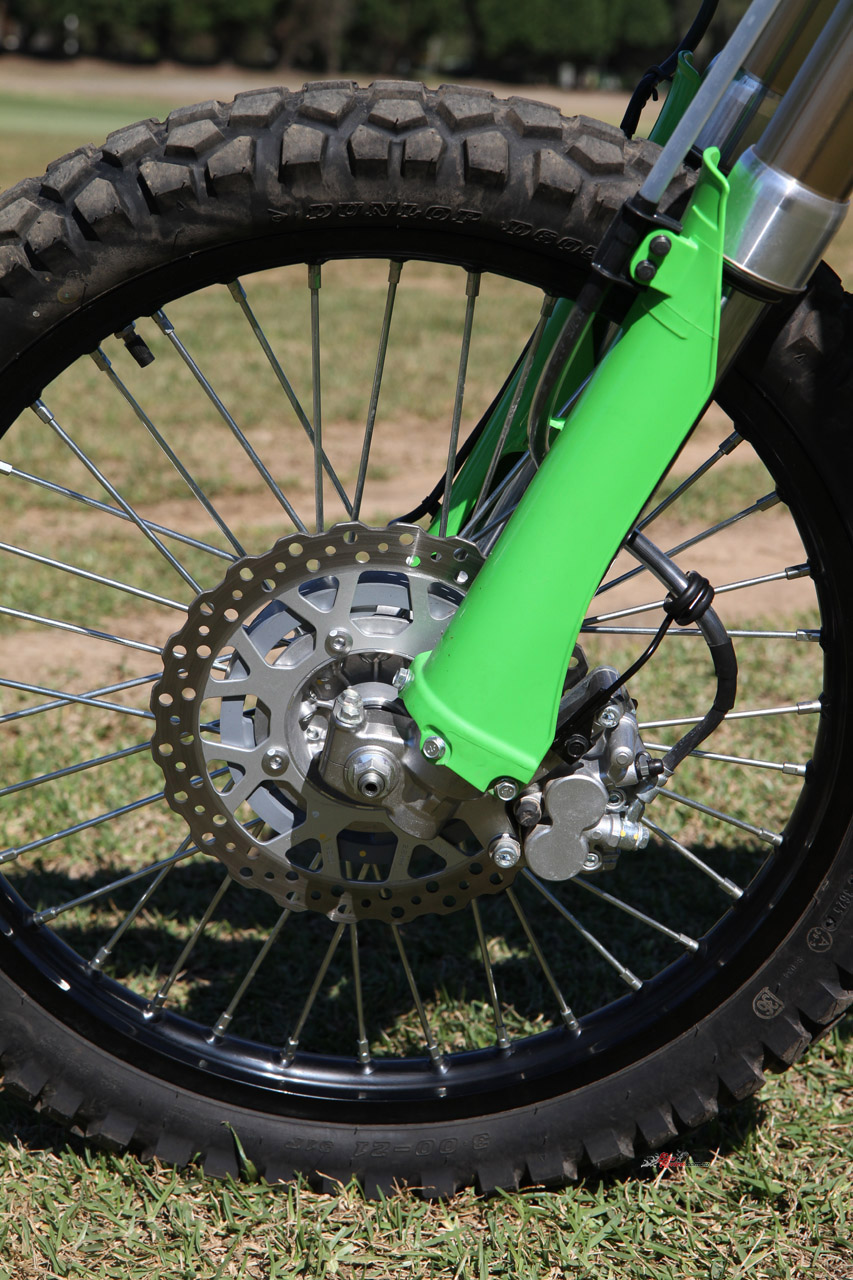
Braking is much the same story. The 250mm front petal disc and twin-piston caliper pair with a 240mm disc and single-piston rear, and they perform about as well as I’d have expected. It’s nice not having to muck around with ABS as you slide into the dirt, and on the street they hold up well enough.
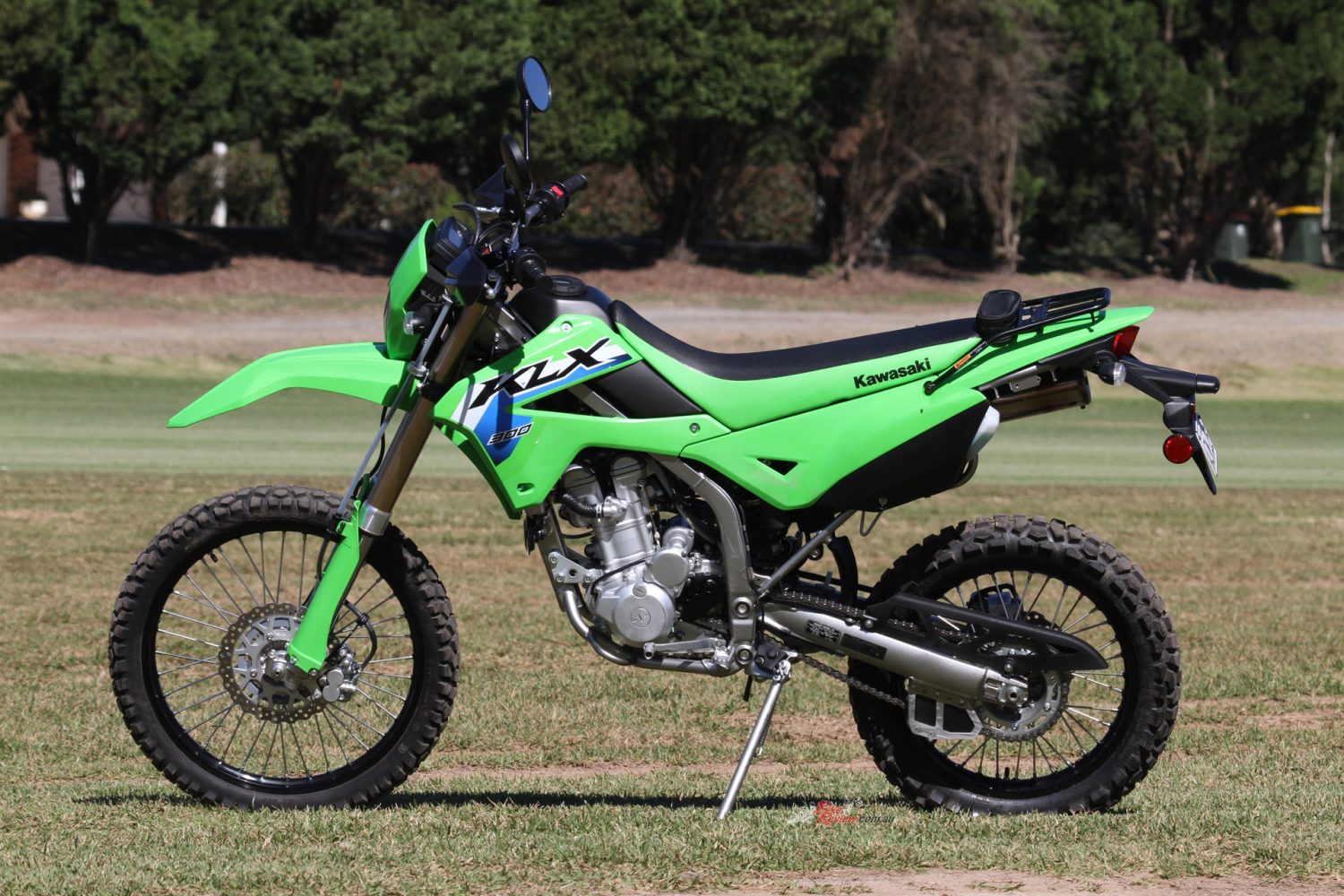
Back to the chassis and stance, the KLX300 is built around a box- and tubular-section high-tensile steel perimeter frame with a lightweight aluminium D-section swingarm. Nothing crazy or new here from Kawasaki, but it’s the same setup Kawasaki uses across the KLX range, and it does the job. The KLX300 is very slim between the knees, easy to throw around, and planted enough on the road that it never feels nervous or particularly twitchy.
At six-foot-four I loved it, but if you’re shorter you’ll be tip-toeing at the lights, so it’s worth a sit-on at the dealer first.
Then there’s the height. As I said, the rear’s been lifted to get it ADR-compliant without ABS, and you feel it the moment you swing your leg over. Seat height is a towering 935mm. At six foot four I loved it, but if you’re shorter you’ll be tip-toeing at the lights, so it’s worth a sit-on at the dealer first to see if this is manageable for you. At 137kg ready to ride, it’s light enough that the height never becomes a handful once you’re moving.
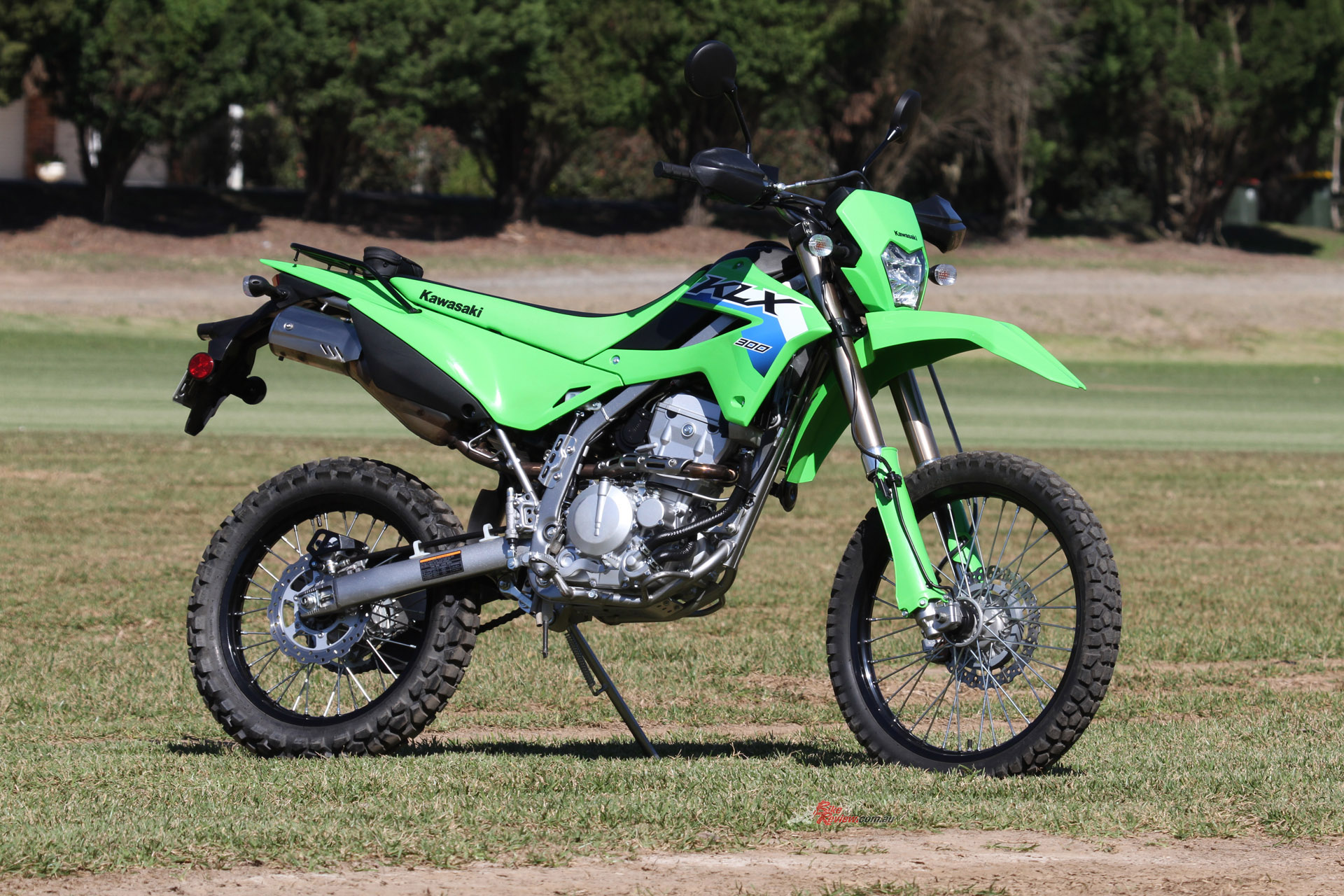
The higher rear end gives the 2026 KLX300 a sharper stance, though the 935mm seat height won’t suit every rider.
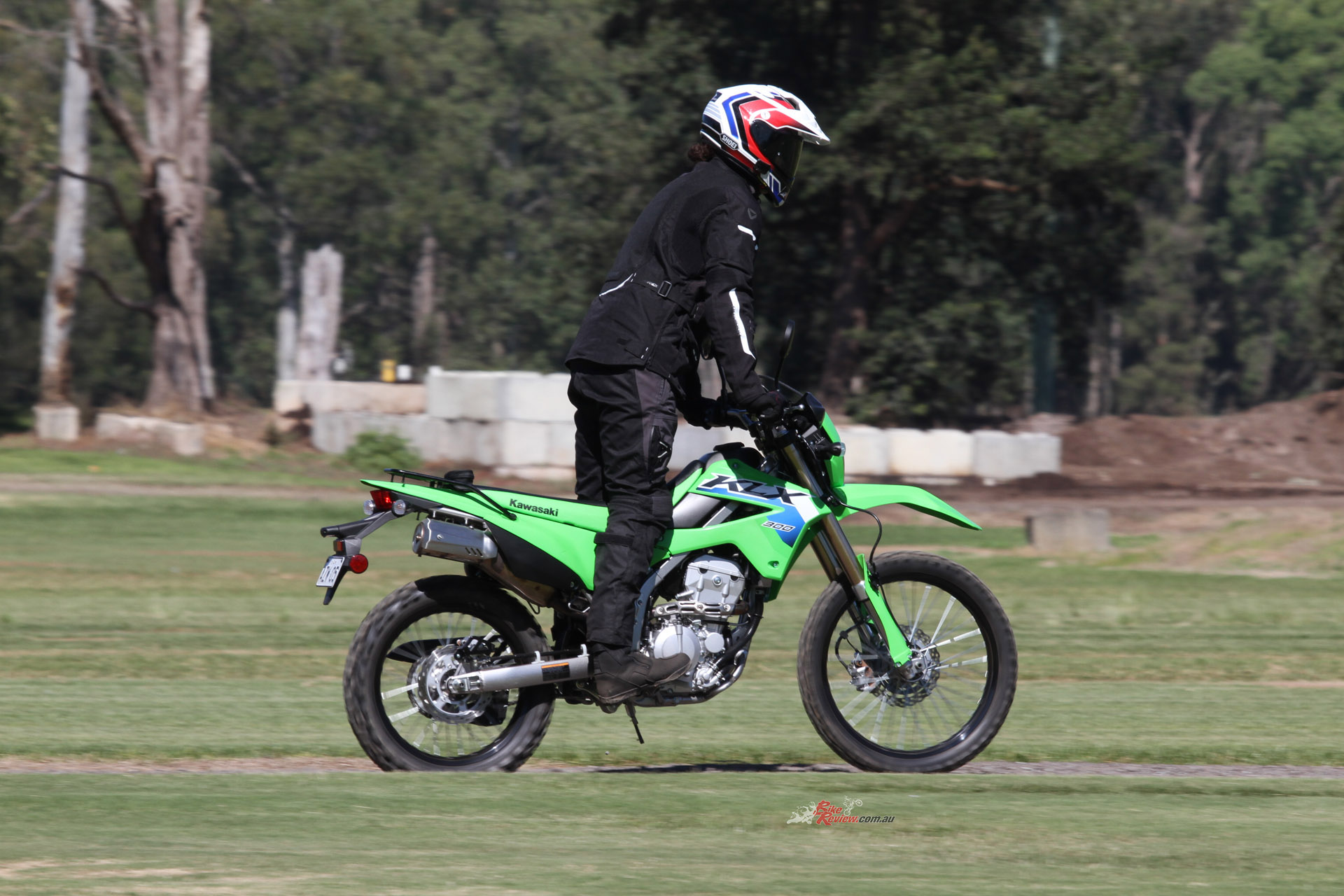
As a few others have said online, the taller rear really seems to force you forward up onto the tank, which is where you want to be on a dirtbike. It’s got a bit of top heavy tip-in, and you really do feel like you’re tipping over as you lean it in, but the chassis still made for a genuinely fun ride on the trails and the track. There’s something pretty cool about laying your daily rider on its side and chucking a leg out through a berm!
You get a 21-inch front wheel and 18-inch rear – proper full-size dirt sizing – wrapped in stock Dunlop D605s, and it’s a comfortably dual-sport setup. They’re a genuine middle-of-the-road tyre, enough for casual street riding and enough to get you through casual dirt without drama, but they excel at neither. Most riders would pick a lane and move towards it, something more aggressive for weekends in the bush, or more road-biased if it’s mostly commuting. Out of the box, for someone wanting a bit of both, there’s nothing you’d need to rush to change.
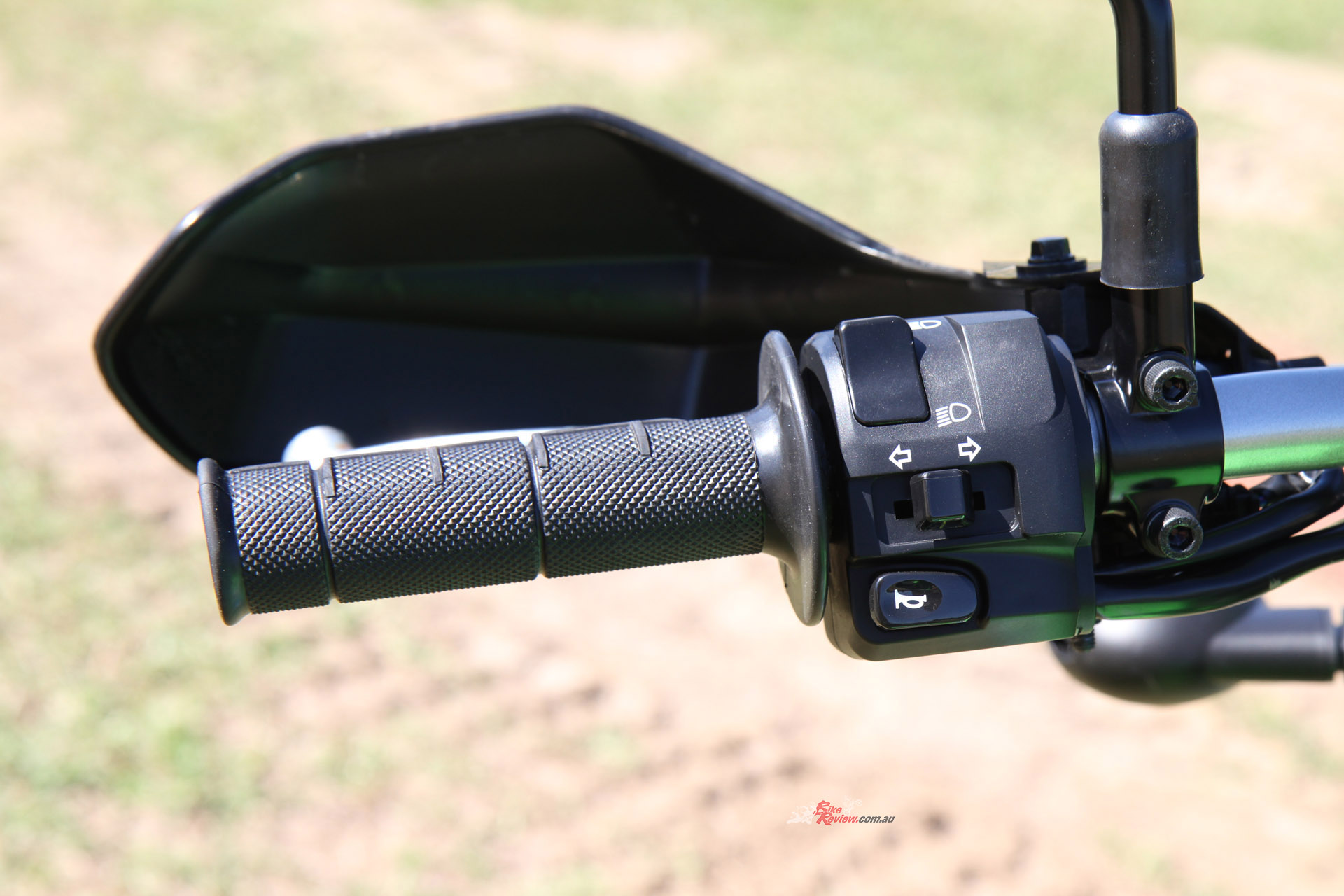
The dash really hasn’t changed, it’s the same simple stock Kawasaki unit, and that’s no bad thing. The all-digital display gives you a speedo, bar-style tacho, clock, dual trips and the usual warning lights – it’s clear and dead simple to operate. No Bluetooth, no riding modes, no colour TFT, but on a bike like this you don’t want for any of it. The switchgear is equally no-nonsense and everything falls where your thumbs expect it to. Nothing to write home about and that’s exactly the point.
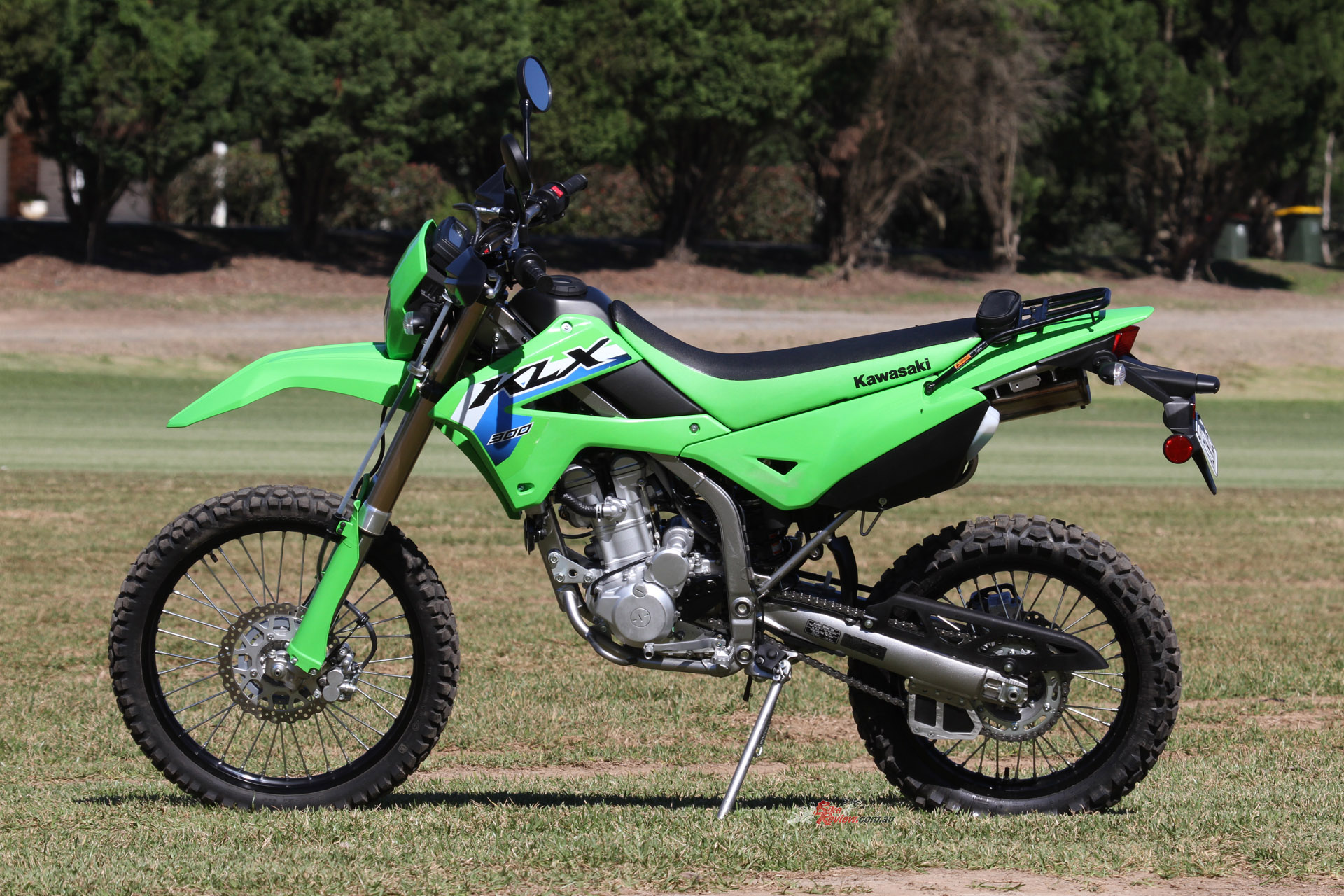
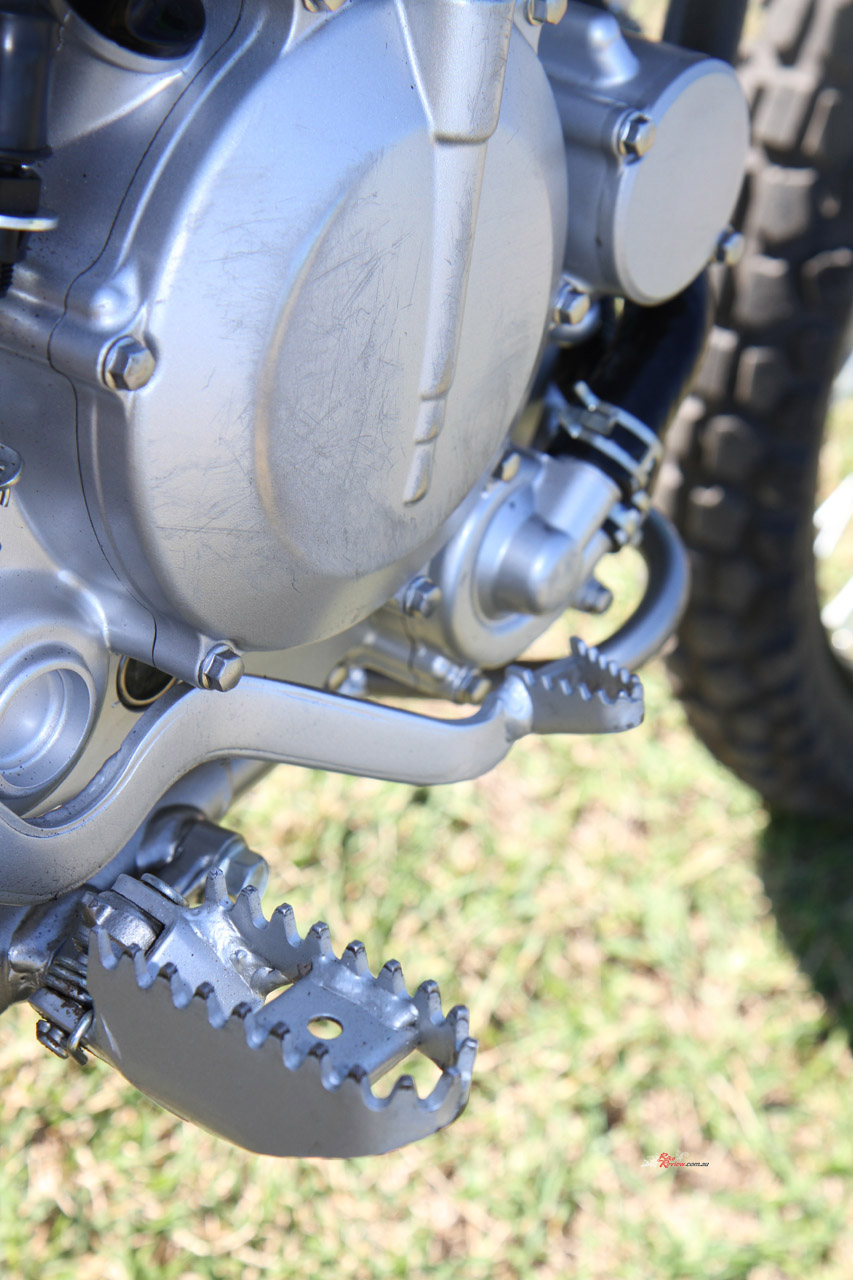
The rear carrier is an option, though a bash plate would be a smarter first addition for regular trail use.
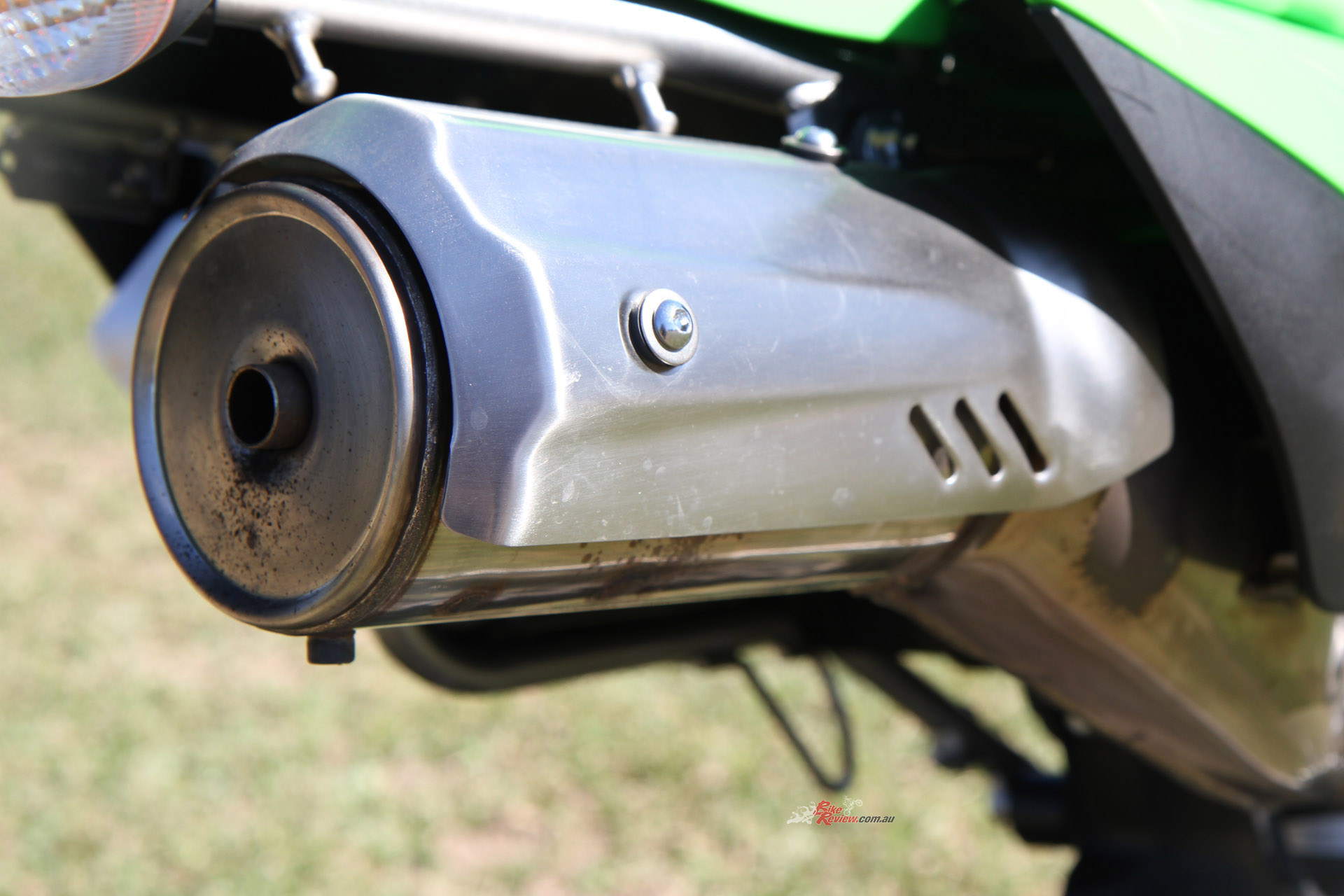
Last up, the styling. With that higher rear end the 2026 KLX300 looks a fair bit more aggressive than before, a sharp, tall stance that leans hard into the KX motocross look. I liked it. The one thing I’d do is throw a tail tidy on it, as that rear end with the stock plate hanger and flap is the one bit that still doesn’t win in my books, though I can say that for any bike. Clean it up and the whole thing shifts towards the dirtbike look. The new LED headlight is pretty slick and throws a good beam, the mirrors are standard, and the rest of it, the slimmer KX-style shrouds, two-tone seat, new side covers and revised fenders, comes together for a polished look.
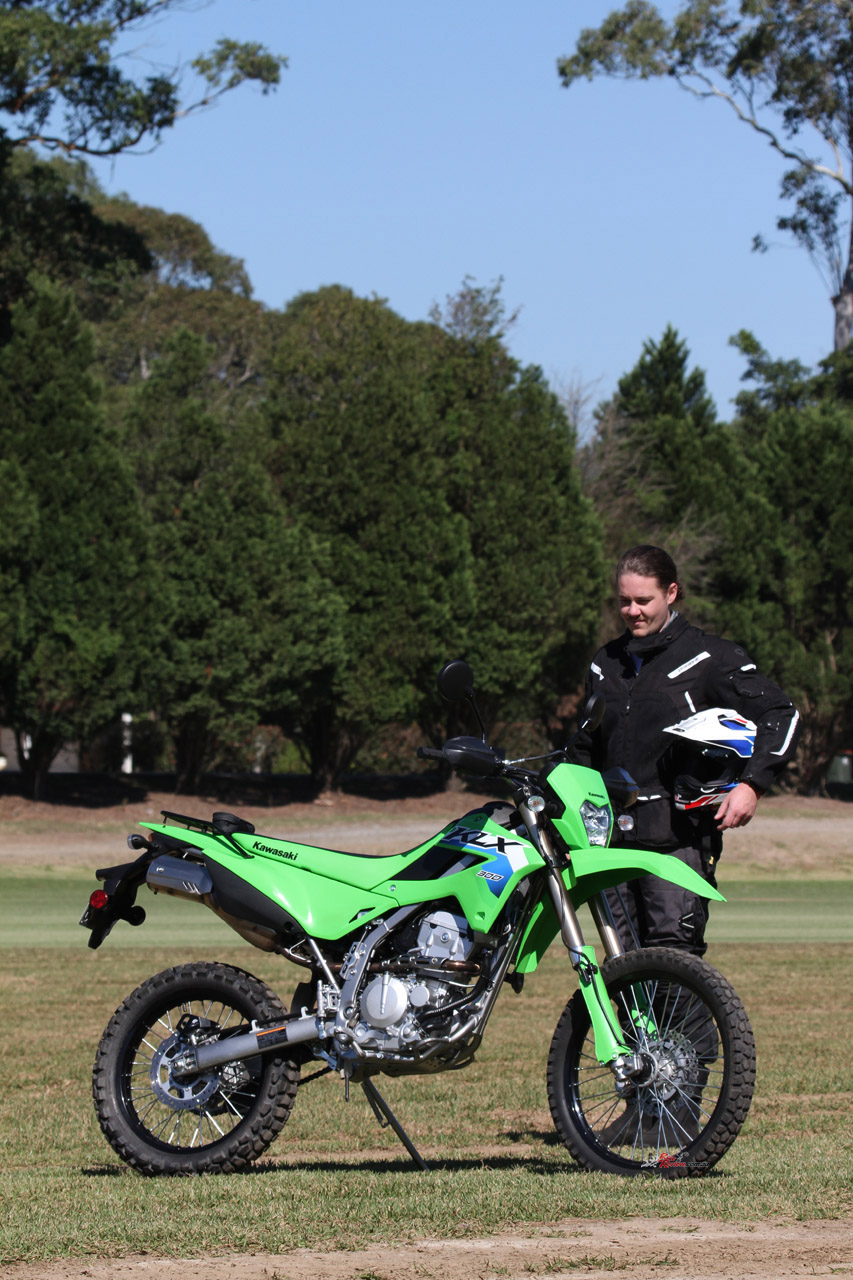
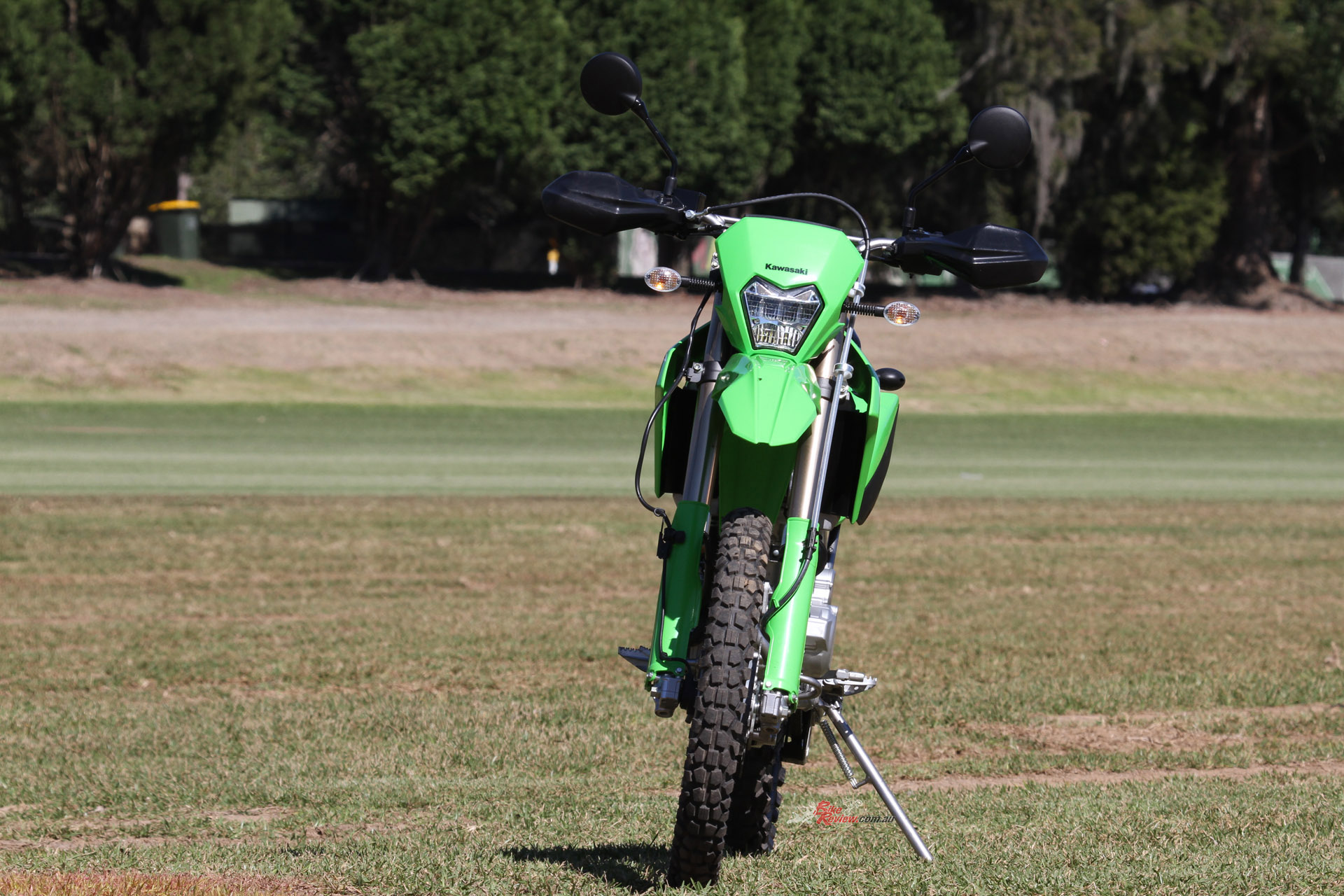
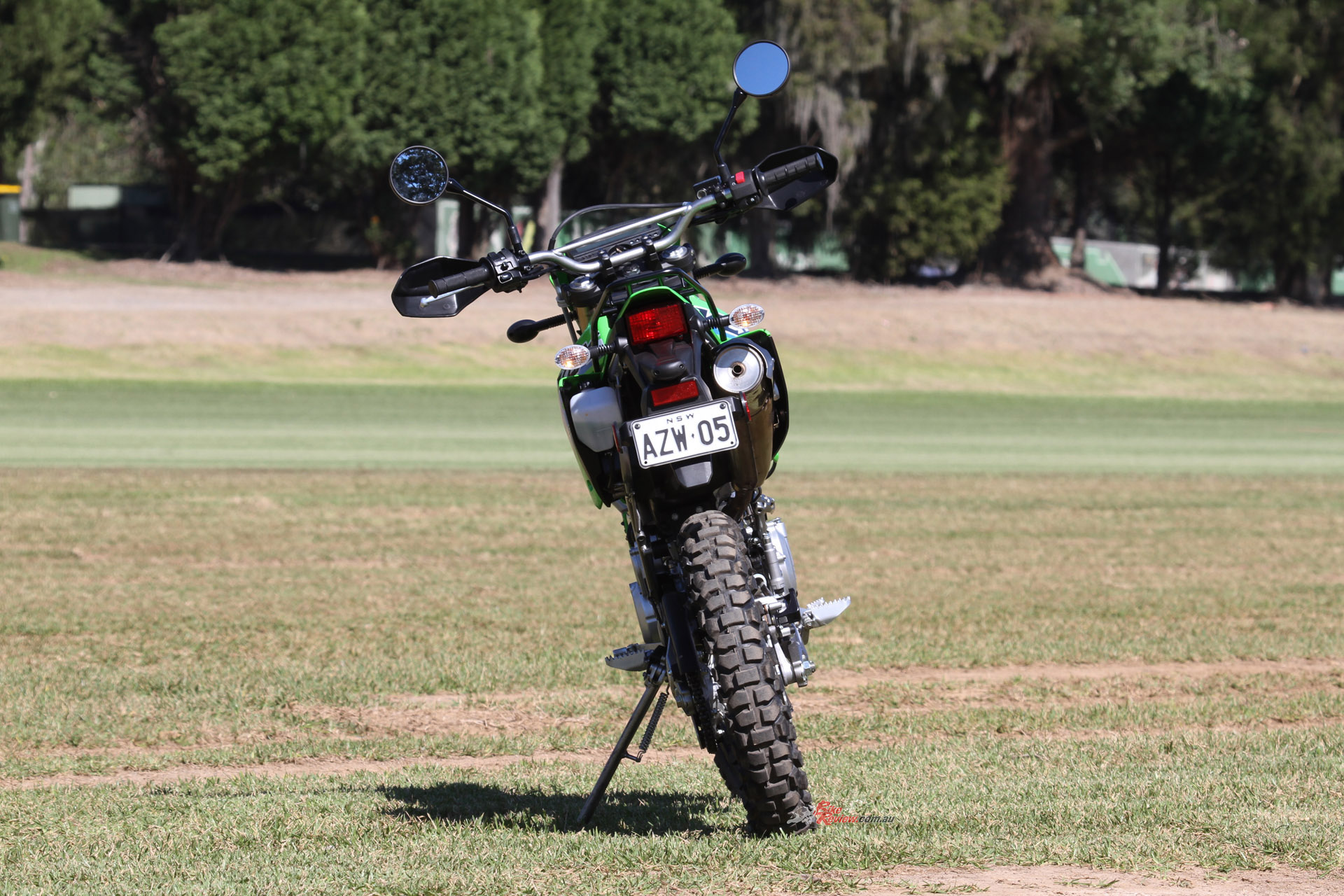
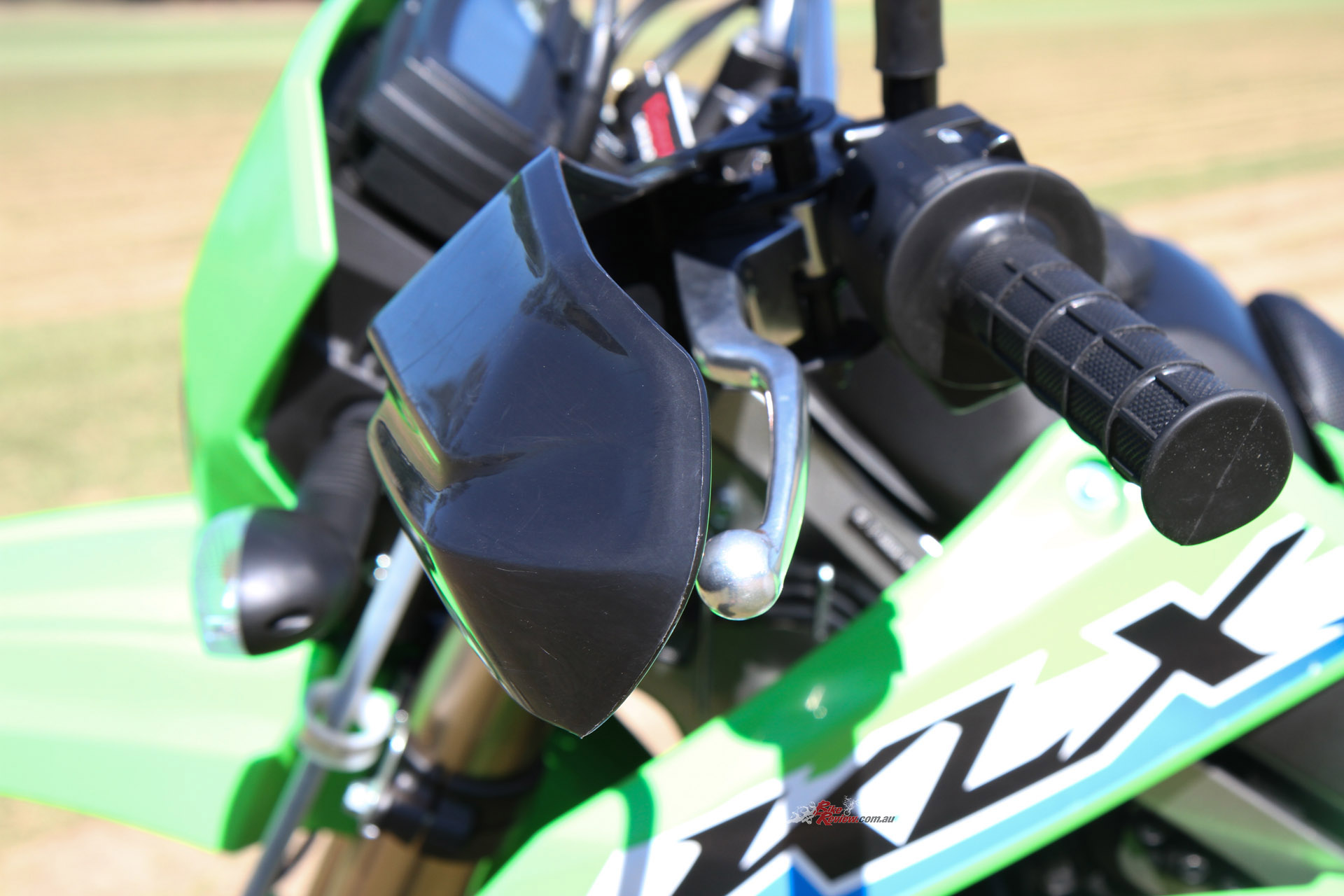
If you’re keen to take it further, the aftermarket’s already there with lots available. A bash plate is likely a must for harder dirt rides. Between those, the throttle plate and PAIR valve mods, a sprocket swap and a suspension freshen-up, these could easily become proper dirt weapons. As of now, Kawasaki offer a rear carrier, hand covers and handlebar pads. Not much, I know. But I suspect this will grow.
Out of the box it comes with everything you need to have a proper crack in the bush while still cruising to work the next morning.
All in all, it’s an awesome addition to the Australian market, and one I reckon will sell well. There’s likely a lot of us out there like me who want a simple machine we can ring out and enjoy without being terrified. Out of the box it comes with everything you need to have a proper crack in the bush while still cruising to work the next morning. For the newer or casual rider especially, it’s definitely worth a look.
A very special thanks to Yarramalong Turf Supplies for use of their property for our photoshoot.
2026 Kawasaki KLX300 Specifications
Price: $7849 + ORC
Claimed Power: 19.0kW [26hp] @ 8,000rpm
Claimed Torque: 24Nm [17.7lb-ft] @ 7,000rpm
Wet Weight: 137kg
Fuel Capacity: 7.5L
Engine: Liquid-cooled, DOHC, 4-valve, single-cylinder, four-stroke, EFI, 292cc, 78.0 x 61.2mm bore x stroke, 11.1:1 compression ratio, Bosch injection, Euro5 compliant. Gearbox: Six-speed. Clutch: Wet, multi-plate, cable-actuated.
Chassis: High-tensile steel perimeter frame with aluminium swingarm.
Rake: 26.7° Trail: 116mm
Suspension: 43mm USD cartridge fork, compression adjustable, 285mm travel (F). Uni-Trak single shock, preload/rebound/compression adjustable, 289mm travel (R).
Brakes: 250mm petal disc with twin-piston caliper (F), 240mm petal disc with single-piston caliper (R).
Wheels & Tyres: 21in front / 18in rear spoked wheels, dual-purpose tyres.
Dimensions:
Wheelbase: 1,440mm
Seat height: 935mm
Overall width: 825mm
Overall length: 2,200mm
Overall height: 1,205mm
Instruments & Electronics: Digital LCD dash with bar-style tachometer, dual trip meters, odometer, clock and warning lamps. Lighting: Full LED (headlight, indicators, tail). Ignition: Keyed, 5-tumbler security system. Extra features: Optional rear carrier, hand covers, handlebar pad.
Bike Review | 2026 Kawasaki KLX300
Kawasaki’s 2026 KLX300 is now fully road-registerable in Australia, giving riders a simple, affordable dual-sport option for commuting and casual dirt riding. Nick spent two weeks testing it on the road and in the dirt to see where this taller trailie works best.
The Author

You Might Also Like