
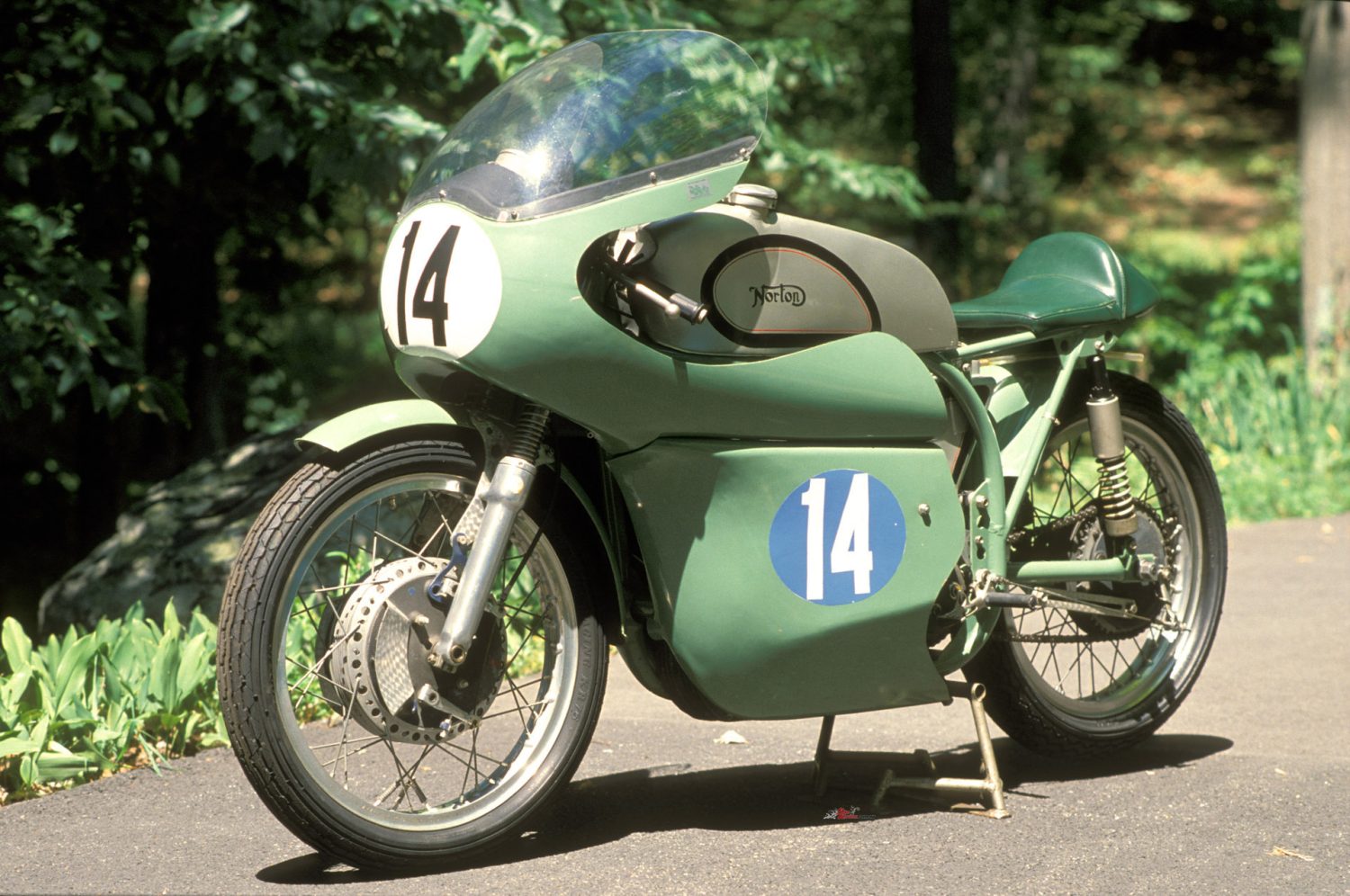

Tuning legend Francis Beart turned this Manx Norton into a successful racer. Decades later, Cathcart discovered why it’s one of his finest surviving machines. Photos: Kyoichi Nakamura
Francis Beart transformed Norton’s Manx into one of the most successful and meticulously prepared racing motorcycles of its era. Alan Cathcart traces the history of Beart’s final 350cc masterpiece before experiencing first-hand what made these legendary machines so special.
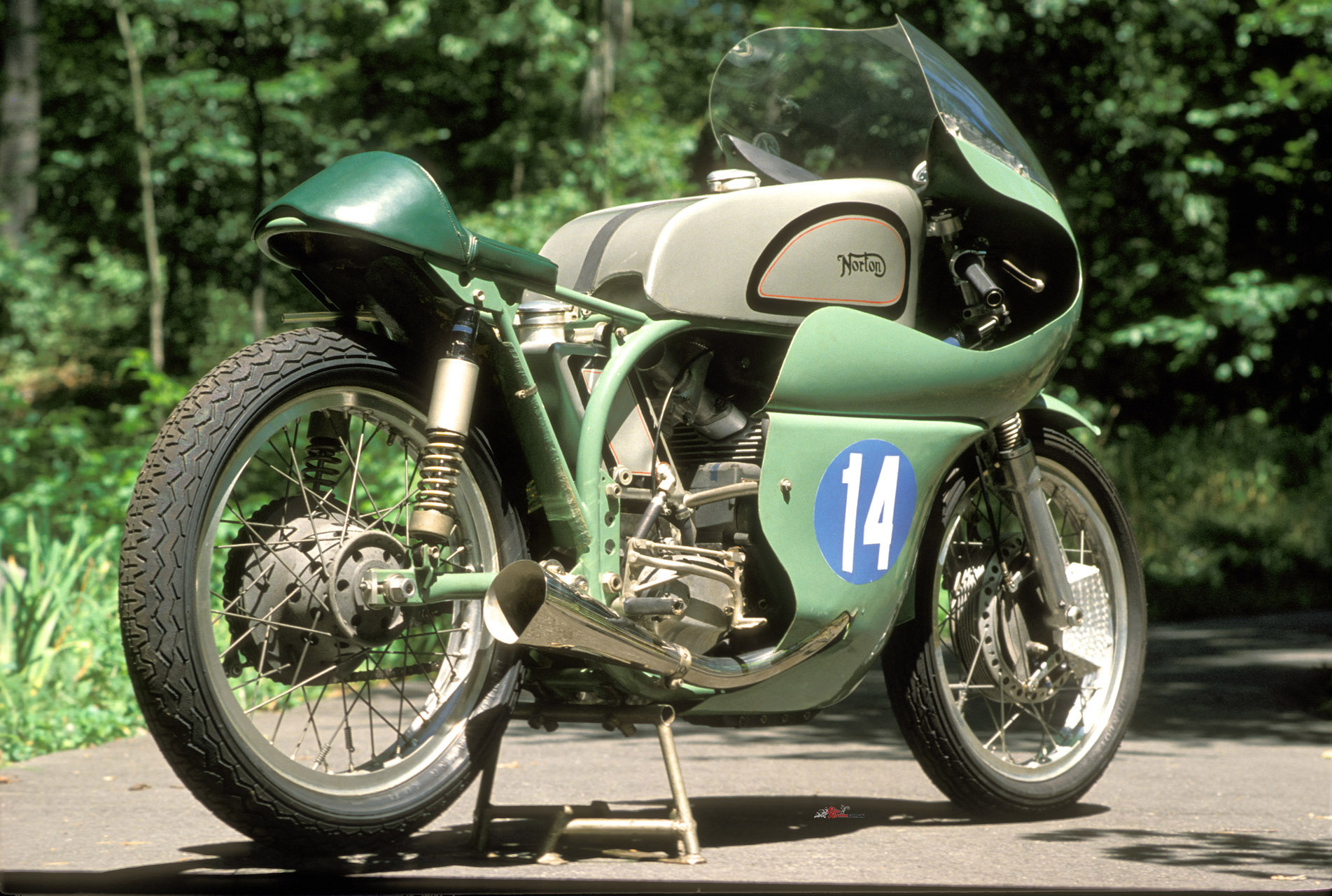
Francis Beart’s meticulous engineering cut weight without sacrificing reliability or performance.
For more than 50 years, Francis Beart was one of the great men of British motorcycle racing until his sad death in March 1983. Though a successful tuner in the prewar era, and the architect of Norton’s remarkable hat-trick of victories from 1949 to 1951 in the Daytona 200, as well as future Formula 1 legend Stirling Moss’s tuner for his race-winning Kieft-Norton Formula 3 car, his reputation was founded on the remarkable succession of much modified Manx Nortons that passed through his hands post-WW2, latterly painted a unique shade of green (actually Ford’s Ludlow Green, as used on their 1950s Prefect and Consul models!).
Beart’s reputation was founded on the remarkable succession of much modified Manx Nortons that passed through his hands.
An unsurpassed total of 11 Manx GP victories came the way of Beart-tuned machines. Coupled with 10 second places and three thirds, these would be quite sufficient to mark Francis Beart down as one of the Masters of Mann, even without his solitary TT win (Denis Parkinson on a Norton 350 International in the inaugural 1947 Clubmans race), backed up by two seconds and a third in the June races. Francis preferred to concentrate on the longer, public roads events such as the Isle of Man races and the North West 200, where preparation and reliability counted for more than on shorter circuits.
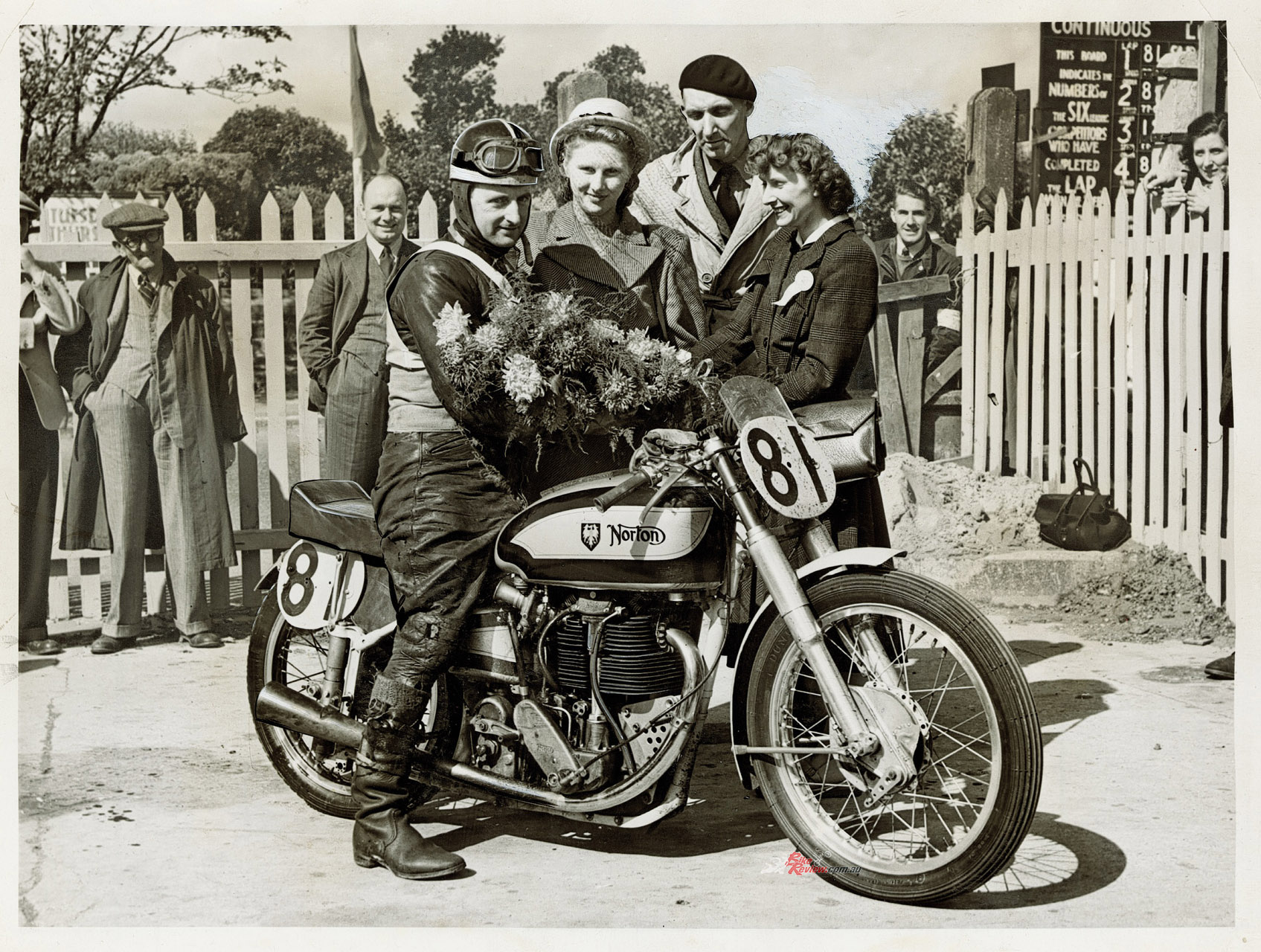
Francis Beart at rear with beret after Denis Parkinson claimed victory in the inaugural Clubmans Junior TT.
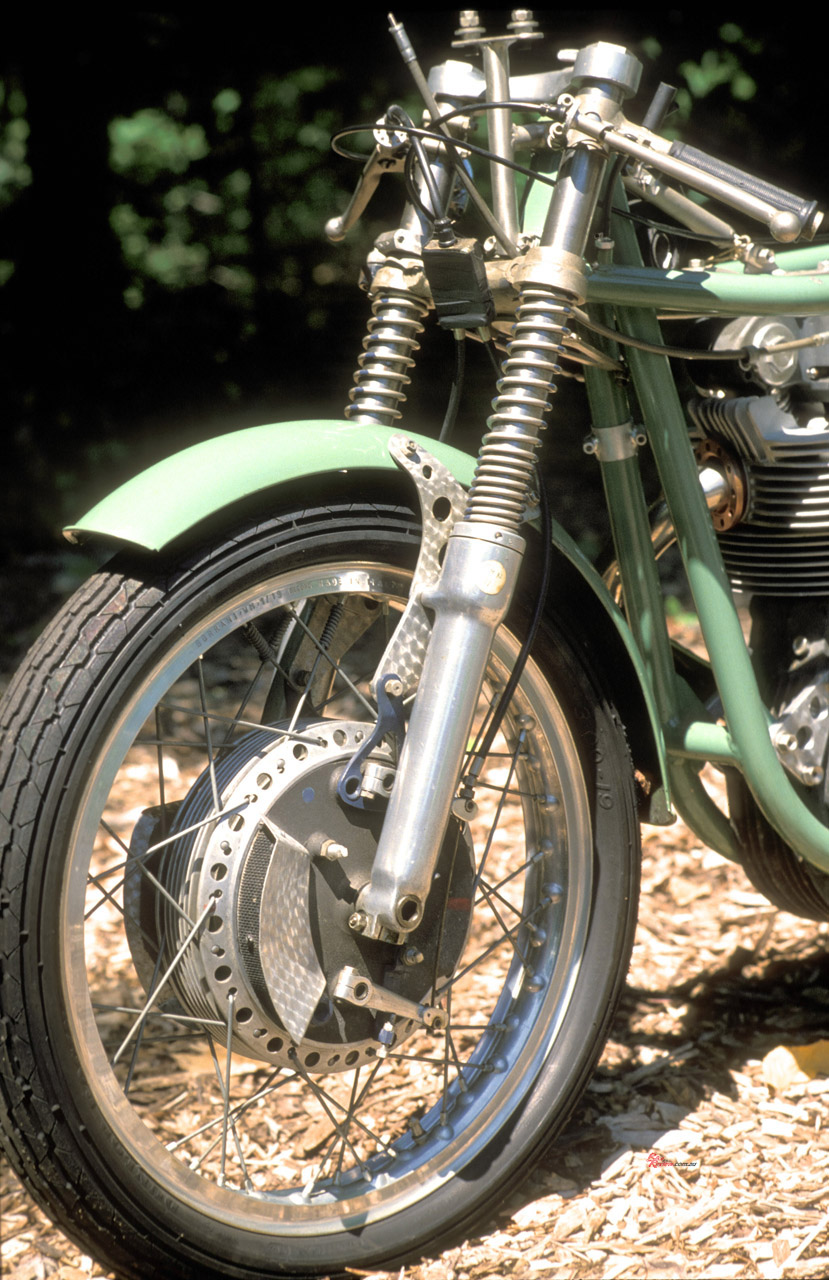
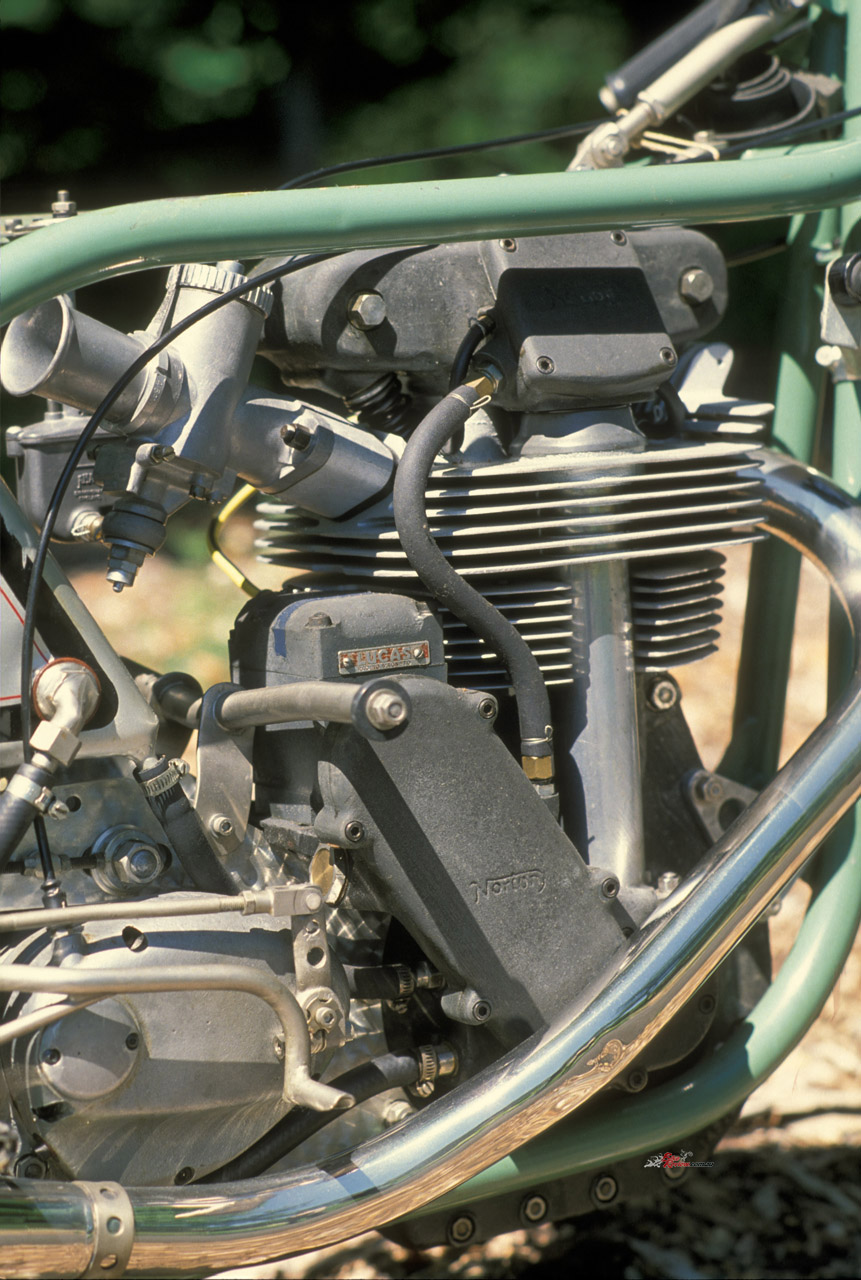
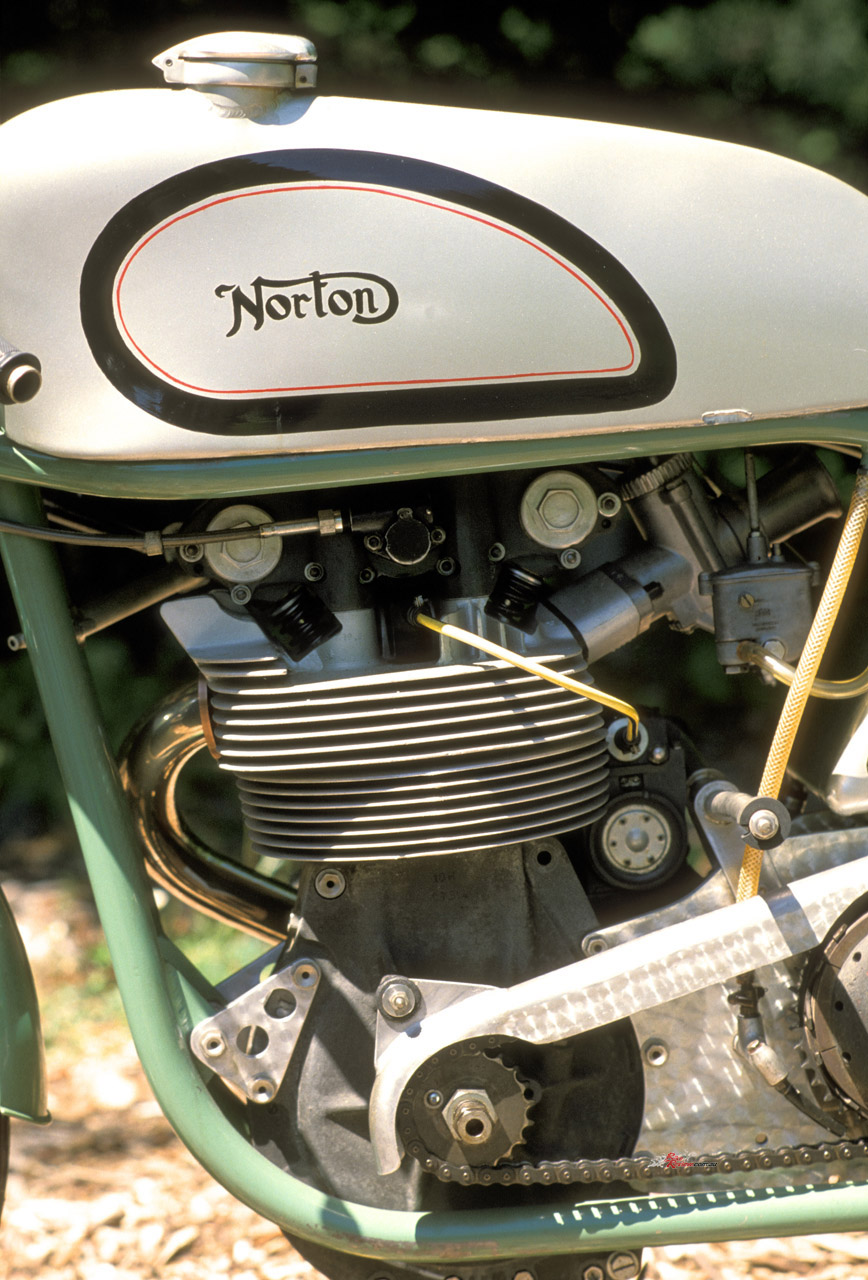
Genuine Beart Nortons are few and far between, because although Francis and his long-time assistant Phil Kettle would work on as many as 60 or more customer engines over a winter, what made Beart’s own bikes stand out was his superb and painstaking attention to detail. No customer could have afforded to pay for the countless hours spent refining each of the components on these machines. Each nut was carefully hollowed out to save precious grams, steel replaced with alloy wherever possible, then that alloy itself filled with more holes than a Swiss cheese, provided no weakening of the part would result. The endless pursuit of weight reduction was one of the Beart passions – and he didn’t let his riders spoil things by getting too plump, either!
The endless pursuit of weight reduction was one of the Beart passions.
Beart’s engines were rebuilt with a precision that not even the Norton factory’s team manager Joe Craig could have surpassed, each setting and component used being recorded in a logbook for future reference. Every opportunity to reduce unsprung weight and friction was sought, from mounting the rear shocks upside down, to replacing the wheel bearings after every race and running them in on a bench. Beart also used the narrowest possible tyre section and rim at either end to save unsprung weight, and to reduce the tyre contact patch for less friction and more momentum in a straight line.
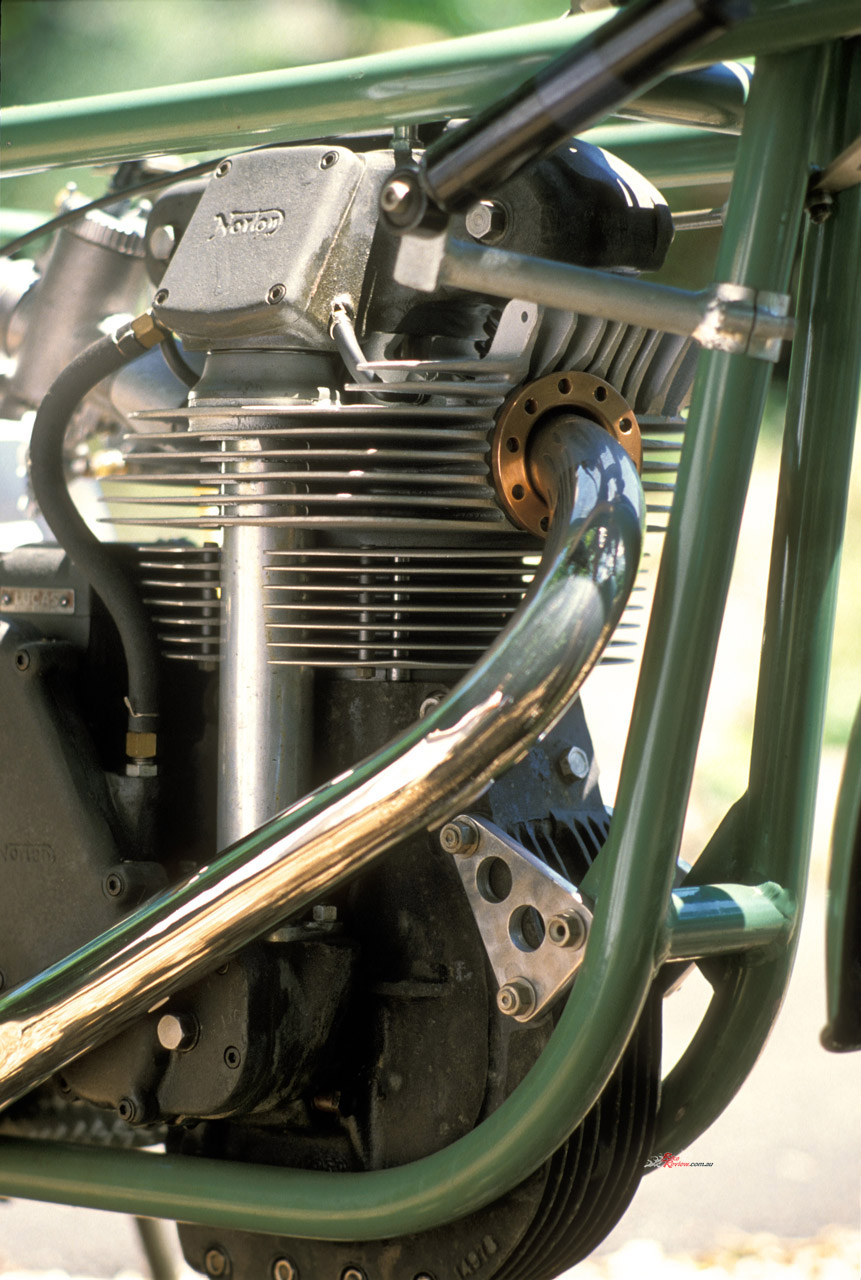
The finest monument to Francis Beart’s creative genius and patient handiwork is the exquisite 350cc Beart Norton which was sold for the hefty sum of US$75,900 including buyer’s premium at the Bonhams sale in Las Vegas on January 8, 2015, which was for many years in the UK’s Stanford Hall Museum. Beart personally rebuilt this – the last 350cc Manx Norton that he owned – to race-ready condition in 1974 for the museum’s founder, the late John Griffith. By then one of his favoured customers, whose 350cc Aermacchi engines Francis prepared for me, I remember watching the progress of the bike in the Beart workshop at his home in Shere, near Guildford, and was later gifted two machine stands he used for all his Nortons after the job had been completed.
Francis intended it as his final Manx Norton project, and to make sure, at the end of the rebuild he gave away all his Manx Norton tools to the Parris family who in those pre-Summerfield, pre-Molnar replica days were one of the very first people to be racing such bikes in the early days of classic racing, in those pre-replica days when original Manx Norton parts were so hard to come by.
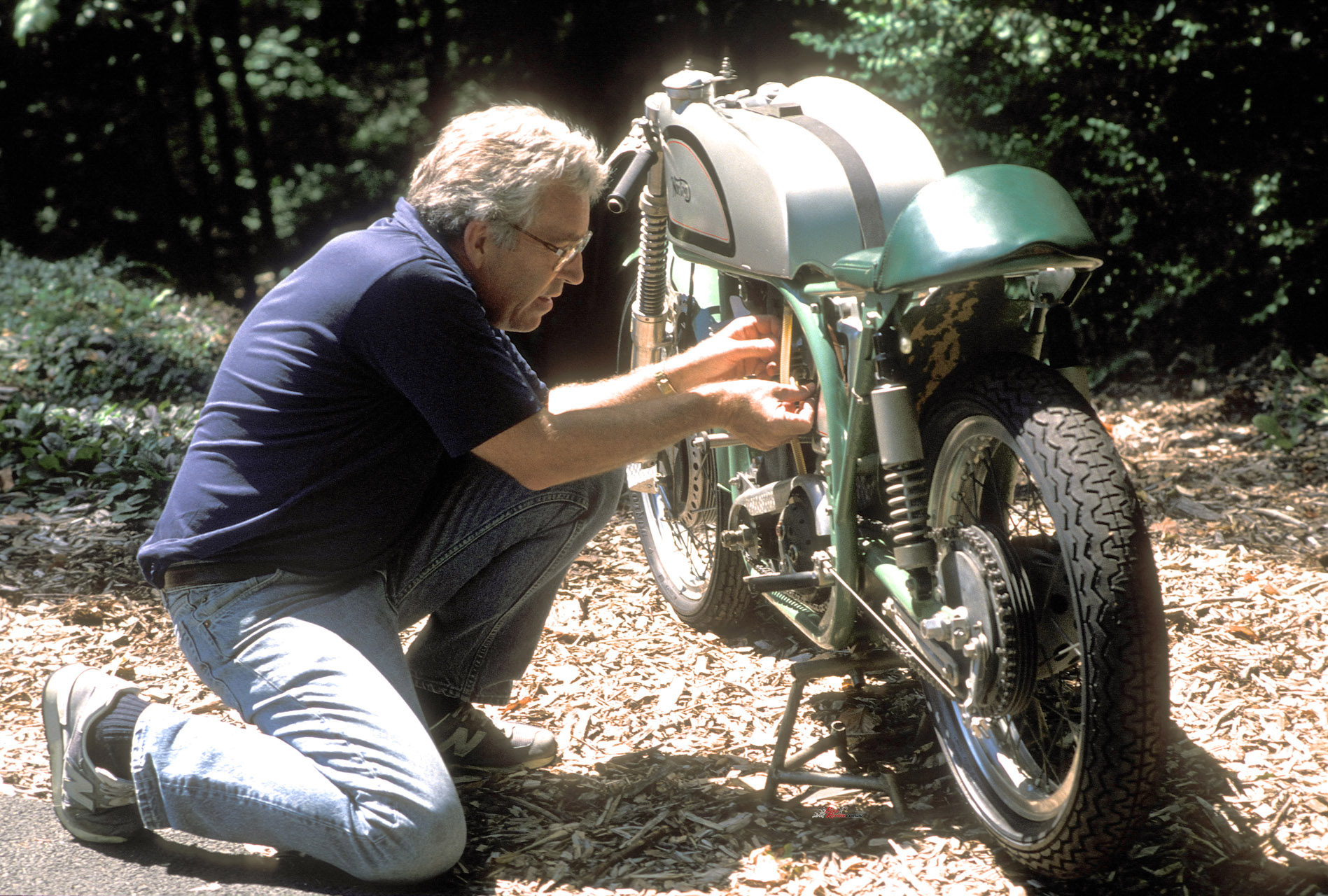
Bob MacLean working on the bike in the USA.
There the bike sat, one of the jewels of the Stanford Hall collection, until 1982 when its exhibits were put up for sale. The bike was acquired by American super-enthusiast Bob MacLean, himself a former Manx Norton racer in the USA who later came to prominence in Grand Prix racing as a top privateer team owner, with his WCM Red Bull Yamaha 500GP team in the late ’90s and early 2000s, before he died in January 2025, aged 87. A resident of Wyoming, but born and brought up in New England, the stock market investor founded World Championship Motorsports in 1991 and operated it until 2005, straddling GP racing’s watershed change from two-stroke to four-strokes with the creation of MotoGP.
The bike was acquired by American Bob MacLean, himself a former Manx Norton racer, who later came to prominence as team owner of the WCM Red Bull Yamaha 500GP team.
In return for my services as an intermediary in his acquiring the Beart Norton, Bob kindly allowed me to give it one last competitive outing it in the 1984 Classic Race of the Year at Snetterton, before it was shipped to its new home in the USA. The chance to try an as-new Beart Norton whose engine had been fired up only a couple of times since Francis – who had passed away only the previous year – had built it himself had special personal significance for me, especially after having seen the bike gradually being prepared a decade earlier on successive visits to the Beart workshop to bring my Aermacchi engines for his attention.
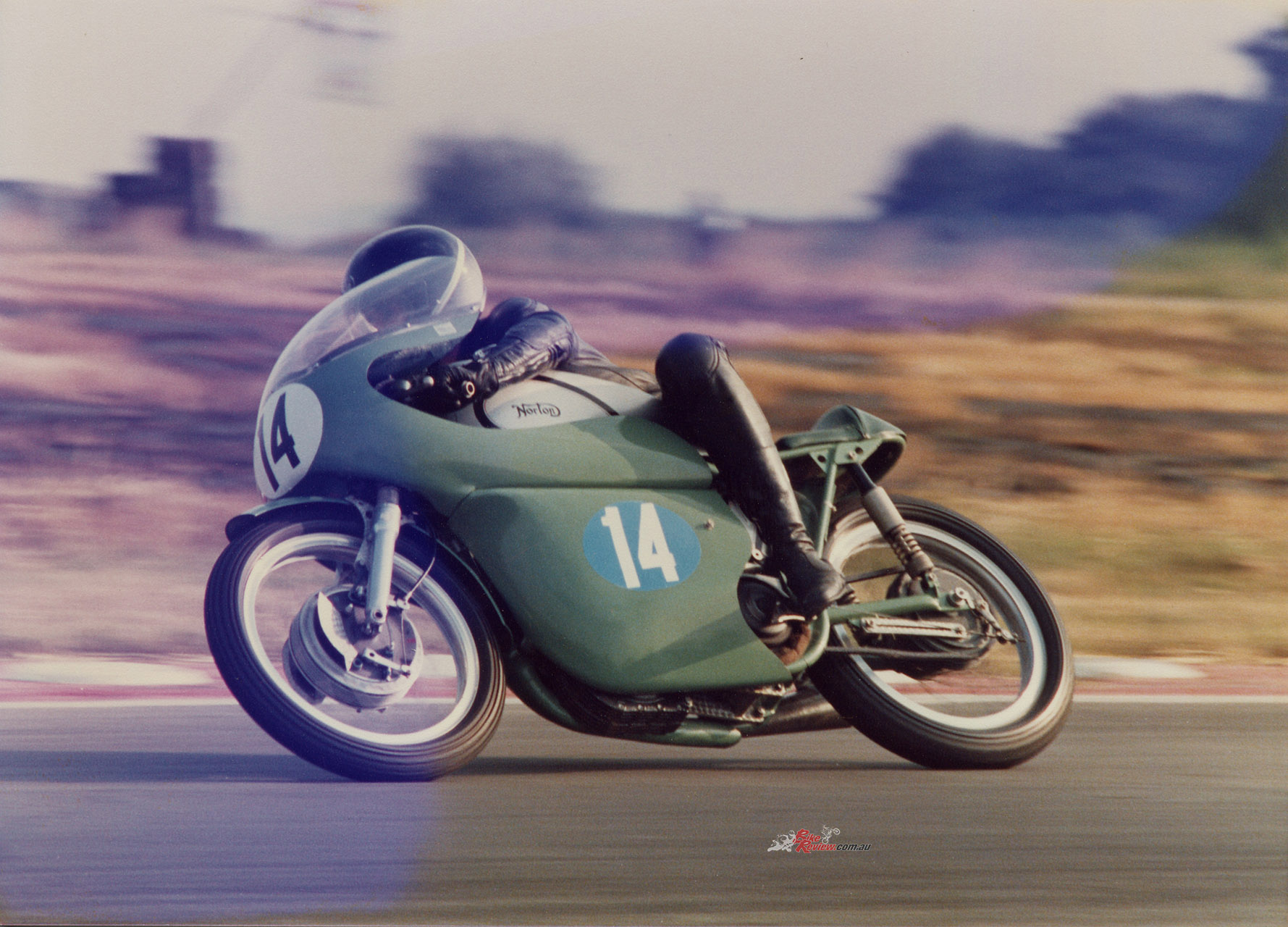
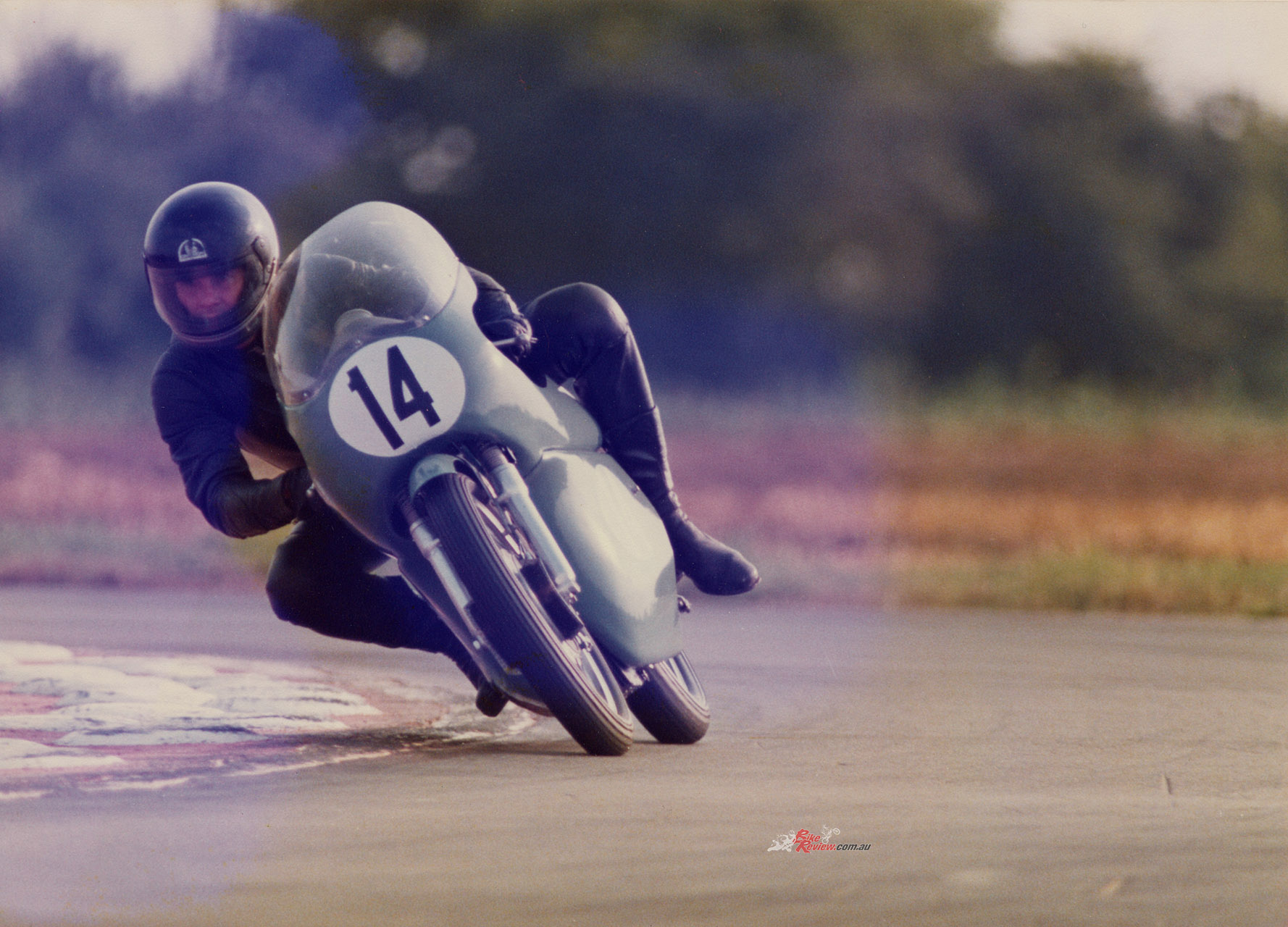
From the details of the machine’s life contained in the Beart logbook which accompanied it, it transpired that this 350 Beart Norton was originally one of the very last Manx Nortons ever built, a 1961 Model 40 supplied new to a customer of Francis Beart’s, a Mr. Craze in Bournemouth. He in turn sold the bike back to Francis during the winter of 1962-63, the Norton having by then completed 1,100 racing miles from new. In a way it’s strange that Francis should have acquired a Norton, for by that time the 7R AJS formed the backbone of Beart’s efforts in the 350 class, after he’d struck up a close friendship with its manufacturer AMC’s Chief Engineer, Jack Williams (father of ace rider/engineer Peter, of Arter Matchless and John Player Norton fame). Alongside personally creating its Matchless G50 big brother, Williams had developed the 7R to its pinnacle of performance, to the point that Mike Hailwood came within 14 miles of winning the Junior TT on one in 1961, only to have the crankpin break coming down the Mountain on the last lap, en route to victory.
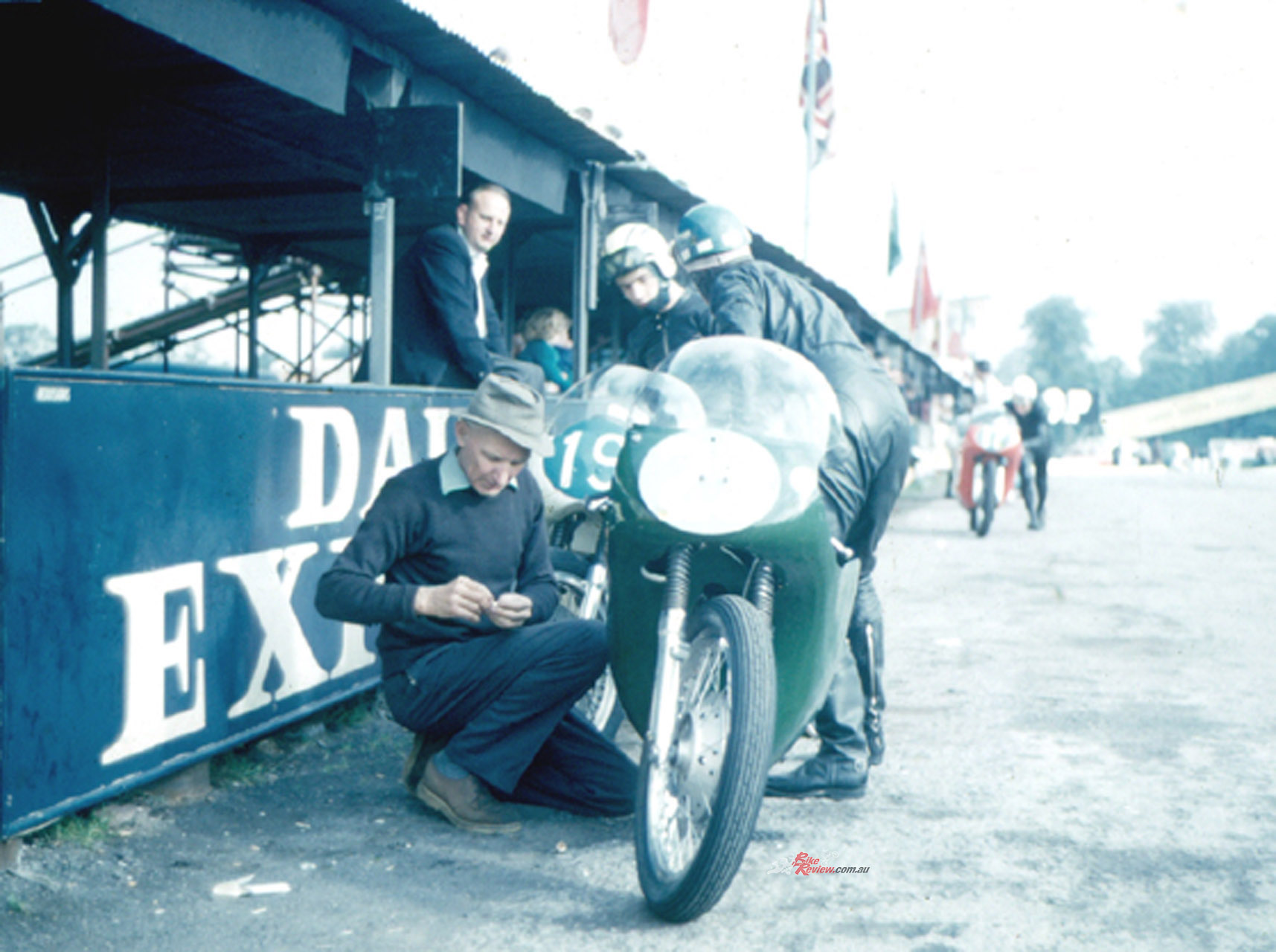
Francis Beart attending to AJS 7R with rider Terry Shepherd at Oulton Park.
But in fact it was in tandem with the AJS 7R on which Peter Darvill was to win the Junior Manx GP for him in 1963 that Francis then rebuilt the ex-Craze 350 Manx for his own purposes, and to his own standards, for use in the Junior Manx GP, fitting a Jakeman two-piece streamlining with the rev-counter mounted in a little ‘dashboard’ in the nose, after Manx GP rules finally permitted the use of a fairing for the first time after the atrocious conditions that the 1961 Junior race had been run in (won by an AJS 7R!). Ernie Wakefield was commissioned to produce lightweight thin-gauge aluminium oil and fuel tanks, the latter specially shaped to produce a recess in the top which permitted the rider to get his chin right down, and be completely shielded by the screen. The resultant twin bulges caused the bike to be named the ‘Sabrina’ by the paddock wags, after a curvaceous blonde British film starlet of the day!
The resultant twin bulges caused the bike to be named the ‘Sabrina’ by the paddock wags, after a curvaceous blonde British film starlet of the day.
A rare factory Gilera twin-leading-shoe front brake was fitted and is still on the bike today, one of two which Francis had acquired from Bob McIntyre’s sponsor Joe Potts after Rob Mac was killed at Oulton Park in 1961. The brake had already been used successfully on the Beart Norton 500 on which Terry Shepherd finished second in the 1960 Race of the Year at Mallory Park, so its effectiveness was proven in those pre-Fontana days, although Francis once told me it had proved troublesome until the right combination of linings was found. The bike debuted in Beart colours in the ’63 Manx GP ridden by Jimmy Guthrie, who finished 20th after the specially made front-brake adjusters kept slackening. Oops! Beautifully fashioned from light alloy and with a dozen holes drilled in each one, they can be easily adjusted during a race with the thumb, but depend on a spring-tensioner to stay in place, so this must have broken or bent in the race.
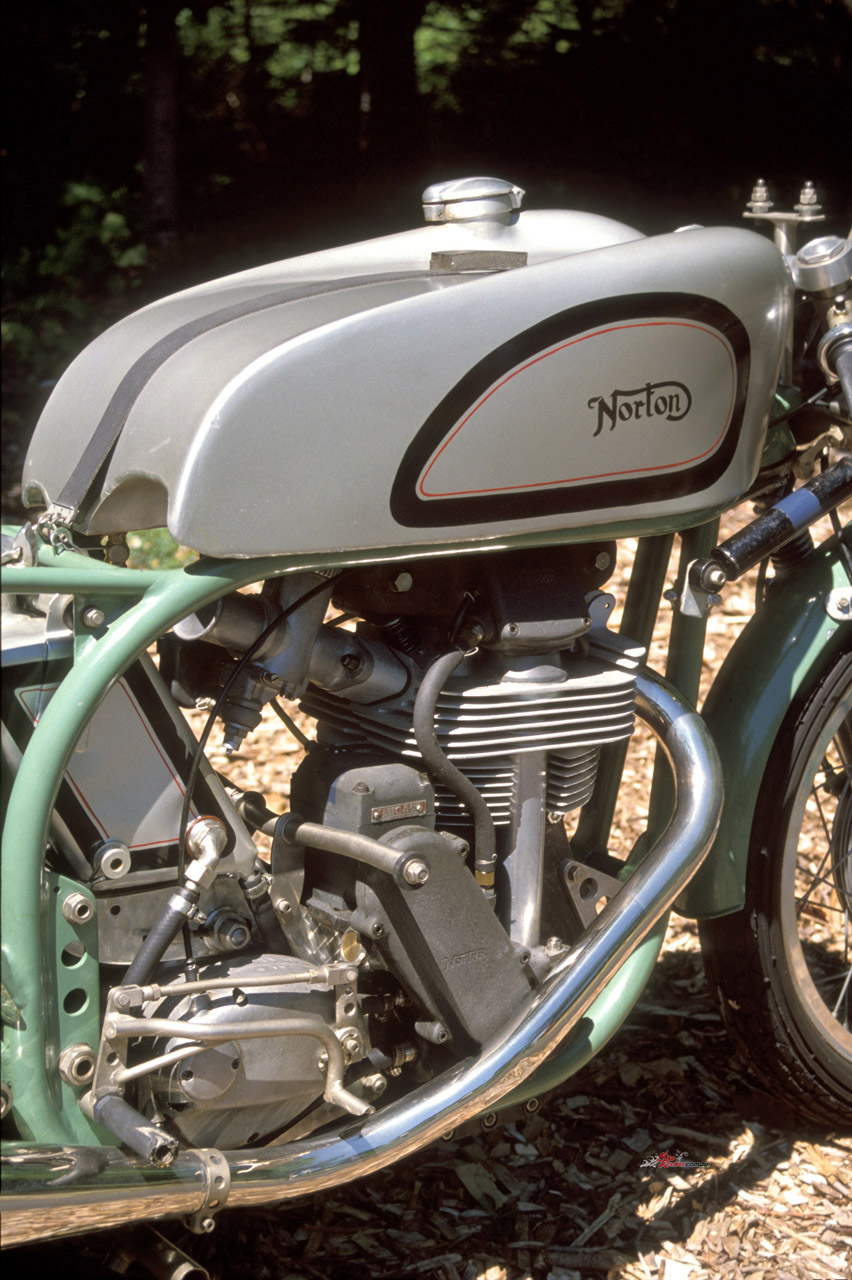
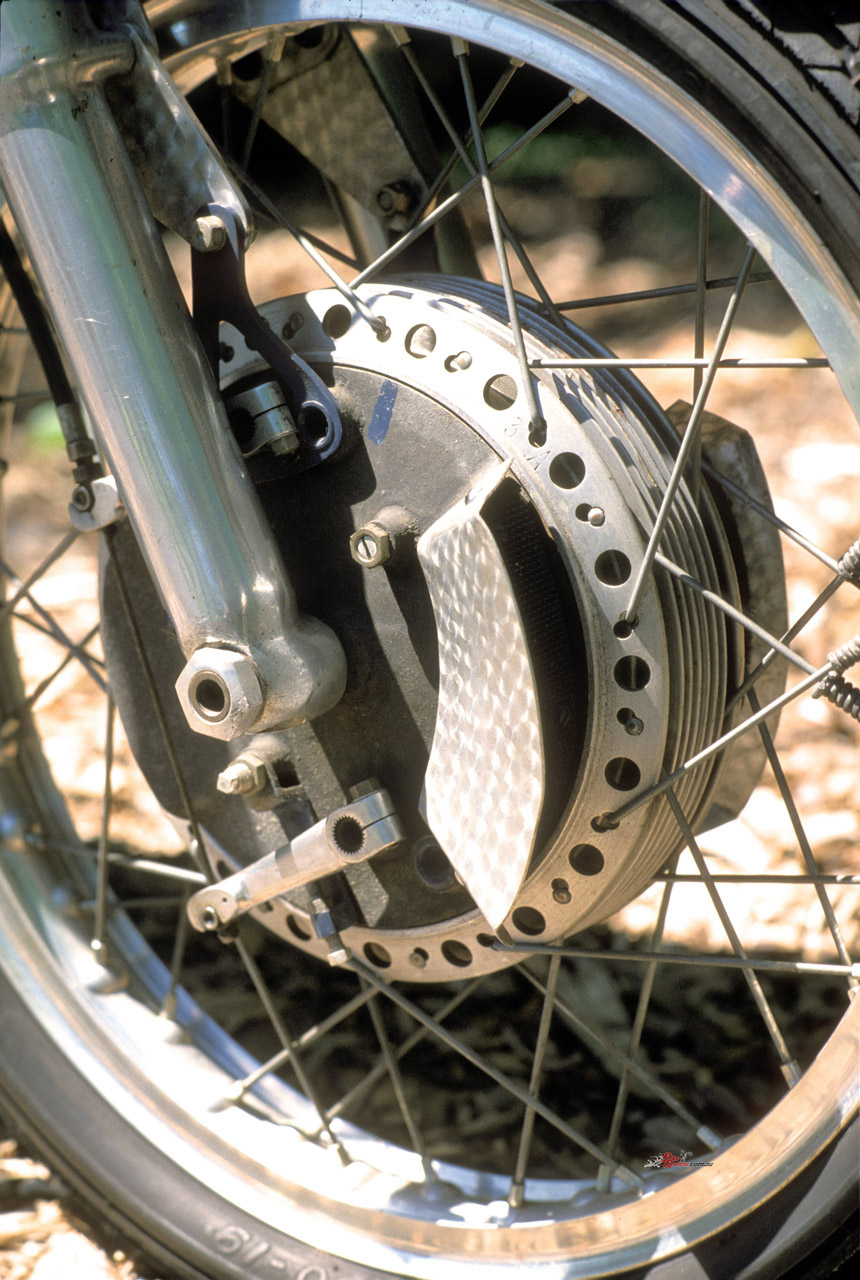
The Norton was not used again until the following year, when Guthrie again rode it in the Junior Manx, unfortunately writing it off when he crashed at Rhencullen in the race. The bike was rebuilt during the winter of 1964-65, Francis’ log revealing that it required a new factory frame, swinging-arm, rear wheel, oil and fuel tanks, one front fork slider, a fairing and sundry other bits and pieces. Jimmy had done a good job of wrecking it!
Like reading about old bikes? Dive into our archive of Throwback articles here…
But Guthrie made amends by finishing 6th in the 1965 Junior Manx at 89.11mph, but before that Joe Dunphy had ridden the bike in the Junior TT, finishing 9th at 91.69mph, en route to the Joe Craig Trophy for best combined result in the two races by a British rider, which he clinched with a fine 2nd place on the 500cc Beart Manx in the Senior TT behind Hailwood’s four-cylinder MV Agusta. Francis noted, however, in his log the performance of the pushrod Aermacchis in the Junior TT race, Gilberto Milani finishing 6th at 92.40mph. ‘Worth looking out for’ was the cryptic comment containing the seed of an idea later to bear fruit.
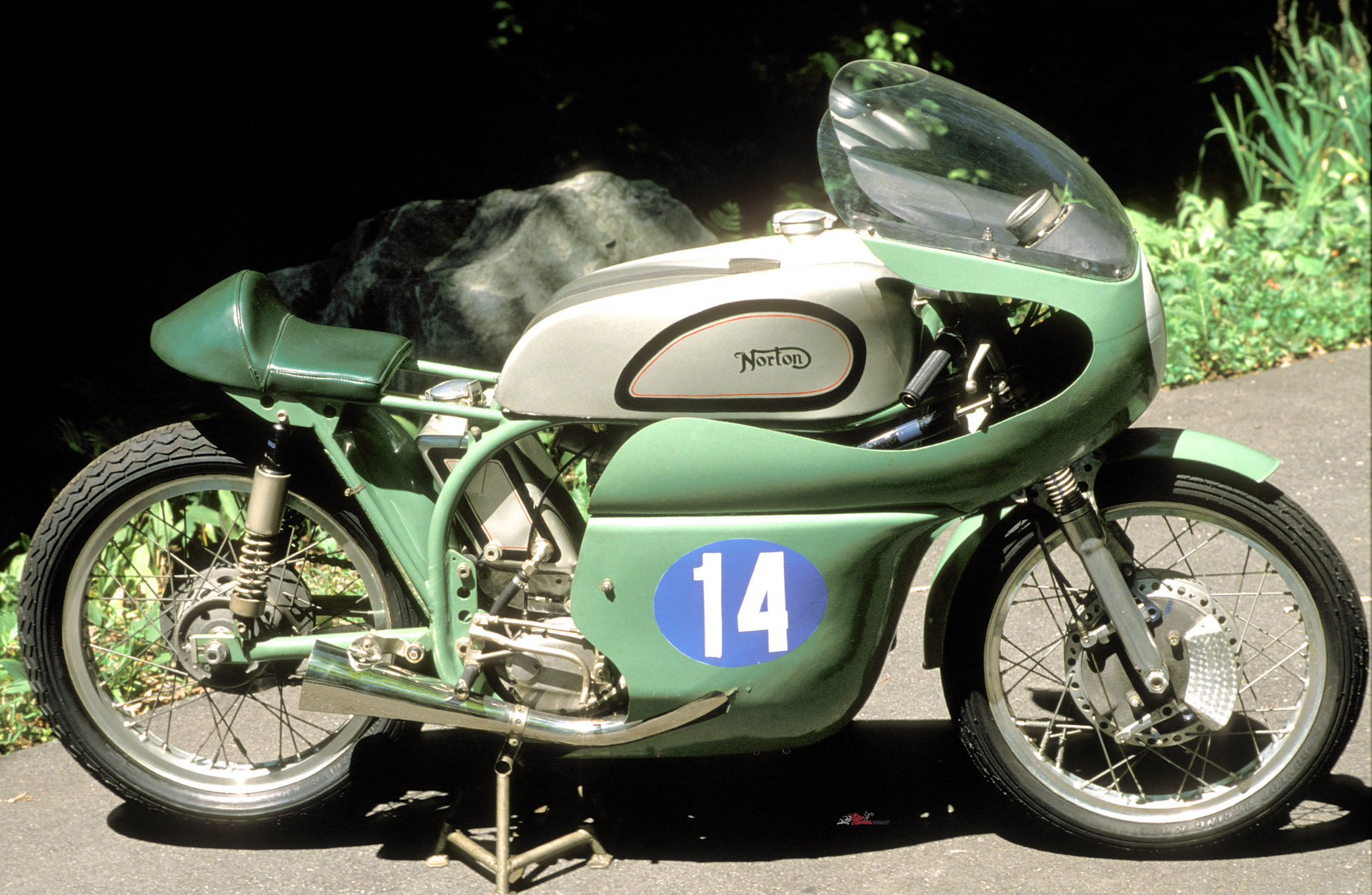
Built for the Isle of Man, not short circuits, where reliability was more important.
Now that the Norton’s engine had finished well up in two six-lap Isle of Man races, Francis appears to have decided it was due for a comprehensive rebuild for the 1966 season, so much so that in the course of completing this he re-numbered it FB 66/1. The logbook records that after a Brands Hatch test session “JD says it is perfect. 7,500 in top, 8,000 in gears, clean all the way. Brake very good.” Dunphy would doubtless have liked to get his hands on the Beart Norton for short circuits, but Francis didn’t care to run his bikes much in the hurly-burly world of the Brands scratchers, so Joe had to wait until August and the 1966 TT races that had been postponed by the seamen’s strike to debut the rebuilt bike, where he retired at Glen Vine not far from the start on the first lap of the Junior TT with undisclosed problems. I bet Francis wasn’t best pleased with himself after that, whatever the cause!
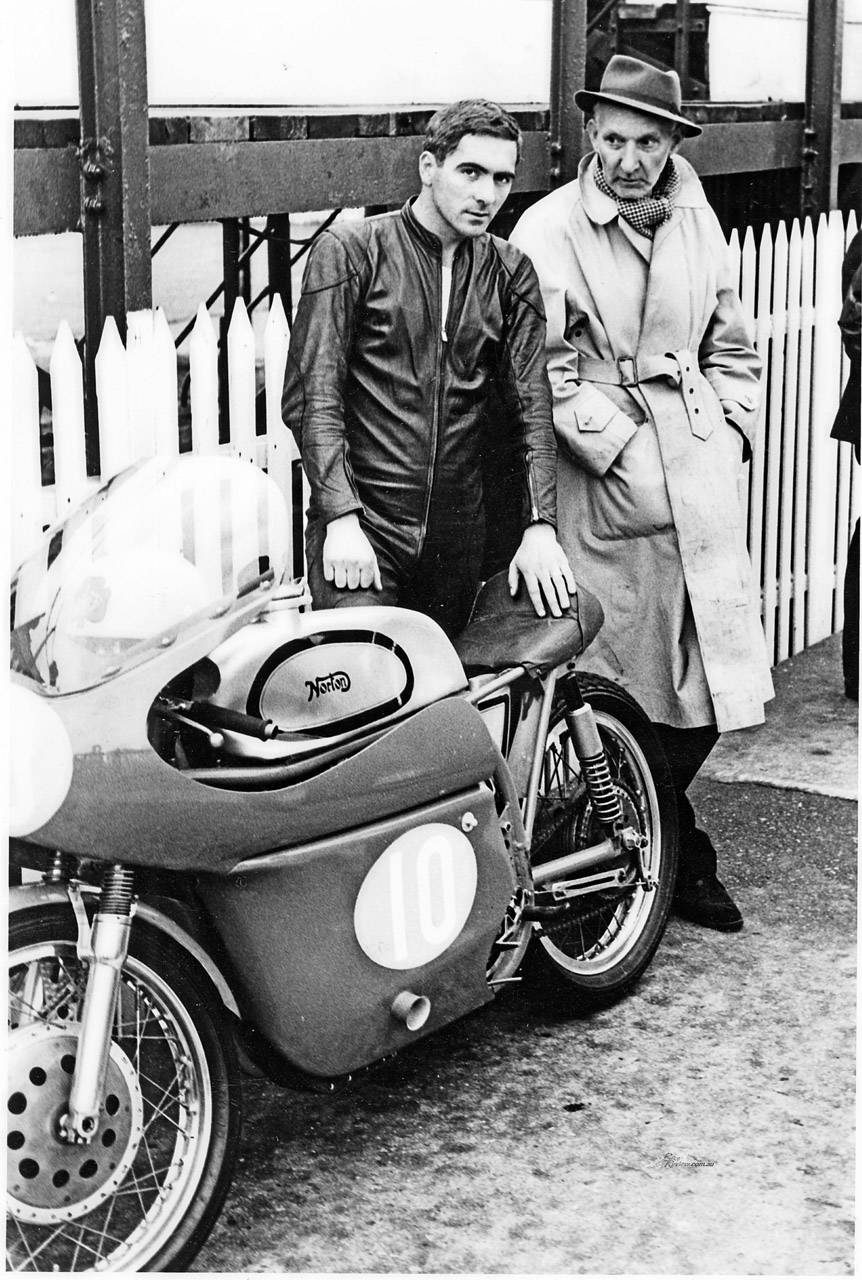
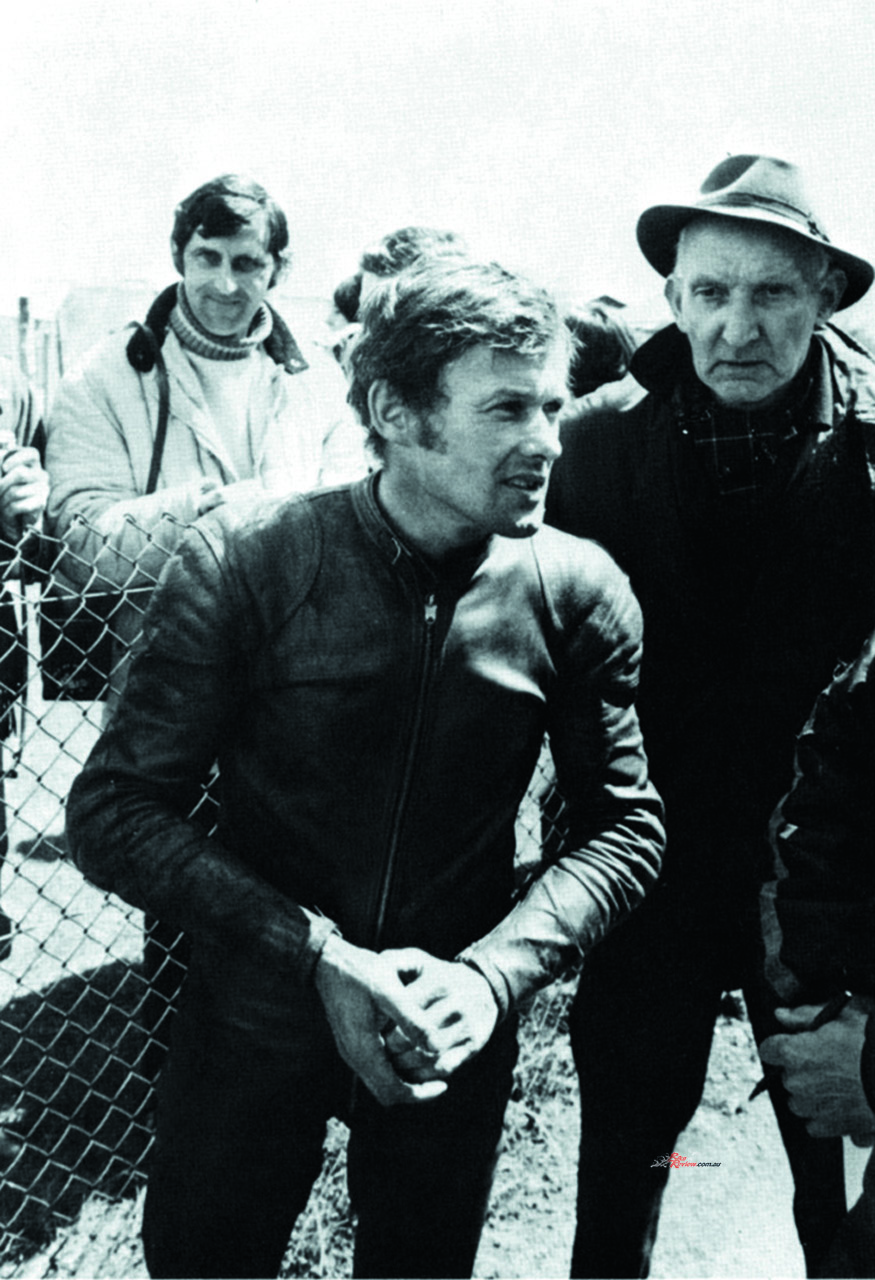
Over the following winter the 350 Beart Norton was rebuilt to feature ignition by a Bosch magneto and single coil (only the 500 Beart Manx had a twin-plug head). Jack Findlay was supposed to ride it in the Junior TT, but got hurt when he fell off his 250 Bultaco after it seized in practice, so Malcolm Uphill was recruited to take over. Having taken the bike round the Mountain Course in under 24 minutes for the first time in lapping at 94.32mph, the speedy Welshman was forced to retire on lap 3 with a broken ignition wire while lying 11th behind a gaggle of Aermacchis. After Uphill told him that it had been impossible to stay with the little pushrod Italian bikes, Francis made up his mind to buy one from his good friend Syd Lawton, the Aermacchi importer. A month later when he rolled it into his workshop and stood it next to the much taller and heavier Manx, Francis told me that “I realised I’d been wasting my time trying to keep the Norton competitive for so long”.
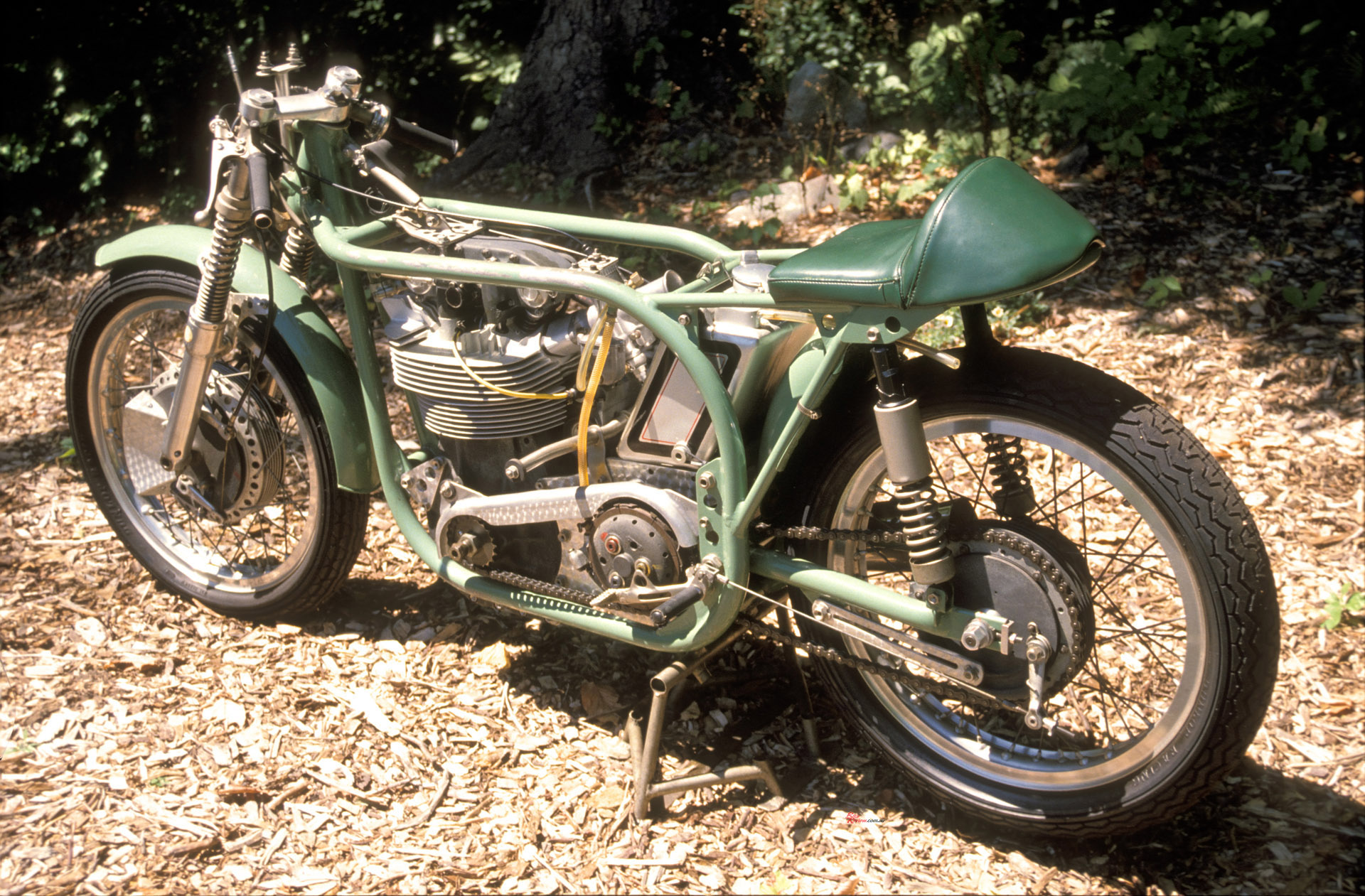
Beart drilled, trimmed and lightened almost every component on the motorcycle.
But the green and silver Manx had one more appointment to fulfil with the Isle of Man fairies, in the 1967 Manx GP. They repaid her as only they know how, for just when the bike’s finest hour seemed at hand Keith Heckles was forced to stop while in the lead on the Mountain on the last lap in torrential conditions when the electrics shorted out, though after restarting once they’d dried out, he finished 42nd. Together with its companion 500, the 350 Beart Norton was sold out of the finishers’ enclosure to Cheshire bike dealer Hector Dugdale, before eventually finding its way into the hands of John Griffith.
The green and silver Manx had one more appointment to fulfil with the Isle of Man fairies, in the 1967 Manx GP.
With Francis sadly no longer with us to confirm that he had built the engine to racing specification, two things had to be done first before I could ride the bike. Firstly, a perusal of the log showed that the 1974 rebuild included fitting a new Mahle piston, big end and gudgeon pin, and many other new components. But having the late Ron Lewis check it over and replace all the perished oil and fuel lines seemed a wise move, as well as cleaning off the surface corrosion on the magnesium cases. A check of the Dunlop triangular tyres showed them not to be the wooden T1 compounds of yesteryear as I had feared, but a combination of an as-new 472 at the rear, with that stickiest of triangular compounds, 398 on the front. An oil change and a new plug later, we were ready for Snetterton.
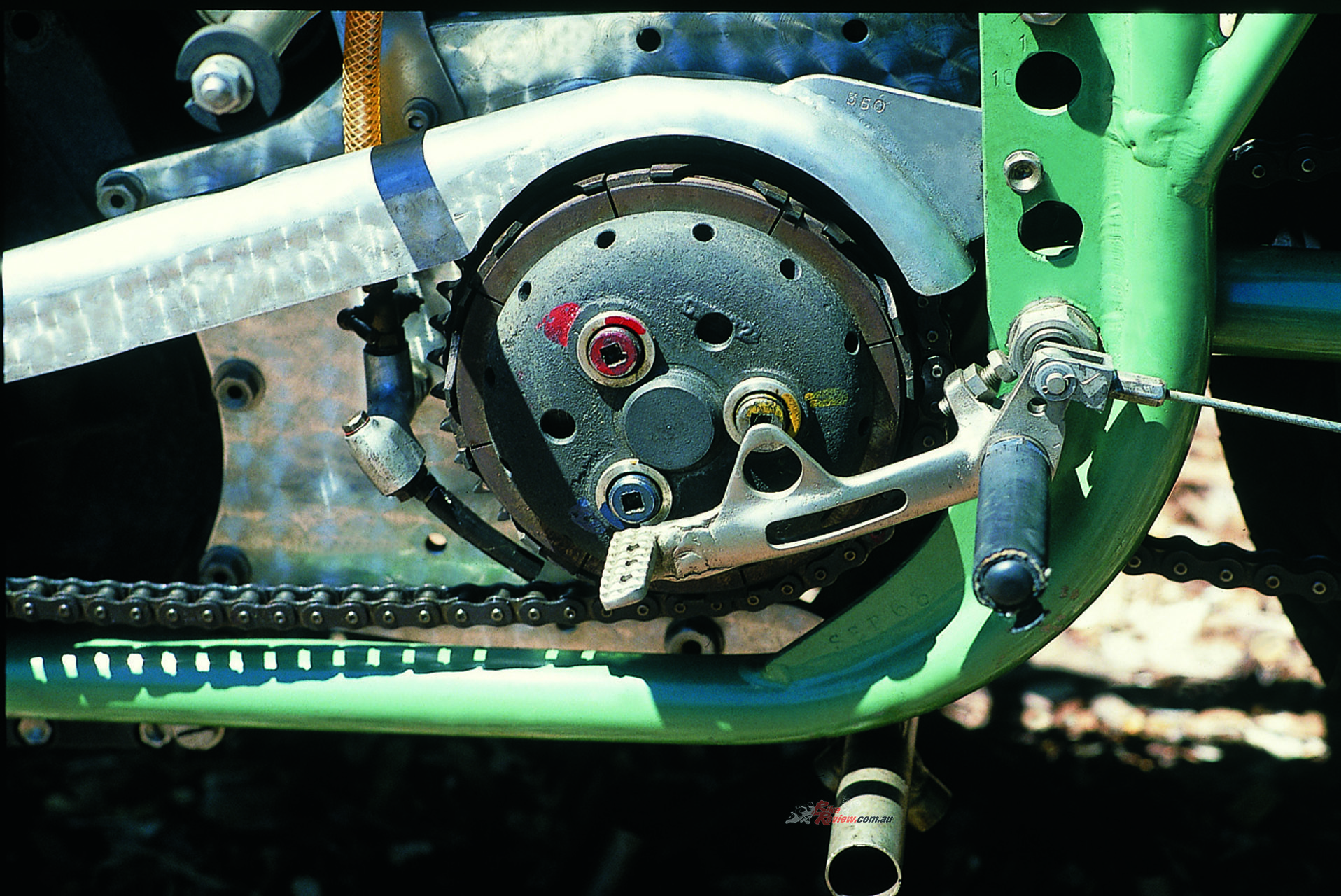
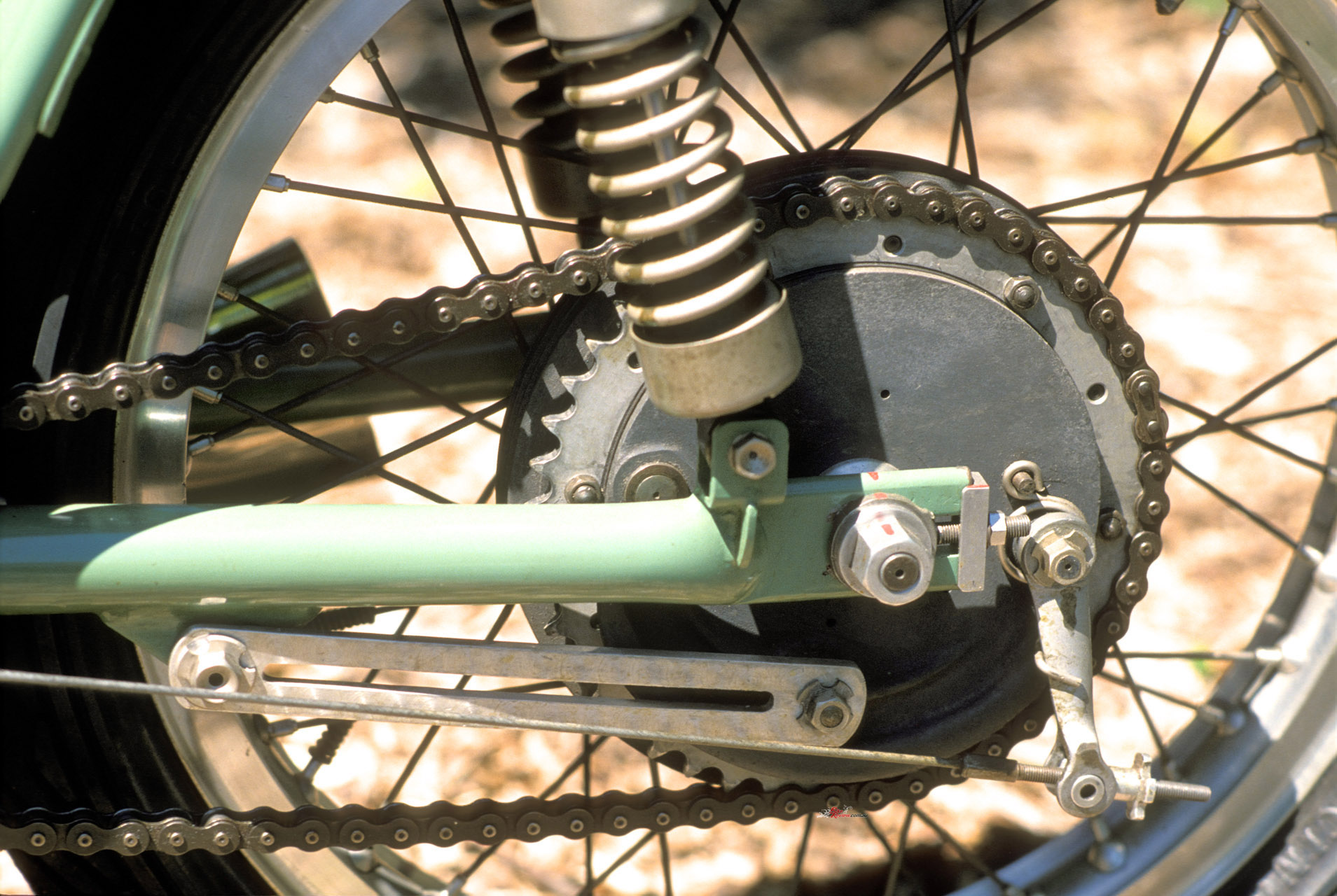
Gearing raised a question mark, though, for since Beart Nortons had effectively only ever been raced in the Isle of Man, Francis had fitted TT gearing of 21/45 when he rebuilt the bike. Without any spare sprockets I was stuck with being considerably over-geared for Snetterton, but at least I was able to sample the bike as it would have been raced in the Island. Perhaps surprisingly, in view of the high bottom gear, it fired up easily on the line all weekend in the push starts then employed in all CRMC Classic races up to 500cc.
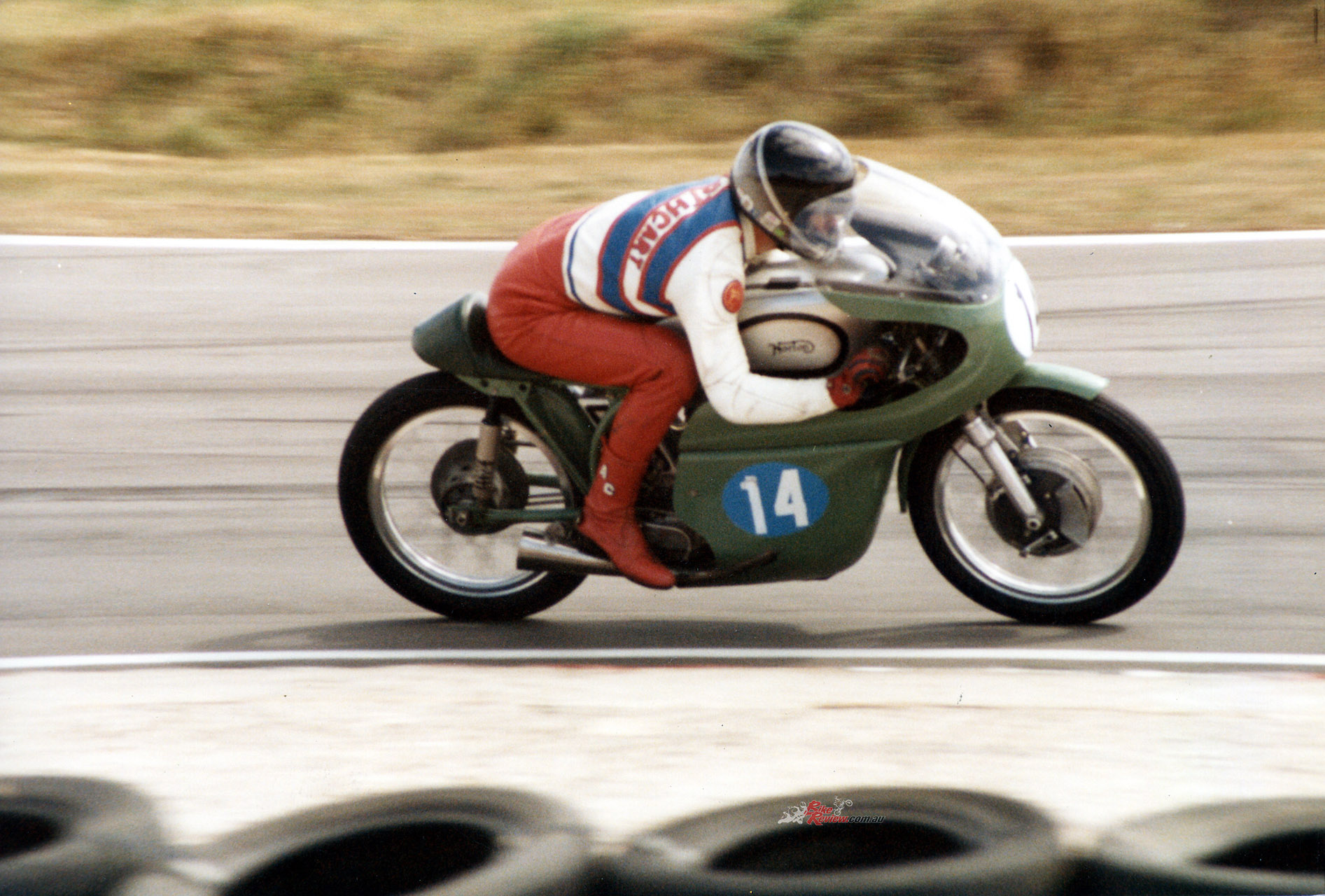
Cathcart scored two second places and two thirds aboard the Beart Norton.
Rigorously adhering to the Beart precept of lengthily warming up the Castrol R40 lubricant on a soft plug to the accompaniment of glorious castor oil fumes, I changed to an RL50 (Francis always preferred Lodge plugs) and set off for practice. For the first time I was able to appreciate just how great the margin of improvement is between a Beart Norton and a standard, unmodified 350 Manx, such as the ex-Vin Duckett one I used to own back in the mists of time at the start of my own road racing career. For a start all the controls were so light and sensitive, whether the featherweight throttle or the single-finger clutch and front brake. They don’t just come like that – only hours of painstaking assembly and attention to detail makes them that way. It was possible to ride the bike with a great deal of finesse and care, simply because each of the controls, including the beautifully balanced steering, could be operated with a fine degree of sensitivity.
All the controls were so light and sensitive, whether the featherweight throttle or the single-finger clutch and front brake – they don’t just come like that.
I didn’t care much for the seating position, though – the Beart patented weight-saving saddle (i.e. cut off the whole front half of a standard Norton seat, then re-cover it in green leather!) tended to decant my precious bodily parts onto the unprotected upper frame rails once I started riding reasonably hard. This also made the oil filler cap flip up a couple of times during one race, until I taped it down for the next one. The stretched-out riding stance that the seat position forced you to adopt sat ill at ease with my more modern style of riding, but then Francis never cared for his riders to move about on the bike, and especially not to stick knees out in the wind which he regarded as unnecessary drag.
He never managed to cure me of my habit aboard my Beart-tuned Aermacchi (although he did try!), but one thing I did learn from him was to keep my head down under the screen as much as possible. Let’s just say that the combination of the Beart Norton’s Sabrina fuel tank design and the Jakeman fairing invited such demeanour, which of course is more in keeping with Isle of Man TT racing that the cut ‘n’ thrust of short circuit events. The Beart Manx also seemed to accelerate very smartly for a 350, despite the handicap of the high gearing and a four-speed gearbox, doubtless because of its lower weight thanks to Francis’ work. This turned out to be 296lb/135kg with oil but no fuel, compared to at least 320lb/145kg for a standard Manx even without fairing and fittings, and I’ve seen some original ones weigh in at more than 350lb/160kg thus equipped.
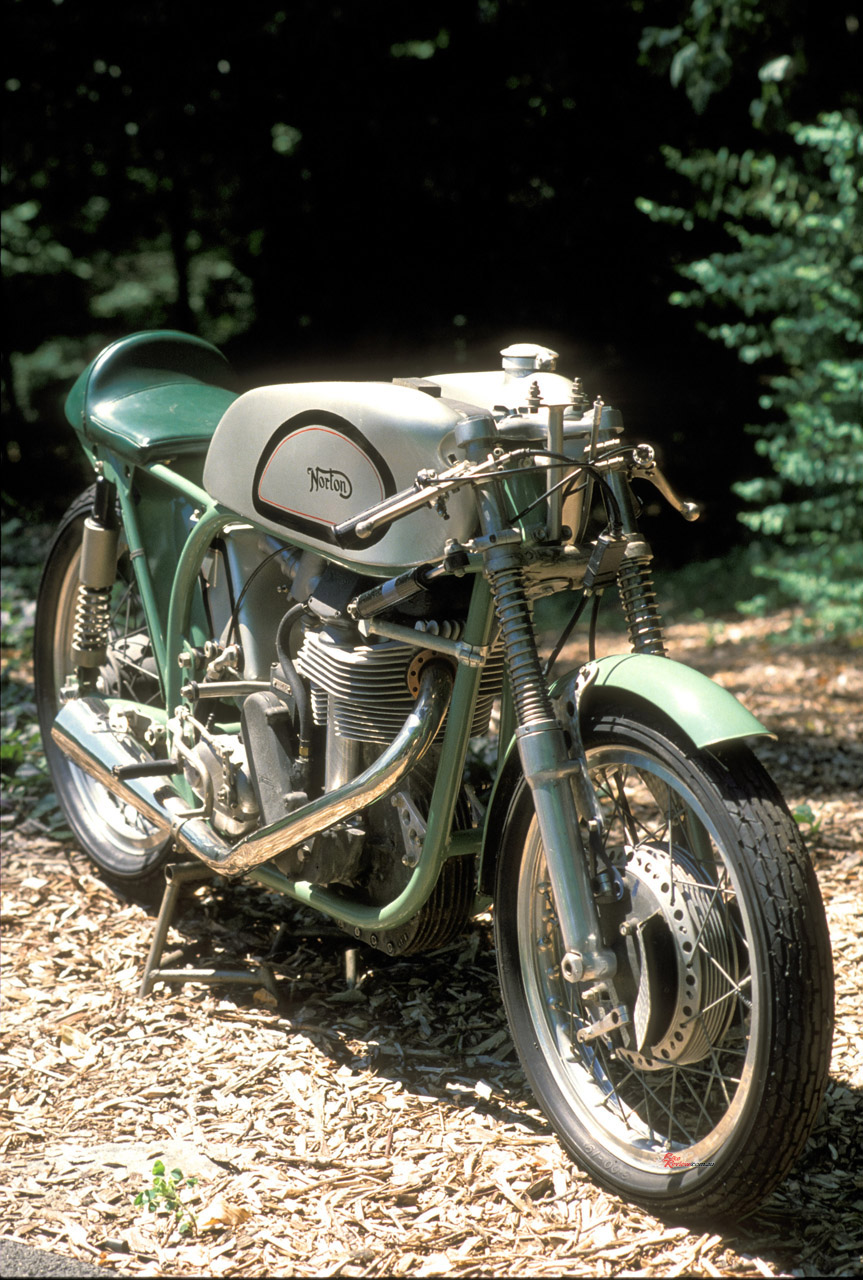
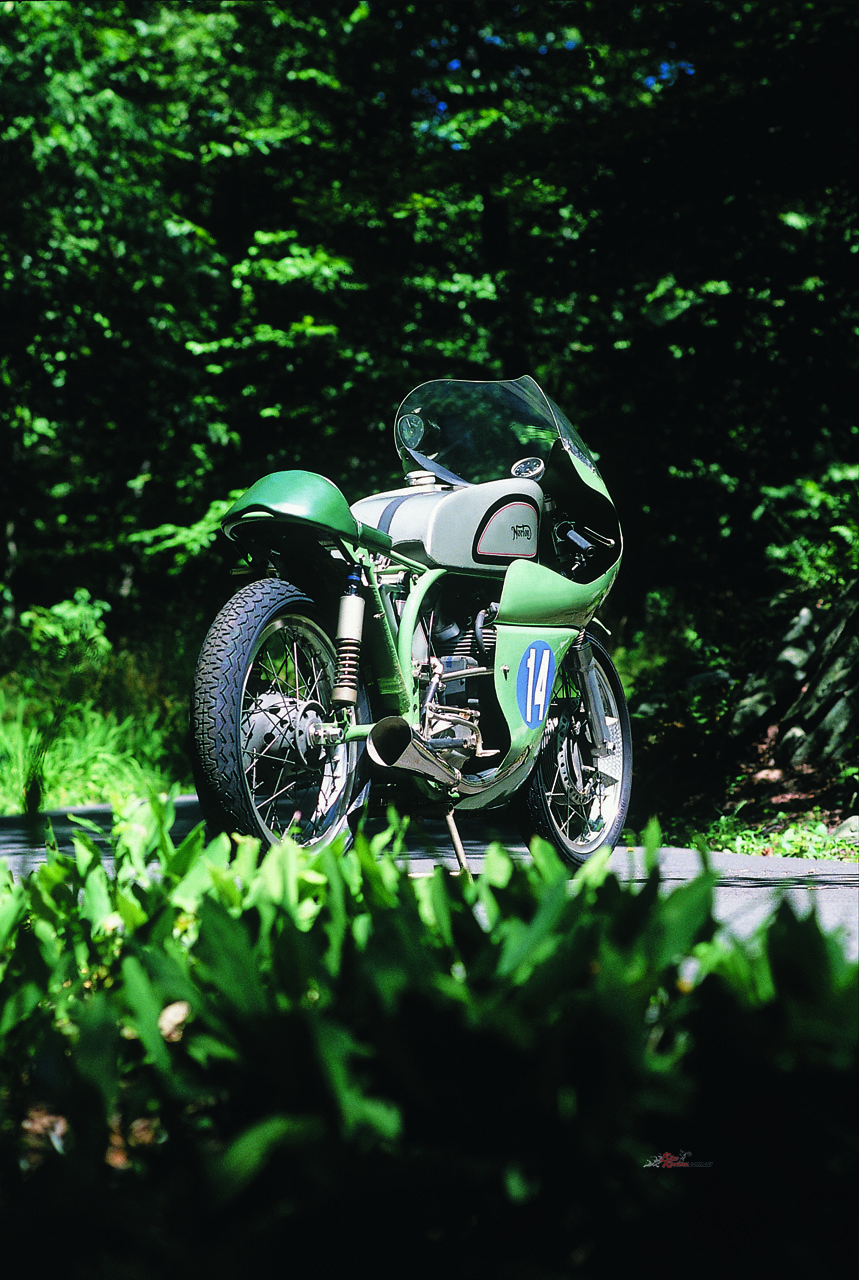
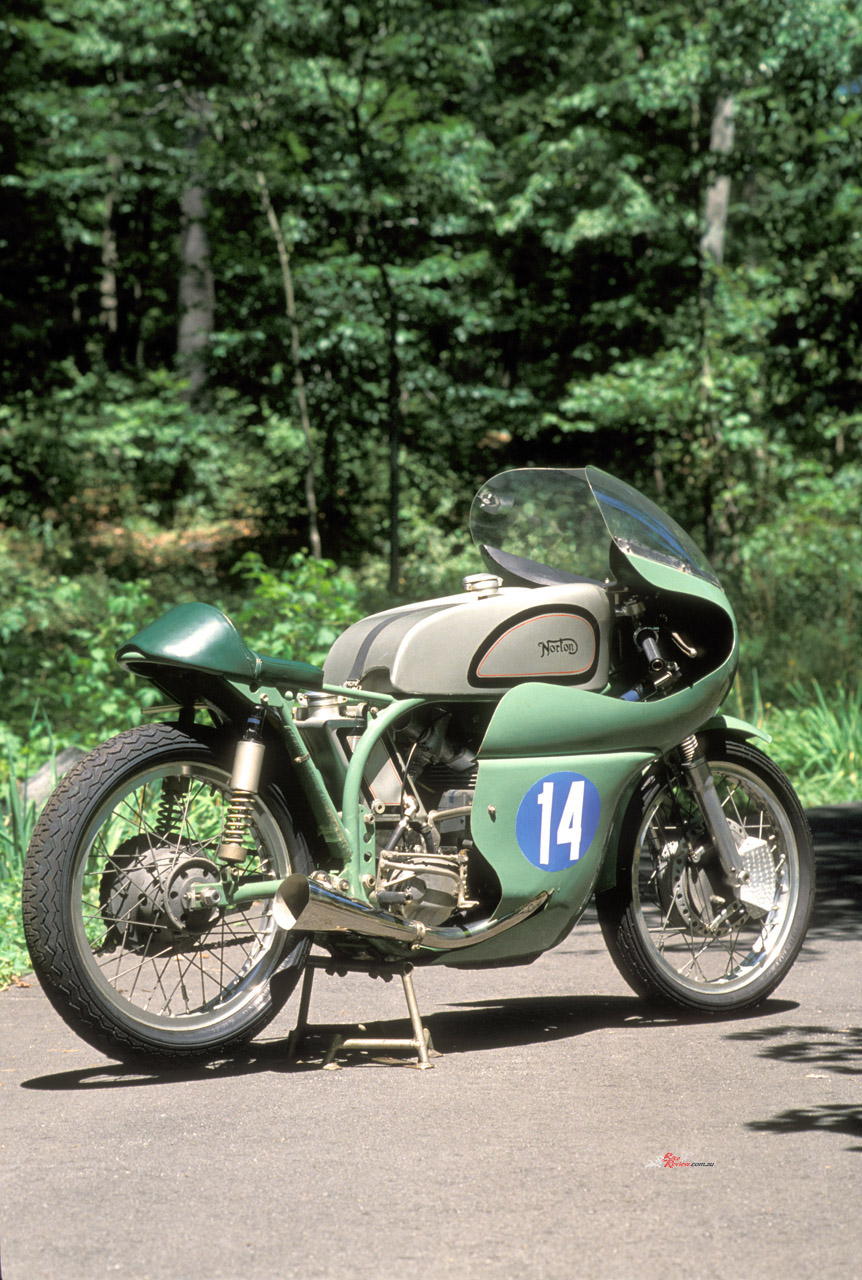
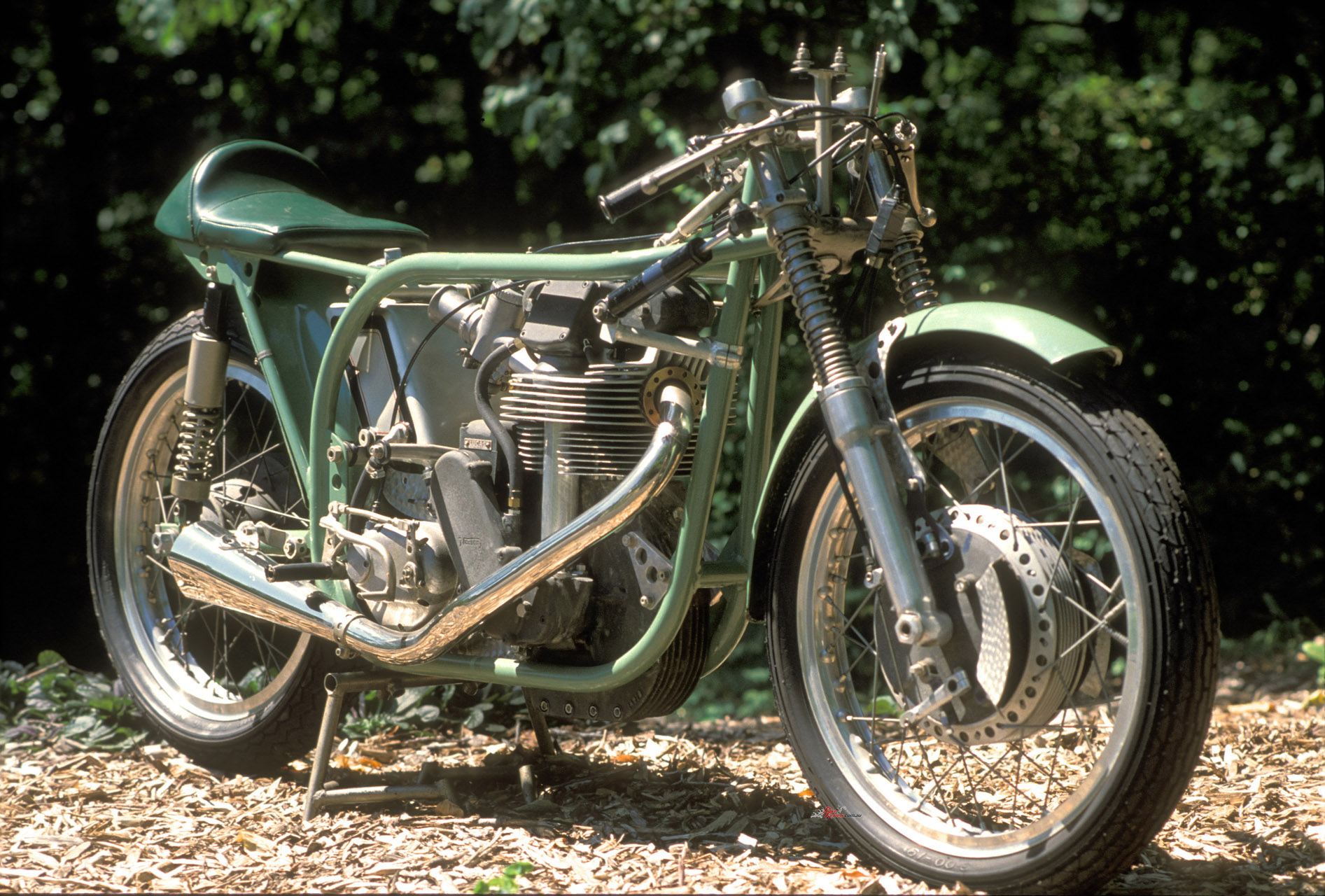
In the Period 1 (pre-’64) 350cc race at Snetterton I found myself embroiled in a dice for second place with Angelo Guadagnino’s more standard Manx Norton, and noted that even using my self-appointed limit of 7,500rpm, thanks to the Beart bike’s light weight and in spite of the tall overall gearing, I could pull away from him coming out of slower corners like Sear or the Esses. But the Beart bike lost out in mid-range before taking over again on top end. And I must admit to being able to out-handle him, especially in Russell’s (there was no bus-stop Chicane there back then!) where by the end of the weekend I could take the left/right high-speed flick that the corner was in those days hard on the stop in top – and I’d never been able to do that on any other bike without getting into big trouble on the exit. The Norton was beautifully set up for precisely this type of corner which abounds on the Isle of Man – ease the throttle for just a fraction climbing the Mountain in a corner where you shouldn’t, and you may never see those 500 revs again before Brandywell, the highest point on the TT Course.
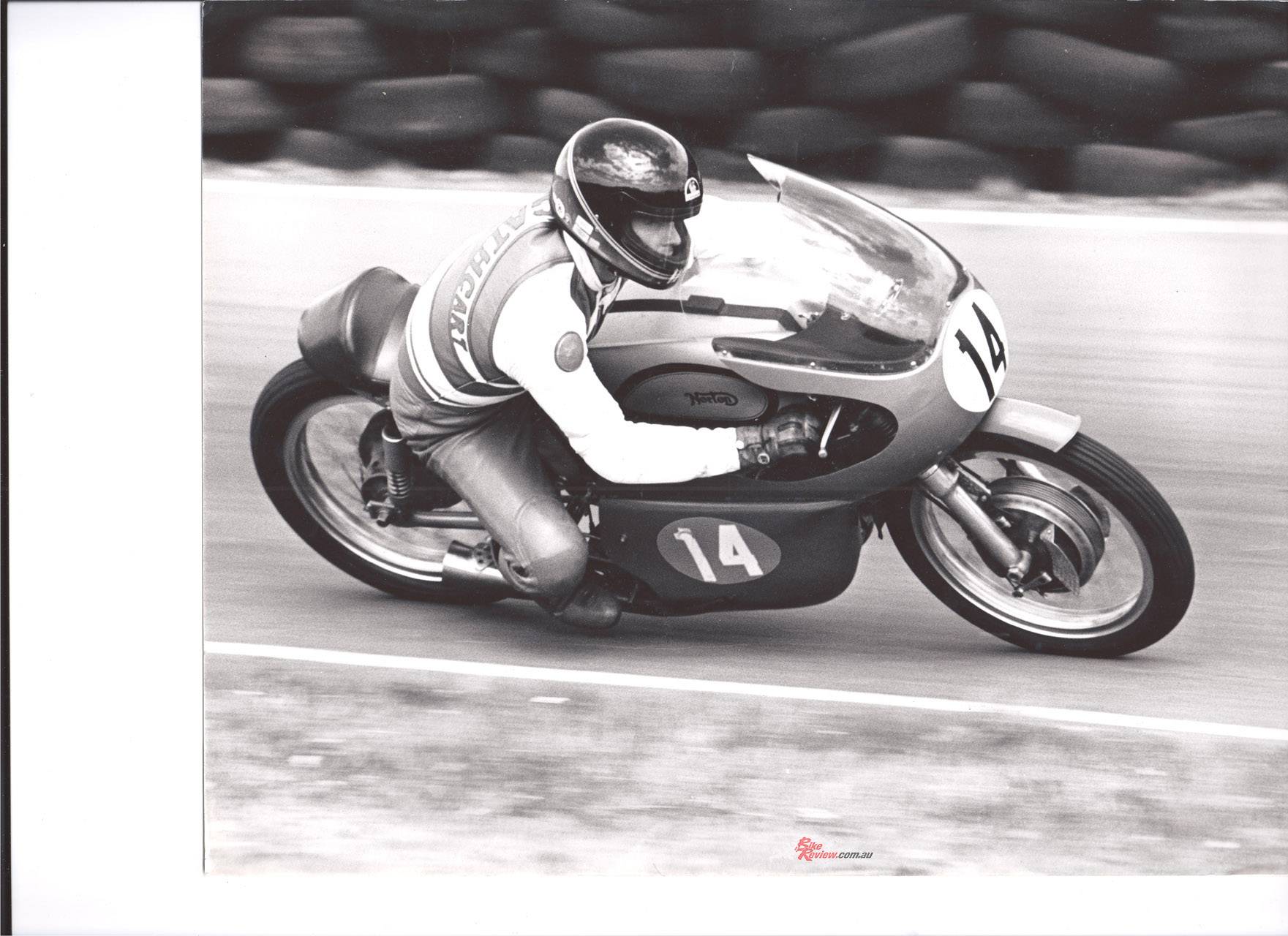
Its final race before America: Alan Cathcart at Snetterton, 1984.
The Beart Norton did give the impression of being very long-legged – a real long-distance stayer rather than a short circuit sprinter. You could feel the engine beating away reassuringly and seemingly unburstably beneath you, and without the performance of a 500 there was almost time to look around and enjoy the view when going down the Revetts Straight! Getting the engine to rev that hard did take a bit of doing, though, and I soon realised that on TT gearing I mustn’t be afraid to slip the clutch to wind it up hard coming out of a bend, even a relatively fast one at Snetterton like the Sear right-hander before the Straight. On the open megga devoid of any silencer we still raced with back then, megaphonitis only cleared at 5,000rpm, and with only a four-speed gearbox there were a couple of gaps which needed bridging if you were only using 7,500rpm as a limit rather than 8,000 rpm, as I did in deference to the freshly rebuilt engine, and the fact it had an appointment with its new owner the following week on the other side of the pond!
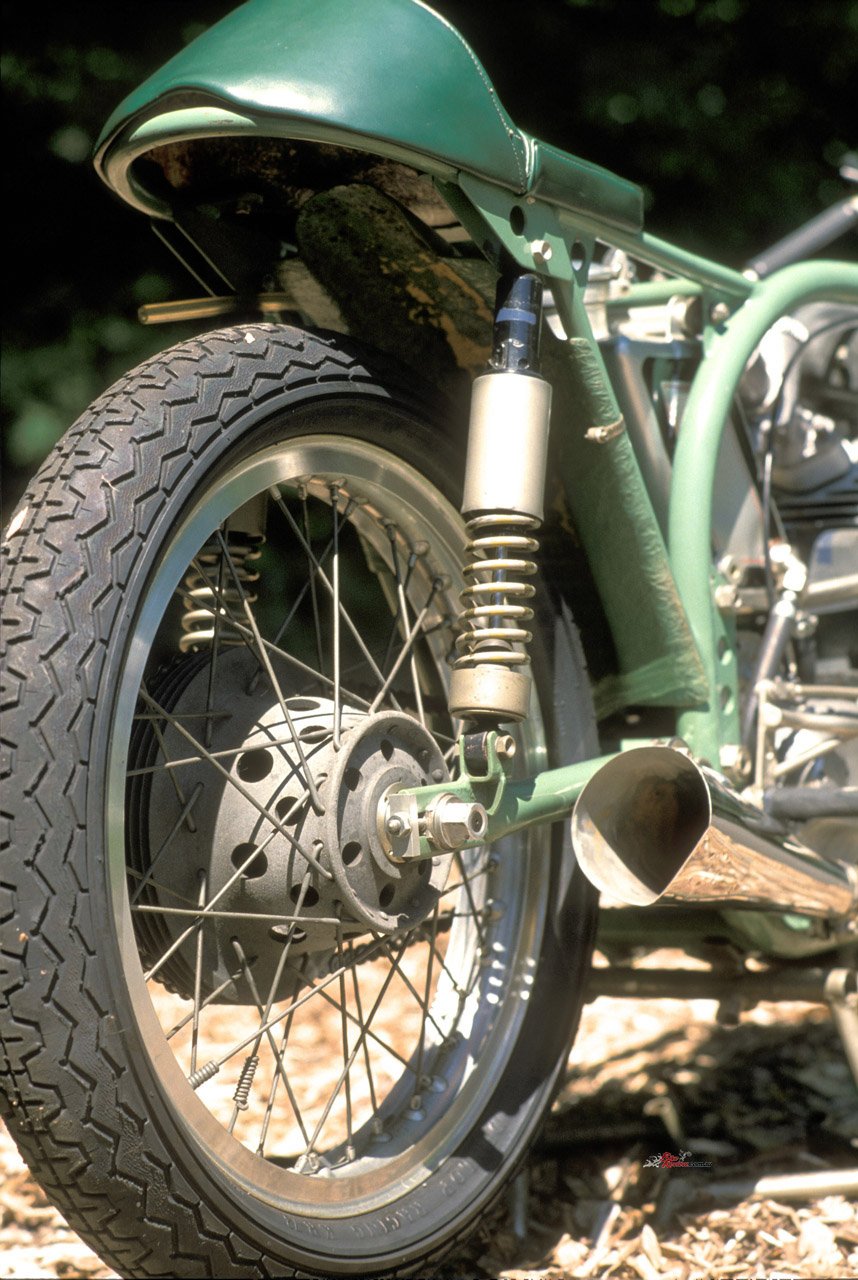
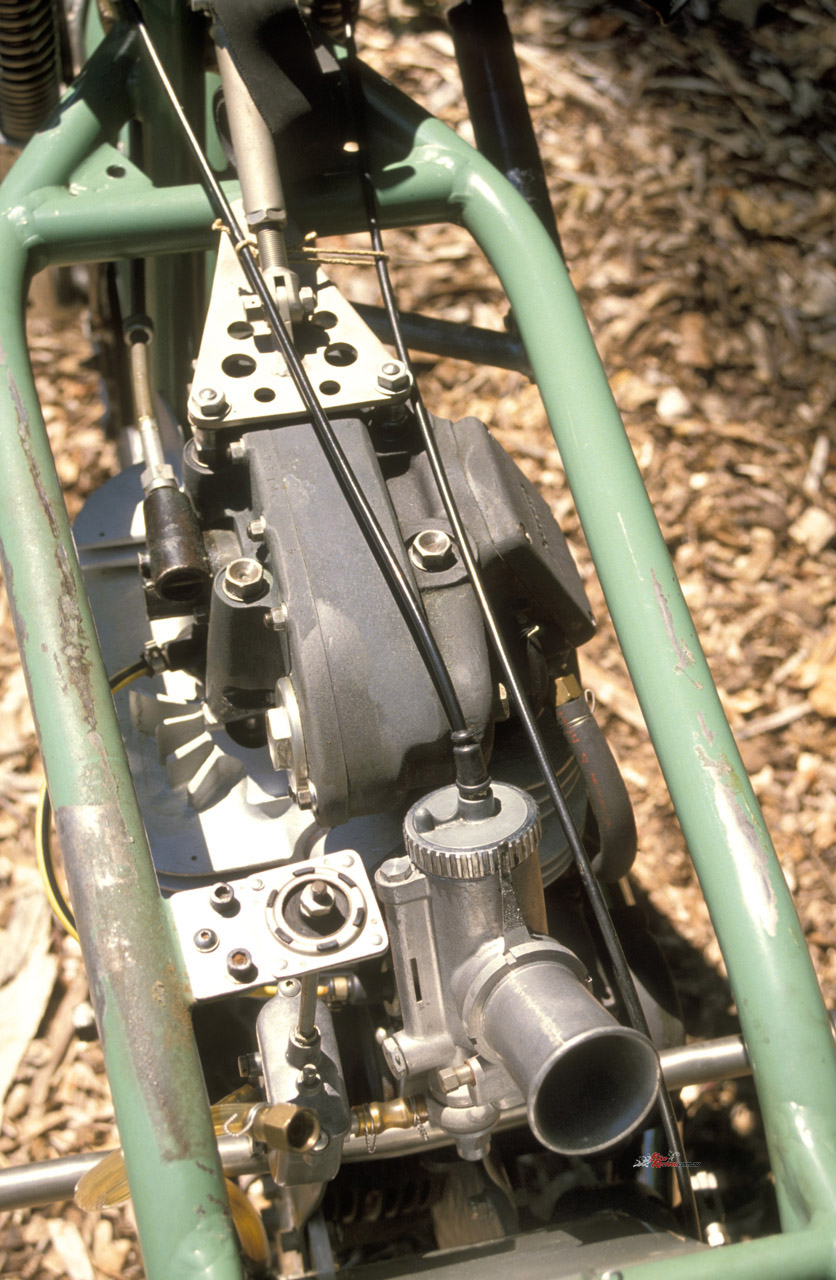
But two second places – including finishing runner-up in the 350cc Classic Race of the Year – and two thirds out of four rides on the Beart Norton over the Snetterton weekend showed the bike to have been superbly rebuilt by Francis with his trademark attention to detail. A glance around the machine confirmed this: the flecks of blue paint on many nuts, bolts and other components large and small identified them as belonging to his 350cc bike rather than the 500, which carried yellow daubings.
Norton has released an all-new Manx for 2026, find reviews, videos and news here…
The dull nickel finish on most of the bolt-on components, the way each clutch spring and its cup was painted a different colour to make sure they go back together the same way they came out, the engine-turning on the alloy engine plates – all this and more combined to echo another of Francis Beart’s maxims: ‘If it looks right, chances are it’ll go right.’ Though the Manx Fairies conspired to prevent it ever winning the race it deserved in the Isle of Man, its glorious race history proved that the 350 Beart Norton certainly went as well as it looked. I know the late Bob MacLean enjoyed possessing a motorcycle which in every way was History on Wheels.
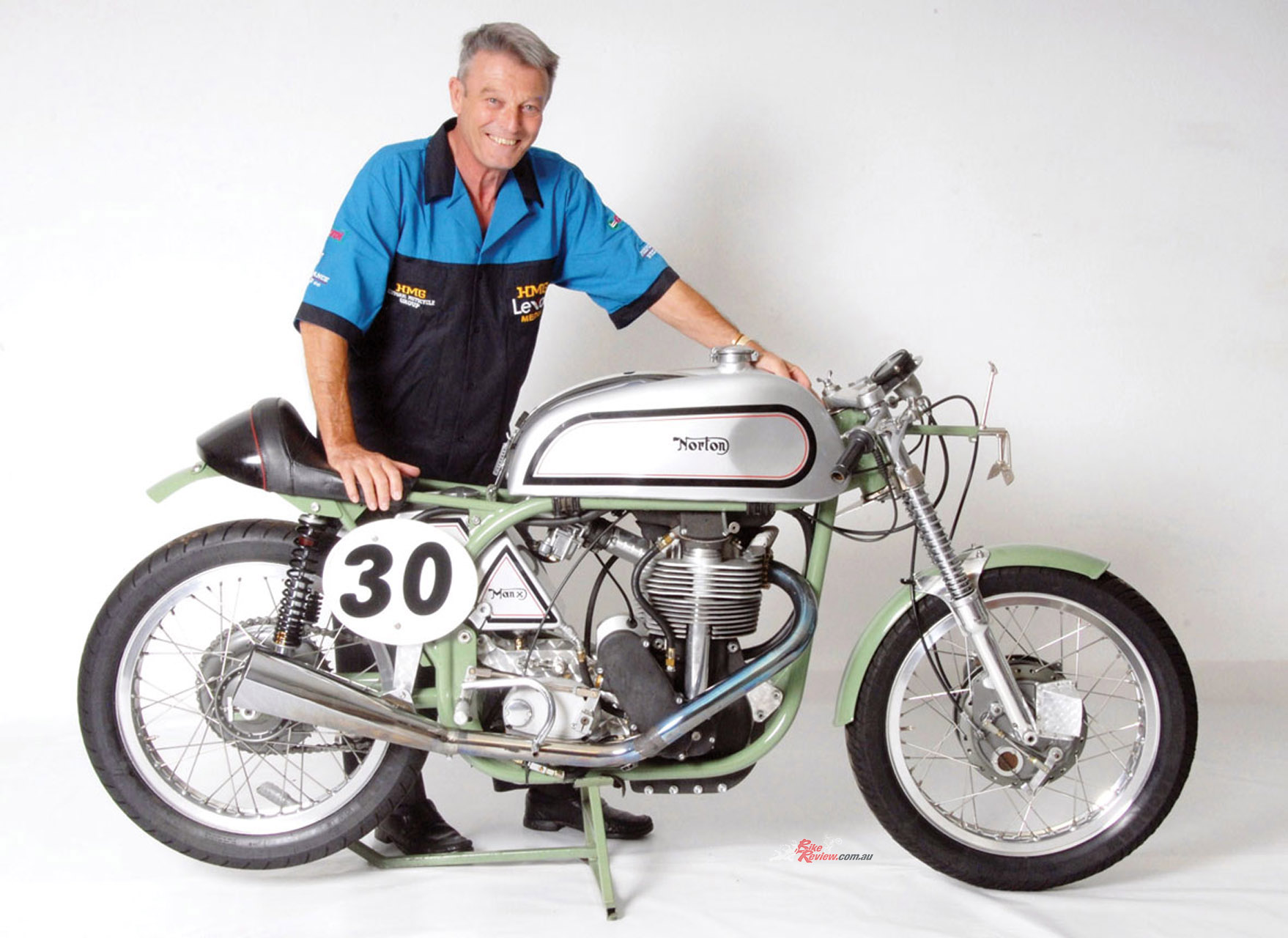
1961 Beart Norton Manx 35 specifications
Engine: Air-cooled DOHC single-cylinder four-stroke with vertical-shaft bevel camshaft drive, 76 x 76.7mm bore x stroke, 11.22:1 compression, 348cc, 30mm Amal GP carburettor with remote float chamber, Bosch magneto and coil ignition, four-speed gearbox with chain primary drive, multiplate dry clutch.
Chassis: Twin-loop tubular steel duplex cradle frame, 35mm Beart-modified Norton Roadholder telescopic fork, tubular steel swingarm with twin Beart-modified Girling shocks, 1395mm wheelbase, 134kg weight, 210mm twin-leading-shoe Gilera front drum, 178mm single-leading-shoe Norton rear drum, Borrani wire-laced aluminium rims (WM1 front and WM2 rear), Dunlop KR76 3.00 x 19 front and KR72 3.50 x 19 rear triangular tyres.
Performance: 38bhp at 7800rpm, top speed 201km/h (125mph), year of manufacture 1961, owner unknown purchaser at the 2015 Bonhams Las Vegas sale.
You Might Also Like