
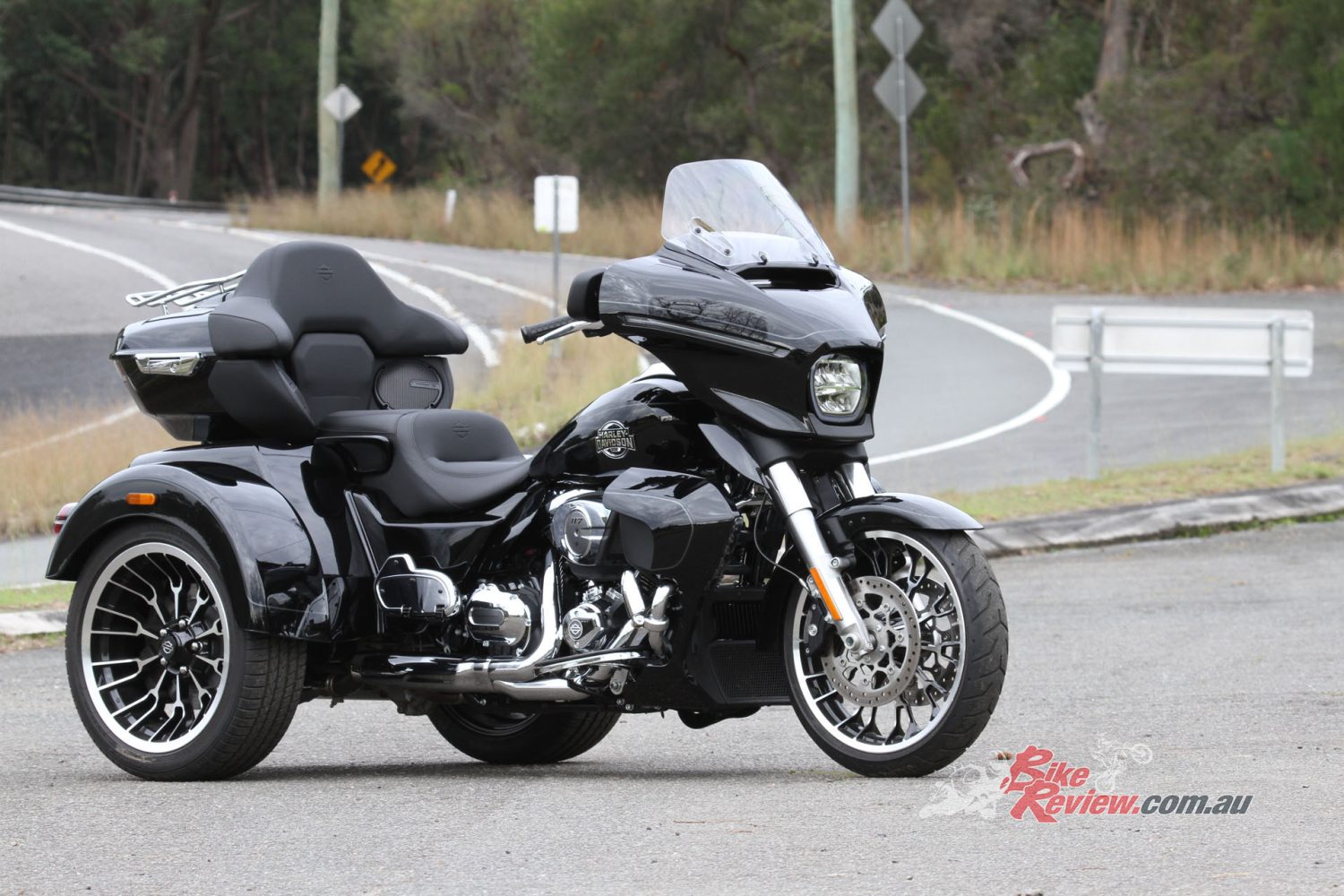

Harley-Davidson has given its three-wheeled touring range a serious overhaul for 2026, and nowhere is that more apparent than the Street Glide 3 Limited’s rear suspension. Photos: HMC
The updated 2026 Harley-Davidson Street Glide 3 Limited’s redesigned rear suspension has transformed the ride, handling and long-distance ability of the big three-wheeled tourer, while the Milwaukee-Eight VVT 117 brings plenty of performance.
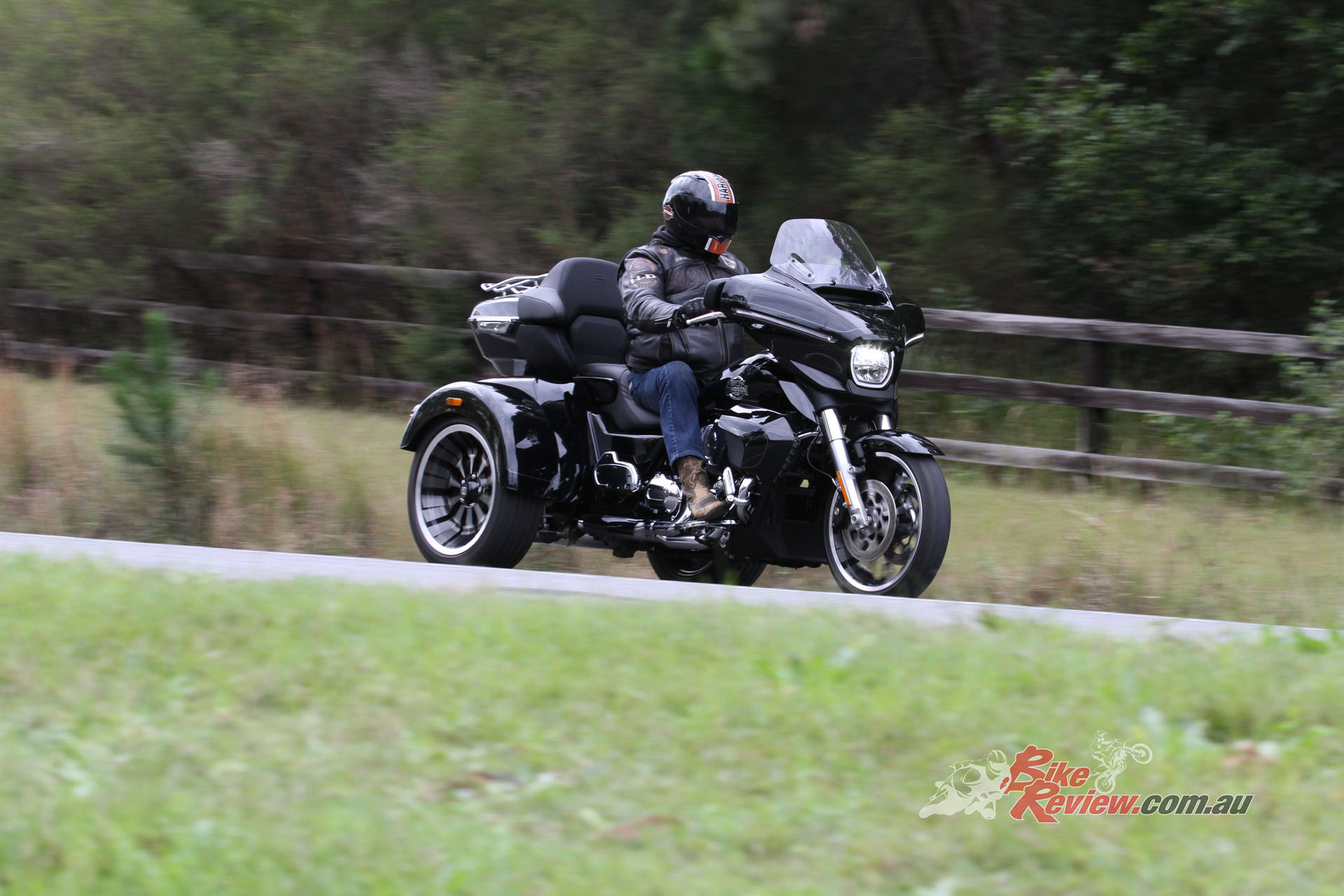
The redesigned rear suspension is the headline change for 2026, delivering a plusher, more controlled ride.
Harley-Davidson motorcycles have been in existence since 1903, in both two-wheeled form and, from the very early days, three-wheeled form. The Street Glide 3 Limited is the latest incarnation of the Harley three-wheeler. But even from the earliest days, Harley-Davidson understood the need for its motorcycles to also be available with three wheels.
There were many reasons three-wheeled Harleys were built and used back in the early years. Sidecars came first, used for recreation with the family, travel or commuting. There were also hundreds of sidecar variants used as work vehicles, with oversized platforms or boxes to cart large loads of goods or just about anything else that could be thought of. Motorcycles in the first half of the 1900s were a very cheap and practical form of transport and work vehicle.
But even from the earliest days, Harley-Davidson understood the need for its motorcycles to also be available with three wheels.
Sidecars are good, with that third wheel making it impossible for the motorcycle to simply fall over, but more importantly they open up the potential for an owner and rider to be involved in motorcycling when they might not normally participate on a two-wheeled motorcycle.

Harley-Davidson, never one to shy away from a challenge, developed the trike and released the Servi-Car in 1932 as a utility vehicle for businesses that needed this style of motorcycle. It used one front wheel and two rear wheels, evenly placed on either side of the motorcycle roughly where the rear wheel would normally be. The Servi-Car was around 1500mm wide across the rear wheels, making the trike extremely stable, even with its rigid rear end.
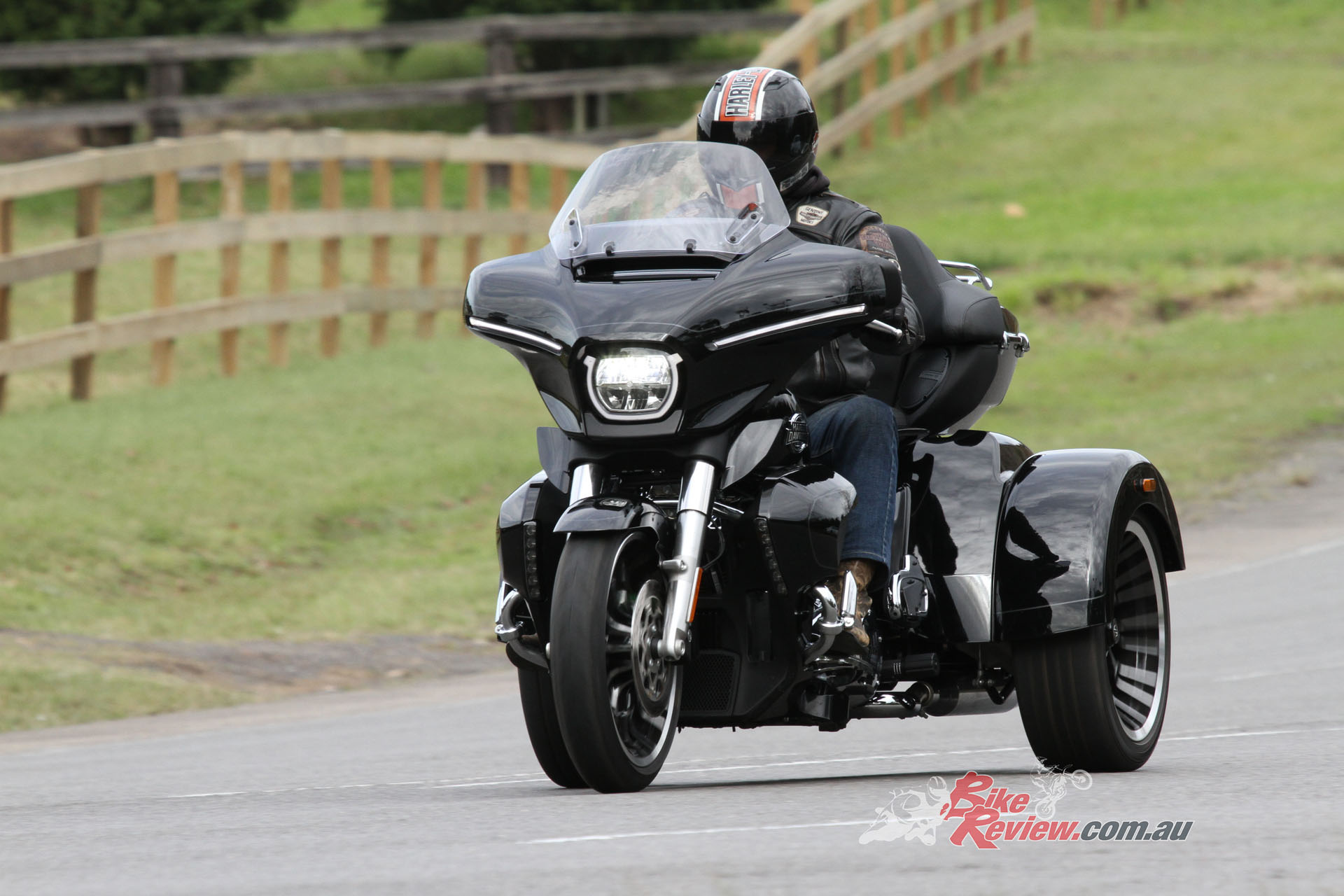
The new rear suspension reduces the side-to-side pitching of the previous trike design.
The greatest benefit of a trike over a sidecar is its balance. Left- and right-hand corners on a trike can be negotiated using the same riding style, whereas a sidecar takes very different skills to get around a left or right corner and is far less forgiving if you get caught out and need to take evasive action quickly.
We have all seen how much skill is needed to ride a racing sidecar and how skilled both the rider and passenger need to be to control it at speed, with the passenger constantly changing position to help control the outfit. A trike only needs the rider to control it and its stability is the same through both left- and right-hand corners. It is far more stable and far more predictable.
Compared to a sidecar, a trike only needs the rider to control it and its stability is the same through both left- and right-hand corners.
Harley-Davidson produced the Servi-Car until 1973 and also offered models with sidecars as options to the public for many years. Many Servi-Cars were purchased by police departments around the world. Then trike production stopped. Nothing, zilch! That was until 2009, when Harley-Davidson reintroduced the trike as a full-blown touring model based on the Electra Glide.
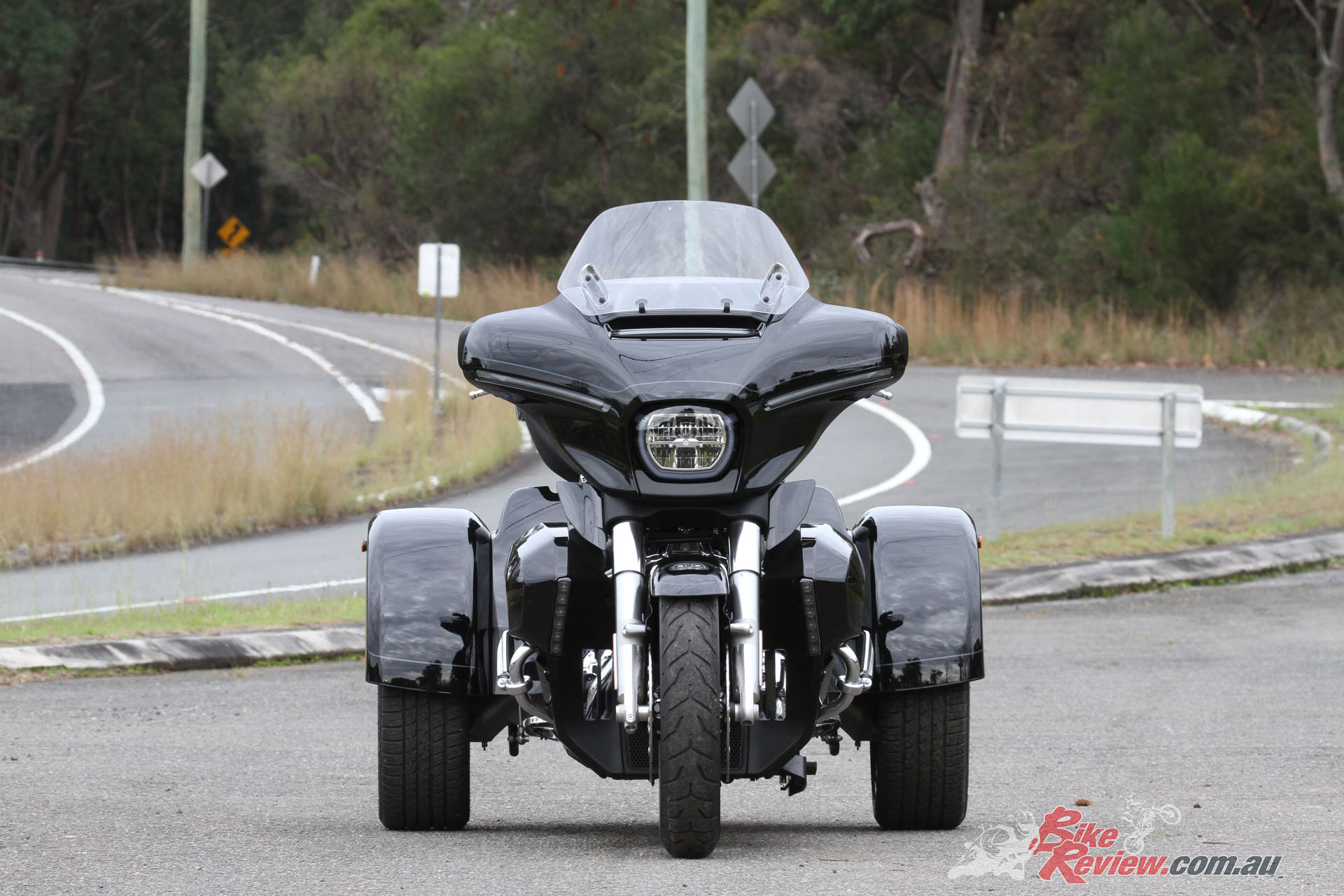
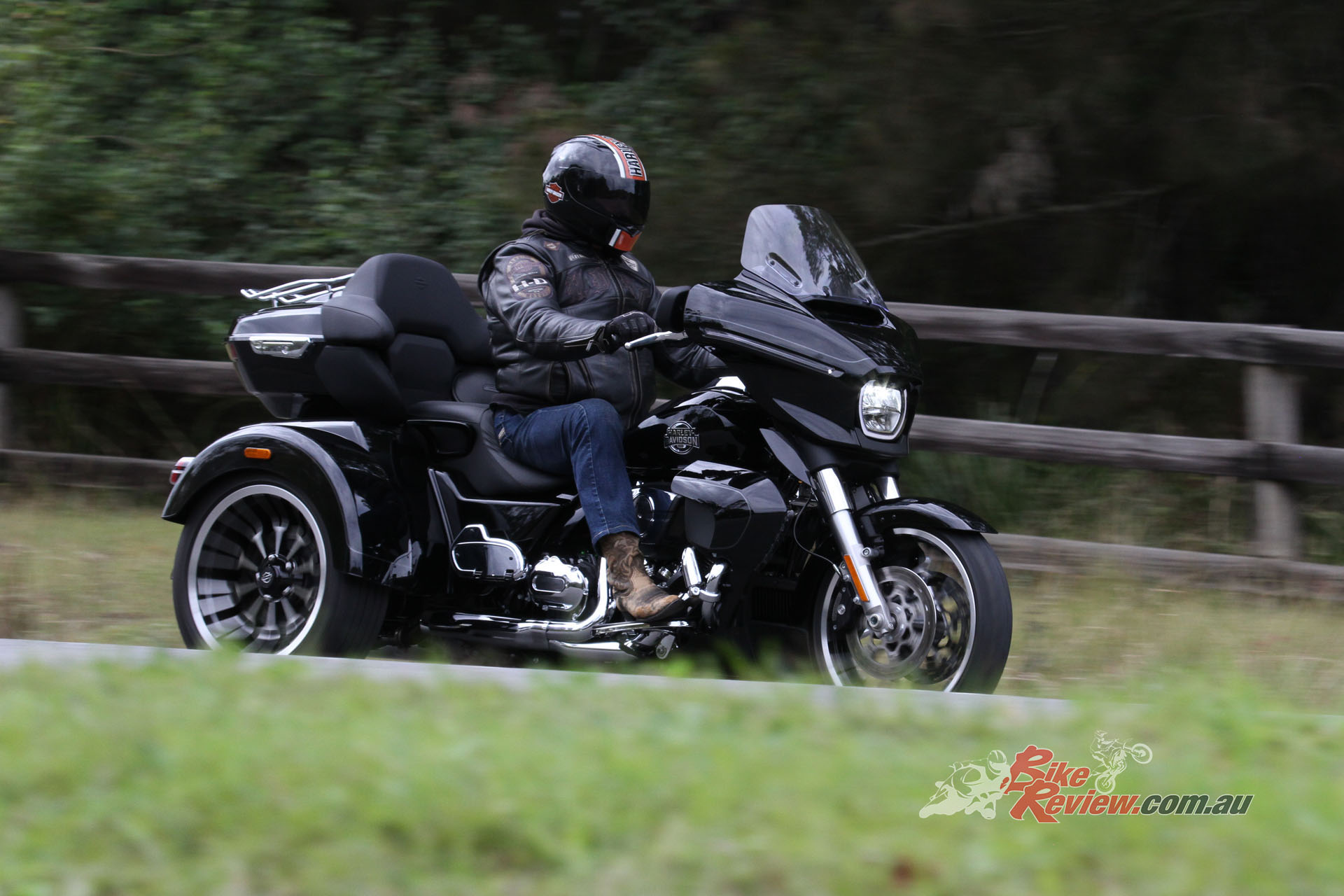
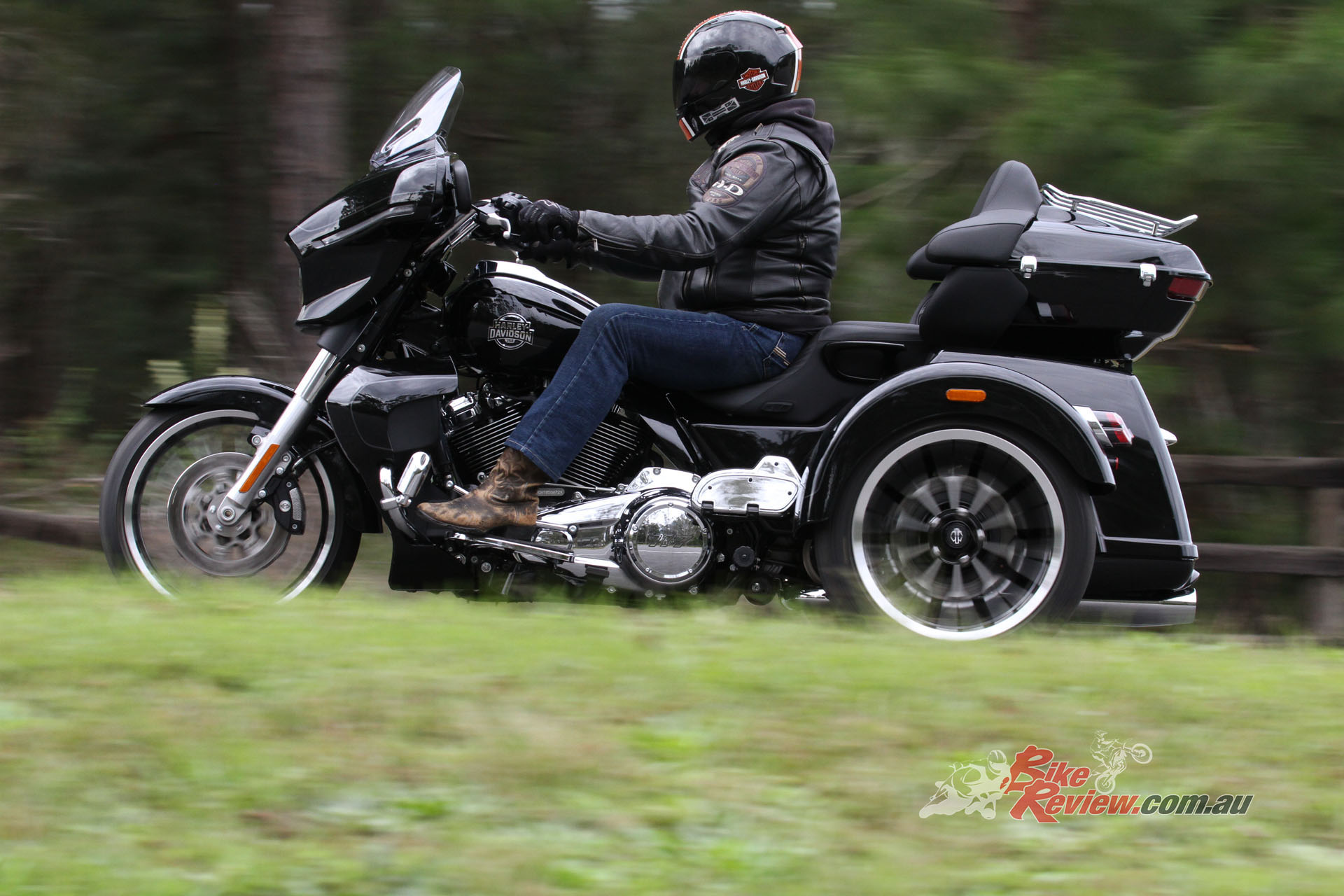
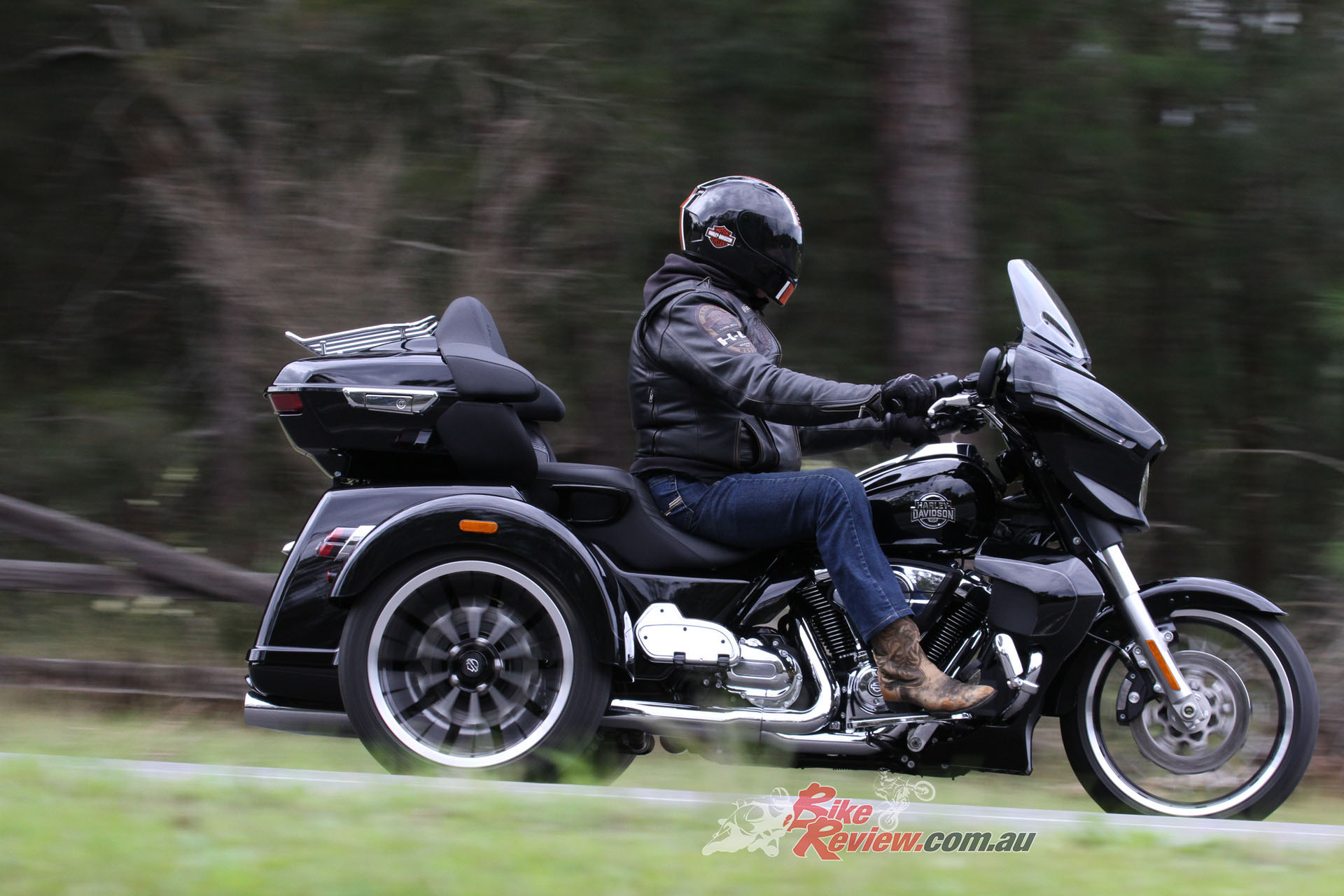
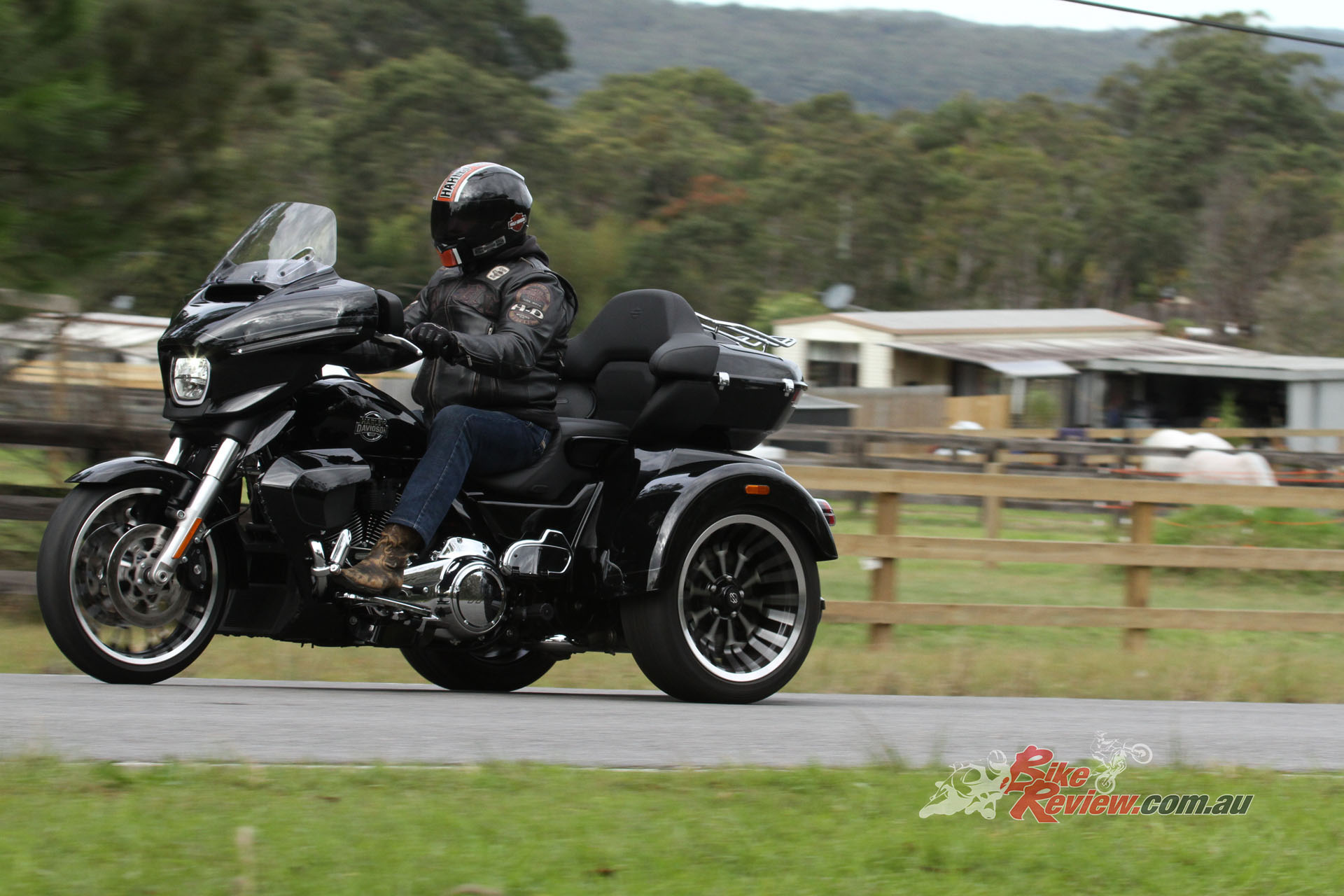
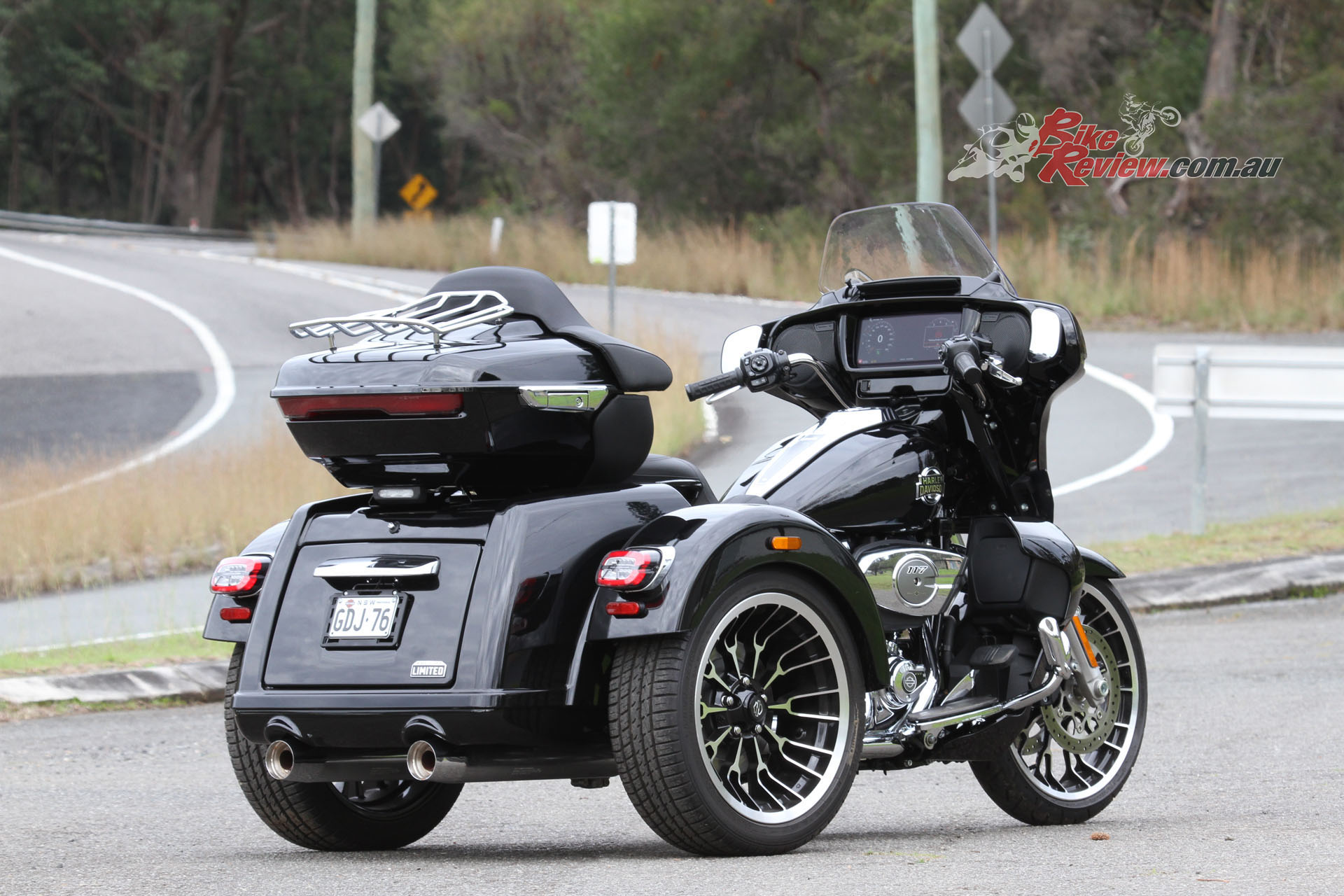
At 1455mm wide and 567kg ready to ride, the Street Glide 3 Limited is a substantial machine.
It took a few more years for the trikes to make it to Australia, but around 2014 we finally got the chance to have a ‘factory’ trike, rather than a kit trike. This was a full factory-backed and warrantied trike that was a complete and modern version of the Servi-Car. It was more expensive than the two-wheeled version of the same model, which was to be expected. It was also well equipped, with reverse gear and massive storage in the trunk and top box, but it had a limitation.
The rear suspension used a large A-frame swingarm that pivoted at the same point a normal swingarm would, but then angled outwards to each side to support the axle and differential. Each rear wheel got its own disc brake and the parking brake operated on both wheels. The rear shocks were too short in travel and were not good enough to handle the unsprung weight of the A-frame and axle assembly. The other issue was that the rear wheels moved in unison all the time, so if the right wheel hit a bump or pothole, it would transfer that load or impact across the rear of the trike.
The old A-frame has been completely replaced with a forged aluminium wishbone-shaped work of art that utilises a spherical bearing where the old swingarm pivot was.
The big issue was the resulting side-to-side pitching, which really unsettled the trike on anything but good, smooth roads. The rider felt this and it was not acceptable to many people riding on second-grade roads. Aftermarket trike companies still had the upper hand with better, independent suspension systems that worked far better.
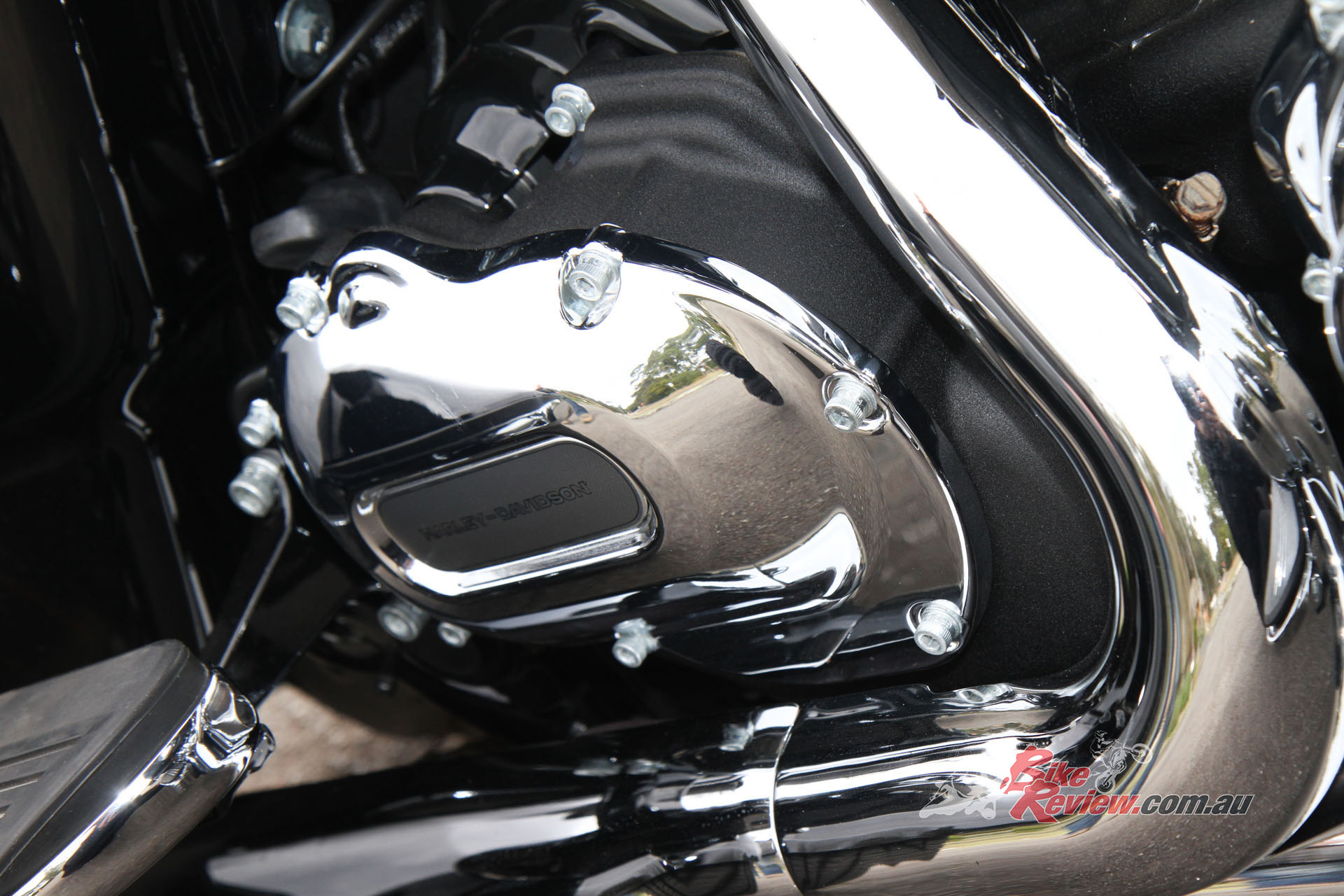
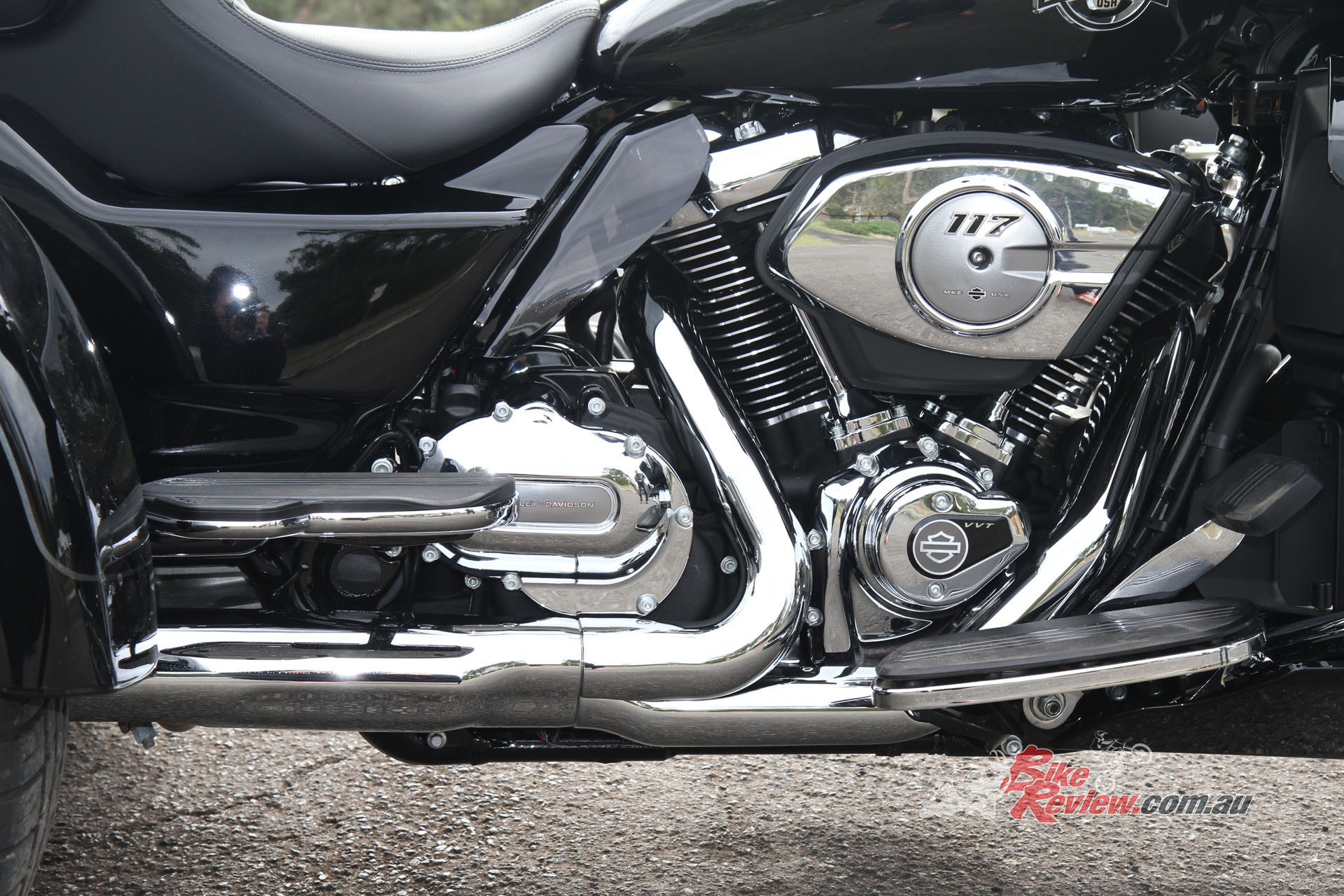
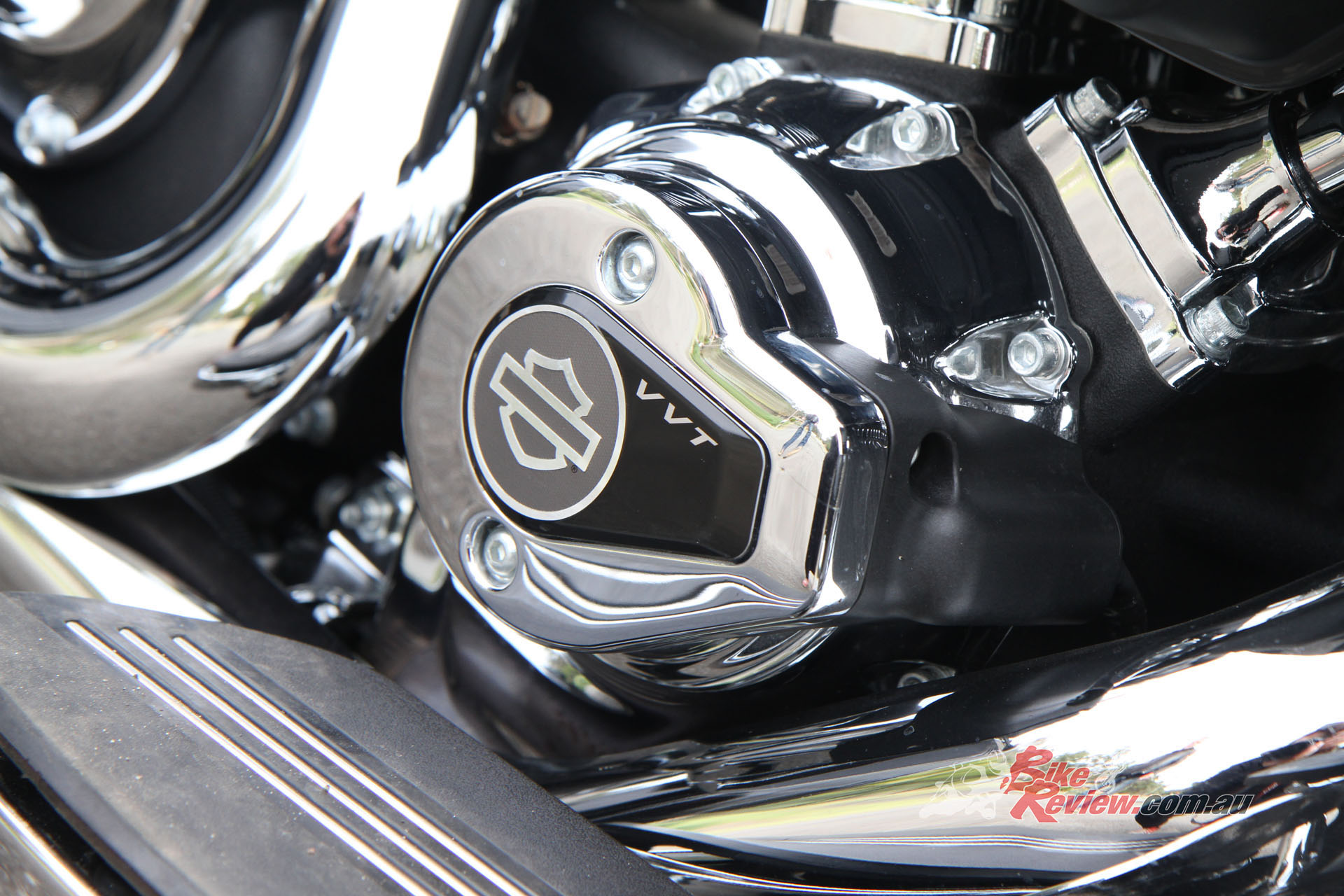
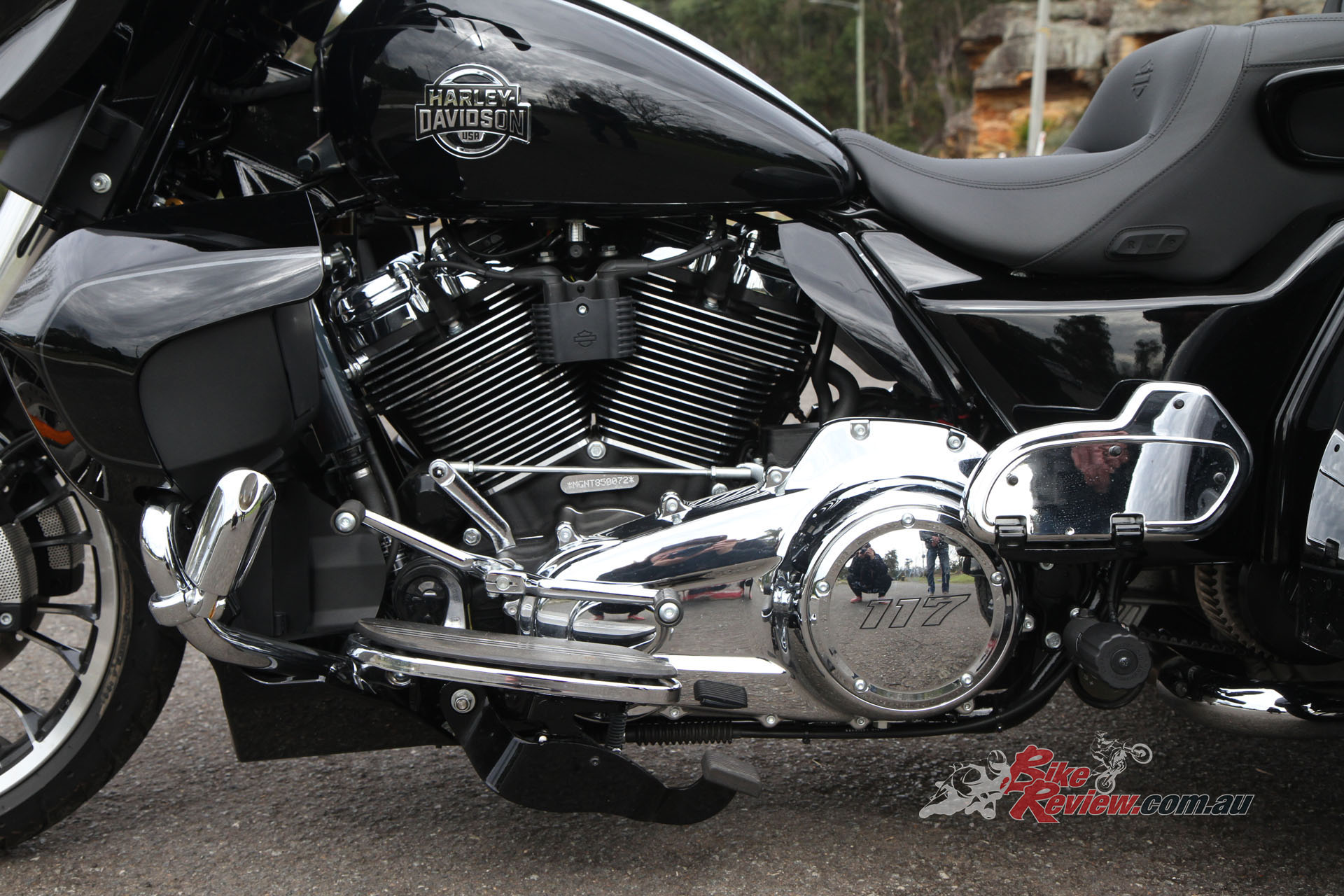
The 1923cc Milwaukee-Eight VVT 117 produces its peak 170Nm at just 3500rpm.
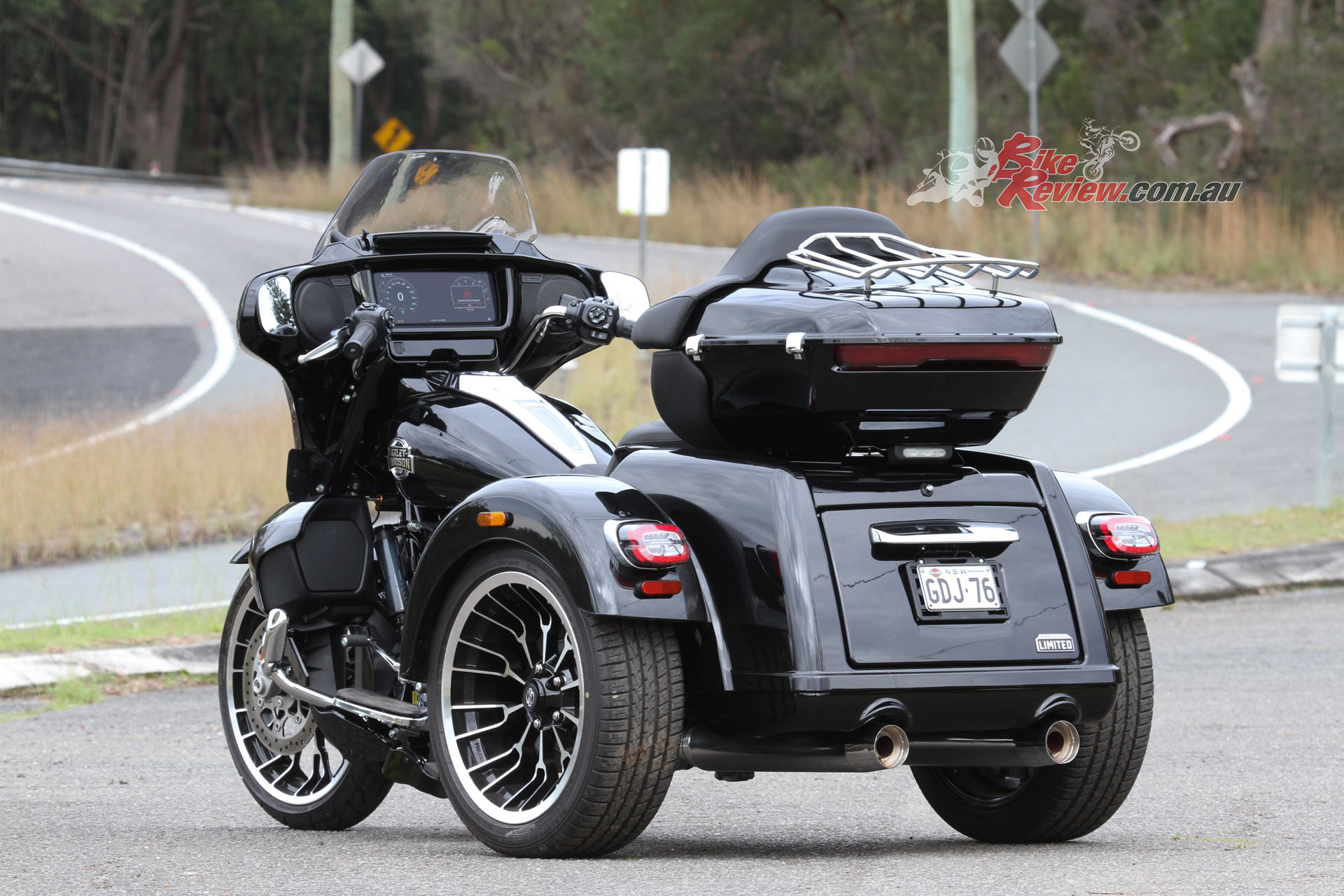
The all-new 2026 trike range – there are three models – has gone through vast improvements in rear suspension. The old A-frame has been completely replaced with a forged aluminium wishbone-shaped work of art that utilises a spherical bearing where the old swingarm pivot was. The differential is now a centrally mounted unit attached to the chassis rather than the suspension, with driveshafts running from the diff to each wheel. There is a Watt’s linkage to keep everything in line, plus a sway bar to help control body roll.
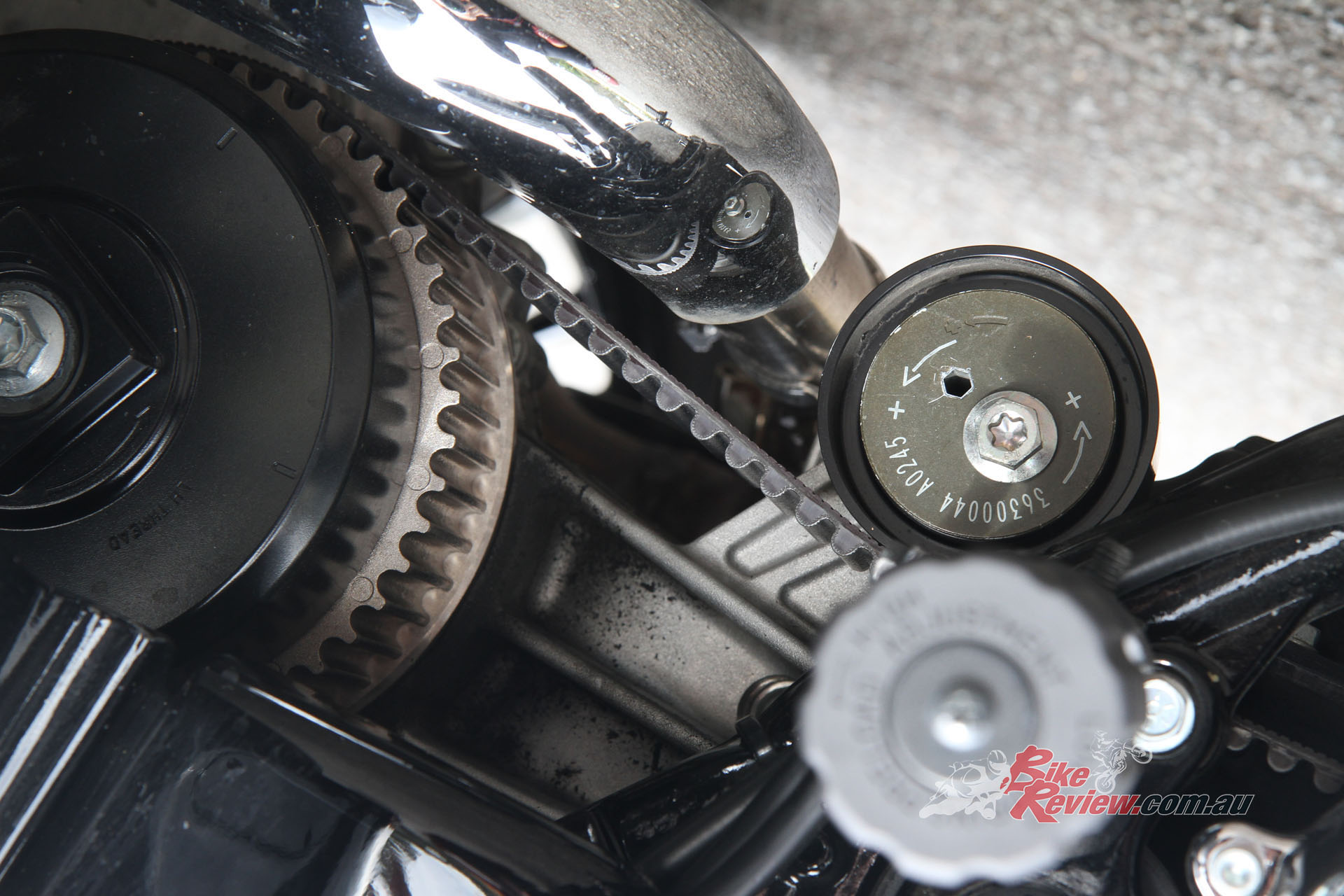
Think of it like this: the old A-frame worked in one plane only, pivoting from the front swingarm bearing just like the swingarm of a two-wheeled motorcycle. This new system allows the aluminium suspension unit to pivot through multiple angles – up and down, tilted with one wheel high and the other low and anything in between.
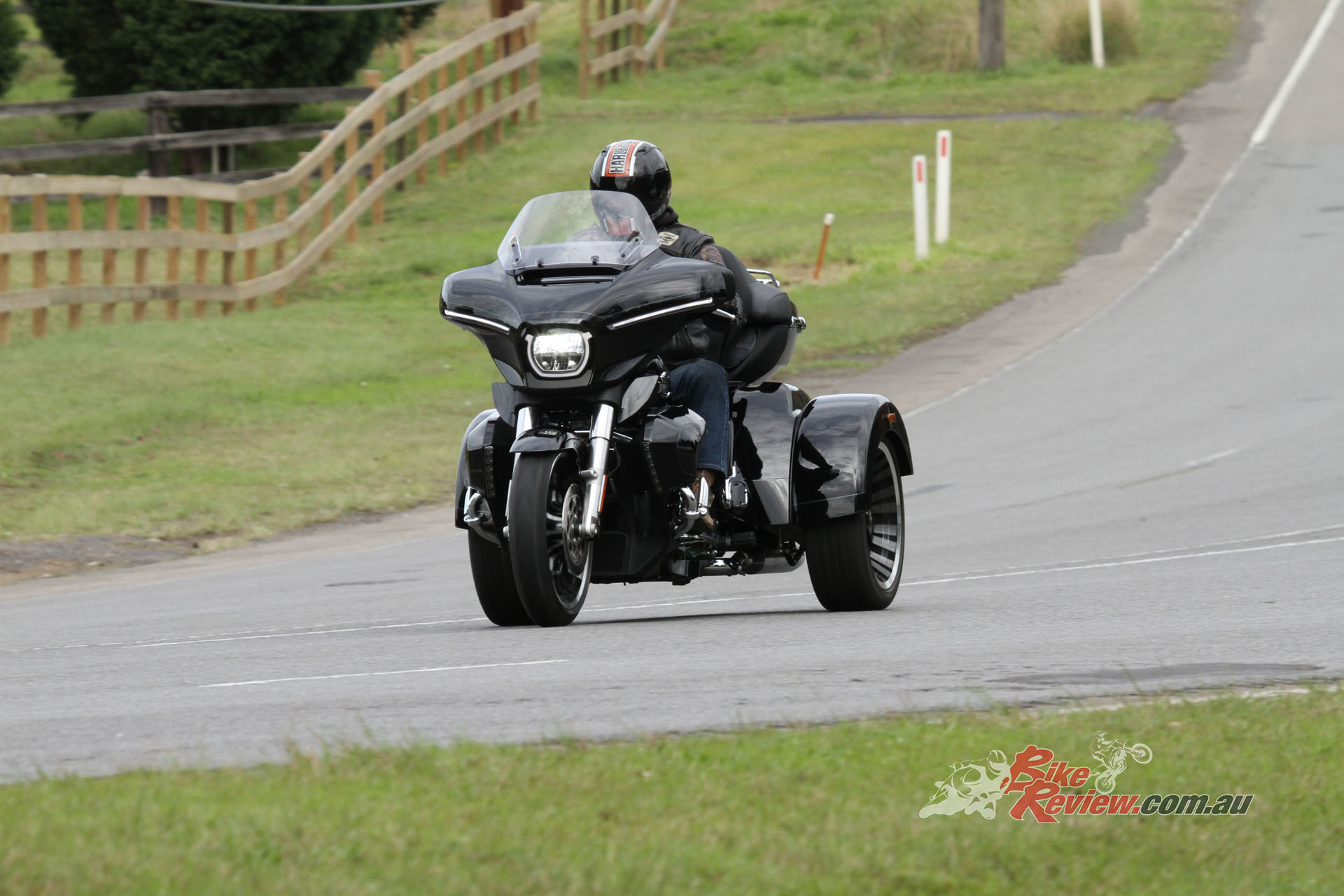
Although the rear wheels are still not fully independent of each other, each can move separately over bumps with far less effect on the other wheel.
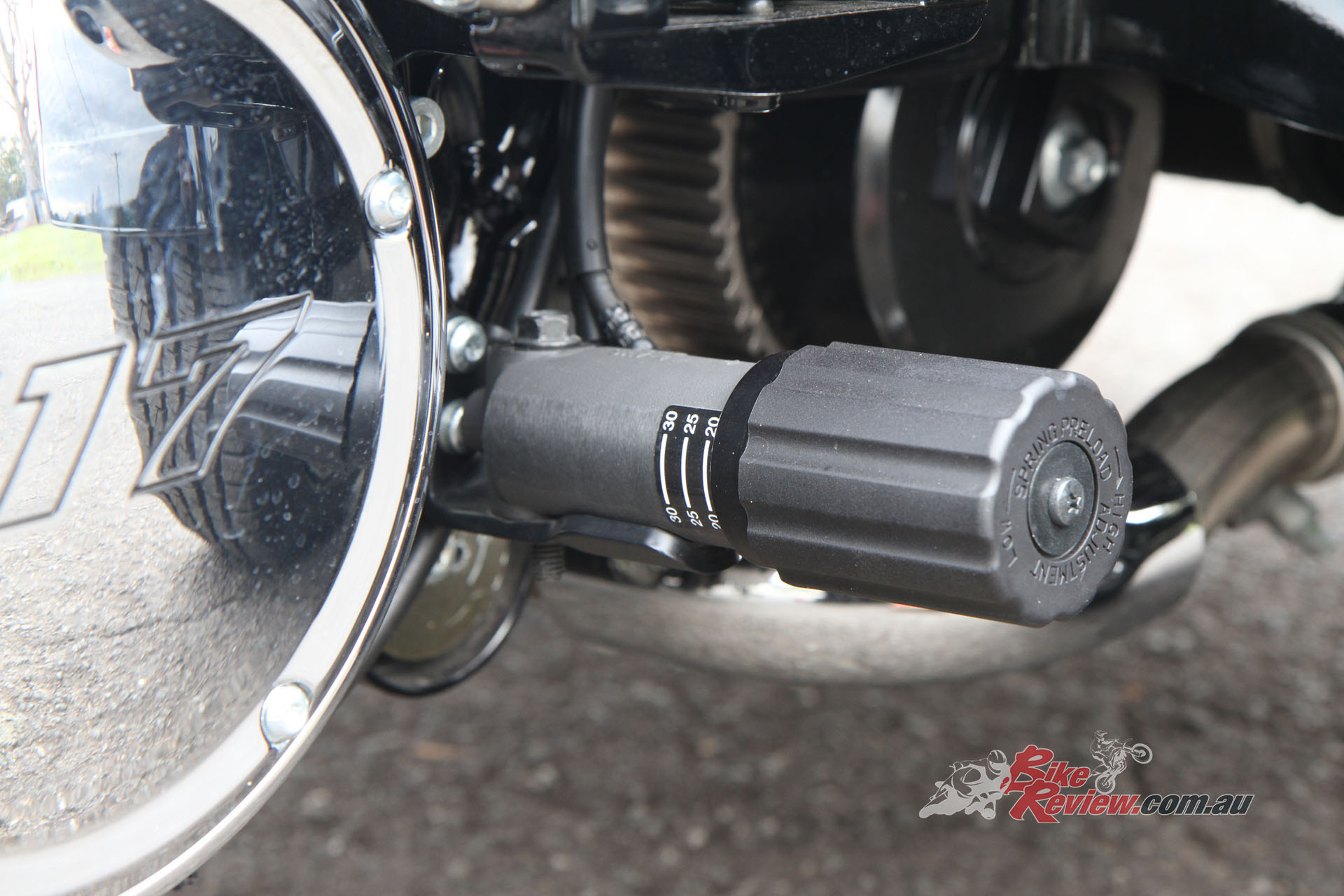
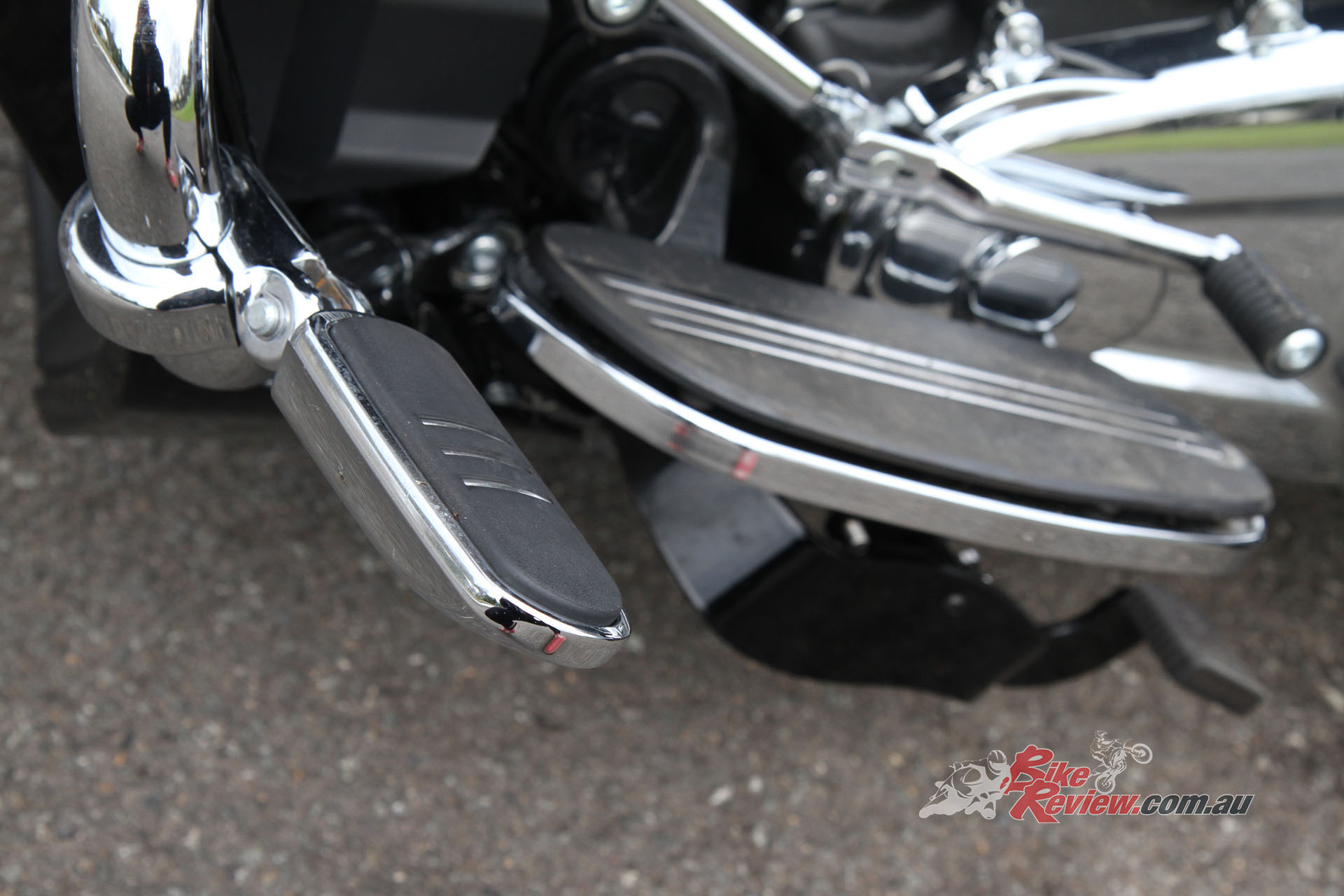
Although the rear wheels are still not fully independent of each other, each can move separately over bumps with far less effect on the other wheel and far less pitching of the bike. The remote rear spring-preload adjuster is also conveniently located below the left pillion footrest and uses a simple winder-style adjustment.
How does it ride?
It is very good. It behaves far better than the old trike design, both in its flexibility and its plush ride. The extra travel built into the rear suspension is very good and, with the whole system being a lot lighter, the unsprung weight is handled far better.
A 22.7L fuel tank and claimed 7.2L/100km consumption give a theoretical 315km range.
I have built and owned four trikes over my riding life, so I do understand what a trike is and how to ride one. If you are looking at a trike for the first time, you will need to adjust to what it is really all about and treat it as a new style of ride. Learn to accept there is no more leaning and that you must steer the bike with the handlebars. Appreciate that it is not intended for the twists of the Old Road or Macquarie Pass and you will dial yourself in to have a great deal of fun on the Harley trike.
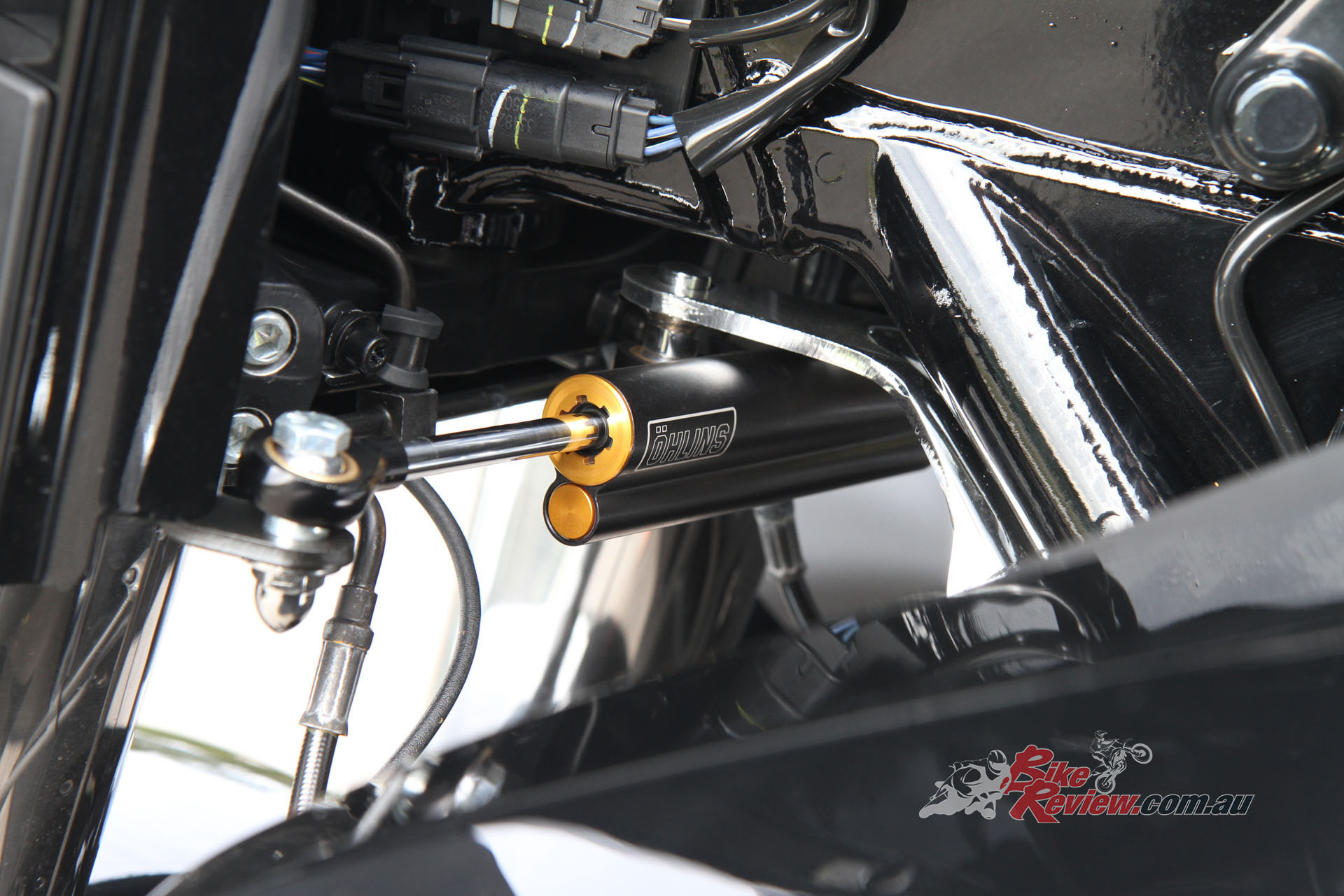
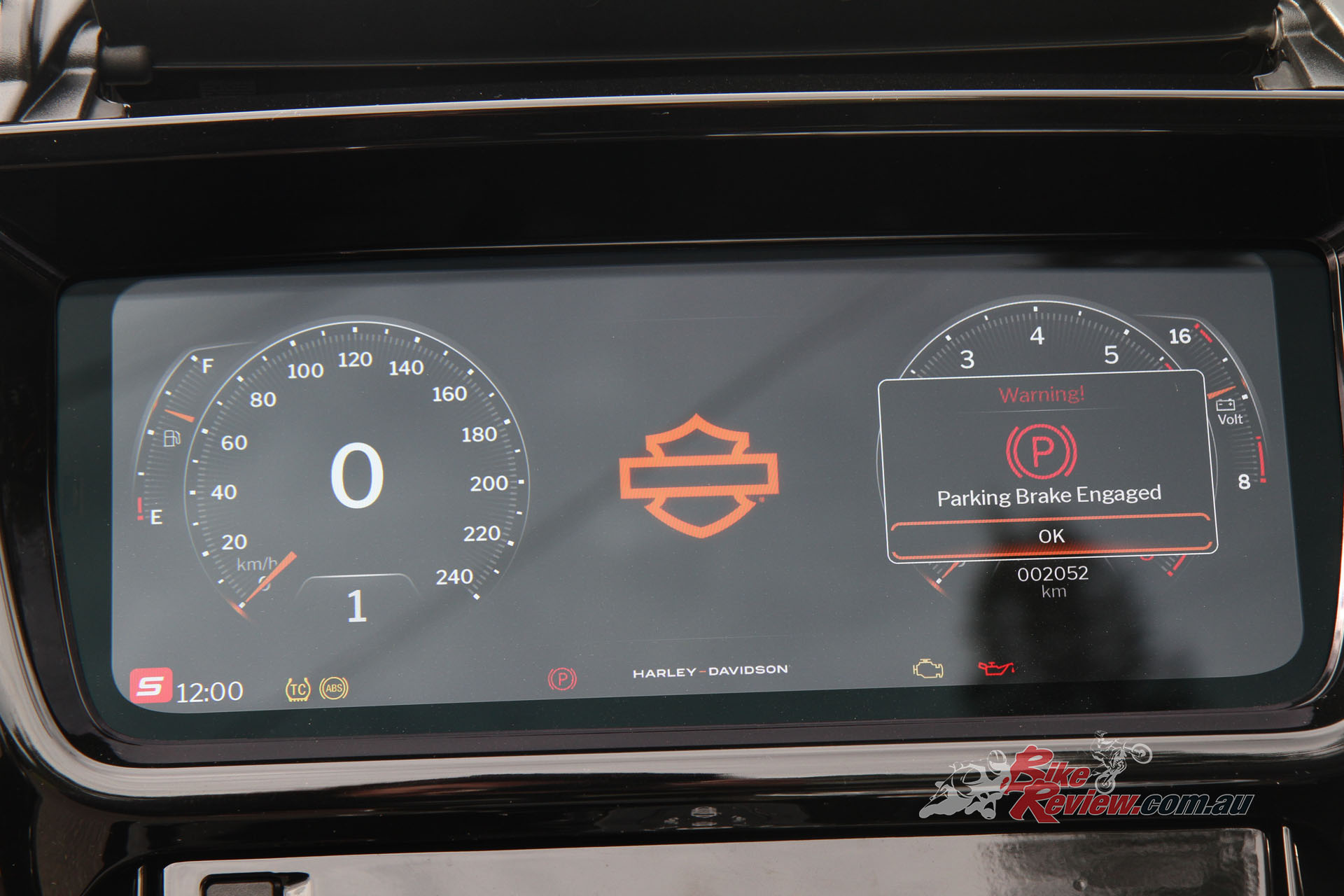
You don’t need to put your feet down ever again. You can’t drop the trike on dirt or wet roads and you will never lose your footing in a rough carpark and drop it. Riding in poor conditions is always a snack because of the fact it can’t simply fall over.
You can’t drop the trike on dirt or wet roads and you will never lose your footing in a carpark.
The fatigue level, I believe, is also lower because of what I just mentioned. You simply don’t need to concentrate as hard looking for hidden dangers in the shadows or rain puddles on the road. A trike is a traveller that will eat up the highway kays between states and do it all with a very high level of comfort.
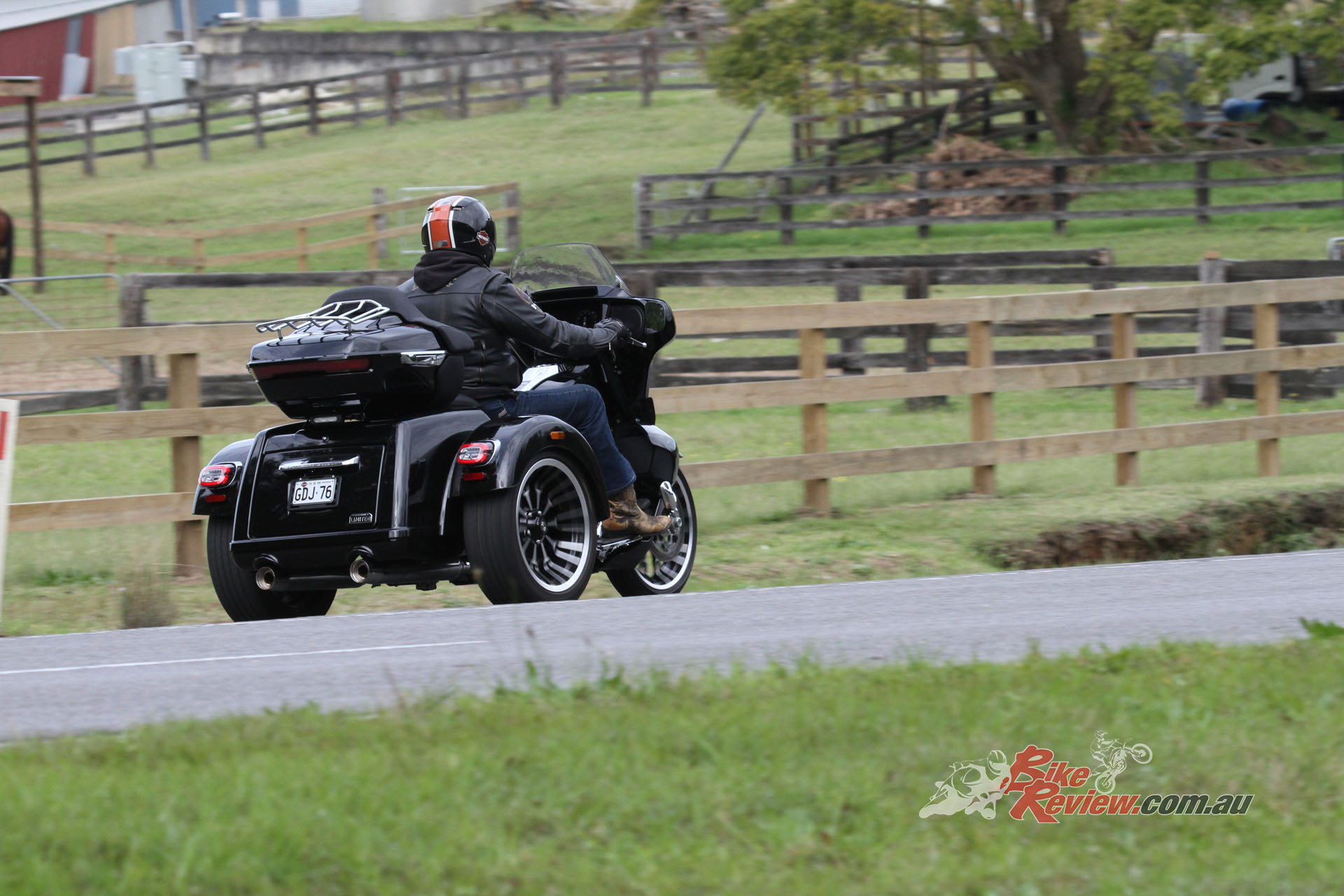
Heated rider and pillion seats are standard, adding another layer of long-distance comfort.
That’s a lot on the new rear suspension, but what about the rest of the bike? Well, it’s built to Harley-Davidson’s usual high standards. The new touring range has been brought right into the 21st century. VVT is now part of the touring range, as is the 117ci engine, and there are also ride modes to suit your riding style or the weather conditions.
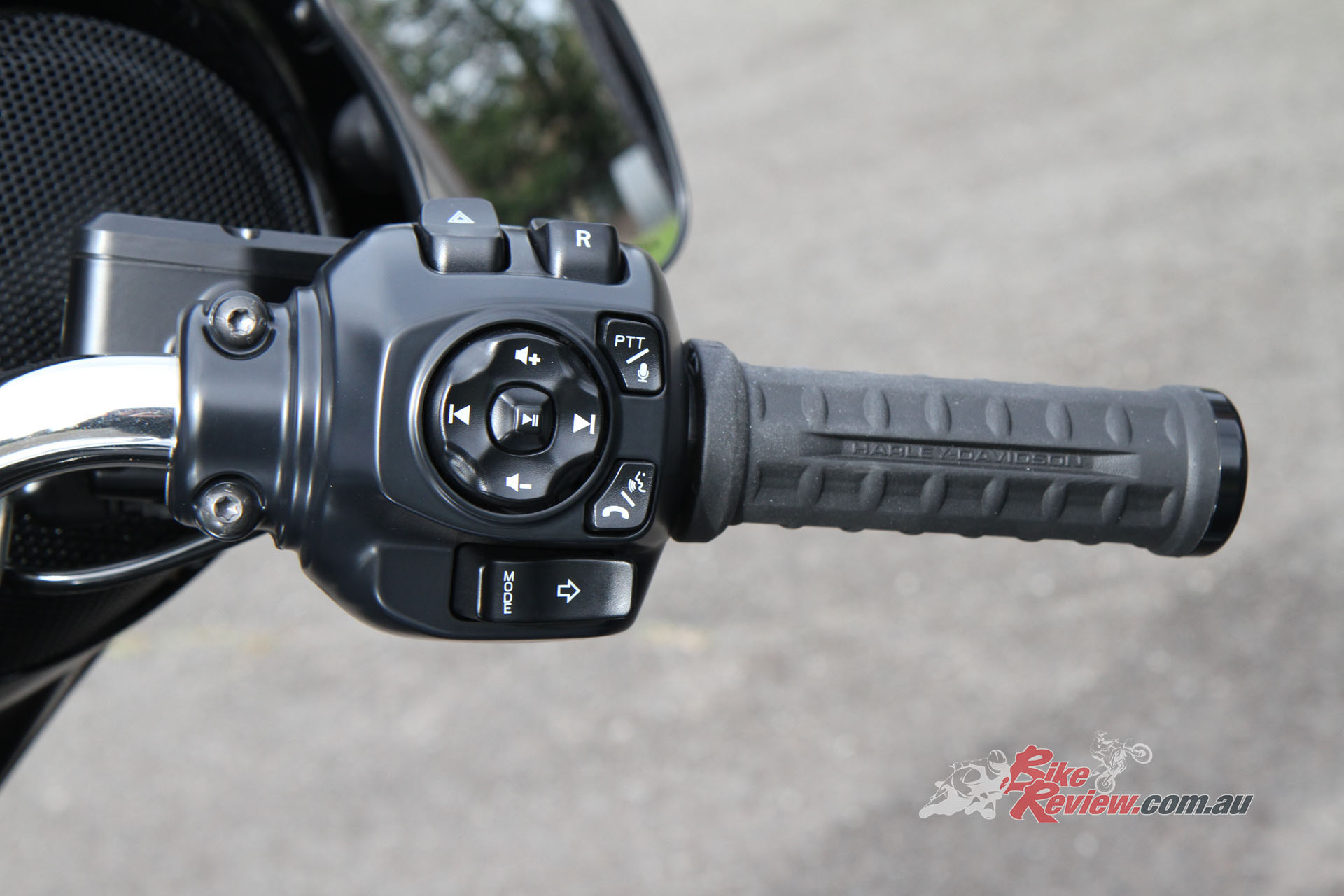
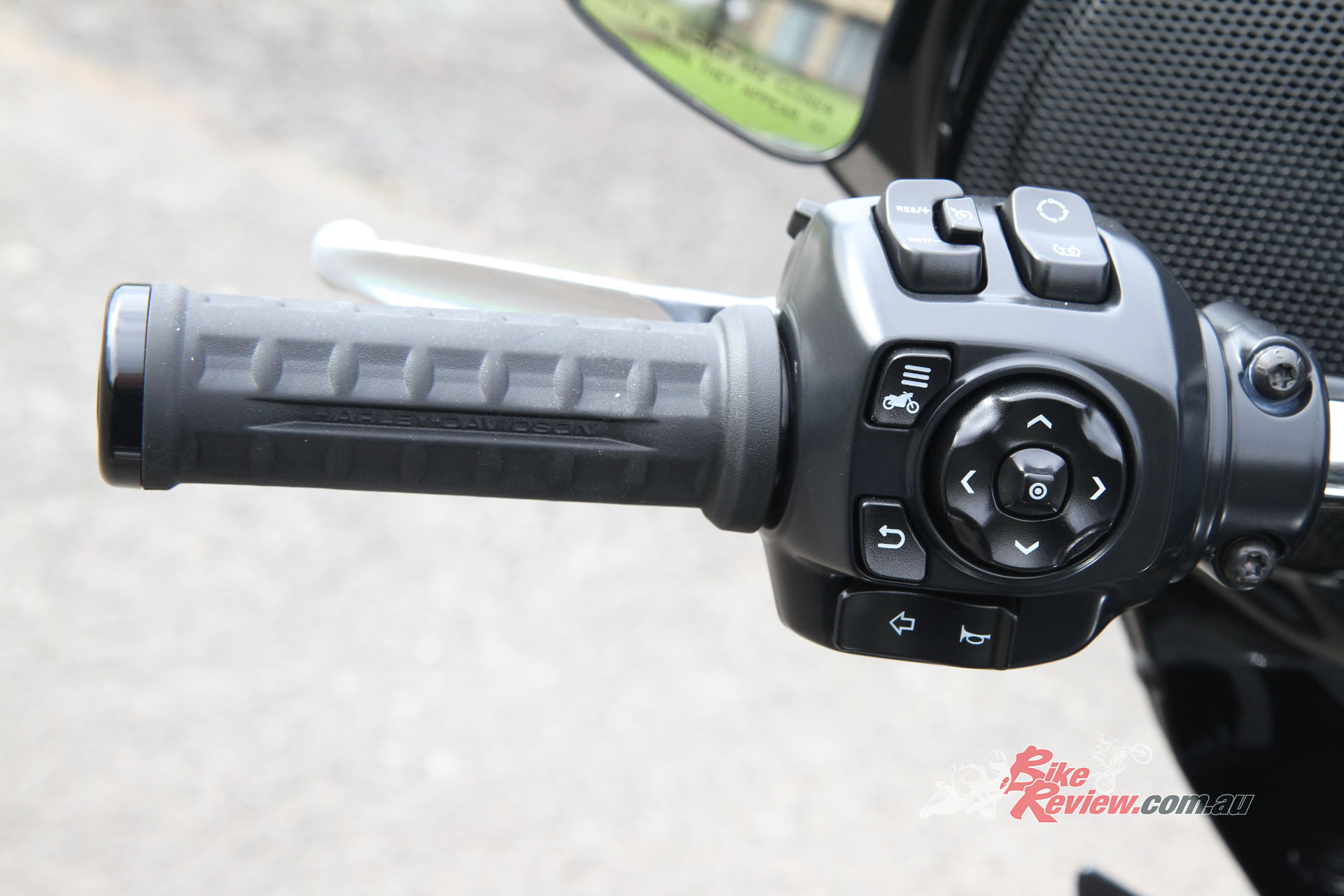
All this added tech in the Street Glide 3 Limited makes for a very powerful and very manageable powertrain that offers massive torque to deal with the extra weight of the trike, plus the smoothness and flexibility to ride it through city traffic or on open roads and highways. Overtaking at speed is absolutely effortless in Sport mode. Leave the trike in sixth gear and just use the massive 170Nm of torque and it is quite easy to find yourself doing well over the speed limit, but with complete stability and confidence. No more struggling to get around a semi on the highway!
Overtaking at speed is absolutely effortless in Sport mode. Leave the trike in sixth gear and just use the massive 170Nm of torque.
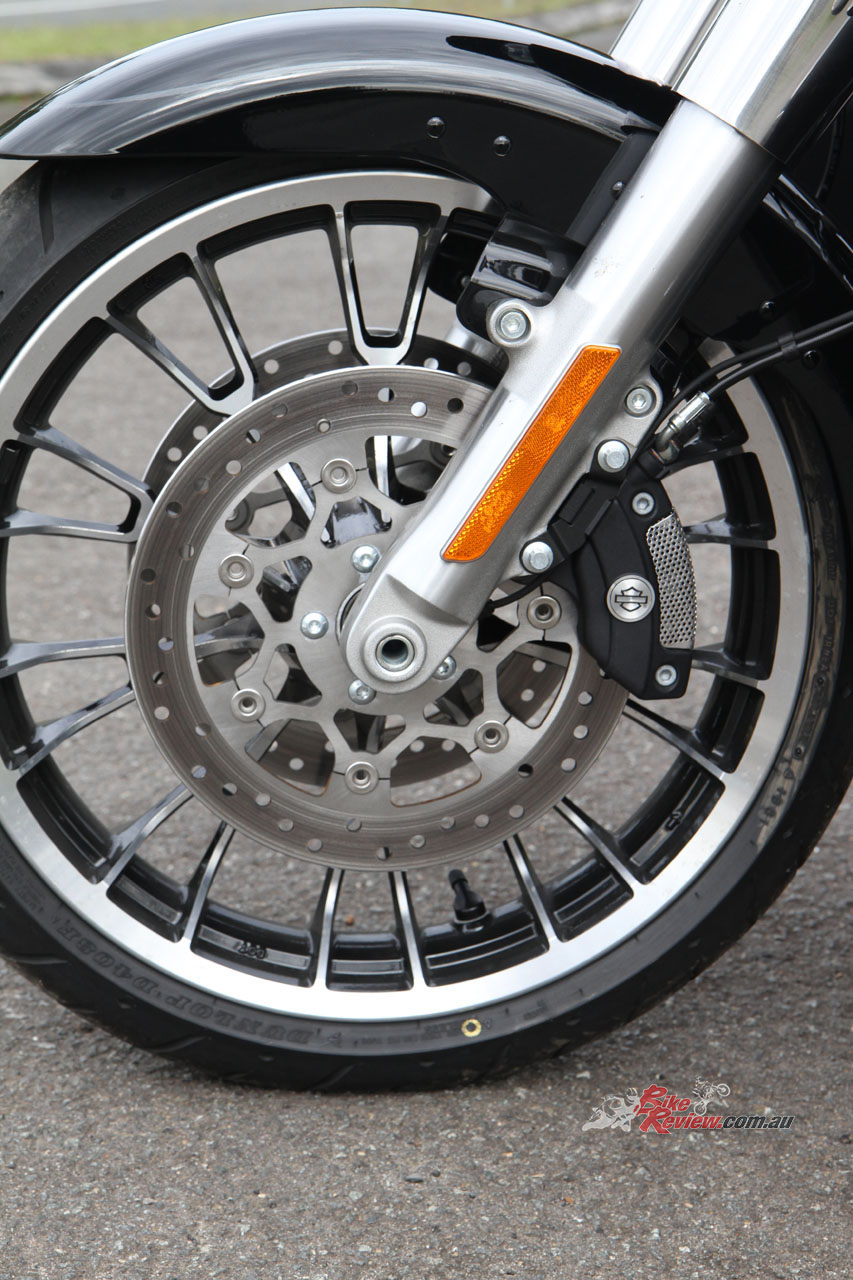
The brakes on the trike are first class. With braided lines, ABS and linked braking, it pulls up extremely well. The biggest factor is that you are no longer relying on just the front tyre’s contact patch to slow you down in a hurry. There are now two massive car tyres at the rear that can really help pull you up. Combine that with the fact the trike can’t fall over and you can brake very hard without worrying about losing your balance. I tried it and the stopping power was lifting me out of the seat. Very impressive.
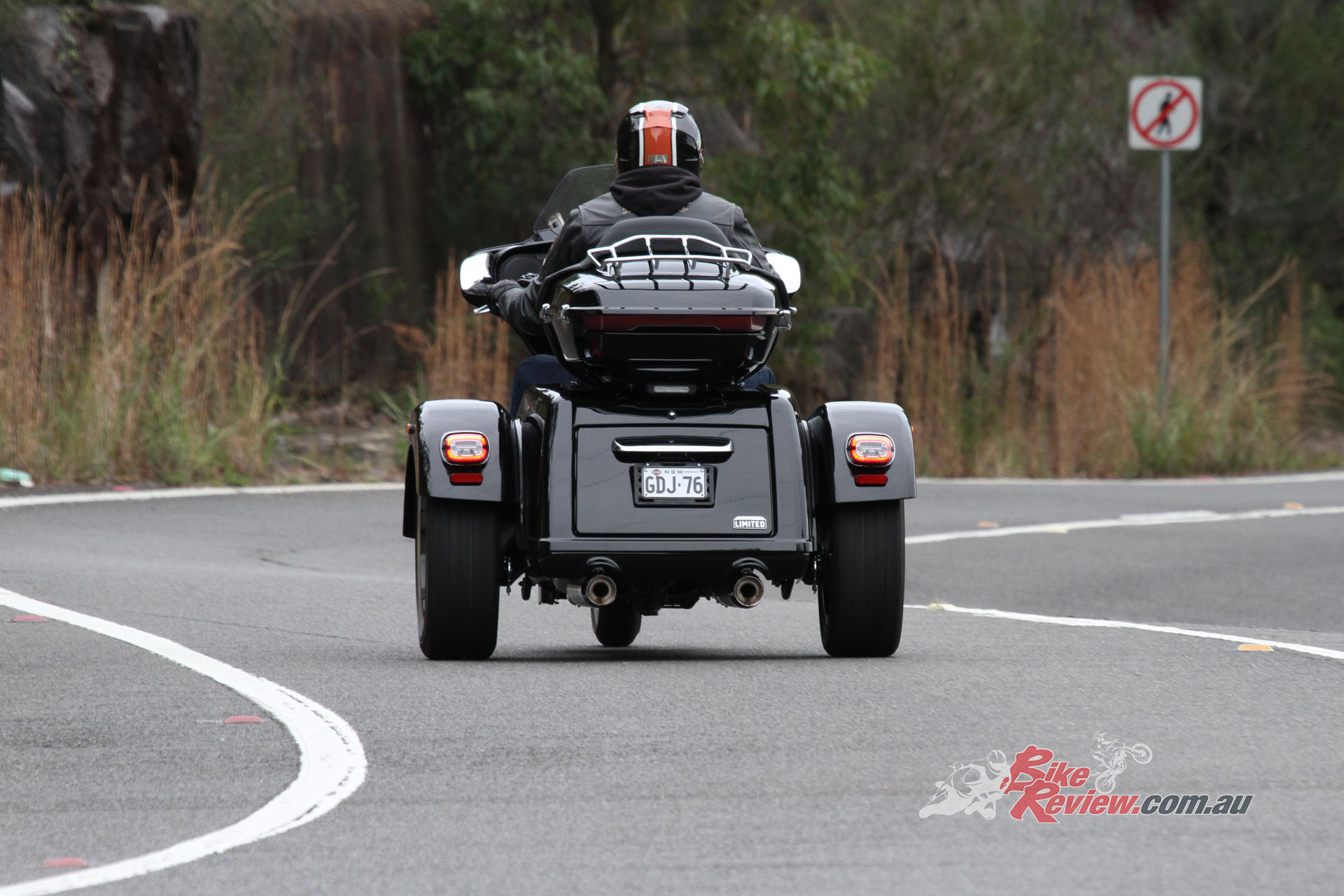
The redesigned rear end cuts unsprung weight by around 30kg compared with the previous trike.
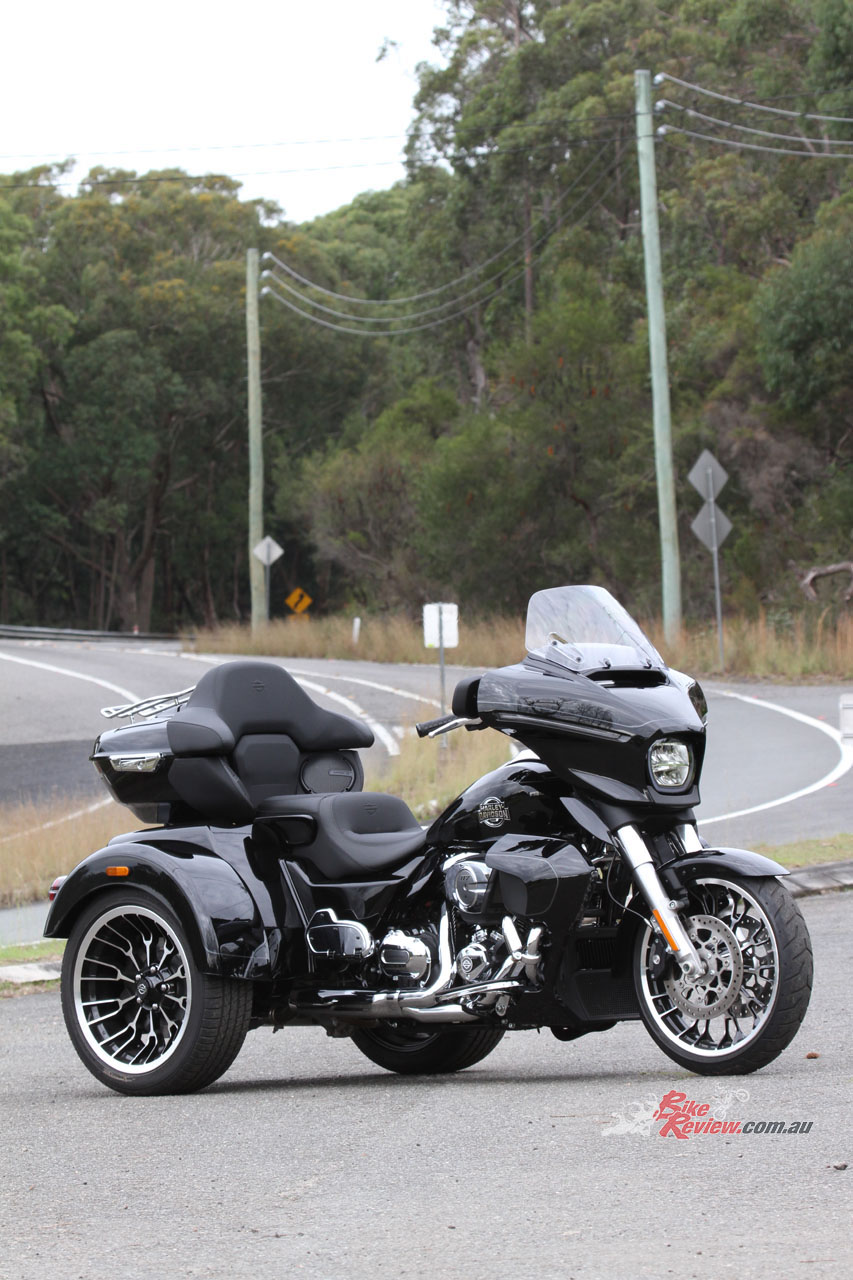
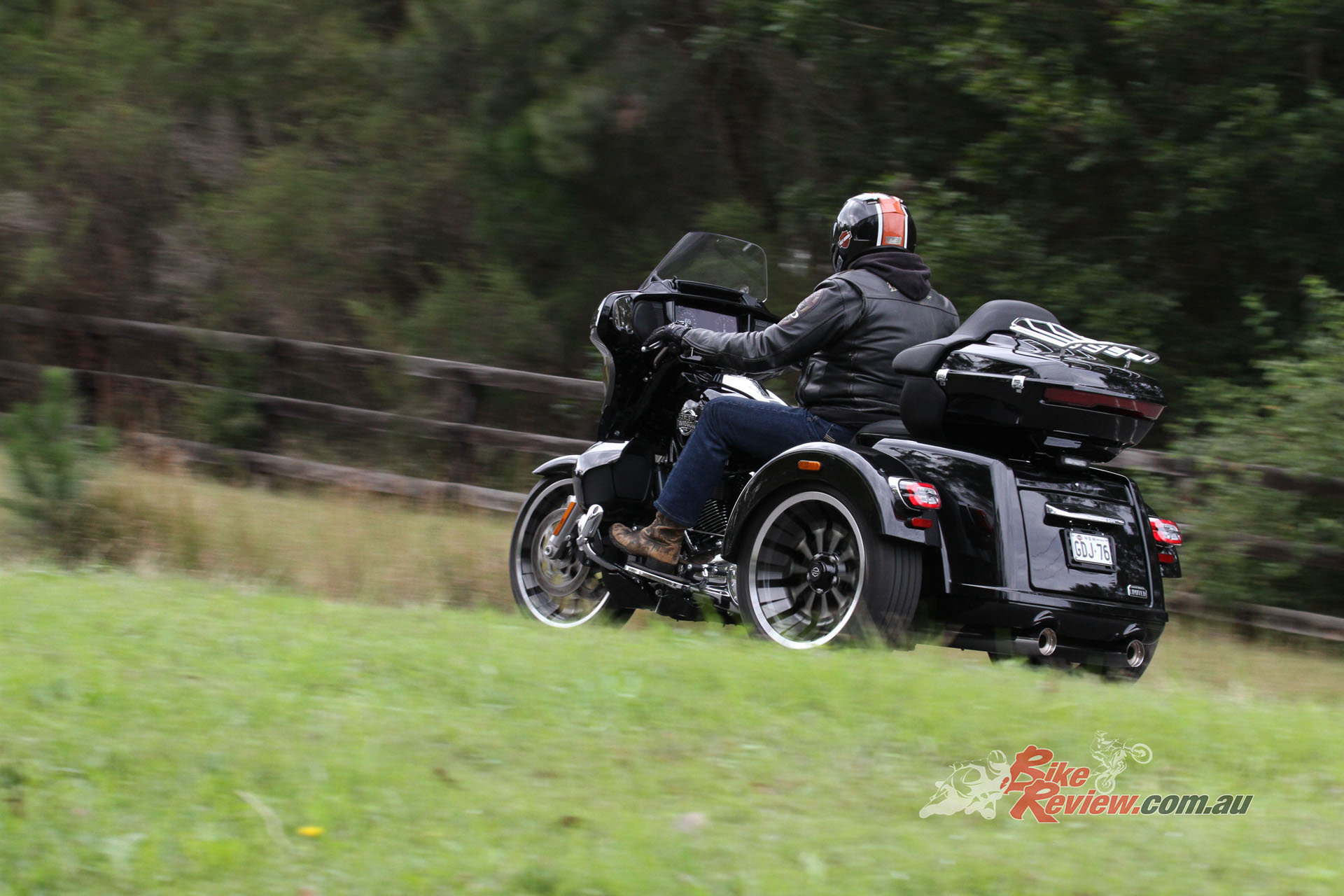
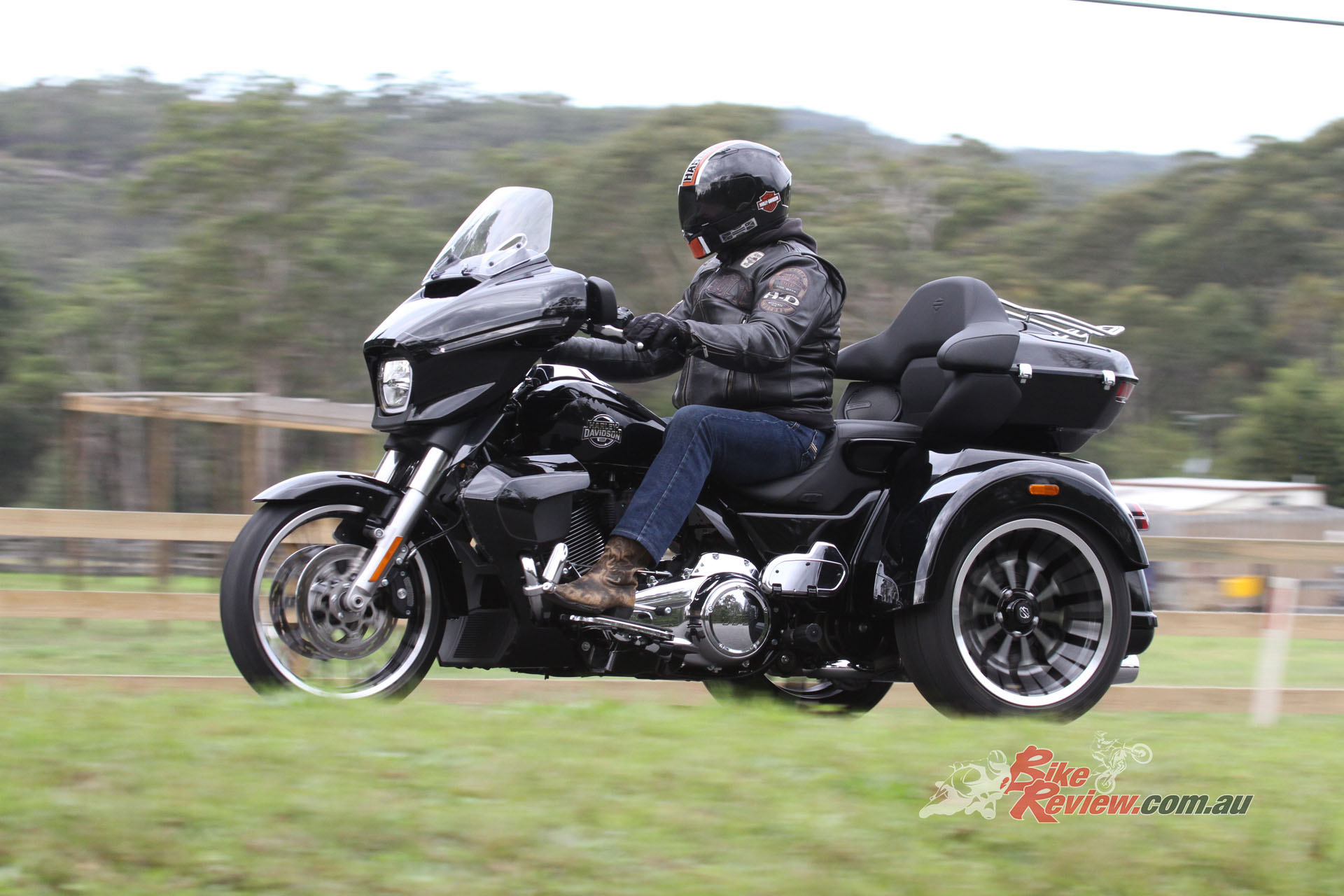
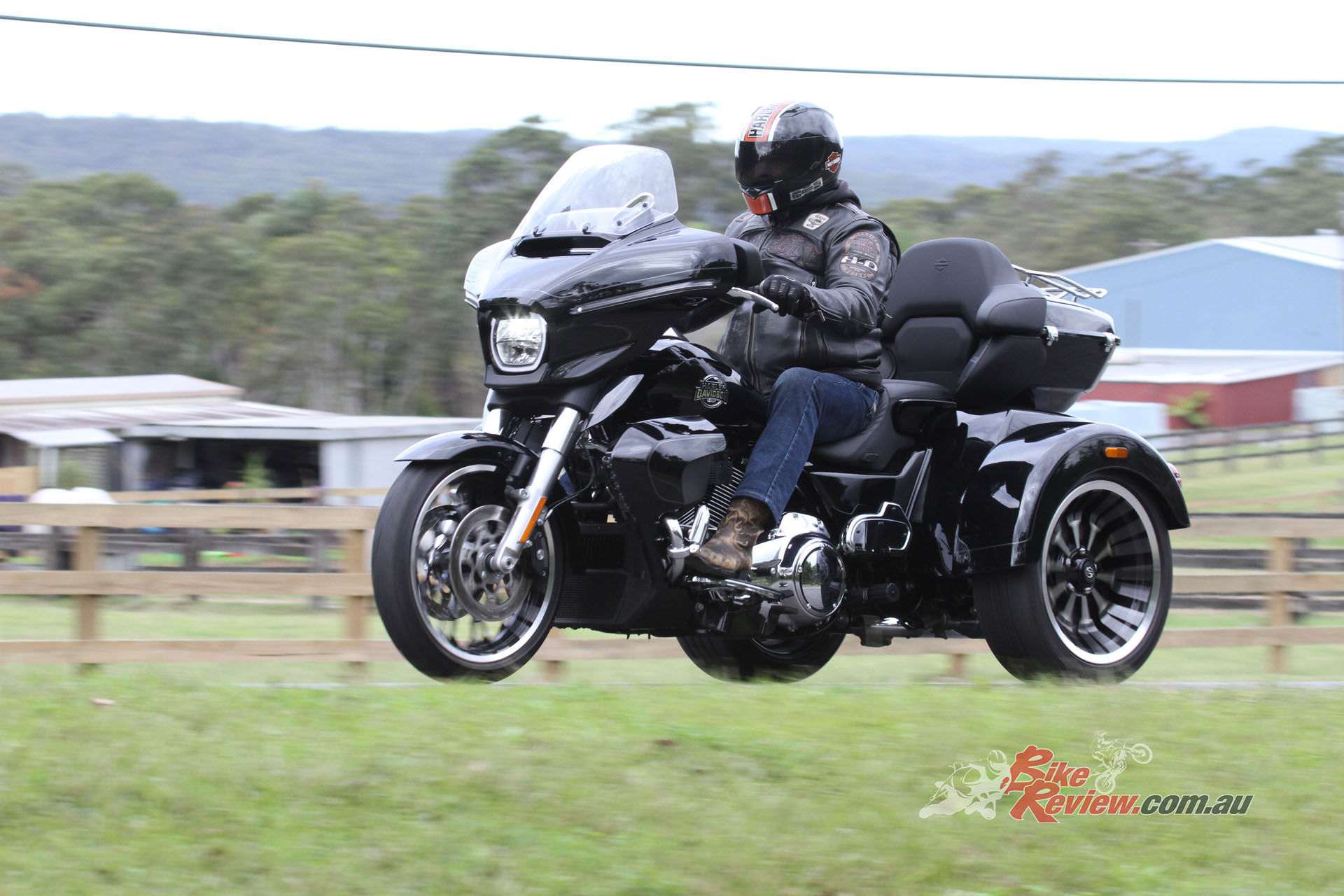
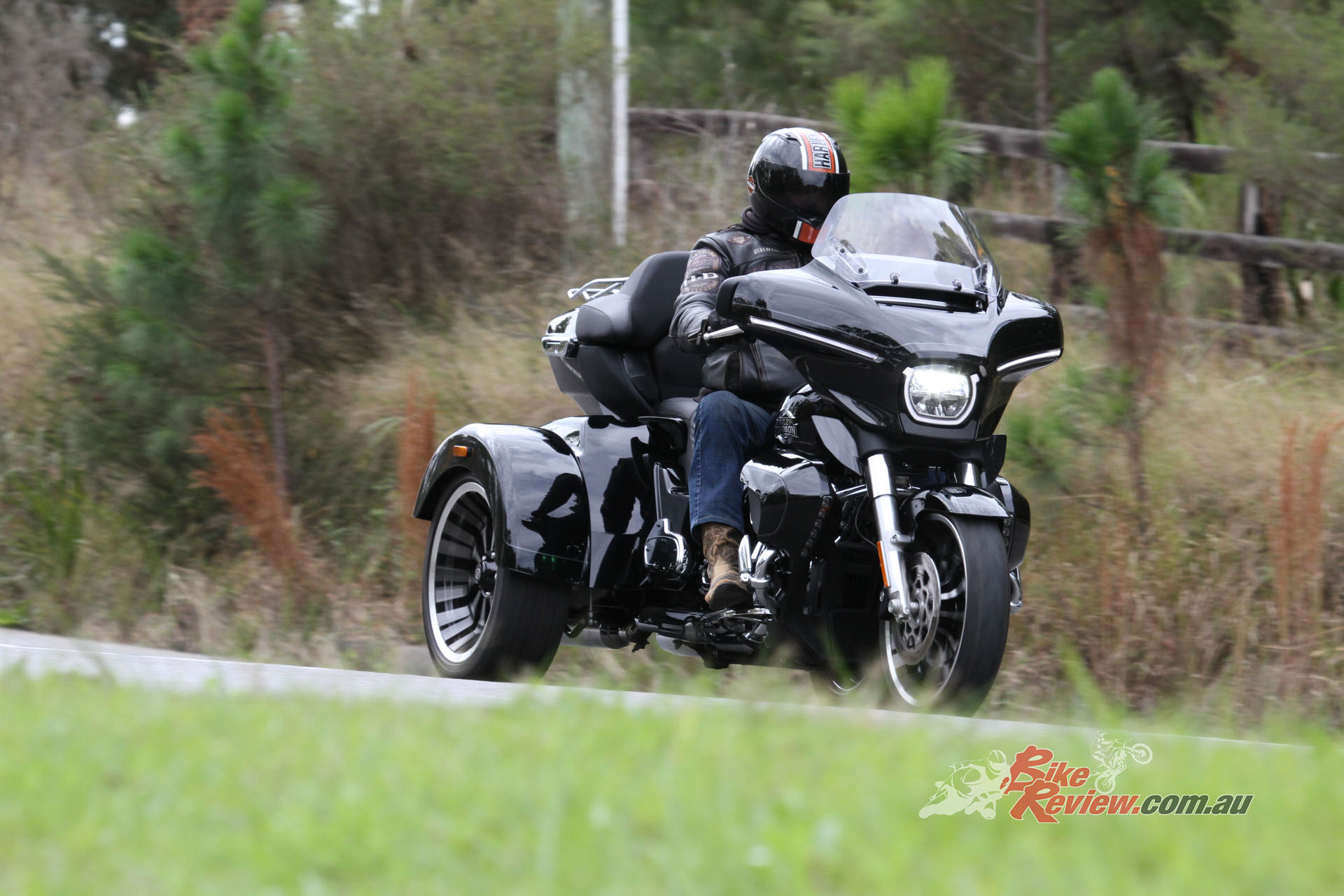
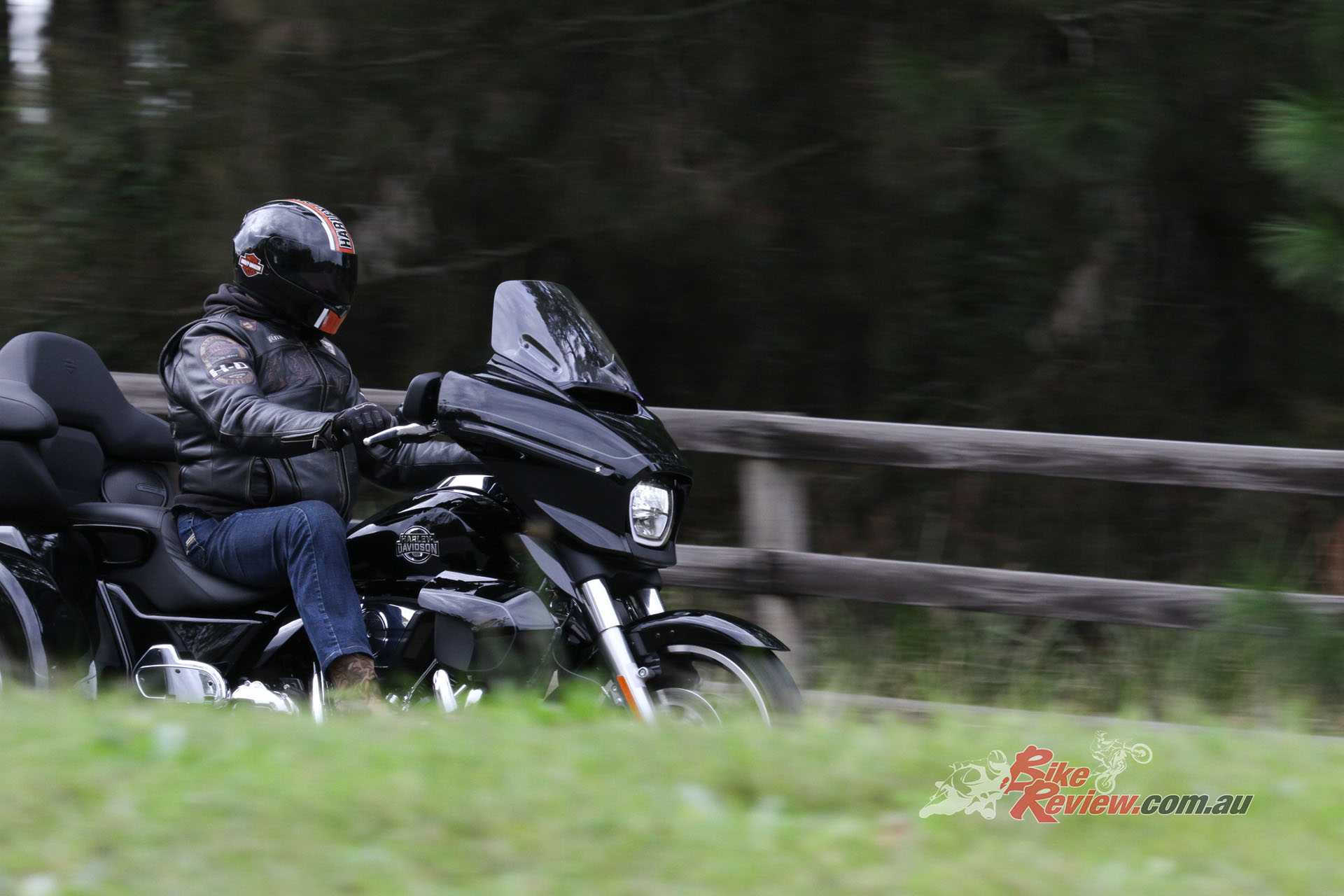
The Street Glide is a beautiful bike in solo trim and nothing has changed with the Street Glide 3 Limited. The level of finish is top notch, with the paint and seating of the high standard we expect from a luxury brand. The attention to rider and pillion comfort is very high, with a well-shaped screen and deflectors that move the air away from the rider. The lower leg cowlings are also great wind deflectors and the ride is very nice, with little wind buffeting for either rider or pillion.
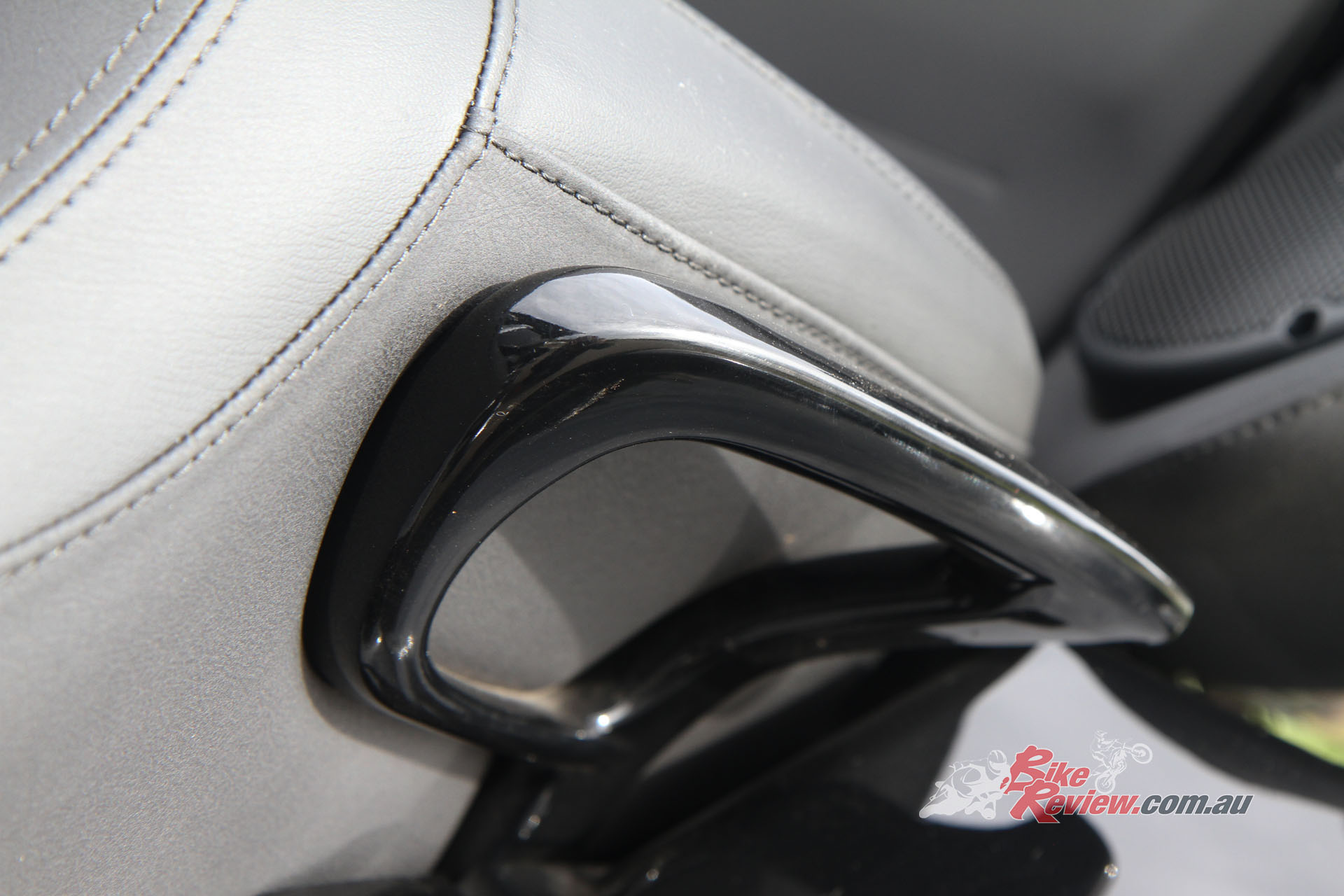
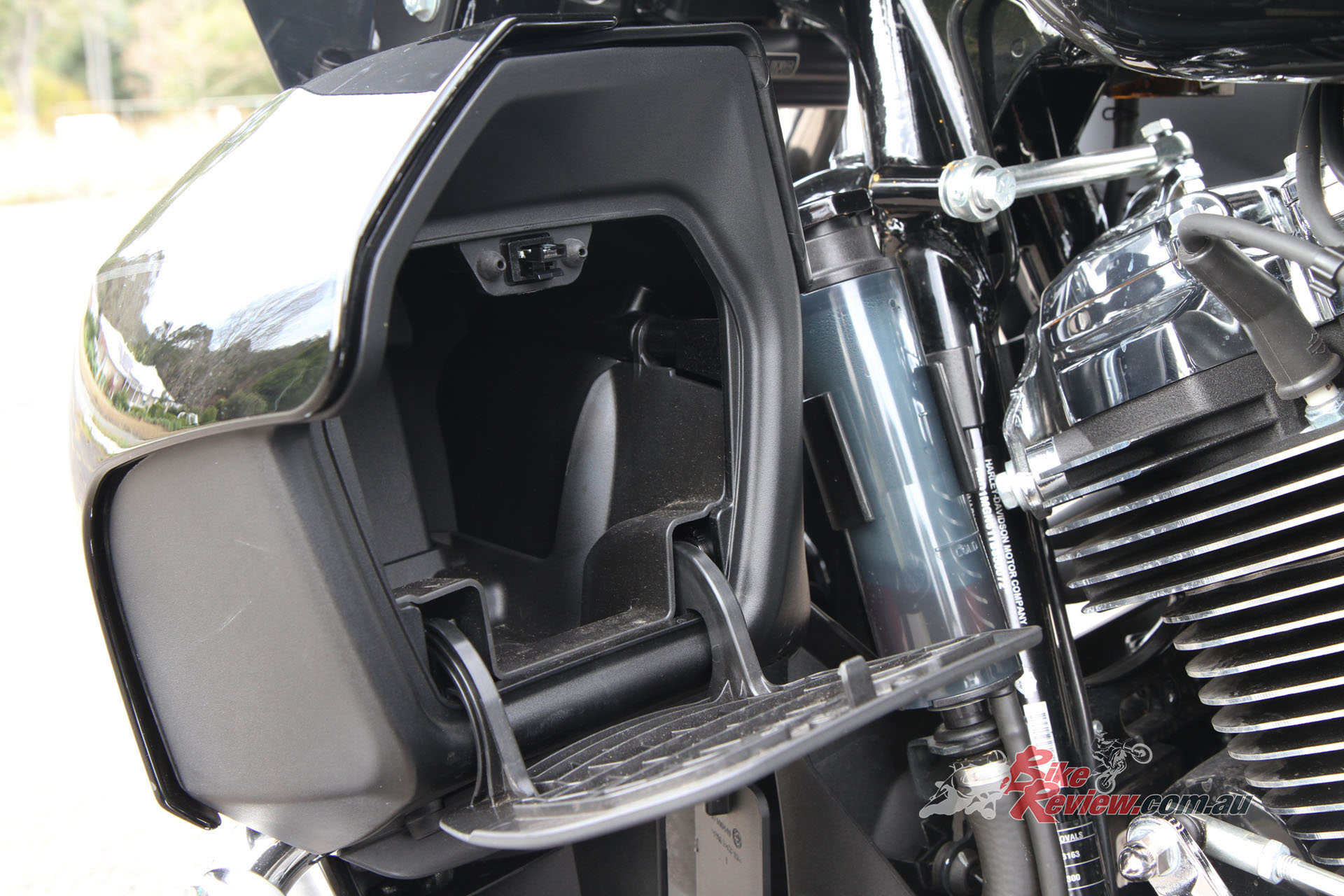
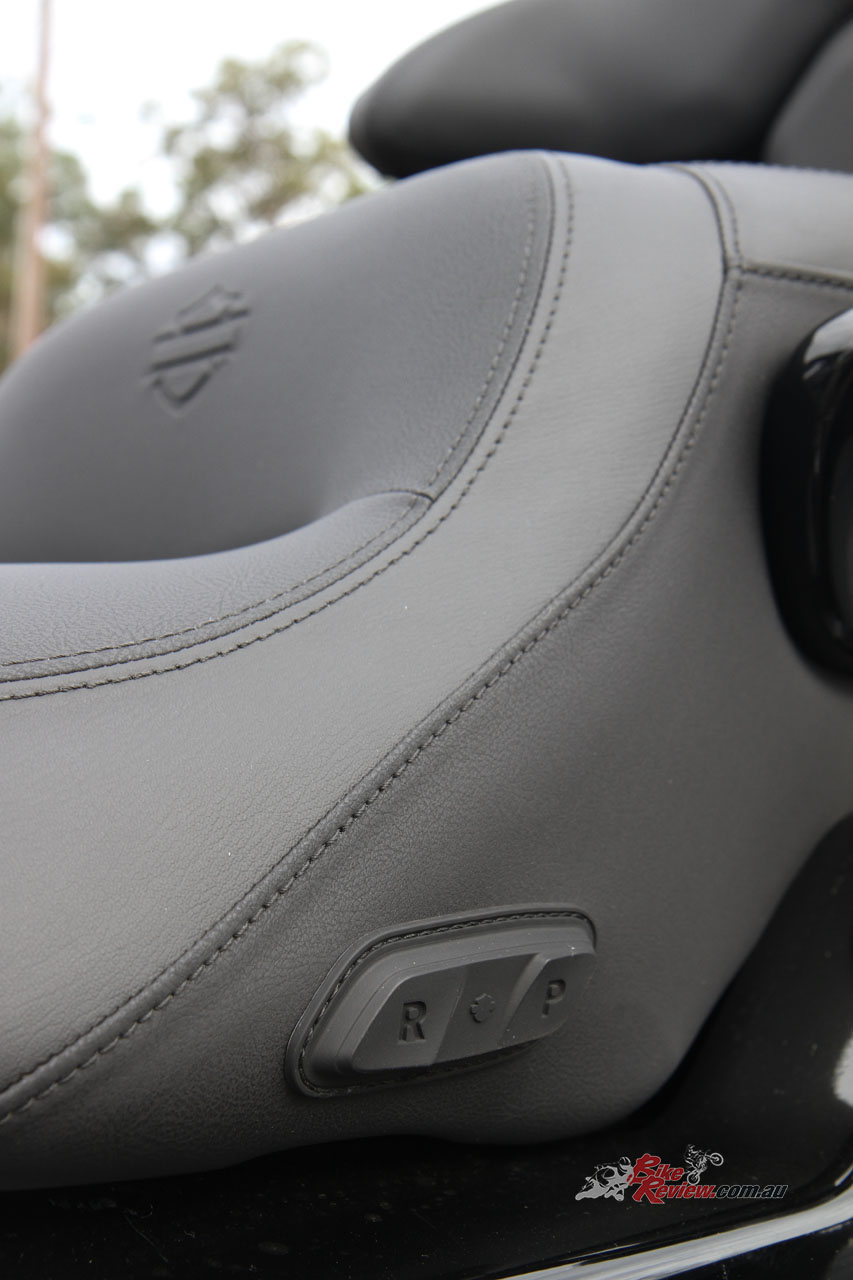
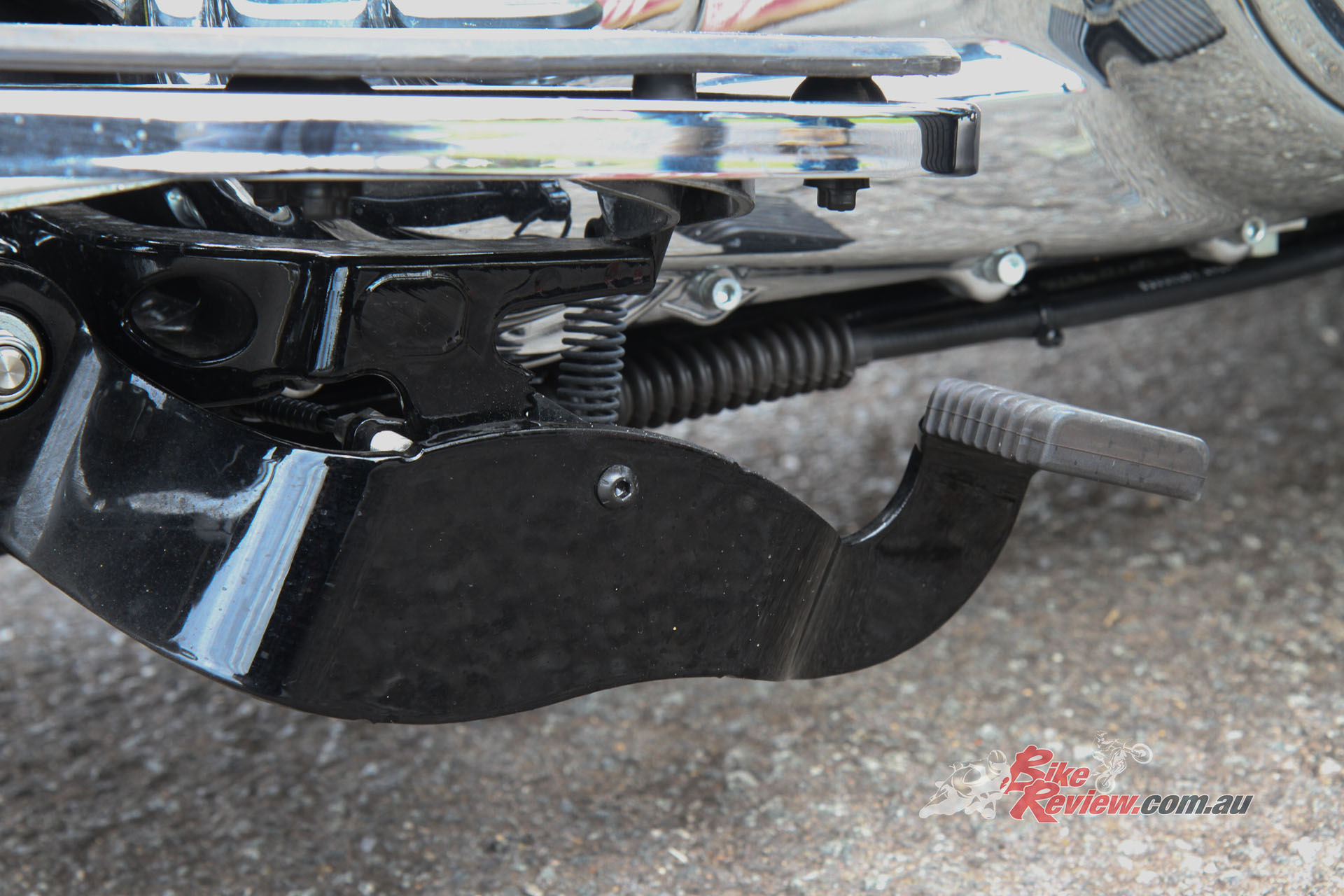
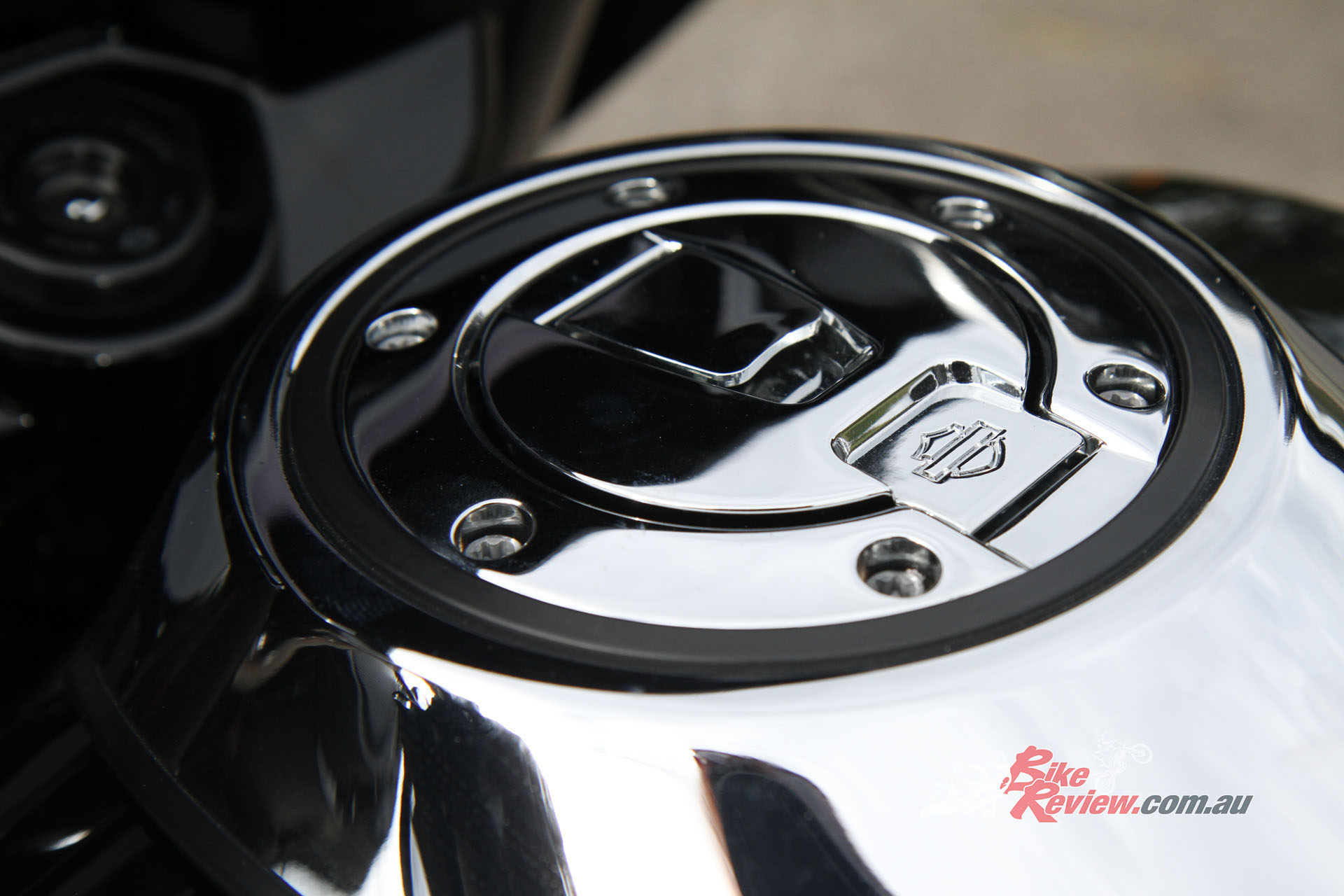
Heated seats are also there for those colder days and complement the luxurious seating. They are all beautiful, top-level appointments for this prestige model. The rear suspension is also beautifully finished, with gloss finishes and aluminium that make you want to get a mirror for your garage and put it under the trike so you can admire the high level of craftsmanship.
Nothing is overlooked. This is really where the trike is at home, on the open road eating up the kilometres with ease.
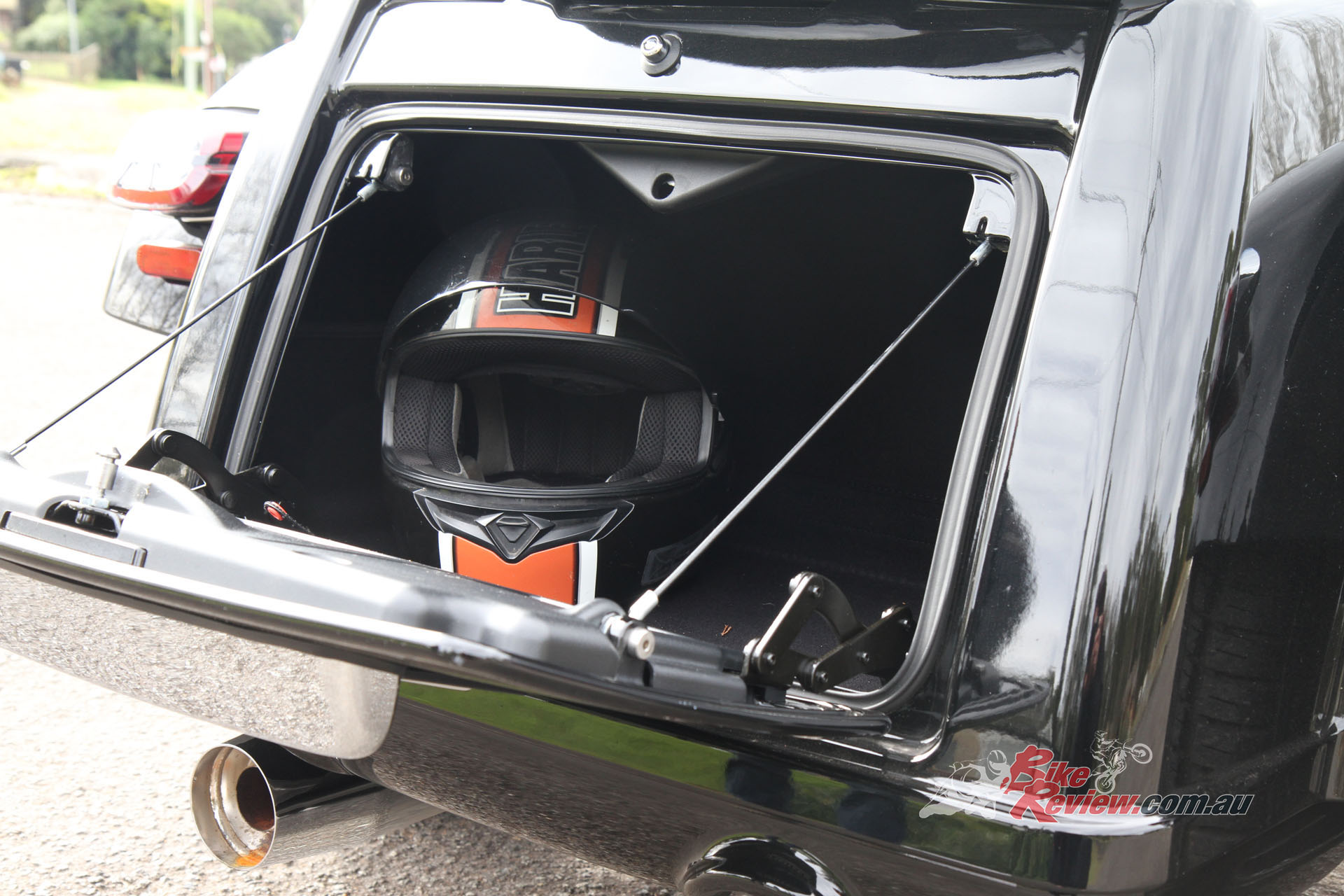
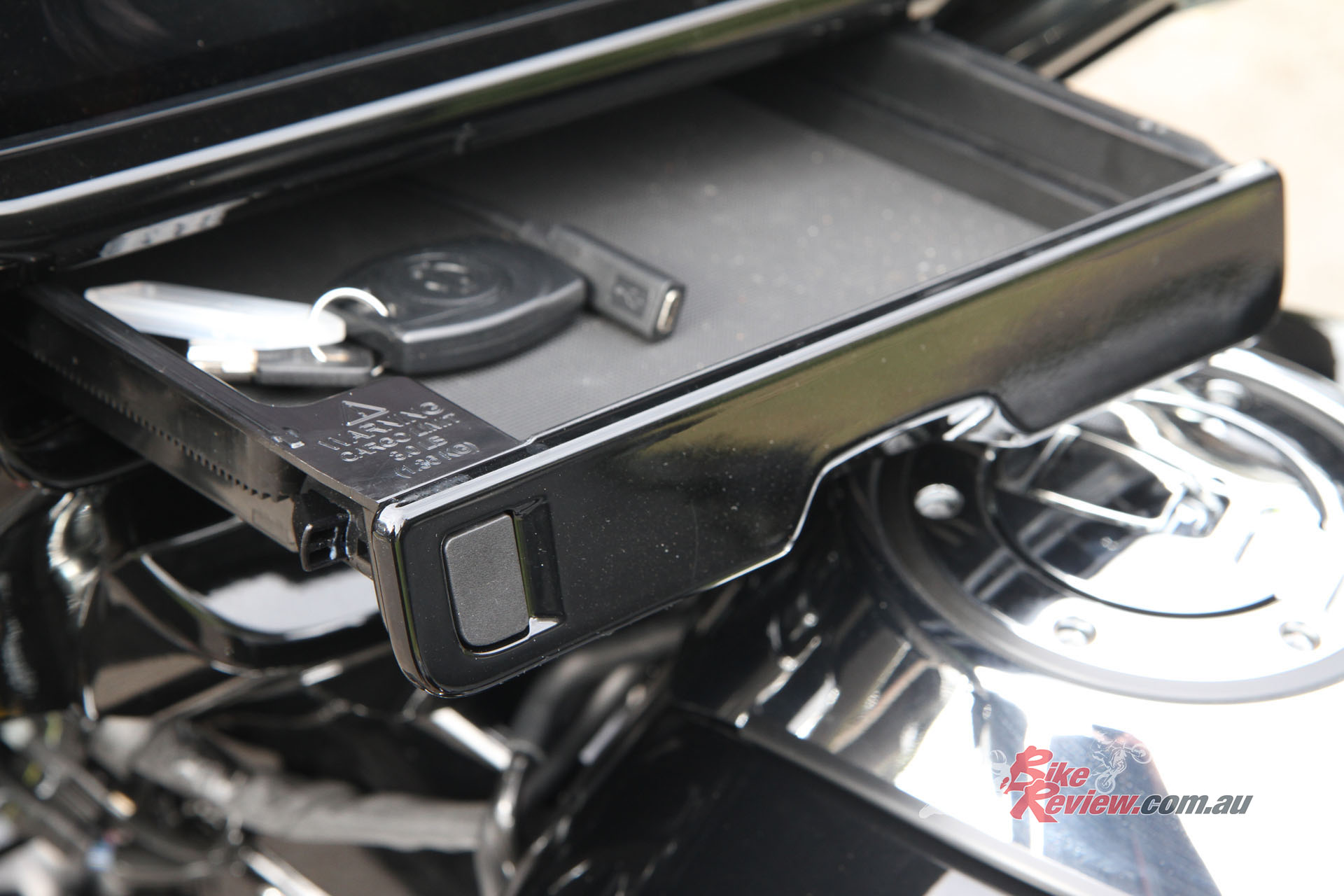
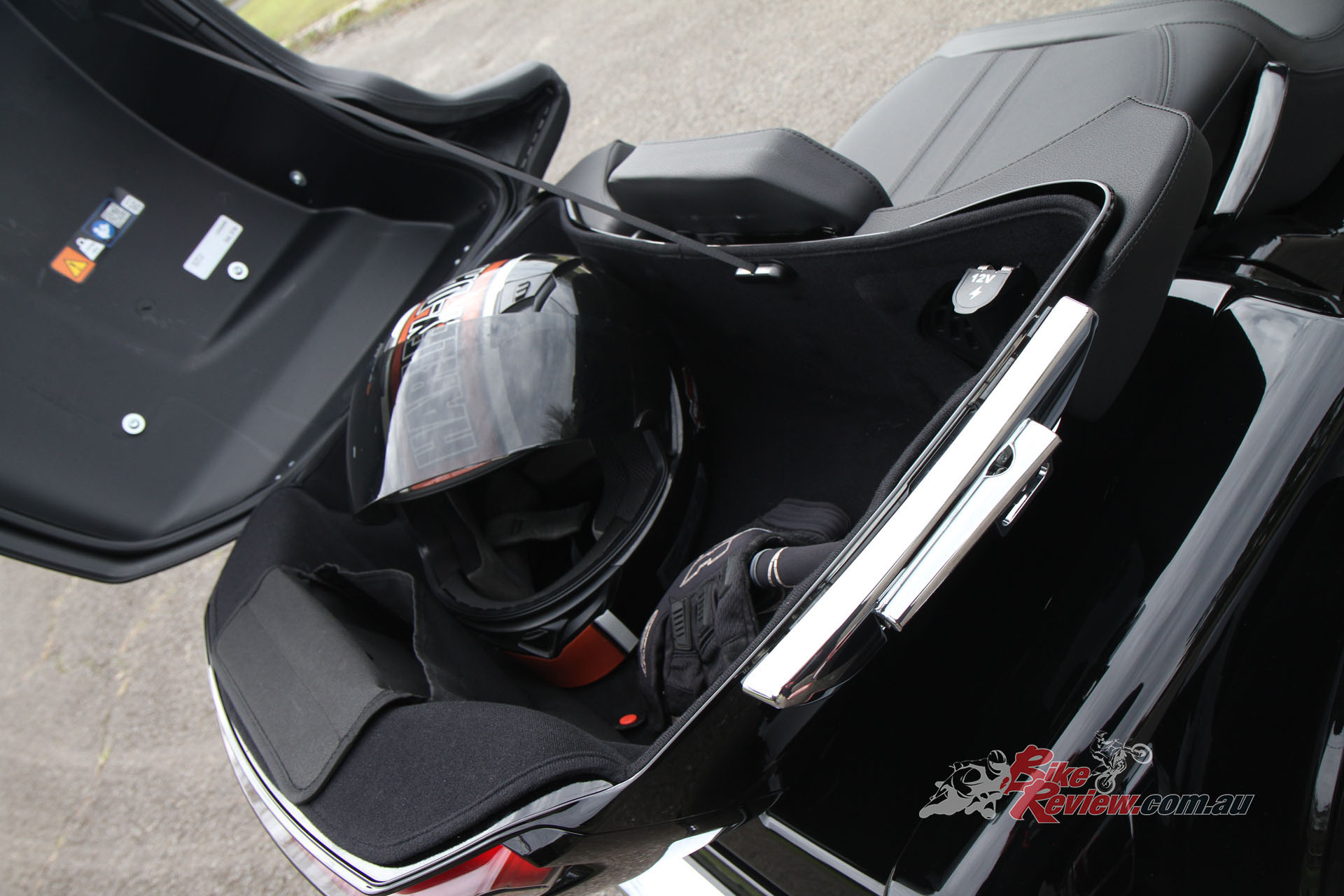
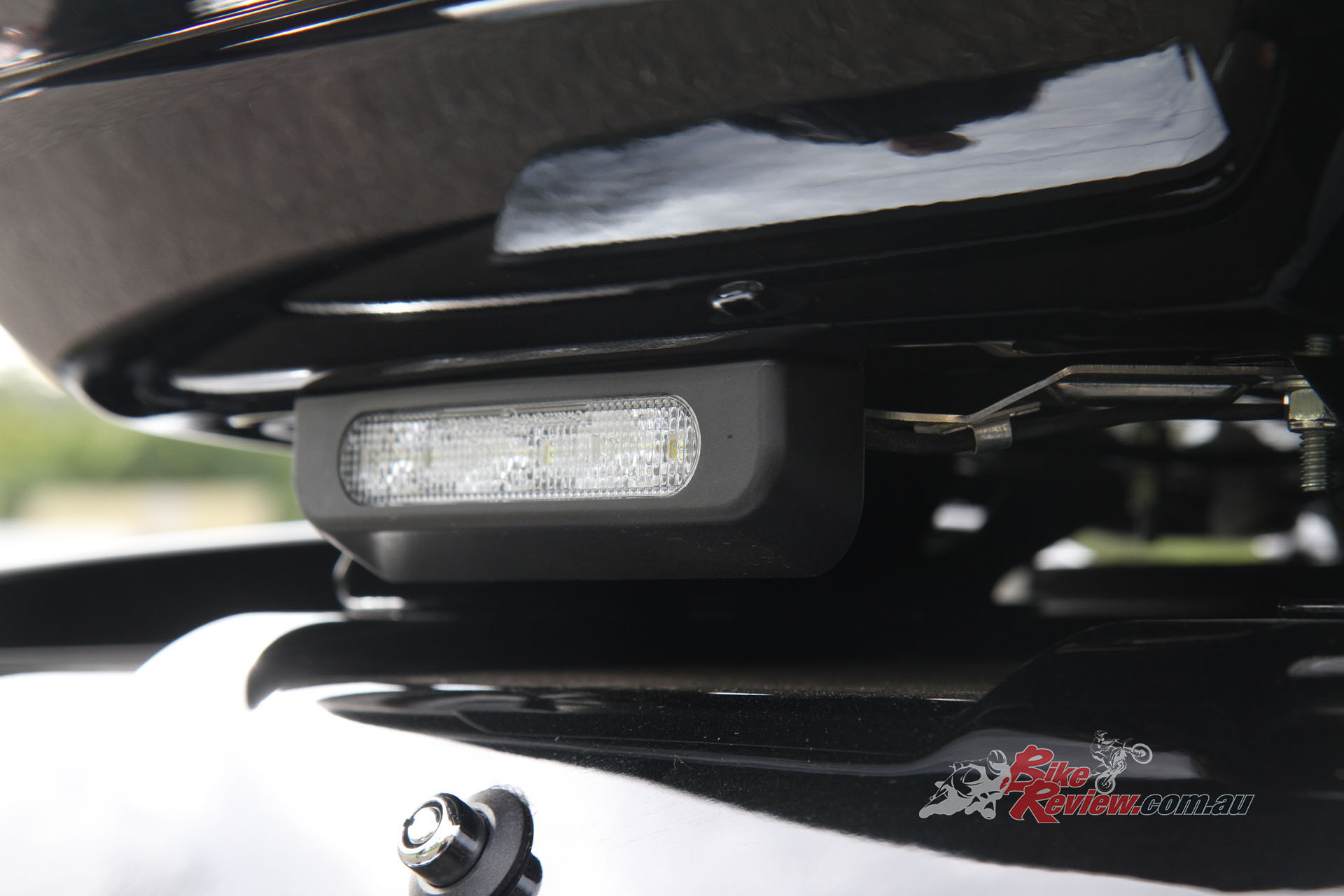
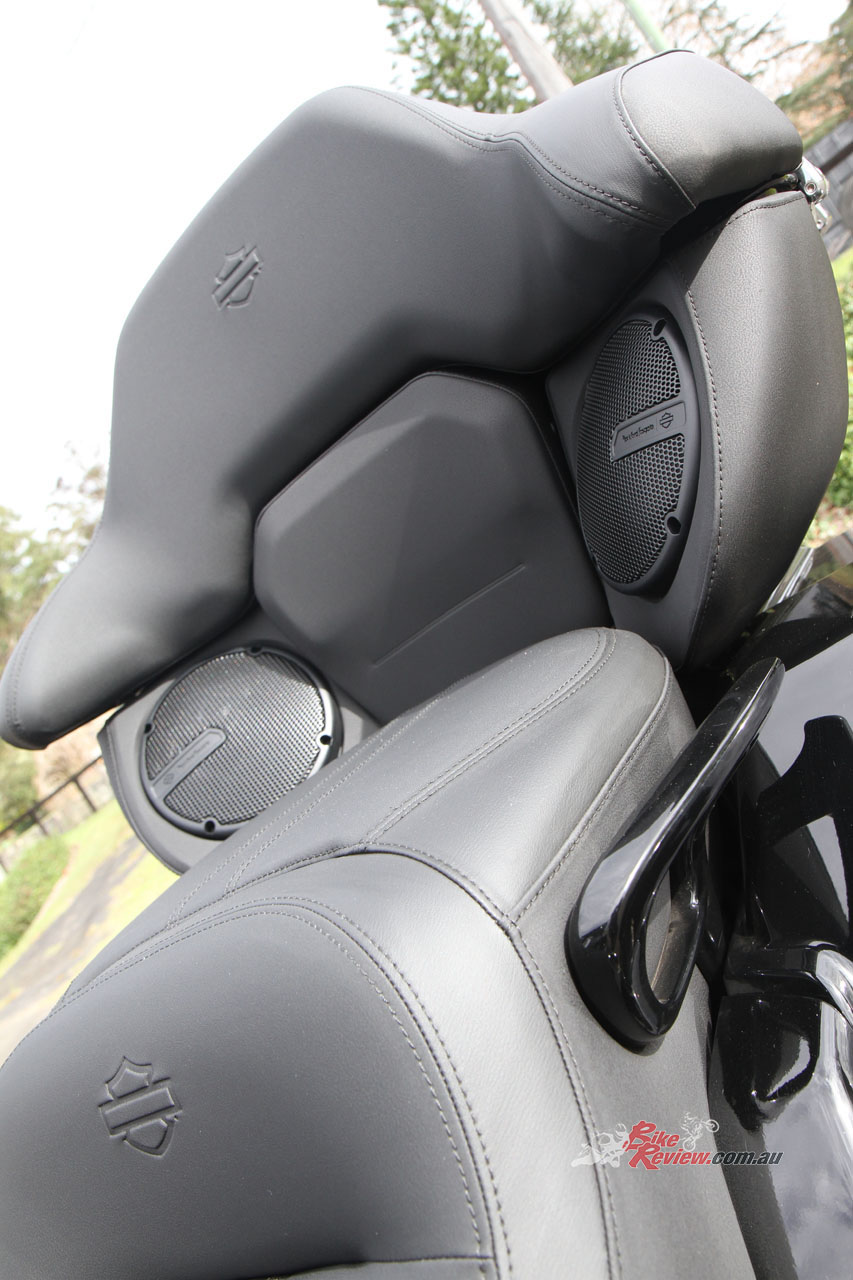
If you intend travelling, then be prepared to bring the kitchen sink! Yep, there is room for it. With the trunk space, top box with chrome rack and smaller pockets in the leg guards, there is more than enough room for everything you want to bring. There are also USB ports in the pop-out tray in the dash and a 12V outlet in the top box to help with electrical stuff. The sound system even has speakers in the top box for the passenger, along with handy grab rails. Nothing is overlooked. This is really where the trike is at home, on the open road eating up the kilometres with ease.
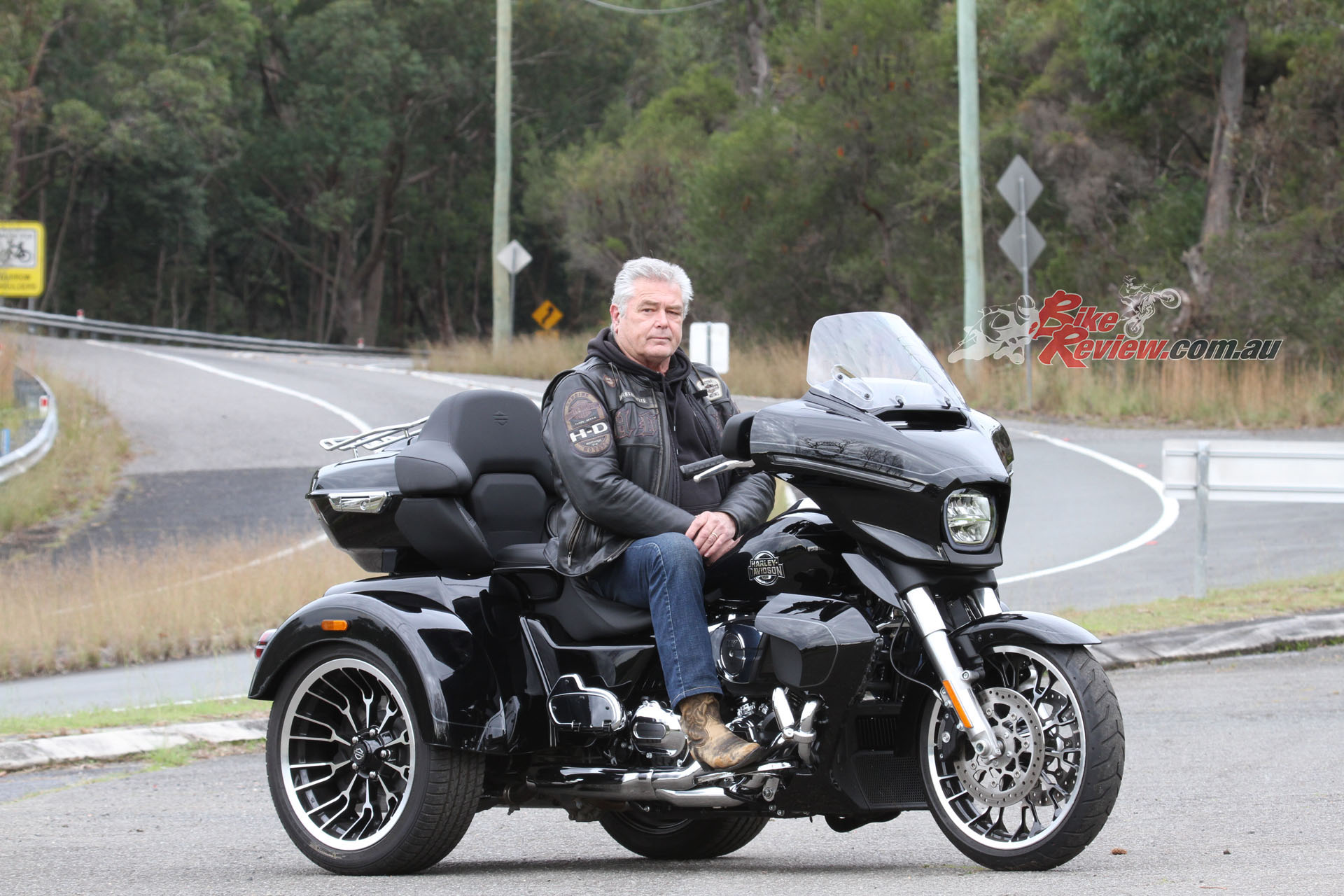
After four trikes of his own, Paul came away impressed by Harley-Davidson’s latest take on three wheels.
With a starting price of $63,995, the outlay for the Street Glide 3 Limited is significant, but trying to build a trike using one of the established aftermarket kits could set you back a lot of money. It also wouldn’t have the factory warranty or the backup of a dealer network around the country and it still wouldn’t be a factory Harley-Davidson product. Those securities that come with Harley-Davidson make it all worthwhile in the long run. If you are prepared to adapt your riding to accept a trike, then the Street Glide 3 Limited would be the perfect choice.
2026 Harley-Davidson Street Glide 3 Limited Specifications
Price: From $63,995
Colours: Dark Billiard Grey, Vivid Black (+$995), Iron Horse Metallic (+$1465), Brilliant Red (+$1465), Olive Steel Metallic/Vivid Black (+$1840), Purple Abyss/Vivid Black (+$1840), Midnight Ember ($5940).
Claimed power: 78kW (105hp) @ 5020rpm
Claimed torque: 170Nm @ 3500rpm
Wet weight: 567kg
Fuel capacity: 22.7L
Fuel Consumption: 7.2L/100km
Fuel Range: 315km
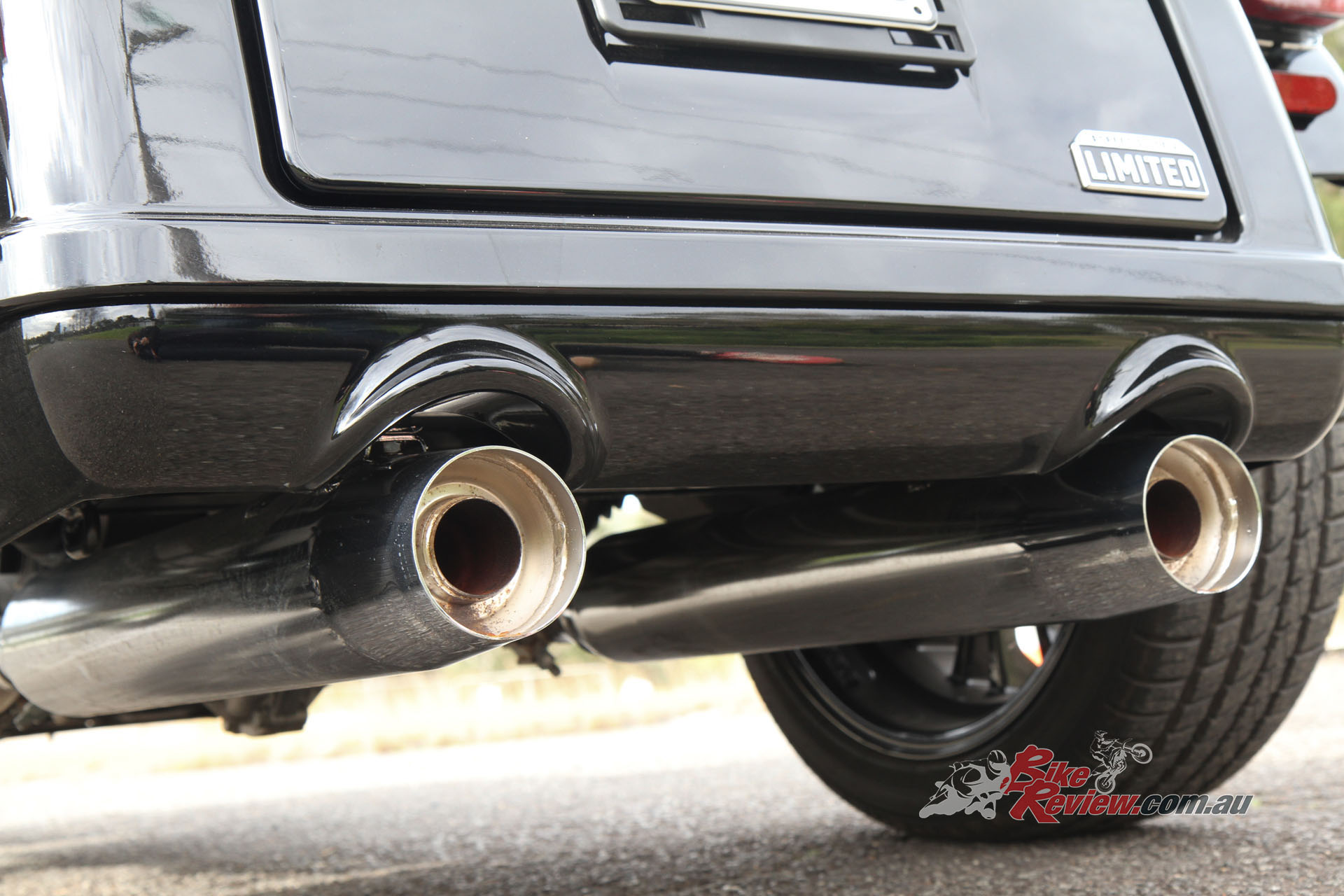
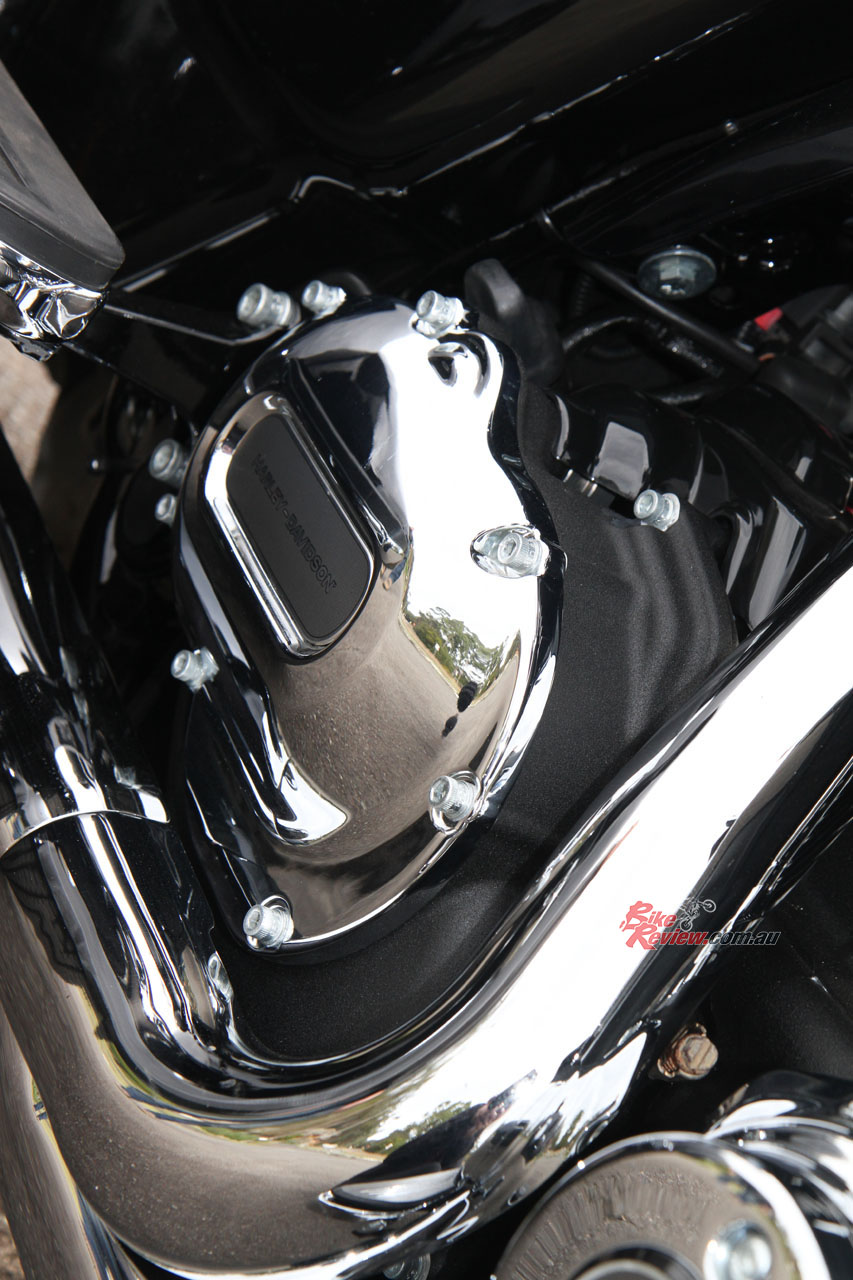
Engine: Milwaukee-Eight VVT 117, 1923cc V-twin, 103.5 x 114.3mm bore x stroke, 10.3:1 compression, Electronic Sequential Port Fuel Injection (ESPFI), 2-1-2 dual exhaust.
Chassis: Frame: Mild-steel, square-section backbone with twin downtubes.
Rake: 26° Trail: 96mm
Suspension: 49mm Dual Bending Valve fork, hand-adjustable emulsion rear suspension with remote preload adjustment, forged aluminium rear suspension assembly with centrally mounted differential, Watt’s linkage and sway bar.
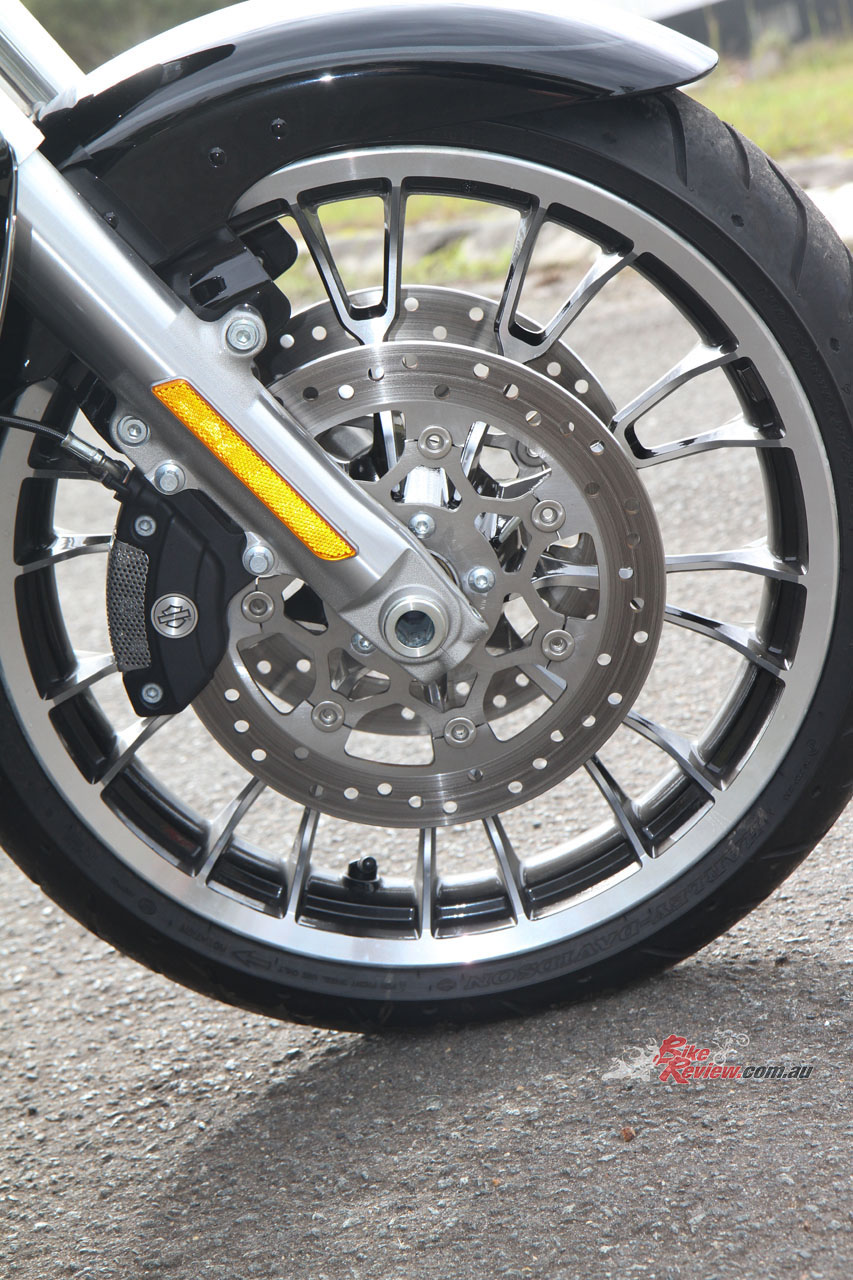
Brakes: Dual floating front rotors with four-piston fixed calipers, fixed rear rotors with floating 36mm-piston calipers and integrated park brake, ABS and linked braking.
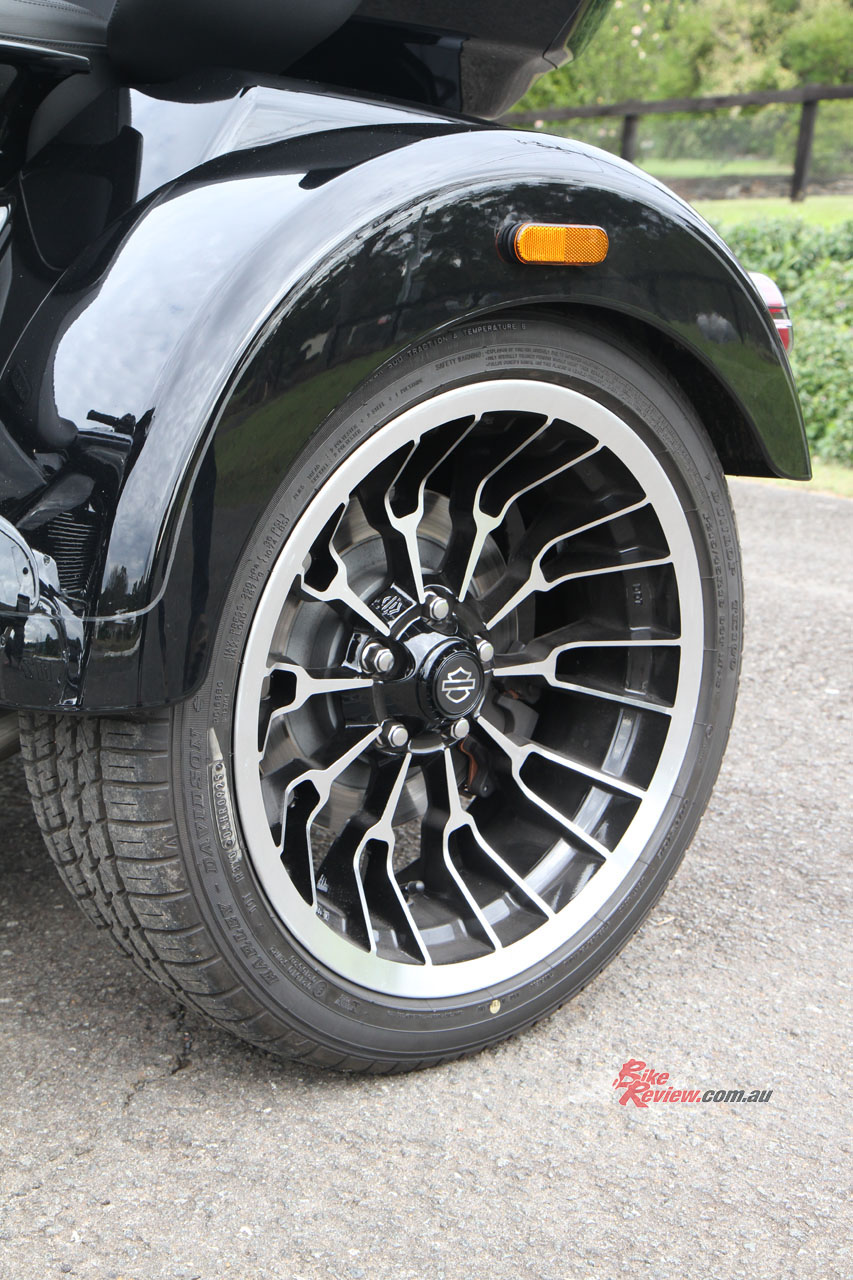
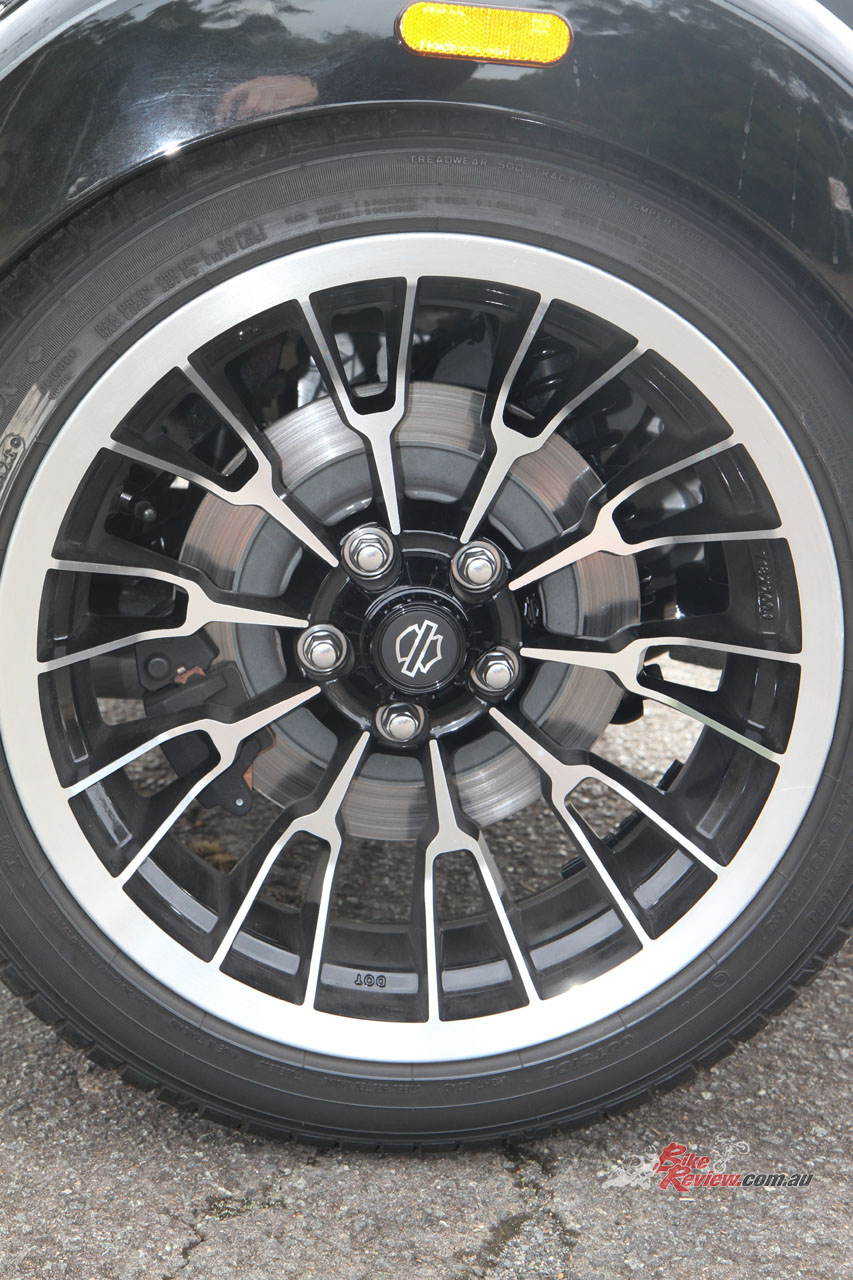
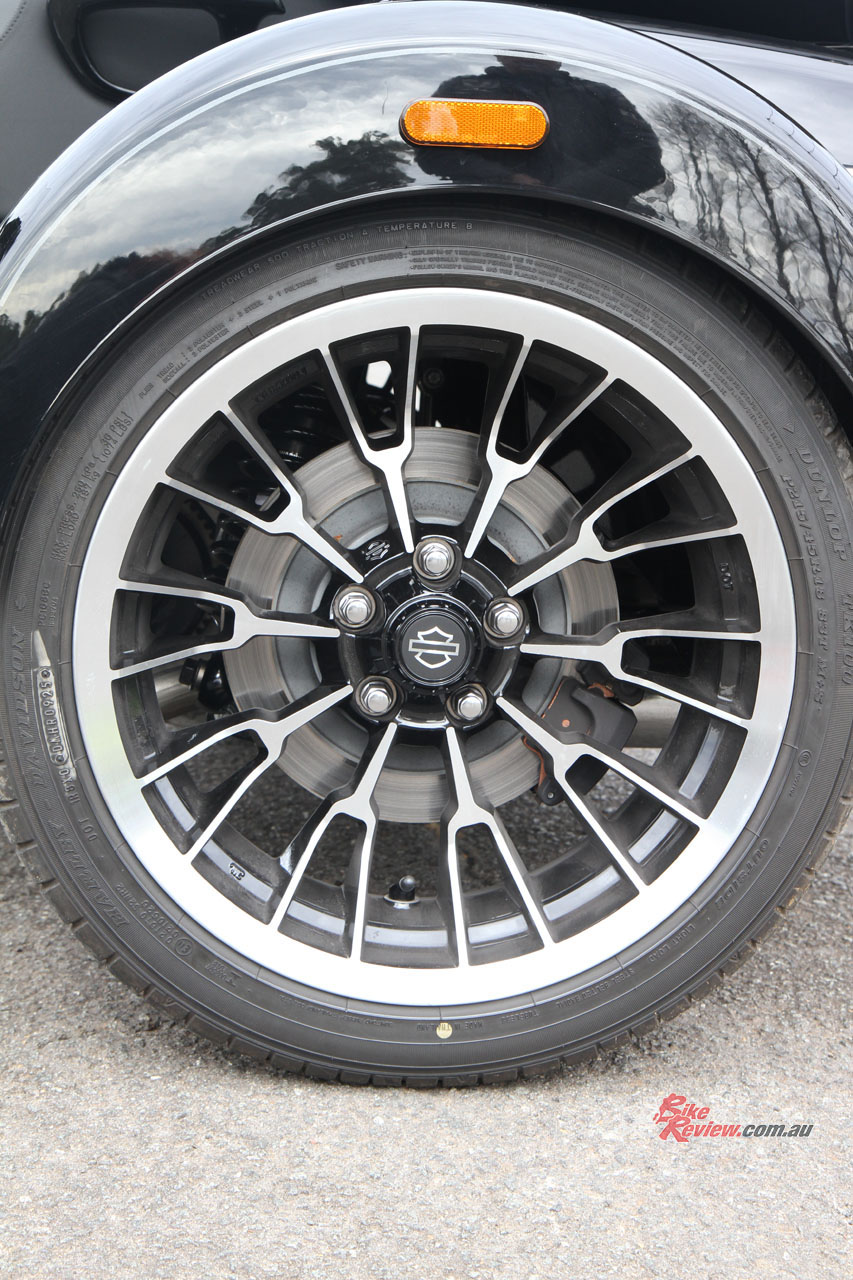
Wheels & Tyres: Gloss Black/Machined 10-spoke cast-aluminium wheels, Dunlop Harley-Davidson Series tyres, 130/60B19 M/C 61H (f), P215/45R18 83T (r).
Dimensions:
Wheelbase: 1720mm
Ground clearance: 130mm
Seat height: 735mm
Overall height: N/A
Overall length: 2685mm
Overall width: 1455
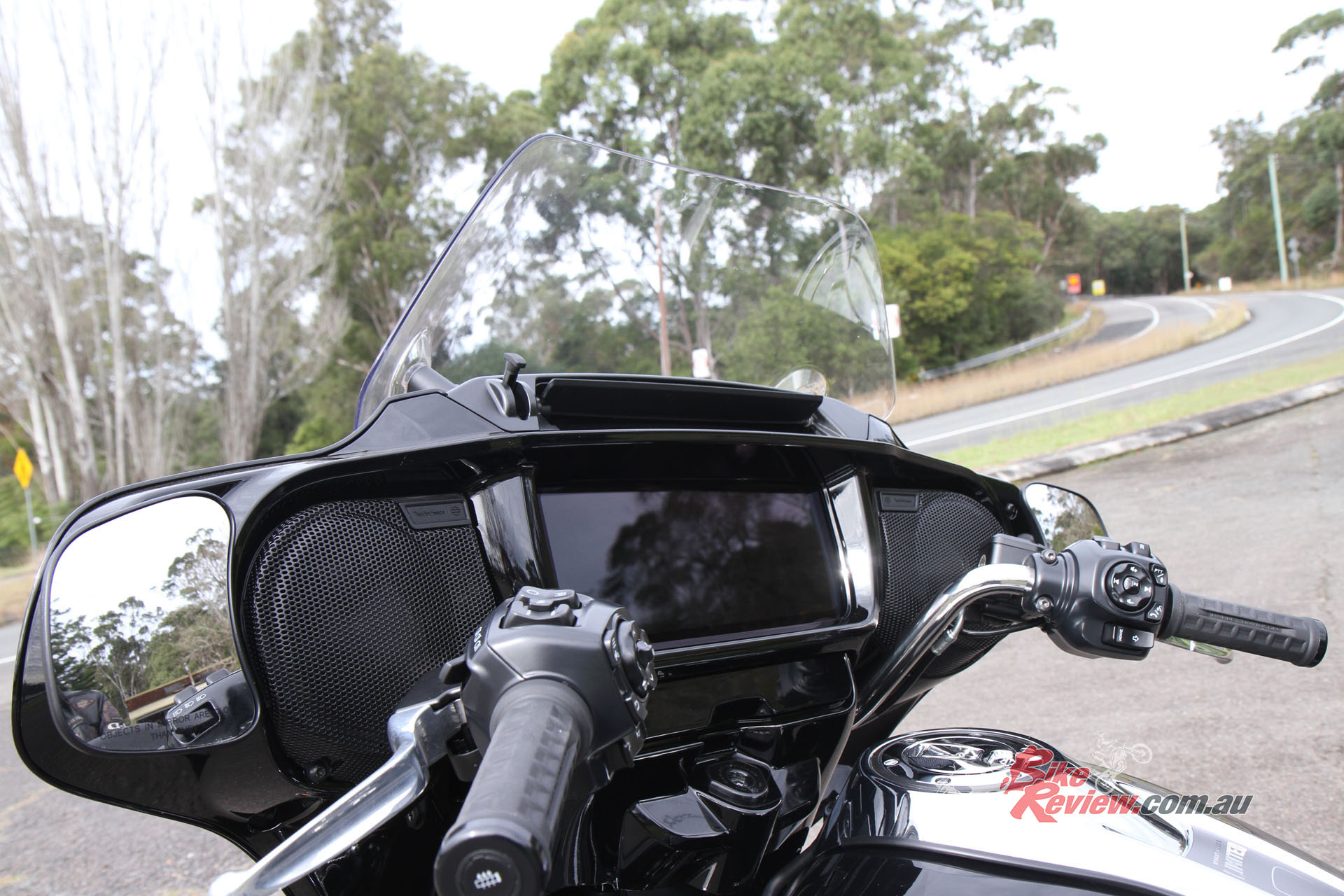
Instruments & Electronics: 12.3in full-colour TFT display with Skyline OS, digital instrumentation, selectable ride modes, ABS and linked braking, four-speaker audio system with 50W per channel, AM/FM, Bluetooth, wireless and wired Apple CarPlay, USB-C, hands-free phone functionality, voice recognition, rider/passenger intercom compatibility and vehicle information display.
2026 Harley-Davidson Street Glide 3 Limited Gallery
Bike Review | 2026 Harley-Davidson Street Glide 3 Limited
Pure comfort!
Paul Bailey tests the extensively updated 2026 Harley-Davidson Street Glide 3 Limited and finds its redesigned rear suspension has transformed the ride, handling and long-distance ability of the big three-wheeled tourer.
The Author
You Might Also Like