


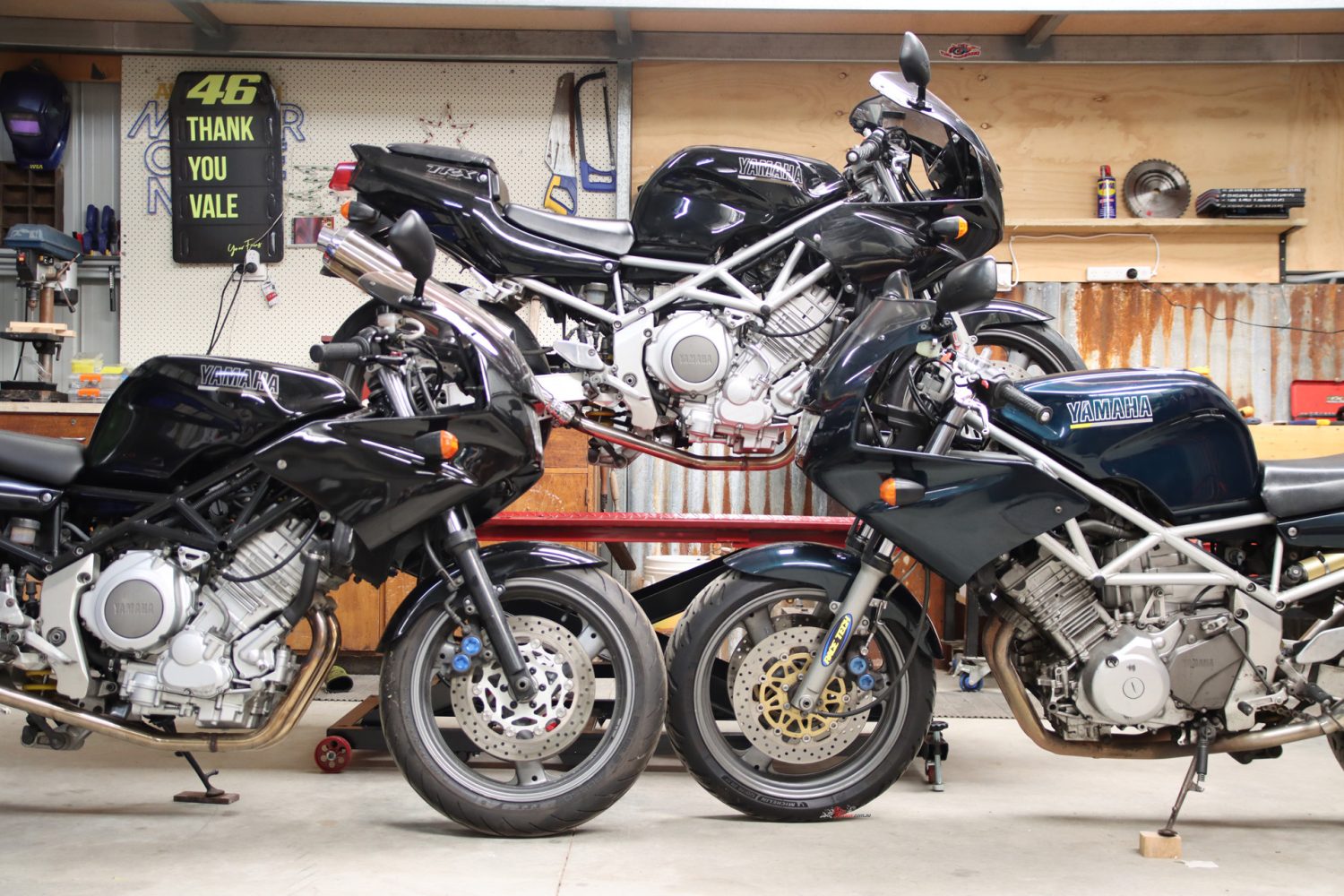

A long-lost Yamaha TRX850, a lockdown search gone sideways and the beginning of a hands-on mission to bring one of Yamaha’s most underappreciated twins back to its best.
What started out as harmless reminiscing about my first two-wheeled love has snowballed into three TRX850s, an ever-growing pile of parts and a chance to come full circle with the machine that lit the fuse all those years ago.
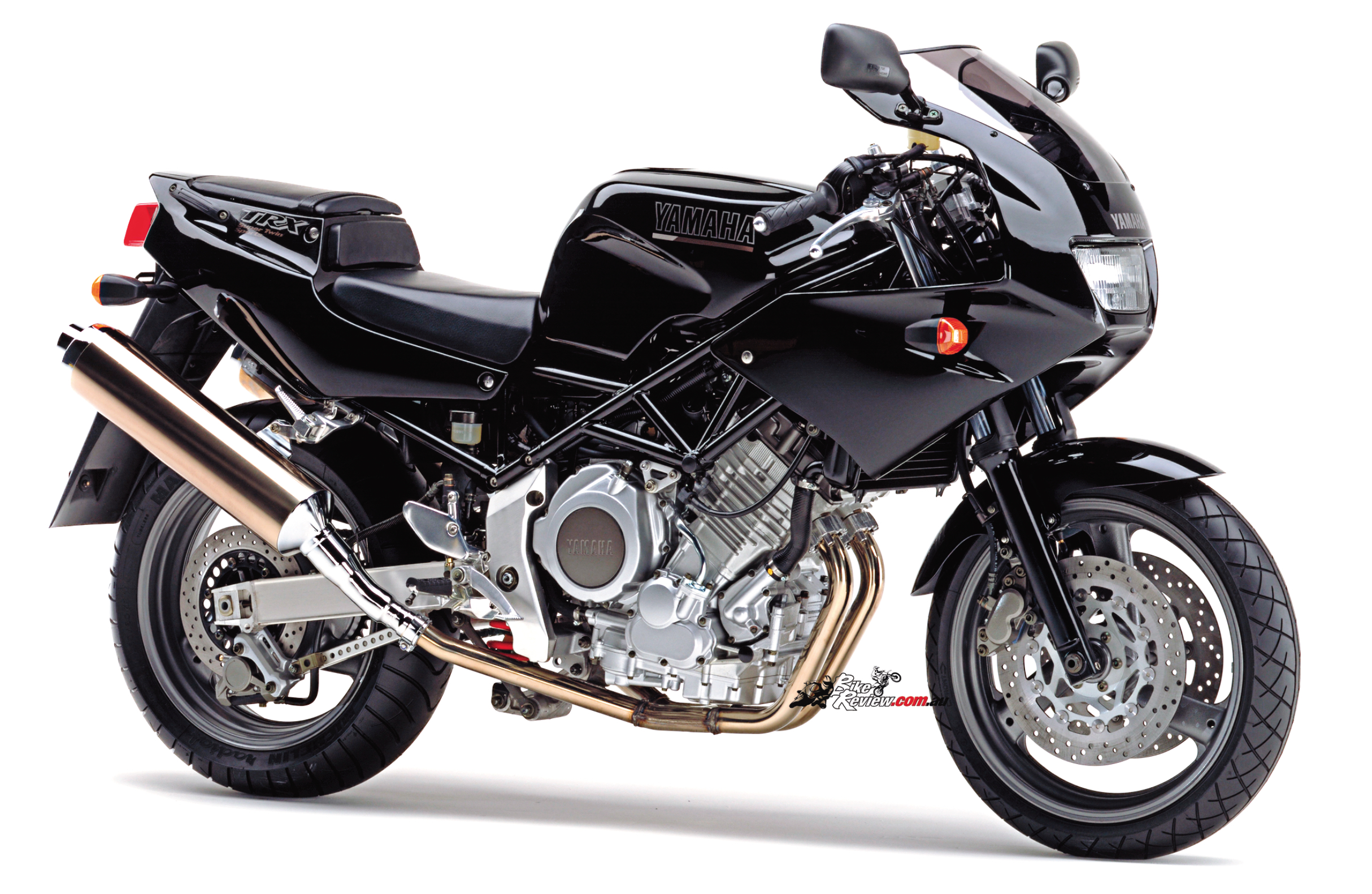
The black bodywork, black framed TRX850 was released on for MY96.
The first big roadbike I ever owned was a green 1997 Yamaha TRX850. I was 20 years old, it was my only transport and I rode it everywhere; to work, to visit family interstate, on Sunday scratches and on weekend escapes. The forgiving ergonomics were sporty enough to make me feel like the coolest person on the road, yet practical enough to make it a realistic do-it-all which I needed it to be. The TRX’s 270-degree parallel twin gave it a lovely V-twin note, it was light and narrow which made it really manageable, and I just adored that dark metallic green bodywork (which Yamaha officially named ‘Very Dark Blue Metallic’).
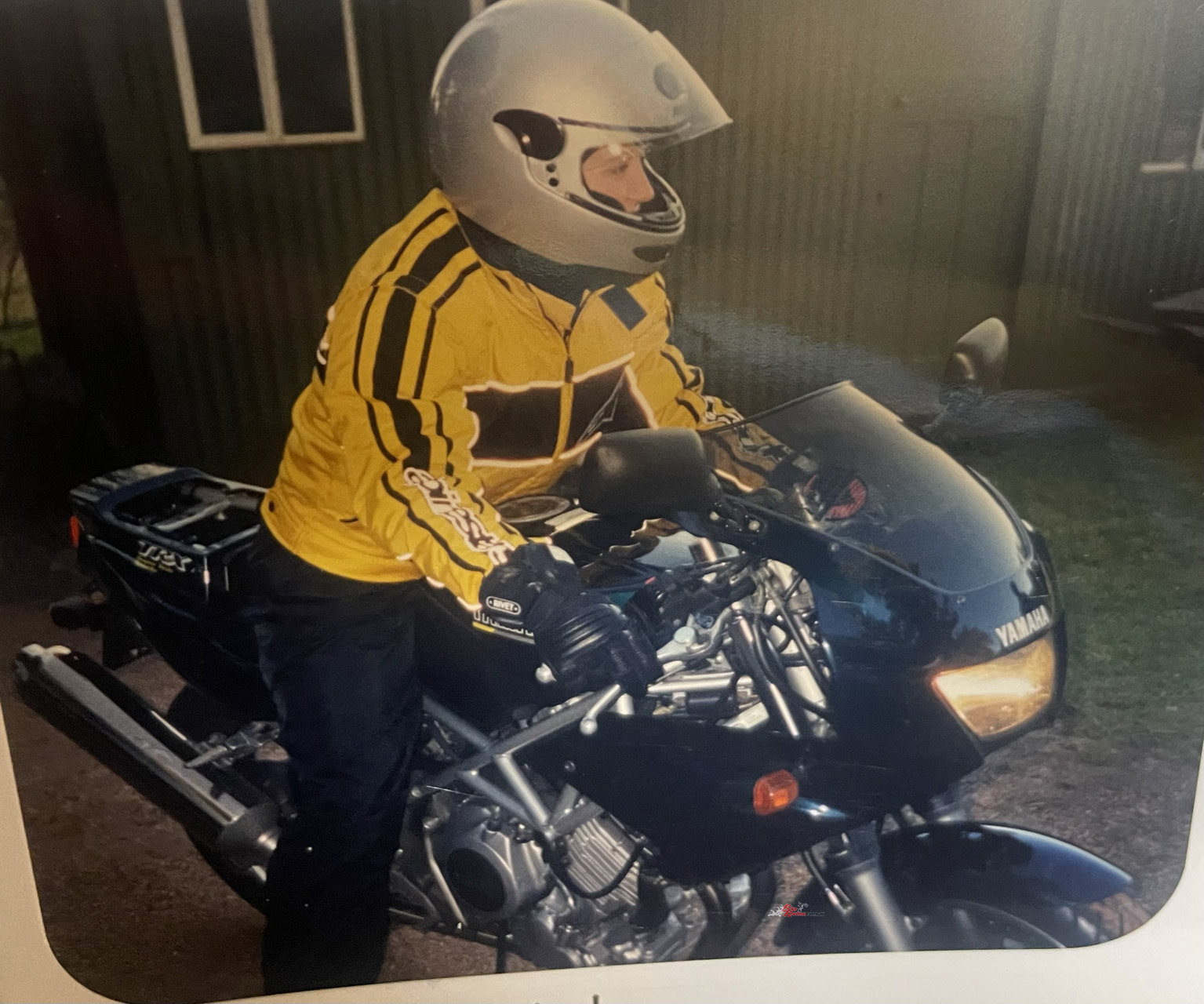
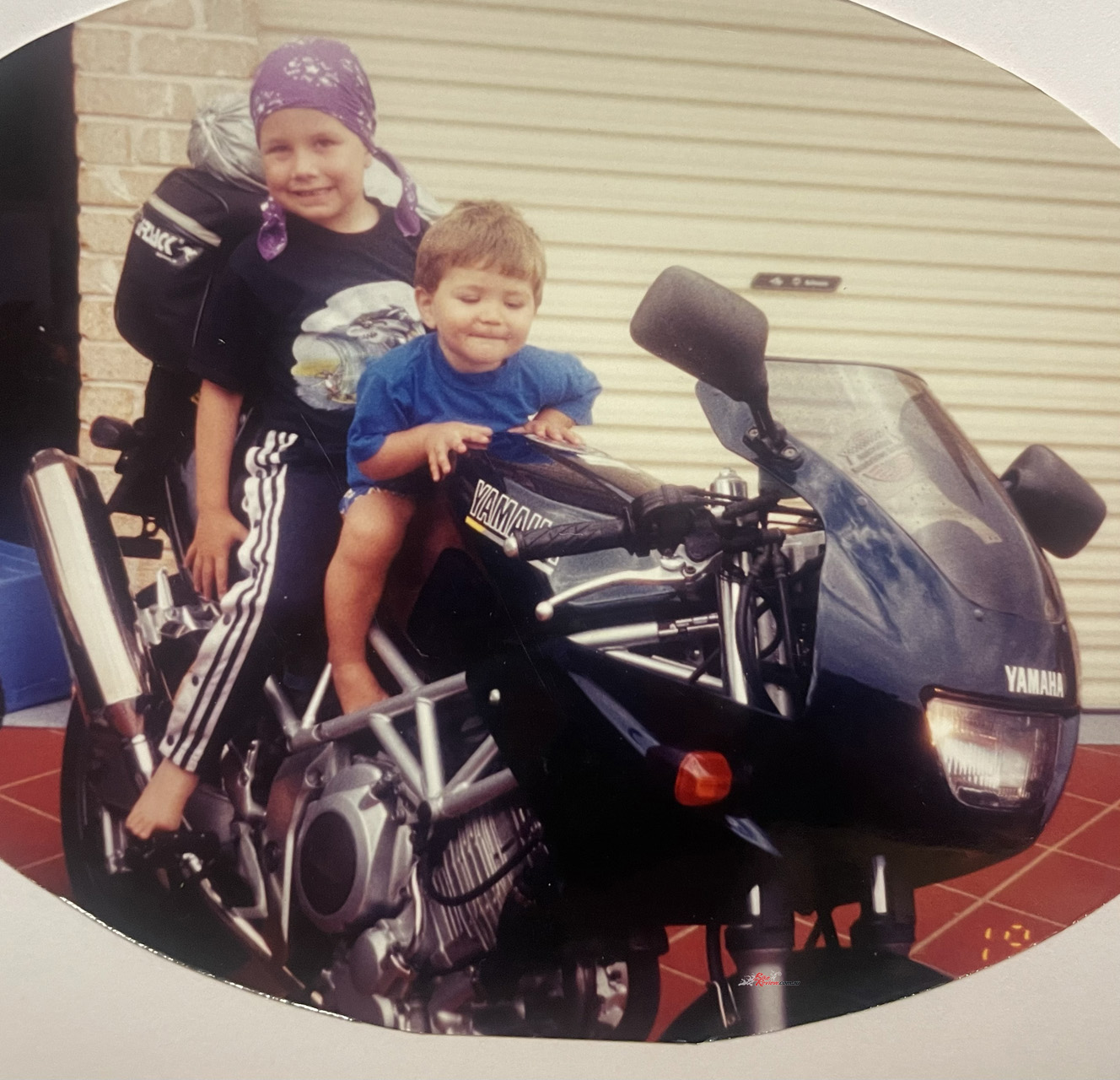
I’d bought it secondhand, of course, and for half-a-dozen formative years it was the centre of my motorcycling life. I learned how to maintain it, how to fix what I broke and, eventually, how to crash and repair it well enough to keep riding.
“The forgiving ergonomics were sporty enough to make me feel like the coolest person on the road, yet practical enough to make it a realistic do-it-all which I needed it to be”
When I finally sold it, I didn’t give it much more thought. Life moved on, other bikes came and went, shiny new test bikes were everywhere and that old TRX faded into a distant memory. It probably wasn’t until the lockdown years, some two-and-a-half decades later, that I found myself properly reminiscing about ‘Trixie’ and the role she played in how my life had ultimately unfolded. I spent month trawling the classifieds for a green one, but they’d clearly become very rare.
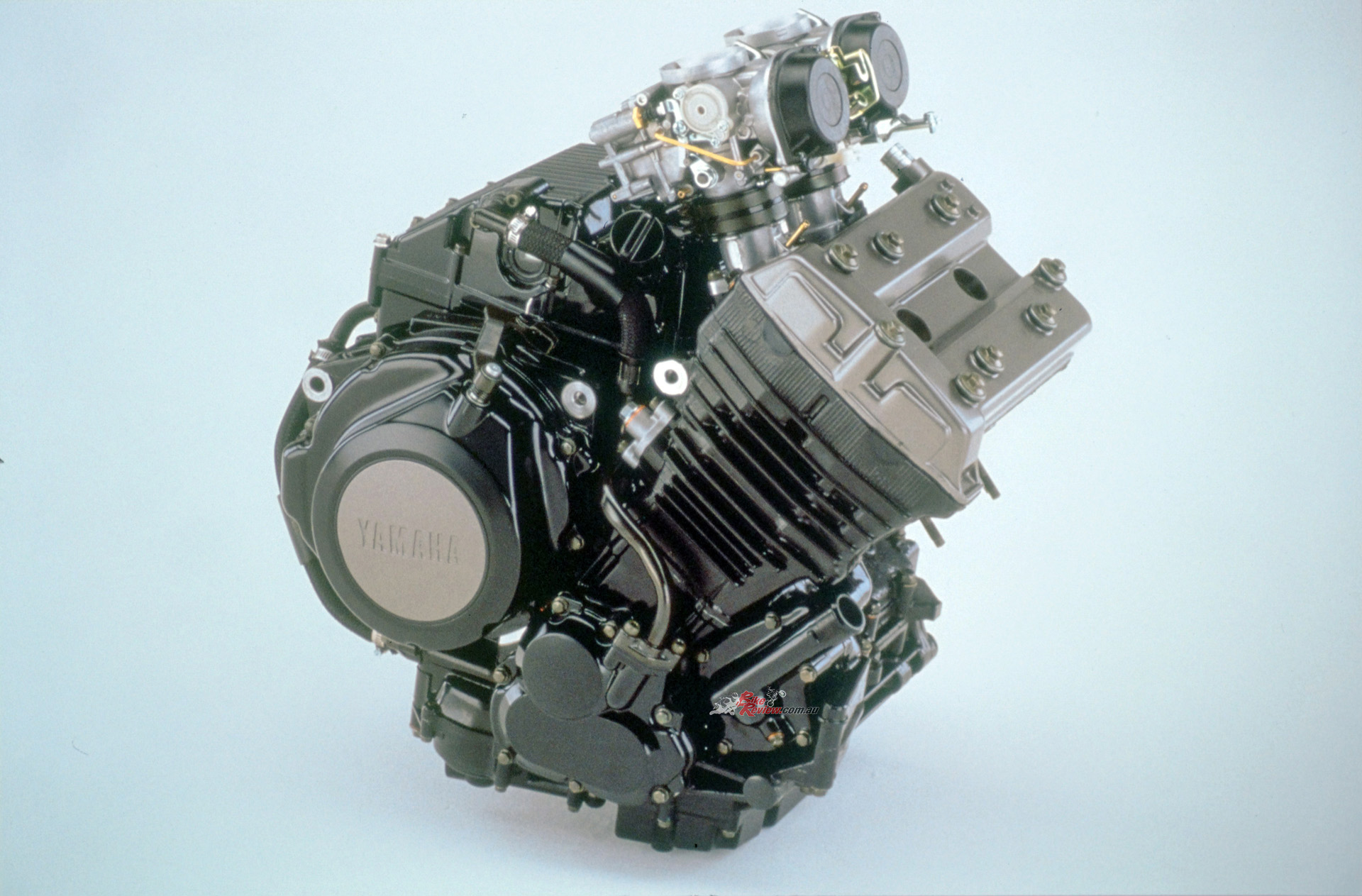
The Liquid-cooled DOHC 10-valve 849cc parallel twin four-stroke with 270º crank pumped out 80hp and 60ft-lbs.
I eventually found what looked like a really clean example for sale in Brisbane’s outer suburbs. It was a 1996 black TRX850 with a black frame, and after speaking to the fellow on the phone, I bought it sight unseen, convinced I’d found the next chapter in a story I didn’t realise I’d missed.
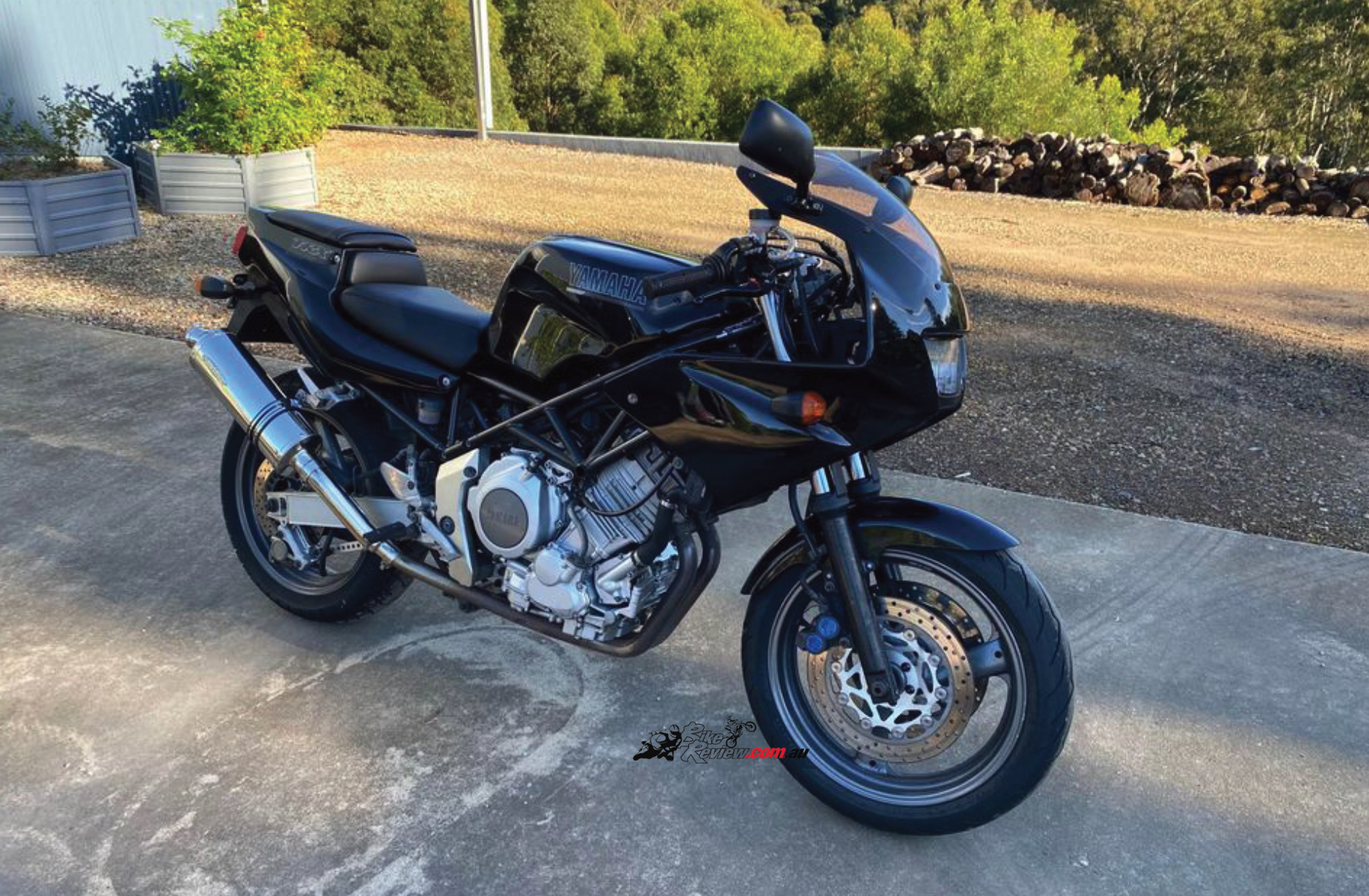
The marketplace listing showed a very tidy and genuine bike… a different story to when it arrived from interstate.
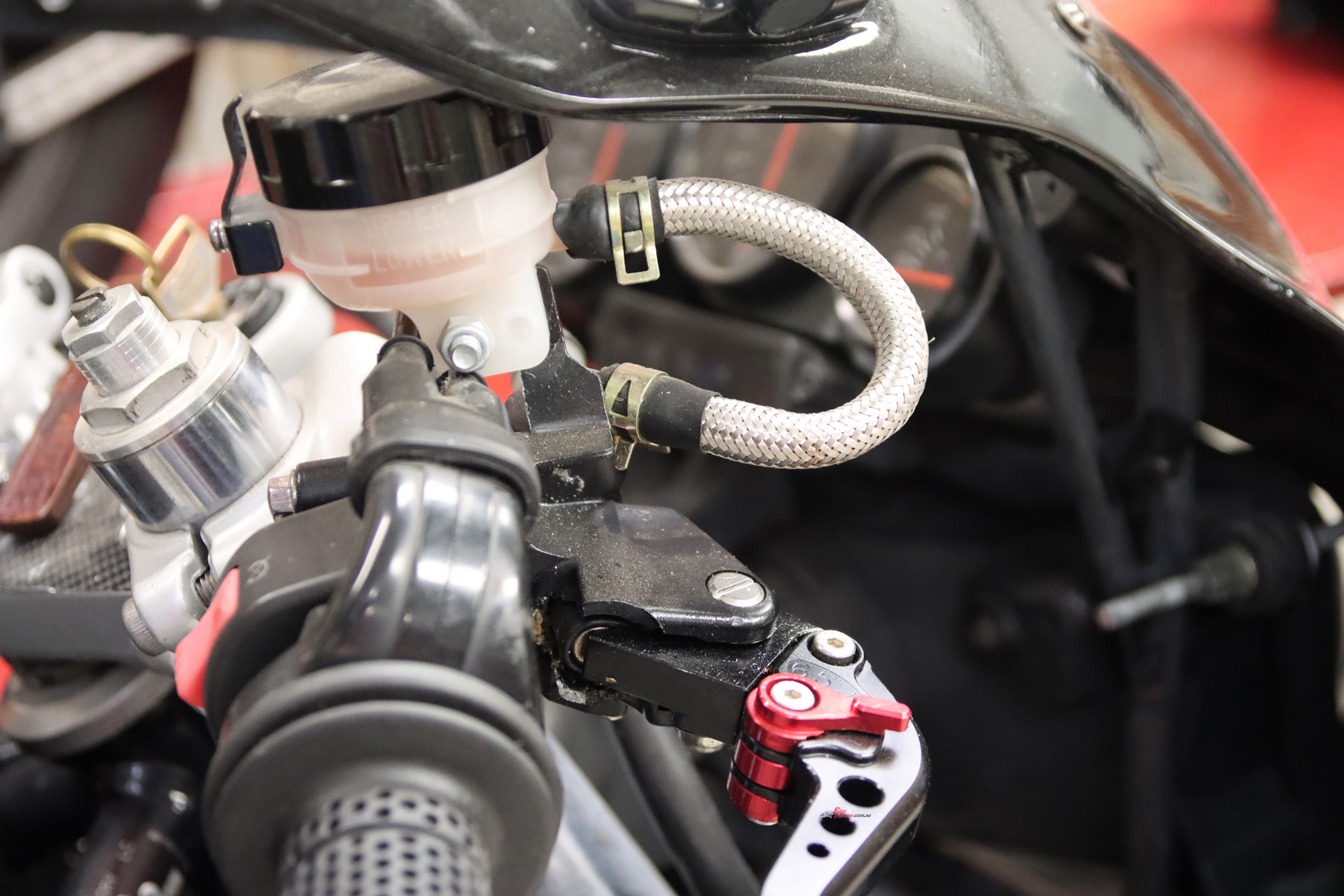
It looked tidy enough when it rolled off the truck; it fired up easily and idled through a set of throaty aftermarket Delkevic pipes. There were a few surprises, like the aftermarket front fairing that was painted the wrong colour and the headlight had been wired into a bypass switch, but it was fitted with the blue-spot calipers from the same-era YZF-R1, which was one of the few upgrades I’d planned to do as part of getting it roadworthy and ready for club registration. And I was definitely wearing my rose-coloured glasses.
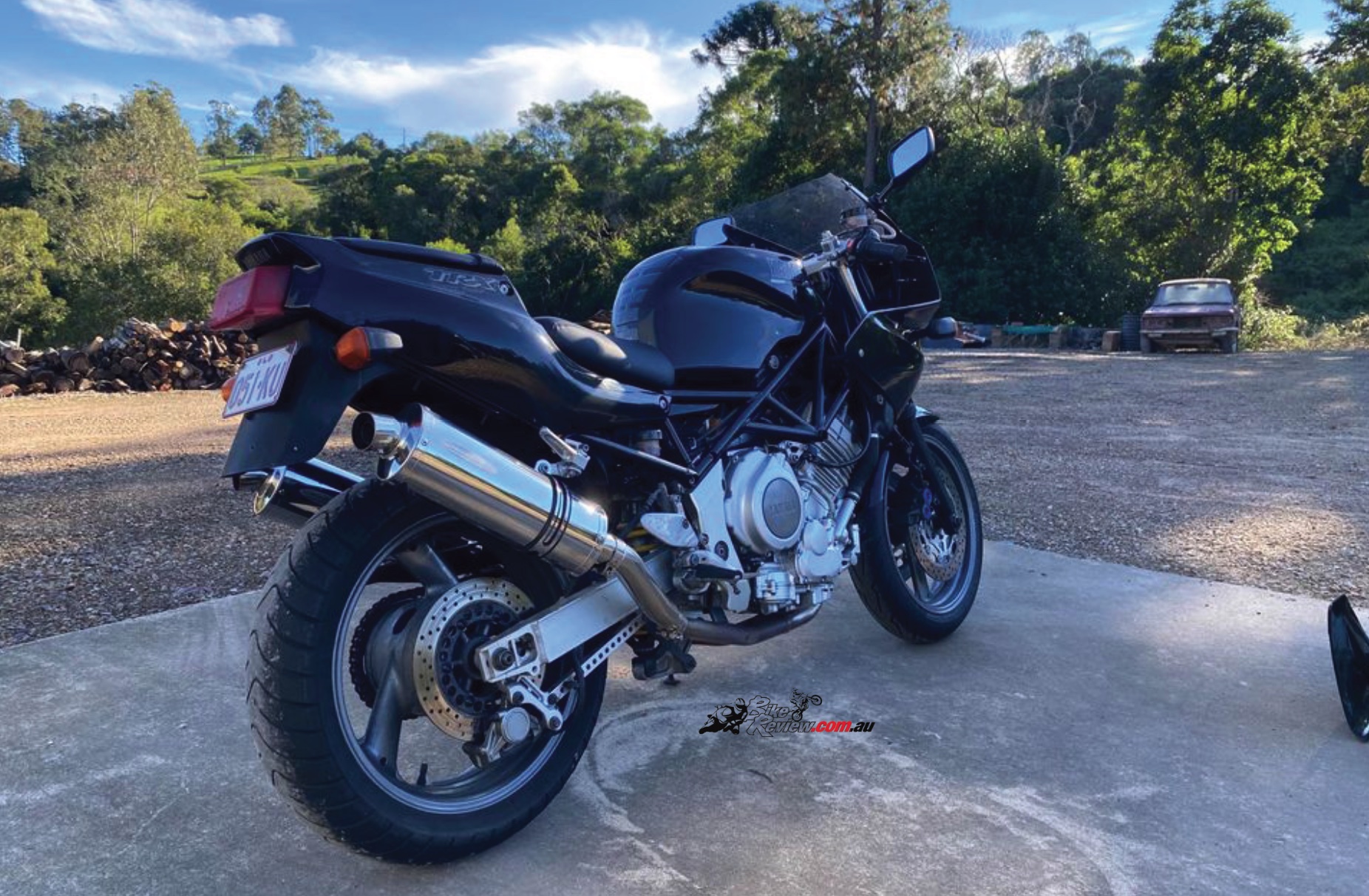
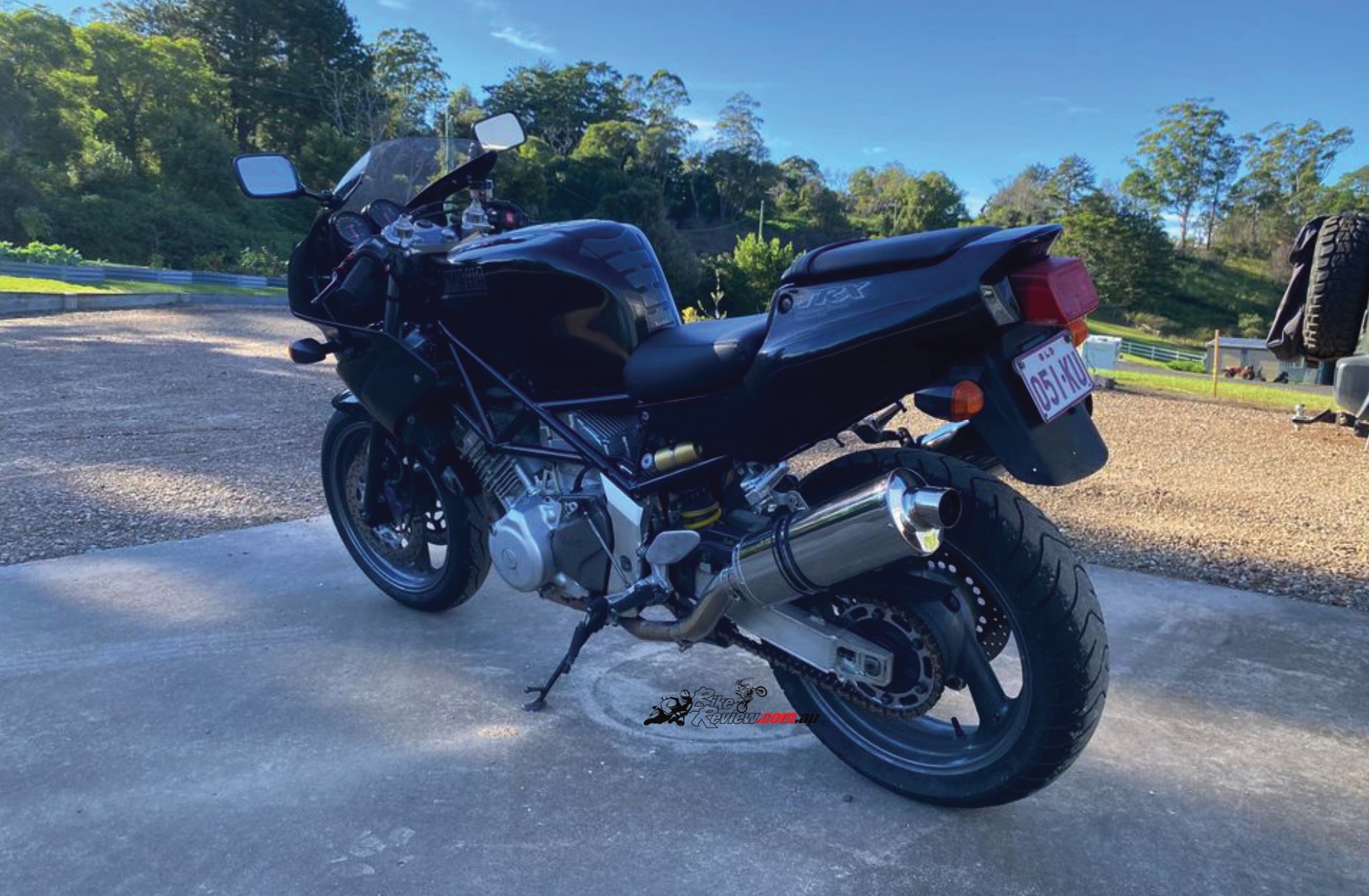
I found a near-new OEM exhaust system on marketplace – and was star struck when I turned up and realised I was buying it from former racer, racebike engineer and legendary ex-Yamaha dealer Don Stafford – and sold the Delkevic slip-ons to help pay for it. But then life got busy, a few years passed before I eventually bit the bullet and booked it in for both a service and the work required to bring it up to roadworthy condition. Getting it on the road was now the priority and any other work I wanted to do could happen down the track. A few days later the phone rang.
“He described it as “a bike that’s had a hundred hands on it,” and he wasn’t wrong”
“We’re up to a bit over $800,” the mechanic said, “and you’ll probably need another $1700 to get it over the line.” He described it as “a bike that’s had a hundred hands on it,” and he wasn’t wrong. Many small compromises had crept in over the three decades. “But the engine is surprisingly strong,” he said. “It was lifting the front wheel between gear changes when I test rode it after the service.”
Check out our other retro, classic and resto articles here…
When I checked the numbers, the engine and frame didn’t line up as closely as they should have. Given the TRX was only produced for five years between 1995 and 1999, and only the colours changed in that time, a variation of 1600 between the engine and frame numbers is pretty unusual.
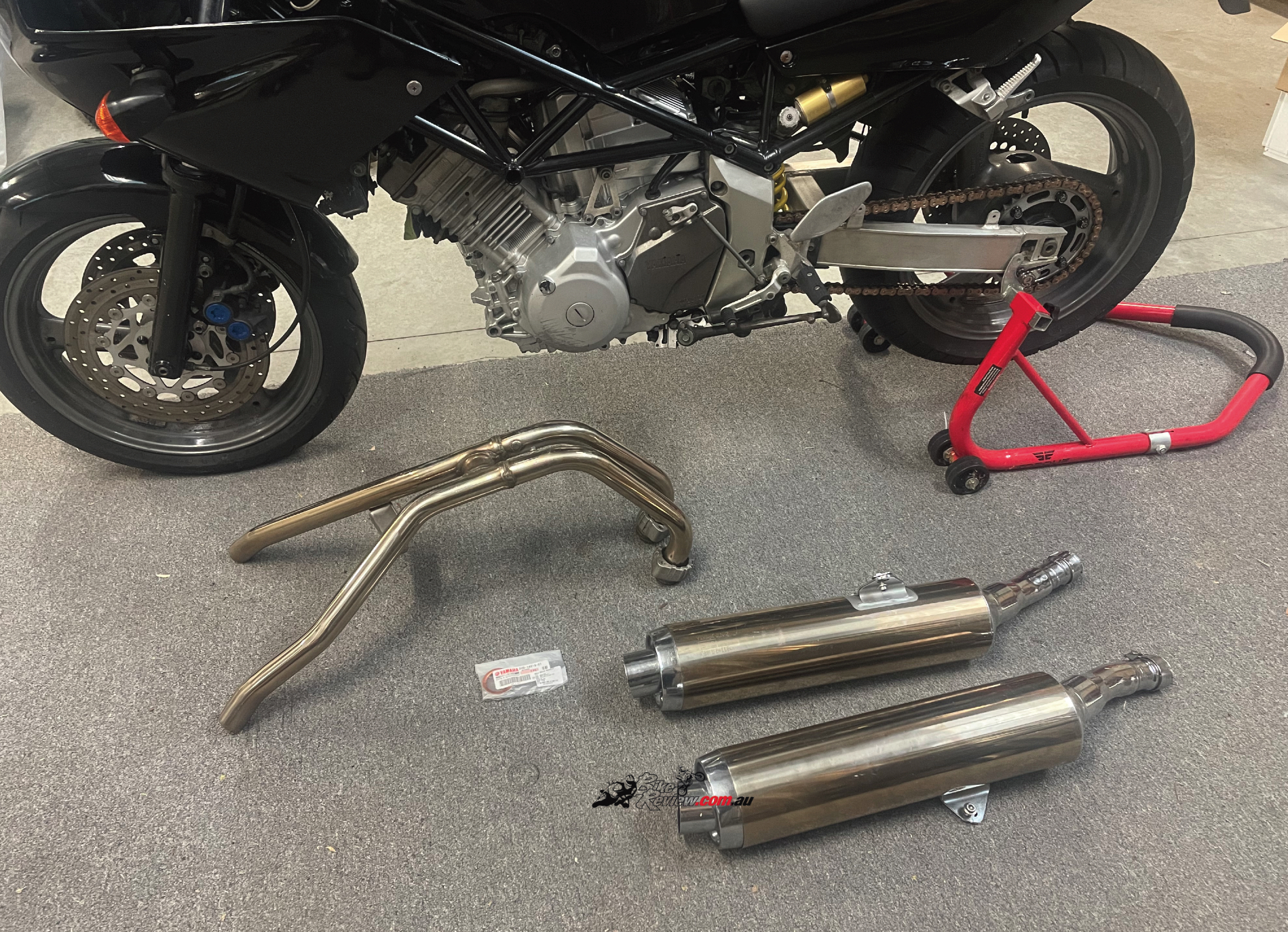
Kel picked up a near-new full system from the legendary Don Stafford.
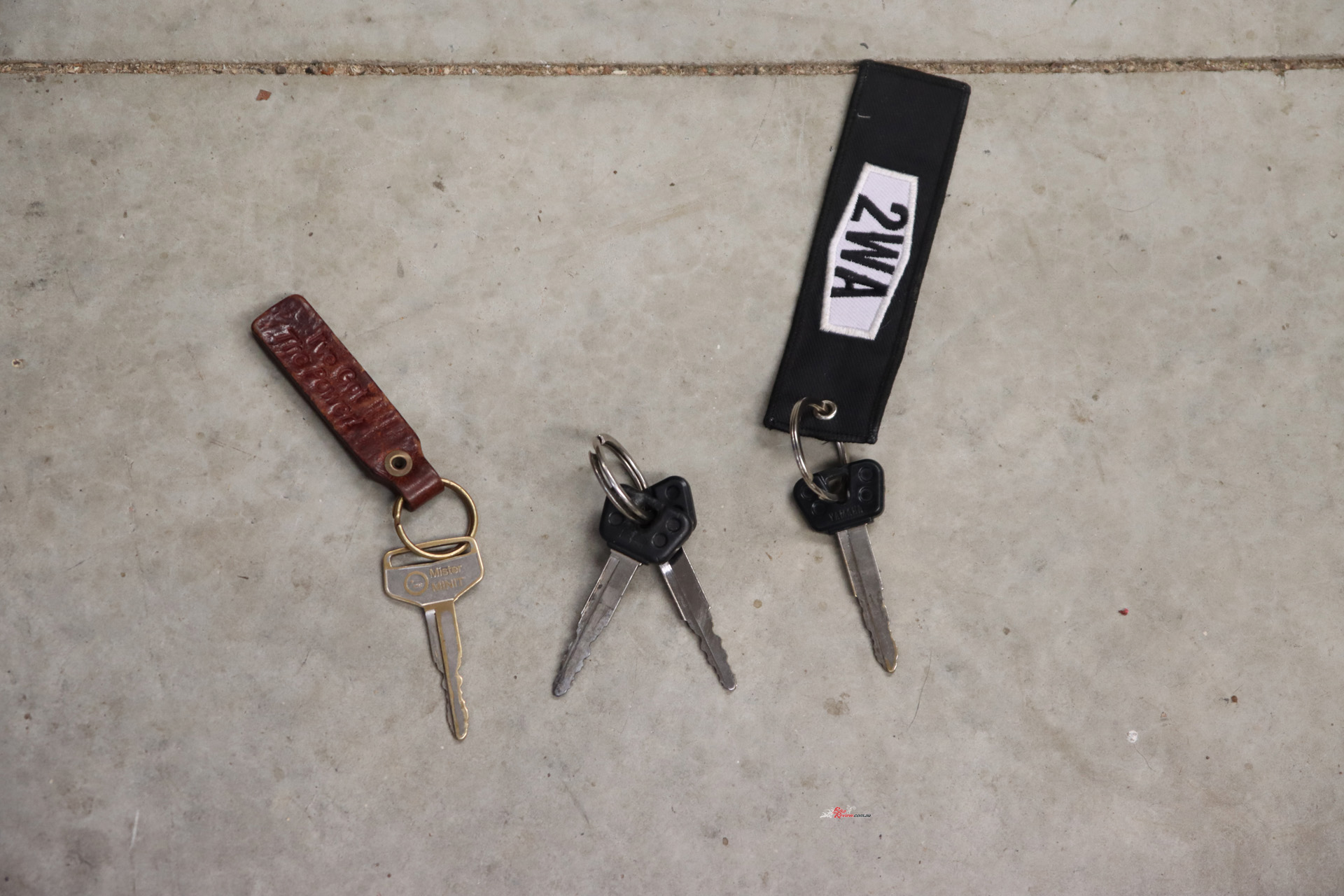
It’s not proof that the engine wasn’t the original one, but it was enough to plant a seed of doubt in my mind. The inline fuel filter, the after-market fairing, non-original key and a few other small clues hinted that there may have been some significant repairs – or at least changes – along the way.
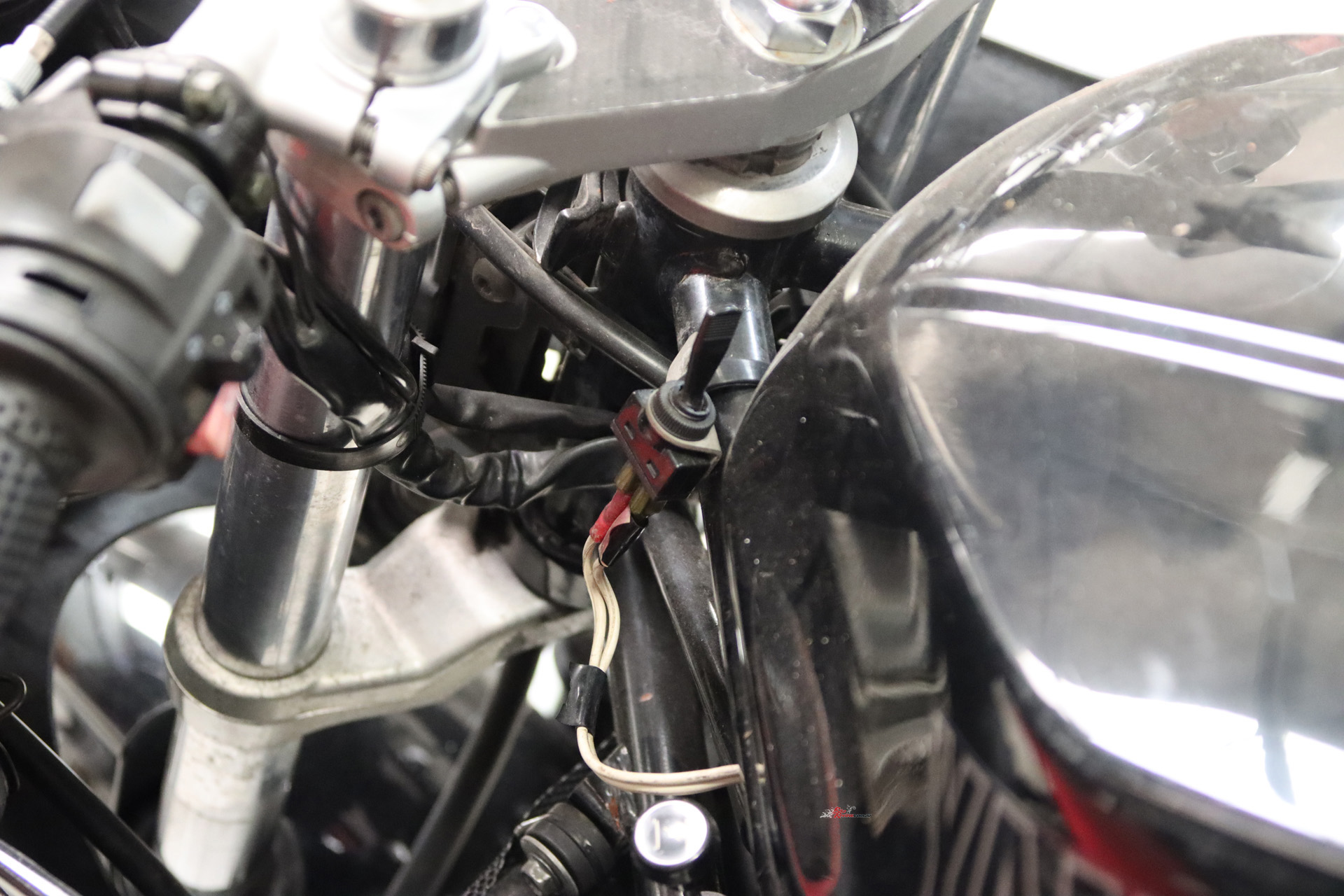
That’s when I had to decide how serious I was about rekindling the TRX flame. Getting there would mean starting over. And just as I was thinking about cutting my losses, another black TRX popped up online, this one a later 1999 model and with less kays on the clock, this time in Sydney. And even though it was black, it had a silver frame, just like my original green bike had. The photos showed a few scrapes and a cracked fairing, but overall it looked far more honest. It even came with the original seats (which the 1996 bike didn’t), the original toolkit and an original key, all the little touches that matter when you’re wanting something genuine.
“That’s when I had to decide how serious I was about rekindling the TRX flame. Getting there would mean starting over”
I told myself it made sense: buy the Sydney bike, strip both and make one good machine from the best bits. Between the two I could swap out the welded-up footpeg mounts and exhaust hangers, at least have a genuine fairing despite the crash damage. I could swap the brake upgrade off the 1996 bike to the new one and then sell the first TRX and maybe even go somewhere near breaking even. Learning my lessons, I sent a mate around (who works for Yamaha!) to check it out before negotiating a price. His verdict was: “if you don’t buy it, I will.”
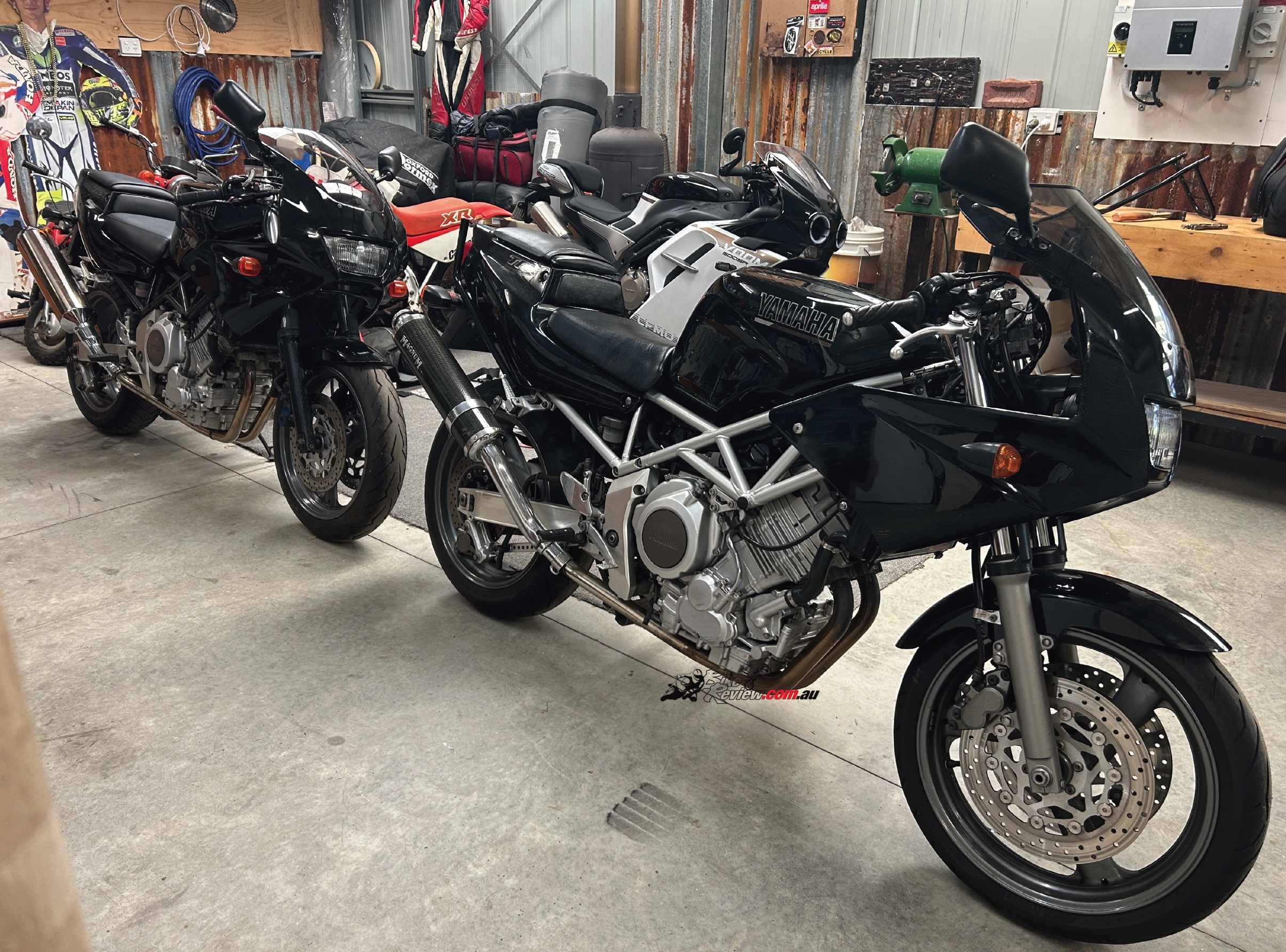
The black bodywork/silver framed 1999 bike breathed some fresh motivation into Project TRX.
Once it arrived, the plan started to feel solid. It was an honest example, the engine sounded tight and the bike looked to have been cared for through most of its 26 years. I finally had a clear direction … until another listing popped up. But this time it was a 1997 TRX850 – in green! I made an offer the same day, and by the end of the week it was crossing the city to join the band.
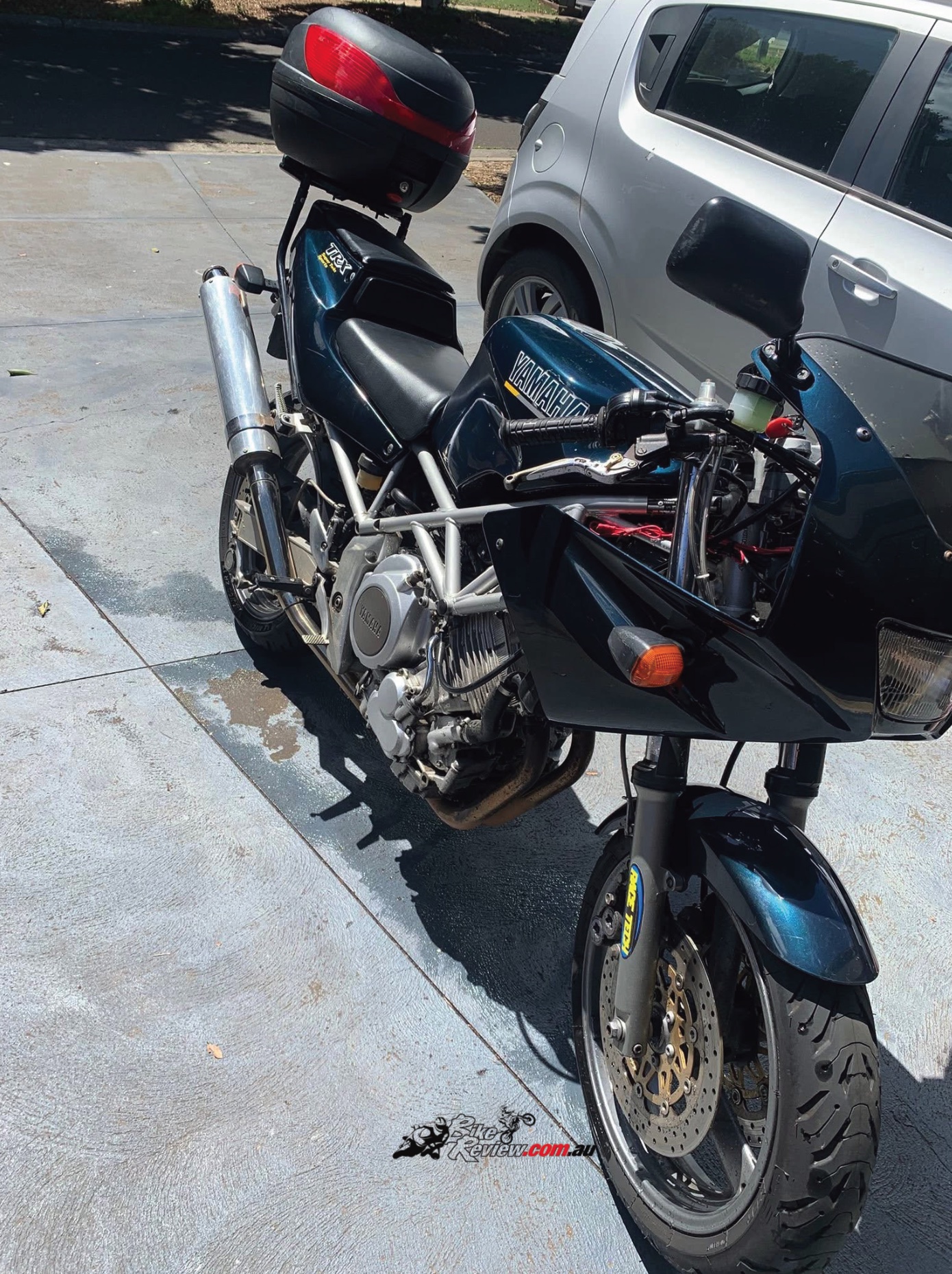
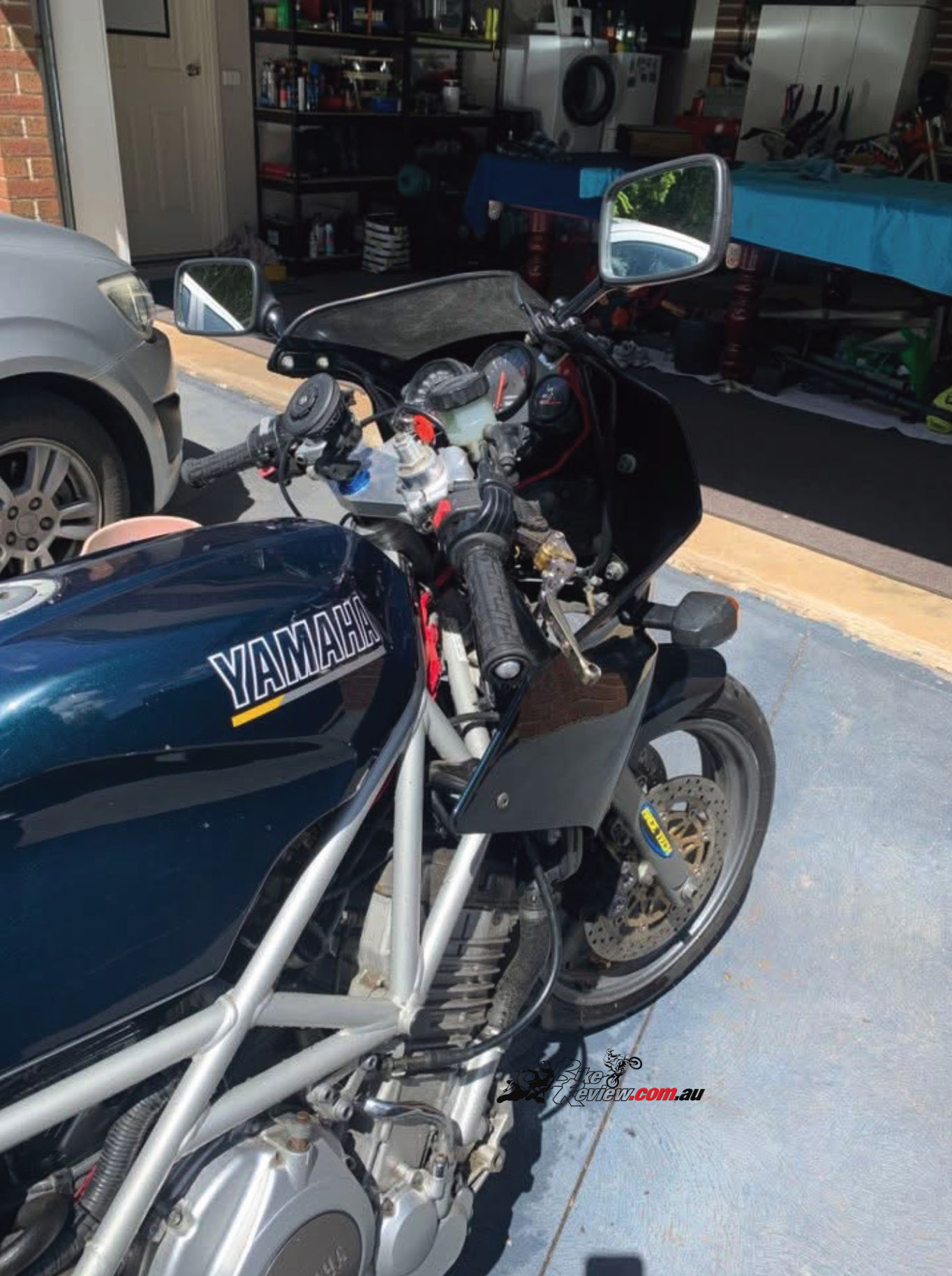
So then there were three. One solid base and two parts donors, one with the all-important green bodywork. The original plan of building one tidy TRX had spiralled into a shed full of possibilities – and problems I hadn’t even met yet. Between the three bikes, there is a full catalogue of parts to pick through: bodywork, engines, upgraded forks, uprated brake systems, various exhausts and, crucially, what looked like everything I’ll need to create a bike as close to original as I can possibly achieve to recreating the motorcycle that got me into this bloody situation in the first place.
“The original plan of building one tidy TRX had spiralled into a shed full of possibilities – and problems I hadn’t even met yet”
As well as the right paintwork, the 1997 bike came with a handful of upgrades I’d intended to carry out; gold cartridge forks, braided brake lines, blue-spot calipers and a carburettor tuning kit. All upgrades that improve safety and rideability while not detracting from the original finish that was important for me to achieve. And while it was fitted with aftermarket pipes, it also came with the original slip-ons, the original levers that had been swapped out for aftermarket ones, a handful of OEM bits still in the packets and, curiously, a used top triple clamp. I look forward to finding out if the mystery of its inclusion will ever be solved.
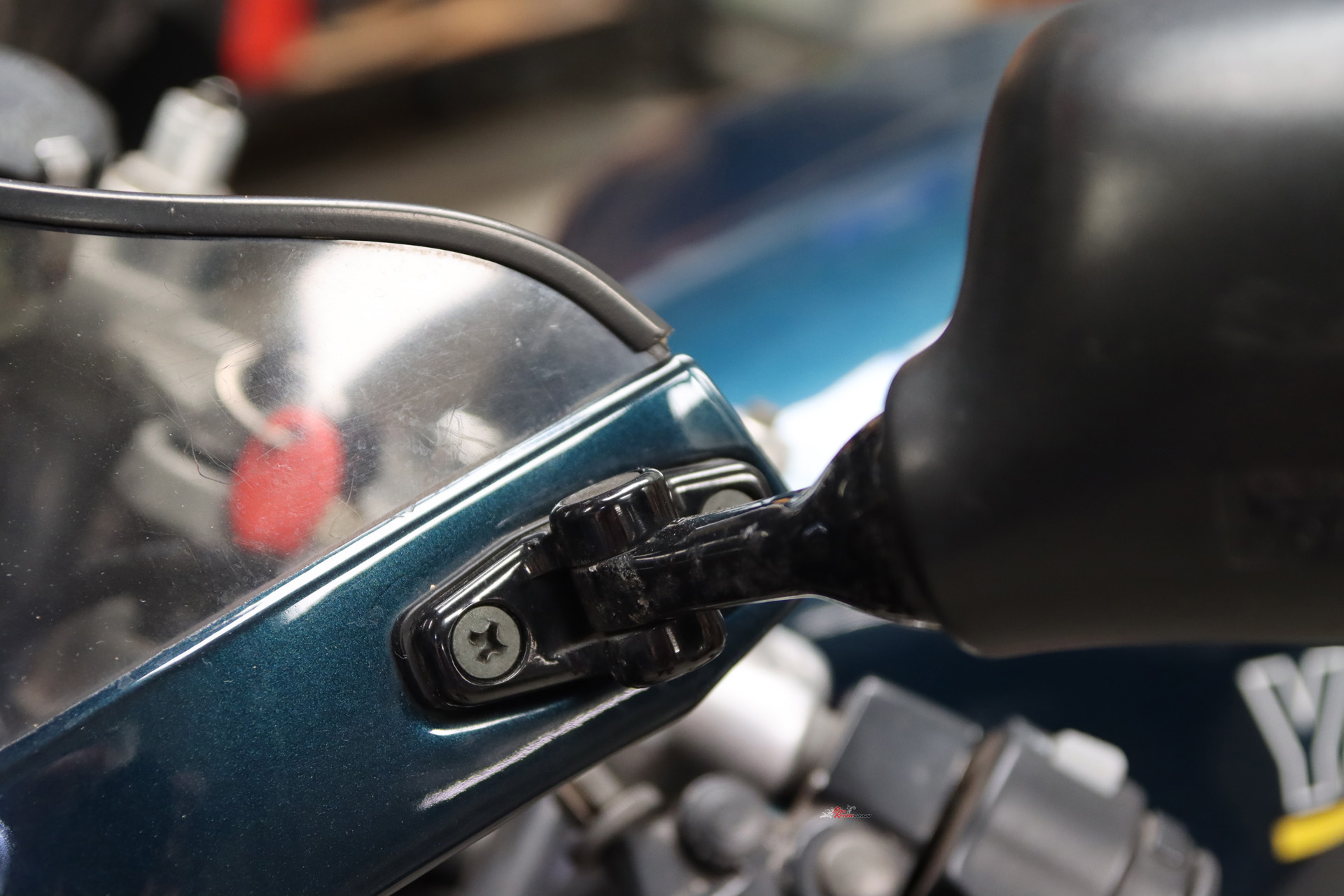
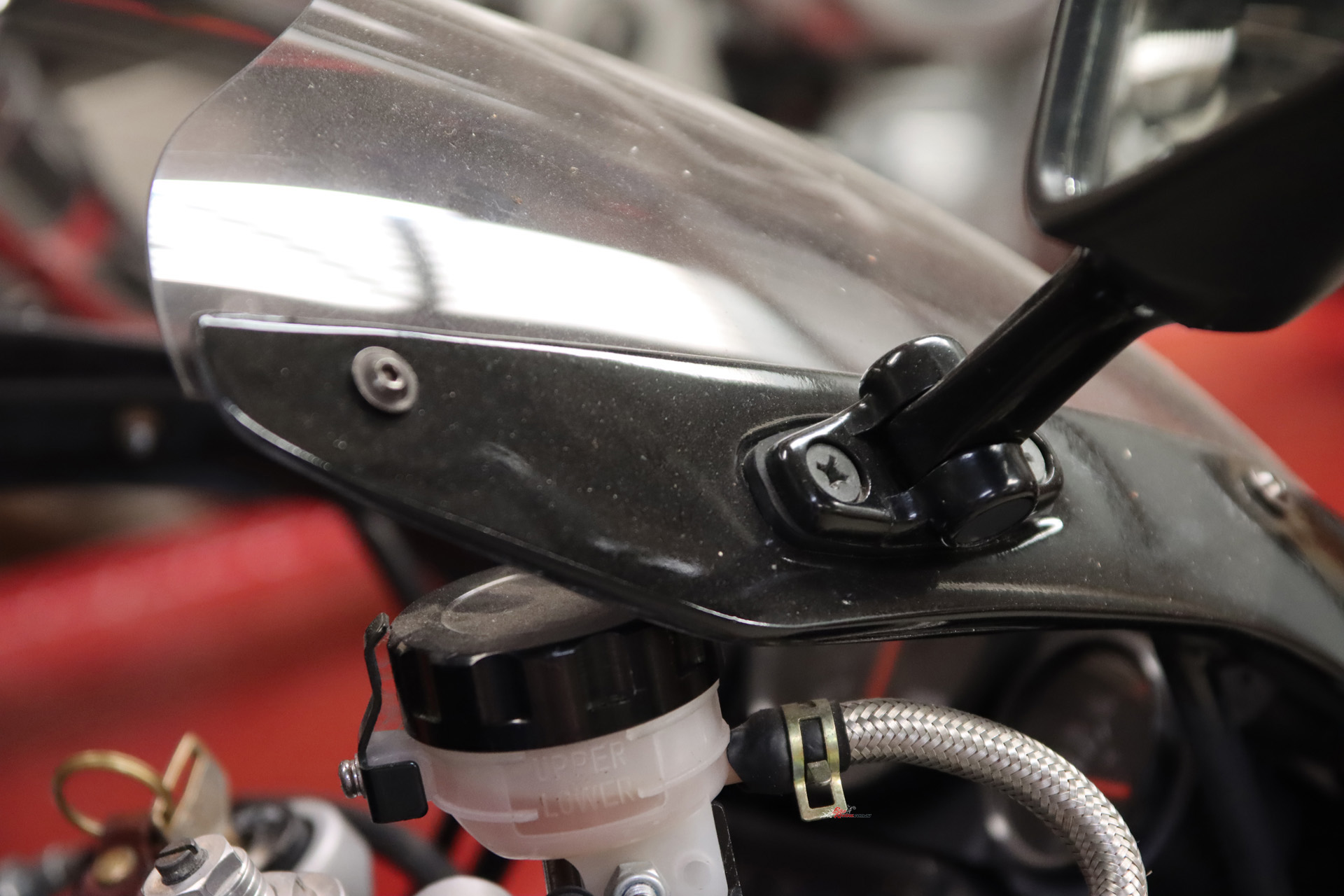
Of course all old bikes come with unwanted surprises, and the 1997’s bike was that somewhere along the line, someone had decided it would be a great idea to chop a few inches off the height of the front fairing and screen, and had the unit repainted, which almost broke my heart…
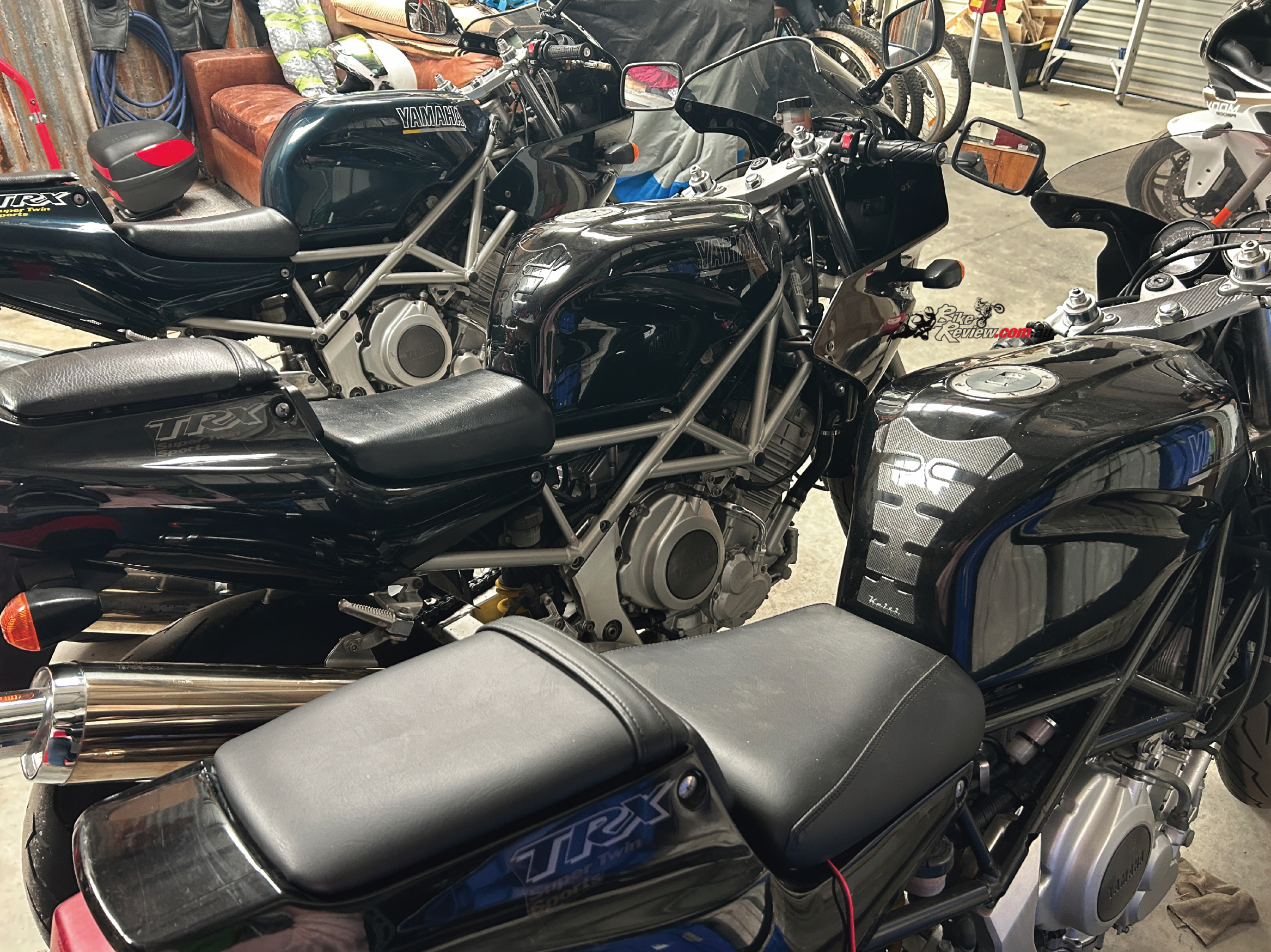
Each TRX850 will play its part in the mission to build the most faithful example Kel can.
With three TRXs now crammed into the garage, the goal isn’t to strip two to save one. Each bike needs to end up complete and rideable, but only one will become the keeper – a machine that captures everything I loved about my first green TRX while being as close to factory-original as I can realistically manage for a reasonable price.
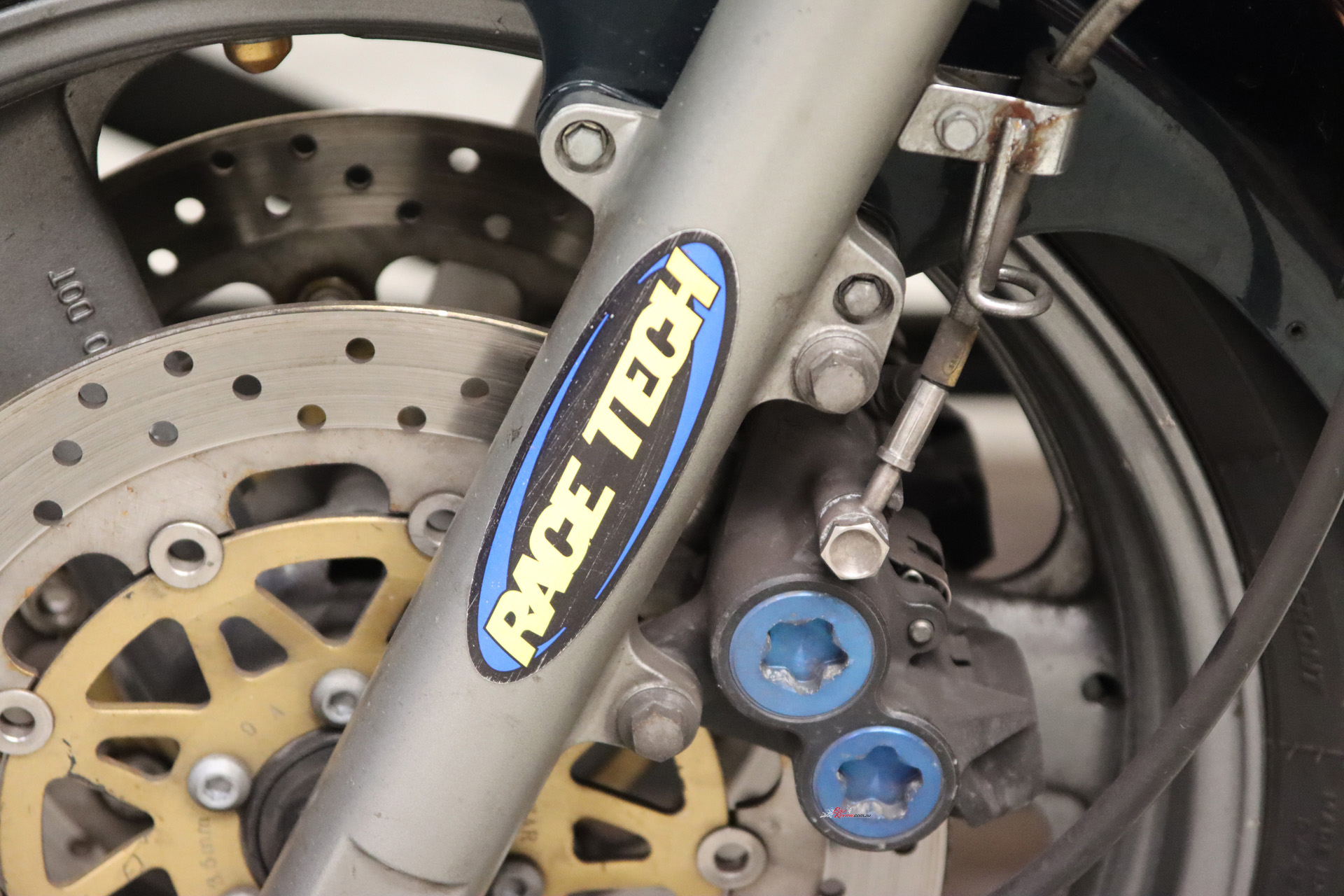
The 1999 silver-framed bike will form the base. It’s the most complete, with the lowest kilometres, a solid engine and clean frame. From there, I’ll take the best of the other two; the blue-spot brakes and braided lines from the 1996 bike, and the upgraded forks, carburettors and green bodywork from the 1997. Between the three, there’s everything I need to build one faithful, reliable TRX.
“A machine that captures everything I loved about my first ever TRX while being as close to factory-original as I can realistically manage for a reasonable price”
I just need to decide whether it’s worth repairing the unmodified but scratched front fairing off the 1999 bike and respraying it green – it’s already been resprayed after all, so the ‘original’ concern is no longer in the equation – but it does mean also respraying the chopped green one to match the black bodywork which will be used to finish one of the others.
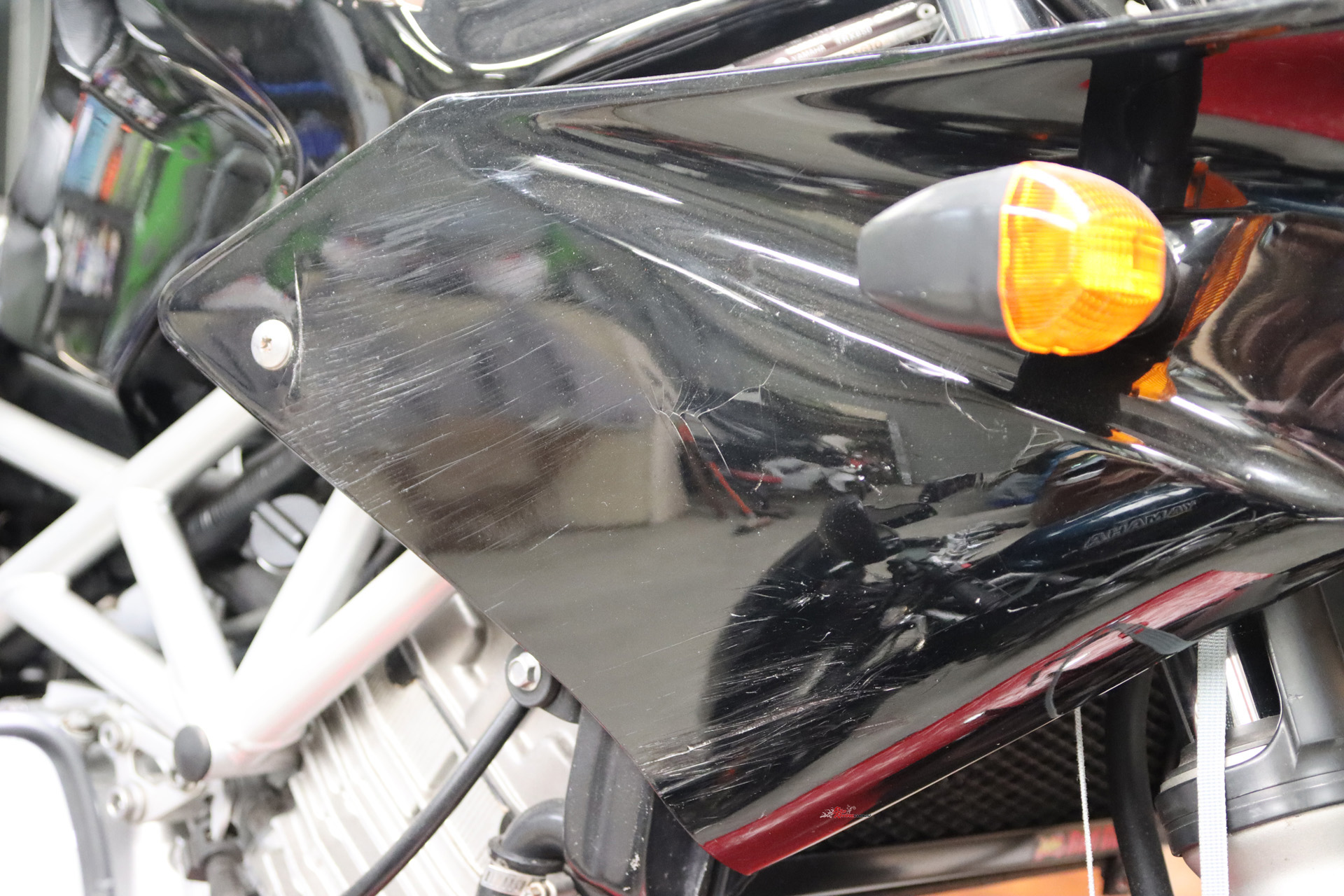
Three bikes, and not one has an original or undamaged front fairing.
The trick is making the swaps thoughtfully and carefully enough that the other two can still be sold as complete bikes. That means nothing gets hacked or binned; every nut, bolt and bracket will be catalogued and reused where possible. Once the keeper’s finished, the black-framed bike will go back together with standard brakes and tidied-up bodywork, and the 1997 will likely get the second set of blue-spot calipers and the spare OEM exhausts before it, too, finds a new home. But I guess I can work all of that out as I go along.
It has undoubtedly spiralled into a far bigger process than I’d expected during that lockdown reminiscing, but that’s the nature of projects like this. You start out with a wonderful memory and end up knee-deep in a moving swell of decisions trying to balance value for money, rideability and staying true to the goal of recreating a fully original machine.
“You start out with a wonderful memory and end up knee-deep in a moving swell of decisions trying to balance value for money, rideability and staying true to the goal”
It’s a logistical jigsaw, but that’s half the fun. The challenge now is to keep the project moving, the parts organised and the budget in check long enough to get all three TRXs back into the world, and maybe go for a ride that makes me feel 20 again!
Yamaha TRX850 Specifications
Performance:
Claimed power: 83hp [61kW] @ 7500rpm
Claimed torque: 84.3Nm [61.8ft-lb] @ 6000rpm
Dry weight: 190kg
Fuel capacity: 18L
Engine: Liquid-cooled DOHC 10-valve 849cc parallel twin four-stroke with 270º crank. 89.5 x 67.5mm bore x stroke, 10.5:1 compression, 2 x 38mm Mikuni carburettors
Gearbox: Five-speed
Clutch: Wet, multi-plate
Chassis: Tubular steel spaceframe with cast aluminium swingarm pivot plates and engine used as fully stressed member
Rake: 25º Trail: 100mm
Suspension: 41mm telescopic forks adjustable for preload and rebound, fully adjustable monoshock (r)
Brakes: 2 x 298mm discs with four-piston calipers (f), single 245mm disc with twin-piston caliper (r)
Wheels & Tyres: Cast-aluminium wheels, 3.75 x 17-in, 5.5 x 17in, 120/60-17 (f), 160/60-17 (r)
Dimensions:
Wheelbase: 1435mm
Ground clearance: Not given
Seat height: 800mm
Instruments & Electronics: Analogue dash.
The Author











November 7, 2025
Hi Kel,
I have three TRX’s as well.
Keep the 160 rear tyre to keep the tip in nice and change front to 70 section.
Enjoy, as I still do after 28 years.
Two from new. 😉👍
December 18, 2025
Thanks Alan, always good to hear from another TRX tragic. You’re absolutely right about the 160 rear and the effect tyre choice can have on tip-in. I’ve thought about the 70-profile front, but for this build I’m trying to stay as close to original as I reasonably can, so I reckon I’ll stick with the factory sizing, even though it’d open up more tyre options. Kel