

A ride on BMW’s restored Butler & Smith R90S reveals how the Daytona-winning AMA Superbike combined engineering, stability and speed. Photos: BMW Motorrad/Arnold Debus
This month for Throwback Thursday Alan Cathcart rides the legendary restored 1976 Daytona-winning Butler & Smith BMW R90S boxer twin raced by Steve McLaughlin in the inaugural AMA Superbike season and discovers a surprisingly capable period superbike…
At the end of the inaugural 1976 AMA Superbike season, Butler & Smith’s West Coast office sold the triumphant trio of R90S Superbikes to three dealers. Gary Fisher’s #21 bike went to San Jose BMW, still BMW North America’s top road racing dealership today (Peter Adams sold Butler & Smith to the German factory in 1980).
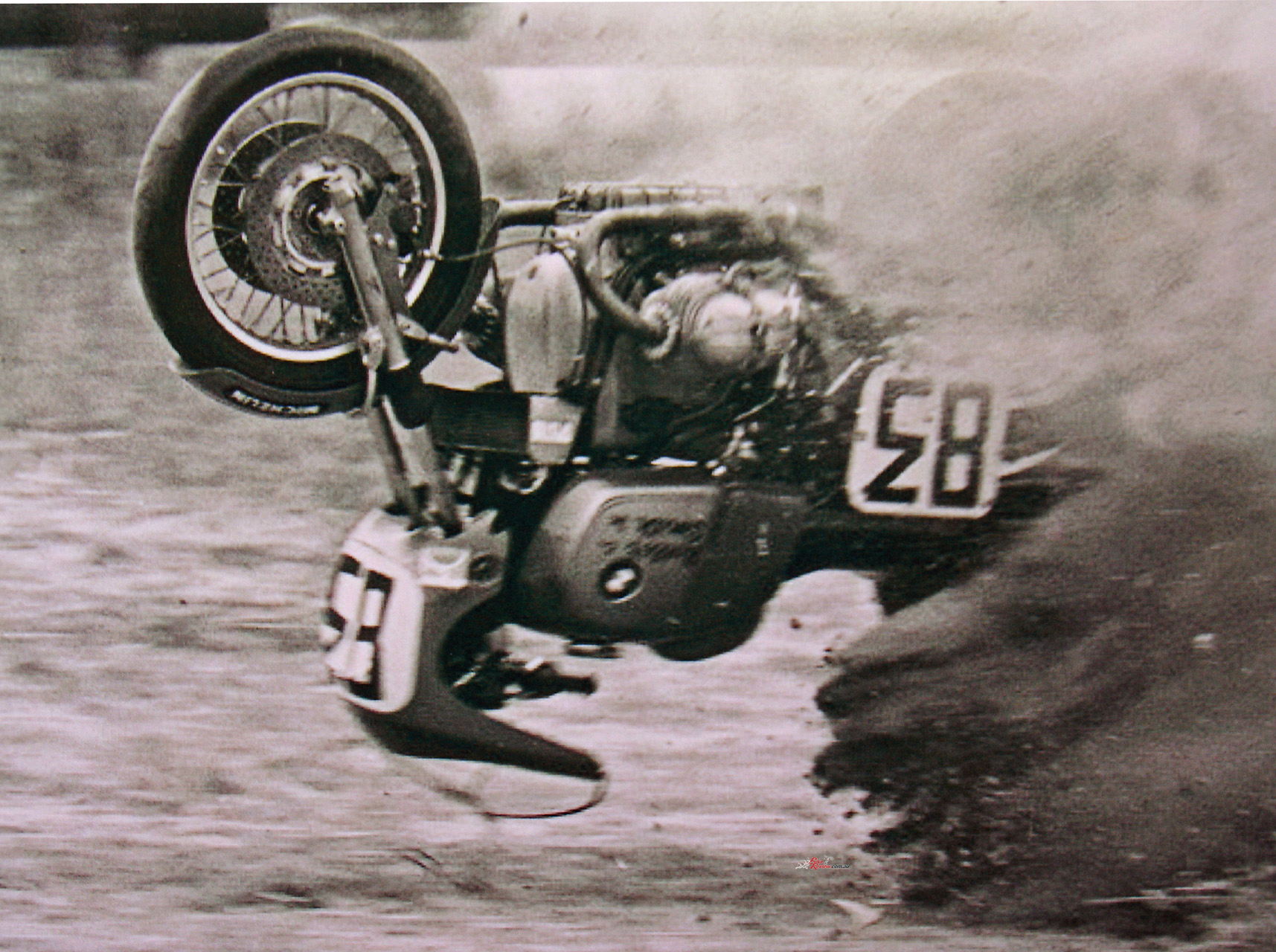
Reg Pridmore’s #165 title-winner first went to BMW Fort Worth in Texas, before ending up at BMW’s Mobil Tradition museum in Munich, the factory collection of its most significant competition machinery on two, three or four wheels.
Steve McLaughlin’s primo #83 Daytona-winner was acquired by Johnny’s Motorcycle Company in Bakersfield, California. It was discovered there in neglected condition in 1980 by Santa Barbara-based Bruce Armstrong, Matt Capri’s successor as BMW West Coast sales manager. Bruce’s daughter bought the bike for him as a Christmas present (he brought her up right then!), and he set about restoring it, though he resisted the temptation to ride it again, as he explained in a June 2000 letter (remember them?) after I’d enquired about making a racer test of the Daytona-winning Butler & Smith BMW R90S Superbike.
“I have felt no need to tarnish the machine’s reputation with track follies against top Historic stars” – Bruce Armstrong
“I’ve been berated for not racing the bike in AHRMA events in the 20 or so years I’ve owned it,” Bruce Armstrong wrote. “But given that the best pilots and crew were retained to make this unlikely street bike a championship winner, I have felt no need to tarnish the machine’s reputation with track follies against top Historic stars. I’m simply not that good a rider, and the bike is built of too many one-off parts to make it a realistic track bike – old 450 Hondas are kept on this earth for a good reason!
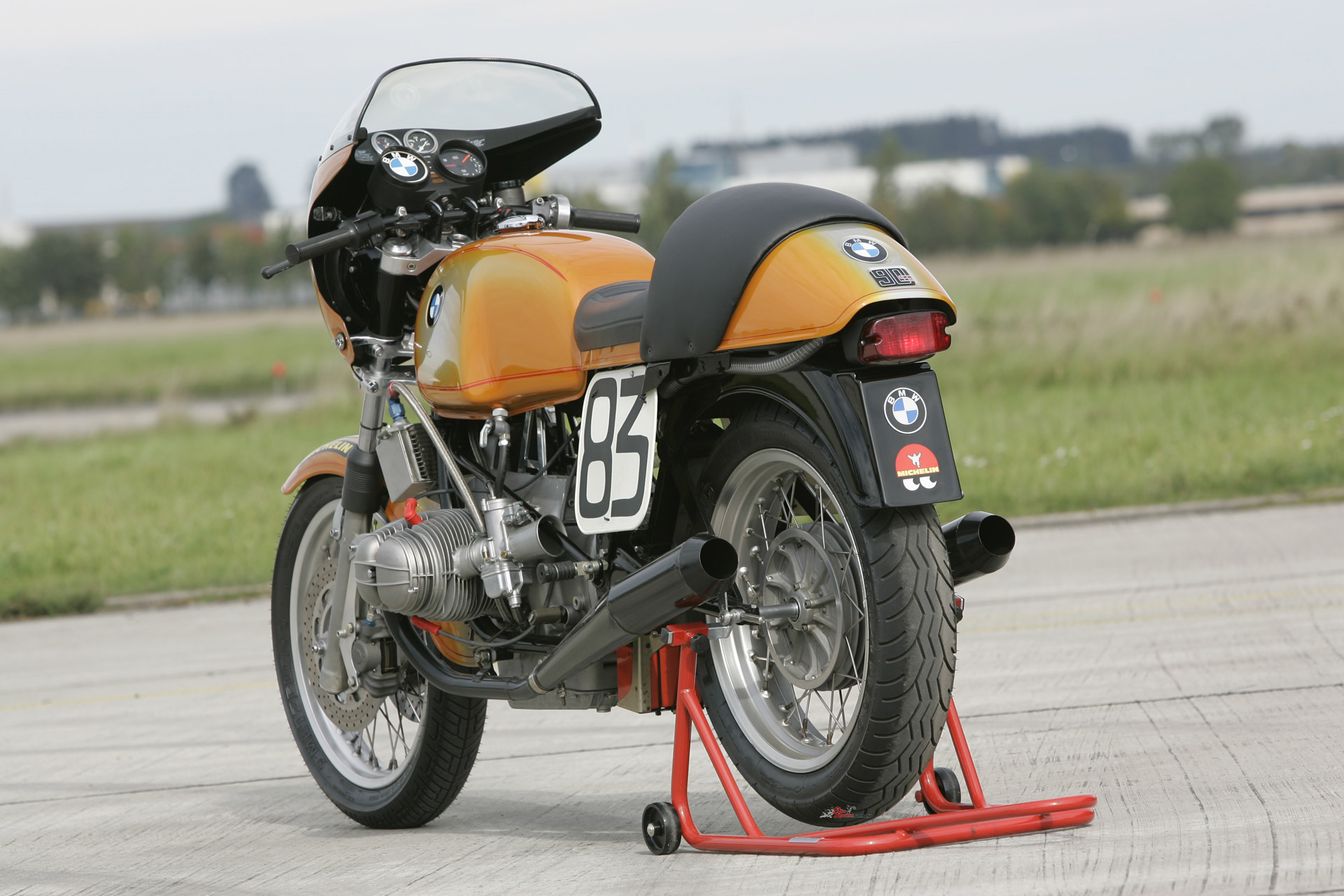
“You may have seen it at Daytona in ’96, as BMW wanted it there to celebrate the 20th anniversary of the win. Reg was going to ride it around the track until the tyres were inspected: they were installed when I restored the bike in the early ’80s and were/are definitely not track-ready.”
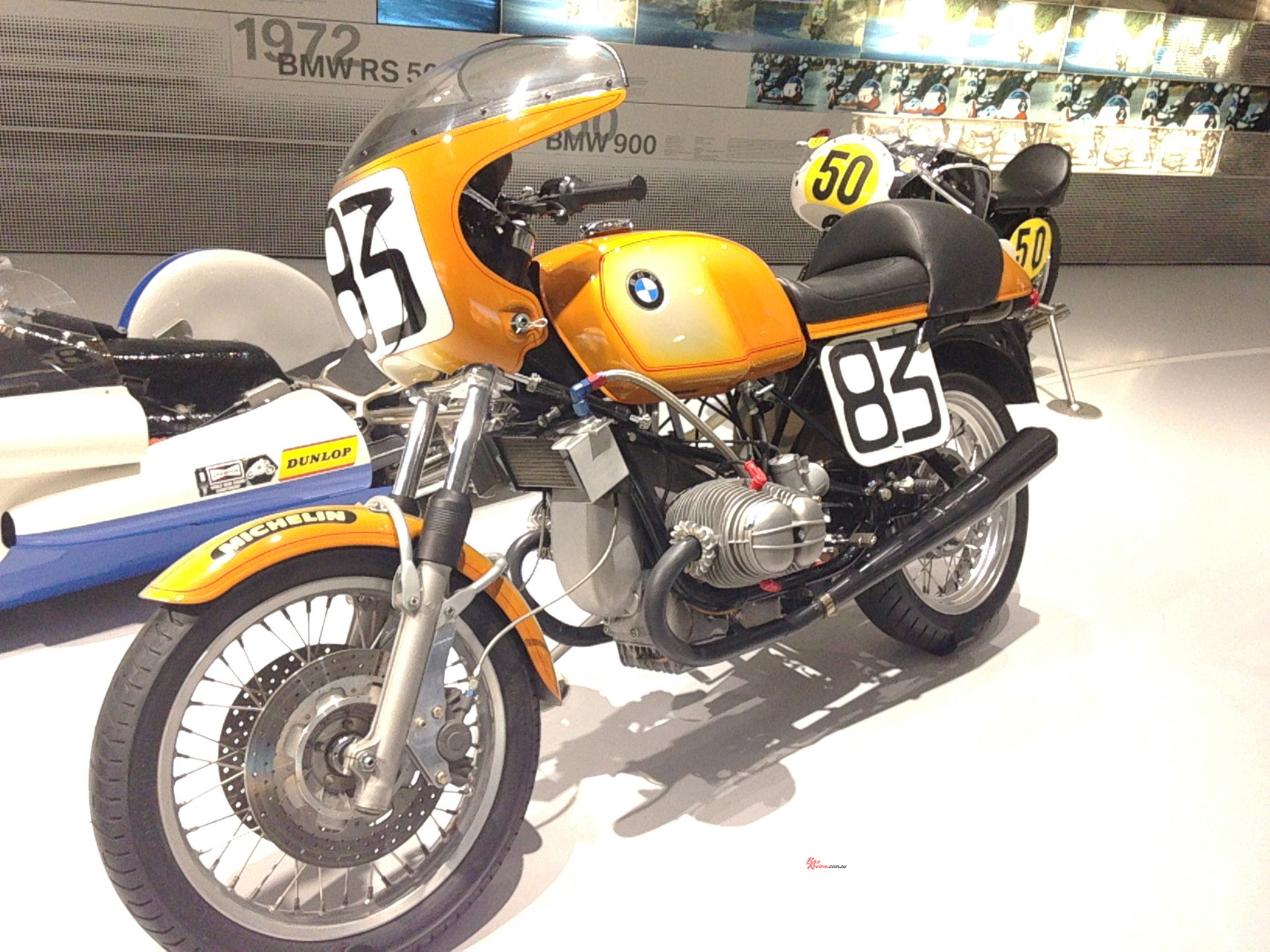
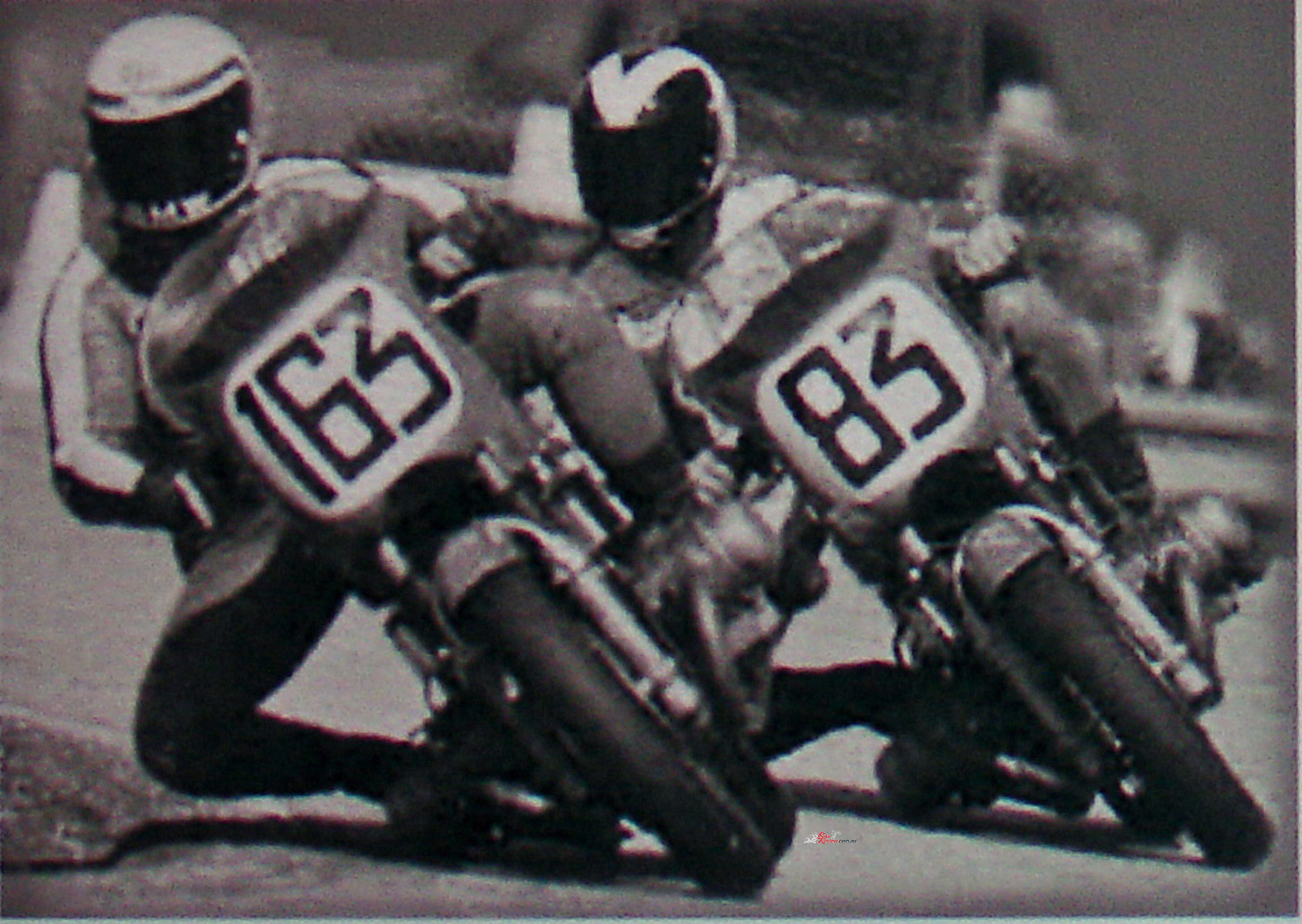
McLaughlin’s #83 duly migrated to the BMW Mobil Tradition collection, which acquired it from Armstrong in 2004. So for me the chance to ride the company’s original Superbike came after its repeat ground-up restoration by BMW, the same day I fulfilled another personal ambition, riding and writing about the ‘one that got away’, the abortive 1992 twin-cam desmo Boxer Superbike, the BMW R1.
“The chance to ride it came at a Luftwaffe airbase, on an improvised circuit lining the taxiways, with a hairpin turn to avoid accessing the main runway”
This came at a Luftwaffe airbase to the west of Munich, on an improvised circuit threaded between the buildings lining the taxiways, with a hairpin turn to avoid accessing the main runway. It seems that when you’re BMW you know how to pull all the right strings!
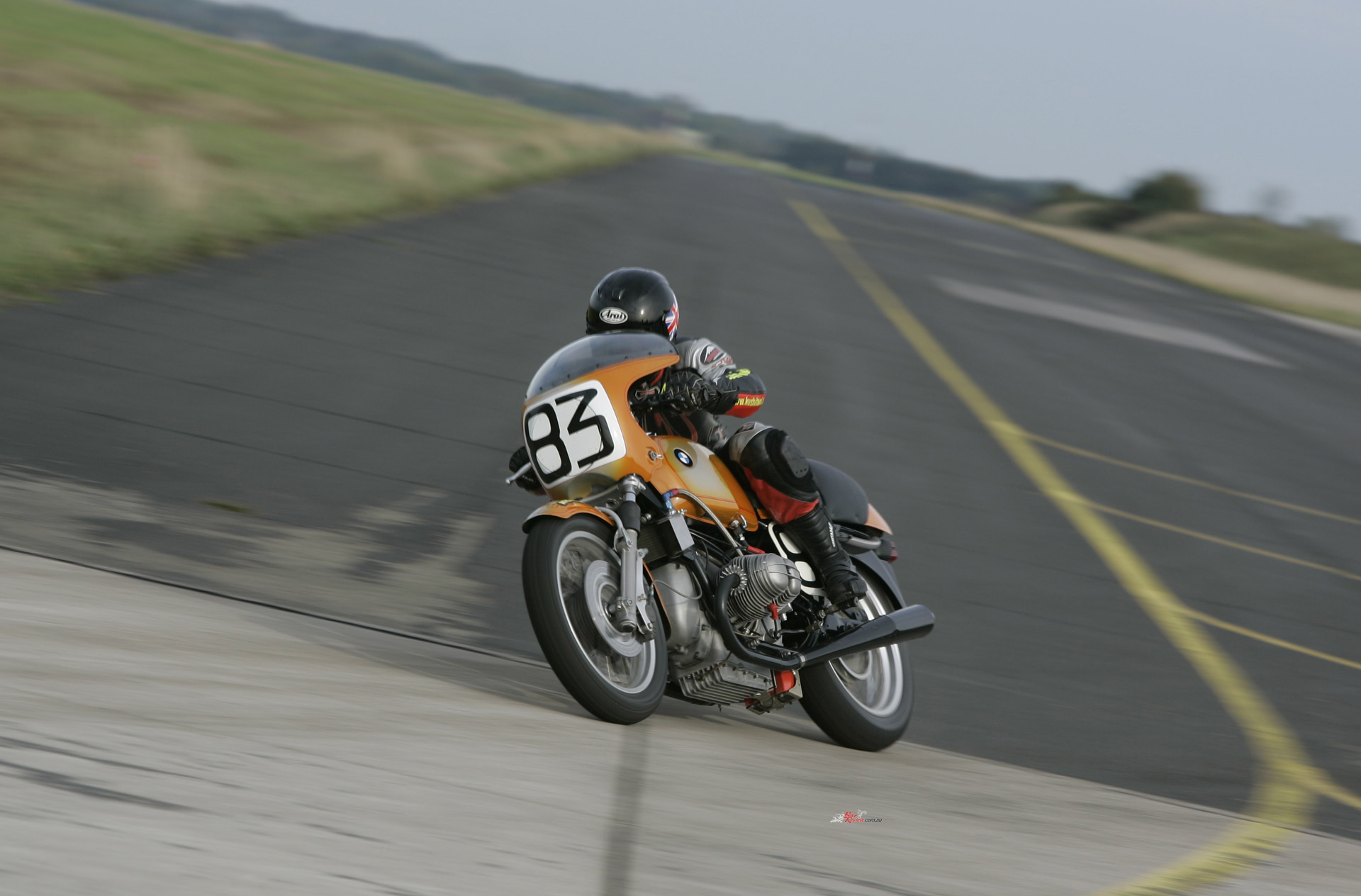
RennBoxer #83 is not some cosseted museum piece, but a living, thundering ride down memory lane, fresh from the Mobil Tradition workshop after a little freshening up for my test. That included fitting a set of Metzeler Lasertec tyres, with a 130/80–18 rear in place of the 140-section Michelin slick the bike raced and won on at Daytona, for reasons of availability.
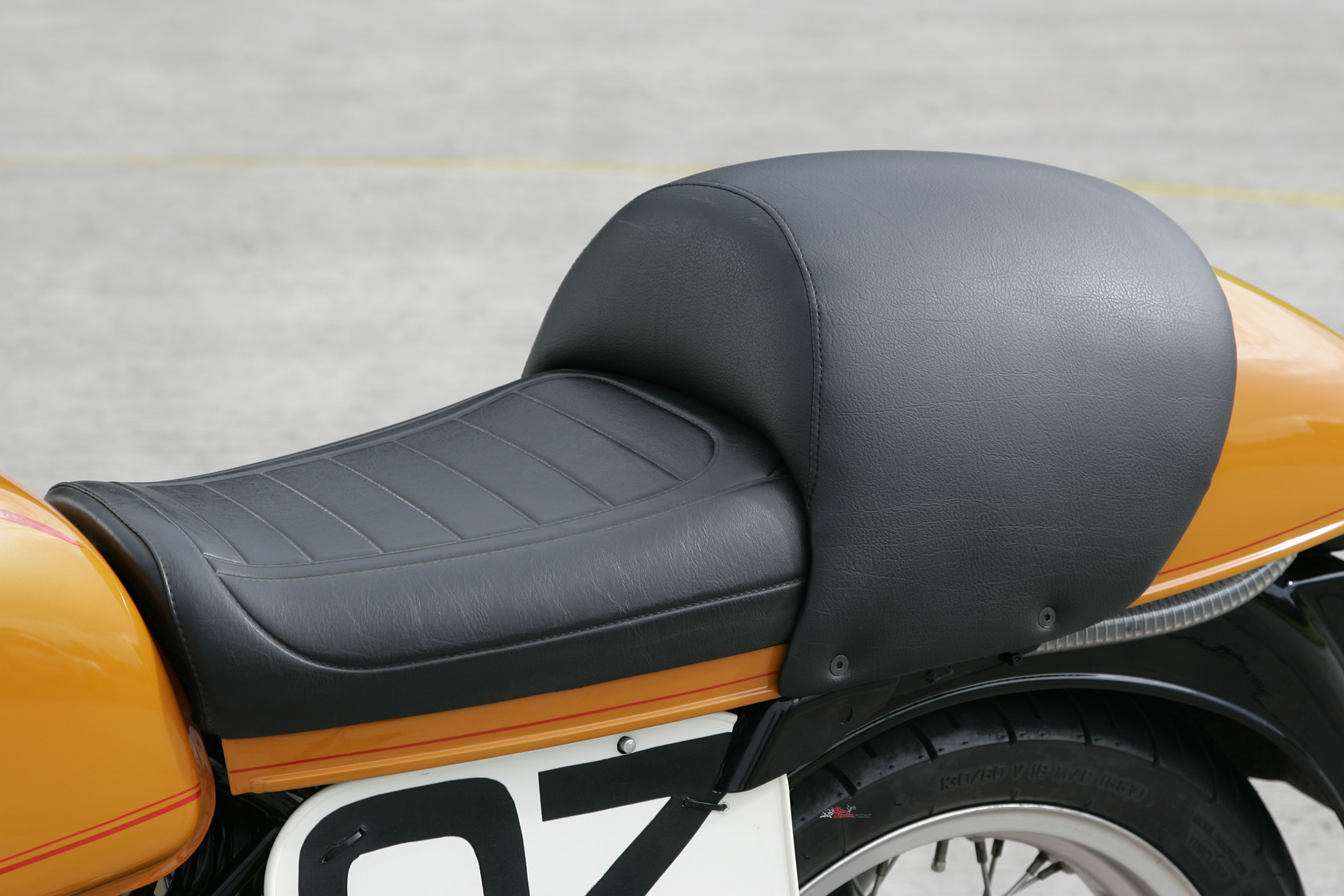
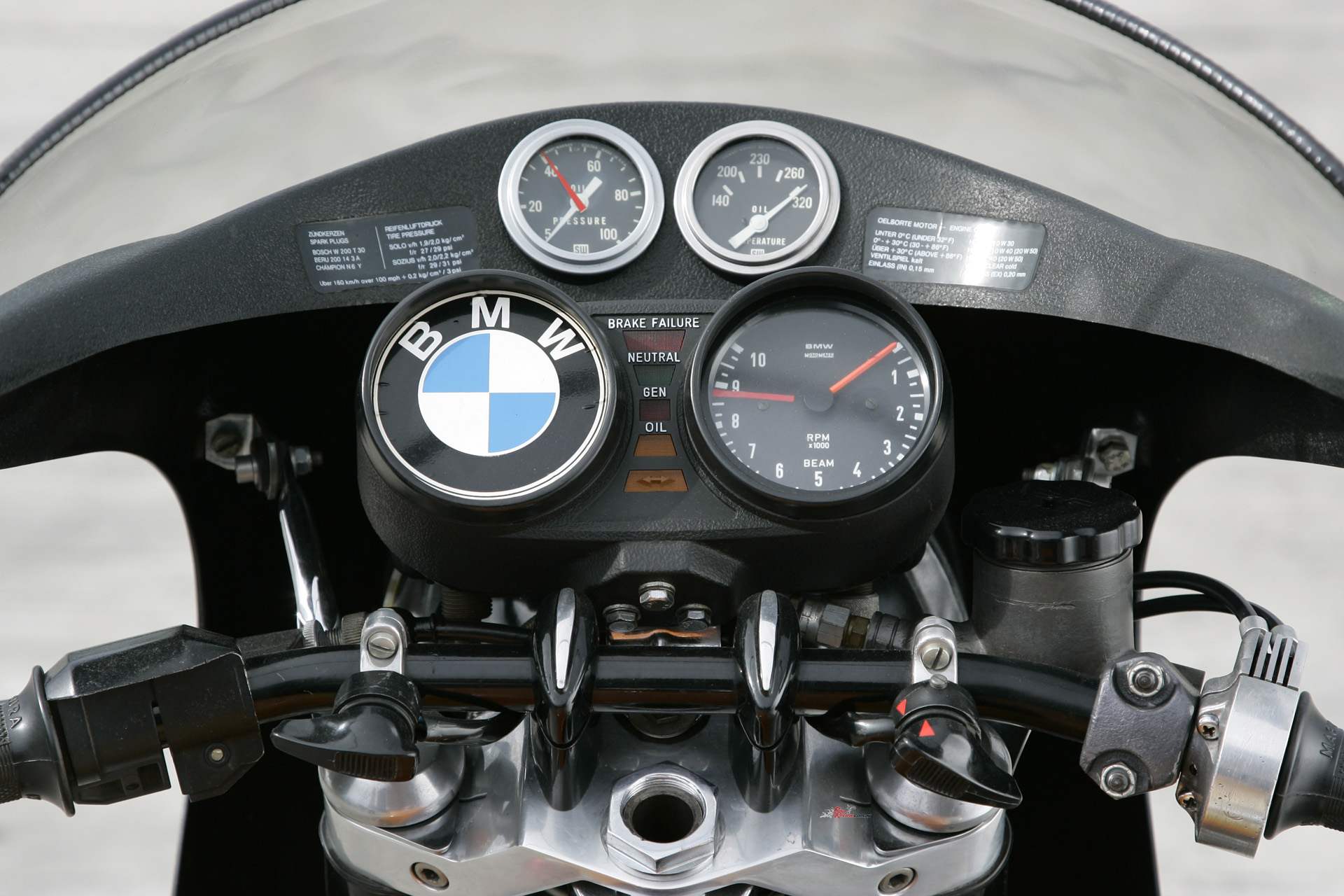
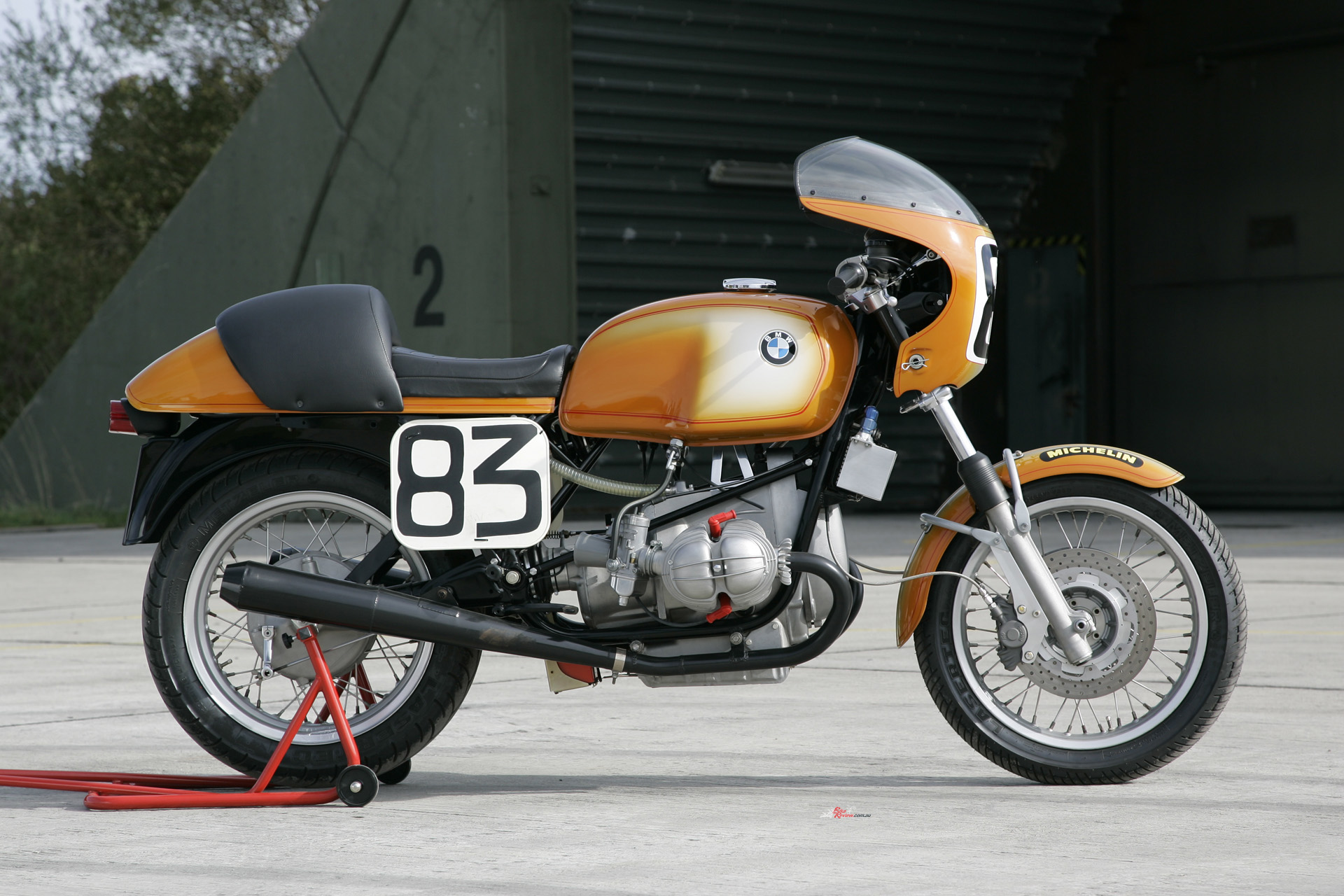
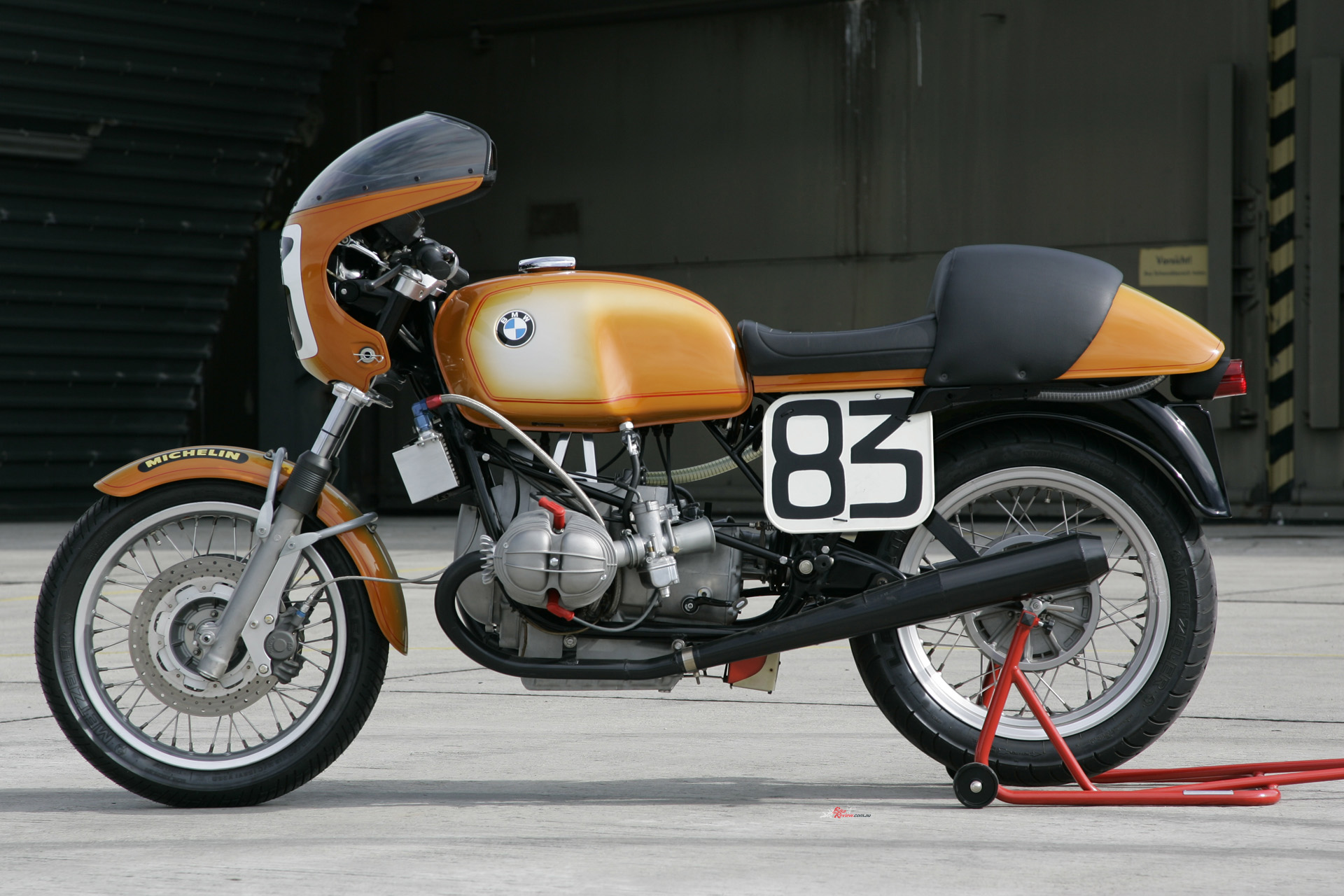
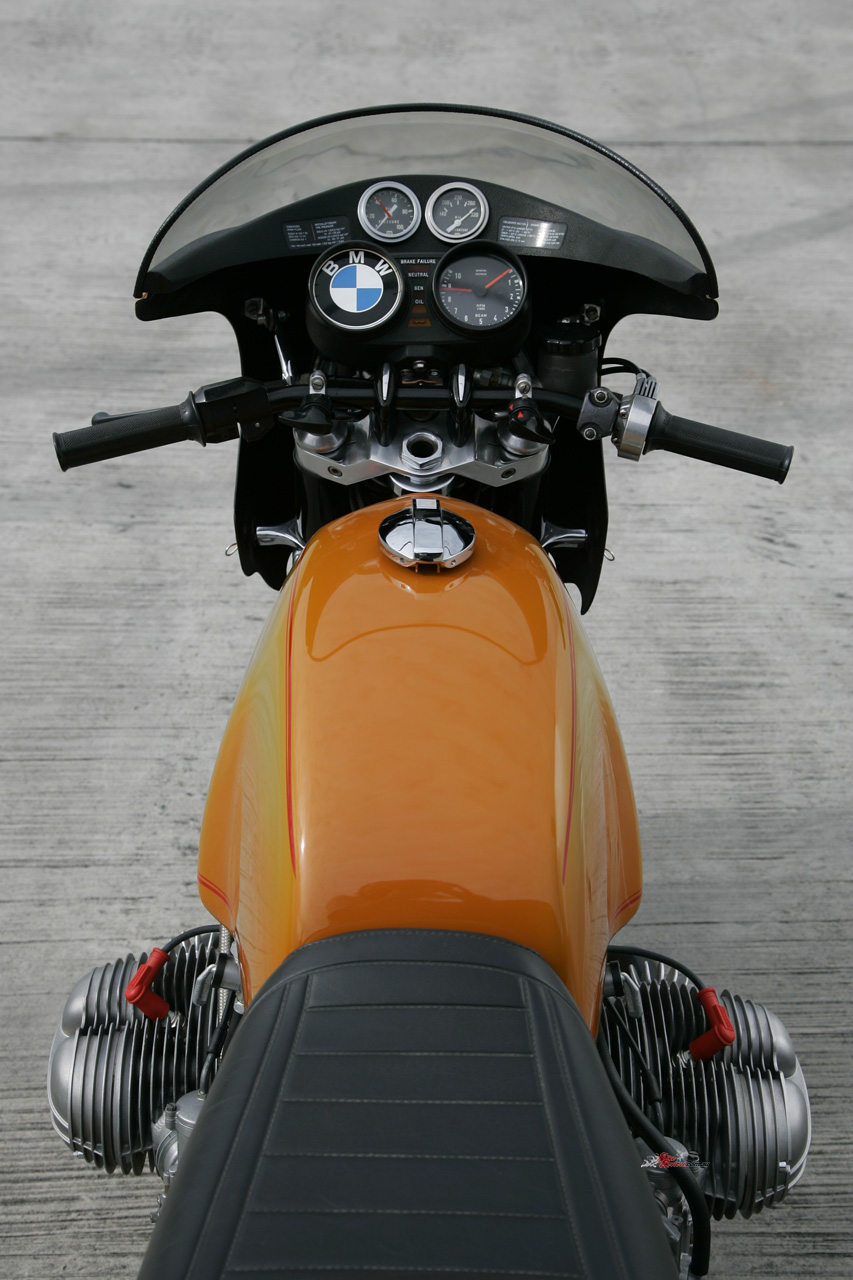
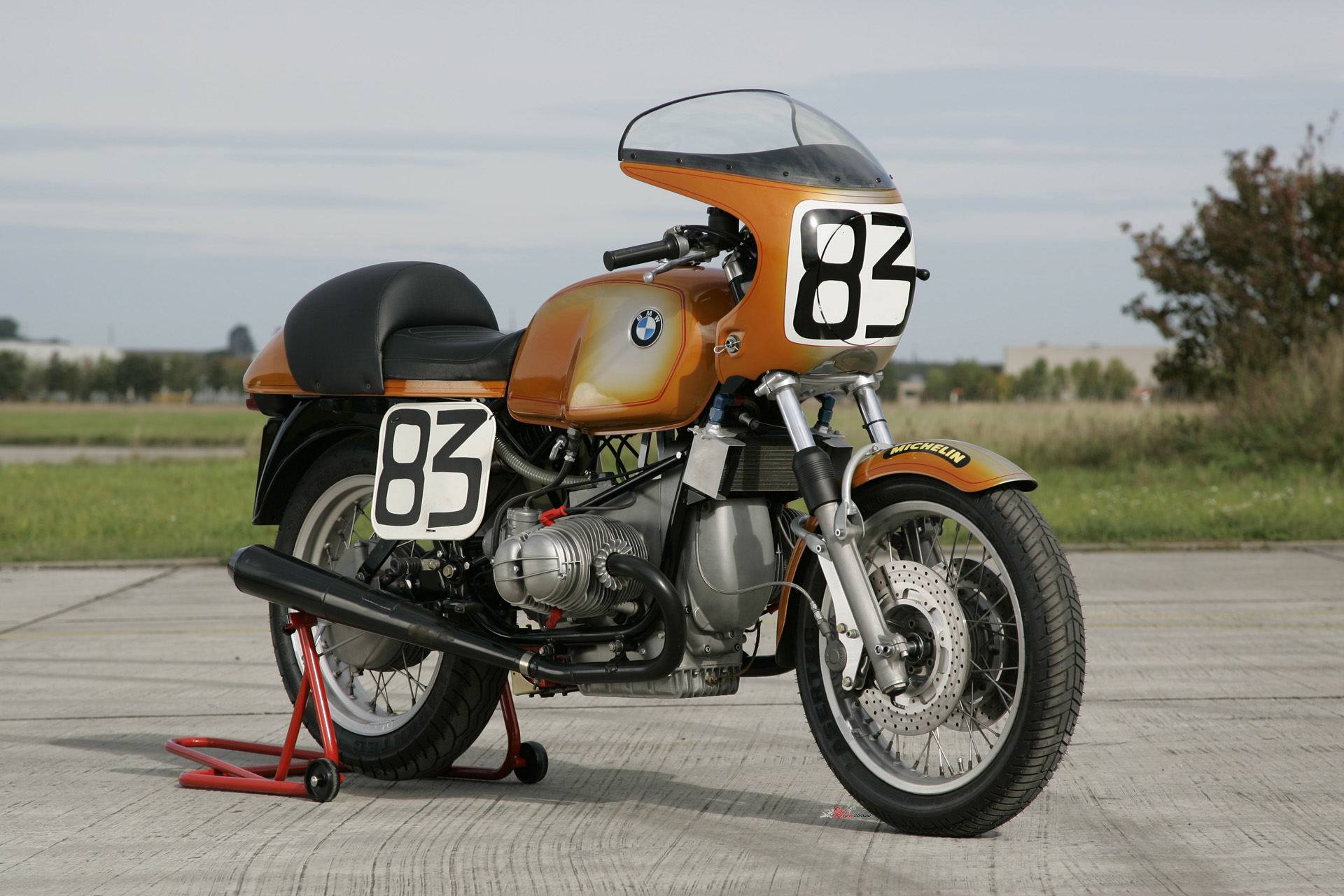
This is thus spread out a little on the original 3.00in WM5 wire-spoked D.I.D. rim, altering the shape and reducing ground clearance slightly for the twin sticking-out cylinders, but not enough to cause any problems on a bike that at first seems improbably close to street spec. The stock two-up seat has a large upholstered squab covering the passenger space to make a race-style single seat, and the stock dash – which had to be retained under AMA Superbike rules! – is bolted to the custom upper triple clamp with the speedo blanked off with a BMW roundel, leaving its companion reverse-sweep rev-counter red-lined at 8,800rpm.
“The stock dash – which had to be retained under AMA Superbike rules! – is bolted to the custom upper triple clamp”
These are surmounted by twin oil temperature and oil pressure gauges replacing the streetbike’s ammeter and clock in the lip of the fairing, and separated by a row of warning lights, the most prominent of which rather disconcertingly announces ‘Brake Failure’! Well, it’s nice to know before you squeeze the lever and nothing happens, I suppose….
The upright riding position is typical BMW, with a fair reach to the flat one-piece handlebar carried in tall risers bolted to the custom upper triple clamp. That stretched-out stance also leaves plenty of room to crouch behind the tall but skinny headlamp fairing screen on a straight.
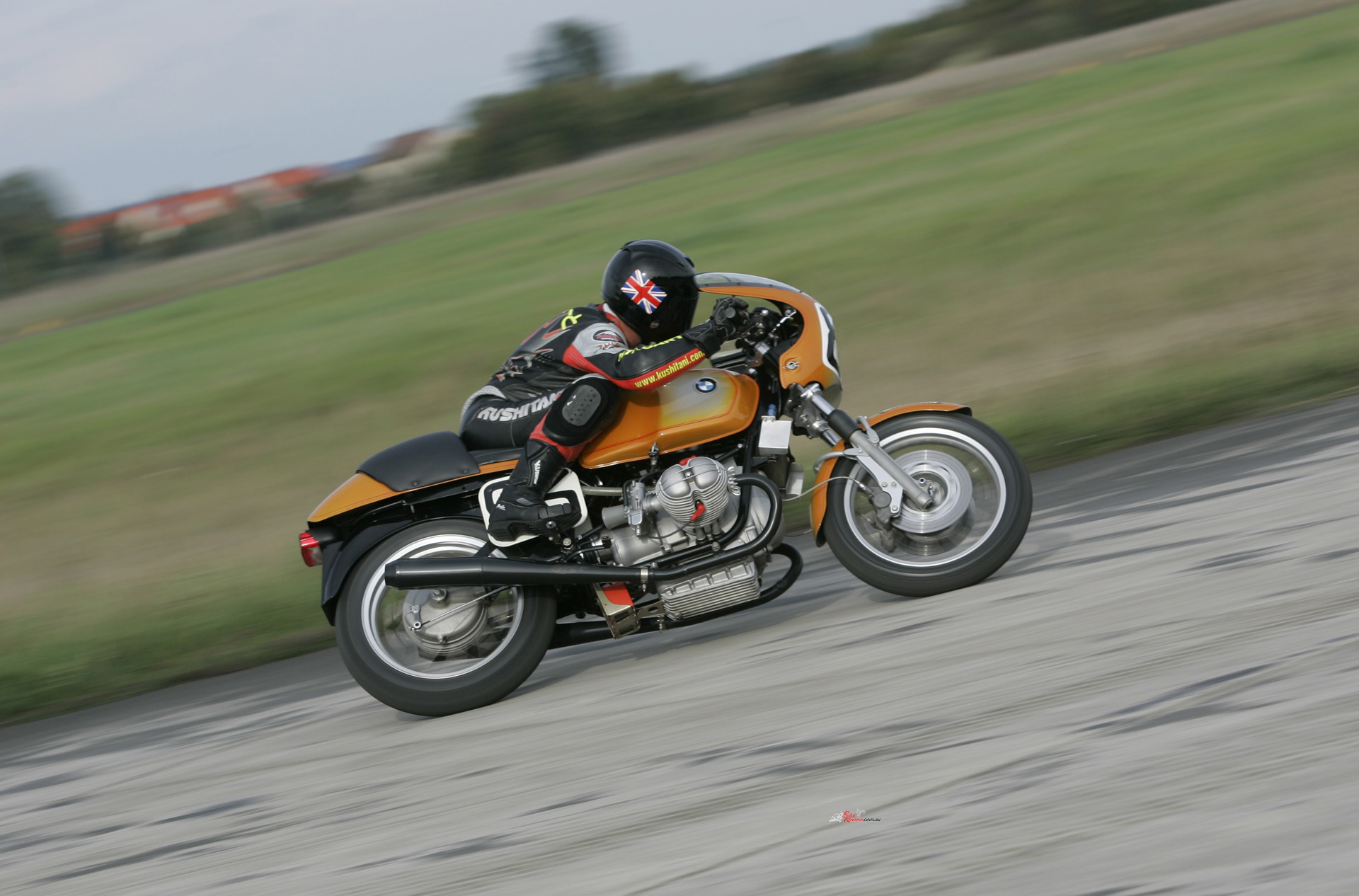
The long wheelbase and low Boxer stance in all it’s on-song beauty.
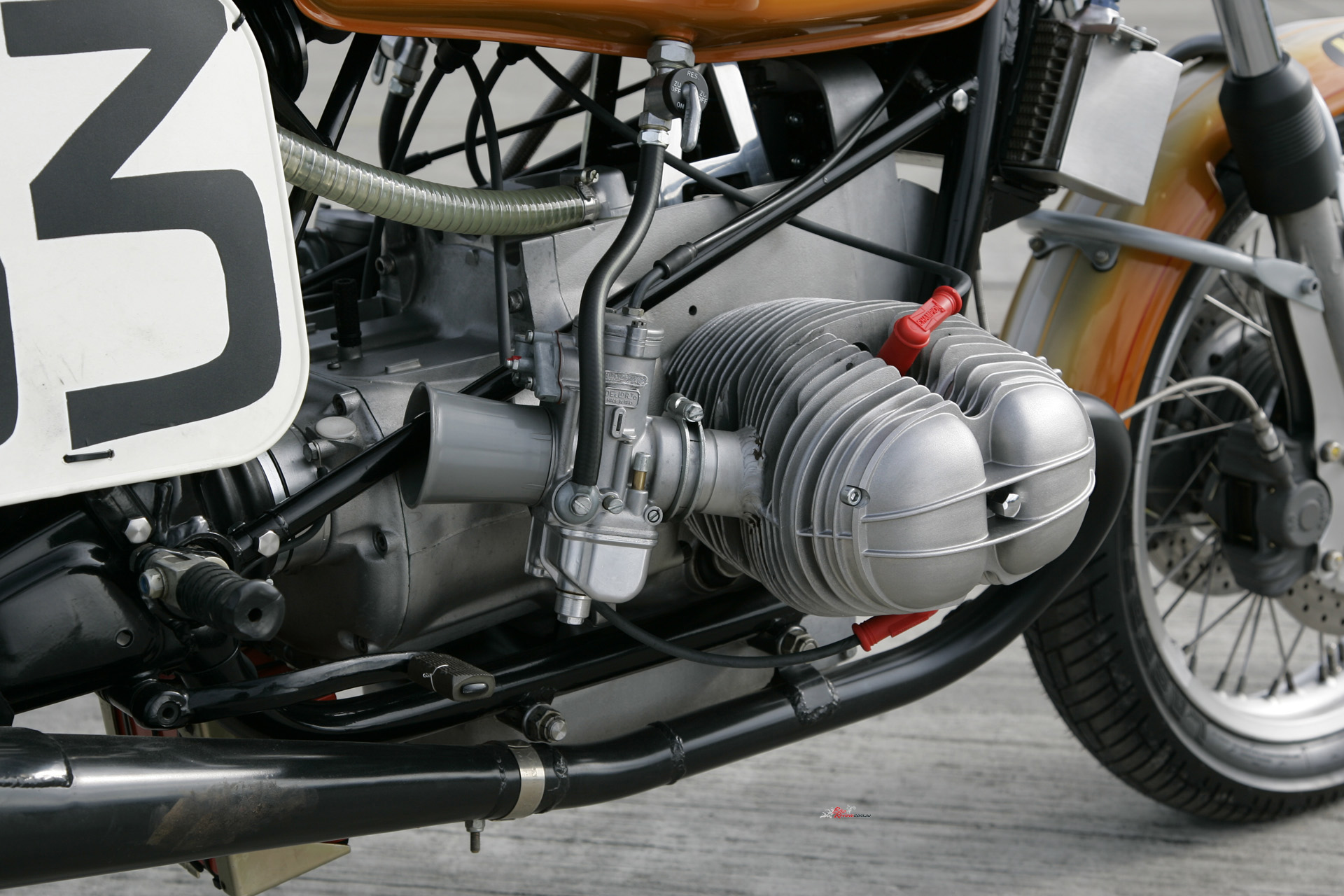
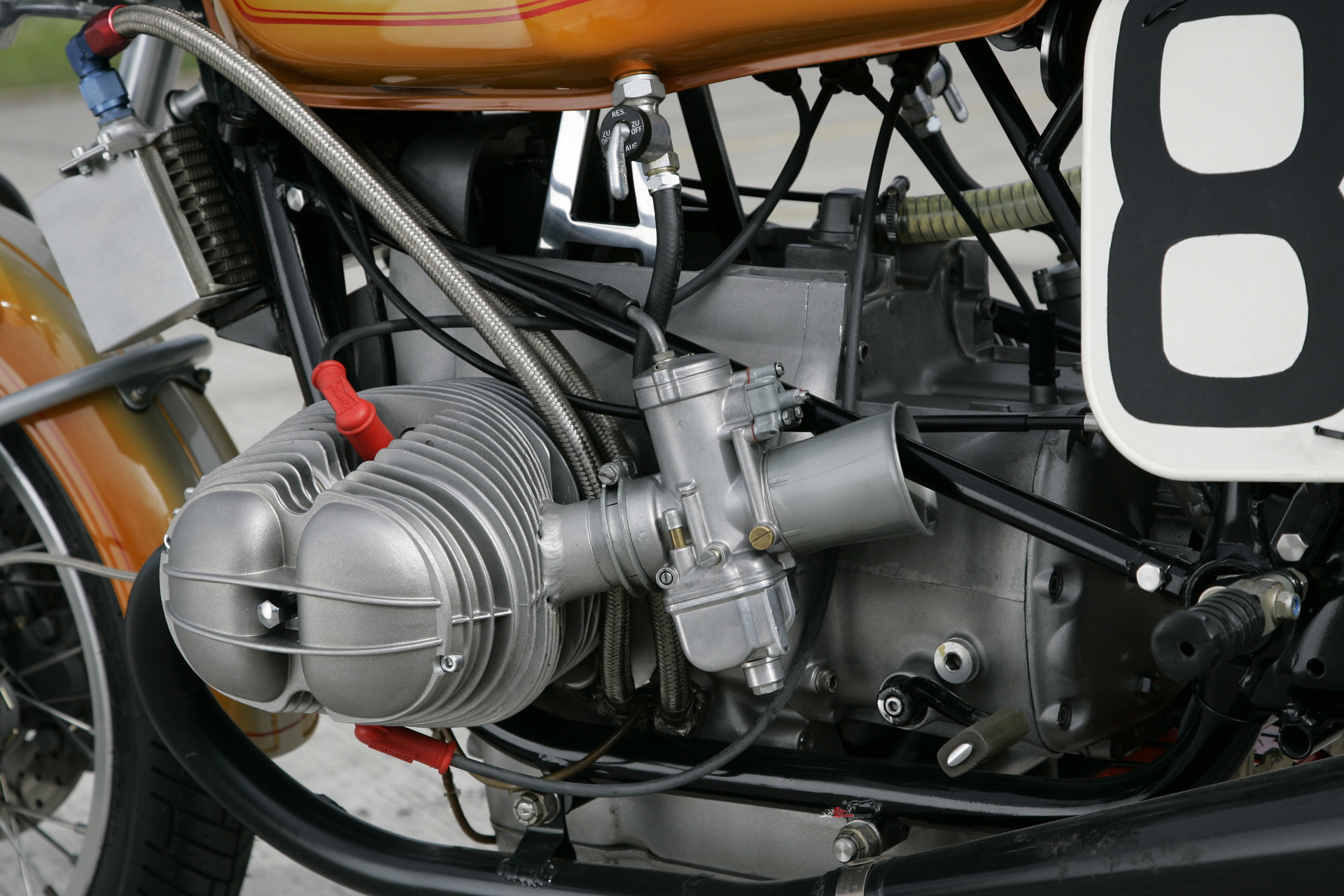
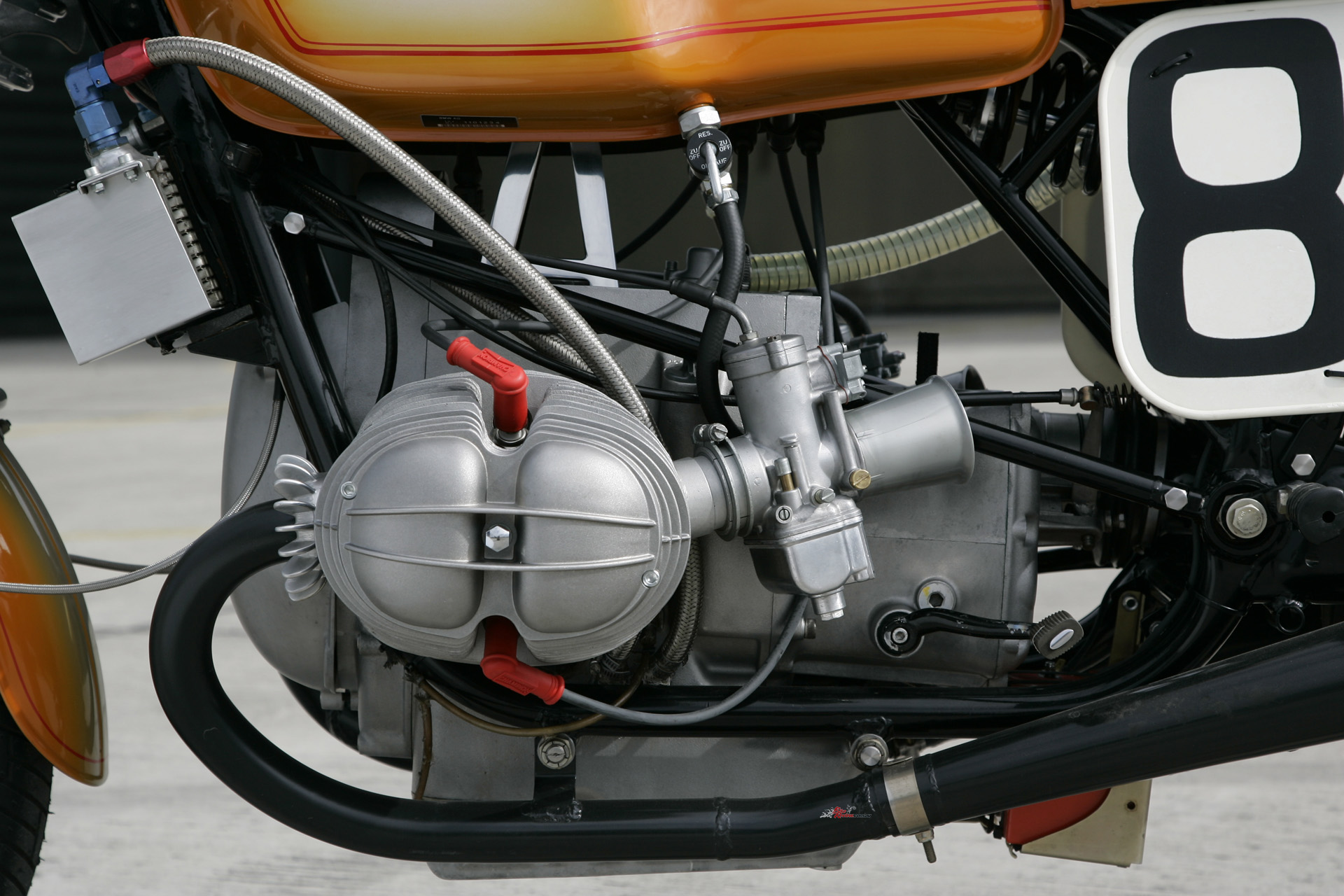
You’re conscious all the time of the two cylinders sticking out either side of the bike in front of your legs. But because the engine was moved 25 mm further forward in the frame to load up the front wheel, and the Dell’Orto pumper carbs were slanted inwards to draw air from the now non-existent airbox, they don’t interfere with your feet as much as the straight-mounted carbs did on the BMW Rennsport 500 I owned and raced in Historic events for a couple of seasons in the late ’80s.
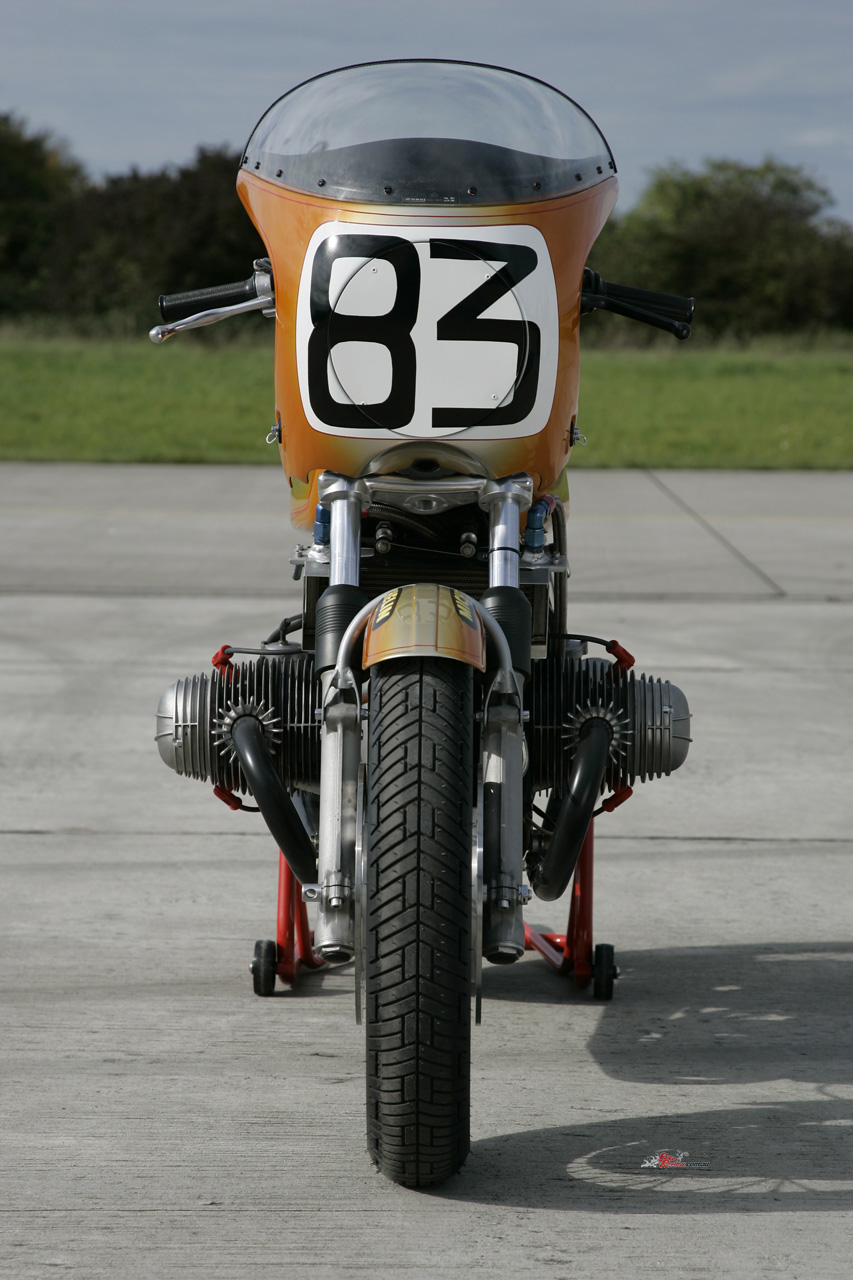
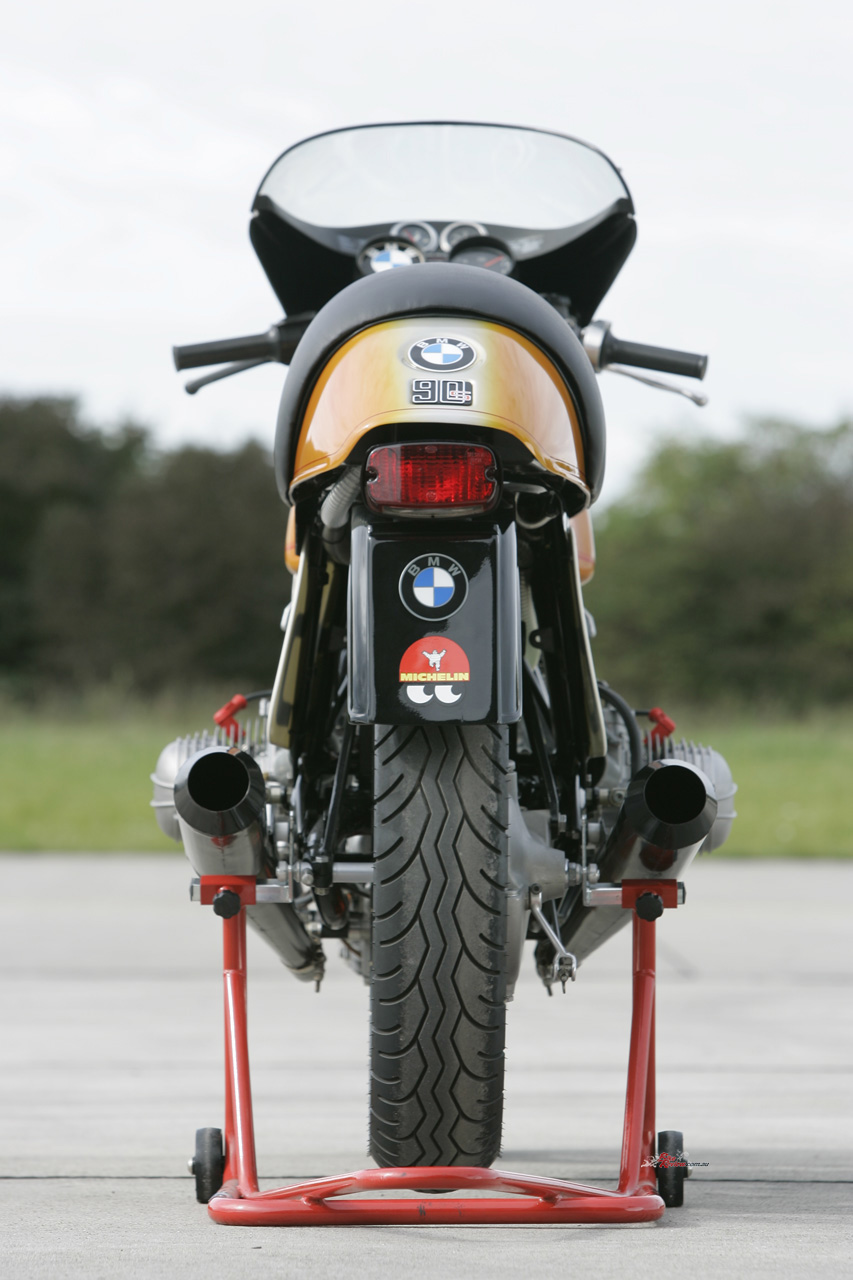
The pair of flick-switches on the ‘bar function as the ignition cutout on the right and the electric starter on the left, thumbing which caused the Boxer engine to rock purposefully from side to side, before spinning quickly into life with a fruity blat from the long, slenderly tapered twin megaphones. The memories came flooding back as I headed out to the airstrip, with the distinctive drone of a low-flying airplane emanating at speed from the totally smooth vibration-proof engine’s unsilenced exhausts.
“The drone of a low-flying airplane emanating at speed from the totally smooth vibration-proof engine’s unsilenced exhausts”
Still, these weren’t strident enough to make me wish I’d worn earplugs as I sped along the Luftwaffe runways at high speed, in a repeat introduction to the fine art of racing a flat-twin with shaft final drive and no Paralever rear suspension, like on modern Boxers.
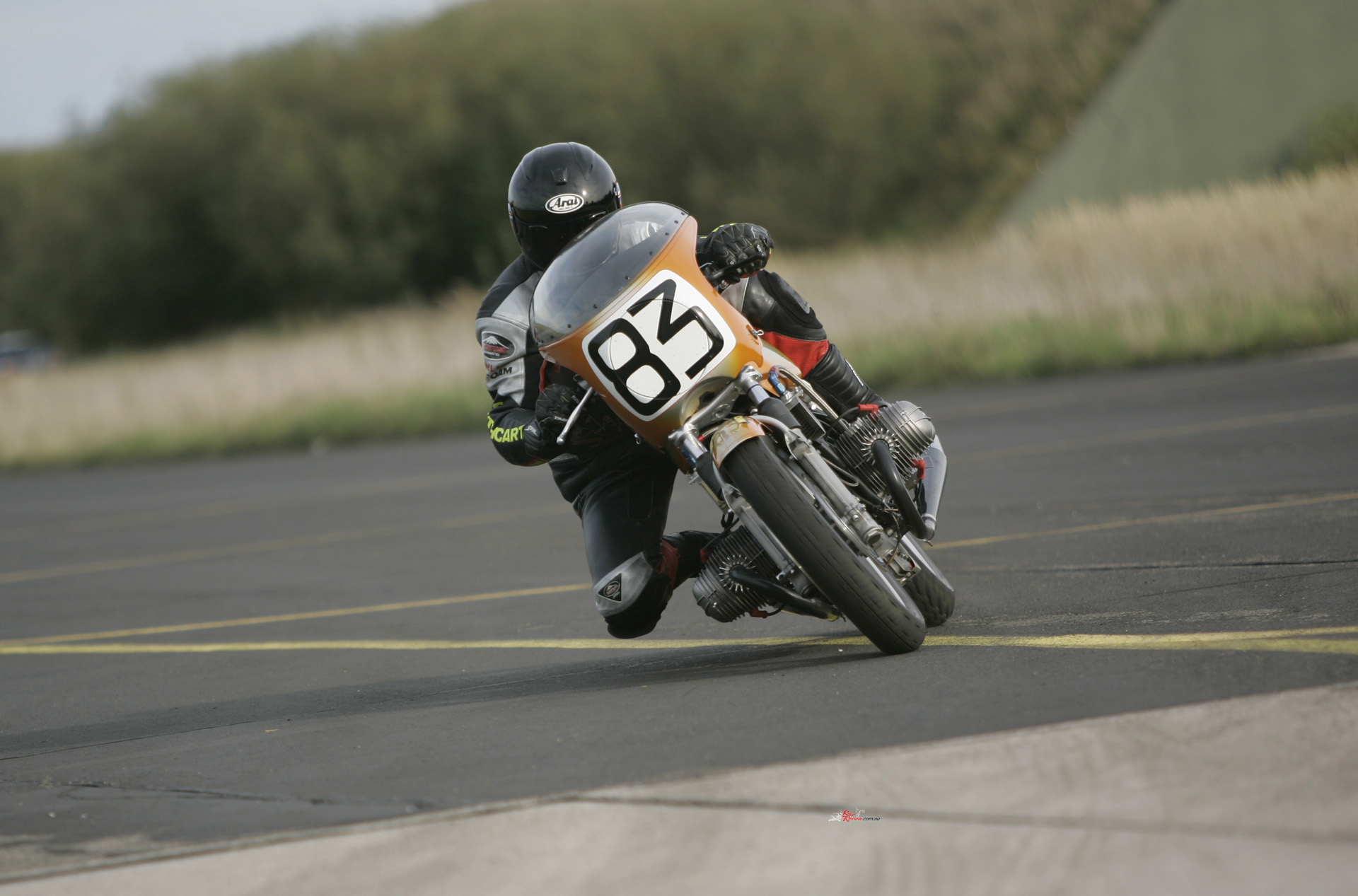
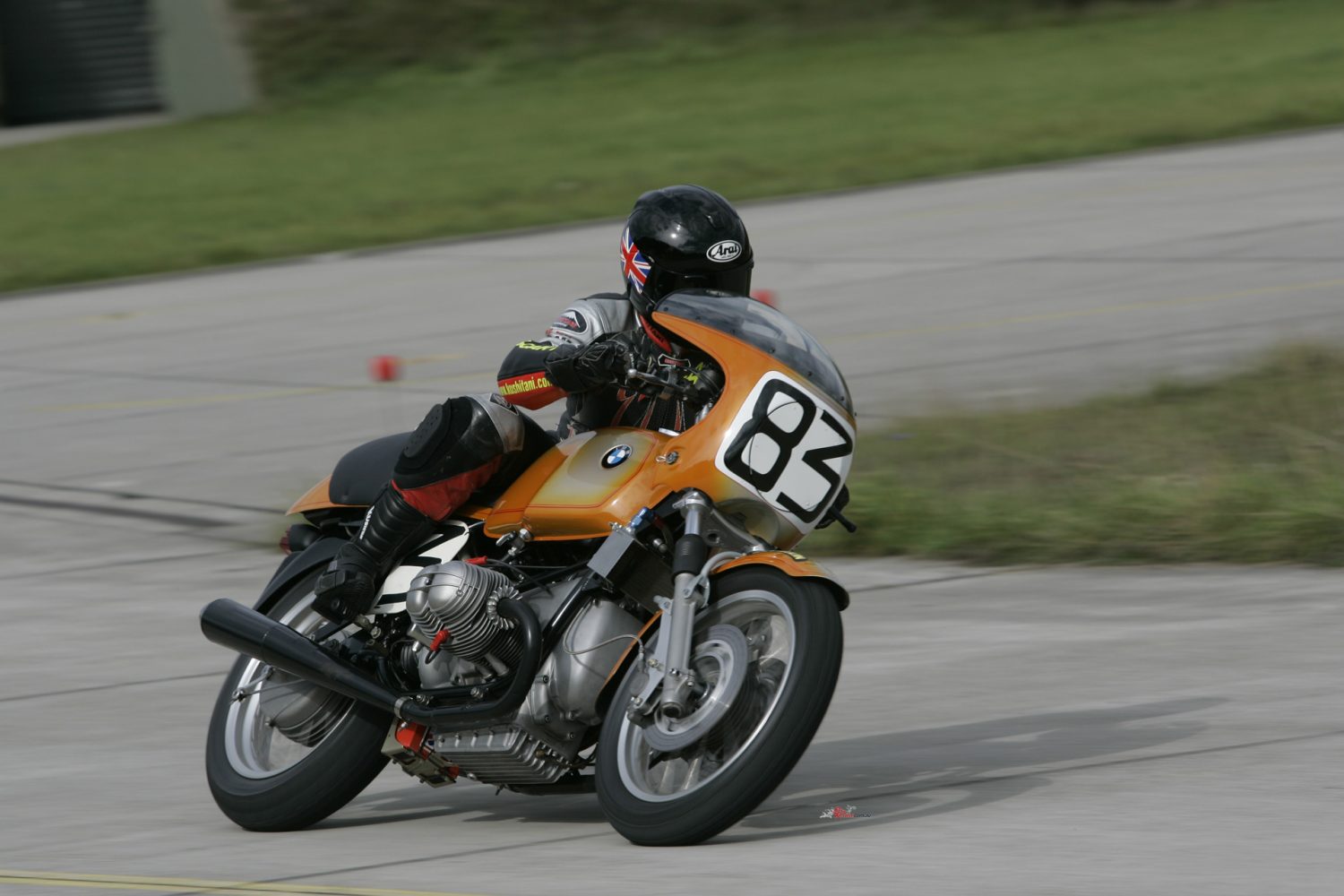
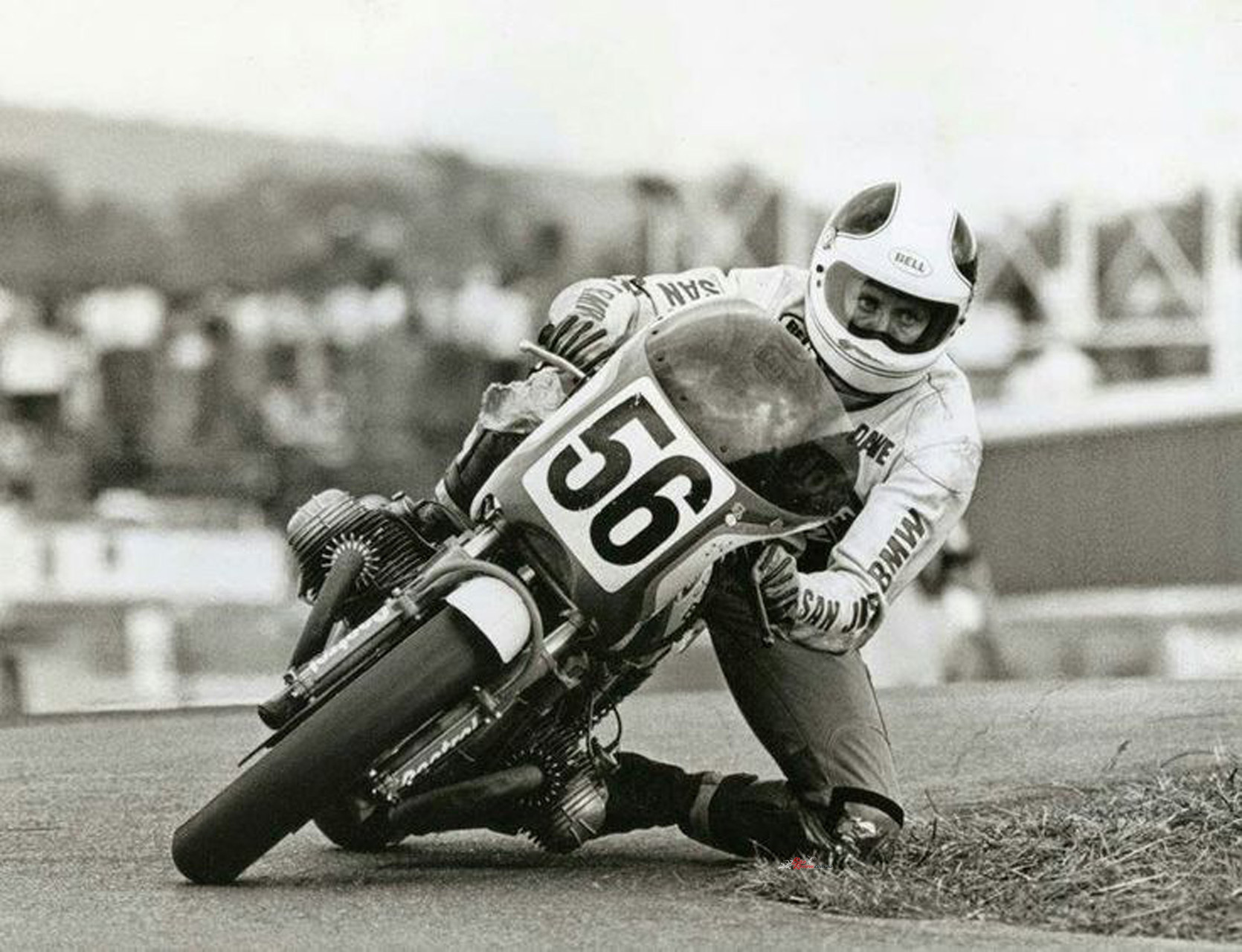
Look at how much cornering clearance the old R90S still has on the improvised circuit.
This meant that McLaughlin’s Daytona-winner inevitably rose and fell on the suspension in trademark shaftie style each time I hit another ratio on the surprisingly sweet-action five-speed gearbox’s left-foot race-pattern format. By mid-1970s standards, the R90S Superbike’s transmission felt very refined, with no need to use the light-action clutch for upward shifts, presumably because of Geitl’s hard work in machining all that weight off the flywheel.
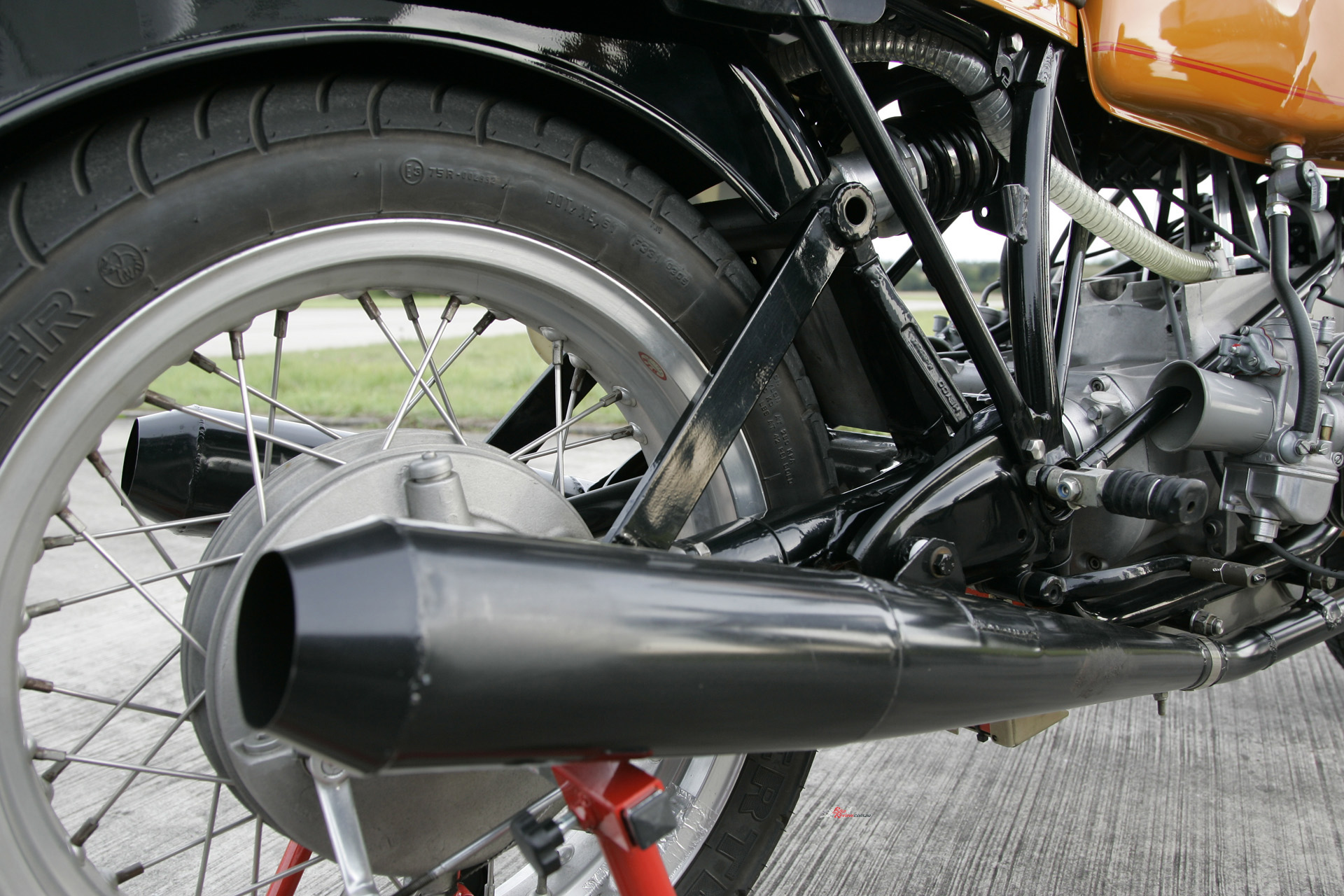
Getting the BMW off the line from a practice clutch start was easy work, and its good acceleration, thanks to the easy-revving motor’s appetite for revs, must have made it hard to beat to the first turn, with the Boxer twin’s meaty torque and competitive 175kg dry weight helping counter the extra horsepower of the Japanese fours.
“The BMW is reluctant to accept full throttle until the needle on the tacho is reading four grand or better. Below that, you have to coax it”
The engine does fluff and stutter if you gas it up hard anywhere below 5,000rpm, though – that’s the power threshold where those high-lift cams and the megaphone exhausts combine to deliver title-winning performance, and it pays to use the gearbox to make sure you keep the motor revving above that. The BMW is reluctant to accept full throttle until the needle on the tacho is reading four grand or better, and below that, you have to coax it to run higher up the rev scale.
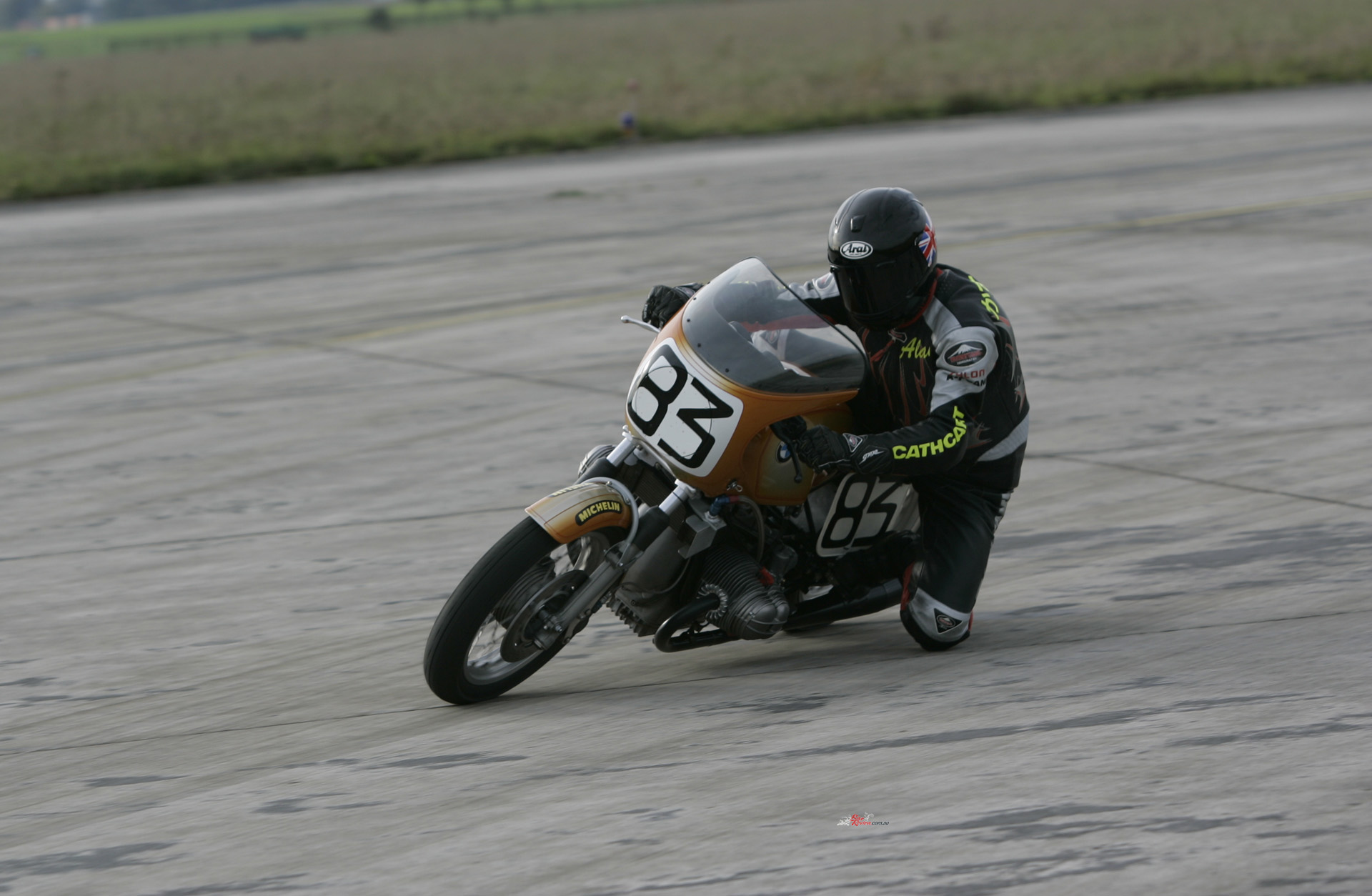
Cathcart on the restored R90S, showing the low, stable stance that made the Butler & Smith BMW so effective.
But a 3,500rpm powerband was plenty to play with in making the Beemer fly, though it was noticeable that power kept building towards that 8,800rpm redline, an open incentive to ignore it in pursuit of more punch higher up still, as four-stroke tyro Gary Fisher apparently did, before paying the inevitable price with a broken rocker in the Daytona race. But get the Boxer engine chiming in the upper reaches of the tacho dial and the result is a long-legged feeling of irresistible momentum, as well as an extraordinary lack of vibration, even at high rpm.
The lightened bottom end to the BMW’s engine reduces the gyroscopic effect of the lengthways crank, but can’t disguise it completely, like when changing down a gear on the overrun, while cranked over entering a turn, when the BMW wants to sit up, and make you miss the apex. Completing downward changes while still upright before leaning into a turn, and blipping the throttle hard between downshifts resolves this, by dialling up extra revs to cancel out the G-forces – although it’s an acquired skill.
“The lightened bottom end to the BMW’s engine reduces the gyroscopic effect of the lengthways crank, but can’t disguise it completely”
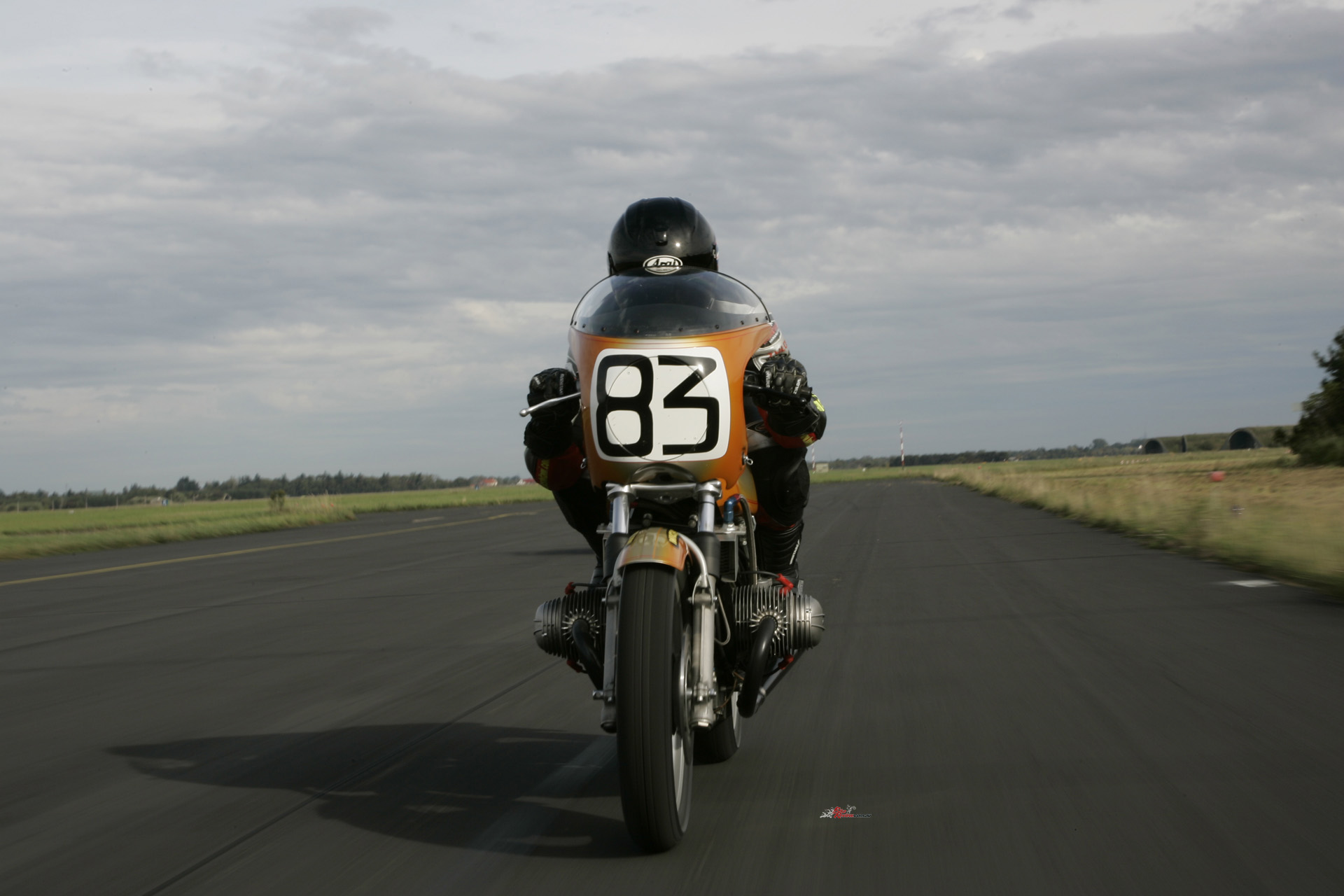
But that apart, I have to admit the BMW’s handling was better than I’d expected. The steering geometry does feel to have a lot of trail as well as a raked-out head angle by the way the front wheel swings so decisively in almost pendular fashion into a turn, but the payoff is good stability in a fast turn, where the R90S stayed glued to the line in a third gear sweeper, despite having to ride over some pretty severe bumps in the concrete surface.
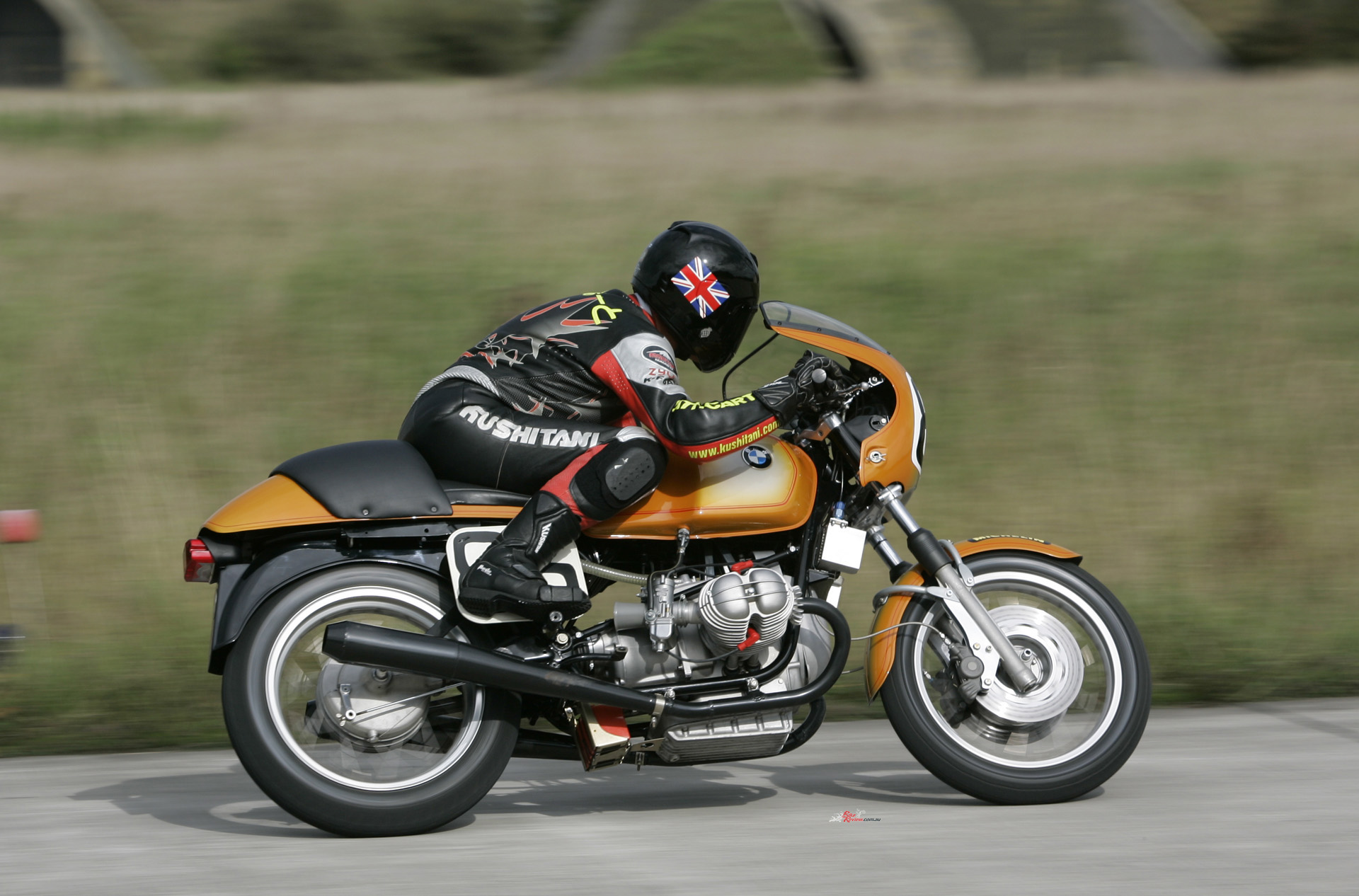
At speed, #83 shows the blend of road-bike origins and purposeful AMA race modifications.
The monoshock rear end has far less travel than a modern Telelever Boxer, but it coped okay with runway rash, even if the ride quality was pretty dismal. But the lack of compliance didn’t cause the bike to hop or skip when running over surface irregularities under power, such as its riders would have encountered on the concrete Daytona bankings.
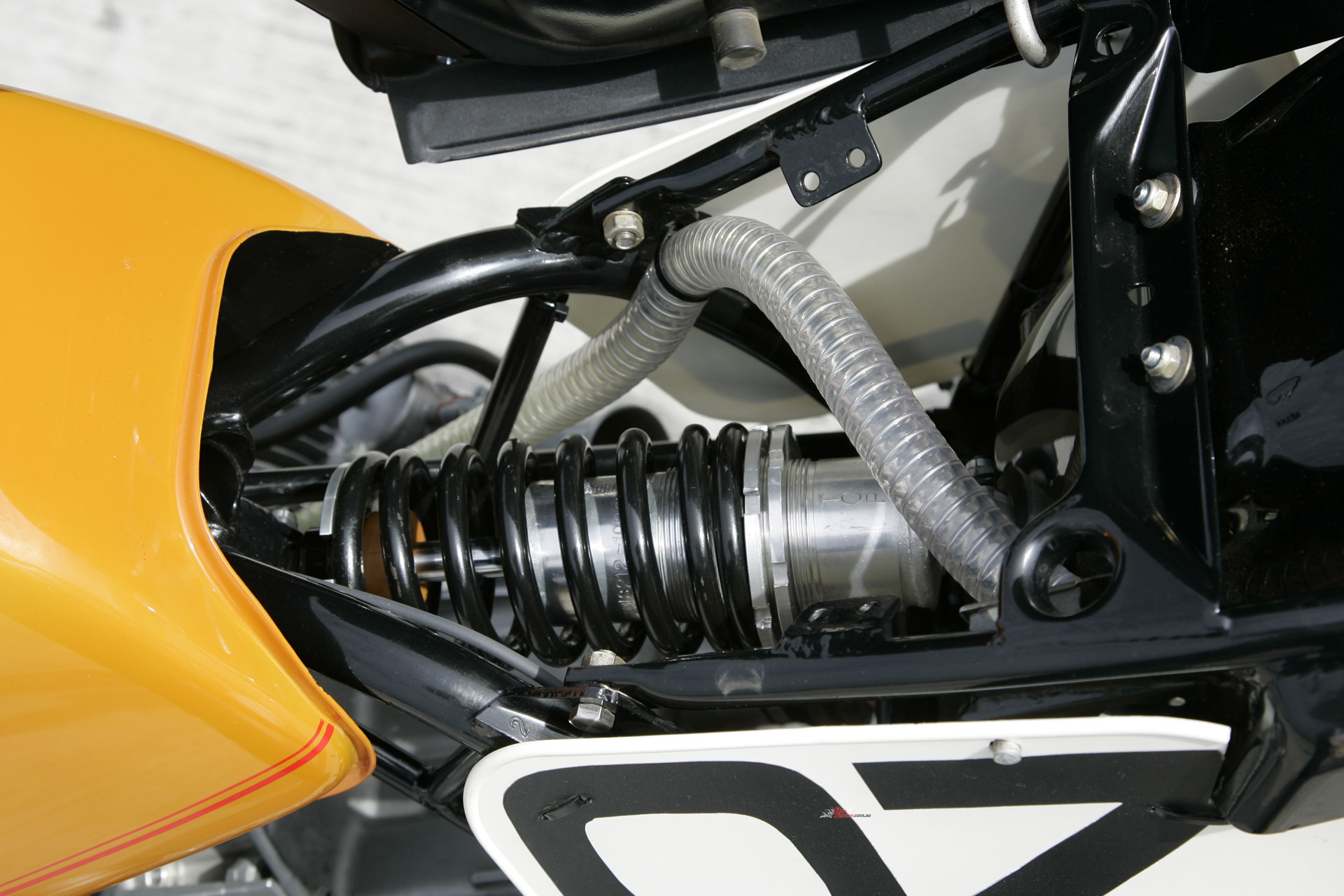
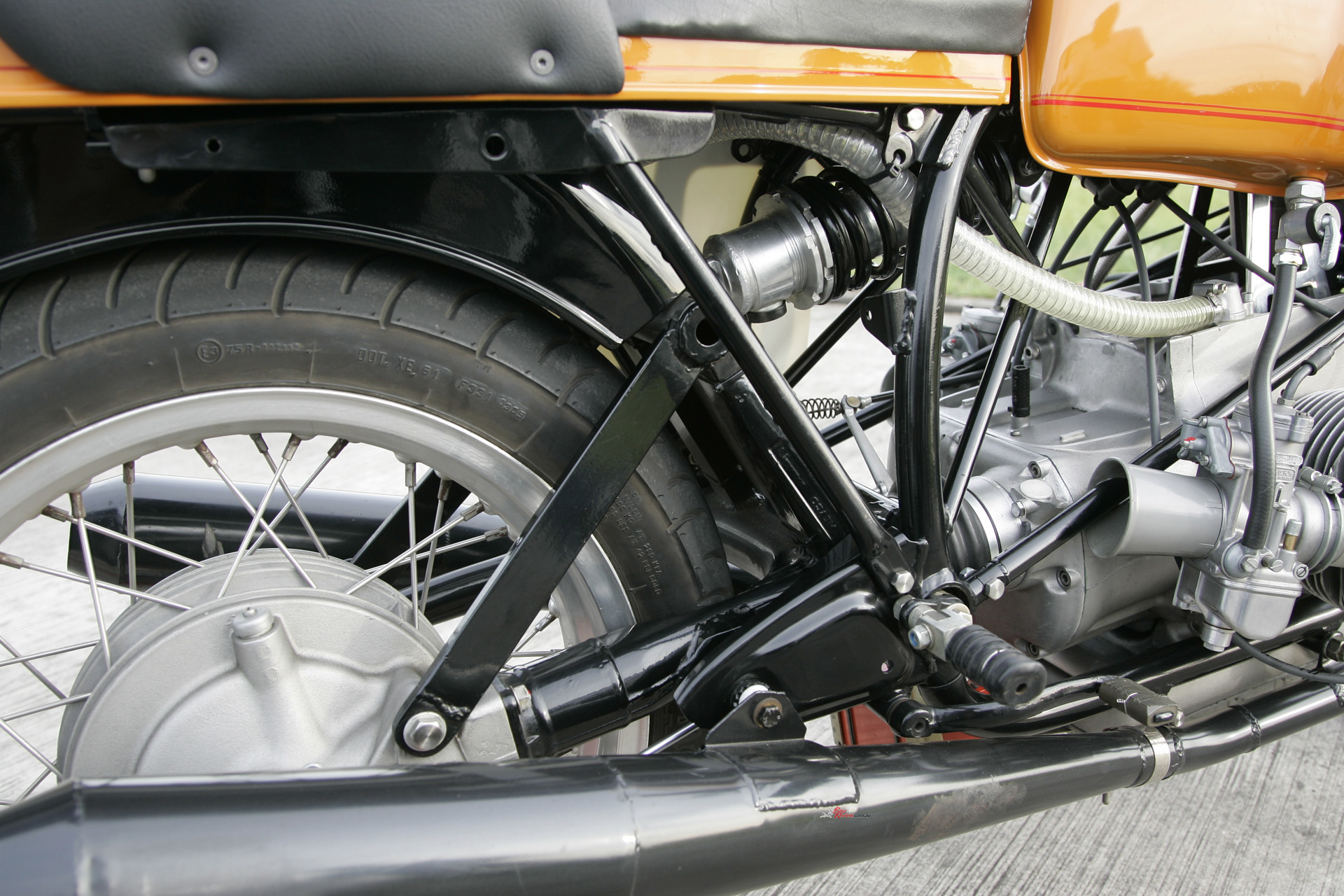
So it apparently didn’t weave or wobble over the bumps in the Daytona Tri-Oval back then either, where holding on to the BMW’s loose-handling Kawasaki rivals was a major feat of strength and skill – and bravery. And there’s good ground clearance for those sticking-out cylinders, even with modern tyres.
“There’s good ground clearance for those sticking-out cylinders, even with modern tyres”
Thanks to a combination of a low centre of gravity, the BMW duplex frame’s long 1465mm wheelbase, that braced-up trio of triple-clamps and the softer fork damping, the R90S was quite unruffled over any of the dips in the improvised airport circuit’s surface, and it also braked quite well, too. Maybe not as hard or as confidently as the Ducati 750SS, equipped with a trio of cast-iron Brembo discs gripped by the same Lockheed calipers that I’ve been racing ever since the year before the BMW was built, but well enough to be in contention.
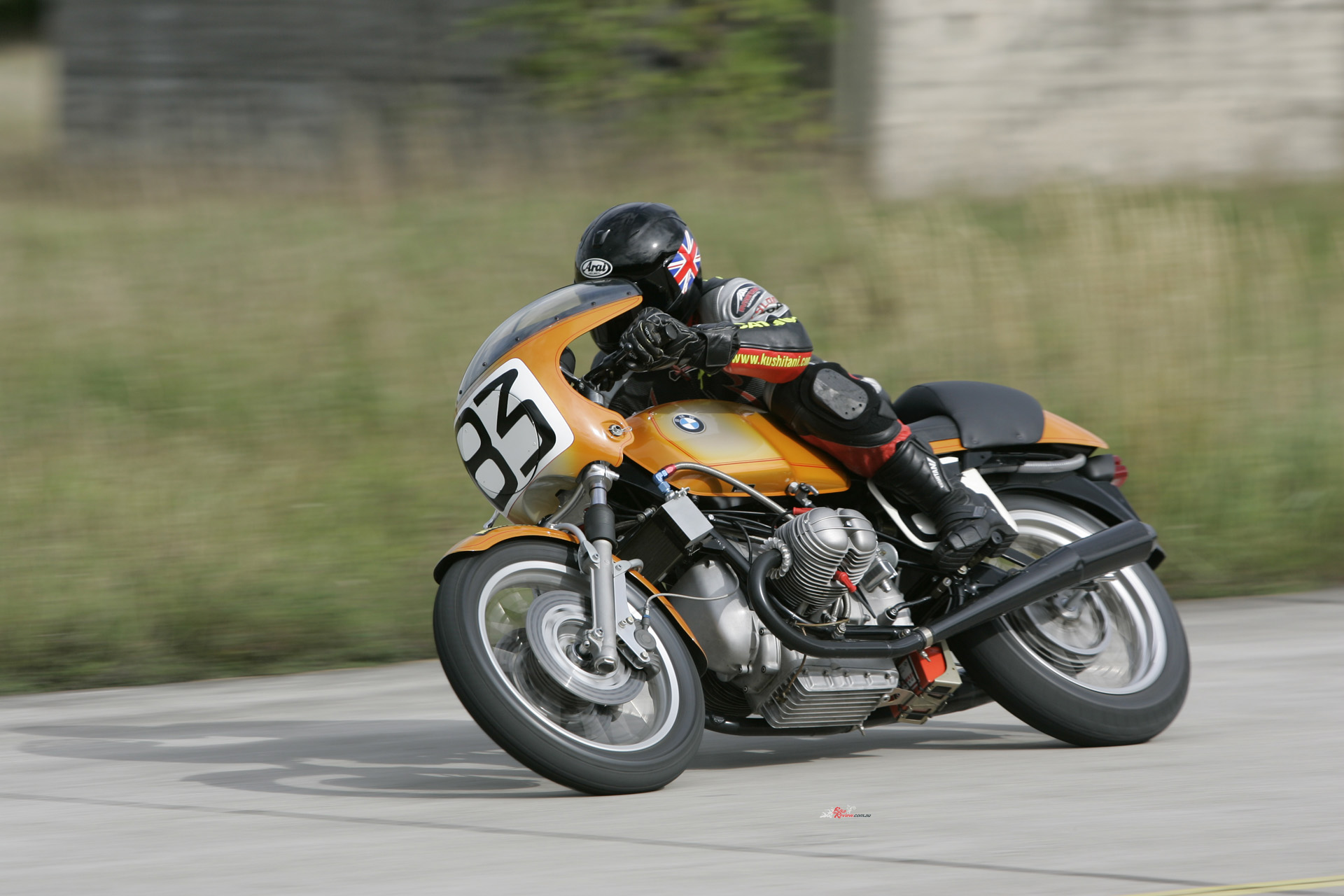
Cathcart tucks in behind the tall screen through a fast sweeper, the Boxer engine fully exposed.
There isn’t the same initial bite as the Ducati’s cast-iron discs, so you have to start braking a little earlier and squeeze the lever a lot harder on the BM. The rear drum brake does work OK, but you must be careful not to stamp on it too hard, else you’ll get the rear tyre chirruping the concrete as inertia takes its toll – same as you couldn’t use too much engine braking in those pre slipper-clutch days.
The BMW Boxer twins cruised to victory in the first-ever AMA Superbike race at Daytona back in 1976 ahead of the faster fours, because they were a better all-round package. Too bad that it took BMW 15 years and Toprak’s arrival to assert comparable qualities at World Championship level with its M 1000 R. And do keep an eye out for our feature on the team and interview with Steve McLaughlin soon.
Boxing Clever: The technical side of the R90S Superbike
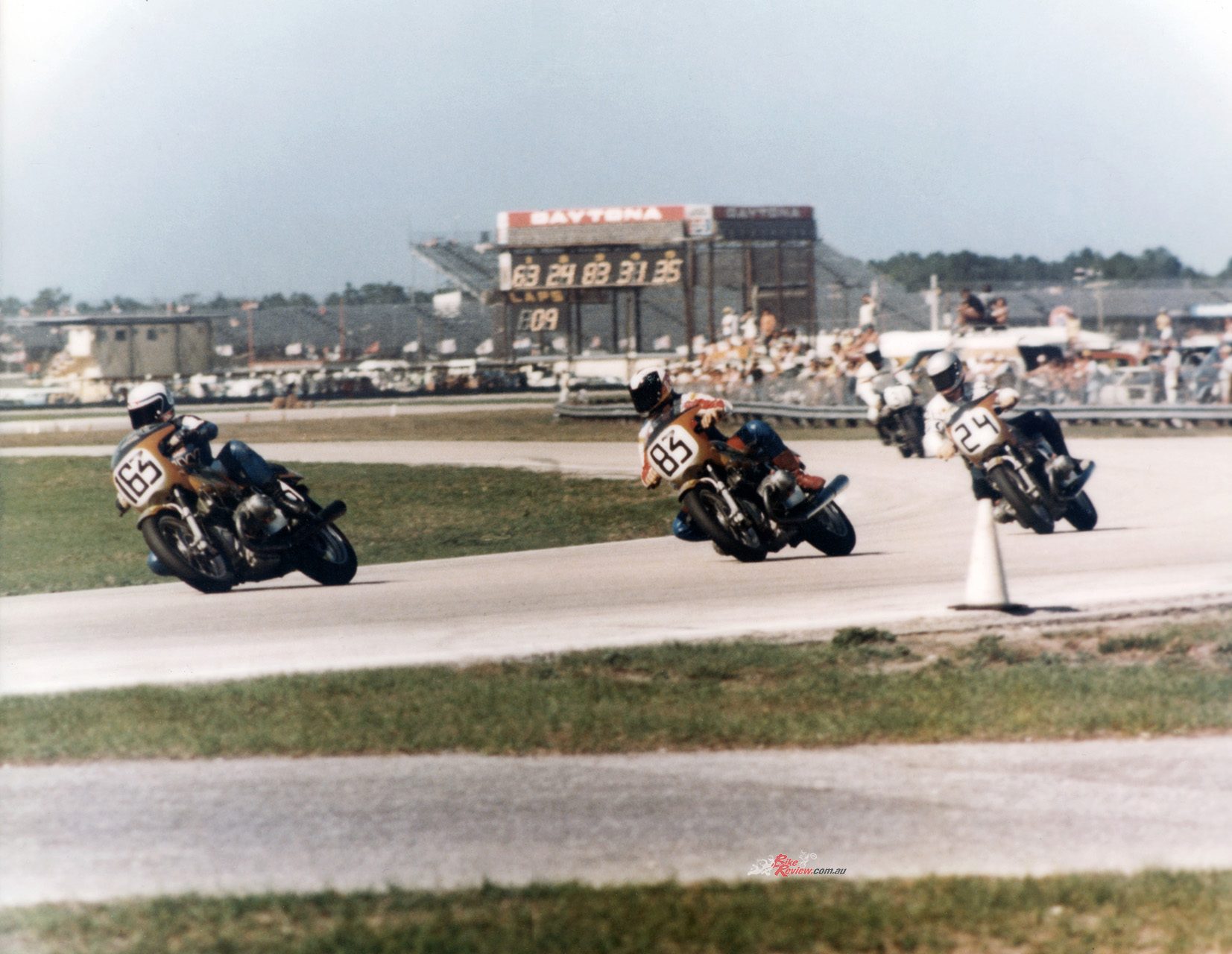
Pridmore ahead of McLaughlin and Fisher at the 1976 Daytona.
To create the three Butler & Smith BMW R90S Superbikes for the new AMA Superbike class in 1976, Udo Geitl drew heavily on his experience with the ultimately abortive BMW F750 racers of 1973–75, and lessons learned from racing the then-new R90S. Successes by Kurt Liebmann with his AMOL Precision-prepared bike in the eastern US and Canada, and by Reg Pridmore in California during the R90S’s debut Heavyweight Production season in 1974, proved the platform’s potential.
As a member of the AMA Road Racing Rules Committee, Geitl had helped write the more liberal Superbike regulations, which he viewed as an invitation to innovate wherever the rulebook didn’t explicitly forbid it. Working with Todd Schuster and Kenny Augustine, and spurred on by rivalry with BMW West Coast manager Helmut Kern and sales manager Matt Capri (later of Luftmeister fame), Geitl set about transforming the stock 202kg, 67bhp, 125mph BMW R90S.
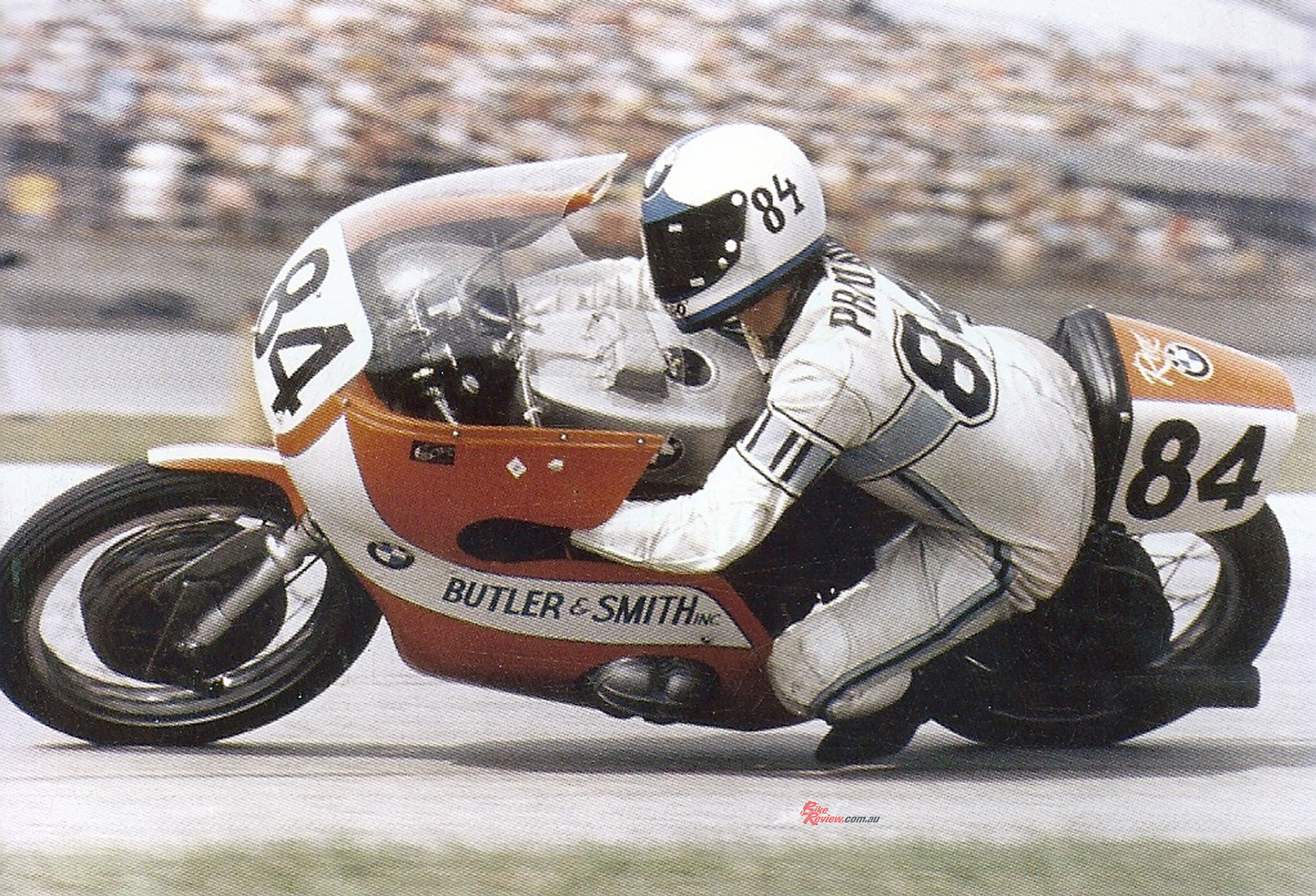
The 898cc, 90 x 70.6mm boxer engine was already capable of 80bhp in production racing trim, enough for Helmut Dähne to win the 1976 Isle of Man Unlimited Production TT. Superbike rules mandated a stock frame, silhouette bodywork (including tail-light and headlamp shell), and original engine castings, carburettors and silencer shells, though internal modification was permitted.
Geitl bored the engine to 95mm using Venolia forged pistons, raising capacity to the class-legal 1001cc and compression to 12.6:1. Heat-treated steel gudgeon pins were raised in the skirts to narrow engine width by 20mm per side, improving lean angle. Shorter forged titanium conrods, shortened cylinders, narrower rings, and a lightened, rebalanced crankshaft further reduced bulk, while 1.5kg was machined off the flywheel for faster pickup and improved shaft-drive handling.
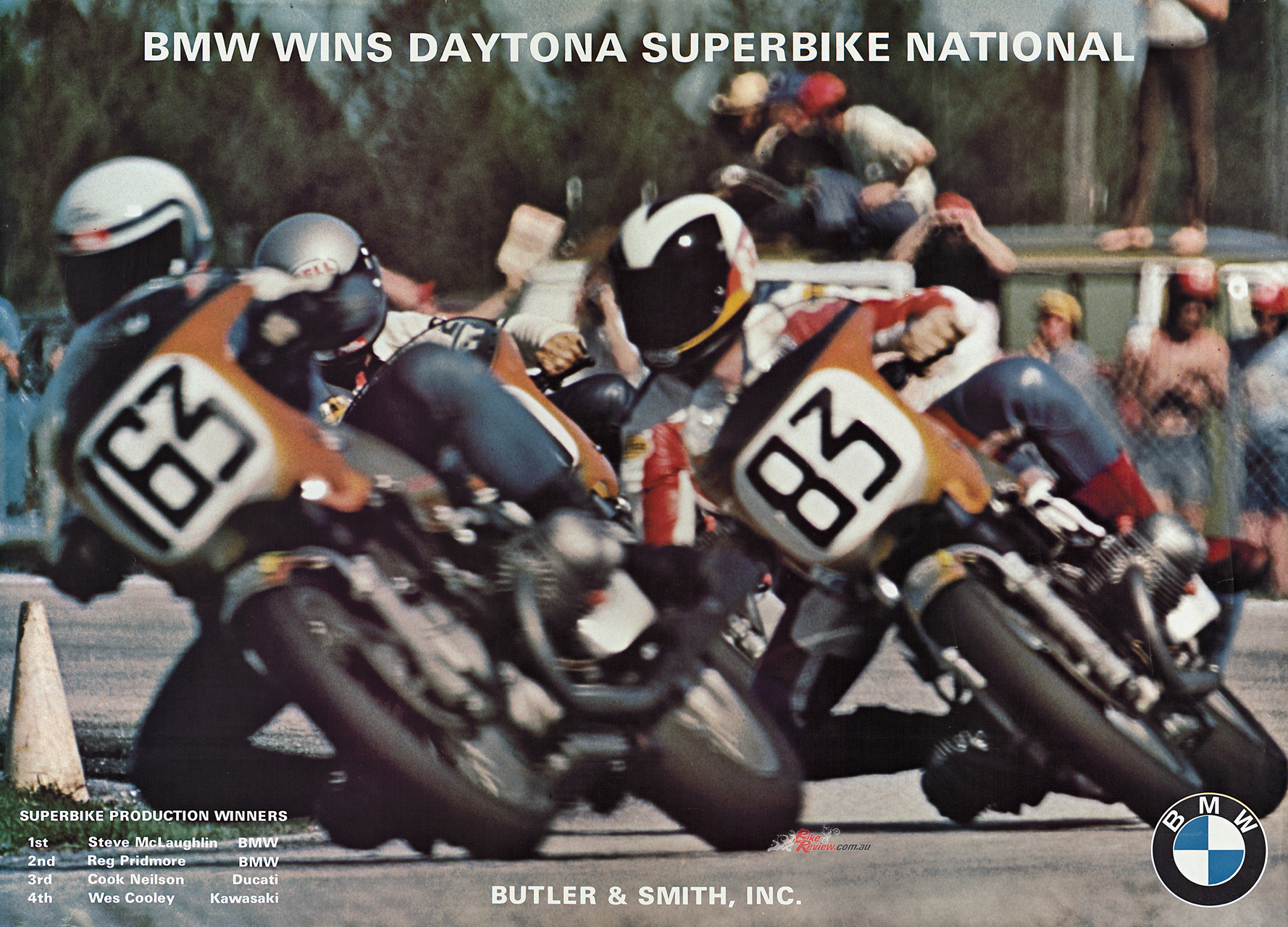
The two-valve heads were ported and gas-flowed, fitted with titanium valves, 46mm intake and 39mm exhaust, running in stock bronze guides with dual Crane springs. A Crane cam delivered 14mm of intake lift and increased duration, working with Smith chrome-moly pushrods, Wiesmann tappets and lightweight needle-roller rockers. Schuster bored the stock 38mm Dell’Orto pumpers to 40mm, discarding the airbox, while optional 36mm intake restrictors were used at tight tracks like Loudon to boost throttle response. A high-performance oil pump reduced parasitic losses from 5bhp to 3bhp, feeding an oil cooler sourced from an MGB and mounted under the fairing.
Of the three Superbikes, Pridmore’s retained points ignition, while the Fisher and McLaughlin machines used Bosch electronic CDI, all firing twin-plug heads via four Accel coils and running just 30 degrees of advance. Stock silencer shells were retained but gutted, concealing reverse-cone megaphones inspired by C.R. Axtell’s Harley-Davidson XR-TT designs. At Daytona in March 1976 the engines produced 92bhp at the clutch, rising to 102bhp at 8,600rpm by season’s end, 50 per cent more than stock, driving through a shaft final drive and close-ratio five-speed gearbox, with Liebmann/AMOL-produced lower gears and a modified BMW diaphragm clutch.
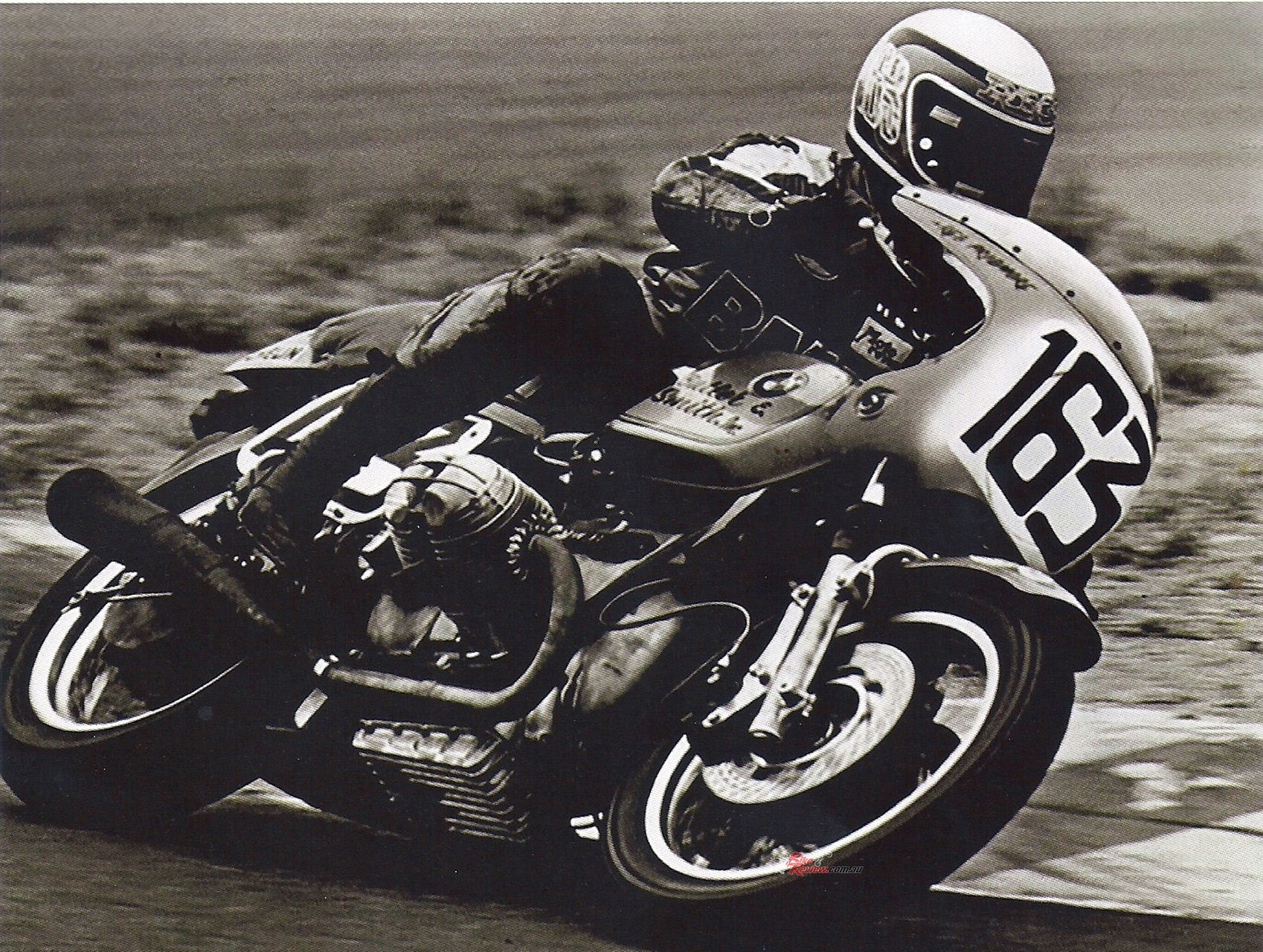
Chassis interpretation was equally creative. A spacer behind the gearbox moved the engine 25mm forward to improve front-end load, yielding a 48/52 weight bias. The engine was also raised 10mm and shifted 5mm right for clearance. A WM5 18-inch rear rim offset 8mm left allowed fitment of a 140-section Michelin slick, paired with a 110/60-18 front on a WM4 rim, replacing the stock 19-inch wheel. Ground clearance was preserved via careful suspension setup.
The stock 36mm forks were reworked internally for 175mm of compliant travel and clamped at 28 degrees in a heavily gusseted headstock, reinforced by a third billet alloy triple-clamp. Chrome-moly bracing struts ran from steering head to swingarm pivot, stiffening the frame but requiring holes to be cut in the Dell’Orto velocity stacks.
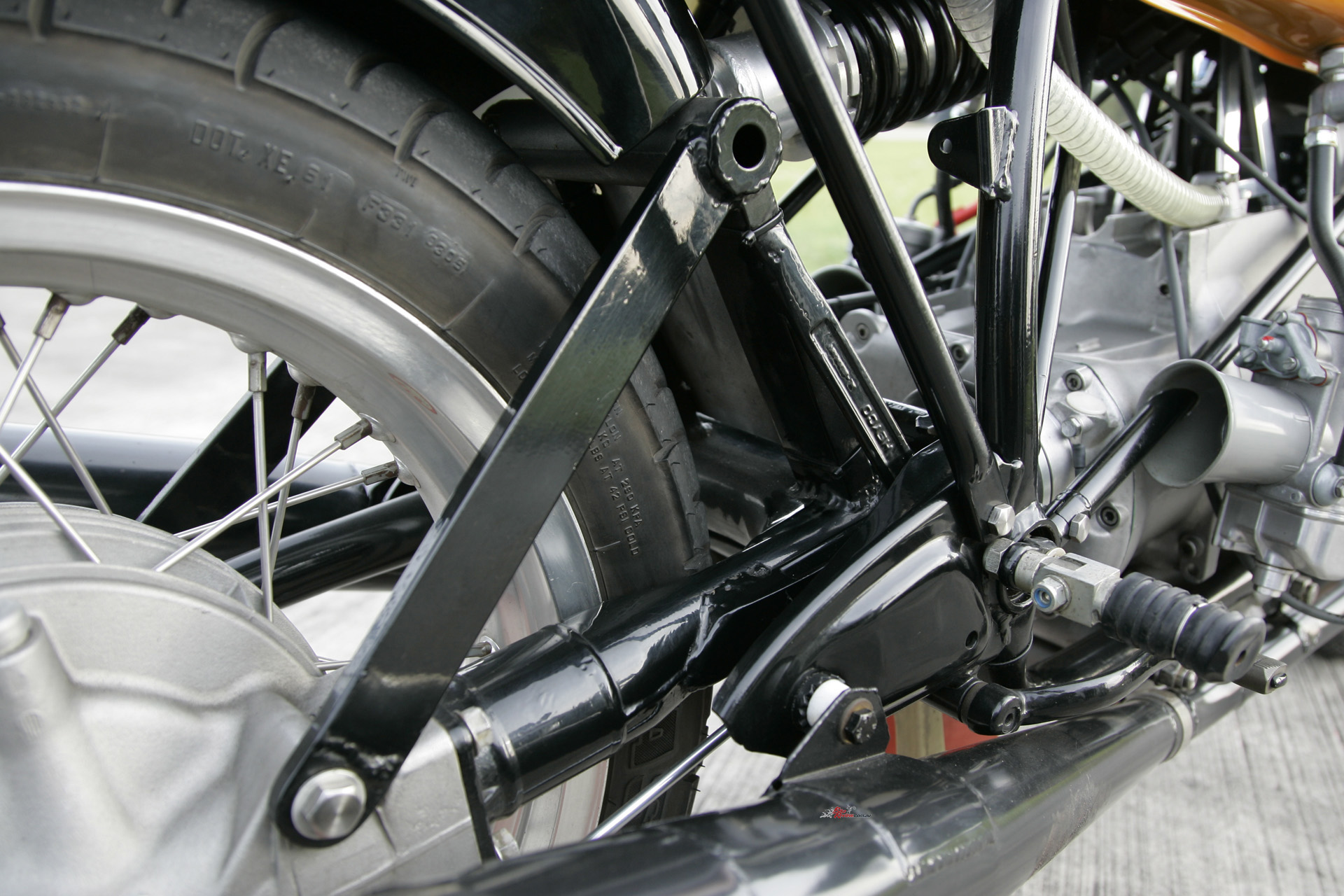
Rear suspension was more radical still. While Pridmore retained twin Konis, the McLaughlin and Fisher bikes ran a monoshock system delivering 125mm of travel. Exploiting a rule allowing “relocation of suspension components,” Geitl discarded one shock entirely and mounted the other under the seat, Vincent-style, via a triangulated cantilever link fabricated from modified tyre levers and spanners. Crude in appearance but effective, it arguably marked the first true modern monoshock layout, predating Yamaha’s later adoption of a compact system inspired by the BMW.
At Daytona, all three bikes ran 260mm Hunt aluminium front discs with ATE calipers, adequate there, but marginal elsewhere. After issues at Loudon, larger 290mm drilled Hurst-Airheart steel discs and Lockheed twin-piston calipers were fitted by Laguna Seca. In final race trim, the R90S Superbike weighed 175kg with oil but no fuel, just above the 168kg minimum allowed under AMA rules, which permitted a 20 per cent reduction from homologated street weight.
1976 Butler & Smith BMW R90S Superbike specifications
ENGINE: Air-cooled pushrod OHV 180° boxer twin-cylinder four-stroke, 95 x 70.6 mm bore x stroke, 1001 cc, 102 bhp at 8,600 rpm (at clutch), 12.6:1 compression ratio, 2 x 40 mm Dell’Orto carburettors with accelerator pumps, Bosch CDI ignition with dual ignition and four coils, 5-speed close-ratio gearbox with shaft final drive, single-plate all-metal diaphragm clutch with steel flywheel unit.
CHASSIS: Tubular steel duplex cradle frame with dual reinforcement struts, 36 mm BMW leading-axle telescopic forks with three triple-clamps, tubular steel swingarm incorporating shaft final drive inside right leg with cantilever Koni monoshock, 28-degree head angle, 80 mm trail, 1465 mm wheelbase, 175 kg with oil and no fuel, 48/52% weight distribution with 12 litres of fuel, twin 290 mm Hurst-Airheart steel front discs with 2P Lockheed calipers, 200 mm BMW single leading-shoe rear drum.
WHEELS/TYRES: Front 110/60-18 Metzeler Lasertec on 2.65in WM4 wire-spoked rim, rear 130/80-18 Metzeler Lasertec on 3.00in WM5 wire-spoked rim.
PERFORMANCE: 145mph / 233 km/h top speed (Daytona 1976).
OWNER: BMW Mobil Tradition, Munich, Germany.
You Might Also Like