
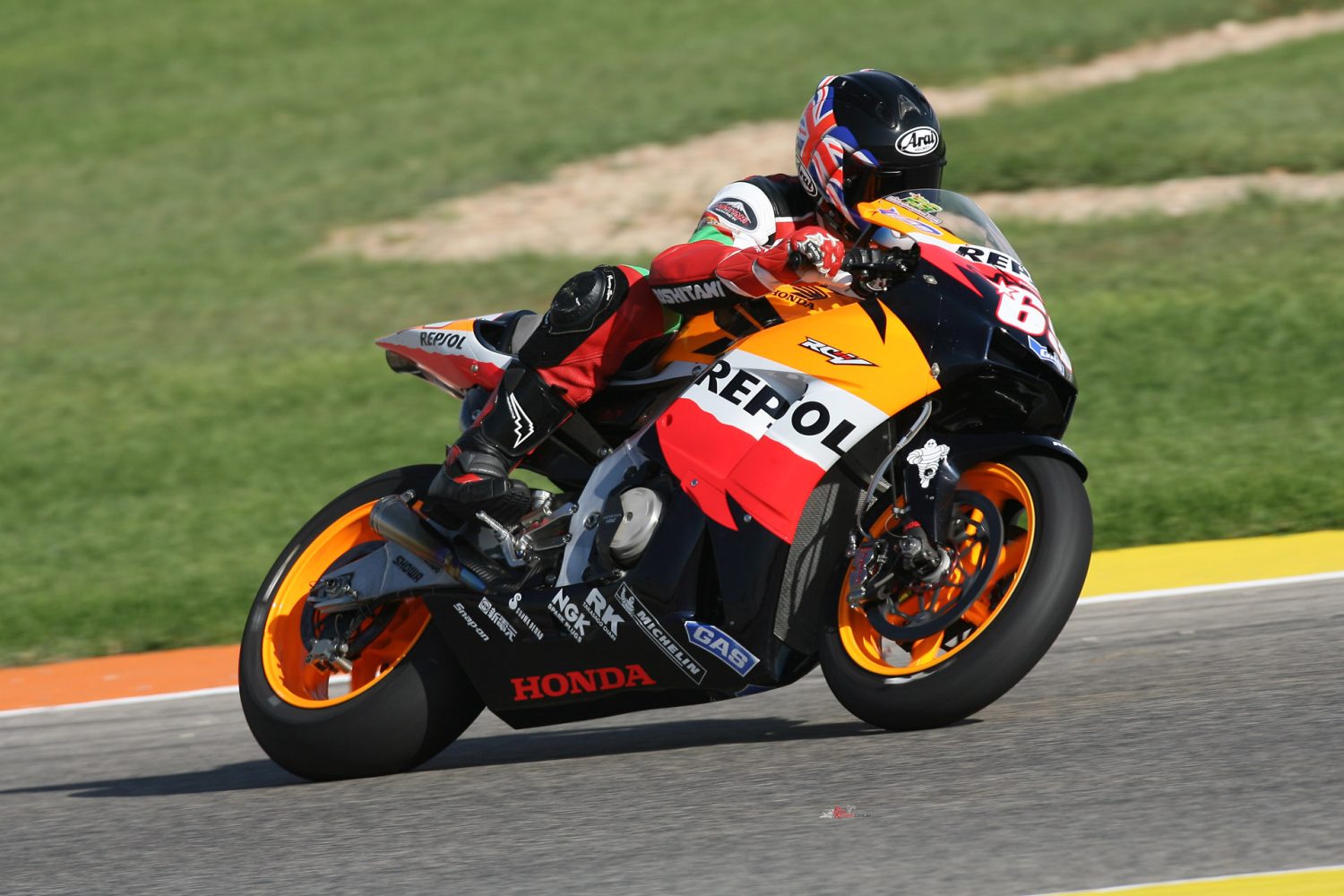

Alan Cathcart rides Nicky Hayden’s 2006 MotoGP title-winning Honda RC211V and reveals the extraordinary story behind HRC’s unique, one-year-only V5 Grand Prix racer.
We ride the machine that not only took the late Nicky Hayden to his only MotoGP world championship 20 years ago this year, but finally ended Valentino Rossi’s reign. It’s the unique RC211V V5 Honda created for one last shot at 990cc MotoGP supremacy.
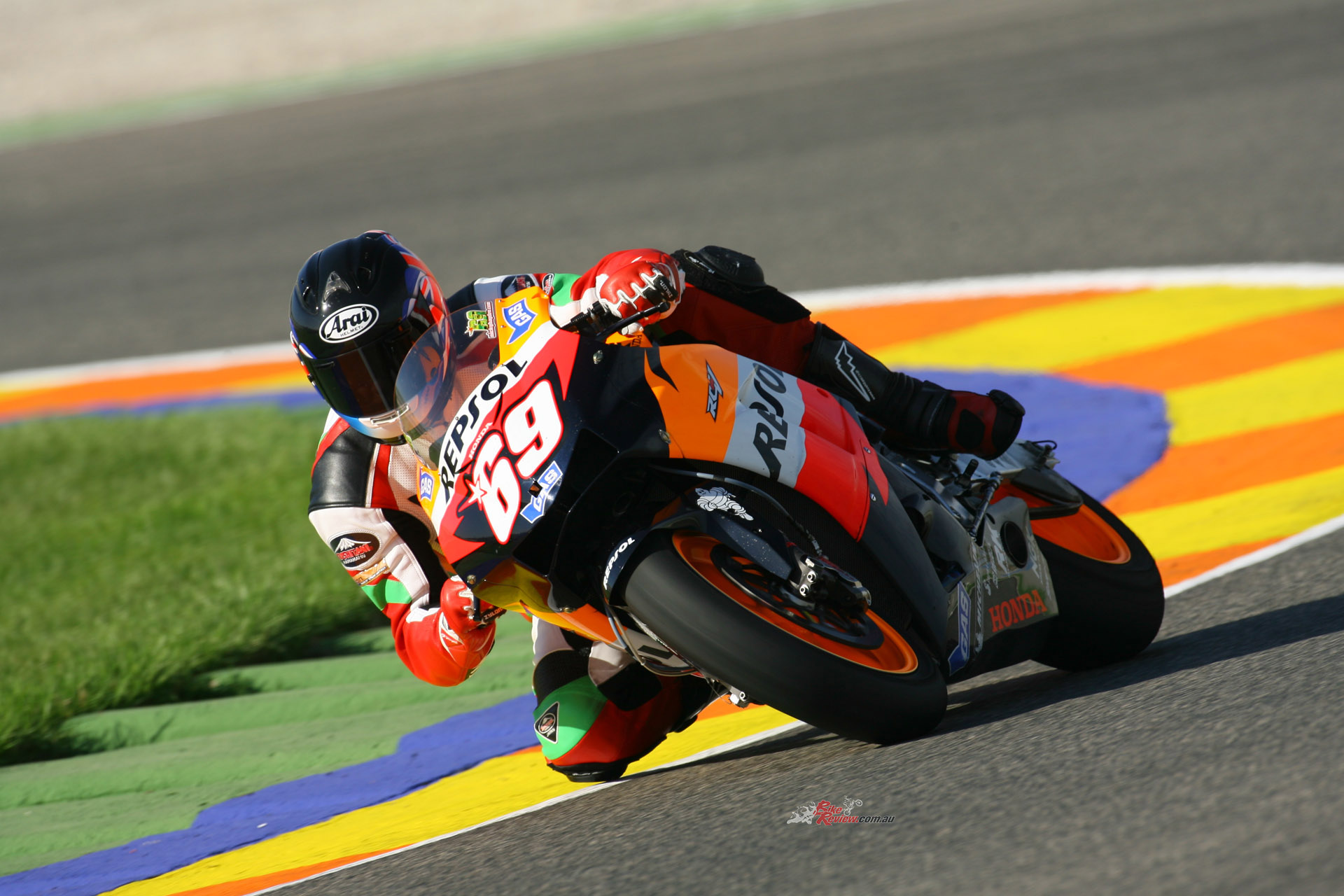
Alan Cathcart sampled Hayden’s title-winning RC211V at Valencia.
MotoGP is on the verge of a major makeover in 2027, dropping engine size from 1000cc to 850cc, deleting all dynamic ride height and holeshot devices, using 100 per cent sustainable fuel and considerably reducing permitted aero assistance. This comes exactly 20 years on from a similar step, when the 990cc bikes used since GP racing went four-stroke in 2002, were replaced by 800cc machines for 2007.
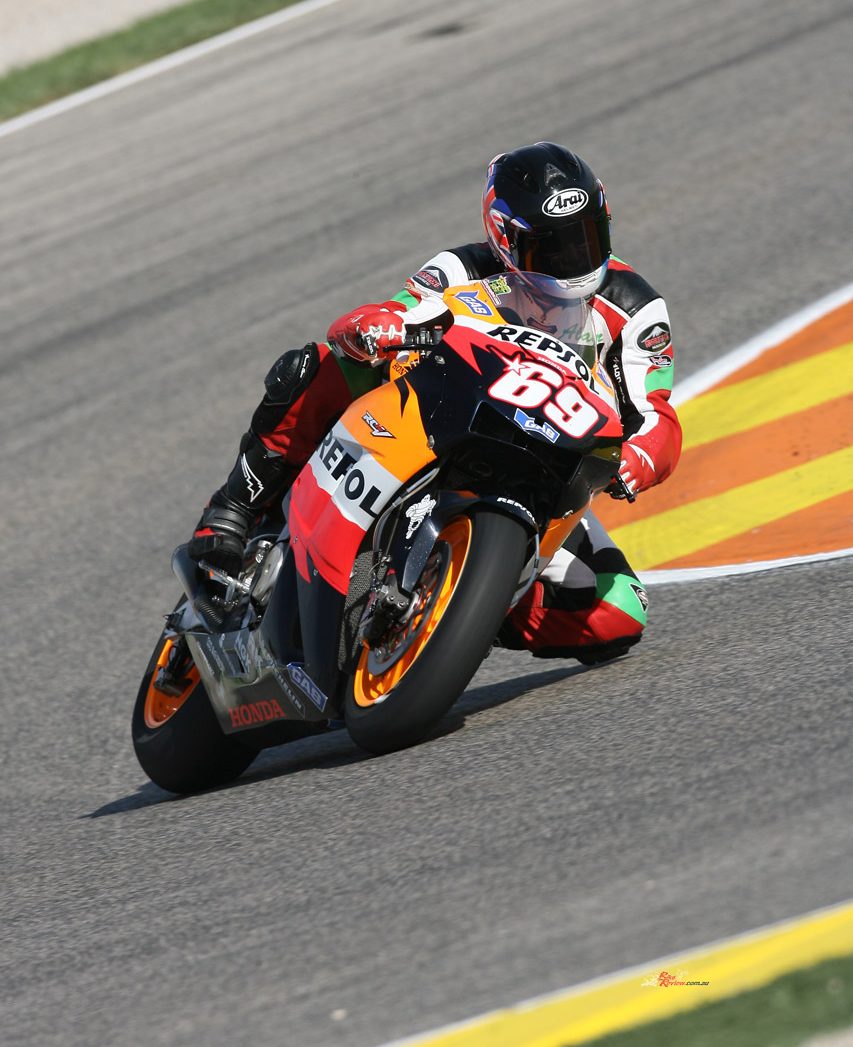
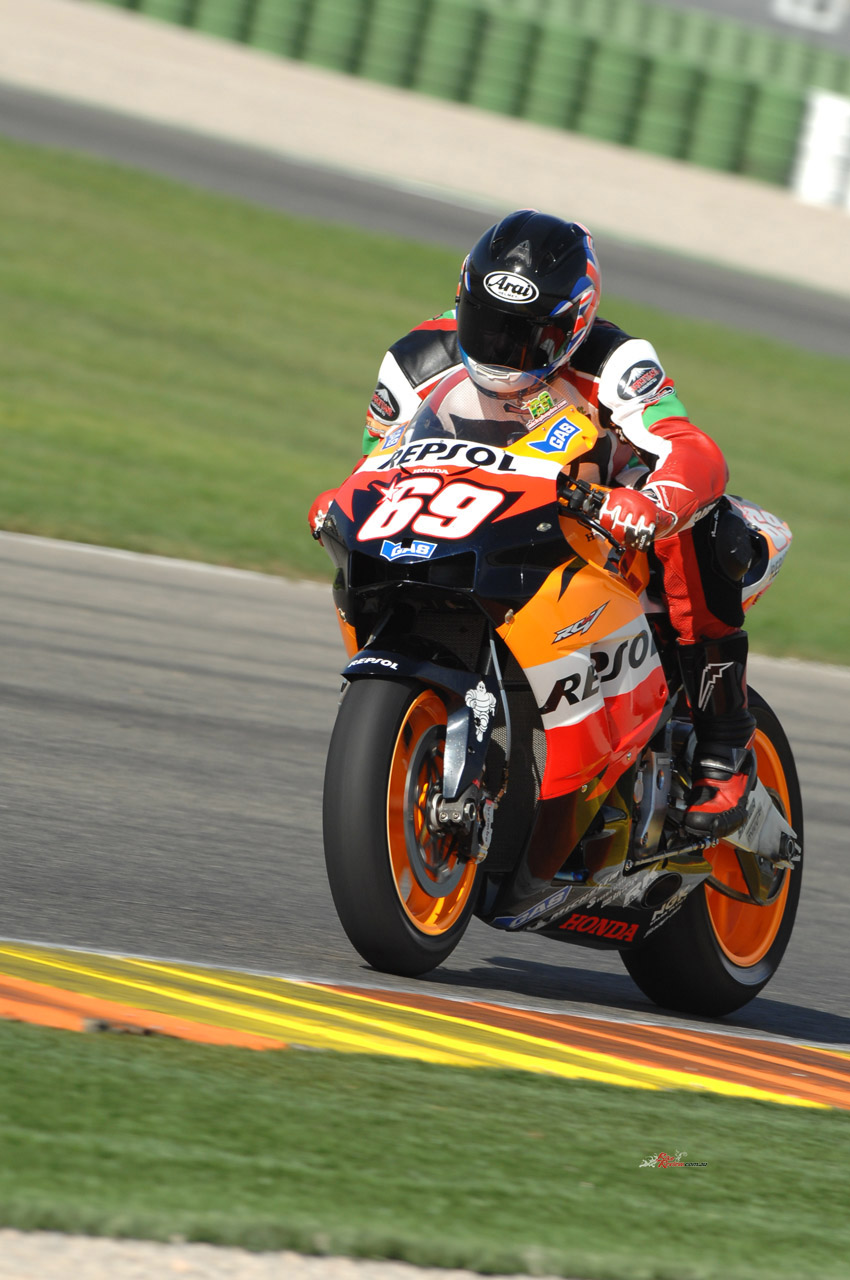
The 2006 season therefore saw the five-year battle for supremacy in the 990cc era between Honda and Yamaha finally resolved in favour of Big H – arguably by as little as 0.002 sec! That’s the margin by which future Moto2 World champion Toni Elias on his Gresini Honda RC211V led Yamaha’s reigning MotoGP champ Valentino Rossi over the finish line to win the Portuguese GP in Estoril, thus denying him the five points he’d have needed to complete a clean sweep of one-litre MotoGP titles in the final race two weeks later in Valencia.
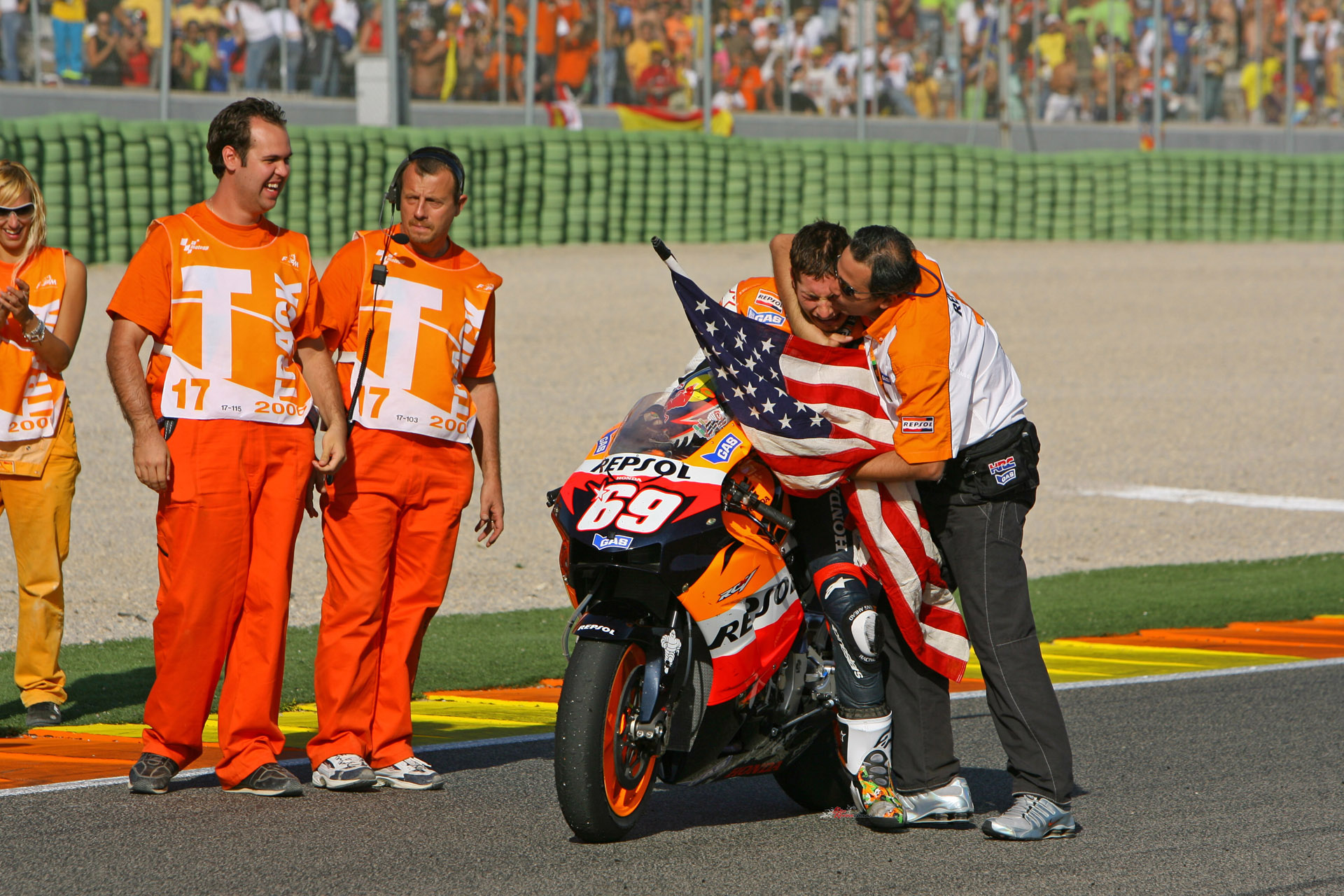
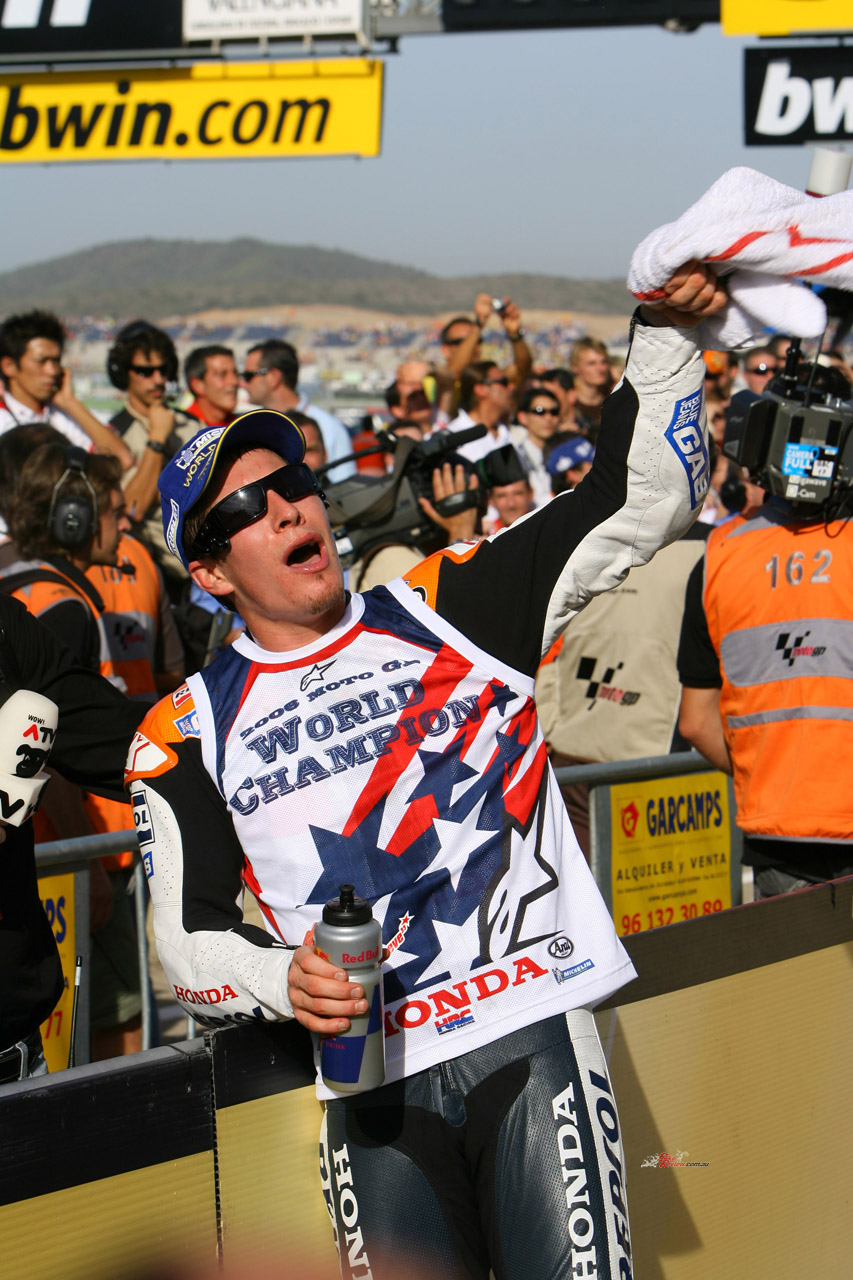
Honda’s American ace, the late, great Nicky Hayden, was crowned world champion that day by riding to a rostrum finish at Valencia.
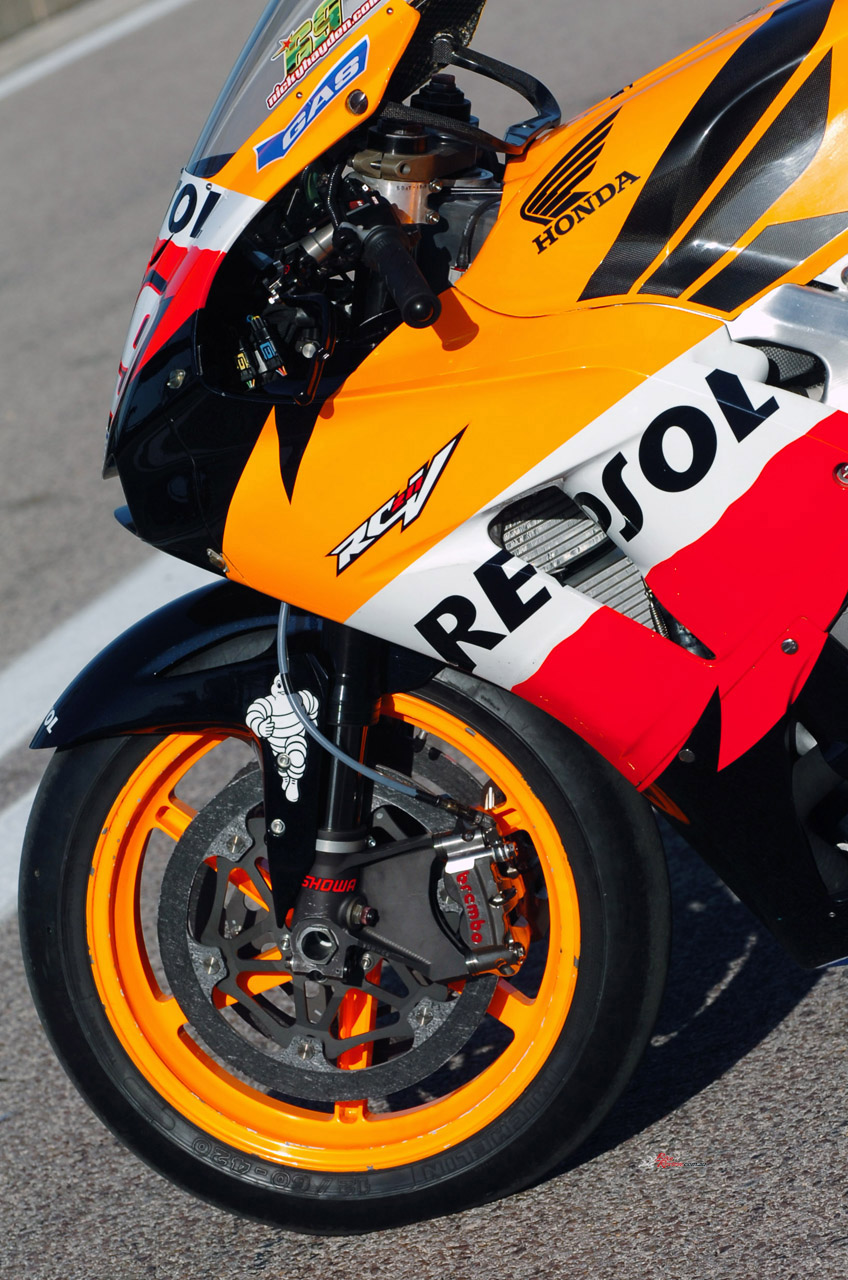
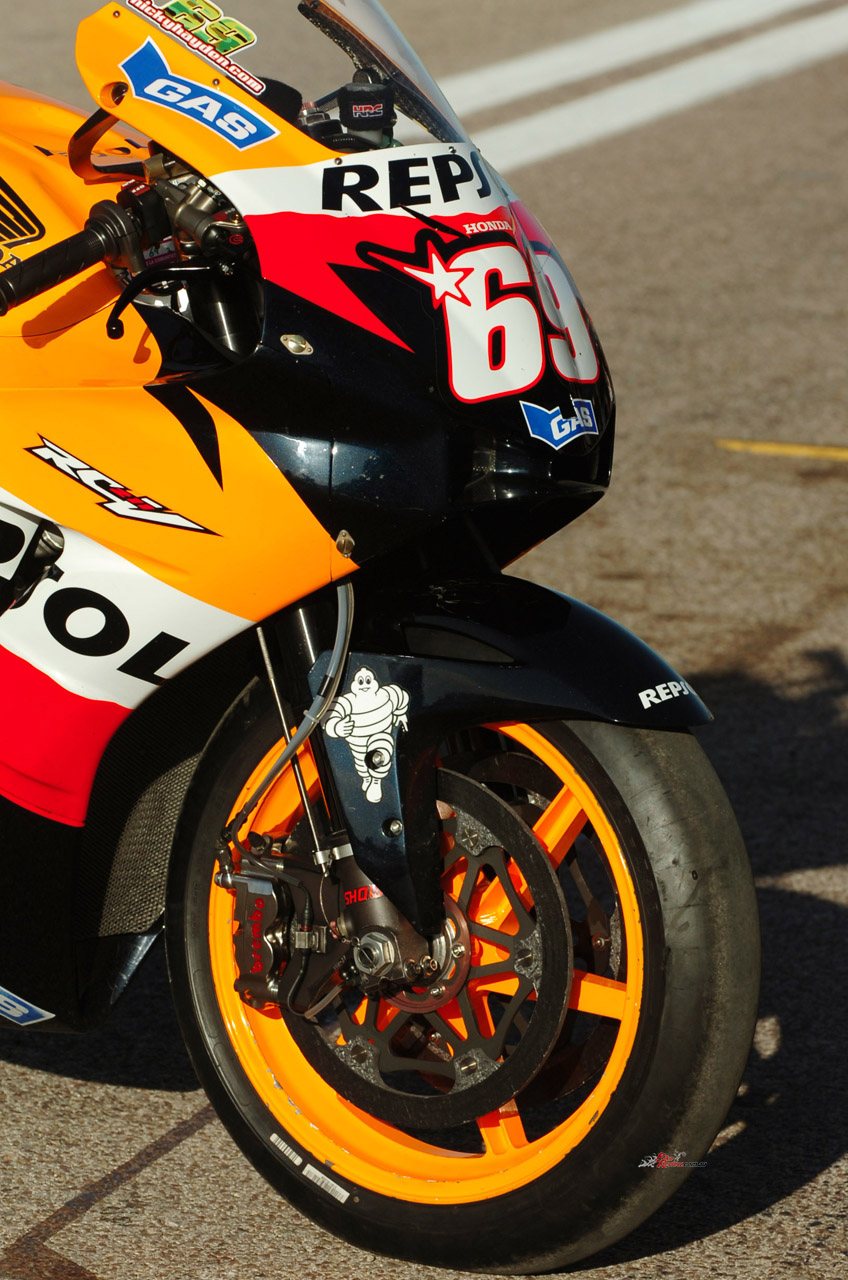
Instead, Honda’s American ace, the late, great Nicky Hayden, was crowned world champion that day by riding to a rostrum finish at Valencia on his unique NV5HG variant of the RC211V – that’s ‘V’ for the V5 engine format, while 211 stands for the first GP design of the 21st century, with the new 800cc RC212V the second. Nicky’s bike was the so-called New Generation version of the Japanese company’s V5 motorcycle, which HRC’s dedicated engineers had created exclusively for him to test, and race.
Nicky’s gruelling pre-season schedule saw him complete an amazing 6,110km on the bike, testing at Phillip Island, Catalunya and Sepang in an effort to refine the New-Gen RC211V all on his own, while his new teammate, Honda’s two-time 250GP World champion Dani Pedrosa, learnt his four-stroke trade on the uprated NV5HD version of the older V5 model which HRC termed the Original, shared with the four Honda lease-team riders.
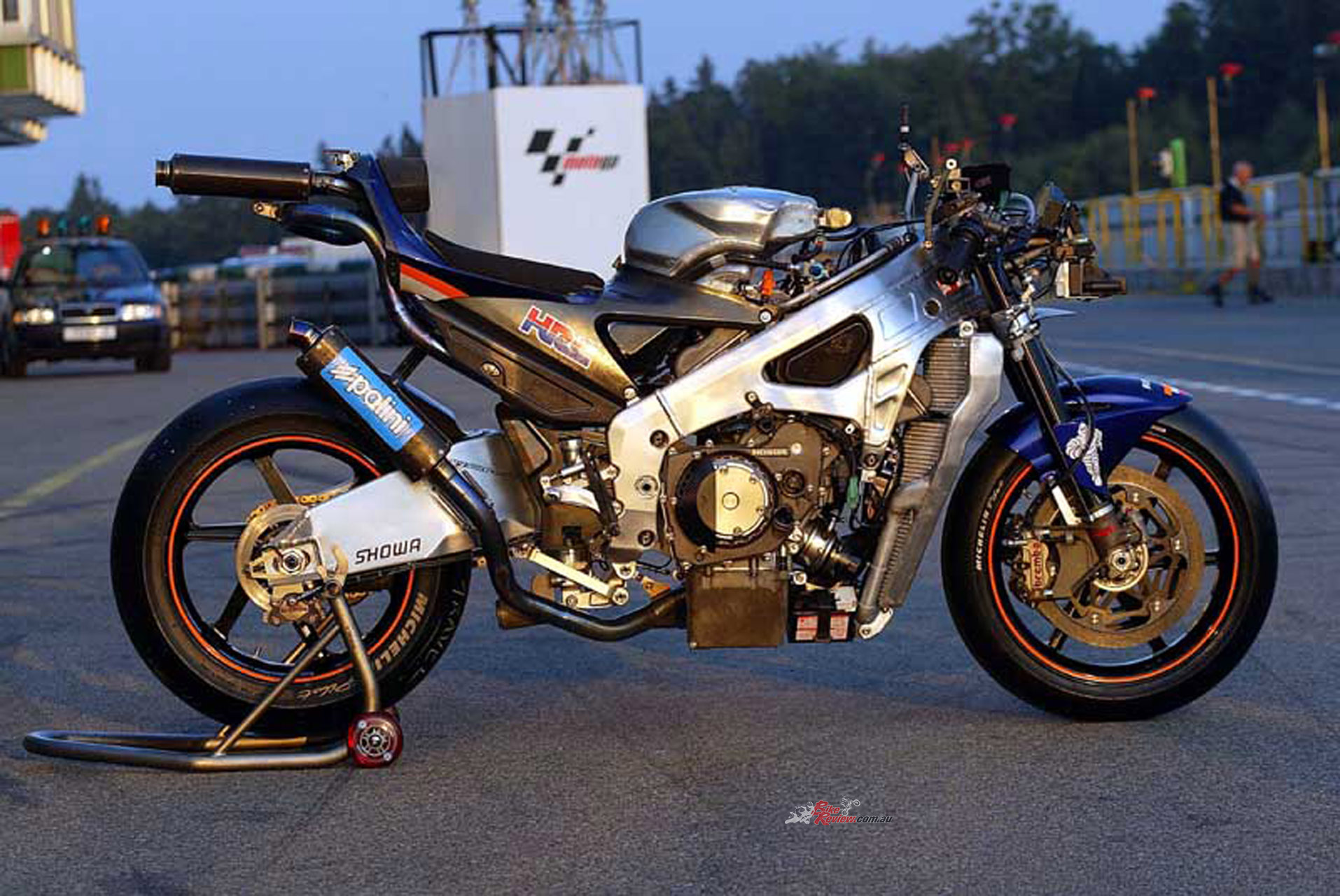
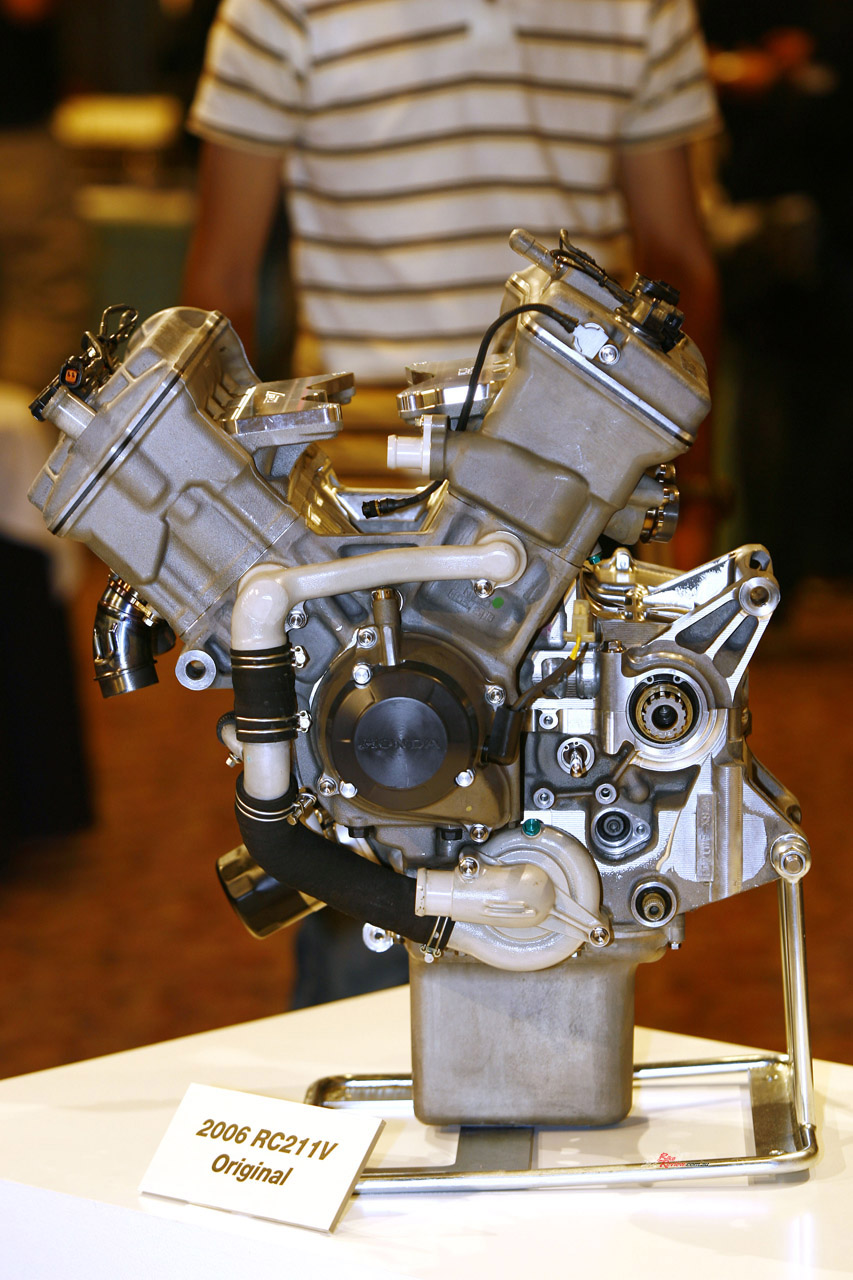
Stripped of its bodywork, the Original RC211V reveals Honda’s open-cradle aluminium twin-spar chassis and V5 engine.
Because if losing a second Riders world title in succession in 2005 to the Rossi/Yamaha duo hadn’t already been hard enough for Honda’s head honchos to handle, also forfeiting their prized Manufacturers crown for the first time ever in the MotoGP era must have been an even greater blow to Honda’s morale. So for the final year of the 990cc format in 2006, Honda went all out to regain its supremacy, and stamp its V5 as the dominant force of the Gen 1 MotoGP era. Thanks to Nicky Hayden, it did just that, leaving the RC211V as the top 990cc ultrabike, with three Riders titles and four Manufacturers crowns in five years.
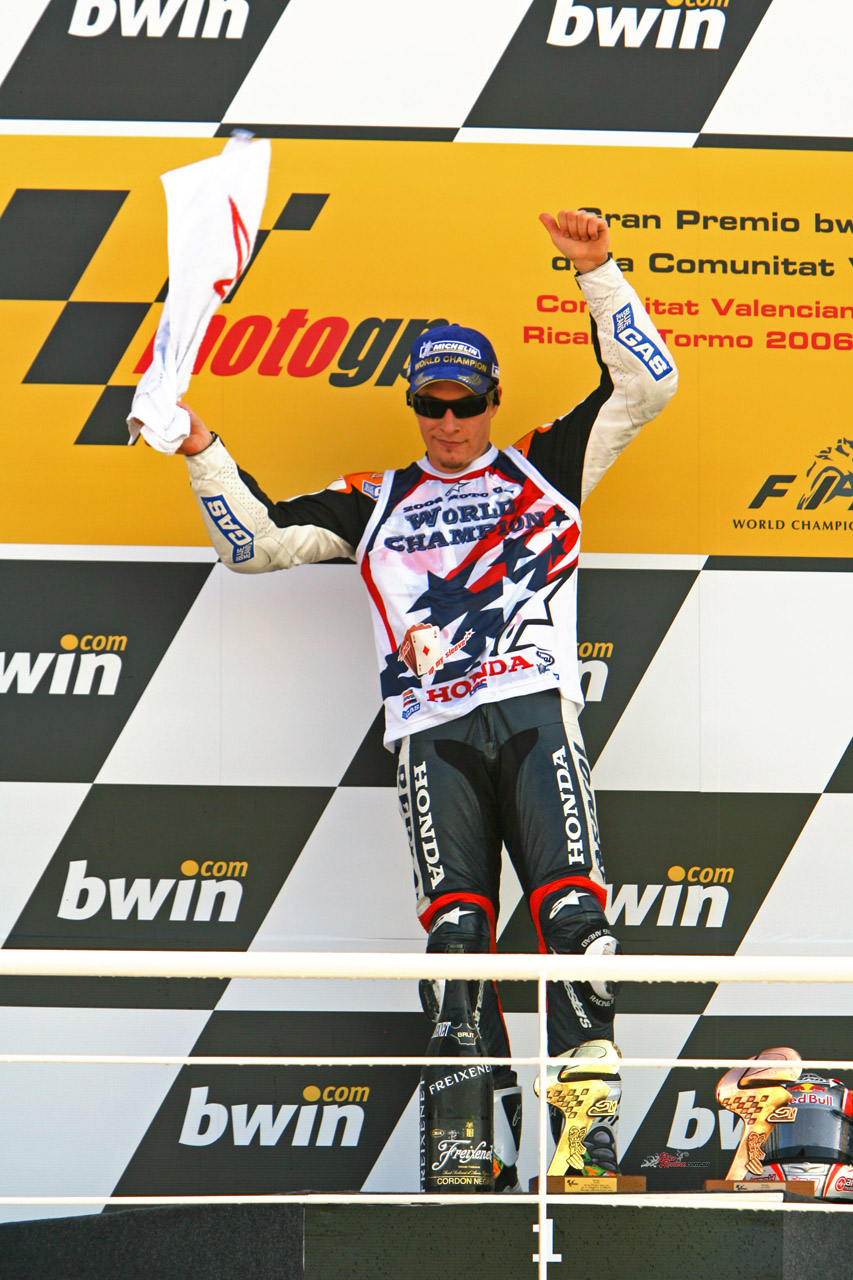
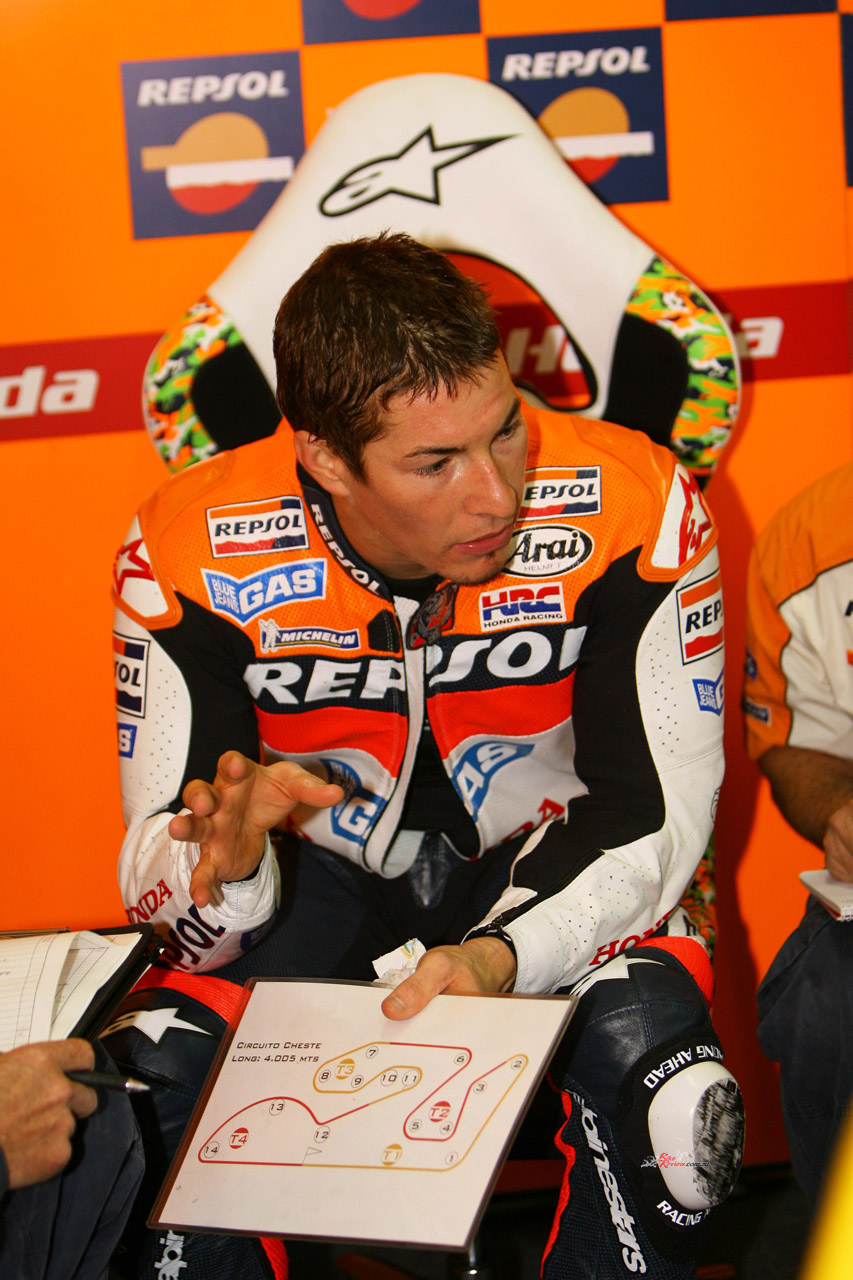
But this came only after a gruelling 2006 season in which HRC engineers were constantly playing catchup with development of the Hayden-only RC211V. For this was an entirely new motorcycle they created for the final year of the 990cc formula, a one-year wonder which says it all about the commitment to victory of the world’s largest motorcycle manufacturer.
This was an entirely new motorcycle they created for the final year of the 990cc formula, a one-year wonder, which says it all about the commitment to victory.
“Originally, we planned to equip both Repsol Honda factory team riders with the new NV5HG machine,” RC211V project leader Kyoichi Yoshii admitted to me when I rode Nicky’s title-winning Honda at Valencia, the day after he rode it to a third-place finish to win the 2006 title. “But through our mistake our development got delayed, and because he was our most experienced rider, it was Nicky who did all the test riding on it. He did so many, many laps, always so enthusiastic and positive. Because this was Dani’s first season in MotoGP, and so he had no points of reference, we asked him to concentrate on the existing NV5HD Original machine, the same as used by our support teams, to which we made some detail changes for 2006.”
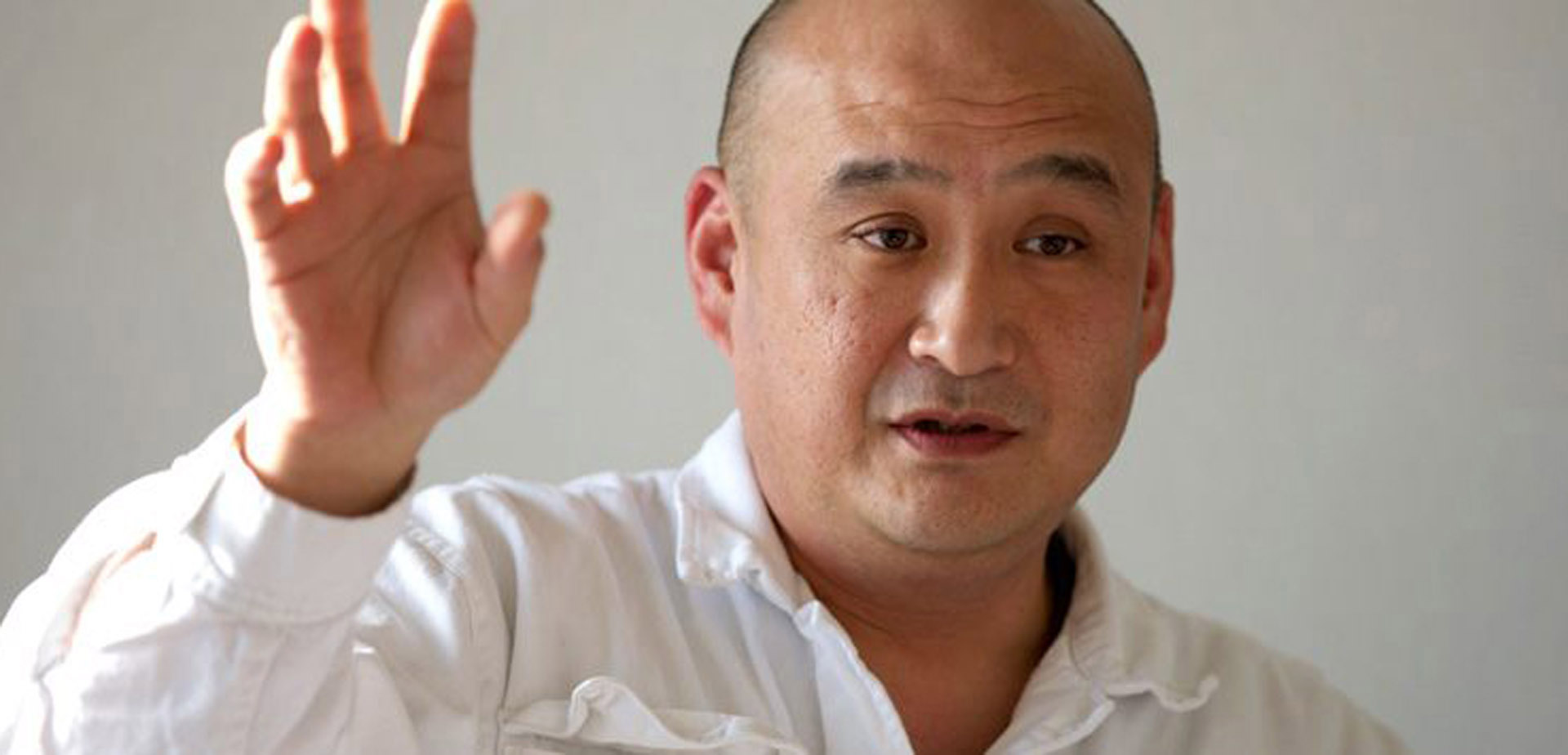
RC211V project leader Kyoichi Yoshii oversaw development of Honda’s one-season-only 2006 machine.
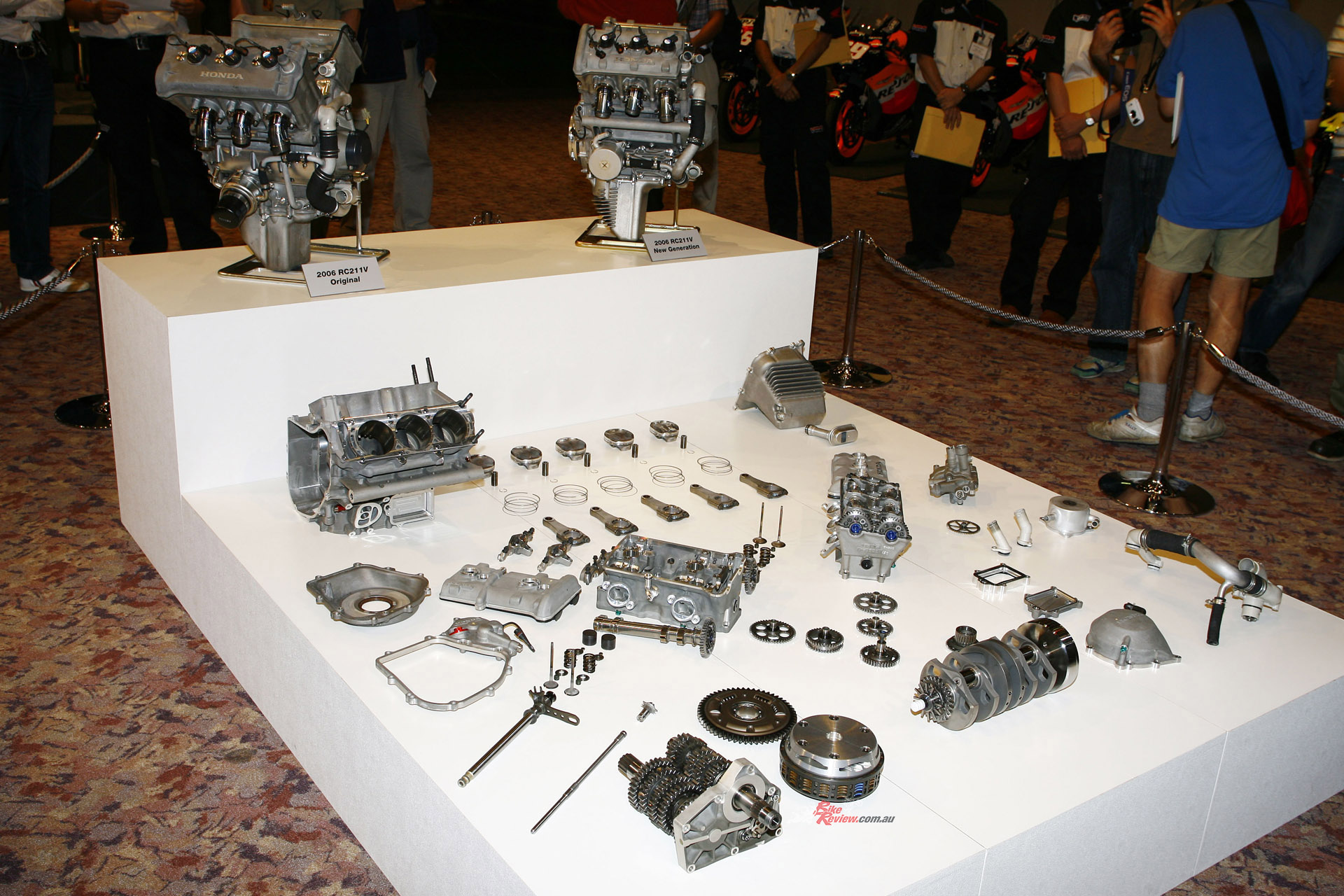
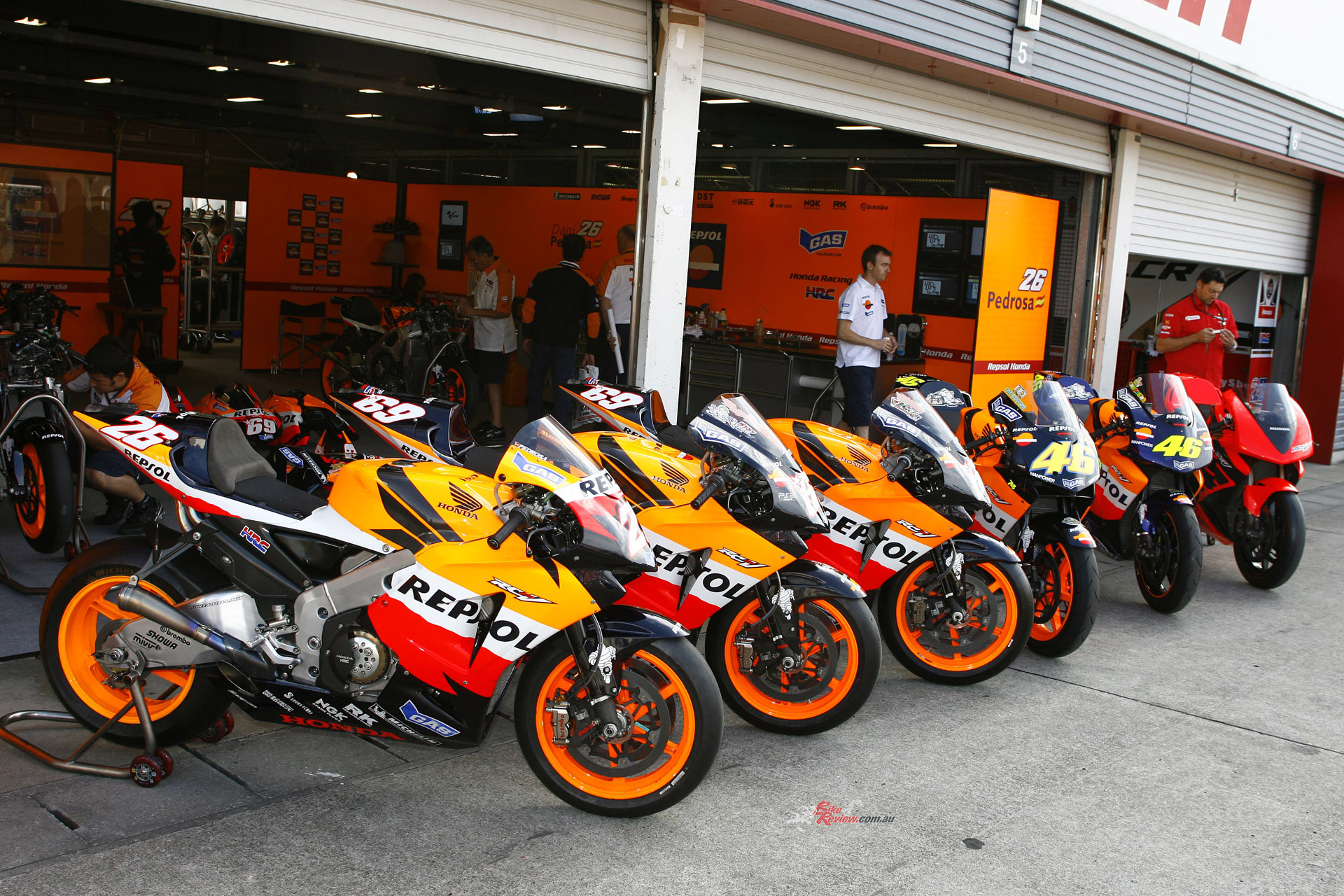
This meant that the Repsol Honda pit garage housed two completely different motorcycles all season – distinct even down to the engines, which apart from retaining the same 75.5-degree V5 format, and a few shared internal components, were completely different one from another. Probably only Honda would have had the resources and the determination to do this, but the fact that it was this New Generation motorcycle which put an end to Valentino Rossi’s domination of the 990cc era, with all the older-style Hondas second best behind the Yamaha in the final points table, says it all. Honda did what it needed to do to emerge victorious – it’s the Honda Way…
Okay – but why did they need to do this, and how, I asked Yoshii-san before riding both Hayden’s and Pedrosa’s Hondas at Valencia. “Our problem in 2005 was handling, not engine performance,” he replied. “We needed to improve cornering performance, get better traction exiting a turn, and as you discovered when you rode the bike in Sepang last year, we needed improved stability under braking. We could obtain some benefits from superior electronic control, and from detailed changes in chassis geometry, and we included these on the model that Dani and the satellite riders used this season. But we needed a new chassis concept to completely resolve these problem areas, and to build this, we required an all-new more compact engine.
“We needed a new chassis concept to completely resolve these problem areas, and to build this, we required an all-new more compact engine.”
“This would give us greater freedom for frame design, so as to give faster cornering speed and more confidence for the rider. This is Nicky’s bike – since by his choice it has only a 10mm shorter wheelbase than Dani’s machine, we were able to use the extra space we gained with the more compact motor to extend the swingarm length for better traction, and we also had more room for chassis adjustment. But it took many laps of testing to develop this properly, not only pre-season but also during the year, because we produced four different evolutions of the new engine and five versions of the chassis. So Nicky really deserved this championship after so much riding and we are very grateful to him for his efforts. They were well rewarded! ”
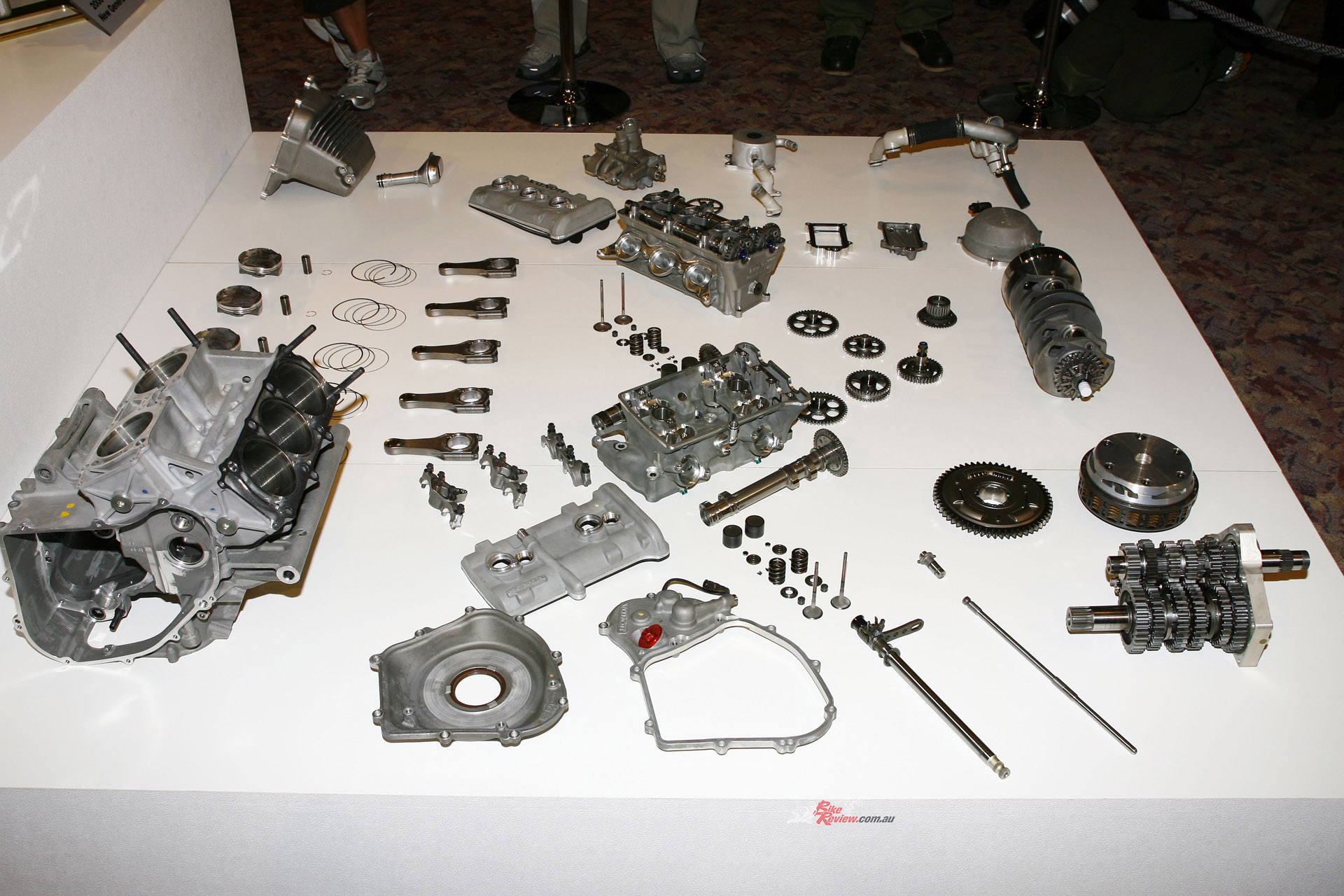
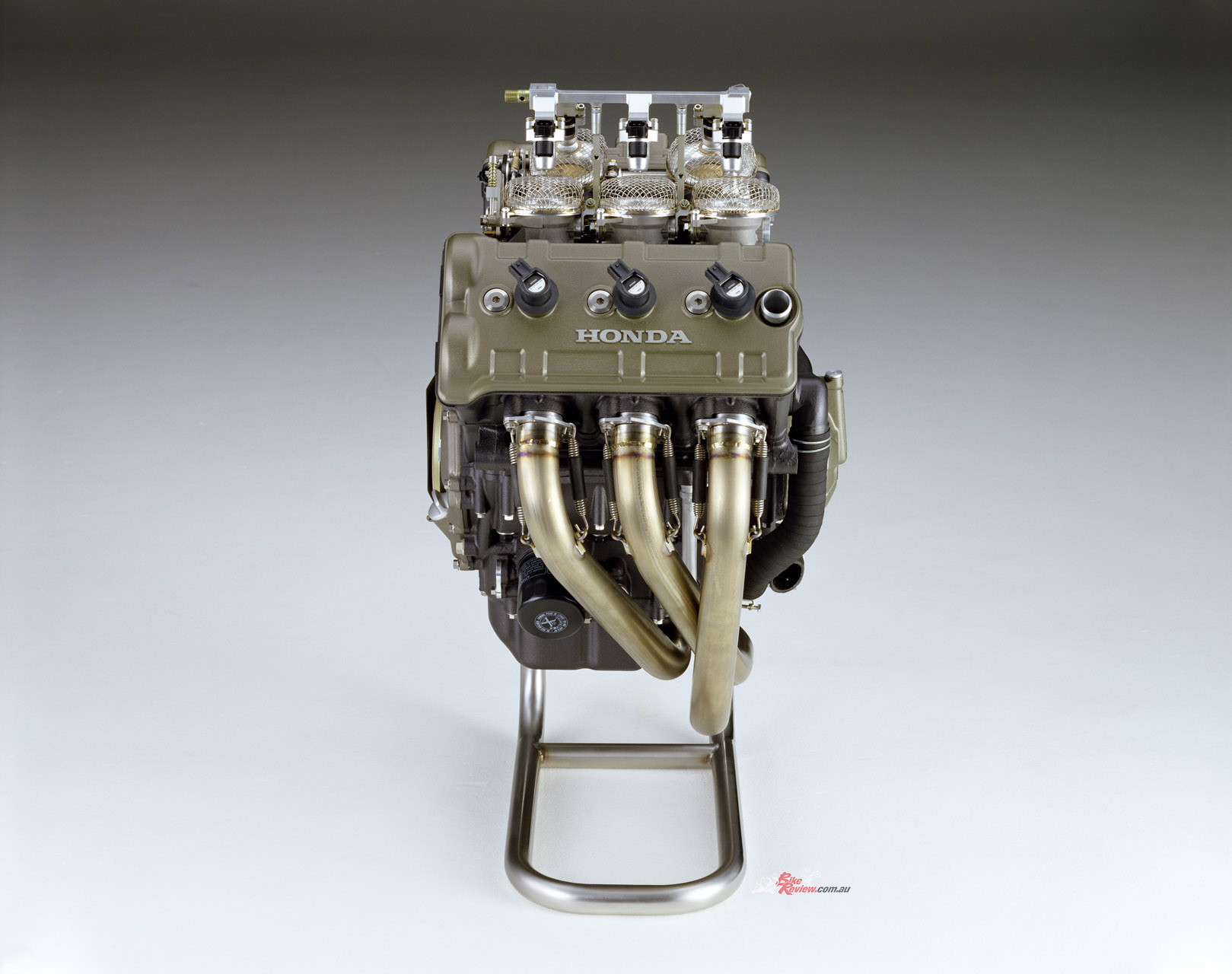
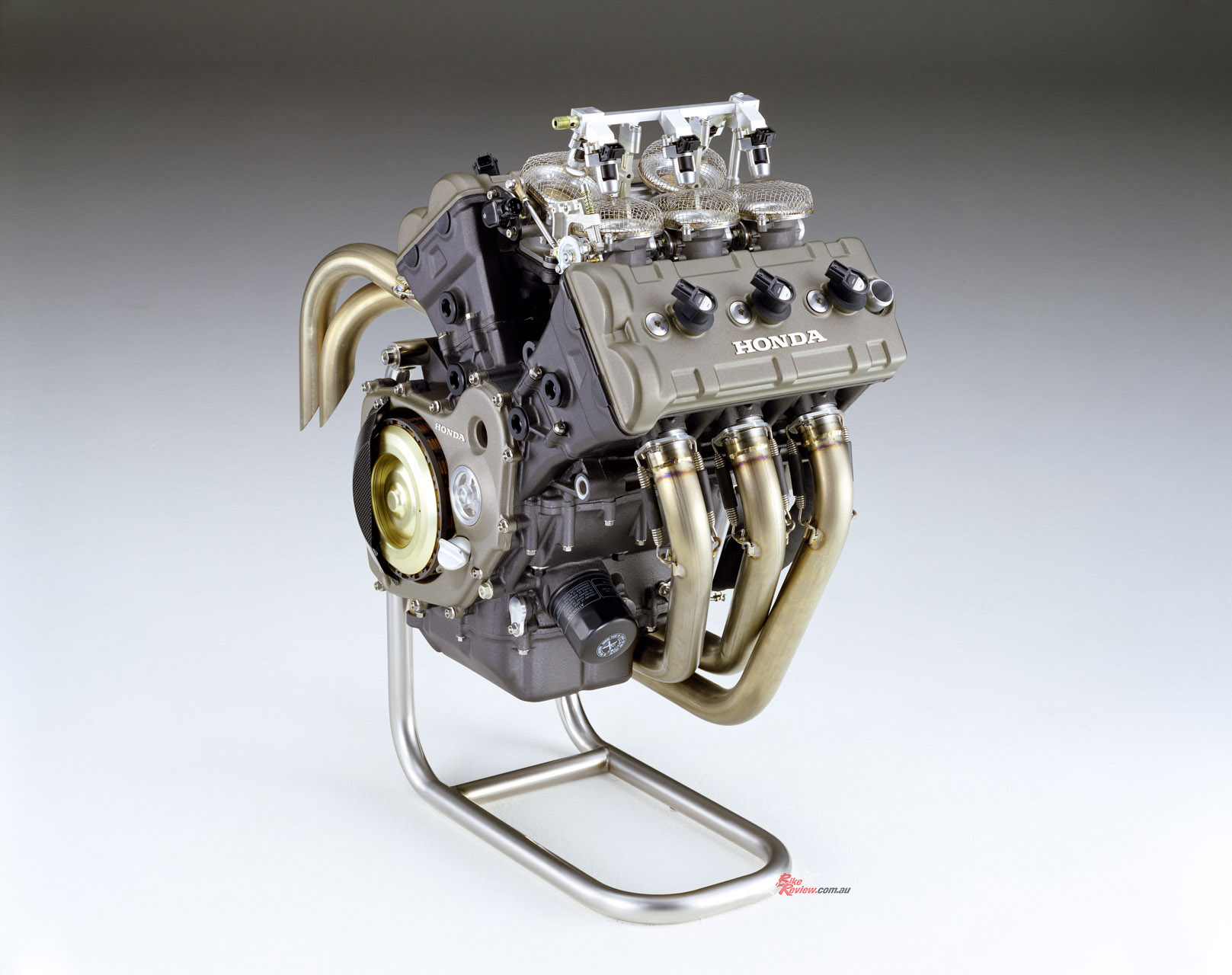
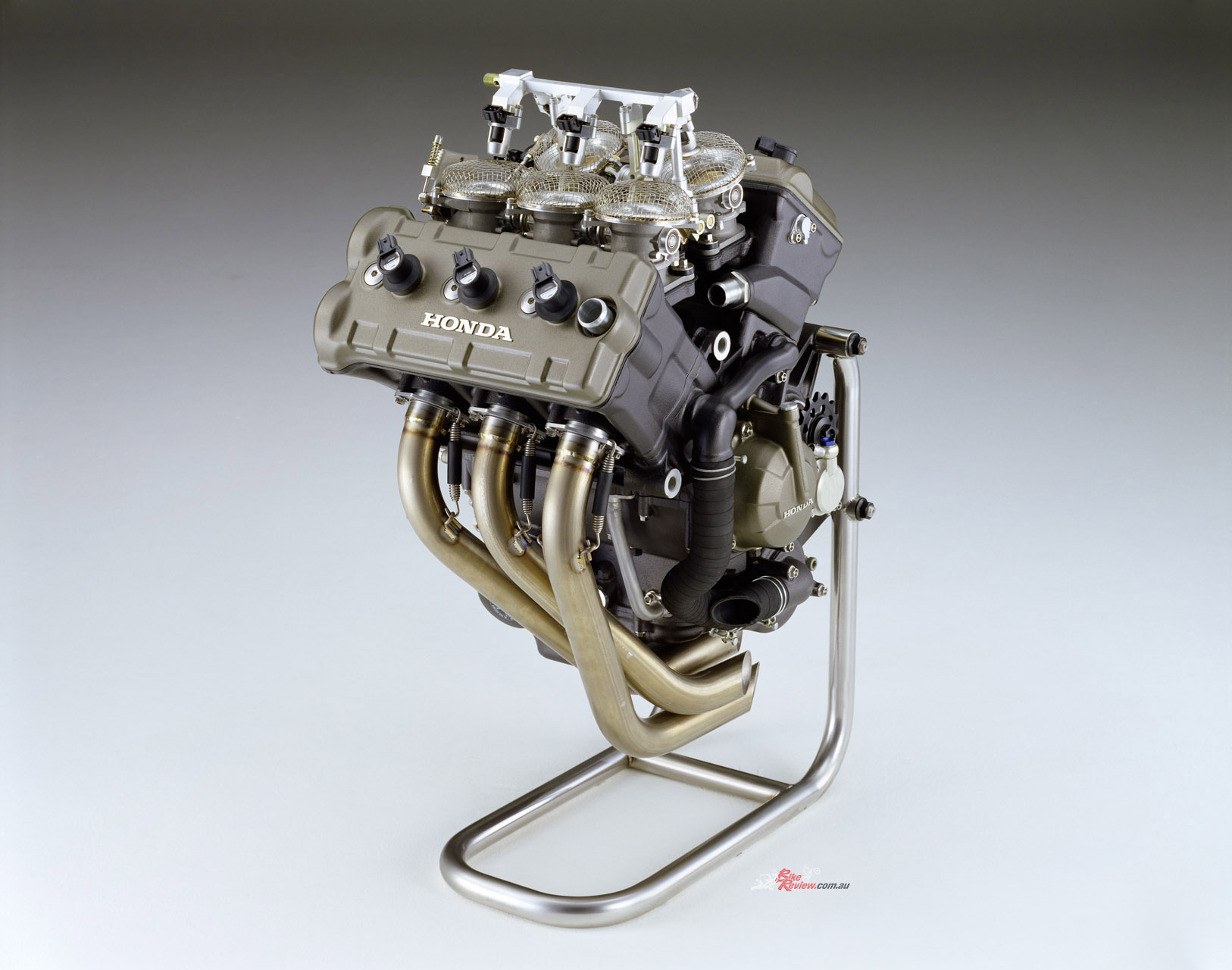
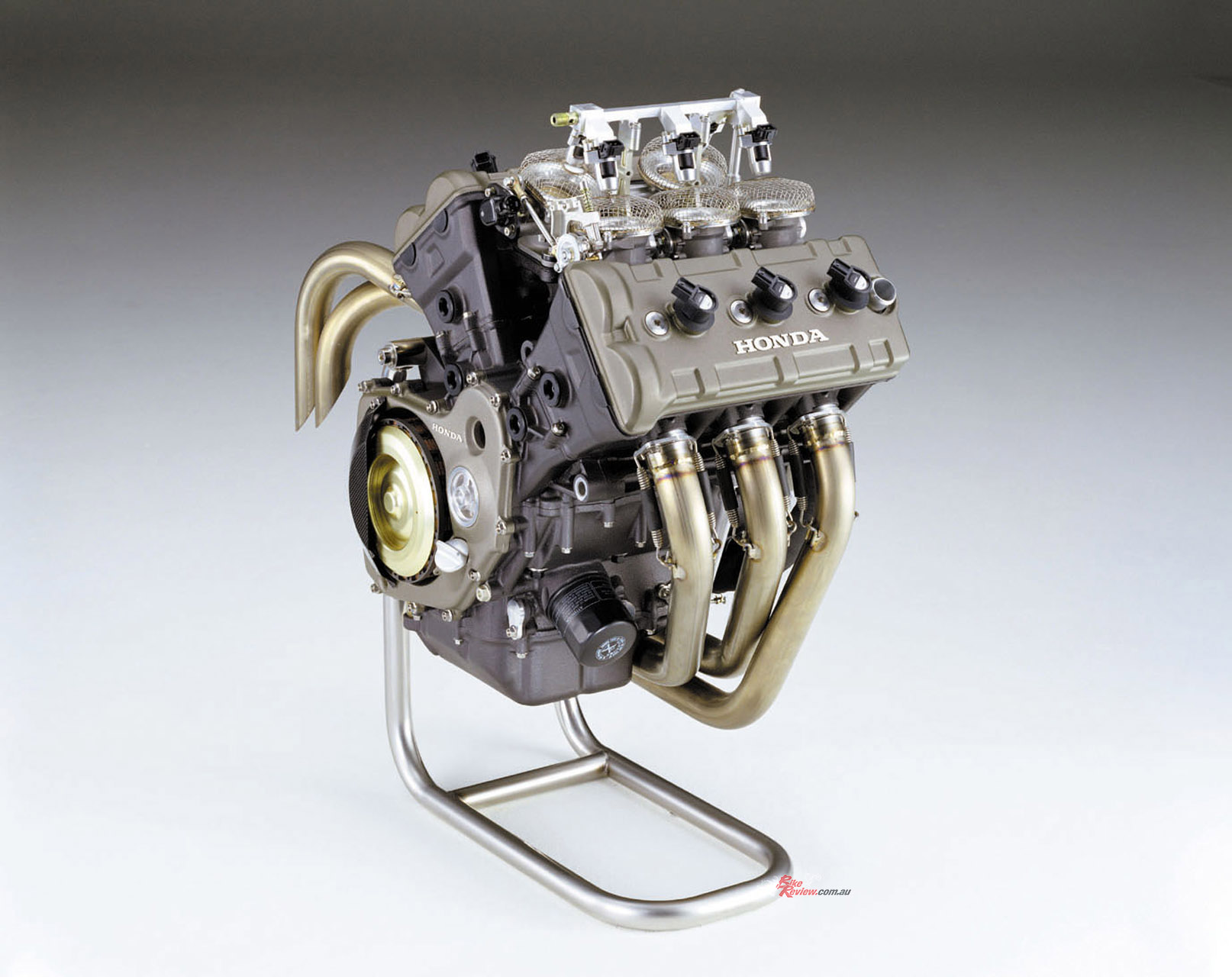
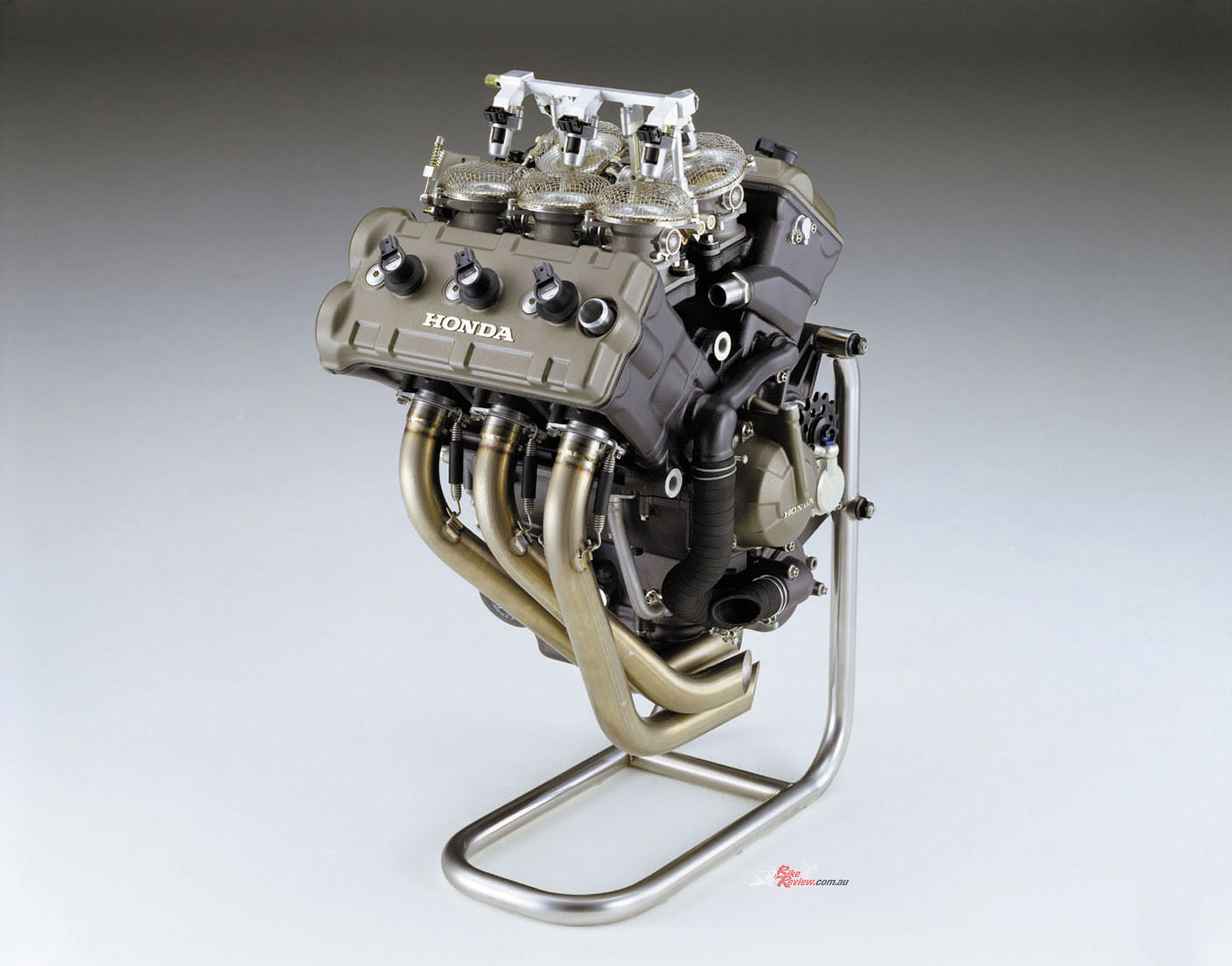
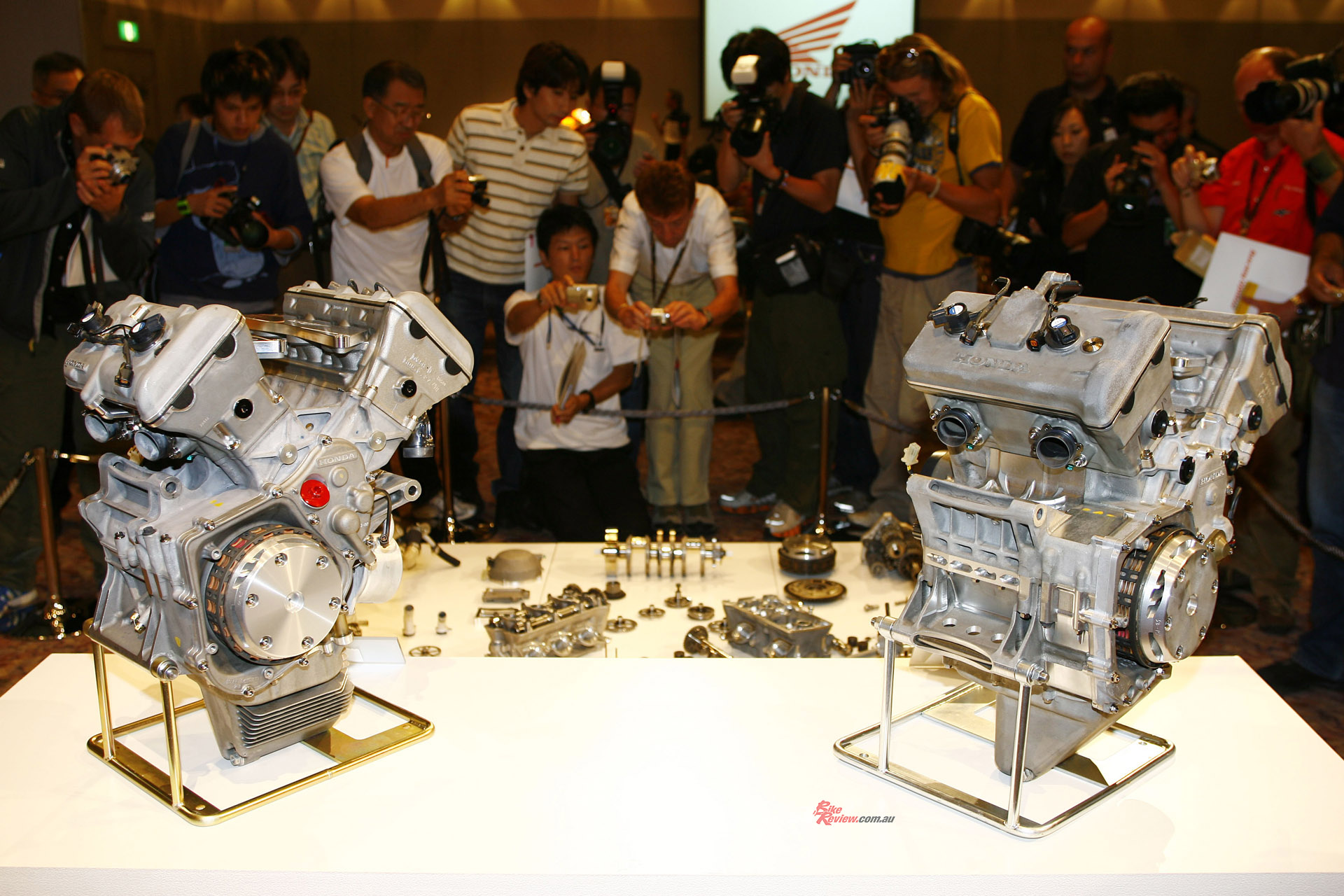
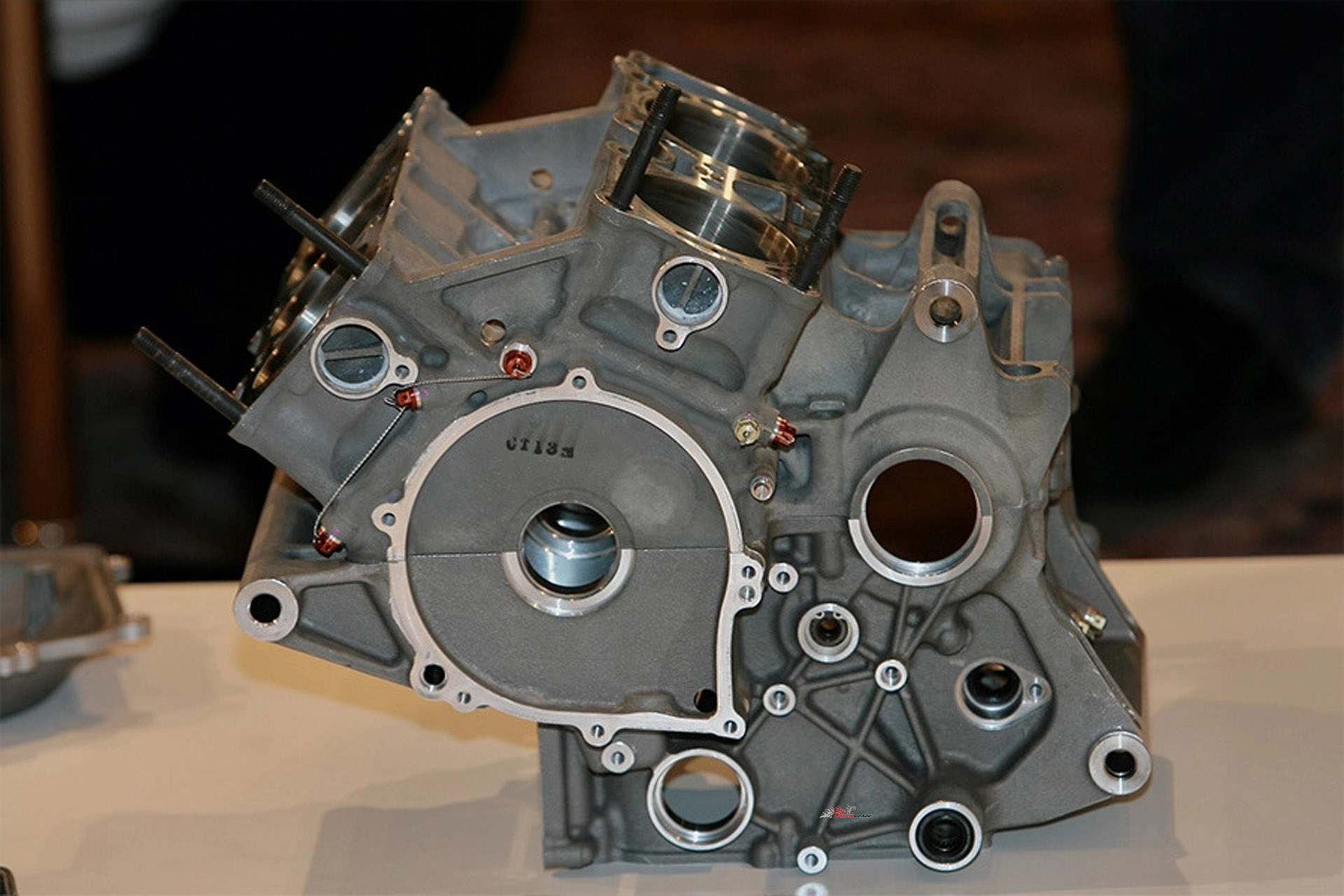
Honda made its V5 motor more compact for 2006, after a thorough review of its every detail. This included a considerable reduction in cylinder bore pitch, and a reduction of around six per cent for the front-to-rear bank cylinder offset. In fact, the new RC211V had made a fleeting appearance at Brno in post-race testing in August 2005, before being taken back to Japan to complete initial R&D. Comparing its V5 engine side by side with its predecessor, you could clearly see how it had gone on a diet – all the external castings were subtly different. The chassis designers thus had greater freedom locating it in the frame, and the more centralised mass they targeted delivered easier, more stable handling.
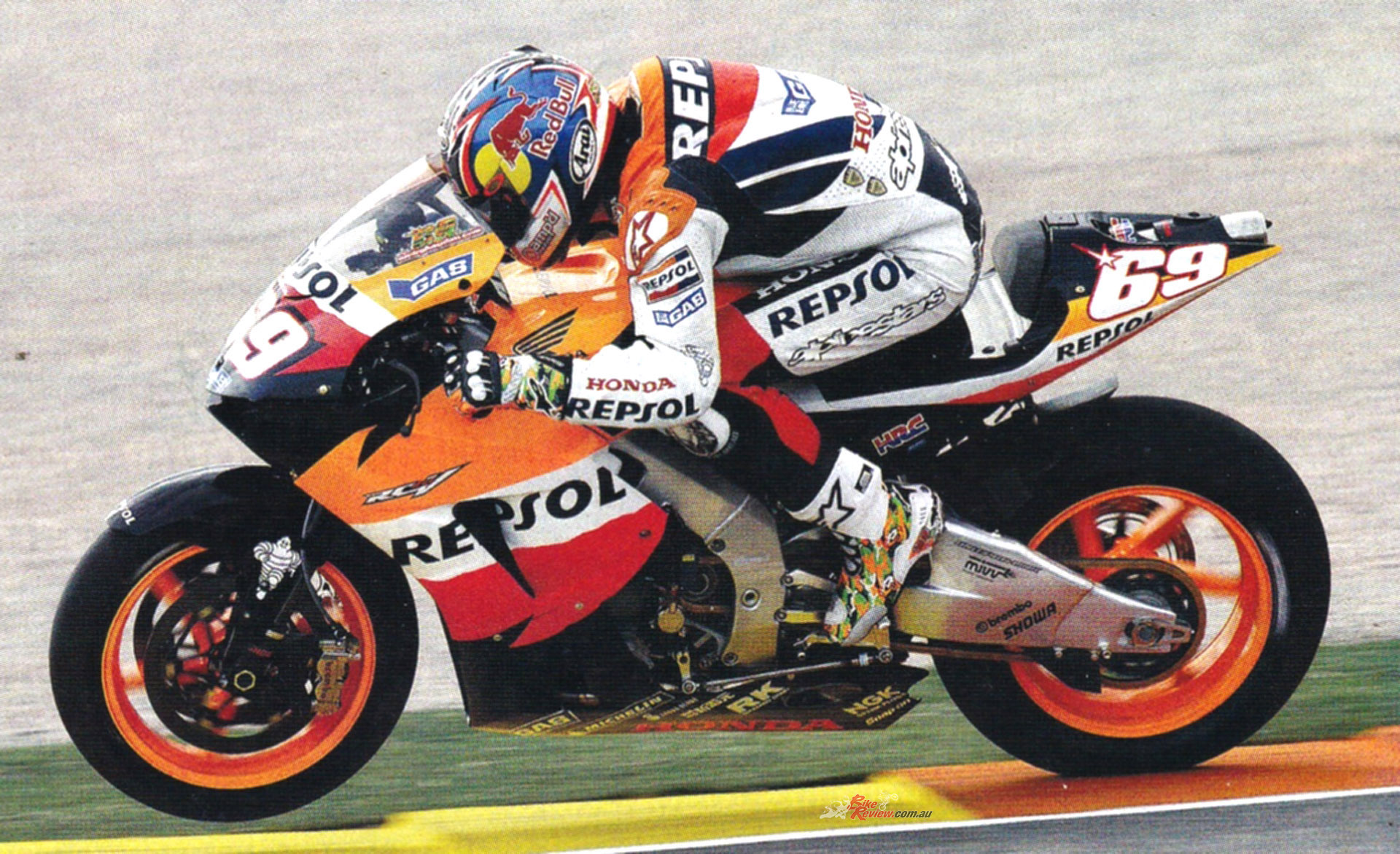
Hayden’s smaller, lighter RC211V gave Honda greater freedom to optimise weight distribution.
This was achieved via many small changes to the V5’s architecture which included shortening the distance between the crank and countershaft, placing the crankshaft higher in the cases and the clutch and gearbox lower. Although the positive effect on chassis design of the newer, more compact format was the main reason to create the new engine, HRC enjoyed a couple of spinoff benefits, according to Yoshii. At the expense of reduced engine mileage, revving to 17,000rpm delivered a three per cent increase in horsepower, and torque, all the way through the revband.
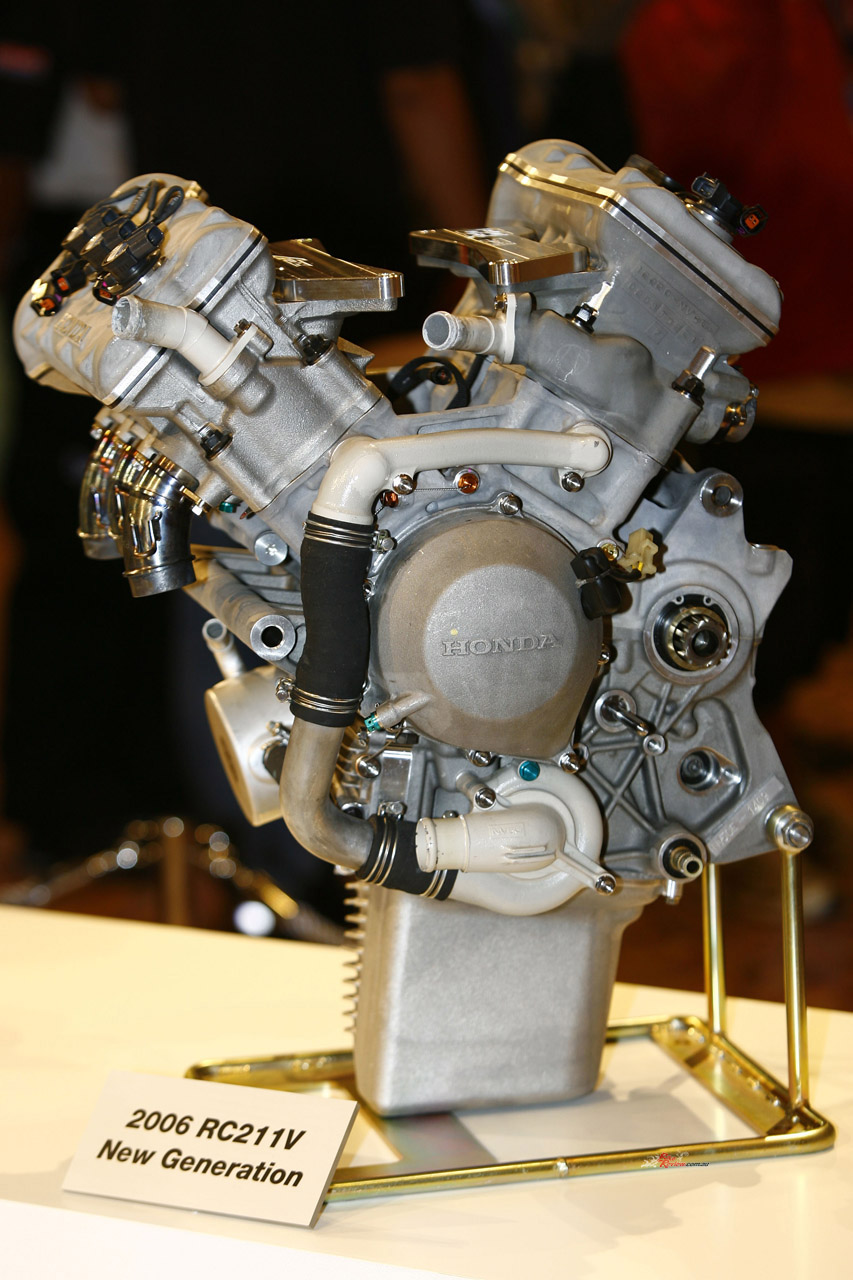
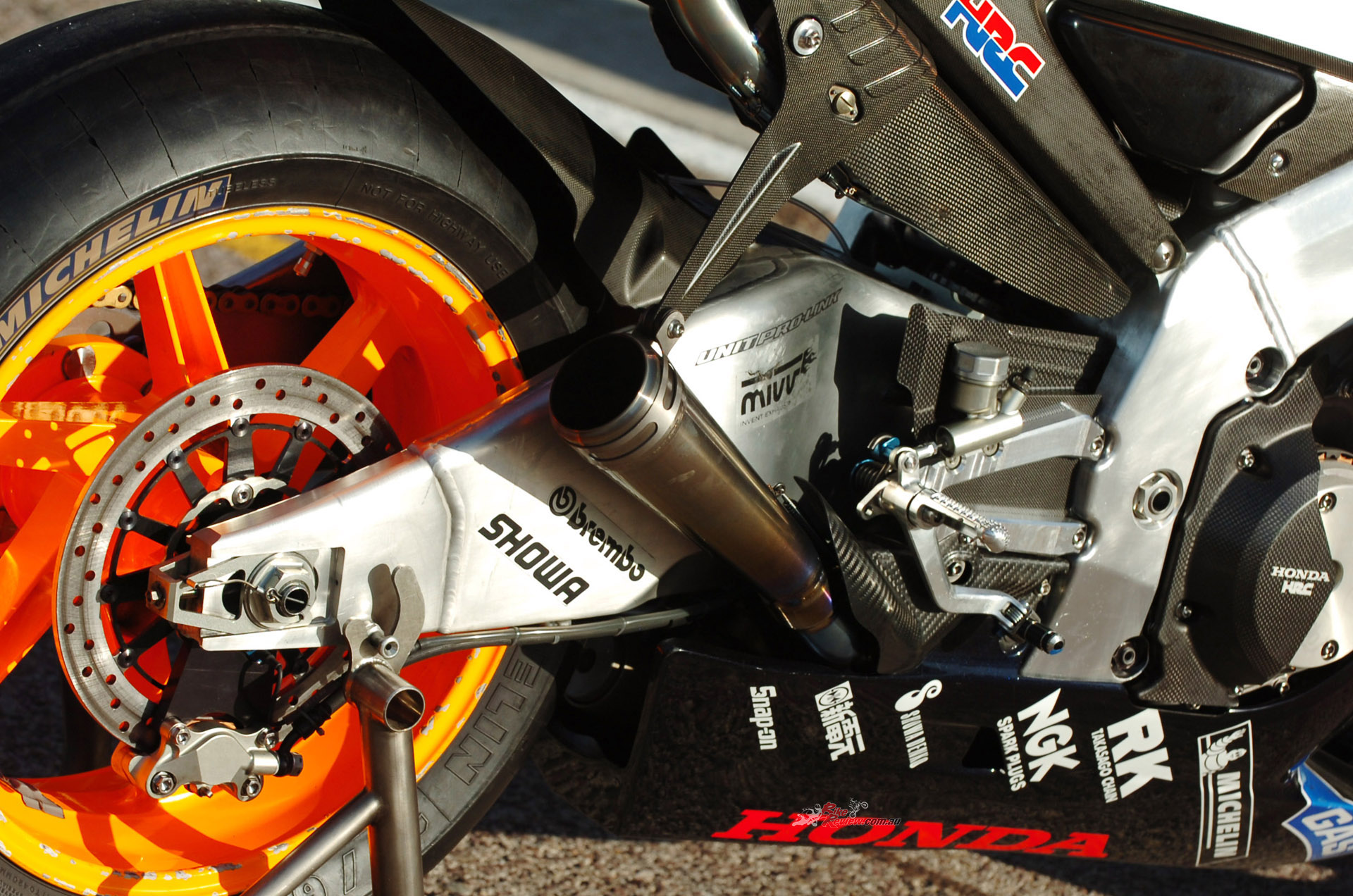
This was achieved partly through reduced friction, and partly via a new titanium megaphone exhaust with two 2-1 pipes for the outer cylinders on each bank, plus a single long, tapered pipe for the centre front cylinder. It also had improved acceleration, thanks to the higher 13.9:1 compression (up seven points from the original), plus the more compact build of the new engine also delivered a seven per cent reduction in weight.
“In the beginning, Nicky’s bike was too light!” declared Yoshii.
“In the beginning, Nicky’s bike was too light!” declared Yoshii with satisfaction. “We had to add 3.5kg in lead to meet the 148kg weight limit, but after Brno we used heavier material for the swingarm, and aluminium engine covers instead of magnesium, things like this. But the new bike was always much lighter than the original machine, so we could produce the ideal weight distribution Nicky wanted.”
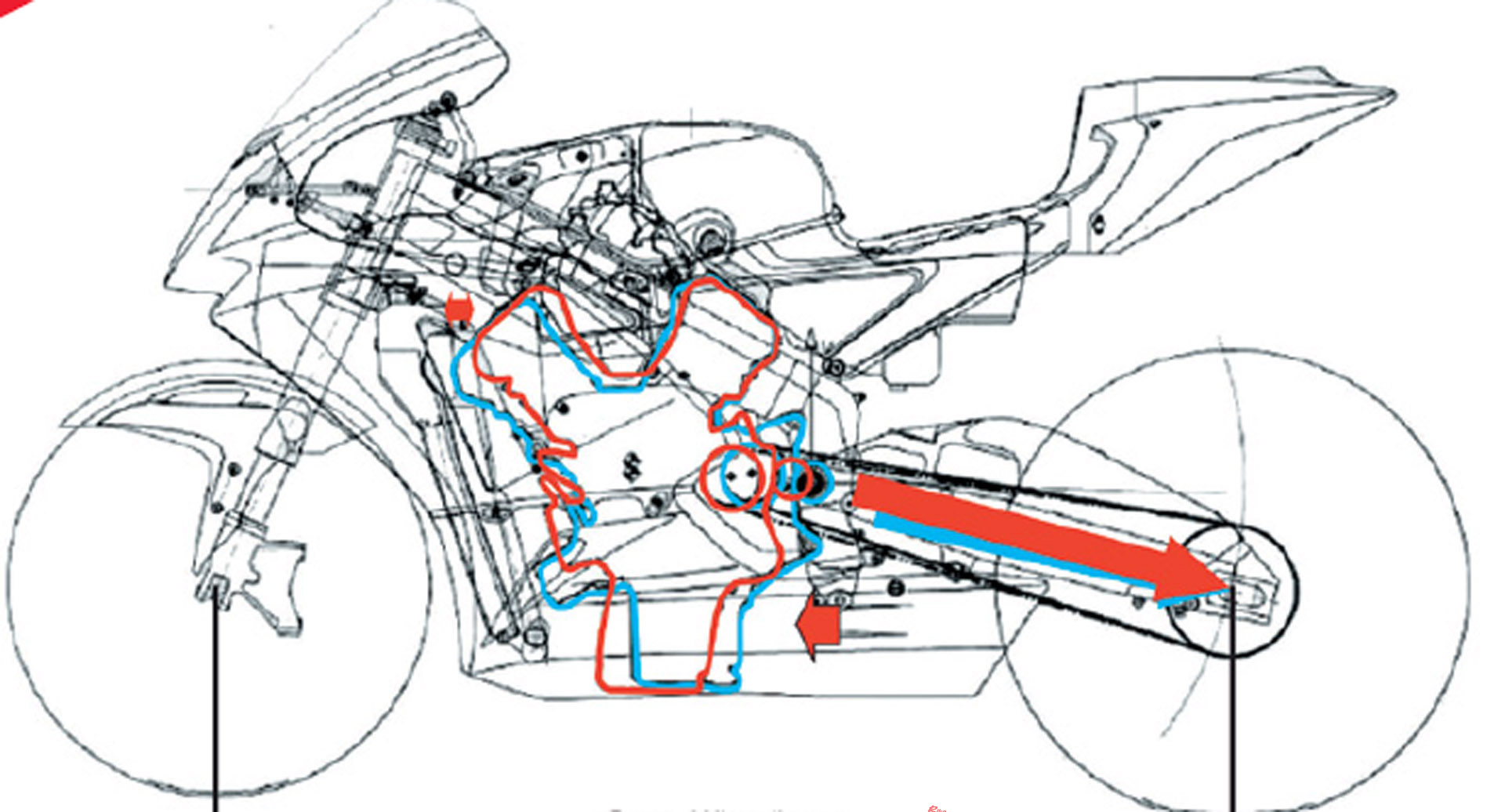
Blue shows the Original RC211V engine, while red highlights Hayden’s more compact V5 and longer swingarm.
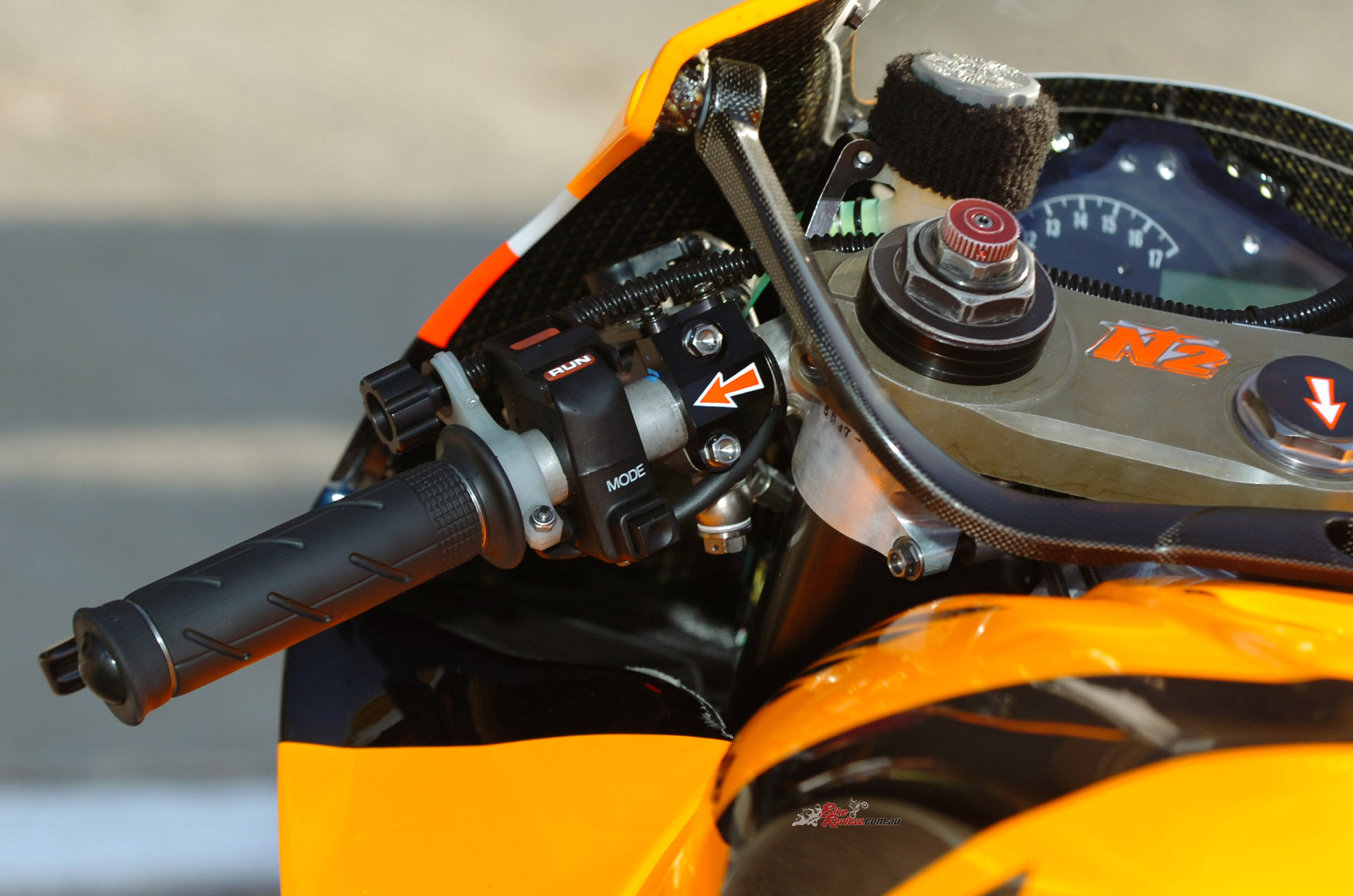
Fuelling was controlled by a Keihin-sourced PGM-FI ECU with a choice of three different maps accessible via a switch on the left handlebar. However, whereas already in 2004 Honda had adopted a so-called Intelligent Throttle Control System which saw all five butterflies computer-operated via a full ride-by-wire digital system, for 2006 this was modified to a split format, so that those in the front three throttle bodies were controlled directly by the rider via a cable throttle, while the rear two were still ECU-driven ride-by-wire.
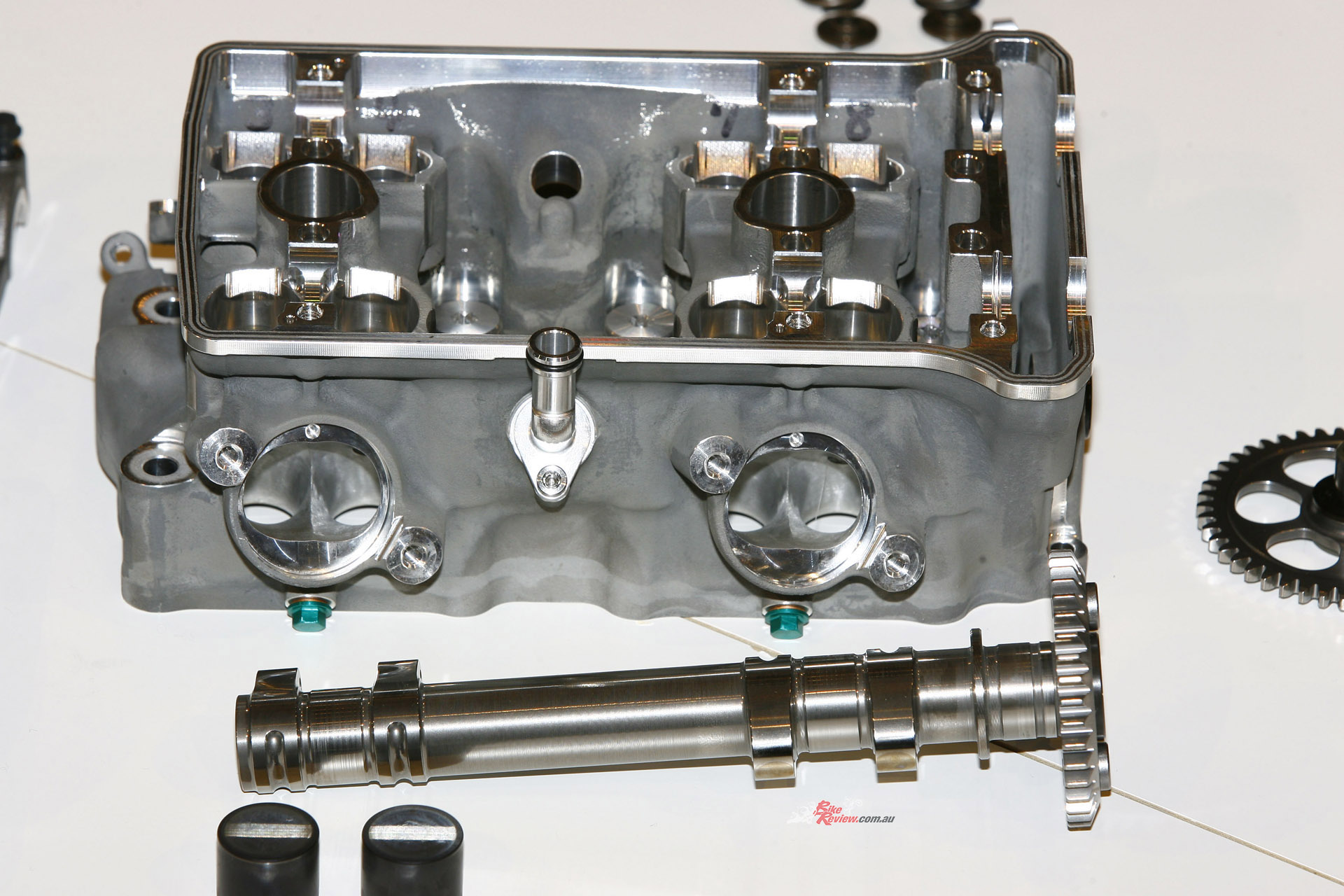
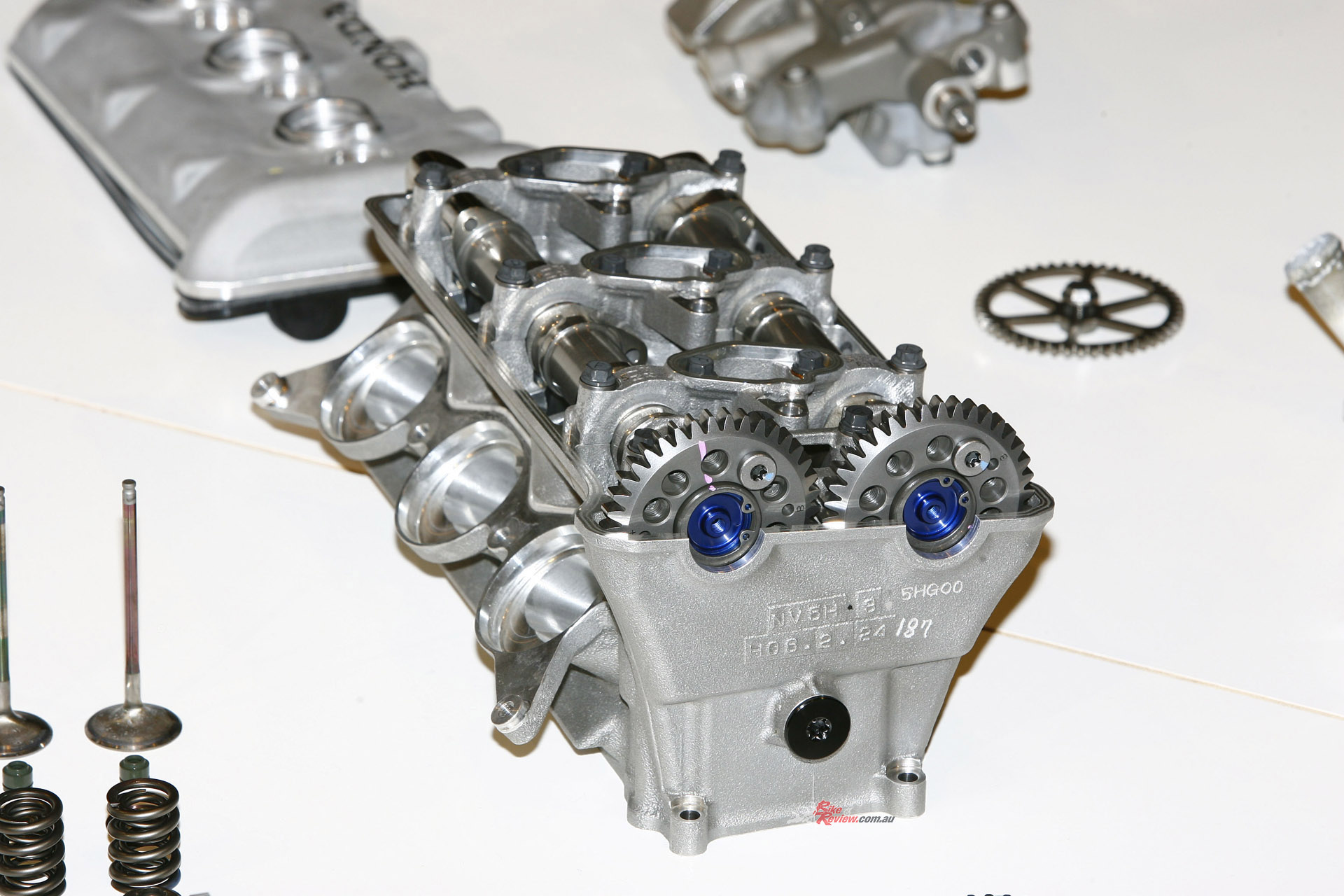
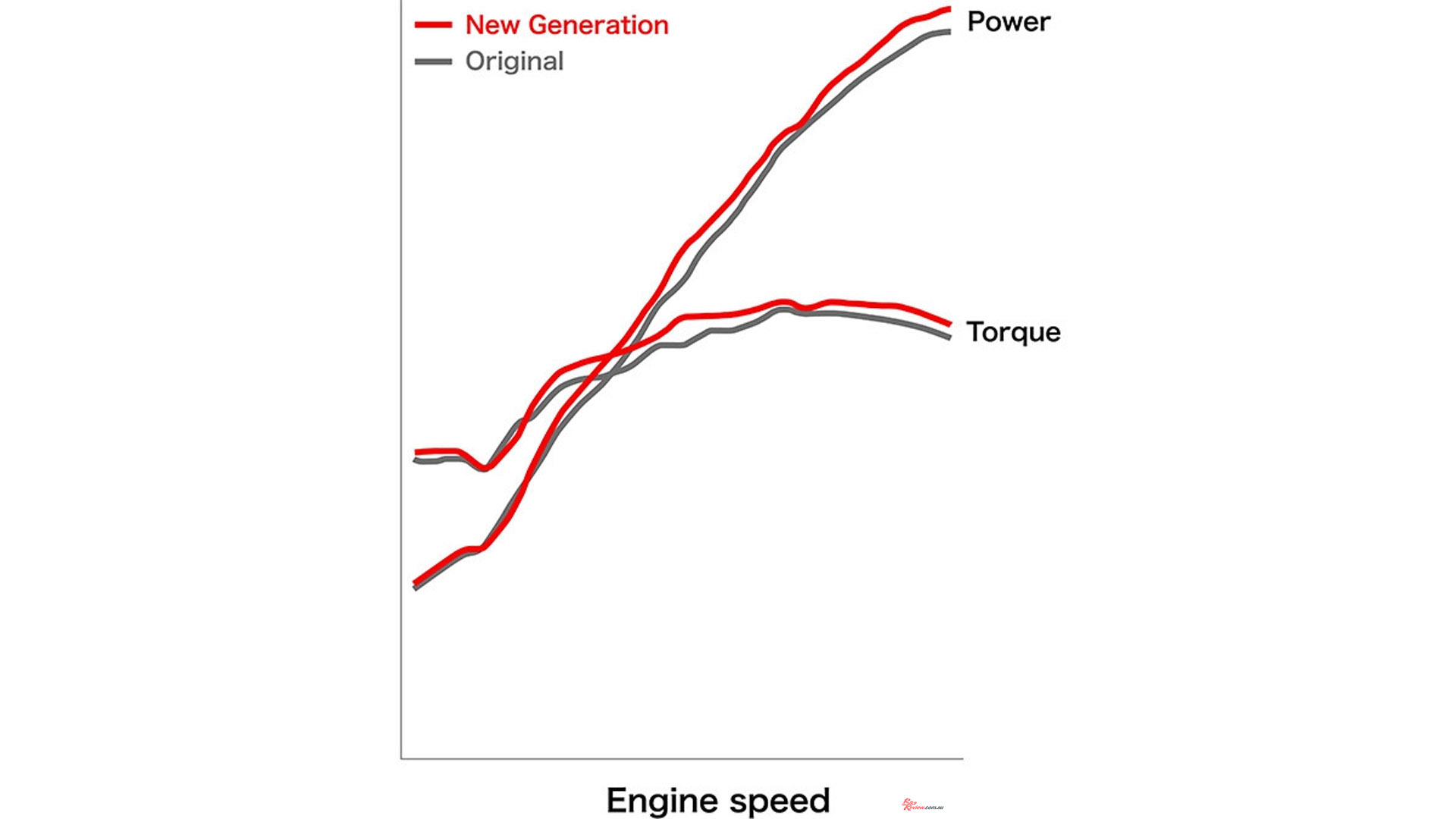
“Our concern is always to make the rider feel comfortable, and to deliver more precise control over the initial throttle opening in turns, as well as full throttle,” said Yoshii, who added that the power curve of both V5 engines was very similar, only that the new motor maintained peak power longer. The dry ramp-style slipper clutch was complemented by a so-called ‘deceleration control’ system with variable idle-speed program controlled by the ECU.
The power curve of both V5 engines was very similar, only that the new motor maintained peak power longer.
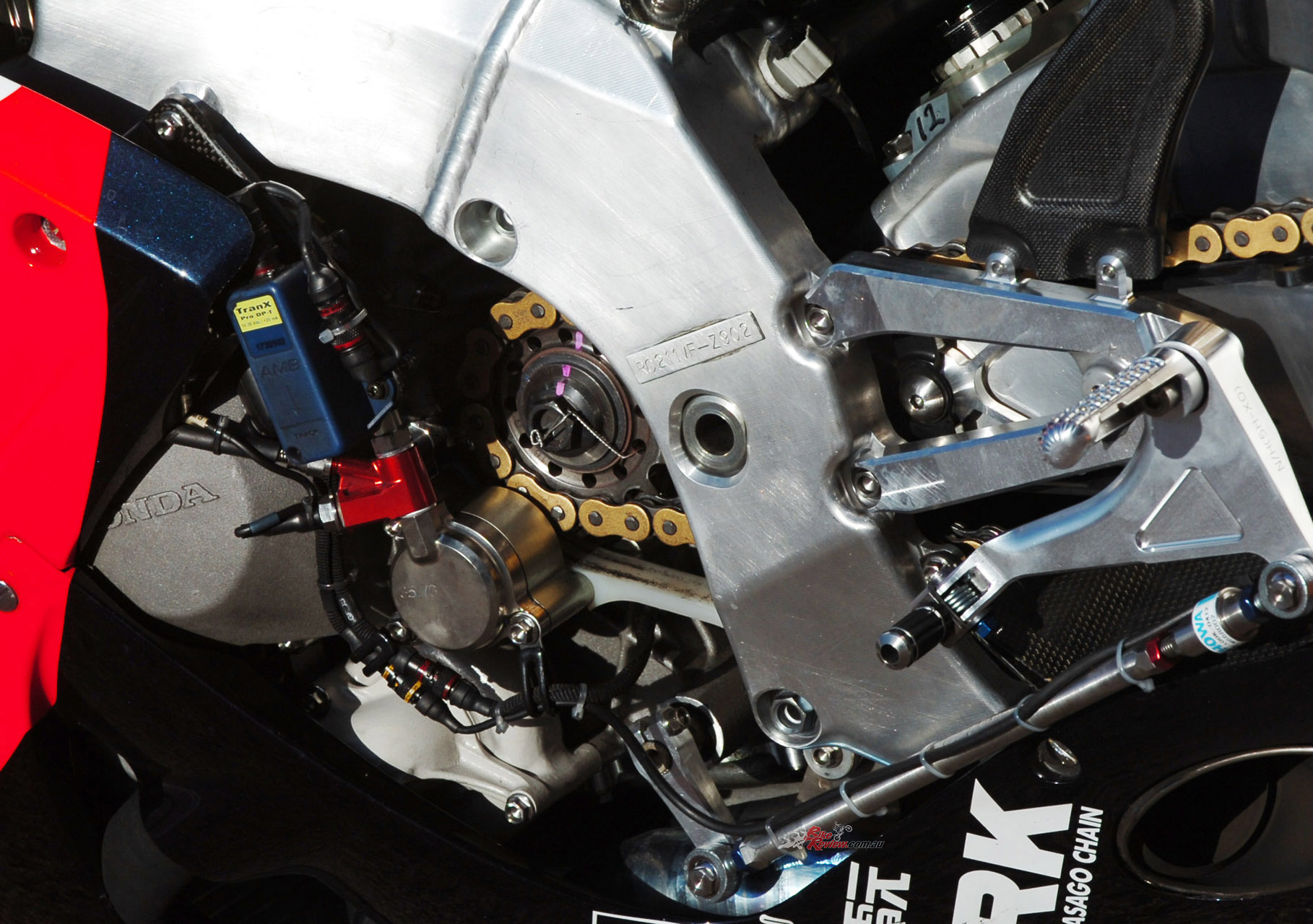
This new Hayden motor was installed in a fabricated open-cradle aluminium twin-spar chassis, carrying the V5 engine as a full structural component. While following the same broad architecture as before, this differed in detail from the original’s, and effectively acted as a prototype for the RC212V V4 frame to be used in the forthcoming 800cc formula, said Yoshii. While retaining the same footpeg/seat/handlebar ratio as Hayden’s 2005 bike, but with just a 10mm shorter wheelbase, this was substantially smaller, and had the mass notably compacted. The bodywork was also quite different; the same screen height, but a 10 per cent reduction in side area aimed at improving side-to-side movement in turns.
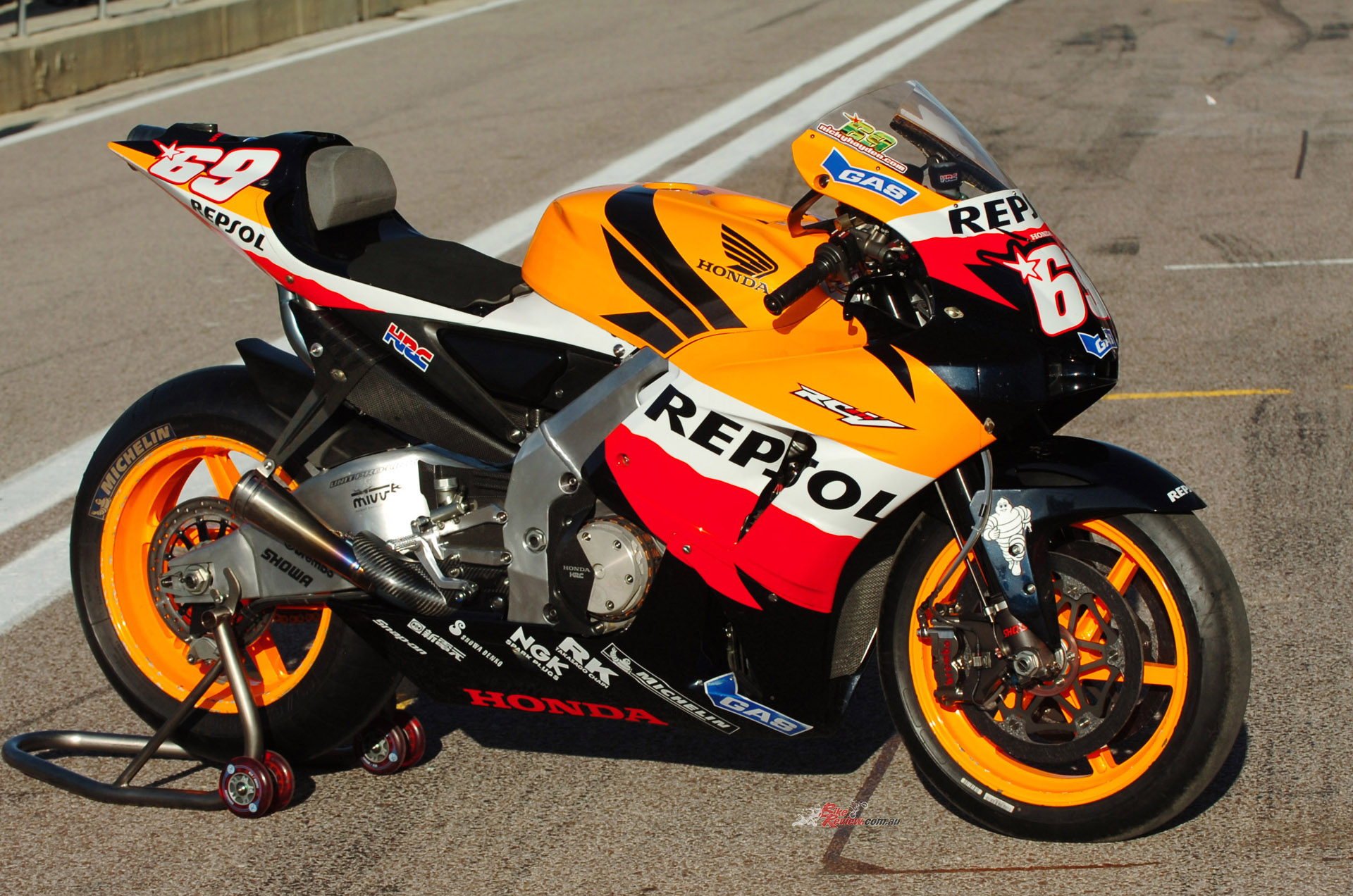
Hayden’s RC211V carried 10 per cent less bodywork side area, helping it change direction faster through chicanes.
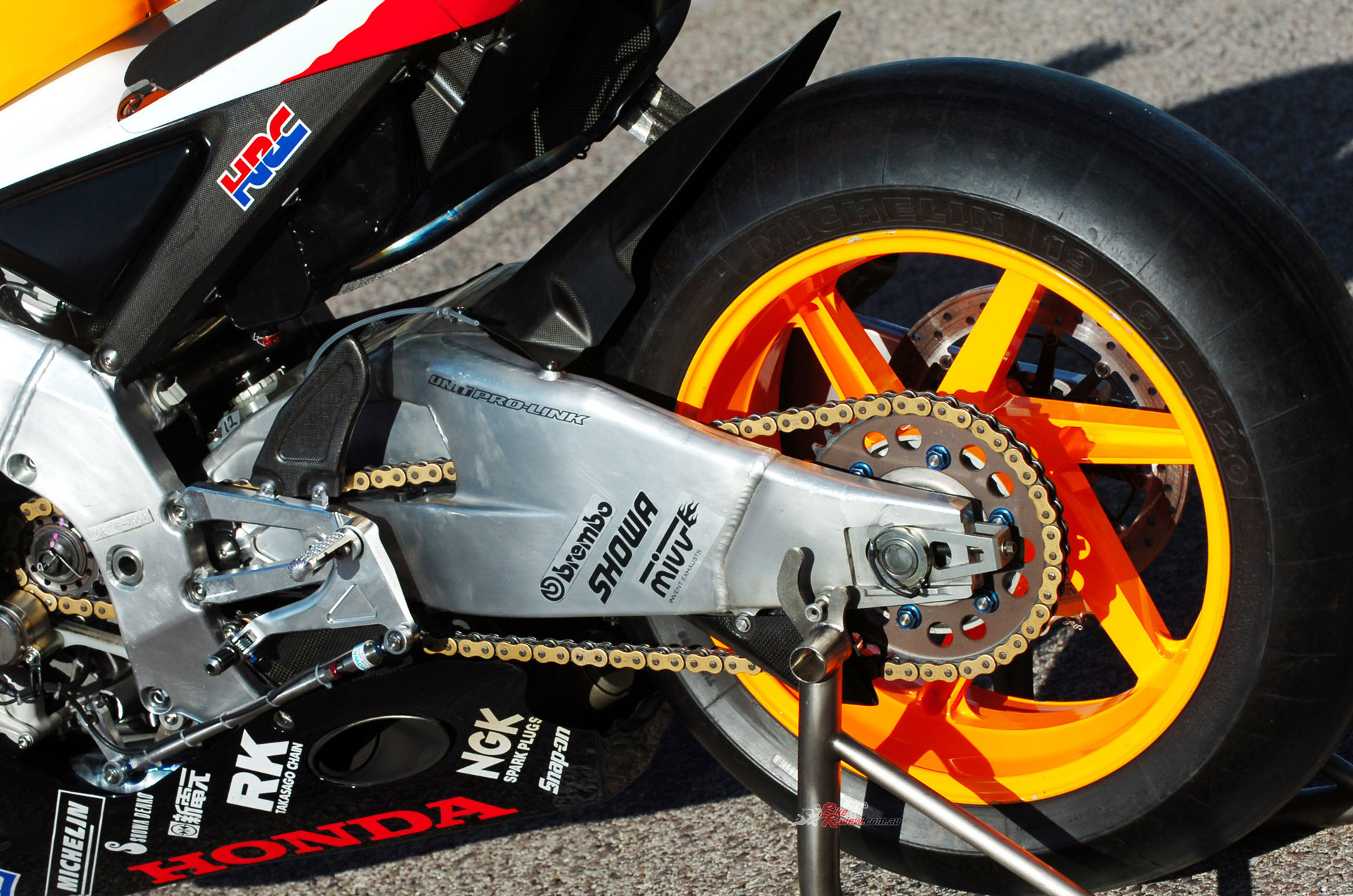
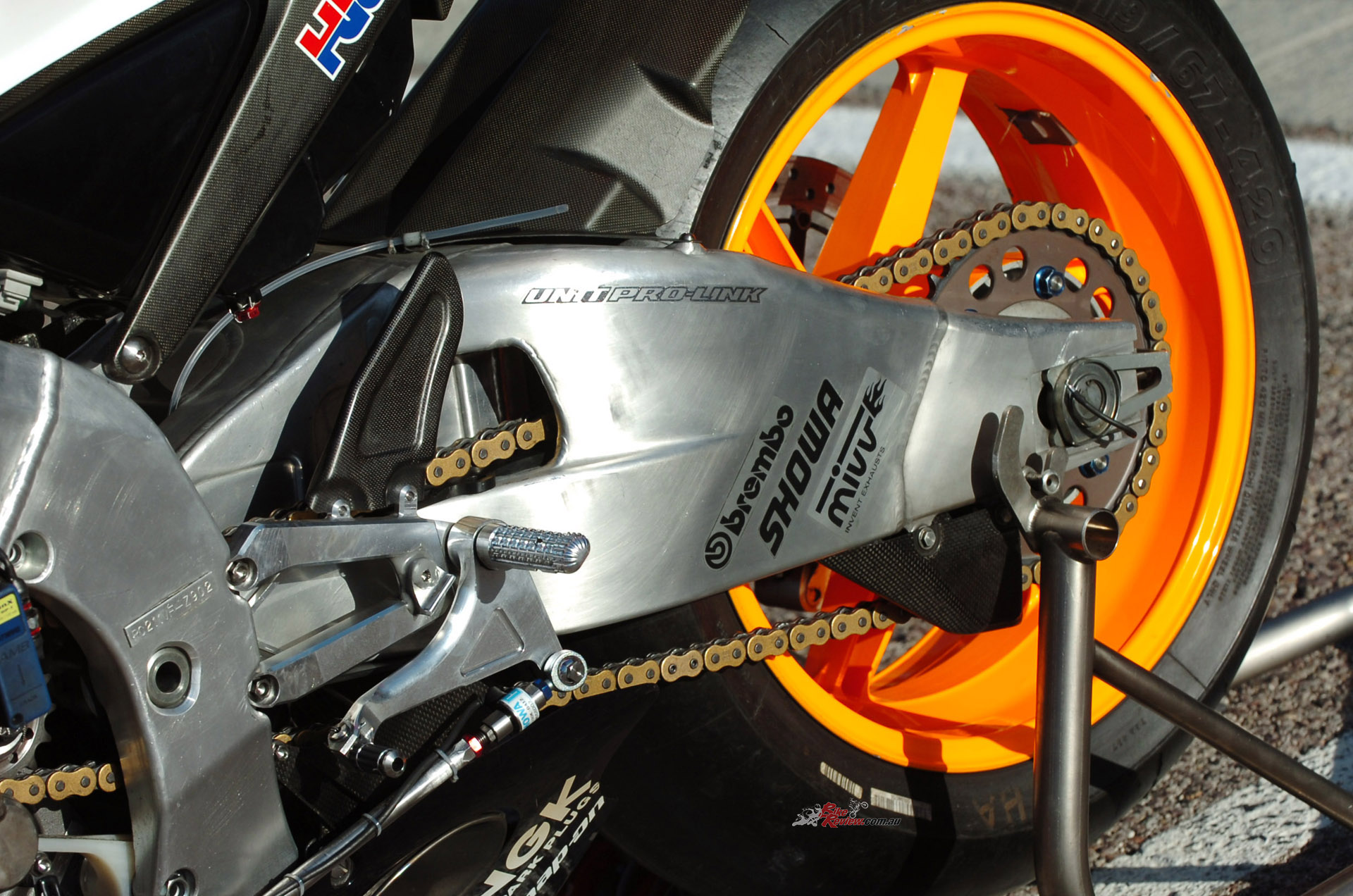
The Hayden RC211V variant had reverted to Honda’s distinctive Unit Pro-Link type rear end used two years earlier in 2004 – then adopted by the Fireblade and CBR600RR – before being dropped for the 2005 RC211V. This saw the whole fully-adjustable Showa monoshock anchored at both ends to the swingarm, rather than with its top conventionally mounted to the chassis. The reappearance of this format was aimed at reducing the chatter Honda riders suffered from in 2005. No longer transferring such forces directly to the frame, they were instead contained mostly in the swingarm, where the shock settings and tyres were better equipped to dial them out.
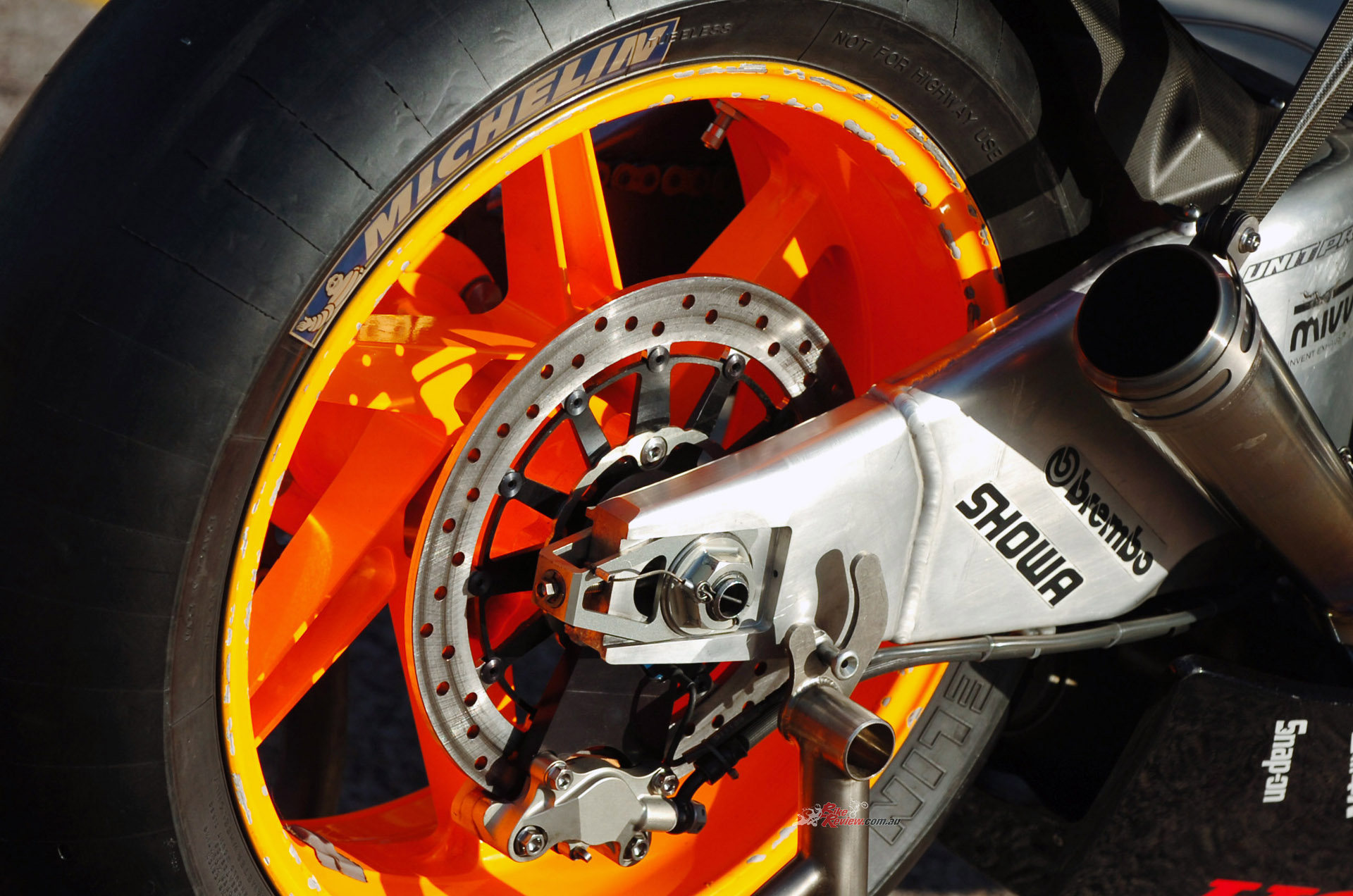
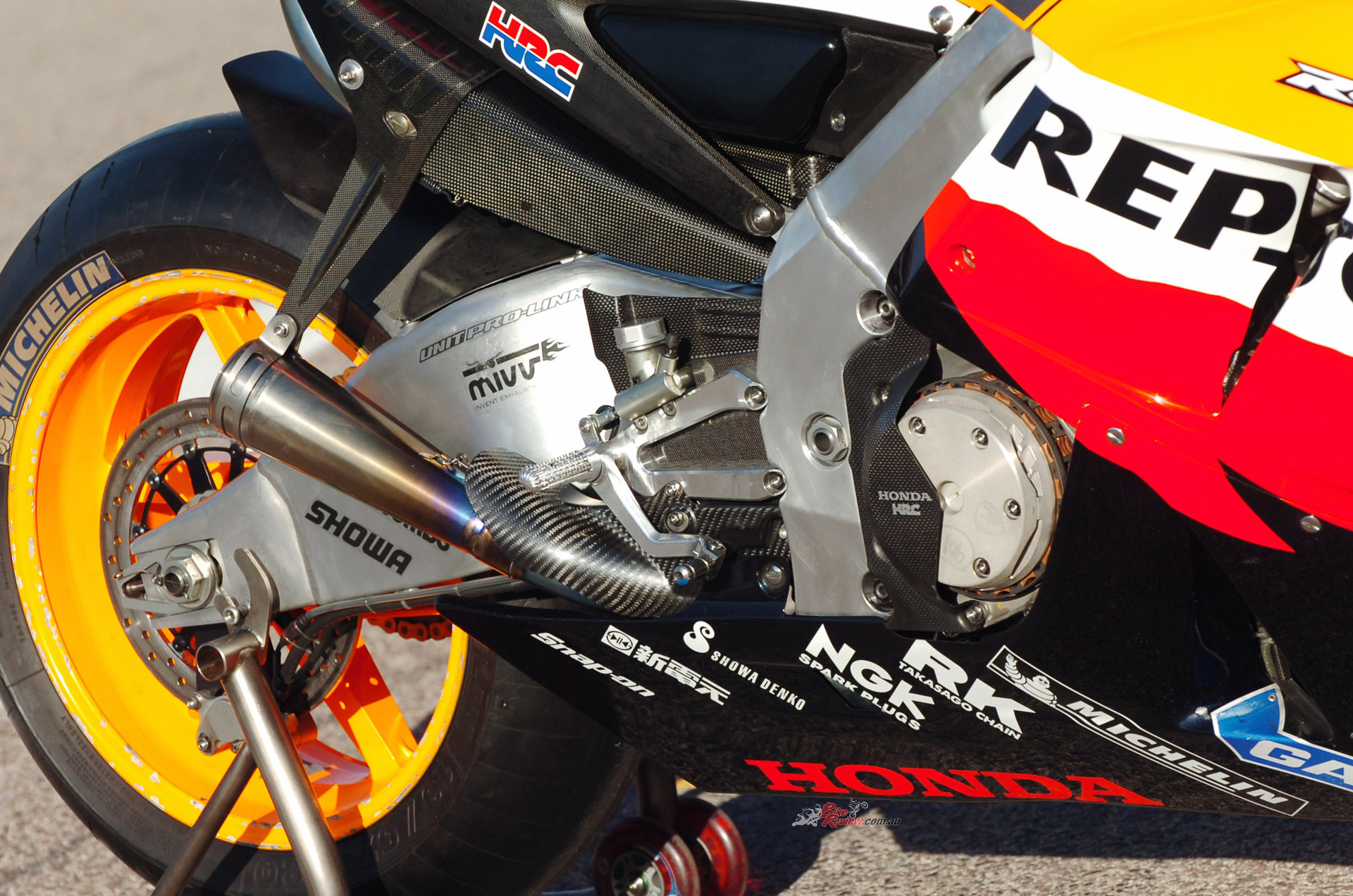
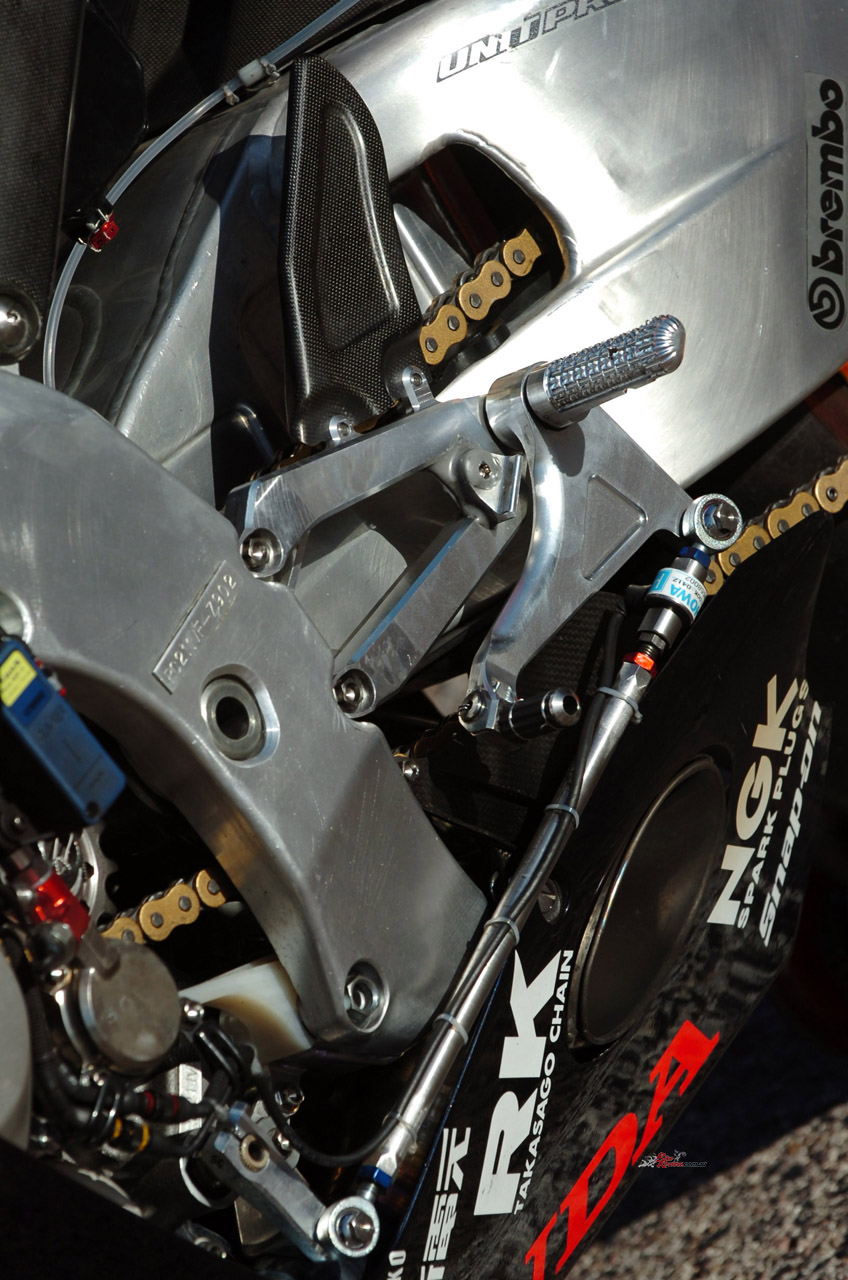
The fact that HRC devoted substantial extra the manpower, facilities and budget required in designing a brand-new version of its existing RC211V platform for the final year of 990cc racing, underlines the depth of Honda’s commitment for being number one in whatever form of competition it chooses to take part in. The fact that the entire responsibility for making this venture successful rested on the only rider to race this bike, who then delivered the goods by winning the championship with it, is a tribute to the skill and determination of Nicky Hayden. What a hero!
The entire responsibility for making this venture successful rested on the only rider to race this bike, who then delivered the goods by winning the championship with it.
So now, after 15 years of 1000cc MotoGP racing, during which Honda won six of the first eight titles – the last of them in 2019 – the largest motorcycle manufacturer in the world will be hoping the change to a new 850cc formula will allow it to regain its previous supremacy. Would you care to bet on that?
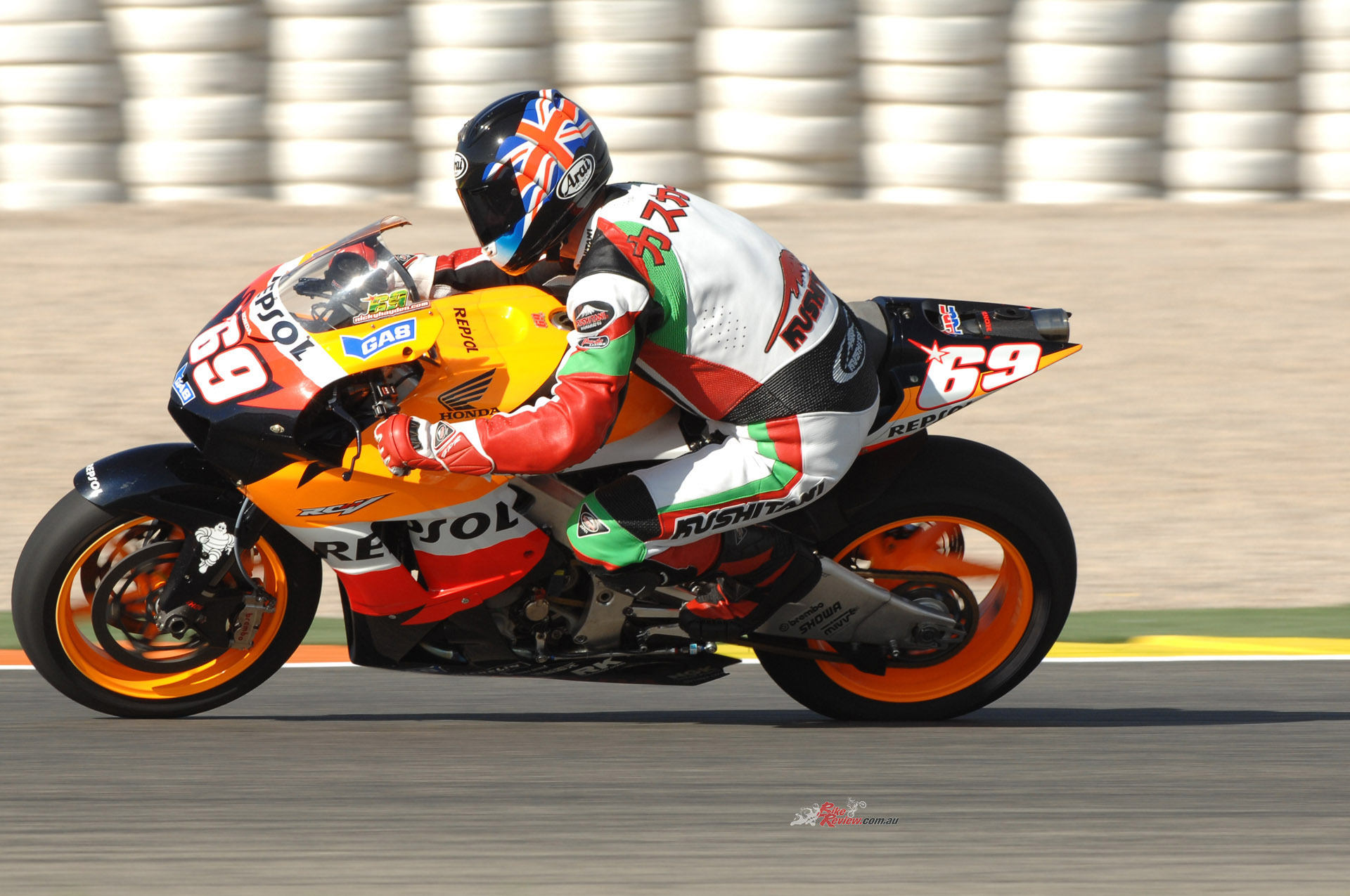
Riding Nicky Hayden’s RC211V
The chance to test each of the two quite different 2006 versions of Honda’s ultimate racer came at Valencia the day after Hayden clinched the title with a heart-warming blend of tears and smiles, humility and pride – and on a day when, for the first time, Honda shared the track with other teams to let me ride their latest, greatest racers. This meant that, also for the first time ever, I could compare and contrast how the Honda stacked up on a same-day basis against its Ducati and Kawasaki rivals, and to ride the Yamaha and Suzuki competition on the same track just 24 hours later.
So, my turn to climb aboard the championship-winning Honda came just minutes after hopping off the fire-breathing Desmosedici Ducati with which reigning World Superbike champion Troy Bayliss had dominated the final race of the 990cc MotoGP formula the previous day by leading from start to finish.
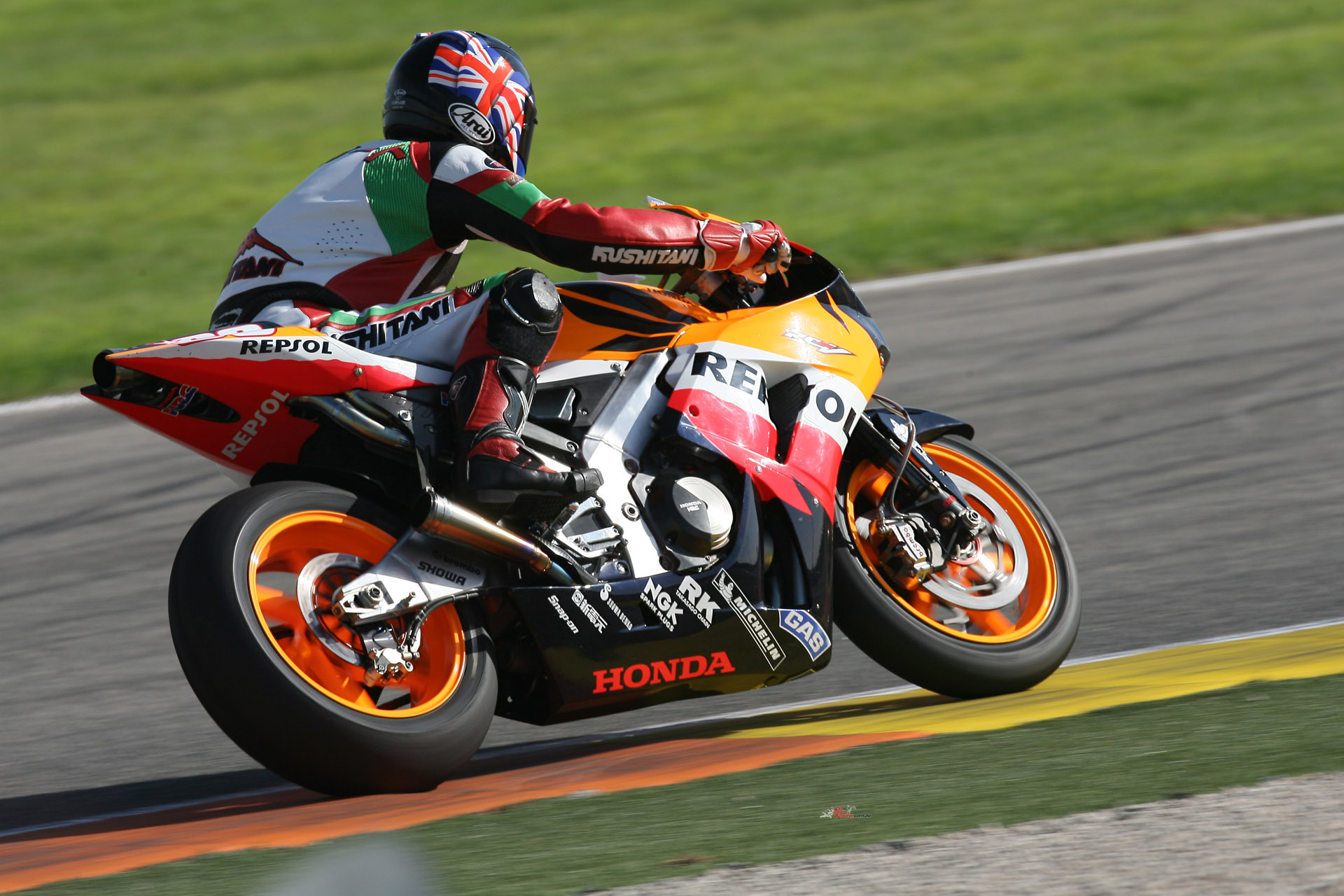
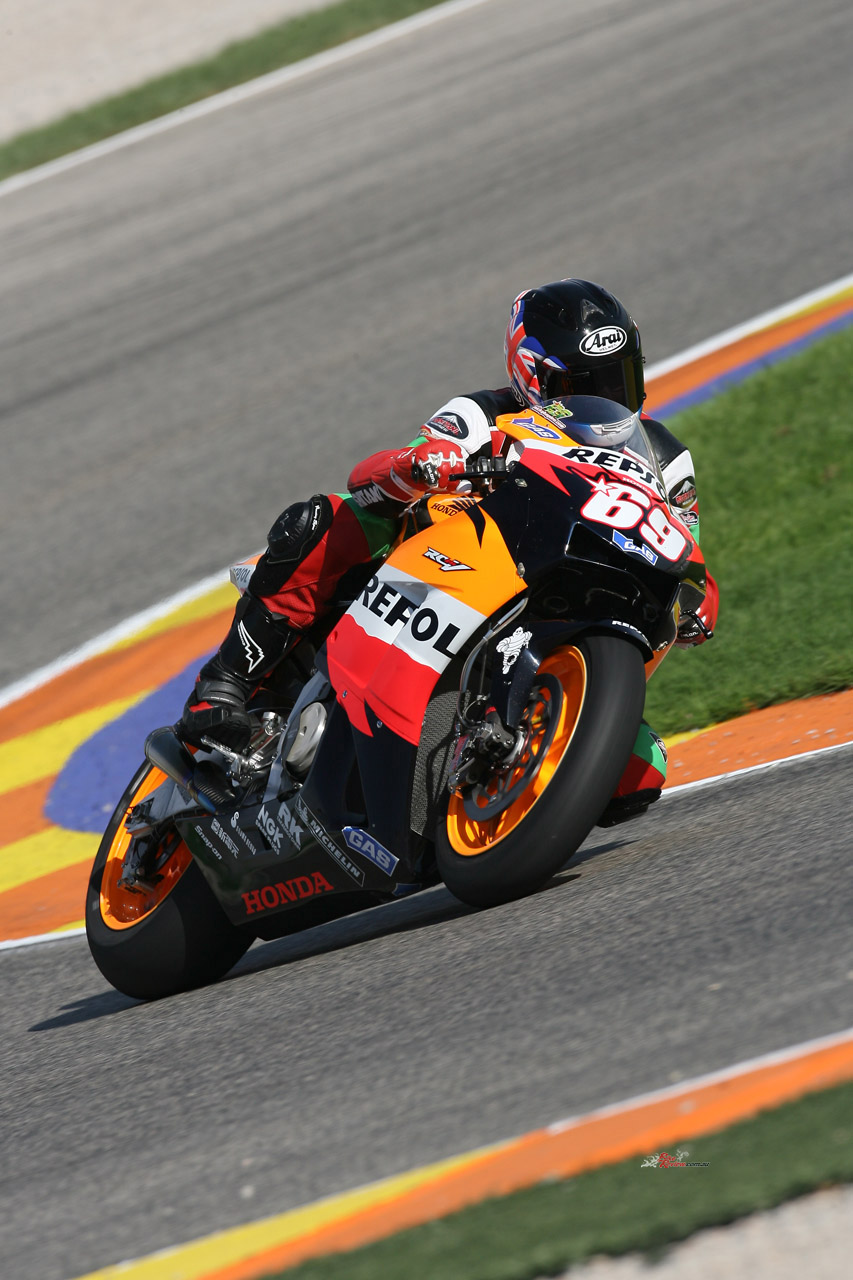
The two bikes couldn’t have provided a bigger contrast, with the Ducati’s brutish, aggressive, in-your-face power delivery and truck-like handling, comparing so vividly with the refined, controllable and so-user friendly performance of the sweet-steering but still potent Honda. Having been fortunate to ride each successive version of the RC211V since its 2002 debut, and each version of the Ducati after it joined in one year later, I was ready for the disparity between the two – but not for how very different the Hayden title-winner would be to any of its predecessors.
“I was ready for the disparity between the two – but not for how very different the Hayden title-winner would be to any of its predecessors.”
Seated in Nicky’s hot seat I was soon aware just how perfectly laid out the bike was – everything felt just right, even if the new world champ was a couple of inches shorter than me. But whereas the voluptuous bodywork of the Ducati made it feel rather unwieldy in comparison, the Honda felt so tight and compact without being cramped, and completely biddable – it did exactly what you asked it to do with minimal effort and immediate response. And whereas on some bikes that immediacy would be a recipe for nervousness, the Hayden Honda was nothing of the kind.
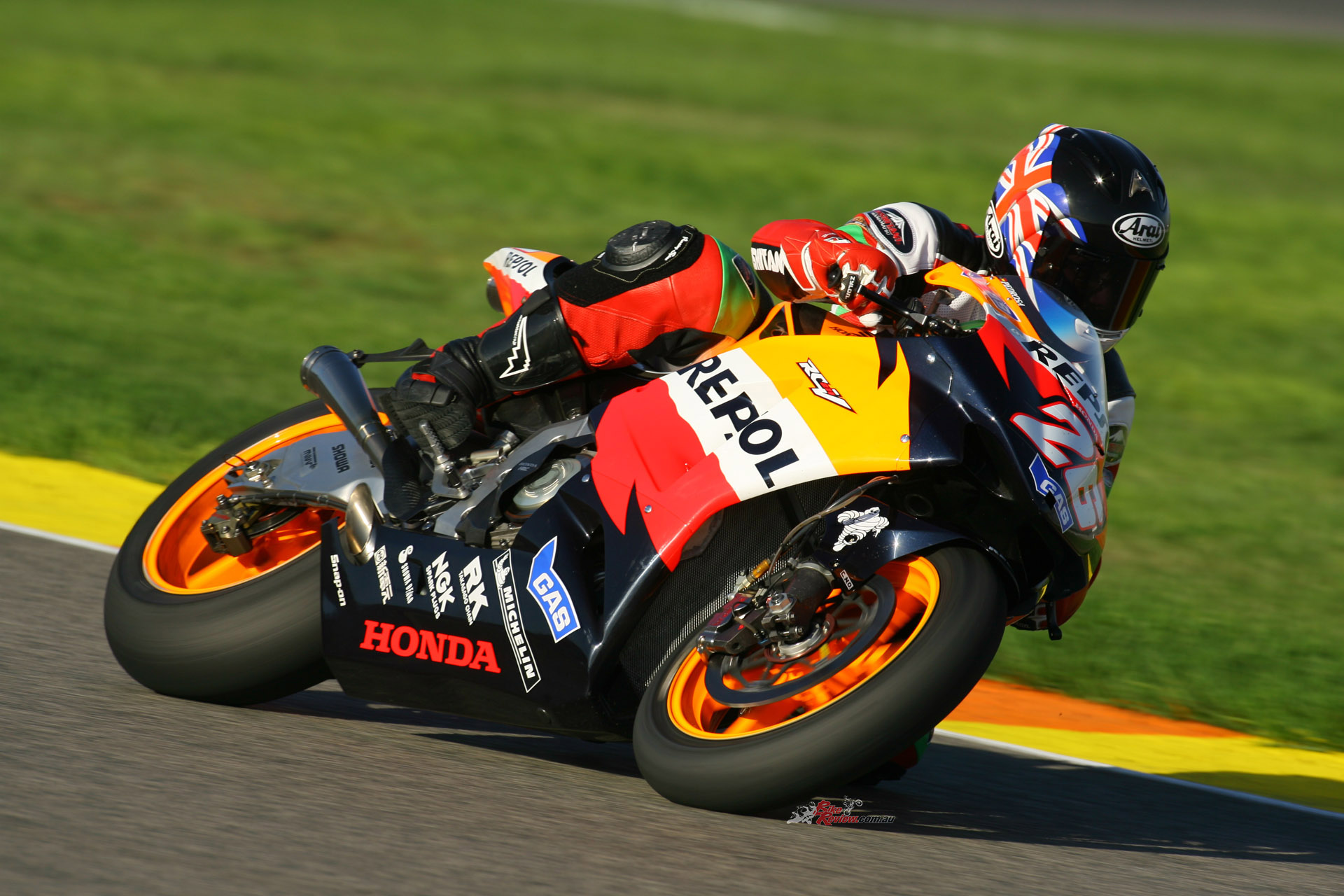
Cathcart found Pedrosa’s Original RC211V far more nervous and cramped.
Instead, it was super-controllable – the legendary direct connection between your right wrist and the back tyre was there to perfection, so that you knew exactly how much power you were asking the rear Michelin to transmit to the tarmac as you worked the twistgrip. And even if I got over-excited and took too big a handful of gas exiting the last turn onto the straight, the RC211V didn’t wheelie abruptly on me (like the Kawasaki ZX-RR I’d ridden earlier did).
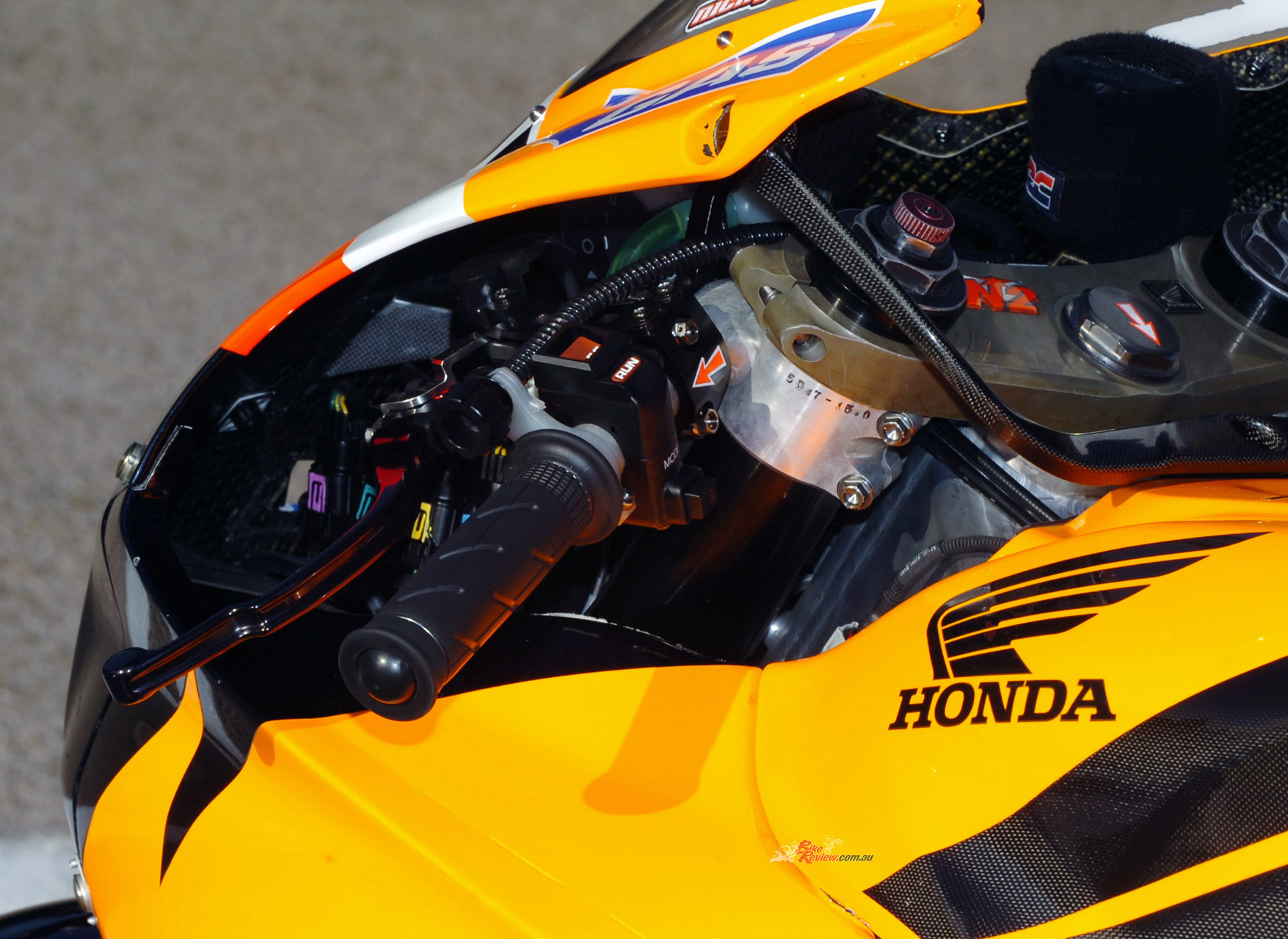
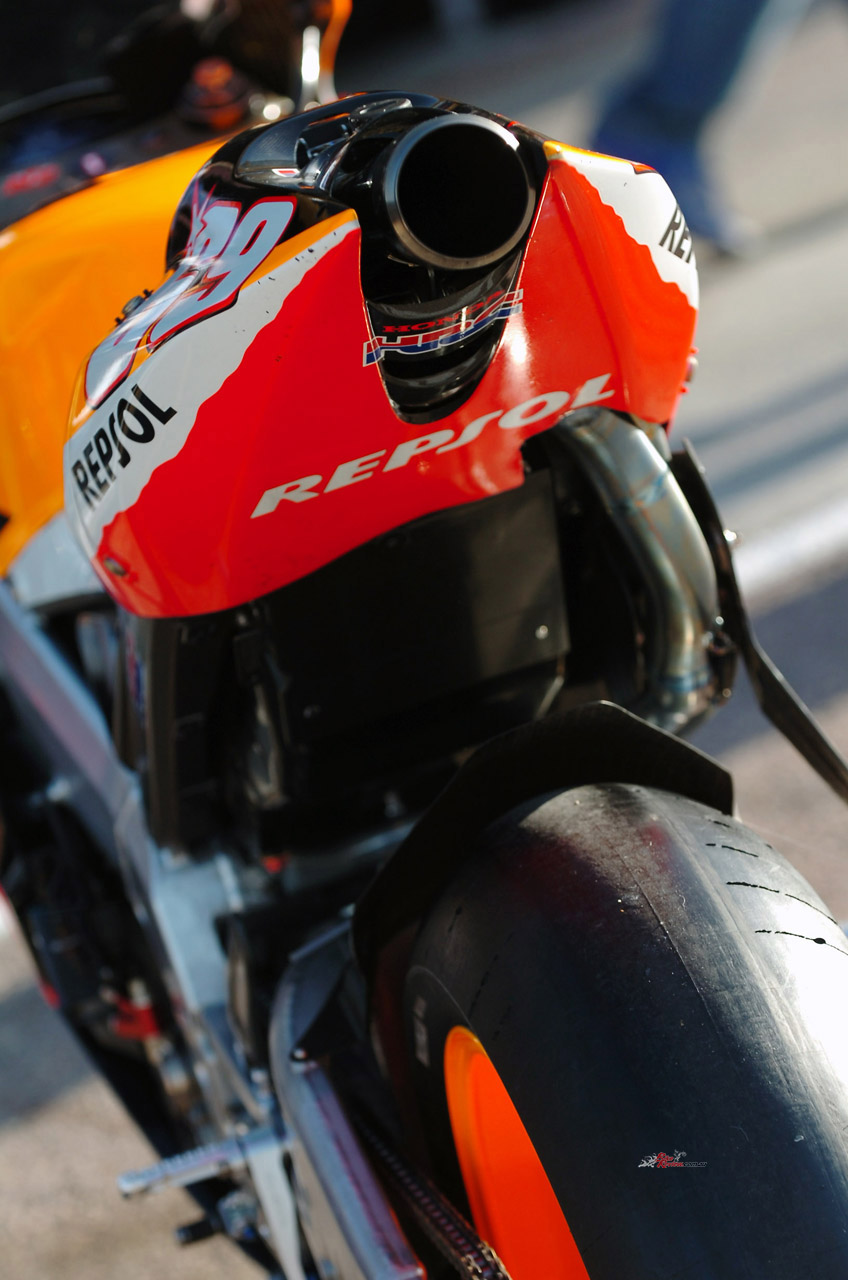
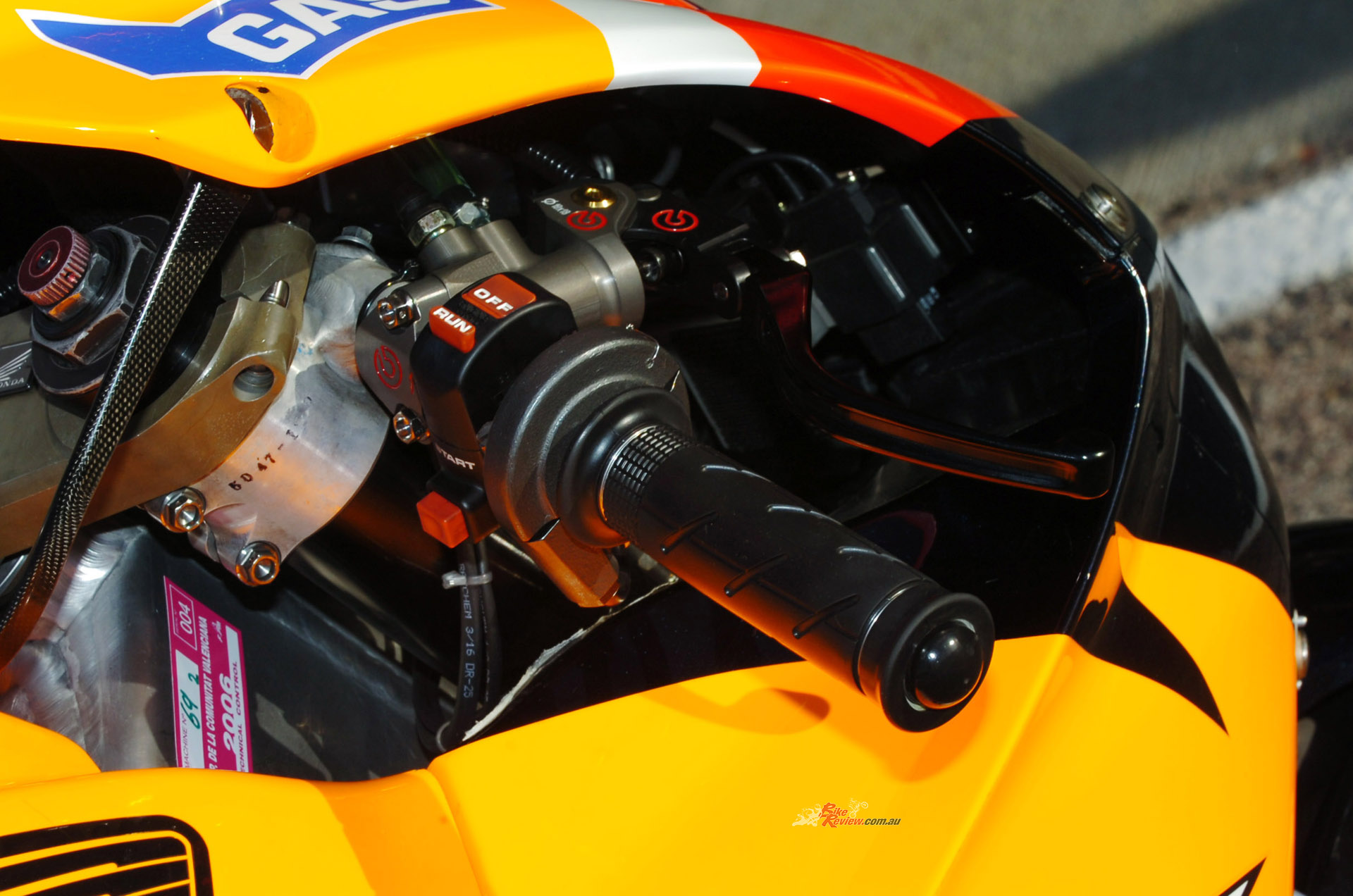
The Honda just lofted the front wheel lazily and controllably a few inches above the tarmac as I powershifted through the gears, without sacrificing acceleration or ultimate velocity. It made you feel a part of the bike in a way I hadn’t experienced before on a Honda. It seemed an integrated unit, designed as a whole, whereas Pedrosa’s 2006 bike I’d try later, seemed more of a chassis with an engine fitted, and a rider stuck on top. Nicky’s bike felt different – it was a total package.
It made you feel a part of the bike in a way I hadn’t experienced before on a Honda.
And a sweet-steering one, too, with an easy but precise turn-in, even leaning hard on the brakes into what had now become known as Rossi Corner – Turn 2 at Valencia, where Valentino had forfeited his title hopes by crashing there the day before. The Hayden RC211V had now regained the total stability under heavy braking that the earlier versions of the V5 delivered, before losing this a year ago with the bike Max Biaggi complained so much about that HRC eventually tired of his complaints, and fired him – even though he was right!
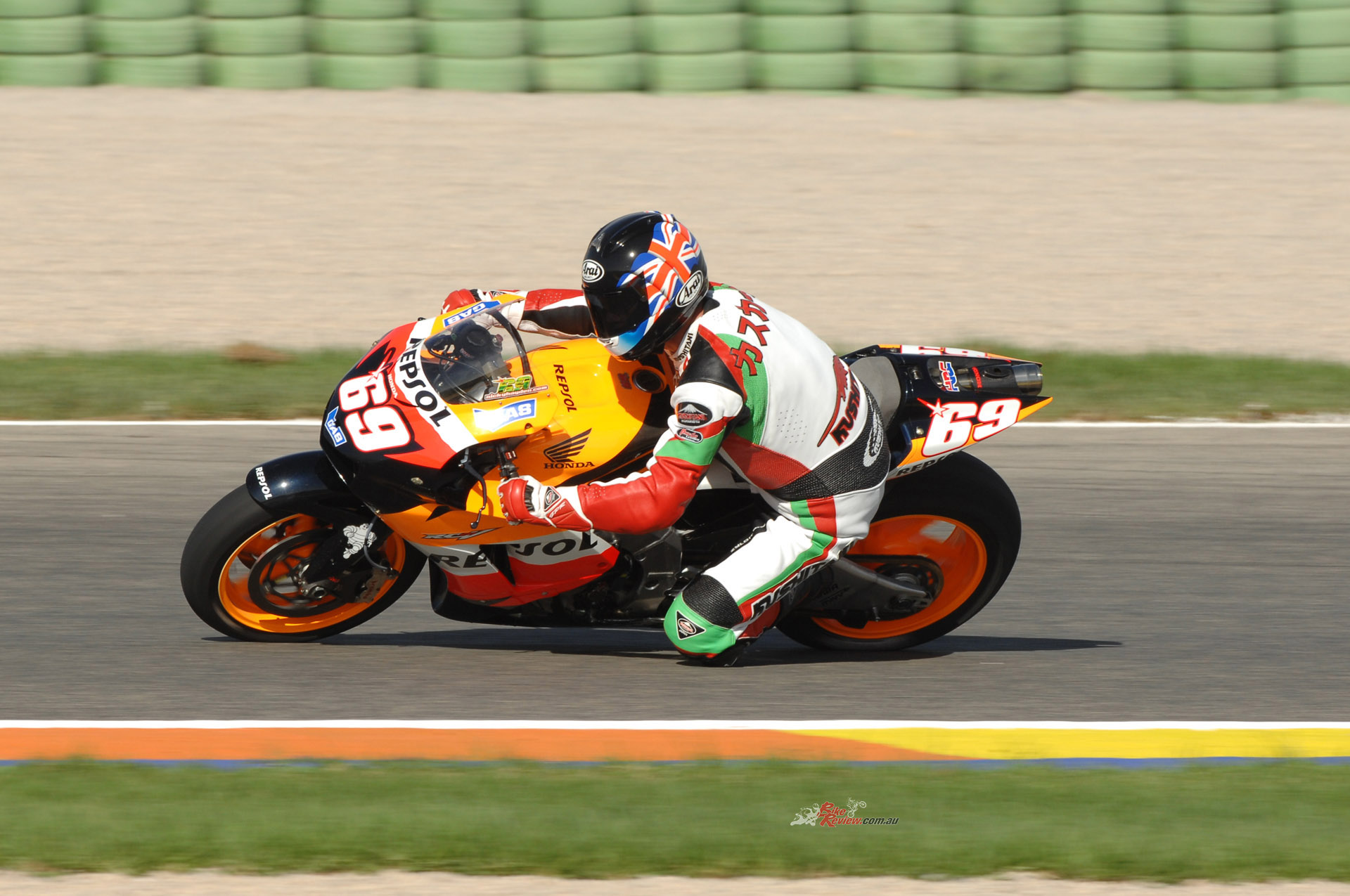
Cathcart found the 990cc V5 pulled cleanly from 8000rpm, with a remarkably broad, linear spread of power.
The 314mm Brembo carbon discs still didn’t have as much bite as when Rossi raced the Honda in 2002-03, but that was probably down to Nicky’s preferences, especially since he had that massive 255mm dirt-track disc at the rear to help him slow down and kick the bike sideways to start turning, just like they do it in the dirt. But helped by some residual engine braking delivered by Honda’s dry ramp-style slipper clutch, complemented by the so-called ‘deceleration control’ system with electronic variable idle-speed program, they slowed the bike from speed very controllably.
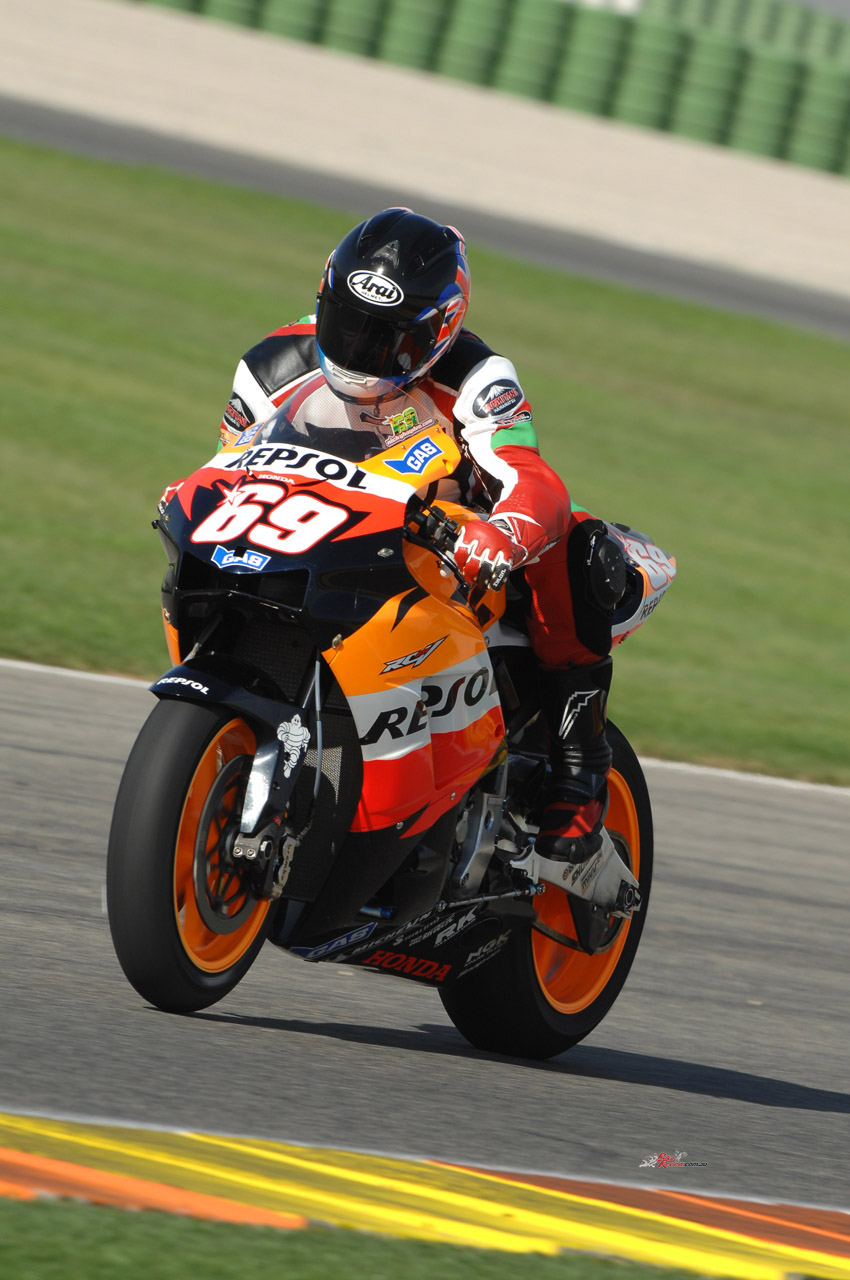
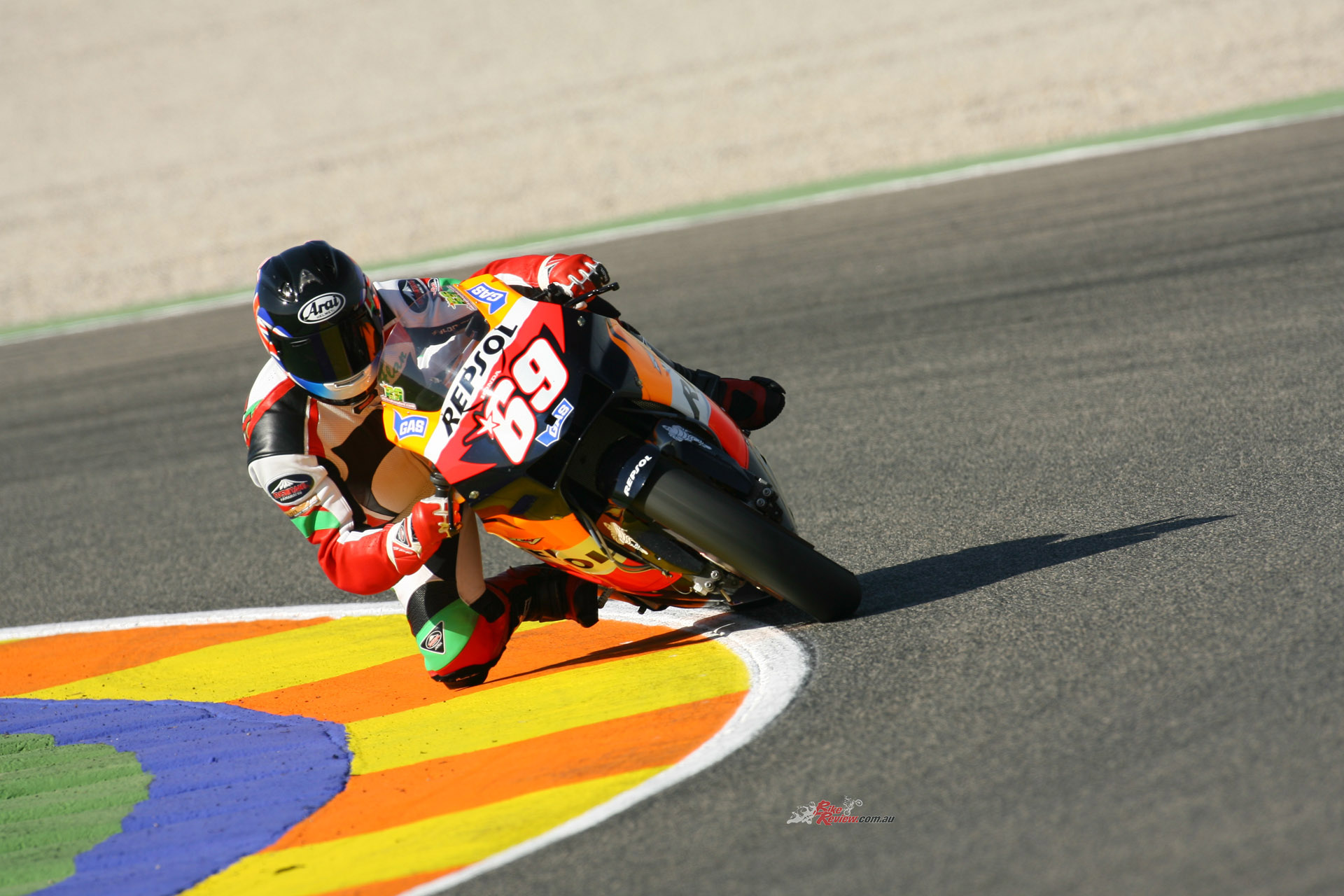
But even as I trailbraked into the apex of any of the several second-gear turns in the Valencia infield, the Honda completely retained its poise, holding the line I’d chosen for it while stopping hard, then finding its way into turns practically on autopilot, without any sign of rear wheel chatter or undue instability. This allowed you to get earlier on the throttle for the exit of the turn, then power out of it with no drama – just a big thrill, as you revelled in the warp factor drive delivered so smoothly and controllably, as the chassis’ longer swingarm helped provide the traction you were seeking.
This allowed you to get earlier on the throttle for the exit of the turn, then power out of it with no drama – just a big thrill.
And thanks to the new bodywork, the Hayden Honda was definitely easier to flick from side to side in the two fast chicanes, whereas a year ago this had been one of my criticisms at Sepang. Honda had addressed this well, delivering a degree of agility to its V5 racer which was previously the hallmark of the in-line Yamaha four, while still producing bodywork that was adequately aerodynamic.
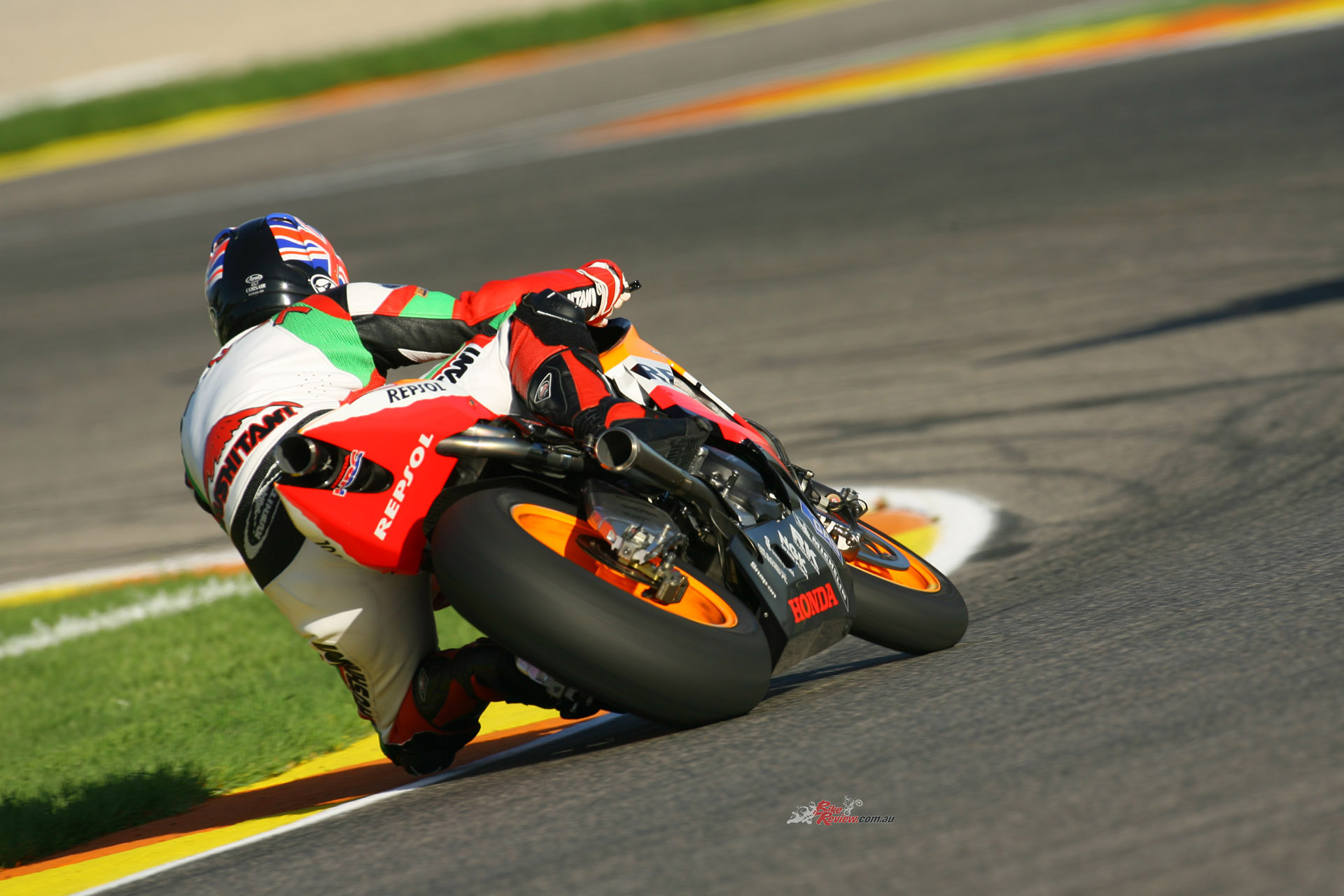
The dual-compound rear Michelin delivered excellent side grip.
But in faster bends, like Valencia’s Turn 1, the Hayden Honda carried the same excellent corner speed with total stability as its predecessors always had done, despite the slightly shorter wheelbase Nicky’s bike carried. It felt totally balanced, just waiting for you to twist that wrist to deliver mind-numbing acceleration in a genteel, refined manner as the V5 motor’s ultra-distinctive exhaust note droned hard and strong through those triple megaphone exhausts.
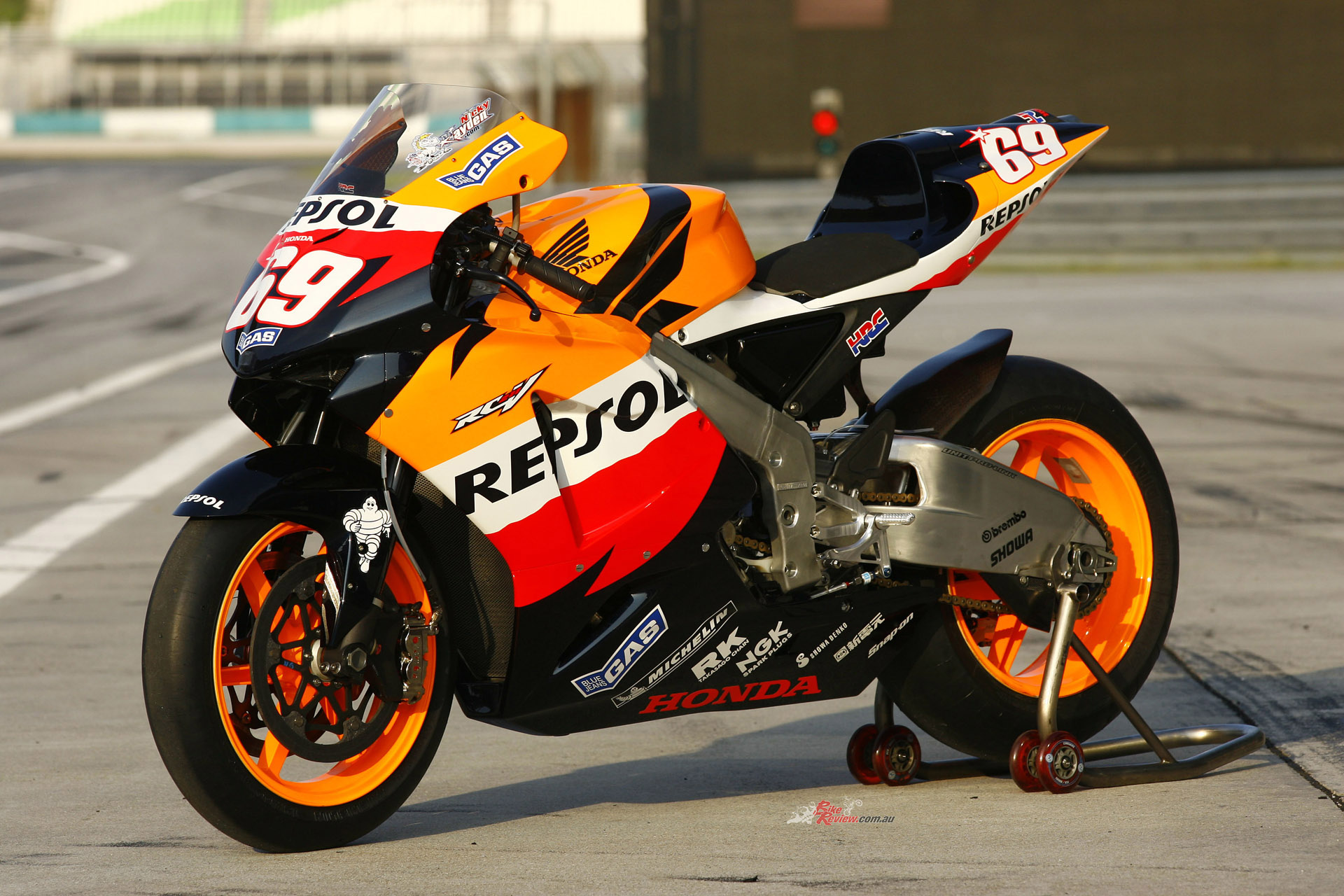
Pickup on the Hayden Honda from a closed throttle was crisp and immediate, without being abrupt and jerky as on some other MotoGP bikes, with the consequent risk of wheelspin and loss of drive at the least, and a one-way ticket to highside heaven at the worst. Thanks to the traction control system fitted to the Honda, then a relative novelty, you could just focus on winding the throttle wide open exiting a turn, and weighting the footrests to lever it upright, and to help keep the front wheel on the ground.
Side grip was excellent on the Honda’s rear dual-compound Michelin as I fed the power in exiting Valencia’s Turn 6 left-hander onto the back straight.
Side grip was excellent on the Honda’s rear dual-compound Michelin as I fed the power in exiting Valencia’s Turn 6 left-hander onto the back straight, as the key to allowing that magnificent V5 motor to stretch its legs as I tap-tap-tapped the race-pattern powershifter up through the gears. There was no direct feeling of the ignition being retarded abruptly to prevent wheelspin exiting the turn – just a so-effective gradual diminishing of the Honda’s torque output.
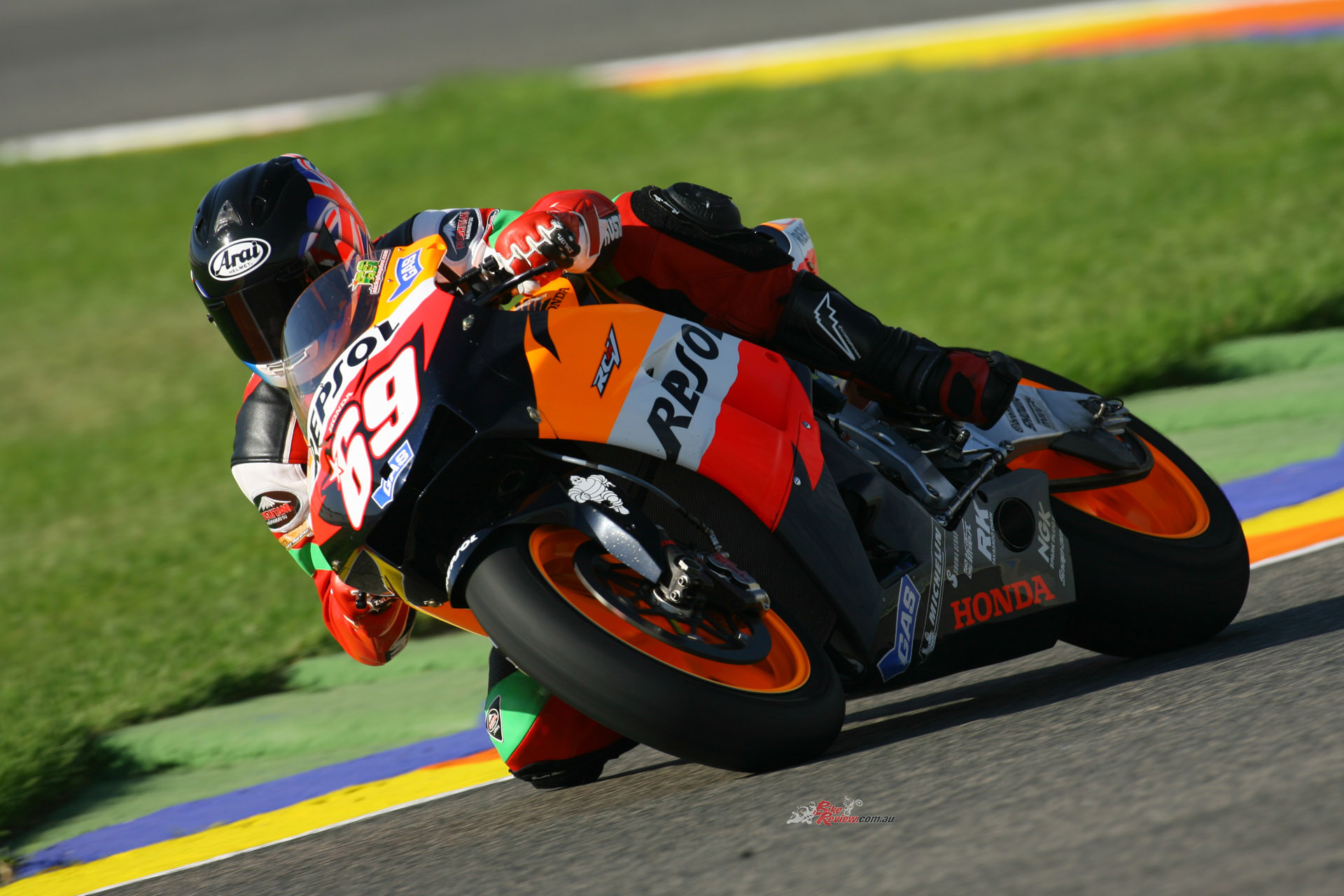
Hayden’s title-winning RC211V felt like a ‘total package’, said Cathcart.
The Keihin ECU told the two butterfly throttles feeding the rear cylinder block it was responsible for to ease off a little, compensating for the rider’s over-eagerness with the other three, while at the same time administering a similar back-off order to other elements in the engine management hit squad, like ignition and fuel supply, to accommodate the fusillade of power and torque I’d just created.
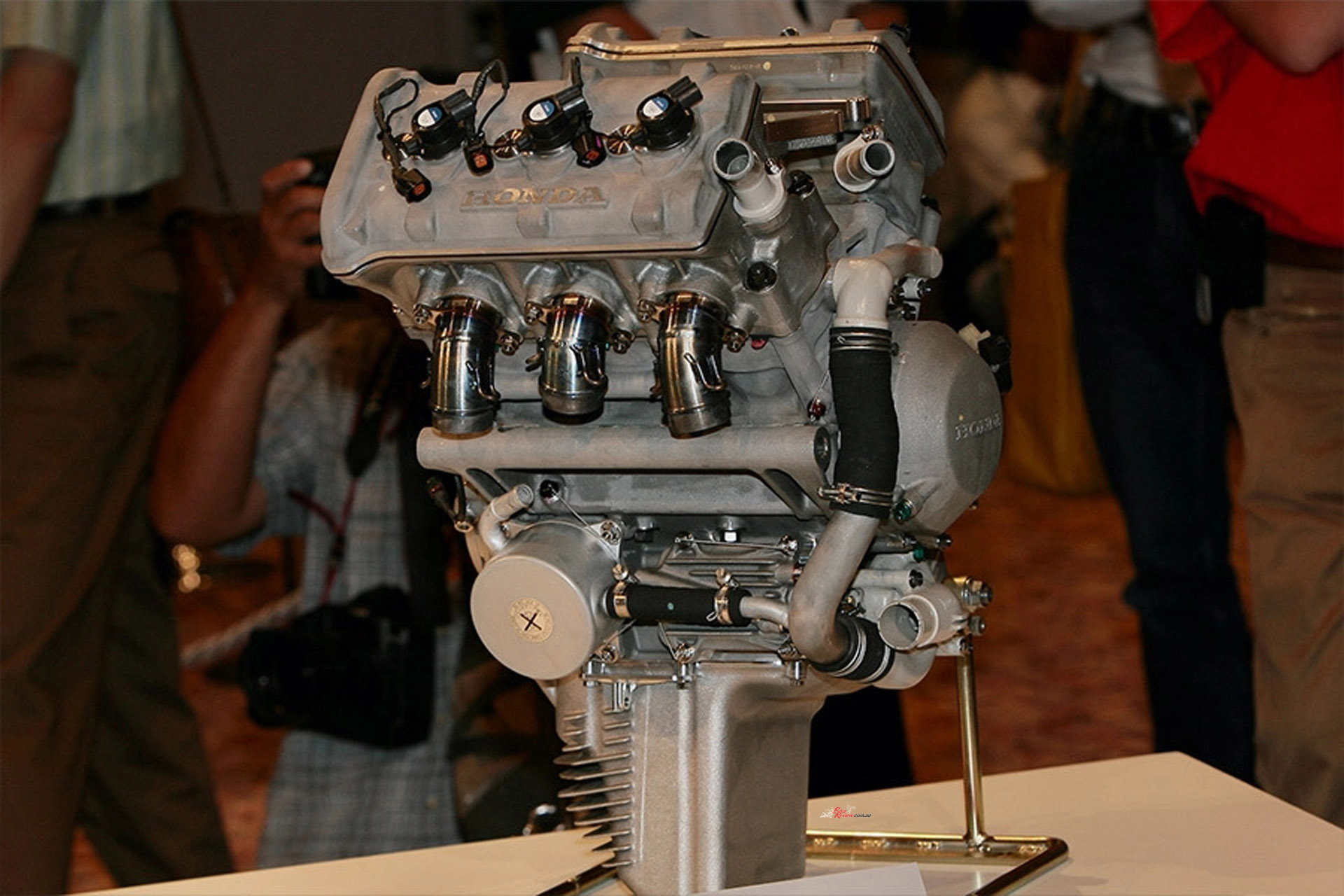
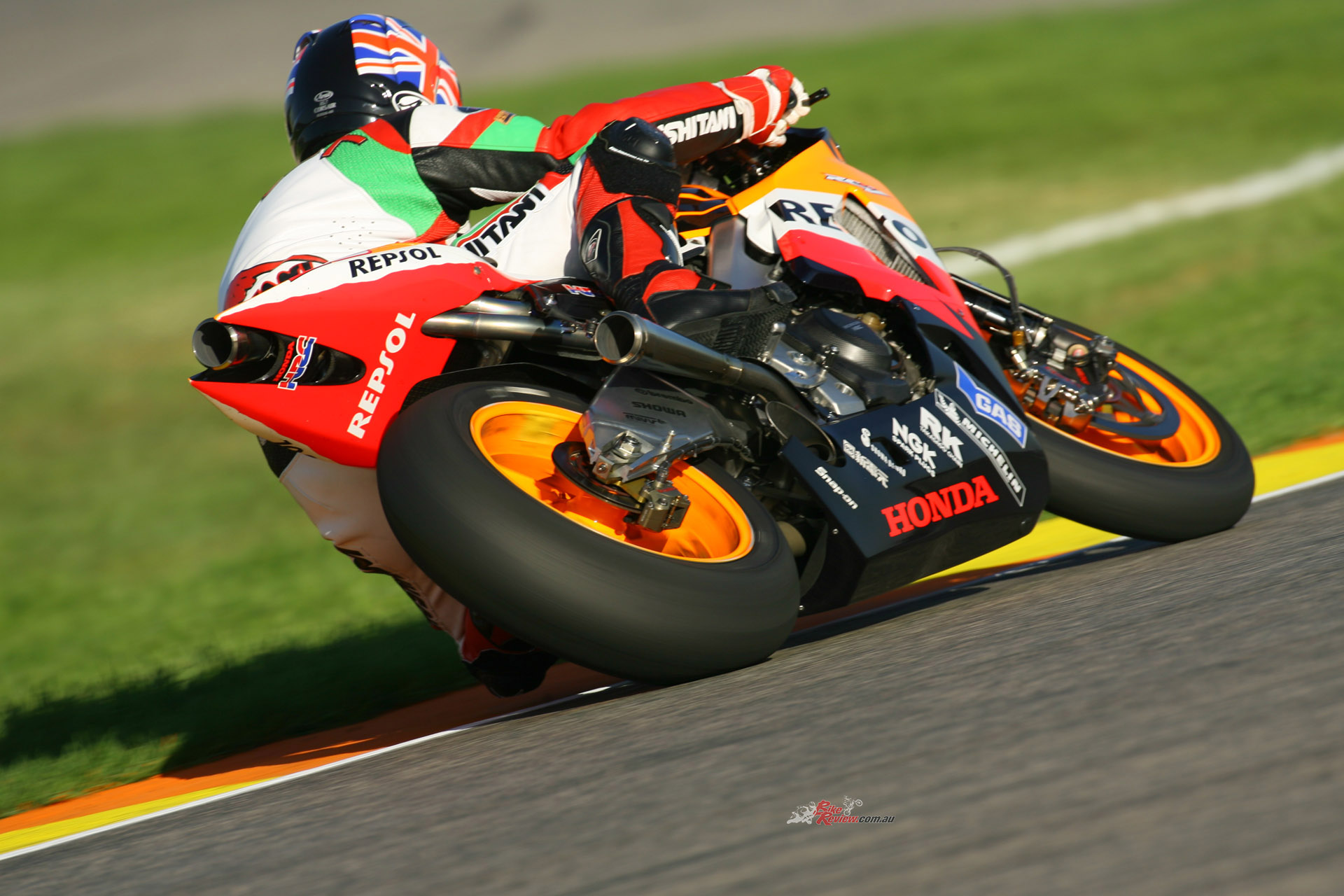
Nicky’s new, physically smaller Honda engine also felt cleaner and freer-running than the original, with a smoother, less- notchy gear change. It pulled hard and strong from as low as 8,000rpm up to the 16,500rpm revlimiter set for my test (17,000rpm in race guise), but it’d even run as low as 8,000rpm exiting Valencia’s bottom-gear Rossi Corner, or the infield hairpin, pulling hard and strong in totally linear mode all the way to the moment the piercing blue shifter light beside the analogue tacho flashed at 16,300rpm, inviting you to hit a higher gear.
I’d have liked the gear selector indicator … on a bike with such a mile-wide powerband. Nicky didn’t want one, though.
Honda remained the only team on the MotoGP grid to still retain that allegedly old-fashioned tacho, but I was glad. It was much easier to read at a glance – though with such a wide power band and so flat a torque curve, you didn’t need to look at it much, just watch for the light and hit the gearlever when told to. But I’d have liked the gear selector indicator then newly commonplace on all other MotoGP contenders, which allowed you to keep track of where you were in the gearbox on a bike with such a mile-wide powerband. Nicky didn’t want one, though: “Lap time – that’s the only thing I care about,” he told me. “I mean, it’s got temperature on there and stuff, but that’s the only thing I look at!”
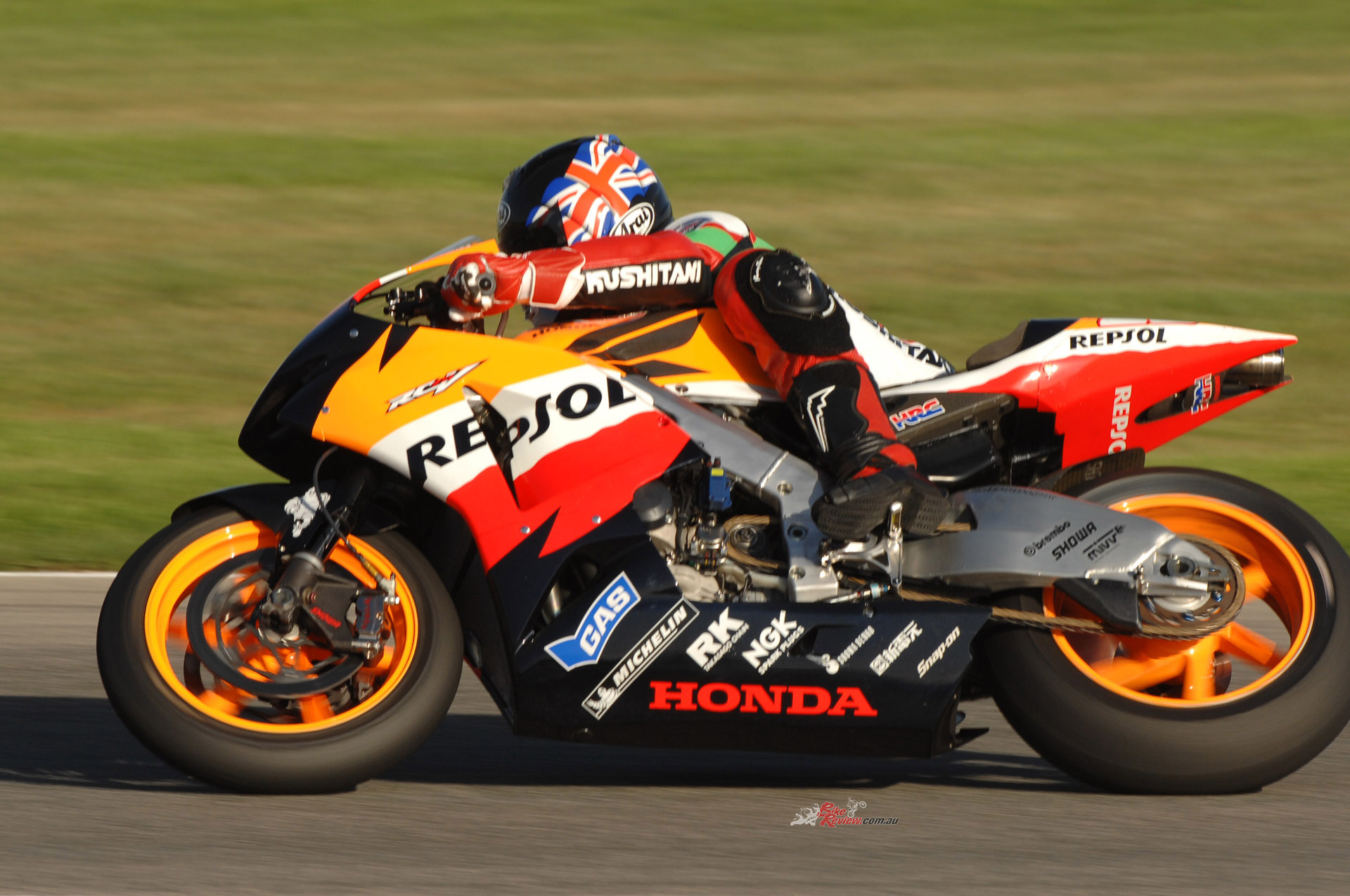
Riding Dani Pedrosa’s RC211V
Later that sunny Spanish afternoon, I also had the chance of some laps on Dani Pedrosa’s original bike, essentially identical to the Gresini satellite bike on which fourth-placed Marco Melandri finished one place above him in the final points table. Having twice ridden the minuscule Dani’s world champion NSR250 Hondas, I was prepared for how cramped the riding position would be – though not for its very different engine characteristics, which were more like a two-stroke than any V5 Honda I’d yet sampled.
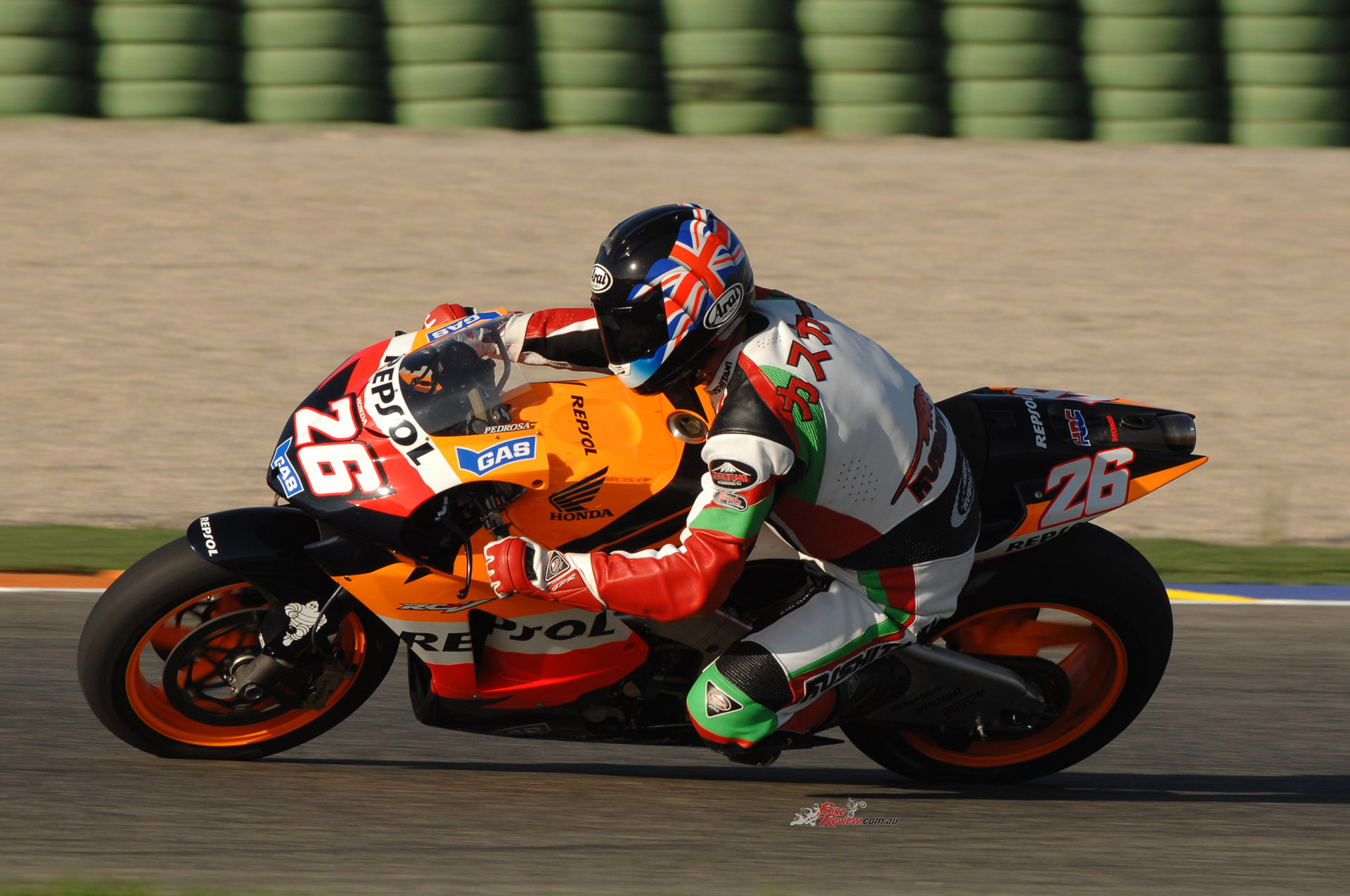
Pedrosa’s Original RC211V was set up for higher corner speed, reflecting his two-stroke 250GP riding style.
The engine had the same flexible, forgiving character as the Hayden bike, with the same flat torque curve and linear build of power, but it had a slightly different sound and for sure had the ‘deceleration control’ system set up differently, to almost eradicate any trace of engine braking – two-stroke style.
Because of Pedrosa’s slight stature, the footrests were raised too close to the seat for me to feel at ease, especially as this bike also had a thinner seat pad than Nicky’s, presumably to let the small Spaniard mould himself better to it.
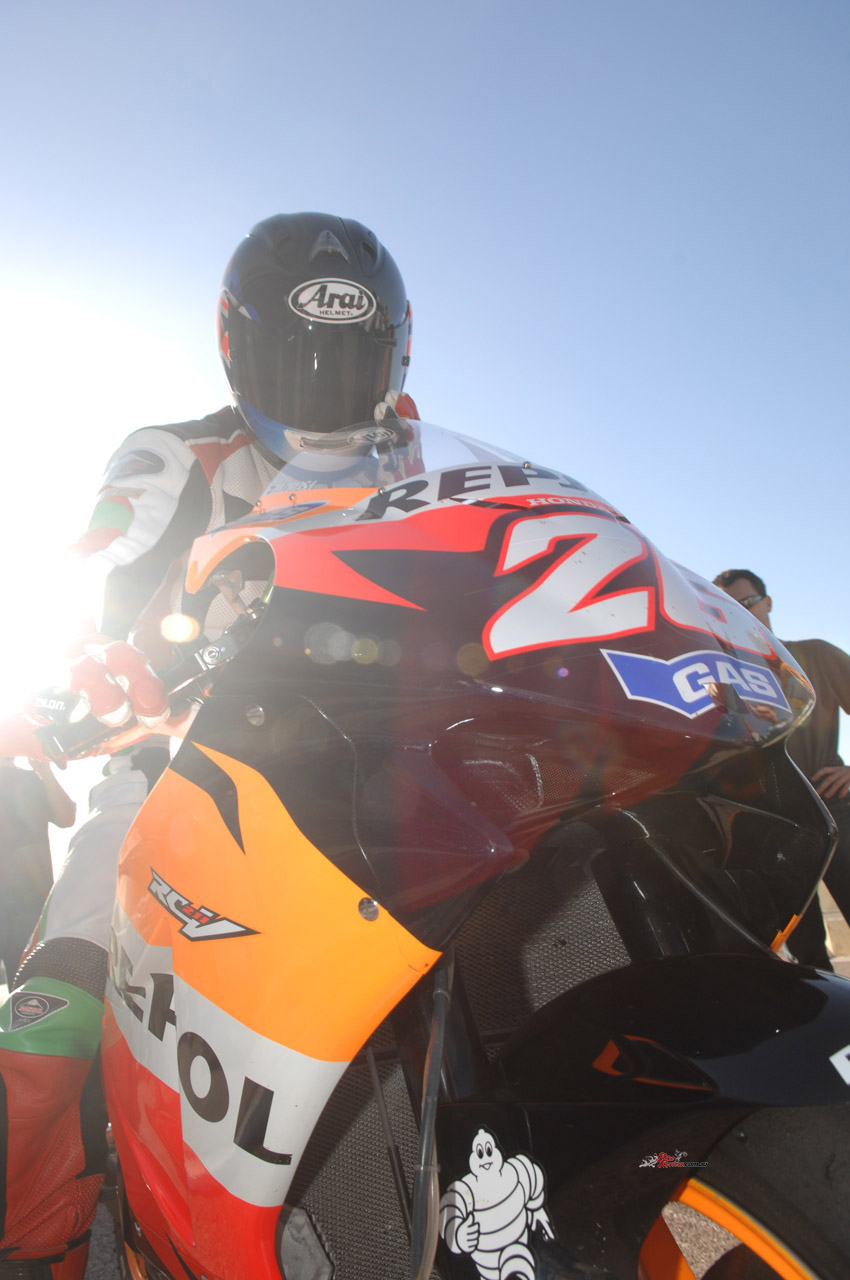
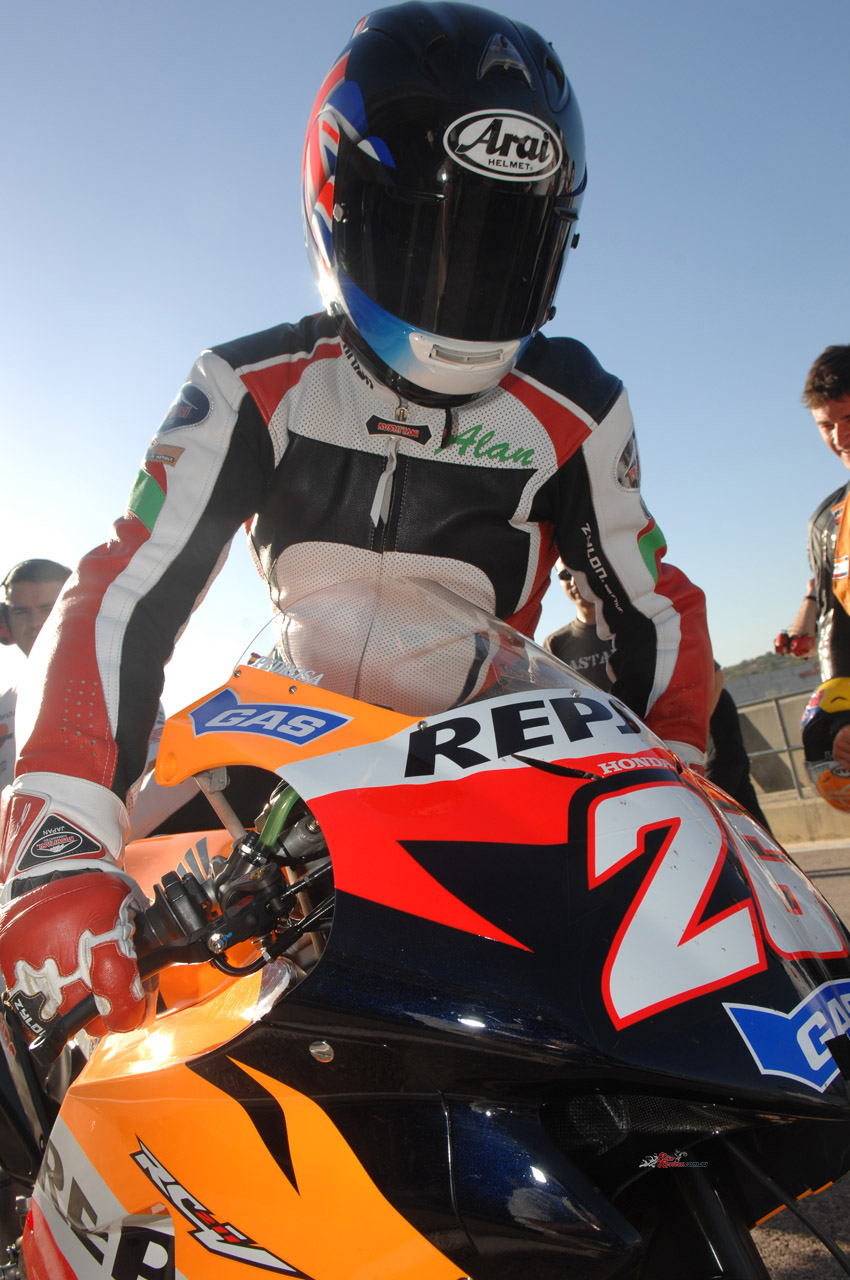
A consequence of the reduced engine braking was that I had to use the brakes even harder than on the Hayden bike. So the fact that the rear brake was practically non-operative meant you must squeeze harder on the front carbon discs, which had more initial bite than Nicky’s machine. Dani’s bike was definitely set up for a higher turn speed than Hayden’s, as befitted his two-stroke 250 background – and I couldn’t help wondering if that wasn’t maybe one explanation for the apparently reckless way he crashed into Nicky at Estoril, looking for a gap that wasn’t there to exploit his superior turn speed, and get his teammate back for having the nerve to overtake him a couple of laps earlier.
Dani’s bike was definitely set up for a higher turn speed than Hayden’s, as befitted his two-stroke 250 background.
Another spinoff of the 250-derived setup Pedrosa opted for on his 990cc four-stroke was its really nervous handling. Just show it a bend, weight up the footrests and get ready to turn in – and you were already there. This contrasted with Hayden’s more balanced-seeming bike, with its more poised, precise steering. After riding all five factory contenders in the final year of 990cc MotoGP, I left Valencia convinced more than ever that the right one came out on top. Bike, as well as rider…
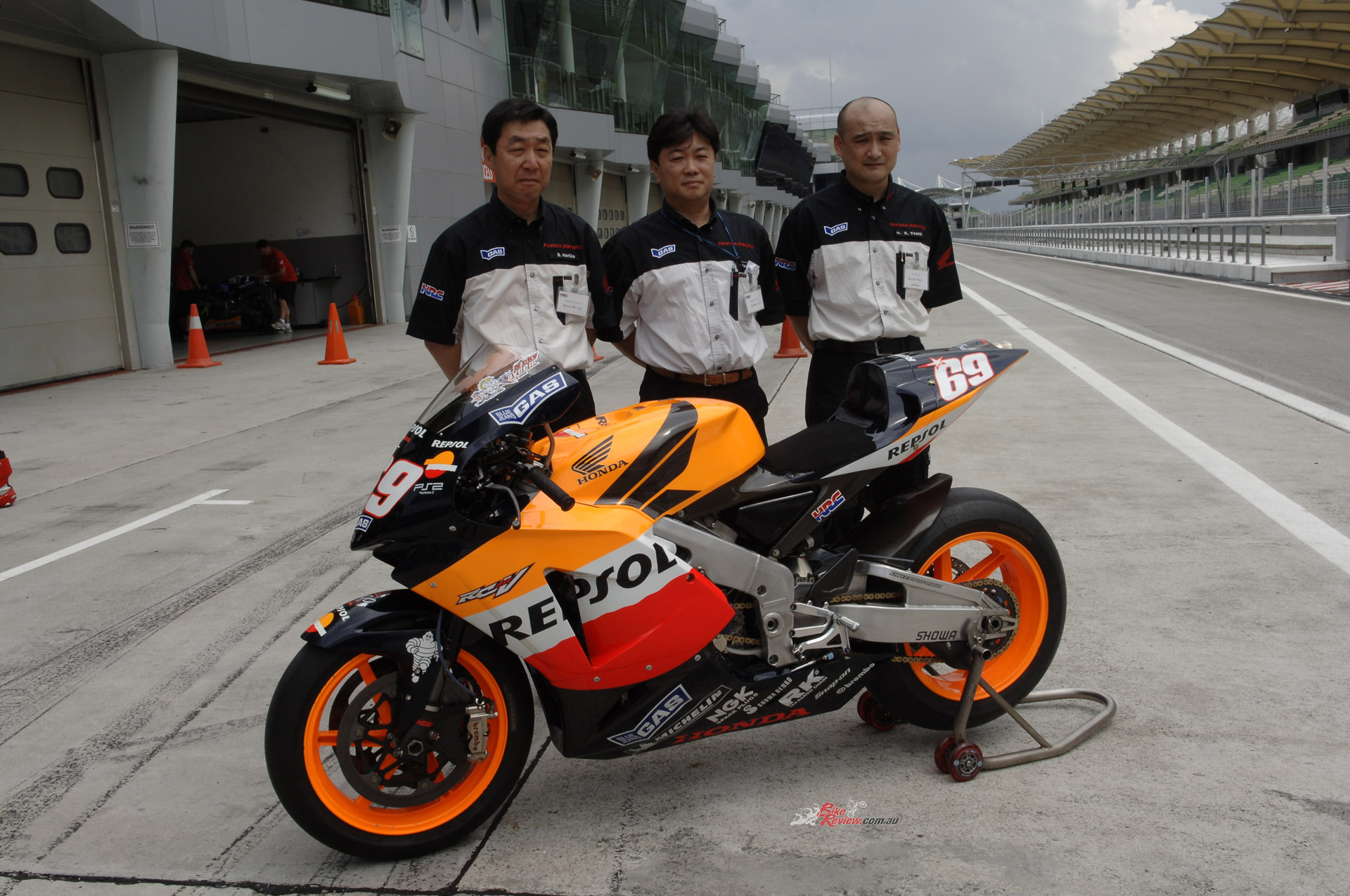
L-R Satoru Horiike MD HRC, Seiki Ishii HRC engineer & Kyoichi Yoshii RC211V project leader.
2006 Repsol Honda RC211V Specifications
Engine: Water-cooled DOHC 75.5-degree V5 four-stroke with gear-driven camshafts, four valves per cylinder, 75 x 44.8mm bore x stroke, 13.9:1 compression, 989.60cc, electronic fuel injection and engine management with Keihin ECU, twin injectors per cylinder, three selectable riding maps and five 48mm Keihin throttle bodies with single butterfly throttles and dual control system, six-speed extractable cassette-type gearbox with straight-cut primary gears and two-way electronic powershifter, multiplate dry ramp-type slipper clutch.
Chassis: Fabricated aluminium open-cradle twin-spar frame, fully adjustable 47mm Showa inverted fork, fabricated aluminium swingarm with fully adjustable Showa shock and New Unit Pro-Link mounting/link, adjustable head angle and trail, 1450mm wheelbase, 148kg with oil and water but no fuel, 314mm Brembo carbon front discs with four-piston radial calipers, 255mm Honda steel rear disc with two-piston Brembo caliper, Enkei forged magnesium wheels (3.75in and 6.25in), Michelin 12/60-420 front and 19/67-420 rear tyres.
Performance: 255bhp (190.2kW) at 17,000rpm, 116Nm at 14,000rpm, top speed 343km/h at Shanghai, year of construction 2006.
Owner: Honda Racing Corporation, Saitama, Japan.
2006 Repsol Honda RC211V Gallery
You Might Also Like