

A chance discovery on the Newell Highway leads to a disappearing motor museum, an eclectic motorcycle collection and some interesting auction results. Photos: The Bear.
A wrong turn leads The Bear to McFeeters Motor Museum just days before it closes for good and inside he discovers an eclectic collection of motorcycles destined for auction. Unable to attend the sale, a little detective work later reveals the prices the machines sold for.
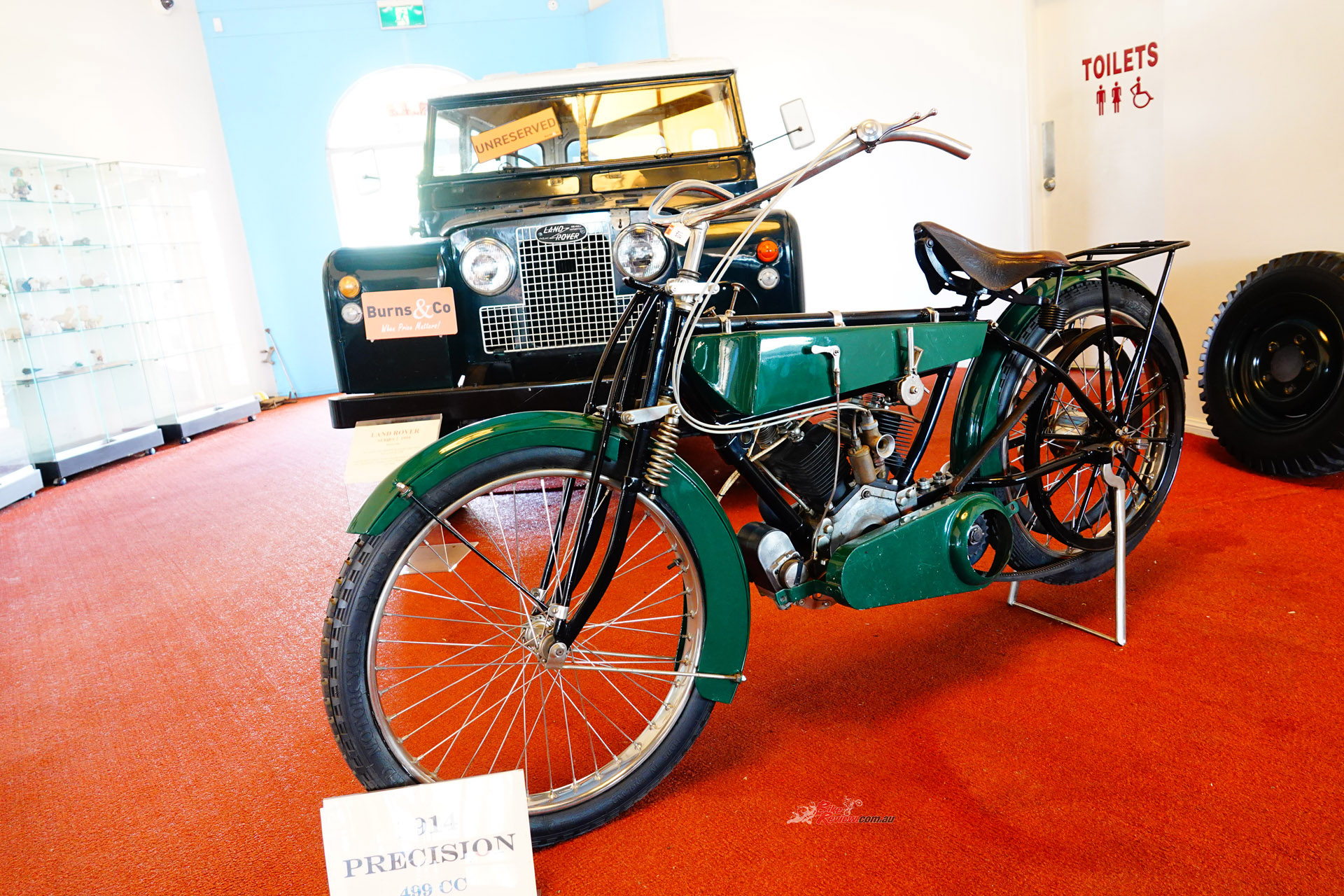
The beautifully restored 1914 Precision fetched $26,000, with a 1959 Land Rover Series II in the background.
The things you see, as they say, when you haven’t got a gun. Or as in this case, when you haven’t got an opportunity to come back for the auction. I was on a bit of a proving trip to see if you can travel seriously (well, all right, perhaps not terribly seriously) on a mid-sized motor scooter. Yamaha had kindly lent me an XMAX300 – a single-cylinder, four-stroke scooter which is intended more for around-the-city work. It was exactly what I wanted to try out, and you’ll read about the experiment in another story right here. Let me just say that the scoot came through with flying colours.
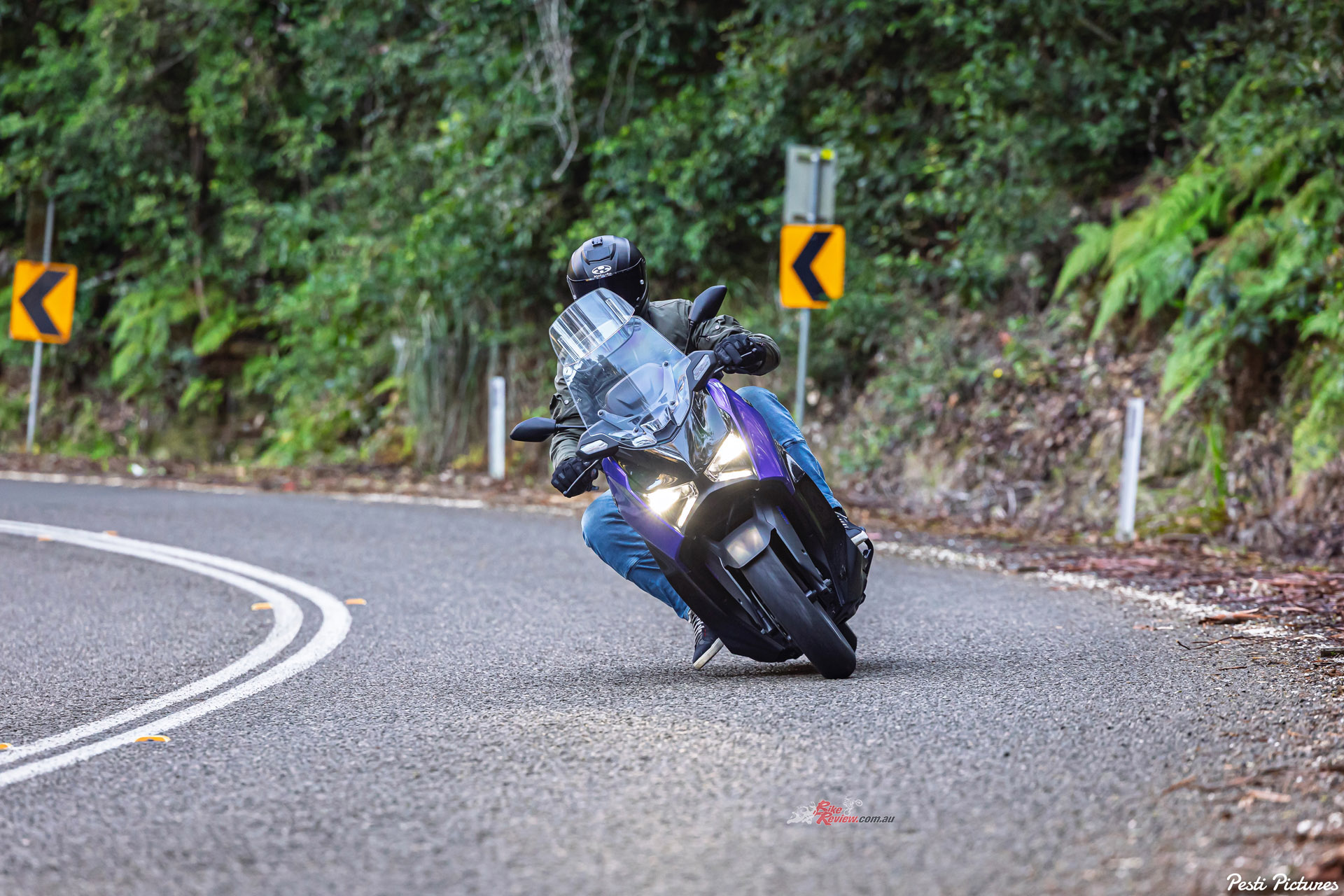
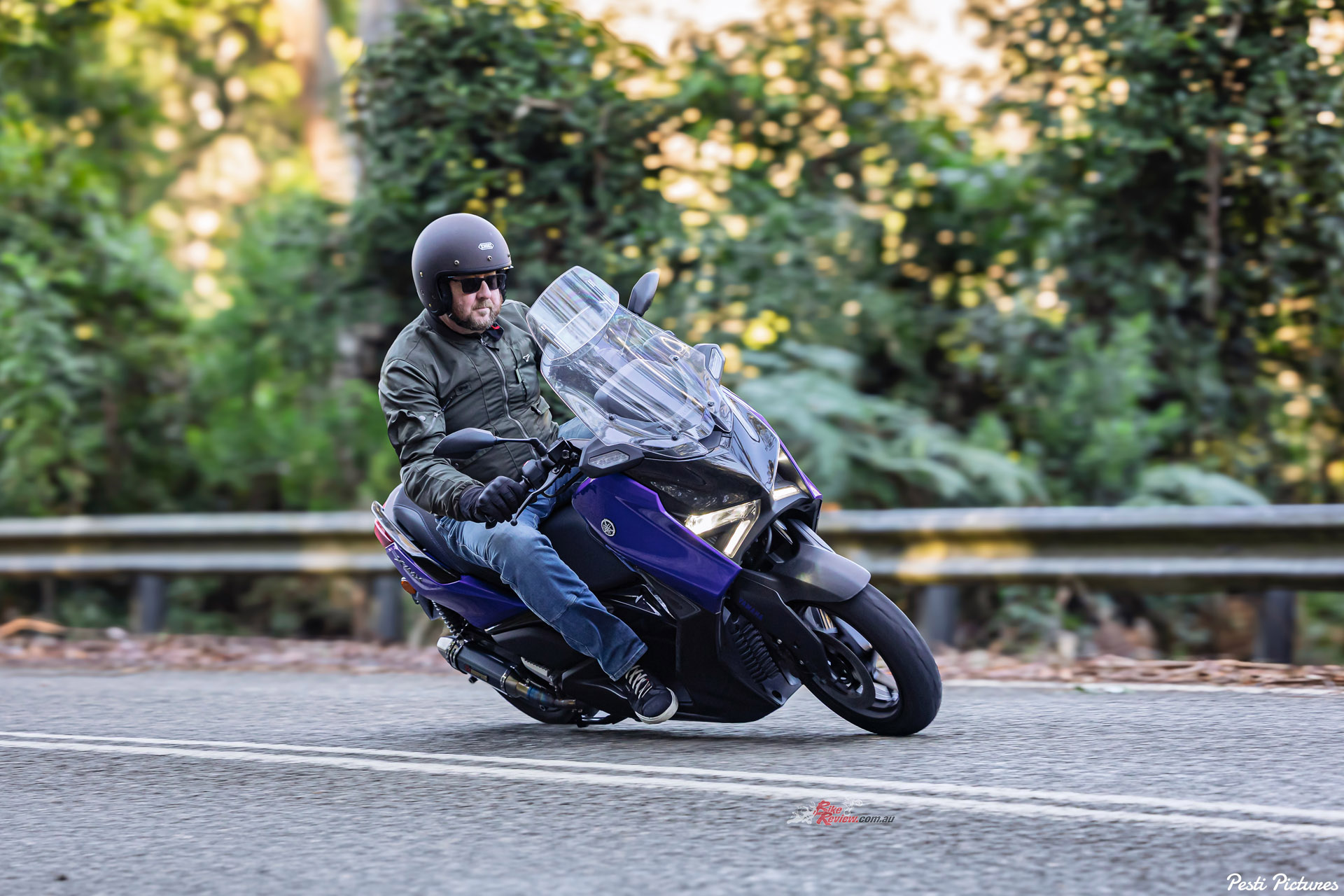
My ride took me out to Bogan Gate, and I was on my way back when I found myself headed south on the Newell Highway in Forbes. I wouldn’t have been there if I hadn’t missed the turnoff to the Escort Way, but it was a welcome mistake because I found myself passing a building I had never noticed before. I’m not quite sure how I could have missed it, because McFeeters Motor Museum was certainly identified by a large-enough sign.
Read BikeReview’s long-term Yamaha XMAX300 content here.
I say “was” because by the time you get there the sign will probably have been pulled down. The museum was about to be closed after 18 years of displaying the McFeeters family’s extensive collection. It held and presented more than a century of motoring history through cars, pedal cars, mannequins, signage, memorabilia and of course motorcycles.
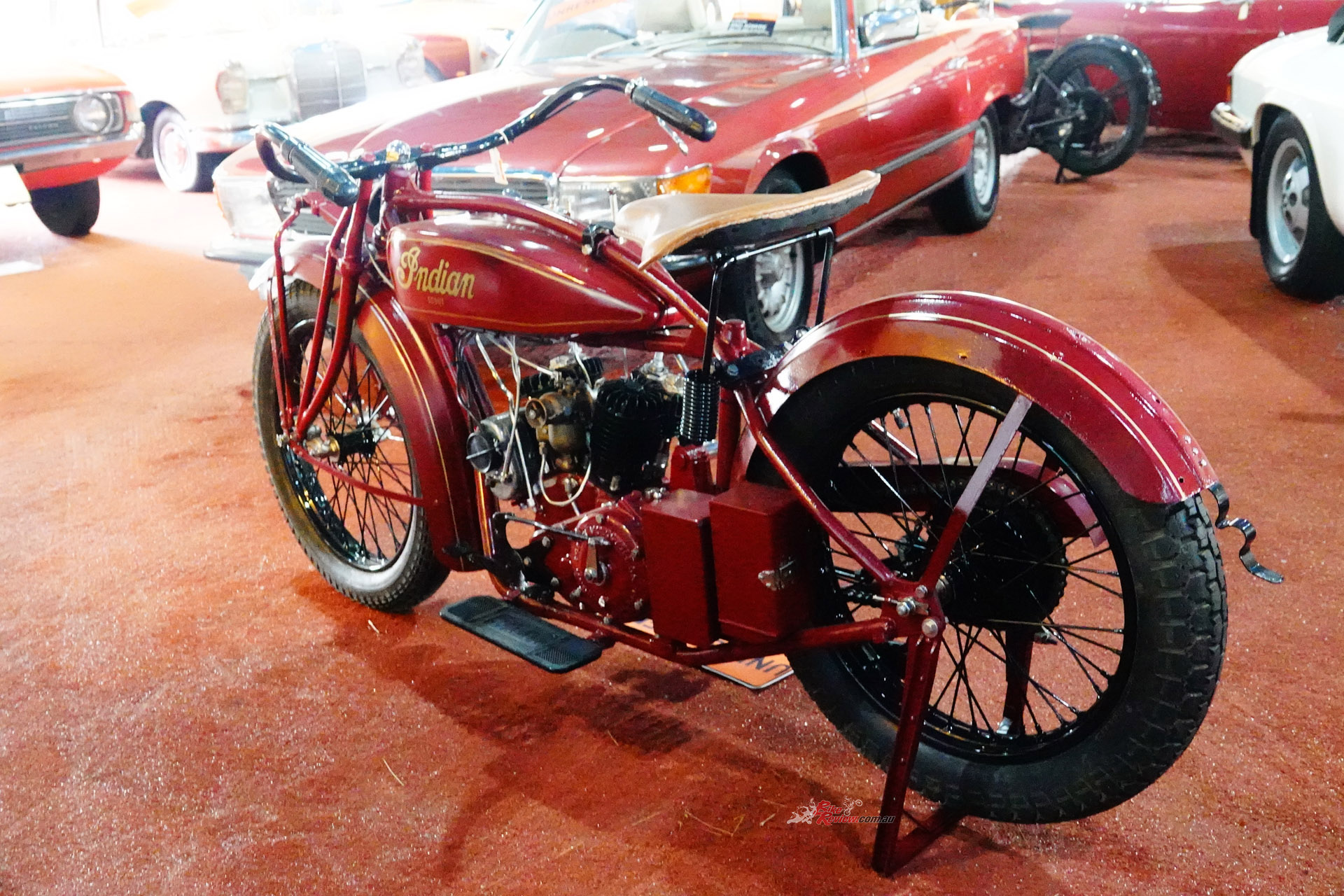
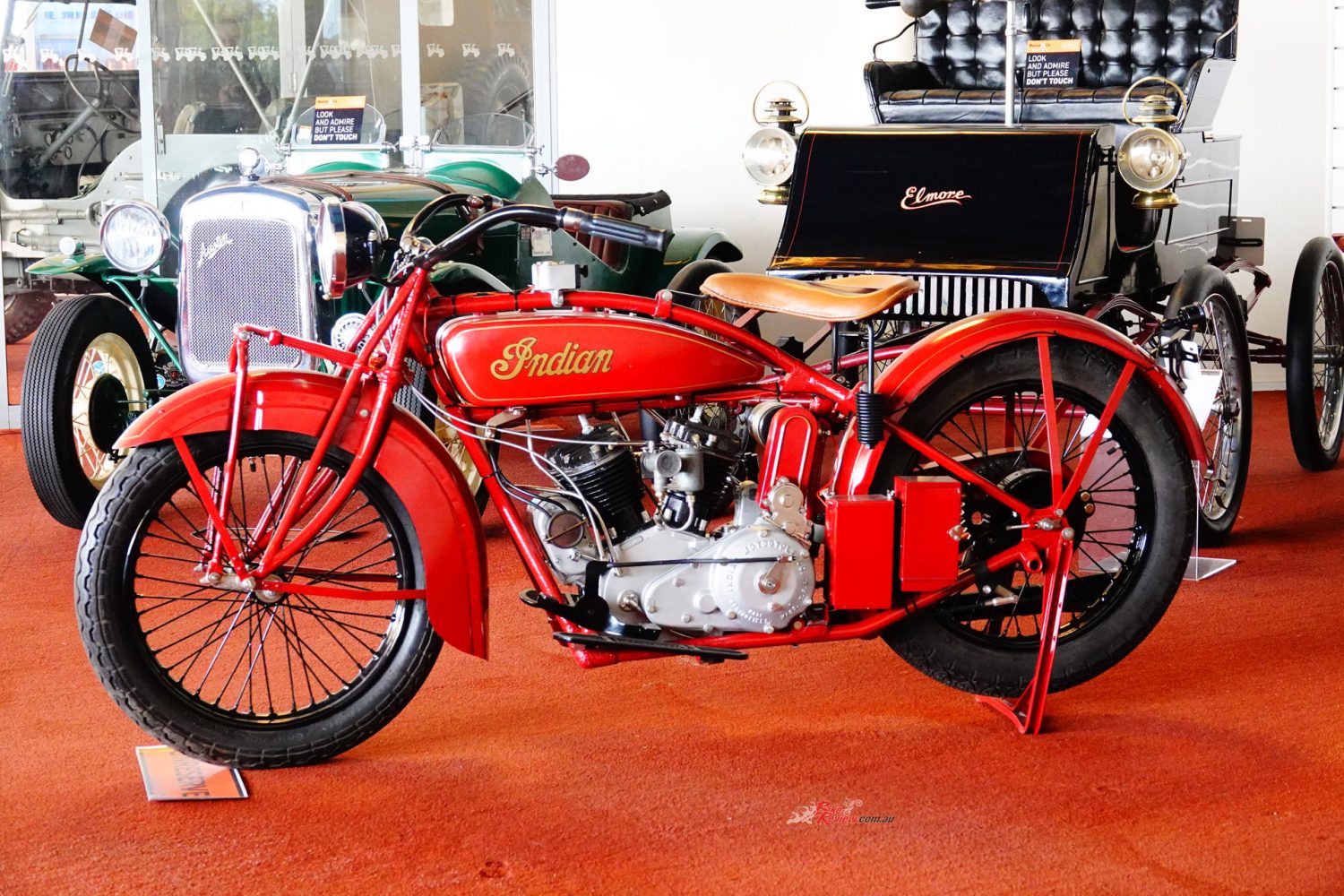
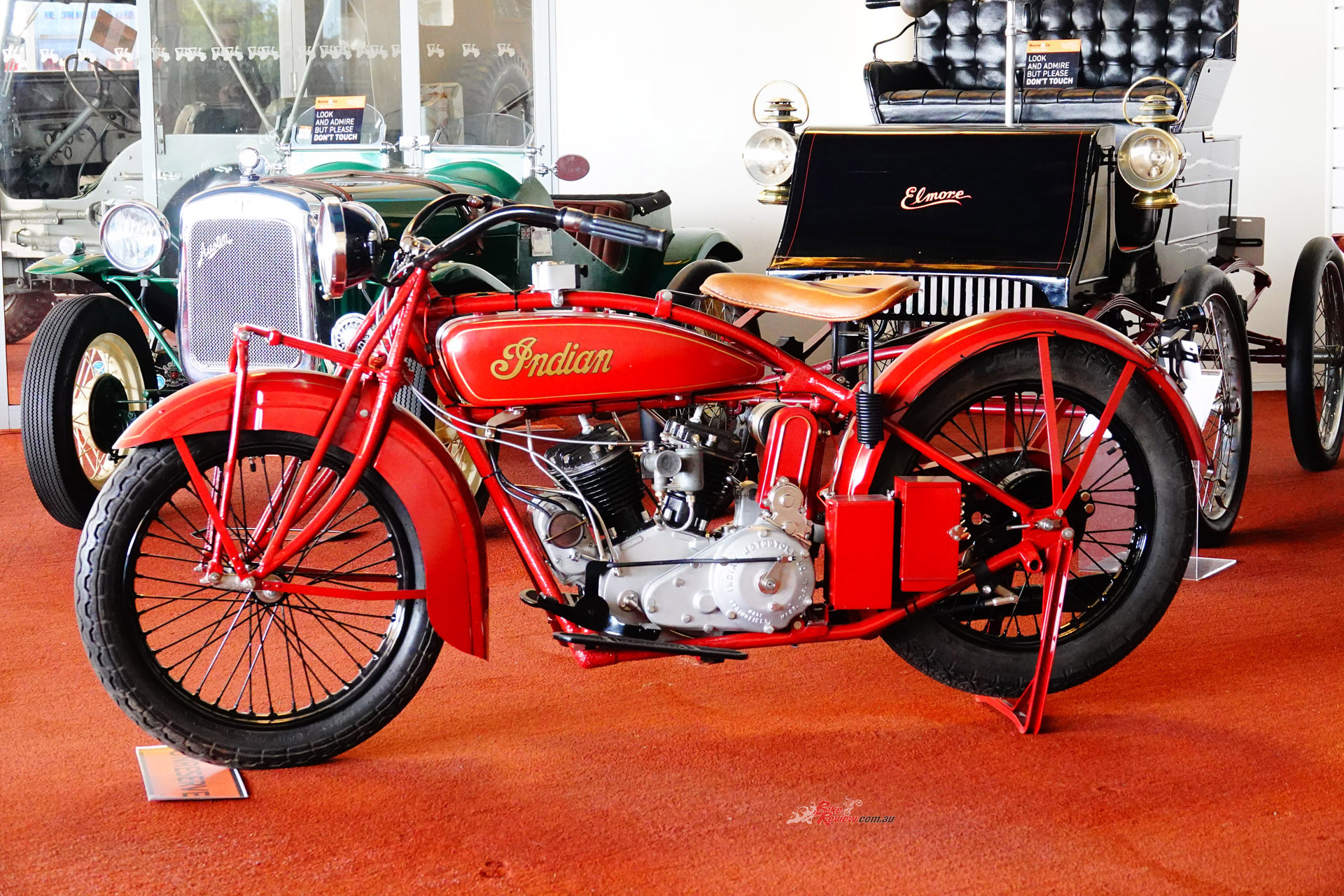
This beautifully presented 1924 Indian Scout fetched $48,000, making it one of the auction’s standout motorcycles.
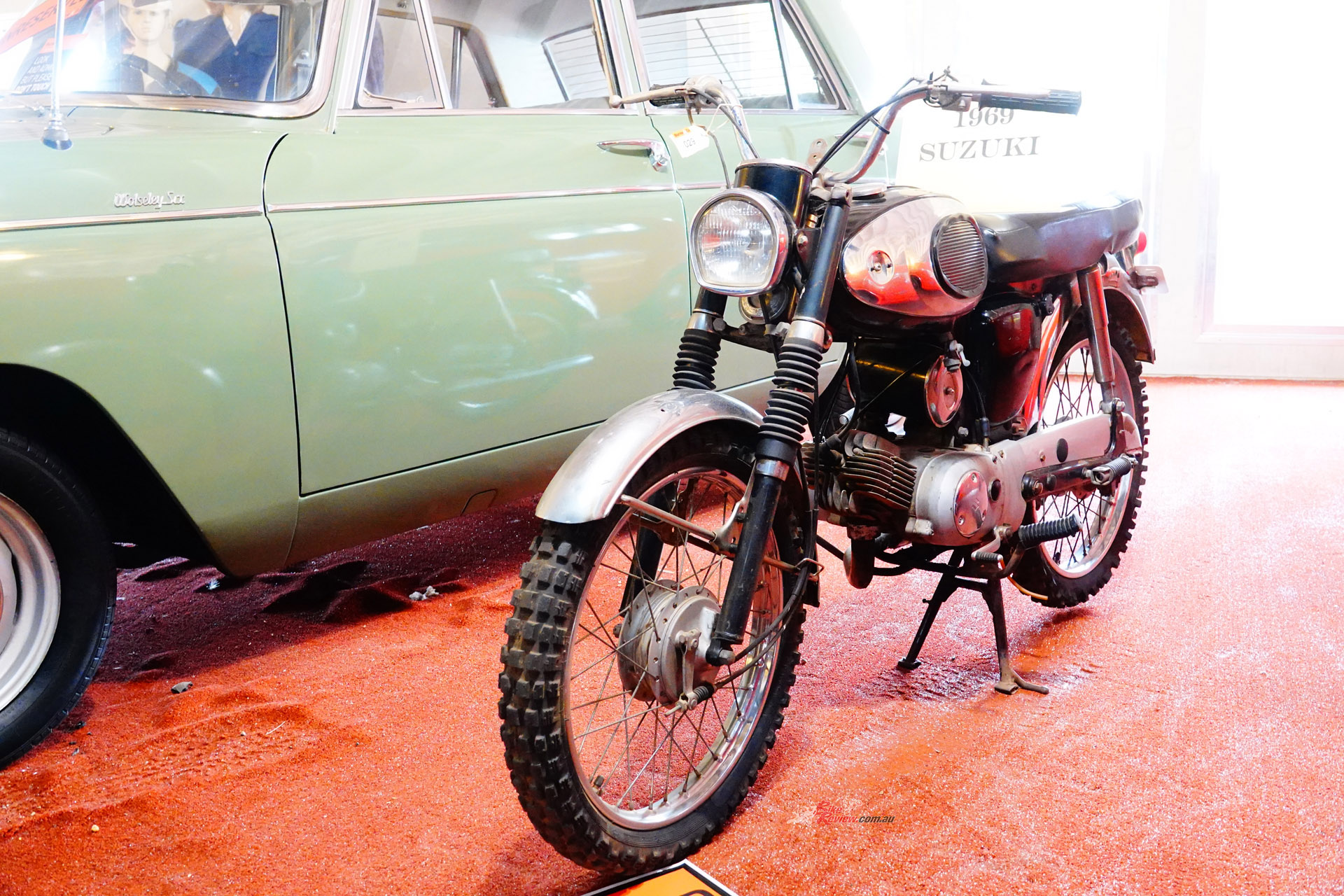
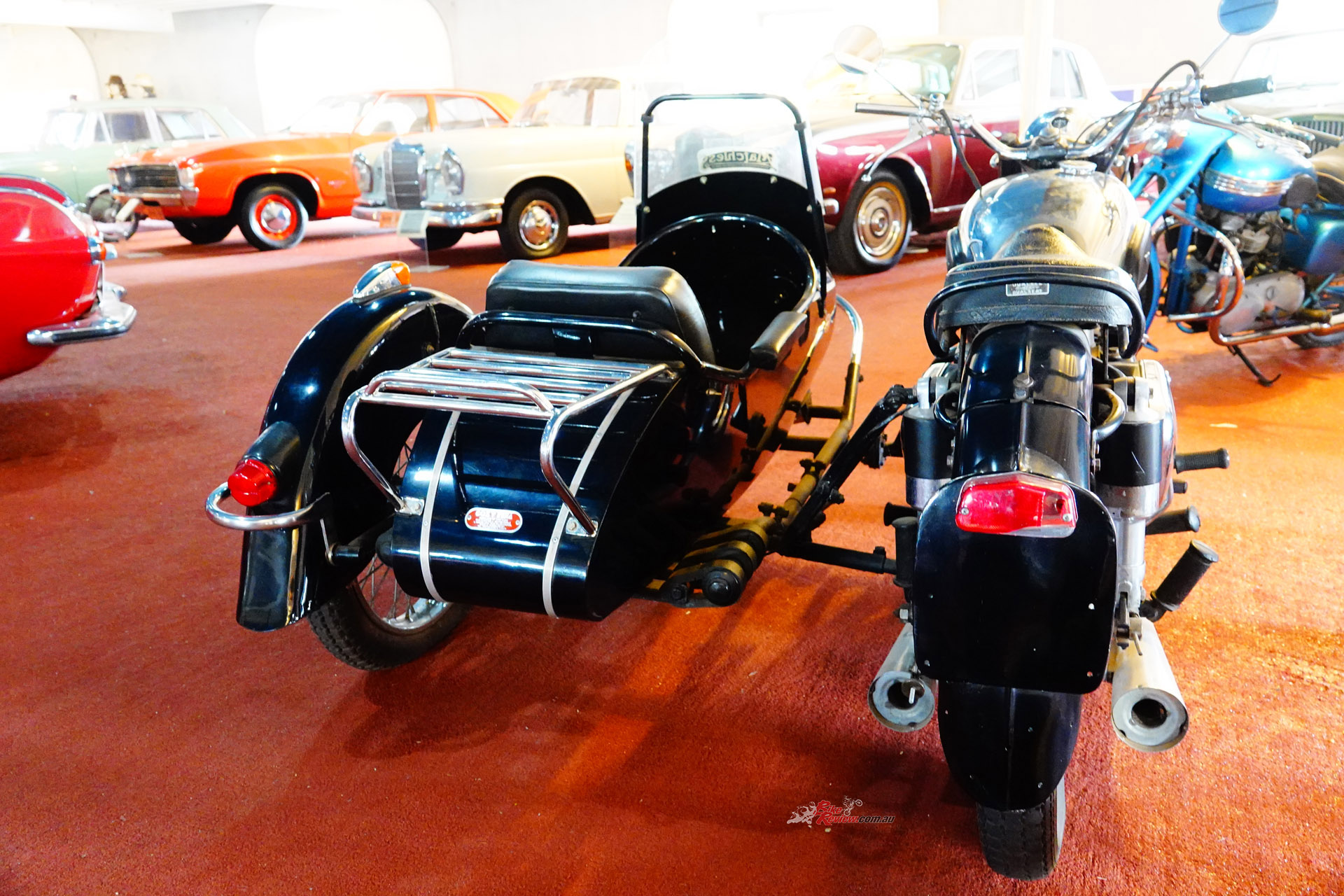
I stopped in, paid my $14 (this was a couple of days before it closed) and had a wander around with my camera. Unfortunately, the displays had been arranged for the auction and so I couldn’t move the various motorcycles to take my photos – please forgive the odd angles in some cases. I didn’t have much time, either, although I did manage to have a chat with Bill and Jan McFeeters, whose devotion built the museum in the first place.
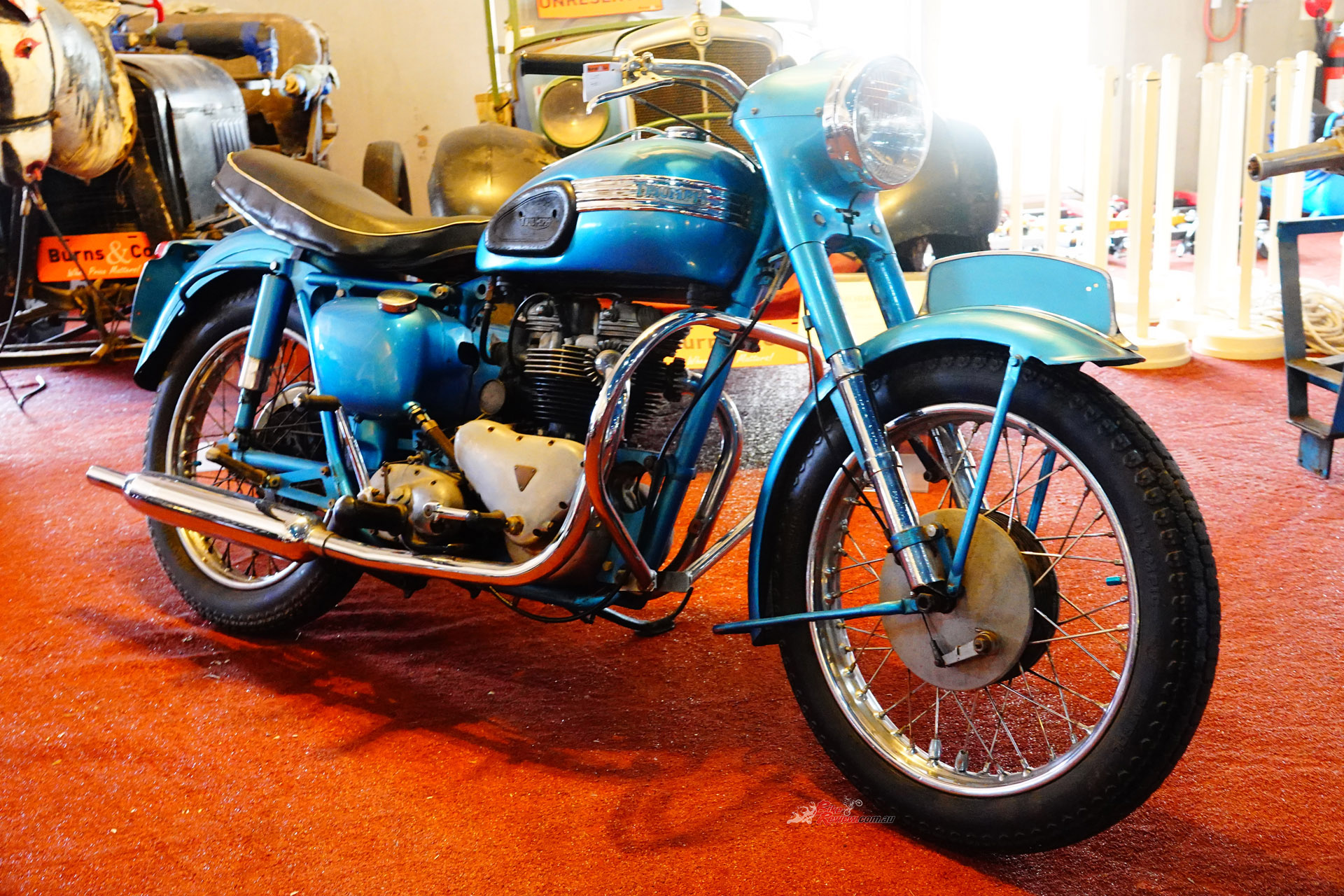
The museum grew out of their lifelong collecting and restoration work. They spent decades acquiring and restoring vehicles. For 18 years, the museum displayed their extensive collection, presenting more than a century of motoring history not just through cars and motorcycles, but also through pedal cars, mannequins, signage, and memorabilia.
For 18 years, the museum displayed their extensive collection, presenting more than a century of motoring history.
The museum was purpose‑built on the Newell Highway, becoming a well‑known regional attraction. Alongside the main collection, it offered agricultural machinery, a curated display environment with period mannequins and memorabilia, a model shop and visitor facilities.
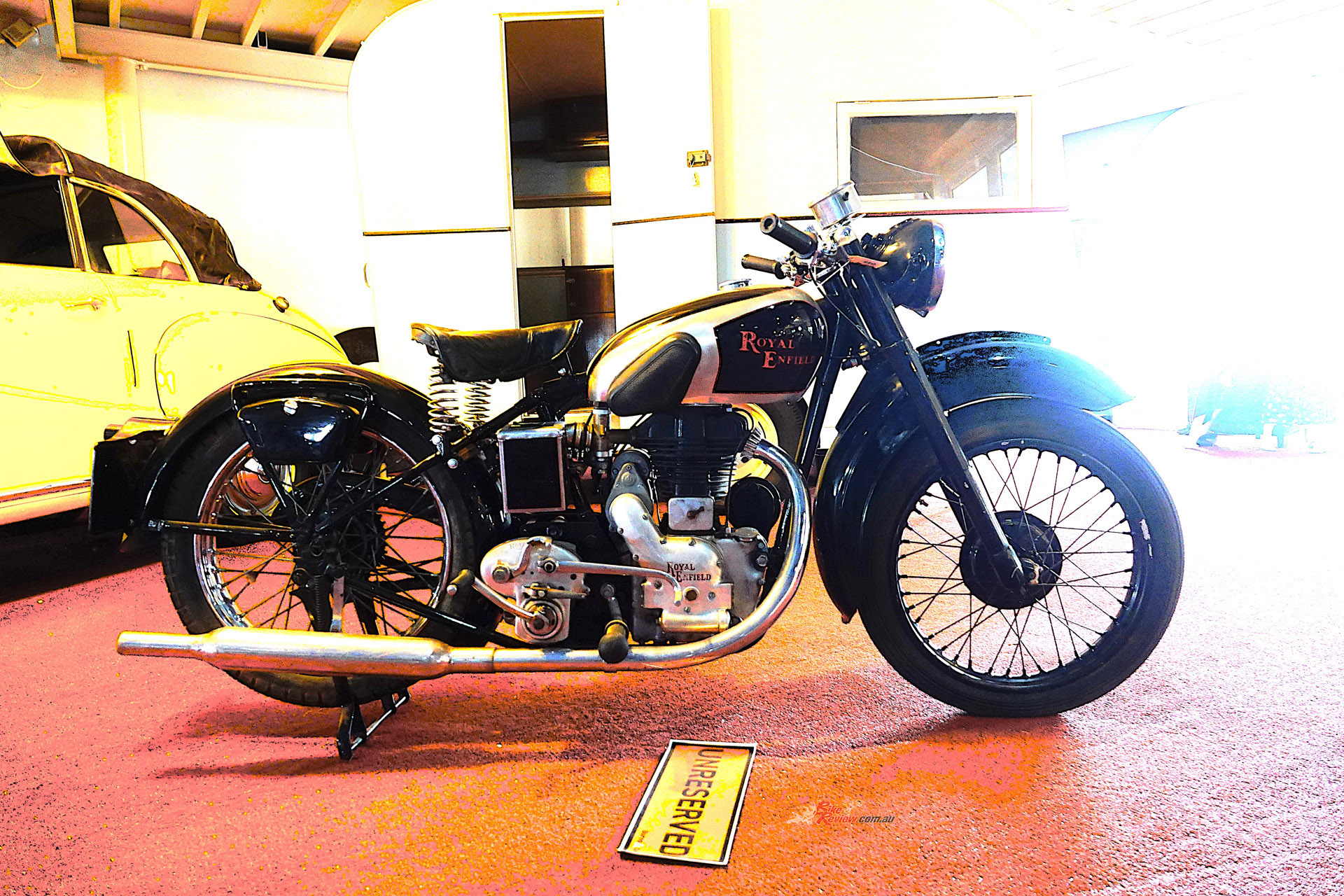
This 1948 Royal Enfield sold for $6250.
It quickly became a fixture of Forbes tourism and a favourite stop for travellers in the Central West. I don’t know how I missed it for so long. But it’s gone, with its contents dispersed over the country. I thought it was worth a writeup anyway, though, so you could get an idea of the prices the bikes realised.
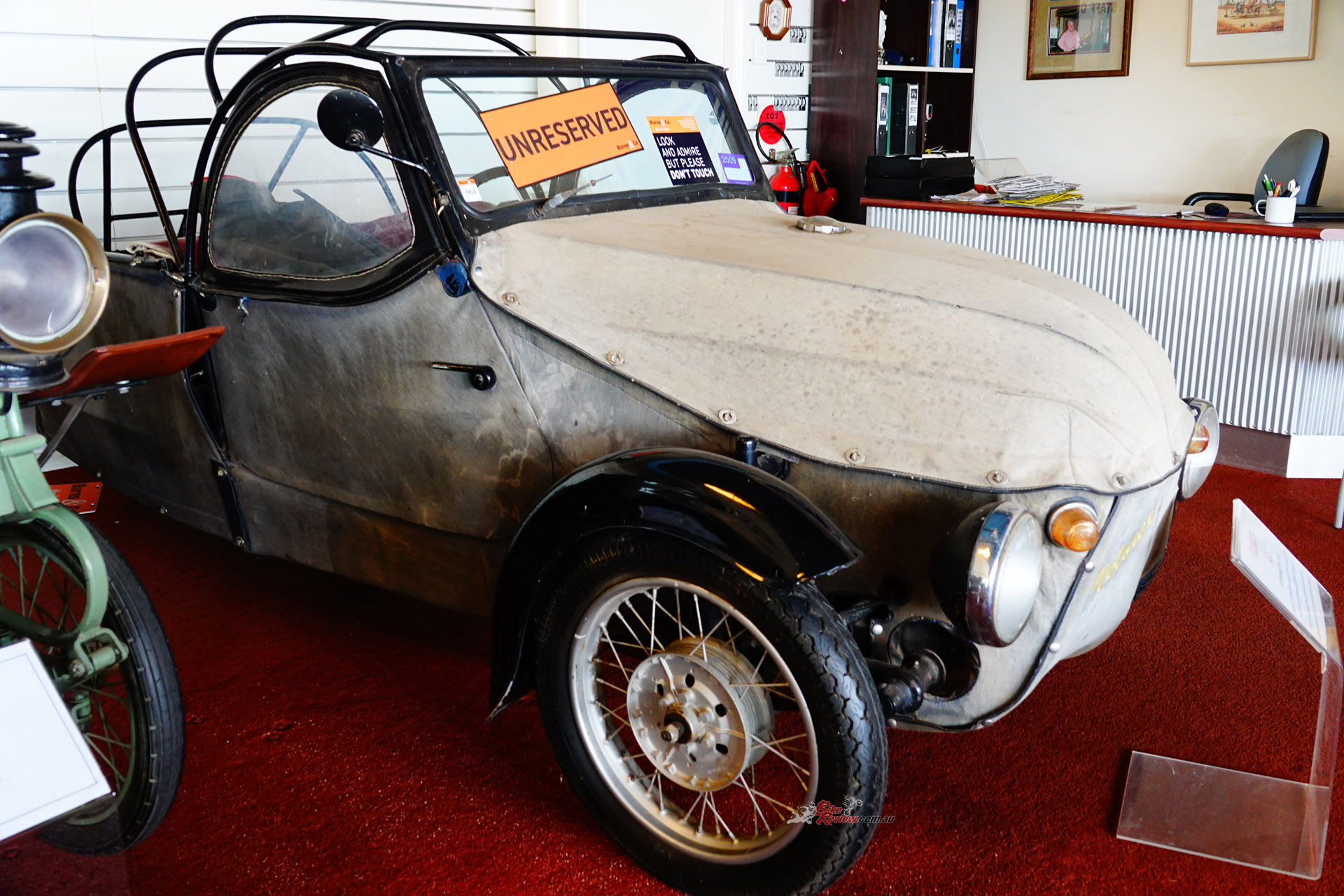
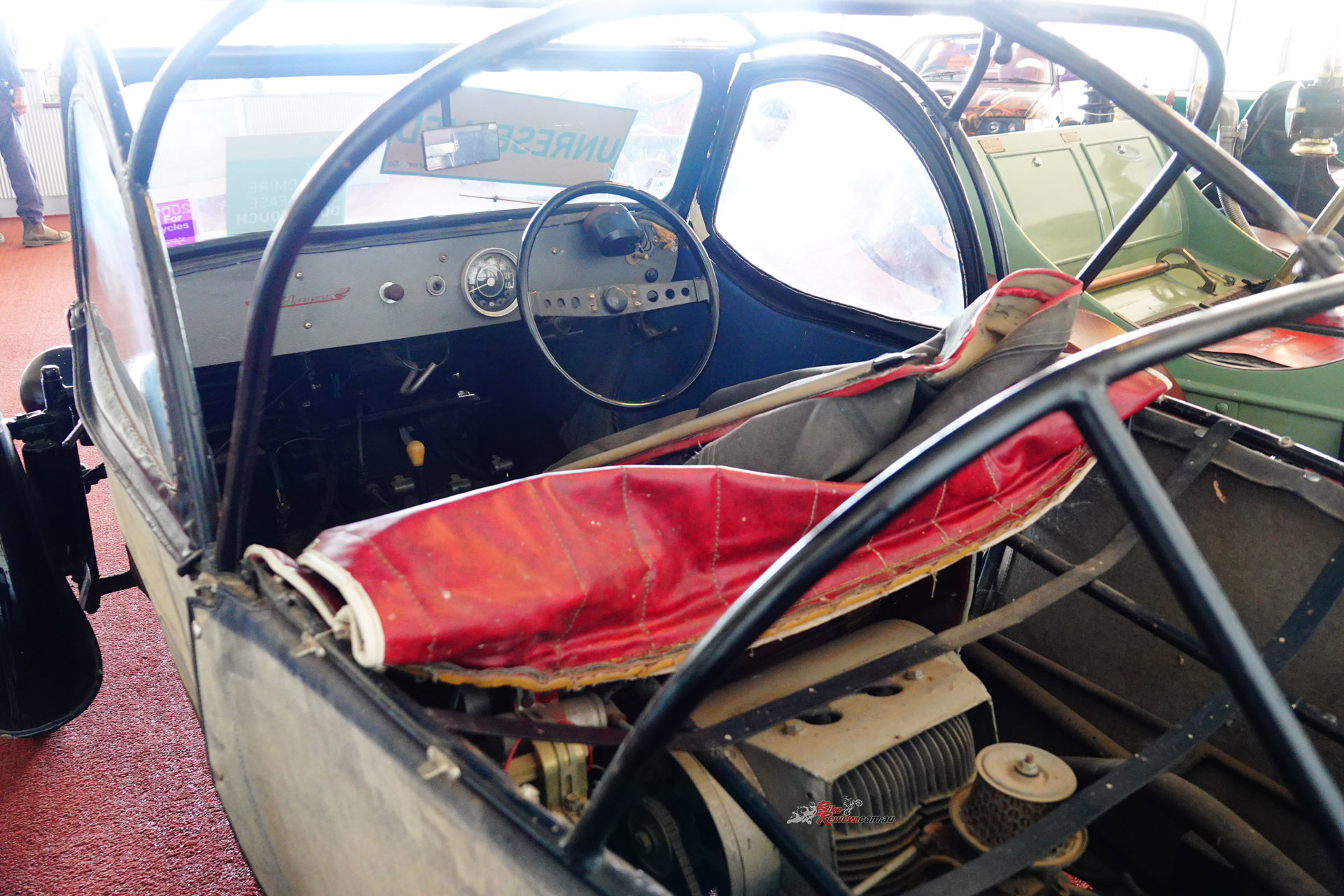
To be perfectly honest, there wasn’t much in the way of historically important bikes to admire. The machines on display for the auction looked more like a bit of a random collection that had been bought at another auction, one that was, in turn, of bikes from another random collection… I’m sure the cars were significant examples, but I don’t know anything about cars. Of the bikes, or perhaps “bikes” on display, the one that really drew my eyes was a 1958 Velorex Canvas Car, which the McFeeters had registered and on the road a few years ago.
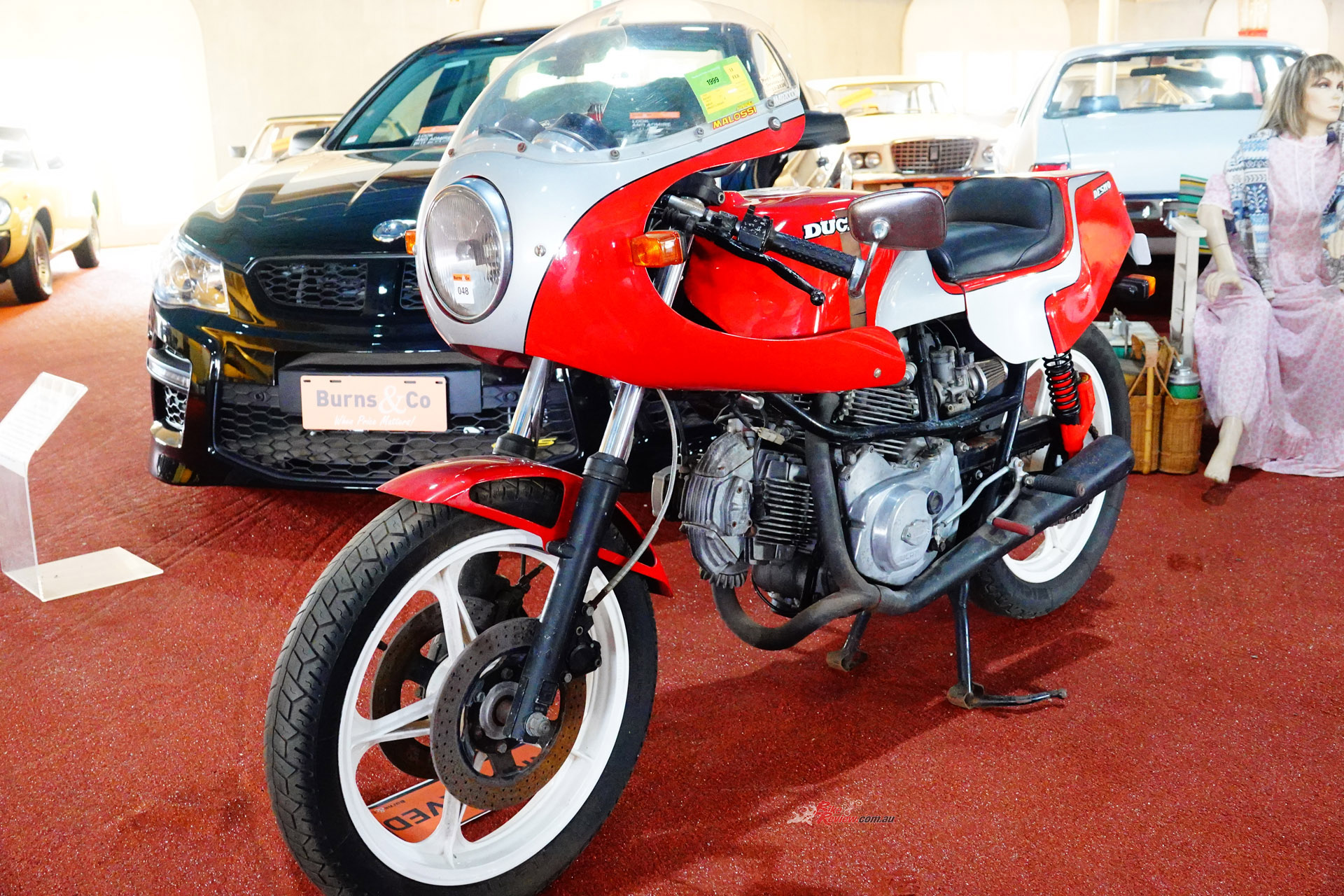
This 42-year-old Ducati sold for $8750.
But easily the most interesting bike in the auction was a beautifully presented single cylinder machine with “The Precision” lettered on the tank. Unusually, this is not the name of the manufacturer; it’s the name of the proprietary engine’s manufacturer. Precision was a major British engine supplier in the veteran period. Their engines powered dozens of small marques before WWI, a few of them in Australia. Period technical descriptions show why they were so highly regarded.
Characteristics of Precision engines around 1914 (From The Motor Cycle, July 1914): “They are known for smooth running and flexibility, lightweight construction for the power output, high‑quality machining and thoughtful engineering. Features include: an internal exhaust lifter for easier starting, improved inlet pipe design to reduce leaks, side‑by‑side valves and the long‑stroke configuration typical of the era.” Precision supplied both singles and V‑twins; this motorcycle in the auction uses the 499cc single.
Love old bikes? Check out our other features on motorcycle museums here.
This bike was not a mass‑produced factory model then but is best understood as a veteran‑era lightweight built around a premium proprietary engine. It sold for $26,000, which in the absence of any comparable machine seems about right. The auction results have since been published, so you can see what everything sold for in the complete list from Burns & Co Auctions here.
The Author

You Might Also Like