
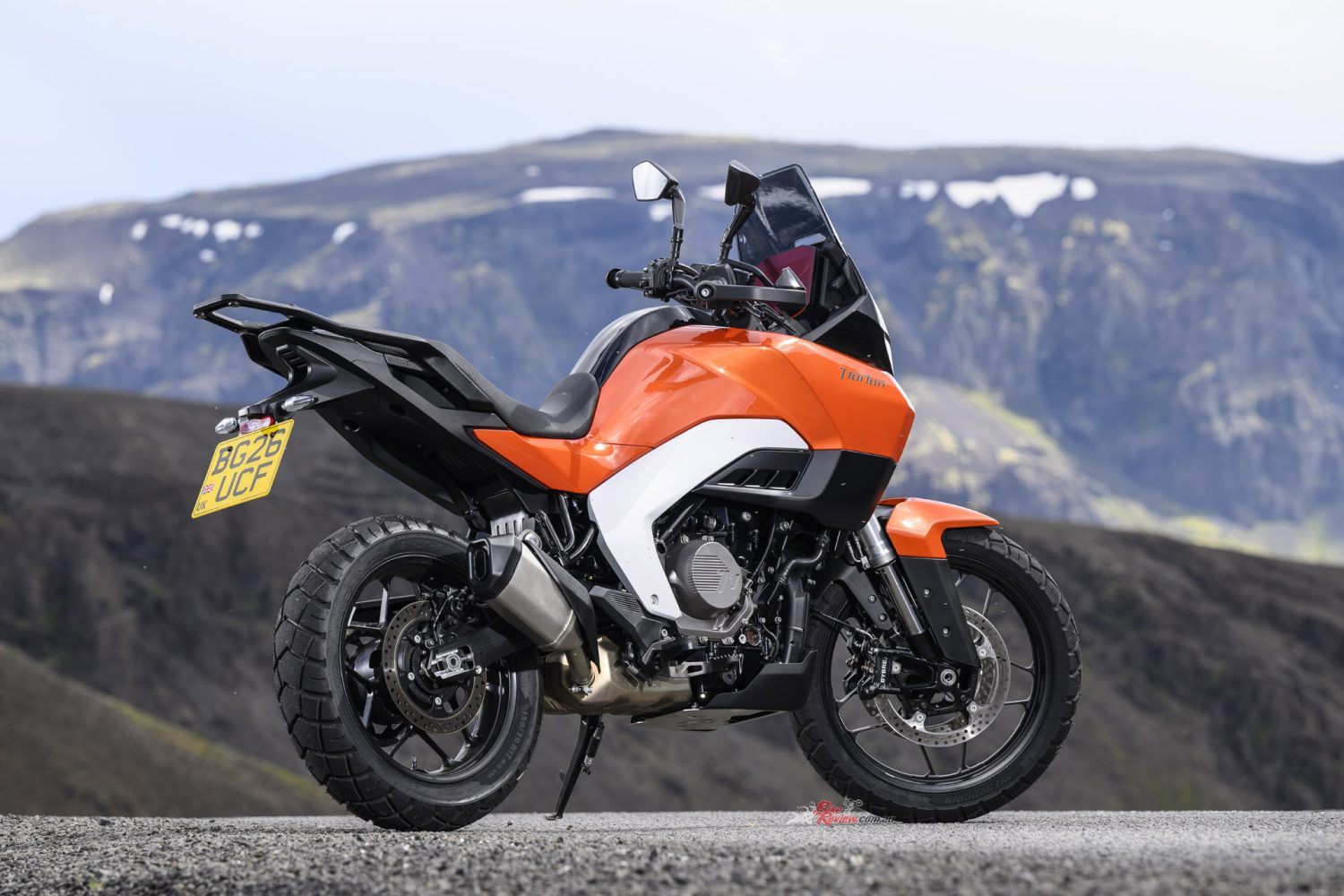

We head to Iceland to ride the all-new adventure-sport model from the revitalised iconic Norton Motorcycle brand, the Norton Atlas. Here is Bernie Hatton's impression of the parallel-twin...
Iconic British motorcycle manufacturer Norton motorcycles have entered the adventure-sport motorcycle segment with the launch of its all-new Atlas, unveiled to the select motorcycle media at the TVS factory last year and handed to us to test in Reykjavik, Iceland, last week.
It was a bold choice of location, but one that perfectly reflected the spirit of adventure that Norton hopes to embody with its latest machine. There is a certain symmetry in launching an adventure motorcycle in one of the world’s most challenging and spectacular landscapes – because Norton founder James Lansdowne Norton built his reputation on a spirit of exploration and endurance.
In the early days of motorcycling, James embarked on an extraordinary journey across South Africa aboard a 633cc Norton Big Four, covering approximately 4,800km to Durban at a time where such a feat was almost unimaginable.
“Norton founder James Lansdowne Norton built his reputation on a spirit of exploration and endurance”…
Long Haul
When Jeff called and asked whether I would be interested in attending this launch I was genuinely stunned – not only was Norton giving journalists the opportunity to experience its first modern adventure motorcycle, but it was doing so in one of the most iconic riding destinations on earth. To be invited was both a privilege and an honour.
“Using a motorcycle to explore the world’s most remarkable destinations is something truly special”…
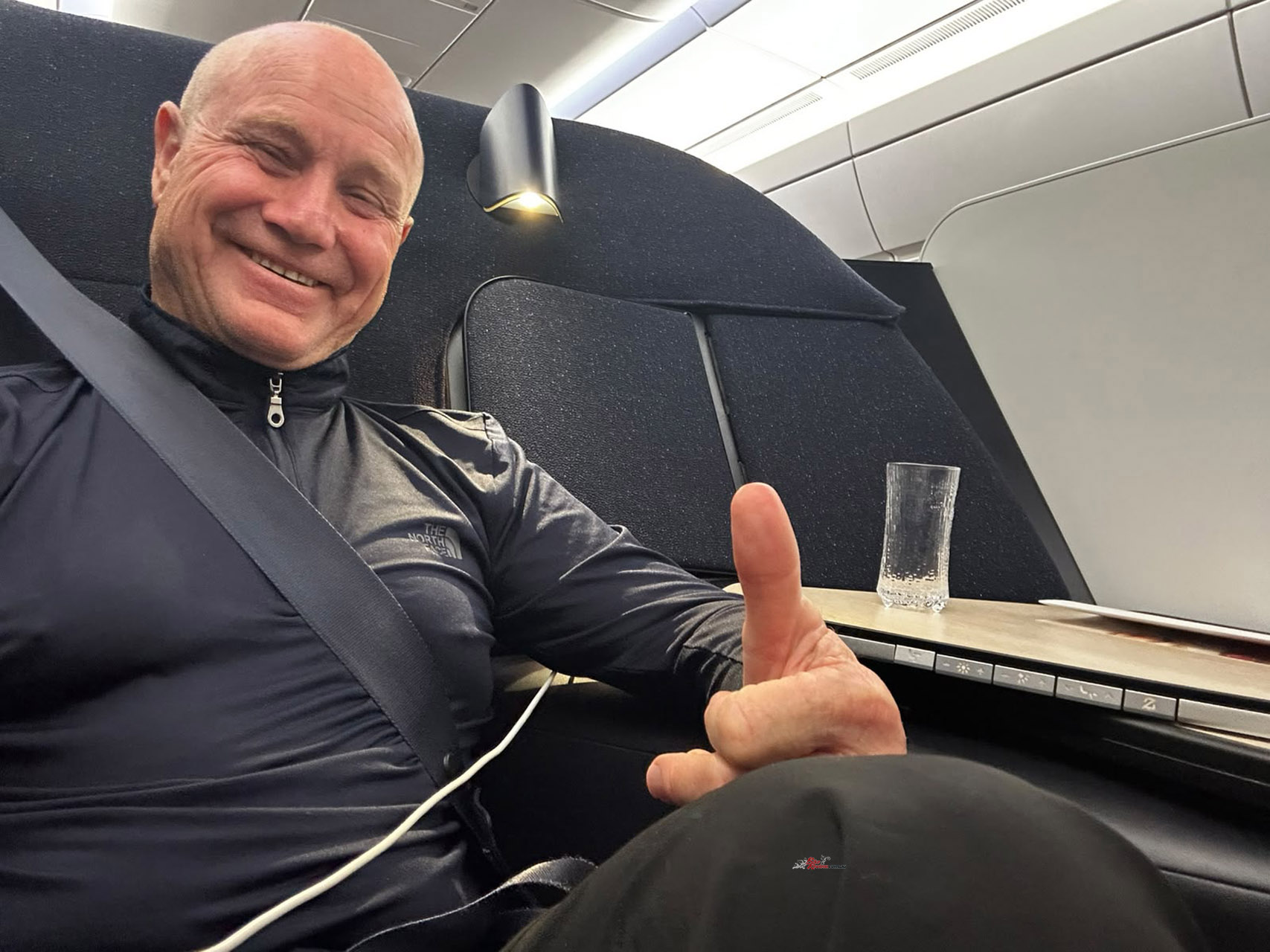
The journey from home in Cairns, Far North Queensland, to Iceland, took almost 40 hours, becoming an adventure long before I saw the motorcycle. I awoke during the flight to find a commemorative Finnair certificate acknowledging my crossing of the North Pole, a small but memorable souvenir from an extraordinary journey. This was going to be cool…
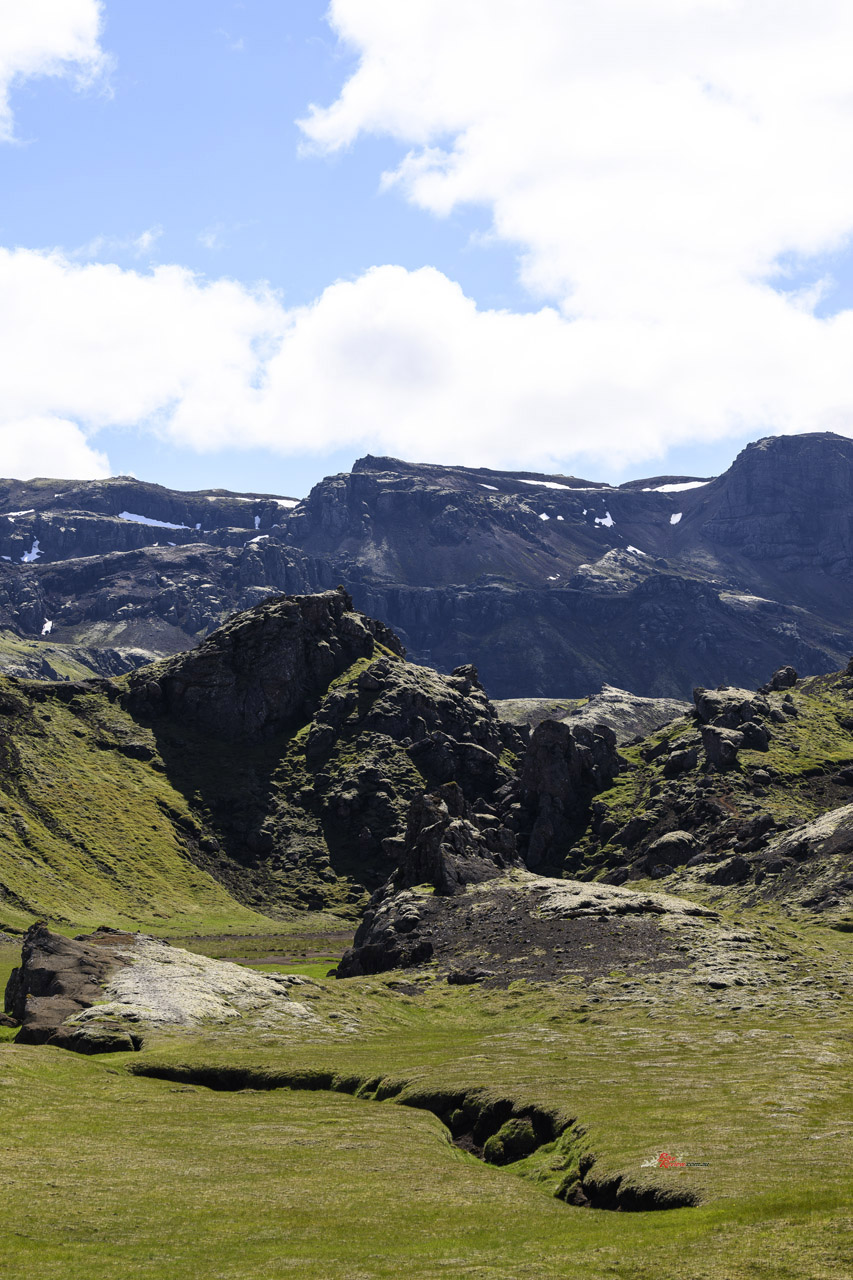
As the plane descended into Iceland, I was greeted by clear skies and breath-taking scenery, the rugged coastline, vast open spaces and distant mountains immediately sparked excitement about the days ahead. Riding a motorcycle is one of life’s greatest pleasures, but using a motorcycle to explore the world’s most remarkable destinations is something truly special. Being fortunate enough to do so as part of my work remains something I never take for granted.

As a kid I watched Manx Norton’s race on Australian circuits and later experienced the same magic at the Isle of Man TT, competing myself in 1999. To be now standing in Iceland as a media member there to assess a bike, invited by Norton, was a moment I could scarcely have imagined. Good food, a few cocktails, plenty of laughter and the inevitable competitive banter that exists between motorcycle journalists provided the perfect lead-in to the serious work ahead. We had a bike to test.
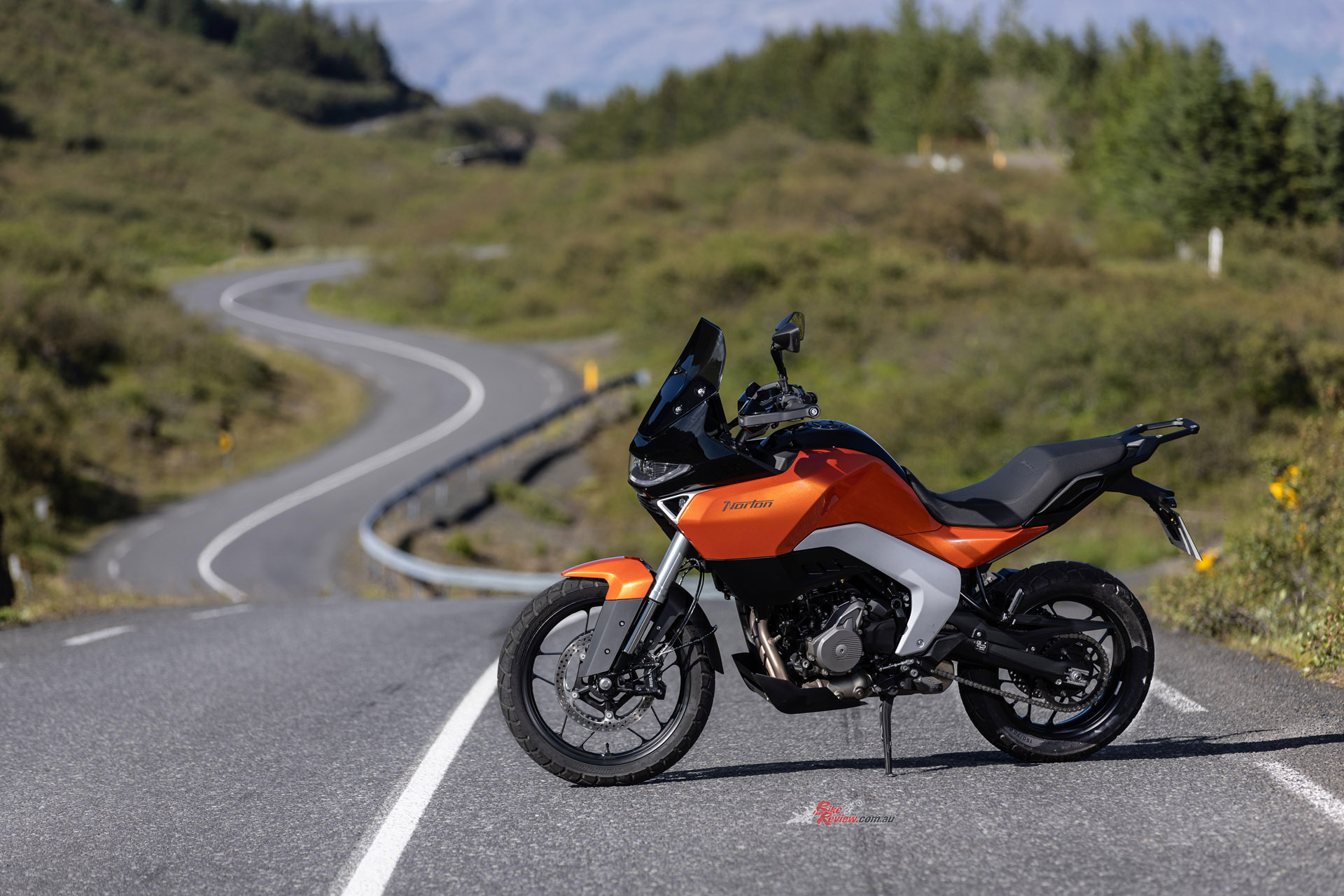
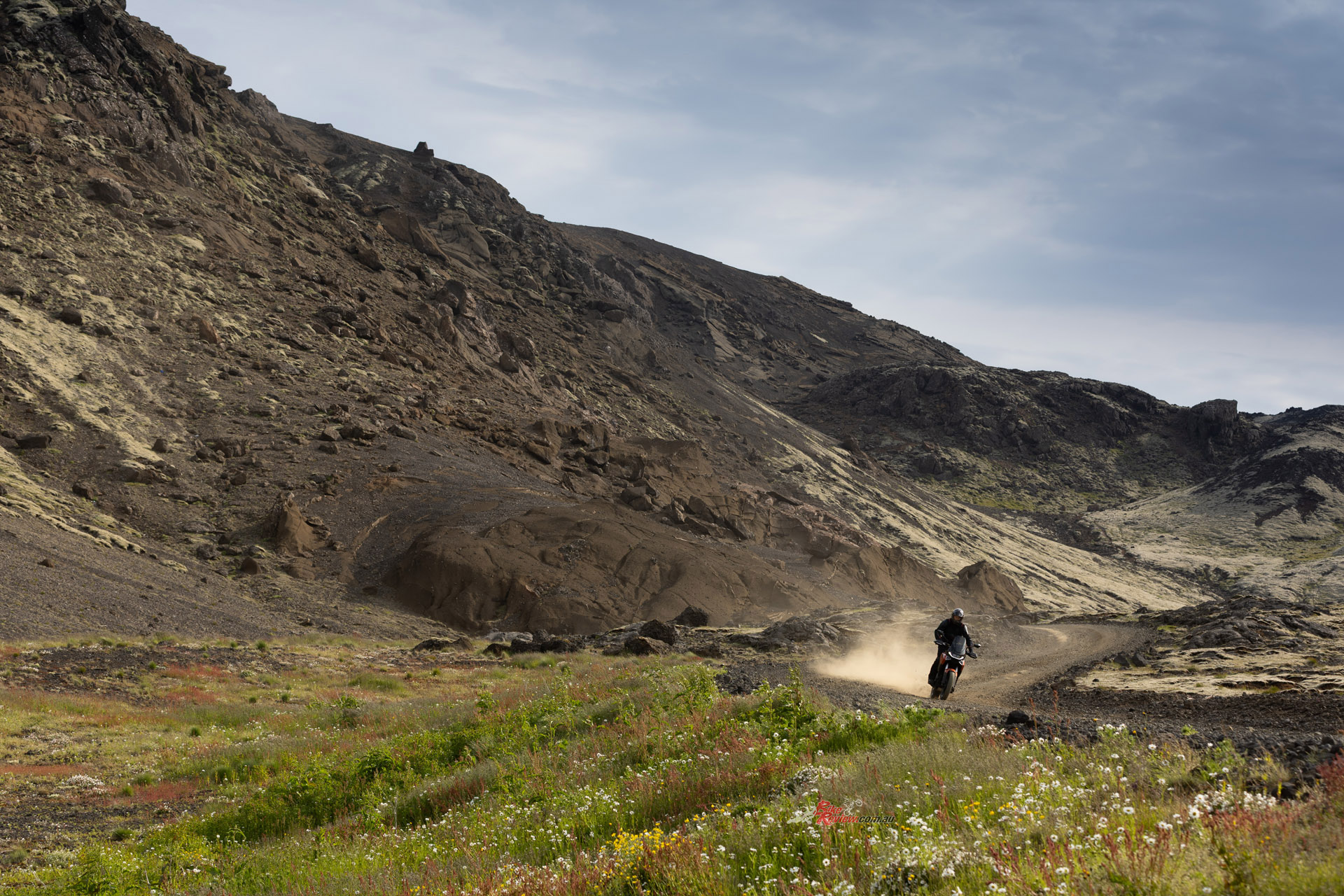
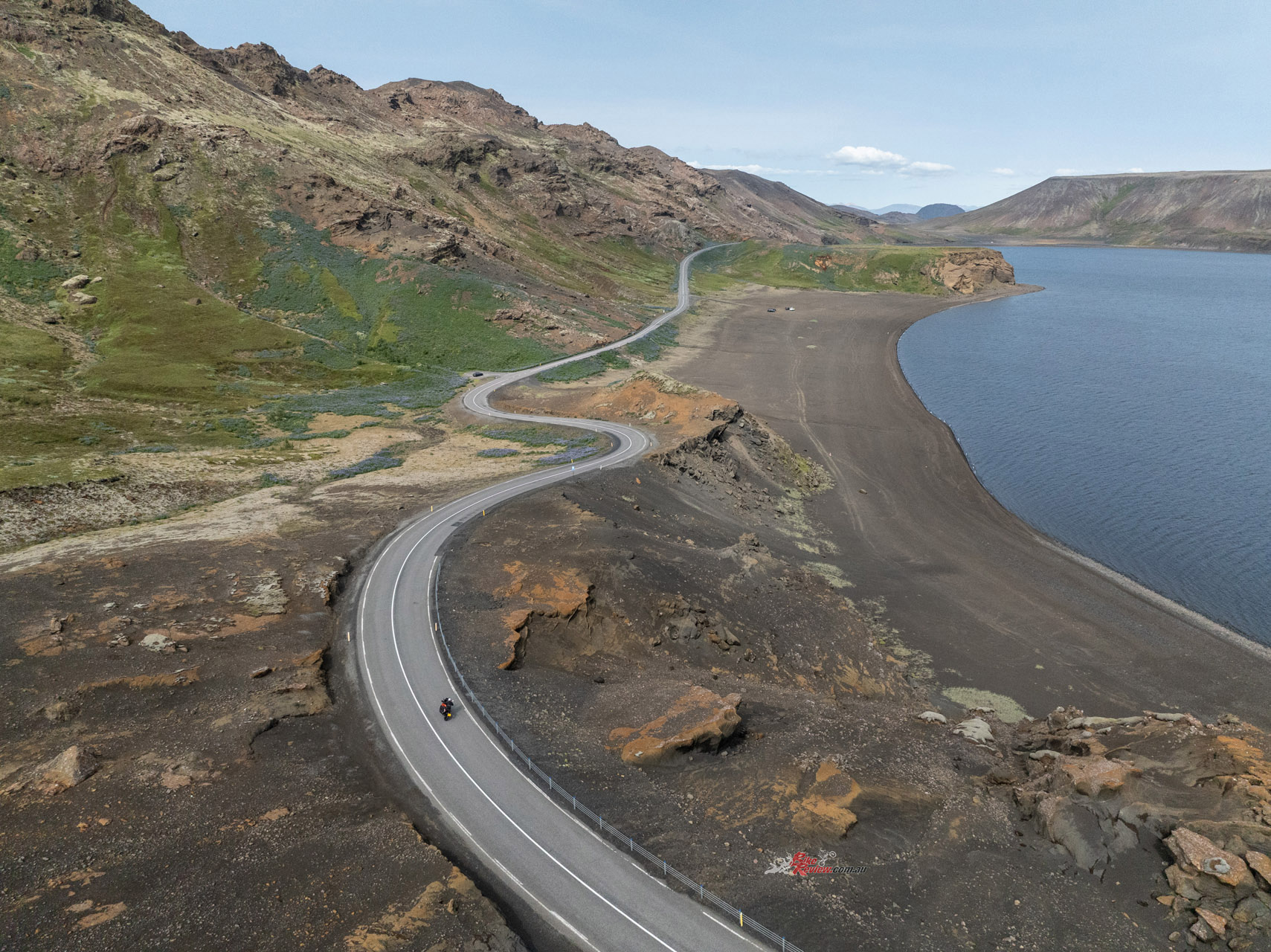
The route was primarily road focused, with long stretches of sealed roads broken up by sections of well-maintained gravel roads and blue metal tracks.
The Norton team is made up of passionate people from Birmingham and India (read our feature on our visit to the TVS factory here) who genuinely believe in their product and are determined to build something special. That enthusiasm was evident in every conversation, every presentation, and every detail of the launch.
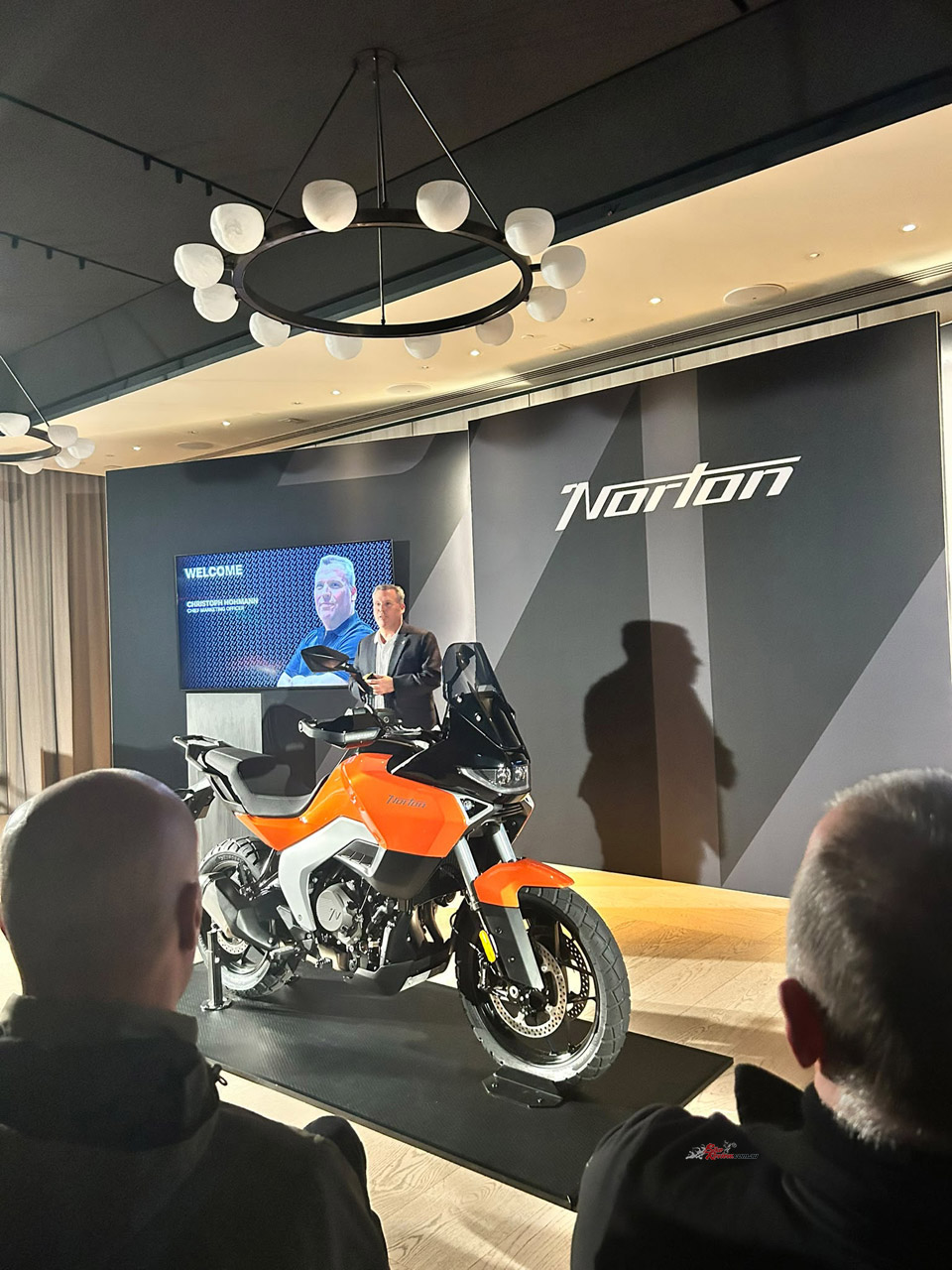
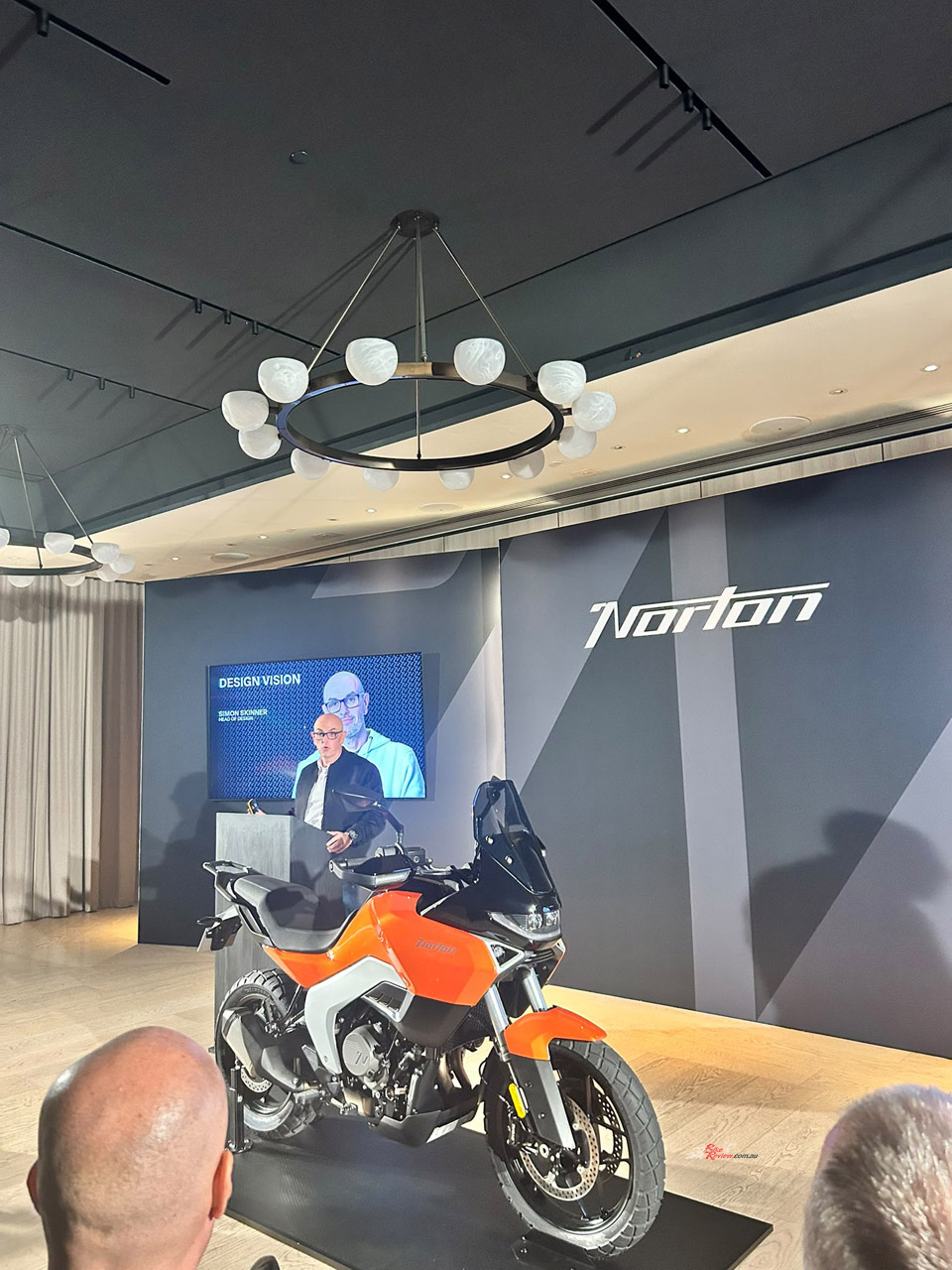
Following a technical briefing, we were introduced to the engineers, designers, marketing team, and lead riders who would guide us through Iceland’s spectacular countryside. Having spoken with members of the first riding group the evening before, I already knew what lay ahead. Reports of powerful crosswinds on top of the mountain passes had become the main topic of conversation and it was clear this would not be the postcard perfect Icelandic riding experience many of us had imagined.
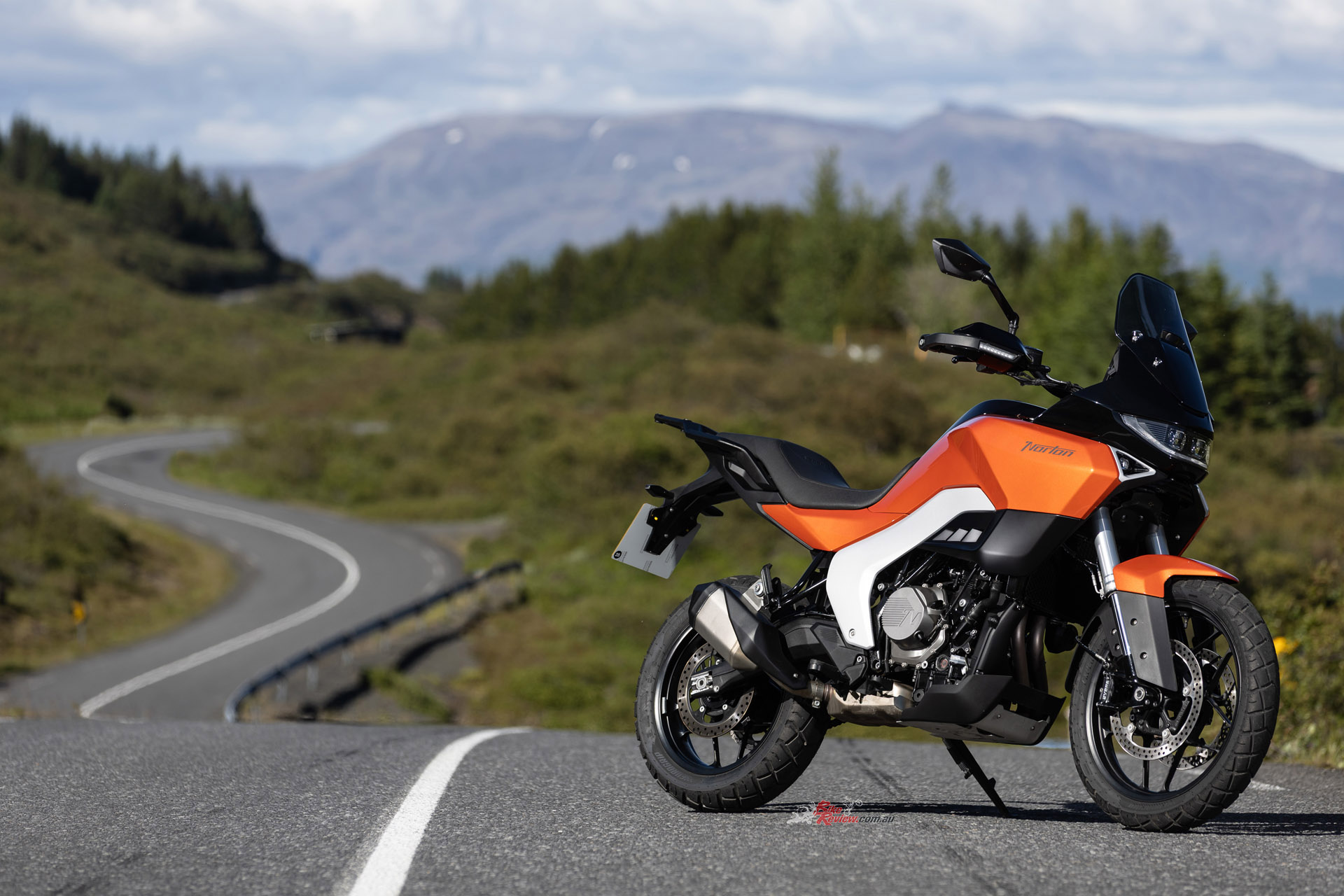
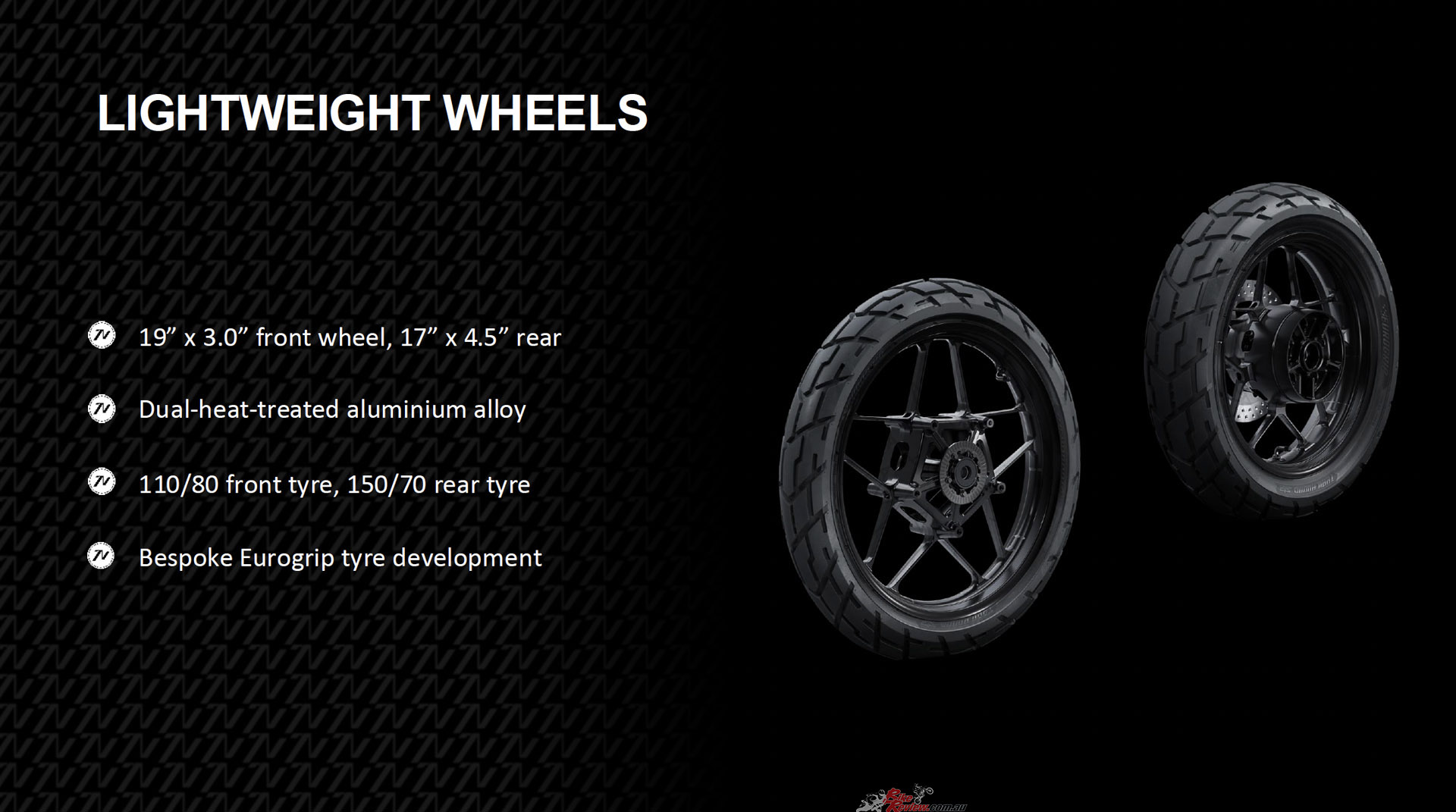
No spoked wheels were available in time for the Atlas launch but they are an option for those seeking more adventure capability. Our bikes ran the 19in and 17in alloys.
We met early with our lead rider, Gareth, who turned out to be a friend of one of my close mates that worked on my racebike at the Isle of Man TT. It’s amazing how small our motorcycle world can be. We were reminded of the importance on staying designated trails and roads to protect the fragile vegetation and stunning natural landscape. It was at this point I realised this would be a much tamer adventure test to what we are accustomed to in Australia.
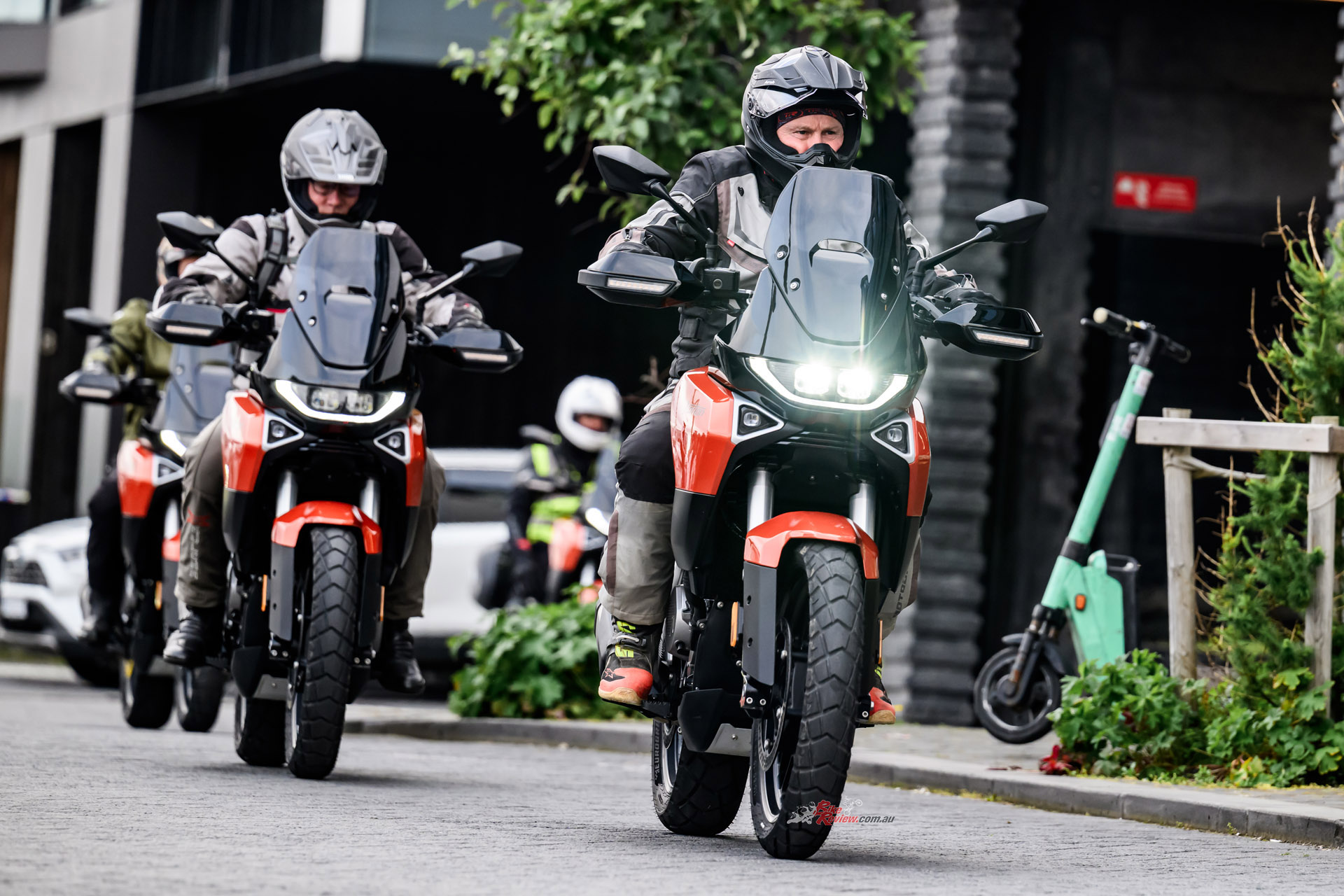
A short ride through urban areas highlighted the friendly, easy town riding nature of the Atlas in Urban mode.
The Ride
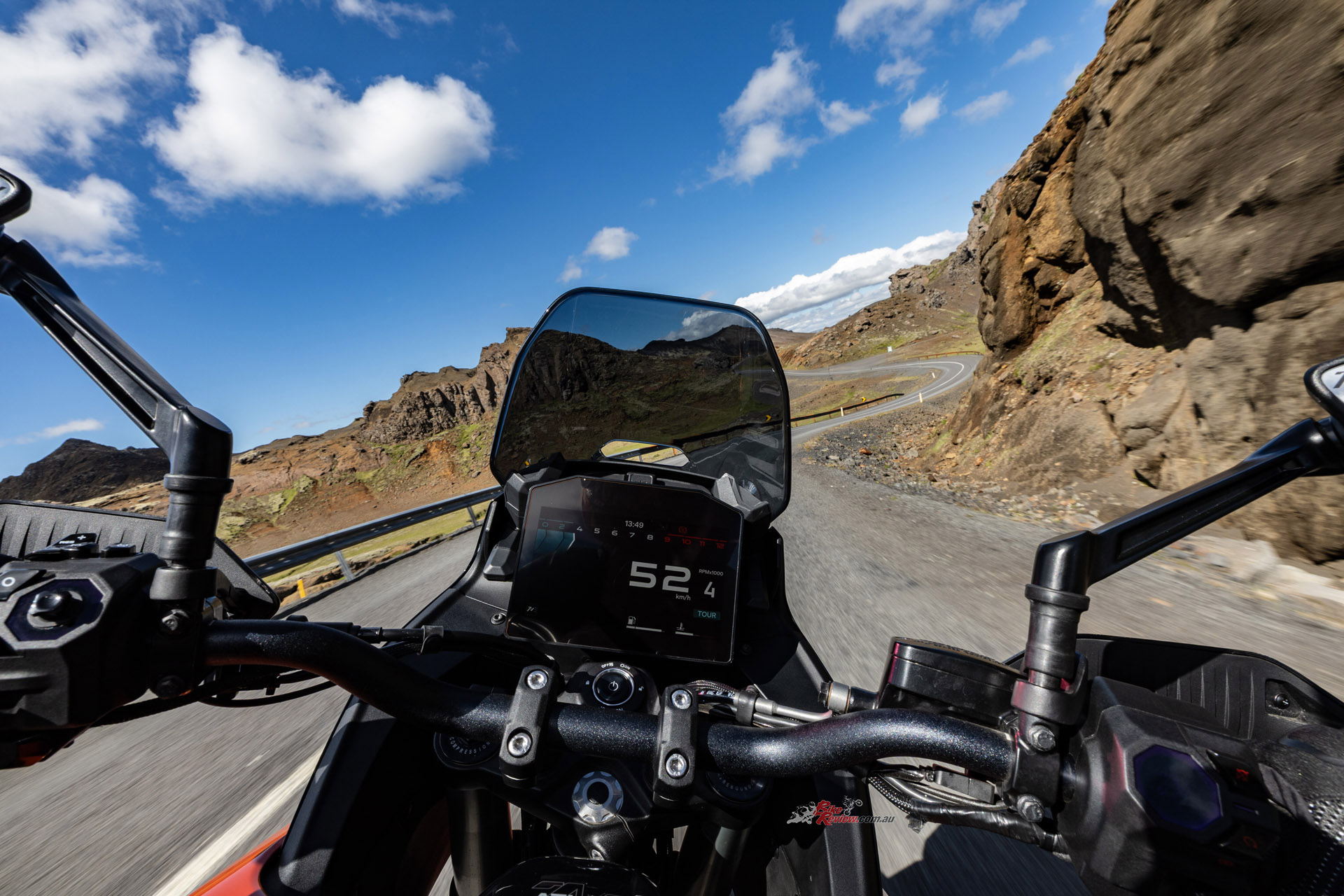
Before departing we were introduced to our motorcycles and given a brief overview of the extensive electronics package. To be honest I could have had half a day exploring it. The Atlas offers one of the most comprehensive rider systems in the segment – the level of customisation available is immense.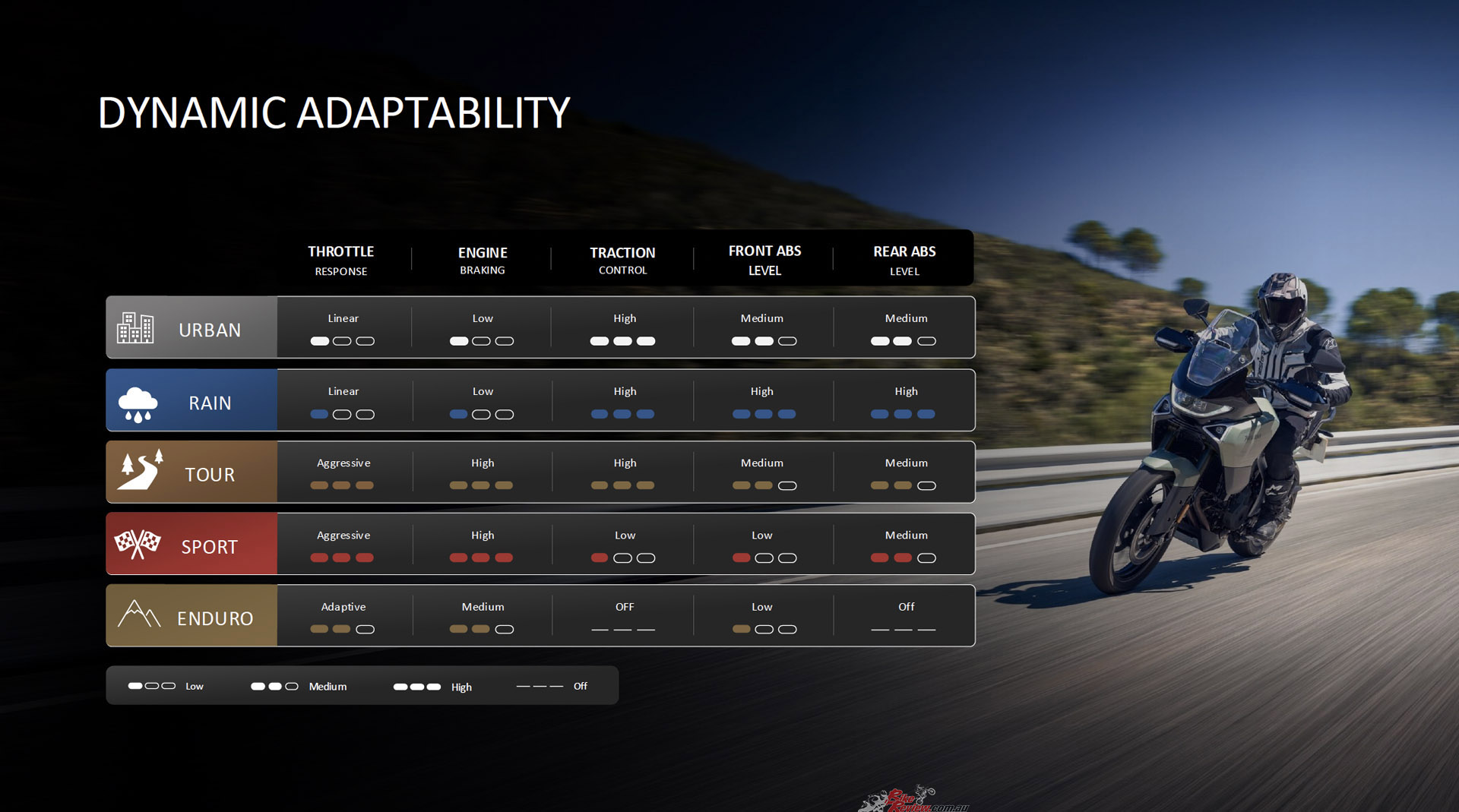 Dedicated Urban, Rain, Touring, Sport and Enduro preset modes offering different combinations of throttle response, engine braking, traction control, front ABS and rear ABS intervention. Adjustments can be made while riding, and chosen settings remain active without requiring a reset every time the motorcycle is switched off and on. It’s a feature I loved.
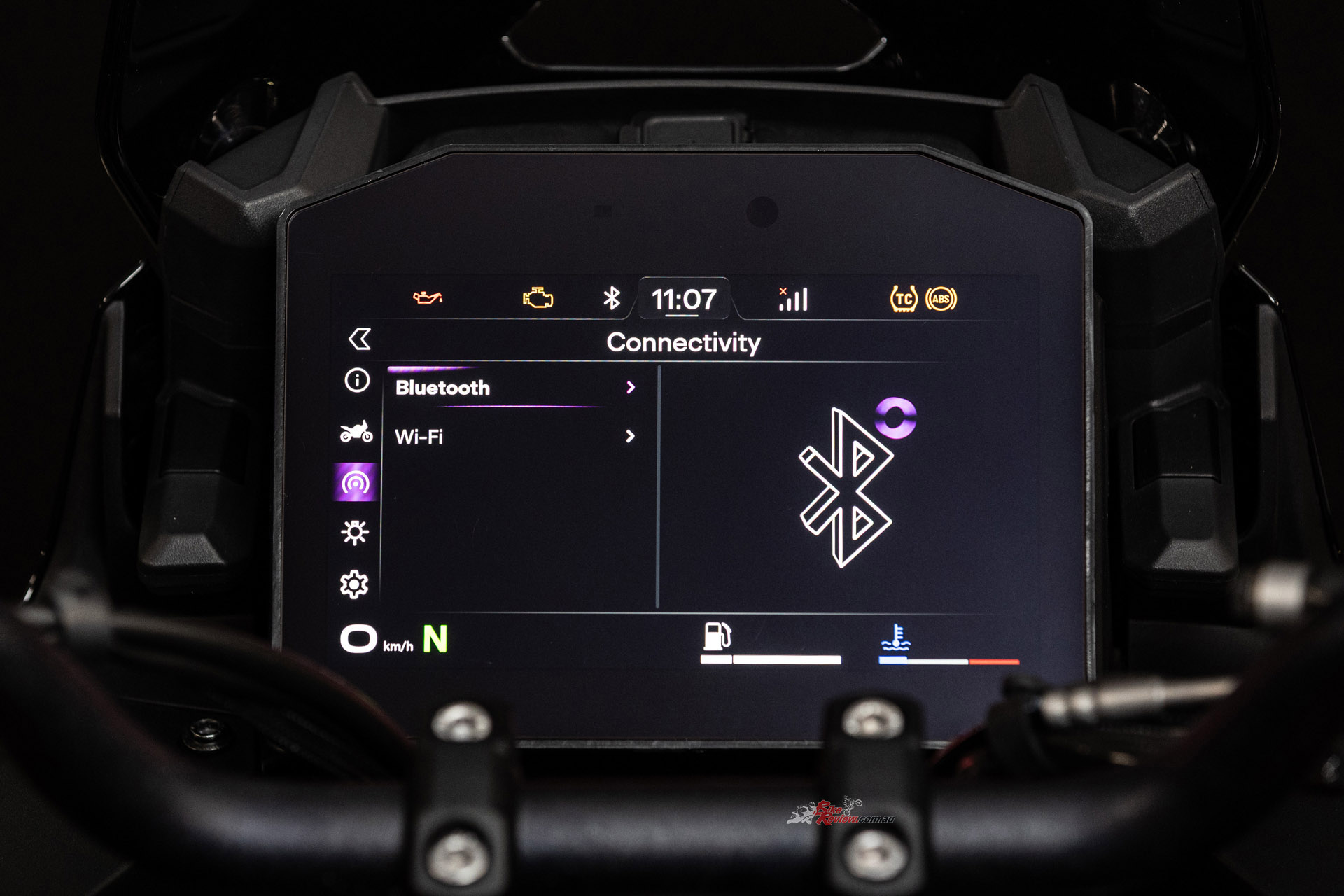
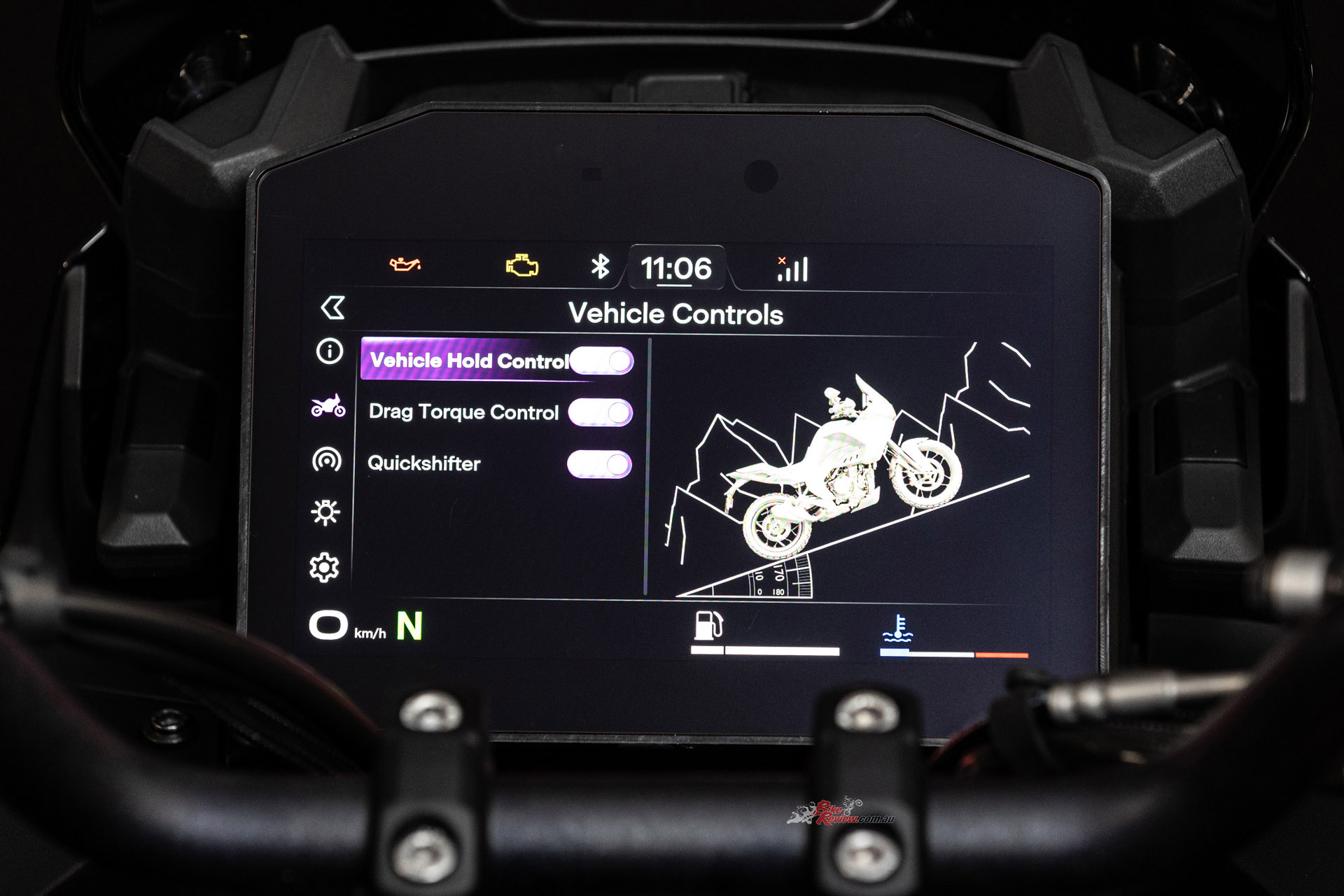
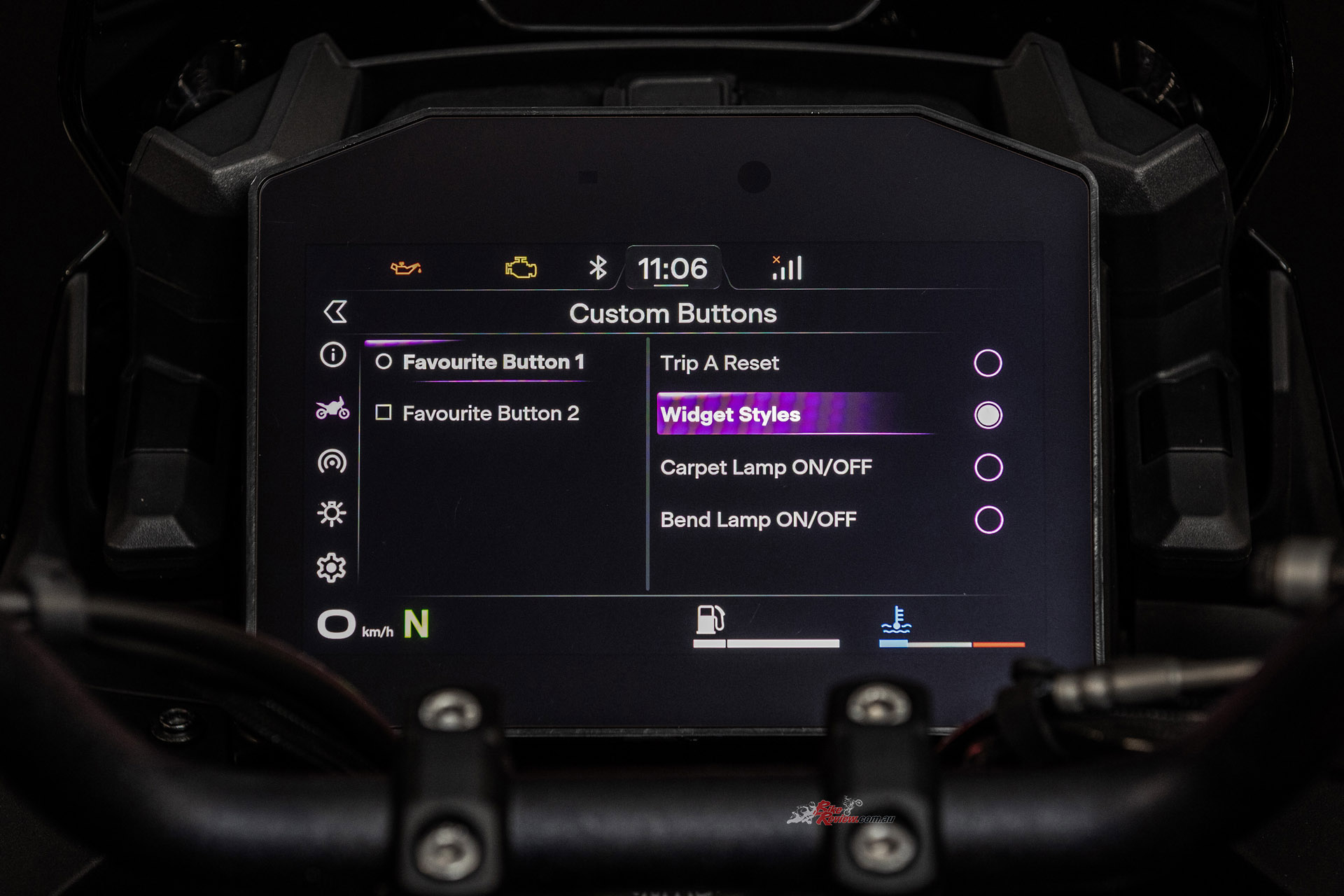
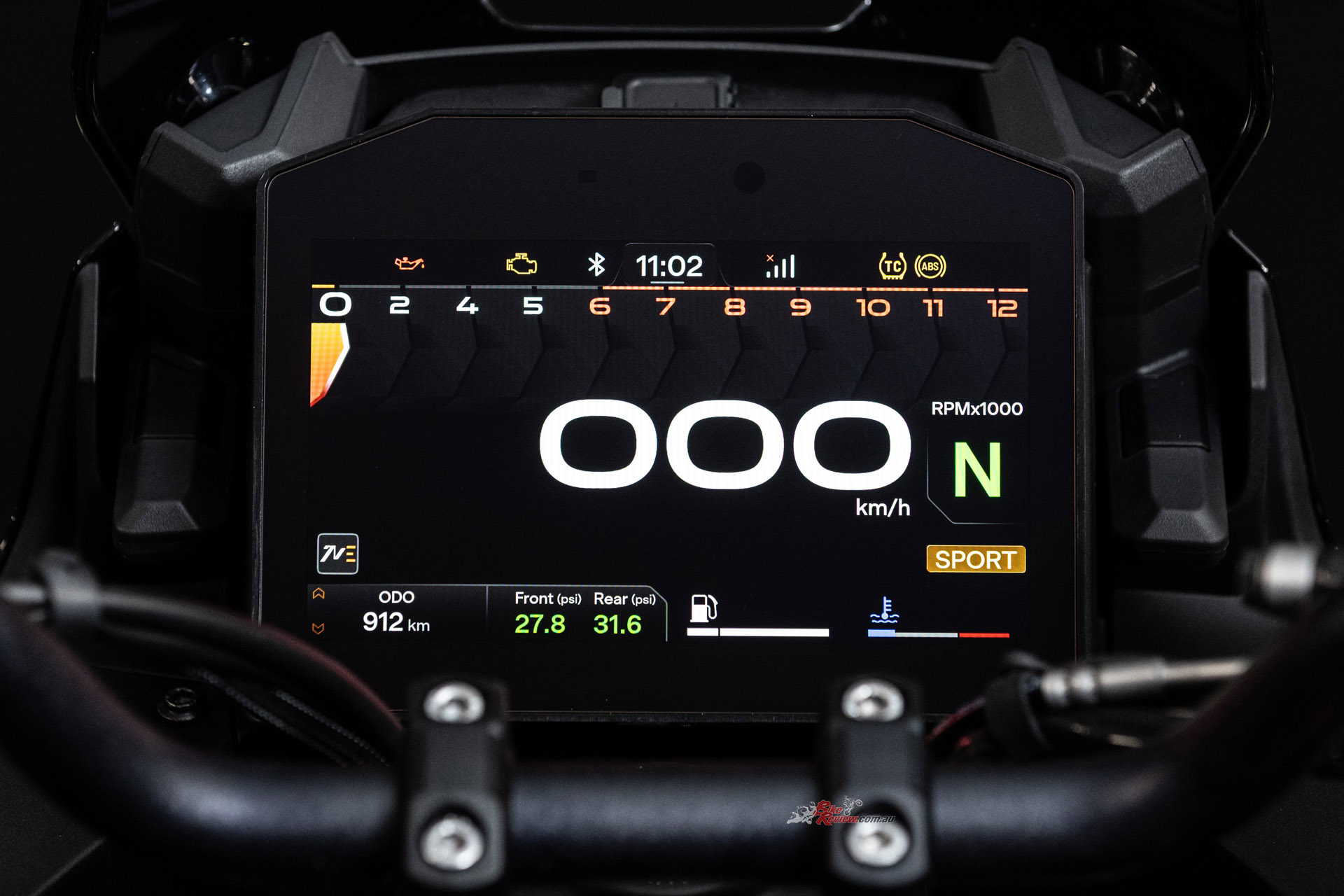
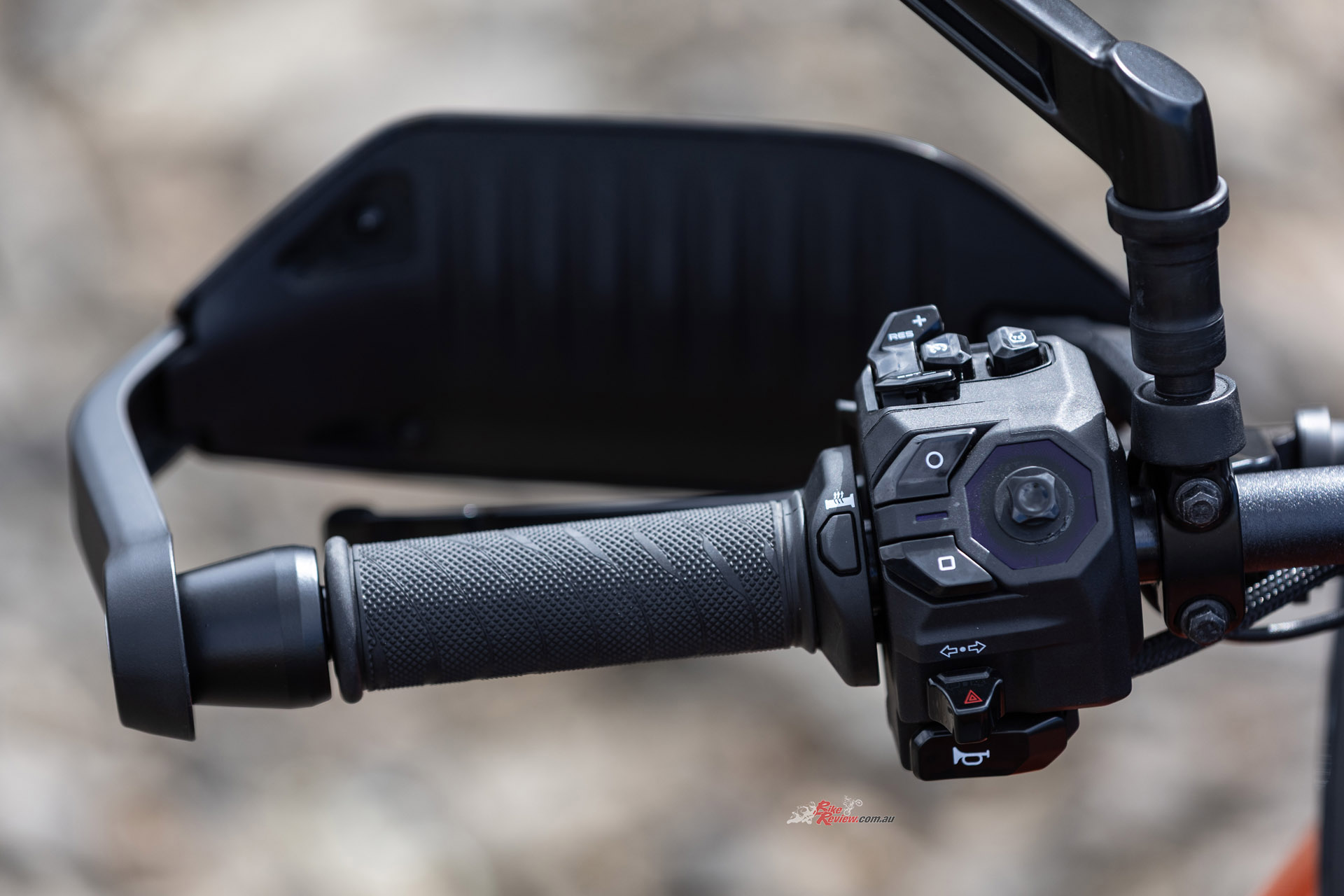
My only frustration was not having time to fully understand and utilise everything the system offered. There is simply so much available to the rider that a short introduction barely scratches to the surface. The Atlas features a significant number of switches and functions. This isn’t a criticism of the motorcycle itself; rather, I simply felt I needed more time to familiarise myself with the layout. Learning where every control is located and developing muscle memory takes time.
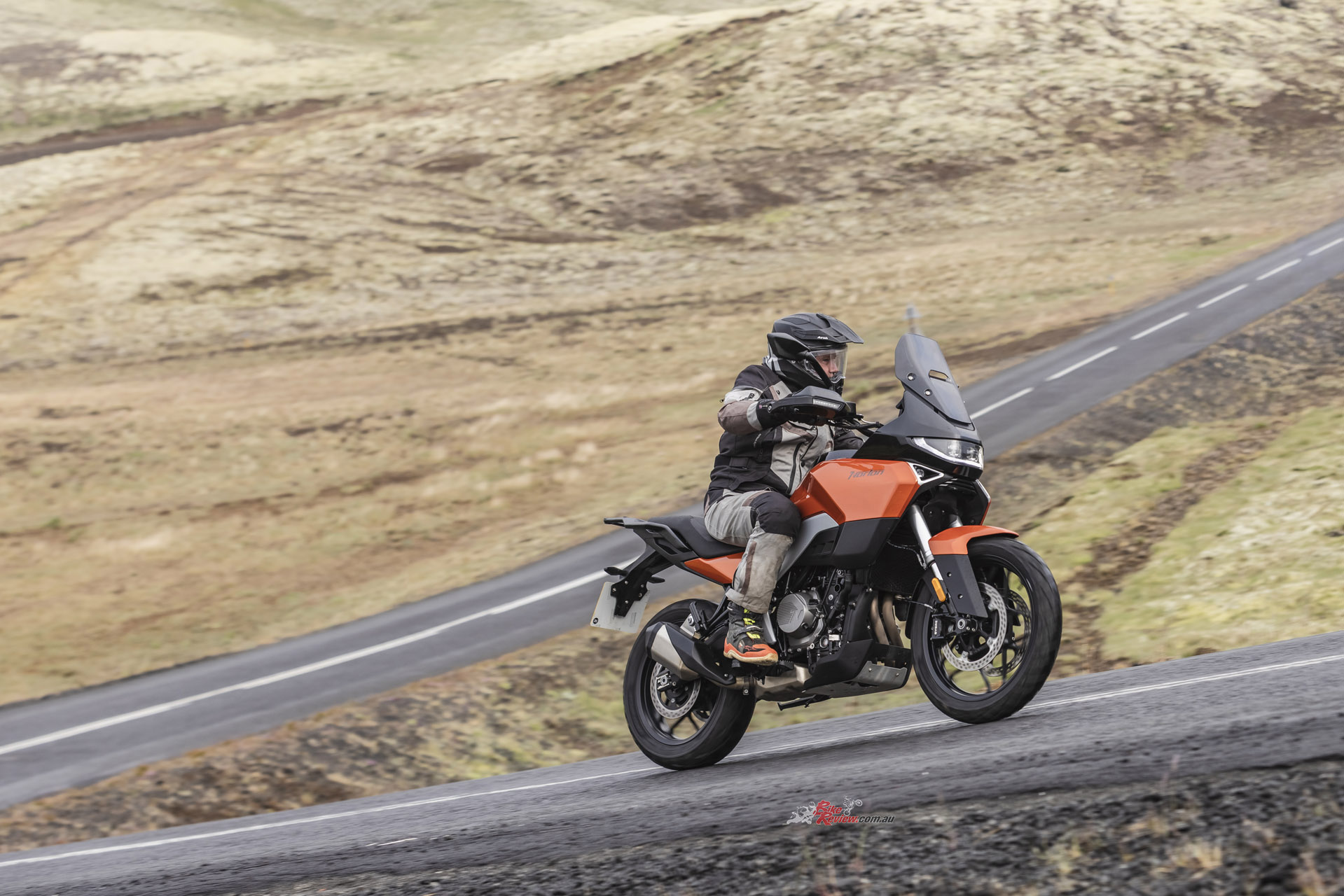
Bernie started in Urban mode, then out of town switched to Rain, followed by Tour for this section of road.
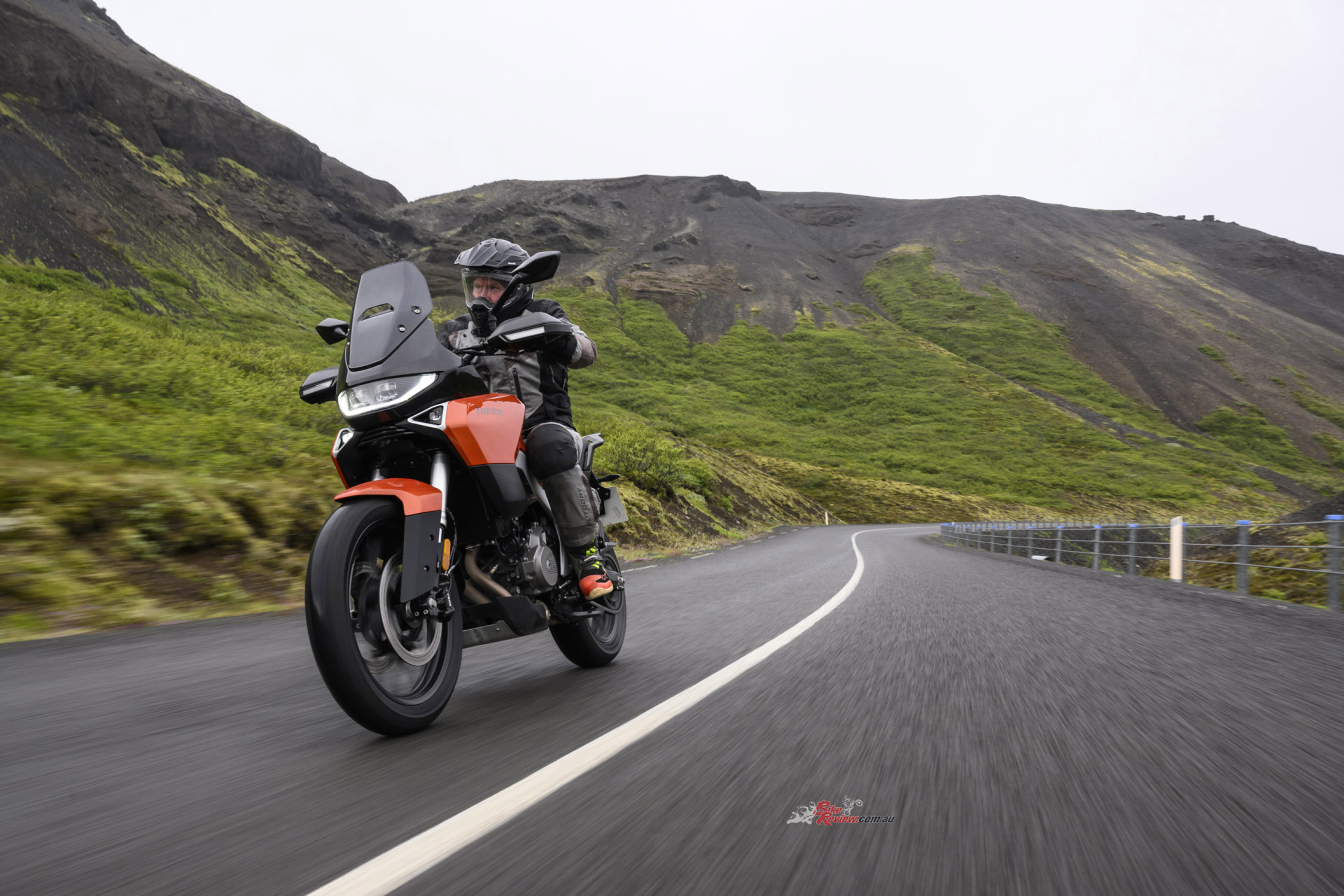
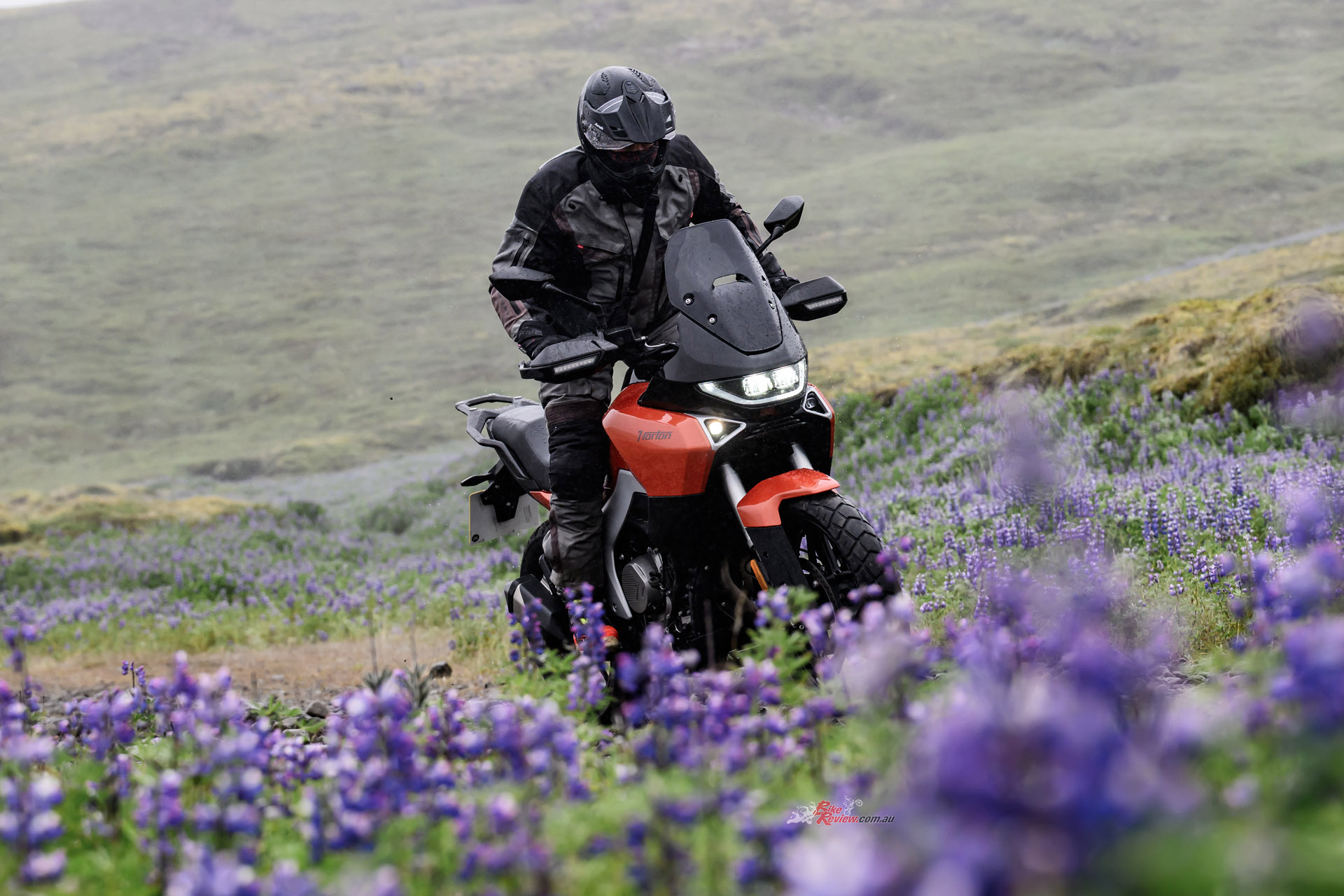
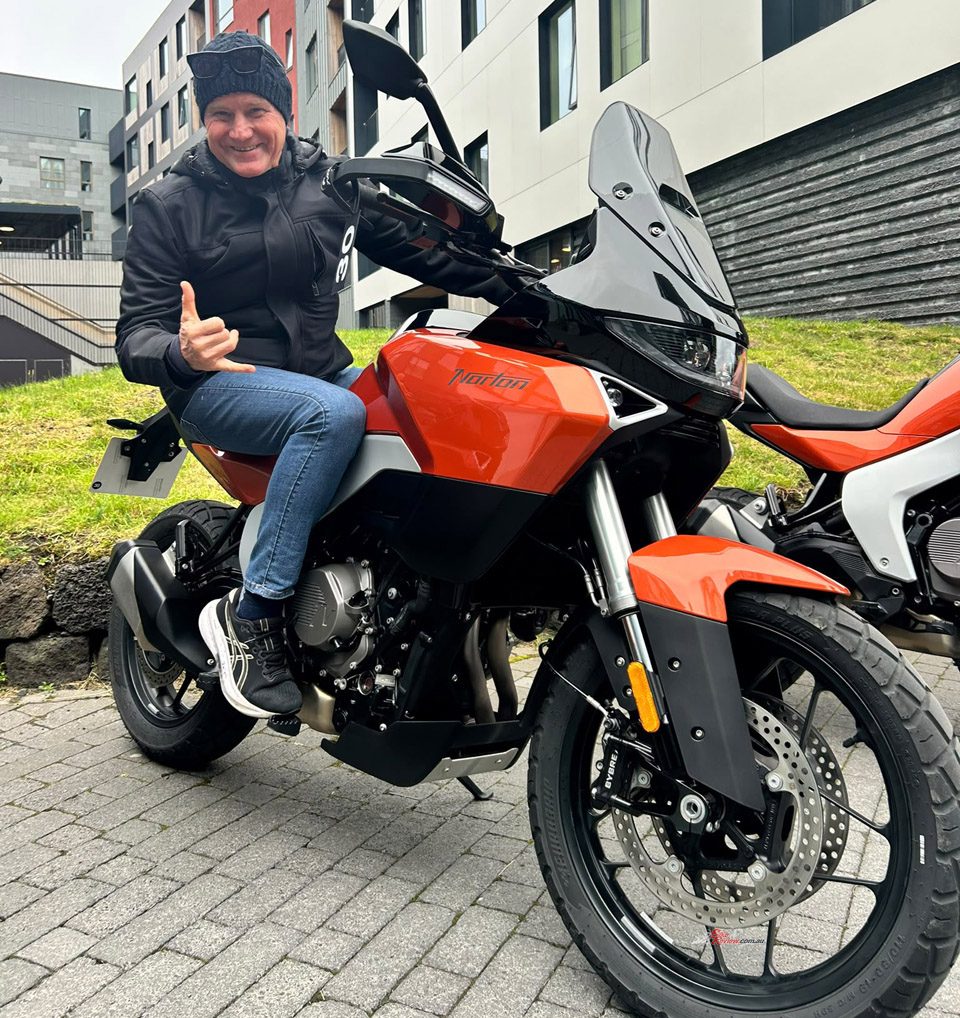
At 173 centimetres tall, I found the seat height approachable and ergo’s confidence inspiring. The seat is comfy, too, and the mirrors are excellent, as are the handguards. The riding position proved comfortable throughout the approximately 240km ride, while the handlebars, grips, adjustable levers and fuel tank shape all contributed to very natural riding posture. The heated grips were very welcome!
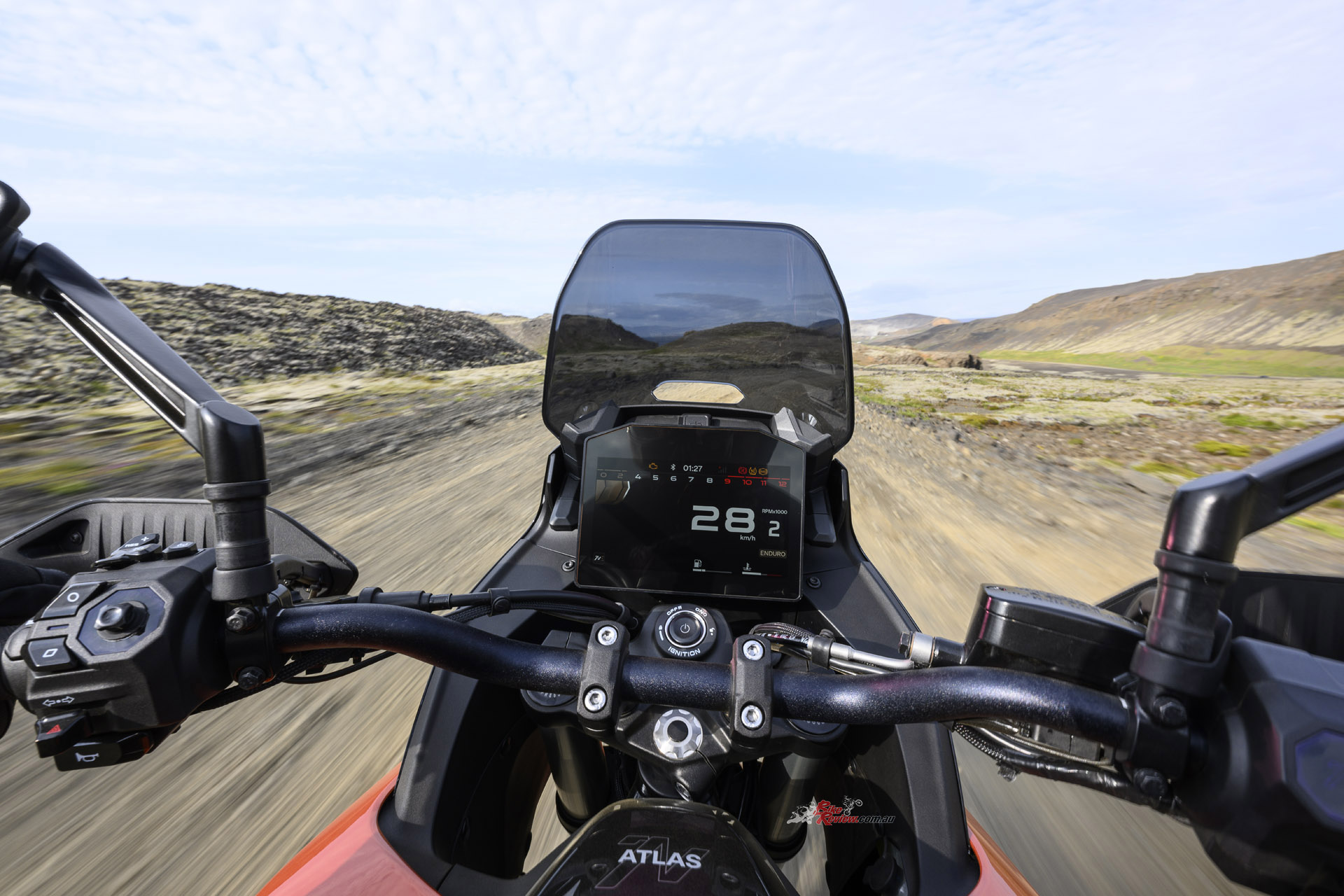
The adjustable screen was very handy to have in the difficult weather conditions; however, I felt the tint was perhaps a little dark for riding in heavy rain or off-road environments as the visibility of the terrain immediately ahead is important! I’d prefer a clear or lighter tint for sure.
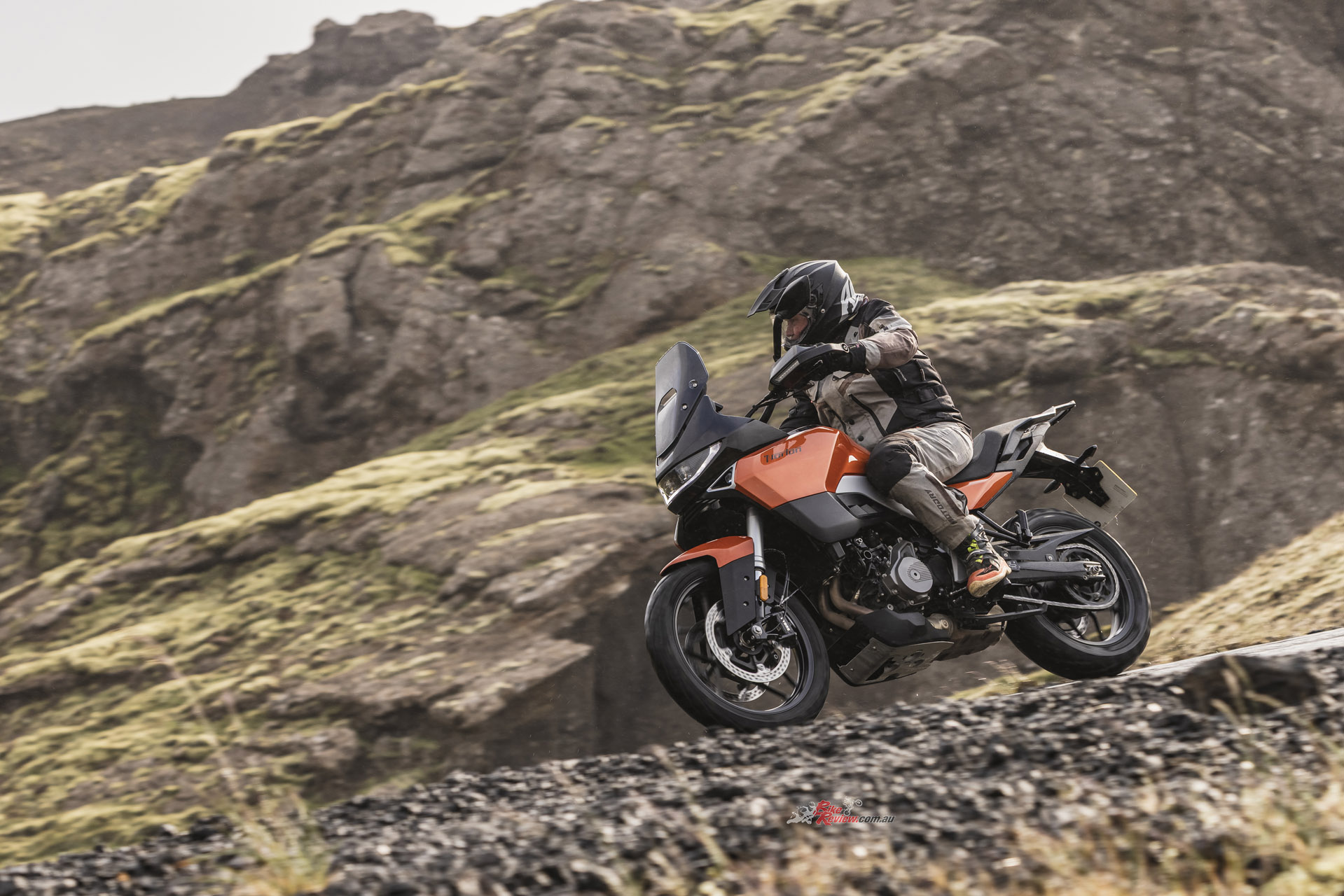
The Atlas has great ergonomics and rider triangle according to Bernie, who is 173cm tall.
Two controls I did struggle with were the ignition and indicator switches/systems. The fob ignition system was a bit of a pain, having to activate the fob to start the bike, even when sitting on the bike with the fob in range. A key is usually a much easier option, particularly when adventure riding when you often end up wet or even in deep water where fobs can get damaged.
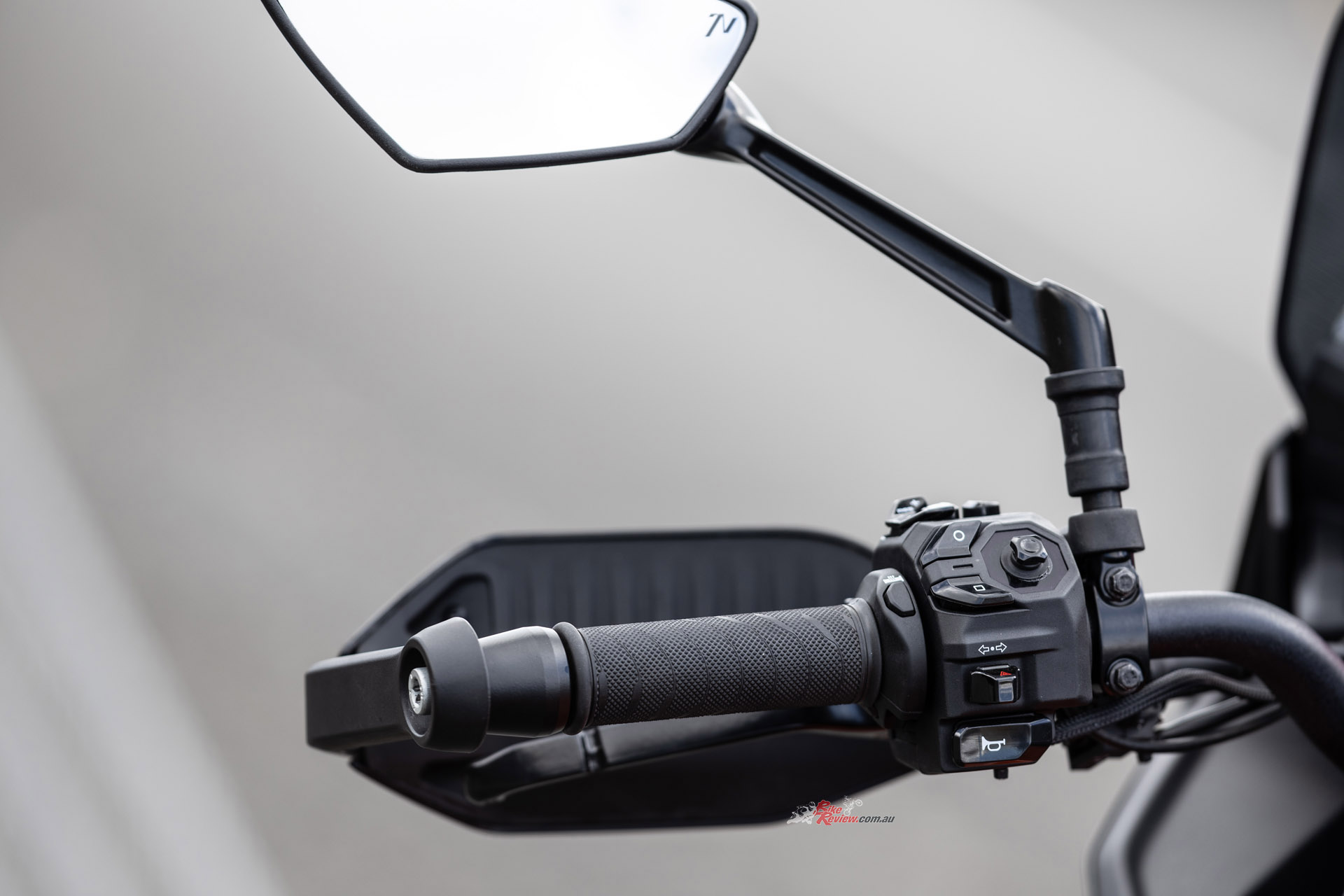
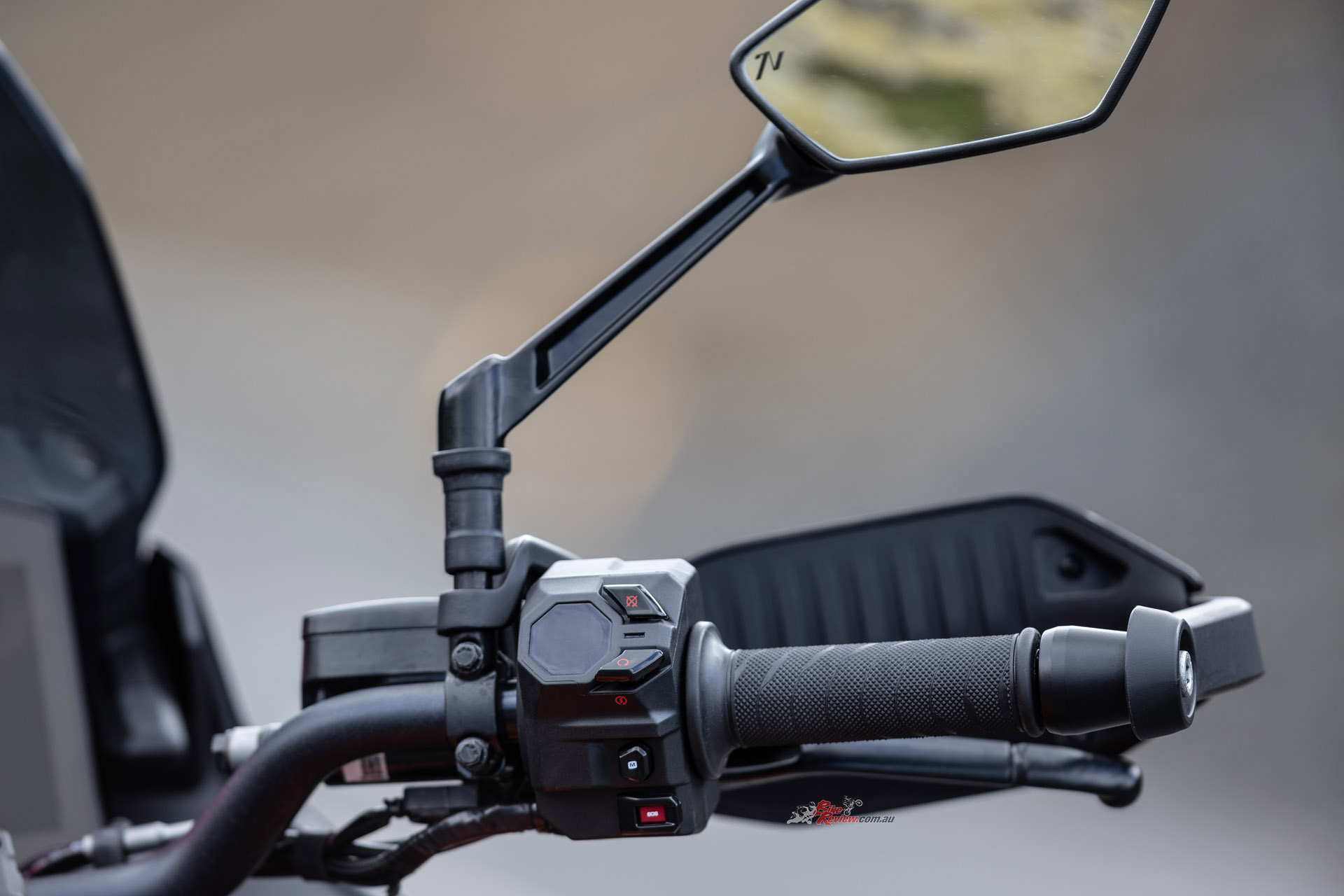
With the indicator switch, I felt it to be particularly sensitive, and I frequently found myself checking whether I had accidentally activated the hazard lights or forgotten to cancel the indicators. There doesn’t appear to be a particularly strong tactile click or feedback through the switch. In thinner road or motocross type gloves, this may be less of an issue, although Jeff found the same with the Manx R.
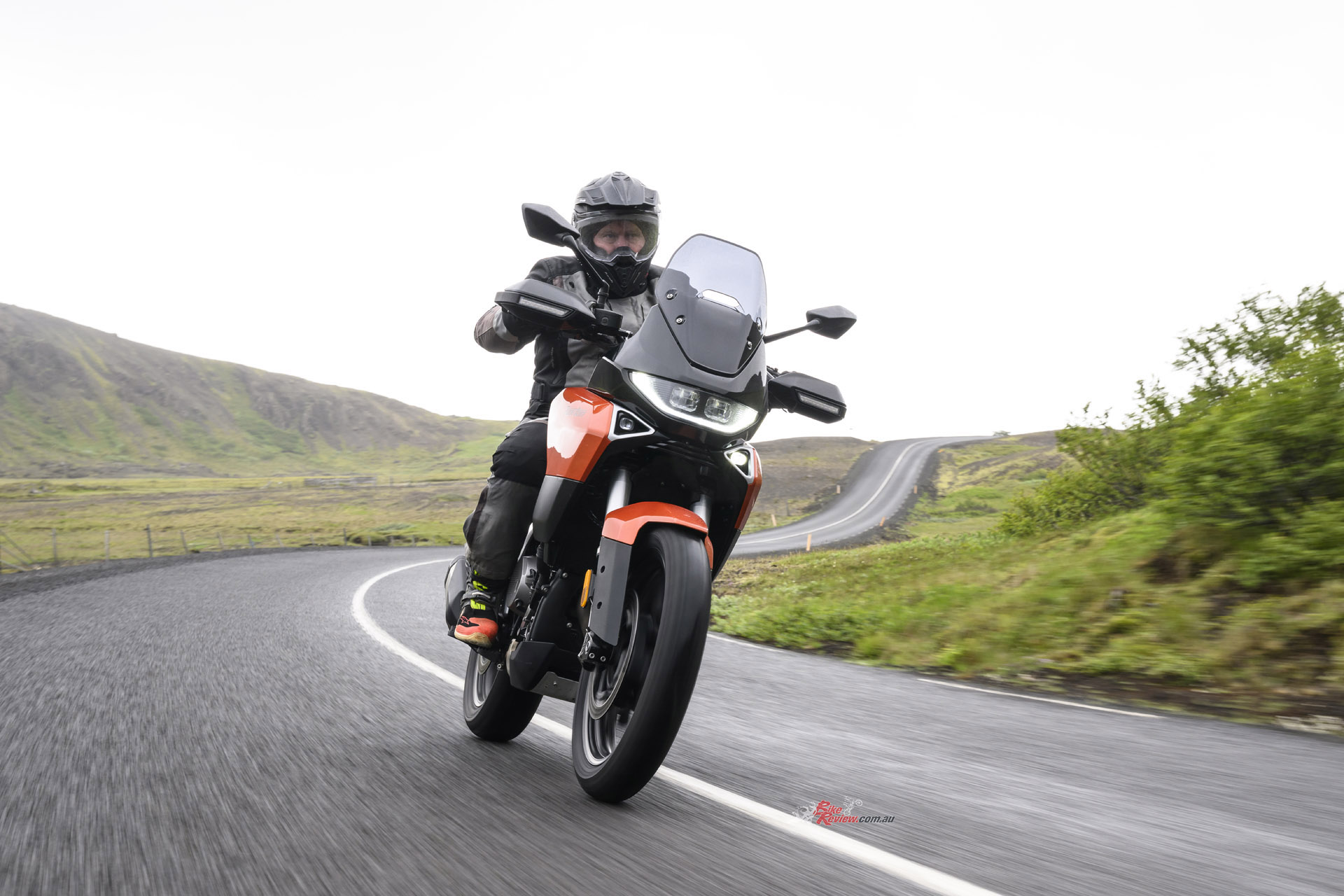
The screen is not height adjustable but Bernie found it worked well in the windy and rainy conditions.
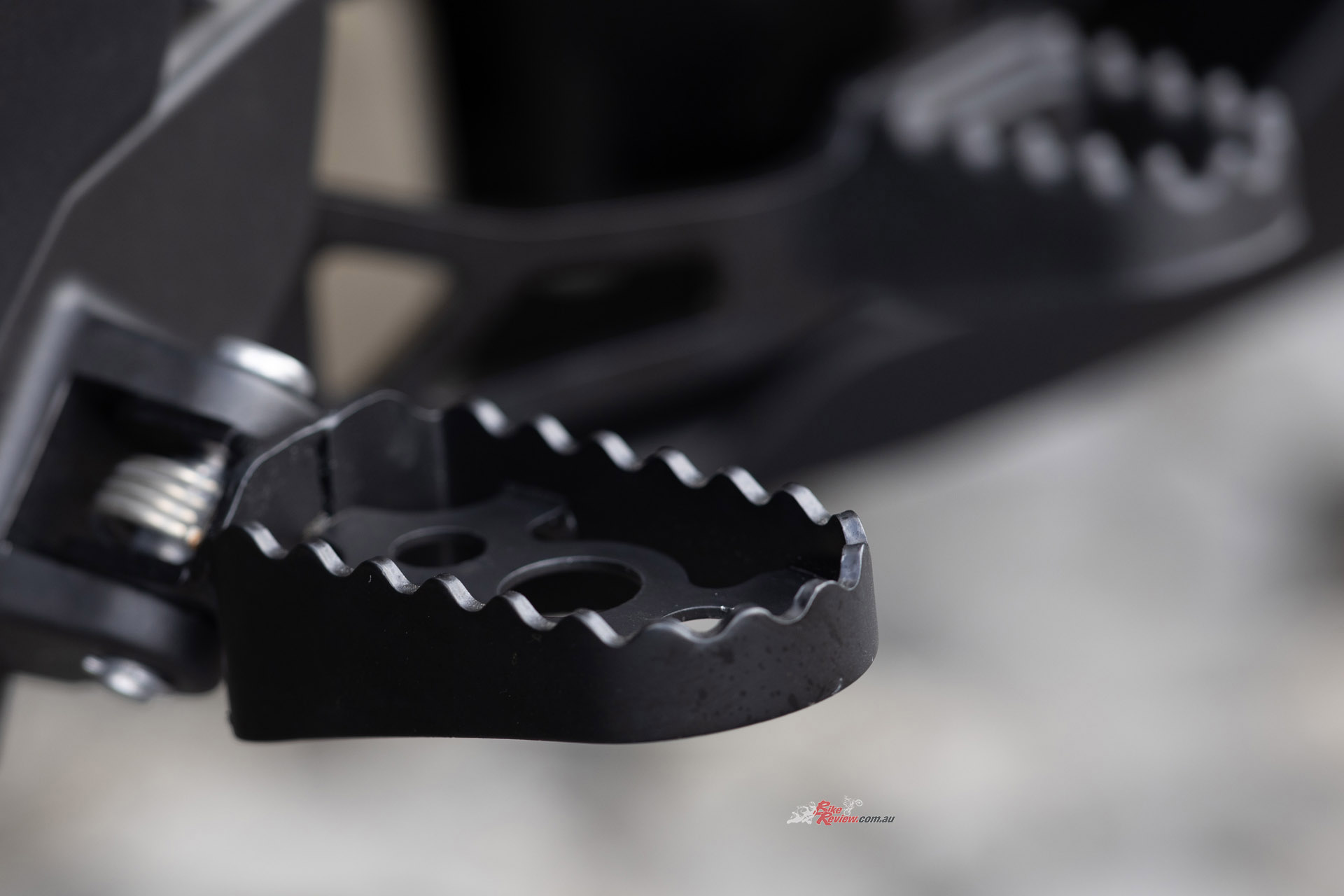
The Atlas is equipped with a two-way quick-shifter. I found the system to be extremely sensitive, although that may have been partly influenced by the heavy motocross boots I was wearing. Despite making a conscious effort to keep my feet clear of the lever between shifts, I occasionally struggled with the system. I should have disabled it. It can be deactivated, as some riders on the day did.
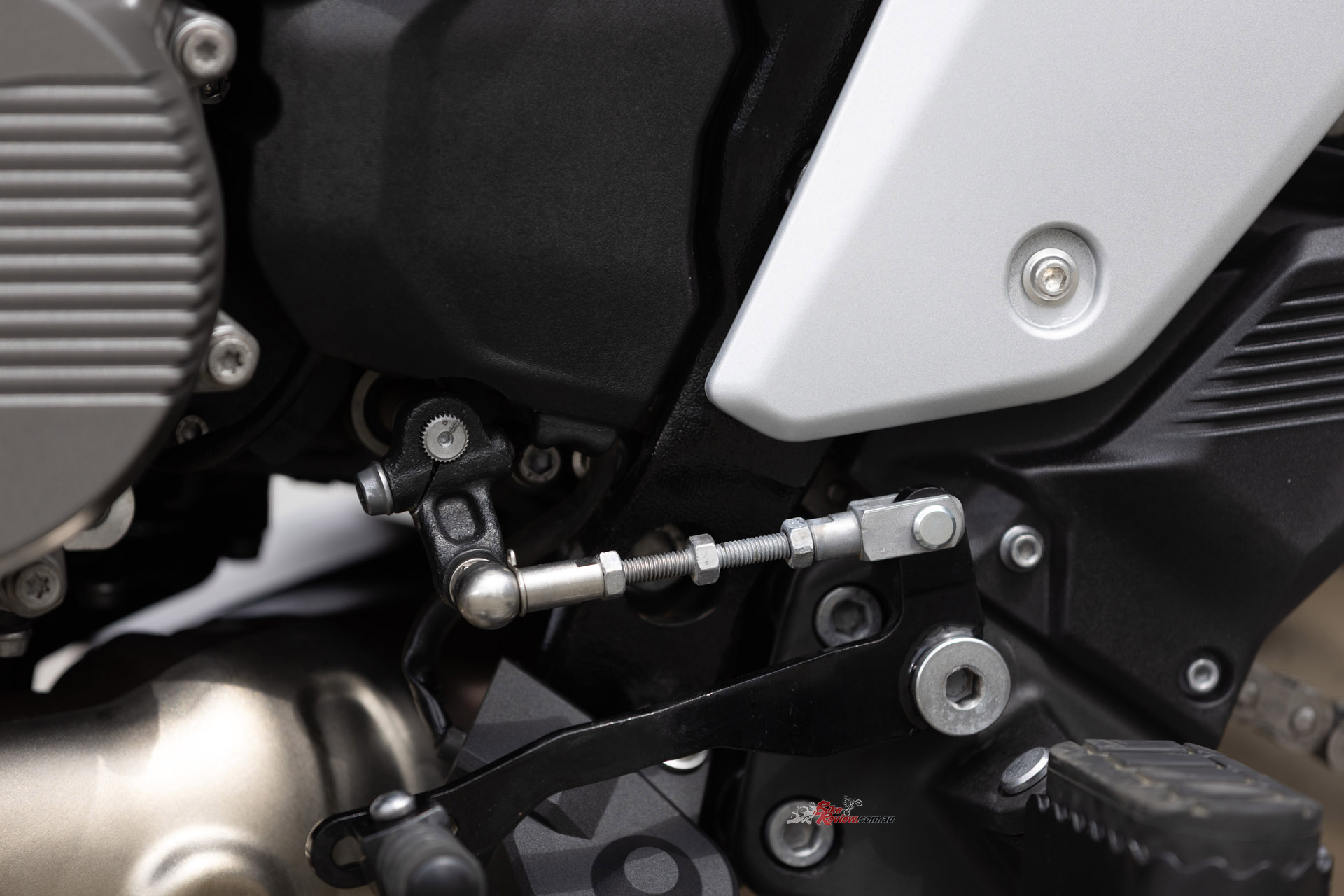
That said, the gearbox itself is exceptionally smooth and precise. The clutch action is equally impressive in feel, lightness and takeup. I often found myself wishing I could perform my own rev matched downshifts and preloaded clutchless upshifts, allowing me to enjoy the excellent transmission without the occasional interference of the quick-shifter.
Wearing MX boots highlighted the sensitivity of the quick-shifter, which was probably tested wearing road boots, however Bernie dressed and packed with the expectation of a more hardcore adventure test.
On-road the front-end of the motorcycle felt planted and confidence inspiring, delivering positive steering and excellent feedback even on wet cold tar roads. Turn-in is predictable and stable, which allowed me to trust the chassis despite the poor conditions. Fork action is good on standard settings, well supported and with good bump absorption, at least for what we experienced.
The rear tyre, however, felt comparatively vague. Grip was difficult to access and there is a lack of feedback that made it harder to determine exactly what the rear tyre was doing beneath me. This characteristic became more noticeable when we moved onto gravel roads sections. The basic two-way adjustable shock did the job though, on road and off-road, and we will test this more in the future.
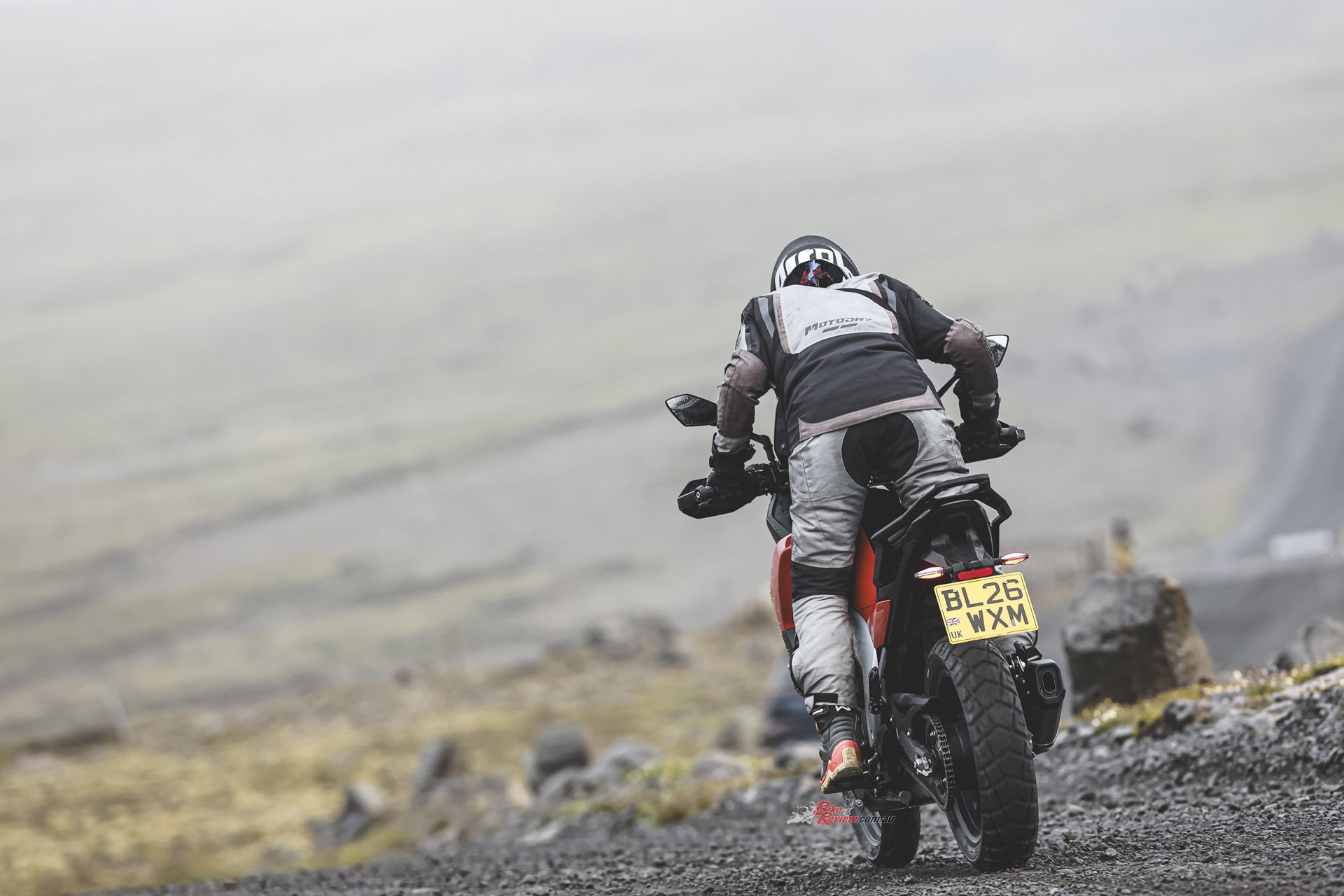
Bernie felt the rear tyre was either not up to the job or over inflated. He also noted that even with Enduro mode activated, traction control remained on, which interfered with control.
Off-road the front continued to impress, providing strong directional stability and confidence, but the rear once again felt less communicative under acceleration. At times it almost felt as though the rear tyre pressures were higher than ideal, preventing the carcass of the rear tyre from working and flexing enough to provide feedback.
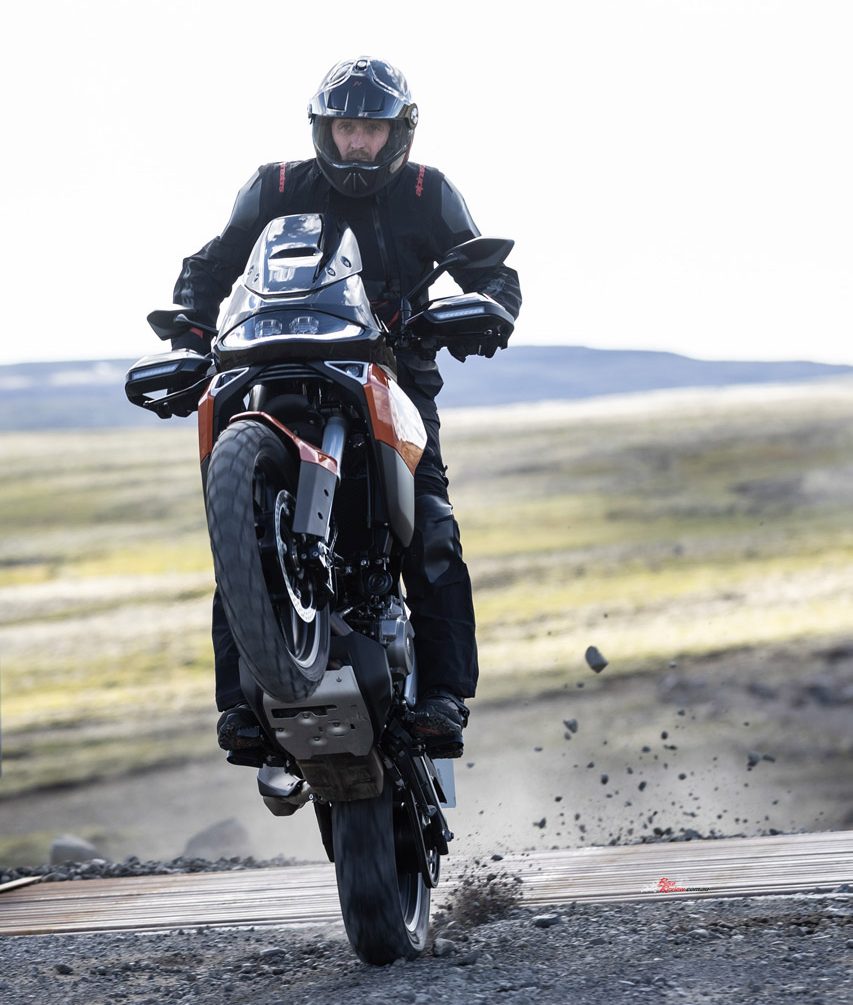
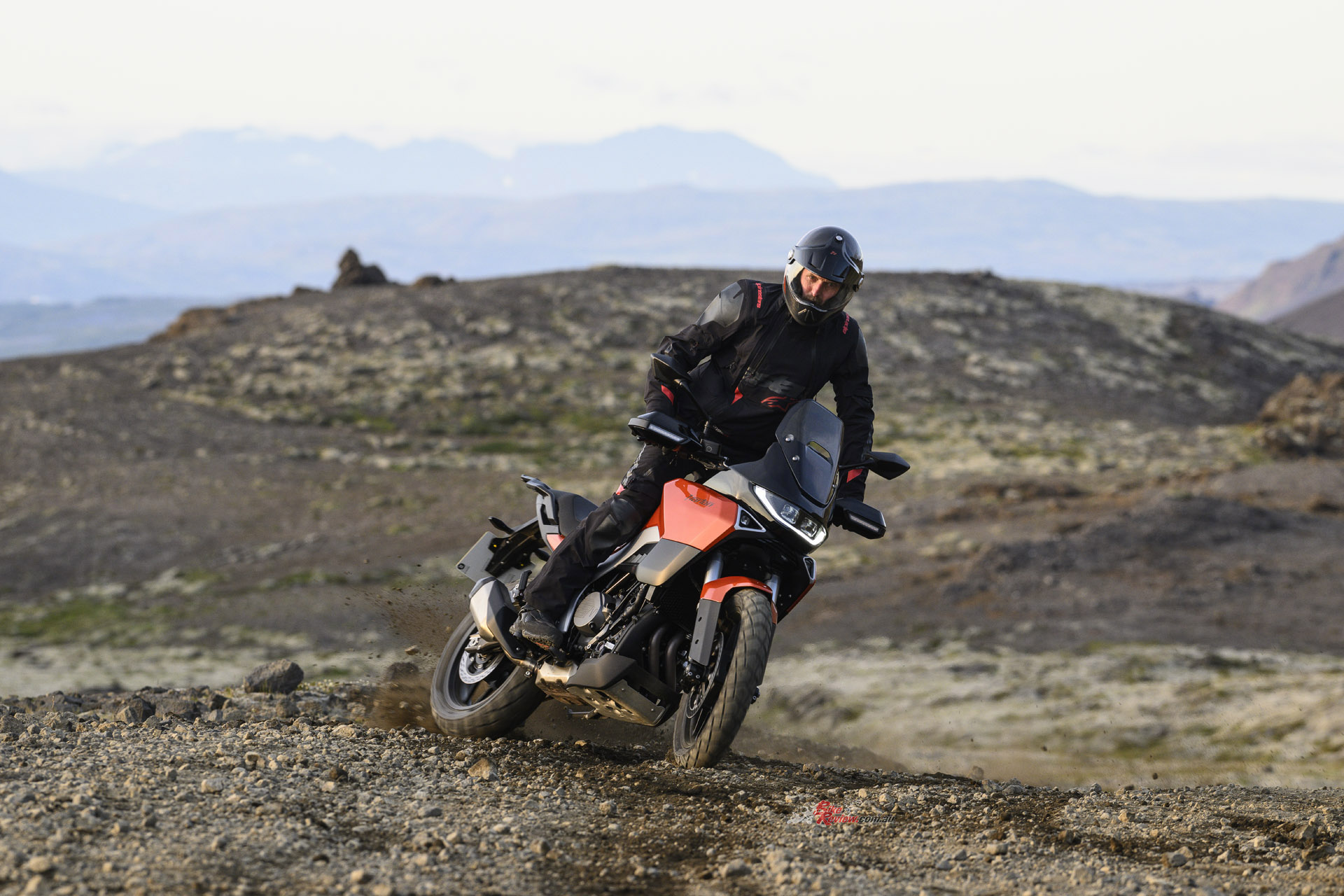
Being a launch, the day was busy, we need images and video for you guys, and thus didn’t provide sufficient opportunity to experiment with tyre pressures or suspension settings. I would have loved more time to tune the motorcycle and explore the suspension capabilities, as I suspect a few adjustments would have significantly improved the feel for my riding style. Next time!
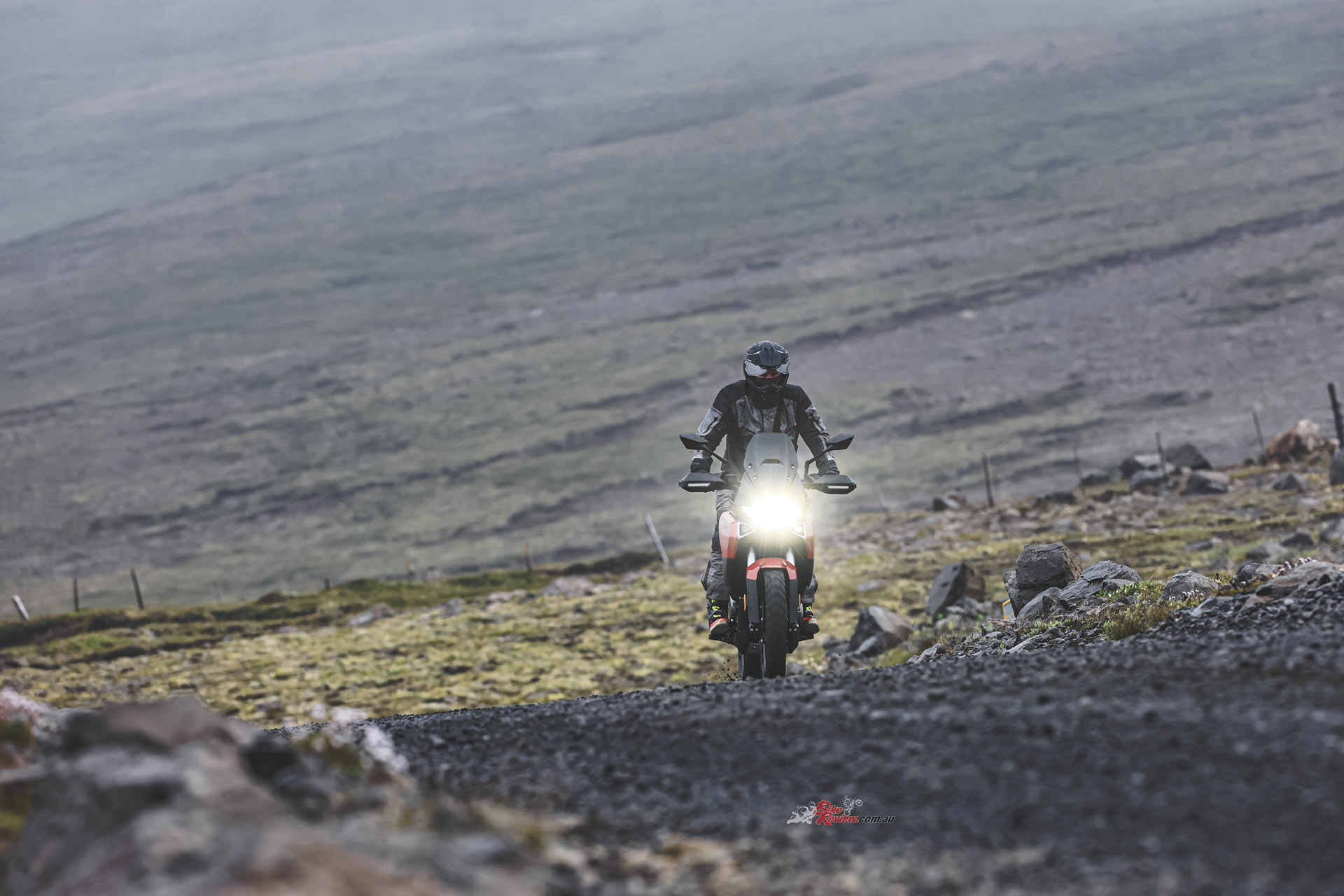
Well maintained gravel roads are a good environment for the Atlas, which means it should be great for touring in OZ.
The engine itself delivers a strong and usable spread of power across a broad range of gears and road speeds, but to fully explore the twin, we need a longer ride and more favourable conditions. This ride proved it to be tractable and with enough torque for these conditions, but we need to explore the top-end at a later date. It is certainly a characterful motor…
“Norton has produced a very capable, highly refined adventure motorcycle that offers plenty of technology, comfort and character…”
There is a slight run on effect that initially had me questioning the brake feel but I later came to believe it was related more to the engine braking characteristics than the braking system itself. Once I adapted to it, I was able to effectively use the front and rear brake systems for speed control, chassis balance and stability through varying conditions. The front brakes are great, with good feel at the lever and initial bite, while the rear is equally impressive, as both tested in these conditions, anyway.
“The Atlas feels like a motorcycle built by people who genuinely care about what they are creating”…
My initial assessment is that Norton has engineered a motorcycle that sits closer to an 80 per cent road usage and a 20 per cent soft off-road balance than that of a hardcore off-road adventure machine. However, that judgement may not be entirely fair given the limited time available, the terrain we tested on and the conditions we experienced. We will find out more in the future.
I suspect the Atlas would truly have come alive on tight, fast and flowing tarmac roads and our Aussie dirt roads. While it wasn’t the off-road challenge many of us expected it, proved to be an excellent test of the Atlas road manners and stability under pressure.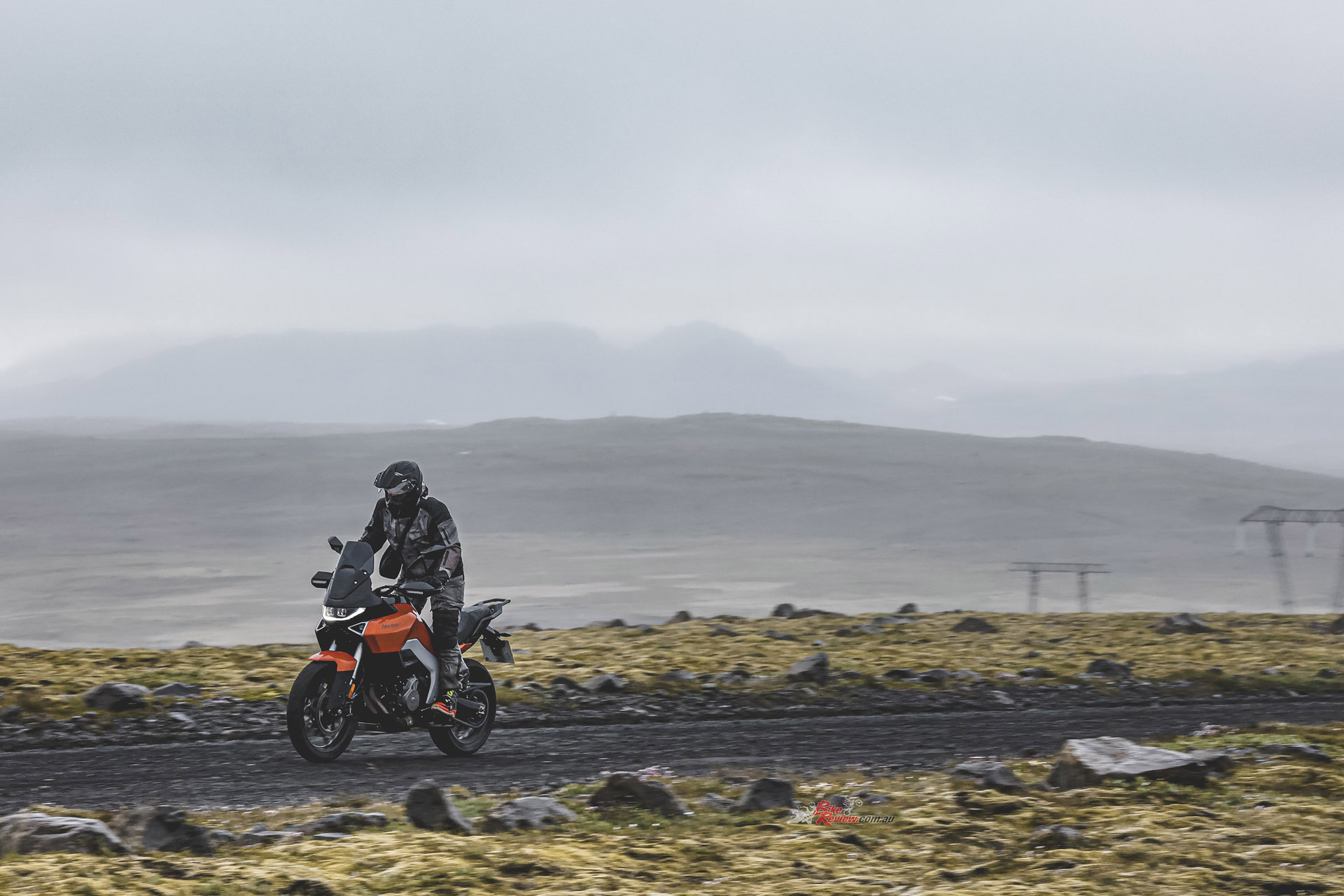
Based on this first experience, Norton has produced a very capable, highly refined adventure motorcycle that offers plenty of technology, comfort and character. Most importantly, the Atlas feels like a motorcycle built by people who genuinely care about what they are creating, which may well be the greatest strength of the Norton Atlas…
NORTON ATLAS TECH TALK
Engine
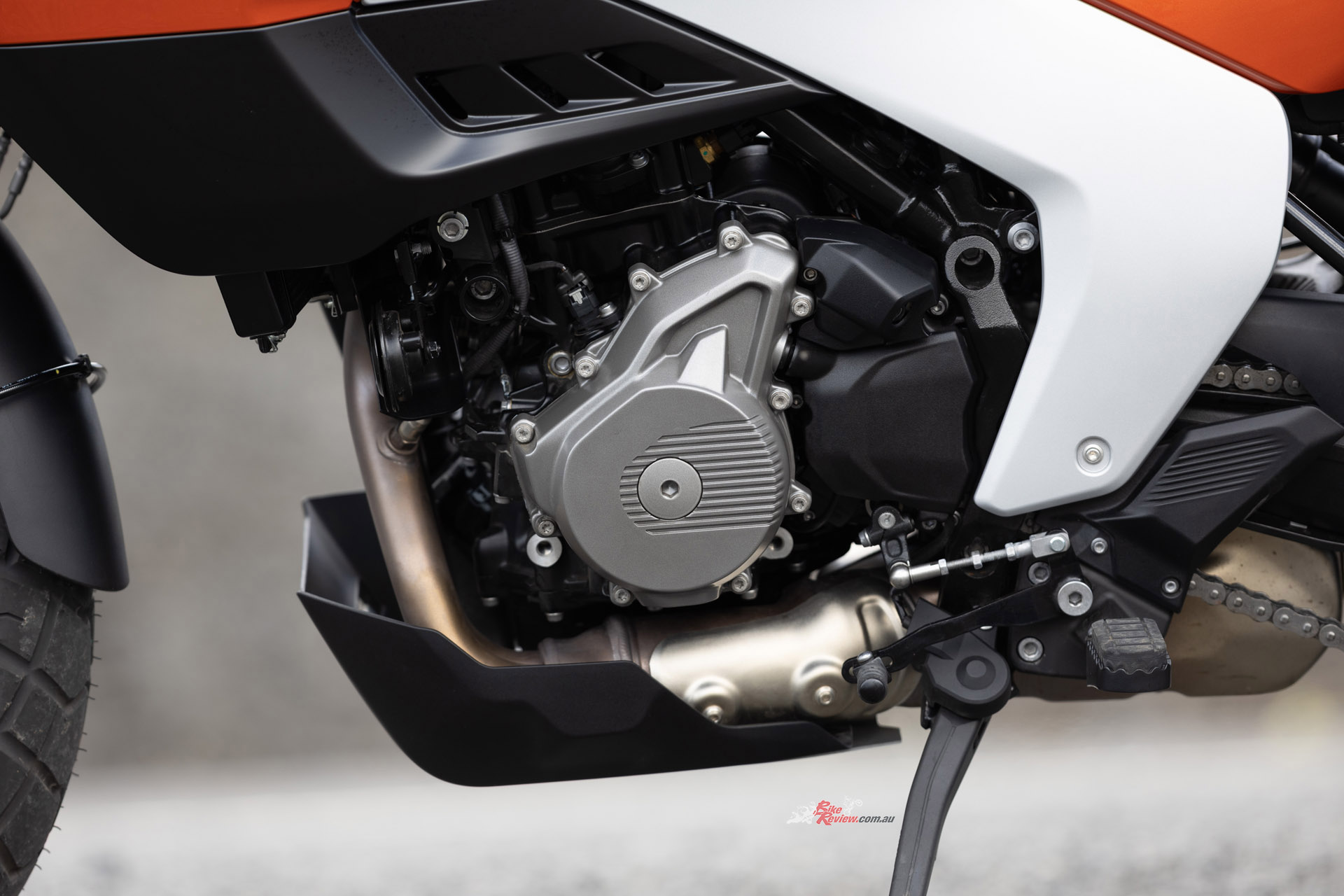
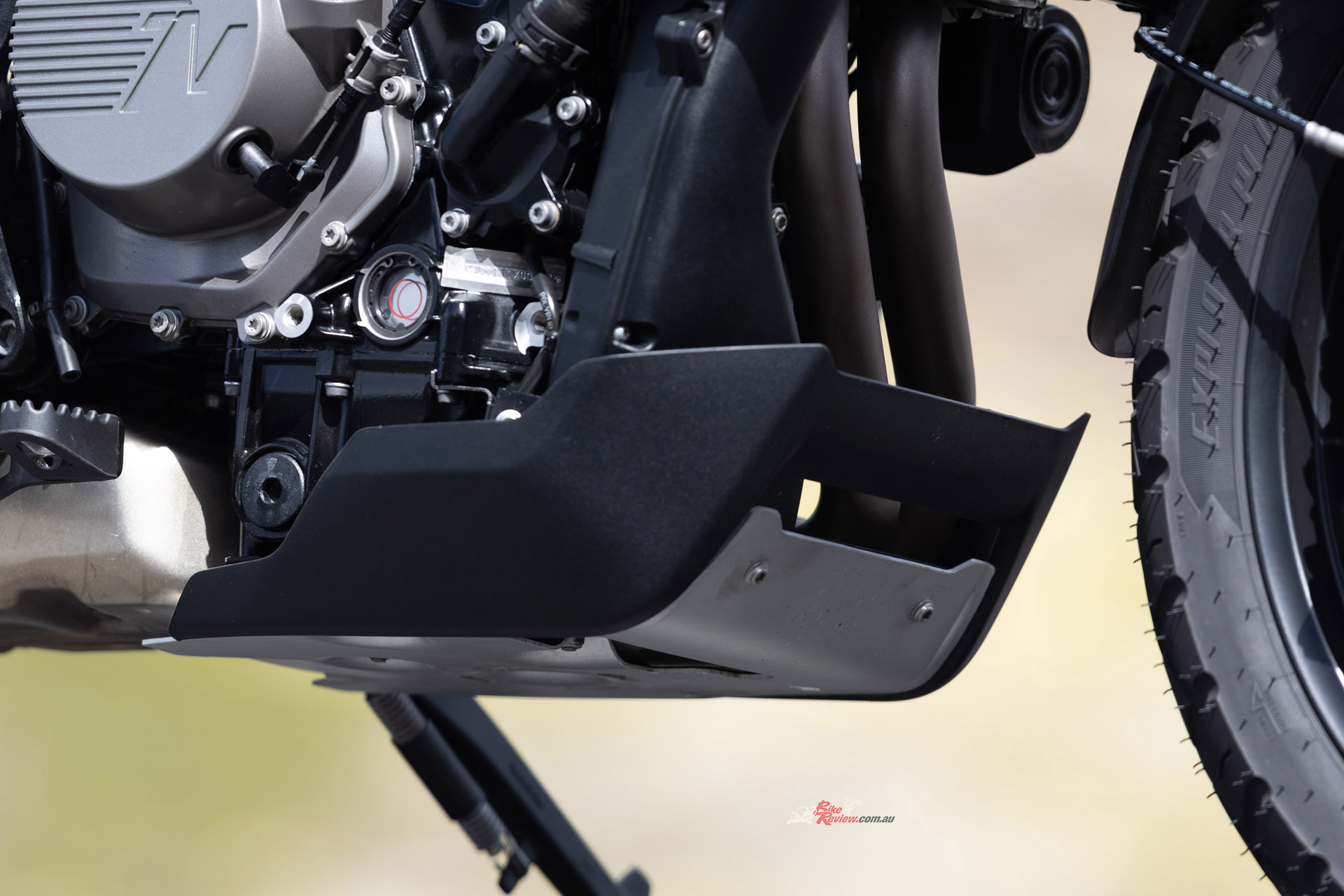
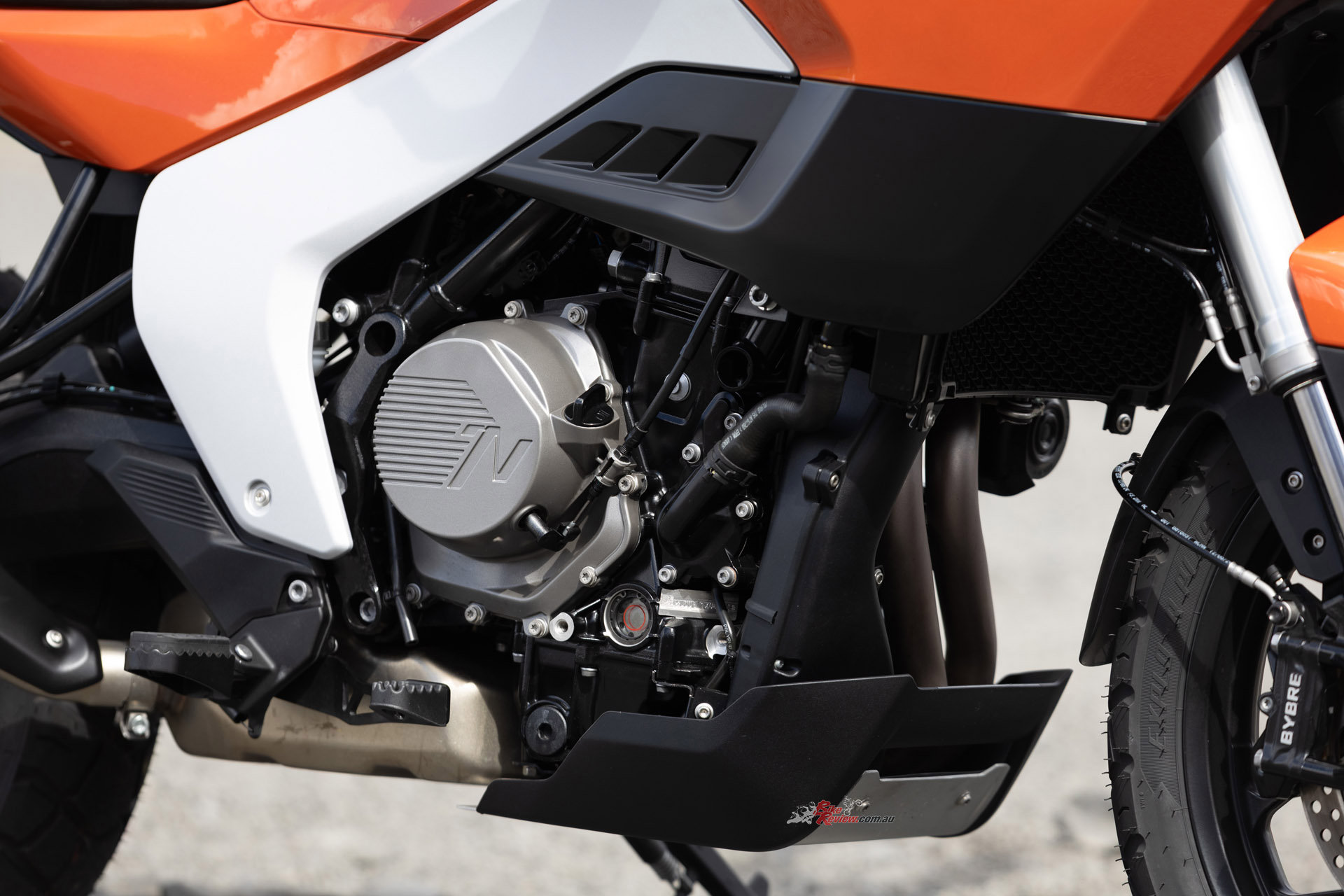
Powering the Atlas is an all-new 585cc liquid-cooled DOHC parallel twin featuring a 78mm bore and 61.2mm stroke with a 12.2:1 compression ratio. The engine uses a 270-degree crankshaft, producing a firing order that delivers improved traction characteristics, smoother torque delivery and a V-twin-inspired exhaust cadence compared with a conventional 180-degree parallel twin.
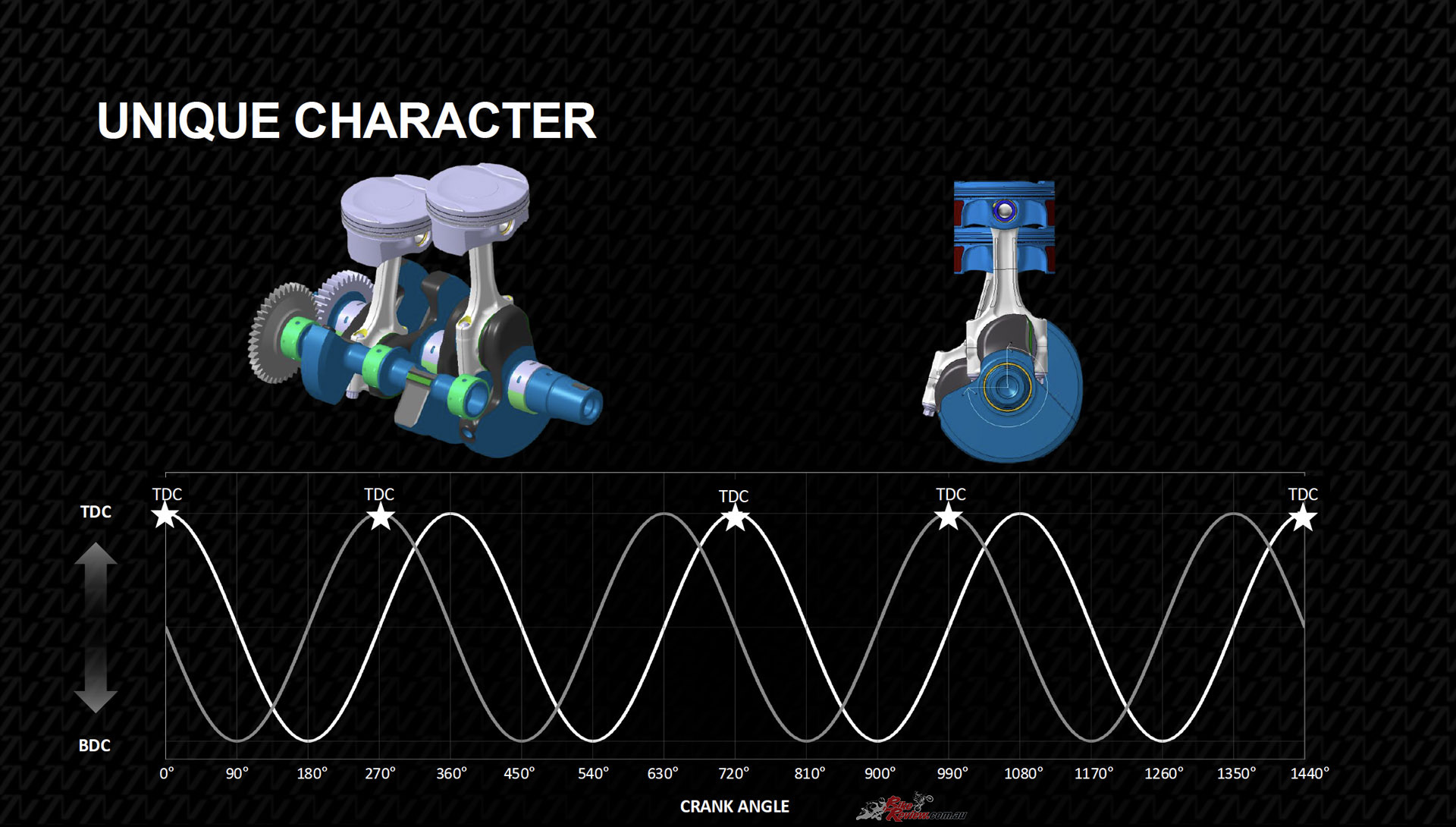
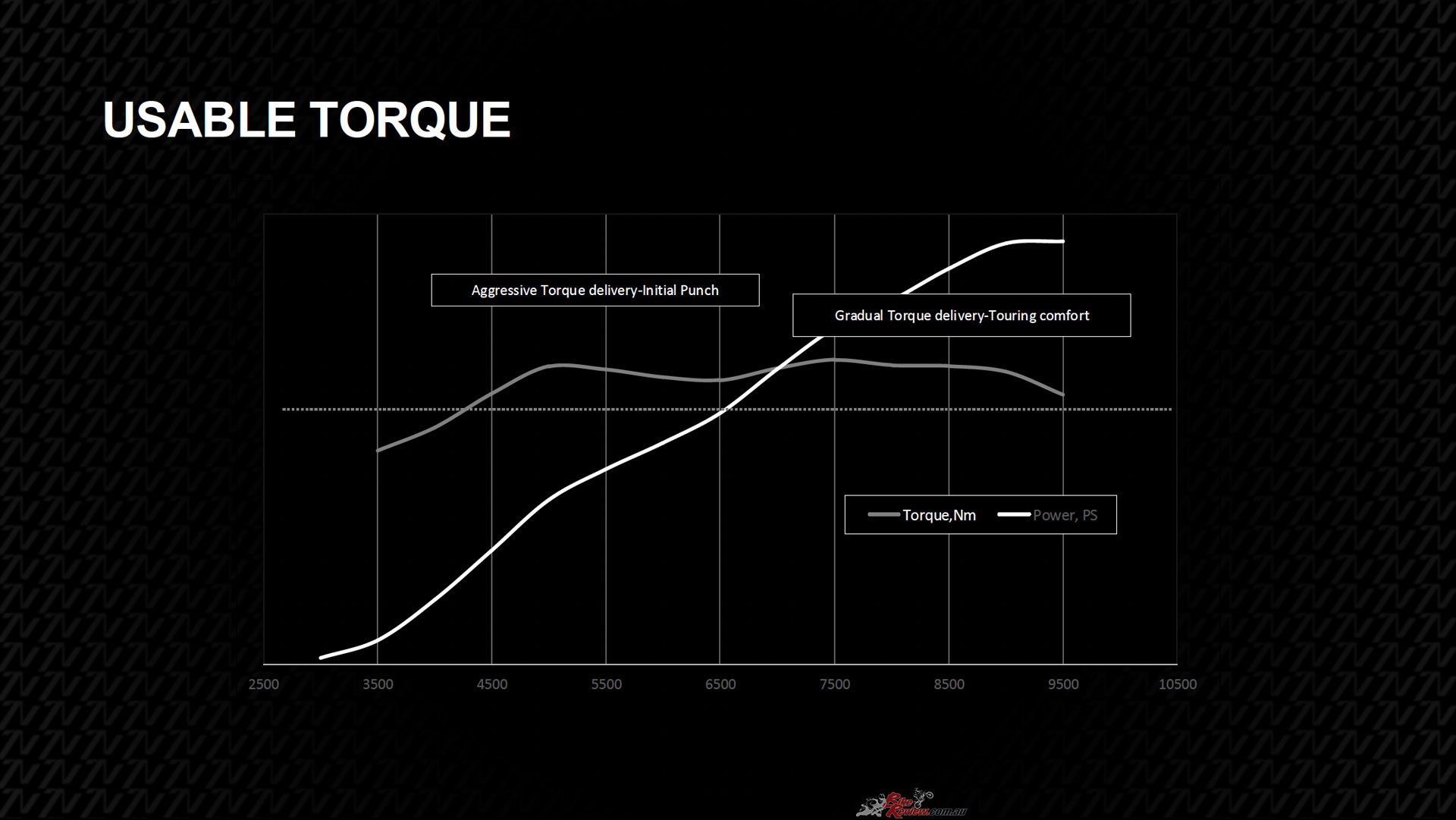
Maximum output is 69bhp (51.5kW) at 9,300rpm, while peak torque of 57.5Nm arrives at 7,300rpm. The engine has been developed to produce a broad spread of usable torque rather than concentrating performance at the top end of the rev range, making it suitable for both commuting and touring duties.
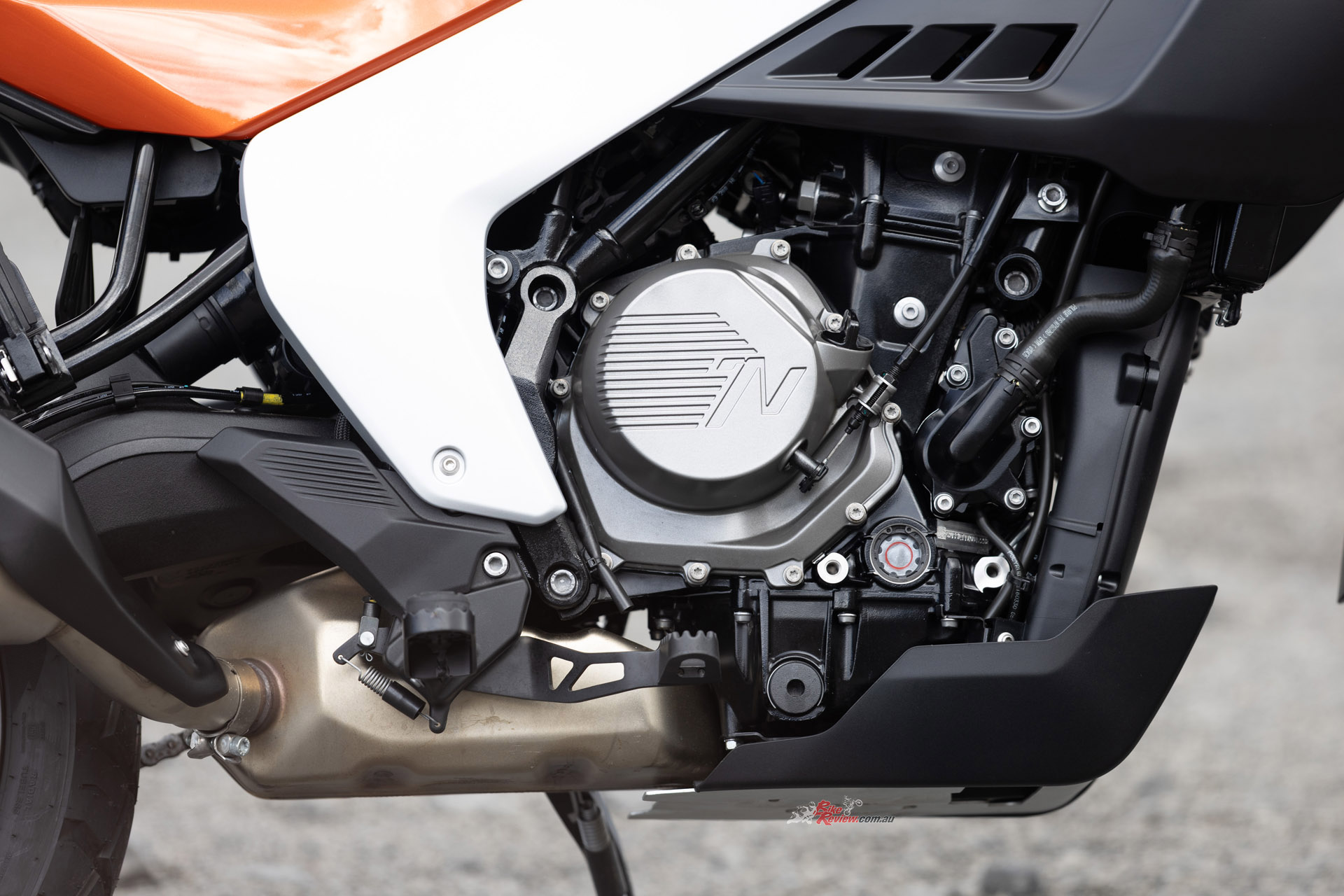
The Norton Atlas engine.
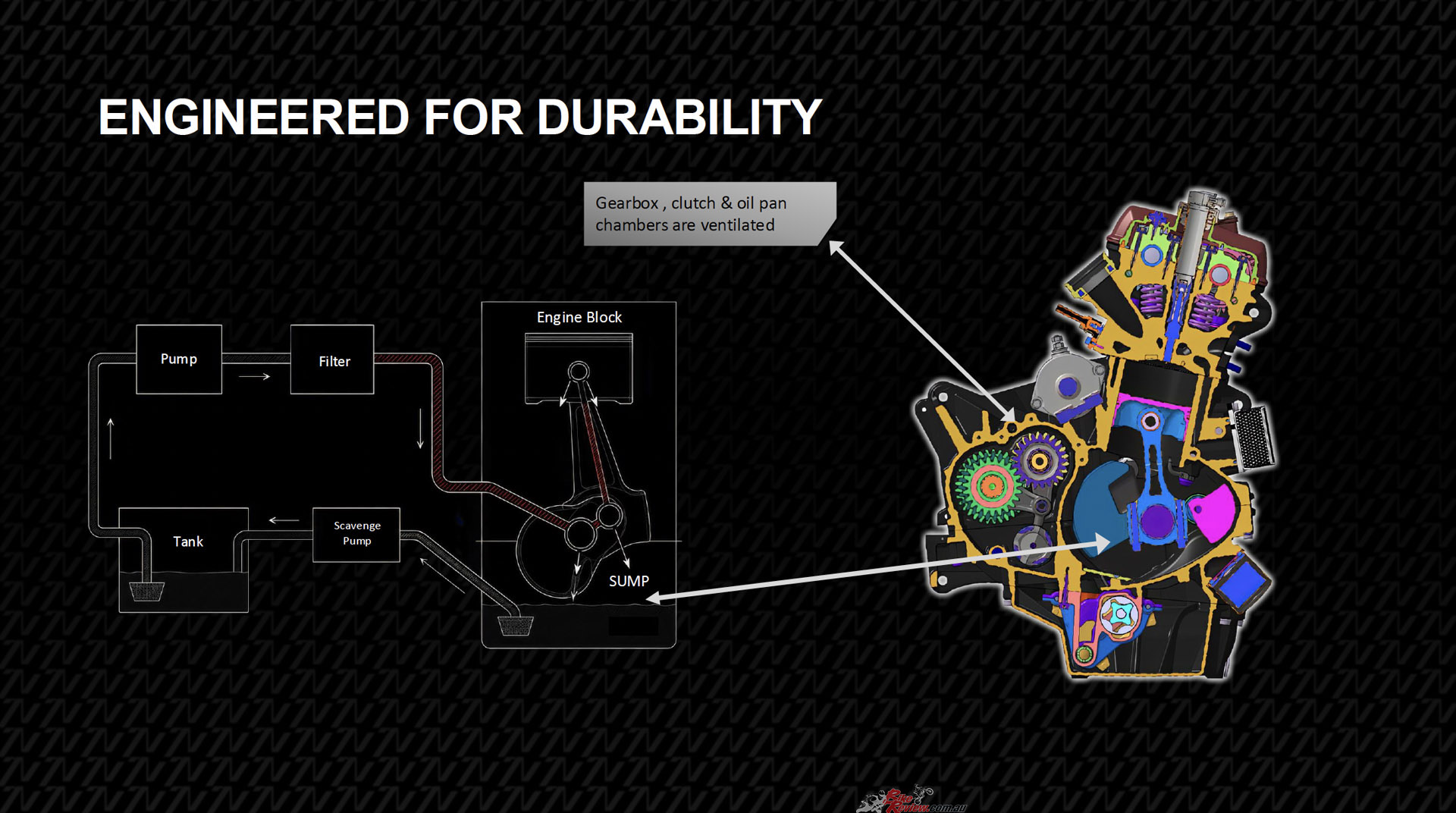
Norton has incorporated several engineering solutions aimed at improving durability and efficiency. The cylinders use Atmospheric Plasma Spray (APS) coating technology to reduce friction and improve heat transfer, while twin oil pumps maintain lubrication stability under sustained load and reduce internal drag. Cooling is handled by a high-flow liquid cooling system incorporating a curved radiator to improve packaging efficiency.
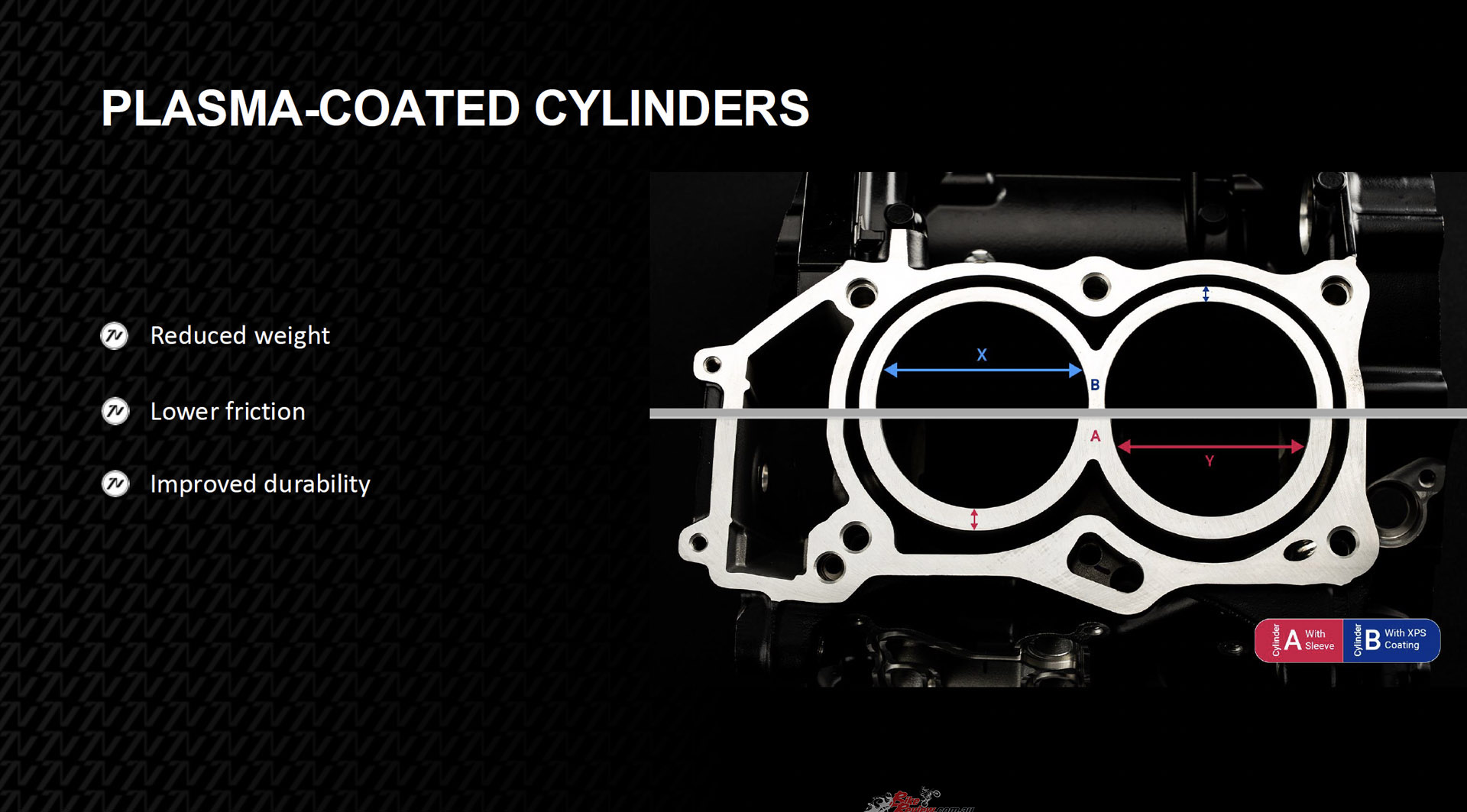
Additional features include a knock sensor for varying fuel quality, protected air intake system and downdraft intake ports designed to optimise airflow into the combustion chambers. The compact DOHC cylinder head also employs a single-sprocket camshaft arrangement that reduces complexity while contributing to a more compact engine package. Fuel delivery comes via multi-point sequential fuel injection operating through a ride-by-wire throttle system, allowing seamless integration with the motorcycle’s electronic rider aids.
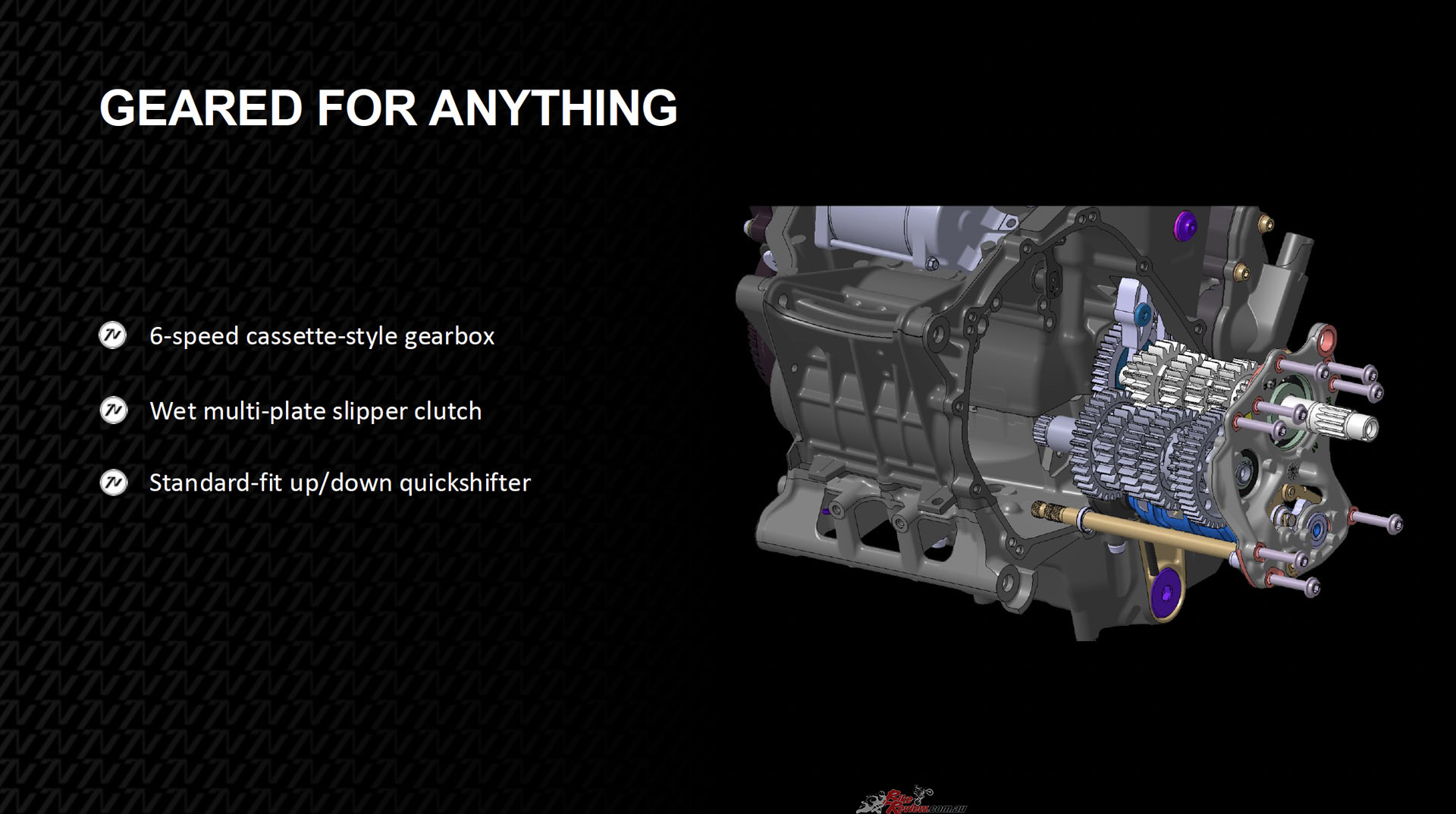
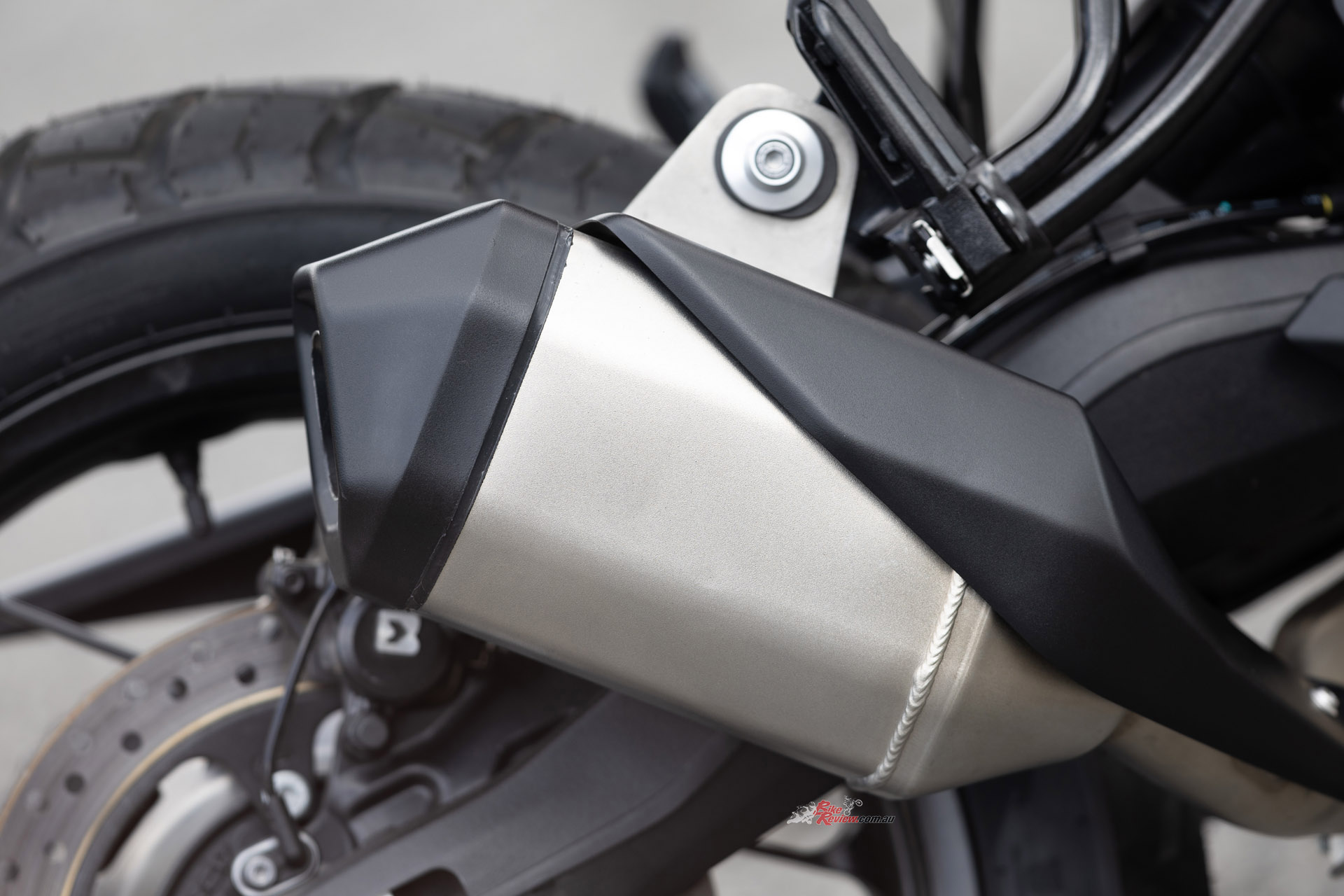
Transmission is via a six-speed gearbox equipped as standard with a bi-directional quick shifter allowing clutchless up and down changes. Final drive is by X-ring chain, while a cable-operated assist-and-slipper clutch reduces lever effort and limits rear wheel hop during aggressive downshifts. A steel 2-into-1 exhaust system completes the powertrain package.
Chassis
The Atlas is built around a high-strength steel trellis frame that uses the engine as a stressed member, reducing weight while increasing chassis rigidity. Norton has targeted predictable handling characteristics through careful mass centralisation, positioning major components close to the motorcycle’s centre of gravity to improve low-speed manoeuvrability and overall balance.
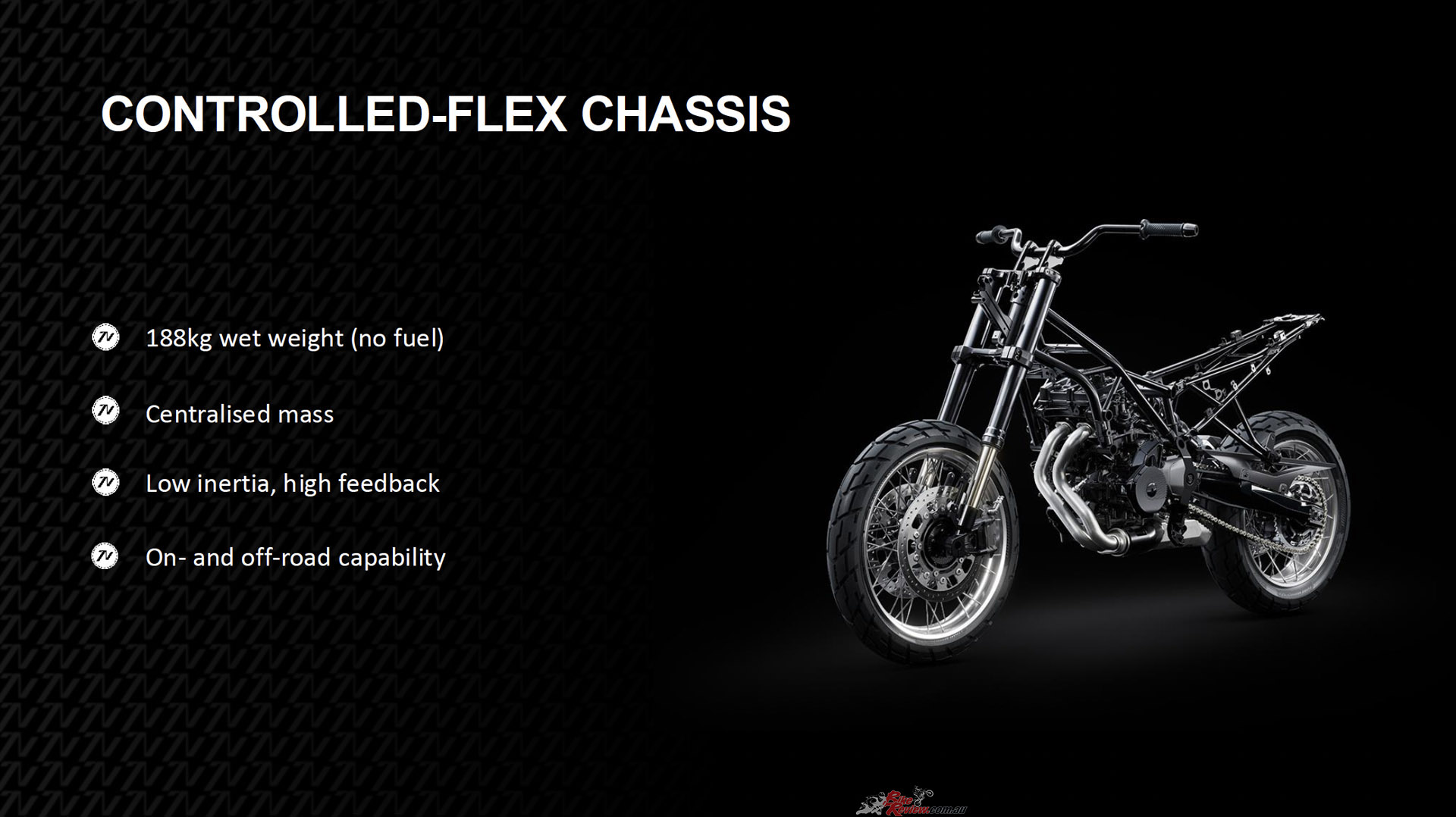
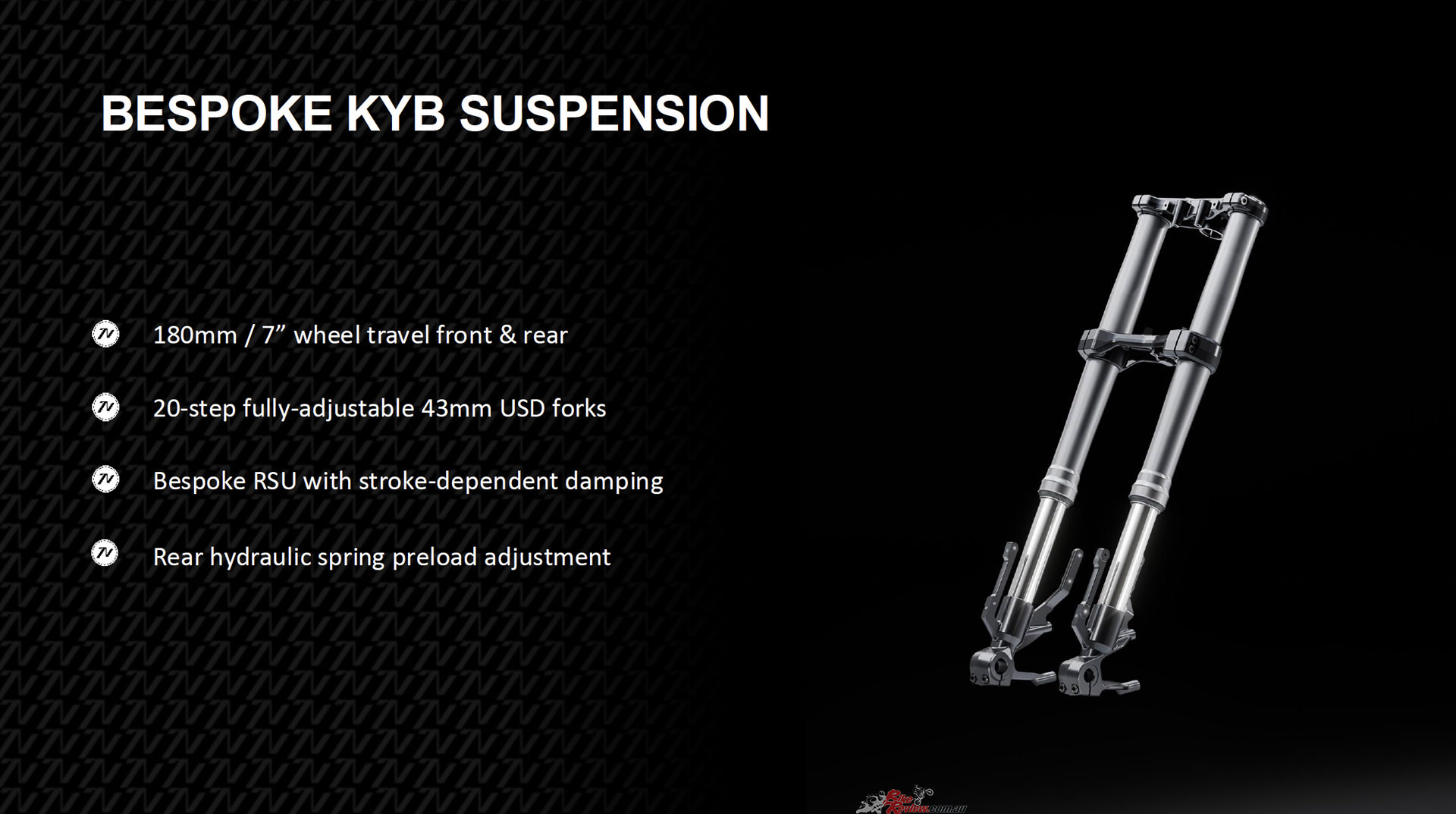
Suspension is supplied by KYB at both ends. Up front are fully adjustable 43mm USD forks offering 180mm of wheel travel, while the rear features a fully adjustable KYB monoshock delivering an equal 180mm of movement. Compression and rebound damping can be adjusted through 20 settings, while hydraulic rear preload adjustment allows quick changes for passenger or luggage loads without tools.
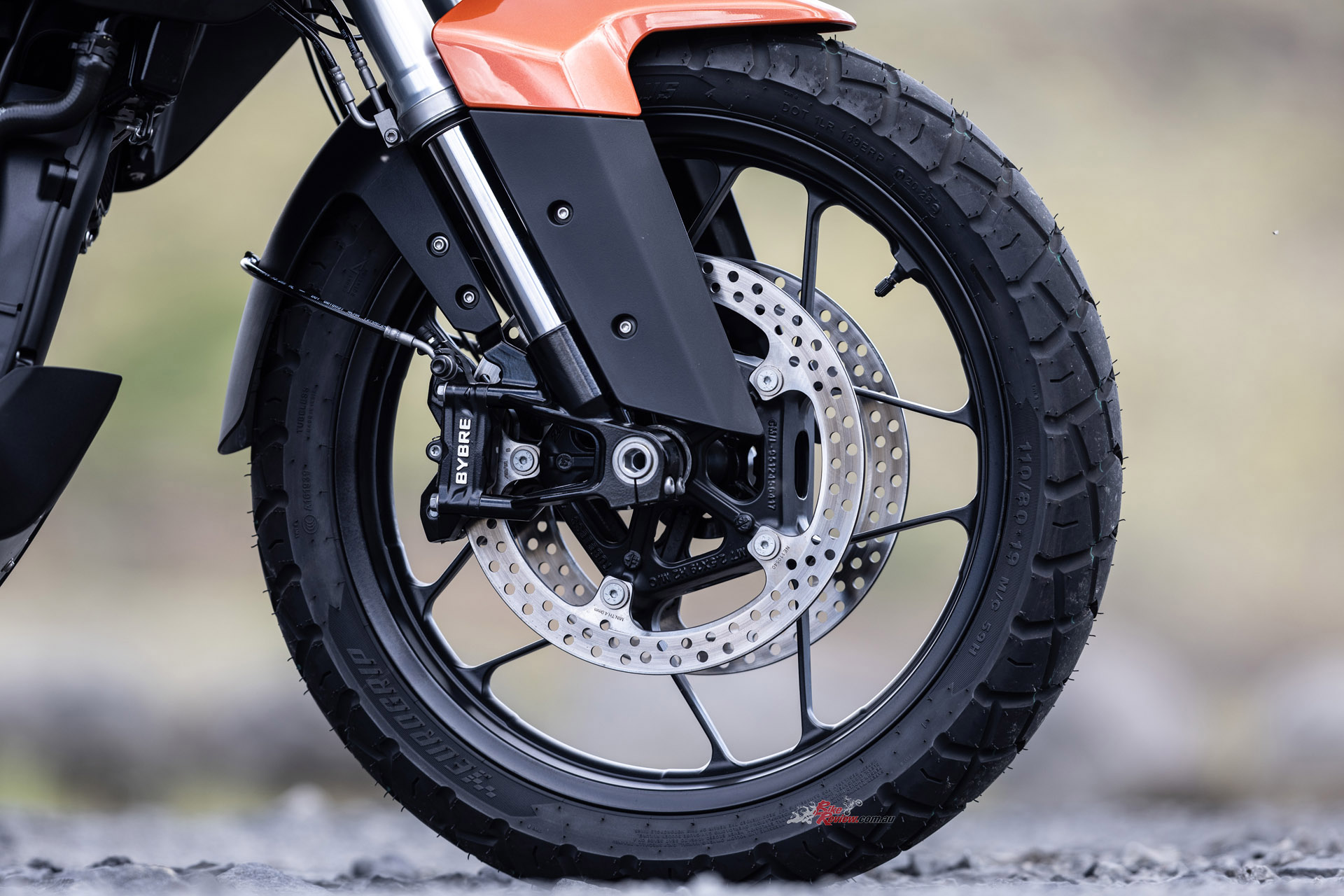
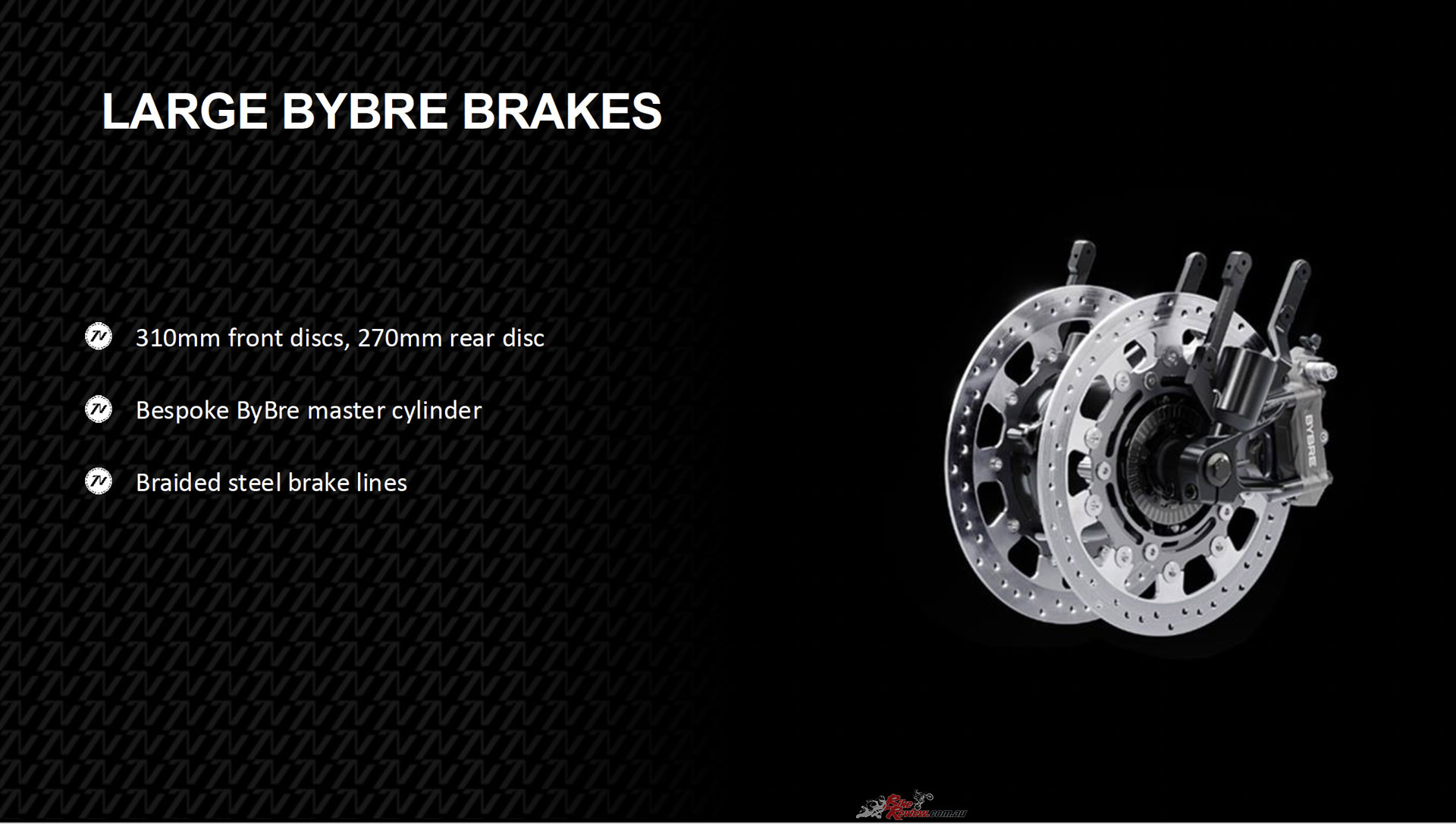
Braking is handled by twin semi-floating 310mm front discs gripped by radially mounted ByBre calipers, paired with a single 270mm rear disc. Norton has calibrated the braking package to deliver progressive lever feel while maintaining consistent performance during extended touring or variable riding conditions.
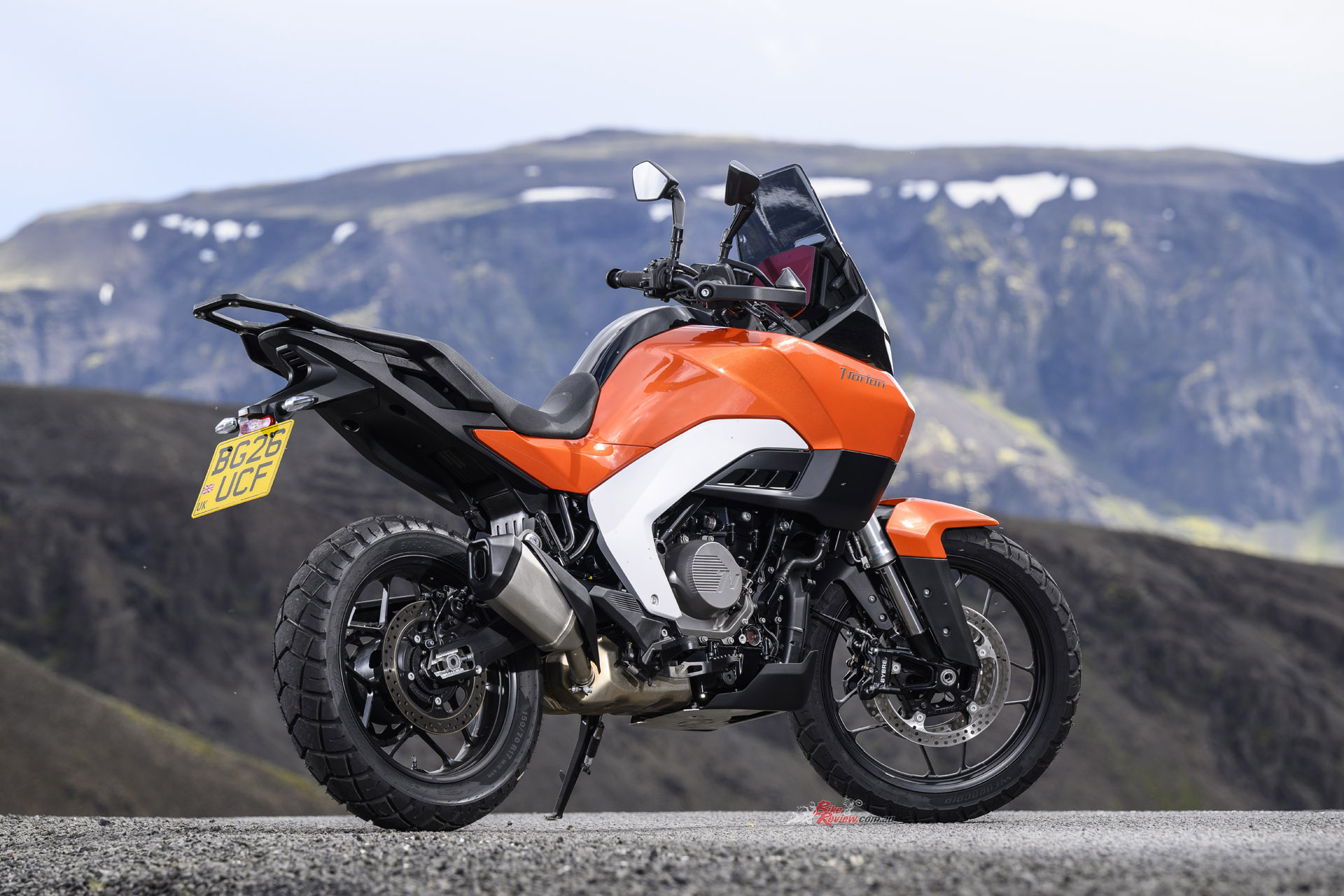
The standard Atlas rides on a 19-inch front and 17-inch rear wheel combination fitted with Eurogrip ExploR Plus tyres. This arrangement is intended to provide a balance between road handling and off-road capability. Ground clearance measures 220mm, seat height is 845mm and wet weight, excluding fuel, is a claimed 188kg. Fuel capacity is 15.4 litres.
A cast aluminium swingarm reduces unsprung weight while contributing to rear wheel stability under acceleration and braking. Geometry has been selected to provide stability across varying terrain without sacrificing steering precision on sealed roads.
Electronics
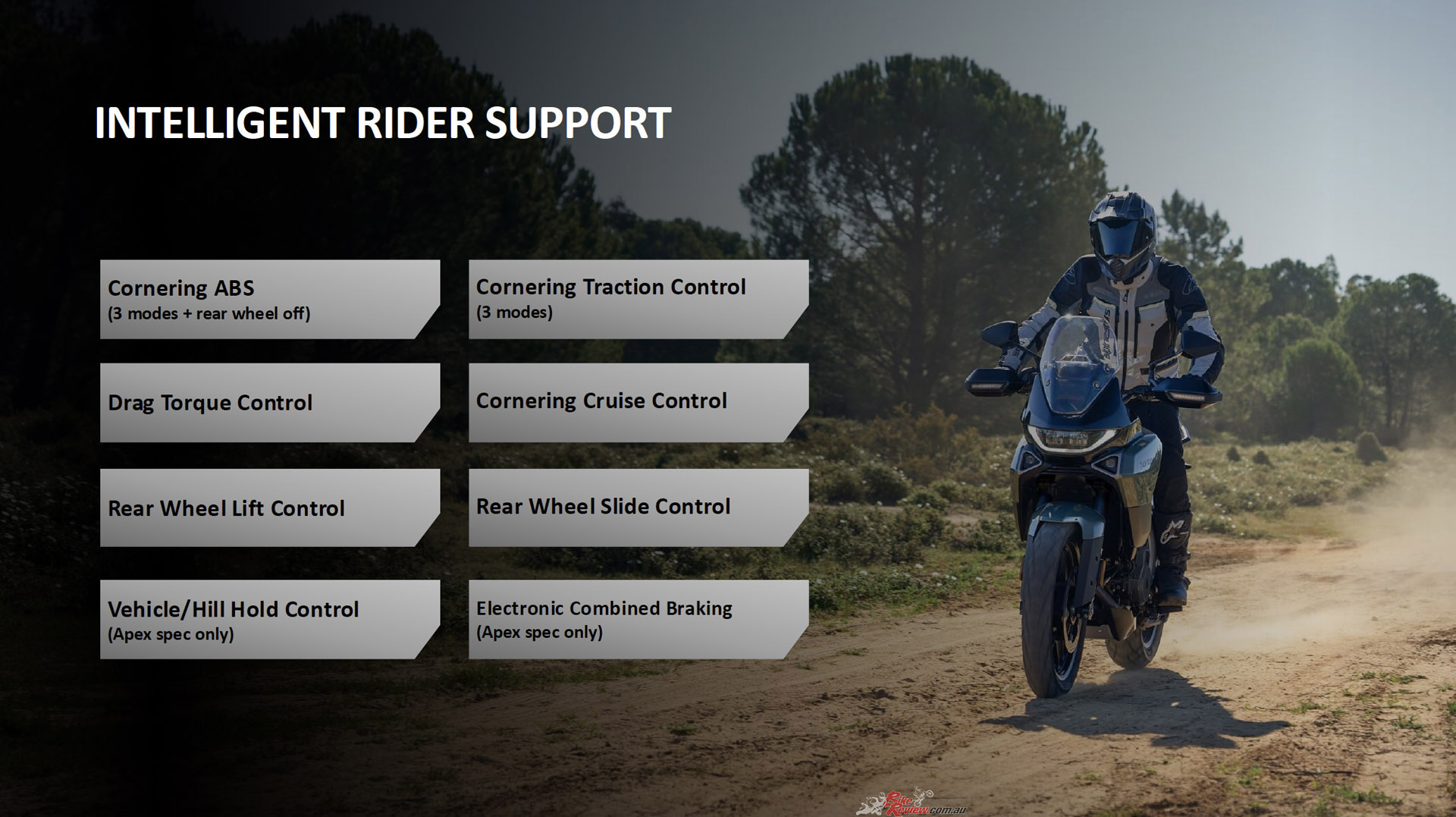
The Atlas receives Norton’s most comprehensive electronics package to date, centred around a Bosch six-axis Inertial Measurement Unit (IMU). By continuously monitoring pitch, roll and yaw, the IMU enables lean-sensitive rider aids that adapt intervention according to motorcycle attitude.
Five selectable riding modes — Urban, Rain, Sport, Tour and Enduro — alter throttle response and electronic intervention levels to suit different riding environments. Electronic rider assistance includes cornering ABS, traction control, wheelie control, rear slide control, rear lift control, drag torque control and cornering cruise control. The electronics have been designed to help without excessive rider input or menu complexity.
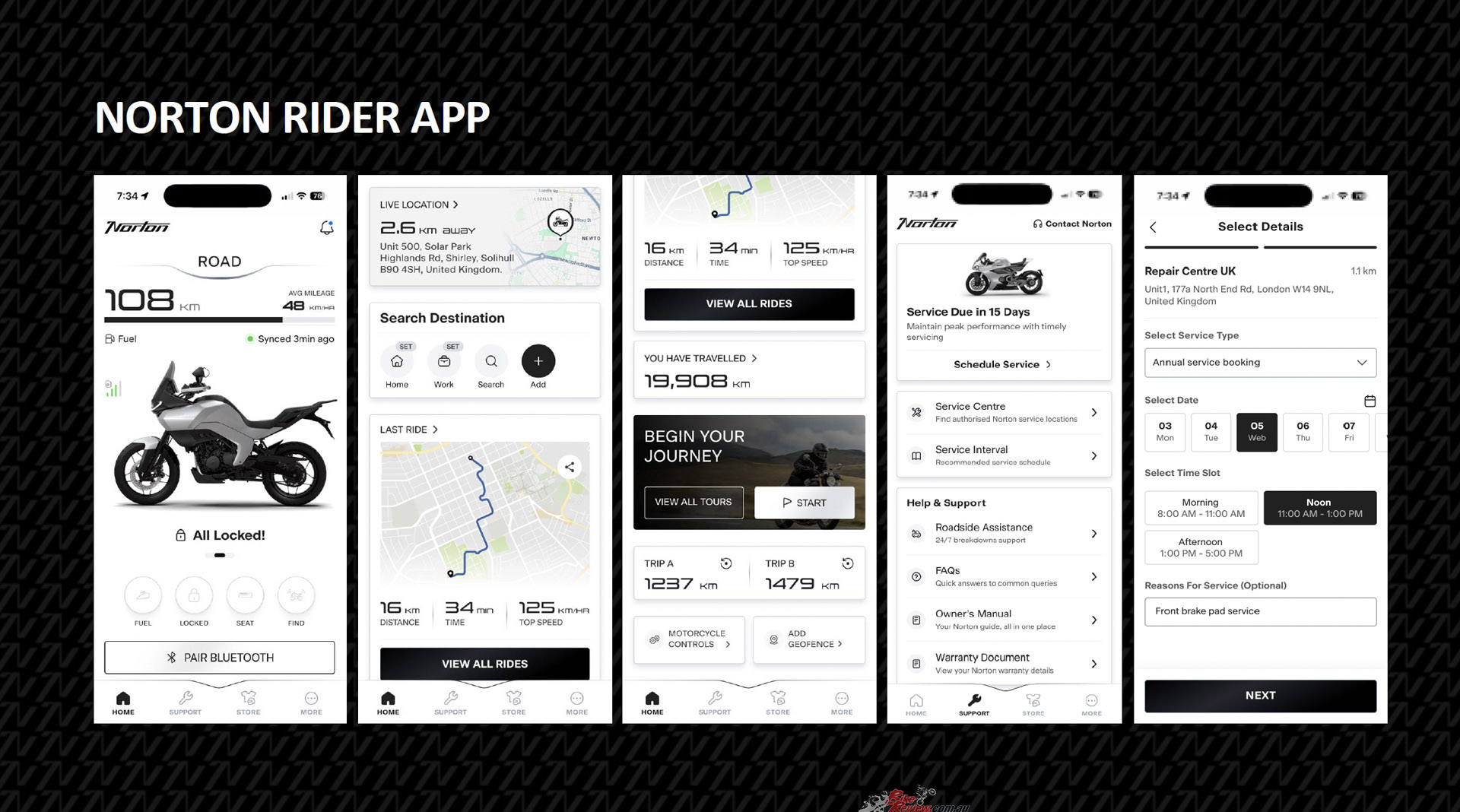
Instrumentation is via an 8-inch full-colour TFT touchscreen display featuring 720p resolution. The system provides ride information, navigation, multimedia control, Bluetooth and Wi-Fi connectivity, GoPro integration, over-the-air software and firmware updates, ride telemetry and integration with the Norton Rider smartphone application. A joystick-style switch cube allows riders to operate system functions without removing their hands from the handlebars.
Additional convenience features include keyless ignition with electronic steering lock, seat and fuel cap release, USB-C charging and optional tyre pressure monitoring on higher-spec variants. Service reminders and ride data can also be managed through the connected smartphone application.
Styling and Design
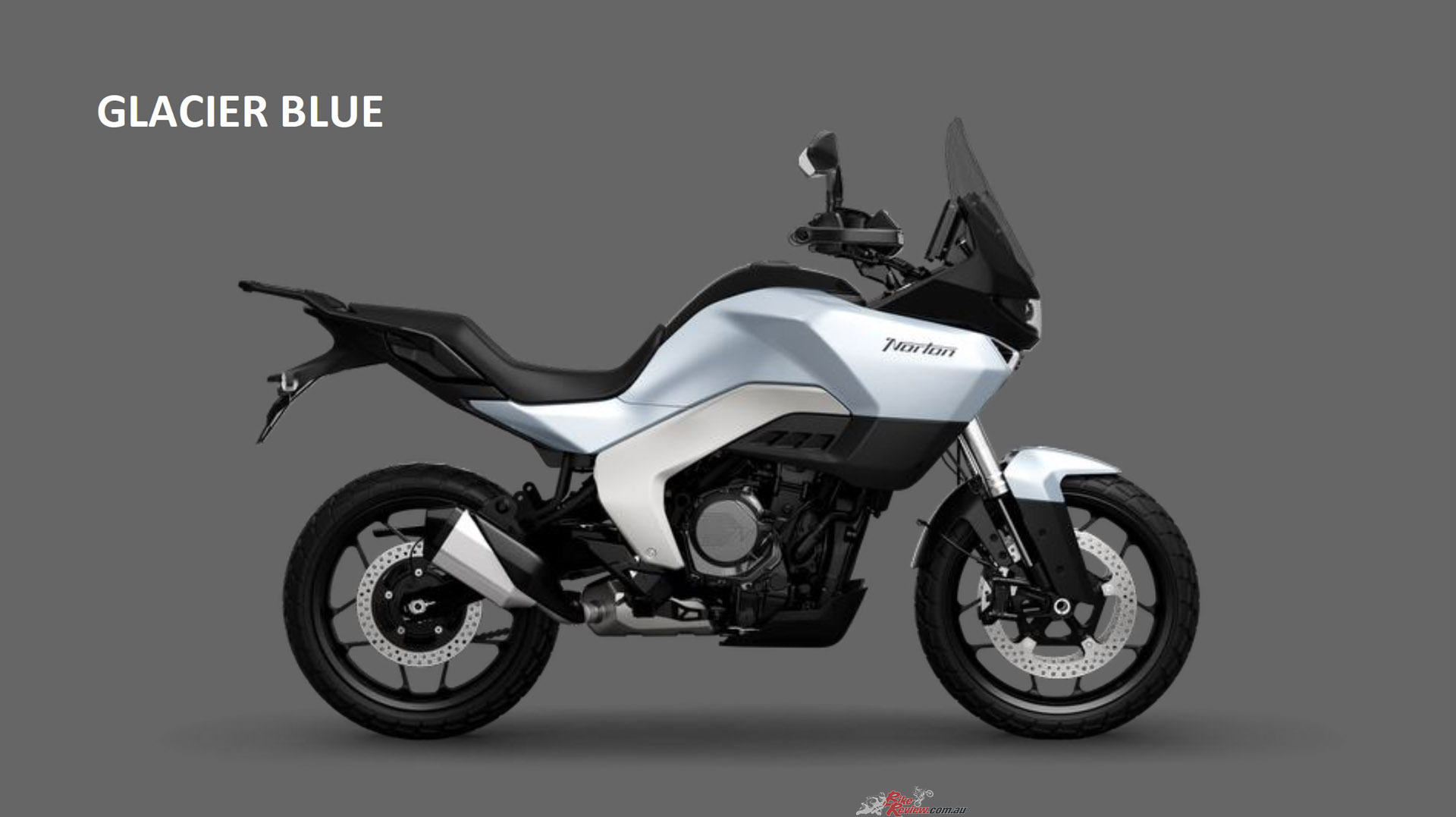
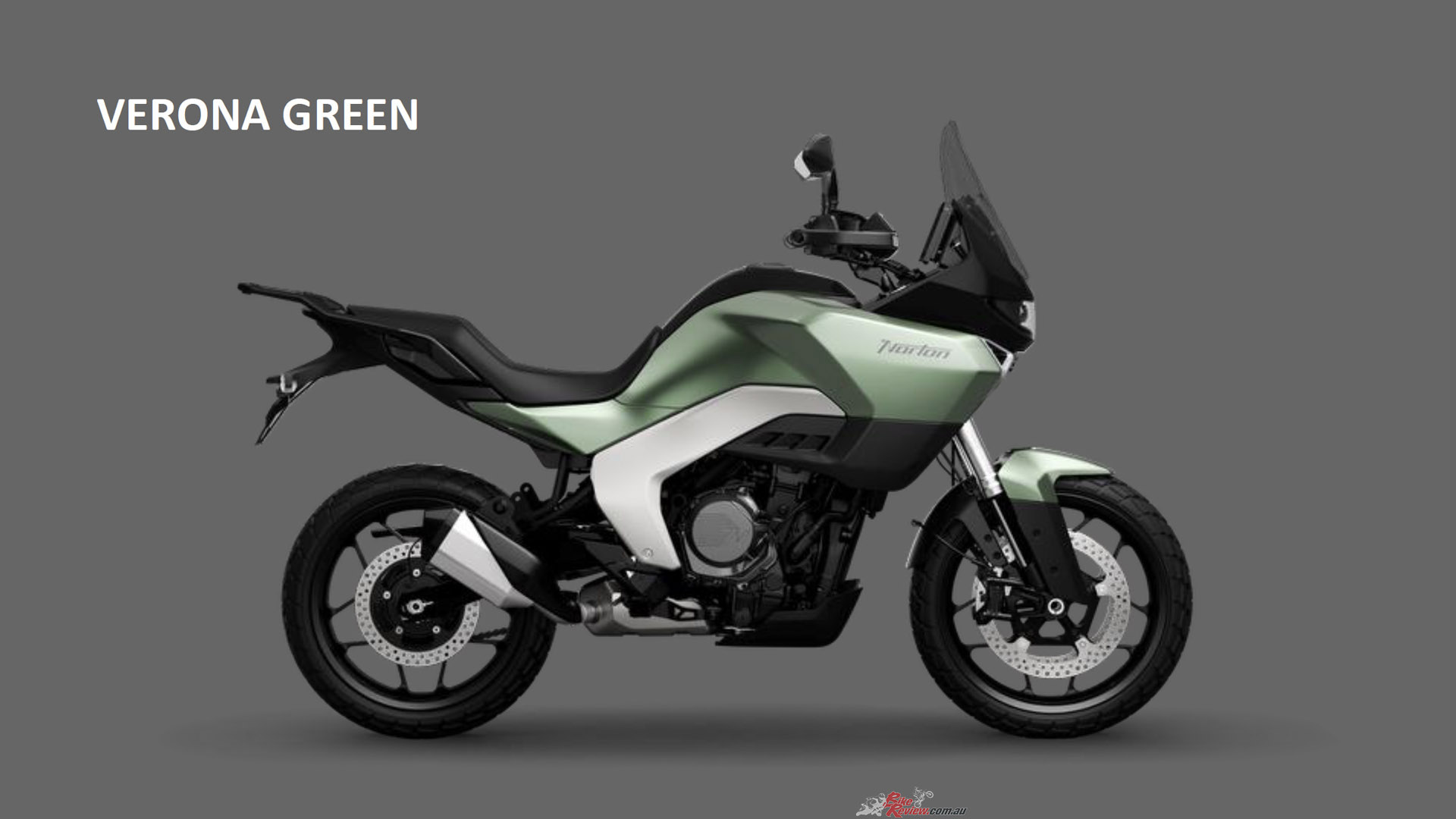
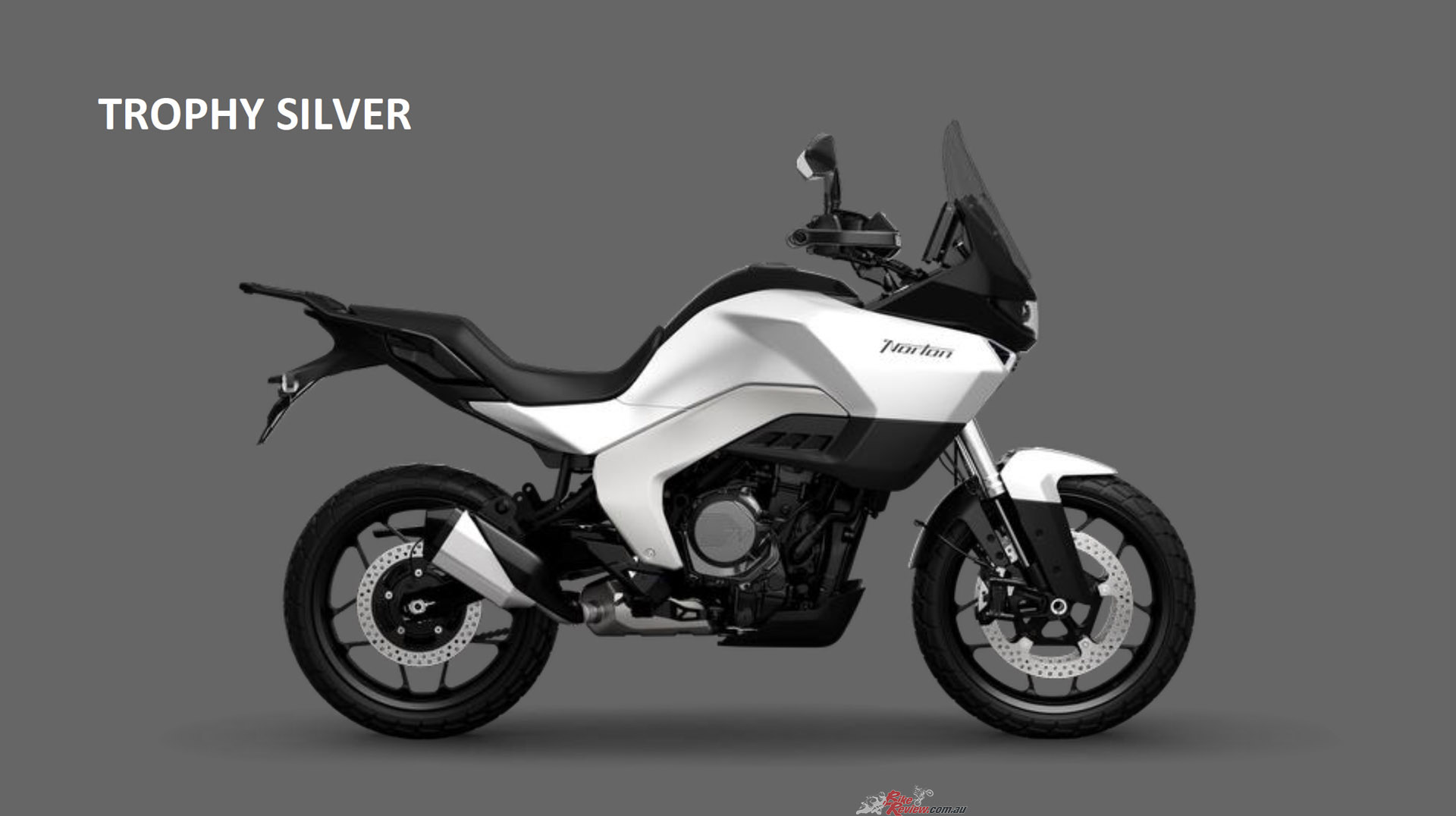
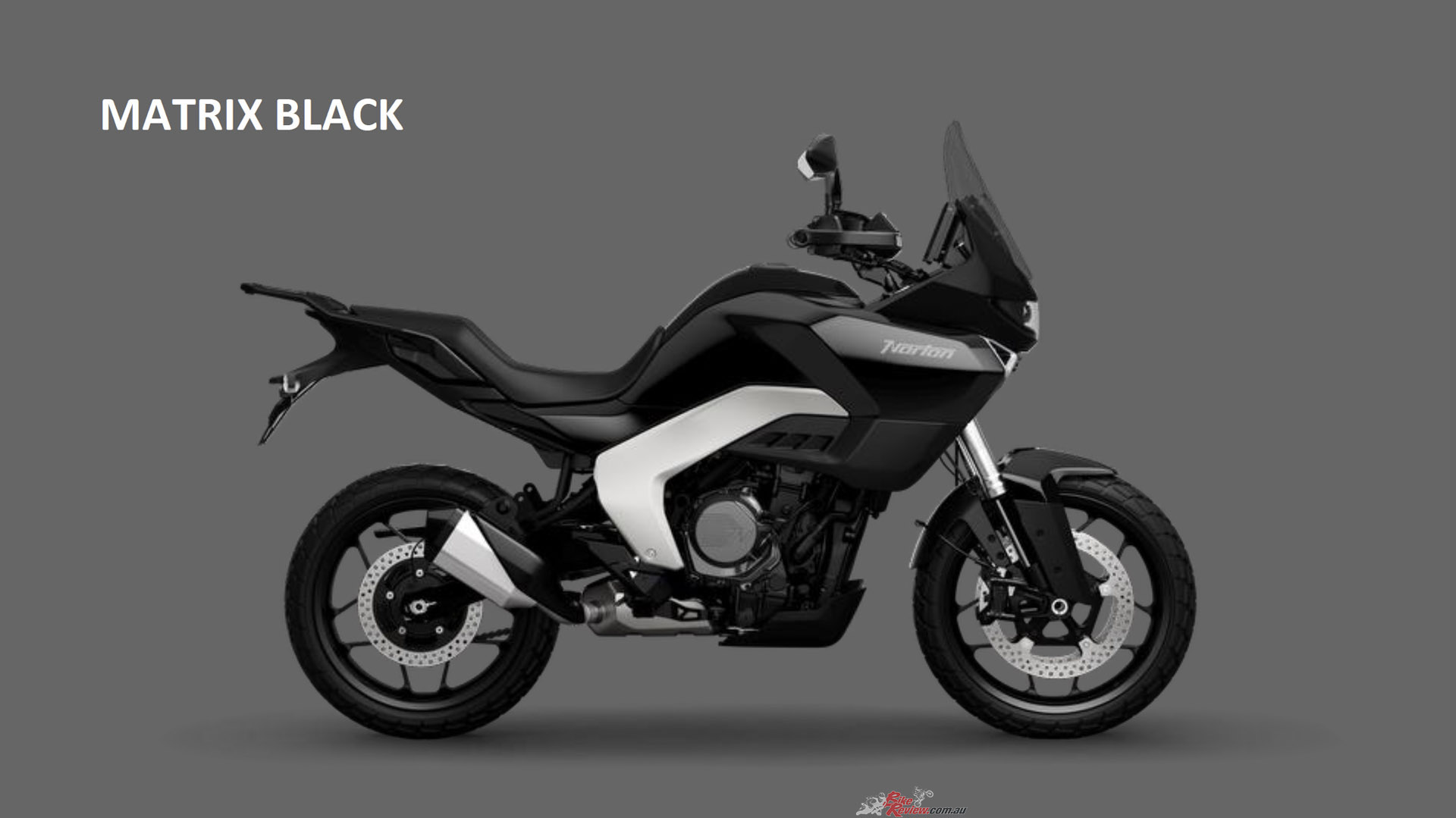
The Atlas introduces Norton’s latest design language, combining contemporary styling with functional engineering. Rather than relying on retro cues, the motorcycle adopts clean surfaces, minimal exposed fasteners and integrated bodywork that allows the frame and major structural components to remain visually prominent. The body panels have been designed to improve rider movement while standing or seated, with airflow and component packaging influencing many of the styling decisions.
Aerodynamic development included computational fluid dynamics (CFD) analysis and wind tunnel testing to optimise wind protection and reduce rider fatigue. A specially designed radiator duct directs engine heat away from the rider, while the riding position has been developed to remain comfortable during extended touring and standing off-road riding. Adjustable hand levers, footpegs and windscreen further improve ergonomics.
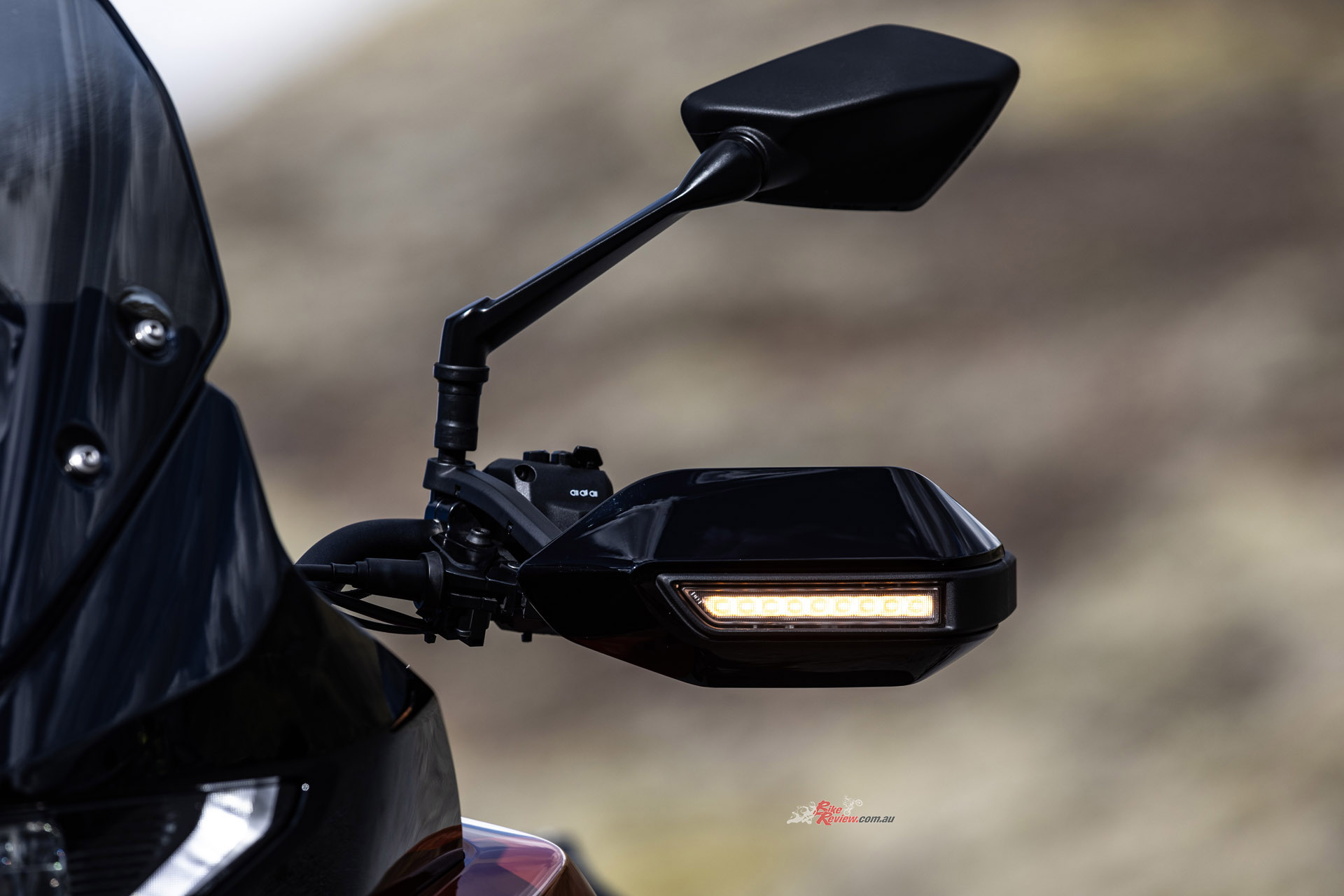
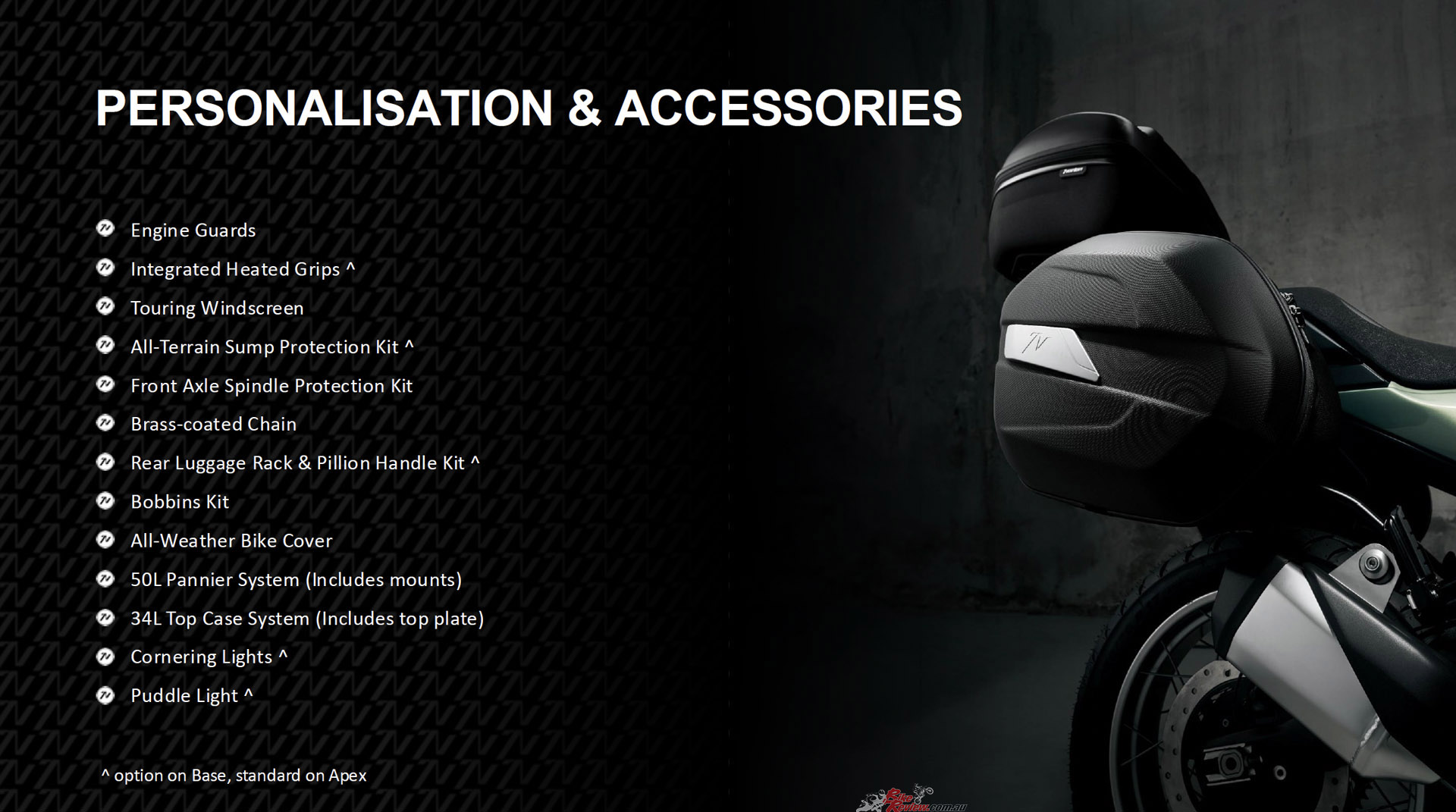
Lighting consists entirely of LED components, including twin projector headlights with dynamic light intensity, integrated daytime running lights and indicators incorporated into the handguards. Cornering lights and puddle lamps are available on Apex models, while dynamic brake lighting improves visibility under heavy braking.
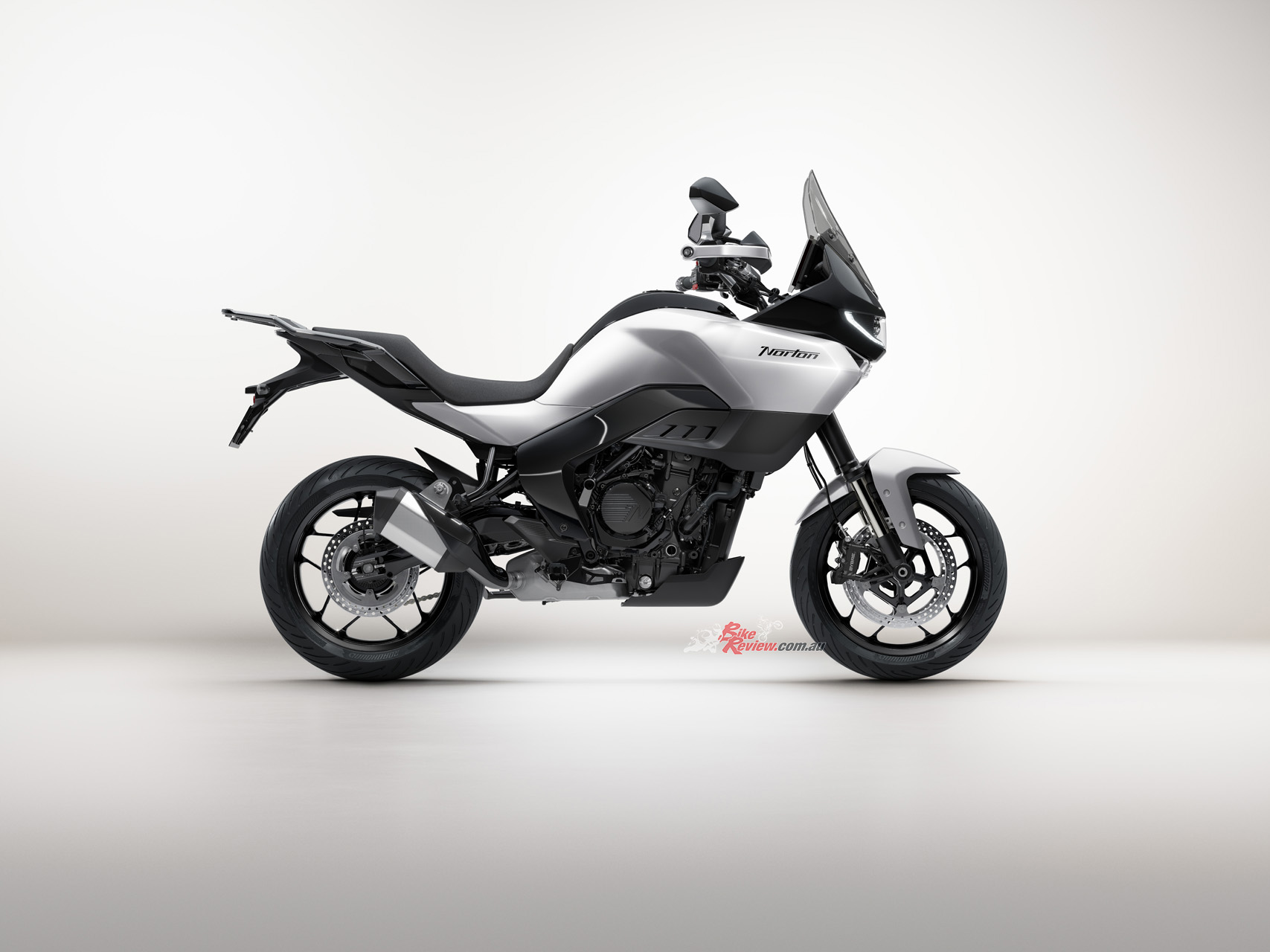
Norton Atlas GT – What’s Different?
Although sharing the same 585cc parallel twin engine, steel trellis chassis and Bosch electronics suite as the Atlas, the Atlas GT has been configured specifically for road-biased sport touring. The biggest visual and mechanical difference is the move to a 17-inch front wheel, replacing the Atlas’s 19-inch front. Combined with shorter suspension travel, the GT delivers quicker steering response and accommodates a broader range of road-focused tyres.
Front and rear suspension travel is reduced from 180mm to 140mm through revised KYB components and model-specific damping settings. The lower ride height also reduces seat height from 845mm on the Atlas to 815mm, improving accessibility while lowering the centre of gravity for road riding.
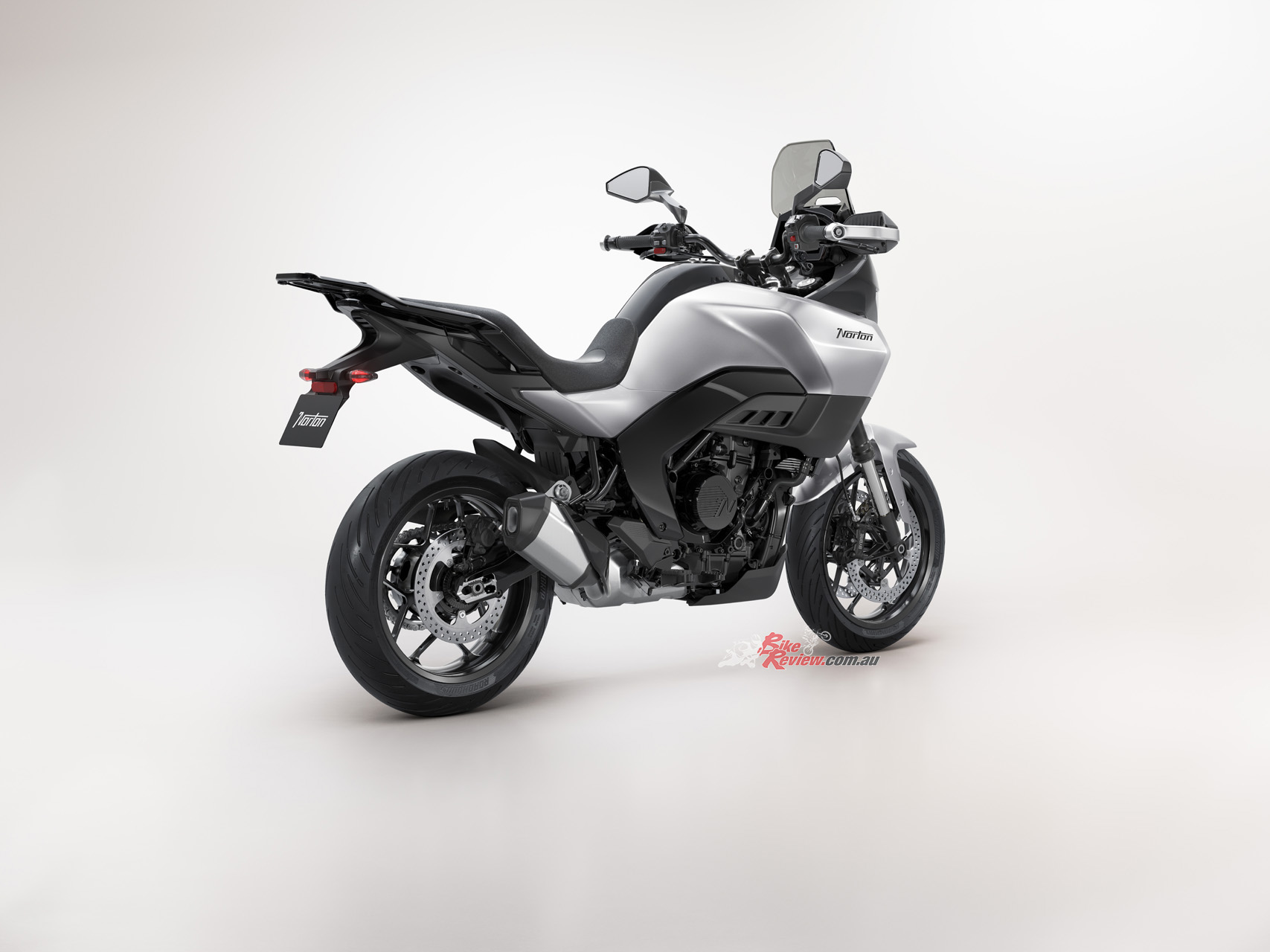
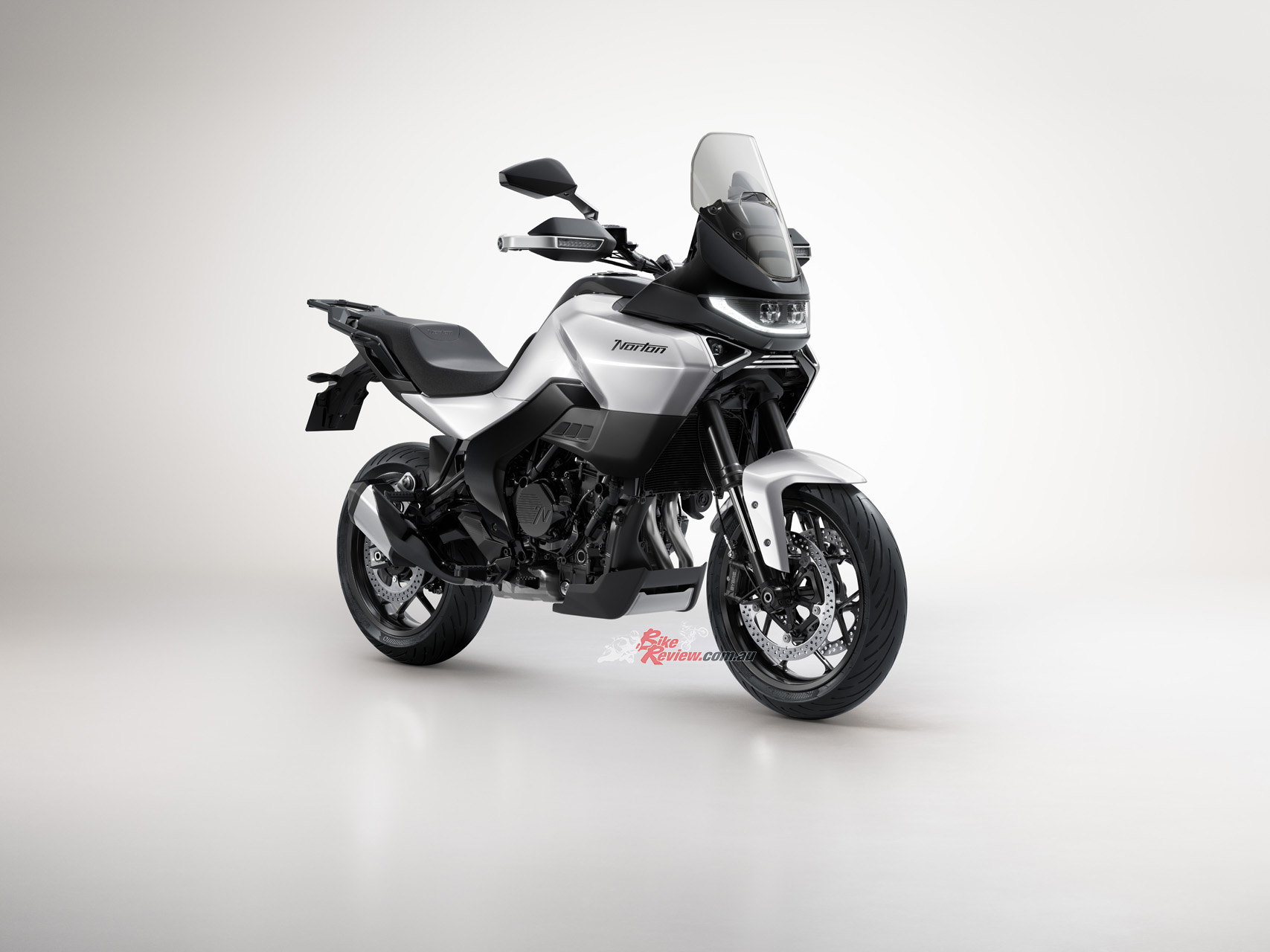
Chassis geometry has also been revised to prioritise road feedback and cornering precision over off-road capability. While both models use the same steel trellis frame and cast aluminium swingarm, the GT’s shorter-travel suspension and road-oriented setup provide a more direct connection to sealed surfaces. Mechanically, the powertrain remains unchanged, retaining the 69bhp 585cc parallel twin, six-speed gearbox, slipper clutch and standard bi-directional quick-shifter. Likewise, the comprehensive Bosch IMU electronics package, TFT display, ride modes and connectivity features are carried across both models.
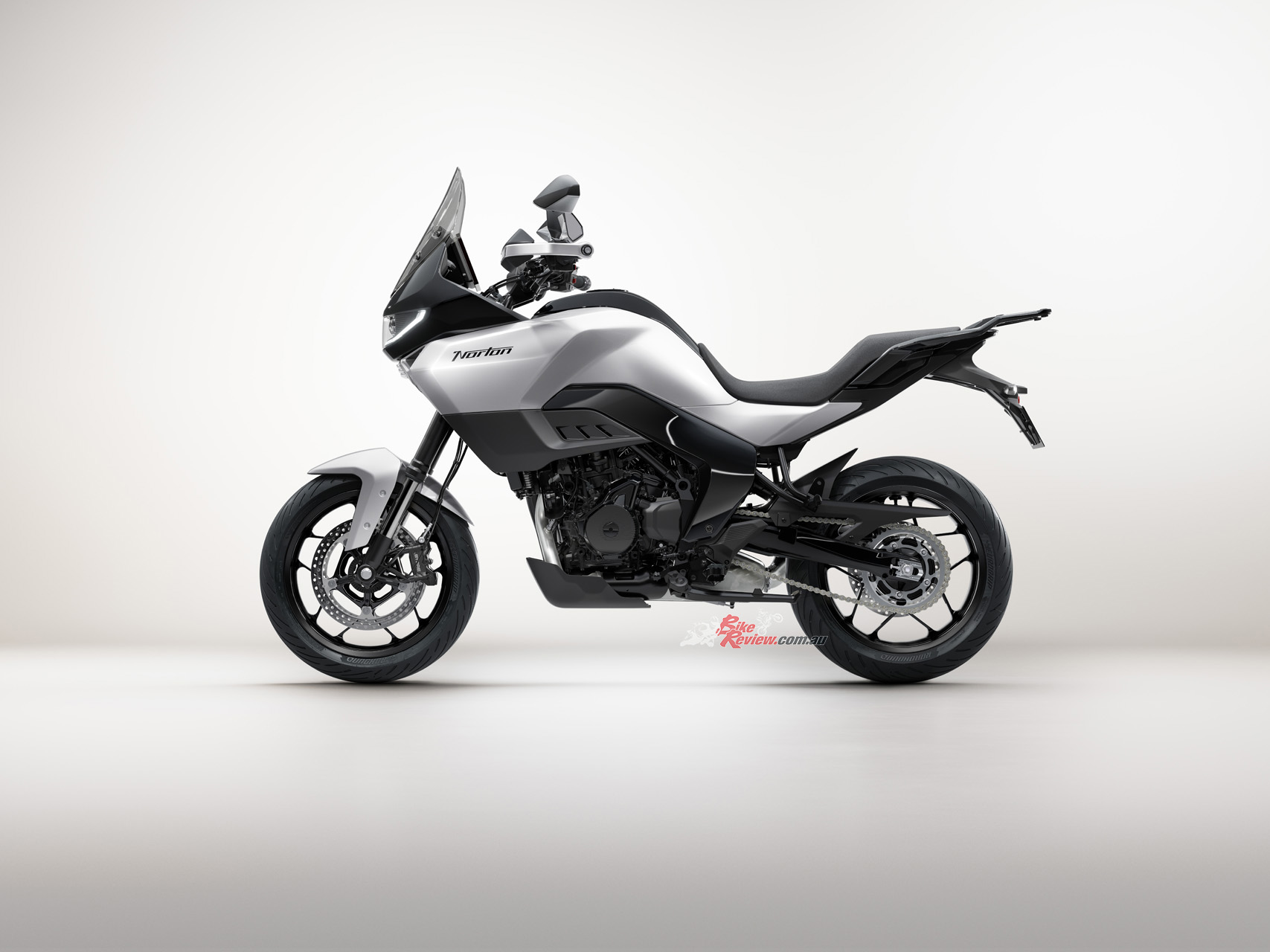
The result is two motorcycles built from the same platform but with different intended purposes: the Atlas configured for riders who expect to venture beyond sealed roads, and the Atlas GT focused on sport touring and everyday road performance through revised chassis geometry, lower suspension and 17-inch front wheel architecture.
2026 Norton Atlas Specifications
Price: AUD Pricing & Availability TBA (UK £8,250 (Atlas)
Warranty: 36 months, unlimited KM
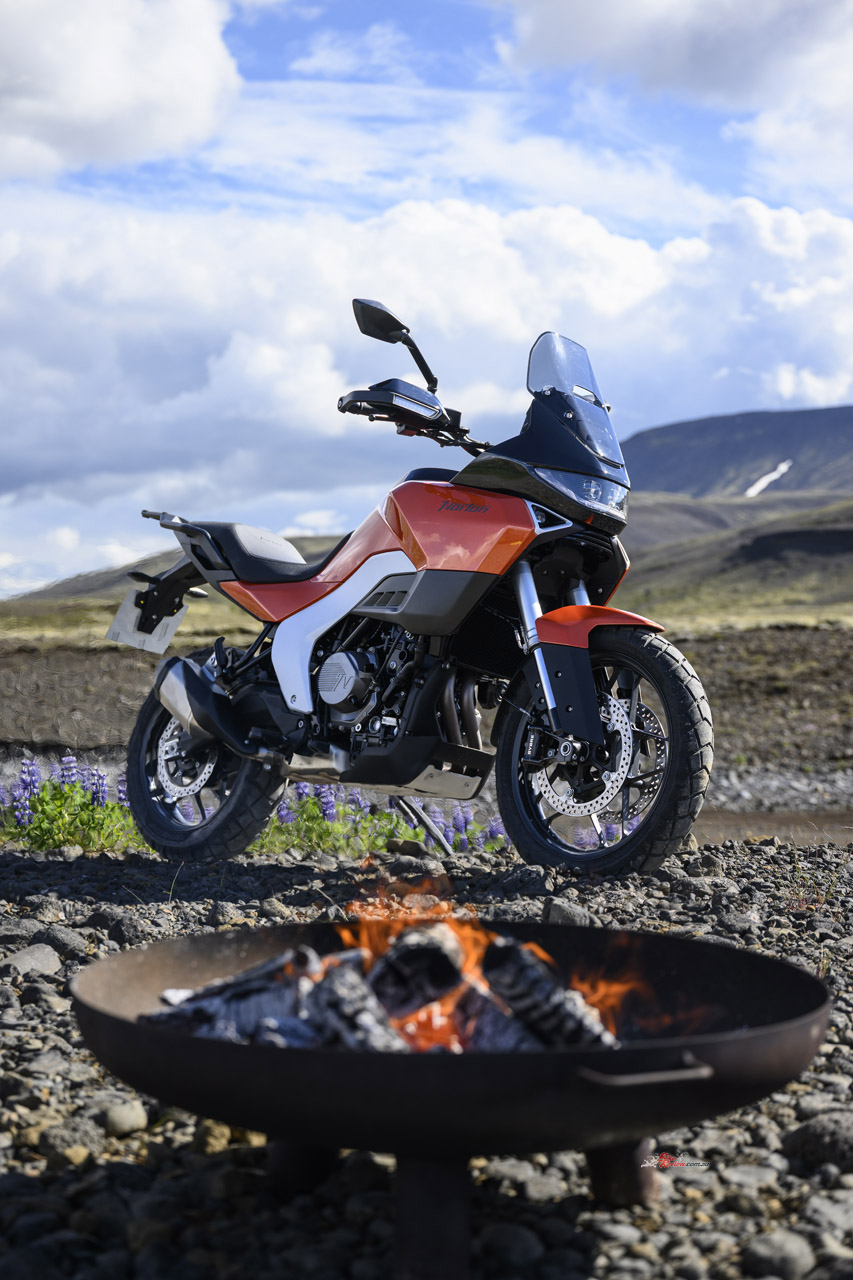
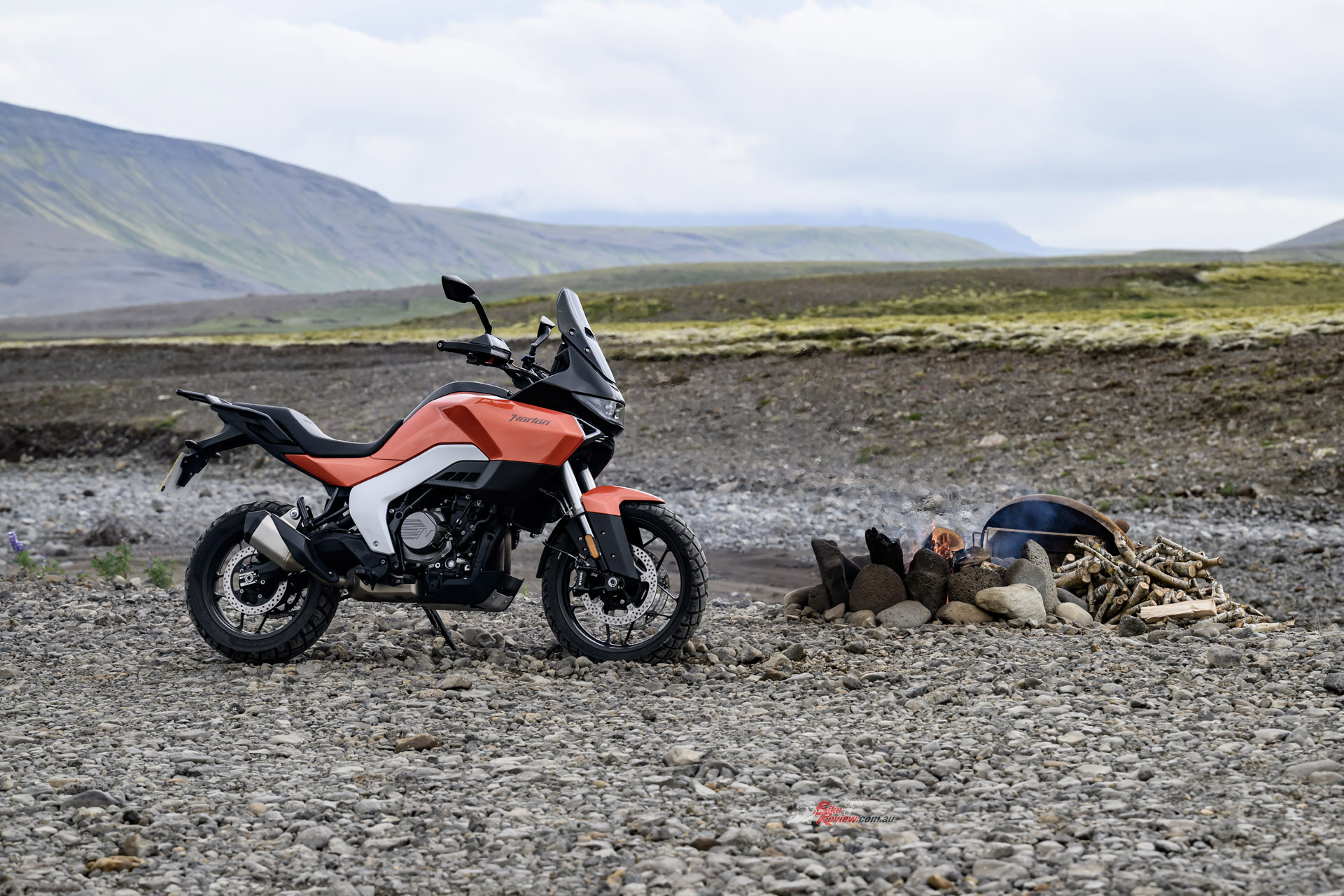
Colours: Matrix Black, Trophy Silver, Verona Green, Glacia Blue, Sinopia Orange (tested)
Claimed power: 51.5kW[69bhp]@9300rpm
Claimed torque: 57.5Nm[42ft-lb]@7300rpm
Wet weight: 188kg (Atlas GT N/A)
Fuel capacity: 15.4L
Fuel Consumption (Claimed): 4.35L/100km
Fuel Range (Claimed): +400km
Engine: Liquid-cooled, DOHC, parallel twin-cylinder, four-valve, 270° crankshaft, 78 x 61.2mm bore x stroke, 585cc, 12.2:1 compression ratio, APS-coated cylinders, ride-by-wire throttle, multi-point sequential fuel injection. Six-speed, constant mesh gearbox with bi-directional Quick Shift. 16T Front Sprocket, 47T Rear Sprocket, Gear ratios: 1st: 16.445, 2nd: 12.268, 3rd: 9.447, 4th: 7.647, 5th: 6.514, 6th: 5.678. Cable-operated assist and slipper wet multiplate clutch, two-into-one exhaust system.
Chassis: Steel trellis frame, engine as a stressed member, cast aluminium swingarm.
Rake: 25.7° Trail: 101.7mm
Suspension: KYB 43mm fully-adjustable USD forks, 180mm travel (Atlas GT: 140mm); KYB semi-adjustable monoshock with hydraulic preload adjustment and rebound, 180mm travel (Atlas GT: 140mm). Brakes: Bosch cornering ABS, dual 310mm semi-floating front discs with radial ByBre calipers, single 270mm rear disc. Wheels & Tyres: Cast alloy wheels (optional spoked wheels), Eurogrip Explo R Plus tyres, 110/80ZR19 front, 150/70ZR17 rear (Atlas GT: 17-inch cast alloy front and rear wheels).
Dimensions:
Wheelbase: 1465mm
Seat height: 845mm (Atlas GT: 815mm)
Ground clearance: 220mm
Overall with: N/A
Overall height: N/A
Overall length: N/A
Instruments & Electronics: 8-inch TFT touchscreen display, Bluetooth & Wi-Fi connectivity, Norton Rider App, turn-by-turn navigation, GoPro control, keyless ignition, USB-C charging, Bosch 10.3ME 6-axis IMU (Inertial Measurement Unit), N-DTC – Drag Torque Control, N-ABS – Anti-Lock Braking System, N-TEC – Tractive Effort Control, N-DCC – Dynamic Cruise Control, N-TWC – Total Wheelie Control, N-RLC – Rear Lift Control, N-RSC – Rear Slide Control, N-VHC – Vehicle Hold Control, N-ECB – Electronic Combined Braking.
Ratings | Bike Review | 2026 Norton Atlas, World Launch Test, Iceland
An Odyssey
We head to Iceland to ride the all-new adventure-sport model from the revitalised iconic Norton Motorcycle brand, the Norton Atlas. Here is Bernie Hatton’s impression of the parallel-twin…
The Author

You Might Also Like