
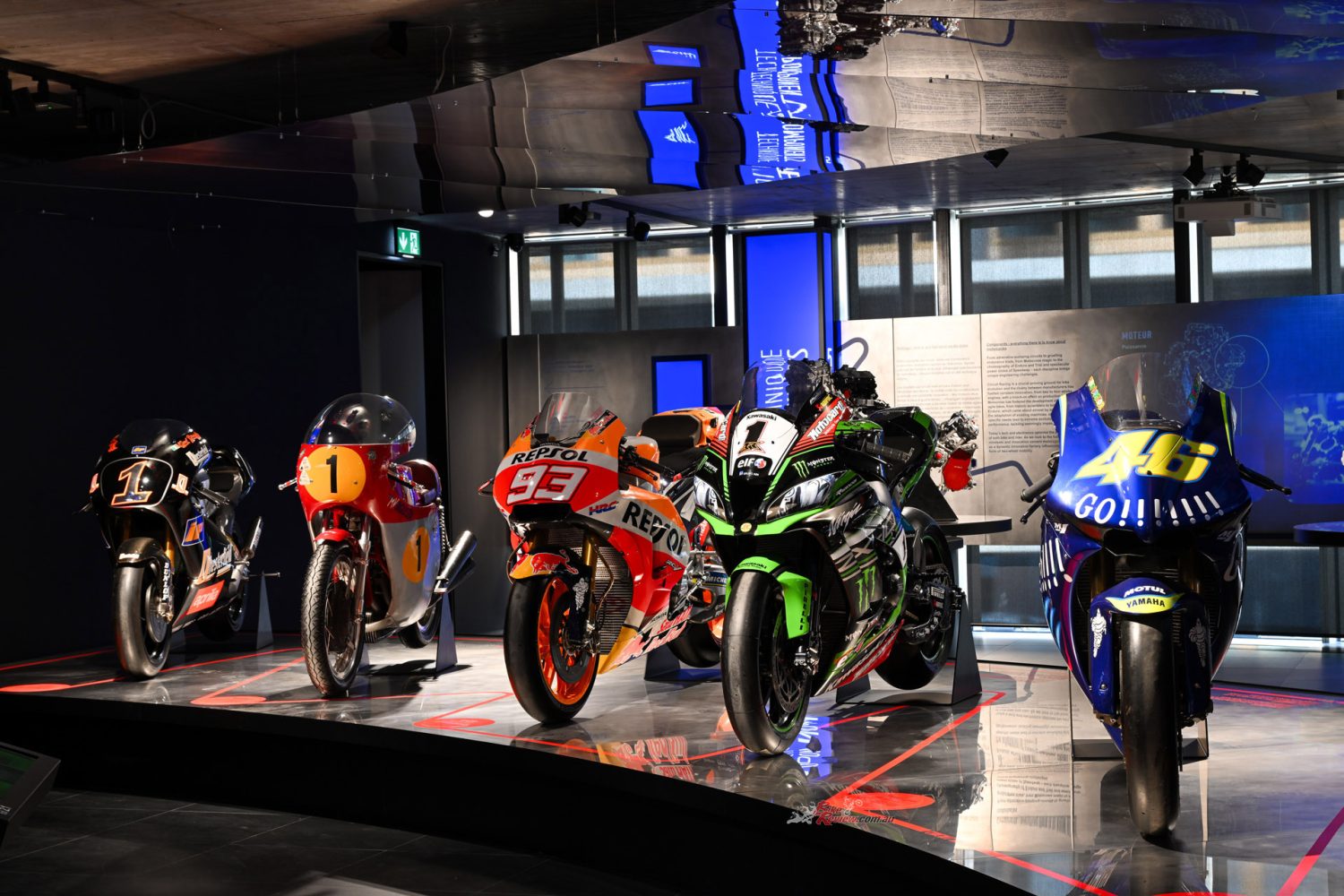

A new bucket-list destination for racing fans has opened in Switzerland, with the FIM Racing Motorcycle Museum showcasing legendary machines, world champions and the rich history of two-wheeled competition... Photos: FIM & AC
In Mies, Switzerland, at essentially the crossroads of Western Europe, a new venue has been added to the list of bucket stops that any bike racing fan will want to visit. Alongside events like the Isle of Man TT, the Bol d’Or 24 Hours, the Italian GP at Mugello and the Daytona 200…
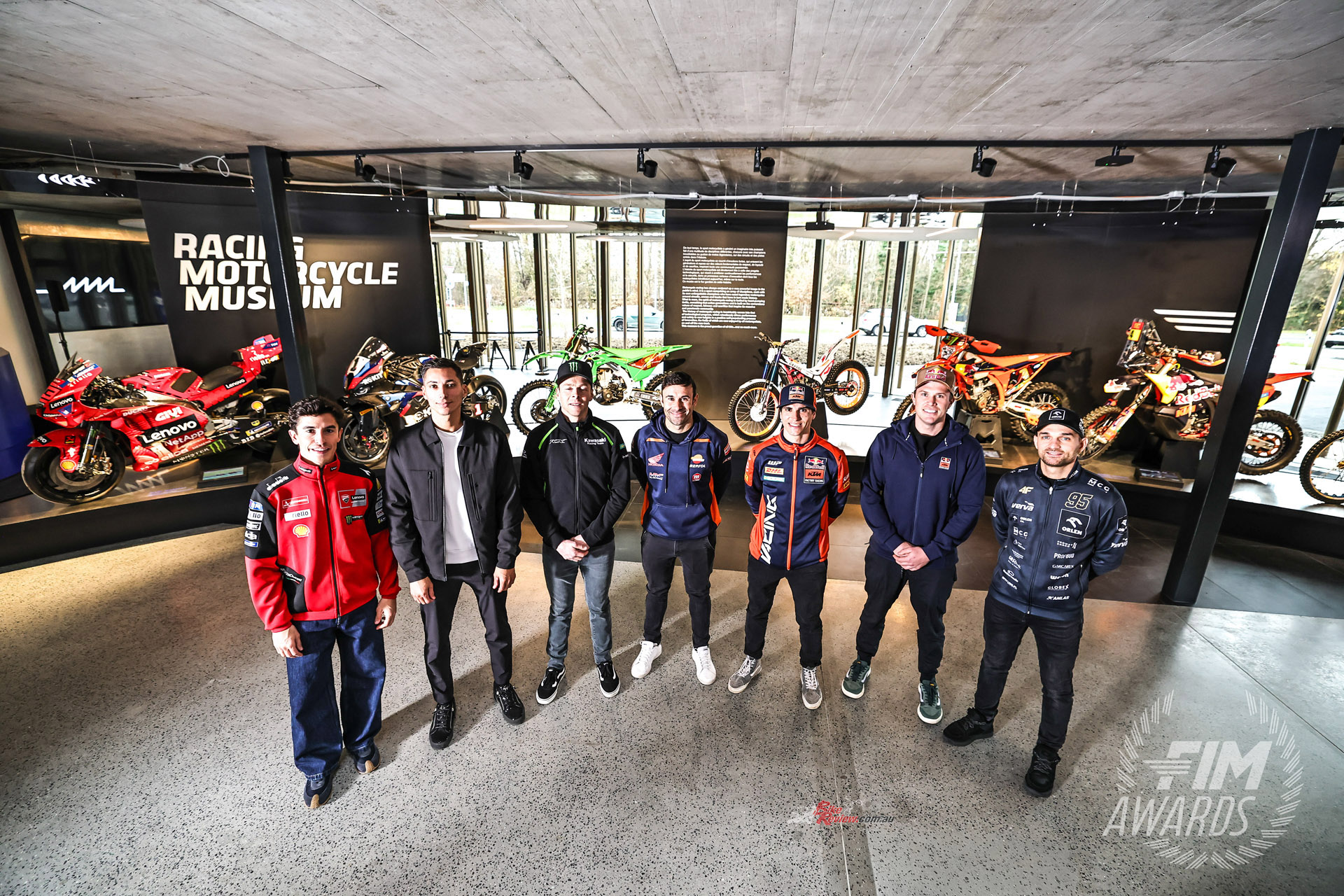
You must now attach the FIM Racing Motorcycle Museum to the list, a partially interactive permanent display which recently opened, that’s dedicated to the living memory of motorcycle sport, featuring machines that have made their mark on history.
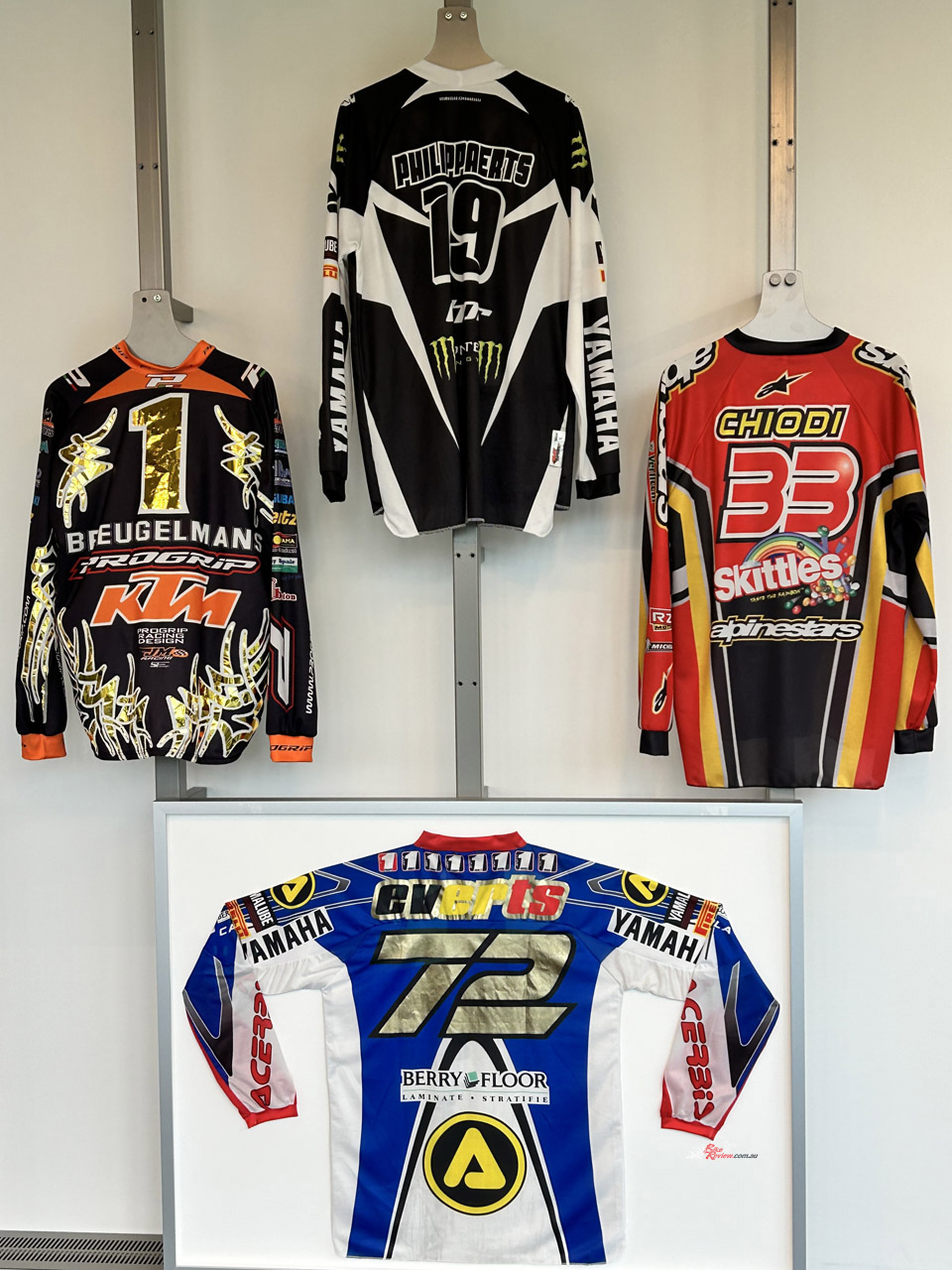
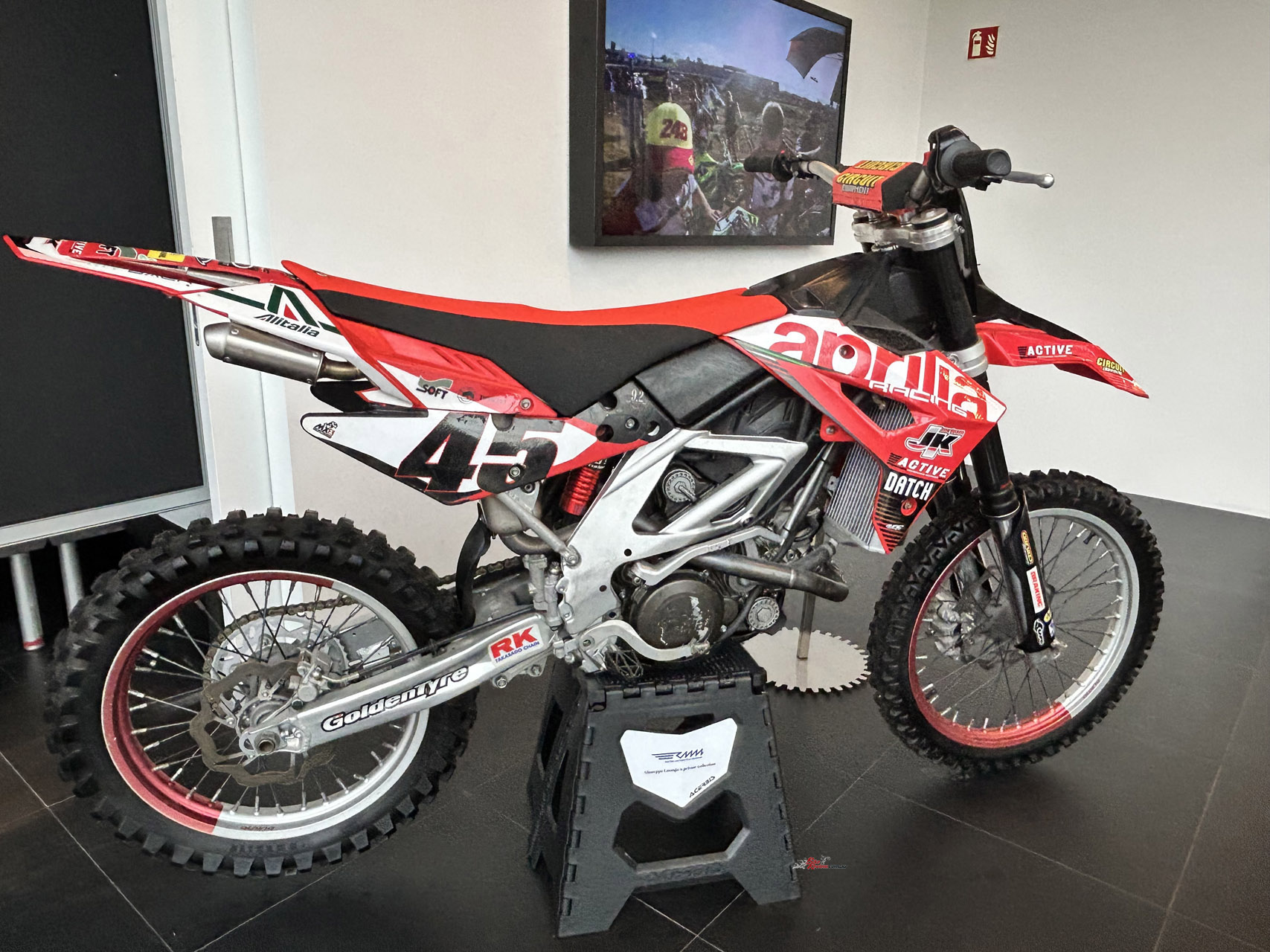
In October 2024 the governing body of global motorcycle sport, the FIM/Fédération Internationale de Motocyclisme, opened a new, more spacious headquarters building at its Swiss base in Mies, located just 10km north of Geneva Airport in the canton of Vaud. The opening of the new facility coincided with the FIM’s 120th anniversary and its 40th year of being based in Mies – the federation was founded in 1904 in France before moving to Switzerland in 1959, then heading to Vaud in 1994.
This new building is directly adjacent to its former premises opened in 2016, a circular edifice which has now been converted into a brand-new RMM/Racing Motorcycle Museum dedicated entirely to International motorcycle sport. On February 18 its doors were opened to the general public, after a star-studded Inauguration Ceremony was held late last year on December 7 to coincide with the annual FIM Prizegiving in nearby Lausanne, which also recognised the first inductees to the FIM’s newly instituted Hall of Fame.
The Museum is open to visitors all year around, according to the details below, and its display of bikes charts the evolution of motorcycle sport from the earliest days post-WW2 of FIM-organised World Championship racing, through to today’s highly sophisticated competition machinery. “The FIM Racing Motorcycle Museum is a truly remarkable collection,” says FIM President Jorge Viegas, 70, from Portugal.
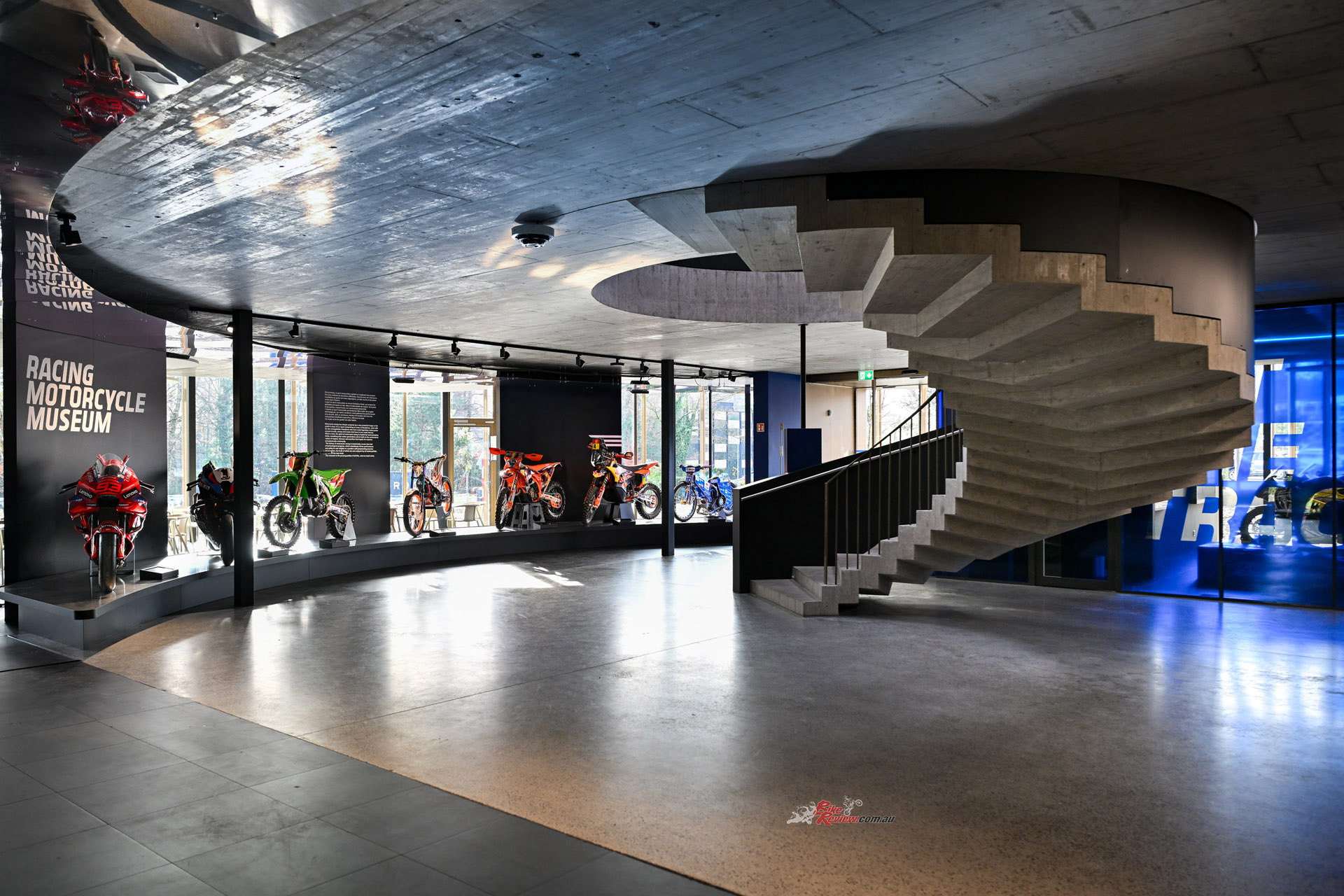 He’s led the organisation since 2018, and is the person whose vision inspired the exhibition, which was created by a team headed by his Italian colleague Fabio Muner, 52, the FIM’s Marketing and Digital Director. “To walk among the exhibits is to take a journey through the illustrious history of motorcycle racing from its formative years, all the way through to the present day,” adds Viegas. “But it’s much more than just a display of Classic machines – the RMM gives visitors a valuable and interactive insight into the heritage of the sport we all love, helping to develop a better understanding of the emotions and innovations involved.”
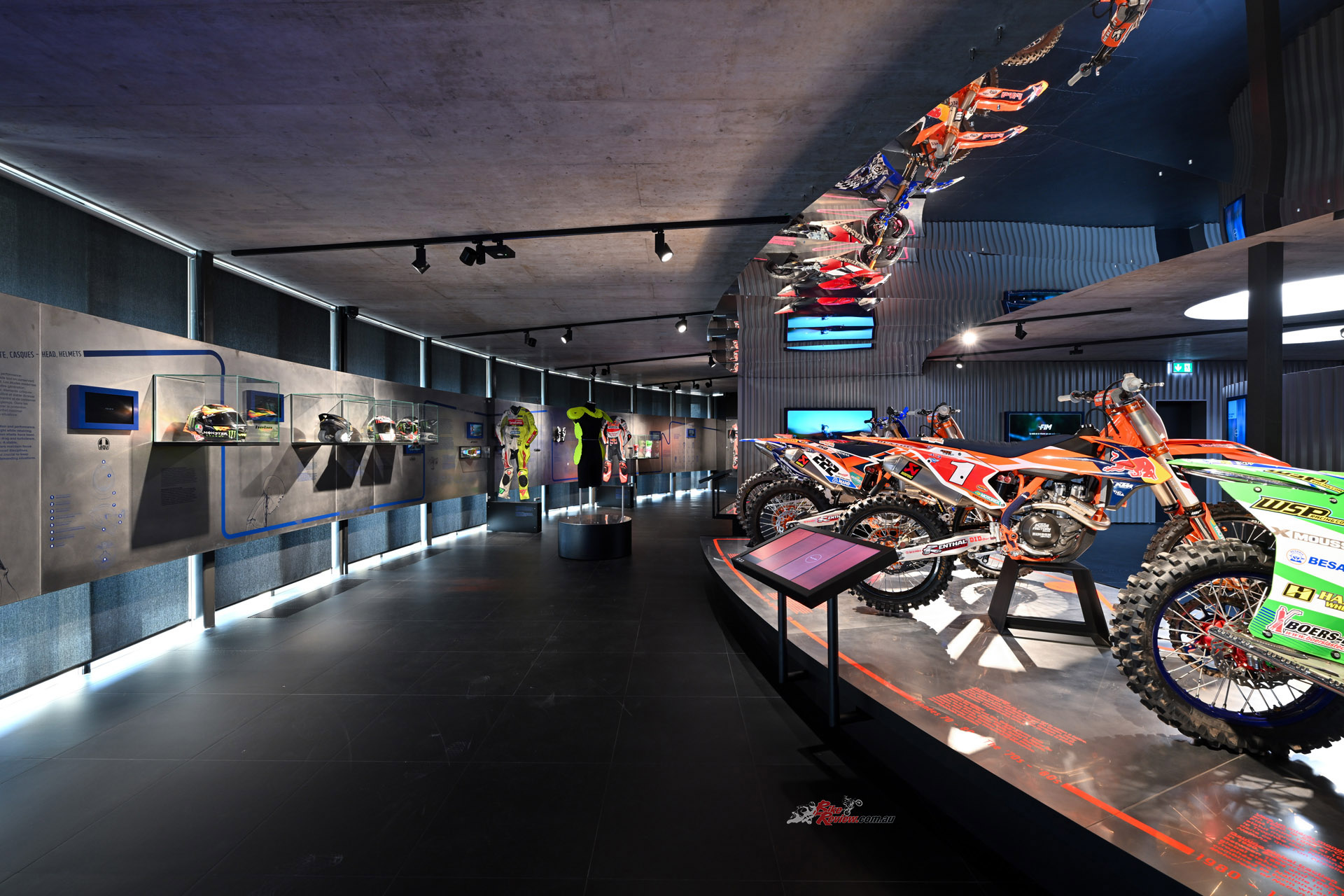
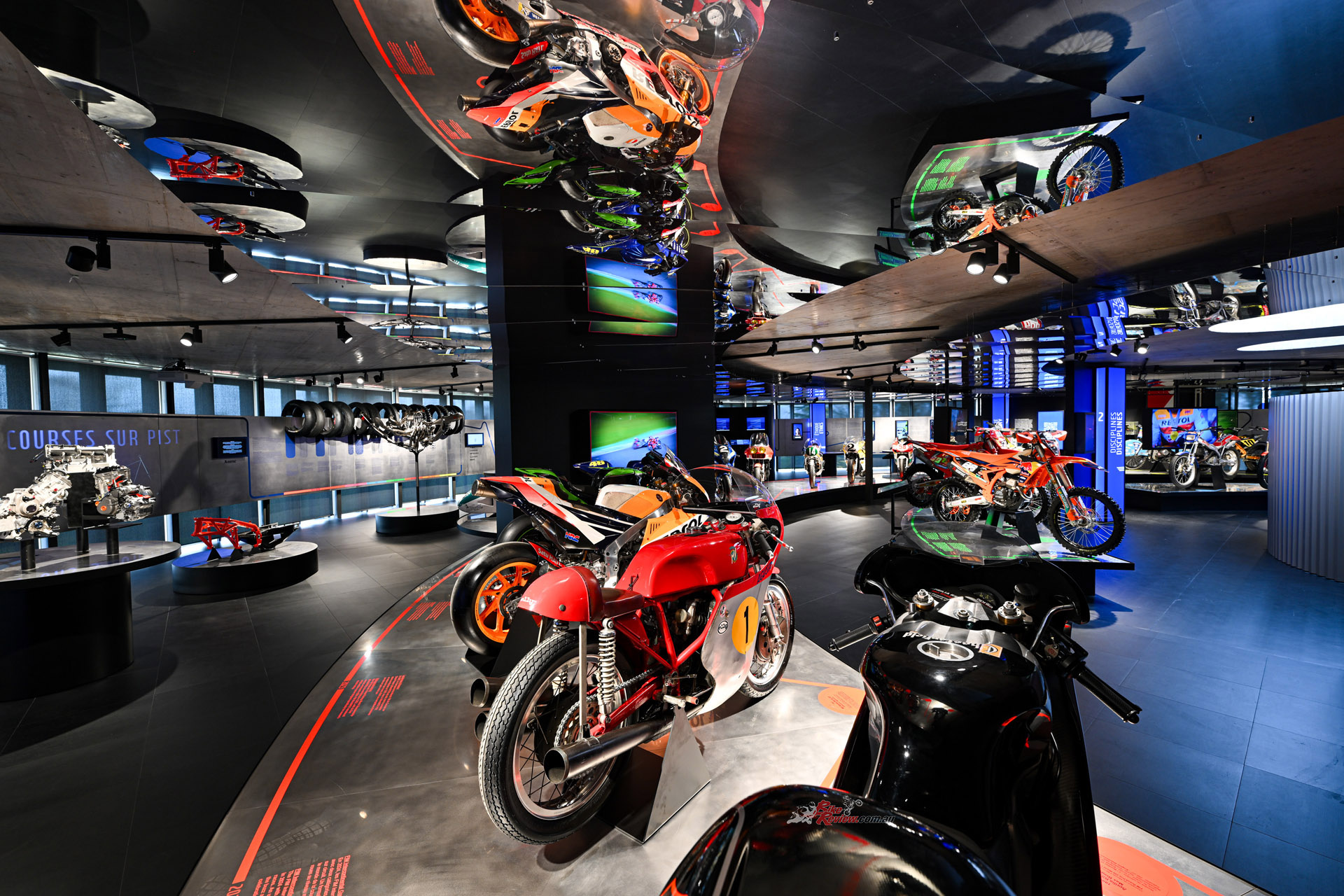
In pursuit of that, within its 1,600m² of covered space on three levels, the Museum displays 61 bikes in its main exhibition, ranging from the early years of World championship racing from 1949 onwards, up to a full lineup of the reigning 2025 FIM World Champions’ machines across all seven of its principal disciplines. And each bike on display is the real deal, not a replica, assures Fabio Muner, “Each exhibit carries an authenticated racing pedigree,” he says. “They are genuine racers, not showbikes.”
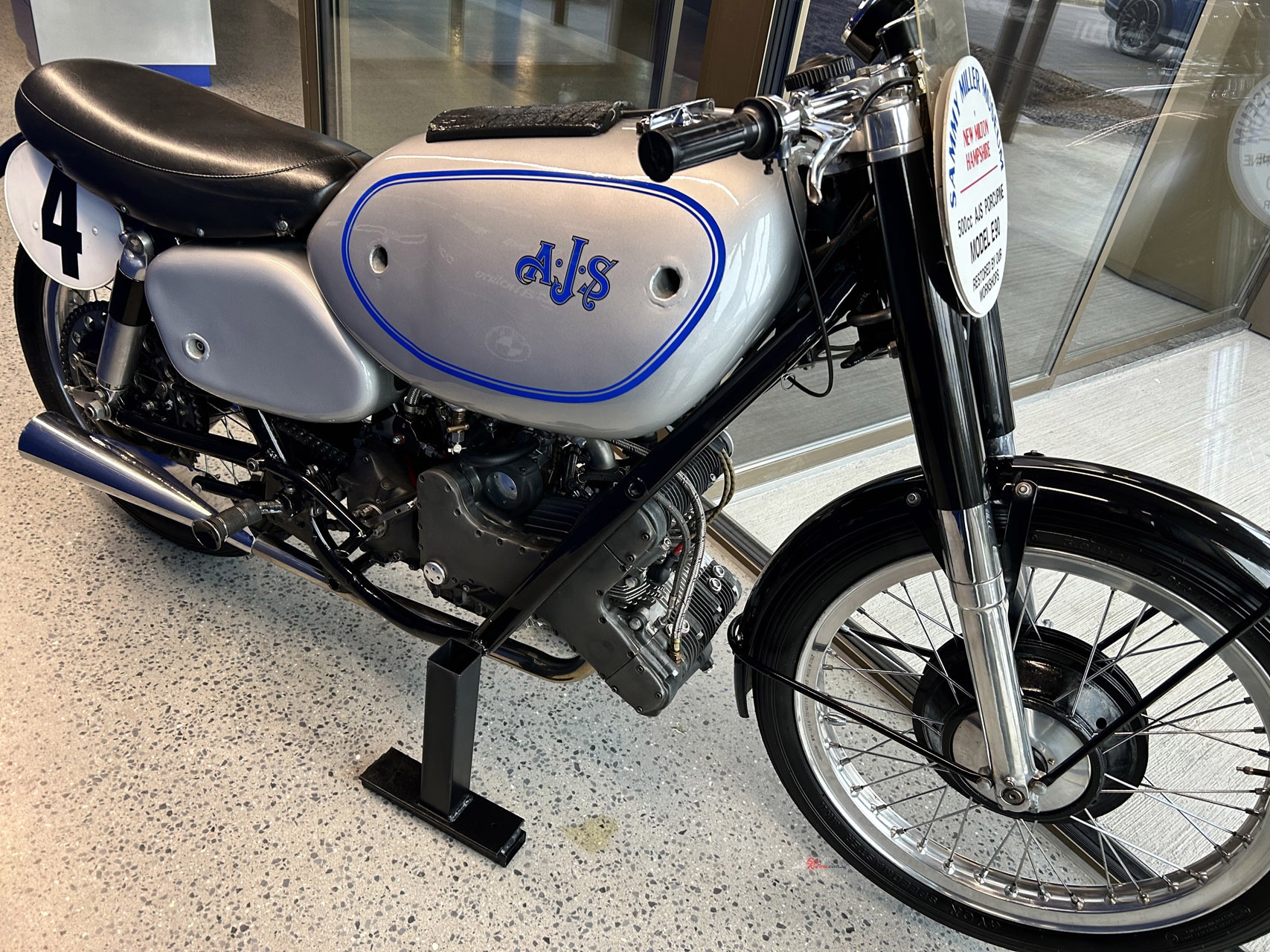
Highlights of the display include the 1949 AJS Porcupine E90 twin which Les Graham rode to the first-ever 500cc road racing World Championship, which is on loan from the Sammy Miller Museum in Britain, and is displayed right next to the entrance to the Museum building in giving a close-up view of the legendary (and unique) cooling spikes on its cylinder head.
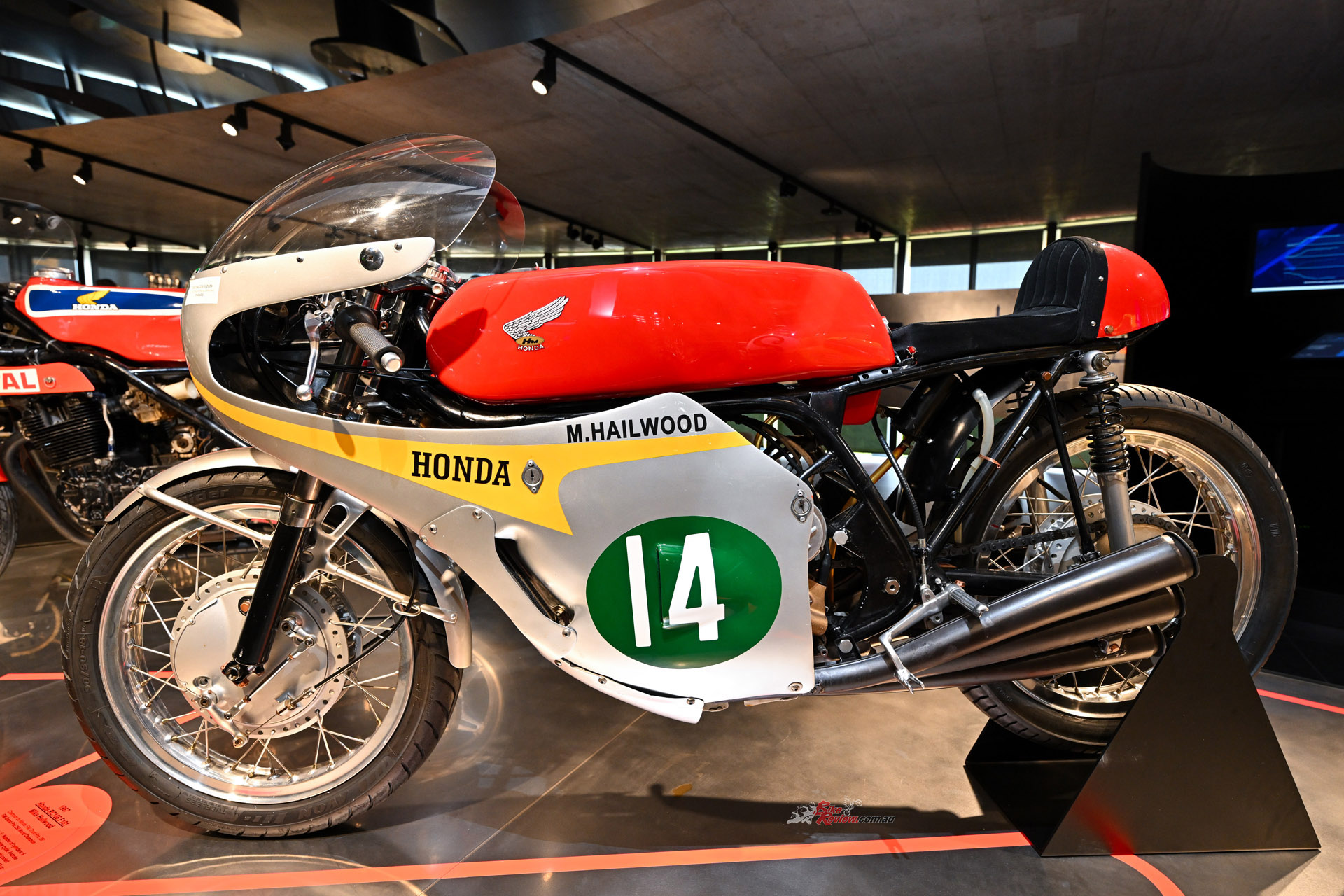
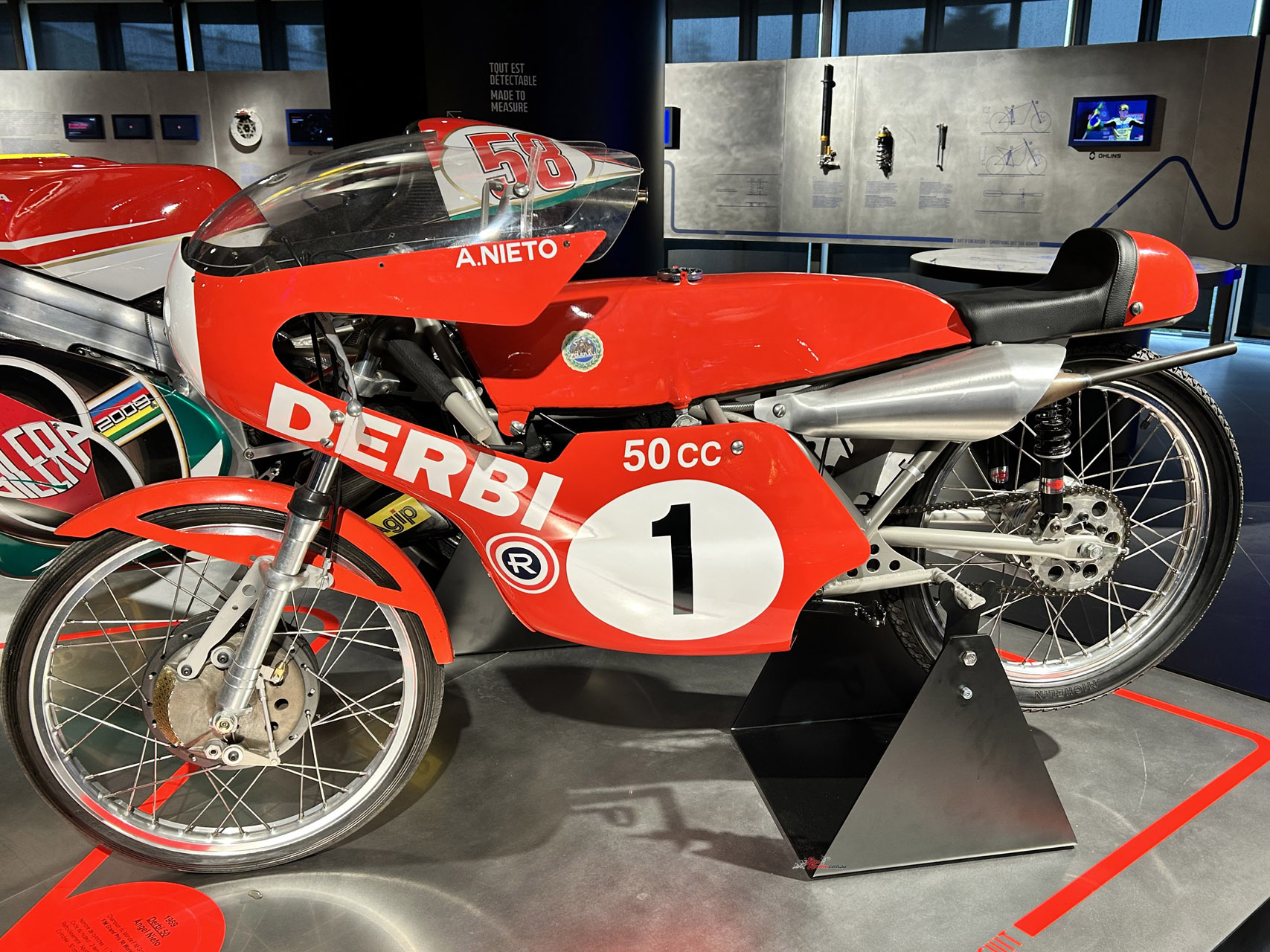
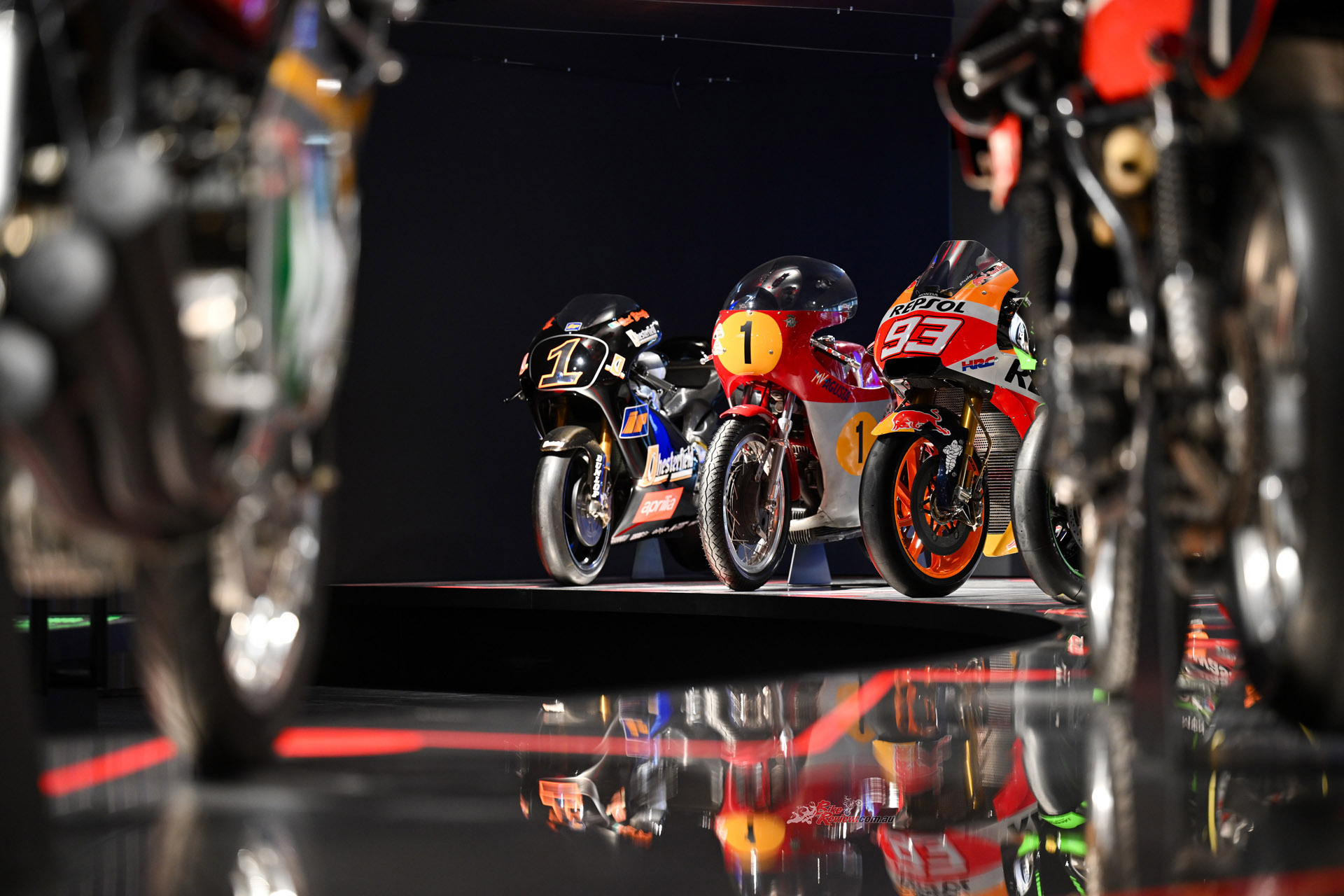
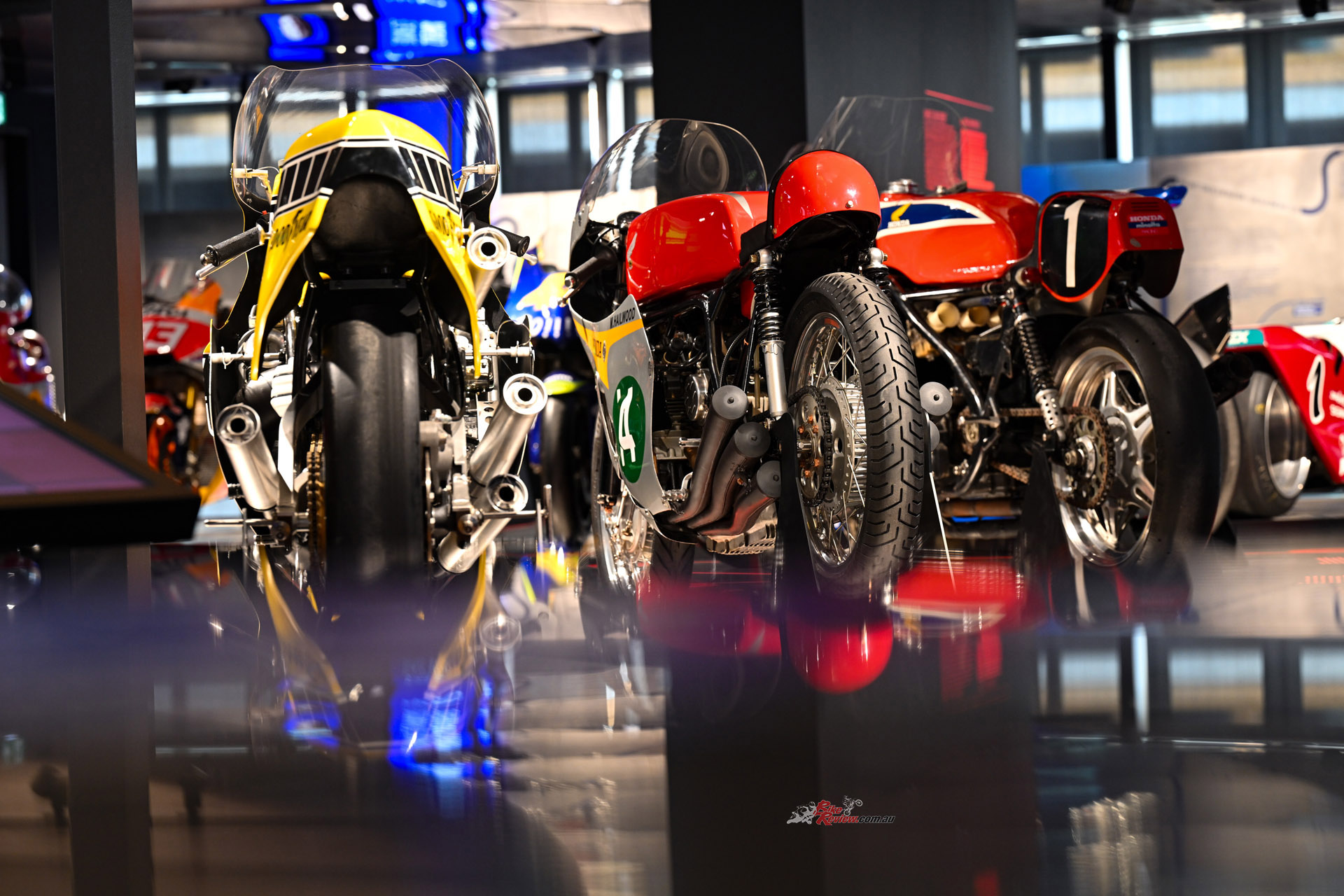
Next oldest bikes on show are Mike Hailwood’s exquisite 1966 six-cylinder 250cc Honda RC166, and the diminutive 1969 50cc Derbi two-stroke on which the late Angel Nieto won the first of what he always termed his ’12 + 1’ (=13!) World championships. Nearby is the 1971 three-cylinder 500cc MV Agusta on which Giacomo Agostini was able to out-do Nieto by registering one of his 15 World titles.
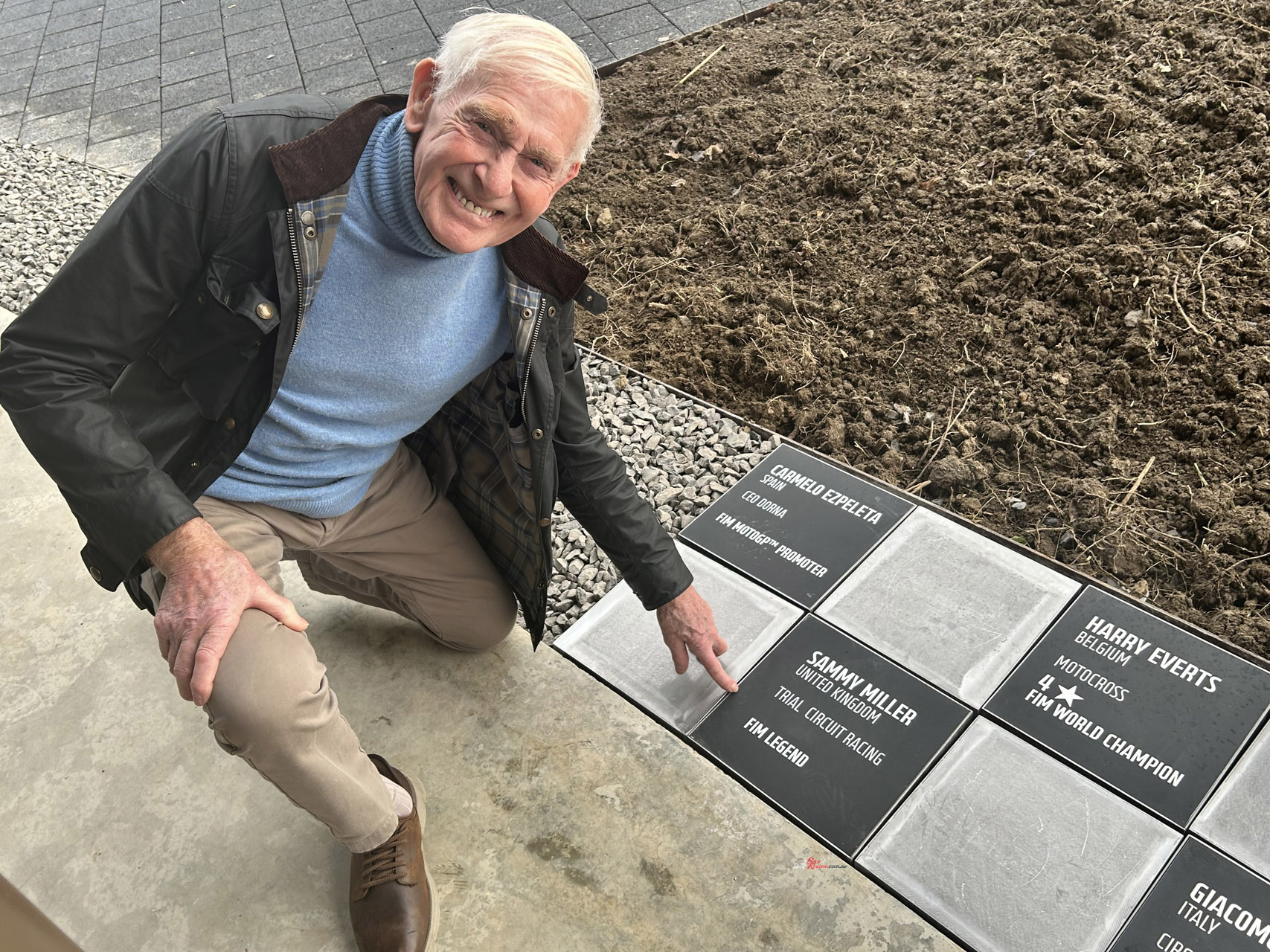
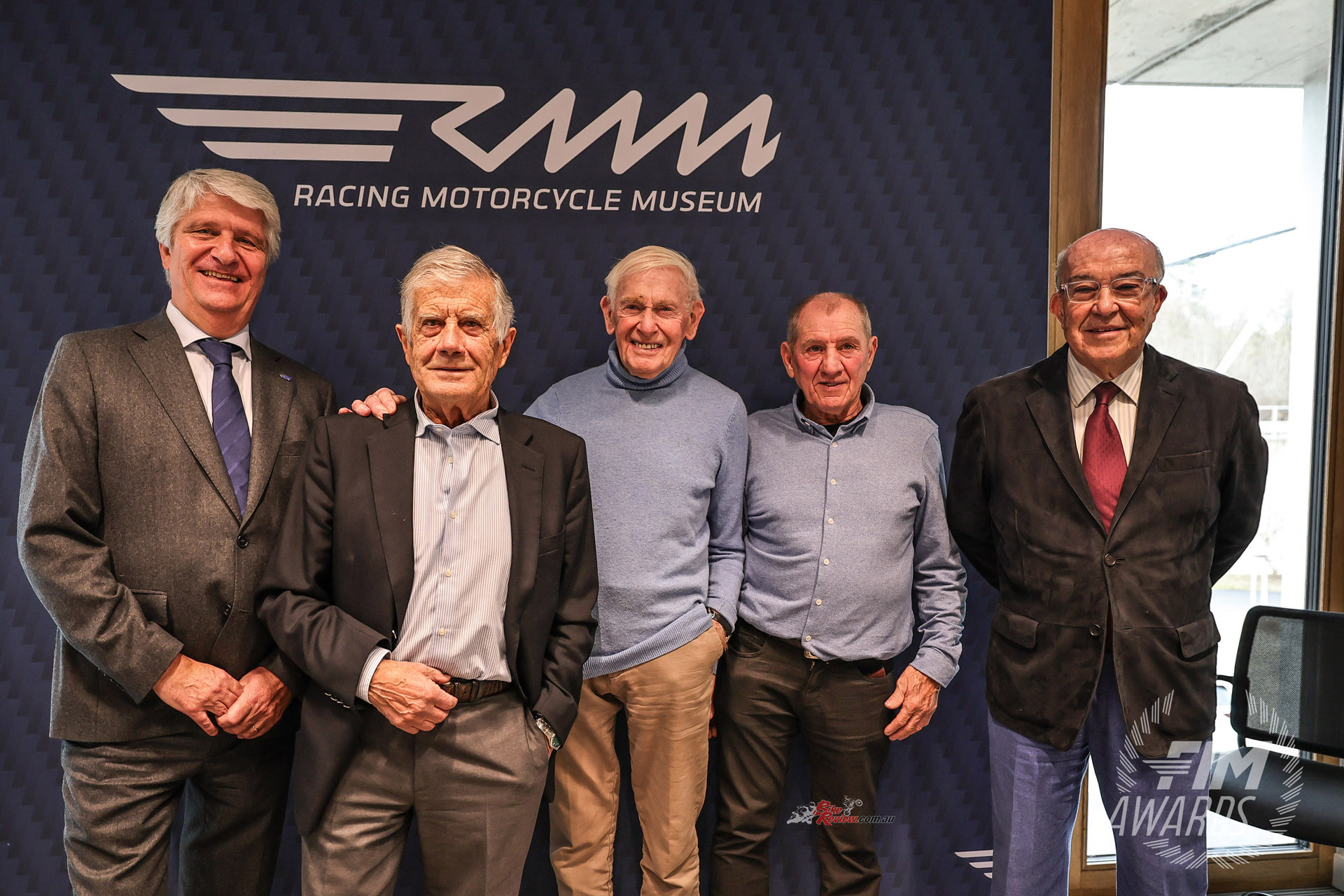
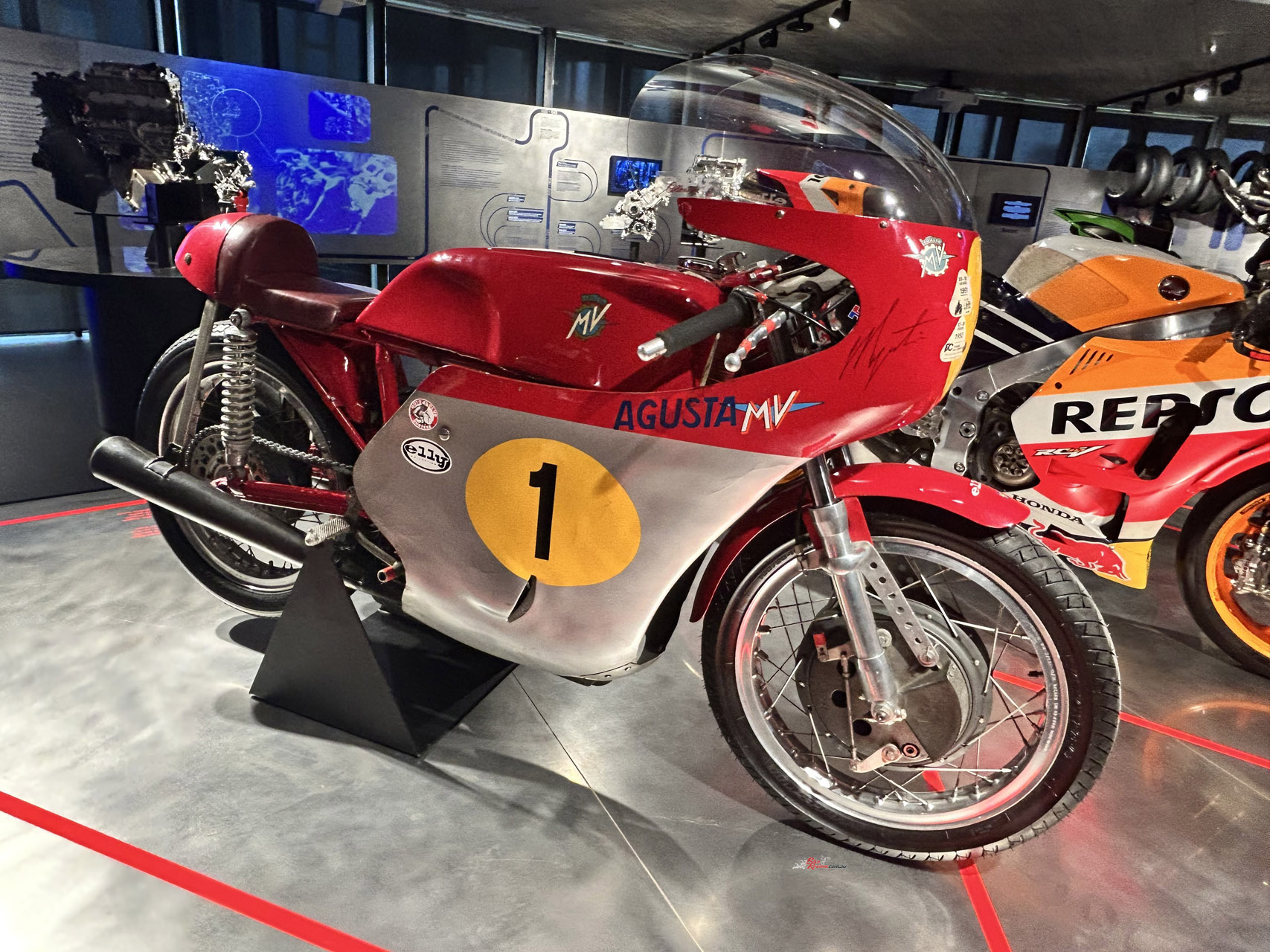 Ago was present on December 7 to jointly cut the ribbon formally opening the Museum, as one of the four debut inductees into the FIM’s newly established Hall of Fame, alongside Trials legend and GP road racer Sammy Miller, MotoGP promoter Carmel Ezpeleta, CEO of Dorna, and four-time 500MX World champion Harry Everts. Each of these celebrities was asked to make an imprint in clay of their right hand to be cast into stone for display in the Museum’s garden, near a ceramic tile bearing their name set into the side of a miniature race track. Further inductees will follow annually.
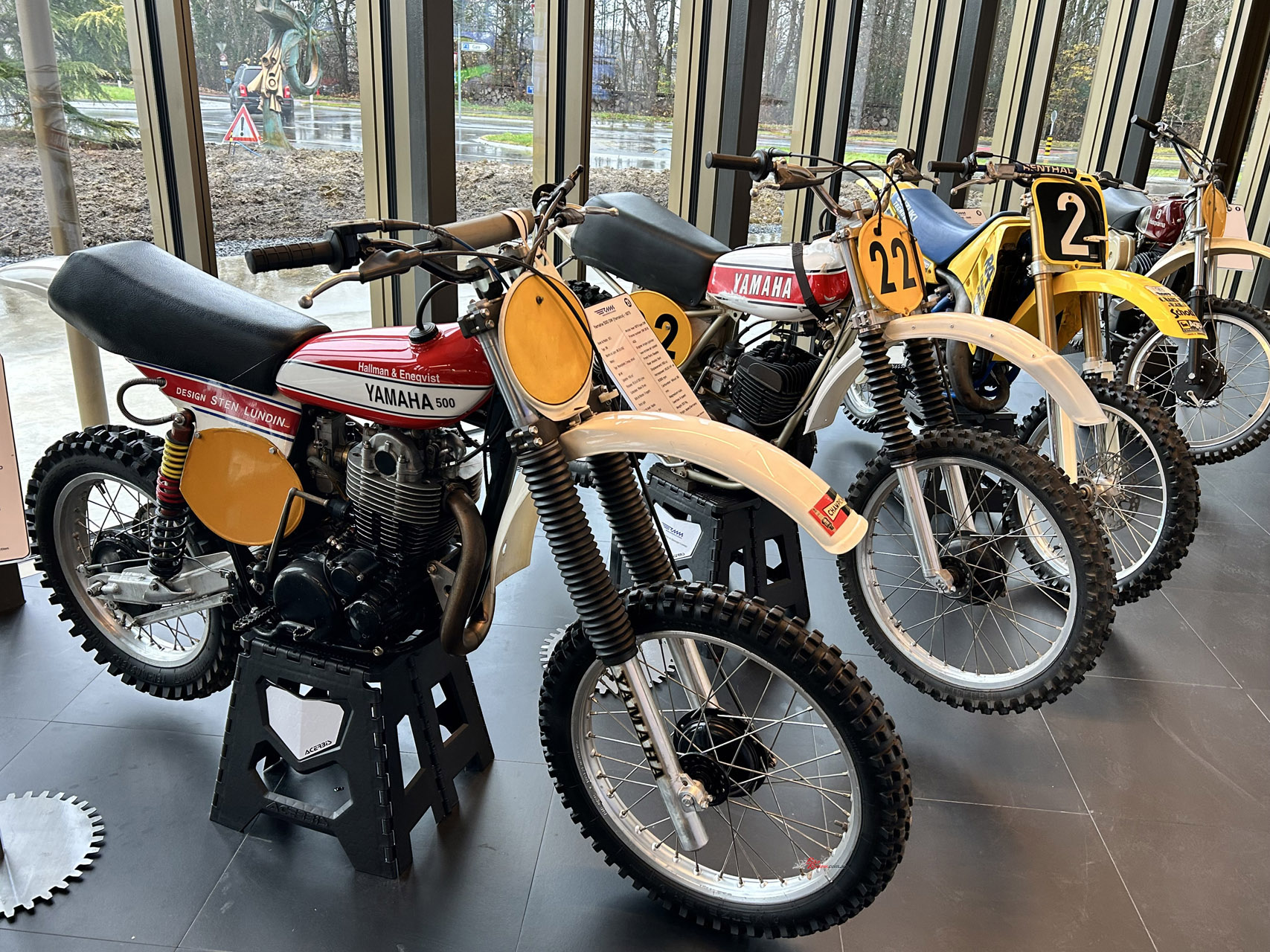
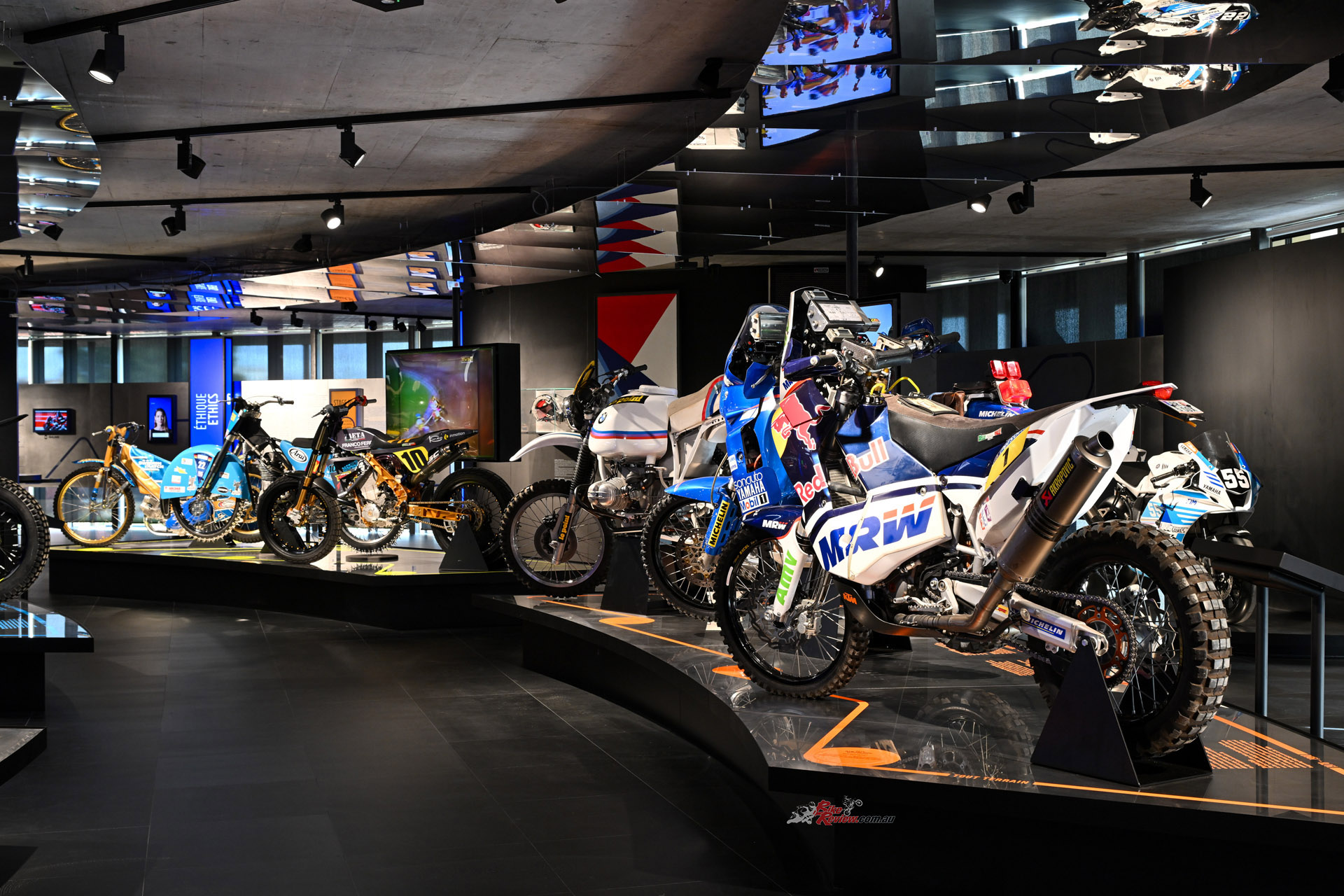
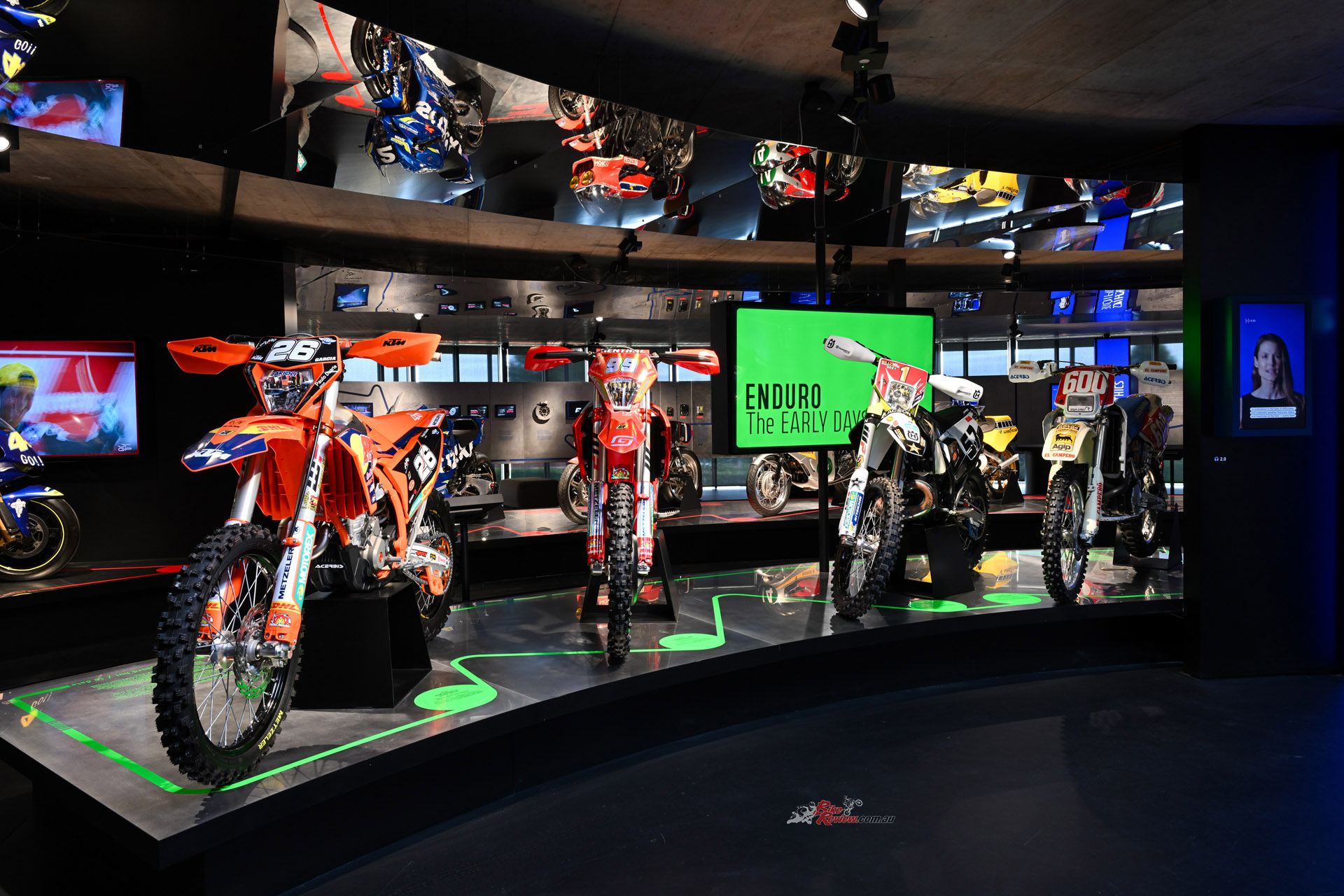
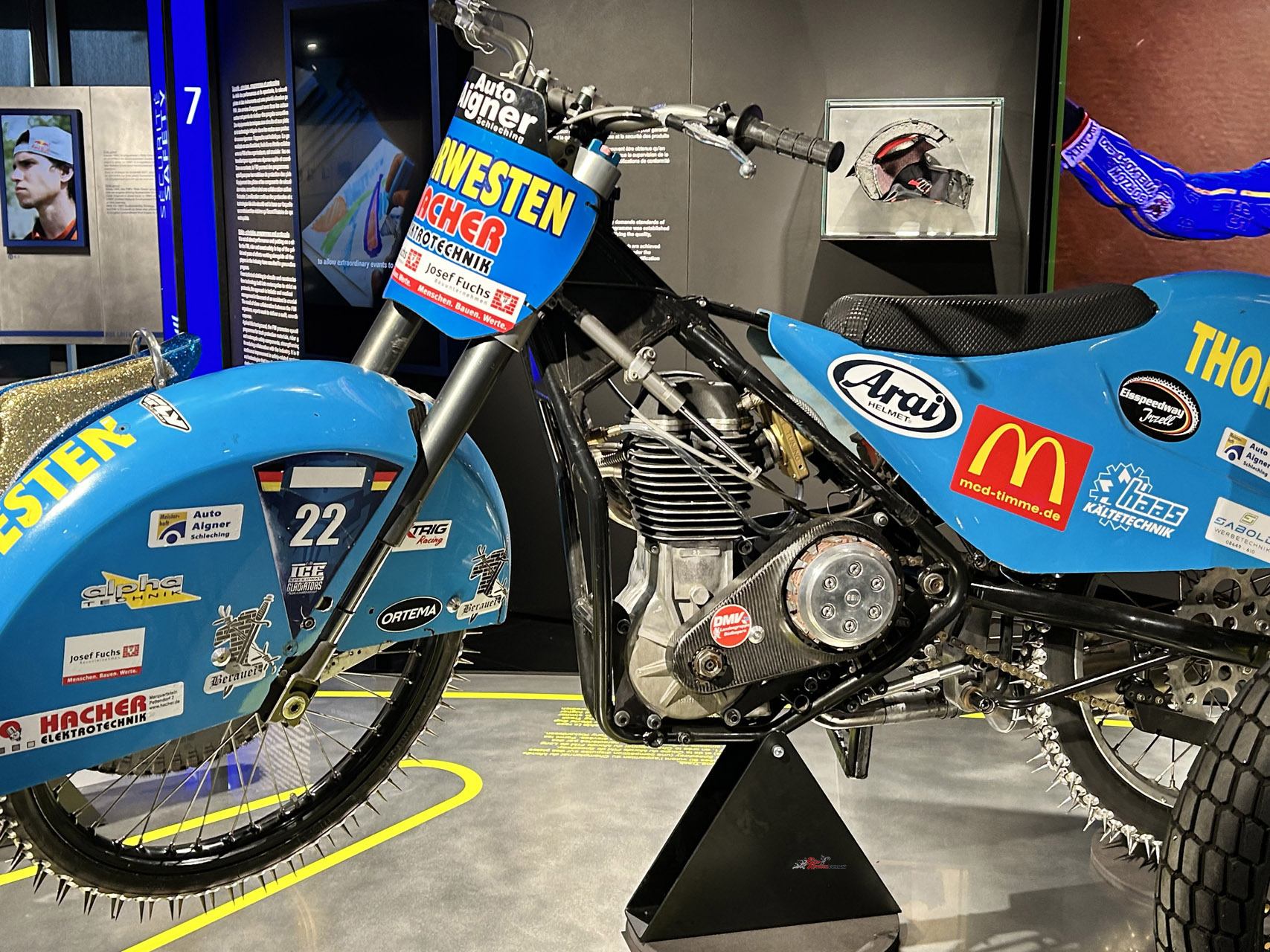
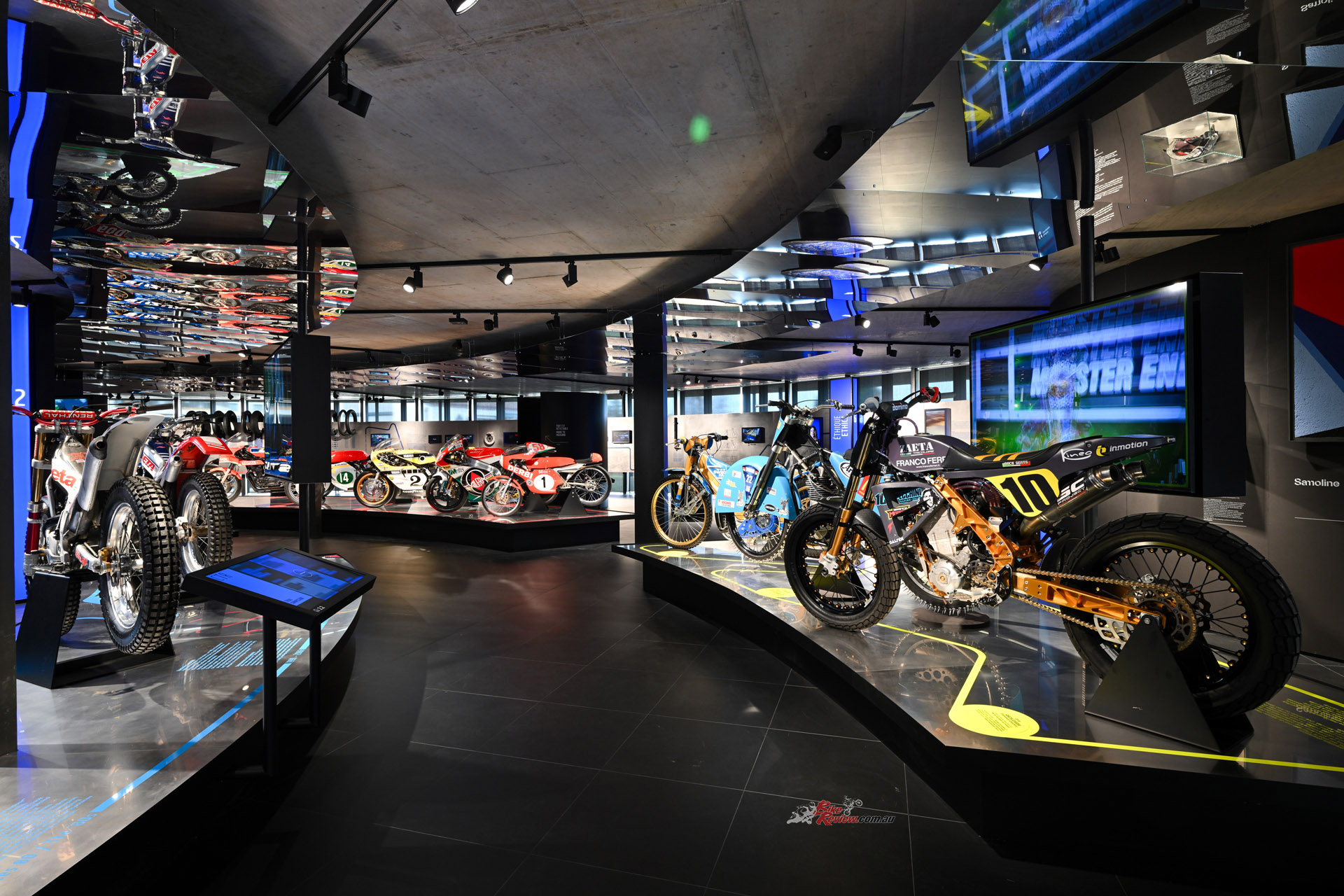
But this is far from being a display dominated by Road Racing bikes. Off-road racing is well represented in the Museum, with hardware spanning Rally, Motocross, Enduro, Trials, Speedway, Flat Track and Ice Speedway disciplines also on display, chronicling the development of these sports over several decades.
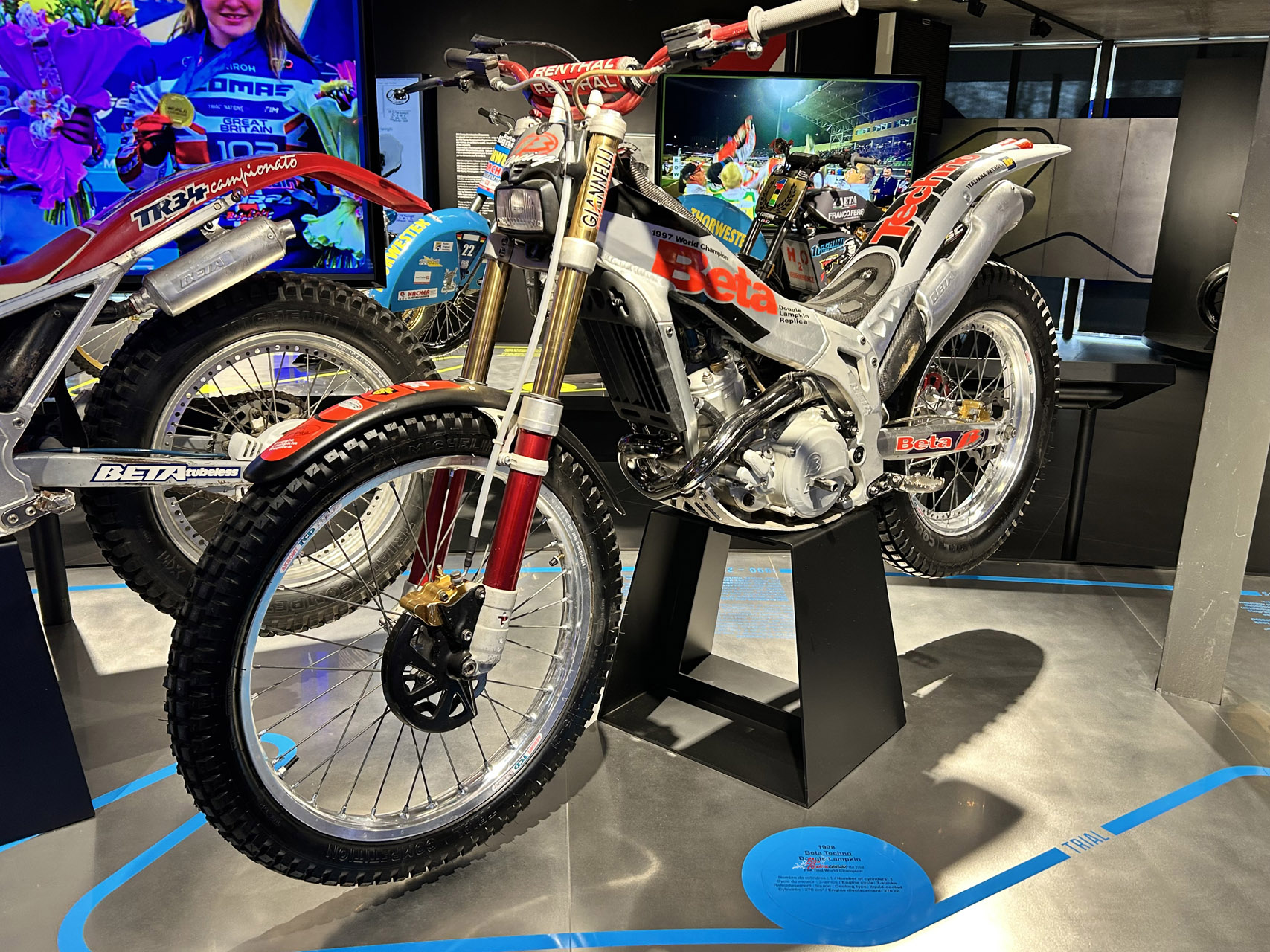
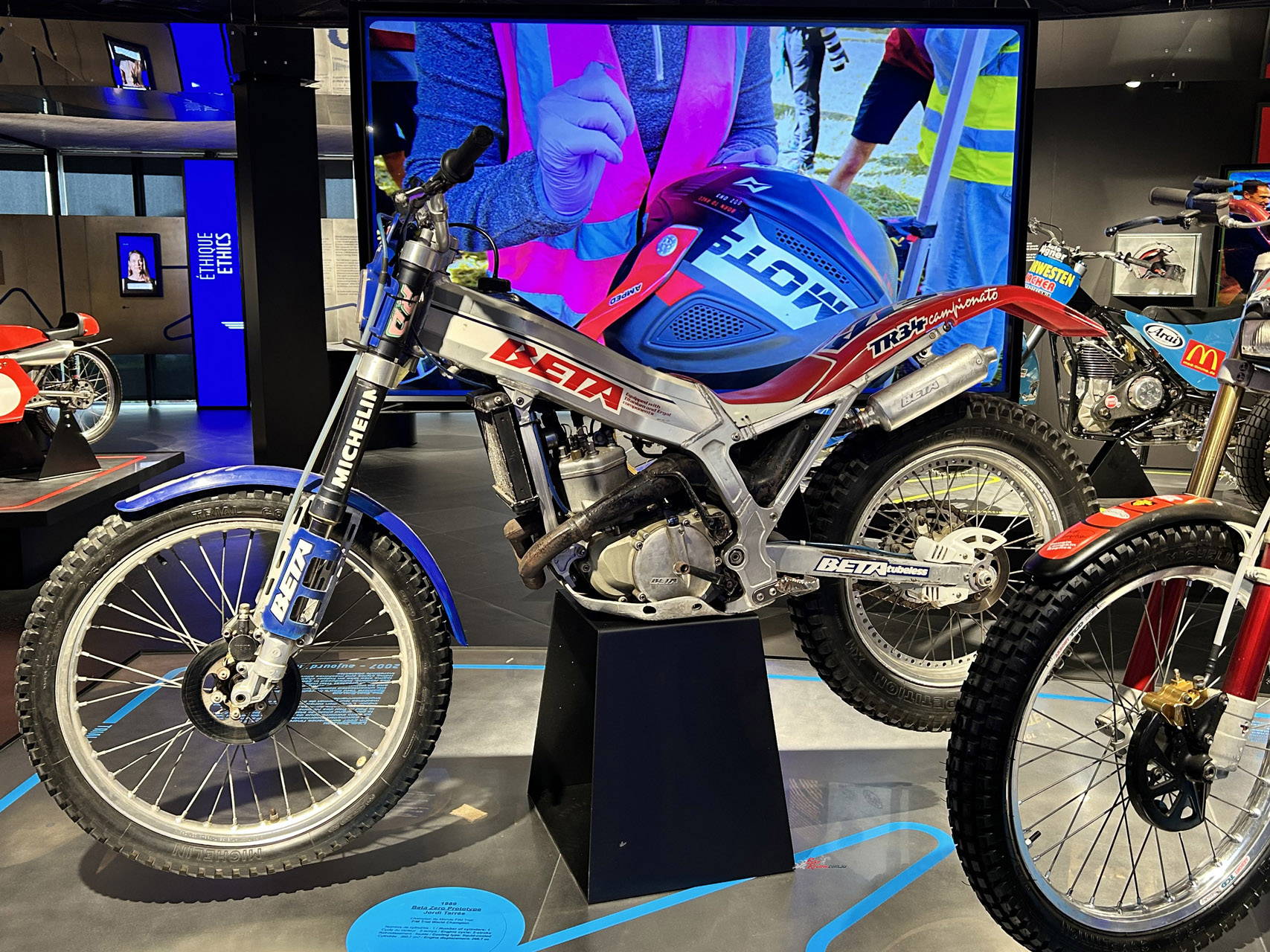
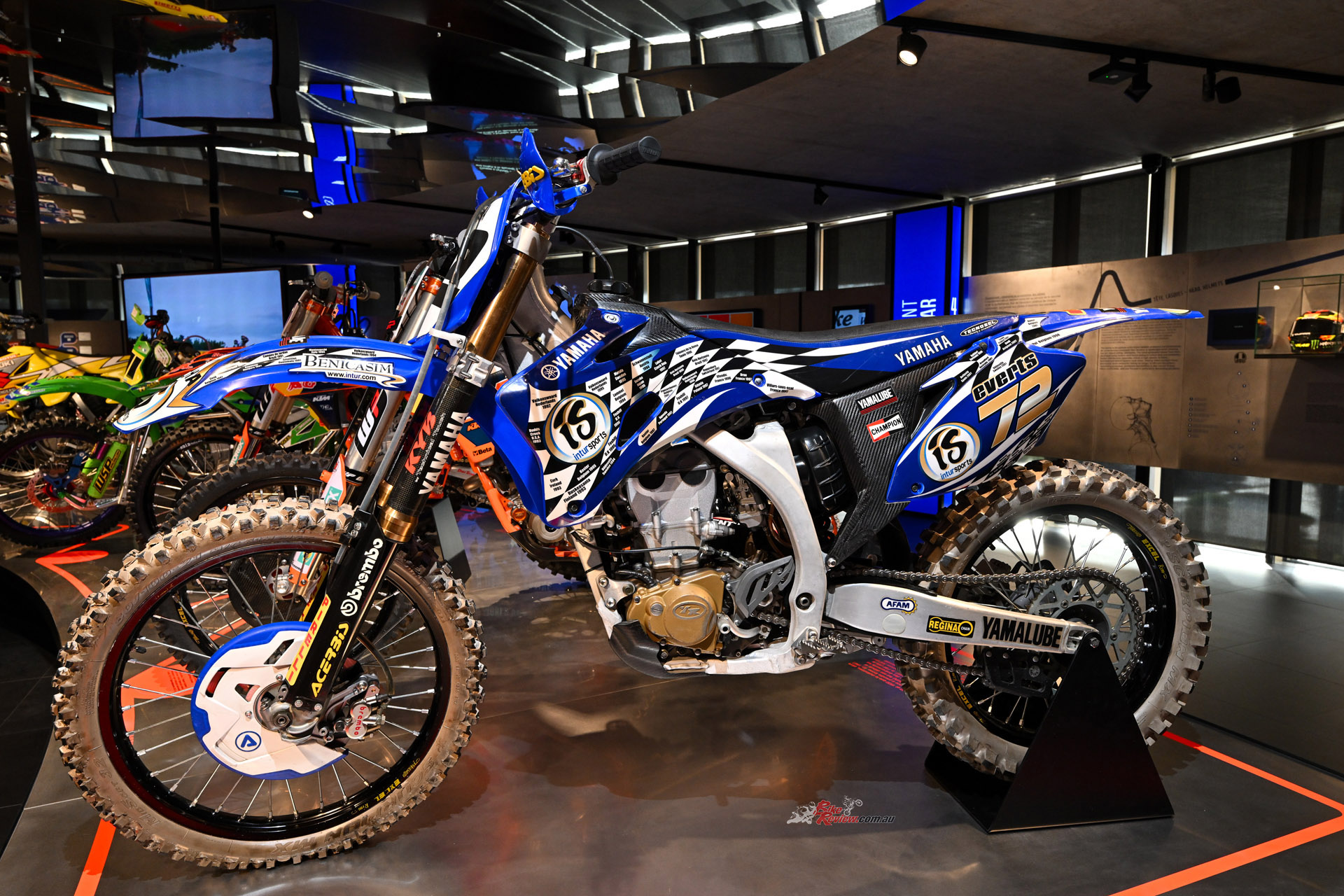 Among them are Harry Everts’ son Stefan’s 2006 Yamaha YZ450F MX1 World Championship winning bike, seven times World Outdoor Trials champion Jordi Tarres’ 1989 Beta Zero, and the Zaeta DT450RS that carried Francesco Cecchini to the 2019 FIM Flat Track World Championship.
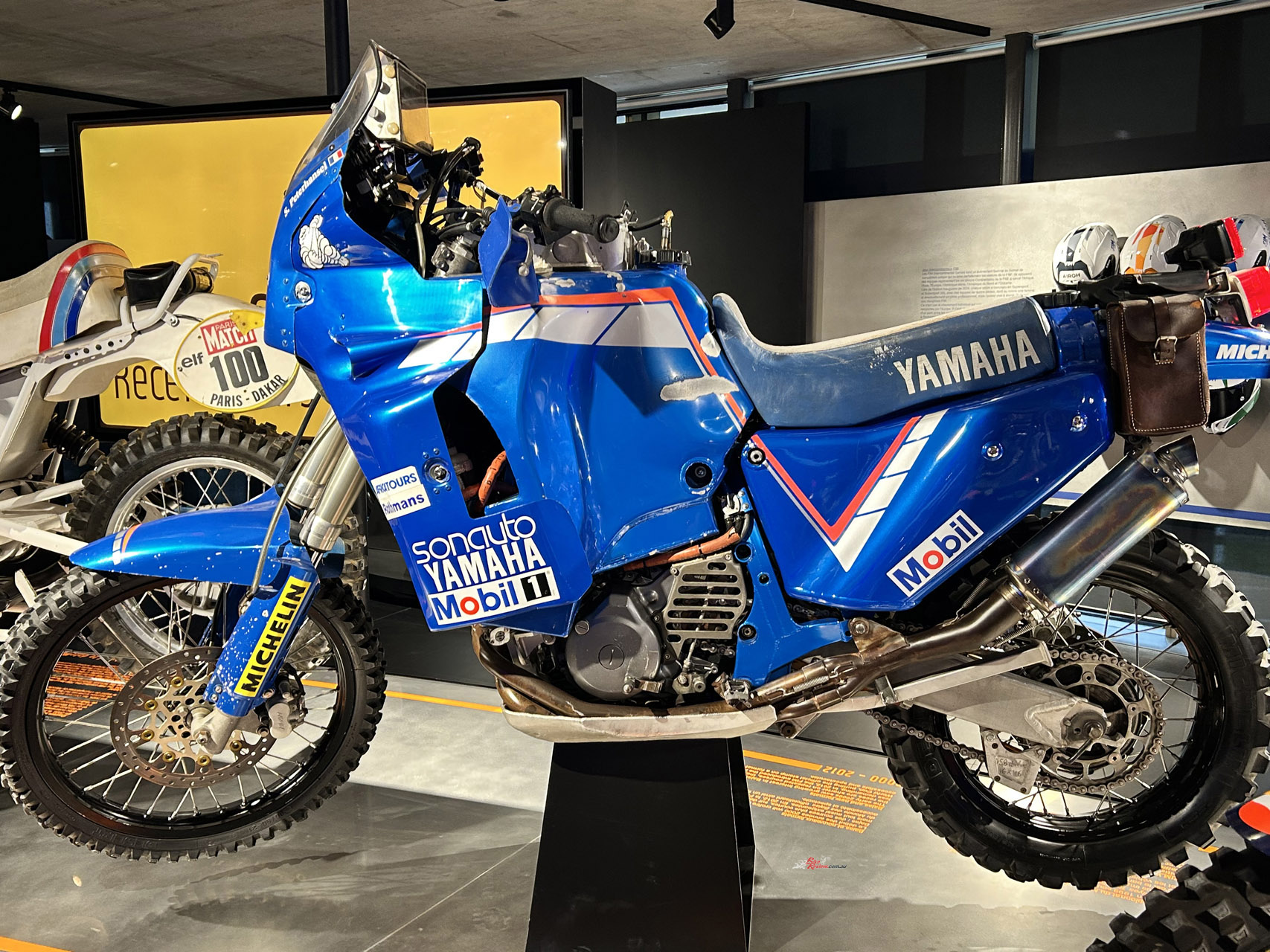
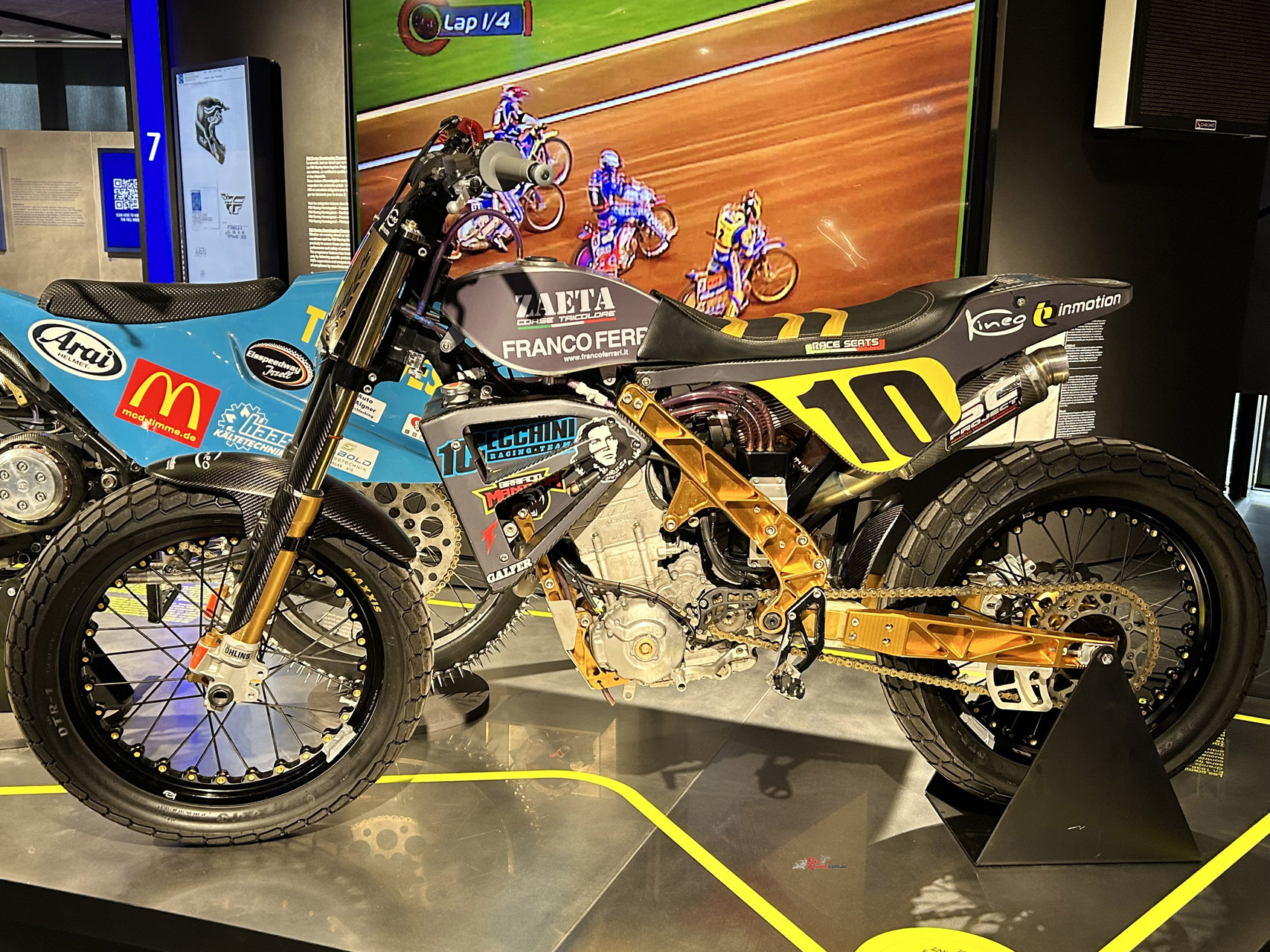
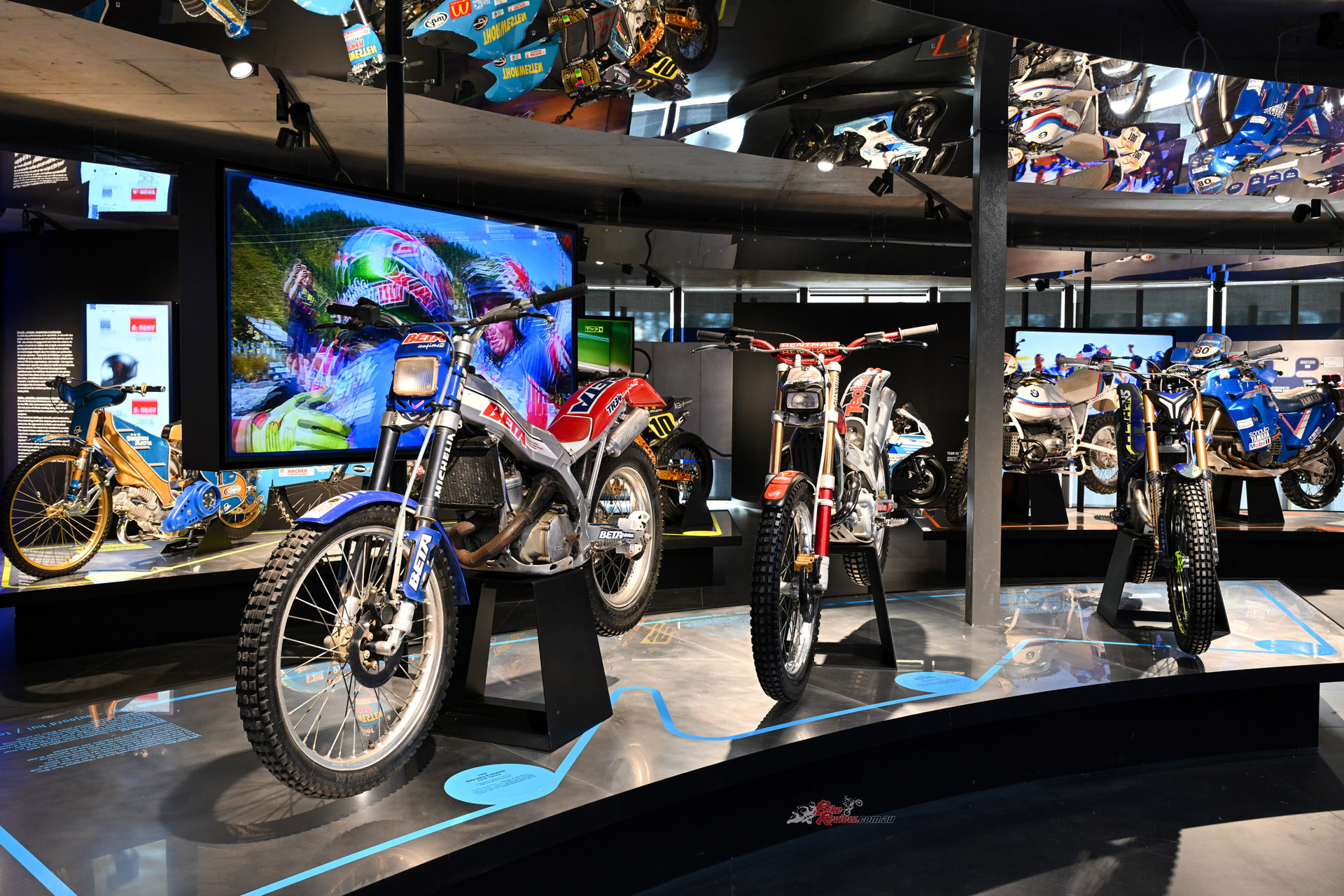
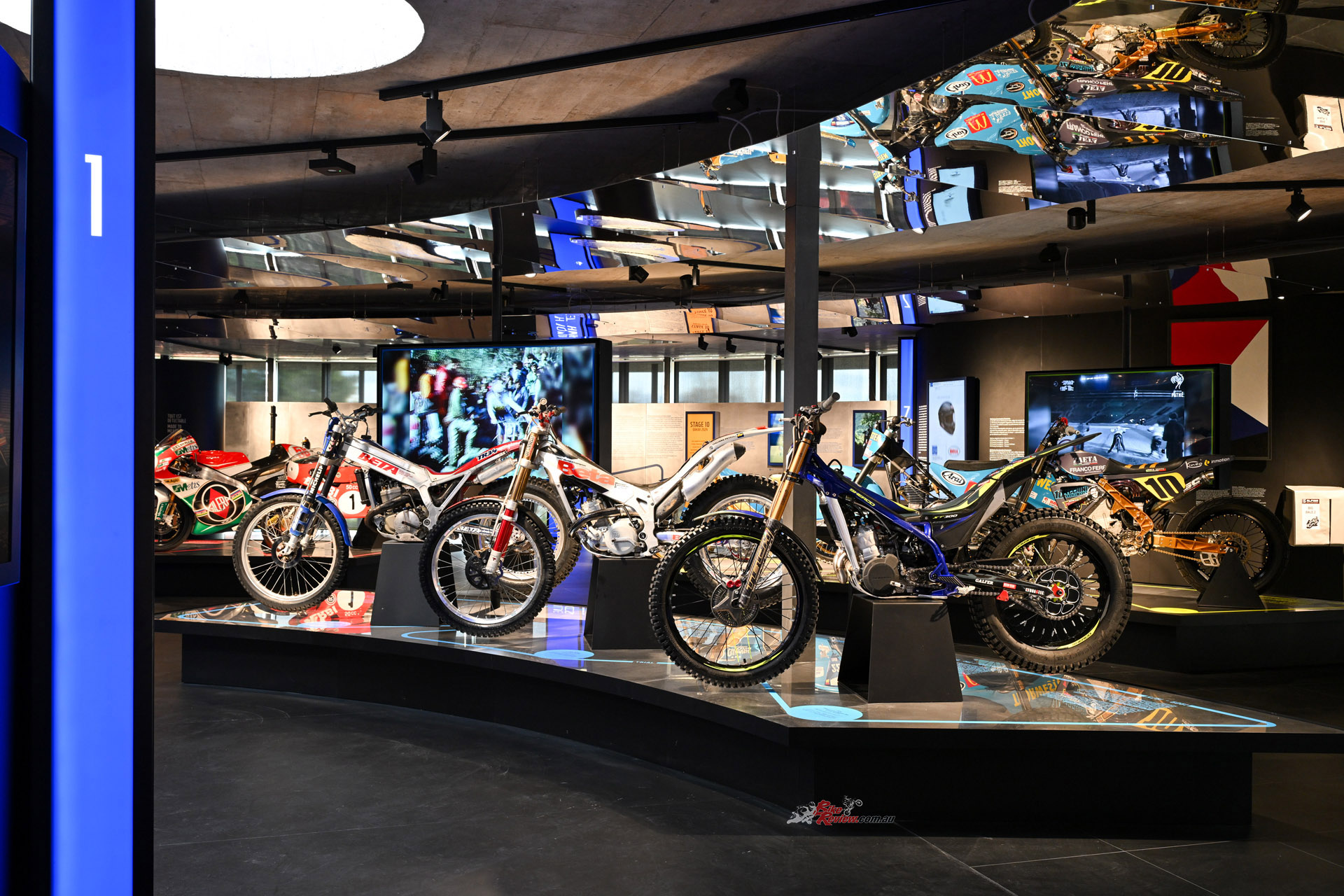
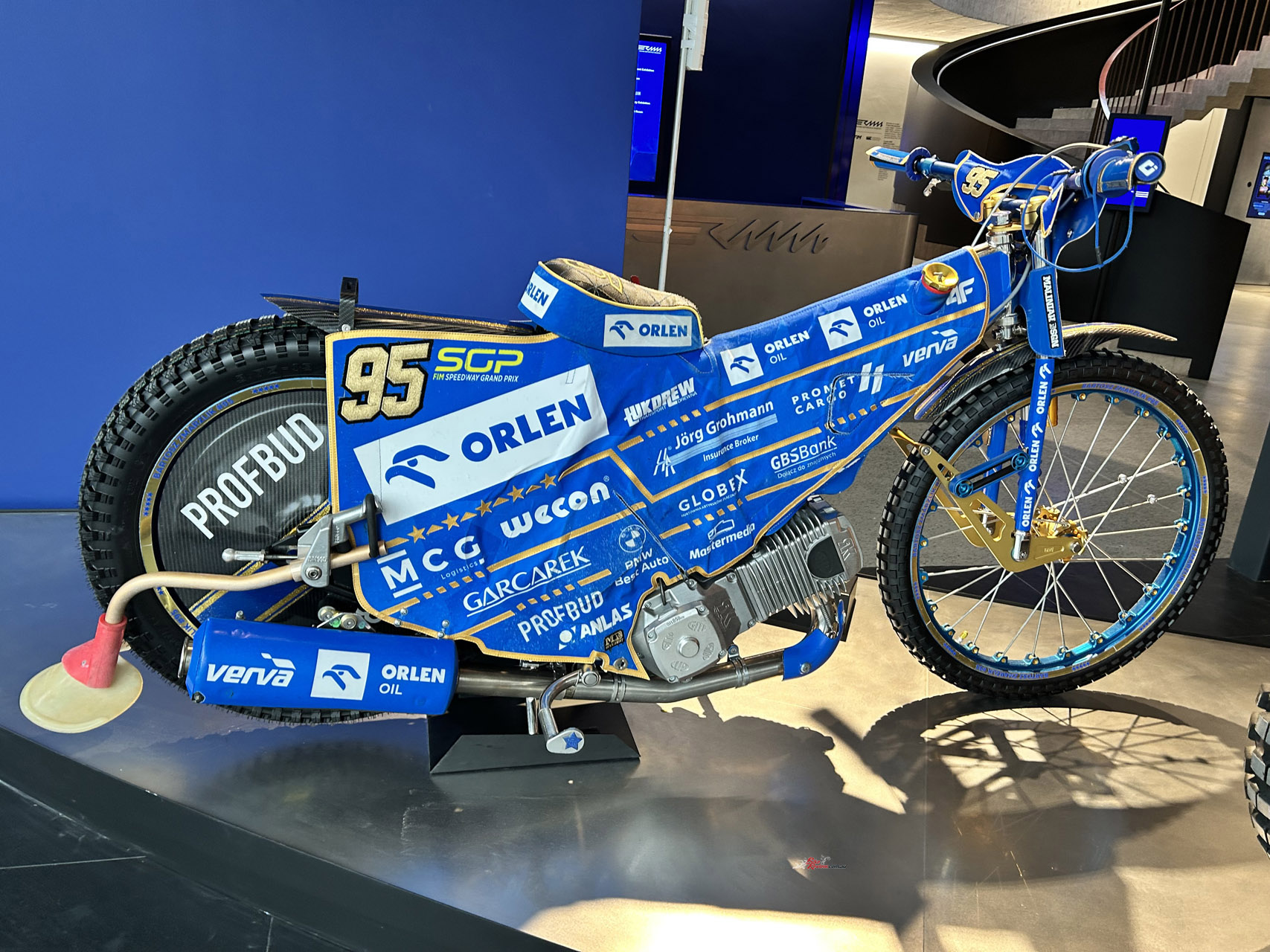
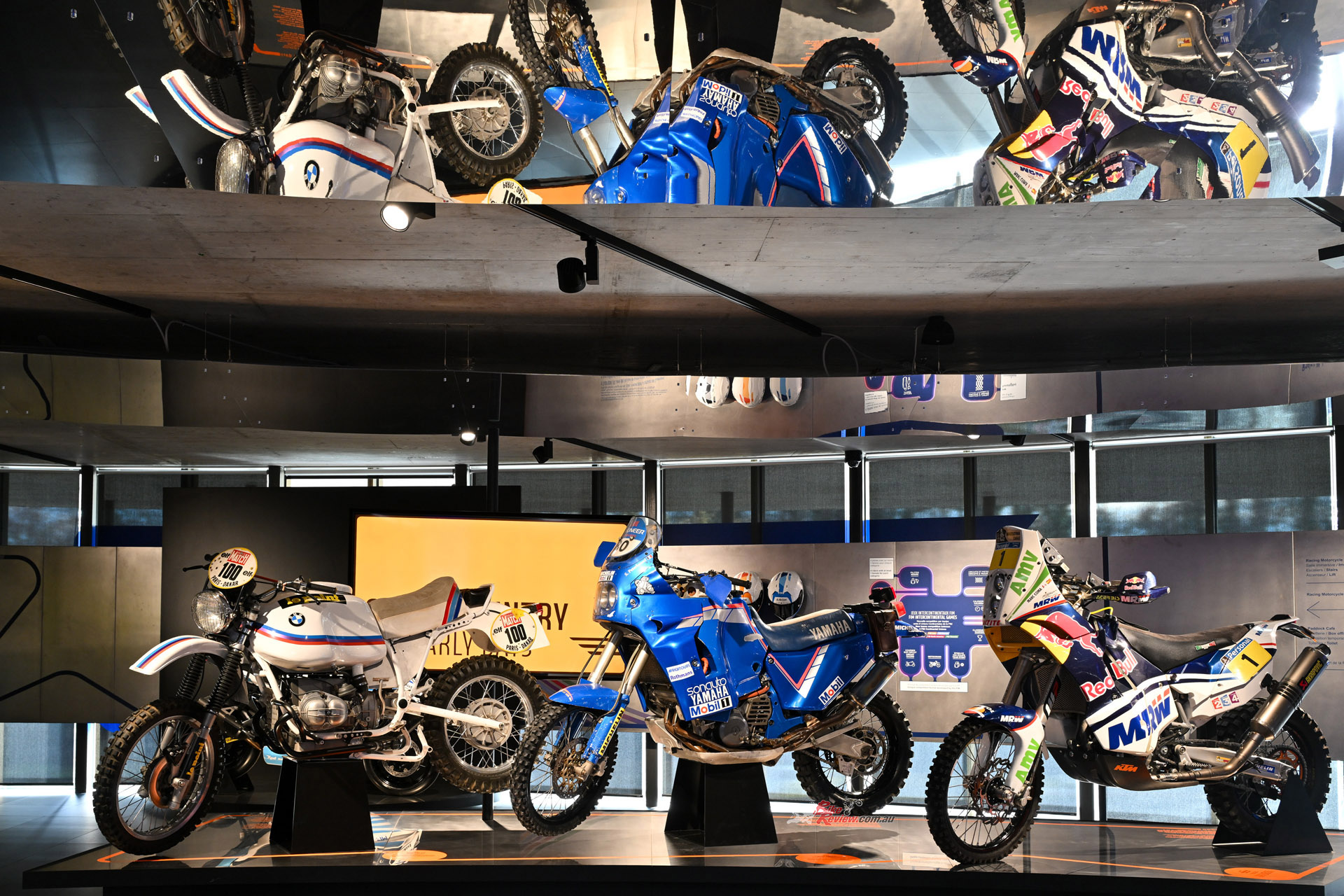
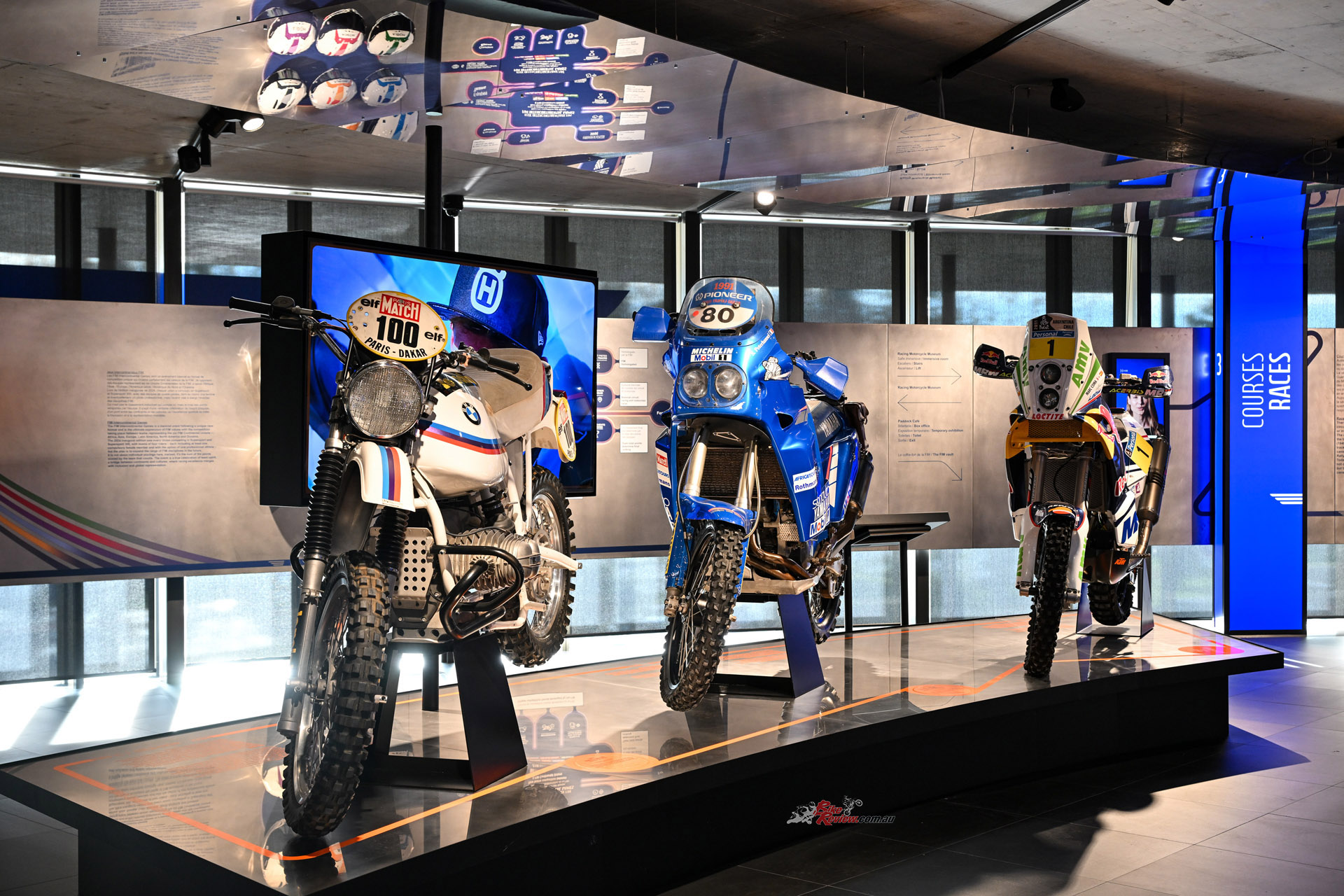
Hubert Auriol’s 1981 BMW R80 G/S Boxer twin contrasts with Stephane Peterhansel’s decade older 1991 Yamaha YZE750T parallel-twin, Paris-Dakar Rally winners both, and Sweden’s Tony Rickardsson’s 2001 Jawa provides a counterpart to Poland’s reigning champion Bartosz Zmarzlik’s bike, both of them six-time World Speedway champions.
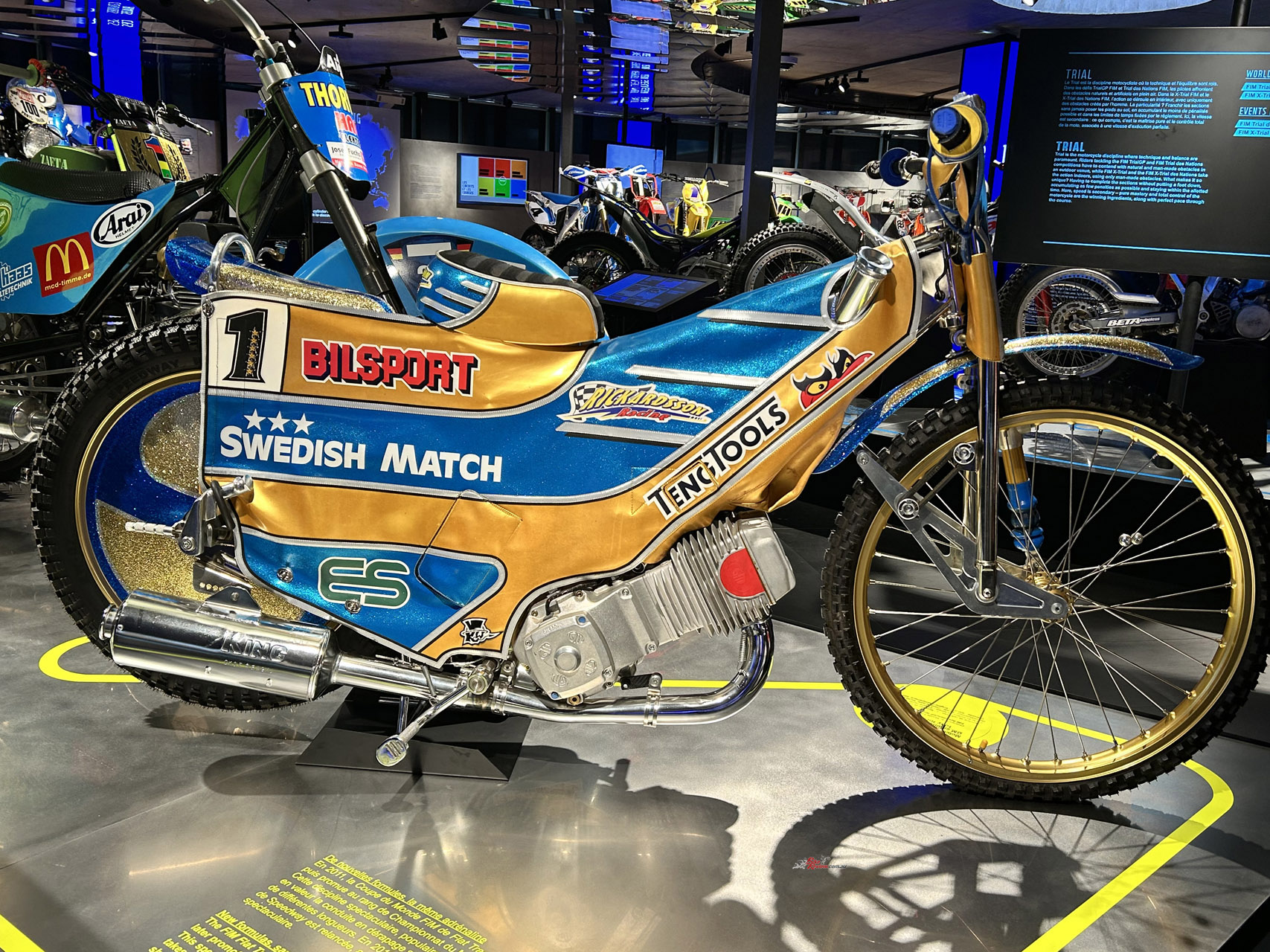
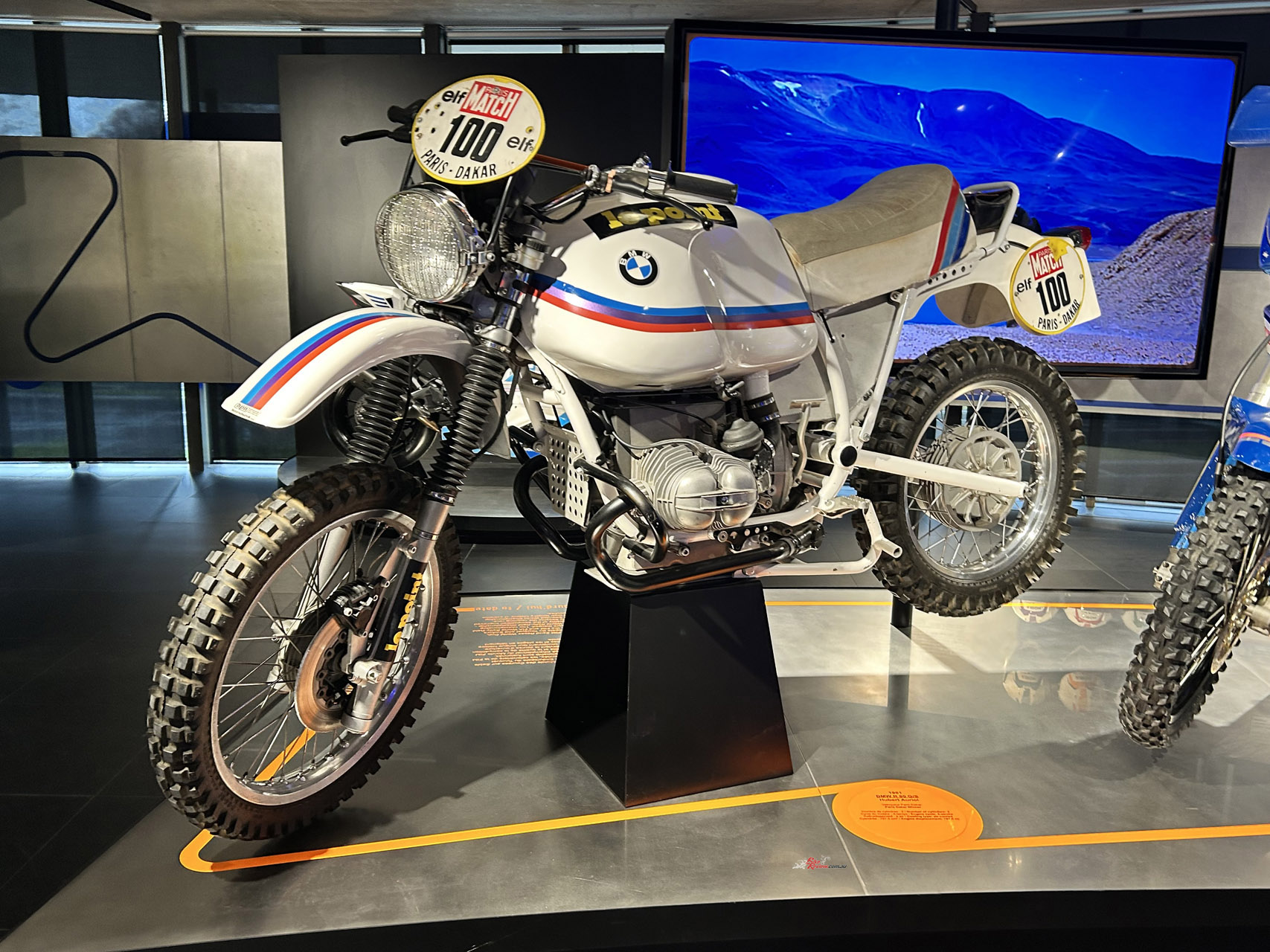
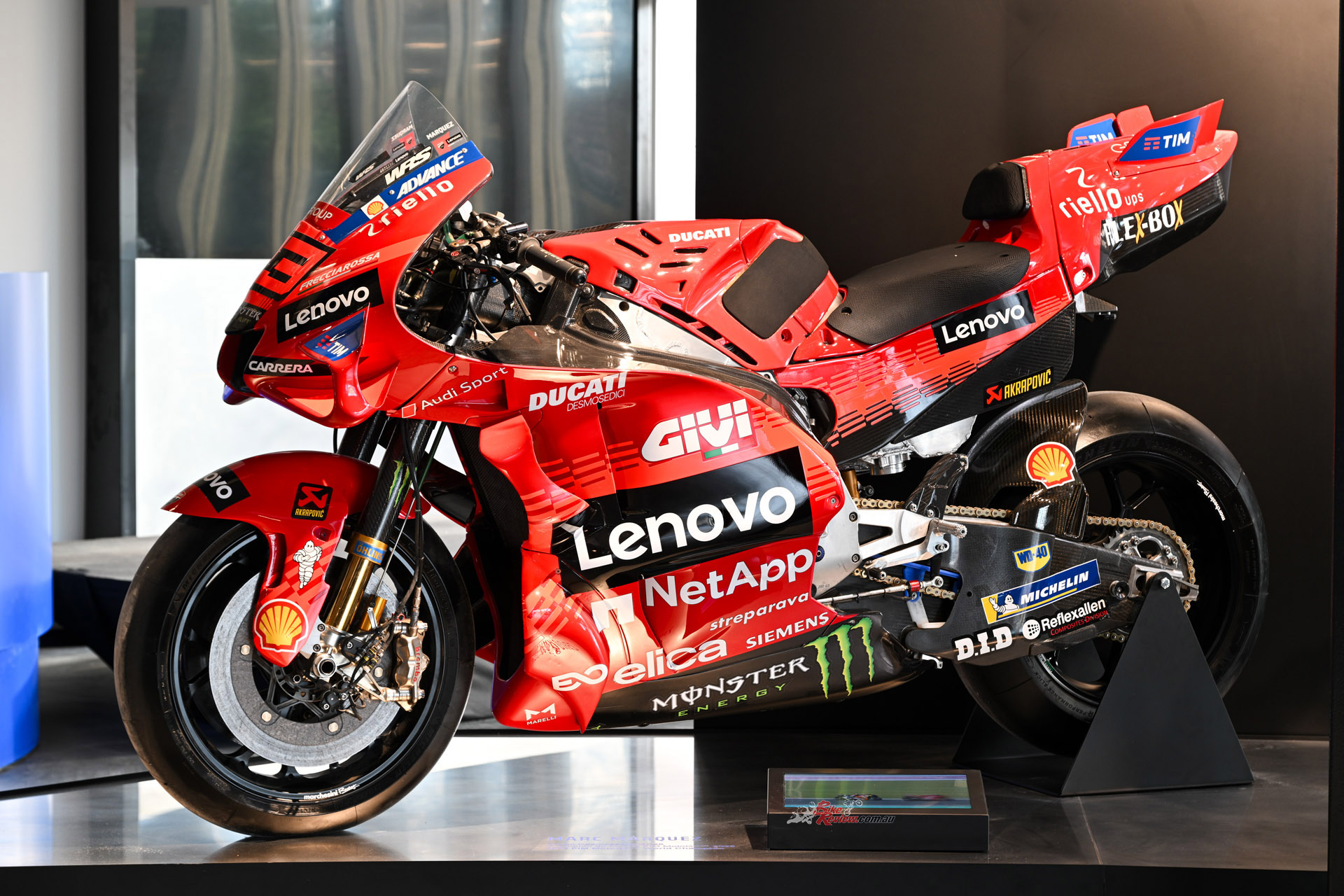
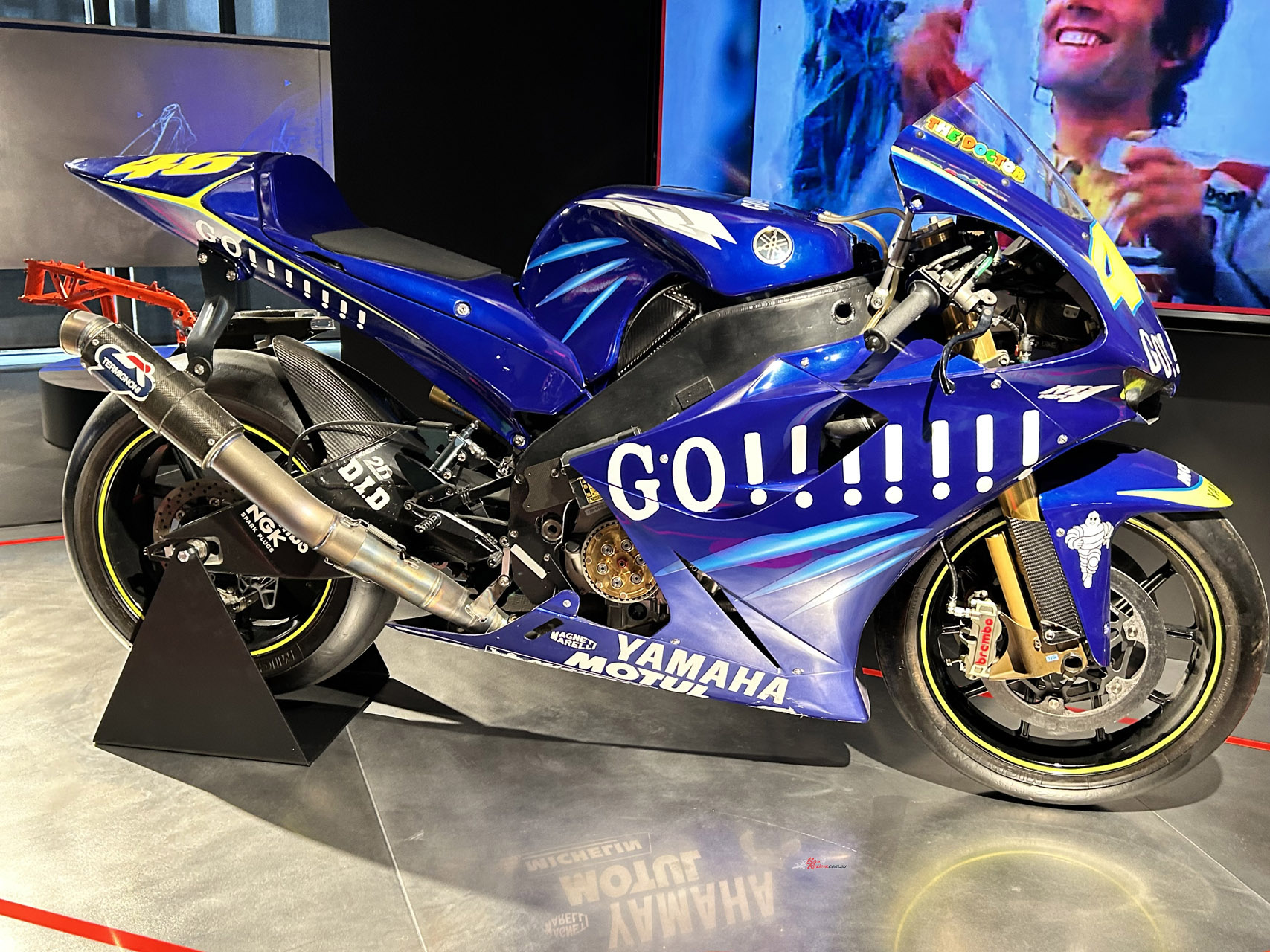
Indeed, 2025 World Championship-winning machines bring the Museum right up to date in the modern era, with Zmarzlik’s bike joined on display by those that Toprak Razgatlıoğlu (WorldSBK), Toni Bou (TrialGP), Daniel Sanders (World Rally-Raid), Josep Garcia (EnduroGP), and Romain Febvre (MXGP) rode to achieve their World crowns.
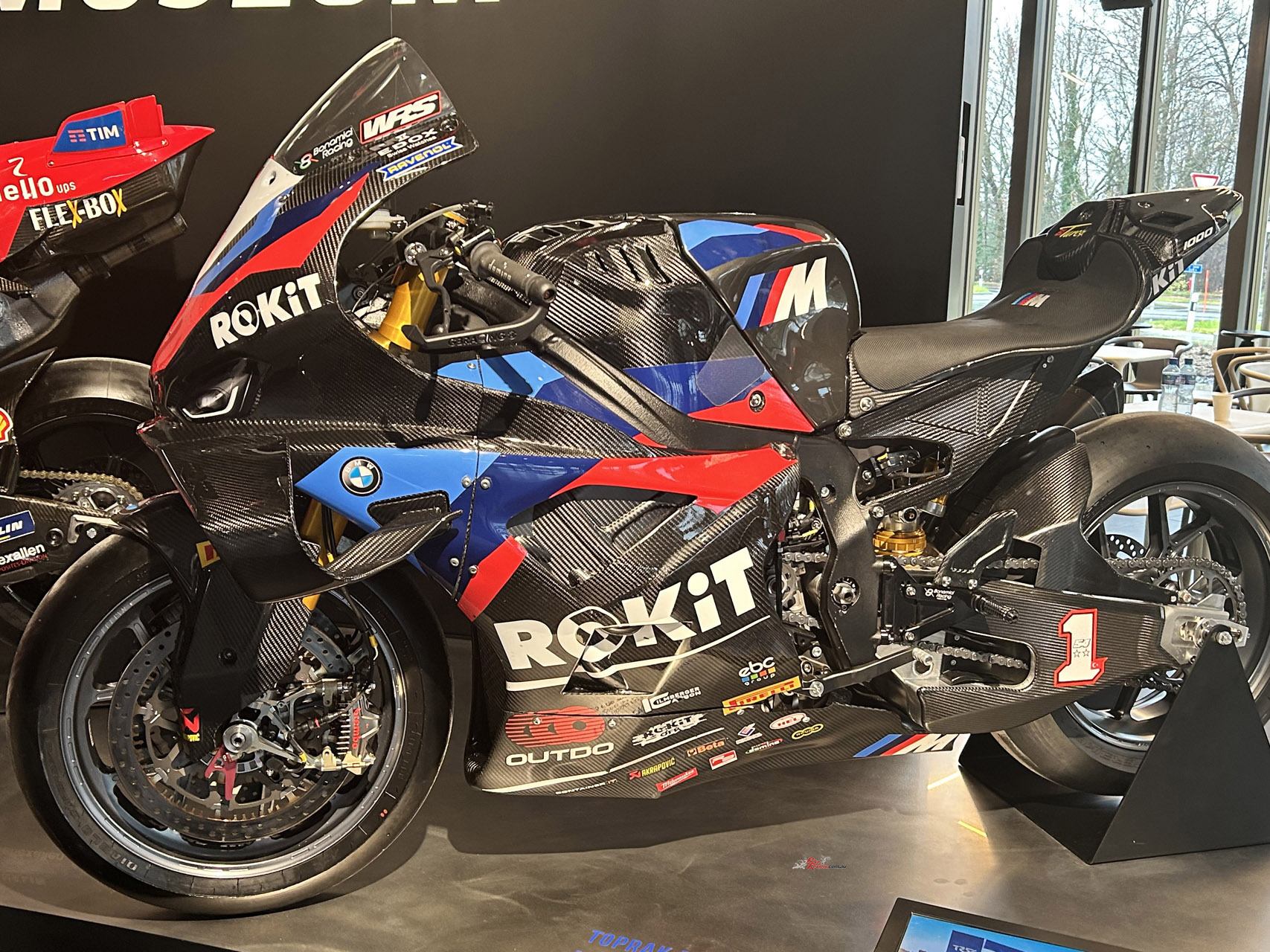
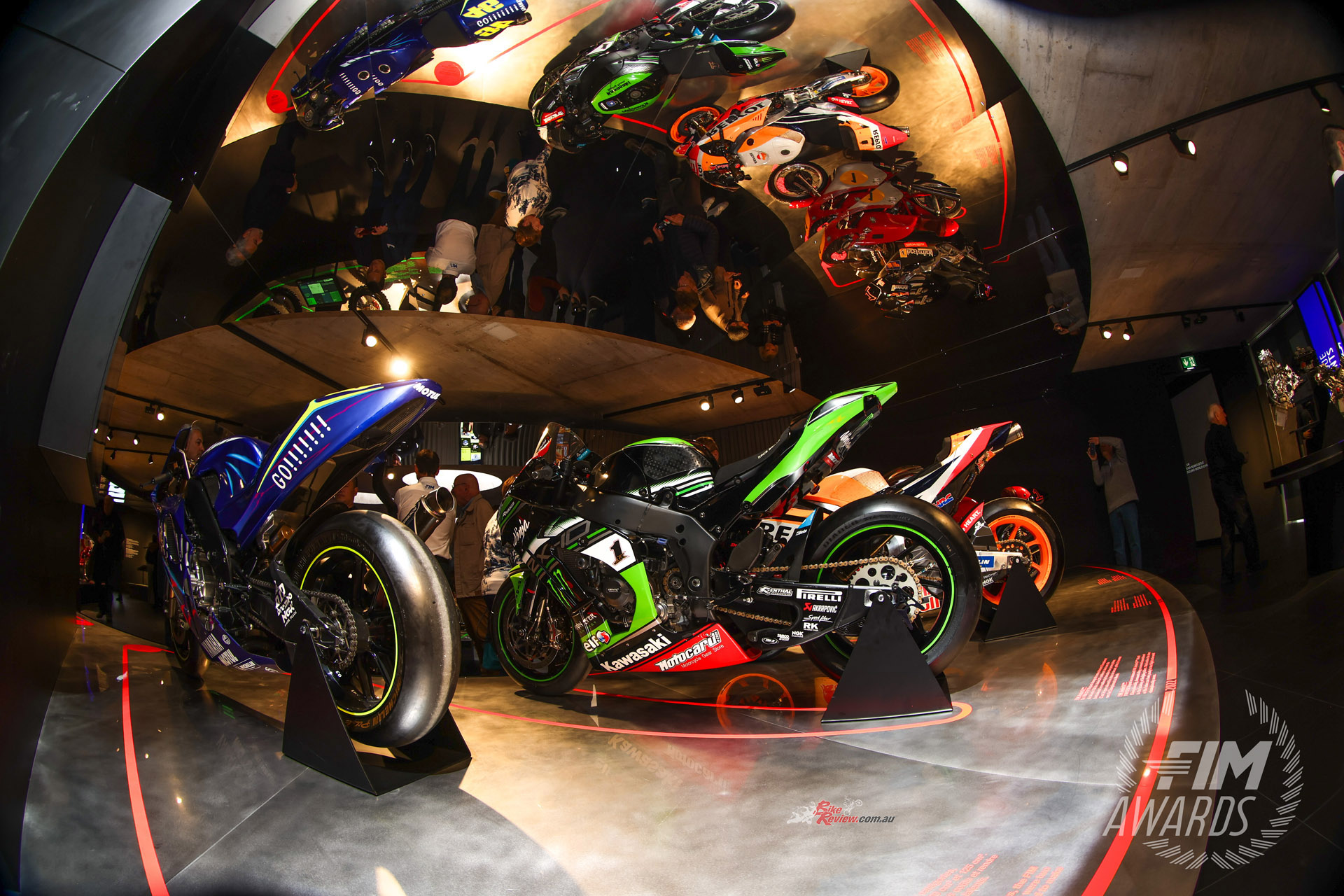
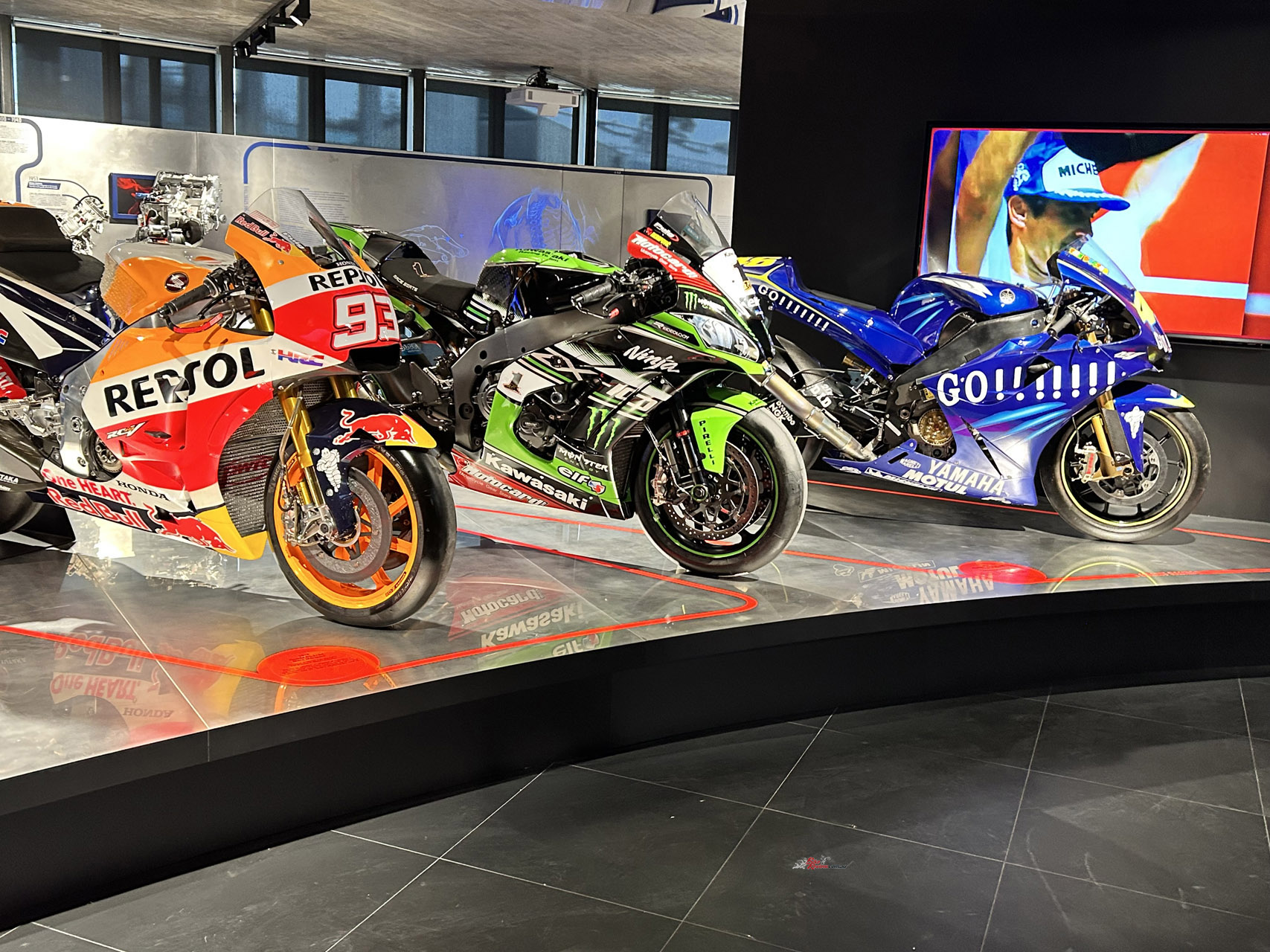
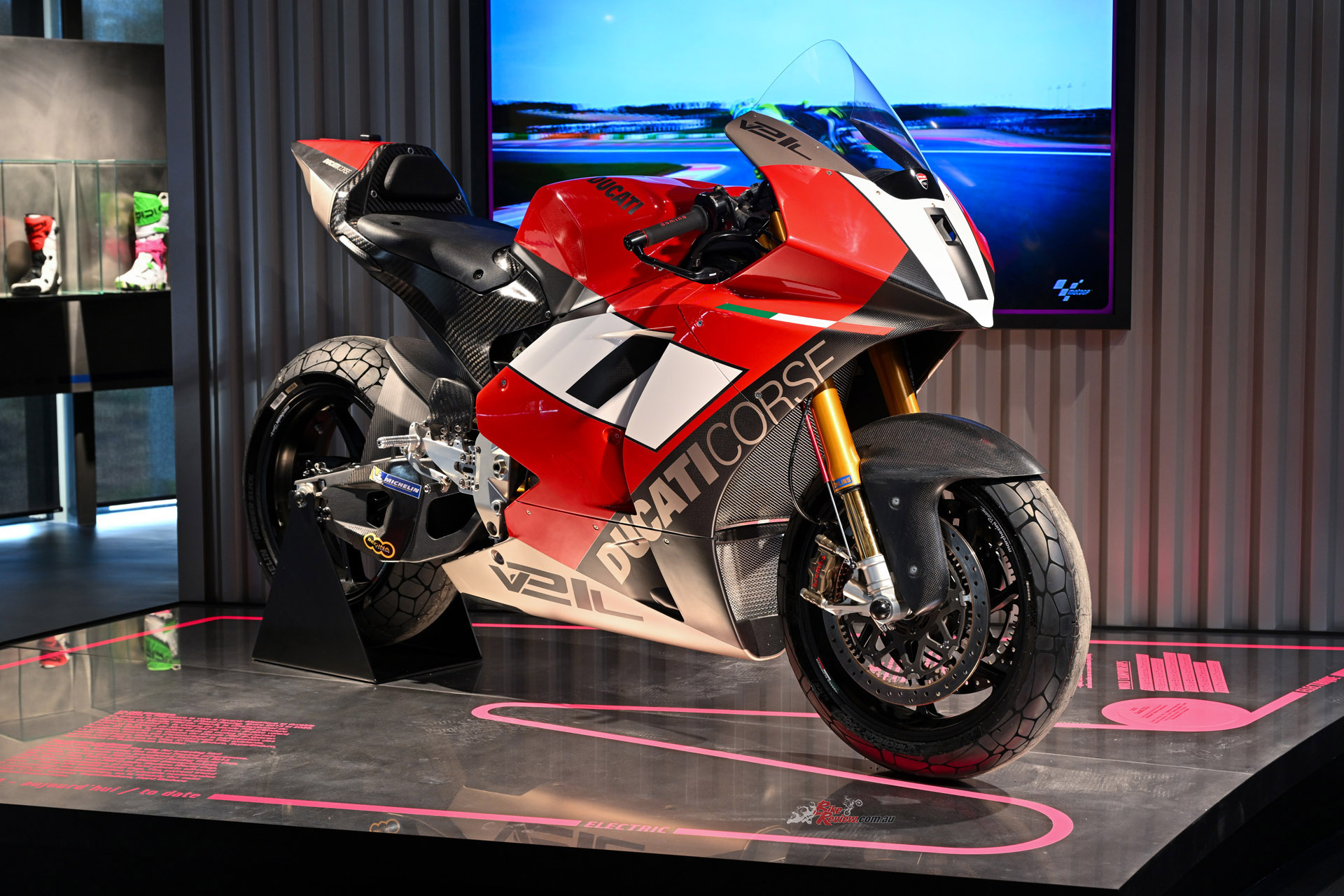
These are headed by the Ducati on which Marc Márquez won the 2025 MotoGP World title – but also on show in a separate part of the Museum is the 2016 Honda RC213V on which the Spanish superstar scored one of his six World Championship victories with the Japanese company, before switching to Ducati in 2024.
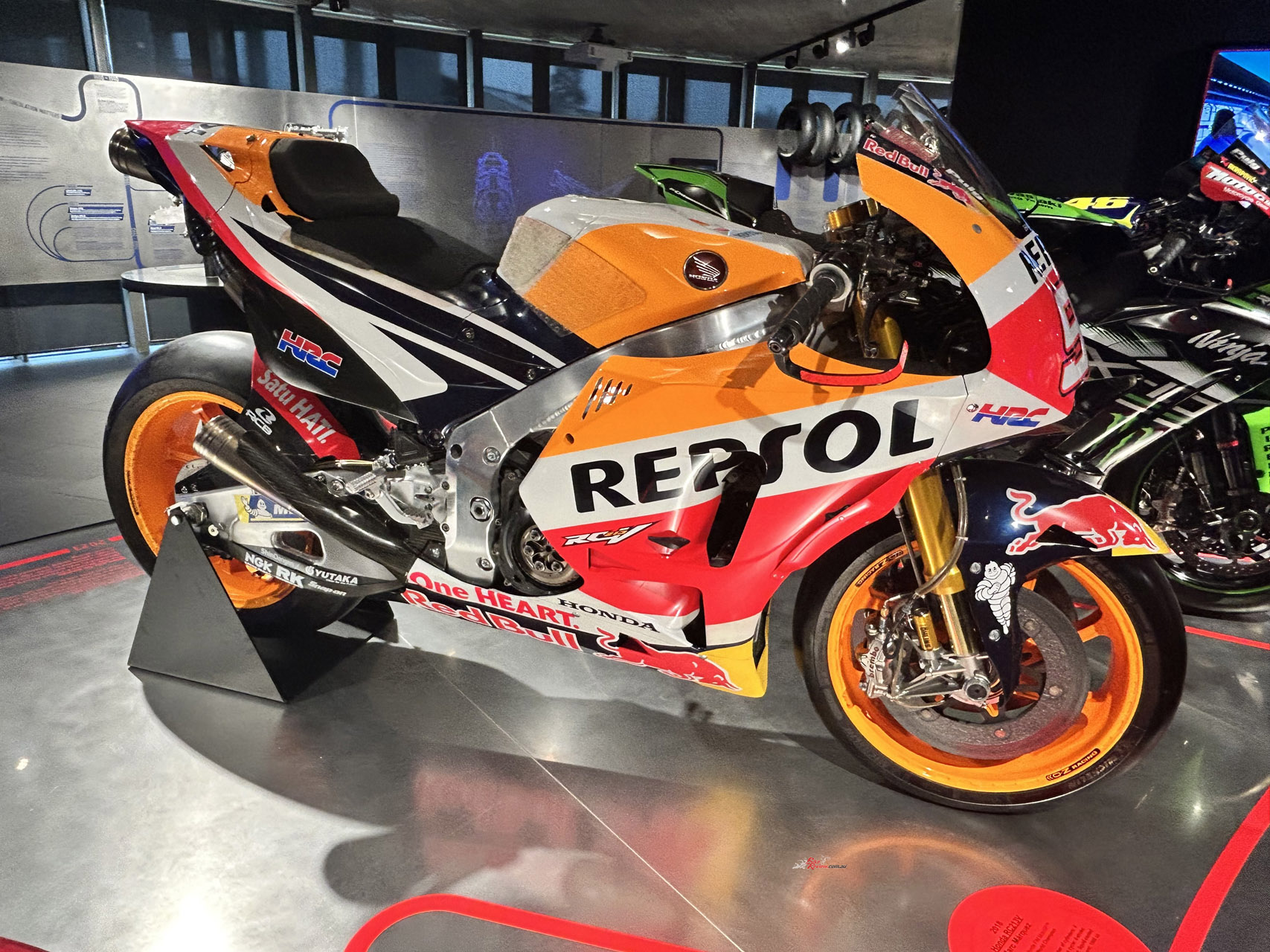 It’s worth underlining that visitors can get up close and personal with all the bikes on display, for there are no ropes or barriers preventing you from closely examining external details of each machine – but just look, don’t touch! These bikes will be replaced at the end of each year by that season’s new crop of World title-winning machines.
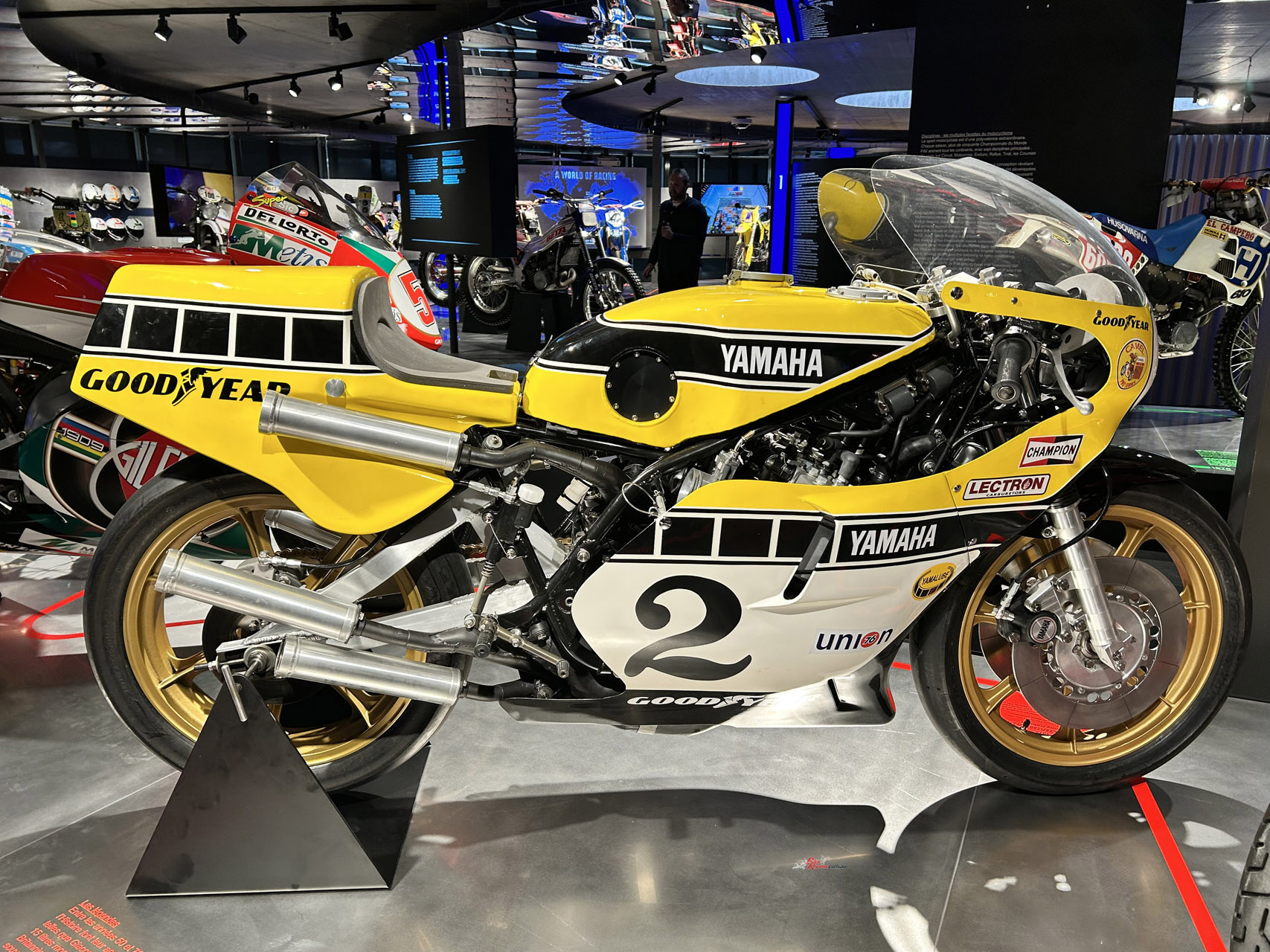
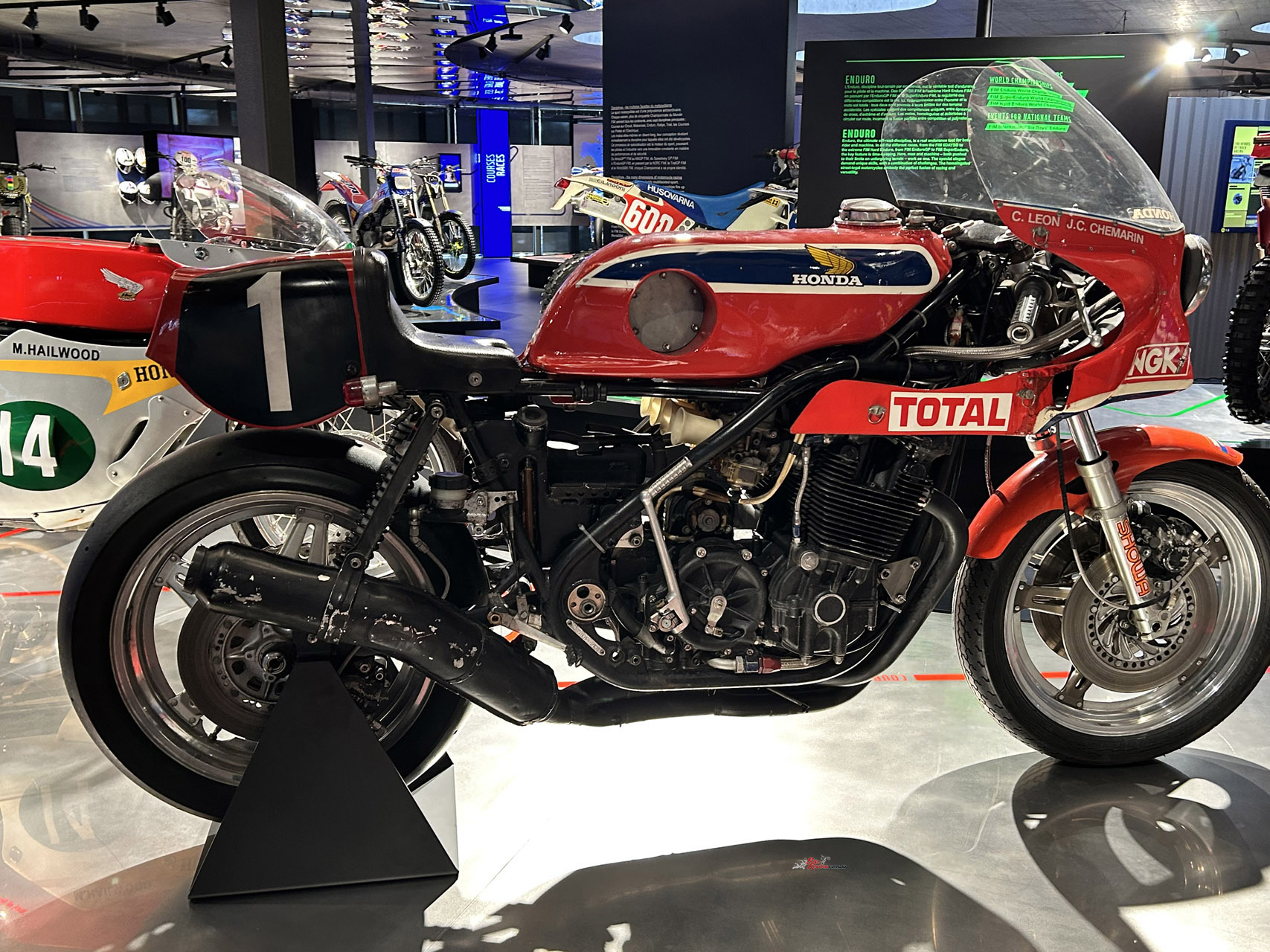
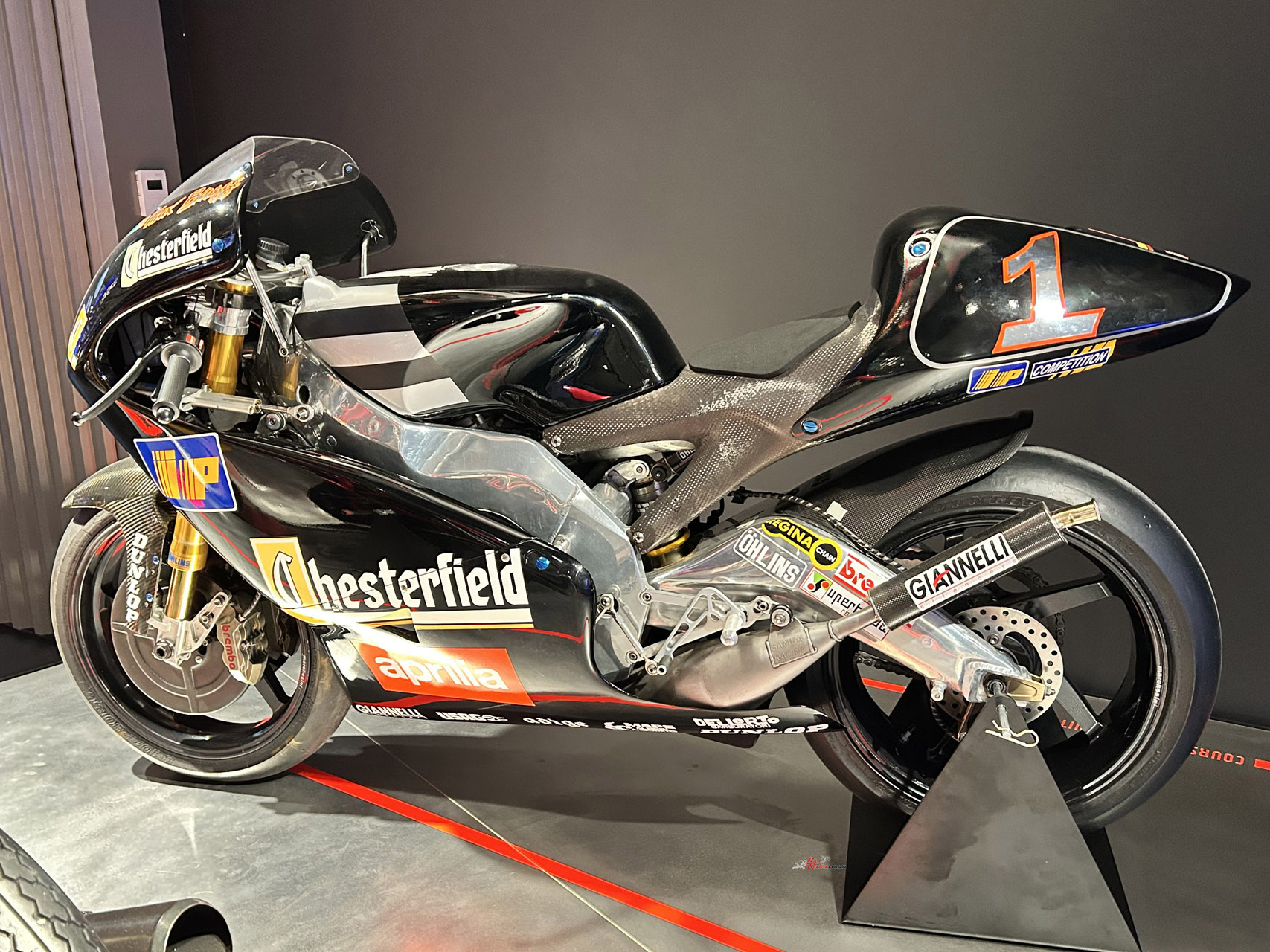
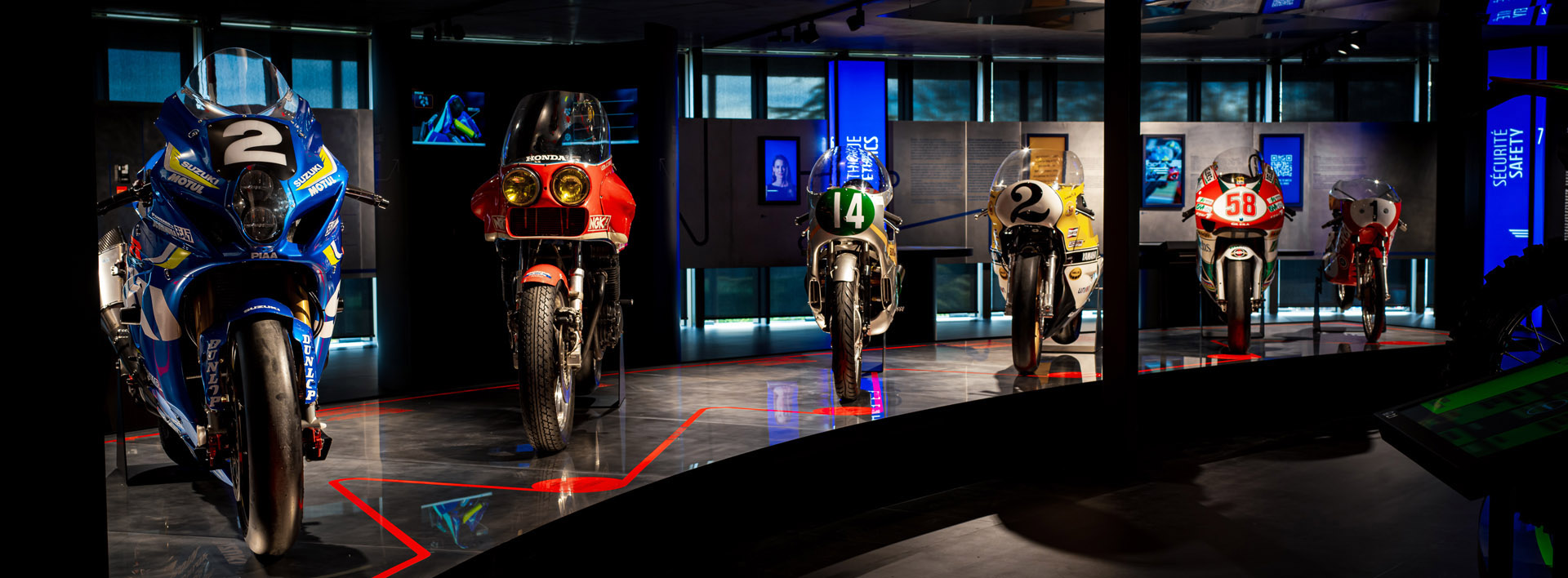
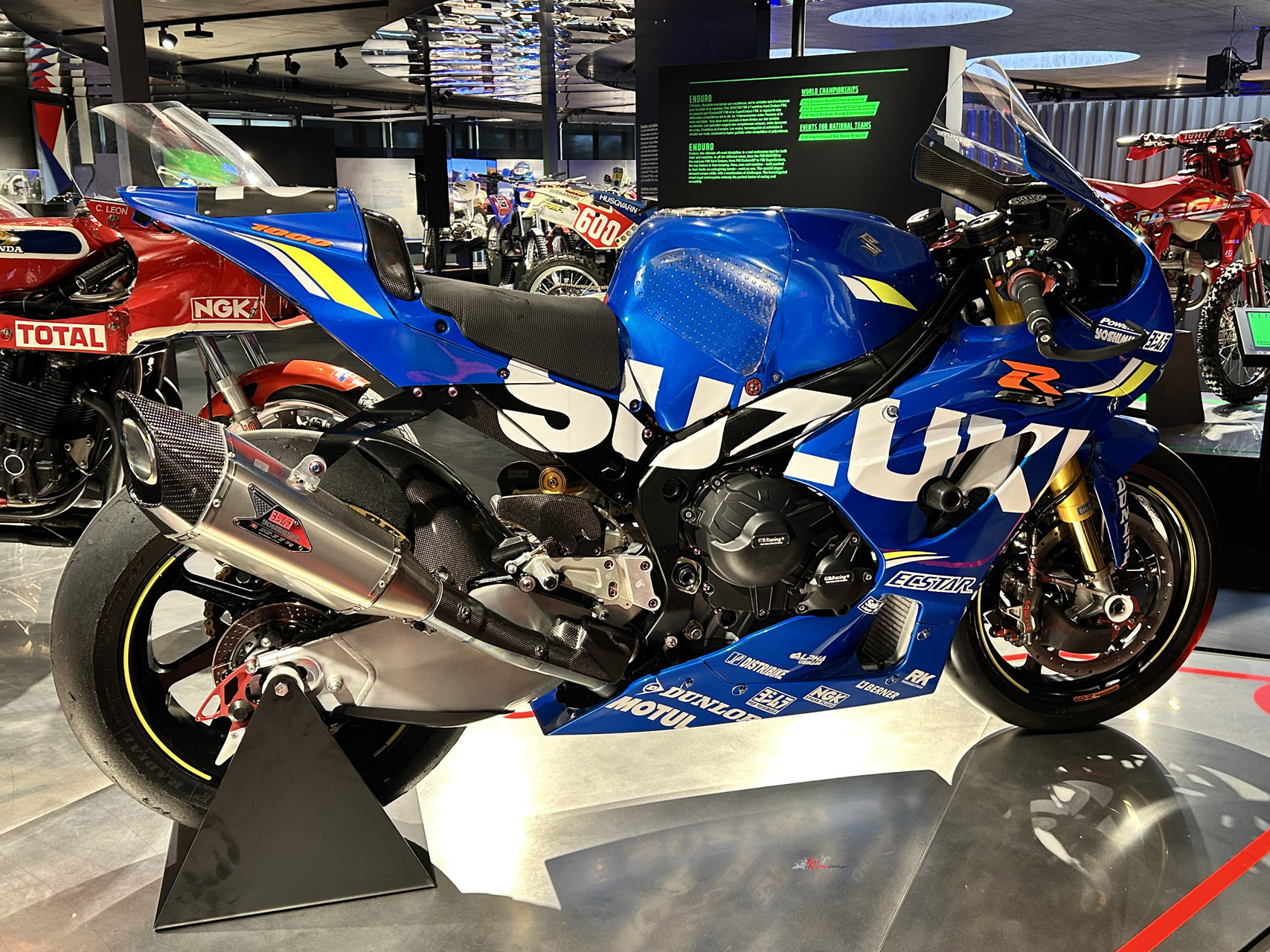
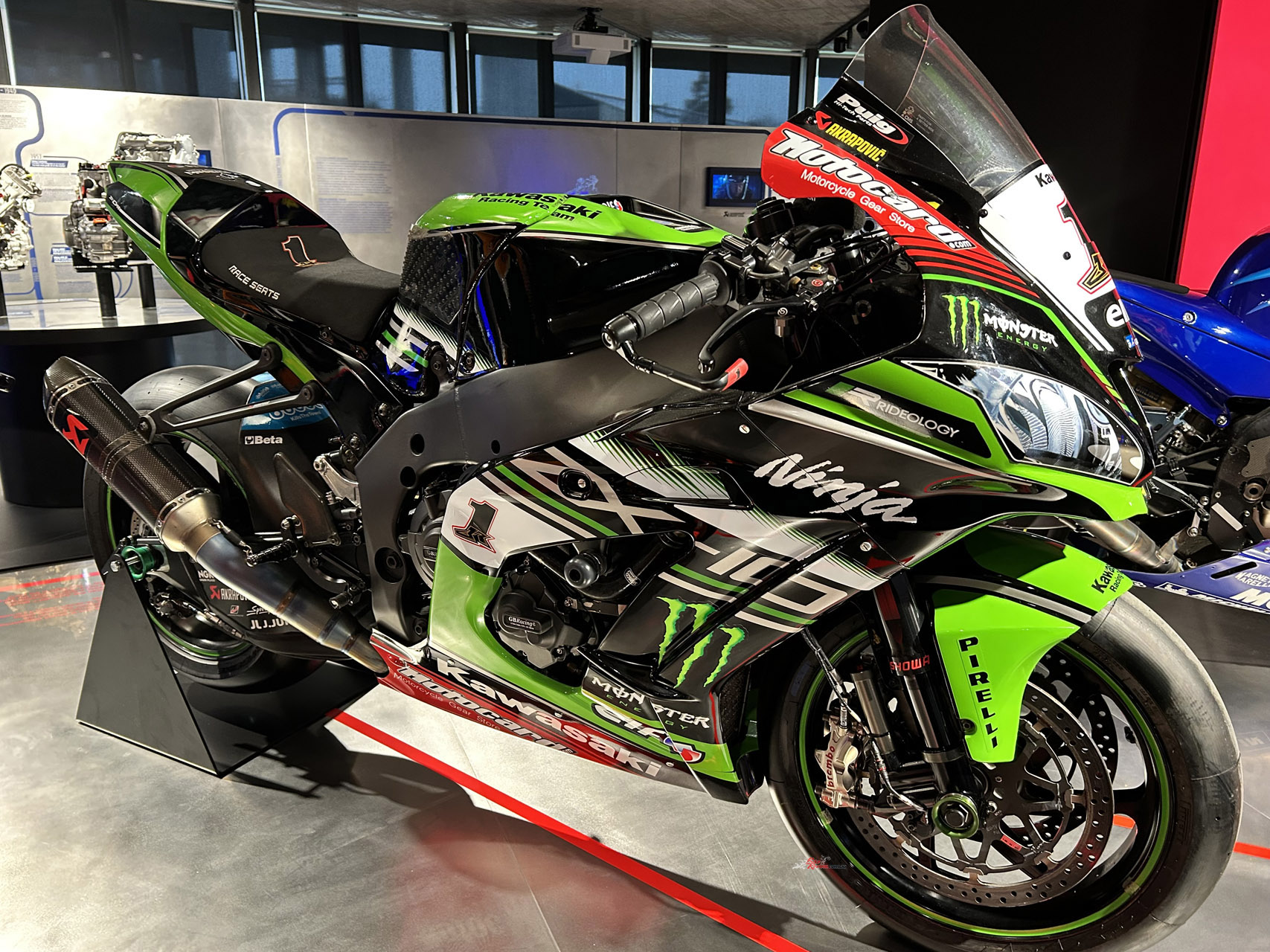
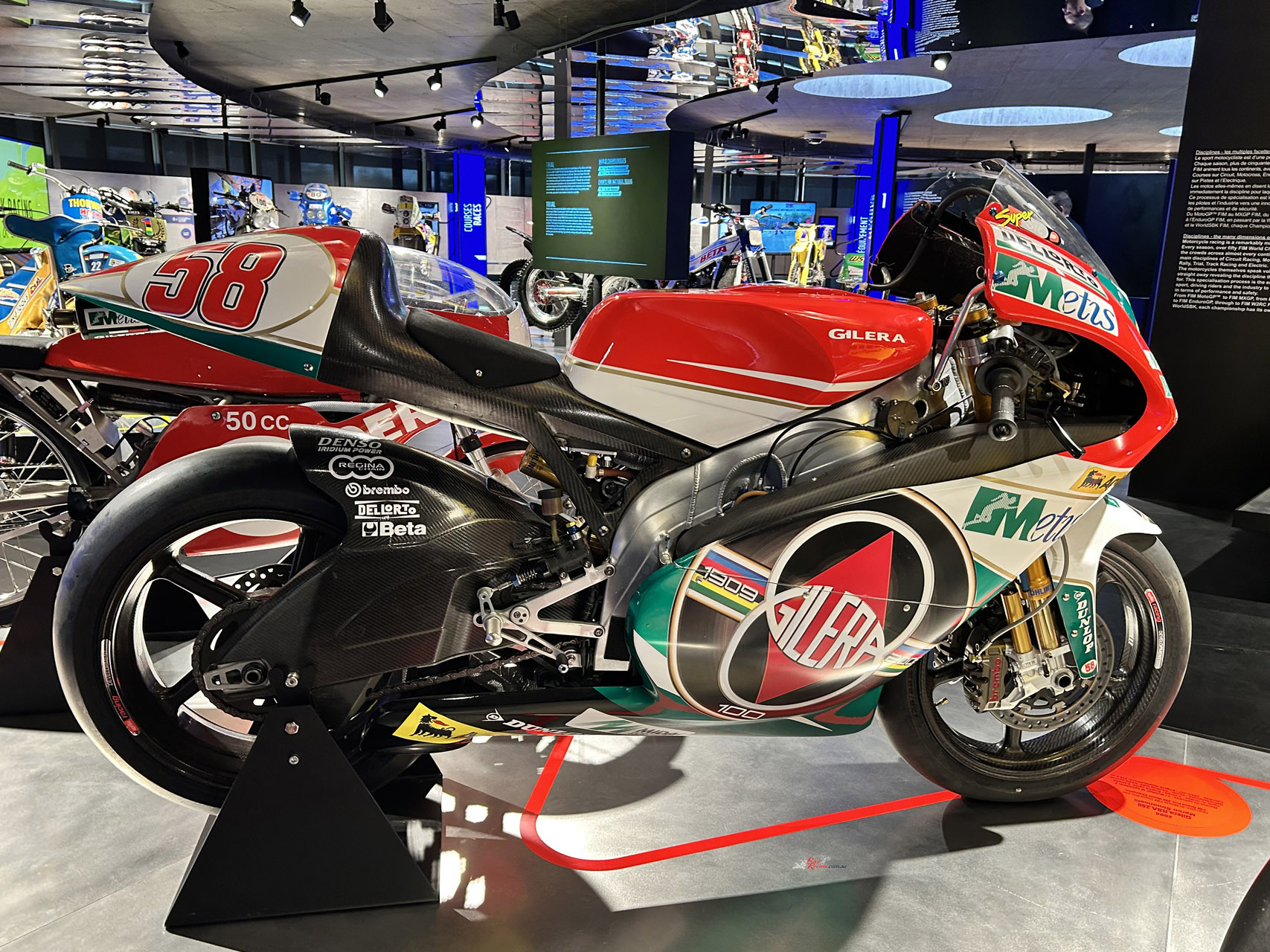
Other multi-World champion racers from the recent past on display include the 1995 Aprilia RS250V on which Max Biaggi won the second of his four 250GP World titles, the 1978 Honda RCB1000 of Christian Léon and Jean-Claude Chemarin which became the undefeated champion of the European Endurance Championship for three consecutive years from 1976 to 1978, and Jonathan Rea’s 2016 Kawasaki Ninja ZX-10R, from the second year of his run of six consecutive World Superbike titles.
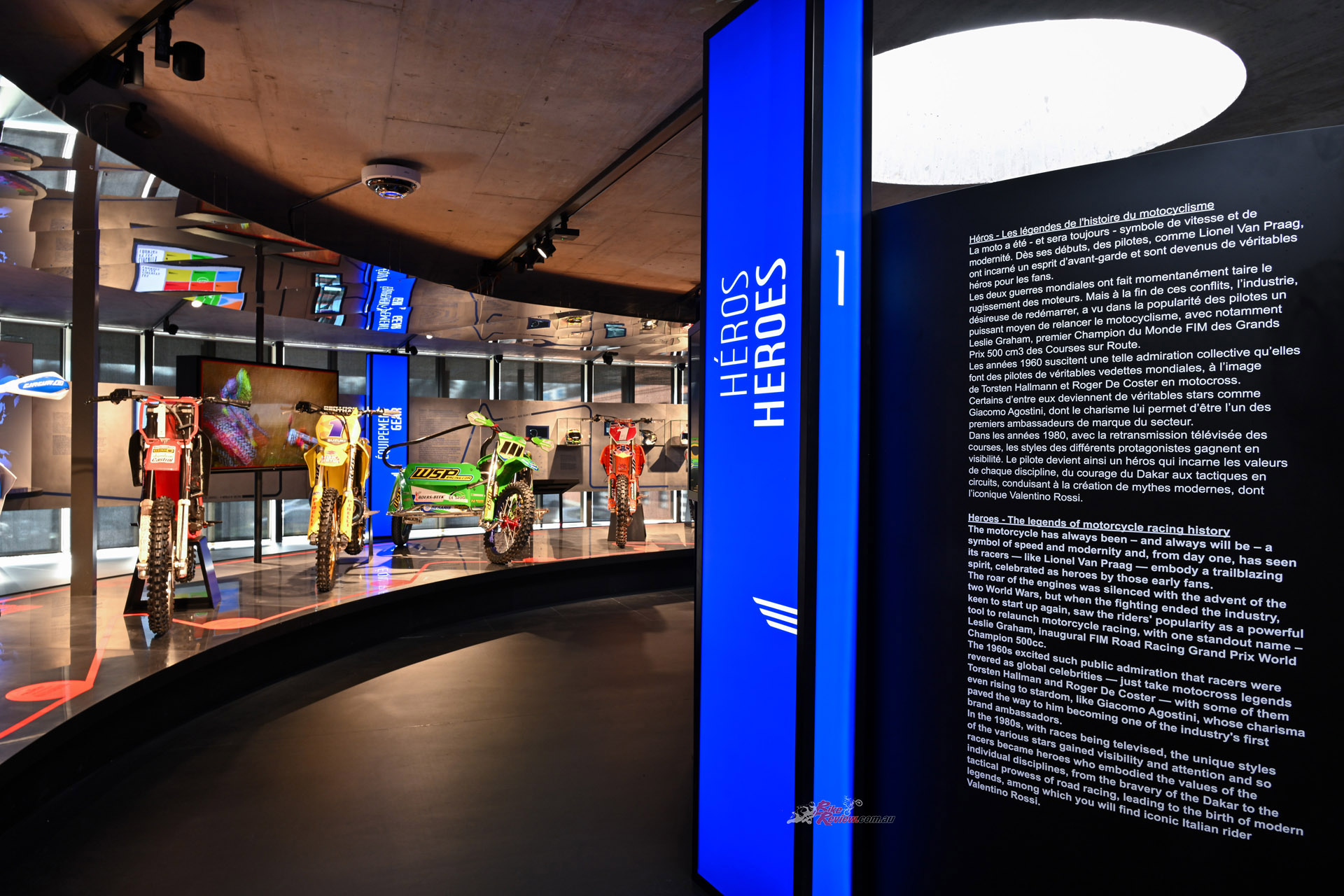
But this is far from being just a lineup of competition bikes, for there are numerous displays – some of them interactive – about the often unseen and even unknown elements comprising the conduct of two-wheeled sport (OK, there’s one Sidecar three-wheeler on display!). “The Museum is structured around three core aspects — Heroes, Technologies and From Races to Roads,” says Fabio Muner
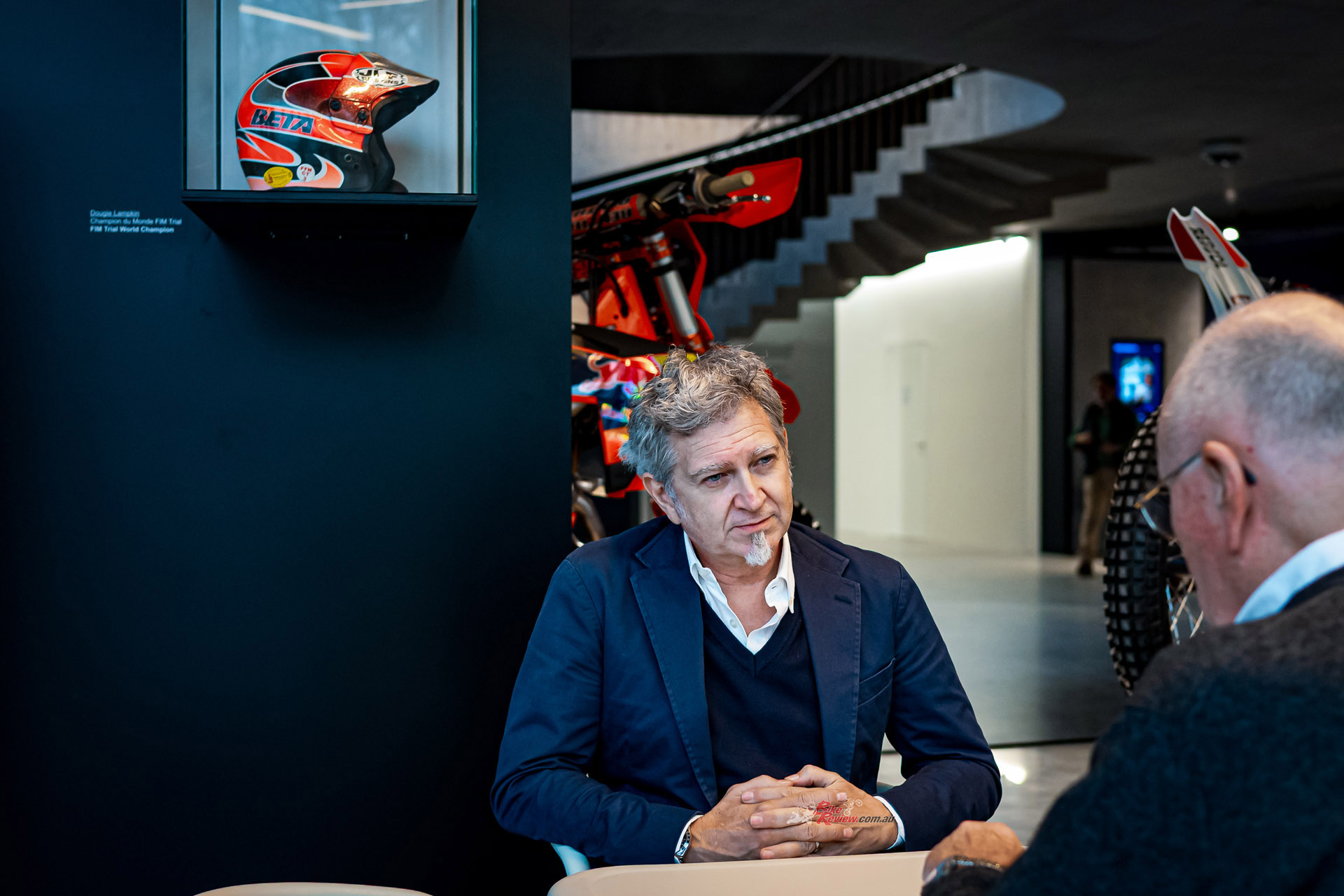 “So this approach places equal emphasis on the riders, the engineering breakthroughs and the way that racing innovation has filtered through into production motorcycles over the decades. We didn’t just want to showcase iconic motorcycles, but to tell the story of how racing has evolved, and how the FIM has contributed to safety and innovation through its direction of different strands of the sport”.
So there are separate modules showcasing different aspects of a rider’s safety equipment, in showing how helmets, leather suits, gloves etc. are developed, likewise anti-slip paint for racetracks, or racing tyre technology in all the different disciplines. Other areas are dedicated to recounting technological advances in racing, including engine and chassis development, and engineering solutions from different generations tracing the timeline of historical innovations up to today’s products.
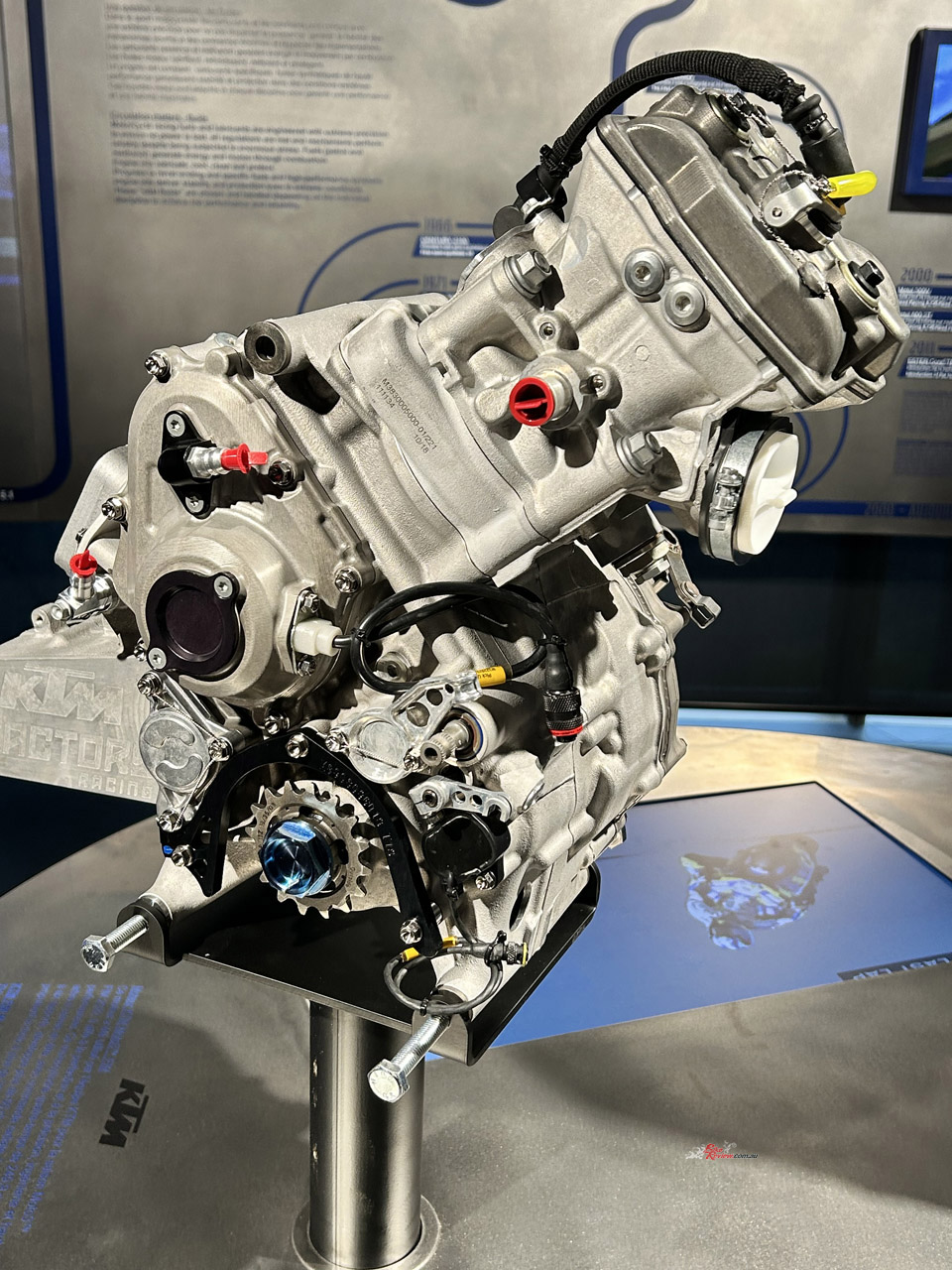
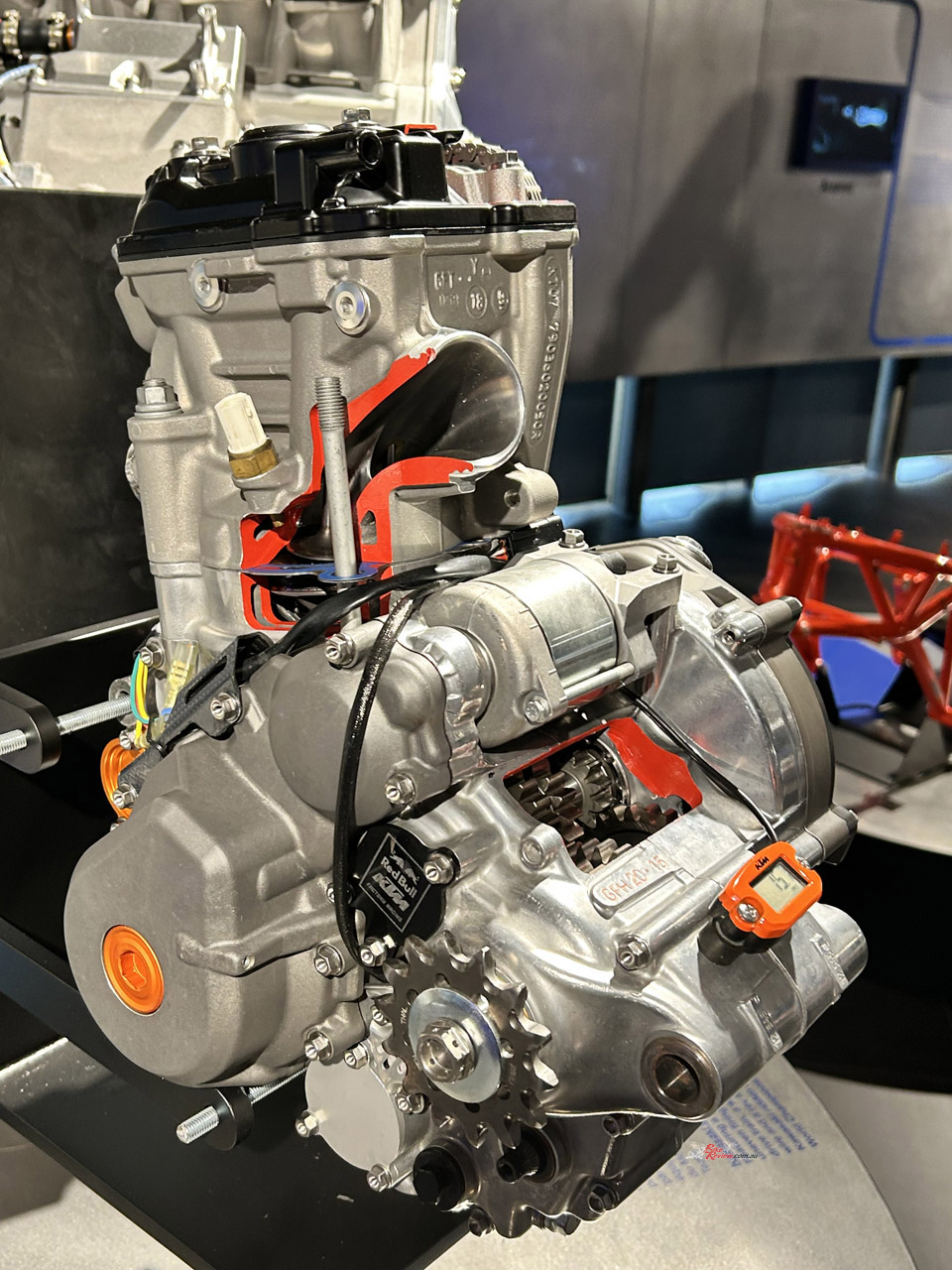
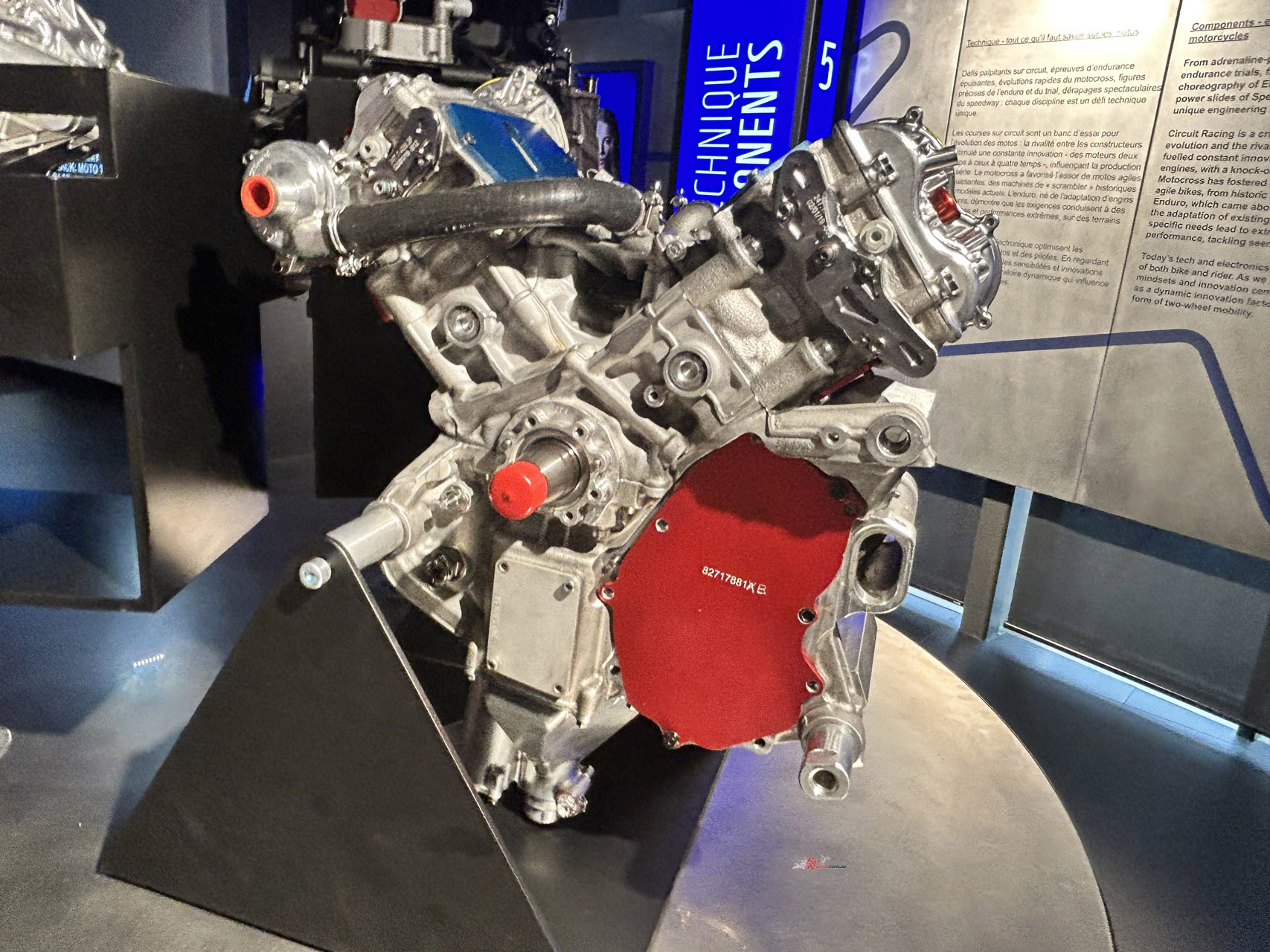
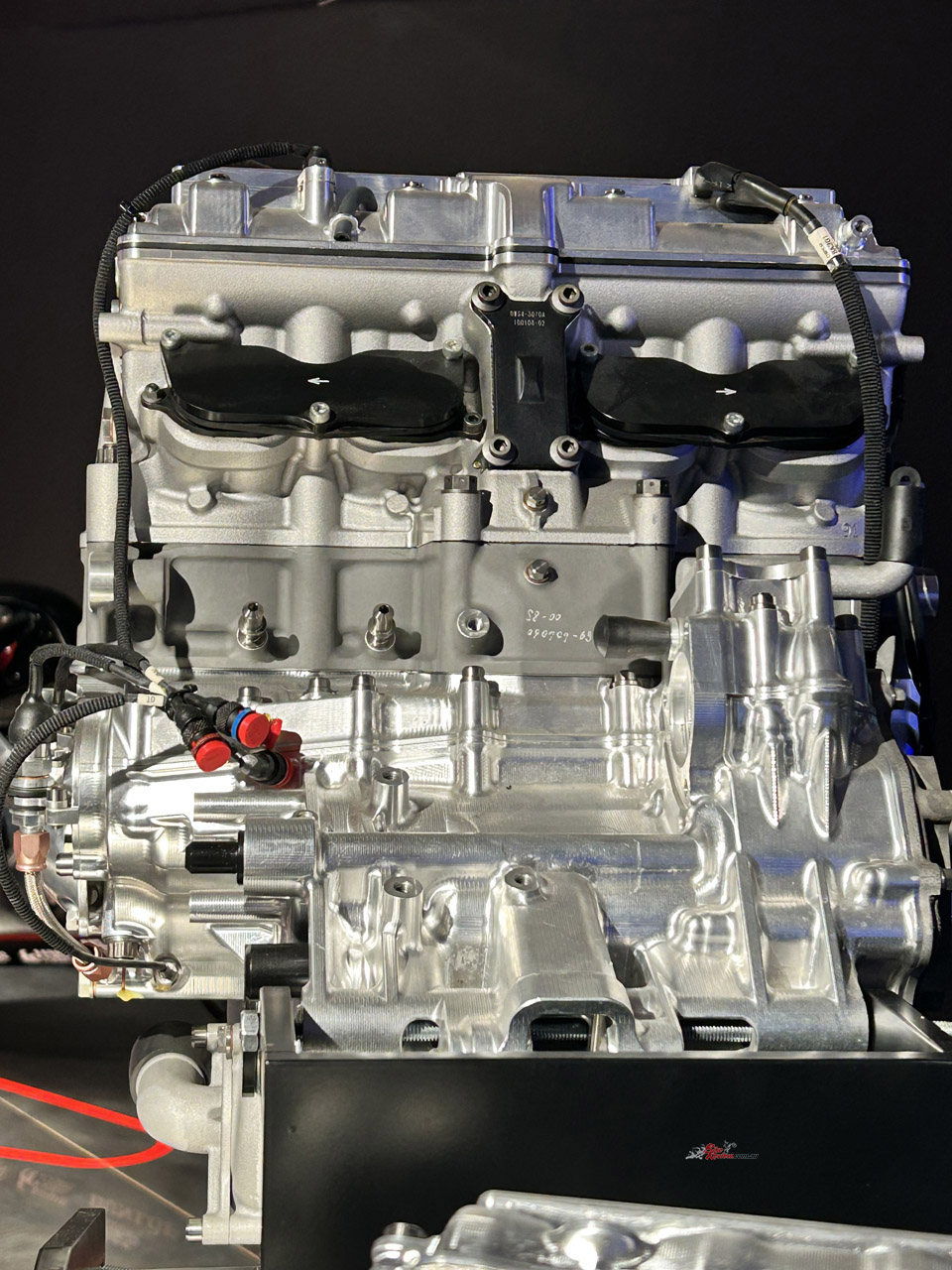
 Visitors can acquire an understanding of what it’s like to ride the tracks and race circuits of their choice via simulators provided by Triumph Motorcycles, which allow them to experience the thrills as well as the challenges of racing both World MX and MotoGP bikes. There’s a display of Akrapovič exhausts for different disciplines, as well as an array of standalone race motors which very topically includes a contrast of two different routes to designing.
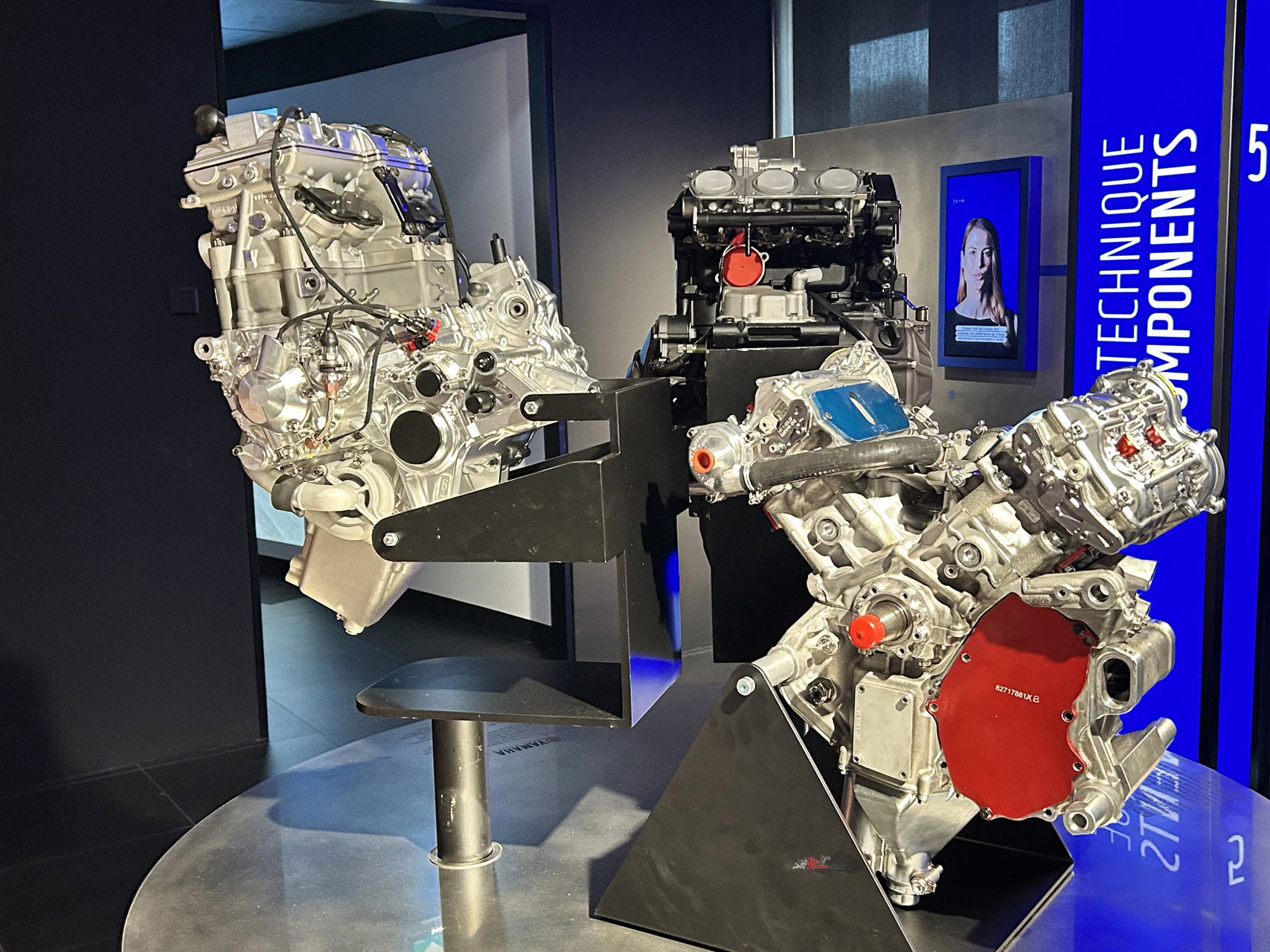
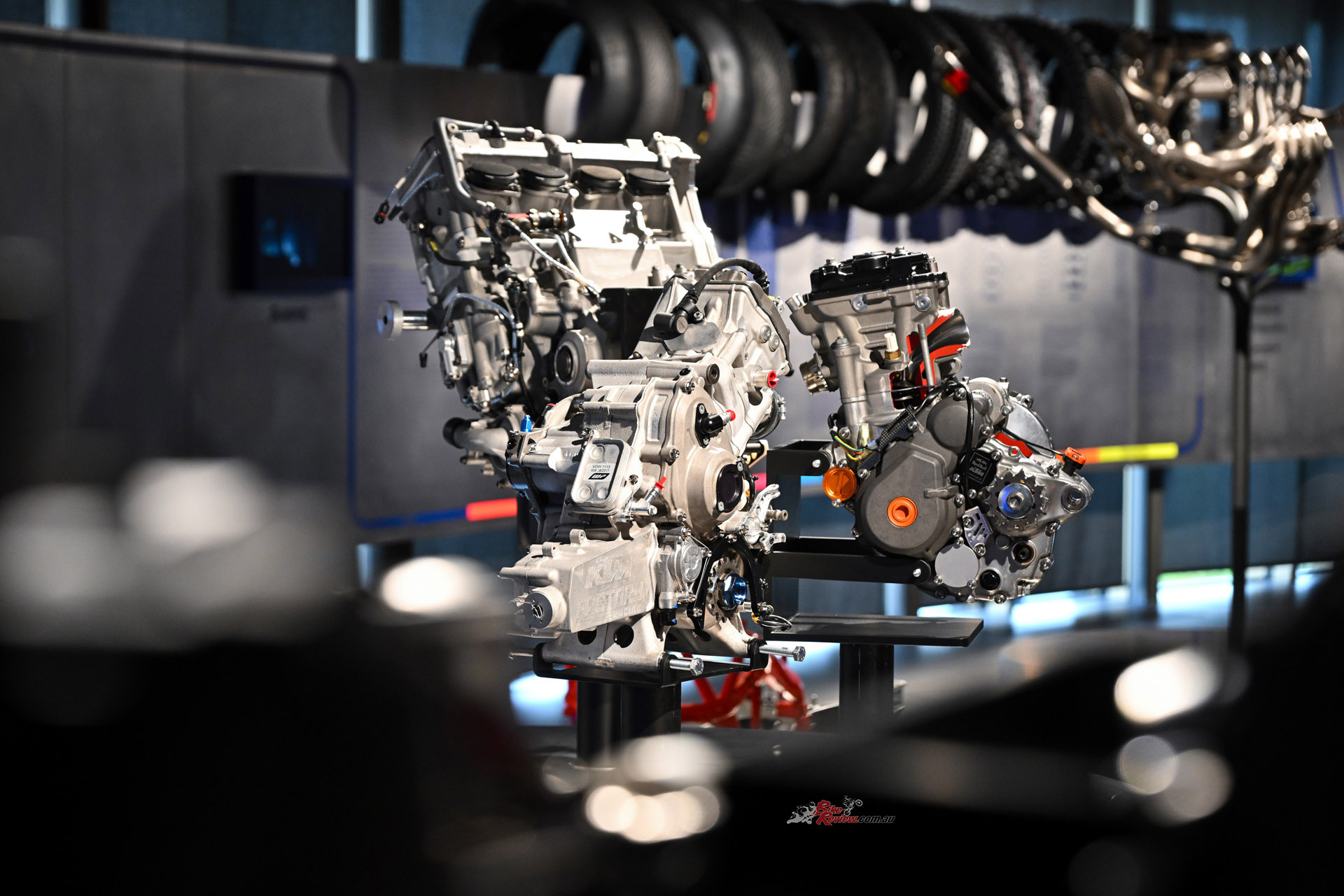
A title-winning MotoGP engine – a 2010 Yamaha 800cc in-line four and a 2021 Ducati MotoGP V4 engine. And various displays delving into areas such as aerodynamics, and electronic systems like traction control, underscore the importance of racing as a research laboratory, and how the extreme demands of competition drive the development of technologies which are eventually transferred to everyday road bikes.
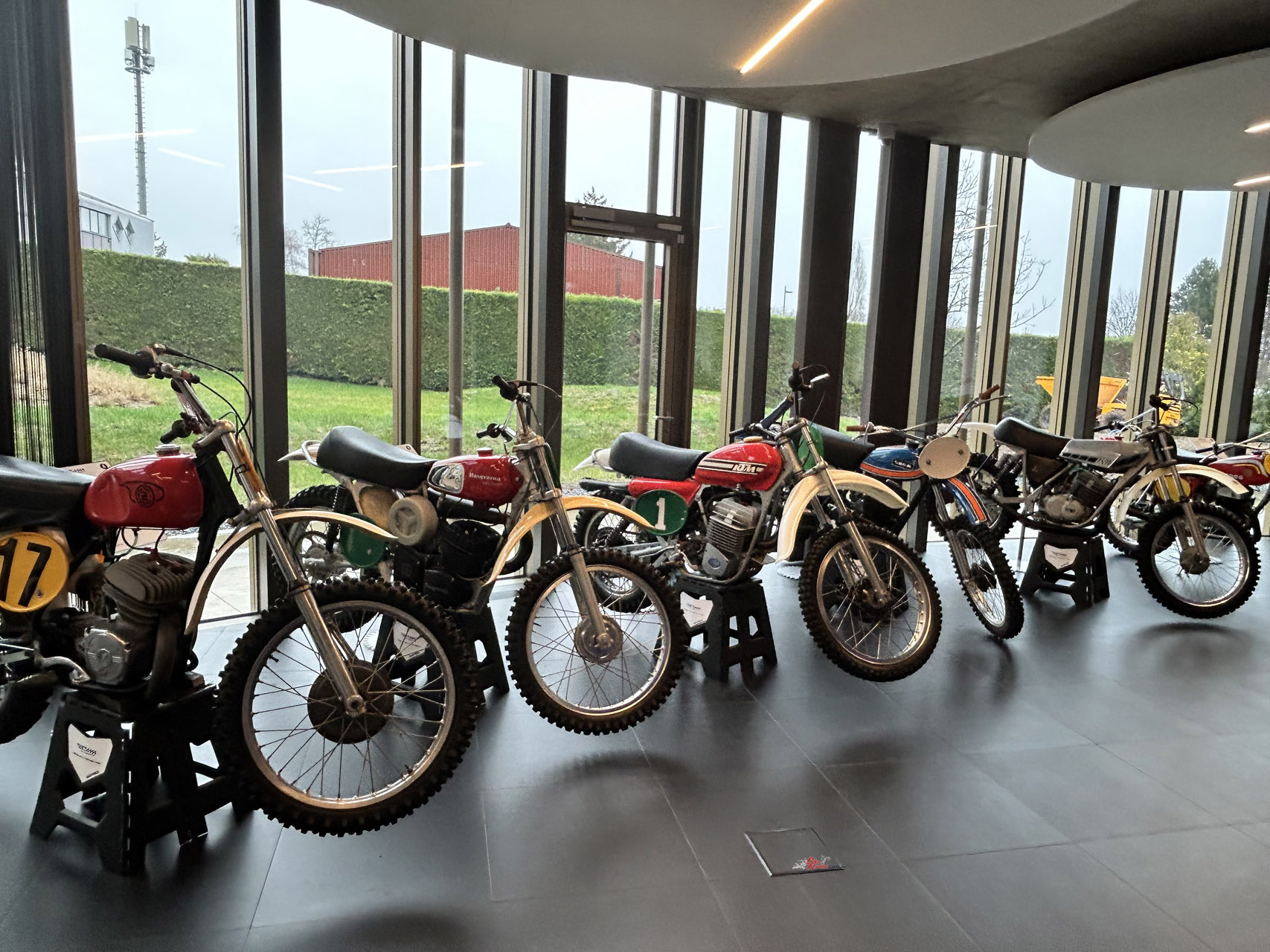
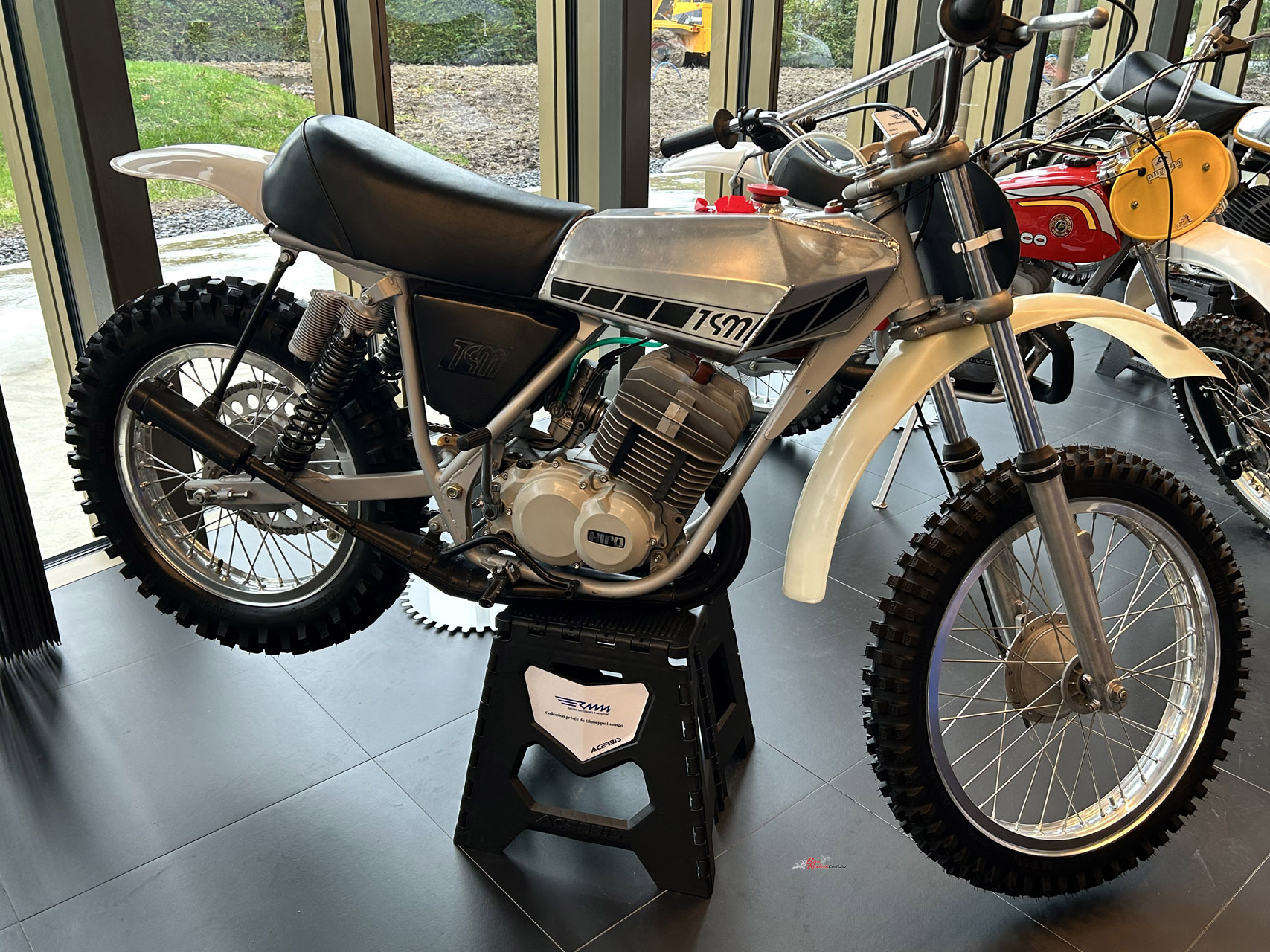
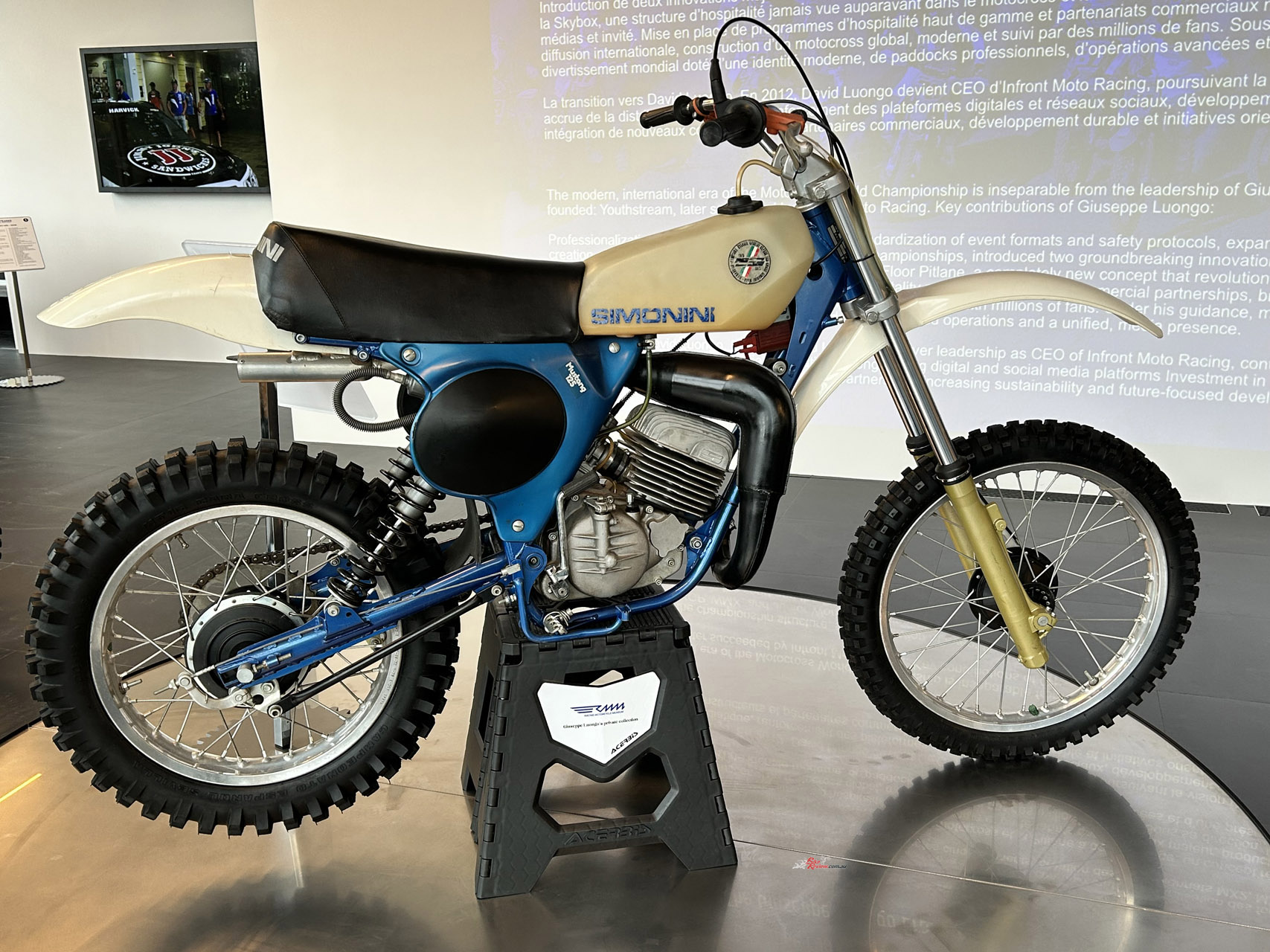
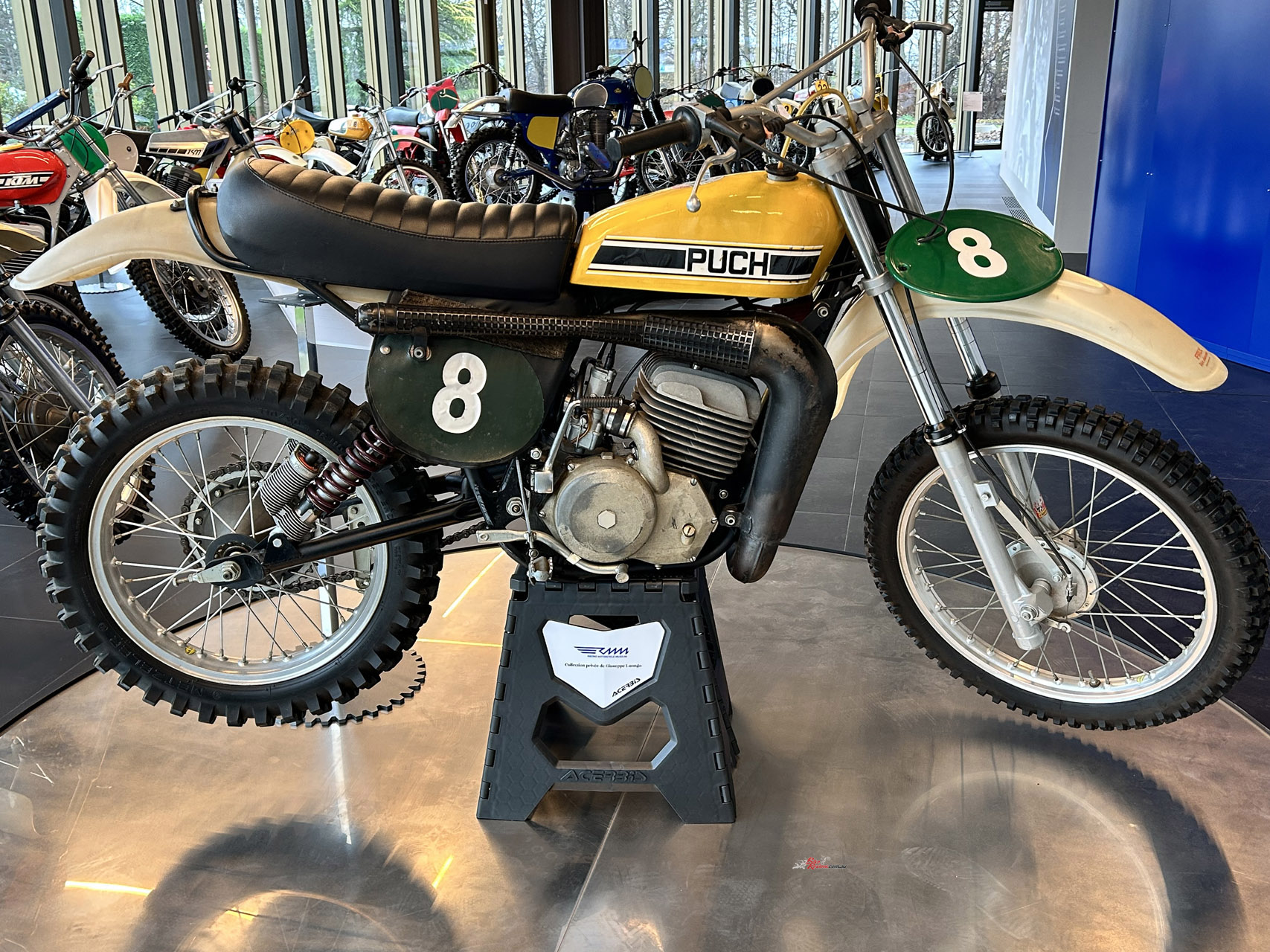
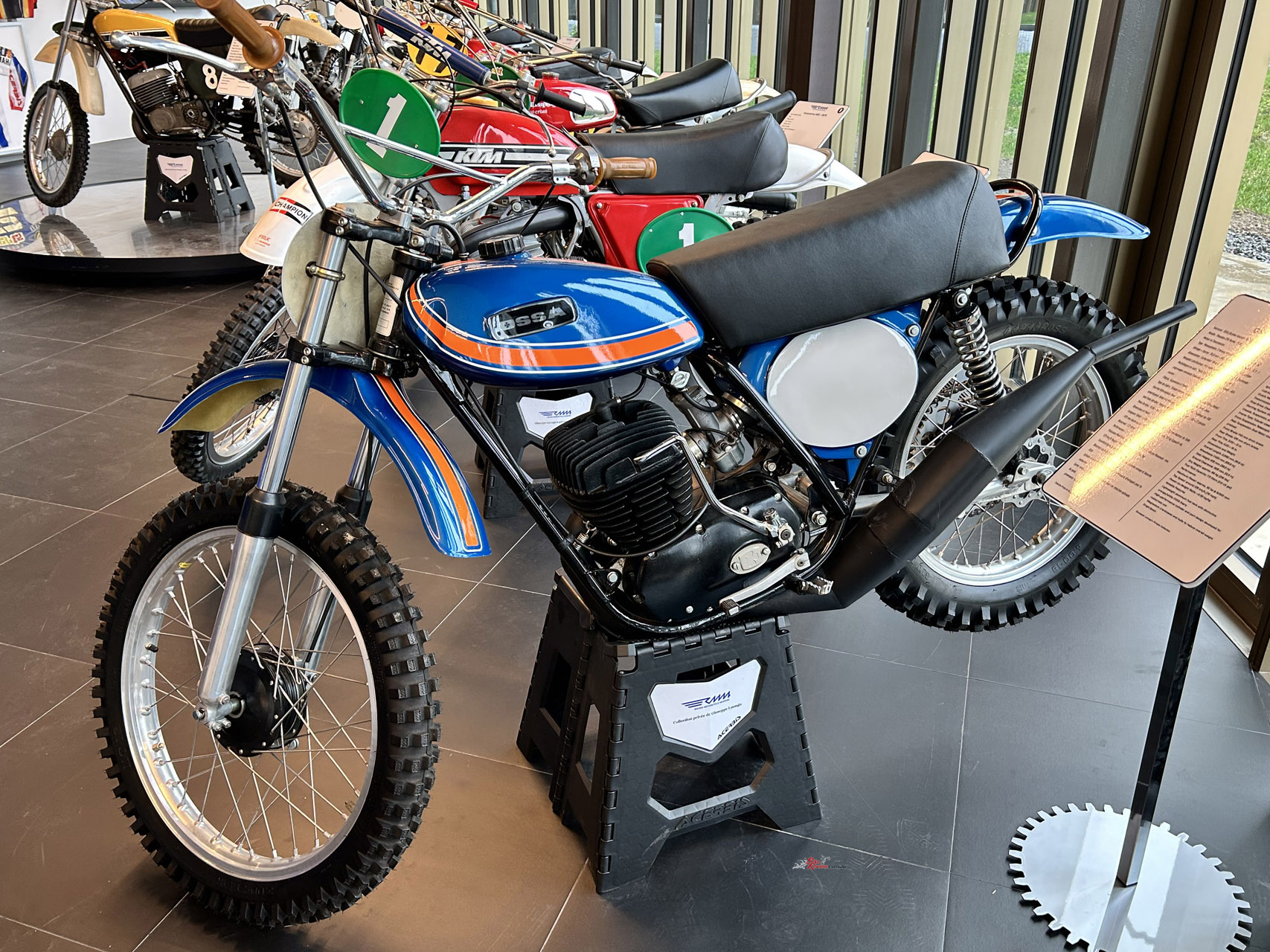
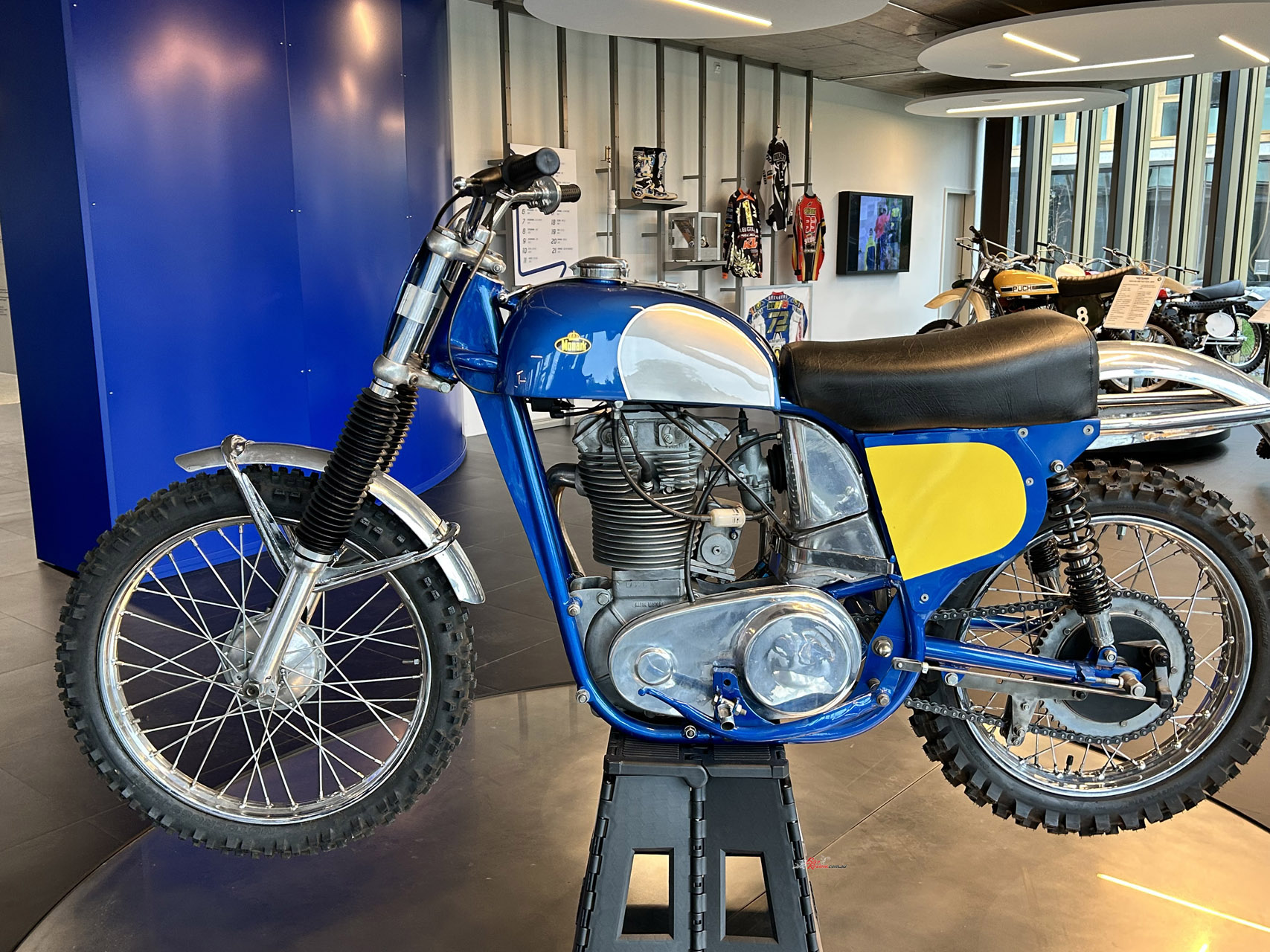
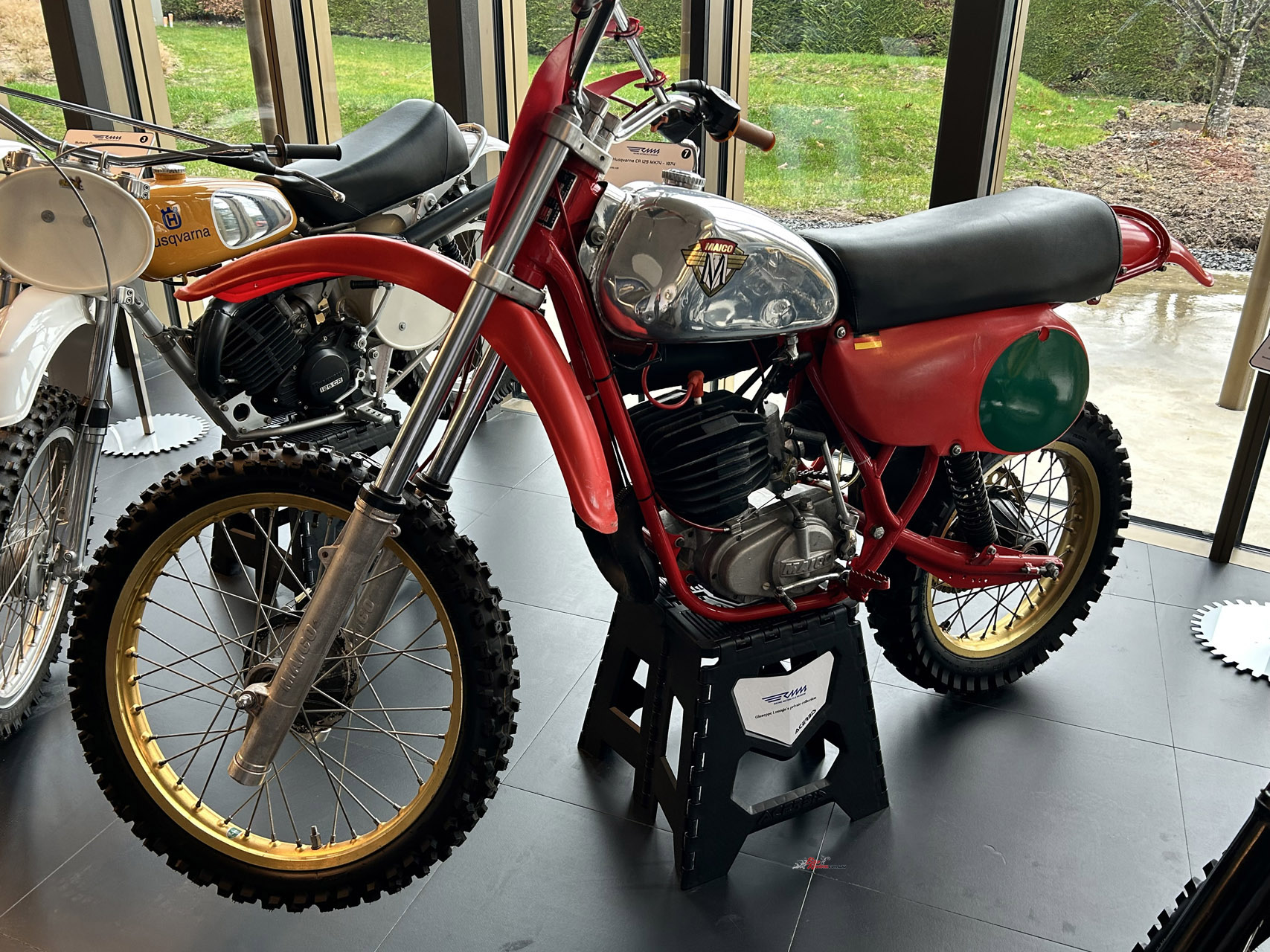
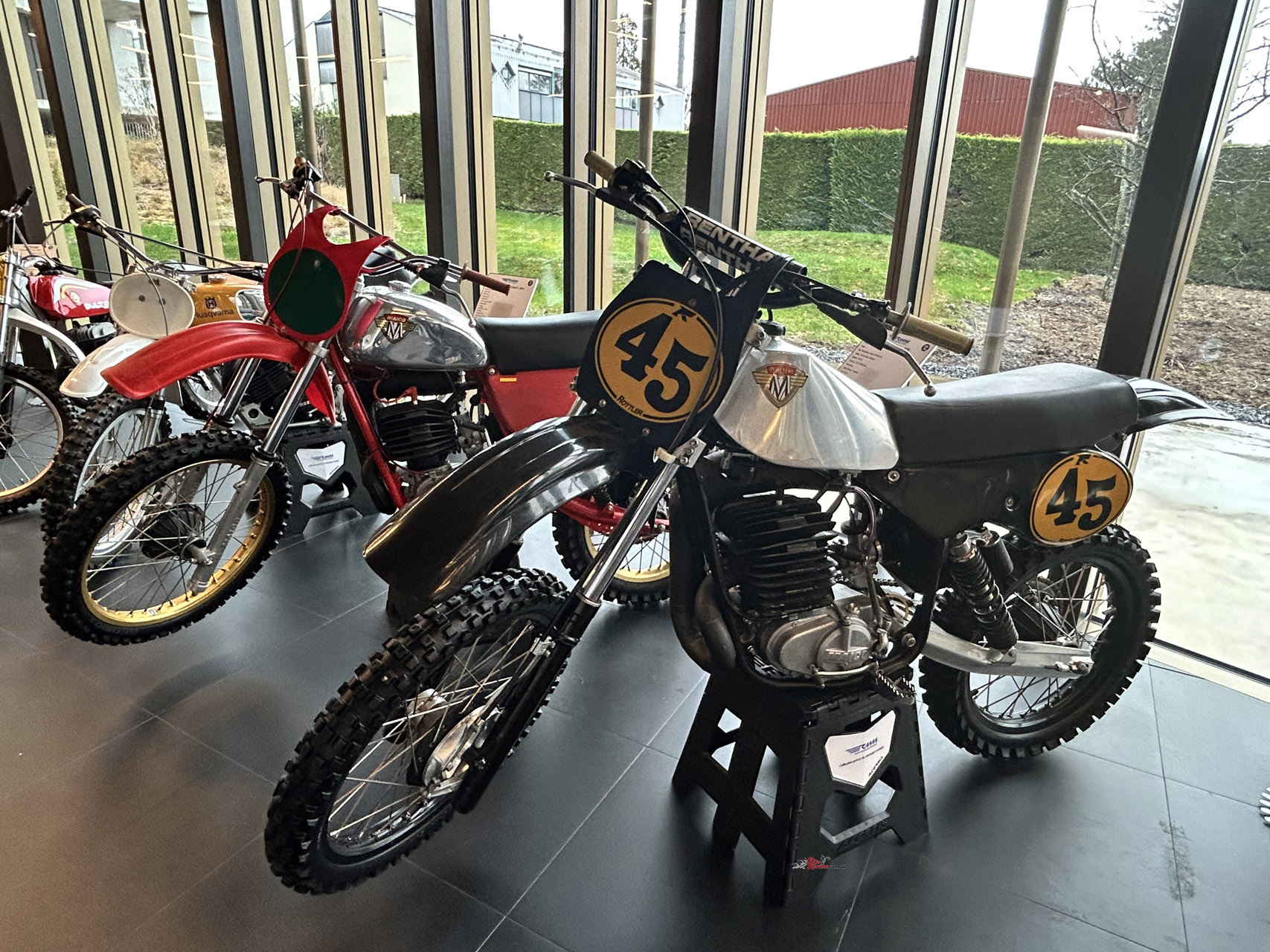
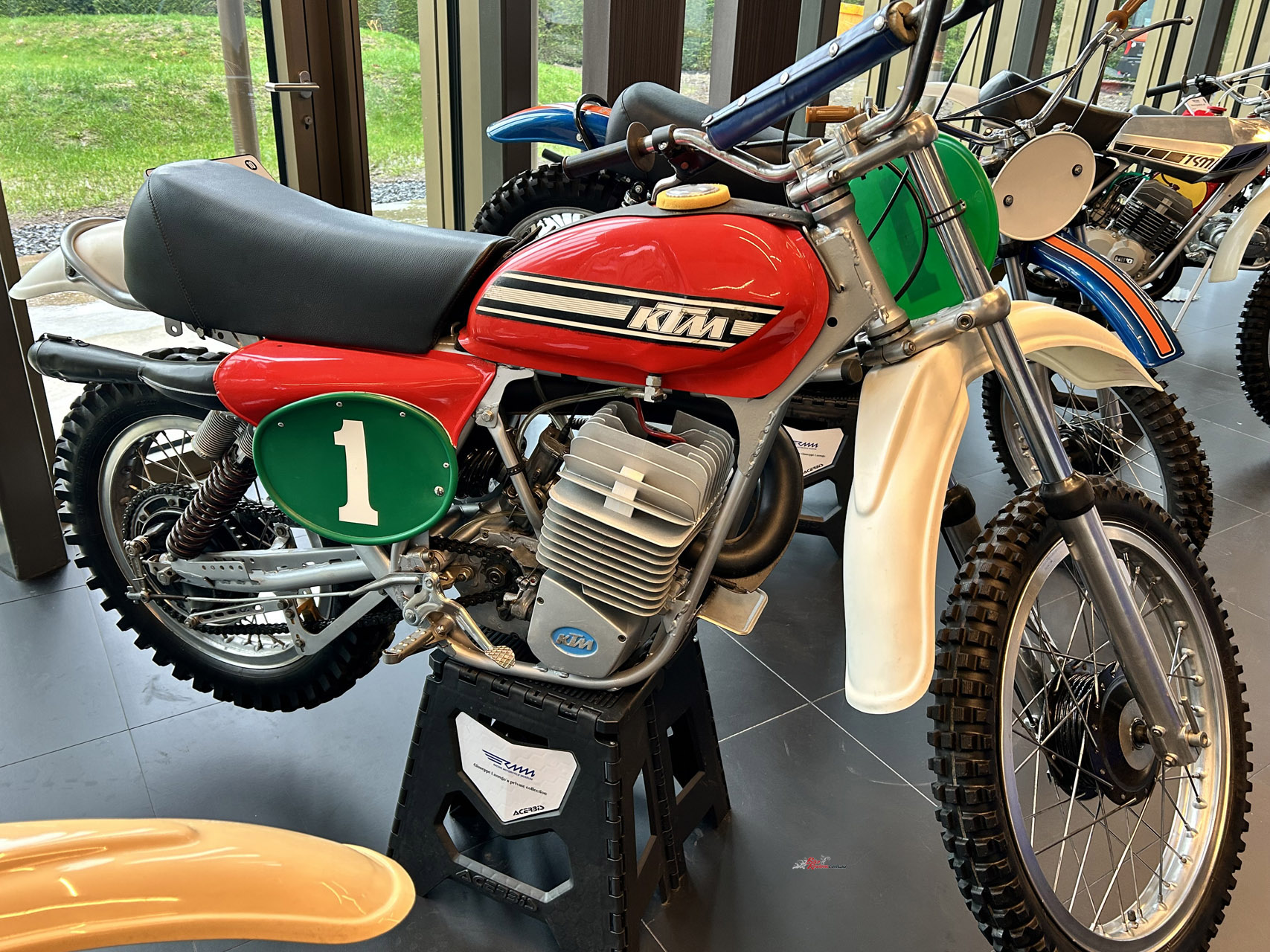
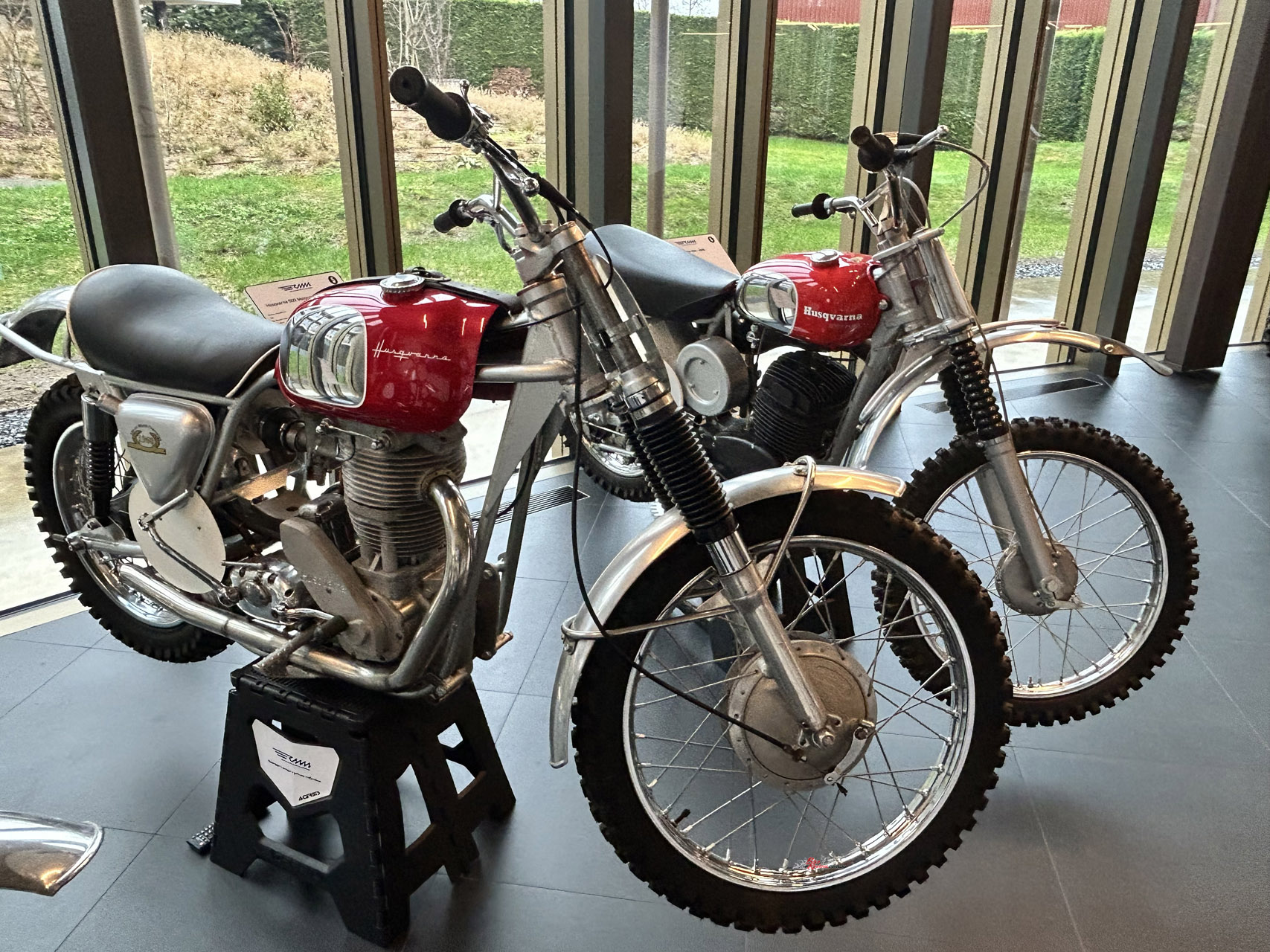
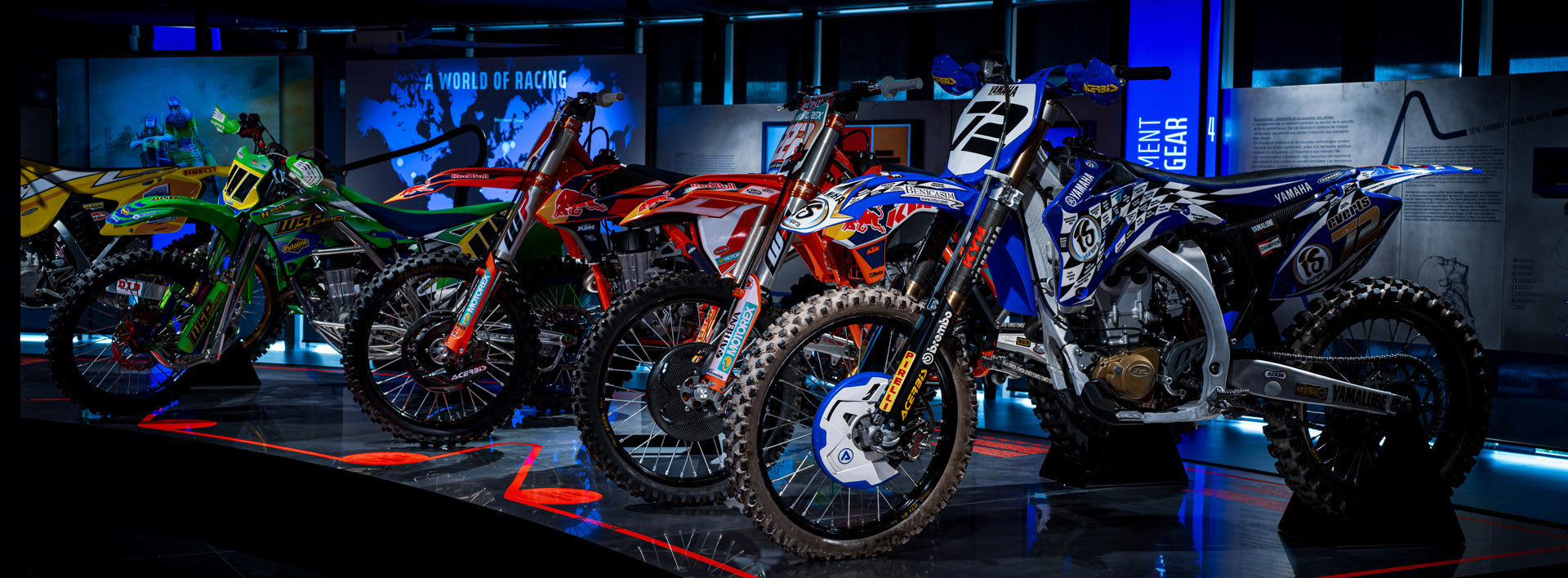
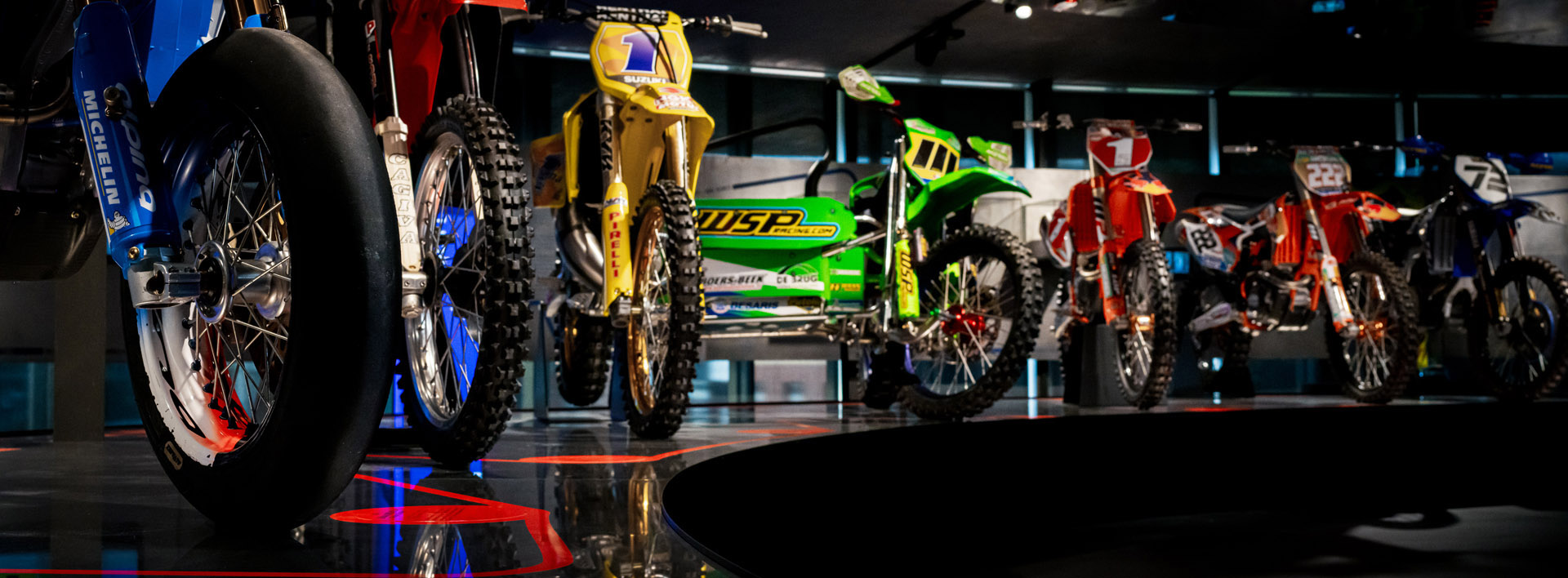
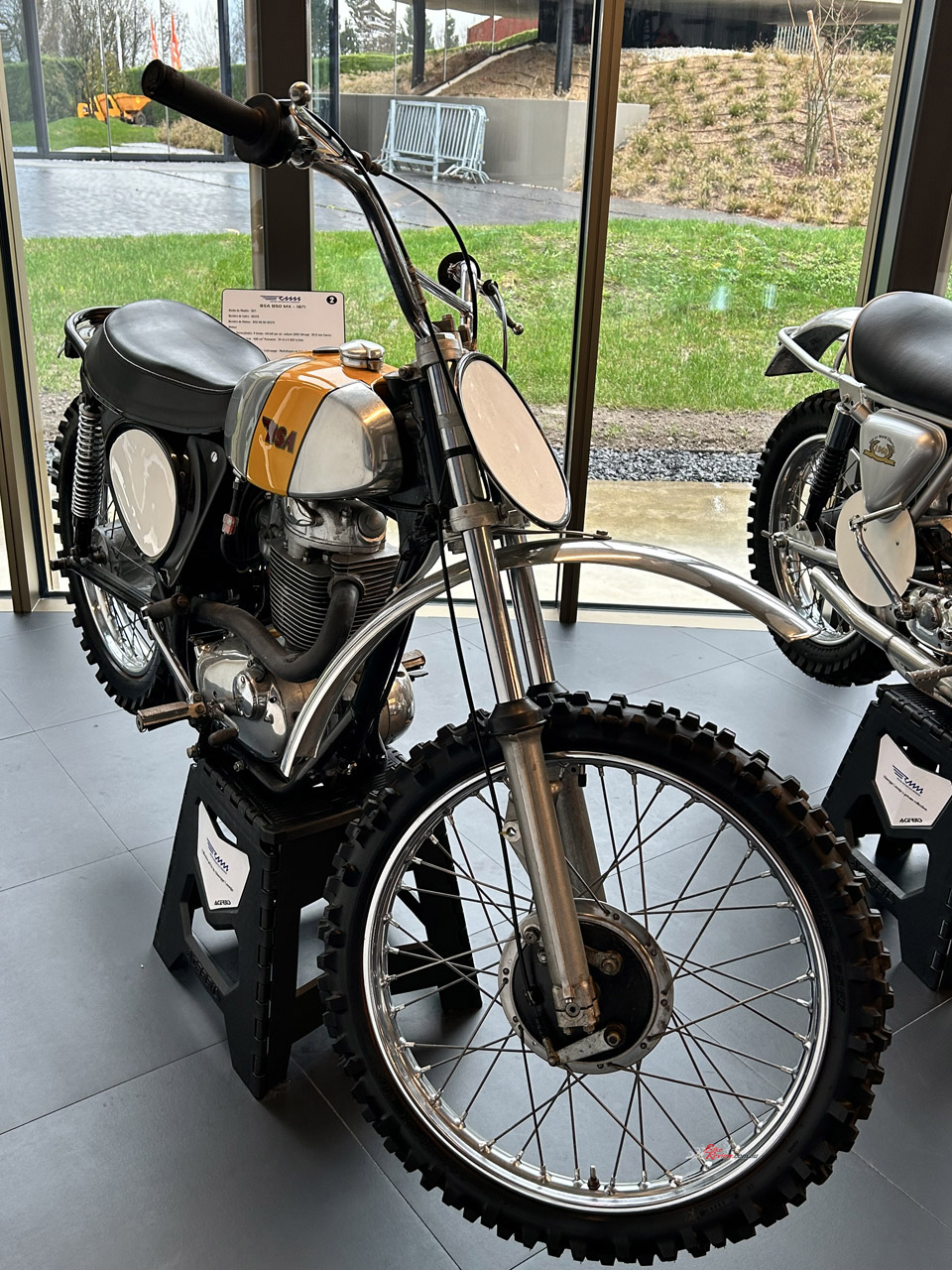
But that’s not all. In a separate area on the ground floor there’s currently a fascinating display of 21 factory Motocross racers dating from a 1969 CZ 380cc two-stroke, through to the ultra-rare 2009 Aprilia RXV450 V-twin. This panoply of MX history depicting the rise of the sport first in Europe, then the USA, includes bikes from Husqvarna, BSA, Bultaco, Monark, KTM, Maico, Puch, Ossa, Montesa, Suzuki and Yamaha – but no Honda, or Kawasaki! – alongside hand-crafted specials from European teams like Simoncini and TGM.
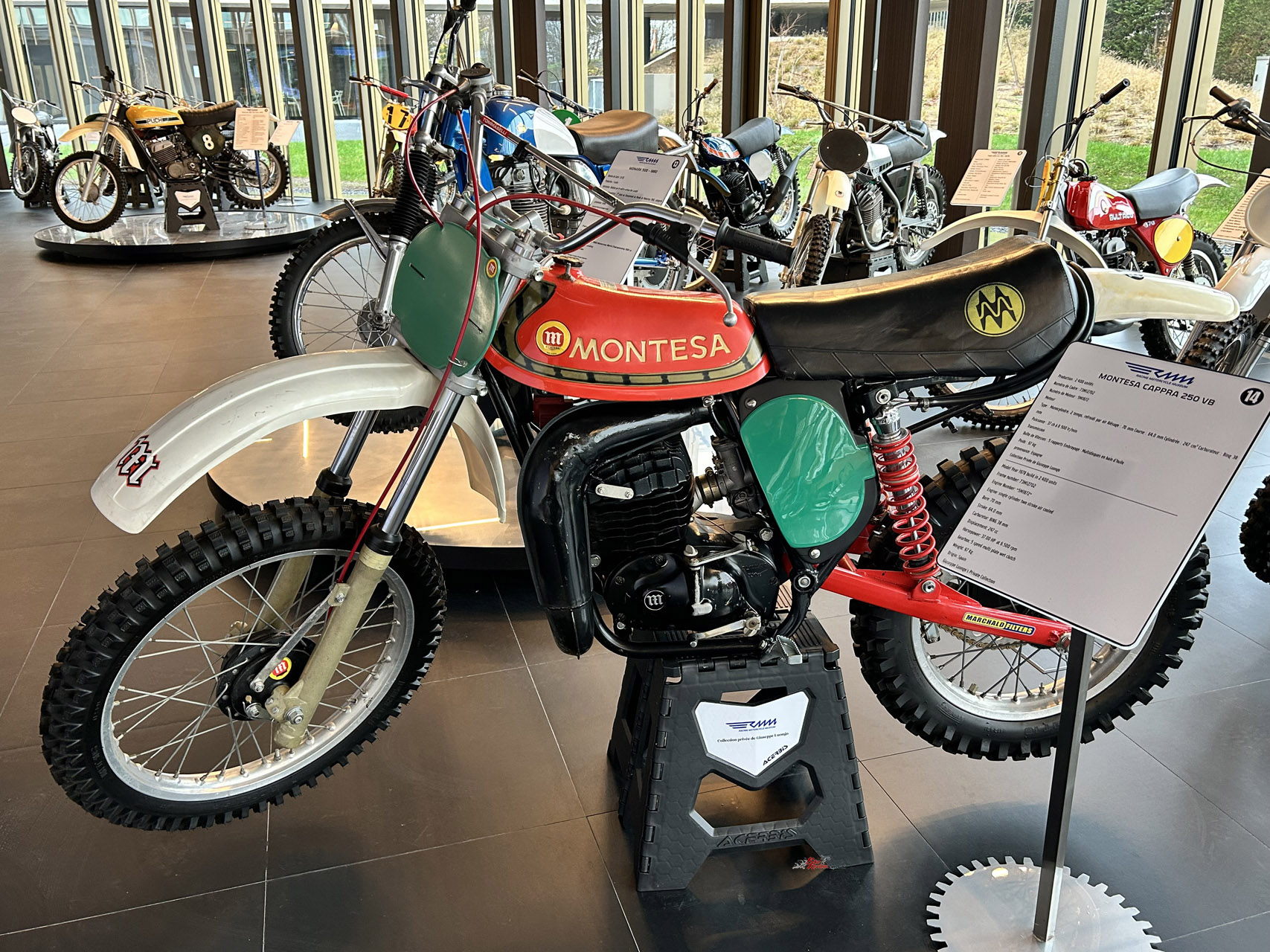 This superb array of dirt racers comprises the personal collection of Giuseppe Luongo, who retired last year after four decades of promoting MX racing, including 25 years as the FIM’s partner in organising MX World championship events. It’s the first of what Fabio Muner says will be successive themed displays separate to the permanent main FIM Museum exhibition, each of them on show for six months to a year at a time.
“We hope this will encourage visitors to return to the Museum, as well as allowing us to recognize key landmarks in the evolution of our sport,” says Fabio. “So the next temporary exposition I want to display here will be focused on the International Six Days Enduro (ISDE), the oldest, most prestigious annual off-road motorcycle competition in the world, which celebrates the 100th anniversary of its first staging this year.
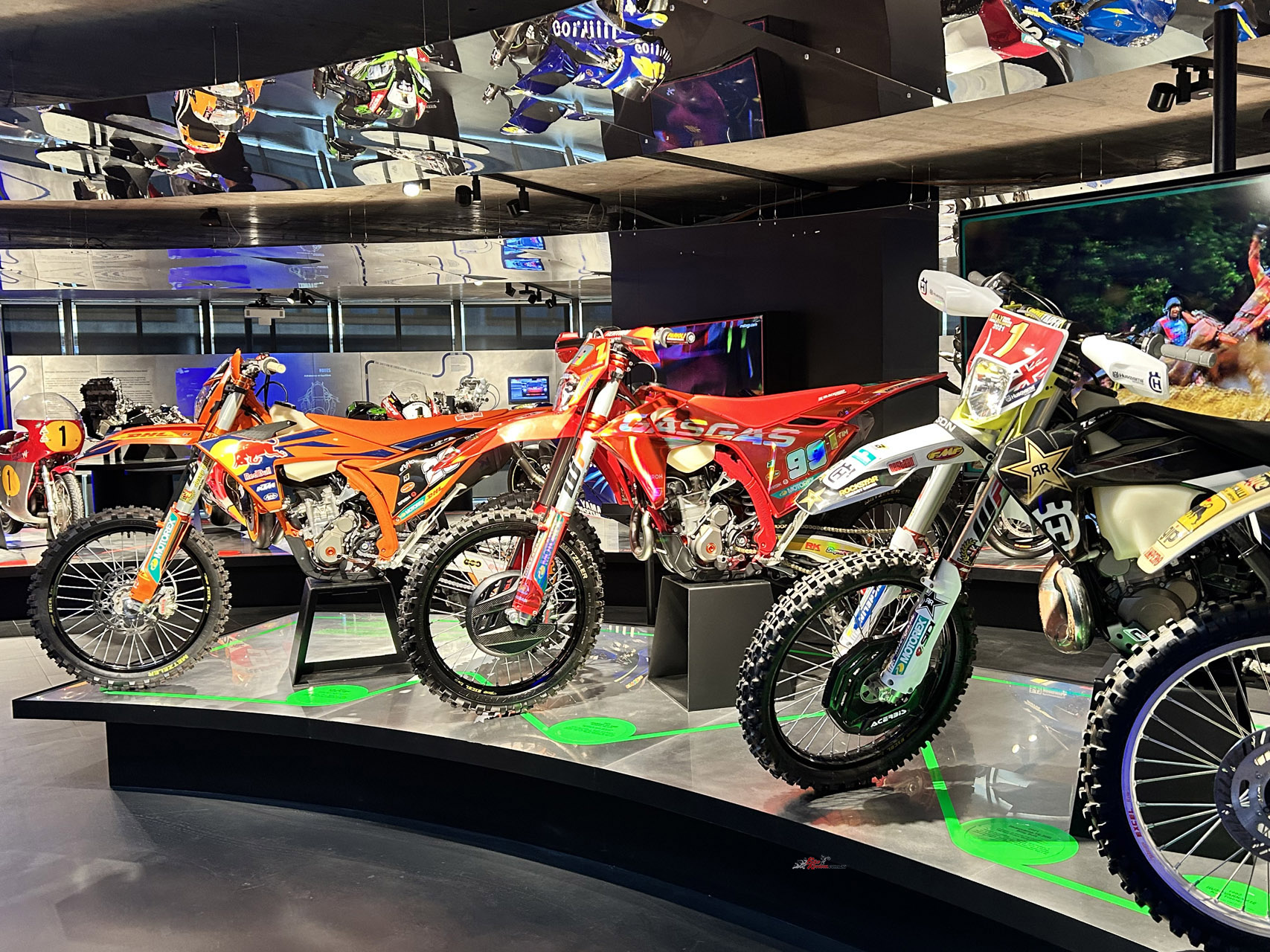
“It began in 1913 in Carlisle, England, so it’s not a precise 100 years’ anniversary, because the races were stopped for World Wars 1 and 2, and for Covid in 2020. It’s taking place in Portugal this October, where we will have a big birthday party in the Paddock for the 100th anniversary, but alongside that we will stage a major display of ISDE bikes here in the FIM Museum, to tell the story of the event. Then there will be others after that.”
The RMM also incorporates a Paddock Café, which Fabio Muner hopes will become a favourite place for fans to gather and watch any FIM World Championship competition being staged the same day as their visit, on a big screen.
“We will show all the FIM recognised events, whether MotoGP, Endurance, MX GPs etc. every weekend”…
“We will show all the FIM recognised events, whether MotoGP, Endurance, MX GPs etc. every weekend,” says Fabio. ”We have a big parking lot with lots of space for bikes, so people can ride here and have breakfast while watching the race warmups on TV, then ride off to enjoy the wonderful biking roads of the Jura mountains close to here, before returning to Mies at teatime to watch the recap of the races they’ve missed. We hope this will also become a favourite stop-off for Touring riders on a longer journey through Central Europe.”
Let’s leave it to FIM President Jorge Viegas to have the final word on this significant new venture. “With such a long and rich history, it’s tremendously exciting that motorcycle racing now has a permanent home in the Racing Motorcycle Museum, where its legacy can be celebrated and enjoyed by visitors from around the world,” he says. “So much knowledge, expertise and passion have gone into curating the exhibits that together form a world-class collection, which has been carefully assembled to create an unmatched historical and educational resource that I am confident will prove invaluable for future generations.” Amen to that.
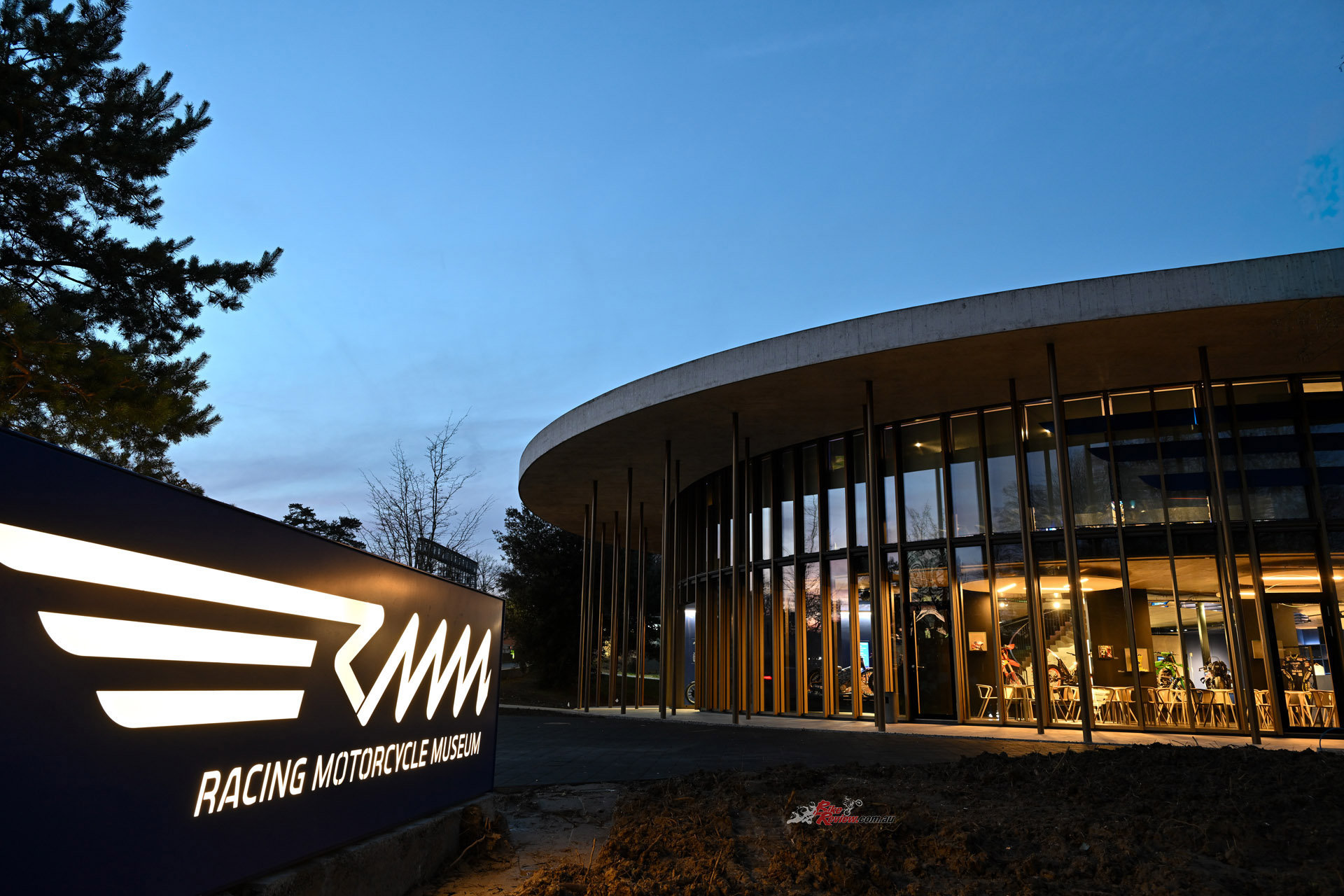
The FIM Racing Motorcycle Museum is open 10am-6pm [1000-1800hrs] from Wednesday to Sunday inclusive, and admission prices are €19 for adults, with children under 16 years old admitted free. The address is: Racing Motorcycle Museum, Route de Suisse 11b, 1295 MIES-Tammay Switzerland – contact@fim-rmm.com Website: www.fim-rmm.com It’s a 30min train ride from Geneva Airport, which is an EasyJet hub, and a two-minute walk from Mies Station to the Museum.
FIM Racing Motorcycle Museum Gallery
You Might Also Like