


Kawasaki’s 2025 Ninja 1100SX SE is a fifth-generation evolution that delivers more power, sharper handling, premium Öhlins and Brembo kit, and refined tech... Photos: ShotByRoth
The 2025 Kawasaki Ninja 1100SX SE raises the bar for sports touring, blending blistering inline-four performance, premium Öhlins and Brembo componentry, and refined electronics into a package that’s as comfortable on tour as it is thrilling in the twisties…
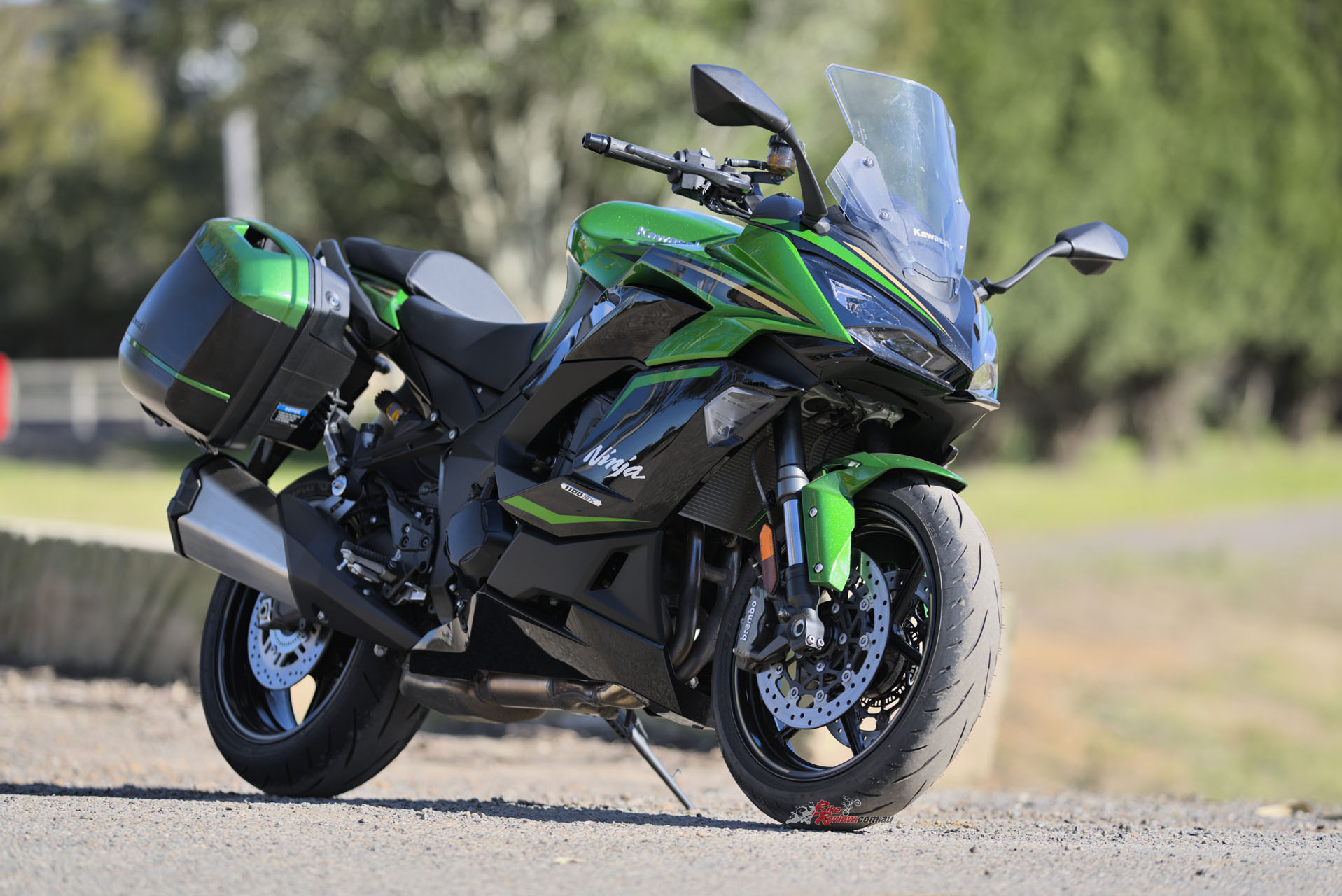
The 1100SX SE features host of rider support technology dedicated to helping riders enjoy their machine’s sport riding performance to the fullest: KCMF, KTRC, KIBS, Power Modes, Integrated Riding Modes.
We had the 2025 Kawasaki Ninja 1100SX in for review at Bikereview HQ for a couple of weeks. While the improvements over previous generations are subtle, they cement the 1100SX as a top-tier, relatively affordable, high-quality sports tourer. The 1100SX definitely sits on the sportier end of the sports tourer market, with Brembo, Ohlins and that amazing engine.

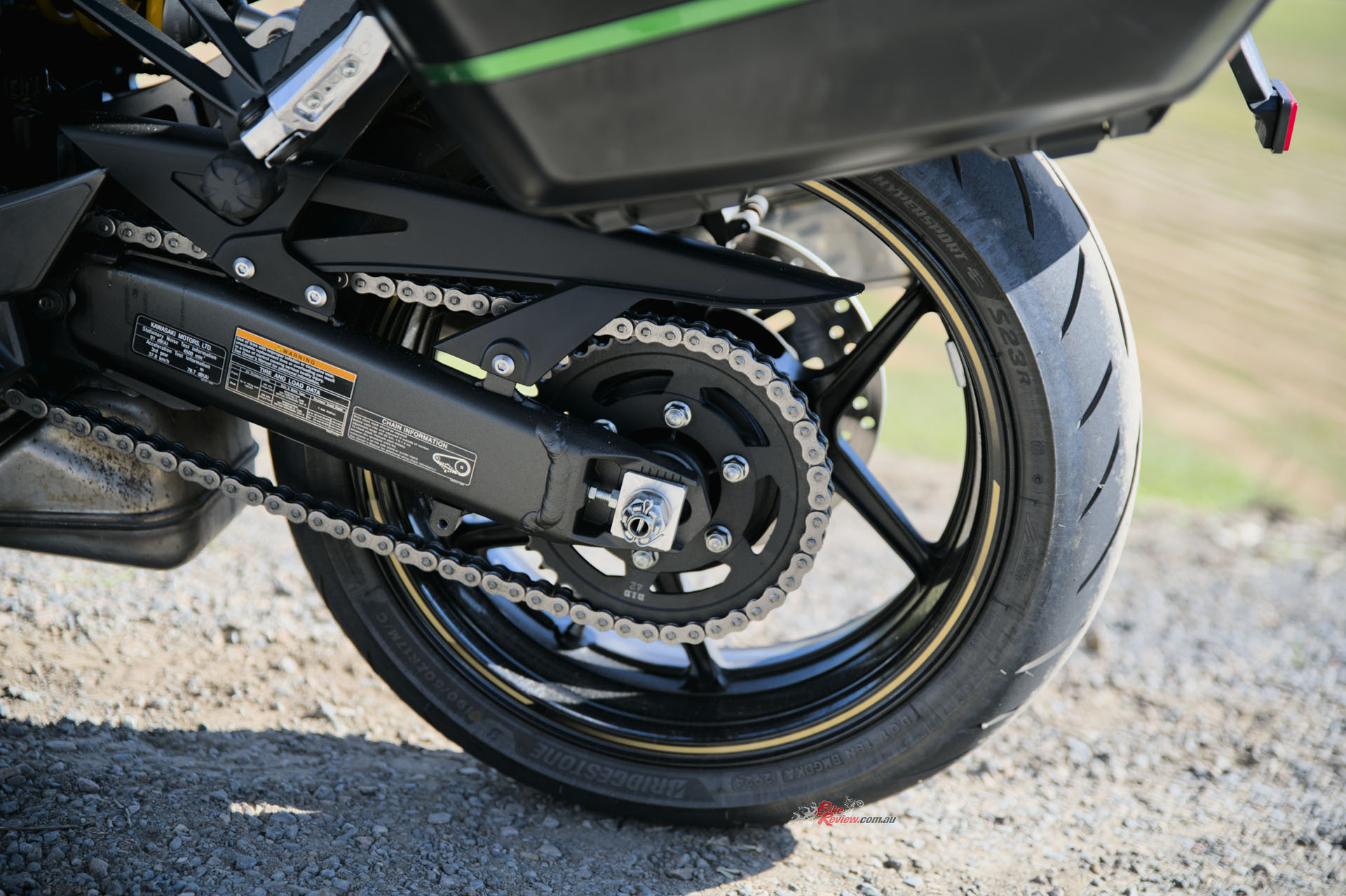
Right out of the box, you’ll notice an added 56 cubic centimetres, meaning the 1100SX now shares its powerplant with the Versys 1100SE (read our review here). The 2025 1100SX produces 100.0kW (136 PS) at 9,000rpm and 113.0Nm of torque at 7,600 pm. I suspect any apparent reduction in peak power compared to previous generations is related to emissions compliance.

Importantly, the 2025 model boasts a smoother and more accessible torque delivery, especially in the low to mid-range. Not that previous models were lacking… Either way, the new 1100 still feels punchier in real life despite a drop of 6hp over the 1000, it has more torque to make up for it.

The Kawasaki Ninja 1100SX SE is a truly sporty tourer that ticks a hell of a lot of boxes… It looks damn fine, too.
Revisions for 2025 include new pistons, a revised cam profile, updated throttle-bodies, and ECU remapping. The result is a beautifully refined engine that is smooth across the rev range. At 110km/h on the freeway, you’re sitting at around 4,200rpm, well below the 10,505rpm redline. Riders have three selectable power modes (Rain, Sport, Road), all of which are smooth, predictable, and suitable for newer riders or those seeking a relaxed sports touring experience.


Power delivery is exceptionally smooth. The clutch action is light, and frankly, the bike could likely crawl along without throttle input, thanks to Kawasaki’s low end grunt. The revised quick-shifter is a welcome addition and it performs flawlessly under moderate to hard acceleration as well as low speed.
Read our Kawasaki Versys 1100S Review here… and out Ninja 1000SX Review here…
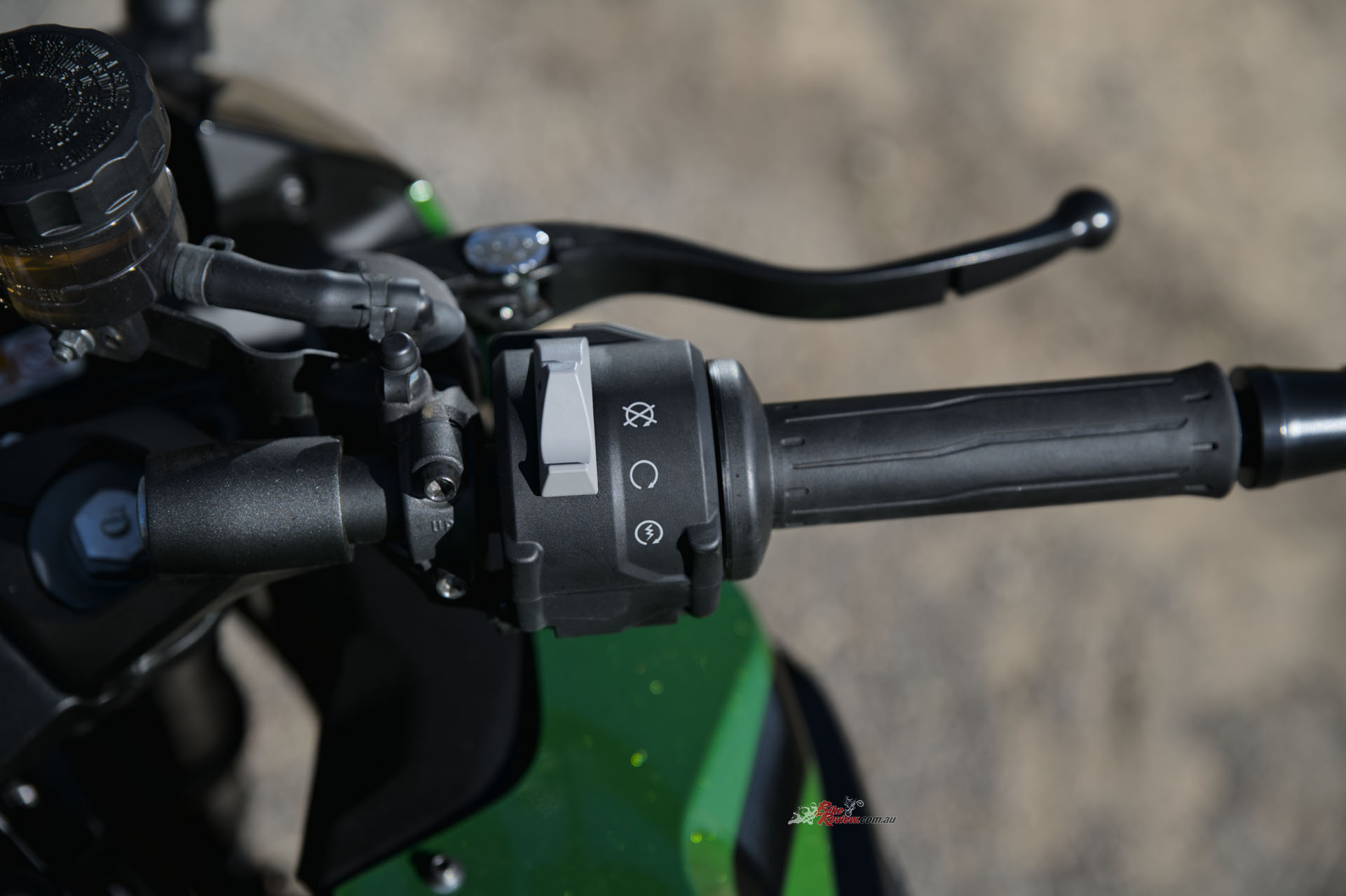
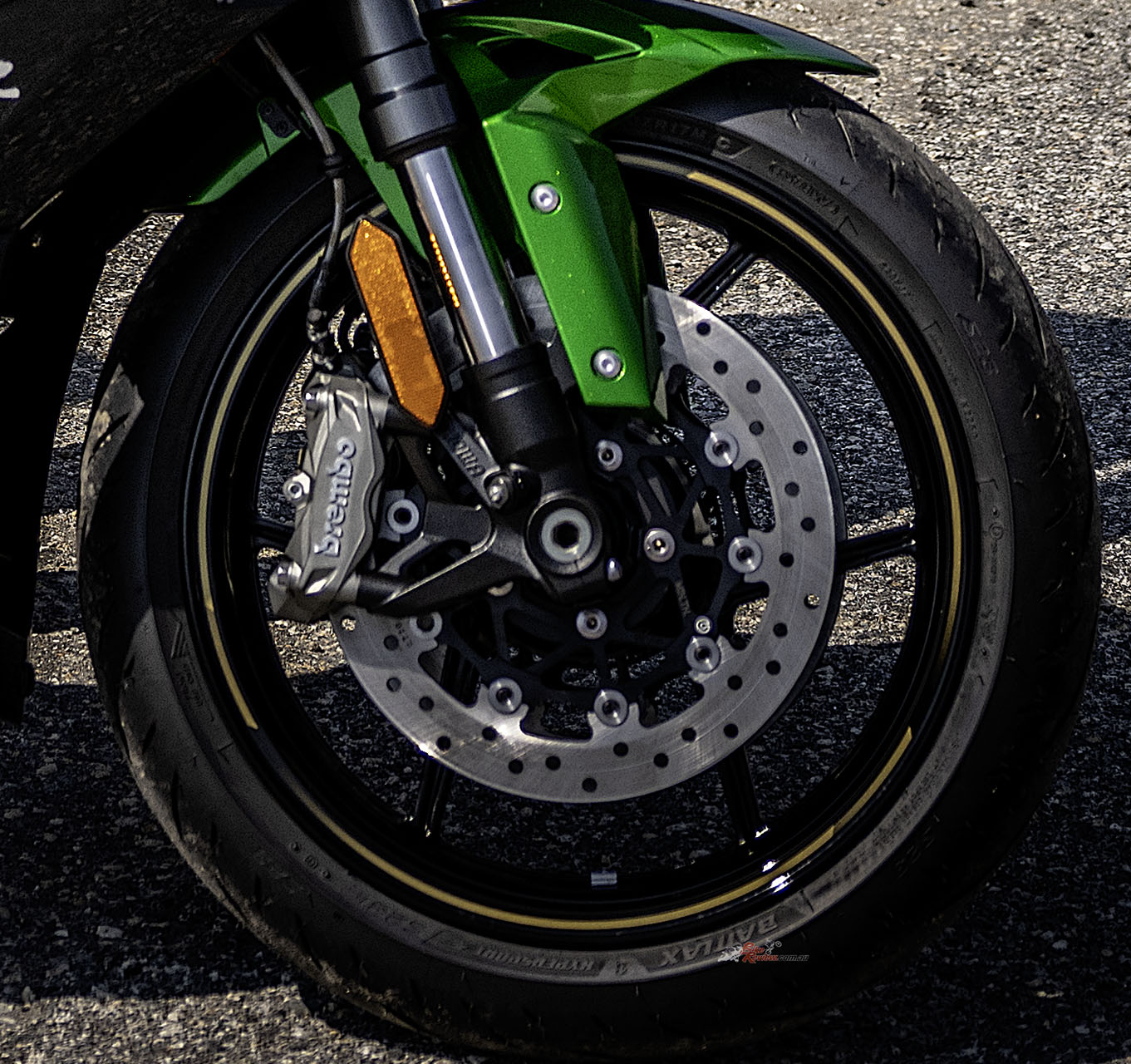
On the SE model, you get an upgraded braking system. The 2025 model comes equipped with dual 300mm Brembo discs and four-piston Brembo calipers up front, with a single 260mm caliper at the rear. Braided lines and an improved front brake lever are also standard, along with a fantastic Brembo radial-pull master-cylinder. I found the lever shape and its bend less suited to my hand. I was pulling too far up the lever and losing mechanical advantage. Adopting a slightly wider grip solved the issue.

“It’s a comfortable setup for longer rides and capable enough for spirited runs through the twisties, it handles like a big sportsbike.”
Stopping power on a 234kg bike is adequate but not exceptional. With me on top, you’re asking the system to halt well over 300kg, so a bit more braking performance in future models wouldn’t go astray. Still, for its intended market, the braking setup is adequate. I’d like 320mm rotors from the ZX-10R.
At the front, the 2025 model features 41mm KYB fully adjustable forks. This SE variant comes equipped with an Öhlins S46 rear shock with remote preload adjustment. It’s a comfortable set-up for longer rides and capable enough for spirited runs through the twisties, it handles like a big sportsbike.

“There is some weight on the wrists, but nothing excessive. You get good front-end feel with a bit more load on the ‘bars.”
The bike has an 835mm seat height and, at 6’4, I found the riding position very comfortable. It’s not as upright as other sports tourers. There is some weight on the wrists, but nothing excessive. You get good front-end feel with a bit more load on the ‘bars. The 19L fuel tank is well integrated, with contours that enhance both comfort and styling.

“The windscreen does a decent job deflecting air around the rider, though it’s quite loud”…
Over roughly 500km of testing, I covered a mix of highway and fast backroad riding. On the highway, it’s among the more comfortable bikes I’ve toured on. The windscreen does a decent job deflecting air around the rider, though it’s quite loud. It’s manually adjustable via a lever hidden behind the ‘bars, but unfortunately, ours jammed in the lowest position towards the end of the test period.

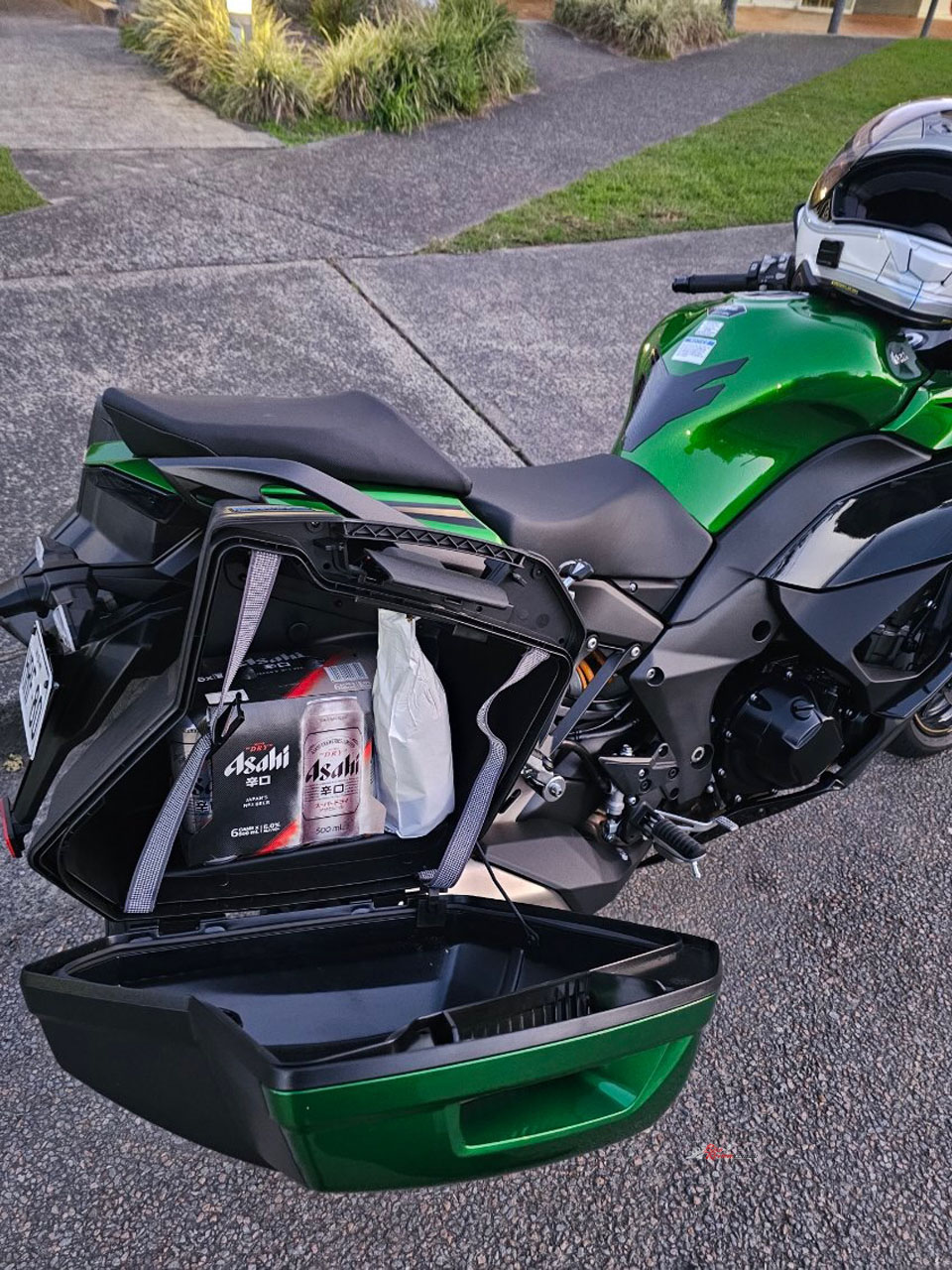
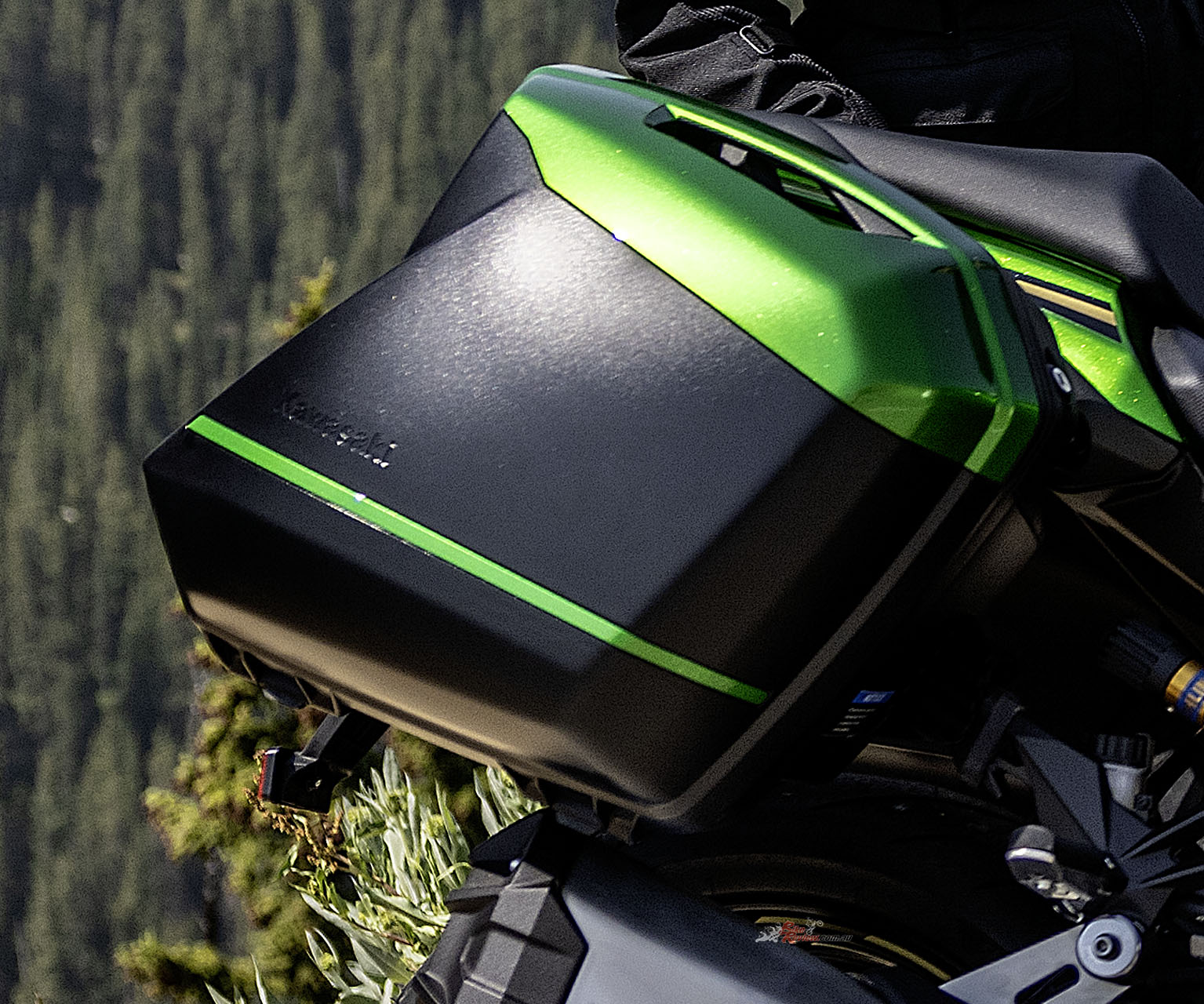
In tighter corners, the 1100SX handles remarkably well. Better than expected given its curb weight and physical size. Once moving, the weight drops away, and I found lane splitting surprisingly easy, too. In fact, I had to remind myself that the optional panniers were fitted. They’re spacious enough for shopping or luggage but sit wide and have a somewhat awkward internal shape.

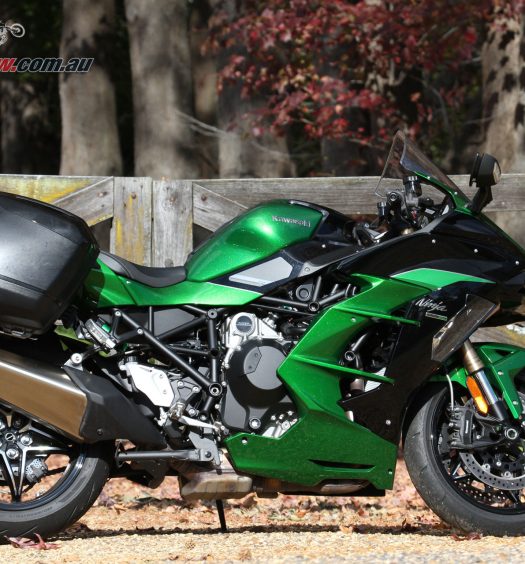
Styling-wise, the new darker green (Emerald Blazed Green, also available in Metallic Diablo Black) is a win in my books. The exhaust, however, is less appealing. It is likely shaped to meet emissions requirements, but aesthetically it falls flat. Fortunately, it still sounds great out of the box. One minor negative: the side mirrors are a bit too thin and don’t give a huge view of the chaos going on behind…
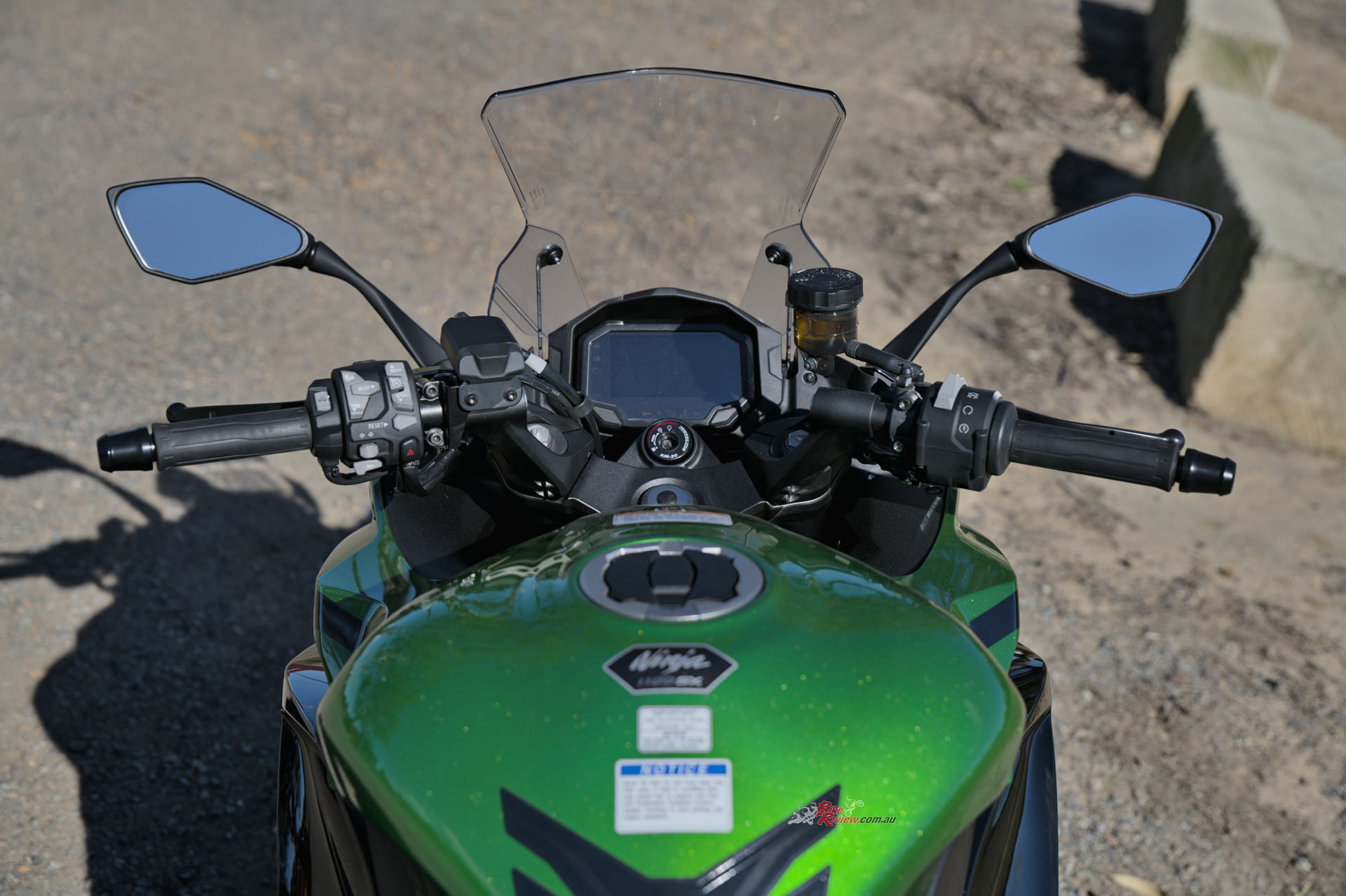
Manually adjustable screen (has to be done while stopped), stylish mirrors but that are a bit too small.
The 2025 model includes decent tech, all of Kawasaki’s awesome safety and performance suite, so top marks there to Kwaka, these include a 4.5in TFT colour display with Road/Sport modes, IMU-enhanced electronics, KQS, KTRC, KCMF, Power Modes, Cruise Control, KIBS, Smartphone connectivity with Rideology app + voice command, handlebar-mounted USB-C outlet.

“The TFT dash is simple and intuitive, and it can be paired with the Kawasaki Rideology app”…
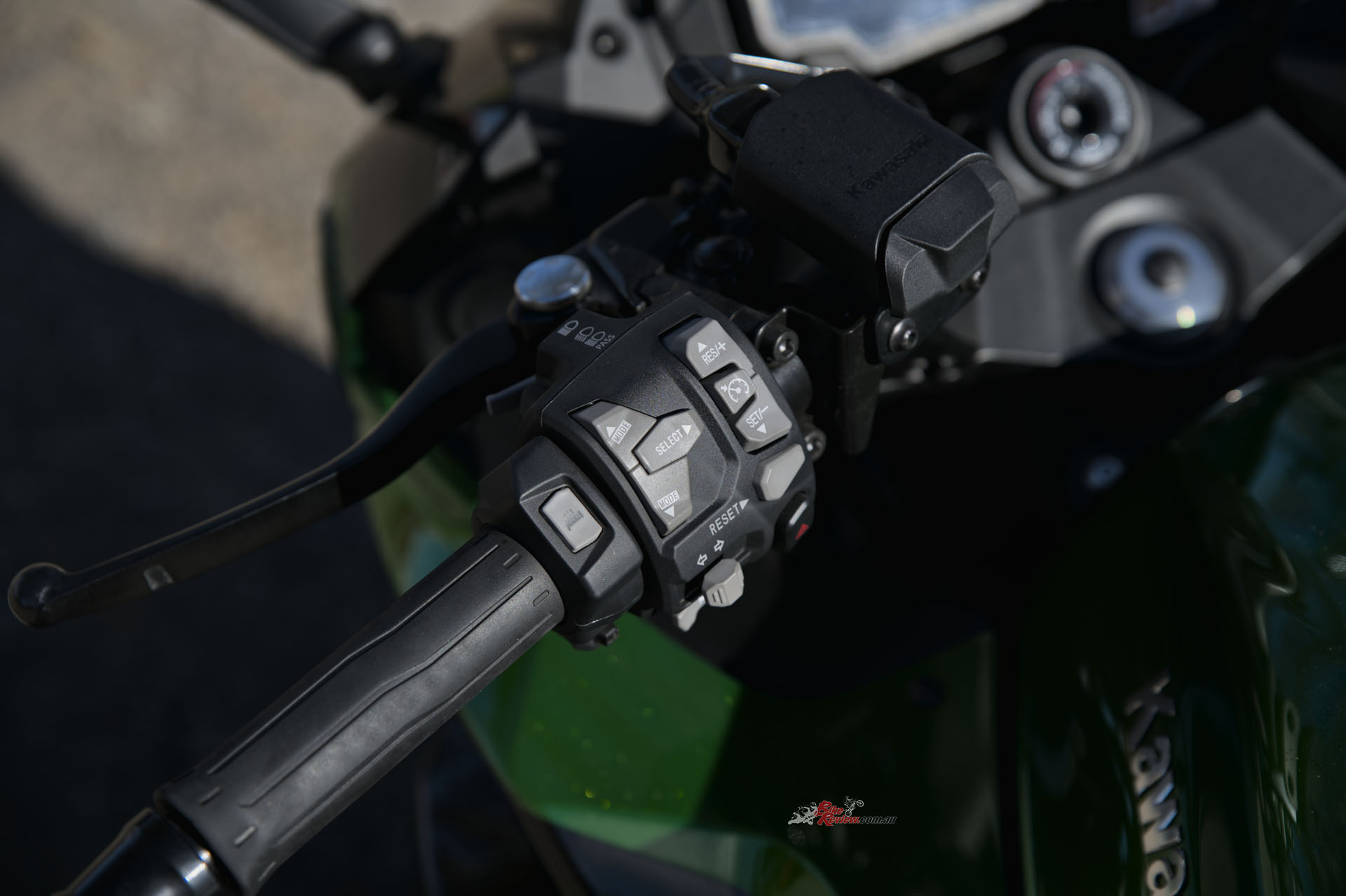
The switchgear is simple but not backlit. It’s still easy to use, even with thick winter gloves. Cruise control is intuitive and flawless. The heated grips were a welcome addition for cold morning commutes. The TFT dash is simple and intuitive, and it can be paired with the Kawasaki Rideology app. But the handlebar mounted USB port juts upward like a big radar detector. While strange, it’s still handy for charging your phone while running maps, but I don’t understand the size of it…

Overall, there are no groundbreaking changes in this year’s model, but the refinements have improved the bike as a whole. You’re getting a comfortable, well-built sports tourer that’s quick, composed, and easy to live with. It offers Kawasaki’s hallmark build quality and a refined powerplant, matched with a thoughtfully designed chassis and suspension. While on the sportier side of the category, it’s a tame, approachable machine with essentially no learning curve. Just jump on and ride.
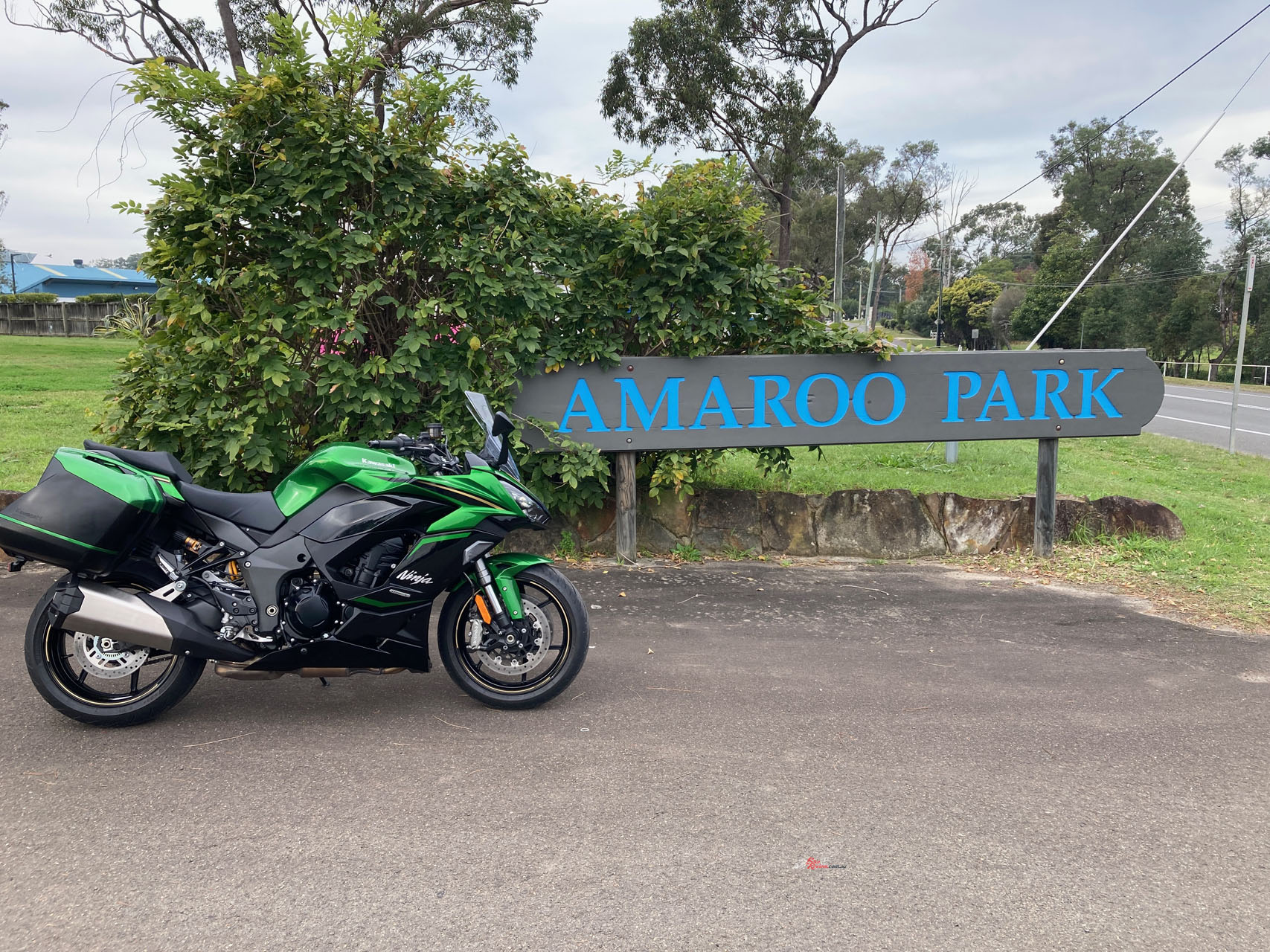
Second Opinion
Kawasaki’s Ninja 1000 was a hit when it first landed in 2011, billed as a “sportsbike for the real world.” It promised the excitement of supersport machinery with the comfort and practicality needed for long days in the seat. Four generations later it became one of the most popular sports tourers around. Now, in its fifth evolution, the new Ninja 1100SX SE arrives with more torque, more technology, Brembo brakes and Öhlins suspension. Kawasaki has refined what was already one of the best-balanced all-rounders on the market.
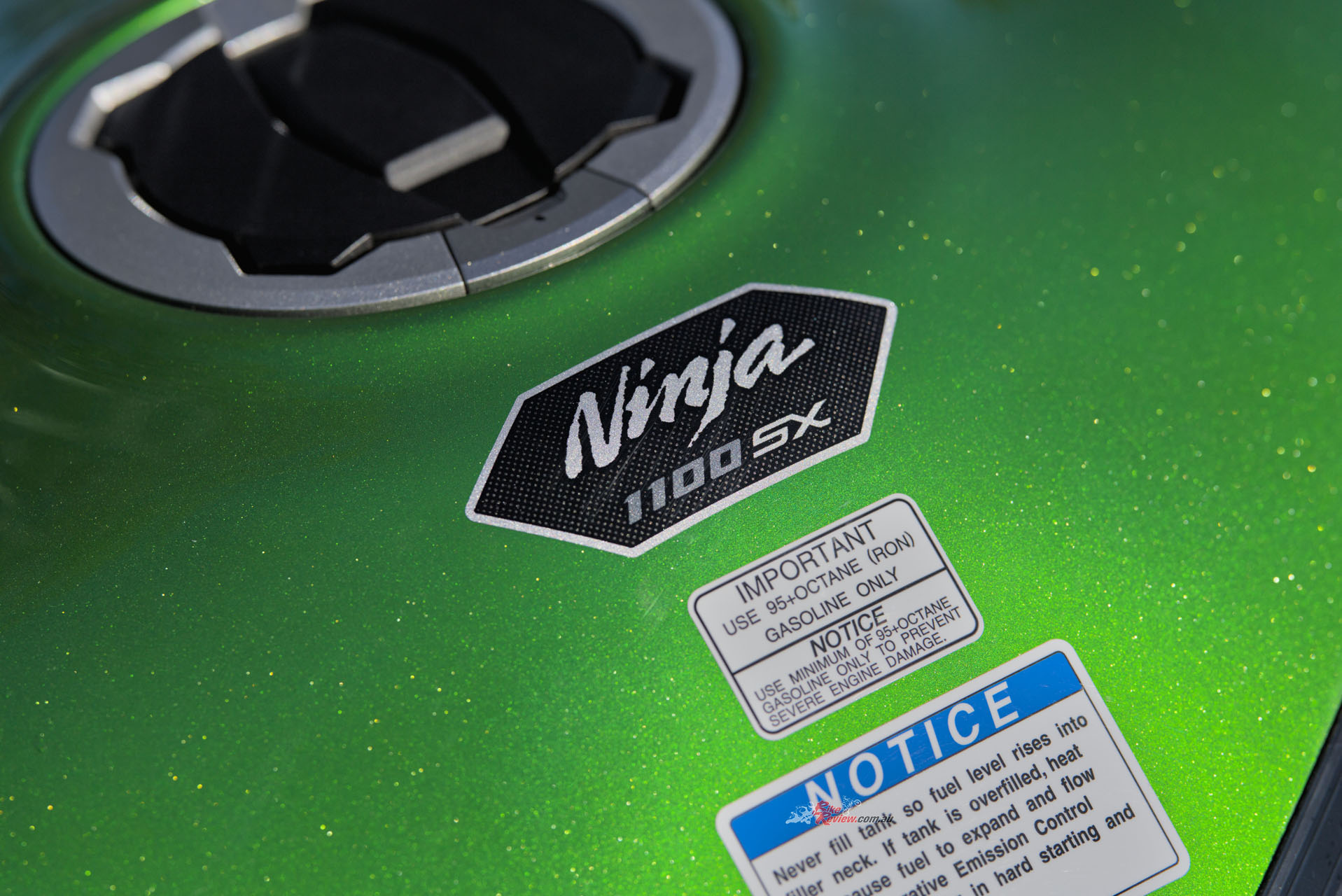
The bigger 1099cc inline four is a masterpiece. Smooth, refined, and immensely strong, it pulls harder through the low and mid-range yet still screams to the redline with a top-end rush that rivals full-blown sportsbikes. Torque has jumped to 113Nm, delivered earlier and more forcefully, making the bike more responsive everywhere. For me, it’s quite possibly the nicest inline four I’ve tested in 25 years – electric-smooth, brimming with torque, and devastatingly quick when pushed.
At the rear sits an Öhlins S46 shock, plush yet supportive, paired with quality front forks that give the bike superb control across a mix of surfaces…
Backing up the motor is a slick gearbox and clutch. The Kawasaki quick-shifter has been improved to work at lower rpm, and it now feels seamless whether accelerating or decelerating. Even crawling through traffic, it’s flawless. The clutch is light and progressive, while the gearing, with longer fifth and sixth ratios, gives the Ninja a relaxed gait on tour without dulling its edge in the twisties.

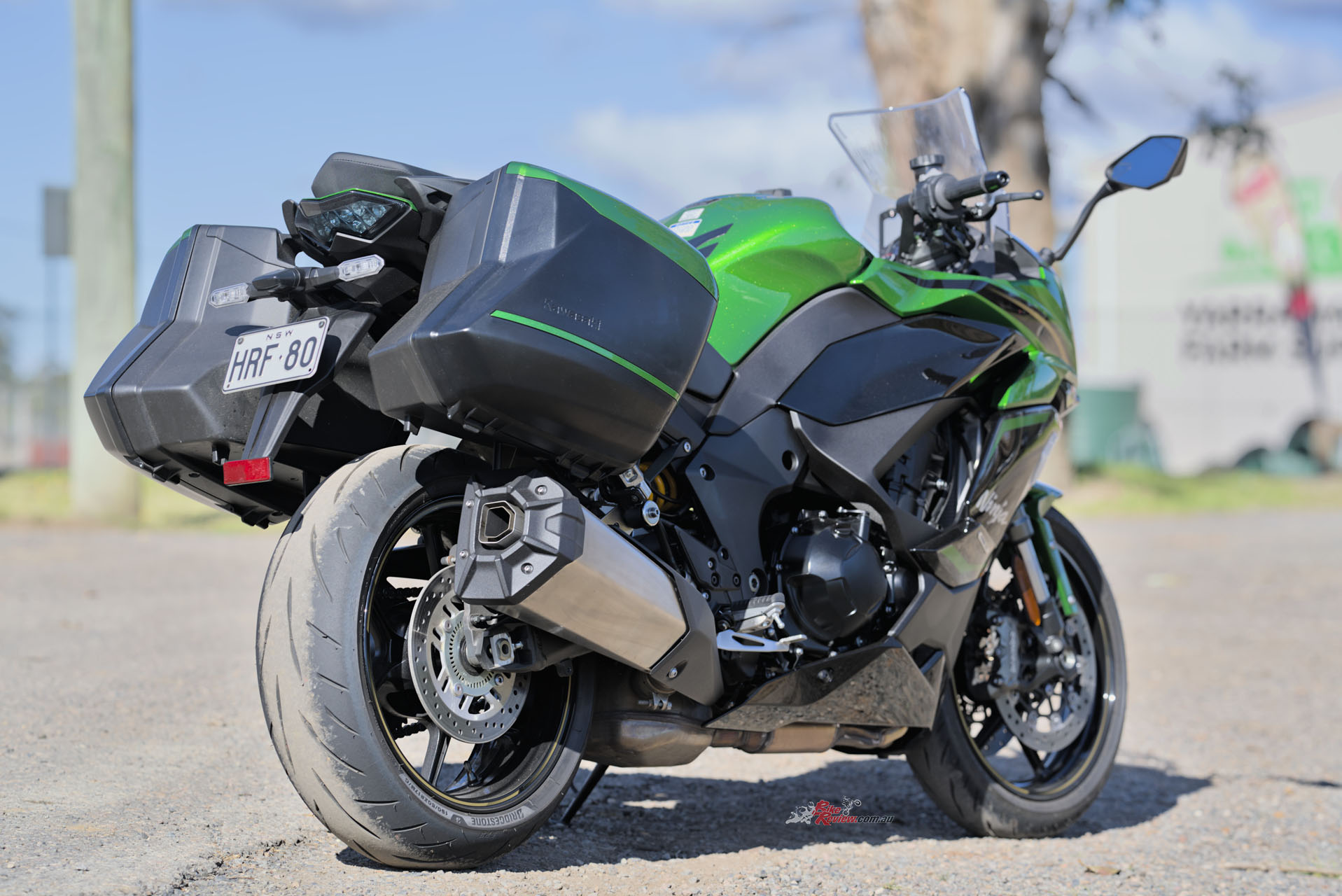
The SE model brings a major step up in componentry. At the rear sits an Öhlins S46 shock, plush yet supportive, paired with quality front forks that give the bike superb control across a mix of surfaces. Stability is excellent, whether flicking through bends or blasting down a motorway. The ride is sporty but forgiving, soaking up the imperfections that make life difficult on stiffer supersport machines. Brembo M4.32 calipers, steel-braided lines, and a Brembo master-cylinder provide sharp, consistent braking performance. The feel at the lever is confidence-inspiring, and combined with cornering ABS and Kawasaki’s electronic safety net, it’s a braking package worthy of a premium tourer.

The 1100 tips in naturally, holding a clean line and responding quickly to rider input. Ground clearance is impressive, with lean angles approaching 49 degrees, and the chassis balance inspires confidence. At very hard braking the front can still dive into its stroke, but overall the Ninja feels planted, agile, and easy to live with. I’d like to try it with bigger front brake rotors, though, just for a bit more braking power.

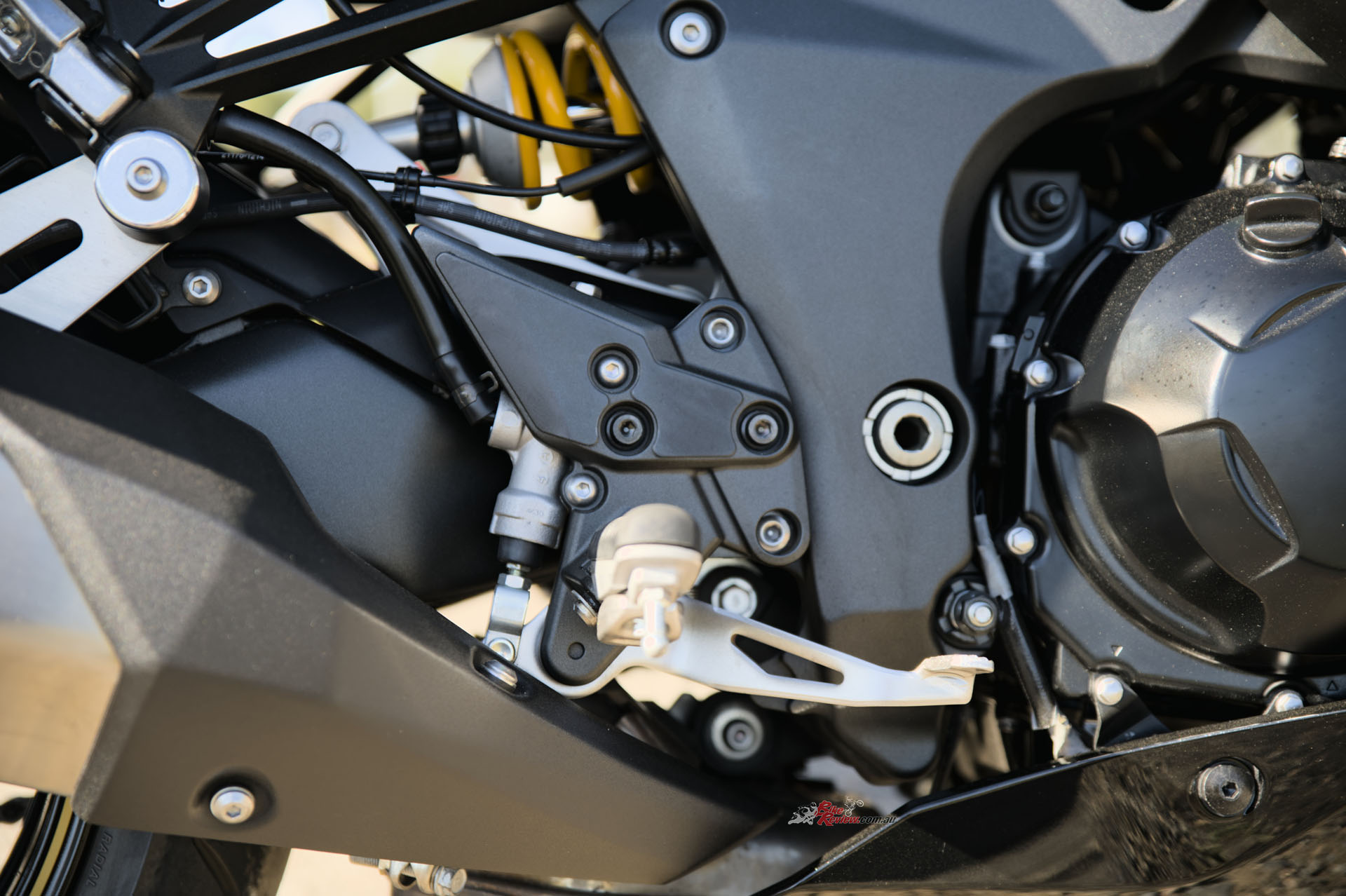


Touring credentials remain central to its appeal. The relaxed riding position, roomy seat, and upright ‘bars give long-distance comfort without losing the sense of control. At 187cm I found the screen a little too low, with wind buffeting at highway pace, though shorter riders may find it adequate. Panniers integrate cleanly and are easy to use, adding genuine practicality without spoiling the lines of the bike. A centre-stand would be a welcome addition for touring but the four-into-one would have to be redesigned to accomodate.
Technology takes another step forward. The TFT dash is crisp, colourful, and easy to navigate, offering everything from fuel data to lean angle and G-meter readouts. Two display modes – Road and Sport – let riders tailor the information they see, and Bluetooth connectivity via Kawasaki’s Rideology app now supports voice commands, letting you adjust settings or set GPS routes more easily. Cruise control remains simple and effective, while a new handlebar-mounted USB-C outlet adds charging convenience, even if it is bulky in appearance, it does the job.

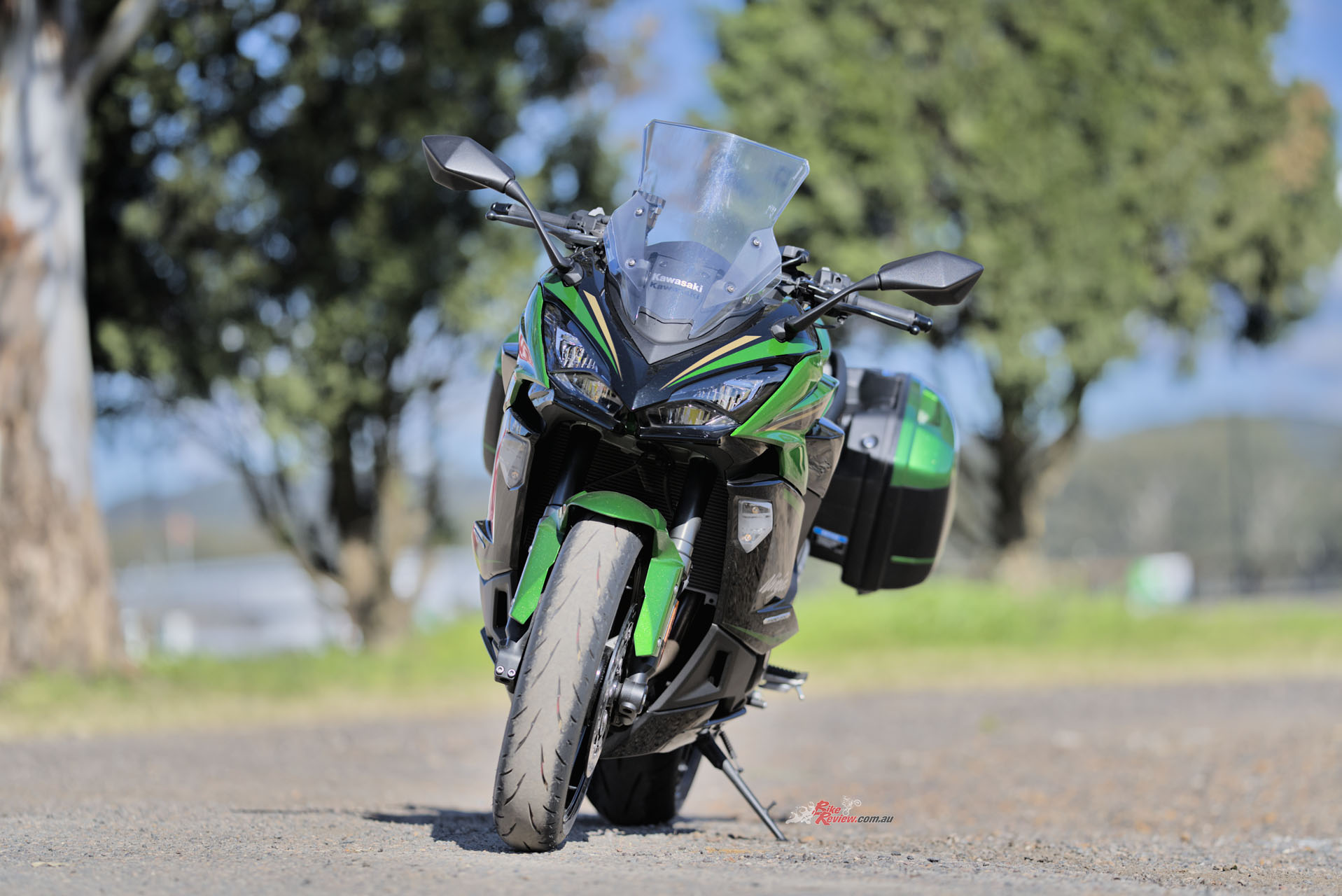
Build quality is excellent, with refined paintwork and bodywork that feels premium. Styling tweaks give the 1100SX SE a sharper Ninja family look, closer to the ZX-10R and ZX-6R, while still maintaining its touring practicality. The single-sided muffler cleans up the profile, and integrated pannier mounts mean the bike looks good with or without luggage fitted.
Fuel economy has improved, helped by those longer gears, and with a 19-litre tank I managed over 300km between fills without trying. Combined with cruise control and superb wind protection (screen aside), the Ninja feels like a genuine all-day ride. Still, at 5.6L/100km, it’s in car territory for fuel use.
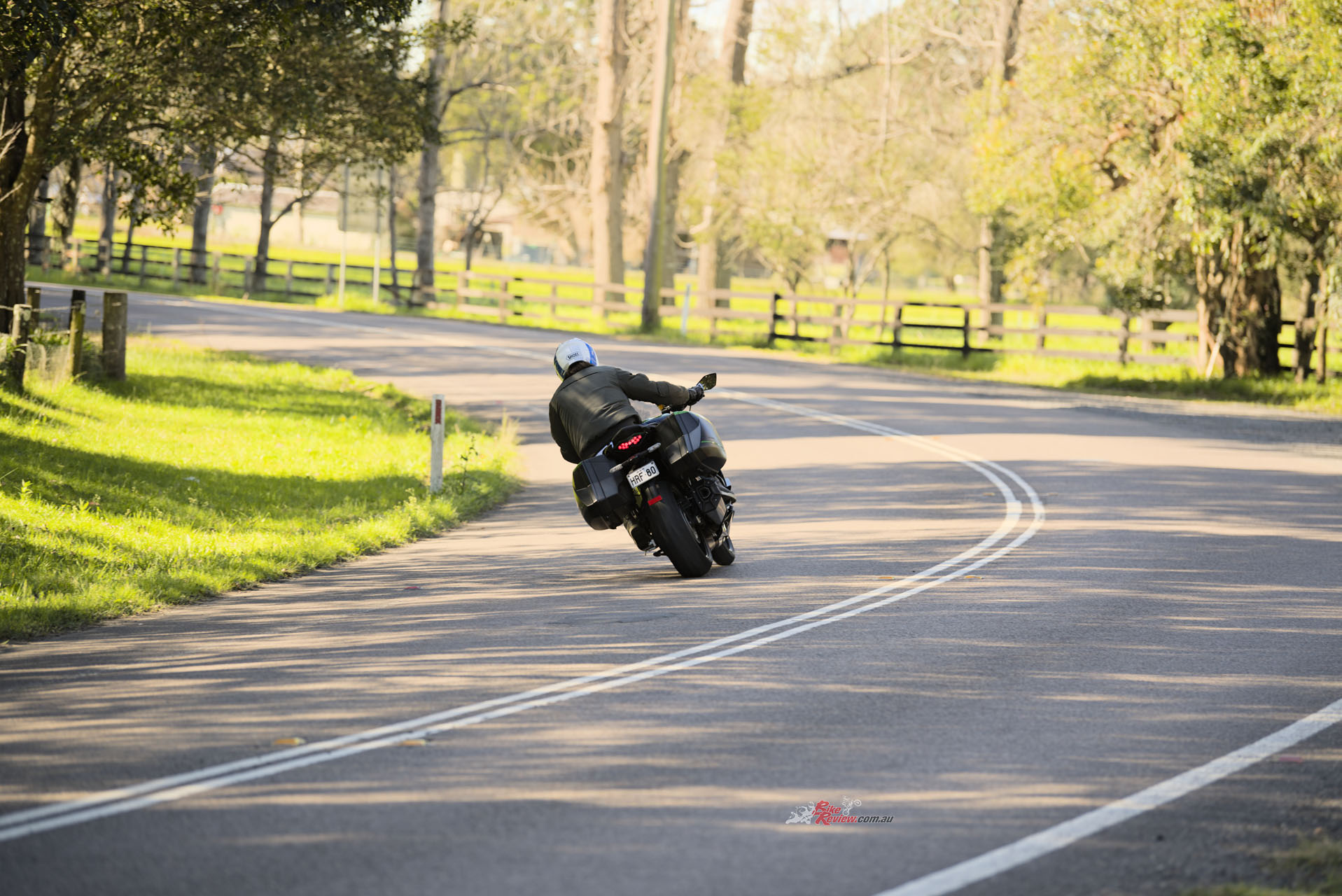
In the end, the 2025 Ninja 1100SX SE is the culmination of everything Kawasaki has learned in over a decade of building this platform. It’s gruntier, smoother, more comfortable, and more feature-rich than ever before. The engine is a gem, the chassis is well balanced, and the technology package rivals much more expensive European machines. For the sports rider chasing comfort, or the tourer chasing excitement, the Ninja 1100SX SE is the perfect middle ground. For me, it’s a 9.5/10 – a sports tourer at the very top of its game – Jeff Ware
Tech Talk – 2025 Kawasaki Ninja 1100SX SE
Bigger Engine
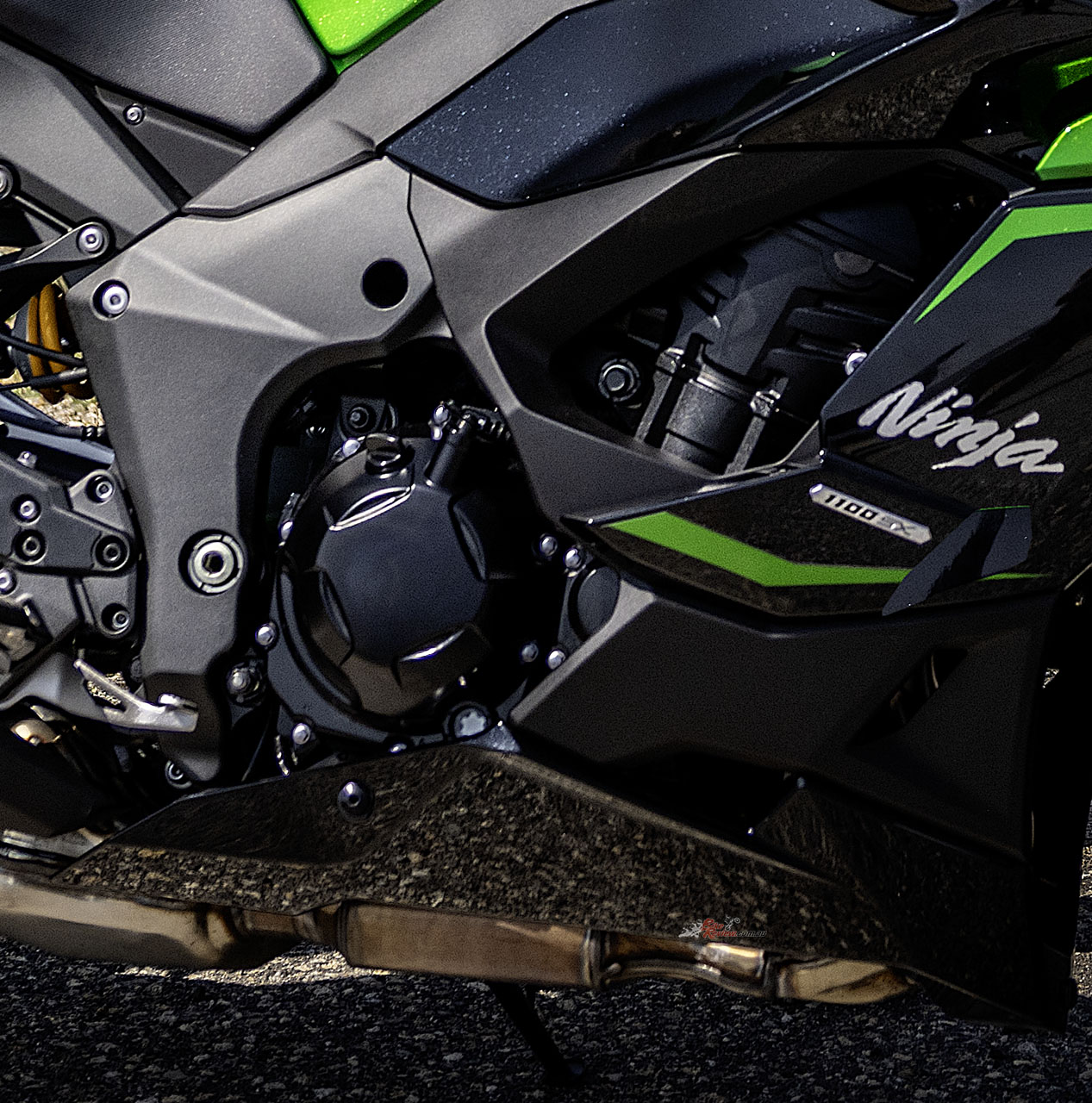
Based on the Ninja 1000SX’s proven and well-liked engine, the Ninja 1100SX’s engine displaces 1099cc and delivers 112Nm of torque. The liquid-cooled, four-stroke inline-four engine now pulls even more strongly in the low-to-mid rpm range, which riders will notice immediately and use often, while the high rpm performance remains robust to deliver all-round improved engine power feel and response.
New Quick-shifter
The dual-direction Kawasaki Quick Shifter (KQS) is now even easier and more fun to use, offering smoother shifting when accelerating and decelerating. It now functions from a lower minimum rpm, facilitating slower-speed gear shifts, and improving ride feel when riding at a more relaxed pace.
Supersport-Style Chassis Components
A number of supersport-style components contribute to the Ninja 1100SX’s sport-riding potential. Centred around an aluminium frame, an inverted front fork and Horizontal Back-link rear suspension are complemented by a supersport-style brake package.
IMU-Enhanced Electronics Package
The 1100SX features host of rider support technology dedicated to helping riders enjoy their machine’s sport riding performance to the fullest: KCMF, KTRC, KIBS, Power Modes, Integrated Riding Modes.
Brembo Front Brake System (SE)
Dual Brembo front brake discs stopped by Brembo M4.32 calipers are complemented by a Brembo master-cylinder and steel-braided brake lines to deliver stopping power and braking performance.
Öhlins Rear Suspension (SE)
An Öhlins S46 shock absorber at the rear provides a plush feel and ample adjustability to tailor the setup to the rider’s preferences.
Sporty Handling
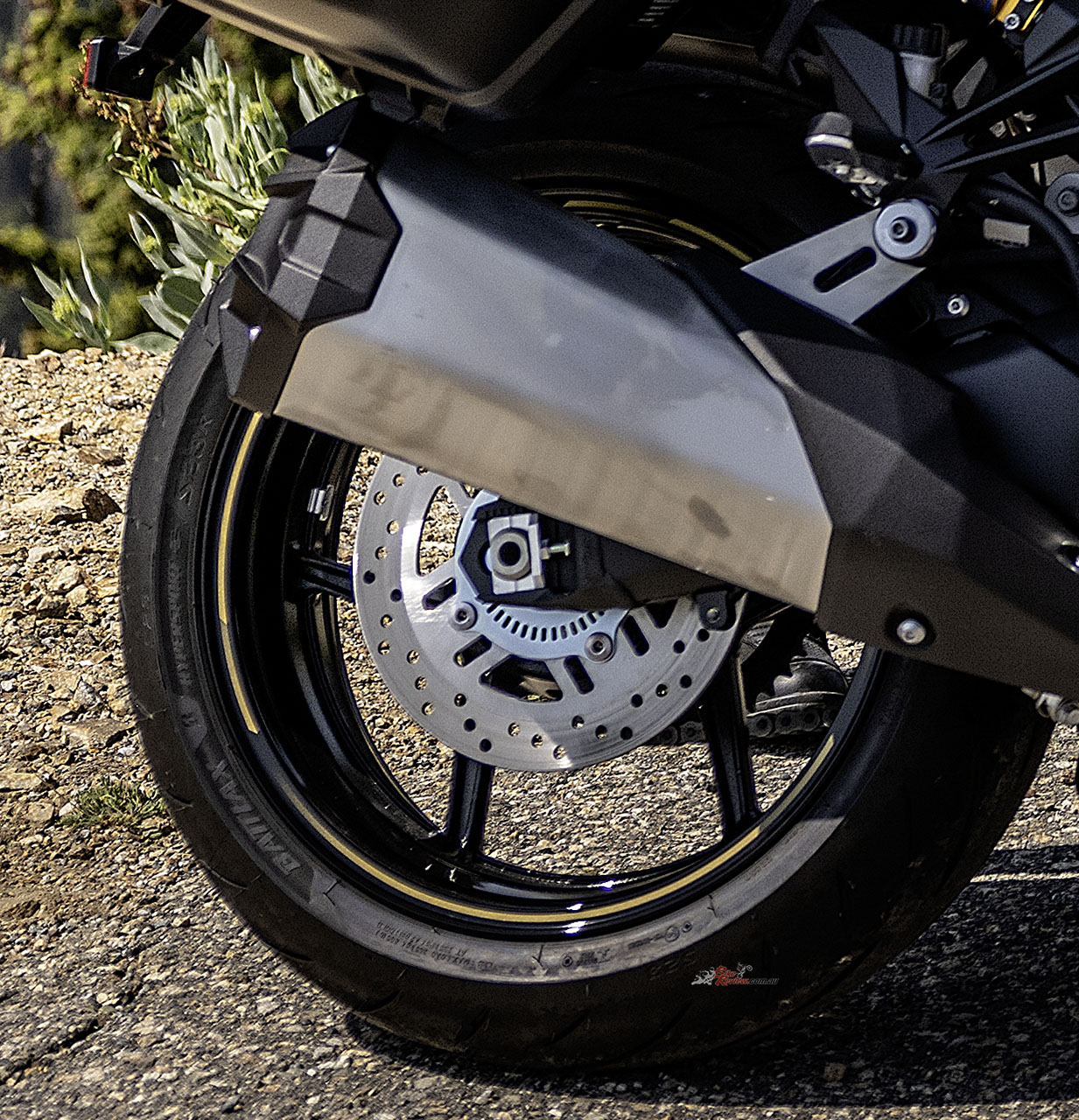
The Ninja 1100SX’s highly rigid aluminium frame offers a high degree of mass centralisation, offering a balance of agility and firm handling. The bike responds quickly to rider input, while offering an excellent ability to soak up bumps and ruts. Highly composed, the Ninja 1100SX’s superb straight-line stability and its planted feeling in corners make it easy to spend long hours in the seat.
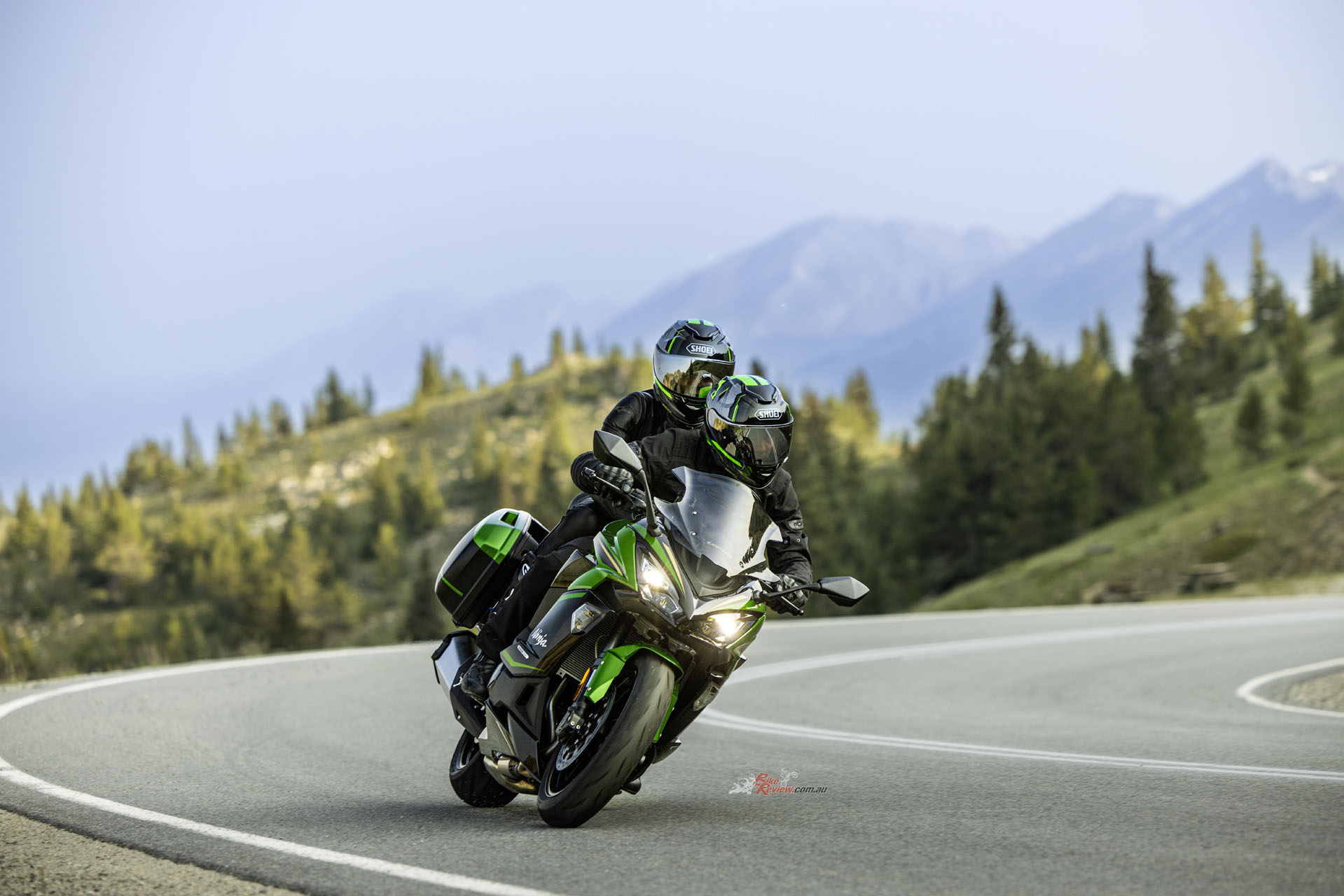
Dynamic Ninja Styling
Styling that highlights the Ninja 1100SX’s Ninja family image and sport riding potential features streamlined-looking fairings and a single-sided muffler.
Touring
Improved fuel economy, longer 5th and 6th gears, and the addition of a handlebar-mounted USB Type-C outlet make longer journeys even more enjoyable. As before, an upright riding position, manageable power delivery, and surefooted handling offer the versatility for daily riding, while superb wind protection, Electronic Cruise Control and a seamlessly integrated accessory pannier system add to comfortable weekend escapes.
Relaxed Riding Position
Offering both control and comfort, the Ninja 1100SX’s relaxed riding position was designed to accommodate everything from city riding to touring to sport riding. This blend of comfort and control allows the rider to enjoy a variety of riding situations.
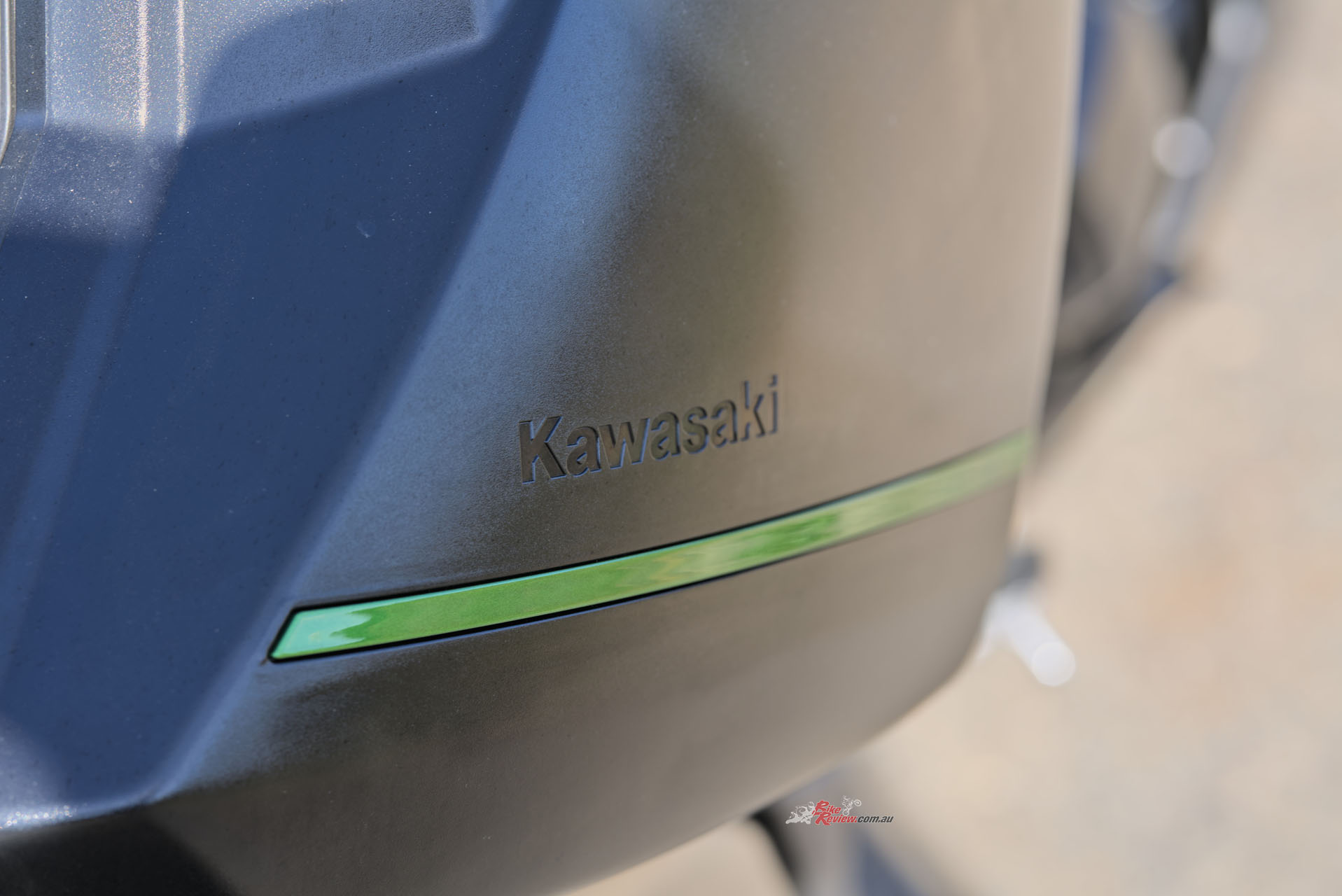

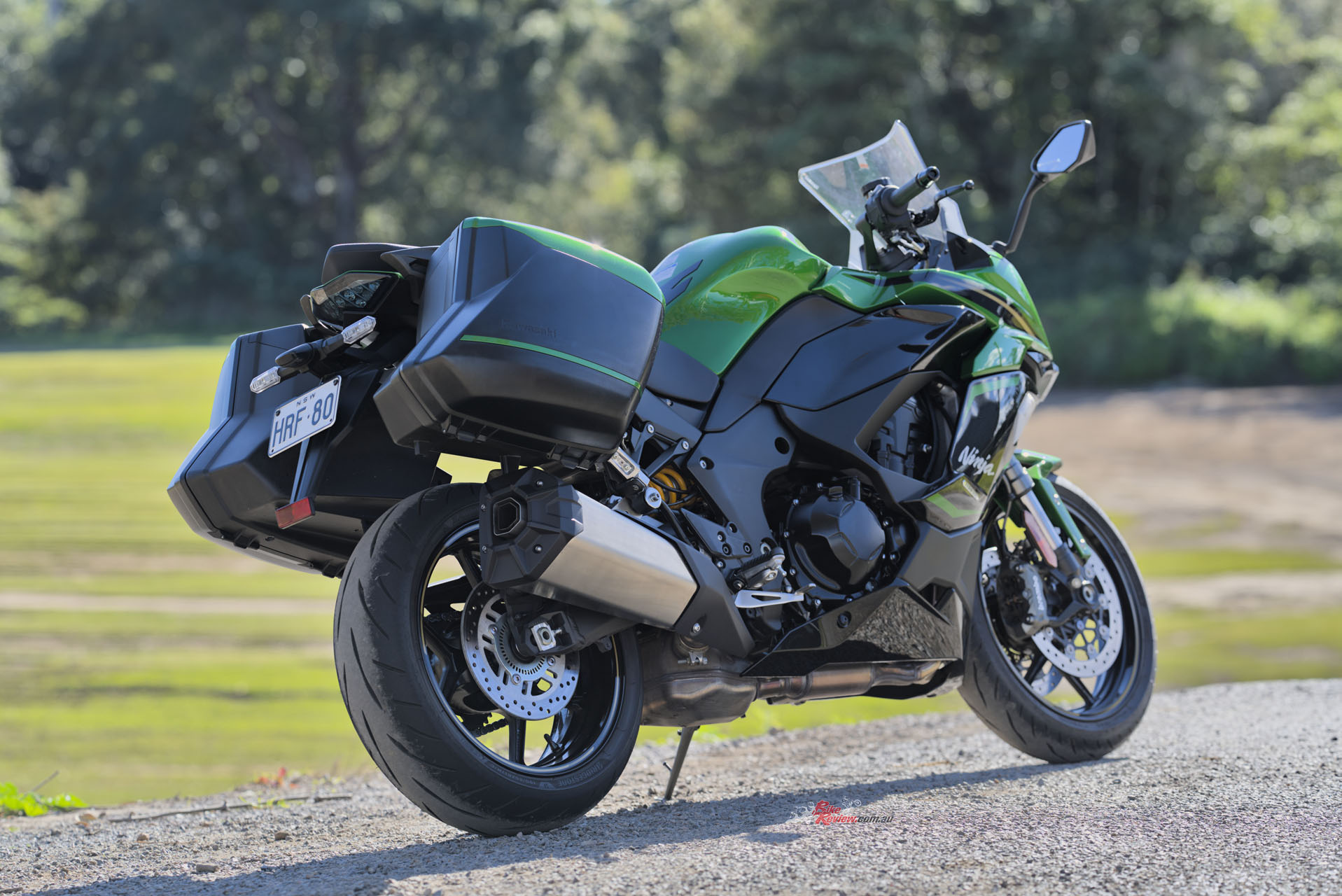
Clean-Mount Pannier System
The mounting system for the accessory panniers allows the panniers to be attached and removed very simply, contributing to increased convenience. Seamlessly integrating the panniers with the rear of the bike, the clean-mount system positions the panniers close to the bike centreline, its clean clutter-free design ensuring the rear of the bike still looks good with the panniers removed.
Electronic Cruise Control
Kawasaki’s cruise control system allows a desired speed to be maintained with the simple press of a button. Once activated, the rider does not have to constantly apply the throttle. This reduces stress on the right hand when traveling long distances, enabling relaxed cruising and contributing to a high level of riding comfort.
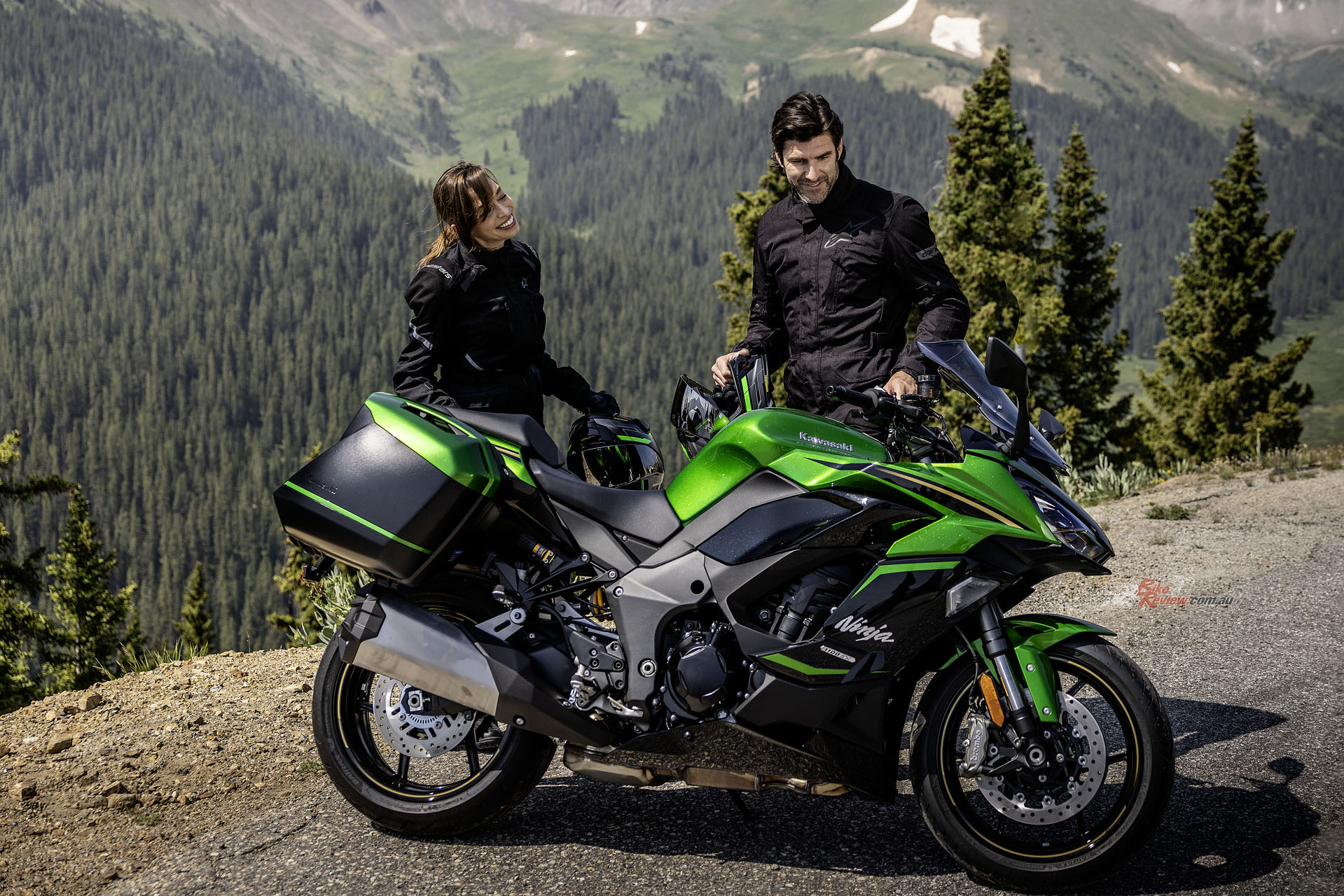
Handlebar-Mounted USB-C Outlet
A USB Type-C socket mounted on the left handlebar offers riders a convenient power source.
Lower Vibration
Weights added in the handlebars themselves are complemented by heavier bar ends to keep vibration while riding to a minimum.
Smartphone Connectivity with Voice Command
The newest RIDEOLOGY THE APP MOTORCYCLE app now offers the ability for riders to control the app by voice commands, which in turn allows them adjust motorcycle settings, and set GPS routes.

SPECIFICATIONS: 2025 Kawasaki Ninja 1100SX SE
Price: $22,491 + ORC ex Sydney (check postcode for R/A price)
Warranty: Two-year, unlimited kilometre
Colours: TBA – includes SE (Sports Edition with Öhlins & Brembo)
Claimed Power: 100kW [136hp] @ 9,000rpm
Claimed Torque: 113Nm @ 7,600rpm
Curb Weight: 234kg (approx.)
Fuel Capacity: 19L
Fuel Consumption: 5.6L/100km (claimed)
Fuel Consumption (Measured): 5.7L/100km
Range: + 323km (Measured)
Engine: Liquid-cooled, four-stroke in-line four-cylinder, 1099cc, 77 x 59mm bore x stroke, 11.8:1 compression ratio, DOHC, 16 valves, 38mm throttle-bodies, RbW, four-into-one exhaust Gearbox: Six-speed, KQS quick-shifter Clutch: Wet multi-disc, slipper/assist, 15/42 gearing,
Chassis: Alloy twin tube frame, alloy swingarm
Rake: 24° Trail: 98mm
Suspension: 41mm inverted forks, compression, rebound and spring preload adjustability, 120mm travel. Horizontal Back-link Ohlins S46 rear shock, rebound damping and spring preload adjustability, 141mm travel. Brakes: KIBS with cornering ABS & KCMF, dual 300mm Brembo discs with Brembo M4.32 radial-mount calipers & Brembo master-cylinder, braided lines. Single 260mm rear rotor, single-piston caliper Wheels & Tyres: Cast alloy, 120/70 ZR 17, 190/50 ZR 17 Bridgestone S23.
Dimensions:
Wheelbase: 1440mm
Seat height: 835mm
Overall height: 1190 – 1225mm
Overall width: 805mm
Overall length: 2100mm
Ground clearance: 135mm
Instruments & Electronics: 4.5in TFT colour display with Road/Sport modes, IMU-enhanced electronics, KQS, KTRC, KCMF, Power Modes, Cruise Control, KIBS, Smartphone connectivity with Rideology app + voice command, handlebar-mounted USB-C outlet.
Ratings | Bike Review | 2025 Kawasaki Ninja 1100 SX SE Road Test
Sublime
Kawasaki’s 2025 Ninja 1100SX SE is a fifth-generation evolution that delivers more power, sharper handling, premium Öhlins and Brembo kit, and refined tech… Photos: ShotByRoth

The Author

You Might Also Like