

The Pan America 1250 Special combines serious road pace, strong off-road ability and a deep electronics package in Harley-Davidson’s own take on the big-bore adventure bike.
The 2026 Harley-Davidson Pan America 1250 Special is a sweet bit of kit, arguably one of my favourites this year. But is it worth the hype and the cash, and can it hold its own in the current and highly competitive big adventure market? Here’s what Nick reckons…
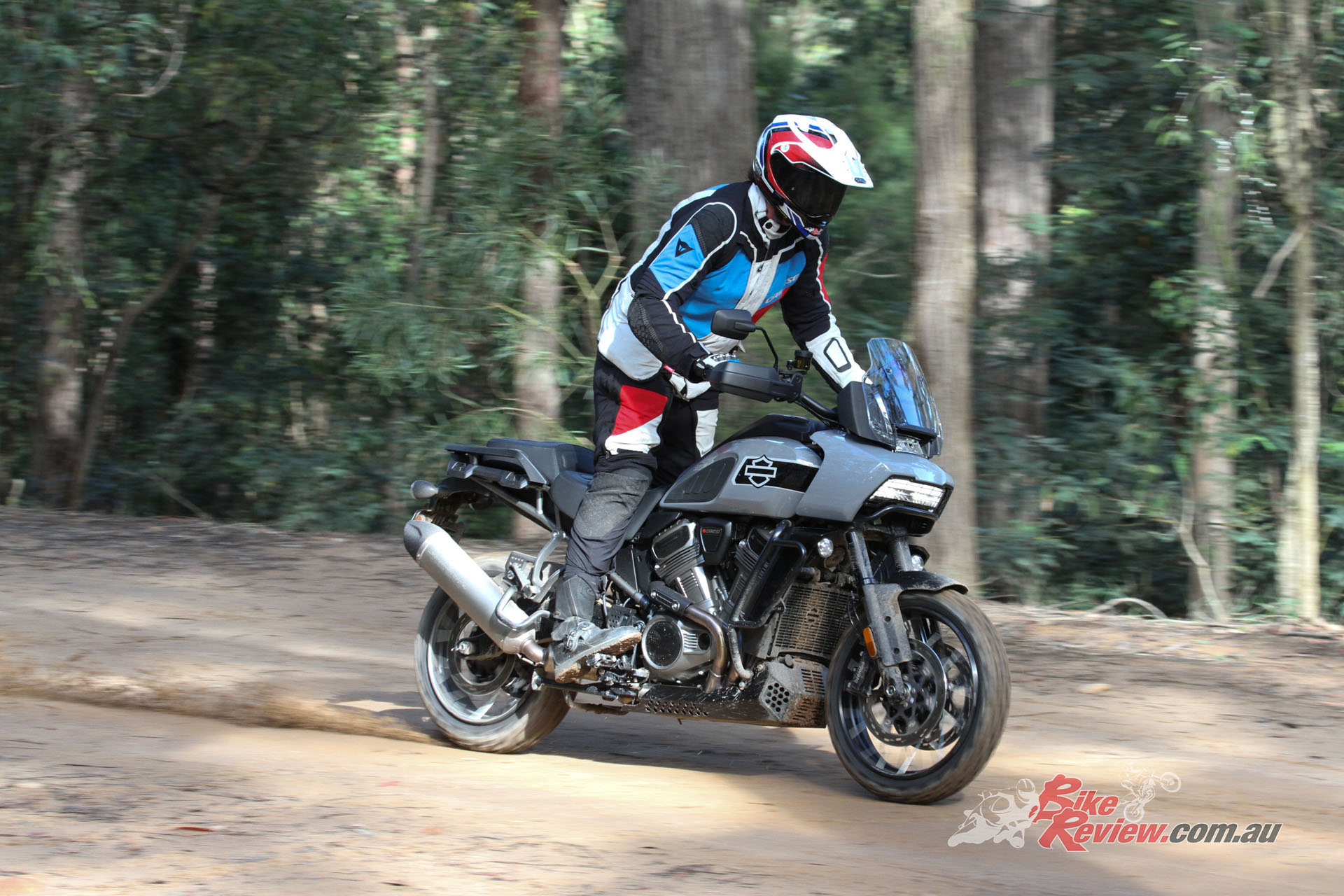
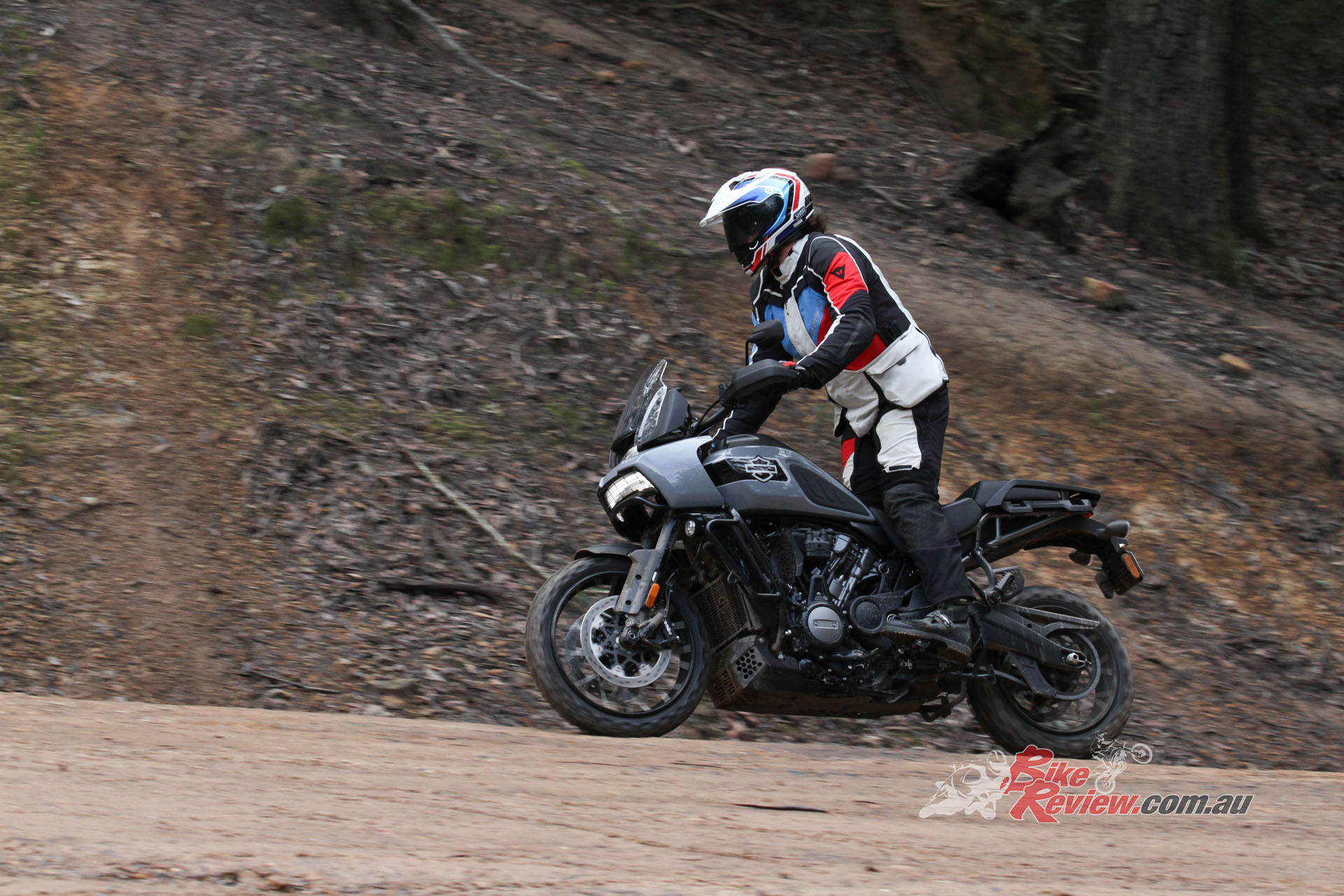
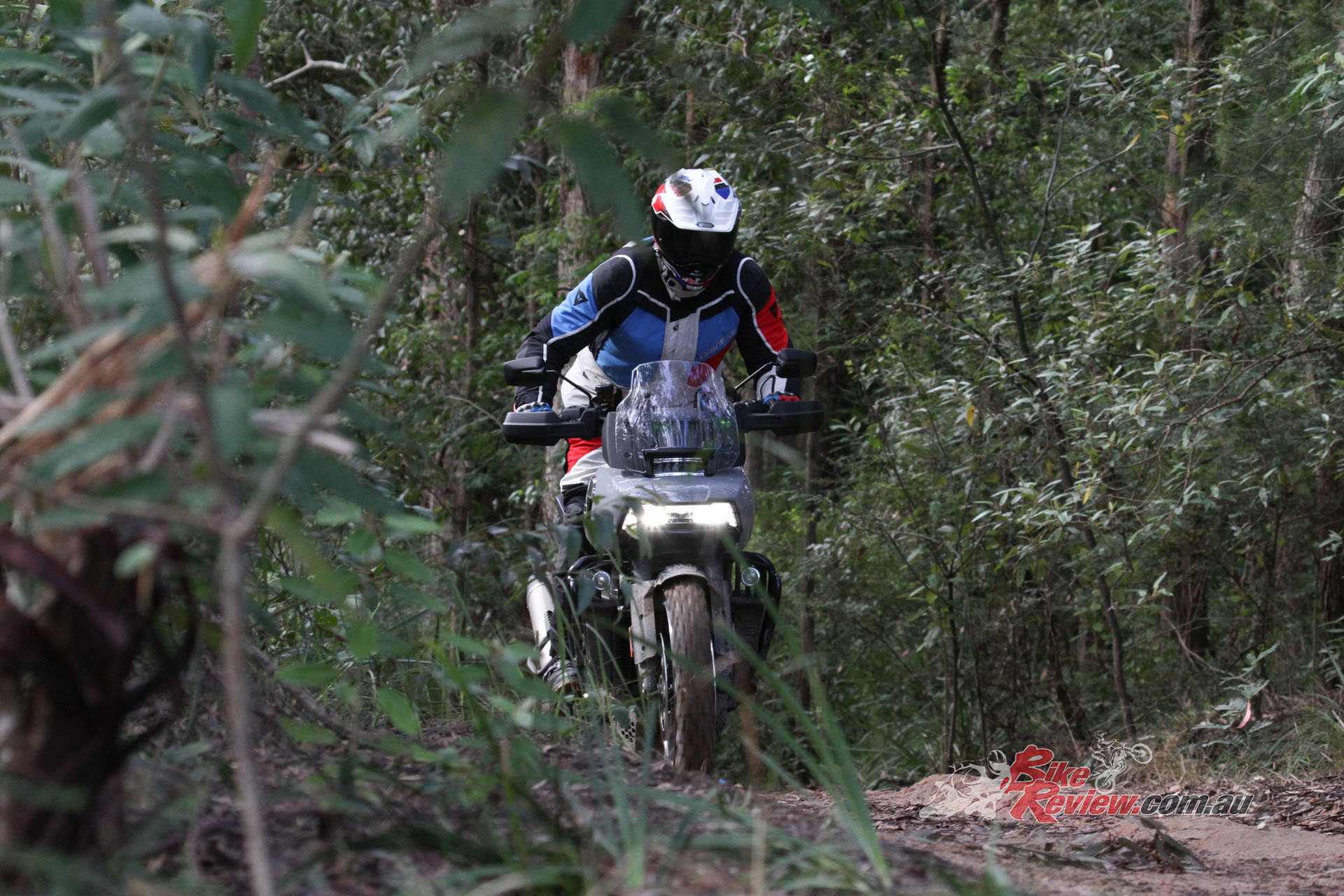
Despite its size, the Pan America proved surprisingly comfortable and controllable when ridden standing.
Starting with my favourite bit, the 1252cc liquid-cooled 60-degree Revolution Max V-twin. Pumping out 112kW @ 8750rpm and 127Nm @ 6750rpm, it’s an angry powerhouse, though I wouldn’t call it buttery smooth. The Revolution Max engines are a damn sight better than anything else Harley has offered, but you can still hear just about everything happening inside the engine cases. Compared to some competitors it’s an angry-sounding thing, but that’s half the character.
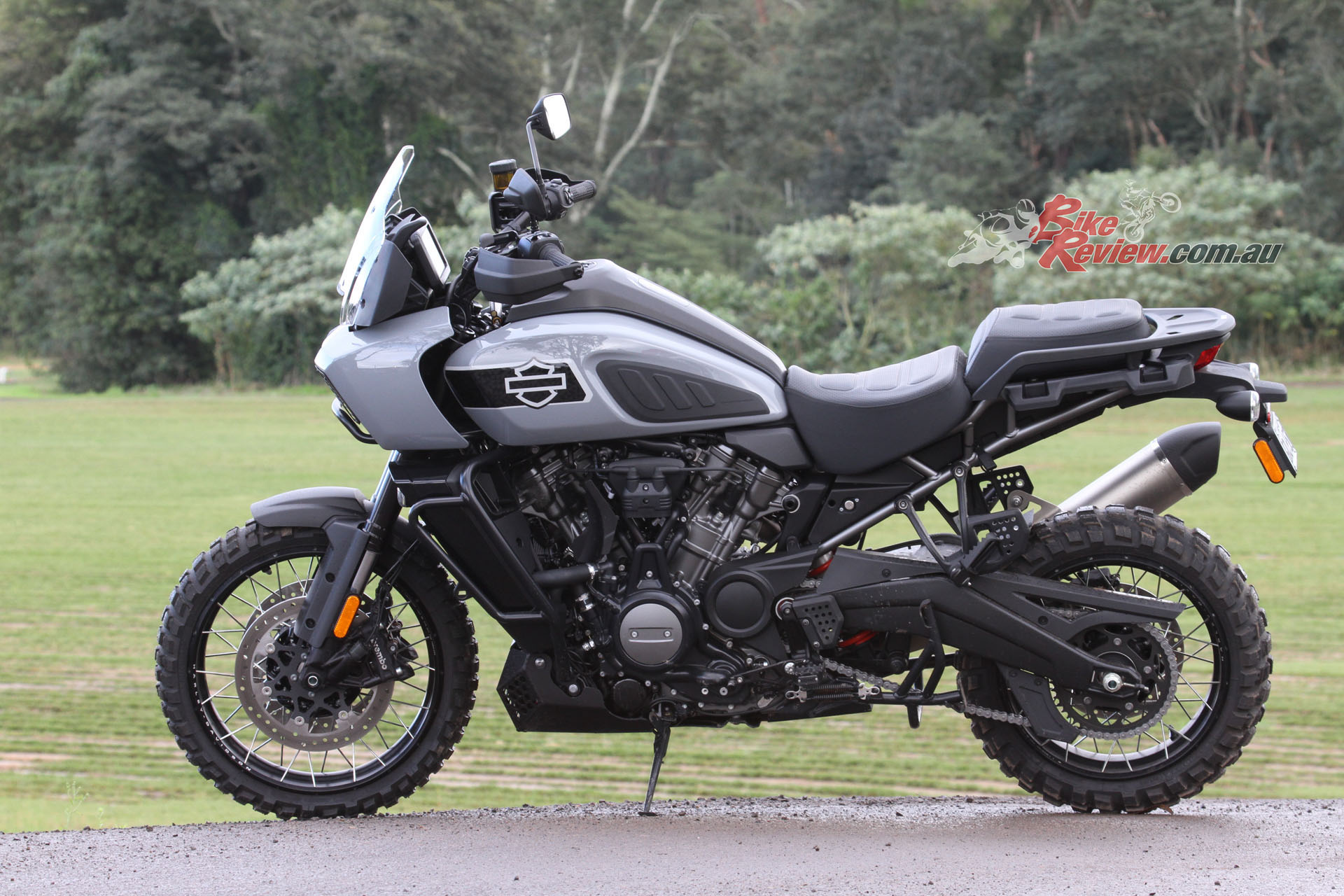
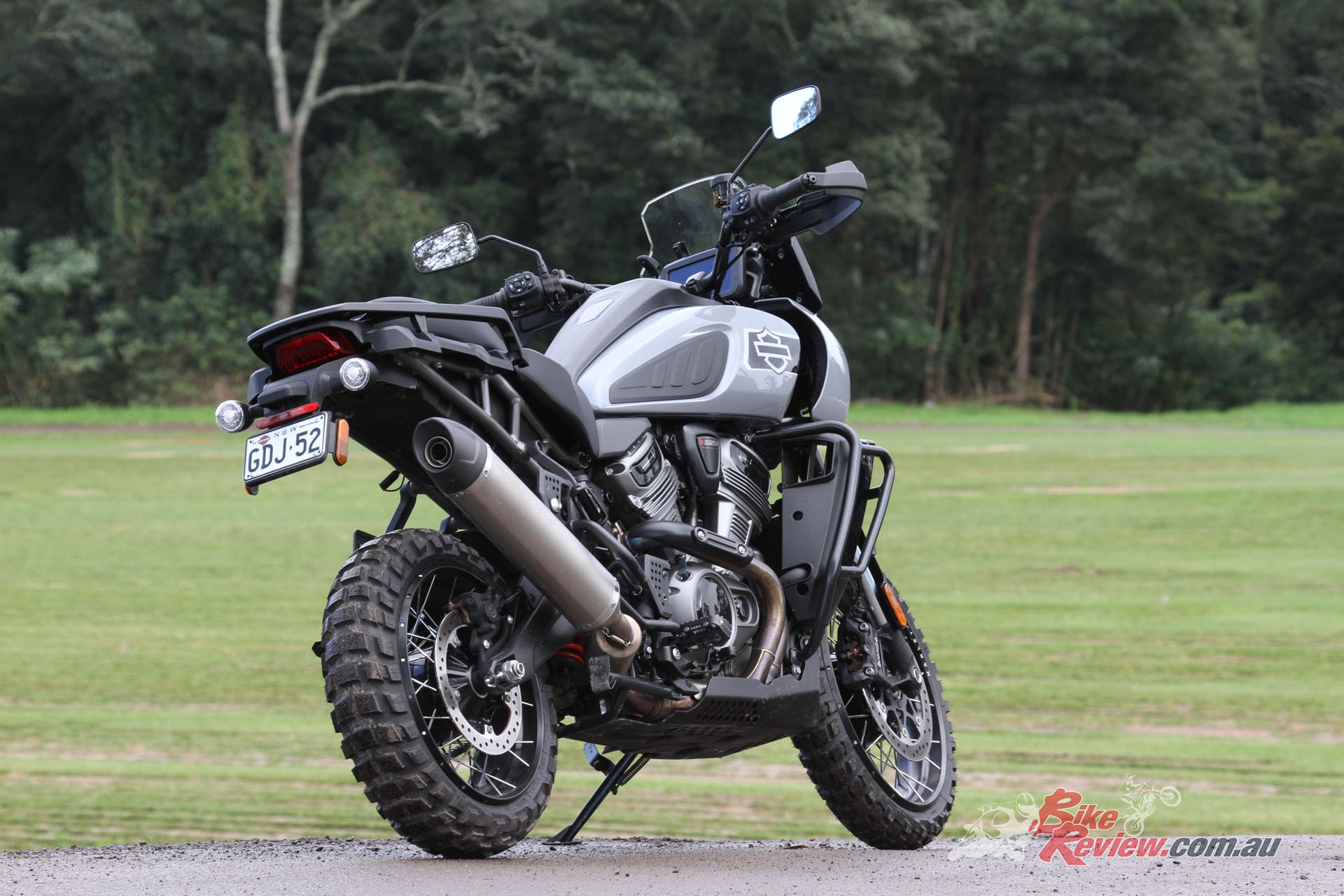
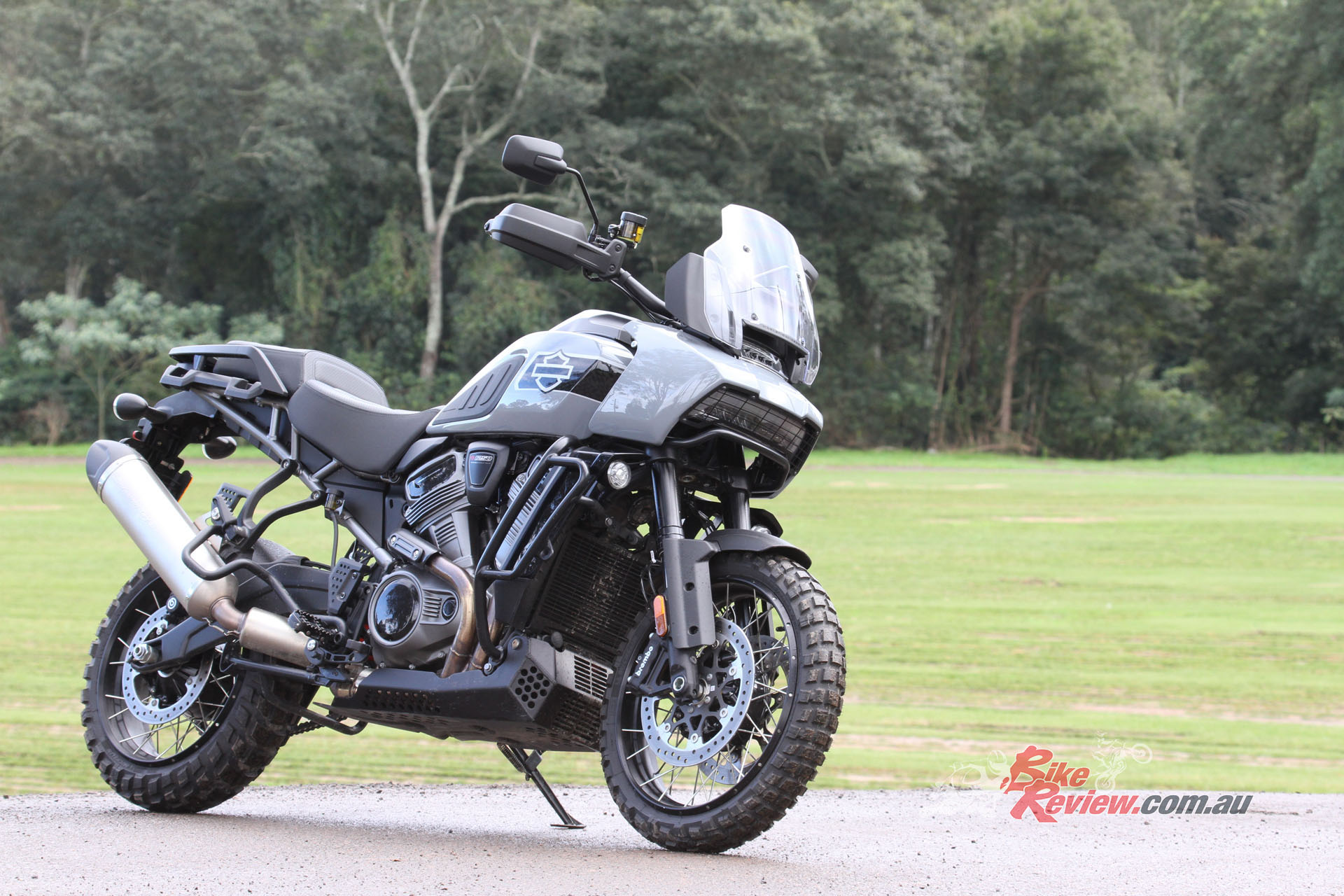
At the bottom end you’ve got torque for days, enough to spin up the rear with the slightest bit of rain about, even in some of the tamer ride modes. There’s also a ridiculous amount of drive for getting around slower traffic or up and over the tougher hill climbs. The powerplant is near enough to perfect for me, and exactly what I want out of an adventure motorcycle.
The powerplant is near enough to perfect for me, and exactly what I want out of an adventure motorcycle.
Getting those 112kW to the rear wheel is a six-speed box that’s far better sorted than anything I’ve previously ridden from Harley-Davidson, at home on fast tarmac and slow dirt trails alike. The quick-shifter and shift feel are pretty smooth, though it’s hard to hold that up against the masterpieces the Japanese manufacturers put out. Jeff couldn’t get a quick-shifter at all when we tested the 2021 model, so at least that’s moved on.
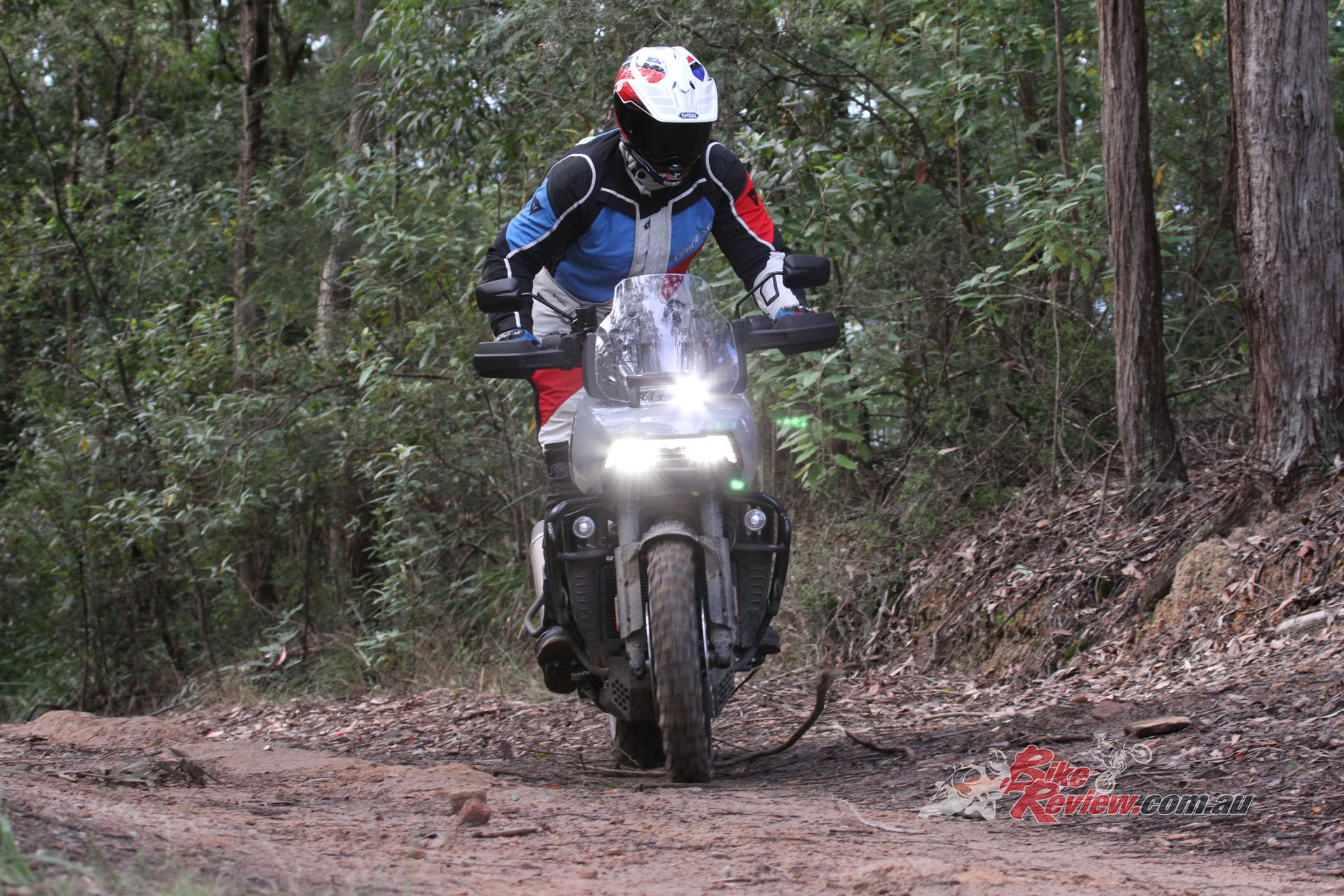
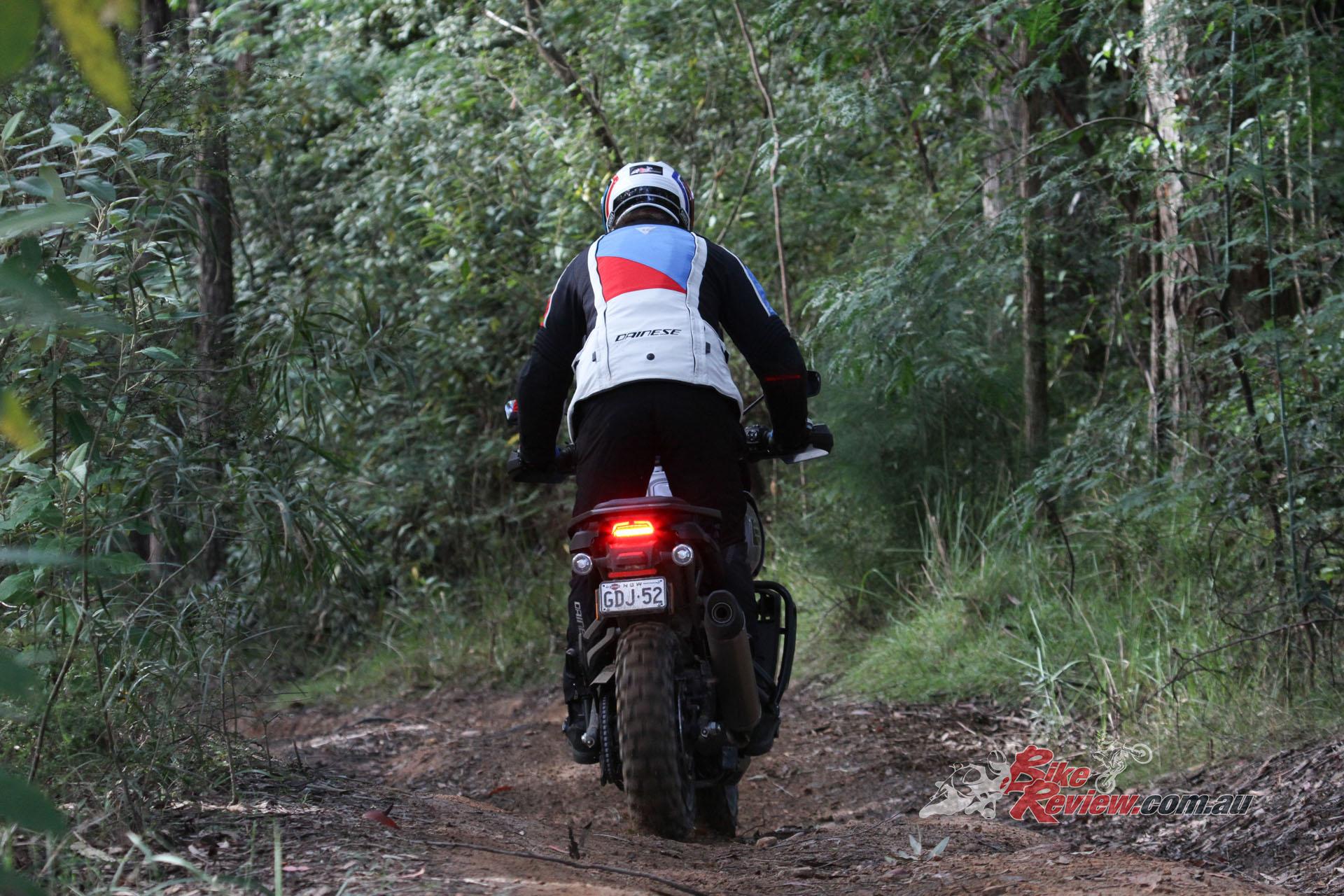
I wouldn’t change the gearing, and I didn’t come unstuck even on tight single trail. With that much torque on tap it’s a case of grabbing a fistful of throttle and letting it figure itself out. The cable-actuated slipper clutch is surprisingly light too, easy to actuate with two fingers, and even one in the tight technical stuff.
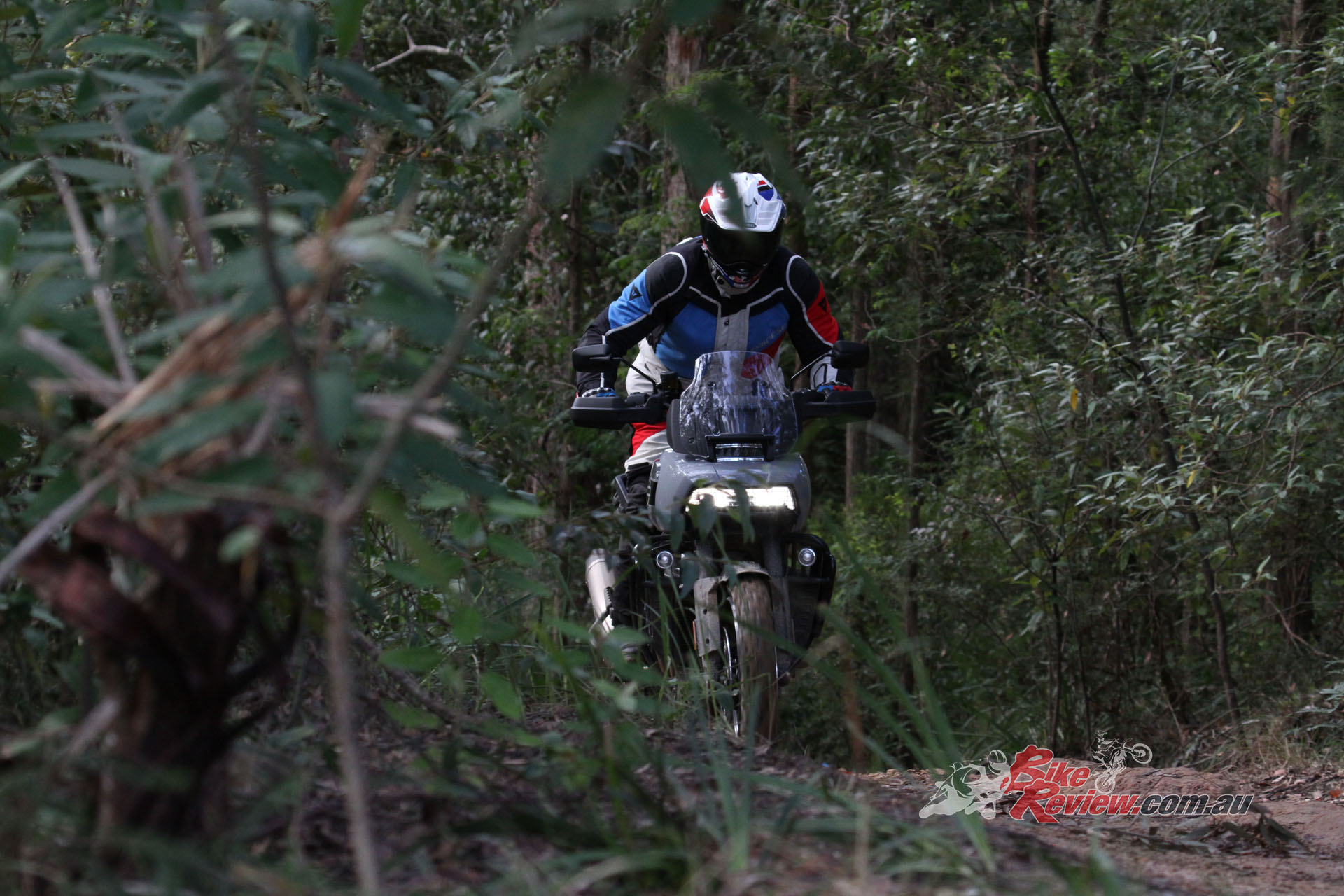
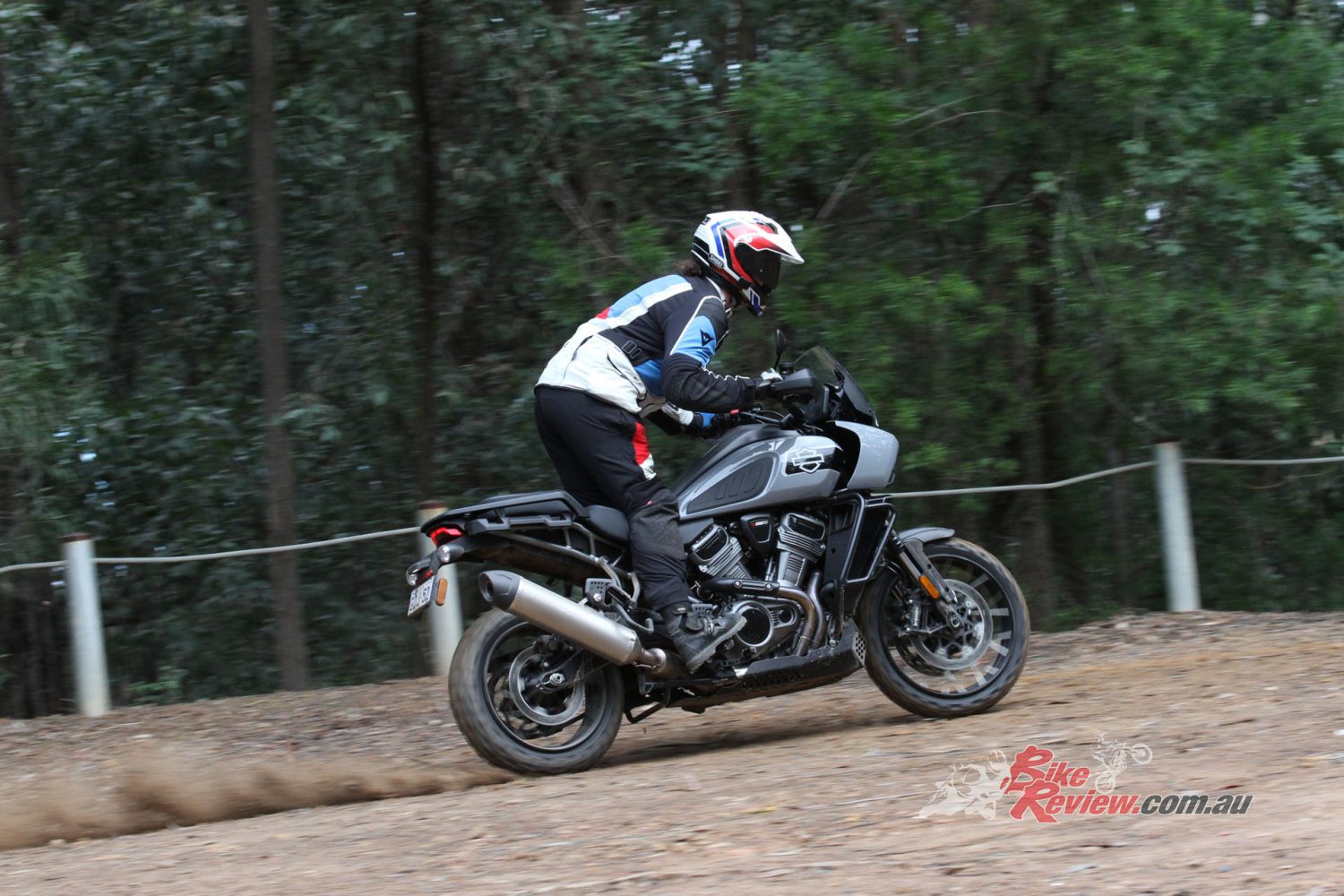
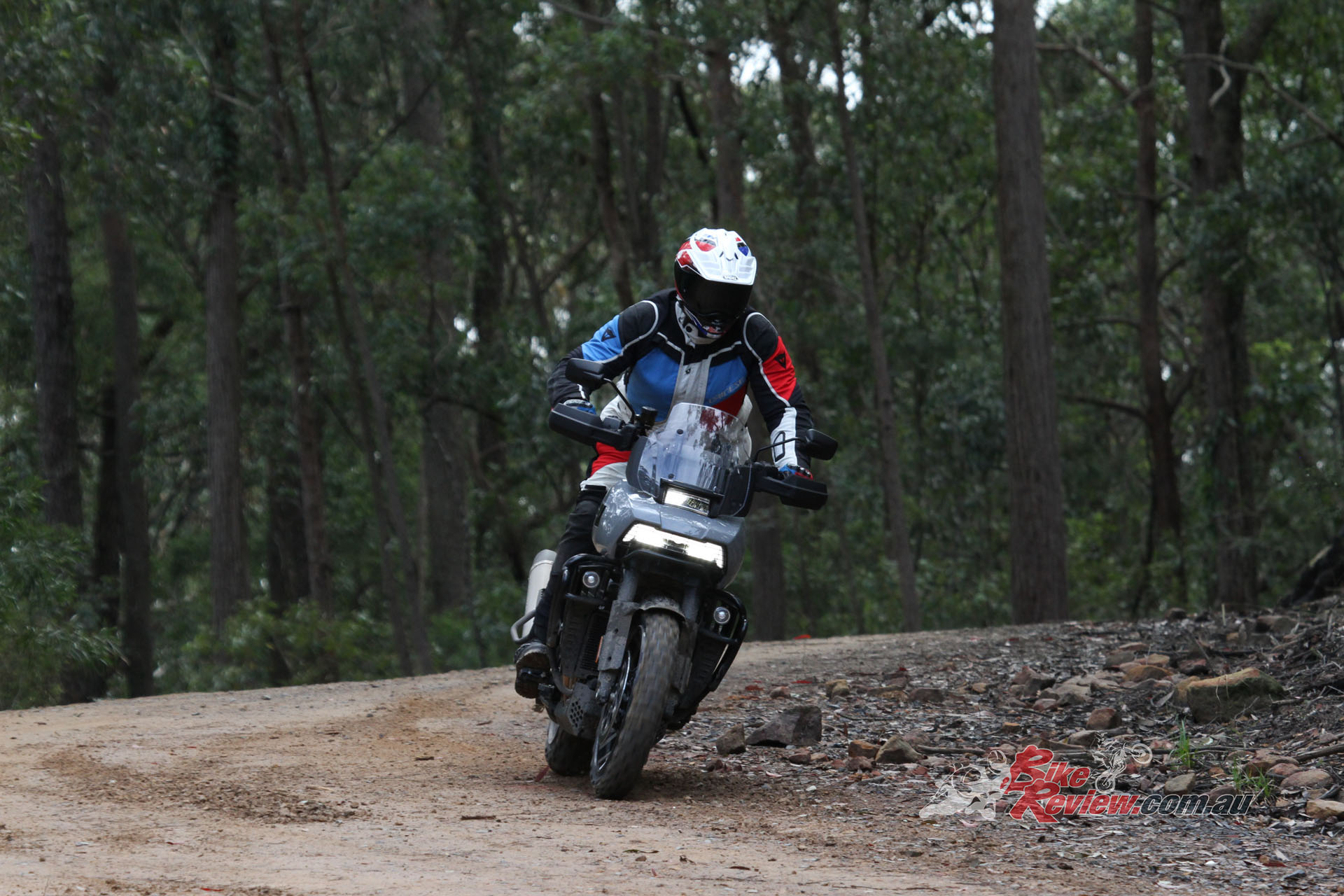
The Pan America proved capable well beyond formed gravel roads, tackling tight forest trails with confidence.
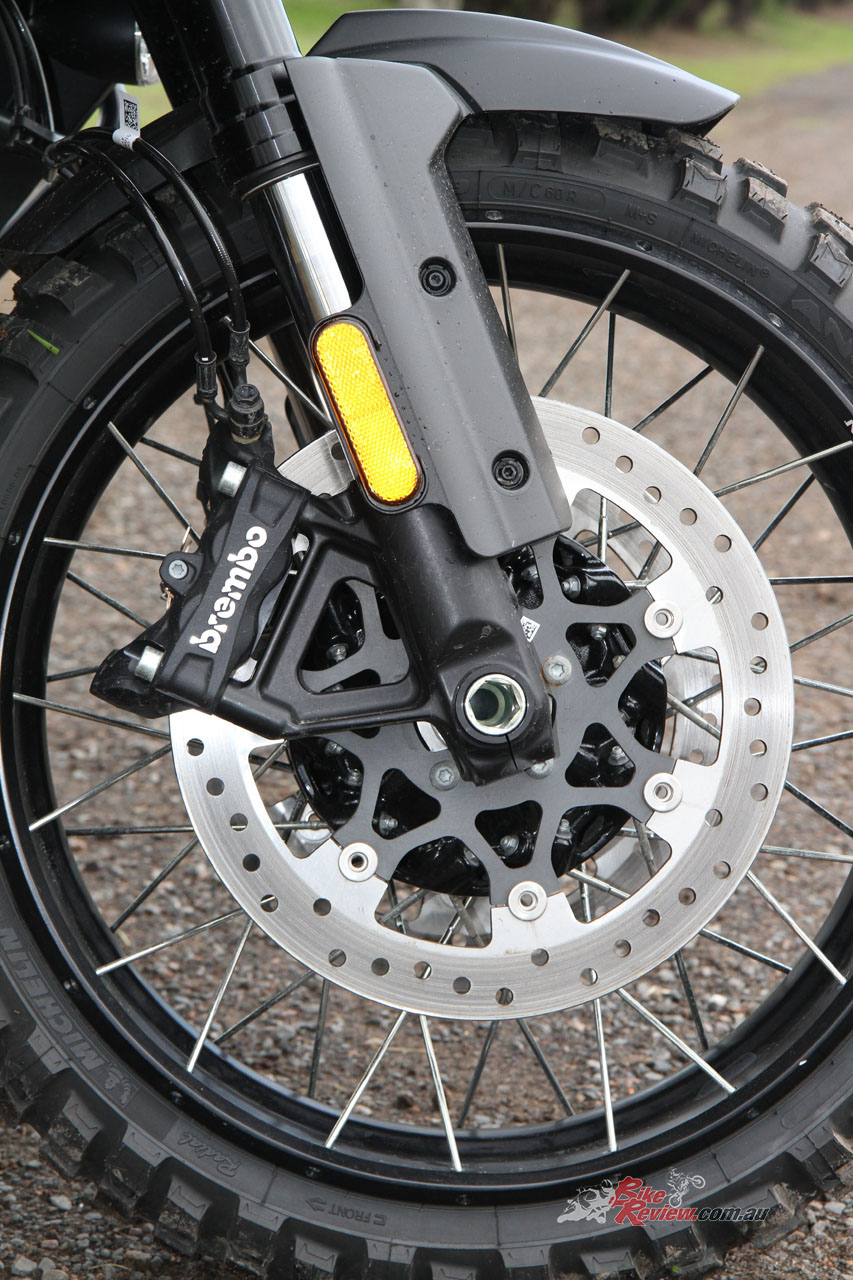
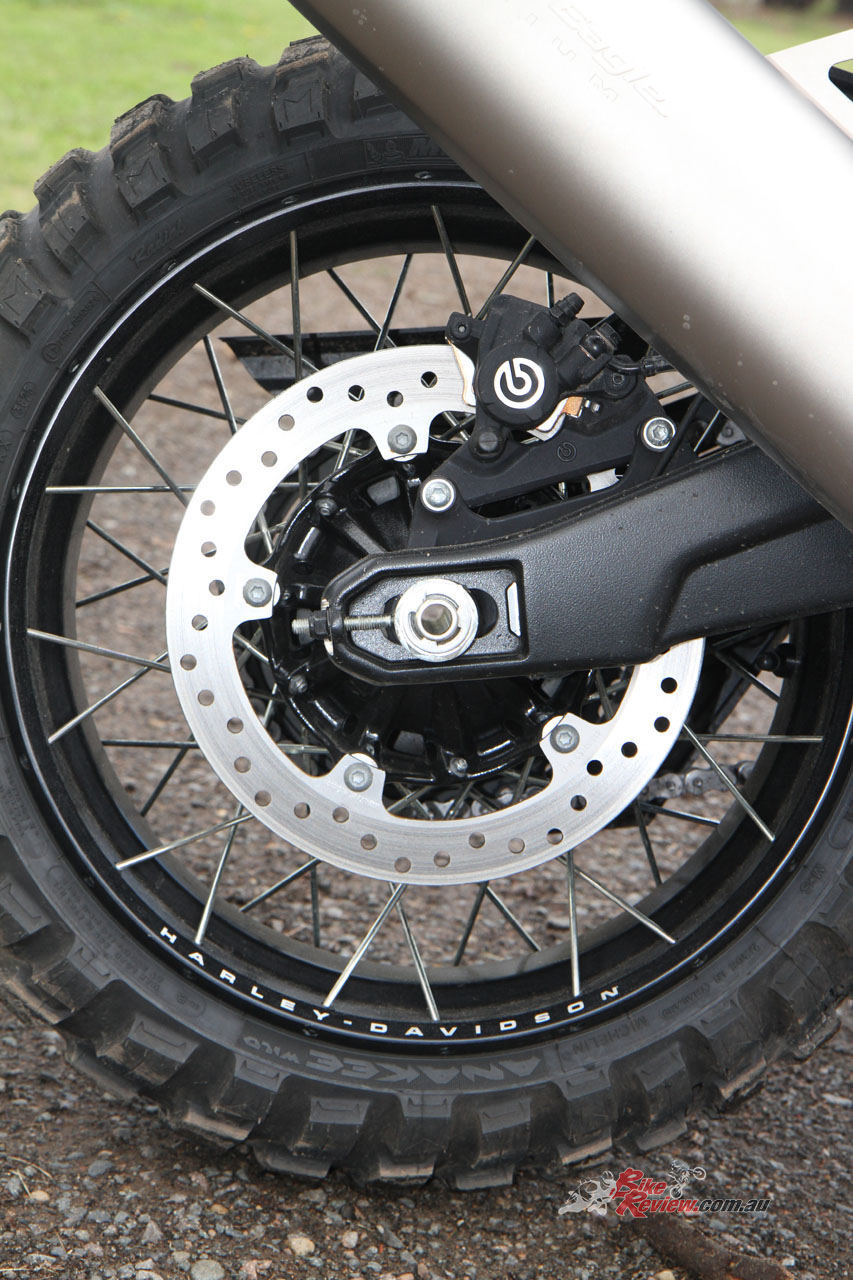
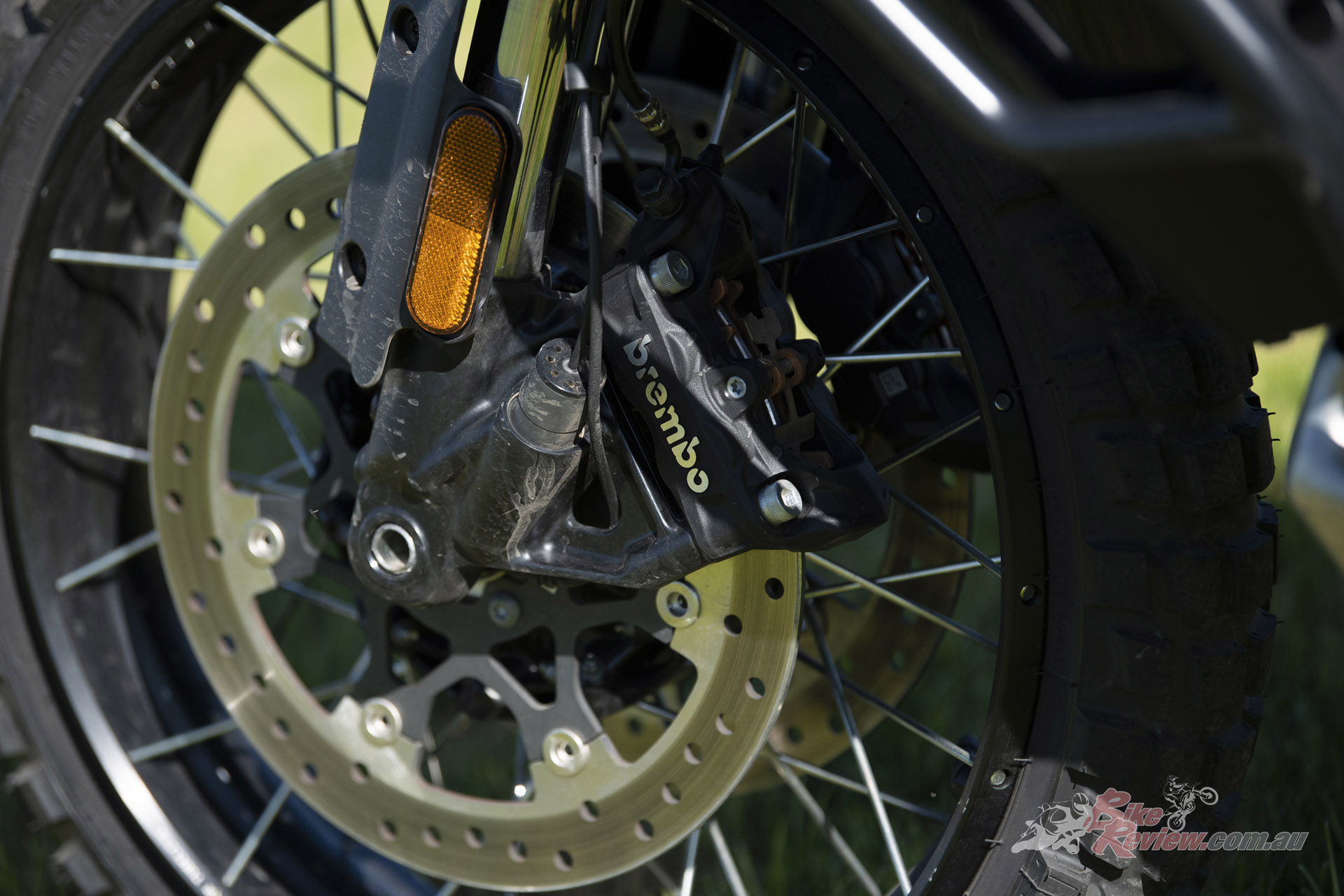
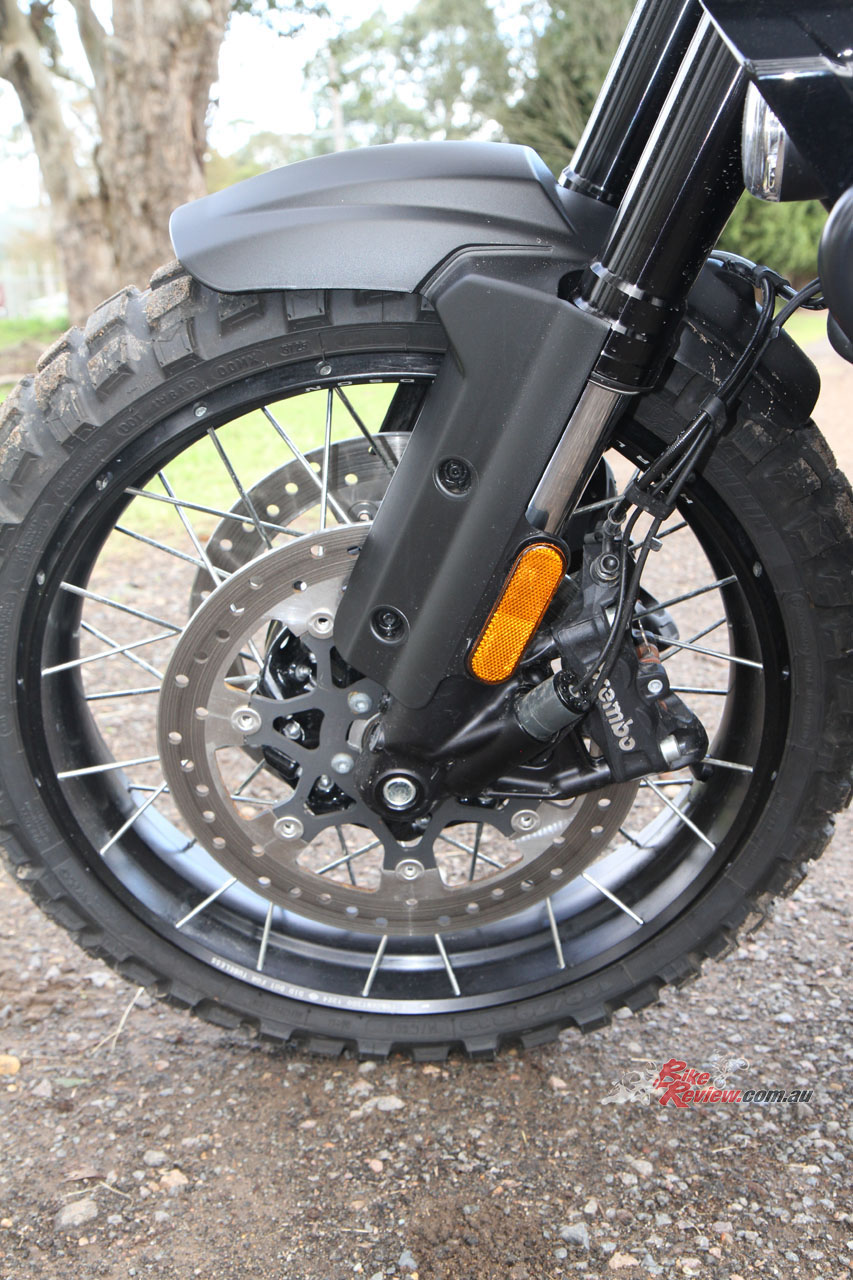
The big Brembos do a good job of pulling up a lot of weight, and it’s a solid setup that doesn’t need much else. Up front are four-piston monobloc calipers on twin 320mm rotors, with a single-piston floating caliper on a 280mm rotor at the rear. They’re enough to let you ride a fair bit more aggressively than you’d initially anticipate.
As for the suspension, I’d argue Harley-Davidson has damn near hit the nail on the head. I had the pleasure of getting out for some serious full-day dirt rides through the local state forests, in the dry and again after a few big weeks of rain, and rather less of the pleasure of commuting on it daily (roughly a 160km round trip up and back down the M1).
As for the suspension, I’d argue Harley-Davidson has damn near hit the nail on the head.
The 2026 model again gets Showa’s electronically adjusted semi-active setup and Adaptive Ride Height. Up front are 47mm inverted forks with semi-active damping control, paired with a linkage-mounted rear monoshock with automatic preload control and semi-active compression and rebound damping. Consider how much this thing weighs, plus another 110-odd kilos on top with me riding it around the bush, and there’s a hell of a lot for that setup to do. Do it well, it does.
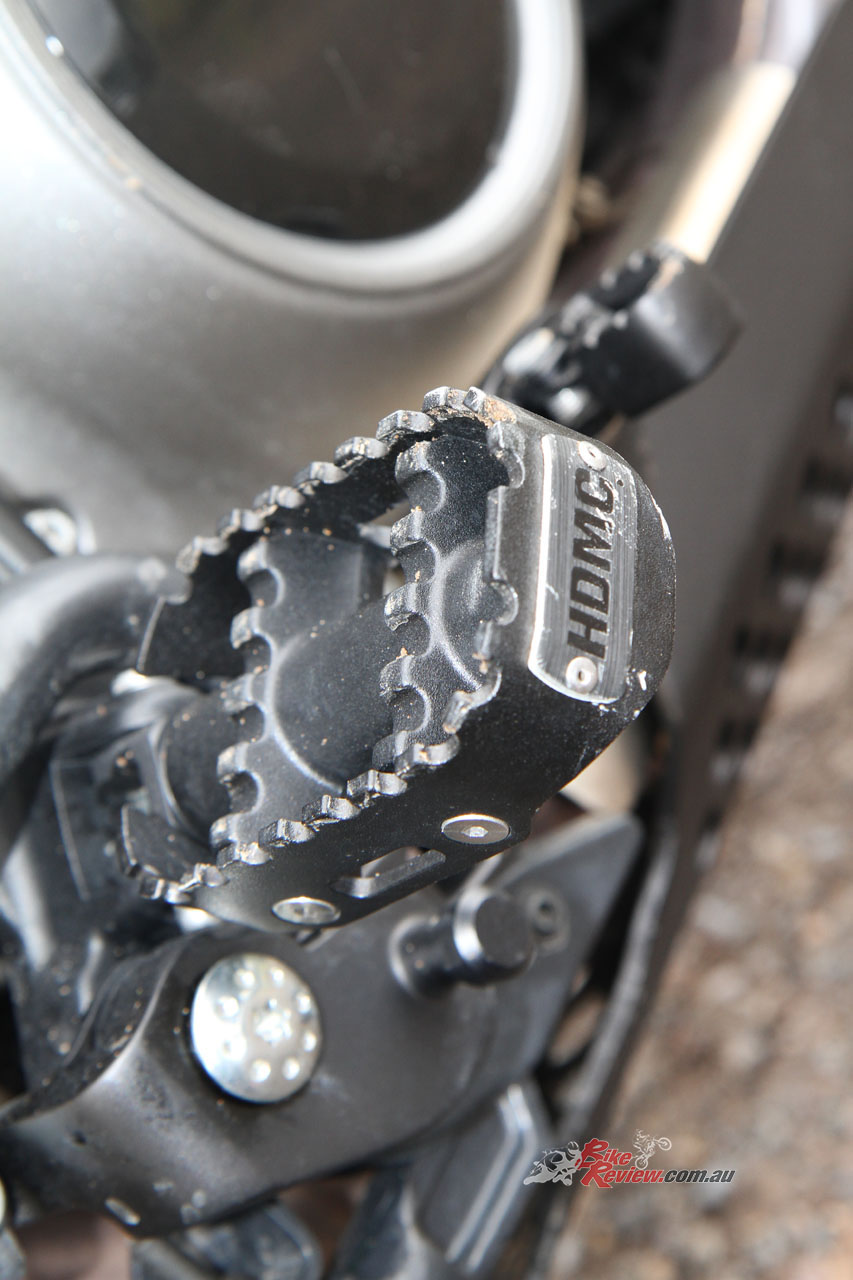
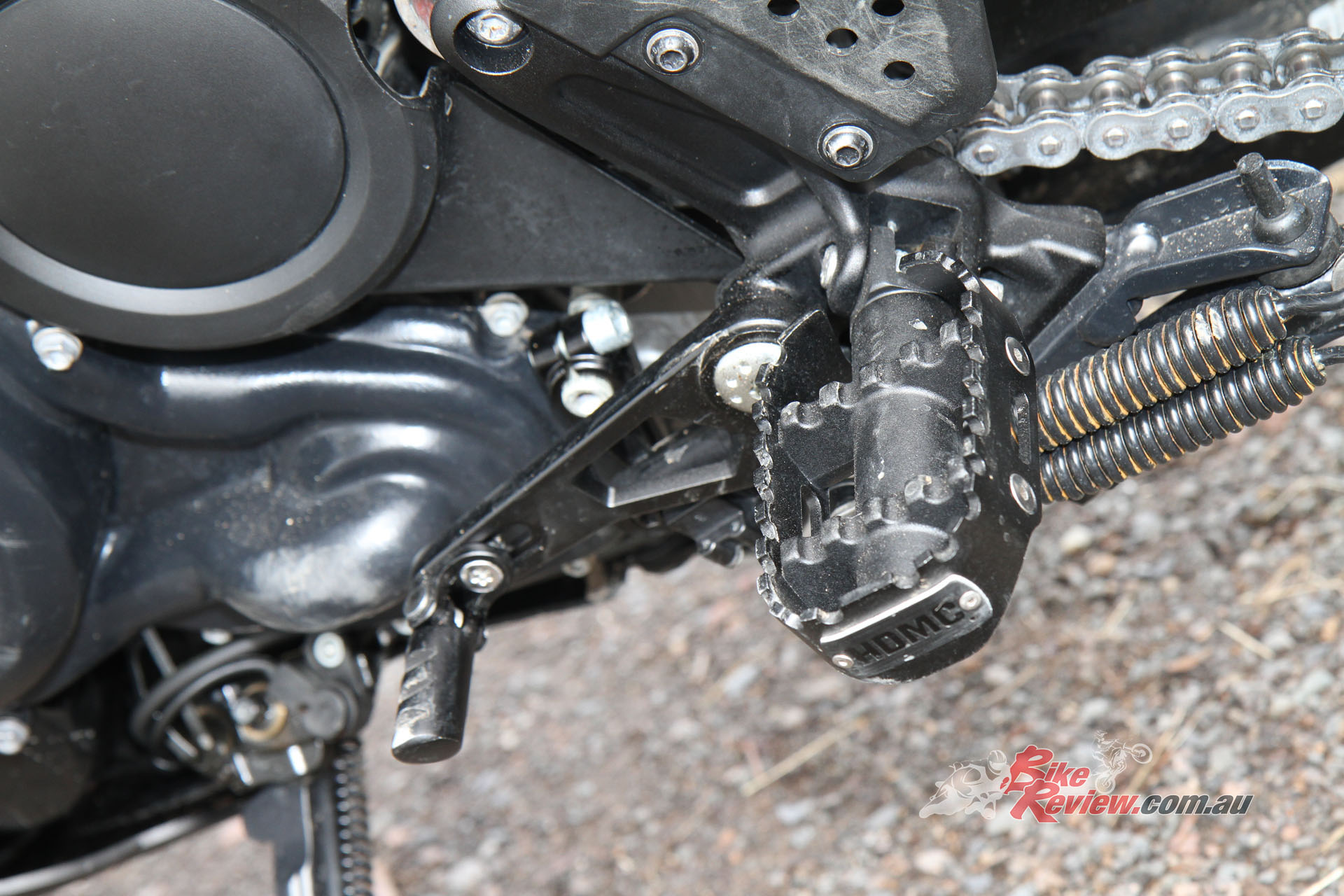
The broad, pivoting footpegs make standing for long stretches surprisingly comfortable.
I found myself hauling through the state forest faster, and more smoothly, than on anything else I’ve taken out there in recent times. After a quick ride mode adjustment it’s equally forgiving and confidence-inspiring through a fast corner on the tarmac. In the dirt it took as much as I could throw at it, and I didn’t reach the end of the 191mm of travel at any point. I’m sure better riders could max it out, but there isn’t anything I’d look at changing any time soon.
The active component drops the bike down at a stop to make pulling up at the lights or getting off it that bit easier from the 850mm seat height. As a much taller rider I found it near useless, but I’ve seen plenty of you online praising it. Given how much machine you’ve got underneath you, anything that makes it easier to handle is a bonus in my books.
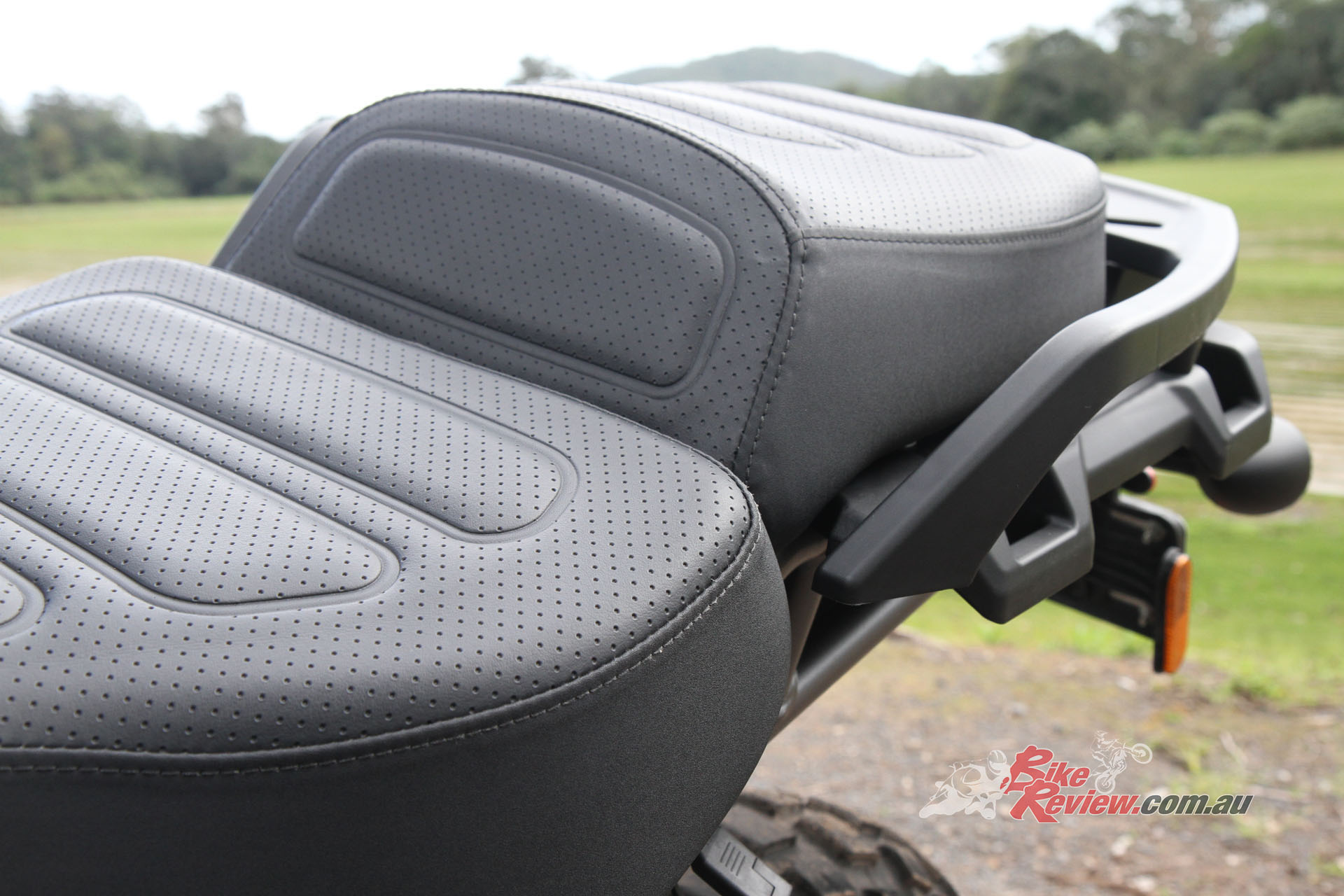
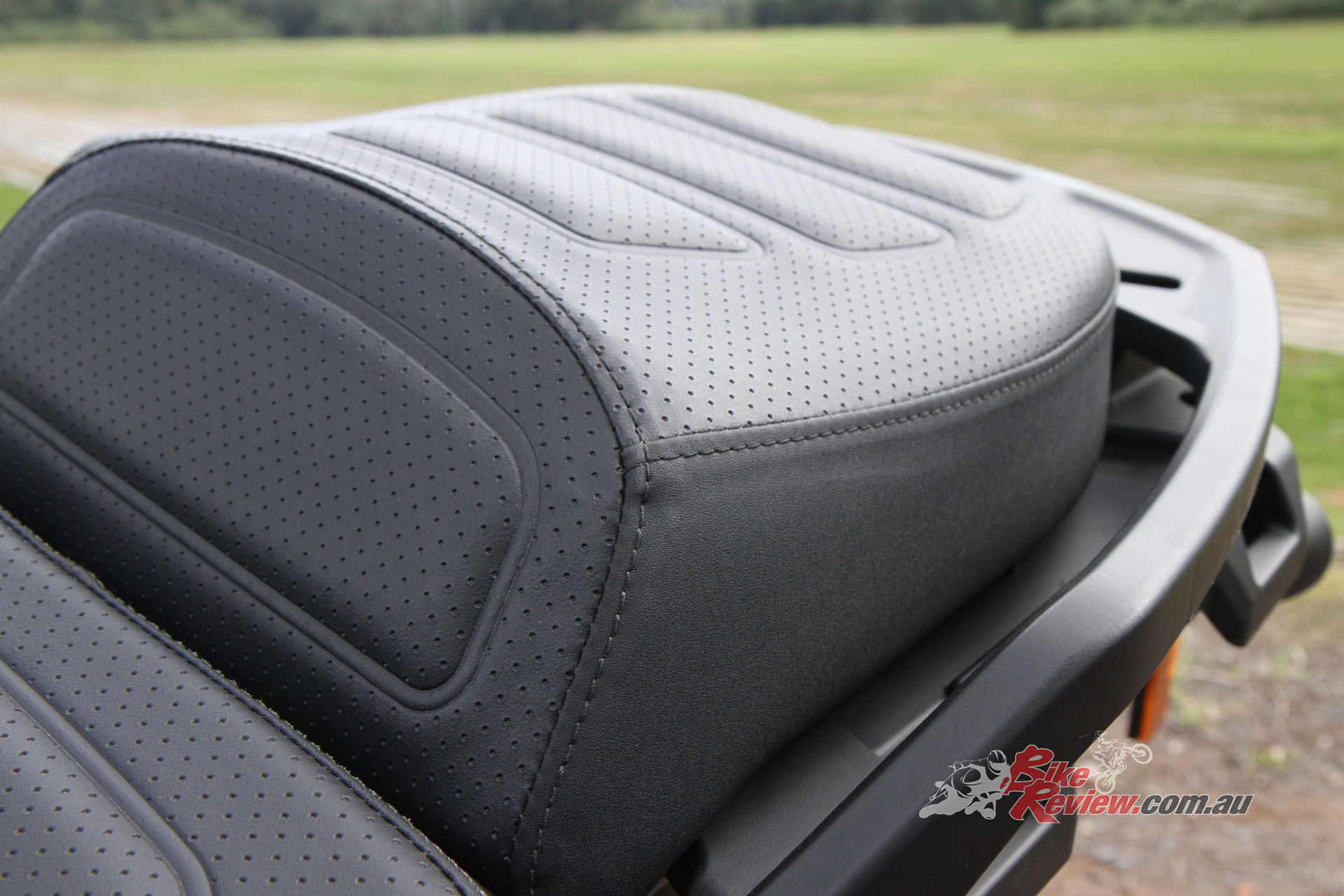
The seat height can also be adjusted mechanically, though I found this left the seat feeling a bit loose. I was lucky enough not to drop it in the dirt, but I can imagine it would be a nightmare getting this thing back upright in sloppy mud.
The active component drops the bike down at a stop to make pulling up at the lights or getting off it that bit easier from the 850mm seat height.
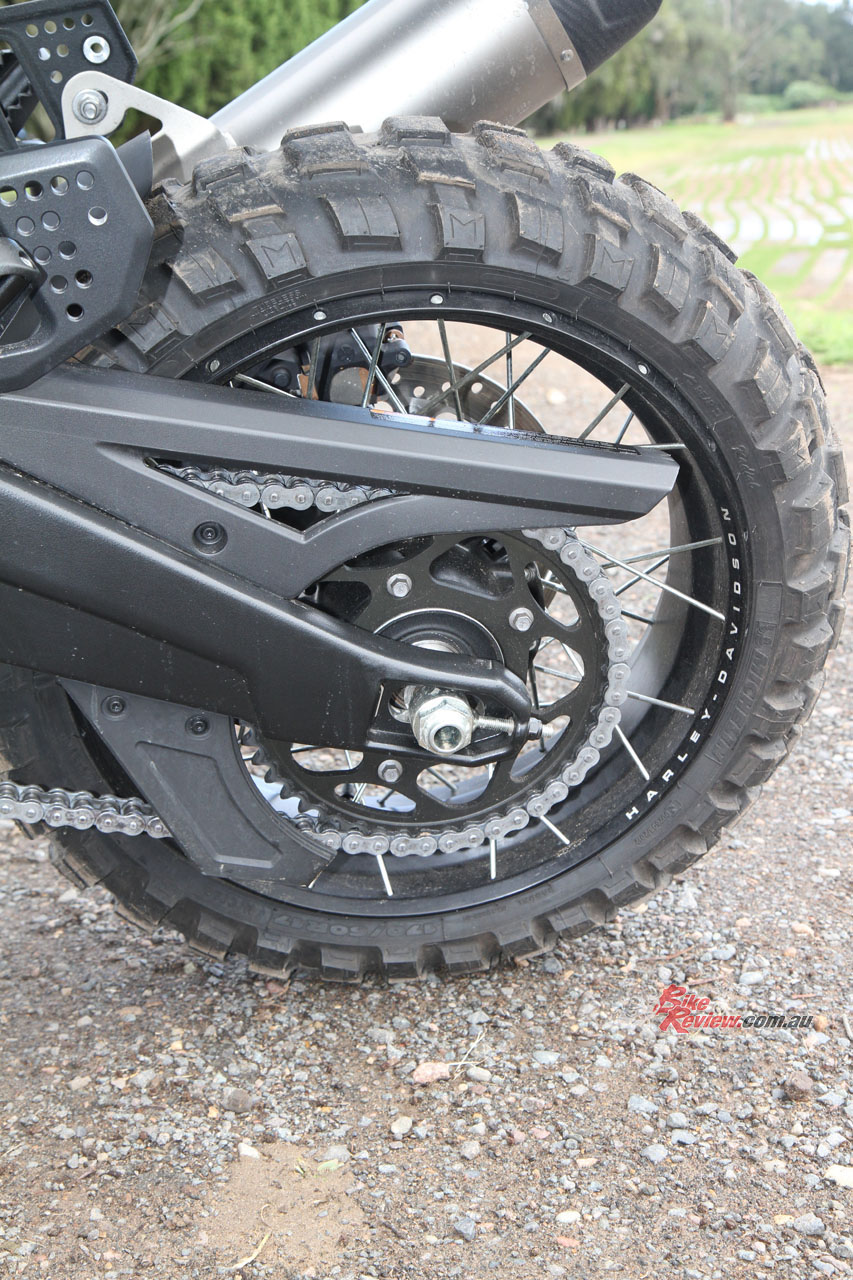
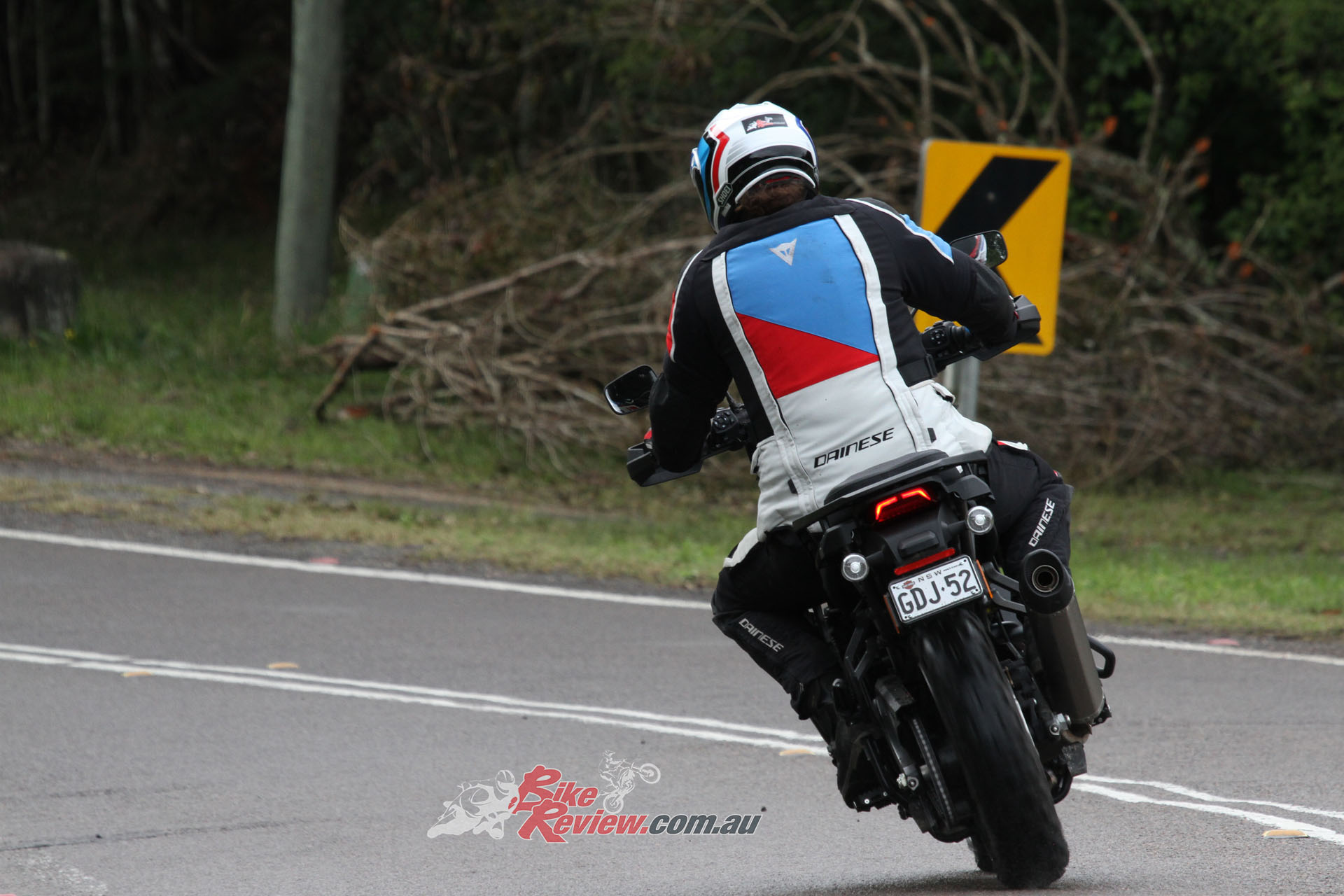
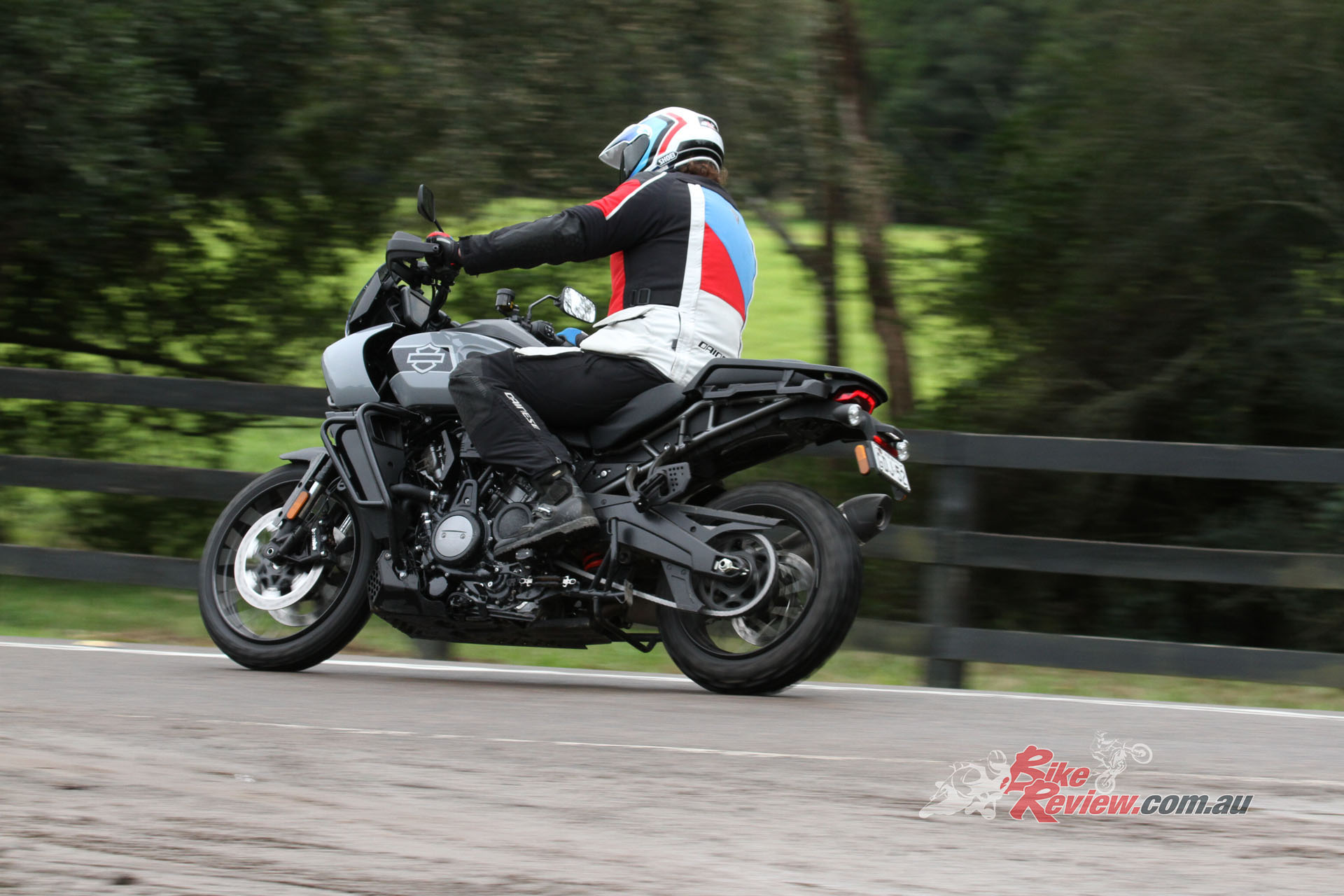
Our bike rolled on the optional tubeless laced wheels, wrapped in full Michelin Anakee Wild knobbies. In the dirt they’re phenomenal, and a fair chunk of the reason I was able to push as hard as I did out in the forest. On wet tarmac they’re another story entirely. Doing the road sections for our photo shoot in the rain was mildly terrifying, and it takes very little to spin the rear up. Worth thinking about if you’re buying one to commute on as well as ride in the bush.
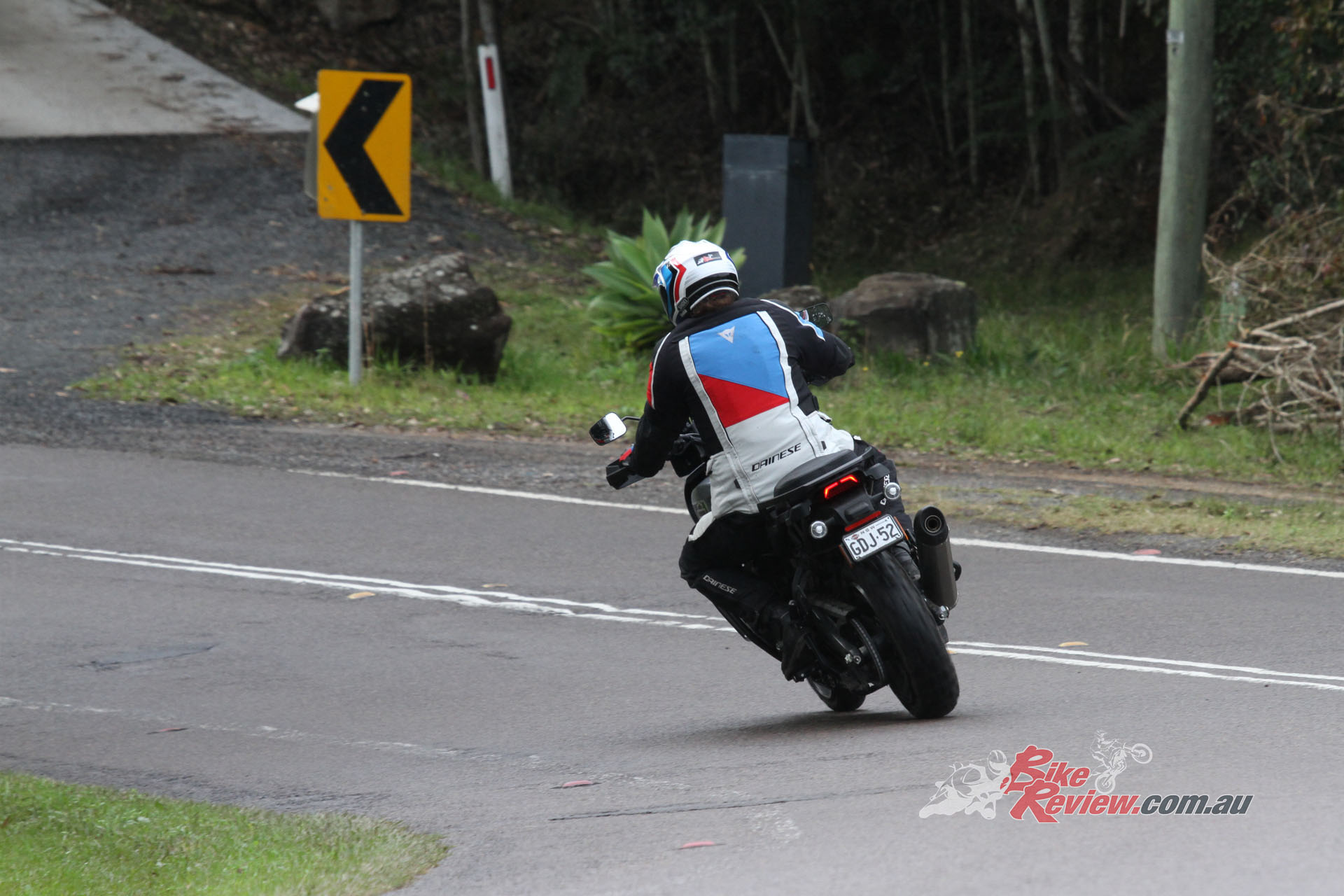
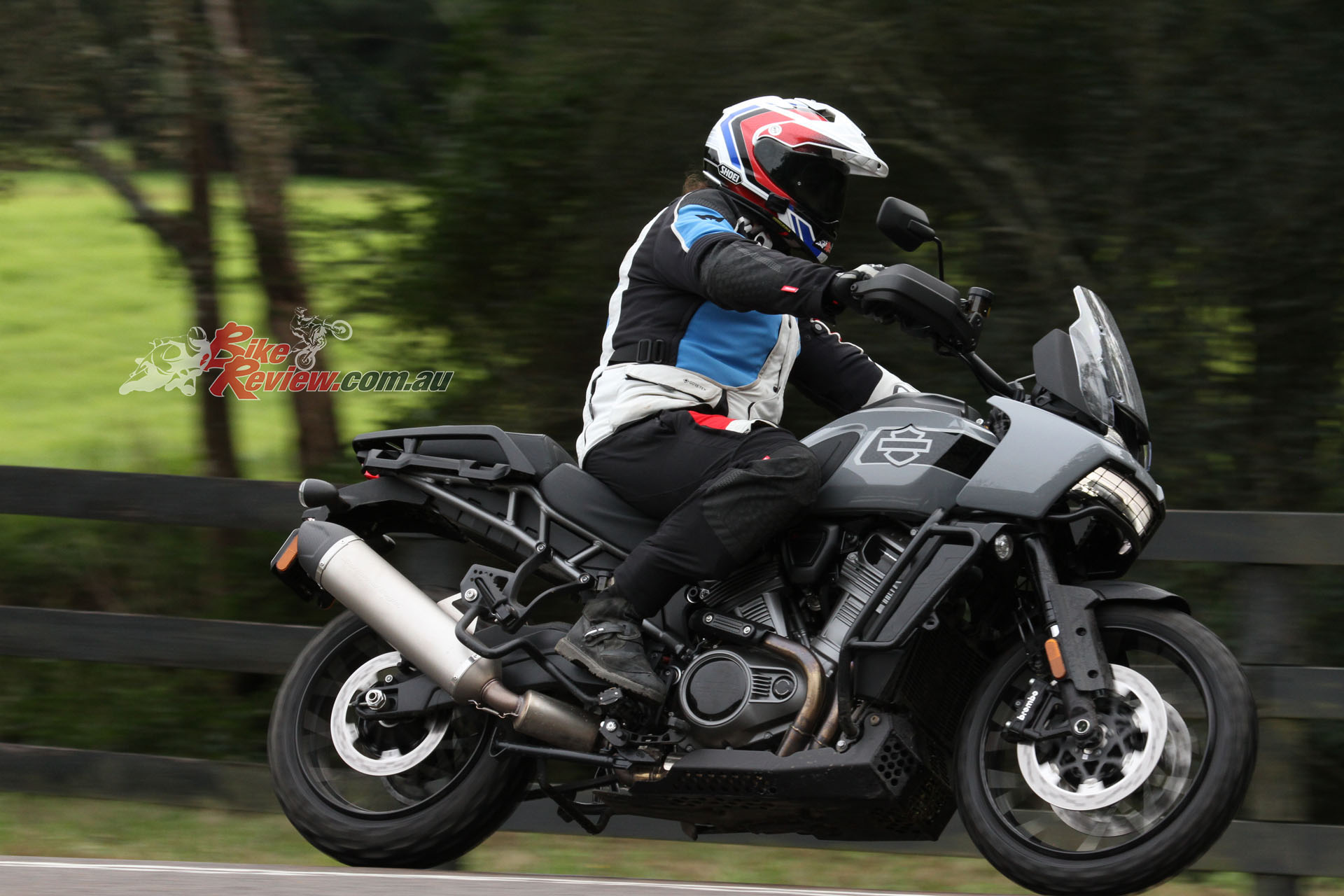
The Anakee Wild knobbies demand some restraint on wet tarmac, with the rear easily spun up.
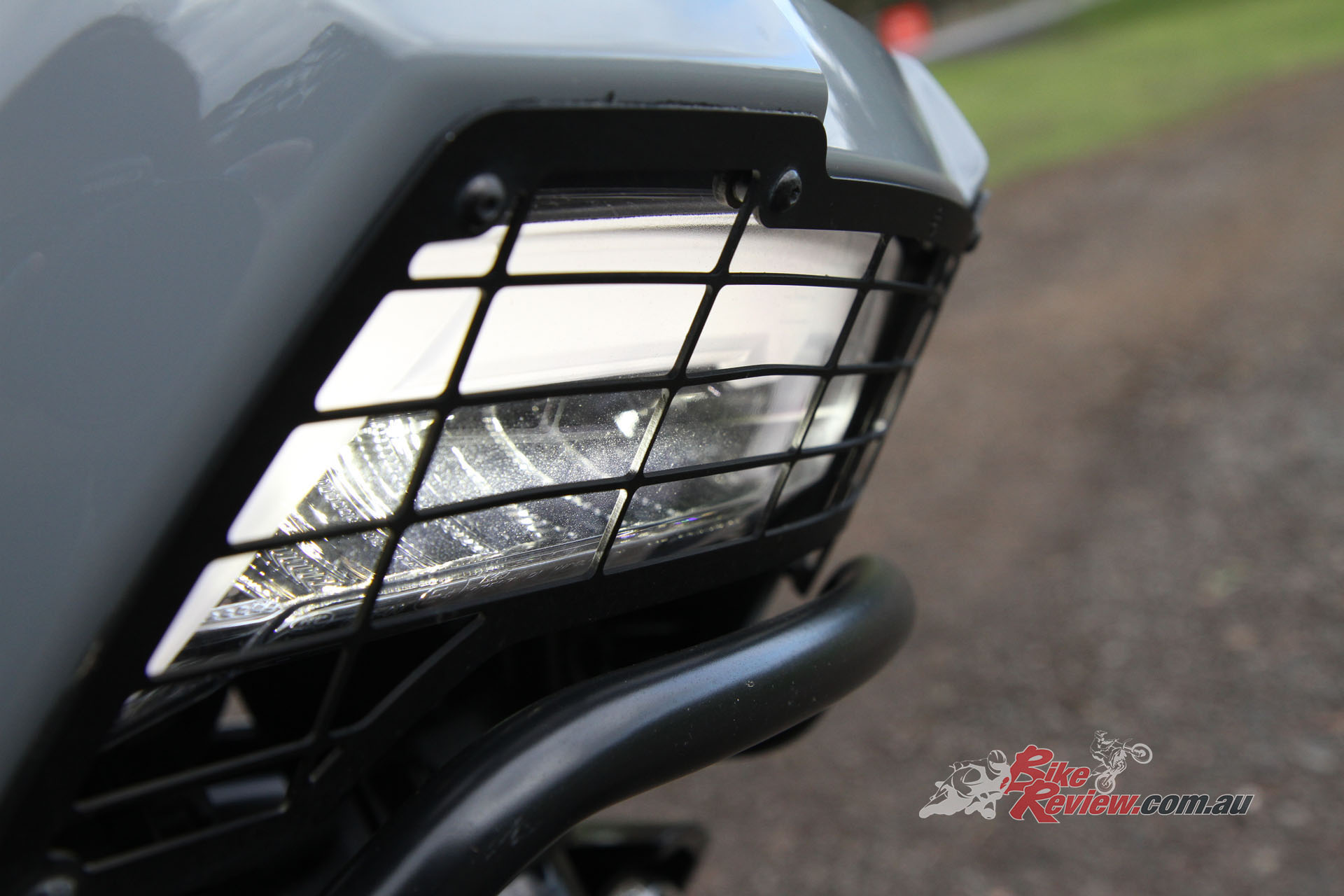
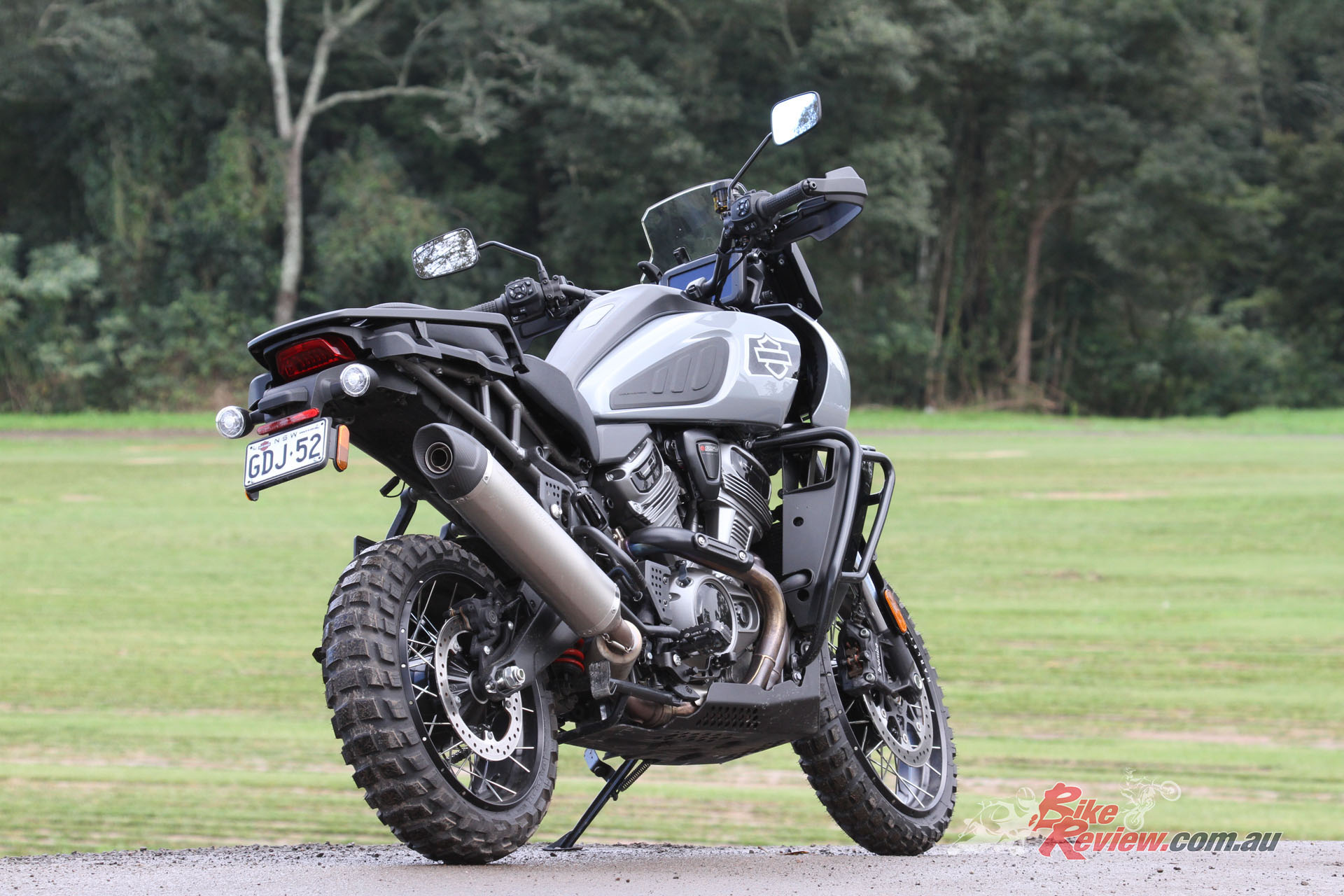
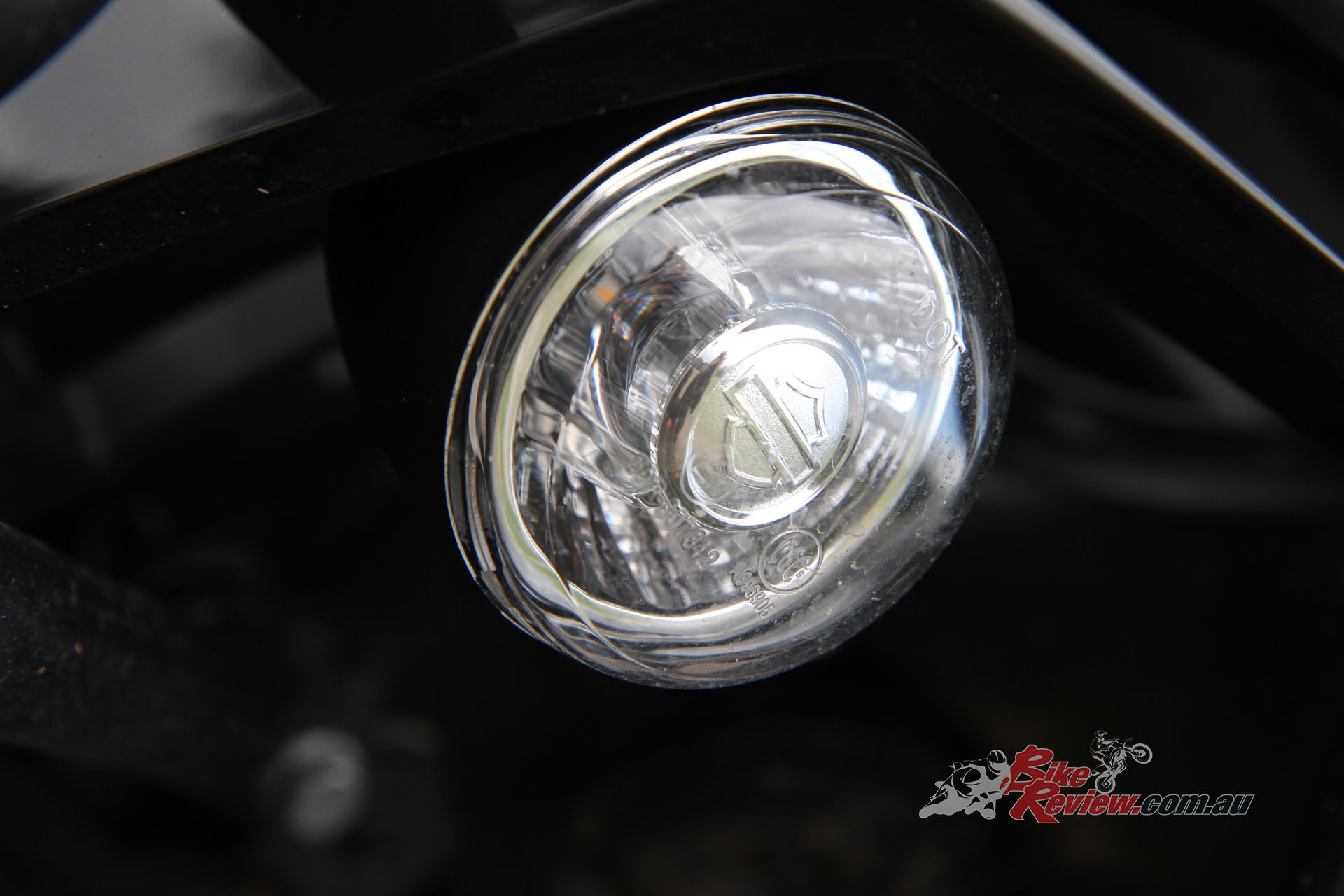
Ours also rolled out with the centre-stand, bark busters, a chunky bash plate and the adjustable rear brake pedal. What I took for a light bar and fog lights turned out to be the front indicators and the banking lamp, which goes a long way to explaining why I could never get them to turn on.
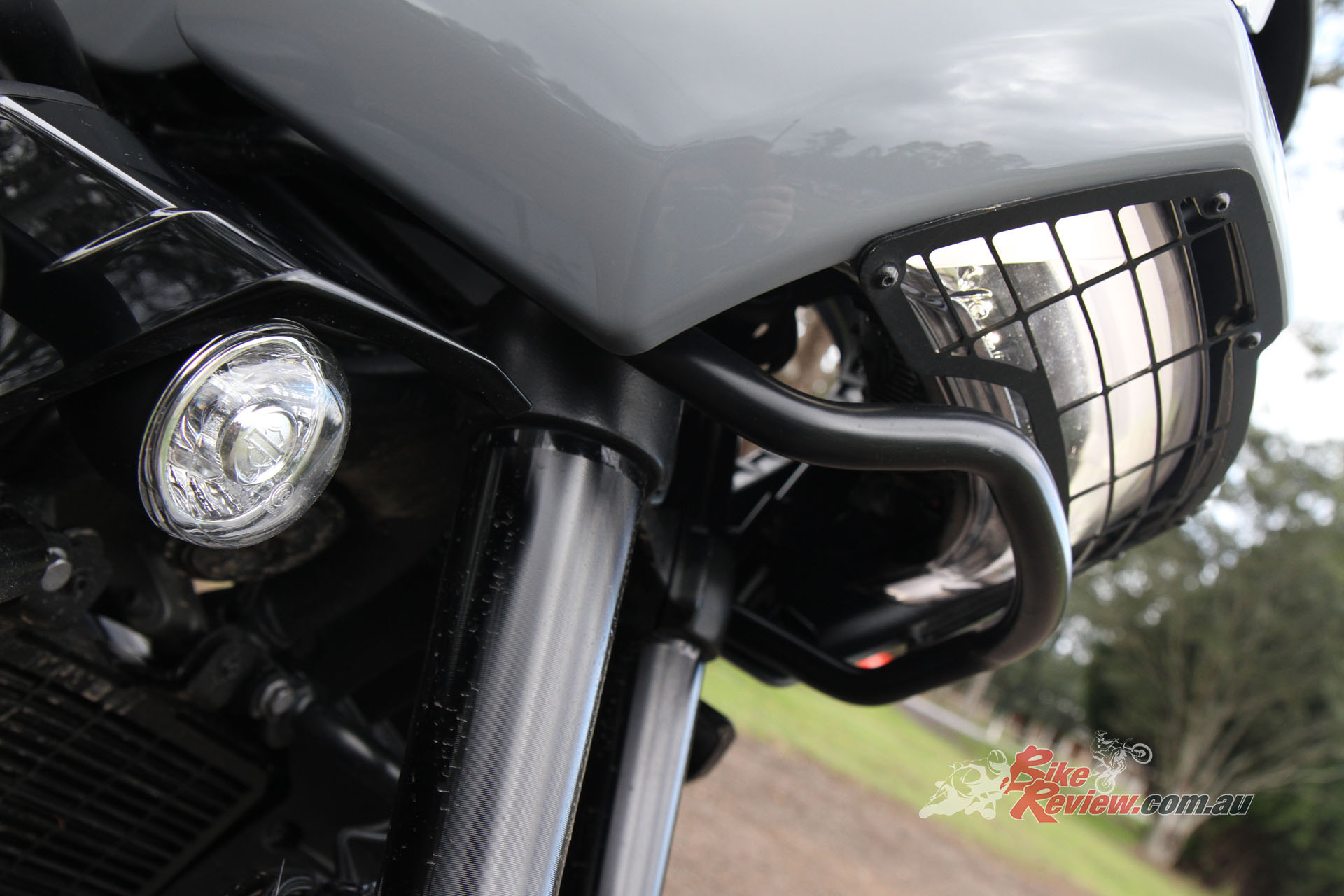
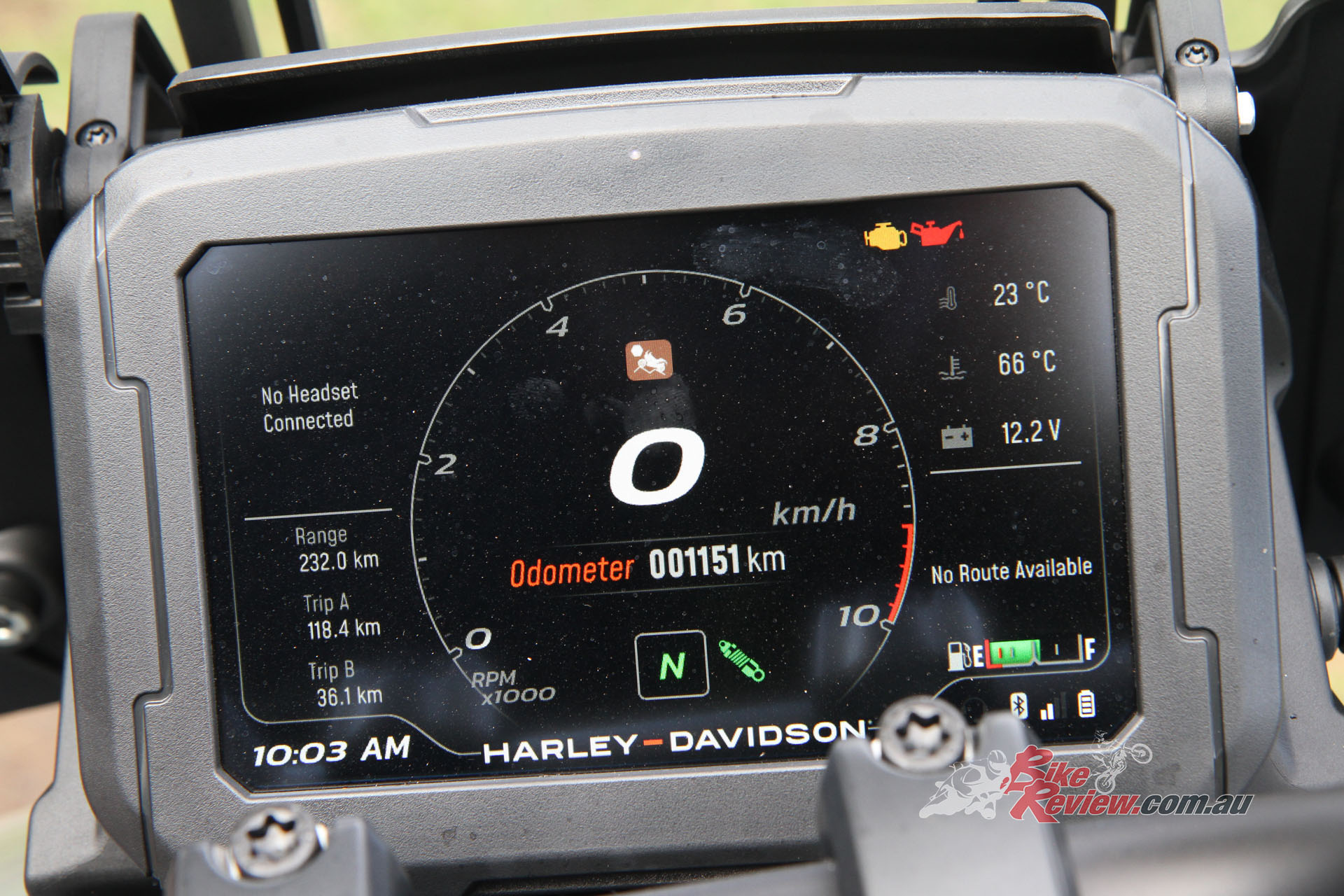
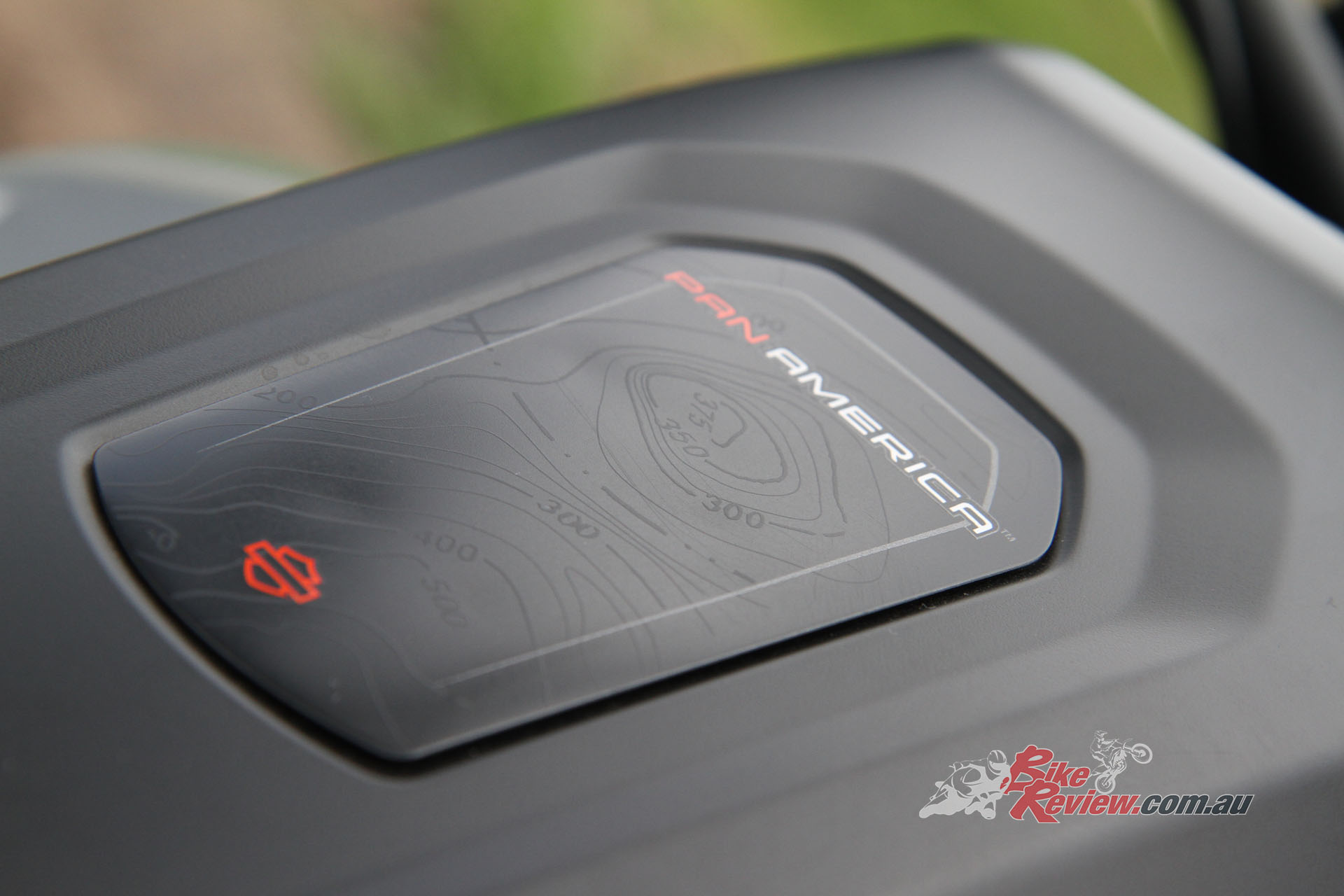
The electronic package is trick. You switch between Road, Rain, Sport, Off-Road and Off-Road Plus, with three user presets to dial it in exactly how you want it. There’s also a bucket load of safety enhancements (ABS, ELB, TCS, DSCS, VHC, TPMS, C-ABS, C-ELB, C-TCS, C-DSCS and enhanced rear wheel lift mitigation), with plenty of acronyms to keep you safe out in the field. The dedicated traction control off switch is something I’ve learned I can’t live without on newer adventure bikes.
Read Jeff’s Pan America launch report here…
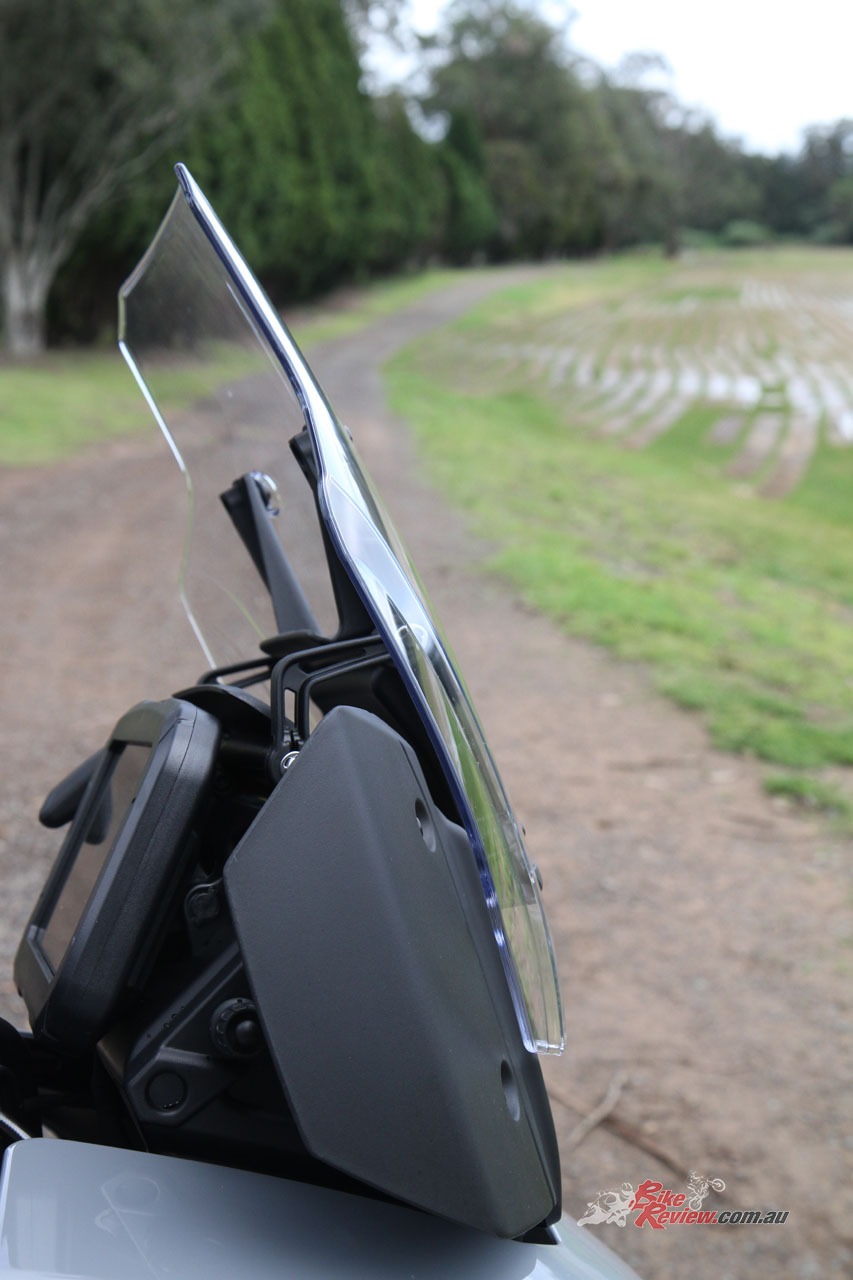
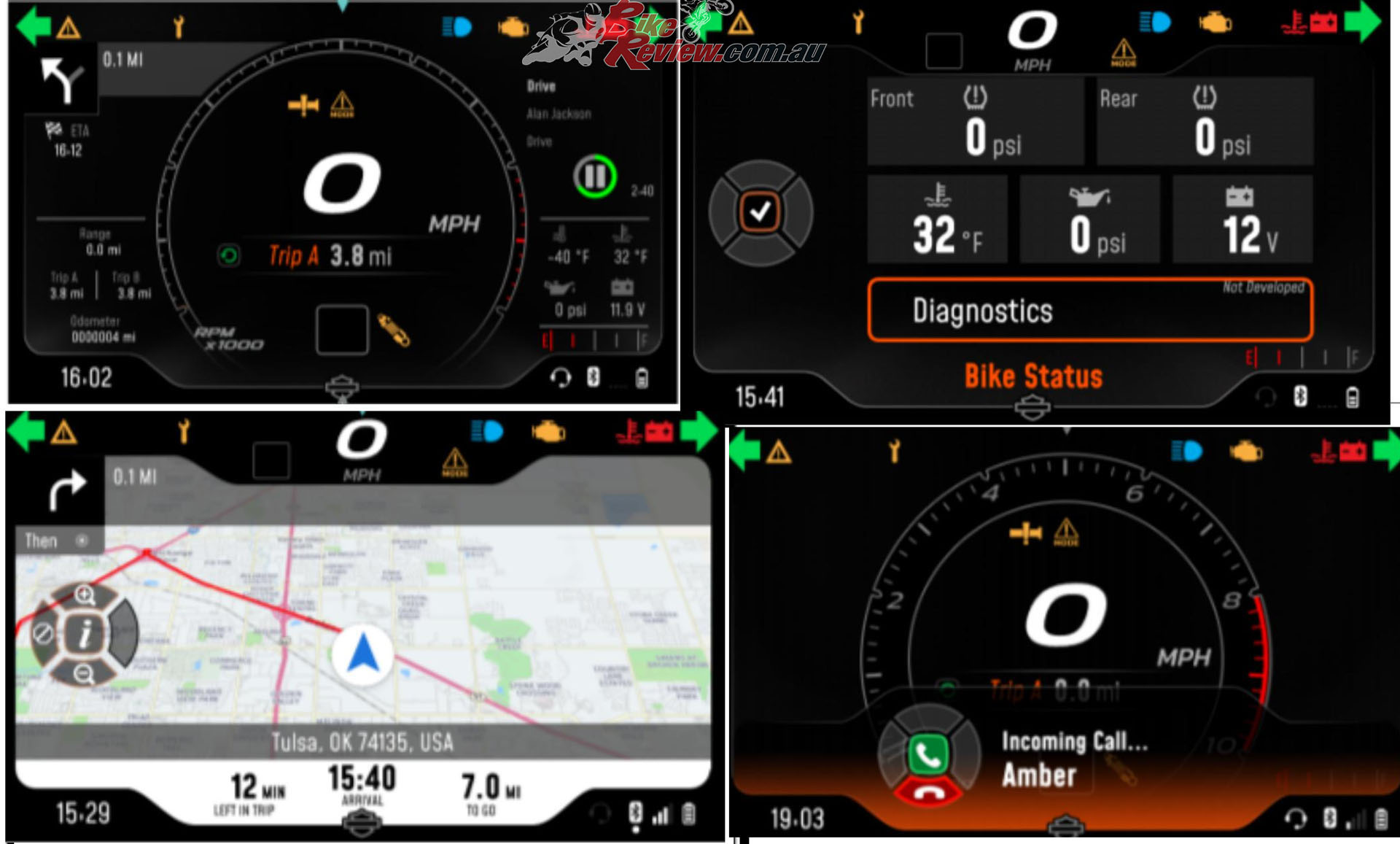
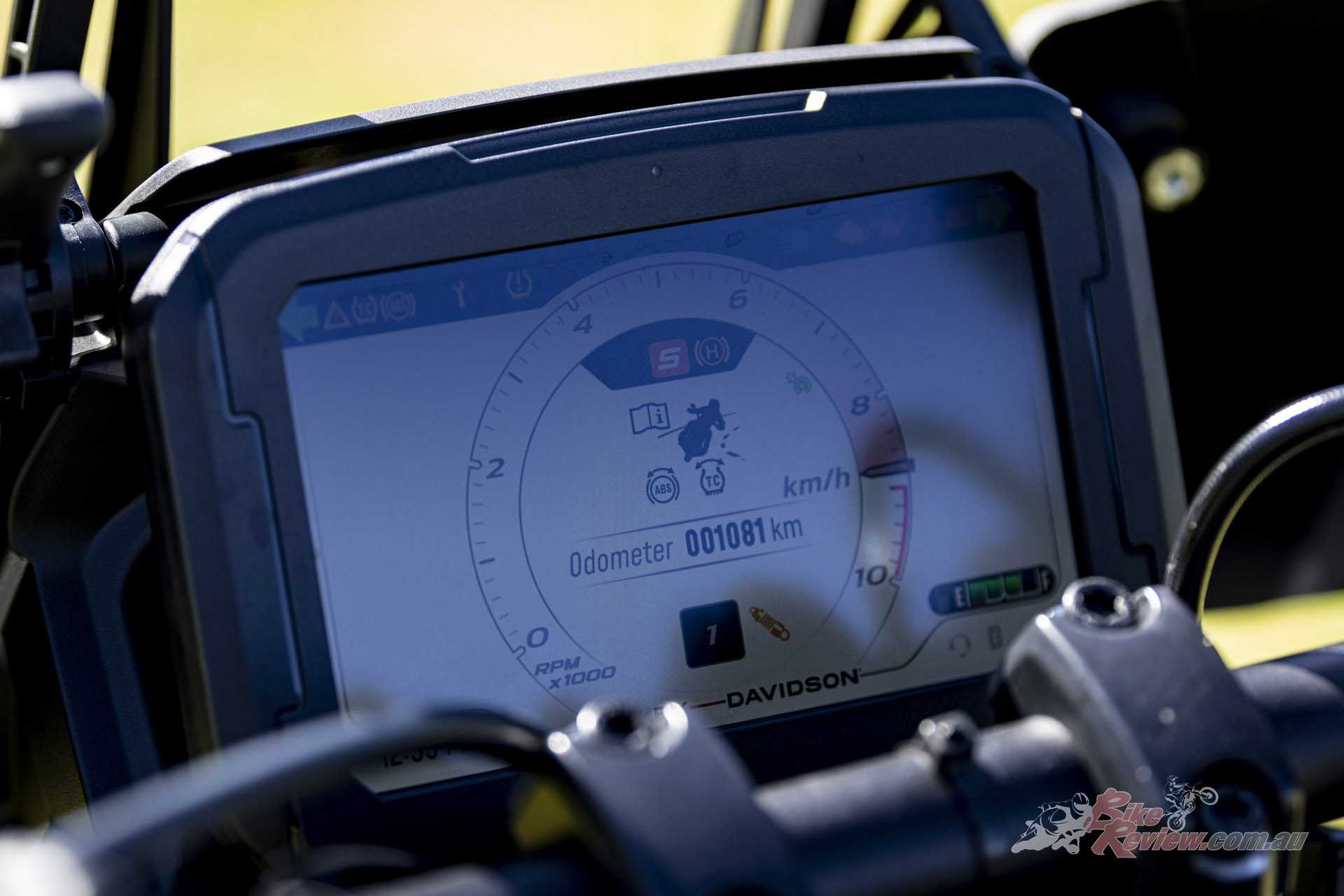
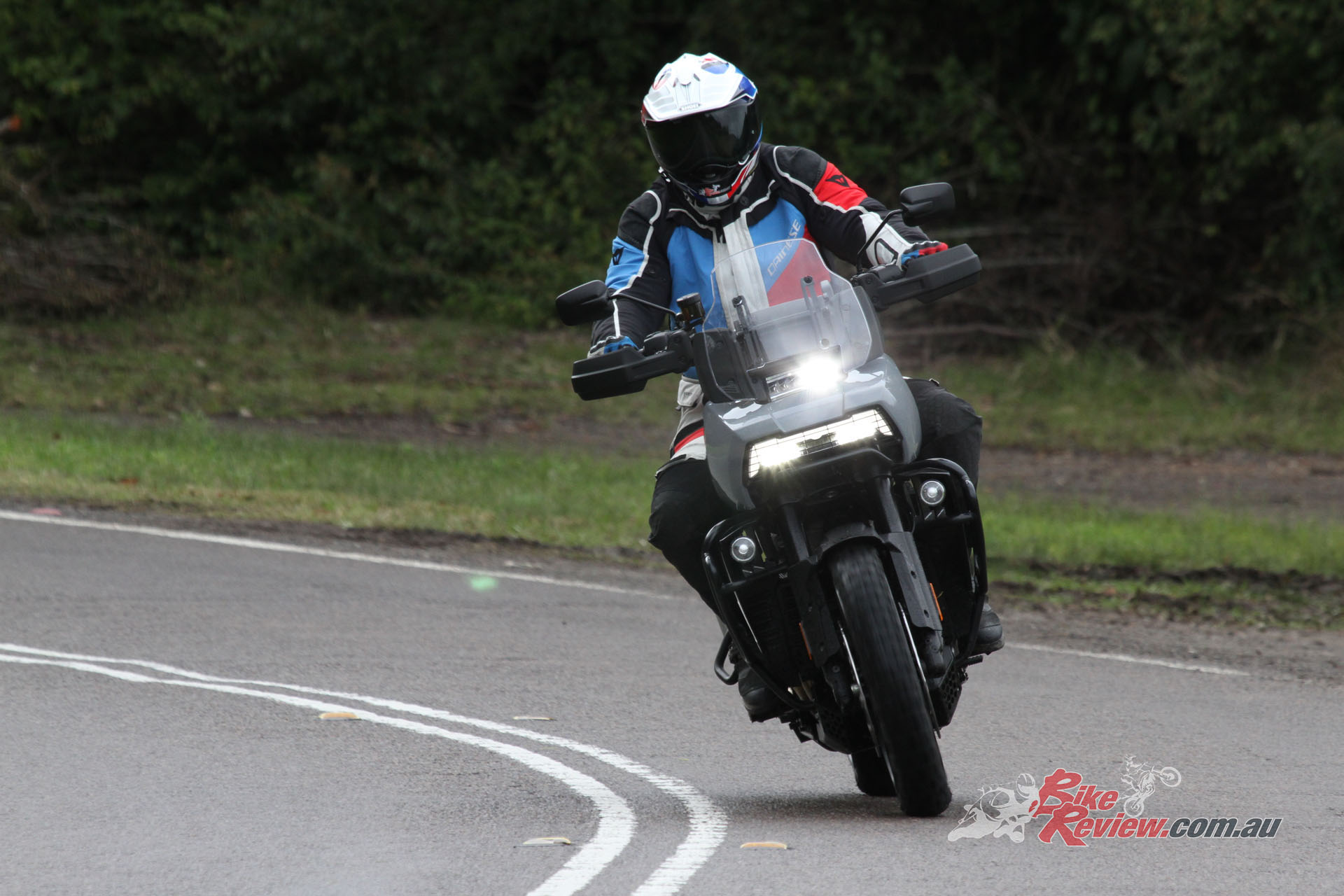
There’s a big 173mm TFT dash, and Harley’s phone integration is one of the better ones on the market, though as always you’re only connected for as long as you have signal, which around my parts isn’t for very long. The banking lamp is a nice touch too, lighting up sections of road a standard headlight would otherwise miss.
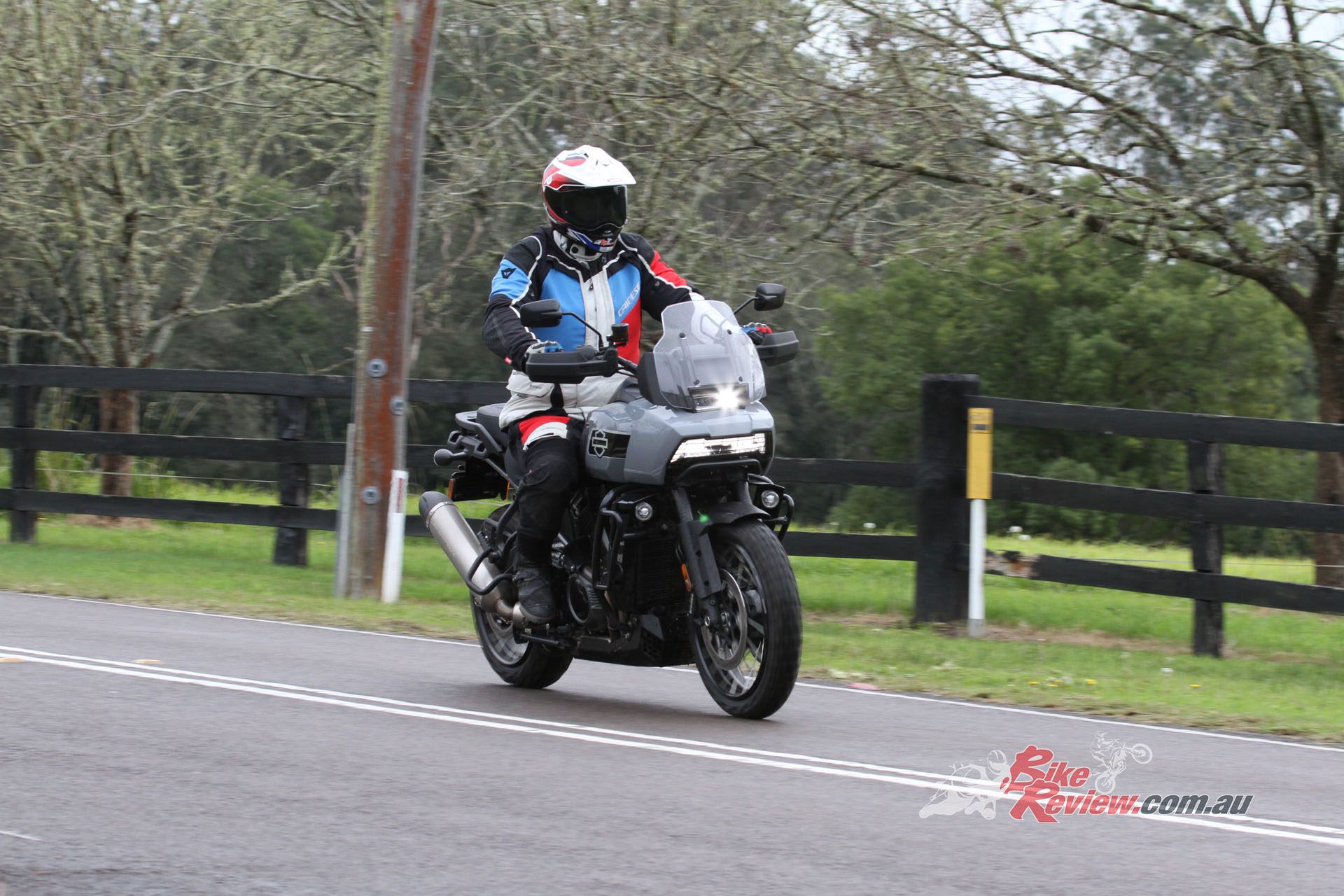
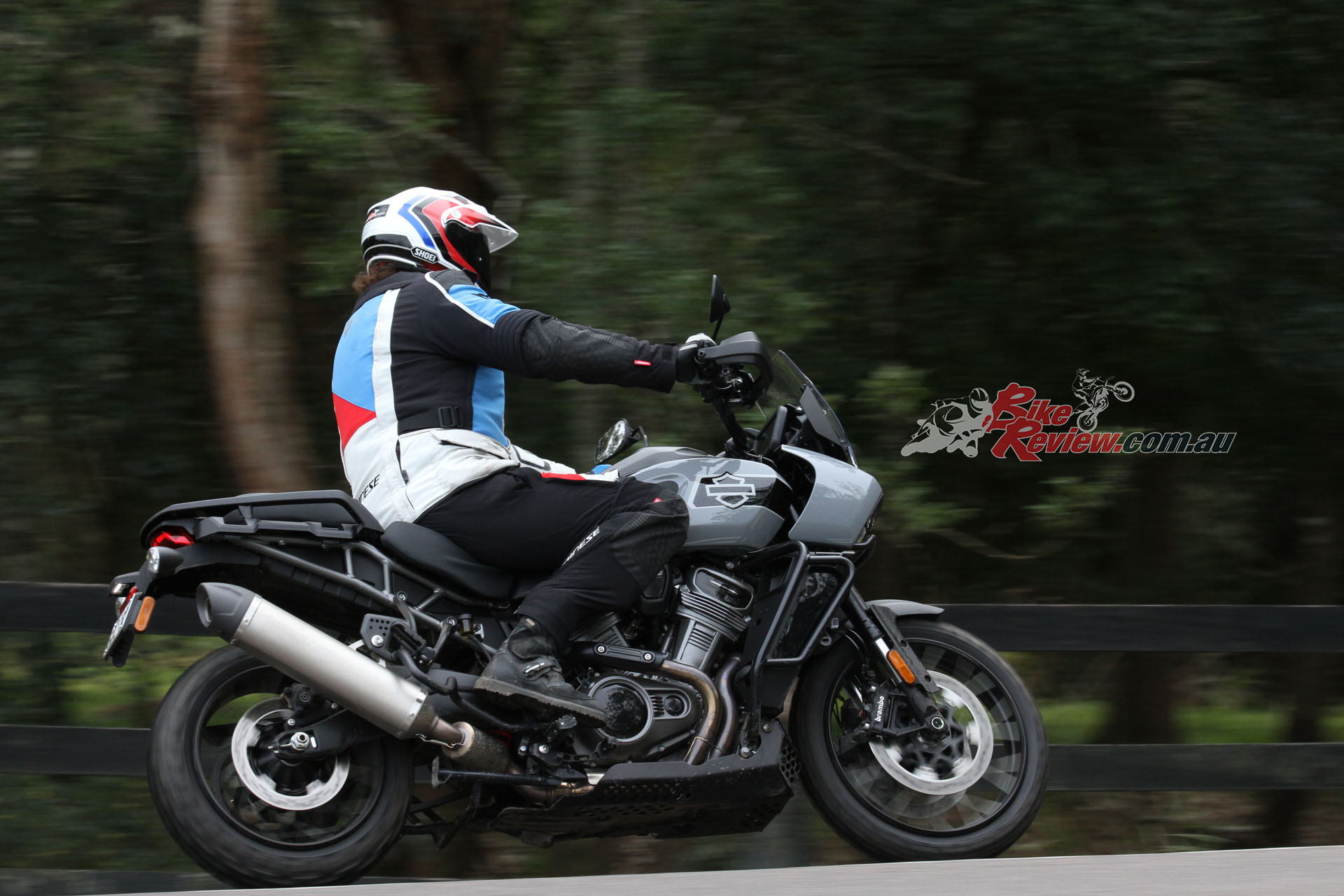
Riding position and comfort are ideal for long journeys, and I also found it one of the more comfortable adventure bikes to stand on as a taller rider. The pegs are huge and pivot, letting you get comfortably into the attack position for longer stretches on the dirt. I found myself standing on this far more than sitting, simply because it was so comfortable.
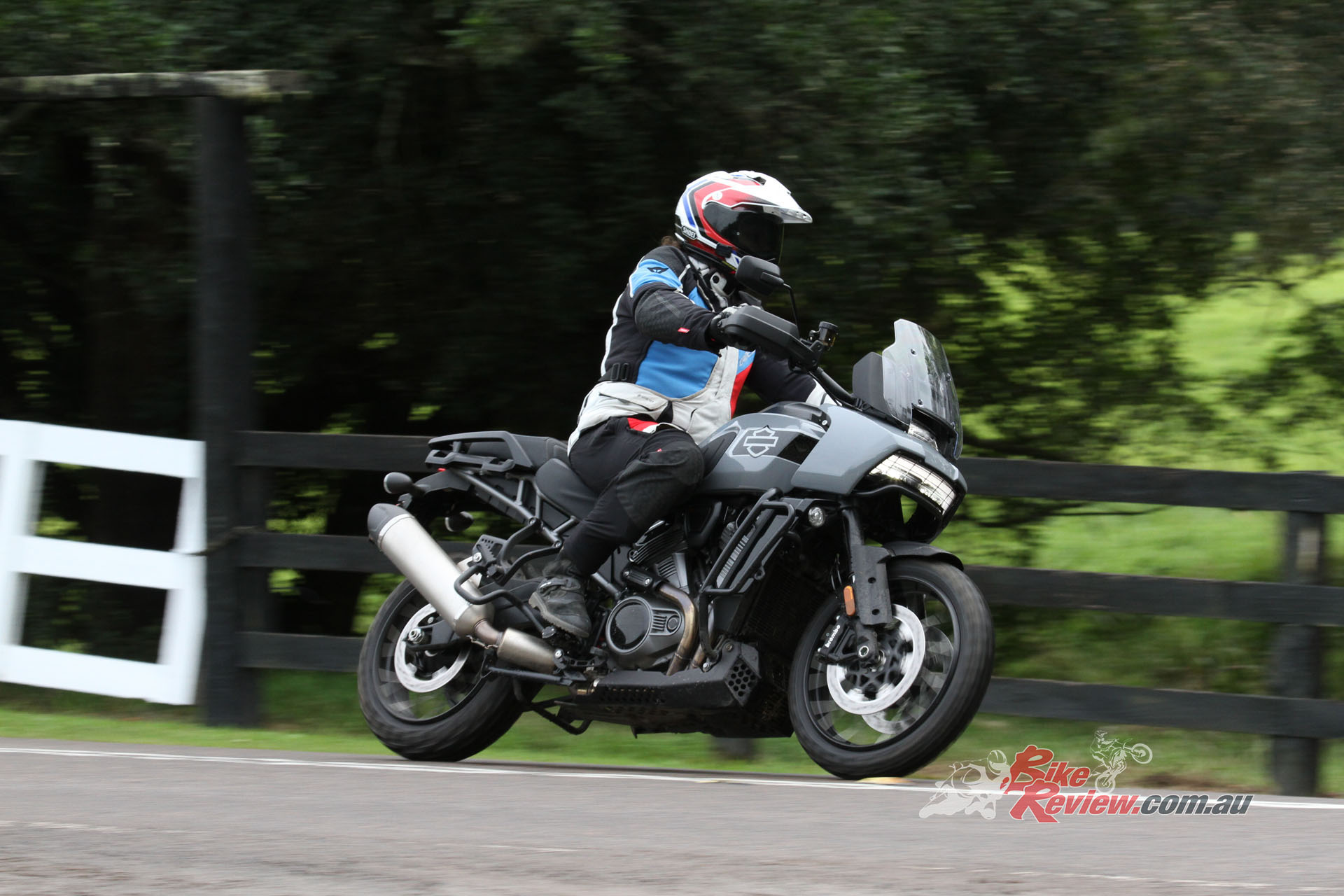
The 112kW Revolution Max V-twin gives the Pan America serious pace on the road.
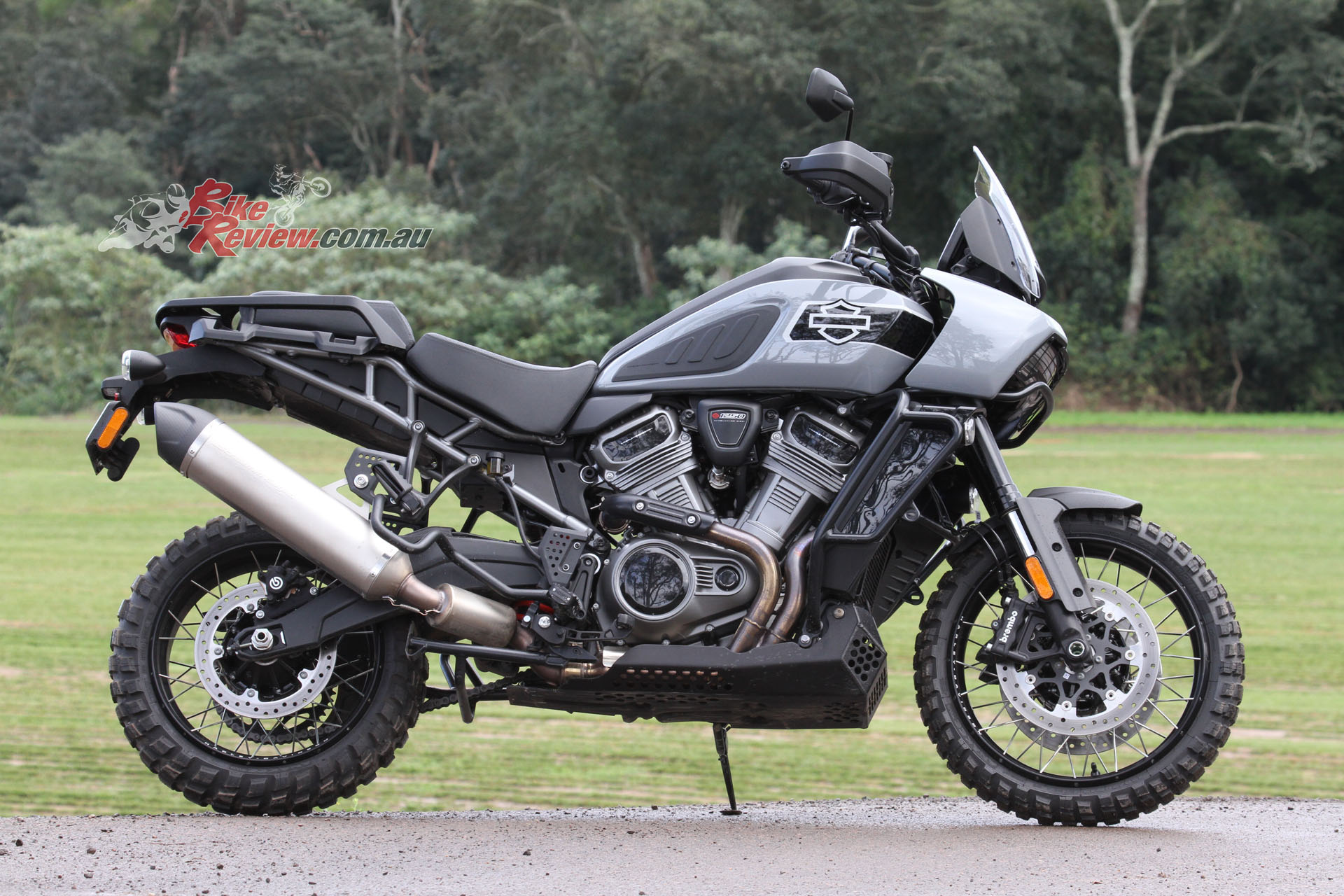
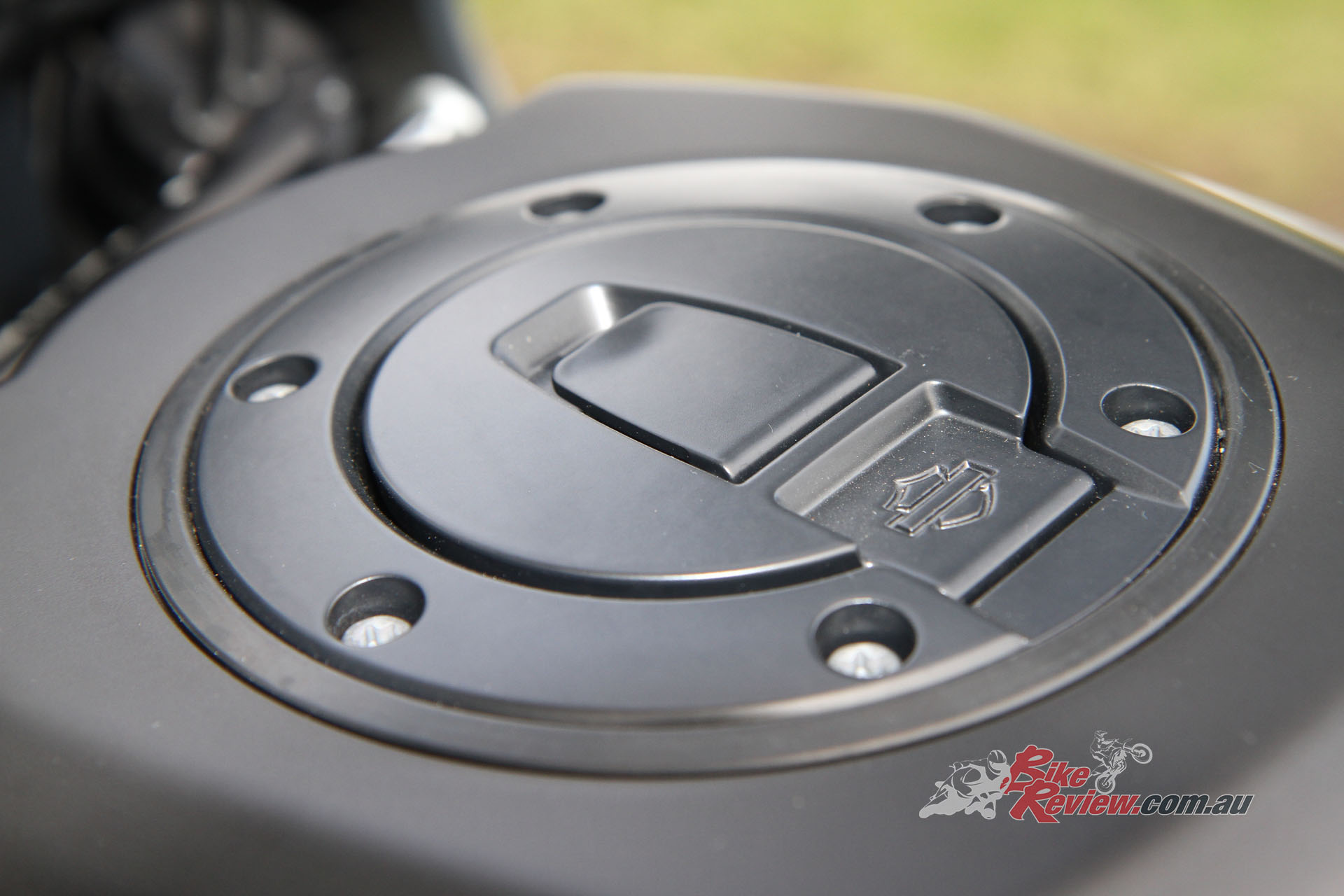
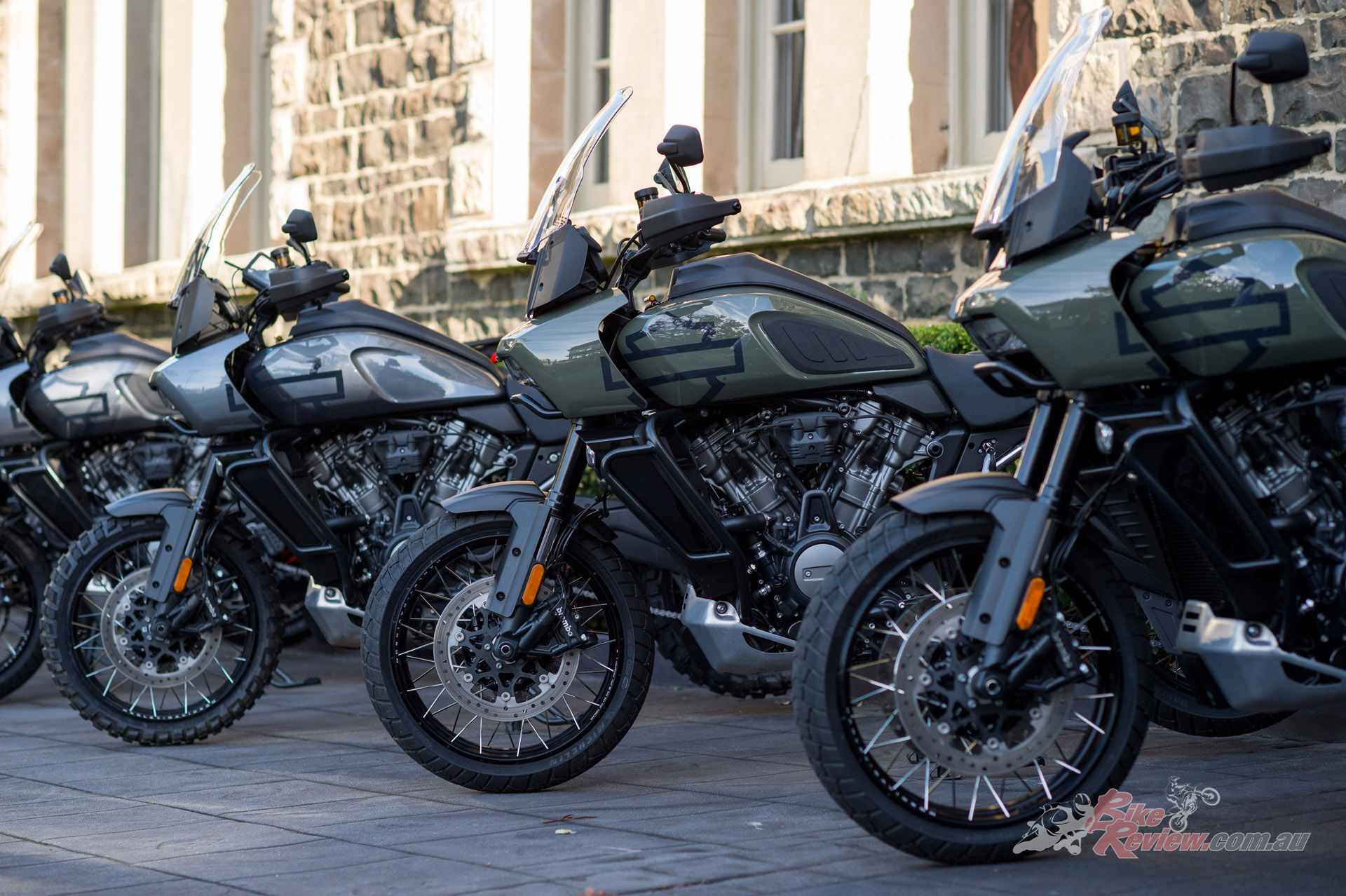
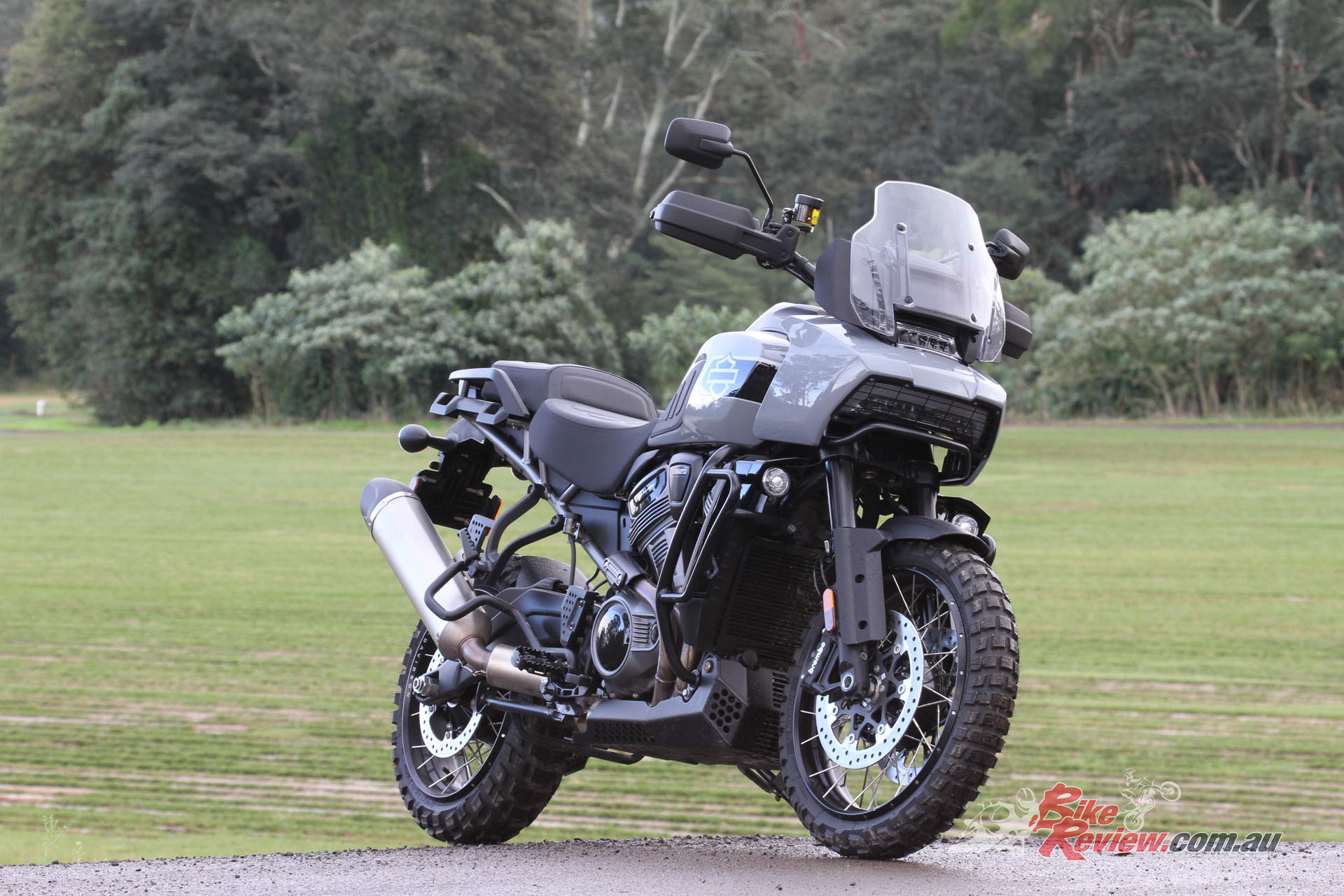
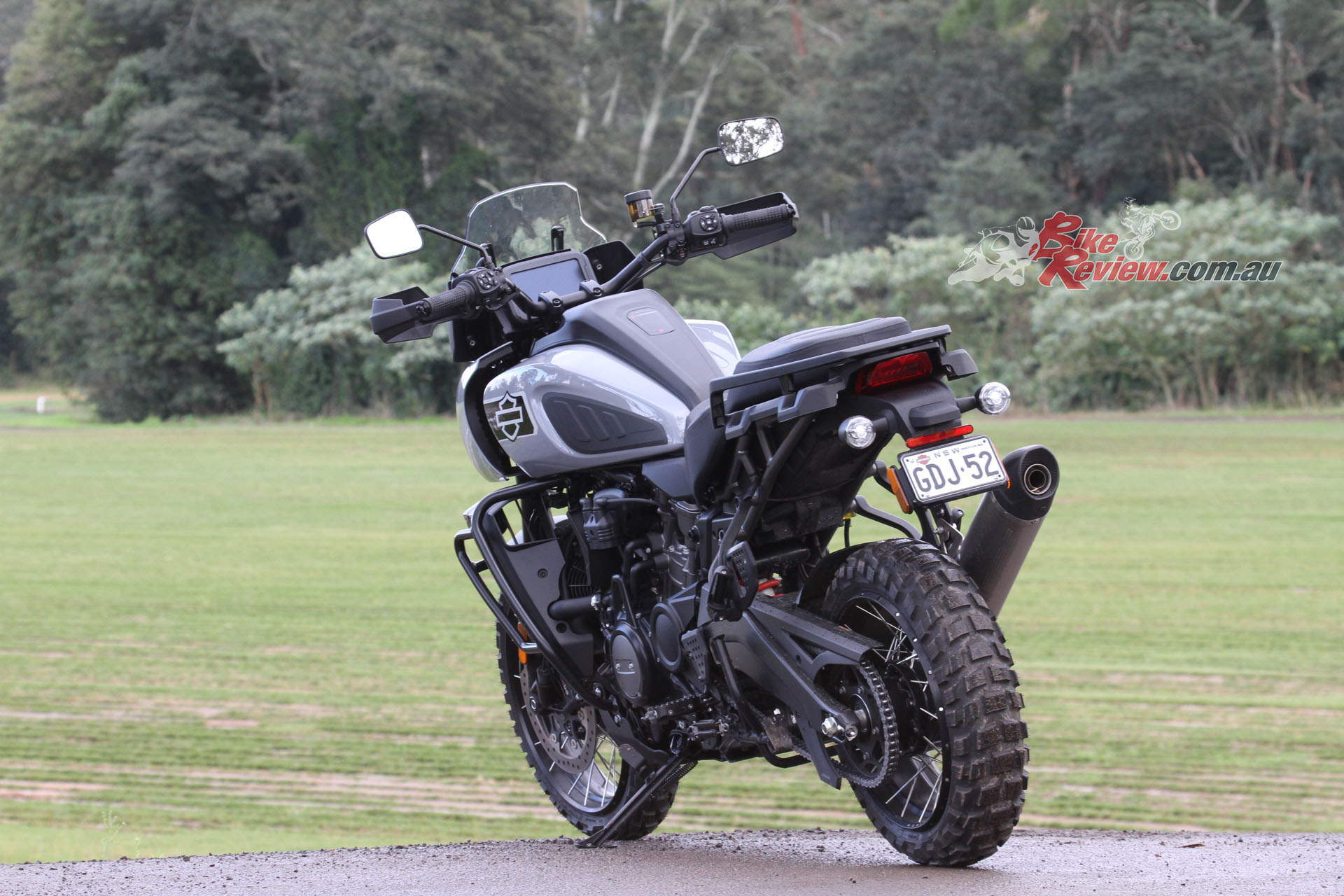
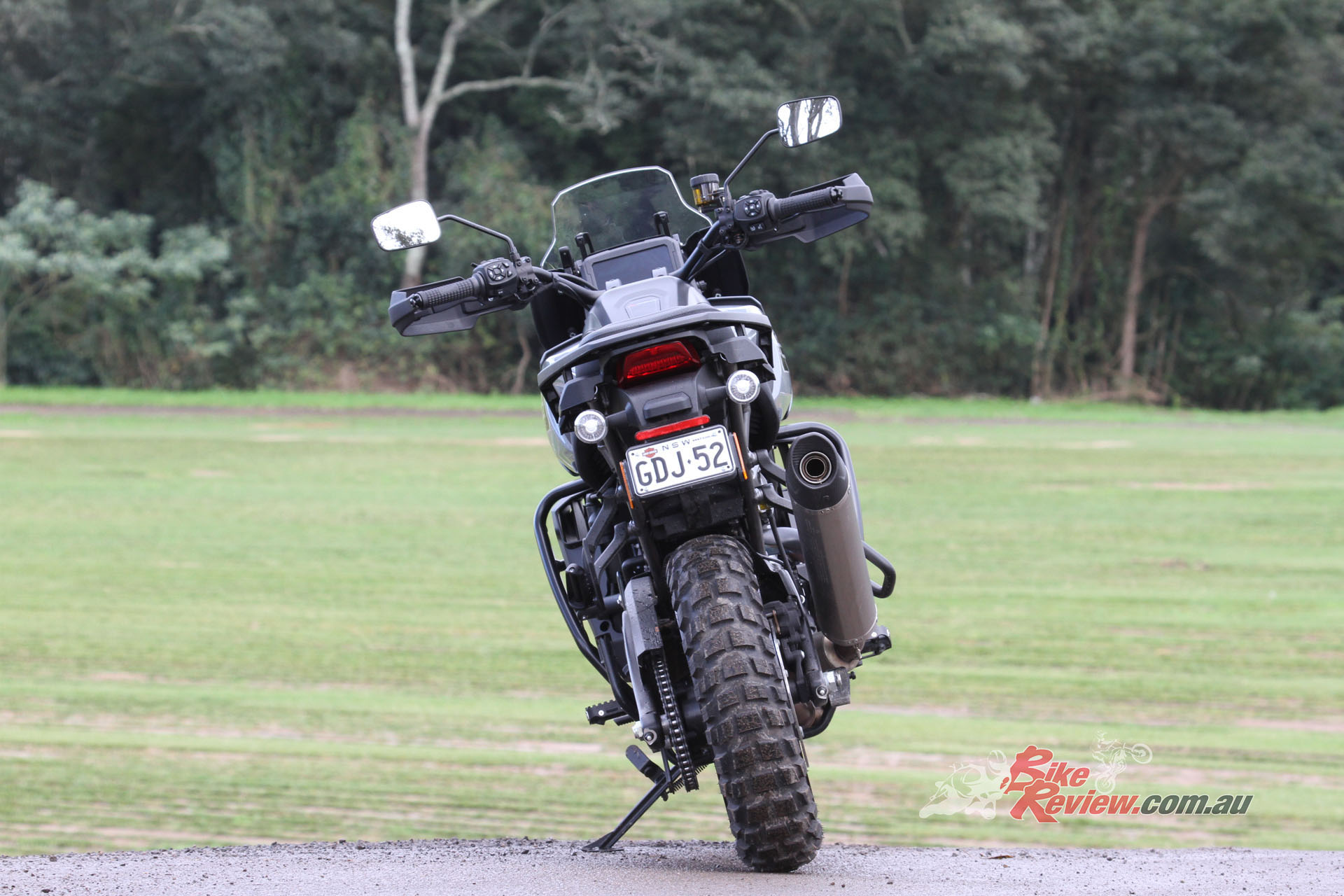
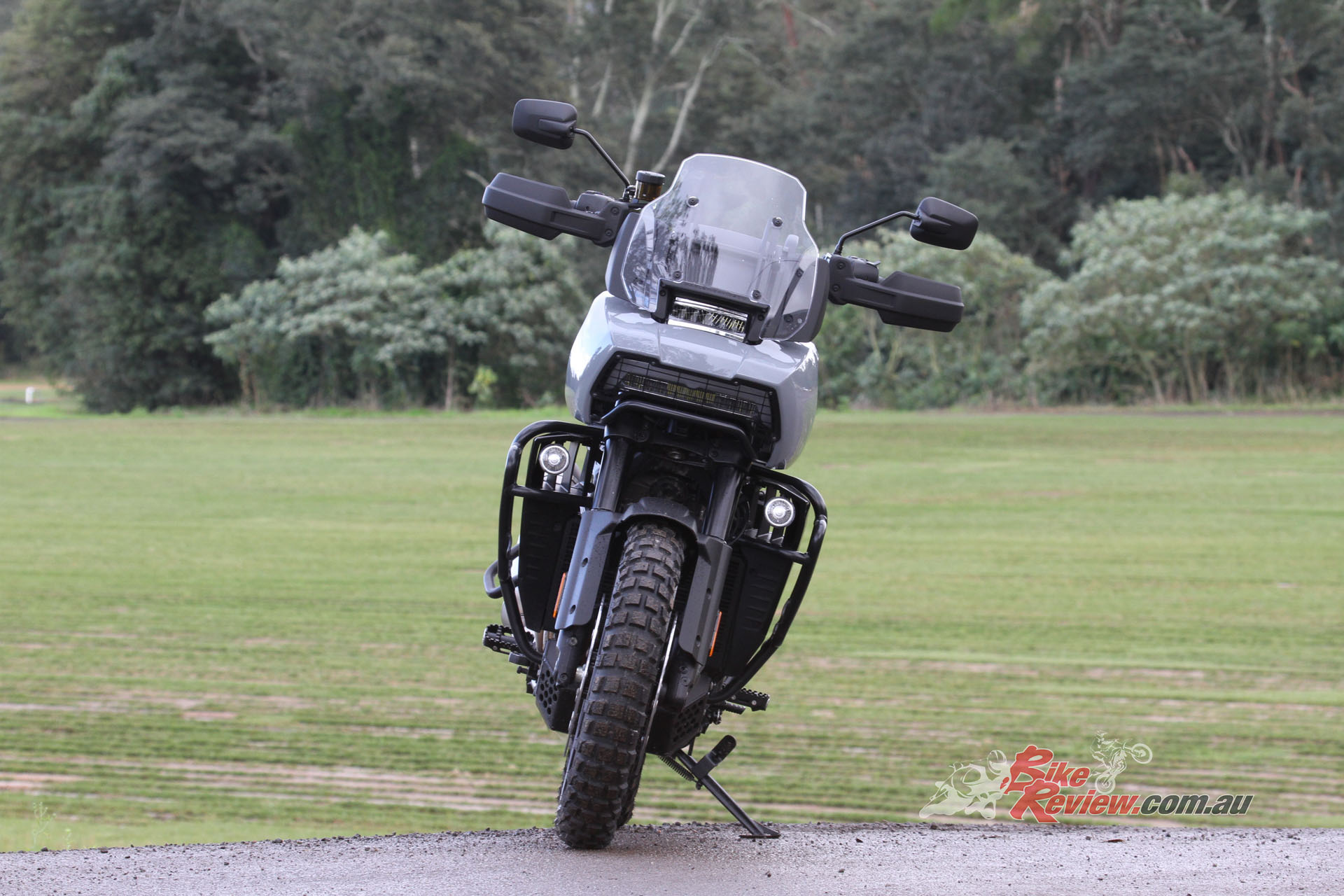
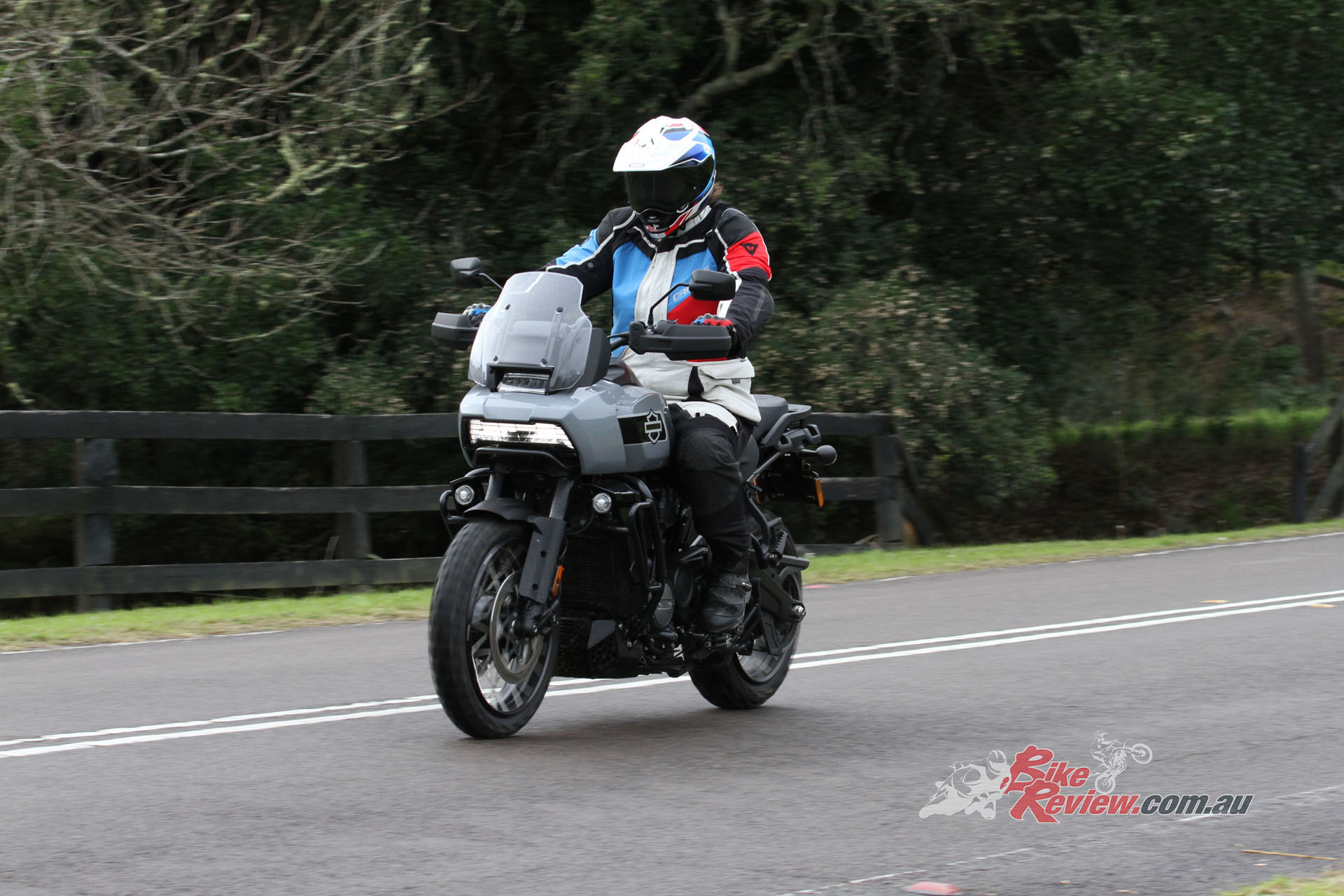
Last up, the styling. There’s a handful of colours across the 2026 range, and ours turned up in Dark Billiard Grey, my favourite of the bunch. The Vivid Black is a bit too plain for me and the orange just doesn’t do it. There’s nothing insane, sharp or particularly modern about the shape, but the 2026 model still manages to look super aggressive, industrial and tank-like, a bit like a freight train that should be hauling coal.
Finally, pricing. It ain’t cheap, but it ain’t the most expensive either. With the bells and whistles we were rolling on you’d be looking at around $28,995, plus another chunk of cash for the neat add-ons. There’s always been a bit of a Harley premium, so much so that we don’t even bother to mention it anymore. I think the second-hand market for these will be cracking.
With the bells and whistles we were rolling on you’d be looking at around $28,995, plus another chunk of cash for the neat add-ons.
All in all, it’s a bike that managed to surprise me. I knew the reviews of previous iterations were good, so I wasn’t expecting a heap of junk, but I still wasn’t ready for how good it actually is. This thing is genuinely confidence-inspiring despite its size, weight and physical presence. Maybe just don’t drop it. The whole package made me feel like a better rider than I likely am, and it does just about everything you could ask of a bike in this market.
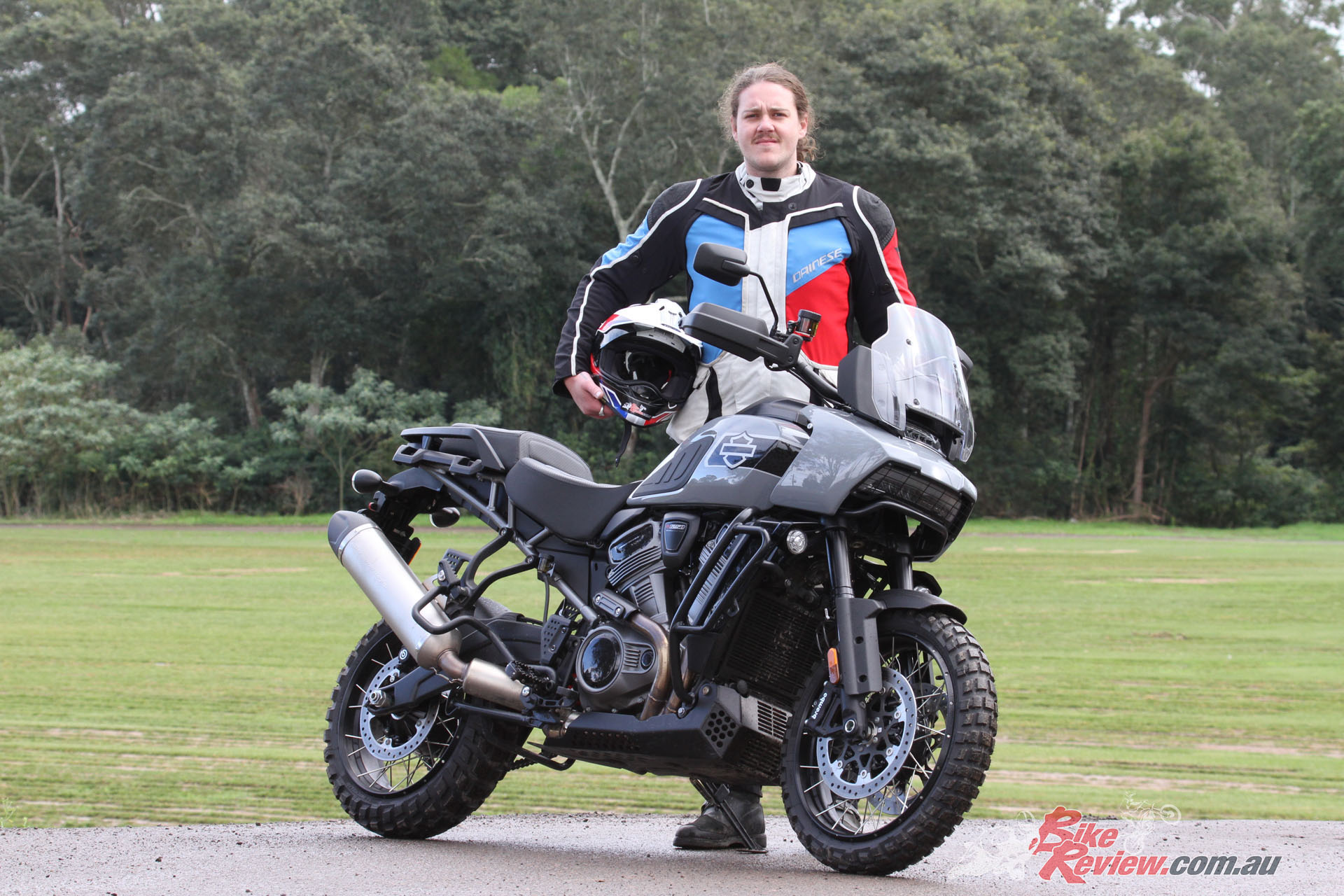
Nick came away seriously impressed by the Pan America’s breadth of ability, both on and off-road.
It’s as at home doing eight hours on the tarmac as it is at walking pace through deep muddy ruts or up a 45-degree rock climb. Sure, not much has really changed since its introduction five years ago, but if we aren’t asking for it, why would Harley bother?
Harley-Davidson Pan America Special 1250 Tech Talk
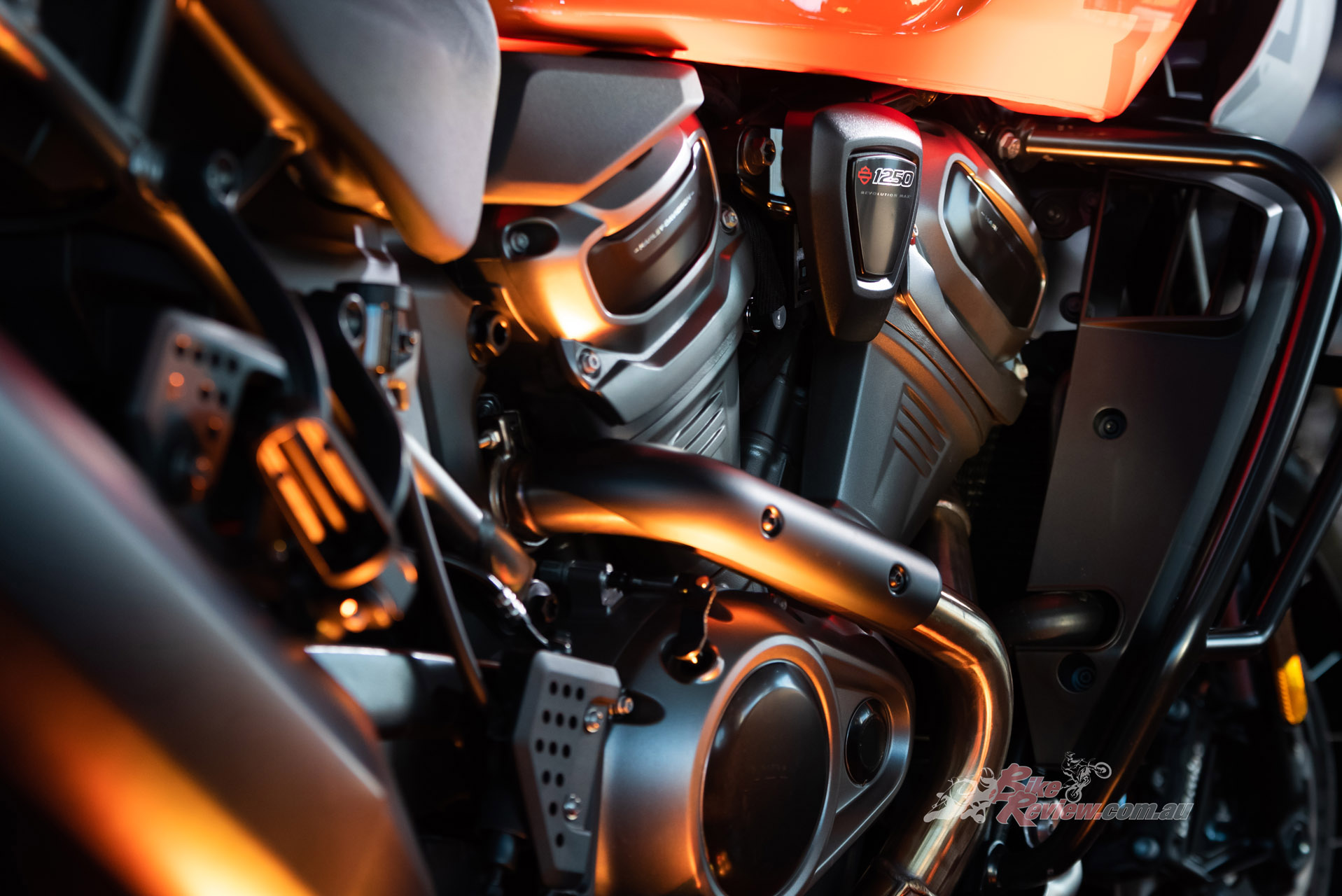
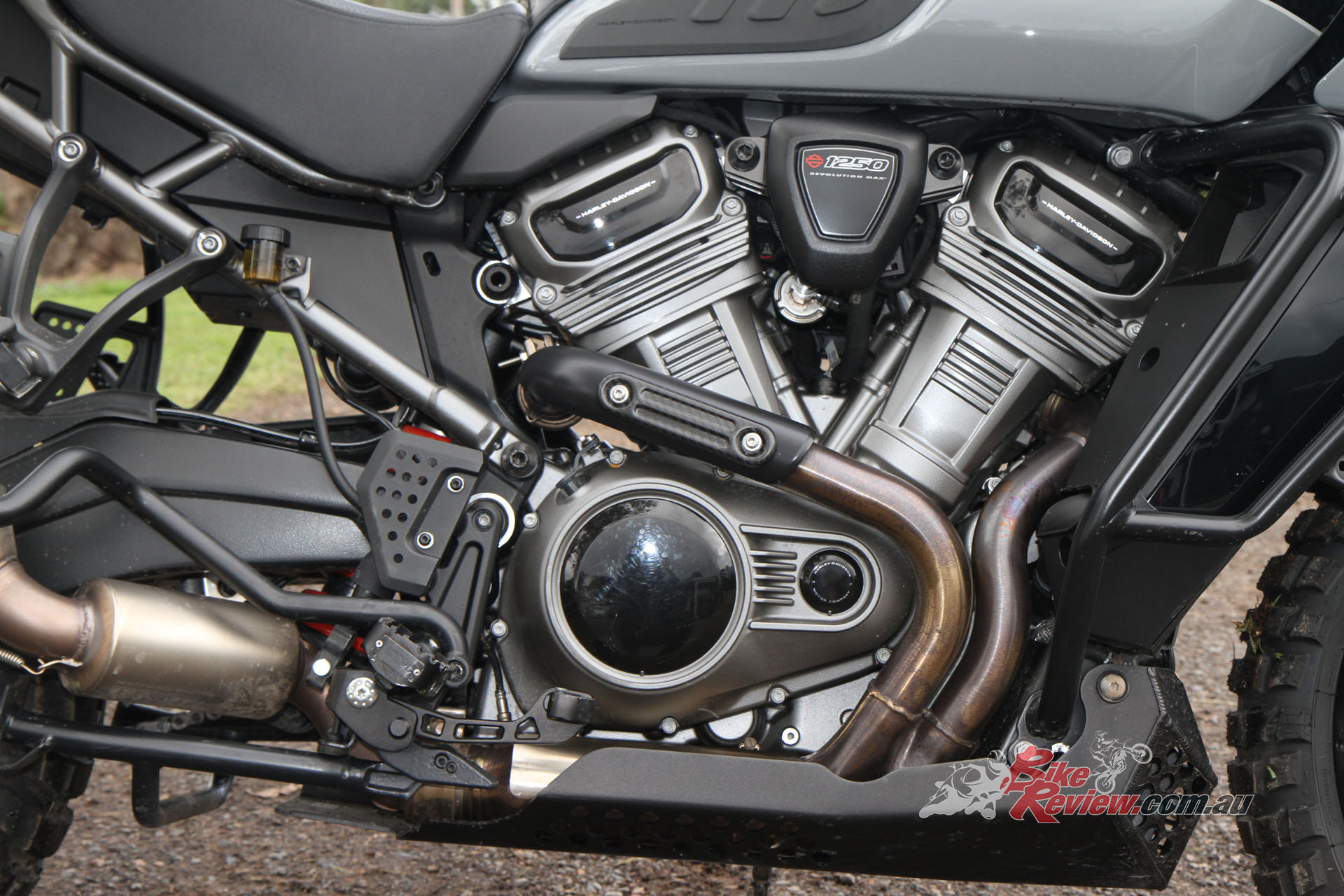
The Pan America 1250 Special is powered by Harley-Davidson’s Revolution Max 1250 engine, a liquid-cooled 1252cc 60º V-twin producing 150hp (112kW) and designed to deliver a broad powerband. To minimise overall motorcycle weight, the Revolution Max engine is integrated into the bike as a structural member of the chassis. The Pan America Special is also packed with technology…

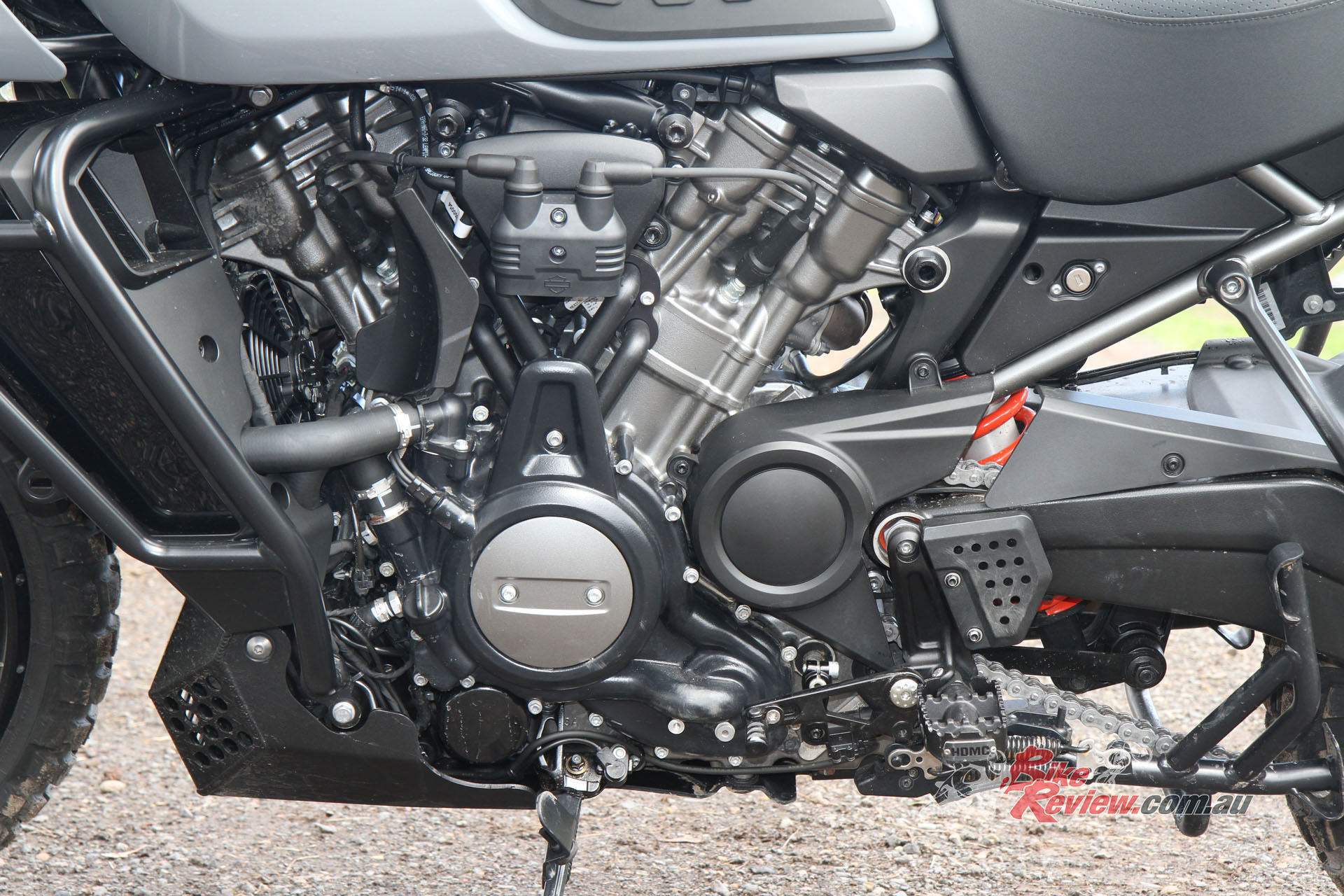
The engine forms a stressed part of the chassis, helping keep the Pan America’s structure compact.
The V-twin engine powering the Pan America was designed from the outset as a lightweight, high-performance unit. Its 60º V-angle helps keep the engine compact, assisting chassis geometry and weight distribution. Internally, a 30º crankpin offset produces a 90º firing order. The two cylinders are offset slightly to accommodate the crankpin arrangement, resulting in a firing order designed to deliver strong, tractable power pulses.

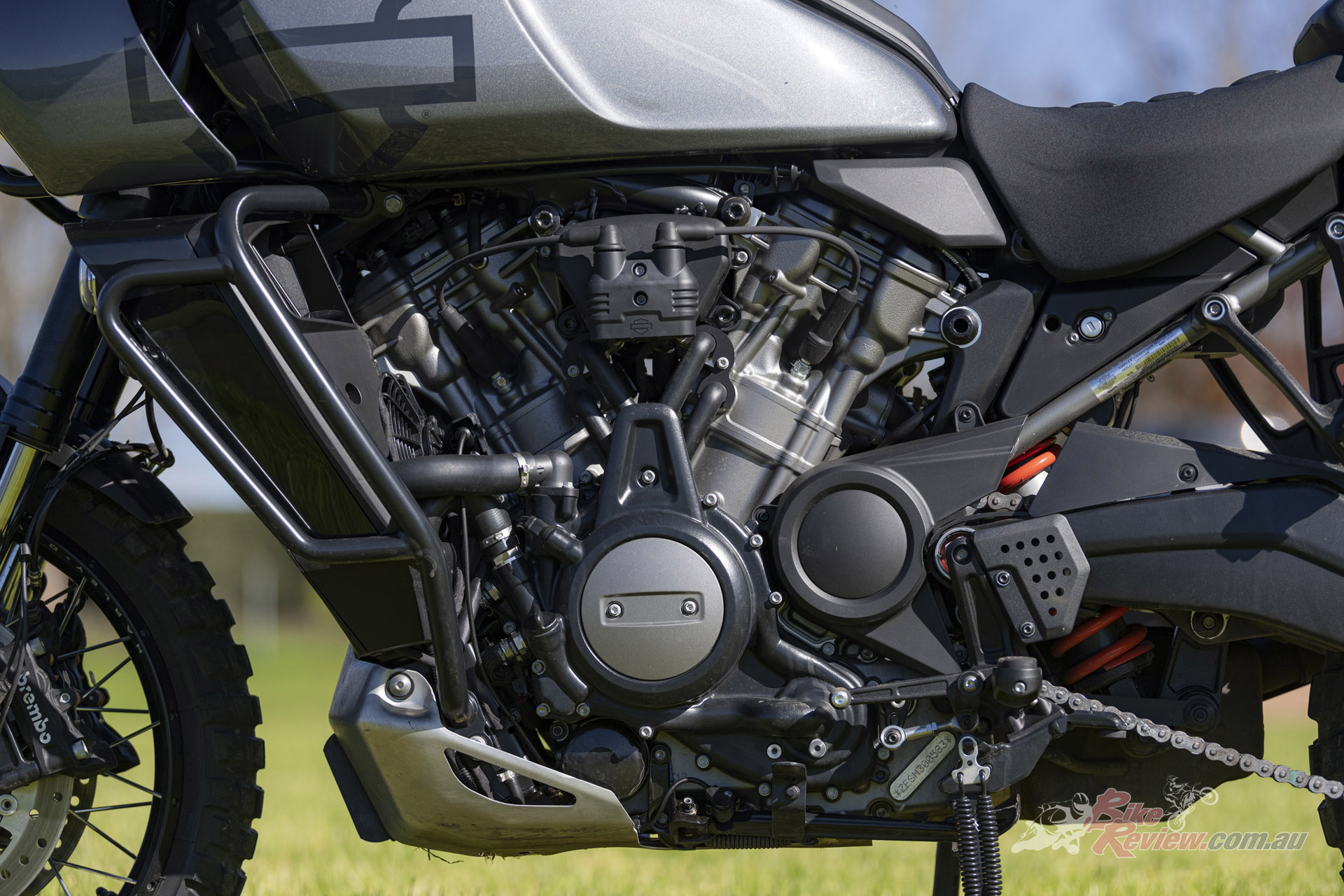
The engine is lightweight thanks to extensive use of lightweight materials and FEA design optimisation of the castings to minimise mass. The camshafts and gearbox shafts are hollow, while the one-piece aluminium cylinders feature nickel-silicon-carbide-coated surfaces. The rocker covers, camshaft covers and primary cover are magnesium. Liquid-cooling is employed, while an oil cooler helps keep oil temperature stable. The effective cooling system allowed Harley-Davidson to build the engine to tight tolerances, improving efficiency and performance through greater control of material expansion and contraction.
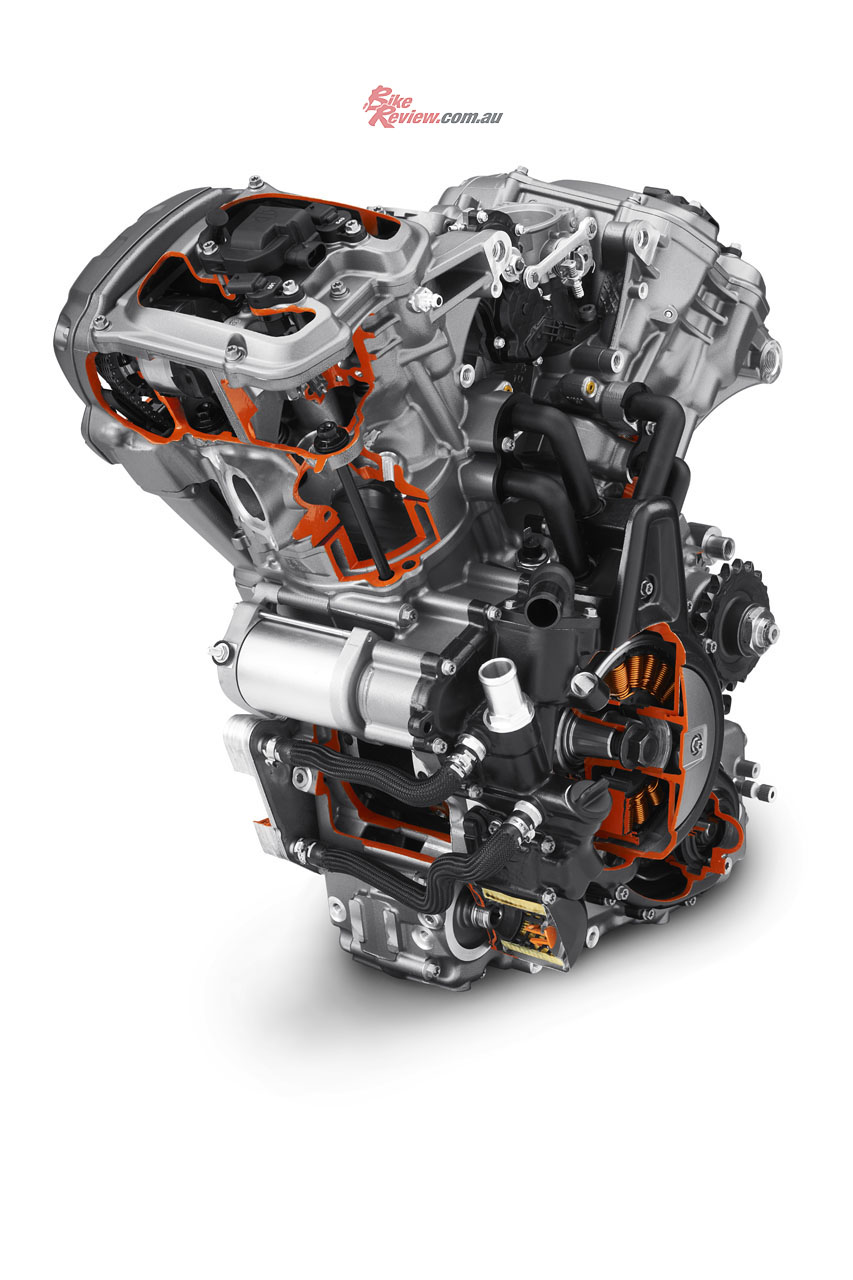
The engine uses dry-sump lubrication, helping keep the engine compact while maintaining oil control under hard use.
The pistons are 105mm forged alloy items with machined crowns and chamfered skirts for ring fitment ease. Compression ratio is a whopping 13.1:1 but the engine can tolerate 91 octane pump fuel due to the advanced electronics and knock sensor technology. The pistons have a low friction coating and low tension rings, reducing friction, while the top ring groove is anodised. Oil jets are aimed at the bottom for the pistons to aid cooling.
The engine can tolerate 91 octane pump fuel due to the advanced electronics and knock sensor technology.
Above the pistons are aluminium cylinder-heads, which also serve as chassis mounting points. The exhaust valves are sodium-filled to aid heat dissipation, while the chain-driven DOHC system features variable valve timing. The intake and exhaust camshafts can be advanced or retarded independently through a potential range of 40º.
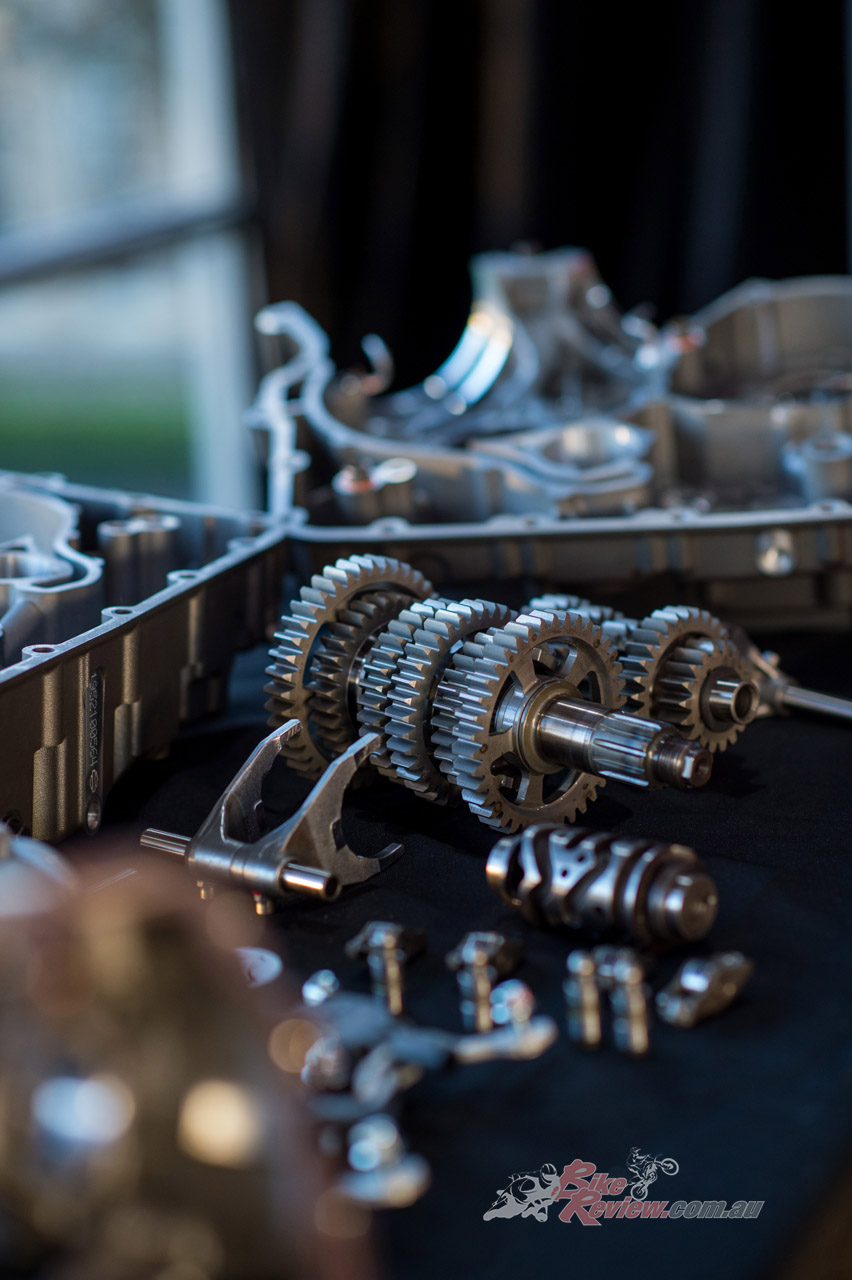
Computer-controlled solenoids regulate hydraulics within the cam phasers, allowing the system to continuously alter valve timing. This broadens the powerband, providing strong low-rpm torque while retaining top-end performance and improving efficiency. Hydraulic lash adjusters eliminate routine valve-clearance adjustment. Dual spark plugs are fitted to each cylinder, while twin downdraft throttle-bodies sit between the cylinders beneath an 11L airbox with internal velocity stacks. The air filter is a washable conical item.
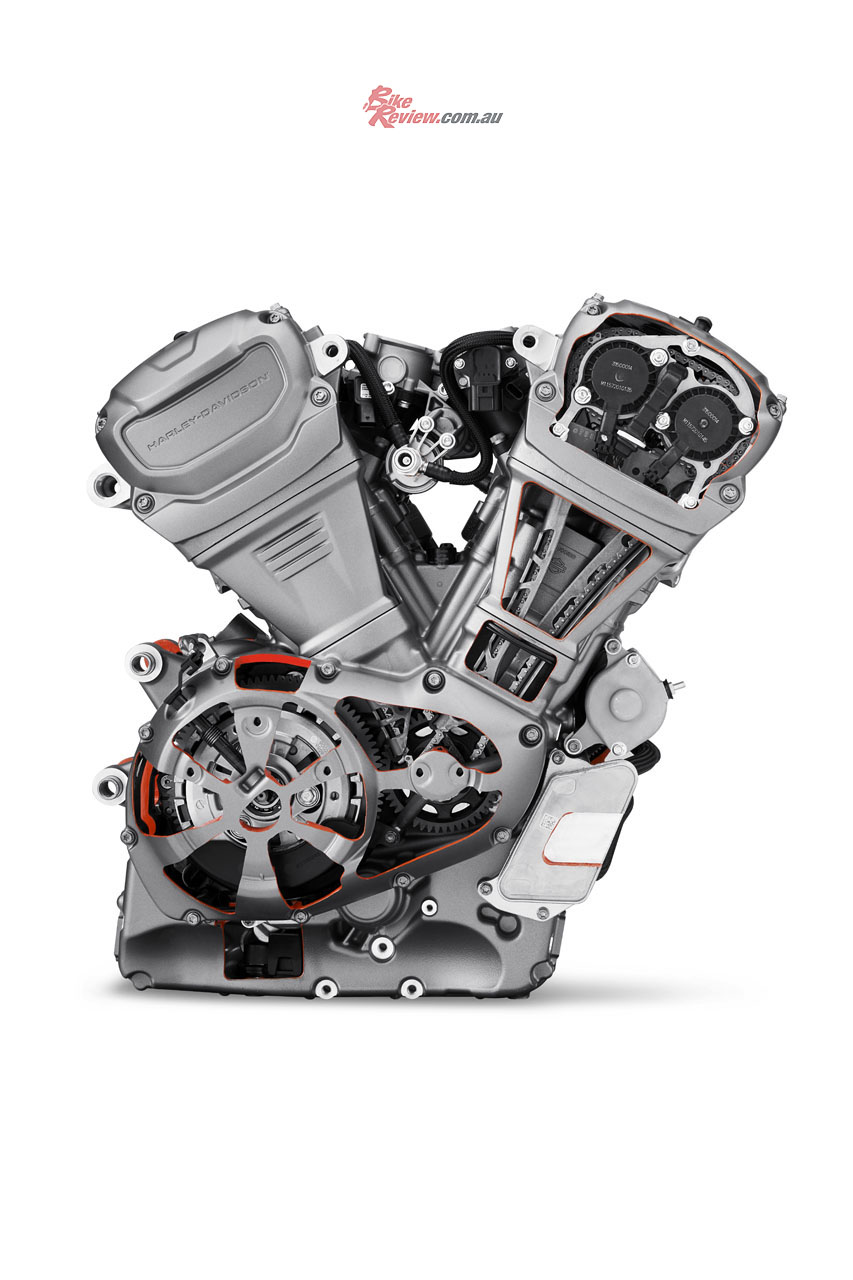
Variable cam timing is independently applied to the intake and exhaust cams, broadening the usable power delivery.
The engine uses a dry-sump lubrication system, with the oil reservoir incorporated within the lower crankcase rather than housed in a separate external tank. This arrangement reduces fluid friction losses, while three oil-scavenge pumps evacuate oil from the crankcase, stator cavity and clutch cavity. The oil feed pump incorporates a debris screen, while the system creates negative crankcase pressure to reduce internal losses and blow-by.
Oil is delivered to the main bearings and conrods through the centre of the crankshaft.
Oil is delivered to the main bearings and conrods through the centre of the crankshaft. Primary and secondary balancers are fitted to control vibration. The chain-driven primary balancer is located in the crankcase and counters vibration generated by the crankshaft, pistons, conrods and cylinder offset, while the secondary balancer is located in the front cylinder-head between the camshafts.
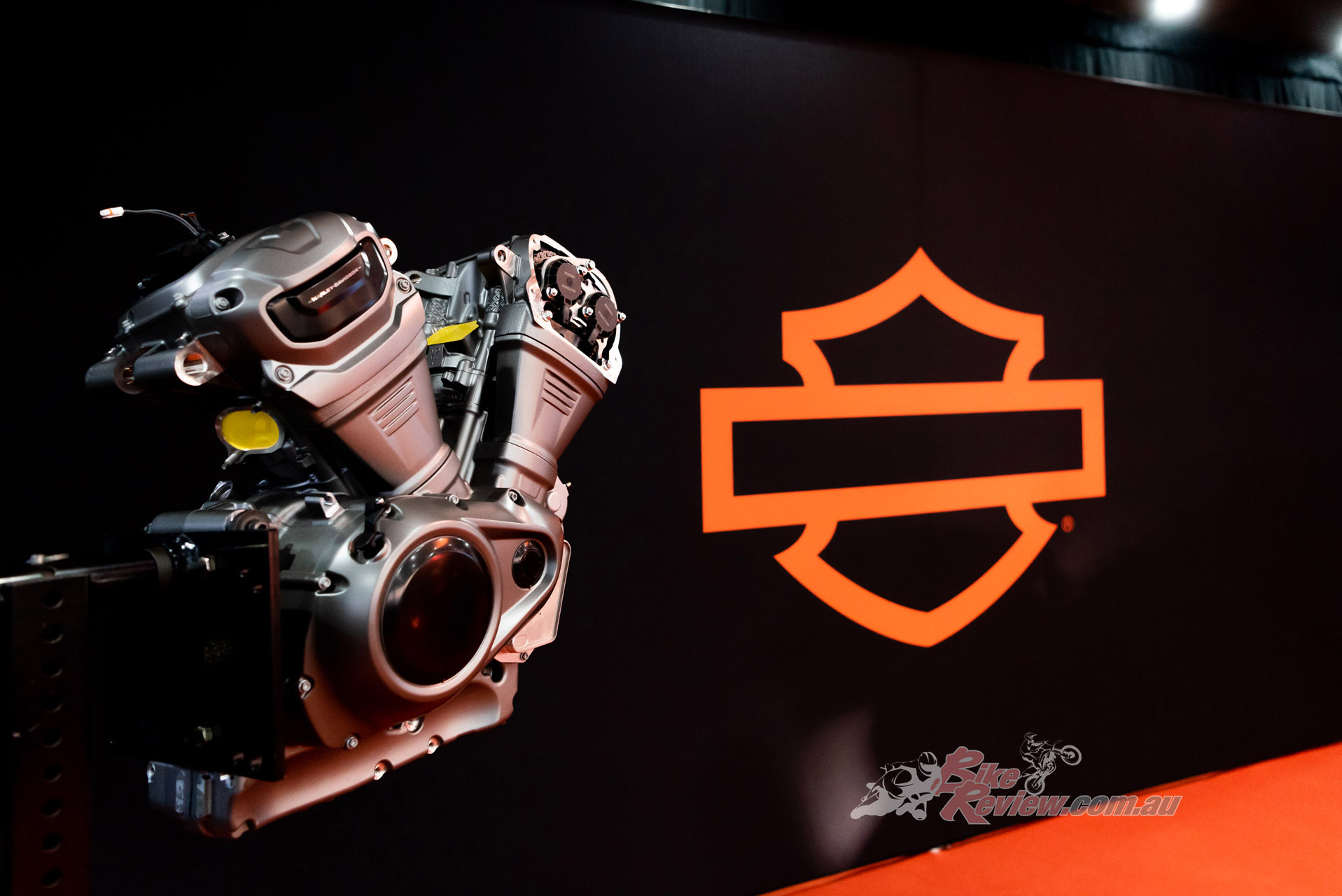
Developed as a clean-sheet engine, with weight reduction and compact packaging central to its design.
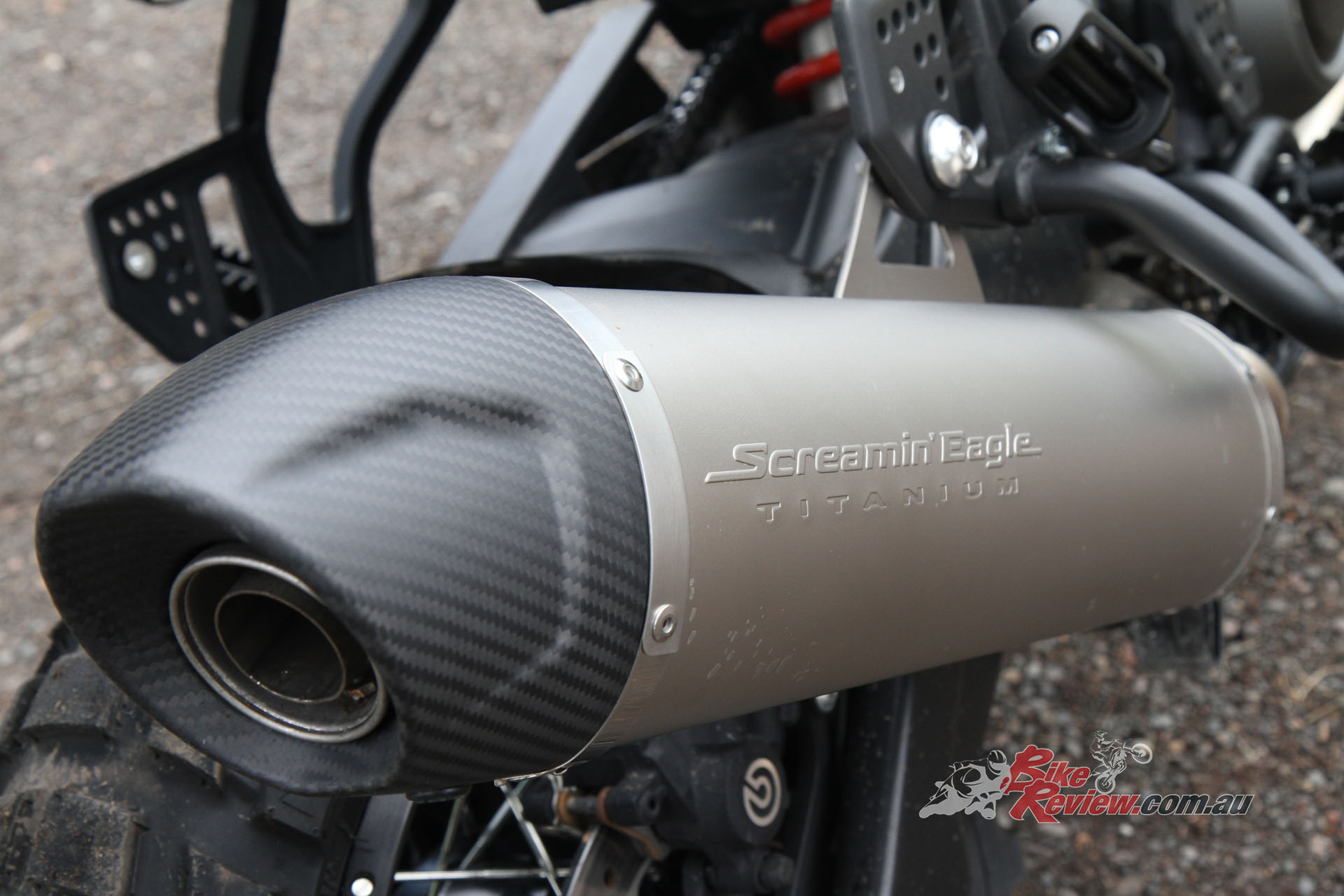
The cable-actuated wet multiplate slipper clutch features eight friction plates and is driven through a scissor primary gear designed to reduce noise, vibration and harshness. The compact six-speed gearbox uses roller bearings and low-friction selector-shaft bushes. Final drive is by O-ring chain. The Revolution Max produces 150hp (112kW) @ 8750rpm and 128Nm @ 6750rpm, with a 9500rpm redline. The 304-series stainless-steel exhaust uses a 2-into-1-into-1 layout designed to balance performance with ground clearance.
The bike’s equipped with an extensive electronics package, including multiple electronically controlled ride modes and Harley-Davidson’s Cornering Rider Safety Enhancements. These systems adapt engine performance and intervention to available traction during acceleration, deceleration and braking.
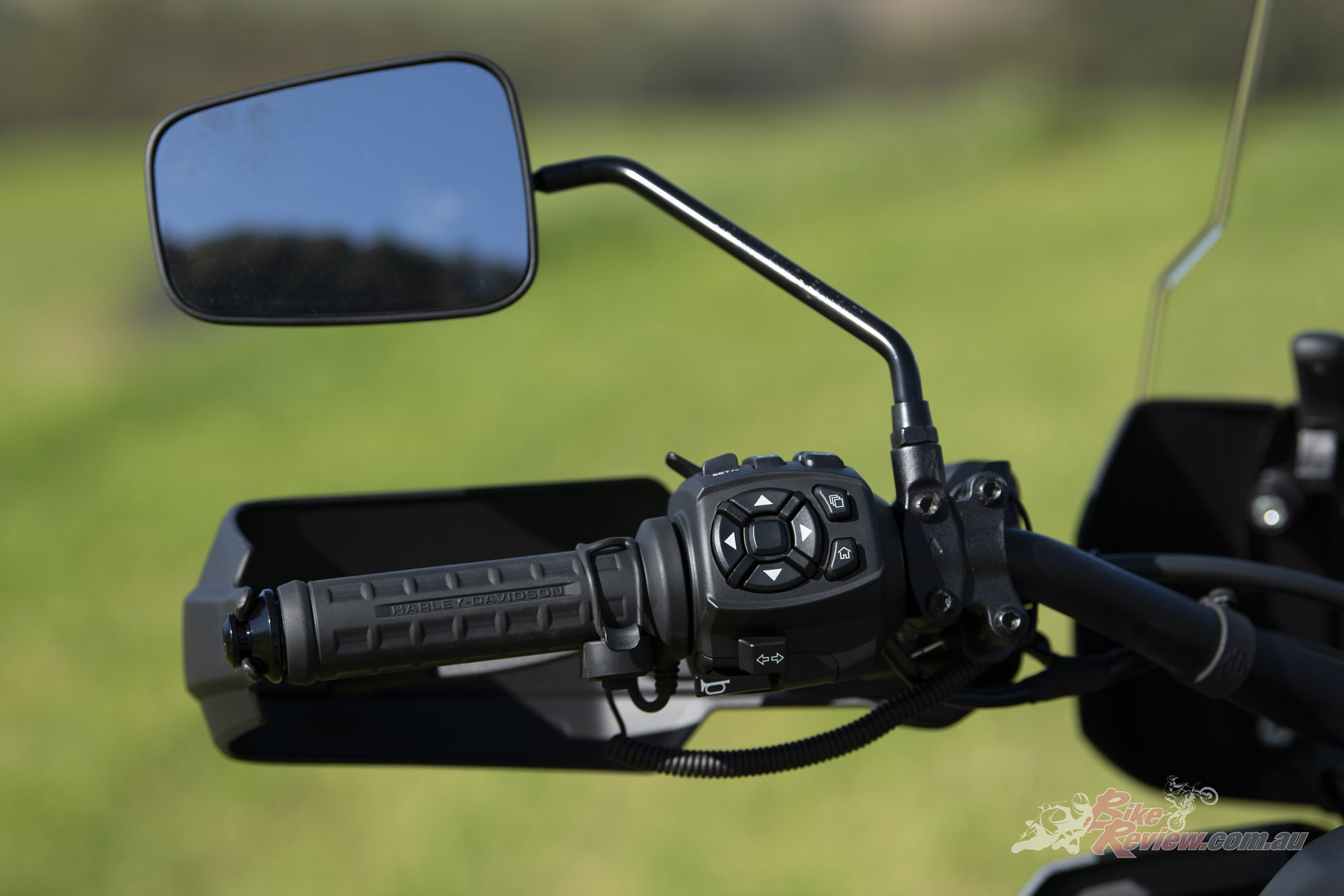

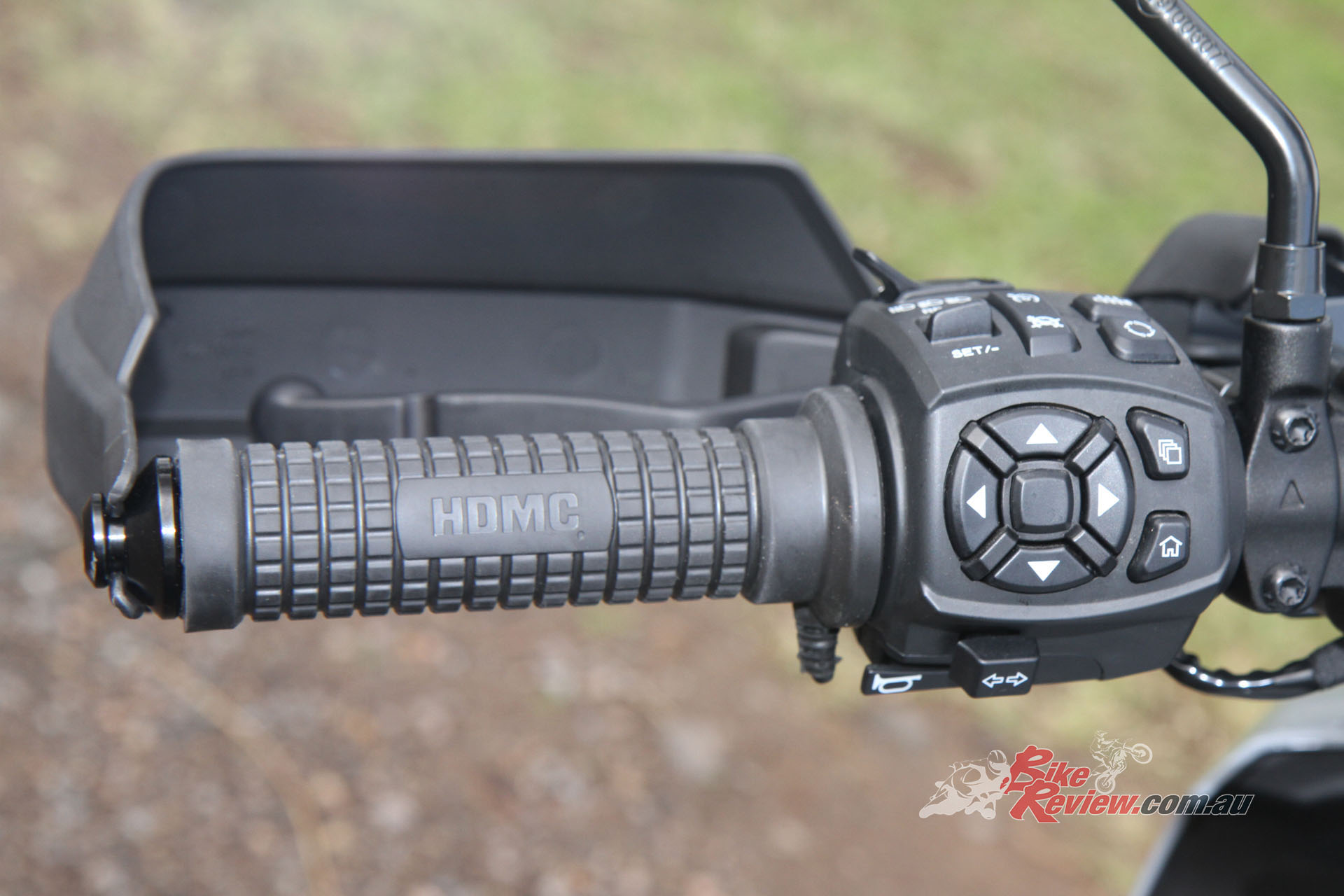
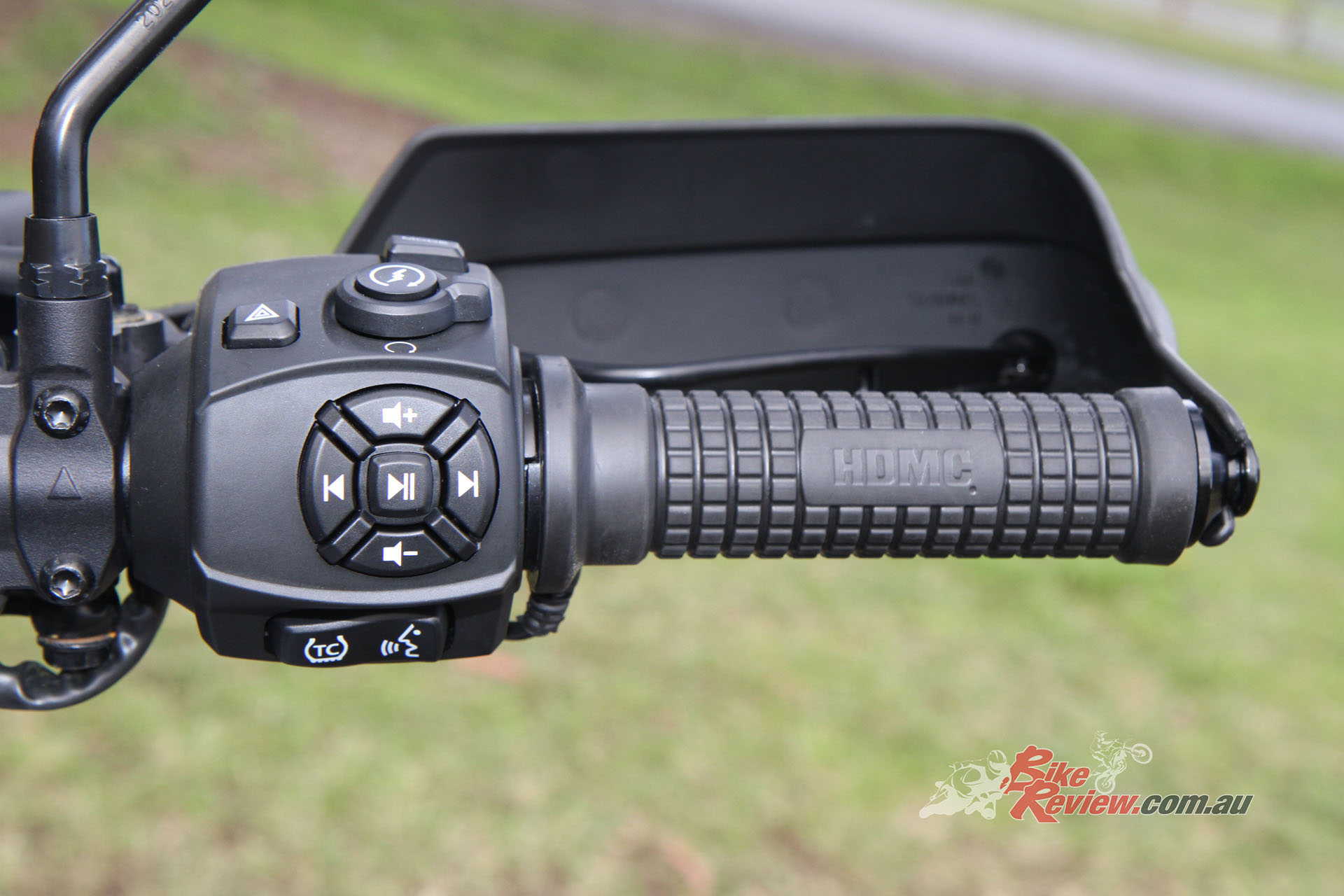
Pre-programmed ride modes include Road, Sport, Rain, Off-Road and Off-Road Plus, with additional customisable modes. Each combines specific settings for power delivery, engine braking, Cornering Enhanced ABS (C-ABS) and Cornering Enhanced Traction Control (C-TCS). The rider can use the MODE button on the right-hand switchblock to change modes while riding or when stopped, subject to certain operating conditions.
Instrumentation and infotainment functions are displayed on a 173mm colour TFT touchscreen. The touchscreen function is disabled while the motorcycle is moving, but the rider can use the handlebar controls to manage many display functions on the move. The display supports infotainment from a Bluetooth-connected mobile device, including music and calls. Navigation is provided through the Harley-Davidson app for iOS and Android.
The Pan America is equipped with electronically adjustable semi-active suspension front and rear. Up front is a Showa 47mm inverted fork with electronically controlled semi-active damping, while the rear uses a linkage-mounted Showa monoshock with automatic electronic preload control and semi-active compression and rebound damping.

Using data supplied by sensors around the motorcycle, the system automatically adjusts damping to suit riding conditions and rider inputs. The suspension components are supplied by Showa, with control strategies developed by Harley-Davidson.
Vehicle Loading Control senses the load added by the rider, passenger and luggage and automatically adjusts rear preload to achieve the appropriate suspension sag. Unladen seat height is adjustable between 850mm and 875mm.
Harley-Davidson worked with Brembo to develop the Pan America braking package, which uses radially mounted four-piston monobloc front calipers and twin 320mm floating rotors. At the rear is a single-piston floating caliper acting on a 280mm rotor. The braking system works in conjunction with Harley-Davidson’s Cornering Enhanced ABS and associated Rider Safety Enhancements.
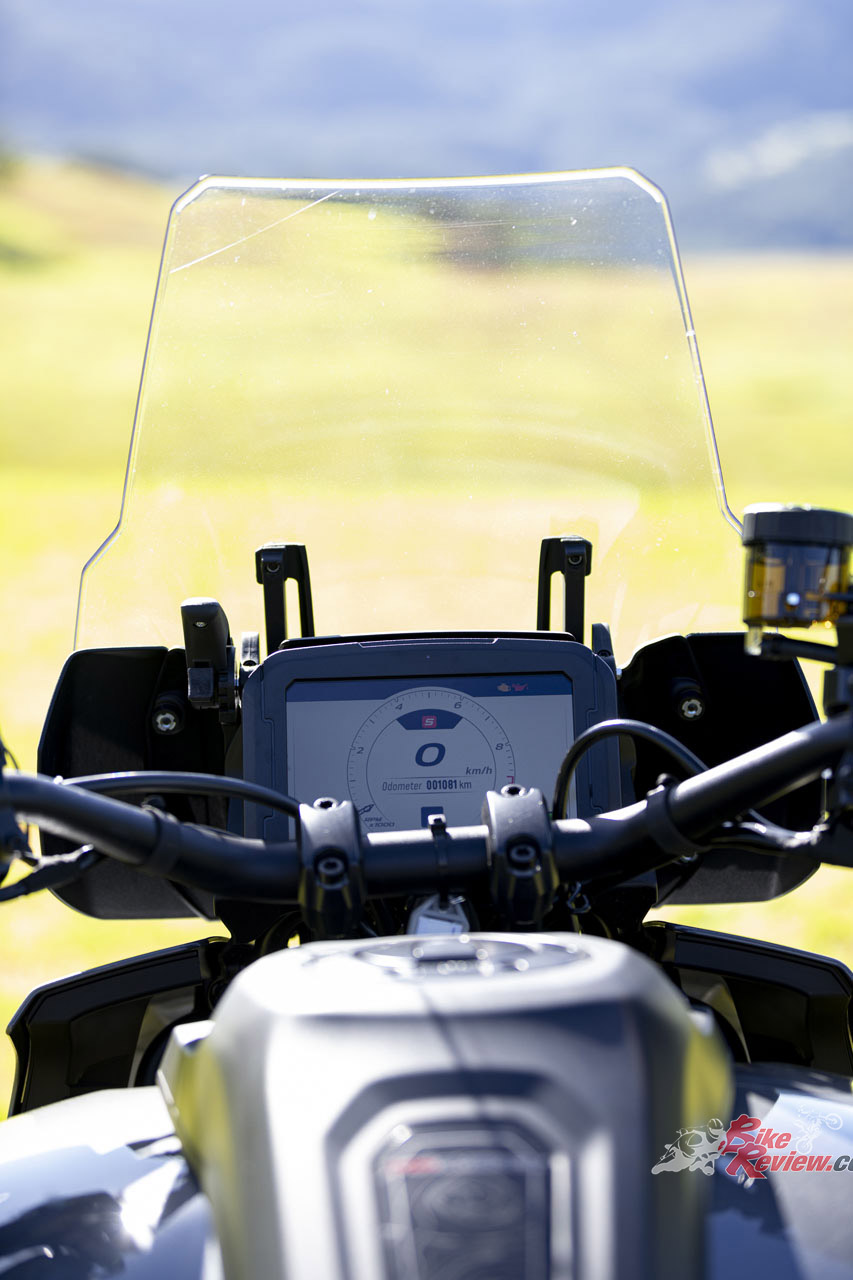
Adaptive Ride Height (ARH) is available on the Pan America 1250 Special, automatically lowering the motorcycle as it comes to a stop before returning the suspension to its normal ride height once underway. The system, which was first introduced by Harley-Davidson with the 2021 launch of the Pan America, is designed to make it easier for riders to get their feet down without sacrificing the ground clearance and suspension travel required while riding.
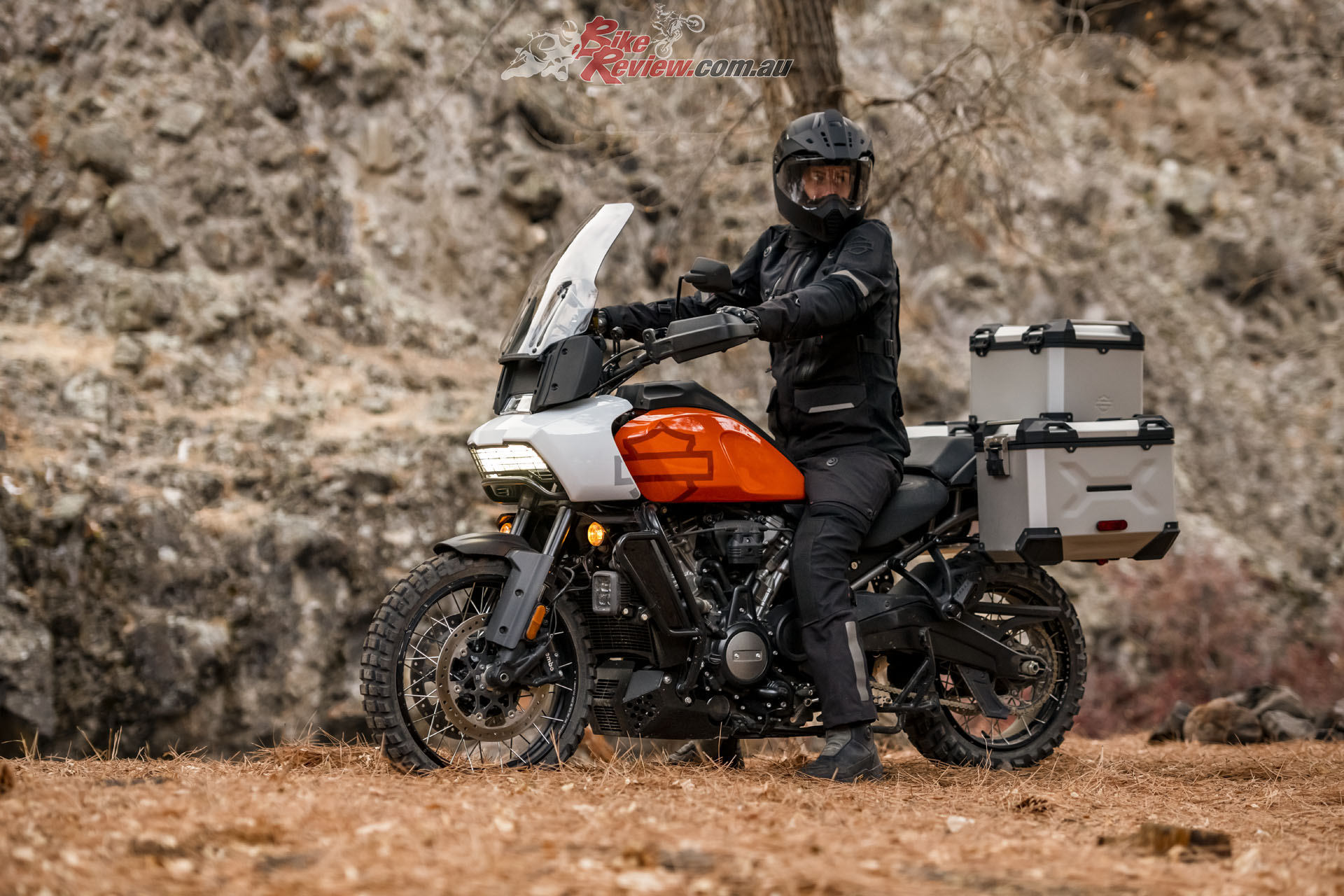
With luggage fitted, the Pan America is well set up for serious long-distance adventure touring.

2026 Harley-Davidson Pan American 1250 Special Specifications
Price: From $28,995 R/A
Colours: Black, Dark Billiard Grey (+$170); Blood Orange (+$310).
Warranty: Two-years unlimited km
Claimed Fuel Consumption: 5.5L/100km
Claimed Power: 112kW@8750rpm
Claimed Torque: 127Nm@6750rpm
Wet Weight: 253kg
Fuel capacity: 21.1L
Maintenance: 1600km, then every 8000km
Engine: Revolution Max 1252cc, Electronic Sequential Port Fuel Injection (ESPFI), 105 x 72mm bore x stroke, 13.0:1 compression ratio, two-into-one exhaust, offset crank with 90º firing order, 60º V angle, variable cam timing, chain drive camshafts, liquid-cooling, dual plug heads.
Gearbox: Six-speed Clutch: Wet multi-plate slipper type, cable actuation.
Chassis: Alloy and steel trellis with engine as stressed member, forged alloy main section.
Rake: 25° Trail: 108mm
Suspension: Semi-Active front and rear suspension with Adaptive Ride Height as an optional extra, 47mm SHOWA front, SHOWA Piggyback reservoir shock with adjustable hydraulic preload rear. 191mm travel both ends.
Brakes: Front: Radially mounted four-piston Brembo calipers, 320mm rotors; Rear: floating, single piston Brembo caliper, 280mm rotor. Cornering ABS with linked brakes.
Wheels & Tyres: Cast Alloy or Tubeless laced wheels, 19 x 3.0in with 120/70 – 19 (f), 17 x 4.5in with 170/60 – 17 (r) Michelin Scorcher Adventure 50/50 tyres.
Dimensions:
Wheelbase: 1580mm
Seat Height: 830mm – 875mm
Overall Length: 2265mm
Overall Width: 965mm
Overall Height: 1510mm
Lean Angle: Over 42º
Ground Clearance: 210mm
Instruments & Electronics: All instrumentation and infotainment functions are displayed on a tilting 6.8-inch TFT touchscreen dash. Rider aids include linked cornering ABS, traction control, hill hold, rear lift mitigation/engine braking, rider modes.
2026 Harley-Davidson Pan America Special Gallery
Ratings | Bike Review | 2026 Harley-Davidson Pan America 1250 Special
Awesome
The 2026 Harley-Davidson Pan America 1250 Special is a sweet bit of kit, arguably one of my favourites this year. But is it worth the hype and the cash, and can it hold its own in the current insane big adventure market? Here’s what we reckon…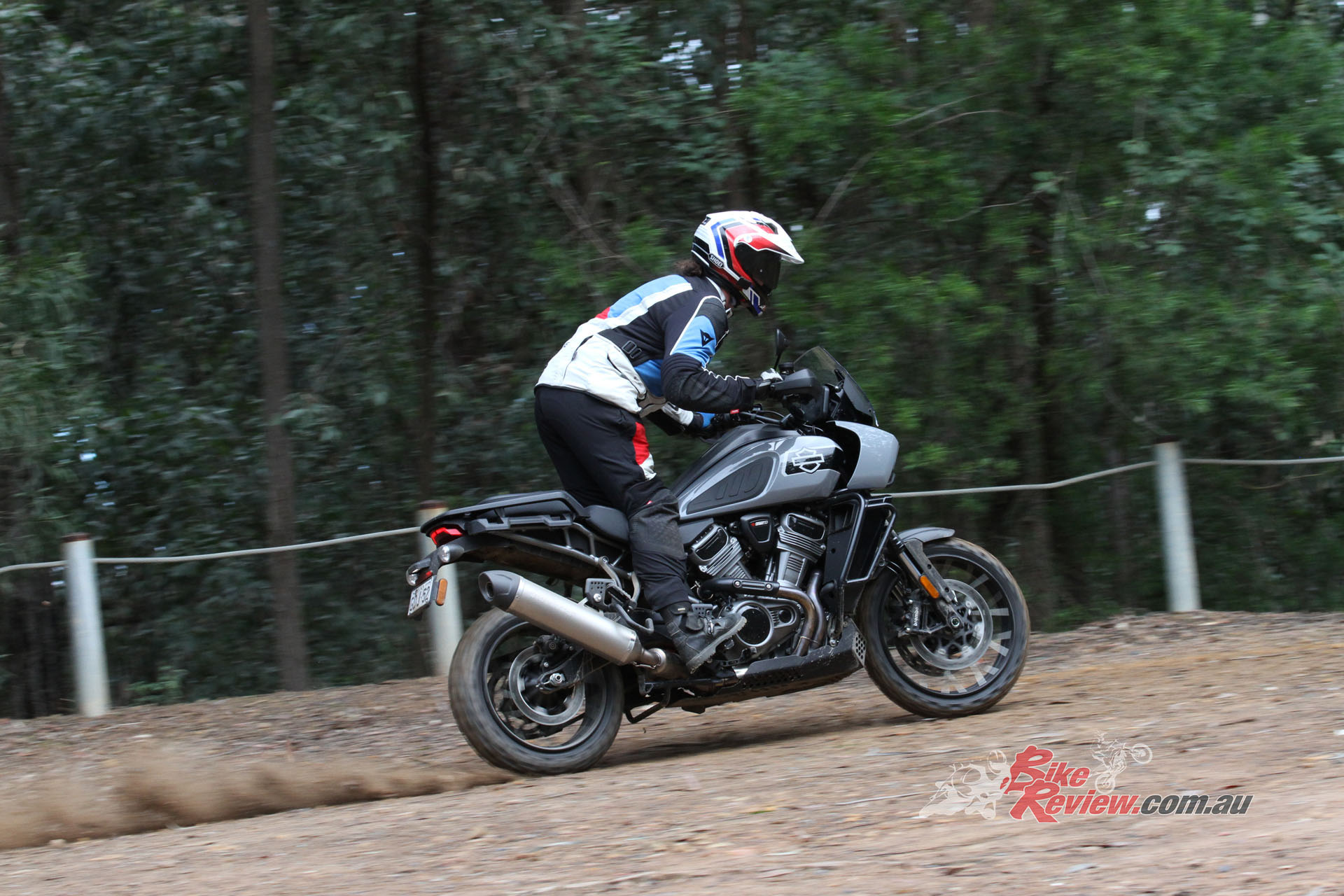
The Author

You Might Also Like